Tag Archives: flaming the stain

Refurbed Breezewood Acorn


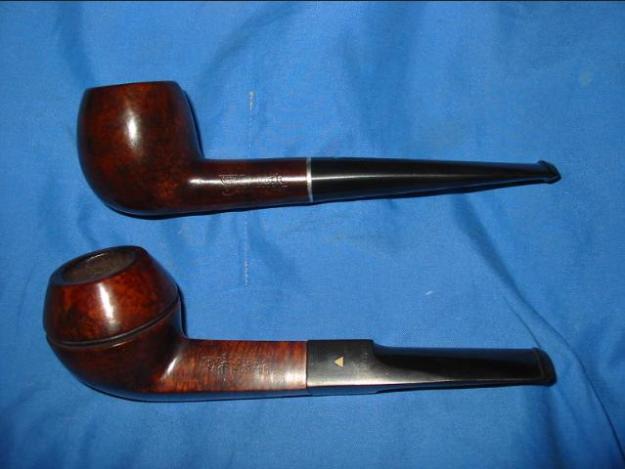
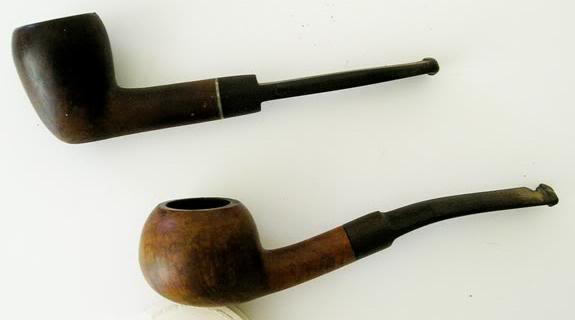
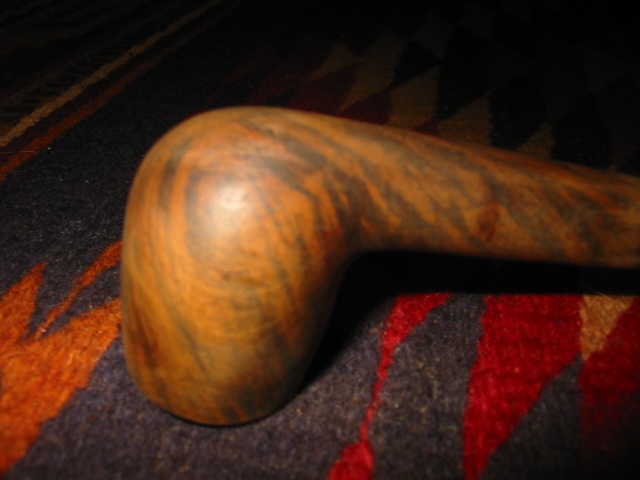
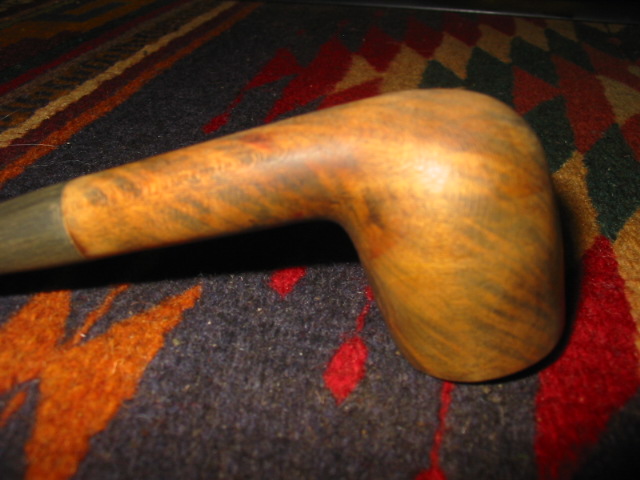
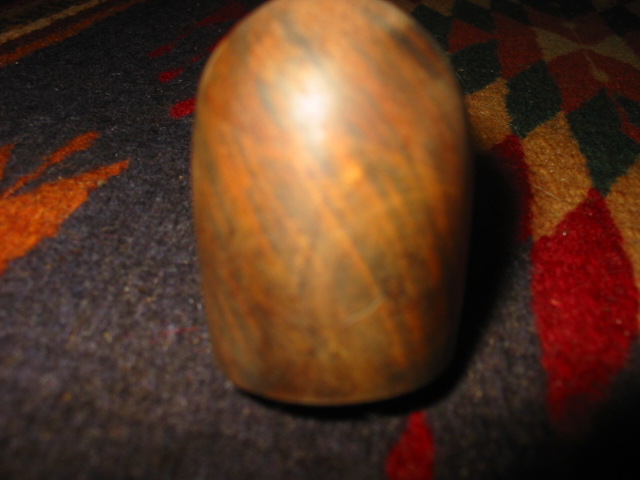
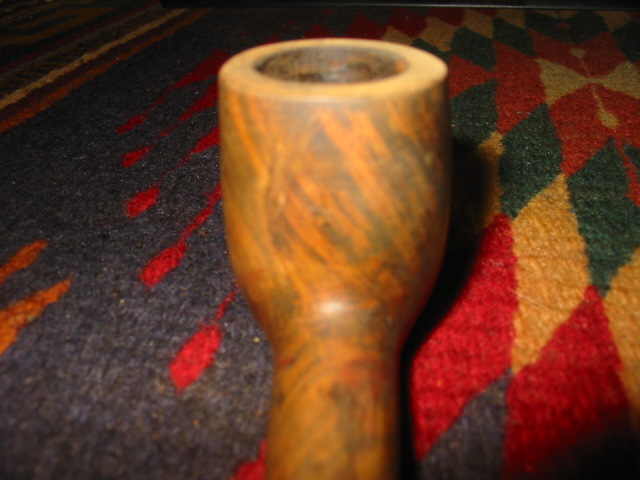
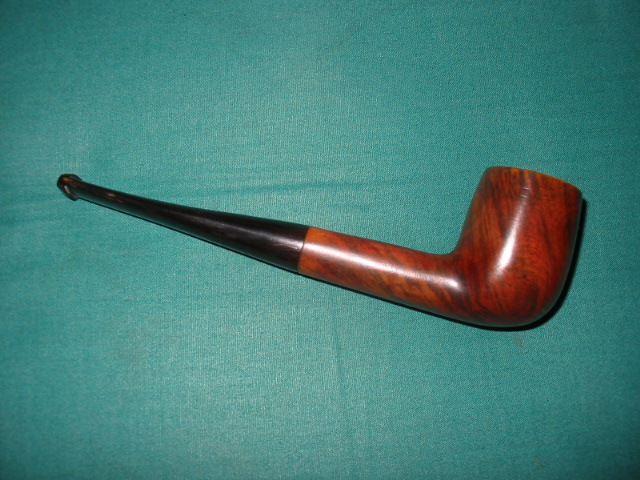
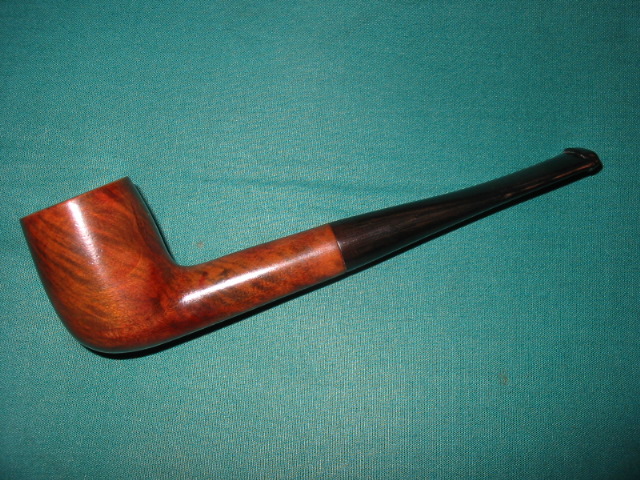
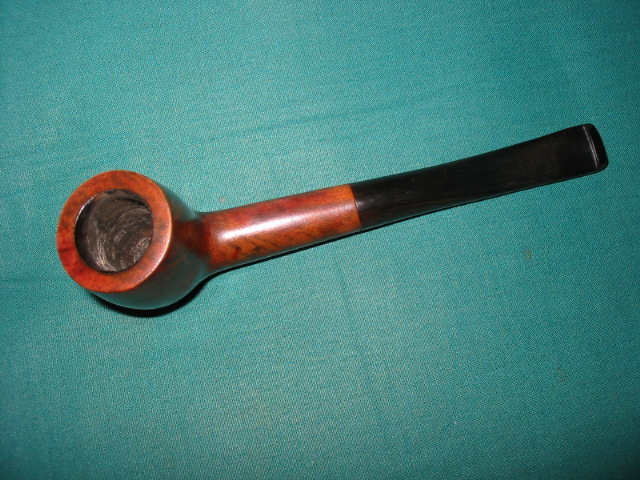
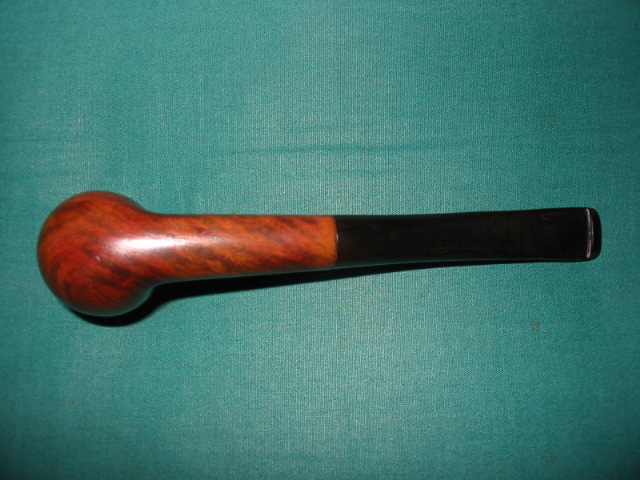
I picked this old timer up in the ebay purchase that included the Bertrams author. It was almost black it was so dirty. It is incredibly light weight. Once I got the grime off I could see a wee bit of the stamping left and it read Breezewood. I reamed and cleaned the inside. The stem is a screw mount like the old Kaywoodies. It has been clipped of stinger contraption but it is a good open draw. I cleaned the stem and used the micromesh sanding disks on it. The bowl was soaked in an alcohol bath to remove the finish and grime and then sanded with 220, 400, 600 sand paper and then micromesh 1800, 2400, and 4000 grit pads. Here are the before and after shots. Below the pictures I have posted a write up of the history of Breezewood pipes by the late Mike Leverette (a friend and historian of things pipe).

The pipe is pictured in the top photo below of the two pipes.

Image

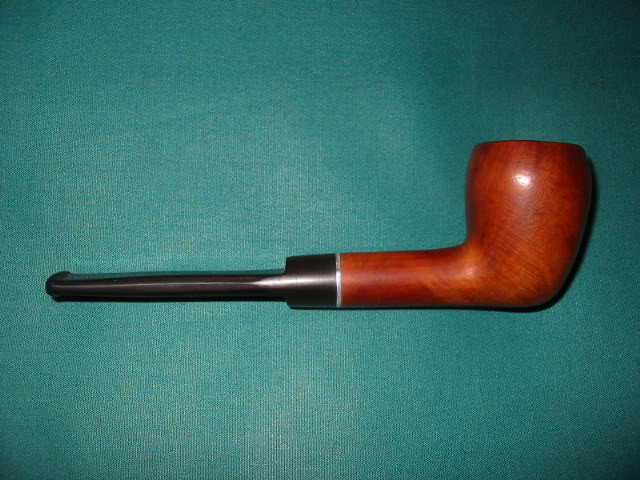
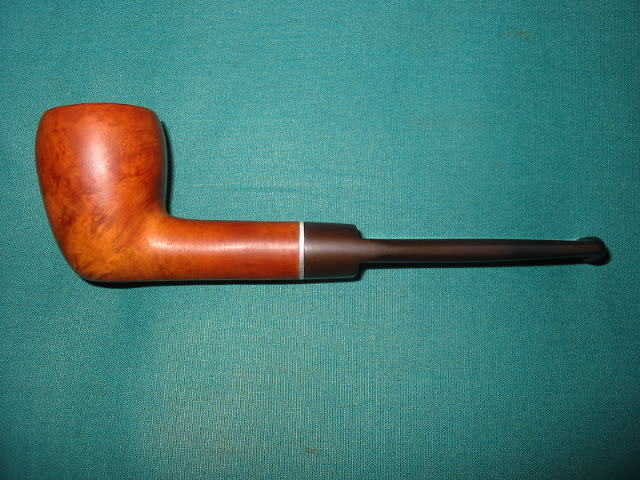
Here is a series of photos of the refurbished pipe.

Image

ImageImageImage

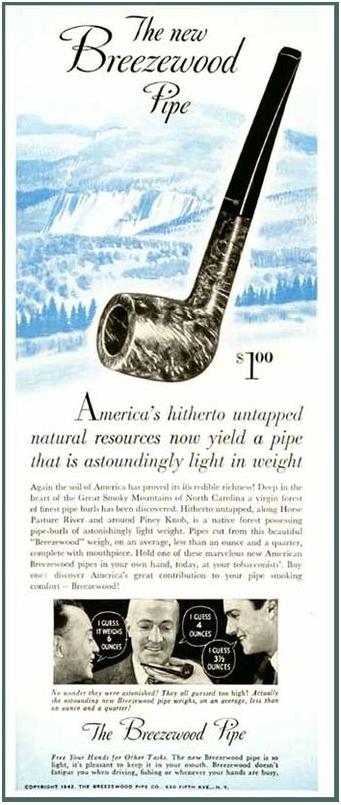
Here are some informational ads on Breezewood pipes

ImageImage

I wanted to include this brief article by Mike Leverette as it gives background history that is not commonly known or available regarding these early alternatives to briar that came out during the war years.

“There were at least three pipe brands made from the Mountain Laurel; Trapwell, Breezewood and Custombilt. Trapwell pipes were made by D & P Pipe Works beginning on or before 1943. D & P Pipe Works, owned by D. P. Levitas (Ross 2005), began making pipes in 1938 (Wilczak and Colwell 1997) probably in New York City but relocated to Sparta, Alleghany County, North Carolina in 1943 (Sparta/Alleghany CoC 2006), in order to be closer to the huge population of Mountain Laurel in the area. Later, this company changed their name to Sparta Pipe Works and still later to Sparta Industries. I have one Trapwell World’s Best Briar pipe in my collection, a small billiard, and here again; it is a great little smoker. World’s Best Briar was their marketing ploy for Mountain Laurel. Trapwell’s ‘trap’ is a highly complicated condensing system when compared to most regular metal condensers. After the war, Trapwell pipes were made from regular briar wood, or “imported briar” until their demise.

According to a 1942 Life magazine advertisement, Breezewood pipes were made by The Breezewood Pipe Company, located at 630 Fifth Avenue, New York City, though Wilczak and Colwell state the Breezewood pipes were made by Kaufmann Brothers & Bondy (KB&B) beginning in 1941 (Wilczak and Colwell 1997). The Breezewood Pipe Company may have been a subsidiary of KB&B. To quote the 1942 Life magazine advertisement; “There, deep in the Great Smoky Mountains, they found it – found an uncharted virgin forest of burls, great old burls that had been growing there uncounted years. And from these old burls, pipes of astonishing lightness of weight are made – their name: Breezewood.”

At the present time, this is all I have been able to find on the history of Breezewood pipes. Here again, the one Breezewood pipe, a small billiard, I have in my collection is a great little smoker. I am not overly fond of metal condensers and this Breezewood pipe has a simple tube condenser similar to Dunhill’s “inner tube”.


Unique old pipe – “The Rubywood”


Blog by Steve Laug

I enjoy working with alternative woods that over the years have been used in pipes. I have worked with pear wood, cherry, walnut, manzanita and mountain laurel. But last evening I finished restoring an old pipe that revealed more than I expected as I worked away the old finish. It became more than speculation that I was not working with briar. It was too light in weight and just felt different. Once the black grime was gone I could see graining that was very different. The pipe is stamped “the Rubywood” that is all. I researched a bit and found that ruby wood is red sandal wood that is very hard and used for fine furniture. I don’t know about that but this is amazing looking wood. It has dark graining that is deep and then swirls that go through the grain as well. There are dark spots of ruby/red colouration that have come out in the refinishing. I turned the tenon and fit a stem for this one. Then restained it with an oxblood stain to highlight the natural reddness of the pipe.

Here are some pictures of the wood with the finish removed.
Image

Here are some pictures of the refinished pipe:

I wondered about toxicity of the wood so I posted it on Smokers Forums to see if anyone knew about this wood. I got this reponse from a friend there:
“I found quite a few pipes (made in China and India) made from Red Sandal Wood. Apparently parts of the tree are used in herbal medicine. Heck, if it gets rid of wrinkles I wouldn’t mind smoking that pipe

Pterocarpus Santalinus Uses : It is an astringent and a cooling agent and is used in several skincare preparations. It is used in the treatment of pimples, acne, wrinkles etc. It us also used internally in chronic bronchitis, gonorrhoea and gleet, chronic cystitis with benzoic and boric acids. Much used as a perfume for different purposes. The wood is used for making fancy articles and is much carved. It has been used in Ayurvedic medicine as an anti-septic, wound healing agent and anti-acne treatment. A paste of the wood is used as a cooling external application for inflammations and headache. A decoction of fruit is used as an astringent tonic in chronic dysentery.”

Thanks for looking.

Seeing through the grime – a story told by an old pipe


I had this story I had written sitting on the hard drive. I reworked it quite a bit the last two evenings and thought I would post it. In it I try to capture the old stories that I find in the estate pipes I seek to bring back to life. Thanks for reading it.

Awhile ago I was working on cleaning up an old estate pipe. I had purchased this old timer on eBay and when I came home from work one afternoon I found it had arrived in the mail. When I opened the box I could not believe my eyes. The pictures the seller posted on eBay did not begin to capture the sorry state of this poor pipe. It was a disaster – the bowl was caked to the point of not holding any more tobacco. I could barely fit a pencil in what remained of the tobacco chamber. The cake that filled the bowl was not the typical hard carbon but was crumbling and very soft. The stem would not fit all the way into the shank as both it and the inside of the shank were covered with tar and a white lime crust. The airflow on this poor old timer certainly must have been miniscule, but there was no way I was going to put this thing in my mouth to even blow on it. I found that once I removed the stem that it had the weirdest stinger apparatus I have ever seen that would have constricted the airflow even more. It was short, thick metal and absolutely crammed full of tars and unidentifiable tan chunks. I know, the word “chunks” does not help understand what I am talking about but I don’t know how else to describe the brown stuff that was thick and packed all over this stinger. The metal of the stinger was rough and appeared to be pitted or at least it had craters and crevices all over the sides and top of it. It was in truly sad shape. It certainly must have been a beautiful pipe when all this started. It was that hope of hidden beauty beneath the grime that drew me to this pipe and caused me to want to take a risk on cleaning and restoring it. On top of that was also the challenge of restoring what looked to be a hopeless cause.

I carefully wiped the outside of the bowl with a damp rag to get some of the surface grime off. I wanted to see what the grain looked like underneath the grit. I carefully separated the stem from the shank and removed the stinger for a soak. I then used several reamers that I have to ream both the bowl and shank of the pipe. All of this was preliminary to the actual cleaning work. I wanted to be able to more knowledgeably assess the condition of the pipe under the years of grime. What a lot of carbon dust lay on the paper that I put on my work table. The grain did not look too bad. There was some interesting curly birdseye on one side and flame grain on the back and front of the bowl. A twisting grain flowed across both the bottom of the pipe and the shank. I turned the pipe over in my hands to inspect it for cracks. I have found that there are often cracks in pipes that have been smoked this hard. Surprisingly, there were none in this bowl at all. But this pipe had been smoked right through the bottom of the bowl – yes burned out. That would not surprise you if you had seen the condition of the pipe. But what made it surprising to me was that the bottom of the bowl had been plugged and repaired with a well worked briar plug. It had darkened but I could still see that it fit very snugly and carefully and showed some thoughtful work at the hands of a good repairman. All this caused me to reassess what I had originally concluded about the pipe and the piper who used to smoke it.

A pipe, that at first glance, appeared to have been “abused” this much, must have been ignored and not cared for by its owner. But I am not convinced of that verdict – in fact I was beginning to conclude just the opposite – it must have been a well loved and favourite pipe. The fact that it had obviously been smoked to the same point before in its life and then repaired with a well done plug and then smoked to the same point of cake again says a lot about what kind of pipe it must be and what kind of smoke it must have delivered to it owner. On the one hand, the original owner did not take care of his pipe in terms of daily maintenance and cleaning. I don’t think it had ever seen a pipe cleaner in all of its years. But on the other hand, he cared enough to take the time to have a well done plug put in the bottom of the bowl to fix the burn out and then smoked it again to this point a second or maybe a third or fourth time. That is the contradiction that exists when I look at a pipe like this. There is more to the story than initially meets the eye.

Only when it is stripped down and cleaned do I get a bit more of the story underneath all the surface grime. I think that the old fellow who must have owned this pipe would have been interesting to spend time with having a talk. I am certainly making an educated guess but I believe that this was a pipe that belonged to an old timer. By the looks of it, I would say it would have been disposed of with his other non-sellable or unwanted estate items. The fact is that if that was not true it would still be in his mouth. I would guess that he was a one pipe guy who refused to give up on an old friend and kept repairing and smoking his old buddy. Each problem that came up was a puzzle to be addressed and repaired before the pipe was returned to its smoking regimen. There is a silver band on the pipe that probably is original and matches the shape of other pipes like this one that I found on the web, but it is also engraved with what appeared to be initials – a monogram that possibly identified it as his. The band had turned around on the shank several times and had been obviously re-glued several times to keep it with the pipe. It was a not only a mark of ownership but of pride. It made me wonder if he had it engraved himself of if one of his children might have had it done as part of a very personal gift for “dad”. In the bottom of the bowl there remained a bit of old and very dry tobacco. The bowl had been smoked to that point and left. There is no way of knowing what the tobacco was as it was pretty well destroyed. But it was there and was crumbling with the cake in the bowl. It gave me pause to wonder what happened to the guy that made him stop at that point of the bowl and lay his pipe down.

As I moved to do the first stage of cleaning the stem I was amazed to see is that the stem was actually pristine under the grime. There were no tooth marks or bites on it. There was no sign of the kind of abuse that I have come to expect in this kind of pipe. Sure, the button was clogged and airway was almost solid with tars but there are no bite marks at all on the stem. There are no scratches and no problems that a good buffing and cleaning would not take away. That too tells me something of the old pipesmoker. He was not a clencher. He did not chomp on his bit. It was the original bit and it was in good shape under the grime. He was a man who held his pipe in his hand while he enjoyed the process of sipping the smoke. He was obviously one who was not to be hurried in his process and did not want to be bothered by anything that stopped the enjoyment of his pipe. I appreciate the care that he took to not bite the stem after having repaired many stems that have been marked by the fangs of the owner.

The cleanup was finished and the bowl was refinished and re-stained with a cherry stain to match the original colour of the pipe when it was made. The silver was polished and the stem was polished to a pristine black. The bowl was coated with a charcoal based coating to give it a bit of protection as I work to rebuild a hard cake in the bowl. I loaded a bowl of my favourite Virginia/Perique blend for the inaugural smoke. I chose a quiet spot to relax while I put the fire to the tobacco and sipped the smoke. The flame jumped to the tobacco and the smoke began to curl around the lip of the bowl and out the edges of my mouth as I puffed. Ahhh, now I had joined the ongoing story of this pipe to my own history. It smoked very well and delivered a cool flavourful smoke to the bottom of the bowl… I think next bowl I will remove that odd old stinger and see what I get from it. What a great pipe. I think I had begun to understand the charms of this old pipe. I tip my “new” pipe in quiet thanks to the old piper who had pointed the way to this well loved pipe.

Re-staining Estate Pipes – A Pictorial Essay


Blog by Steve Laug

I am often asked by other hobbyist pipe refurbishers how I go about re-staining the pipes that I refurbish. I have answered the question in different ways over the years as I have worked out my own process. This past weekend I had some time and a box of pipes to work on so I decided to document the process I use. I took photos of four old pipes that I was reworking; these photos take you through my methods from start to finish. I have added written commentary to explain what I have done. The method I describe is how I work with estate bowls like these. I am certain that there are other methods that can be used with equal success. This is the one I have arrived at over the past ten years as I have been reworking estate pipes. I am sure that it will continue to evolve in the years ahead as it has over the past years. Here it is for your perusal and use. Feel free to use it, enjoy the process of rejuvenating the finish of an old pipe, adapt it and modify it as you will. Email your modifications and additions to the method to as we work to keep the fire alive in the home based pipe restoring hobby – slaug@uniserve.com.

I need to make a final confession before I jump ahead to describe and document the process. I totally forgot to take pictures of the state these old pipes were in when I received them. As is often the case for me, the cleaning process took on a life of its own and once it is moving along I find it hard to slow it down. So, with that out of the way, I begin with pictures of the pipes after I removed them from an hour soak in an alcohol bath.

Out of the alcohol bath
Once I have chosen the pipes to restore I remove the stems and place them in a soak of Oxyclean and water while I work on the bowls. I place the bowls in an alcohol bath. I use a plastic jar with a screw on lid to hold the 99% isopropyl alcohol for the bath. It is roughly a large mouthed quart sized jar and will hold four bowls. The size also allows me to reach in and retrieve them when they are finished. I reuse the alcohol in the bath for a long time. I find that it turns dark from the stains and the sediment settles to the bottom of the jar. I pour off the alcohol regularly and wash the jar so that there is no sediment remaining. I also top up the jar with fresh alcohol to keep the levels high enough to cover the bowls.

The first two pictures below show the four bowls after they have been removed from the bath and have been dried. (In each photo the bowls will be in the same order for ease of recognition.) Starting at the top left and working left to right you will see the effects of alcohol bath in removing finish. I have found that it does not remove all the stain but it removes the finish, waxes and oils that are over the stain. When the bowls are removed they have a flat finish look to them. The top left bowl has a slightly yellow stain once the varnish coat was removed. The top right bowl has a reddish stain that was also under a coat of varnish. The bottom left is a prehistoric GBD finish/sand blast with a dark red/brown stain. The pipe on the bottom right has a dark brown stain and had a coat of shellac or varnish over it. The varnish on the last pipe had turned milky white even before I put it in the bath and increased when I took it out of the alcohol bath. The fourth bowl will take the most work to remove the finish. All will need more hand work with an alcohol soaked soft cloth and a soft bristle tooth brush to remove the residual finish. The smooth bowls will be sanded and further cleaned.
restaining-1

restaining-2

Washed and sanded
The pictures below show the bowls after they have been washed in alcohol and sanded and rewashed and re-sanded repeatedly. The stain colour is removed as much as it will be at this point in the process. There is still a lot of work to do on each bowl before staining can be done. The top coat of varnish, wax and the grit and grime have all been removed at this point. From the pictures you can see that there is still some varnish on the bottom right pipe but the majority has been removed and the others are getting ready to go to the next step in the process. Once I finished this stage of sanding I washed them a final time with a tack (soft cotton material) cloth to remove dust and such and also let me see any remaining shiny spots on the finish.
restaining-3

restaining-4

Two of my favourite tools are shown in the following pictures (I use both constantly in the process of refurbishing and always have them near at hand) – a tooth brush and a dental pick. The dental pick allows me access to the rings on the bulldogs. I carefully use it to follow the rings around the bulldogs and clean out the grit that gets stuck in them. I follow that up with the tooth brush which allows me to rub the alcohol into the rings and to scrub other places in the blast on the prehistoric and stubborn shiny spots on the smooth pipes. They both are used in cleaning rims and the dental pick also precedes my pipe cleaners in the shank. I have straightened one end to make access to the shank easier. These pictures show the bowls after the third sanding and alcohol wash. I also sand the rims with 400, 600 and then finally with 1200 to remove any grit or rough spots on the finish. All the bowls have been sanded with 1200 grit sand paper. I sand them one more time with the 1200 grit sandpaper and then I use micromesh pads to get a good smooth surface on the bowl. If you choose to go for a scratch-free finish you can examine the bowls with a jewellers loop under a bright light and re-sand as necessary to remove any noted scratches. For the majority of the old timers that I refurbish, I sand until they are scratch free to the naked eye in a bright light. To my mind some of the deeper nicks and such lend character to the old pipe and contribute to the look of age. My main requirement is that they are smokeable when I am finished and that they look good for their age. Should you choose to go further with the finish the choice is yours as you re-work them.
restaining-5

restaining-6

The next picture shows the foursome after all the smooth pipe bowls and smooth rim on the sand blast have been sanded with 1800/2400/4000 micromesh pads. They are smooth to the touch and have a rich shine to them. This is a good time to give them an inspection for any marks or scratches that you want deal with further. After I inspect them this last time, I wipe them down with an alcohol damp cloth to get any residual grit or dust off the bowls and set them aside. The bowls are ready to be re-stained.
restaining-7

Re-staining the bowl
In preparation for staining each pipe bowl, I insert folded pipe cleaners in the shanks to enable me to manipulate them with ease while I am applying the stain. This gives me some flexibility in turning the bowl at different angles to apply the stain coat. You will note the Fiebing’s stain in the previous picture – that is the stain I use. It comes in a variety of colours and is an aniline (alcohol based) stain. It works extremely well on wood. All of these bowls were given a first coat of Fiebing’s Dark Brown stain applied heavily. While it is still wet I use a match to light the stain to set it in the grain. It does not light the bowl on fire at all but only burns off the alcohol in the stain coat. For these four bowls, I started with the blast and liberally applied the stain to the bowl. I start with the bowl held bottom up and let the stain flow toward the tops. I follow the flow of the stain to ensure that I have thoroughly and evenly covered the entire bowl surface. I finish the first coat using the dauber pictured in the lid below to stain the rim. I reapply the stain to make sure the coat is even and not streaked.
restaining-8

The picture below was taken after the second application and flaming of the stain. After the first coat of stain is dry to touch, I give each bowl a second coat of stain and set it aflame with a match or lighter. After flaming the stain the bowls are basically dry to the touch and I set them aside until they are thoroughly dry. (I often let the bowls sit over night to dry.) The next day (or later the same evening if I get impatient or curious) I take them to my buffers and see what they will look like with a light touch on the buffing wheel. I generally use the Tripoli buff with a light touch, though I have also used the White Diamond buff as well. For those who do not have a buffer I have also sanded the bowls at this point with 1200 grit sand paper or higher. If the stain is too dark to my liking I wipe the bowls with an alcohol damp cloth until I get the colour the way I want it on each pipe. That is one of the beauties of aniline stain! The briar in each pipe bowl will make them quite unique looking once the stain is buffed.
restaining-9

While the bowls are drying I turn to work on the stems. Throughout the process described above, the stems have been soaking in an OxyClean bath. I put a mixture of once scoop of OxyClean into a one quart plastic covered jar and mix it with hot tap water. I shake it until the powder is all dissolved and the liquid is a milky white. Then I place the stems in the bath to soak. Generally I soak them a minimum of two hours but often will leave them in the wash over night. They remain in the bath the entire time I am working on the bowls.

With this foursome I grew impatient and was curious to see the finished product once I buffed the stain off the bowls. The bowls were dry so I took them to the buffer. The following pictures show the bowls – stained, buffed and polished. At this point in the process, I still need to wax them with carnauba but the pictures give you the idea of what they look like. Each pipe bowl took the dark brown stain in its own way. To me one of the joys of the process is arriving at this step and seeing the freshly stained bowls. I love the contrasting colours and grain that comes through in the pipes.
restaining-10

restaining-11

restaining-12

restaining-13

The final pictures in this essay show the finished product using two of the pipes. I finished working on the stems while the stain was drying. They are both WDC pipes. The apple is an Aristocrat shape 11. The bulldog is a Royal Demuth shape 79. Both are screw mount stems with interesting diffusing apparatus in them.
restaining-15

restaining-14