Tag Archives: Comoys

Comoy’s Tradition Bulldog Restored


By Al Jones

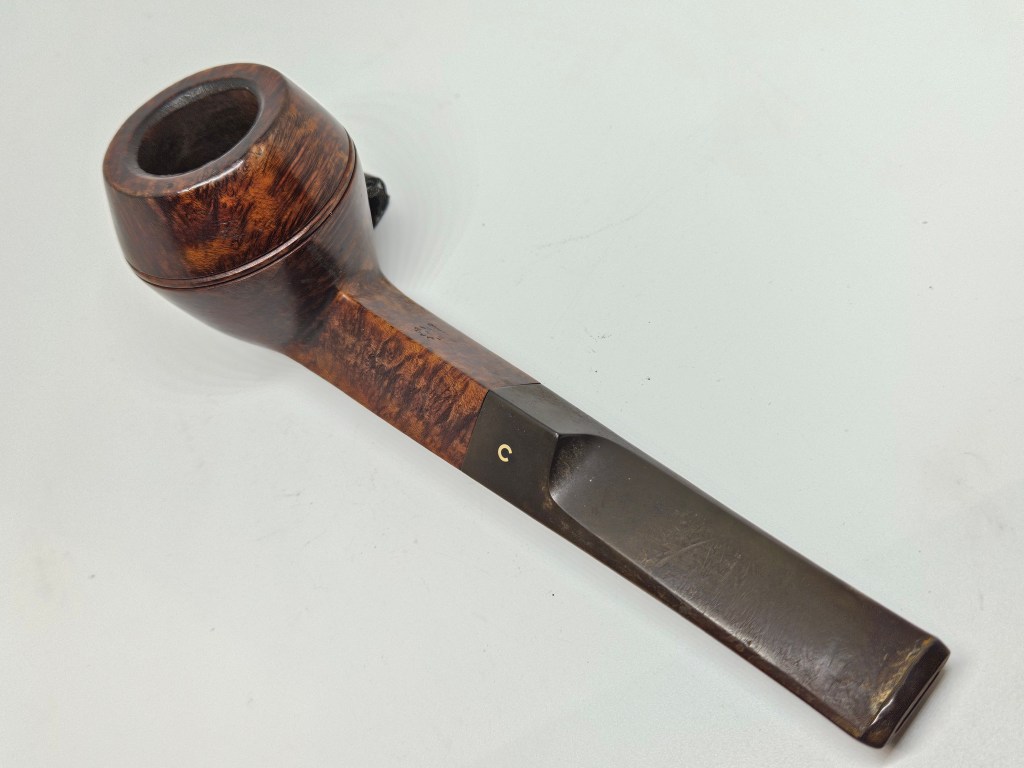
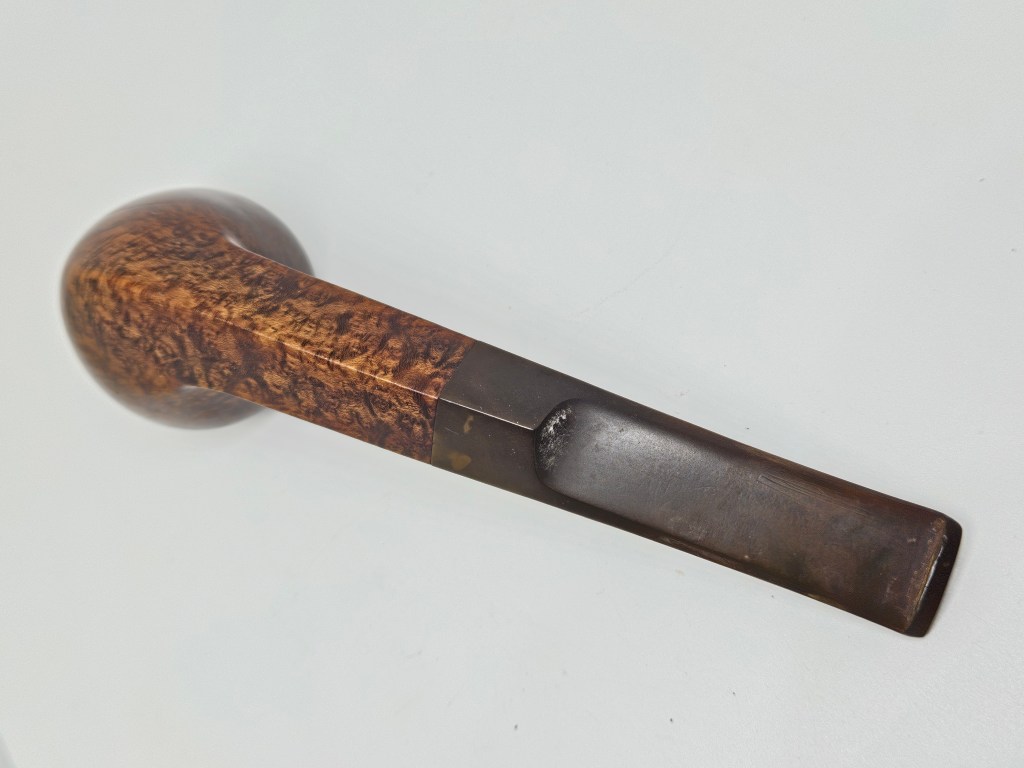
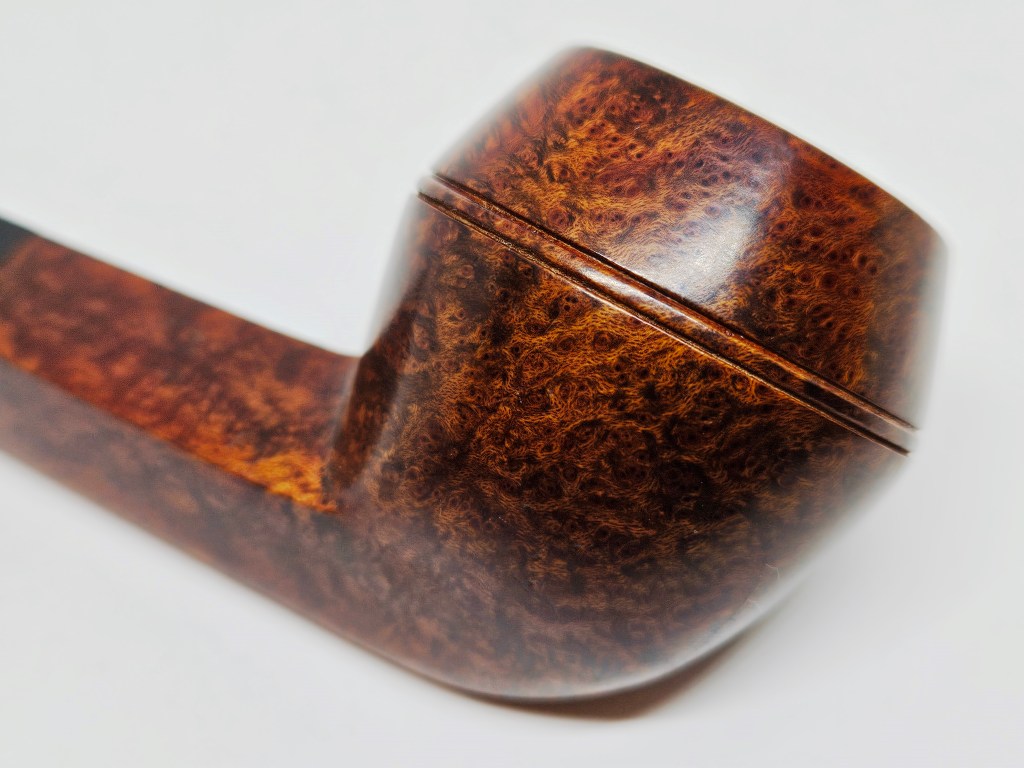
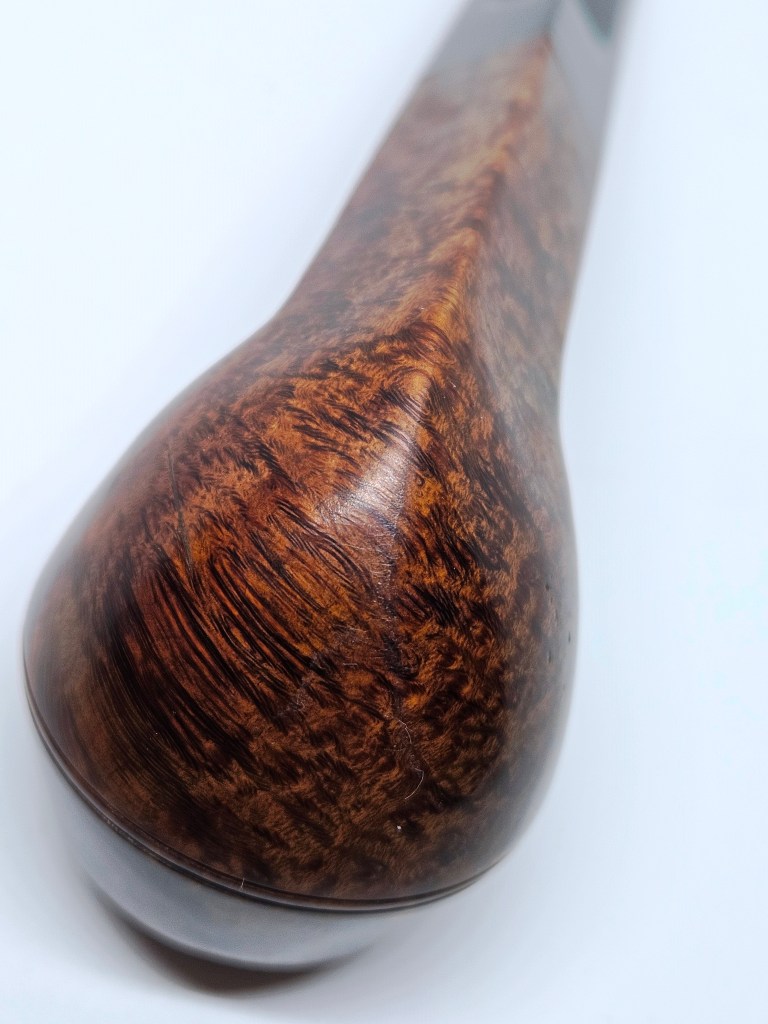
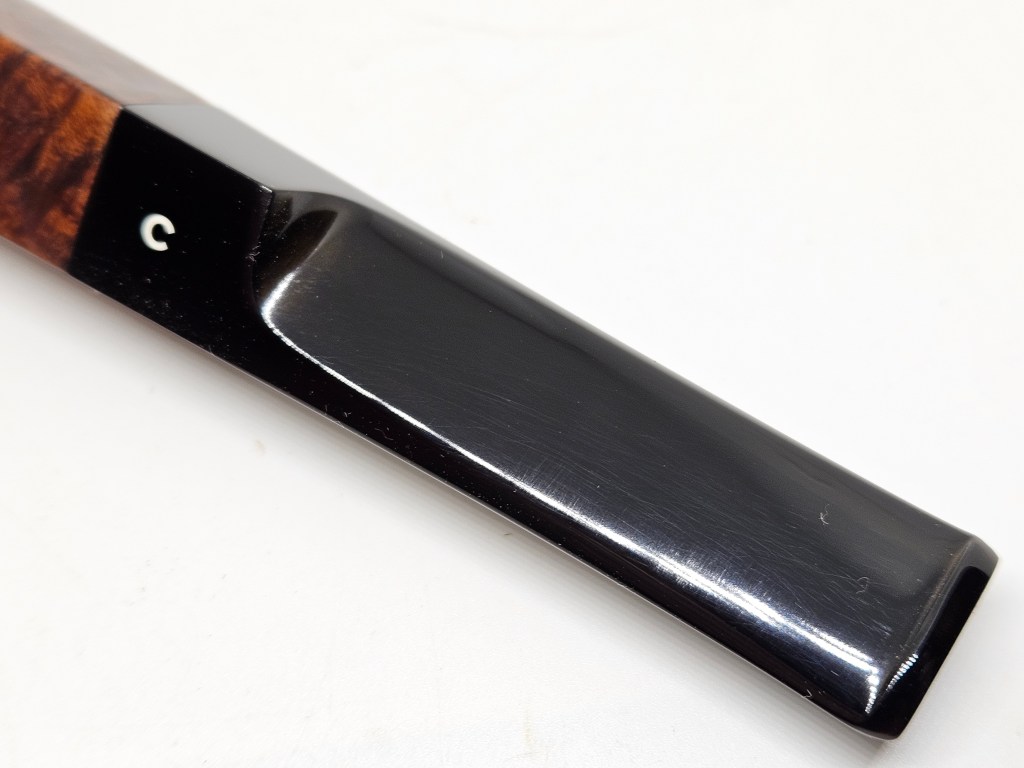
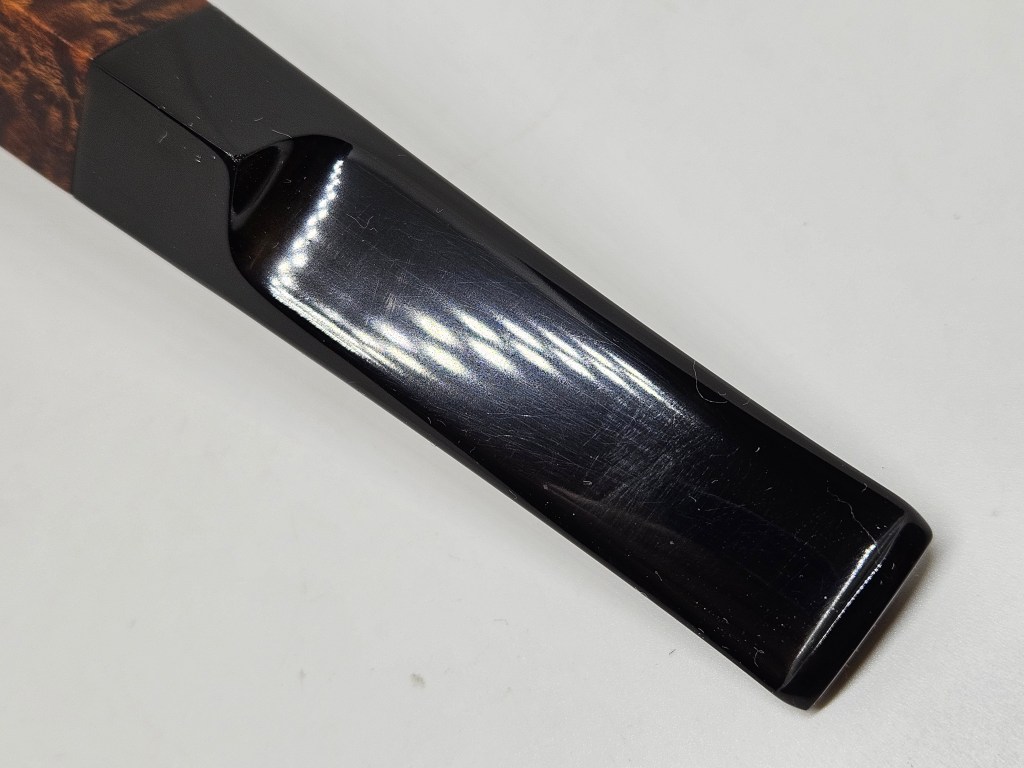
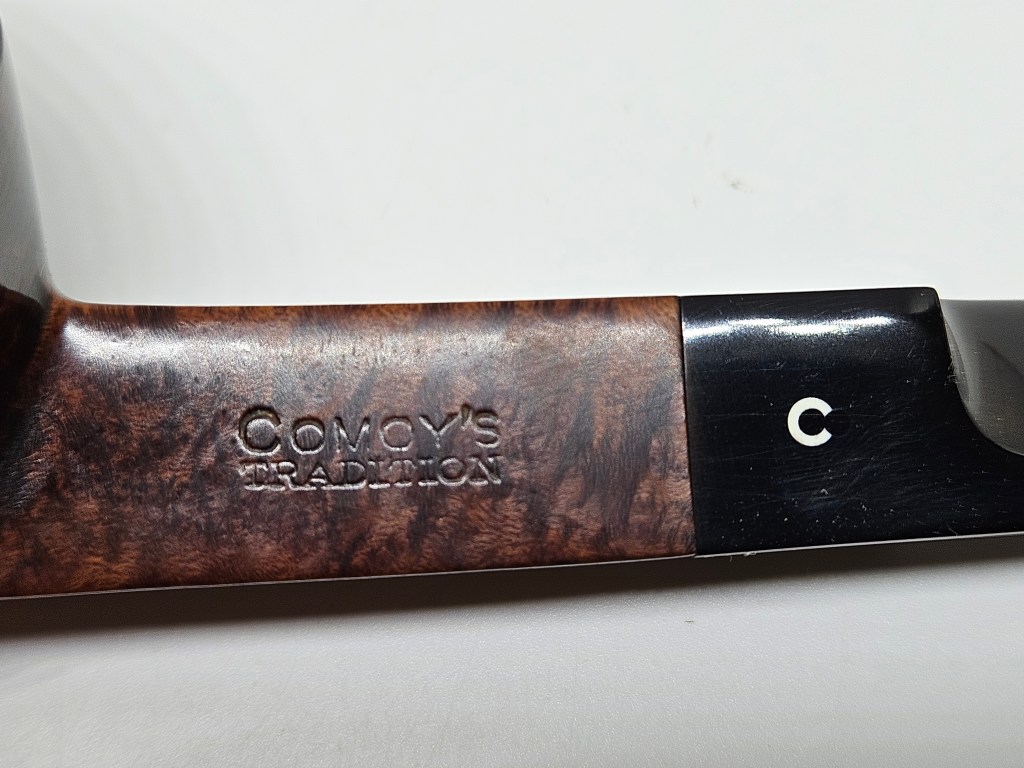
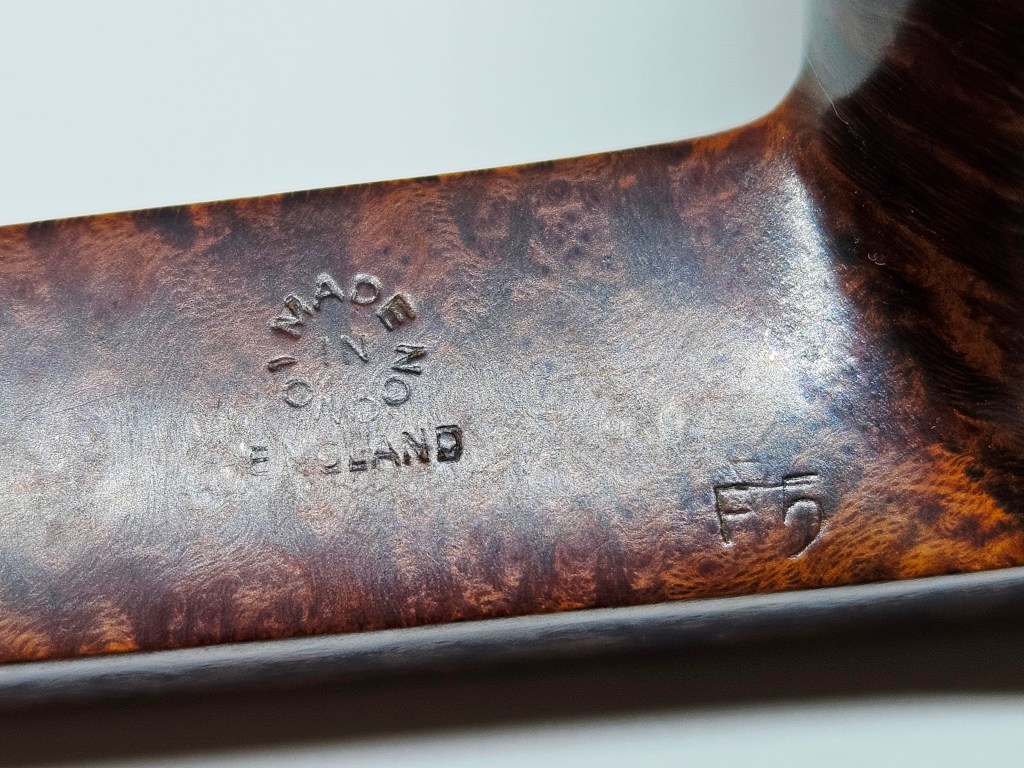
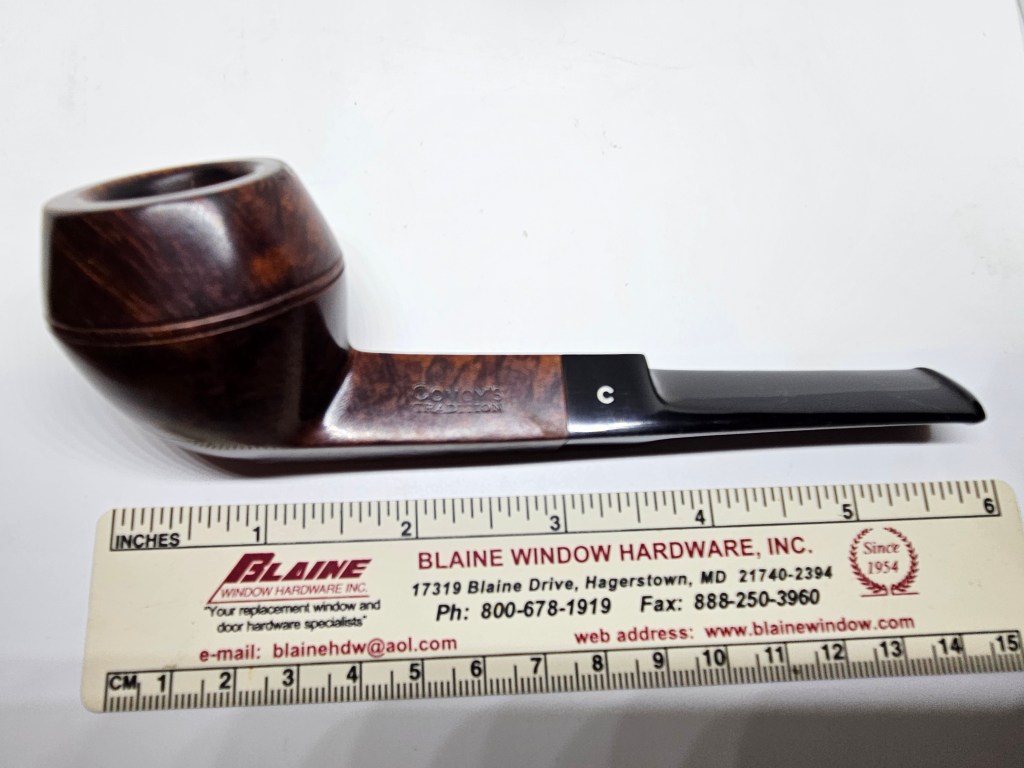
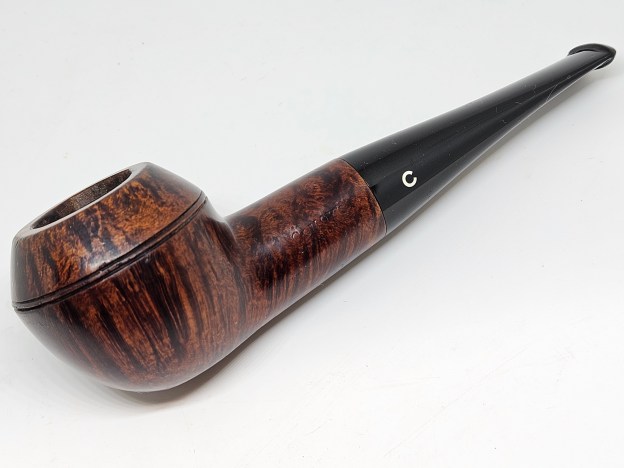
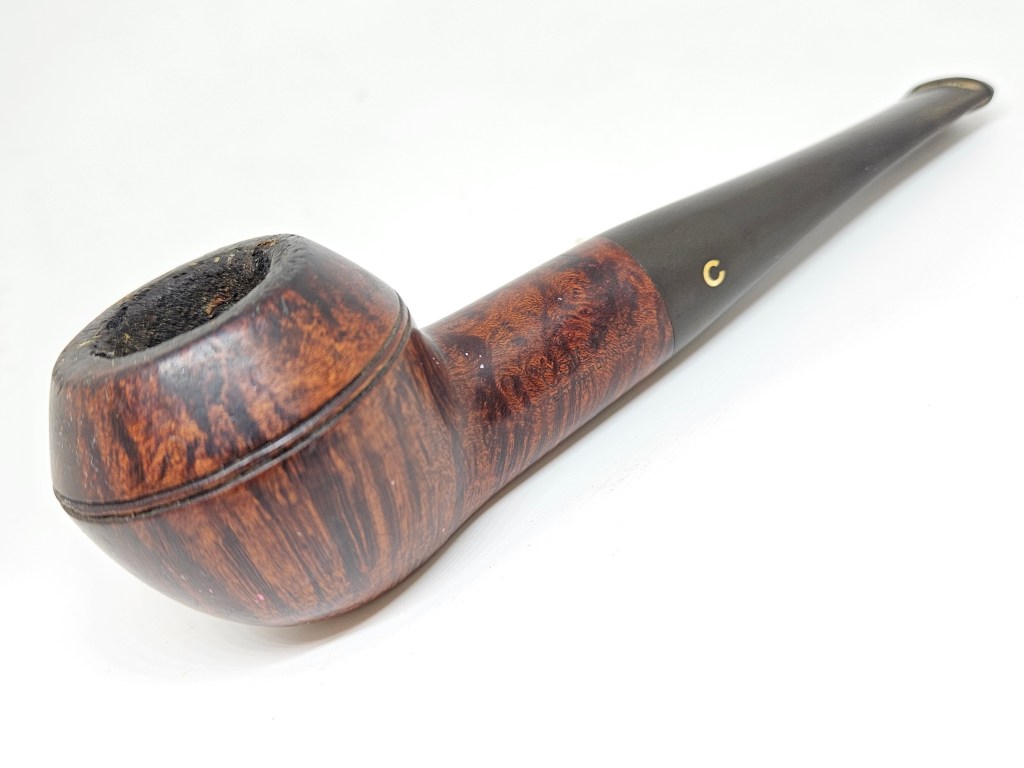
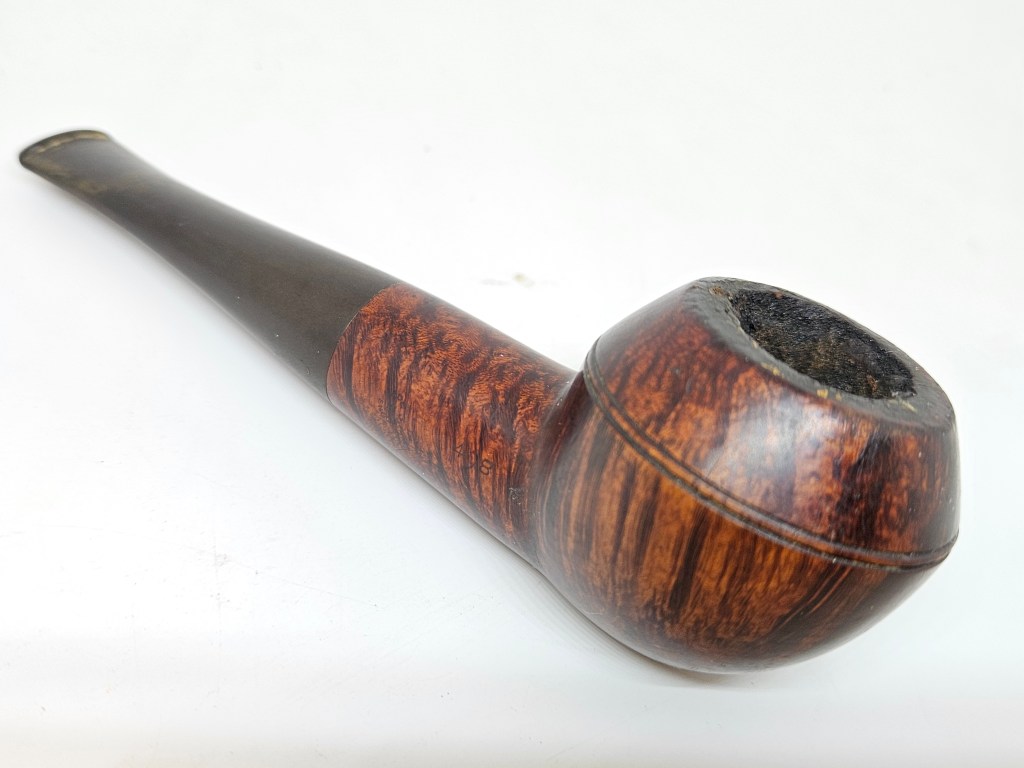
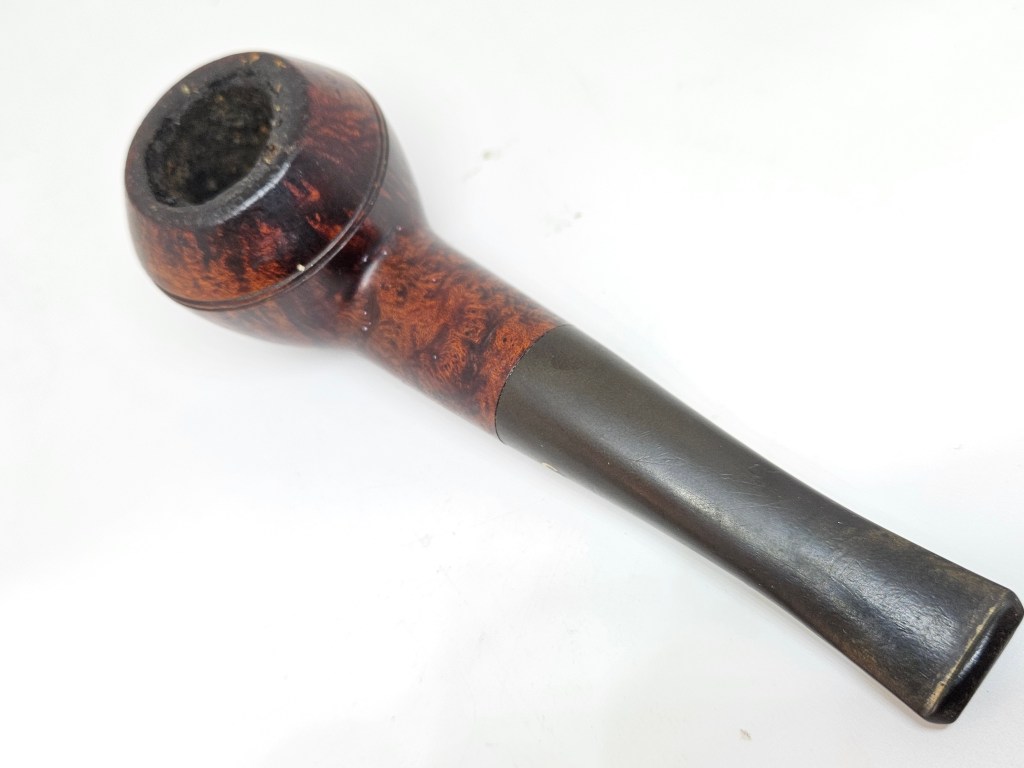
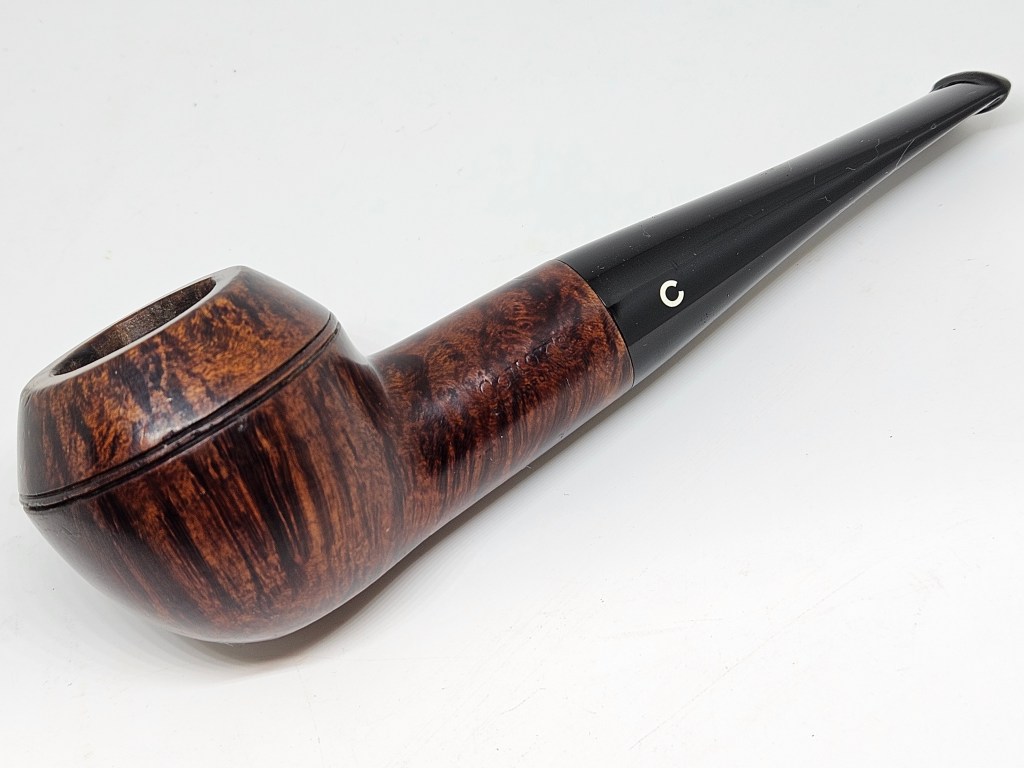
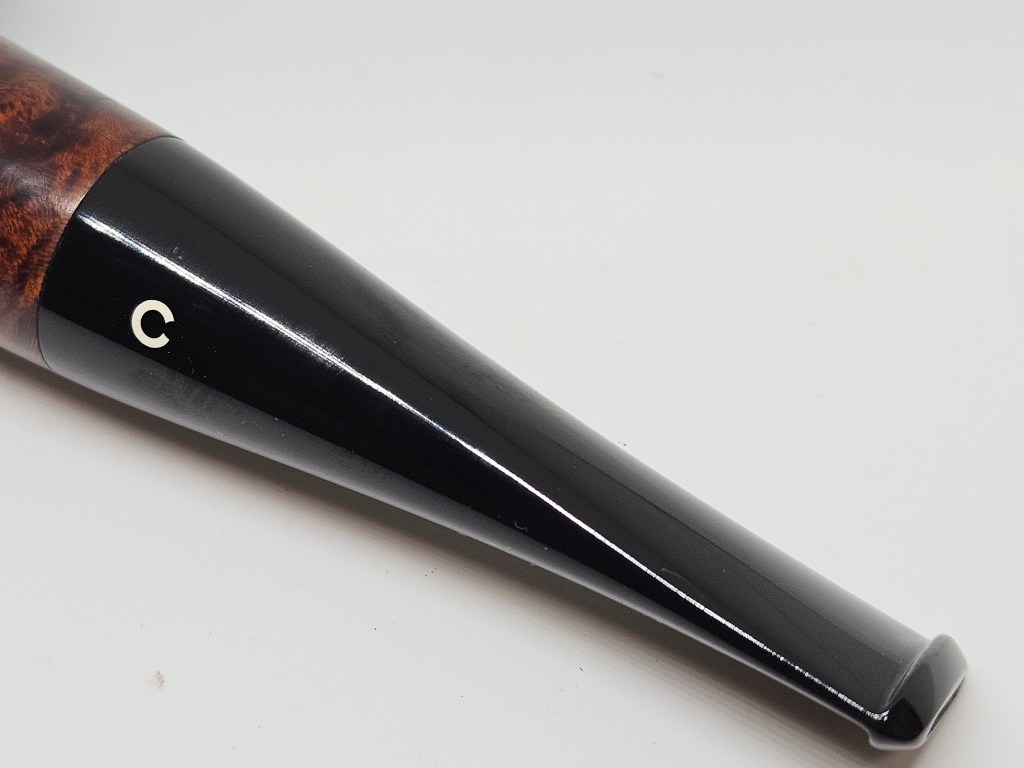
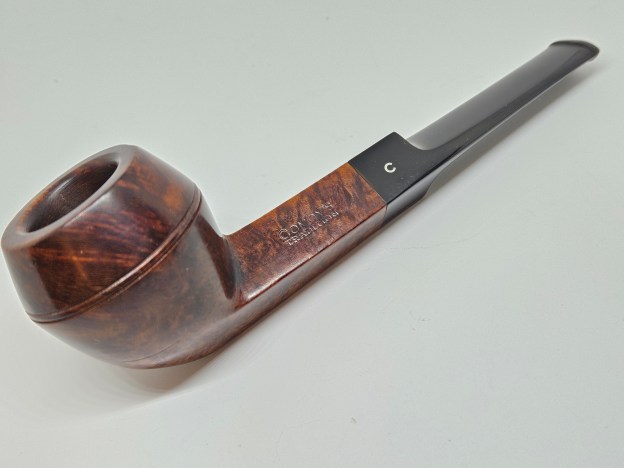
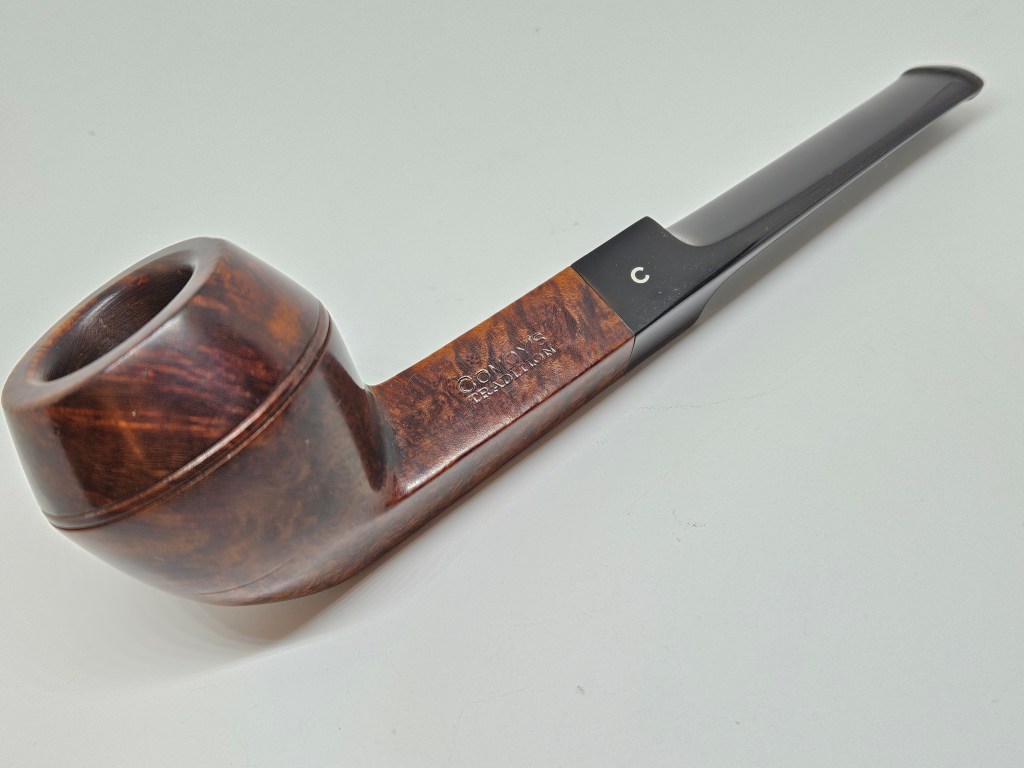
This Comoy’s Tradition is the 2nd pipe I worked on from the group that came to me for some restoration work. This is the Shape 5, Large Straight Bulldog. Curiously, this one has the letter “F” with the 5. I’ve worked on several shape 5’s, but never saw this letter. The COM and drilled C stem logo date the pipe to being made prior to the merger in 1981.

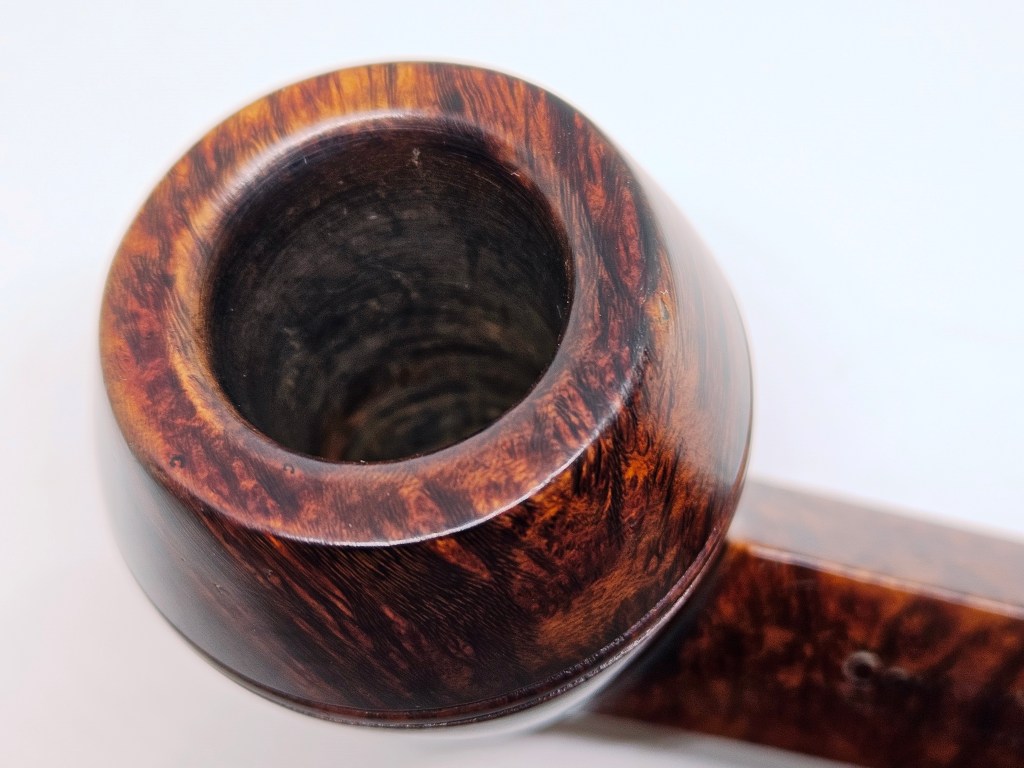
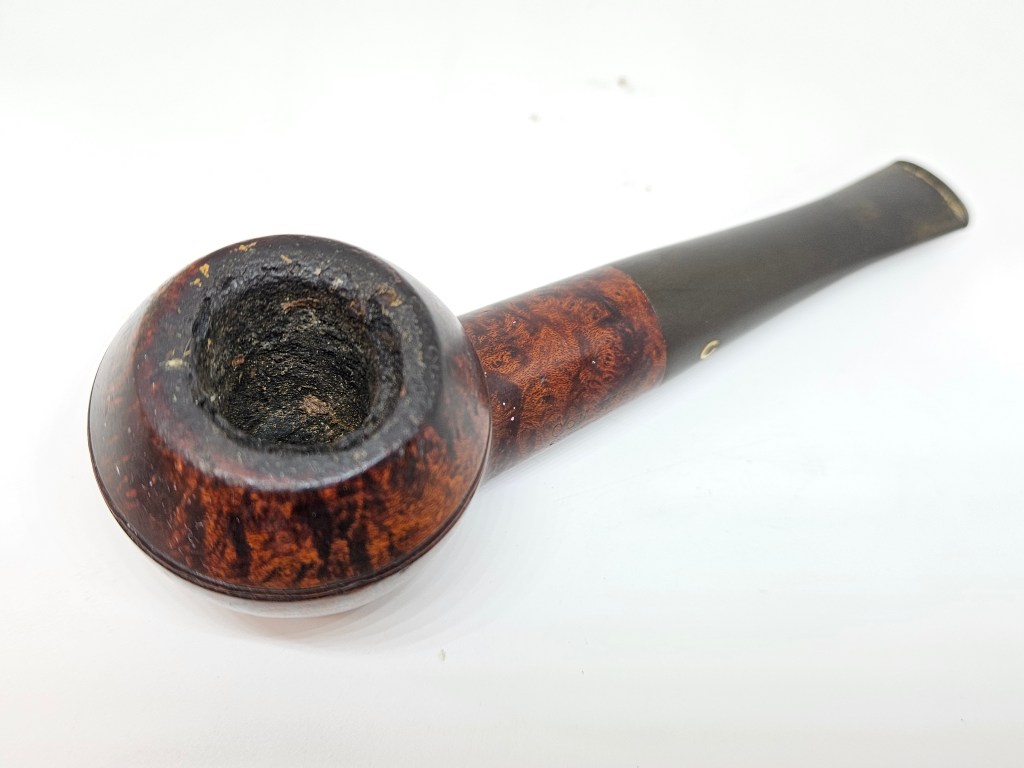
The pipe had an oxidized stem, a heavy cake and some lava on top. There was also a small chip on the edge of the bowl. The stem had no bite marks and the bowl bead rings were perfect. Below is the pipe as it was received (photos taken after the bowl top build up was removed).
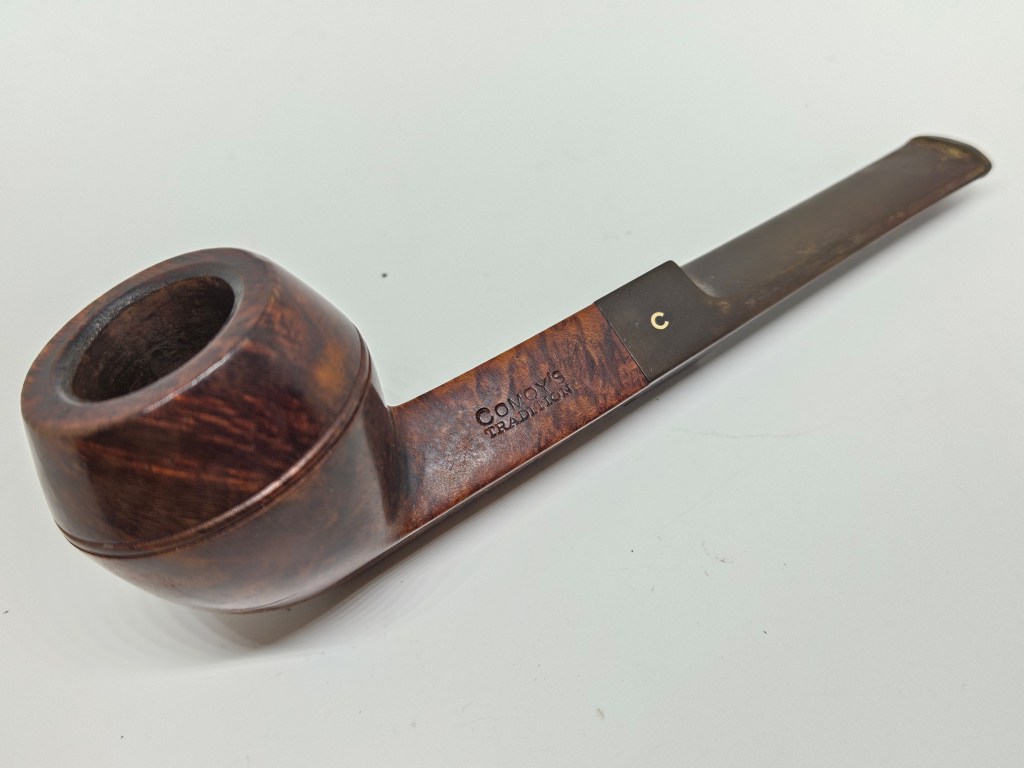
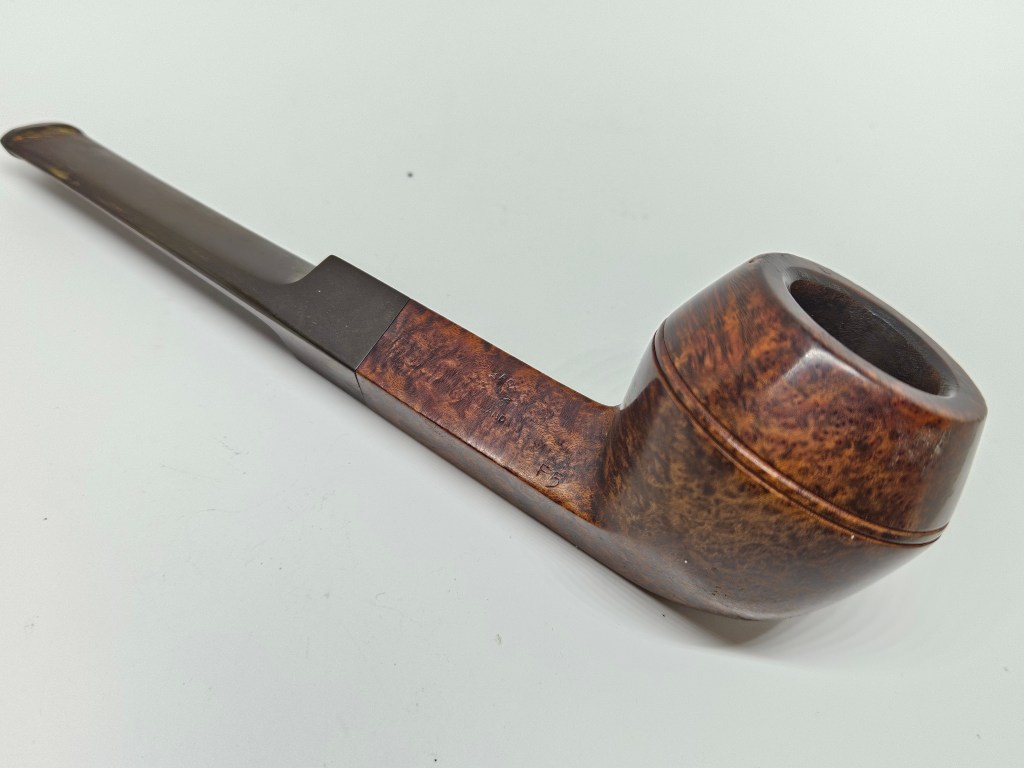
I used some Tripoli with the buffing wheel to smooth out the chip on the bowl top, it’s much less noticeable now. The bowl was reamed, and soaked with alcohol and sea salt.

Following the soak, the stem was mounted and I removed the oxidation with wet sandpaper – 800, 1,500 and 2,000 grades, followed by machine buff with White Diamond rouge then Meguiars Plastic polish. The bowl was buffed lightly with White Diamond rouge and several coats of carnuba wax.

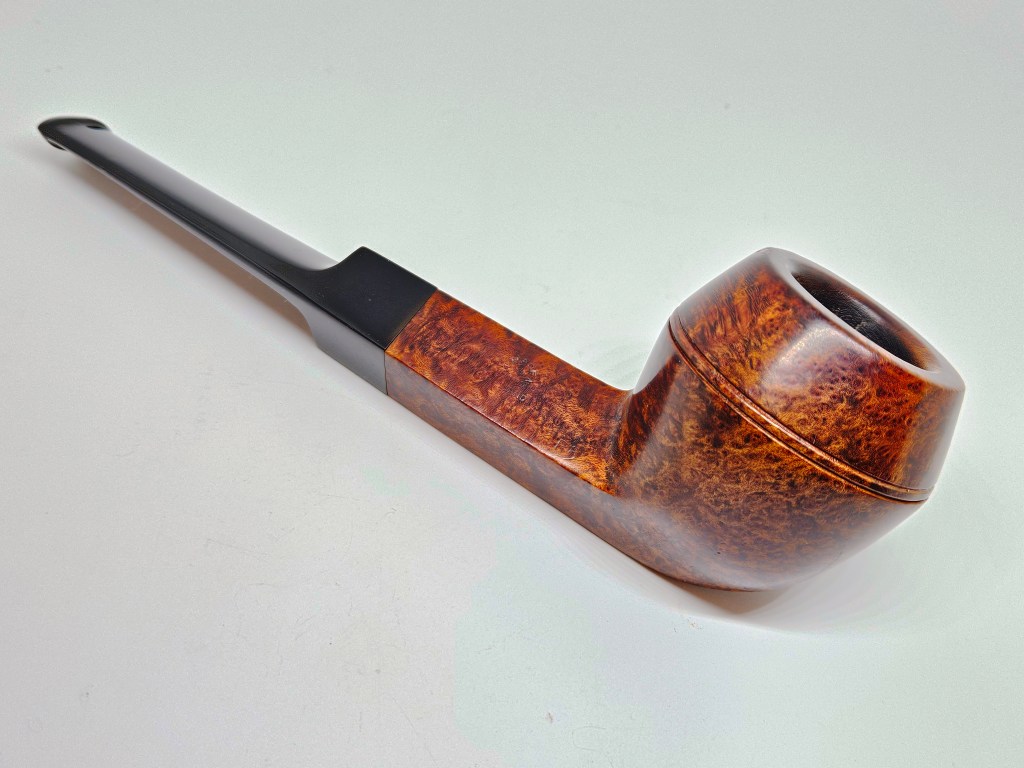
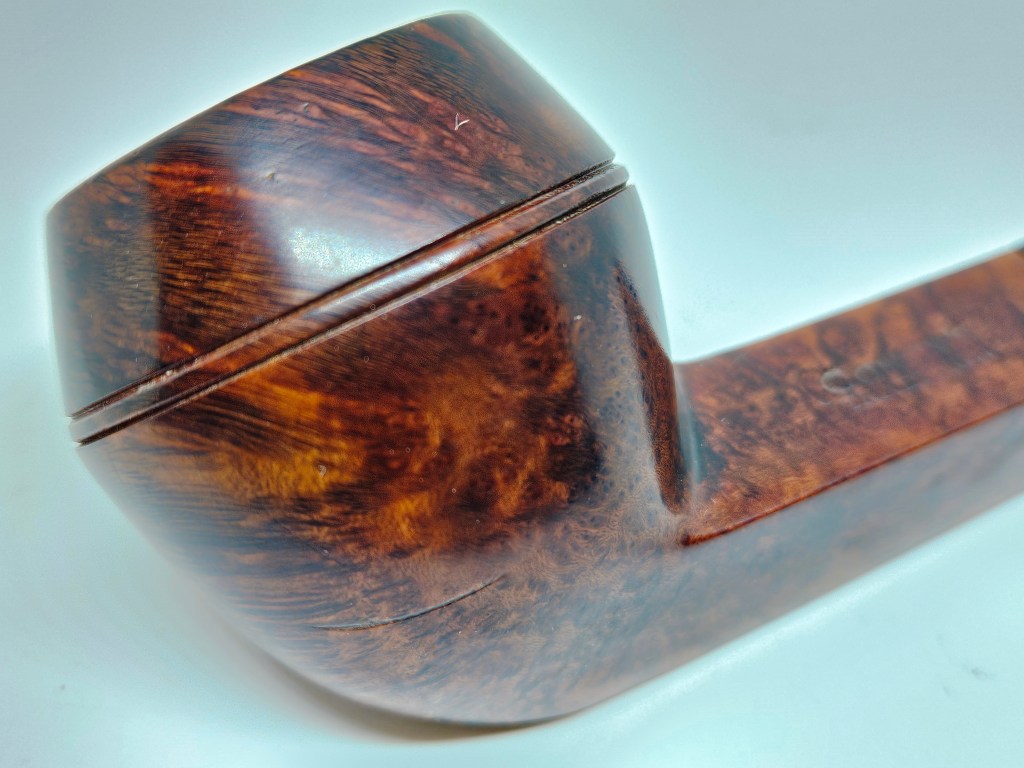
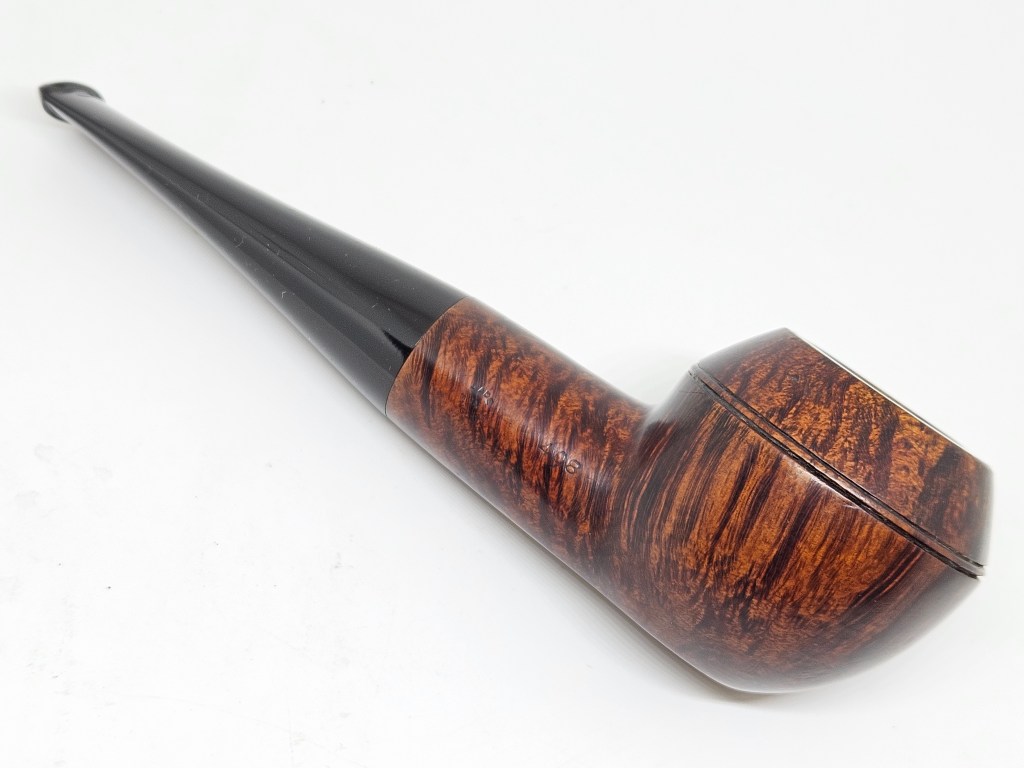
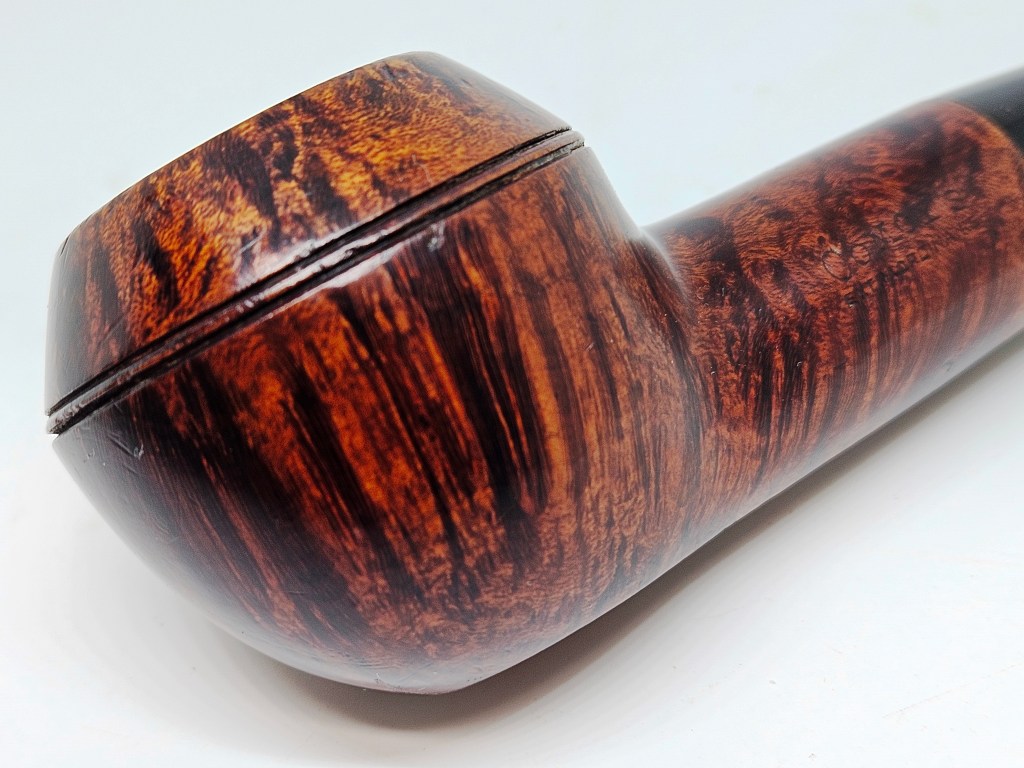
Below is the finished pipe:
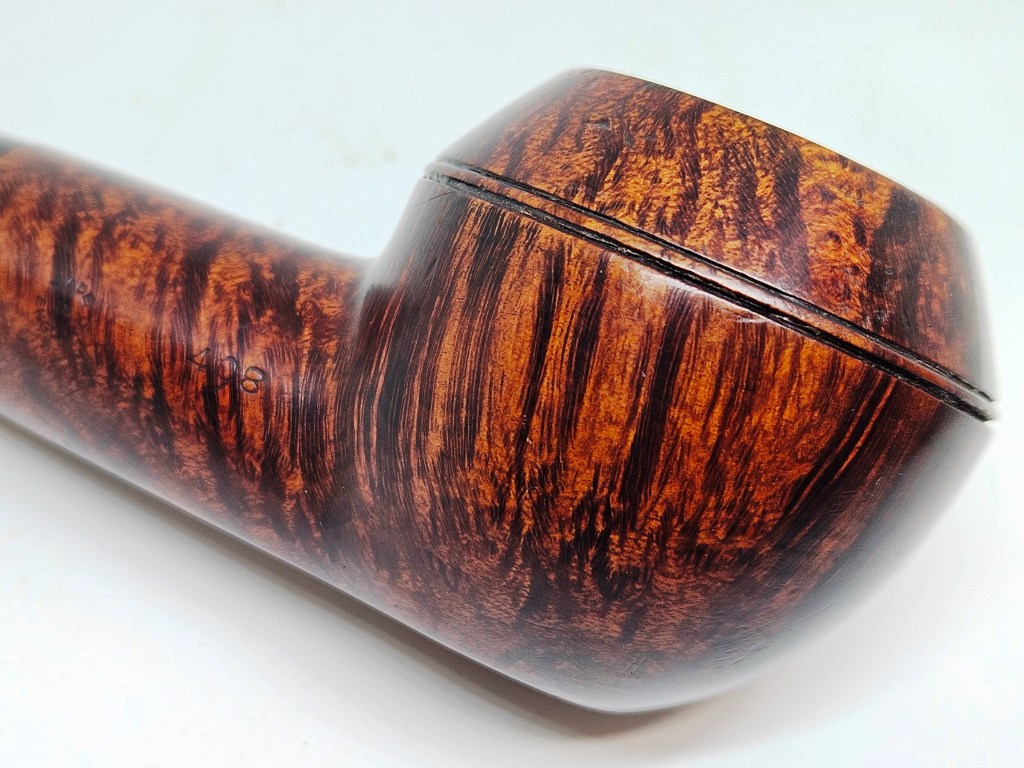
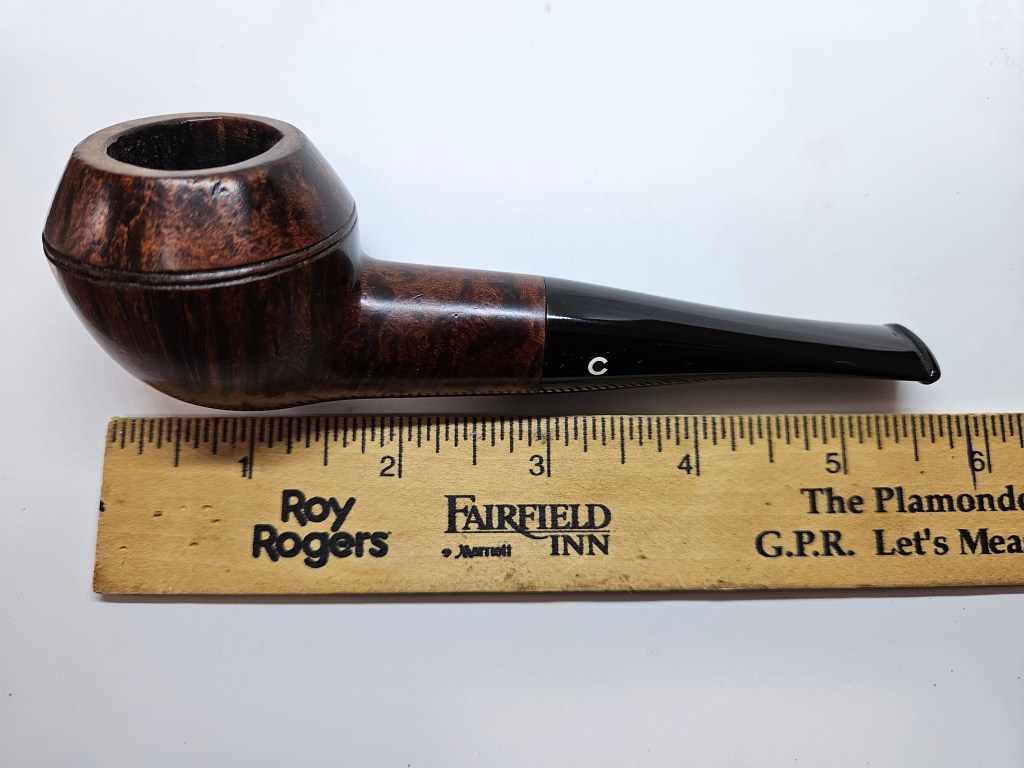
Comoy’s 498 Extraordinaire Restored (1930’s)


By Al Jones

This is the first restoration I’ve done since moving from Maryland to Louisiana. My work bench is setup again in my garage but my tools and supplies are still scattered about the garage. But, it was good to be able to work on a pipe again.

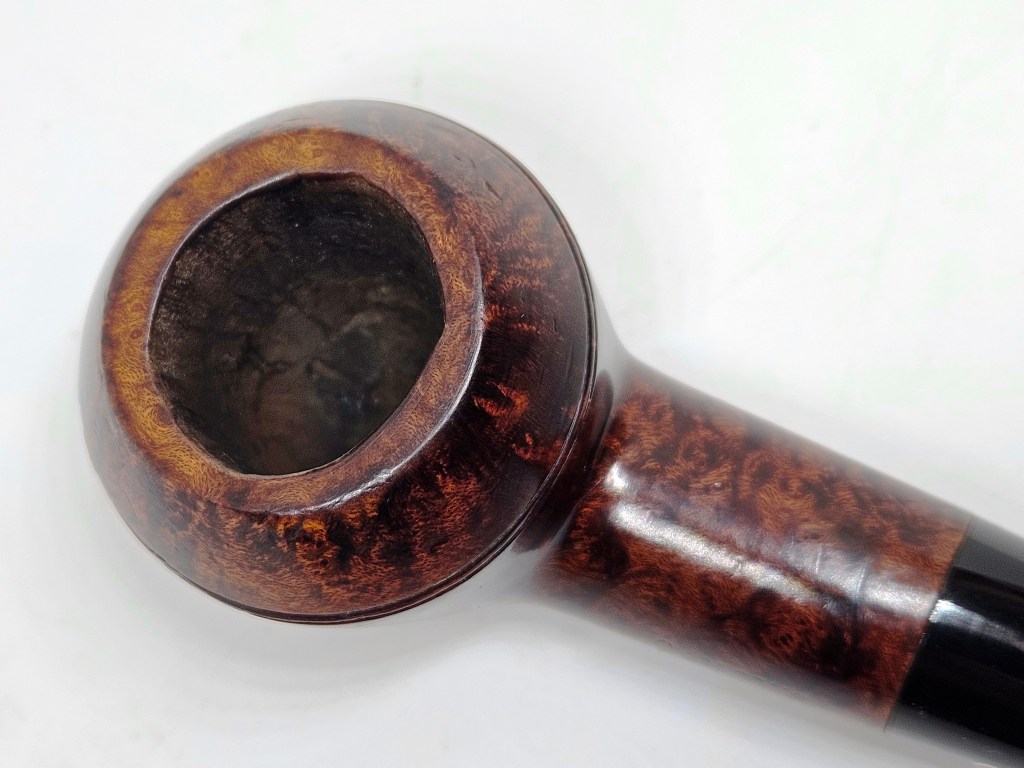
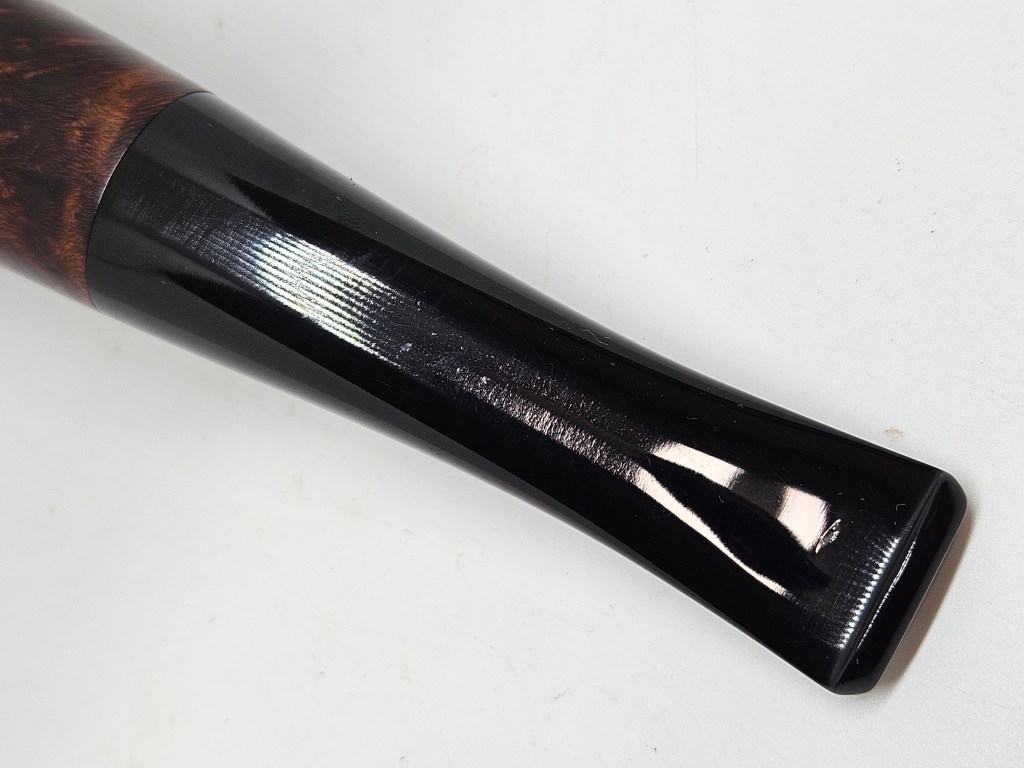
This Comoy’s 498 Extraordinaire showed up on eBay and the seller accepted my modest offer. The pipe had some serious cake and lava over the bowl top. The stem was lightly oxidized with only one bite mark under the button.

I date this pipe to the 1930’s due to:
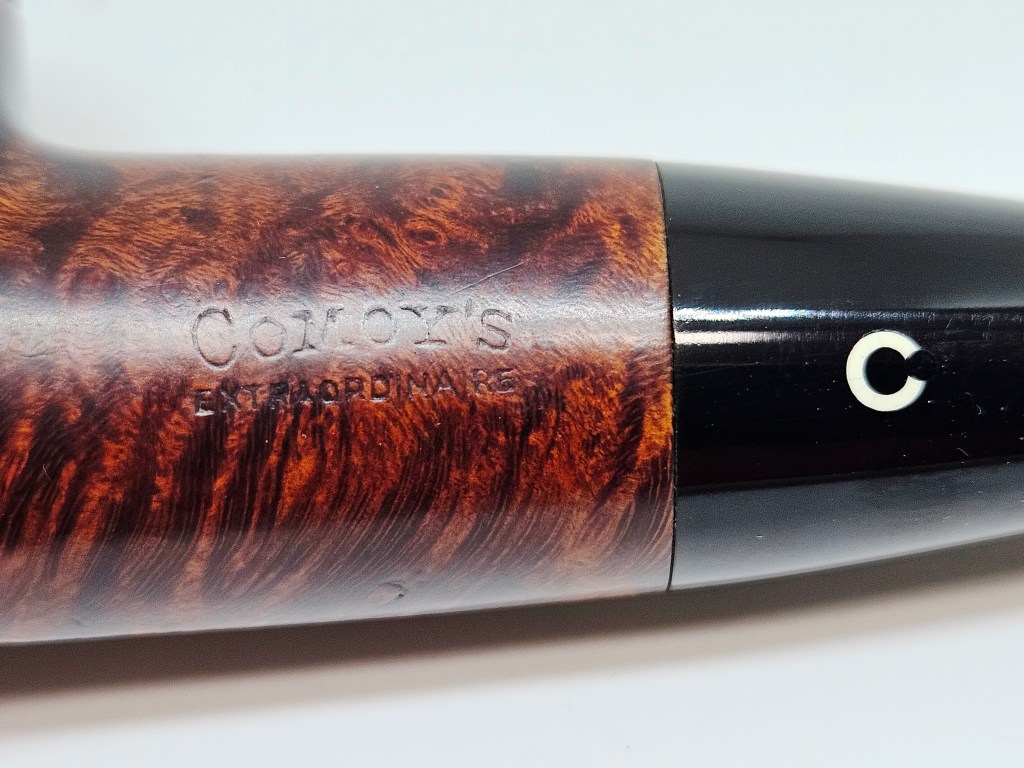
  • Arched “Comoy’s logo
  • Multi-piece C stem logo
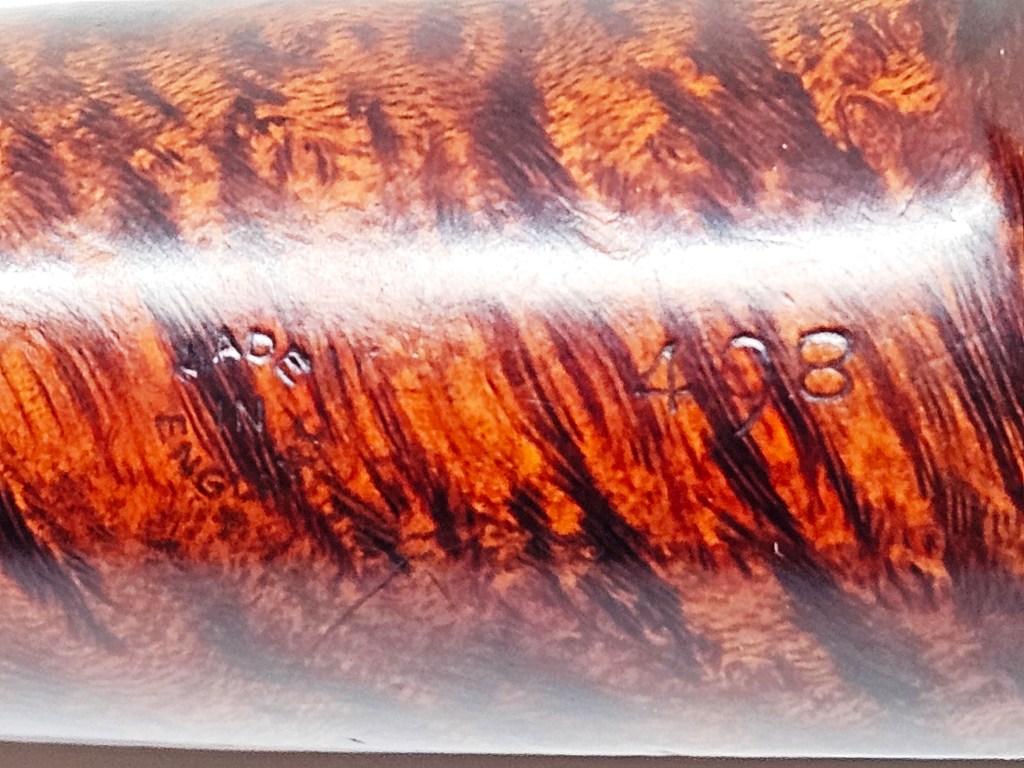
  • Round “Made In England country of manufacture stamp (COM)

The nomenclature was in very legible condition.

Pictures of the pipe as received are below.

I used a worn piece of Scotch-Brite to remove the build-up on the bowl top. The cake was removed using my PIpenet reamer. At some point during its 90 years, some owner used a sharp tool and got the bowl out of round. I used some 320 sandpaper to slightly reshape the bowl. To restore it fully would require topping the bowl considerably, and I decided against that. The bead rings were in pretty good shape, just full of crud. There are some handling marks and dings around the bowl, but I left that earned character in place.

I plugged the shank end of the bowl and filled it with sea salt and alcohol to soak. Following the soak, I scrubbed the shank with a bristle brush dipped in alcohol.

The stem was mounted and I removed the oxidation with 800, 1,500 and 2,000 grade wet sandpaper. The stem was then buffed with White Diamond and several coats of Carnuba wax.

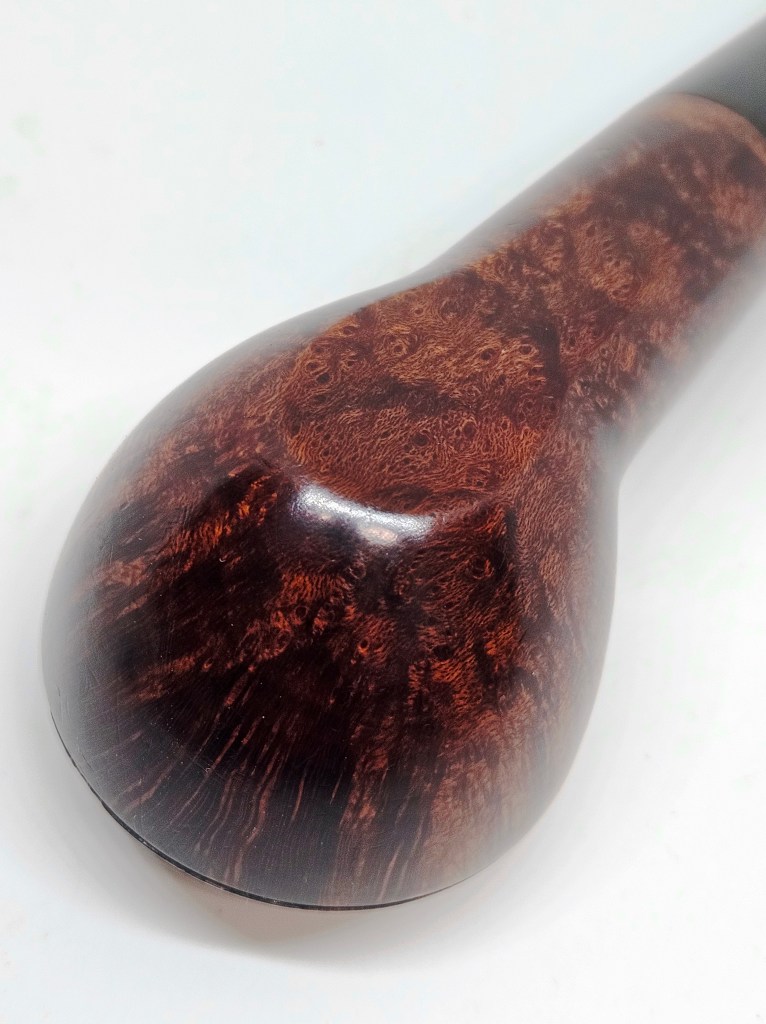
Below is the finished pipe, ready for another 90 plus years!

A Set of Twins – Bent Royal Coachman Billiards by Comoys


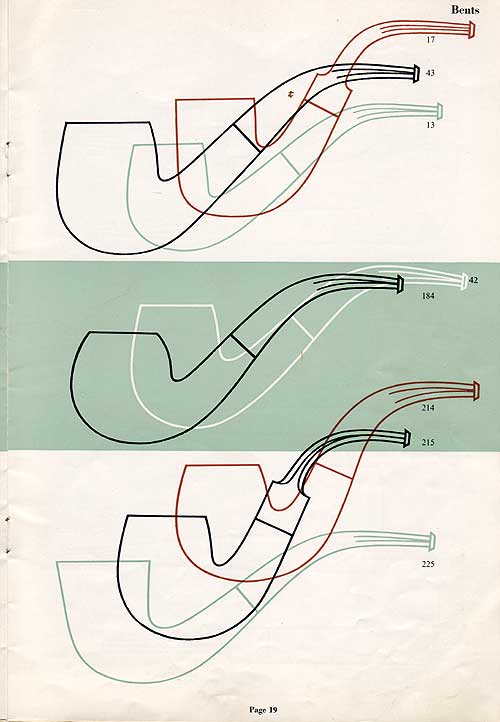
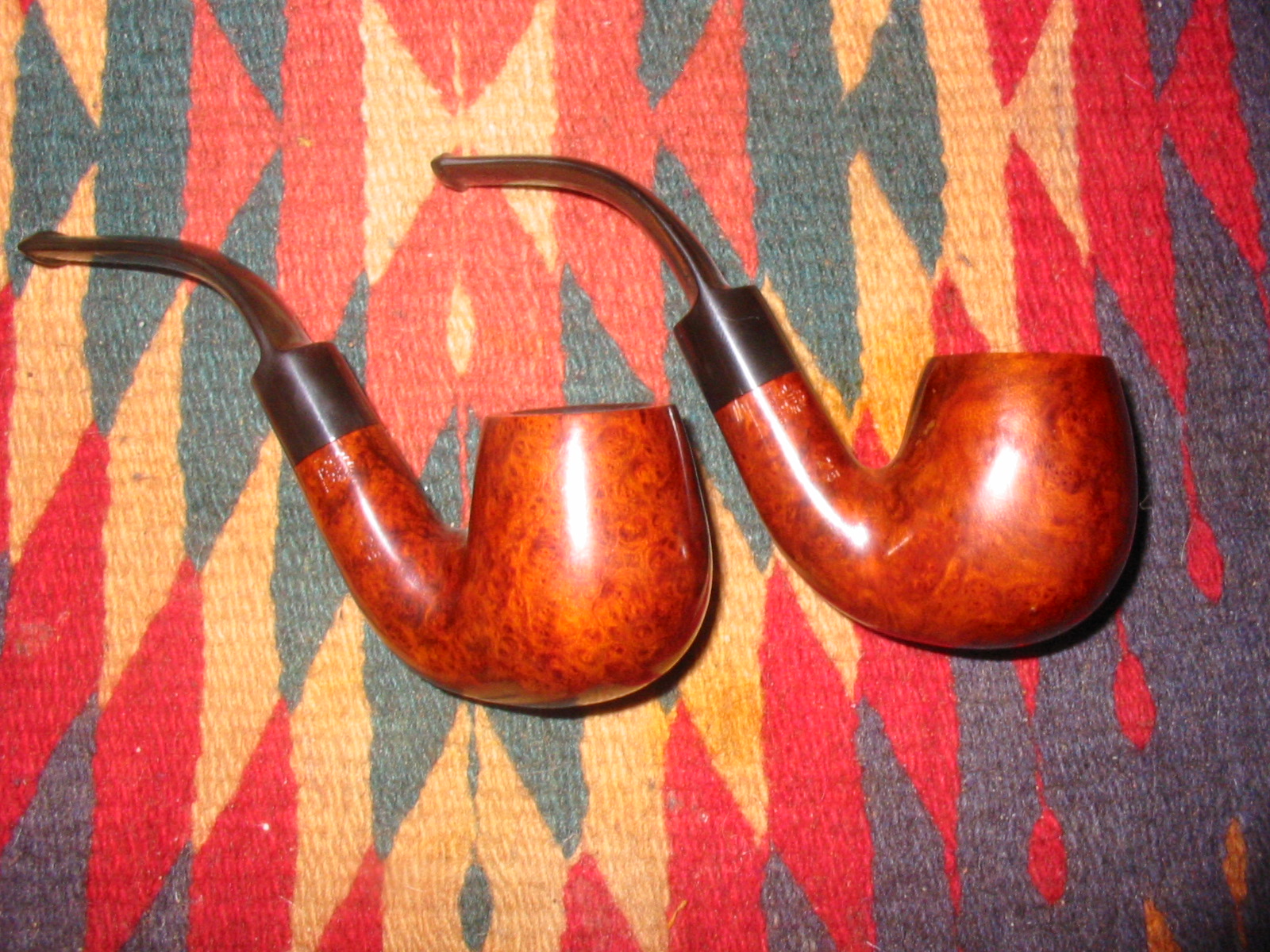
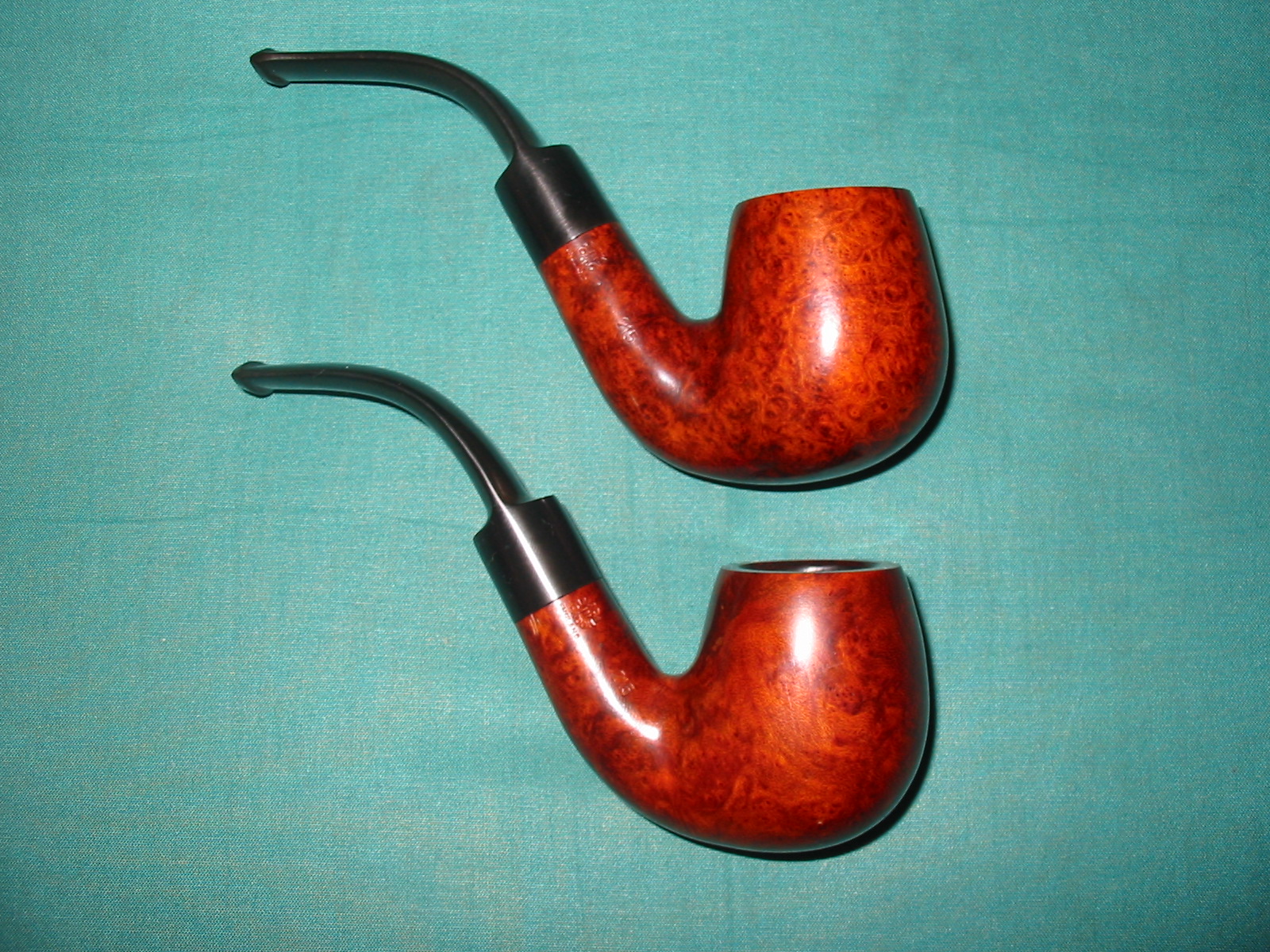
On a recent adventure I found a pair of bent billiards that had the Made in London England circle stamp on the right side of the shank and the Germanic script stamping, Royal Coachman on the left side of the shank. They were also stamped with a shape number 215. I did a bit of research to see if I could identify the maker. From the markings I was pretty confident that I was dealing with a Comoy’s seconds line but wanted to make certain I was right. The circle stamp on the right side of the shank was a giveaway to that identification. The shape number looked very familiar to me and the overall look said Comoys. So I looked in two the places that I always go to when beginning a hunt for info. The first is a website set up by Pipephil called Logos and Stampings. There I found that the Royal Coachman was indeed a Comoys brand. The site showed that the pipes were made by Chapuis-Comoys. The second site I looked at was Chris’ pipe pages http://pipepages.com/64com19s.htm . Chris has collected old catalogues and documents that give shape charts and many historical materials that cannot be found in other places. I have copied a page from the shape chart below and you can see that the 215 shape number matches not only the Comoys number but also the shape.
64com19
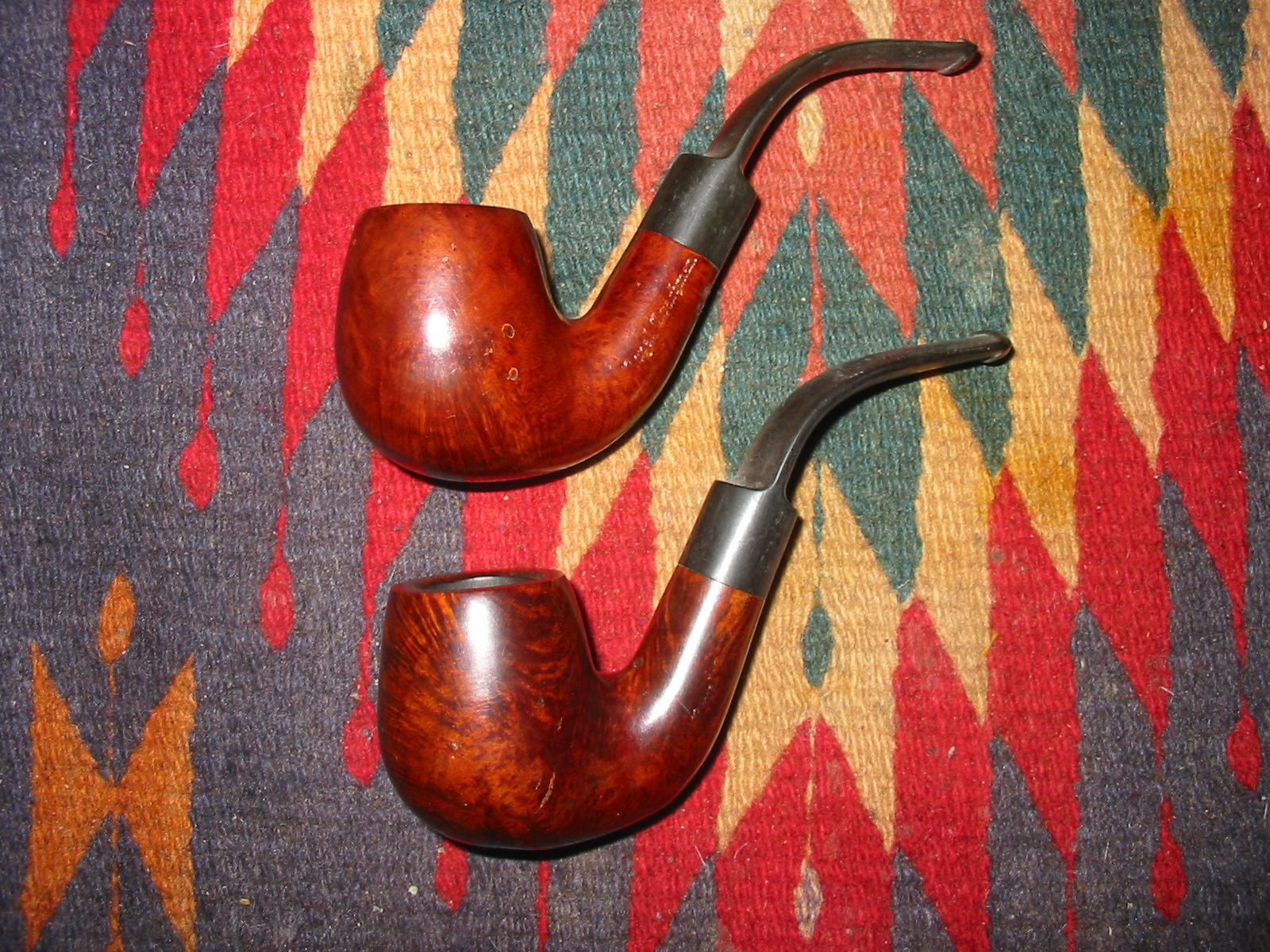
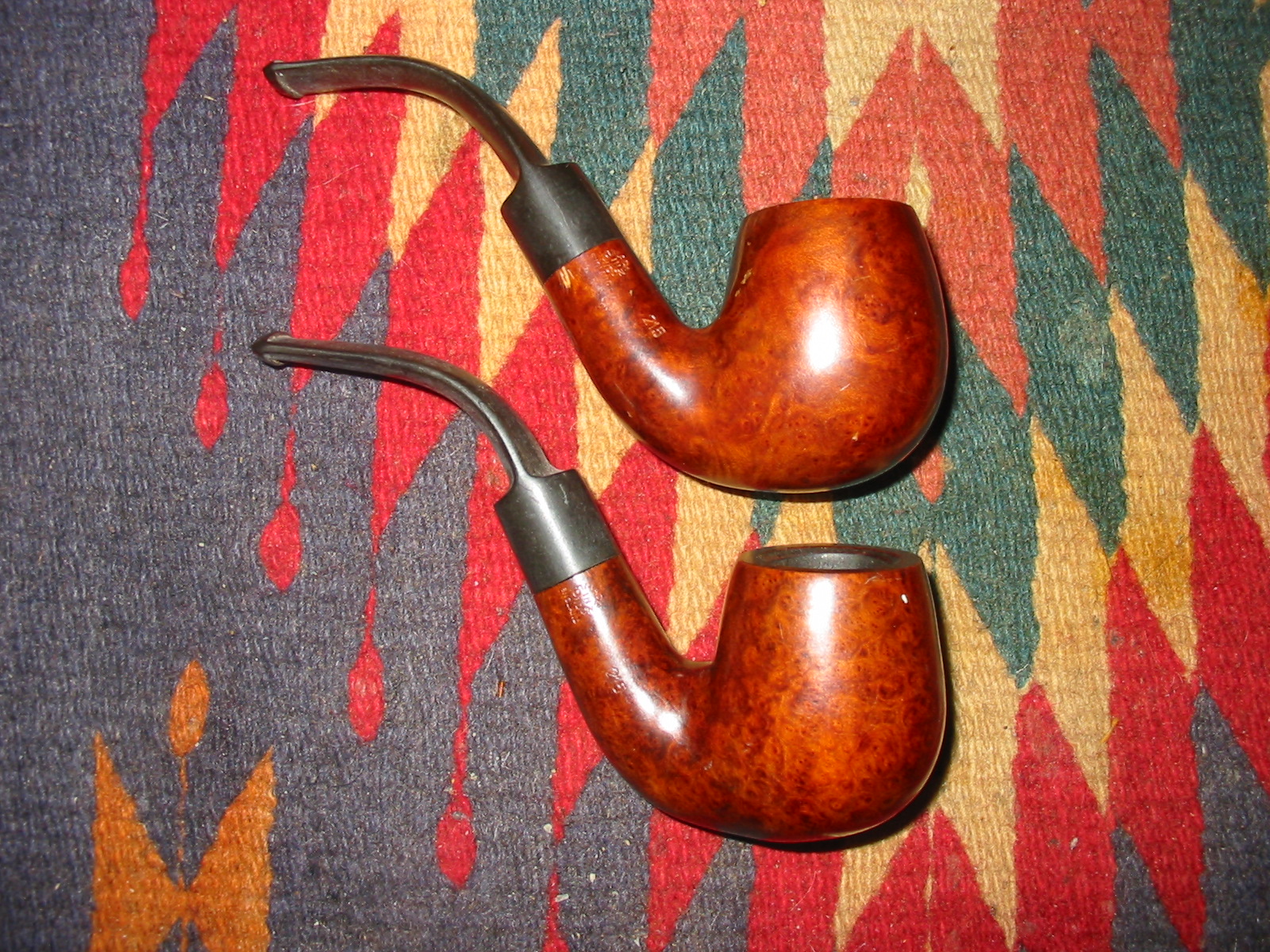
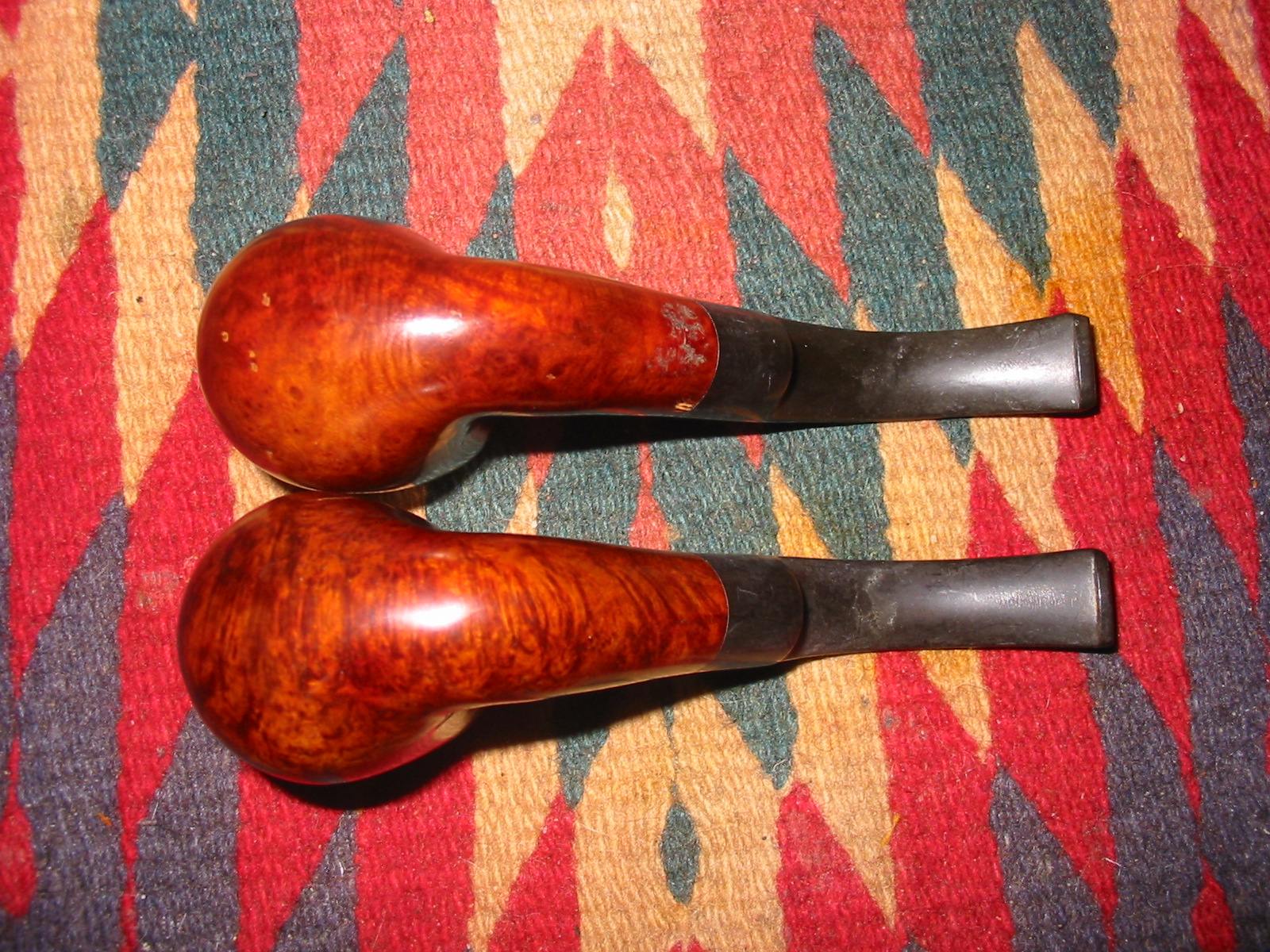
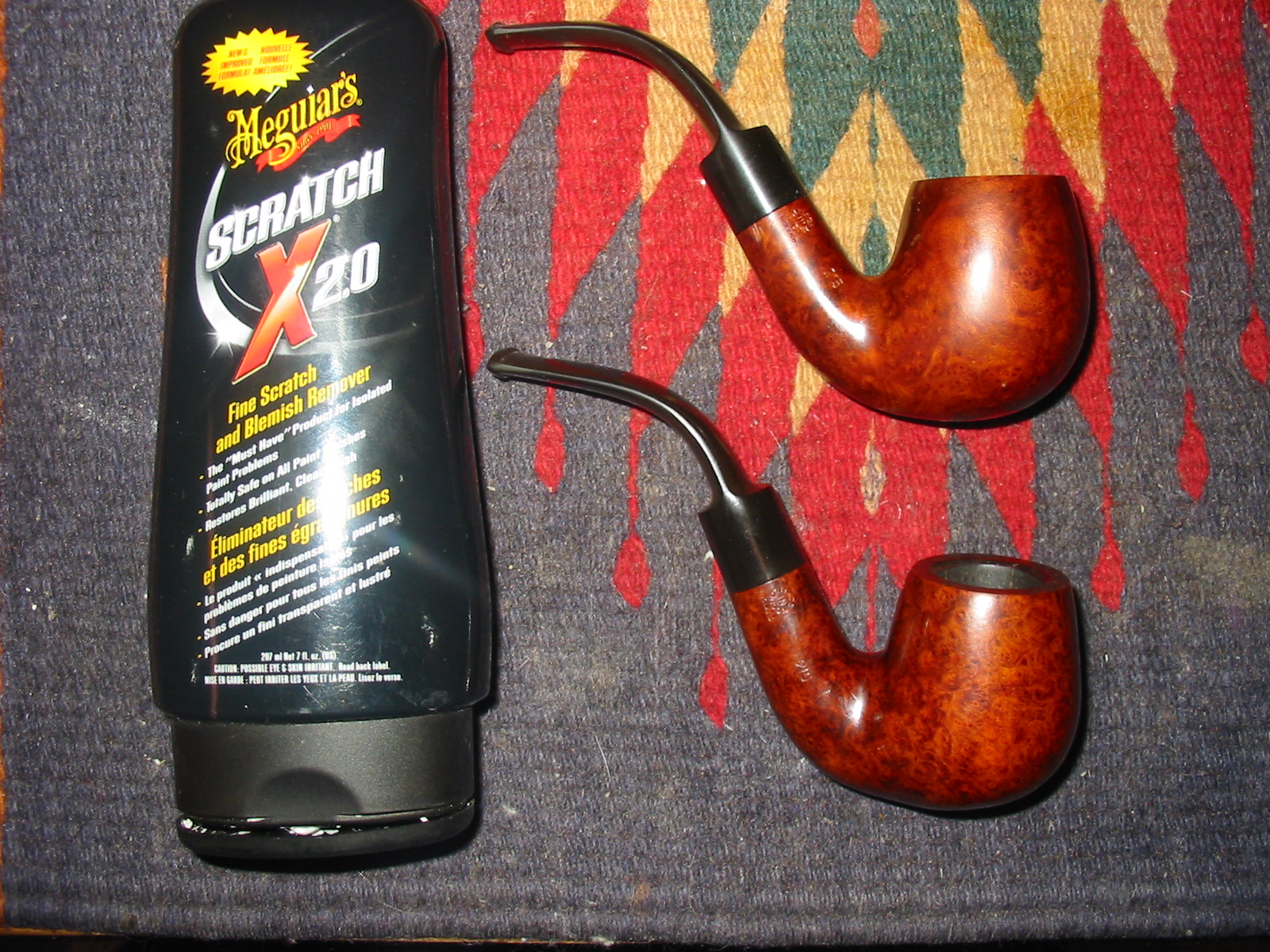
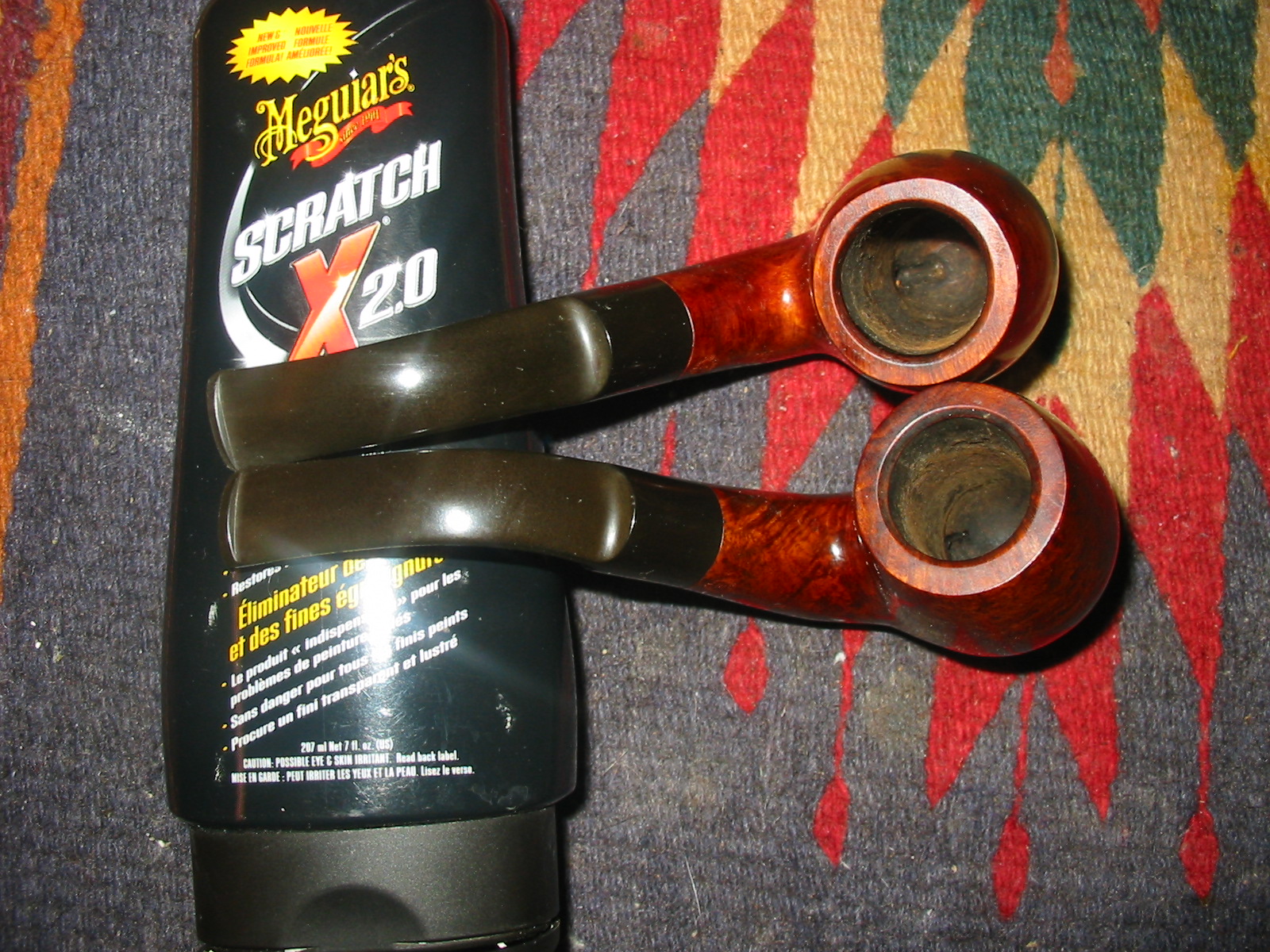
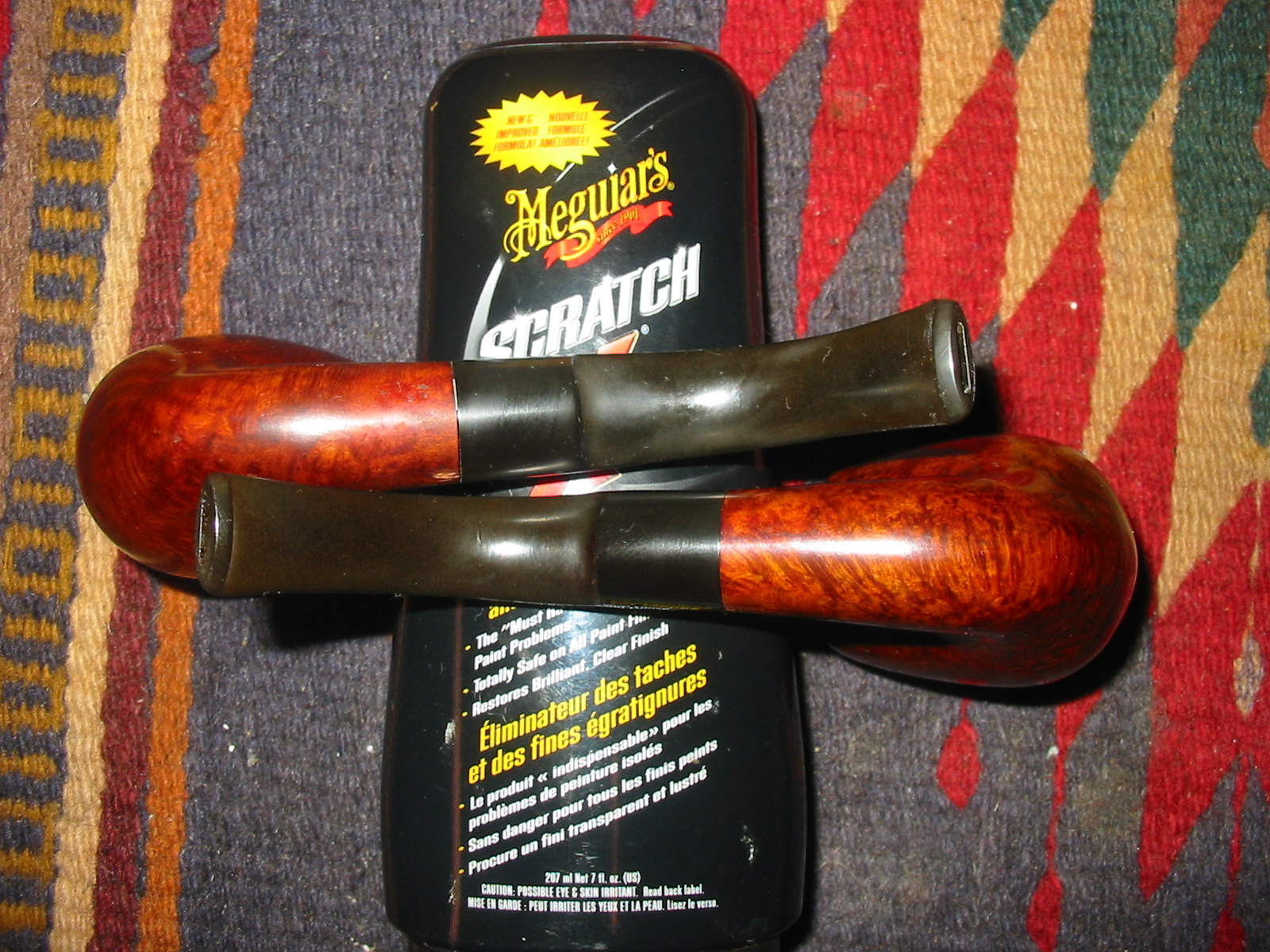
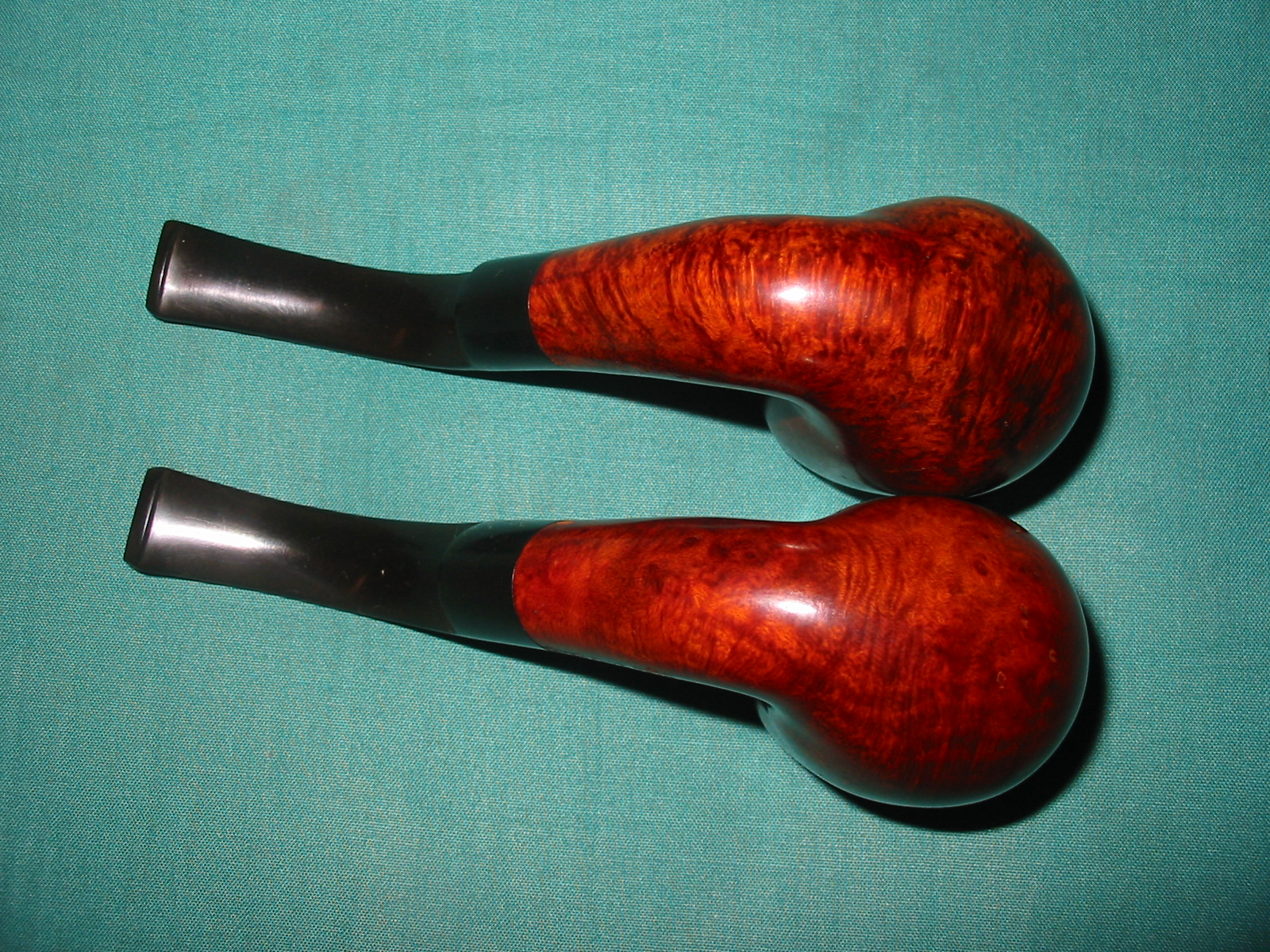
When I brought the pipes home from the antique shop they looked like the photos below. There were actually in pretty good shape for their age. The dealer said that he bought these along with 20 other pipes from a widow who was selling off her late husband’s estate. He had some interesting old pipes and I was able to pick through them and brought six of them home with me. These are the first pair of the bunch. The bowls were lightly smoked with a bare minimum of cake. The top pipe in the picture below was less smoked than the bottom one. Both pipes were grimy on the outside of the bowl and had some oxidation on the stems. There were no tooth marks on the top pipe and only a little tooth chatter on the underside of the bottom pipe. The top pipe has three small fills that are visible in the first photo below and a slight nick in the shank on the right side near the stem. The second pipe has a few fills as well with the largest of them visible low on the left side of the bowl in the photo below. The rims on both were clean and undamaged and showed no tar build up. On the right side of the bowl of both pipes there was a small spot of white paint.
IMG_6852

IMG_6853

IMG_6854

IMG_6855
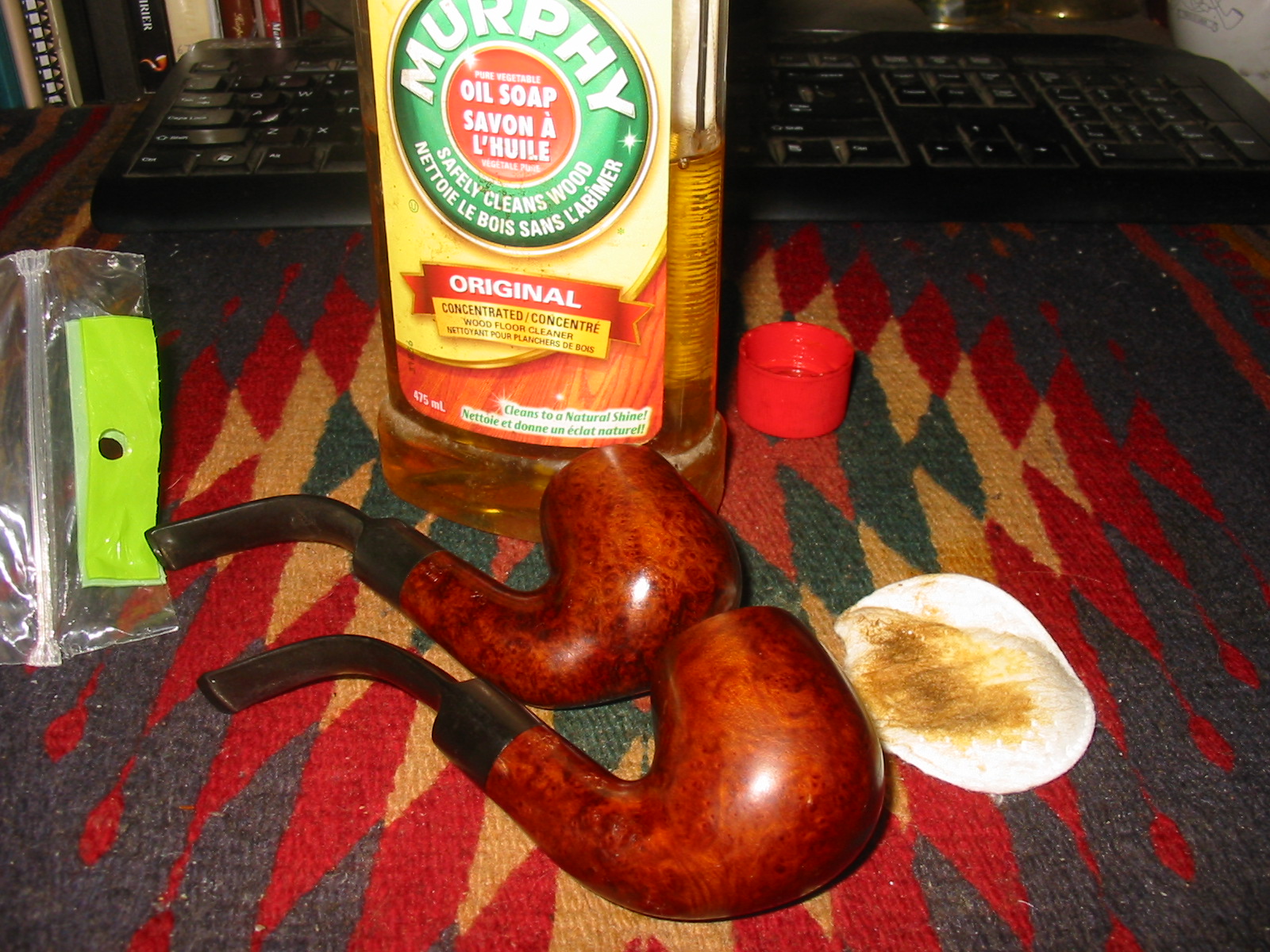
I reamed the bowls with a PipNet reamer to remove the slight cake build up and clean out the bowl. I wiped down the exterior of the bowl with Murphy’s Oil Soap to remove the grime and grease build up. It also took off the paint spots on the right side of the bowl. I use the soap undiluted as I find it does not remove the finish on the bowl as much as when it is diluted with water. I rubbed it on and scrubbed it with cotton pads and wiped it off with the same pads.
IMG_6856

IMG_6860
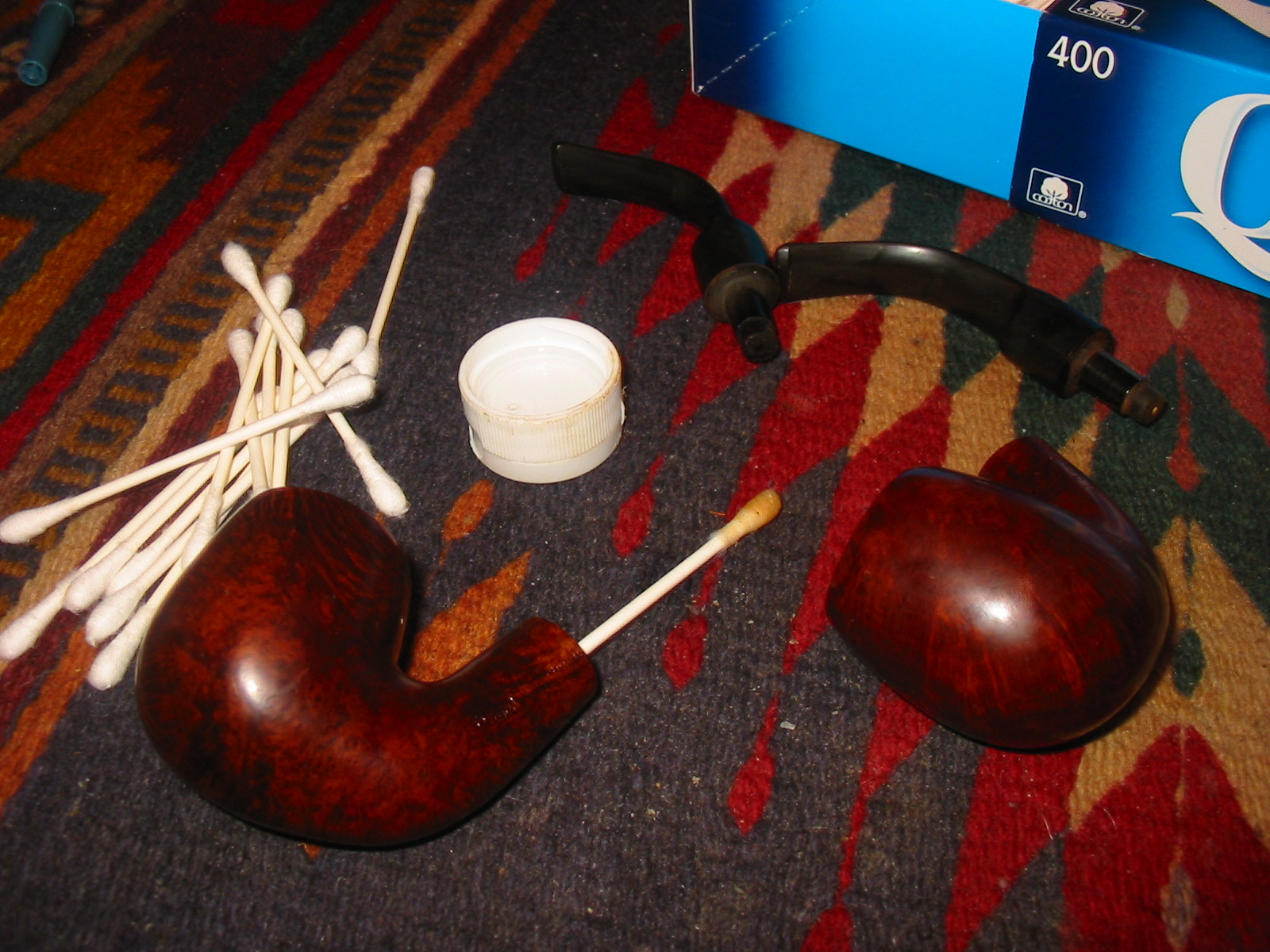
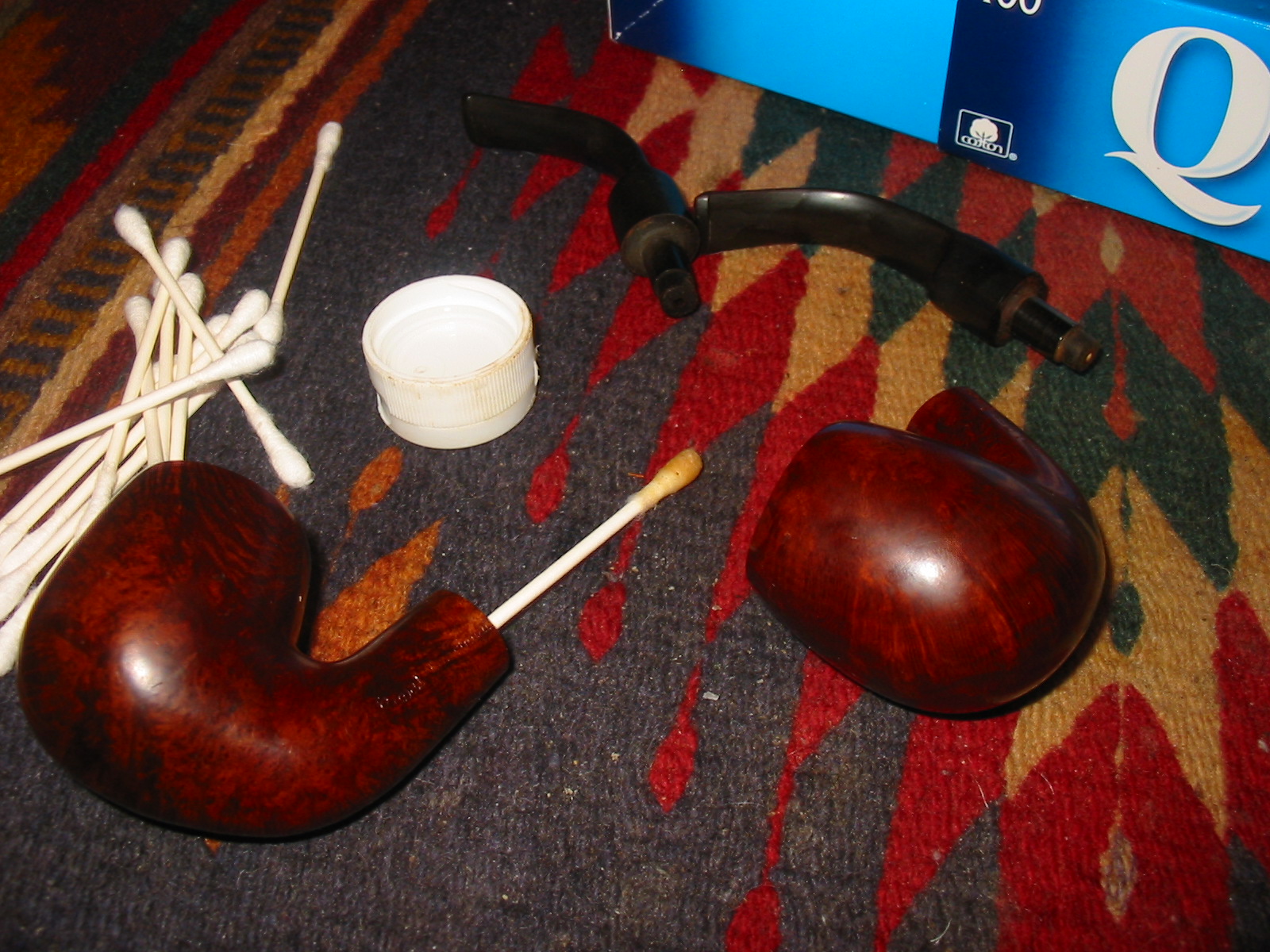
I cleaned out the inside of the shank on both pipe using cotton swabs and isopropyl alcohol. Both had a slight reservoir in the shank with the drilling being quite high in the shank to accommodate the bend in the shank to bowl junction. I cleaned out the airway with pipe cleaners and then the inside of the bowl with folded pipe cleaners and cotton swabs.
IMG_6861

IMG_6862
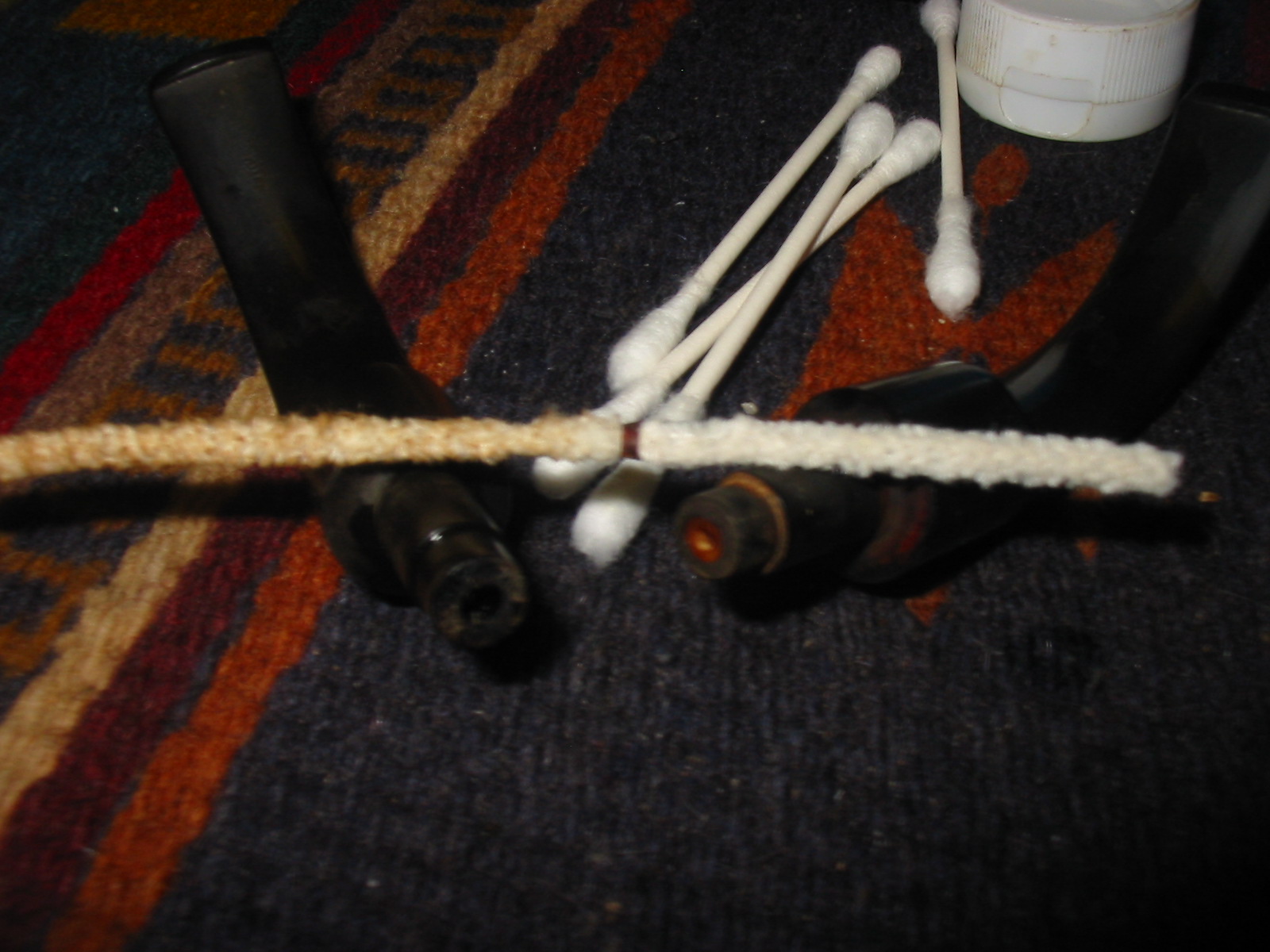
I wiped down the stems with isopropyl alcohol on a cotton pad and then cleaned out the inside with pipe cleaners. The opening/airway on the end of the tenon was very small so I had to work to push the pipe cleaner into place. I had not seen an airway this constricted in a long time. The draw on the pipe was very tight; it was like pulling air through a coffee stirrer. When I pulled the pipe cleaner out a small ring came out with it. It is visible in the photo of the pipe cleaner below. The stem on the left is the one that the ring came out of and the stem on the right still has the ring. It appears to be made of brass and is a thin ring that constricts the airway for about 1/16th of an inch. With the ring removed the draw was very open. I continued to clean out the stem and airway until it was spotless and the pipe cleaners came out clean. I cleaned the end of the tenon with cotton swabs and isopropyl alcohol.
IMG_6863
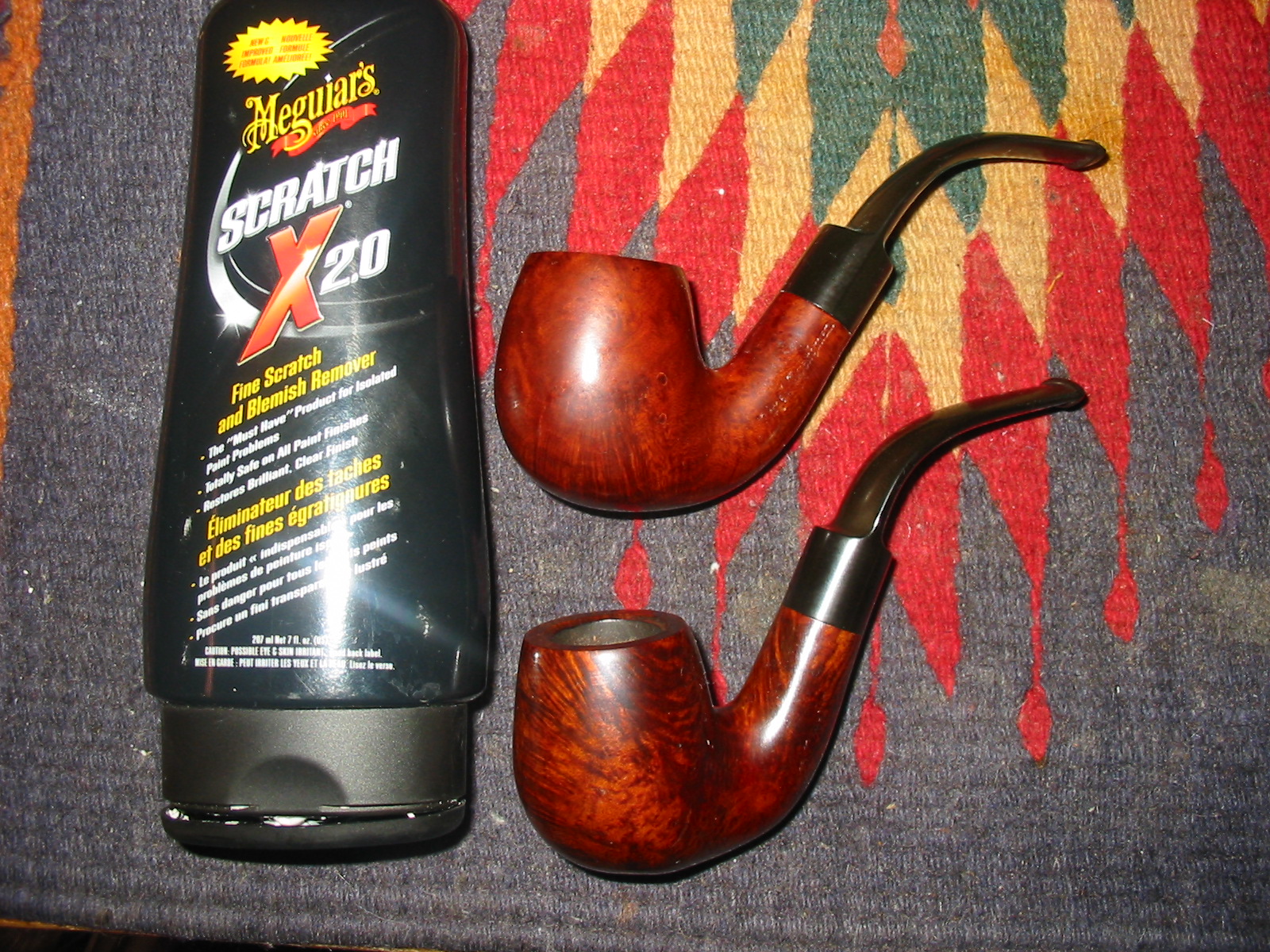
I then used some Meguiar’s Scratch X2.0 on the stems to scrub the scratches and polish the stems. I applied it with a cotton pad and scrubbed and rubbed it off. The photos below show the stems after the polishing. There was some deep seated oxidation that came to the surface of the stems. There was more oxidation on the top of the stems than on the underside.
IMG_6866

IMG_6867

IMG_6868

IMG_6869
I buffed the stems with red Tripoli on my buffer to remove more of the oxidation. I followed that up with White Diamond polish on the buffer as well. I also buffed the bowl with White Diamond. The shine really came out.
IMG_6870

IMG_6871
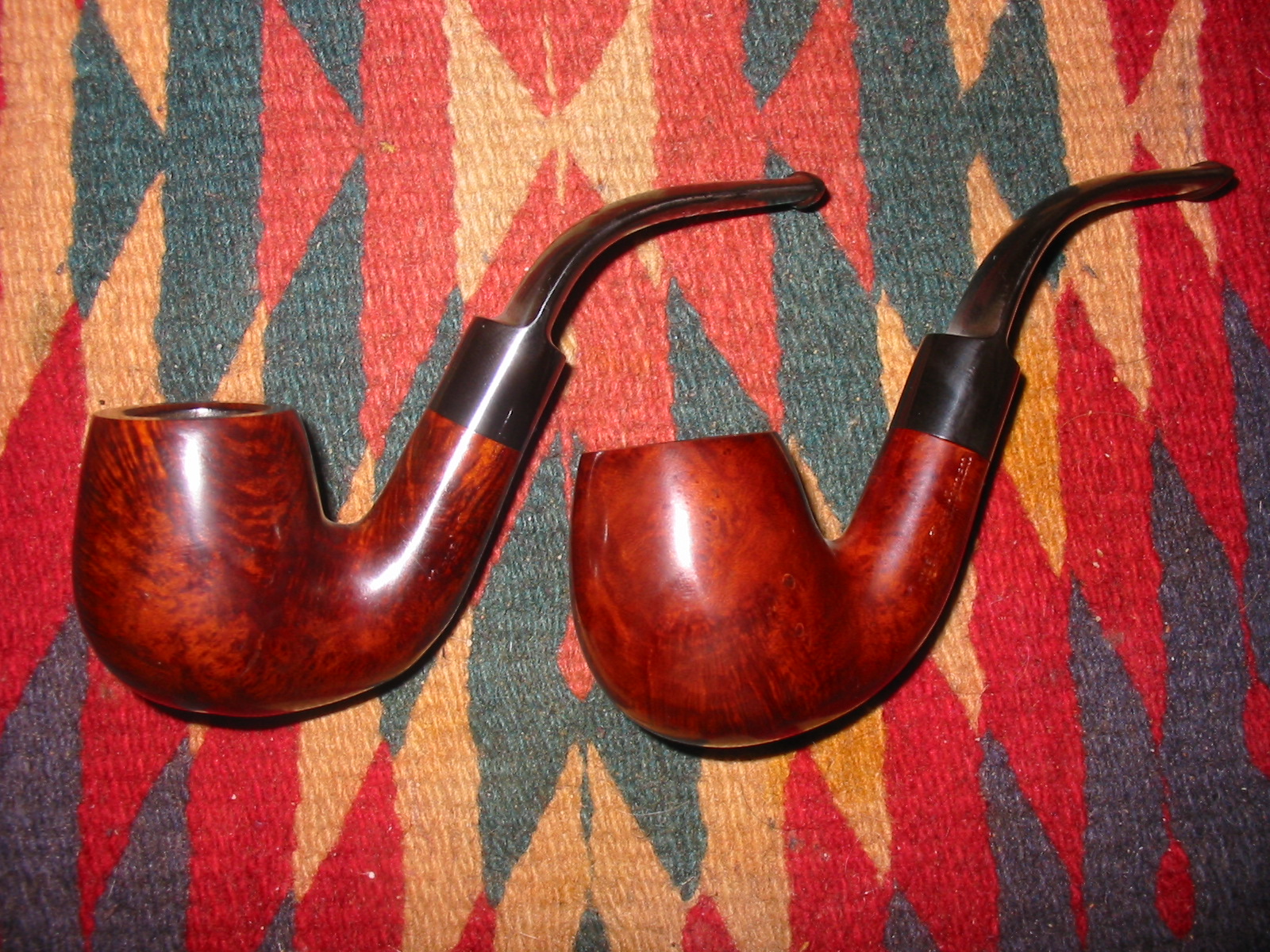
There was still oxidation that came up on the stems. I sanded it with a medium and a fine grit sanding sponge and then wet sanded with 400 and 600 grit sandpaper. This removed the remaining oxidation in the stem. I then wet sanded them with 1500-2400 grit pads. I dry sanded them with 3200-12,000 grit pads. I rubbed the stems down with Obsidian Oil and when it had dried I buffed them with White Diamond and then gave both the bowls and stems multiple coats of carnauba wax and buffed them with a soft flannel buff on the buffer. The finished pipes are shown below. They are ready to enter the next phase of their lives.
IMG_6877

IMG_6878

IMG_6879

IMG_6881

Comoys 215 “The Guidall” Restoration


This Comoys “Guildhall” came with an Ebay estate lot that held my recent GBD Seventy-Six project. It is a stamped “C” logo pipe but the briar is nice and it should make a decent smoker. I suspect given the stamped logo and nomenclature, that this one is from the 1980’s.

The stem was heavily oxidized and it took a lot of elbow grease to get it shiny again. The bowl was reamed and soaked with an alcohol and sea salt mixture, as is my usual practice. There was a chip on the bowl top, around the 7 o’clock position. That spot was sanded lightly with a piece of 6000 grit micromesh which mininized the mark and didn’t require the bowl top to be restained. The beveled edge, a common Comoys styling element, is still intact with some darkening.

Comoys_215_Guidall_Before (3)

Comoys_215_Guidall_Before (4)

Comoys_215_Guidall_Before (5)

Comoys_215_Guidall_Before (6)

I put a dab of grease on the “C” logo stamp and soaked it in a mild Oxy-Clean solution. It took a lot of sanding with a piece of 1500 grit wet paper to remove the oxidation. The logo has to be avoided, which is tricky. I then moved to 2000 grit wet paper. The stem had a pretty decent level of shine at that point and I finished the hand work with 8000 followed by 12000 grit micromesh papers. The pipe was then buffed on a machine with White Diamond followed by Blue Magic plastic polish.

The bowl was buffed lightly with Tripoli rouge followed by White Diamond and finally several coats of carnuba wax.

Here is the finished pipe. This one will most likely be sold via pipe forum classifieds or Ebay.

Comoys_215_Finish_B

Comoys_215_Finish_B (1)

Comoys_215_Finish (8)

Comoys_215_Finish_B (4)

Comoys_215_Finish_B (5)