
by Steve Laug
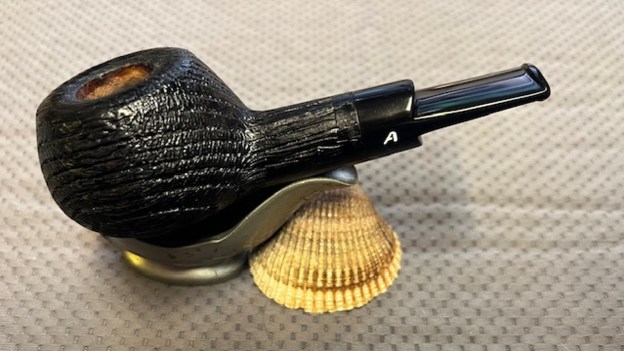
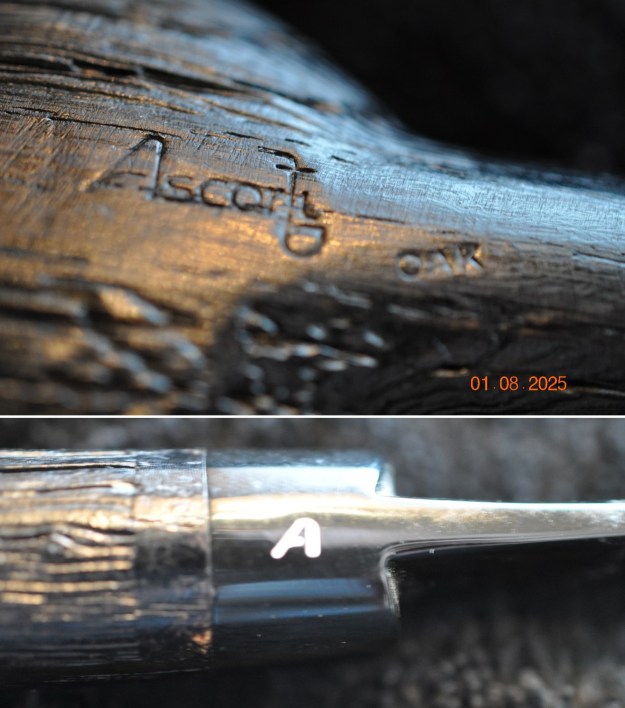
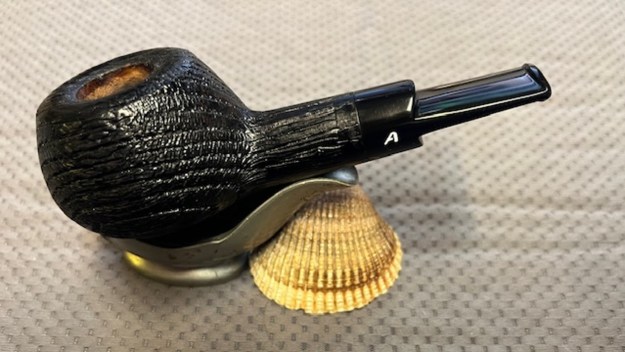
I have always been intrigued by Morta pipes – the look, the weight and the sense of age that each one carries as a block of bog oak. In a conversation with a seller in Ogden, Utah, USA via zoom Jeff and I were able to see this beauty and make a deal. The date we picked it up was 12/12/2024. It is a short compact apple with a full-sized bowl. It is stamped Ascorti followed by Oak on the heel of the bowl and the shank. There is also an inlaid Ascorti “A” logo on the left side of the saddle stem. The finish was a nicely grained sandblast apple with an acrylic saddle stem. The pipe had been smoked and there was a moderate cake in the bowl and some lava on the inward bevel of the rim top. The stem was dirty with what looked like grime from a softee bit on the stem. You can see the line where the bit had ended. The beauty was that there were not any tooth marks or chatter on the stem surface. Jeff took photos of the pipe before he started his cleanup work on it. I have included them below.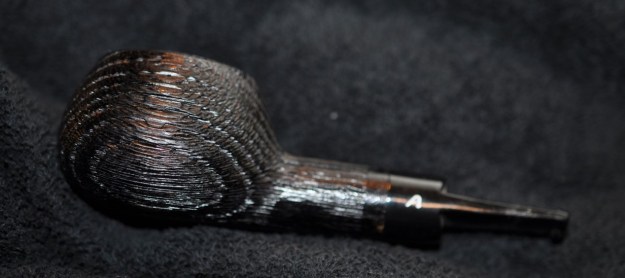
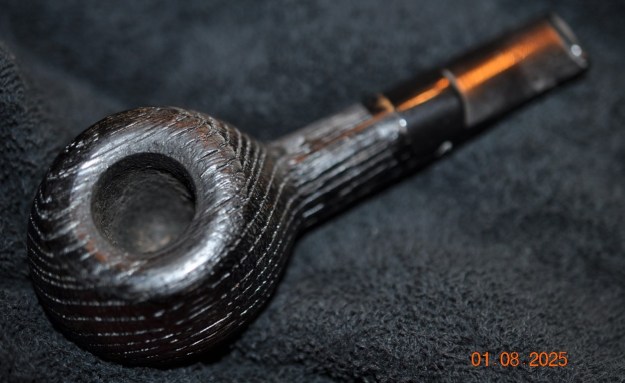 Jeff took photos of the rim top and stem to show the general condition of the pipe. The bowl is moderately caked and there is a light lava overflow on the rim top. The stem looked surprisingly good under the dirt and grime on the surface of the acrylic. It should cleanup very well.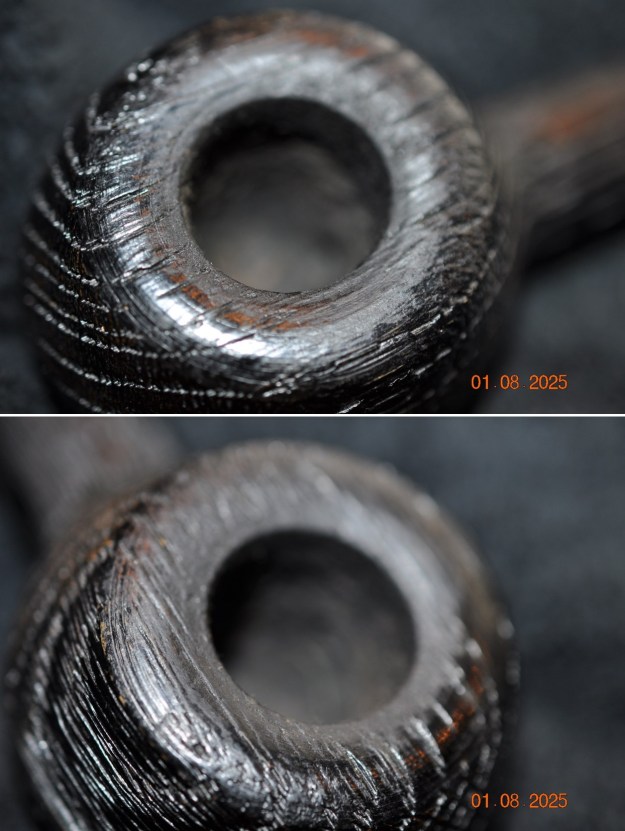
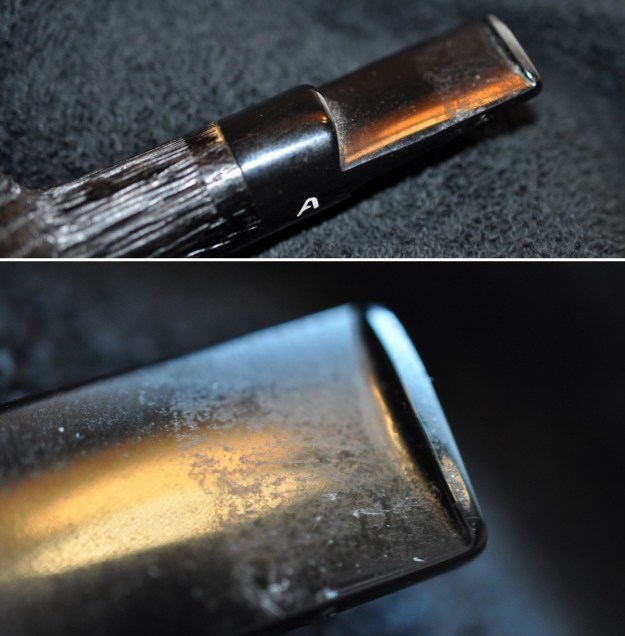
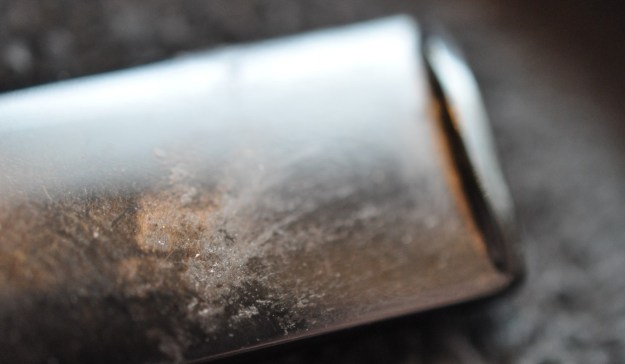 Jeff took photos of the bowl sides and heel to show the sandblast grain that was around this bowl. You can see the grime but the grain showing through the sandblast bowl is beautiful.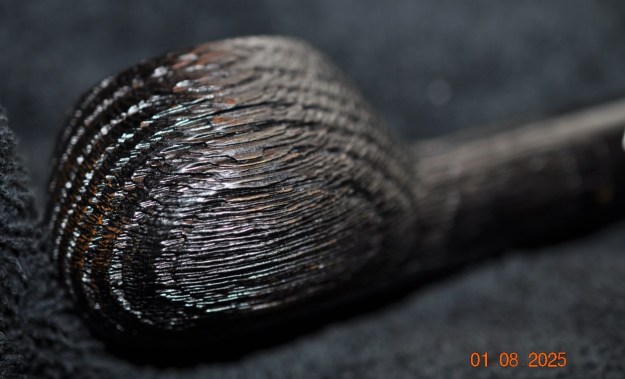
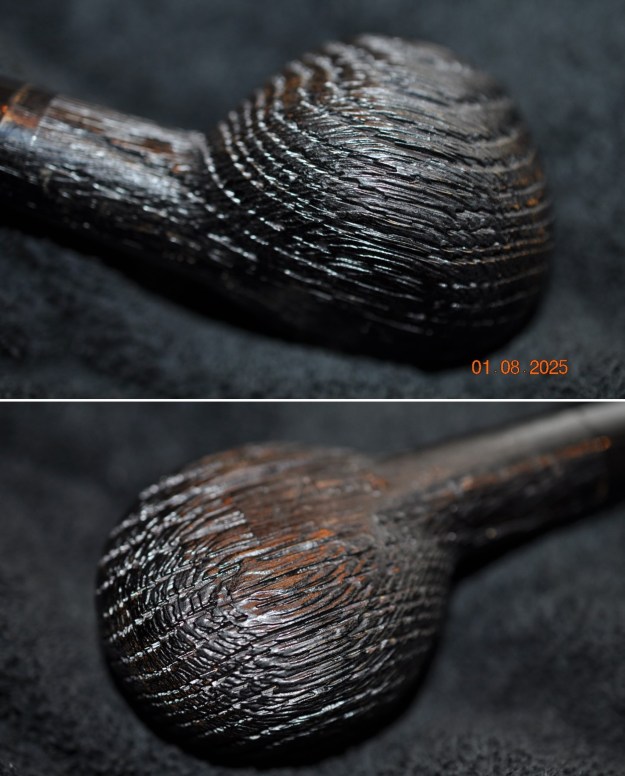 He took a photo of the heel of the bowl to show the stamping. The stamping is clear and readable in the photos below as noted above. He also captured the “A” logo on the left side of the saddle. It in excellent condition.
 I did a Google search on the Ascorti Oak line and came up with very little. They seemed to sell between $285 – $375 new though I found only one currently for sale at Mars Cigars and Pipes (https://www.marscigars.com/ascorti-oak.aspx). Further searching came up with a single line in the search on the Ascorti Oak came up with a simple sentence that gave information concerning the “Oak”. I quote: The former is a variety of oak, felled and fossilized over thousands of years in peat bogs (hence its other common name, bog oak).
All of that is helpful information. There were not many Ascorti Oak pipes readily available. The pipes were made of a variety of “felled and fossilized oak over 1000s of years in a peat bog” which accounts for the name bog oak.
From there I turned to the Ascorti section on Pipephil’s site to see if there was any information on the Oak line (http://www.pipephil.eu/logos/en/logo-a8.html). There was nothing shown on that in section on Ascorti but the information on the brand and short summary of history was helpful. I have included a screen capture of the section and the side bar information below.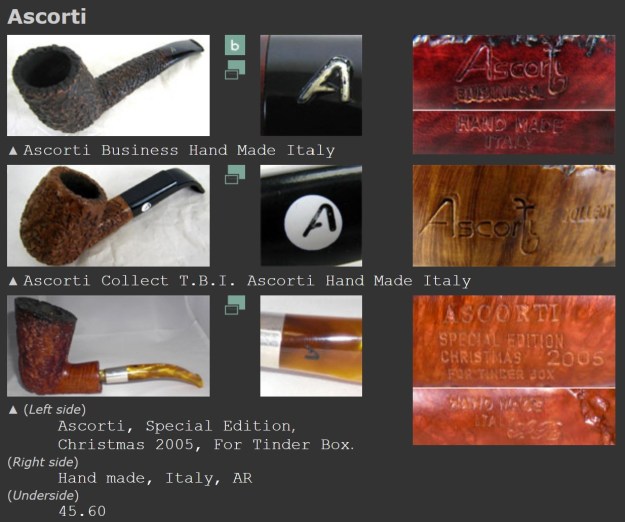 Brand established in 1980 by Roberto Ascorti (born 1958), son of Giuseppe aka Peppino. See Caminetto. Production (2007): ~ 1500-2000 pipes/year
I turned from there to Pipedia for more information (https://pipedia.org/wiki/Ascorti). I have included pertinent sections of the article as well as a photo of the Ascorti brothers. It is interesting and helpful.
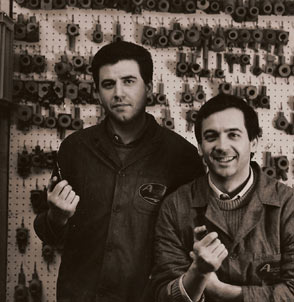 Roberto Ascorti, now 49, son of Giuseppe Ascorti, best known as “Peppino”, “met” the pipe when he was 10 years old, back in 1968, when his father started the new adventure as pipemaker.
He attended the Art Institute, but he continued with his passion for the pipe and decided to assist his father more and more. In 1980, when he was 22, Roberto decided to devote himself completely to creating pipes, but there was no room in his father’s factory; so he started by himself with his own name, ASCORTI, supported and helped by his father, his brother Pierangelo and by his girlfriend, Silvana. Then, when the historic Caminetto factory closed, its artisans entered the newborn Ascorti which had all the tradition, the experience, the power and quality that Peppino Ascorti had built in several years, but with innovations in the model making and in the technical solutions, brought by the young Roberto.
During those years Roberto suffered the early passing of his father and his brother. But with the help of his wife, Silvana, always by his side, he continued with love and experience to compete with a market which is extremely variable and ruled by accelerations(?) of the changes. Roberto is able to change the style of his design by revising old shapes, personally checking the progress and working side by side with his precious artisans.
Briar is personally selected by Roberto who controls the quality, dimensions, weight and the first seasoning, which is very important and done in the area where it is collected and cut. After the first scrupulous control, the briar is then aged for two years, to reach the seasoning that he thinks is perfect to create a pipe. Each pipe is designed by Roberto and it is initially crafted with small machines, made by hand by his father Peppino, with the help of his son, back in the 70’s. They are perfect to allow different processes as the artisanal tradition requires.
After the drilling of the bowl and shank, the pipe passes through an interminable series of handmade steps done only by Roberto and the irreplaceable Cesare (already aside of Peppino in 1968).
The mouthpiece, made in methacrylate (acrylic) is also completely handmade, obtained in sheets which are cut into bars, then drilled and shaped with files and sandpaper. There are 90 steps to the procedure, small or large, but everyone important, that Roberto requires before he considers his creations finished and ready to be shown to the customer.
I think that the love that Roberto flows into his pipes, absorbed by the workers and relatives, is perfectly understood by smokers all around the world, who never fail to give us satisfaction with praise and public or private lauds.
Jeff had done a great job cleaning up the pipe as usual. He reamed the pipe with a PipNet reamer and cut back the cake back to the bare briar. He cleaned up the walls with a Savinelli Fitsall Pipe Knife. Surprisingly the walls looked unscathed from the heavy cake. He scrubbed the interior of the bowl and shank with pipe cleaners, cotton swabs and alcohol to remove the tars and oils. He scrubbed the exterior of the pipe with Murphy’s Oil Soap and a tooth brush to remove the grime from the finish. He scrubbed the inside of the stem with alcohol and pipe cleaners. He scrubbed the exterior of the stem with Soft Scrub and then soaked it in Briarville’s Deoxidizer. He washed it off with warm water to remove the Deoxidizer. When I examined the stem, it looked very good. The pipe looked far better when it arrived. 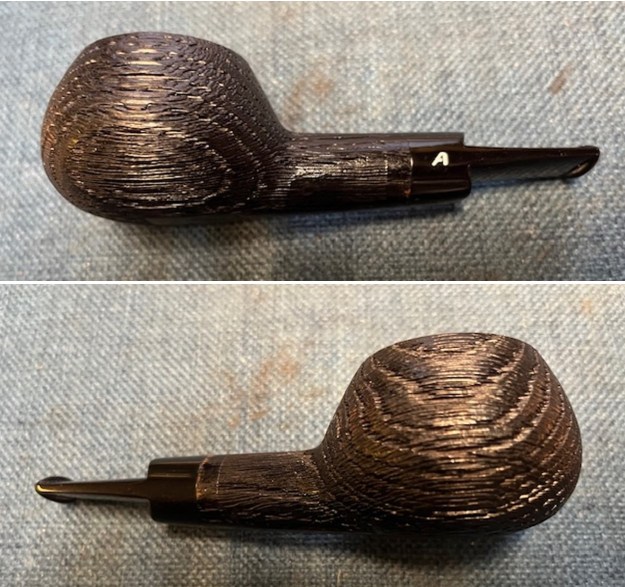
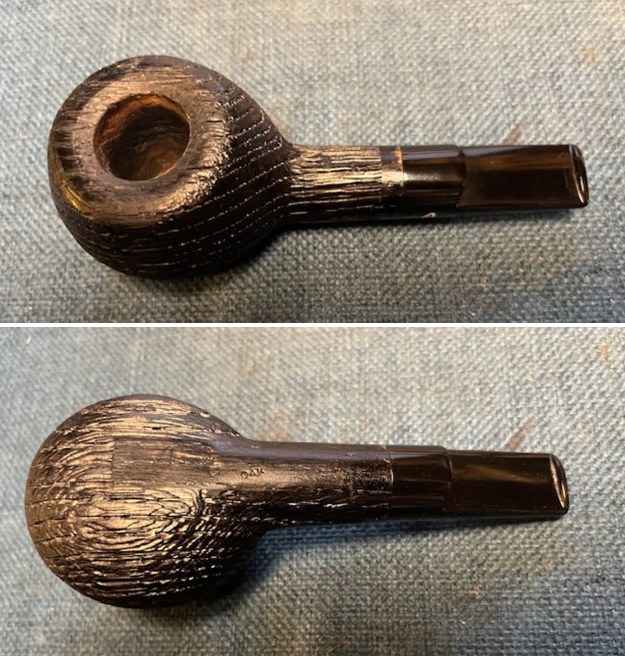 I took some close up photos of the rim top and edges to show how well it had cleaned up and the edges around the bowl. I also took close up photos of the stem to show the light tooth chatter on the surface ahead of the button on both sides.
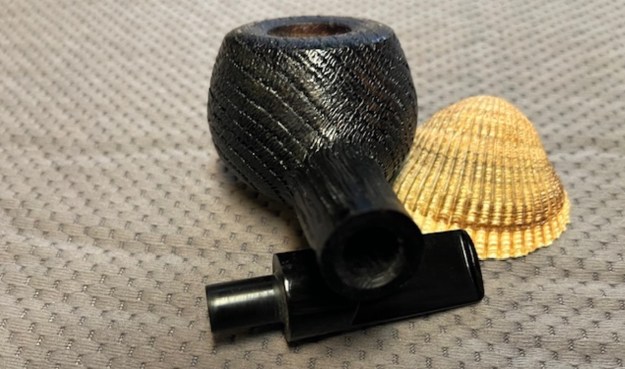
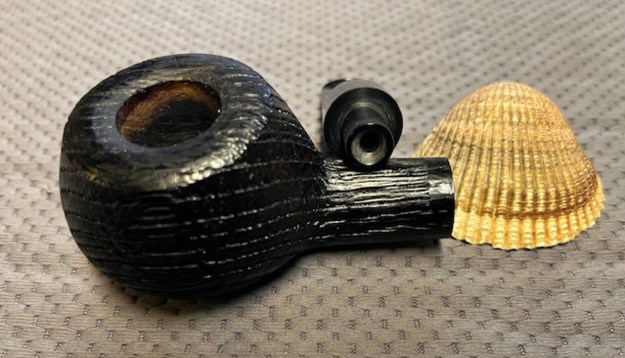
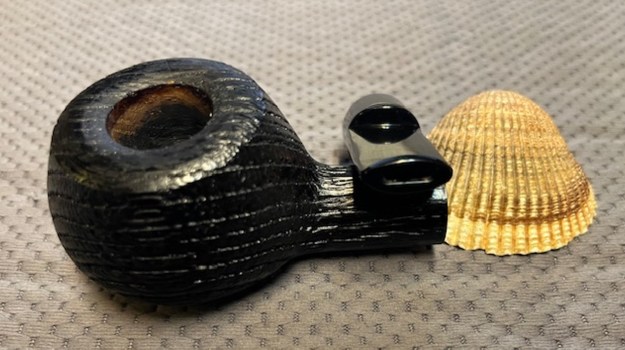
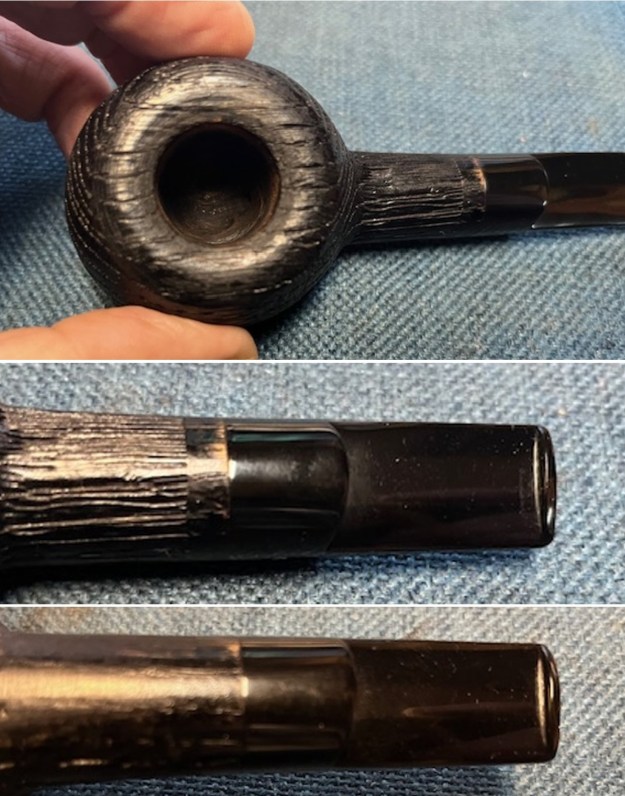 I took a photo of the stamping on the heel of the bowl. It is clear and readable as noted above. I removed the stem and took a photo of the pipe to have a look at the parts and overall look.
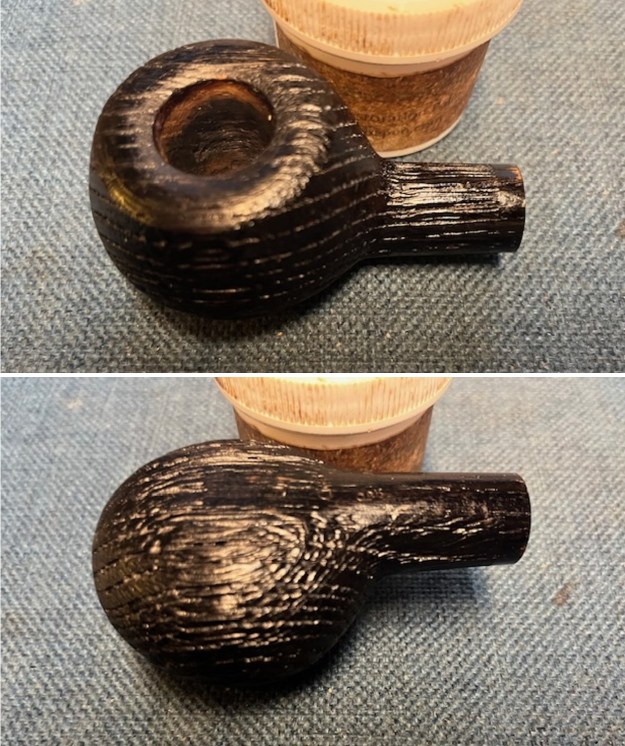
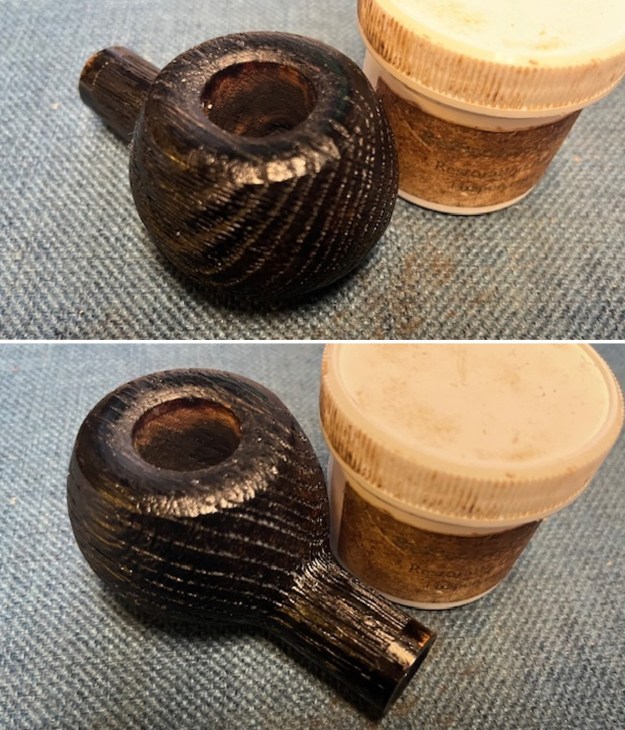
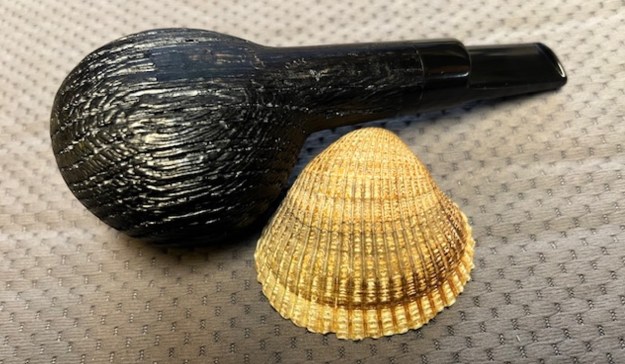
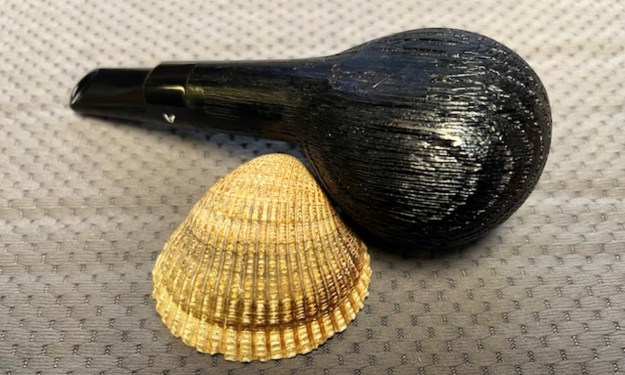
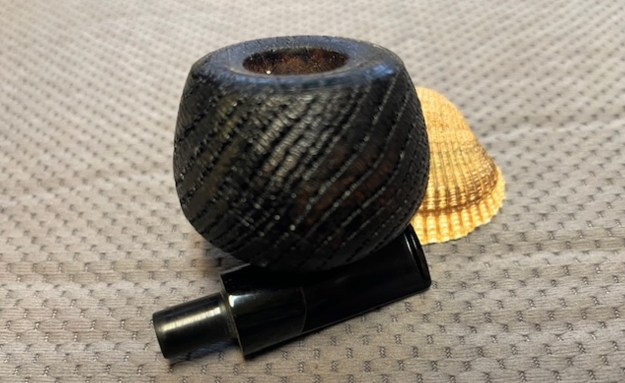
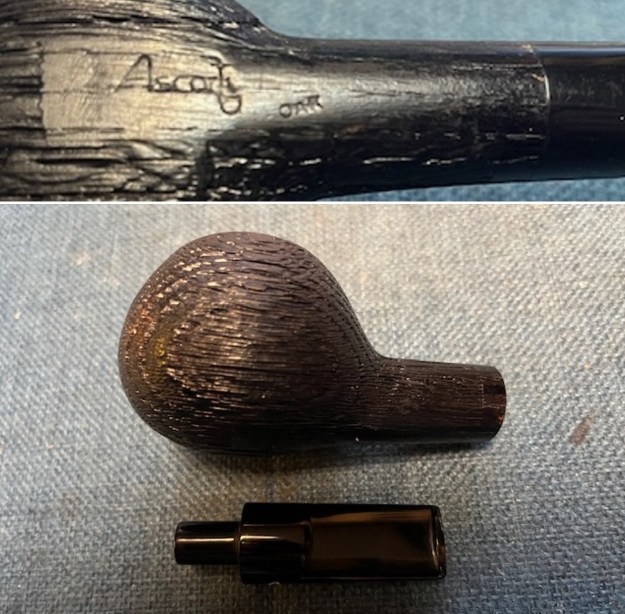 I worked some Before & After Restoration Balm into the surface of the briar with my fingertips to clean, enliven and protect the bog oak. I let the balm sit for 15 minutes and then buffed with a cotton cloth to raise the shine. The photos show the bowl at this point in the restoration process.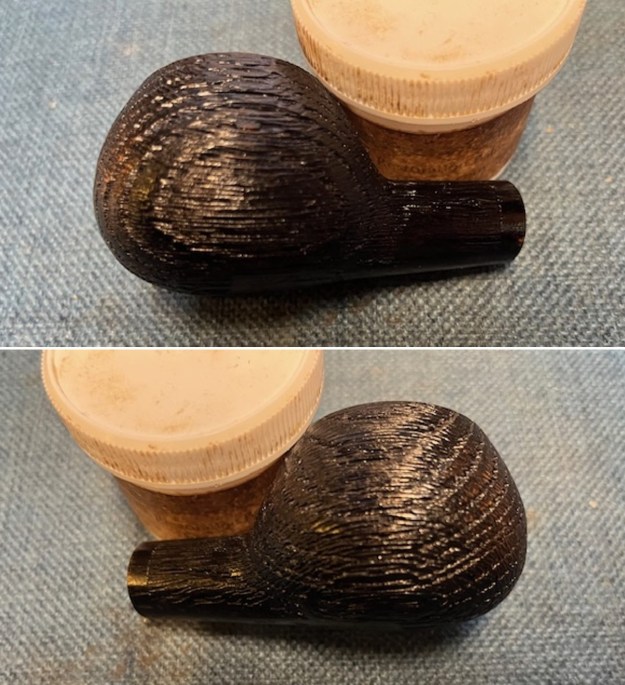
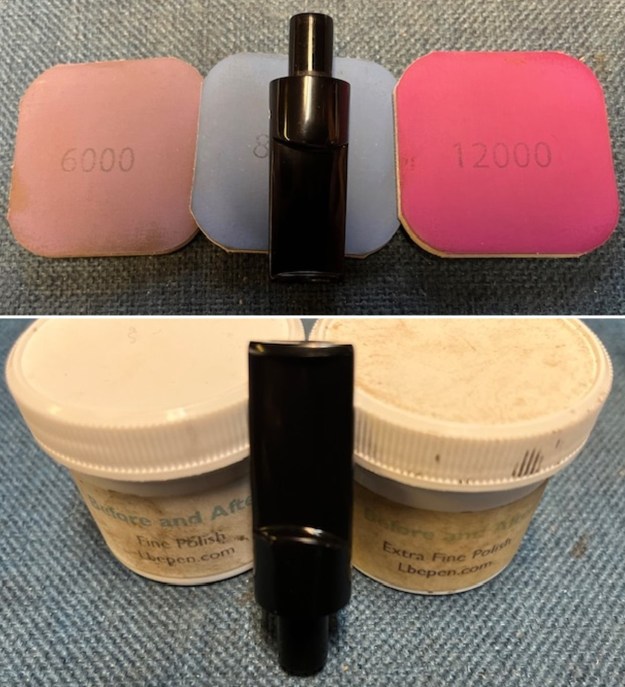
 I polished the stem with micromesh sanding pads – dry sanding with 1500-12000 grit sanding pads. I wiped it down after each sanding pad with a cloth containing some Obsidian Oil. I finished polishing it with Before & After Pipe Stem Polish – both Fine and Extra Fine and buffed it off with a cotton cloth.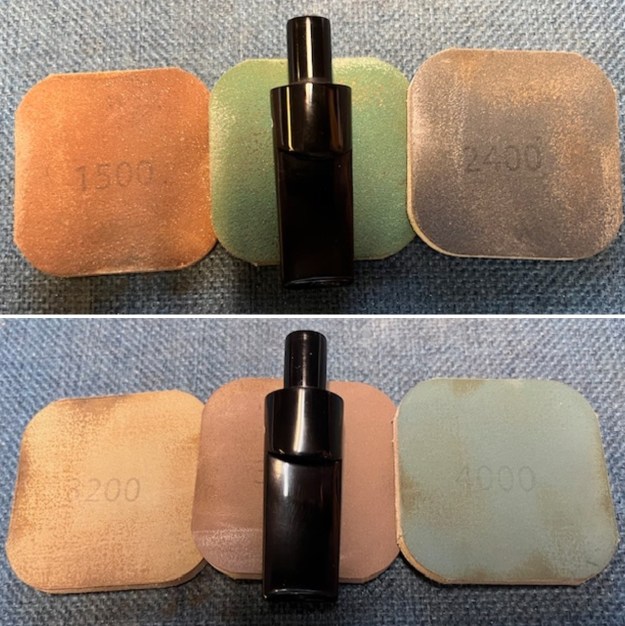
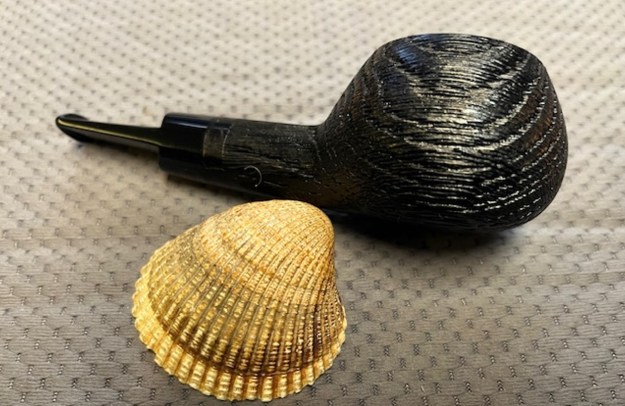
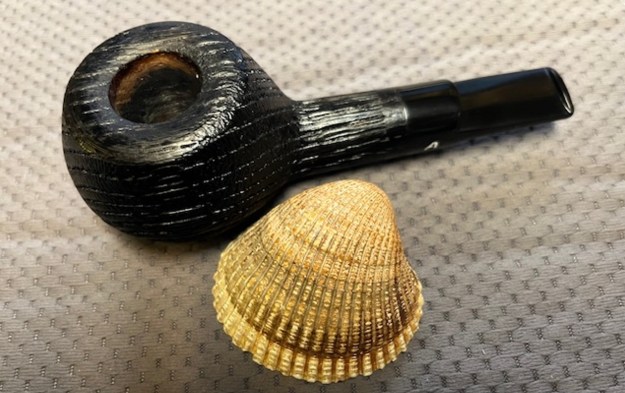
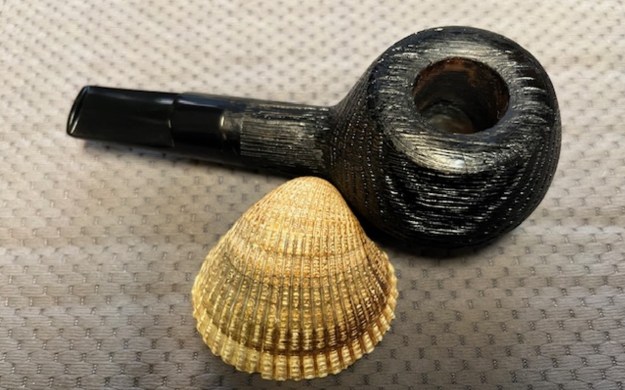
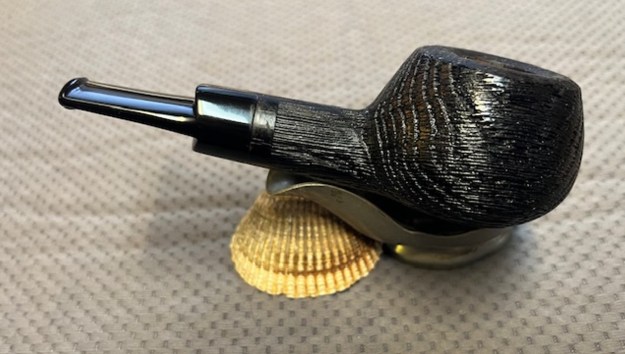
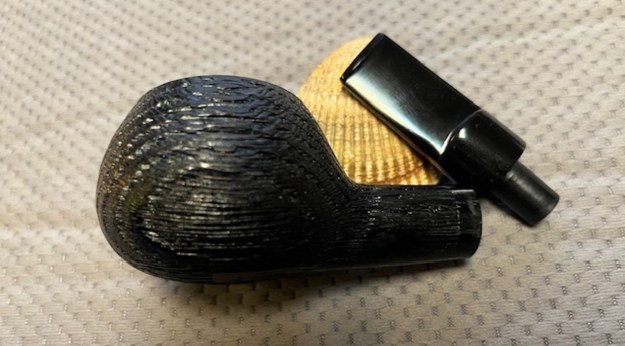
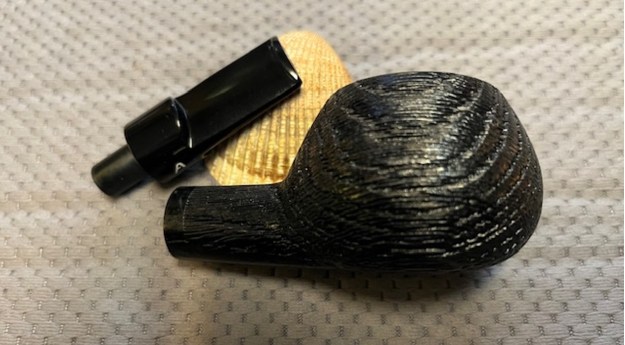
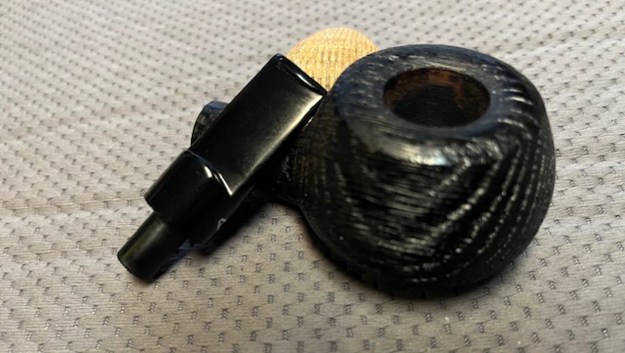
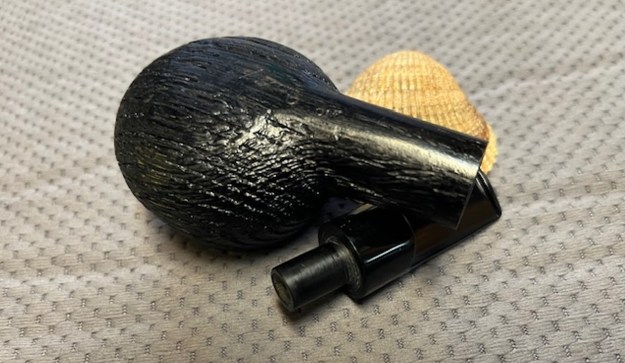
 This Ascorti Oak Sandblast Straight Apple was a pipe I was looking forward to seeing what it looked like when I put it back together. The pipe was a beauty and the grain of the bog oak and the sandblast depths just pop at this point. I put the stem back on the bowl and buffed the pipe with Blue Diamond on the buffing wheel. I carefully avoided the stamping on the shank and stem during the process. I gave the bowl and the stem multiple coats of carnauba wax on the buffing wheel and followed that by buffing it with a clean buffing pad on the buffer. I hand buffed the pipe with a microfiber cloth to deepen the shine. The finished pipe is quite beautiful and is a lovely large bowl straight apple shaped pipe. The dark colour of the Morta/Bog Oak and the sandblast give it depth. It is very well done. Give the finished pipe a look in the photos below. I can only tell you that it is much prettier in person than the photos capture. The dimensions of the pipe are Length: 5 inches, Height: 1 ½ inches, Outside diameter of the bowl: 1 ½ inches, Chamber diameter: ¾ of an inch. The weight of the pipe is 63 grams/2.22 ounces. I really like the way that Ascorti follows the grain in the bog oak with the sandblast. This is a great looking pipe in great condition. Thanks for walking through the restoration with me as I worked over another beautiful pipe. I will be adding it to the rebornpipes store in the Italian Pipe Makers Section soon. If you want to add it to your collection send me an email or a message! Thanks for your time.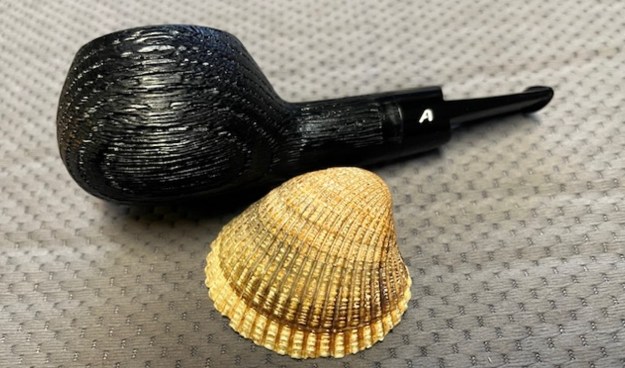
 rebornpipes