Category Archives: Pipe Related Essays

Short and not so short essays on pipes and tobacciana

Another Piece of Tobacciana – A Trench Art (?) Pipe Loader


Blog by Steve Laug

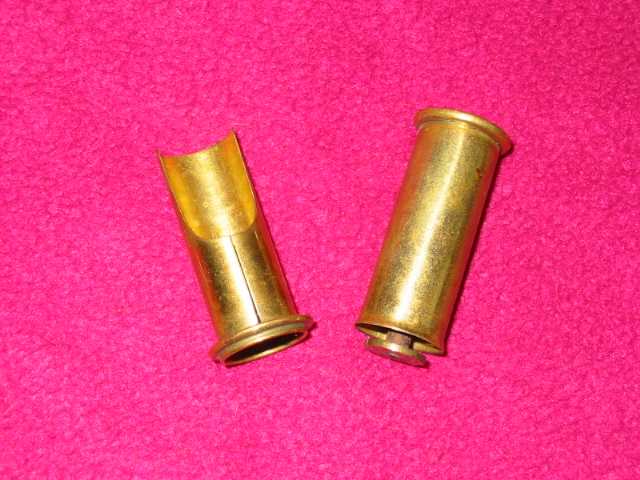
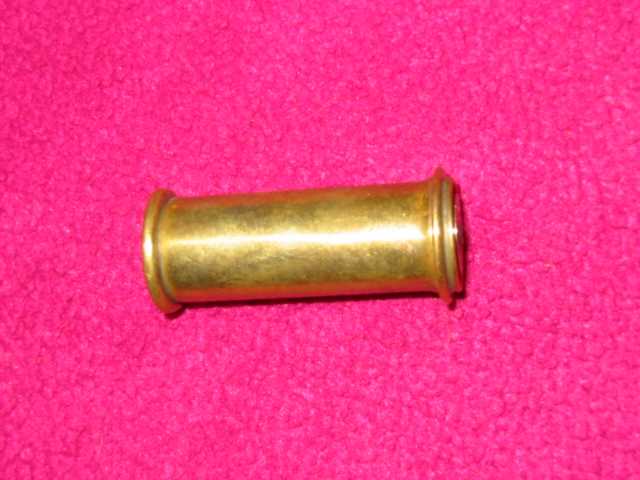
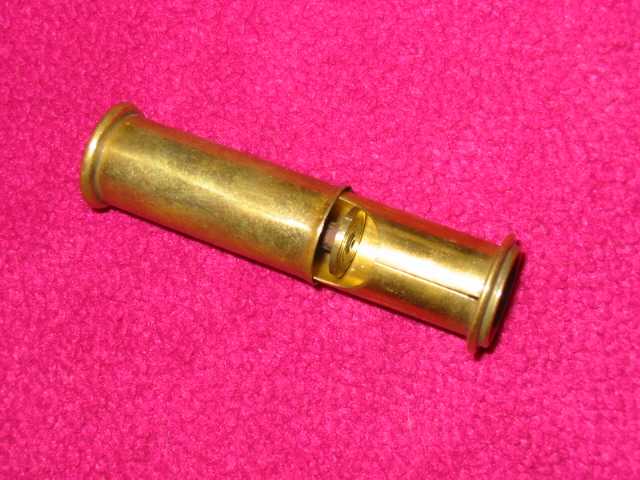
When I saw this piece of tobacciana I had to add it to my collection. It is so unique that I have not seen another since I first laid eyes on this one. It is pipe loader. It is made of an outer case with a plunger inside and a scoop-like inner piece that is loaded with tobacco. I think the inventive character that made this envisioned scooping a load into the scoop portion and then inserting it into the part with the plunger. Once it is loaded it is put on top of the pipe bowl and the outer portion is pushed down over the inner scoop and the tobacco is loaded and tamped in the bowl. I have to say it is a bit of a fuss to scoop and plunge but it does work remarkably well and loads a perfect bowl of tobacco. It is made of brass and what looks like several shell casings. I am not sure if it is trench art but I have been told that it appears to be. The two pieces fit together perfectly well and slide easily against each other. It has the patina of aged brass but is otherwise very clean. It is something that sits in my pipe cabinet and is a great conversation piece with other pipemen but it is not something that anyone else is truly interested.

Any ideas from any of the readers? What do you think?

ImageImageImage

A Pair of Rare Dunhill Cobs – Dunhillbillies


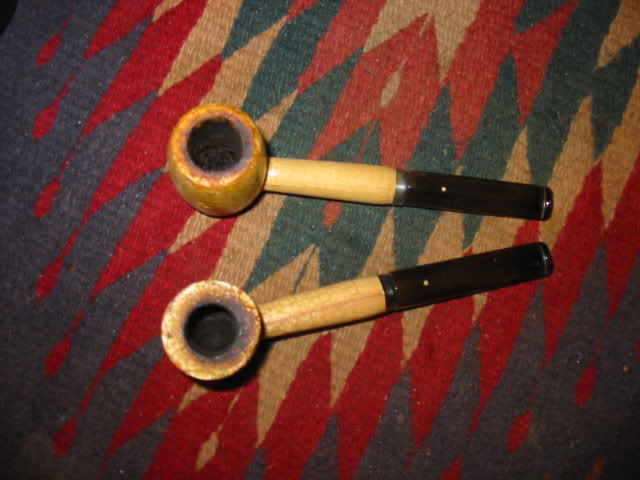
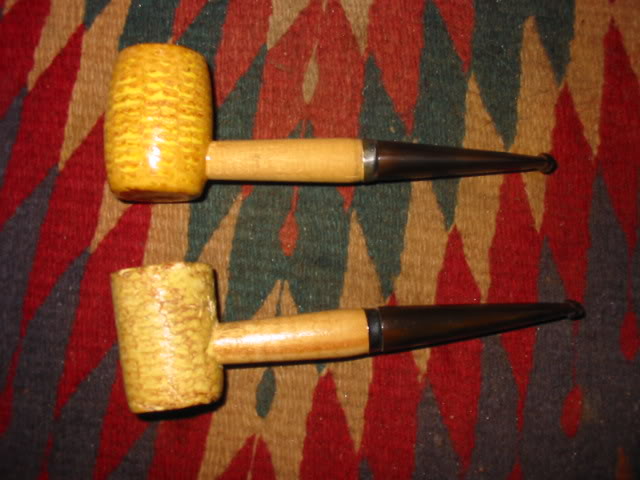
On a lark I restemmed a couple of my Missouri Meerschaum cobs a while back for a special pipe cleaning and polishing night hosted by our local Dunhill and Brigham Representative. He told us that if we brought our old pipes with oxidized stems he would buff them and polish them for us – no charge. Being a bit of a joker and handyman I scavenged in my can of stems and found two oxidized Dunhill white spot stems. These had just the right sized tenons to fit on a couple of old cobs that I had here. So with very little effort, I made them fit the shank. Just in case some of you are worried that I might have ruined them by trimming them back, I assure you that I did nothing to the stems other than clean them up a wee bit and then insert them into my cobs.

Thus armed I packed my trusty pipe bag – holds eight pipes. I included some other nice pipes that I wanted to have the benefit of having buffed but I also included the pair of Dunhill cobs. I waited for an opportune moment when the handy rep was at the buffing wheel. There was a lag in the number of gents coming to him for buffing work so I sidled over and handed him my good pipes first and he did a magnificent job cleaning and waxing them on his wheels. When he had finished them he asked if I had any others that I wanted him to take care of. I hemmed and hahed a bit and then said I had a couple but that they were very special and rare. I wanted to make sure that he would not damage them in any way. I emphasized the fact of their rarity by stating that in fact I had never seen or come across any like them in all the years I had been smoking a pipe.

With that I had hooked him and he turned off his buffer and looked inquiringly. I could see the look in his eye – full of questions. What kind of pipes could I possibly have that I was worried he would harm them? What could I have in my bag that I was slow to pull out and have him buff? I think he was a bit put out by my slow response. So now that I had him hooked I decided to work him a little bit and play with the hook. I began to spin the tale I had worked on earlier in the afternoon. I was enjoying every moment of this so I dragged it out a bit longer than necessary probably, but as I talked a small group of other pipesmokers had gathered around the wheel. We were all puffing on pipes of chosen tobaccos and everyone was interested.

I spun the tale of how I had come across these two special pipes in a cabinet at a local antique mall in Fort Langley, British Columbia. I had gotten the clerk to unlock the cabinet and carefully removed the pair from the cabinet. I looked each of them over carefully so as not to break them. After all I did not want to buy something that was worthless. Both pipes were a bit worn from wear and showed some charring at the rim but otherwise they were clean and seemed to be solid. The clerk said they were rare and who was I to argue as I had never seen anything like the two of them. The price for each was a kingly sum. At this point in my tale I looked at each of my listeners. But in particular I fixed my eyes on the buffing king. I wanted to emphasize the cost of these gems. Now my tale had captured the most dubious of them so I began to reel them in. I explained the stems and the slight oxidation that each had. I explained how they each had a white dot set in the vulcanite of the stems. At this point I am sure the buffing king was wondering if I had stumbled on a pair of early patent era Dunhills. All those listening to the tale know my proclivity for pipe scavenging and how I am pretty lucky in my finds. I honestly think that I had struck the motherlode of pipes finds.

The Dunhill Rep/buffing king was beside himself now. He wanted to see them now. He wanted to handle the two old timers and get a feel for their age and ply his skill in bringing the shine back to life on them both. But I wanted to set the hook a bit deeper so I continued talking about how I had carefully carried them to the cashier and shelled out the money for them. I talked of the deep shell finish on both and the almost amberlike brown of the bowls and shanks. Then as they were almost salivating I pulled the pair out of my bag and handed them to him with the bowls and shanks hidden in my hands. Just the two white spot stem poked out of my hands. I slowly and carefully opened my hands to reveal the treasure. I told him they were called Dunhillbillies. And with that everyone but him was just about rolling on the floor in laughter. They just shook their heads and few of them had choice comments for me. But the buffing king looked at me with a grimace and then he laughed loudly, shaking his head. I have to hand it to him as he did a great job buffing the pair. The pictures below show the twosome after his hard work. What do you think? Are they treasures or not?

ImageImage

Kiseru Pipes – A Unique Experience, But If You Blink You Will Miss It


Blog by Steve Laug

Kis1
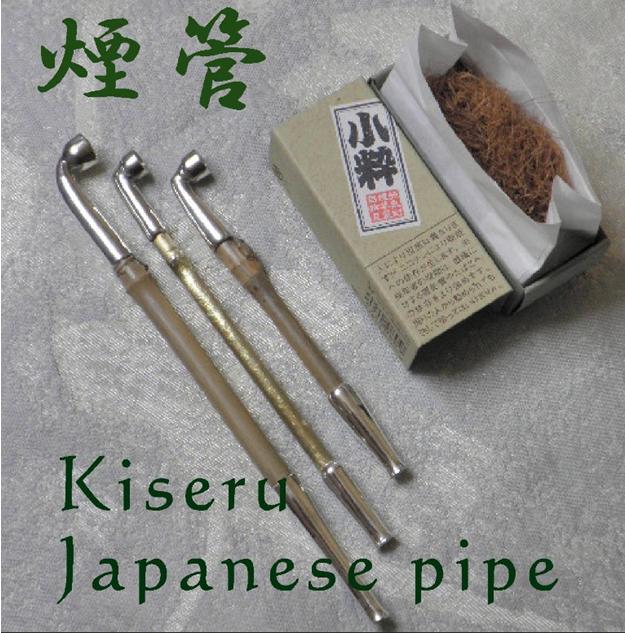
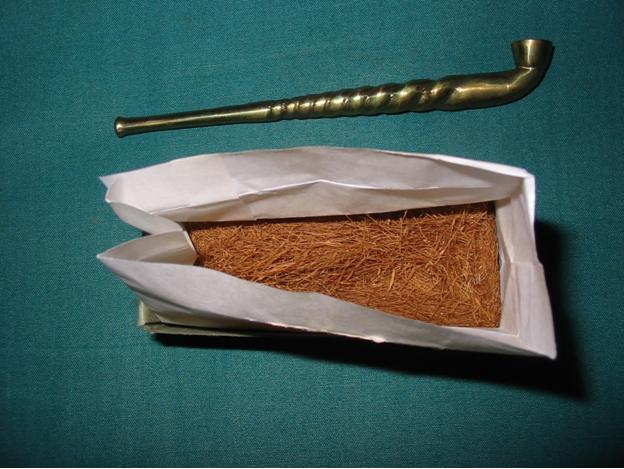
A few years ago a friend of mine called and said that he wanted to stop by for a bowl on the front porch and that he had an interesting gift for me. I don’t know about you but that kind of phone call makes me wonder. I loaded a pipe and sat on the porch to await his arrival. I had no idea what he was bringing. When he arrived he opened his pipe bag and took out the gift he brought for me and another for himself. Until that time I had not heard of the Kiseru pipe and knew nothing about it. Now if you have not smoked a Kiseru you have no idea how small the bowl is or how fine the tobacco is. I personally did not have a clue. So I looked the box and small envelope over before opening either one of them. I did not have the benefit of the photo above that gives you an idea of what to expect.

kis2
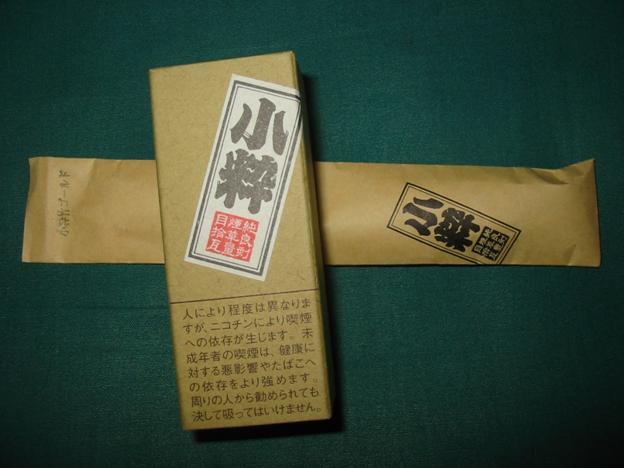
The photo above shows the box of tobacco and the envelope that held the pipe. If you can imagine the small envelope that holds take out chop sticks then you have an idea of the size of this little envelope. The box is also pretty small. I have no idea what the characters say and would love to know what they say. The label on my little box is identical to the one in the opening photo that I took off of a Japanese catalogue of Kiseru pipes.

kis3
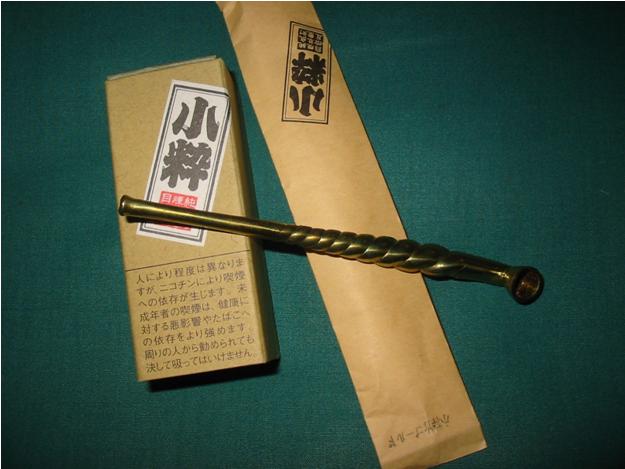
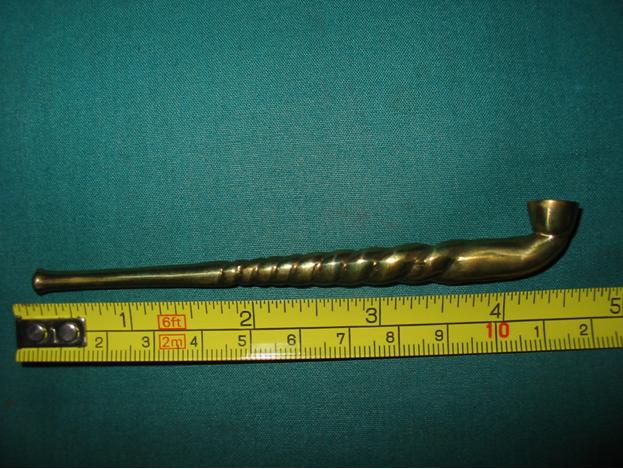
I decided to open the envelope first and took out the spiraled brass pipe. The brass is polished and golden in colour. The airway is very open and the pipe is a solid unit. The tip has a formed button that can be held in the teeth to clench the pipe. The other end of the tube is upturned and flared into a bowl. The spiraling on the shank is actually quite beautiful. In the photo below I took a picture of it with a measuring tape so you can get an idea of the overall size of the pipe. It is about 4 ¼ inches long. The bowl is about a ¼ inch in diameter and height.
kis4

After I had blown through the pipe and looked it over bow to stern I opened the box of tobacco. In the picture below you can see the finely spun tobacco. The smell is of a Virginia tobacco and the cut is a very fine angel hair like cut. It smells grassy and sweet. It is condensed and pressed into the box and held in a waxed paper envelope. The box is about 3 ½ inches long by an inch wide and an inch high. I have smoked probably 20 or more bowls and the tobacco does not seem to disappear. As I pull off a small chunk to roll into a ball the remaining tobac springs into place.
kis5

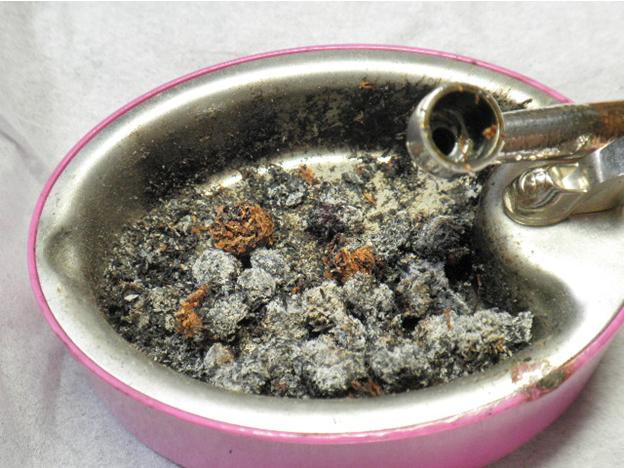
To load the Kiseru you take a small clump of tobacco and roll it into a small ball and press it into the bowl of the pipe. It honestly does not take much so the tobacco that comes with the pipe lasts a long time. My box has been in my humidor for probably 4 or 5 years and is the same moisture level it was when I first opened it. Lighting the bowl is very simple and takes a flick of the lighter and a single light. There is no tamping involved and no fiddling. It is a quick smoke that tastes delightful and burns easily. The flavour is a rich grassy Virginia taste that makes you want to smoke more. The nicotine hit on the bowl is minimal. One day I will have to try it with a small ball brown rope. In the photo below you can see the dottle that is removed from the pipe. There is also a ball of the tobacco in the ashtray that was not smoked for comparison sake.
kis6

If you have not tried a Kiseru it is worth the experience. They do not cost much in the grand scheme of things and they will provide you with an experience that is comparable to nothing else that I am aware of. Now that I have written this I think it is time to go and load the bowl and have a puff. One caution though. Once you have lit the pipe, do not blink or you might very well miss the smoke.

About Stem/Bit Shapes


Blog by Steve Laug

The matter of bit/stem shapes can be confusing when speaking about our pipes to others or inputting information on stems into database programs such as Pipe Smokers Unleashed or P&T Foundations. I have been asked several times to put together a simple article on the shapes of stems. So here it is. It is not rocket science or anything profound, it is just a simple method that I use in differentiating stems. I have found several pictures that are from different websites to help with the explanations.

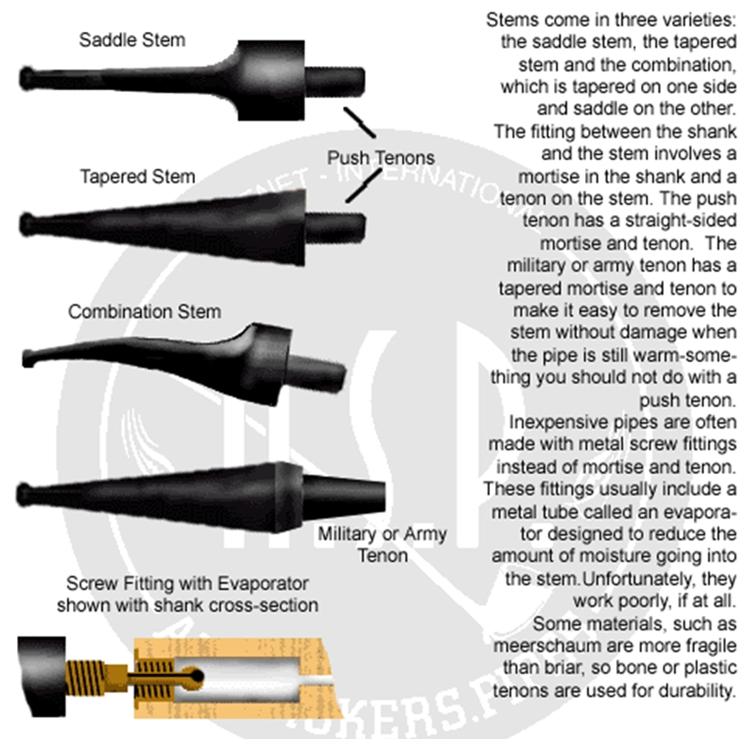
There are three basic stem shapes SADDLE, TAPER AND COMBINATION. The MILITARY OR STICK BIT stem is a variation of one of the other three. The stems can either be straight or bent according to the shape of the pipe. Each stem shape also has variations on the theme – gentle taper, fat taper, long taper, thin taper etc. Same with the saddle there are variations on the saddle – 1/2 saddle, full saddle, etc. Both of these also come in geometric shapes Diamond, Triangle, Square, Round and Oval.
Stem1

The stick bits or military also come in the same shapes though the taper is fairly standard. Add to the confusion regarding bits, the Peterson faux military or stick bits which have a tapered tenon that fits the shank and the various freehand stems that have unique shapes and you get the picture.
Stem2

Tenons are either push style or threaded. The push style can be integral to the stem or can be a Delrin insert. Both hold the shank by friction. I personally find the push tenon more to my liking than the metal or bone threaded tenon. The threaded tenon is screwed into the matching threads in the shank of the pipe. In both the bone and the metal versions these are often over or under turned in estate pipes. Generally, heating the tenon allows the tenon to be readjusted to fit properly.

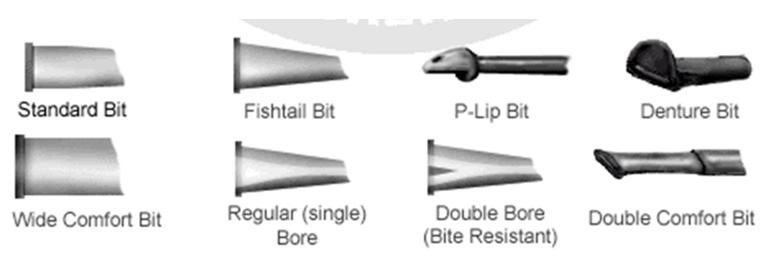
The shape of the bit from the button forward is also varied. I was able to find the following picture that spells out the various shapes of the bits. There are basically five bit shapes that also have variations in their form according to the pipe maker or manufacturer. These are the standard straight bit, fishtail bit, p-lip bit, denture bit, wide comfort bit and the double comfort bit (stepped bit that was developed by Charatan). The bore on the bits is generally a single bore as pictured below. But the double bore or twin bore was also developed to make a bit more bite resistant.
Stem3

The slot or airway in the button also has three variations – the circle or orific hole, the straight slot and the oval. The descriptions are pretty clear from the names of the airway or slot. The orific or circle is exactly as it sounds. It is generally used on older pipe stems – both meerschaum and briar. I have found it on pipes from the 1800’s and early 1900’s. The oval and straight slots are similar. The oval is a reworked and opened slot. The oval gives the opening a wider more open draw.

It would be great to hear if others of you who read this have further explanations that add clarity to the discussion. Please feel free to post a comment to this regard.

Two Alternative Pipe Woods – Robert M. Leverette


Blog by Robert Mike Leverette

A dear friend of mine penned this article on alternative pipe woods before he died. I know it has been posed elsewhere but I wanted to pass on what he has written as I have found it informative and helpful as I navigate alternative woods. In honour of Mike’s memory I post this article that he wrote 21 Dec. 2006.

Throughout tobacco history, there has been a bewildering number of materials used for making pipes.  Among these materials are; stone, clay, porcelain, glass, various metals and of course woods, such as briar; the burl of the Erica Arborea or White Heath.  Woods of different species have been used for centuries from reeds used by the American Indian, as well as, young boys for their first smoking experiences, (such as my first reed pipe I made and smoked when only 13 years old in 1952) to many different hard woods.  Some of the well known woods used as alternatives to briar are wild olive and black thorn by Johann Slabert, bog oak by Peterson and Morta by Trever Talbert, Rosewood by the Exotic Pipe Company and now peach root pipes by modern Russian makers.

Several alternative woods are discussed in “Pipes In Other Woods” by T. C. Fuller (Fuller 2005) with pipes of some of these woods found on his web site www.tcfullerpipes.com.  Mr. Fuller lists the following woods along with some of his observations:  Cherry; Apple; Olive; Hawthorn root; Maple burl; Black Palm; Myrtle; Walnut; Curly Ash; Ebony; and Pawlonia.  Mr. Fuller states that his olive wood pipes sweated tobacco juices by quoting a friend of his;
“He has smoked the pipe extensively and had this to say about it: “This particular olive has very thin walls.  During the pipe’s breaking in, I noticed that residue was seeping through its walls, (…).”

I have not had an olive wood pipe to sweat, maybe because I like my tobaccos on the dry side.  Mr. Fuller and I have had the same experience with Black Walnut; it gives a pleasing nutty flavor to your smoke.
Another excellent article on alternative woods is Ben Rapaport’s “Un-Briars” (Rapaport 2001) in which he lists 29 woods, from Acacia to Walnut, used primarily by early European pipe makers and peoples who, by my thoughts, are probably still using these woods for personal pipes.

Then too, there is the article by Chuck Stanion “From Beechwood to Briar” (Stanion 2001) in which, by giving the history of Stanwell pipes, he writes of Poul Nielsen making pipes of Beechwood in 1942 due to the war shortage of briar.  These Beechwood pipes were under the name of Kyringe pipes.

Why haven’t these woods, or at least a few of these woods, gained as much popularity as has briar?  The general consensus is that they are not as durable as briar.  Well, what is it about briar that gives its durability?  Again the general consensus is briar owes its durability to its hardness but we all know there are woods mentioned above that are harder than briar by the Janka and other scales.

There are two woods that I think can compete with the durability of briar, or at least, very close, and they are Manzanita and Mountain Laurel.  A briar pipe may last several life times while pipes of these two woods may last half a life time shorter, but only if  they are taken care of as lovingly as briar pipes.  Both of these woods were used in the United States during World War II when briar was impossible to obtain.  Pipes of these two woods that I have come across are excellent smokers and are in excellent condition considering that over sixty years have elapsed since they were made. I expect they will last for many more years.  These two alternative woods are more thoroughly reviewed below.

Manzanita or Mission Briar

Though Manzanita was used for pipes during World War II and for a couple of years after that conflict; Wikipedia does not list smoking pipes as one of its usages.  Wikipedia gives the following description for the wood (http://en.wikipedia.org/wiki/Manzanita):
“The Manzanitas are a subgenus of the genus Arctostaphylos. They are evergreen present in the chaparral biome of western North America, where they occur from southern British Columbia in Canada, Washington to California and New Mexico in the United States, and throughout much of northern and central Mexico. They are characterized by smooth, orange or red bark and stiff, twisting branches. There are about 60 species of manzanita, ranging from ground-hugging coastal and mountain species to small trees up to 6m tall. Manzanitas bloom in the winter to early spring and carry berries in spring and summer. The berries and flowers of most species are edible, though not particularly tasty.”

Bill Feuerbach in his excellent article on the history of “S. M. Frank & Co., Inc.” (Feuerbach 1977) had this to say about Manzanita:
“During World War II, getting briar imported into this country was not easy. Italian and French briar couldn’t be had until very late in the war. Kaywoodie was able to import 1400 5-gross bags of briar (about 1,000,000 blocks) out of North Africa in 1943 after the German army was defeated there. Early in 1941, Kaywoodie embarked on a project of domestically grown briar wood, called Mission Briar. This wood is botanically the same as Mediterranean briar. The Pacific Briarwood Company, a KBB subsidiary, began harvesting the burl type wood growing on the slopes of the Santa Cruz Mountains of California. However, the smoking characteristics were not quite as good and the project was abandoned after the war.”

We do know that there were at least three brands of pipes using Mission Briar, a marketing ploy for manzanita to capitalize on the name briar.  They were; Kaywoodie, Monterey and Reiss Premium pipes.  Though Mr. Feuerbach does not actually say that Kaywoodie pipes were made from Mission Briar during those years, it is implied in his history.  Monterey Pipes were also owned and made by Kaywoodie.  Within my collection, I have two Monterey Specimen Grain Mission Briar pipes; a bulldog and a billiard; both great smokers though I am not a fan of metal condensers; thus leaving me at a loss to understand his comment, “However, the smoking characteristics were not quite as good (…).”  Maybe it is just my old abused pallette coming into play!

Mountain Laurel

Mountain Laurel was also used for pipes during the war and for a couple of years after that conflict; and again, Wikipedia does not list smoking pipes as one of its usages.  Wikipedia gives the following description for the wood (http://en.wikipedia.org/wiki/Mountain_Laurel):

“Kalmia latifolia (Mountain-laurel) is a flowering plant in the family Ericaceae, native to the eastern United States, from southern Maine south to northern Florida, and west to Indiana and Louisiana. It is an evergreen shrub growing to 3-9 m tall. The leaves are 3-12 cm long and 1-4 cm wide. Its flowers are star-shaped, ranging from red to pink to white, and occurring in clusters. It blooms between May and June. All parts of the plant are poisonous.  The plant is naturally found on rocky slopes and mountainous forest areas. The plant often grows in large thickets, covering large areas of forest floor.  It is also known as Ivybush, Calico Bush, Spoonwood (because native Americans used to make their spoons out of it), Sheep Laurel, Lambkill and Clamoun.”

Though Wikipedia states that “All parts of the plant are poisonous,” other botanical sources state that only the leaves are poisonous, and here poisonous would be in reference to cattle and sheep eating the leaves with fatalities depending on the quantity consumed.  The milk from cows will also be toxic, though not necessarily fatal, to humans drinking said beverage.

There were at least three pipe brands made from the Mountain Laurel; Trapwell, Breezewood and Custombilt.  Trapwell pipes were made by D & P Pipe Works beginning on or before 1943.  D & P Pipe Works, owned by D. P. Levitas (Ross 2005), began making pipes in 1938 (Wilczak and Colwell 1997) probably in New York City but relocated to Sparta, Alleghany County, North Carolina in 1943 (Sparta/Alleghany CoC 2006), in order to be closer to the huge population of Mountain Laurel in the area.  Later, this company changed their name to Sparta Pipe Works and still later to Sparta Industries.  I have one Trapwell World’s Best Briar  pipe in my collection, a small billiard, and here again, it is a great little smoker.  World’s Best Briar was their marketing ploy for Mountain Laurel.  Trapwell’s ‘trap’ is a highly complicated condensing system when compared to most regular metal condensers.  After the war, Trapwell pipes were made from regular briar wood, or “imported briar” until their demise.

According to a 1942 Life magazine advertisement, Breezewood pipes were made by The Breezewood Pipe Company, located at 630 Fifth Avenue, New York City, though Wilczak and Colwell state the Breezewood pipes were made by Kaufmann Brothers & Bondy (KB&B) beginning in 1941 (Wilczak and Colwell 1997).  The Breezewood Pipe Company may have been a subsidiary of KB&B.  To quote the 1942 Life magazine advertisement;  “There, deep in the Great Smoky Mountains, they found it – found an uncharted virgin forest of burls, great old burls that had been growing there uncounted years.  And from these old burls, pipes of astonishing lightness of weight are made – their name: Breezewood.”

At the present time, this is all I have been able to find on the history of Breezewood pipes.  Here again, the one Breezewood pipe, a small billiard, I have in my collection is a great little smoker.  I am not overly fond of metal condensers and this Breezewood pipe has a simple tube condenser similar to Dunhill’s “innertube.“

It would be pure speculation on my part, for I have found no history of such, but Dr. Grabows could also have been made from the Mountain Laurel burls during the early World War II years.  I can find no exact date but Mary Linkman and Company (MLC) moved their Dr. Grabow operations to Charlotte North Carolina probably sometime in the 1940s.  Later in 1955, MLC sold Dr. Grabow pipes to Sparta Pipe Works which may indicate a past relationship of Dr. Grabow pipes with Mountain Laurel.  {emphasis mine — RJM}

In the Autumn 97 – Winter 1998 issue of “The Pipe Smoker’s Ephemeris is a 1979 letter from Claude L. Stuart, owner of Tracy Mincer pipes, to Mr. Fred C. Janusek in which he writes the following;
“The “convertible” pipe was made during World War II when briar was not available and was made largely from scrap briar. The word “imported briar” was deleted from some of the Custombilt pipes from this period because some of the pipes were made from rhodium found in the southern part of the United States. This was used until briar again became available from the Mediterranean Sea area.”

Though Mountain Laurel is not a rhododendron, some people in the south refer to it by rhododendron and the above ‘rhodium’ is probably a misspelling of the word.

Comparisons – My Personal Observations

In comparing pipes of the two woods (Manzanita and Mountain Laurel), the manzanita pipes appear to be heavier in weight and darker in coloring than the mountain laurel pipes though both manzanita conditions could be from heavier smoking resulting in more tobacco juices absorbed in the wood.  Coloring of course could also depend on the stain used.  I readily admit that all of my pipes of these two woods were purchased on the estate pipe market, so I have no idea as to how much each pipe was smoked before they came into my possession.  They both smoke equally great with my briars in that department.  As to durability; pipes of these woods may not be as durable as briar but I am sure they will last a couple of life times if taken care of properly.

In comparing the grain of the two woods to that of briar, they have as pretty and as interesting grain as briar though the birds-eye is not as tight. Both the Mission Briar and the Mountain Laurel pipes smoke Latakia blends (my favorites), Virginia and Virginia-perique tobaccos as well as my briars and olive woods, but again, this could be due my pallette.  In summary, it is puzzling to me why Manzanita and Mountain Laurel loss so much favor in the pipe making world.  Makers bowing to the demand for briar can be the only answer though I am sure pipes of these woods would still sell to the dyed-in-the-wool pipe smokers and collectors of today.

References Cited:
Feuerbach III, Bill – 1977; http://www.smfrankcoinc.com/history/index.htm
Fuller, T. C.- 2005, April issue; “The Pipe Collector” See also, www.tcfullerpipes.com
Rapaport, Ben – 2001, Spring issue; “Pipes and Tobaccos”
Ross, Stephen A. – 2005, Spring issue; “The Doctor is In,” Pipes and Tobaccos
Sparta NC Chamber of Commerce – 2006; http://sparta-nc.com/chamber/history.htm
Stanion, Chuck – 2001, Summer issue; “Pipes and Tobaccos”
Wilczak, Herb and Tom Colwell – 1997; “Who Made That Pipe?”

Appreciation
I would like to express my appreciation to the following for their help:
Benjamin Rapaport; The Nicotian Network & Nexus (Antiquarian Tobbaciana Publication)
Jim Wagner with the Wyoming County NY Sheriff’s Department
James J. Shive of Legacy Consulting Services; Contract Archaeologist

Leah’s Gift – A Handmade Pipe from China


A good friend of mine was in China visiting her grandparents for a month. She emailed me from there with an update of her trip and ended with PS. The PS had my attention as soon as I read the first words – “I discovered a pipe shop! And found you a Chinese handmade pipe by a local company called “Brothers” started up by two brothers.” Anytime I get an email like this one I get a bit excited. A gift pipe from a good friend is always special. And I cannot wait to hear why she chose the pipe she did. To me that makes the choice very personal and even more unique. I know some folks struggle with other people picking out pipes for them but I have found that when I remember why they picked it out, what the pipe is like really does not make that much difference.  She picked the pipe out because for some reason she thought about me and wanted to do this for me. She knows I love the pipe and she wanted to acknowledge that! I find that an amazing thing.

I am the kind of person that likes to connect a pipe to a place, so once I read her email I did a Google search for the Two Brothers Tobacco Shop. I wanted to see the place she found the pipe. I like seeing first hand that kind of thing and I love collecting photos of the shops I have visited or friends have visited for me. It gives me a sense of place for the pipe once it arrives. I still had no idea what the pipe would look like or whether it would even be briar. All I knew was that it was a handmade Chinese pipe. Fairly quickly I found what I was looking for and saved the following picture. I emailed her the picture and asked if this was the shop. She laughed and said it was indeed the place where she purchased it. She was amazed that I had found the shop. At that point my wait began. I would not get to see the pipe she had picked out until she returned later in October.
china1

She also sent me a link to the painting below. She said the painting inspired her to go hunting for a Chinese pipe for me. I found that interesting so I went to the website she sent and read about the painting. It is called Ode to the Red Candle and was painted by Wen Lipeng, a Chinese painter who was the son of a freedom fighter, poet and scholar named Wen Yiduo. Yiduo is the author of the poem The Red Candle. In this poem, he expressed his genuine love for the country, and his hatred, and protested against the corrupted rule of KMT. He was killed by KMT because of anti-civil war in 1946. Wen Lipeng is the son of Wen Yiduo. He portrayed Wen Yiduo, a figure with the elegance of scholar and the spirit of a freedom fighter. The contrast between red and black, stillness and movements endows the picture with charisma beyond ordinary figure paintings. The burning candles, fierce fire, and other symbolic language highlights Wen’s spirit of serving the country and fight for the truth. I really like the painting and thought I would pass it on in this post.
china2

A month went by quite quickly and we exchanged a few updates on her trip and her work throughout the time she was away. We did not talk about the pipe at all. Then on the weekend I got an email from her. She was back in Vancouver and had caught up from her case of jetlag. She wanted to connect so she could give me the pipe. I have to say I was looking forward to seeing what she had found. It would be good to reconnect with her and catch up AND to see the pipe of course.

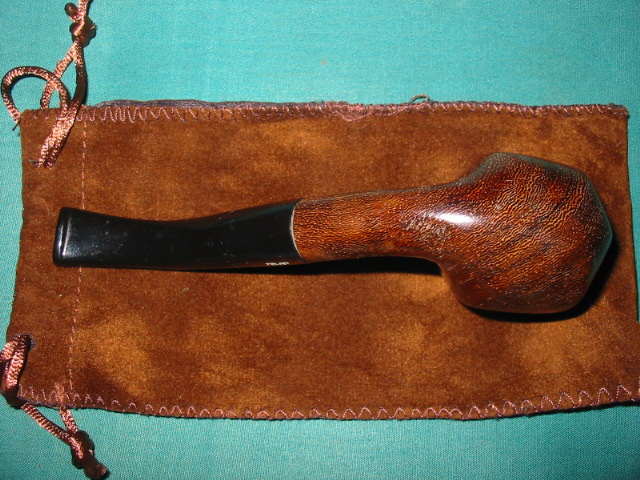
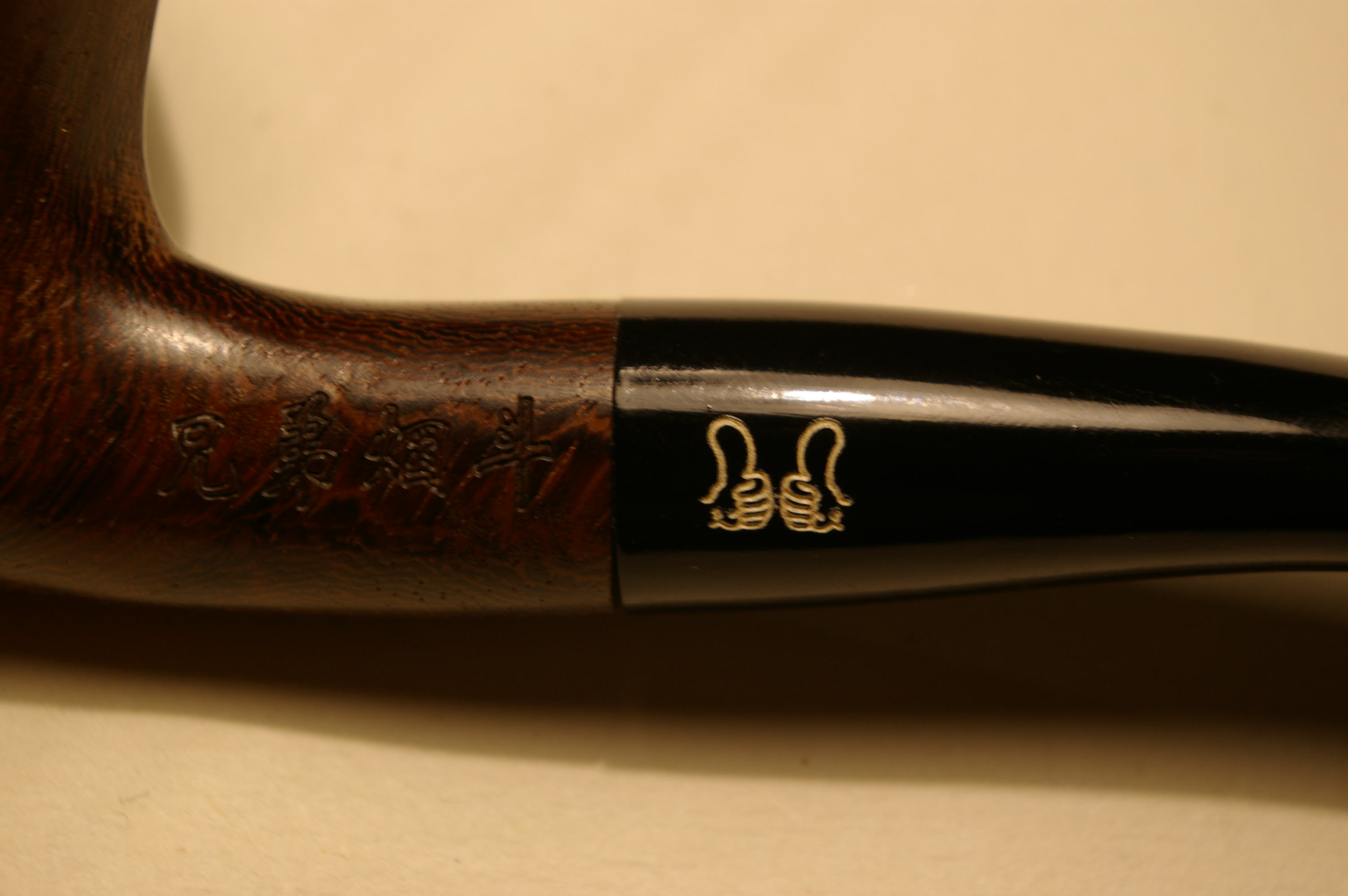
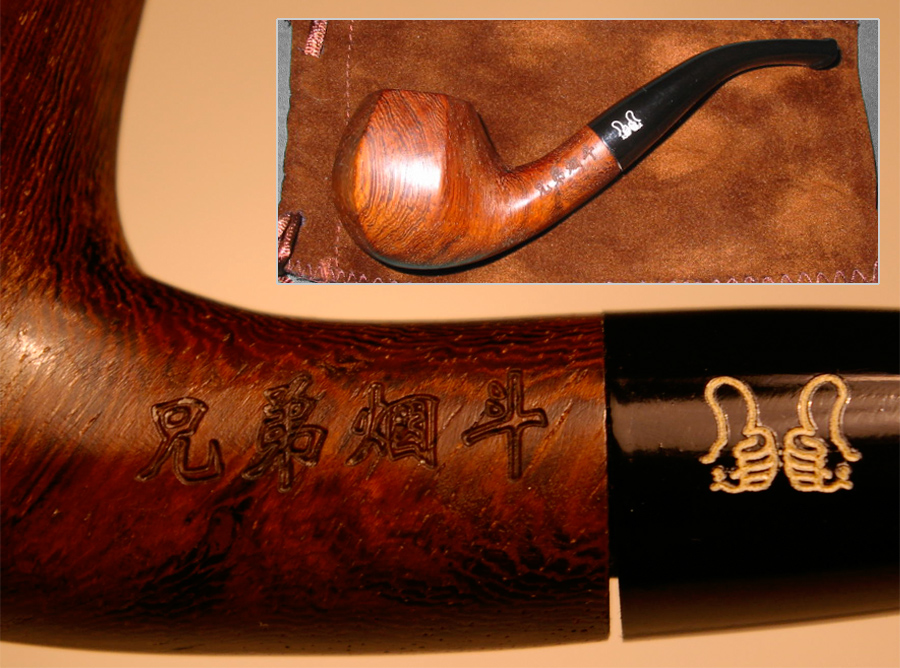
We met for dinner and caught up on her trip.  It was good to hear how the trip had gone and how her family in China were doing. As we settled in to wait for dinner she took my gift from her purse and handed it to me. It was in a beautiful deep blue box with pipes stamped on the outside. When I opened the box there was a suede pipe bag that had the pipe inside. I love it when pipes are wrapped this way – a bag within the box – as it is like opening two presents! I took the pipe out of the pipe bag and it was beautiful. It was made out of a Chinese wood that I later learned was called Chicken Wing wood and its shape is a hexagon. My friend loves bees and chose this pipe because the hexagon shape reminded her of bees. So combined with the impetus of the painting and the desire to gift me this pipe was the shape that her passion caused her to choose. The pipe is stamped on the left side of the shank with the same Chinese characters that appear on the sign in the photo of the shop. I believe they read Two Brothers. On the stem there are two hands facing each other with thumbs up in white. On the right side of the shank it is stamped 0009/1000 and Handmade in China. It is comfortable in the hand and the mouth.

When I returned home I contacted a friend who confirmed the kind of wood the pipe was made of and then I did a bit of hunting on the net to see what I could find out about it. The wood is evidently used in furniture and also smaller boxes and gift items. I even found an Iphone cover in Chicken Wing wood. I also found this lot with similar grain on EBay. They are not as nice as the one I received as the finish on mine is very smooth. http://www.ebay.com/sch/sis.html?_nkw=Beautiful%20Natural%20Chicken%20Wing%20Wood%20Smoking%20Tobacco%20Pipes%20filter%209mm%20J80636&_itemId=140797543935

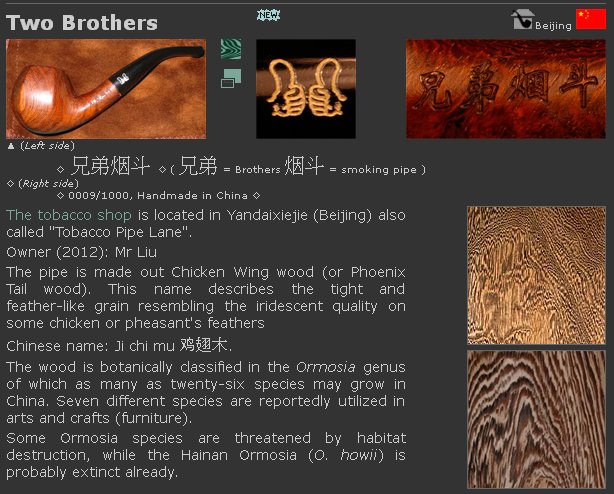
I found this description of Chicken Wing Wood. It is an interesting Chinese hardwood.
China3I brought it to work with me and I will load up a bowl of a favourite tobacco and give it an inaugural smoke. Thanks Leah for the thoughtful gift. It is indeed well chosen and a pipe that I will enjoy and take pleasure in for a long time.
china4china5china6china7Here are some photos of the nomenclature close up

I just received these two photos from pipephil that he has composed for his site on pipe logos and stamping http://www.pipephil.eu/

A Few Pipe Rests – More Pieces of Tobacciana


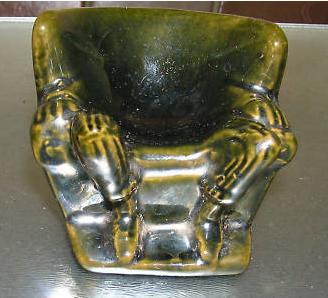
The first of them is a great old piece that is ceramic. It has a green and yellow glaze and is the shape of an easy chair with arms and legs. It holds several sizes of pipes very comfortably. It is hollow on the inside and has a felt pad on the bottom.
rest1

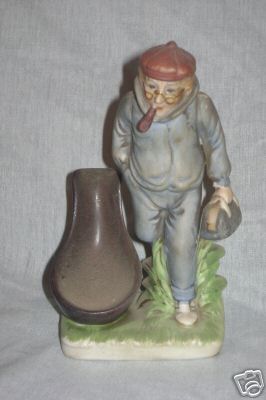
The second rest is a great ceramic piece. It is an old pipe man in a track suit and runners. He is carrying a sports bag. The glaze on it is a soft pastel colour. It holds a pipe very easily and is a great rest on a desk top or in a pipe cupboard.
rest2

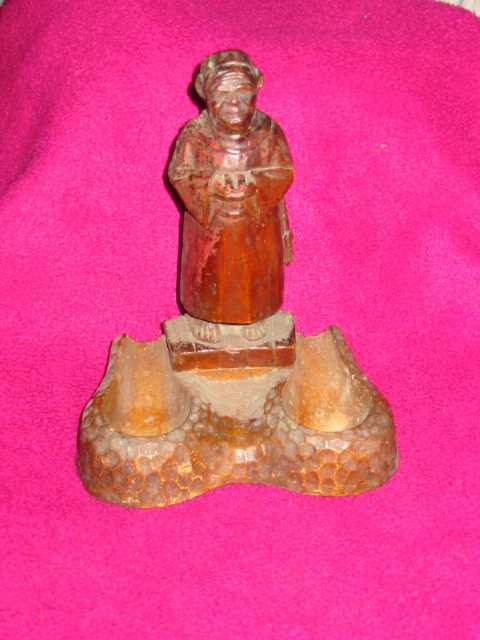
The third pipe rest is a resin piece. It is cast in the shape of a monk or friar. He is hold a book in his hands and is either reading or singing. I can picture him doing a Gregorian chant. The resin is a brown wood colour and has the appearance of a carving. This is one that sits on the shelf in my office/shop. From the picture I can see that I need to dust it off and clean it up.
rest3

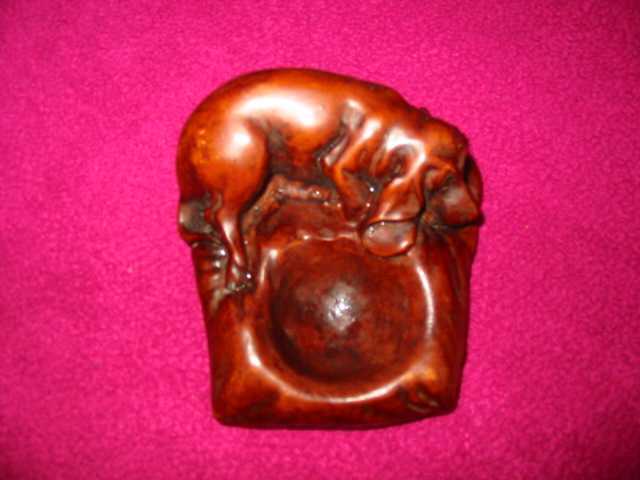
The fourth pipe rest is a sleeping hound dog. It is also a cast resin that looks like a brown wooden carving. It also sits on the desk top and is a great place to lay a pipe when I am smoking it while I work on things. I also use it to hold pipes that I am in the process of restoring.
rest4

I have a few others but these give you a feel for some of the interesting pipe rests that are available.

Another Piece of Tobacciana – A Hammered Metal Pipe Tobacco Humidor


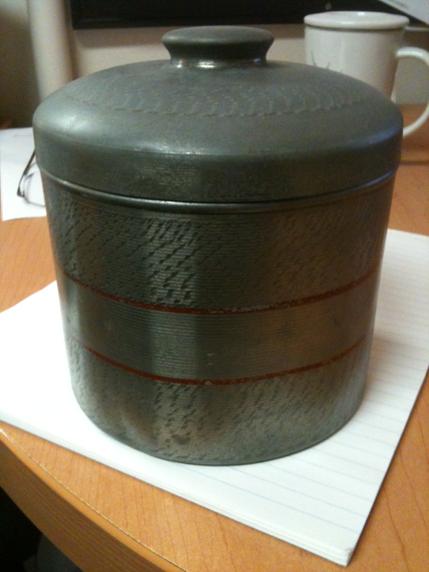
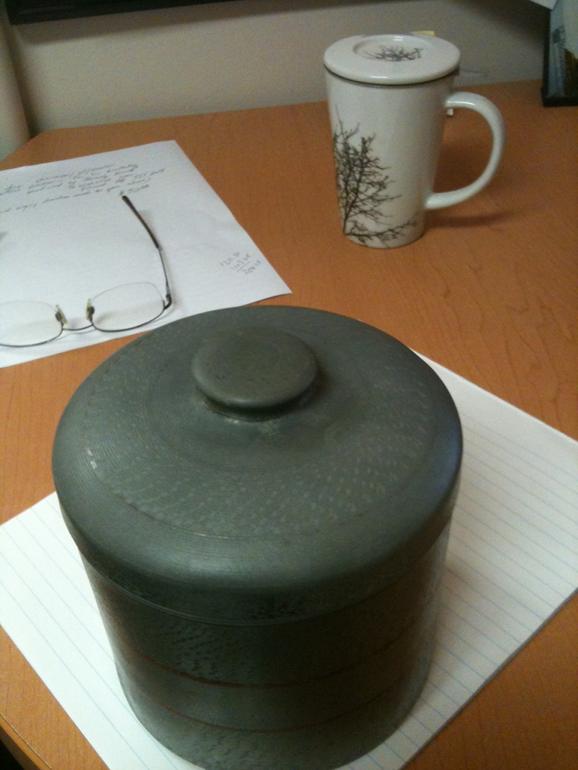
I finally took some pictures of this piece of pipe history – or pipe accessories that I have in my collection. I love the look and feel of this jar. It is relatively useless in keeping tobacco humidified as it is not even close to air tight. Over the years that I have had the humidor I have tried various tobaccos in it. I have even put humidifying disks in the lid and in the tobacco itself with no success. I even tried some aromatic that seemed to never dry out on its own and in the jar it dried within a week to a nice crisp dry corn flake like consistency! So it is no good for tobacco. The look and feel of the piece is nice though. I have no idea of the age of the piece. I call it metal in the title as I do not know what metal it is made of. It does not feel like aluminum so I am guessing steel.
humidor1

humidor2

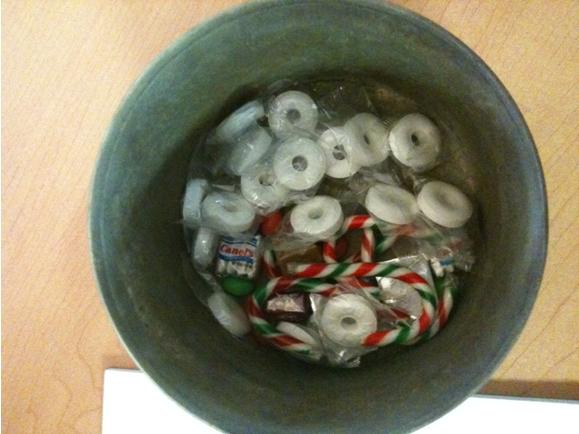
In the past I also used it to hold pipe tools and baggies of tobacco but I decided to jar them instead as the humidor did not keep them from drying out even that way. So it has been retired from that activity and currently resides on my desk in the office at the Foundation. It holds some of the candy that I keep on hand for myself and the folks we work with. It works well for that!
humidor3

My Favourite Pipe Spot – A Small Piece of Solitude


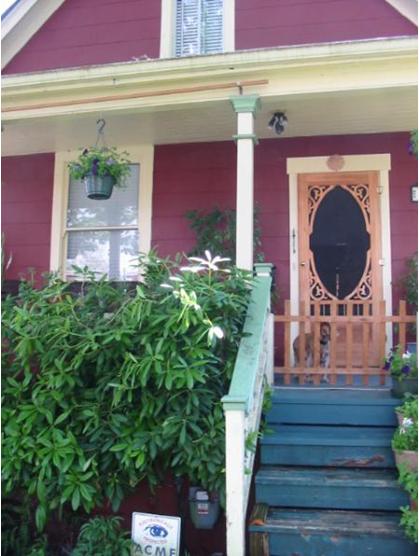
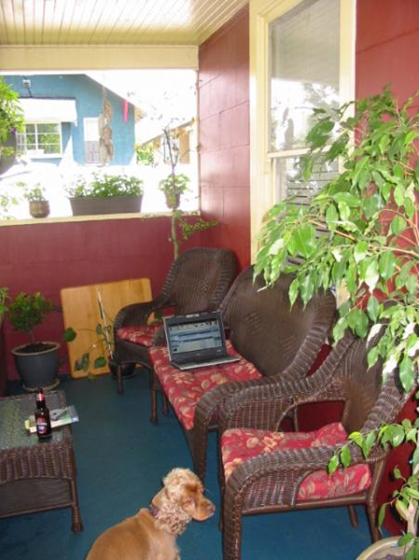
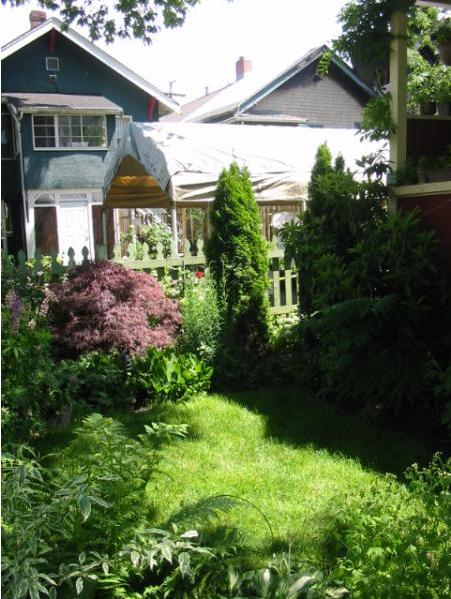
When I think of my favourite spot to smoke a pipe I cannot think of a better place than on my front porch. I live in an old Victorian cottage on a side street in East Vancouver. The house is about 112 + years old and has had many face lifts in its long life. Since the photos were taken I have replaced the stairway with more solid new one. Other than that it looks much the same throughout the warm parts of the year. The porch sits about five feet above the street and the rhododendrons along the front of the porch give some privacy while you are sitting and enjoying the spot.

It is a comfortable place in terms of situation but I always like to make it a bit homier by adding to the natural setting. I put a reed mat rug (made of recycled plastic) on the floor of the porch. It is more decorative than necessary, but it adds some ambience to the space. I set up my two wicker chairs and love seat with a wicker and glass table for the accessories and tobacco. The table also serves as a resting place for a cold drink and also the laptop should I want to scroll through a forum while sitting there. There are hanging baskets along the front and side beams of the porch and fichus trees and other trees and plants on the railings and the floor. These also add to the setting. My cocker spaniel Bailey generally joins me on the porch as he enjoys the setting and the scenery. He commandeers one of the chairs as is his spot. And together we sit and observe life on the street out front and walking down the sidewalk outside the fence. Many a time it also serves as a spot to do a bit of quiet reading and writing when the muse moves.
house1

house2

From the porch my small yard is a garden that I enjoy filling with perennials and some annuals to give colour and depth to the foreground. The light green picket fence and gate surround the yard and give a bit of privacy setting it back from the sidewalk.
house3

house4

house5

house6

This spot has become a favourite and comfortable place for me. I find it a spot to relax and unwind throughout the late spring days and on into the late fall. For us here in Vancouver it means that I can set things out about the end of April and use the porch until mid to late October. I can also use it a bit later but it gets cold with the damp winds and rain so it is relegated to the months I have mentioned above. I thought I would share the favourite spot with all of you. Won’t you join me on the porch for a bowl and a visit?

Cheers!

ImageImageImageImage

Setting up a Pipe and Tobacco Box Pass


Over the years I have set up several box passes of tobacco to facilitate sampling of different blends and a way of trading pipes. The concept is quite simple and generally works best when kept within a geographic area. For instance – Canadians start a Canadian pass, Americans and American pass, etc. I have found over the years that fighting the Customs people at the borders is not worth the lot of problems that cross border or ocean shipping can cause. The one who starts the pass packs a box with tins or samples of tobacco and a few pipes that are available to each person on the list of those participating. The basic idea can be adapted to fit a particular region or even type of blend. I have also seen it used with cigars and it also works very well.

I am including two documents in this post that I include with each box pass. The first is a document called How It Works. The second is called Contents of the Box – Puts and Takes. The idea of the box pass is explained and a few simple “rules” are included in the How It Works document. I have found it important to include these in the box pass as they give a framework for recruiting of participants in the box pass as well as guidelines for the recipients of the box when they look at the contents and swap tobaccos or pipes.

I have participated in box passes where there were no rules and generally there have been problems with things being lost or kept too long or with items being swapped that had lesser value than the ones that were taken. The Contents document works to keep people honest. It lists what was sent when the box went out and what was taken and added. The Puts and Takes list is updated by each participant. In my passes I have asked that other participants put their name or initials by what they added and/or took.

Box passes are great fun and are a way to connect people who otherwise may not ever connect. I would invite and encourage you to give a box pass a try in your location. Gather about 6 to 12 individuals and collect names and addresses. Make a sheet with these names and addresses in the order of the pass. Send it out to the first name on the list, they will send it to the second and so forth. The last person on the list returns it to the original sender and they can either take and put and start it over or lay it aside until a later date.

HOW IT WORKS: (This is the sheet that I send out with my box pass)

— This pass is open to Canadian Residents ONLY! We have many friends across the borders that we’d love to have participate with us in this pass, but issues with Canada Customs makes this impractical, at best. Our apologies are extended to those Brethren of the Briar outside Canada.

— Each participant can keep the Box till the following Monday before shipping it out to the next person on the list. This means if you get the Box on a Wednesday you can keep the Box till the next Monday (yep, that is 4 days), if you want to ship it sooner you can.
Hopefully this will give you longer to sample the goodies. Feel free to sample from the open tins and from the bulk tobaccos (but, please be sure to reseal the baggies that contain them once you are done thanks!). All that is asked in exchange for this is that you leave something in the box for others to sample. While this is fun, please remember that those further down the list from you are anxiously awaiting the box’s arrival. Uncalled for delays spoil the fun!

— When shipping the box to the next participant the use of Priority Mail service with Delivery Confirmation is required. Shipping via UPS is also acceptable.

— If the box is beginning to show some wear and tear, or needs a bigger box (last time we changed the box several times), please replace it with a new box. “It can make it one more time” thinking in the past has resulted in items being lost due to the box failing while in the shipping company’s hands.

— Puts and Takes should be of like kind of items in the box. If you take a sealed tin, replace it with a sealed tin. If you take a partial tin, replace it with a partial tin. The only caveat is that sealed tins can be used to replace any tobacco in the box. Partial tins in this box will be individually placed in Ziploc bags, so please be courteous and place your partial tins going into the box in Ziplocs as well (this is to insure that they do not dry out).

— Tobacco used for Puts into the box should be of good quality and should be blends that you would like others to try. This is not a disposal service; it is an opportunity to sample and trade for some tobaccos you may not have had the chance to smoke and to give your
fellow Brethren of the Briar a chance to try some tobaccos they may not have tried before.

–Please, no glass containers. One word breakage! `Nuff said!

–Puts and Takes should be notated on the list enclosed in the box. Additionally, all puts and takes should be posted to this thread of the Web forum (if you are a web forum member. Web forums are great places to recruit a list). Remember: That part of the fun of participating in a box pass is watching the thing play out on the board!

CONTENTS OF THE BOX – PUTS AND TAKES (this is a copy of the initial list I sent out in the last box pass I sent out. I include it to give you an idea of how it works for the one starting the pass.)

(Note: Alongside the item you take from the list of contents add your name. Add your puts at the end of the list and also add your name. It is always interesting to follow the box and see what others have taken and put in. Thanks!)

Tobacco

1          unopened tin of GLP Haddo’s Delight

1          unopened tin of Bjarne’s Flake DeLuxe

1          unopened pouch of Three Star China Black Whiskey

1          unopened pouch of Three Star China Black Fire Cured

1          unopened pouch of Three Star China Black Vanilla Burley

1          opened tin of F&T Blackjack (VA Flake)

1          opened tin of Dunhill Royal Yacht (older and a bit dry but smokes well)

1          50 gram +/- of GLP Tribute (this is the first edition of this tobacco. It came out after 9/11.)

Accessories

2          Drift wood tampers from the Pacific Ocean

3          briar tampers

Pipes

1          Edwards Algerian Briar Canadian (refurbished, new stem and ready to smoke – older probably 50’s)

1          Edwards Algerian Briar Canadian 721 (refurbished, original stem, ready to smoke –older probably 50’s)

1          Weber Blackthorn 245 (shank was repaired by Mel Cates, YPSC, barely smoked, very good condition, ready to smoke)

1          Milano (a Savinelli second, there is a new stem with it and the original as well. Ready to smoke.)

1          Middleton Silvay, a saddle stemmed lumberman. (refinished, stained and waxed, ready to smoke)