Author Archives: upshallfan

Unknown's avatar

About upshallfan

Moderator on the PipesMagazine forum since 2011. Guest contributor on the Reborn Pipes Blog by Steve Laug.

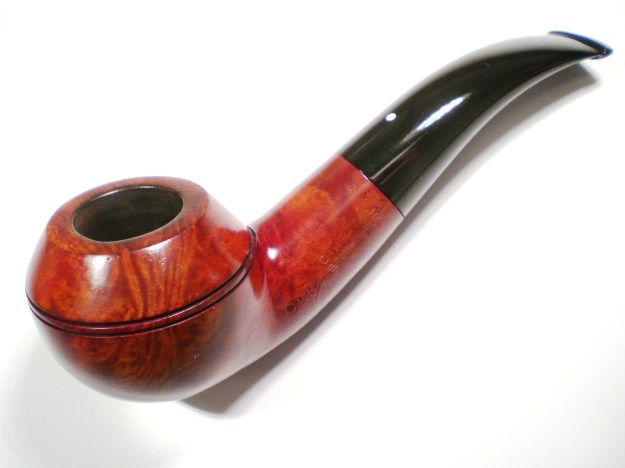
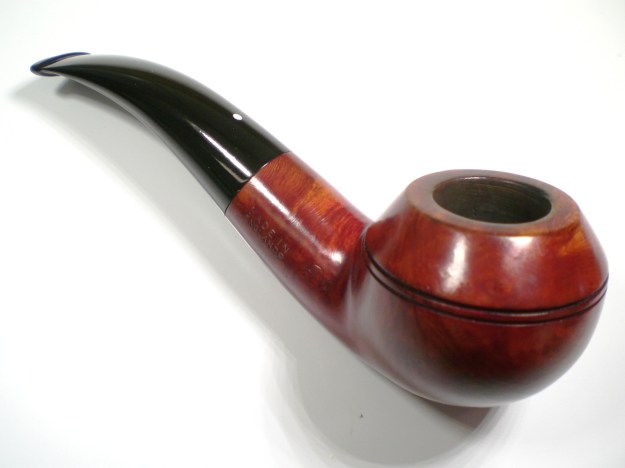
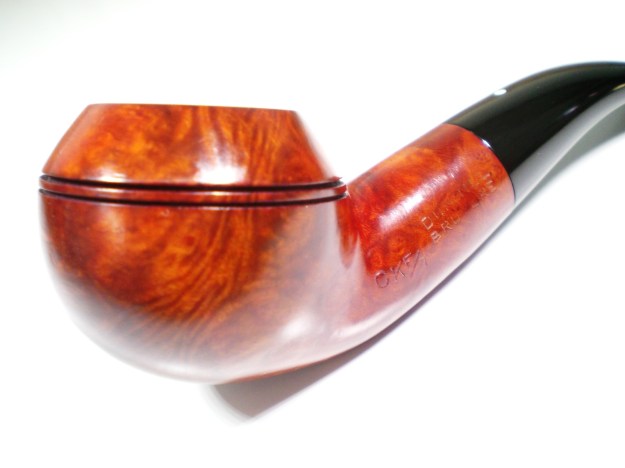
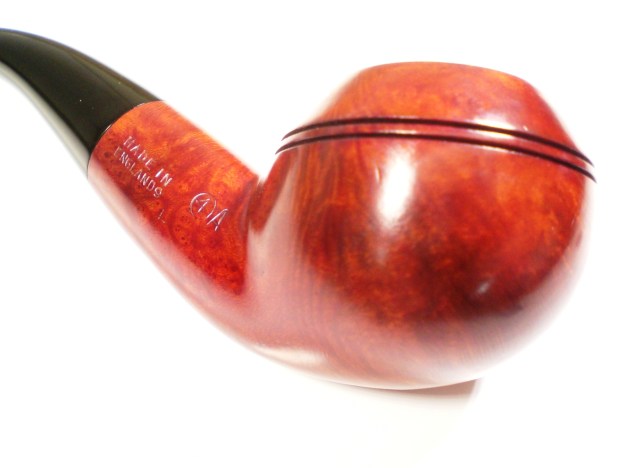
Savory’s Argyll 608 Stand-Up Restoration


By Al Jones
al_pipes_-85

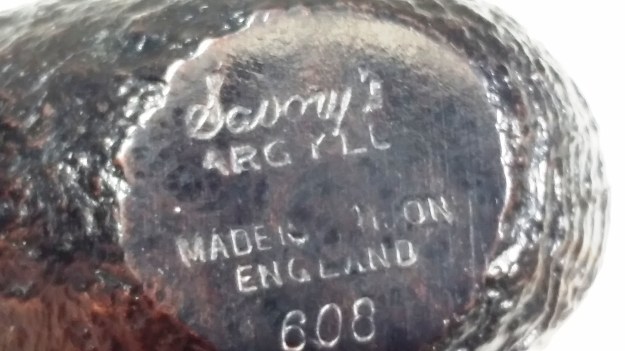
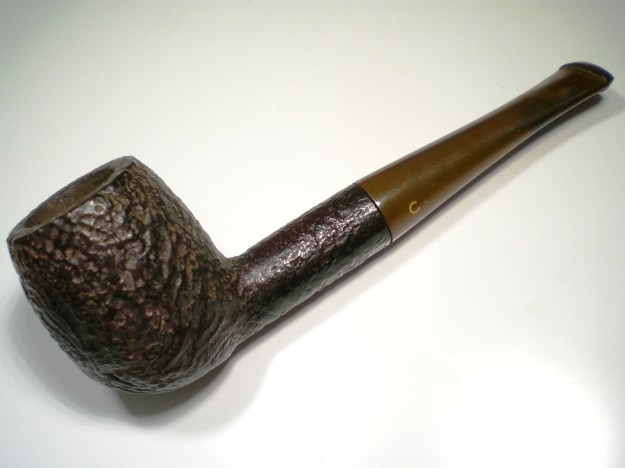
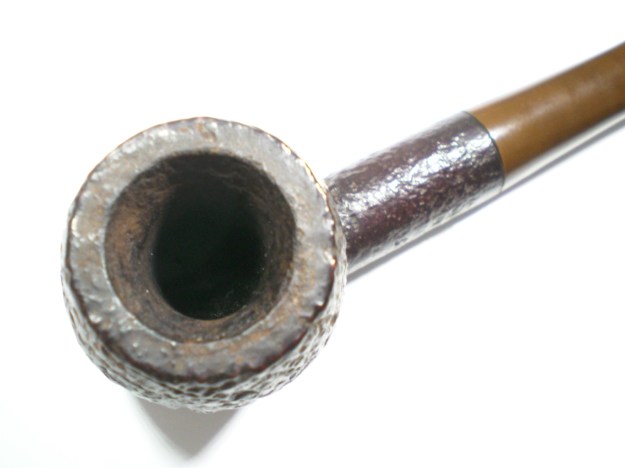
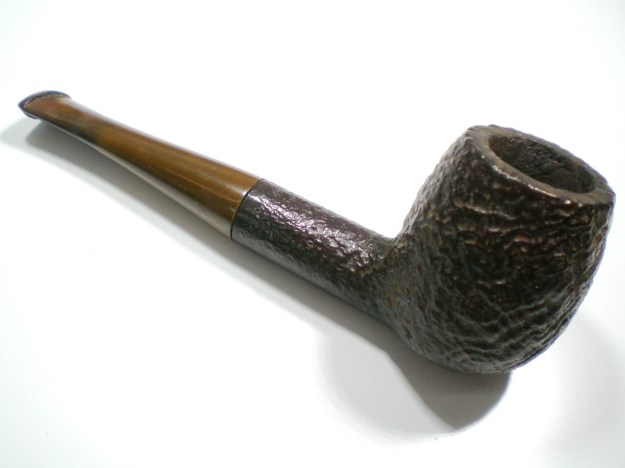
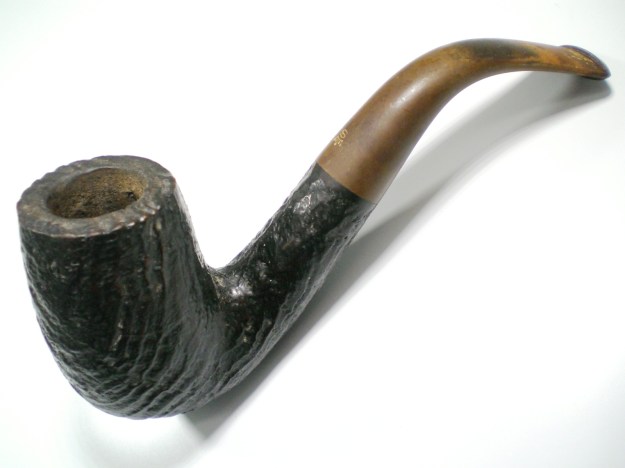
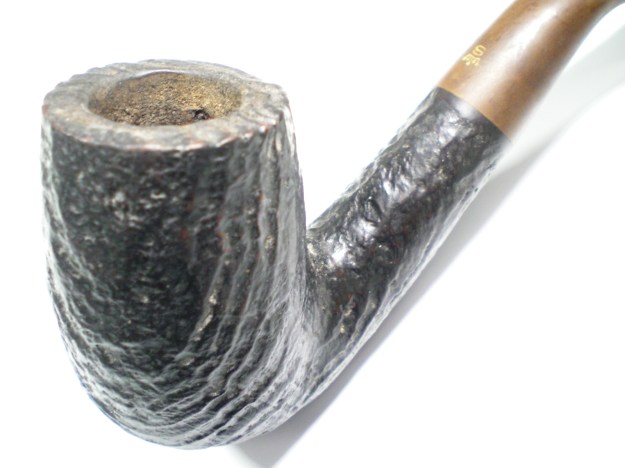
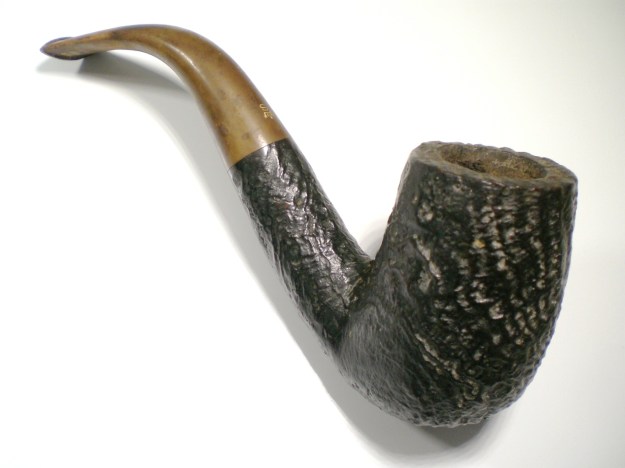
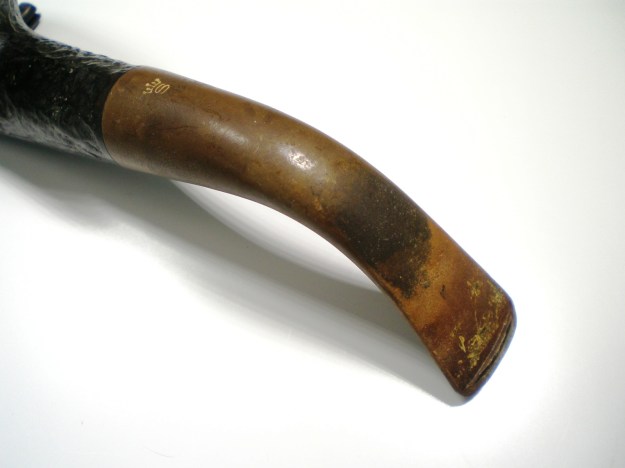
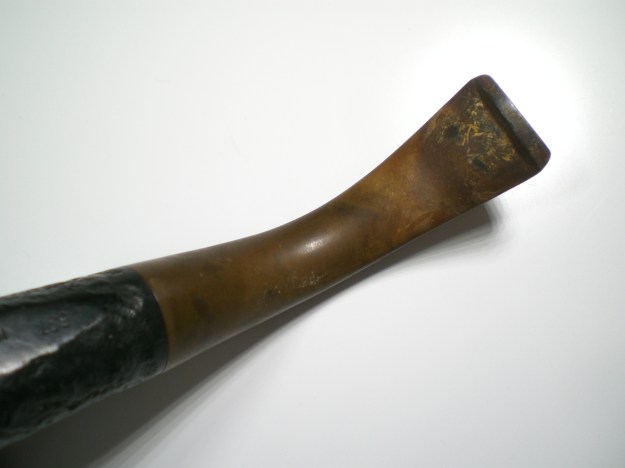
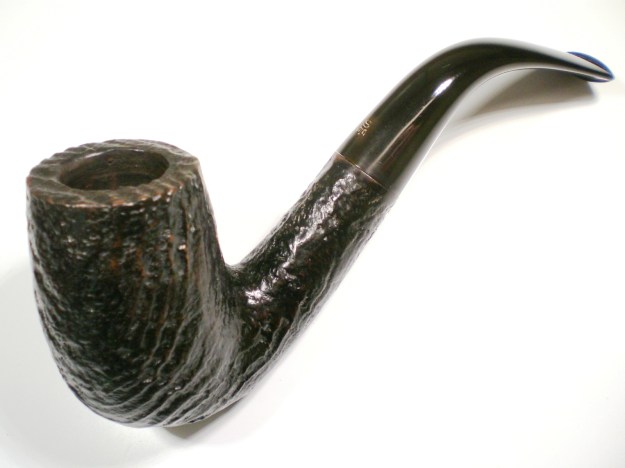
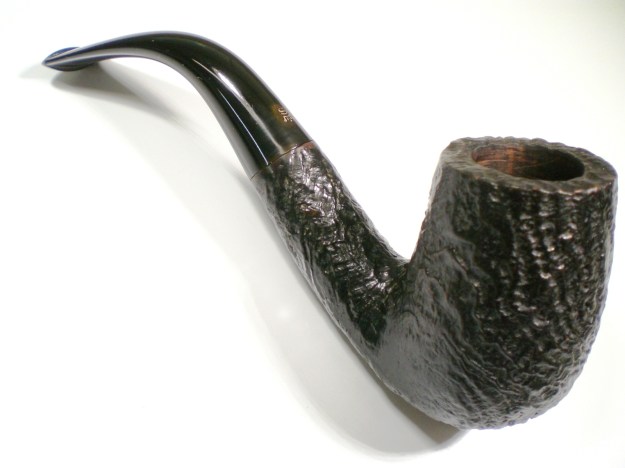
This is the second Savory’s Agryll to cross my bench in the past few months. This one, stamped as shape 608, caught my eye as it looked in great shape and the stand-up feature was interesting. Savory’s is known as a Dunhill 2nd’s line but not much else is written about the brand. The pipe was a little dirty had a mildly oxidized stem. Other than that, it looked like an easy restoration.

savorys_argyll_608_before-1

savorys_argyll_608_before-3

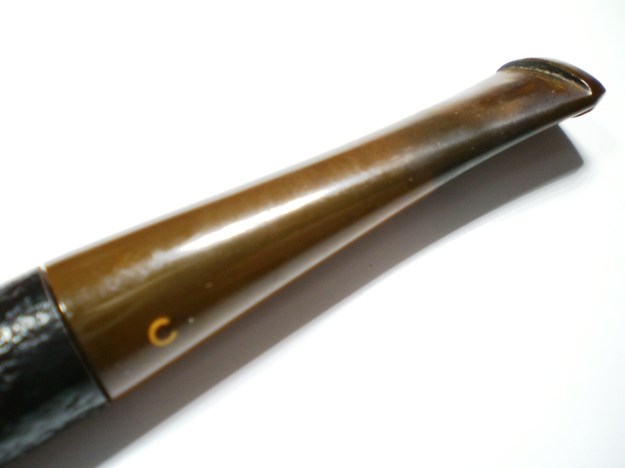
I put a dab of grease over the stem logo and soaked it in a mild-Oxyclean solution. Unfortunately, the logo paint came right off. It appeared to have just been painted on, with no impression. The briar had only a very mild cake, which was reamed and the pipe soaked with alcohol and sea salt.

The stem was mounted and oxidation removed with 800, 1,000 and 2,000 grade wet sandpaper. Next up was 8,000 and 12,000 grade micromesh sheets. The stem was buffed with White Diamond and Meguiars Plastic Polish. I hand waxed the bowl with Halycon II wax.

Below is the finished pipe (which nicely passes a cleaner, despite the bend).

savoryrs_argyll_608_finish-1

savoryrs_argyll_608_finish-4

savoryrs_argyll_608_finish-3

savoryrs_argyll_608_finish-5

savoryrs_argyll_608_finish-8

savoryrs_argyll_608_finish-9

savoryrs_argyll_608_finish-2

savoryrs_argyll_608_finish-6

?

?

Comoy’s 109 Tradition Restored


By Al Jones

al_pipes_-85

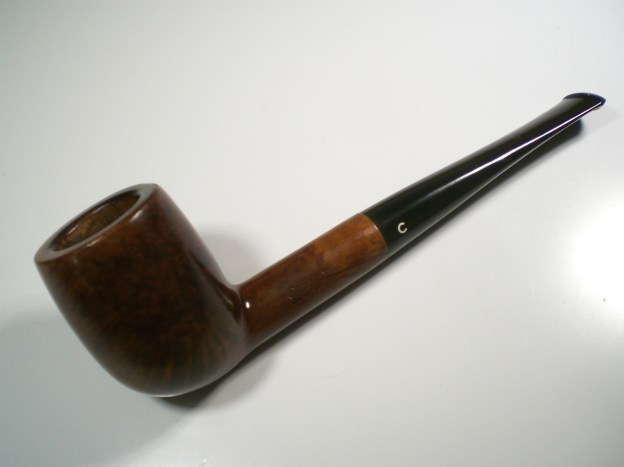
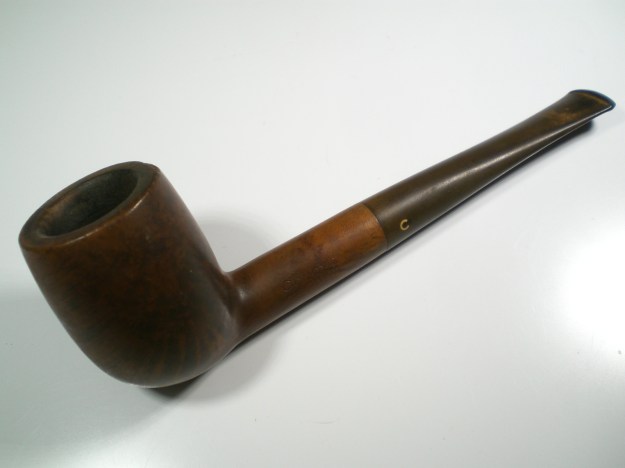
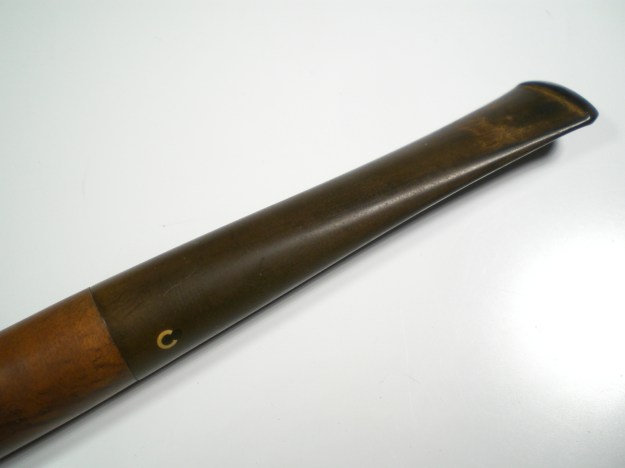
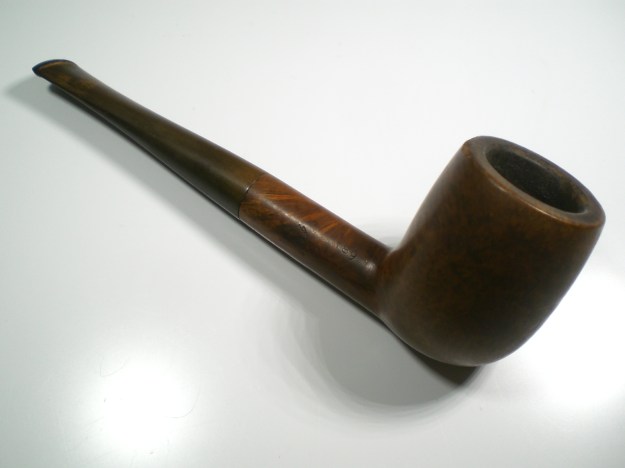
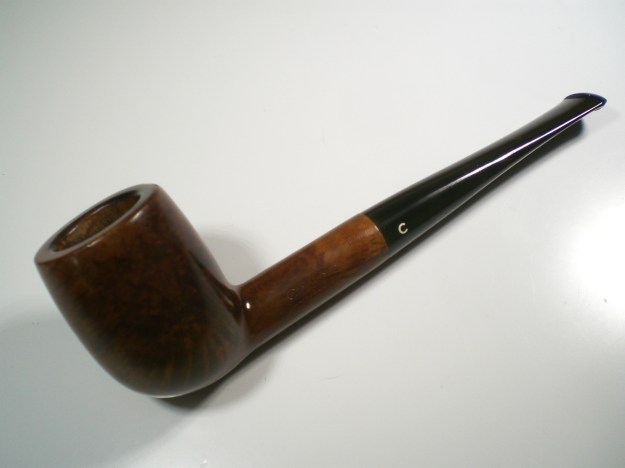
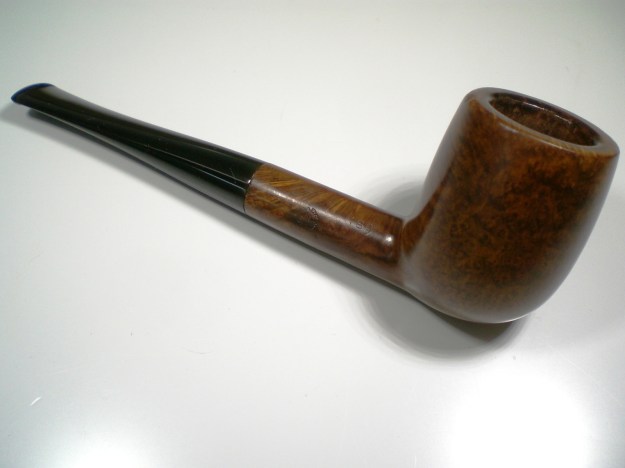
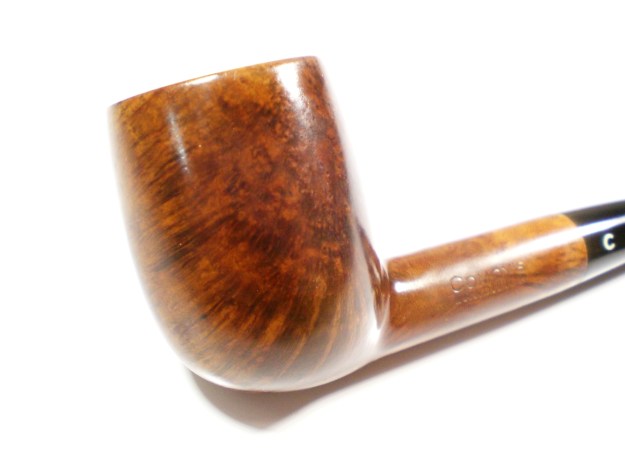
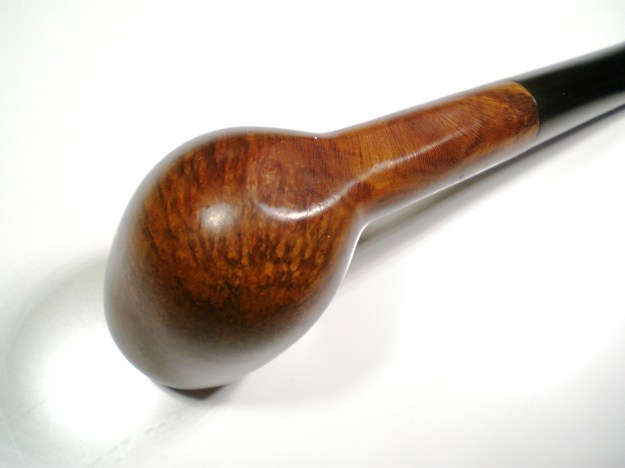
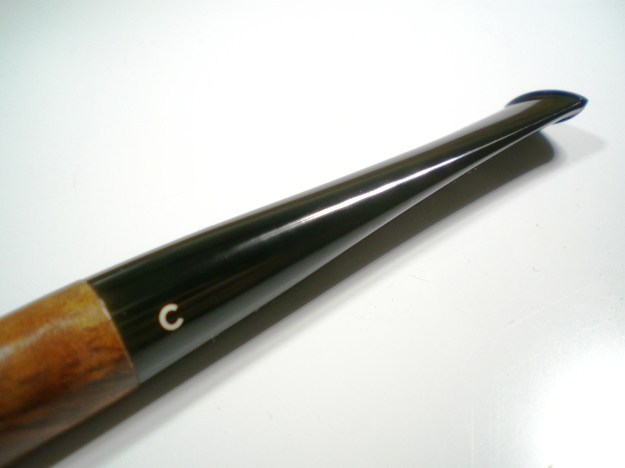
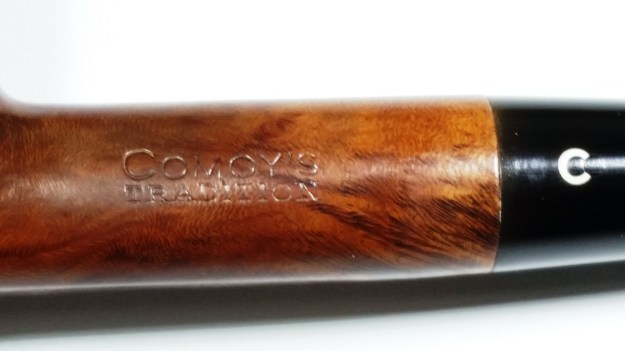
This Comoy’s was seemingly star-crossed. After two round trips to the US from Portugal, it finally made it to my mailbox on the 3rd mailing. I’d just about given up hope but after getting the pipe in hand, however it was worth the effort. The 109 shape is definitely a classic British billiard, with the nice feature of being a “sitter”. The 3 piece “C” logo and circular Country of Manufactur mark meant that the pipe was made before the merger of 1981.

comoys_109_tradition_before-1

comoys_109_tradition_before-2

comoys_109_tradition_before-3

comoys_109_tradition_before-4

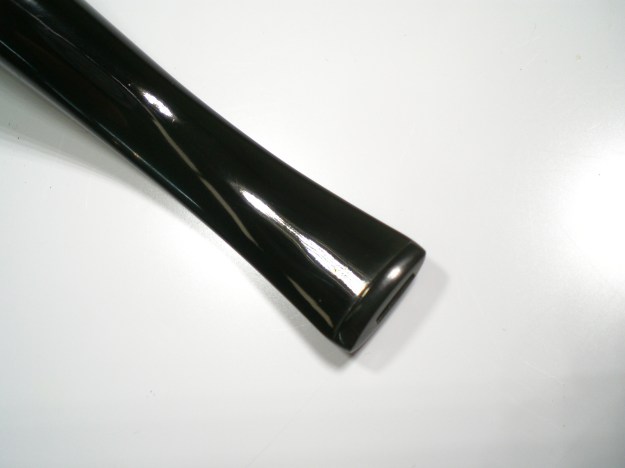
The stem was mildy oxidized with only minor teeth marks. The briar had a few dings around the bowl and a little rash on the back of the bowl. I contemplated stripping the finish and making a superglue and briar dust repair to the bowl, but I wasn’t confident that I could replicate the finish and patina of the pipe. So, I chose a less evasive process.

The bowl was reamed and I found it to be in excellent condition. The bowl was soaked with alcohol and sea salt. While the bowl was soaking, I put a dab of grease on the stem and soaked it in a mild Oxy-Clean solution.

The stem was mounted and the outer layer of oxidation was removed with 800 grade wet paper, followed by 1,000 and 2,000 grades. Next up was 8,000 and 12,000 micromesh sheets. The stem was then buffed with White Diamond and Meguiars Plastic polish.

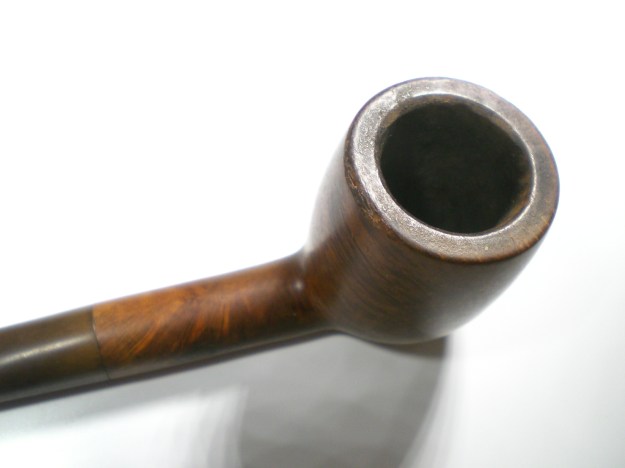
The build-up on the bowl top was removed with a damp cloth and then a piece of 8,000 grade micromesh. I smoothed the area of rash with some 2,000 grade paper and then an 8,000 micromesh sheet. The bowl was buffed lightly with White Diamond and several coats of Carnuba wax. The area of rash blended in nicely. Tradition grade Comoy’s usually have a nice, deep luster to the bowl finish and I’m glad that I decided to not strip and refinish this one.

comoys_tradition_109_finish-1

comoys_tradition_109_finish-6

comoys_tradition_109_finish-4

comoys_tradition_109_finish-7

comoys_tradition_109_finish-10

comoys_tradition_109_finish-8

comoys_tradition_109_finish-5

comoys_tradition_109_finish-9

?

?

?

?

Blatter “Select” Gift


By Al Jones

This pipe showed up in my mail the day after Christmas. It turns out that a friend in Canada, Pat Russell, knew that the shape would appeal to me. He sent it down the the U.S. along with Christmas greetings, a very nice surprise! I had read about the famous Blatter & Blatter shop in Montreal many times on the PipesMagazine forum and on several Reborn Pipes blog entries by Steve. However, until this point, I had never seen one of their pipes first hand.

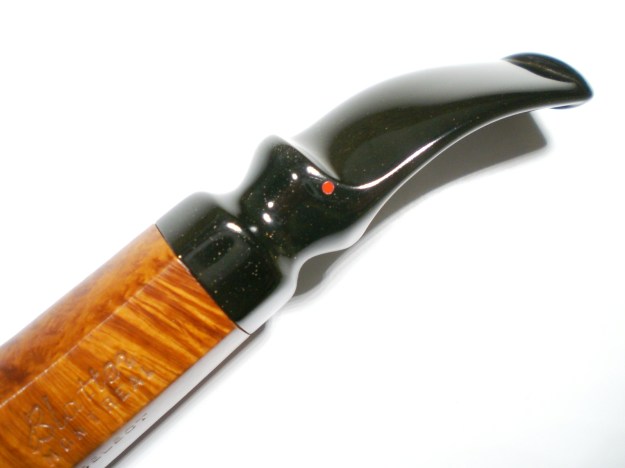
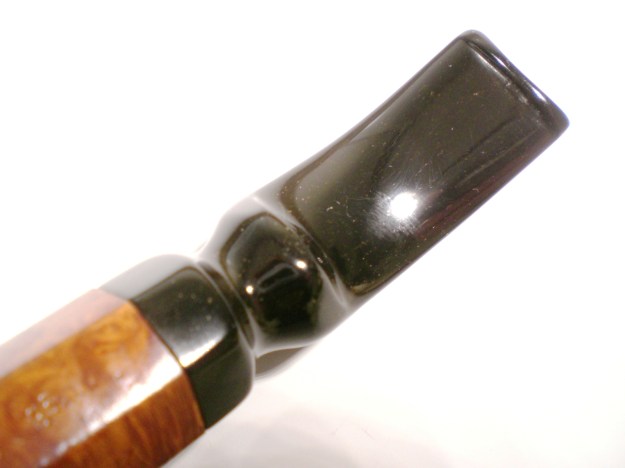
The pipe was in wonderful shape and quite large at 70 grams. There was some very mild oxidation and small teeth marks on the red dot stem. The bowl top had some darkening around the rim. The stem is a chair-leg style, similar to a GBD.

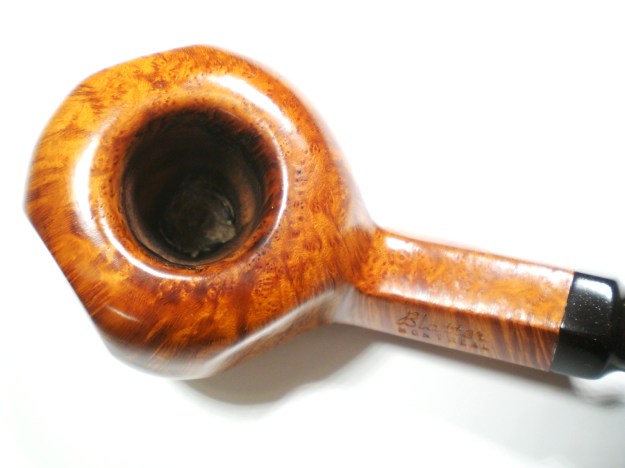
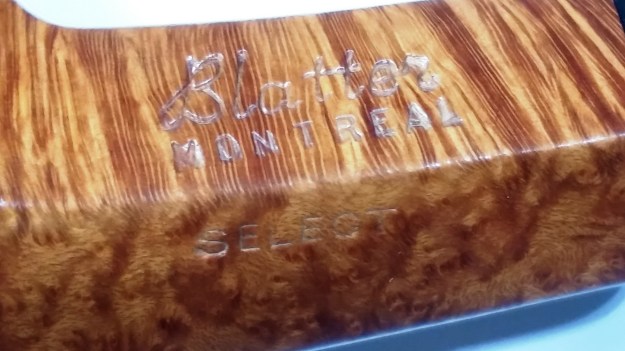
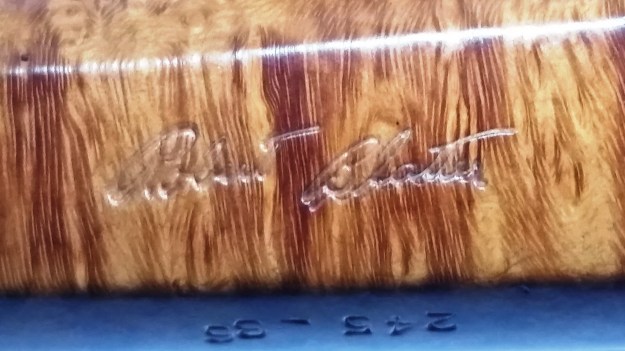
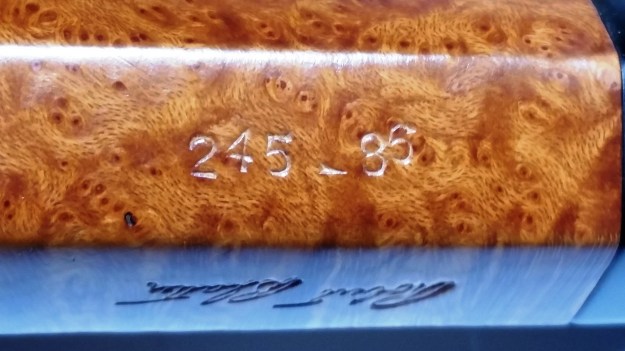
The stamping is still a bit of a mystery. Steve has previously posted the history of the Blatter & Blatter shop, but not much else is written about their pipes, grades, nomenclature, etc. This one is stamped “Select” and has a signature stamp for Robert Blatter. It appears that Robert Blatter may now be retired from the shop. It also has a number and dash stamped on one panel. If anyone knows the significance of the number sequence, please let me know.

From a PipesMagazine forum entry, one member wrote this about the Select stamping:

The interest, among their creations, is their Sélect line. You can’t miss them as the pipes are stamped “Sélect”. Very fine quality briar plateaux are used to create them and, obviously, the ebonite is of much better quality.

I’m a big fan of the Canadian rock band “Rush” and my wife had given me a copy of the 40th anniversary edition of their album “2112”. I thought it was appropriate to listen to it in my workshop as I worked on my first Canadian pipe.

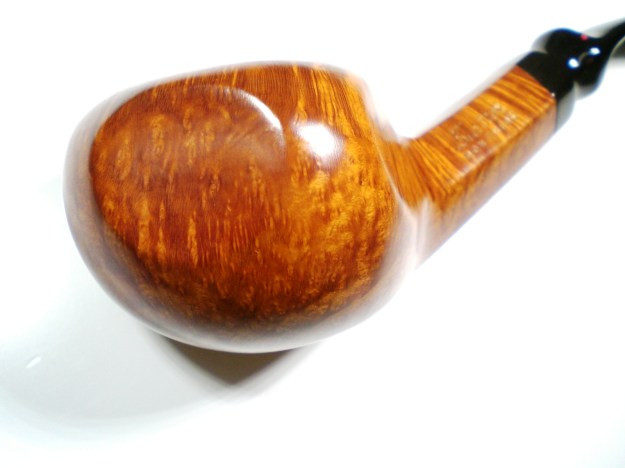
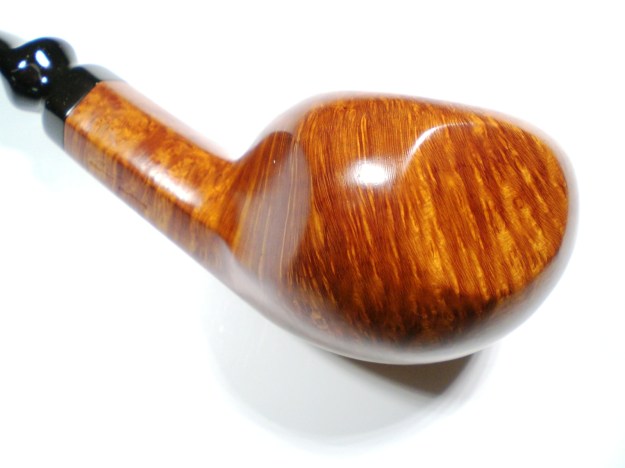
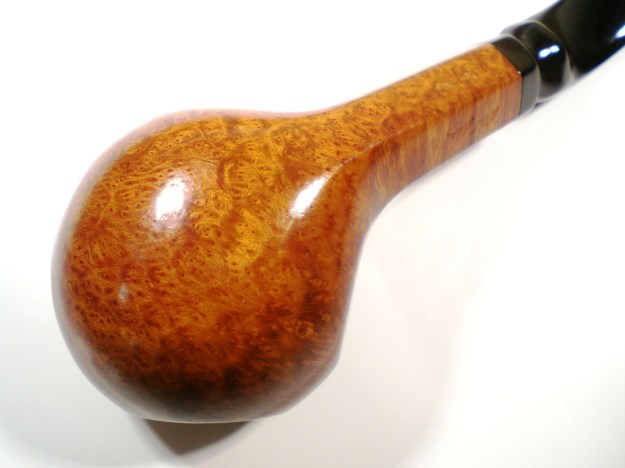
Here’s the pipe after touching up the bowl top and polishing the stem. Thanks for your thoughtful gift Pat!

blatter_select_finish-1

blatter_select_finish-4

blatter_select_finish-2

blatter_select_finish-5

blatter_select_finish-8

blatter_select_finish-6

blatter_select_finish-3

blatter_select_finish-7

?

?

?

?

?

?

GBD 133 New Era Restored


By Al Jones

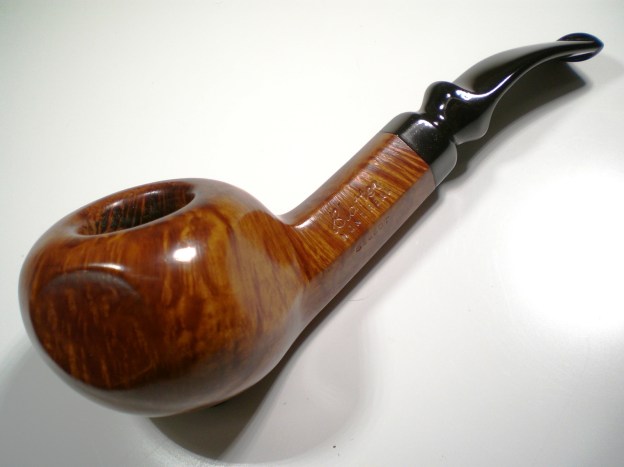
This GBD New Era looked like a simple restore. It held one surprise that was in the sellers photos, but something I had not noticed. At some point in it’s life, a previous owner had put a flat bottom on it, make it a “sitter”. The stem had some mild oxidation, but no teeth marks. There was some darkening of the rim.

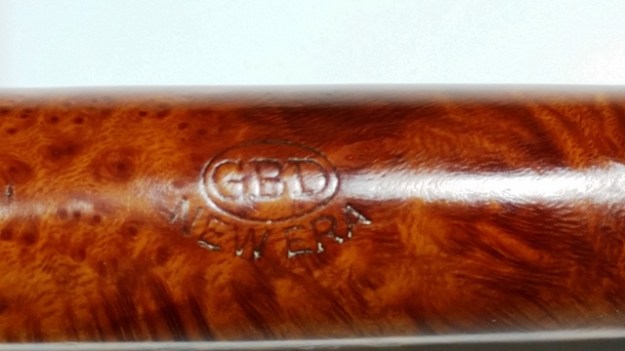
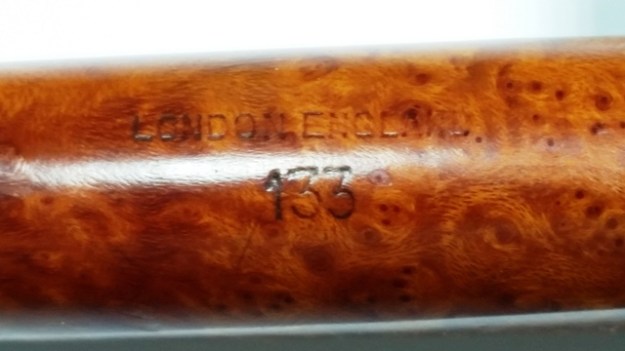
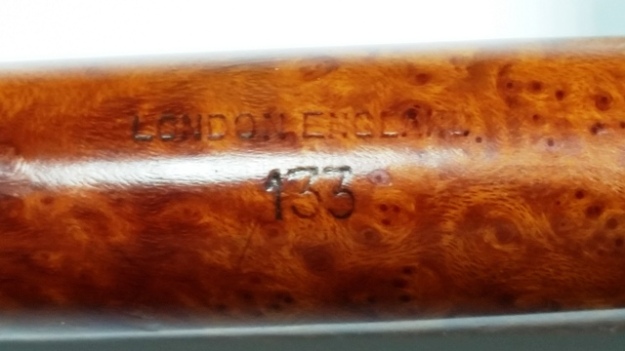
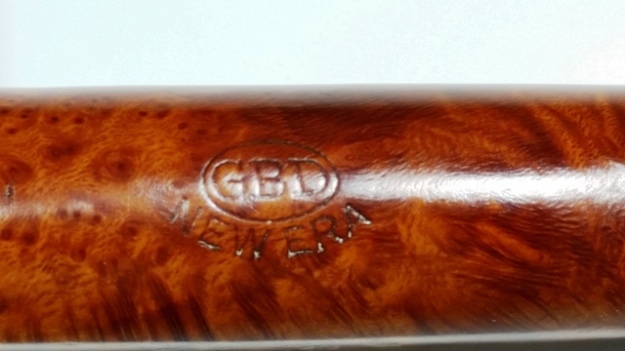
The rondell and stamping identified it as a pre-Cadogan era pipe. New Era grade GBD’s always have nice briar and are a step up from the typical New Standard grade that more often seen.

gbd_133_ne_before-1

gbd_133_ne_before-4

gbd_133_ne_before-2

gbd_133_ne_before-3

Here you can see the flat bottom. Fortunately, only a small portion of the briar had been removed and it should not effect the smoking of the pipe. And, it does sit nicely, which is always convenient.

gbd_133_ne_before-5

The mild cake was reamed and the bowl soaked with alcohol and sea salt. At the same time, the stem was soaked in a mild Oxy-clean solution with a dab of grease on the rondell.

I used some 2000 grade sandpaper to remove the bowl top build-up followed by 8000 micromesh. The stem was mounted and oxidation removed with 800, 1000 and 2000 grade paper. This was followed by 8000 and 12000 grade micromesh sheets. The stem was then buffed with White Diamond and Meguiars Plastic Polish. The briar was buffed lightly with White Diamond and then several coats of Carnuba wax.

Below is the finished pipe, which is en-route to a new owner on the island of Corfu in Greece.

gbd_133_ne_finish-1

gbd_133_ne_finish-4gbd_133_ne_finish-3gbd_133_ne_finish-5gbd_133_ne_finish-6gbd_133_ne_finish-7gbd_133_ne_finish-2gbd_133_ne_finish-8gbd_133_ne_finish-12

gbd_133_ne_finish-web11

?

gbd_133_ne_finish-web10

?

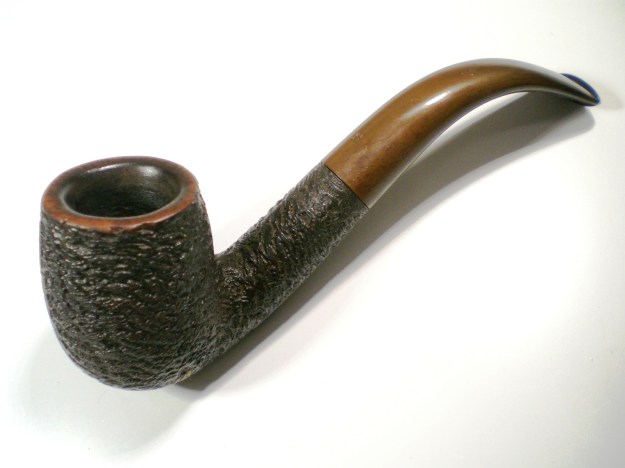
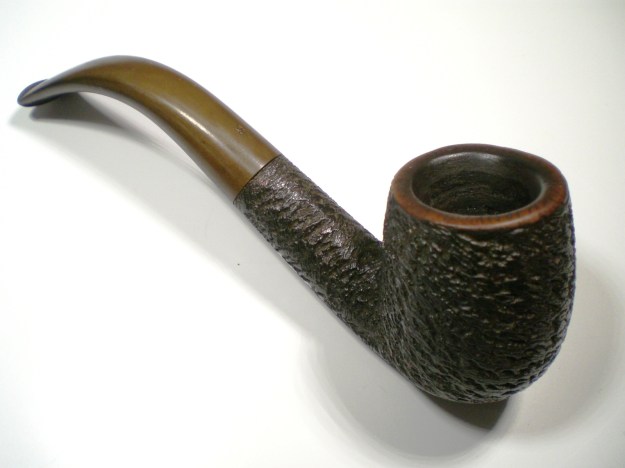
Sasieni “Sashar” Restoration


By Al Jones

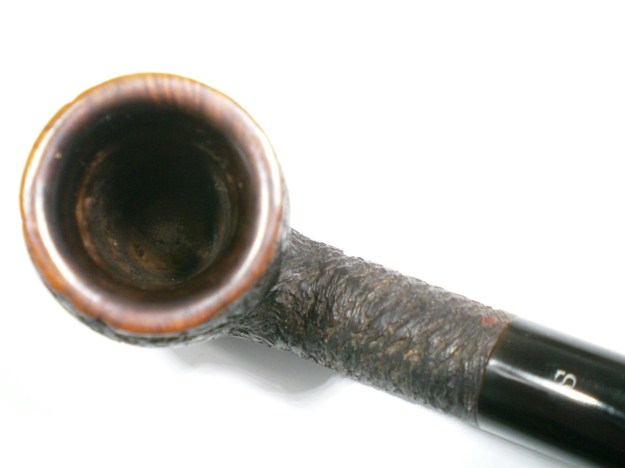
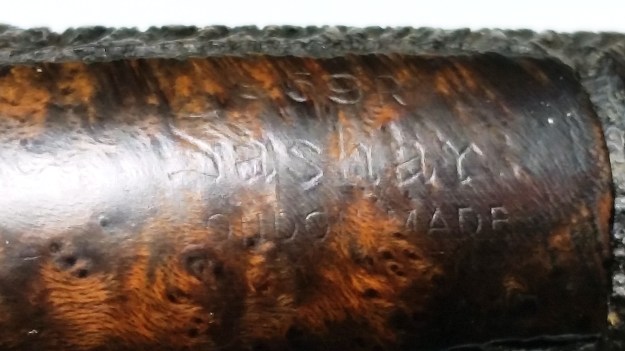
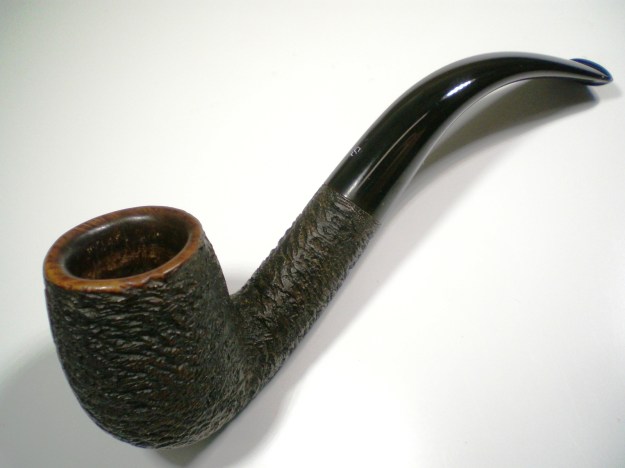
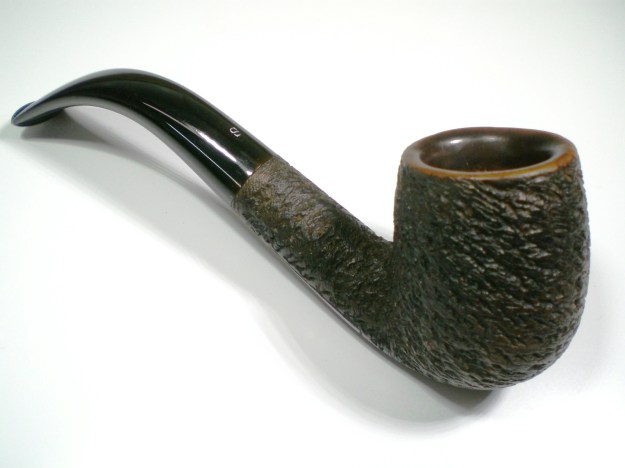
When I spied this pipe, I wasn’t familiar with the Sashar line or that it was a Sasieni 2nd’s line. The shape and style spoke to me as Sasieni and sure enough, the nomenclature read “London Made By Sasieni”. Upon receipt of the pipe, which came via England, I could see the stem also had a Sasieni feel. The pipe is rusticated, but with a texture and detail that I’ve not seen before. The rustication on Sasieni Rustic pipes is lovely, but I think this method may have a nicer hand feel. I’m familiar with the other Sasieni 2nd’s: Mayfair, Fantail and Olde English but Sashar was new to me. The pipe was stamped with the shape 959R. It is similar to the Viscount Lascelles, but on a slightly smaller scale. The nomenclature was lightly stamped, but completely visible. I didn’t capture it well on my photo below, but it reads:

959R
Sashar
London Made
By Sasieni
Made in England (straight line)

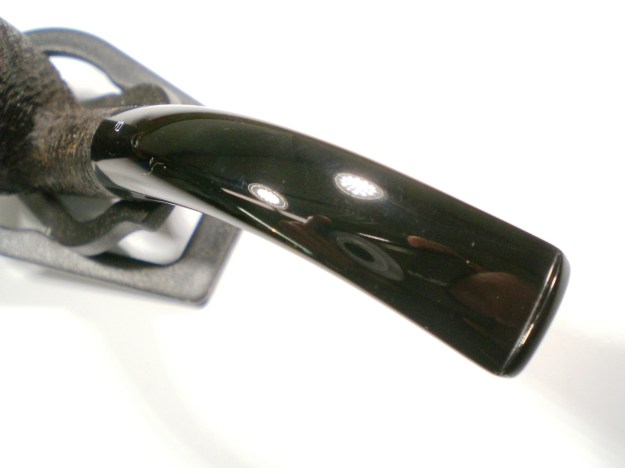
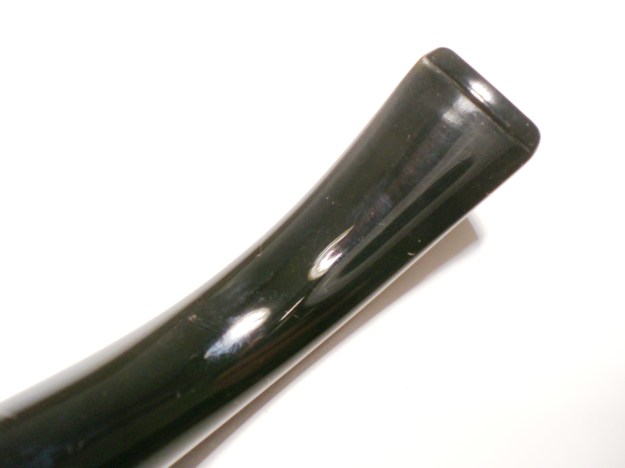
The pipe had a badly oxidized stem and some wear marks on the polished bowl top. The “S” stem logo imprint was still visible.
sashar_959r_before-1

sashar_959r_before-4

sashar_959r_before-3

sashar_959r_before-2

I reamed the slight cake from the bowl and found an interior in excellent condition. The bowl was soaked with sea salt and alcohol. The stem was soaked for several hours in a mild solution of Oxy-Clean, with a dab of grease on the logo.

I smoothed the nicks on the bowl top with some 800 grit, then 1000 and 2000 grade wet papers. The bowl top was buffed with White diamond and several coats of Carnuba wax.

The stem was mounted and heavy layer of oxidation removed with 800 grade paper, followed by 1000 and 2000 grades. That was followed with micro-mesh sheets in 8,000 and 12,000 grades. The stem logo was brightened with a dab of white Acrylic paint. After it started to harden, I wiped it off leaving paint in the recess. It was set aside to dry overnight. The stem was then buffed with White Diamond and Meguiars Plastic polish.

Below is the finished pipe. To my eye, the tapered stem Bent Billiard epitomizes the British briar pipe. I reluctantly packed up the pipe. It was sold and is now heading to a new owner on the Greek island of Corfu.
sashar_959r_finish-1

sashar_959r_finish-3

sashar_959r_finish-2

sashar_959r_finish-4

sashar_959r_finish-5

sashar_959r_finish-6

sashar_959r_finish-7

?

Comoy’s 168 Tradition Restored


By Al Jones

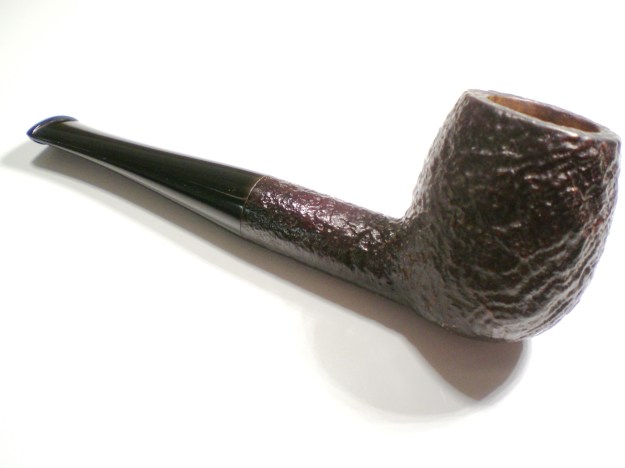
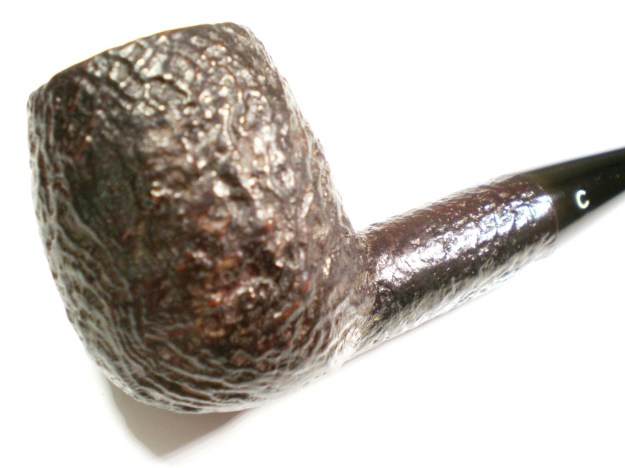
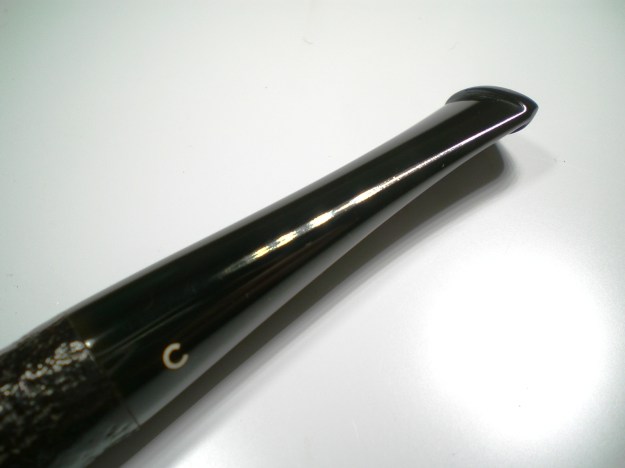
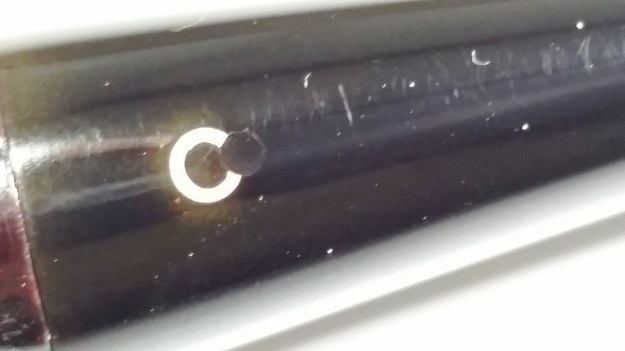
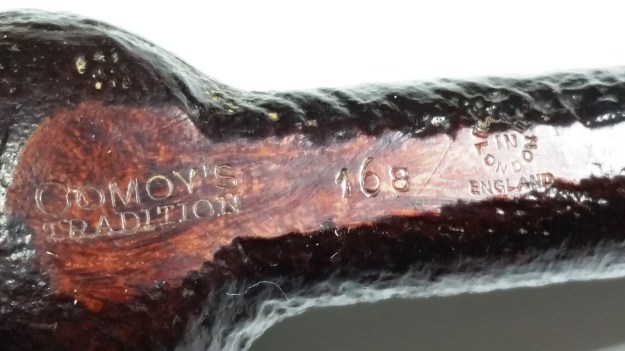
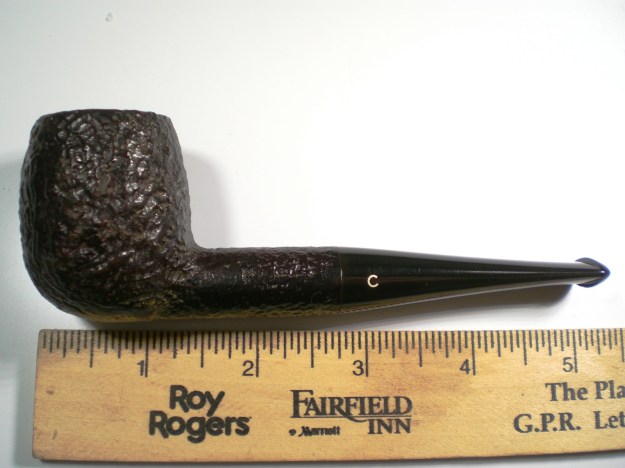
This little Comoy’s billiard caught my eye as it was stamped “Tradition” but is a sandblasted pipe. The shape is the 168, a tapered stem billiard. The COM (Country of Manufacture) mark is also the circular “Made in London”/England that is used on smooth Comoy’ spipes. This COM mark with the 3 piece drilled “C” stem logo was used in the early 1950’s onward to the merger point in 1981-1982.
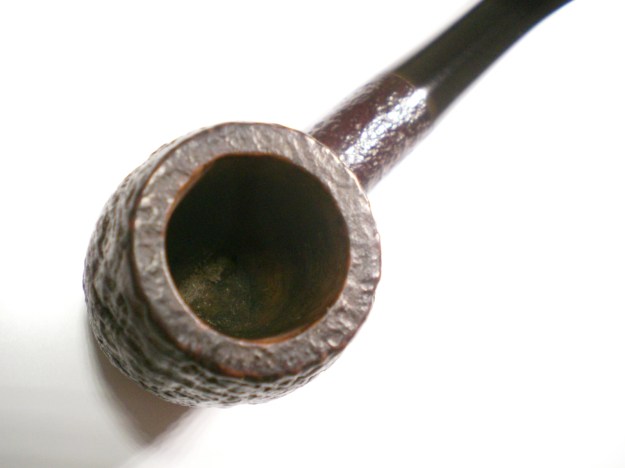
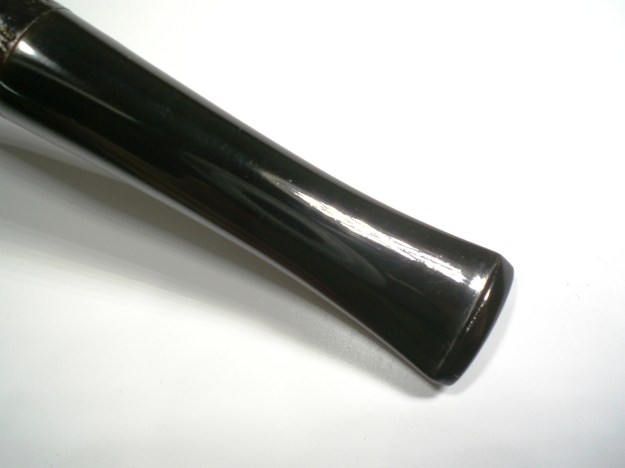
The pipe had a heavily oxidized stem but otherwise appeared undamaged. The dark area near the button shows that a bit guard was used. The bowl had a very thick cake build-up.

comoys_168_tradition_before-1

comoys_168_tradition_before-2

comoys_168_tradition_before-3

comoys_168_tradition_before-4

Upon receipt, I found the stem impossibly stuck in place. It was so tight that I feared it may have been glued in place. Freezing didn’t work, so I filled the bowl with alcohol and stuck a cleaner thru to soak some alcohol into the shank/tenon area. After several hours, I was relieved to find the stem released, with a perfect tenon.

The bowl was reamed and I found the interior to be in perfect condition, protected no doubt by the cake. The bowl was soaked with alcohol and sea salt. While it was soaking, I put a dab of grease on the C logo and soaked the stem in a mild solution of Oxy-Clean to loosen the oxidation.

I used Halycon II wax applied by hand to shine the bowl. The mild build-up on the bowl top was removed using a combination of a cloth and worn scotchbrite pad. The shank was cleaned with a series of brushes and alcohol. A thorough cleaning of the shank is necessary to avoid tobacco ghosts.

The stem was mounted and oxidation removed with 400, 800, 1000 and 2000 grade wet sandpaper. Next, 8000 and 12000 micromesh sheets were used. The stem was then machine buffed with White Diamond and Meguiars Plastic Polish.

Below is the completed pipe.

comoys_168_tradition_finish-1

comoys_168_tradition_finish-4

comoys_168_tradition_finish-2

comoys_168_tradition_finish-5

comoys_168_tradition_finish-6

comoys_168_tradition_finish-3

comoys_168_tradition_finish-7

?

?

?

?

comoys_168_tradition_finish-10

GBD New Era 133 Restoration


By Al Jones

I love finding GBD “New Era” pipes, they are a definite step up the quality ladder, in contrast to the more commonly seen “New Standard” grade. This one is a Shape 133. It looked in decent condition, but held a few surprises. When the pipe was delivered, I discovered that a previous owner had filed the bottom flat to make it a sitter. There was also an issue with the button. The other issues were minor and typical of an estate pipe – bowl top build-up and an oxidized stem.

gbd_133_ne_before-1

gbd_133_ne_before-4

gbd_133_ne_before-2

gbd_133_ne_before-3

gbd_133_ne_before-5

The pipe was reamed and soaked with alcohol and sea salt. The stem was soaked in a mild Oxy-Clean solution. I used a cloth and warm water to rub off the majority of the build-up on the bowl top. The rim was slightly darkened, but I was able to lighten it with some 2000 grit wet paper. I buffed the bowl with White Diamond and several coats of carnuba wax.

The stem had a few dents that I was able to raise with some heat from a lighter. There was one sharp tooth impression that under magnification, showed it was a crack that went up into the edge of the button. I used some black Super-glue with accelerator to fill the tooth mark and over the top of the button. That was sanded flush with 800 grit paper, followed by 1,000 and 2,000. I removed the oxidation from the stem with with 800 grit, than working thru 1,000 and 2,000 grades. The final prep was with 8,000 and 12,000 grade micromesh followed by buffing with White Diamond and Meguiars Plastic Polish.

Below is the finished pipe. You can see from the tenon, that on New Era pipes, GBD spent a little more time on that detail as well.

gbd_133_ne_finish-1

gbd_133_ne_finish-4

gbd_133_ne_finish-3

gbd_133_ne_finish-5

gbd_133_ne_finish-6

gbd_133_ne_finish-7

gbd_133_ne_finish-2

gbd_133_ne_finish-8

gbd_133_ne_finish-12

?

?

?

?

Sasieni Moorgate S Ruff Root Restoration


By Al Jones

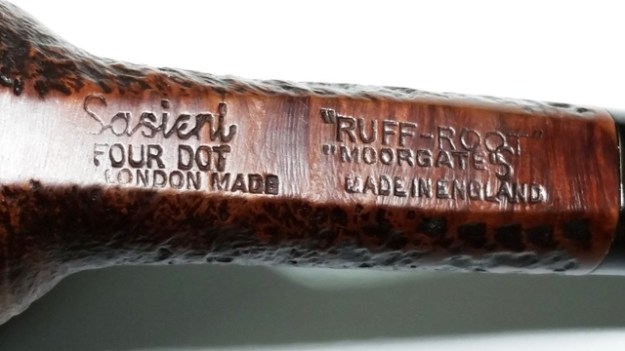
This is the 2nd Sasieni Moorgate shape to cross my work bench.  This one is in the sandblasted Ruff Root finish.  The stem was oxidized, with a few dents and there was some heavy build-up on the bowl top.  Build-up inside the shank prevented the tenon from a flush fit.

sasieni_moorgate_s_ruff-root_before-1sasieni_moorgate_s_ruff-root_before-5sasieni_moorgate_s_ruff-root_before-3sasieni_moorgate_s_ruff-root_before-2


The bowl was reamed and I used a cloth and warm water to rub off the heavy top layer. I then used a worn piece of scotchbrite to carefully remove the rest.  I was very pleased with the results. The stain was lightened slightly aI h alcohol and sea salt.  At the same time, the stem was soaked in a mild Oxy-Clean solution, with a dab of grease over the blue dots.

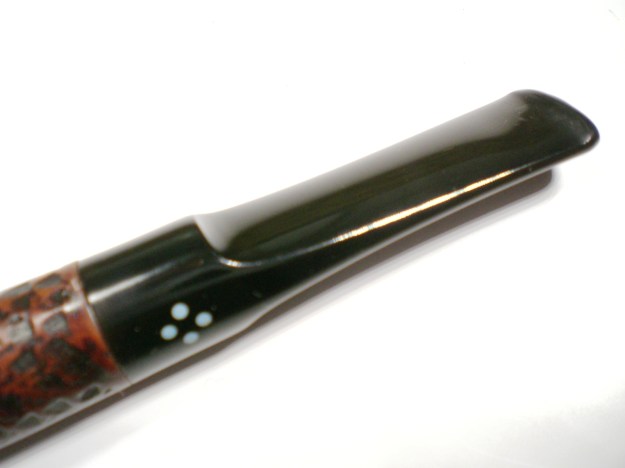
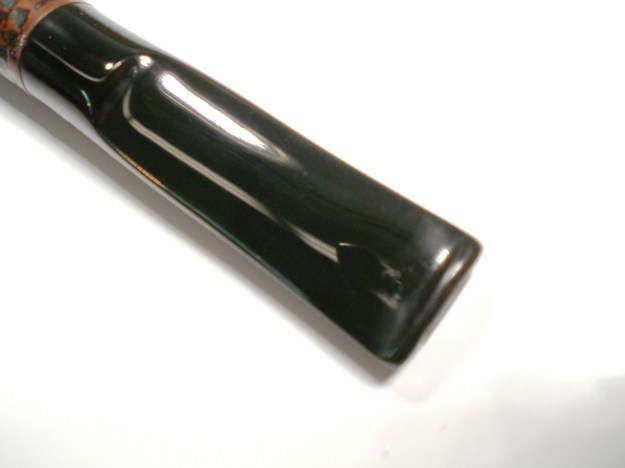
I then used a lighter to lift the dents on both sides of the stem.  A bristle brush dipped in alcohol was used to clean inside the shank.  I then mounted the stem and used 800 grit wet paper to remove the heavy layer of oxidation, followed by 1,000 and 2,000 grade paper.  The stem was finished with 8,000 and 12,000 grade micromesh paper and then buffed with White Diamond and Meguiars Plastic Polish.  Sometimes the dots are faded on Sasieni stems, but the dots on this one were a lovely shade of robins egg blue.

The briar was hand polished with Halycon II wax.

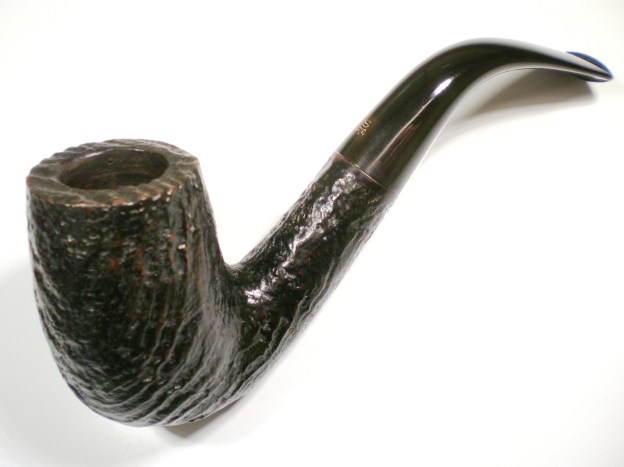
Below is the finished pipe.

sasieni_moorgate_s_rr_finish-1sasieni_moorgate_s_rr_finish-5sasieni_moorgate_s_rr_finish-2sasieni_moorgate_s_rr_finish-6sasieni_moorgate_s_rr_finish-7sasieni_moorgate_s_rr_finish-8sasieni_moorgate_s_rr_finish-3sasieni_moorgate_s_rr_finish-4

sasieni_moorgate_s_rr_finish-web11

?


Savory’s Agryll Shape 189 Restoration


By Al Jones

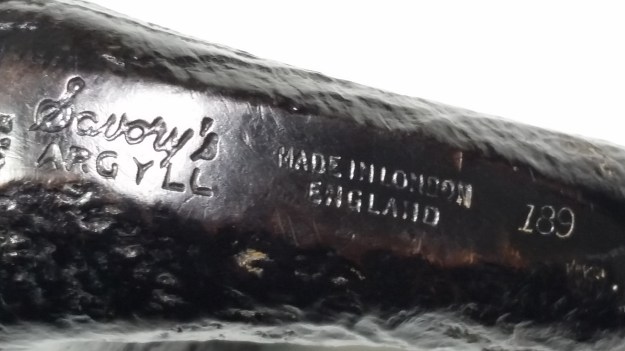
This pipe belongs to my buddy Dave, who has a knack for picking up unusually great pipes. This one is a Savory’s Agryll, shape 189. Surprisingly, I found out very little about the Savory’s brand. Pipepedia doesn’t have a section on this maker and only states that the brand was created in 1885 by H.L. Savory & Co.; London and Oxford. At some unknown point, it was acquired by Dunhill. Via pipe forums, the consensus is that the Savory’s was a quality step below Parker and Hardcastle. This example, to my eye has some fantastic details and I’d say it is on par with my 1961 Dunhill Shape 120 which it greatly resembles, although on a slightly larger scale. The bowl on this one is 2 1/4″ deep and it is over 6″ in length. I don’t believe there is any way to determine the age of the pipe, there are no number stamps like Dunhill uses.

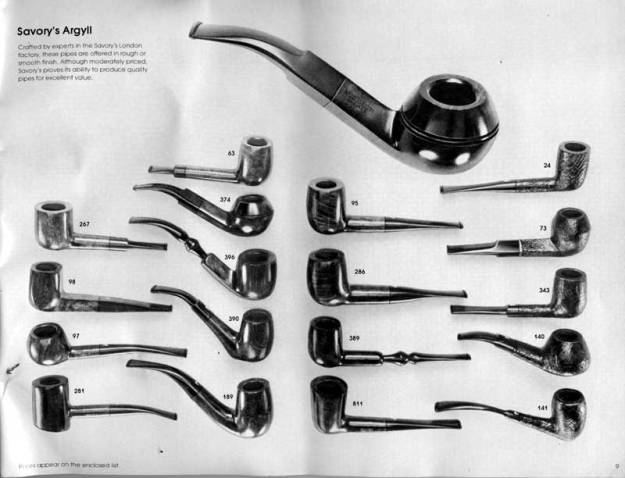
Below is a Savory’s Catalog page showing the Shape 189. This shape number was also used by Parker.

savorys_catalog_shapes

The pipe as received was dirty with some heavy oxidation on the stem, but it was relatively bite-mark free.

savorys_argyll_before-1

savorys_argyll_before-2

savorys_argyll_before-3

savorys_argyll_before-4

savorys_argyll_before-5

I reamed the slight cake from the pipe and soaked it with sea salt and alcohol. The stem was soaked in a mild Oxy-Clean solution. Following the soak, I cleaned the briar with some warm, mild soapy water. The briar was buffed by hand with Halycon II wax.

I mounted the stem and removed the heavy layer of oxidation with 400, then 800 grade wet paper, being careful to stay away from the stamped “S” logo. Next up was 1,000 and 2,000 grade paper, followed by 8,000 micromesh. The stem was then buffed with White Diamond and then Meguiars plastic polish.

The stem polished up brilliantly and the overall quality, button, tenon & fitment seems equal to my Dunhill pipes.

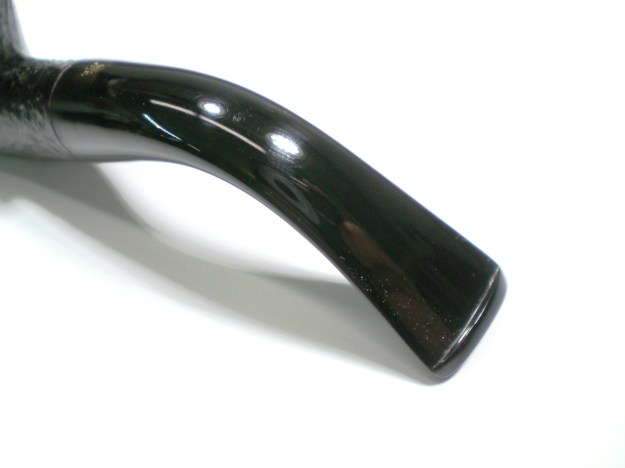
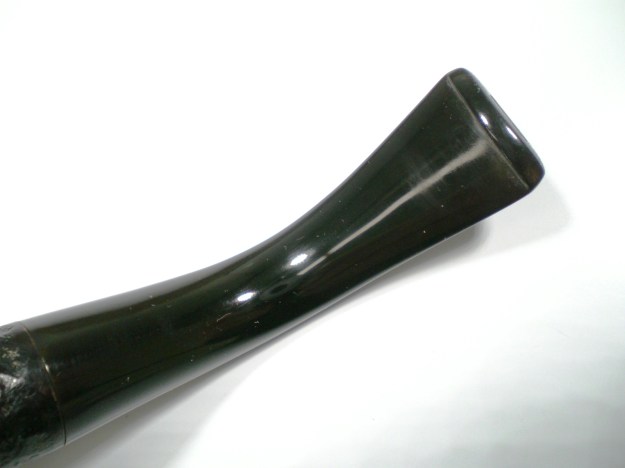
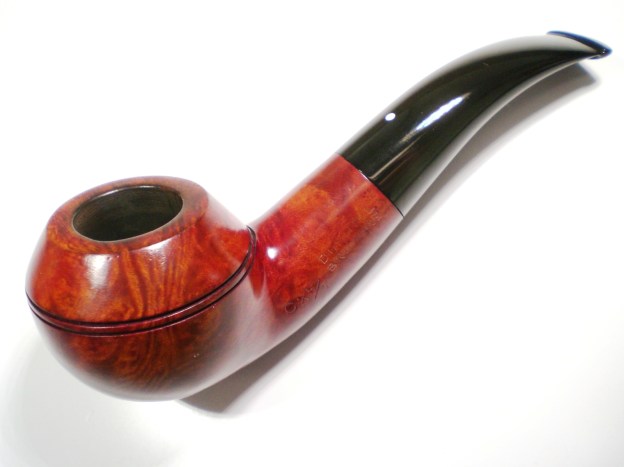
Below is the finished pipe.

savorys_argyll_finish-1

savorys_argyll_finish-3

savorys_argyll_finish-2

savorys_argyll_finish-4

savorys_argyll_finish-5

savorys_argyll_finish-7

savorys_argyll_finish-6

savorys_argyll_finish-8

savorys_argyll_finish-10

1969 Dunhill CK Shape Mystery/Addition


By Al Jones

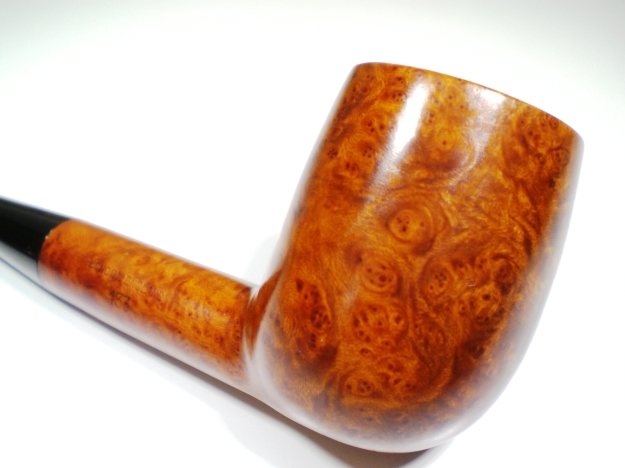
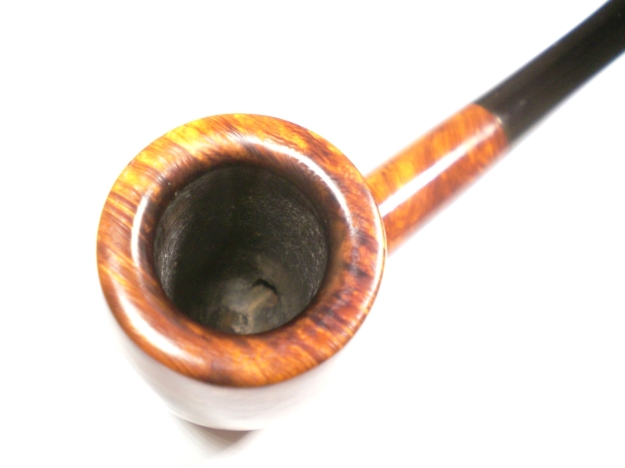
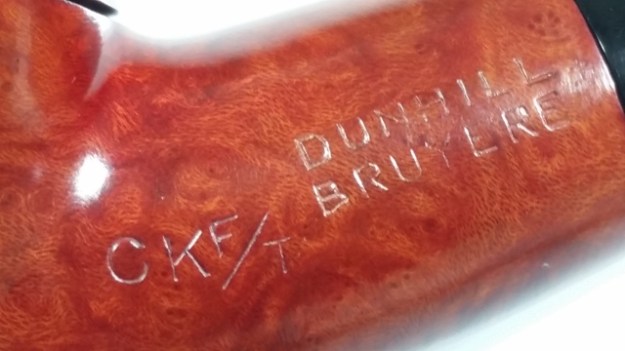
The Dunhill CK “author” shape is one of my favorites from the classic British makers, which includes the Sasieni Ashford, Comoys 256, etc. I found this one at the EstatePipeShop.uk. Dean does great work, so this one didn’t really need anything. This is my second CK, a 1969 Bruyere. I had a 1971 Shell in my collection.

I tried to learn more about the CK shape, but I didn’t really learn much about the shape. I was unable to determine when this shape number entered the Dunhill catalog and even checked with Dunhill collector, Rich Esserman. David Fields at RD Fields also answered my email inquiry, but had no historical knowledge of this shape. I know at some point that the CK shape became the Shape 29, which is currently available. When was this shape introduced? Why was it named the CK? Given that the Dunhill brand is most assuredly the most documented pipe brand, I was surprised that the history of this popular shape isn’t covered somewhere on the various Dunhill pipe pages.

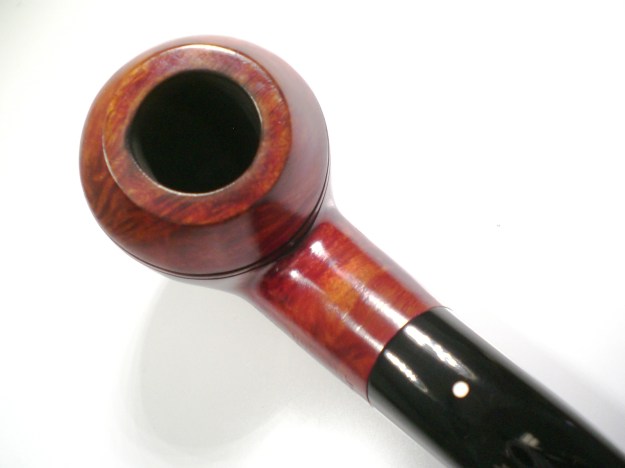
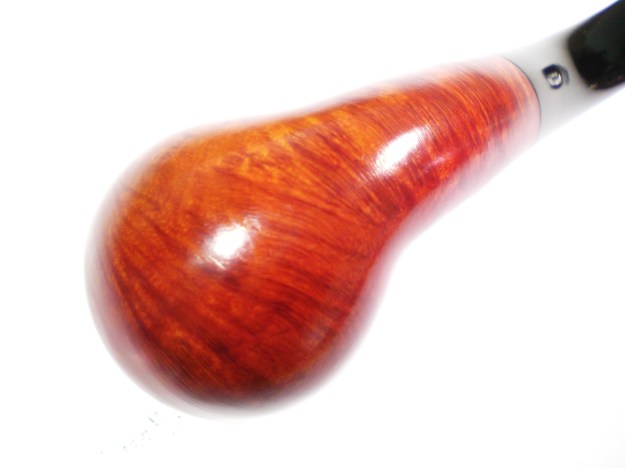
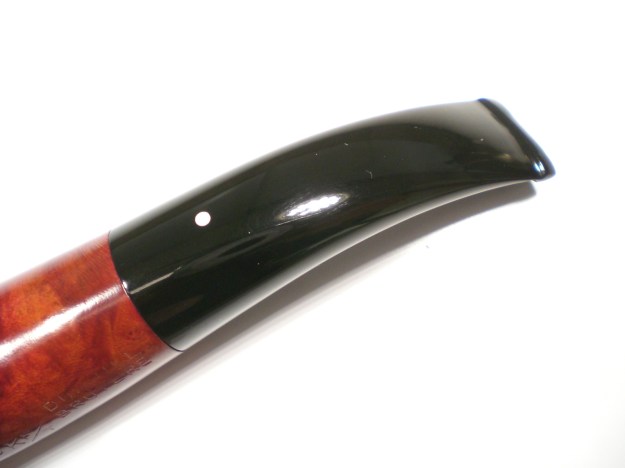
Below is the pipe. As I mentioned, it didn’t need much,but I can’t resist putting my own touch to any pipe. I always polish my stems with micromesh up to the 12,000 grade and buff with Megiuars Plastic Polish. The bowl had a few handling dings and I was able to remove several using an iron set on “high” and a wet cloth. The bowl was then buffed with White Diamond and several coats of Carnuba wax.

dunhill_ck_bruyere_finish_gallery

dunhill_ck_bruyere_finish-6

dunhill_ck_bruyere_finish-3

dunhill_ck_bruyere_finish-7

dunhill_ck_bruyere_finish-5

dunhill_ck_bruyere_finish-8

dunhill_ck_bruyere_finish-2

dunhill_ck_bruyere_finishweb1dunhill_ck_bruyere_finishweb2

It’s interesting to see the difference between my two CK shapes.  The 1971 shell is smaller and less chunky.   The 1969 shape to my eye, is less Author and more Rhodesian.

dunhill_ck_shell-1971-1