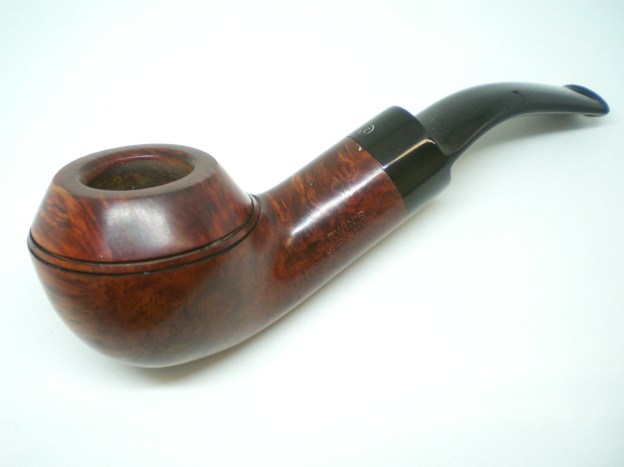
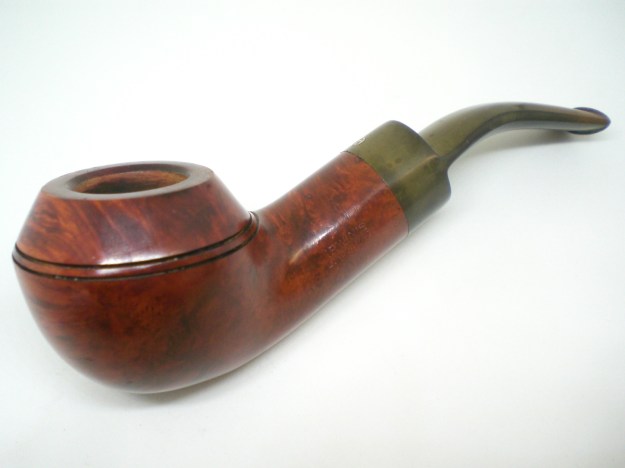
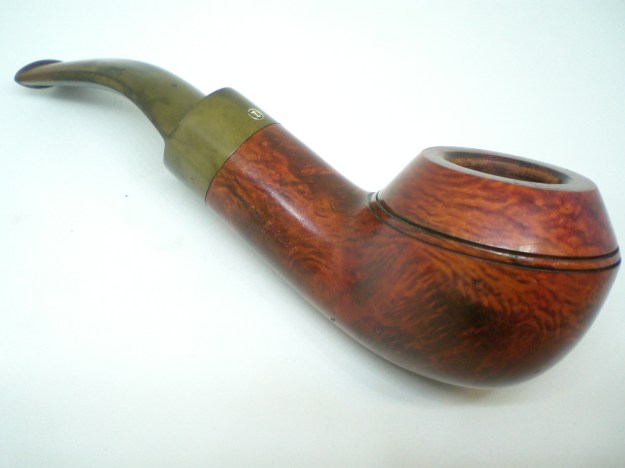
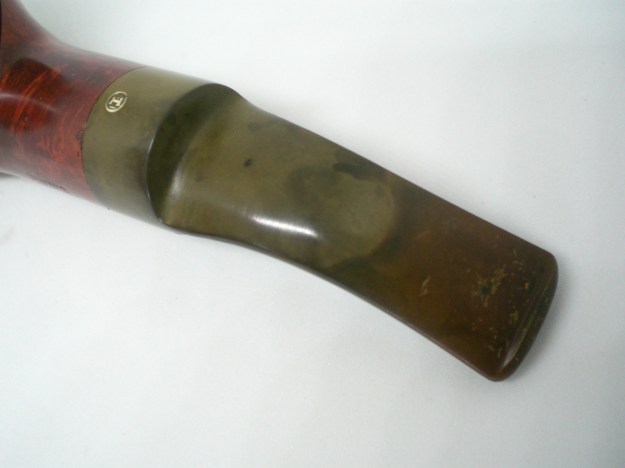
Author Archives: upshallfan

Unknown's avatar

About upshallfan

Moderator on the PipesMagazine forum since 2011. Guest contributor on the Reborn Pipes Blog by Steve Laug.

Irwin’s (GBD) 9438 Restoration


By Al Jones

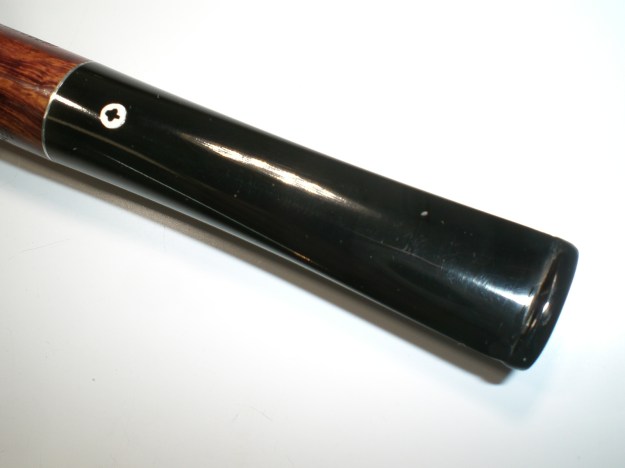
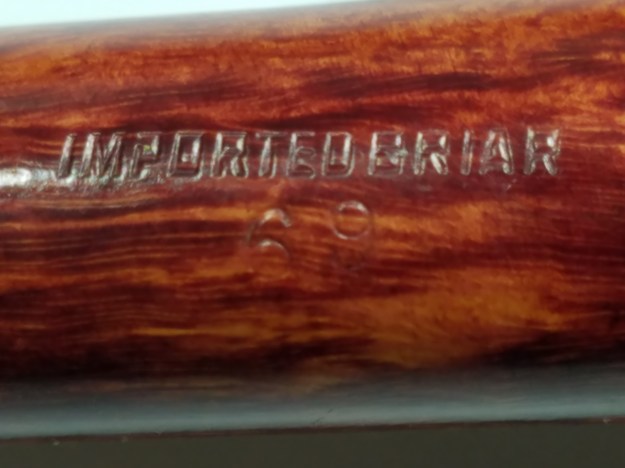
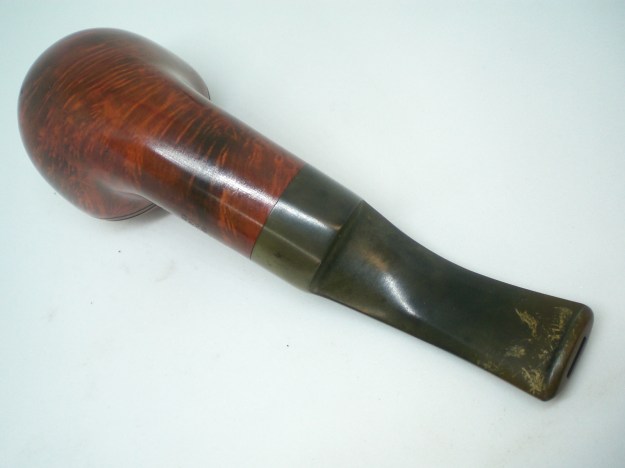
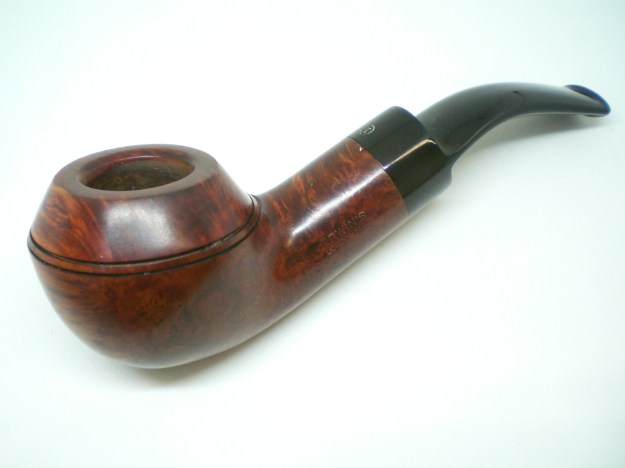
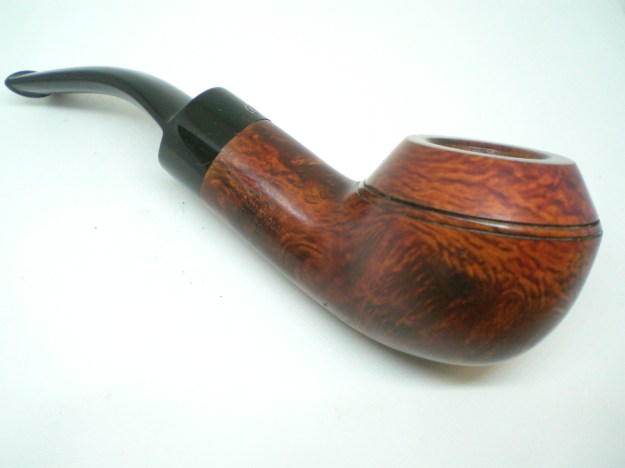
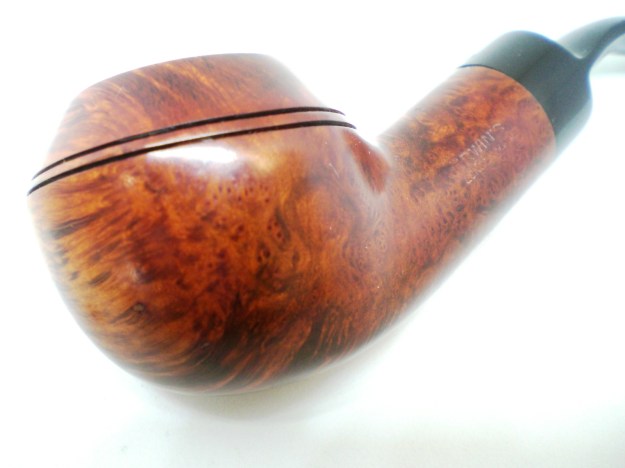
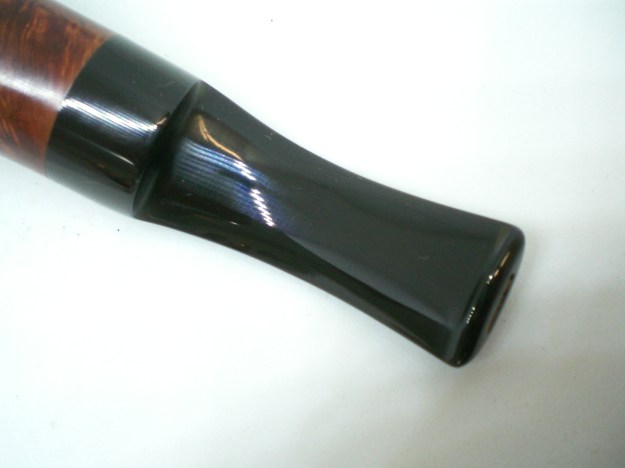
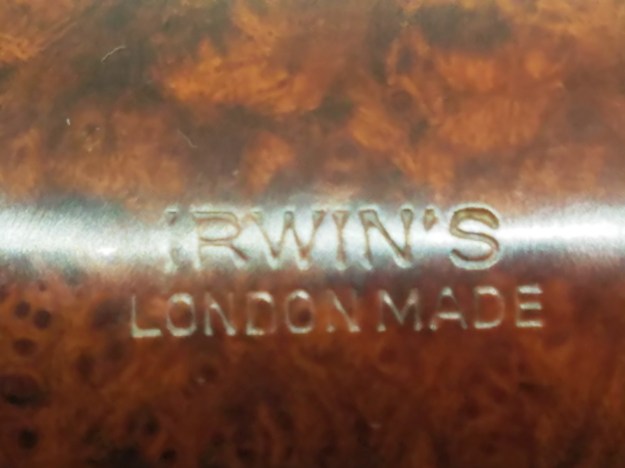
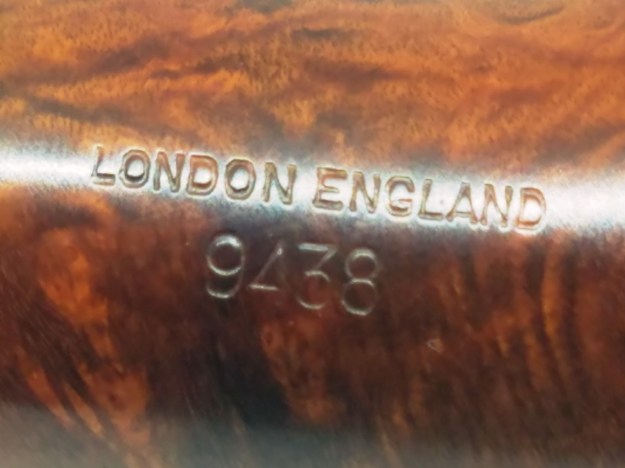
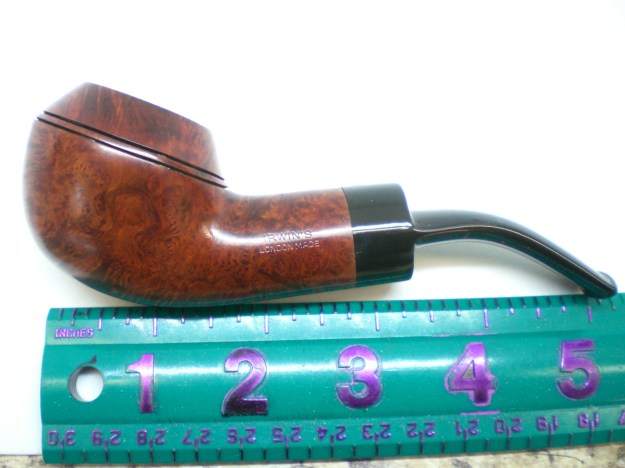
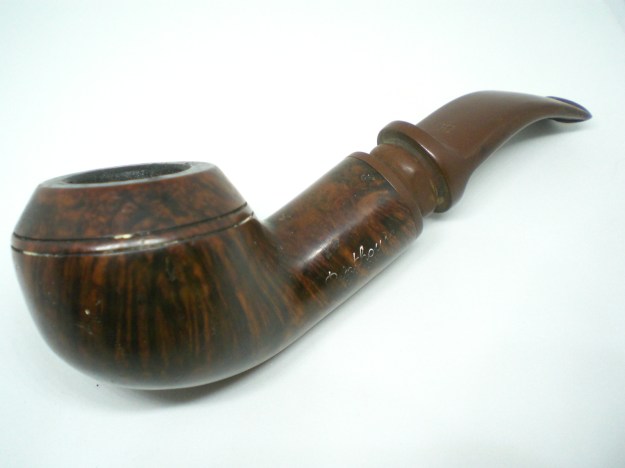
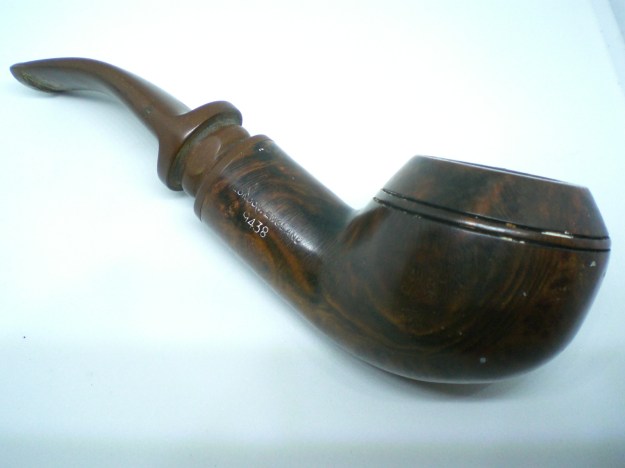
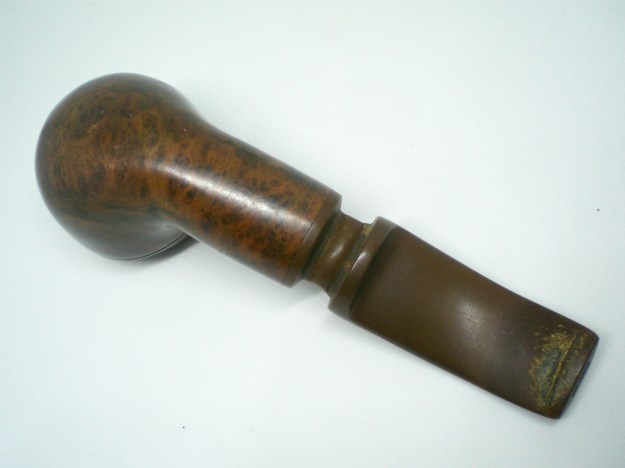
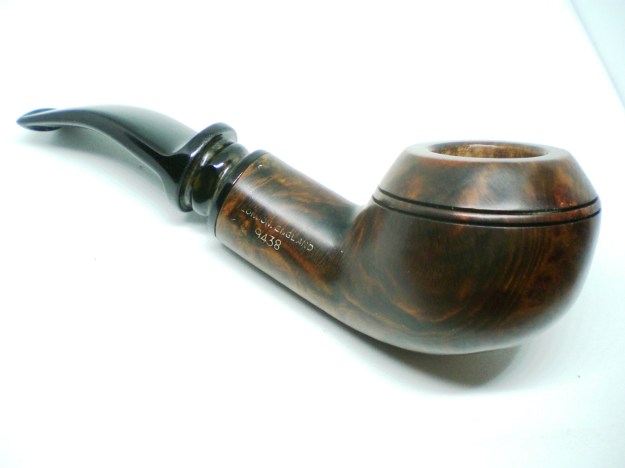
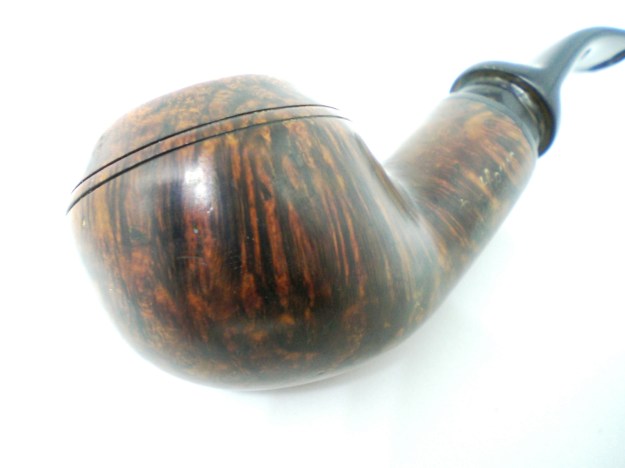
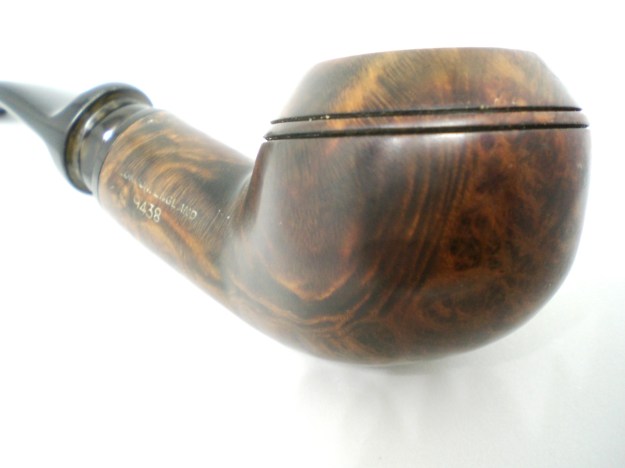
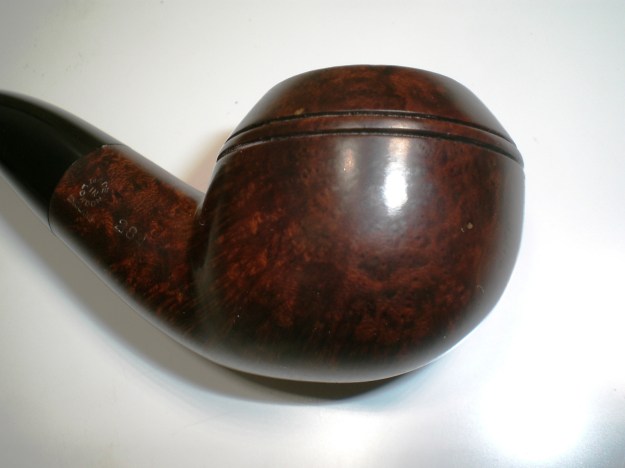
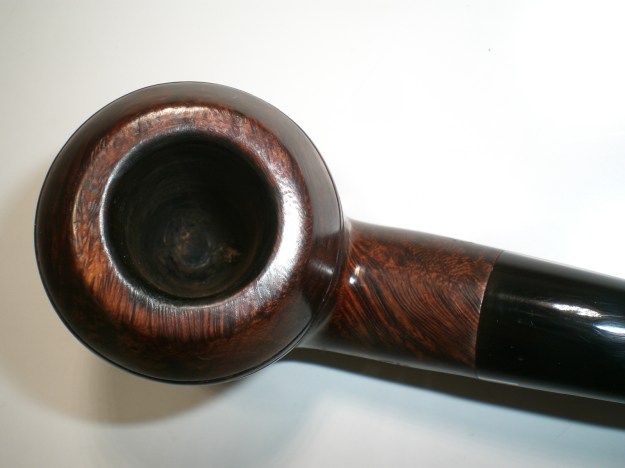
Here’s yet another 9438 model, this one is stamped “Irwin’s” and adds London Made. Not much is written about Irwin’s stamped pipes but they were assumed to be a GBD 2nd’s line, like Dr. Plumb, etc. This pipe also has the pre-Cadogan, straight line “London, England” COM and 9438 shape number stamped on the other side.

Below is the pipe as it was received.

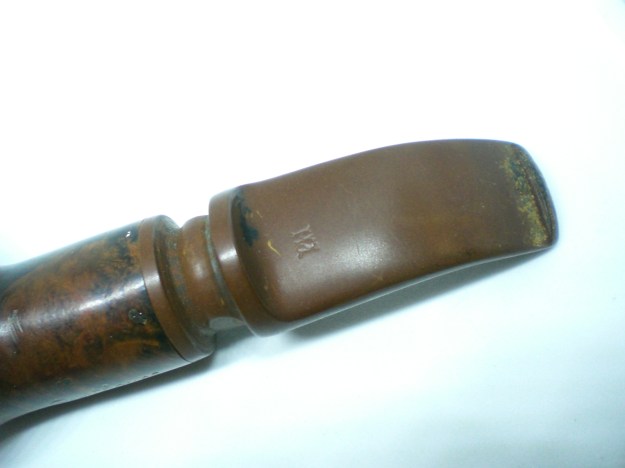
The pipe arrived in very good condition, requiring only a mild restoration effort. The stem was lightly oxidized, but the bowl was very clean. I soaked the stem in a mild Oxy-Clean solution. I worked a few dents out of the briar with an electric iron and a wet cloth. I reamed the bowl only with 320 sandpaper wrapped around a reamer bit.

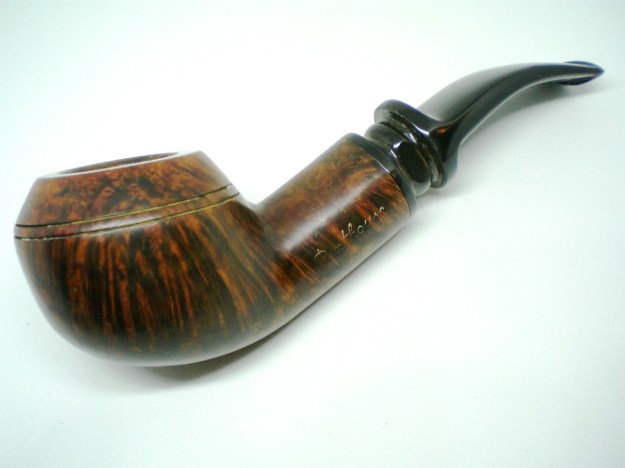
The stem was mounted and oxidation removed using 800,1500 and 2000 grade wet paper. Next up was 8000 and 12000 grade micromesh sheets. The stem was then buffed with white diamond rouge and Meguiars Plastic polish. The bowl was finished by buffing with White Diamond and several coats of carnuba wax.

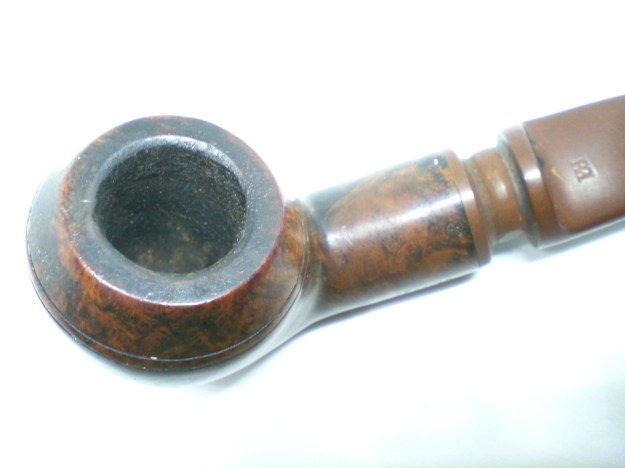
I used a “Magic Eraser” around the stamped “I” stem logo, which worked very well in removing the oxidation, without damaging the stamp.

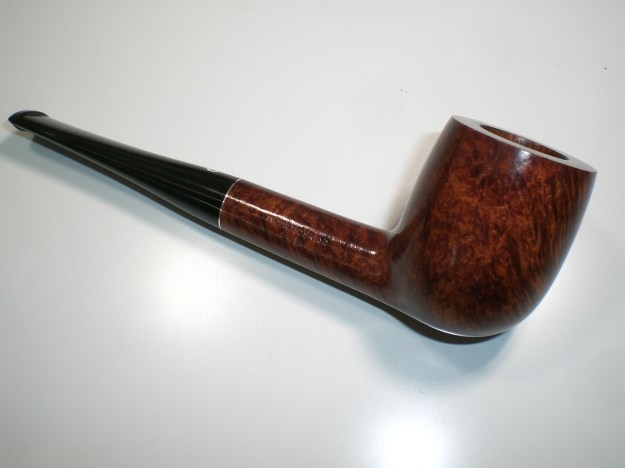
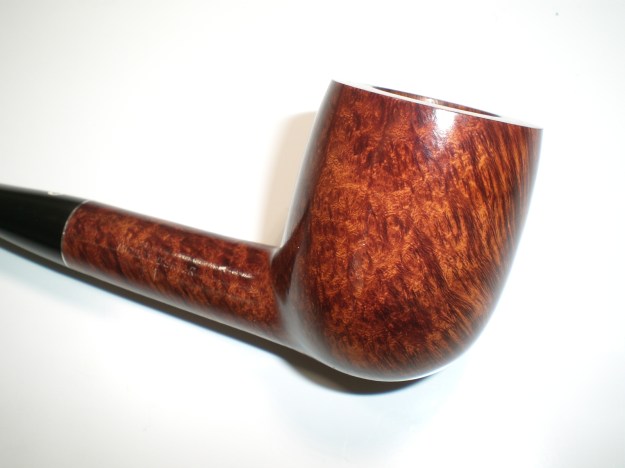
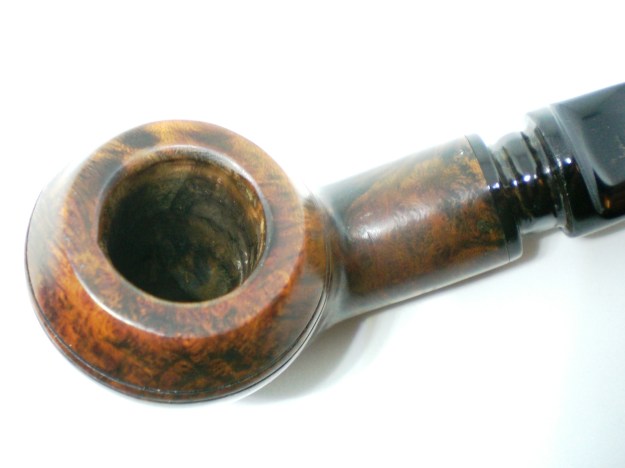
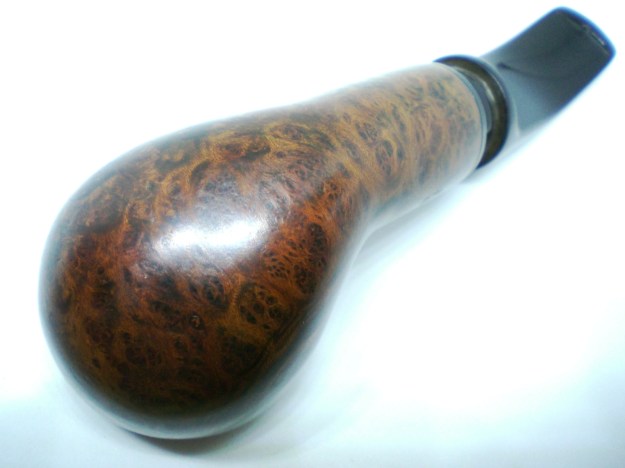
Below is the finished pipe.

?

Peterson Rocky Donegal 999 Restoration


By Al Jones

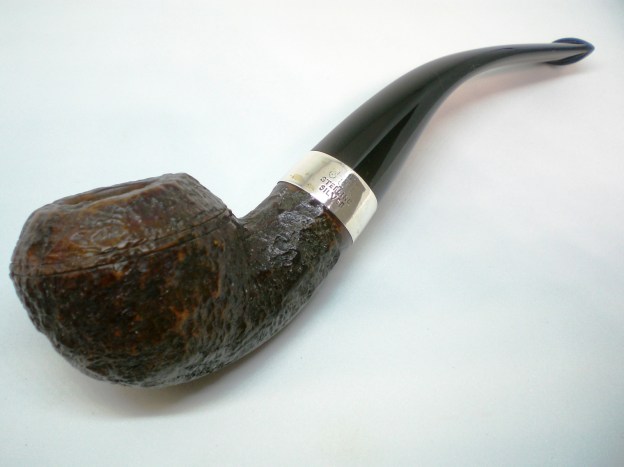
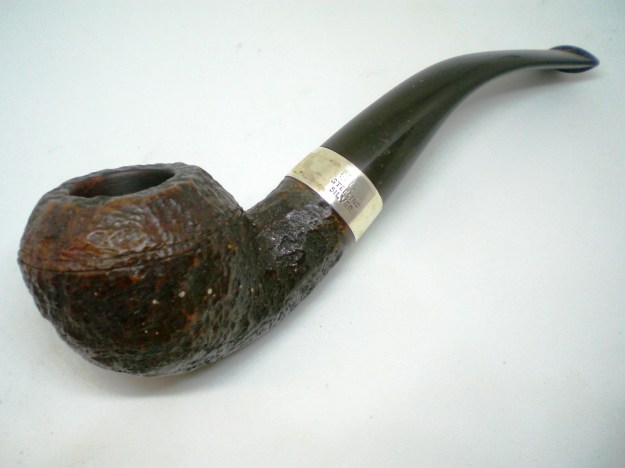
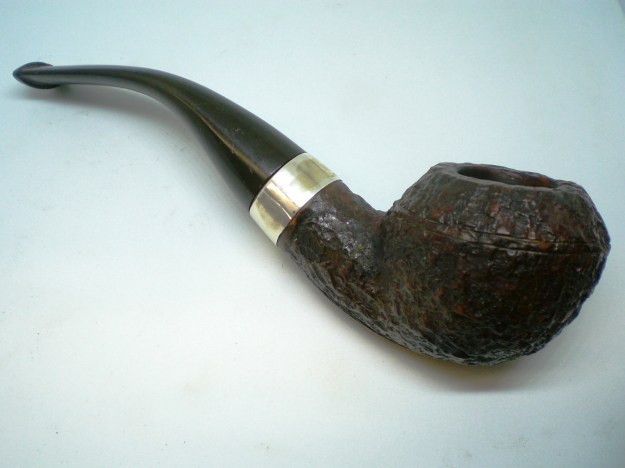
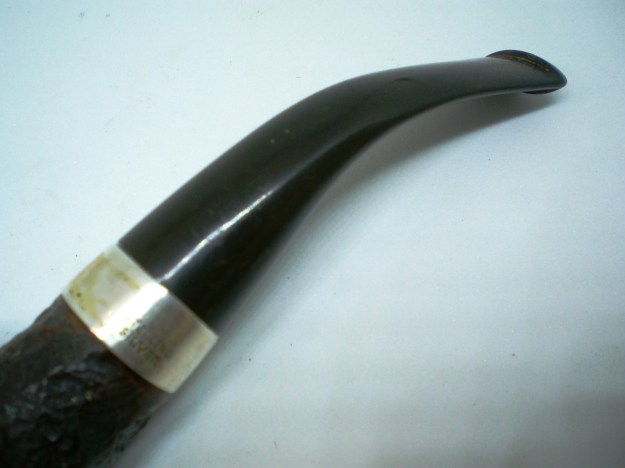
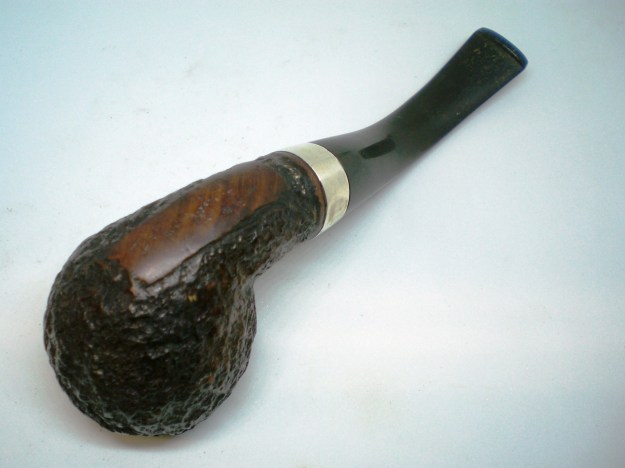
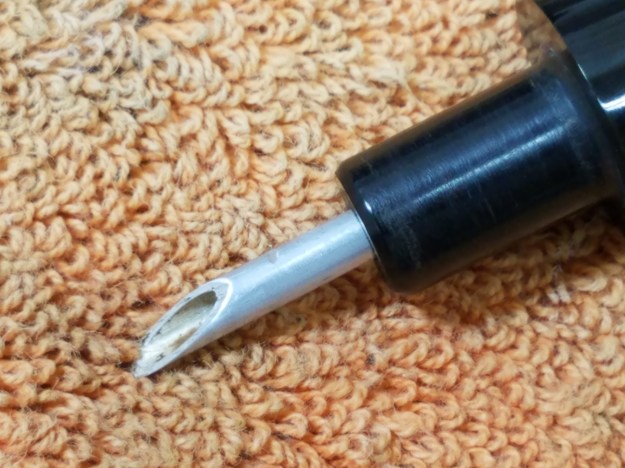
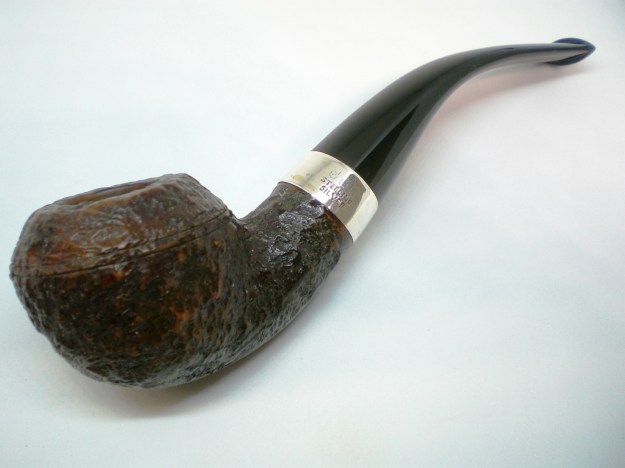
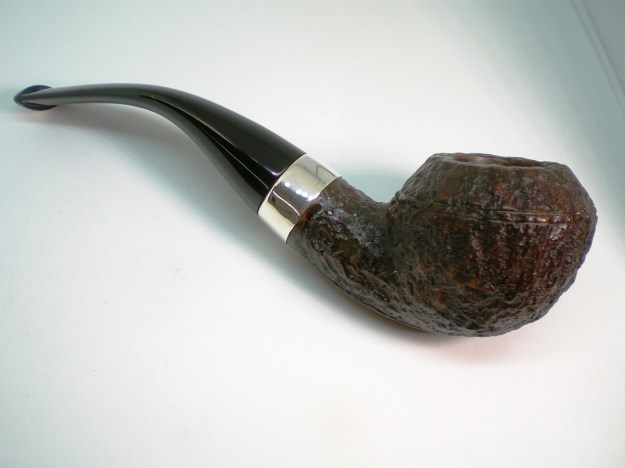
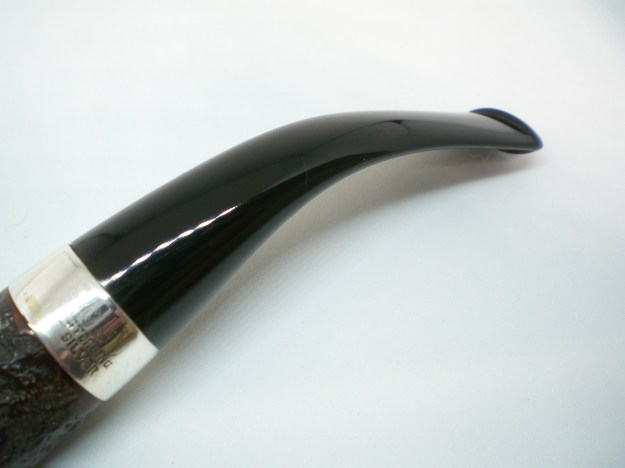
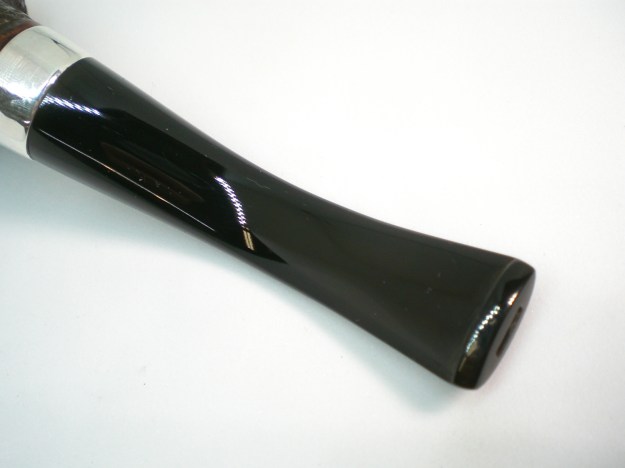
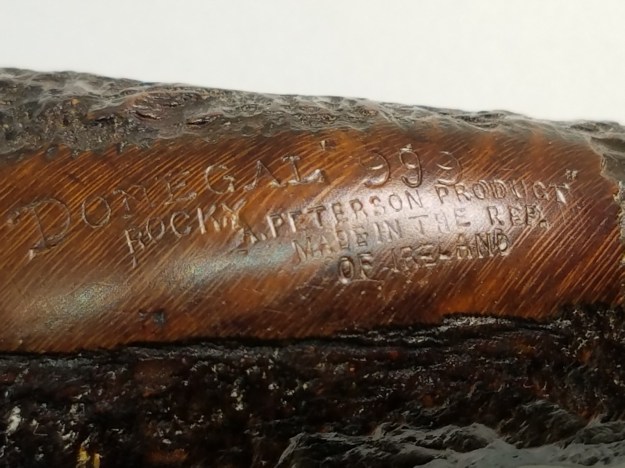
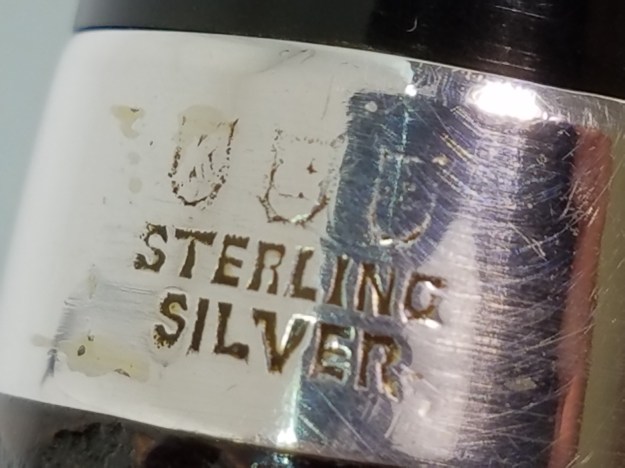
This Peterson 999 was the 2nd Rocky Donegal that I’ve encountered. Several years, ago, a buddy traded me for an identical pipe. That pipe came with the box and paperwork, which Mark Irwin used to date the pipe to the early 1960’s. I assume this pipe would be of the same era. The silver band is stamped K&P and Sterling Silver. The rusticated finish is very rugged and much more handsome than the modern version of that finish. This one also came with the straight aluminum stinger that was on the earlier pipe. Mark has this to say about the the first pipe:

Mark said the pipe is a Rogers import pipe which were distributed only in the US. The date hallmark, required in Ireland, wasn’t required here. According to Mark, the pamphlet was introduced in 1955 and the box design was used until 1961, when it was changed. So, Mark says the pipe is definitely from the ’55 – ’61 era. He suspects due to the stinger design in the late 50’s, but he has nothing concrete to back up that hunch. ’55 to ’61 is close enough for me. I shared this with Chuck W and he agrees with Mark. Mark added this was a “Sterling” line of US Petersons, and he doesn’t encounter many, certainly not in that nearly unsmoked condition. Having the box and Peterson pamphlet to help date the pipe were certainly rare and important factors.

The stem had some very mild teeth marks and fit perfectly. The briar was unmarked and the bowl interior was also in great shape. The silver band was mildy tarnished. Below is the pipe as it was received.

I used some silver polish to remove the tarnish on the band. The bowl was soaked with sea salt and alcohol. After the soak, the stem was mounted and teeth marks removed with 800, 1000, 1500 and 2000 grade wet paper, followed by 8000 and 12000 micromesh sheets. The stem was then polished with White Diamond and Meguiars Plastic Polish.

The briar was hand waxed with Halycon wax.

Below is the finished pipe, which is enroute to a new owner on the island of Cyprus.

Penthouse (GBD) 9438 Restoration


By Al Jones

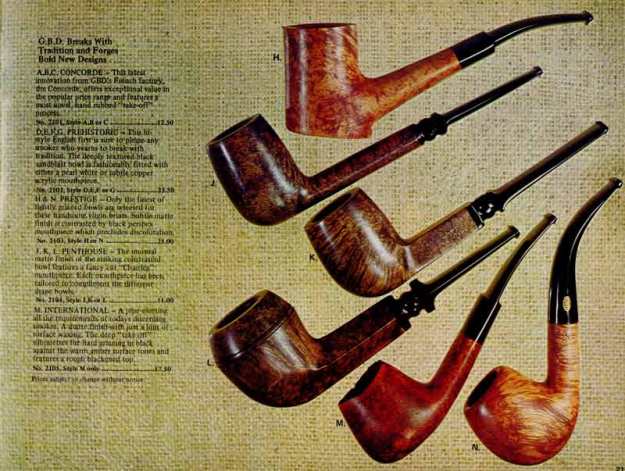
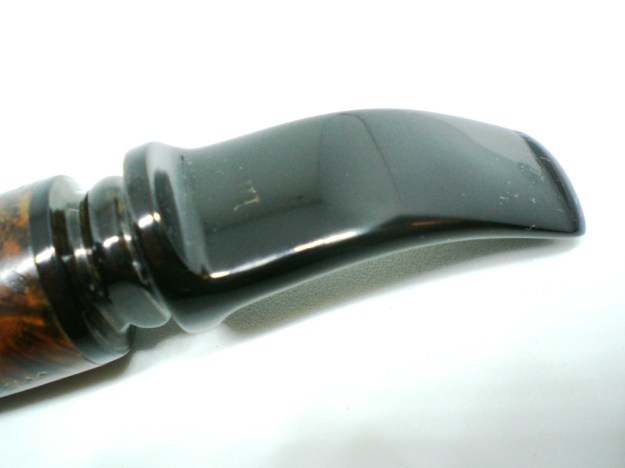
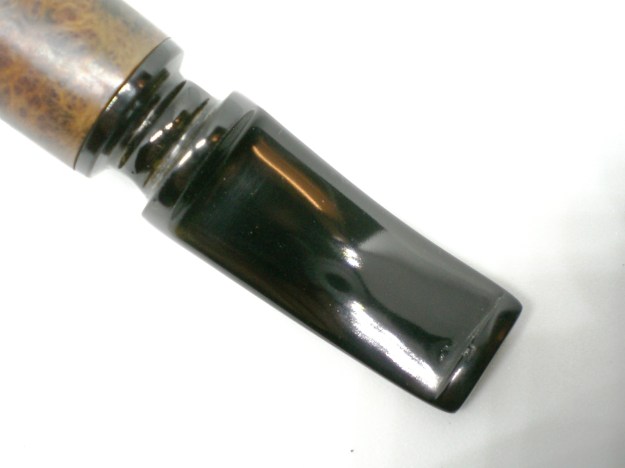
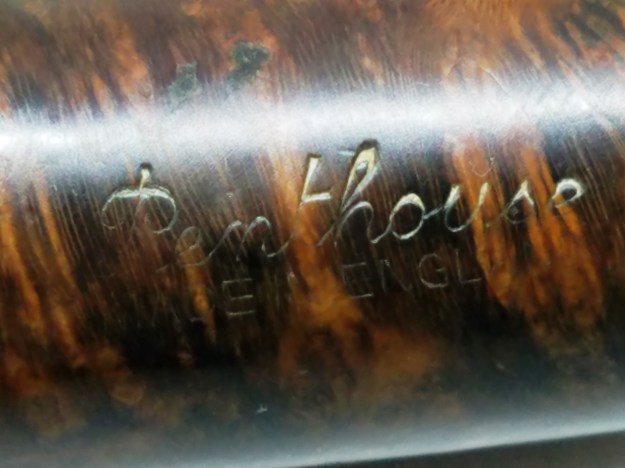
We’ve seen a few “Penthouse” brand pipes in this blog over the years, but this is the first one that has been on my workbench. “Penthouse” was a GBD 2nd line pipe. In a 1977 Tinderbox catalog, they were priced at $11, while a Prehistoric was $23. This line came with the “Chair-Leg” stem that was also seen on the Tapestry and Fantasty GBD lines. These are a challenge to restore and every time I work on one, I say it will be my last.

Below is a Tinderbox catalog page.

The 9438 is GBD’s iconic Rhodesian shape, of which I am a fan. So, when this one popped up on Ebay, I grabbed it. The stem was heavily oxidized, but overall it looked to be in decent shape. This was the first time I’ve seen the 9438 shape on a Penthouse pipe.

After opening the package, I could see that the stem had several teeth marks, but there were no other surprises. There were a few dings around the bowl that would have to be addressed. Below is the pipe as it was received.

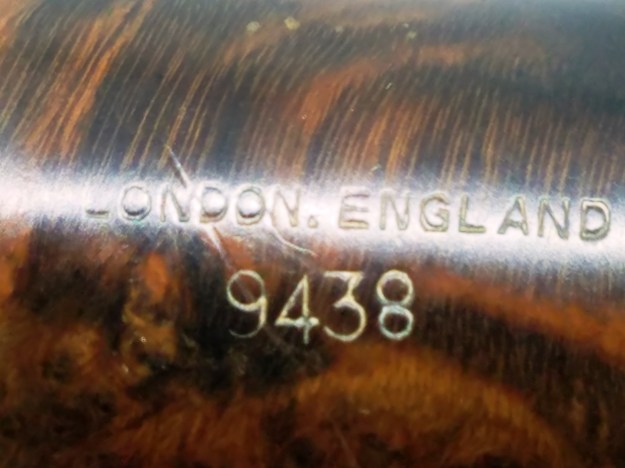
The country of manufacture mark (COM) shows the “London,England” stamp that was used prior to the 1981 merger. There was a faint “PH” stamp on the top of the stem, where the GBD brass rondell would reside.

The bowl had a very slight cake built-up, which was removed with various reamer inserts. I finish the bowl interior with a piece of 320 grit paper, wrapped around a reamer insert. The bowl was then soaked with sea salt and alcohol. While working on the bowl, the stem was soaked in a mild Oxy-Clean solution.

Following the two soaks, the stem was mounted. The were one deeper tooth mark on the top of the stem. Heat from a lighter lifted it slightly, but I decided to fill it with black superglue and accelerator was used to speed the process. The glue fill was smoothed with 400 grit wet paper, then finished when the oxidation was removed. To remove the oxidation, I used 400, 800, 1000, 1500 and 2000 grade wet papers. To clean out the creases in the turned stem, I wrapped each paper around a thin needle file. The stem was then buffed with White Diamond and Meguiars Plastic Polish.

I used an electric iron set on high with a wet cloth to steam out many of the dings around the bowl. A piece of worn scotchbrite was used to remove the bowl-top build up. The bowl was then buffed with White Diamond and several coats of carnuba wax.

Below is the finished pipe. There were some minor teeth marks on the bottom of the stem, near the button, so left those alone.

Comoy’s 331C Grand Slam Restoration


By Al Jones

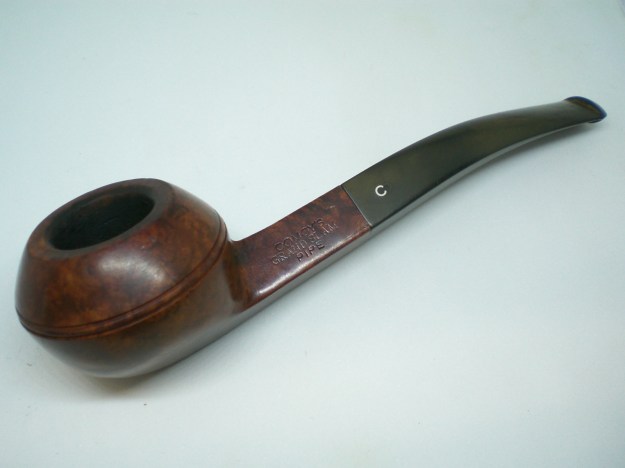
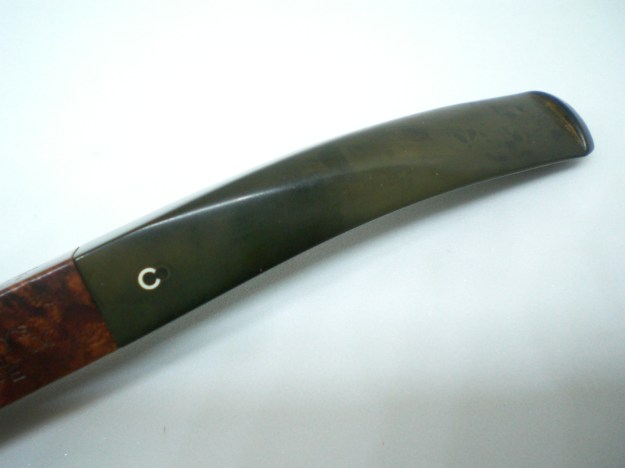
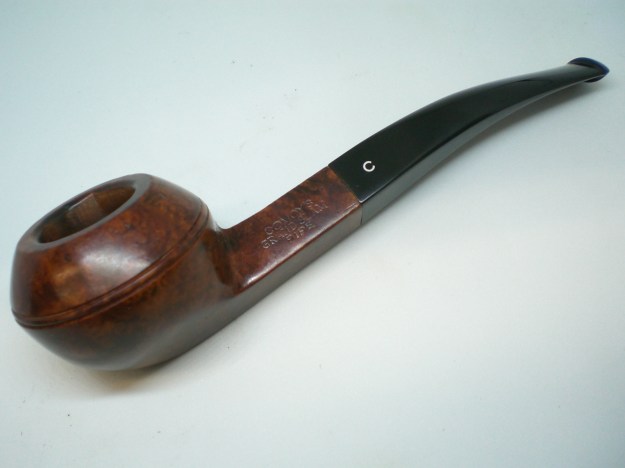
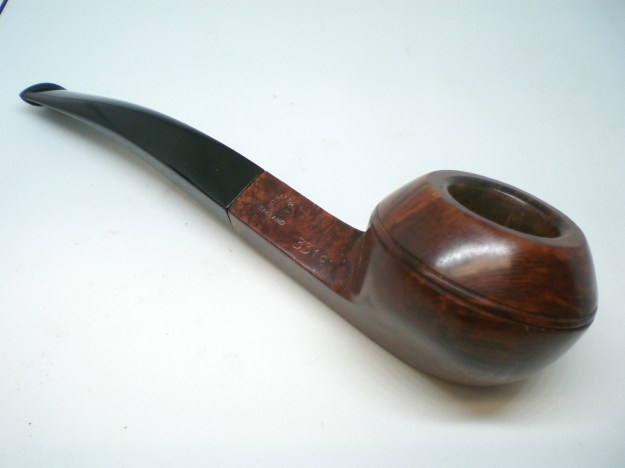
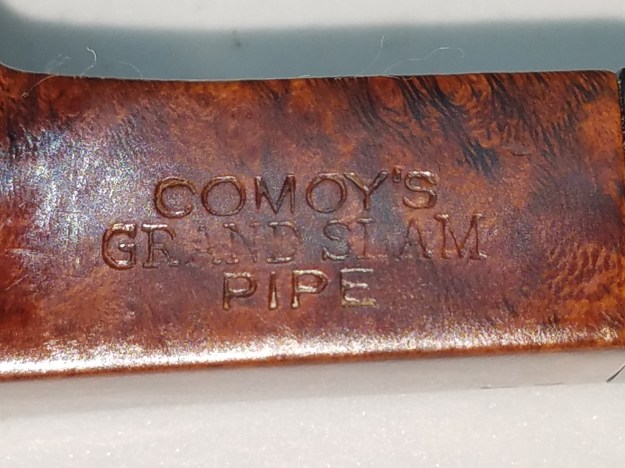
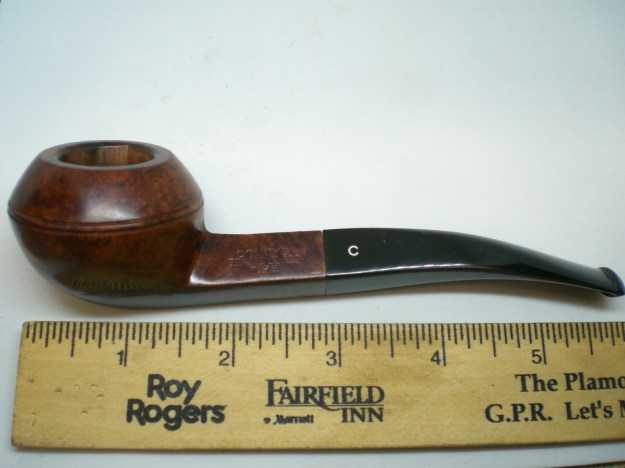
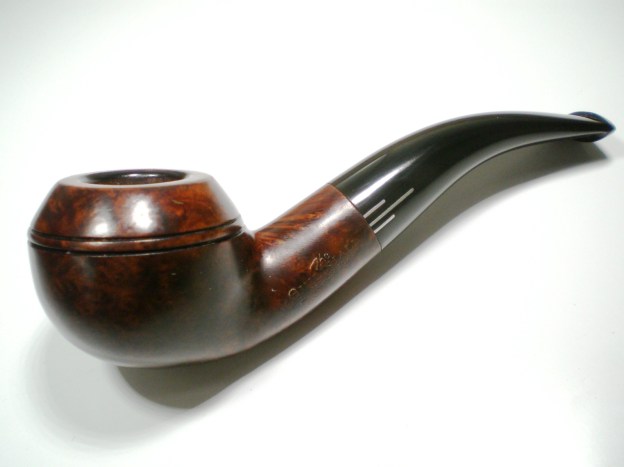
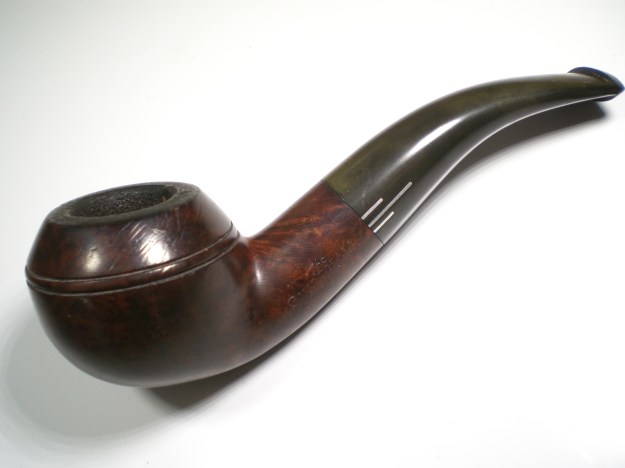
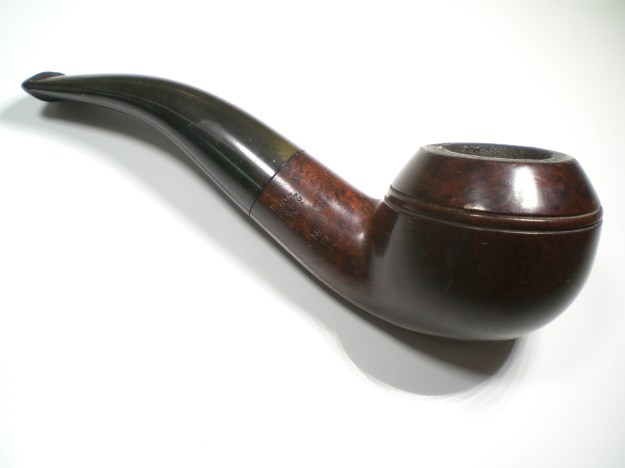
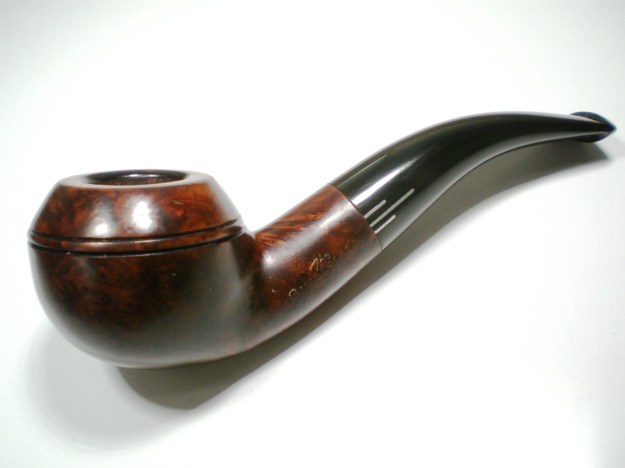
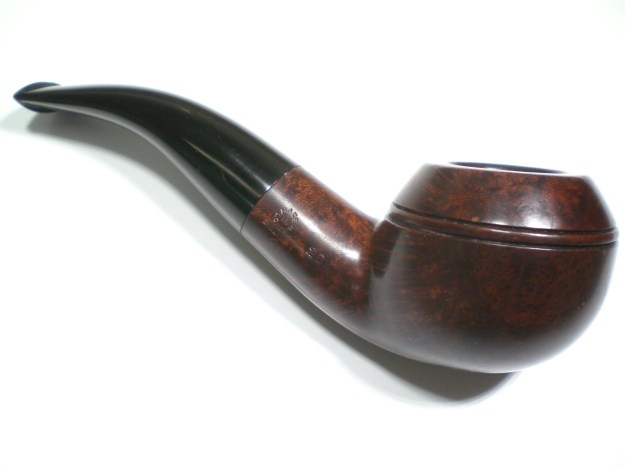
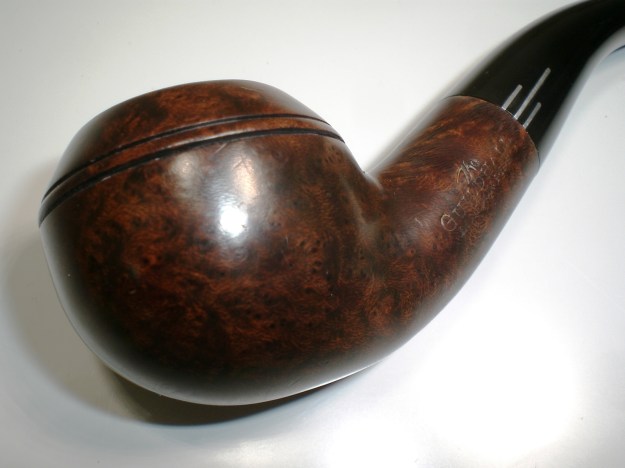
This I stumbled across this Comoy’s 331C Grand Slam on Ebay and it didn’t get much bid action, so a last second bid won the pipe. Pipepedia describes the Grand Slam as below. The 331C is their Squat Bulldog with a 1/8th bent stem.

Grand Slam. Introduced in 1933 with the patented (Patent Number 2001612) metal filter system and still in production until the 1970s. The “Grand Slam” was priced at $5 in 1936 and $20 in 1965

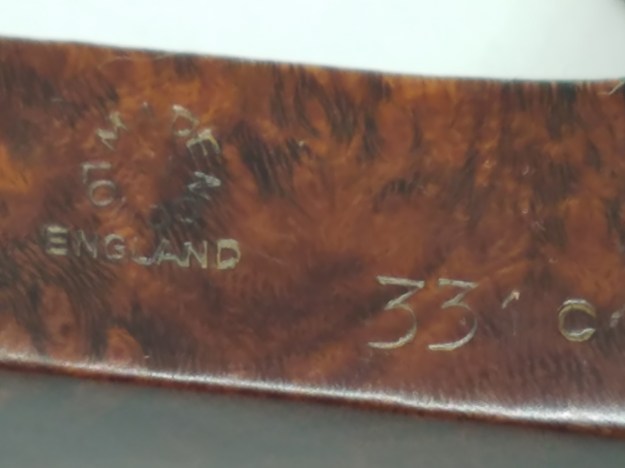
The round, “Made in London England” stamp was used in the 1950’s, thru 1981 when the merger occurred. The stinger apparatus used in the Grand Slam was missing, which is typical as most were discarded. This one also had the wonderfully intricate, 3 piece C stem logo also used to the merger point.

Here is the pipe as it was received.

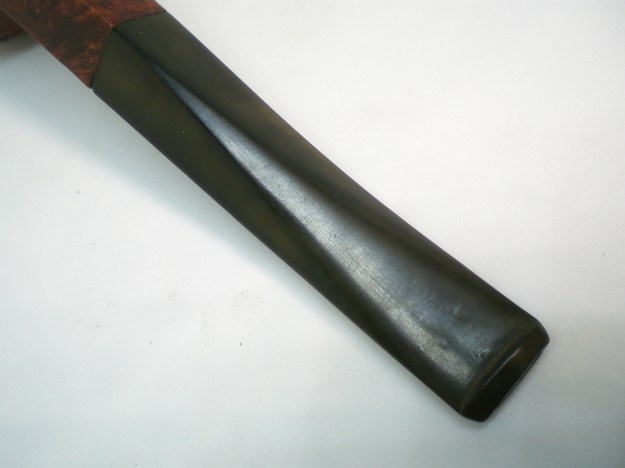
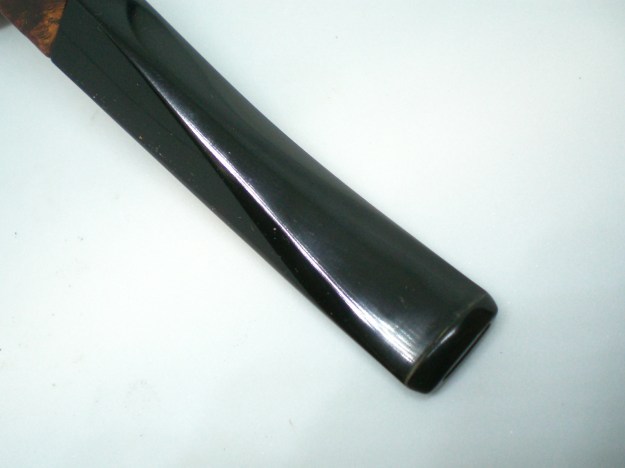
The stem had the usual oxidation and some mild teeth ripples. Otherwise it was in great shape. The bowl had some mild cake and a few dings around the bowl. I used the flame from a lighter to lift most of the teeth ripples. I removed the oxidation on the stem with 800, 1000, 1500 and 2000 grade wet paper. This was followed by 8,000 and 12,000 grade micromesh sheets. The stem was then buffed with White Diamond and Meguiars Plastic Polish. I love working on vintage Comoy’s stems, the vulcanite has a great shine to it when finished.

The cake was reamed and the bowl was soaked with alcohol and sea salt. The bowl was in very good shape, with the exception of one nick on the inside. I was able to steam out a few of the dings, but a few remain, which I think adds to the patina. The grain has a very nice depth to it.

I buffed the briar with White Diamond and a few coats of carnuba wax.

Below is the finished pipe.

Old England (Sasieni) 771R Restoration


By Al Jones

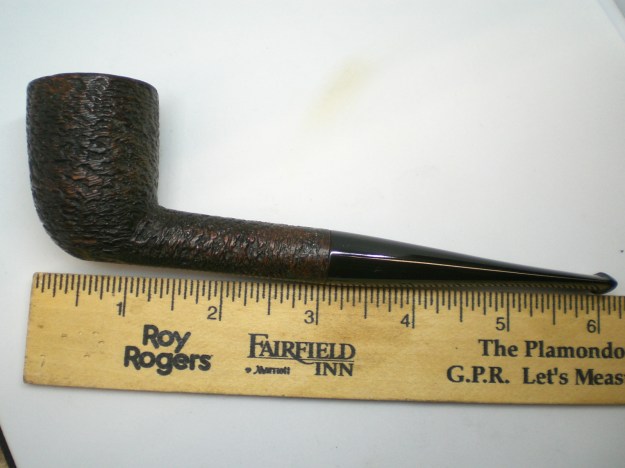
Sasieni second line pipes pop up occasionally on Ebay and I find them to be a great value. My experience with many second line pipes (Comoy’s, etc.) is that the stem material and construction choices are inferior to their first line offerings. Sasieni second line stems seem to be first rate.

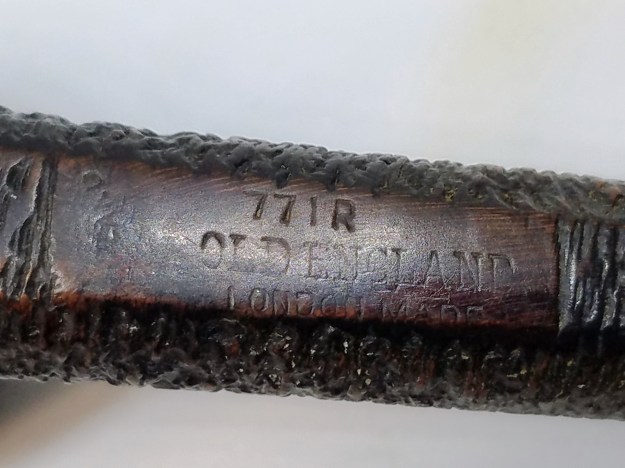
This pipe was in very good condition as found. The bowl interior was well cared for and oxidation on the stem was minimal. This one has the arched, “Made in England” Country-Of-Manufacture mark (COM) as used by Sasieni between 1946 and 1979. There isn’t much else available on the Old England line, as to when manufacture would began and ceased.

Sasieni second line pipes appear to be rusticated in a unique way, different from their Four Dot “Rustic” finish.

I used a worn piece of scotch-brite pad to touch up the bowl top. That lightened the stain, so I used some Feiblings Medium Brown to color match it to the bowl. The bowl was soaked with alcohol and sea salt.

The oxidation on the stem was removed with 800 grit wet paper, followed by 1,500 and 2,000 grades. 8,000 and 12,000 grade micromesh sheets were next, followed by a buff with White Diamond rouge and Meguiars Plastic Polish.

I used Halycon wax to hand finish the bowl.

Below is the finished pipe.

?

The Guildhall 284 Rhodesian Restoration


By Al Jones

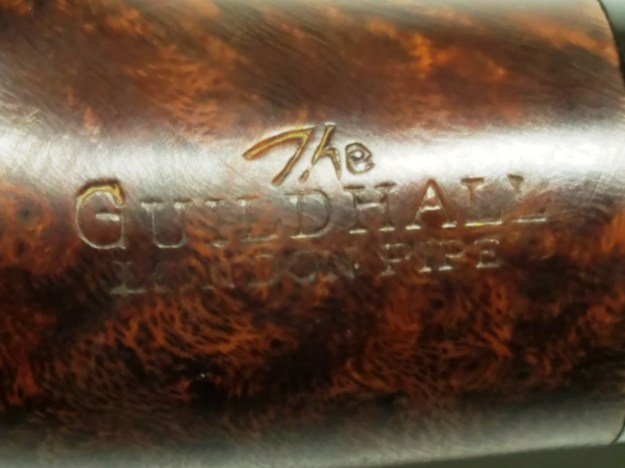
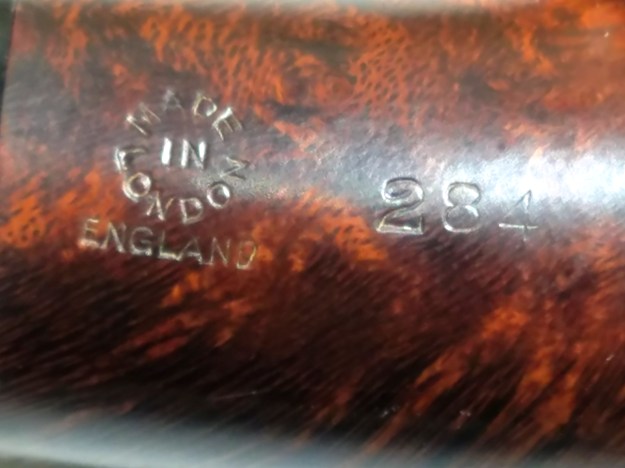
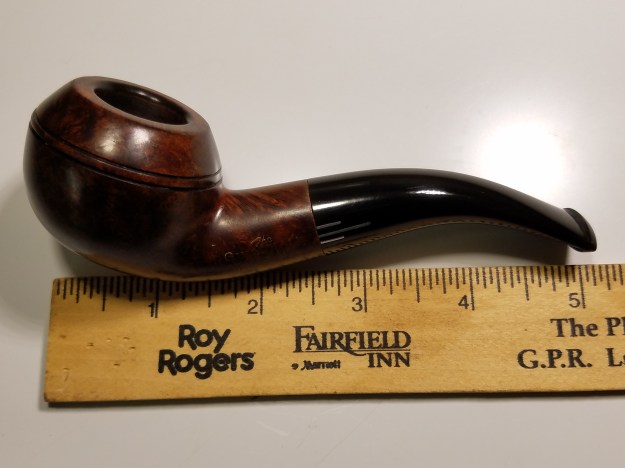
This is the 2nd “The Guildhall” shape that I’ve restored in the past few years. Fans of Comoy’s pipes will instantly recognize that very rare shape number. When a shape 284 Comoy’s pops up on Ebay or elsewhere, it is usually very hotly contested. This one failed to sell twice on Ebay, I believe because the shape number was inverted (248). It appeared to be in decent shape, with mint nomenclature, but it also could have help some hidden issues. I took the gamble and received the pipe in the condition below.

The stem was in great shape and it fit snugly. There was one tiny tooth indention, some chatter and it was lightly oxidized. The bowl had a moderate cake and the typical build-up on the bowl top. The briar had numerous marks on the bowl that I hoped could be steamed out.

The cake was removed with my Pipenet reamer and I found the bowl to be in excellent shape. I used a worn piece of worn Scotch-brite to remove the top layer of build-up on the bowl top, followed by 6,000 micromesh sheet and finally 2,000 grade paper. Using an electric iron and a wet cloth, folded twice over, I steamed out the dents. Most of them came out nicely, the steam really works miracles. The bowl was soaked with alcohol and sea salt. After the soak, the briar was buffed with White Diamond and several coats of Carnuba wax.

The stem was mounted and oxidation removed with 800, 1,500 and 2,000 grade papers, followed by 8,000 and 12,000 micromesh sheets. The stem was then buffed with White Diamond and Meguiars Plastic polish.

Below is the finished pipe.

?

?

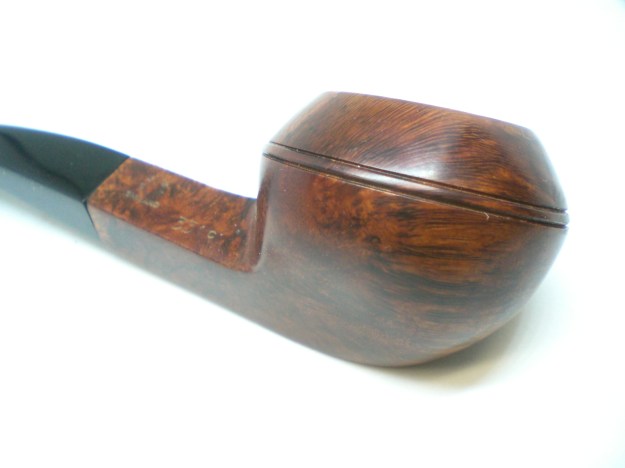
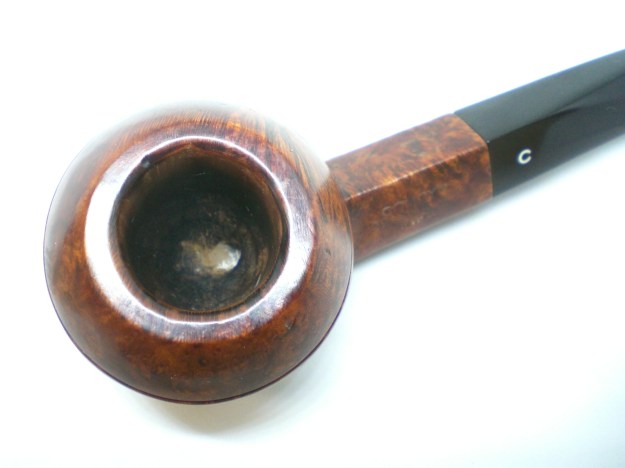
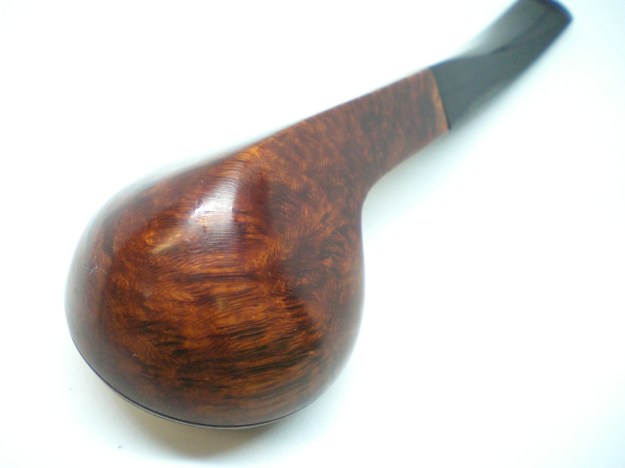
Charatan Special Bulldog Restoration (1955-1960)


By Al Jones

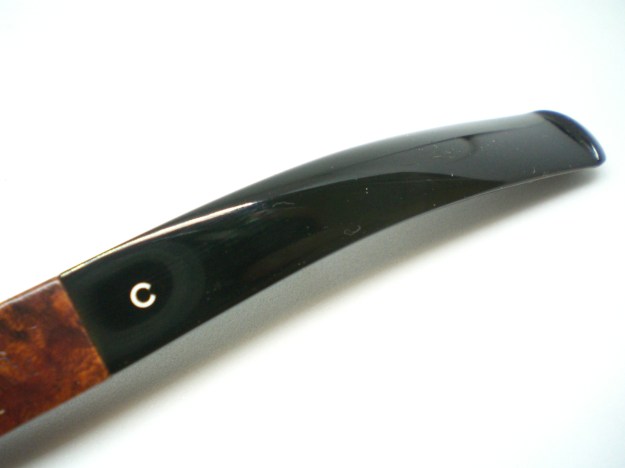
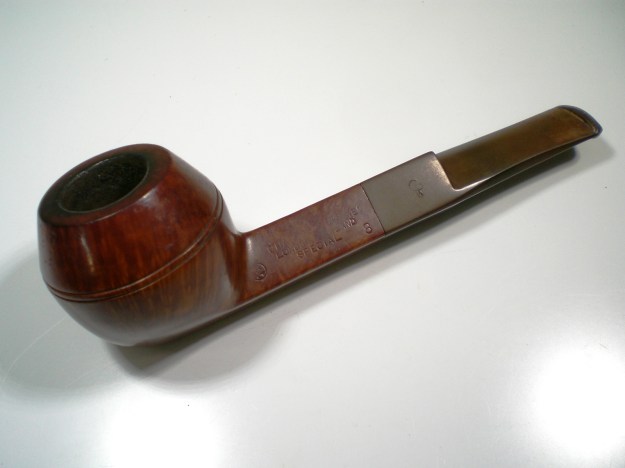
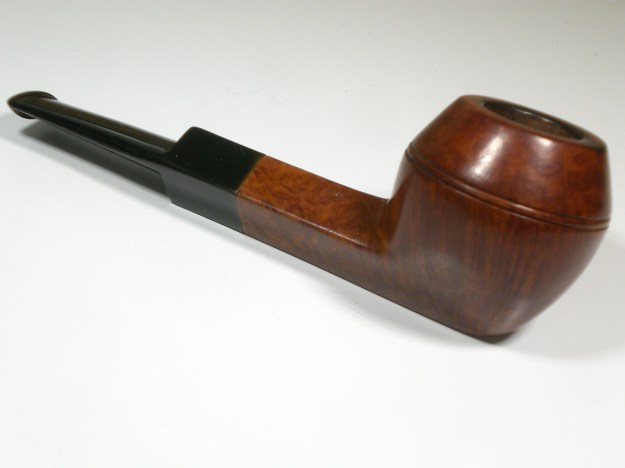
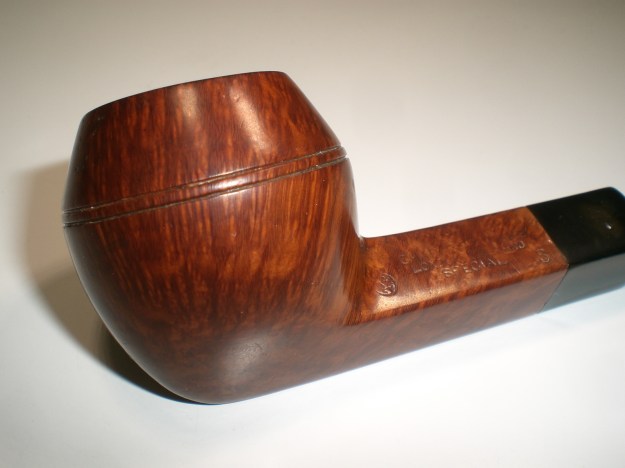
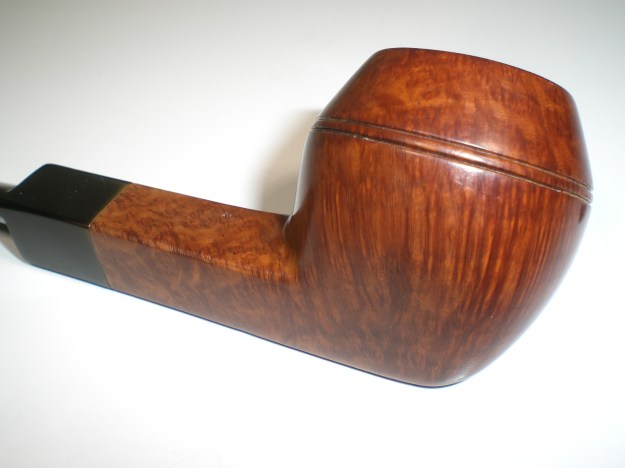
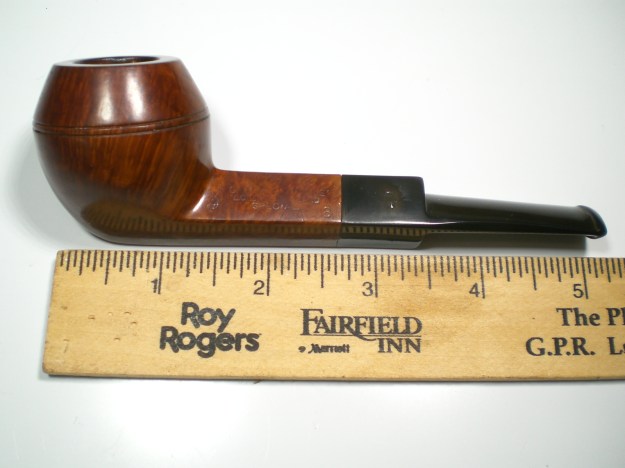
I don’t purchase many Charatans because most of them are simply too large and I’m more of a “classic shape” guy versus freehands. To be honest, I also don’t look forward to dealing with the stamped “CP” stem logo, which are usually very lightly stamped. This shape 08 bulldog caught my attention as it is one of only two Charatan bulldog shapes, the other being the 109 (which is listed as a Rhodesian). This one is stamped a “Special” but like many Charatans, it seems undergraded to my eye.

I can date the pipe to being made from between 1955 and 1960. The circled “L” logo stamp was first used in 1955 and all Charatans received double-comfort stems starting in 1960.

Another plus for this pipe, in my collection is the size – despite being a solid Group 4 (or maybe even a Group 5), it only weighs 38 grams. That is diminutive by Charatan standards.

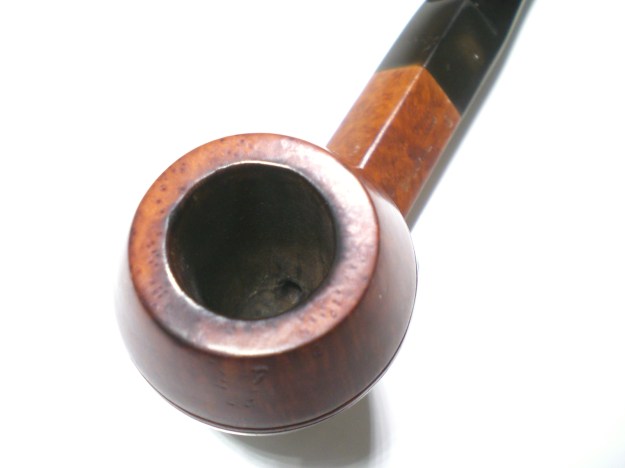
Beside the oxidized logo, this one had other challenges. The diamond shank bulldog stem had several facets that I typically don’t see on a bulldog stem, including the flat sides of the stem. The top of the bowl had some rim darkening as well.

The bowl had numerous marks around the bowl, including these peck marks.

The pipe had a very slight cake and after reaming, I found the bowl was in great shape. I used an electric iron on high to steam out most of the marks. As I thought, the peck marks on the front of the bowl proved problematic. I was able to remove a few marks in that area and slightly diminished the others, but they could not be removed completely.

I used 6,000 and 8,000 grade micromesh on the bowl top to remove a lot of the darkening. To remove it any further would have required topping the pipe and restaining it. I thought it had greater value keeping it as original as possible.

I removed the outer layer of oxidation on the stem with 400 and 800 grit paper, then moving thru the 1,500 and 2,000 grades. Finally, 8,000 and 12,000 grades micromesh were used. Working around the faintly stamped logo was of course a big challenge. The stem was then buffed with White Diamond and Meguiars Plastic polish.

Below is the completed pipe.

CIMG4852

Update Jan 17, 2018:

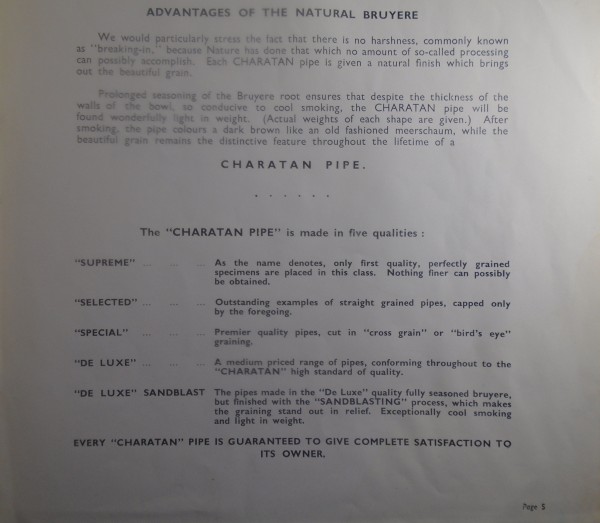
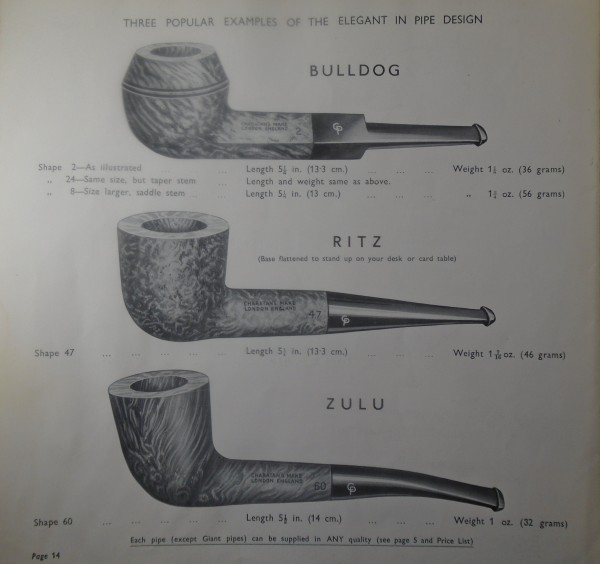
We are fortunate at the PipesMagazine.com forum to have the participation of Ken Barnes. Ken is the son of Colonel Kenneth Barnes, who was a managing director for Charatan. Ken himself started working at Charatan when he was 14 years old and is a wealth of information on that brand as well as James Upshall. Ken added this information about the pipe brand and these two catalog pages.

The Special quality was around in 1951 as shown, and this was the largest size of the Bulldog shape no. 8

I think that the mouthpiece is hand-cut. I have learnt that the clue is that the saddle ‘step’ is sharp and 90 degrees rather than curved (a photo of the bite opening would confirm this).
I was thinking that there may be someone out there who could etch the Cp a little deeper and then fill the stamp with Crayola white wax and wipe away the surplus. I think that Reubin Charatan first used Crayola wax for the logos in 1910. I do know that the Crayola company was founded in 1903.

Kaywoodie Four Pipe “Matched Grain” Set


By Al Jones

Steve’s recent blog entry on the his 7-pipe Kaywoodie Matched Grain set reminded me to get off my duff and write up the story on this set. My buddy Dave picked this up at the 2017 Kansas City show.

I found no other four pipe Kaywoodie sets for comparison. There are numerous five and seven pipe sets that I found. The only reference that I can find is a 1955 price listing of $50.00, from the Pipepedia site. Unfortunately, there are no pictures to accompany that price listing.

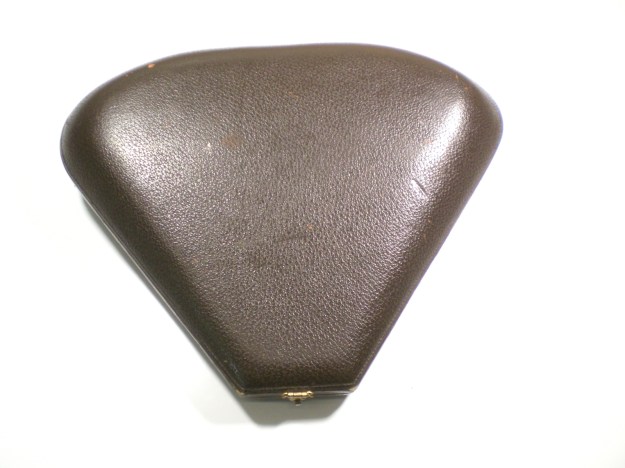
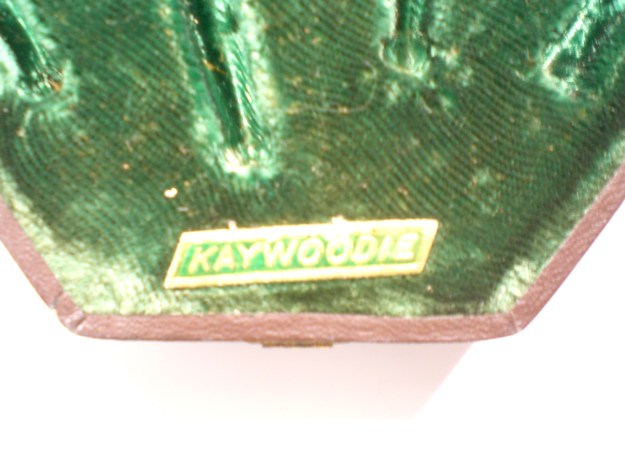
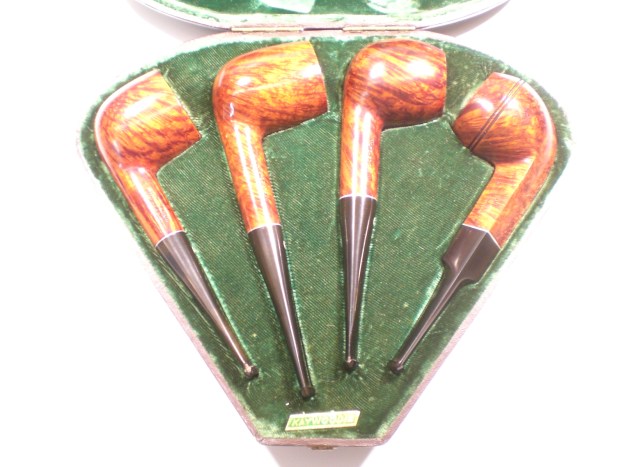
The set came in a fitted, triangular shaped case with these four shape models:

86B – Large Apple
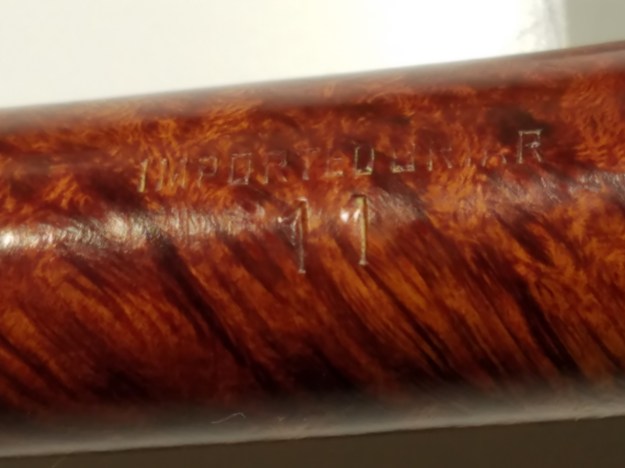
11 – Extra Large Billiard
69 – Pot
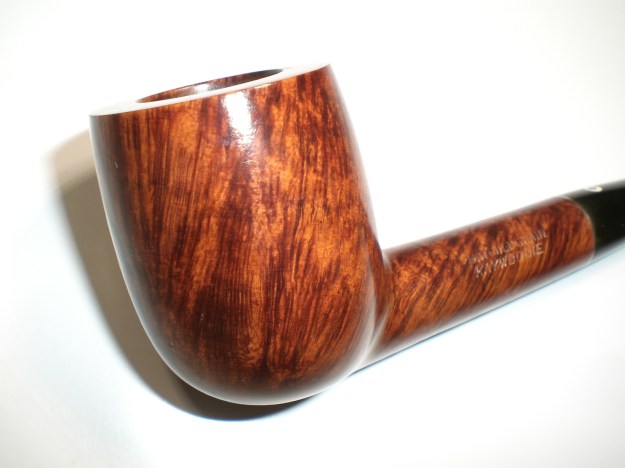
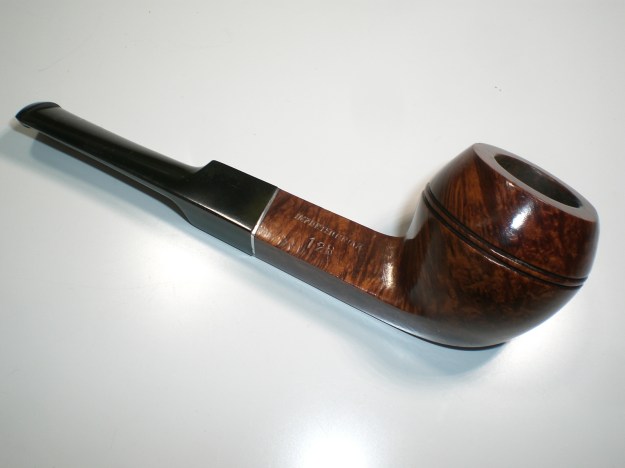
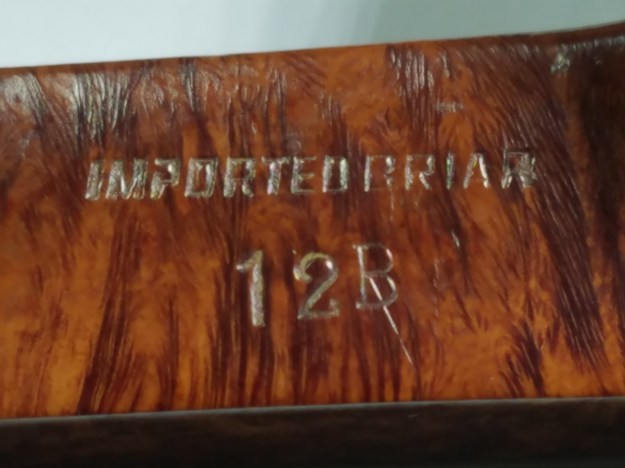
12B – Saddle Bulldog

Unfortunately when I was working on this set in December, I was in a rush to get it done before the holiday and accidentally deleted my “before” pictures. The pipes were in very good shape, with two exceptions. The stem on the 86B was damaged, on the button and sides, almost like it was filed down to be more narrow. The shape 69 Pot also had some minor damage to the bottom of the button.

The other pipes only had mile oxidation. The briar didn’t need any attention, but I gave them a light buff with White Diamond and several coats of Carnuba wax. The stems were all polished using 800, 1500 and 2000 grade paper, followed by Micromesh sheets of 8,000 and 12,000 grades. The stems were then buffed with White Diamond and Meguiars Plastic Polish.

The two pipes with damaged stems were repaired with the Stew-Mac Black superglue and accelerator. Getting the shape back to the 86B was very challenging and I’m not completely satisfied with the result.

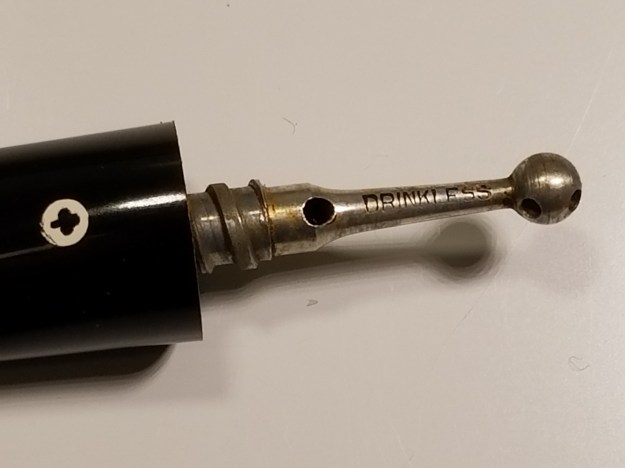
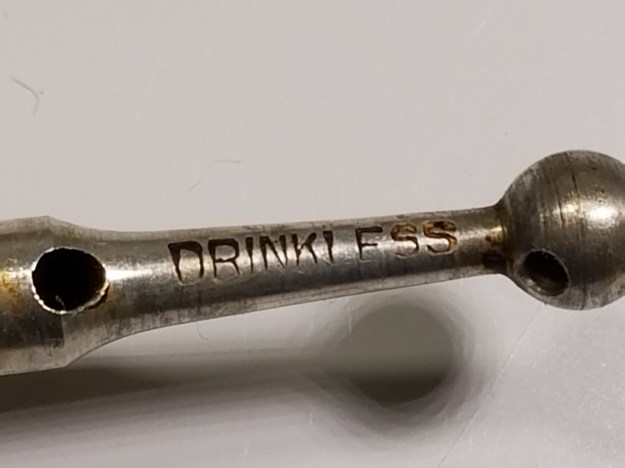
All four pipes had a “Drinkless” stamped, four-hole stingers. Dating via the nomenclature and stinger isn’t an exact science, so the following is my assumption. The details are:
– smaller, four hole ball
– “Drinkless” only stamp, no Patent or Reg. info

From just after WWII, Kaywoodie transitioned to four hole, smaller ball stinger, which was used into the mid 1950’s.
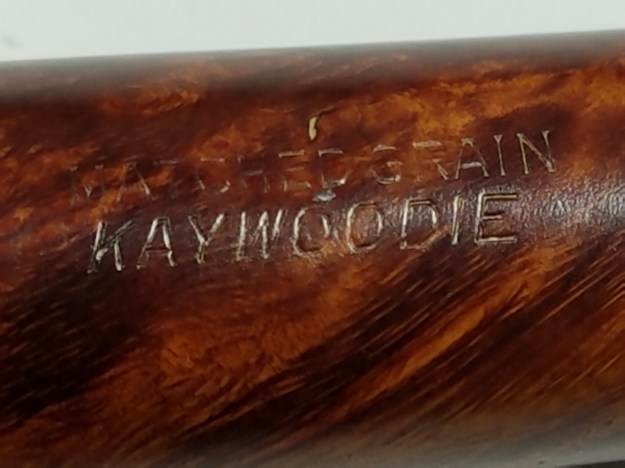
The finished set and case.
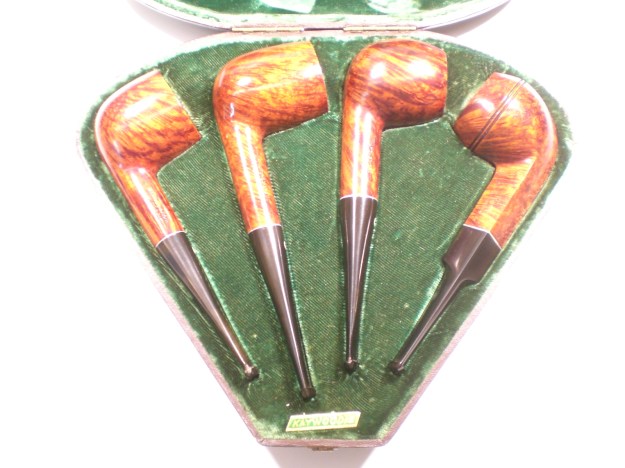
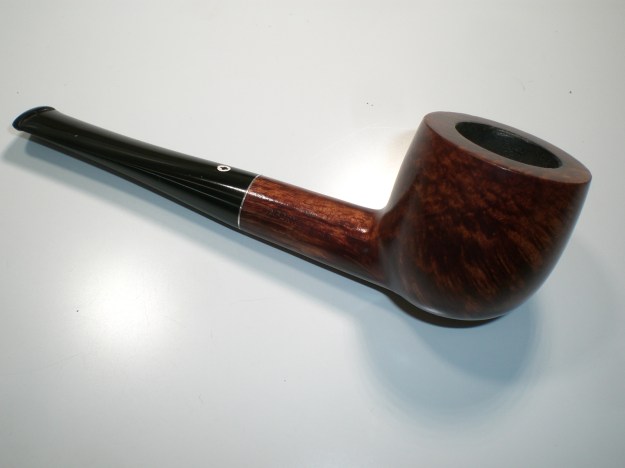
The individual pipes are shown below.

86B – This one had the strange damage to the stem, as shown in these two “before” photos. Getting the shape back on the sides was quite challenging.

And the finished pipe.

69 Pot – this one had minor damage to the bottom of the button, with the repair shown below.
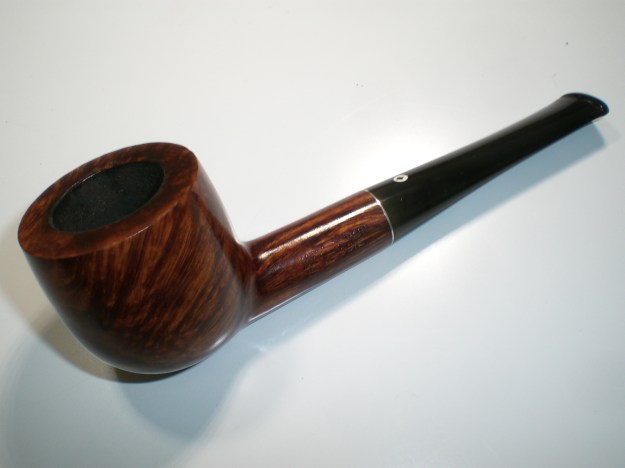
11 – Extra Large Billiard
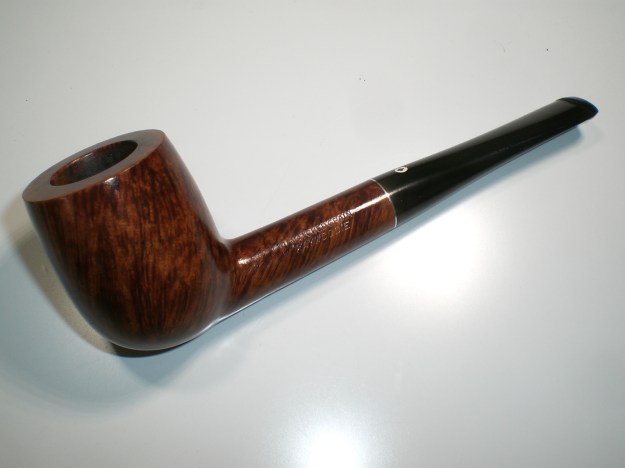
And finally, my favorite of the set, the 12B – Bulldog.

Comoy’s Golden Grain Apple Restoration


By Al Jones

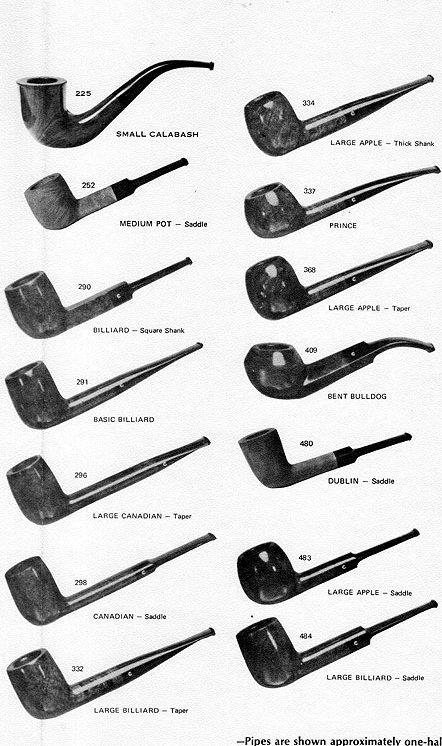
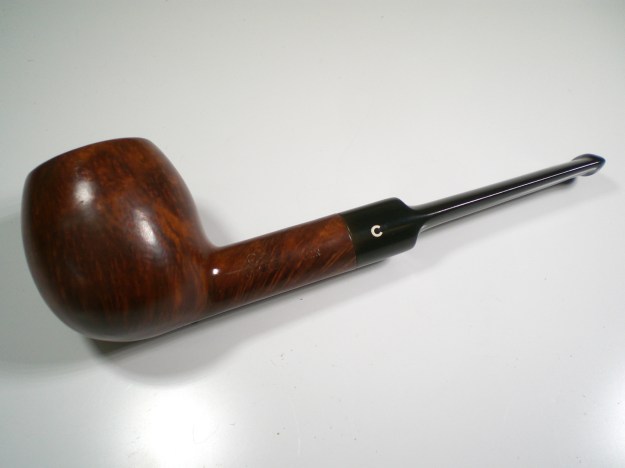
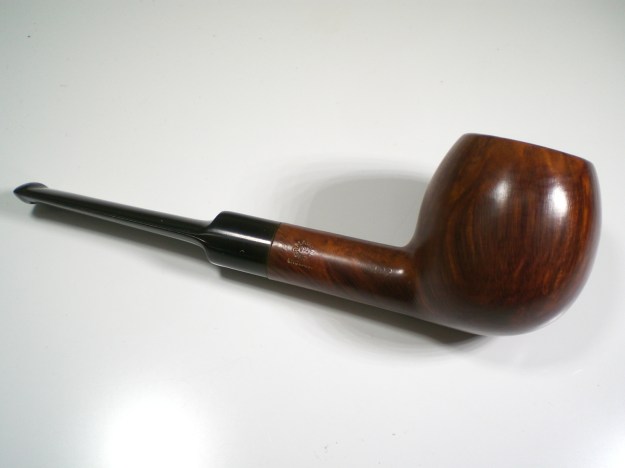
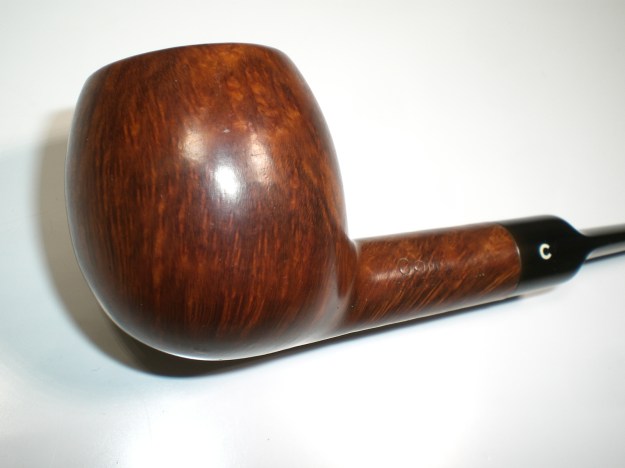
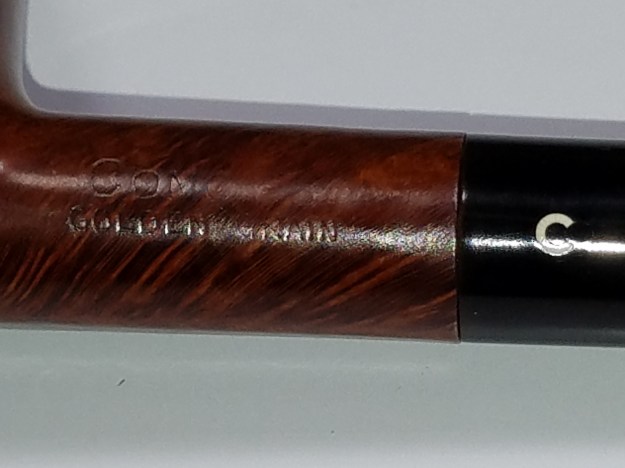
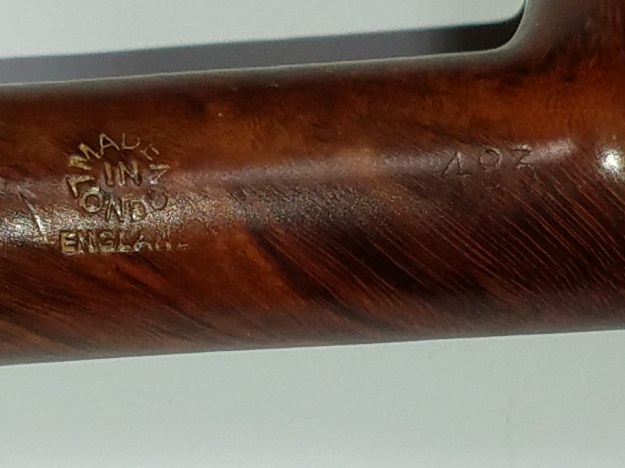
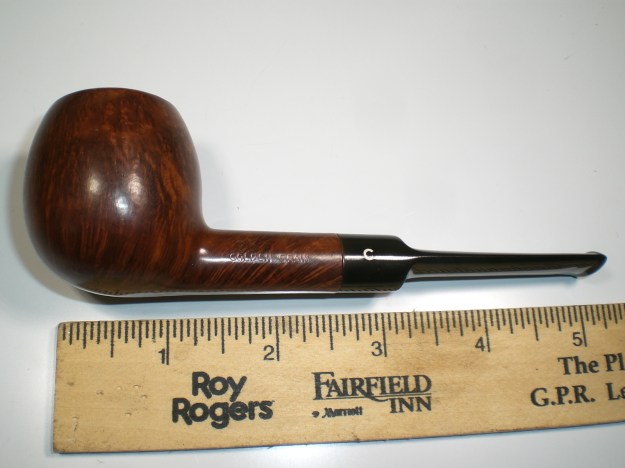
Comoy’s with the drilled, 3-piece “C” stem logo always catch my eye. This one is a Shape 483 in the Golden Grain finish.  The stem was oxidized with a few bite marks. There was some build-upon the bowl top. The stem wasn’t inserted all the way into the shank, but that is typically due to build-up in the shank. Here is the pipe as it was received.

The shape 483 is listed as a Large Apple on the Comoy’s shape chart.

I reamed the cake and found the bowl to be on very good condition. I used a worn piece of scotchbrite to clean up the bowl top. The pipe was soaked with alcohol and sea salt. While the bowl was soaking, I put a dab of grease on the C logo and soaked it in a mild Oxy-Clean solution. After the soak, I used a bristle brush and then a scrunched up paper towel to clean the inside of the shank. Once that was done, the stem fit properly.

I raised a few tooth dents on the stem with flame from a lighter. One dent remained underneath, and I decided to let well enough alone as it was structurally sound. I used 800, 1,500 and 2,000 grade sandpaper to remove the oxidation. That was followed with 8,000 and 12,000 grade micromesh followed by White Diamond and Meguiars Plastic polish on the buffer.

The briar was lightly buffed with White Diamond and several coats of Canuba wax.

Below is the finished pipe, now being enjoyed by a member of the SmokersForums.uk forum.

Sasieni Four Dot Danzey XS Restoration.


By Al Jones

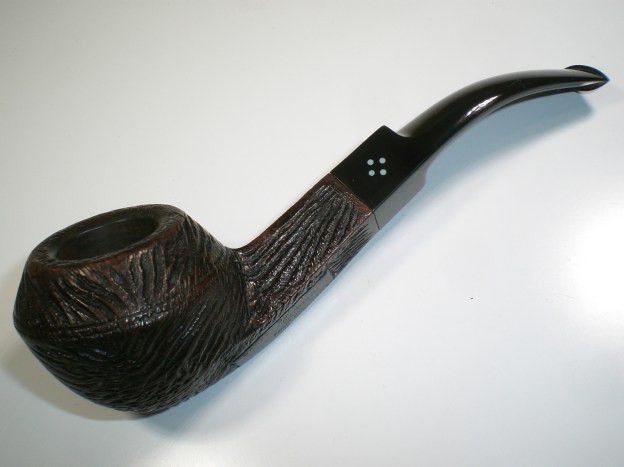
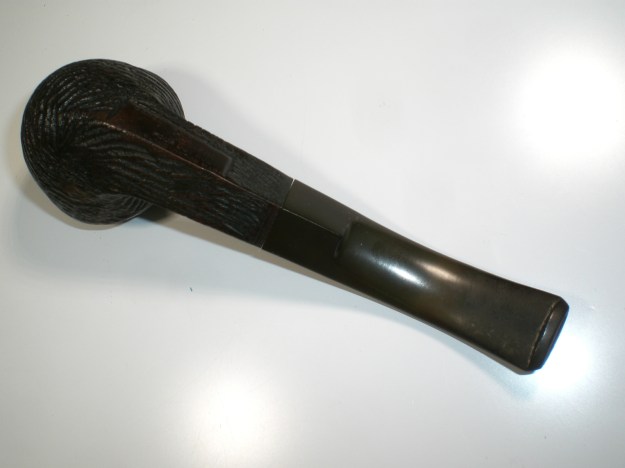
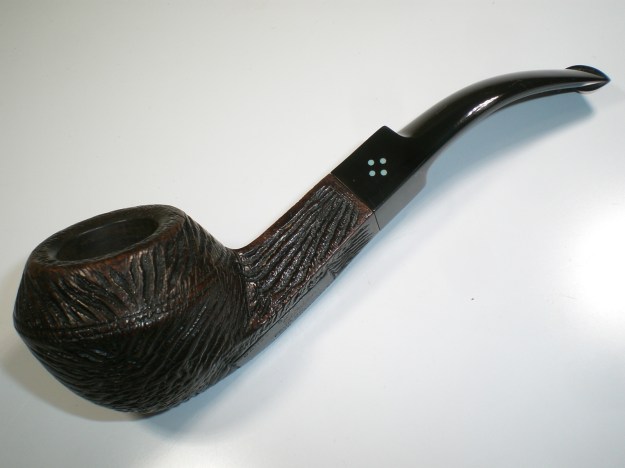
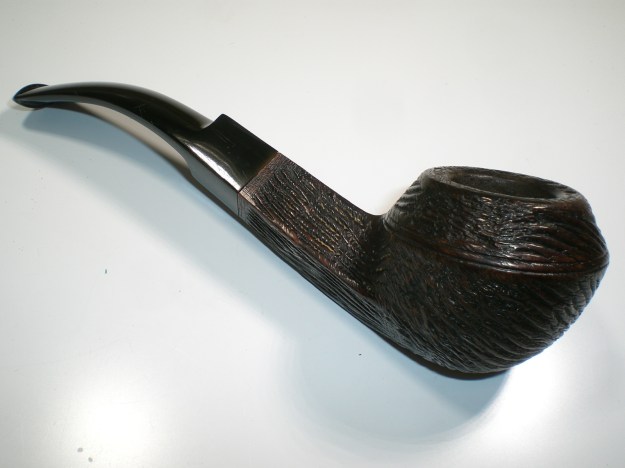
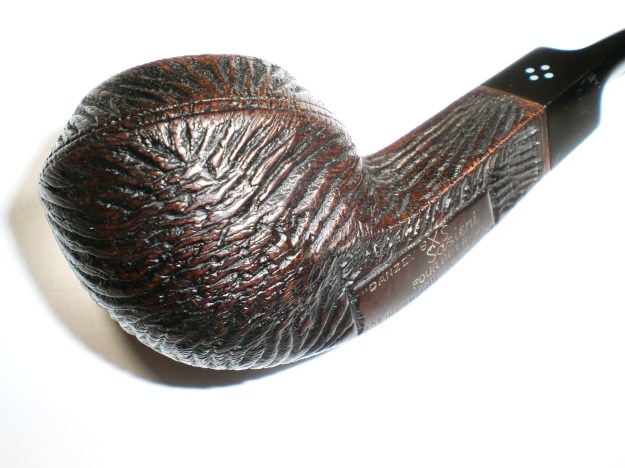
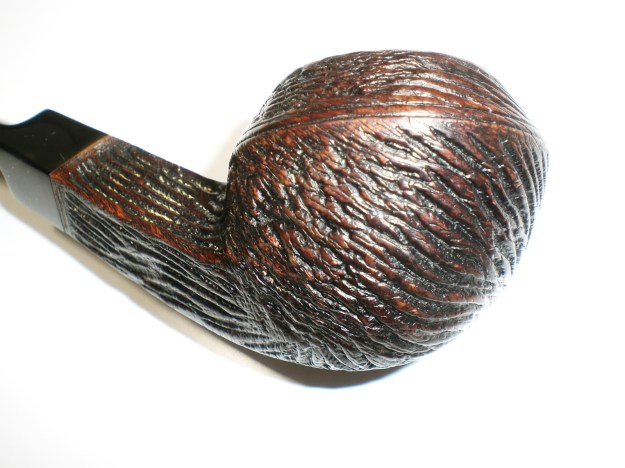
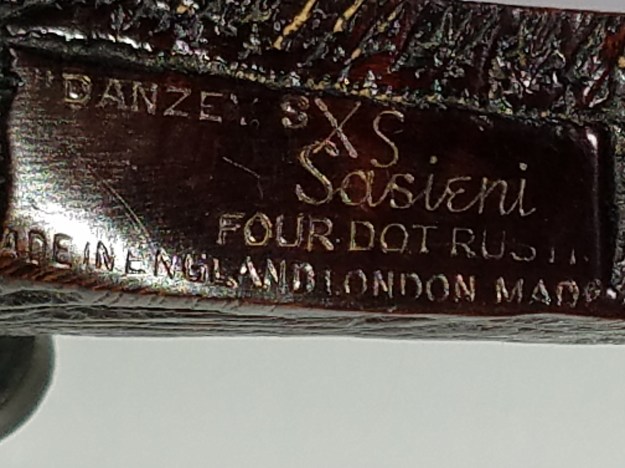
My buddy Dave made a smart grab with this Sasieni Danzey XS. The Danzey is one of several Sasieni bulldog shapes. He has been looking for this shape for a while so I was glad he finally located a fine example. The pipe was in great shape and I knew it would be an easy restoration. Tnis one sports the “Rustic” finish which is hand carved and follows the grain. The Rustic finish is my personal favorite offered by Sasieni.

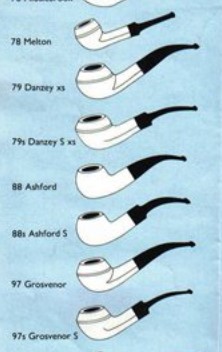
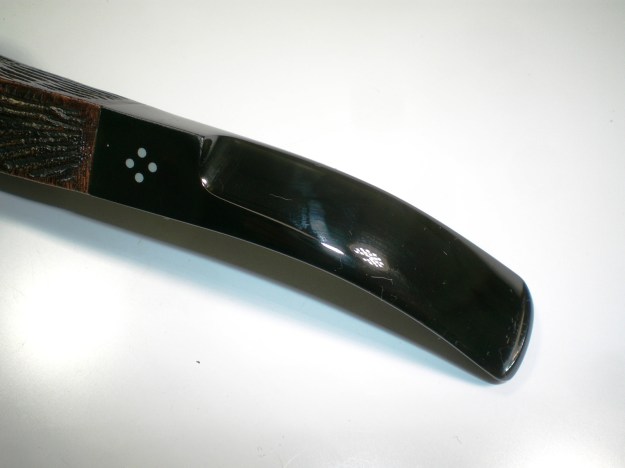
The Danzey is also known as the Shape 79. This one has the S for the saddle stem. All Danzey’s have the XS stamp which Pipephil says stands for a premium priced pipe. Below is the chart showing the Sasieni bulldog shapes. The Sasieni logo dates this one from 1946 to 1979.

Below is the pipe as it was received, the stem was oxidized but free of any teeth marks. There was a very mild cake and little build-up on the bowl top. Even in unrestored condition, you can see that this pipe has the beautiful pale blue dots. My cheap point and shoot digital camera don’t capture this well.

I used a worn piece of scotch brite to remove the bowl top build-up then the cake was removed. The bowl was in terrific shape. The stem was soaked in a mil Oxy-Clean solution. Following the soaks, the stem was mounted and oxidation removed first with 800 grit paper, than 1,500 and 2,000 grades. Next up was 8,000 and 12,000 micromesh sheets. The stem was buffed with White Diamond and Meguiars plastic polish. I hand waxed the briar with Halycon wax.

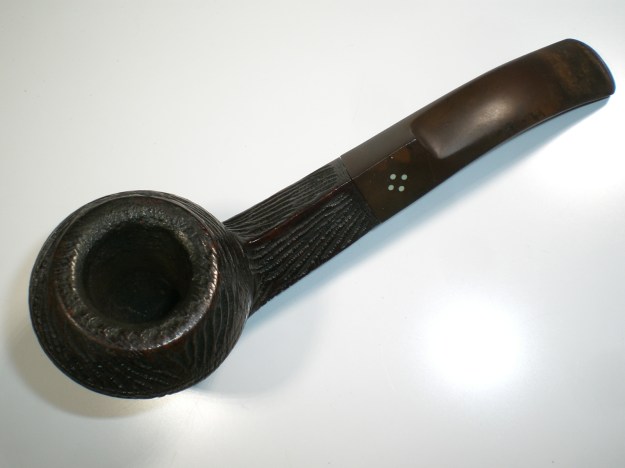
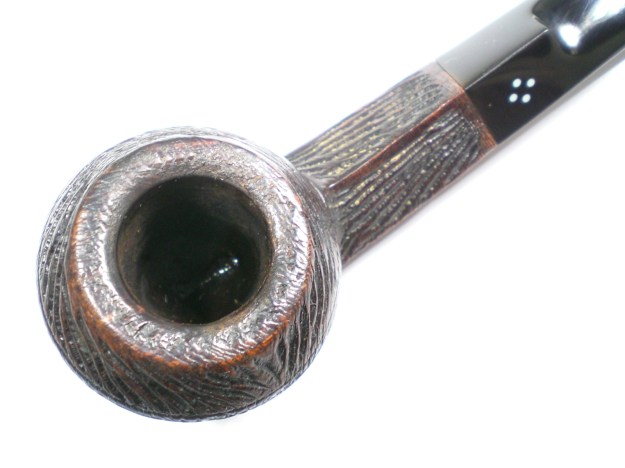
The one challenging aspect of the pipe was that it had an aluminum stinger tube (slip-fit). You can just see it the bowl top photo below. Dave said it was stubborn and he wasn’t kidding. Typically, a soak in alcohol frees these pieces. But, after a soak, this one still wouldn’t budge. I used a pair of pliars to try and twist it out, which of course only collapsed the tube and then it tore. Note for next time: Insert a tooth pick or similar in the tube to give it some support! With a ragged piece of aluminum sticking out of the tenon, I pondered just filing it smooth. I decided to try some drill bits from my index box. Two of my smaller bits looked to be the right size. I mounted the larger of the two bits in my bench top vise and screwed tenon onto the bit. The aluminum twisted right out in two strips. This left a very thin piece of aluminum further into the tenon. The next larger bit worked out the remaining piece. I worked very carefully as I obviously didn’t want to break the tenon on my friends pipe. The draw on the stem without the tube is much improved, so I think it was worth the risk and effort.
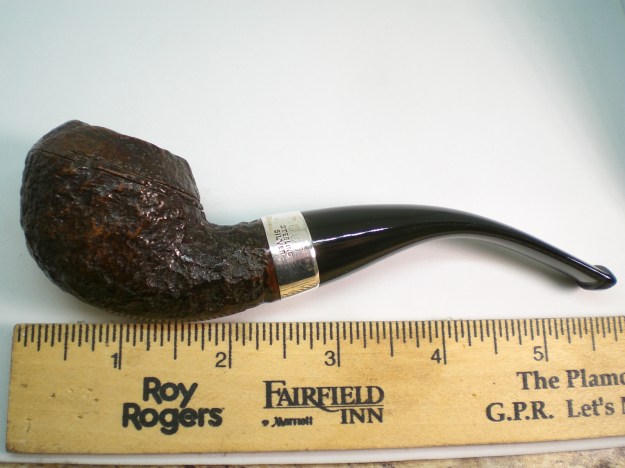
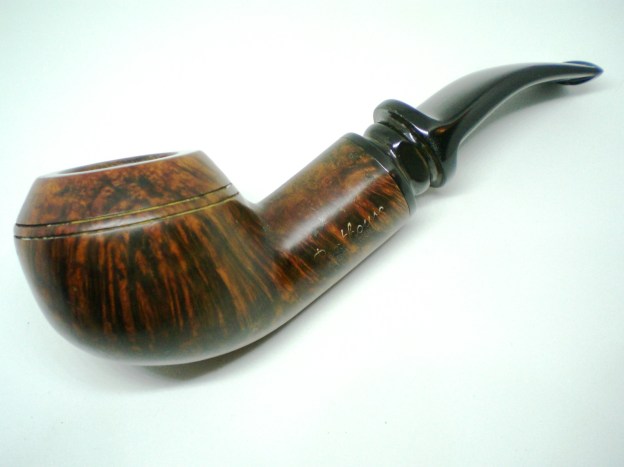
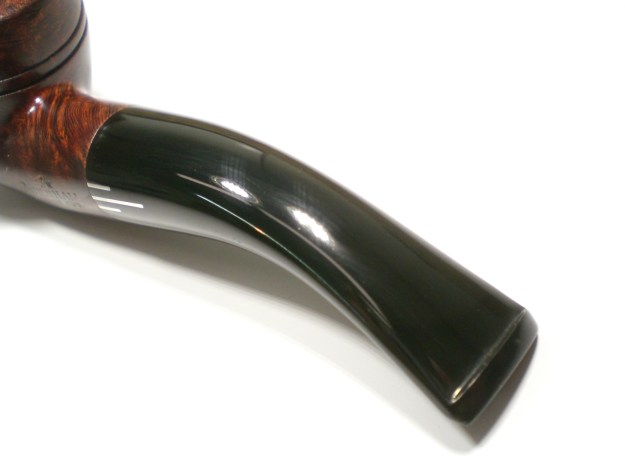
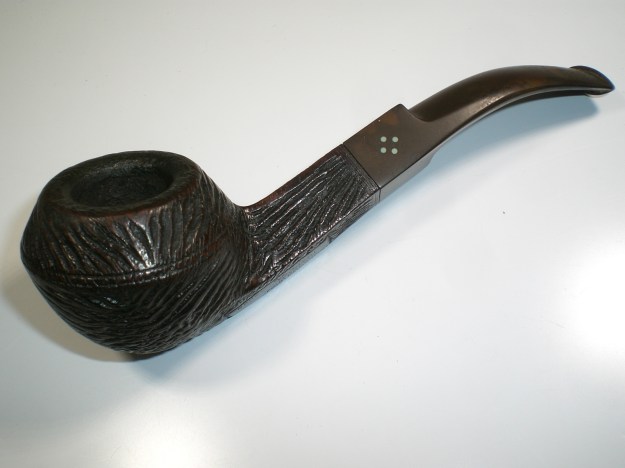
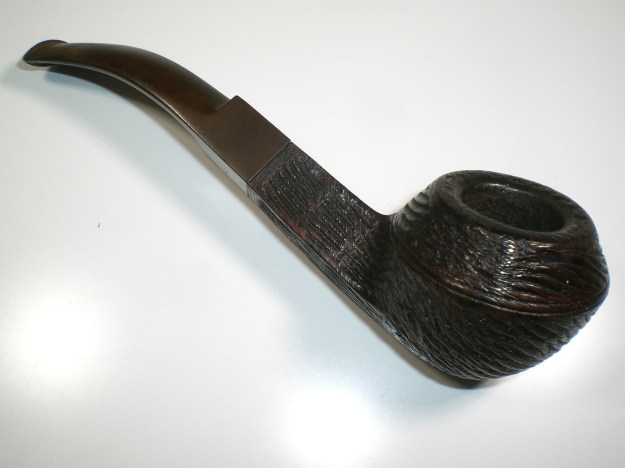
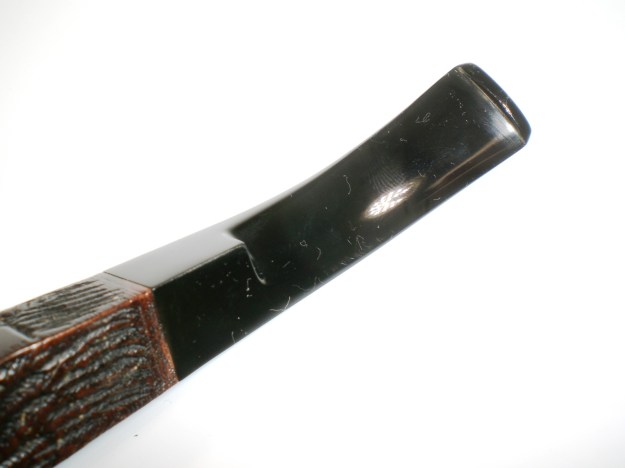
Below is the finished pipe, soon to be heading back to Dave.