
Guest Blog by Robert M. Boughton
Member, North American Society of Pipe Collectors
http://www.naspc.org
http://www.roadrunnerpipes.com
http://about.me/boughtonrobert
Photos © the Author
Once upon a midnight dreary, while I pondered, weak and weary,
Over many a quaint and curious volume of forgotten lore –
While I nodded, nearly napping, suddenly there came a tapping,
As of some one gently rapping, rapping at my chamber door.
“’Tis some visitor,” I muttered, “tapping at my chamber door –
Only this and nothing more.”
― Edgar Allen Poe (1809-1849), U.S. poet, author, editor and literary critic, in “The Raven,” 1845
INTRODUCTION
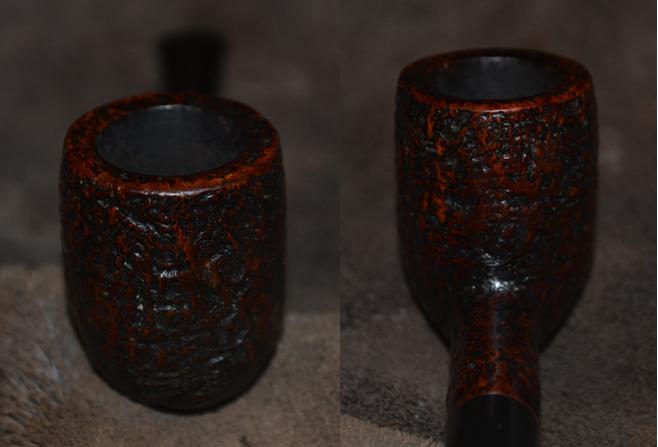
My inspiration for restoring an Ehrlich Sandblasted Straight Billiard acquired online as part of one very good estate haul was much like the opening lines to Poe’s most famous poem, except that no raven appeared to quethe negativity. Instead, the insight I gained from the gentle rapping on my creative door, which is how most of my contemplative phases before any restoration pass, was to transform the original dark and dreary pipe into something lighter and bolder.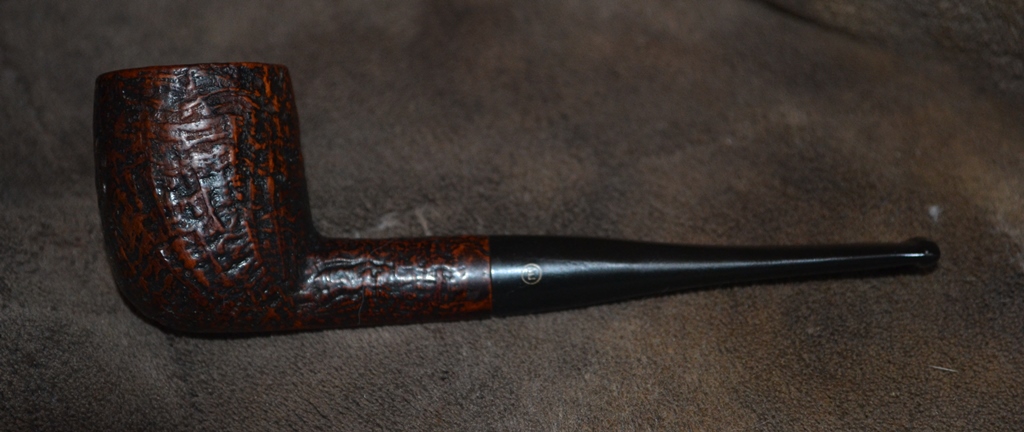




 THE RESTORATION
There are times when, to make something better of a pipe – whether it appears to have passed through a wood chipper or looks okay or at least nice enough as it first appears – calls for drastic action, such as stripping the old finish. There are two ways I know to accomplish this: the more invasive and time-consuming sanding approach, which always carries the contingency of scratches, and the faster, smoother method of soaking in Everclear. On rare occasions I have needed to start with the soaking and finish with light sanding, but for the most part I now try to avoid stripping at all because of my early restorations when I was gung-ho for the total overhaul idea. I soon enough learned there was a good reason for the darker finishes that so offended me, with a few notable exceptions.
But by either route, the initial result will be a striking step backward in the pipe’s aura. In other words, the wood is going to look like it’s been scorched by the fires of Hell. Still, I knew this was an occasion that merited stripping, and the pipe in question being sandblasted was one reason I chose the kinder, gentler Everclear.
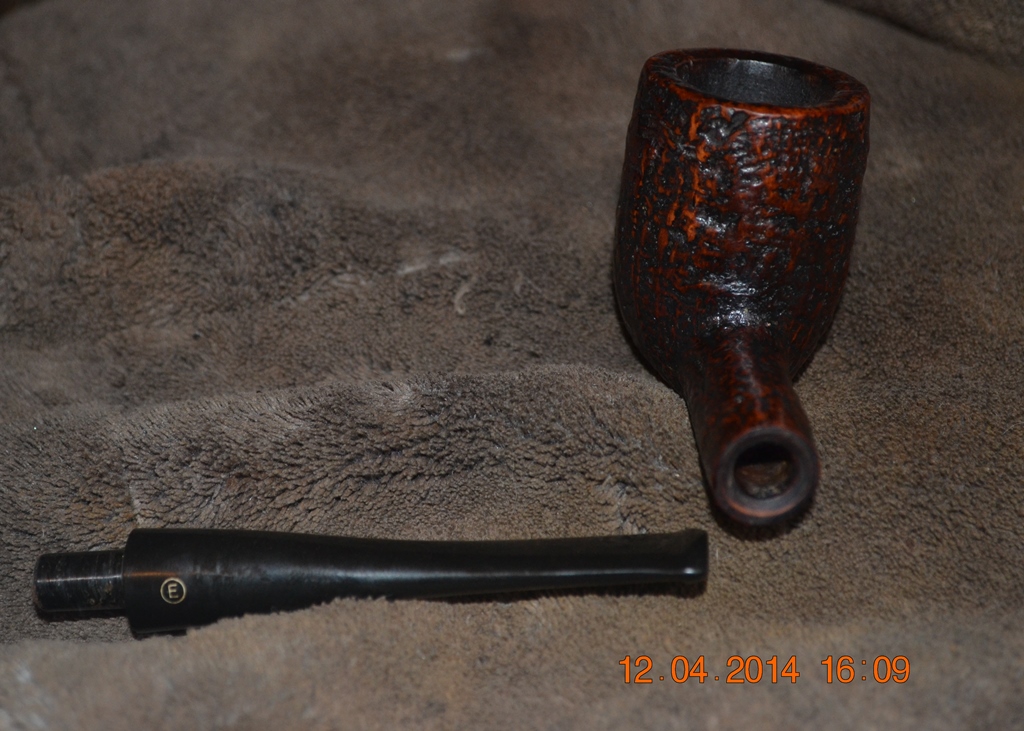
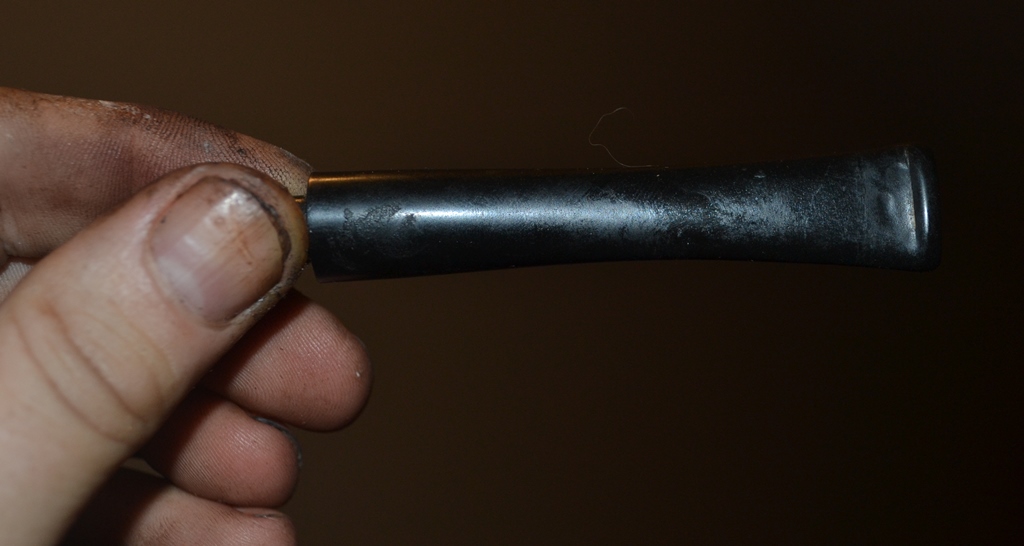
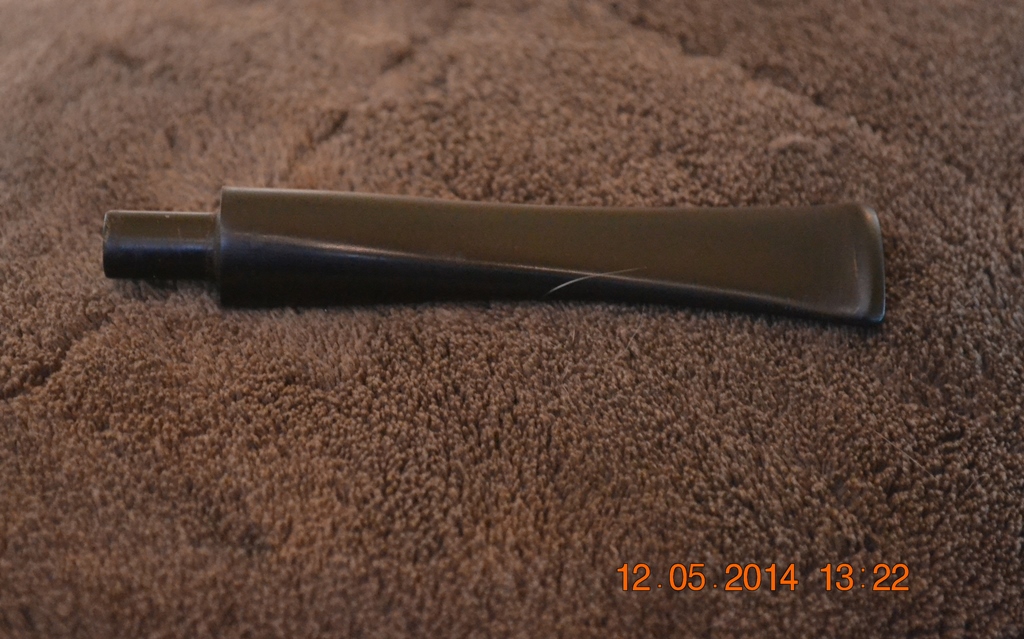
Taking advantage of the fifteen minutes needed for the Everclear to do its work on the bowl and shank, I set upon the task of working out the few kinks in the stem. Starting with purified water on a small square of cotton cloth, I gave it a bath, then used 200-grit paper only on the bite mark below the top lip, which with concerted rubbing, to my surprise, eliminated any sign that the chatter had ever been there. I was able to finish spiffing up the stem with 2400, 3200 and 3600 micromesh.
 Removing the briar from the alcohol, I wiped down the outside and scrubbed the chamber with more cotton cloth pieces and scoured the inside of the shank with a wire-handled cleaner before I set it aside to finish drying.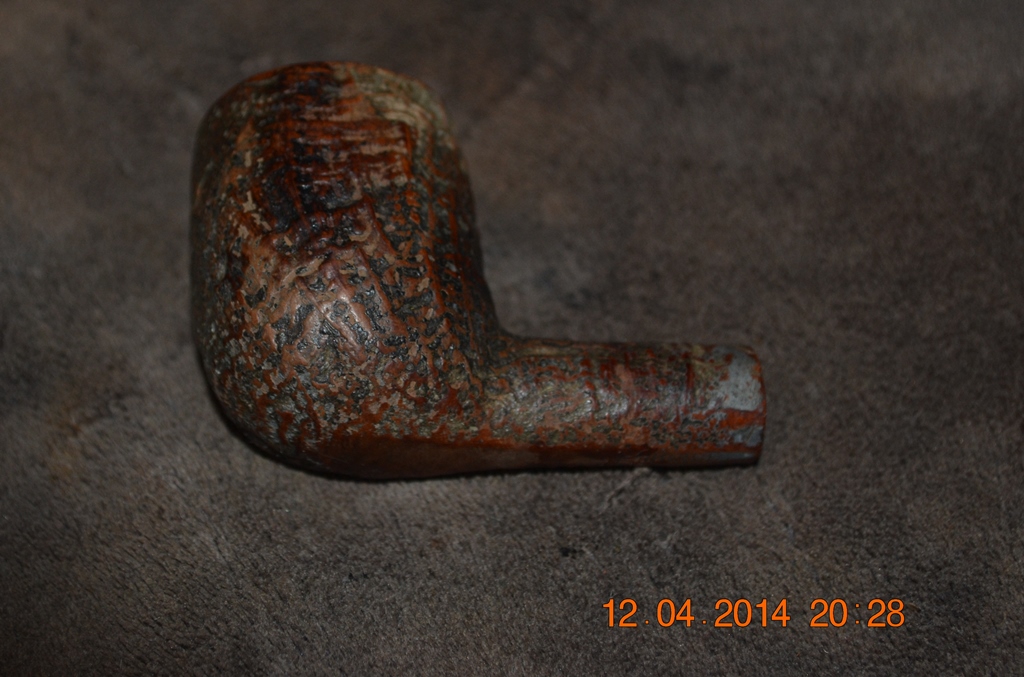

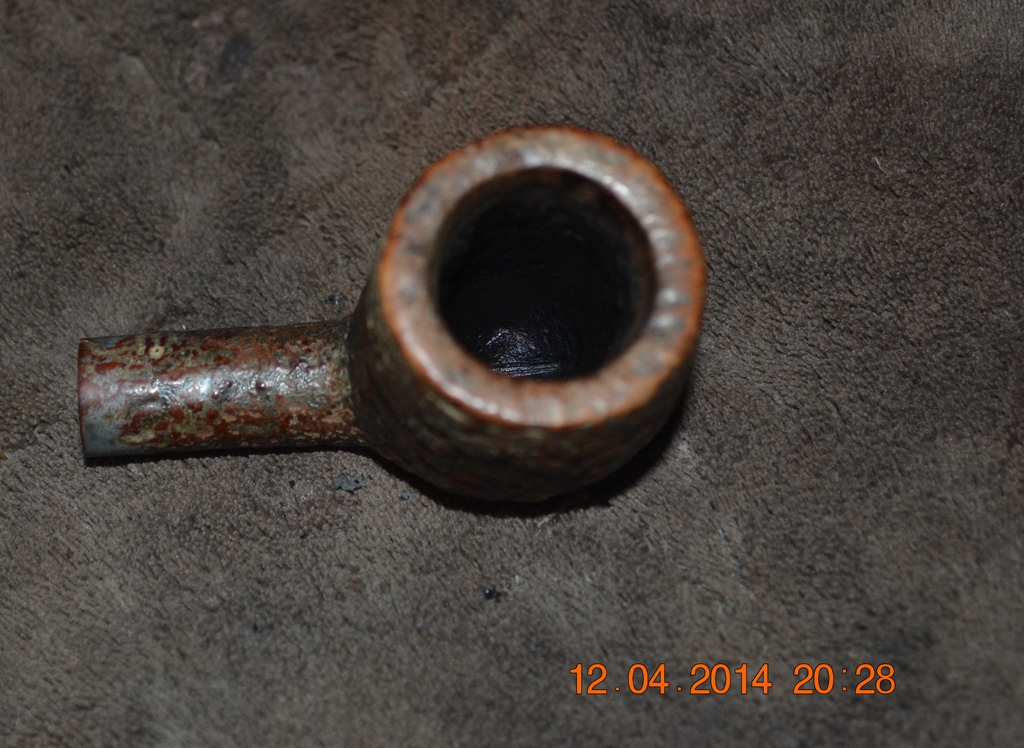
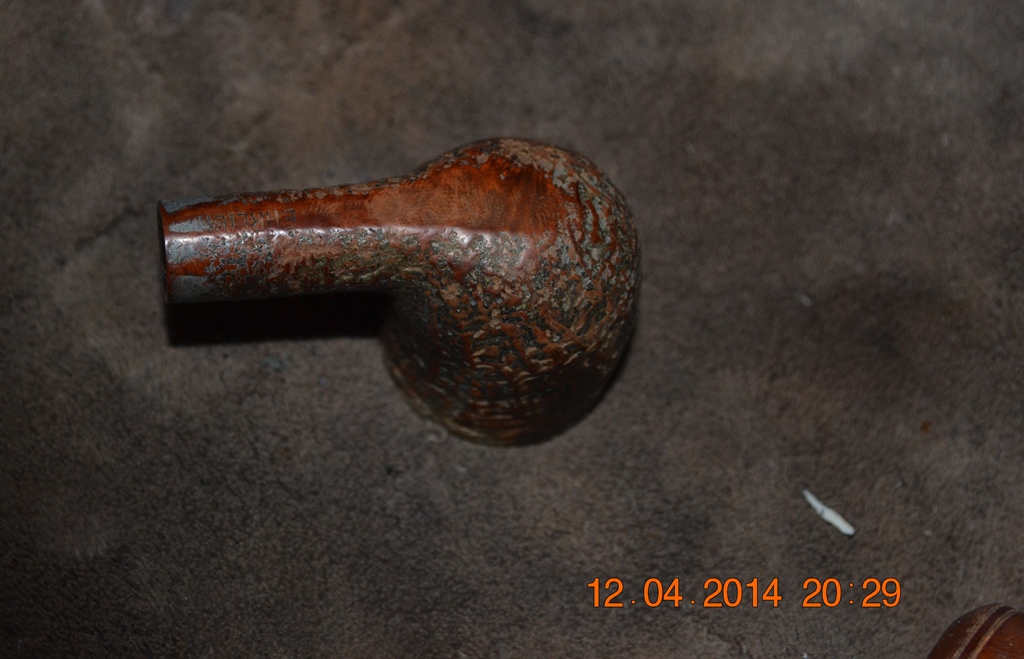
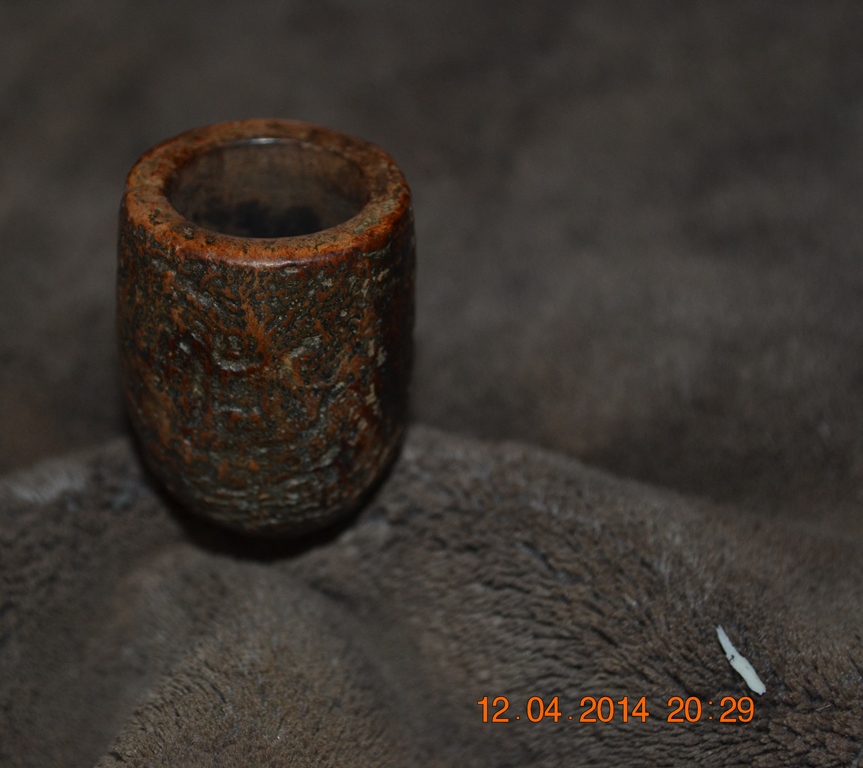
 Other upsides to the Everclear method were that the rim burn was gone and the chamber, which was not in the usual horrid state to begin with, needed no reaming at all and came smooth not even starting with my customary 150-grit first line of attack but an easy sanding with 320-grit paper.
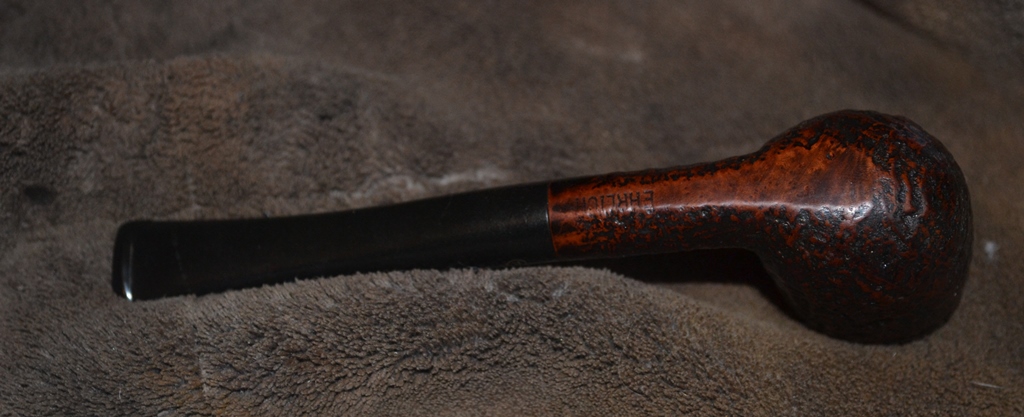
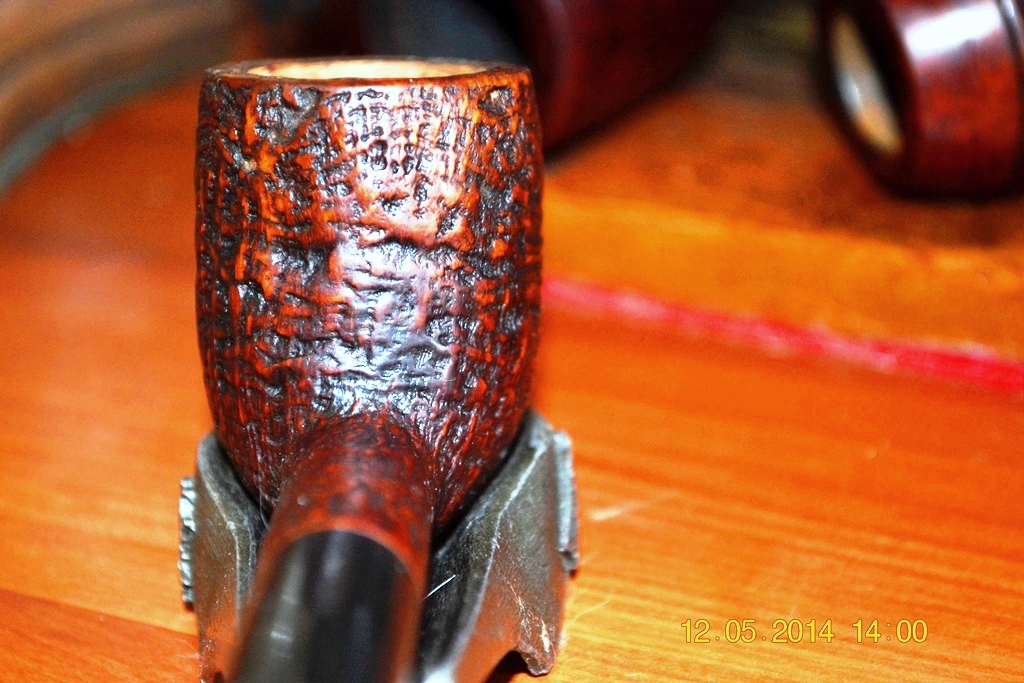
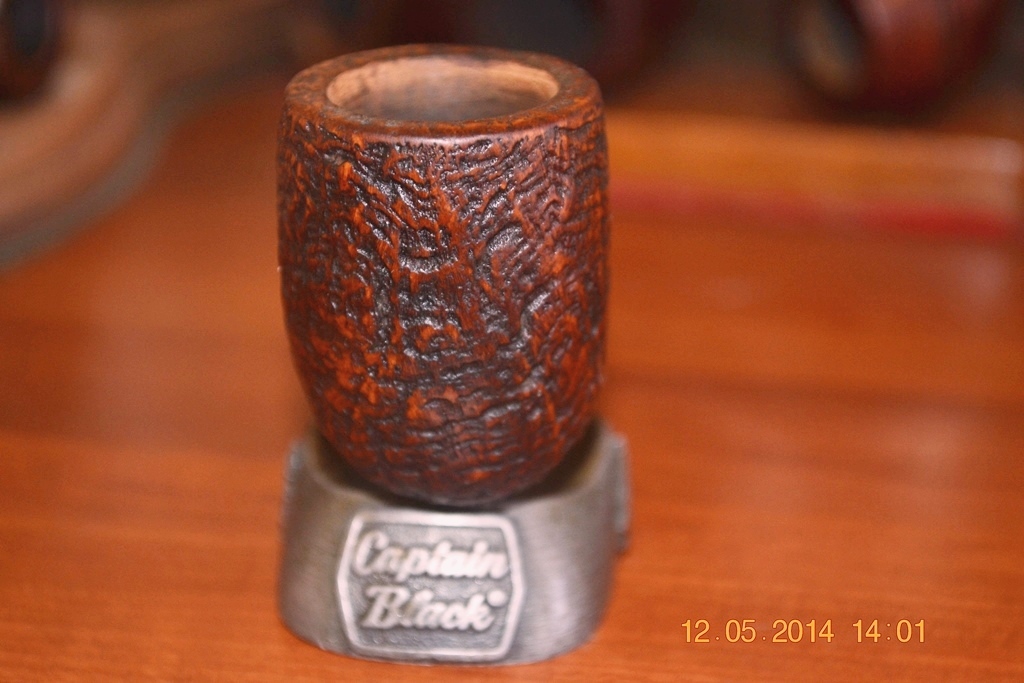
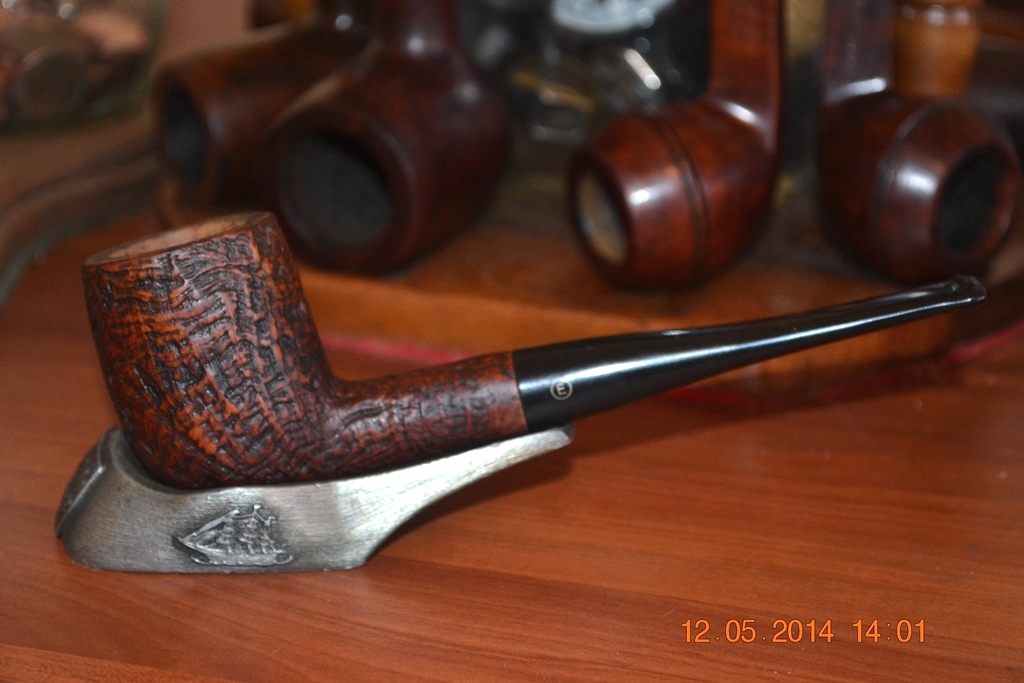
I seized the opportunity to retort the pipe before moving to the buffing of the wood with a progression from superfine steel wool to 2400, 3200, 3600 and 4000 micromesh. I only snapped one photo of the results of this step. It captures the nice return of a lighter, golden, more natural shine to the briar as well as the only nomenclature on the Ehrlich, a brand that hails from Boston, Massachusetts.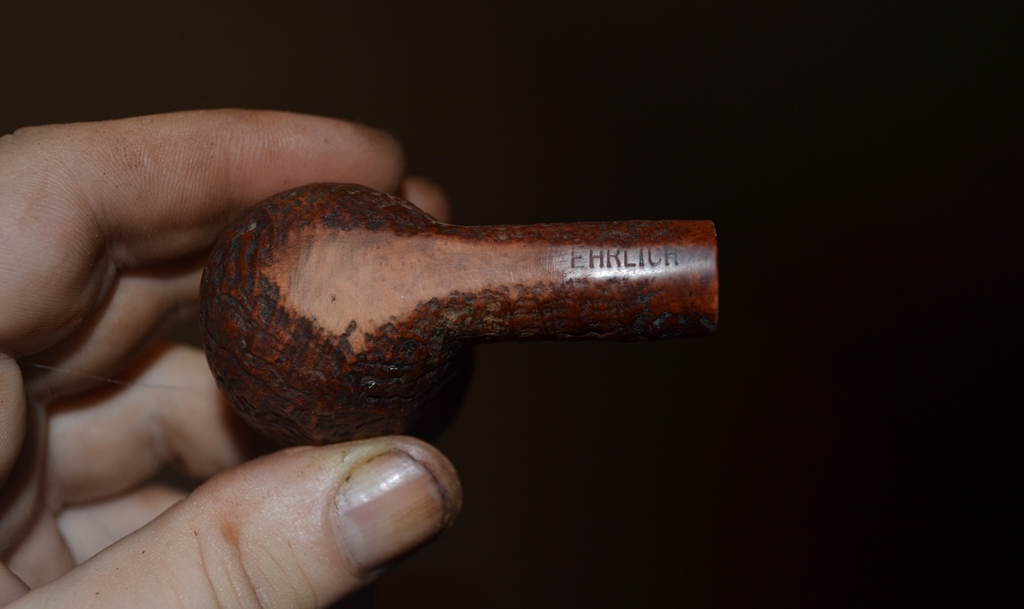 Ready to turn the finished parts on the wax wheels, I used red and white Tripoli and White Diamond on the stem and added carnauba (not having any Halcyon II) to the bowl and shank. The carnauba only needed more intense rubbing with a soft cotton cloth to clear out the excess.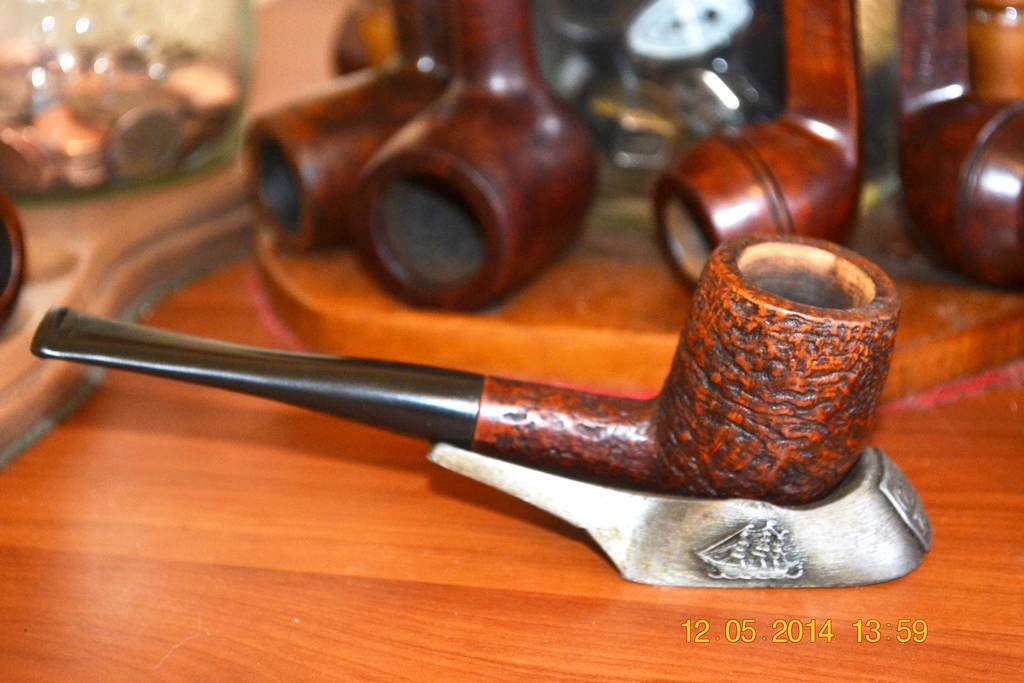


 CONCLUSION
I’ve said it before. I’m more of a naturalist when it comes to pipe restoration, or a believer of using the truest color of the wood to its best effect, although for good cause I have strayed from the ideal. Most of the times I see an over-dark stain for no apparent good reason, I have an overwhelming urge to uncover the obscured richness of the wood beneath. I think I succeeded with this Ehrlich.
 rebornpipes
Halycon is great in this application. Nice job lightening the finish!
LikeLike
I’ve been collecting for a couple years now. I had no idea how vast the pipe world is. Enjoy your site.
Rob
LikeLike
Nice clean up Robert! I especially like how you lightened the color of the bowl. Have you ever used Halcyon II wax? I’ve found that it produces spectacular results not only on rusticated bowls, but also as a final coat on smooth bowls and stems. I little goes a very long way and would make a nice addition to your portable pipe cleaning/restoration bag.
I just picked up an Erhlich pipe from an eBay lot. After reading your article, I’m excited to see what it looks like.
Keep up the interesting articles.
LikeLike
Andrew I too use Halcyon II wax and it is great stuff. For smooth bowls the same company makes Paragon Wax. Same kind of effective kit.
Great job on this one Robert. I too like the lightened colour. Well done.
LikeLike
I would have preferred to use Halcyon II but, as I noted in my blog, was out of it at the time. I’ll definitely buy a new, bigger supply of it than I did before.
LikeLike