
I looked up some information regarding this line of Comoy’s on the internet as I was not familiar with its placement in the ranks of Comoy’s lines. There I found that Comoy’s introduced the London Pride as the second grade to the Blue Riband around the same time to meet the American demand for a lighter finish. It was priced in 1943 at $25 and in 1965 at $25, then in 1979 at $95. It was described as having a natural amber coloring and tending to be Birdseye/Cross-Grained pattern pipes. At the time this pipe was made it was the next-to-top-of-the-line. The original stem had a three-piece “C” logo and this one did not have that. Judging from that fact, the shape of the tenon and the stem shape I am confident that it is a replacement stem. The stampings on the left side of the shank are “Comoy’s in block script over London Pride” and on the right side the stamping is worn. The shape number is near the bowl shank junction on the right and reads 292. The next four photos show the pipe as it was when I brought it to the work table.
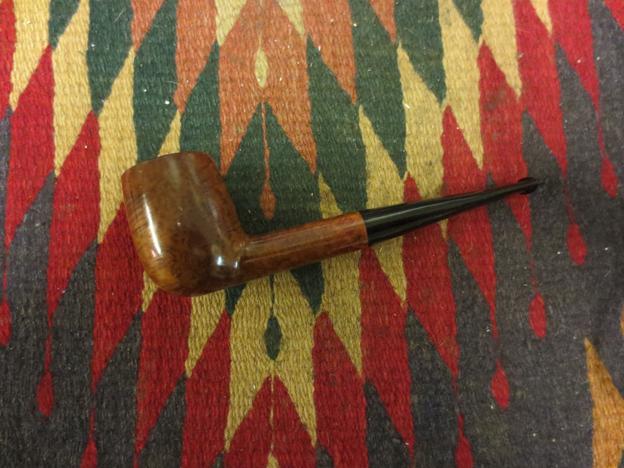
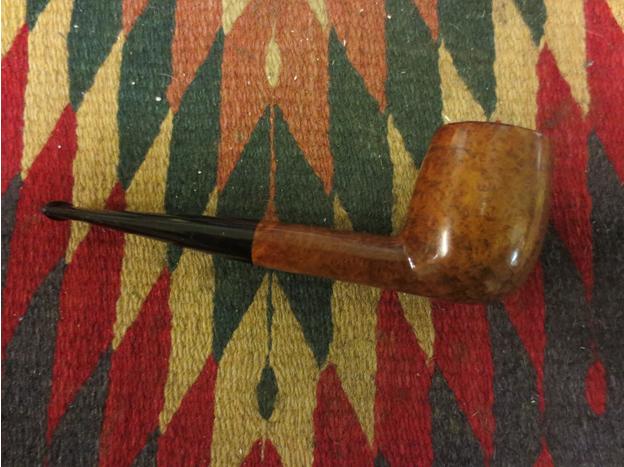
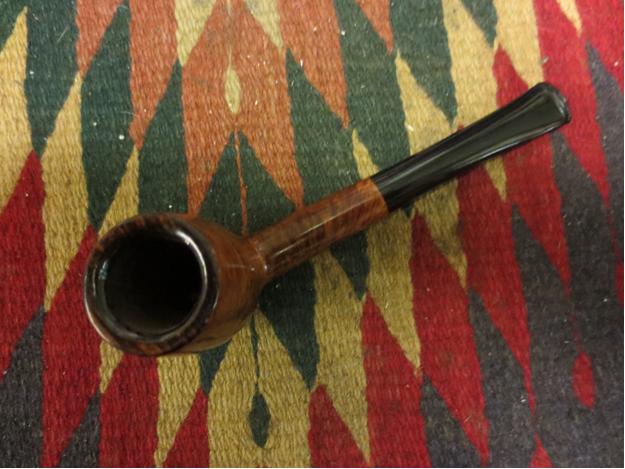

The pipe was in fair condition. The stamping was faint, the finish had a thick coat of varnish over it and the rim was heavily damaged. The previous refurbishing had rounded the inner and outer rim removing the characteristic bevel on the inner rim and the sharp out edge. The stem was a replacement and the person who had replaced the stem sanded the shank down to fit the new stem. Fortunately they had not taken off too much of the briar. It was visible from the lines of the pipe and from the lightening of the area around the shank/stem junction. I have included the next photo to show the rim damage that needed to be addressed.
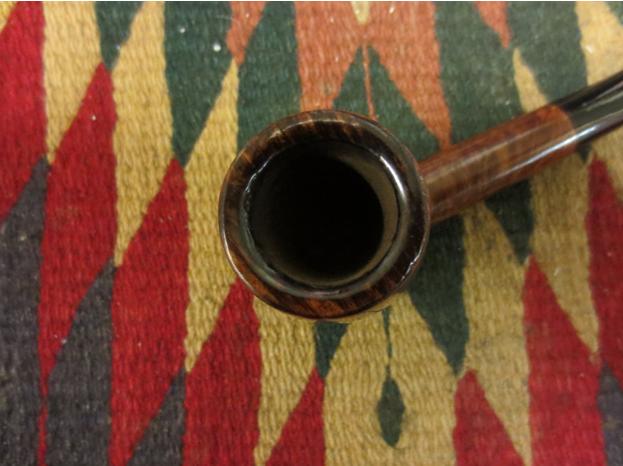
I topped the bowl on a flat board and sandpaper to remove the rounded inner and outer edges. I removed only enough to clean up and sharpen the outer edges and reduce the inner rounding to a slight bevel. I also sanded the inner edge with a folded piece of sandpaper to redo the bevel. I sanded the top and the bevel with a medium grit sanding sponge and also with a 1500 grit micromesh sanding pad to remove the scratches.
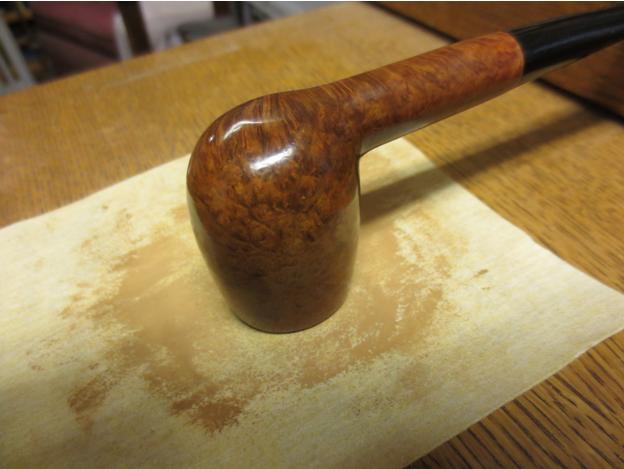

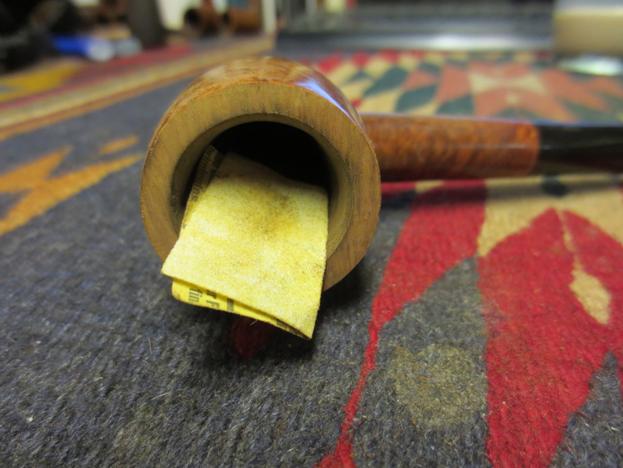
I wiped down the bowl with acetone on a cotton pad to remove the varnish coat and the remaining stain on the pipe. I find it easier to match the new rim colour if the bowl is also clean and the stain removed as much as possible.
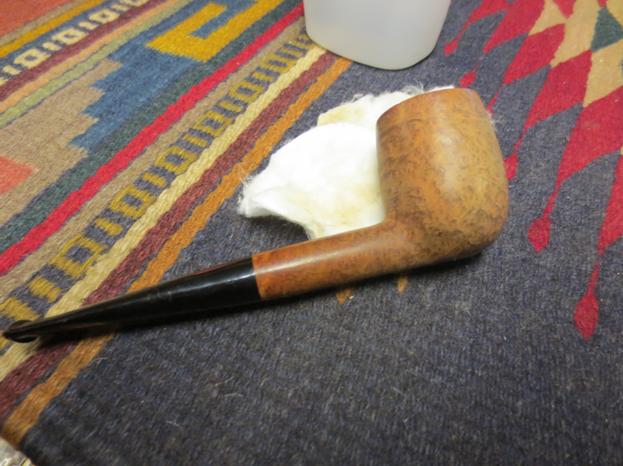
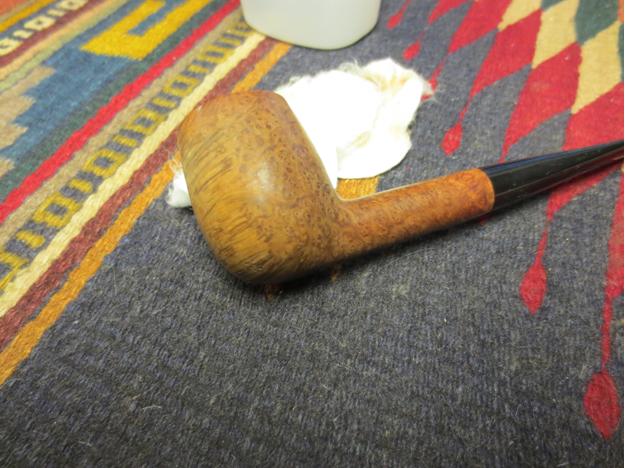
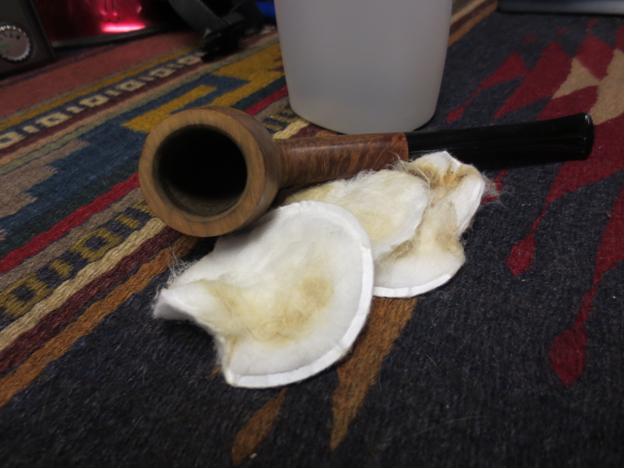
I stained the bowl and rim with Minwax Medium Walnut stain which brought the colour as close as I could to the photos I found of the original colour of the London Pride line. I applied the stain and hand buffed the pipe.
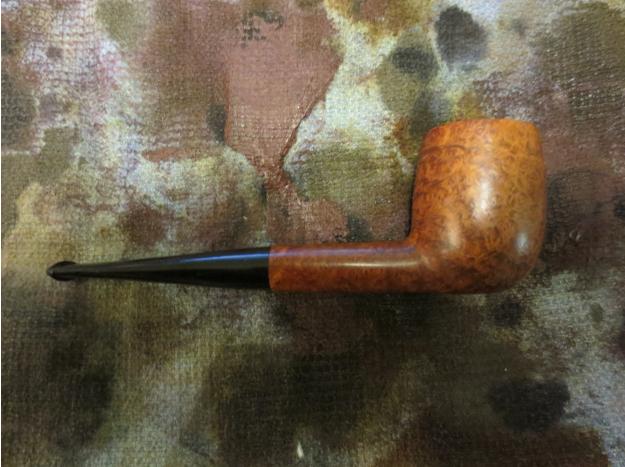
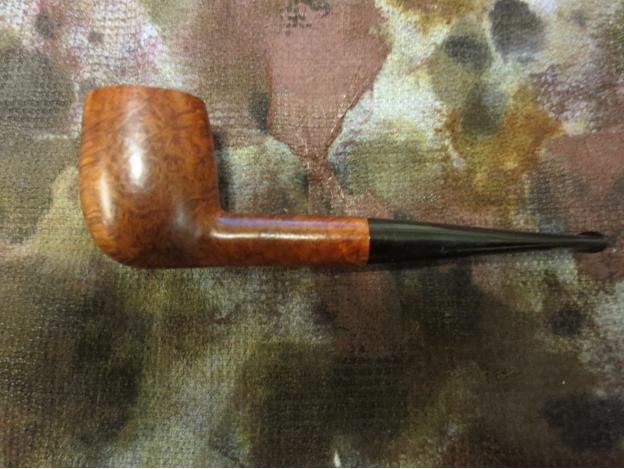
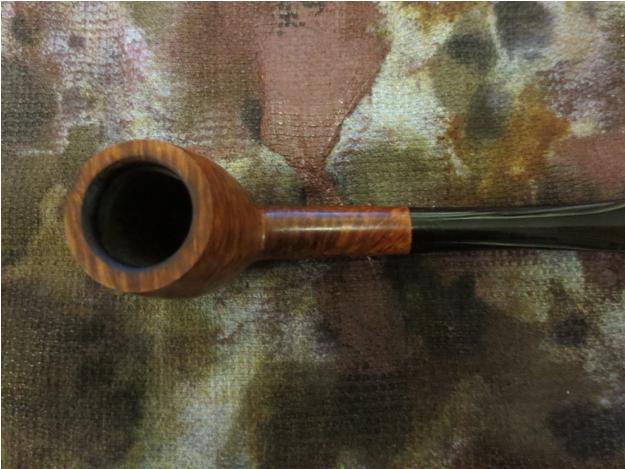
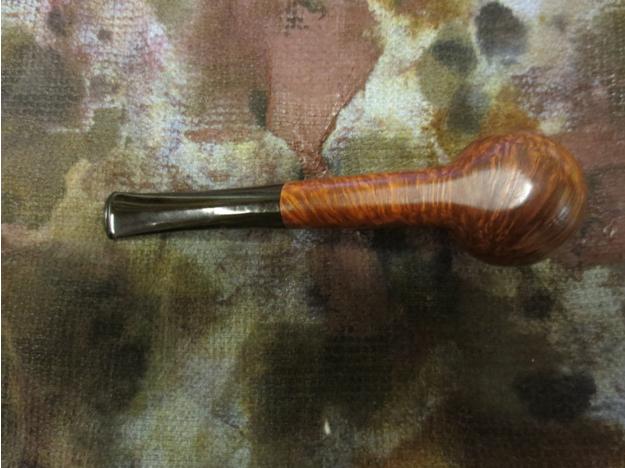
I probably should have cleaned the inside earlier in the process but I did not bother until this point as it was quite clean. I scrubbed out the bowl with a cotton swab and Everclear as this bowl did not have the same black bowl coating as some of the others from this box of English pipes. The shank and the stem were not too dirty and it only took a few cotton swabs and pipe cleaners to bring it back to clean.
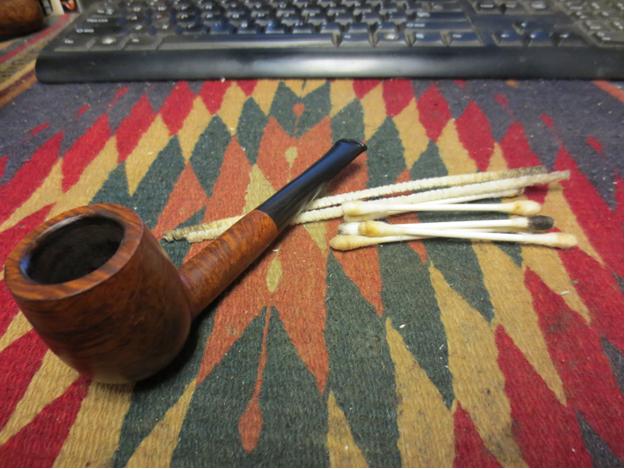
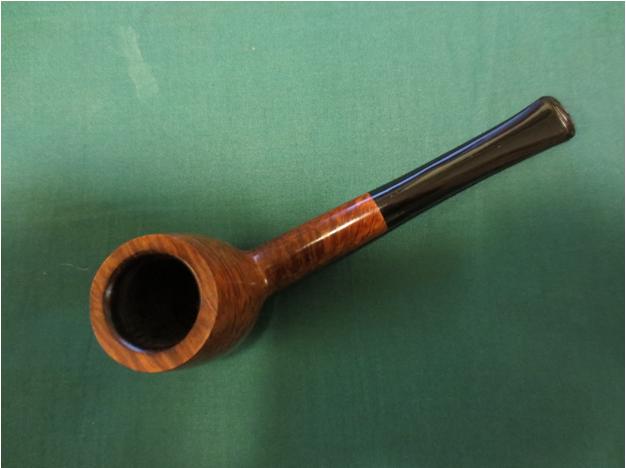
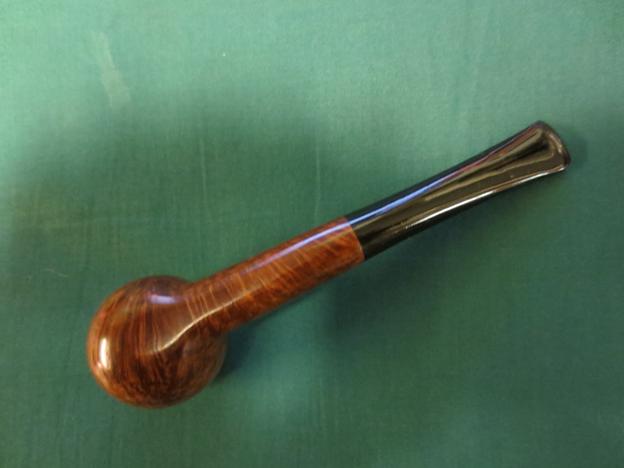
The stem was in great shape so I did not need to remove tooth marks or dents. It was also quite clean so I rubbed it down with some Obsidian Oil and then took the pipe to the buffer and buffed it with White Diamond. I gave the bowl and stem multiple coats of carnauba wax and buffed to a shine with a clean flannel buff. The finished pipe is shown in the photos below. It turned out to be a beautiful pipe – the combination of cross grain and birdseye matches the description I had found on the web regarding this line of Comoy’s pipes. It is ready to serve the next season of its life.


 rebornpipes