
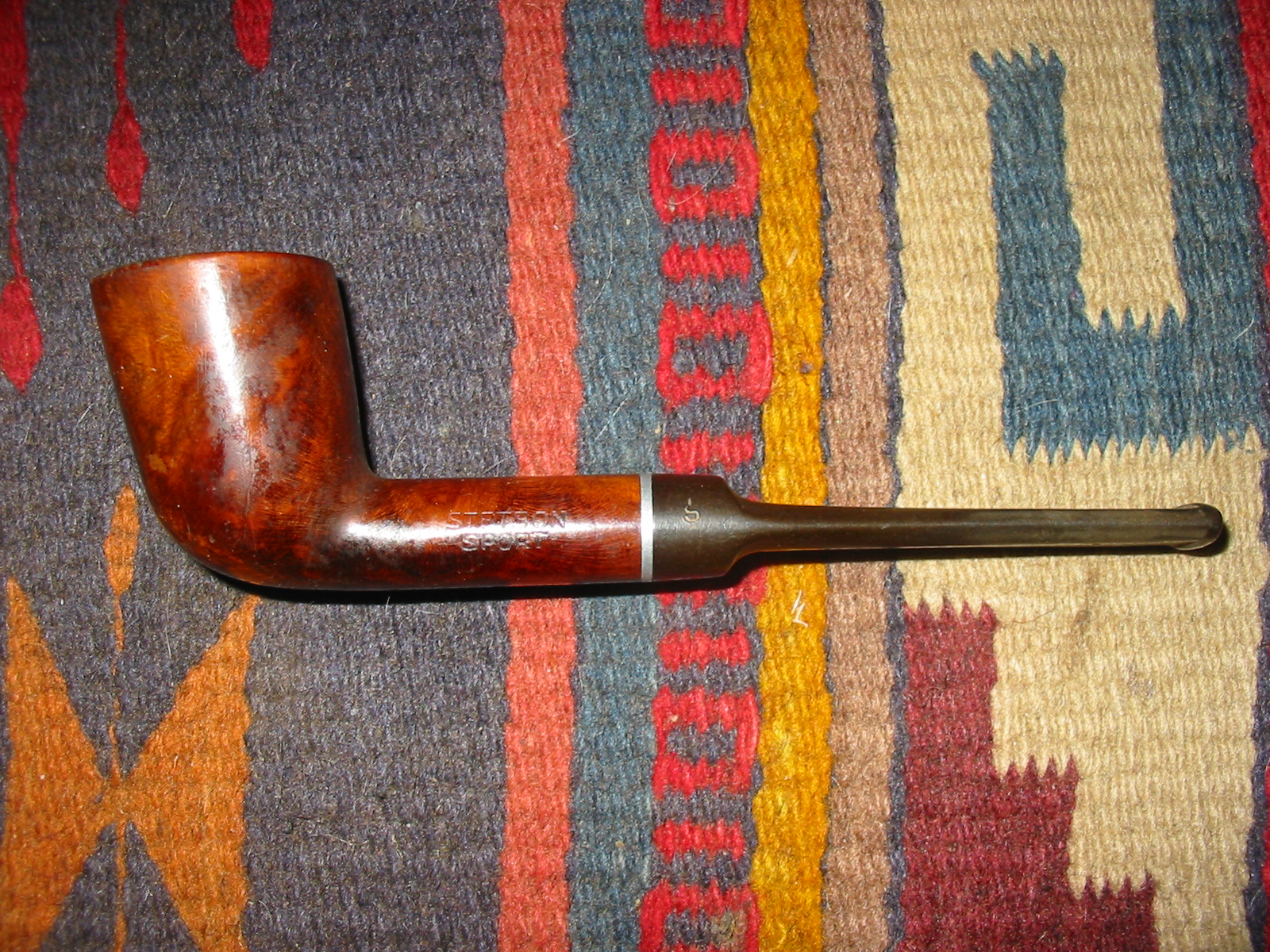
This pipe was gifted to me in exchange for a bit of stem work that I did recently for a friend of mine. It came in a box with the pipe to be repaired and two others. It was a brand that I knew absolutely nothing about. The pipe was obviously American made and had a coat of thick varnish on the bowl that was beginning to flake and peal. I decided to do a bit of research on the brand to see if I could find any information on it.
I found a document online for the John B. Stetson Company. Stetson is the manufacturer of Western hats but I was not aware that they also made pipes. One source seemed to point to the fact that the pipes were made by Marxman Pipe Company and branded with the Stetson name.
The document was written as a brand page for the company in application for a trademark. I have included that document below as I find the historical detail quite interesting. The source of the information is this website: http://www.legalforce.com/stetson-78583631.html I quote the following information in part from that site.
“John B. Stetson Company
Absorbent paper for tobacco pipes, ashtrays not of precious metal, chewing tobacco, cigar bands, cigar cutters, cigar humidifiers, cigar tubes, cigarette cases not of precious metal, cigarette lighters not of precious metal, cigars, cigarillos, hand-rolling tobacco, humidors, match boxes not of precious metal, match holders, matches, non-electric cigar lighters not of precious metal, pipe pouches, pipe tampers, pipe tobacco, tobacco, rolling papers…
This is a brand page for the STETSON trademark by John B. Stetson Company in Mt. Kisco, NY, 10549. Write a review about a product or service associated with this STETSON trademark. Or, contact the owner John B. Stetson Company of the STETSON trademark by filing a request to communicate with the Legal Correspondent for licensing, use, and/or questions related to the STETSON trademark.
On Wednesday, March 09, 2005, a U.S. federal trademark registration was filed for STETSON by John B. Stetson Company, Mt. Kisco, NY 10549. The USPTO has given the STETSON trademark serial number of 78583631. The current federal status of this trademark filing is ABANDONED – NO STATEMENT OF USE FILED. The correspondent listed for STETSON is BARRY A. COOPER of GOTTLIEB, RACKMAN & REISMAN, P.C., 270 MADISON AVE FL 8, NEW YORK, NY 10016-0601. The STETSON trademark is filed in the category of Smoker’s Products . The description provided to the USPTO for STETSON is Absorbent paper for tobacco pipes, ashtrays not of precious metal, chewing tobacco, cigar bands, cigar cutters, cigar humidifiers, cigar tubes, cigarette cases not of precious metal, cigarette lighters not of precious metal, cigars, cigarillos, hand-rolling tobacco, humidors, match boxes not of precious metal, match holders, matches, non-electric cigar lighters not of precious metal, pipe pouches, pipe tampers, pipe tobacco, tobacco, rolling tobacco, smokeless tobacco, smoking pipe cleaners, sm.”
I also found the following stamping photos on Pipephil’s Stamping and Logos site: http://www.pipephil.eu/logos/en/logo-s12.html
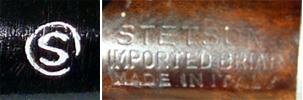
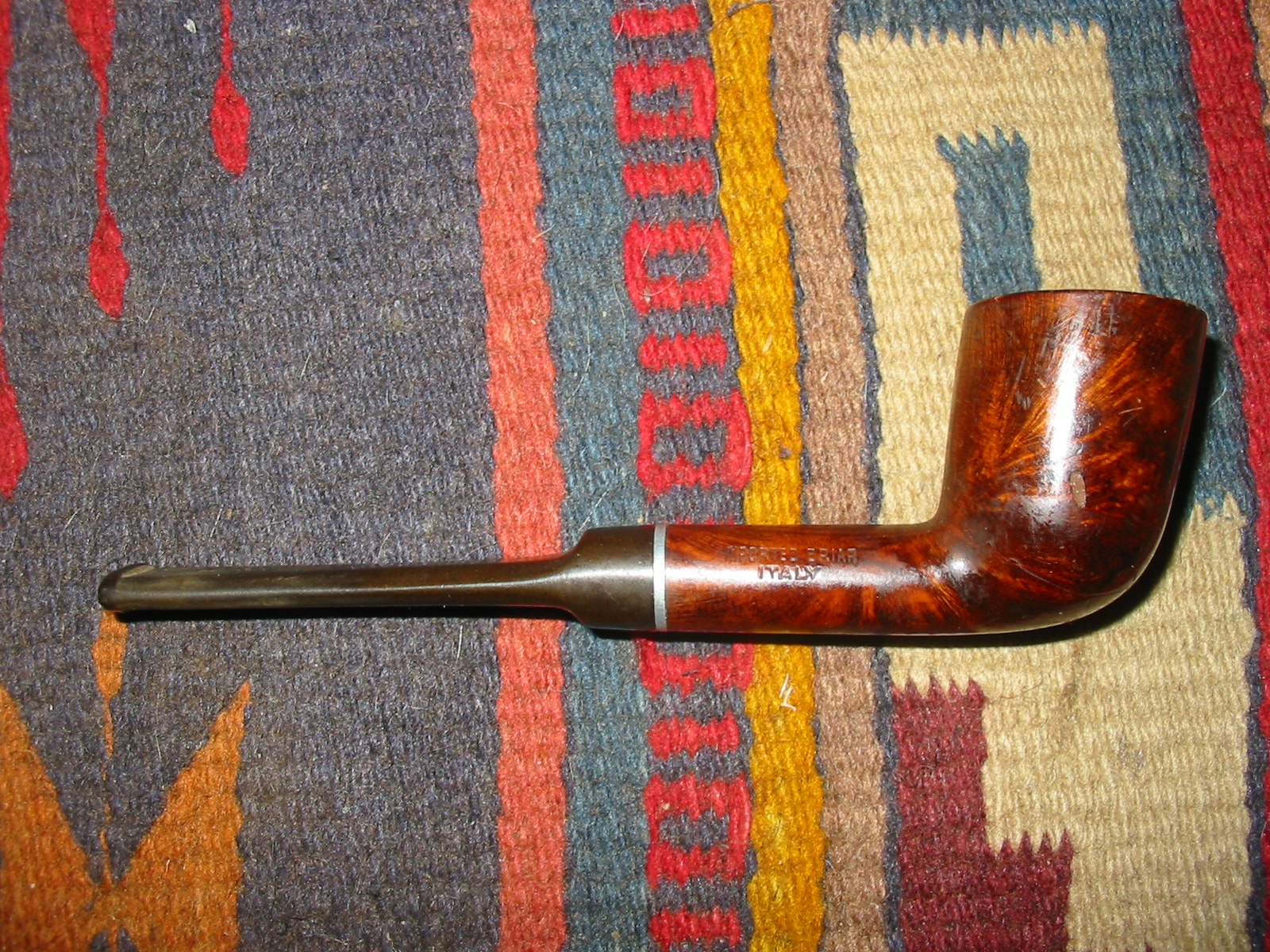
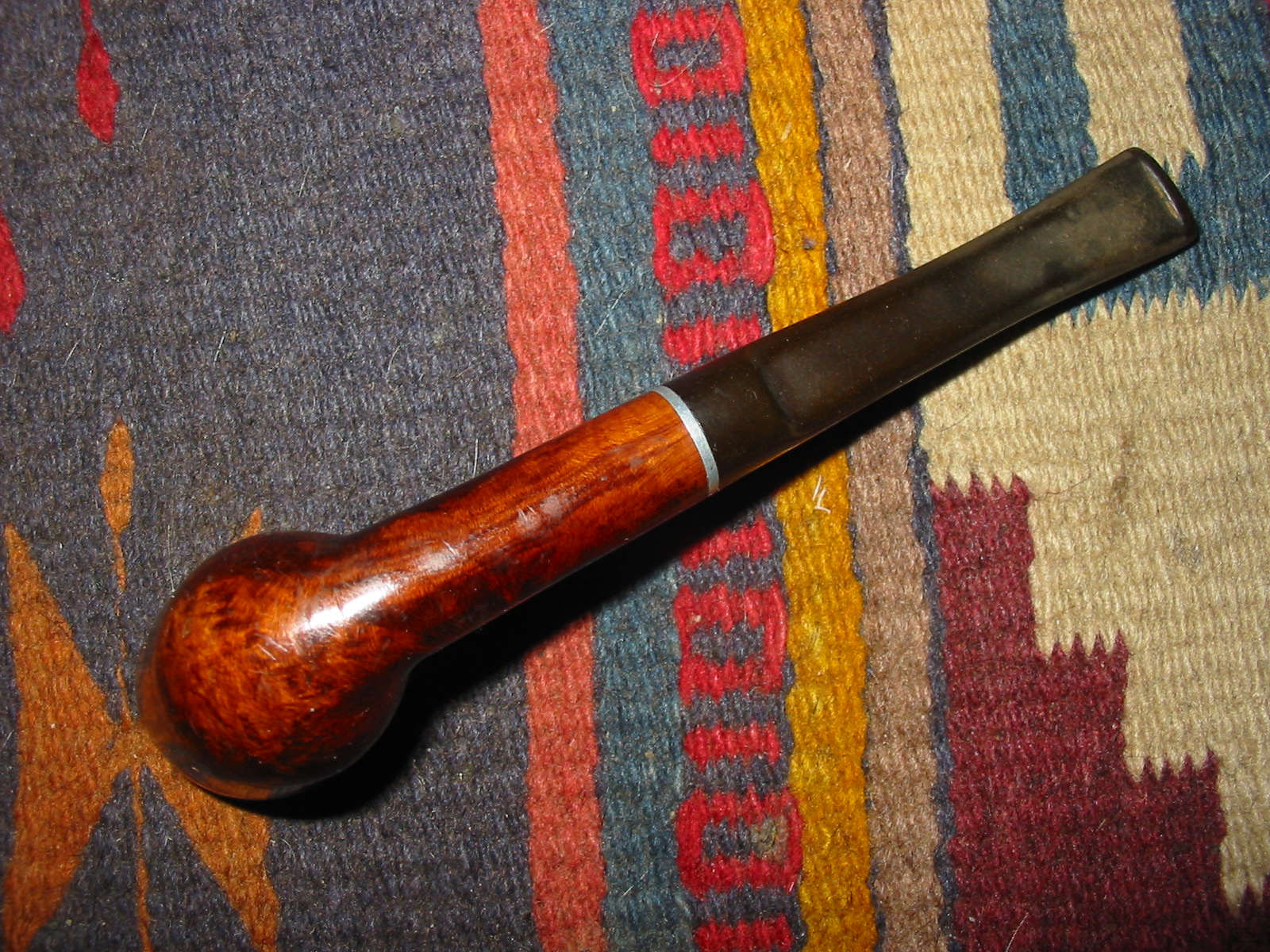
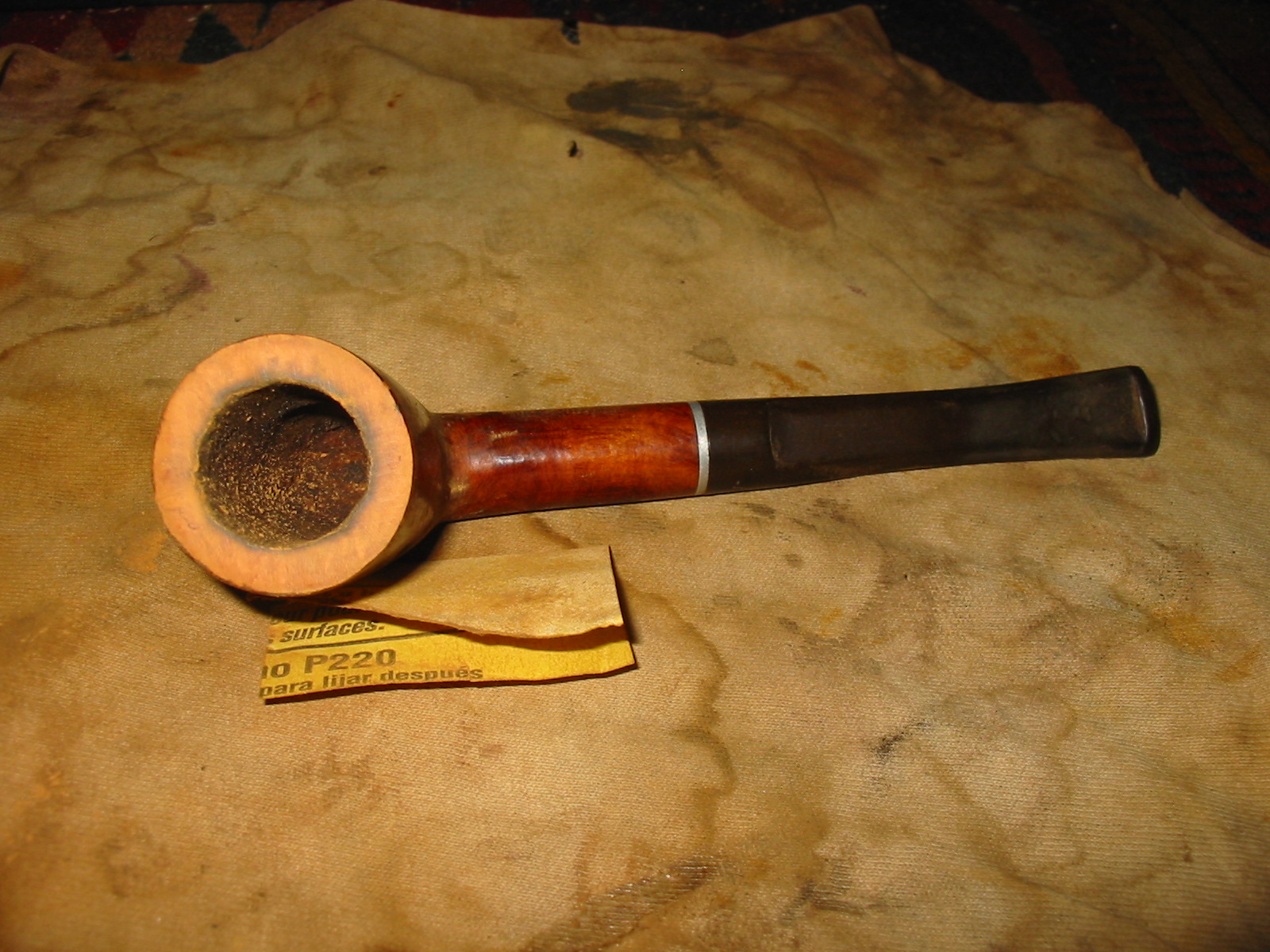
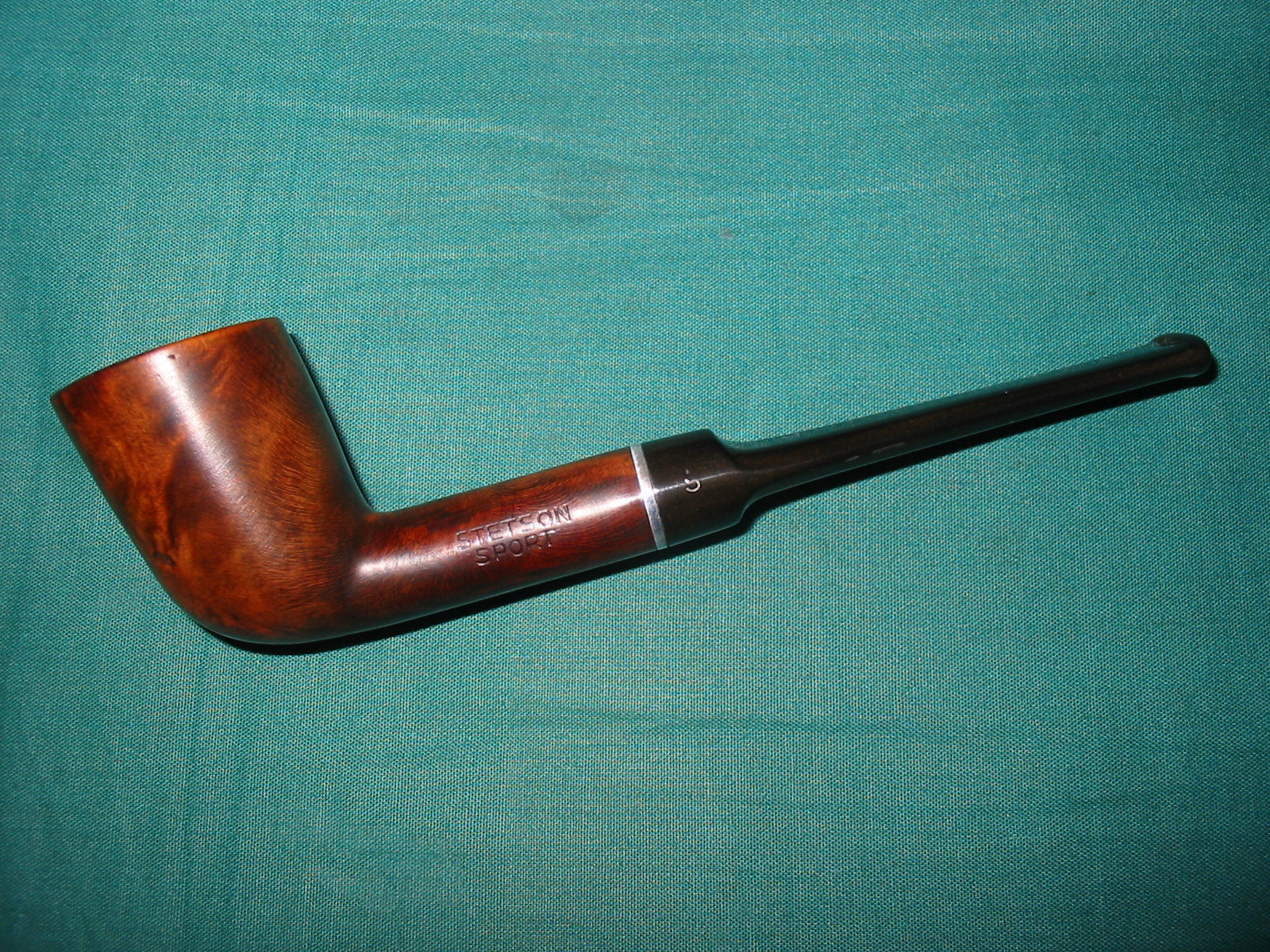
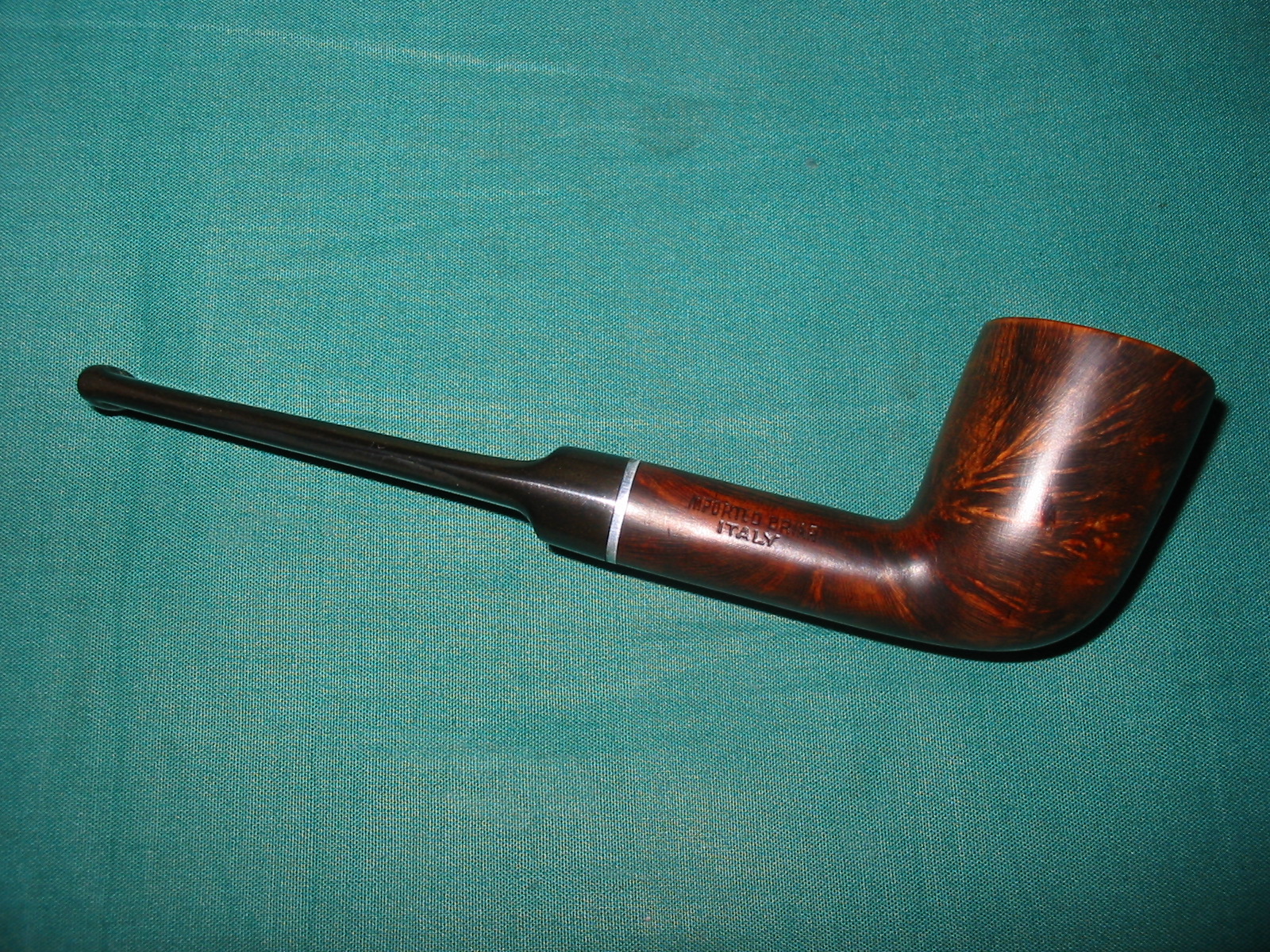
Armed with the information I found I tackled the cleanup and restoration of this American Pipe from John B. Stetson! The pipe is stamped Stetson over Sport on the left side of the shank and Imported Briar over Italy on the right side of the shank. The finish was very rough and peeling off the surface of the briar on the bowl where the hands held it. The rim had a thick cake of tars and oils. The inner edge of the rim was nicked and burned and was slightly out of round. The bowl was heavily caked with a soft carbon cake that was crumbling in places. The stem had screw on tenon and was over turned to the right. It had tooth marks on the top and the bottom side of the stem and oxidation on the entirety. There was an S logo stamped in the left side of the saddle. The stinger apparatus in the stem was tarred and dirty and the inside of the stem was slightly clogged with tars.
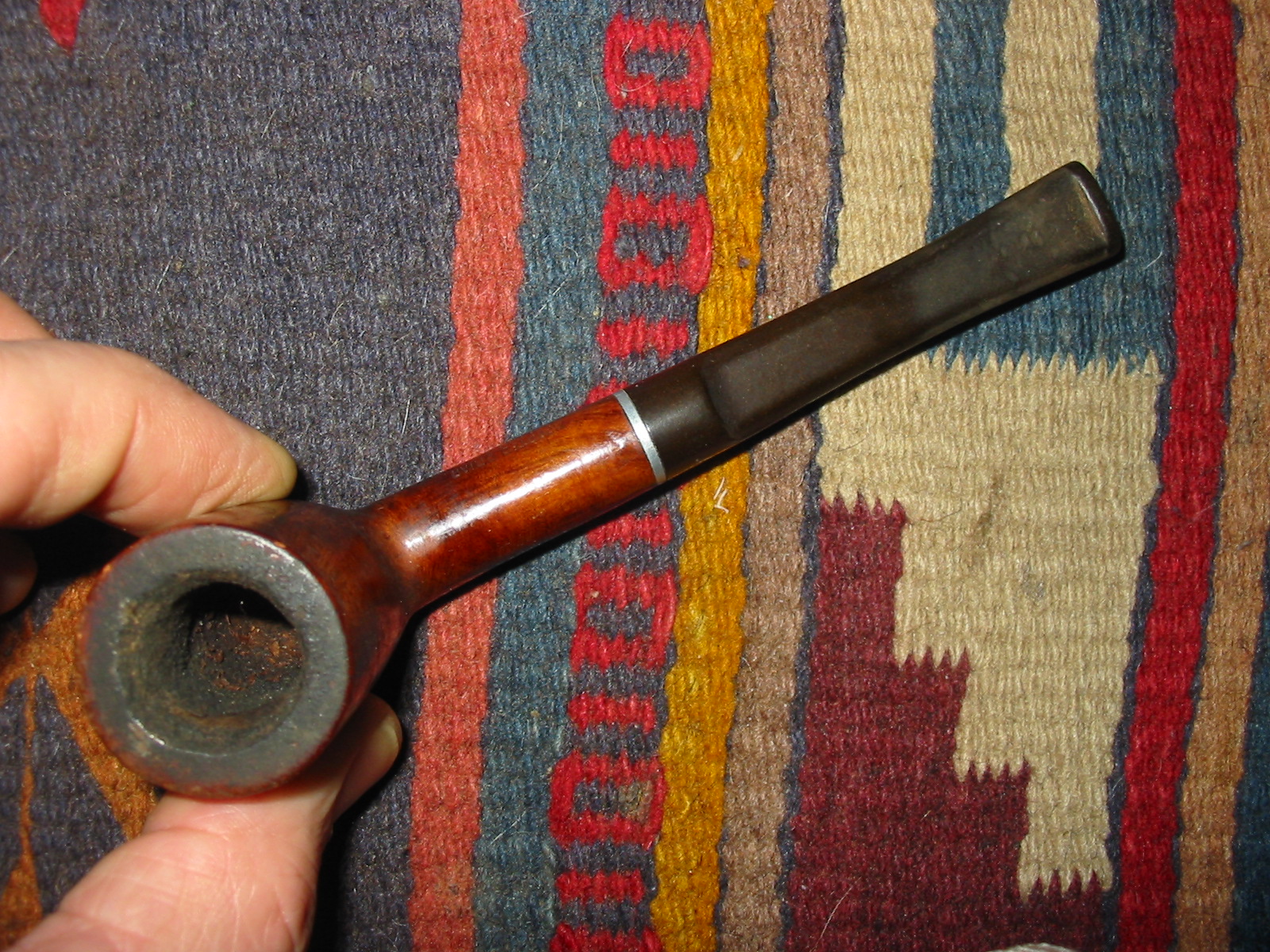
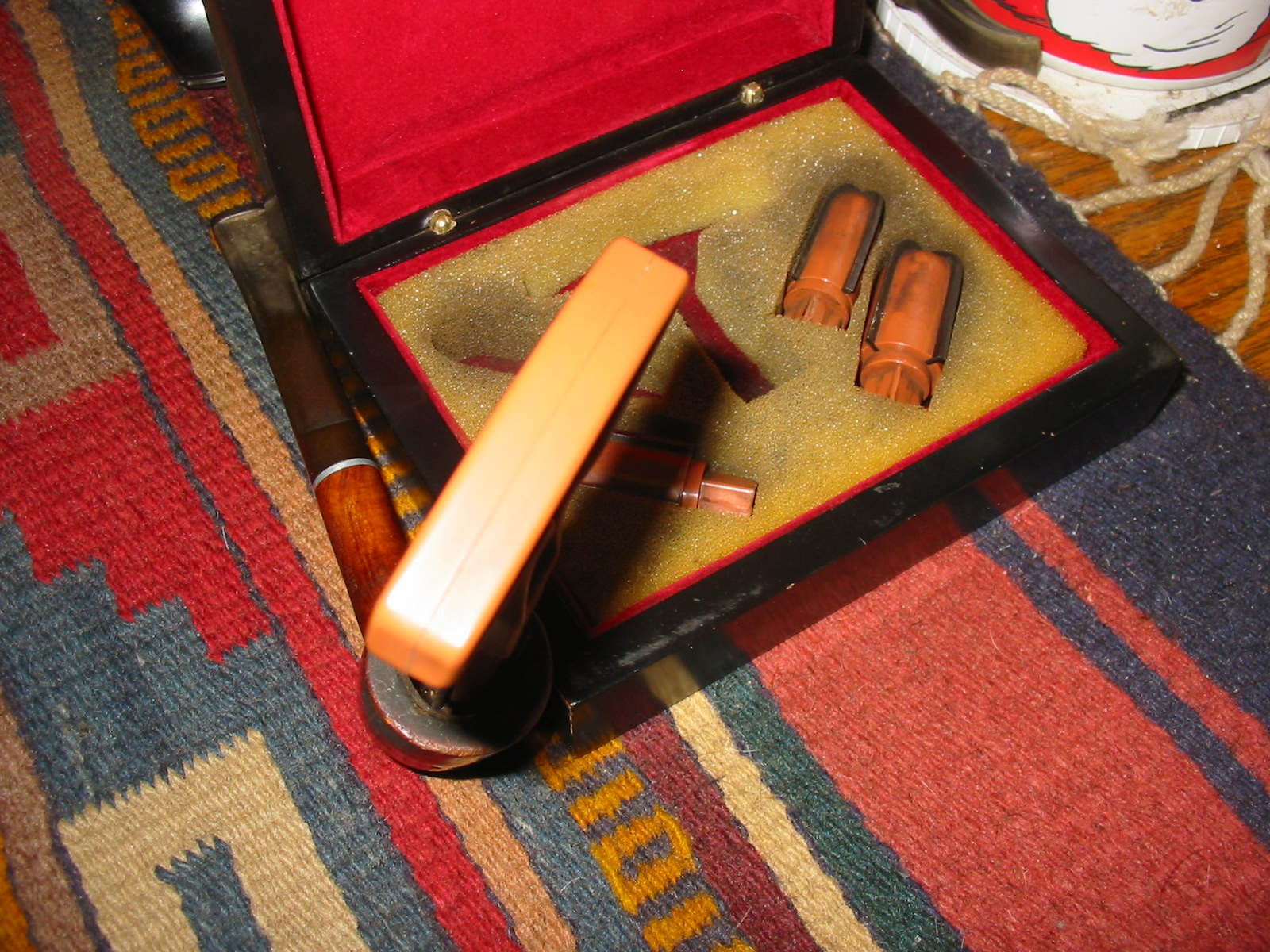
I reamed the bowl with a PipNet reamer to take the cake back to bare wood. The crumbling cake toward the bottom of the bowl made this necessary so that the next owner can build up their own hard cake.
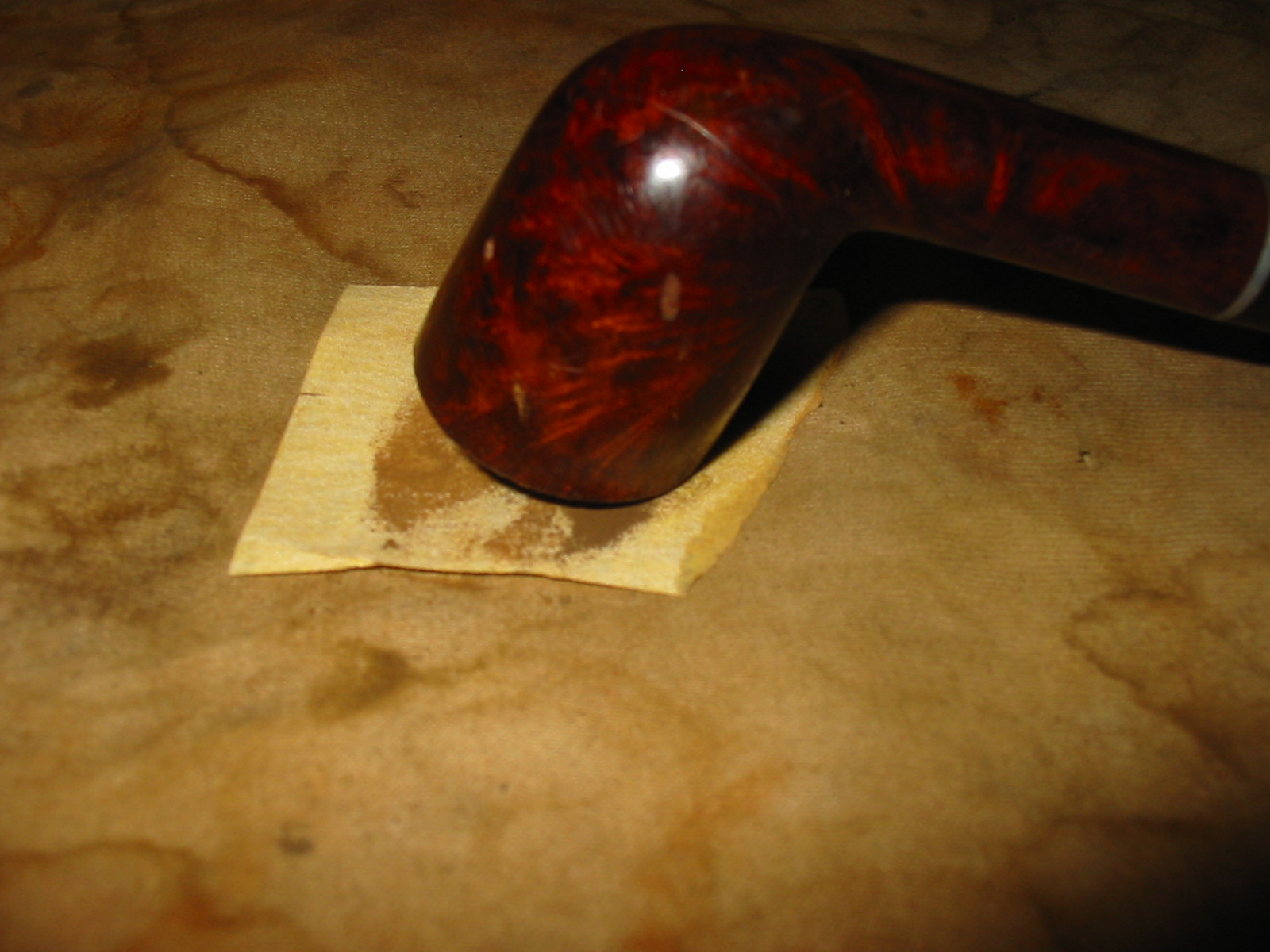
I topped the bowl with 220 grit sandpaper on a board and took off the damaged surface of the rim. I also cleaned up the inner edge of the rim with a folded piece of sandpaper. I wanted to smooth out the damage to the inner edge and repair the out of round shape of the bowl.
I wiped the bowl down with acetone on a cotton pad. The thick coat of varnish was hard to break down with the acetone. I wiped it until I had softened the varnish and then sanded the bowl and shank with the 220 grit sandpaper and then a sanding sponge. The putty fills were shrunken and formed small divots in the bowl. I filled these with superglue and briar dust and then sanded them down when I sanded the bowl. After sanding the bowl down I wiped it again with acetone to remove the sanding dust.
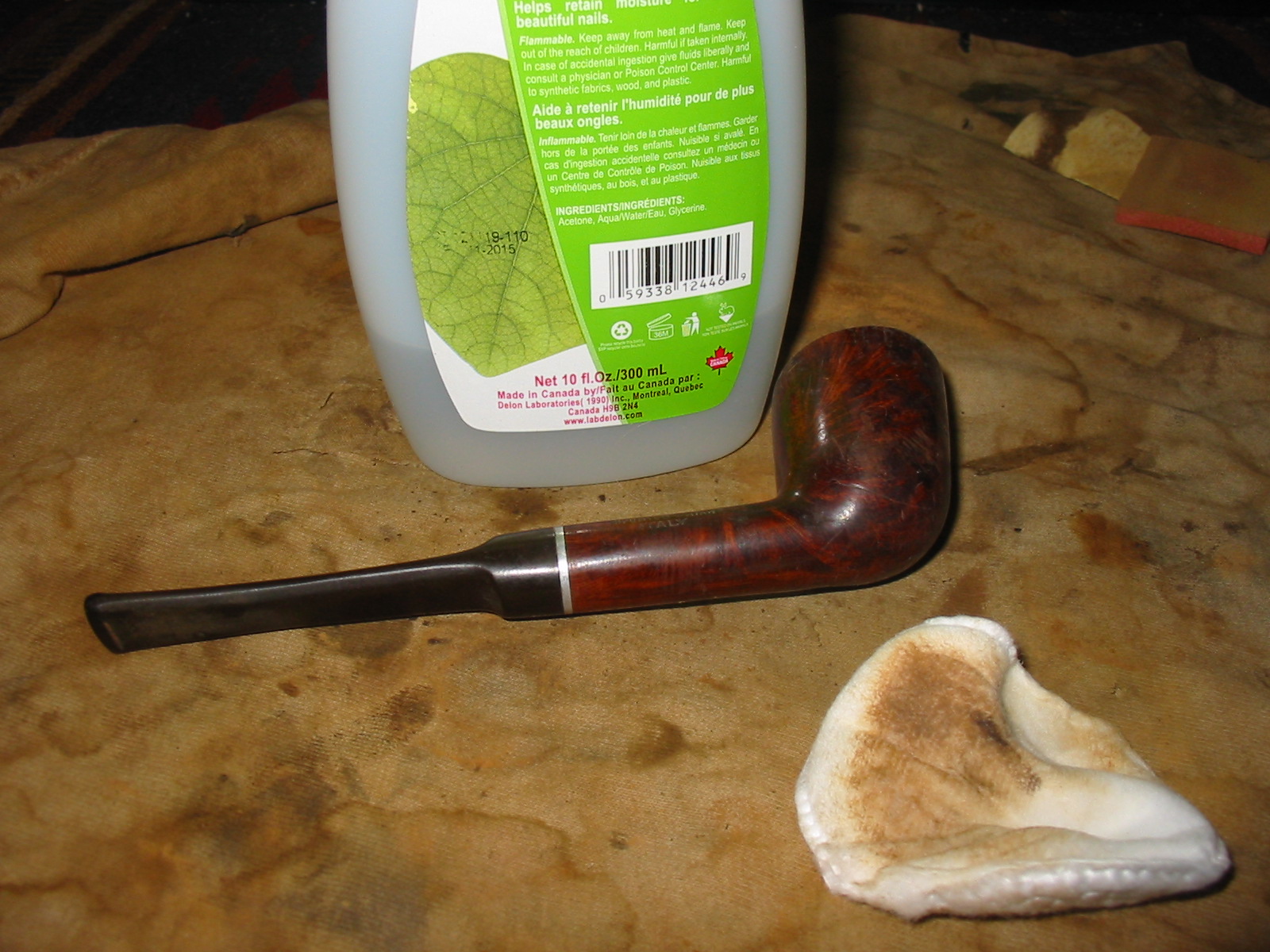
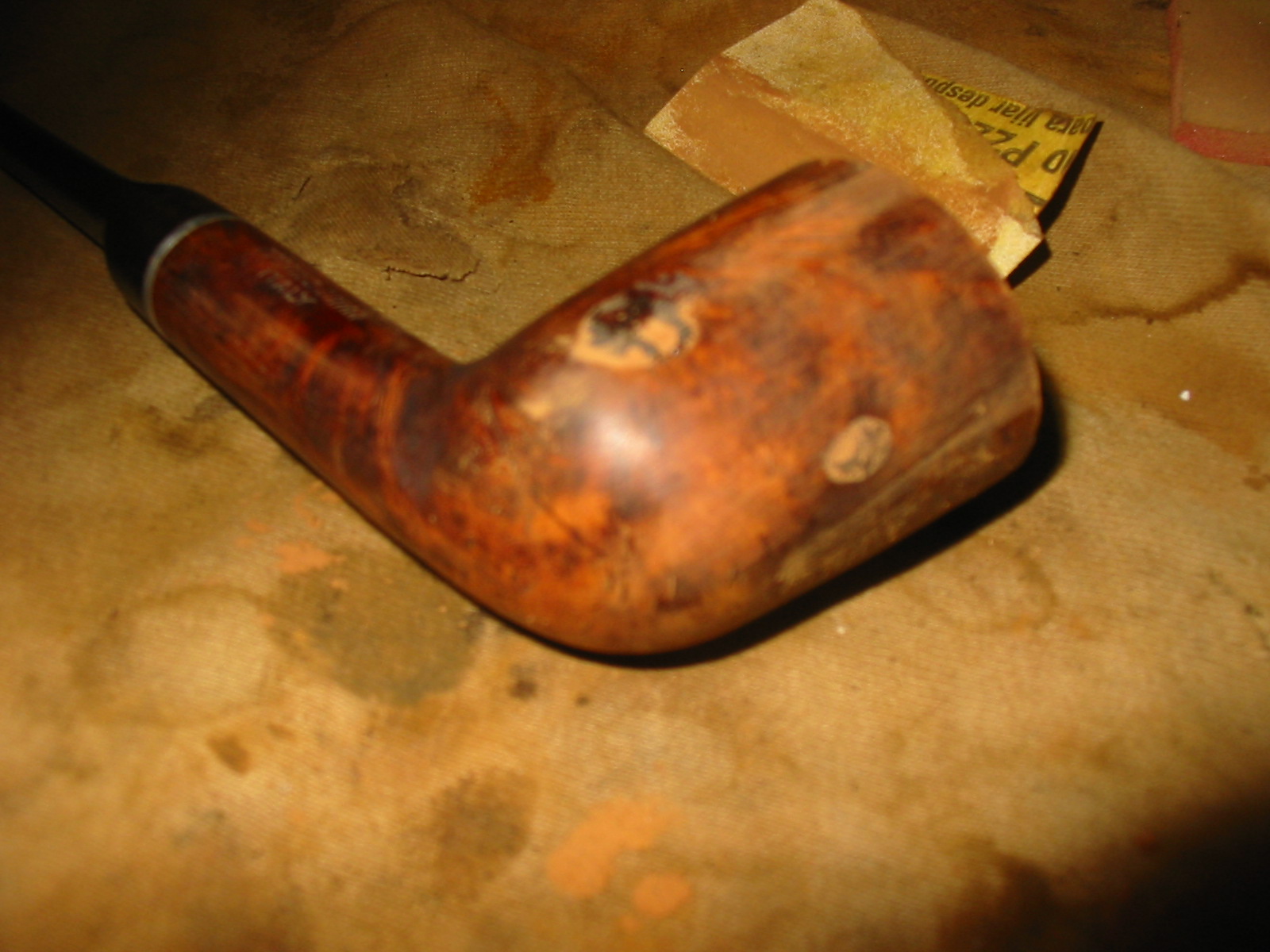
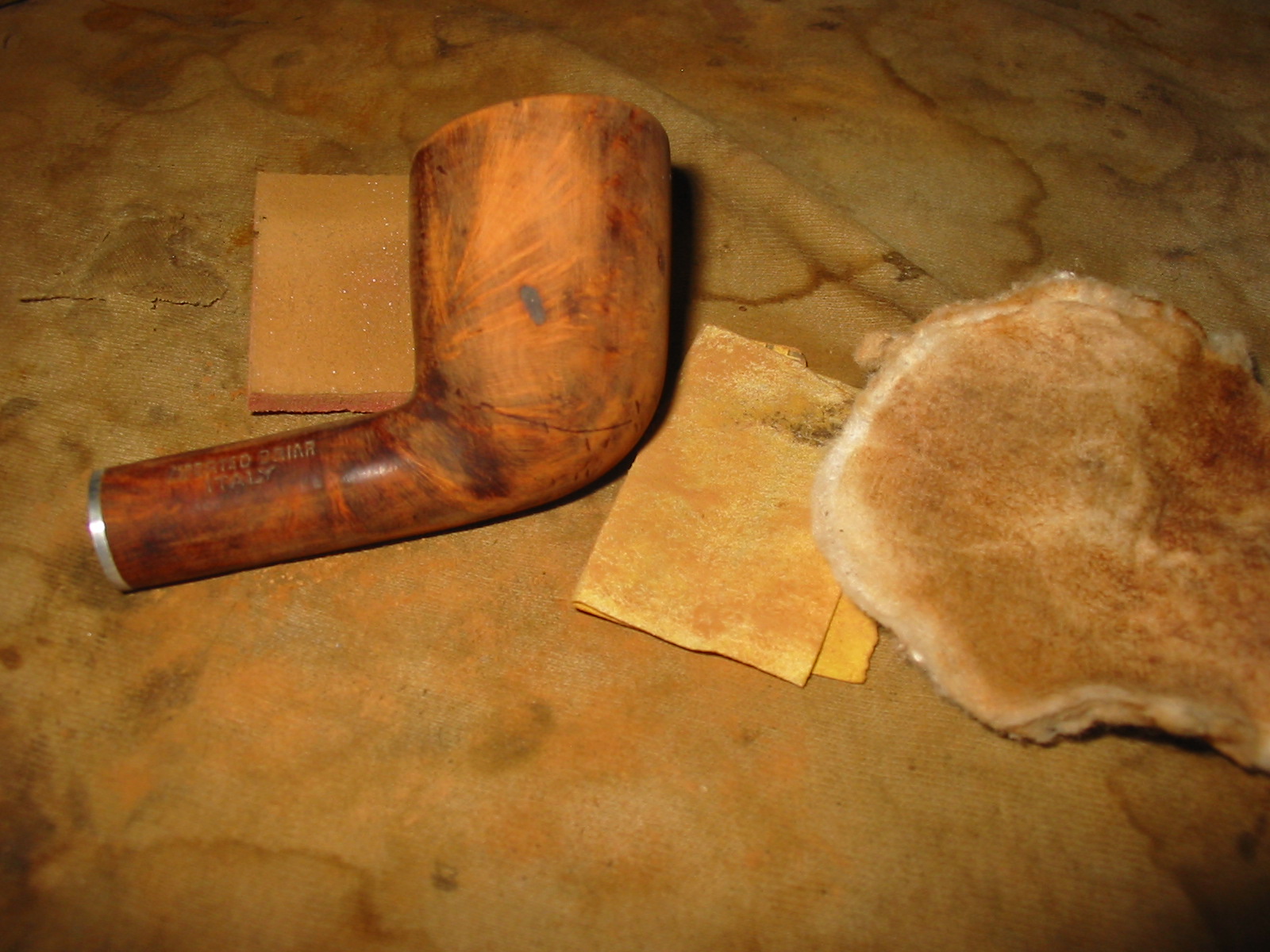
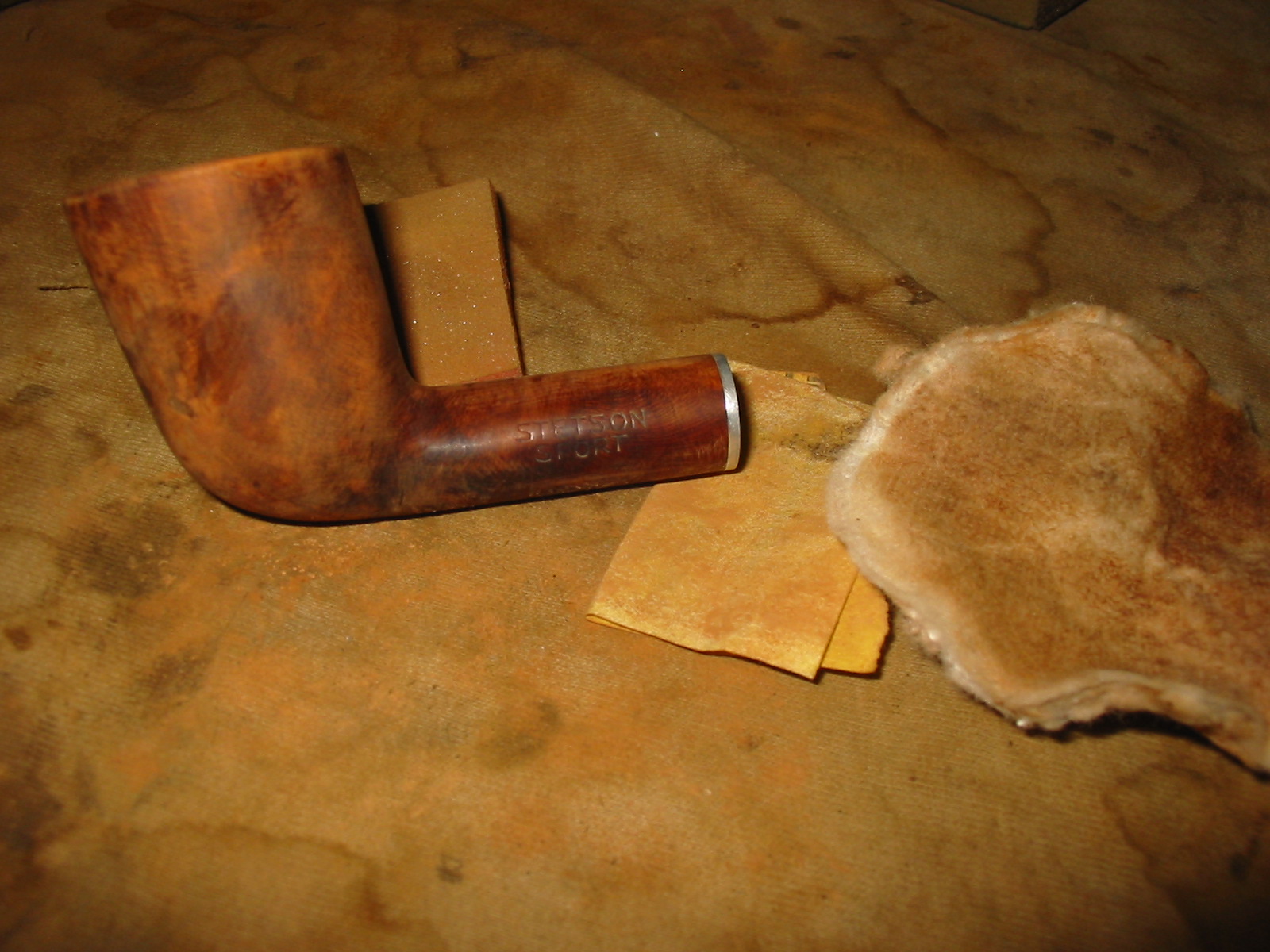
I sanded the bowl with a fine grit sanding sponge and then wet sanded it with 1500 and 1800 grit micromesh sanding pads. Once I had a smooth surface to work with I stained the bowl with a black aniline stain and then flamed it with a lighter. I wanted to set the stain deep in the grain.
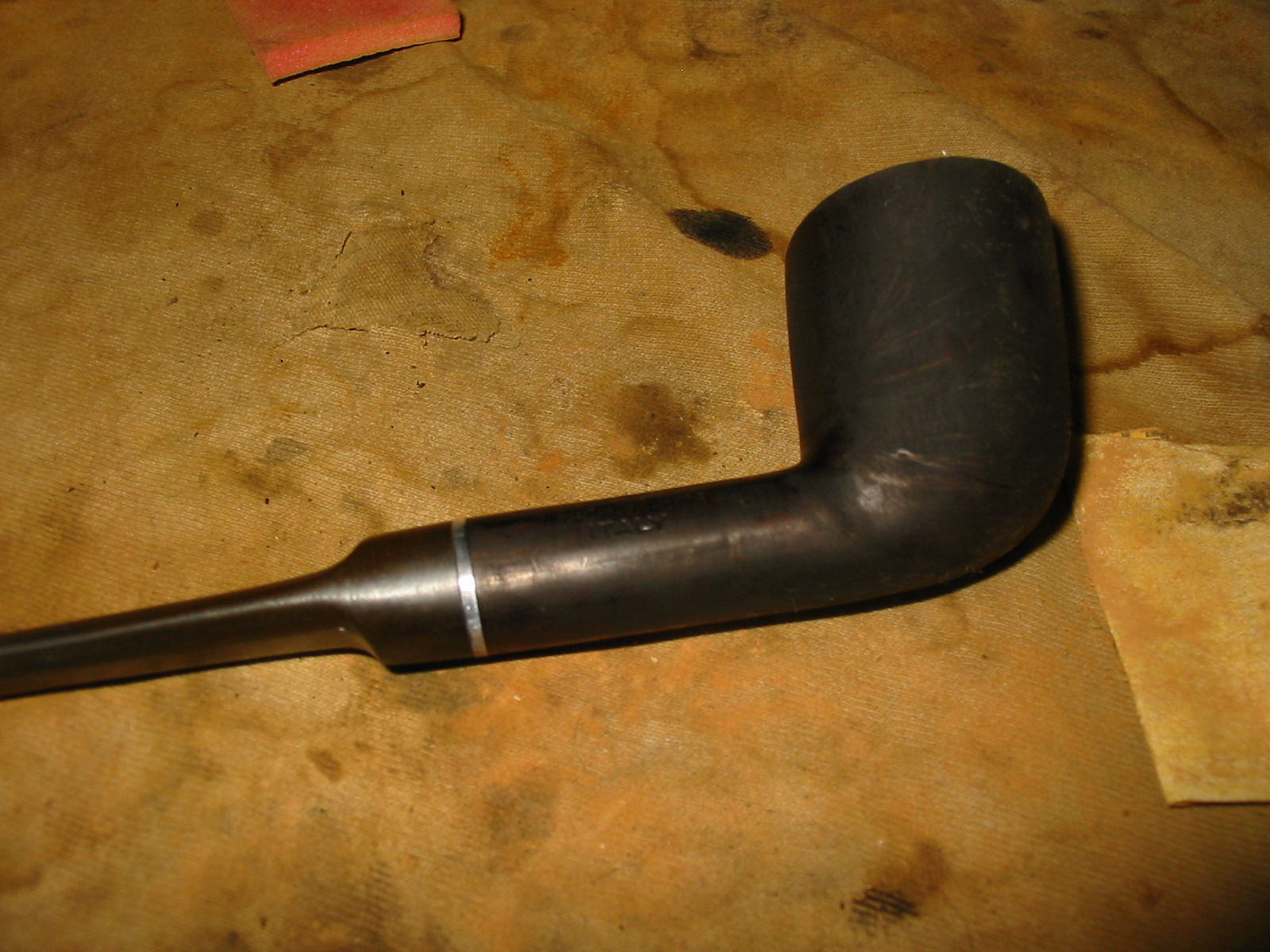
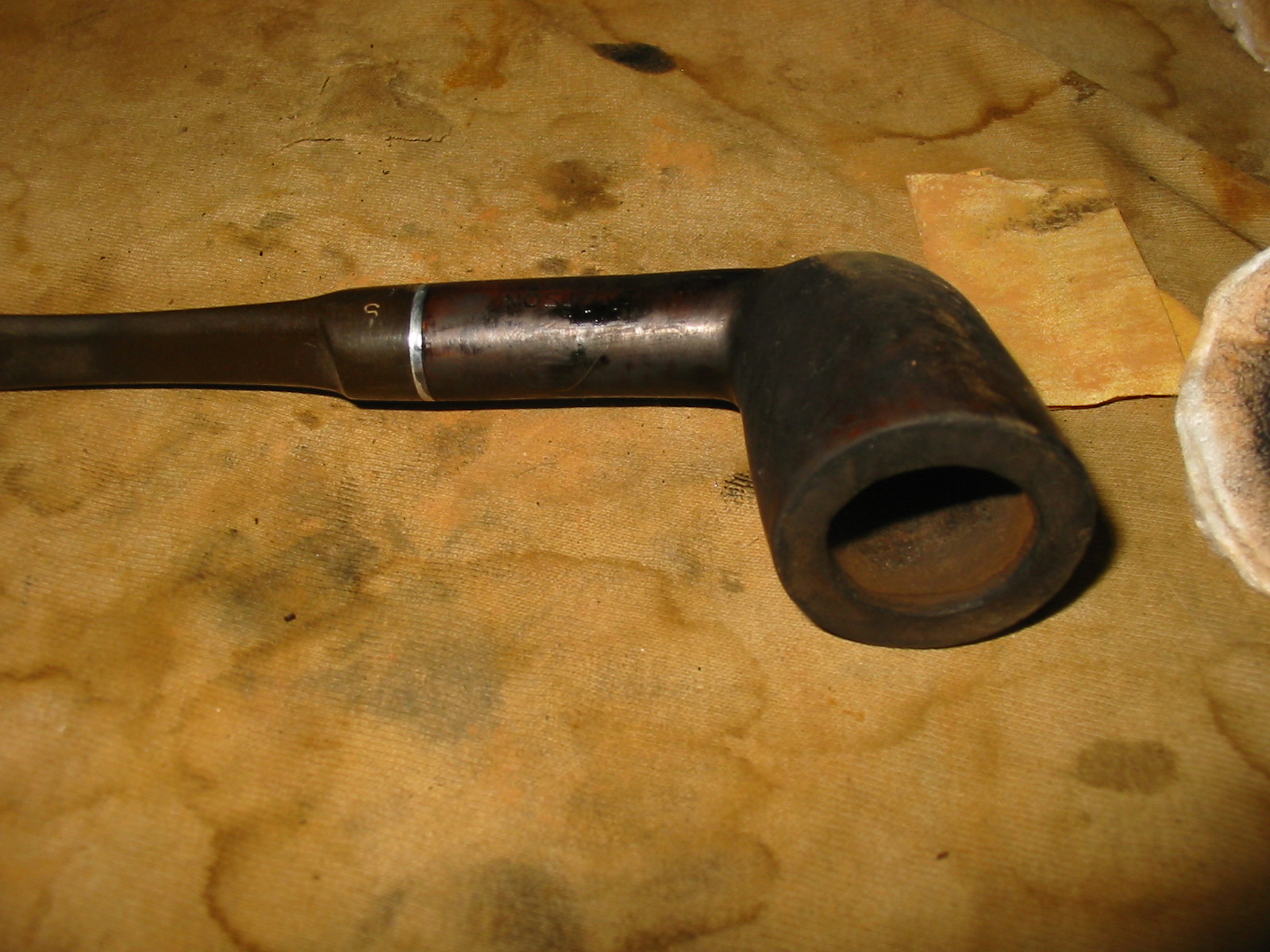
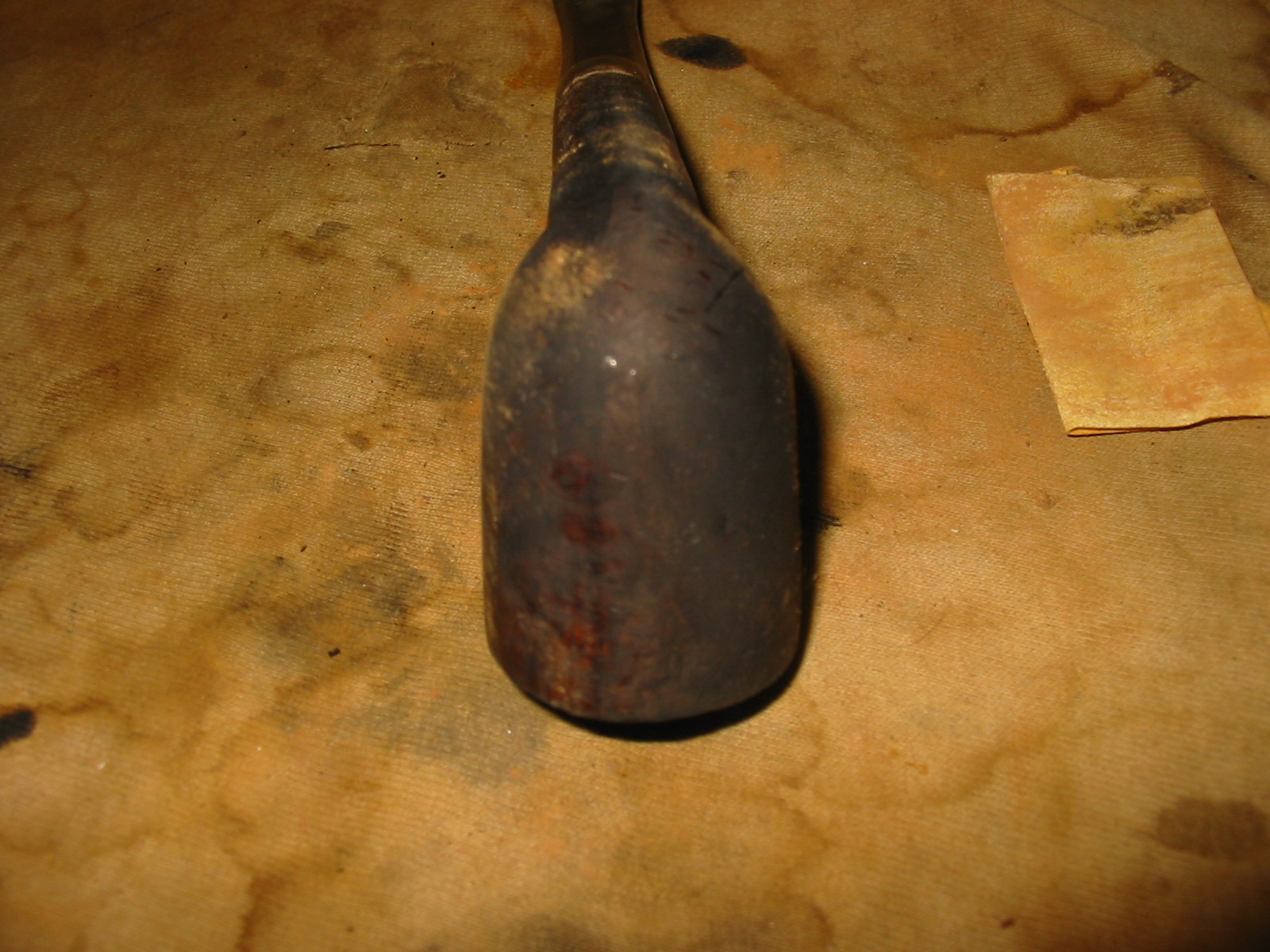
When the stain was dry I wiped the bowl down with acetone on a cotton pad to remove the excess stain. I wanted the black to remain in the grain and highlight that while masking the fills.
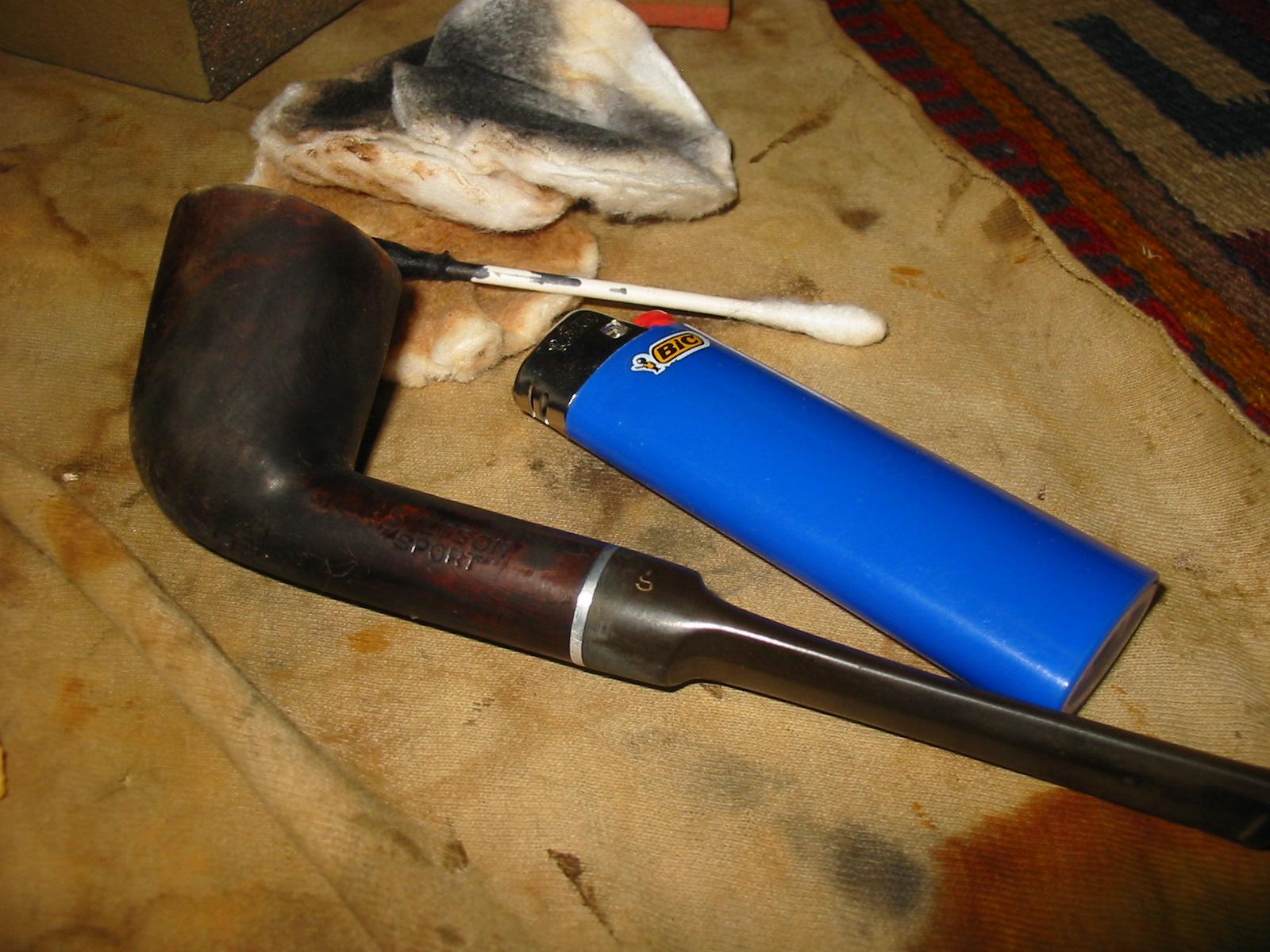
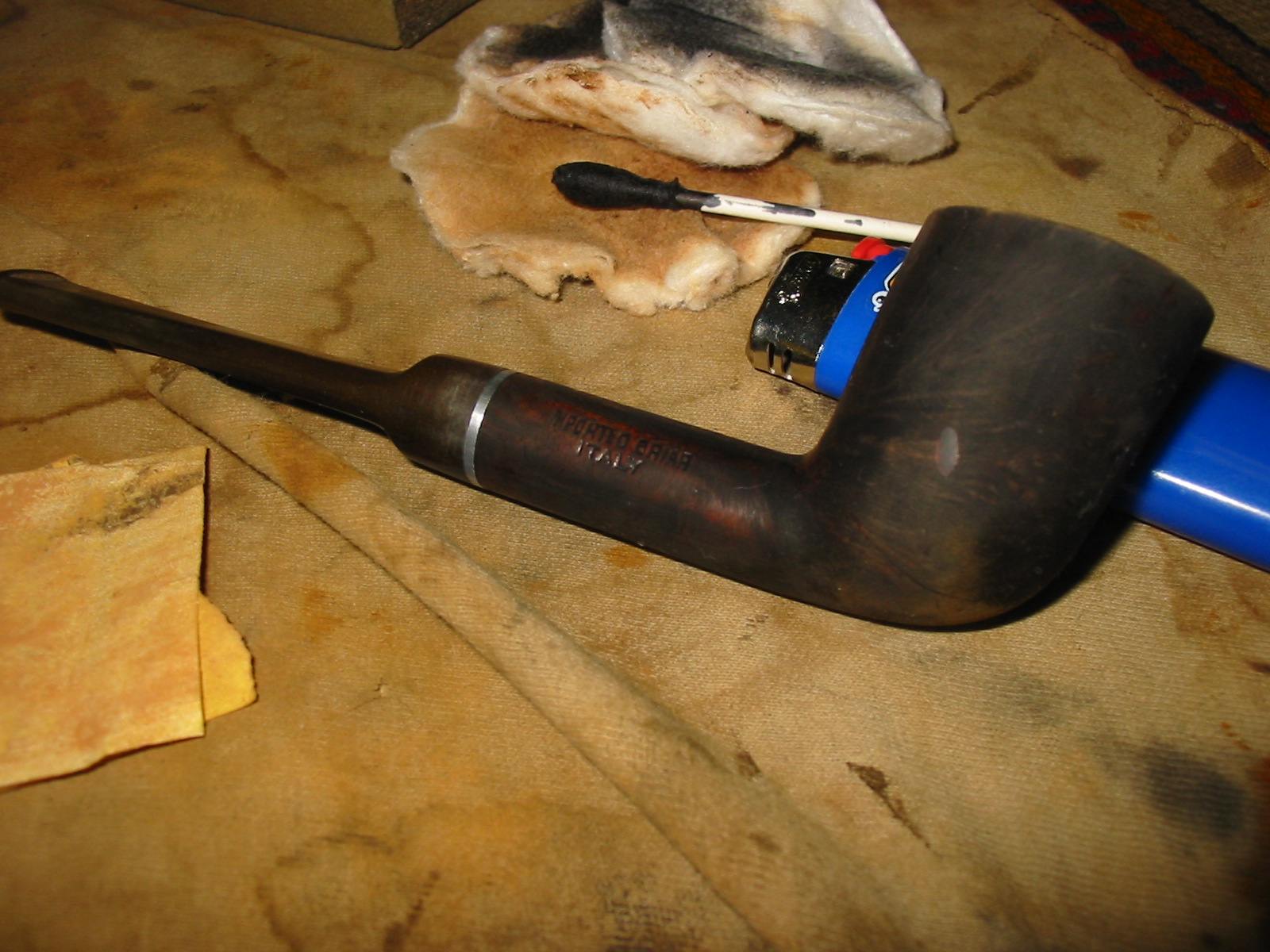
I sanded the stained bowl with a medium grit sanding sponge to remove the excess. The next two photos show the bowl after sanding and then buffing with red Tripoli and White Diamond. The grain is standing out nicely from the black stain.

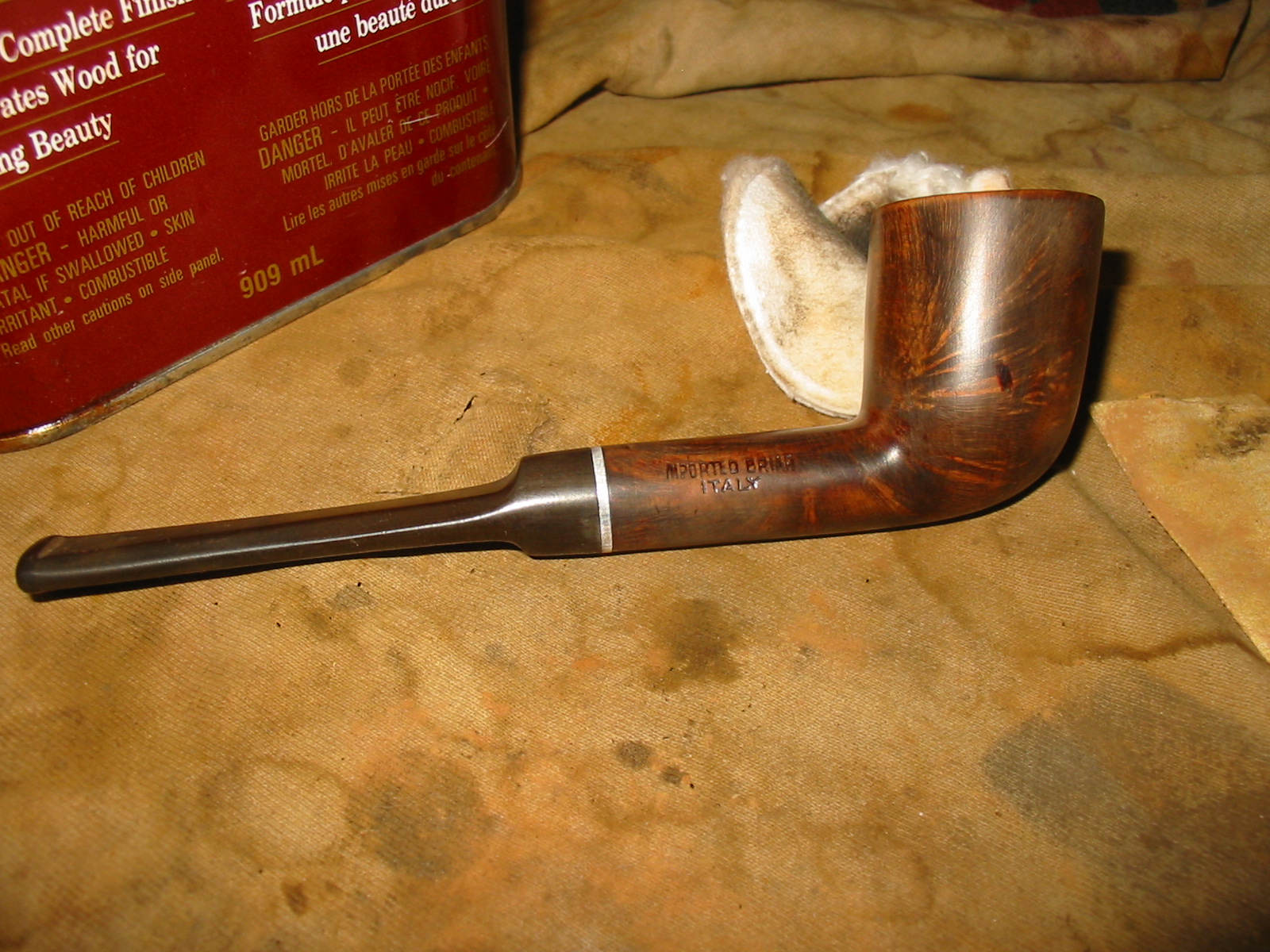
I restained the bowl with an oxblood coloured aniline stain and flamed it. I repeated the process until I had an even coverage on the bowl and shank. The next three photos show the bowl after staining with the oxblood.

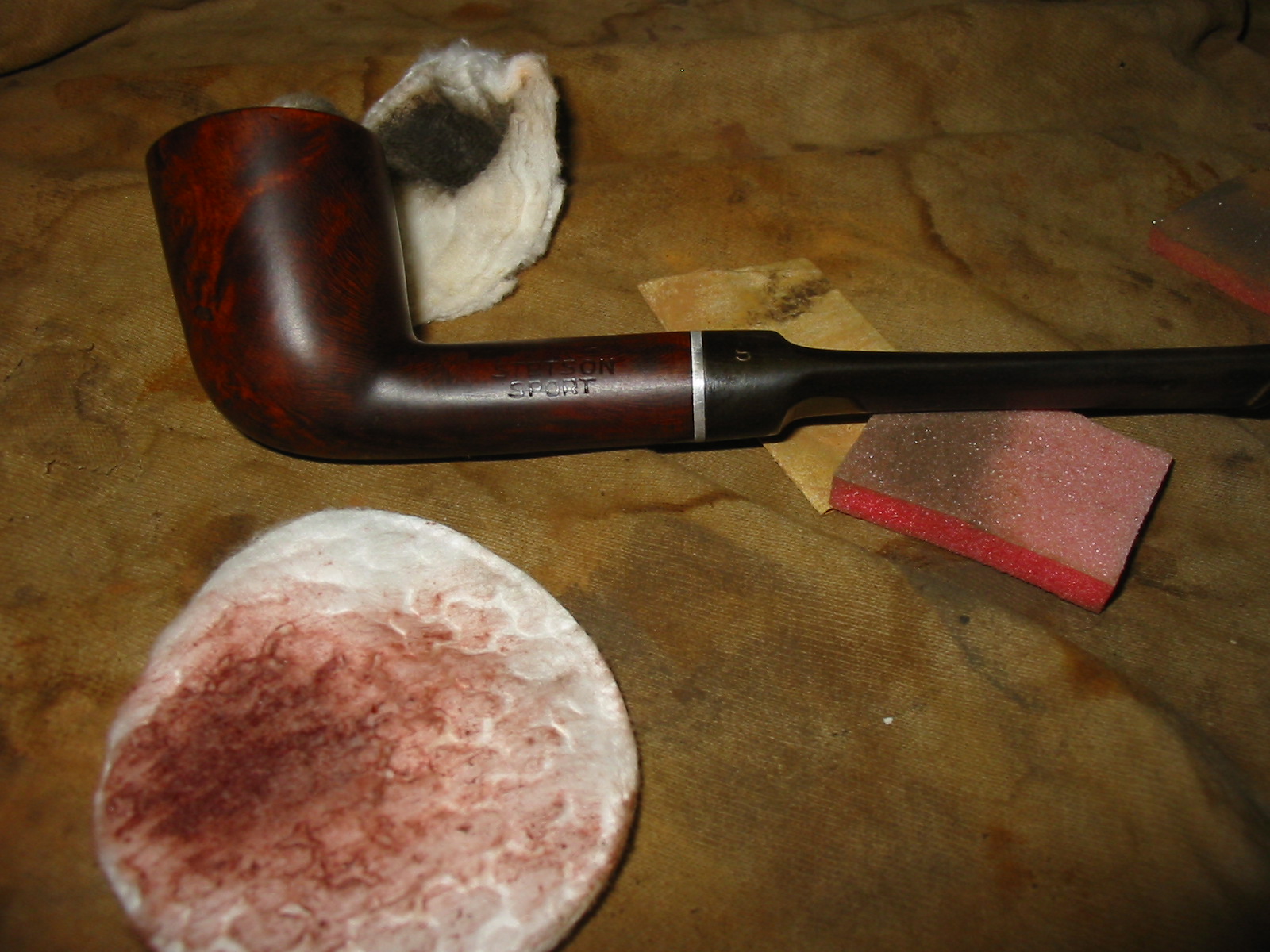
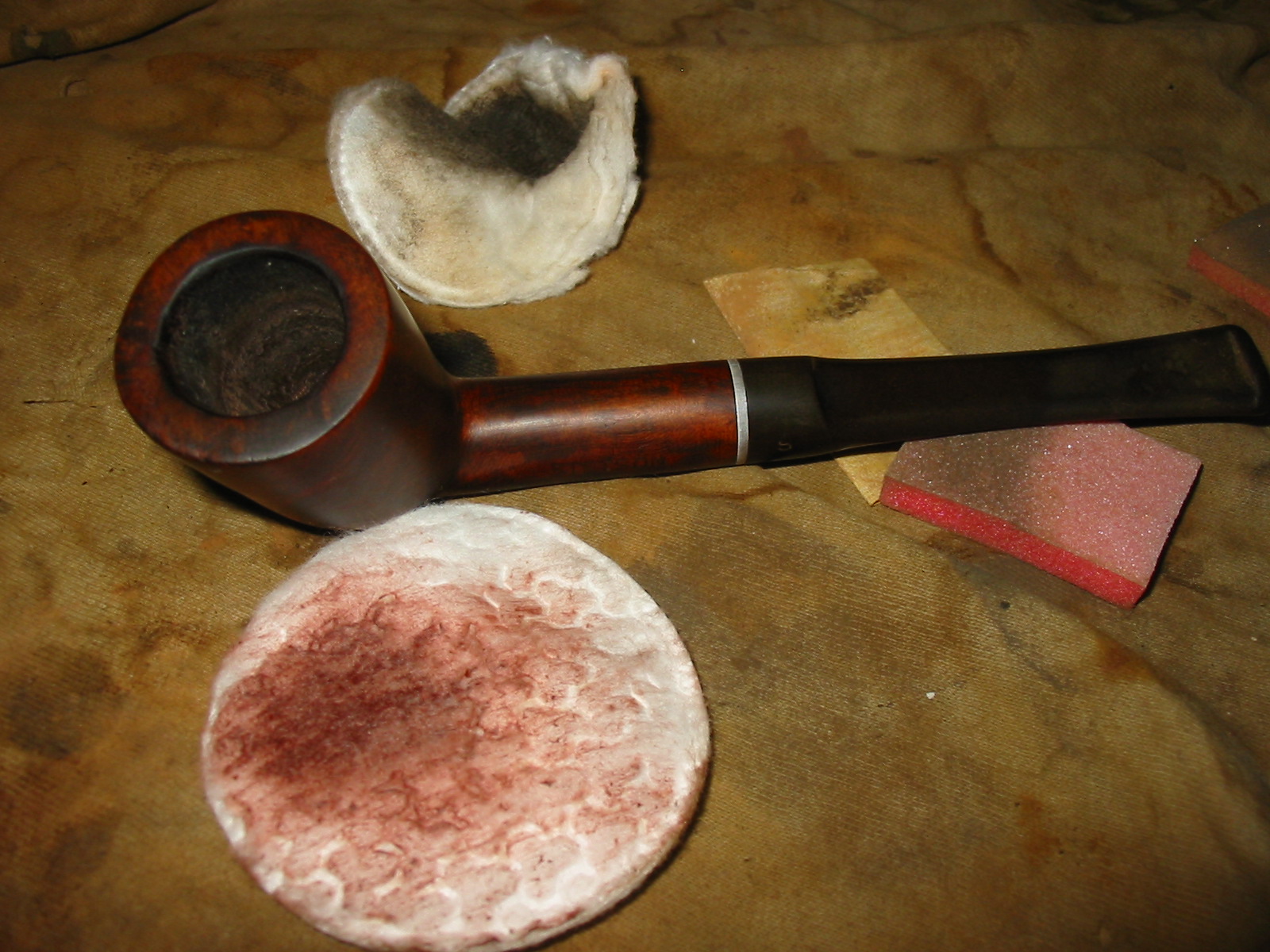
I sanded the stem with 220 grit sandpaper to remove the tooth marks on the top and bottom side of the stem. I followed that by sanding with a medium grit sanding sponge to remove the scratches left behind by the sandpaper.

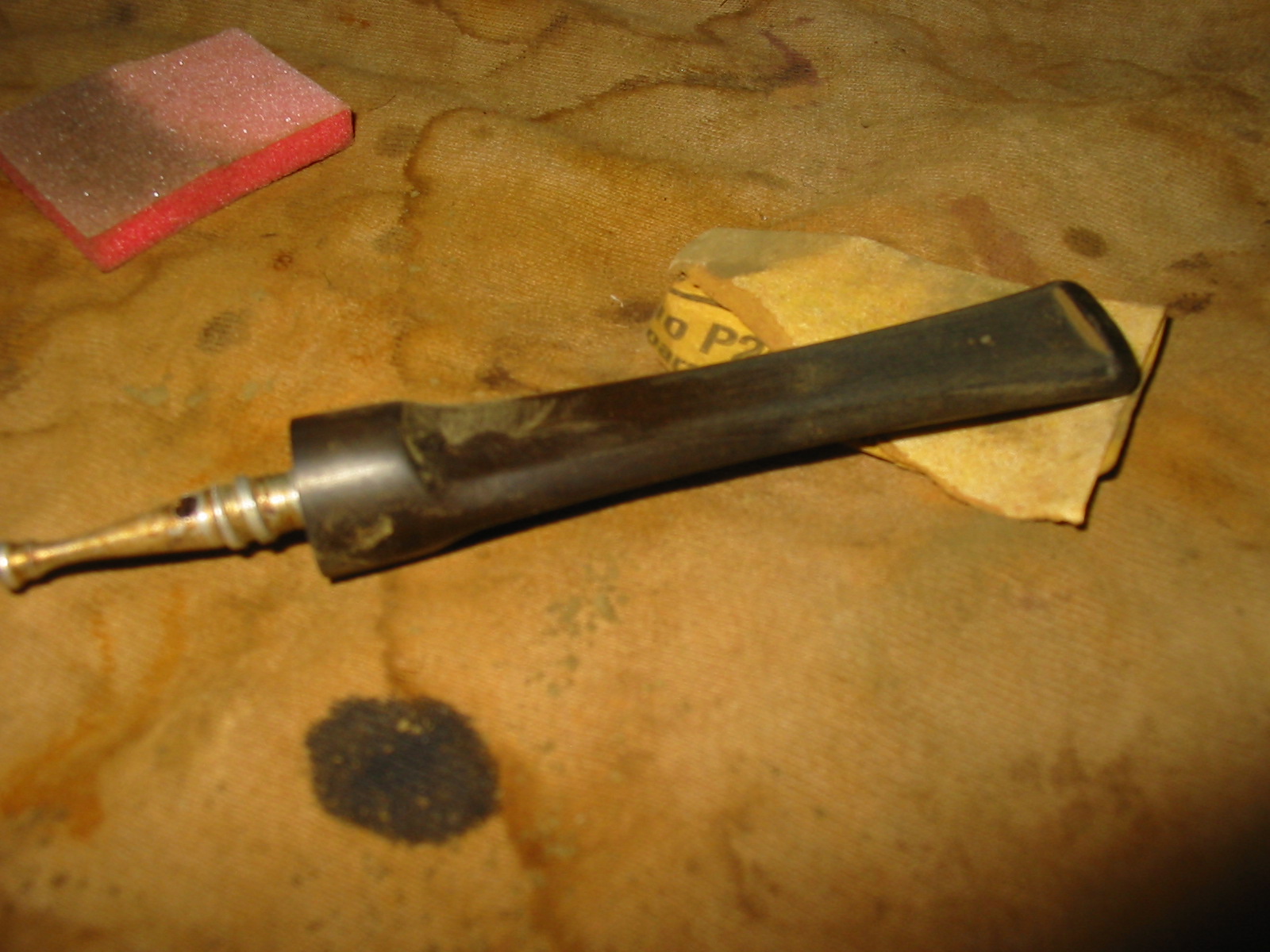
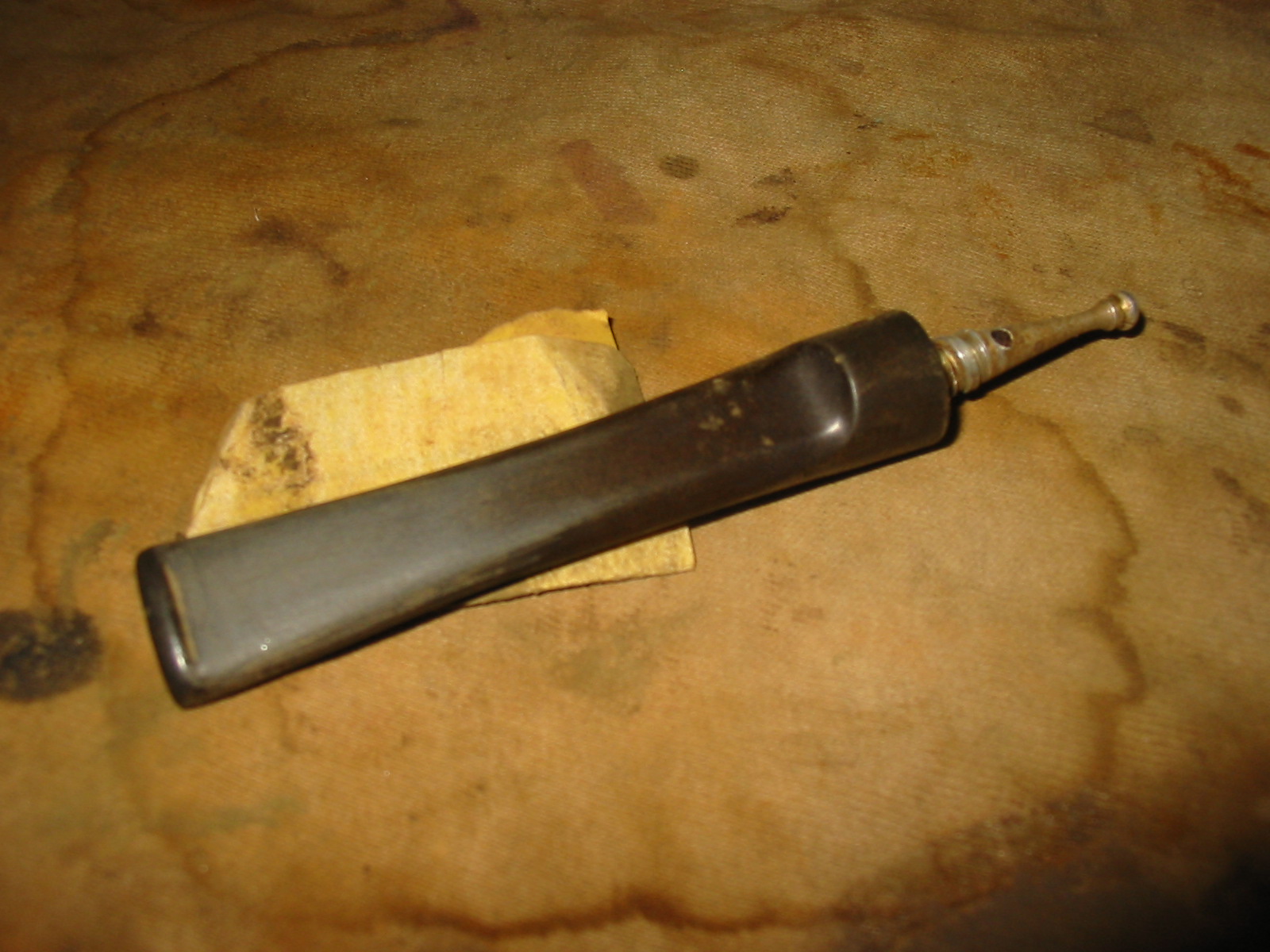
I put the stem back on the pipe and took it to the buffer and buffed it with Tripoli. I buffed the bowl and stem with White Diamond. The next photos show the pipe after the initial buffing.
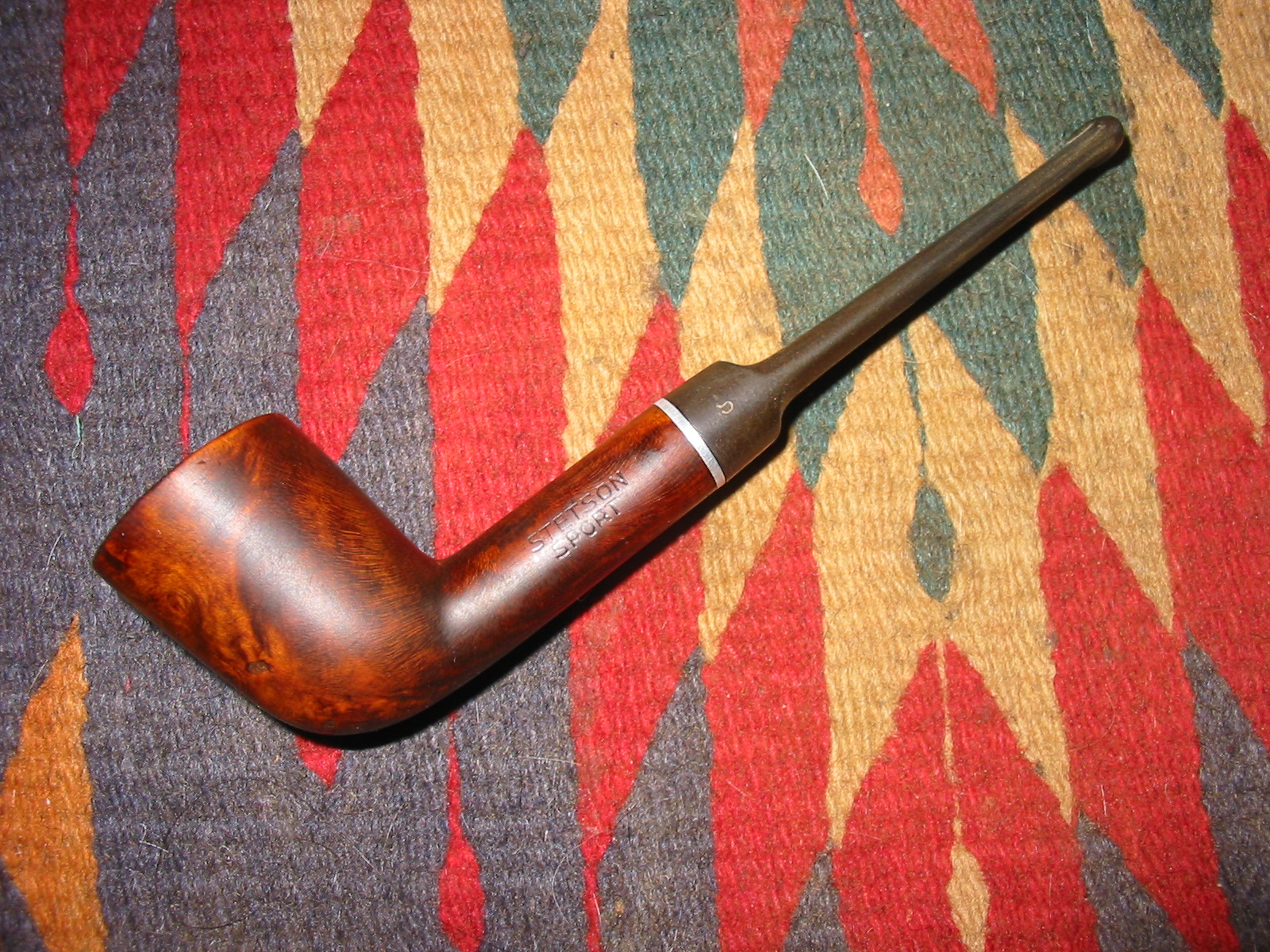
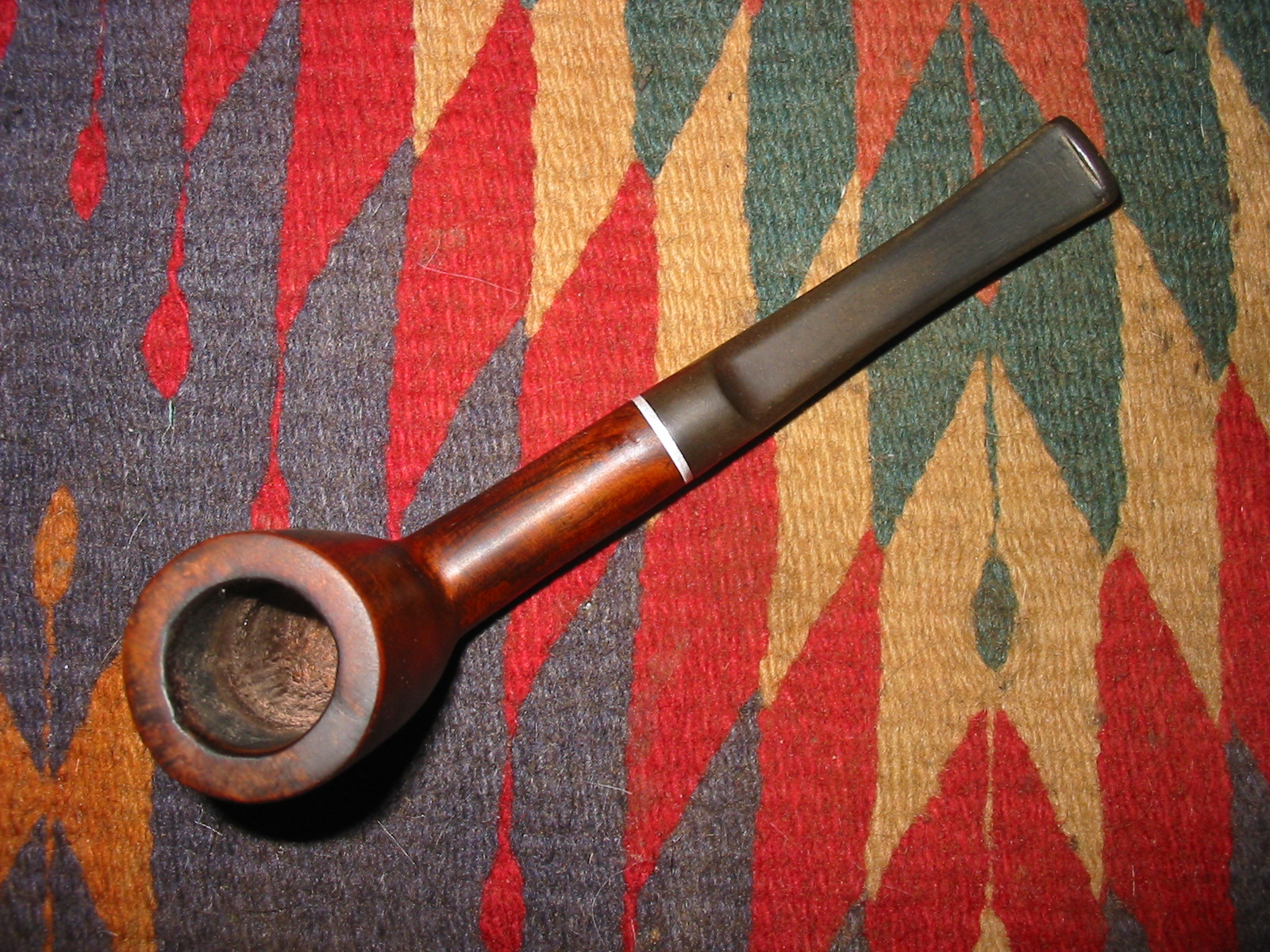
I wet sanded the stem with 1500, 1800 and 2400 grit micromesh sanding pads and then dry sanded with the remaining grits from 3200-12,000. I rubbed the stem down with Obsidian Oil and the waited for it to soak in. Afterwards I hand buffed with carnauba wax.
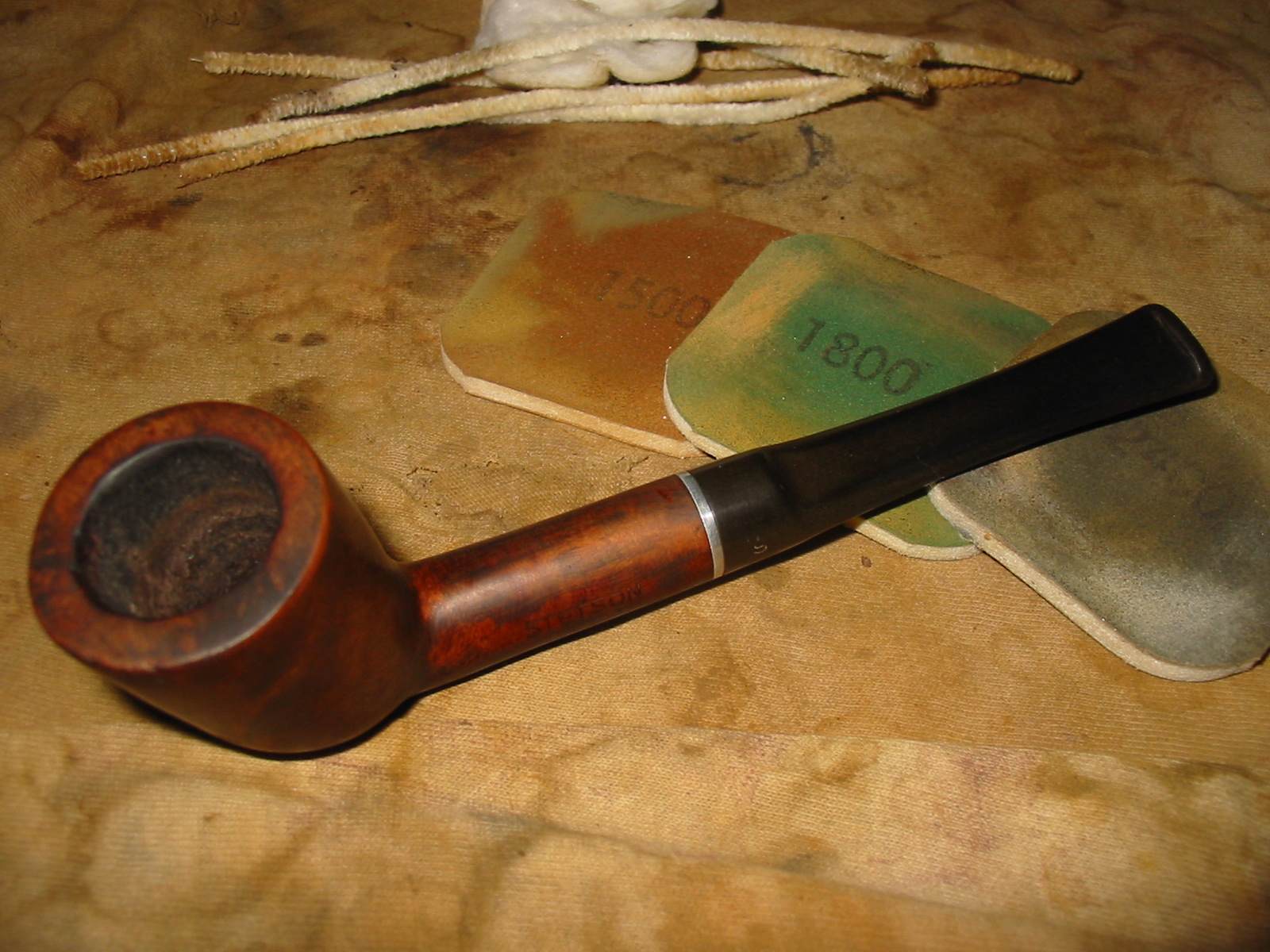
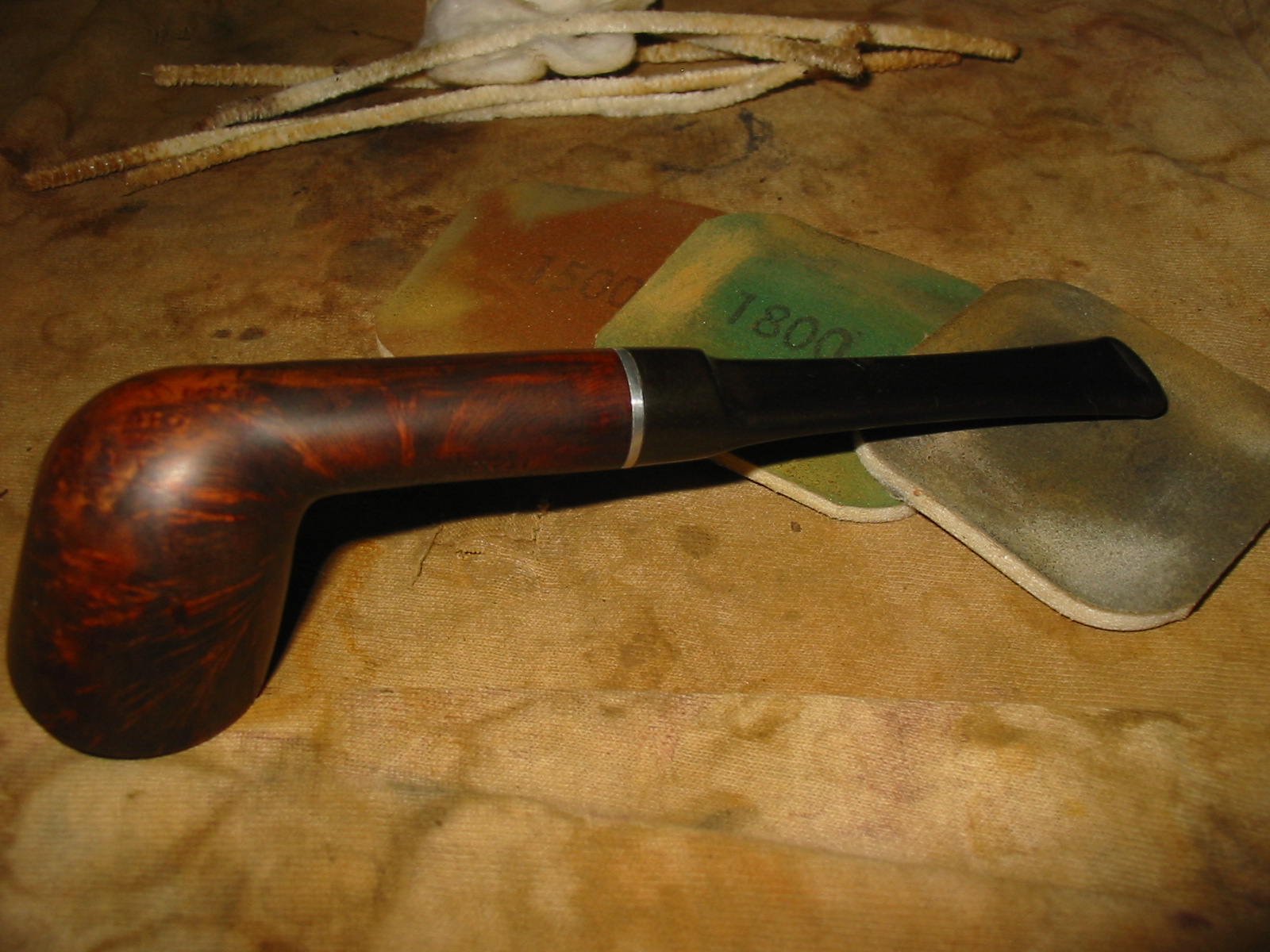
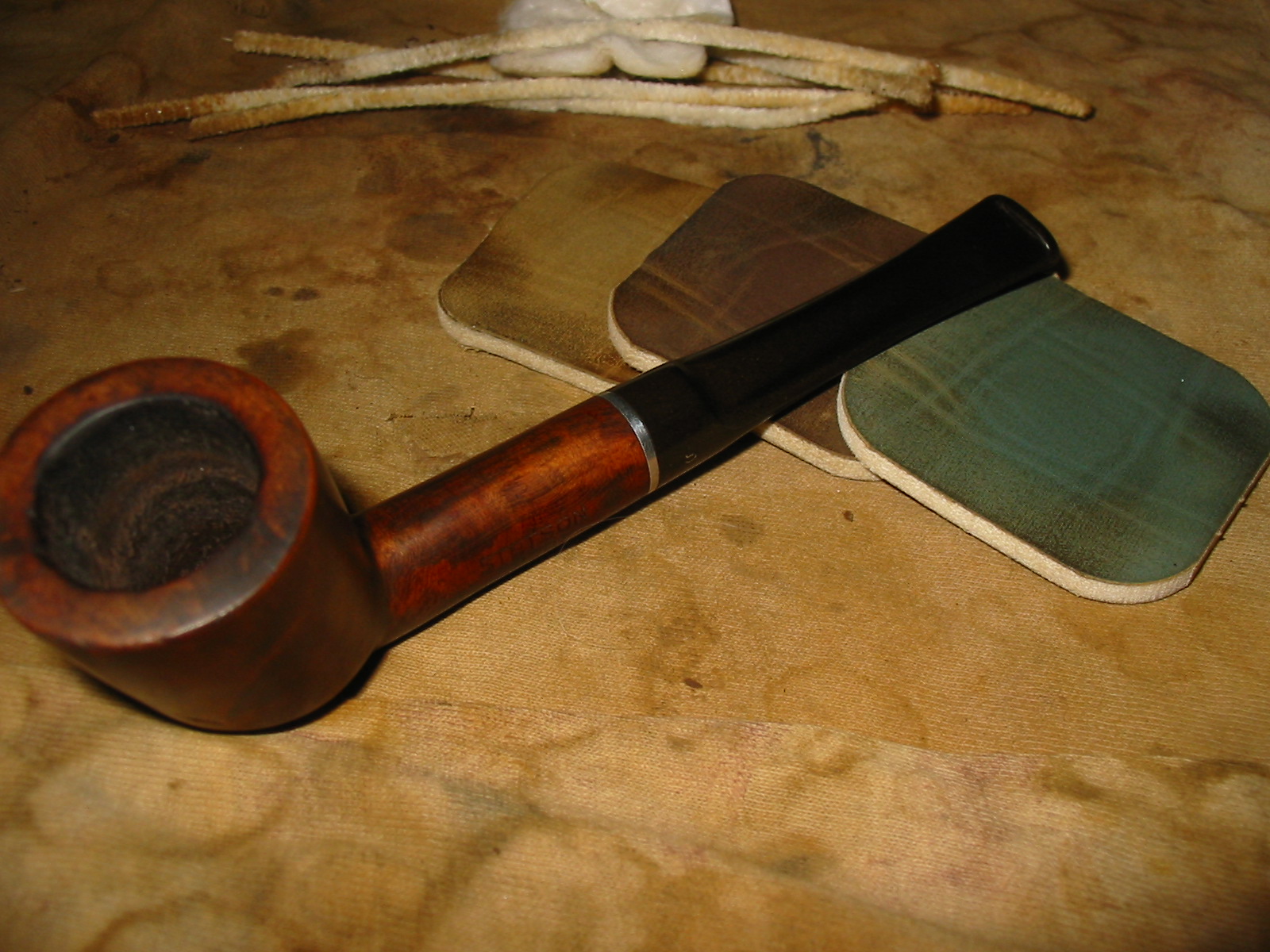
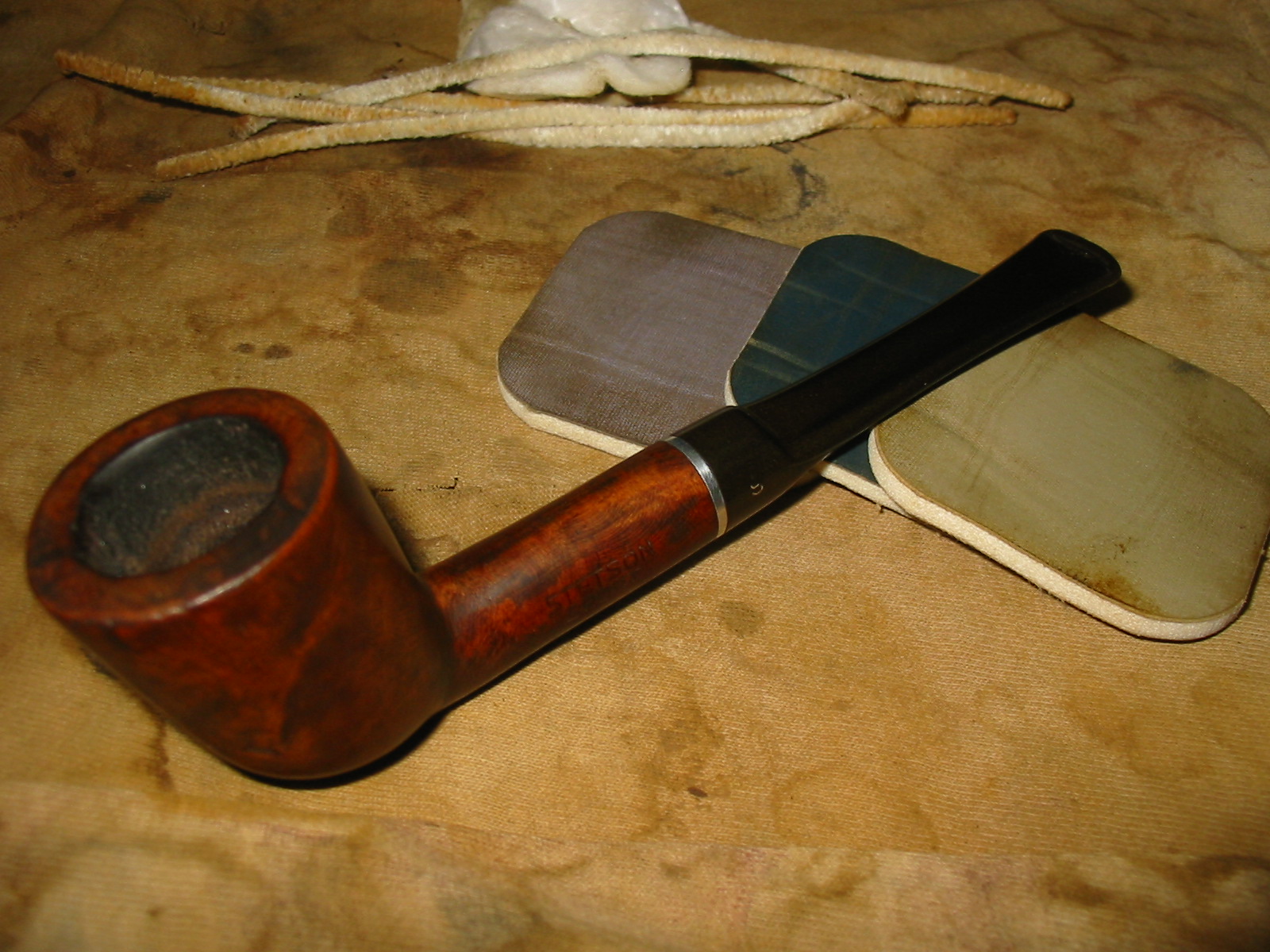
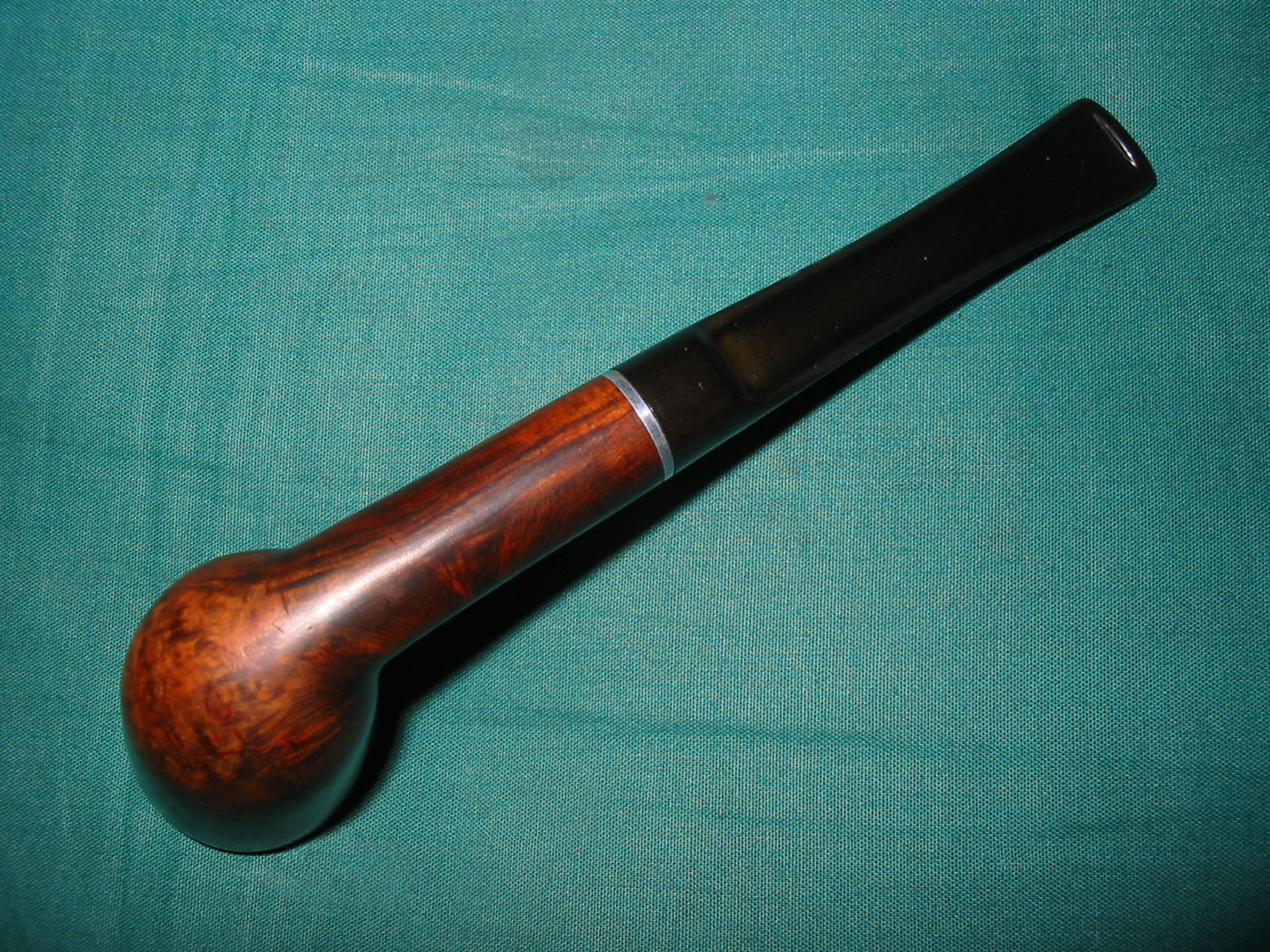
The next series of four photos show the finished pipe. The interior is shiny and new looking and the pipe bowl has a good contrast stain. The stem is shinier and the oxidation is pretty well gone. The photo of the stem looking down on the top shows a little oxidation around the saddle area. That area has been problematic on this pipe. In the daylight the stem looks better than this night photo with lights. My guess is that the oxidation is still there and in the glare of the flash it is very visible. This pipe will make a nice addition to someone’s rotation.

 rebornpipes