Monthly Archives: July 2013

A Phoenix Rises – Reworking a Pipe


This post may be controversial to some folks as it is about the reworking of a pipe from a living artisan. I know that many would never do such a thing and would either sell the pipe or leave it in the collection. I chose to do neither of those things. Knowing that when Stephen gave it to me it was not one that he was going to sell and that in some ways he saw as problematic made this adaptation an easy choice for me.

Quite a few years ago now – enough years have passed that I am not sure when – I used to visit Stephen Downie when he lived in Vancouver. We had connected through the Vancouver Pipe Club and I enjoyed his company. When I visited I would pick up tips on pipe making that I could use in my pipe refurbishing – stem making, sanding techniques, staining processes, etc. I enjoyed looking through his box of throw away stummels that for one reason or another had problems and did not make the grade. He would often give me one or two to use to practice carving. I enjoyed the process of working with these blocks just to learn about briar and how it responds when cut and sanded. I learned about sand pits and flaws in the block and got to play around with the tools to remove the flaws as much as possible and craft a passable pipe for me to smoke.

One day when I was going through the box he gave me this pipe that he had made in 2004. If memory serves me correctly, Stephen said that he thought that the drilling of the bowl had left it too thin in the bottom front. As such he would not place it on his site for sale. He figured that it would still smoke well if broken in carefully. I gladly took it home with me, smoked a few bowls and then put it in the pipe cupboard. Over the years I have rarely smoked it much as I found the hanging tail fin on the underside very uncomfortable to hold. I took it out of the cupboard when I was choosing a pipe to smoke. Sometimes I picked it up and smoked it but it never quite made it into the rotation. The pipe smokes very well so it was not a matter of mechanics that kept me from picking it up more often, but it just seemed that the fin was in the way.

Fast forward to a wedding I did just a few months ago (2013) for a couple of good friends of mine here in Vancouver. At the reception dinner I connected with Stephen and his wife. We talked about life in general, books we were reading and writing and pipes we were enjoying. We talked of the pipes Stephen was carving and the ones I was refurbishing. We laughed over different details of the work while we sipped our drinks and ate the buffet supper.During the course of our conversation Stephen talked about an idea he had about reworking pipes for people and giving them new looks and improved feel. If they had a pipe in their collection that just did not get smoked often for whatever reason he would reimagine and rework it for them. He called his idea a Phoenix pipe. As we talked about it I found that I liked the idea a lot. When I went home that evening I could not get it out of my mind. I looked over some of my old pipes that for one reason or another have not seen the use they deserve. I sorted through them to see if one of them might be a candidate for this idea of his. I picked up the old finned pipe that he had given me many years before. As I looked it over I had several ideas of how to rework it. I put it back in the cupboard and let it sit for several months while I thought about what do about it.

I picked it up again several days ago and looked it over. I like colour of the stain but wondered what it would look like if I darkened it. I like the feel of the bowl in the hand. I liked the curves of the rim and the bowl to the shank. I liked the flow of the curve to the stem. I liked the shape of the shank and the black acrylic insert and the olive wood extension on the shank. The mortise was Delrin lined and the drilling was vintage Downie – well drilled, straight and clean. The fit of the stem was stellar. The stem was also comfortable and the button thin as is my preference. The Cumberland colour and material suited the pipe well. There were many things I liked about it. I turned the ideas over in my mind of what I might do to rework it. I thought that I would remove the fin on the bottom of the shank and the nob on the bottom of the stem and I would have it done. I thought about calling Stephen and setting up a meeting to drop the pipe off for him to reimagine – do his Phoenix work on it and see what he could do with it. But after looking it over for a while I decided rather than sending it to him I would do a Phoenix rework on it myself.

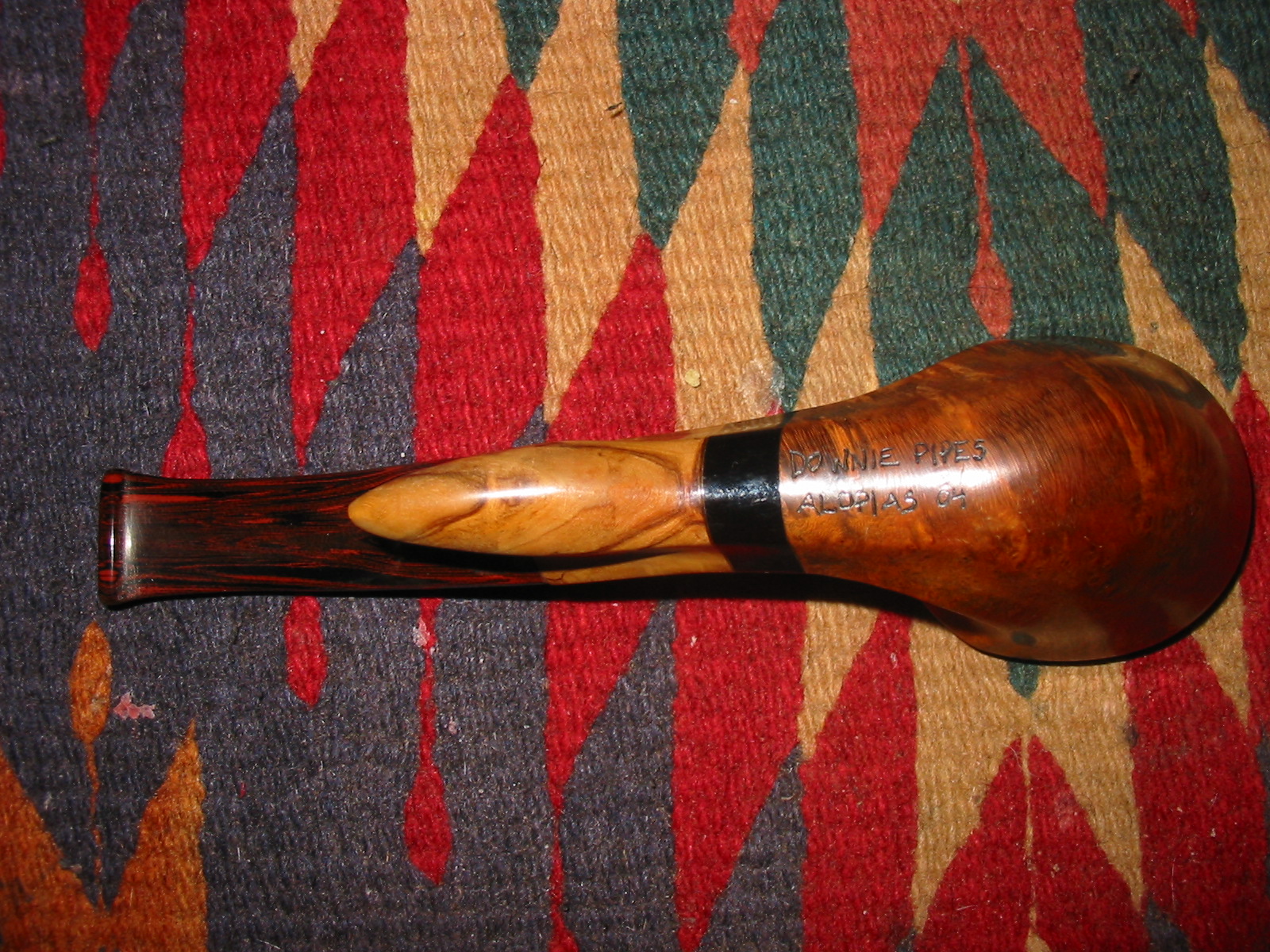
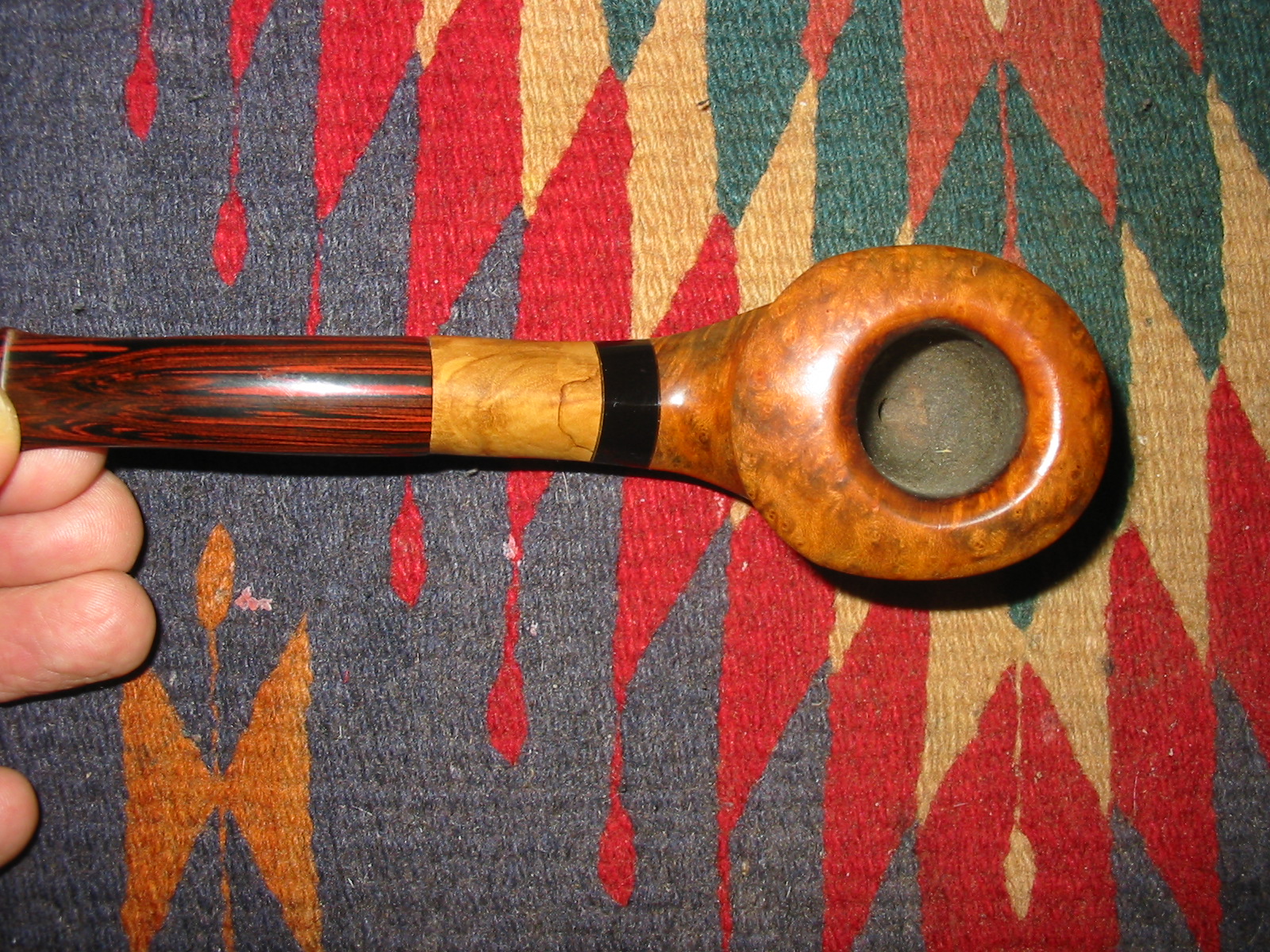
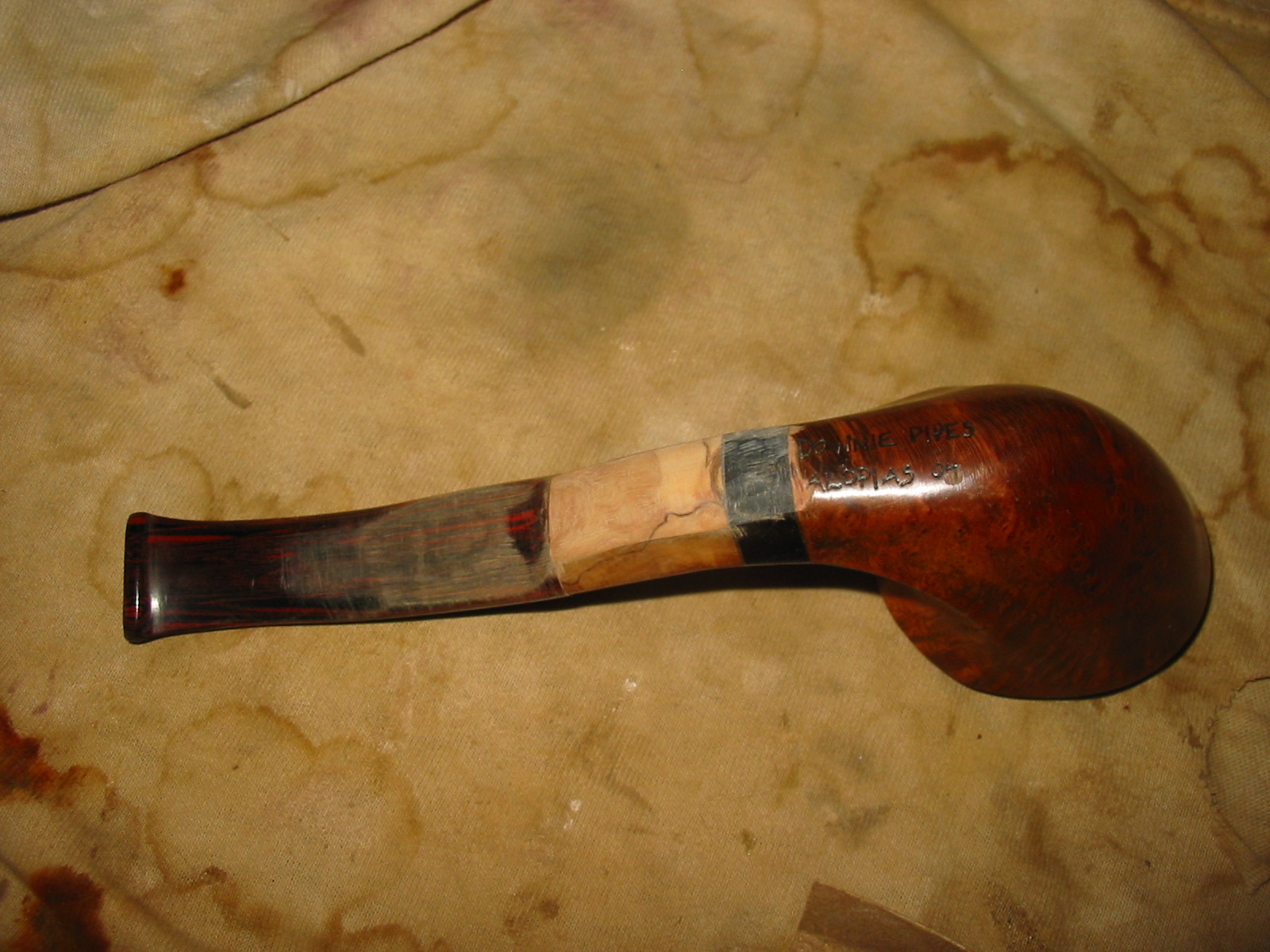
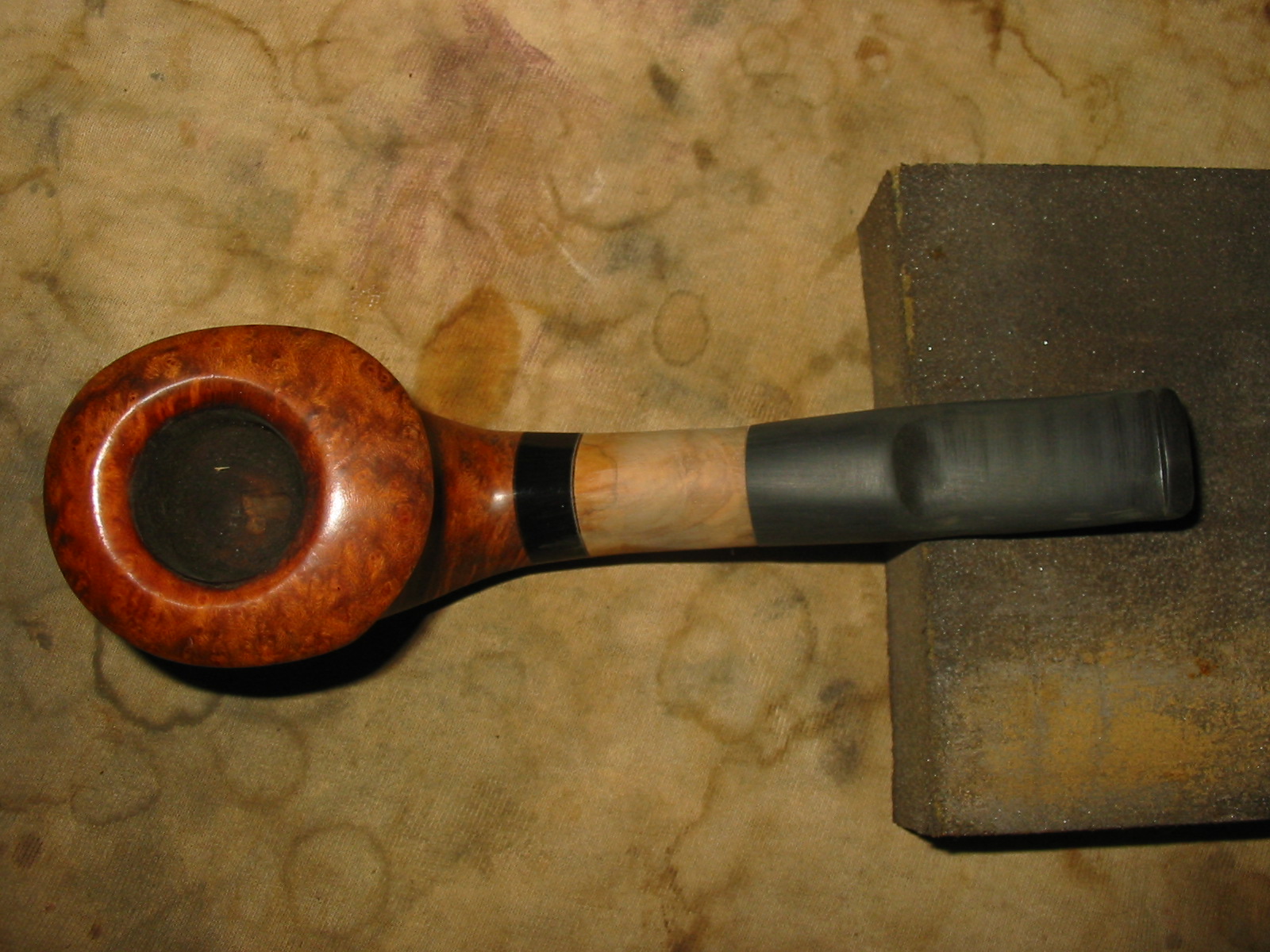
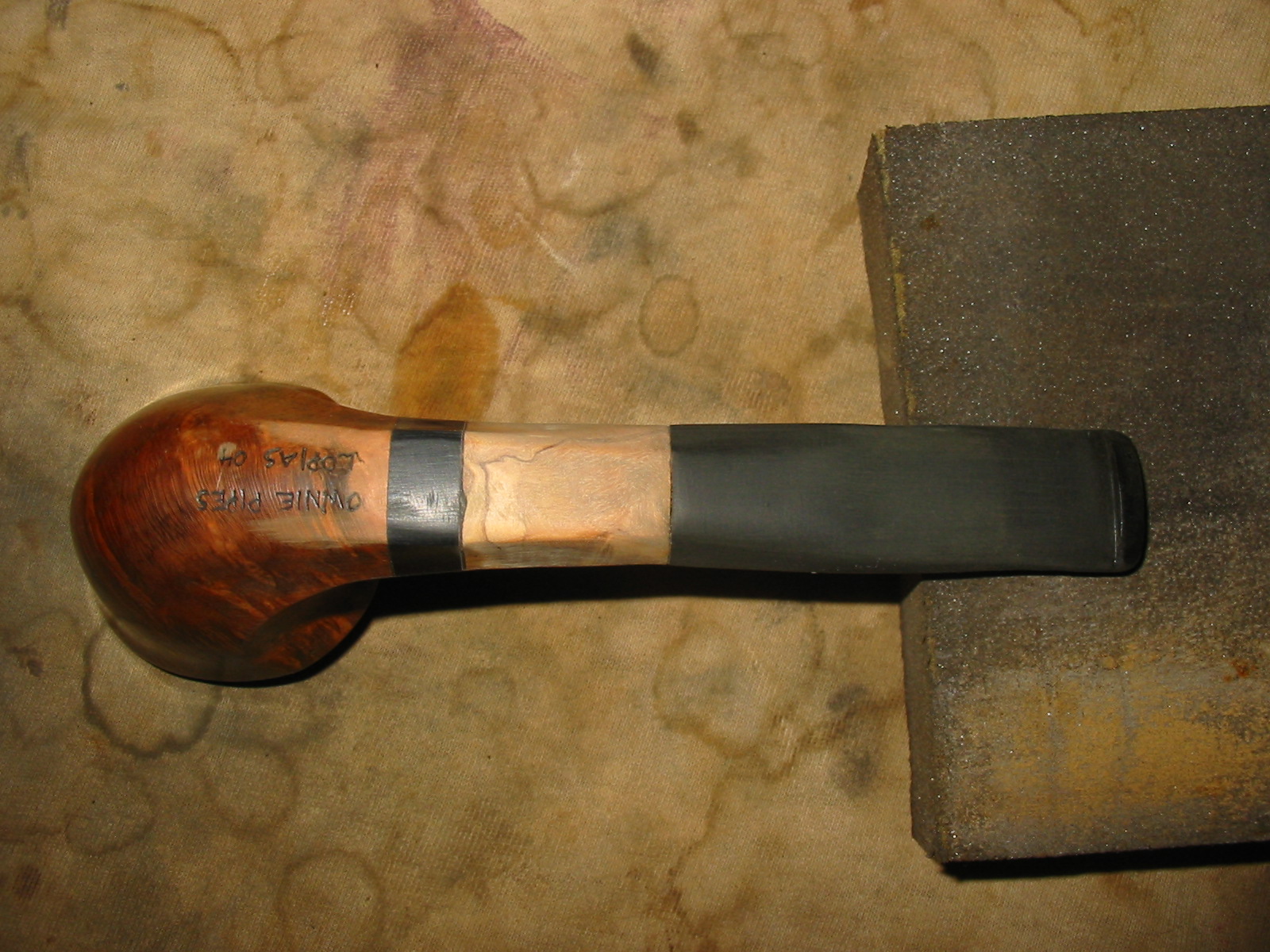
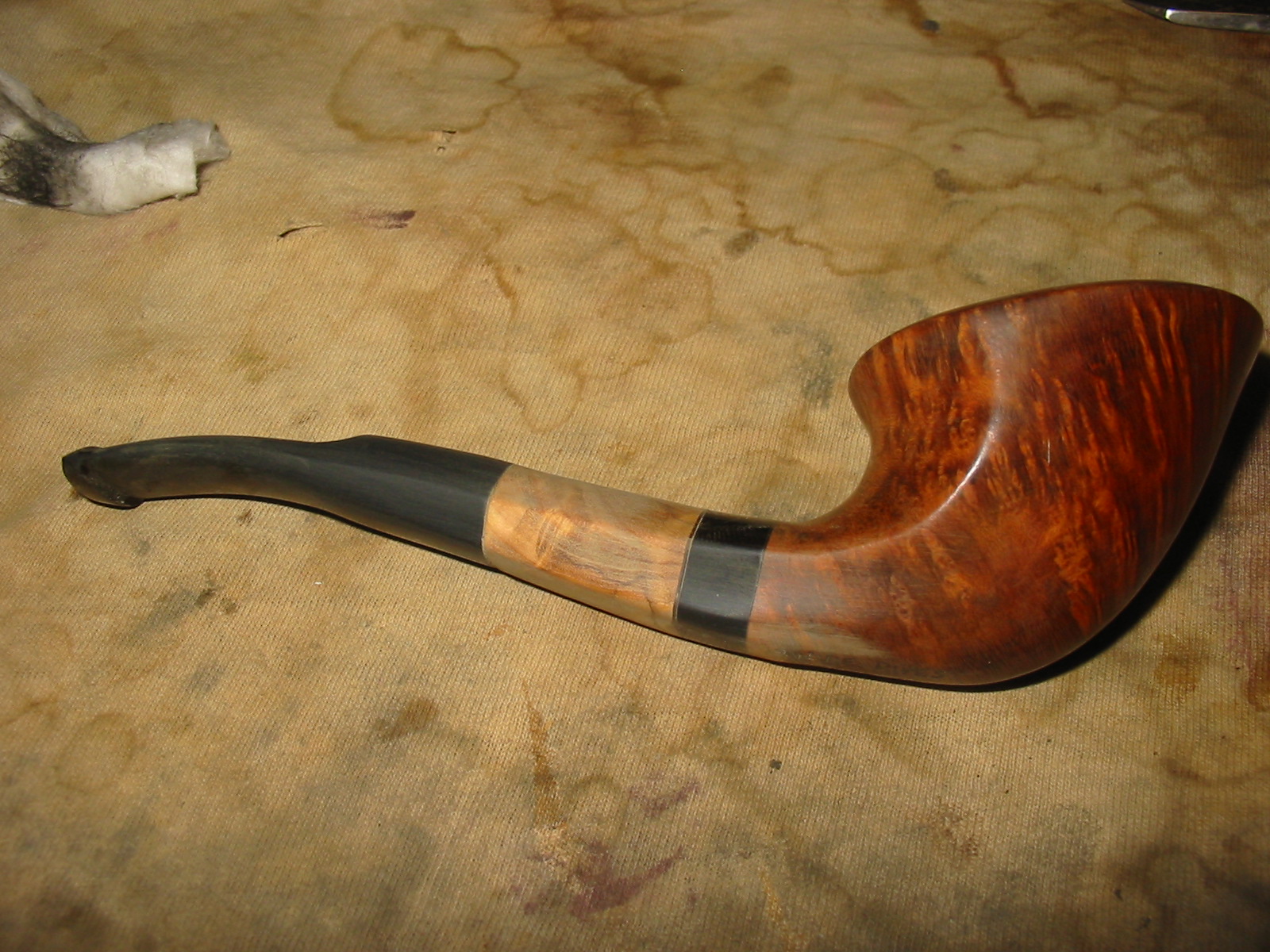
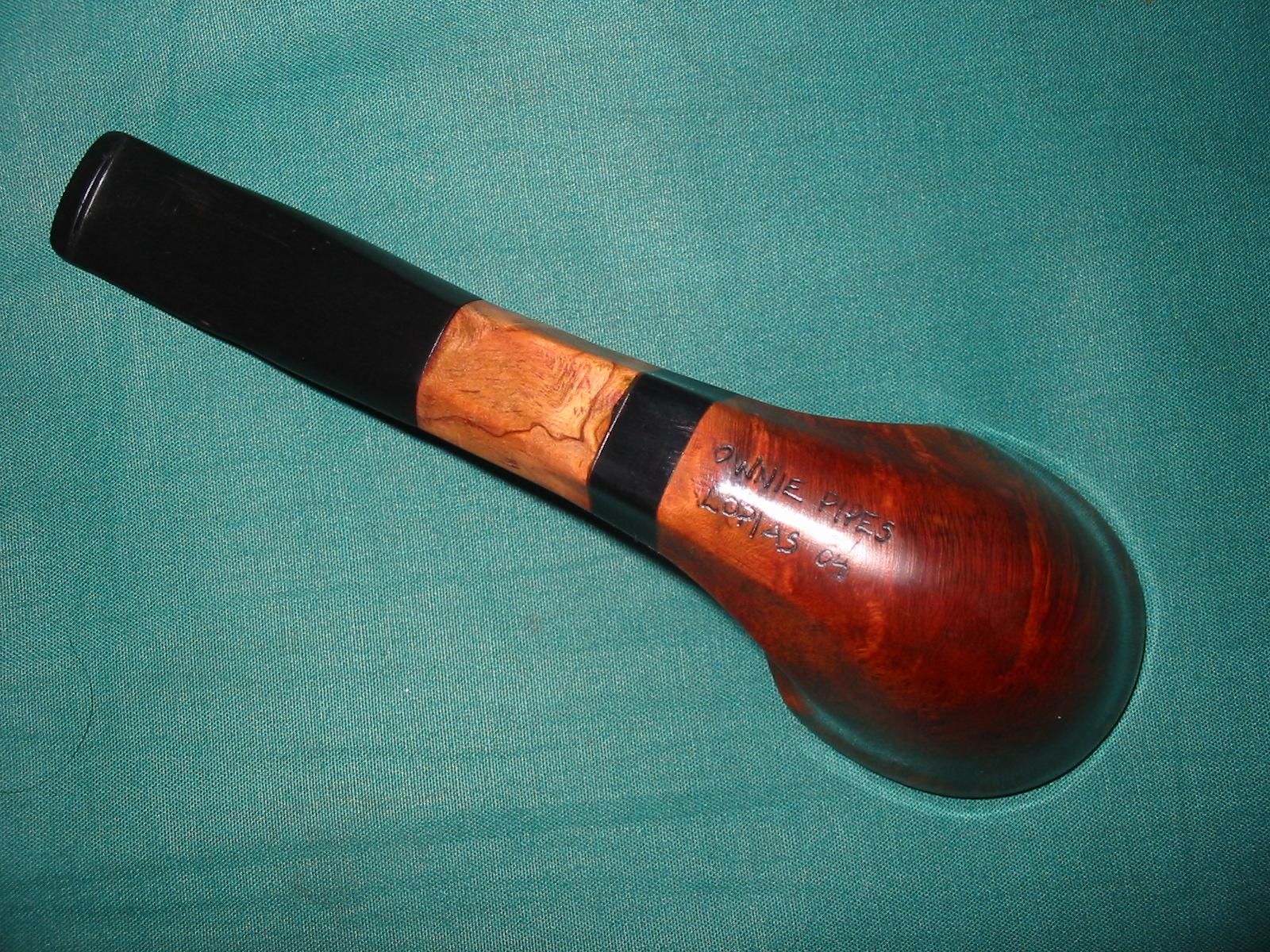
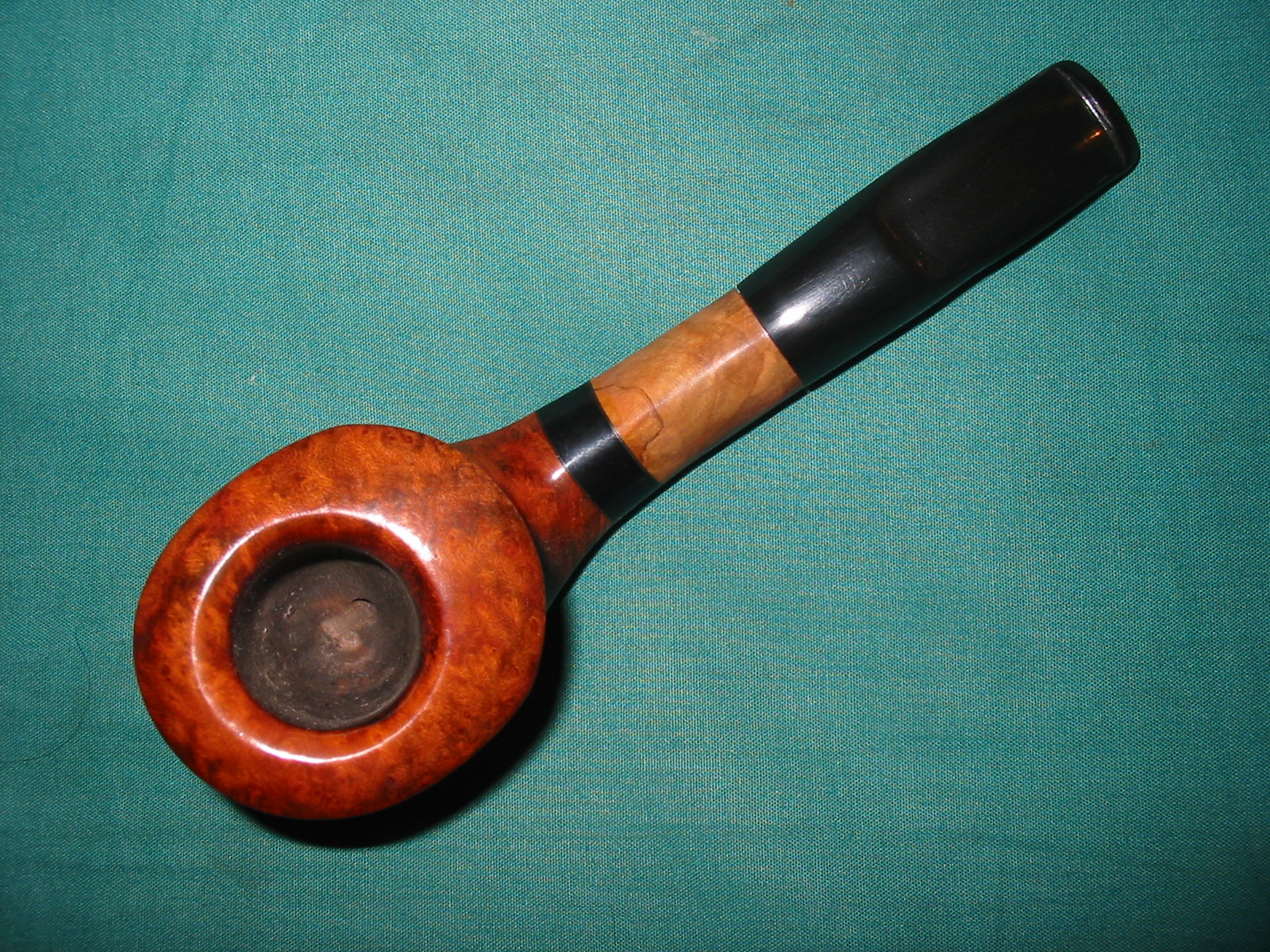
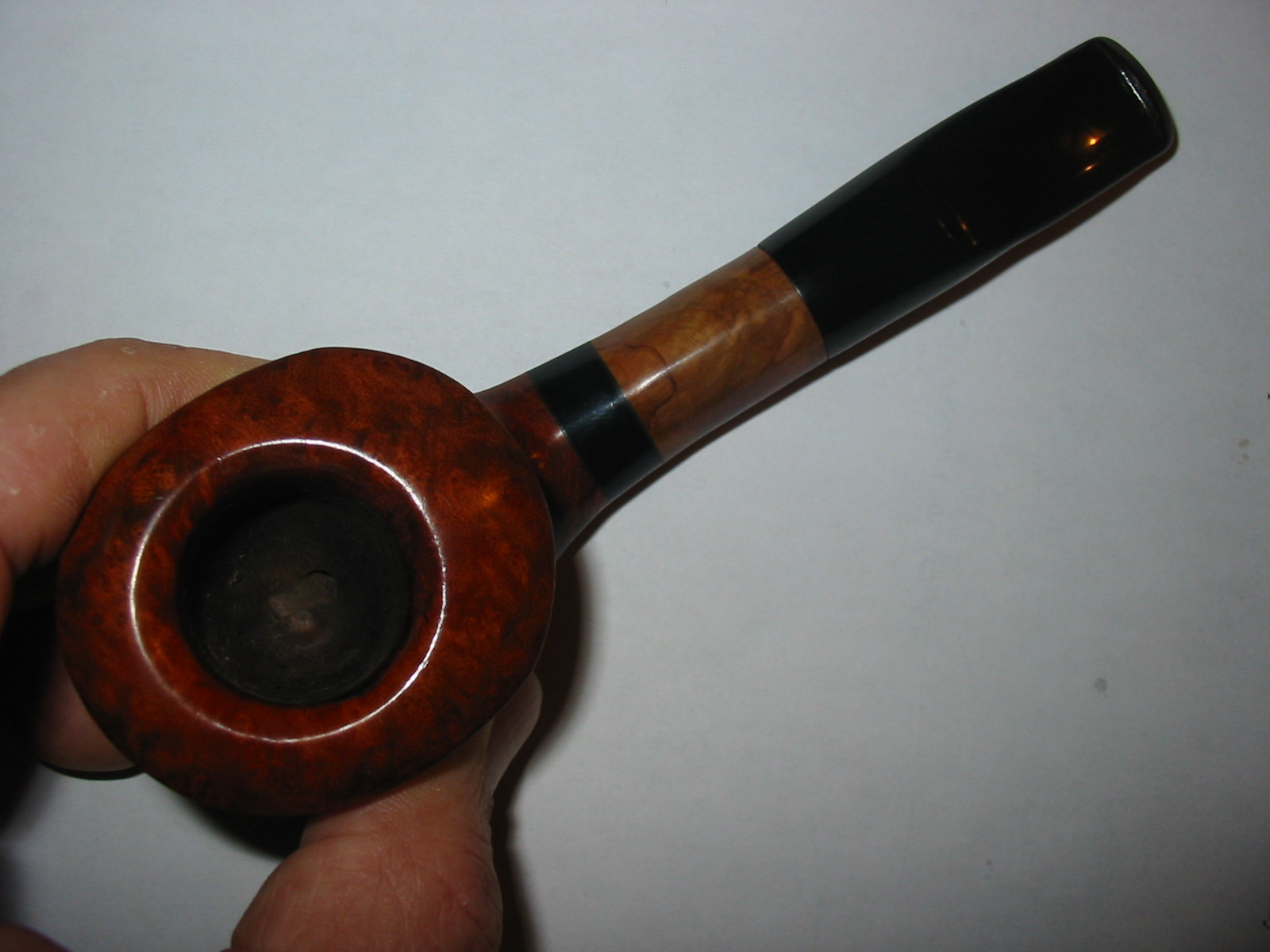
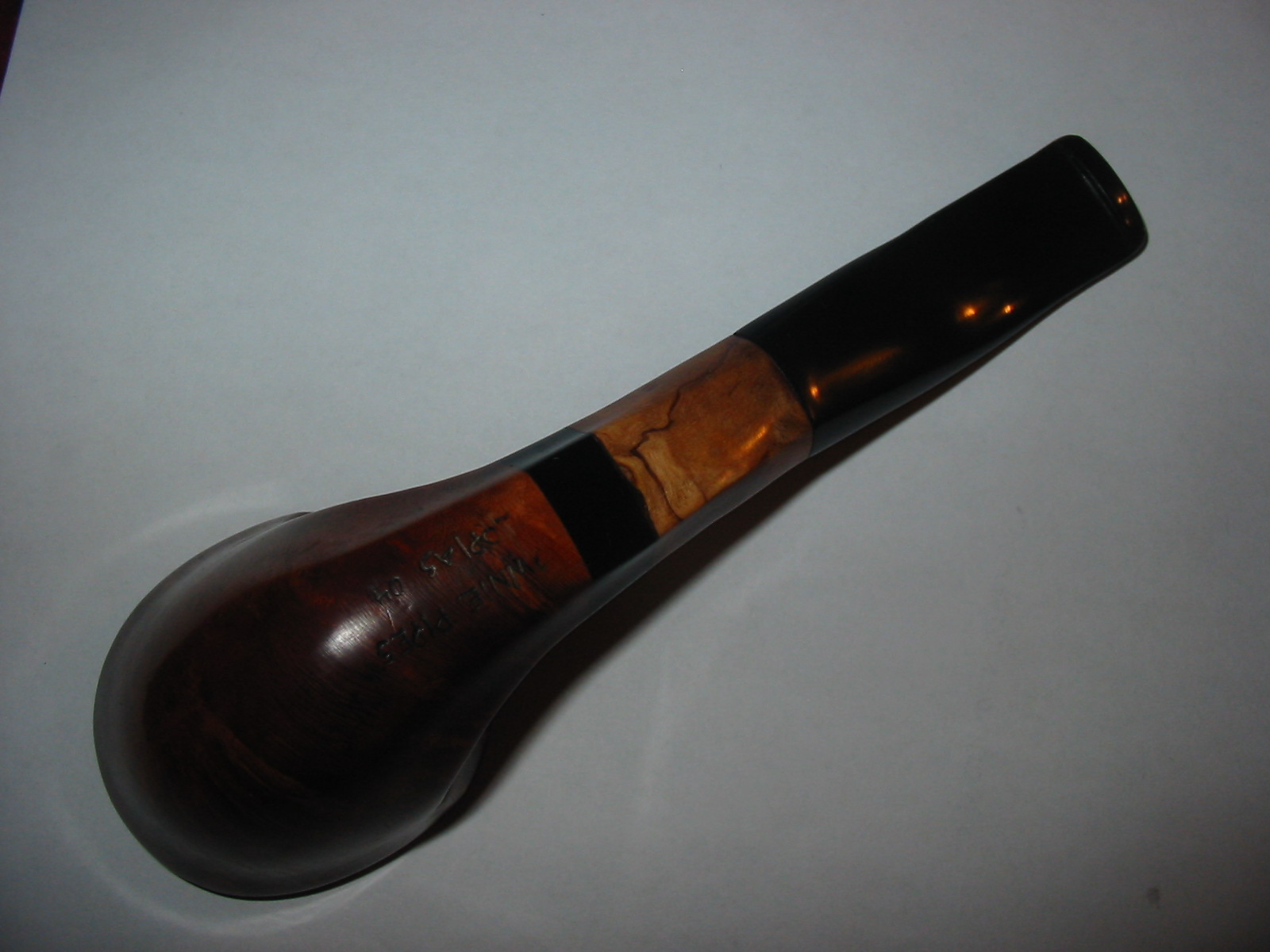
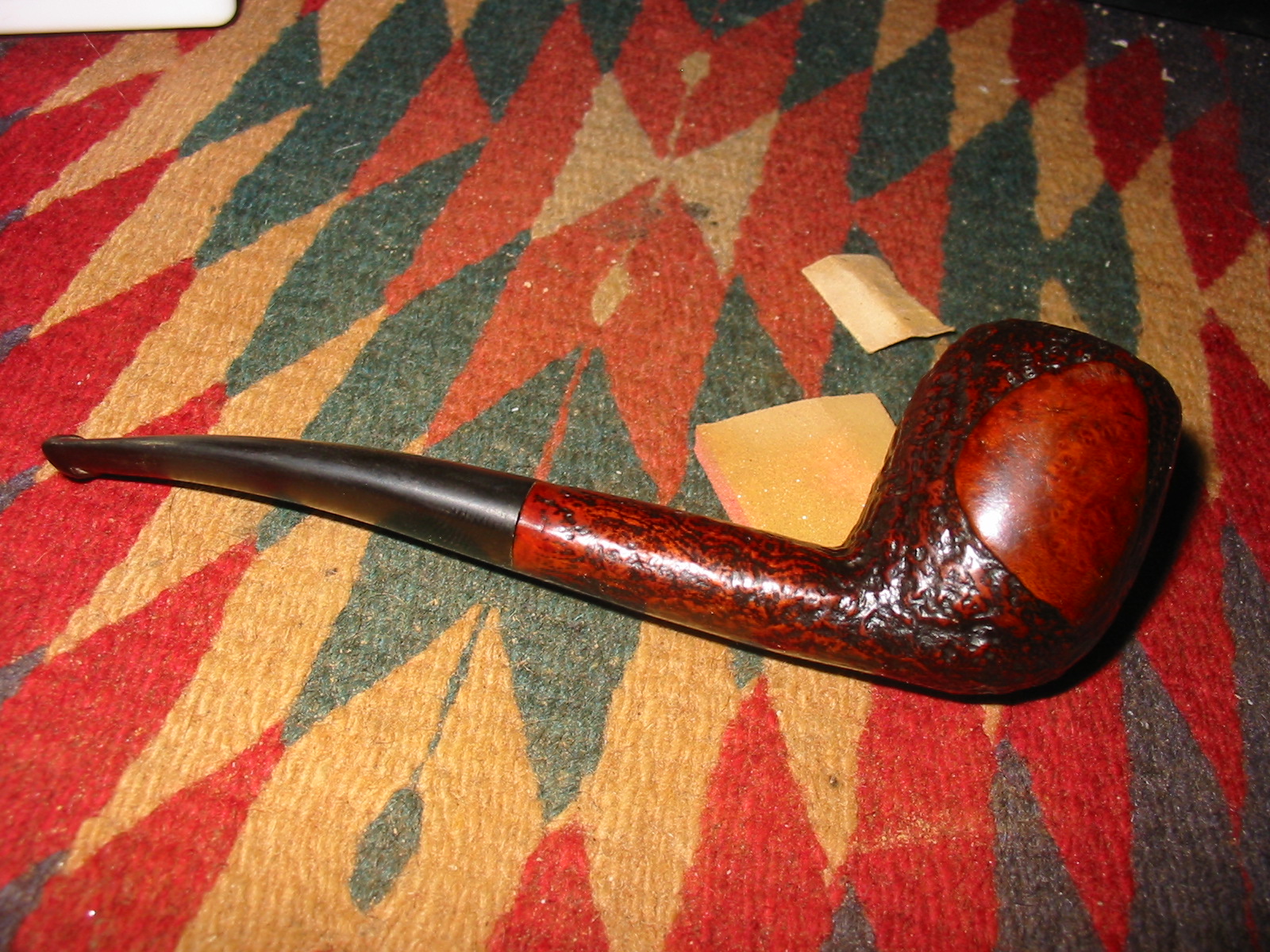
The first series of four photos are of the pipe Stephen named the Alopias (named after a Thresher Shark). This is what it looked like when I took it from the cupboard to work on it.
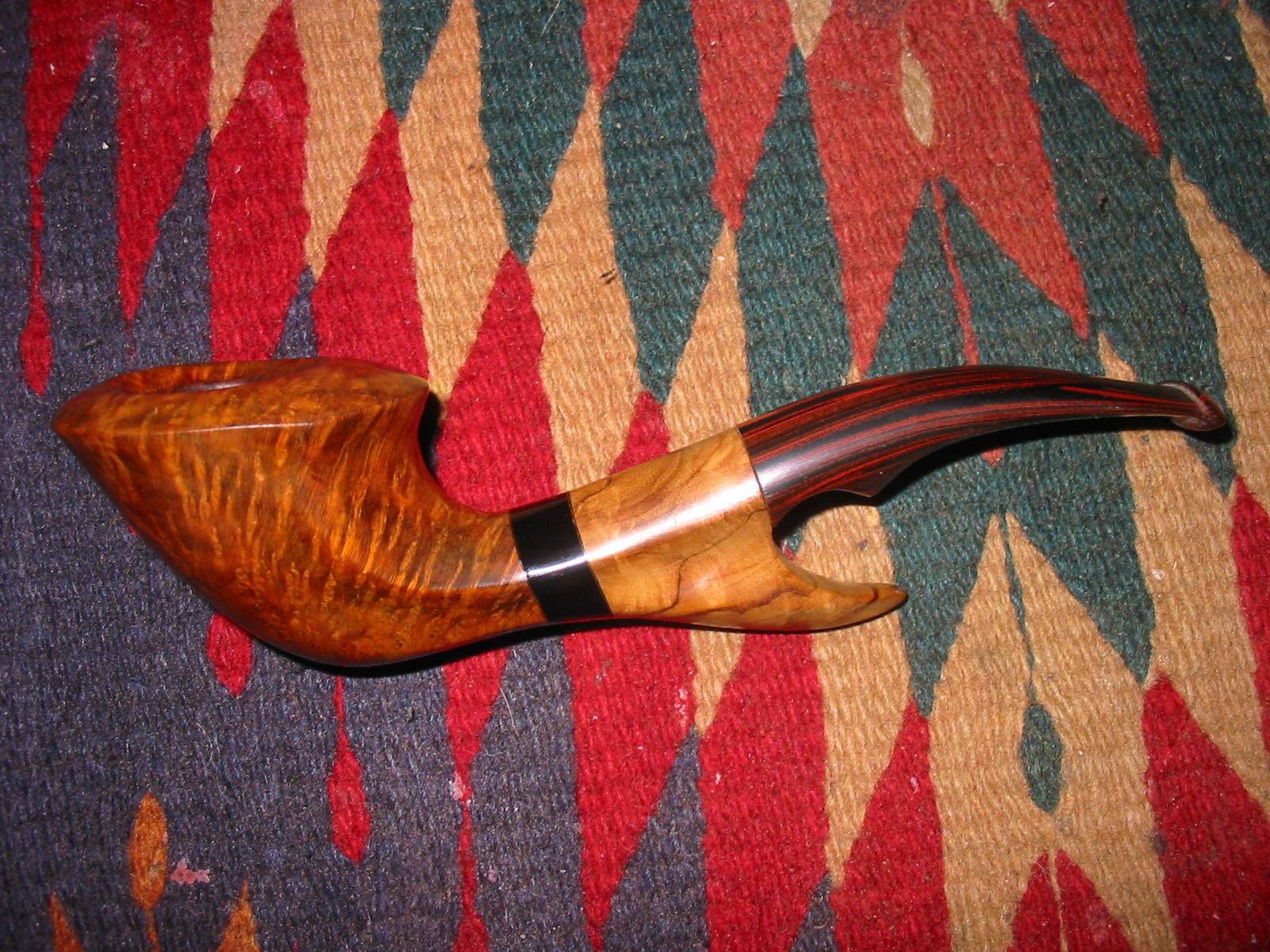
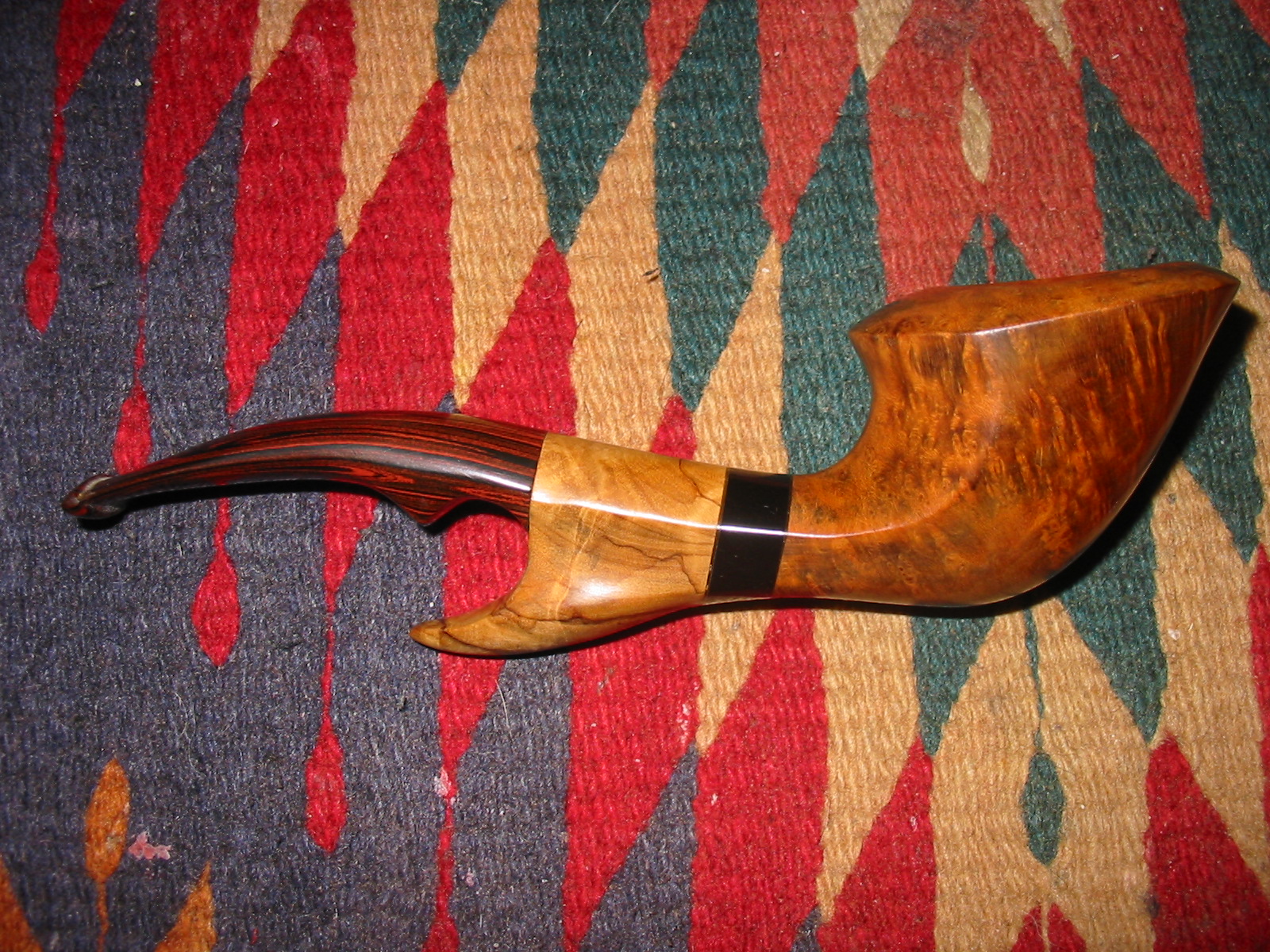
IMG_0933

IMG_0934

IMG_0935

IMG_0936

I used a Dremel with a sanding drum to take down the fin on the shank and the nob on the Cumberland stem. I figured that would be fairly straight forward work – not a big deal to do with the Dremel. And it certainly worked easily enough. Removing the two parts of the pipe was pretty quick work. I finished with the sanding drum and left a little extra on the shank and stem that I would sand away by hand. I wanted to make sure that I could match the flow and shape of the shank and stem. The next three photos show what the pipe looked like after I had removed the fin and nob. It certainly changed the appearance and the hand feel of the pipe. I began to think that my reimagining was going to work out well.
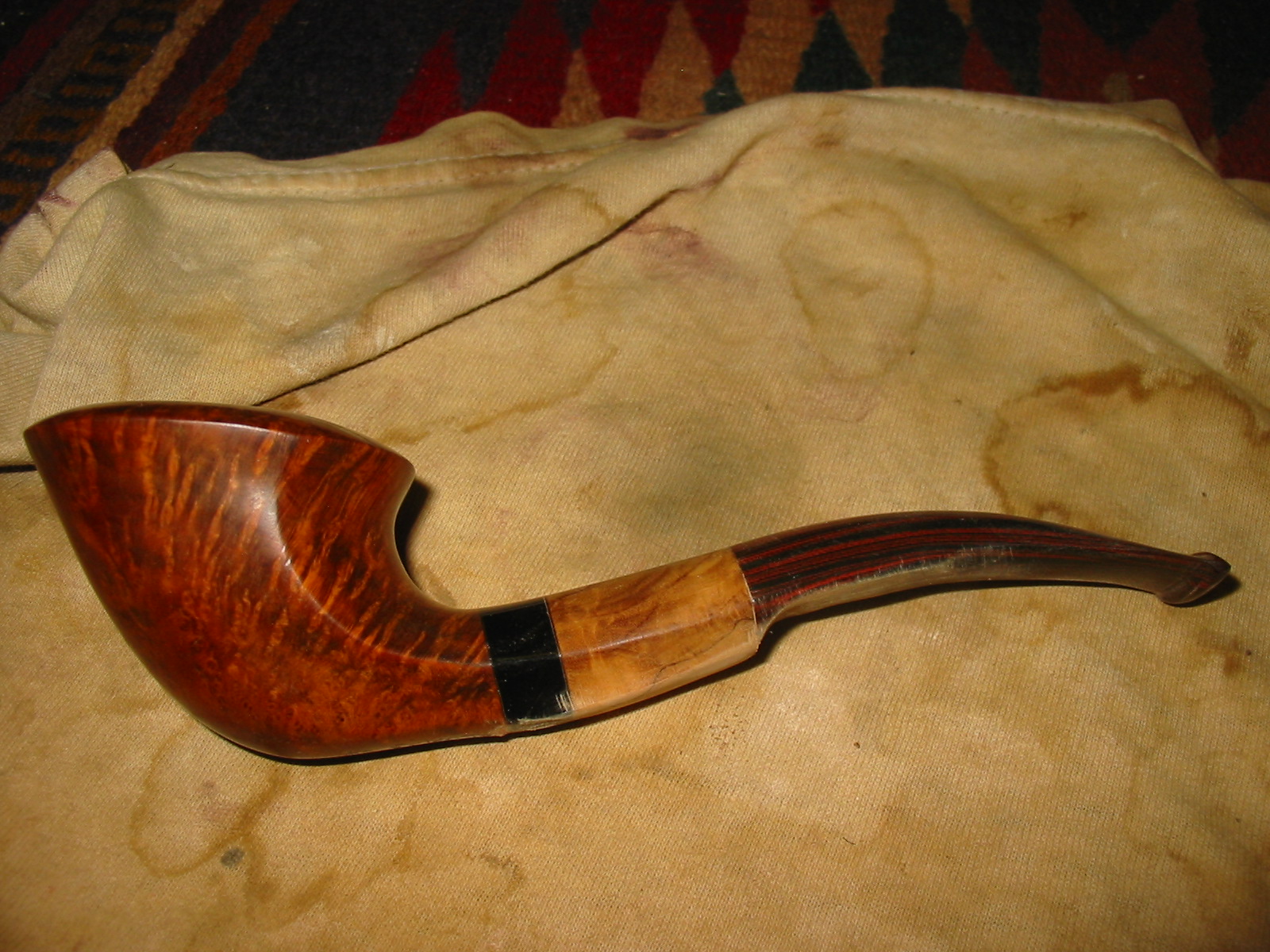
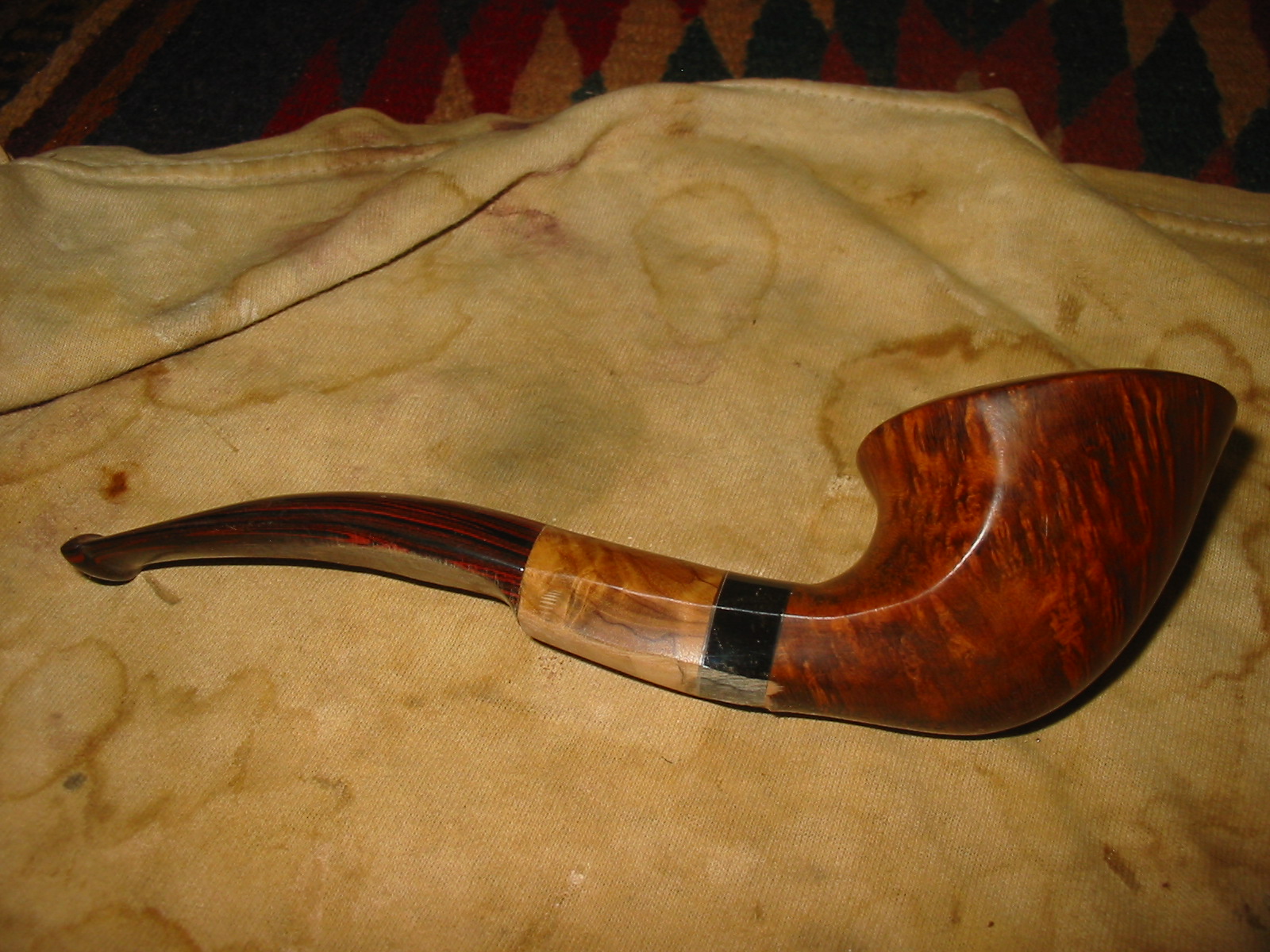
IMG_0937

IMG_0938

IMG_0939

I took the pipe to my work table and sanded the stem and shank with medium grit emery paper and also with 220 grit sandpaper to further shape the flow of the shank and stem. I wanted to sand a gentle taper from the shank into the stem. I worked at the slope to get it the way I saw it in my head. Once I had that done I sanded it with a medium grit sanding sponge to smooth out the scratches and marks in the briar and the Cumberland. I really like the way the pipe was beginning to look. As I looked at the pipe I thought that a little more sanding of the slope would really make the pipe look proper.

But that is when the job became more than I had bargained for. In order to accomplish what I had in mind I would have to sand down the shank a bit more. To match the stem and shank flow it would need to have some more of the shank extension sanded away. That is when it hit! MAJOR PROBLEM! When I took the stem off the shank to check things before sanding I saw that there was not enough olive wood on the extension between the Delrin insert and the outside of the shank to take any more material off the shank. If I continued to sand it as I had been doing would expose the Delrin and ruin the shank. Even the amount of sanding and sloping that I had done had made the wood very thin on the underside of the shank. I could not do any more sanding on it without ruining it. So that is where this Phoenix took a turn and a new solution had to be worked out.

I looked at it and scribbled out some sketches of how to rework things. I thought about shortening the shank but really did not want to do that. So in the end I decided to remove the old stem altogether and shape a vulcanite stem for the pipe. The polished black of the vulcanite would match the band of black on the shank. It would also bookend the olive wood shank extension. So I found an oval saddle stem in my box of stems and turned the tenon with the PIMO tenon tool. Once I had a good fit on the tenon, I used the Dremel with the sanding drum to shape the stem to the shank. I decided to make the stem a half saddle by removing the saddle portion on the underside of the stem. This was tedious and slow work as I did not have any margin for damage on the shank itself. Once I had sanded the stem to a close fit with the Dremel I did the rest of the work by hand with files and sandpaper. The next four photos show the new vulcanite stem after all the fitting and shaping work had beencompleted. I still needed to polish and bend the stem to make the angle similar to the original.
IMG_0940

IMG_0941

IMG_0942

IMG_0943

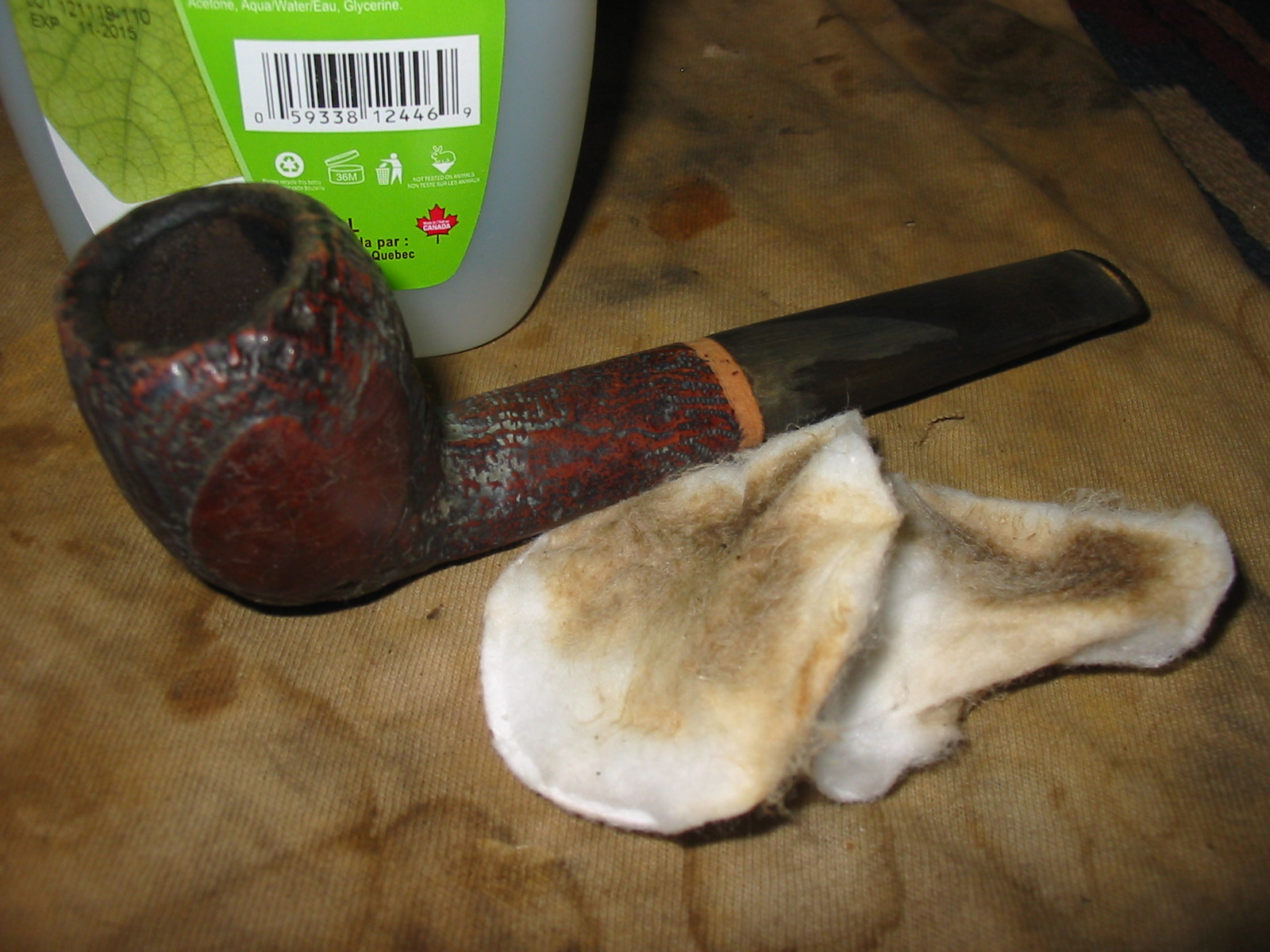
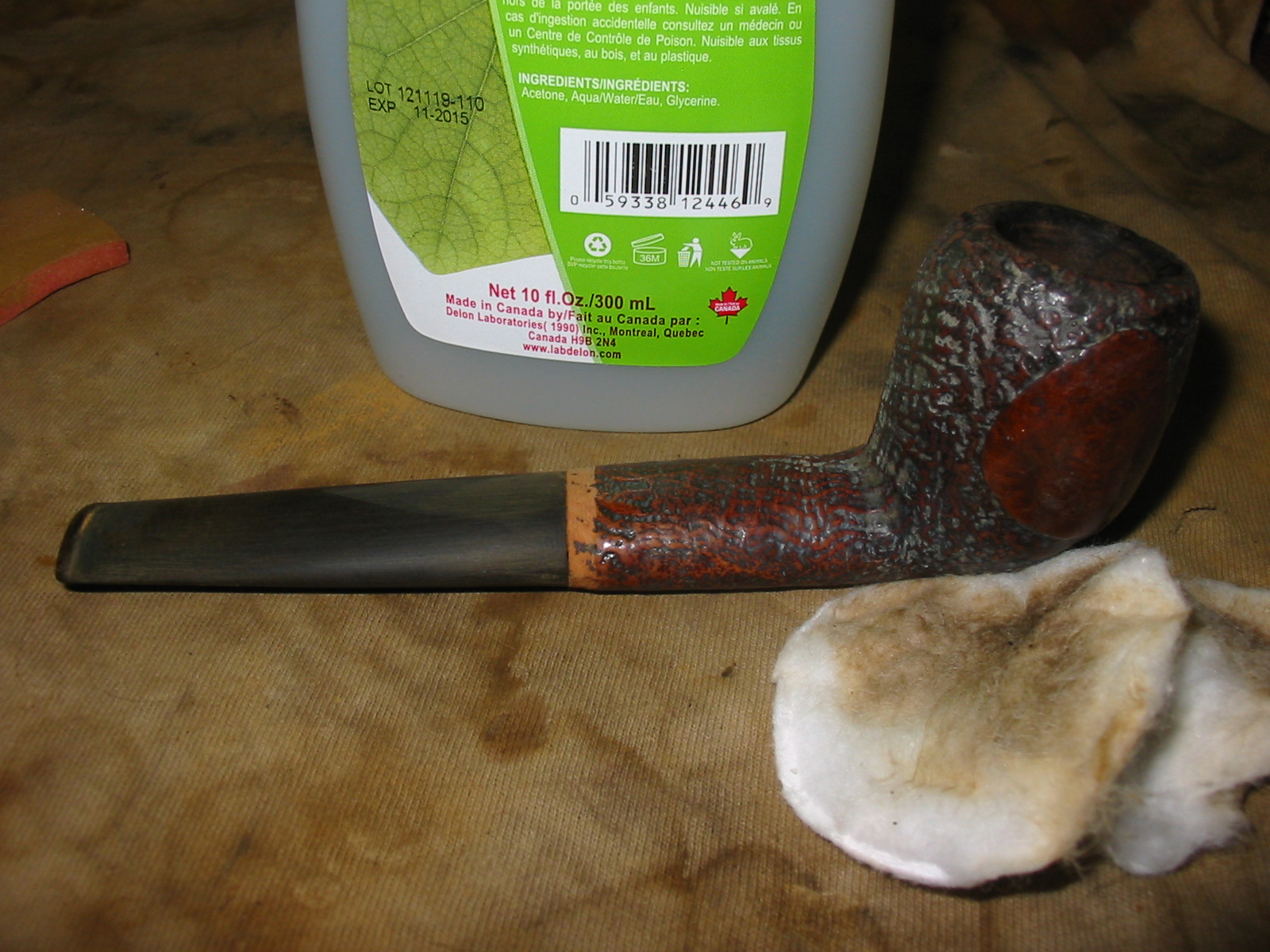
At this point in the process I wiped down the bowl with an acetone soaked cotton pad to remove the wax and finish from the pipe so that I could restain and blend the sanded portion of the shank on the bottom with the stain on the bowl. I also chose to stain the olive wood with the same stain to add a patina like quality to the look. The next three photos show the pipe after it has been wiped down and is ready to be stained.
IMG_0946

IMG_0944

IMG_0945

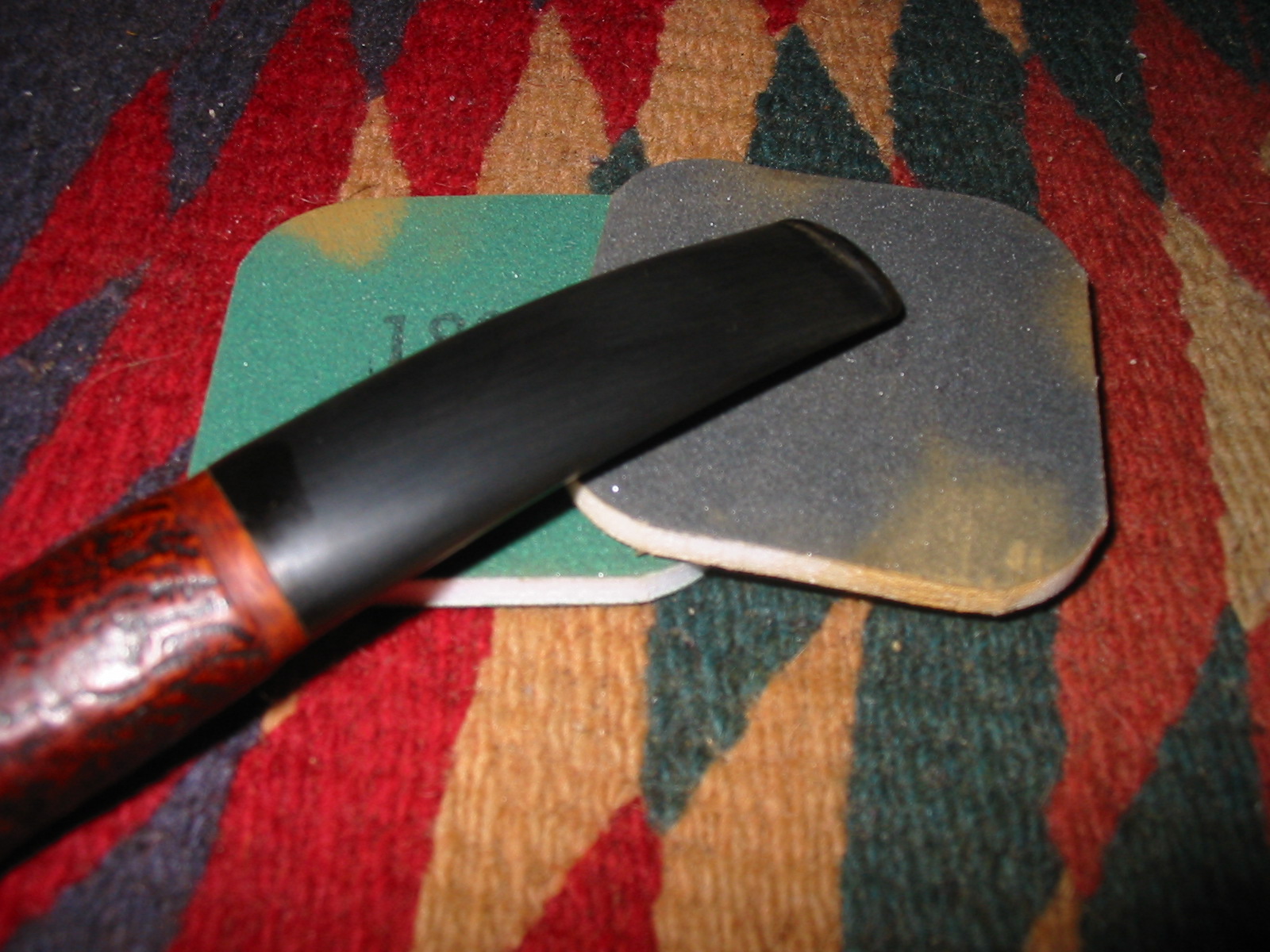
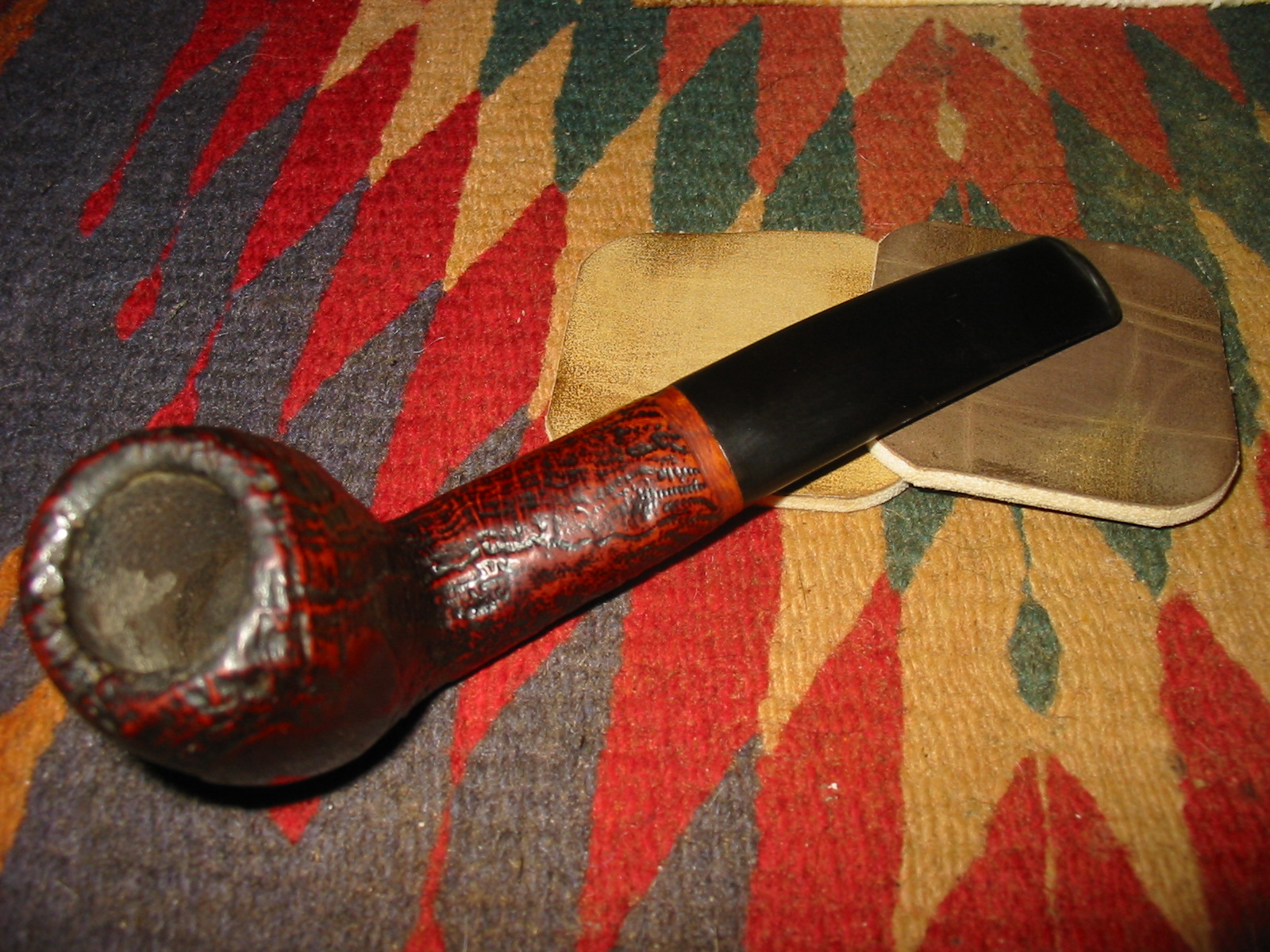
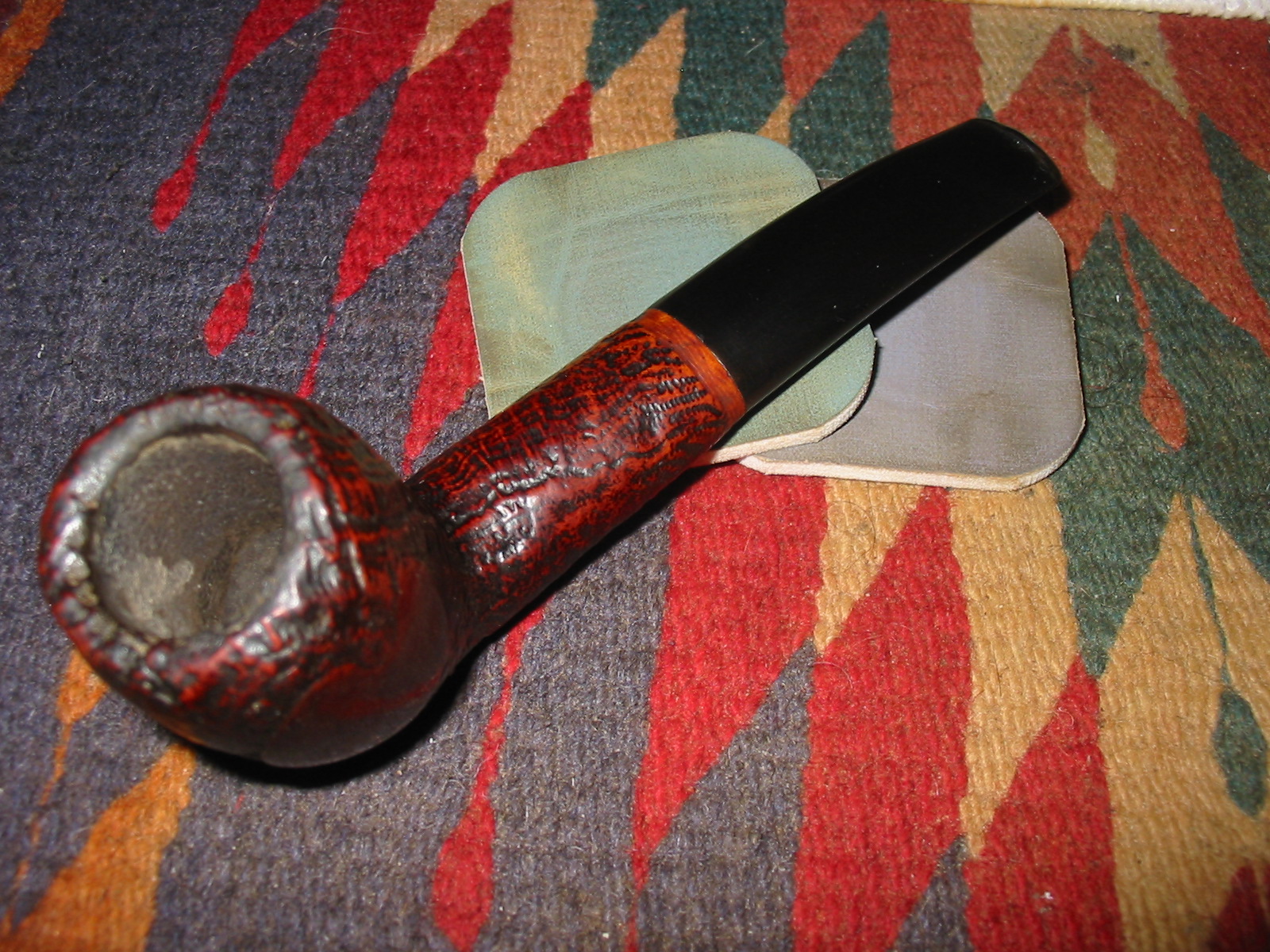
I did some more sanding on the shank and stem using a fine grit sanding sponge to smooth out any of the remaining surface scratches.I followed up by sanding the shank and the stem with micromesh sanding padsand then wiped it down a final time to remove the sanding dust and other debris before staining.The photo below shows the bowl and shank ready for staining.
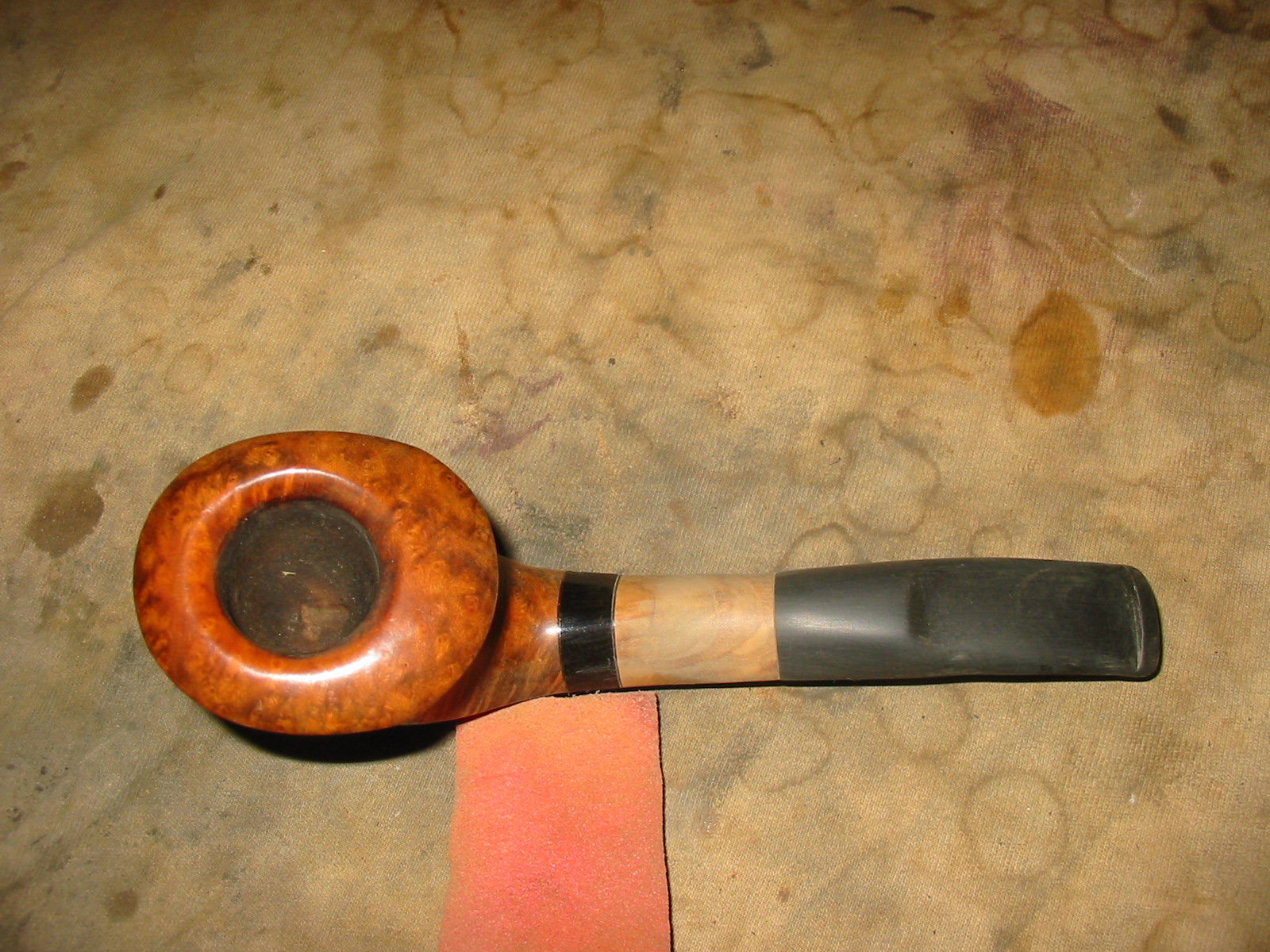
IMG_0947

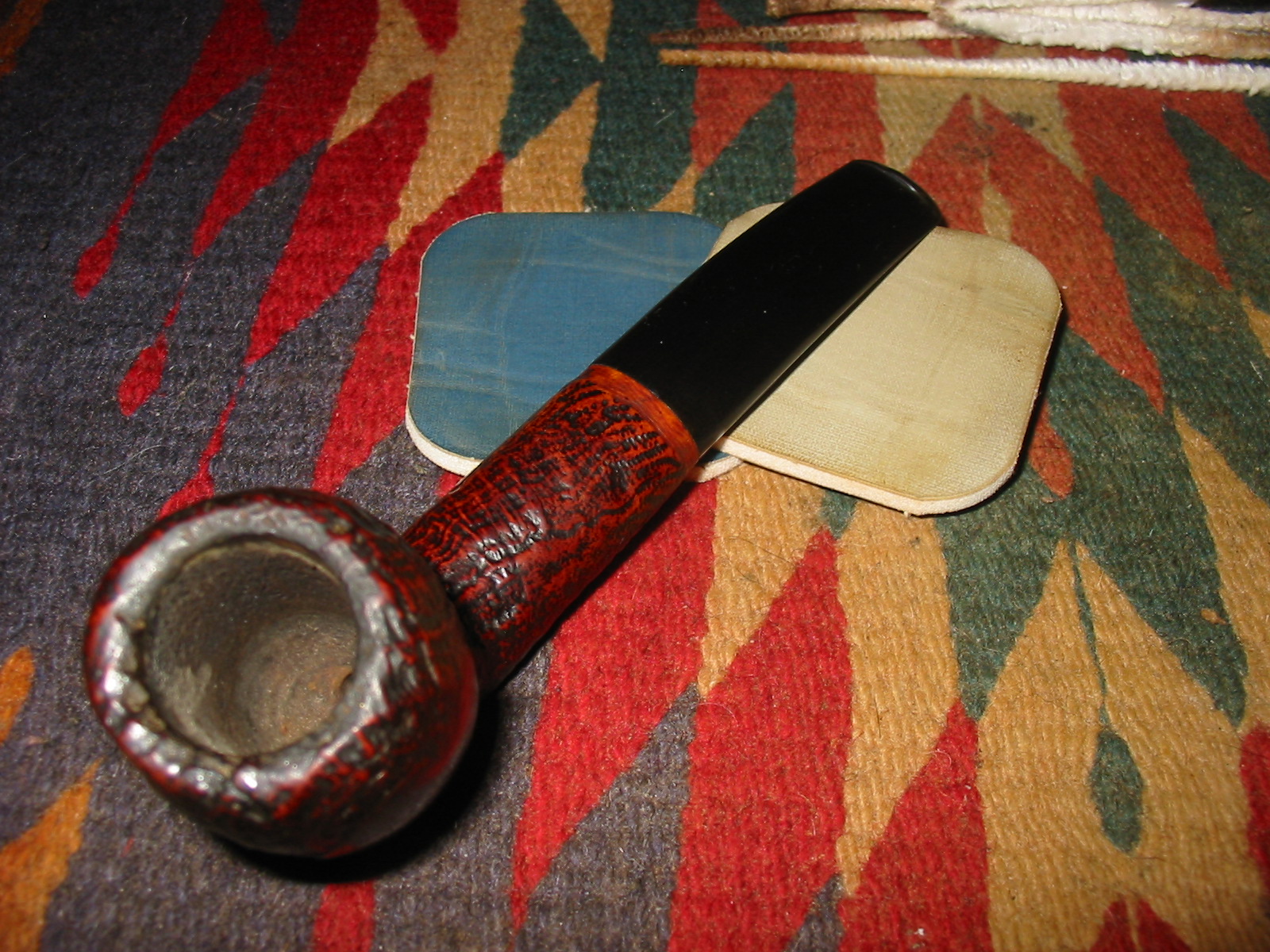
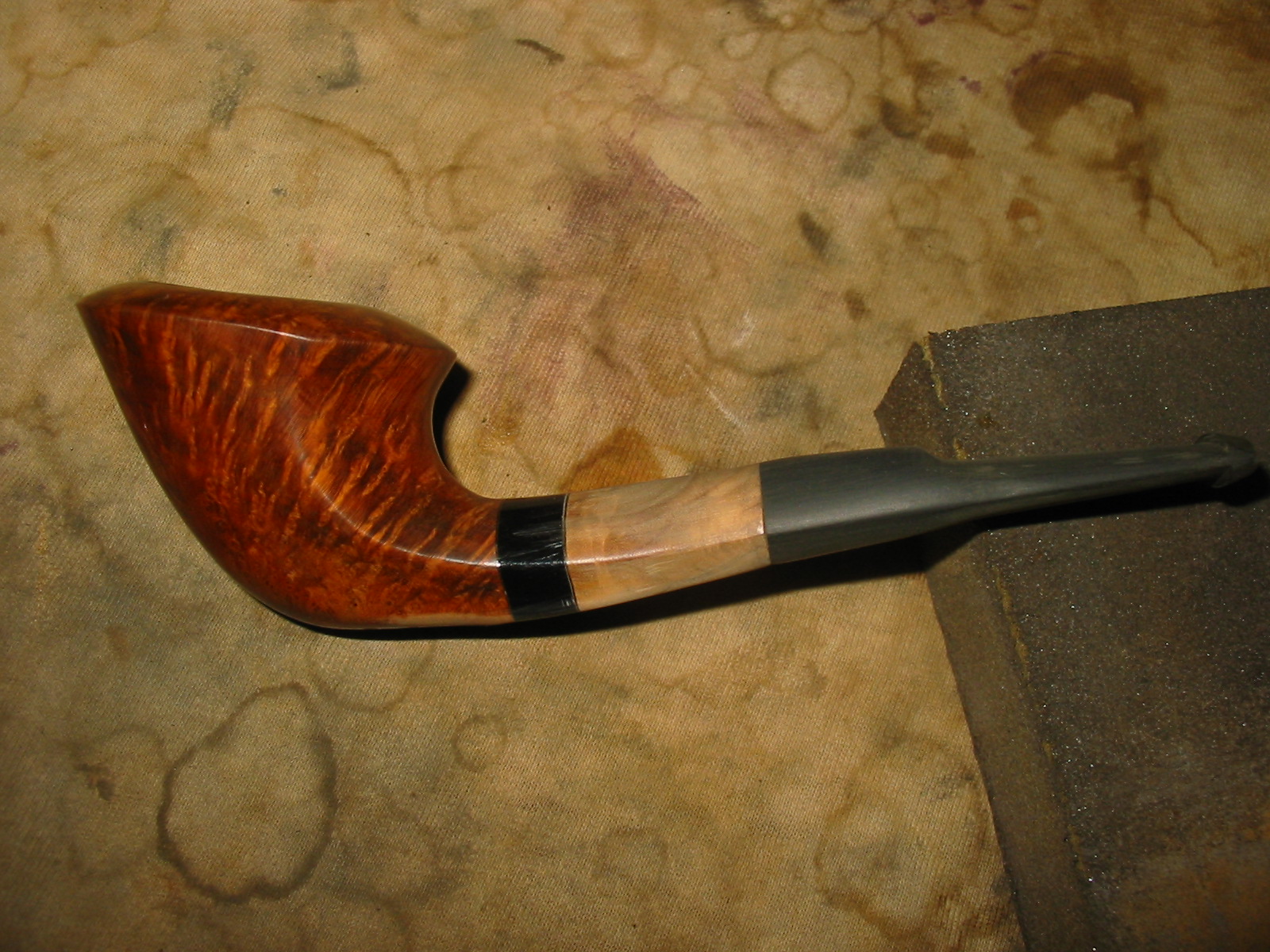
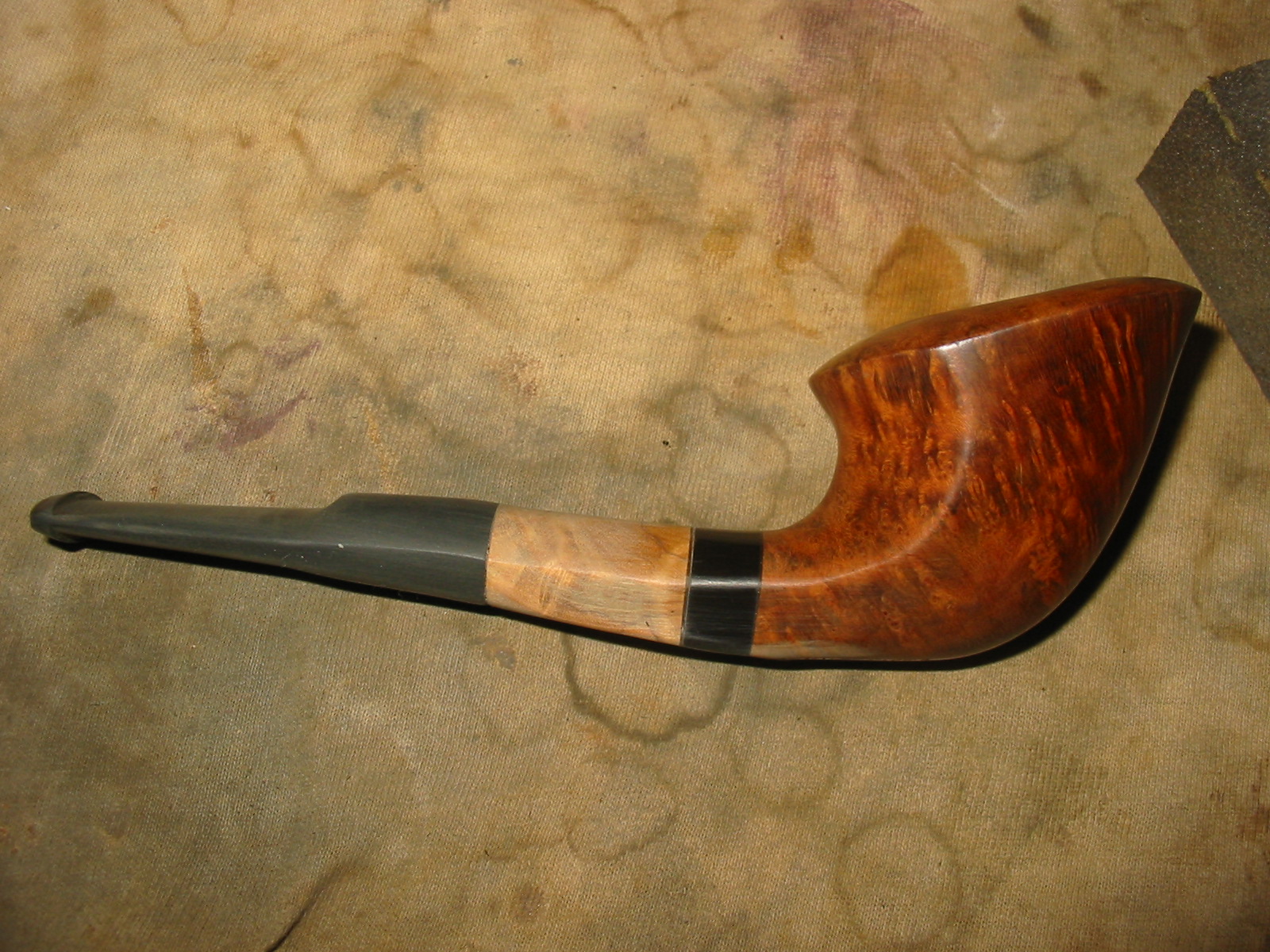
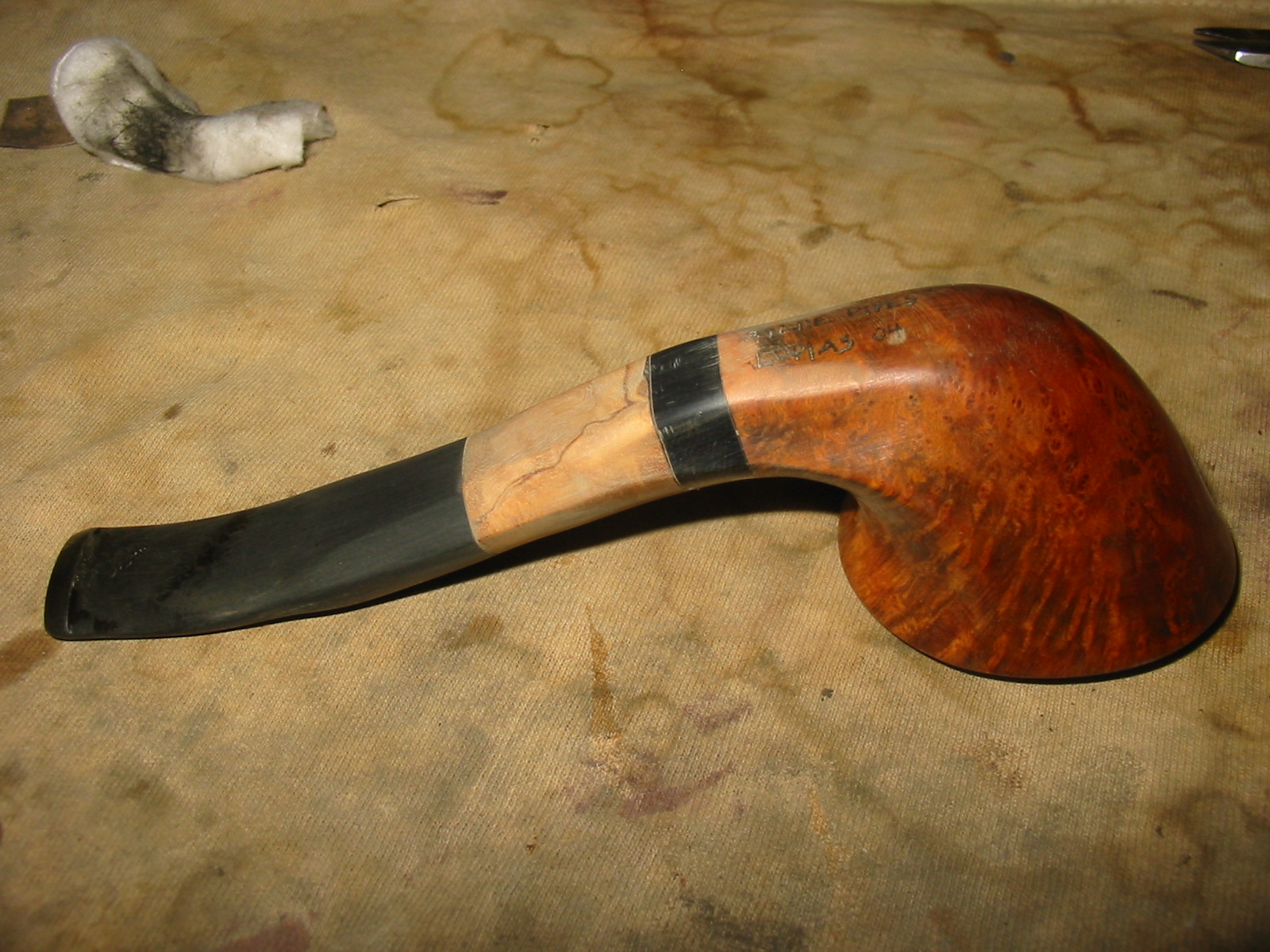
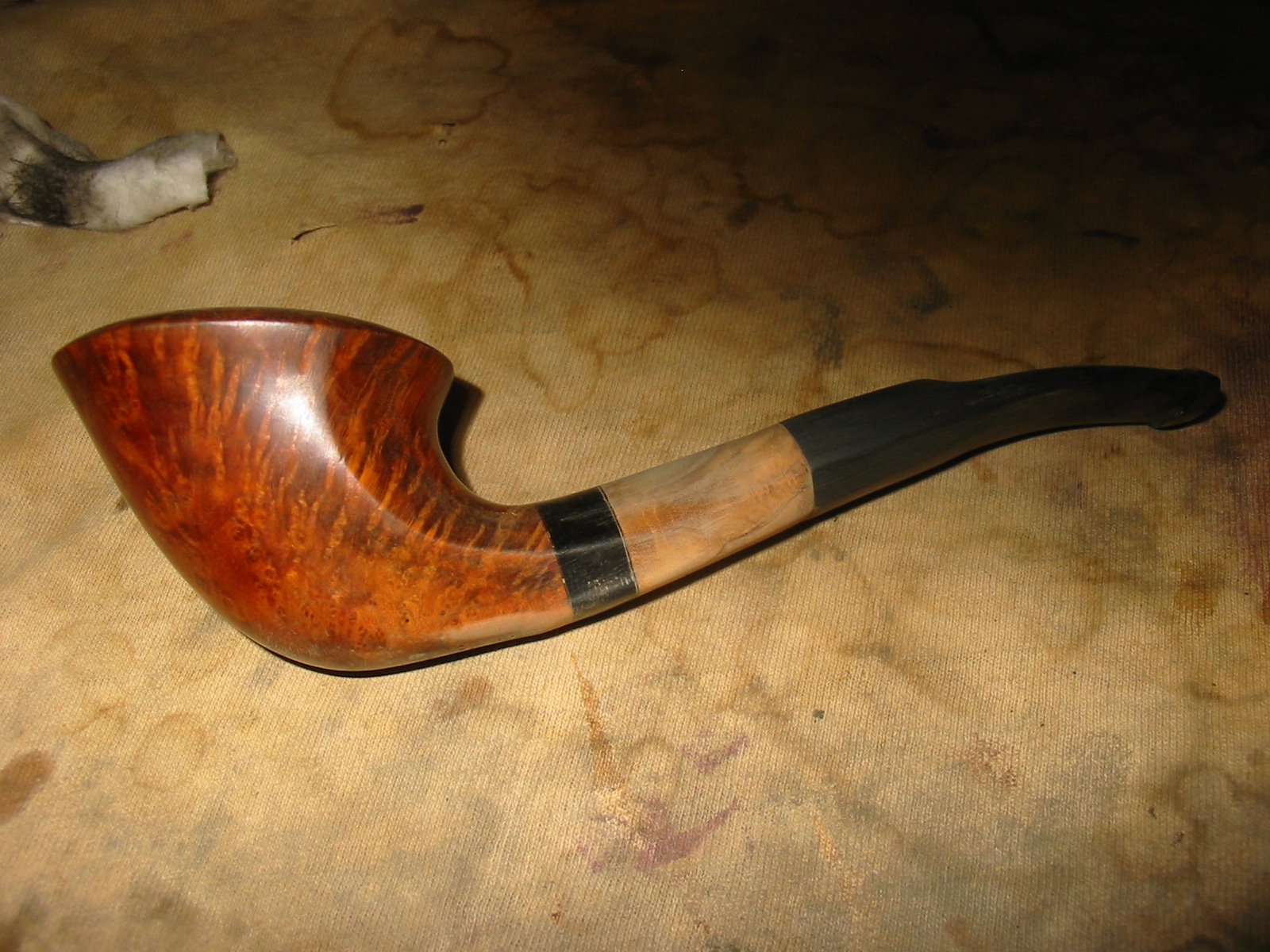
I stained the bowl and shank with an oxblood stain to give a reddish over stain to the brown undercoat. I wiped it on, flamed it, wiped it on again, and flamed it again. The red overcoat gave a depth to the colour on the bowl that had not been present before. It also gave a patina to the olivewood that really highlighted the grain in the wood. After the stain had dried I took the pipe to the buffer and buffed the bowl and stem with Tripoli and with White Diamond. The next series of four photos show pipe after I had buffed it. The new look seemed to work with the pipe. From the photos I could see that I also needed to make some adjustments to the underside of the shank to give it a better flow.
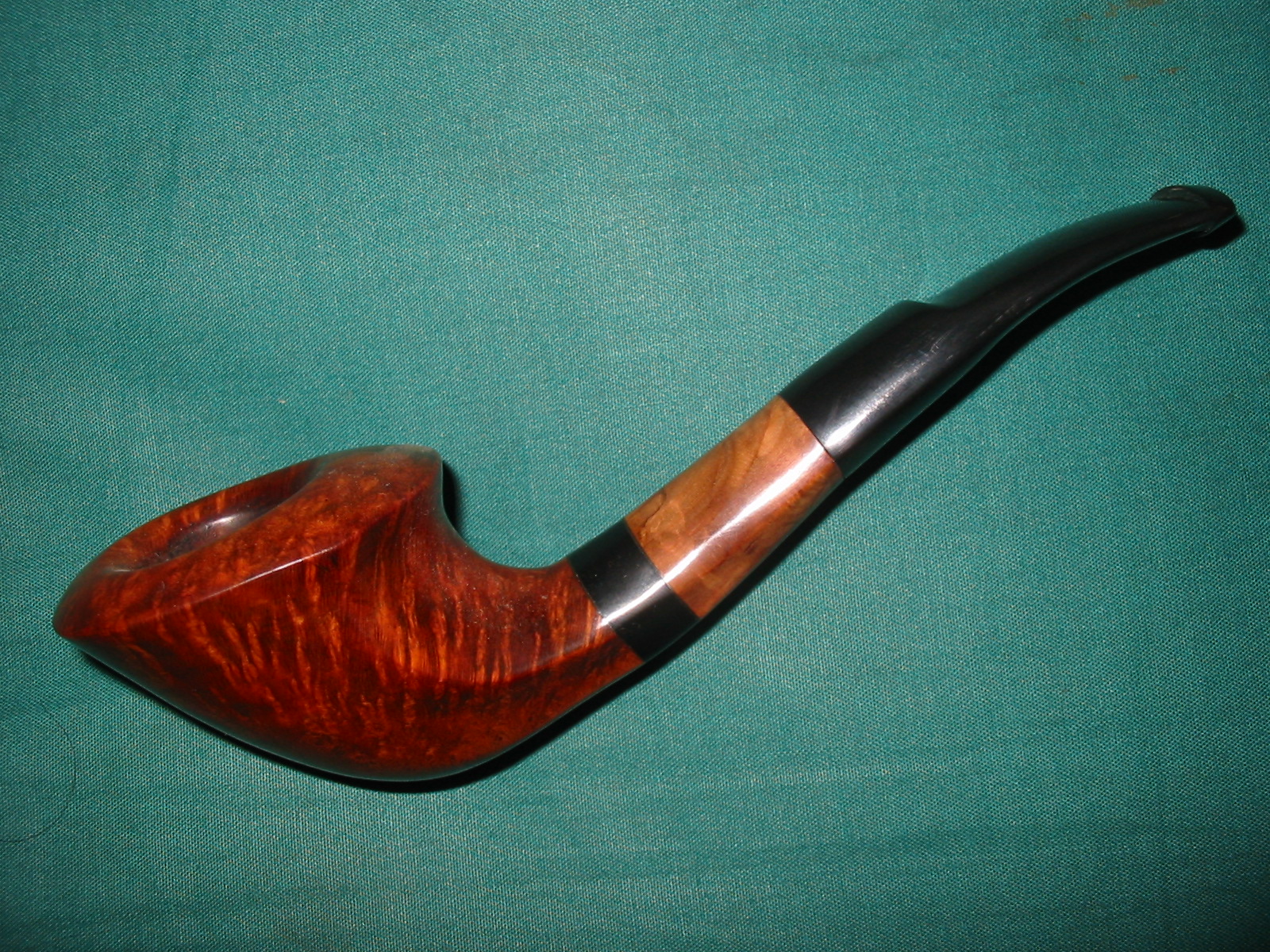
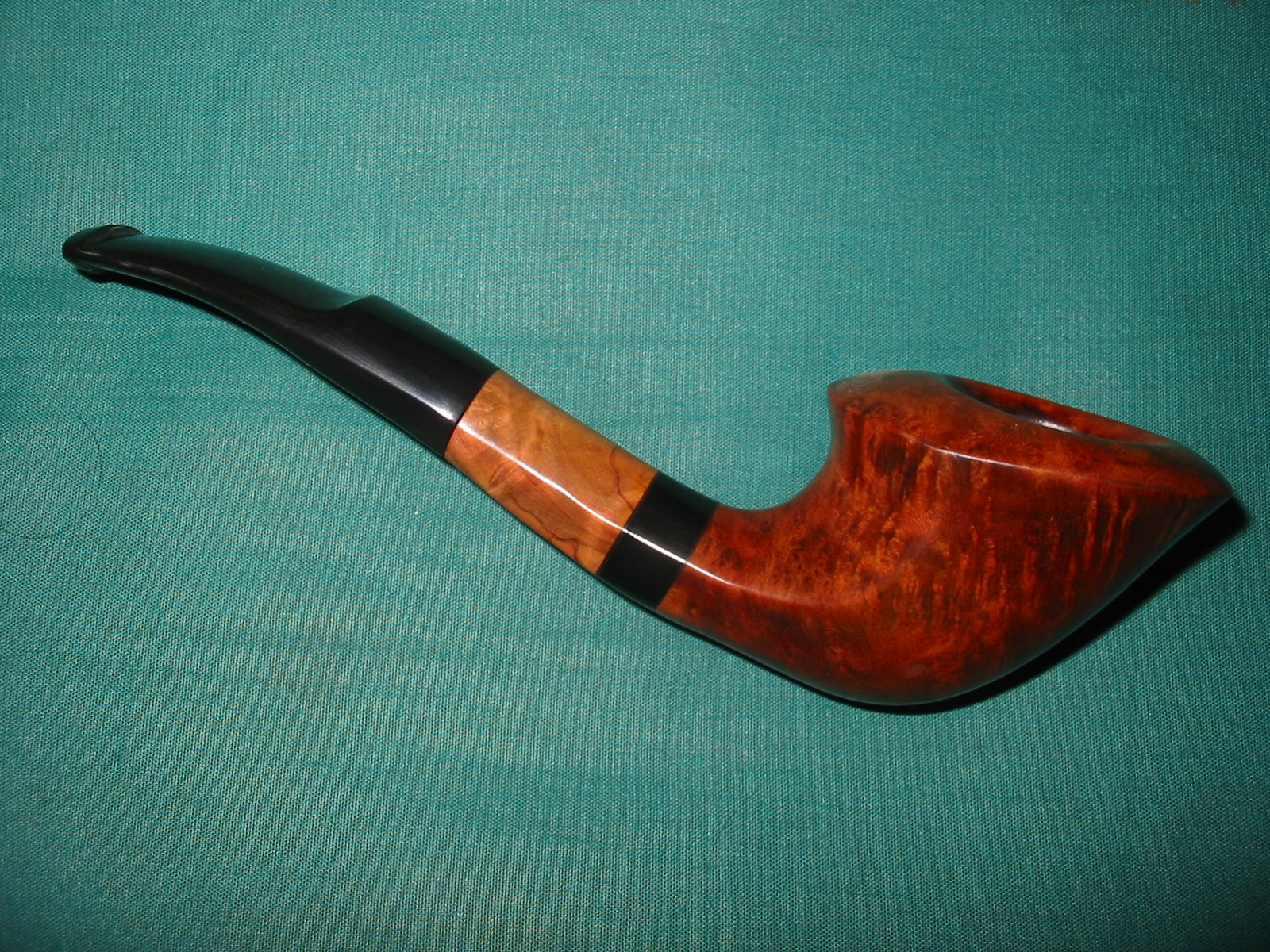
IMG_1223

IMG_1224

IMG_1225

IMG_1226

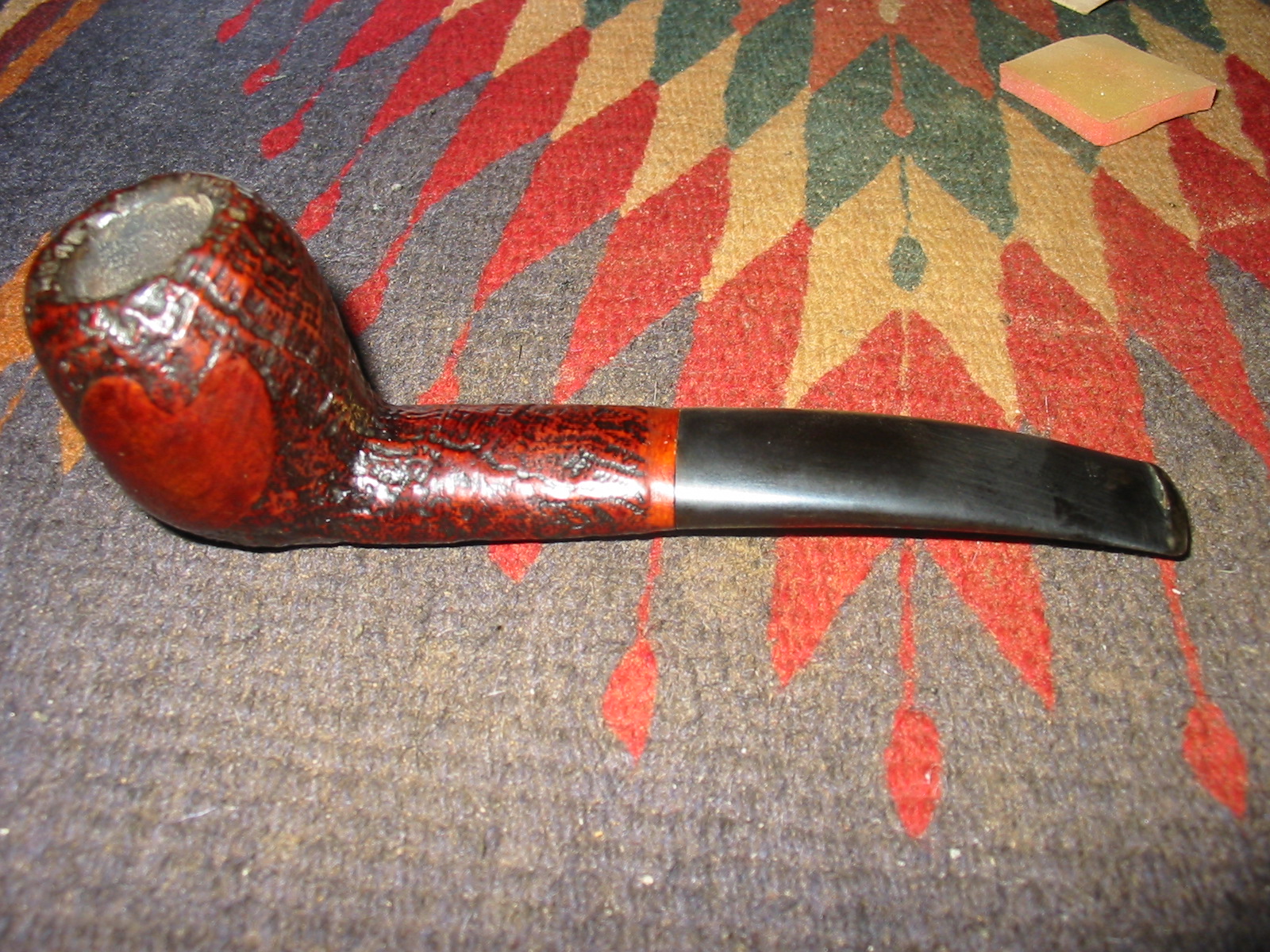
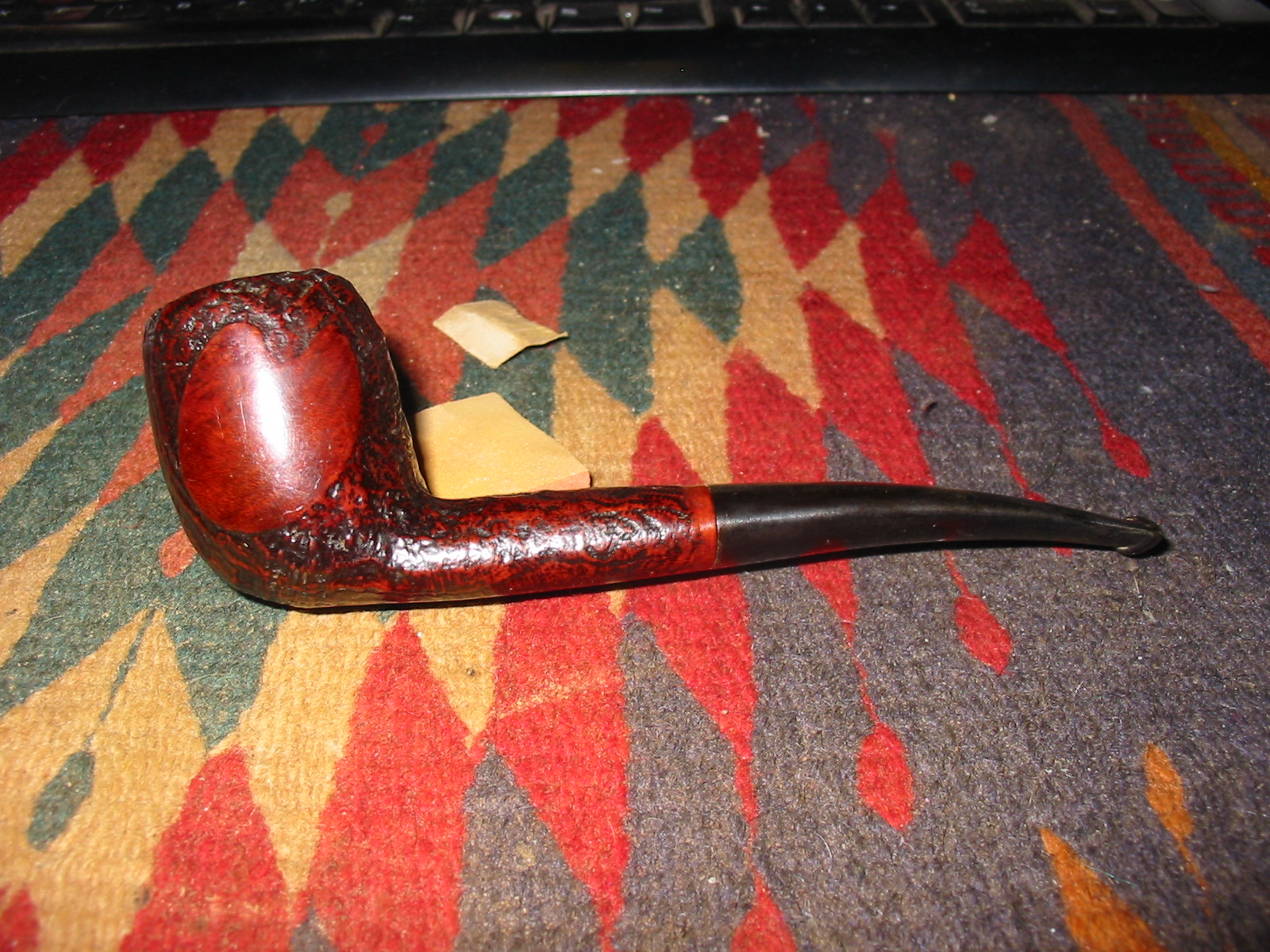
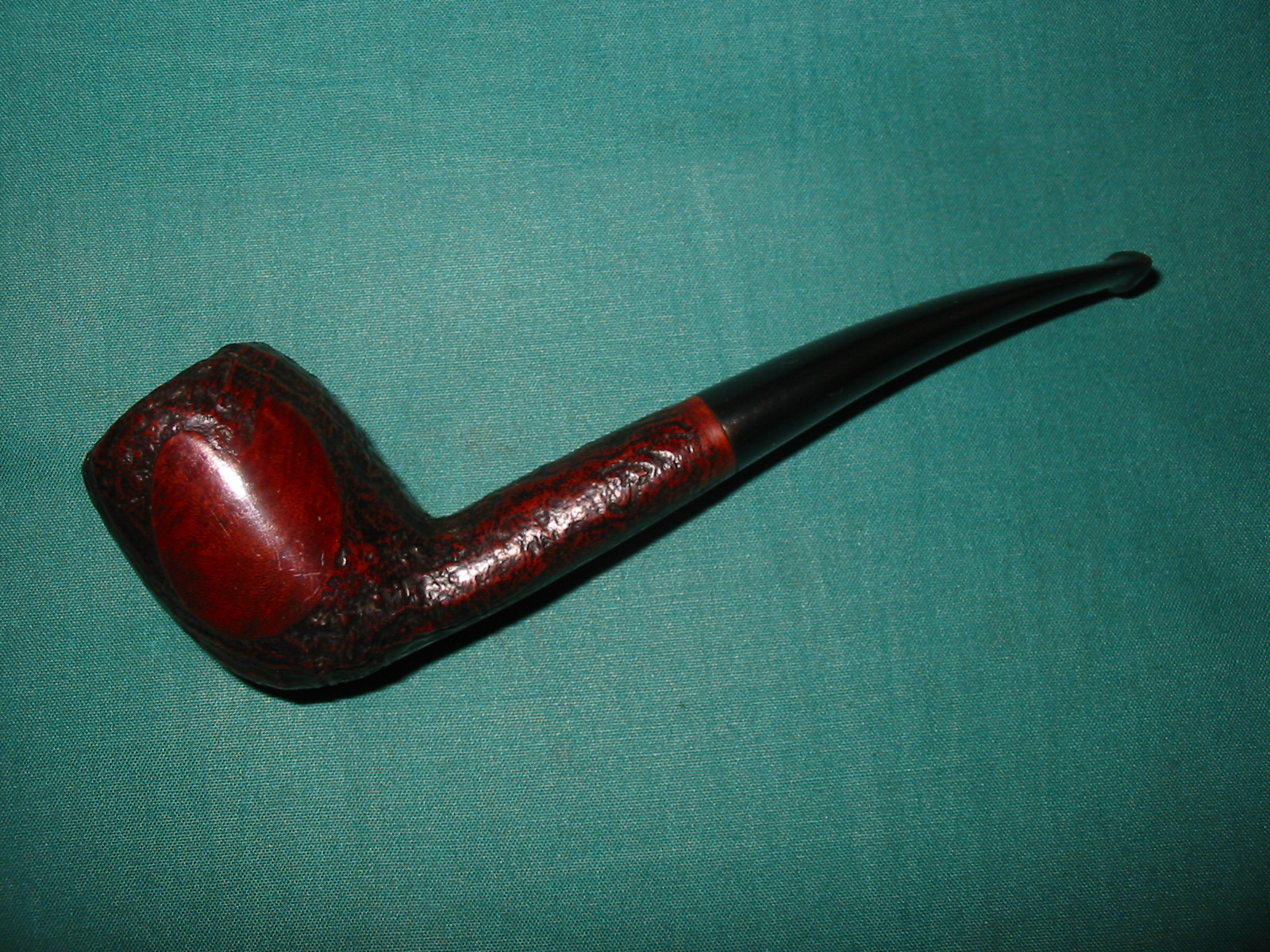
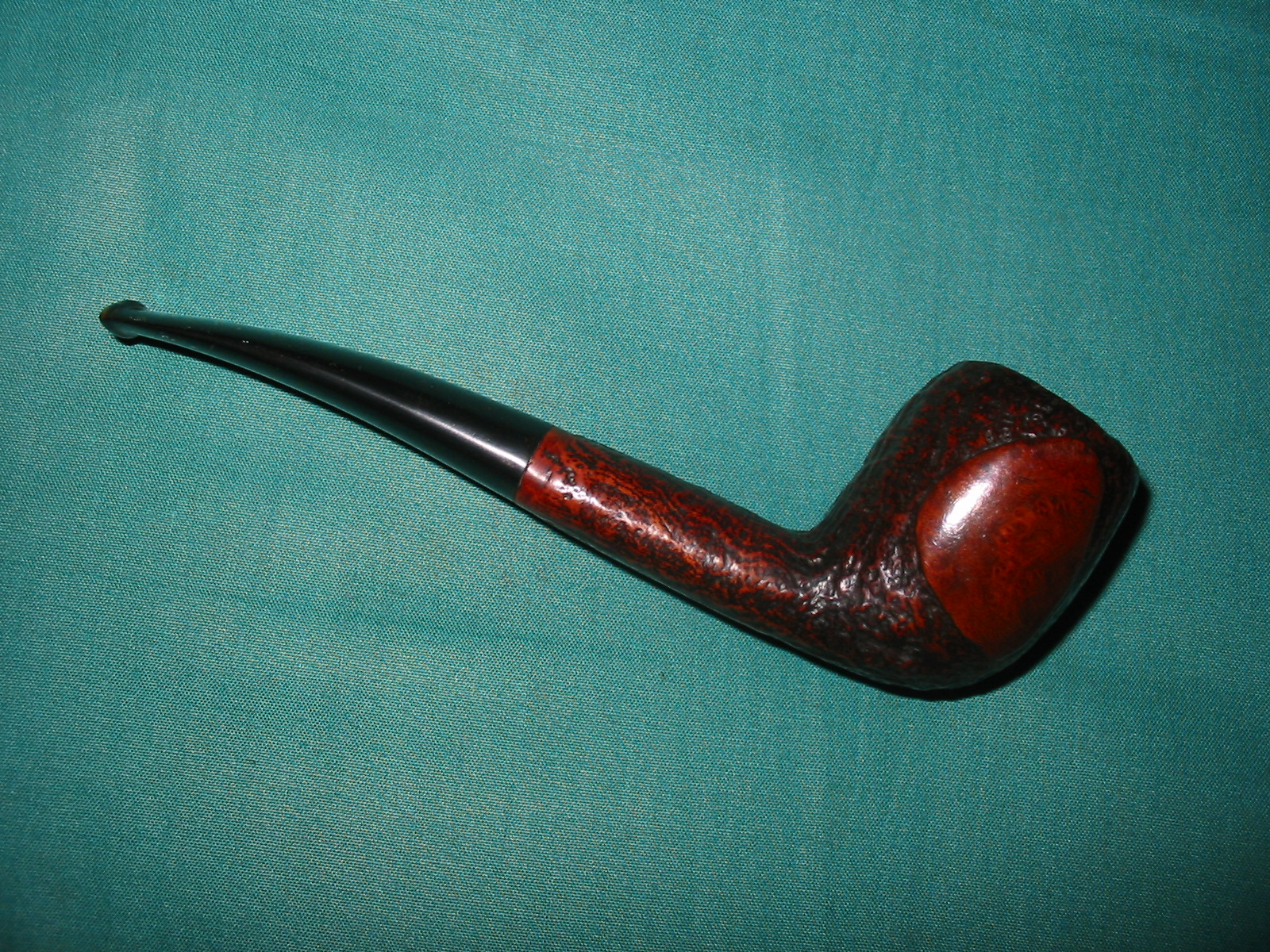
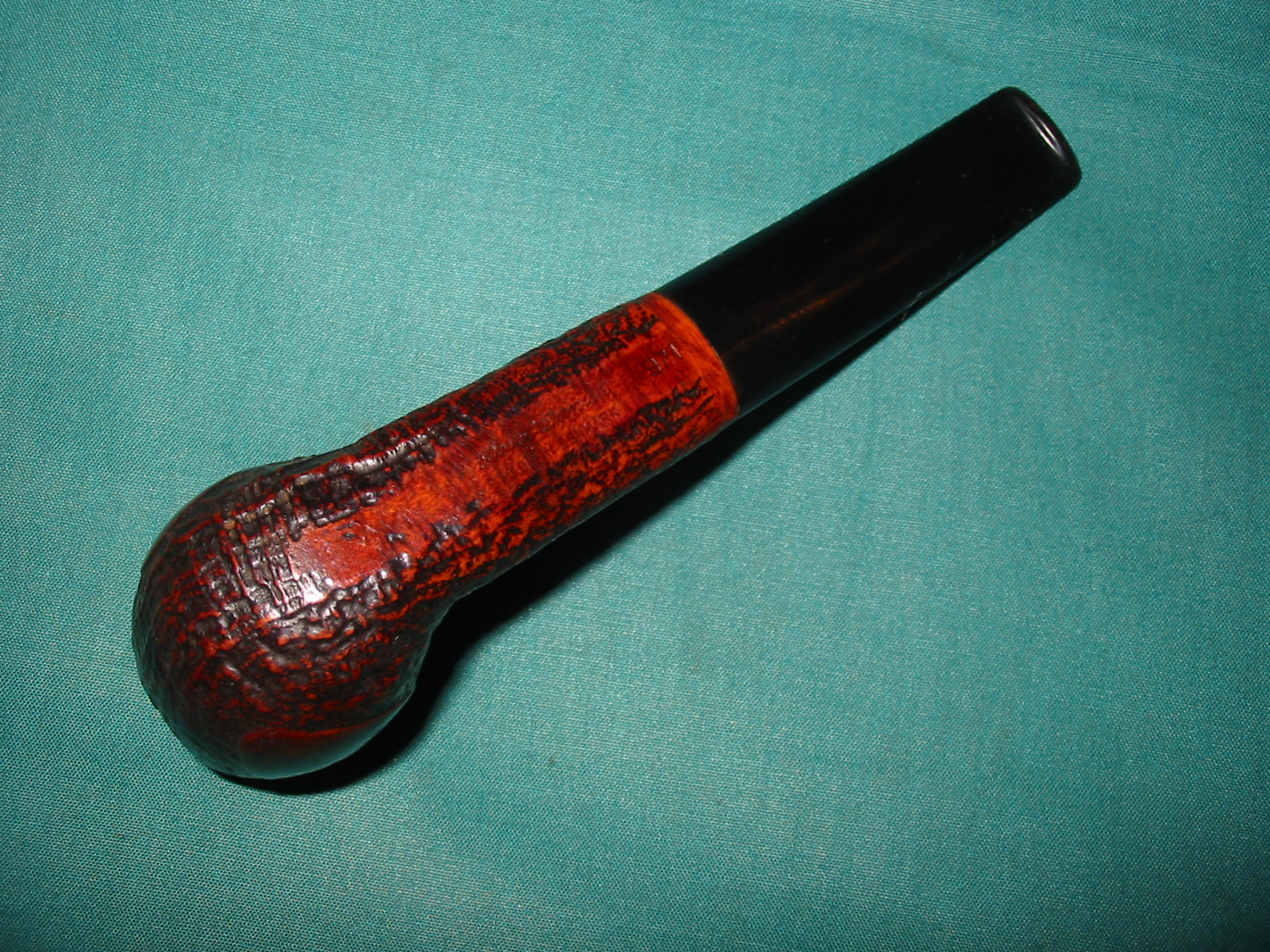
In the above photos it is evident that there was still a slight hump on the bottom of the shank on both sides of the acrylic band. That hump bothered me so I took it back to the Dremel and sanding drum and removed some more of the material on the shank around the acrylic band. I wanted to smooth out the flow of the bottom of the shank from the tip of the stem to the bottom of the bowl. One of the issues that I had to think through in doing this was that some of the original Downie stamp would lost. I would not remove all of the stamping but some of the letters on the stem side of the shank would be lost. I decided that I had made enough changes to the pipe that to not finish would leave the job half done. Sanding it down definitely improved the way it looked. After I finished sanding with the DremelI sanded the entire underside of the shank with 220 grit sandpaper, a medium and fine grit sanding sponge and then micromesh sanding pads 1500-3200 grit. I stained the portion I had sanded with the oxblood stain to match the rest of the pipe and then buffed it with White Diamond. I gave the entirety several coats of carnauba wax and then buffed with a soft flannel buff to polish it. The final series of four photos show the finished pipe.
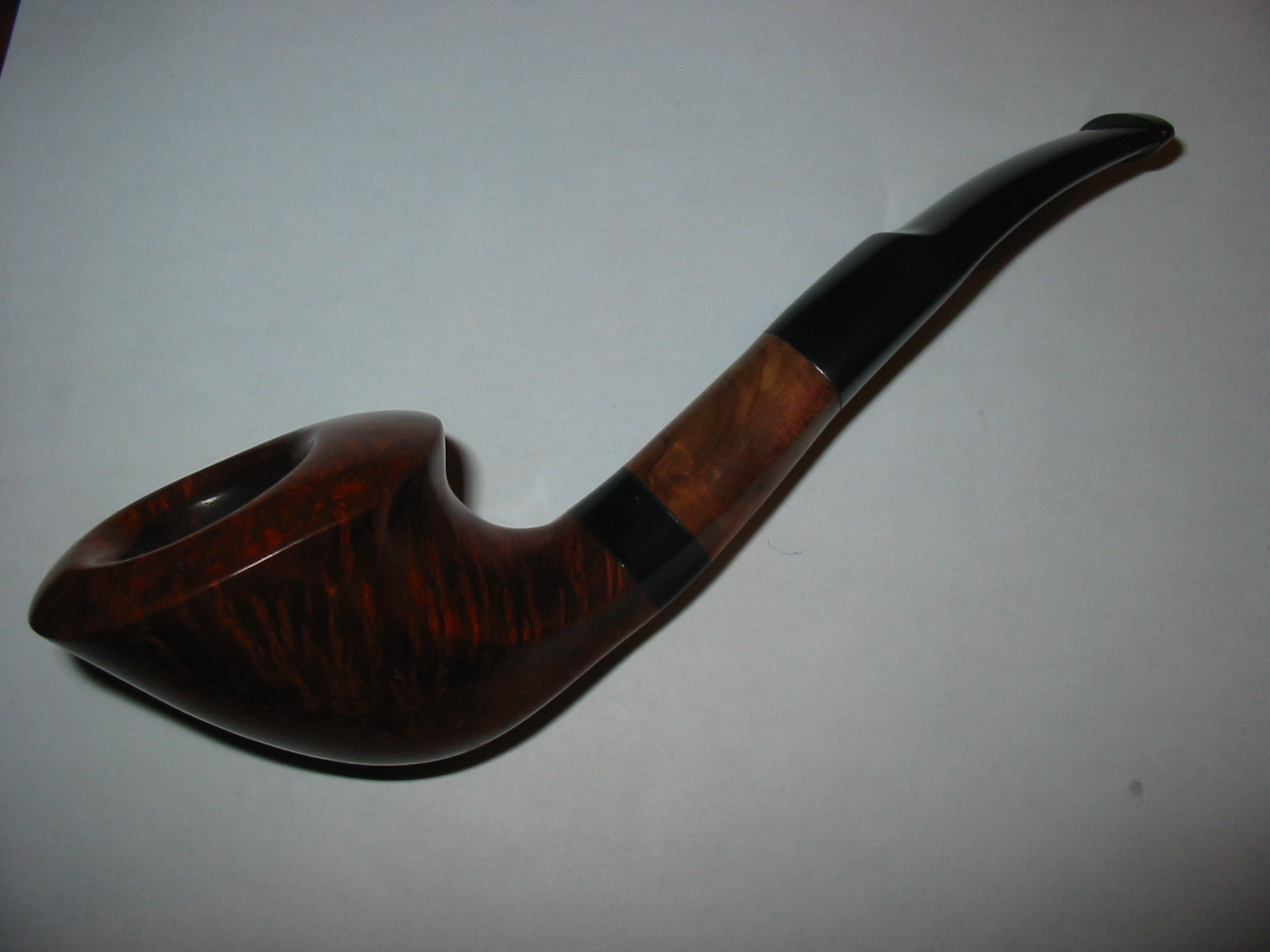
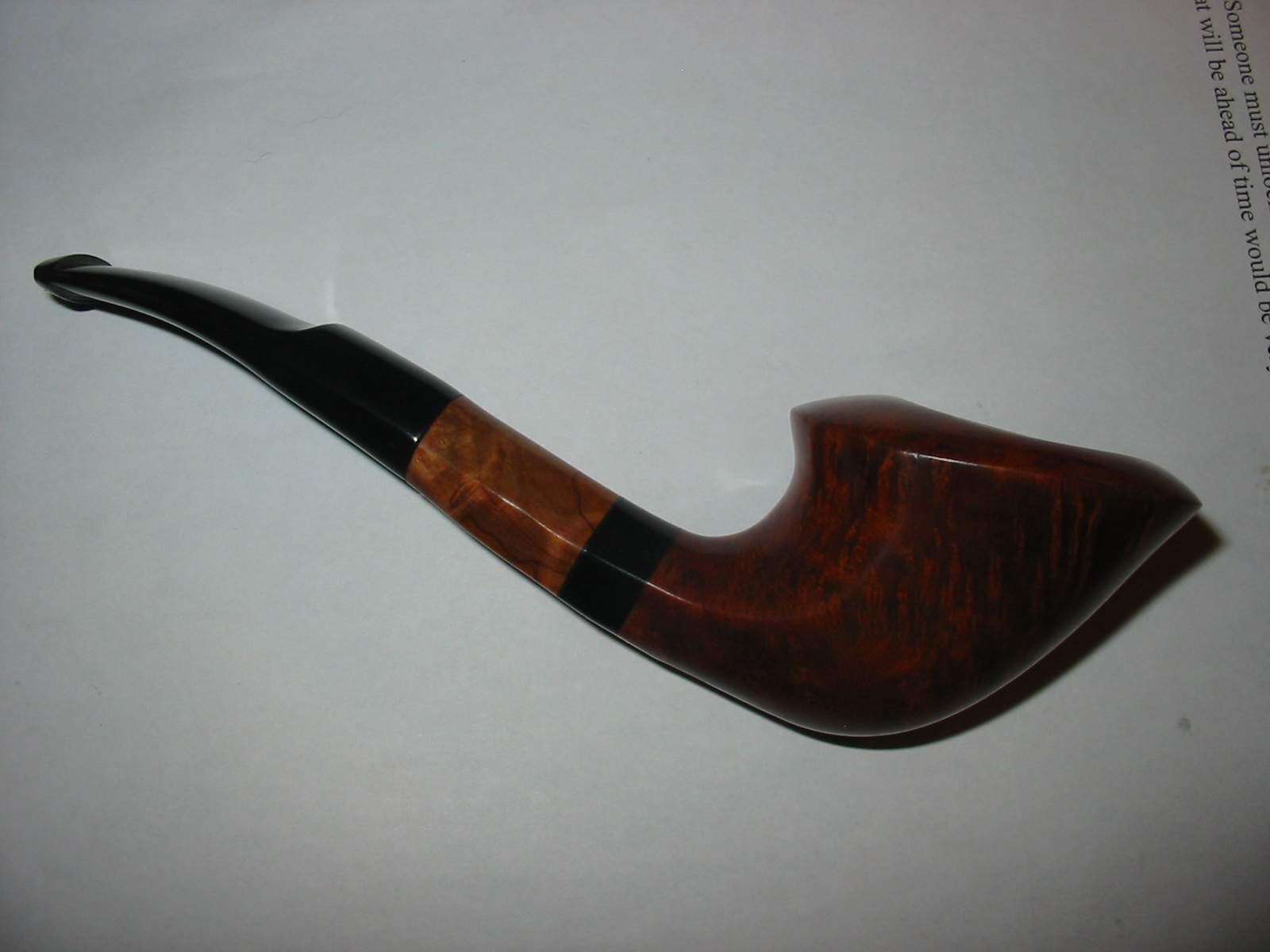
IMG_1326

IMG_1327

IMG_1328

IMG_1329

I raise my pipe to the humble pipe cleaner


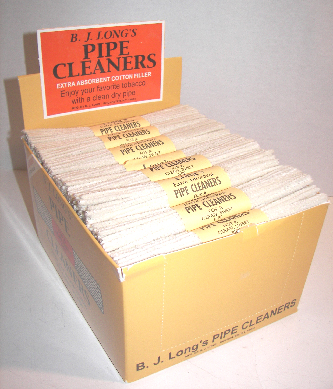
BJLongBulkBox It seems that every time I make a trip to a pipe shop I inevitably pick up some bags or bundles of pipe cleaners. It seems that I can never have enough of them around. Thin, fluffy, regular or bristle I buy them every single time. I use them for my own pipes and go through many of them as I work on estate pipes. They are an indispensable tool of my hobby and craft. There was a time in the past when I ran out of pipe cleaners and had to go hunting for them. The nearby shops did not have them. The craft shops wanted way too much for inferior ones and I did not have a vehicle available to run down to the local pipe shop to pick up a bunch. When that happened I decided I would never let it happen again. So to this day I have a case of pipe cleaners like the one in the picture on the left that I am constantly refilling.

The other day I was checking my supply of pipe cleaners and adding the new bunches I had purchased to the case. It has become a habit to check it regularly. But this time I paused for a moment and wondered about the invention of this amazingly simple device. Where did the idea come from? When was the pipe cleaner invented? Who came up with the idea for the design? Why? This wondering always leads me to “Google” the information and research for the answers to my questions. For me this is as much a part of the hobby as the pipes themselves. The questions lead me to interesting discoveries and information in the process.

I have heard for many years that in times past pipe smokers used chicken feathers (and I suppose other feathers as well) to clean out their pipe stems and shanks. This makes perfect sense when you think about the stiff feather shank and the soft “bristles” of the feather. They function well as a brush when turned inside of the pipe. I am sure many a pipeman used them and threw them away until they needed another. I can almost envision them going out to the henhouse in the yard and either plucking a feather or picking one up, wiping it off and thrusting it into the stem to clean up before or after a smoke.

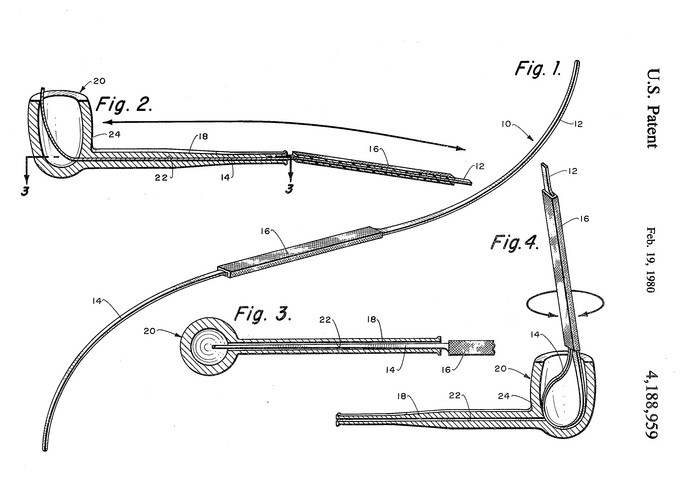
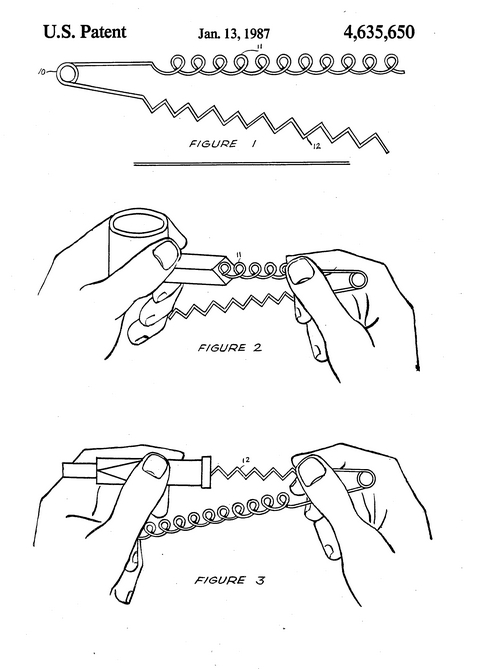
I discovered through my research several things that were fascinating to me. There is no end to the different tools that inventive pipe smokers have come up with to clean out their pipes. Some of them seem way too complicated to my mind to be a tool that I would use. Others are quite simple but in my life I have never seen them. Pipemen seem to continually come up with ideas for a better pipe cleaner. The have bent and twisted wire, made creative twists and turns of metal, and designed tools that looked like cutting saws for the purpose of cleaning a pipe bowl. I came across many patents for unique designs. A quick Google search for tobacco pipe cleaners will give you ample opportunity to have a look at the wild creativity of designs for a simple tool. I have included two of the more recent patent diagrams from the 1980s that show that the search for the perfect cleaner continues to go on. I am convinced that pipemen will always be looking for a better tool and thus there will always be new inventions that flood the patent office.

pipe cleaner 1

Pipe cleaner 2

There are many more unique and quirky versions of pipe cleaners that have been on the scene for a long time. I have several in my collection that are quite unique but nonetheless no longer made as they did not gain a following. For example, people have put spring cutting blades inside Bakelite cups to collect the scrapings of the blades. But there are also ones that have a growing following. These include such items as small shank brushes that can be washed and reused and also small barrel brushes like those used in cleaning firearms that can be run through the shank and the stem to clean out the debris left behind by the combustion of tobacco. Each of these two tools work quite well and have their place in the refurbishing kit.

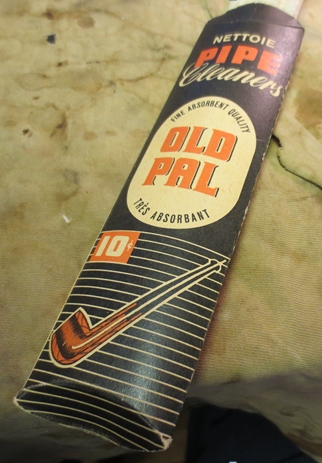
IMG_1348 But even with all this creativity and inventiveness churning out new and “better” pipe cleaners none of them have displaced the fuzzy cotton pipe cleaner. For its band of supporters it will never be replaced by any manner of new-fangled notions. It is to the pipe cleaner alone that title of “old pal” has can be given. If you come across a pipe smoker in your travels you will inevitably find pipe cleaners near at hand.

But what triggered the design. I cannot prove this assumption on my part but it seems to me that the idea of the pipe cleaner came as a spinoff of the chicken feather. Its design is kind of a modern art version of the feather. It works in the same way as the feather – a central shaft with brushes attached that can fit in the stem and shank doing exactly what the feather did for those who used it in their pipes. Can’t you imagine it as a “modern” manmade feather?

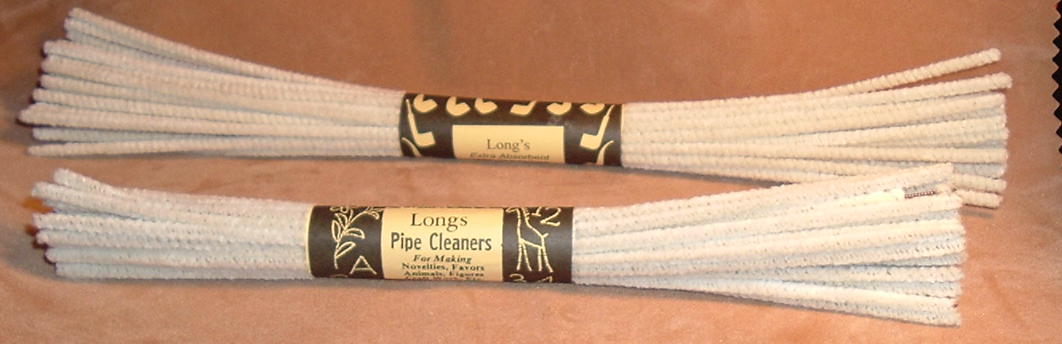
But who invented it? After a bit of research on the web I found that they were invented by John Harry Stedman (b. 1843, d. 1922) & Charles Angel in Rochester, New York in the early 1900’s. Stedman was a creative inventor who throughout his life invented not only the fuzzy pipe cleaner but also the streetcar transfer ticket in 1892. He sold the pipe cleaner rights to BJ Long Company who has continued to make them for over 60 years and still makes them today. A quick look at their website shows the expansion of the pipe cleaner’s uses to include medical and craft areas. Their product has wide uses and diverse purchasers. To me this brand epitomizes the pipe cleaner. I am sure many of us are familiar with it as most pipe shops in North America sell BJ Long pipe cleaners in bundles and they are sold across the World Wide Web in online shops and on EBay as well.

bjlong

912

Pipe cleaners are normally made from some absorbent material, usually cotton. Bristles of stiffer material like nylon\plastic are added to the bristle version of the cleaner to enable the pipeman to scrub out the shank and stem of their pipes. Typically the cleaner is used by pipemen after a smoke of their pipe or when cleaning their pipes. It is used either dry or it is dipped in alcohol or is wetted with the tongue before it is inserted into the airway. The cleaner absorbs the moistures and oils from the stem and shank. It can also be folded and used in the bowl to knock out debris left behind once the dottle has been dumped. Some pipe cleaners are tapered so that one end is thick and one end thin. The theory behind the design is simple – the thin end is for cleaning the smaller airway of the stem and the thick end for the shank. Some are thin and some are fluffy. The designs are made for different sized airways and stem designs. Pipe cleaners are designed to be thrown away after use though there are many tales of them being washed and reused.

001-545-0102

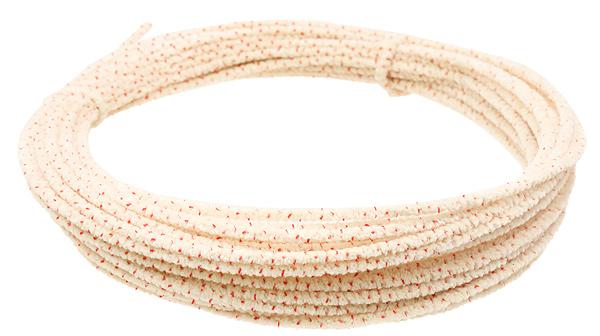
The construction of pipe cleaners is simple and involves two lengths of wire, called the core, twisted together trapping short lengths of fibre between them, called the pile. Pipe cleaners are usually made two at a time, as the inner wires of each pipe cleaner have the yarn wrapped around them, making a coil; the outer wires trap the wraps of yarn, which are then cut, making the tufts. Chenille yarn is made in much the same way, which is why craft pipe cleaners are often called “chenille stems”. Some pipe cleaner machines have actually been converted into chenille machines. The pipe cleaners produced vary from machine to machine type. Some machines produce very long pipe cleaners which are wound onto spools. The spools may be sold as-is or cut to length depending on the intended use. Other cut the pipe cleaners to length as they come off the machines. The pipe cleaners used by pipe smokers and refurbishers are usually 15 – 17 cm (6 – 7 inches) long while the ones used for crafts are often 30 cm (12 inches) and can be up to 50 cm (20 inches). I have found that these longer pipe cleaners work well in cleaning church warden pipe stems so I have a few always on hand.

I have no idea what you might think about the pipe cleaner or if you even do. It may well be a silent partner in your smoking/cleaning regimen but to me the history and manufacture of them is an interesting piece of our hobby. So to the humble pipe cleaner I raise my pipe!

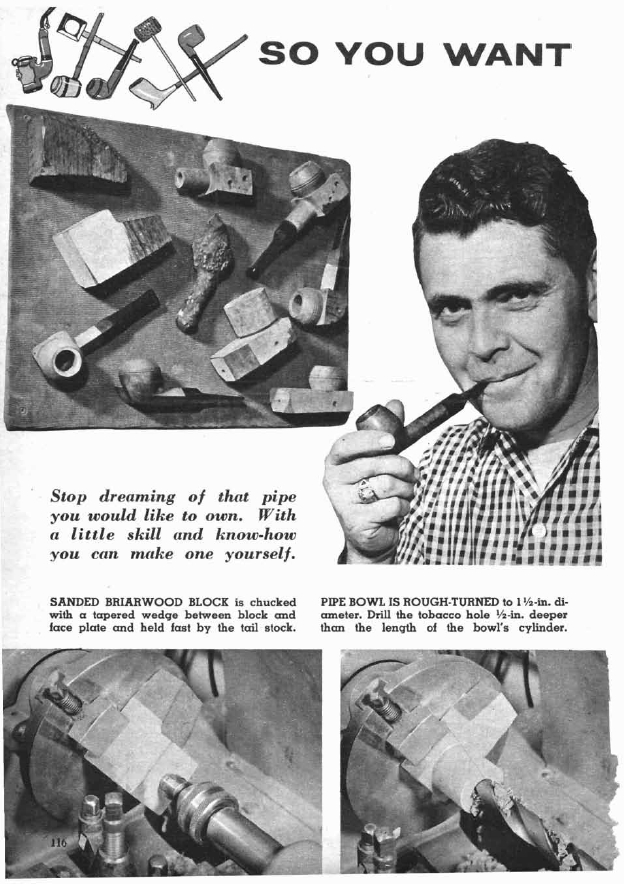
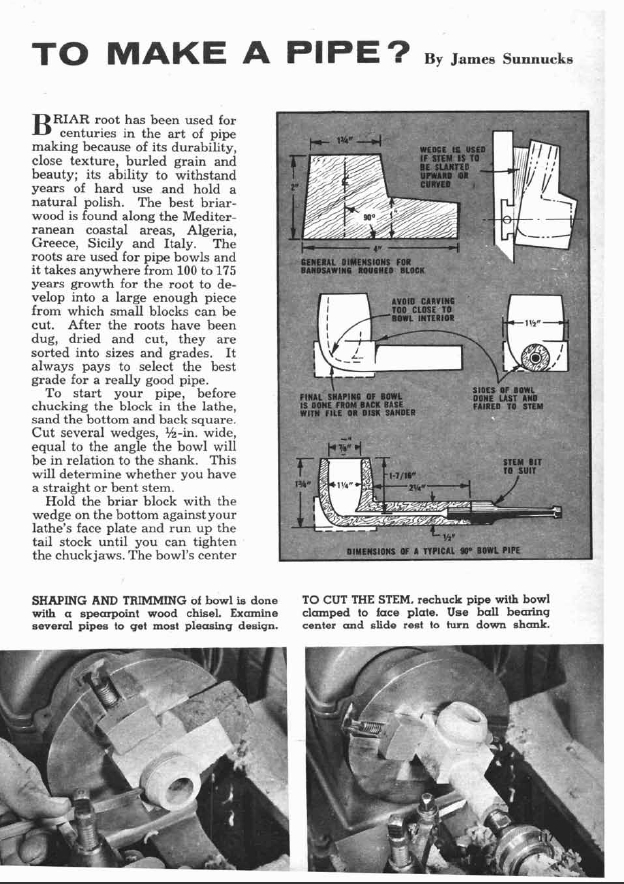
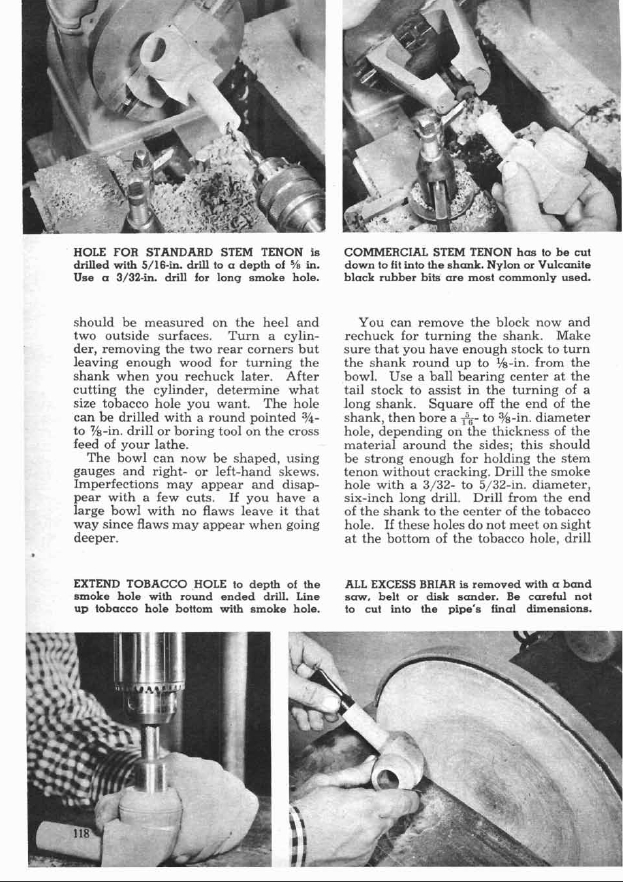
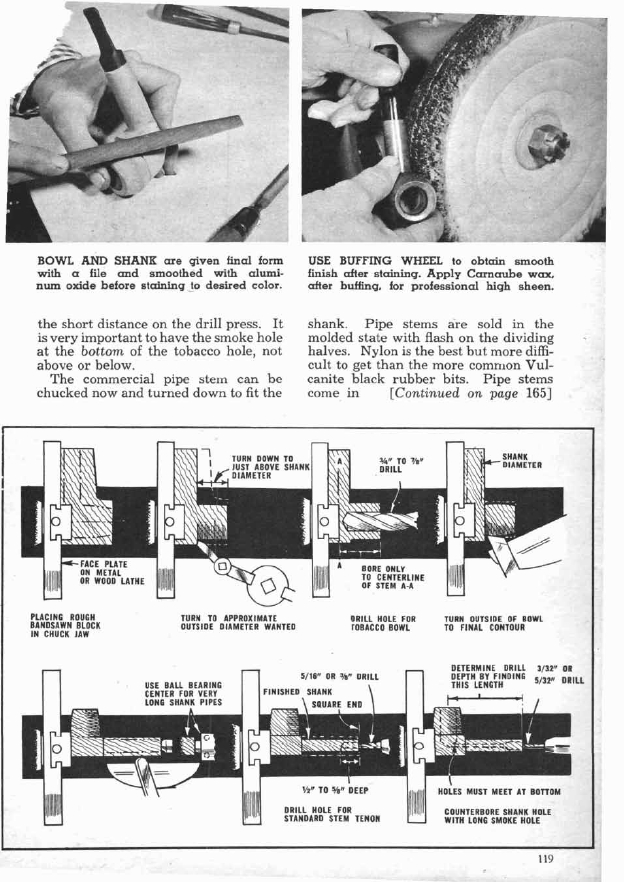
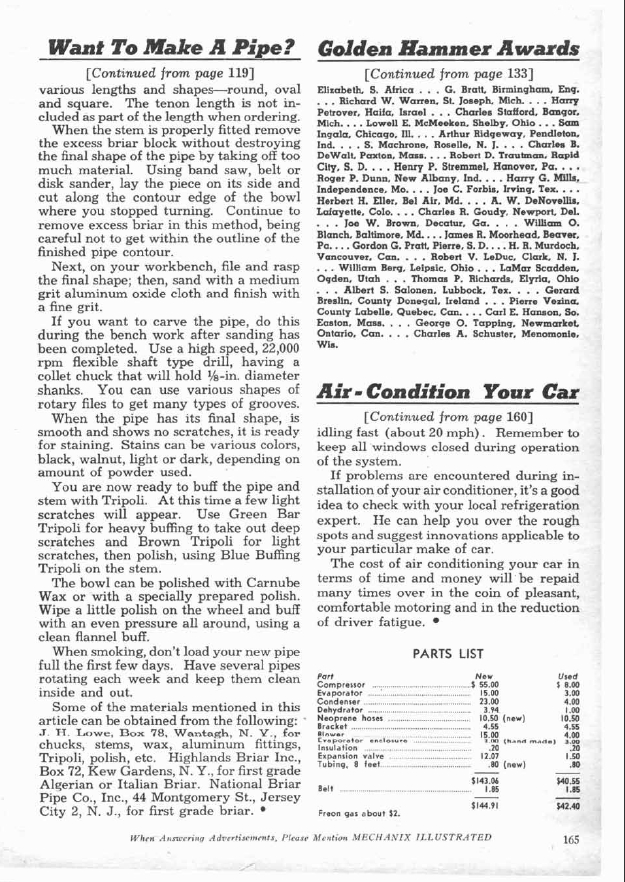
So you want to make a pipe


Periodically I come across old articles that are fascinating reading – at least to me. This is one from Mechanix Illustrated and was written by James Sunnucks. I find it interesting to see how he spells out the process. Great black and white illustrations and from the photos I would guess the article is from the 50’s. I thought I would pass it on.
Pipe1

Pipe2

pipe3

Pipe4

Pipe5

Finding a Hidden Gem Underneath all the Grit and Grime


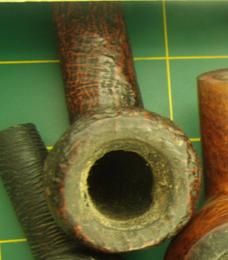
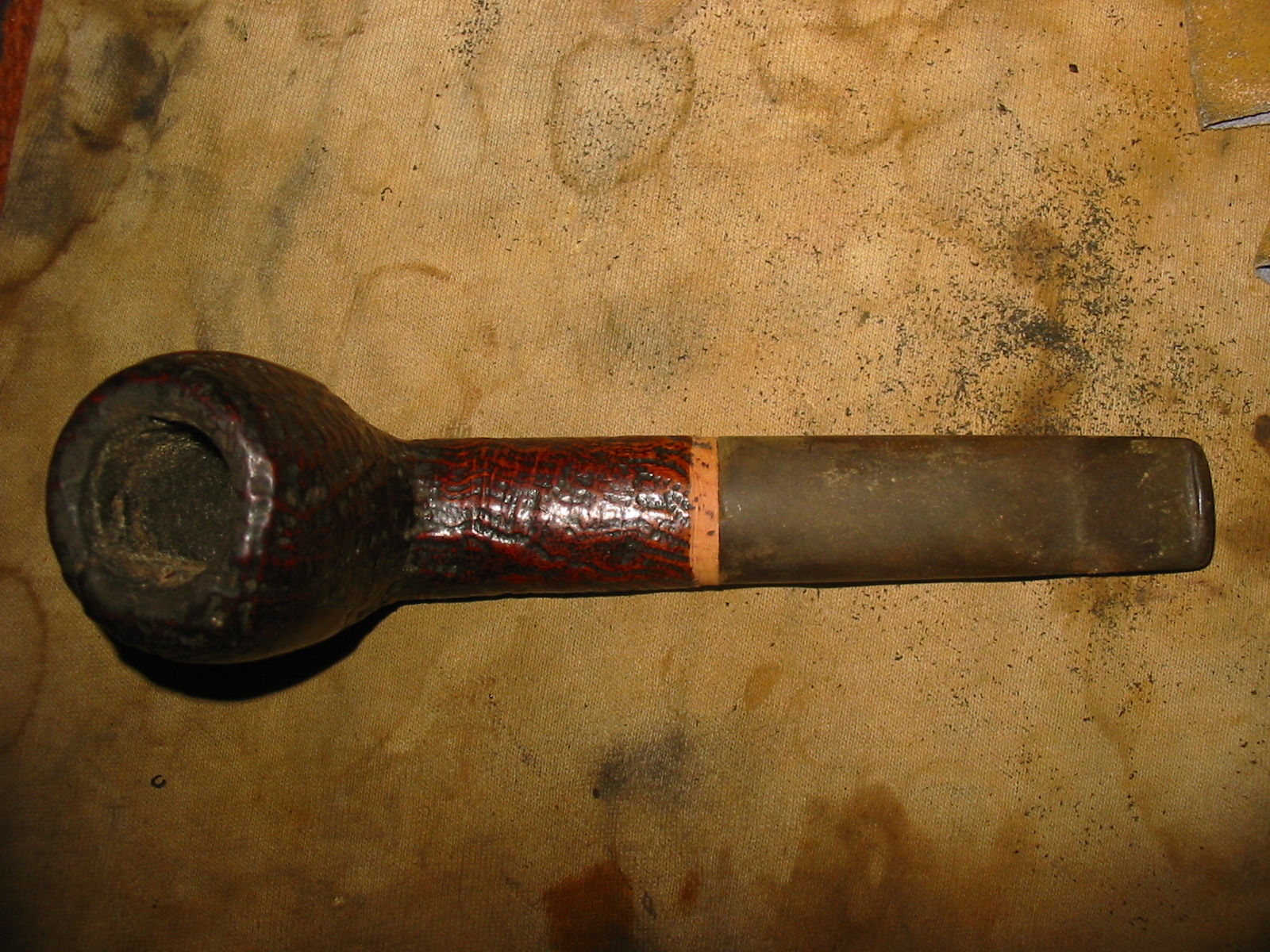
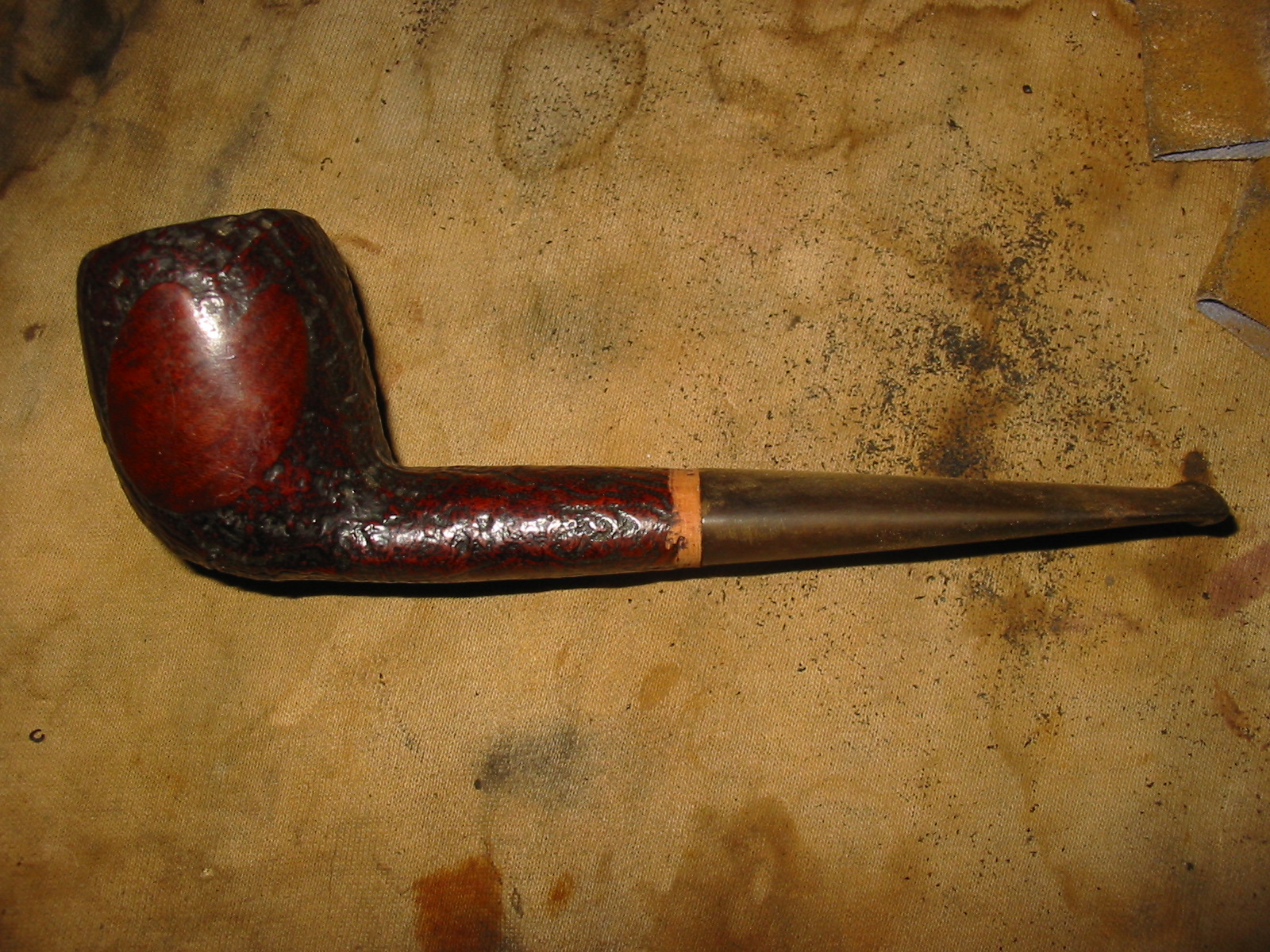
I went to work on the third pipe down in the far right column. It was one that I almost bypassed because of the shape it was in, but decided to take a chance and see what was underneath all of the mess. The stamping was long ago worn away by buffing. It had originally had a ferrule on the shank and that was missing. The bowl was badly caked and it was out of round from overzealous reaming. The finish was shot with thick black grime impregnated into the bowl finish all the way around. Underneath there appeared to be some nice grain. The missing ferrule left behind remnants of the glue that had held it in place. In the shank where the ferrule was missing were several fills – the only ones in the pipe. The size of the pipe is about a group 2 – kind of the classic size of an older billiard. The stem was missing so it would need to have one made to fit.

bowls1

Noname

The next series of photos shows the build up on the outside of the bowl. Not only was it badly caked it also was covered with a grey/black grime that would be challenging.

IMG_1258

IMG_1259

IMG_1255

IMG_1256

IMG_1257

I used acetone and cotton pads to remove the external grime on the bowl (Photos 1 – 2 below). There was actually some nice grain underneath all the grime. I reamed the bowl with a PipNet reamer starting with the smallest cutting head and working my way up to the largest that would fit the bowl. I wanted to ream it back to bare wood so that I could work on the damaged inner rim (Photo 3 below). I topped the bowl to remove the damage to the top of the rim and clean up the outer edges of the rim. I used my normal method of a piece of sandpaper on a flat surface and pushing the bowl into the sandpaper and rotating it to remove the damaged briar (Photo 4 – 5). I also push a nickel band onto the shank part way. I would later need to heat it to get a pressure fit deep on the shank. This band would both strengthen the thin walls of the mortise at the end and also cover the only fills present on the pipe.

IMG_1260

IMG_1261

IMG_1262

IMG_1263

IMG_1264

I used a Dremel with a sanding drum to work on the roundness of the bowl. I worked to even out the distance between the inner edge of the rim and the outer edge. Once this was completed I used sandpaper to smooth out the edge and give it a slight bevel (Photo 1). I wiped down the bowl and rim with acetone on a cotton pad to clean off the last of the dust and grime from the reaming and sanding (Photos 2 – 3).

IMG_1265

IMG_1266

IMG_1267

I set up the heat gun and turned it to the high setting. I held the band over the heat and rotated it to evenly heat the entire band (Photo 1). Once it was heated (just a few minutes) I then took it to the work table and pressed the band in place on a metal plate I use for setting the bands. Sometimes this takes several trips between the heat and the plate but this time one trip was all it took and the band was set (Photos 2 – 3).

IMG_1268

IMG_1269

IMG_1270

I used a PIMO tenon turning tool to turn the tenon to fit the mortise. I generally turn it until it is close and then finish the fit by hand with sandpaper (Photo 1). After sanding the stem fit quite well in terms of the tenon. It was snug and flush against the shank – no light showing through (Photos 2 -3). I used the Dremel with a sanding drum to remove the excess vulcanite on the stem and to shape it to match the diameter of the shank. I sand carefully with the sanding drum to bring it as close as possible to the size I want. You have to be careful and steady so that you do not nick the shank or the band while doing this. The finishing fit is done by hand with files and sandpaper (Photos 4 – 5).

IMG_1275

IMG_1276

IMG_1277

IMG_1278

IMG_1279

The next series of seven photos show the shaping process. I begin with a medium grit emery paper and sand out the scratches left behind by the Dremel. I shape the stem with this paper to the point where the flow and fit of the stem is what I am looking for (Photos 1 – 2). I then move on to 220 grit sandpaper and continue to remove the scratches and shape the stem (Photos 3 – 4). It then finish this shaping with a fine grit sanding sponge and polish out more of the scratches. Each grit of paper brings the stem closer to the finished shape (Photos 5 – 7).

IMG_1280

IMG_1281

IMG_1289

IMG_1290

IMG_1293

IMG_1294

IMG_1295

I apologize for the graininess of the next two photos but they show the bowl after I had stained it. I used a dark brown aniline stain thinned with one part alcohol. I wanted a rich reddish brown colour on this old timer so I thinned the stain to match the colour I wanted. I applied it to the bowl and rim, flamed it, reapplied it and flamed it again.

IMG_1299

IMG_1300

IMG_1301

I worked on the stem with micromesh sanding pads. I also sanded the nickel band to bring out a polish to it as well. The next series of seven photos shows the progressive shine that comes to the stem with each successive grit of micromesh from 1500-12,000 grit. I wet sanded with the 1500-2400 grit and then dry sanded with the remaining grits.

IMG_1313

IMG_1314

IMG_1315

IMG_1316

IMG_1317

IMG_1318

IMG_1319

I sanded the bowl with the higher grits of micromesh and then buffed the pipe with White Diamond to give the entirety a rich shine. I applied several coats of carnauba wax and buffed it with a soft flannel buff. The stain really highlights some of the beautiful grain on this pipe. I am glad I took the risk to bring this one back to life.

IMG_1321

IMG_1322

IMG_1323

IMG_1324

Royal Danish Acorn Shape 971 Reborn


Blog by Steve Laug

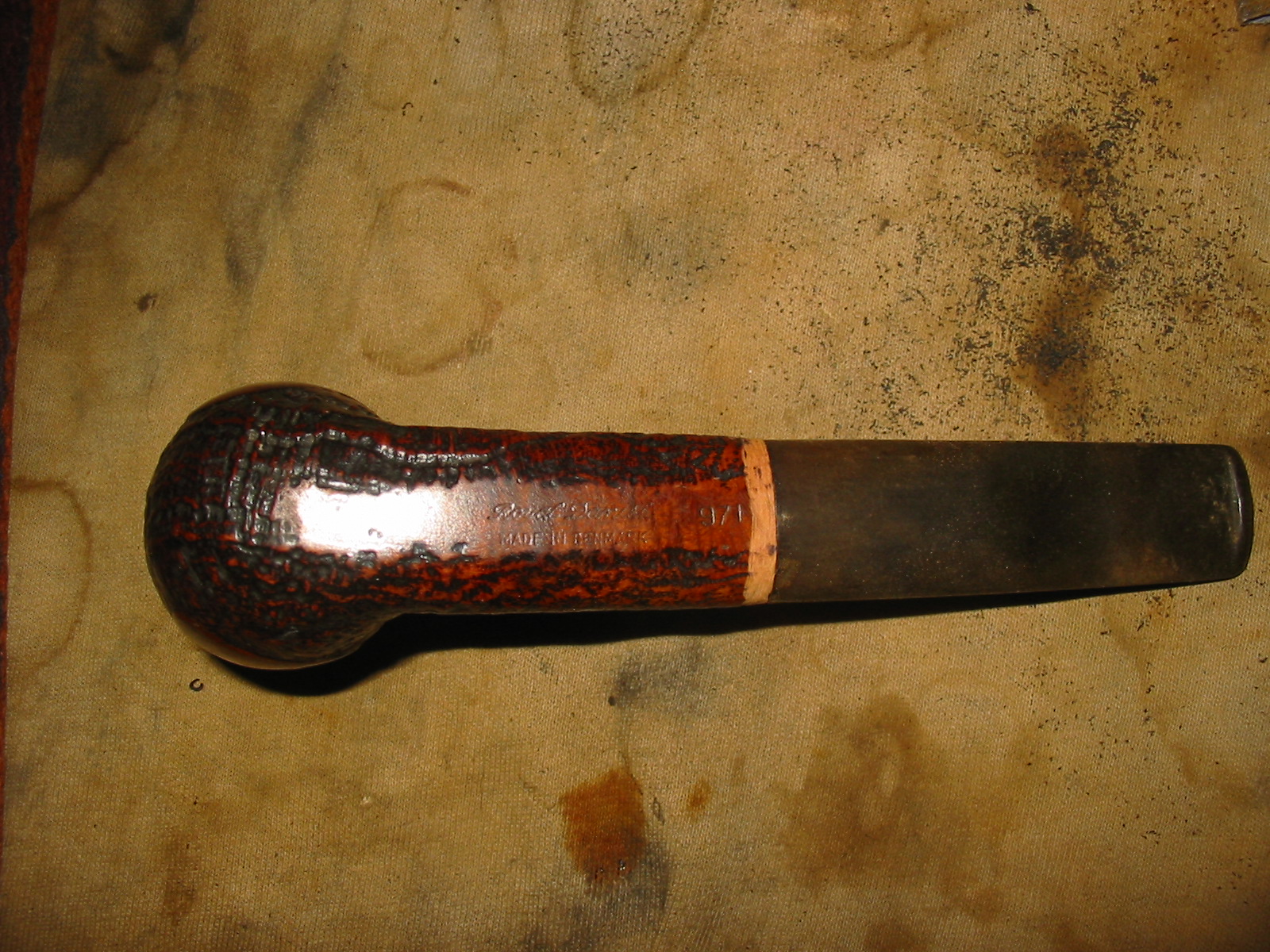
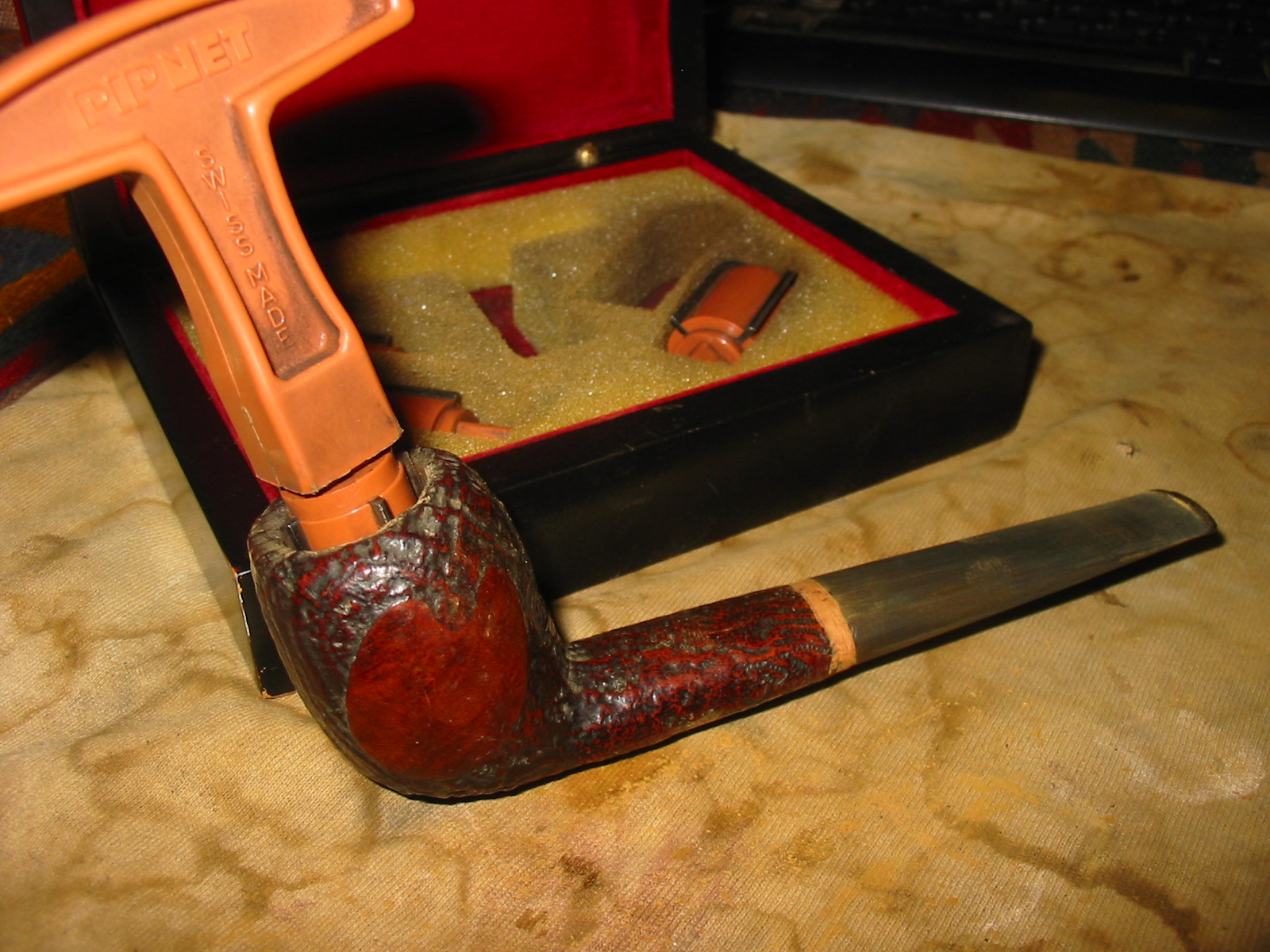
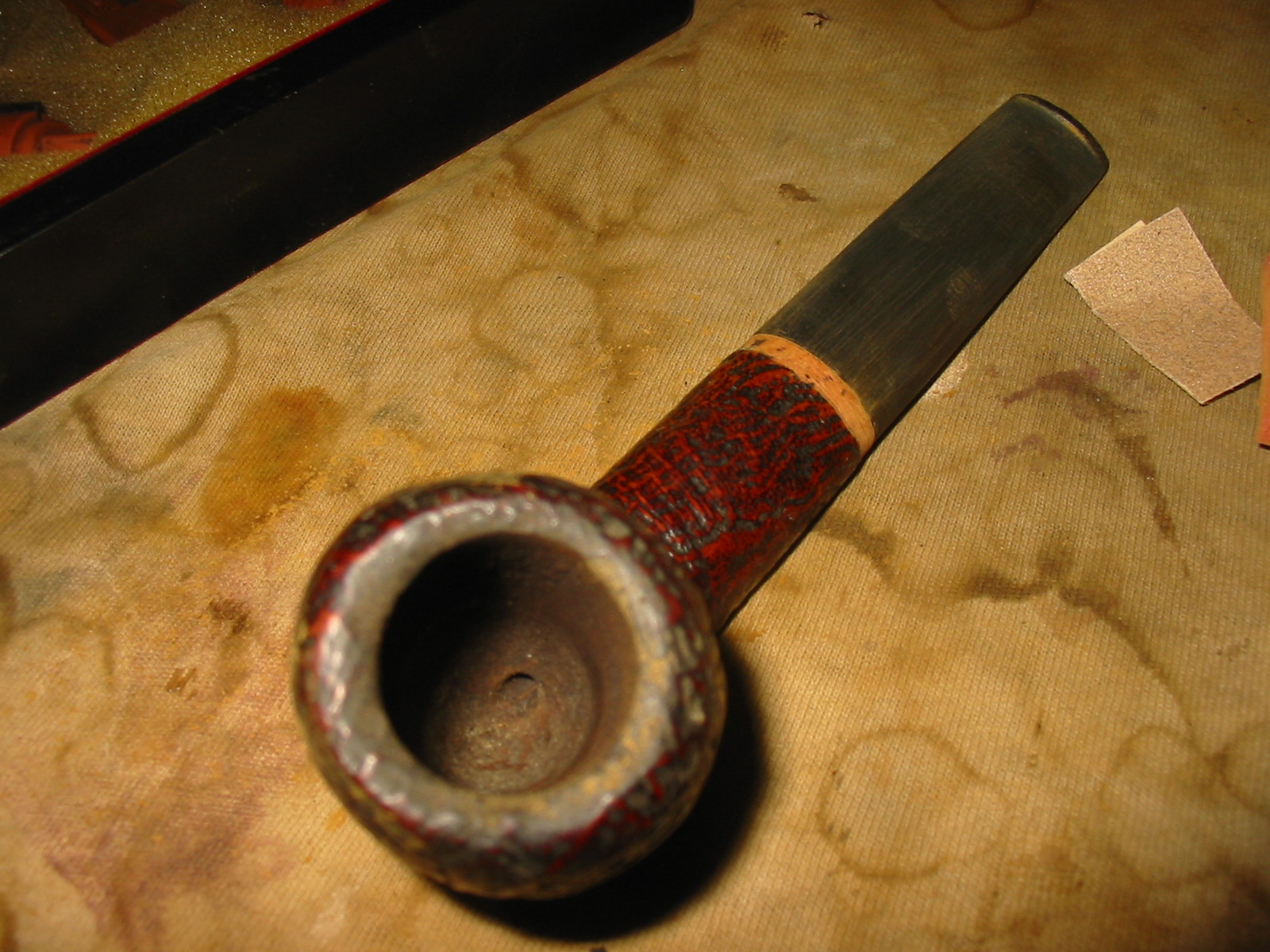
This is another pipe from the lot I picked up on Ebay not long ago. The lot is pictured in the photo below and this one is the third pipe down on the first column, left side. It is stamped Royal Danish in script over MADE IN DENMARK on the underside of the shank. It is also stamped 971. To me the shape is an oval shanked acorn. It has a sandblast finish with a smooth area on each side of the bowl and on the area that bears the stamping on the shank. The bowl was heavily caked as can be seen in the second photo. The finish was not in bad shape just dirty and the smooth areas had small scratches on the surface. The rim was caked with spill over from the bowl and would need to be scrubbed to remove the build up and make the sand blasted rim visible again. The bowl came without a stem.

bowls1

Danish

I sorted through my box of stems to see if I had one that was suitable for this pipe and found an estate stem that would work with a little cleanup. It was heavily oxidized and had some tooth chatter on the surface of the stem that became very visible as I cleaned it. The stem was clogged with tar and oils and I would have to unclog it to make it work. I used a paper clip that I straightened out to clean out the build up in the stem then sanded the tenon until the stem fit the pipe. I lined it up with the curves on the shank. Because of the sandblast on the shank the stem would not line up perfectly so I decided to sand a smooth band around the shank for the stem to line up with. I used a Dremel with a sanding drum to smooth out the edge of the shank. The next four photos show the finished band around the shank. Once it was stained I thought it would be a good contrast with the stem and the finish of the sandblast.

IMG_1282

IMG_1283

IMG_1284

IMG_1285

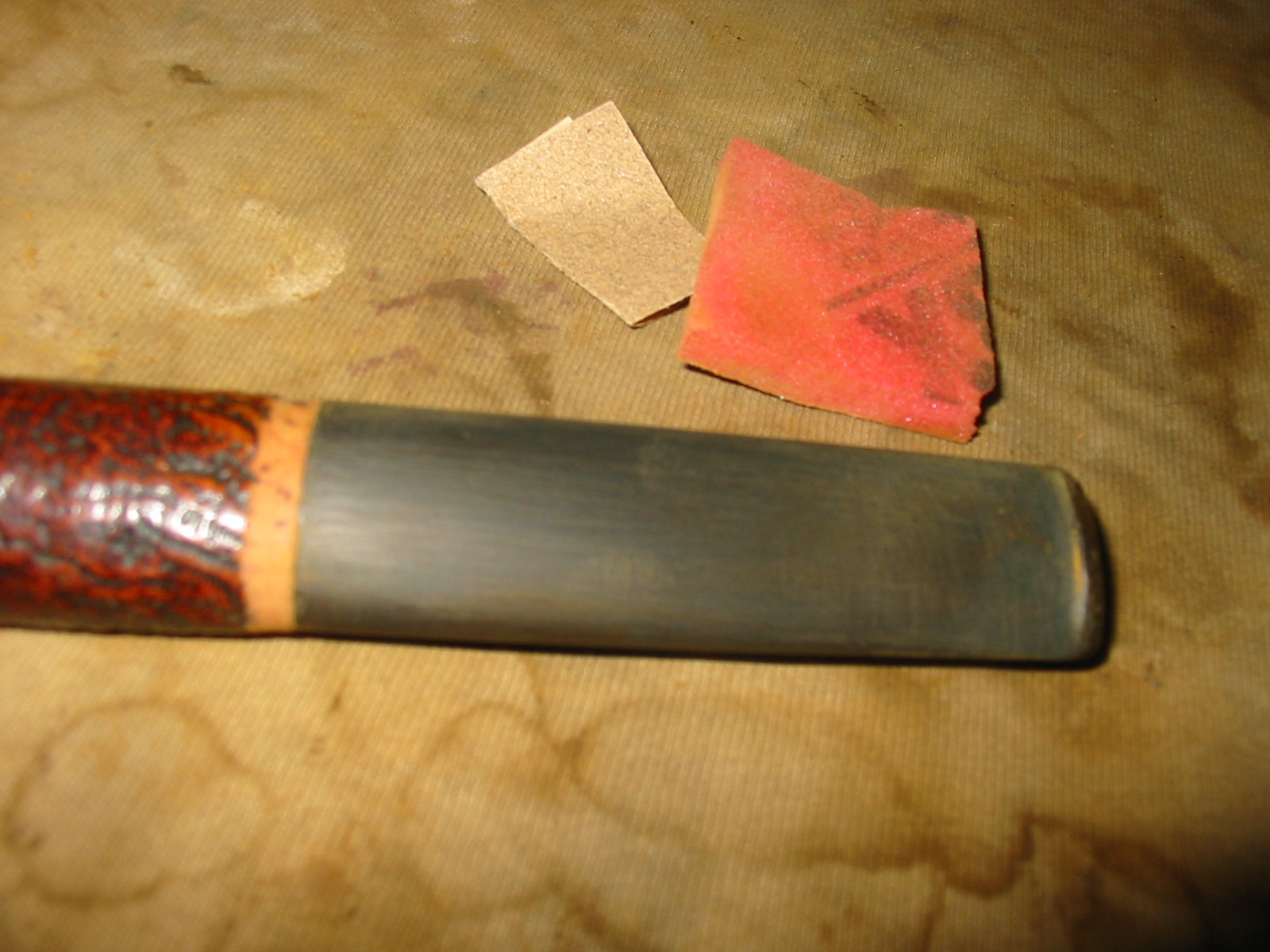
I reamed the bowl with a PipNet reamer. I began with the smallest cutting head and worked my way up to the second cutting head (first photo below). Once I had the bowl cleaned out I worked on the stem to clean up the oxidation and work on the tooth marks. I sanded it with 220 grit sandpaper and then with a fine grit sanding sponge (photos 2 and 3 below). I also sanded the banded area that I cut with the sanding drum.

IMG_1286

IMG_1287

IMG_1288

I wiped the bowl and shank down with acetone and a cotton pad. I wanted to remove the grime in the crevices of the blast on the shank and bowl. I used a soft bristle tooth brush and acetone to clean up the rim of the pipe. I scrubbed it until the finish was clean. Photos 1 and 2 below show the finish after the cleaning. The grey is the finish after it broke down with the acetone. I continued to scrub it until the finish was clean.

IMG_1291

IMG_1292

I set up the heat gun and heated the stem and bent it over the rolling pin that I use to get a good straight bend in the stem. I also buffed the stem and bowl with White Diamond. I used a light touch on the stem as I intended to keep sanding it with the micromesh sanding pads. I took it back to the work table and restained it with a dark brown aniline stain thinned with isopropyl alcohol. The mix was my attempt to match it to the original stain. I wanted the dark stain in the grooves of the blast to stand out against the brown over stain. The next three photos show the bend in the stem and the restained bowl. The band that I sanded in the shank is a nice contrast to the sandblast and the black of the vulcanite stem.

IMG_1296

IMG_1297

IMG_1298

I sanded the stem with micromesh sanding pads from 1500-12,000 grit. I wet sanded with the 1500-2400 grit pads and then dry sanded with the 3200-12,000 grit pads. The next series of four photos show how each progressive grit of sanding pads bring a deeper shine to the stem.

IMG_1304

IMG_1305

IMG_1306

IMG_1307

I wiped the stem down with Obsidian Oil to protect the new shine against oxidation and then once it was dry took it to the buffer and buffed the stem with White Diamond. I finished by buffing the bowl and stem lightly with White Diamond a second time. It took the pipe back to my work table and gave it several coats of Halcyon II Wax. I have found that it does a great job on sandblast and rusticated finishes. When it was dry I hand buffed it with a shoe brush until it had a rich shine. The next series of photos show the finished pipe. I like the new look to the shank and bowl and the new stem looks like it came with the pipe!

IMG_1309

IMG_1310

IMG_1311

IMG_1312