Daily Archives: June 14, 2012

One of my favourite refurbs – 1919 BBB Bent Calabash


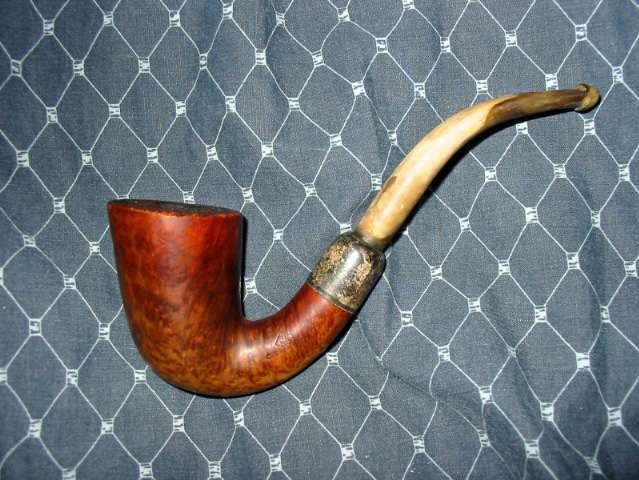
I was going through some old pictures on my hard drive the other day and found this one that I bought on EBay for a very reasonable price early in 2008. I finished refurbishing it in March of 2008. It was and is one of my favourites. You can see from the picture below what kind of shape it was in when I got it. In the pictures on EBay it looked worse than it does in the picture below. I opened the box when it arrive expecting far worse. I bid on it because I liked the shape of the pipe and I figured it would be a challenge.

The stem was oxidized to the brown white coloration that appears below. It almost appeared to be a horn stem – but it was not. When I removed it from the shank – which took a bit as it was stuck by the goop in the shank and the oxidation that portion was black. I put it in the freezer for a short period of time to cause some expansion and contraction in the stem that would loosen it from the shank. When I took it out of the freezer it was easily removed. I went to work on the inside of the stem with shank brushes and pipe cleaners, both bristle and fluffy dipped in alcohol. I worked on the stem until the cleaners came out white and clean.

I then mixed a batch Oxyclean and soaked it in the solution overnight to soften the oxidation. I find that the Oxyclean solution (warm water and a half scoop of Oxy in a pint jar) works wonders in softening the oxidation. It does not remove it but it made it easier to remove. Once I took it out of the solution the next morning to work on it I used 240 grit sandpaper to remove the oxidation. It worked well to take off the brownish white coating on the stem. Once that was finished it was a dull brown and I continued to work on it with the 400 grit wet dry sandpaper until it was a dull black. I then progressed to 600 grit wet dry sandpaper to further remove the grime. I used both of these sandpapers with water as I find it gives the grit more bite on the stem. I had not discovered micromesh at this time so I used 800 and 1000 grit sand paper and continued to sand the stem clean. By the time I used the 1200 grit wet dry sandpaper the stem was looking like new. I took it to my buffer and used the Tripoli and White Diamond to finish the job.

While the stem was soaking in the oxy I reamed and cleaned the pipe bowl and shank. I worked on it until the pipe cleaners came out clean. It took many bristle cleaners and many fluffy one to get it clean. I also used cotton swabs in the shank to remove the tars and build up there. I scrubbed the outside of the bowl and rim with Murphy’s Oil Soap to remove the grime and deep seated dirt on the bowl. After I finished the scrub and clean I put the bowl in a bath of Isopropyl alcohol to remove any remaining dirt and grime and the badly damaged finish on the bowl. That was the first night of my working on the pipe. I went to bed that evening with both the bowl and the stem soaking in their separate baths.
Image

The next morning I finished up the stem and set it aside as I described above. I turned my attention to the pipe bowl. I removed it from the alcohol bath and dried it off. I used a wet cloth and a butter knife heated over a flame to raise the dents in the outer rim of the pipe and the sides of the bowl. The process is quite simple. You wet a cloth, wring it out so it is not dripping wet yet still wet. Then fold it and put it over a dent. Heat the knife (I use our gas stove to do it but have also used an alcohol lamp). I then lay the flat blade of the knife on the dent. You will hear a hiss as the heat causes steam to rise from around the blade. The steam causes the dent to rise. I applied the blade repeatedly until the dents were minimized. Then I took it to my work table and used a flat board and a piece of sandpaper to top the pipe just enough to remove the remaining dents and damage. I do that on a flat surface to maintain the flatness of the rim without changing the angle. When that was finished I wiped down both the bowl and rim with an alcohol damp cloth to remove any residual sanding dust.

I then used an aniline stain, in this case medium brown as I had researched and found that the colour matched the colour of the pipe when it was new. I used the dauber that came with the stain and applied it to the rim and the body of the pipe. I started at the bottom of the bowl and worked my way up to the rim. The rim always the last part I do. Once it was completely covered with stain I ignited it with my lighter to set the stain. The process is called flaming the stain (at least that is what I call it.) I let it dry while I put a coat of wax on the stem.

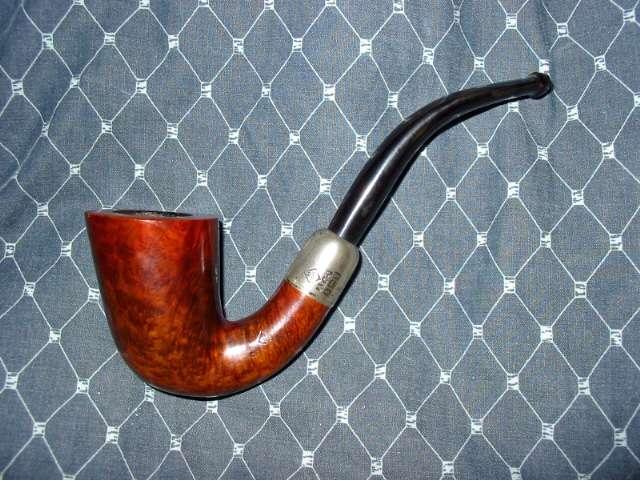
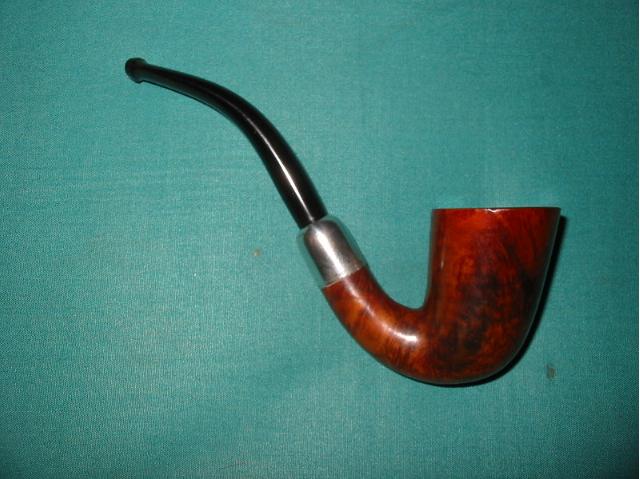
When the stain was dry I took the bowl to my buffer and gave it a buff with Tripoli and White Diamond to remove the top coat of the stain and the opacity of the stain. The result can be seen in the picture below. I also used some silver polishing compound applied with a soft cloth to remove the tarnish on the end cap. I finished that process with a silver polishing cloth to give it a good shine. When that was completed I gave the bowl and cap a good buff with carnauba wax then reinserted the stem and gave the entire pipe an extra coat of wax for a finish.
Image

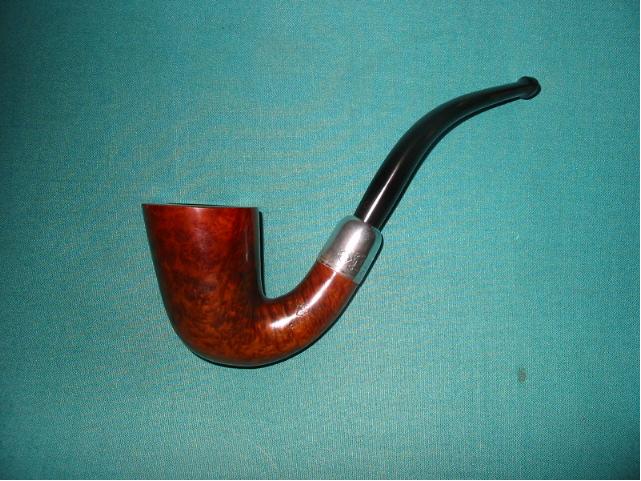
I still smoke it today and it delivers proudly! The last two pictures below show what the pipe looks like today after 4 years of use. It has developed a deep patina to the bowl and the warmth of the medium brown stain has mellowed into a richness that is really nice. Repeated waxings over the years have helped mellow the finish and also deepen the black of the vulcanite stem. This is one of my favourite old pipes. It truly is a reborn pipe. In 7 years it will be 100 years old. Some days I wish it could talk because I can’t even begin to imagine the stories it could tell.
ImageImage

A BIC lighter and Oxidation


Blog by Rob Hardy and Steve Laug

Thanks to a serendipitous discovery by a friend of mine, Rob Hardy (incoinnu on Smokers Forums), who also does refurbishing as a hobby we have worked out a very different method of dealing with oxidation on vulcanite stems. The long term effects of the procedure are still in the process of being worked out though it is hard to imagine any long term effects as the heat is not left on the surface of the stem for a significant amount of time at all. The short term benefit is pretty astounding.
BIC
This is what he wrote regarding his new process with my additions and after thoughts. “Those of us who love refurbishing have spent too many hours trying to remove oxidation from vulcanite stems. We all longed for some magic solution that would reverse the process of oxidation. We have tried one or all of these products in our efforts to fight back the dreaded green brown, noxious discolouration of the stem – Oxyclean, sodium hypochlorite solution from 1-12%, Armorall, Armorall Tire Foam, olive oil, stem oil, automotive lens cleaner, eye of newt, toe of frog, etc. These liquids served to either soften the oxidation or disguise it. None of them remove the problem and under a strong light or magnification it was still there. Many of us have sanded using a variety of sandpaper grits both dry and wet, micromesh sanding pads or paper, and toothpaste with micro abrasives until our fingers were sore and raw. The overall effect of this process served merely to level the surface of the stem until the oxidation would be sanded away. It is very effective but also very time consuming. Over time the shape and sharp angles of the stem are changed. There had to be a better way of dealing with this that was still effective and less labour intensive. I was fortunate to be able to purchase a lot of 17 estate pipes from my local B&M, over half of them had heavily oxidized stems. After refurbishing the Savinelli Punto de Oro that was in the lot I was considering taking up refurbishing as a new hobby. I then started on the Dunhill and K&P Peterson. The Peterson was cleaned and reamed and was ready for the stem work. There was a minute tooth mark near the button that I wanted to remove so I was using Steve Laug’s technique of applying heat to the indentation to raise the dents. Usually I do this after I have removed the oxidation and work on a clean stem. This time however, for who knows what reason the stem had not been clean at all and was an oxidized mess. To raise the tooth dent I applied the heat from a BIC lighter with the flame 1/2″ from the stem. The indentation lifted…AND THE OXIDATION DISAPPEARED! Wow! I could not believe my eyes so I continued for the length of the stem and it worked – the oxidation was gone. I used short strokes with the flame of the lighter and wipes with a wet paper towel. After each wipe the paper towel came out with yellow stains. This seemed too good to be true. Out came my jewellers’ loupe for closer examination. I had to see this close up and personal. Under the magnification I could see that the heat had evened out the surface of the vulcanite and pitting and oxidation were gone. There was only BLACK vulcanite. I stayed up until one o’clock in the morning sanding the stem up through 8000 grit micromesh. I left the waxing until this morning. This stem now looks like it did when it left the factory over 60 years ago. I was and still am amazed at the results. I had to try it again this morning on a Stanwell stem. I used the same technique with the lighter and the wet paper towel. I used a lot of caution around the logo, covering it with a wet paper towel to protect it while heating with the lighter). It took only ten minutes to clean the stem of the oxidation! What a difference in the amount of time it took to clean this stem. It is cleaned and now ready for sanding and buffing. I tried it on a third stem. I moved over the stem with the lighter, six seconds per inch of stem, before wiping with a wet paper towel. Again the towel came out with the yellow colouring of the oxidation and all that remained behind was the black vulcanite. Each of the three stems took little time to clean and all that remained to finish them was to sand and smooth and then buff and polish.” Here are just a few important pointers that Rob and I have learned in the process:

  1. Do not leave the flame in one spot, keep it moving – burning vulcanite stinks and you will ruin the stem.
  2. Use a slow 1″ side to side sweep with the flame half an inch below the stem. Repeat until the stem is completely black and then sand.
  3. As the flame moves across the surface there is a light sulfur smell that is given off as the oxidation burns.
  4. In sanding the stem use a variety of grits of sandpaper (400 and 600 grit wet dry and higher grits if you choose) then micromesh pads or paper (1500, 1800, 2400, 3200, 4000, 6000) before buffing with Tripoli and White Diamond. I have also used 0000 steel wool and found that it is a good first step before the wet dry sandpaper is used.

A New Polishing Tool (at least to me)


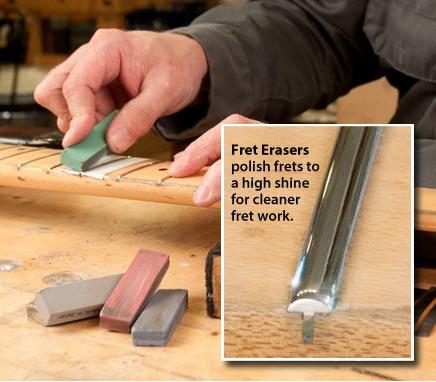
I received an email advertisement from Stewart-Macdonald the same company that sells black super glue. In it they were talking about a new product that is used in the guitar making industry. I have found that several of the tools and sanding blocks etc. work very well in refurbishing pipes. These particular tools are called Fret Erasers. They are flexible self-padded rubber blocks embedded with abrasive grits. They were being billed as “incredibly handy, to erase fine file marks and scratches”. The grits are color-coded for convenience. The ad went on to say that they polish the frets to a high gloss shine.

Image

They come in coarse, medium, medium fine, fine and extra fine. I ordered a pair of the two finest grits to try out in my work on stems. My expectations were that they would exceptionally well up against the angles of the button at the end of the pipe stem and also very well around inset logos and medallions. The edges are square and the block fits well in the hand and can be held against the angle of the button easily. I have sanding wedges and small sanding blocks that I used to work with around the button and always fought them a bit to keep the sand paper from slipping or getting worn thin at the crease. This product does not have that problem and they leave behind no sandy grit or particles of steel wool (as the advert promised).

I put them through their paces on the last batch of stems that I cleaned up and they worked nicely and left a smooth shiny surface. In my experimenting with them I used them between the wet dry sandpaper and the micromesh pads. I left the final polishing to the higher grits of micromesh pads. I also used them around the BBB Diamond and the GBD rondelles and they were easily maneuvered around those without compromising the relief of the stamping. I also want to try them around stamped logos and see how well they work. In the future I plan on using these two blocks in place of the 4000 and 6000 grit micromesh pads for the final polishing before I buff them on the wheel.

Here is the link to the Stewart-Macdonald website and the Fret erasers.
http://www.stewmac.com/npa/0472?utm_…_0472_20120423

Image

Anybody else ever used these?