Tag Archives: pipe related topics

A Peterson Dating Guide; a Rule of Thumb – Mike Leverette


Blog by Mike Leverette

Many years ago now, Mike Leverette sent me a copy of this document. I have had it on the hard drive since sometime late in 2006. I am sure there are newer iterations of the material but I have found this little piece very helpful. I am looking forward with expectation to the book that is being worked on now by Mark Irwin and others. It will certainly be a definitive work on Peterson Pipes. Until then I use the Peterson forum and refer to this article by Mike.

A Peterson Dating Guide; a Rule of Thumb

This guide first appeared in pipelore.net on August 26, 2006 by: Mike Leverette

Introduction

The history of Ireland is an old and honorable one; steeped in warfare, family, racial and religious traditions. No other country can compete in comparison. However, the first couple of millennia of Irish history have no relevance to this dating guide. Should you wish to read more on the history of the Irish, I recommend “The Story of the Irish Race” by Seumas MacManus who gives a very vivid, and near as we can tell an accurate portrayal of their history.

History pertinent to our purposes began in the year 1865; the year Charles Peterson opened a small tobacco shop in Dublin. Later in 1875, Charles Peterson approached the Kapp brothers, Fredrich and Heinrich, with a new pipe design and with this, a very long-lived partnership was formed, Kapp & Peterson. This new pipe design is the now famous Peterson Patented System Smoking Pipe. By 1890, Kapp & Peterson was the most respected pipe and tobacco manufacturer in Ireland and rapidly gaining followers in England and America. In 1898 another of Peterson’s remarkable inventions became available, the Peterson-Lip (P-Lip) mouthpiece, also known as the Steck mouthpiece. So for the purpose of this dating guide, we will study Irish history, relevant to our pipe dating needs, from 1870s until now.
Before we start with this Peterson dating guide, an observation; the Kapp Brothers were making pipes as early as the 1850s and in many of the shapes we now associate with Peterson since the Kapp Brothers simply took their existing shapes and incorporated Charles Peterson’ s patented design into them. From their inception, Kapp & Peterson’s goal was to make a good smoking pipe that the ordinary, common working man could afford and we believe they have, very admirably, lived up to this.

Explanation of Title

The vagaries of Peterson’s processes do not allow for an accurate dating guide so this guide is a ‘rule-of-thumb’ guide only. For example; Peterson did not take up the old Country of Manufacture stamps as new ones were issued so depending on which one the various workers happen to pick up, the stamps can and do cross over the boundaries of the various Eras. Some of the pipes of the Sherlock Holmes Series of the 1980s have pre-Republic stamps, as well as other pipes produced in 2000. However, there will not be too many of these missed stamped pipes. For silver anomalies, see the section on silver marks.

Stamping of Bowls

During the years of Kapp and Peterson’s business operations, the country of Ireland has undergone several name changes and K&P’s stamping on their pipes reflects these changes. Knowing these changes, a Peterson pipe can be roughly dated and placed in “eras.”
• The Patent Era was between the years of K&P’s formation until the expiration of the patent; 1875 through approximately 1910. Though for our purposes we will list this era as 1875 through 1922. Peterson pipes made during the majority of this period had no “Country of Manufacture” (COM) stamped on them. However, later in this period, say around 1915/16, Peterson began stamping their pipes “Made in Ireland” in a block format.
• The Irish Free State was formed on 15 January 1922. So the Free State Era will be from 1922 through 1937. Peterson followed with a COM stamp of “Irish Free State” in either one or two lines, either parallel or perpendicular to the shanks axis and extremely close to the stem.
• Eire was formed on 29 December 1937. The Made in Eire Era will be from 1938 through roughly 1940? or 1941?. For dates with ?’s, see below. Peterson now stamped their pipes with “Made in Eire” in a circle format with “Made” and “Eire” in a circle with the “in” located in the center of the circle. This COM was used during the years of 1938 – 1940?/41?. Later they stamped their pipes with “Made in Ireland” in a circle format (1945?-1947?) and still later with “Made in Ireland” in a block format (1947?-1949). The “Made in Ireland” block format came in either one line or two lines.
• The Republic Era is from 1949 until the present. The Republic of Ireland was formed on 17 April 1949. From 1949 to present the stamp for this era is “Made in the Republic of Ireland” in a block format generally in three lines but two lines have been used with or without Republic being abbreviated.
•English made Peterson pipes actually spans between the pre-Republic and Republic eras. In 1895, Peterson opened a shop in London England that lasted until the late 1950s or early 1960s. So the English Era, for a simplified date, will be from 1895 through 1959. The stamps Peterson used in London and that we have seen are:
Made in England – block format
Made in England – circle format
Made in London
Made in London England
Simply, London England
Great Britain

Though there are a couple of more, the above will give one the general idea. We believe the earliest stamp of this era was the “Made in England” in a block format since Peterson was using the “Made in Ireland” block format at about the same time on their Irish production pipes. The “Made in England” circle format was used during the same time frame as the “Made in Eire” and “Made in Ireland” circle formats.

As one can see this is pretty straightforward but there have been inconsistencies within this method of stamping. Peterson was never very energetic in removing their old stamps from the work stations so the older stamps can and did cross-over into the newer Era’s.

The explanation for the question marks in the 1940’s dates is, during the Second World War briar was hard to come by for obvious reasons, so no one can say for sure what years Peterson produced briar pipes and how many briar pipes were produced in those years. Why the switch from “Made in Eire” to “Made in Ireland” is anyone’s guess since the country was still technically Eire until 1949. As a point of interest and due to the shortage of briar, Peterson did make clay and Bog Oak pipes during the war years though they had ceased clay pipe production in the Patent Era and Bog Oak production back in the early 1930s.

P1 The “Made in Ireland” block format (above) can be another headache in dating Peterson pipes since this stamp was used in the late Patent Era as well as the late 1940s. So for a guide we must take into consideration the style of lettering Peterson used on their pipes. From the start of the Patent Era until somewhere in the early 1930s, Peterson used the “Old Style” lettering that used a forked tail “P” in Peterson.

P2From then until now, Peterson used the more familiar script “P” (above) intermixed with a plain block letter “P.” Later in the 1970s, Peterson began production of “commemorative” pipes, often referred to as “replica” or “retro” pipes and these will also have the old style lettering but according to the pipes that we own and have seen, most of these will have a small difference in the original forked tail “P”. Again, there appears to be a cross-over with the old style forked tail and the later forked tail P’s(below). However, these commemorative pipes generally have a silver band with hallmarks so one can date these pipes by the hallmark.

P3Also, we must address the stamp “A Peterson Product.” During the last few years of the Pre-Republic era and throughout the Republic era, Peterson began stamping their other lines, such as Shamrocks and Killarneys, with “A Peterson Product” over the COM stamp. So a pipe stamped thusly will have been made say from 1948 to the present with the COM stamp identifying it as a pre-Republic or a Republic pipe.

Silver Band Dating

Silver hallmarks are placed on the silver after an assay office, in Peterson’s case, the Dublin Assay Office, has verified that the silver content is indeed sterling, in other words 925 parts of silver per 1000 parts of the metal. The silver hallmarks on Peterson pipes are a group of three marks, each in an escutcheon; the first is a seated Hibernia denoting Dublin Ireland, the second is a harp denoting the silver fineness, and the third is a letter denoting the year. The style of letter and the shape of the escutcheon the letter is in, will determine the year in which the assay office stamped the metal band and not necessarily the year the pipe was made. Peterson orders these bands by the thousands and sends them to the assay office for hallmarking. The assay office will stamp the date of the year in which they received the bands and it may be a year or two or three before Peterson’s employees happen to place one of these bands on a pipe though generally the bands are placed on a pipe in the year they were stamped. The Dublin hallmarks can be found in any book on silver markings or on one of several websites.

For the one year, 1987, the Dublin Assay Office added a fourth mark to commemorate the City of Dublin’s founding in 988. However, the Peterson pipes we have and have seen with silver dates of 1987 and 1988 generally do not have this fourth mark.

Here again, we must add a “maybe” to the above hallmarks. On 1 June 1976, certain countries attended an international conference on silver markings and decided to adopt an entirely different mark for sterling silver. This mark is an Arabian numeral, 925, located between the scales of a balance beam and in Peterson’s case may or may not have the Hibernia and Harp marks to either side. These particular pipes can only be said to date between 1976 and the present, and were stamped as such for shipment to the different countries involved in the conference. For pipes shipped to all other countries, Peterson still uses the old style hallmarks. Peterson pipes with a sterling silver band that does not have hallmarks could have been made for the United States market since the United States only requires sterling silver to be stamped “sterling silver” or “sterling.”

Before we close this section on silver hallmarks, we must address the marks that many people refer to as hallmarks. Peterson uses three marks on some of their pipes that are not silver hallmarks but are rather another Peterson logo (below). These marks are:
• A Shamrock for the many shamrocks found in Ireland
• A Prone Fox representing the famous fox hunts in Ireland’s history, and
• A Stone Tower for the many hundreds of stone towers spotted throughout Ireland

P4 Again these are not genuine silver hallmarks: Also many of the newer pipe smokers think that Kapp & Peterson’s official logo of “K&P,” each in a shield shaped escutcheon, are hallmarks but, of course, they are not. They are simply Kapp & Peterson’s initials.

Dating by Series

Dating by series or numbers is an area in which we are having a difficult time of establishing. For instance, the 300 series are all shapes used during the Patent Era and we believe Peterson started using this number system when the original patent expired. In the case of the 300 series and without looking at the COM stamp or silver hallmark, one can only say that they were made between 1910 and today. The 300 series was not in Peterson’s 1905 catalogue.

Though we are still trying to find the start dates of many series, here are some that we are pretty positive about:
• Centennial Edition – 1975 (for K&P’s Centennial)
• Great Explorers Series – 2002
• Harp Series – 2002
• Mark Twain Numbered Edition – 1979 (numbered 1 through 400)
• Mark Twain 2nd Numbered Edition – 1981 (numbered 1 through 1000) Mark Twain Un-numbered Edition – 1983 to c1989 (There must be a fourth production of Mark Twain pipes for there a couple of men who own Mark Twain pipes with a silver date of 1998; we are still trying to pin down the dates of this fourth production.)
• Emerald – c1985 to 2003
• Millennium Edition – 1988 (for the City of Dublin’s founding)
• Sherlock Holmes Series – 1987 to c1989
• Return of Sherlock Holmes Series – c1991
• Sherlock Holmes Meerschaums – 2006

Peterson Clay, Bog Oak and Cherry Wood Pipes
Peterson Clay, Bog Oak and Cherry Wood pipes were offered in the Patent Era with or without a formed case, as also offered with their briar and meerschaum pipes.

Peterson made clay pipes during the Patent Era with only two shapes being offered and depicted in their 1905 catalogue. During this period their clay pipes were stamped/molded “Peterson Patent” and could be purchased with either a silver or nickel band. How long and in what years Peterson made these clays is not known but as stated above two shapes were offered in their 1905 catalogue. Then during World War II, Peterson again made clay pipes due to the understandable shortage of briar. The clays of this period are stamped “Peterson System” and were only offered with nickel bands. This later production of clay pipes ended with the closing of Peterson’s London Shop in the late 1950s or early 1960s.

Also during World War II, Peterson again made bog oak pipes and again, this was due to the shortage of briar. They had previously ceased production of bog oak pipes in the 1930s during the Irish Free State Era. On the subject of bog oak pipes, Peterson’s bog oaks will always have a metal band with either amber (early production only) or vulcanite stems and will have the appropriate COM stamp. As with their clay pipes, Peterson offered a silver or nickel band on their early bog oak pipes of the Patent Era and just a nickel band on their WWII bog oak pipes.

Peterson made pipes of cherry wood during their Patent Era in both the smooth finish and the bark-left-on finish; and as with their clay pipes, Peterson used both amber and vulcanite stems and choice of silver or nickel bands. And like their clay pipes of the Patent Era, the introduction and termination dates are not known. Peterson Cherry Wood pipes were offered with or without a meerschaum lining.

Metal Ferrules of Military Mounted Pipes

As pipes get older, wear will, with all the handling, cleaning and polishing, take its toll on the nomenclature which will eventually disappear, thus, making it harder to determine the age of your Peterson. A good thorough cleaning of old hand oils, dirt and ash will sometimes bring out a faint outline of the nomenclature but sometimes the nomenclature has completely worn away and even this cleaning will not bring it back. So where do we go from here to determine the pipe’s age? The shape of the metal ferrule on Peterson pipes with the military mount will give you some hint though not a precise date.

During the Patent Era, the metal ferrules of Peterson military mounts will have a more ‘acorn-ish’ shape, that is, the bend will have a larger radius as it turns down to meet the stem. This larger radius gradually(?) changes to a smaller radius, more abrupt bend, during the Irish Free State Era and even more abruptly after World War Two when the bend takes on the modern day shape.

The metal ferrules on Peterson clay pipes during the Patent Era are angular while their clay pipes of World War Two will have the bend shape as do most of the Peterson pipes from then until now.

As with everything pertaining to the dating of Peterson pipes, this method can only give us a hint to the age of the pipe but it is better than nothing at all. The years of these changes in the metal ferrule shape are, we are sure, lost to the ages. However, someone with a larger number of Peterson pipes than we may be able to check the silver dates for more precise age boundaries. Well, this is a very short dating guide and we hope that you will be able to date more accurately your favorite Peterson with this information.

When Mike sent this to me it had the following addition at the bottom of the page:
This guide was first posted in Pipe Lore on August 26, 2006 by Mike Leverette. Should you have a correction or addition to any of the above, please do comment.
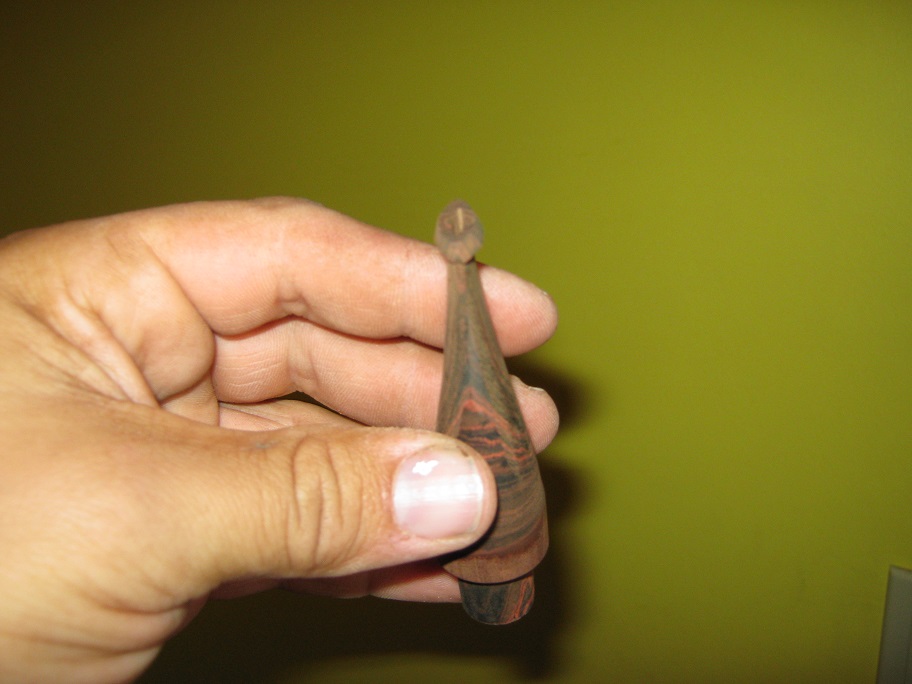
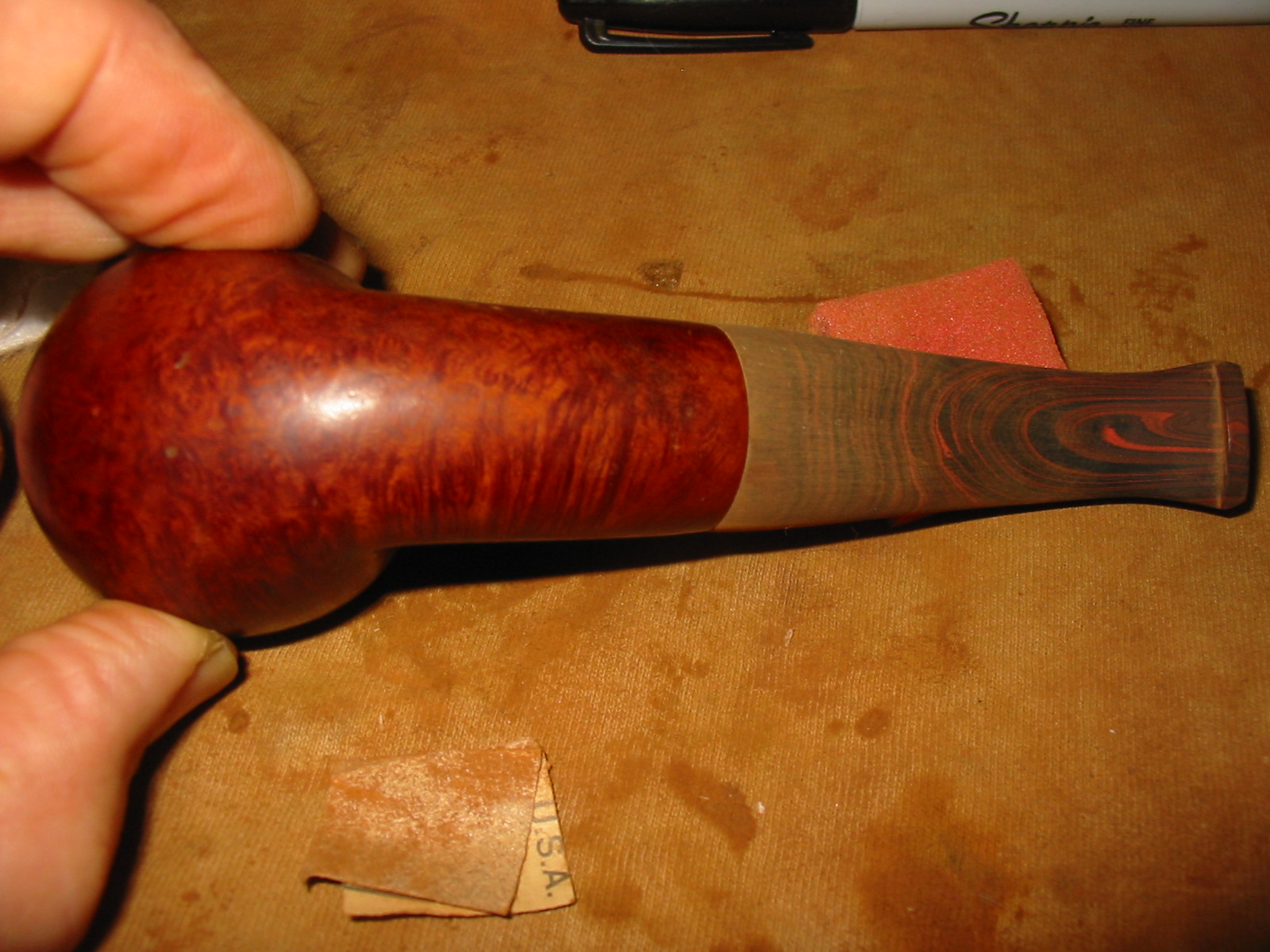
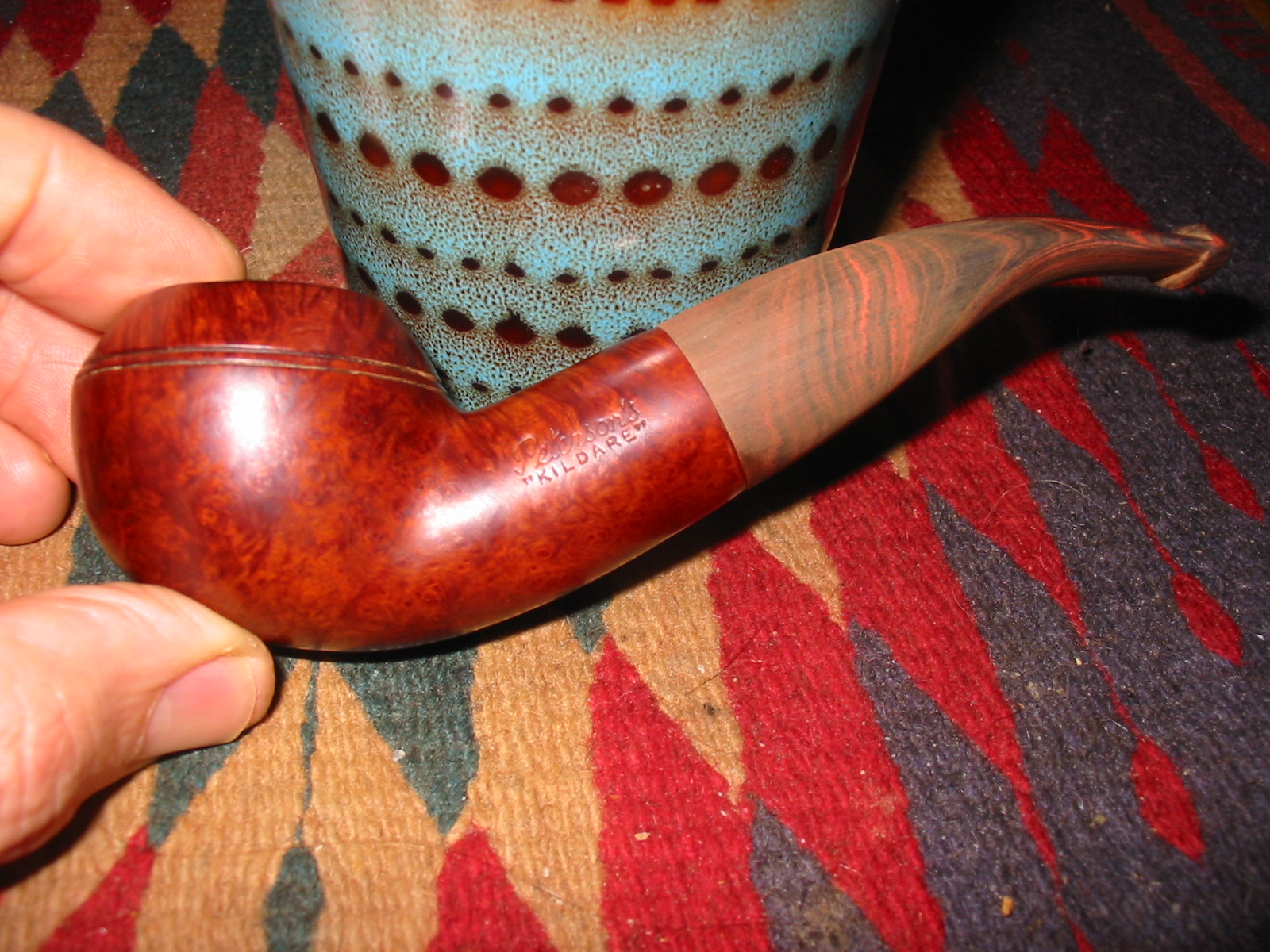
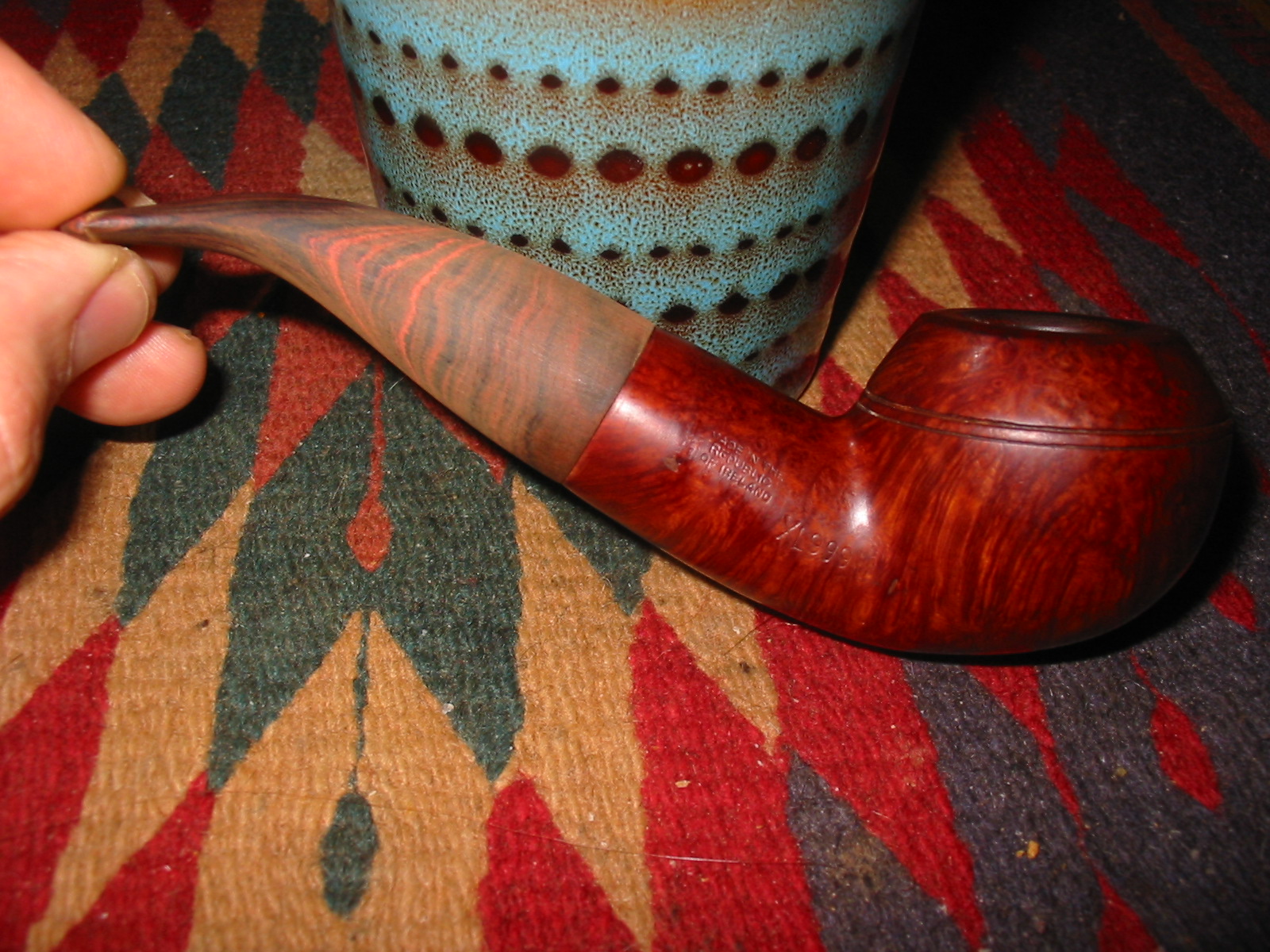
Restemming the Peterson’s XL999 with a Cumberland Stem


Blog by Steve Laug

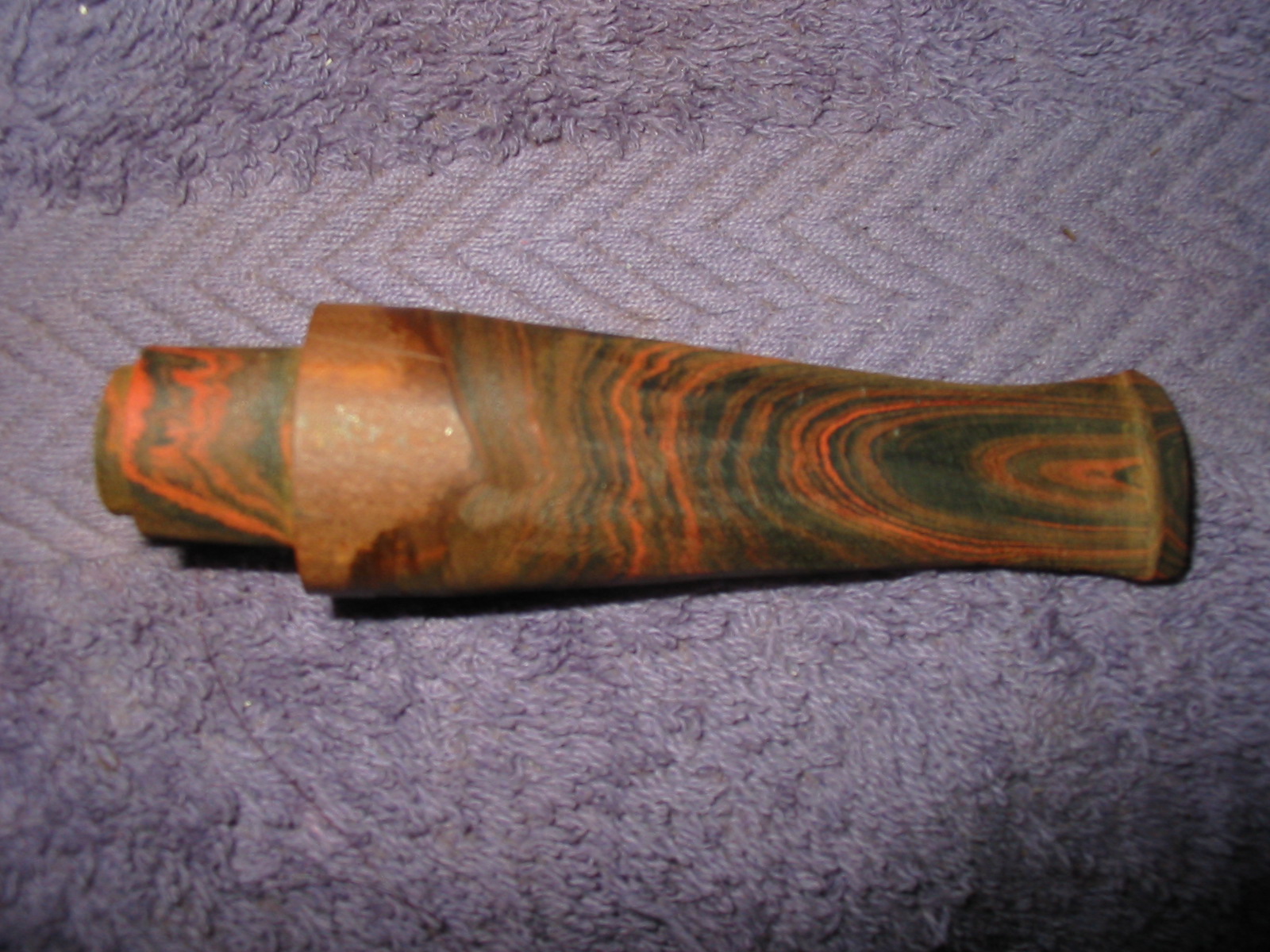
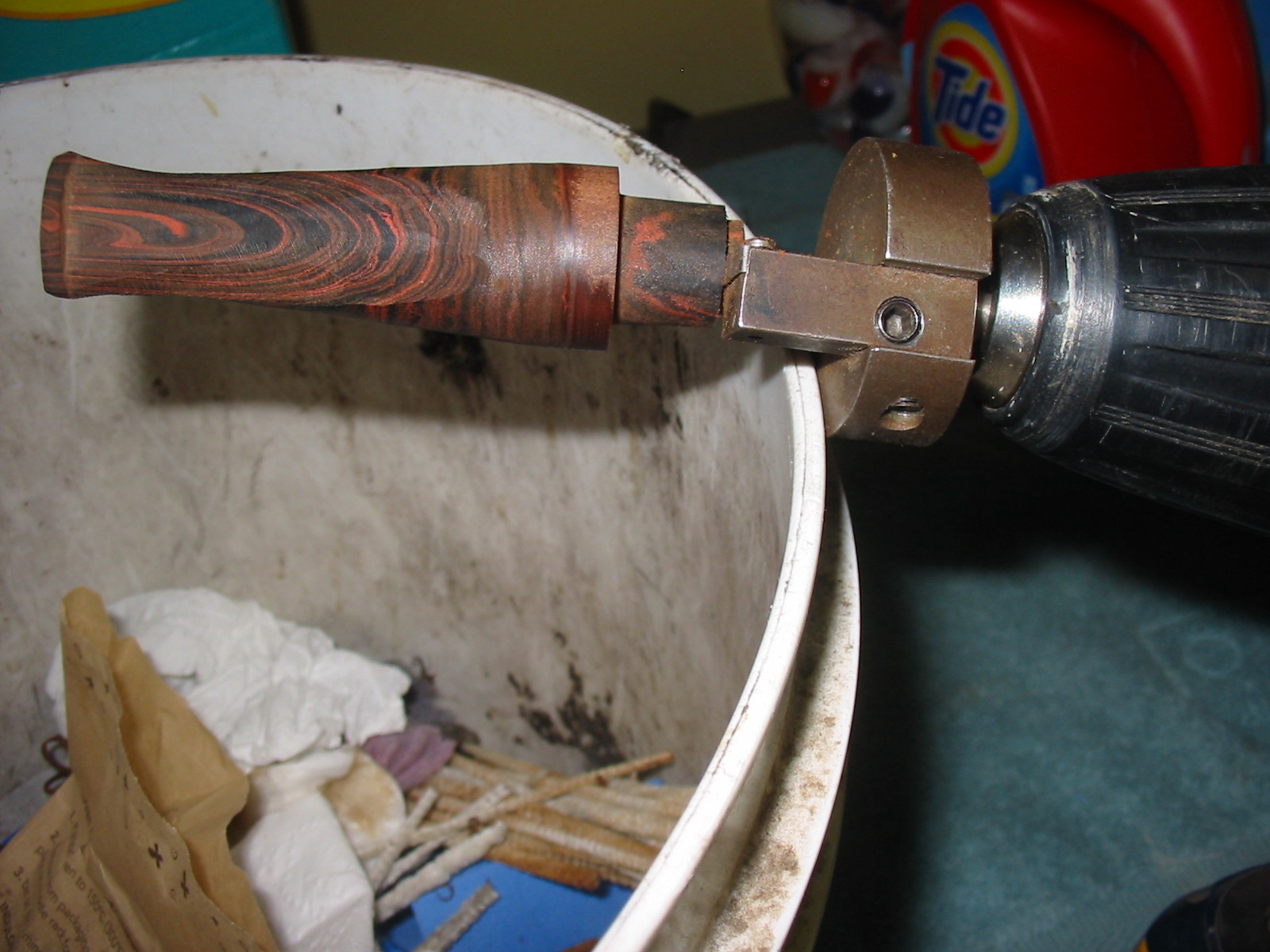
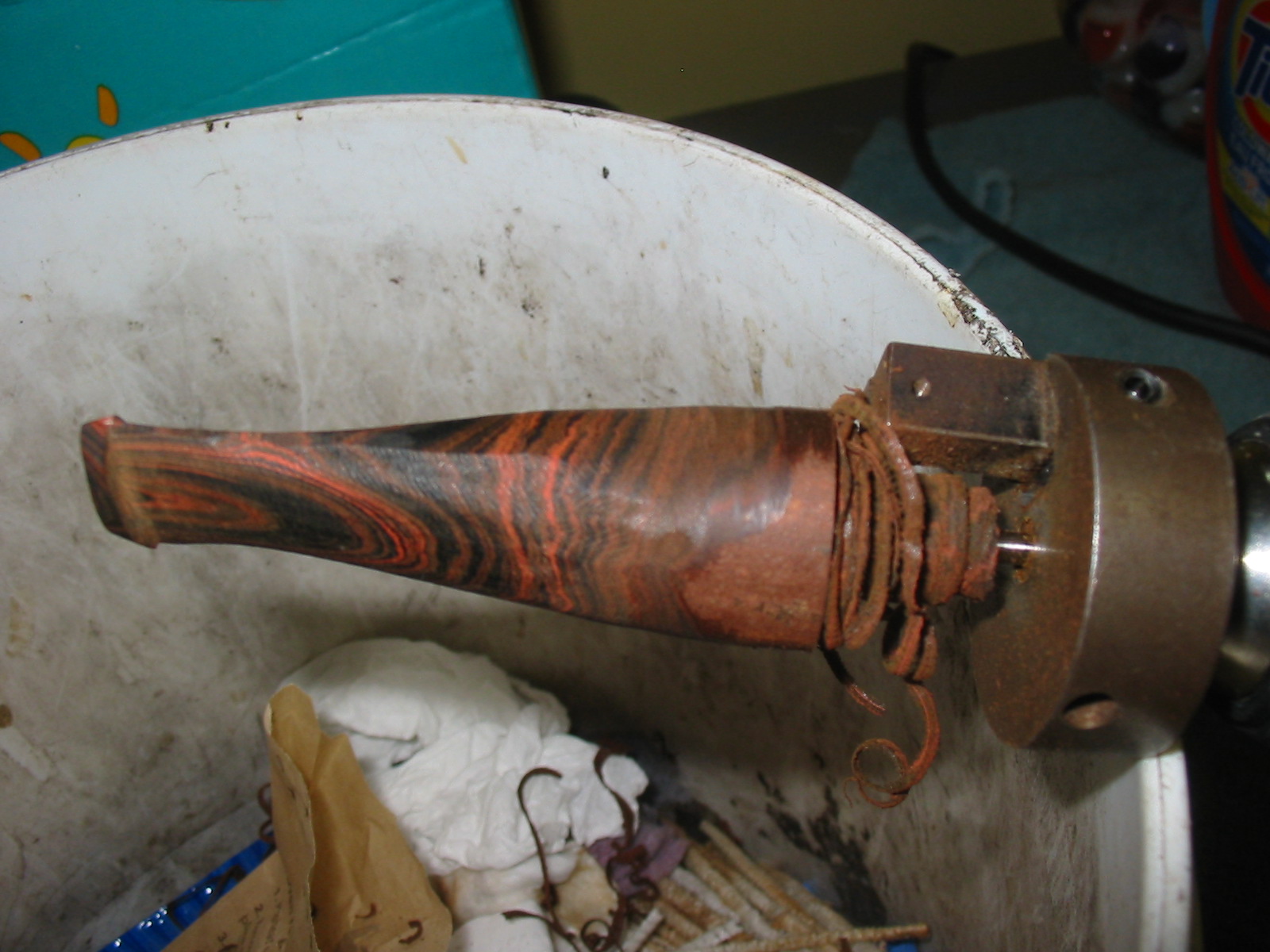
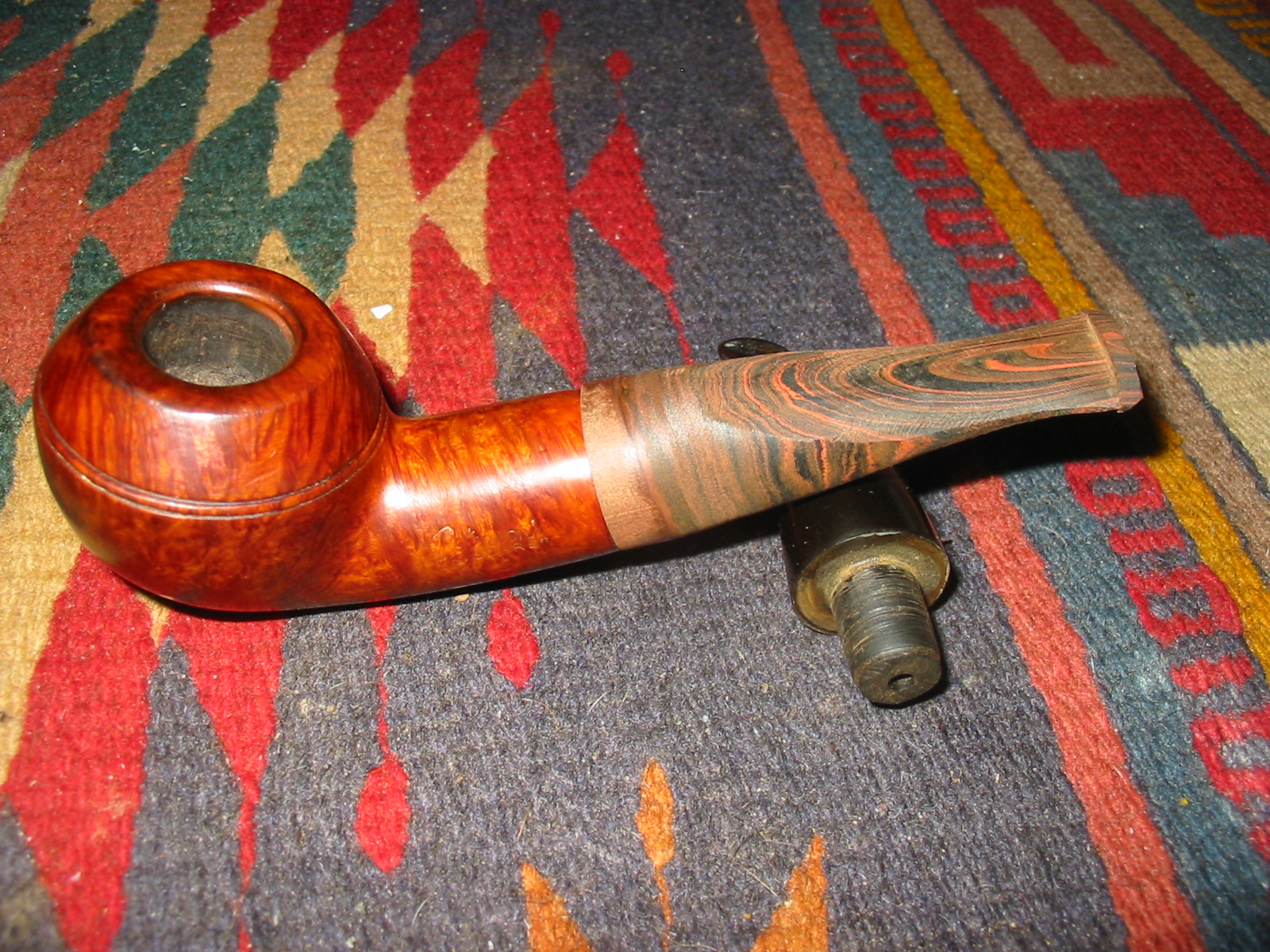
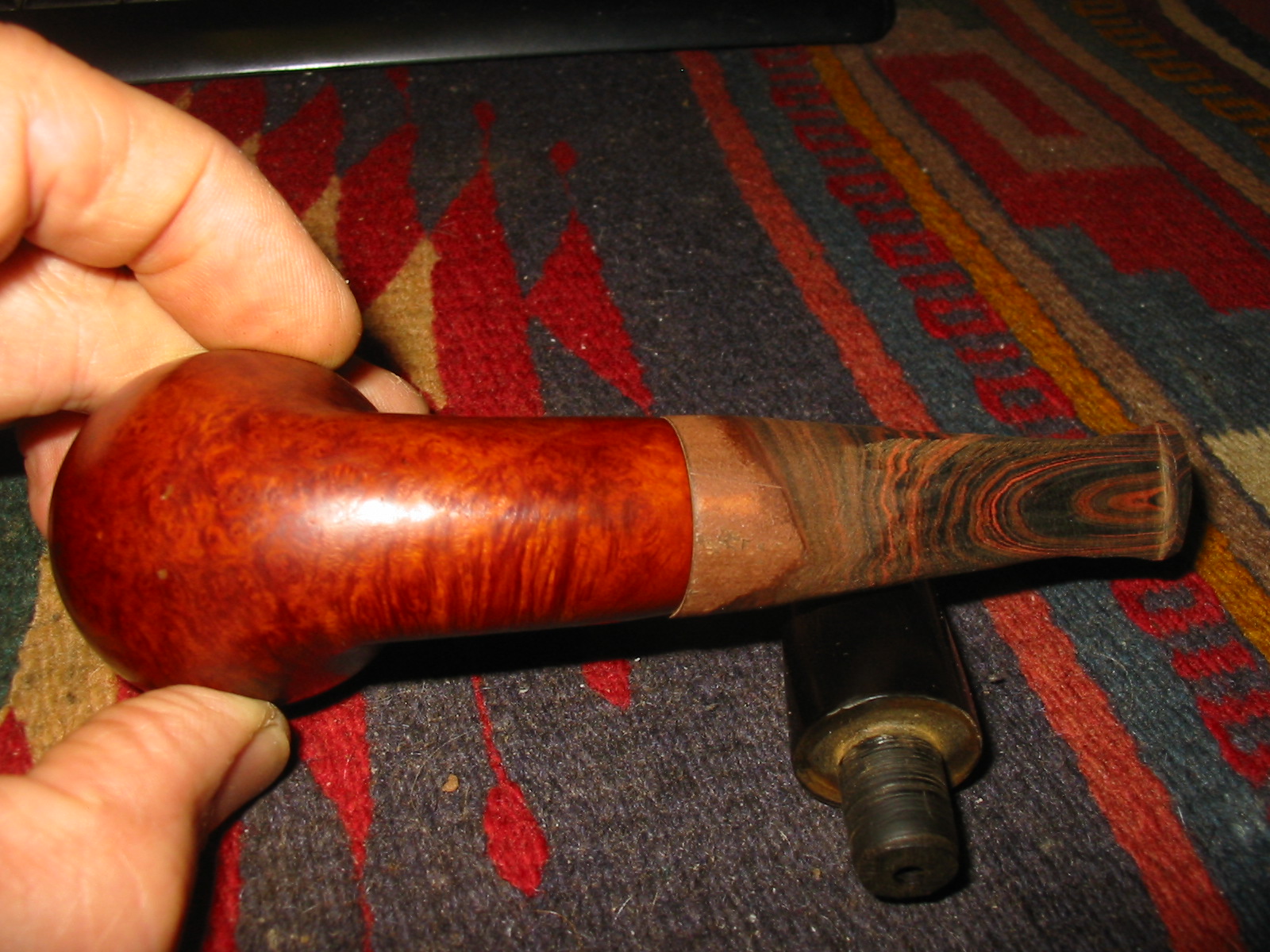
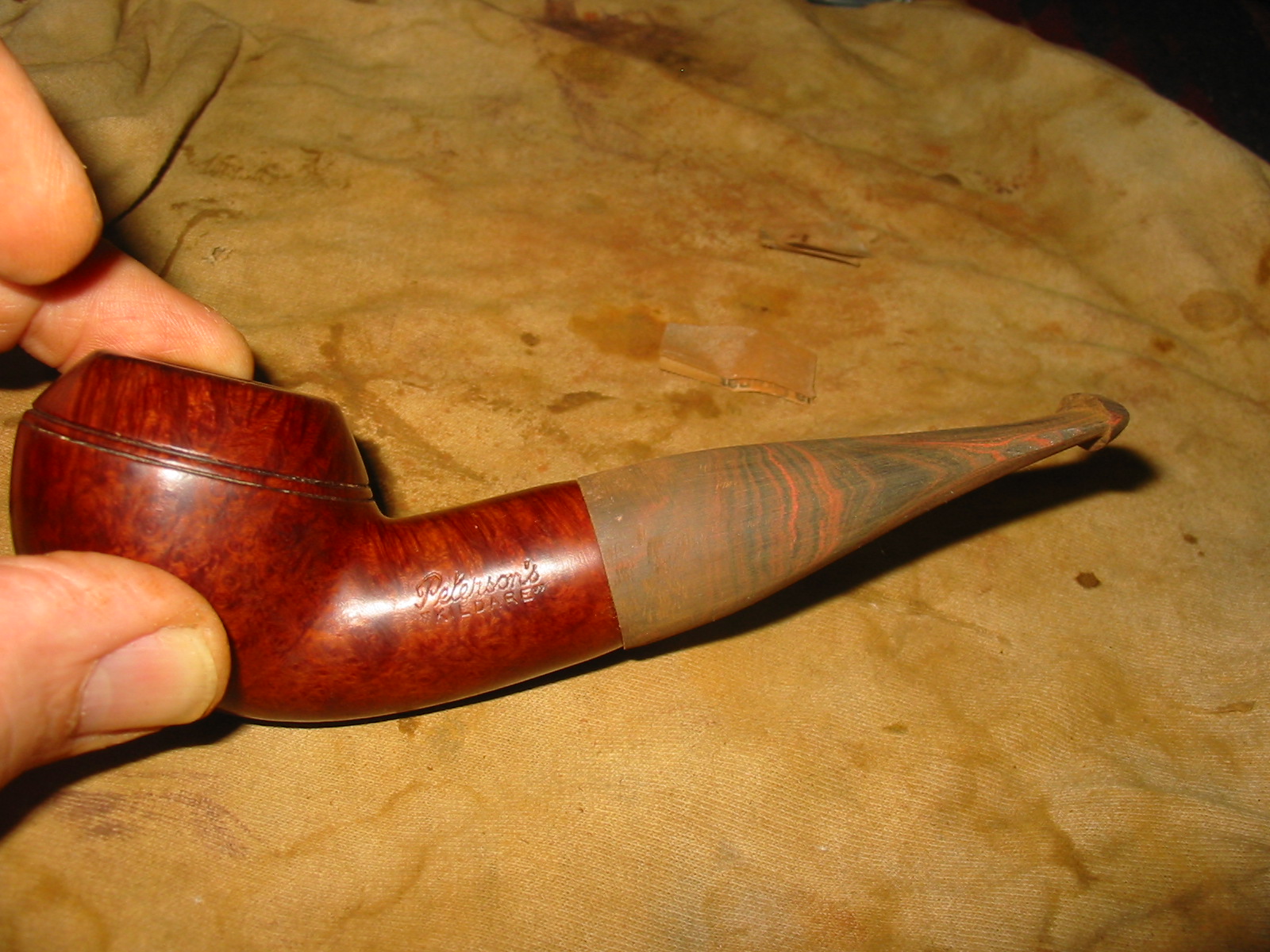
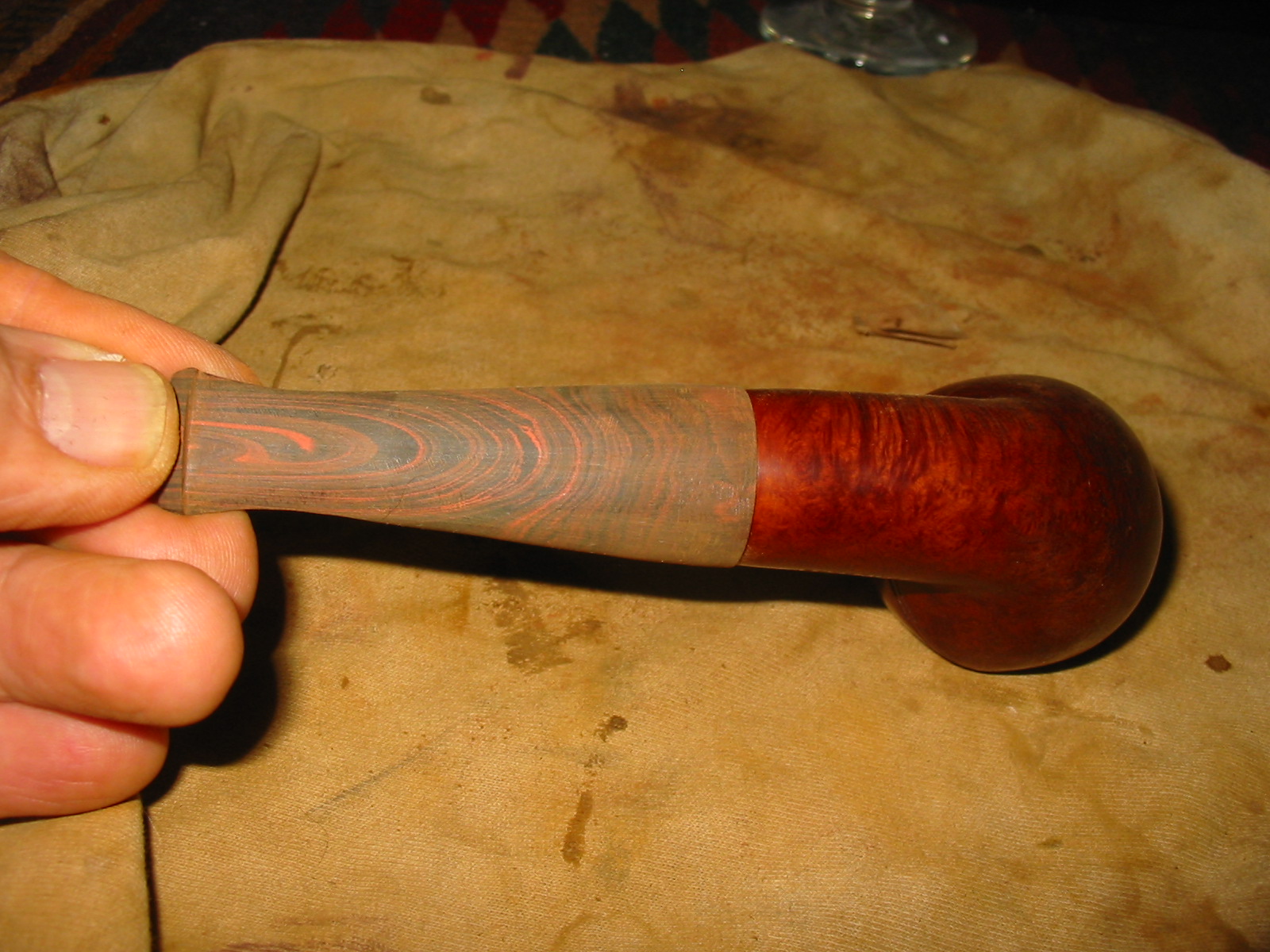
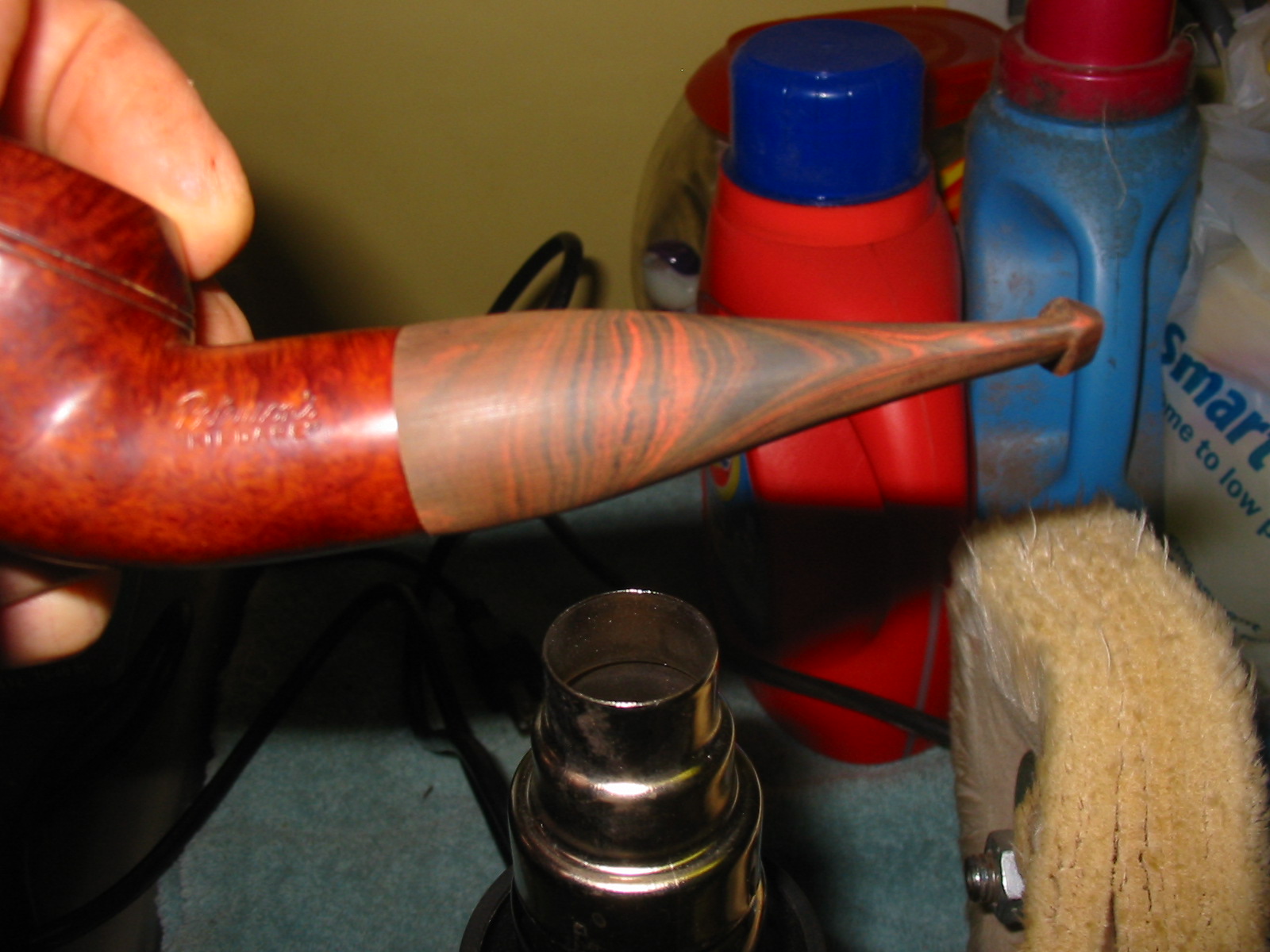
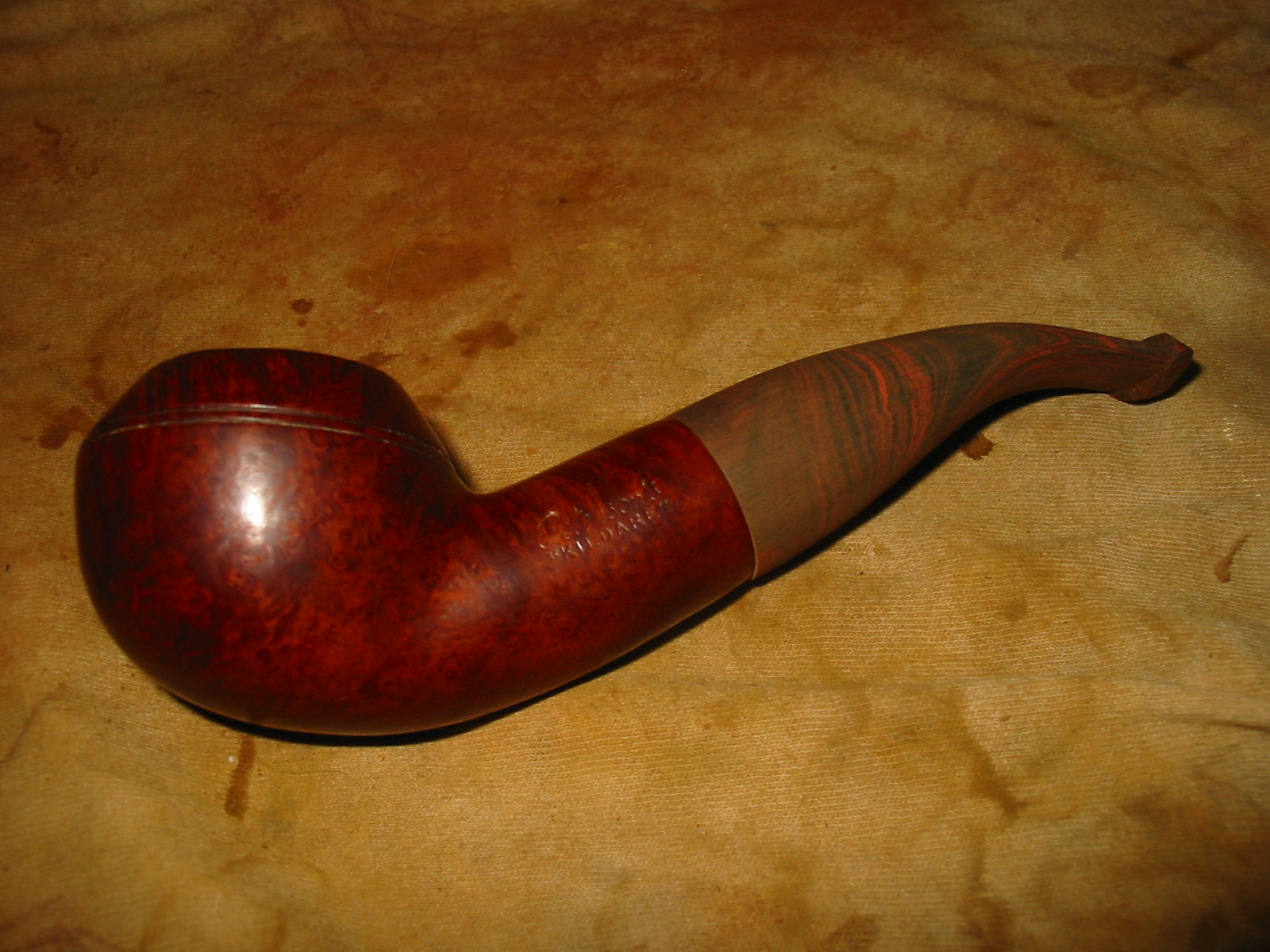
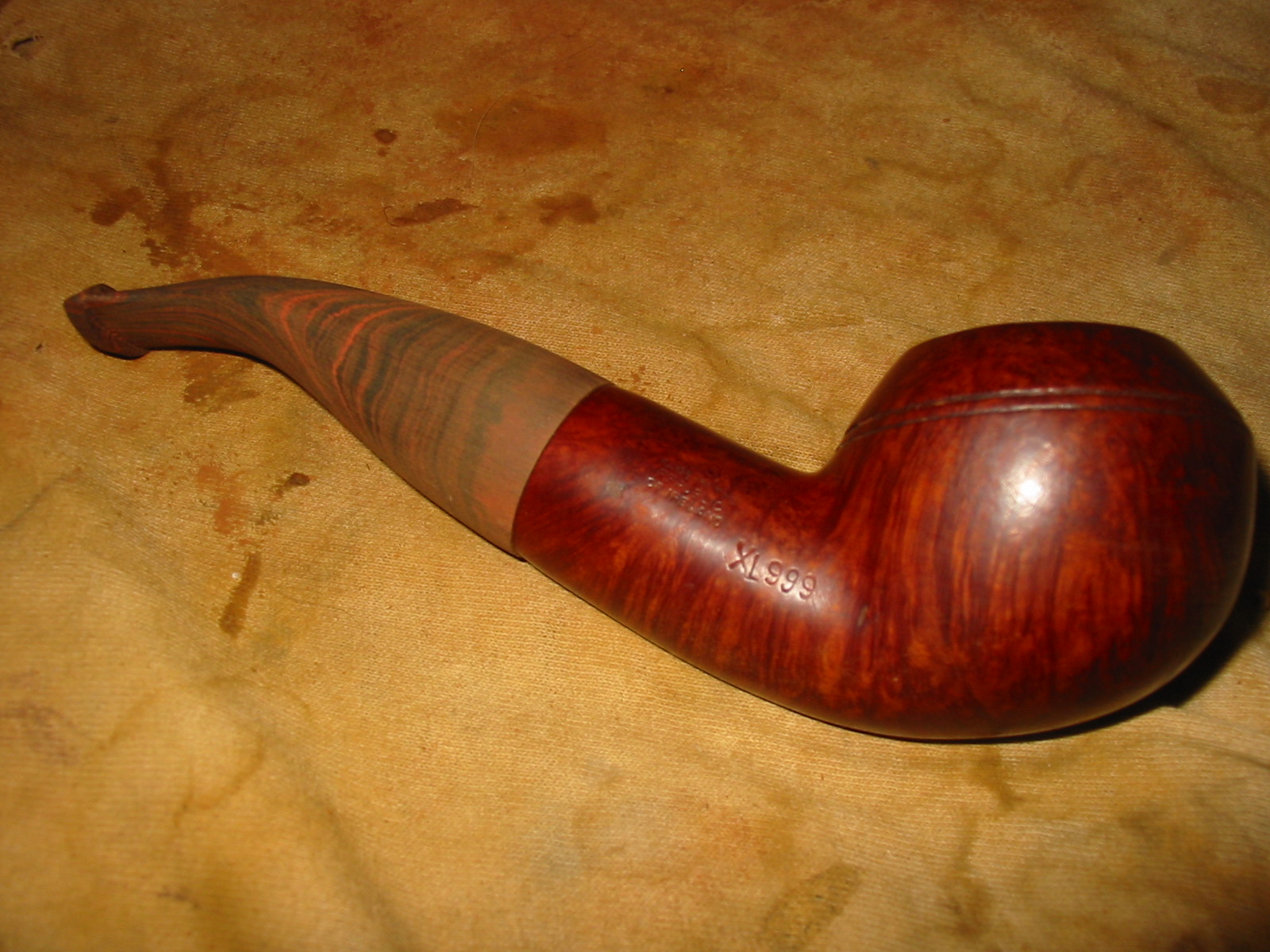
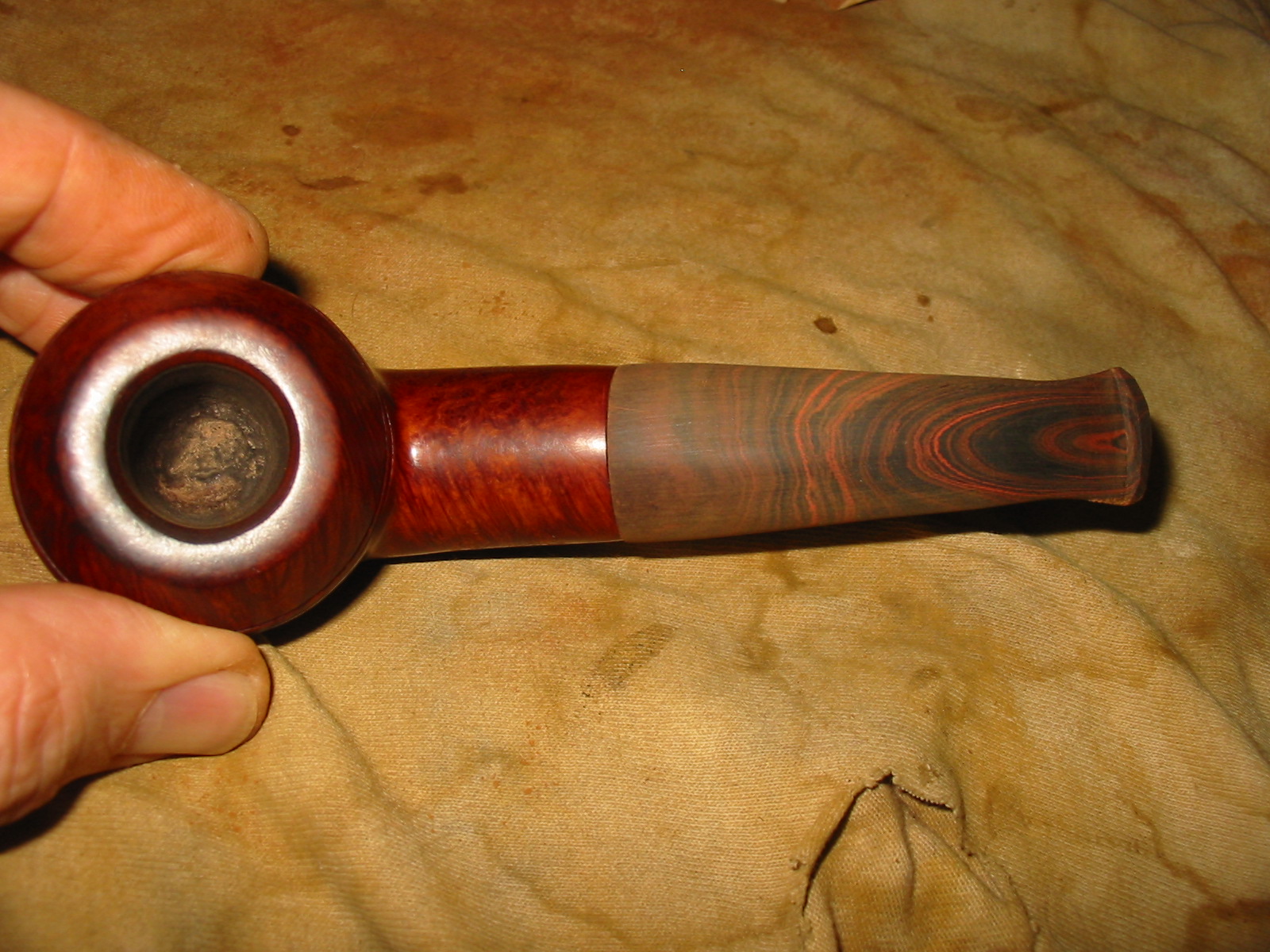
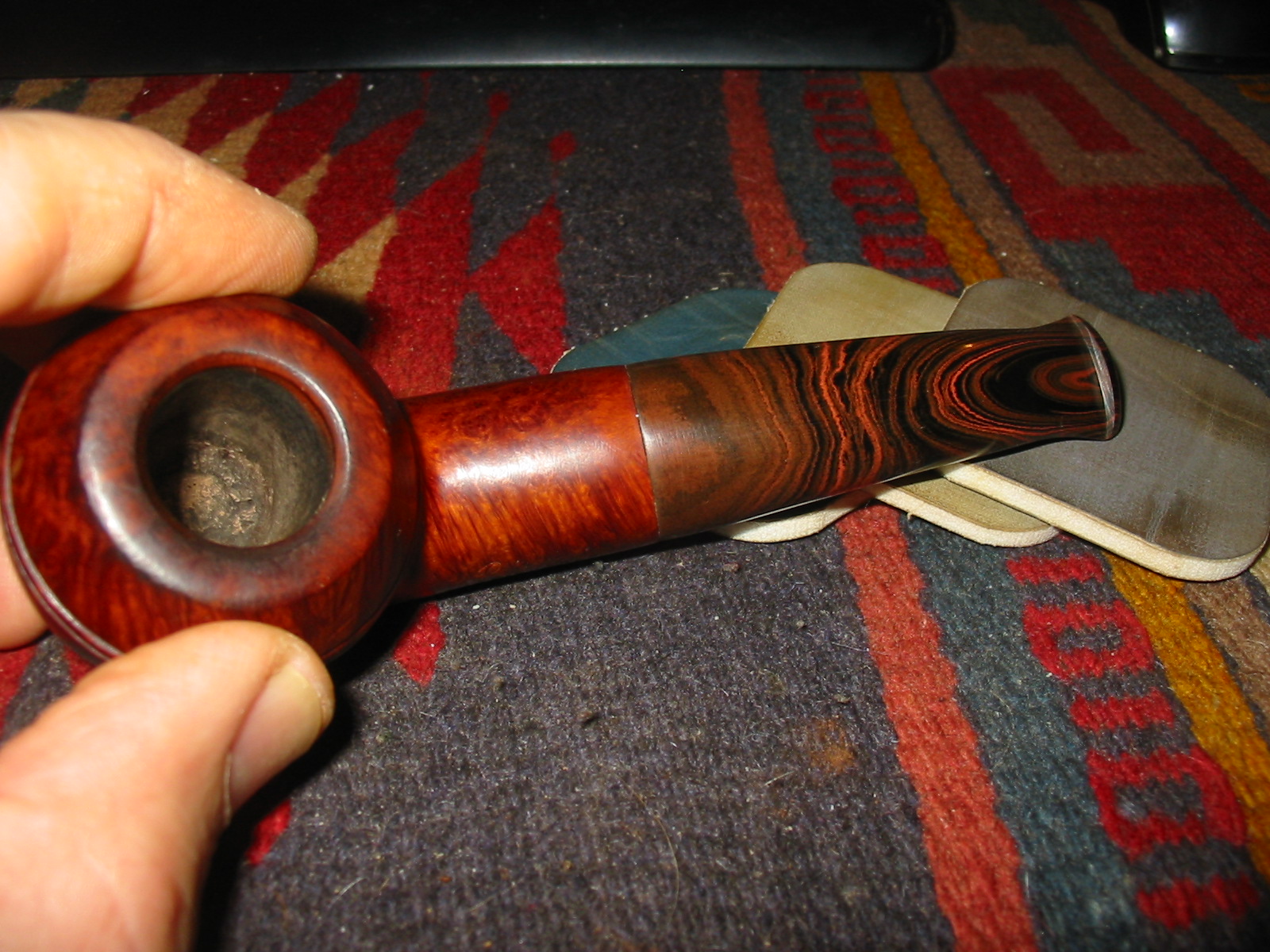
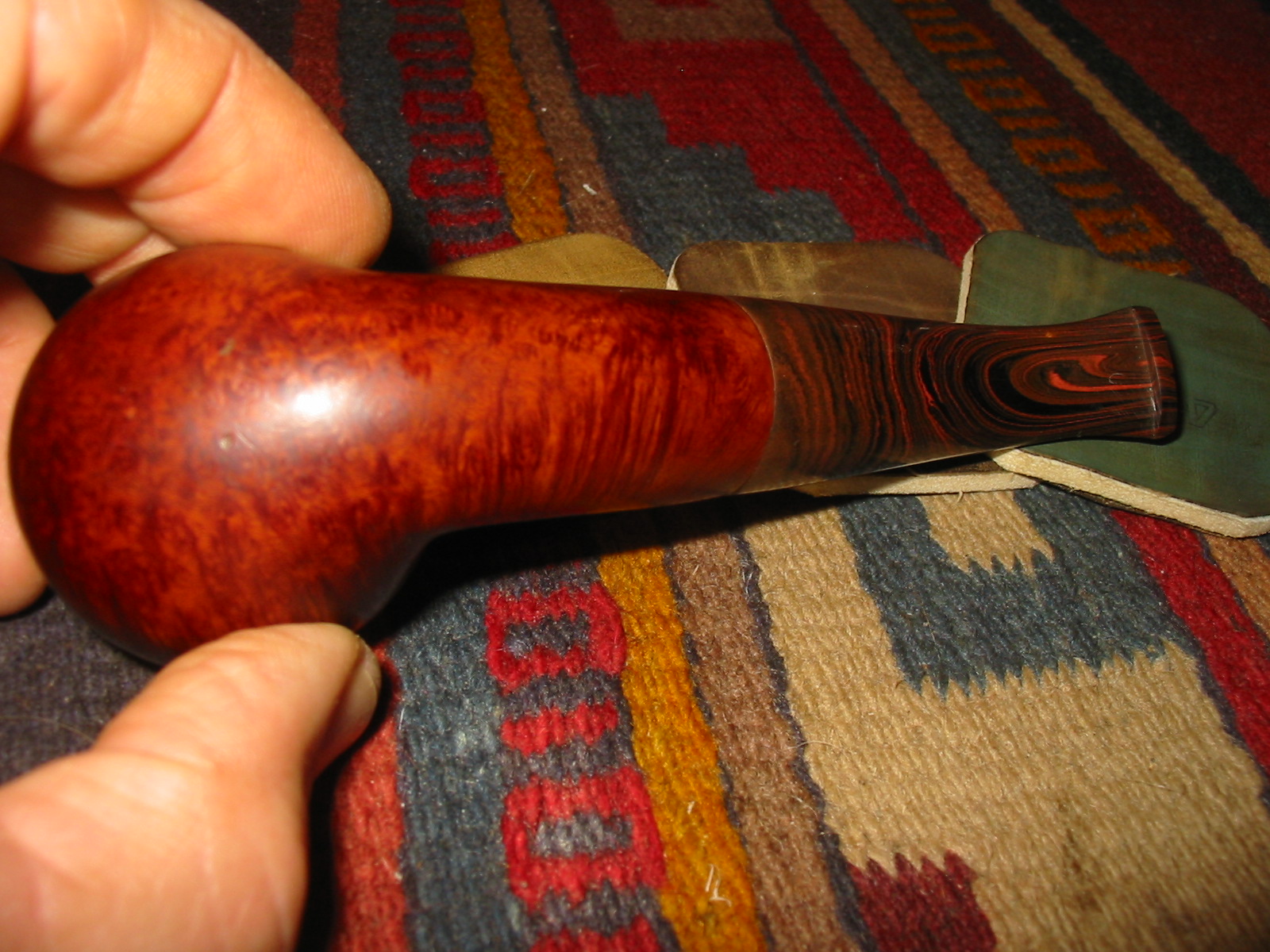
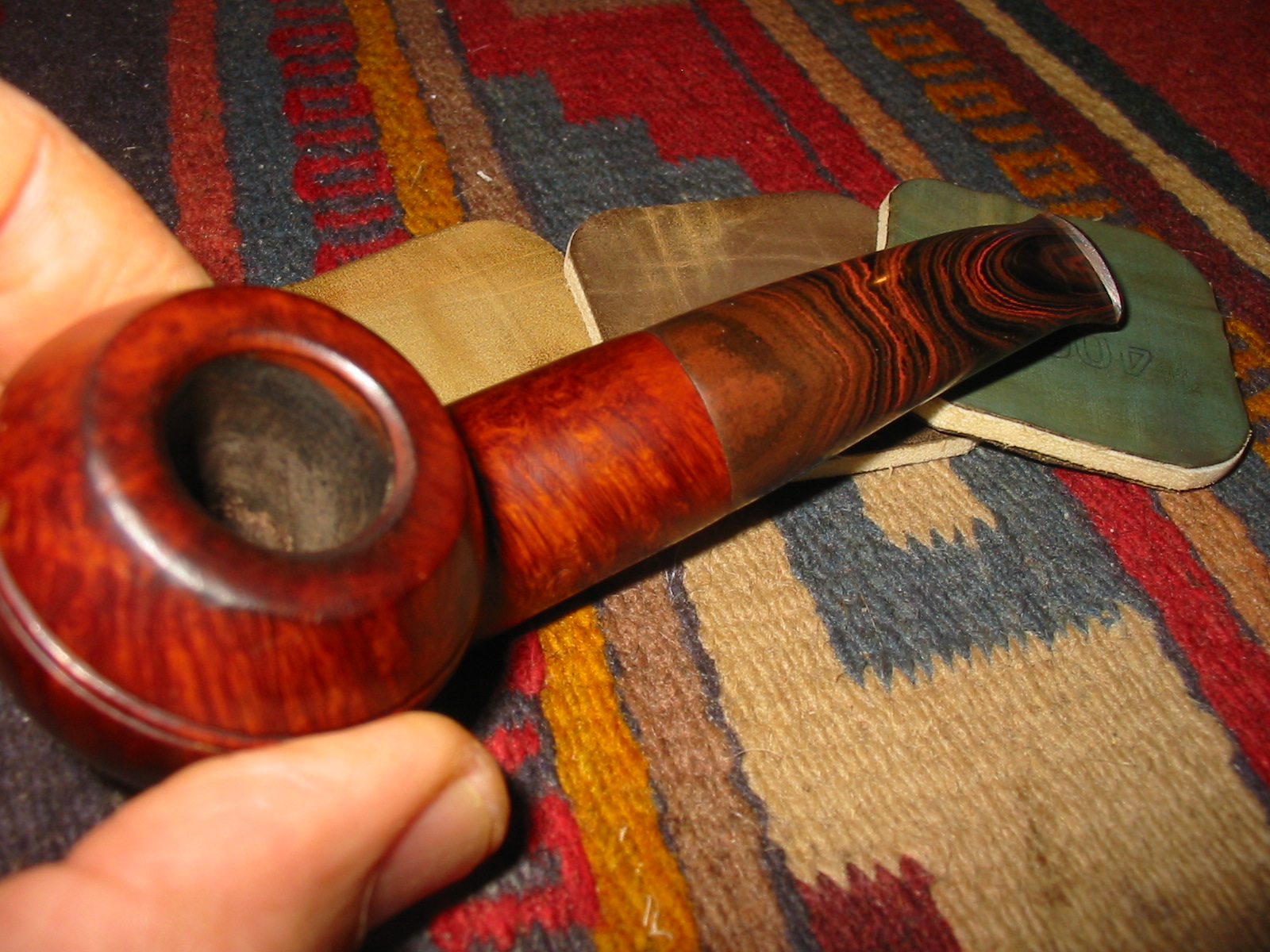
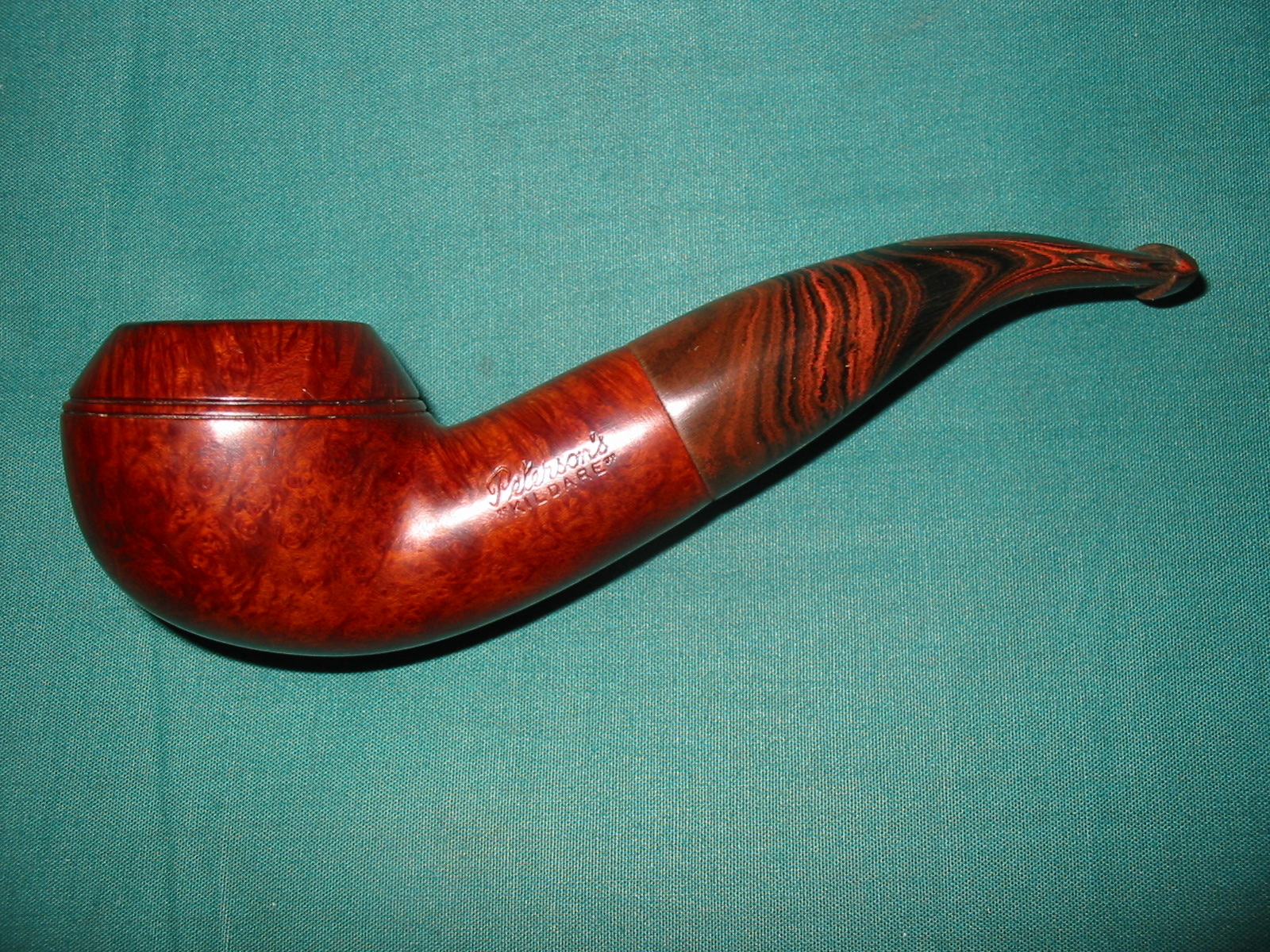
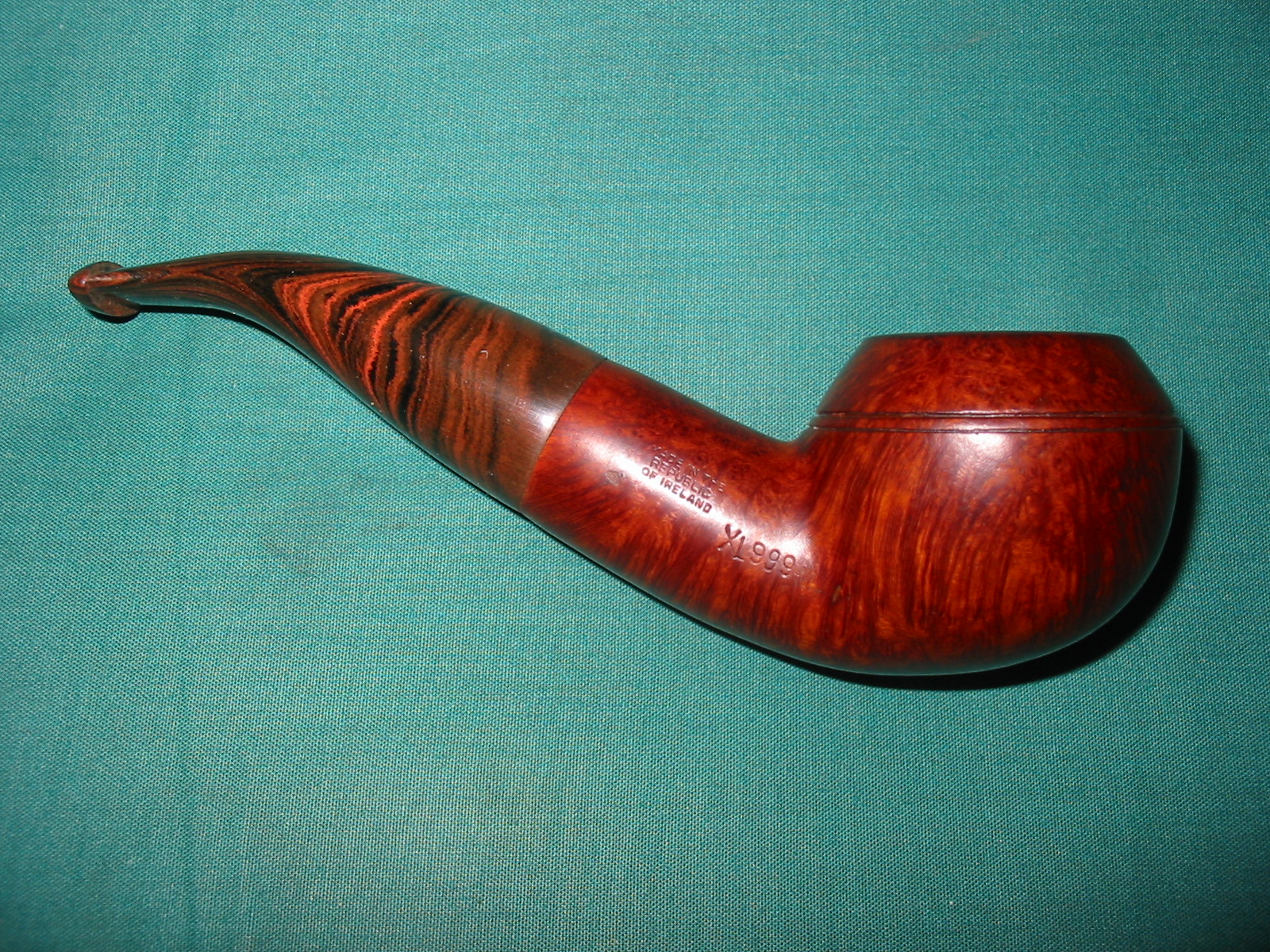
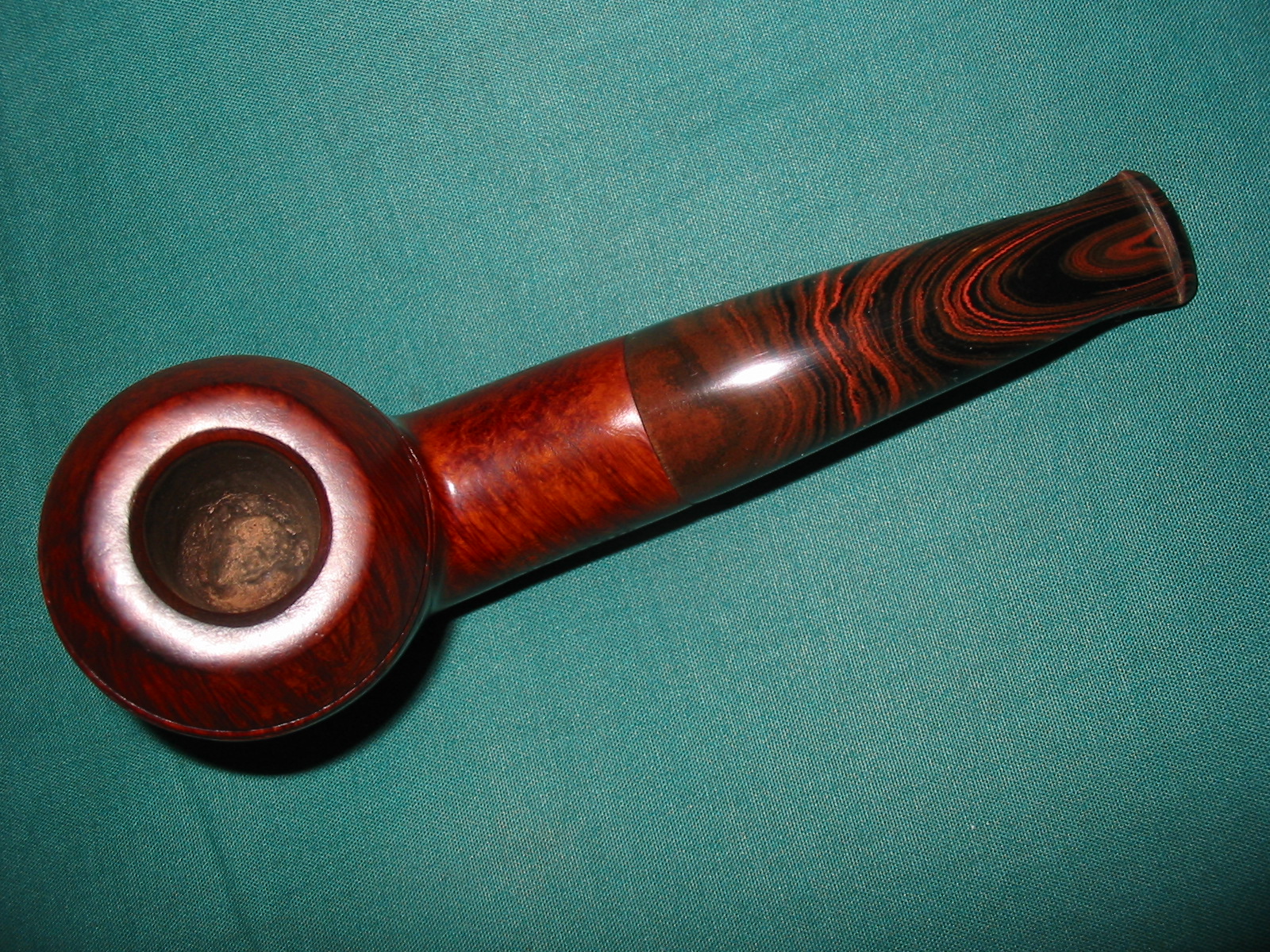
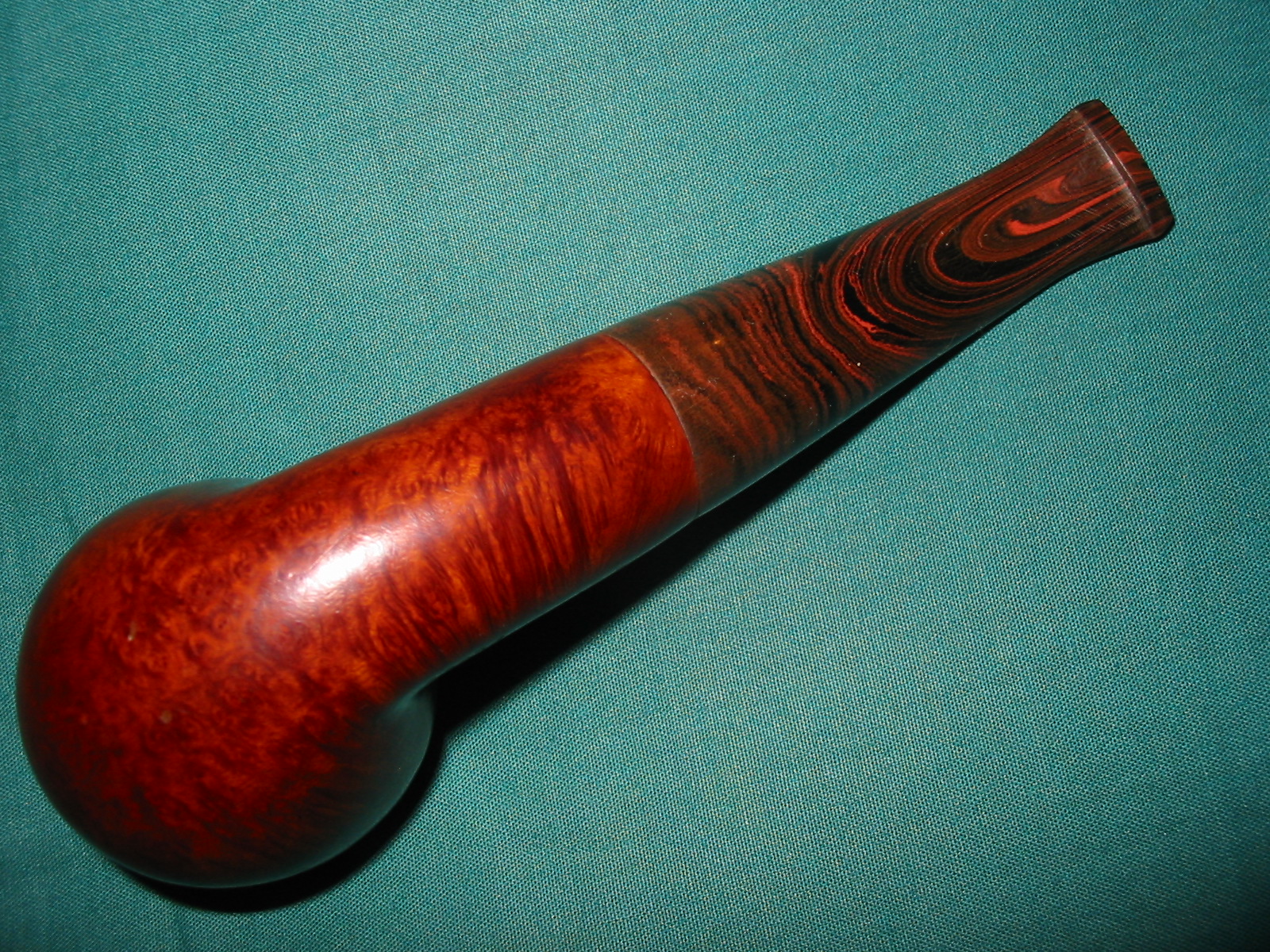
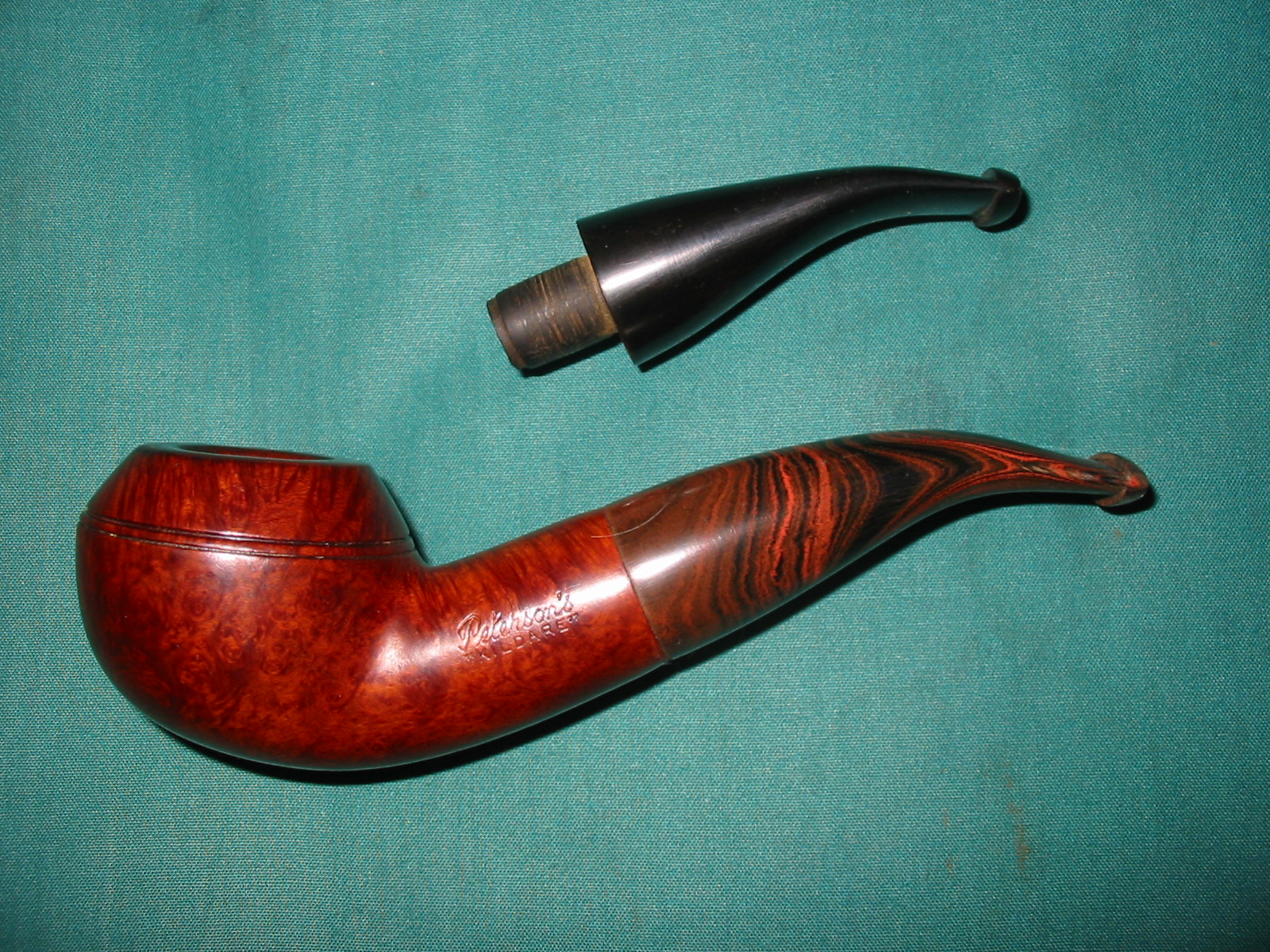
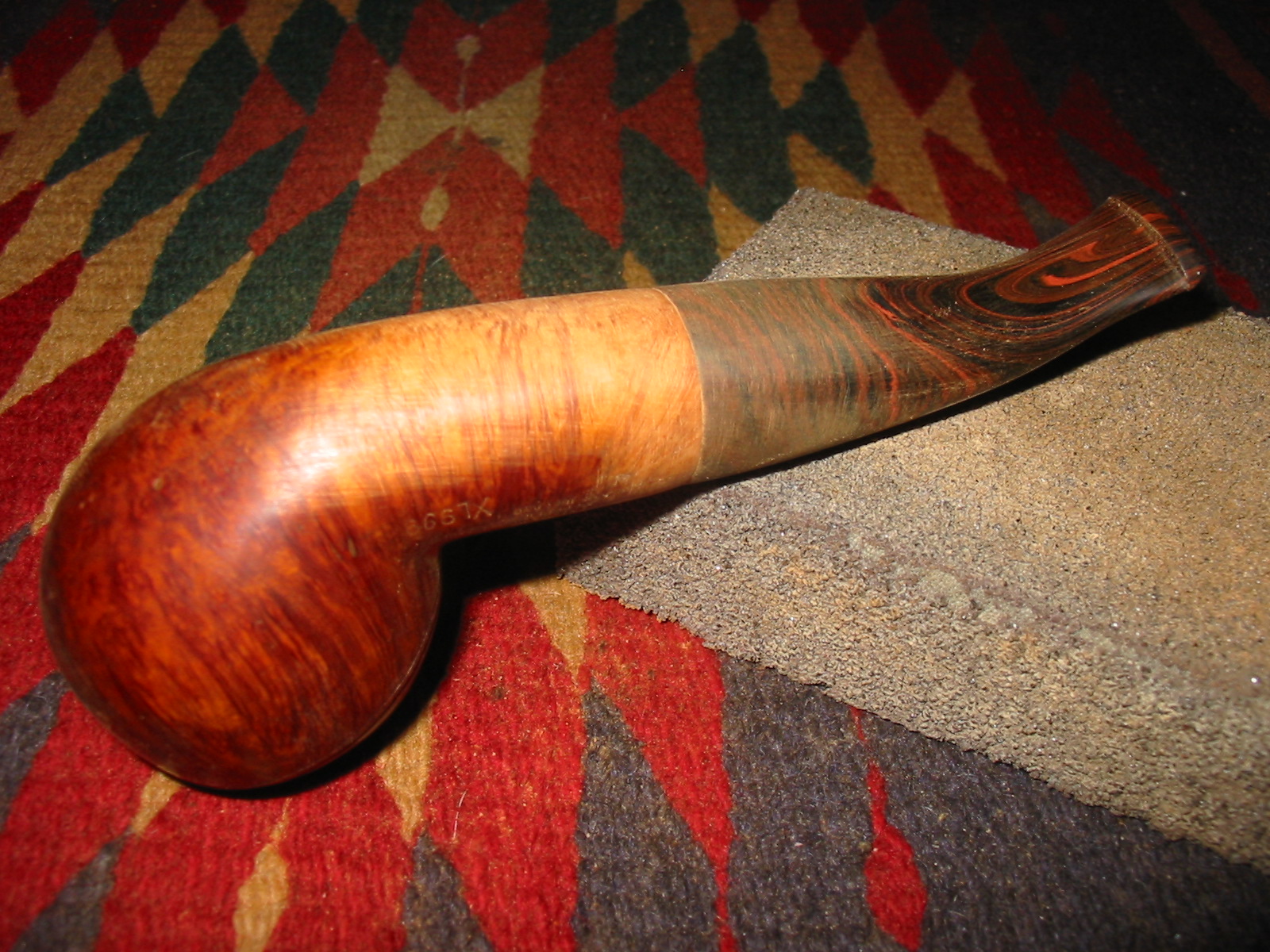
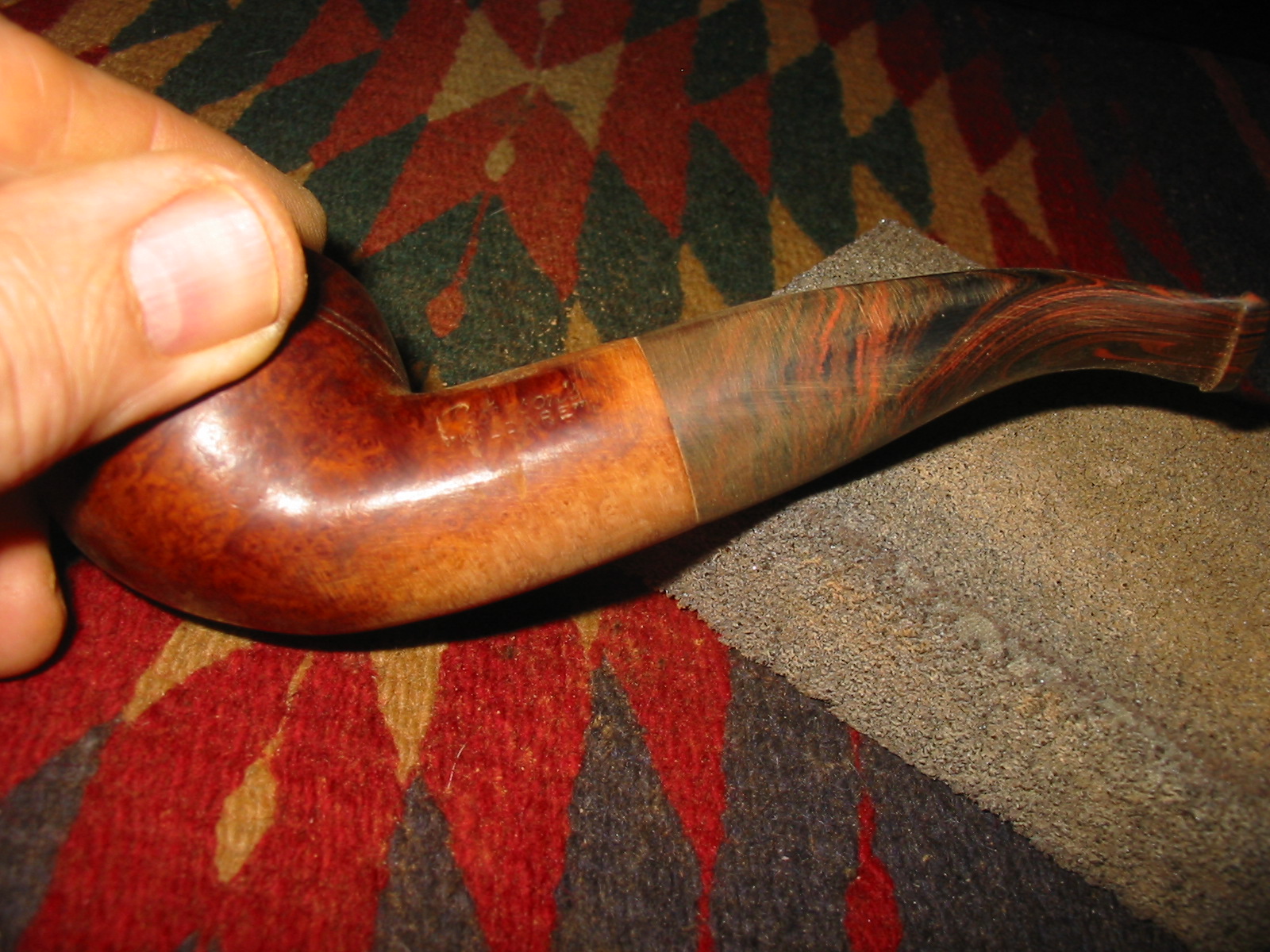
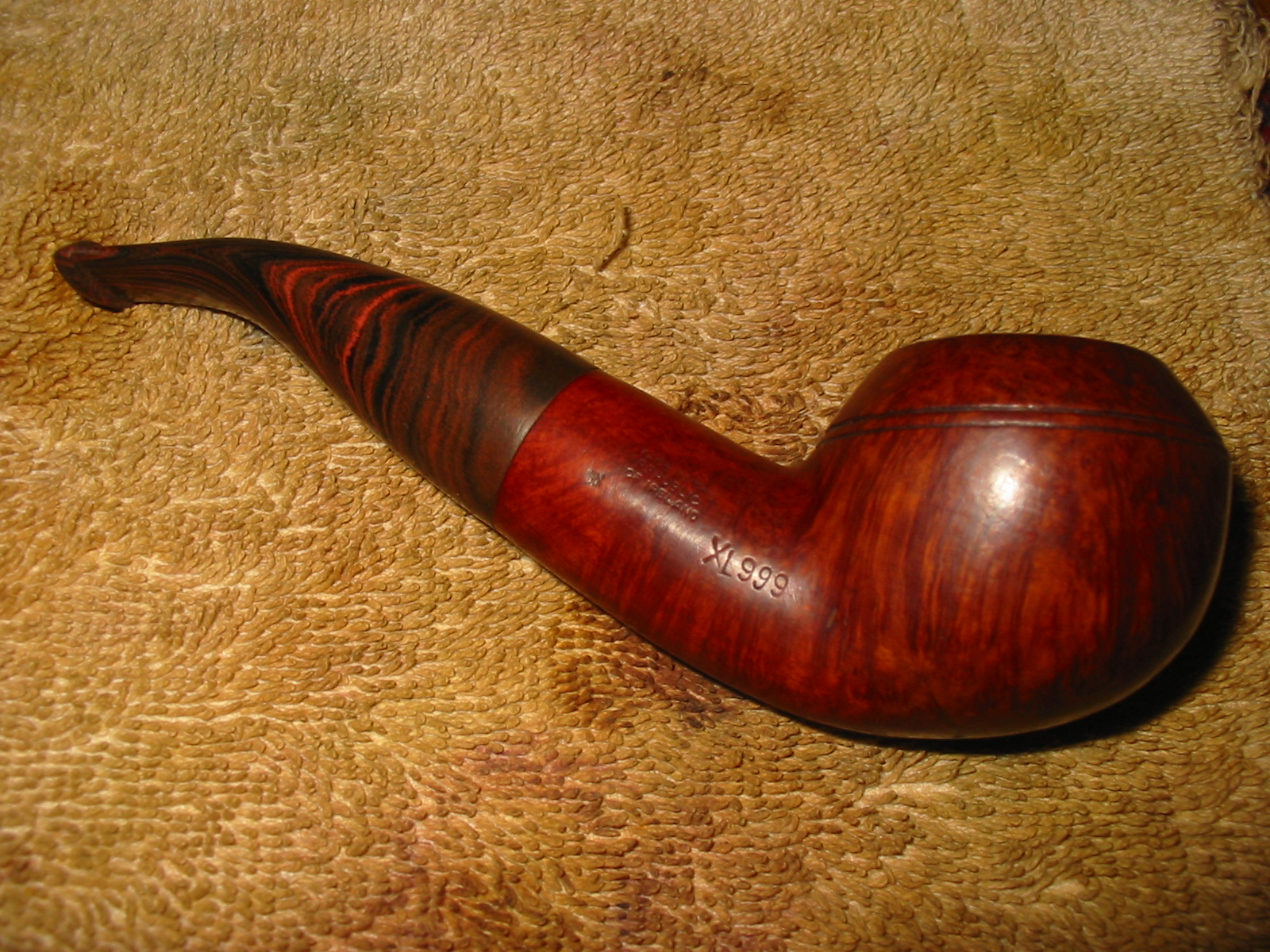
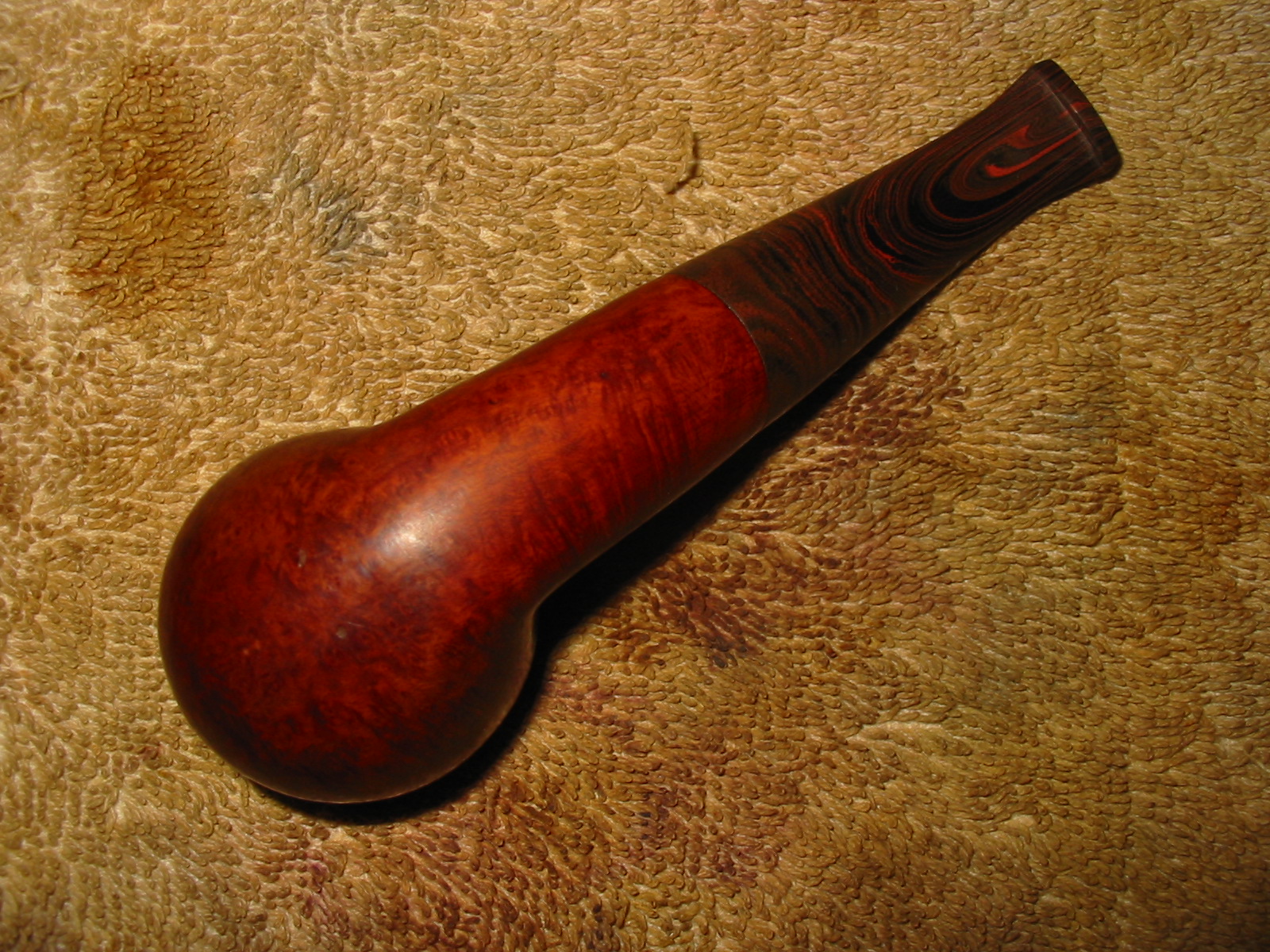
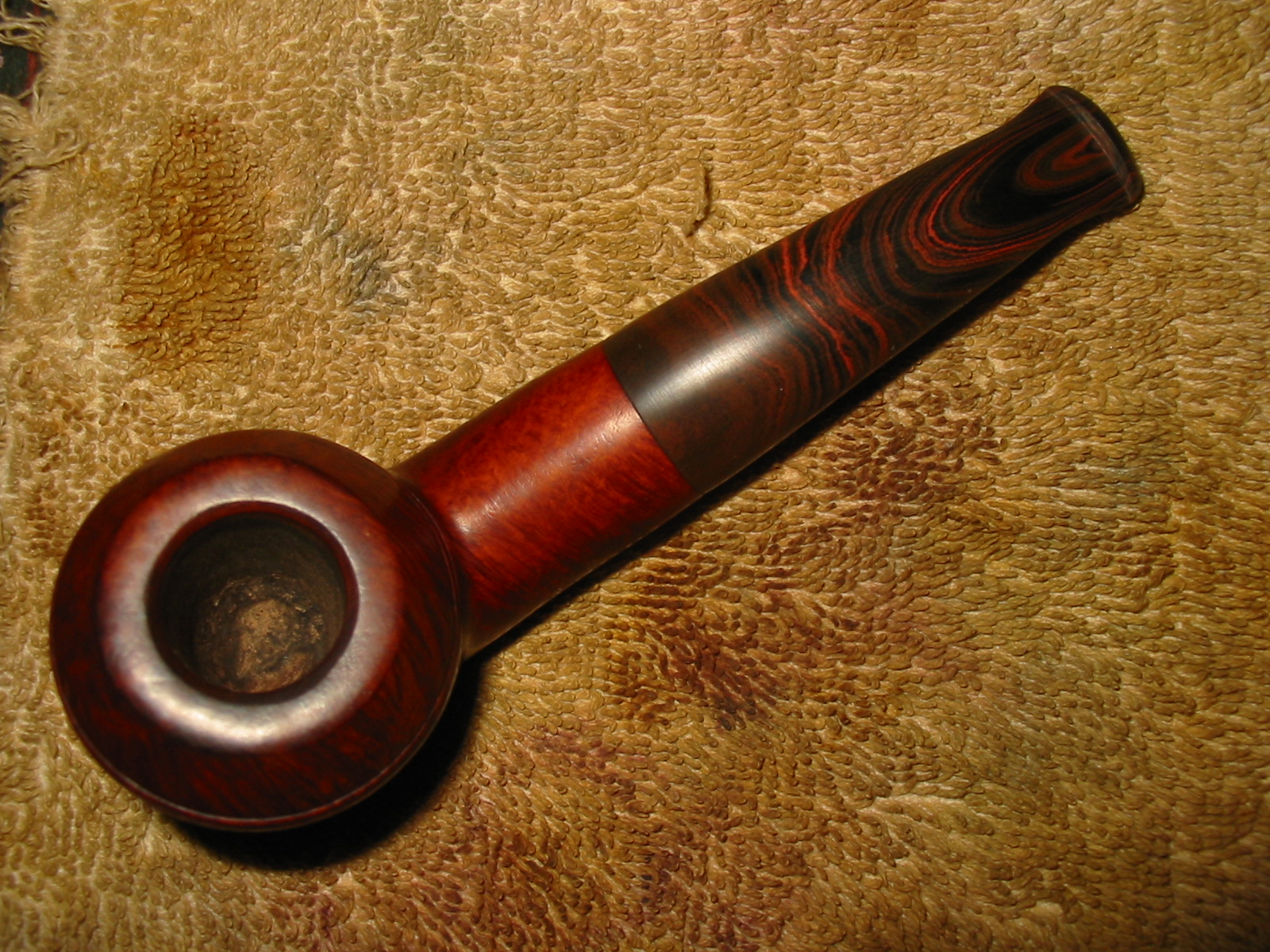
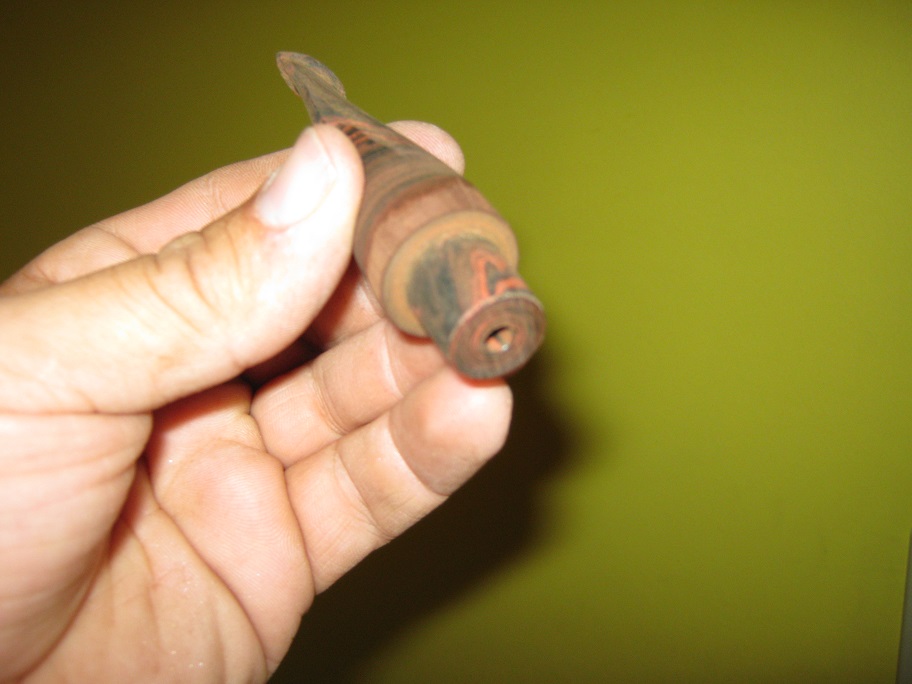
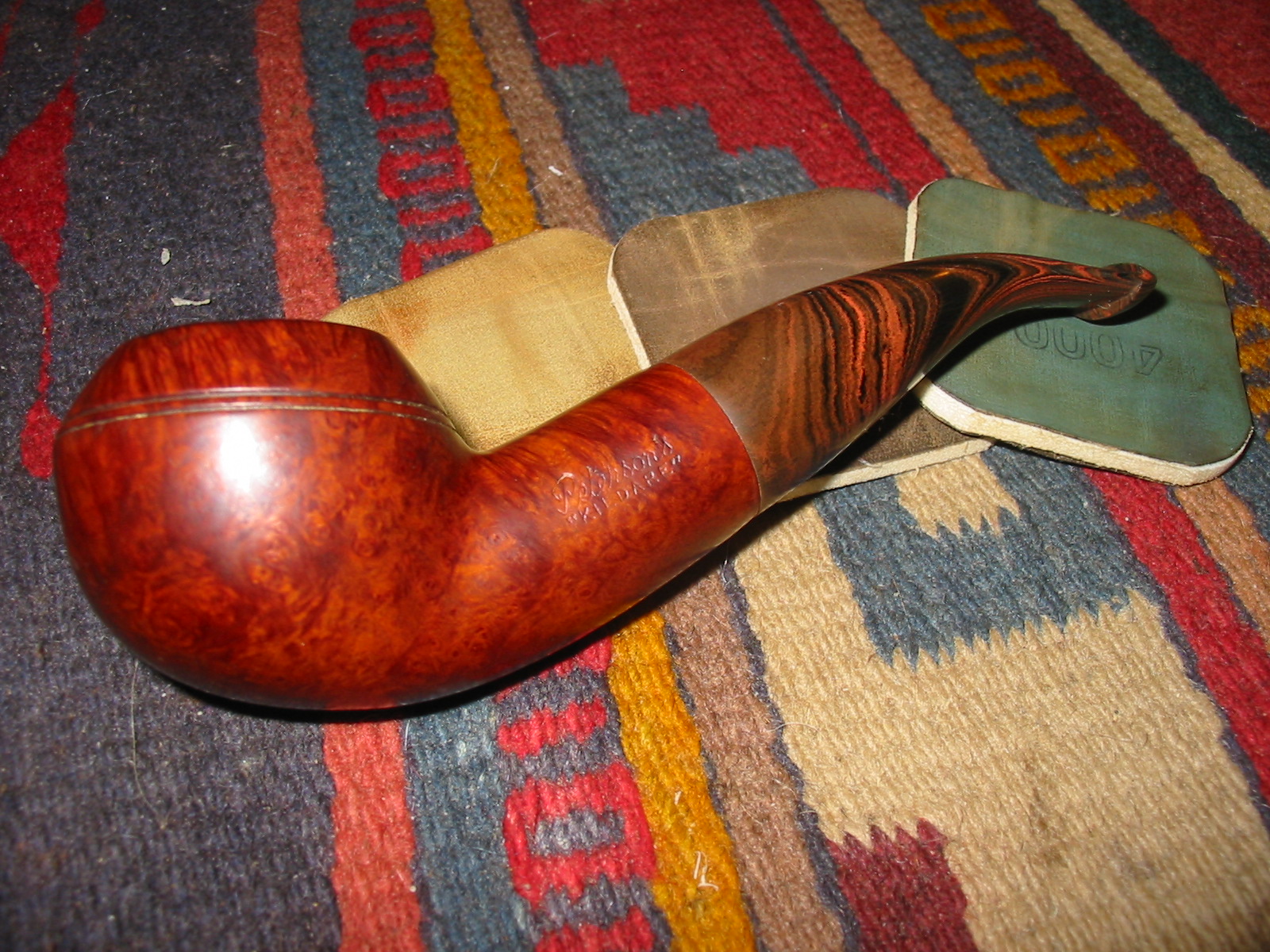
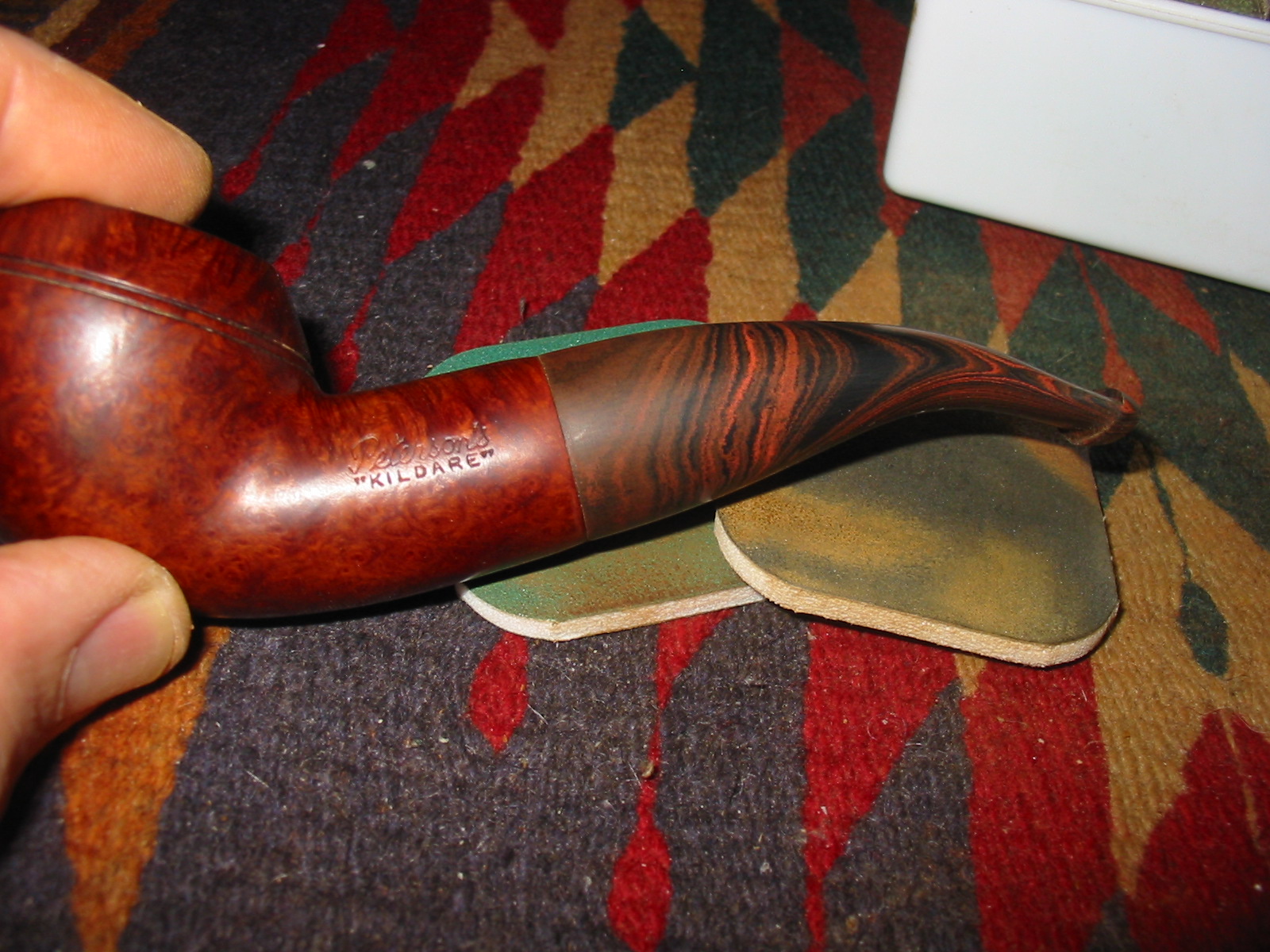
I put out a request for a stem for a Peterson’s XL999 stem on various web forums I am on. I was sent several that almost worked but either the diameter of the tenon was wrong or that of the stem itself was off just a bit. I turned a tenon on a stem blank that was sent to me and made a nice looking black stem that I posted pictures of earlier on the blog https://rebornpipes.wordpress.com/2013/07/26/making-a-new-stem-for-a-petersons-kildare-xl999/ but Todd Bannard, who is a pipe maker in Alberta, Canada offered to cut a rough one for me from some rod stock he had available. He did not have black vulcanite but did have some Brindle or Cumberland stock. I sent him the rough dimensions of the stem – I needed tenon material that I could turn to ½ inches and I needed a piece of stock that was 7/8 inches or more in diameter to work with to match the shank. I have shaped stems from straight rod stock in the past so I was not too worried about doing that. However, I got an email from Todd saying the rod stock was ready and he was going to send it off. He sent the following two photos to me to show me what was coming. He did a lion’s share of the shaping work for me. I was amazed at how much work he had done on it. I needed only to turn the tenon and refine the shape and the button once it arrived. The Cumberland is vertical and swirling rather than horizontal and lined. It was intriguing looking and I was excited to see what I could do with it.

IMG_2008

IMG_2009

When it arrived I set up my PIMO tenon turning tool on a cordless drill to cut a tenon that was slightly over ½ inch which was the extent of the tools adjustment. I cut a slight step in the tenon first to get a rough idea on the setting on the tool (Photo 1 below). It was correct so I tightened the adjustments and and cut the new tenon for the stem (Photos 2 and 3 below). Once I had it turned close to size I used a Dremel with a sanding drum and gave it a once around sanding and fit the stem to the shank (Photos 4 and 5 below).
IMG_1538

IMG_1539

IMG_1540

IMG_1541

IMG_1542

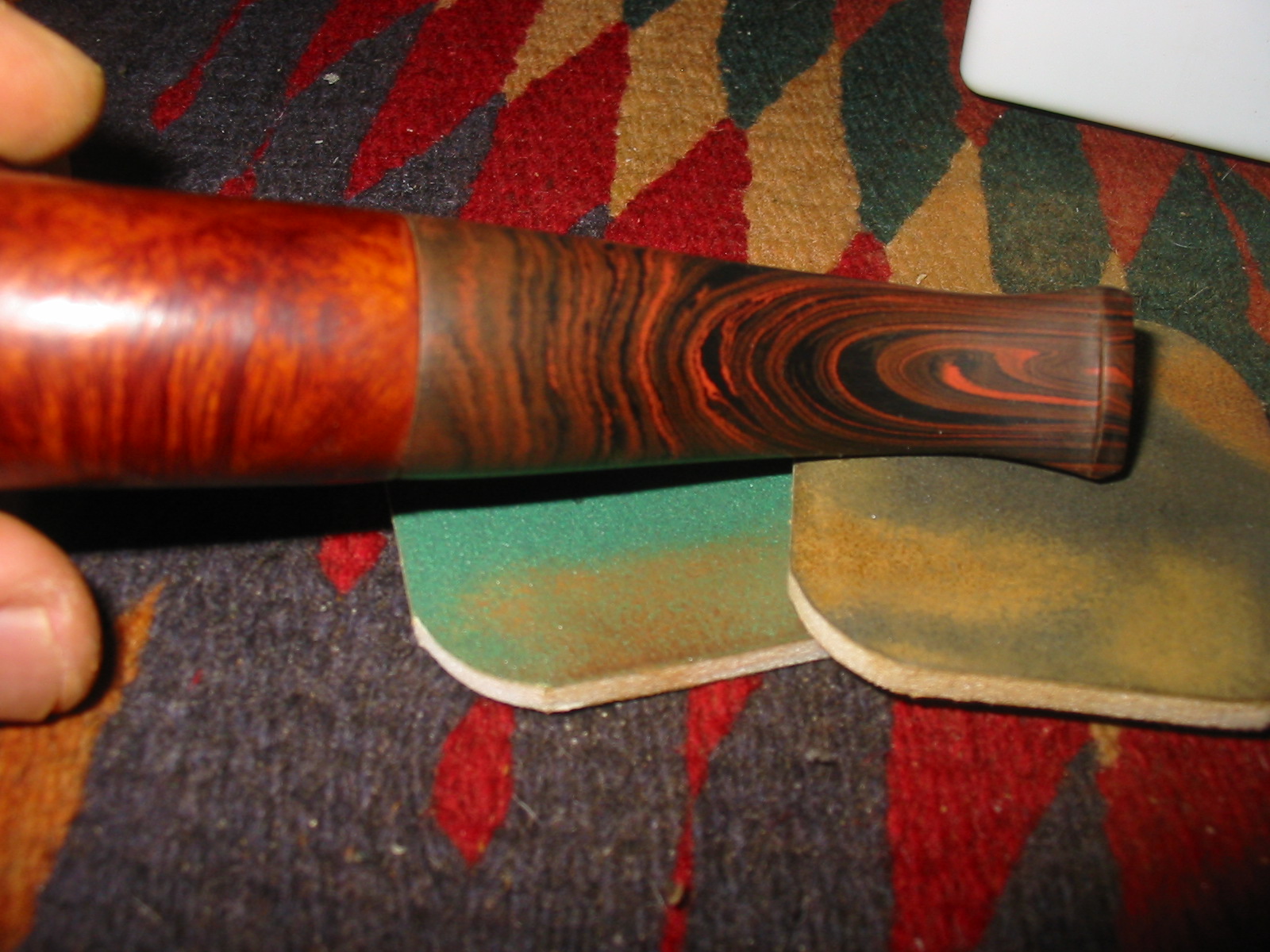
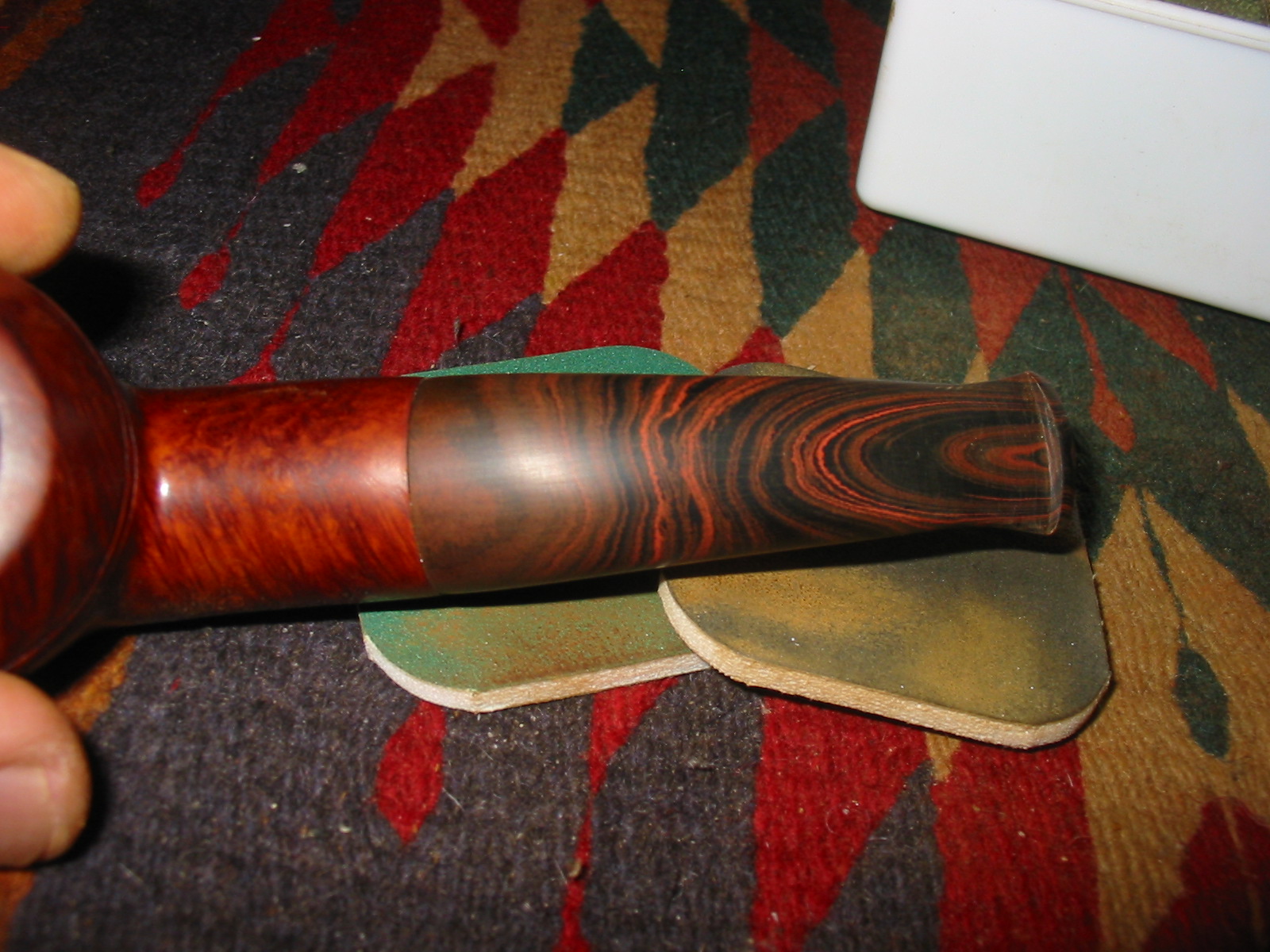
I used the Dremel with the sanding drum to also remove excess material from the stem at the shank stem junction. Afterward I sanded the stem with medium grit emery paper to remove the scratches and marks left by the Dremel. I followed up by sanding the stem with 220 grit sandpaper to further remove the scratches. The next series of four photos show the fit of the stem at this point in the process. The pattern of the Cumberland is also very visible. The pinkish swirls would polish into a reddish brown and the darker colour would be a dark brown fading into black throughout the length of the stem.

IMG_1543

IMG_1544

IMG_1545

IMG_1546

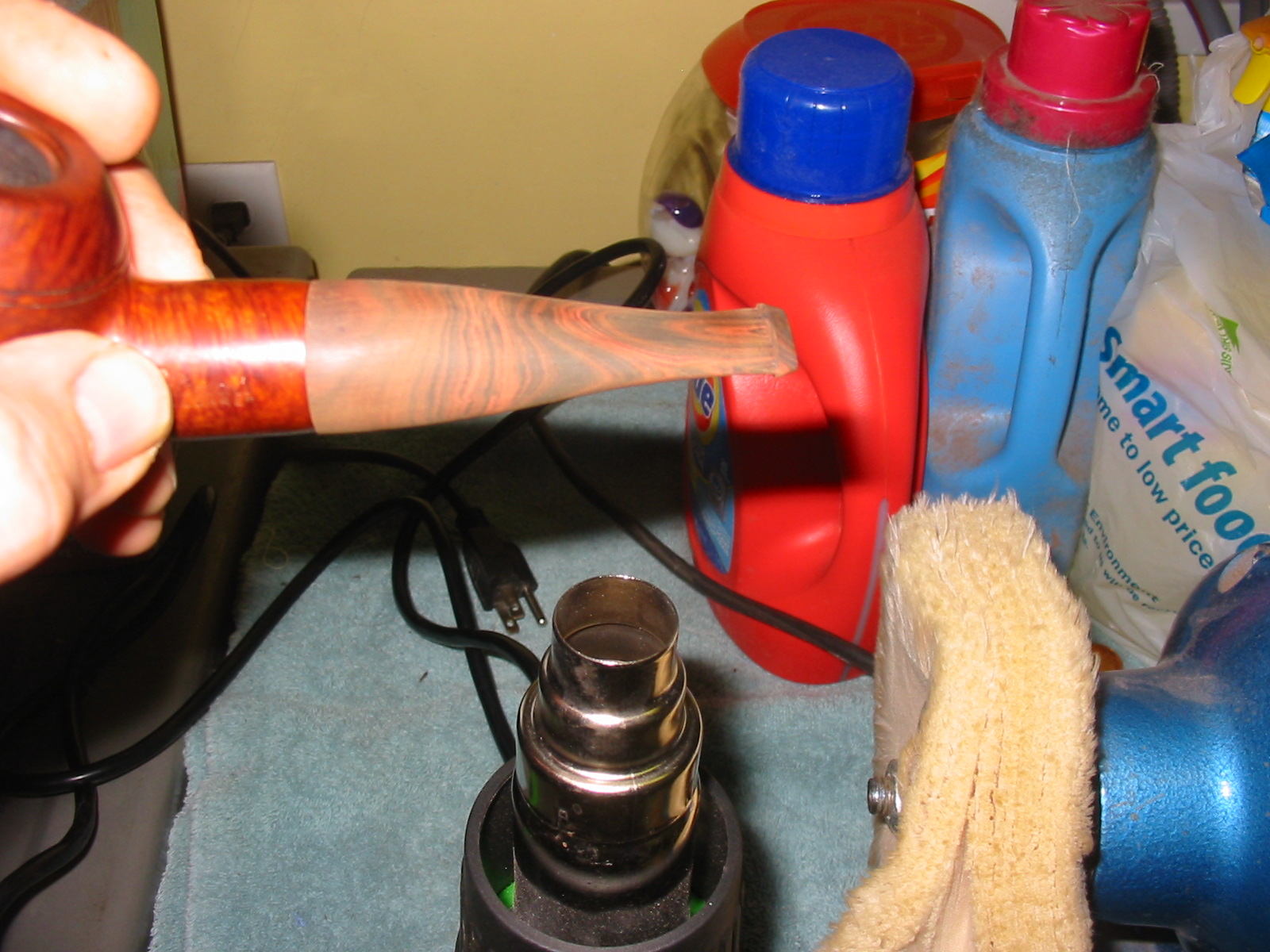
Once I had sanded the stem to the smoothness and fit pictured above I heated it to bend it to the finished shape. I set up the heat gun and held the stem over the tip until it was soft enough to bend. Cumberland like vulcanite bends quite easily. What made this one a bit harder was the thickness of the stem where I wanted to bend it. Once flexible I bent it over a rolling pipe and cooled it under running water to set the bend.

IMG_1547

IMG_1548

I continued to sand the stem with 220 grit sandpaper to get a better fit with the shank. I wanted the transition to be smooth between the two parts so it took a lot of hand sanding. I sanded it removed from the shank, checking often for the fit, until it was a smooth fit.

IMG_1549

IMG_1550

IMG_1551

IMG_1552

I sanded with a fine grit sanding sponge to smooth out the scratch marks more thoroughly and to also fine tune the fit. The next series of seven photos show that progress.

IMG_1553

IMG_1554

IMG_1555

IMG_1556

IMG_1557

IMG_1558

IMG_1559

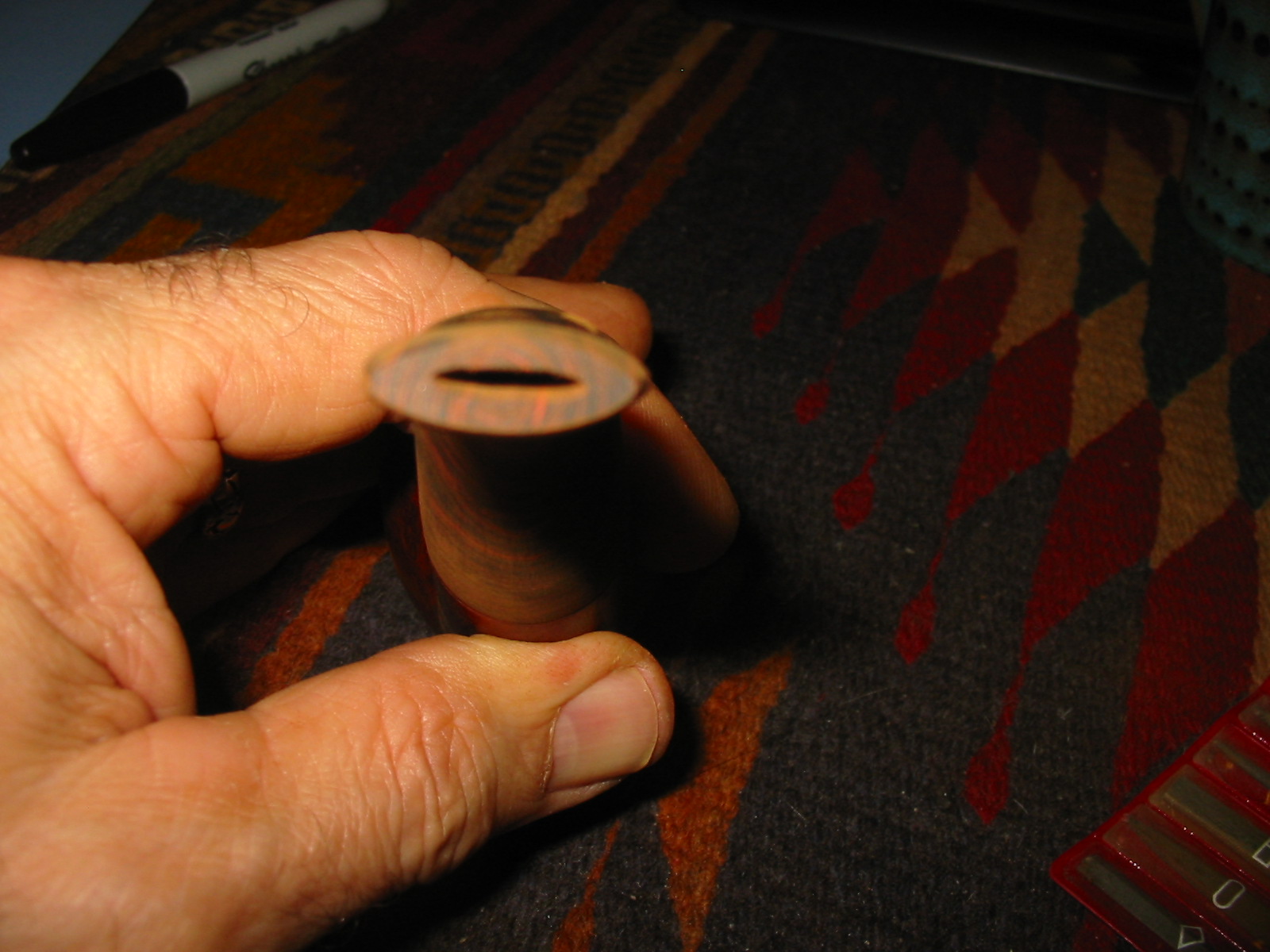
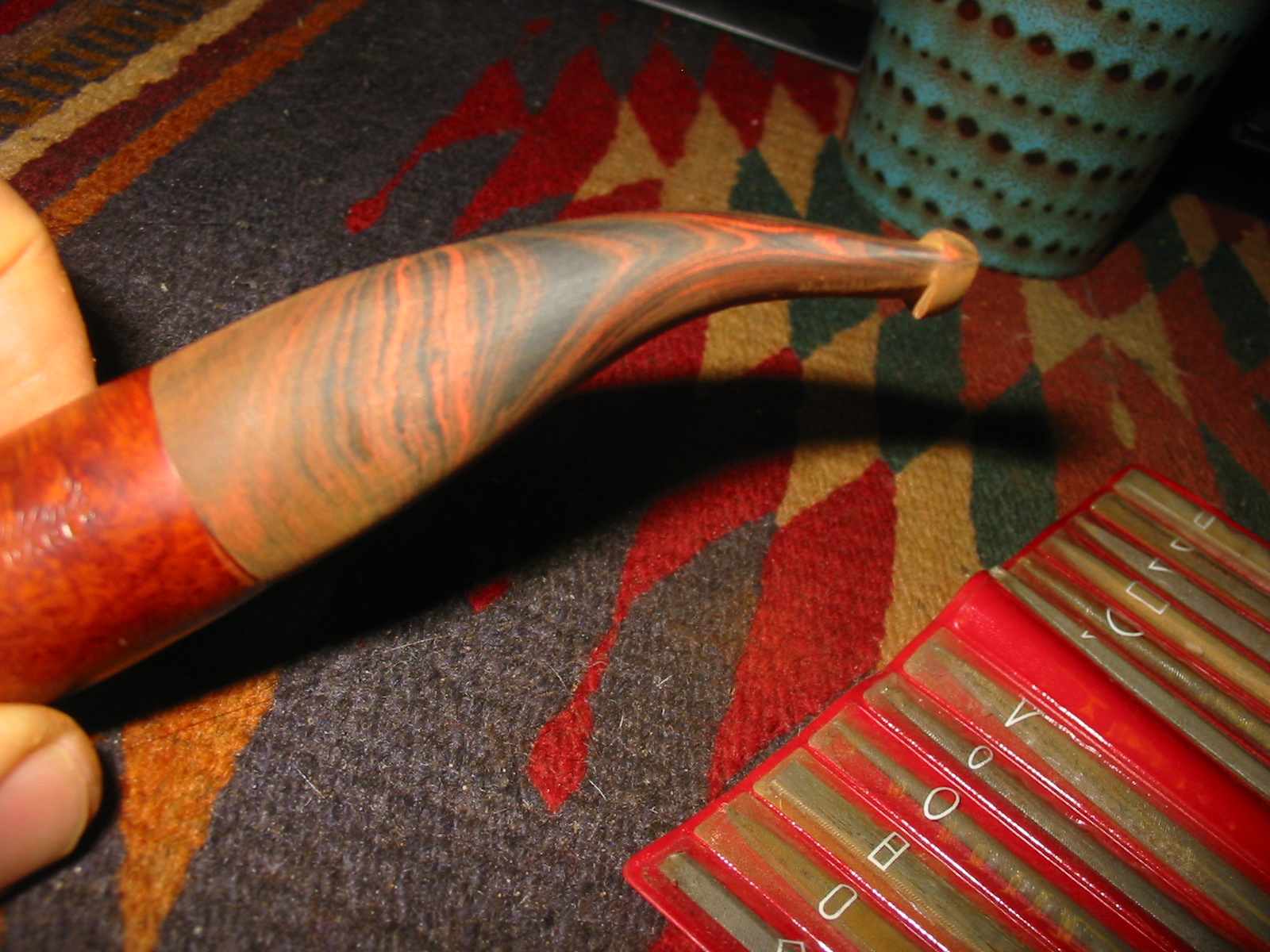
I worked on the button and slot with needle files to thin down the button and to also open the slot. The first photo below shows the slot and button before I started reworking it and shaping it. The second photo, though blurry, shows the button and slot after I had been working on it with the files and sandpaper. The button is thinner and the slot is beginning to open up. Photos three and four show the finished button and slot before buffing and polishing. The button is rounded and shaped, thinner than it originally was and the slot is oval and wide open. I used folded sandpaper to polish the inside of the slot and smooth out the edges. The fifth photo shows the profile of the button when I had finished working on it.

IMG_1560

IMG_1582

IMG_1581

IMG_1563

IMG_1561

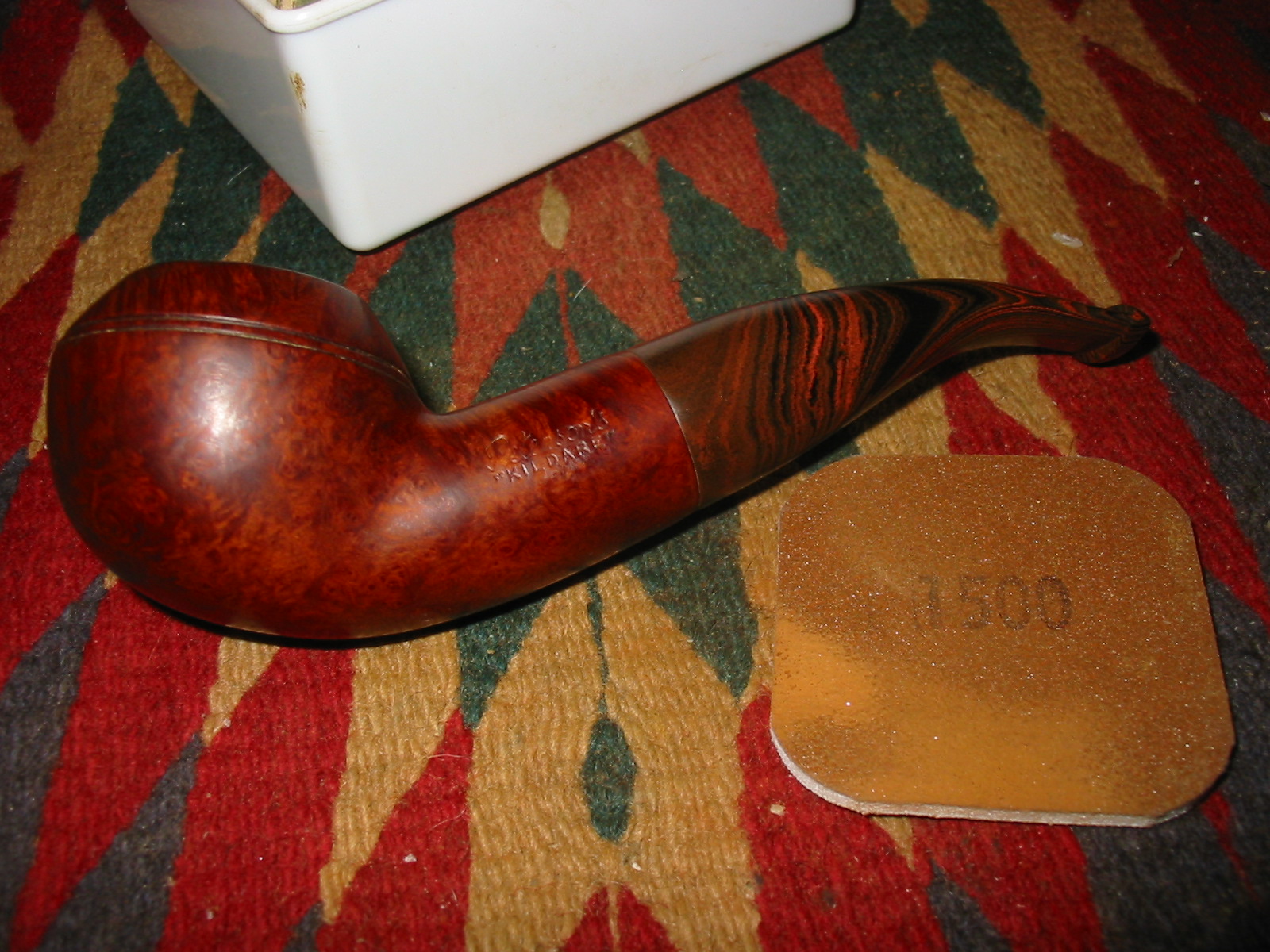
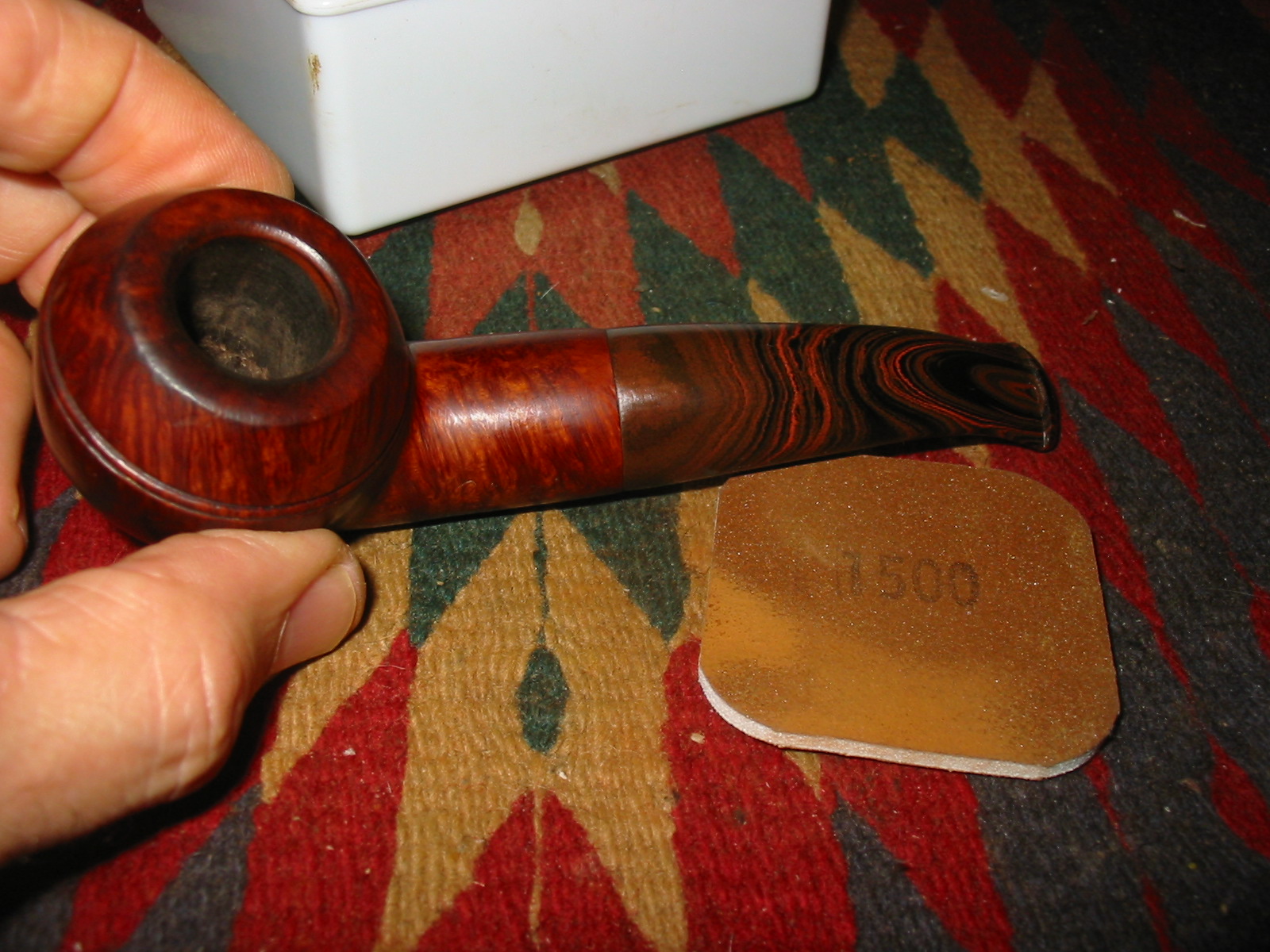
I sanded the stem with micromesh sanding pads from 1500-12,000 grit, with each successive grit giving the stem a more finished appearance and removing the scratches from the Cumberland. The next series of ten photos show the progressive shine developing. I included quite a few photos in this section to show the various sides of the stem and the developing clarity of the Cumberland patterns in the stem as it was sanded.

IMG_1564

IMG_1573

IMG_1572

IMG_1571

IMG_1570

IMG_1569

IMG_1568

IMG_1567

IMG_1566

IMG_1565

I took the pipe to the buffer and buffed the stem with White Diamond and Blue polish to further enhance the shine. I gave the entire pipe several coats of carnauba wax and buffed with a clean flannel buffing pad.

IMG_1574

IMG_1575

IMG_1576

IMG_1577

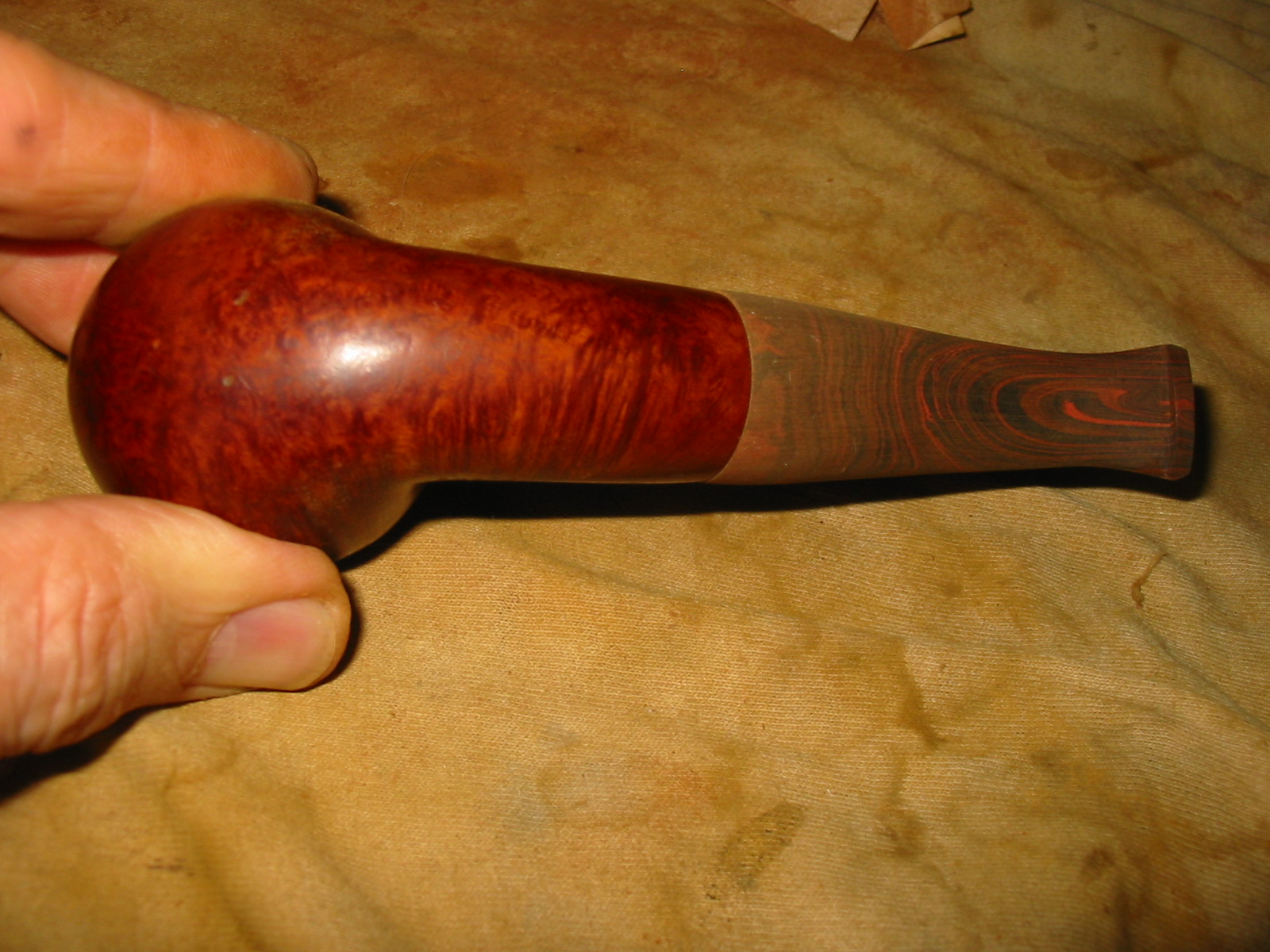
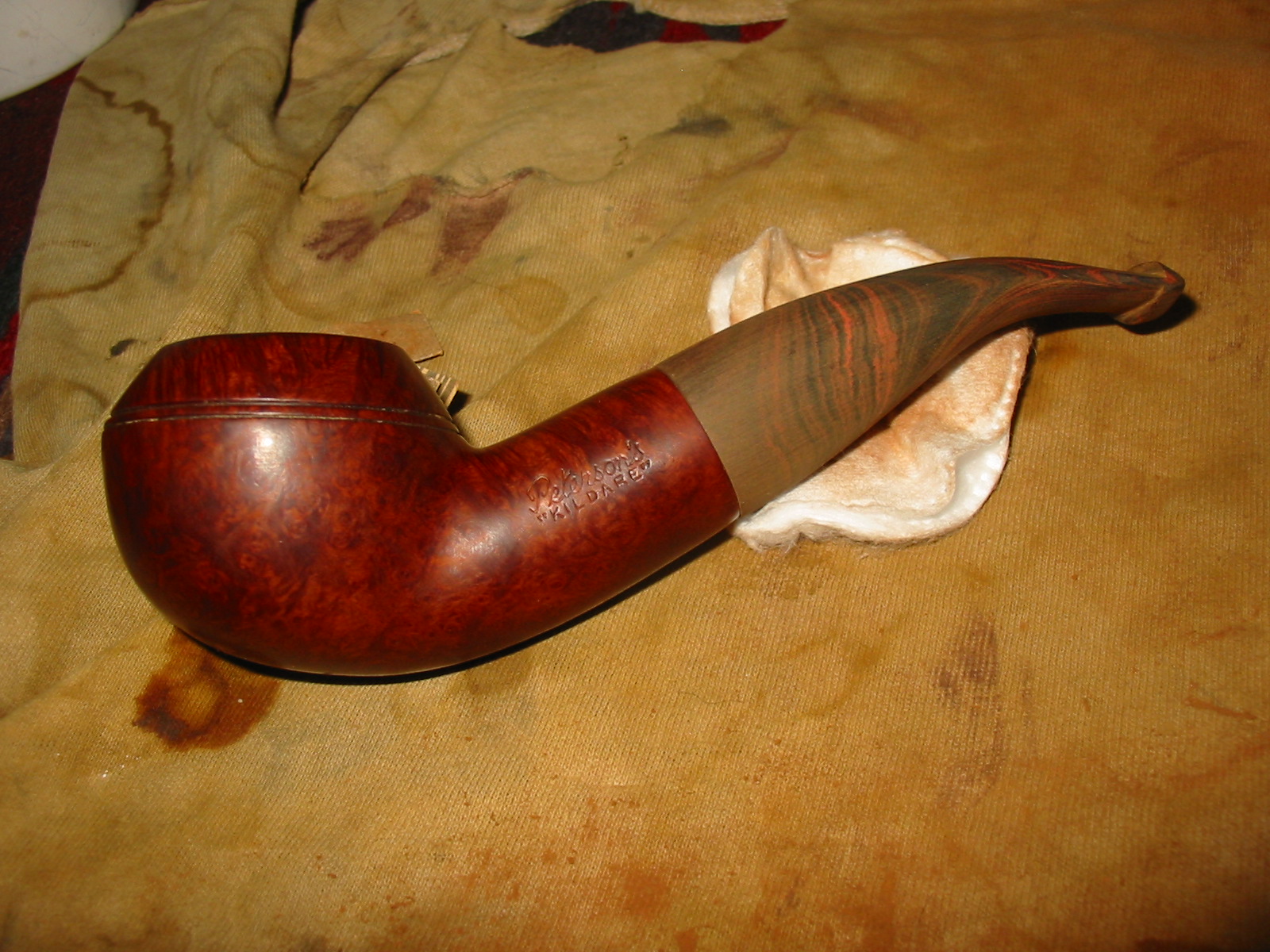
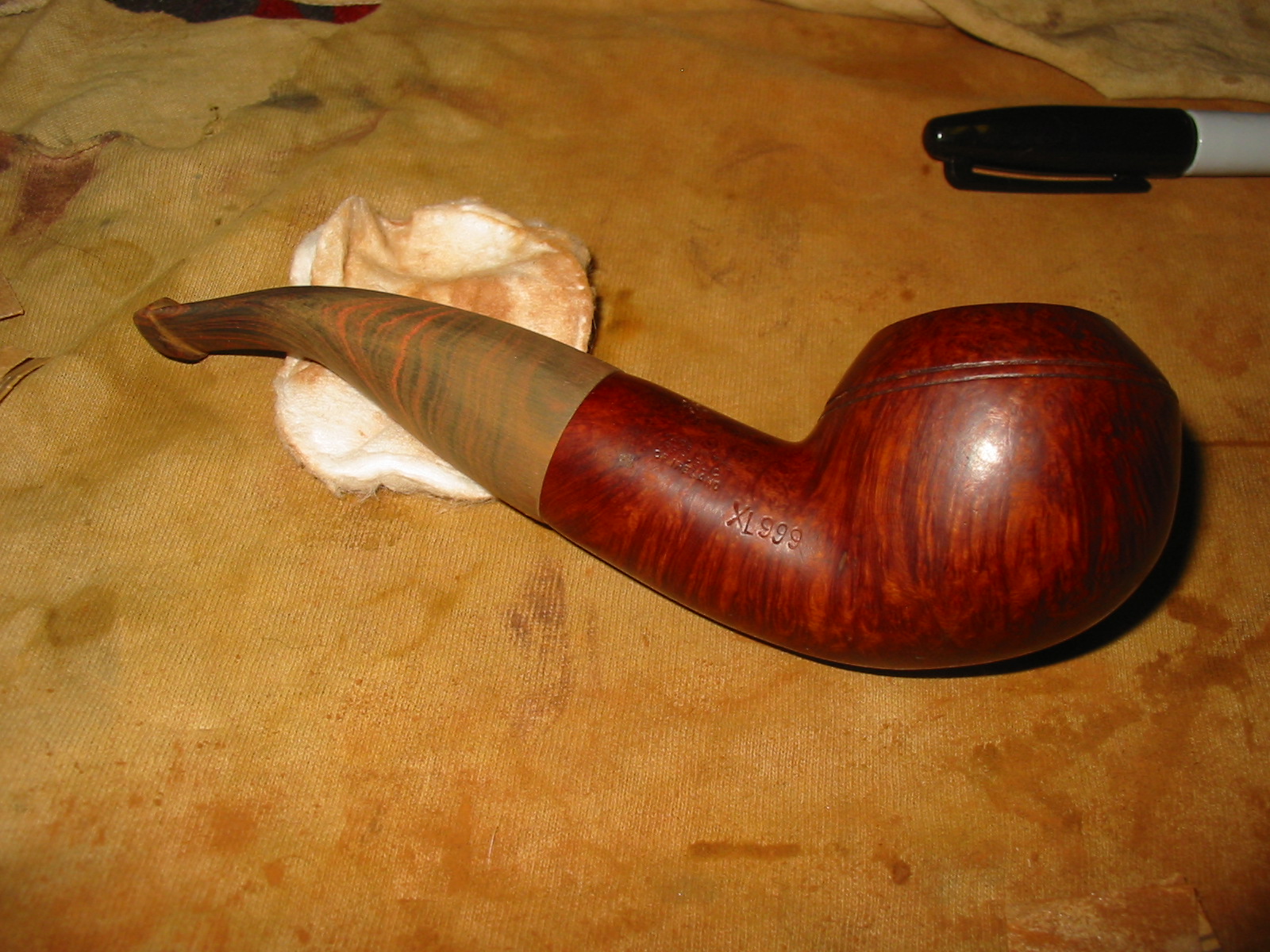
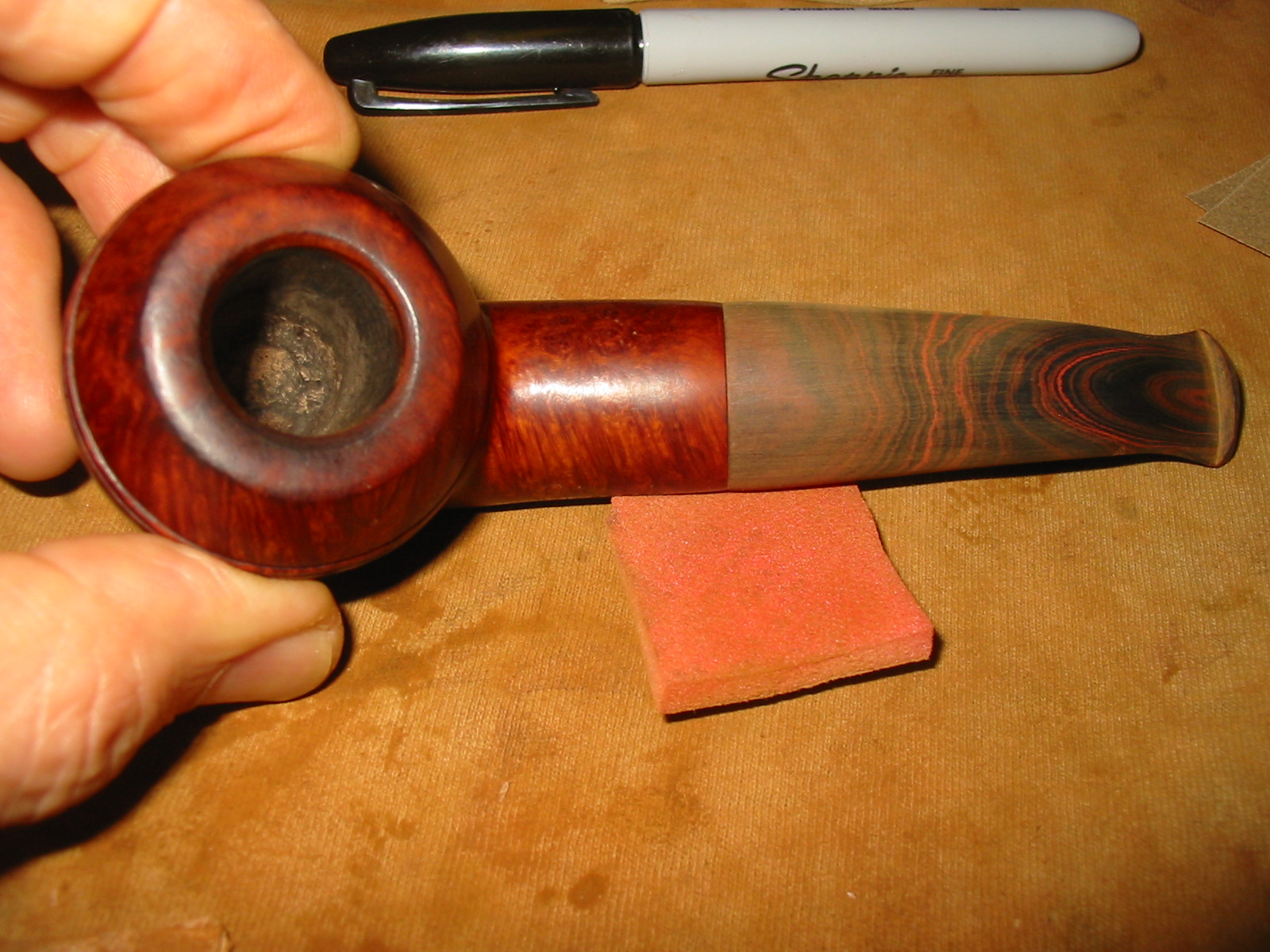
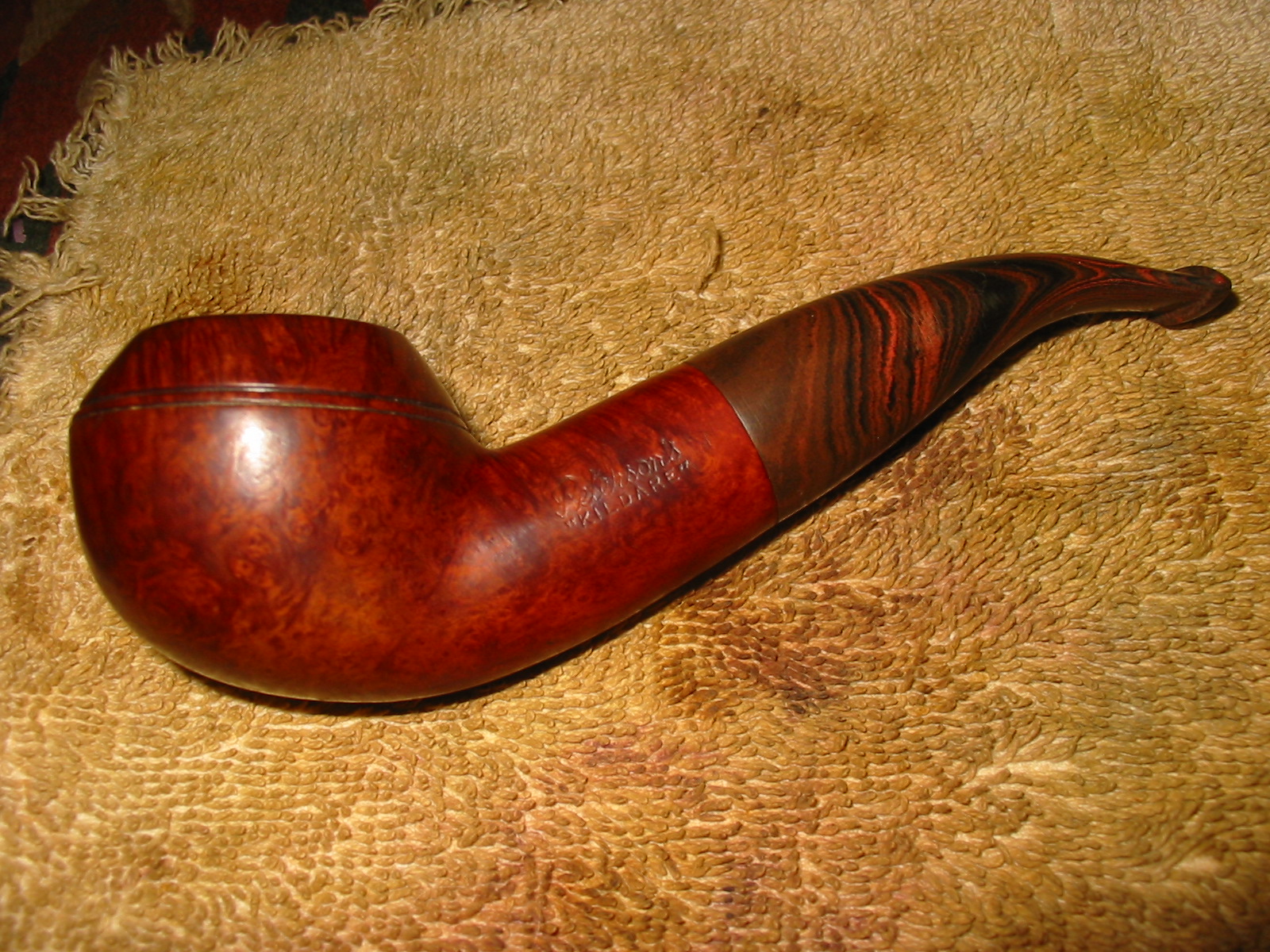
The photo below shows both of the stem that I turned and shaped for the pipe. The black vulcanite one is about ½ inch shorter than the Cumberland stem. Both look very good on the pipe and are comfortable in the mouth.

IMG_1580

After staring at the pipe and handling it yesterday I was not happy with the stem shank union. There were some problems there with a slight taper to the shank that broke the smooth line of the pipe. I took it back to the work bench last night and did some more work on it. I will post the update later today.

Addendum
I took the pipe to work with me today and held it off and on while working on things and ran my fingers over the joint of the shank and the stem. There was a slight hip, with the shank tapering down slightly at the joint and breaking the flow of the lines of the pipe. It bugged me so when I got home I put it back on the worktable. I would have to deal with it and smooth things out. I knew it would take some more sanding and then refinishing the pipe and stem but so be it. I sat down and read the responses to my post regarding this pipe on Smokers Forums and also read my private messages. I had received a private message from bbqncigars (Wayne). I include his message in the paragraph below.

Steve,
Your restorations have been breathtaking. That said, I have a quibble with this pipe. The last 1/16″ or so of the shank exhibits a taper that is out of place with the lines of the rest of the pipe. This could be from over-buffing/sanding pressure on the end of the shank (BTDT). To restore the continuous line from the shank to the tip would require block sanding (might jeopardize the stamping) or removing the taper by shortening the shank. It’s a beautiful pipe and bit, but the bit/shank junction would drive me nuttier until I fixed it.

Yeah, I can be really anal about things I make that other people will see.

Wayne

I laughed when I read his words because they confirmed my own feelings and put into words some of my reserve regarding the restemming of this pipe. I looked at the pipe again and then wrote him back as follows:

Wayne
I agree with you totally! It bugs me as well. It forms a slight hip between the stem and the shank that really bugs me. I know that I am not finished yet either! The stummel came to me with a slight taper that was only clearly seen when there is a stem in place. The black stem has the same problem due to the shank. I have been contemplating hunting down a silver band to do deal with the issue and clean up the lines but we shall see. I could indeed block sand and may do that instead, we shall see. Thank you for your pm. I appreciate it as it has been bugging me.

Thanks
Steve

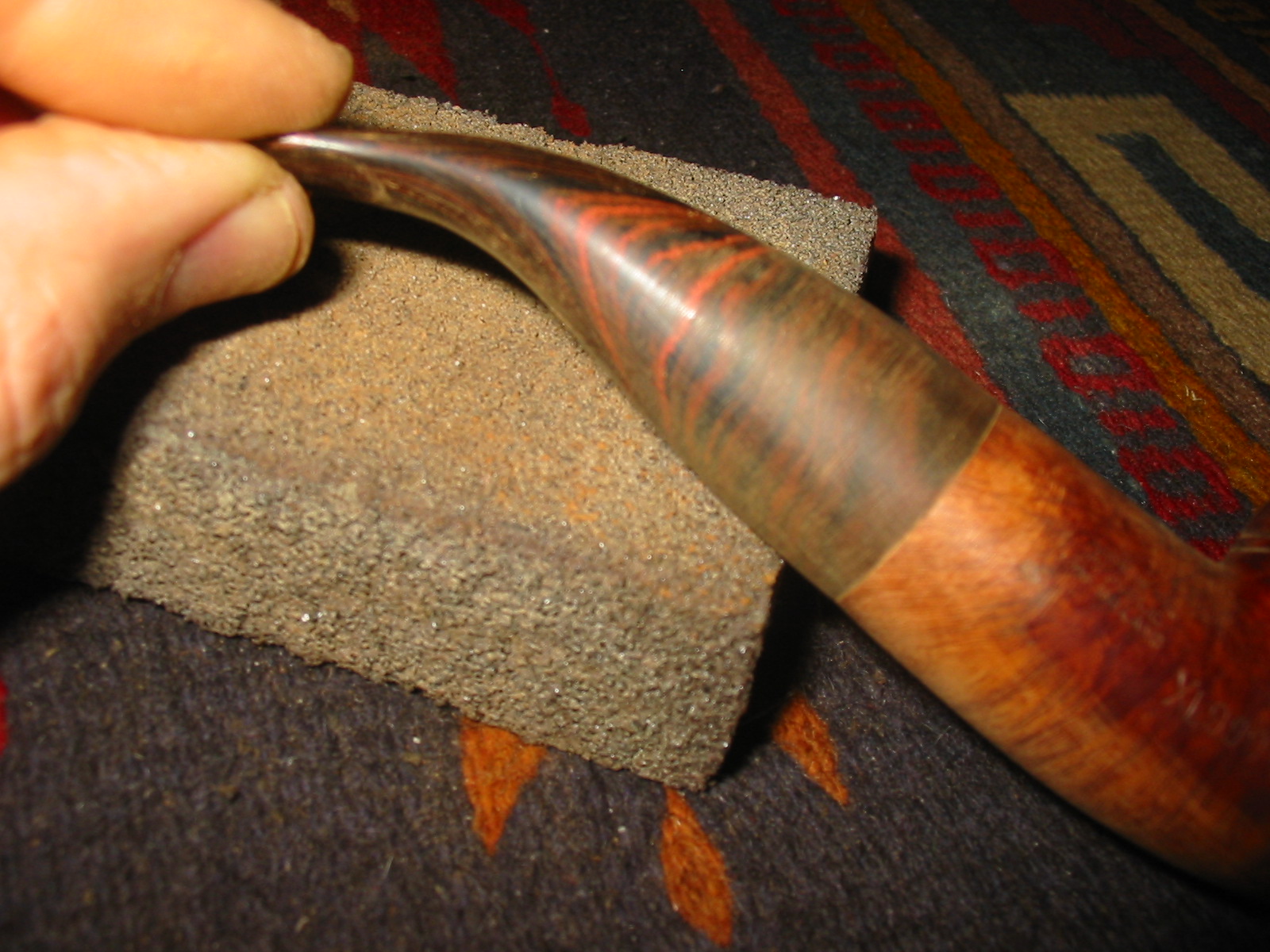
So after dinner this evening I decided to tackle the repair and remedy the situation. I used a pair of sanding blocks, one coarse and one fine to block sand the shank on the top and the bottom and more carefully along the sides of the shank around the stamping on the pipe. I sanded the briar and the stem material until the lines were smooth from the bottom of the bowl to the end of the stem and the same for the top. I worked on the sides to achieve the same thing. After sanding it with the coarse sanding block I sanded it with the fine grit block to remove the scratches.

IMG_1605

IMG_1606

IMG_1607

I sanded the stem and shank with 1500-12,000 grit micromesh sanding pads to bring back a smooth finish to the stem and the shank. I heated the shank with a lighter to warm the briar, restained it with a dark brown aniline stain that I thinned with isopropyl alcohol – 1 part stain to 2 parts alcohol. I flamed the alcohol and continued to stain the shank until it matched the rest of the bowl on the pipe. I buffed it with White Diamond and then gave it several coats of carnauba wax and buffed it lightly with a soft flannel buff. Tomorrow morning I will give it a careful examination in the light of day and see where I go from there. Thanks Wayne for your help.

IMG_1608

IMG_1609

IMG_1611

IMG_1612

Why I Chose the last Ebay lot of bowls to restem and refurbish


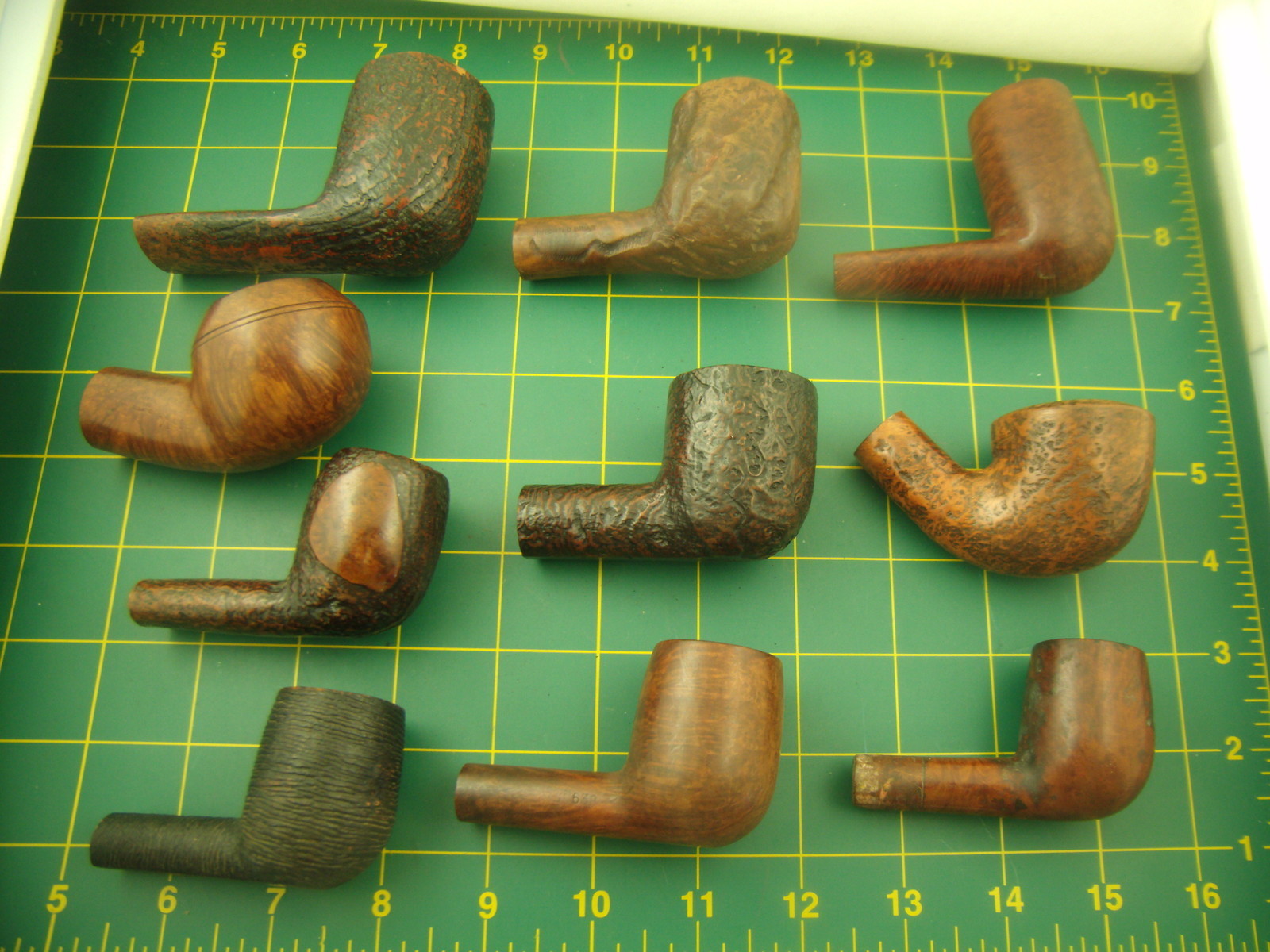
I just finished restoring and restemming the last of the Ebay lot that is pictured below. I thought it might be helpful to reflect on what I look for when I pick a lot of pipes like this on Ebay. There are many lots that I pass over in my hunt for estate pipes but there are some commonalities to what draws me to them and why I bid and win most of the ones I choose.

bowls1

bowls2

When I came across this listing there was no information available as to brands, makers or stampings. I always look for certain shapes or designs that catch my eye and then save the photo and enlarge it to see if I can see clearly any issues with the pipes. I also enlarge the side views to see if I can read any of the stamping that may be present on the pipe. In this lot the stamping was unreadable in the photos so it made me wonder if I would be able to identify them once they arrived. The most I could do was to judge by experience what was present. The seller of this lot included several photos showing both sides and the top of the bowl. Upon examining them carefully in the enlarged pictures I can be relatively certain of the issues that I will find and minimize any unexpected ones.
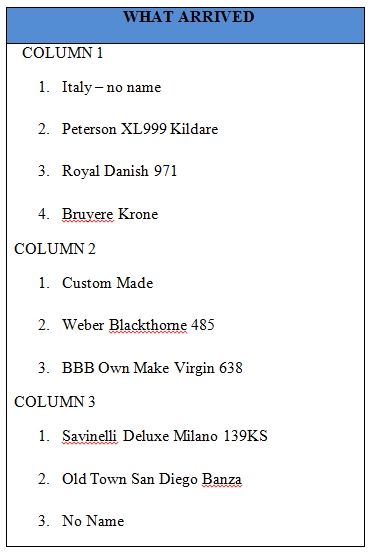
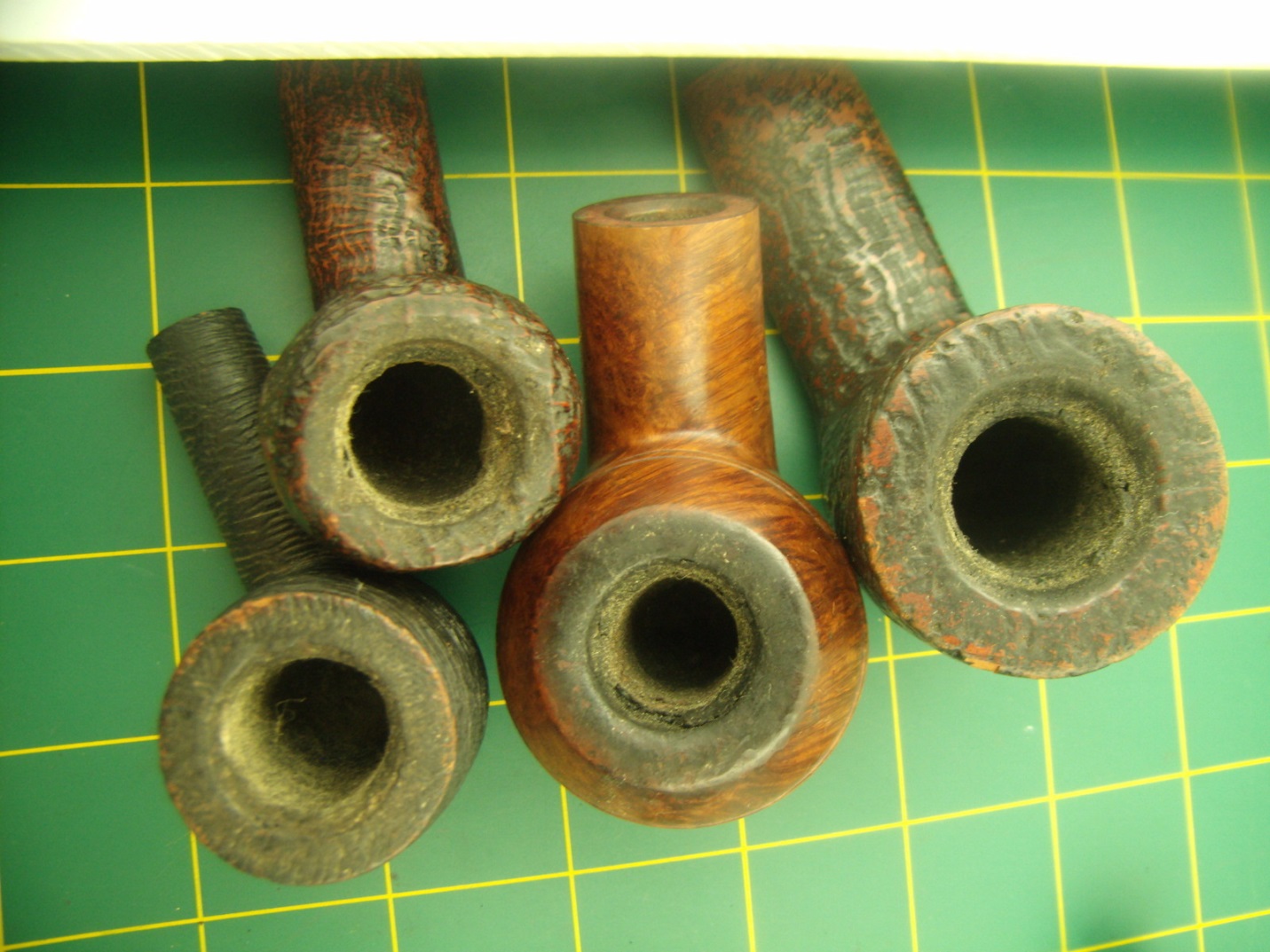
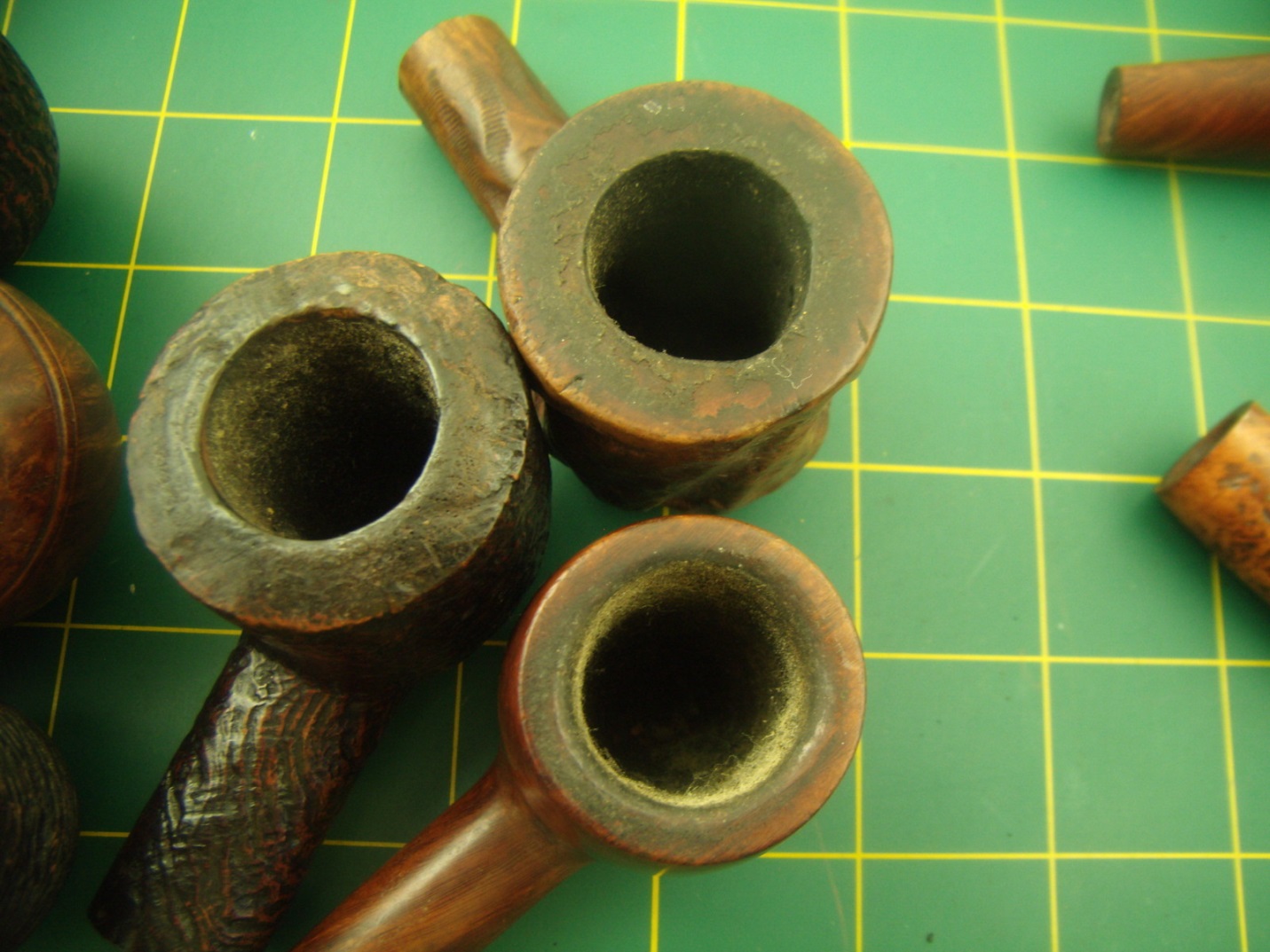
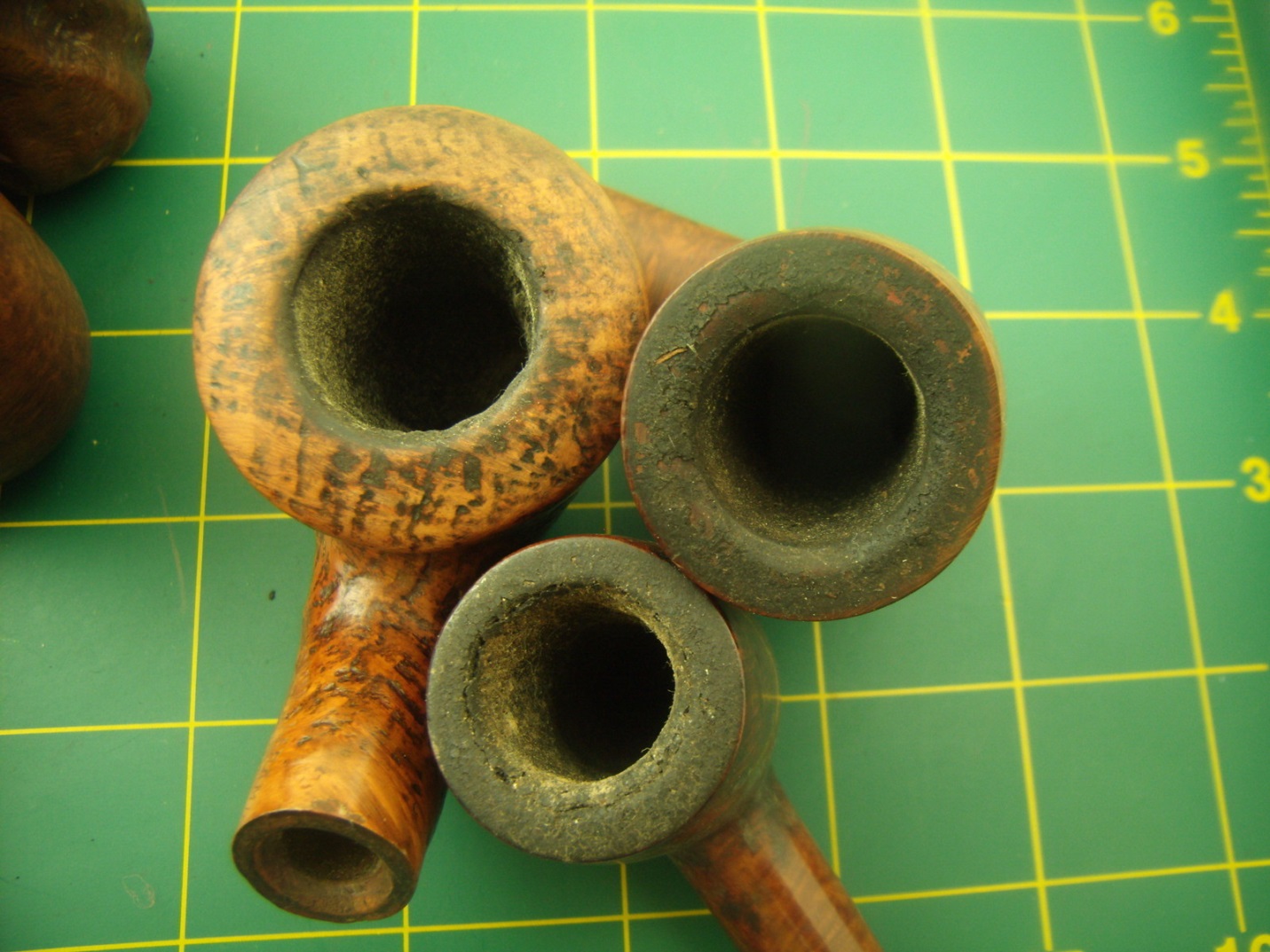
In this lot there were several there that I thought I could identify, or at least reduce my guesses to two or three possibilities for that shape of pipe. Knowing what I had learned from my examination of the photos I entered a bid for the lot and won. I decided to write down my guesses as to what the pipes were in the photos. I don’t always do that but in this case I wanted to see how close I could come to identifying brand/make and/or country of origin. I looked at the shape, design and finished to make some “educated” guesses as to what they would be when I saw them in person upon their arrival here in Vancouver. The pipes are arranged in three columns in the side photos and each of the top view photos take a column and photograph the group. So I divided my guesses into the same three columns as to what the brands are and see how close I can come once they arrive. In the chart below the left column records my guesses as to the pipes.

ebay lot1

I have included the remainder of the photos that came with the EBay listing so that you can see the same things I saw as I decided to bid on this lot. For a little challenge, try to identify the maker of the pipe before you look at the next chart. I have been working on my ability to identify either country of origin or maker by the shape and finish of the pipe. I find it really helps when I am scanning through EBay to look over pipes there or also when I scan flea markets or rummage shops. It quickly sorts potential pipes I am considering purchasing. I have listed what actually came in the chart below. There were some great old pipes in the lot. All of them have been restemmed and refurbished. All of them have been written up on the blog.

ebaylot2

ebay lot 5

ebay lot 6

ebay lot 7

Experiencing a New Smoke Shop in Bellingham, Washington – The Senate Smoke Shop


Blog by Steve Laug

For many years now I have been making the trek from Vancouver, British Columbia into the US to Bellingham, Washington to visit a pipe shop in old Bellingham, a place called Fairhaven. The shop is called the Fairhaven Smoke Shop and is located at 1200 Harris Avenue Suite 100 Bellingham, Washington. When I first started visiting shop 15-18 years ago it was operated be an older gent who seemed like he could have cared less if he had customers, but he had a huge assortment of estate pipes and some great older tobaccos. I got to know him over the years and enjoyed his company. About 8 years ago a young fellow – mid 20’s bought the shop and took over. I had visions of it becoming yet another head shop! But you got to give him credit. He kept it as a pipe and tobacco shop (mind you he added the typical glass pipes and hookahs). He upgraded the shop layout and look, added new pipes and tobaccos and continued in the tradition of a pipe shop. He set up a web presence at http://fairhavensmokes.com/ I really expected the place to shrivel up and disappear in the anti-smoking environment of Washington State. But instead it seems to have done well.

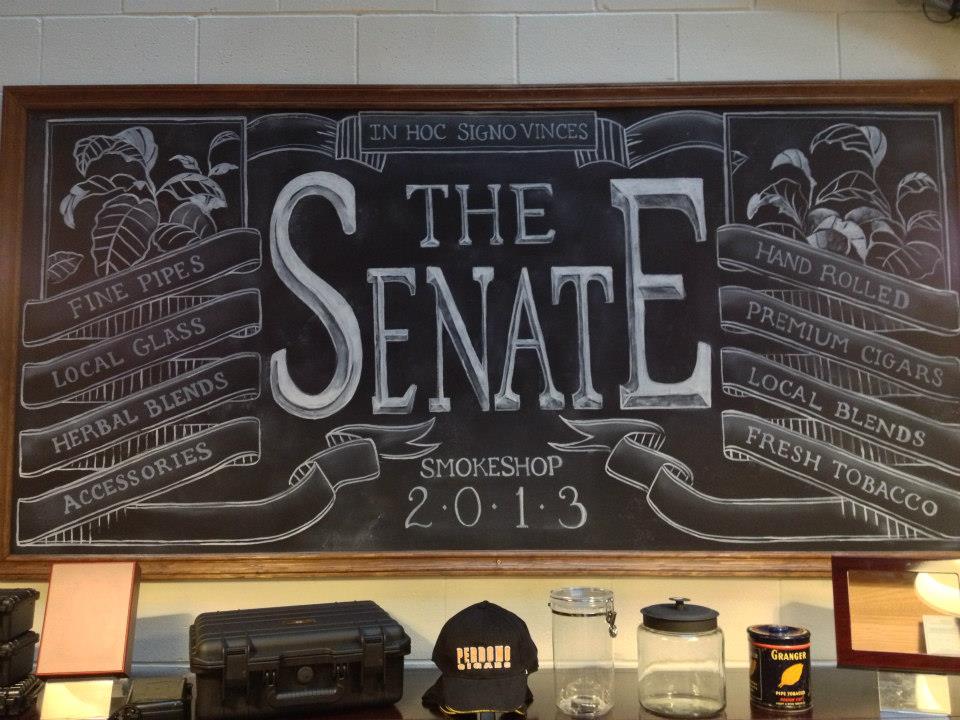
On Saturday I made the trip to Bellingham once again. I really was hoping to get a side trip over to Fairhaven but we did not have time to visit the shop on this trip. My wife and I brought along two of our daughters for the day. Whenever we are in Bellingham my wife and I always visit a little coffee and donut shop on Holly St. called Rocket Donuts so we wanted to show it to the girls. As we made our way to the shop my youngest daughter pointed up the street to a sign that said The Senate Tobacconist and Smoke Shop. I have walked down that street for over 20 years and I had never seen that shop. You know how sometimes you wonder if you missed seeing something because you were focused on other things? That is what crossed my mind when she pointed out the shop. My wife and the girls went in for coffee and donuts but needless to say, I had to go check out the shop.

In a world in which more and more head shops with glass pipes, bongs and the like are replacing the old bona fide tobacconist shops I had really low expectations about this shop. I walked up the street toward it and paused to read the sandwich board on the street. As yet I had not looked in the window. I have to say the sign had elements of both hopefulness and resignation in its words – hopeful: tobacco at the top of the list, and cigars – resignation: herbs and glassware. Before getting to the shop I had already made up my mind as to what I could expect when I entered. Glassware! Herbs! Sheesh, it was almost like experiencing again what I had experienced when the Tinderbox Tobacco Shops became glorified gift shops that also sold tobacco and cigars. So was this going to be a head shop that also sold a few cigars and some tobacco? I tell you what, I almost turned and went back to the coffee and donuts. I really did not want yet another disappointment.
Senate23

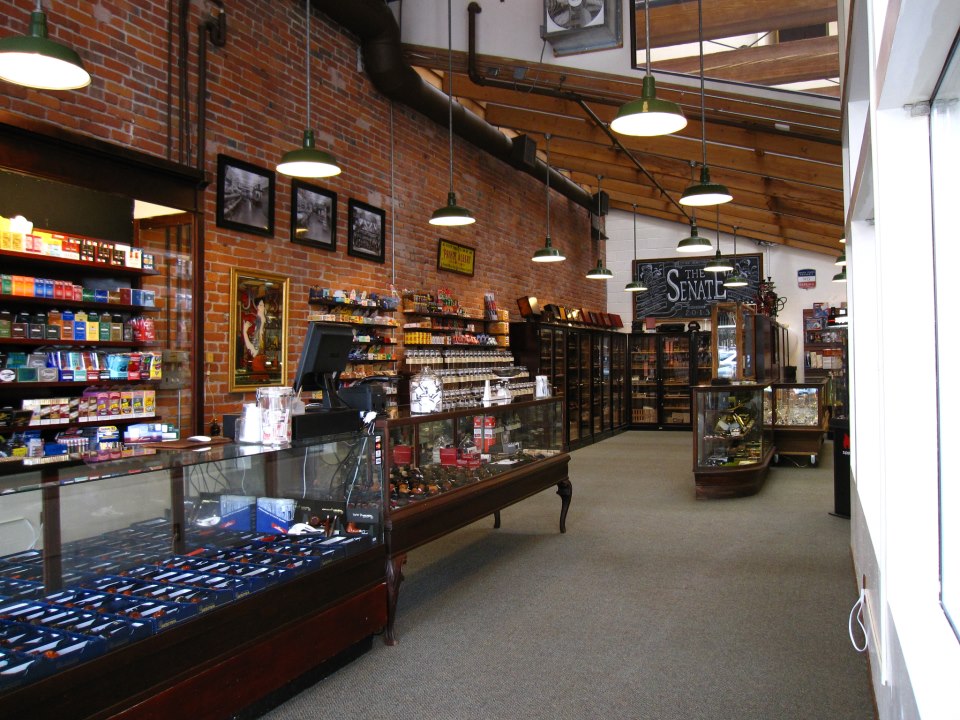
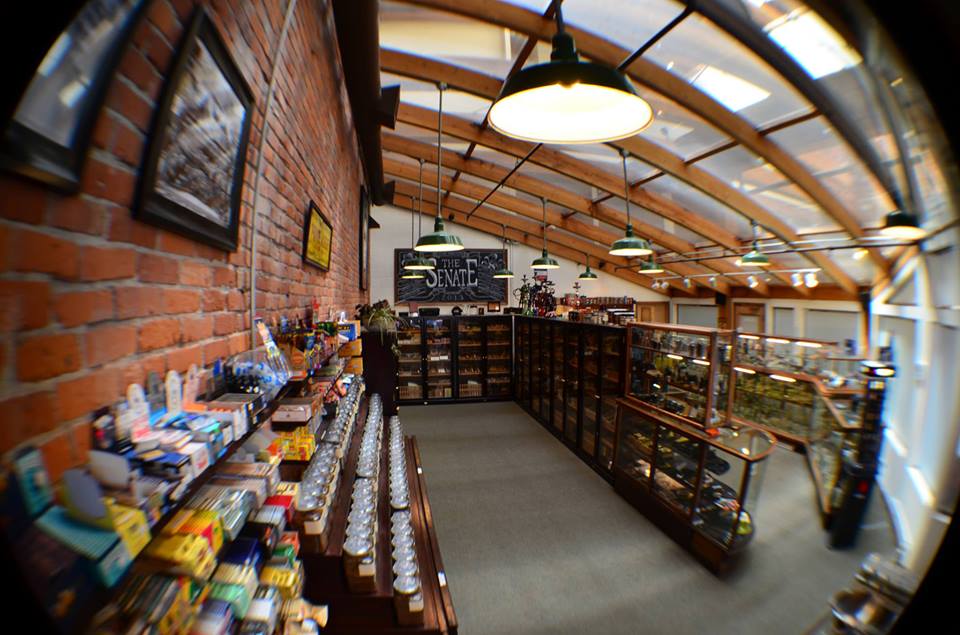
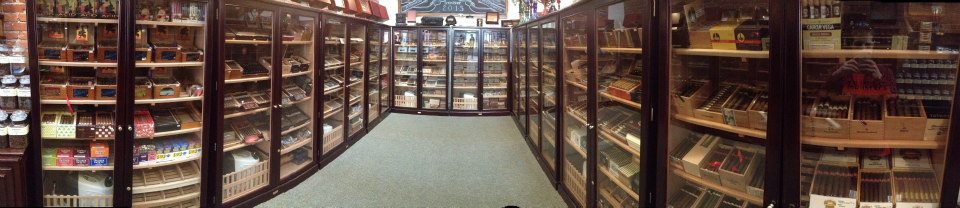
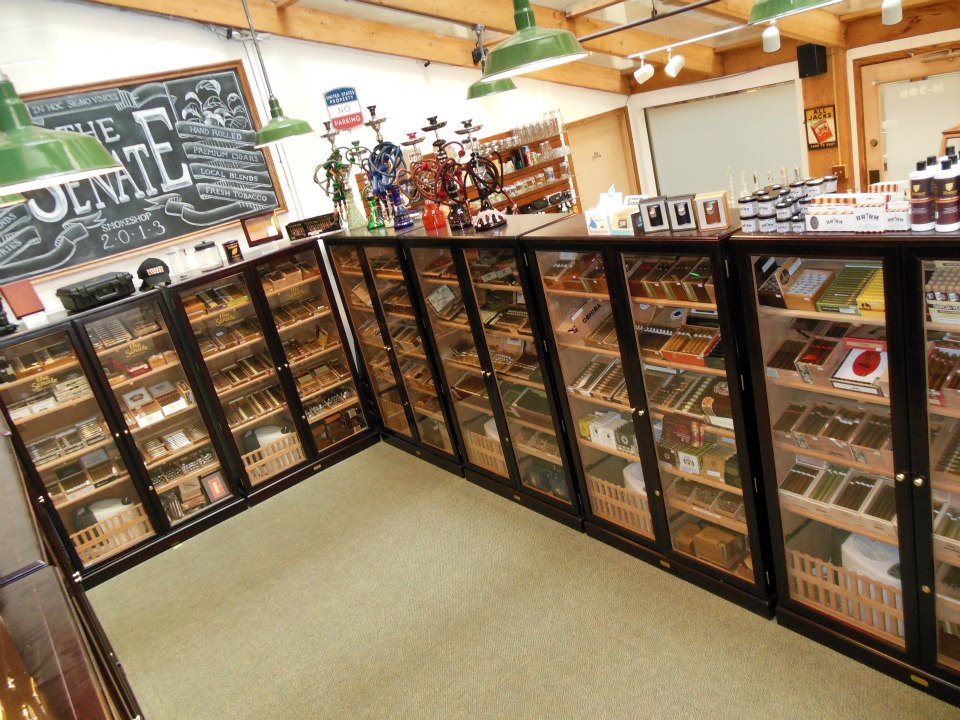
But my curiosity got the better of me and I shrugged my shoulders and went over to the window and looked in. I fully expected a typical smoke shop/paraphernalia shop but what I saw was not that. I could not believe my eyes. The glassware was not that visible and what I saw through the window was a pipeman’s feast – lots of display cases with pipes and tins and jars of bulk tobacco front and center. Then in the back, away from the window were bookcase style humidors with many cigar choices. Off to the side in the corner was the collection of glassware. To be honest I never went over to that corner to have a look. It is truly amazing in this day and age to see a shop like this in my neck of the woods. This was a fully-fledged tobacconist!
Senate26

Senate29

Senate19

Senate15

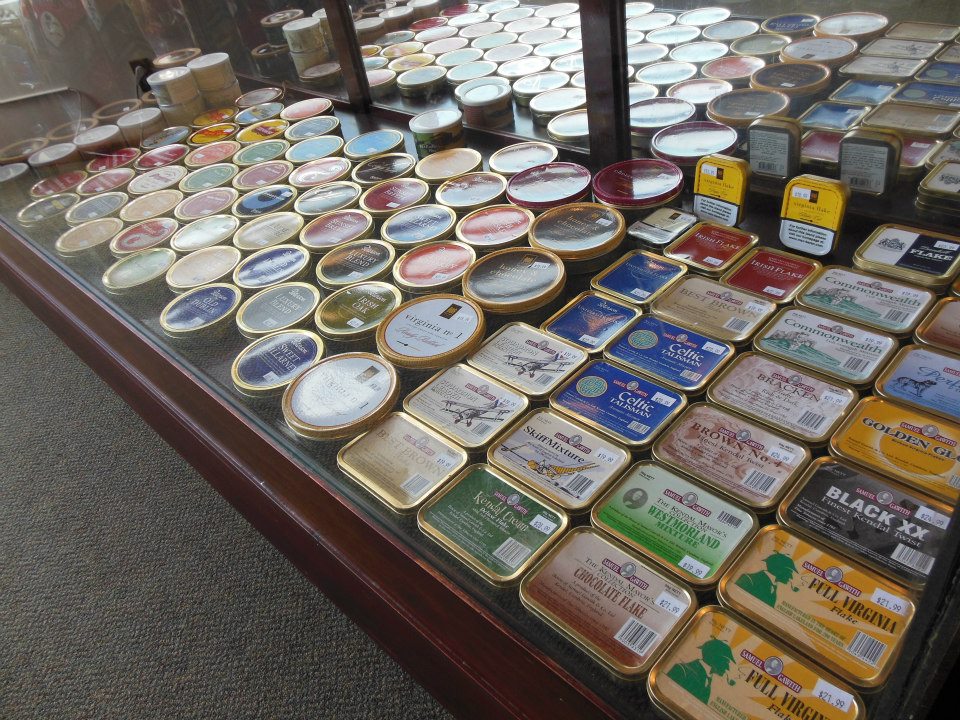
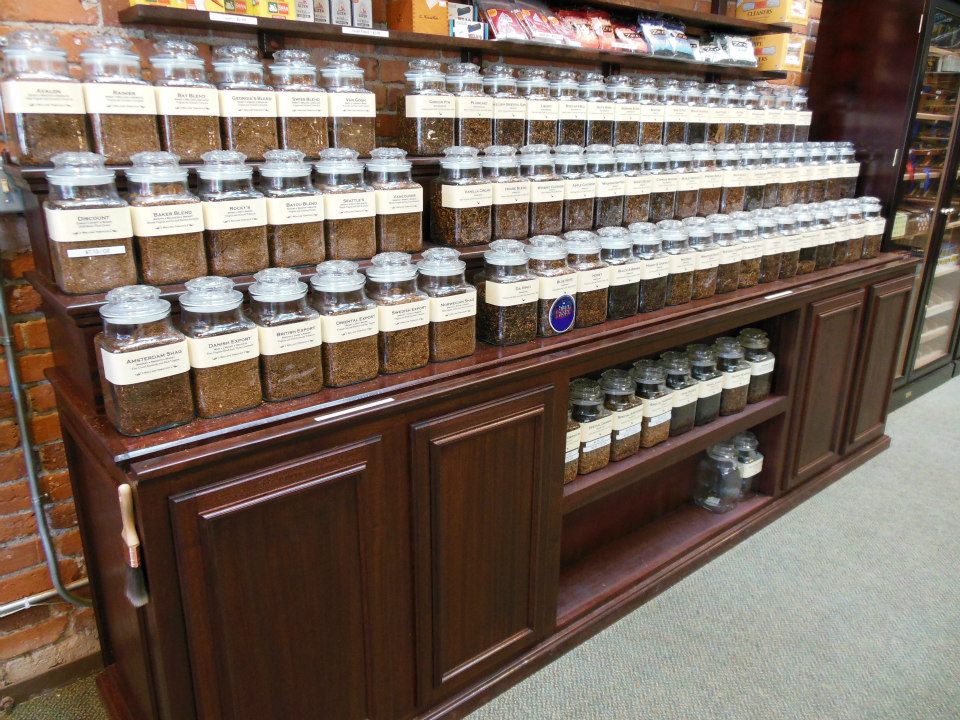
I opened the door and went in. I laugh now, but I must have looked like a kid in a candy shop. I eyed the open topped display case of tins and pouches of tobacco for sale on my left. I looked at the brands of tobacco that were carried and available and was pleased to see many of my favourite blends. I proceeded down the display counters on the left and looked at pipes – Vauen, Peterson, Ascorti, Big Ben, Stanwell, Butz-Choquin and others beautifully laid out for the buyer to see. There were both briars and meerschaums of every shape and size and price range. The display cases were well lit and the pipes were well displayed. It was a briar feast for the eyes. I only wish I had had more time to look things over more carefully. I walked past the cash register and the Three Brass Monkeys on display in front of it, past the tobacco scales on the counter to have a look at the bulk tobacco selections. There was an unbelievable array of blends – Aromatics, Virginias, English and some straight blending tobaccos – Latakia and Perique. There were even some cigarette cut tobacco. I went through the well labeled Virginia, Virginia Perique and English blends and took each lid off to have a good sniff of the blend in the jars. I skipped over the aromatics – chocolate, raspberry, cherry, vanilla, mocha, caramel and other mixtures with edible names as it has been a long time since I smoked them. I could easily have spent more time going through the many blends that were carried by the shop. As I was only in Bellingham for one day I could only purchase a 100 gram pouch and hope to not get dinged with duty at the border. But I would be back!

Senate24

senate2

Senate18

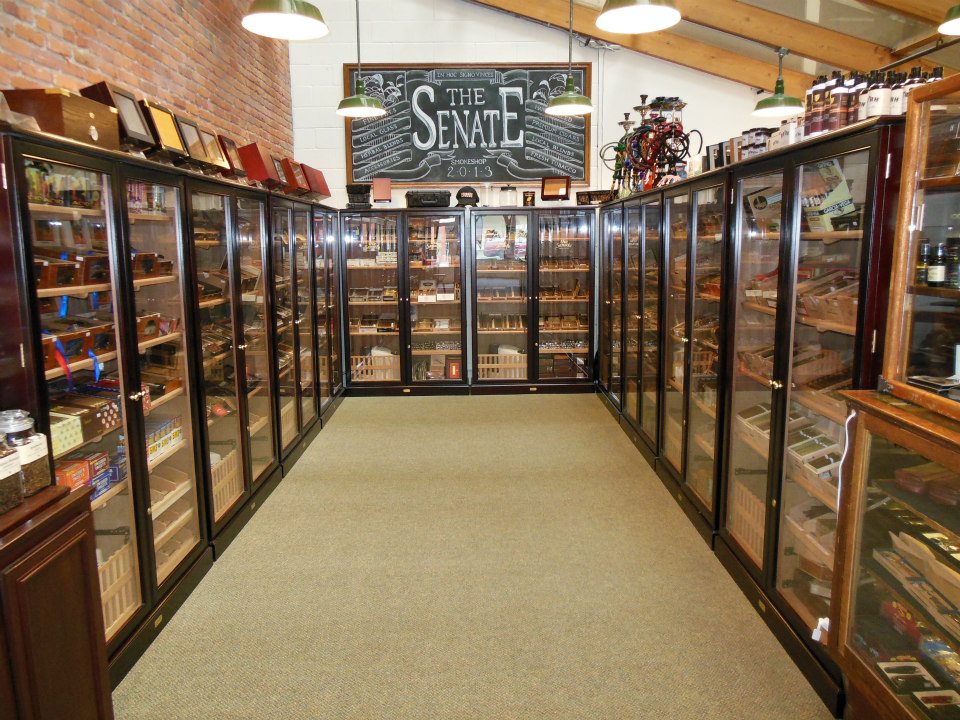
I wandered through the cigar humidor sections – I loved the cherry wood cabinets that each housed cedar lined walls and shelves and a humidor unit so that each glass doored cabinet was a sealed unit. The only thing missing that I could see were the Cubans that we have in Canada. There were all kinds of cigars and all kinds of sizes. I am pretty cigar ignorant but the selection seemed to cover a wide range of country of origin, price, blend and style.

Senate14

Senate11

Senate12

Senate13

I went back to the bulk tobaccos and picked the blend I had chosen, a Dark English – Virginias, Stoved Virginias, Latakia, Orientals and Perique and carried the jar to the scale to have the proprietor weigh it out and bag it up for me. To my surprise the gent behind the counter was the same fellow who had purchased the old Fairhaven Shop, now eight years older. He recognized me and remembered our first meeting many years earlier when he had given me two tins of Erinmore Flake on a visit I made to the shop. I asked him how that shop was doing and he said it was doing well. I asked him when he had opened the Senate and why. He responded that he had always wanted a shop in this area and had opened the doors four months earlier. Business was doing well and he loved the new location. We had a great visit and I asked him about several tobaccos that he did not have. He said he would order them in. I paid for my tobacco and a couple of bundles of pipe cleaners before I headed out the door. I am looking forward to another longer visit soon.

Senate25

If you find yourself in the Bellingham area, I would heartily recommend that you stop by the shop and have a visit. The shop is called the Senate and is located at 215 West Holly Street, Suite H-20. The phone number is 360-756-7552. It has a great selection of pipes and cigars as well as house blends and tinned tobacco to purchase. The proprietor Mike Waters is a great guy – personable, knowledgeable and genuinely interested in serving the pipe and cigar smoking public. Stop by and say hi. In this anti-smoking state of Washington in the anti-smoking climate of our world it was great to see a new tobacco shop open its doors. It was encouraging to see this young fellow doing well enough in his first shop to open this second one. The store will have a web presence soon as the shop website, http://www.senatecigar.com is under development. Check it often as Mike says that the full site will be open soon. Who knows we may run into each other at the shop. Until then enjoy your pipe!

Senate

Steve Laug
06/17/13

Tobacco Review – Burlington on Whyte’s Montego Bay Blend


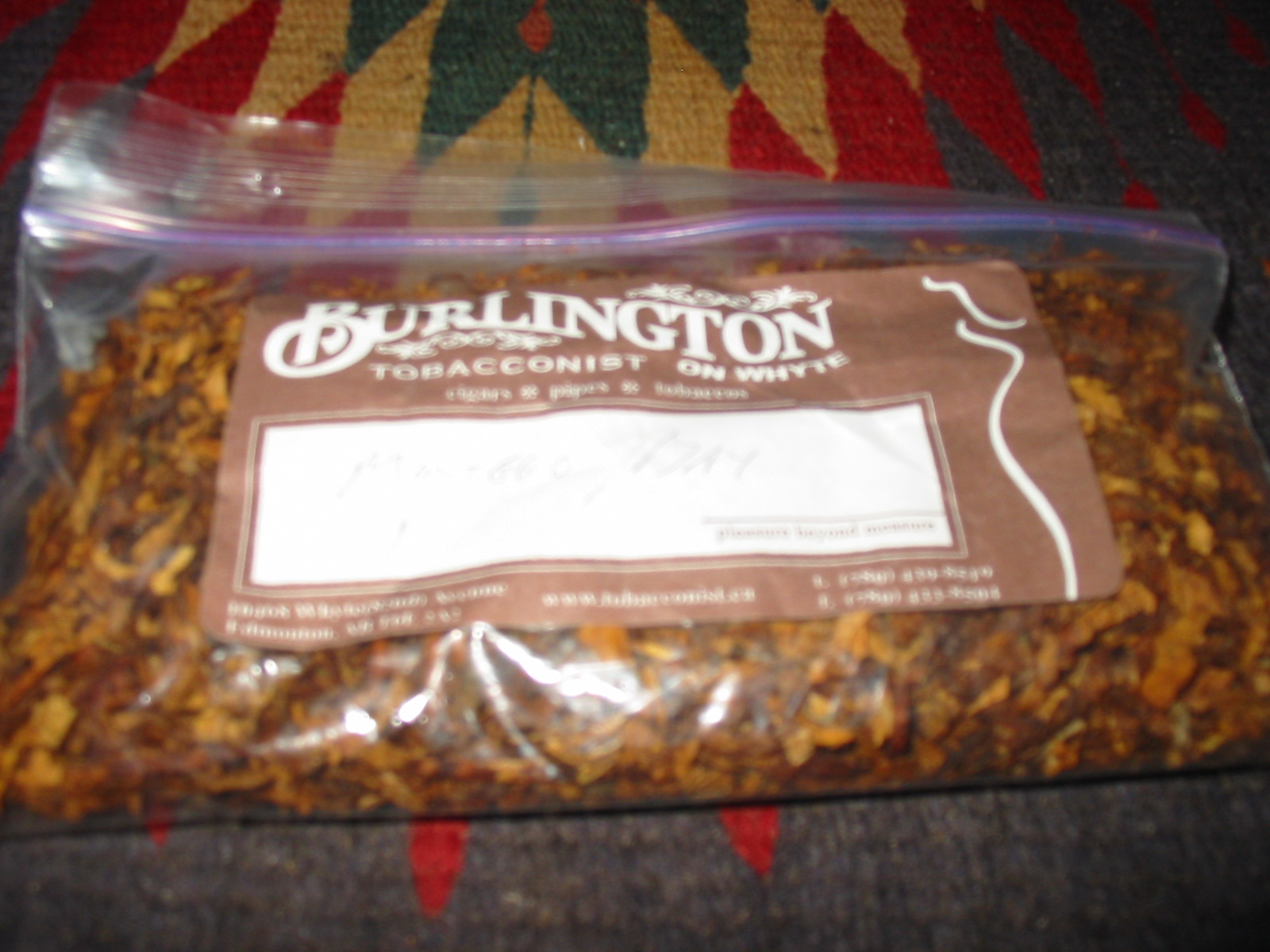
The website, http://www.tobacconist.ca/menu.html describes this great tasting tobacco as a unique earthy but sweet, herbal tobacco. While in Edmonton, Alberta, Canada I visited the shop and was able to open various jars of house tobacco and get a feel for the aromas and look of the tobacco. I spoke with the house blender, Chris and described the kind of tobaccos that I like, particularly Virginias and Virginia Perique blends. At the price of Canadian tobacco I did not want to make a mistake and pick up a blend that I would hate.

I opened the jar of Montego Bay and sniffed the aroma. The look was of a mottled light and darker brown ribbon cut tobaccos blended together. The smell was of a sweet, pungent Virginia, the grassy undertones but on top of that there was a subtle sweetness in the smell. I asked Chris if the tobacco had any topping and he assured me that it did not. The aroma was from the blend itself not from toppings.

IMG_1153

I purchased 50 grams of the blend and left the shop. Over the rest of my trip I smoked the blend in an old bent pipe that I always use when I travel. It is a Virginia pipe and it always delivers a good smoke for me. The sweetness was subtle and the good Virginias – both red and yellow came through beautifully. I liked that aspect of the blend a lot but there were two unidentifiable tastes that haunted me with each smoke. In my hotel room I looked at the blend in a bright light and I could see flecks of green in the blend. I separated a few of them out and put them on my tongue. Ah, I knew what I tasted – it was an herb called Deer’s Tongue. It has been repeatedly spoken of on the pipe and tobacco forums and blogs as adding a very earthy, sweet almost minty vanilla flavor to the blend. I would not describe it as minty vanilla but rather as a very herbal taste, not bitter or sweet but with a taste like vanilla bean or mint leaves. It is not an overpowering taste but it is very evident. There was another taste there that I could not quite get to but I was guessing it was some Oriental tobacco that was used as a condiment in the Virginias.

IMG_1151

I smoked it for the remainder of my trip and quite a bit more in the month and a half since the trip. I really like the multidimensional flavor of the blend. The mixture and layers of flavor added to the Virginias by the Deer’s Tongue and the Oriental make this a thoroughly enjoyable smoke regardless of the time of day. Its flavor stays with you after you smoke it on the insides of your lips and mouth and gives a reminder of the fullness of the smoke.

After smoking most of the 50 gram bag I emailed Chris at Burlington and asked him to confirm what I tasted in the blend. He responded with a prompt email. I was right about the Deer’s Tongue it was there as a condiment. I was also correct in tasting an Oriental. This particular one was Dubec. It had just a bit of astringency to the taste which is what I have come to expect from Orientals. It is not bitter or tangy but has a definite taste and effect on the tastebuds toward the back edges of the tongue. I like the taste of Dubec and I really liked the addition of it in the Montego Bay Blend.

I have just enough left for a few more bowls and then I will have to either give them a call and order some more or visit again when I am there in September. We shall see. It is a great blend and one that is worth a try if you can stomach the high prices that the tax structures have added to tobacco in Canada.

Mark Twain on Nicotine Nannies – The Moral Statistician


I came across this old file on my computer and thought I would pass it on to you all. I always enjoy Mark Twain and here he takes on the nannies who would tell us how to live our lives. Incredibly refreshing to read!

Originally published in Sketches, Old and New, 1893

Image
I don’t want any of your statistics; I took your whole batch and lit my pipe with it.
I hate your kind of people. You are always ciphering out how much a man’s health is injured, and how much his intellect is impaired, and how many pitiful dollars and cents he wastes in the course of ninety-two years’ indulgence in the fatal practice of smoking; and in the equally fatal practice of drinking coffee; and in playing billiards occasionally; and in taking a glass of wine at dinner, etc. etc. And you are always figuring out how many women have been burned to death because of the dangerous fashion of wearing expansive hoops, etc. etc. You never see more than one side of the question.

You are blind to the fact that most old men in America smoke and drink coffee, although, according to your theory, they ought to have died young; and that hearty old Englishmen drink wine and survive it, and portly old Dutchmen both drink and smoke freely, and yet grow older and fatter all the time. And you never try to find out how much solid comfort, relaxation, and enjoyment a man derives from smoking in the course of a lifetime (which is worth ten times the money he would save by letting it alone), nor the appalling aggregate of happiness lost in a lifetime by your kind of people from not smoking. Of course you can save money by denying yourself all those little vicious enjoyments for fifty years; but then what can you do with it? What use can you put it to? Money can’t save your infinitesimal soul. All the use that money can be put to is to purchase comfort and enjoyment in this life; therefore, as you are an enemy to comfort and enjoyment where is the use of accumulating cash?

It won’t do for you to say that you can use it to better purpose in furnishing a good table, and in charities, and in supporting tract societies, because you know yourself that you people who have no petty vices are never known to give away a cent, and that you stint yourselves so in the matter of food that you are always feeble and hungry. And you never dare to laugh in the daytime for fear some poor wretch, seeing you in a good humor, will try to borrow a dollar of you; and in church you are always down on your knees, with your ears buried in the cushion, when the contribution-box comes around; and you never give the revenue officers a full statement of your income.

Now you know all these things yourself, don’t you? Very well, then what is the use of your stringing out your miserable lives to a lean and withered old age? What is the use of your saving money that is so utterly worthless to you? In a word, why don’t you go off somewhere and die, and not be always trying to seduce people into becoming as ornery and unlovable as you are yourselves, by your villainous “moral statistics”?

Now, I don’t approve of dissipation, and I don’t indulge in it either; but I haven’t a particle of confidence in a man who has no redeeming petty vices. And so I don’t want to hear from you any more. I think you are the very same man who read me a long lecture last week about the degrading vice of smoking cigars, and then came back, in my absence, with your reprehensible fire-proof gloves on, and carried off my beautiful parlor stove.

Leonard’s Pipe Shop – Portland, Oregon.


Blog by Steve Laug

When I bought this old Leonard’s Sea Rock billiard on EBay I did a bit of hunting around the web to find out what I could about the brand. There was not a lot of information available but this is what I found out. I have edited it and added and adapted the material that I found on the web. I am unable to find who originally wrote this material. If anyone knows please leave a comment and I will acknowledge the work that person has done on gathering this helpful information.

Leonards

The pipe I purchased is a shop pipe that came from one of America’s great old pipe shops – LEONARD’S PIPE SHOP which was located in Portland, Oregon, USA.The shop and the brand never was as famous as Peretti’s, Ehrlich’s, The House of Robertson, Bertram’s, Garfinkel’s, Drucquers or some of the other great names from the past, possibly because of its’ location. But in terms of stature among the world’s greatest pipe makers, Leonard’s had no equal. While some pipe shops catered to the rich and famous, served politicians or visiting emissaries,or made pipes for actors, entertainers or stars in one field or another, Leonard’s catered to the other end of the pipe chain – the all-important source of supply! The shop was founded by Arthur Leonard in 1936 who worked hard to establish close relationships with the world’s biggest and best pipe maker’s — Charatan, Barling, Sasieni, Kaywoodie and others.

In 1936, Kaywoodie was the most important name in pipes producing top-quality pipes and the most expensive pipes then available. So, it was natural for Arthur Leonard to establish a relationship with the makers of Kaywoodie. It is fairly recent that some of the greatest Kaywoodie’s ever made returned to the marketplace. For example the Leonard-owned Kaywoodie Magnums dated from the late 1930s which were displayed and ultimately sold by the family at the Chicago Pipe Show a few years ago. It will always be a question how they wound up in Portland, Oregon rather than New York, Chicago, Washington DC or the “hometown” of any of the other great pipe shops in America. The answer must lie in the relationships that Arthur Leonard established with pipemakers!

Another huge “GROUP 6” or “ODA” sized KW billiard also came on the market. It no doubt originated from a special order placed by Arthur Leonard. But the question with this pipe and others that Leonard’s had was who made it? As many collectors who visited his shop know (as well as those who have met the last generation owners, Lou and Betty Leonard) this was once one of America’s greatest pipe shops! It operated on the same corner location from 1936 through 1983 before moving to an uptown location for another six years. On display the Leonard’s had the longest and largest Kaywoodies ever made, unsmoked Dunhill Magnums and a host of pre-1900 Barlings! Arthur Leonard had established a powerful relationship with the great pipe maker’s of the last century and his shop retained the bounty of those relationships.

It is interesting that when the Barling family sold out, they called the Leonard shop and Arthur Leonard responded- – -buying every single Barling on hand at the time of sale so no inventory was acquired by the new owners (ending speculation that “Transition” Barlings were really older pieces acquired by the new owners)! Leonard did the same thing for the Sasieni family when they sold out! The Leonard’s Shop was perhaps the most well-known American smoke shop in Europe! The Leonard Shop ONLY carried high grades, so when the craze for meerschaum pipes occurred in the 1950’s and early 1960’s, (and the Turkish government restricted the exporting of raw meerschaum) the Leonard shop placed an order with Charatan for 50 meerschaum-lined Charatans! (At that time, the Supreme was the top-of-the-line Charatan! Imagine meerschaum-lined Selected’s and Supreme’s! Lou Leonard says that only about 35 were ever delivered and Charatan said they would make no more!)

I read that those who saw the Leonard’s display pipes at the Chicago Show a few years ago marveled at the quality of the uncirculated, unsmoked pipes. He had acquired the original Barling Meerschaum’s from a company that made Meerschaum pipes before making Briar pipes! The Dunhill Magnums were unsmoked in their original cases. The Kaywoodie Magnums were displayed in a specially made case. And the Sasieni’s, Charatan’s, Comoy’s and all the rest were pipes of historical importance. You see, Arthur Leonard nurtured his relationship with the supplier’s rather than the movie stars and politicians who bought pipes. In fact, Betty Leonard told stories about the vast inventory of pipes kept out of the public eye in a back room from which they were produced on an occasional basis to meet the needs of a specific customer’s request.

Like the other great American pipe shops, Leonard’s is gone. They closed their doors in 1989. Their inventory was slowly liquidated by the last family owners of the shop. It is sad that yet another piece of American pipe history is gone. It would be grand to have seen that back room filled with a huge inventory of beautiful old briars of renown. Ah well, we have to use our imaginations to enter that room now. As I go there in my mind, I load a bowl of good tobacco from Drucquer’s (another American Pipe Shop that is gone) in my Leonard’s Sea Rock and lift it in both of their memories.

ADDENDUM & CORRECTION: Please read the response below by Pete. He has added some great information that focuses and corrects some of the information above. Thank you Pete.

What’s Inside The Cupboard?


This beautiful oak cabinet sits on top of my pipe cupboard in my office at home. This cupboard came to me as a gift when I was the president of the Vancouver Pipe Club from a member down on Whidbey Island, Washington. It came as a bit of a surprise and one that was very welcome. It is well made with brass knobs for handles and inset brass hinges on the inside of the doors. The joints are well done and the nails have been hidden well behind putty in a subtle way to make them less visible. The back of the cabinet is also finished and smooth. It is fastened to the back with nails or staples and the holes are filled and the back stained to match the rest of the cupboard. The detail done even on the back side of the cupboard speaks to the fine craftsmanship of the piece. The top of the cupboard is set off with a crown moulding that makes it look far older than it is. The paneled doors also give it an air of antiquity with the decorative beaded moulding around the inside panel. The flat base extends beyond the width and length of the cupboard making a very stable base for the piece. It is designed to be either a free standing piece or to be hung on the wall. Inevitably when people visit me in my office they ask about the cupboard and what might be in it. The closed doors seem to hide something that must be important. Some folks ask right away what it contains while others glance at it throughout the visit and then either in the midst of things or at the end as they are about to leave. It seems that they just have to know. I love the fact that the design is unique enough and secretive enough that it calls forth questions.

Cupboard 002

Once the doors are opened the quality workmanship continues to be evident. The way the craftsman organized the inside is pretty simple. It is designed to hold 24 pipes facing bowl out toward the front and has two drawers at the bottom for holding other accessories or in my case some of my pocket pipes. The slotted bar at the top third of the first half and the top third of the second half of the cabinet is made up of twelve U shaped cuts in each one that hold stems easily without them turning or being damaged. The U’s are sanded smooth and given a coat of Varathane or varnish so they are well done. The two bases below the slots are also scooped out with a router and sanded smooth for the bottom of the bowl to sit in without damage. The U cut and the scooped base hold the pipes securely. The top base and the bottom one are set into grooves that have been cut into the side walls. The case is very stable and has no side to side play. The drawers are designed to slide easily into the slots cut and polished for them. In my case I use the top shelf for six of my Dunhill pipes (left side of the top) with two others laid behind them, three of my John Calich pipe and one Ashton, one Steve Weiner and a Tinsky Dublin. The second shelf houses the rest of my Tinsky’s. All but one of them has been smoked. The unsmoked pipe in the picture came at a time when I was drawn to smaller bowls. It is being reserved for a time that may not be true!

Cupboard 001

Once I succumb to the curiosity of my visitors and open the doors on the cupboard all of the ones who are pipemen love looking at the pipes and the workmanship of the cupboard. The non-pipesmoking guests just shake their heads, unable to figure me out. I don’t say anything that would enable them to figure it out. I just reach for a pipe and polish it while they stand looking at me and the cupboard with what appears to be a growing incredulity. One day when I get my shop set up I want to use this cupboard as a pattern and make a few more for my other pipes. I love the way the doors protect the pipe stems from oxidizing in the light and keep the pipes looking pristine. The bottom drawers are a great place to stow away folding pocket pipes that I do not use very often and other pipe paraphernalia that I seem to continue to accumulate.

A Book Review – Tobacco Leaves – Being a Book of Facts for Smokers


The cover of the book

The cover of the book

I picked up a few tobacco and pipe books from Project Gutenberg as EBooks that I am reading on my iPad. The first of these is a fascinating read. It is written in a very modern and readable style that belies the fact that it came out in 1915. It is called Tobacco Leaves – Being a Book of Facts for Smokers – W.A. Brennan 1915. Brennan’s states his purpose in the paragraph’s below copied from the introduction to the book.
“This little book is intended for the man who uses tobacco. While there is a very extensive literature concerning tobacco, yet it is surprising how few books there are written expressly for the smoker. Much has been written concerning culture, production and manufacture; the historical and anecdotal aspects have been catered for; pamphlets and books abusing and denouncing the use of tobacco are plentiful; but the smoker will find it difficult to get a book just giving him the facts concerning tobacco and smoking, which he ought to know, and omitting matters, which, although interesting, are not necessary. This little book is an attempt to fulfill that purpose; and it is felt that no apology is needed for its appearance. (My emphasis) If the average user of tobacco is questioned concerning the matters treated in the following pages, he will be found ignorant of them. This ought not be so. The custom of tobacco smoking is so general and so intimate a part of the daily life of the great majority of men that a better acquaintance with the plant, its qualities, uses and effects should be cultivated and welcomed.

No claim is made for originality. The facts here stated have been gathered from various sources and the only credit claimed is for putting them together in a concise and consecutive form. The object aimed at is to give information. Whether the custom of tobacco smoking is desirable, whether in any individual case it would be beneficial or otherwise to smoke—these and similar questions are left to the reader’s own judgment from the facts and opinions presented, as well as from his own observations. The man who uses tobacco daily should know what he is doing. If statements are made either verbally or in print concerning the custom he should be able to verify them or show that they are incorrect. It is trusted that the information given in these pages will enable him to form a clear judgment whatever the judgment may be.

It may be felt that many aspects of the use of tobacco and matters connected with it have either not been touched on, or only referred to very briefly. The reader who may desire further information will find it in the bibliographical references given throughout the book. These references have generally been consulted by the author and his indebtedness is acknowledged here.” Tobacco Leaves – W.A. Brennan, page 5.

I have divided the book into three parts for ease of reference for me as I write this review and as a way to classify the material found in each part of the book. What I have labeled as Part 1 covers all of the material regarding cultivation, production, processing and sales of the product. Brennan begins the book with a short history of tobacco and its place in the botanical world as he calls it (Chapter 1). From there he covers cultivation, production and curing of tobacco both in the US and in Europe. He talks in a clear and non-confusing way about the chemical composition of tobacco (Chapters 2-6). All of this material serves as a backdrop to the marketing, manufacture and processing of tobacco into the products that smokers imbibe (Chapters 7-9).
Part 2 (Chapters 10-16) looks at the various tobacco products available and talks about their history, manufacture and use. It is this section that covers the products that are manufactured from the processed tobacco. He covers cigars, pipe tobacco, chewing tobacco, cigarettes and snuff. Each chapter gives the details in production and use of the product. I found the material interesting to read and also very informative. I learned things about each product that was new information to me. He begins three chapters on cigars. He is not as concerned with various brands that are available but is looking at the historical and general facts about cigars, their quality and their making (Chapters 10-12). He combines the chapter on Pipe smoking and chewing tobacco into a brief and concise description of preparation of the tobacco and the products themselves. He covers such topics as Qualities required–Description of kinds–Perique tobacco—and Statistics (Chapter 13). He gives a brief description of cigarettes and their manufacture and use as well as domestic and imported brands (Chapter 14). Chapter 15 is a very good description of the use of snuff and it making. He concludes the part of the book I call Part 2 with a brief discourse on Tobacco pipes. I found this chapter interesting even though there was no new information. I enjoyed his way of talking about the subject. He gives a brief history of pipes and how they are made as well as the materials used in making. He speaks of Meerschaum, briar, and the materials used for the stems. He gives a brief discourse on special kinds of pipes and ends the chapter with a few pointers on the care of pipes (Chapter 16).

Part 3 (Chapters 17-19) develops several chapters on the effects and benefits of tobacco us. Chapter 17 is a brief chapter on the physical effects of tobacco smoking on the human system and gives medical opinions on tobacco use and discusses the merit of the opinions. Chapter 18 discusses the beneficial effects of tobacco. This section is one that never would have been printed in today’s politically correct climate. He speaks of the disinfecting action of tobacco as protection against infectious disease and ends this chapter with an interesting piece on the psychological effects of smoking. Chapter 19 concludes the book with topics that really do not fit anywhere else within the scope of the book but are interesting nonetheless. These cover such topics as revenue, taxation, etc., in connection with tobacco, the insect pests which attack tobacco and tobacco flavoring fluids, etc.

The book is very readable and the style is fresh and enjoyable. The author has met the objectives that he spelled out in his purpose statement early in the book. I heartily recommend this book to fellow pipemen. I don’t know about you but there is always something to learn or be refreshed on in the arena of our pipes and tobaccos.

I have included a short version of the table of contents for you to have a look at. It will show you the flow and development of the book over the course of the pages.

Chapter 1 – Historical and Botanical
Chapter 2 – The Cultivation of the Tobacco Plant
Chapter 3 – Production of Tobacco
Chapter 4 – Production of Tobacco in the United States
Chapter 5 – The Chemical Composition of Tobacco
Chapter 6 – The Curing of Tobacco Leaf
Chapter 7 – The Marketing and Sale of Tobacco Leaf
Chapter 8 – Rehandling and Fermentation of Tobacco Leaf Prior to Manufacture
Chapter 9 – Manufactured Products of Tobacco in the United States
Chapter 10 – Cigars: Historical and General Facts
Chapter 11 – Cigars and Their Qualities
Chapter 12 – Cigar Making
Chapter 13 – Pipe Smoking and Chewing Tobacco
Chapter 14 – Cigarettes
Chapter 15 – Snuff
Chapter 16 – Tobacco Smoking Pipes
Chapter 17 – Effects of Tobacco Smoking on the Human System
Chapter 18 – The Beneficial Effects of Tobacco
Chapter 19 – Miscellaneous

The book is available as a free e-book from the Gutenberg Project. It can be downloaded in a format the works on iPads or Kindles etc. It is also available in PDF format or can be read online. Here is the link: http://www.gutenberg.org/ebooks/37388

Reflections on the Historical Background on CPF Pipes


Blog by Steve Laug

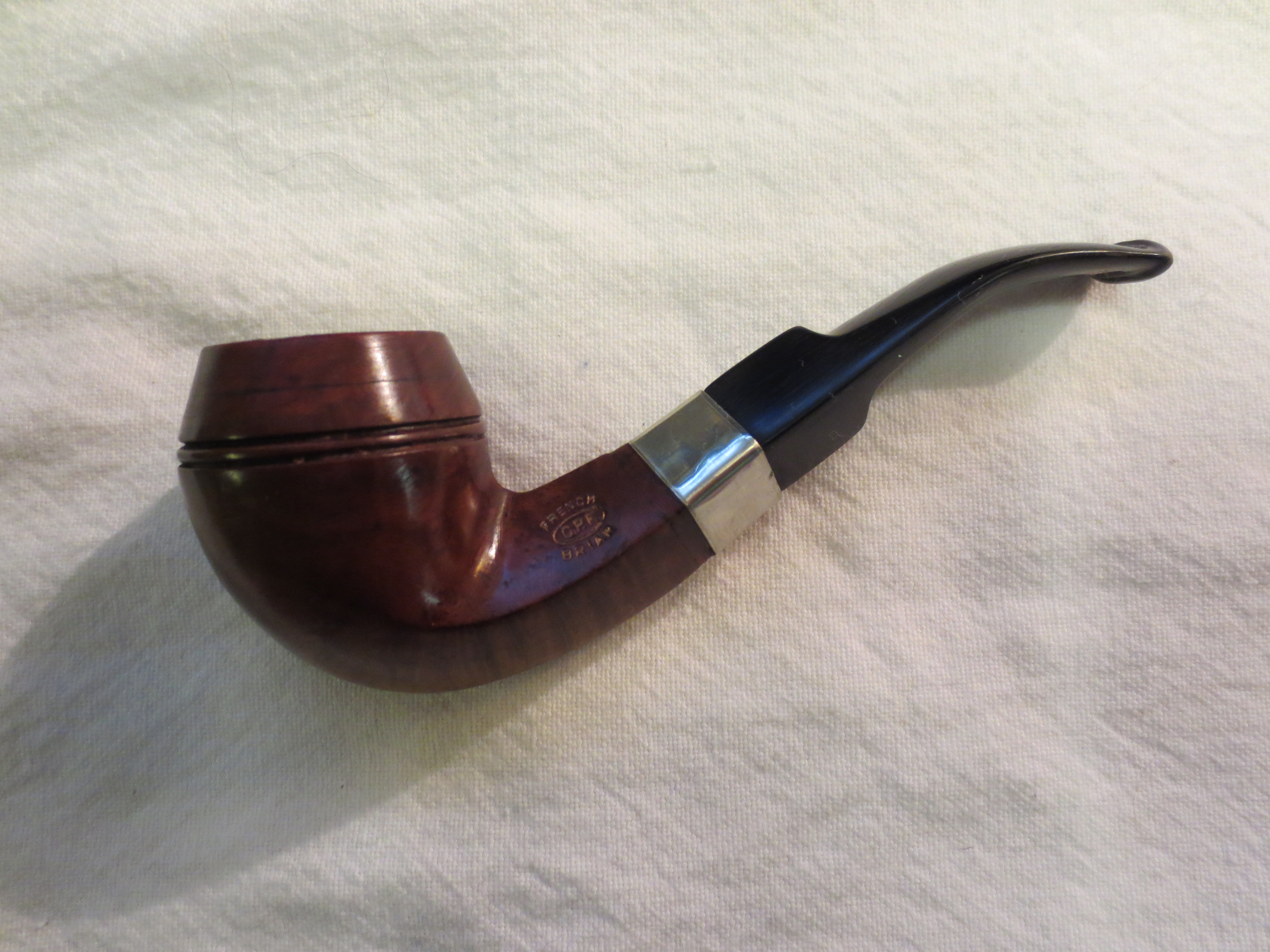
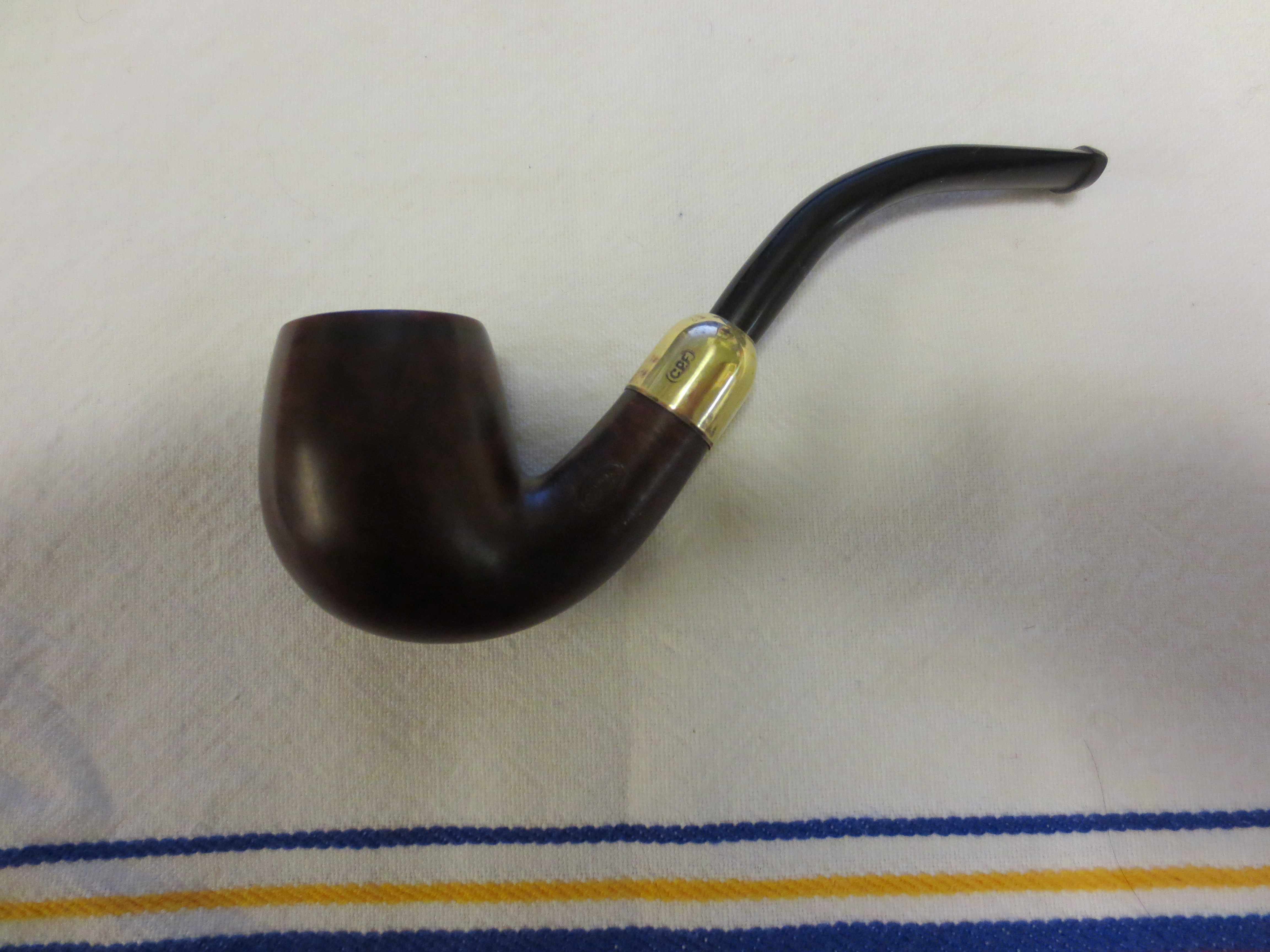
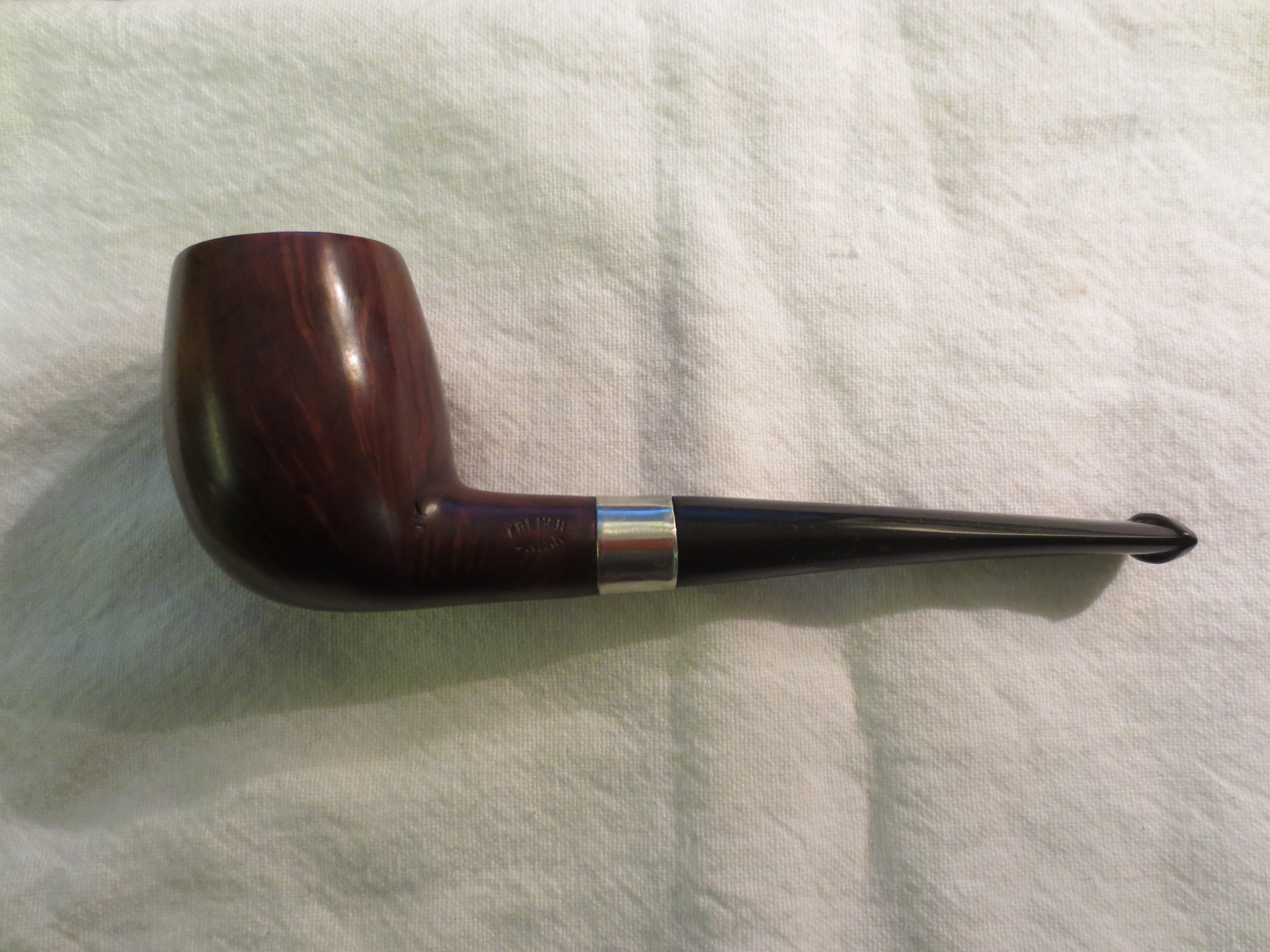
One of the secondary hobbies to pipe refurbishing that I enjoy doing is to research the history of a particular brand or make. In a recent EBay lot I bought there were 3 pipes that were stamped with the CPF logo – CPF in an oval with the word FRENCH stamped in an arch above the oval and the word BRIAR stamped in an arch below the oval. I had heard that the CPF stood for a variety of names from Consolidated Pipe Factory to Colossal Pipe Factory and even Chesterfield Pipe Company. There was a wide range of conflicting information available on the websites and forums that I looked read while looking into the brand. One evening while I was talking with Chuck Richards about the lot (I know that over the years he has seen quite a few old CPF brand pipes) he suggested that I ask Robert Boughton about it. Chuck said that Robert had done some work on the brand when he was given an old Meerschaum to refurbish. I contacted Robert and he sent me a variety of links that he had found. He had looked into the history and background of the CPF brand stamp. He wrote that he had found in his research that “…CPF definitely stands for Colossus Pipe Factory, a late 19th and early 20th century American venture that in its short, happy life created some of the most beautiful briar and Meerschaum pipes ever made”. He sent me a link to the stampings and logos site (1) http://pipephil.eu/logos/en/logo-c1.htmlbelowwhere he had found photos that showed the curved circular printing of French Briar around the CPF oval as well as some with a space between where the customary CPF mark was stamped within an oval enclosure. He had also looked into a variety of EBay offerings of CPF pipes and also on Worthpoint.com. He found some amazingly beautiful pipes for sale.

Throughout this article I have inserted photos of some of the CPF pipes that I have refurbished as examples. All of them showed the marks of having originally had rim caps and shank caps. Some of the older ones that I have seen have had beautiful filigree decorations in these areas.

Figure 1 CPF Bulldog - restored by Steve Laug

Figure 1 CPF Bulldog – restored by Steve Laug


Armed with the information that Robert sent I decided to do some more digging into the brand. I found information on the CPF brand that verified his findings on the meaning of initials. CPF stands for Colossus Pipe Factory. There is not much known about the Colossus Pipe Factory. I learned that by the mid 1890’s CPF was owned by Kaufman Brothers & Bondy (KB&B). They operated the factory at 129 Grand Street, in New York City, New York. I had a faint memory of some connection between CPF and Kaufmann Brothers & Bondy. But was unsure where I had heard or read that. In the process of reading information I came across this post by Bill Feuerbach on the Kaywoodie Forum: “About 10 years ago I picked up two original invoices from KB&B. One is dated February 5, 1884 and the other December 9, 1898. Both have the address as 129-131 Grand Street, which is in Soho, adjacent to the Bowery in New York City. The 1898 invoice has in the upper left hand corner the initials CPF and Trademark. So by 1898 KB&B was making it known to the trade that they owned the CPF trademark. The 1884 invoice does not have CPF on it. Therefore I think we can assume KB&B acquired or started the CPF line sometime between 1884 and 1898.” (2)
Figure 2 CPF Bent Billiard - restored by Steve Laug

Figure 2 CPF Bent Billiard – restored by Steve Laug


Robert Boughton also provided a link to a scan of a page from a trade magazine called “The Jeweler’s Circular”, dated August 23, 1899.(3) http://pipedia.org/index.php?title=C…s_Pipe_Factory In scanning through it I found that at the bottom of the center row of the clip a question sent in by a reader as follows, “Please inform as who manufactures briar pipes with the trademark, CPF?” The answer that was given in the article was, “These letters stand for Colossus Pipe Factory, the business being conducted by Kaufmann Bros. & Bondy, 129 Grand Street, New York.” I did a bit more digging as I wanted to find out the source of the Pipedia clipping. I found that the original source of this information was also Bill Feuerbach. He wrote the following on the Kaywoodie Free forum, “Now as for what CPF means. About 5 or 6 years ago Gary Schrier, pipe book author/publisher and pipe collector from Seattle sent me a copy of page 30 from the Jewelers’ Circular dated August 23, 1899. I assume this was a publication for the jewelry trade. On this particular page they have questions for the editor. One question is “Editor of the Jewelers’ Circular: Please inform us who manufactures briar pipes with the trade-mark rude cut: C.P.F. Thank you in advance for your trouble and kindness”. The answer was “Those letters stand for Colossus Pipe Factory, the business being conducted by Kaufmann Bros. & Bondy, 129 Grand St., New York.”

The address in the scanned document referred to above is the same address as the one on the invoices that Bill referred to in the quoted post in the previous paragraph. This industry/trade magazine, published at the time the CPF brand was being made, reports that the C in the CPF brand means Colossus rather than Consolidated or Chesterfield. To me that answers the question quite definitively.(4)

Figure 3 CPF Billiard - restored by Steve Laug

Figure 3 CPF Billiard – restored by Steve Laug


Even with that clear information from Bill, in both the invoices and the article in the trade jounal there still is some disagreement among pipemen as to the meaning of the letters in the brand. In my research I came across a few divergent opinions on the brand and I thought it important to cite them. The following information comes from Samuel Goldberger of Finepipes Estate pipe website as referenced below. On the page on his site dedicated to CPF pipes Sam wrote, “I have not found any clear history of CPF, but I have developed some ideas about them, based upon my study of early American made pipes. By the turn of the last century, a number of small pipe making factories had collected in and around New York City, including the William Demuth Company (WDC) and Kaufman Brothers and Bondi (KB&B), later to become Kaywoodie. From the design and quality of execution of these pipes, I believe the factories must have been staffed by European immigrants, probably Jewish, who had been trained in the older traditions of pipe making in France, Germany and Austria. The pipes they produced were in a similar style. They were expertly cut from very old, air-cured Algerian briar in classical shapes or from the finest grade of Turkish meerschaum; they sometimes rather small; they often had amber or Bakelite mouthpieces, gold or silver fittings. It’s my suspicion that pipes from these small makers were at one time sold or marketed under the name “Consolidated Pipe Factory.” Alternatively, CPF may have been the name of the distributor.” (5) Personally, not to disparage Sam’s ideas, I find the information provided by Bill Feuerbach in the paragraphs above to be conclusive that CPF stands for the Colossus Pipe Factory.

Further, in my research I found that others commented on the fact that they had seen pipes with both the CPF logo and KB&B logo on them that date to pre-1900. I too have seen, refurbished and sold some that bore both stampings/logos. This has led me to wonder if the dual stamping may have been a way to let pipe smokers of the time know that the companies were affiliated. From my reading and research it seems to me that CPF brand was discontinued sometime in the 1910-1920 range. Again, turning to Bill Feuerbach I found that he notes the following, which pins down the time frame of the discontinuation of the brand more specifically, “I have a CPF Chesterfield in our office display that has a nametag from way before my time that says 1900 CPF Chesterfield. It looks like most other Chesterfields you’ve seen, including the military type push stem, except this stem is horn and not vulcanite. As far as I have gathered the CPF brand was phased out sometime around 1915.” (6) Interestingly, he noted that the Chesterfield name and style was later introduced in the KB&B, Kaywoodie and Yello-Bole lines. He says that the 1924 KB&B catalog shows KB&B Chesterfields.

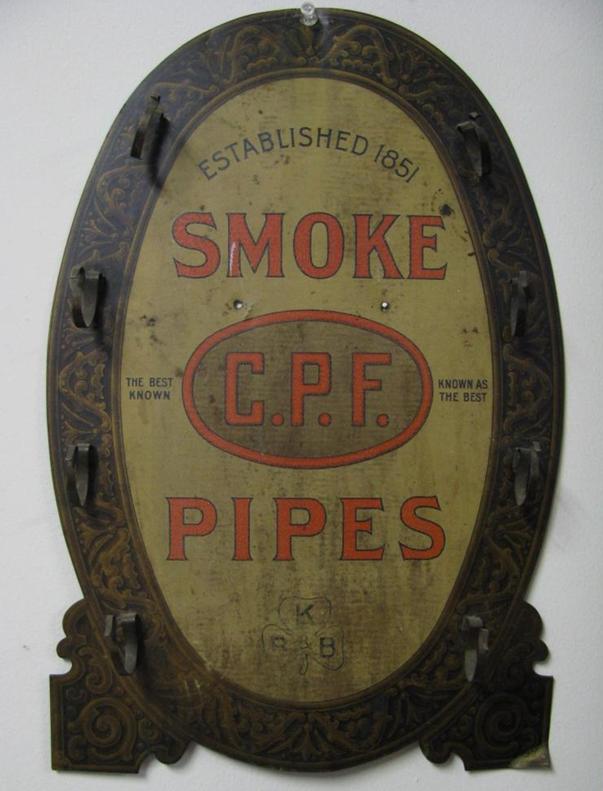
I also came across the following photo that comes from Bill Feuerbach which shows the dual stamping of the logo on this display placard for CPF pipes. Note the familiar KB&B logo and cloverleaf at the bottom of the placard. (7)

Figure 4 From the collection of Bill Feuerbach

Figure 4 From the collection of Bill Feuerbach


From my research I believe that we can definitively assert that the CPF logo stands for Colossus Pipe Factory. The brand was purchased by KB & B sometime between 1884 and 1898 and that it continued until 1915. That time frame gives help in dating some of the older CPF pipes you or I might find. It can be said that prior to the dual stamping it is fairly certain that the pipe is pre-1884 to 1898. After the dual stamping it can be placed post 1898 until the closure of the brand line in 1915. CPF made beautiful pipes. I believe Sam Goldberger was correct in his assertion of the potential carvers that made the pipes being of European training and the classic shapes and well aged briar. That coincides with all the CPF pipes that I have come across.
_____________________________________________________________
End notes
(1) http://pipephil.eu/logos/en/logo-c1.htmlbelow
(2) http://kaywoodie.myfreeforum.org/archive/cpf__o_t__t_161.html
(3) http://pipedia.org/index.php?title=C…s_Pipe_Factory
(4) http://kaywoodie.myfreeforum.org/archive/cpf__o_t__t_161.html
(5) http://www.finepipes.com/pipes/american/consolidated-pipe-factory-cpf
(6) http://kaywoodie.myfreeforum.org/archive/cpf__o_t__t_161.html
(7) http://kaywoodie.myfreeforum.org/viewtopic.php?t=161&start=0