Category Archives: Pipe Related Essays

Short and not so short essays on pipes and tobacciana

One of those unforgettable days Pipe Hunting


Blog by Steve Laug

Last week I was in Idaho to spend time with my 87-year-old father who needed to have the aorta valve on his heart replaced. His surgery was on Tuesday and went exceptionally well. On Thursday morning my brother Jeff and I visited him in the hospital and then drove to a neighbouring city to do some pipe hunting. There is something about the thrill of a pipe hunt that is hard to beat in terms of the adventure of the hunt and the thrill of the finds. It is something that we both enjoy doing and it is great to be able to do it together. In preparation for our hunt that day we had done a bit of research on our destination city. We had visited a few shops in the town where my brother lived and picked up a magazine of antique shops. He had hunted pipes in the neighbouring community so we knew there were a few shops.

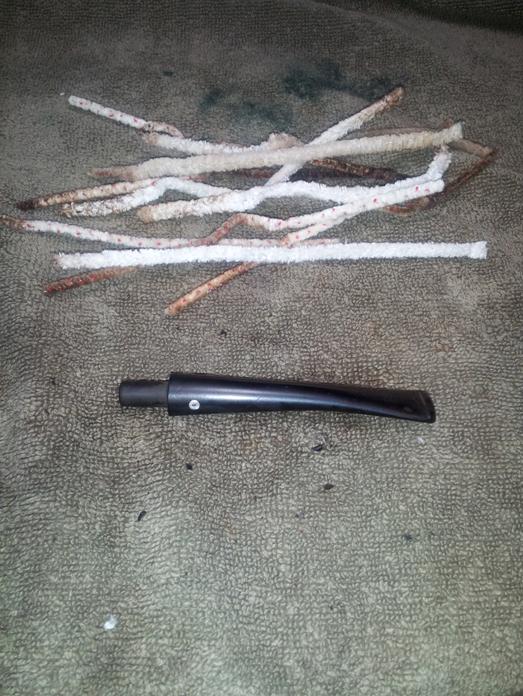
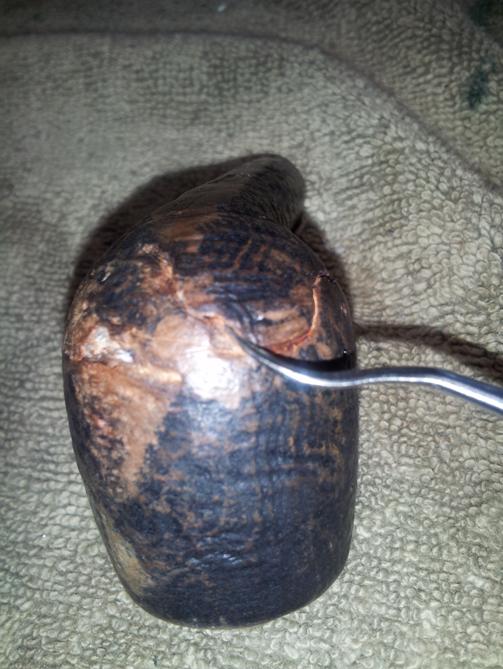
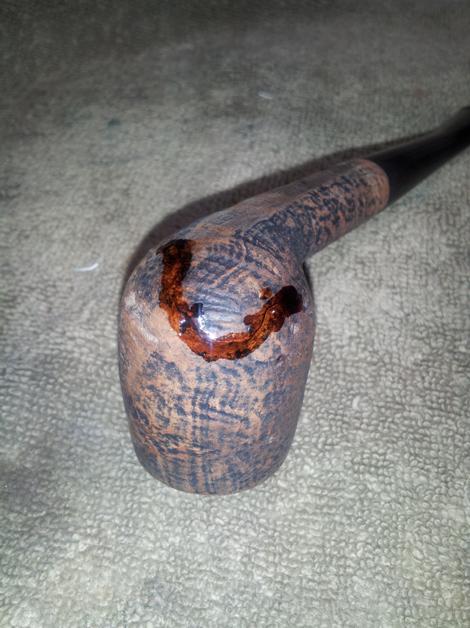
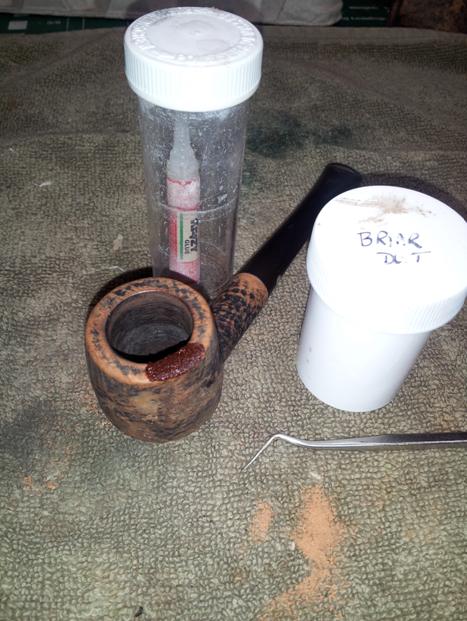
But in our digging we found that there were 13 antique shops in that city and that many of them may well have pipes. So we drove the fifty miles to get there with expectation but we had no idea what we would run into when we arrived. The first shop we went to had several pipes that I picked through. I purchased a bent billiard Peterson K-Pipe with a fish tail stem that was in decent shape for $10 and the shop keeper gave me a GBD Lovat with a severely cracked bowl. He sent it along to see if I could do anything with it and only wanted photos of the process.

The second shop we went to had no pipes but did have a wealth of information for us on the antique shop scene in the city. She recommended two shops owned by a husband and wife team that was only a couple of blocks away. We walked to the shops and enjoyed a great visit with the wife and the staff of the two shops. They went through their stock in the back room and were able to find four pipes that I picked up – a Dr. Grabow bent bulldog for $8, an Ehrlich Canadian with a monogram on the shank $8, a Ben Wade Freehand $6 without a stem and a Peterson System pipe bowl without the stem for $3. I had happened to put a stem in my bag when I flew to Idaho for another pipe my brother had and it fit perfectly. So far I had spent a whopping $35 and had six pipes to show for it. I was pretty pumped and we had only covered four shops at this point.

We put our bounty in the back seat of the car and drove to the next shop. The owner had sold out everything in her pipe section but a couple of beat up corn cobs. I asked if she had any other pipes in the back. She thought for a moment and then opened a bag under the counter and took out a nice flat bottom rusticated Jobey Stromboli Bent sitter. I don’t remember the shape number as it is still packed away. That one was $10. She recommended another shop to us so we drove to the next shop. It was a small hole in the wall shop – an old single story house that had been converted into and antique shop.

When we got there the owner was outside painting the building. She said that her 84-year-old mom was running the shop and she would show us the pipes that they had. We looked around for a while and she pointed out their stock. I picked up a Peterson Dublin Castle that was barely smoked for $42 and a Scandia Bent acorn with a twin bore stem for $6. I also picked up a nice leather pipe pouch for $10. My brother picked up a beautiful Servi Basket Weave carved block meerschaum for $49. It was barely smoked. By far this was the shop where we spent the most – a total of $107. We had 10 pipes and a new pipe pouch for a total of $152 at this point in the process.

In the course of our conversation with the mother of the shop owner it turned out that her husband had owned a pipe shop and that these pipes were some of his stock. I asked if he had more and if he would be willing to have a couple of visitors. She called him and let me talk with him about what I was looking for. It turned out he was willing to meet us at his house if we were serious about buying estate pipes. He had many that he was motivated to sell. We left the shop and drove to his house. He met us at the door smoking some Lanes 1Q in a Stanwell. He took us into the kitchen to show us what he had for sale. He had a rack of 36 pipes and a small rack of about 6 and at least 6 unsmoked and four smoked Gourd Calabash pipes. There was also an assortment of other loose pipes on the counter to look at. On the floor was a large ice chest filled with bulk tobacco that he was also selling.

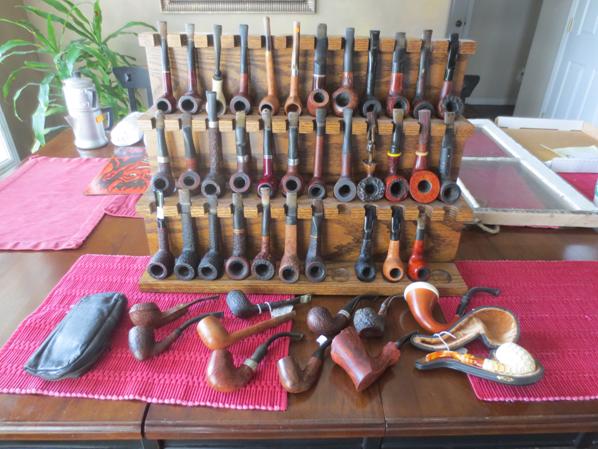
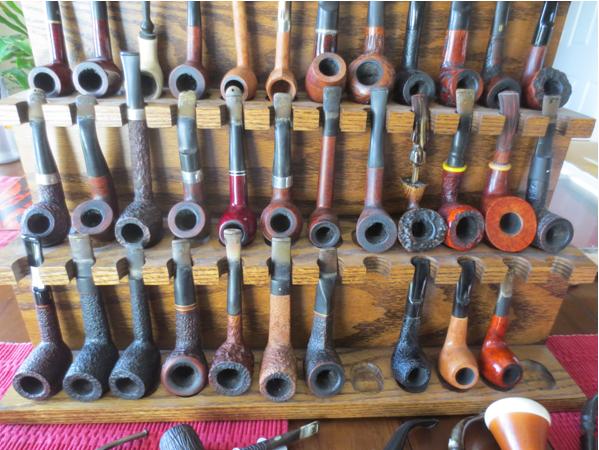
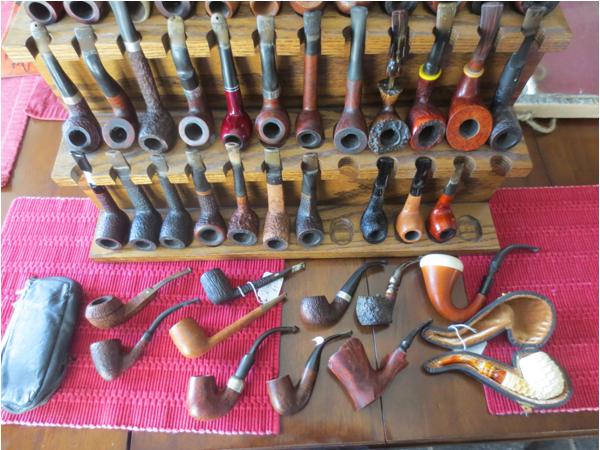
As I looked over the pipes I felt like we had hit the jackpot with this lot. I spent a lot of time talking with him as I went through the pipes he had displayed for sale. I mentally catalogued the ones on the rack. There were 7 Savinellis, 6 Petersons (2 shape 999 one of my favourites), 2 Bjarne pipes, 2 Nordings, 1 Dunhill Shell, 4 Italian Corsena pipes, a Castleford, two older horn stemmed pipes, a Tracy Mincer author, a Jobey Asti,a Dutch made ceramic double walled Dublin, a Stanwell 63 and a Lane billiard. I looked through the others and as I picked them up he would get a sentimental look on his face and remove those from sale. There were a lot of pipes for sale in that lot. He kept repeating that he was a motivated seller. While I was fiddling at choosing a bunch to take with me, Jeff asked him what he wanted for the lot. He stalled a bit but finely gave us a price for the rack and the pipes that were on it. We dickered a bit and he threw in a Gourd Calabash for my brother. We made a deal and added 35 more pipes to the days finds along with a solid oak three tiered 36 pipe rack. I also picked up a tin of GLP’s Blackpoint and a sealed package of Esoterics’ Peacehaven (a pleasant mix of 6 Virginia tobaccos).

We loaded our bounty in the car and bid the old pipeman farewell. He hinted at the fact that he had many more pipes that he would be selling in the near future so I am sure we will one day go back for another visit. We had a bit of lunch and made our way back to the hospital. All in all it was one of those amazing days. We came home with 35 pipes (several that were unsmoked), a pipe pouch and an oak pipe rack. My brother has been hunting pipes for a while now and we both knew that this was a rare find that we had stumbled upon – we got to cherry pick a pipeman’s estate and bring home some of his old pipes. It was a mixed lot but there were more than enough really nice pipes in it to make it a worthwhile purchase. Besides that we got to meet a nice older pipeman who was thrilled that his pipes were going to someone who obviously loved pipes as much as he did.

Oh, I almost forgot. When he had his shop I used to stop by there on the way to visit my mom and dad. I stopped and bought pipe tobacco and cleaning supplies from him over the years. When we walked in his front door he remembered me and I remembered him. That was the icing on the cake for me. He had closed his shop several years before and I had lost touch with him. It was a very good day pipe hunting.

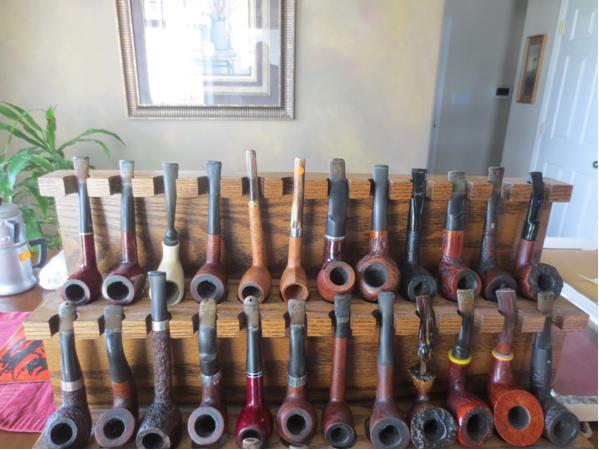
When we got back to my brother’s house I set up the pipes and took the following photos of the haul. You can see the amazing pipes that we found. The first photo shows the rack and the finds in their entirety.Hunt1The next photos I tried to get some closer pictures. The first one below shows rows 1 and 2 of the rack. The second one shows rows 2 and 3. The third photo shows the pipes on the table in front of the rack. I put the Peterson stem I had brought along in the Peterson bowl I found. See if you can identify the pipes in the rack and on the table. What do you think of the results of our hunt? I am still pretty pumped by the find and had to share it with folks who understand what it feels like to make this kind of find. Thanks for looking.Hunt2 Hunt3 Hunt4

A Falcon Dual Pipe Reamer – A Great Addition to my Reamer Collection


Blog by Steve Laug

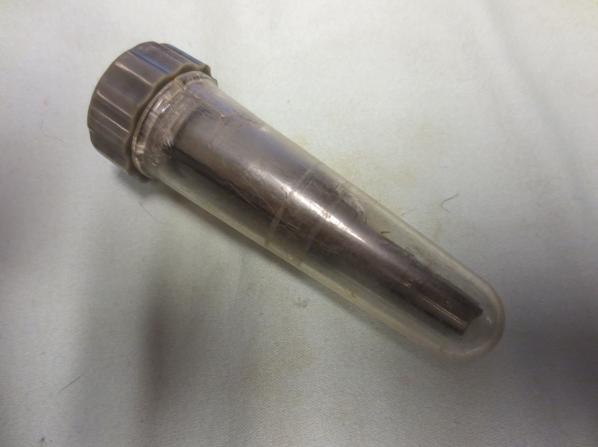
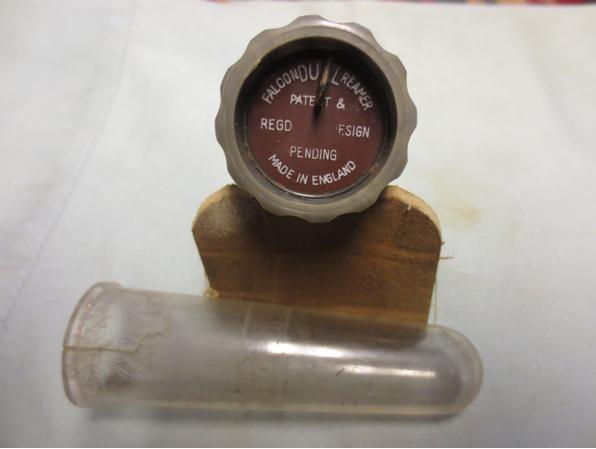
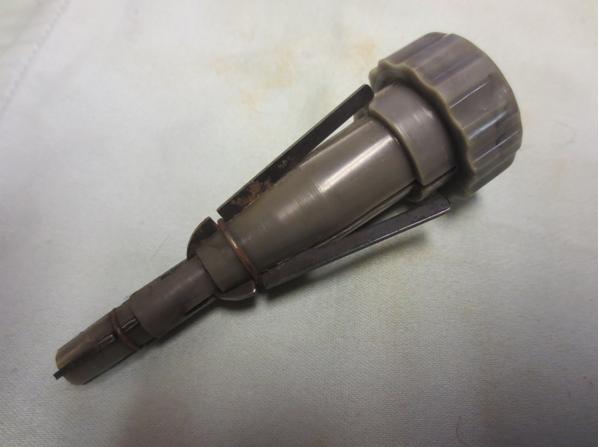
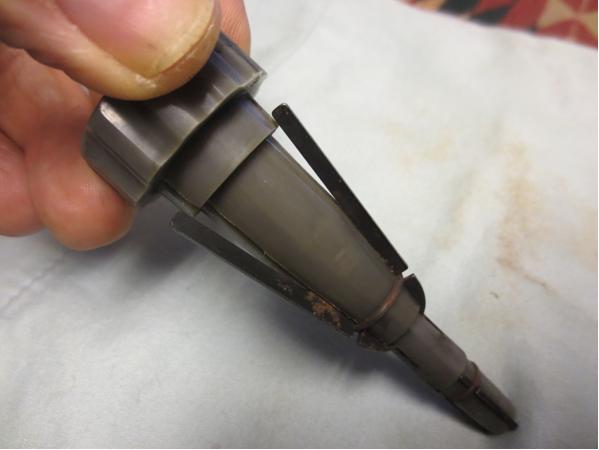
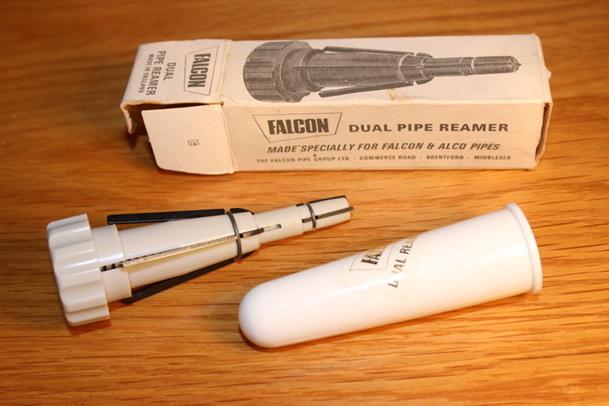
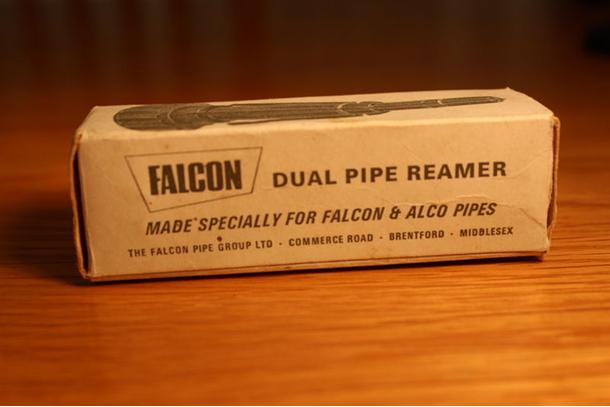
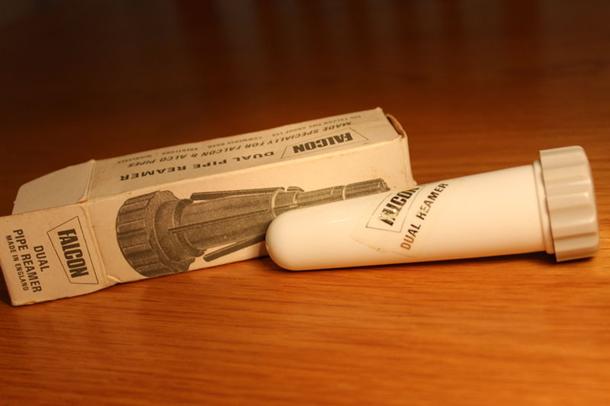
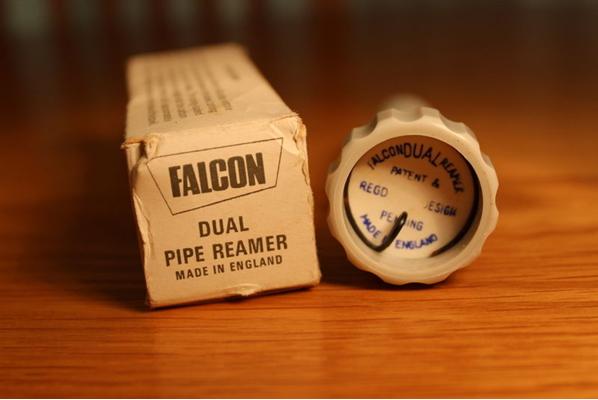
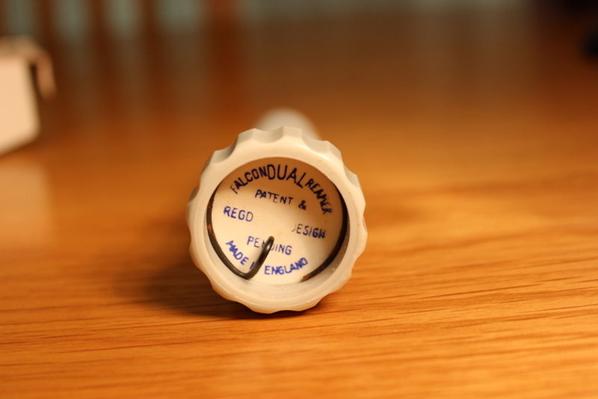
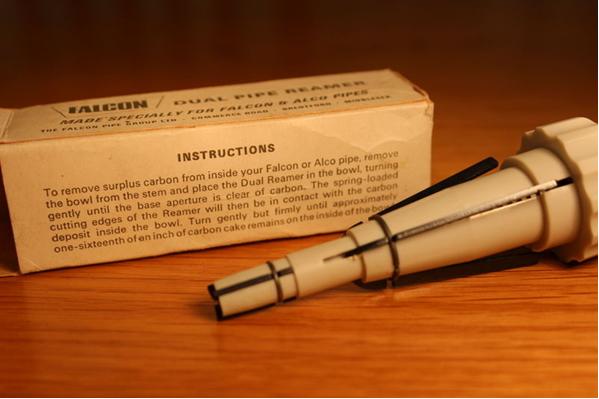
For a long time now I have had an eye out for a Falcon Dual Pipe Reamer. I have bid on several and lost every time in the last seconds to a sniper. This time I avoided the auction and bought it on Facebook from pipesmoker in England. I paid for it and promptly forgot about – things have been so busy around here that I did not think about it again. This afternoon when I got home from work Bob’s package was waiting for me. I cut the tape on the envelope and a small cardboard shipping tube was inside. I turned the top of the tube off and took out the bubble wrapped piece that was inside. I removed the bubble wrap and the reamer was in my hands. The photo below shows the reamer as it was when I removed it from its packaging.Dual1I twisted the top or cap on the clear plastic case and looked at the end cap of the reamer. It was really clear and readable. There was the end of a spring poking through the top on the insert of the cap.Dual2The cutting blades of the reamer were spring-loaded and as I removed the tool from the plastic cover the blades expanded. The next two photos show the blades expanded to the shape of a Falcon bowl.Dual3 Dual4This was a unique reamer that I had read about but I had never seen up close. Now I had one in hand. I wanted to understand how it worked and get some idea if there were originally instructions that came with the reamer. So I did a bit of hunting on the internet to see if I could find any packaging or leaflets. I was not surprised to find a lot of photos of reamers that came in a variety of colours from cream to black. There were no photos of the battle ship grey one that I had in hand. I did find a few photos of the box the reamer came in. The reamer in the photo differs from mine only in colour. But the box is what intrigued me. On the cover was a picture of the reamer with cutting blades on the lower nose of the tool that fit in the hole in the bottom of the Falcon or Alco bowl. The upper blades angle the same way that the inner walls of the bowl do. With both sets of blades the bowl and airway are reamed simultaneously. The left side reads Falcon Dual Pipe Reamer and under that it says Made Specially For Falcon & Alco Pipes. The lower line reads The Falcon Pipe Group LTD – Commerce Road – Brentford – Middlesex.Dual5 Dual6 Dual7The end of the box reads Falcon Dual Reamer Made in England. The end of the reamer in the photo below has the same insert as the one I received. It reads Falcon Dual Reamer arced over Patent & Regd. Design Pending Made in England.Dual8 Dual9On another side of the box there are instructions for using the reamer. I know that you can probably read it for yourself but I could not help myself from wanting to include the text here. It reads:
Instructions
To remove surplus carbon from inside your Falcon or Alco pipe, remove the bowl from the stem and place the Dual Reamer in the bowl, turning gently until the base aperture is clear of carbon. The spring-loaded cutting edges of the Reamer will then be in contact with the carbon deposit inside the bowl. Turn gently but firmly until approximately one-sixteenth of an inch of carbon cake remains on the inside of the bowl.Dual10Now I not only have a Falcon Dual Pipe Reamer but I have photos of the box with instructions for proper used of the tool. Thanks Bob for this addition to my collection of reamers. It makes a great looking piece in the centre of all of my other reamers.

Bulgarian Leather Pipe and Tobacco Pouch from Sofia


Blog by Steve Laug

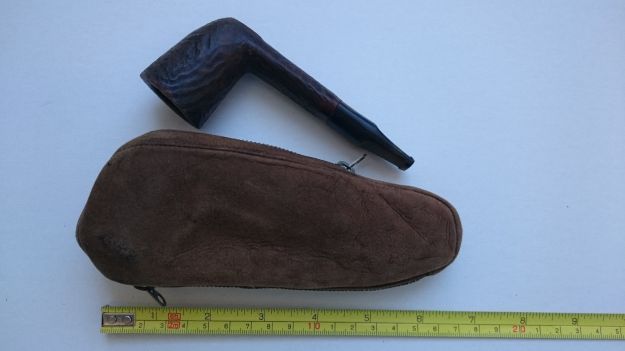
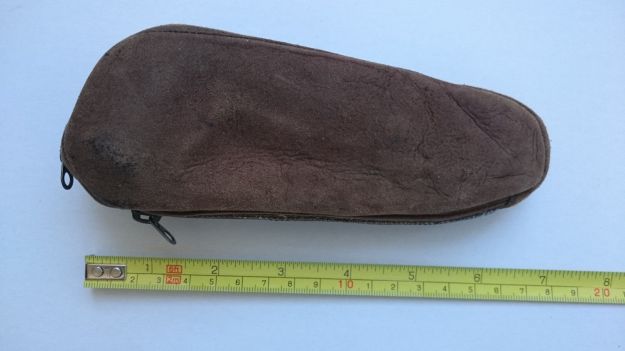
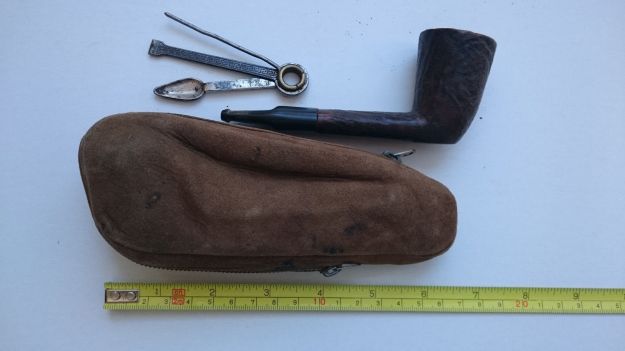
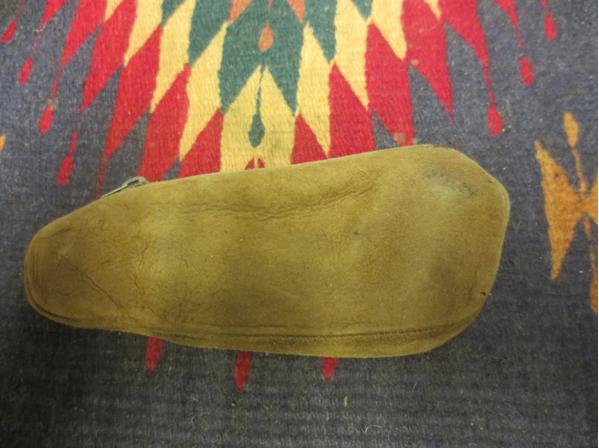
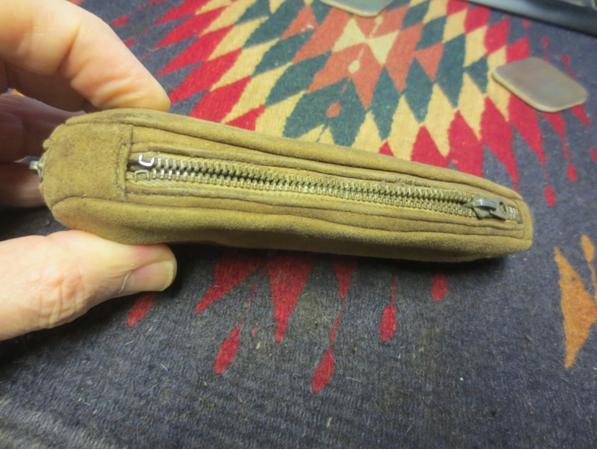
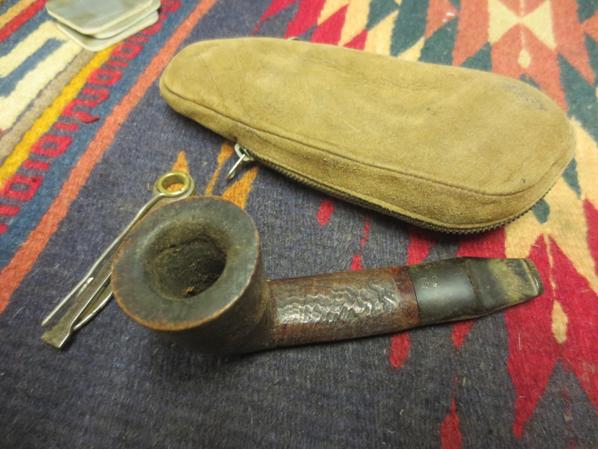
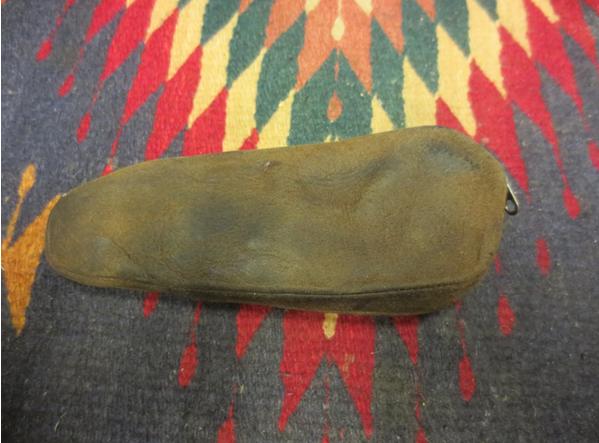
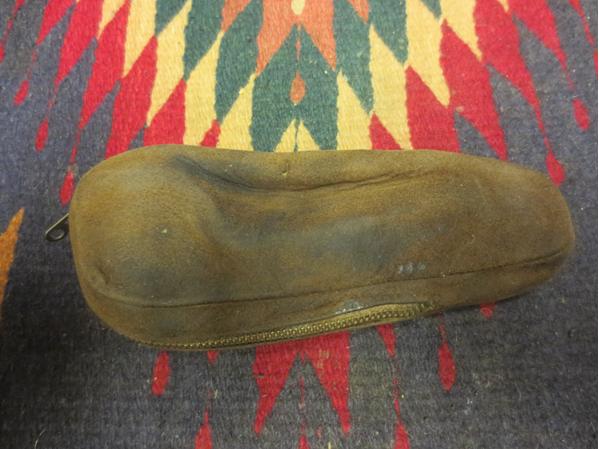
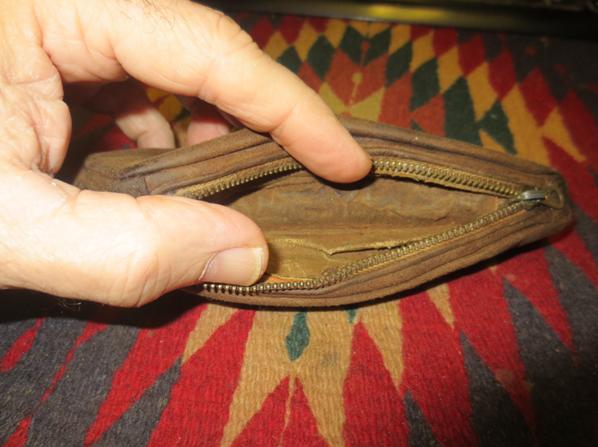
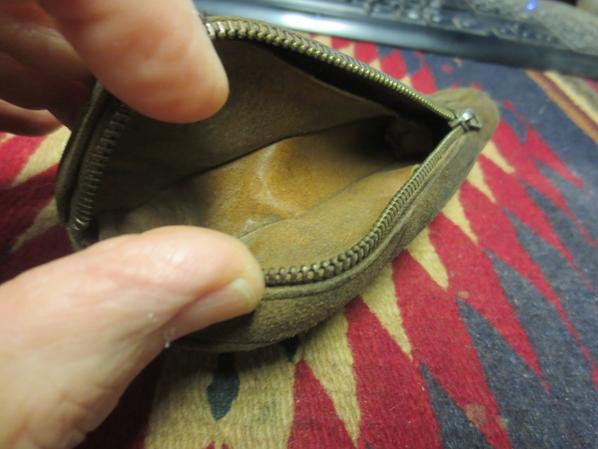
I wrote a blog about the restoration the Butz Choquin 1635 pipe that was inside of this pouch last week (https://rebornpipes.com/2016/04/08/unzipped-an-old-pouch-and-found-a-butz-choquin-oval-shank-capitan-1635/). I have no idea how old the pouch is or who the original owner was but it still had some charm. The pouch was worn but salvageable so I cleaned it up as well. I thought some of you might be interested in seeing how the old pouch turned out. Here are a few pictures of the pouch from the eBay seller.Bag1 Bag2 Bag3What was interesting to me is that the pipe, pouch and tool came to me from Sofia, Bulgaria via the US. Why is that interesting you might ask? Good question. You see, I have a friend who is a pipeman who lives there and is starting on the hobby of pipe restoration. It is great to have a pipe and pouch that came from there. He has one of my pipes that he lovingly calls Vancouver. I took the following photos before I started to clean up the pouch.Bag4 Bag5 Bag6The pouch exterior was made of suede leather. The brass zippers were dirty but in working order. The inside of the top zipped area held a waxed canvas liner that still had remnants of tobacco in it. The inside of the underside which held the pipe had a leather insert that was loose as it had come unglued. I began by spraying the zippers with WD40 to lubricate them and worked them back and forth to clean out the teeth. I glued the leather insert in the underside of the pouch with an all-purpose white glue and inserted a bottle to keep the insert in place while the glue dried. I brush out the inside of the canvas insert on the top of the pouch and wiped it down with a damp cloth to remove the dust.

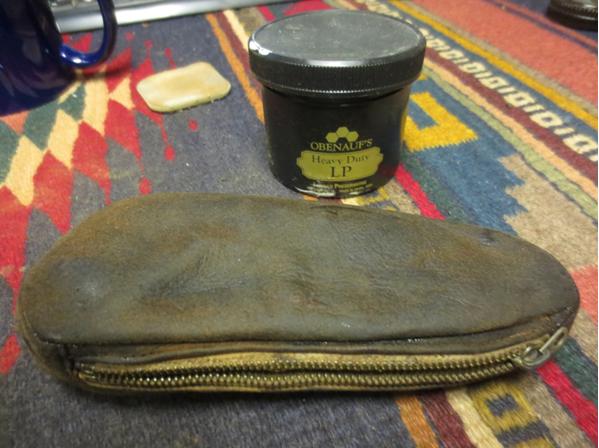
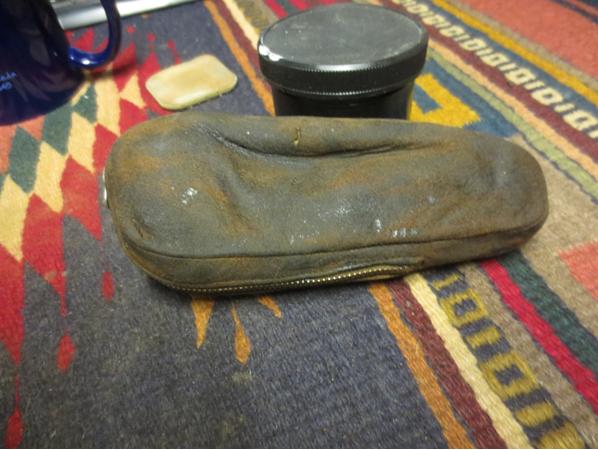
When the glue had dried on the interior of the pouch I brushed the suede exterior with a leather brush and then gave it a coat of Obenauf’s Leather Treatment. It is a deodorized grease like substance that restores and preserves the leather. I rubbed the grease into the leather by hand until the entire pouch was covered and then set the pouch aside to dry. As it dries the Obenauf’s is absorbed into the leather darkening it slightly but also giving the leather a soft pliable feel.Bag7 Bag8I laid the pouch aside on my desk top for a few days and let the product do its work. The photos below show the pouch as it looks after four days of sitting in a warm spot. While it is not beautiful it is greatly improved. I have taken photos of both sides and the inside of both compartments. There are still some worn spots in the leather and some nicks that give it character but it is clean and functional. The pouch is useable once again. Thanks for looking.Bag9 Bag10 Bag11 Bag12

My Reluctant Journey into Pipe Repair


Blog by Steve Laug

I decided to take some time to reflect on my slide into pipe repair work. I figured it would be good to process the slide a bit and try to wrestle with my reticence. I have been reluctant to take on pipe repairs for other people because I really like doing the work as a hobby and I don’t really want to deal with all the potential people issues. I find it relaxing to move at my own pace and when I feel like doing the work. To add the desires and wishes of another person with their own expectations and times lines to the mix was something that I avoided for the longest time by just repairing pipes for close friends or pipe club members when I felt like it. I just did not want to ruin a perfectly good hobby and put myself at the mercy of others who exacted such a variety of forms of torture and suffering on briar and meerschaum. I wanted to be able to sit at my work table with some nice music playing, no pressure sip some coffee or a beer and just putter away. Working that way there were no deadlines or phone calls checking up on the status of a pipe. There was just the predictable ability of pipework to de-stress me. With my job I actually am never finished; each day marches on and the work is never done. With pipework I can often finish working on one or two pipes in an evening and even more on a weekend if I choose to do so. I have the immediate satisfaction of not only finishing something but bringing a worn and tired old pipe back to life – hence the name rebornpipes.reborn logoProbably the beginning of the downward slide into pipe repair can be associated with the start of my blog. A little over three years ago I started the rebornpipe blog as an online storage site for the documentation I had done over the years of learning the art of pipe refurbishing. I have been on Smokers Forums for many years and about that time the server was hacked and all of the posts and archived material that I had written there on pipes and repairs disappeared into cyberspace. Fortunately I had saved copies of every post with pictures included on my hard drive. But to add insult to injury the next thing that happened was that my hard drive crashed. I took it to the shop and they were able to rescue my files including the posts. That was enough for me. I found the WordPress site and signed up for the free version of the blog. I put everything on the web and breathed a sigh of relief. Now I have the blog plus I backed it up on DVDs and have them in storage and I keep the current years’ work on my new hard drive. I am convinced that one can never be prepared enough!

Over the years the blog has grown to include more than me – there are now many folks who have joined me in posting their work. I bought the domain name and upgraded the storage space and capacity of the sight. It did not take too long before I began to get emails from folks who wanted advice on how to repair their pipes or wanted to send them to me for a repair. In those early days I generally did the work for barter. A tin of tobacco, a box of pipe cleaners or even pipes were often the form of payment. All of these were ways I tried to keep from crossing the line and make my hobby into work. I still had an aversion to that and wanted to keep the line very clear.

Well the bartering took a turn – more of a slow and steady slippage into doing the work for others. Looking back I can see how it happened and when it took a turn. It seems like friends of friends wanted a new stem or a repair or a tenon replacement. There was no end in sight so I sought yet another way to keep the hobby just a hobby. I still did not want to step into the doing repairs for a fee. I did a bit of research to see what others charged to do what I was doing. My thinking at that point was truly to set a price and discourage the knocks on the door, the emails and the phone calls. However, it did not do that. Slowly but surely the stream increased. I still did some of the repairs in exchange for a tin of tobacco or something else that would be worth bartering. In my head I kept trying to at least postpone the inevitable day that would come when I would have to charge.

But the slippage into doing repairs for others continued and soon the postie was delivering boxes from all over the world for repairs. Sometimes I wonder what he thinks when he rings the bell and hands me yet another small box that says pipe for repair. I could still rationalize to myself that I was just helping friends I had met online in the various pipe forums or through the blog. But my rationalization was more a form of denial as the repairs kept coming. My wife and daughters soon raised the question that I had sensed was coming, “When are you going to come up with a price list for your repairs? You should get some compensation other than more pipes and tobacco for the work you are doing.” I tried to ignore them for as long as I could but one day I sat down and figured out a price list for what I do and designed a business card to match.

Business cardI should have figured out that the line was crossed with these two creations – a price list and a business card. The first iteration of the card only said Used and Estate Pipes Bought and Sold so I was still able to live in the wonderful world of denial. But even that soon gave way as with the next iteration of the card I added the word Repaired between Pipes and Bought.

The question is clear for me, “Did this signify the beginning of the end for my hobby – at least at some level?”. I continue to work on pipes I find and the ones my brother supplies me with as a hobbyist. The trouble is that I now have to fit them in between the ones that I am fixing for others. I cling tenaciously to the hobby aspect of refurbishing and refuse to let go of it! However, no matter how hard I tried the slippage became a full out free fall not long ago.

I know the precise moment that it happened. I can tell you the date but that really does not matter. I do know that when it happened it was a dark rainy Vancouver evening. After work I took my daughter to an eye specialist for an appointment. When I dropped her off I remembered that there was a cigar/pipe shop just down the hill from the clinic. So instead of paying a garage parking fee or feeding a meter I drove down the hillside to shop and parked in their lot. My thinking was I could park there for free and do a bit of shopping at the same time. It could be a win win for me – no meters or parking fees and I could pick up refurbishing supplies. I needed some pipe cleaners and I wanted to see what pipes the shop had available.

I had not been there for a long time so I was looking forward to checking it out. I had heard that they had a good selection of pipes and tobaccos. It had originally been just a cigar shop with nothing pipe related so this would be interesting. I parked in their lot and went inside. I greeted the two women who were running the shop and went into the pipe area. They had indeed made a lot of changes and carried some beautiful pipes. I was looking at the Peterson pipes in the display case when one of the women asked if I would like a coffee. I accepted her offer and was soon chatting with her about the pipes and tobacco they carried. As I we talked I asked her for different items and began to build my purchase pile. These included two packages and an additional six bundles of pipe cleaners and a tin of Escudo. She asked me what I needed that many pipe cleaners for so I told her that I worked on estate pipes. I even went out of my way to make it clear that restoring and repairing old pipes was a hobby that I really enjoyed.

That was where things got interesting. She wanted to know what kind of restoration work I did so I summarized what I did. I told her about my blog and suggested she check it out to see what kind of work I did. Up to this point I was pretty oblivious to where this was going. We were just having a conversation so I did not think too much about it. She asked for an email and a link for the blog so I gave them to her. You might think I was a little dense at this point and you are probably right in your assumption. When I am in a pipe shop I am pretty focused on pipes and tobaccos and not thinking about much else. I went through the various display cases and enjoyed the Dunhills, Chacoms, Butz Choquins, Brighams and several baskets of inexpensive pipes and cobs. Time was flying by while I waited to pick up my daughter.

Finally, I made my way to the cash register to pay the bill and collect my purchases. They ladies asked me if I had a price list of the work I do. I laughed and said yes I did. She then told me that the pipe repairman that they referred people to had retired. He lived in Toronto and was no longer working on pipes. They were in need of a new repairman. Then came the question – “Would I be willing to have them refer people to me with their repairs?” Unthinkingly, truly I did not think too much about it, I said sure. Well the slippage was over and I was free falling into repair work. I did not think much about it and went to pick up my daughter, quite oblivious to what would transpire.

It was not long before I began to get phone calls asking if I would repair a stem, a broken tenon, a damaged finish or a dent in a bowl. People began to drop off pipes at my door for me to repair. I think this is more than my family was expecting. Not too long ago my wife asked me when our home had become a pipe shop… fortunately she was laughing but I got the point. But what could I do, I was caught in the free fall and was doing repairs. I have met some interesting people in the last few months of this adventure. I had no idea the number of pipe smokers in Vancouver. I know a few from the pipe club here but the ones stopping by for repairs are people I have never met before of a variety of ages. It is great to see that our hobby is alive and well even in the anti- smoking climate of Vancouver.

I will see where this aspect of pipe refurbishing and repair takes me. But one thing I know is that I still have a huge box of pipes of my own to refurbish so the hobby will continue. I am just going to have to learn to pace myself so I can still enjoy my hobby while fixing other people’s pipes. pipes

Gift from a Newfoundland Friend– Rare & Unique Unsmoked Ellsworth Roto Bowl


Blog by Steve Laug

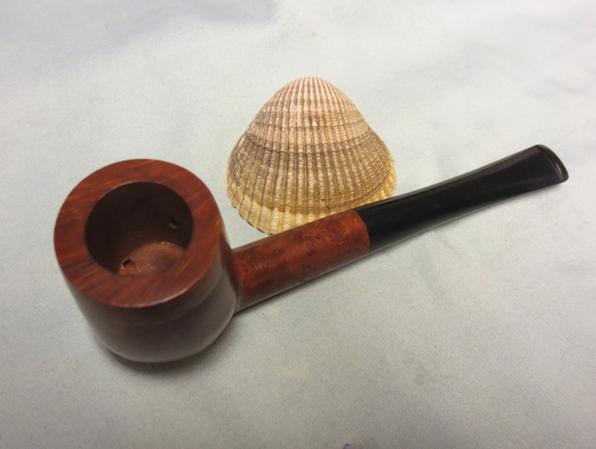
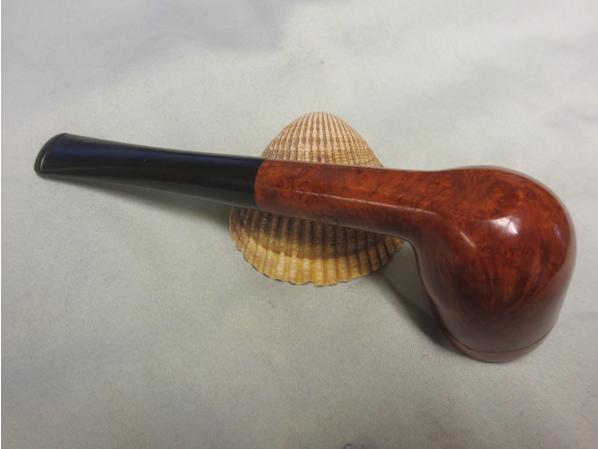
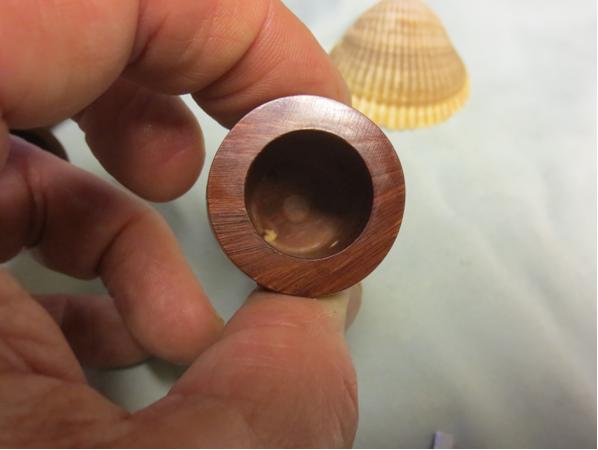
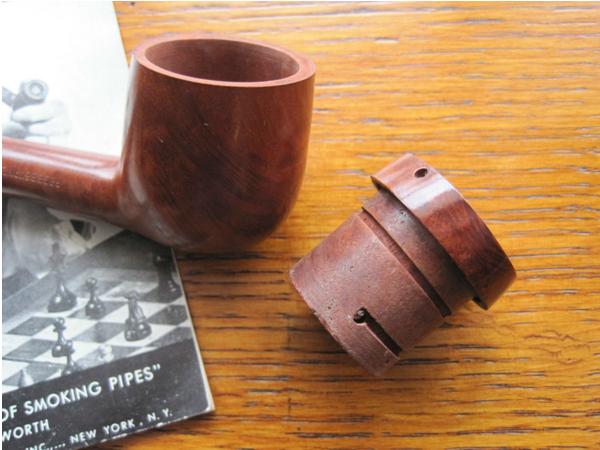
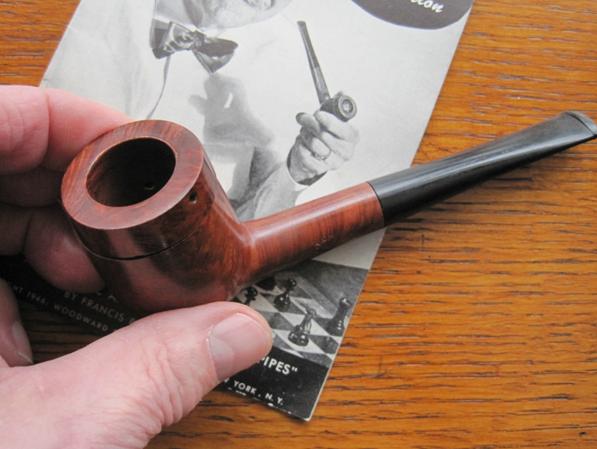
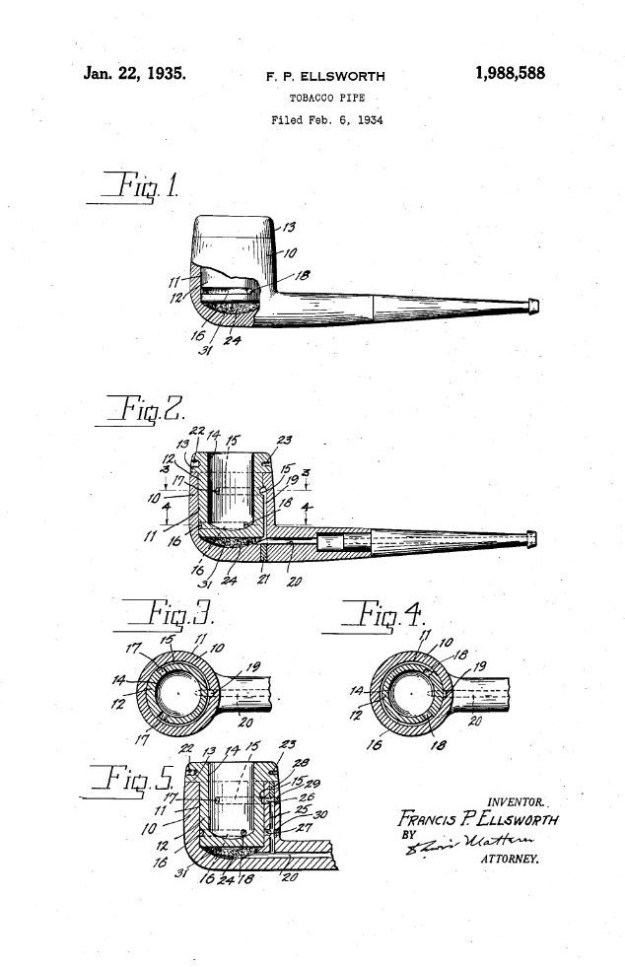
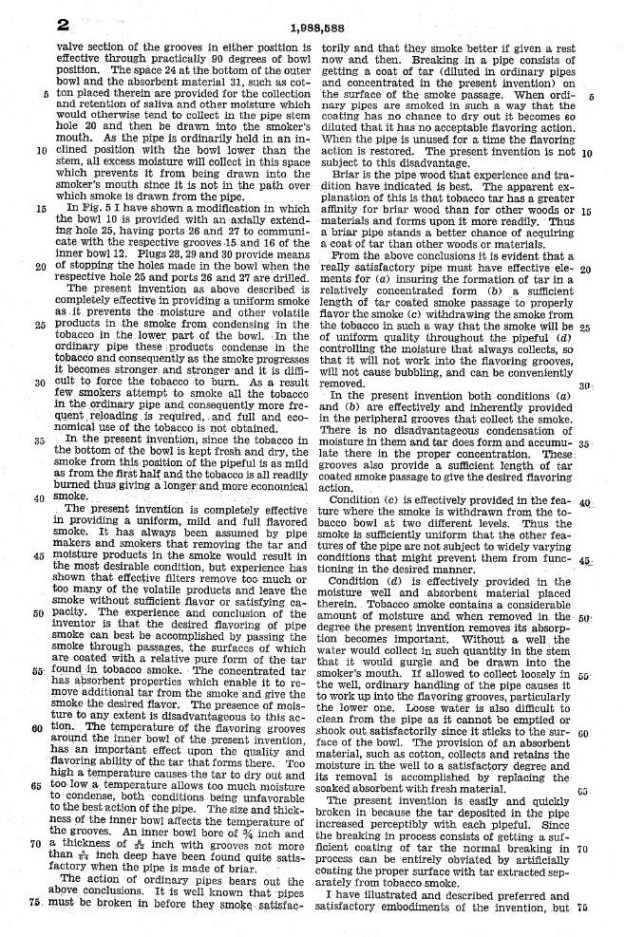
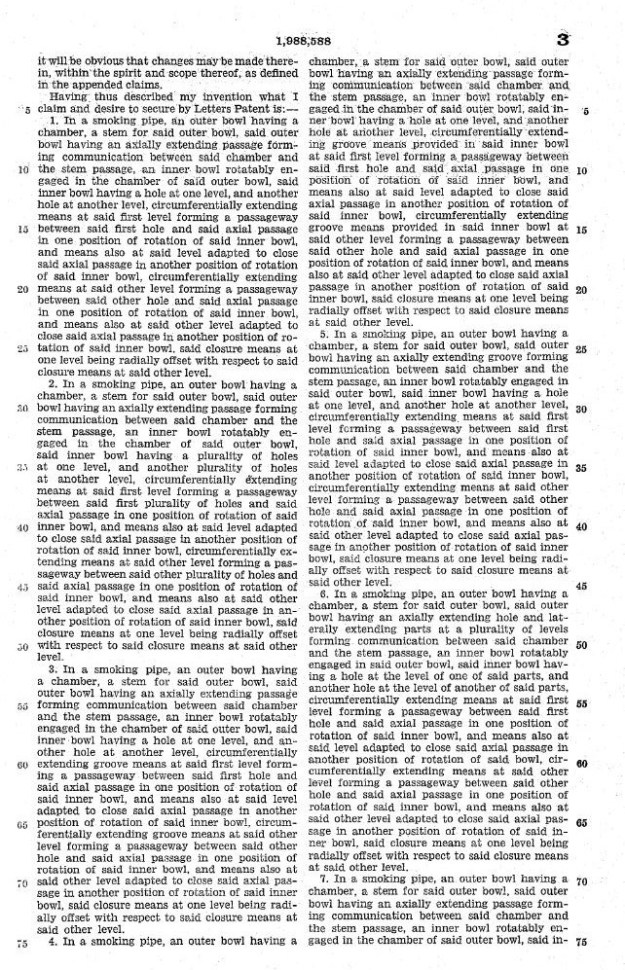
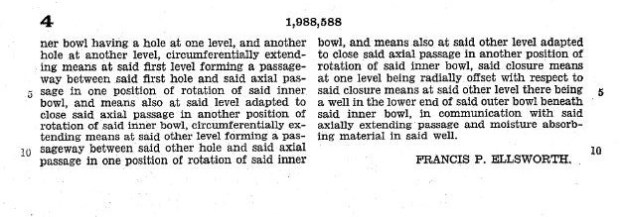
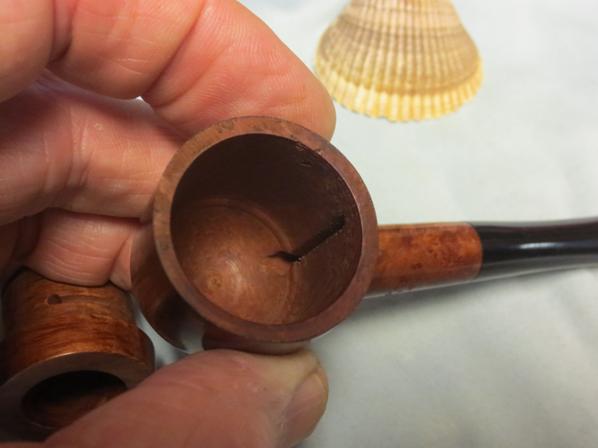
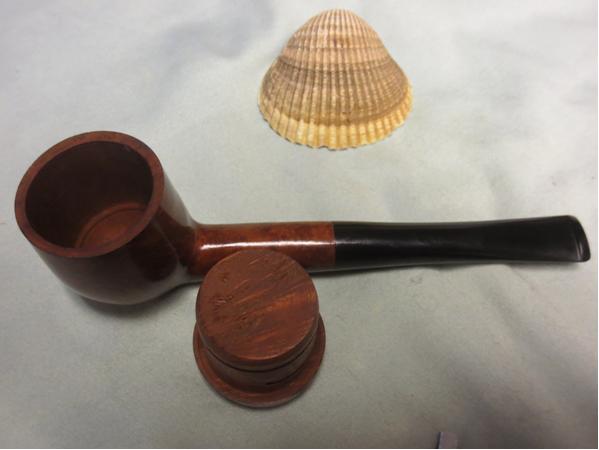
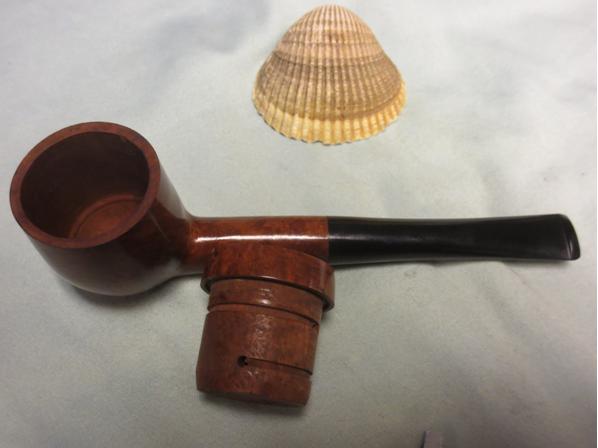
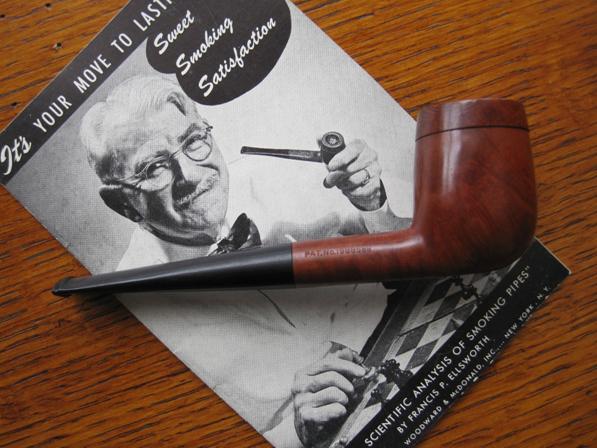
A friend I did a pipe repair for in Newfoundland, on the east coast of Canada, left a message on my phone the other day to let me know that he was sending a package to me. He said that it would have a couple of horn stem pipes – old timers and a unsmoked unique pipe that he thought I would be interested in having. He had purchased 6 of these pipes that were unsmoked and sent me one of them. The package arrived yesterday and the horn stem pipes were great and would clean up nicely. The Roto Bowl is in stellar shape and is a (New Old Stock) NOS pipe. I had never heard of the brand but was intrigued by his description of it over the phone when we talked over a month ago. I took some photos of the pipe when I unpacked it to show you all. It is pretty unique. The overall length of the pipe is 5 1/2 inches. Ellsworth1 Ellsworth2 Ellsworth3 Ellsworth4I rotated the bowl insert from the base and took a photo of the inside of the bowl to show the unique drilling it had. There are two air holes on the bottom on the sides and then two of them half way up the bowl sides.Ellsworth5When I lifted the bowl insert out of the bowl (it was pressure fit and was easily removed) I could see that the airway entered the bottom of the outer bowl perfectly centered. There was a groove carved from the airway up to the height of the upper air holes in the bowl insert.Ellsworth6 Ellsworth7 Ellsworth8There were also marks on what would have been the front and the back of the bowl insert. The first mark was a single small drilled circle and the second one was two drilled circles. When the single mark was turned to the back of the bowl the airflow was constricted by at least half. When the double marks were turned to the back the flow was wide open. It kind of works like a Kirsten end valve is controlling the airflow from the bowl to the stem. It controls burn rate as well. Each turn of the bowl insert modified the airflow proportionally between the single and the double mark. Overall this little pipe was intriguing to say the least. It was yet again another attempt to find a drier and cooler smoke.

Since I had never heard of the brand I did some searching on the web and found a bit of information based on the stamping I found on the pipe. On the left side of the shank it is stamped with the name of the pipe in a circle with ROTO arched on the top of the circle and Bowl arched on the underside. There was a dot in between ROTO and BOWL and one in the centre of the stamp. On the right side of the shank it is stamped PAT. NO. 1988588 and on the underside of the shank Imported Briar. There are no other marks or stamping on the pipe, the bowl insert or the stem.

I found the first information on eBay on a previous sale (http://www.ebay.com/itm/Vintage-Ellsworth-Roto-Bowl-Pipe-NOS-1946-/272119388370?hash=item3f5b9458d2:g:~MoAAOSwKtlWq9Xh). The link will likely be dead shortly so I copied the text and the photos for reference. The seller not only gave some pertinent information on the brand but also photos of the booklet that came with the pipe. Here is what the seller said about the pipe (including the sales pitch).

“Here is your chance to own one of the rarest of the rare in Brand New unsmoked condition with original instruction booklet. This pipe was manufactured in small number in 1946 by Francis P. Ellsworth. It is called a Roto-Bowl and was quite the invention. This pipe sold new in 1946 for $12.50 and in today’s dollar that amounts to $123.00. You can see why not many of these pipes were sold. Check out the pics for the best description. This pipe would enhance even the most advanced collection. I searched the internet and could find out very little about these pipes.”

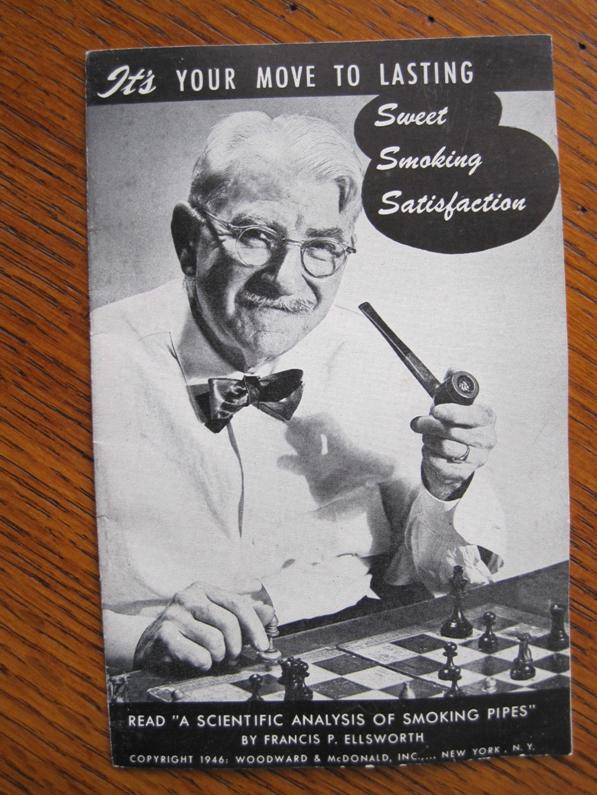
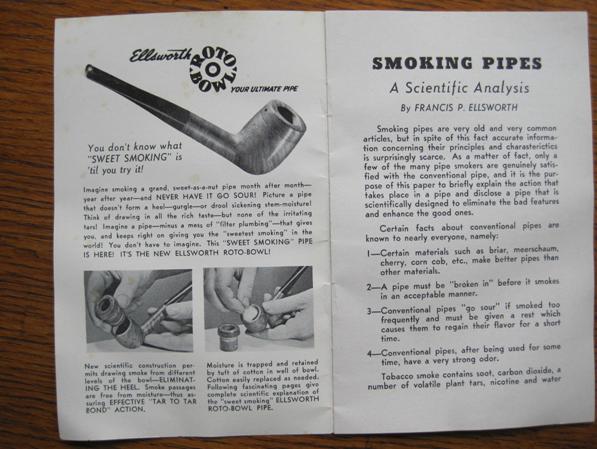
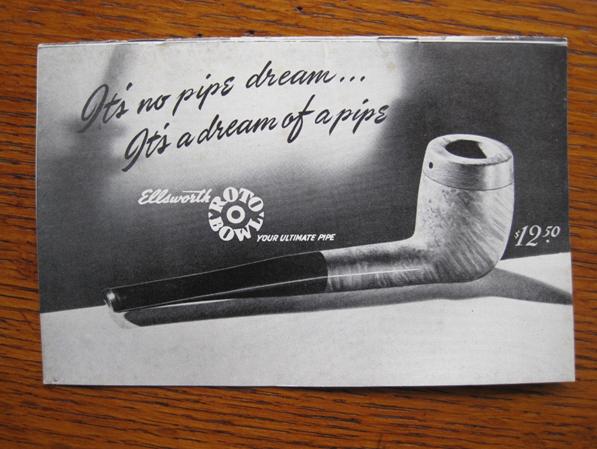
I saved the photos he included with the sale information and have included them below.Ellsworth9 Ellsworth10 Ellsworth11The brochure gave me some more information as well as the name of the pipe’s inventor, Francis P. Ellsworth. The brochure was produced in 1946 by Woodward and McDonald Inc, New York. Some of the descriptive phrases and turn of phrase on the cover were great. The first is “It’s Your Move to Lasting Sweet Smoking Satisfaction” and “Read a Scientific Analysis of Smoking Pipes”. On the back cover it reads “It’s no pipe dream…it’s a dream of a pipe”. Take time to read the inside of the booklet as it is a fun read. The 1940’s description and “Scientific” information is entertaining.Ellsworth12 Ellsworth13I would never have guessed that the bowl was to be smoked with a cotton ball placed in the bottom of the bowl between the bowl and the insert for trapping and retaining moisture from the smoke. I know that there are more pages in the booklet but this is all that were included by the eBay seller. Here is a photo of the back cover of the booklet.Ellsworth14Further digging using the patent number on the right shank led to me the following link on the US Patent Search website: http://pdfpiw.uspto.gov/.piw?docid=01988588&PageNum=1&&IDKey=E06B2A6032A2&HomeUrl=http://patft.uspto.gov/netacgi/nph-Parser?Sect1=PTO1%2526Sect2=HITOFF%2526d=PALL%2526p=1%2526u=%25252Fnetahtml%25252FPTO%25252Fsrchnum.htm%2526r=1%2526f=G%2526l=50%2526s1=1,988,588.PN.%2526OS=PN/1,988,588%2526RS=PN/1,988,588

Included with the patent information is a set of drawings by the inventor and also a narrative description of the pipe and how it was supposed to work. It makes for fascinating reading for those of us who love the descriptions and details of these old timers.Ellsworth15 Ellsworth16 Ellsworth17 Ellsworth18 Ellsworth19This was a rare pipe for me not just because of its uniqueness and age but because it is one of very few that I have received that I did not have to work on or clean up. I want to give a shout out to Joe in Newfoundland for the amazing gift pipe. Thanks so much Joe for thinking of me.

What is he looking at? A Portrait of a Pipeman


Blog by Steve Laug

I love looking at old paintings and framed prints while I am out hunting for pipes. I have found some pretty interesting old pieces that are now in various rooms in our home. My brother came across this painting in an antique shop near where he lives in Idaho. He said it just stood out to him while he walked around the shop. It is certainly a picture that I would have spent time looking at and enjoying. I would also have asked the owner what he was willing to sell it for and my brother did the same. The owner quoted him a price and my brother countered with an offer. The seller accepted the offer and my brother walked out as the new owner of the painting.IMG_20160108_192603
He showed it to me on Facetime and I was struck by what a great photo it was. He took a picture of the painting and sent it to me. He said he cut off a bit of the hat and the smoke from the pipe but the general idea was still clear. The great thing to me was that he said that he was going to send it to me. I can’t wait to see the portrait in person.

When I see old paintings like this I always am drawn to reflect on the subject of the painting and the setting. I think it comes from the remnant of those art history courses I took in university some 40 years ago. I like to look at the style of the painting and the perspective of the artist. From there I try to figure out a bit about the person in the painting.

From the angle of the face I wonder if this is not a self portrait of the painter. The perspective of the way he looks out from the painting leads me to think that he was looking at himself as he painted this piece. To me the character of the old man who comes through those eyes. He has a certain whimsical air about him almost as if he is quietly chuckling around the bit of the pipe. The wrinkles around the eyes and the creases in the forehead should a man who loved to laugh. He obviously enjoyed life. The pipe appears to be clay with a reed stem and mouthpiece. To me it looks like a bit of a homemade pipe – using and old bowl and then inserting a hollow reed to make it usable.

Whoever this anonymous painting is by and whoever it is who sat for the portrait – whether the painter himself or a photo or friend it is a well done piece of pipe art. I am looking forward to seeing he print/painting in person one day. I know that it will find itself in a place or prominence in my study overlooking the desk I use as a worktable for pipe restoration. Somehow I think that is a fitting spot. I will have to watch myself as I am sitting under the watchful eye of this old gentleman. He looks like he knows more than he is saying.

A DadsPipe is Reborn! – Reinventing a Fletcher Billiard


Blog by Charles Lemon

I was just putting the finishing touches on this pipe refurb when Steve Laug invited me to write a guest blog for rebornpipes. Timing couldn’t have been better, as the restoration of this old Fletcher billiard epitomizes for me the spirit of rebornpipes – taking an old, worn pipe and creating from it a beautiful and functional smoking companion.

Thanks for having me drop in on rebornpipes, Steve. I hope you and your readers enjoy this restoration journey.
– Charles
—–
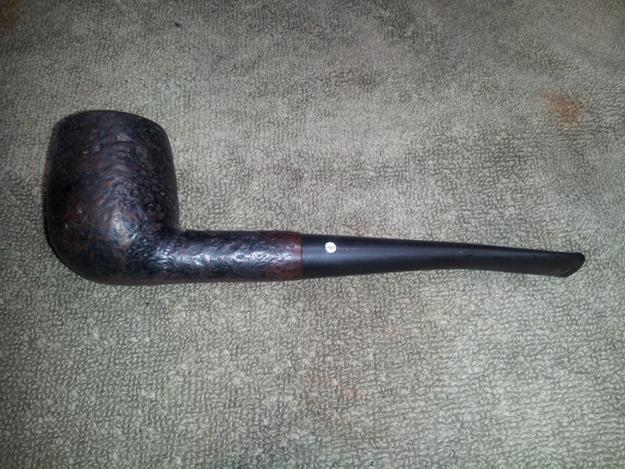
I’ve had this old billiard pipe in my refurb box for a while now, so I decided that it was time to do something with it. It’s stamped “Fletcher, Genuine Briar, 4” on the flat bottom. A search online turned up absolutely nothing about the brand, though I can surmise that it was made somewhere in the USA circa 1950 to 1970 or so.

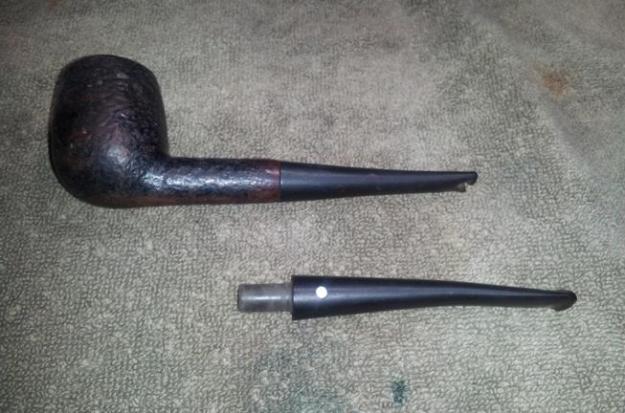
The bowl had a worn sandblast finish, and though covered in dirt, appeared to be in decent shape. There was a bit of cake buildup and tar on the rim that would clean up easily enough, but the stem was another matter. At some point in its history, the button had broken or been bitten off, and the remaining stem had been crudely “MacGuyvered” to allow the piper to continue smoking it. A file had been used to roughly gouge a line across the top and bottom of the broken bit to give at least some purchase in the teeth, and it had been left like that until the piper again bit through the stem, this time removing a chunk from the bottom of the “new bit”. This guy was a real pitbull! Charles1

Charles2

Charles3

Charles4

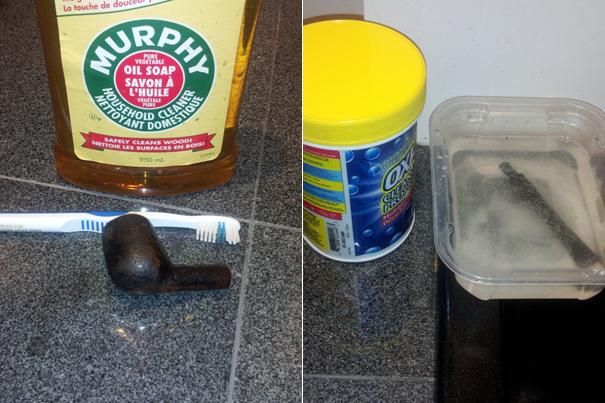
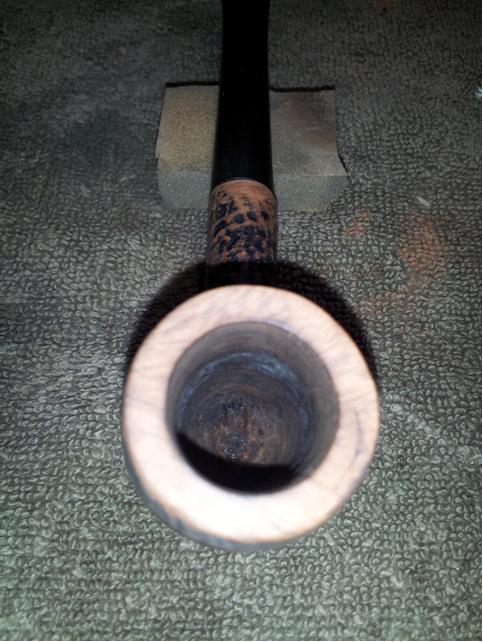
Charles5 I decided that, with about 3/4 of an inch missing, the mangled stem was too far gone to attempt to save it so I dug about in my stem box and came up with a replacement that fit the bill. This stem is brother to the one I used on my first parts pipe. They were both salvaged from estate pipes with ruined bowls, and both have the large silver dot on the side.Charles6 The tenon on the replacement stem needed only a bit of tweaking with sandpaper to fit snugly in the mortise. As you can see in this pic, the shank diameter is a bit larger than that of the stem, so there will be some reshaping to do to get the flow right from bowl to button, but I like the shape of things to come.Charles5a With the stem problem sorted, I got to work cleaning both stem and stummel before I got too far ahead of myself. I used my Castleford reamer to take the cake in the bowl back to bare wood. Luckily there was no damage hiding underneath, so I moved to the exterior, scrubbing the sandblast finish with Murphy’s Oil Soap and an old toothbrush. This lifted an inordinate amount of gunk from the stummel, leaving the briar quite patchy in places. I decided that a complete stripping of the old finish was in order, so I dropped the stummel into an alcohol bath, the stem into a Oxyclean bath, and left them to soak overnight.Charles7

Charles8 The following day I retrieved the stummel from its soak and rubbed it in an old towel. To my surprise, most of the black topcoat came off on the towel! My guess is that our intrepid DIY piper “fixed” his pipe’s worn finish with a liberal application of black shoe polish….. I wiped the stummel down with acetone to remove as much of the loose colour as I could and then finished the basic cleanup of the stummel by scrubbing the airway and shank with alcohol & pipe cleaners.Charles9

Charles10

Charles11

Charles12 The stem cleaned up easily enough after its Oxyclean soak with a run of 600 – 2000 grit wet sandpapers and a few pipe cleaners dipped in alcohol.Charles13 Removing the built-up wax and dirt from the stummel had revealed a flaw in the briar. A “fault line” of sorts wound its way across the lower front face of the bowl. There was no indication that the flaw extended through to the tobacco chamber, but I flowed some CA glue into the line anyway. This may or may not have been necessary, but at least this way I hope that the line won’t expand to a crack the first time I light the pipe.Charles14

Charles15 I also found a small flaw in the rim, which I filled with CA glue and briar dust. I topped the bowl lightly after the fill cured to sand it down flush with the rim and remove a few small rim dents at the same time.Charles16

Charles17

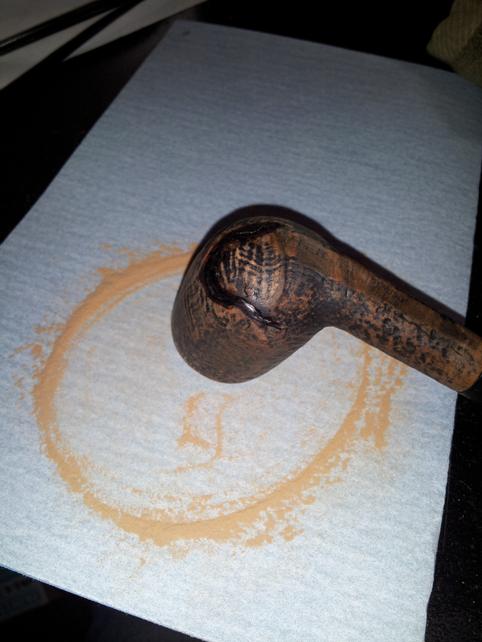
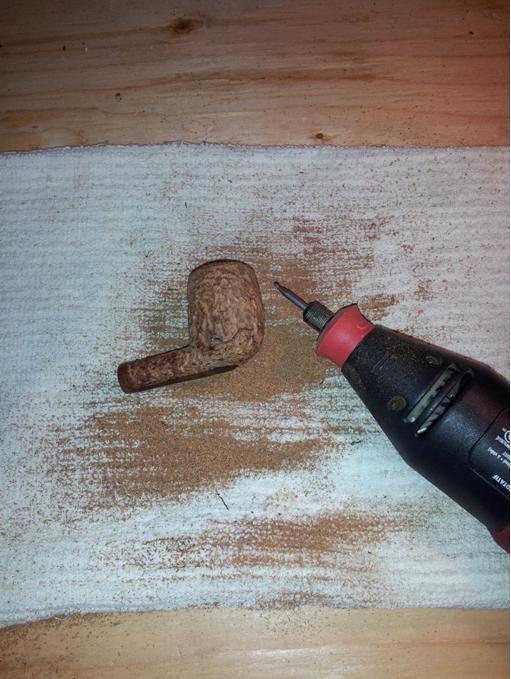
Charles18 As I pondered how to refinish the pipe, I worked on the shank with various grades of sandpaper to reduce the diameter to match that of the stem and generally improve the flow of the shape from shank to stem. This smoothed out the sandblast on the shank, so I decided to rusticate the entire stummel to replace the texture and hopefully disguise the stabilized fault line on the bowl face. For this I used a round carving burr mounted in my rotary tool, working my way around the stummel until the entire surface had been carved, eradicating the sandblast. I then made a second pass with the burr, carving deeper lines and pits into the briar to give a chunkier finish and help blend in a few deeper pits left from the sandblasting process. I finished up the new rusticated finish by going over the entire stummel very lightly with a wood rasp to knock off a few sharp points and rough edges.Charles19

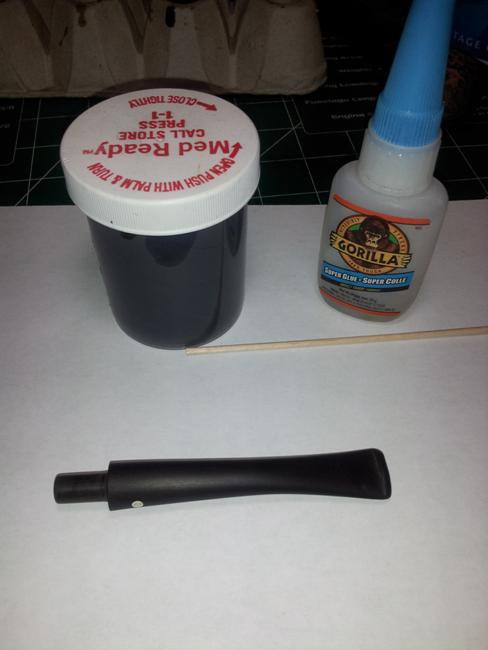
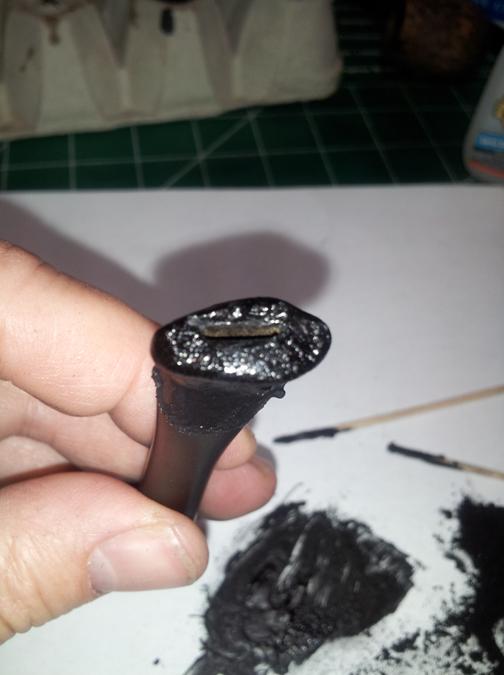
Charles20 I left the stummel at this point and went back to the stem to address a few issues there. The bite area had several deep tooth dents top and bottom and the button was quite worn. I dealt with both issues by mixing up some CA glue and activated charcoal powder and layering this mixture onto the stem, filling the tooth dents and building up enough material to carve a new button.Charles21

Charles22

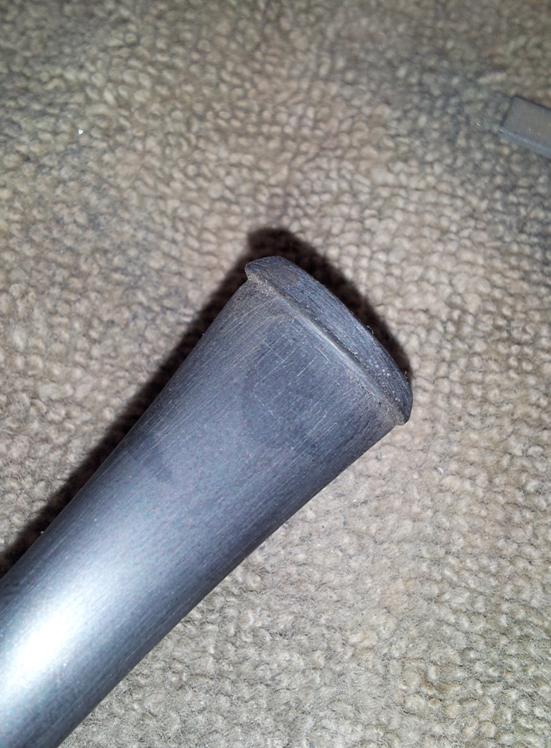
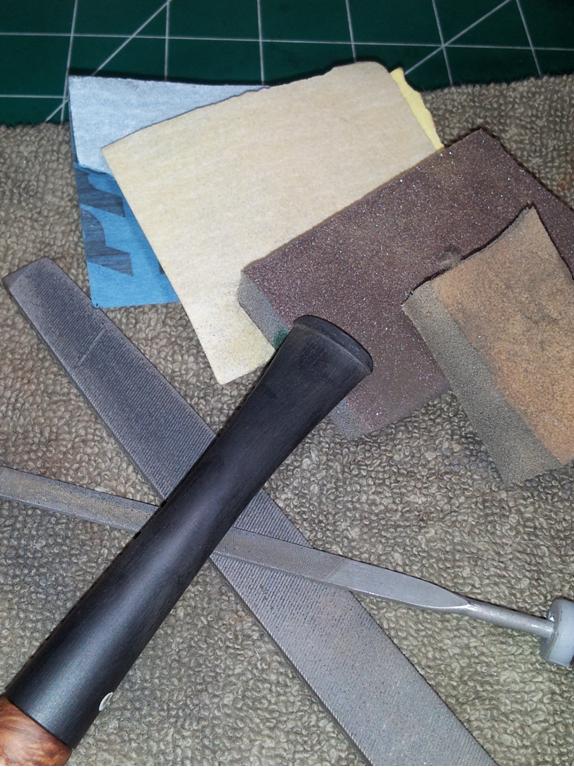
Charles23 This repair always looks plain nasty at this point, but quickly improves once the CA has cured and I can get at the rough lumps of material with a file. I start by cutting the sharp leading edge of the button. This establishes the demarcation point between button and stem. After I have a nice sharp line all the way around the stem, I use files and sandpaper to remove excess material and create an even button height that matches the curvature of the stem.Charles24

Charles25

Charles26 Now in the home stretch of this restoration, I cleaned up the dust generated by the stem repair and set up my workbench for staining the pipe. I applied a two-step finish to the briar, starting with a diluted mixture of Fiebing’s Saddle Tan and Brown leather dyes. This matched the original colour of the smooth area on the bottom of the stummel, which will help tie this area in with the new smooth area on the bowl rim. When the first stain coat was dry, I rubbed off the excess colour with an old towel and applied a topcoat of stain made with Dark Brown and a little Black dye mixed together. I let this dry fully before scrubbing the stain off the high areas with 0000 steel wool. This exposed the lighter tan colour underneath, but left the black in the low areas of the rustication.

I finished the staining by wiping the stummel with mineral oil to add depth to the finish and moisturize the briar. Then it was off to the buffer for a run of White Diamond and several coats of Carnauba wax. This old Fletcher pipe is unrecognizable as the pipe I started with. I rather like the chunky rustication and the new stain. The grain on the rim and flat bottom really pops. A side benefit of old briar like this is the light weight. The pipe tips the scales at a mere 32 grams or 1.1 ounce. This rejuvenated old soul will be a comfortable all-day companion to its next piper. Here’s the finished pipe:
Charles27

Charles28

Charles29

Charles30

Charles31

Charles32

The Love of “Old Briar”


Dutch Holland

I wrote and asked Dutch for an introductory Bio to give us a feel for who he is as a pipe smoker and also as a refurbisher. I posted an earlier piece he sent me on a stem repair on a Dunhill Rhodesian and thought it would be great to know more about him. He wrote back with this marvelous piece that shows that he not only does a great job in pipe refurbishing but writes well also. I have posted it on the contributors page but also wanted to put it here as it summarizes pretty much my life as a pipe man as well. Thanks Dutch and welcome to rebornpipes. – Steve@rebornpipes

I’ve smoked pipes since I was a teen, more years ago now than I care to admit to. For most of that time my collection consisted of a set of six Peretti house brand pipes and a basket Lovat, full of fills, I just loved. I had the good fortune to know Mr. Peretti and his brand of pipes were not fancy but they were always great smokers and after all, I had a pipe for each day of the week and thought myself to be “living large”. As the father of five the budget didn’t always have a surplus of disposable income and what there was of it wasn’t seen by the bride as resources to be squandered on fancy pipes. I can’t complain, she always made the money go a lot further than I ever could have. About ten years ago we became empty nesters but old ways die-hard and even now that I could, spending big money on pipes was something I couldn’t entertain. I did want to finally be able to expand my collection but just couldn’t justify spending a lot of money to accomplish it. That’s when I stumbled onto Ebay. Right in front of my eyes was the most wonderful selection of old classic shapes in need of some TLC. That would allow me to expand the collection at a modest cost if I could develop the skills to restore them. The quest was on.

My father did wood working and at an early age I was introduced to those skills but pipe restoration has its own special requirements so I set about mastering them. The internet is a wonderful thing; on it you can find like-minded people who are willing to exchange ideas and techniques. A few practice pipes and the right tools of the trade and I was hooked. Now time on Ebay can be something akin to being a kid in a candy store, I’ll have one of everything. My collection needed a focus and just about then I encountered the GBD 9438 Bent Rhodesian. It was love at first sight. I carefully restored that old Sauvage and when I finally put a match to the bowl I understood why I wanted to restore pipes. Rhodies and Dogs became my passion and with each restoration the skill set improves and the satisfaction increases. Now retired, my days are never without a project. When I have caught up with the seemingly endless “Honey Do” list, I retire to the bench, pick an interesting prospect and idle away a few hours or sometimes days bring it back to life. There are always a few pipes in the “Awaiting Action” box just so I never run out. I do on occasion treat myself to a new pipe. There are so many great artists making them today and every once in a while a pipe will just speak to me but something special happens when you light up a pipe that most thought had seen better days but you saw through the dirt and abuse and took the time and effort to return its beauty. It becomes a passion. All it requires is commitment, a few inexpensive special tools and the relentless desire to continuously improve your technique. A truly modest investment for such big rewards.

The collection now blossoms with Rhodies and Dogs of all types and makers. Most pipes others had passed on because they bore the scars of misuse. I acquired them at a cost far below their true value and with modest effort returned them to what they had once been. On occasion, when another package arrives on the doorstep, the wife will ask “do you really need another pipe”? No, I answer, but I do need the challenge. She smiles; glad I think that my passion isn’t golf.

Pipe Tripping


Guest Trip by Robert M. Boughton
Member, International Society of Codgers
Member, North American Society of Pipe Collectors
http://www.naspc.org
http://roadrunnerpipes.biz (Coming Soon!)
http://about.me/boughtonrobert

‘Curiouser and curiouser!’ cried Alice (she was so much surprised, that for the moment she quite forgot how to speak good English); ‘now I’m opening out like the largest telescope that ever was! Good-bye, feet!’ (for when she looked down at her feet, they seemed to be almost out of sight, they were getting so far off). ‘Oh, my poor little feet, I wonder who will put on your shoes and stockings, for you now, dears? I’m sure I shan’t be able! I shall be a great deal too far off to trouble myself about you: you must manage the best way you can; –but I must be kind to them,’ thought Alice, ‘or perhaps they won’t walk the way I want to go! Let me see: I’ll give them a new pair of boots every Christmas.’ — From “Alice’s Adventures in Wonderland,” Ch. 2 (1865), by Charles Lutwidge Dodgson under the pseudonym Lewis Carroll [1832-1898], English mathematician, noted photographer, essayist, poet and novelist

FOREWORD
Pipe1The origination of tobacco in the Americas and Australia is not as common knowledge as, say, that Columbus didn’t actually discover America, but then, there are stranger facts associated with the leafy plant’s history. Certain forms of tobacco were – and likely still are – used in the spiritual practices of various native populations to produce reactions that, by newer and more close-minded cultures, are called hallucinogenic. While there is no evidence to support the idea, and I am not suggesting a serious connection, Lewis Carroll (as the brilliant author will always be remembered) could have been under the influence of tobacco hallucinogens when he wrote the above masterpiece and its sequel.

To be fair and clear, however, Carroll’s unique composition style was the result of the Universal Impetus Theory (UIT) for all great literary innovators: having a gift as an ingenious raconteur able to choose and order his words in a precise, inimitable form, and the good fortune of living in the right time. Carroll also had an unparalleled knack for the creation and blending of words. Of course, the fact that he was a good friend of the British lexicologist Henry George Liddell, after whose daughter the timeless Carroll classic was named – and at whose insistence he committed his oral tales to paper, leading to its publication – no doubt played a part in the use of combined and nonce-words (those created for the moment, or nonsensical) and complex sentence structure by the mathematician turned writer. Coining the word galumph, for example, which means “to bound or move clumsily or noisily” (OED), Carroll blended gallop and triumphant. His works still thrill children and adults alike.

Pipe2Consider this. Without Carroll, we would not have fantastic, imaginative and endearing verbs, adjectives and nouns such as galumph as well as chortle, frabjous, mimsy, vorpal, snark and, last but not least, jabberwocky. The colloquial term snarky, for irritable or short-tempered, was adapted by Edith Nesbit, in her 1906 novel “Railway Children,” from the name of a variety of disconcerting creatures introduced to the world in Carroll’s poem, “The Hunting of the Snark.” As a hopeful point of interest, my spellchecker recognized chortle, galumph and jabberwocky, so accepted in the English lexicon they have grown. And as I added the rest to my Word dictionary, should I ever have occasion to use them again, they will appear without the annoying red, squiggly underlines. What’s more, thanks to the periodic transmission of these additions to Microsoft, where they will undergo due consideration by vorpal, slithy folk whose job it is to determine their worthiness, perhaps someday the perspiration-coated toilers over such heady decisions will make it possible for Carroll’s now-real words never to trouble other users of the magical expressions.

Now, lately I’ve been thinking about pipes and tobacco in a different frame of mind. Those who know me best seem to agree that my arguably Byzantine cognitive processes can be scary or even stupefying, if not downright dangerous, depending on the attention level of the person listening to or reading my discourses. Nevertheless, these commentaries often made off-the-cuff and on diverse topics, when joining a conversation, tend to come together with certain cogency, the suddenness of which is a bit like the epiphanic ending of a Faulkner novel.

At any rate, my musings of late, at least in my own mind, have produced some unusual notions, some of which have even made me laugh out loud. That’s LOL, for those young enough to have been raised in the Cyber Age and have forgotten what the three letters even abbreviate. These ponderings, reflections or reveries, or whatever else anyone might choose to label them, up to and including absurdities and/or deliriums, grew curiouser and curiouser the further I allowed them to metastasize within my psyche, and have now reached the point where I am compelled to share them, for better or worse.

RANDOM PIPE TRIPS TO CONSIDER
In the beginning, as far as pipe tobacco goes, there was a peculiar plant of the genus Nicotiana, from the nightshade family, called N. tabacum. The simple fact that our revered tobacco derives from Deadly Nightshade – or belladonna , the black berries of which are frightful in their toxicity – should be enough to give pause to all of us who, with regularity, take such special pains to pack our pipes just so with the stuff, so that it might burn all the longer and thoroughly. But of course this knowledge, even if acquired by some readers who just now digested the previous sentence, will have no such effect.

PIPE TRIP #1
Let’s start this silly exercise with an image, stemming from the relationship, however distant, of tobacco to Deadly Nightshade, and which appeals to my admittedly perverse, at times, sense of humor. Conceive, if you can, how many hapless, hungry and heedless berry-pickers perished from eating the wild belladonna back in the day when people didn’t know better than to pluck such frabjous-looking things without care and pop them into their mouths; or, if the victim of eating the fruit of the somewhat drab green and weed-like flora were spared death and merely rendered howling mad, attempt to visualize the resulting hallucinations that are so vivid the sufferer has no grasp of reality whatsoever. Whichever outcome presents, it is just because of the berries appearing so plump and pretty and sweet, and impulsive human nature.

Then the kicker: one day, someone came along and experienced the brainstorm to toss the berries aside and turn the unattractive green leafs into something that could much more safely be ingested by somehow cultivating, processing and at last chopping up into suitable pieces for placing in a crude bowl with a similar stem (perhaps in the botanical sense) for the purpose of igniting and inhaling them.Pipe3The worst part of this opening cogitation is the rare but continuing incidences of accidental poisoning from these lovely though heartless elements of nature. Take, for example, the case of a very large American (naturally). He measures 6’ 3” in height and 220 pounds in width. Wandering through the wilds of Germany late this very year, he spies the shiny, luscious appearing fruit on a plant he mistakes for elder berries. He gobbles 20-30 of them despite their semi-sweetness with bitterness from the seeds, and not feeling quite himself, promptly decides to take a nap right there in the woods. His sleep is frequently interrupted by a nagging need to urinate, which is difficult because nothing seems to want to come out except small, forced amounts of clear liquid with a strange blue tint which the tourist has just enough sense left to be unsure if it might not be a hallucination.

After giving up the nap idea, his mouth becomes dry and his throat sore. Then his vision goes blurry, and he decides it’s time to see his doctor, who happens to notice the patient’s pupils are dilated to the max and unresponsive to any safe and sane stimuli. The physician thinks it best for the man to be taken to the hospital. During the ensuing drive, the hallucinations commence. A single hedgehog appears as thousands, and deer are kangaroos. The poor fellow arrives at the hospital a mere four to five hours after scarfing down so many of the marvelous berries, and all the hospital staff can do is observe him – intensely – for several days that seem like an eternity to the man.

The situation rapidly escalates to seeming insanity filled with hideous, terrifying visions and other misperceptions of reality, like a singularly bad LSD trip, prompting a transfer to the psych unit. This is just the beginning of the trip down the rabbit hole, but at last he does begin to get better. As soon as he is able to comprehend the words, he is told how lucky he is to be so large, as anyone smaller would surely have died. Recovering even now, the man still is not his old self again.

You see, this is a true story, and not in the sense of the often misleading tags at the beginnings of movies. Heaven knows I didn’t make it up! I strongly suggest reading the full account at http://www.thepoisongarden.co.uk/blog2/blog281115.htm for a jolly good first-hand account of the ordeal.

PIPE TRIP #2
The interior of the bowl of a pipe, where we cram or methodically place the tobacco, is called the chamber, yet one never seems to hear a pipe smoker refer to settling down in his easy chair to enjoy a good chamber of whatever blend has been chosen for the occasion to contemplate life. Could this habit derive from the alternate definition of chamber as a room, as in a chamber of horrors? Or might it be a subconscious aversion to a comparison of the pipe’s chamber to the part of a gun that renders the weapon armed or not? I mean, think of it! What merry piper would want to sit in a dreadful chamber or put a chambered gun in his mouth? Just food for thought, nothing more.

PIPE TRIP #3
The bit is almost universally referred to as the stem. What in the name of all that’s holy is the problem with calling the thing by its proper name? Honestly, I want to know when and where this convention began, and who started the confusion! Yes, I want nothing less than the time, location and name of the guilty party.

Heaven help us if this ruddy awful vacillation stems (pun intended) from some sorry fellow’s fear of comparing the bit of his pipe to the past tense form of bite, all for the day when he was a wee little tyke and a dog bit him, which seminal event has bitten (past participle) his worldview forever.

Then again, maybe the dither is about Man’s eternal fear of karmic payback, in this case for the long, shameful practice of abusing others of God’s finer creations, such as horses, in place of his own back-breaking labor, by placing metal bits in the sad creatures’ mouths and then whipping them onward to finish tilling the fields we humans might just have had to work a bit harder to accomplish ourselves.

I ask, what’s the point of the evasion in the first place? After all, our worldwide band of brothers and sisters, in pursuit of the pleasures and comforts of a nice, relaxing smoke, seem to have no qualms referring to the often sharp but excellent bite of a bit of a strong mixture of a VaPer or other coarser, non-aromatic blend that can become an acquired taste and lead, at worst, to a case of Tobacco Acquisition Disorder (T.A.D.).

PIPE TRIP #4
While that last note is fresh in the mind, I’ll leap at the opportunity to address the use of the word disorder in T.A.D. and its mates, Pipe Acquisition Disorder (P.A.D.) and Accessory Acquisition Disorder (AAD). Who on Earth dreamed up these ostensible maladies? Surely nobody accredited within the medical community! My guess is some lone pipe smoker with Obsessive-Compulsive Disorder (OCD), a genuine and serious and hardly uncommon psychological irregularity that can easily lead to an overspending problem, started the whole thing, and others jumped on the old bandwagon and added the others. I can just see all of them waking up with cold sweats in the middle of the night who-knows-when with the realization that, once again, they’d gone and spent their entire grocery budgets along with half the rent on one of the three categories of pipe expenditures described above.

What’s more, I’ll bet each and every one of them reached for his ever-handy Merck Manual to self-diagnose himself so he could tell his local candy doctor just what pill he needed to overcome the dread “disorder.” My gosh, the measures people will take to get a new drug! Why, it’s scary even to contemplate. I thank the stars I’m not that bad off, you know I do! I mean, sure, I’ve been late with the rent or cable bundle bill, or paying for my cell phone – maybe, on rare occasions, all three – but I swear I do not have any kind of disorder! Well, other than Attention Deficit Disorder (A.D.D.) and Post-Traumatic Stress Disorder (PTSD), not to mention chronic migraines and – oh, yes – agoraphobia. But those trifles are all under strict control, and you may take my word on that to the bank!

PIPE TRIP #5
Last but not least is the odd practice of the average piper, who will speak in calm, even tones of smoking his pipes – with utter disregard for all of the expression’s negative connotations. After all, where there is smoke, there is fire. Picture yourself in any of Dante Allighieri’s infernal nine circles of Hell on Earth leading, with fervent thirst, for ultimate eternal salvation. Do we really want to go there? Let’s not. Dante already did the great favor of doing so for us! Just say no, as Nancy Reagan did to drugs. Instead, join me in the somewhat troublesome practice, I admit, of enjoying a pipe. I picked up this routine after reading an excellent essay last year concerning positive methods of writing and speaking of the multi-faceted pleasures associated with tobacco pipes, by a member of the North American Society of Pipe Collectors in its magazine (they insist on calling it a newsletter ), “The Pipe Collector.”

Seriously, if I can do it, you can, even if in our hearts we are thinking of Lady Mary Wroth’s 1621 controversial and groundbreaking literary work, “The Countess of Montgomery’s Urania,” and one line from it: “Those loose and wicked enjoyings which we coveted.”

AFTERWORD
This little exercise in writing is at best an essay, and at worst a work of fiction, lest anyone who failed to grasp my attempts at satire walk away from the experience with the notion that I might in any way have been serious.

I welcome, more than usual, any responses with contributions of other examples of pipe trips (or, for that matter, alternative critical thoughts), with the hope of someday compiling an Encyclopedia of Pipe Trips.

A Blast From the Past – 2 Unopened Boxes of Kentucky Club White Burley Tobacco


Blog by Steve Laug

I am always on the lookout for aged tobacco, whether it is in tins, boxes or foil pouches. I love the look of the old packaging and trying the old tobacco. On a recent trip to Idaho Falls I came across this pair of packets of Kentucky Club in one of the antique malls I visited. From a bit of research I found that the Original Kentucky Club pipe mixture was a mild blend of high grades of White Burley from Tennessee and Bright Virginias from Carolina and Georgia districts. The next two photos are advertisements for Kentucky Club that give a bit of feel for the age of the brand. I don’t what the age of the tobacco I found is but the fellow who sold it to me with two pipes thought it was from the 50s. So it has a bit of age on it.KC

KC4 The two boxes were wrapped together in a torn brittle plastic package. When the shopkeeper gave them to me the plastic fell off. The two cardboard boxes are printed in basically three colours so it is not a modern printing process. The packaging makes me think the seller was correct in his thinking it came from the 50s. I picked up the two unopened boxes for about $8.KC5 The boxes are printed Kentucky Club White Burley Smoking Tobacco with a picture of a jumping horse. At the bottom of the box cover it says Guaranteed Fresh Net Wt. 1 ½ oz. with a picture of a blue pouch with the Kentucky Club logo. This is on both the front and the back of the box. On one of the long edges it reads Kentucky Club over TP-16, W. VA. Kentucky Club, Wheeling, W. Va. Union Made. Under that it reads Made in USA. There is a perforated PUSH IN tab on the top edge. On the other long edge it reads Kentucky Club over White Burley Smoking Tobacco. This side also has the PUSH IN tab at the top. On the top and bottom of the box it read Kentucky Club.KC6 I opened one of the boxes to look at the contents. Inside was a foil pouch of tobacco. The pouch is checker board black and blue. On one side is a silver medallion that has the words Never Tires Your Taste over Kentucky Club. On the other side it has a jockey and horse jumping inside a silver circle like the logo of the tobacco. The tightly sealed foil pouch let none of the aroma of the tobacco escape. That in itself was a good sign. The contents were a little dry as the tobacco was crunchy. Around the outside of the pouch was wrapped a coupon for a Millard Pipe.KC7

KC8 The one side of the insert read: “Looking for the ideal pipe? The Millard is often regarded as the answer. Its complete action trap keeps the pipe dry in any position and prevents mouth flow back. See it in our new premium catalog. It will delight and intrigue your, we feel sure.”

On the other side it reads: “Valuable Dividend Coupon. It entitles you to buy our quality imported briar pipes and other premiums at very worthwhile savings. Send for our free catalog which pictures and fully describes our premiums. Read about our everyday service pipes up through the deluxe collector grades. A shape chart is included to help you select the pipe style you want. We have a real guarantee – it makes you the judge – if you are not satisfied, you merely say so and we refund your money, in exchange for the article returned unused. Send a card or letter for the free catalogue to: Premium Dept. Kentucky Club, 4000 Water St., Wheeling, W. Va.”

The combination of the design of the pouch, the packaging and the insert make me even more certain that the seller was correct in his general assessment of the age of this tobacco.KC9 I did a bit of digging to find out about The Millard Pipe – which seemed to have been a type of system pipe. I was able to find a Millard pipe through Google photos and it turns out that it was a pipe with a design very similar to a Keyser Hygienic Patent Pipe. The inner tube in the shank and a similar tube in the stem with a military mount stem. Now I am going to have to hunt down one of these Millard Pipes.KC10

KC11

KC12