Category Archives: Pipe Related Essays

Short and not so short essays on pipes and tobacciana

Toward A Theology of Pipesmoking


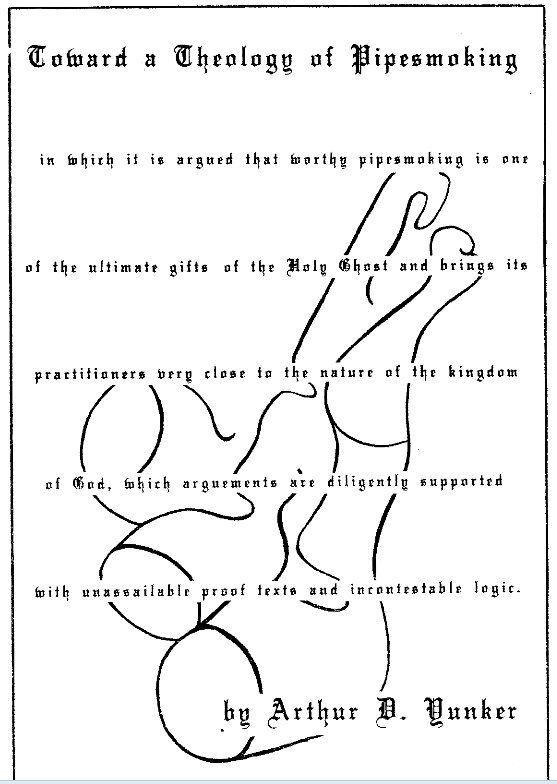
Theology of pipesmoking cover

Many years ago now, I came across this great 2 part Toward a Theology of Pipesmoking, written by Concordia student Arthur Yunker in 1970. I read it and laughed and laughed. It is a well written 73 page document, including 5 appendices. Its hilarious and whimsical. I was rereading some of the documents I have on my hard drive and came across this again. I read it again and it still brought a laugh to me and yet also a time to reflect. Have a look and see what you think. Remember to read it without taking yourself to seriously. Toward a Theology of Pipesmoking is quite interesting and entertaining.  Read it when you have some time on your hands and can settle into your favorite chair with a pipe.

Click on the hyperlinks that follow and you can then read online or download the two parts.

Theology of Pipesmoking part 1 of 2

Theology of Pipesmoking part 2 of 2

I raise my pipe to you Arthur D. Yunker for your great whimsical work and say thank you for the hearty laugh and sense of pleasure that you provide for me every time I read your work.

Here is an abstract of the work to give you an idea of the content:

Toward a Theology of Pipesmoking

In which it is argued that worthy pipesmoking is one of the ultimate gifts of the Holy Ghost and brings its practitioners very close to the nature of the Kingdom of God, which arguments are diligently supported by unassailable proof texts and incontestable logic.

Pipe Composition and Toward a Definition of Pipe Parts


Blog by Steve Laug

I cannot tell you the number of times I have seen descriptions of pipes on EBay or at antique shops or flea markets and just started laughing. People come up with all kinds of creative descriptions that keep you guessing what the pipe is made of unless you have some basic guidelines to navigate.

The types of pipe bowl material:

  1. Briar – this is the close grained burl joint between the trunk and the roots of the White Heath, a tree found on the hillsides of mainly Mediterranean countries. Underground, this burl is the briar wood – a tough, close grained, porous and heat resistant – wood that is used for making smoking pipes.
  2. Alternative woods – Breezewood, Manzanita, Laurel wood, etc. are some woods that pipes were made of during the WWII years when briar was hard to come by. These woods are lighter and have a different grain pattern than the briar.
  3. Hardwoods – pear, walnut, maple, olive and others have been used as alternatives for briar as well and each delivers a different kind of smoke. The grain patterns are singular to those woods.
  4. Brylon – Medico and other US manufacturers made this product for pipes out of briar dust and resin. It is indestructible but is very hot to hold in the hands.
  5. Other manmade materials – Hilson used some kind of resin (polymer) to craft a bowl and others have used graphite, or asbestos to form pipes. In my opinion these are less than optimal smoking materials.
  6. Meerschaum – a German word meaning “sea foam” referring to the belief that it was compressed whitecaps of waves. Meerschaum is a mineral-hydrous silicate of magnesium (one of the most porous substances found in nature). It is thought to be composed of fossilize shells of tiny creatures that fell to the ocean floor millions of years ago. Meerschaum is found in red clay deposits. The deposits of the highest quality are found in central Turkey. Pipes carved out of this material can either be carved out of a single block or out of a compressed material made out of chips of meer and a binding agent. The block meers are by far the best.
  7. African Block Meerschaum – This substance comes from Tanzania, Africa and is usualy stained in varying shade of brown, black and yellow. I have had pipes made of this from Manx, Peterson, Laxley, Nording and Barling. It is a heavier material than the Turkish Meerschaum mentioned above.
  8. Missouri Meerschaum – Formed from a length of hollowed out corn cob. It is usually made from a special hybrid variety of corn and has a straight wooden shank with a plastic stem. It is commonly known as the corncob pipe.
  9. Calabash – early versions of this pipe were made out of a South African gourd similar to a squash grown specifically for use in pipes. The shape is determined as the gourd grows by placing small blocks under the stem and forcing it into a gentle curve. The mature gourd is cut and dried, then fitted with a cork gasket to receive a meerschaum bowl. Other materials used for the bowls include clay, asbestos, and even plaster. Modern pipe makers are crafting calabash bowls from a variety of woods – I have seen Mahogany bowls that looked amazing.
  10. Ceramic – I have several of these double walled ceramic pipes that are amazing smoking instruments. The double wall design keeps the exterior wall from overheating and enables the smoker to hold the bowl while smoking. Different Dutch companies such as Zenith and GoedeWaagen have made these pipes. In the USLepeltier makes them. Their website is:http://www.lepeltier-pipes.com/There are also antique porcelain pipes that have some beautiful paintings in the glaze of the bowl.
  11. Clay pipes – clay or pottery pipes were popular on the continent before briar became readily available on the market. The finest were said to be made in Devon England. There are new clay pipe makers that are doing amazing work. The following website has some beautiful examples of the clay pipe makers craft available for purchase at reasonable prices. http://www.dawnmist.org/pipdex.htm

The type of stem materials:

  1. Bakelite – Trade name for a synthetic resin widely used for lacquers and varnishes and as a plastic. A common material used for the stem, especially of mass produced pipes of last century. It was an alternative to vulcanite. Artisan pipemakers are using it today for handmade pipes.
  2. Amber – brittle, feels like glass to the teeth. It can be a rich yellow, golden or even reddish orange colour. It was used as stem material on older briar and meerschaum pipes.
  3. Vulcanite – A dark-colored variety of India rubber that has been subjected to vulcanization. It has also been called “hard rubber.” A common material used for the stems as it is durable and inexpensive. It comes in a variety of grades and from various makers.
  4. Lucite/Acrylic – Trade name for a plastic. A common material used for the stems. It comes in a variety of colours and shades. It is a good replacement for older amber stems as it can be matched closely to the original colours. It is harder than rubber and feels quite different from Vulcanite.
  5. Plastic – Corncob pipes often have a cast plastic stem that is cheap and I find that the edges are sharp. I replace these stems on my cobs with a stem that I transfer from cob to cob when they are worn out.
  6. Horn – Animal horn shaped and polished for stem material on older pipes. Has a softer feel in the mouth than any of the other materials.
  7. Bone – Animal born shaped and polished for stem material on some older briar pipes and meerschaum pipes.
  8. Briar – wooden stems that can be either integrated into the bowl and make the pipe a single unit or can be a separate stem that has a wooden, bone, metal or Delrin tenon that attaches it to the pipe bowl.

The Parts of a Pipe:

Throughout the articles available on this blog the writers (including me) use a variety of terms when describing the parts of the pipes they are refurbishing. I thought it would be helpful to define terms so that we have a base from which to use our various descriptors of the part we are working on at the moment. I have grouped them below in terms of bowl and stem. I have also included a few pictures/diagrams that I have gotten off the internet to clarify terminology with pictures. I also have included a section on the materials that are used to make stems.

Bowl parts:

  1. Stummel – the pipe minus the stem. This includes all parts of the pipe sans stem regardless of what material it is made of – briar, meerschaum, clay, corn cob.
  2. Bowl/Chamber – the part of the pipe that holds the tobacco. Many use this term to describe the same thing that is meant by the word stummel.
  3. Heel – the bottom of the inside of the pipe bowl. It is the area where the airway enters the bowl of the pipe. It has also been used to describe bottom outer edge of the pipe as it curves toward the bottom of the bowl.
  4. Foot – the bottom of the pipe. This can be rounded or flattened to facilitate the bowl sitting flat on a table or desk top.
  5. Rim – the top edge of the bowl. It can be flat or beveled (chamfered) in toward or out from the bowl. It can also be crowned or a thin edge from the inside of the bowl to the outer edge.
  6. Draught (draft hole) – the opening in the bottom of the bowl that enters the shank of the pipe and opens into the airway. Typically these are on the back bottom edge of the bowl and centered at that point.
  7. Airway – the drilled portion of the shank that extends from the bowl to the stem.
  8. Sump/Well – in Peterson System pipes and others such as Wellington pipes this is the area below the entrance of the airway at the bottom of the shank. It extends as a well to collect moisture from the smoke before it moves in to the stem. In estates this area is often very dirty and takes particular work to clean.
  9. Mortise – the portion of the airway that holds the inserted tenon. It is drilled larger than the standard airway as it is the size of the outer diameter of the tenon.
  10. Shank – the part of the pipe that joins the bowl and stem.
  11. Countersink – this is the area where the stem and shank join. It is often countersunk to accommodate the flare on the tenon where it joins the stem. It is this feature which allows the stem to seat well against the shank
  12. Bands/Ferrules – are made of a variety of metals, some are decorative and some are functional as repairs for a cracked or damaged shank. They can be applied to the shank or actually in many new pipes, to the stem.
  13. Shank extensions – exotic woods, vulcanite, or other materials that extend the length of the shank and give a decorative flair to the pipe. They can be added as decoration or later as a repair on a broken shank that needs to be extended. Lately I have seen these also added to the stem.

pipebowl

Stem parts:

  1. Stinger/condenser – is either an insert into the airway of the tenon or is an integral part of the tenon and glued into the stem material. If it is an integral part it is often threaded and screws into a tapped insert in the mortise.
  2. Tenon – the portion of the stem that is cut to fit within the mortise of the shank. It is smaller in diameter than the rest of the stem. It can be an integral part of the stem material or it can be an insert made of Delrin, bone, metal, wood. The metal, bone, wood tenons that I have seen are threaded on both ends. One end screwing into the shank and one end screwing into the stem.
  3. Countersink – the end of the tenon can be countersunk to facilitate airflow into the stem. It can be visualized like this ) – kind of concave end which accommodates the opening in the airway at the end of the mortise. I have found that this kind of countersink drilling can be used to repair a misaligned airway where the airway in the pipe shank is either higher or lower than the airway in the tenon.
  4. Shoulder – the portion of the stem that fits against the end of the shank. A well-made stem has the shoulders sitting tightly against the end of the shank with no rounding. It should be a smooth transition between the stem and shank.
  5. Saddle – on some stems the first part of the stem after the shoulder extends to a slope on the top and the bottom of the stem. From that point it is flat and proceeds to the end of the stem.
  6. Blade – the flattened portion of the stem after the saddle. This may well be a term that I have used to describe that part of the stem and is not universally used. To me it is a good description of the part of the stem that flattens out after the saddle.
  7. Taper – a sloped stem tapering from the shank connection to the end of the stem. The slope varies in degree and decline from the shank to the end.
  8. Button (tip/bit/lip/mouthpiece) – the portion of the stem that fits in the mouth. It generally has a sharp edge on the inner edge and then slopes neatly back to the end of the stem. It is the portion of the stem that sits in the teeth. The sharp edge provides a ridge for holding it in the mouth.
  9. Slot – end of the button where the airway exits the stem. It is usually a straight line but can be shaped into an oval. It is usually flared inward into the shape of a Y into the airway of the stem.
  10. Orific opening – on older pipes the slot is not present and an O shaped opening is the end of the airway at the button. Generally the button is shaped differently than on the slotted button. It is more crowned or rounded to the opening of the O.
  11. Airway – describes the internals of the stem. Depending on how the airway is drilled it is either tapered or a straight line moving from the tenon into a flattened portion of the airway at the button end of the stem. Sometimes it is stepped down or threaded if a stinger apparatus has been in place in the past.

pipe_parts

If others who are reading this have other terminology for the parts of the pipe or other materials that have been used for tobacco pipes please feel free to add them to this article through commenting on it. Input is sought and appreciated so please post your additions.

My Methodology for a Pipe Hunt


The many comments about how lucky I am to find old estate pipes in the variety of places that I do has led me to write this piece. I am convinced that by and large, it is not a matter of luck but rather a matter of a well-defined strategy of the hunt. Over the years I have developed a pattern in my pipe hunt that I rarely vary when I am out looking for pipes. That pattern has served me well and I have come home with some nice pipes that need varying degrees of work. Whether the shop I enter is an antique shop, antique mall, flea market, garage sale, thrift shop, rummage shop the pattern remains the same.

For me the hunt begins before I walk in the door. I am not looking for yuppified businesses that have a strident non-smoking policy and seem to carry that over to the items sold in their shops. I am looking for a slightly chaotic shop or mall, where there are lots of places that pipes and such can disappear into the raft of stuff for sale. I also eye the sales people to see if they are smokers (often standing outside here in Vancouver having a smoke). If so that is a good sign. I also find that one of the telltale signs of this kind of shop is overcrowded windows and stuff for sale on the sidewalk. When I see all those things I almost always find a pipe or two in the shop. I may not buy any as I am getting picky these days but I will find pipes there.

When I get in the door I am on the alert for all the spots that I have found pipes in shops like this – in boxes, cans, tobacco tins, cigar boxes, jars, pitchers, behind humidors, inside humidors. You get the picture. They are not always obvious to a cursory look so as I do a quick walk through the shop noting where the pipes may be I look literally in and behind many items. I look through locked cases, on the bottom shelves of display cases, behind crammed shelving in cabinets. Many times even these items are relegated to either the top shelf or the bottom shelf throughout the store. At this point in the hunt I usually do not pick up anything as I don’t want to carry it with me through the shop. I merely note the places I see the pipes; I quickly look through them to see if there are any worth more attention and keep moving. I also keep an eye out for tobacciana – tins, reamers, racks, tampers, etc. The idea for me is to get an overview of the shop and its pipe and tobacco contents.

After the quick walk through I will make a second pass through the store if the first walk turns up anything of interest. If not I will often check a few spots in the store that have been fruitful to me in the past. If I have seen things that interest me I will start the second walk through. It is a more slowly paced walk through specifically looking through the pipes that I found on the first pass. What always amazes me is that no matter how well I look on that first walk about it is this second that seems to turn up pipes that have appeared after I walked through the first time. The idea on this walk is to take time to pick up the pipes and examine them carefully. The first walk takes me very little time, but the second one is longer by virtue of the objective.

On this walk remember to look behind items on the shelves, move things to see what you can find. To me this is the fun of the hunt. I think it is also what drives my wife nuts about our stops at shops, antique malls, flea markets and the like. I walk through the shop at least twice. I go back to the places/stalls where I had noted the pipes that I wanted to take a bit more time looking at. I pick each one up and assess its condition. I look at the stampings, the stem fit, the rim and the finish, the stem condition (bite marks, etc.) and try to estimate the amount of work it will take to bring it back to life. I then look at the price and estimate the value when I add the cost of my work on the pipe to see if it is one that can be sold to recoup the cost. Often, even if the pipe is a wreck, there is something in the look of the pipe that grabs my attention. That “call of the pipe” seems to be something that is inexplicable to me. It takes no regard of the stamping, brand or condition, but it calls me to make this pipe my own. Sometimes I think it is the story that seems to come through in the condition of the briar, or the tobacco that is still in the bowl. Whatever it is it is a part of at least some of the pipes that make their way back to the sales counter.

If the display cases are locked, I note the number on the case and enlist the help of the sales staff to open the cases for me. I get them to walk with me through the various locked cases that I found. I take advantage of having them with me on this part of the walk and while I have their attention I ask about other pipes that may be in the back room, in boxes at home or just somewhere in the shop that I have not seen. Often they will tell me about the same ones that I have seen already, but it has happened often enough that I have missed something so I ask every time. When I find a pipe in one of the cases that I want to buy I give it to the sales person and have them carry it to the front for me. Once I have finished with them I continue looking at the other areas that I had noted at first. I have found quite a few full tins of tobacco – ranging from Dobie’s Four Square to Prince Albert. The tobaccos in the tins are often well preserved and ready for smoking. Some of them need to be rehydrated, but even those smoke well for me. I have also picked up pipe rests, tampers and reamers in the process of the hunt.

Once I have finished looking through the store I take my haul to the cashier. Usually there is a counter that I can lay the pipes on to go through them all again to make sure that I have not missed anything. I do this because in the past I have gotten home and taken the pipes out of the bag only to find some surprises, cracks or damage that I had not paid attention to in the store. I sort them into two piles – the “have to have pile” and the “want to have pile”. This takes a bit of time but I have found that it is worth the effort as it keeps me from buying things on impulse. I check out the nomenclature of the pipes and if they are screw mount stems I check out the threads and the stinger apparatus. I look more closely for cracks in the bowl, shank or stem. Shank cracks and stem cracks don’t disqualify a pipe for me, though a cracked bowl does. These go into the “want to have pile”. When I finish the sorting I always ask the sales clerk if there are any other pipes that I may have missed. I learned to do this because often they have some under the counter or in the back that may have been overlooked. I add those to the piles and then make a final decision as to what I am taking home with me.

Before I leave I usually give them my phone number and ask them to call me if they find any pipes at home or if someone brings some in. Not everyone will call, but many will. I also make sure to pick up a business card and add it to my business card file. I make it a habit to call the productive shops and malls regularly and ask if they have any pipes that have come in. Doing this makes it more likely that they will call me when some come in. I have had them call and have called myself as an estate has come in. Because I have taken the time to call and build a bit of a relationship with the staff I have picked up some nice older pipes. Sometimes in doing this I find that it is necessary to take the whole lot even if there are some useless pipes there. I do not want to jeopardize the connection as it is those calls that have brought me some of the best pipes I have found.

My hunting has turned up some beautiful older estates for me to work on. I have found Kaywoodies, Yello Boles, Lees, Stanwells, Brighams, Loewes, Bertrams, Dunhills, Larsens, Kriswell, Savinellis, Bewlays, Comoys, Barlings, GBDs and others that escape my memory. For example I have found 12 or more Dunhills over the years – the best one being an unsmoked 1962 Tan Blast Billiard and the oldest being a 1932 Shell Bent Billiard. I have cleaned up and sold many of the pipes I have found and still have over a hundred that I need to sell. I have added many to my own collection as well. The hunt goes on and will continue as long as I have breath. The joy of the hunt and the amazing finds keep me looking.

Saturday at the Old Pipe Shop


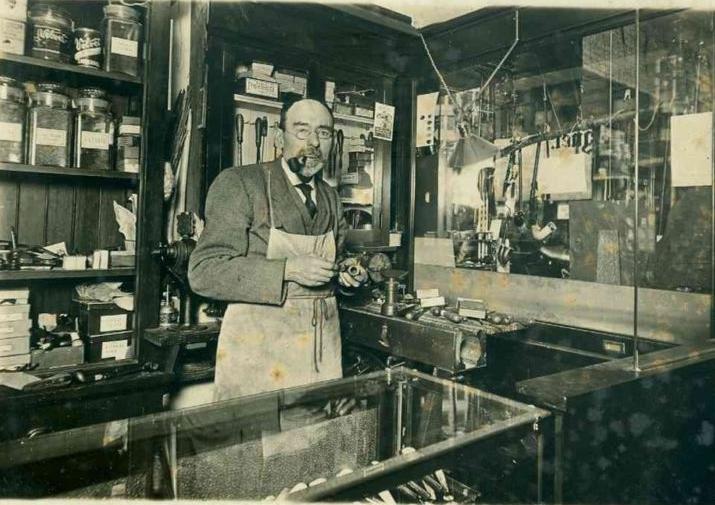
Image

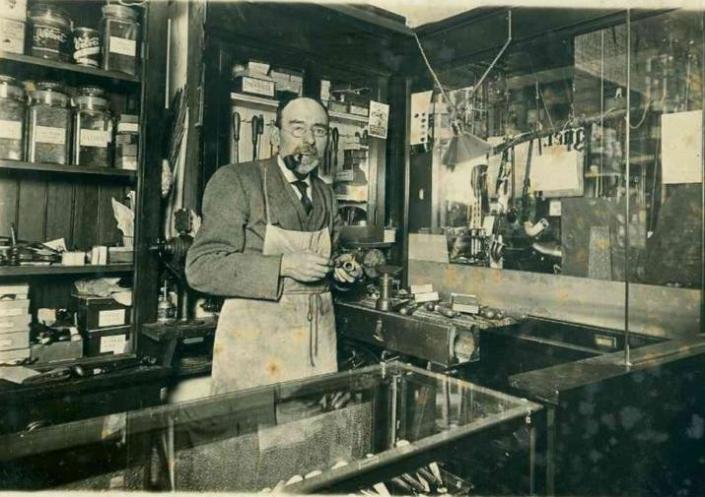
I love looking at old photos like the one above and crafting a story from the photo. This one evokes memories for me and others of like age of certain nostalgic pleasure cherished in the recesses of our minds. For some of you the idea of a shop like this is a piece from the lost past and one you might long for. Come with me to the shop and I will introduce you to the resident pipeman.

The shop is situated on a busy side street, just around the corner, in the heart of the business district of the city. It has large windows on the front of the narrow shop and there is a recessed entry door to the right of centre. As we come along the front of the shop you can see the display of pipes in one part of the window. They catch your attention if you have the soul of a pipeman. There are a wide range of pipes in the window – everything from Comoy’s and Barlings to ornate Meerschaums that marry form and function in beautiful ways. The number of pipes and tobacciana in the window speaks with promise of the rich treasures that await us when we walk through the door. But more interestingly, look at the man in the window with a pipe in his mouth and wearing a suit and tie under his work apron. He is bent over a buffer and methodically turns a pipe bowl that is pushed on the finger of one hand and held against the turning wheel of the buffer with the other. He is intent on his work and while we watch I tell you that his name is Andrew. He is a pipeman extraordinaire and is a fountain of pipe and tobacco knowledge.  Once he finishes the buffing he looks up at us and gives us a nod.  Let’s go inside and meet him.

We push the front door open and a set of small bells hanging on the door chime our arrival. The rich looking oak cabinetry and counters give an aura of age to the room. The air is pungent with the fragrant mix of tobacco aromas – burned and unburned. On our left as we walk into the shop is the full service repair area where Andrew is working. Further down the display counter is a cash register. It is tall and ancient looking.The wall behind the counter is filled with jars of bulk tobacco each with an exotic name. The jars have small hand lettered cards that give a description of the components of the blend inside them. Next to these are shelves of assorted tins of tobacco for sale. Looking to your right you see that the opposite wall is lined with cabinets filled with pipes and underneath the display cases are rows of drawers. These cases extend the length of the wall. The drawers are waist high and above them are oak and glass cases, backlit to give a clear view of the pipes inside. There is so much to take in as you look around. Back to the other side again, just past the work counter is a humidor that houses cigars – not one of those modern walk in affairs but an old oak cabinet that is about 5 feet wide and 6 foot tall displaying the boxes of cigars. Looking down the centre of the shop you can see that at the far end there is a cozy sitting area with old well-polished black leather chairs and a chesterfield. There are side tables next to the chairs that hold matches, pipe cleaners and ash trays. Several older gentlemen are occupying the chesterfield and one of the chairs. They nod and lift a pipe to us as we walk in and then go back to their conversations and puffing.

After our look around the shop from the doorway I stop at the repair area to talk with Andrew and introduce you to him. “Hi Andrew, this is my friend Pat. I wanted to bring him in and introduce him to a taste of the past and to you of course. He is a relative new pipe smoker but he is learning quickly to enjoy the hobby.”

Without taking his pipe out of his mouth he welcomes you to his shop. He says, “Nice to meet you Pat, welcome to a taste of the past. Help yourself to the tobacco on the counter and the table in the back. Make yourself at home”. He turns to me and says, “I am just about finished working on the new stem your old Comoy’s Author”. He holds it up to show me – it is a fat stem that really works well with the nice piece of briar. The pipe looks finished to me but Andrew says, “I have to give it a good polishing and then you can have it back. Why don’t you take Pat back to the chairs, fire up a bowl and visit with the gents while I finish. When I am done I will bring it back to you and join you for a bowl or two.”

We head toward the back of the shop and the chairs, but our progress is slowed by the need to check out the shelves of pipes on display. I show you the drawers that house many more pipes. Each drawer is filled with many beautiful new pipes. At the end of the line just before the chairs, there is a display of estate pipes that Andrew has refurbished and is selling. There are some definite deals to be found there and I am sure one or two are calling my name like sirens. The first one I am drawn to is a nice older bent GBD Rhodesian with a tapered stem. The stem and bowl are flawless – no bite marks on the stem, no dents in the briar and the bowl is clean and ready for the new owner. I can’t pass this one up. “Look at this beauty Pat; I have to have this one,” I say as I show it to you. But you are already preoccupied and I see that your eye has been caught by an old Charatan Bell 33X shaped sandblast pipe. I watch, chuckling as you reach for it with the look of a new owner in your eyes. “That one has your name on it for sure, Pat,” I say. While you are looking I find another one that speaks to me – a nice older Loewe Lovat with lovely straight grain. Evidently I speak out loud, though I think I am talking to myself, “Two new pipes should do it for now – and I will have the old author back in my hands”.

Meanwhile I am stopped short in my reverie as I am brought back to the moment when you exclaim, “Wow, what a great place. I love the additions we are adding to our collections, Steve. I can’t wait to give them a try”. With that we head to the table in the midst of the gathering.
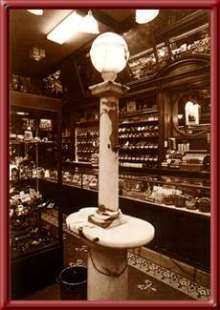
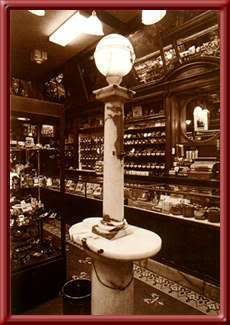
ImageThere on the table in front of the chesterfield are several open tins of tobacco. They are there for us to freely sample. We pick them up and sniff the fresh tobacco. I choose a nice stoved Virginia and you pick a rich English blend. We each pack our “new” pipe with the chosen tobacco and walk to the side of the sitting area where there is an old Electrolier. Andrew had told me that it was crafted from rare Mexican Onyx and is the last functioning model of its kind in the world. It was purchased in 1910 for $250.00 dollars and is a priceless piece of history. It has gas flames that are always burning and on the shelf around the centre column is a small box of cedar splints for lighting a pipe or cigar. We light our pipes with a splint. We tamp the bowls, relight and then extinguish the splints, dropping them in the bucket next to the lighter. We head back to the chairs and settle in for some great conversation and a smoke.

It is quiet for a while as we contentedly puff the sweet tobaccos and savour them. Slowly the conversation picks up again. Several of the regulars are there and we talk about the pipes we have picked up and the tobaccos smoked since our last conversation. One of the old gents, William has the most amazing collection of Dunhills that I have ever seen. I ask him, “William did you bring along any of your amazing Dunnies that you could show my friend Pat? I know he has never seen anything like them and that I never tire of looking at them.”

William reaches to the side table and picks up his leather pipe bag and opens it. He carefully takes out several of the pipes he had brought with him. He said, “I have these two older Shells that I brought along. The first is a 20’s vintage bulldog with an amazing blast. The second is a billiard that has a really craggy blast from the early 30’s. These are the only two I have with me other than the Bruyere in my mug (the one in his mouth is a beautiful old Bruyere billiard. I had seen it before and knew that it was a 1950’s vintage piece). Here have a look young feller.” With that he handed the pipes to Pat who sat on the edge of his seat puffing furiously as he held these pieces of history in his hands. He turned them over and over and the gents around the tables started to chuckle.

William said, “What do you think Pat? Ever seen anything like that pair?”

Pat replied, “No sir. I never even thought I would see something like them let alone have them in my hands. How long have you had them? Where did you pick them up?” He handed the little bulldog to me as he continued to examine the billiard and wait for the story that he knew was coming.

William laughed and said, “I picked the pair up at an antique shop many years ago now and have maintained the trust while they are in my hands. One day they will make their way into the next owner’s hands.” With that he waxed eloquent about how we hold pipes in trust, acting as stewards for the time that we live and then they pass them on to the next generation of pipemen who will also carry on the trust throughout their life times before passing them forward. Several of the other gents commented on the idea of the trust. This set a show and tell in motion as each of them pulled out their treasures and showed some of the pipes in their care. I sat there amazed as 80 year old William and several of the older gents gave us a glimpse of their collections and the incredible stories attached to each pipe. I looked over at Pat and noticed that he seemed to be lost in his own world as he continued to turn the pipes over in his hands checking out the blast and the flow of the old pipes. The stories just whirled around him.

Before we knew it our bowls had burned down to ash. Pat handed the two old pipes back to William and we carefully emptied the ash into the ashtrays, cleaned, repacked and relit our pipes. Pat commented, “What a great way to spend a day”. We sat and chatted about pipes and tobaccos with the other gents in the circle for the rest of the afternoon. The conversation waxed and waned as different ones left to relight their pipes or call it a day. Others came and took their places. The back of the shop was cloaked in a wonderfully smelling haze of pipe smoke. At one point in the afternoon the bell at the front of the shop tinkled as another of the regulars came in with a thermos of coffee to share with us. We laughed and commented as he put the thermos on the centre table and went to the back room and came out with some mismatched mugs, cream and some sugar. He went back and brought in a jar of teaspoons and set that on the table as well. Various ones poured a cup of coffee and thanked the newcomer for his gift. He winked at us and reached inside his shoulder bag and brought out a tin of cookies. We sipped coffee and munched the cookies, enjoying the treat. There was not much conversation going on while sipped and nibbled. We were too busy eating to interrupt the pleasure with conversation.

It was into the quiet reverie that the words, “Hey Steve, I have your pipe finished”. Andrew stepped into the circle of chairs with my pipe in his hands. “It passes my inspection. I gave it the final bit of buffing and it’s done for you. Load up a bowl and give it a smoke. I want to know what you think of it and if I need to make any adjustments for you before you take it home.” With that he handed me the pipe and took his place on the remaining chair in the circle. He tamped his pipe and puffed as he watched me take the pipe and load it up.

As the tobacco caught fire I said, “Thanks Andrew I am sure it is fine. I have never been disappointed with your work. But I will lay the pipe I have in my mouth down for a bit, load this one up and let you know.” The draw was as good as it had always been before I dropped the pipe and ruined the old stem. The feel in the mouth was perfect. The taper of the stem and the button shape were exactly to my liking. The bend in the stem made it hang exactly the way I remembered it had before. “Andrew, you got it perfect. I can’t think of a thing I would change.” I puffed contentedly on my old friend with a new stem.

Andrew chuckled, winked at me and puffed on his pipe. “We will see if you still think that after I give you the bill Steve.” He poured himself a coffee, stirred in some cream and entered into the stream of conversation around the circle.  He sipped his coffee while holding his pipe in his hand. It seemed to me that I had never seen him without a pipe in his hand or his mouth. There were beads of coffee on his moustache as he set the cup down and reinserted his pipe in his mouth. He puffed gently and the pipe came back to life with a puff of smoke.

The afternoon went on like that for a while until, one by one; the gathering broke up with promises of see you next week. Soon Pat and I were the only ones left in the shop. “Well I guess we should go and get some work done before the day is over, eh Pat,” I said. So we made our way to the cash register to settle up for the “new” pipes and the repair bill. I took out my wallet and handed Andrew the payment. He chuckled when I exclaimed at how little the bill was. I am constantly amazed at the prices he charges for the fine work that he does. But then again I know he does it for the love of the pipe. We bid farewell and left shop with our pipes in our mouths. Andrew waved through the window to us and went back to work on his buffer.

Considerations when buying a pipe (by Rob)


Arno posted this great article on buying a pipe on his blog. I thought it was a great read so I have reblogged it here on rebornpipes

arno665's avatar

Rob is one of the oldest and well respected members of the Dutch pipesmokers forum. He is a pensioned man who knows the ropes of life. Nonetheless he always stays positive and is an inspiration for many. Rob is a very experienced pipe smoker and he regularly writes nice pieces for the Dutch forum. This is one of them, “Considerations when buying a pipe”:

Buying a new pipe is simple. You step into the pipe shop and after some searching and comparing you pick a pipe that you think you are going to be content with.

Unfortunately / fortunately it’s not like that. Buying a pipe requires insight and a bit of experience.

How are you being received by the shop owner? Do you get coffee? Do you feel that he takes the time for you?

Are you a tobacco omnivore, or do you only smoke shag cut (in…

View original post 508 more words

Some Observations on Briar by Country of Origin


I wrote this piece a while ago now but have since worked on many more refurbs. Many are made of briar that is unidentified in the stamping. But some of them are stamped as the lot below were. Here are some of my observations that I noted back then, today as I am reworking this piece I still find the thoughts of those days interesting and decided I would post it here on the rebornpipes blog and get feedback from all of you. Have you found any of these observations to be true or have you found other observations that you could write about? I know I am not alone in saying that I would appreciate the information and the insight that many of you could add to this discussion. Here is the piece I wrote about a year or more ago…

Yesterday and today I refurbed more than 20 pipes and all of them are made from briar that comes from different countries. The country of origin was stamped on them and that is what got me noticing. It was not something I had given much thought before today. Now I wonder about it. The observations that I note are things that were true of all the pipes that bore that country’s stamping. I am sure others may have things that could be added and some may even disagree with me but this is what I found in the process of the last two days.

The pipes that were made of Algerian briar – I found that this particular briar was hard and light weight. I hada reddish tint to it even under the stain. I know that the stain once applied is never removed totally but even as I topped the bowls the briar dust was reddish. I also picked out some fills in some of the bowls and under the putty the briar was also reddish in hue. That makes me at least question whether it is just the effect of the stain because even when the putty fills and the stain are removed the briar is still reddish coloured. When I restain the bowls a reddish hue always seems to come through regardless of whether I use a brown or black stain. One of my tricks, learned from a pipe making friend of mine is to lick the briar to see what the grain looks like. When I did that with these pipes the briar seems to have a sweetish taste to the tongue. I checked that observation by also tasting a bit of the briar dust itself and it was confirmed for me.

The pipes that were made of Spanish briar – I found that this briar has a different weight and density to it than the Algerian. It is heavier than the pipes made of that briar that I have worked on these past days. It seemed to be softer and scratched and dented more easily. I found that on this lot I had to steam out quite a few dents in the wood. I did not find any uniform colour to the stripped briar so I cannot comment on the look of the wood before staining. However, it also seemed to take stain differently as well. The stain soaked into the grainat a rate much more quickly than the other briars and the grain was highlighted differently than in the harder briars from Algeria or Italy. When I performed my taste test on this briar I found that its taste is not as sweet to the tongue. It is more subdued and flat tasting.

The pipes made of Italian briar – The pipes made of this briar were very hard and light weight. Once the finish was stripped off the briar its colour was more yellow or white. When stain is applied to the pipe it does not soak in as deeply and appears a much lighter hue. Even a cherry or oxblood coloured stain comes out lighter and the yellow softens the reddish hues. Using my taste test on this briar I found that the taste is a bit more bitter and sharp on the tongue than either of the other two briars.

These are the observations that I came to as I worked on pipes from these three countries these past two days. I don’t know if I am dreaming or if it truly different. Has anybody else noticed this as you have worked on pipes? I am only noticing because I have been working eight hours each day at these refurbs and noting differences.

In the year plus that has passed since I first wrote these observations, nothing has changed in terms of what I observed and experienced in the briar I worked on. Many of the observations have been confirmed through work on other pipes that have come across my work table. I continue to note the things that I see as I work on these old pipes. I want to one day add Israeli briar to the list and that found in other countries as well. Feel free to post your thoughts in response to this blog post. I look forward to reading what you all have to say. Thanks ahead of time for your contribution to the work.

Lighting A Pipe


After repairing and refinishing many old estate pipe rims that have felt the burn of a misplaced flame or the blast of a torch lighter I thought I would write up a short piece on lighting a pipe. From my experience it seems that most pipe smokers are creatures of habit if the rims of our pipes are any indication. The burns seen on these pipes indicate where the pipe smoker lit the pipe in the same manner with the same lighter in the same spot repeatedly until the rim was blackened and then burned. It is always quite astounding to me that individuals continue to char and burn the rim even on expensive pipes. The idea for me has always been to burn the tobacco and preserve the briar.

I consistently use the same lighting technique whether I use a Bic lighter, Zippo or a wooden match. I too am a creature of habit. My technique is not original but is something passed on to me somewhere along the way. It is, and has always been, a two part process.

The first light

After packing my pipe to my liking I char top layer of tobacco by gently moving the flame over the whole surface of the tobacco at a distance of about a half an inch or more and draw the flame into the tobacco. I avoid letting the flame touch the rim regardless of the tool I use to light my pipe. I also avoid torch lighters and cigar lighters like a plague as they seem far too hot and hard to keep the flame in the bowl. I am convinced that many of the burned rims come from torch lighters. For me this initial charring prepares the bowl for the second step in the process.

The second light

Once the top of the tobacco is charred the tobacco seems to rise a bit in the bowl. I assume that this is from the burning and the expansion of the air in the bowl. I then remove the pipe from my mouth, tamp the tobacco down quite firmly, and relight the pipe. The firmness of the tamping seems to be something that varies a bit from tobacco cut to tobacco cut. I have learned that with flake cut tobacco I tamp more lightly than with shag cut or already rubbed out tobacco. You must be careful not to over tamp the tobacco as you can shut down the draw. It is better to under tamp and redo it than to over tamp and have to unload the bowl and start over. I make sure that no loose tobacco strands are on the rim and then relight in the same manner as I did with the first light. I am experimenting a bit with tamping the edges down a bit more tightly than the middle and leaving a slight cone shape to the tobacco as this seems to keep the flame inside the bowl when lighting.

Throughout the smoke

Pipes have a habit of going out. So I don’t spend a lot of time worrying about it. It is not unusual for even experienced smokers to relight the pipe several times during the enjoyment of a pipeful. Therefore, when I find I need to relight I just use the tamper I always have near at hand, or if it is missing my index finger, and tamp the pipe firmly but carefully to not constrict the draw on the pipe. I then relight in the same manner as above. As the tobacco burns down into the bowl it becomes much easier to keep the flame in the bowl during the lighting. But make sure to continue to point the flame into the bowl and not at the edges. With repeated practice and care this becomes second nature to you.

What I use to light my pipes

I have been asked in the past what to use to light a pipe. For me I generally light my pipe with a cheap Bic lighter. I follow the methods outlined above and have not burned any rims on my pipes. I also have a few Zippos with pipe inserts that I take with me when I am on a walk outside and use them regularly. I also have a few boxes of wooden matches but as I find that most of my pipe smoking is done outdoors it is hard to keep a match lit long enough to get the tobacco burning nicely.

Image

Wind caps – integrated and add on


Blog by Steve Laug

Wind caps have always intrigued me. I have picked them up over the years more by accident than by design. They have come on pipes that I have picked up in EBay lots and those I have found in thrift shops and antique malls. I honestly don’t think I have ever purchased one new. At least that is how I remember it in the recesses of my aging memory. I know why they were designed and what their intention was from the start; but I suppose for me they are more of a way of keeping the tobacco in the bowl in my coat pocket and not all over the pocket than they are about protecting the pipe in blowing wind. I tend not to smoke my pipe in a windy area so I don’t use them for that. Probably as close as I come to using them for their original purpose is when I am smoking a pipe while walking in the rain here on the Wetcoast of Canada. They keep the errant rain drops out of my bowl and thus keep the pipe smouldering nicely while I walk outside on a rainy day.

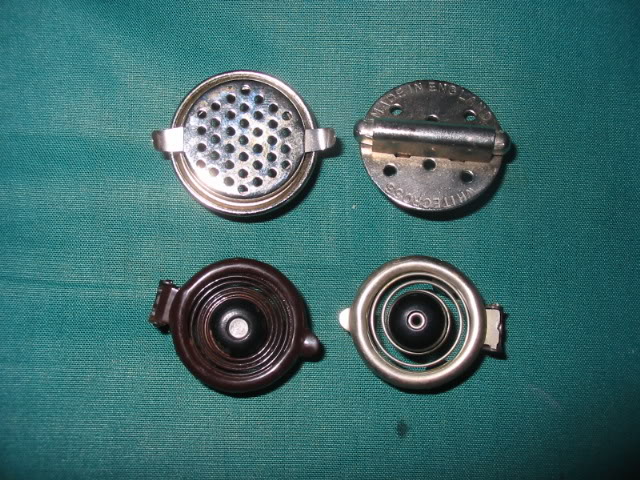
When I look at the wind caps in my collection (I say collection because I have about six I think and any more than one makes a collection) I see that there are probably three basic designs. In the pictures below the two on the top are spring loaded. The first on the left has two small tags on each side that are compressed and the lid is put in place on the pipe. Once in place the tags are released and the cap is held in place. The multiple holes in the top aid the flow of air to the tobacco and do not restrict the burning of the tobacco. The second design, the one on the top row, right side is also spring loaded. But instead of tags the design has a cylinder across the middle of the cap and in that is a spring and two pistons that are compressed and the lid is place on the bowl. Once it on the bowl the pistons are released and the cap holds on to the sides of the bowl. This one has fewer and larger air holes and seems to work equally well. Both of these designs make relighting the pipe a bit of a chore as the cap needs to be removed, the pipe relit and then the cap put back in place. Because of this I rarely use these caps when going on my walks. They tend to be relegated to the task of keeping the tobacco in the bowl and not spilling around my jacket pocket while I am traveling to and from work or appointments.

Image

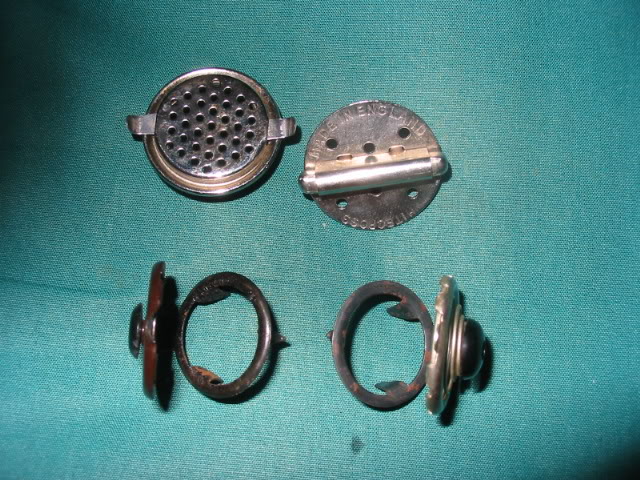
The second row of wind caps is similar in design and function. Both of these are held in place by metal triangular tabs that extend into the bowl and rest against the sides of the bowl. They can be bent to fit different bowl diameters. Do not assume that just because they look like spikes they are to be driven into the briar of the bowl rim. I have to tell you that I have cleaned up several older estates that had these installed in that manner. It was almost as if the owner had put the cap in place with a hammer. I believe that the true use of them is to pressure fit the cap to the bowl and adjust the fit until it is tight. Both of these models have a centre portion to them that is like a coiled spring. In fact it flexes like a spring when touched. The airspace on both of these is quite generous and keeping the pipe lit is no trouble at all. I have a third one like this but it is missing the centre bead. It still works great though. These by far are my favourites in terms of wind caps. They are hinged so that to relight the pipe is no problem; the top is opened by the small handle on the cap. The top opens to allow access to the inside of the bowl. After relighting, the cap is pushed back into place and the smoke continues.

Image

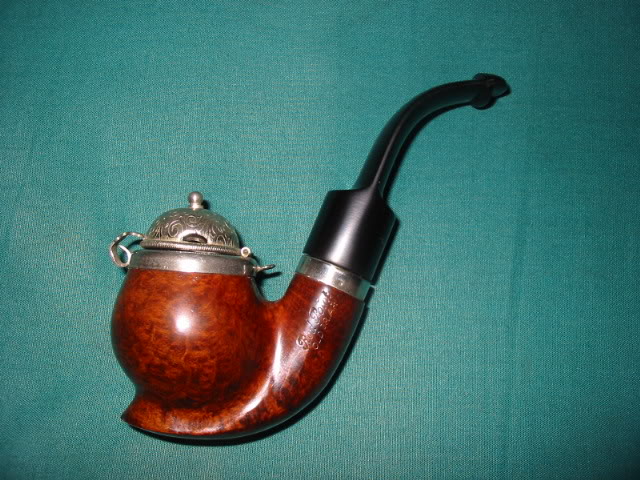
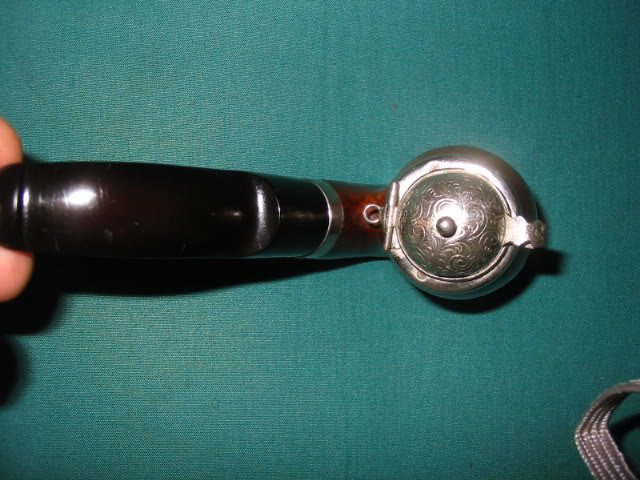
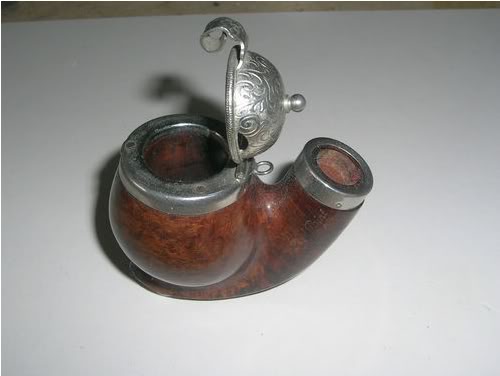
Besides these aftermarket wind caps I have several older pipes which incorporate them into the design of the pipe. In the first series of pictures below is an older Red Point with a silver cap attached to a silver rim that was original equipment for the pipe. The lid has a handle on the front and on the top that enables it to be opened for loading and relighting as necessary. The domed cap and the look of the pipe speak of a past generation of pipe smokers. The bling on the pipe makes it look rich and elegant.

ImageImageImage

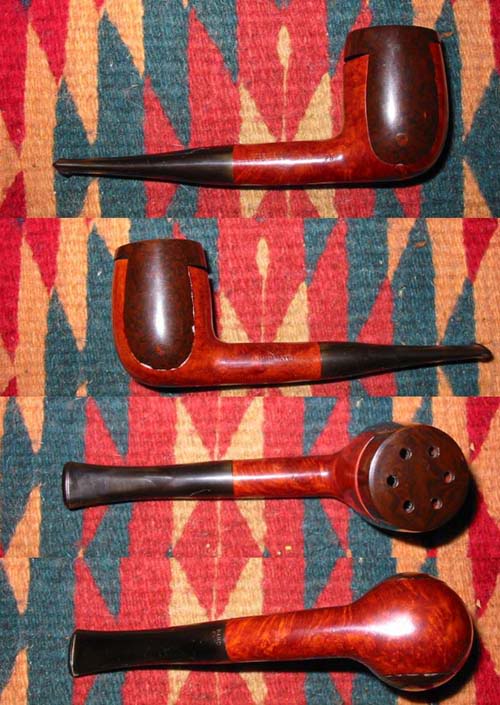
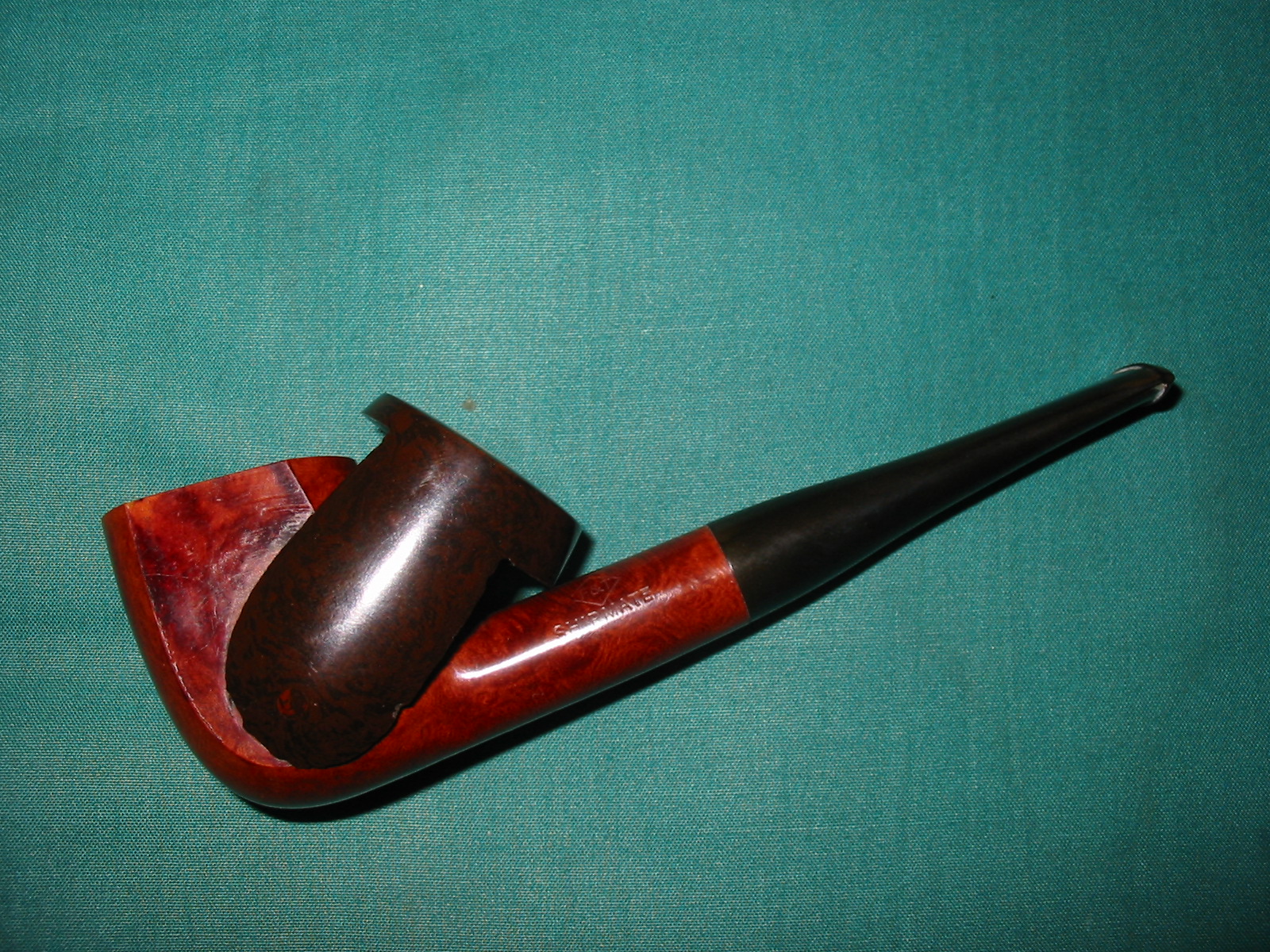
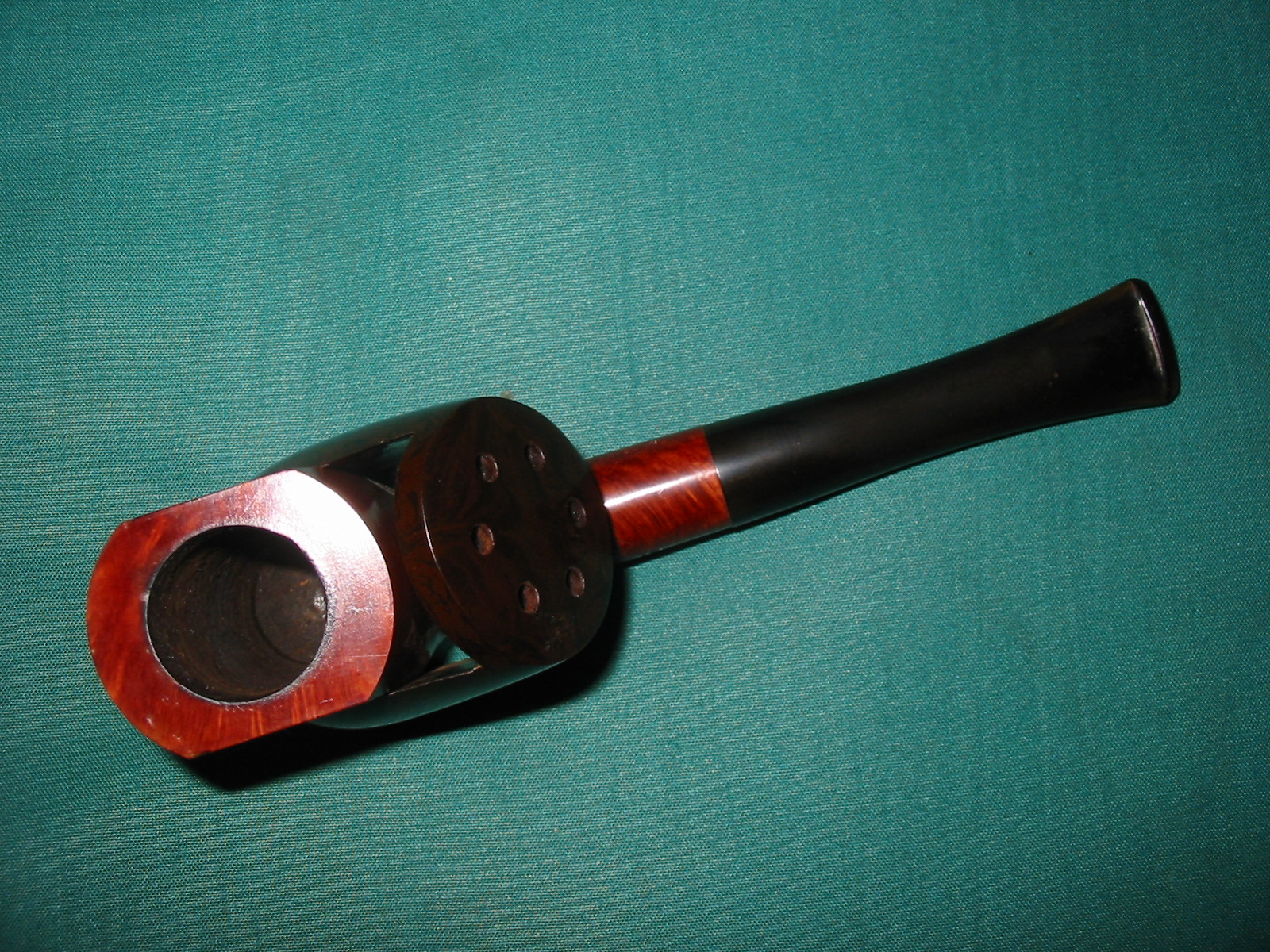
A second pipe that I have with an integrated wind cap is what is commonly known as Hurricane pipes. This style of pipe was made by several English pipe makers. The one I have is an F&T Shipmate made for Abercrombie and Fitch. The wind cap on it is made of Bakelite and is pinned toward the bottom of the bowl on each side. It is hinged and tips backward toward the smoker for loading and relighting. The first photo below shows the cap from the sides and the top of the bowl. It has the appearance of a pepper shaker. The next two photos show the same pipe with the wind cap opened.

ImageImageImage

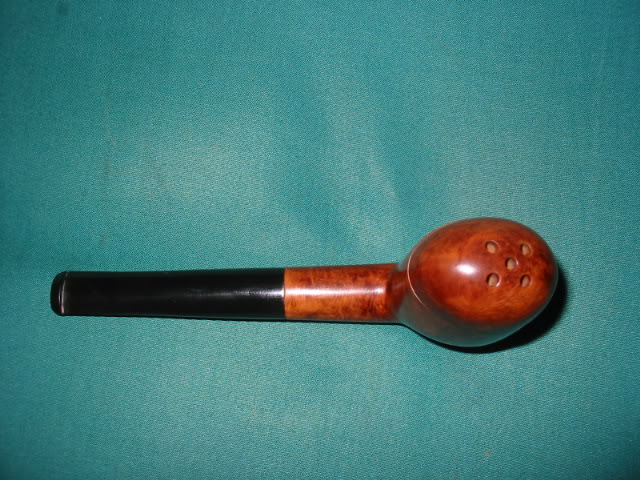
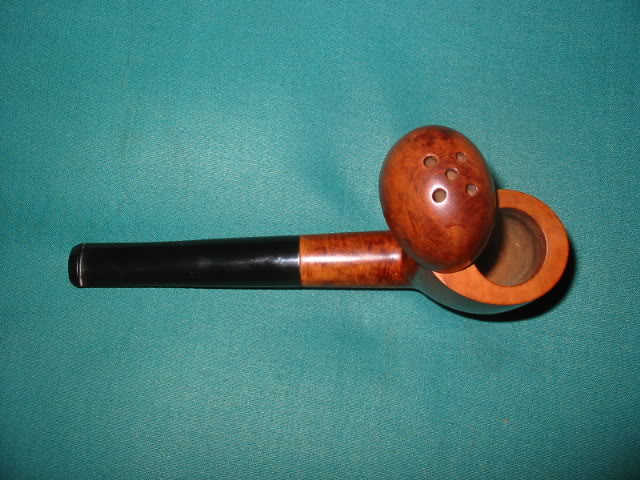
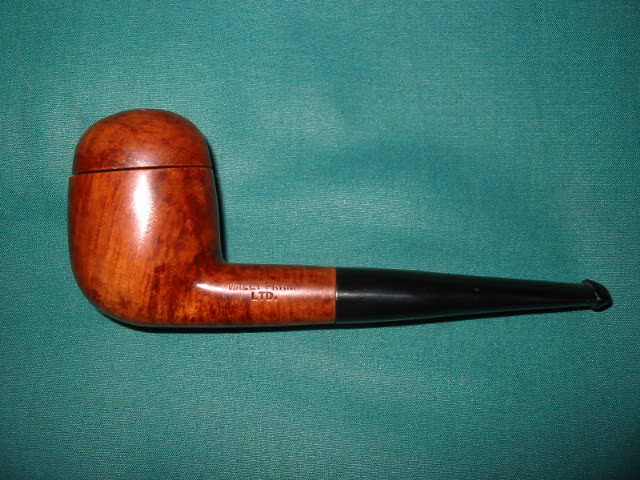
The third pipe in my collection with an integrated wind cap is a Wally Frank that I posted about earlier on the blog. It is pictured below in a series of photos. In this model the cap is made of a briar dome that swivels on a metal pin that holds the cap to the bowl. To load and relight the pipe the pipeman only has to swing the cap to either side. The workings of this wind cap are very simple and uncomplicated. The beauty of the design is that the cap can be removed and the pipe smoked sans cap. The cap is not integrated into the design of the bowl in a manner that makes removing it a major change to the pipe.

ImageImageImage

As can be seen from the various wind caps, both integrated and aftermarket, they are here to stay. The wind caps and pipes pictured come from different times and eras but they all incorporate the same basic design purpose. I rarely use the three pipes with the integrated cap. It just seems like one more thing to fuss with. The aftermarket add on caps work for me as described above – a means of keep a loaded bowl safe in my pocket for a later smoke.  When I reach for a wind cap I reach for these. They work best for my purpose as when I have taken the bowl out to smoke I just remove the cap and put it in my pocket to reuse later. It typically does not see another use until the time I need to carry another bowl in my pocket.

Another Piece of Tobacciana – A Trench Art (?) Pipe Loader


Blog by Steve Laug

When I saw this piece of tobacciana I had to add it to my collection. It is so unique that I have not seen another since I first laid eyes on this one. It is pipe loader. It is made of an outer case with a plunger inside and a scoop-like inner piece that is loaded with tobacco. I think the inventive character that made this envisioned scooping a load into the scoop portion and then inserting it into the part with the plunger. Once it is loaded it is put on top of the pipe bowl and the outer portion is pushed down over the inner scoop and the tobacco is loaded and tamped in the bowl. I have to say it is a bit of a fuss to scoop and plunge but it does work remarkably well and loads a perfect bowl of tobacco. It is made of brass and what looks like several shell casings. I am not sure if it is trench art but I have been told that it appears to be. The two pieces fit together perfectly well and slide easily against each other. It has the patina of aged brass but is otherwise very clean. It is something that sits in my pipe cabinet and is a great conversation piece with other pipemen but it is not something that anyone else is truly interested.

Any ideas from any of the readers? What do you think?

ImageImageImage

A Pair of Rare Dunhill Cobs – Dunhillbillies


On a lark I restemmed a couple of my Missouri Meerschaum cobs a while back for a special pipe cleaning and polishing night hosted by our local Dunhill and Brigham Representative. He told us that if we brought our old pipes with oxidized stems he would buff them and polish them for us – no charge. Being a bit of a joker and handyman I scavenged in my can of stems and found two oxidized Dunhill white spot stems. These had just the right sized tenons to fit on a couple of old cobs that I had here. So with very little effort, I made them fit the shank. Just in case some of you are worried that I might have ruined them by trimming them back, I assure you that I did nothing to the stems other than clean them up a wee bit and then insert them into my cobs.

Thus armed I packed my trusty pipe bag – holds eight pipes. I included some other nice pipes that I wanted to have the benefit of having buffed but I also included the pair of Dunhill cobs. I waited for an opportune moment when the handy rep was at the buffing wheel. There was a lag in the number of gents coming to him for buffing work so I sidled over and handed him my good pipes first and he did a magnificent job cleaning and waxing them on his wheels. When he had finished them he asked if I had any others that I wanted him to take care of. I hemmed and hahed a bit and then said I had a couple but that they were very special and rare. I wanted to make sure that he would not damage them in any way. I emphasized the fact of their rarity by stating that in fact I had never seen or come across any like them in all the years I had been smoking a pipe.

With that I had hooked him and he turned off his buffer and looked inquiringly. I could see the look in his eye – full of questions. What kind of pipes could I possibly have that I was worried he would harm them? What could I have in my bag that I was slow to pull out and have him buff? I think he was a bit put out by my slow response. So now that I had him hooked I decided to work him a little bit and play with the hook. I began to spin the tale I had worked on earlier in the afternoon. I was enjoying every moment of this so I dragged it out a bit longer than necessary probably, but as I talked a small group of other pipesmokers had gathered around the wheel. We were all puffing on pipes of chosen tobaccos and everyone was interested.

I spun the tale of how I had come across these two special pipes in a cabinet at a local antique mall in Fort Langley, British Columbia. I had gotten the clerk to unlock the cabinet and carefully removed the pair from the cabinet. I looked each of them over carefully so as not to break them. After all I did not want to buy something that was worthless. Both pipes were a bit worn from wear and showed some charring at the rim but otherwise they were clean and seemed to be solid. The clerk said they were rare and who was I to argue as I had never seen anything like the two of them. The price for each was a kingly sum. At this point in my tale I looked at each of my listeners. But in particular I fixed my eyes on the buffing king. I wanted to emphasize the cost of these gems. Now my tale had captured the most dubious of them so I began to reel them in. I explained the stems and the slight oxidation that each had. I explained how they each had a white dot set in the vulcanite of the stems. At this point I am sure the buffing king was wondering if I had stumbled on a pair of early patent era Dunhills. All those listening to the tale know my proclivity for pipe scavenging and how I am pretty lucky in my finds. I honestly think that I had struck the motherlode of pipes finds.

The Dunhill Rep/buffing king was beside himself now. He wanted to see them now. He wanted to handle the two old timers and get a feel for their age and ply his skill in bringing the shine back to life on them both. But I wanted to set the hook a bit deeper so I continued talking about how I had carefully carried them to the cashier and shelled out the money for them. I talked of the deep shell finish on both and the almost amberlike brown of the bowls and shanks. Then as they were almost salivating I pulled the pair out of my bag and handed them to him with the bowls and shanks hidden in my hands. Just the two white spot stem poked out of my hands. I slowly and carefully opened my hands to reveal the treasure. I told him they were called Dunhillbillies. And with that everyone but him was just about rolling on the floor in laughter. They just shook their heads and few of them had choice comments for me. But the buffing king looked at me with a grimace and then he laughed loudly, shaking his head. I have to hand it to him as he did a great job buffing the pair. The pictures below show the twosome after his hard work. What do you think? Are they treasures or not?

ImageImage