Category Archives: Pipe and Tobacco Historical Documents

Leonard’s Pipe Shop – Portland, Oregon.


Blog by Steve Laug

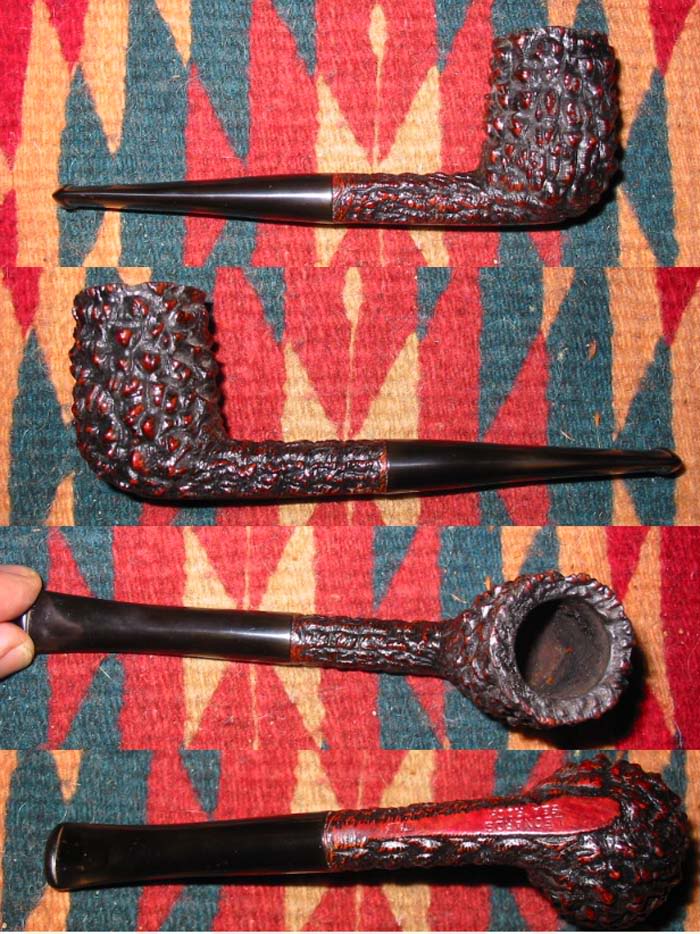
When I bought this old Leonard’s Sea Rock billiard on EBay I did a bit of hunting around the web to find out what I could about the brand. There was not a lot of information available but this is what I found out. I have edited it and added and adapted the material that I found on the web. I am unable to find who originally wrote this material. If anyone knows please leave a comment and I will acknowledge the work that person has done on gathering this helpful information.

Leonards

The pipe I purchased is a shop pipe that came from one of America’s great old pipe shops – LEONARD’S PIPE SHOP which was located in Portland, Oregon, USA.The shop and the brand never was as famous as Peretti’s, Ehrlich’s, The House of Robertson, Bertram’s, Garfinkel’s, Drucquers or some of the other great names from the past, possibly because of its’ location. But in terms of stature among the world’s greatest pipe makers, Leonard’s had no equal. While some pipe shops catered to the rich and famous, served politicians or visiting emissaries,or made pipes for actors, entertainers or stars in one field or another, Leonard’s catered to the other end of the pipe chain – the all-important source of supply! The shop was founded by Arthur Leonard in 1936 who worked hard to establish close relationships with the world’s biggest and best pipe maker’s — Charatan, Barling, Sasieni, Kaywoodie and others.

In 1936, Kaywoodie was the most important name in pipes producing top-quality pipes and the most expensive pipes then available. So, it was natural for Arthur Leonard to establish a relationship with the makers of Kaywoodie. It is fairly recent that some of the greatest Kaywoodie’s ever made returned to the marketplace. For example the Leonard-owned Kaywoodie Magnums dated from the late 1930s which were displayed and ultimately sold by the family at the Chicago Pipe Show a few years ago. It will always be a question how they wound up in Portland, Oregon rather than New York, Chicago, Washington DC or the “hometown” of any of the other great pipe shops in America. The answer must lie in the relationships that Arthur Leonard established with pipemakers!

Another huge “GROUP 6” or “ODA” sized KW billiard also came on the market. It no doubt originated from a special order placed by Arthur Leonard. But the question with this pipe and others that Leonard’s had was who made it? As many collectors who visited his shop know (as well as those who have met the last generation owners, Lou and Betty Leonard) this was once one of America’s greatest pipe shops! It operated on the same corner location from 1936 through 1983 before moving to an uptown location for another six years. On display the Leonard’s had the longest and largest Kaywoodies ever made, unsmoked Dunhill Magnums and a host of pre-1900 Barlings! Arthur Leonard had established a powerful relationship with the great pipe maker’s of the last century and his shop retained the bounty of those relationships.

It is interesting that when the Barling family sold out, they called the Leonard shop and Arthur Leonard responded- – -buying every single Barling on hand at the time of sale so no inventory was acquired by the new owners (ending speculation that “Transition” Barlings were really older pieces acquired by the new owners)! Leonard did the same thing for the Sasieni family when they sold out! The Leonard’s Shop was perhaps the most well-known American smoke shop in Europe! The Leonard Shop ONLY carried high grades, so when the craze for meerschaum pipes occurred in the 1950’s and early 1960’s, (and the Turkish government restricted the exporting of raw meerschaum) the Leonard shop placed an order with Charatan for 50 meerschaum-lined Charatans! (At that time, the Supreme was the top-of-the-line Charatan! Imagine meerschaum-lined Selected’s and Supreme’s! Lou Leonard says that only about 35 were ever delivered and Charatan said they would make no more!)

I read that those who saw the Leonard’s display pipes at the Chicago Show a few years ago marveled at the quality of the uncirculated, unsmoked pipes. He had acquired the original Barling Meerschaum’s from a company that made Meerschaum pipes before making Briar pipes! The Dunhill Magnums were unsmoked in their original cases. The Kaywoodie Magnums were displayed in a specially made case. And the Sasieni’s, Charatan’s, Comoy’s and all the rest were pipes of historical importance. You see, Arthur Leonard nurtured his relationship with the supplier’s rather than the movie stars and politicians who bought pipes. In fact, Betty Leonard told stories about the vast inventory of pipes kept out of the public eye in a back room from which they were produced on an occasional basis to meet the needs of a specific customer’s request.

Like the other great American pipe shops, Leonard’s is gone. They closed their doors in 1989. Their inventory was slowly liquidated by the last family owners of the shop. It is sad that yet another piece of American pipe history is gone. It would be grand to have seen that back room filled with a huge inventory of beautiful old briars of renown. Ah well, we have to use our imaginations to enter that room now. As I go there in my mind, I load a bowl of good tobacco from Drucquer’s (another American Pipe Shop that is gone) in my Leonard’s Sea Rock and lift it in both of their memories.

ADDENDUM & CORRECTION: Please read the response below by Pete. He has added some great information that focuses and corrects some of the information above. Thank you Pete.
Reflections on the Historical Background on CPF Pipes


Blog by Steve Laug

One of the secondary hobbies to pipe refurbishing that I enjoy doing is to research the history of a particular brand or make. In a recent EBay lot I bought there were 3 pipes that were stamped with the CPF logo – CPF in an oval with the word FRENCH stamped in an arch above the oval and the word BRIAR stamped in an arch below the oval. I had heard that the CPF stood for a variety of names from Consolidated Pipe Factory to Colossal Pipe Factory and even Chesterfield Pipe Company. There was a wide range of conflicting information available on the websites and forums that I looked read while looking into the brand. One evening while I was talking with Chuck Richards about the lot (I know that over the years he has seen quite a few old CPF brand pipes) he suggested that I ask Robert Boughton about it. Chuck said that Robert had done some work on the brand when he was given an old Meerschaum to refurbish. I contacted Robert and he sent me a variety of links that he had found. He had looked into the history and background of the CPF brand stamp. He wrote that he had found in his research that “…CPF definitely stands for Colossus Pipe Factory, a late 19th and early 20th century American venture that in its short, happy life created some of the most beautiful briar and Meerschaum pipes ever made”. He sent me a link to the stampings and logos site (1) http://pipephil.eu/logos/en/logo-c1.htmlbelowwhere he had found photos that showed the curved circular printing of French Briar around the CPF oval as well as some with a space between where the customary CPF mark was stamped within an oval enclosure. He had also looked into a variety of EBay offerings of CPF pipes and also on Worthpoint.com. He found some amazingly beautiful pipes for sale.

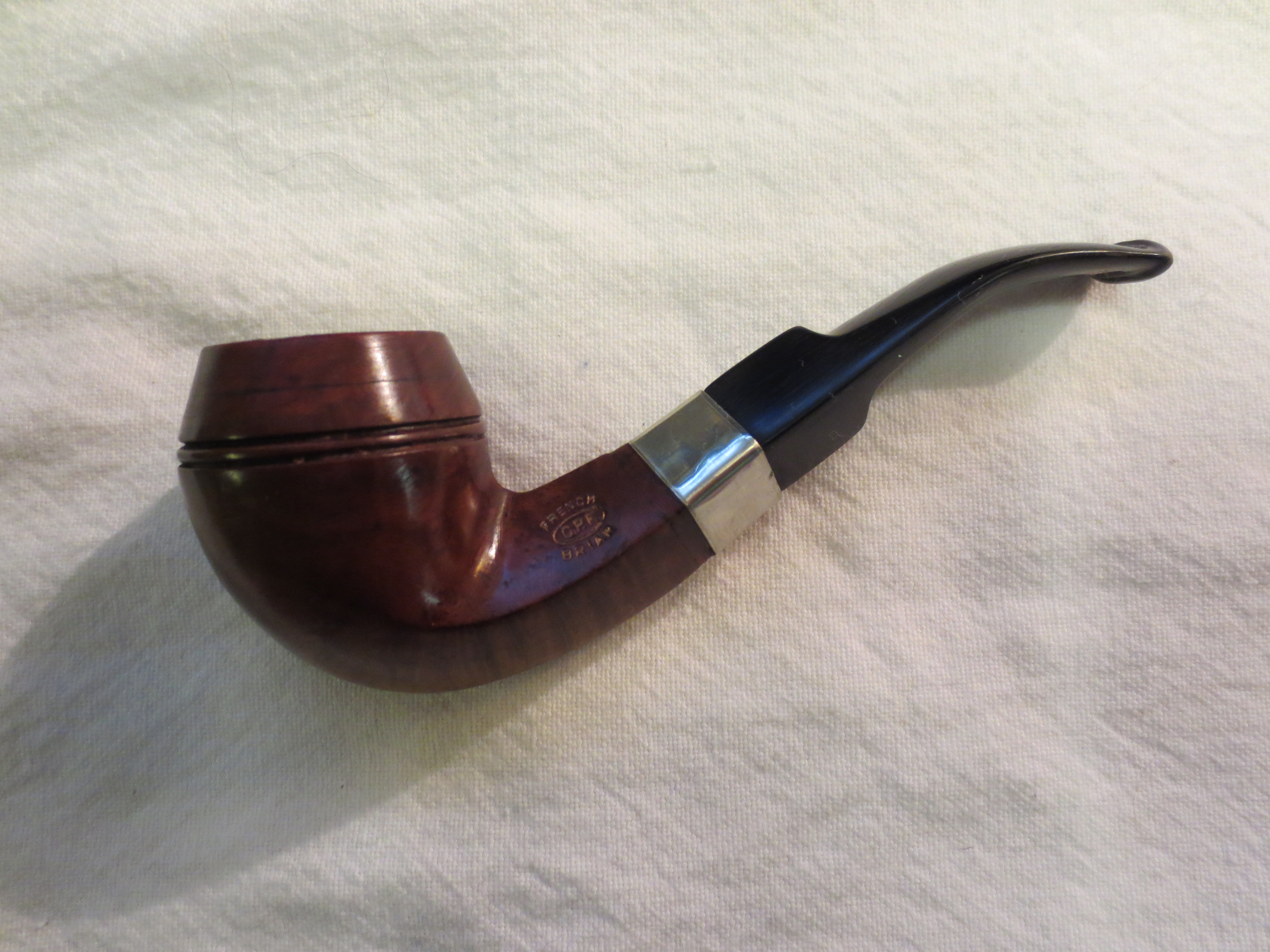
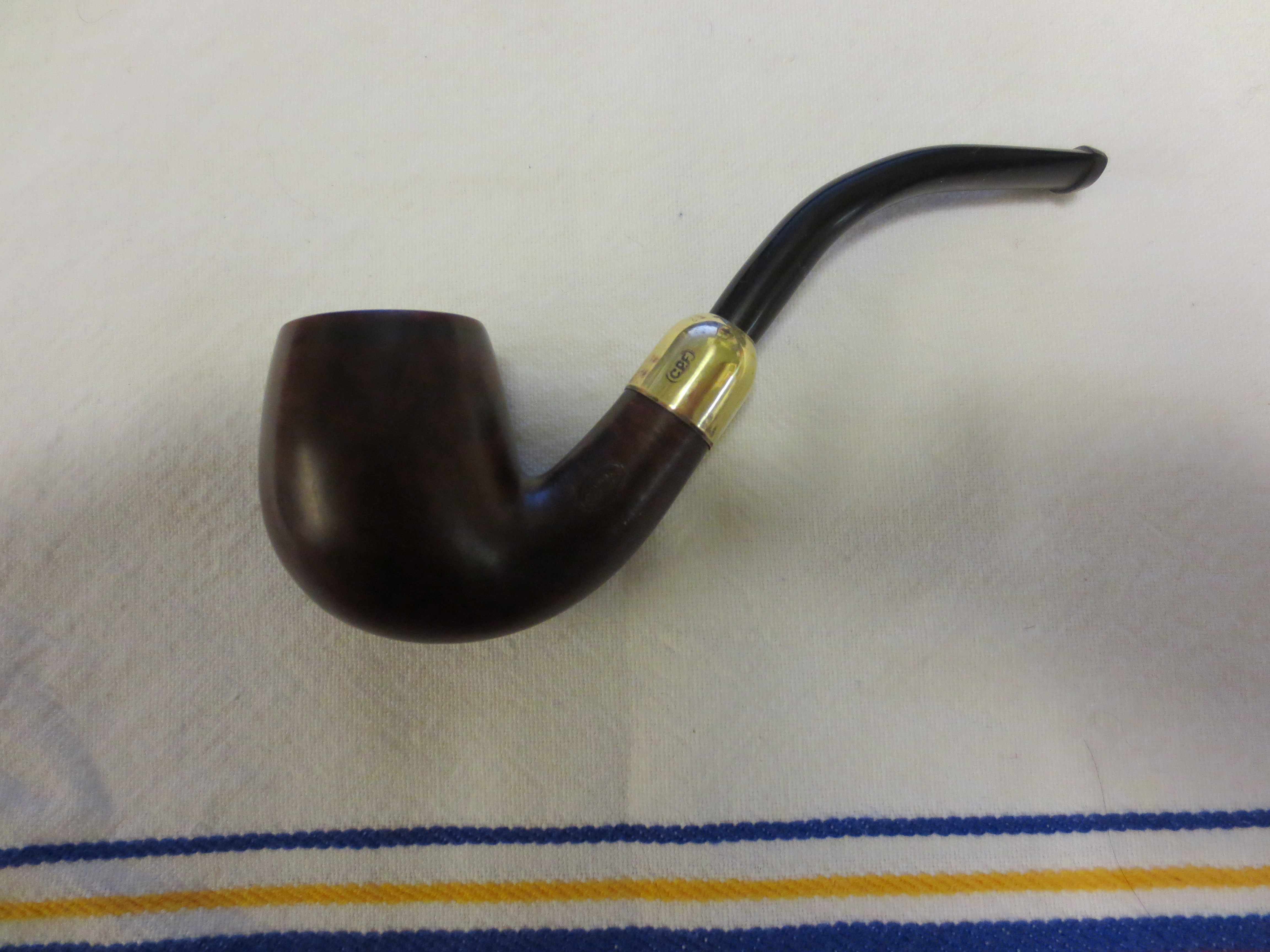
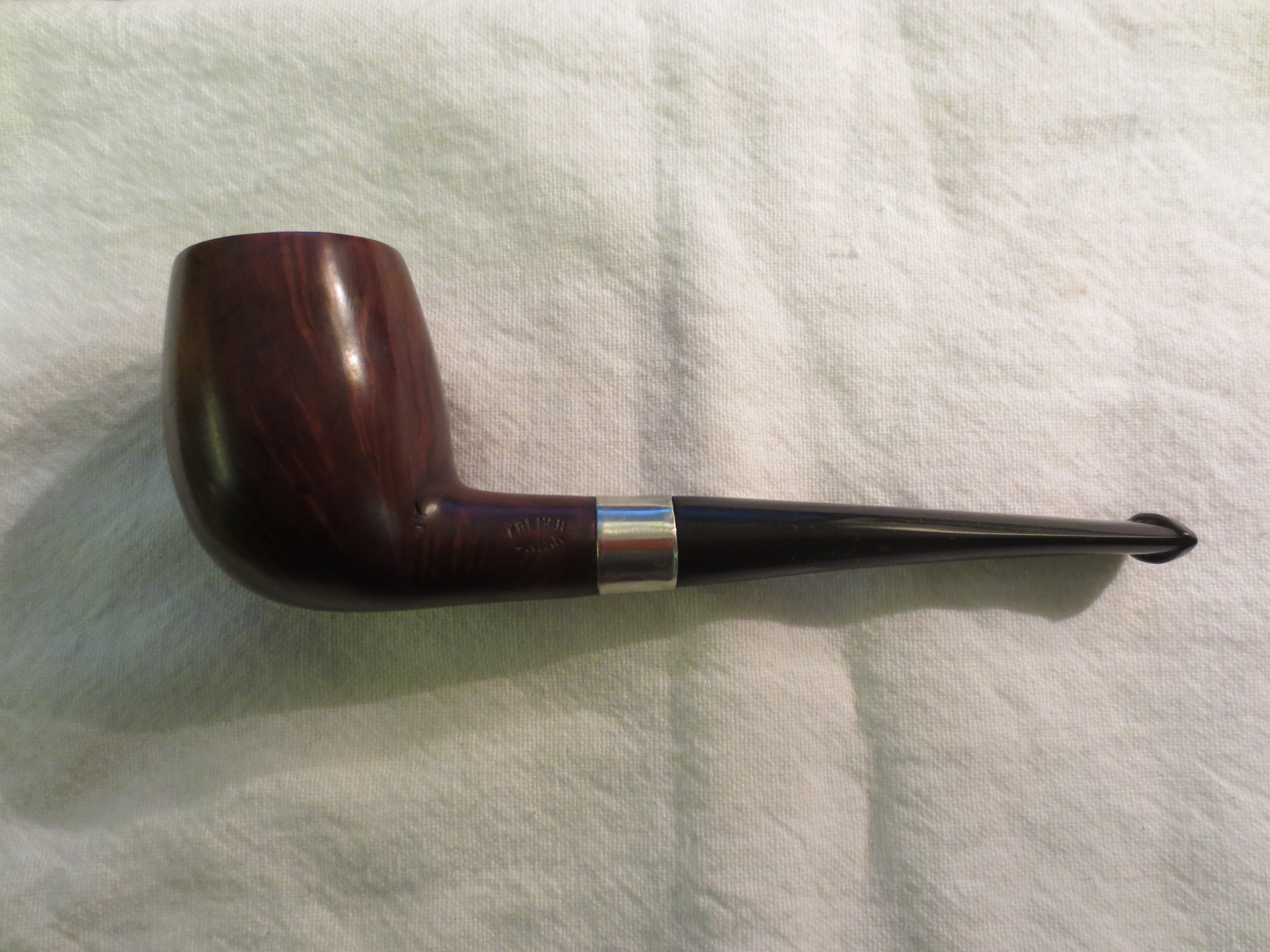
Throughout this article I have inserted photos of some of the CPF pipes that I have refurbished as examples. All of them showed the marks of having originally had rim caps and shank caps. Some of the older ones that I have seen have had beautiful filigree decorations in these areas.

Figure 1 CPF Bulldog - restored by Steve Laug

Figure 1 CPF Bulldog – restored by Steve Laug


Armed with the information that Robert sent I decided to do some more digging into the brand. I found information on the CPF brand that verified his findings on the meaning of initials. CPF stands for Colossus Pipe Factory. There is not much known about the Colossus Pipe Factory. I learned that by the mid 1890’s CPF was owned by Kaufman Brothers & Bondy (KB&B). They operated the factory at 129 Grand Street, in New York City, New York. I had a faint memory of some connection between CPF and Kaufmann Brothers & Bondy. But was unsure where I had heard or read that. In the process of reading information I came across this post by Bill Feuerbach on the Kaywoodie Forum: “About 10 years ago I picked up two original invoices from KB&B. One is dated February 5, 1884 and the other December 9, 1898. Both have the address as 129-131 Grand Street, which is in Soho, adjacent to the Bowery in New York City. The 1898 invoice has in the upper left hand corner the initials CPF and Trademark. So by 1898 KB&B was making it known to the trade that they owned the CPF trademark. The 1884 invoice does not have CPF on it. Therefore I think we can assume KB&B acquired or started the CPF line sometime between 1884 and 1898.” (2)
Figure 2 CPF Bent Billiard - restored by Steve Laug

Figure 2 CPF Bent Billiard – restored by Steve Laug


Robert Boughton also provided a link to a scan of a page from a trade magazine called “The Jeweler’s Circular”, dated August 23, 1899.(3) http://pipedia.org/index.php?title=C…s_Pipe_Factory In scanning through it I found that at the bottom of the center row of the clip a question sent in by a reader as follows, “Please inform as who manufactures briar pipes with the trademark, CPF?” The answer that was given in the article was, “These letters stand for Colossus Pipe Factory, the business being conducted by Kaufmann Bros. & Bondy, 129 Grand Street, New York.” I did a bit more digging as I wanted to find out the source of the Pipedia clipping. I found that the original source of this information was also Bill Feuerbach. He wrote the following on the Kaywoodie Free forum, “Now as for what CPF means. About 5 or 6 years ago Gary Schrier, pipe book author/publisher and pipe collector from Seattle sent me a copy of page 30 from the Jewelers’ Circular dated August 23, 1899. I assume this was a publication for the jewelry trade. On this particular page they have questions for the editor. One question is “Editor of the Jewelers’ Circular: Please inform us who manufactures briar pipes with the trade-mark rude cut: C.P.F. Thank you in advance for your trouble and kindness”. The answer was “Those letters stand for Colossus Pipe Factory, the business being conducted by Kaufmann Bros. & Bondy, 129 Grand St., New York.”

The address in the scanned document referred to above is the same address as the one on the invoices that Bill referred to in the quoted post in the previous paragraph. This industry/trade magazine, published at the time the CPF brand was being made, reports that the C in the CPF brand means Colossus rather than Consolidated or Chesterfield. To me that answers the question quite definitively.(4)

Figure 3 CPF Billiard - restored by Steve Laug

Figure 3 CPF Billiard – restored by Steve Laug


Even with that clear information from Bill, in both the invoices and the article in the trade jounal there still is some disagreement among pipemen as to the meaning of the letters in the brand. In my research I came across a few divergent opinions on the brand and I thought it important to cite them. The following information comes from Samuel Goldberger of Finepipes Estate pipe website as referenced below. On the page on his site dedicated to CPF pipes Sam wrote, “I have not found any clear history of CPF, but I have developed some ideas about them, based upon my study of early American made pipes. By the turn of the last century, a number of small pipe making factories had collected in and around New York City, including the William Demuth Company (WDC) and Kaufman Brothers and Bondi (KB&B), later to become Kaywoodie. From the design and quality of execution of these pipes, I believe the factories must have been staffed by European immigrants, probably Jewish, who had been trained in the older traditions of pipe making in France, Germany and Austria. The pipes they produced were in a similar style. They were expertly cut from very old, air-cured Algerian briar in classical shapes or from the finest grade of Turkish meerschaum; they sometimes rather small; they often had amber or Bakelite mouthpieces, gold or silver fittings. It’s my suspicion that pipes from these small makers were at one time sold or marketed under the name “Consolidated Pipe Factory.” Alternatively, CPF may have been the name of the distributor.” (5) Personally, not to disparage Sam’s ideas, I find the information provided by Bill Feuerbach in the paragraphs above to be conclusive that CPF stands for the Colossus Pipe Factory.

Further, in my research I found that others commented on the fact that they had seen pipes with both the CPF logo and KB&B logo on them that date to pre-1900. I too have seen, refurbished and sold some that bore both stampings/logos. This has led me to wonder if the dual stamping may have been a way to let pipe smokers of the time know that the companies were affiliated. From my reading and research it seems to me that CPF brand was discontinued sometime in the 1910-1920 range. Again, turning to Bill Feuerbach I found that he notes the following, which pins down the time frame of the discontinuation of the brand more specifically, “I have a CPF Chesterfield in our office display that has a nametag from way before my time that says 1900 CPF Chesterfield. It looks like most other Chesterfields you’ve seen, including the military type push stem, except this stem is horn and not vulcanite. As far as I have gathered the CPF brand was phased out sometime around 1915.” (6) Interestingly, he noted that the Chesterfield name and style was later introduced in the KB&B, Kaywoodie and Yello-Bole lines. He says that the 1924 KB&B catalog shows KB&B Chesterfields.

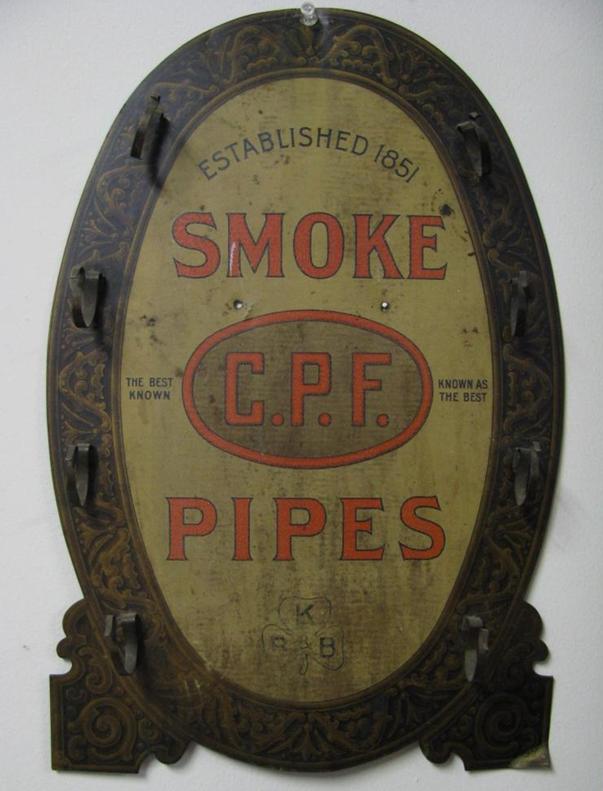
I also came across the following photo that comes from Bill Feuerbach which shows the dual stamping of the logo on this display placard for CPF pipes. Note the familiar KB&B logo and cloverleaf at the bottom of the placard. (7)

Figure 4 From the collection of Bill Feuerbach

Figure 4 From the collection of Bill Feuerbach


From my research I believe that we can definitively assert that the CPF logo stands for Colossus Pipe Factory. The brand was purchased by KB & B sometime between 1884 and 1898 and that it continued until 1915. That time frame gives help in dating some of the older CPF pipes you or I might find. It can be said that prior to the dual stamping it is fairly certain that the pipe is pre-1884 to 1898. After the dual stamping it can be placed post 1898 until the closure of the brand line in 1915. CPF made beautiful pipes. I believe Sam Goldberger was correct in his assertion of the potential carvers that made the pipes being of European training and the classic shapes and well aged briar. That coincides with all the CPF pipes that I have come across.
_____________________________________________________________
End notes
(1) http://pipephil.eu/logos/en/logo-c1.htmlbelow
(2) http://kaywoodie.myfreeforum.org/archive/cpf__o_t__t_161.html
(3) http://pipedia.org/index.php?title=C…s_Pipe_Factory
(4) http://kaywoodie.myfreeforum.org/archive/cpf__o_t__t_161.html
(5) http://www.finepipes.com/pipes/american/consolidated-pipe-factory-cpf
(6) http://kaywoodie.myfreeforum.org/archive/cpf__o_t__t_161.html
(7) http://kaywoodie.myfreeforum.org/viewtopic.php?t=161&start=0

Flash Tour of Gallwitz Pipe Shop – Budapest


Blog by Steve Laug

When I was preparing for my trip to Budapest I came across this great old tobacco shop. I enjoyed the video/flash presentation of the shop, its history and wares and thought I would post the link here.

http://www.gallwitz.hu/

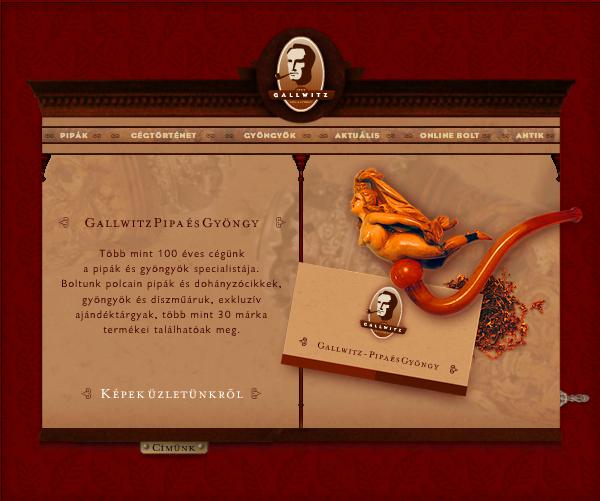
Once you are on the website click on the word Belepes (If you are Hungarian, please forgive my lack of accents on the Hungarian words. I do not have the ability to add them at this point) as pictured in the screen below. That will take you to the second screen pictured below.

Image

Or you can just click on this link http://www.gallwitz.hu/gallwitz.html and you will be taken to the screen pictured below. Once you have the screen pictured above on the website click on KEPEK UZLETUNKROL and a new screen will open with a video tour of the pipe shop. You can also click on the headings on the screen for a bit of a tour of the wares. Click on PIPAK for Pipes etc.

Gallwitz2

It is an amazing place. Having been there in person I can tell you that it met my expectations of a place filled with pipe history. Enjoy!

(You will need to have Adobe Flash installed to watch the video.)

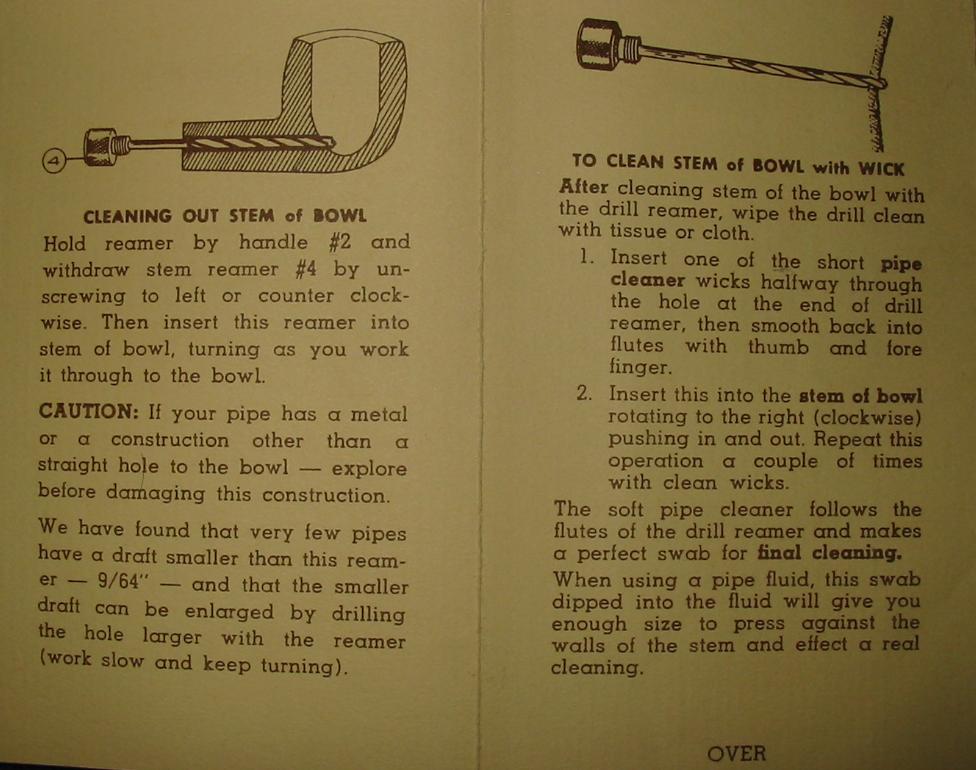
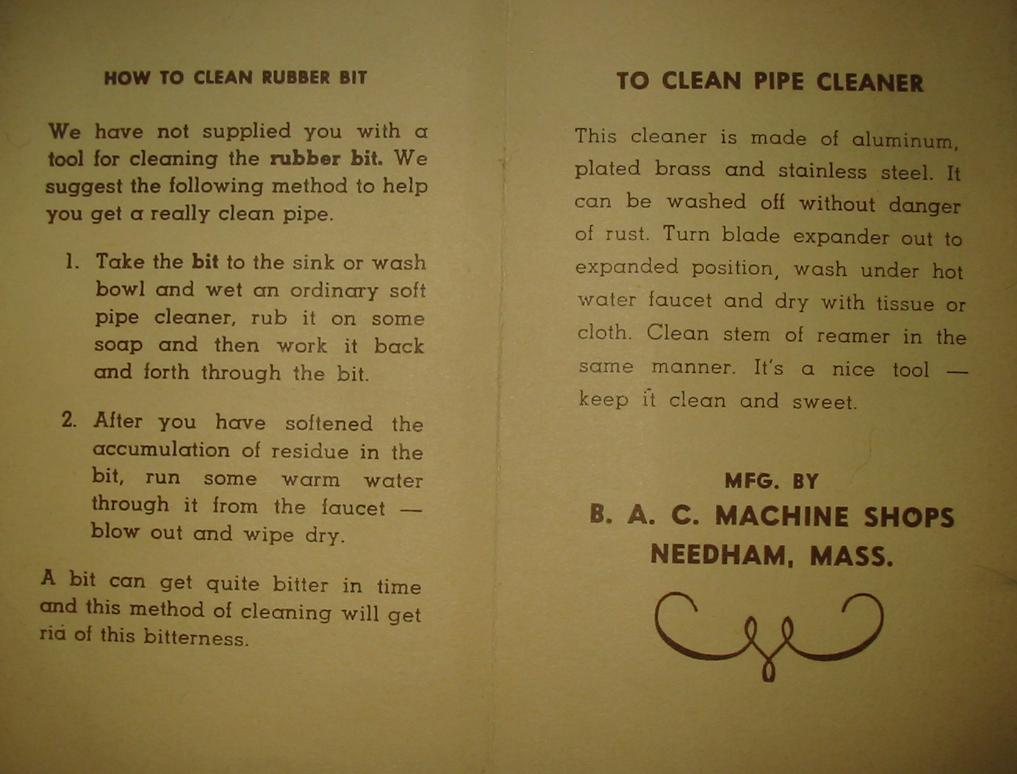
The Kleen Reem Reamer Instruction Booklet


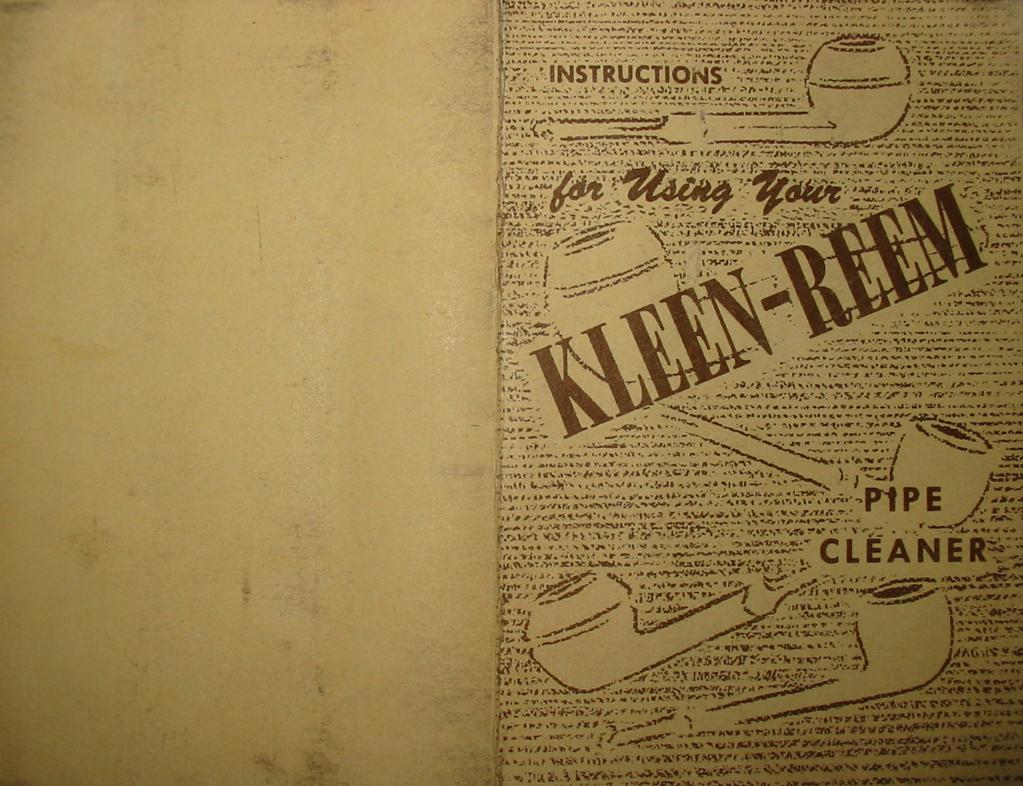
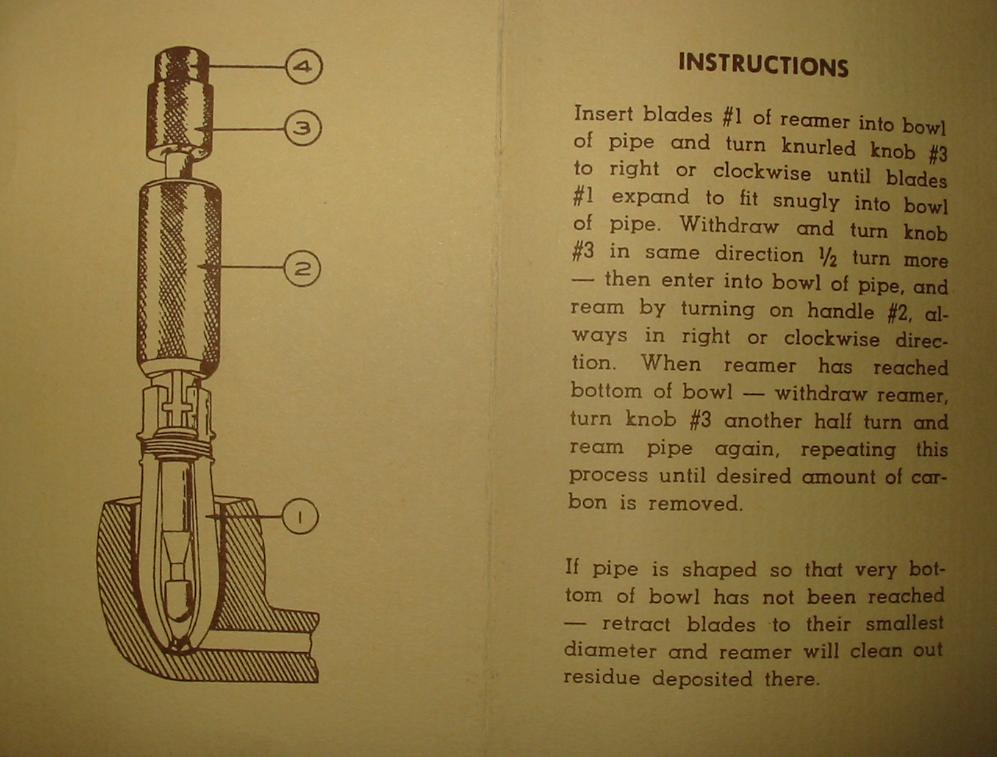
This morning while organizing my workspace I came across the instruction booklet for my Kleen Reem Pipe Reamer. I thought I would put the booklet here on the blog for others to access. It is a great read.

Book1

Book2

Book3

Book4

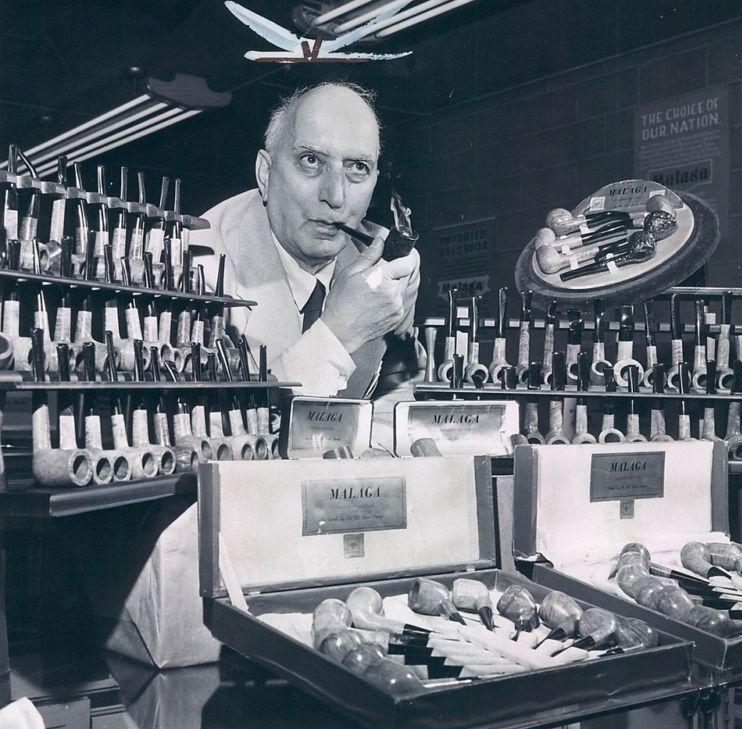
George Khoubesser and Malaga Pipes


Blog by Steve Laug

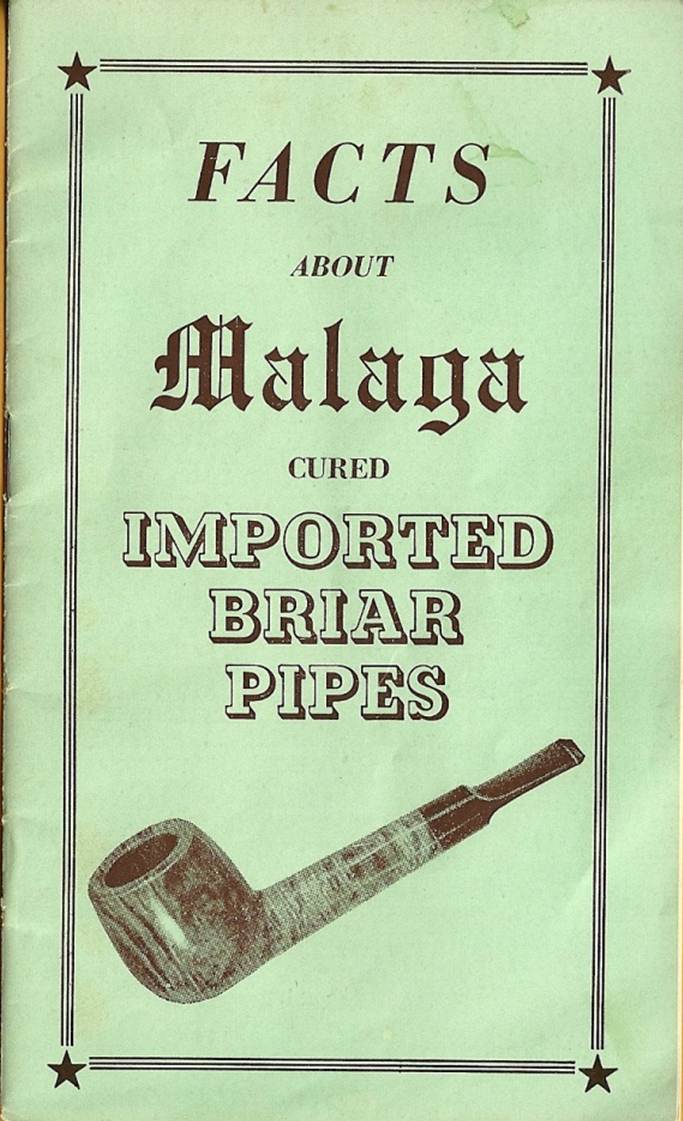
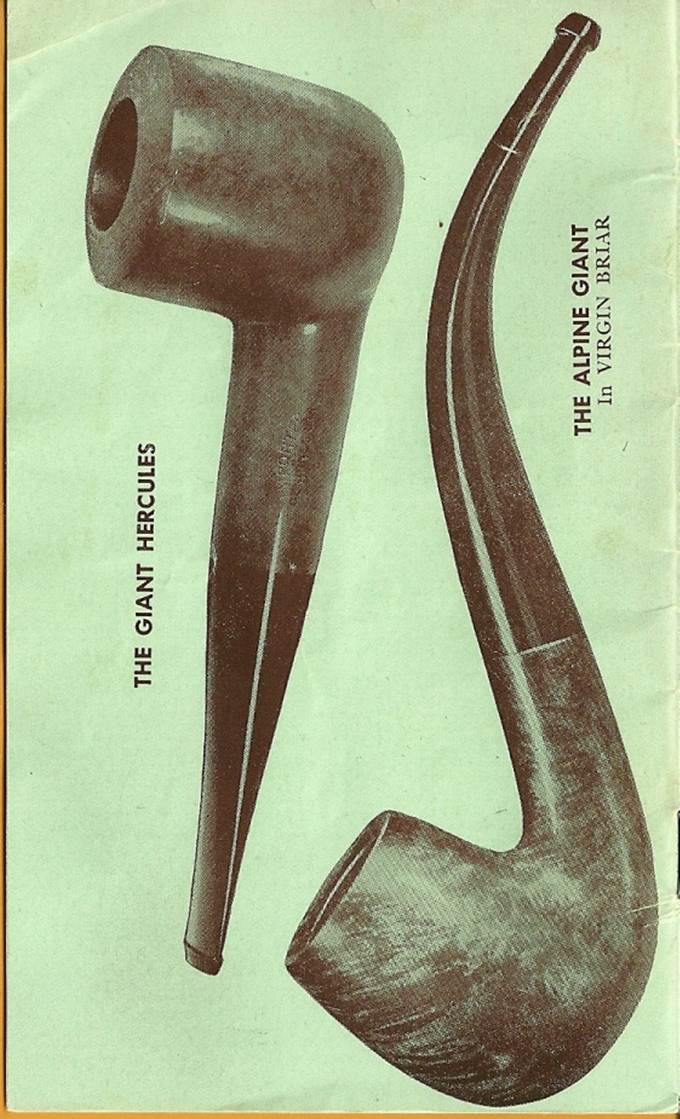
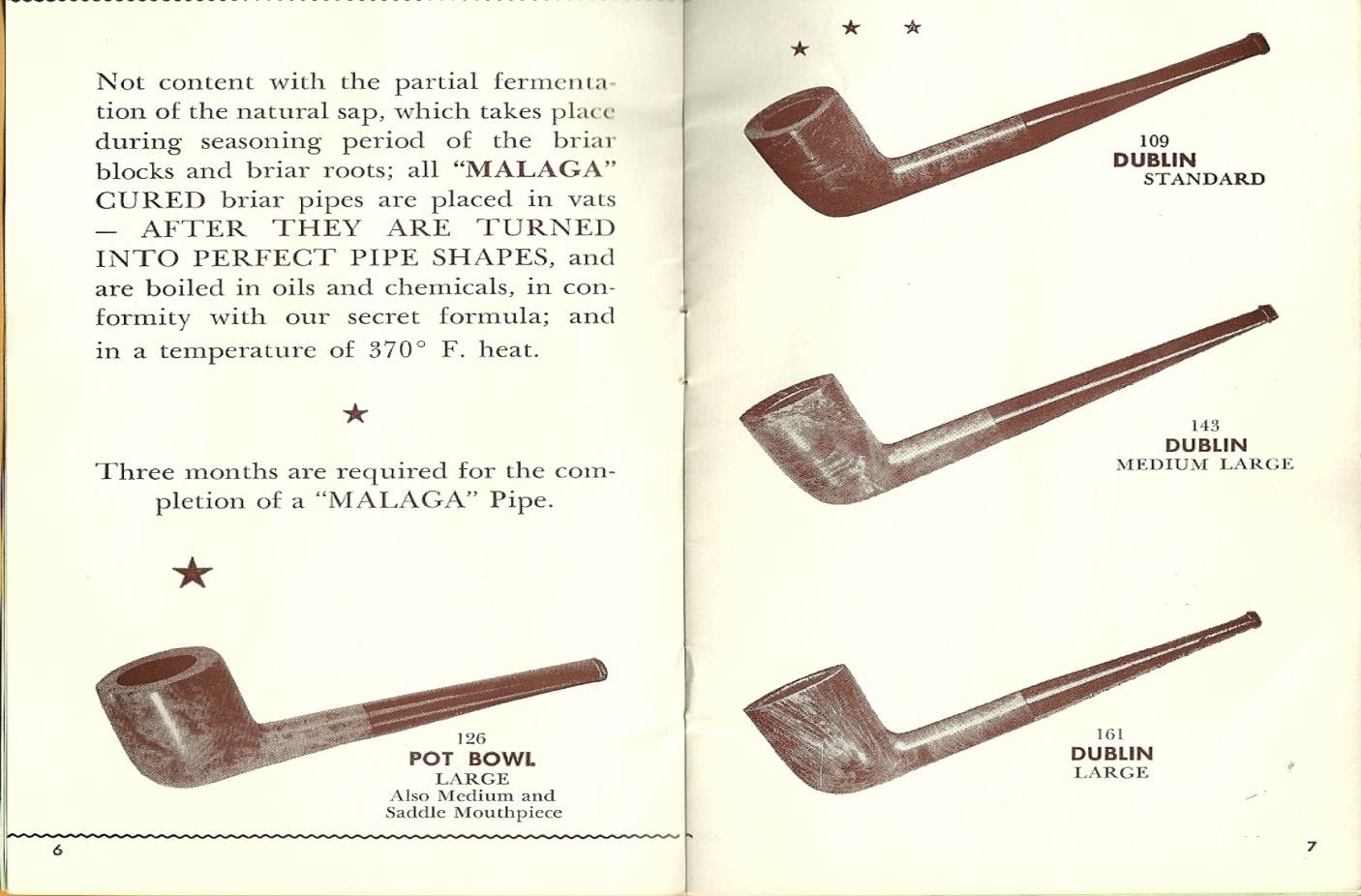
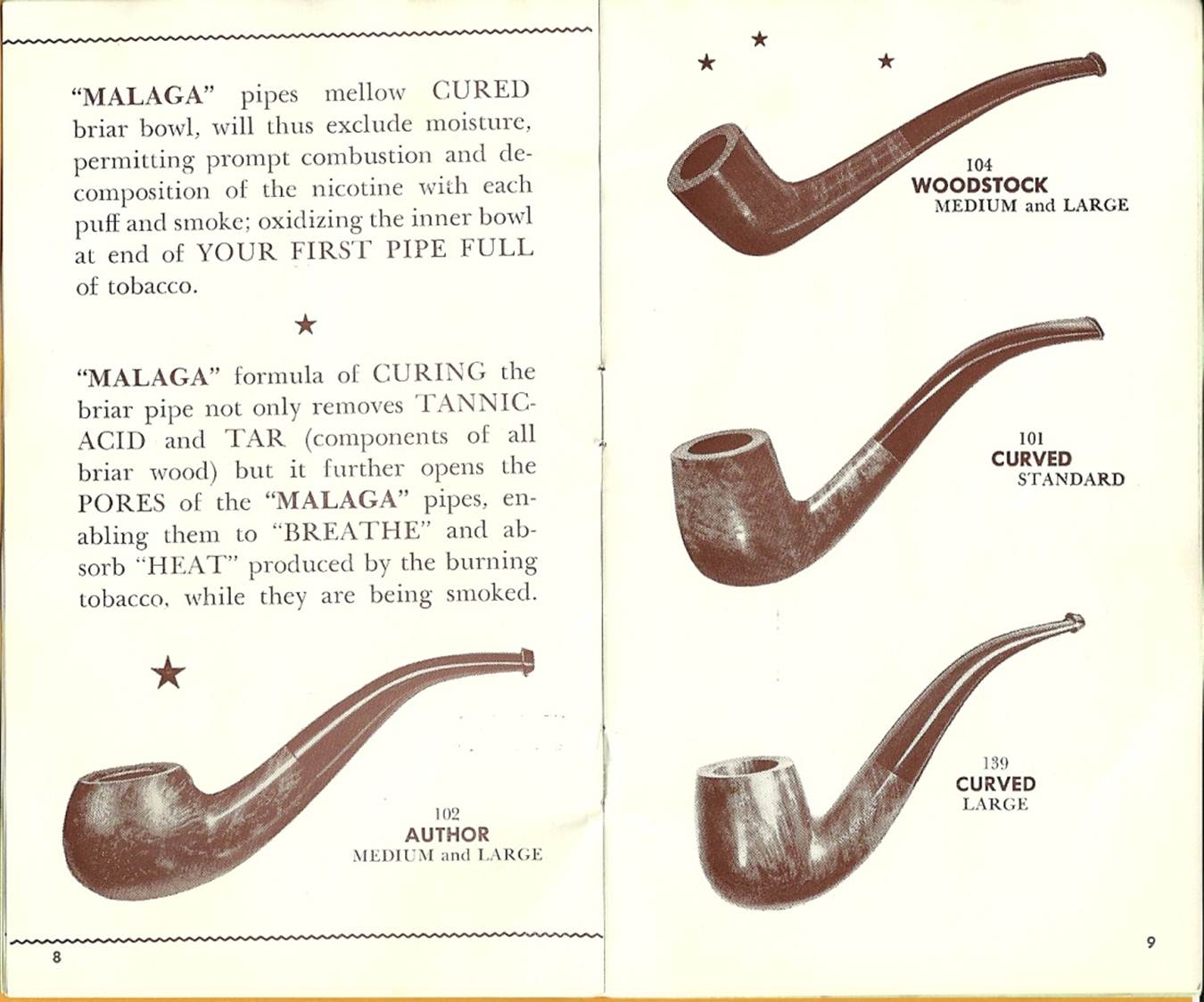
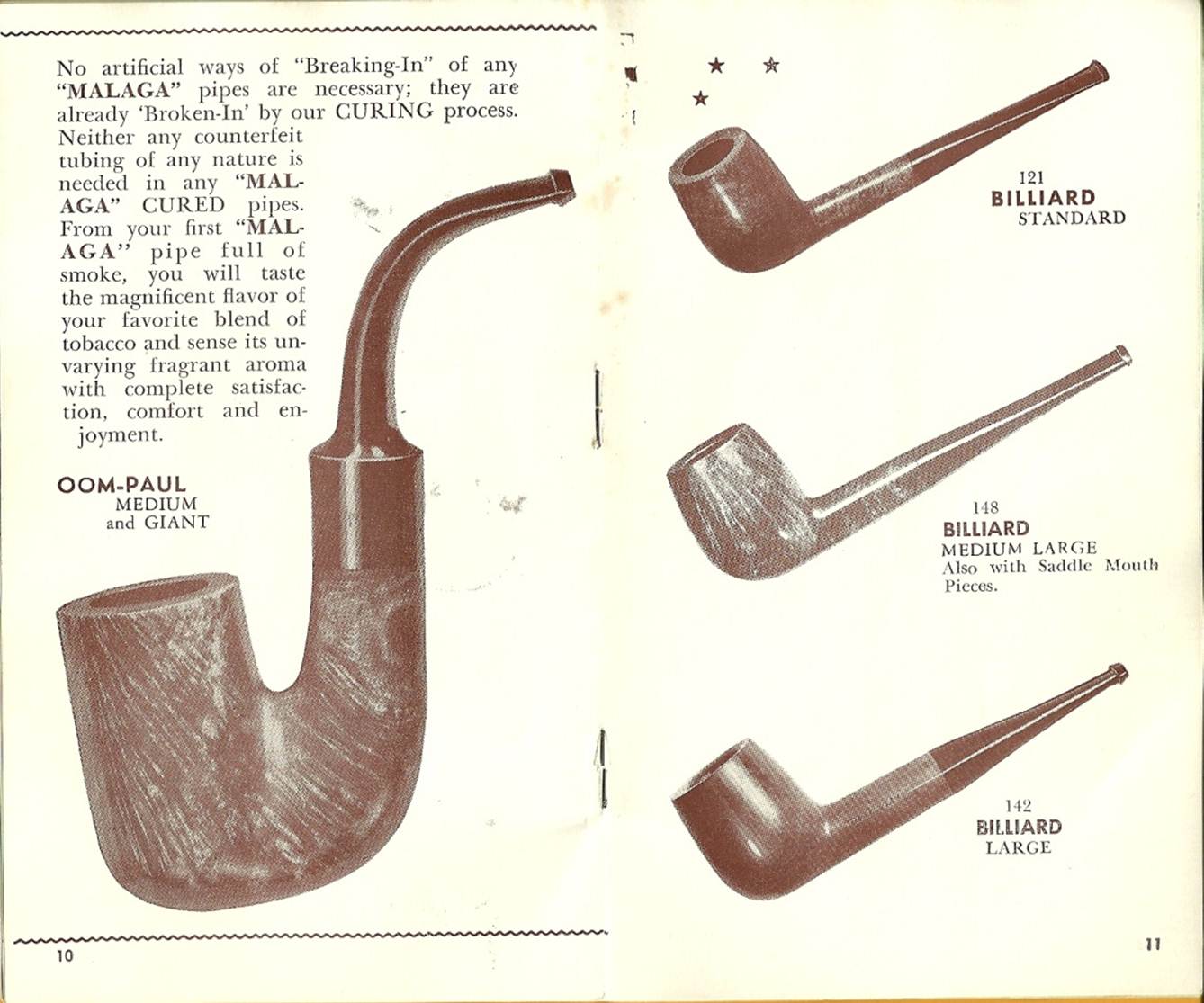
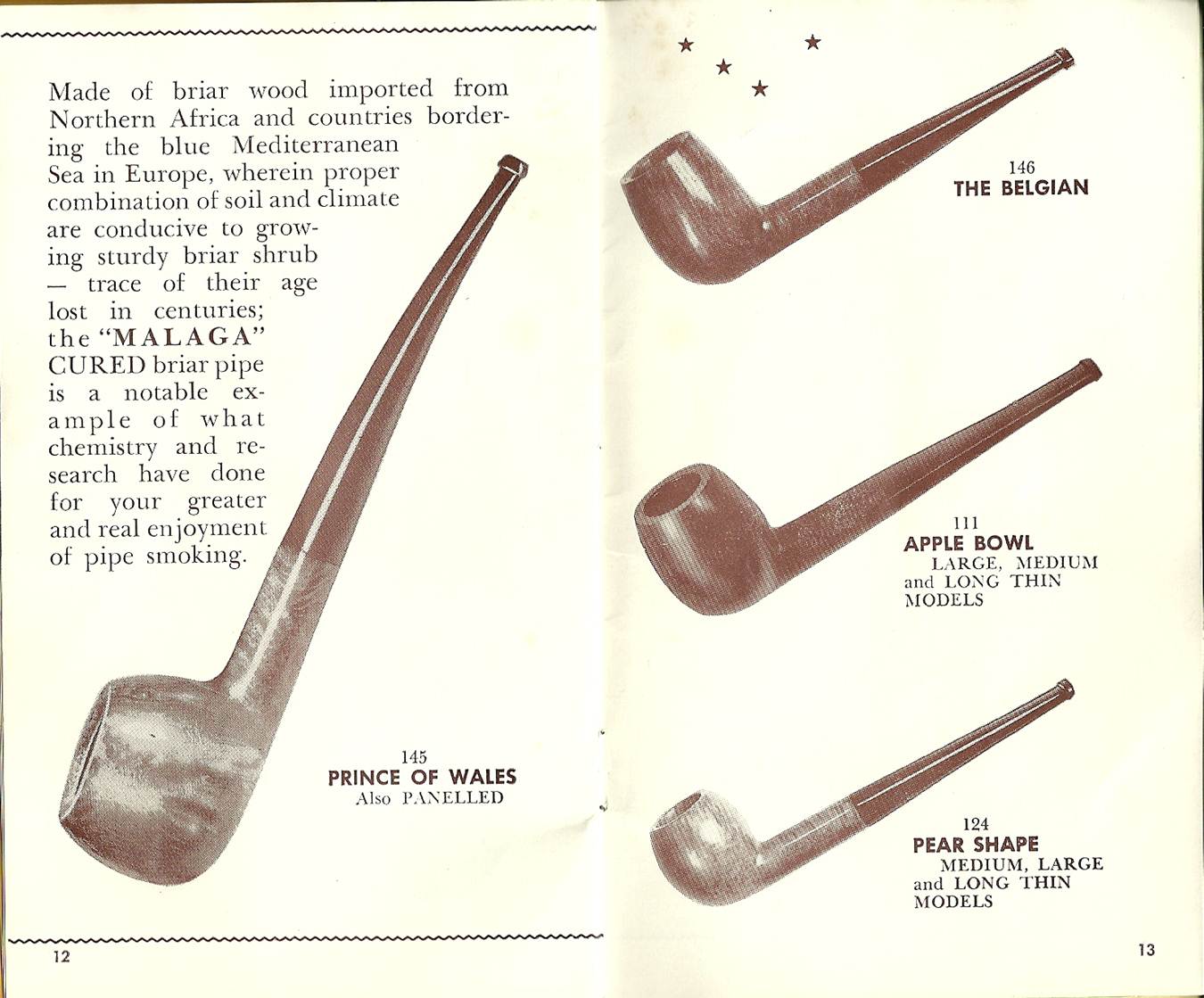
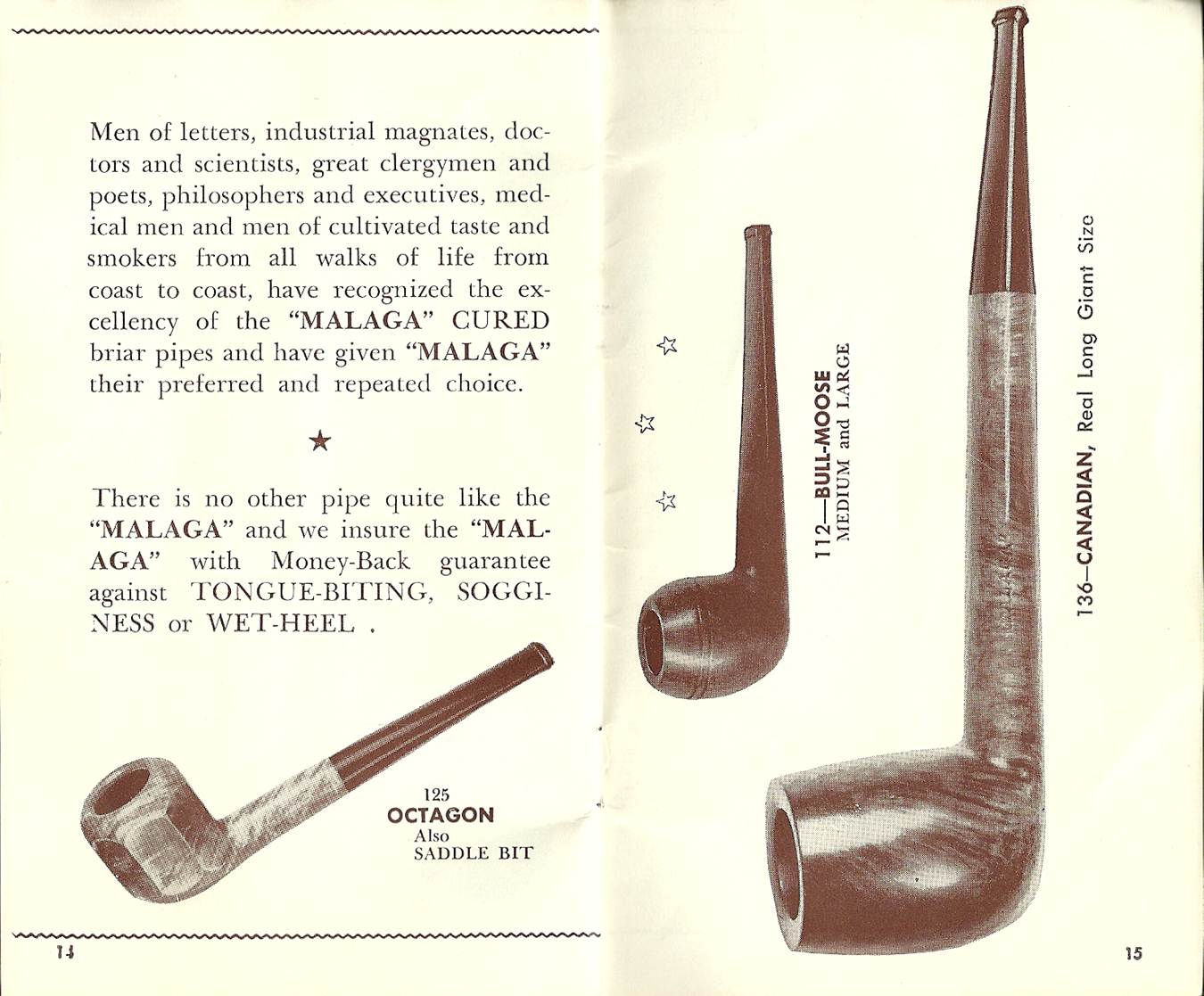
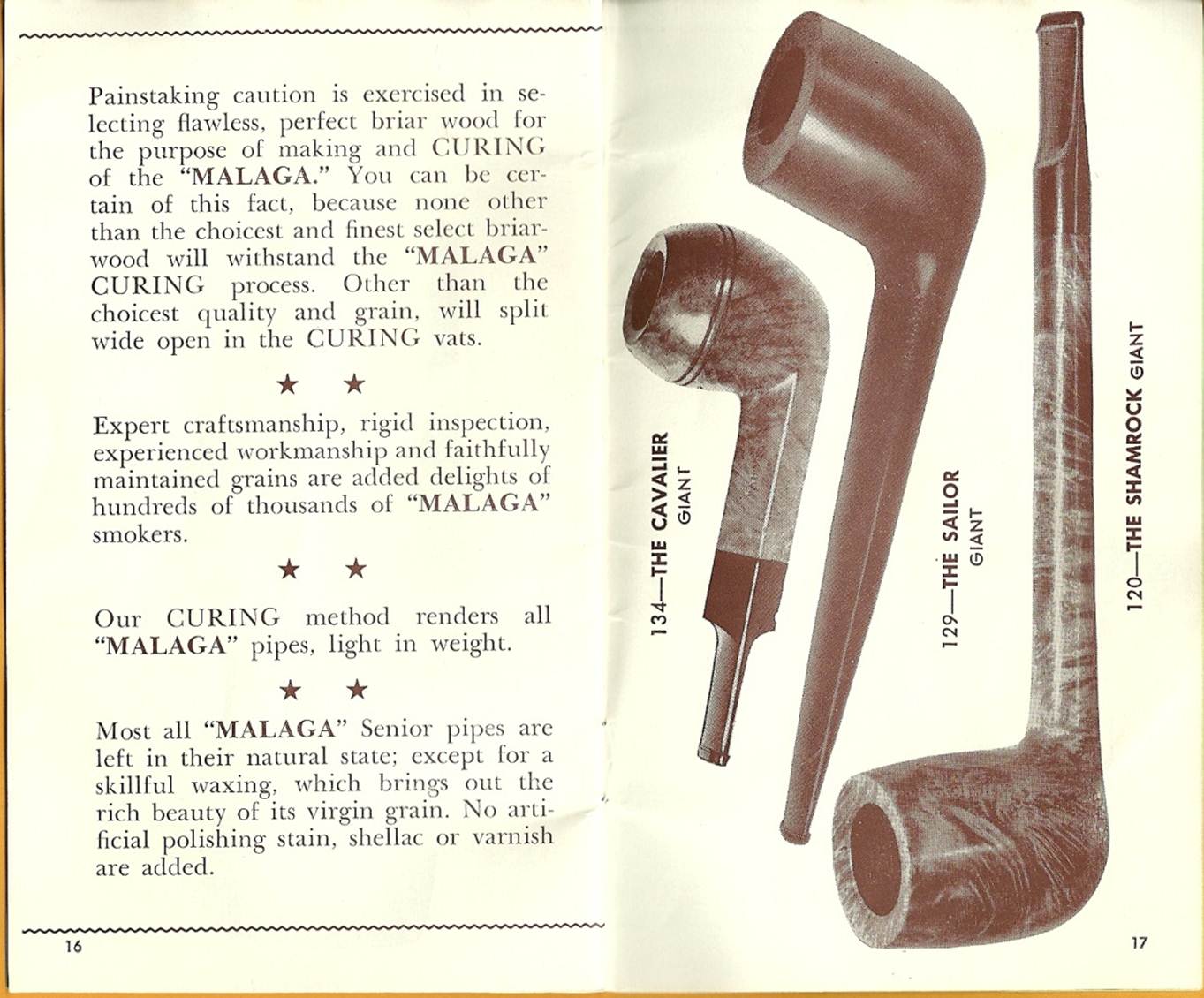
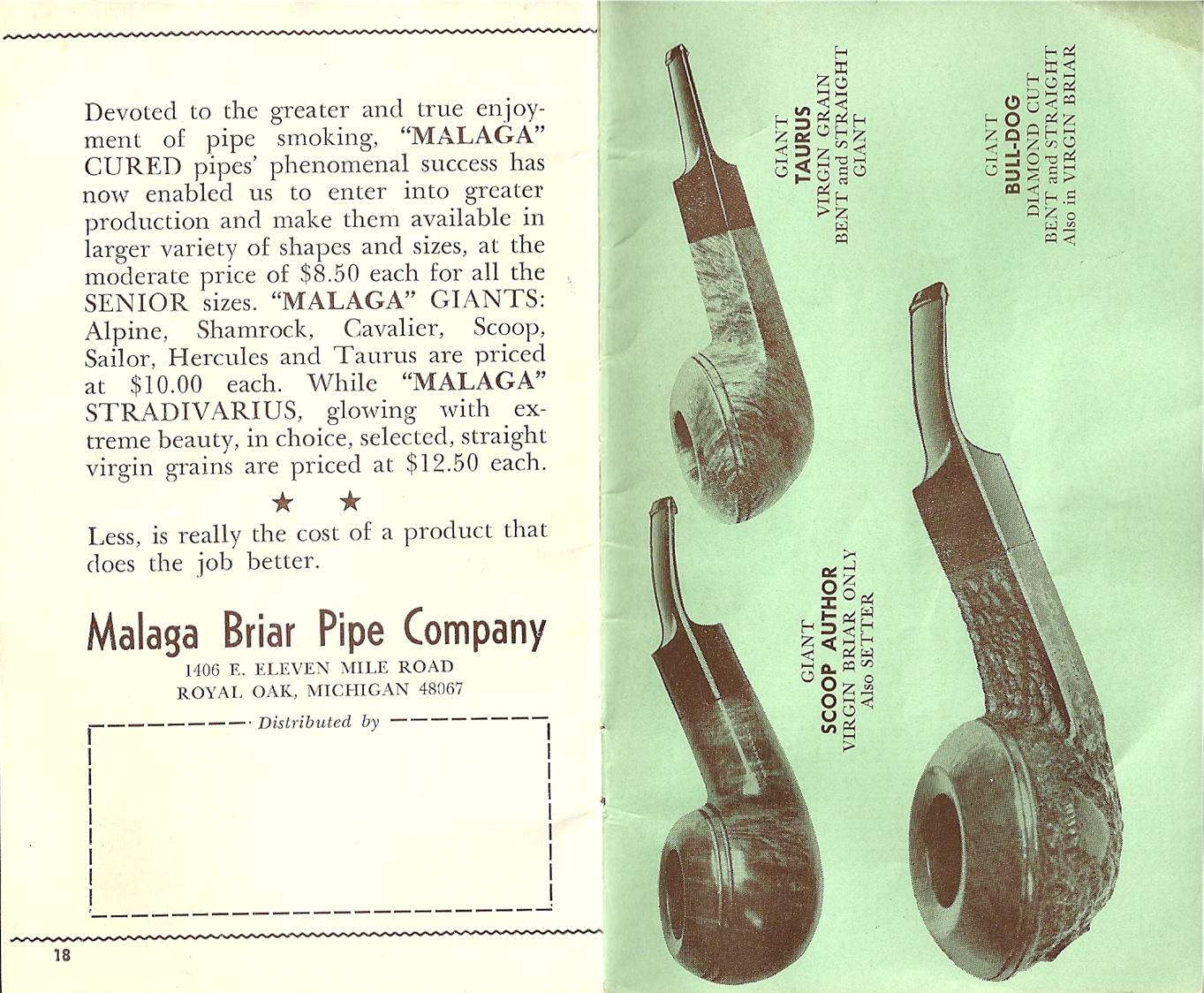
A few years ago I came across the pictures of George Khoubesser, the principal behind Malaga Pipes. I believe I was researching the pipes as I had come across a rusticated bulldog in a junk shop and wanted to know what I had. I sold that pipe and have kicked myself repeatedly for getting rid of it. I have been looking for just the right Malaga pipe since then. I thought I would share the photos and the old Malaga catalogue I have as an electronic copy.

Here are the photos of George Khoubesser

ImageImage

And here is the old catalogue

ImageImageImageImageImageImageImageImageImageImageImage

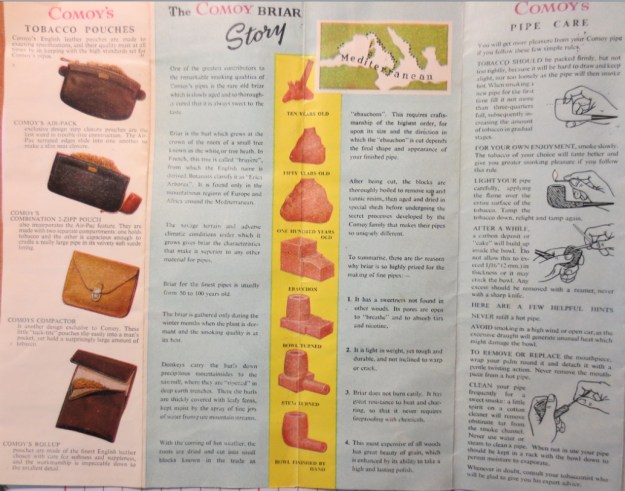
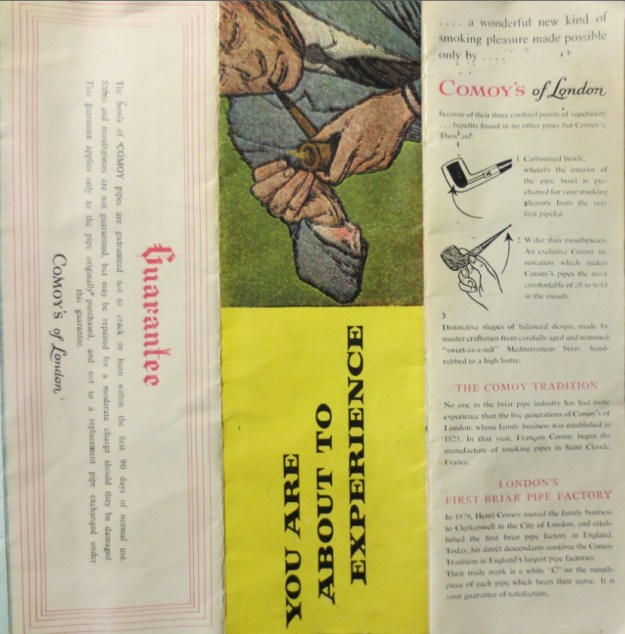
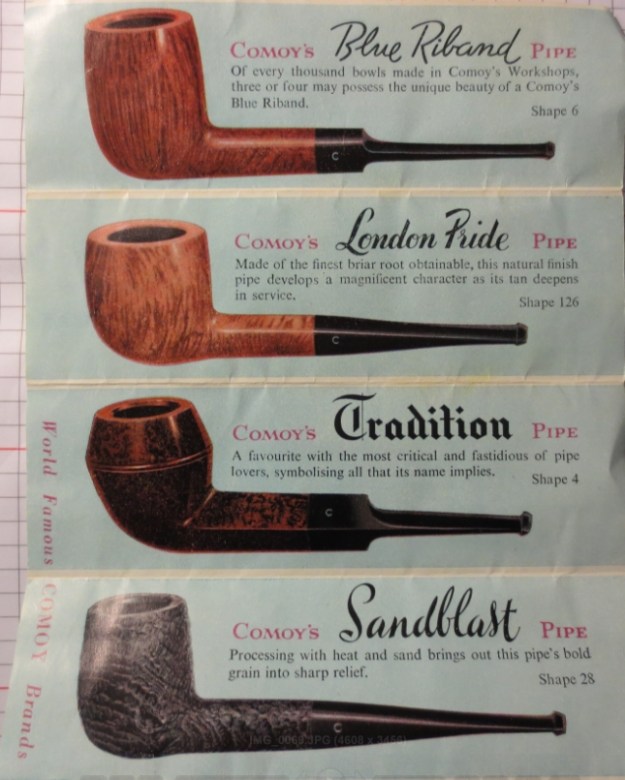
You Are About To Experience – A Comoy’s Pamphlet


Another old pamphlet I picked up at an antique store with an old Brigham pipe I found. It had the previous Love That Pipe Booklet and this one in the box with the pipe. The Comoy’s pamphlet has a copy of the guarantee, the shape chart, a guide pipe lines within Comoy’s, the Comoy’s Briar Story, Comoy’s Pipe Care and some of the pouches that used to be available through Comoy’s. Hopefully these photos are clear enough for you to get the idea of the interesting content of the brochure.

Comoys Comoys4 Comoys3   Comoys2 Comoys1

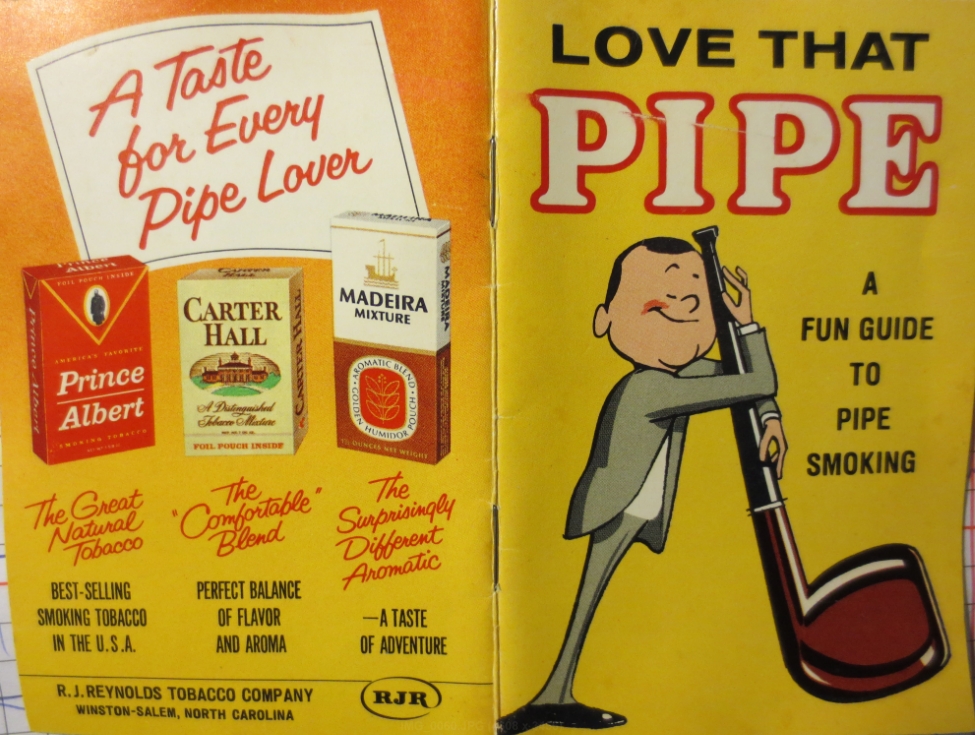
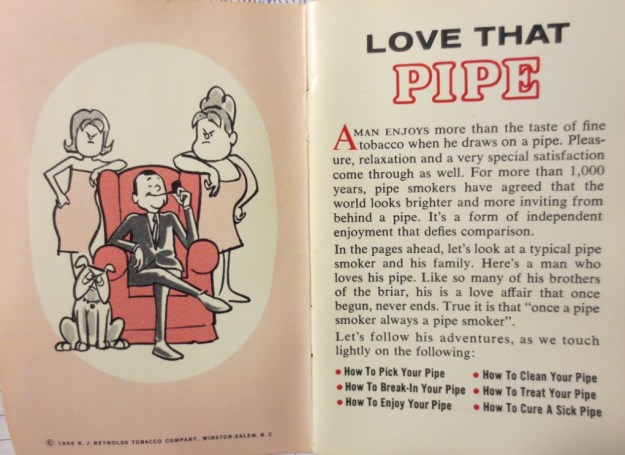
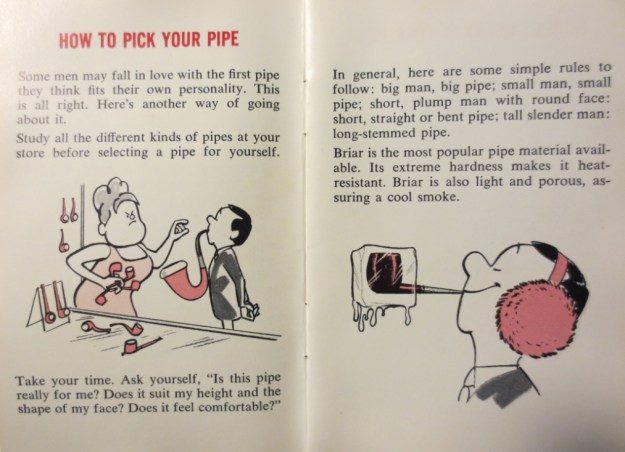
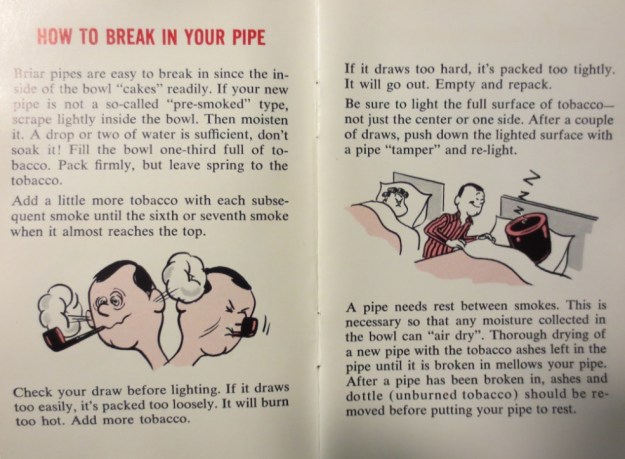
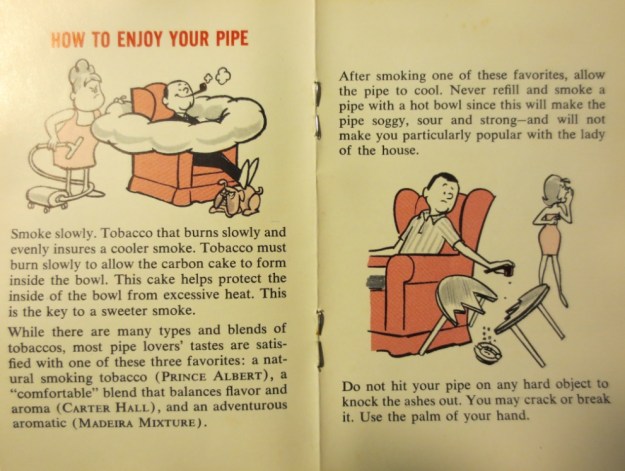
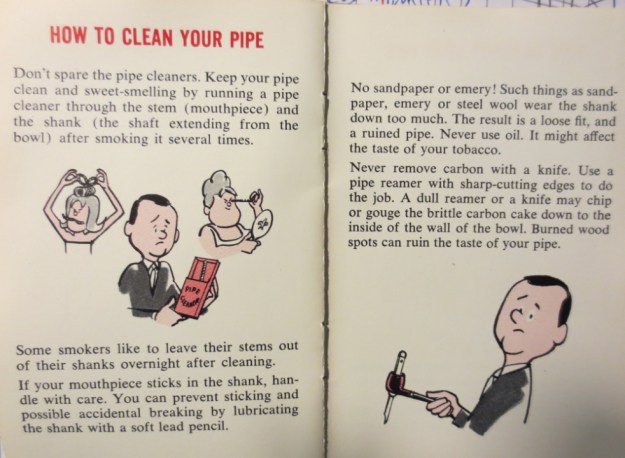
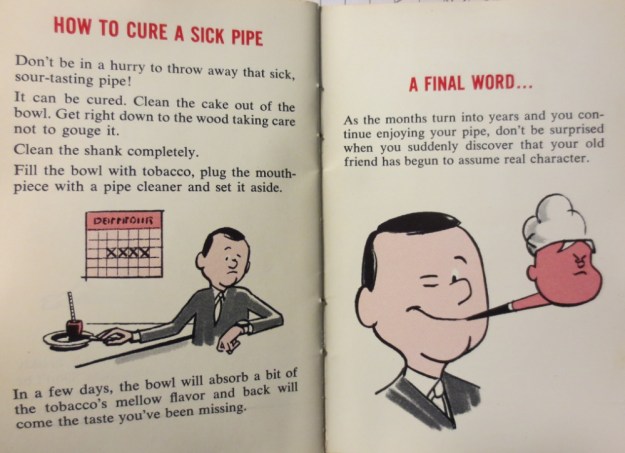
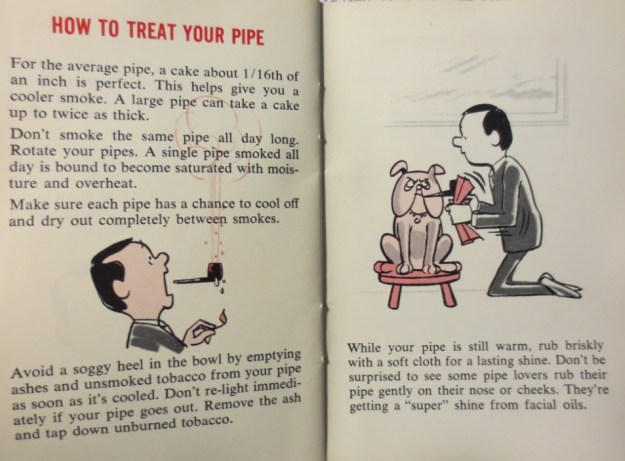
Love That Pipe – RJ Reynolds Tobacco Company


This little booklet “Love That Pipe” is subtitled A Fun Guide To Pipe Smoking. It is full of of helpful information for the long time pipe smoker and new comer to the hobby. It covers lots of topics from choosing a pipe to how to feed and care for it. Kind of an interesting blast from the past.
ImageLove2 Love3 Love4 Love5 Love6 Love7 Love8

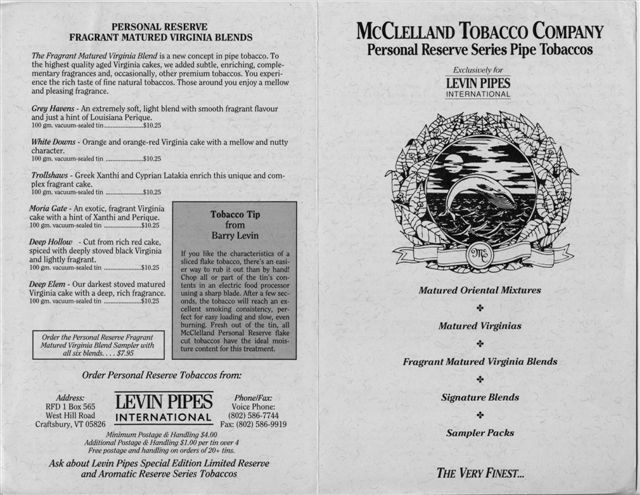
McClelland Tobacco Company – Levin Pipes Personal Reserve Series Brochure


I had this great old document on my hard drive and thought I would share it with you all. It is an interesting piece of pipe and tobacco history. Many of the tobaccos mentioned in this document are still made by McClellands and available in their current lines of tobaccos. The description are great.ImageImage

Eavesdropping on a Conversation on Manzanita and Mountain Laurel Pipes – Robert Perkins & Mike Leverette


Over the years I have kept this interchange between Robert Perkins and Mike Leverette on my hard drive on the computer. I found it enjoyable and educational at the same time. I wrote Robert and asked for permission to pass this interchange on to readers of this blog. Robert Perkins is a pipe maker http://www.RMPerkins.com and Mike Leverette was a friend and mentor to me with regard to the pipe and its history. There is not a day that goes by that I do not think of Mike and wish I could give him a call.

Here is the interchange between them:

Robert Perkins

You see, when imported briar started getting scarce during WWII, US pipemakers started looking for alternatives, and they were basically split into two camps: those who started using manzanita and those who started using mountain laurel.

Ever hear of a pipemaker called Breezewood? Well, Breezewood was one of the companies using mountain laurel as a substitute for Mediterranean briar, just like Monterey Pipes was one of the companies using manzanita, or “Mission Briar”.

ImageImage

Breezewood quietly closed its doors after the war because, as it turns out, all parts of the mountain laurel (Important: Not Manzanita) are “dangerously poisonous“.

Mountain laurel contains a powerful neurotoxin that, when ingested, causes convulsions, paralysis, and death within a matter of about six hours.

And somewhere along the way — I’m guessing way too late in the game for some — folks using mountain laurel as a substitute for Mediterranean briar figured this out.

I’m just gonna bet money that people started getting sick, maybe even dying: people growing and harvesting mountain laurel, people in pipe factories breathing all that mountain laurel dust, and possibly even folks who smoked those mountain laurel pipes, later on down the line.

People caught on. Maybe there were even some items in the news. And suddenly US pipemakers couldn’t put enough distance between themselves and mountain laurel pipe production fast enough.

The phrase “Imported Briar” became all the rage, and never again did US pipemakers attempt to grow or harvest briar — any kind of briar — ever again.

Just for the sake of reference, though, I should point out that nearly every single product on the market, right up until the 70s contained lead, asbestos, and so on. Heck, doctors used to put mercury thermometers in our mouths and not think a thing about it. A lot of this stuff, we just didn’t know any better.

But anyway, manzanita got caught up in all of this mess. It’s not poisonous, and it makes a fine smoking pipe, but who would want to take the risk, after that mountain laurel fiasco, huh?

You see, it’s kinda like mushrooms and toadstools. Nobody wants to pick mushrooms when there’s the significant risk that you might pick a few toadstools by mistake.

Why not just make soup and let other people worry about which one is a mushroom and which one is a toadstool?

Something like that, anyway.

So, just to recap, here:
* mountain laurel is poisonous;
* manzanita is NOT poisonous (somehow I feel like I am not emphasizing that enough)
* and after the war, the use of manzanita briar ended and the phrase “Imported Briar” became popular because US pipemakers had to disassociate themselves from the wartime practice of using mountain laurel as a substitute for Mediterranean briar.

So what do you think? Does that sound plausible?

And where is my deerstalker hat and my calabash pipe? I think I deserve a smoke.

Mike Leverette replied

Robert, my take on this subject is:

When briar was first used for pipes, everyone heralded it as the ultimate pipe wood and actually went wild over briar. In less than ten years from the first English maker to use briar, there were over a dozen briar pipe makers in London alone and all exclaiming the virtues of briar. Even the great salesman, Alfred Dunhill, exclaimed over the properties briar. So I believe everyone has, more or less, become brainwashed that briar is the only wood worth using for pipes. Surely, it is a great wood for pipes which I cannot say anything against but there are other great woods out there as well. We have been told many times over the past decade or so that briar is best for pipe making because it is A) ‘fire resistant,’ it is B) ‘very hard wood,’ it has C) ‘extremely tight grain,’ etc.

A) “Fire Resistant” – briar is wood and wood burns; there is no ‘fire resistance’ to it!
B) “Very hard wood” – yes it is hard, yet there are many woods out there which are harder per any hardness scale one wishes to use.
C) “Extremely tight grain” – again I agree. Briar has some tight grain, interesting grain and even beautiful grain. Yet there are woods out there with just as beautiful grain as briar.

The two alternative woods mentioned in this topic, manzanita and mountain laurel have been used for centuries, first by the American Indian and then the pioneers. Mountain Laurel was a favorite pipe making wood of soldiers on both sides during the War of Northern Aggression. Yes, before you ask, there were more wood pipes smoked in that war than clay pipes. Actually, the soldiers would make pipes from any wood handy but preferred mountain laurel. I am sure that the local population were using briar long before the fabled pilgrimage to Napoleon’s place of captivity, or was it his birth place? A very interesting article on pipes of other woods is Ben Rapaport’s article “Un-Briars: The Antecedents of Erica Arborea,” Spring 2001 issue of “Pipes and Tobaccos” in which Ben lists 29 different woods used for pipe making through the centuries.

Anyway, to stop preaching and return to the topic, brainwashed is too harsh a word for here but we have been treated to literature, word-of-mouth, etc about briar being the best and only wood for pipes to the point that immediately after WWII, everyone hasten to get briar pipes back on the market; hence forgetting about the two war-time substitutes.

Then again – – –
I wrote the above two days ago while waiting to be activated. During this time I have heard another pipe smoker state that he thought the pipes made from the two alternative woods, manzanita and mountain laurel, were placed into production so fast (because of the sudden stoppage in briar supply) that they were not cured properly which led to pipe smokers having problems with the pipes made from these woods. Therefore, the pipe smoking community of that day wished only for the imported briar after the war. This also makes a lot of sense!

_________________
Happy Puffing
Mike

Kirsten Generation 1, 1.5, 2, 3


Blog by Dave Whitney and Steve Laug

I wrote Dave Whitney for permission to use his material in this post. He wrote back granting that permission and asked that I credit it as coming from OLD BRIAR by Dave Whitney. Thanks Dave for allowing this information to be posted here. What follows is taken from correspondence with Dave that later became the article in his book.

Over the years I have had several Kirsten pipes of different ages and different composition. I have always found it difficult to tell the difference between the various pipes in terms of their age. I have ordered replacement parts from Kirsten in Seattle and I have also cannibalized older ones that I have here that are not useable. From these I have traded and bought others. One of the early ones I had stumped me in terms of the markings and stampings on the barrel and the bowl. I wrote to a fellow on one of the online pipe forums (I now know that it was Dave Whitney as I have since found an article by him on Kirsten pipes that I have read and have written to him. I kept the information he gave me and finally got around to editing it and putting it on the blog.) My questions to him revolved around how to tell age of Kirsten I had in my hands.

He replied with the below information. I found it very helpful and have not found other places to get this info so I thought I would post it here for all to use. (Since writing this I have found that Dave has developed the material in his book Old Briar – it should be consulted for more information).

“Kirsten’s are fun to try and figure out, especially when trying to buy then on eBay. Years ago, when I first started, I finally got a hold of a fellow who “Restored” Kirsten’s for quite a long time. He taught me about the Generation system, and it immediately made life easier. I could ask the seller to take the pipe apart and tell me about the O-rings. I could even call the company and refer to the Generation parts I wanted, and at that time they knew exactly what I was asking for…the last time I called was three years ago, so who knows now. This is all from memory……”

All Kirsten pipes are made up of five basic components – mouthpiece, radiator body or barrel, valve, bowl and bowl screw (a sixth component, the bowl ring, is found in many Kirstens. They were originally designed in 1936 by Professor Frederick Kirsten – the man who invented Boeing’s first wind tunnel – after he has been advised by his physician to stop smoking. Kirsten was looking for a way to trap the tars and moisture from tobacco and the Kirsten pipe was his solution.

Kirsten2

Generation 1 – 1936-1958
The wooden bowl on this generation connects directly to the metal barrel and there is no metal cup spacer. It is a pretty flush fit that goes flat against the barrel. On the underside of the metal barrel it is stamped with one or more of the following “Pat. Appl. For” (1936-38) and “Pats. & Pats. Pending” (1938-1958) over “Made in USA” – S” (or applicable size – S, M, L). There are no O-rings on the bit or metal shank insert. They came in the following models:

Straights

Companion First edition in rough finish.

S Standard 1st generation with full-length cooling fins

M Medium

L Large

A Aristocrat Extra large 1st generation

Generation 1.5 – transitional period – mid to late 50’s
This was an experimental stage. Kirsten realized that the bit and insert were prone to seizure as the condensate dried. This model always has O-rings on the metal insert, and later models can have O-rings on both. Same markings, as I remember it. There is no metal cup spacer under the bowl. This generation has O rings either on the valve or mouthpiece but no O rings on the other end. This transitional period is stamped “Pat. Pending” and “Pats. & Pats. Pending” some with “Made in U.S.A.  It seems like the company was using surplus parts to combine into this series of pipes. They came in the following models:

Straights

K Companion

M Medium

L Large

They came in a polished finish and later white Heritage finish. There were a few other Transition Models:

Thrifty – a nice early model with black offset valve that works in reverse. There is an O ring on valve but none on the stem

No Letter/No Name – This one is an unmarked short pipe with a different valve and O ring. There is not an O ring on stem

Generation 2 – 1958-1985
Markings on underside of metal shank “Made in USA XL” (or app. size) and “Pat. & Pats. Pending”. The presence of O rings on both the valve and the mouthpiece and the metal cup spacer under bowl are the biggest thing that separates the Generation 1 from the Generation 2 pipes. These O rings help provide a tighter seal when the stem and apparatus are inserted into the radiator stem. Instead of “O” rings, the machining of the Generation 1 pipes was so precise the fit was exact. This generation came in the following models:
Straights

K Companion

G Gem

S Sportsman

SX Sportsman Brass

M Mariner

MB Mariner Black

L Lancer

Quarter-Bents

A Aladdin

V Vagabond

CX Cavalier Brass

T Tyrolean

Full bents

W Westerner

B Beau Geste

P Premier

F Firesider

Generation 3 – 1985 to the present                                                                         

All current models stamped “Made in U.S.A.” and all have O rings on both the valve and stem. They come in the following models:

Straights

JX Jewel Brass

M Mariner

L Lancer

Quarter-Bents

RX Regent Brass

H Horizon

Full bents

EX Esquire Brass

DX Designer Brass

FOOTNOTE ON VARIATIONS IN LETTER DESIGNATIONS:  Generally speaking, the X added to a model letter like “S” stands for brass tone finish, i.e., “SX.” There is one exception to this: In the 1960s Kirsten made a brass tone model with an “Eternalum” finish that gave the brass tone an antiqued look. They were marked with a “X” designation following the model letter. The B added to a model letter like “M” stands for black finish, i.e., “MB.”

He ended his answer to the questions with this great note: “Now the fun part….this is how they came from the factory. What people did to them after they got them is what makes it an inexact science. Parts for the different sizes are not interchangeable, except for the bowls. I have a Gen 1 – M and -S…nothing interchanges but the bowls. If you get a Gen 1 that has been badly abused, you can end up losing either the bit or metal insert, or both, no matter what you do or how long you try.”

References used:

Whitney, Dave (2009) Old Briar – Pipe smoking on a budget. pipesbywhitney

http://www.kirstenpipe.com/