
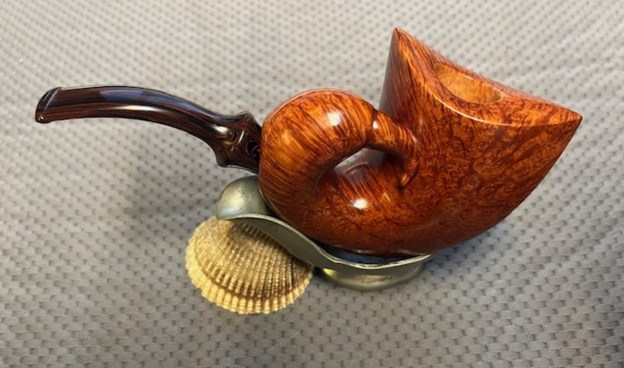
by Steve Laug
I was recently contacted by a fellow here in Vancouver about some pipes he had. He was referred to me by a local pipe shop. I was unclear if he wanted them cleaned or exactly what. When he came on the weekend he brought six pipes in two pipe boxes for me to have a look at. I spoke with him about the cost of restoring them. It finally became clear to me (I guess I am slow) that he wanted to sell the pipes. He was tasked with the job by his sister in law as the pipes were from her late husband’s collection. As I unpacked them it was clear that they were some nice pipes and some were higher grade. All but one was smoked and had the heavy smell of fruity aromatics to them. Some had cake in the bowl and lava on the rim. Of the six, four of them had significant rim damage – bowls out of round, burn marks, cut marks. The saddest part is that the damage was most significant on the higher end pipes. Most of them had tooth marks in the stems. Obviously, they had been his late brother in laws favourites and he had enjoyed them. He left them with me and I went over them, researched the brands and wrote up an offer for him to present to his sister in law. By the end of the day we had a deal. The six pipes now have a new home and five of them had fruity smell needs to be exorcised! The Curled looking one is unsmoked.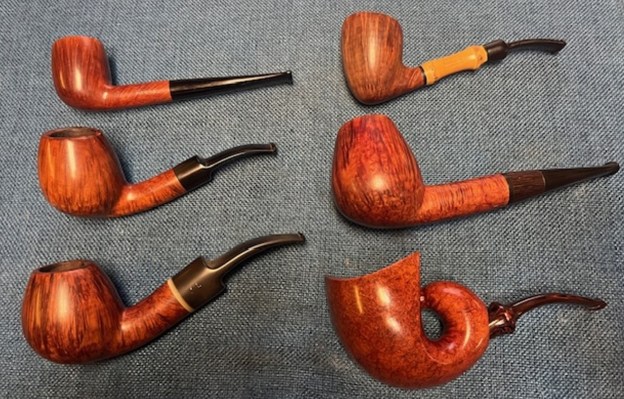 I turn my attention to the last of the six pipes I purchased. The bottom right pipe of the six is unsmoked. It is another beautiful looking pipe that is the most unique of the lot. It is a Scorpion shaped Bent pipe stamped on the underside of the shank and has a Mouse logo with an MS as part of the stamp [over] Manuel Shaabi [over] Handcut [over] Germany. To the left of the stamping moving up the bowl are three lines like waves. The bowl had beautiful birdseye grain around sides and cross grain on the eye shaped rim top and underside of the shank. The shape is impeccably done. The finish was absolutely beautiful and unblemished. The bowl was unsmoked and there was no cake or lava to worry about anywhere around the bowl. The inner edge of the bowl was flawless and round. The inside of the bowl was polished smooth. The fancy turned saddle stem was Cumberland and no tooth marks or chatter on the stem. The tenon was Delrin and the fit was perfect. The shank had been drilled and the stem was inset in the shank. There was no stamping on the stem. The pipe came with the original Shaabi box and soft felt pipe sock with the Shaabi logo on it.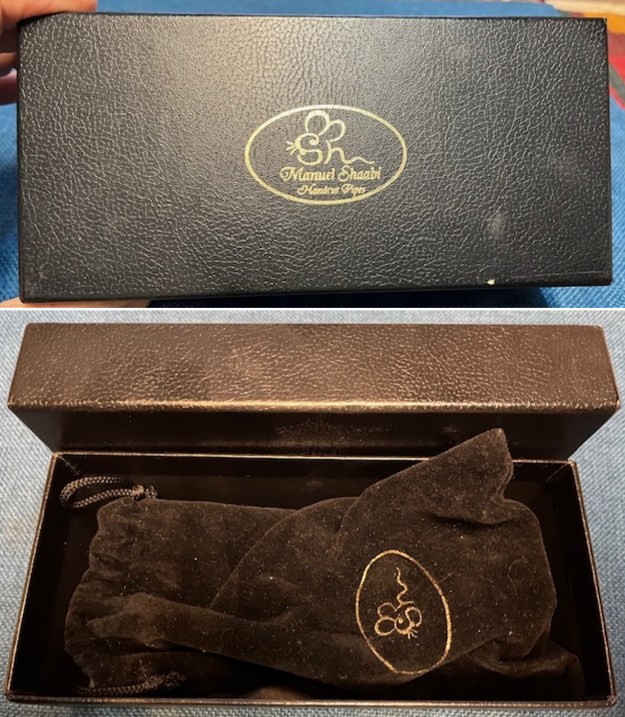
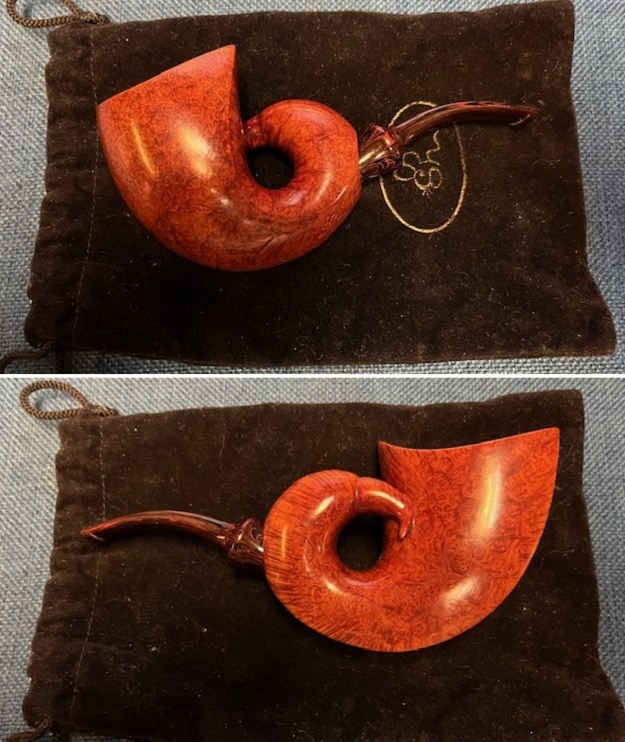
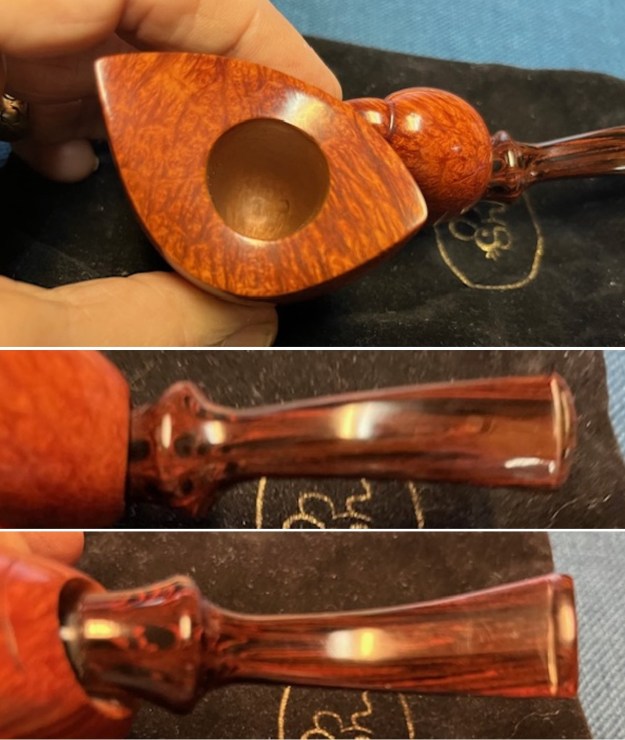
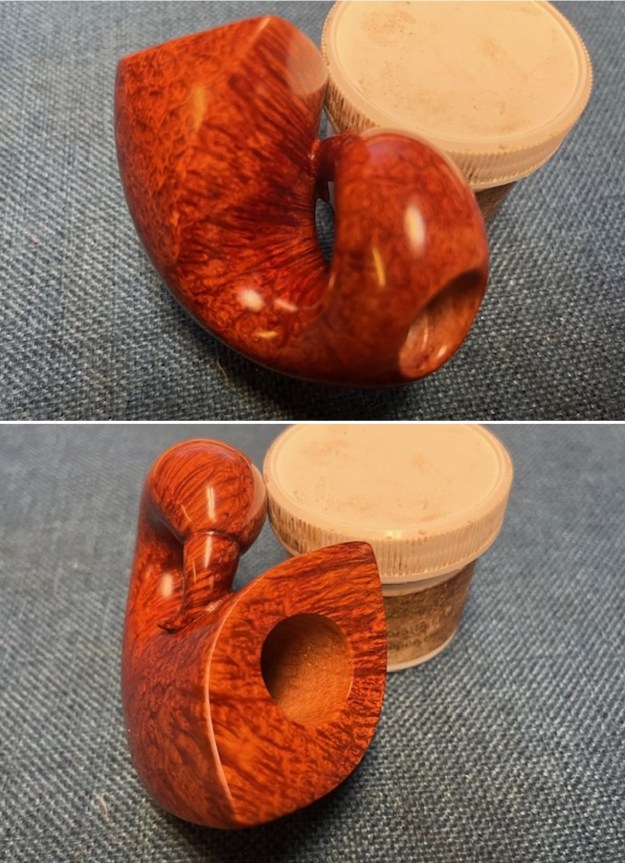
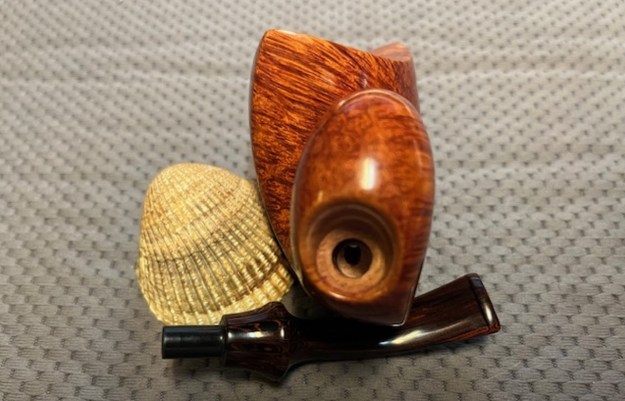
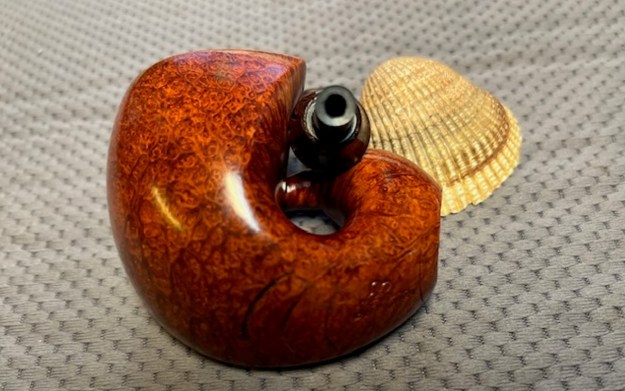
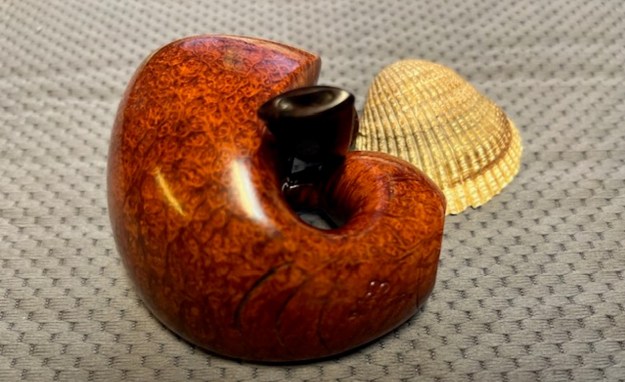
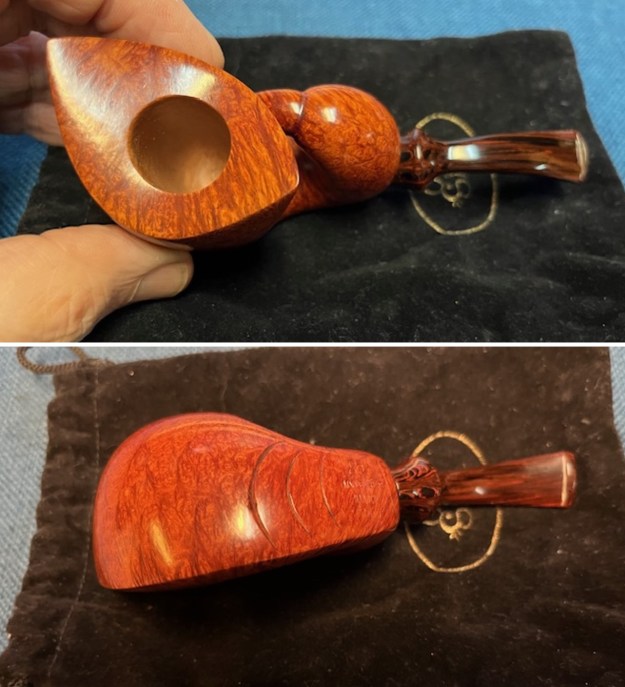 I took photos of the bowl and rim top to give you an idea of what I see. This is a uniquely carved and beautiful looking Scorpion pipe. The unsmoked condition and the pristine Cumberland stem on the pipe make a gorgeous pipe!
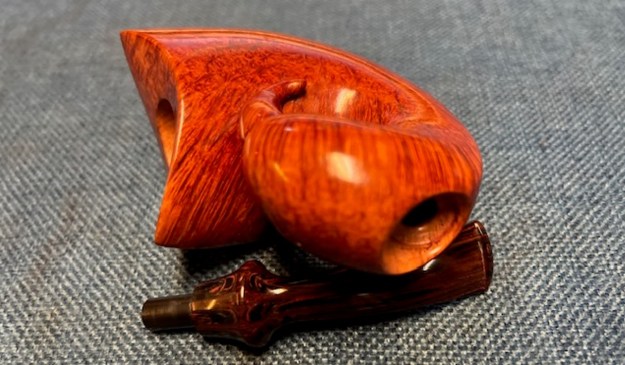
 I took a photo of the stamping on the underside of the shank. It is clear and readable as noted above. I took a photo of the bowl with the stem removed to give a sense of the proportion and appearance of the pipe.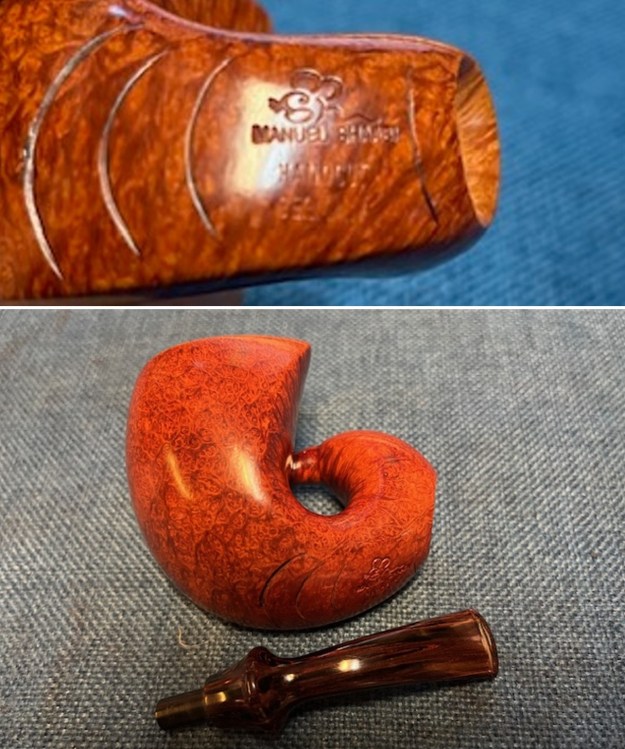
 To help me understand the pipe and its maker a bit more I turned to Pipephil’s site and read what it said about Shaabi’s Handcut pipes (http://pipephil.eu/logos/en/logo-s6.html). I have included a screen capture of the section below as well as the side bar information below the capture.
 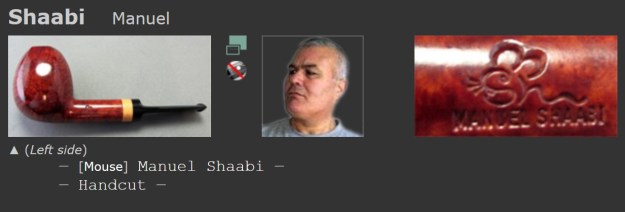 Artisan: Manuel Shaabi (born 1950 in Lebanon) was a cabinet maker when he decided in 1993 to learn pipe carving. He started as professional pipemaker in 1998.
Next, I turned to Pipedia for more information and detail (https://pipedia.org/wiki/Shaabi_Pipes). I find that the articles there often fill in some more information on the relationships and history of a given brand. In this case I found that also true. I quote it in full below.
Manuel Shaabi was born in Lebanon in 1950. He apprenticed as a wood sculptor and cabinet maker. In 1979, he left, because of the Lebanese civil war, for Bavaria, Germany. There he worked making one a kind furnishings and restoring old sculptures and figurines in churches and cathedrals.
In 1984 he moved to Hamburg, Northern Germany because of his daughter’s asthmatic condition. Unfortunately, he couldn’t find enough work, so he went back to school and completed his professional training. His final test was to make a trunk. He made such a fine trunk that he was offered a position at the school as an instructor.
In 1993, having won numerous awards for his cabinet making, he gave it up as it didn’t satisfy his creative needs. He started over at Dan Pipe learning to repair pipes. He quickly mastered the art of pipe making and in 1998 left to start his own studio.
Shaabi’s’ pipes have an unheard of degree of hand craftsmanship. He feels a drill doesn’t cut true for the tobacco chamber so he uses a special knife. His draft holes are 4mm. “The draft hole should meet the tobacco chamber just a little bit above the the bottom”. He believes this prevents tobacco residue coming up through the air hole and stem.
Manuel Shaabi is probably the only pipemaker who combines the skills of a wood carver, cabinetmaker and pipe smith. His pipes combine the best of European design with a Middle Eastern aesthetic. He has secured some of the best wood on the planet and they smoke as good as they look. Each pipe has an individually hand cut Lucite stem…
I did a Google search for the Manuel Shaabi Nautilus as that is what I thought it was in terms of the shape. Instead of a Nautilus it came up with quite a few pipes that were very similar in shape. One of them was the same style pipe as this one on Esterval’s Pipe House (https://www.tecon-gmbh.de/product_info.php?manufacturers_id=50&products_id=10834). That link gave me the name of the pipe shape that Shaabi called a Scorpion. I have included a photo of the pipe that was on the site.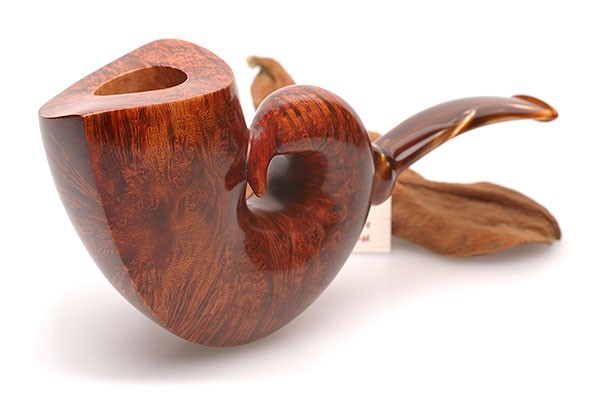
Now I knew what I had in hand – a Handcut Manuel Shaabi Scorpion that was a real beauty. Knowing that it was new and unsmoked was a bonus. In terms of the six pipes I had purchased in the lot this unsmoked beauty was very high end.
I rubbed the bowl and shank down with Before & After Restoration Balm. I worked it into the surface of the briar with my fingertips to clean, enliven and protect the briar. I let the balm sit for a little while and then buffed with a cotton cloth to raise the shine. The Balm did its magic and the grain stood out.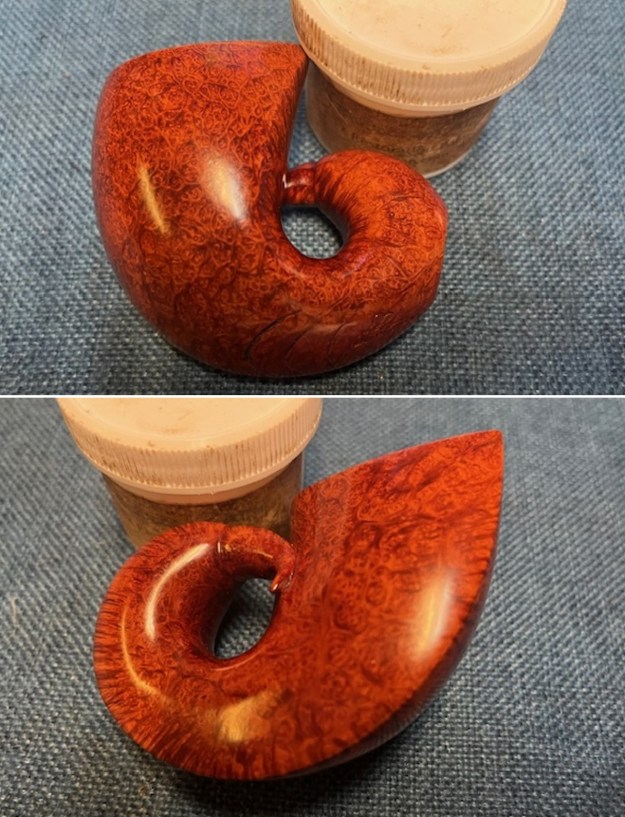
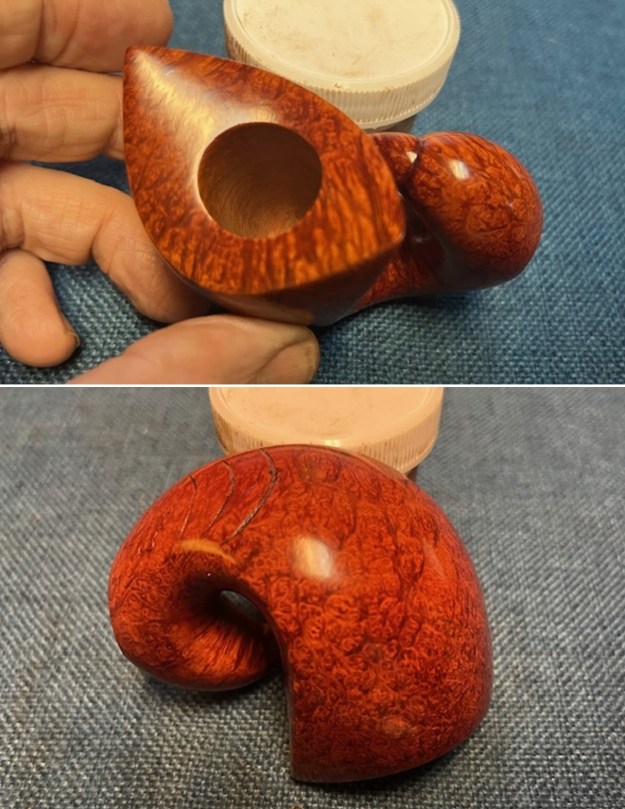
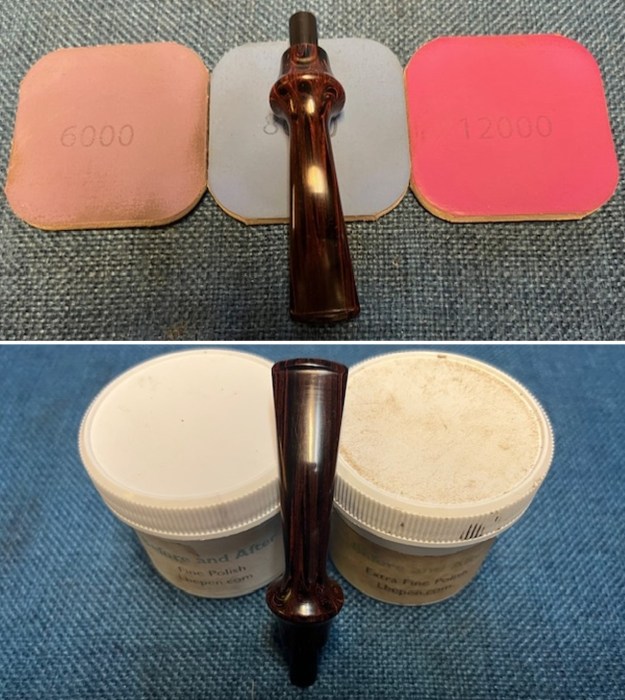
 I polished the stem with micromesh sanding pads – 1500-12000 grit pads. I wanted to remove the light oxidation on the stem surface and bring back the shine. I wiped it down with a damp cloth after each sanding pad. I used Before & After Pipe Polish – both Fine and Extra Fine to further polish the stem.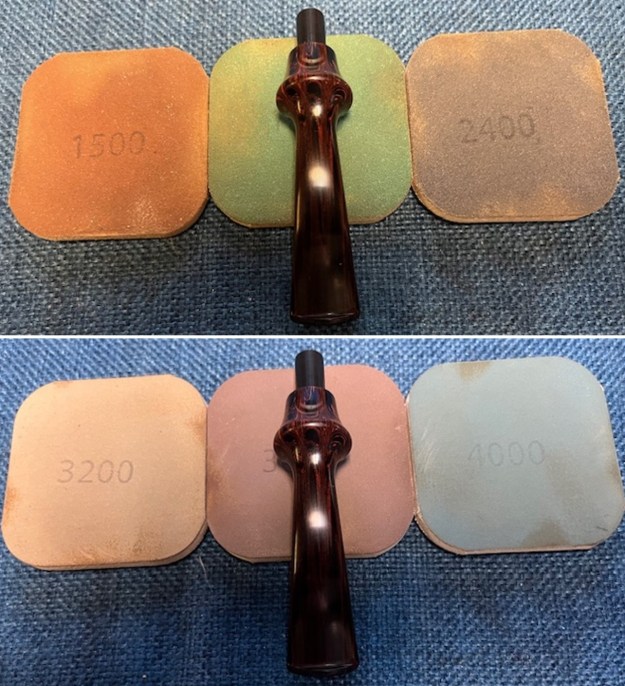
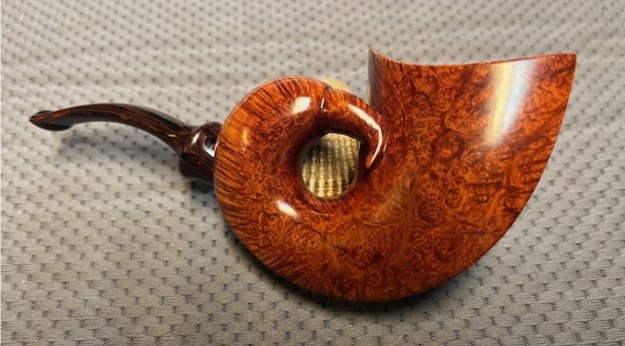
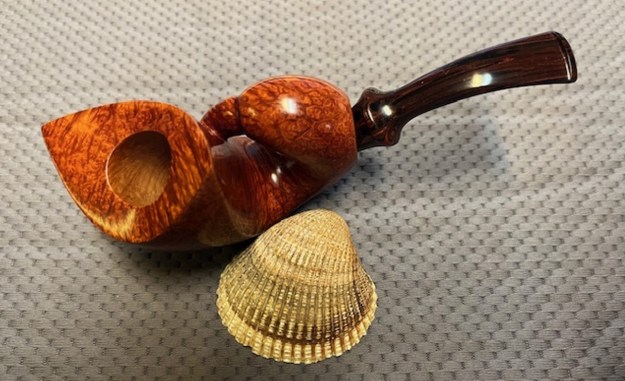
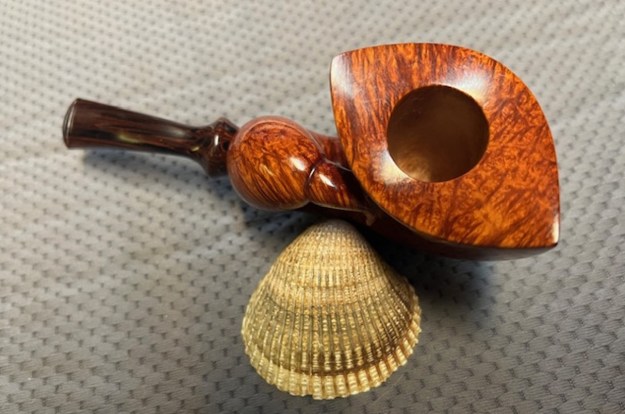
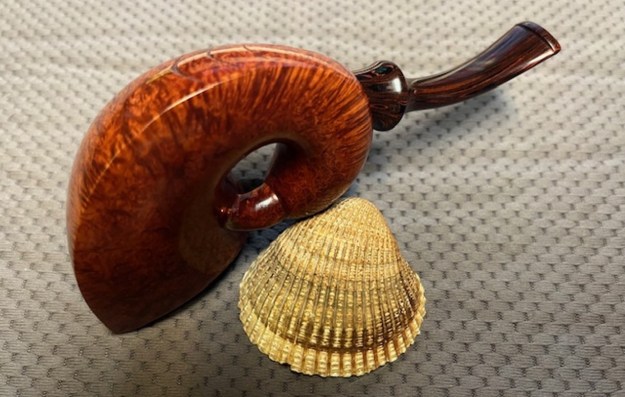
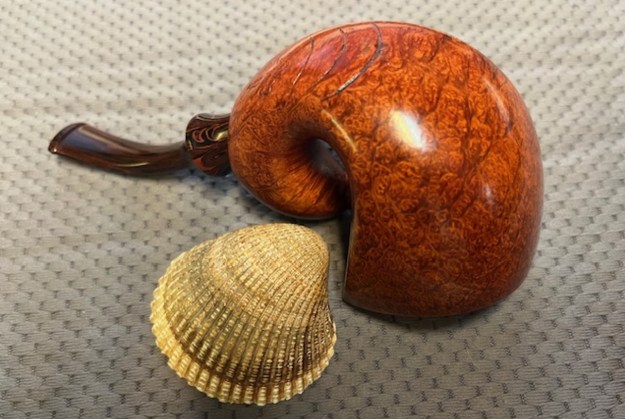
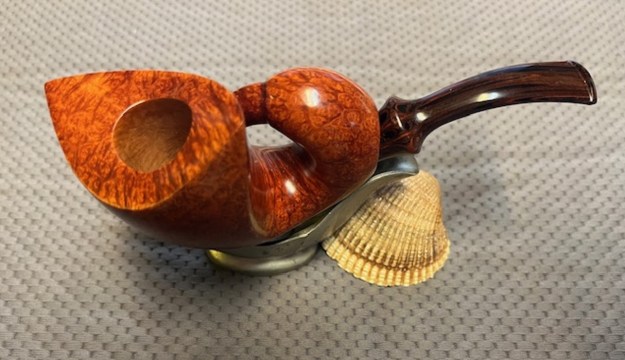
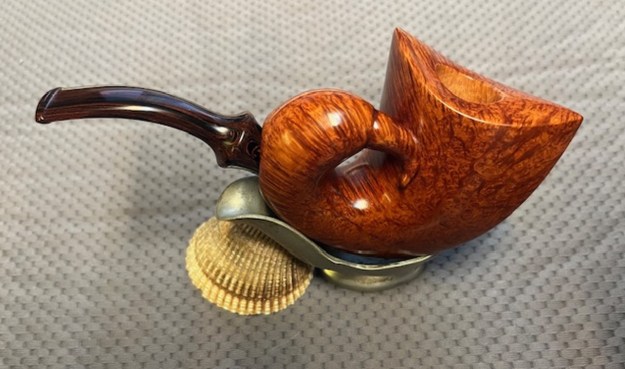
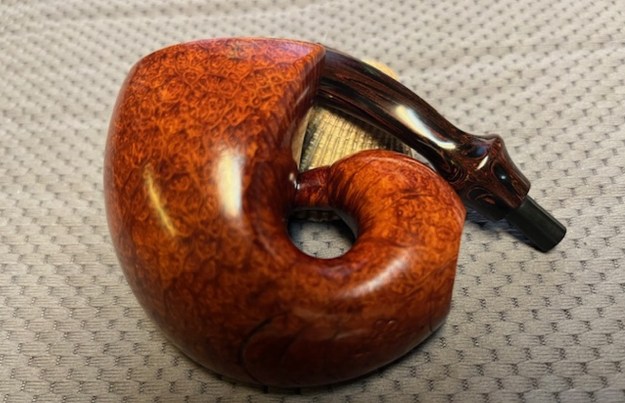
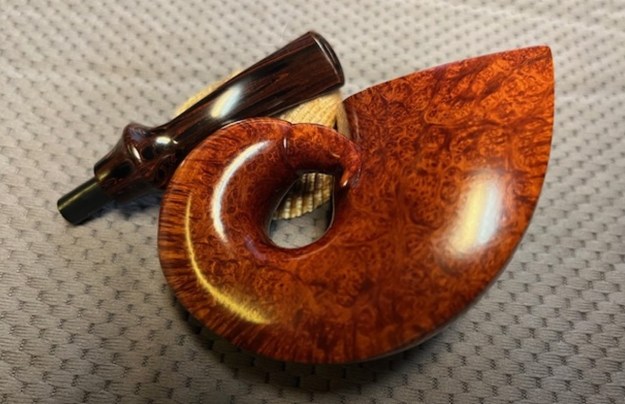
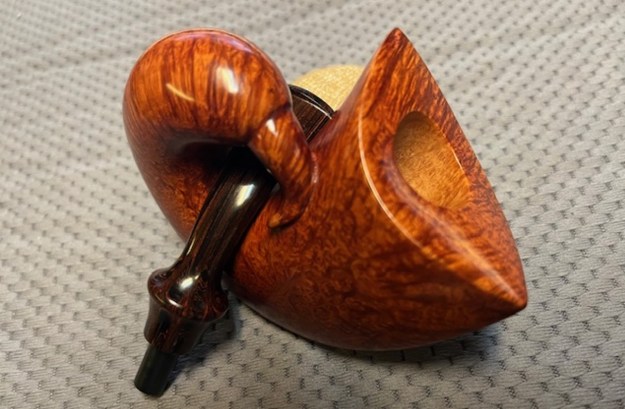
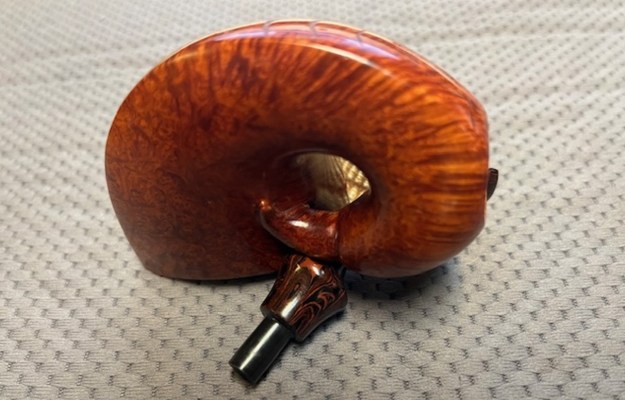
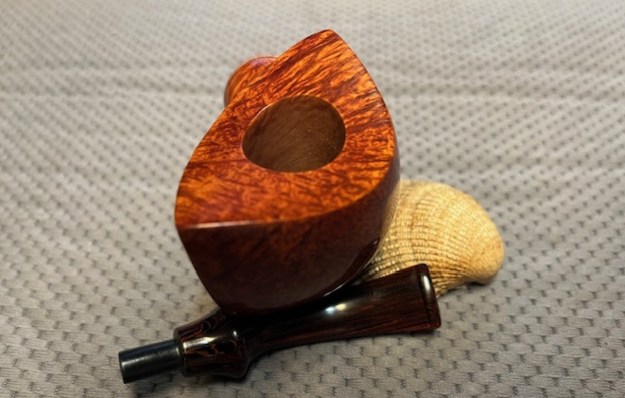
 I put the German Made Manuel Shaabi Handcut Scorpion and its fancy Cumberland saddle stem back together. The rich browns and blacks of the contrasting stain makes the grain come alive with the polishing and waxing. I carefully buffed the pipe with Blue Diamond on the buffing wheel using a light touch on the briar. I gave the bowl and the stem multiple coats of carnauba wax on the buffing wheel and followed that by buffing the entire pipe with a clean buffing pad. I hand buffed the pipe with a microfiber cloth to deepen the shine. The finished Manuel Shaabi Handcut Scorpion really is a beauty and fits nicely in the hand and looks very good. Give the finished pipe a look in the photos below. The dimensions of the pipe are Length: 5 ½ inches, Height: 3 inches, Outside diameter of the bowl: 1 ½ inches wide x 2 ¼ inches long, Chamber diameter: ¾ of an inch. The weight of the pipe is 2.93 ounces/83 grams. This pipe will soon be on the Pipes From Various Makers Section of the rebornpipes store if you would like to add it to your collection. Send me a message or an email. Thanks for reading this blog and my reflections on the pipe while I worked on it.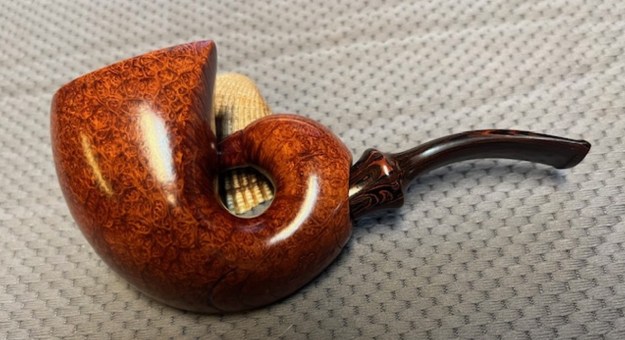
 rebornpipes