Daily Archives: October 1, 2014

Royal Oak Briars “Huntsman” Review


Blog by Al Jones

I completed my first pipe commission this week with, working with  James Aydlott, who makes “Royal Oak Briars”.  James has been showing his creations on the Bulldog Lovers Facebook page for several months.  I was very impressed with his shaping and stems, particularly with the classic shapes.   Initially I didn’t realize his pipes were branded “Royal Oak Briars”, which I had seen advertised on Micheal Lindners site, “The Pipe Rack”.  Micheal Lindners pipes are very highly regard and I met him last year in at the NYC show.  James has been working in Micheal’s shop, and in the past two years started his own line.    The connection to Micheal Lindner gave him was definitely a factor in the project, as to that point, I had not yet seen a Royal Oak pipe in person.  Thru Facebook and several pipe forums, I was able to communicate with folks who owned Royal Oak Briars and all were quite pleased and encouraged me to proceed.  James was very upfront with me and he was clear that if I didn’t care for the final product, I was under no obligation to complete the purchase.  As you will read, I was completely thrilled with the finished pipe.

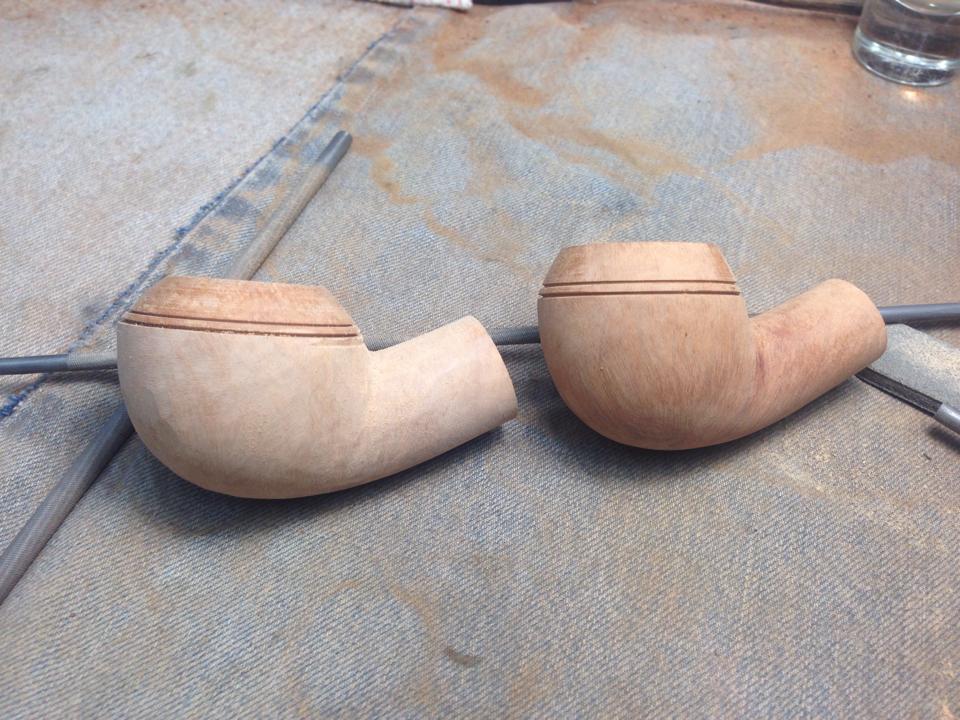
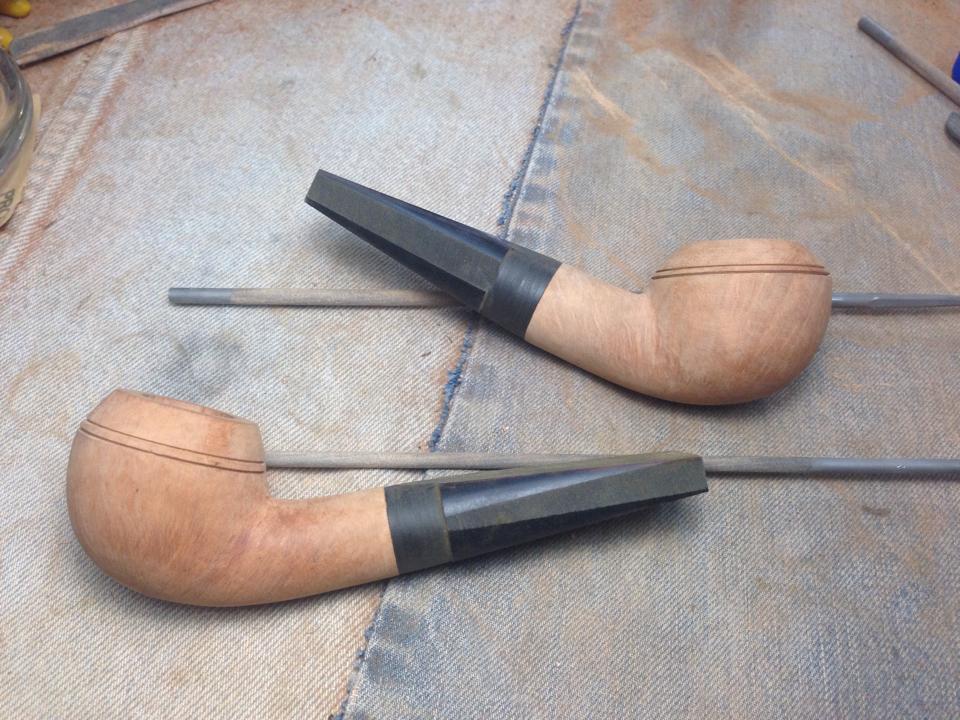
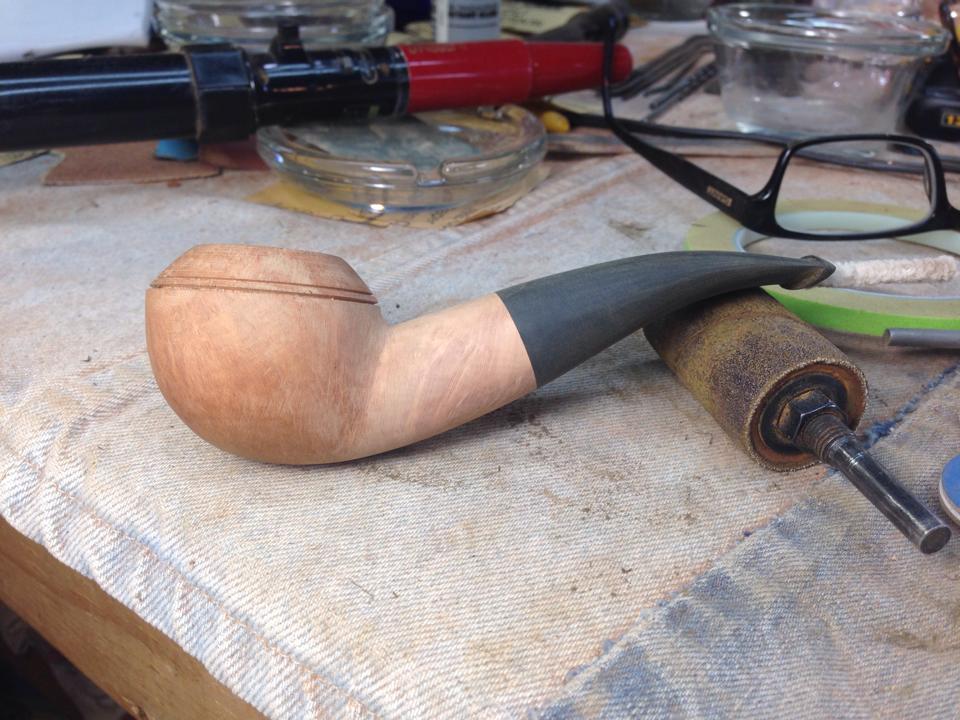
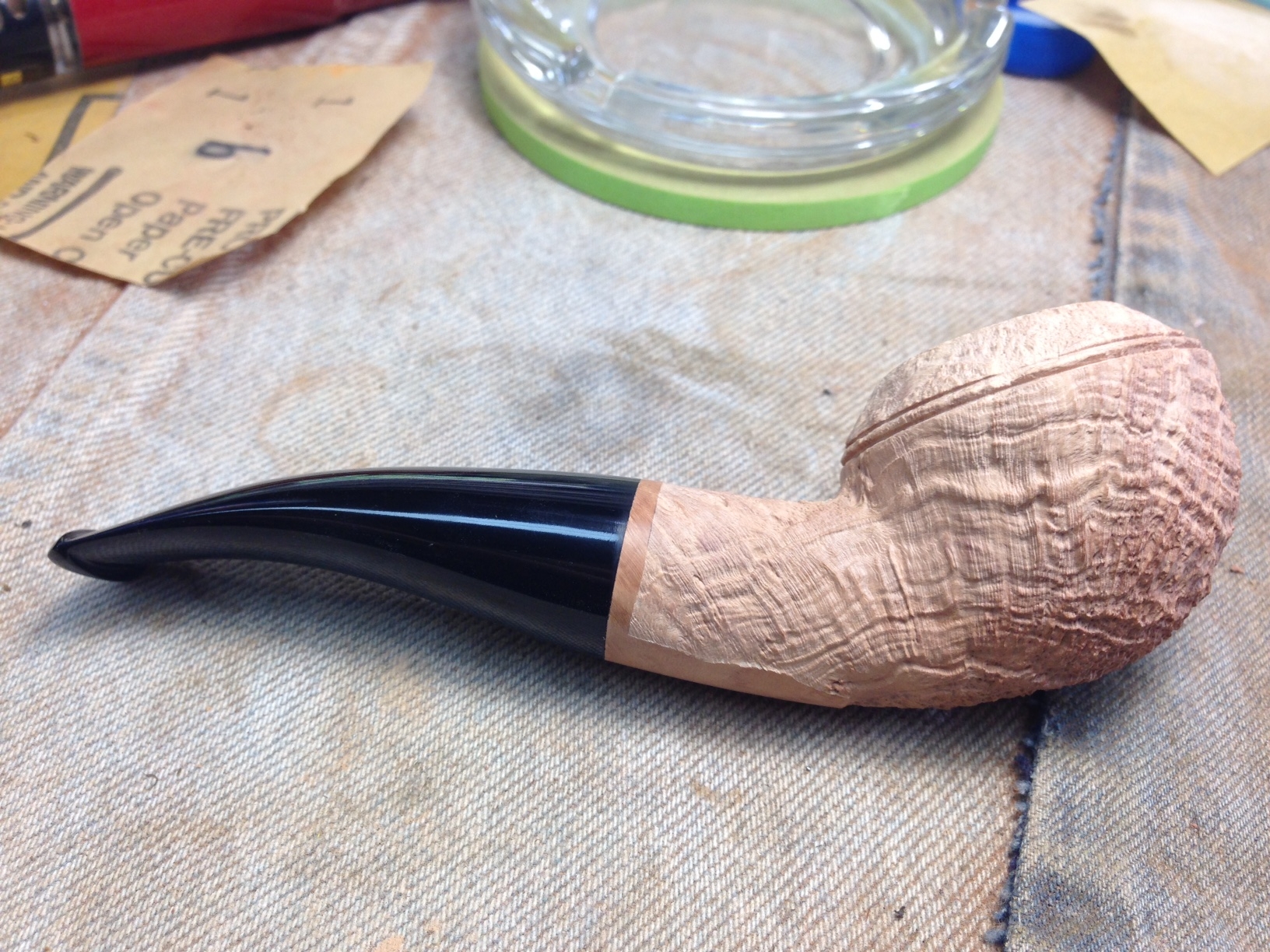
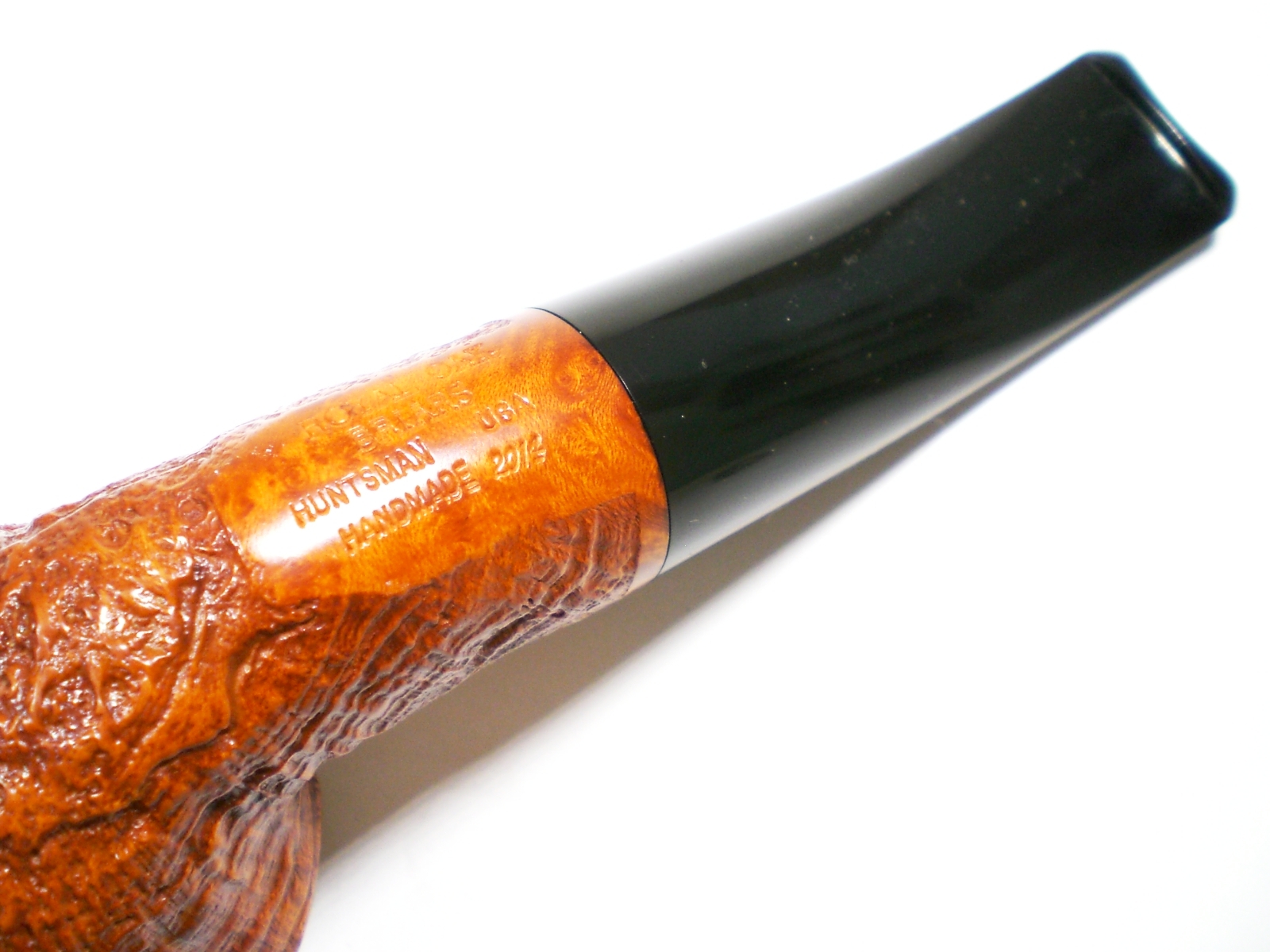
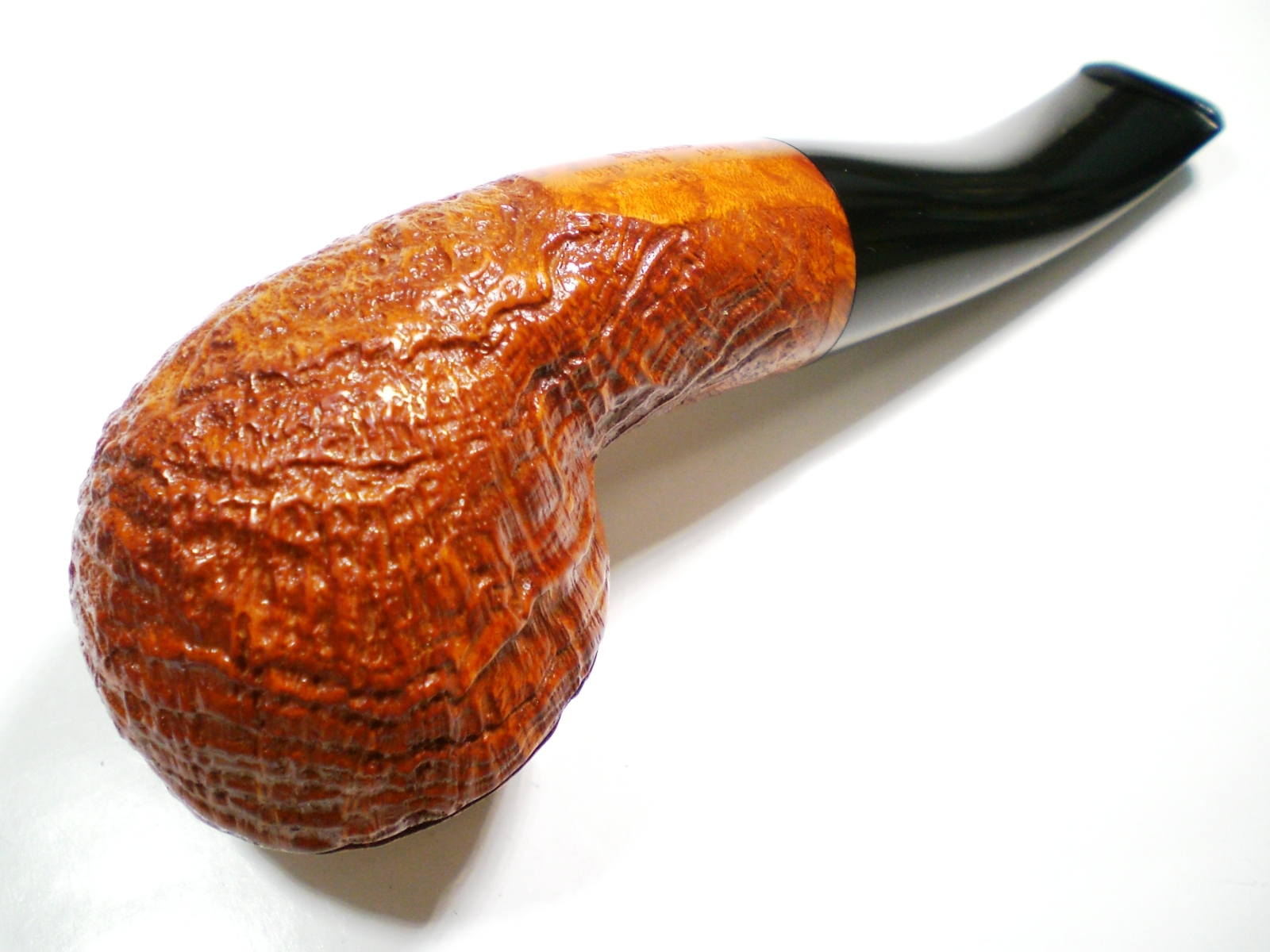
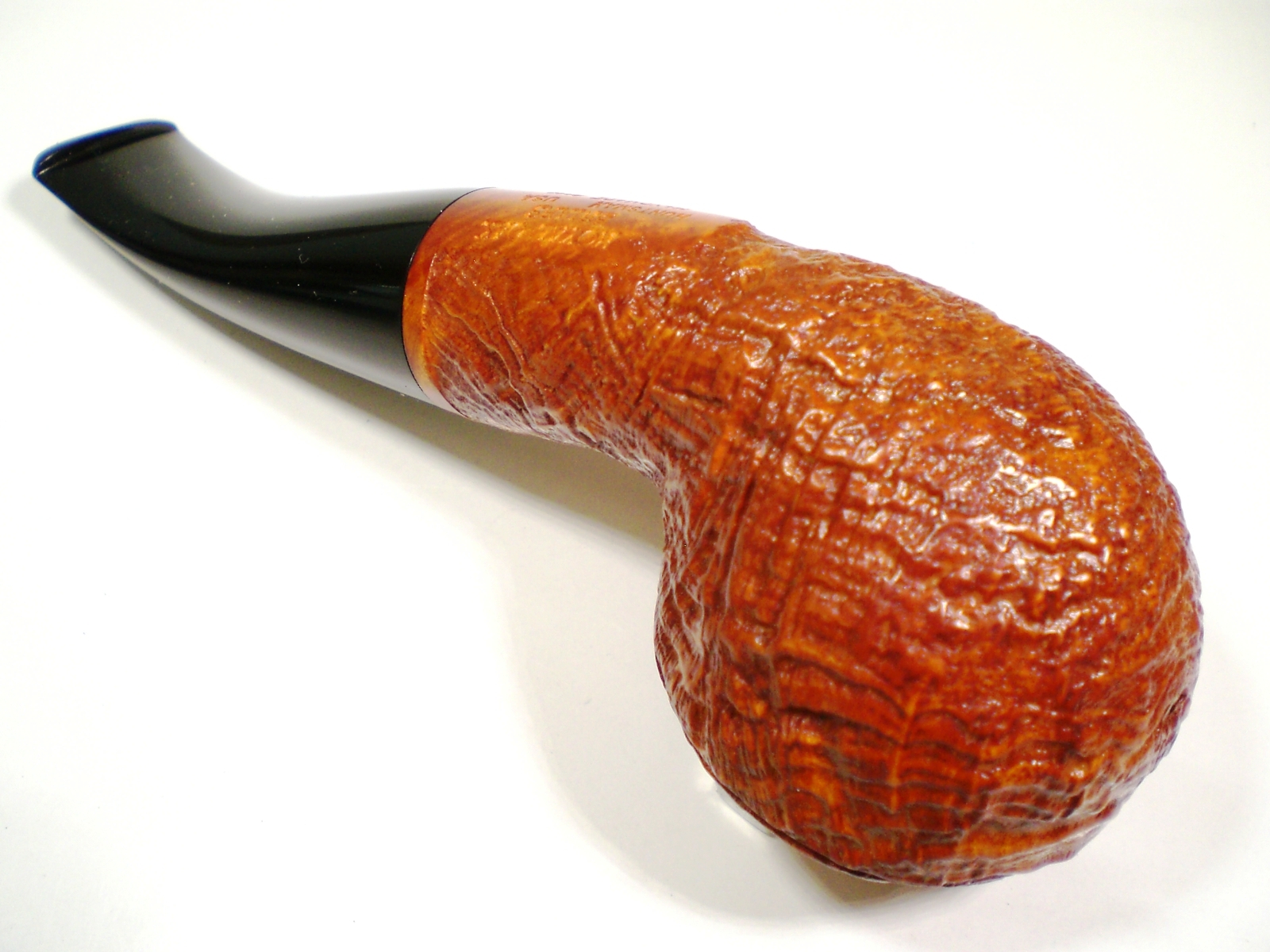
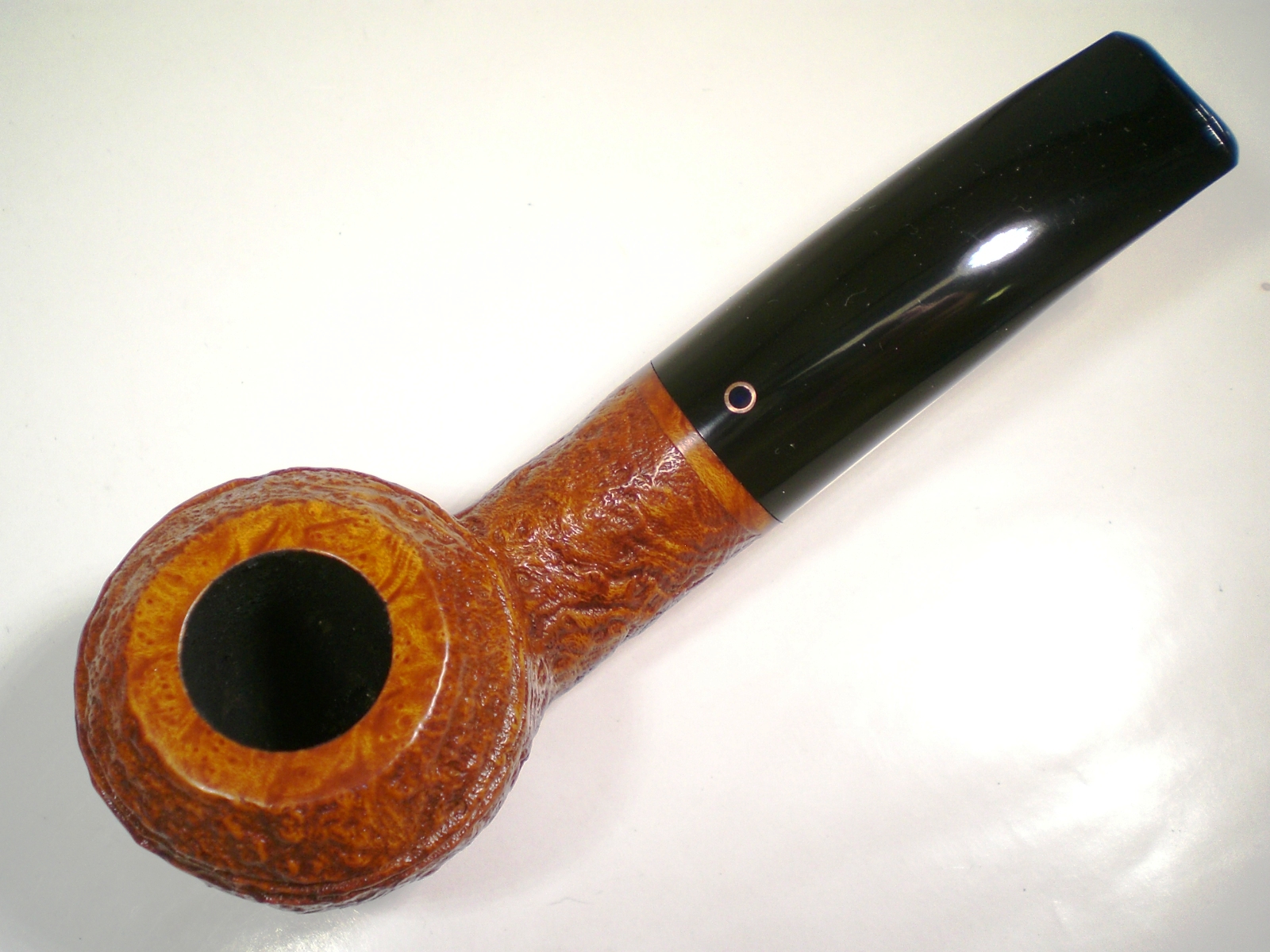
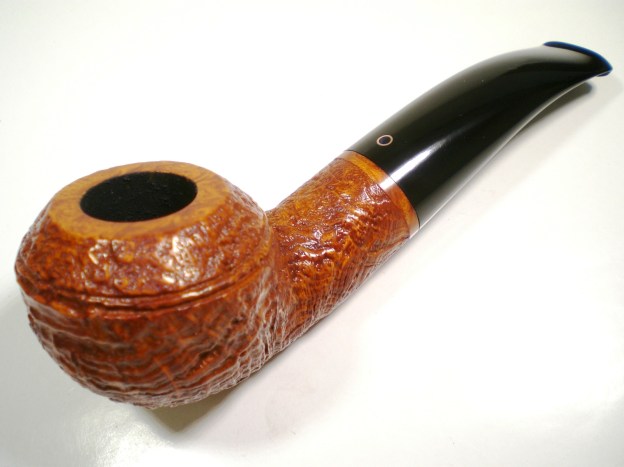
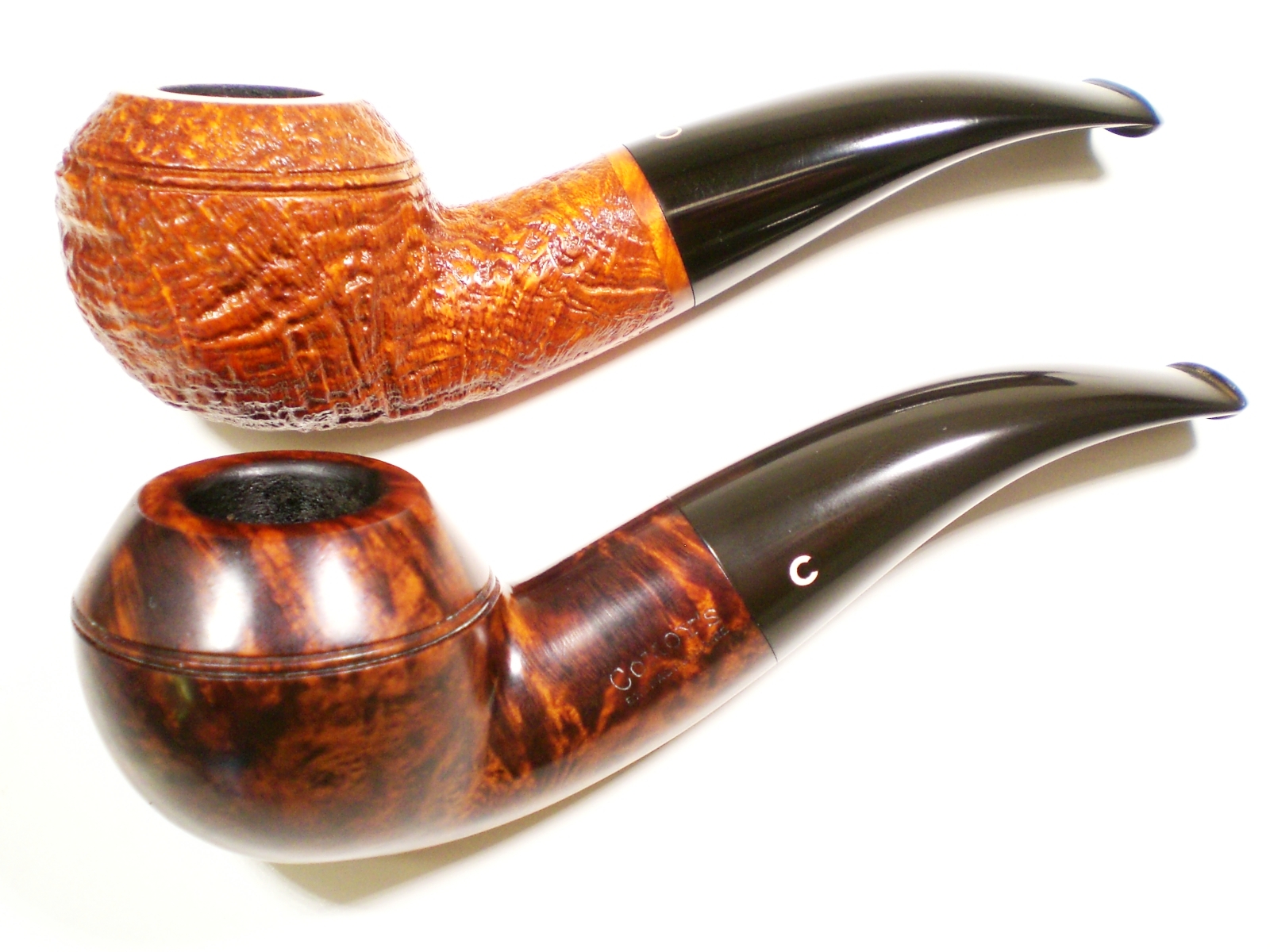
James had made and shown a Comoys 498 Extraordinaire recreation (straight Chubby Rhodesian) that was sold thru The PIpe Rack.  I complimented James on his shaping and thru subsequent messages, I learned he was starting on a pipe that would be an homage to the Comoys 499 Extraordinaire.  Since I am fortunate to own that model Comoys, that immediately piqued my interest.  I let James know that I was interested and I was able to see the pipe unfold and offer some personalization along the way.   The pipe would be blasted and I requested a polished bowl top.  The last decision was the golden tan stain, which I thought turned out magnificently.

One very important detail to me on any pipe purchase is the weight of the pipe.  My 499 Extraordinaire weighs 68 grams.  I asked James if he could create the shape under 60 grams.  James nailed that request and the pipe weighs 59 grams, which coincidentally is exactly what most of my GBD 9438’s weigh, one of my benchmark shapes.

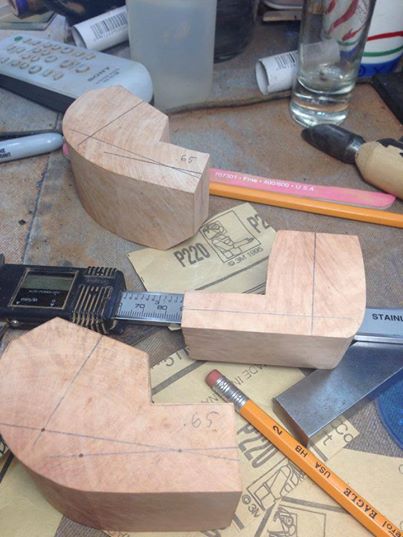
Below are some pictures of the pipe in the early and latter stages.
Royal_Oak_Briars_Rhodiesian-1 Royal_Oak_Briars_Rhodiesian-2 Royal_Oak_Briars_Rhodiesian-3 Royal_Oak_Briars_Rhodiesian - 4 Royal_Oak_Briars_Rhodesian-5

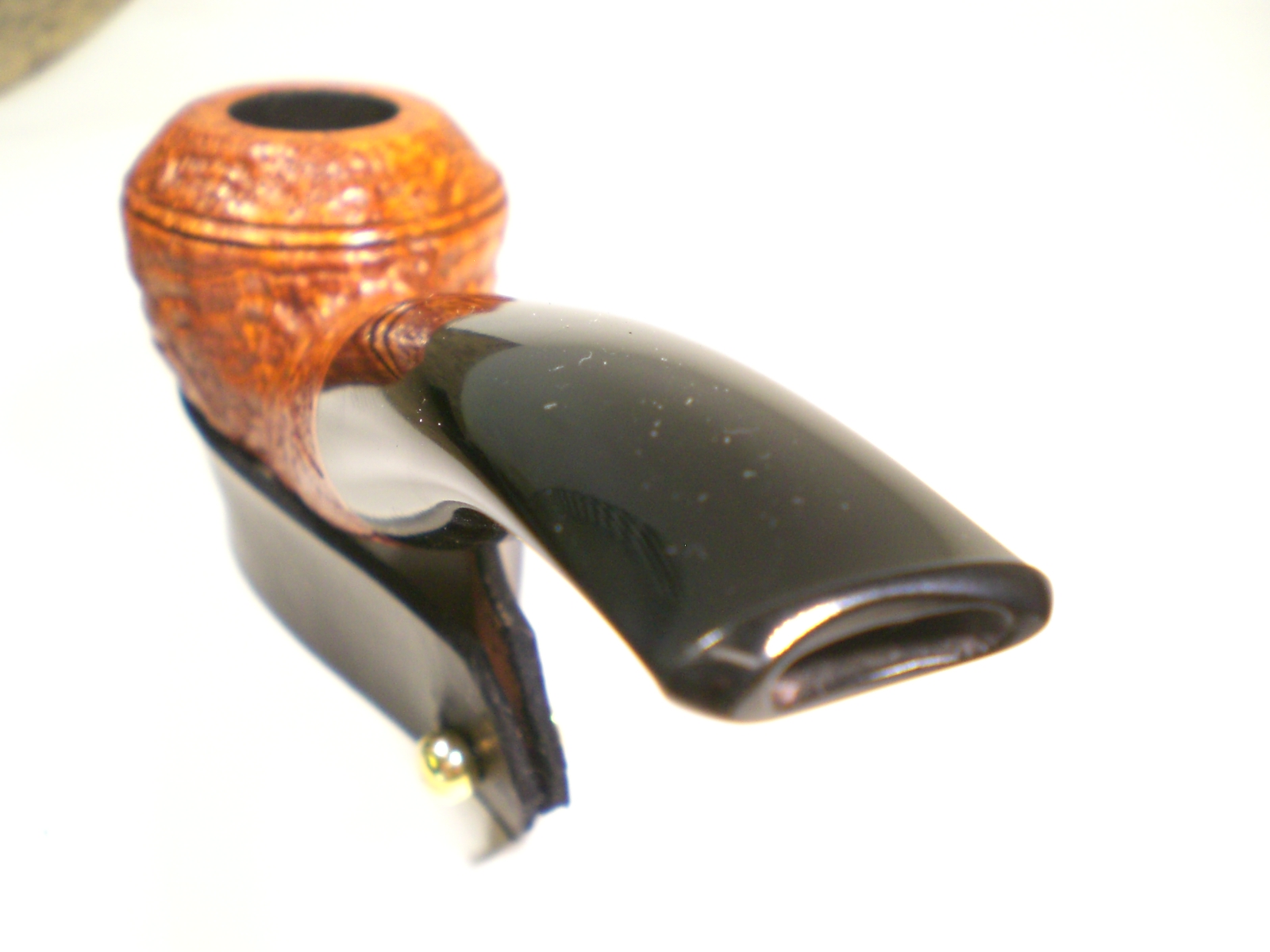
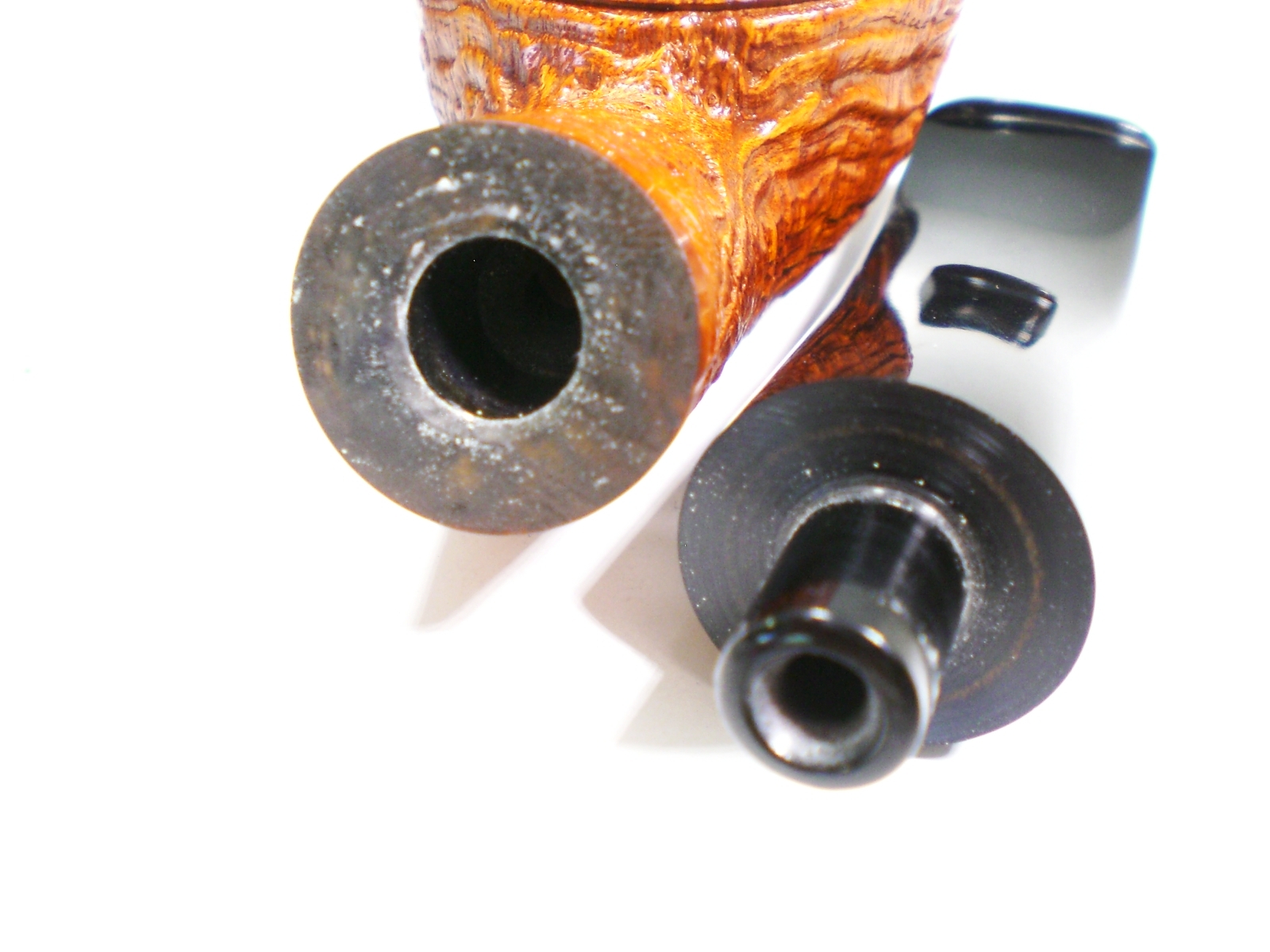
The pipe is drilled perfectly with an open draw. James tells me that the draft hole is drilled with a 5/32″ bit and tapering to 1/8″ in the stem.  The pipe smokes wonderfully, with an excellent draft and no moisture.  It also packs easily, not something I always find with a pipe with an open draw.  I am very impressed with the stem work, it seems James has learned his lessons well from Micheal Lindner. The button end is beautifully funneled and the tenon also has a concave detail that I like.  James feels the funneling on the tenon helps minimize moisture buildup in the pipe.  On the button end, the height is just right for holding without being uncomfortable.  I also like how the button has a concave feature.   James uses briar from a variety of sources.  For this pipe he used briar from Mimmo that had been aged for four years.  James feels this briar made it possible for him to achieve my weight goal.  The blast is nice and craggy, which is also my preference.  We mulled over several stain choices before deciding on the golden tan.  I think it gives the pipe a wonderful glow.

James uses a bowl-coat on his pipes, made from a gelatin/activated charcoal substance.  As someone who primarily purchases estate pipes, I hate breaking in new pipes. This is my second pipe with a bowl coating of this nature, and I’m now a big fan of this process. James assured me the product was neutral and in use, I agree completely.  Smoking the new pipe, it felt like an old friend from the get-go.

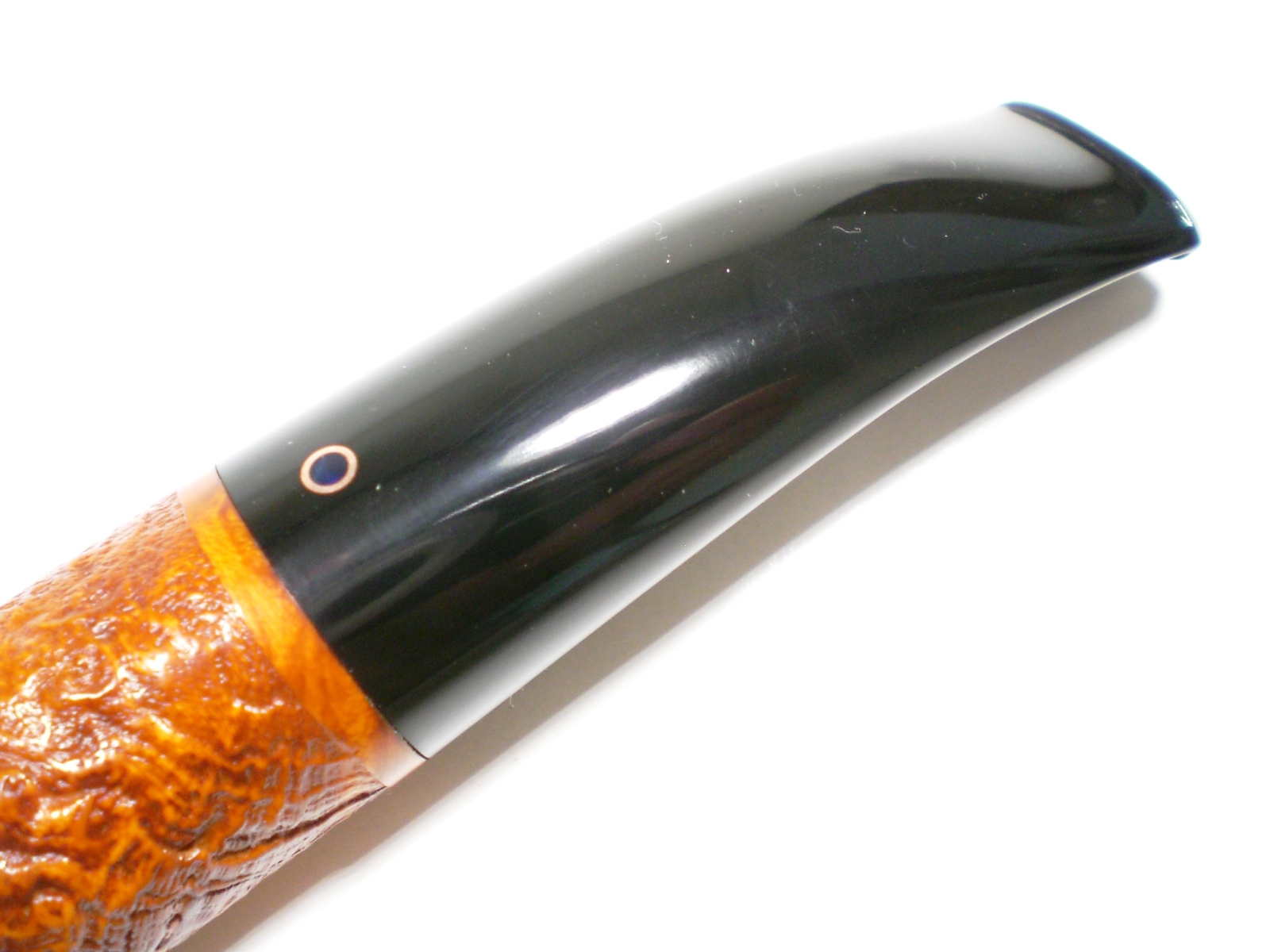
Another unique aspect of a Royal Oak Briar is the stem logo, which is a blue acrylic dot in a copper ring. As an Ashton fan, I love that detail. Many artisan pipes lack a stem logo.  To me, that was another appealing aspect of the Royal Oaks Briars line.  A member of the PipesMagazine forum commented on the stem logo that “it was like the cherry on top of a sundae”.

James work combines classic shaping, solid mechanicals along with quality briar and ebonite materials.  He was easy to communicate and work with and I enjoyed our conversations.  Hopefully, we’ll meet some day at a pipe show.  I’m looking forward to having this one in a solid rotation and I can highly recommend Royal Oak Briars.
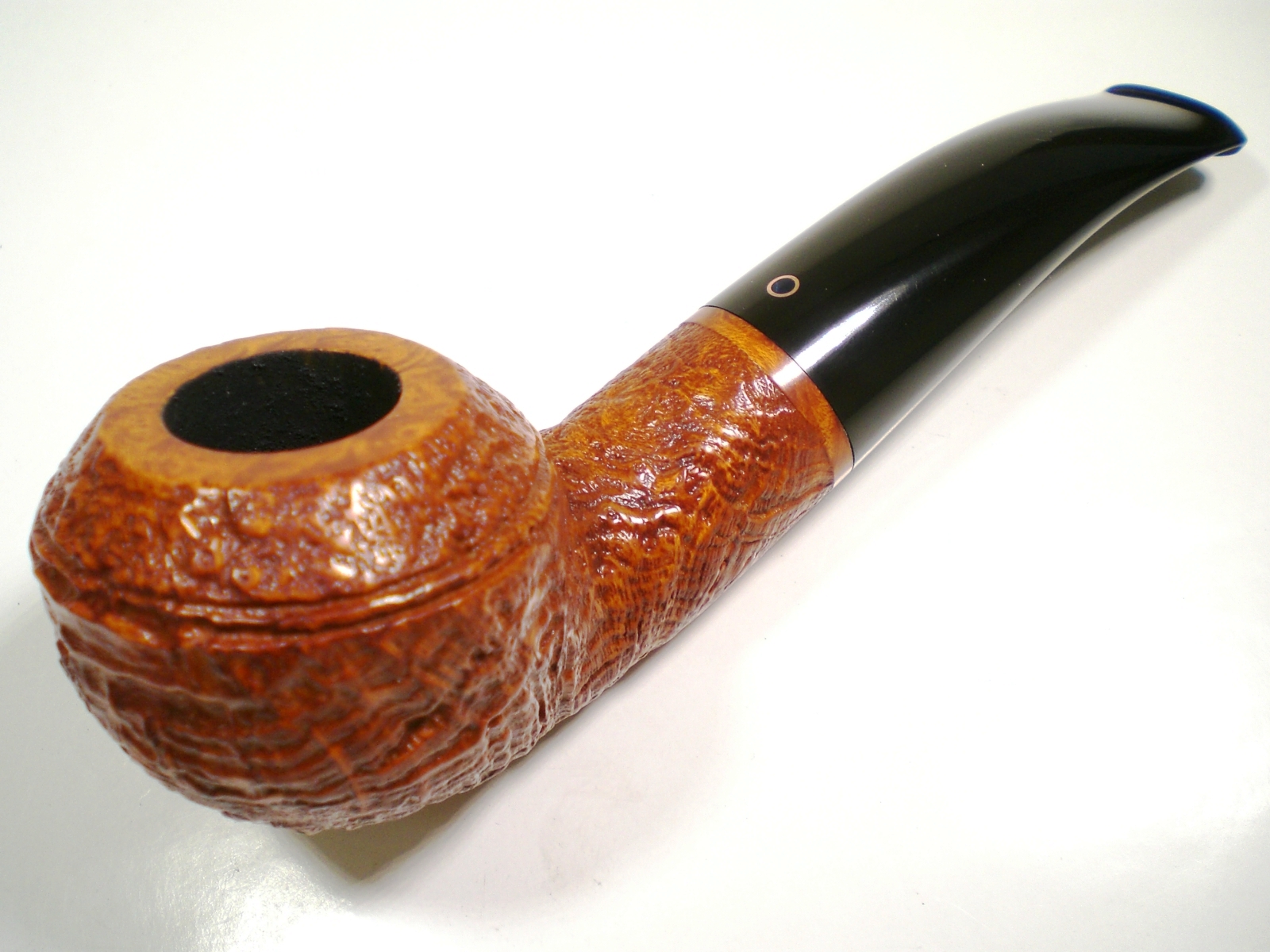
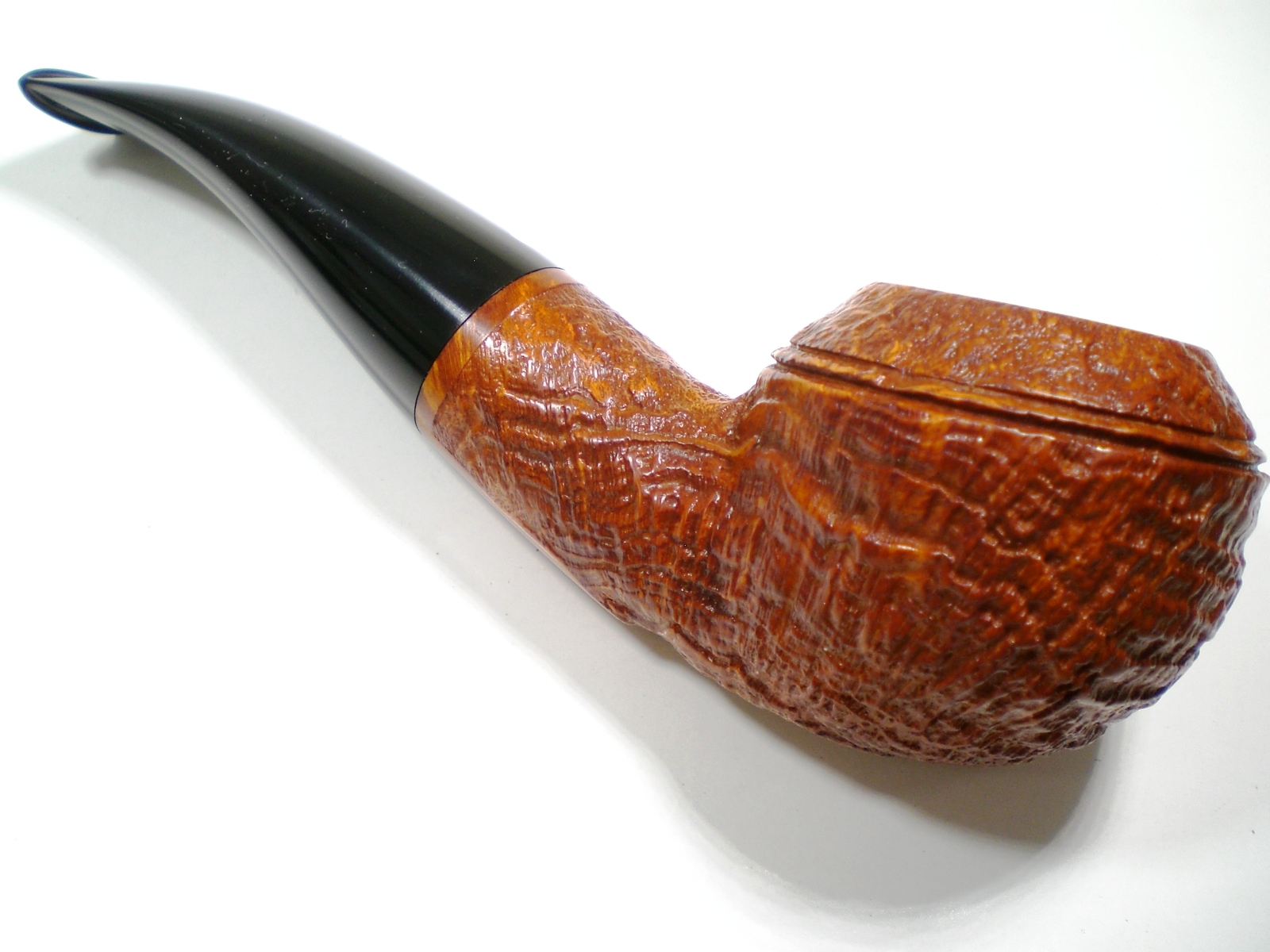
Royal_Oak_Briars_Huntsman_Gallery Royal_Oak_Briars_Huntsman_2014 (2) Royal_Oak_Briars_Huntsman_2014 (1) Royal_Oak_Briars_Huntsman_2014 (3) Royal_Oak_Briars_Huntsman_2014 (4) Royal_Oak_Briars_Huntsman_2014 (5) Royal_Oak_Briars_Huntsman_2014 (6) Royal_Oak_Briars_Huntsman_2014 (7)

Royal_Oak_Briars_Huntsman_2014 (8)

Below is a comparison picture with my 1930’s Comoys 499 Extraordinaire, the inspiration for this pipe.
Royal_Oak_Briars_Huntsman_2014 (9)


A Sentimental Journey – the Restemming and Restoration of a Medico Rhodesian


Blog by Steve Laug

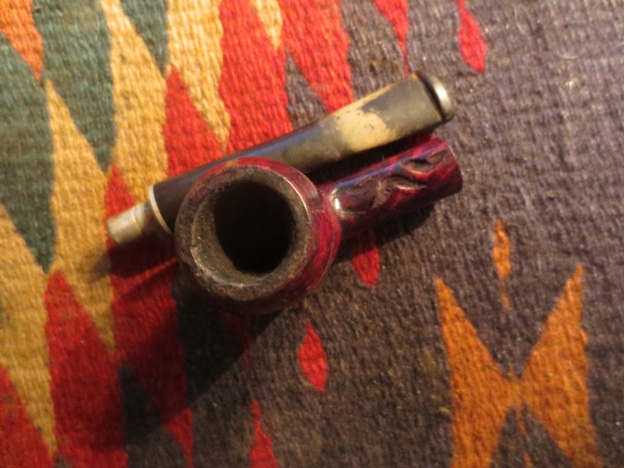
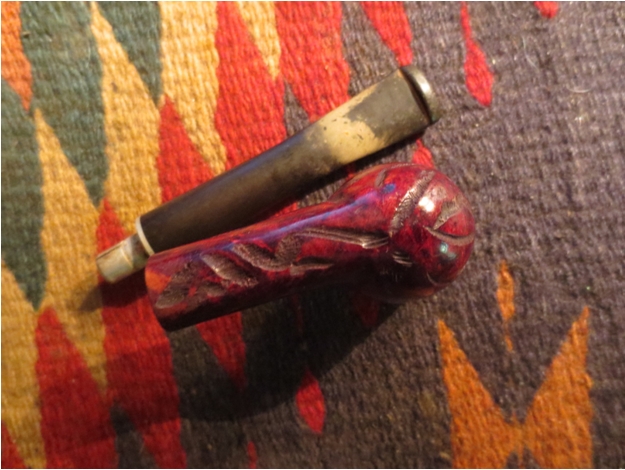
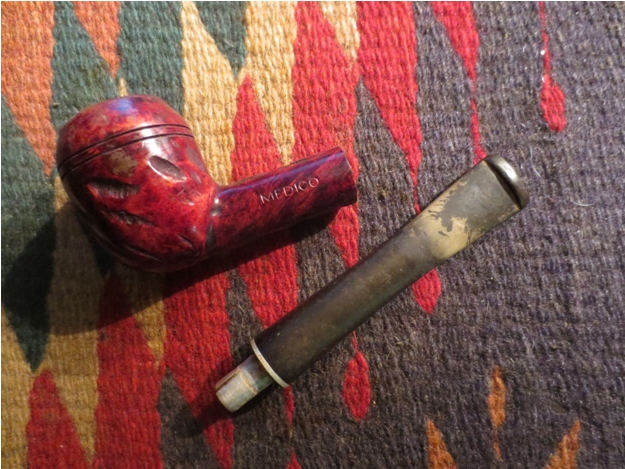
For years now I have had a special spot in my heart for Medico pipes. I don’t like the paper filter system, or the cheap stems with the split aluminum tenon, or the heavy varnish on the briar, or the fills that are hidden below the thick varnish, or any endless number of complaints that come to the surface with these old US made briar pipes. But I can’t get past the fact that the first pipe I ever owned was a Medico – paper filter and all, and that the first pipe I picked up when my first daughter was born years later was a Medico as well. Because of that whenever I am given an old Medico bowl I restem it and restore it. I strip away the varnish and rework the fills, make a new stem and bring it back to life in even better condition that it was when it was first sent out.

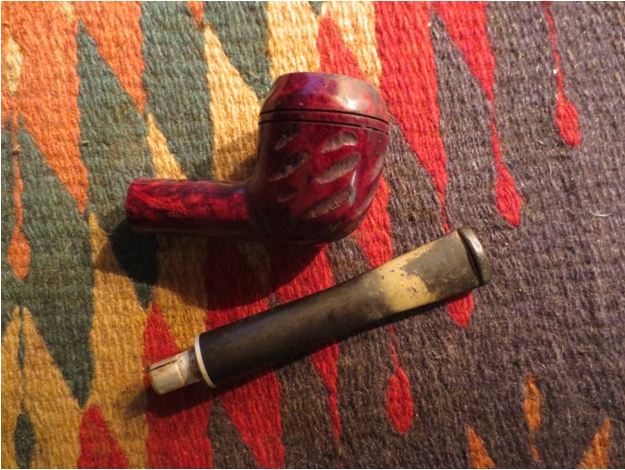
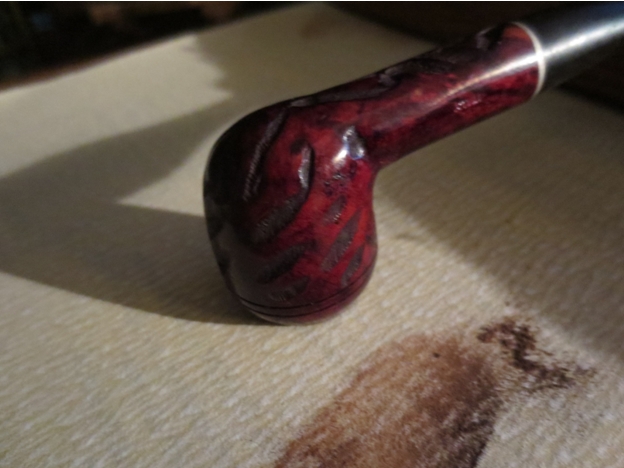
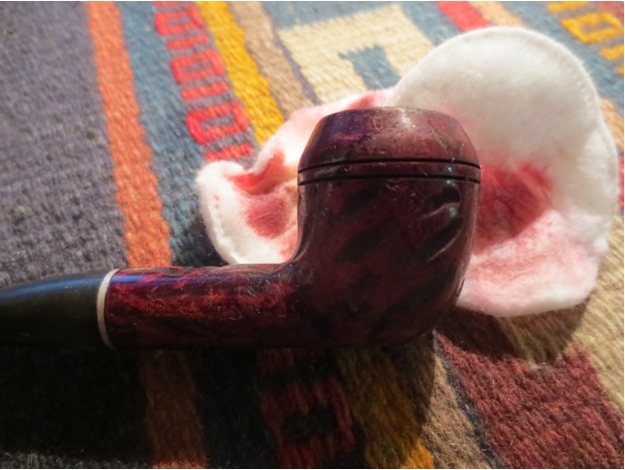
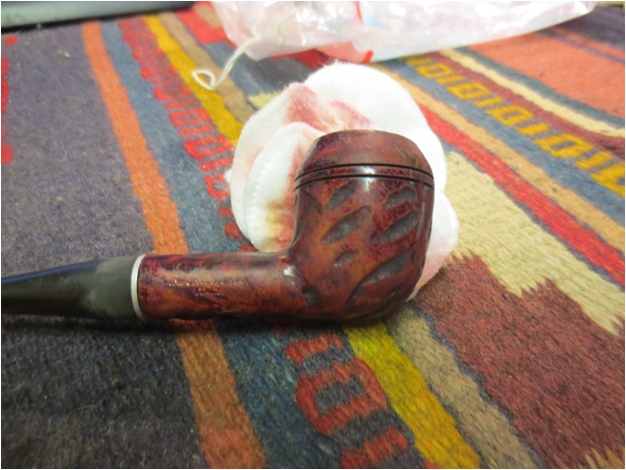
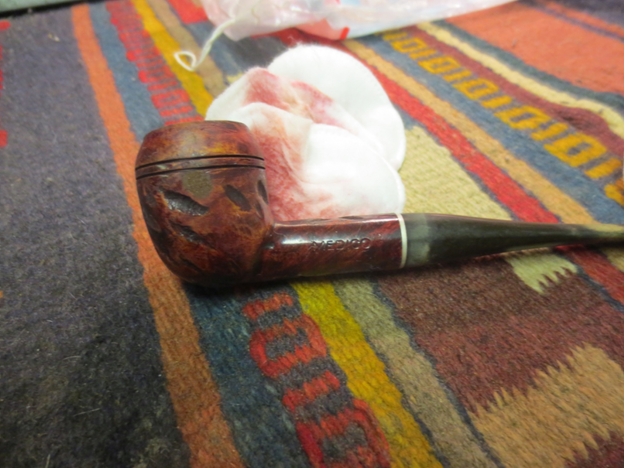
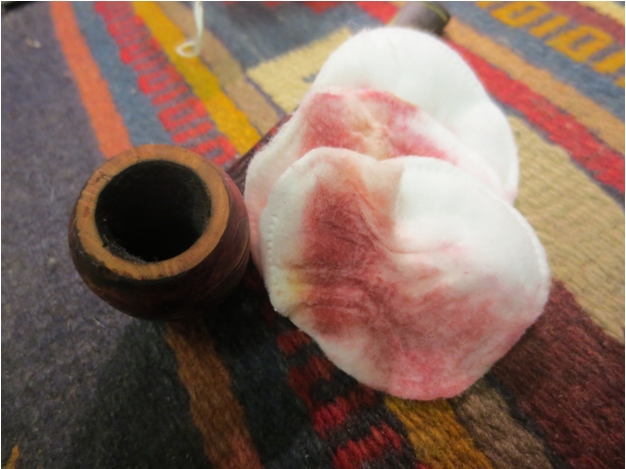
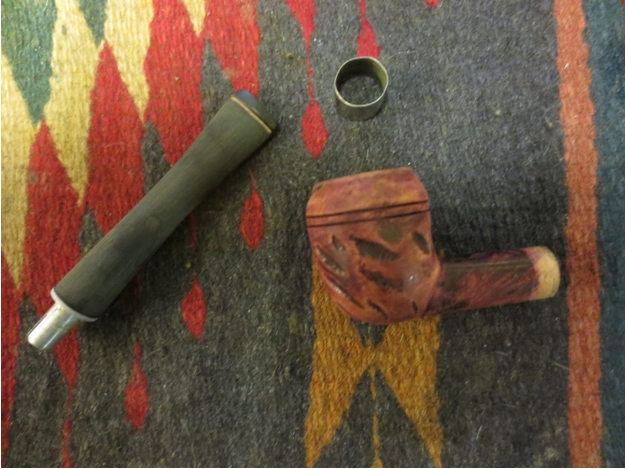
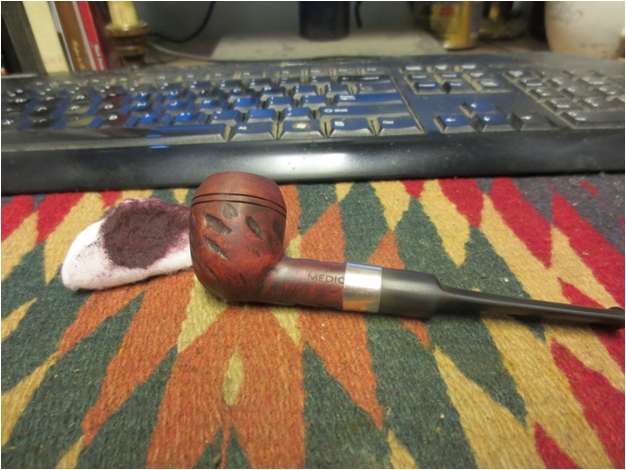
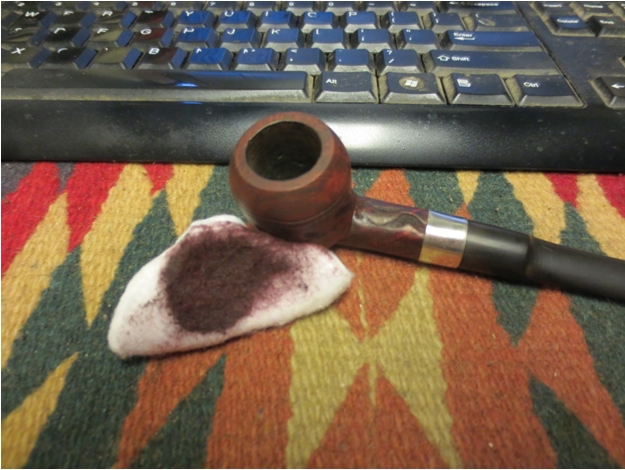
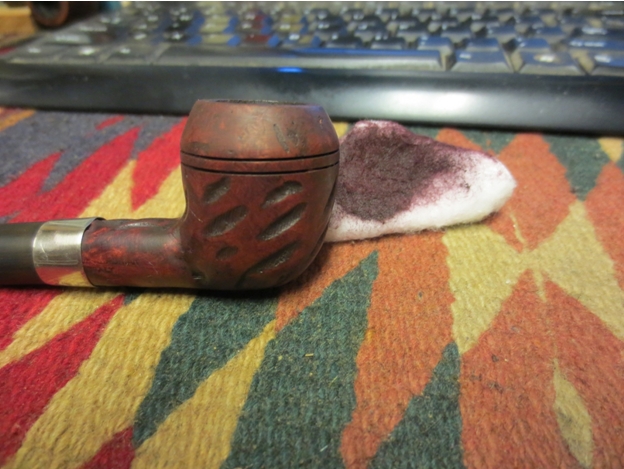
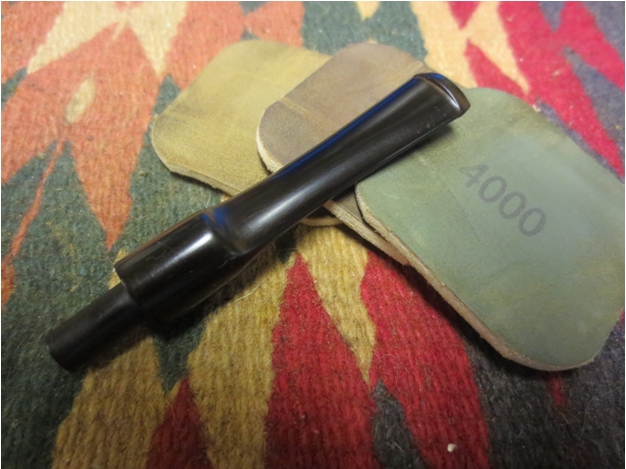
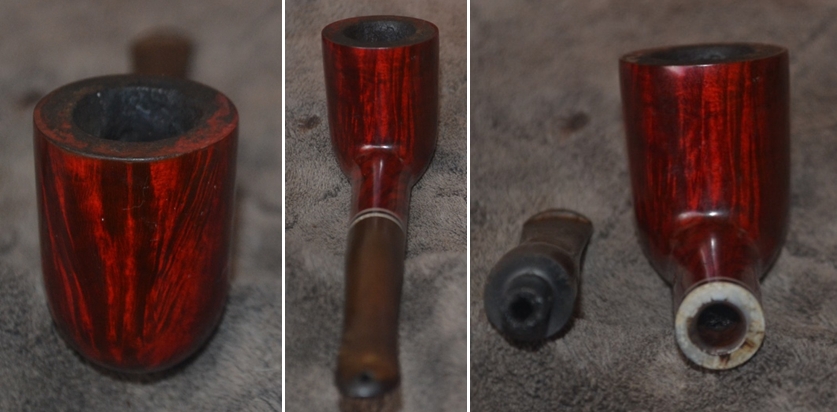
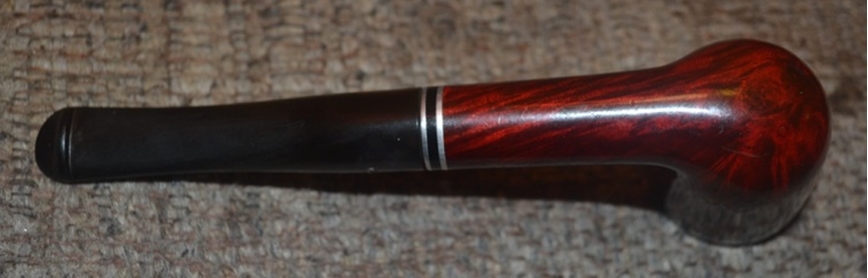
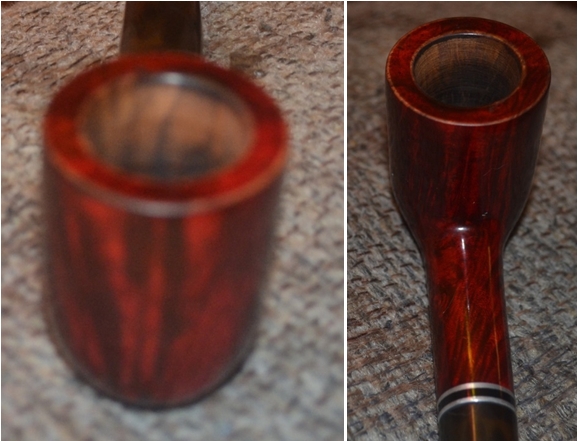
The Medico that I worked on in this restoration was a straight shank Rhodesian that came to me in a gift box of bowls. It was stemless and I had two potential stems that would work for it. There truly was nothing particularly redeemable that I saw in the bowl so the reason was as stated above solely sentimental. The bowl was dirty and worn with a thick cake. The rim had been battered and had deep nicks on the outer edge. There was a thick dark red varnish on the briar. It was stamped MEDICO on the left side of the shank and Imported Briar Italy on the right side. On the left side of the bowl was a large brown putty fill that stood out like a sore thumb. The first stem I tried was a split metal tenon Medico style stem. It was worn but usable.Med1 Med2 Med3 Med4 It fit the shank perfectly and looked good on the pipe. I thought for sure this would be a simple and quick restoration. I should have learned by now that whenever I think that problems would pop up on the way to the finish. I cleaned the shank with cotton swabs, pipe cleaners and isopropyl alcohol.Med5The top of the bowl was badly damaged with large dents and missing chunks on the outer edge of the rim so I decided to top the bowl. I used the topping board with 220 grit sandpaper and worked on the rim until it was smooth and clean. There were still several places on the outer front edge that would need to be worked on but the finished look of the topped bowl was far better than when I had started.Med6 Med7I wiped down the bowl with acetone on cotton pads to remove the thick varnish coat and clean up the finish on the bowl. I wanted to remove it back to the briar. In the process the dark red stain coat also was removed from the bowl.Med8Once the stain coat and varnish were removed I could see several problems that I would need to address. The front edge of the bowl needed to be sanded and the slope on the cap would need to be modified by hand sanding to remove the damage on the front edge and face of the cap. There was also a fine crack that had seeped tobacco oils on the top right edge of the shank. It had been hidden by the dark stain. When I move the stem it was not visible and did not open or spread but it was definitely present. I would need to clean up the shank, band it and with the band a different stem would need to be fit to the shank. The stem I had previously chosen had a metal face that would not work against the band. I scrubbed the bowl and shank until all the red stain that I could remove was gone.Med9 Med10 Med11I used a Dremel with a sanding drum to sand back the shank so that I could fit a band on the shank. I also wanted to smooth out the surface of the rustication pattern and clean up the crack so that I could glue and clamp it before banding.Med12I put the band around the end of the shank and then heated the metal band with a Bic lighter until I could press it into place on the shank. It took several reheats with the lighter before I had a flush fit on the band. At that point I took the second stem I had chosen and lightly sanded the tenon to get a good tight fit in the shank and pushed it in place.Med13 Med14 Med15 Med16I reamed the bowl with my PipNet reamer and the smallest cutting head until I had taken the cake back to bare wood. I wanted the bowl to be clean so that I could see if there was any damage to the interior of the bowl.Med17Once I had reamed the bowl I reshaped the angle on the cap with 220 grit sandpaper and medium and fine grit sanding sponges. Once I had the angle correct around the entire rim and had removed the damage on the front of the cap I sanded the entire bowl with the sanding sponges. I also sanded the stem with the same sandpaper and sanding sponge combination to remove the oxidation and tooth chatter near the button. The newly shaped bowl and freshly sanded stem is shown in the next series of four photos below.Med18 Med19 Med20 Med21I stained the bowl with some oxblood aniline stain and flamed it. I wanted the red colour of the stain but I did not want it to be as opaque as the original stain had been. The aniline stain seems to be more transparent. It did however, do a great job in hiding the big fill on the left side of the bowl.Med22 Med23 Med24I sanded the stem with 220 grit sandpaper, then a medium and fine grit 3M sanding sponge. I followed that with my usual array of micromesh sanding pads – wet sanding with 1500-2400 grit pads and dry sanding with 3200-12,000 grit pads. I rubbed the stem down between each set of three pads with Obsidian Oil before moving on to the next three pads. I finished by giving it a final rubdown with the oil before taking it to the buffer.Med25 Med26 Med27I buffed the entire pipe with White Diamond and then gave it multiple coats of carnauba wax to protect and polish both bowl and stem. With that completed my sentimental journey with this old Medico was complete and it was ready to go back into service. I am sure I will gift this pipe to some new pipeman somewhere along the way as it should smoke very well and give many years of service. It is not a thing of beauty and never will be but it is a good serviceable pipe that will deliver a good smoke. The finished pipe is pictured in the photos below.Med28 Med29 Med30 Med31
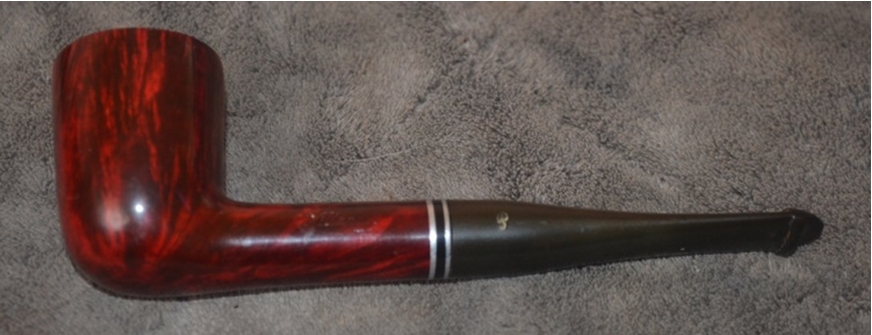
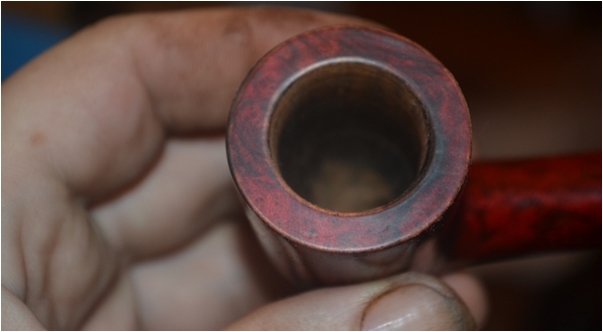
A Glorious Republic Era Pete Killarney Flame Grain Tall Billiard – Robert M. Boughton


Guest Blog by Robert M. Boughton
Member, North American Society of Pipe Collectors
http://www.roadrunnerpipes.com
http://about.me/boughtonrobert
Photos © the Author

“What’s this world without its pleasure? What is pleasure but a pipe?”
— W.H. Logan, author, “A Pedlar’s Pack of Ballads and Songs,” 1869

INTRODUCTION
I doubt anyone could have summed up my own thoughts on the matter better or with more conciseness than the eclectic author, W.H. Logan. My pipes are my great pleasure, my main collection, my hobby, my trade. When I found this Peterson Killarney Red Flame Grain Tall Billiard available online, for a price that seemed too good to be true, I suspected some serious flaws somewhere. But a close inspection showed only a few scratches on the shiny wax and perhaps high grade varnish surface as well as the kind of rim blackening and chamber buildup that scares away so many bidders who are not prepared to deal with these little matters.

I had to have it, and so once again I over-bid to ward away the timid masses. I never had to increase that one bid and got it for an incredible $38.01, which seemed so precise I knew one of the others watching the pipe had offered a mere penny more than the previous contestant. The day it arrived at my Post Office Box, I cut through the tape and package label of the parcel on my way to the car and then sat behind the wheel to take out the contents. I admit I was relieved to inspect the new prize and find there were no hidden damages.

Giving the seller a high rating in all areas and commenting that I got it for a steal, I received a response from the gentleman that thanked me for one more perfect grade on his spotless record and went on to add, in reply to my written comment, “Yes, you did get it for a steal.” I could hear him saying it with a touch of disappointment.

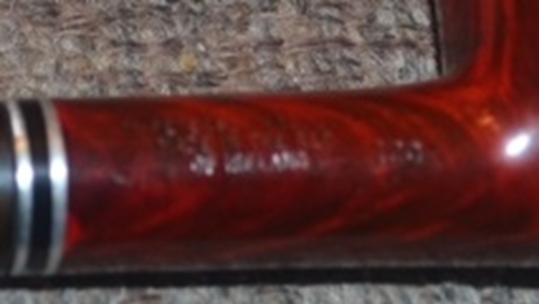
Still, I was surprised when I saw the following nomenclature on the right shank:Robert1In case the enlargement is unclear, it reads, in block letters, “A Peterson Product” (which was in fact in quotes) over “Made in the Rep.” over “of Ireland,” with the number 120 to the right of the bottom line. Looking it up on pipephil.eu, I was pleased to confirm that it was a Republic Era pipe, a fact I had not been able to determine when I bid for it, placing its date of manufacture at somewhere between 1950-1989. Given the discoloration of the stem and general appearance of long, hard use, I suspect it is from the 1970s.

Out of about 85 pipes I have in my collection, although the biggest part of that is comprised of meerschaums, a dozen are Peterson’s (and there is still another, a vintage Kildare, on the way). This old Killarney is not the best of them – being outdone by the tiny Gold Spigot natural grain, the Mark Twain Rusticated Bent Billiard system and the 150th Anniversary Special Edition natural bent billiard – but it is without doubt the most beautiful.

At one point believing I would never have the skill to restore a meerschaum, I did so with several and have a major project underway with one that is 115-120 years old. Among my other great wishes was to have the opportunity to restore a Peterson, and now it is a done deed, with even better results than I ever imagined.

Please don’t get the idea that I am bragging; far from it. I possess an acute awareness of my strengths and weaknesses (among the latter of which remains stem fitting, not to mention the mere idea of re-shaping one). Nevertheless, I have learned much during the past two years – most of it coming with ease due to my natural affinity for working with wood – but nothing more so than how much is left. In fact, I understand now, nobody knows everything about the craft/art of restoring pipes, not even my good friend and mentor or our host, both of whom are masters.

My greatest fear with the restoration of this Killarney was that after removing the burning of the rim I would be unable to return that thin, small but vital part of the pipe as a whole to its original, rich red color and shine. But almost by instinct, I worked out that problem when the time came.

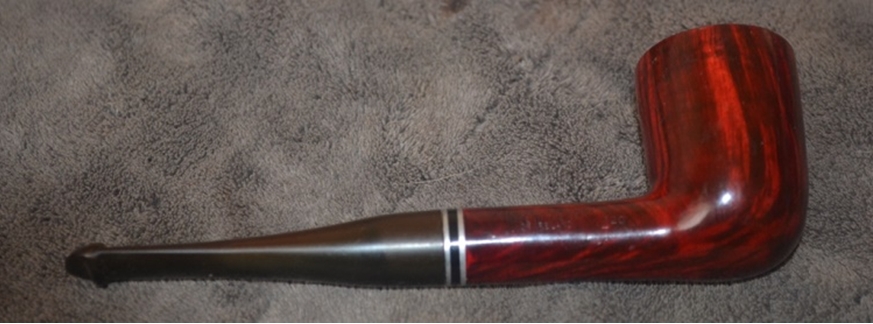
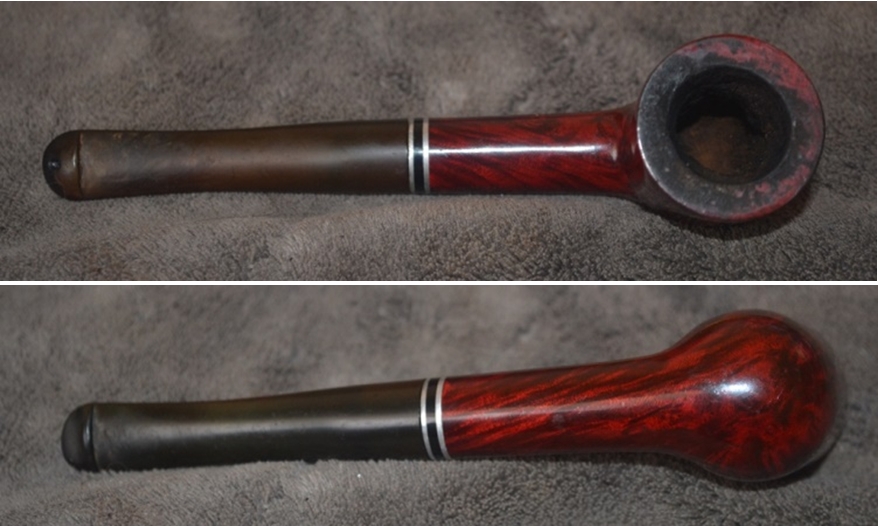
THE RESTORATIONRobert2 Robert3 Robert4 Robert5First thing after my quick-clean inspection of the pipe’s interior integrity, I began my assault on the chamber with my Senior Reamer, the blades of which I retracted all the way and was still almost unable to insert it past the buildup of cake to the bottom. Turning the blades outward until they were stuck, I cranked in a slow, circular manner, pushing the top of the tool toward the rim as I listened to the carbon crumble. This step of the process took three adjustments of the blades to clear the cake.

After blowing through the shank to clear most of the leftover carbon dust, I wet a small square of cotton with alcohol and pushed it with a finger down the center of the chamber, then turned it a few times to soak up the rest. Using a 1-1/4×2” piece of 150-grit paper that, when curved to fit inside the chamber, just fit the diameter and left a little room above the rim with which to apply torque, I put a smaller finger inside the paper and began to twist it, first using the most pressure along the top of the chamber and working my way down. In this fashion I was able to clear the remaining carbon until briar showed most of the way through to the draught hole.

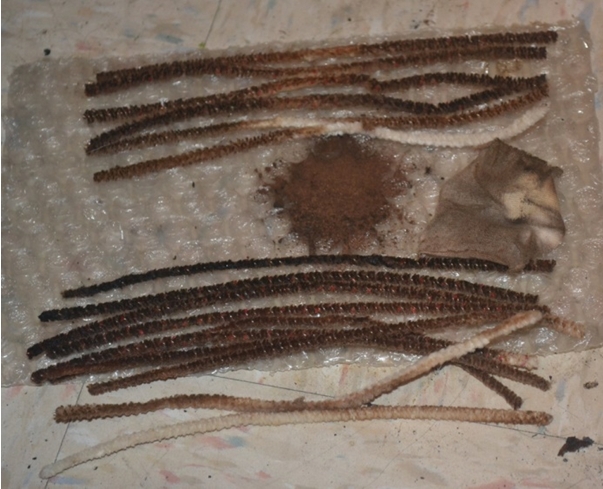
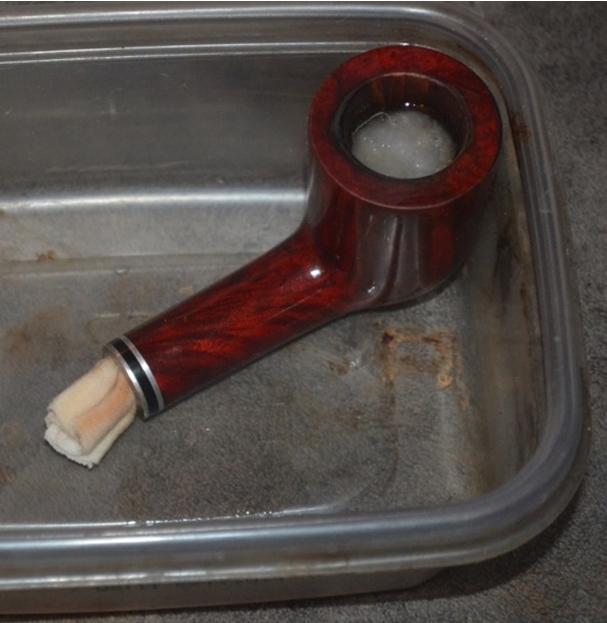
Having learned by the restoration of my third meerschaum that super fine steel wool is my favorite and, I think, the safest way to remove rim burning, I applied a pad of the 0000-grade to the blackness and watched as it disappeared with ease and left the rim clean and still shiny. However, there were some serious scratches covering the rim as well as a groove worn into it on the inner shank side.Robert6A little elbow grease and 1500 micromesh eliminated all of these blemishes, but at the same time dulled the finish. A piece of 2400 micromesh worked out the scratches on the bowl with minor effect on the original waxes.Robert7It was time to clean and sanitize the shank and stem. I dipped a cleaner into alcohol, and as I inserted it into the shank I felt the tar and other gunk resist. The cleaner came out pitch black. After seven identical runs, during which the grime inside at least lost its resistance, the cleaners were just as black. I decided to do a bowl and shank flush with alcohol, but first I ran about eight cleaners soaked in alcohol through the stem until it came out clean.

Top: Shank cleaners.  Middle: chamber cake and cotton cleaner.  Bottom: stem cleaners.

Top: Shank cleaners. Middle: chamber cake and cotton cleaner. Bottom: stem cleaners.

Robert9Following the alcohol flush, the shank was clean and the briar showed through from top to bottom of the chamber. That is the cleanest I have ever restored a chamber.

The stem was in good shape except for some tooth chatter in the lip. I used 400-grit paper on the chatter followed by 1500 micromesh again on the entire stem to remove minor scratches and discoloration. As usual, I buffed it with red and white Tripoli and White Diamond.

The end of my project being nigh so soon, it seemed, I looked over the bowl and shank. The next to last thing left to do was re-stain the rim using marine cordovan (burgundy) boot stain and flame it. I let it sit for a minute before turning to 2400 micromesh for a nice, slow, gentle rub to remove the black flakes left from the stain and get down just to the wood grain. Again, the color was lighter red than the rest of the bowl, which worried me, but there was no choice but to buff the whole thing.

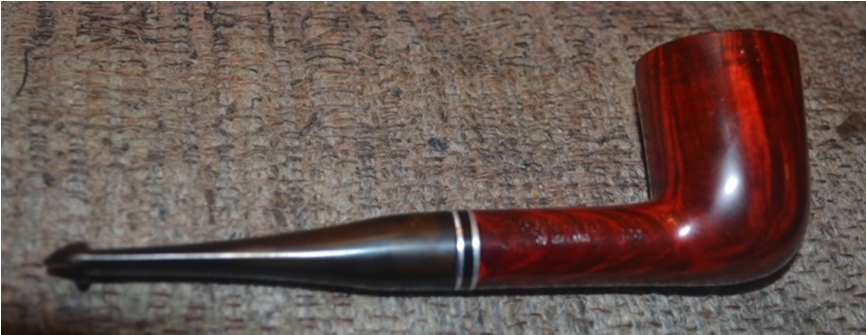
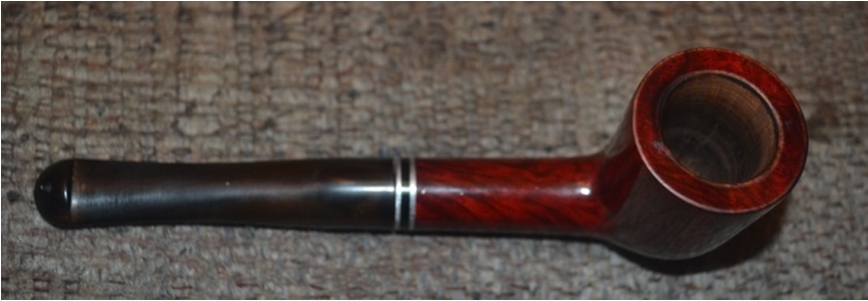
I almost always use the same three waxes for this step: white Tripoli, White Diamond and carnauba. But this time I looked at the red Tripoli wheel and decided it could only help. Starting there and following with the rest, I was shocked to see that the finished pipe was uniform in deep red color and shine. The feeling when that kind of success occurs is indescribable.Robert10 Robert11 Robert12 Robert13 Robert14CONCLUSION
As I wrote this account, I smoked in the just restored Peterson’s Killarney a full bowl of Comoy’s Cask №. 5 Bullet Eye Select, with its tasty blend of bright orange Virginias, Burleys and Tennessee bourbon. The writing came to me with unusual ease, but still, that was one long bowl! This all just goes to point out that the beautiful, red, flame grain Killarney gives a long, excellent smoke, although the bowl does tend to get hot enough to hold the pipe as necessary by the shank.

Being a Peterson’s fan and collector, as I stated already, I’ve decided this is a keeper. There is just no way, no how, I am going to offer this pipe as the newest addition to my online store, as nice as it would be to post it for sale and take in the money.

Now the pipe is almost empty, and I am full.