
Blog by Steve Laug
I picked up a Duca Carlo in utter ignorance on EBay the other day. I was not familiar with the brand and only later found out it was a Savinelli. The seller’s photograph are worse than mine so I was not sure what I was getting but decided to take a chance on it. I picked it up for very little so I figured I had nothing to lose. The first series of out of focus photos show the pipe as it appeared in the seller’s advert on EBay. The grain looked like it had potential to me and the rest of the pipe appeared to be in workable shape. Once it got here I would have a better idea of what work would need to be done.

The first photo below shows the pipe after I took it out of the box it came in and put it on my work table. It was definitely in need of a ream and clean. The bottom of the bowl was dusty but had no cake on it. The upper portion of the bowl had an uneven cake. The rim was tarred and oily but there were no dents in the rim or on the rest of the bowl for that matter. The shank had a small hairline crack on the right side. It is next to the fill on the shank that is visible in the photo below. Fortunately this was the only fill I found in the bowl. It was not a bad piece of briar. There are a few bald spots on the bottom of the bowl but there is also some nice grain both birdseye and flame on the sides, front and back of the bowl and also on the shank. The shank and the bottom of the bowl had some cobwebs in it like it had been sitting in storage for a while. I blew out the dust bunnies and then pulled out a stem from my box of stems. It did not have a tenon so I screwed in a delrin tenon into the drilled out hole in the stem. The shank of the Duca Carlo was also drilled for a filter but I decided since I was restemming it and putting a new tenon on the stem I would make it fit without a filter.
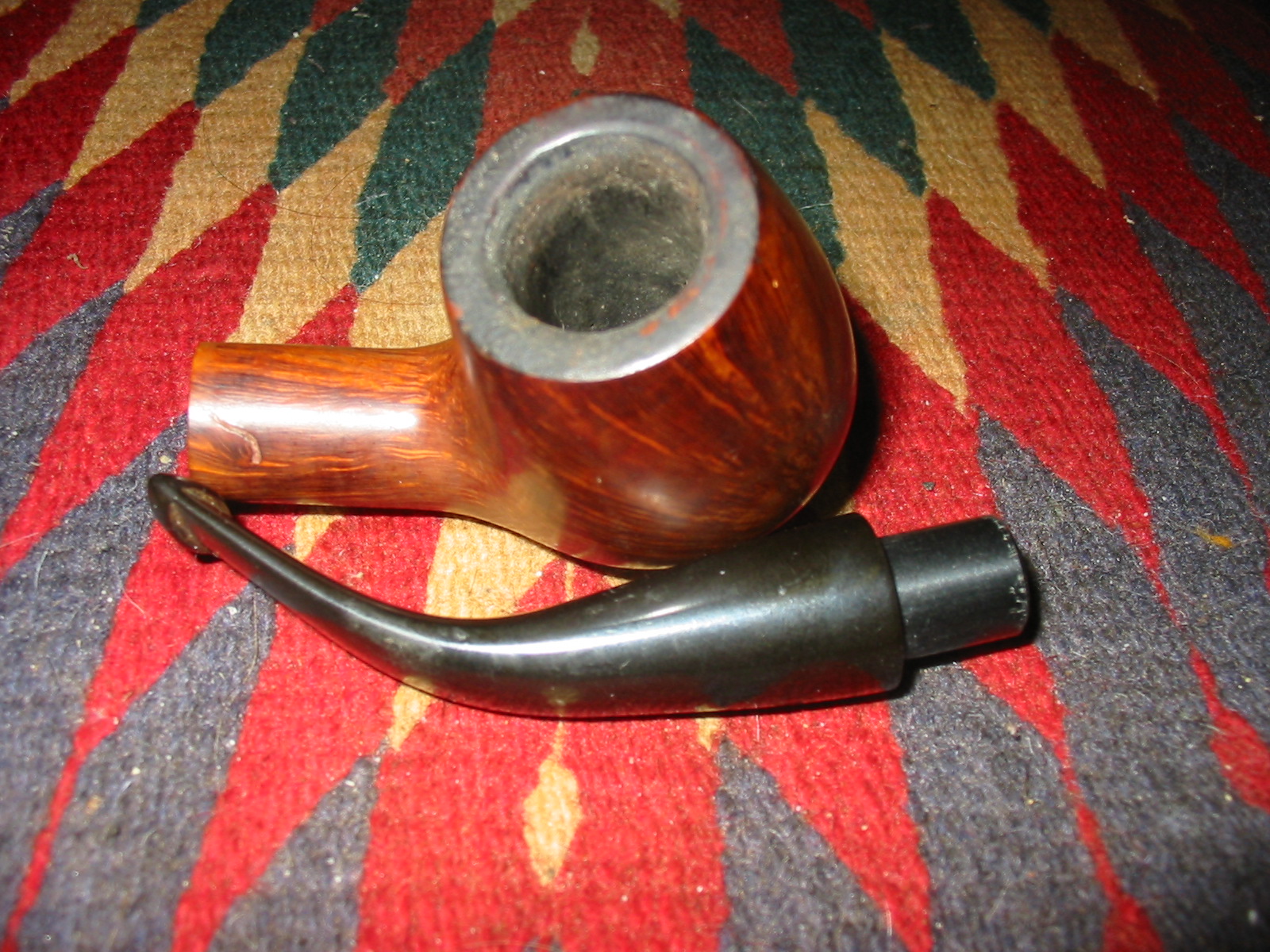
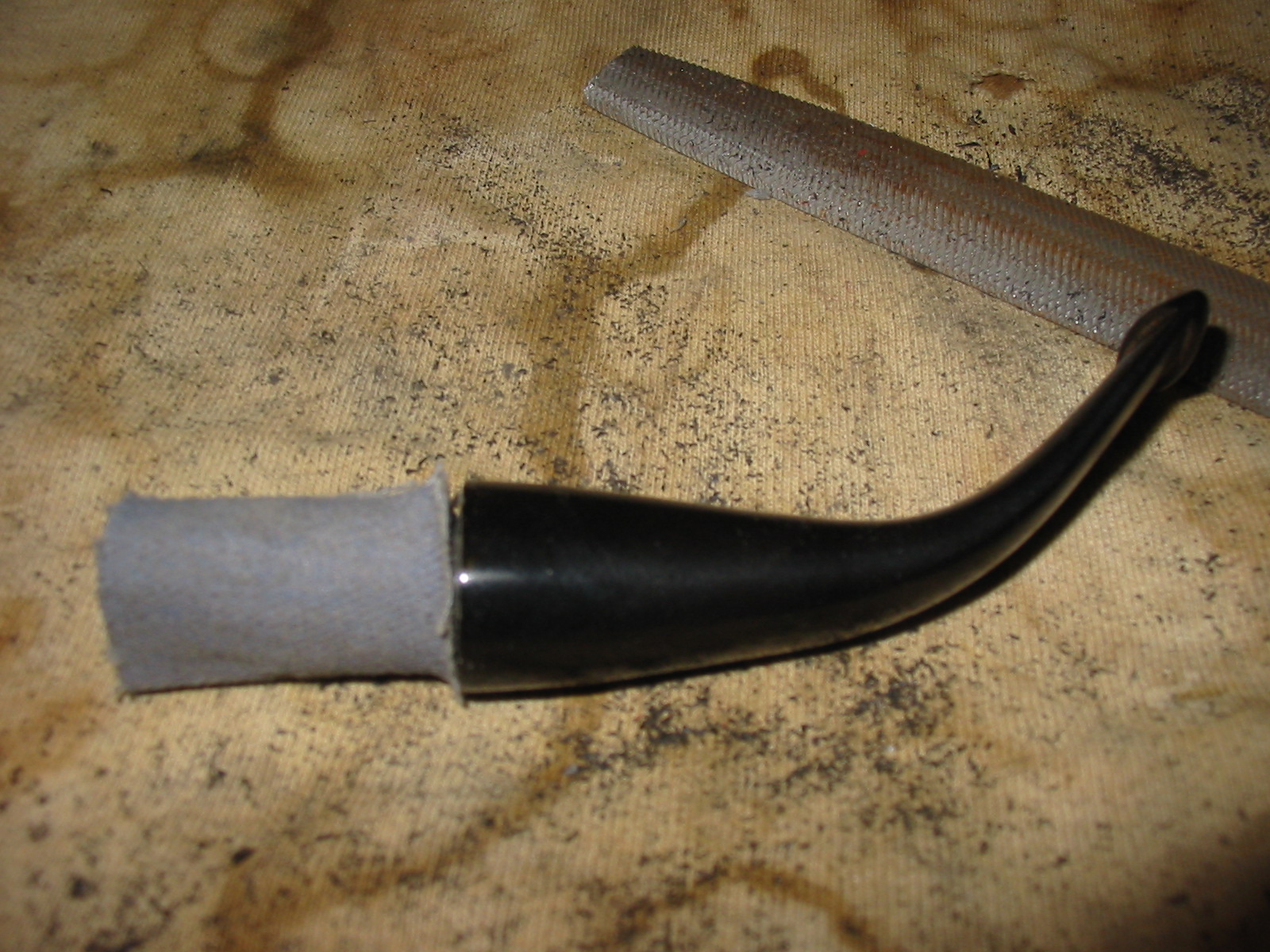
I needed to remove a lot of the delrin from the diameter of the tenon to get a proper fit. The tenon was too large for my Pimo Tenon Turner so I had to do the shaping by hand with files and my Dremel. The next two photos show the shaping process of the tenon. I used a rasp to take of as much of the material as I thought practical. I then used the sanding drum on the Dremel to smooth out the tooth marks from the rasp. I finally used medium grit Emery paper to take down the remainder of the tenon.
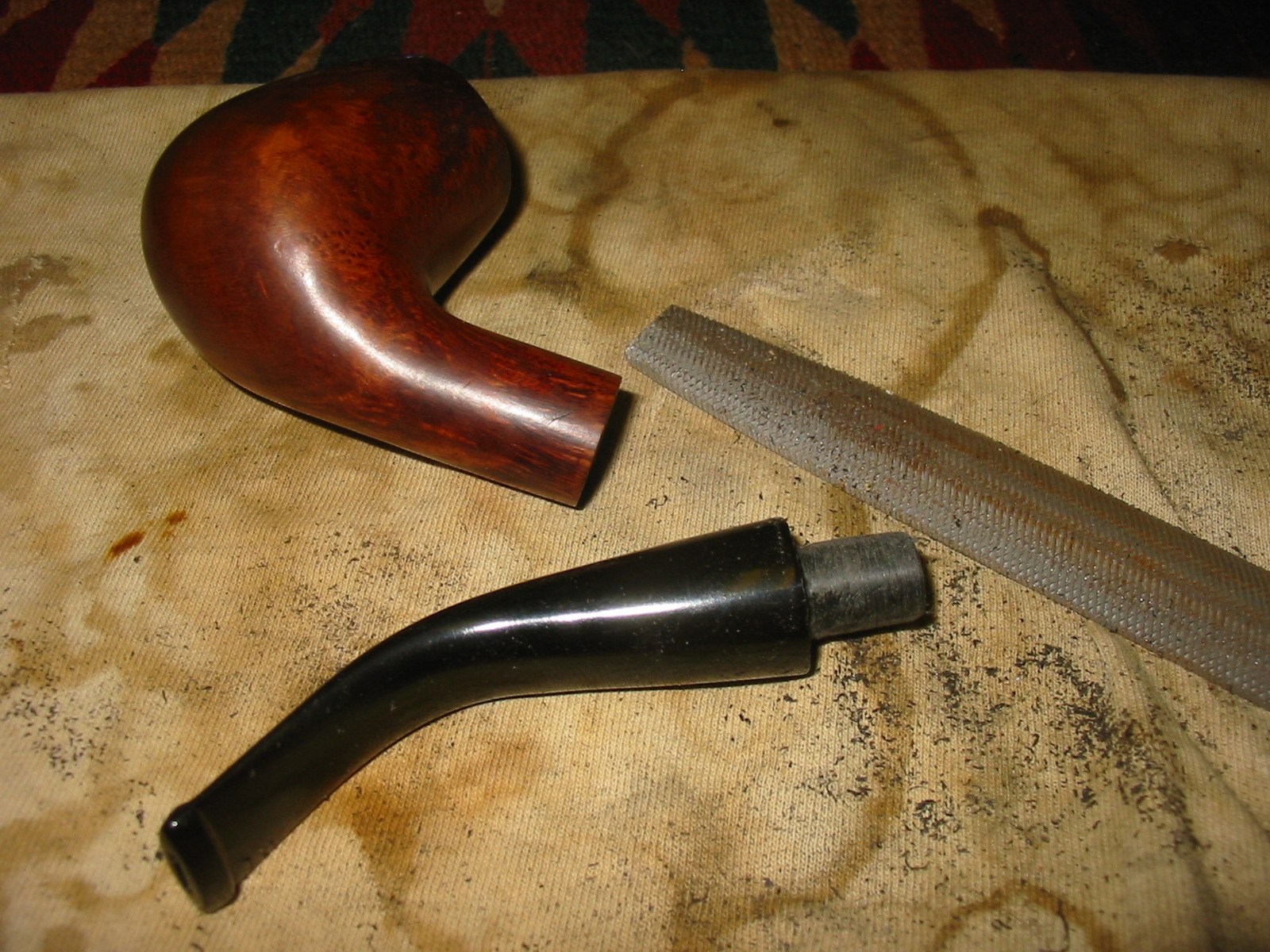
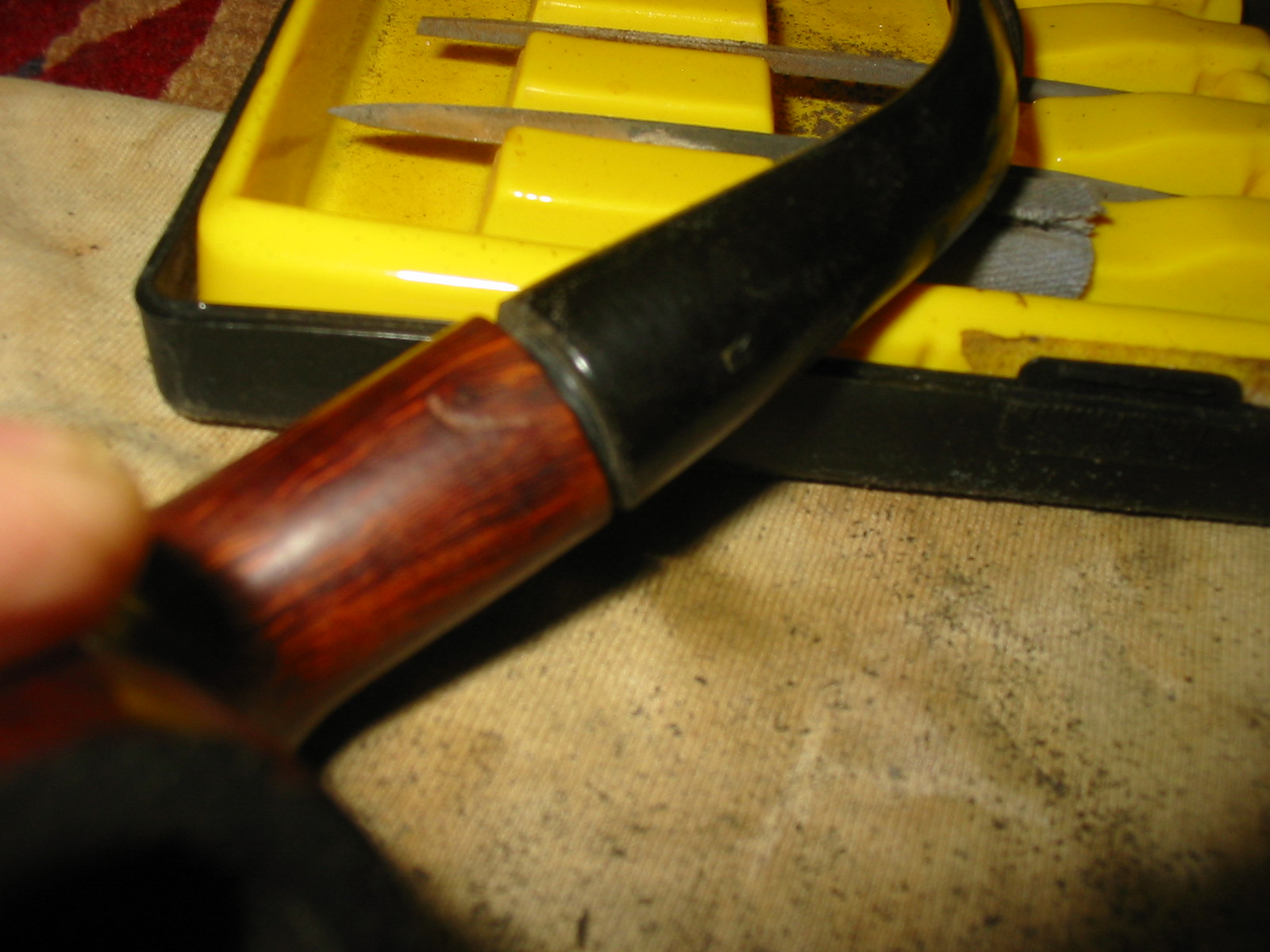
Once I had it sanded to fit I inserted it in the mortise to check the hairline crack. In the photo below I have it partially inserted and the crack is visible next to the fill on the shank. It was not a large or serious crack but in inspecting it I found one on the underside of the shank as well on the opposite edge. This made it necessary for me to band the shank to maintain the integrity of the pipe.
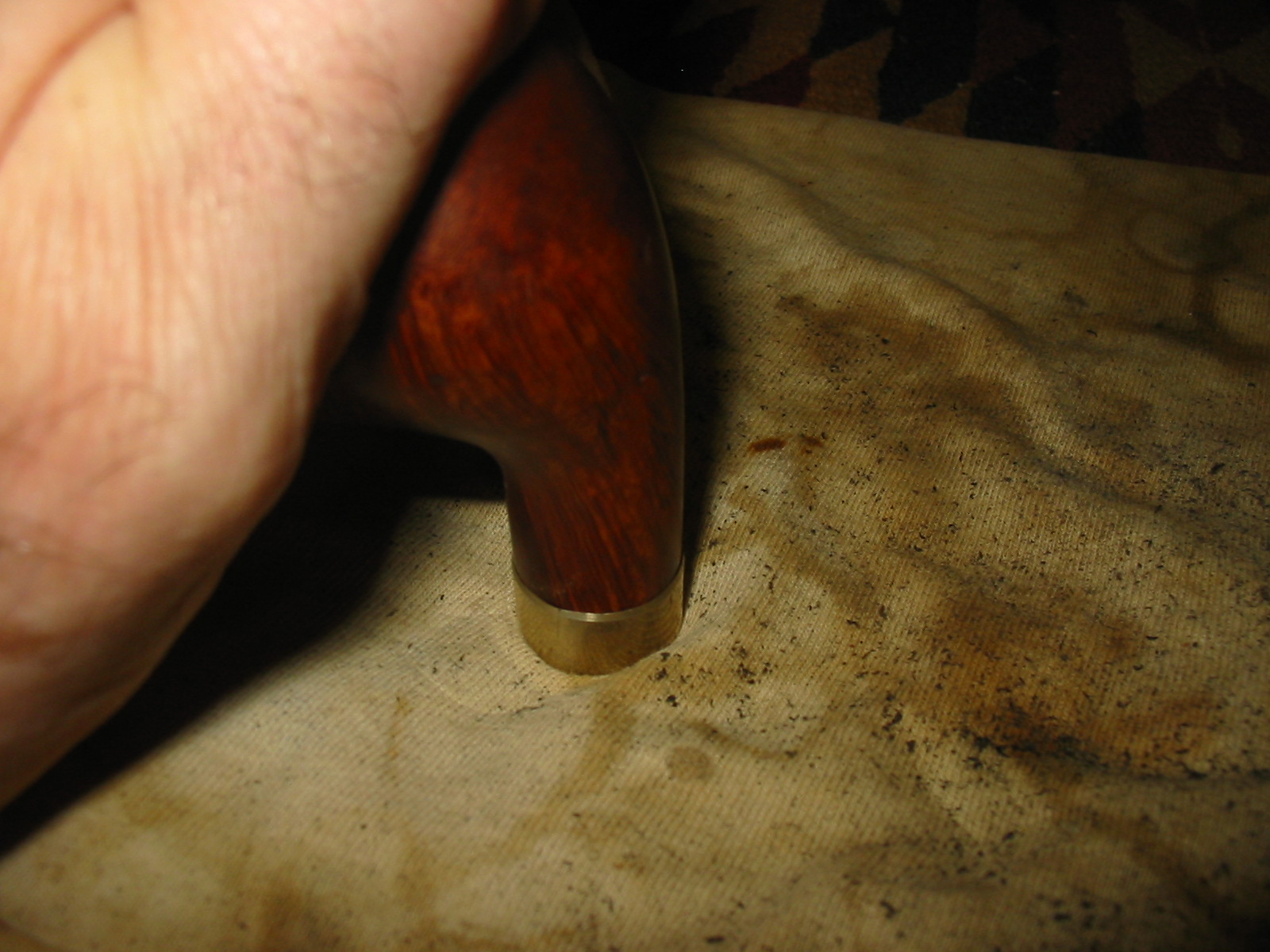
I sorted through my box of bands and found one that would give a good tight fit to the shank. It is a nickel band and once heated and pressure fit on the shank it would give the strength to the shank. The next three photos show the banding process from choosing the band to pressure fitting it on the shank.

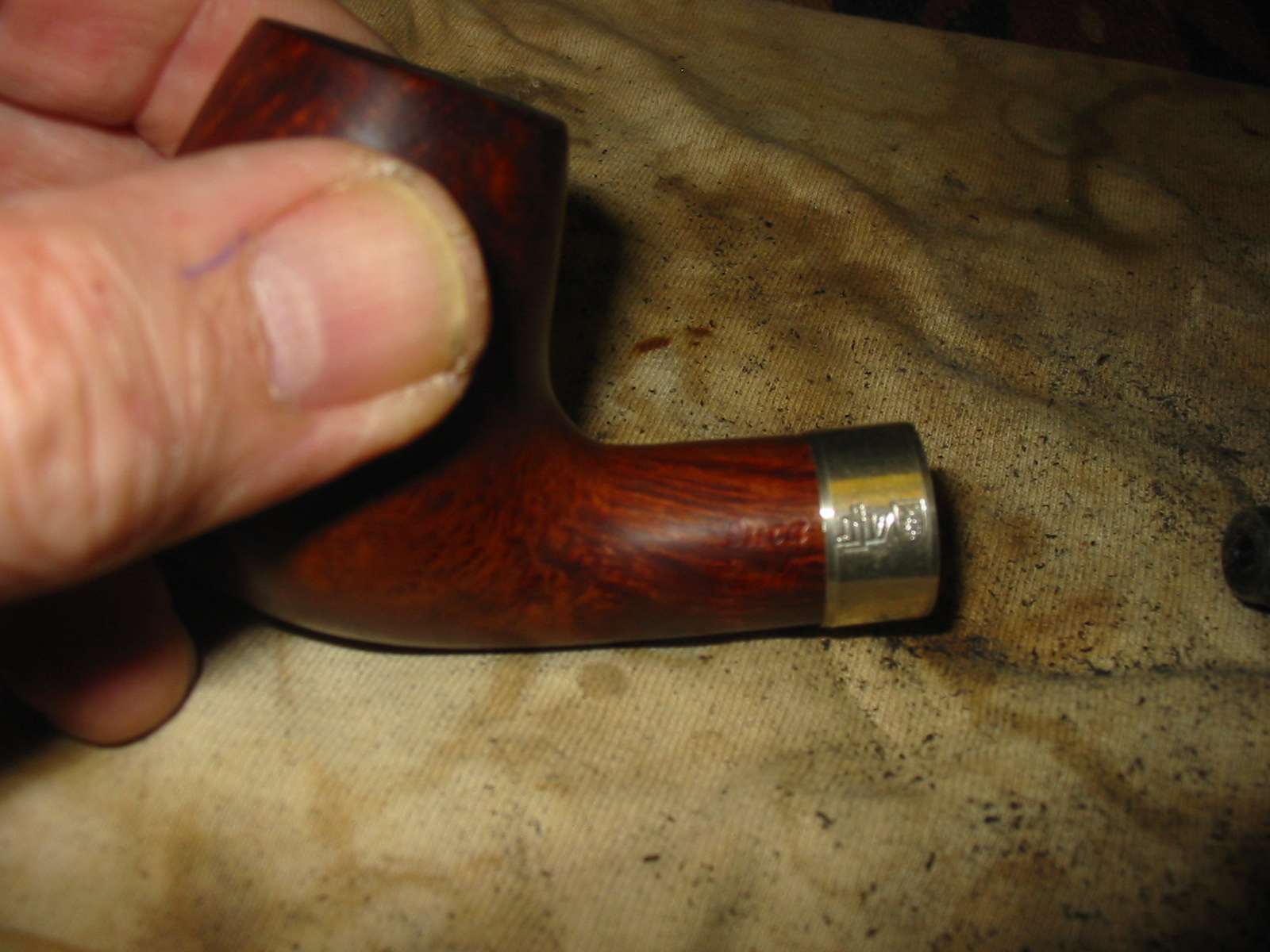
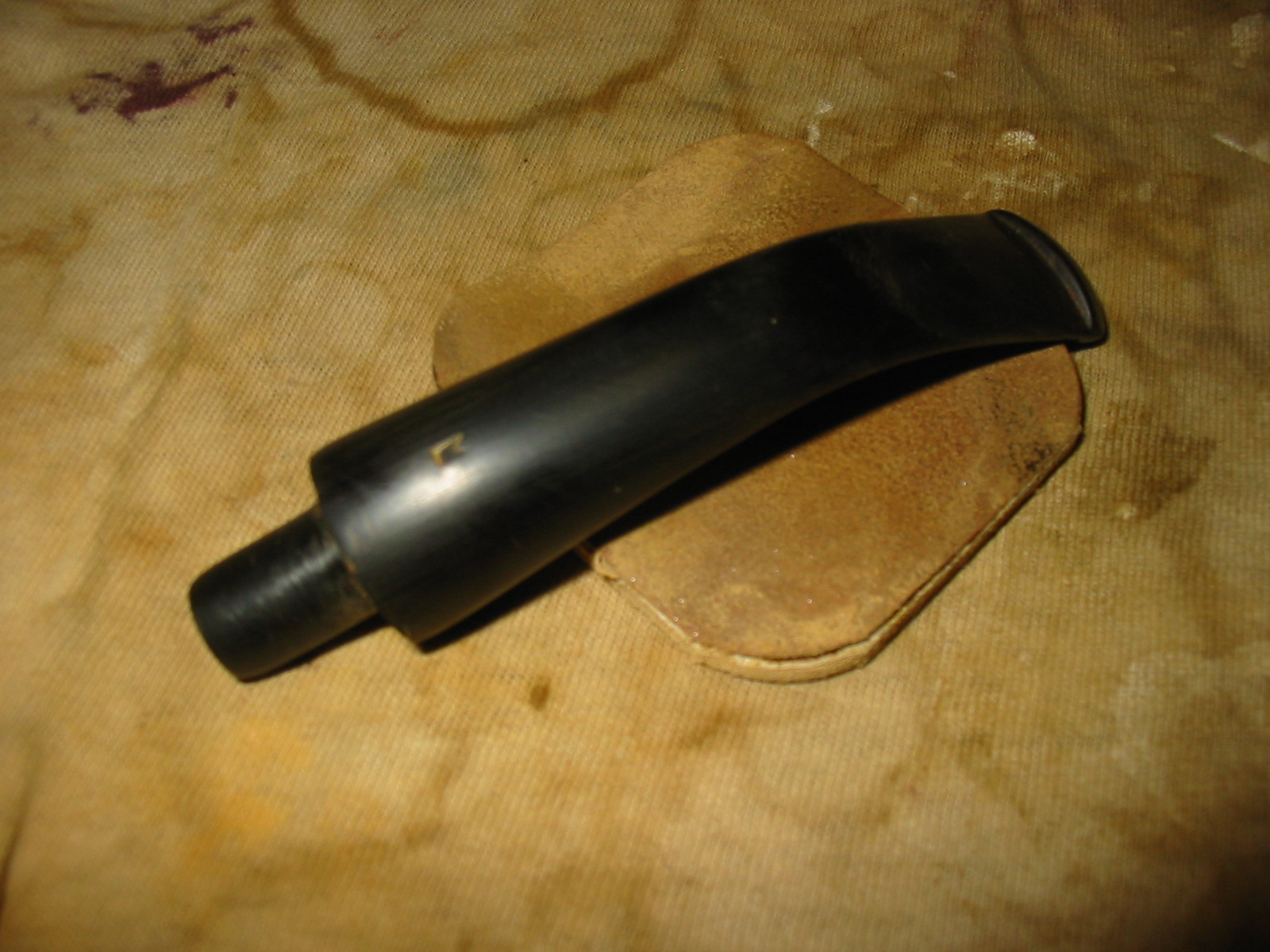
After banding the shank I inserted the stem in the shank and it fit well. It was snug and fit against the end of the shank cleanly. It was a bit larger in diameter than the shank so I sanded it with the emery paper to remove the excess material on the stem. The next three photos show the progress of fitting the stem against the shank.
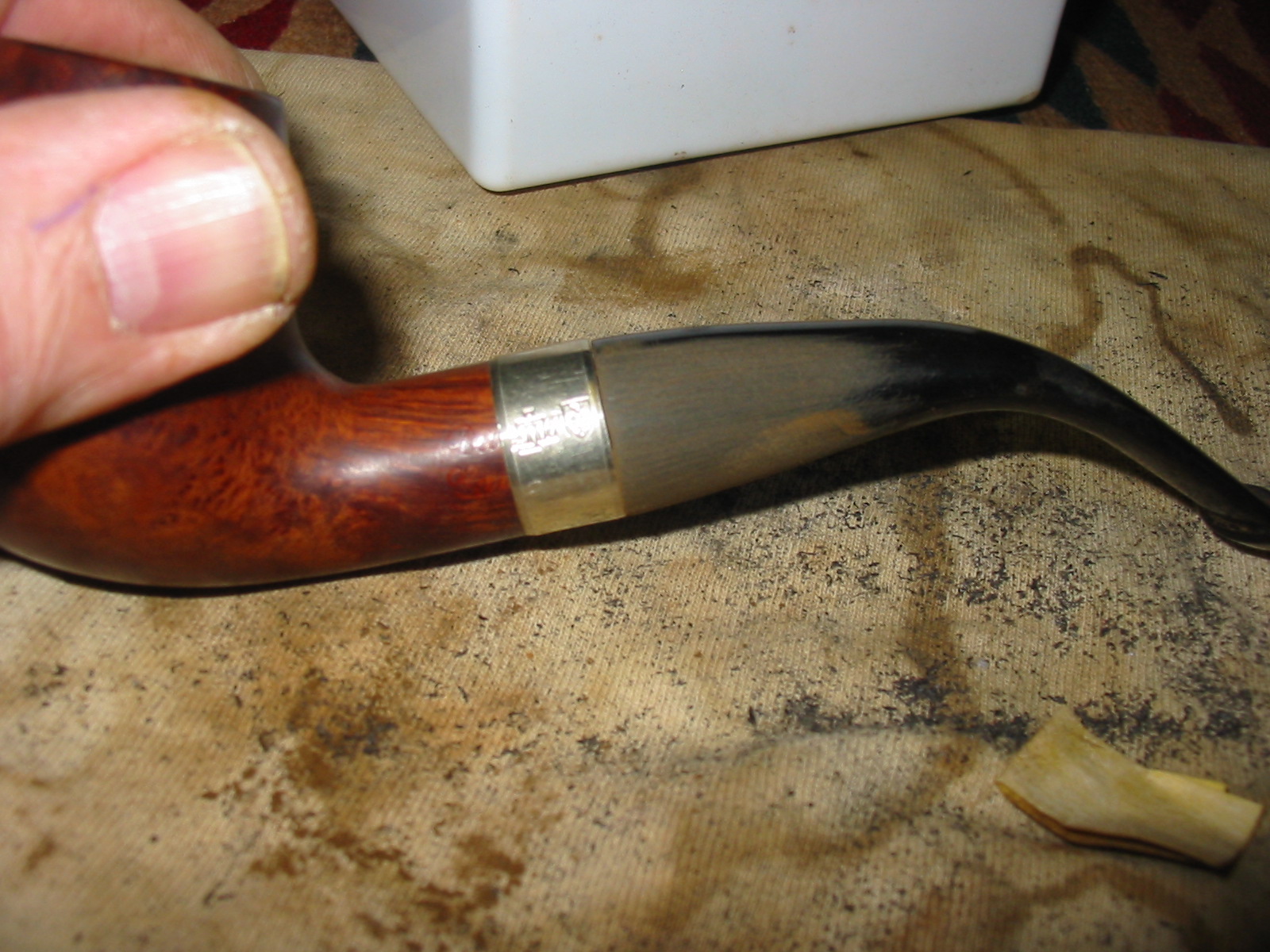
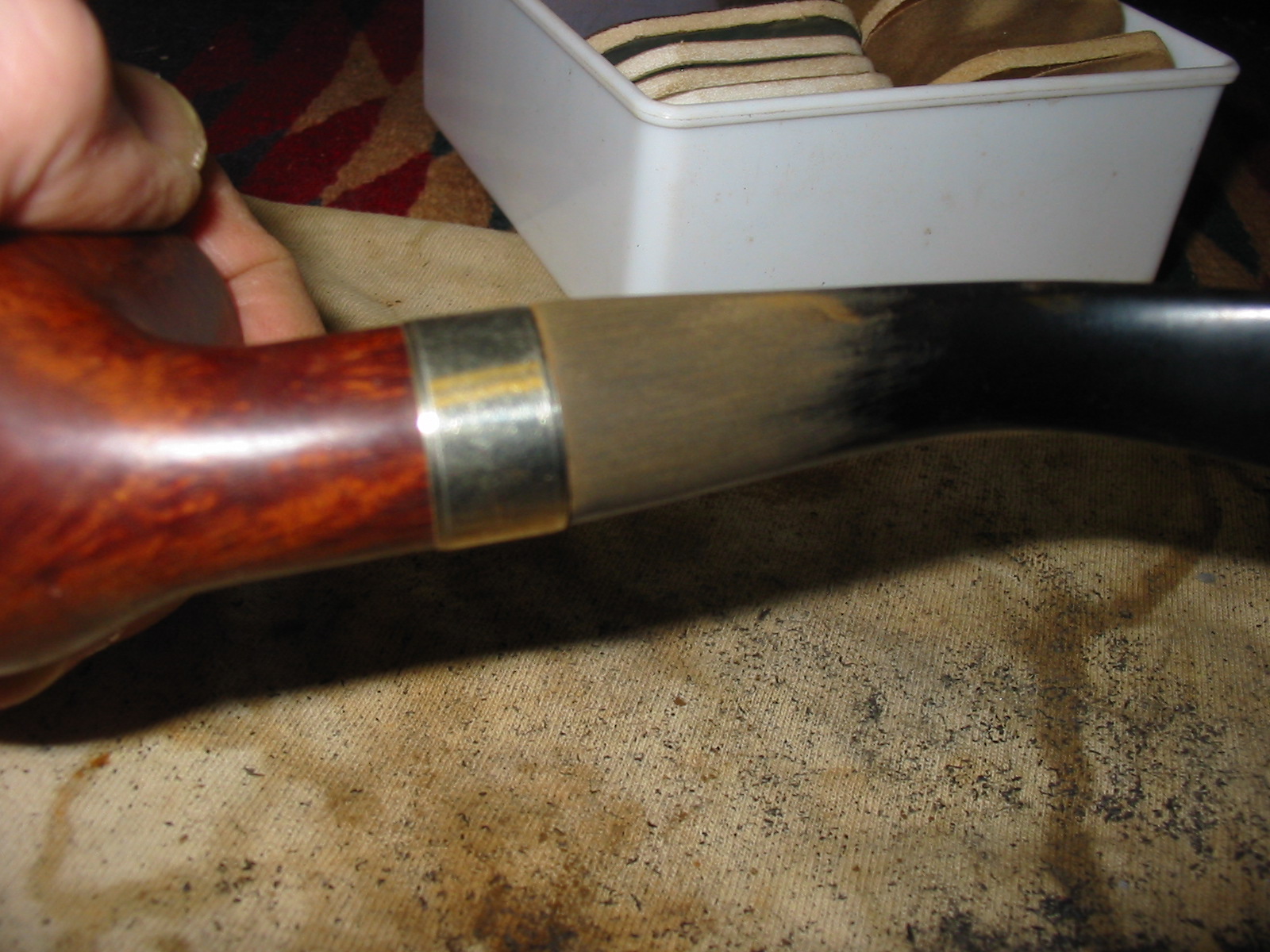
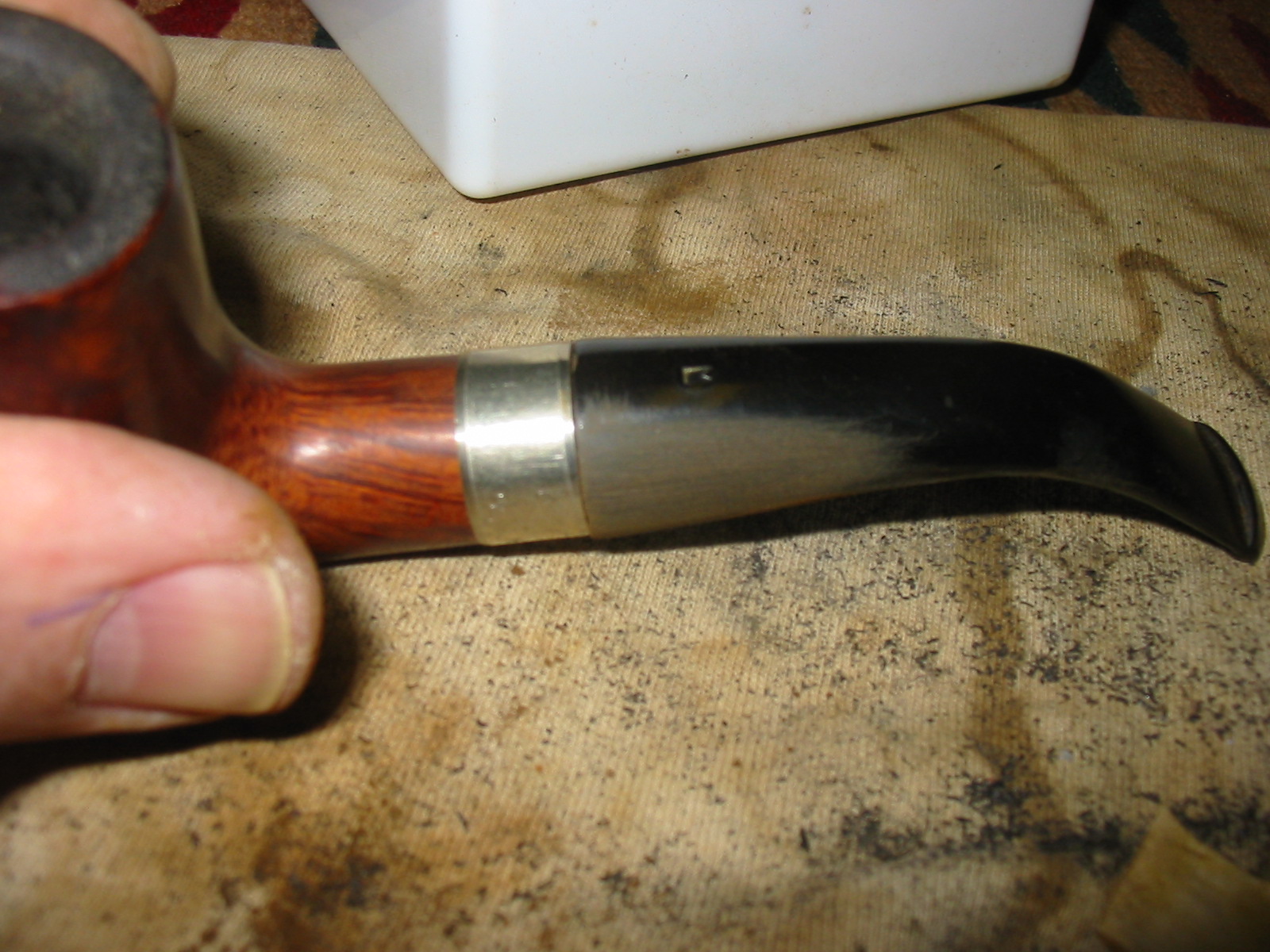
I reamed the bowl with my T handle Pipnet reamer and blade heads. It was an easy ream as the bottom half of the bowl was clear briar. The Pipnet reamer must be carefully inserted and turned so as not to make the bowl out of round or damage the bowl.

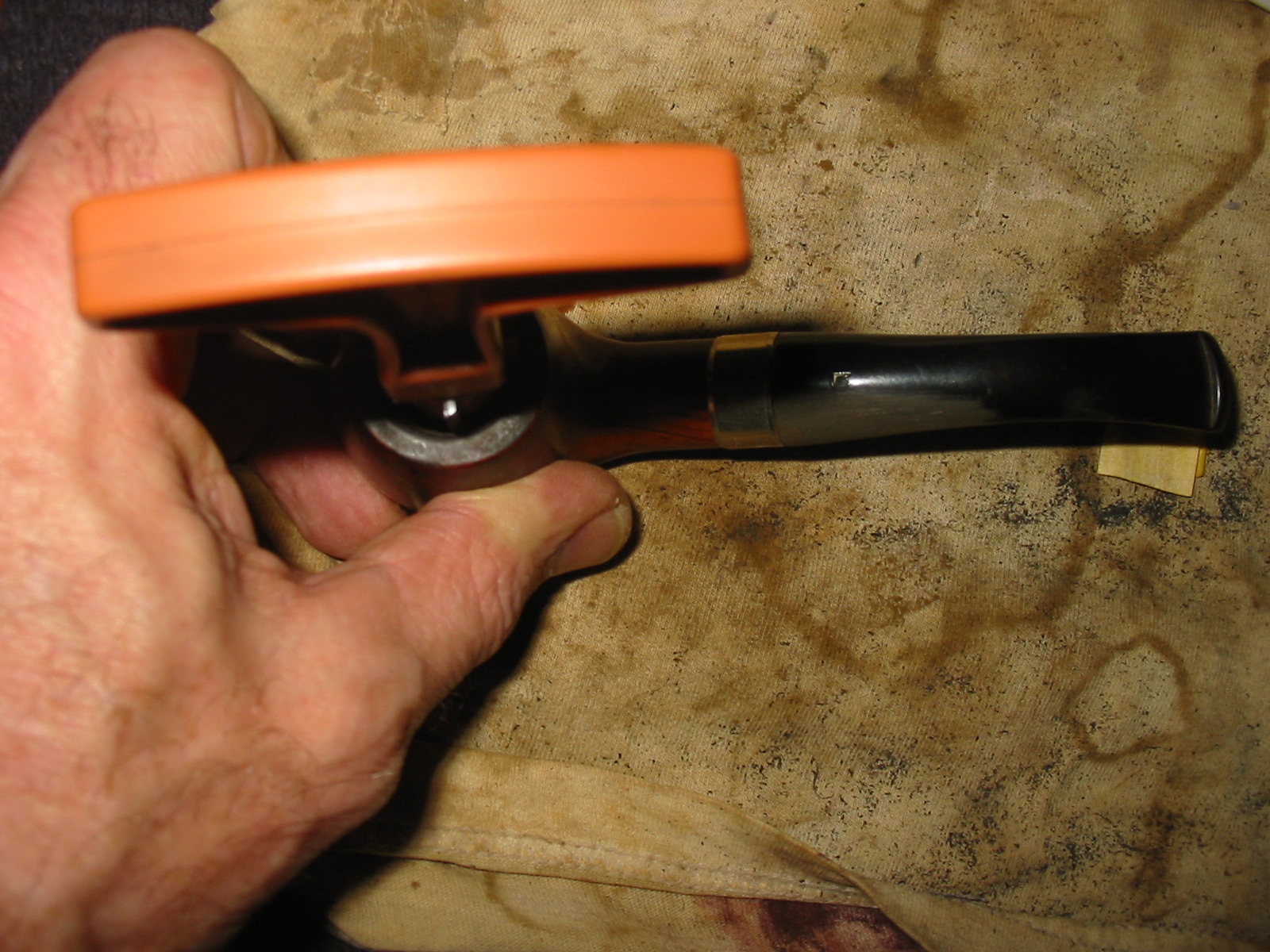
After reaming I decided to clean off the tars and oils on the rim. I used a fine grit sanding sponge to remove the grime as seen in the first picture below. I then wiped down the bowl and rim with acetone on a cotton pad as can be seen in the second and third photo below. I found that cleaning off the grime and the dark parts of the bowl revealed some really nice grain on the pipe.
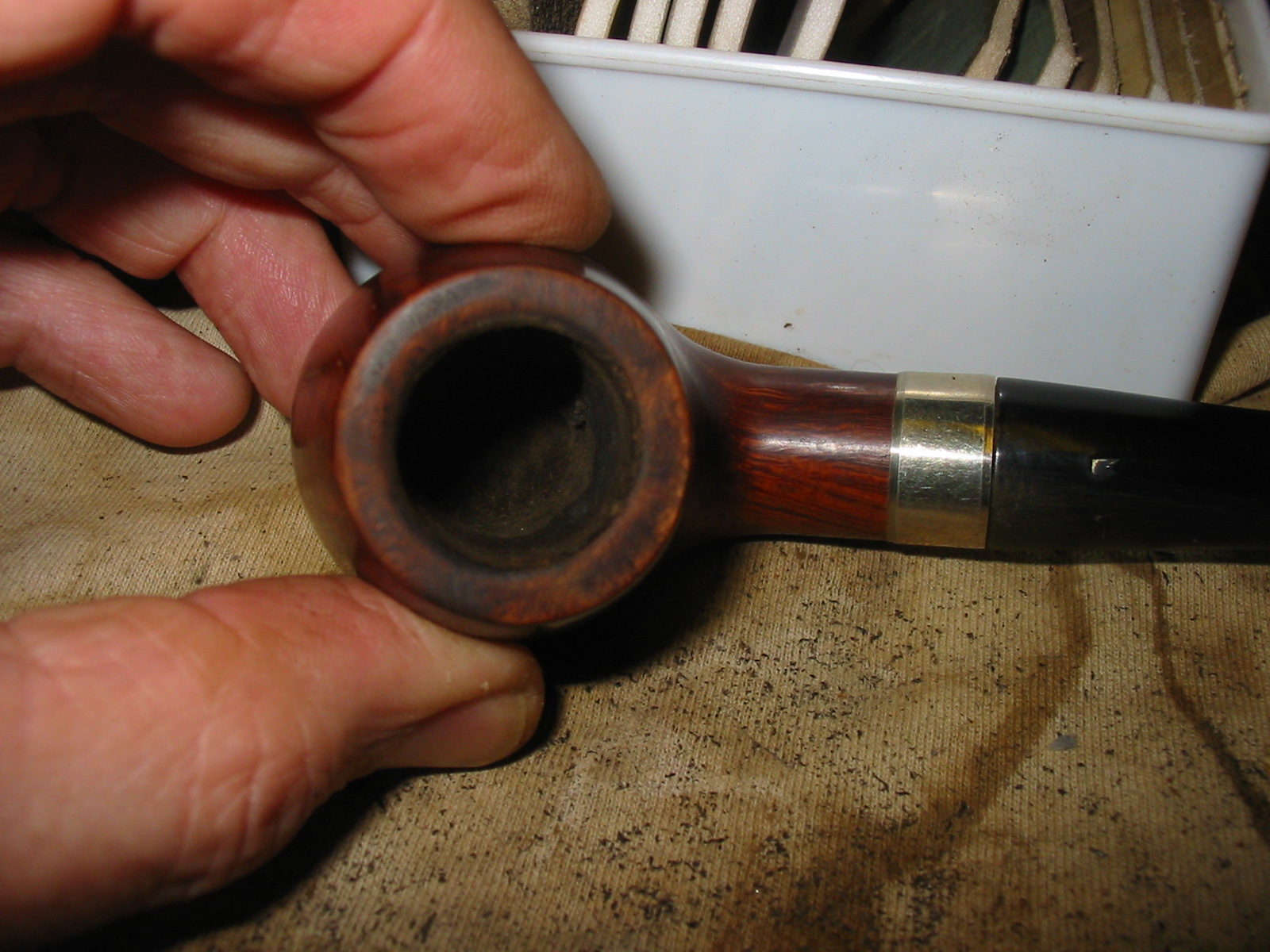
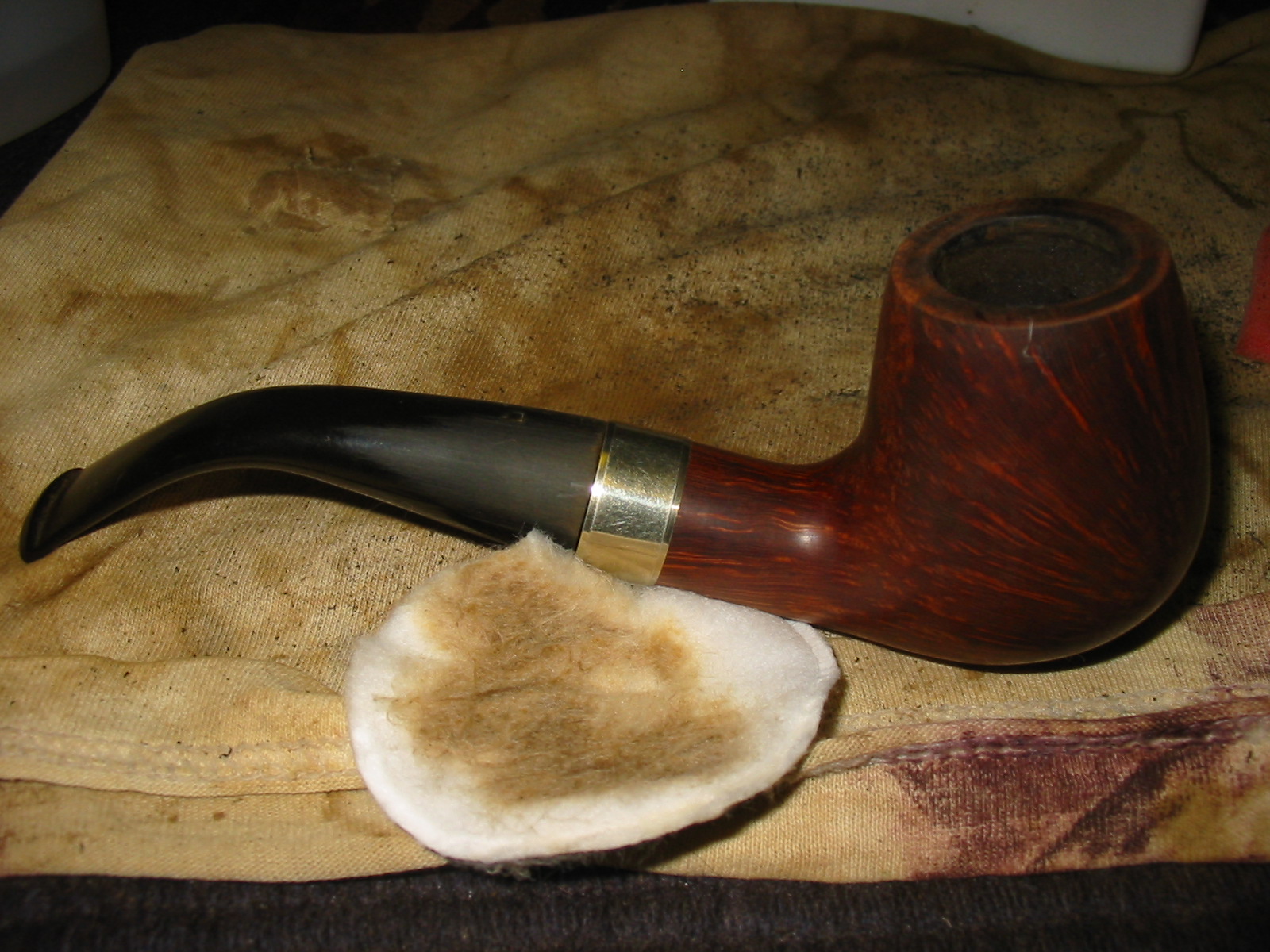

The next three photos show the bowl after the wipe down with acetone and the stem after sanding with the medium grit sanding sponge. The fit is getting very close to being what I was looking for. I am still not sure about the bend in the stem. It fits well in the mouth but I may heat and rebend it. I will see once I am finished with the pipe.


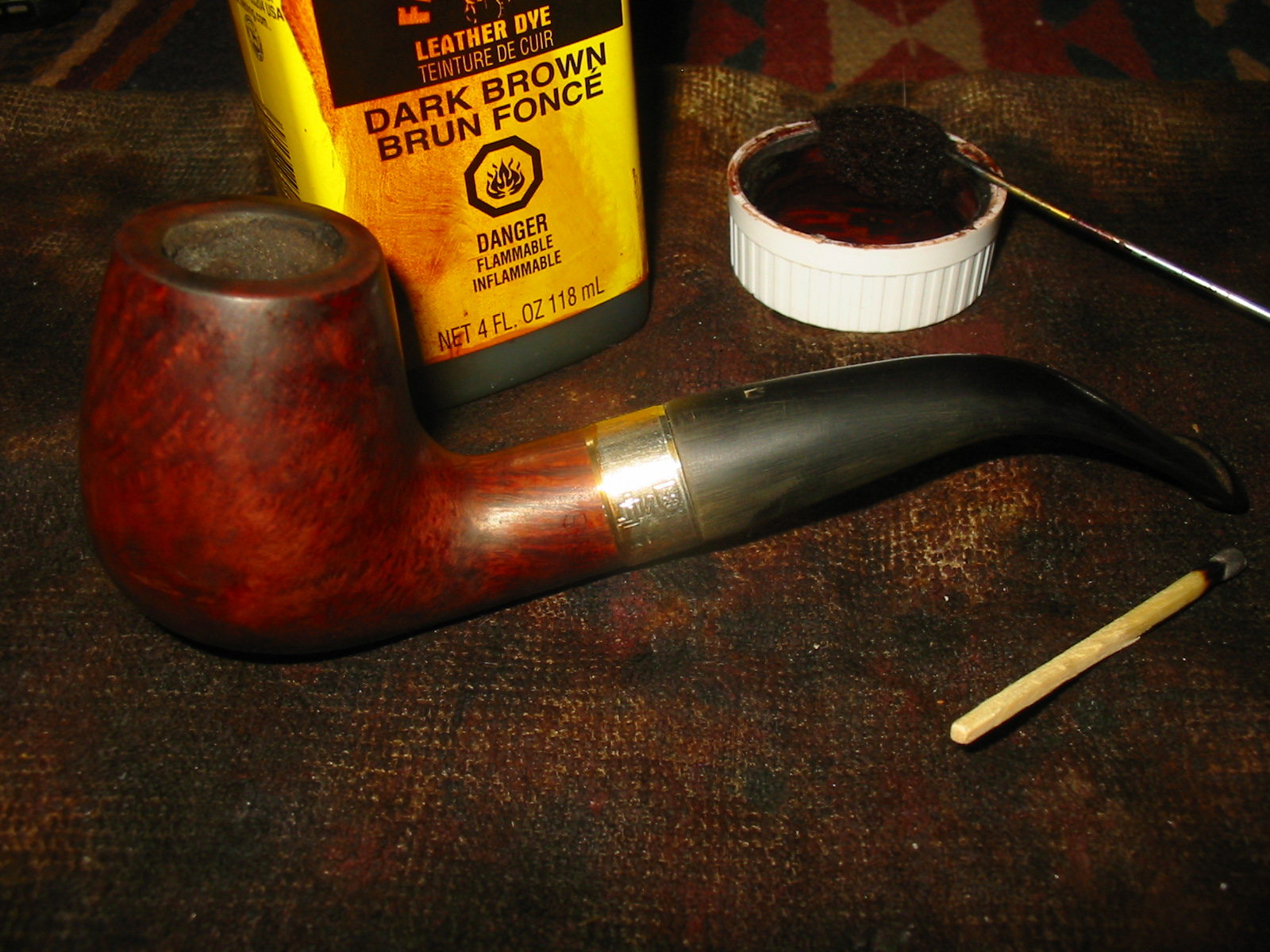
I restained the bowl and rim with dark brown aniline stain. I applied it with the dauber and then flamed it with a match, restained and reflamed it. The next three photos show the freshly stained bowl after I flamed it. Once it was dry I took it to my buffer and buffed the bowl with Tripoli to polish and remove the excess stain.
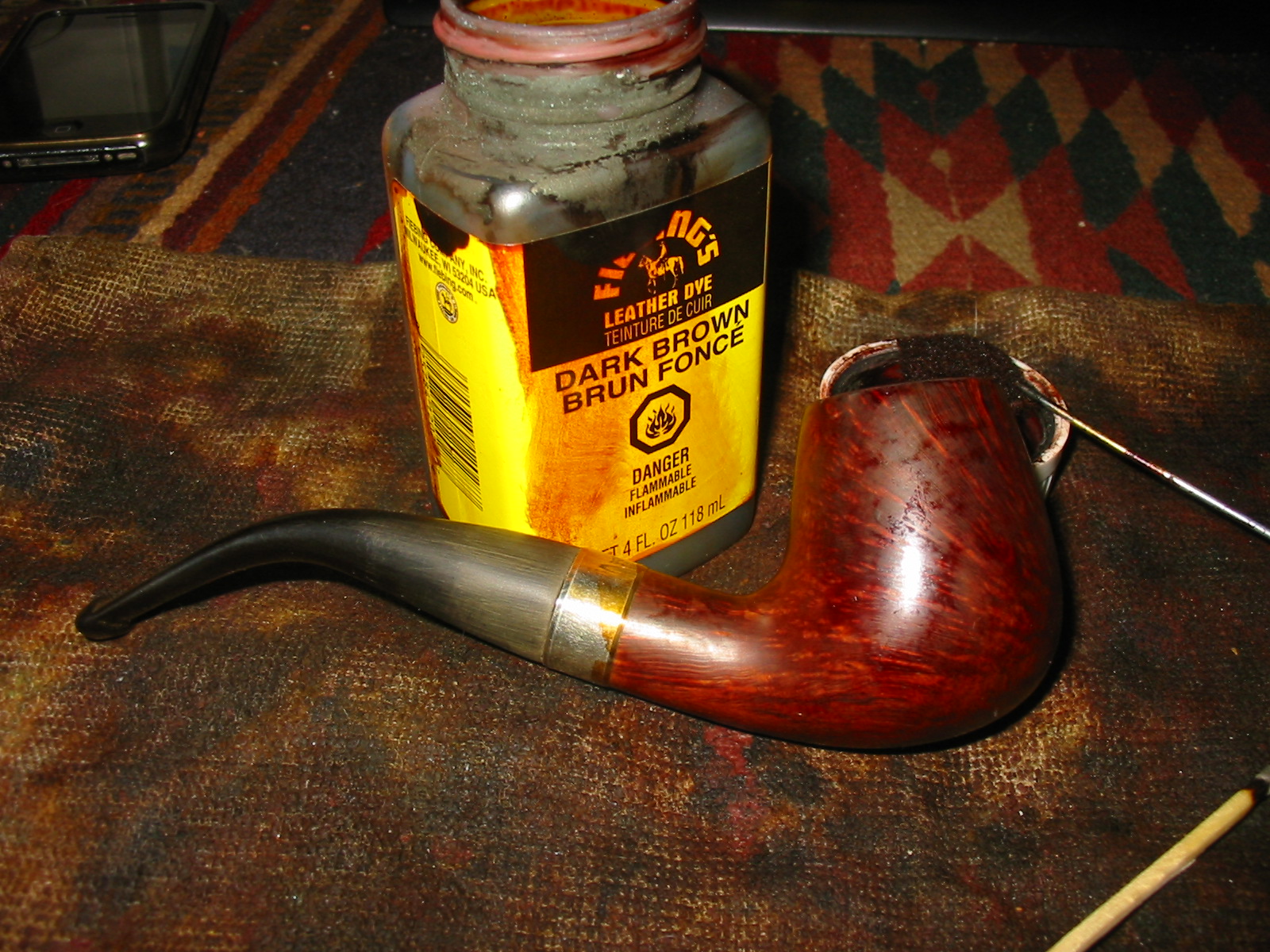
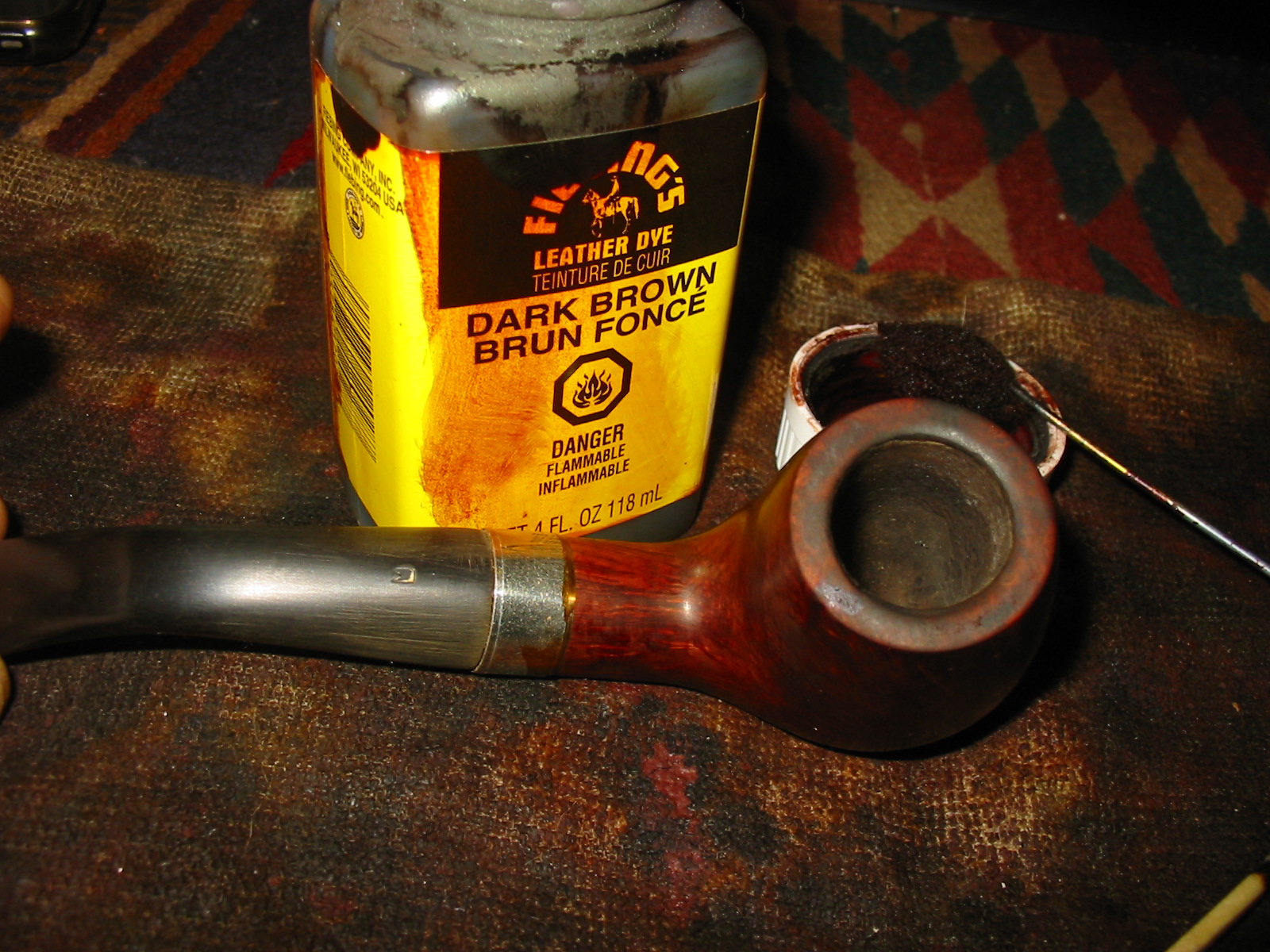
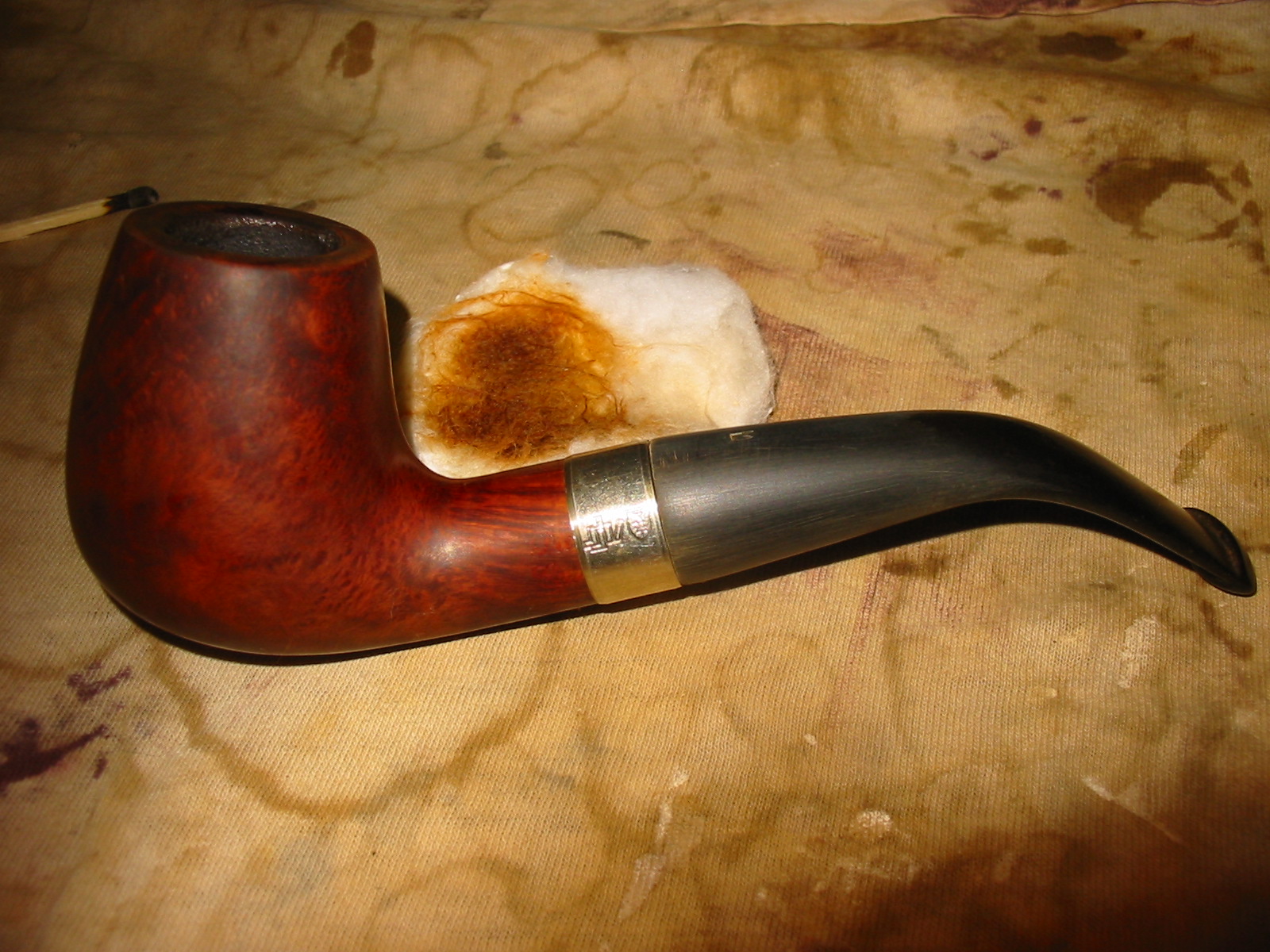
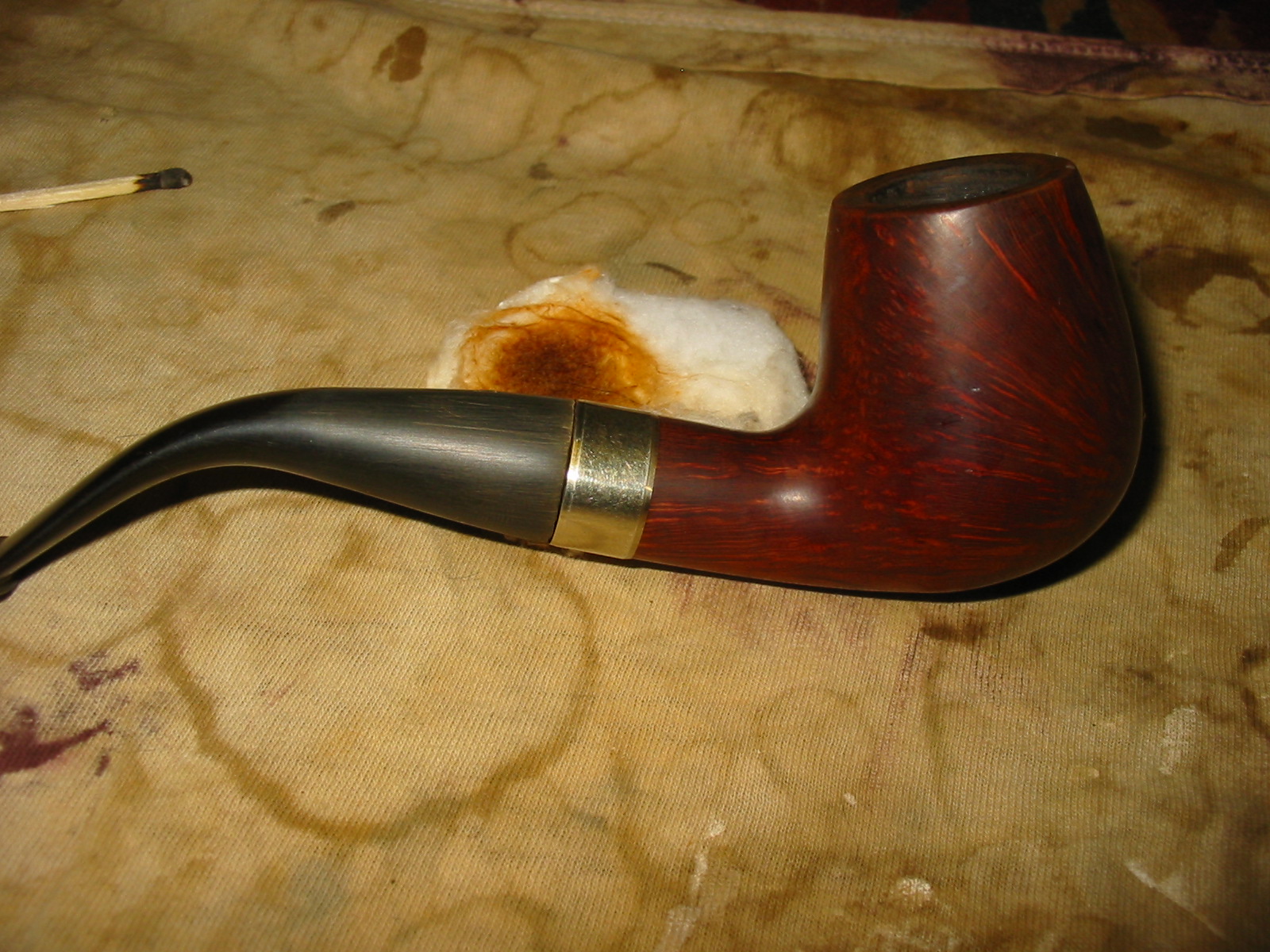
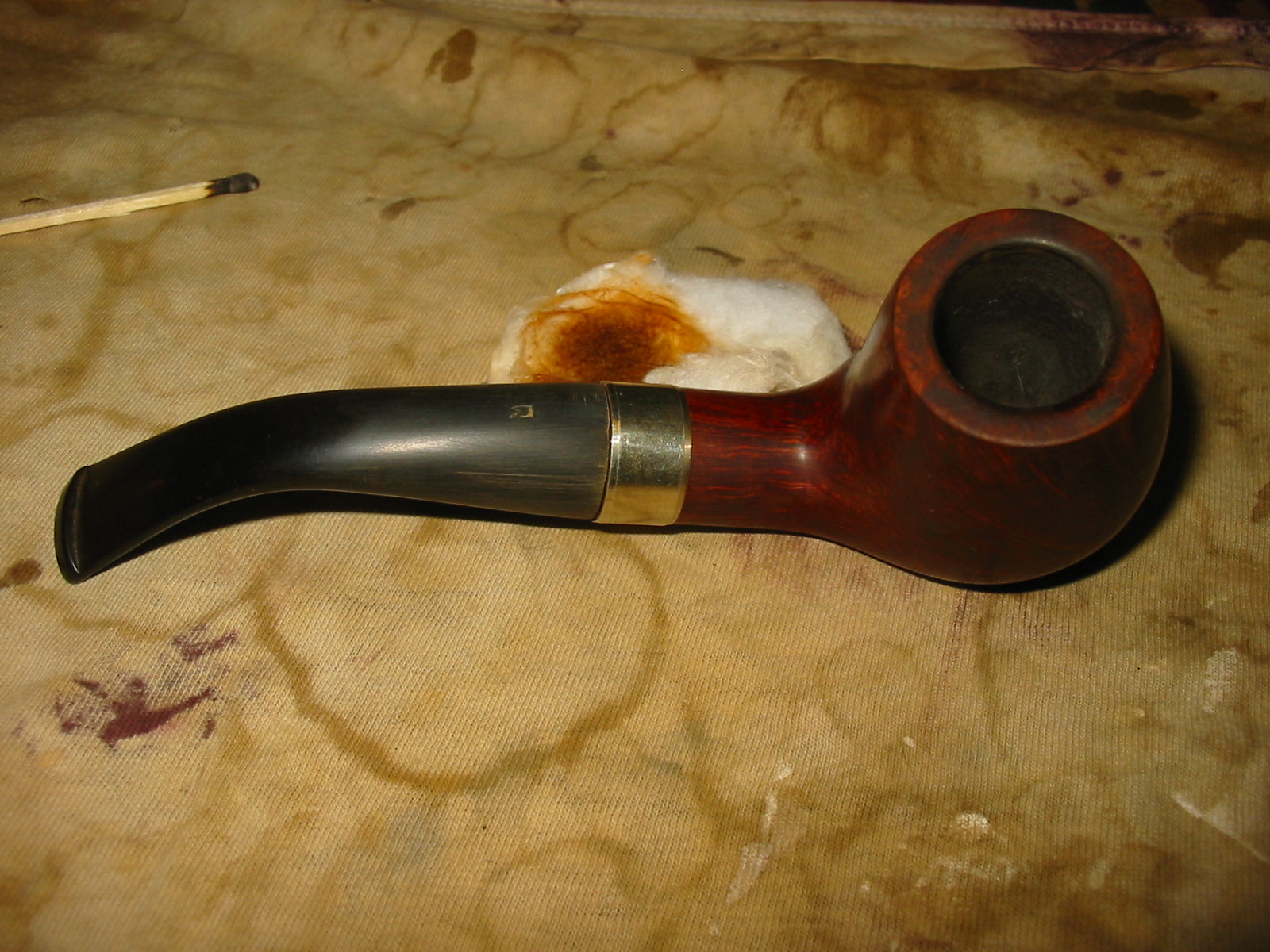
Even after buffing the stain was too dark for me. I wiped the bowl down with acetone on a cotton pad to lighten the stain. The next series of three photos show the bowl after I had wiped it down with the acetone. The colour was what I wanted. It would polish up very well.
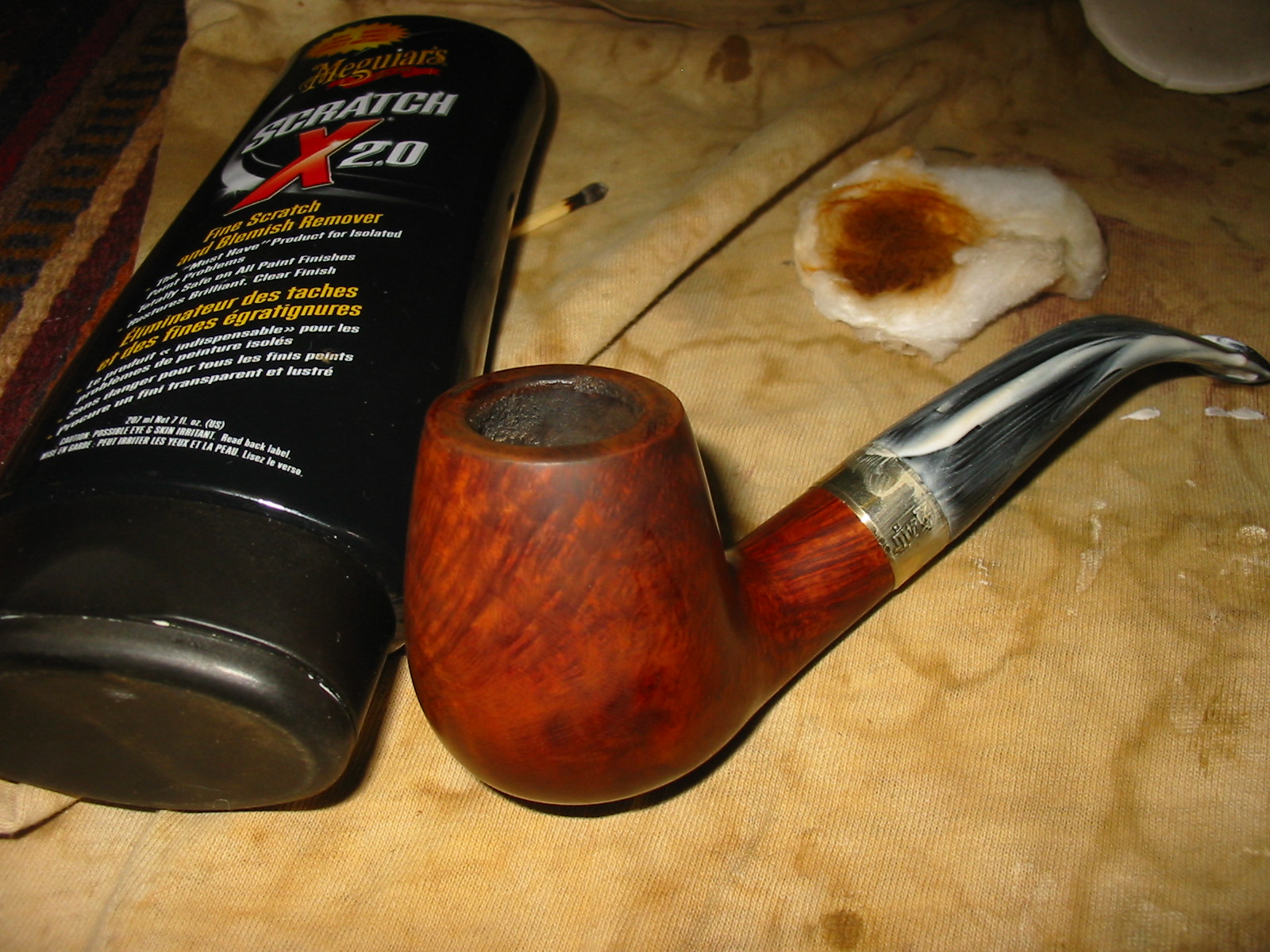
I set the bowl aside after this and went to work on the stem with the micromesh sanding pads. The next nine photos show the polishing process with the micromesh pads and the Maguiar’s Scratch X 2.0. I began dry sanding the stem with 1500 grit micromesh sanding pads. After that I polished the stem with the Maguiar’s before working through the rest of the micromesh grits 1800-12,000. After the final sanding I polished it a second time with the Maguiar’s and then gave it a buff with White Diamond. I brought it back to the work table and wiped it down with Obsidian Oil and then coated it with some carnauba wax. For much of the final sanding I worked with the stem on the shank so as not to round the shoulders of the stem.

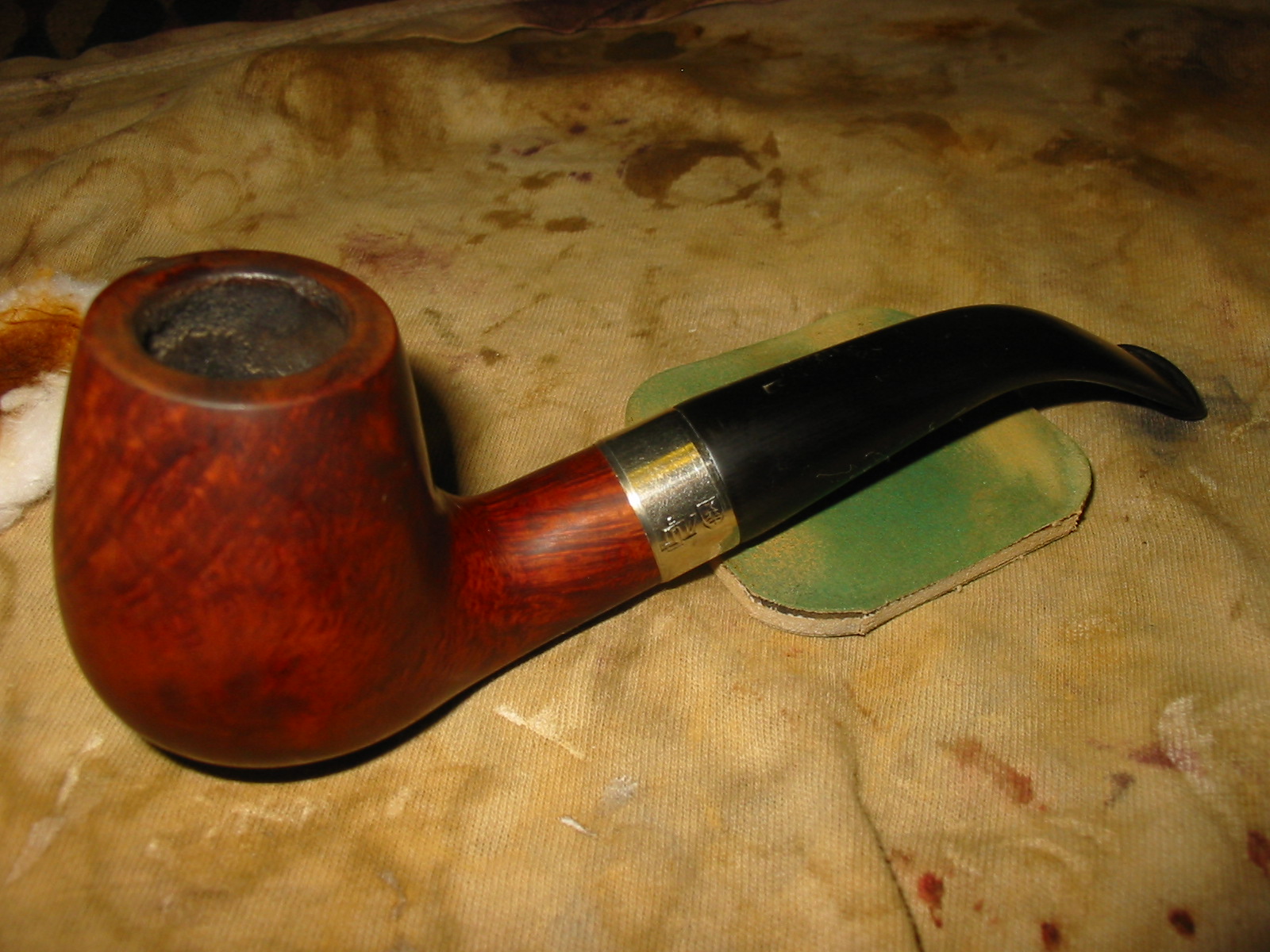

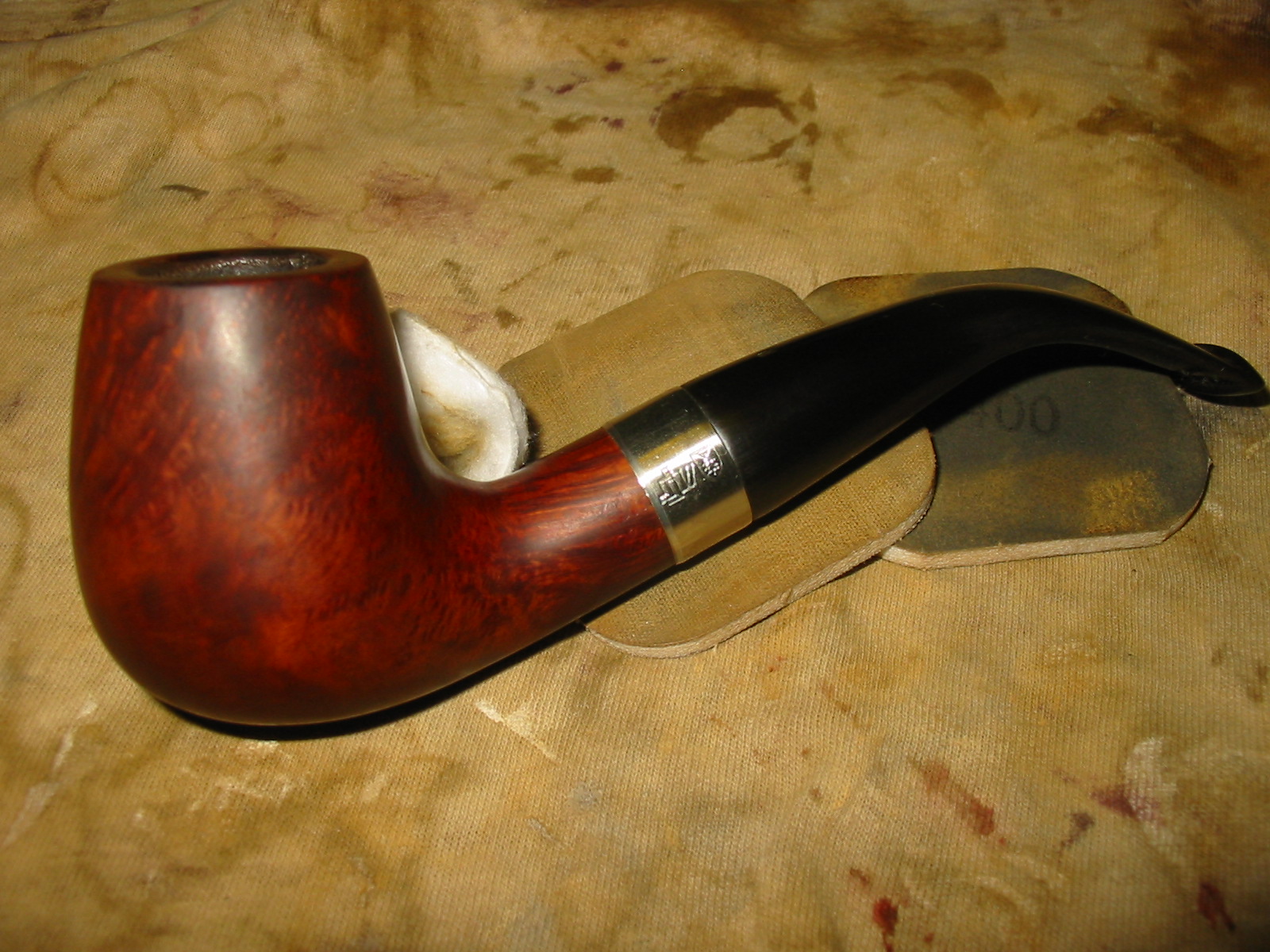
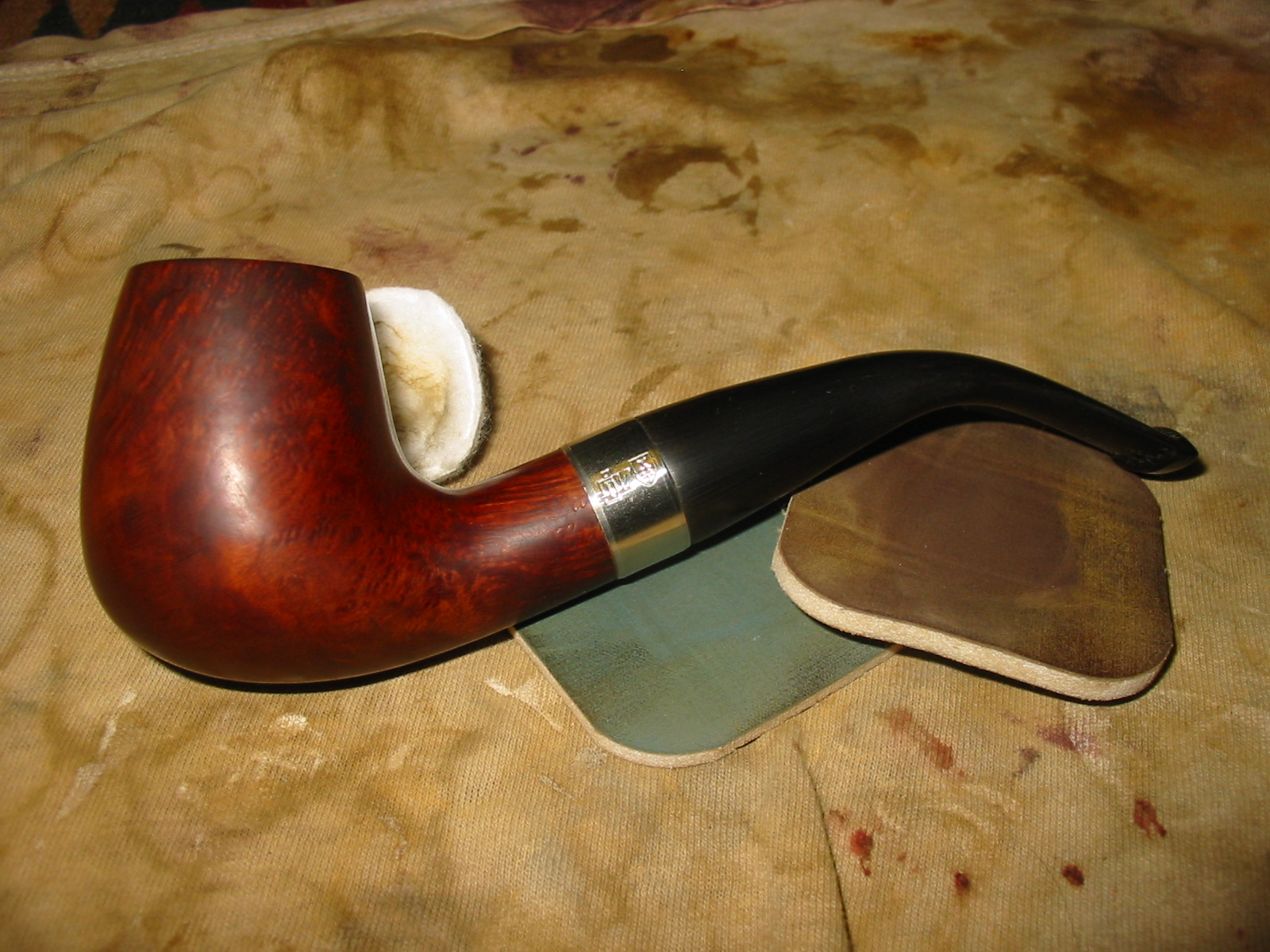
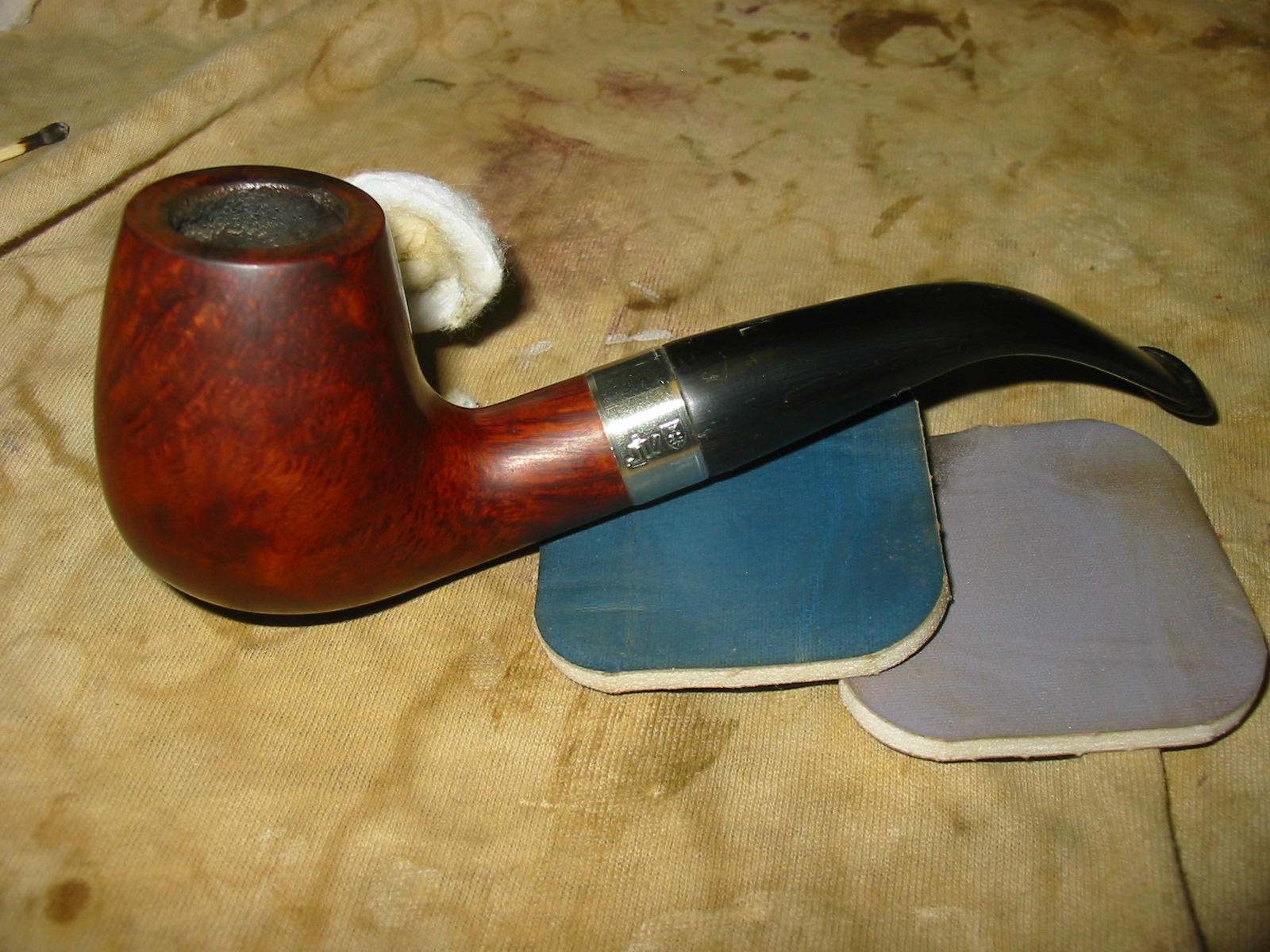
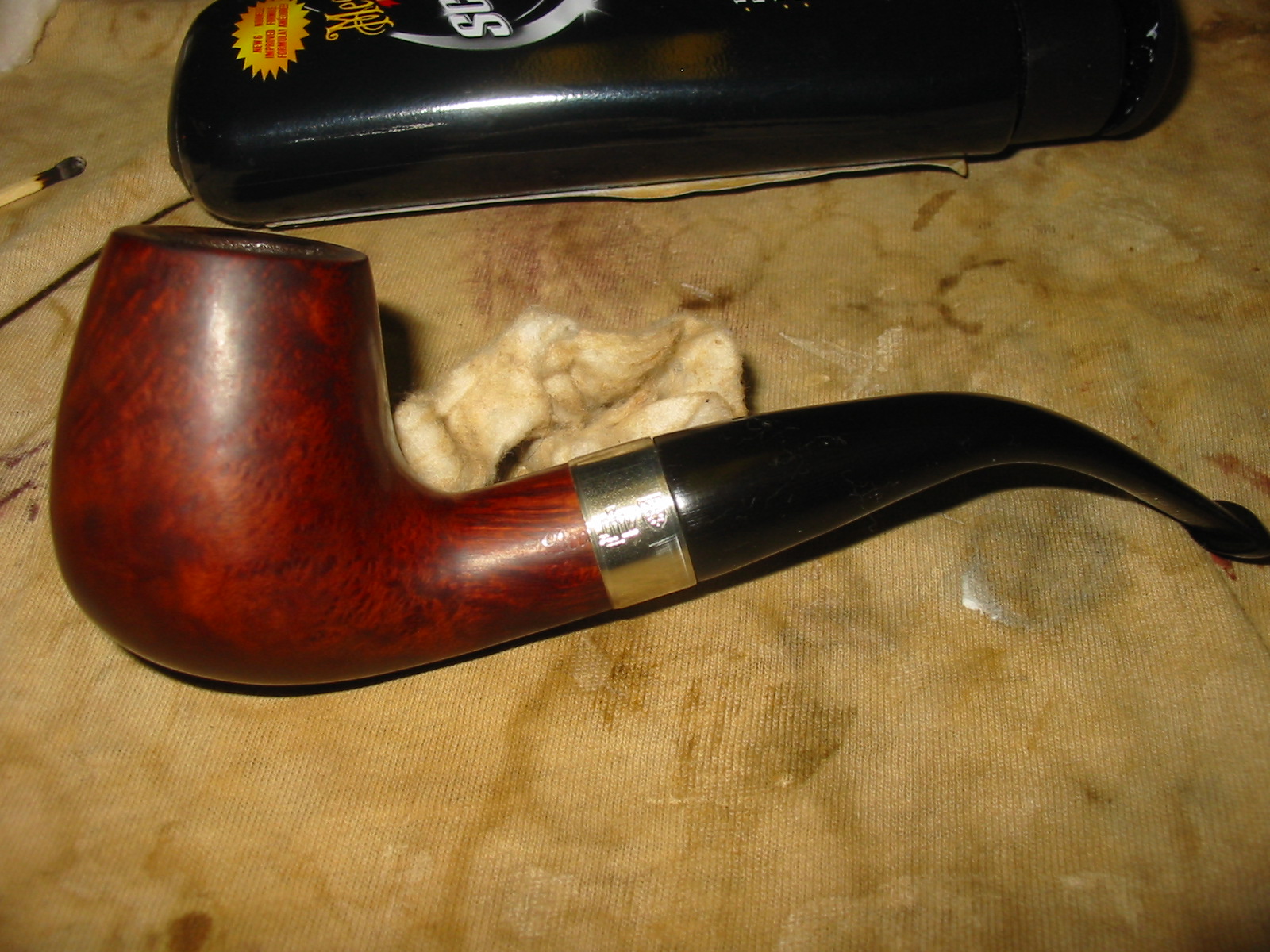
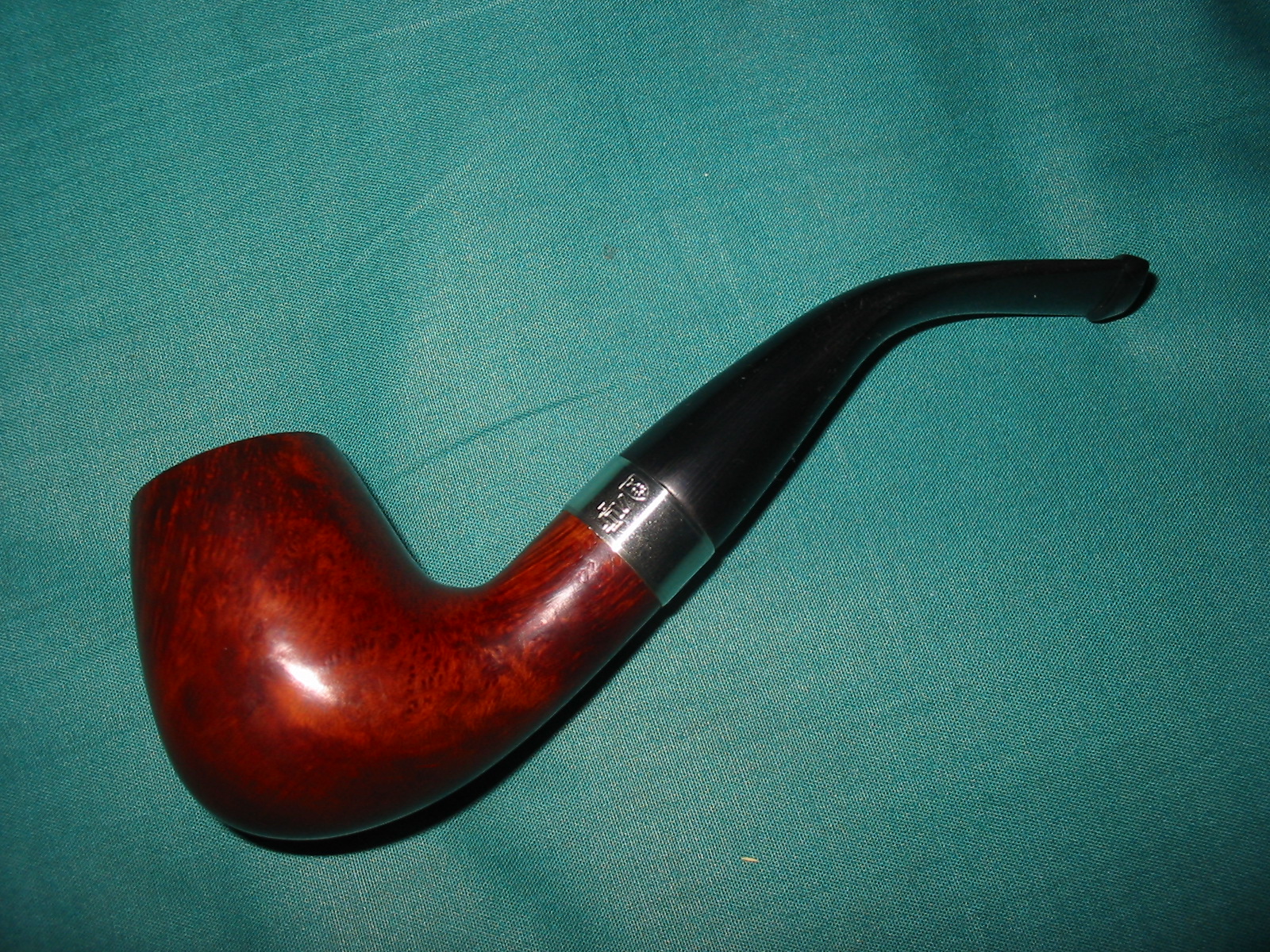
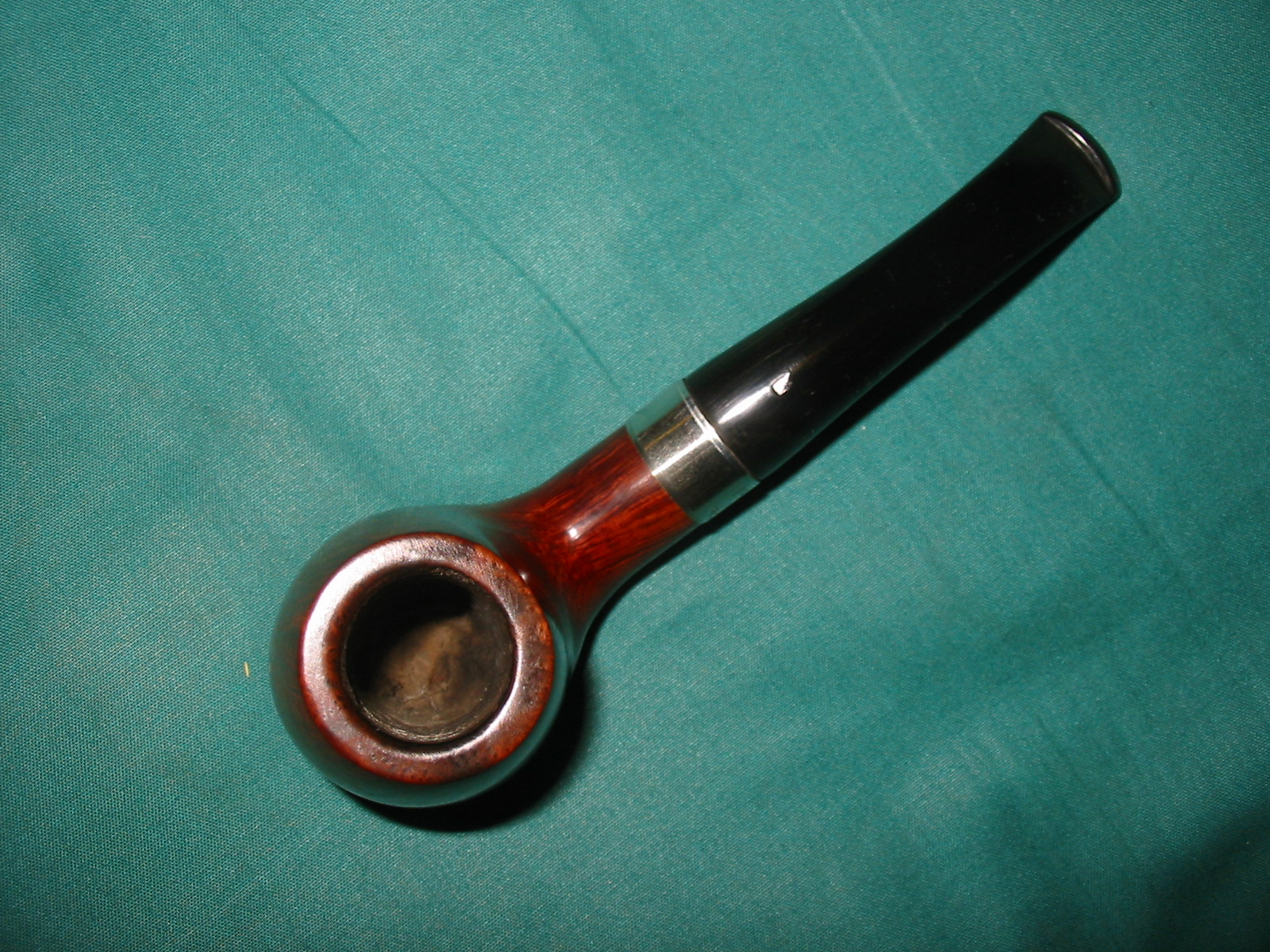
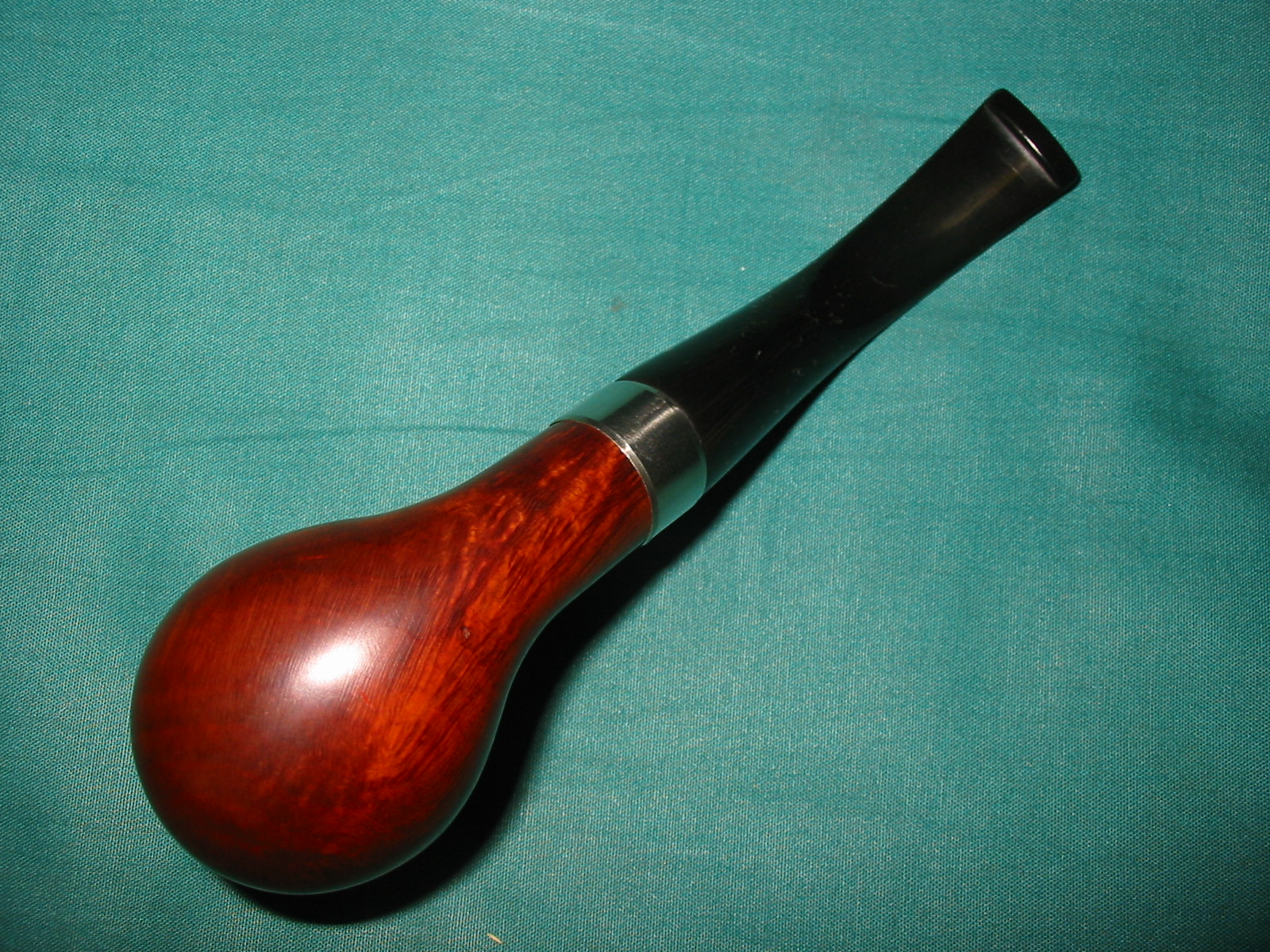
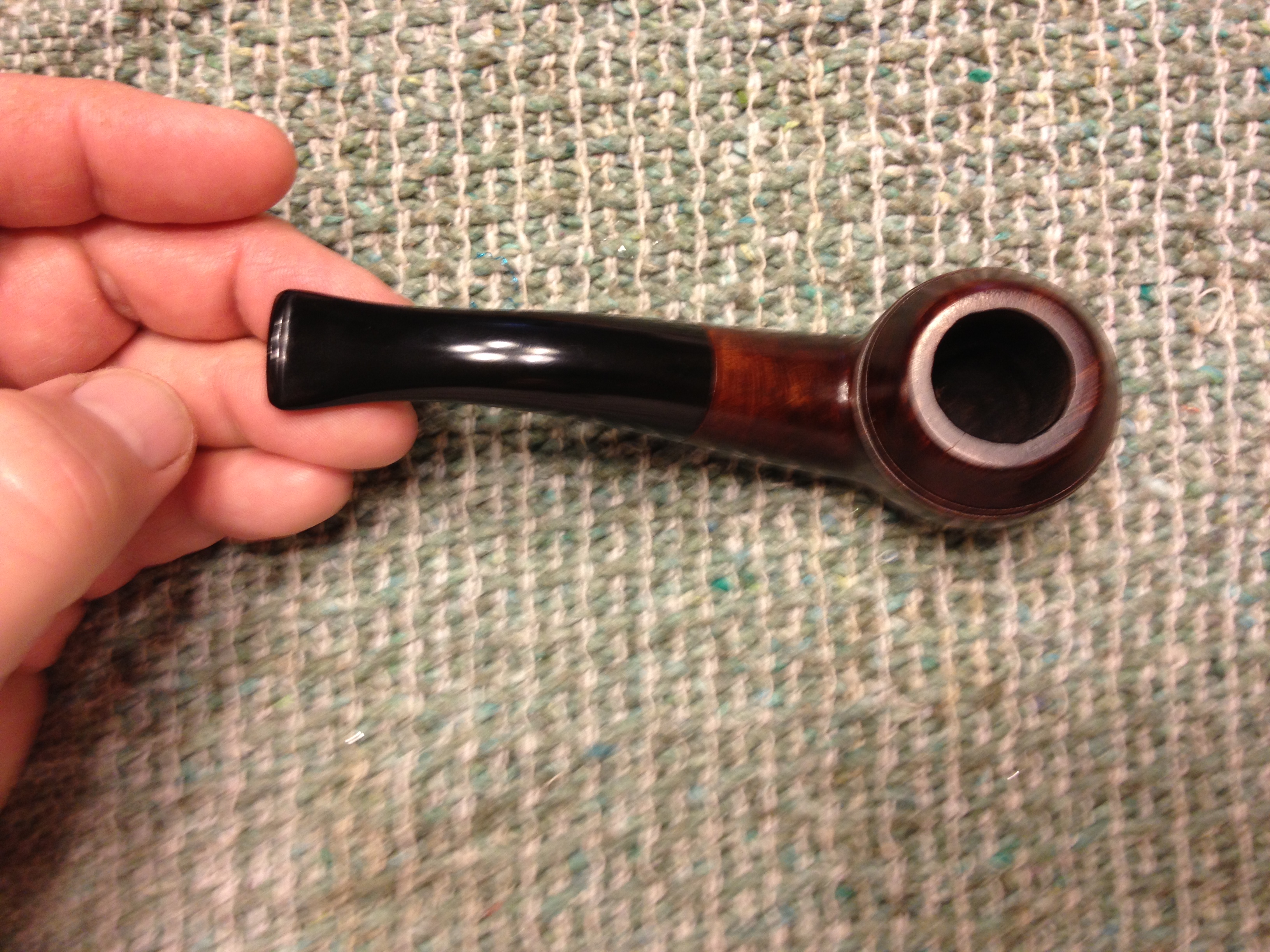
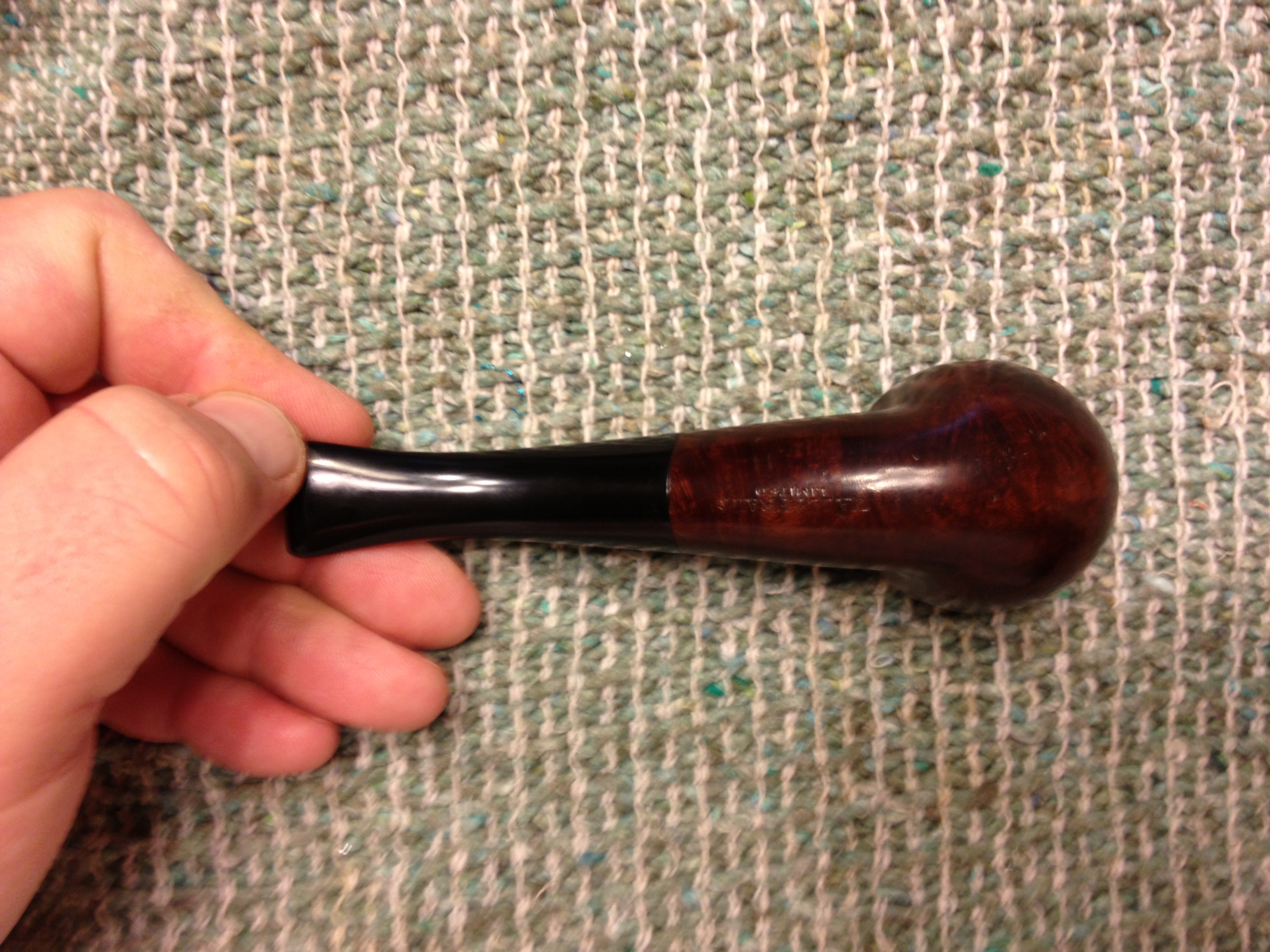
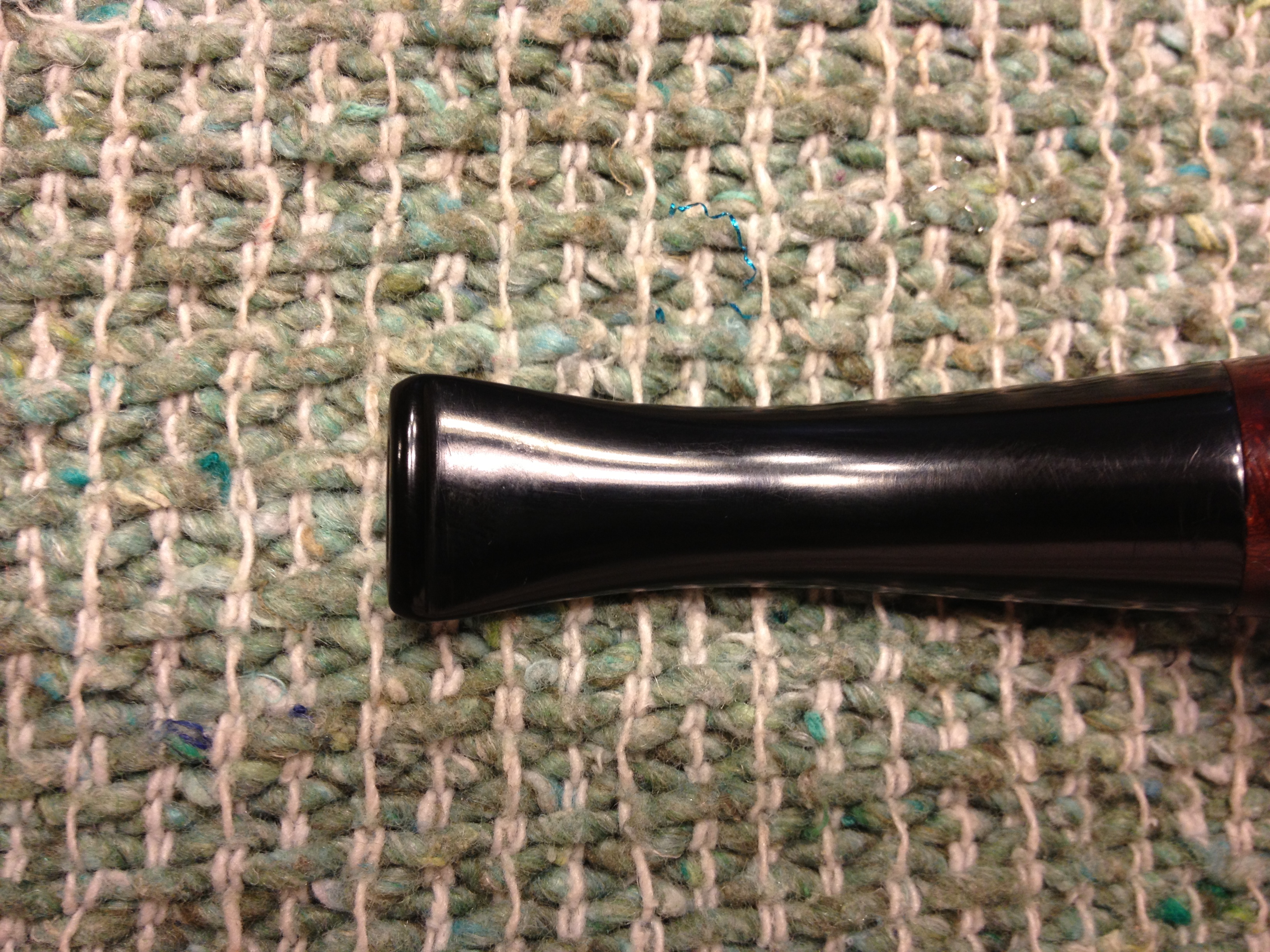
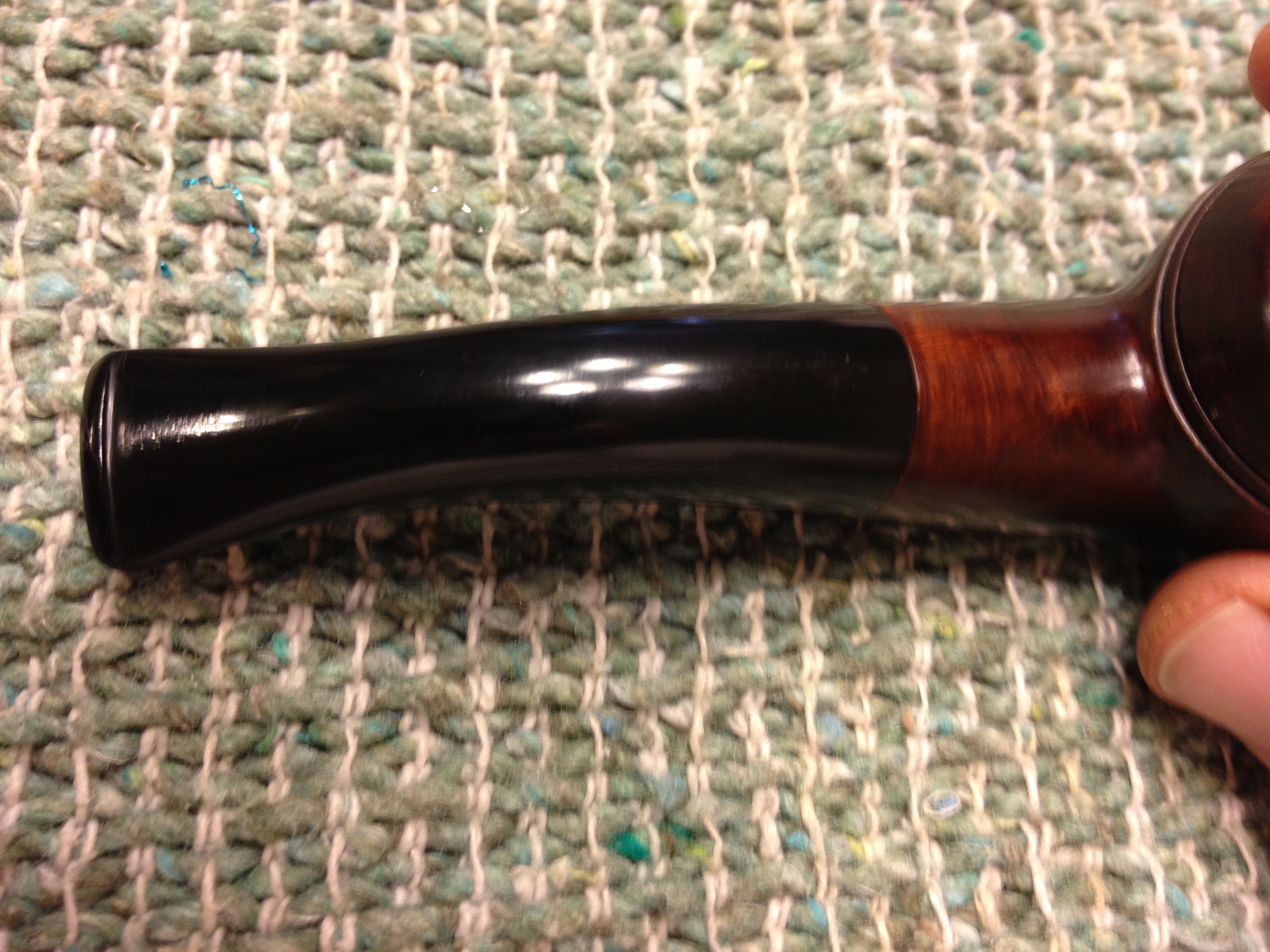
When I had the scratches worked out of the stem I buffed the entire pipe with White Diamond and then several coats of carnauba wax. The finished pipe can be seen in the photos below. I decided not to rebend the stem but to leave it for now and see how it feels when smoking it. I can rebend it at any time should I choose. The final four photos show the finished pipe. This was a pretty straightforward refurb, it took me about three hours to restem and refinish the pipe.




 rebornpipes