Tag Archives: staining a bowl

Plugging a burnout


Blog by Steve Laug

I picked up an old Dunhill Root Briar off eBay that I knew would have to have a lot of work done to make it smokeable once again. It was obvious that it would need a plug as it was burned out. Many probably would not have bid on it but I got it for cheap and thought it would be worth learning how to do a briar plug to repair it. With not a huge amount invested in it I figured it was worth the education I would get doing a repair. I often will buy pipes on eBay that are rejects for the sole purpose of learning a new skill in the repair department.

When the old Dunhill arrived I opened the package for the initial inspection of the pipe. I wanted to have a clear picture of what I would be dealing with in the repair. On the underside of the bowl there was some kind epoxy fill that had been injected into small burnout spot. It had been also daubed on the bowl to provide a layer of “insulation” or something. It was really a mess in terms of the application of the epoxy. No amount of wiping the bowl down with alcohol or acetone would remove the goo from the surface of the pipe. I sanded it until the bottom was back to briar alone and the glue was gone. I then used a dental pick to check the integrity of the bottom of the pipe. I wanted to find out from the outside how far the damage had gone into the briar. If it was charcoal like and soft I would know the extent to which I would have to drill out the bottom of the bowl. I marked the extent of the damage with a permanent marker to show how far the burnout had damaged the briar.

Once I had the outside of the bowl cleaned up and the burn out clearly marked I turned my attention to the inside of the bowl. Once I had cleaned out the grit and grime from the inside of the bowl I found that the previous owner had reamed far too aggressively and compromised the thickness of the bottom of the bowl. It was almost ¼ inch below the bottom of the airway. The bottom of the bowl was in fact very thin. Using my dental pick I probed the bowl bottom to identify the extent of the damage around the burn out hole. It was virtually the same as the outside. With that information in hand I was ready to drill out the spot on the bowl.

I sanded out the inside of the bowl with a dowel and sandpaper to smooth out the hack job on the bottom. I then drilled out the burned out spot from the outside of the bowl with a drill bit slightly larger than the area I had marked with the marker. I was careful to get all the burned wood. Once the hole was open I again tested the soundness of the surrounding briar with my dental pick. I wanted to make sure that the damaged briar was removed. I re-drilled it a second time with a slightly larger bit to remove what remained of the damage. I then cleaned the pipe yet again. I wanted to make sure that the inside of the bowl was reamed and sanded to bare wood and that the bottom of the bowl that remained was free of carbon and dirt. I washed the entirety with isopropyl alcohol and then let it dry out.

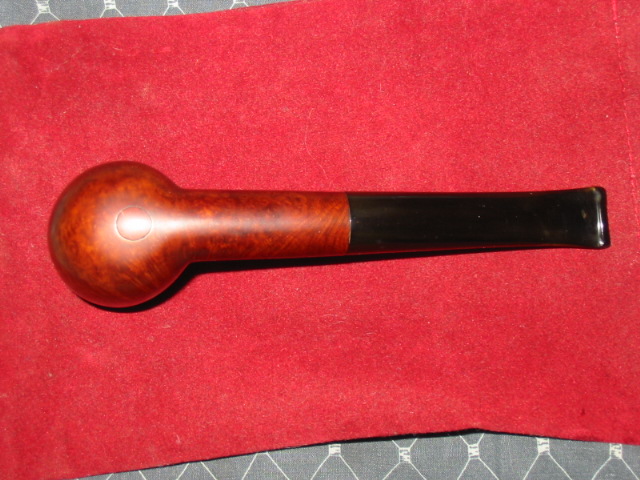
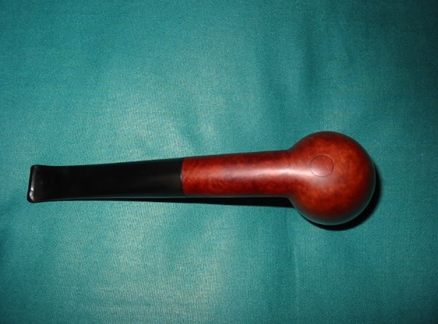
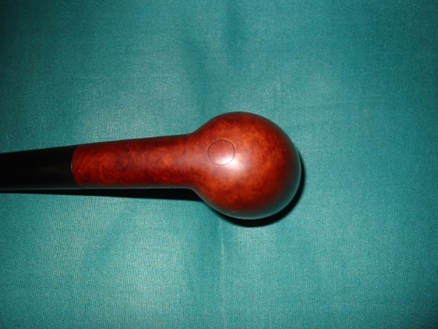
I measure the outer diameter of the hole in the bottom and the inner diameter of the bowl. I then cut a piece of briar to those dimensions. The briar plug was shaped like a “T” and was actually significantly bigger than the pin hole that was originally in the bottom of the bowl. I had decided to create a new bottom for the bowl and a plug for the hole I had drilled. I used some wood glue and coated the bowl bottom and the inside of the hole. I then inserted the plug in the top of the bowl and used a rubber mallet and a piece of dowel to drive peg to the bottom of the bowl. The leg of the T extended through the hole in the bottom of the bowl that I drilled out. I had purposely made it longer than the thickness of the bowl so that it would extend below the bottom of the bowl. Once it was in place it not only was glued but in essence was pressure fit. I laid it aside to dry over night before I worked on sanding the leg of the T flush with the bottom of the pipe. The next morning I sanded it flush with the bottom of the bowl. It was a great fit as can be seen from the pictures that are included in this essay.
Once the exterior was smooth and ready to go I turned to the inside of the bowl. The top of the T formed a new thicker bottom for the bowl. I had made it thick enough to provide a new briar bowl. Because of the thickness I had used a spade bit to re-drill the bottom of the chamber and give it a concave feel like the original bowl. I also re-drilled the airway so that it would come out in the bottom of the new bowl. I again used the dowel and sand paper to smooth out the junction between the new surface and the old surface of the chamber walls. I wanted the transition between the two pieces to be smooth.
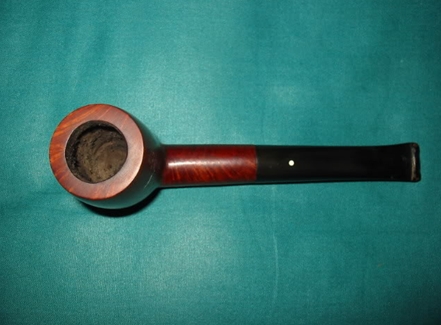
The final touch for this old timer was a good coating of pipe mud on the walls and on the bowl bottom. The mix I use for the mud is cigar ash and water. Others have used pipe tobacco or a mix of various things but I like cigar ash. The bonus is I get to smoke a good cigar in the process. I mix a good thick paste that I apply with a brush and a pipe nail. I brushed it on and tamped it into place with the brush and the nail. It gave a nice grey ash look to the inside of the bowl. The inside looked as good as new. I left it to dry through the night.

I sanded the rest of the bowl be careful to not damage the stamping. Once it was smooth and the scratches and nicks were gone I stained the outside of the bowl. I gave it a second and third coat with a Mahogany and then a brown stain. Between each coat of stain I flamed the stain by lighting it with a lighter. I find that this sets the stain a bit better than an air dry. I also buffed between coats of stain to make sure the coverage was even. The final coat of stain was applied, wiped off and then buffed with white diamond and then carnuaba.

I let the pipe mud cure for several days before I fired up the pipe. I was curious to see how hot the bottom of the bowl became. Success!! It smoked cool and dry to the bottom with no heat to the hand. The patch worked well. Next time I do a patch I will try to blend the flow of the grain a bit more!

I have been smoking it for a long time now and continue to be pleased with it. The patch is starting to blend in a bit more as it gets a patina. The pipe still smokes dry and cool throughout the bowl.

03/30/2012


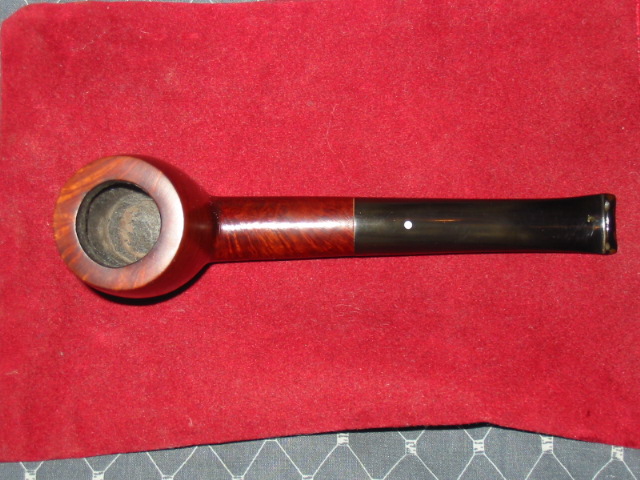
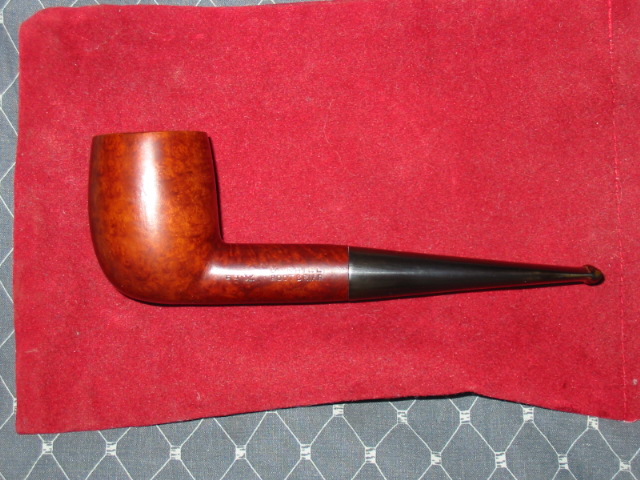
This week my computer died!!! I was forced to dig out a very old laptop that I have sitting in the basement  so that I could at least have access to the internet. While I was cleaning up the hard drive I found these old photos of the same pipe. The repair may be a bit more visible in these photos if you are interested to have a look.

Seeing through the grime – a story told by an old pipe


I had this story I had written sitting on the hard drive. I reworked it quite a bit the last two evenings and thought I would post it. In it I try to capture the old stories that I find in the estate pipes I seek to bring back to life. Thanks for reading it.

Awhile ago I was working on cleaning up an old estate pipe. I had purchased this old timer on eBay and when I came home from work one afternoon I found it had arrived in the mail. When I opened the box I could not believe my eyes. The pictures the seller posted on eBay did not begin to capture the sorry state of this poor pipe. It was a disaster – the bowl was caked to the point of not holding any more tobacco. I could barely fit a pencil in what remained of the tobacco chamber. The cake that filled the bowl was not the typical hard carbon but was crumbling and very soft. The stem would not fit all the way into the shank as both it and the inside of the shank were covered with tar and a white lime crust. The airflow on this poor old timer certainly must have been miniscule, but there was no way I was going to put this thing in my mouth to even blow on it. I found that once I removed the stem that it had the weirdest stinger apparatus I have ever seen that would have constricted the airflow even more. It was short, thick metal and absolutely crammed full of tars and unidentifiable tan chunks. I know, the word “chunks” does not help understand what I am talking about but I don’t know how else to describe the brown stuff that was thick and packed all over this stinger. The metal of the stinger was rough and appeared to be pitted or at least it had craters and crevices all over the sides and top of it. It was in truly sad shape. It certainly must have been a beautiful pipe when all this started. It was that hope of hidden beauty beneath the grime that drew me to this pipe and caused me to want to take a risk on cleaning and restoring it. On top of that was also the challenge of restoring what looked to be a hopeless cause.

I carefully wiped the outside of the bowl with a damp rag to get some of the surface grime off. I wanted to see what the grain looked like underneath the grit. I carefully separated the stem from the shank and removed the stinger for a soak. I then used several reamers that I have to ream both the bowl and shank of the pipe. All of this was preliminary to the actual cleaning work. I wanted to be able to more knowledgeably assess the condition of the pipe under the years of grime. What a lot of carbon dust lay on the paper that I put on my work table. The grain did not look too bad. There was some interesting curly birdseye on one side and flame grain on the back and front of the bowl. A twisting grain flowed across both the bottom of the pipe and the shank. I turned the pipe over in my hands to inspect it for cracks. I have found that there are often cracks in pipes that have been smoked this hard. Surprisingly, there were none in this bowl at all. But this pipe had been smoked right through the bottom of the bowl – yes burned out. That would not surprise you if you had seen the condition of the pipe. But what made it surprising to me was that the bottom of the bowl had been plugged and repaired with a well worked briar plug. It had darkened but I could still see that it fit very snugly and carefully and showed some thoughtful work at the hands of a good repairman. All this caused me to reassess what I had originally concluded about the pipe and the piper who used to smoke it.

A pipe, that at first glance, appeared to have been “abused” this much, must have been ignored and not cared for by its owner. But I am not convinced of that verdict – in fact I was beginning to conclude just the opposite – it must have been a well loved and favourite pipe. The fact that it had obviously been smoked to the same point before in its life and then repaired with a well done plug and then smoked to the same point of cake again says a lot about what kind of pipe it must be and what kind of smoke it must have delivered to it owner. On the one hand, the original owner did not take care of his pipe in terms of daily maintenance and cleaning. I don’t think it had ever seen a pipe cleaner in all of its years. But on the other hand, he cared enough to take the time to have a well done plug put in the bottom of the bowl to fix the burn out and then smoked it again to this point a second or maybe a third or fourth time. That is the contradiction that exists when I look at a pipe like this. There is more to the story than initially meets the eye.

Only when it is stripped down and cleaned do I get a bit more of the story underneath all the surface grime. I think that the old fellow who must have owned this pipe would have been interesting to spend time with having a talk. I am certainly making an educated guess but I believe that this was a pipe that belonged to an old timer. By the looks of it, I would say it would have been disposed of with his other non-sellable or unwanted estate items. The fact is that if that was not true it would still be in his mouth. I would guess that he was a one pipe guy who refused to give up on an old friend and kept repairing and smoking his old buddy. Each problem that came up was a puzzle to be addressed and repaired before the pipe was returned to its smoking regimen. There is a silver band on the pipe that probably is original and matches the shape of other pipes like this one that I found on the web, but it is also engraved with what appeared to be initials – a monogram that possibly identified it as his. The band had turned around on the shank several times and had been obviously re-glued several times to keep it with the pipe. It was a not only a mark of ownership but of pride. It made me wonder if he had it engraved himself of if one of his children might have had it done as part of a very personal gift for “dad”. In the bottom of the bowl there remained a bit of old and very dry tobacco. The bowl had been smoked to that point and left. There is no way of knowing what the tobacco was as it was pretty well destroyed. But it was there and was crumbling with the cake in the bowl. It gave me pause to wonder what happened to the guy that made him stop at that point of the bowl and lay his pipe down.

As I moved to do the first stage of cleaning the stem I was amazed to see is that the stem was actually pristine under the grime. There were no tooth marks or bites on it. There was no sign of the kind of abuse that I have come to expect in this kind of pipe. Sure, the button was clogged and airway was almost solid with tars but there are no bite marks at all on the stem. There are no scratches and no problems that a good buffing and cleaning would not take away. That too tells me something of the old pipesmoker. He was not a clencher. He did not chomp on his bit. It was the original bit and it was in good shape under the grime. He was a man who held his pipe in his hand while he enjoyed the process of sipping the smoke. He was obviously one who was not to be hurried in his process and did not want to be bothered by anything that stopped the enjoyment of his pipe. I appreciate the care that he took to not bite the stem after having repaired many stems that have been marked by the fangs of the owner.

The cleanup was finished and the bowl was refinished and re-stained with a cherry stain to match the original colour of the pipe when it was made. The silver was polished and the stem was polished to a pristine black. The bowl was coated with a charcoal based coating to give it a bit of protection as I work to rebuild a hard cake in the bowl. I loaded a bowl of my favourite Virginia/Perique blend for the inaugural smoke. I chose a quiet spot to relax while I put the fire to the tobacco and sipped the smoke. The flame jumped to the tobacco and the smoke began to curl around the lip of the bowl and out the edges of my mouth as I puffed. Ahhh, now I had joined the ongoing story of this pipe to my own history. It smoked very well and delivered a cool flavourful smoke to the bottom of the bowl… I think next bowl I will remove that odd old stinger and see what I get from it. What a great pipe. I think I had begun to understand the charms of this old pipe. I tip my “new” pipe in quiet thanks to the old piper who had pointed the way to this well loved pipe.