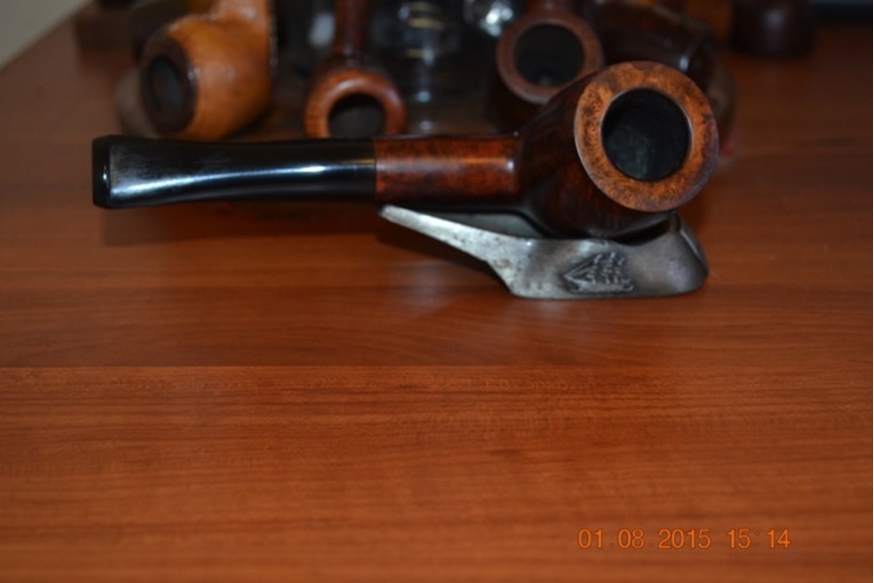
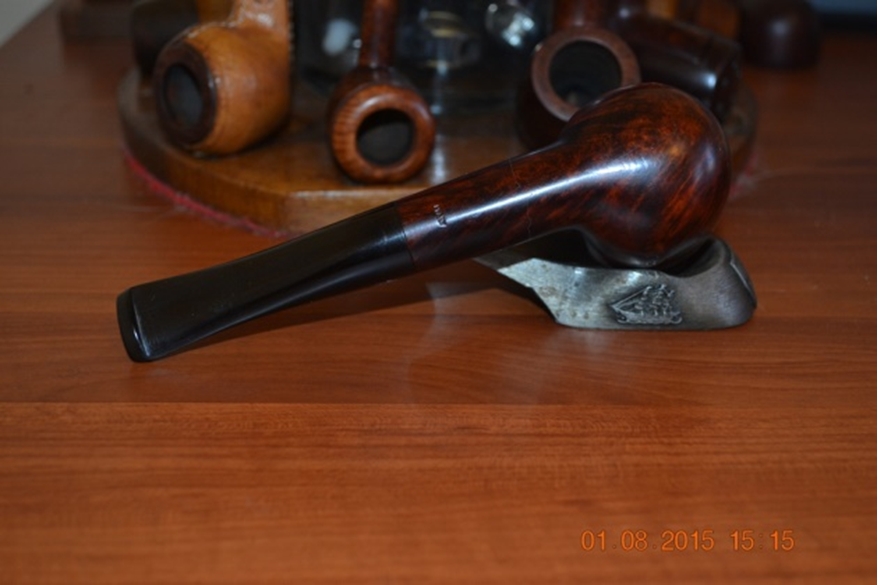
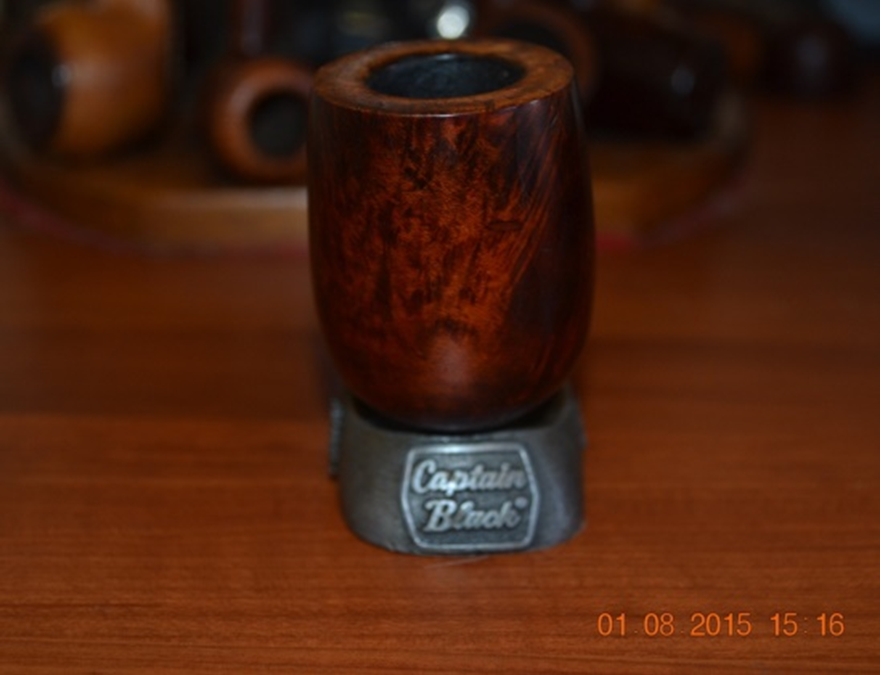
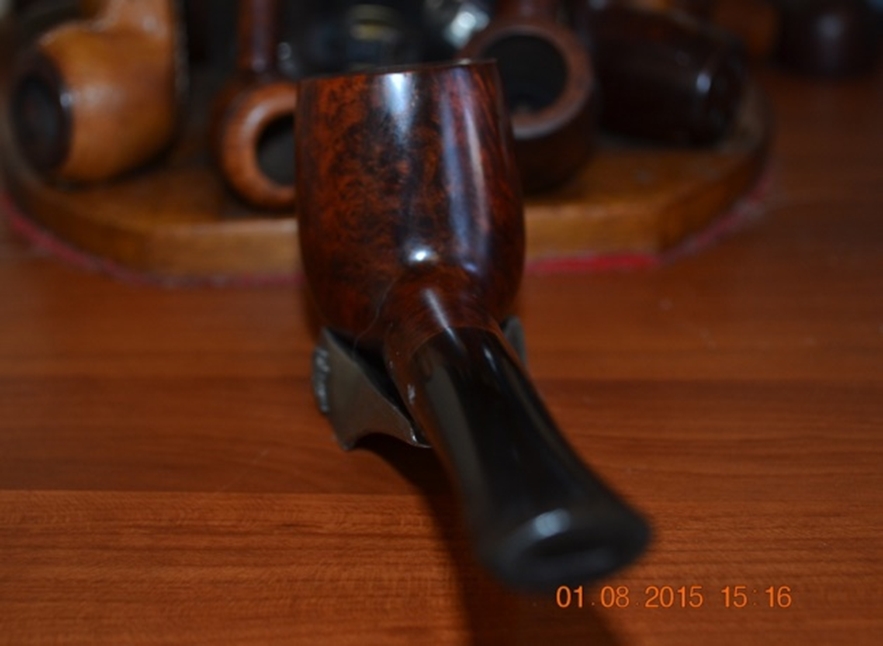
Tag Archives: Savinelli Duca Carlo

Cleaning an Older Savinelli Duca Carlo Straight Billiard and Paying It Forward


Guest Blog by Robert M. Boughton
Member, North American Society of Pipe Collectors
http://www.naspc.org
http://www.roadrunnerpipes.com
http://about.me/boughtonrobert
Photos © the Author

“As you know, Shibumi has to do with great refinement underlying commonplace appearances. It is a statement so correct that it does not have to be bold, so poignant it does not have to be pretty, so true it does not have to be real. Shibumi is understanding, rather than knowledge. Eloquent silence. In demeanor, it is modesty without pudency. In art, where the spirit of shibumi takes the form of sabi, it is elegant simplicity, articulate brevity. In philosophy, where shibumi emerges as wabi, it is spiritual tranquility that is not passive; it is being without the angst of becoming.”
― Trevanian (Rodney William Whitaker, 1931-2005), U.S. film scholar and writer, in “Shibumi,” 1979

INTRODUCTION
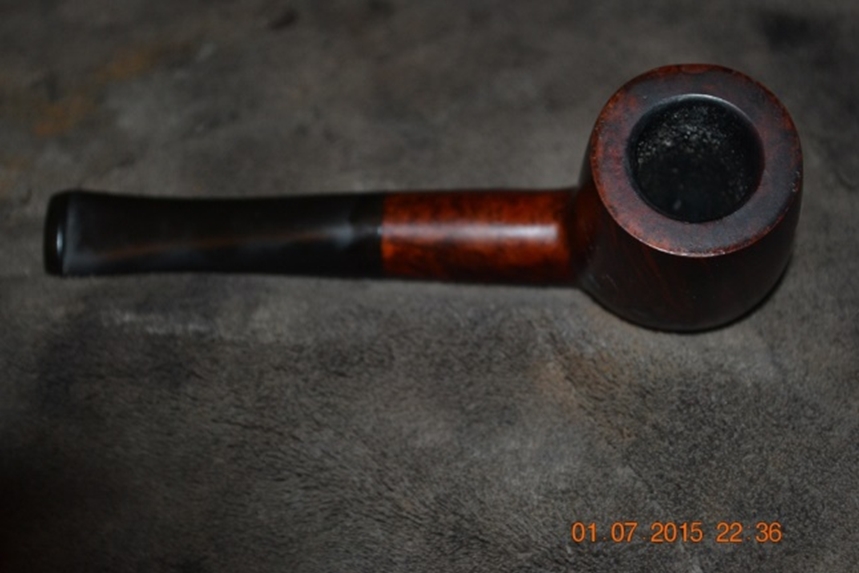
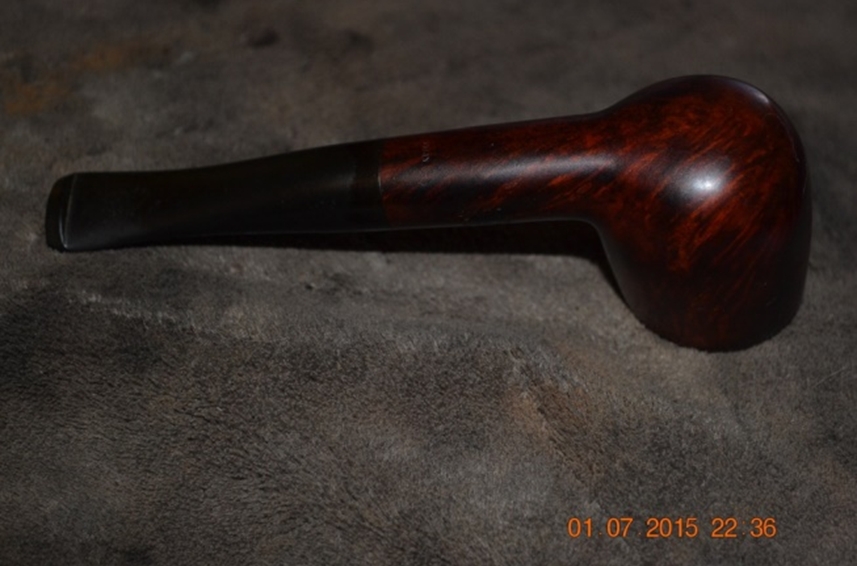
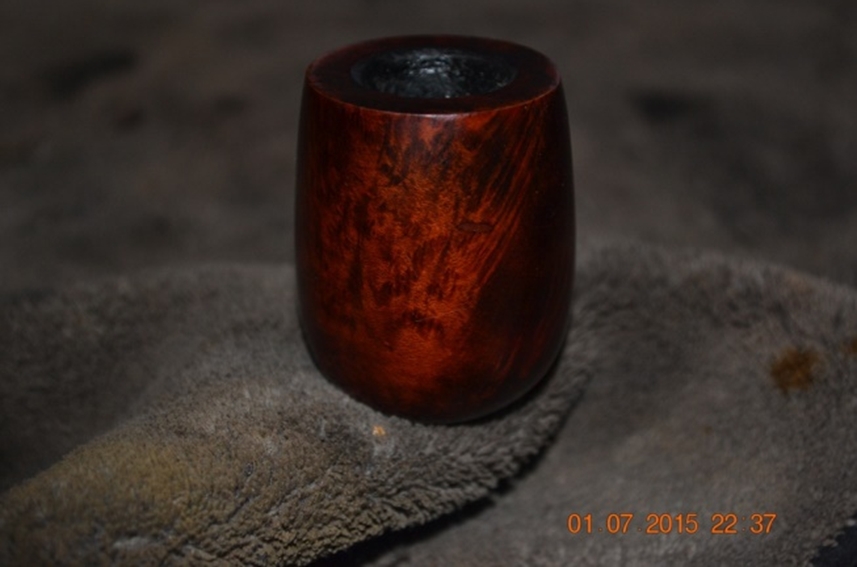
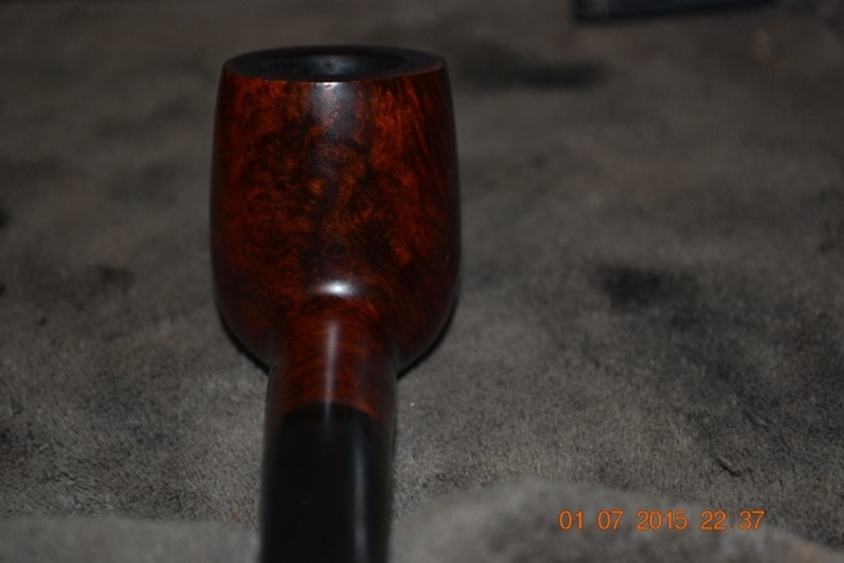
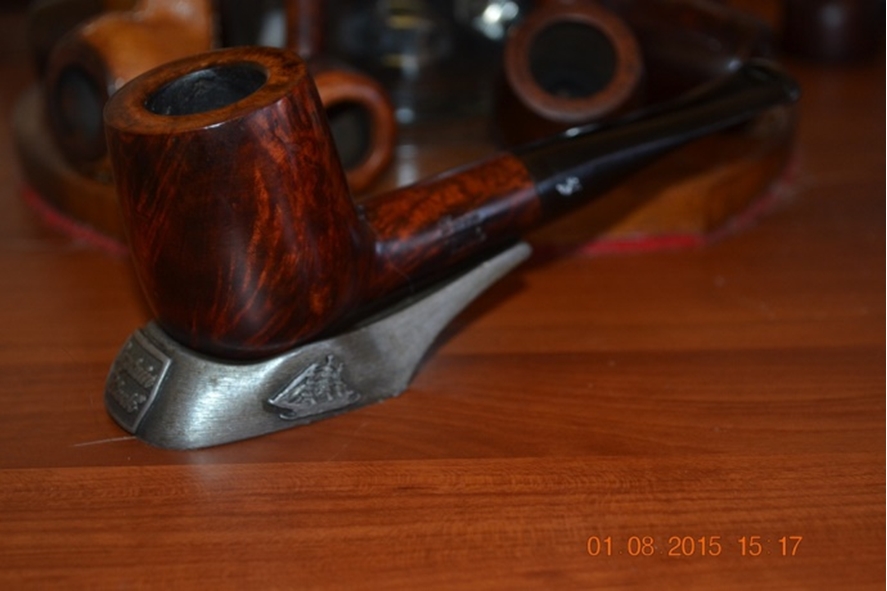
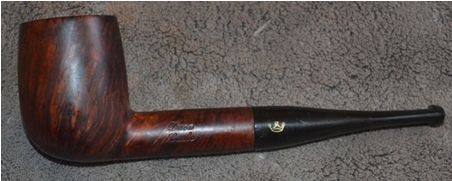
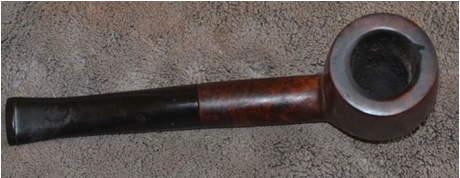
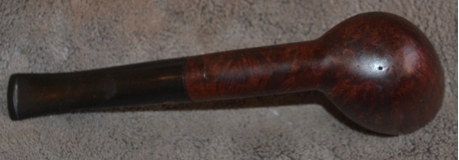
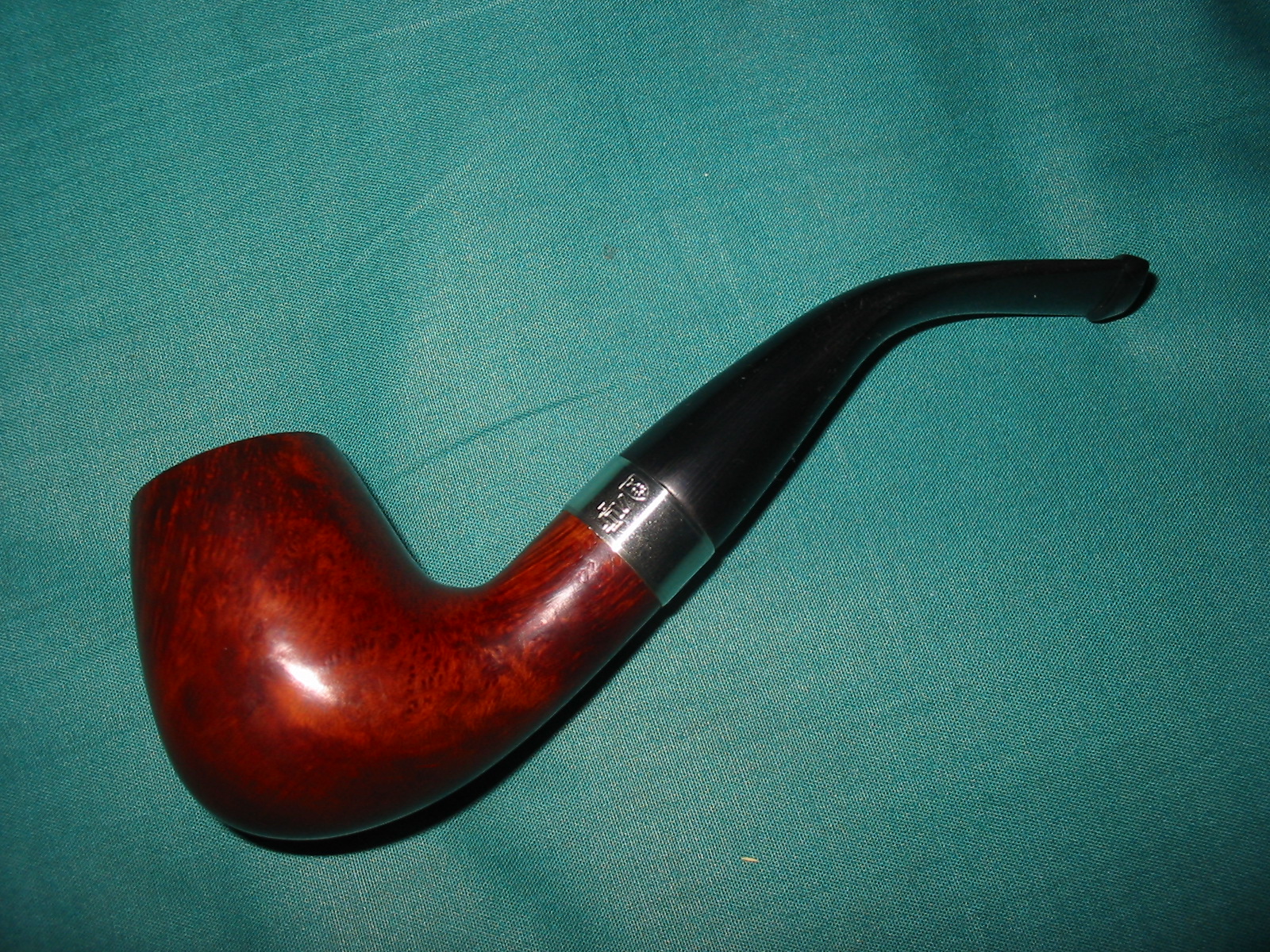
Although Trevanian, in the well-turned quote above from one of his diverse novels (in this case a spy story), is far less sesquipedalian yet just as articulate as the late great jack of all trades, William F. Buckley Jr., I admit I had to resort to my Oxford English Dictionary to look up pudency. To save anyone reading this the trouble, if he might be inclined to do as I did, I will say the word is defined as susceptibility to the feeling of shame, or bashfulness. I made it through that stage long ago. The passage as a whole is apt to the understated grace, style, artistry and charm, combined with simplicity and humbleness, of this lovely Savinelli Duca Carlo Straight Billiard,relative to higher end Savinelli beauties and their prices.

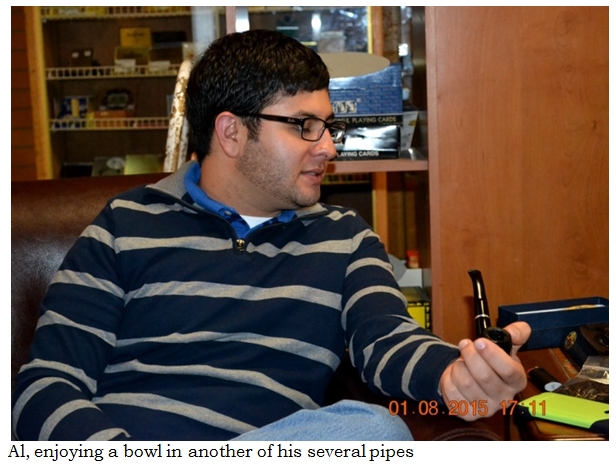
The circumstances surrounding my chance and fleeting but thoroughly pleasant encounter with the alluring implement for fine tobacco enjoyment are also appropriate for this preface. Had I not sought refuge at my local tobacconist in a fluky and serendipitous urge the other day, I might never have met Al, a 25-year-old student who is pursuing both a master’s degree in his field of study and new pipe experiences. And, of course, I would not be writing this account of my rewarding experience cleaning the Duca Carlo.Duca1 When Al introduced himself to me by his full first name, Alfred, and moved with spontaneous purpose from where he was sitting to the cushioned chair next to mine, I had been distracted, in deep concentration, working on something on my laptop. In most cases when someone can see I’m working, and still tries to engage me in conversation, I become a bit piqued. But something was different about Al. So outgoing and affable was his personality that I really can’t even remember now what had been so important to me the moment before his appearance beside me.
Al spotted the rather large, black bag on the floor by my side, which was made for carrying tools but is now my run case. In case I ever need to run to my tobacconist, to get away from the mounting pressures that consume the rest of my life, I always have my run case with its selection of pipes and jars of tobaccos du jour. It should come as no surprise that I also keep a stock of provisions within the many pockets of the run case, from an extra Bic in the event my regular pipe lighter runs out of butane to a cheap pipe nail against the times when I misplace my three-in-one tool; pipe cleaners; balsa, 6mm and 9mm filters, for the most part to have on hand for others who like to use them; sandpaper and micromesh for refurbishing on the go; a small digital caliper, and a 120-inch cloth tape measure, should I ever run into the Titanic of pipes and need to determine its exact specs. Basically, everything the OCD pipe enjoyer and restorer might want without notice. Sometimes my fellow tobacco enthusiasts poke fun at me– more often than not the cigar smokers – seeing me coming through the door with my run case and laptop in either hand like a circle and crosshair marking me as a target. Being a good former Boy Scout, I always say be prepared.

At any rate, Al somehow got the idea that I was serious about pipes, and being new to the attendant rituals, he enquired what was in the bag.As I am rather free with my tobaccos, I began taking out the jars, looking for something appropriate for a newcomer. Mostly that day I found stronger, more advanced blends such as McClelland’s Top Hat and C&D Bayou Morning (with a whopping 28% Perique content), but I also had C&D Joie de Vivre and Rattray’s High Society. Al’s sharp eyes noticed the Joie de Vivre plug, and he was intrigued. Thinking he might be up to that excellent, smooth and unusual English blend, I said so and suggested he give it a try.

Well, the next thing I knew, poor Al was puffing away and suddenly looked a bit peaked. When he told me he had opted for a bowl of the Bayou Morning, I wasn’t surprised. As his composure returned, he brought up the subject of my pipes and ended up asking me if his was “very good.” He said a college friend had given it to him, knowing he wanted to quit cigarettes. Glancing at it in his hands, I said it looked Italian, and that a good pipe was anything that made its owner enjoy the tobacco. I added that if he took care of it, the pipe would last him a lifetime. Seeing the briar had faint nomenclature of some sort, I wanted to take a closer look, and perhaps sensing this, he held it out to me.

Squinting, I made out the words Duca Carlo on the shank and exclaimed something that some might consider inappropriate for this space. Understandably alarmed, Al asked if anything were wrong. I told him it was a Savinelli, and it was apparent the name meant nothing to him. I proceeded to explain a little about the well-known Italian maker and the quality of its pipes, noting that although his Duca Carlo was not one of the high-end varieties, it was a fine pipe indeed. That was when the magical moment happened. Al said he was thinking of having it professionally cleaned.

Hmm, I thought. Chuck was gone for the day, and I supposed I had a spare half-hour that night, so I offered my services to the young newcomer. Surprised, he asked how much it would cost, and I told him I would be happy to do it for free. While I have always been reluctant to charge people for anything I enjoy doing, I suppose there were several subconscious reasons behind my impulsive offer: Al is a young student working hard to assure a secure future, similar to another young pipe-smoking friend of mine who is now studying physics at Purdue, and for whom I bought two packs of my own tobacco mix – Sneaky Rabbit, sold by my tobacconist as a house blend – since he was enjoying it so much he was almost out both times during a recent visit to his hometown for the holidays; I remember how tight my finances were in my own college days; I had a sudden desire to pay forward the many similar favors my friend and mentor, Chuck Richards, and others in my piping community have done for me, and least of all, it was just good sense for the growing business Al knew I was in. Al still tried to resist, but there was no way I was going to take his money for a simple cleaning.

Having a similar but apparently newer Duca Carlo of my own, I showed him the picture of it stored in my laptop. Al told me what he really wanted was to see the stem (which was in excellent shape but a dull, faded gray with a thin shiny streak by the shank) sparkle all over. He said he had no idea if it would be possible. I could do that, I assured him, and return it to him the next day.

So that was how the adventure began. Still a little wary, however, when he handed the pipe over to my care as we left, Al said with the sincerest note of entreaty in his voice, “Please don’t break my pipe.” I knew exactly where he was coming from.

REFURBISH
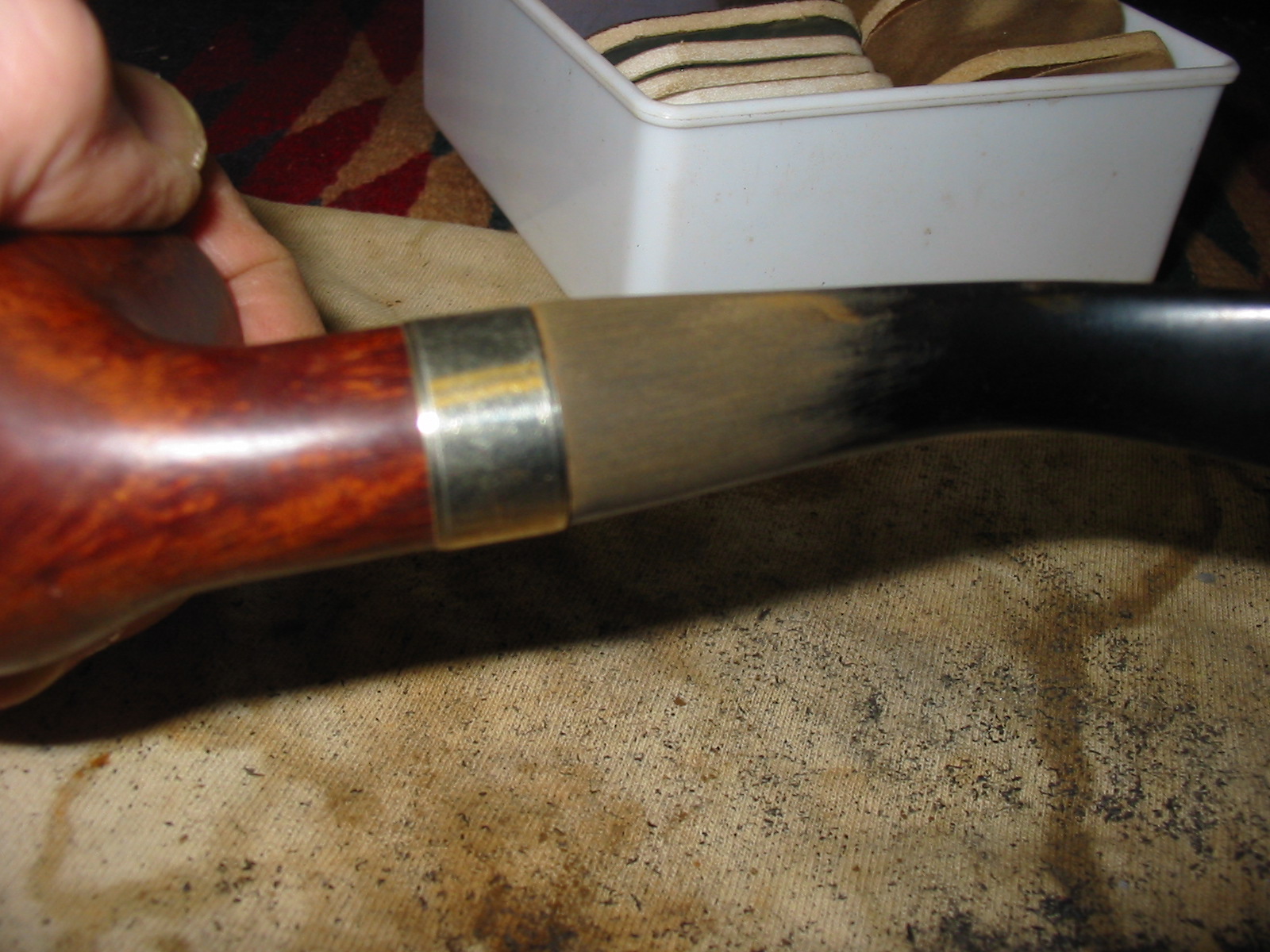
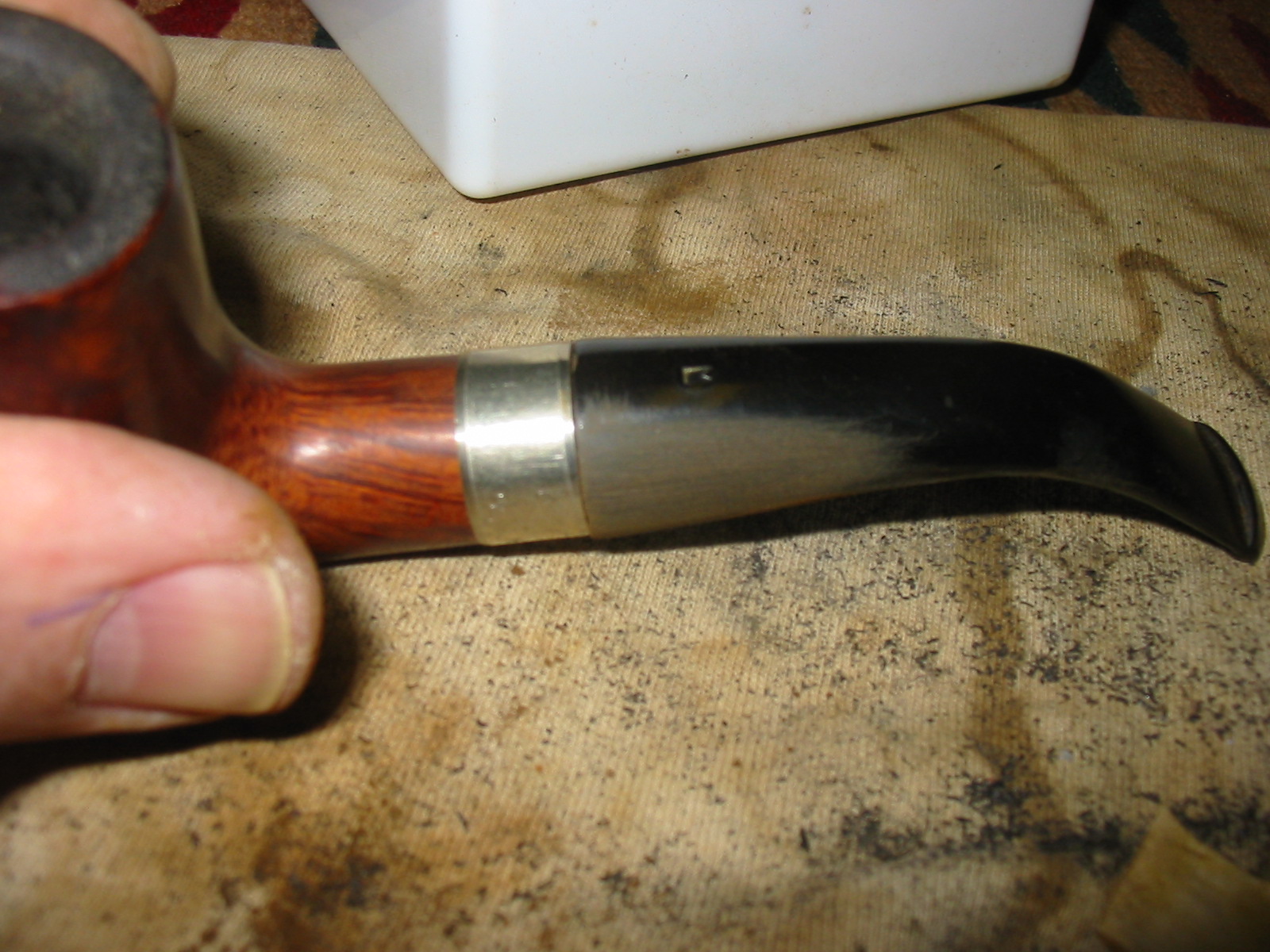
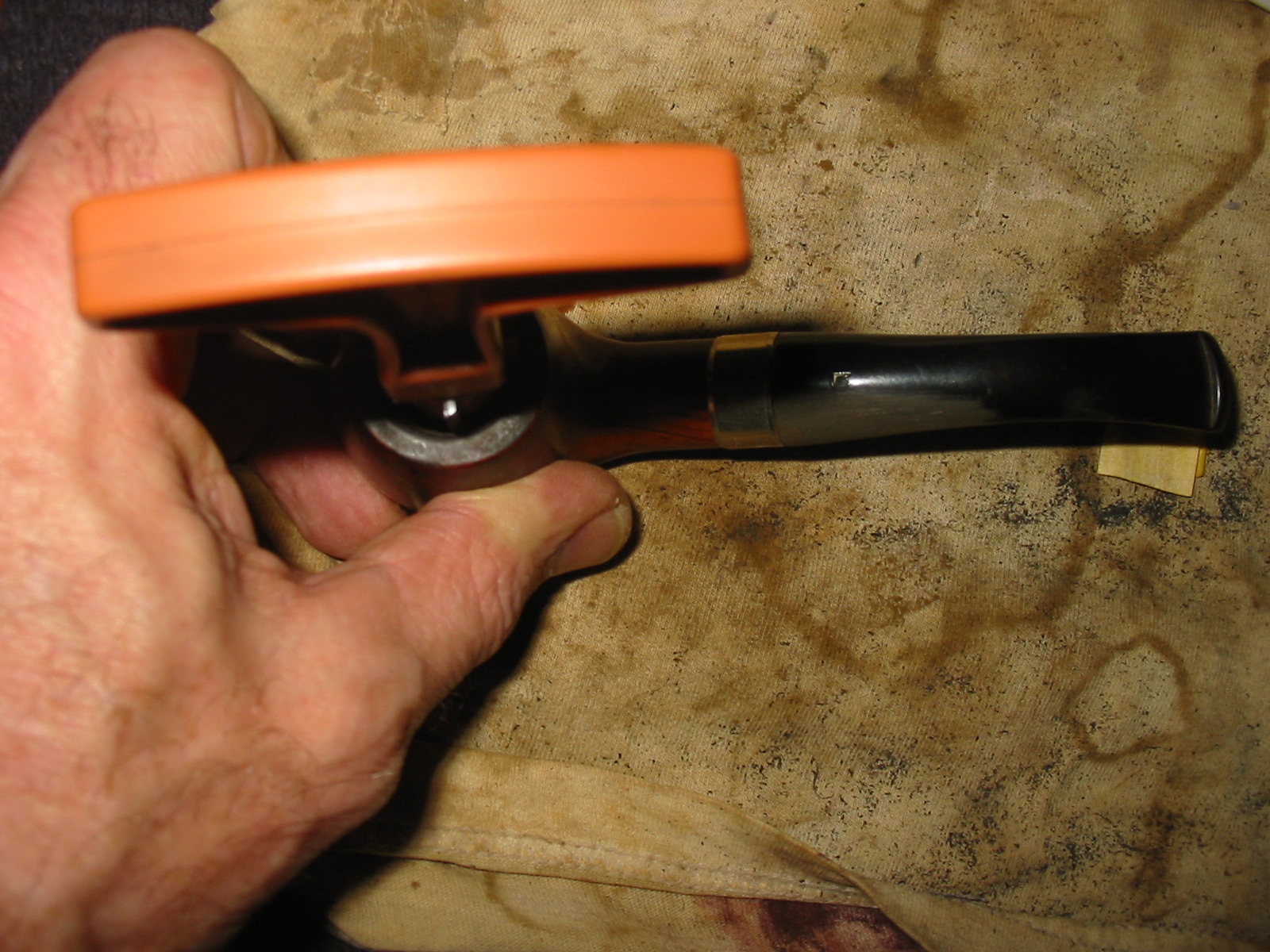
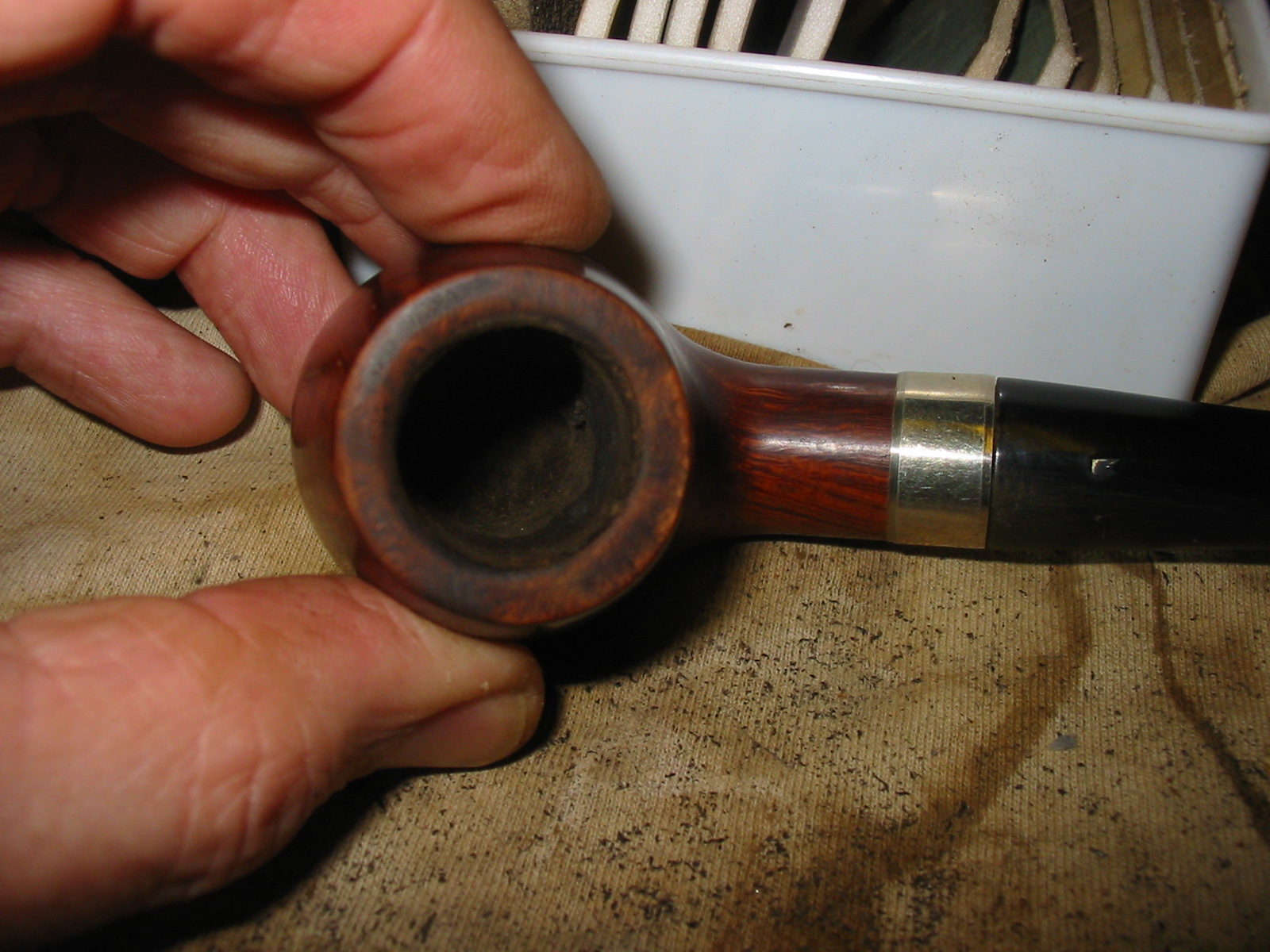
I knew from the beginning there was no way I would just buff the stem and clean and sanitize the pipe. After all, if Al were a paying customer of my business he would get the Basic Cleaning, which includes light refurbishing. All I could see the pipe needed was a little rim burn removal, touch-ups on slight scratches on the stem and bowl and a careful ream of the chamber to remove the small amount of excess cake buildup while leaving the optimal amount intact. The college friend who gave Al this pipe certainly took good care of it and knew what it was, but never said a thing of it his buddy. I liked that.Duca2
Duca3

Duca4

Duca5

Duca6

Duca7

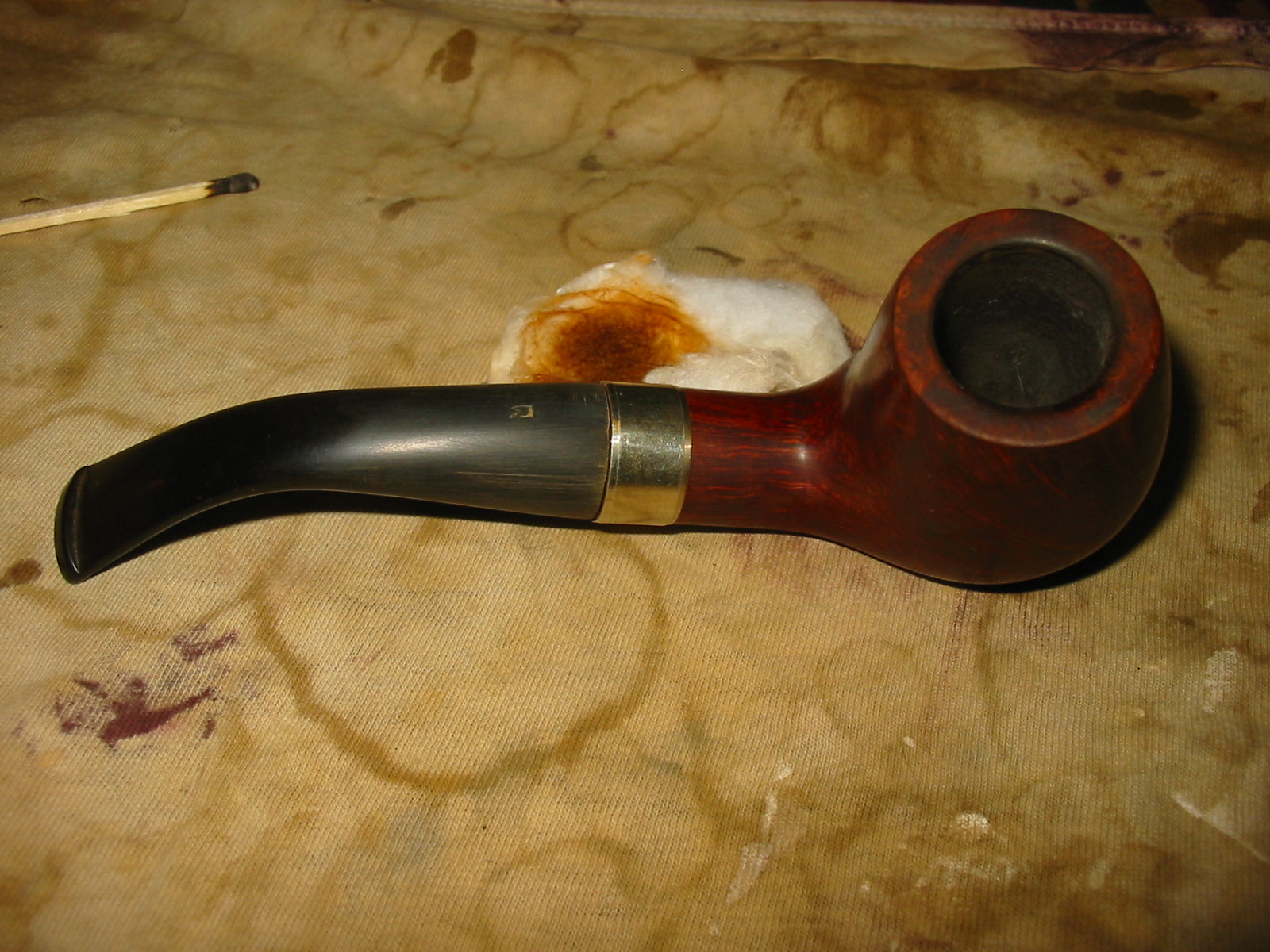
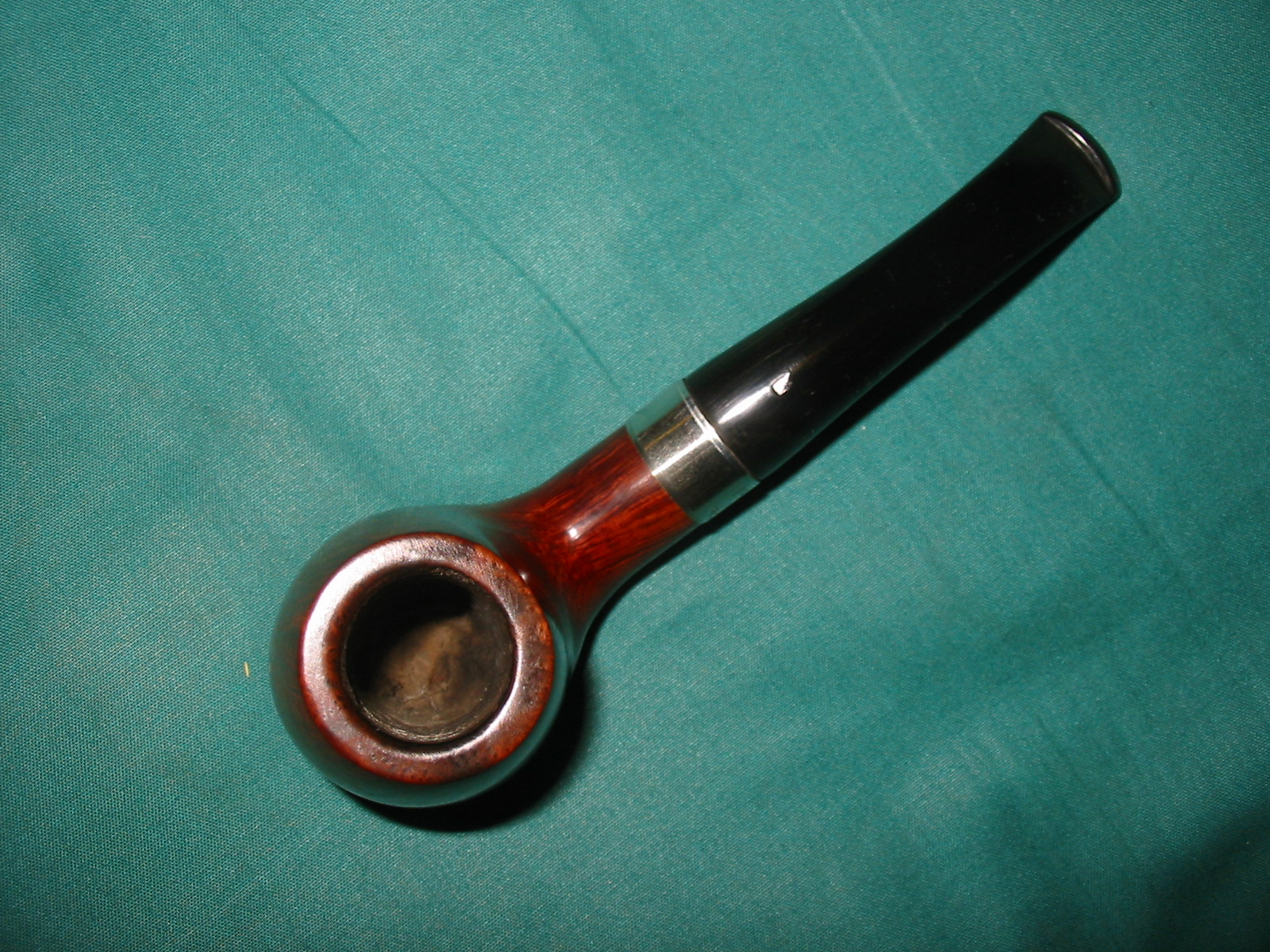
Duca8 Wishing to work with as much efficiency and economy of movement as possible, and having observed the minor burns and other blemishes on the rim, I chose 220 sandpaper to start.Duca9 The choice of paper worked just right in removing the blackness but of course required smoothing. First I used superfine steel wool, which returned a soft sheen and coloration to the nice grain, and followed that with micromesh, buffing upward from 1500 to 2400 to 3200 to 4000.The resulting rim glimmered in its natural pale shade.I also removed the black circle around the shank opening with the steel wool.Duca10 To clear out the unneeded cake in the chamber, I used my smallest reamer, the 17mm, which was loose but close enough to gain a purchase on the walls. Several turns removed the majority of the cake, and followed by a little work with a small piece of 150-grit paper, the work there was done except for cleaning out with a swab of cotton cloth squares soaked in Everclear.
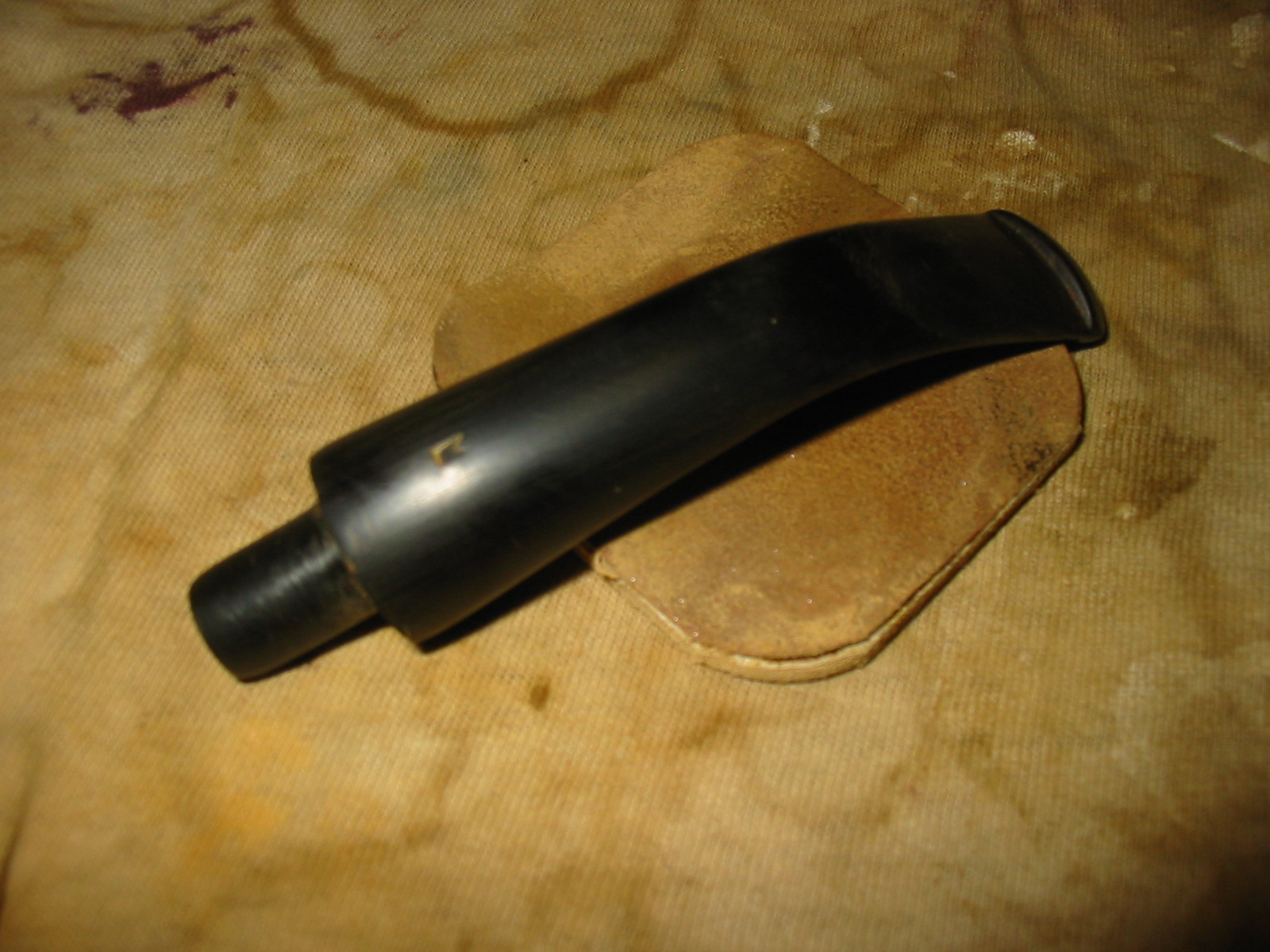
Believing the stem to be black Lucite, and also because of the thorough stripping of cake the procedure would cause, I opted against retorting. Instead I ran a single bristled pipe cleaner dipped in freshener through the stem, back and forth a few times, followed with a dry cleaner so as not to leave any possible unnecessary initial aftertaste.

The shank I cleaned as well as I could, which ended up being quite well, with a wire-handled bristle brush that I ran through the narrow passage about ten times, dipping in a small container of Everclear between each run.

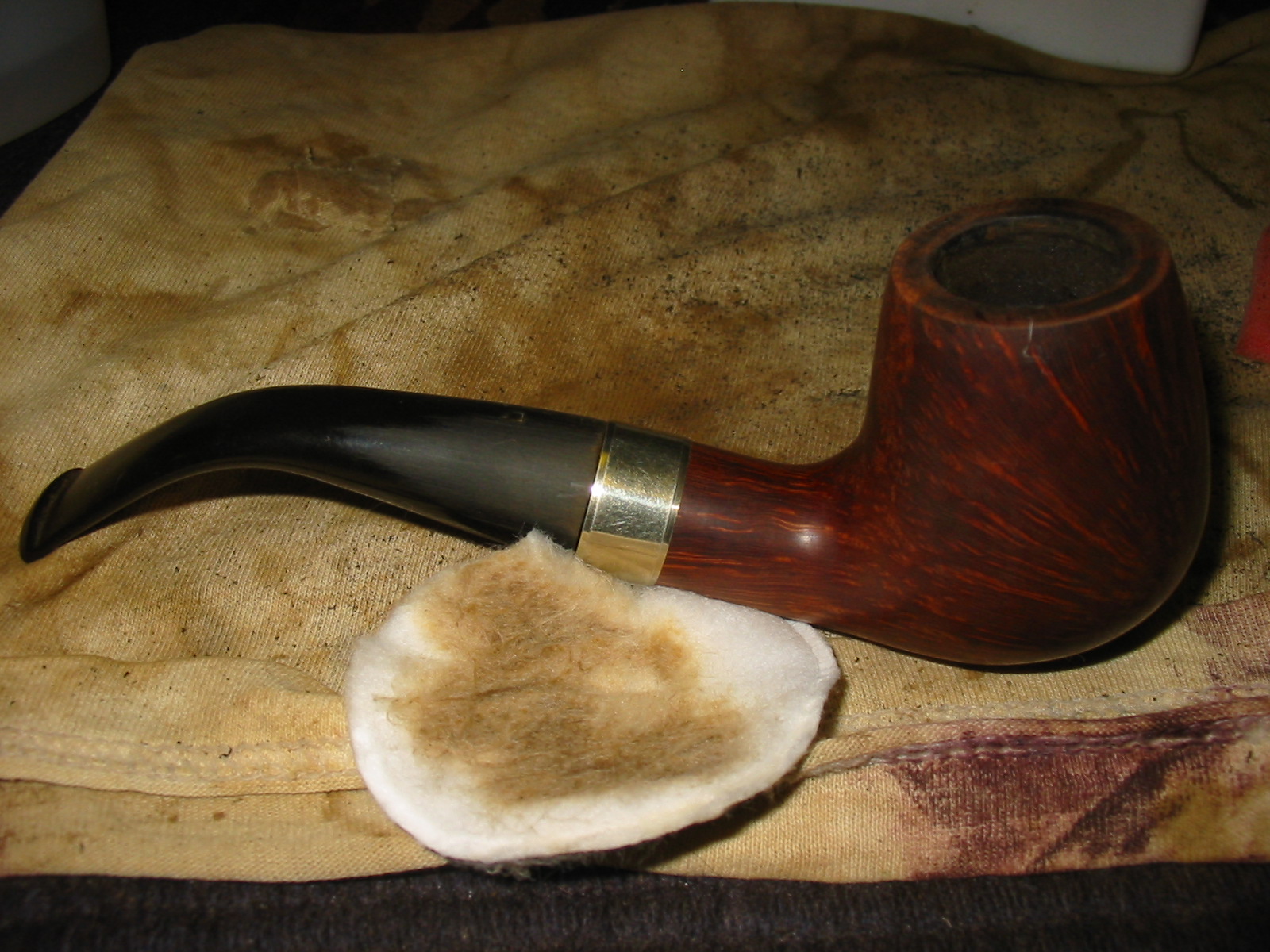
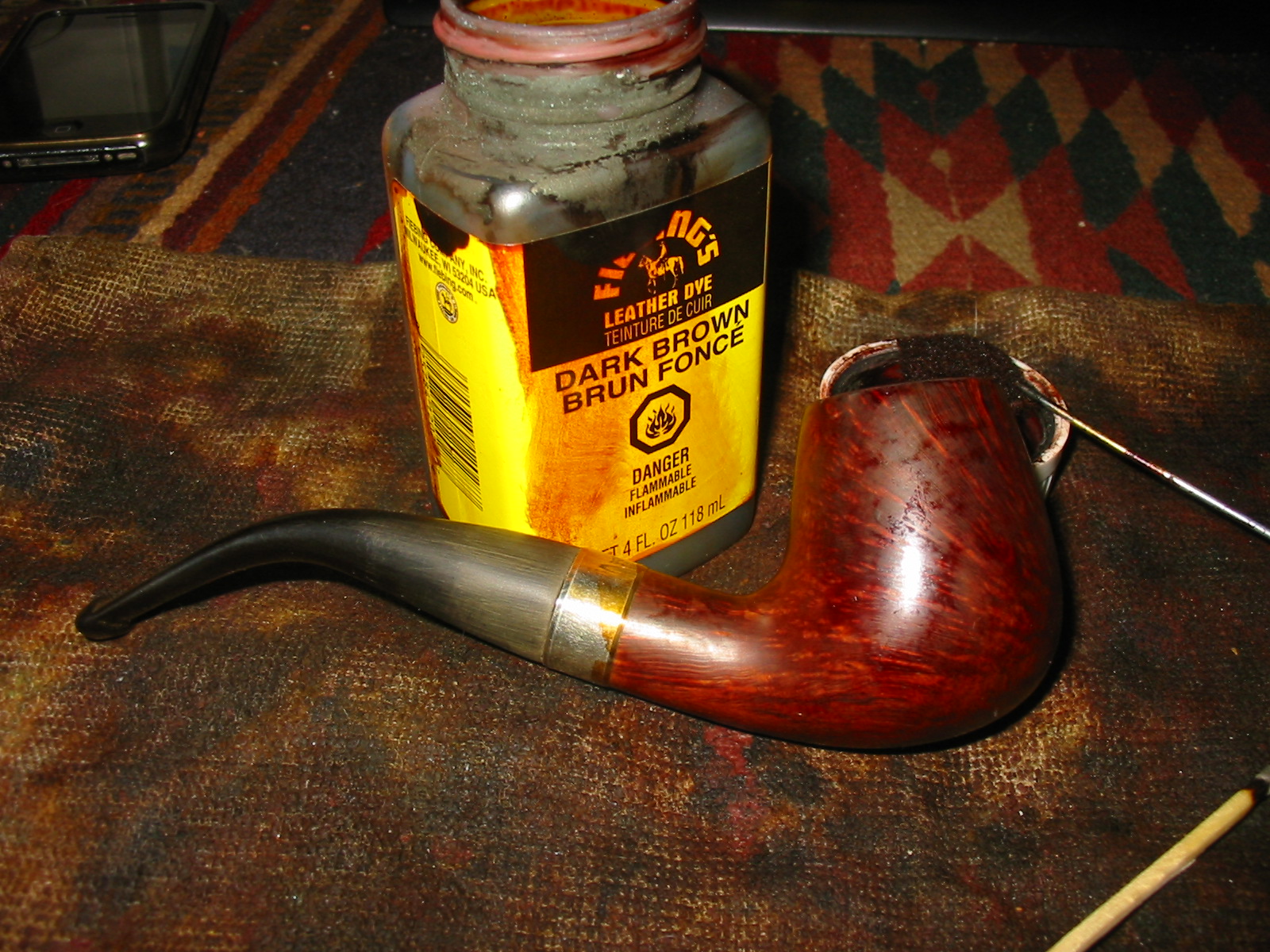
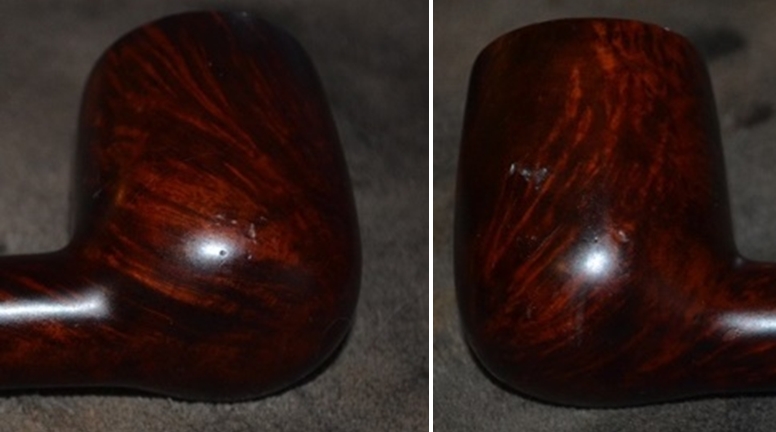
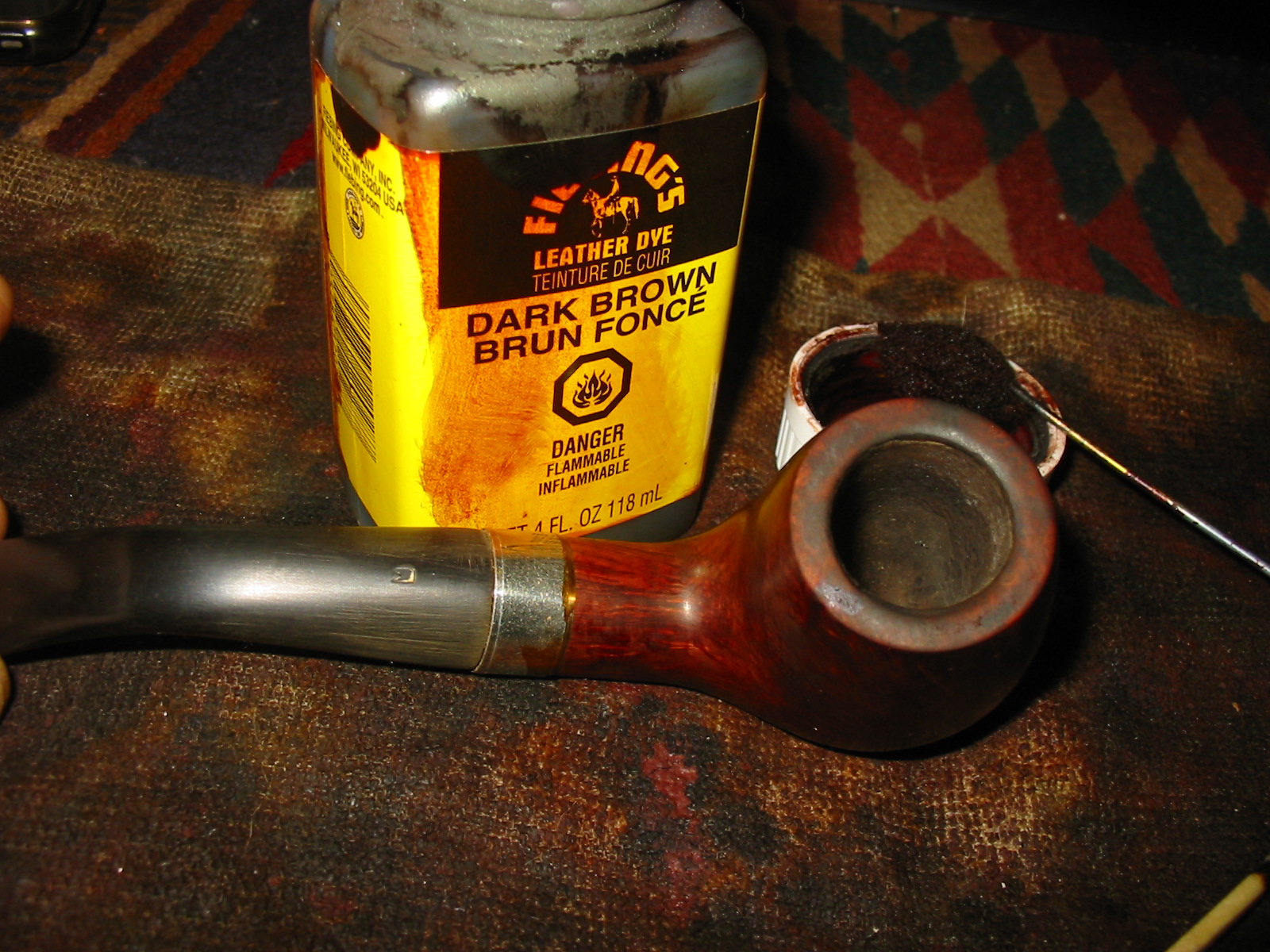
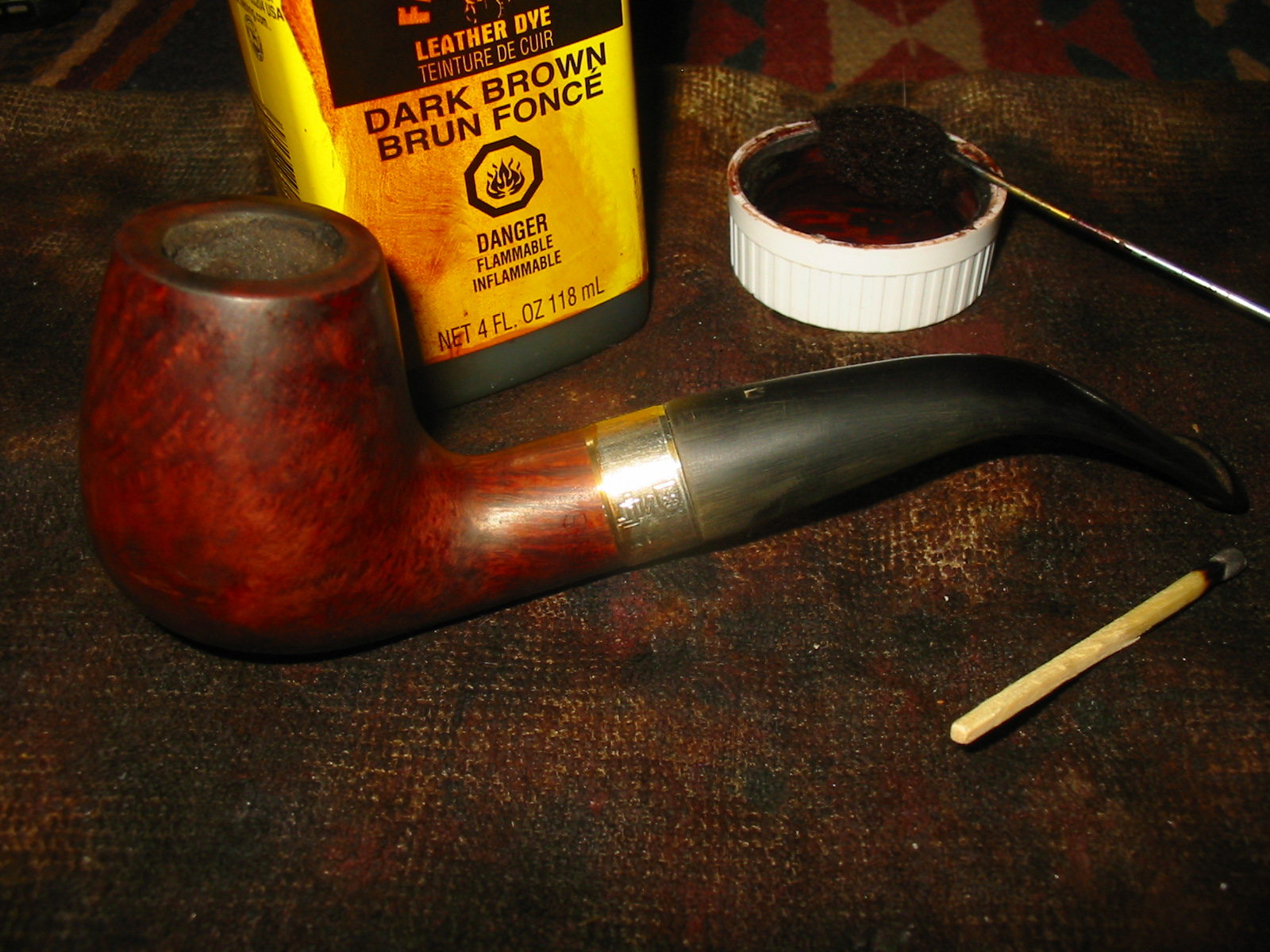
Next up were the only three halfway serious scars I found on the Duca Carlo, shown below before I gave the briar a bath with purified water.Duca11 The scuffs on the right and lower left sides came off fast with micromesh using 1500, 2400 and 3200. The higher and deeper scratch on the middle left side of the bowl needed more surgical, localized work with 220-grit paper followed by the same micromesh progression. I then needed to re-stain the small higher spot on the left side using my Feibings dark brown leather dye.
After flaming it with my Bic and letting it cool for a few minutes while I re-stained the rim (for which, again on impulse, I decided to do with some Lincoln medium brown dye I had on hand, to show off the nice grain there), I used 3600 micromesh to buff the side where the blemish had been until it appeared never to have existed. By then it was time to do the same to the rim, which, as I intended, was the wood’s natural lighter color but, to me at least, gave the pipe a cool two-tone effect.

While I used 3200 micromesh over the whole of the remaining bowl and shank to be sure it was all smooth and ready to put to the wheels, I was seriously eyeballing the new two-tone, almost sick with dread at the thought that Al would be disappointed by my summary decision to alter his pipe without even a consultation. But I let my gut ruling stand, if only with the knowledge that I could reverse it in a jiffy should Al indeed show even a hint of unhappiness.

No kidding, I heard a faint drum roll when the moment came to address Al’s primary concern: the stem. As I noted several times already, this Duca Carlo was in great shape when it was entrusted to my care, and the stem, with the slightest of scratches just below the bit on both sides, was the least of the exceptions despite its almost complete lack of luster. Once more I remembered the advice of others wiser than I to use the least necessary force to correct a problem – advice I took to heart – and began with 1500 micromesh.

Tackling the miniscule scratches first, of course, I saw them vanish with the slightest of pressure before I continued over the rest of the stem to make it even and gave it a thorough rubbing with a soft cotton rag. Then I did the same with 2400, wiped it again, and finished at last with 3600. The prepped stem was looking good, and my heart began to beat harder, knowing I had to take the two precious parts to my single-speed wheels, where only God knew what might happen.

This project had become a labor of love to me, even greater than most of the much more difficult jobs I had performed without disaster before. And so I took a moment to collect my wits and think good thoughts.The phone rang. Dang! There went my happy thoughts.

I didn’t recognize the 575 Area Code and almost did not answer, as is my habit with unknown or Toll Free numbers because of the near certainty that they are spam or scam or other callers I wish would stop phoning me. But something convinced me to go for it. At first the voice on the other end failed to register, but then I realized it was – that’s right – Al. I gave him my card the night before but had no way to call him. There was a slight tone of anxiety in his voice when he asked how his pipe was doing. Relieved to hear his voice and understanding his concern more than he could have known, I almost laughed but choked it down. Feeling my own nerves settling, I told him I was just putting the final touches on the Duca Carlo and could meet him at the tobacconist between 3 and 3:30. At the end of our conversation, I realized I was calm again and good to go.

Proceeding from the living room, where I like to do most of my work in more comfort, to my workroom, with the pipe, stem, cotton rag and camera in my hands, I set everything down on my desk and turned to the small bench with my two buffing wheels. I threw the switch on the one with red Tripoli and without another thought to distract me picked up the smooth gray stem and held it in both hands with confident firmness (but not like a mother choking her child as she’s about to watch the poor kid go off to summer camp or college or wherever) and did what I knew how to do. The first step done, I wiped the stem down, removing the streaks, and flicked on the second wheel that had the white Tripoli. Ditto. Two-thirds of the way home with the stem, and seeing each buff give it a higher shine, I returned to the first wheel where I…yes, I finished it on the White Diamond pad, without a single incident or even slip through the whole process!

Stoked for the next part, I set aside the stem and went straight through the steps again with the bowl and shank, except that I used white Tripoli followed by White Diamond and ended with carnauba.

This Savinelli required one very last task, which is always a pleasure when I have the opportunity to do it. I always seem to forget one thing when I walk to my workroom ready to polish a pipe, and this time it was the white wax marker to fill in the outline of the crown on the stem. I retrieved it from my run case.Taking what I considered a well-needed rest in the office chair before my desk, I took the stem firmly in hand and, with my magnifying glasses on, scraped the little exposed end of wax first left to right across the crown, then turned the stem vertically and applied another layer top to bottom and finally added a third layer diagonally. Brushing aside a little of the considerable resulting excess wax, I pressed my thumb down across the whole blotch and waited for the heat of my skin to make the wax settle into the tiny grooves. After about a minute I lifted my thumb and used the cotton cloth gently around the edges and still more lightly over the area of the crown, which emerged visible with all of its points.

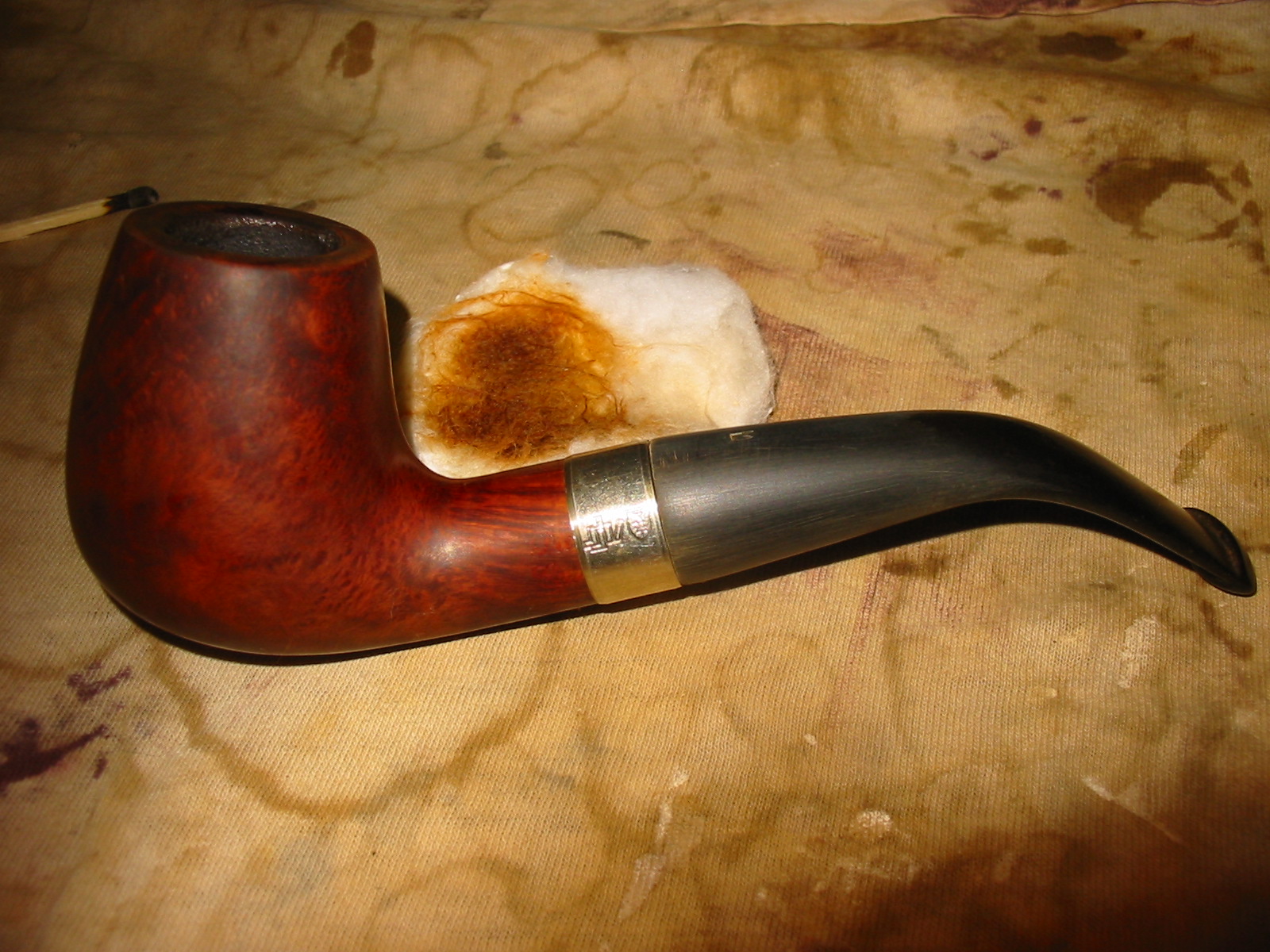
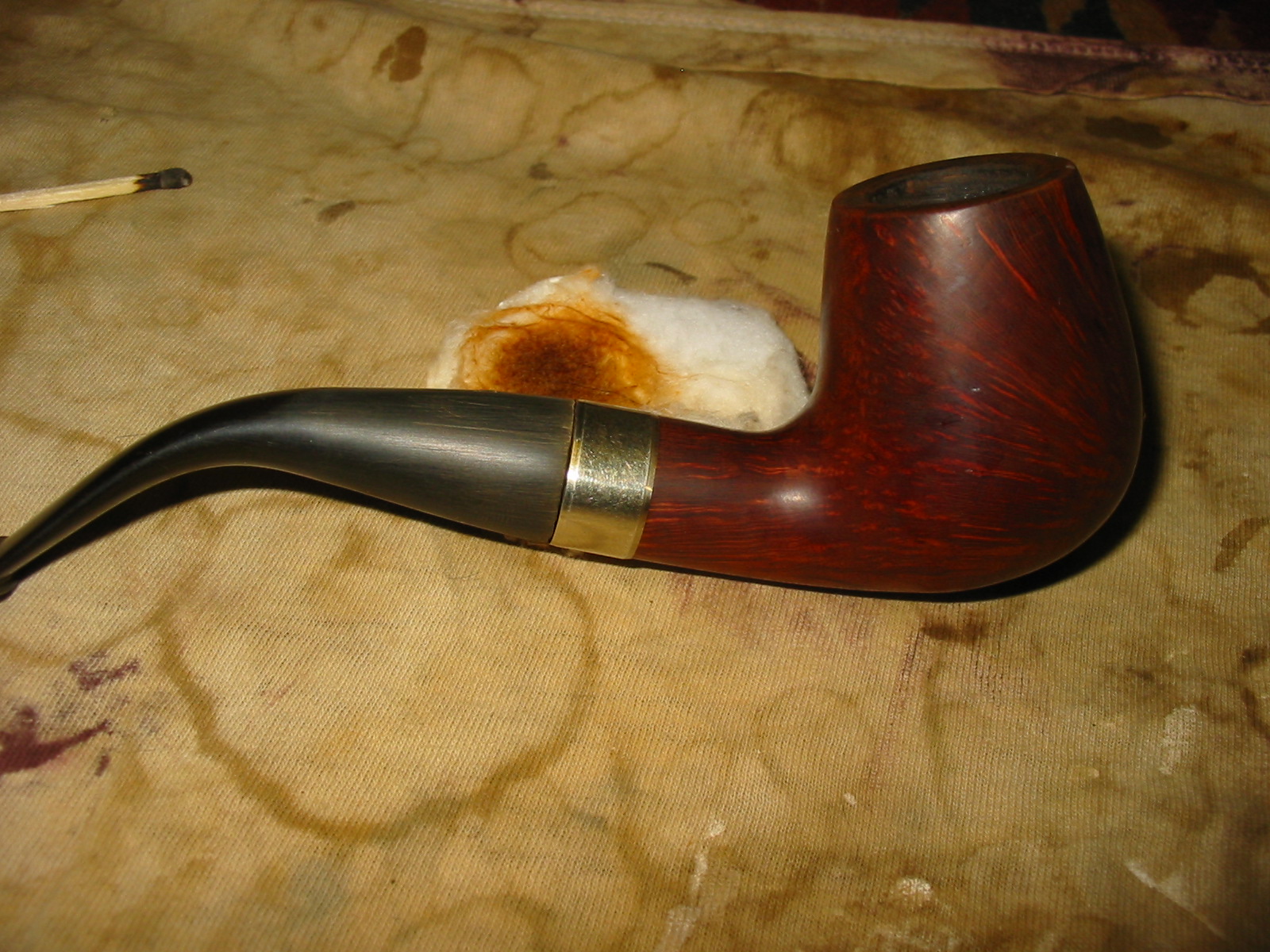
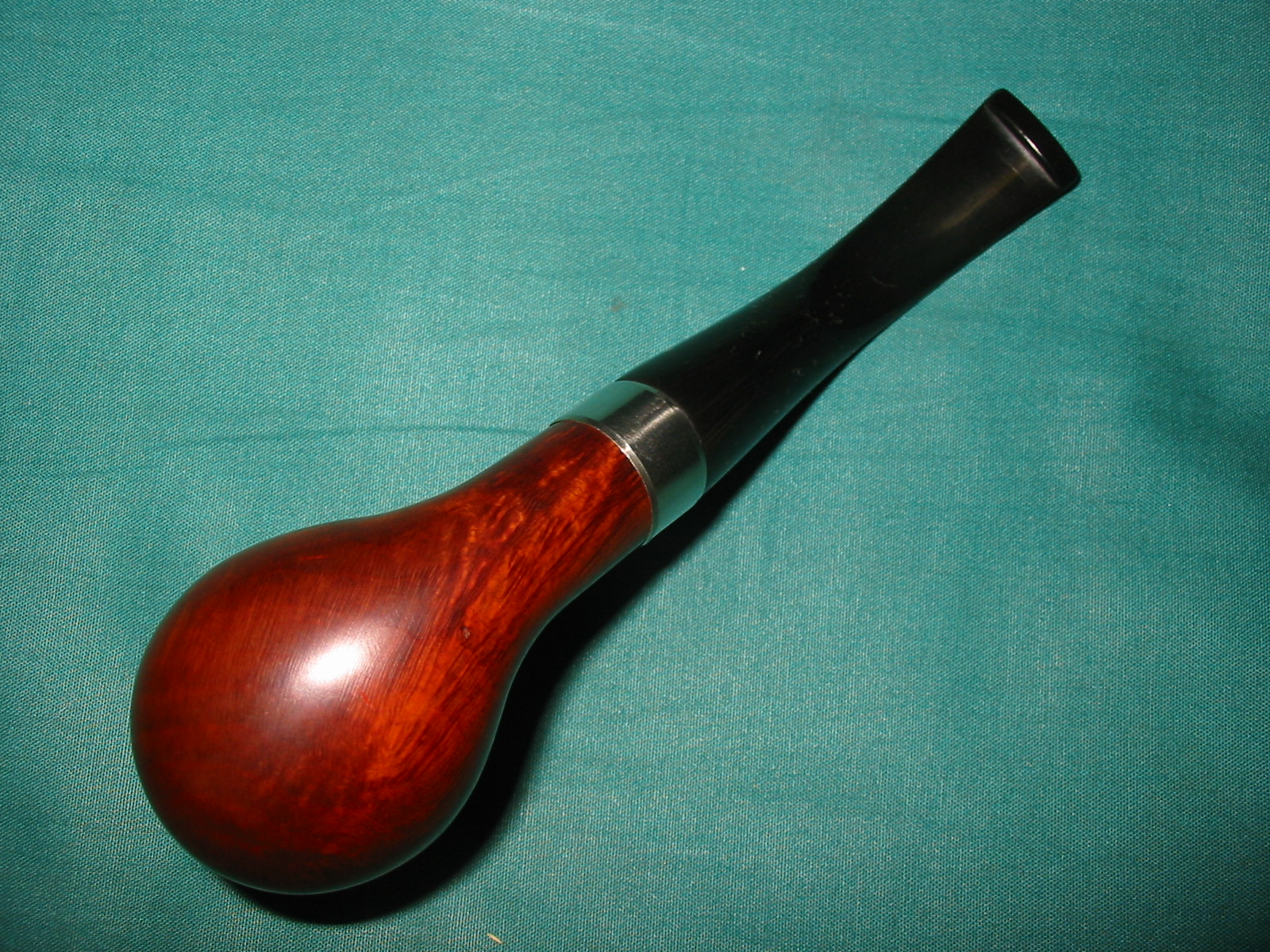
I attached the completed stem and briar and gave the fine pipe that was whole again a final wipe with the rag and millimeter by millimeter scrutiny with my glasses. It passed muster, despite my ever-growing attention to detail.Duca12

Duca13

Duca14

Duca15

Duca16

Duca17 CONCLUSION
The best laid plans of mice and men often go astray, and due to unforeseen circumstances I was a half-hour late to the tobacconist. Spotting Al sitting in the back of the shop almost as soon as I was through the door, I know he saw me, also, but pretended not to, playing it cool. I even had to say hello first as he stared at something, and when he looked up at me the forced smile told me he was sure I had broken his pipe. All of the good seats were taken by those dratted cigar smokers, except for Al sitting in his in misery that was clear to my keenly empathetic eyes.

And thus it became my extreme pleasure to walk to his side and set down my run case and laptop. Before I stood straight again, I retrieved a dark blue Savinelli box inside of which was a light brown Savinelli cloth bag containing the refurbished Duca Carlo. Al’s eyes lit on the box in my hand. Yes, indeed, that had his attention. I could not, even to save my life, lose the grin on my face as I handed it to him and watched his real smile appear in what must have been extraordinary relief.

Then to watch Al open the box slowly, like a Christmas present, only to find the bag inside that he took out with care and reached inside the open end to pull his pipe out by the stem – well, the obvious shocked surprise as he saw the glistening, dark black stem emerge first, followed by the lustrous refurbished pipe, and the initial reaction of total speechless wonder, told me everything.

“Wow,” was his first word. He went on to expand on that dazed thought, but this seems like a good place to wrap it up.


Ponderings on an Almost Lost Generation of Pipe Smokers, with a Restoration Thrown In – Robert M. Boughton


Guest Blog by Robert M. Boughton
Member, North American Society of Pipe Collectors
http://www.roadrunnerpipes.com
http://about.me/boughtonrobert
Photos © the Author, except when obvious

“If You’re Getting Dad a Pipe, Make It a FRANK MEDICO – HESSON GUARD MILANO…Frank Medico Is the filter-cooled pipe. Changing the filter keeps it fresh, cool, odorless. Milano has a special cushion-sealed guard. Handkerchief test proves it keeps the ‘vital zone’ spotless.”
— Newspaper Ad, 1944, http://209.212.22.88/data/rbr/1940-1949/1944/1944.06.15.pdf,pg.2

INTRODUCTION: THE SO-CALLED GOOD OLD DAYS

If that doesn’t pull your nostalgia trigger, try these other family-friendly happy piper ads, also from the 1940s and our same sponsor:
Rob1
There is a reason I’m focusing on Medico ads, which will become clear, but first take as close a look at these as you can. I apologize for the sizes, but the words are unimportant, inane in fact. Take, as a further example, one short 1928 newspaper ad for the Demuth Milano with the Hesson Guard which read, “Would You Stick Your Handkerchief in the Stem of Your Pipe? This Is Possible with the ‘Metal Guard.’ It Stays Clean.” (http://news.google.com/newspapers?nid=1499&dat=19281028&id=aJVQAAAAIBAJ&sjid=siEEAAAAIBAJ&pg=1833,4407321,p.51.)

I wanted to see that trick and by chance came across a “Scientific American” ad on how to “stop goo” in the October 1950 issue with instructions to try the hankie test on a Milano Lockmount, which was a metal gadget with a “permanent” cork tip, all attached to the stem that was inserted into the shank. The ad shows a handkerchief stuffed into the empty shank and suggested it would always come out clean. (http://books.google.com/books?id=7iwDAAAAMBAJ&pg=PA26&lpg=PA26&dq=hesson+guard&source=bl&ots=mVrSmRlYxu&sig=5Z3GWlOjardFbCsE6ToDTWjdJuI&hl=en&sa=X&ei=1YIXVJeSEtDioATlzIGABw&ved=0CCMQ6AEwATgU#v=onepage&q=hesson%20guard&f=false,p.26.) My guess is that the operative word in the humongous URL is the last, “false.” What, my enquiring mind wondered, knowing what can happen to cork in pipes under the best of situations, becomes of the cork when it invariably will be saturated with goo? I, for one, do not care to think about it.

As Fred R. Barnard, himself a clever ad man,wrote in the text of one almost always misquoted example of his work in “Printer’s Ink” magazine in 1921, “One look is worth a thousand pictures.”I, for one, love these old ads, not only for their nostalgic value but their frankly corny (now) approach to selling pipes. Viewing them today we need to realize that times and life were not really simpler way back when; our advertising and entertainment were simply more diversionary tactics to deal with the horrors in the world. Who in those days wanted to see real life on the big screen or print ads? Ask the average Joe or Jane on the street that question today and you’re liable to get a litany of reality shows.

Although I am single, from what I gather of married smokers, mostly men, the wives if not the rental agreements rule the household, and so most smokers seem to enjoy their extramarital love affairs out of the home. A few, including our good host Steve, apparently just enjoy it more in the great Canadian outdoors, for example, as I would if I had the rural setting to accommodate my inclination. It’s dangerous enough where I live just to check the mail, so for me “outdoors” means driving my SUV about town with the doors auto-locked, a pipe in my mouth and the sun roof open.

But again, really take a good look at the classic expressions on the faces of the men and women in these ads – unadulterated agreement, if you will indulge perhaps only a fanciful imagination, that the pipe is no problem, so long as it has the vital filter space. Ah, yes, we all know the importance of that special spot. And get a look at the wide-eyed, half-crazed, sideways, Renfield-like peek of utterly tweaked fulfillment on the man’s face in all three, not to mention the “Better Homes and Gardens” Housewife of the Year leer from the woman that gives one the idea that she knows who the real boss in the house is anyway. Why, the man’s expression not only brings to mind Dracula’s bat-nuts servant played so memorably by Dwight Frye in the 1931 horror pinnacle for Bela Lugosi (the only real Dracula movie ever made), it’s even reminiscent of the 1936 cult classic movie, “Reefer Madness,” which with more than a little irony is seen today as the nonsense it is more than public and legislative attitudes aimed at the childish belief that outrageous taxes will eliminate smoking tobacco of any kind, no matter how contemplative and rarefied.

Happily, this brings me to one of my important points. The very word rarefied, in the sense of refined or purified, describes my new friend and fellow pipe club member, Laurence H. Lattman, Ph.D. Had I met Dr. Lattman under different circumstances, or even known when I met him a month or so ago that he earned the degree in geology at the University of Cincinnati with a special knack for geomorphology, I would follow my general urge to refer to him as such.

Larry Lattman, Honest-to-God Old Codger

Larry Lattman, Honest-to-God Old Codger

Larry began a career as a professor at Pennsylvania State University in 1957; he chaired the University of Cincinnati’s Geology Department for five years before moving on to the University of Utah, where he was dean of the College of Engineering and then took the chair of the College of Mines and Mineral Industries; from Utah Larry moved at last to New Mexico, where he was president of New Mexico Tech (then known as the New Mexico Institute of Mining and Technology) until his retirement, and he has authored or co-authored at least 45 scholarly papers and two books.

His honors include the Penn State Distinguished Teaching Award in 1969, a Fulbright Professorship at Moscow State University in 1975, the American Institute of Mining, Metallurgical, and Petroleum Engineers’ (M.I.M.E.) Mineral Industry Education Award in 1986, as well as being a Fellow of the Geological Society of America and a 1981 Distinguished Member of the Society of Mining Engineers. His consultations to organizations and governments worldwide, including the National Academy of Sciences in the U.S., are prolific.

Therefore, of the many very intelligent people with doctorates in this or that whom I have met in my life, surely Dr. Lattman deserves the distinction, and I’m sure that is what his scores of students over the decades he has been an educator call him. To anyone who knows the excellent engineer and geologist better, however, he goes by Larry – just Larry, not even Mr. Lattman. Like most folks, Larry enjoys a good joke, but unlike most, he has a seemingly countless collection from which he can draw at any moment given the trains of thought of those around him, which are often numerous and fast-paced and drawn to the teacher as I imagine he attracts his students. I will not quote any of Larry’s jokes here for various reasons.

Something else special about Larry, and that touches on the purpose of this writing, is that he is 90 years old. This means he has survived being born in the Bronx, New York on November 30, 1923, when the’20s were just starting to Roar, living his formative years during the Great Depression, seeing Prohibition come and go, enlisting in the Army Corps of Engineers when he was 20 and serving the last two years of World War II – all by the time he was barely able to drink legally with today’s standards and morals in this country.

Still, the first thing I can remember Larry saying was, “I smoked my first pipe when I was 18, and FDR was president.” That’s Franklin Delano Roosevelt, the 32nd president of the U.S. and the only one to be elected more than twice (four times: 1932, 1936, 1940 and 1944), before the 22nd Amendment to the Constitution was passed by Congress in 1947 and ratified by the states in 1951.

“I smoked my first pipe when I was 18, and FDR was president.” I will never forget those words. To me, as I suspect is true with most others, they are as hard to imagine as an email sent to me by Larry would have been for him when he was that 18-year-old. As he recalls the occasion of his first pipe experience, it was a rum and maple blend in a Frank Medico filter model that he says was similar to the Medico Harwood Gold Crest most prominent in the second ad above. He added that, during the time at his resume of universities, he “puffed pipes off and on accumulating a group of Dunhills and four dot Sasienis (including a group of seven matched ones in a box with each day of the week specified.)” After a hiatus of about 20 years, Larry continued in the email, he “began to puff in earnest.” Few know the importance of being earnest better than Larry.

Now I will flashback to 1943, when young Larry joined the military to do his part for Uncle Sam and the world. The Mills Brothers’ “Paper Doll” was No. 1 on Billboard, and Rudy Vallee and His Connecticut Yankees’ “As Time Goes By” was No. 11. (In case you wondered, I added No. 11 because it happens to be one of my favorites.) The U.S. population was 136,739,353, and unemployment was 1.9 percent (compared to 318,860,010 and 6.1 percent as of this writing). FDR’s Social Security aspect of the New Deal was meant to be a temporary fix, not permanent. The price of a stamp was three cents. Federal spending, most of it because of the war, was $78.56 Billion instead of today’s $3.8 Trillion (although at the inflation rate of 1,277.2 percent compared to 1943, federal spending then would have been $1.1 Trillion, but that’s still no excuse for either). The New York Yankees won the World Series, of course, 4-1 against the St. Louis Cardinals. FDR and Britain’s Winston Churchill held the Casablanca Conference, and the movie “Casablanca” with Humphrey Bogart and Ingrid Bergman, which was released the previous year, was still in theaters because there was nowhere else to see it. THAT ALONE SHOULD BLOW OUR MINDS! BTW (from the new invention that made Larry’s email possible), “Mrs. Miniver,” with Greer Garson and Walter Pidgeon, won the Oscar for Best Picture. Where have all the greats gone?

I should mention that Larry also has the distinction of being the first person to purchase a restored pipe online from my store, although I had sold five others in person to various associates. I’m afraid Larry might have gotten a wild hair somewhere, and ended up buying another. The rest of this blog is about the first buy, a straight large bowl Duca Carlo natural billiard by Savinelli, and how I cleaned it up.

THE PIPE RESTORATION

Photo 1

Photo 1

Photo 2

Photo 2

Photo 3

Photo 3

Photo 4

Photo 4

Photo 5 & 6

Photo 5 & 6

As can be seen from the photos above, this project posed almost textbook restoration issues to be overcome. First, although it was nowhere close to the dirtiest pipe I have ever cornered, it needed a good bath before I could really see what I had to do. Photo 3 shows the moderate ding and scorching on the rim, and a large amount of cake buildup in the bowl. It just doesn’t reveal the depth of the rim blackening or the incredible layers of cake and how thick they were in places. And so the rim and bowl were my main problems.

I give every pipe a quick-clean to make sure there are no truly serious interior problems with the stem’s bore or tenon and/or the bowl’s mortise or draught hole and then, in general, wait to clean and sterilize the inside of the pipe thoroughly until after I have at least reamed and sanded the chamber. This is probably the only general procedural step in every pipe restoration on which I choose to deviate from my mentor and friend, Chuck Richards. His perfectly sound idea is to clean the thing and be done with it, while I prefer to wait except as noted, although I know Chuck must give his finished work a final run-through with the stem cleaner anyway.

Therefore, after Rob’s patented Quick-and-Dirty Cleaning, in multiple senses of the description, I turned to the rim, which I had already scrubbed with purified water to a dull, dark and negligibly different appearance, and gave the task my absolute all with several grades of micromesh, working my way lower in number and only higher in bodily and mental temperature. Determined not to spend my night on the rim, I found a nice small piece of 400-grit sandpaper that worked wonders in moments. With a bit more elbow grease and attention to the exact location of the smaller but still present ding, I was able to remove the blight and finish up with a hand-buffing using 1800 micromesh, if I recall correctly.

Photo 7

Photo 7

With my micromesh kit handy, I flipped the bowl over (see Photo 4) to check out the little pit I noticed as I cleaned the briar. This time, with both Chuck’s and Steve’s repeated advice, in the echoes of my mind, to take it easy on the sanding, and Steve’s specific mention of 1500 micromesh in an email full of good constructive criticism (which I always appreciate because it seems to come to me more often in negative forms), I found my little Platte River box and dug out that exact numbered piece of paper. Careful again to apply the slow, even pressure of the grit only to the small hole in the wood with the 1500 curled around an index finger, it ended up looking much better.
Photo 8

Photo 8

After that, noticing what I was beginning to think must be my tell-tale scratch signature, I switched to 3200 and wiped until it had a nice shine. I used only the 3200 on other isolated parts of the bowl with almost microscopic scratches and other flaws, then wiped it all clean with a cotton rag.

In the event of any possible unevenness in the upper diameter of the bowl as a result of the reaming I contemplated to remove the years of staggered caking, like narrow ledges on the face of a mountain – with the peak being, as it should on a mountain but not in the bowl of any pipe, the smallest part – I put aside my plans to re-stain the rim. Instead I took my Senior Pipe Reamer from its box and had trouble finding a setting to insert it. Getting it all the way in and starting at the base being impossible, I began at the peak and slowly cranked away until the blades slipped lower. In that fashion I bored a path down to the bottom of the chasm, which resembled the inside of a volcano, crusted and jagged. Altogether this phase was accomplished in four or five small steps.

Along the way, I dumped out the loosening carbon into a growing mound that reached almost an inch high in the initial descent. Then I commenced the reaming proper, so to speak, turning the blades at an angle favoring the top of the bowl, and broke new ground there, where I actually reached bare briar for about three-eighths of an inch down the slope. In this fashion, I made several more slow descents before the interior was more or less convex, though still very rough. The only remaining wide fissure was at the very bottom of the bowl, which I determined to eliminate with sanding by hand until I achieved an overall smoothness that would be even with the bottom, with which I could then deal.
I started with 150-grit paper and made a surprisingly brief, easy time of it. After dumping more carbon, I stuck a small square of cotton over a finger and used it to wipe the inside of the bowl roughly to clear it of more soot. Switching to 400-grit paper, I used the only appropriate finger to finish the job, with the satisfying result of a bowl that was as smooth as obsidian and, except for the clean briar at the top, appeared to be pre-smoked. The final pile of carbon was higher than two inches, which is truly amazing given that the actual bowl interior was 7/8×1-1/2”.

I knew the time had come to clean the pipe, which proved to be unusually easy. All I needed was a few pipe cleaners, the alcohol and about 20 minutes. I deduced that whoever smoked the pipe for so long and with such disregard for upkeep of the bowl at least disliked the wet, acrid dottle backwash he must have generated to use pipe cleaners on the stem and shank fairly often.

With the end of the project in sight, I felt a surge of motivation to finish, but not in a rush. I just wasn’t about to stop at that point, if that makes sense. And so I reached for my brown boot stain. With the applicator brush dipped at one end into the liquid and then wiped as dry as possible on the rim of the bottle, I ran it twice with care around the pipe’s dull but smooth rim and immediately fired it gently with my lighter. Setting it aside for a few minutes to cool off, I then returned to my micromesh box and removed the darkened, dried excess stain with my 3200 paper using soft, even strokes. The final color was a perfect match.

I rubbed the entire pipe and stem separately with my cotton cloth and gave both an evil eye inspection, with my magnifier glasses on, of course. The bowl was ready, but one look at the stem almost stopped my heart. I had forgotten it completely! However, I was in luck, as there were no dings or chatter to fix, so all I needed to do was micromesh it. (See photos 3 and 4.) I chose 800 for one run, then 3200 for the other. In a few minutes, both parts were ready for buffing.

Red Tripoli followed by a good rub with a cotton rag and then White Diamond worked for the stem. The bowl I buffed with white Tripoli, White Diamond and carnauba.

Photo 9

Photo 9

Photo 10

Photo 10

Photo 11

Photo 11

Photo 12

Photo 12

Photo 13

Photo 13

Photo 14

Photo 14

CONCLUSION
The 1940s and ’50s, and into the ’60s, were the heyday of pipesmoking. Most young men at least experimented with them, and I remember my early boyhood when my father and nearly every friend of his, including many doctors, were devotees of the relaxing enjoyment of the magical, mostly briar personal and social tool that was as ubiquitous as cocktails at lunch and after work. My father, for one, believed in caring for all of his tools and keeping them in their proper places, whether it was in the garage, his home office space or the large walk-in closets he shared with my mother. The closets, I remember, were where he stored his boxes of pipes, high on the upper shelves like a gun, where I could not get to them.

Ironically, I played a key part in his abandoning the enjoyment of his pipes. Swept up by the foolishness of my sisters and mother, who all had heads full of the initial hysteria created by the Surgeon General’s warnings on all cigarette packages and in ads, and thereby harped on him to quit smoking “so you won’t get cancer,” and being only a lad of seven or younger, I gave in and joined them. In the end, my father succumbed to the incessant nagging from all of us and quit for good.

Now 81 and not likely to take up the old pleasure again, he has not talked to me for about 14 years, after a 15-year lapse, when I tracked down his phone number from his best friend, who was a medical doctor he met in college and lived on a different island in Hawaii. The purpose of the call was to follow up on a telegram I sent my father and his new wife, the wedding of whom I learned literally at the last minute the day of the ceremony. I paid for hand-delivery, which I learned in the conversation we had that was short and cordial they received and appreciated. Not that my role in his giving up one of his main pleasures in life was in any way part of the official reason for the gulf that came to divide us (which excuse I still do not understand), I’m sure my father, being the kind of man he is, never forgot.

At any rate, as my father would say to change a subject, the Surgeon General’s warning would seem to coincide with the decline of smoking in general and the pipe in particular. I could only guess how many times I’ve had my pipe with me in public and been stopped by strangers who almost invariably comment that my pipe and the pleasant aroma of its tobacco remind them of their father or grandfather. Fortunately, I’m long past the initial sting. After all, most of the time I could be either.

I will end with one story of Larry’s from his two years of service in Europe during World War II. This needs a little set up, naturally. Assigned at first to the Manhattan Project (which developed the atom bomb, for those who don’t know), Larry was without explanation transferred to the European Theater – a marvelous euphemism up with which only the military could come. As it turned out, the latent engineering talent with which Larry appears to have been born led the powers that were in the old War Department to conclude that Larry’s understanding of the Bomb and ability to speak pidgin German made him the perfect candidate to question or interrogate German scientists, depending on whether they fled on their own or were captured, as to their knowledge of the Fatherland’s own plans for a similar weapon of mass destruction.

At any rate, Larry’s day job, so to speak, in the Corps of Engineers mostly involved setting up Bailey Bridges, which could be assembled quickly with pre-made parts and engineer-soldiers using only wrenches. Conceived by a British civil servant named Donald Bailey while being driven home after watching another conventional bridge being blown up by enemy bombers, the Bailey Bridge proved to be a highly effective weapon to allow the rapid construction of means to transport troops and heavy vehicles including tanks across rivers anywhere.(http://www.youtube.com/watch?v=5PcoozadA6A.)

Larry recalls his part helping to assemble these bridges, which not only are easy and fast to put together but last as long as most of their regular counterparts. In fact, many of the Baileys constructed in Europe during the war are still there. During a trip to France with his wife many years later, Larry decided to track down at least one of the bridges he helped to make. After hours of driving around the French countryside, he found what he was looking for but was horrified by what the locals had done to it.

“They painted it an awful shade of pink!” he exclaimed. “No Bailey should ever be painted pink! They should be left the way they were built.”

Indeed.

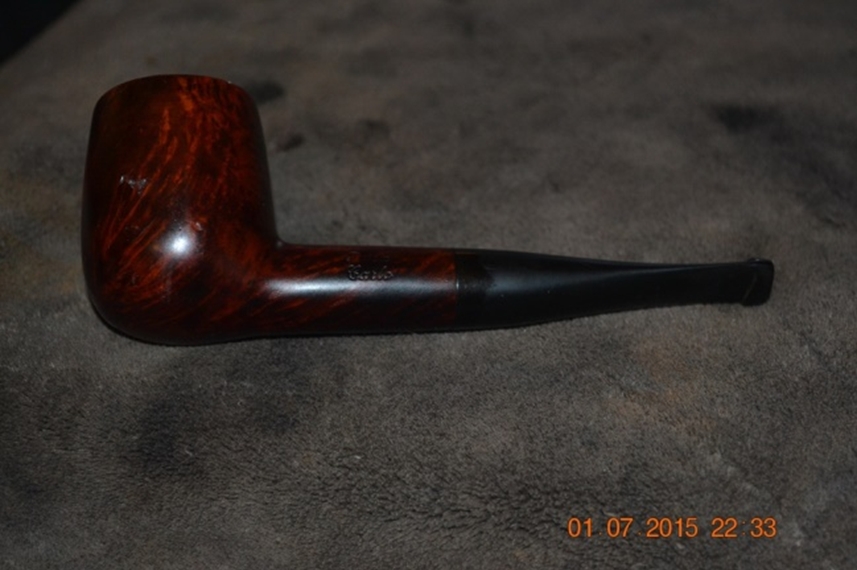
Restemmed and Refurbish Savinelli Duca Carlo


Blog by Steve Laug

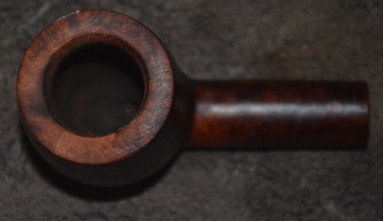
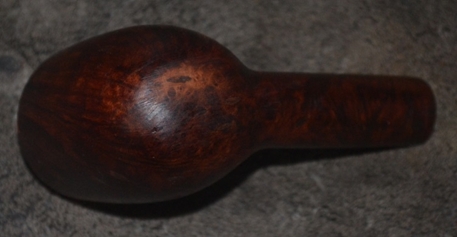
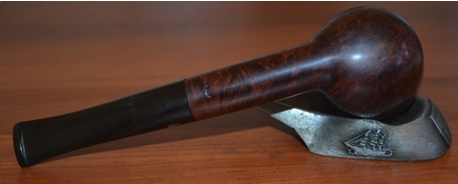
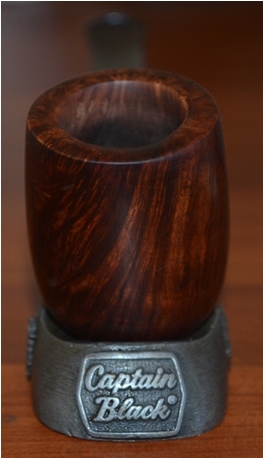
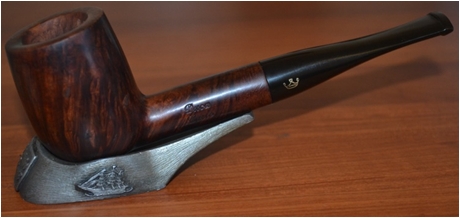
I picked up a Duca Carlo in utter ignorance on EBay the other day. I was not familiar with the brand and only later found out it was a Savinelli. The seller’s photograph are worse than mine so I was not sure what I was getting but decided to take a chance on it. I picked it up for very little so I figured I had nothing to lose. The first series of out of focus photos show the pipe as it appeared in the seller’s advert on EBay. The grain looked like it had potential to me and the rest of the pipe appeared to be in workable shape. Once it got here I would have a better idea of what work would need to be done.

ImageImageImage

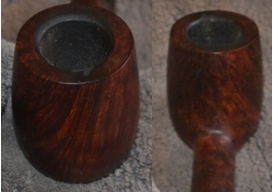
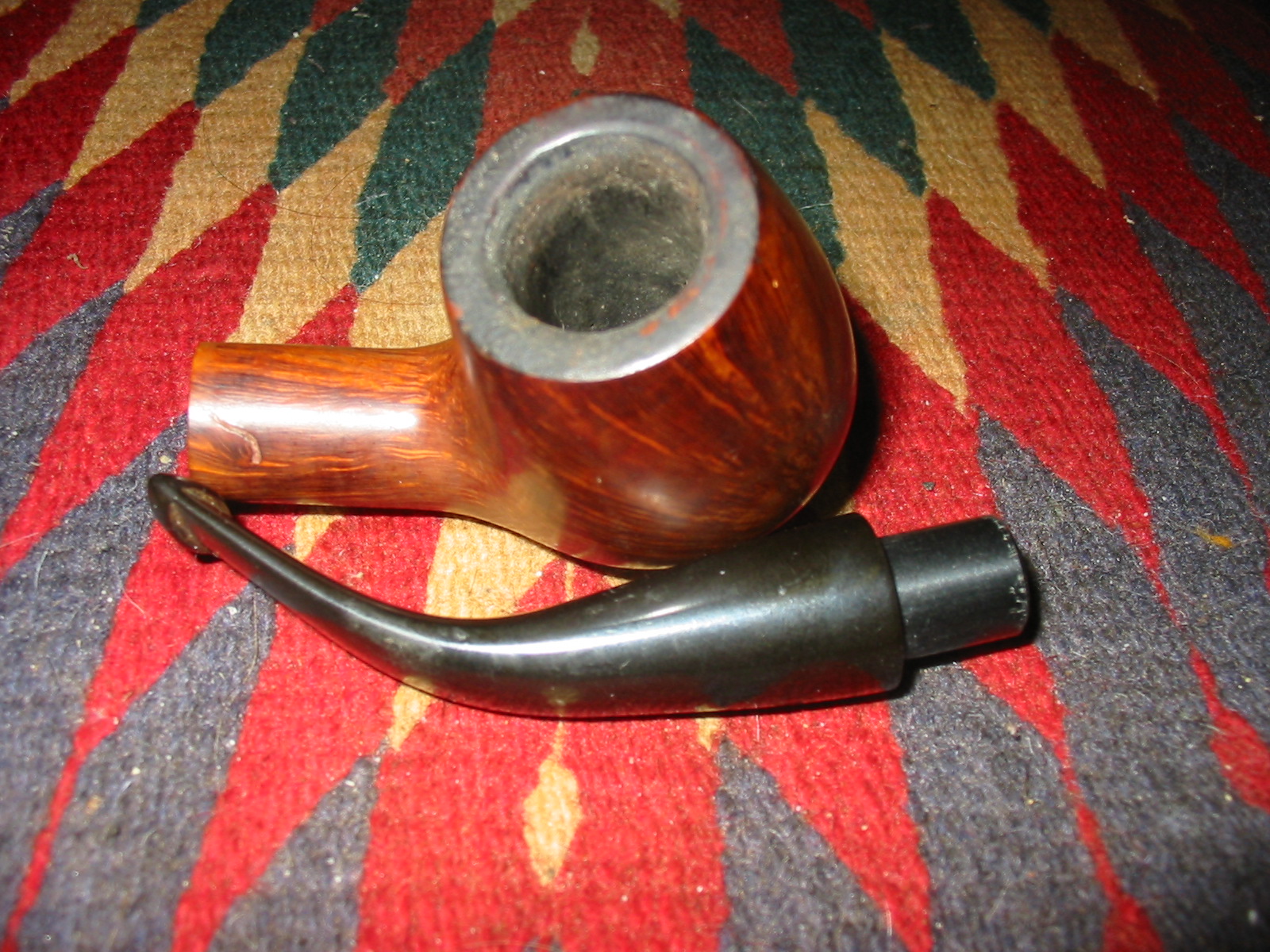
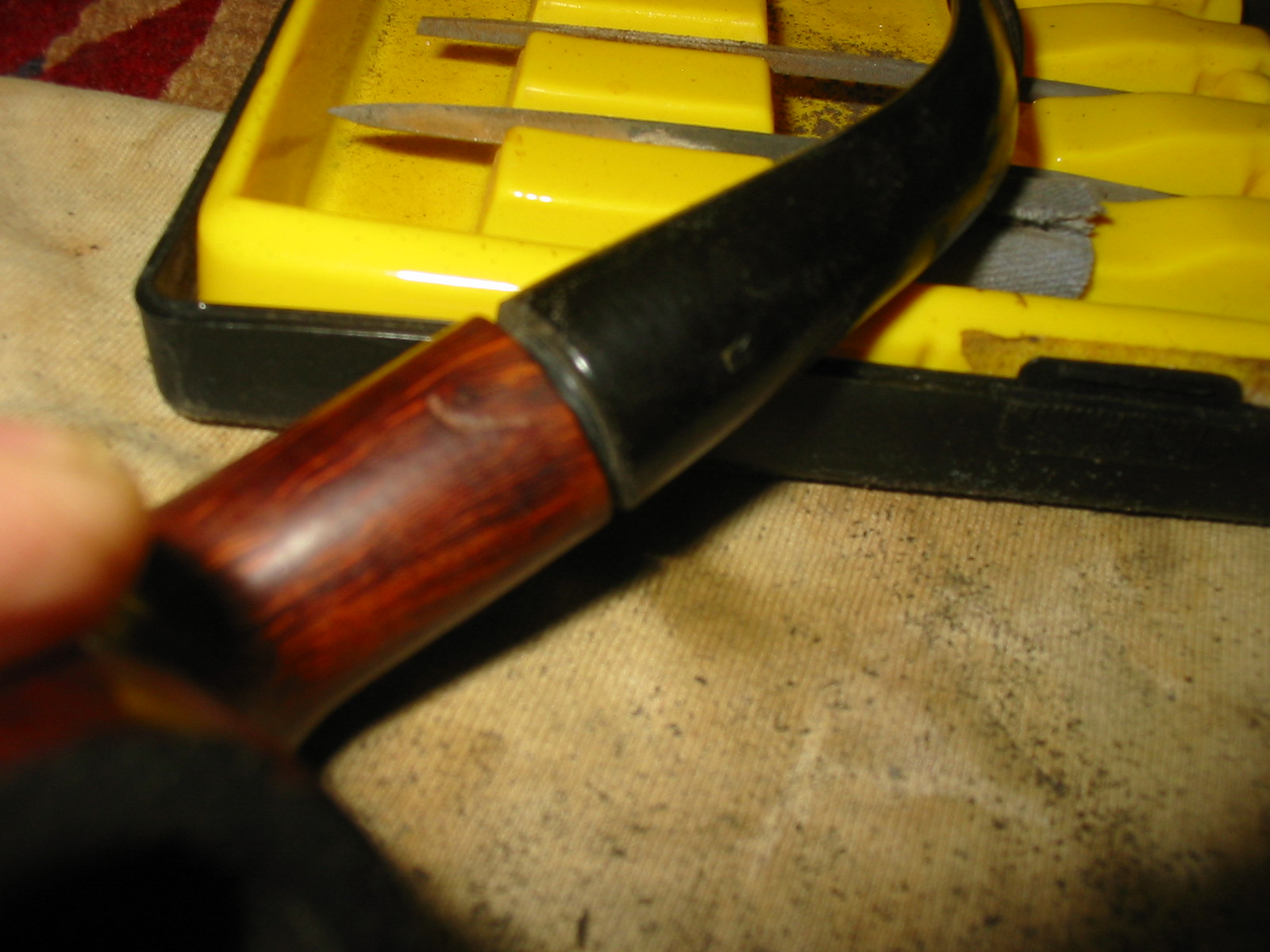
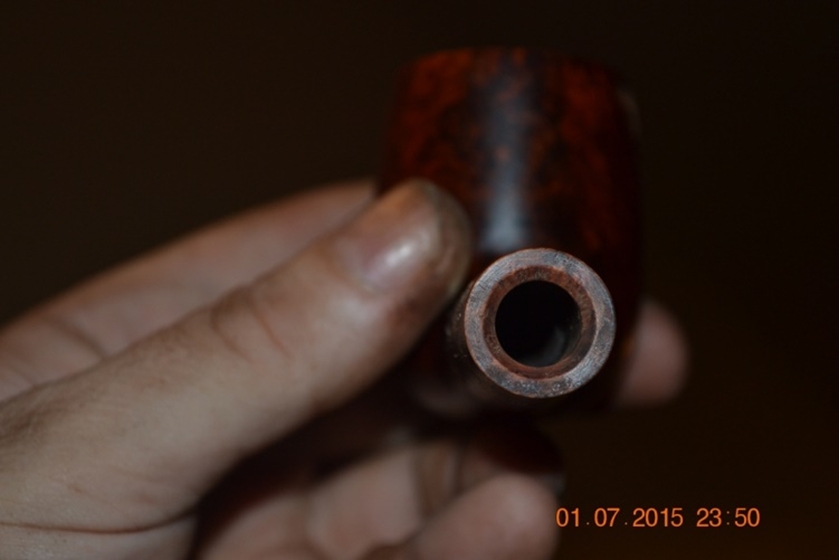
The first photo below shows the pipe after I took it out of the box it came in and put it on my work table. It was definitely in need of a ream and clean. The bottom of the bowl was dusty but had no cake on it. The upper portion of the bowl had an uneven cake. The rim was tarred and oily but there were no dents in the rim or on the rest of the bowl for that matter. The shank had a small hairline crack on the right side. It is next to the fill on the shank that is visible in the photo below. Fortunately this was the only fill I found in the bowl. It was not a bad piece of briar. There are a few bald spots on the bottom of the bowl but there is also some nice grain both birdseye and flame on the sides, front and back of the bowl and also on the shank. The shank and the bottom of the bowl had some cobwebs in it like it had been sitting in storage for a while. I blew out the dust bunnies and then pulled out a stem from my box of stems. It did not have a tenon so I screwed in a delrin tenon into the drilled out hole in the stem. The shank of the Duca Carlo was also drilled for a filter but I decided since I was restemming it and putting a new tenon on the stem I would make it fit without a filter.

Image

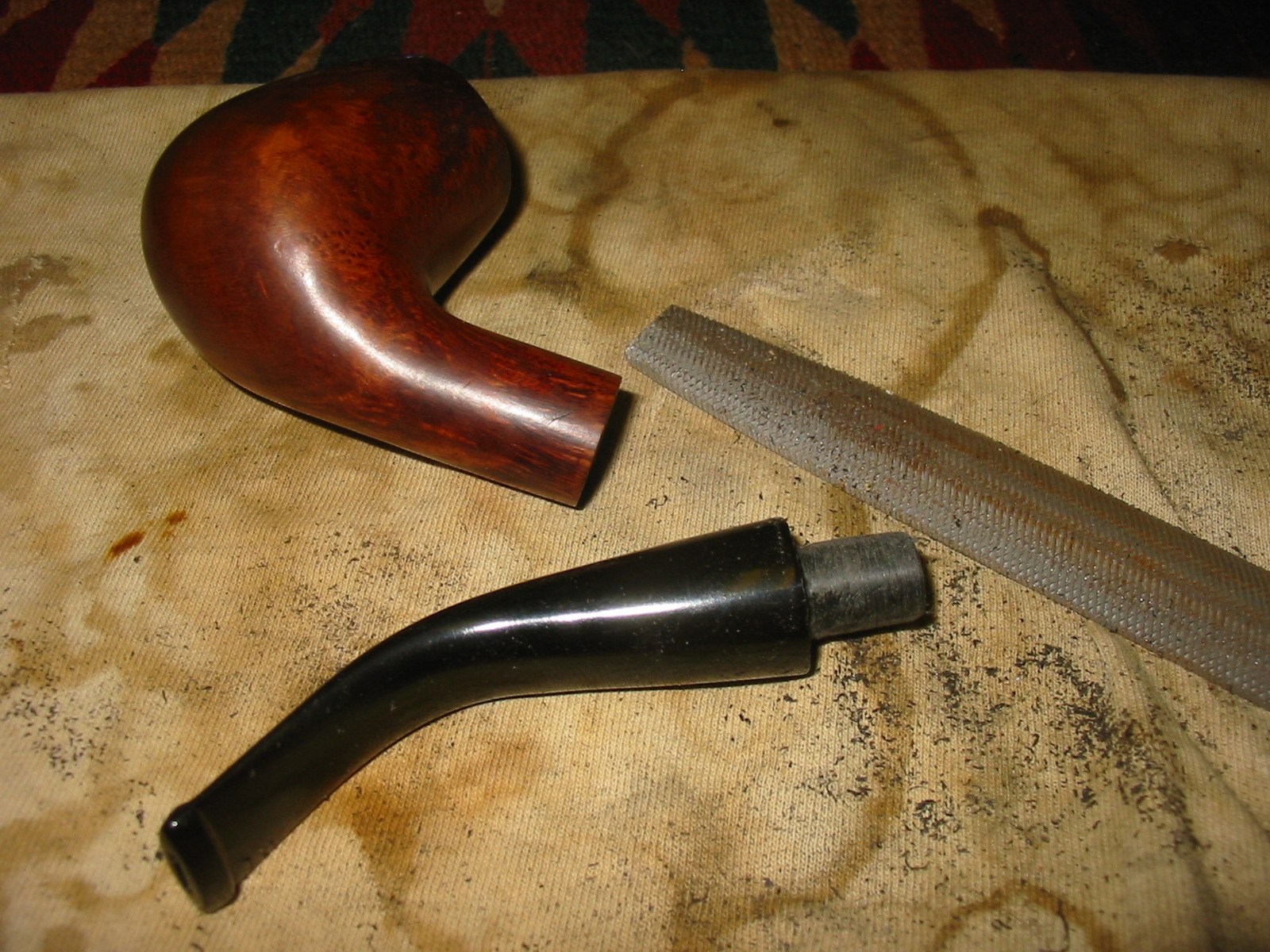
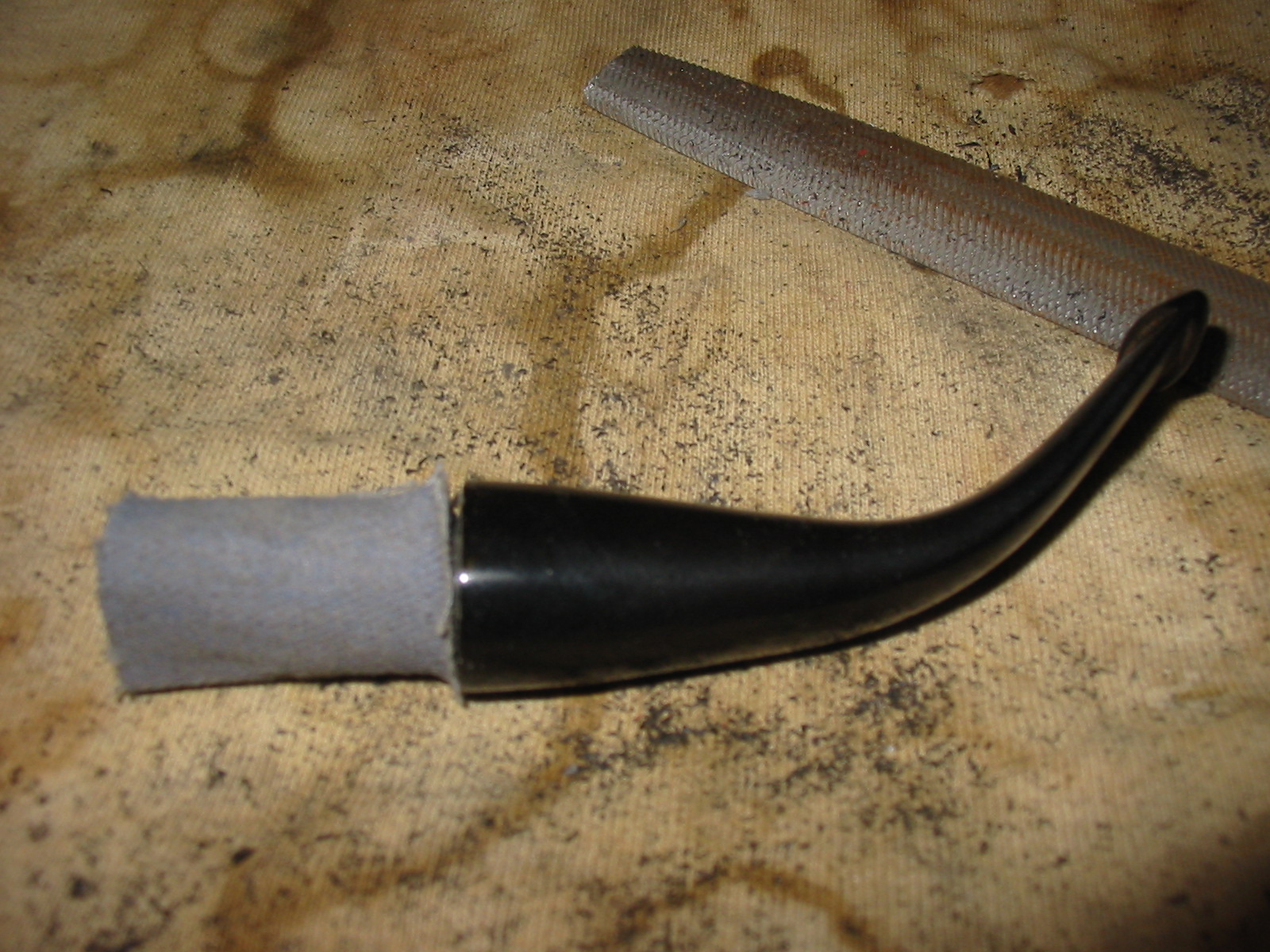
I needed to remove a lot of the delrin from the diameter of the tenon to get a proper fit. The tenon was too large for my Pimo Tenon Turner so I had to do the shaping by hand with files and my Dremel. The next two photos show the shaping process of the tenon. I used a rasp to take of as much of the material as I thought practical. I then used the sanding drum on the Dremel to smooth out the tooth marks from the rasp. I finally used medium grit Emery paper to take down the remainder of the tenon.
ImageImage

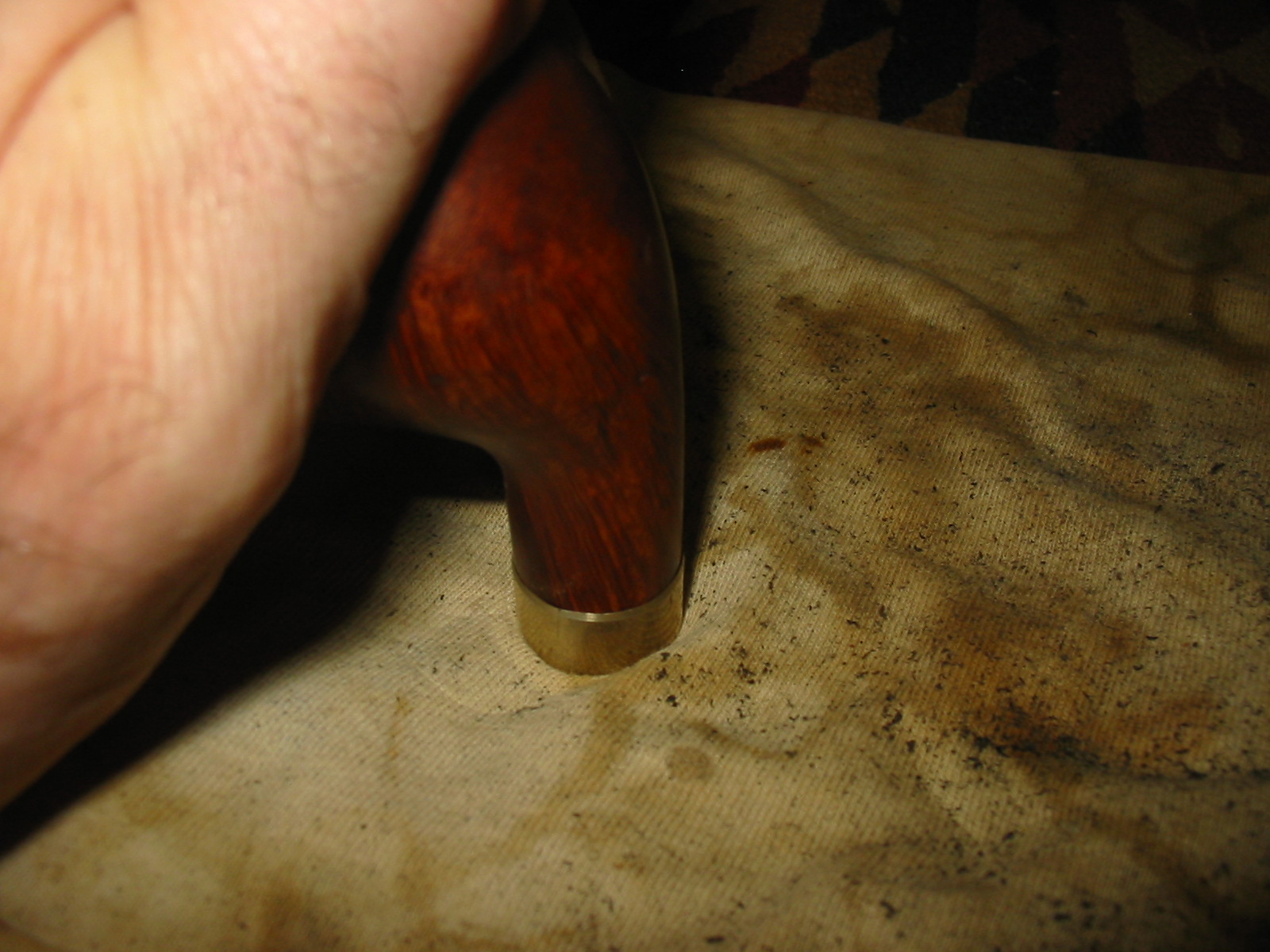
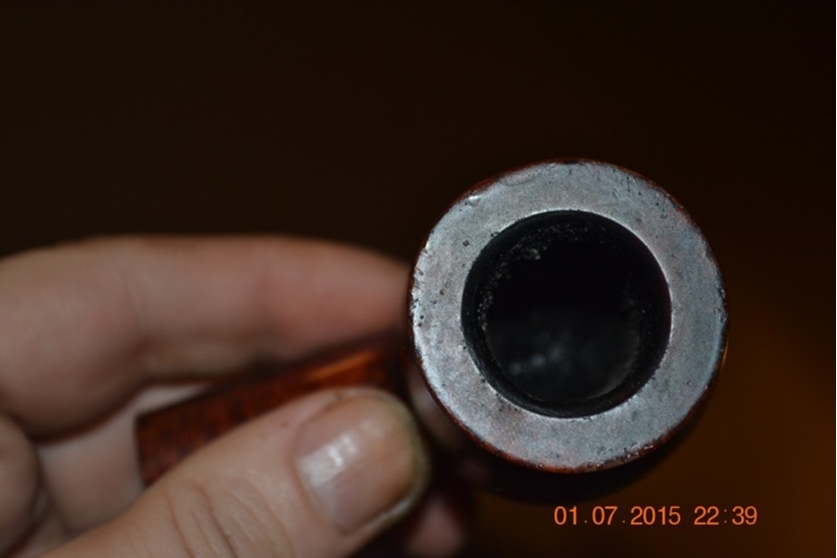
Once I had it sanded to fit I inserted it in the mortise to check the hairline crack. In the photo below I have it partially inserted and the crack is visible next to the fill on the shank. It was not a large or serious crack but in inspecting it I found one on the underside of the shank as well on the opposite edge. This made it necessary for me to band the shank to maintain the integrity of the pipe.

Image

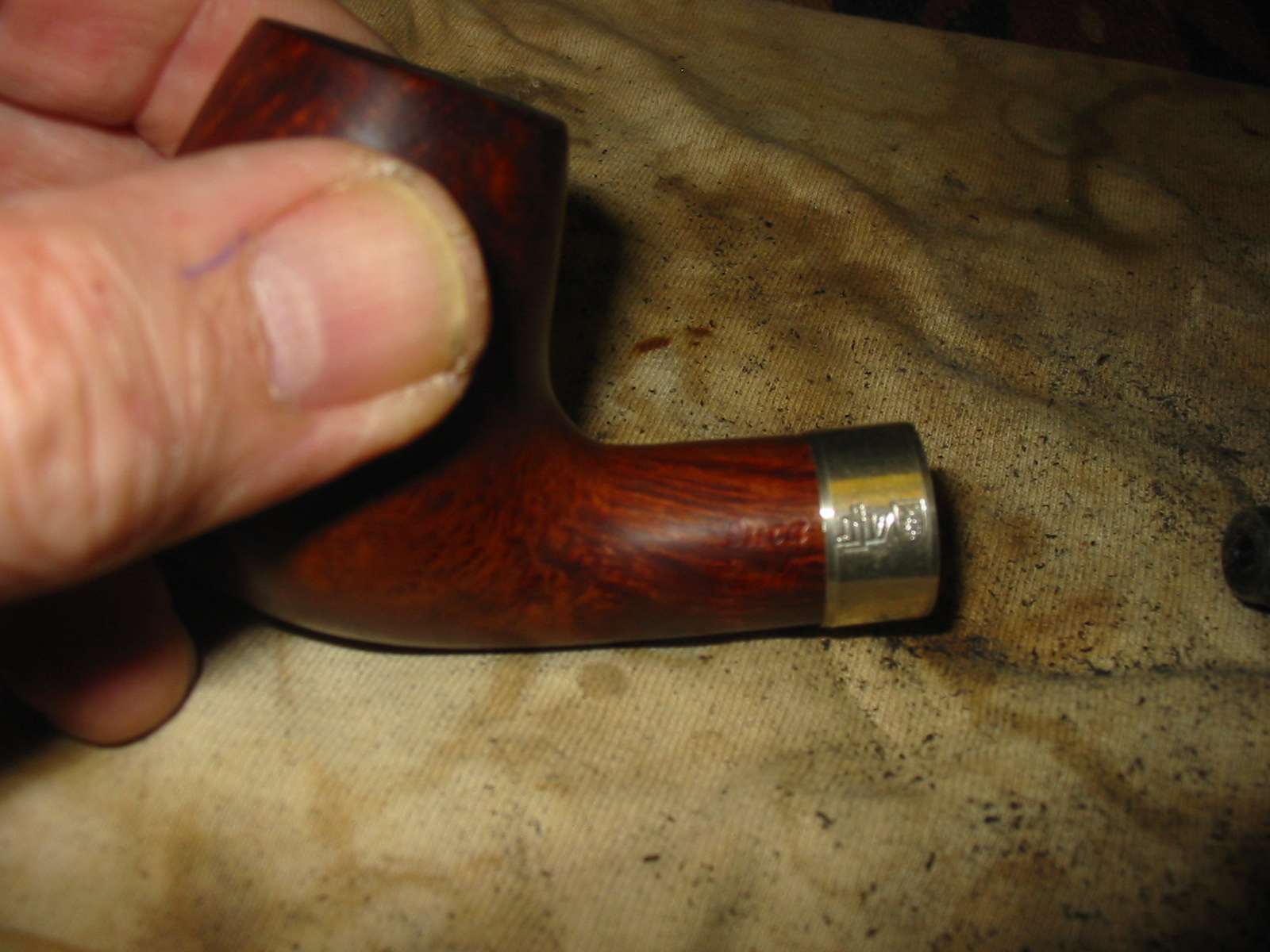
I sorted through my box of bands and found one that would give a good tight fit to the shank. It is a nickel band and once heated and pressure fit on the shank it would give the strength to the shank. The next three photos show the banding process from choosing the band to pressure fitting it on the shank.

ImageImageImage

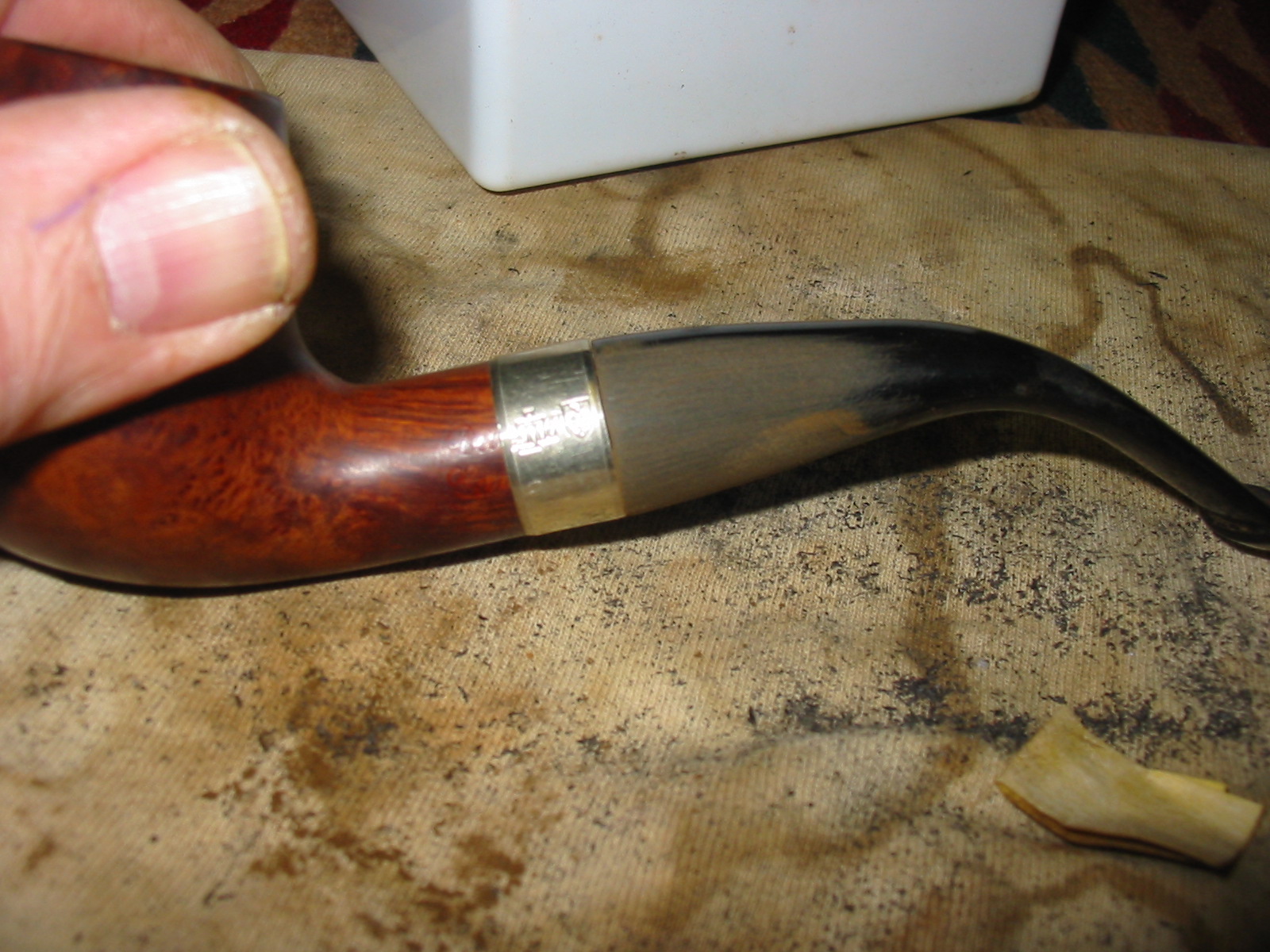
After banding the shank I inserted the stem in the shank and it fit well. It was snug and fit against the end of the shank cleanly. It was a bit larger in diameter than the shank so I sanded it with the emery paper to remove the excess material on the stem. The next three photos show the progress of fitting the stem against the shank.

ImageImageImage

I reamed the bowl with my T handle Pipnet reamer and blade heads. It was an easy ream as the bottom half of the bowl was clear briar. The Pipnet reamer must be carefully inserted and turned so as not to make the bowl out of round or damage the bowl.

ImageImage

After reaming I decided to clean off the tars and oils on the rim. I used a fine grit sanding sponge to remove the grime as seen in the first picture below. I then wiped down the bowl and rim with acetone on a cotton pad as can be seen in the second and third photo below. I found that cleaning off the grime and the dark parts of the bowl revealed some really nice grain on the pipe.

ImageImageImage

The next three photos show the bowl after the wipe down with acetone and the stem after sanding with the medium grit sanding sponge. The fit is getting very close to being what I was looking for. I am still not sure about the bend in the stem. It fits well in the mouth but I may heat and rebend it. I will see once I am finished with the pipe.

ImageImageImage

I restained the bowl and rim with dark brown aniline stain. I applied it with the dauber and then flamed it with a match, restained and reflamed it. The next three photos show the freshly stained bowl after I flamed it. Once it was dry I took it to my buffer and buffed the bowl with Tripoli to polish and remove the excess stain.

ImageImageImage

Even after buffing the stain was too dark for me. I wiped the bowl down with acetone on a cotton pad to lighten the stain. The next series of three photos show the bowl after I had wiped it down with the acetone. The colour was what I wanted. It would polish up very well.

ImageImageImage

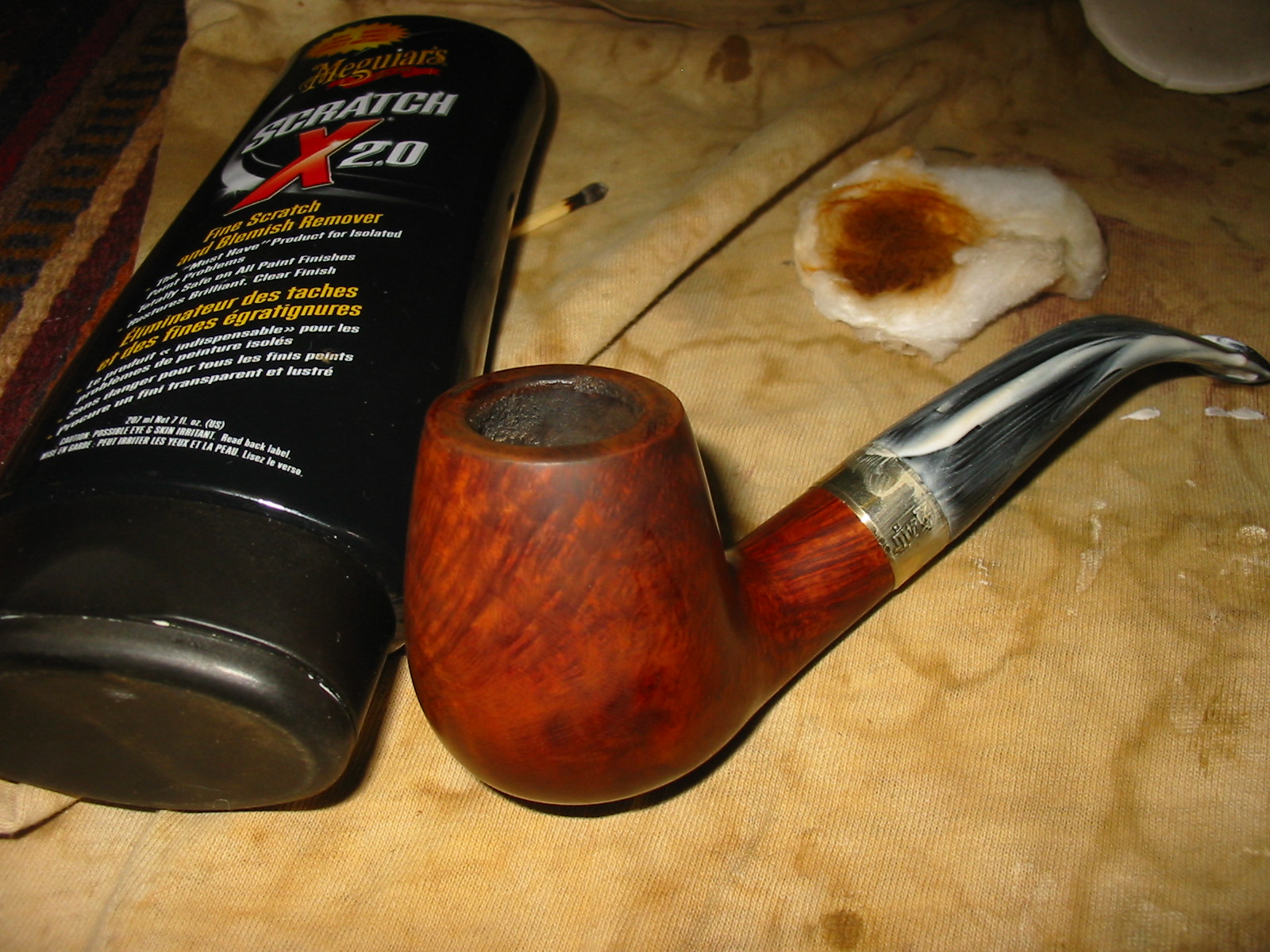
I set the bowl aside after this and went to work on the stem with the micromesh sanding pads. The next nine photos show the polishing process with the micromesh pads and the Maguiar’s Scratch X 2.0. I began dry sanding the stem with 1500 grit micromesh sanding pads. After that I polished the stem with the Maguiar’s before working through the rest of the micromesh grits 1800-12,000. After the final sanding I polished it a second time with the Maguiar’s and then gave it a buff with White Diamond. I brought it back to the work table and wiped it down with Obsidian Oil and then coated it with some carnauba wax. For much of the final sanding I worked with the stem on the shank so as not to round the shoulders of the stem.

ImageImageImageImageImageImageImageImageImage


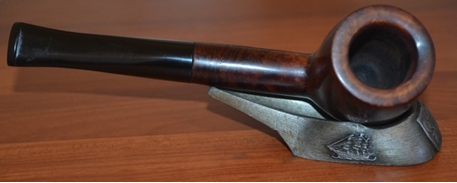
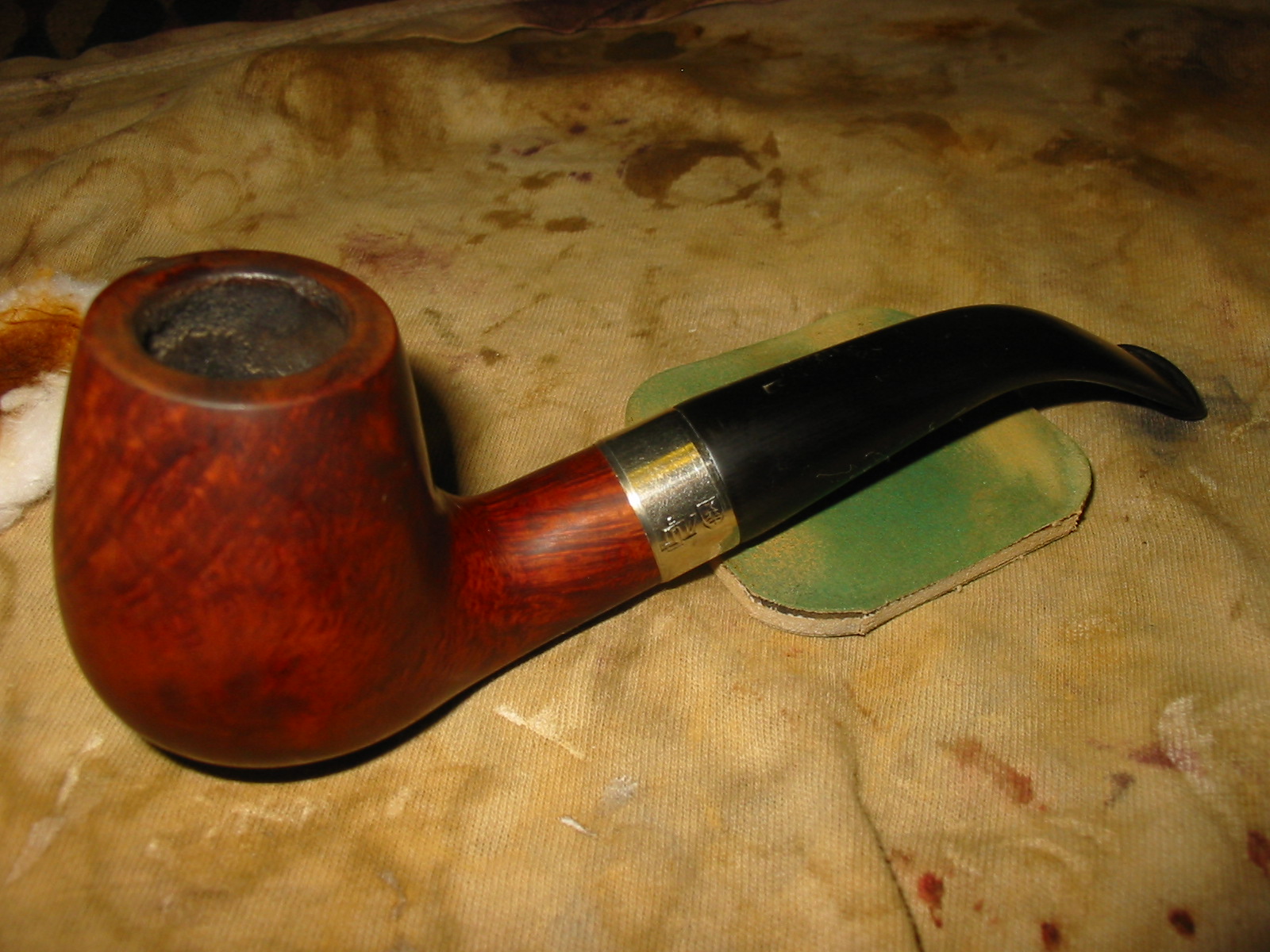
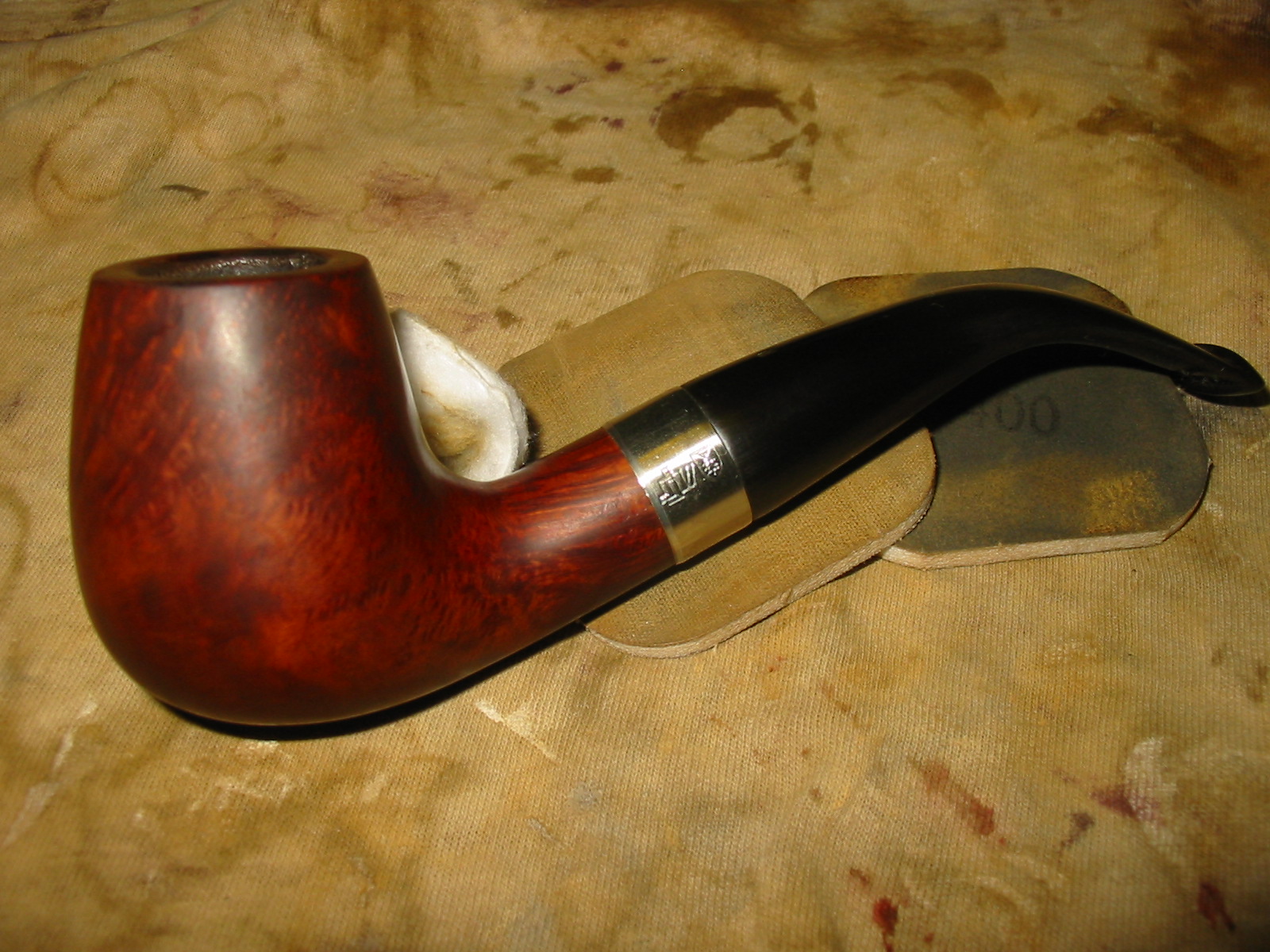
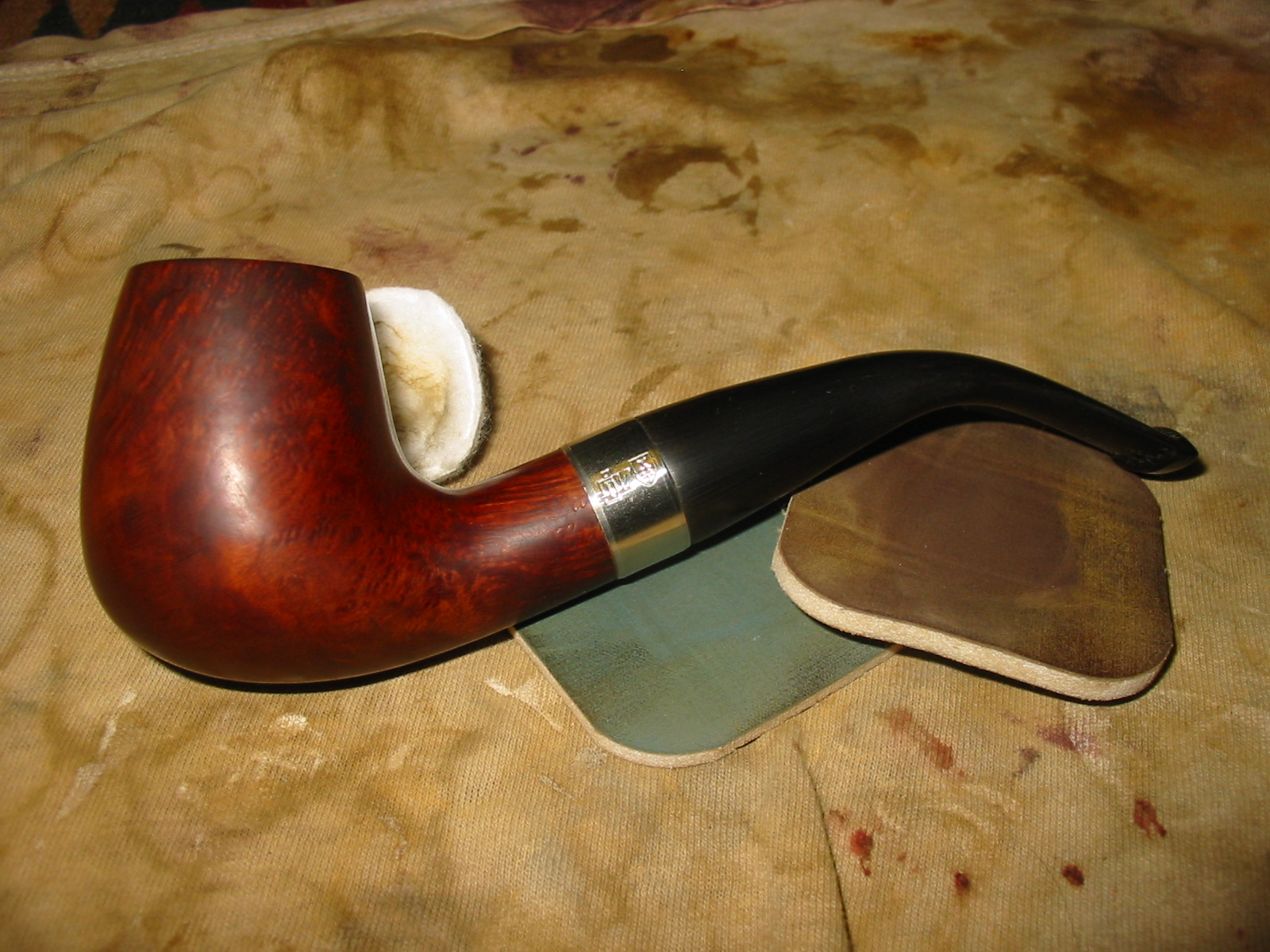
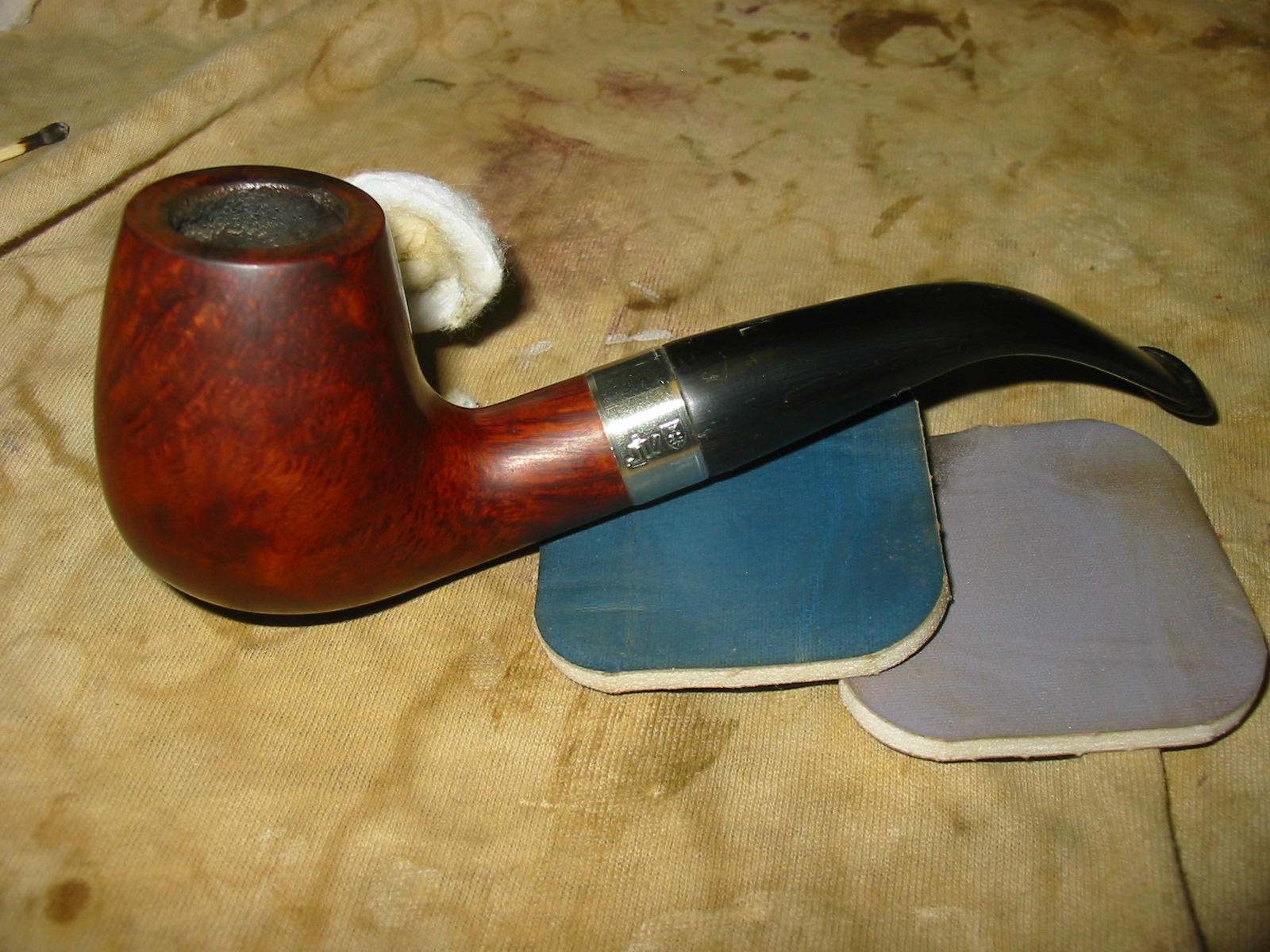
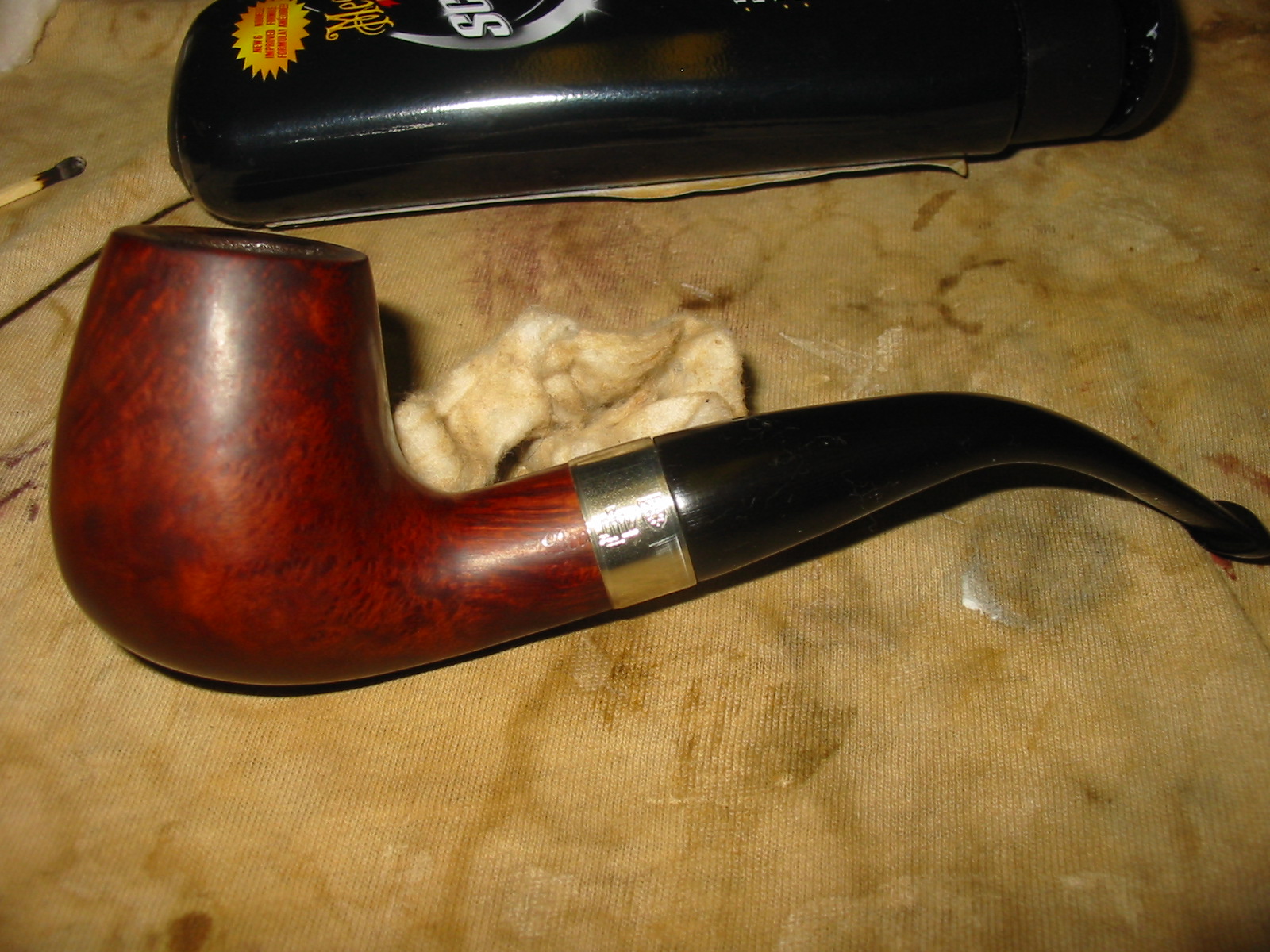
When I had the scratches worked out of the stem I buffed the entire pipe with White Diamond and then several coats of carnauba wax. The finished pipe can be seen in the photos below. I decided not to rebend the stem but to leave it for now and see how it feels when smoking it. I can rebend it at any time should I choose. The final four photos show the finished pipe. This was a pretty straightforward refurb, it took me about three hours to restem and refinish the pipe.

ImageImageImageImage