
Blog by Steve Laug
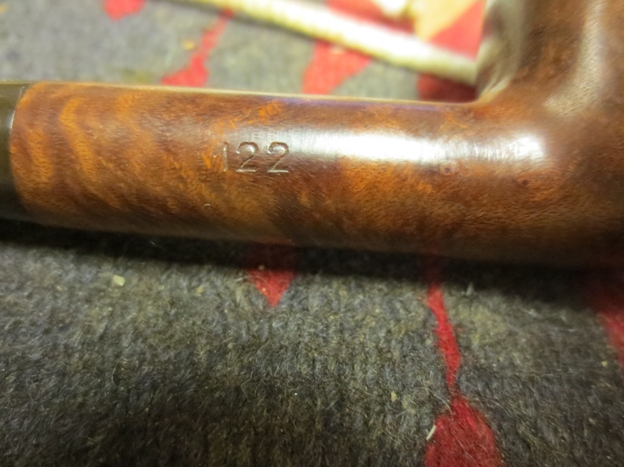
After the latest struggle with the Savinelli I decided to work on one that I thought would be an easy restoration. But given my track record with the last one I was not sure. Time would tell if it would be easy or if the work on it that I did would make it hard. This little billiard came to me in the gift box of pipes to rework.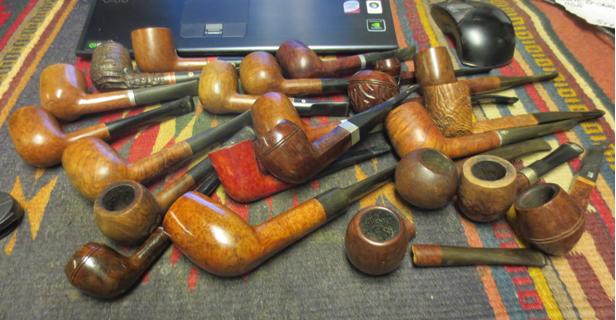 It is stamped on the right side of the shank Dr. Plumb in a script over – Flat-Grip. On the right side of the shank it is stamped with the shaper number, 722. On the underside of the shank there is a horizontal stamping next to the stem that reads FRANCE.
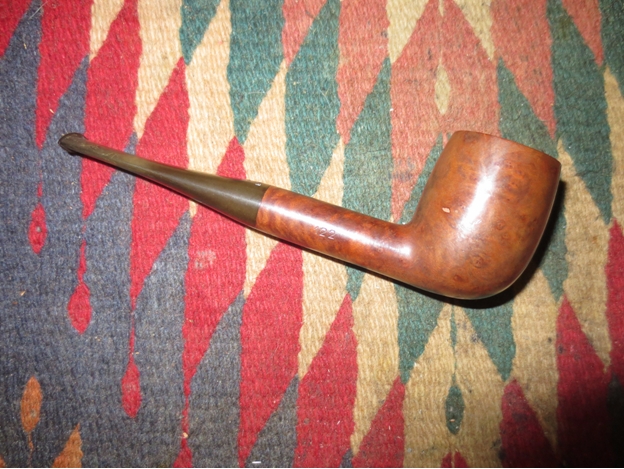
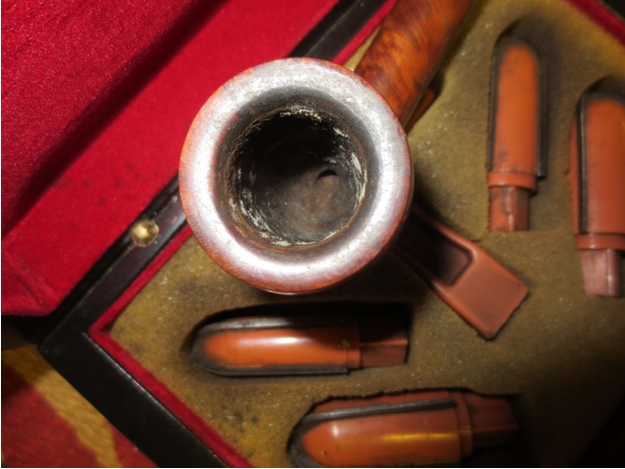
 The pipe was in good condition. The finish was dirty but had no damage. There was one fill on the bowl on the back right side. The stain was even and not faded at the shank stem union or on the sides of the bowl. The rim had some build up and darkening but did not have damage to either the inner or outer edges. It had a slight bevel inward to the bowl that is often found on older billiards of this era. The shape bore all the marks of the GBD line that is sprung from. My guess is that the one fill on the back right moved it from the GBD line to the Dr. Plumb line. The stem was oxidized and had some tooth chatter and marks on the top and underside near the button. The bowl was caked and had a few spots that looked like mould on the inside of the bowl. I scraped one and looked at it under the light to see if it was mould. For all intents and purposes it was. Now the question was how deep into the cake did it go and would a complete ream of the bowl remove it from the pipe. Maybe this pipe would not be as easy a restoration as I had thought.
 The stem had the Dr. Plumb red dot on the top of the stem with the word PLUMB stamped over the top in white. The Plumb stamping on the stem would need to be touched up.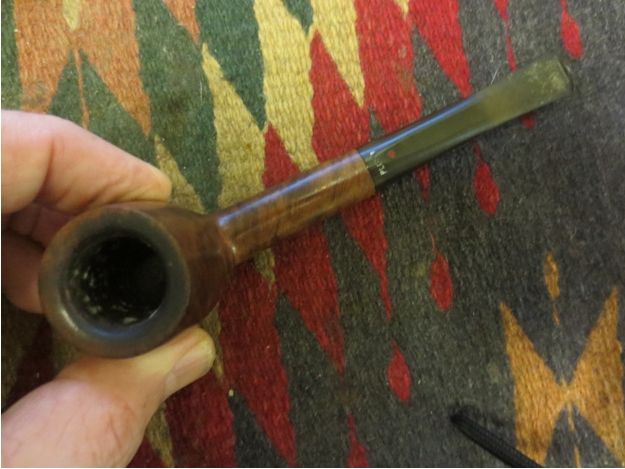
 I have included two close-up photos of the bowl rim and the white mould in the bowl. I was very curious to see if a good ream would remove it. Would the mould go deeper into the bowl than the cake? Would it be in the briar itself? I certainly hoped not but a reaming would disclose the depth of the problem.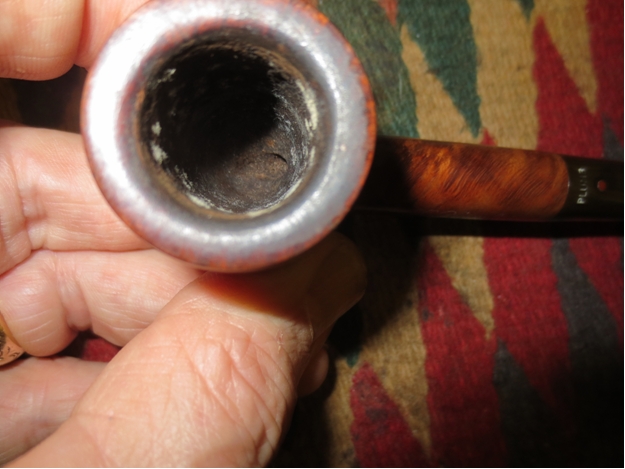
 I reamed the cake back to bare wood. I wanted to remove all signs of the mould. I scrubbed off the cutting head before putting it away. I examined the bowl to make sure I had removed all of the signs of the mould. The wood was clean and bare. It was so it looked as if the mould had only been on the surface. I scrubbed the surface of the walls with alcohol and cotton swabs to make sure that none of the spores survived.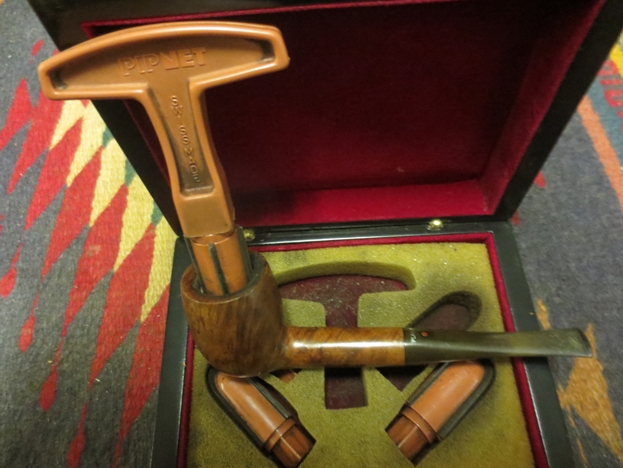
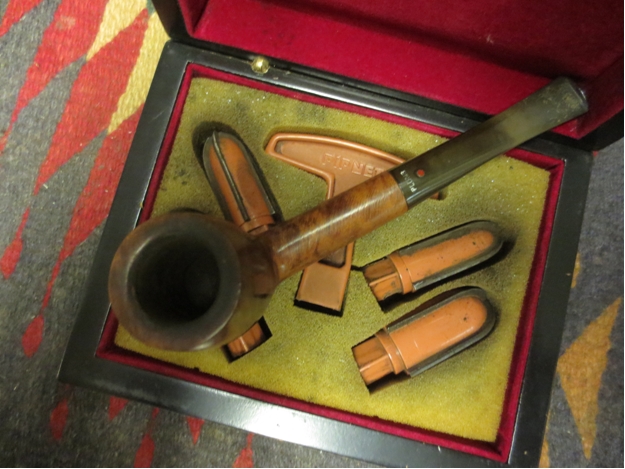 I scrubbed the darkening and build up on the rim with cotton pads and saliva and was able to remove it. I use cotton swabs with alcohol as a follow up on the rim and when I was finished the rim was dull but clean.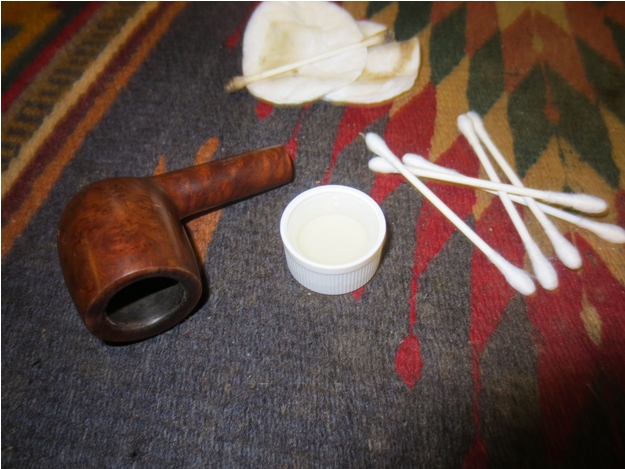
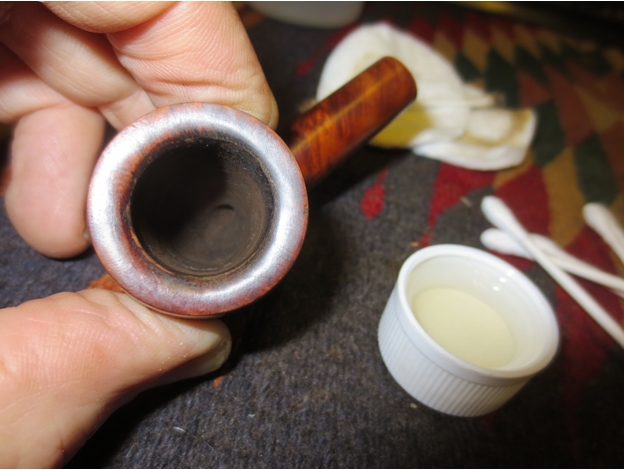
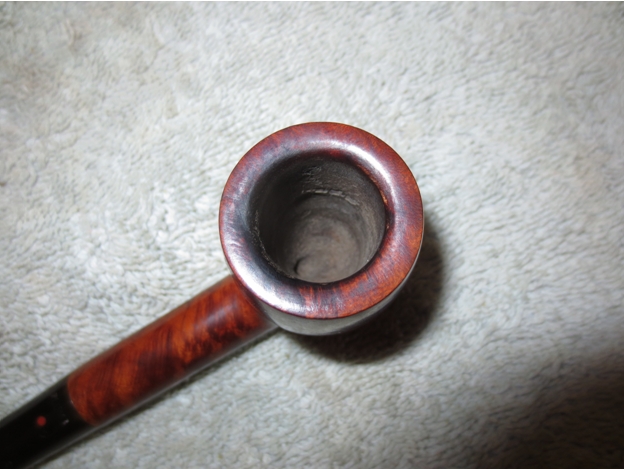 I scrubbed out the shank with cotton swabs and isopropyl alcohol and pipe cleaners to clean out the airway in the mortise and the stem. I put the stem back in the mortise and took a few photos of the pipe at this point.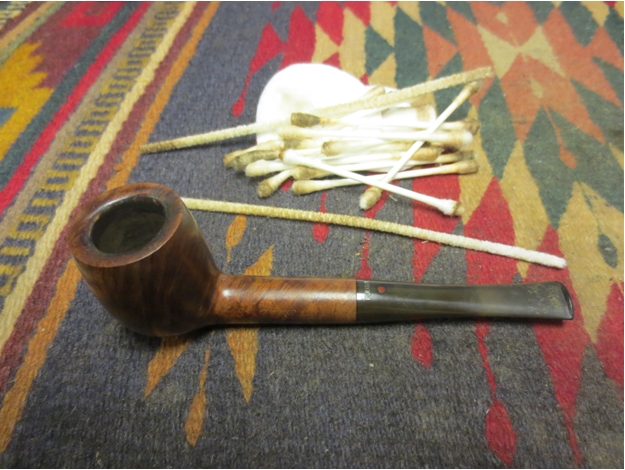
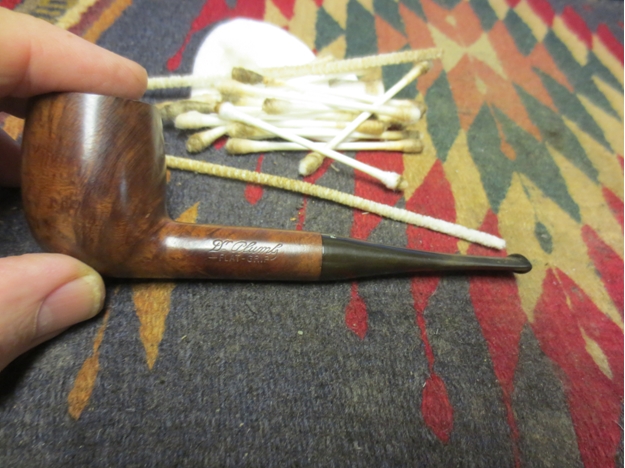 The Dr. Plumb Flat Grip stem is unique in its design. It has a different style of taper that allows it to have what GBD called a flat surface. Instead of a crowned, rounded stem top and bottom there were slight taper from the edge of the surface to the side of the stem on all sides top and bottom. On this stem these were slightly rounded from use. I used a 220 grit sandpaper to break through the surface of the oxidation, remove the tooth marks and chatter and also clean up these tapered edges.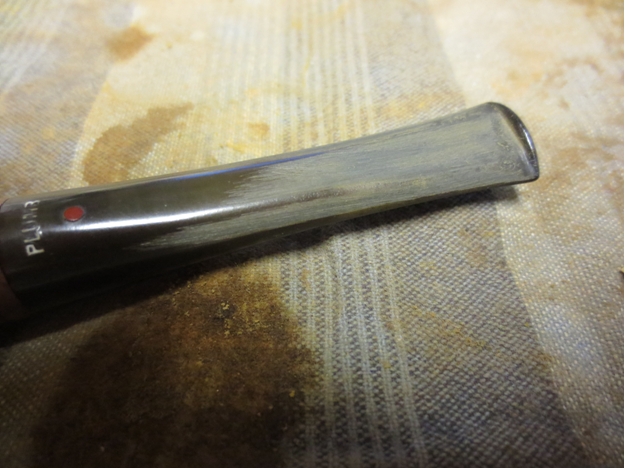
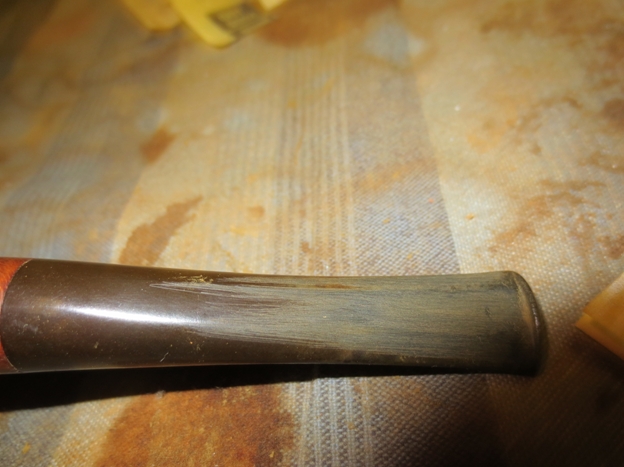 I sanded the stem with a medium and a fine grit sanding sponge to smooth out the scratches and clean up the stem surface further. I wet sanded the stem with 1500 grit micromesh and then used a liquid paper/Whiteout to touch up the PLUMB stamping on the top near the shank.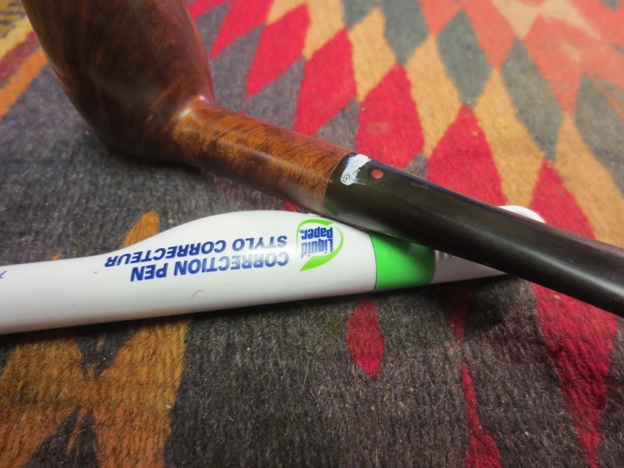
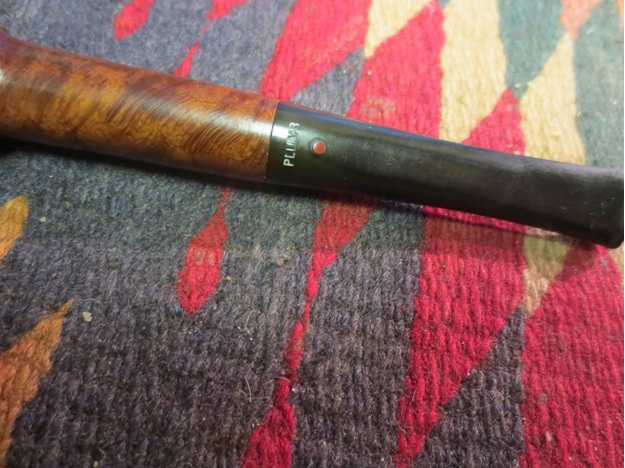 I put the plastic washer on the tenon and inserted it into the shank so that I could sand the edge without rounding the shoulders of the stem. I sanded it with a fine grit sanding sponge to remove the light oxidation that still remained on the shoulders. I repeated the wet sanding with 1500-2400 grit sanding pads and then dry sanded with 3200-12,000 grit pads. I rubbed the stem down with Obsidian Oil between each set of three pads. I rubbed it down a final time and let it sit until it was absorbed into the vulcanite.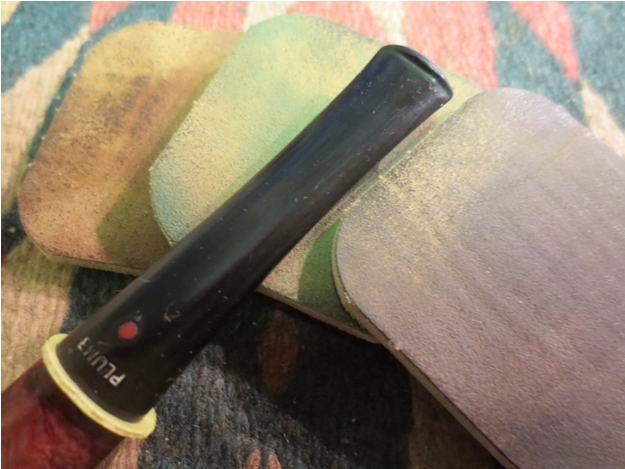
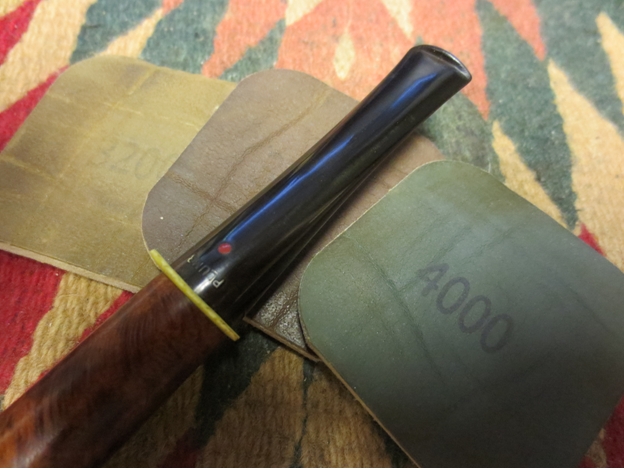
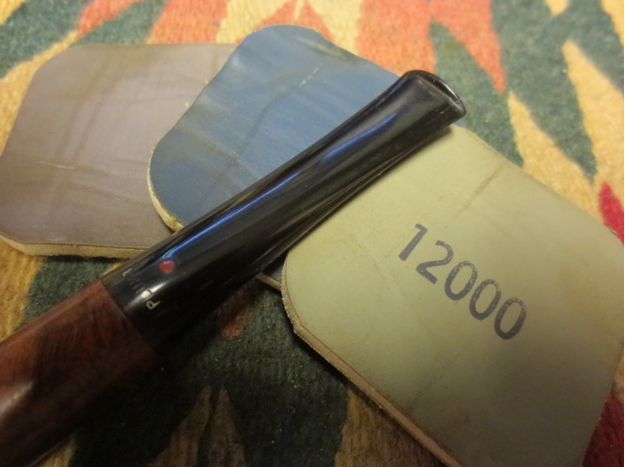 I buffed the stem with White Diamond to finish polishing it and raise the shine. I buffed it with a soft flannel buff to finish the stem.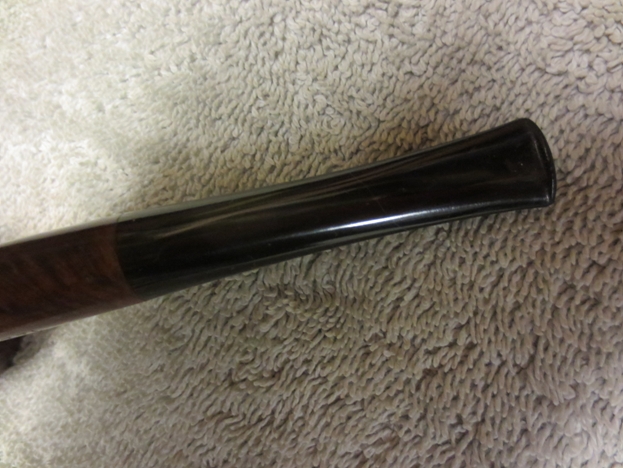
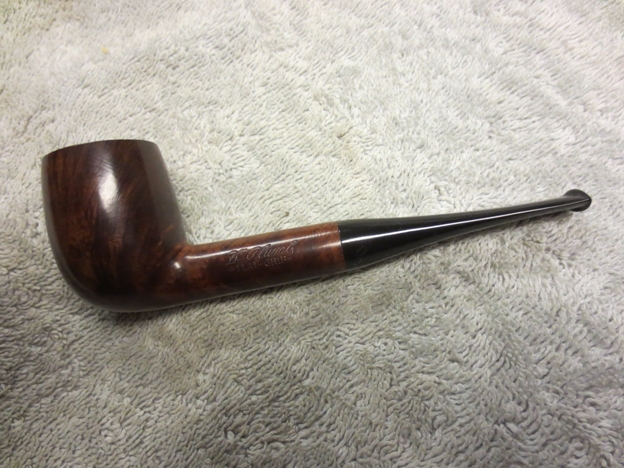
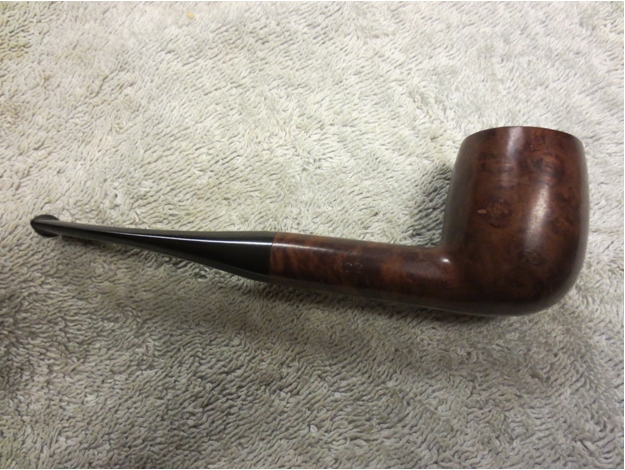
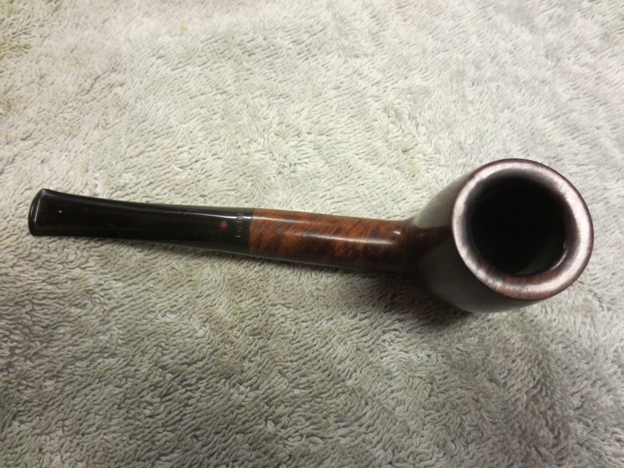
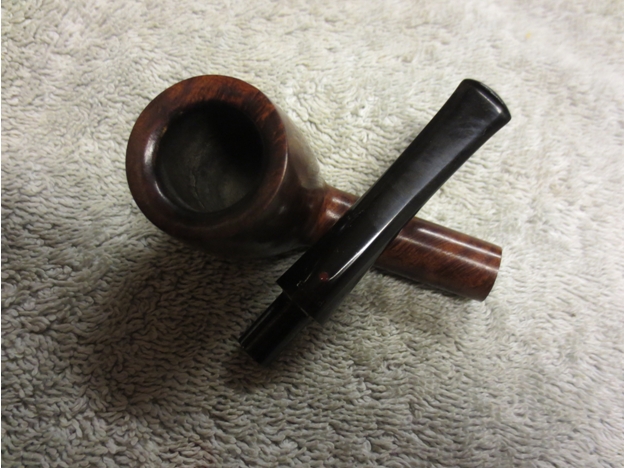
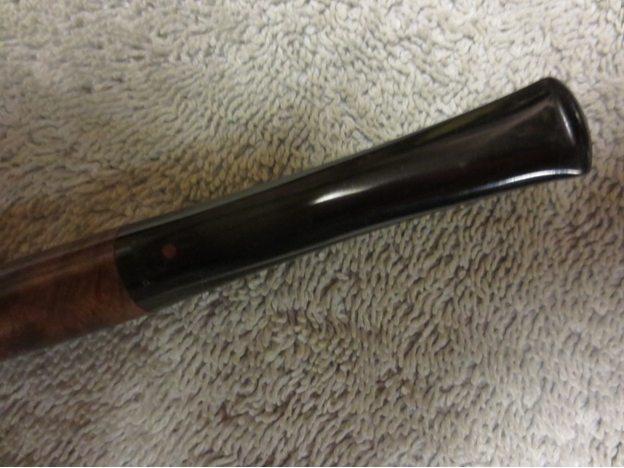 I buffed the entire pipe with White Diamond and Blue Diamond to polish the briar and stem. I gave the pipe multiple coats of carnauba wax and then buffed it with a soft flannel buffing pad to raise the shine. The finished pipe is shown in the photos below. It is cleaned and there is no sign of the mould that once was in the bowl. The pipe smells clean and new. It is ready to load up and smoke the first bowl.

 rebornpipes