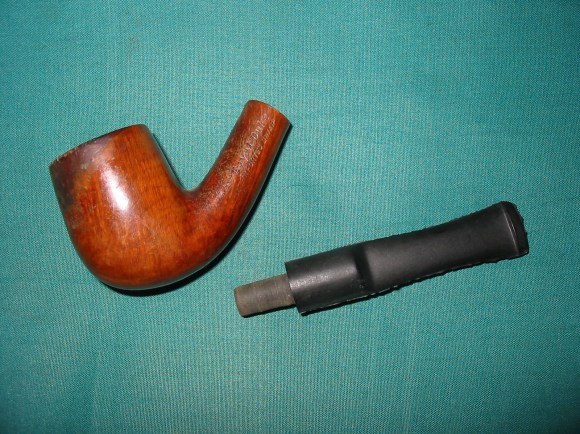
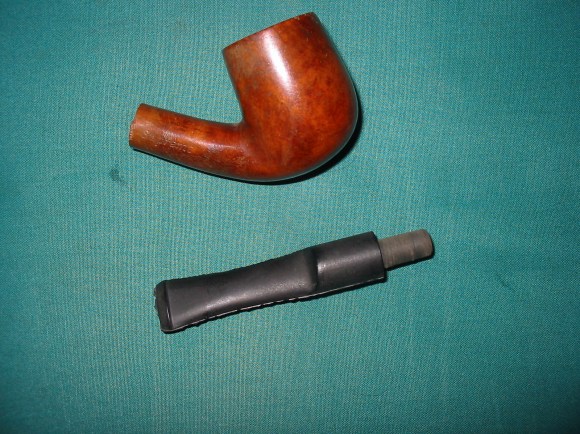
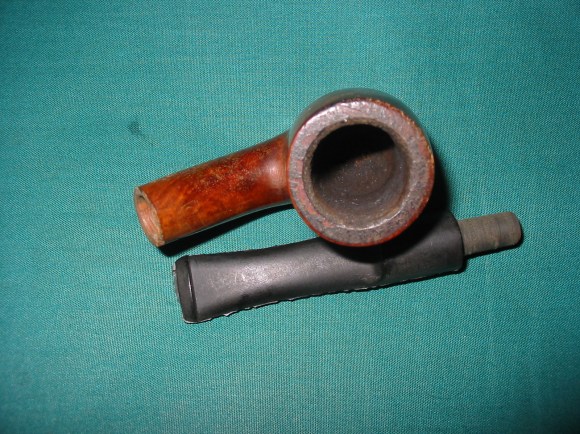
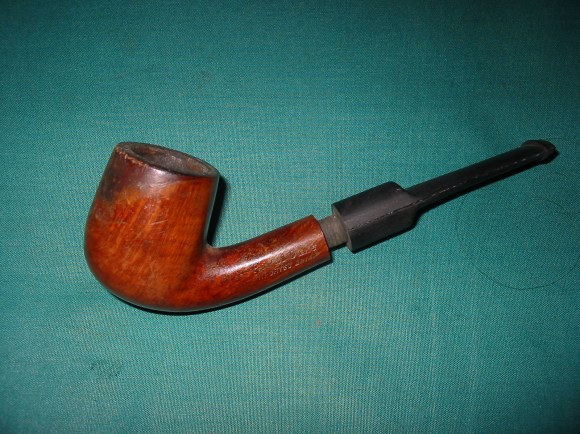
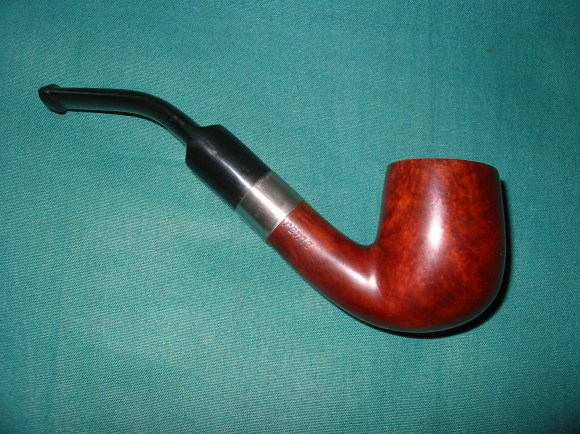
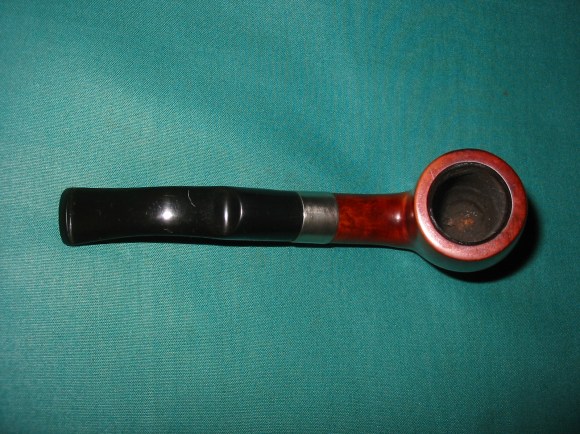
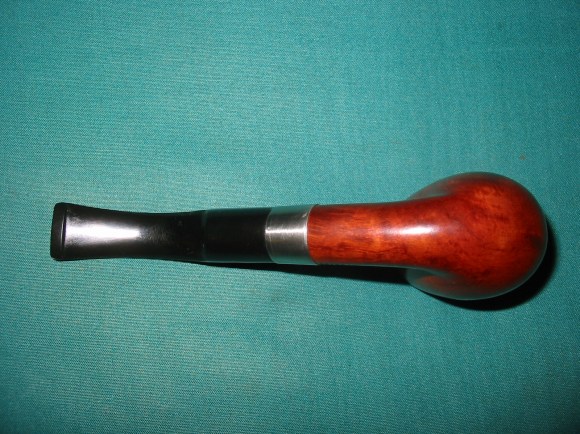
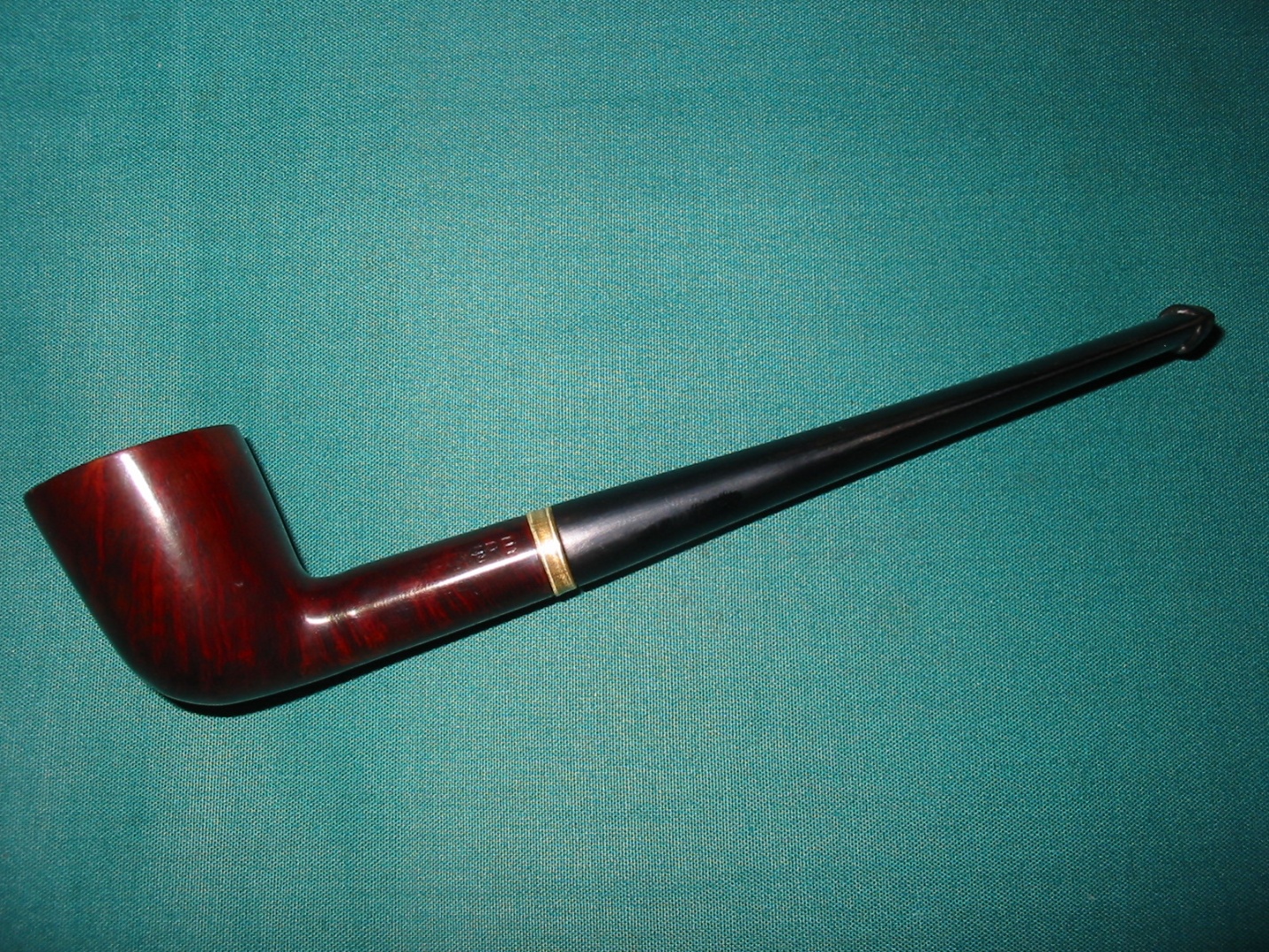
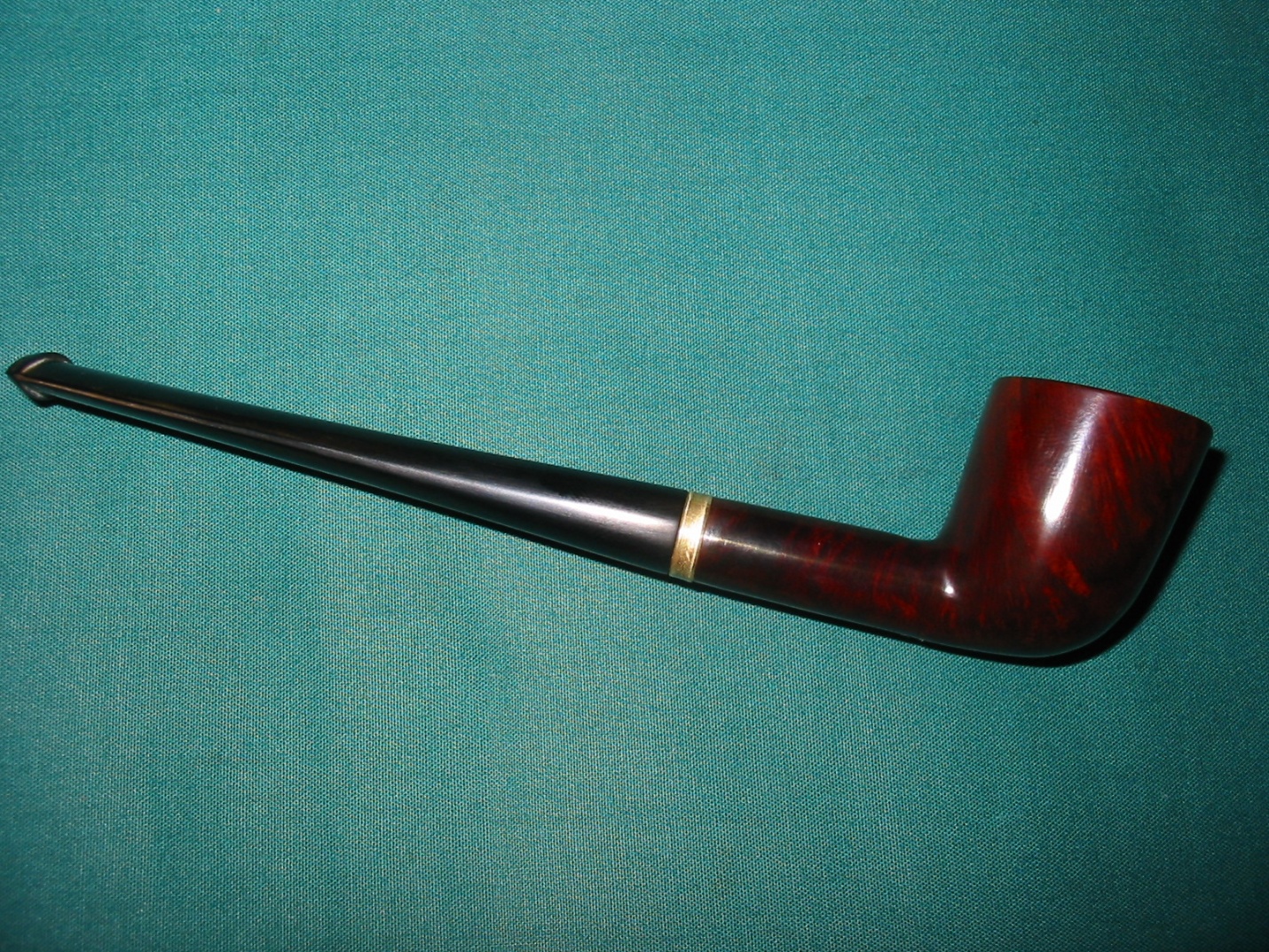
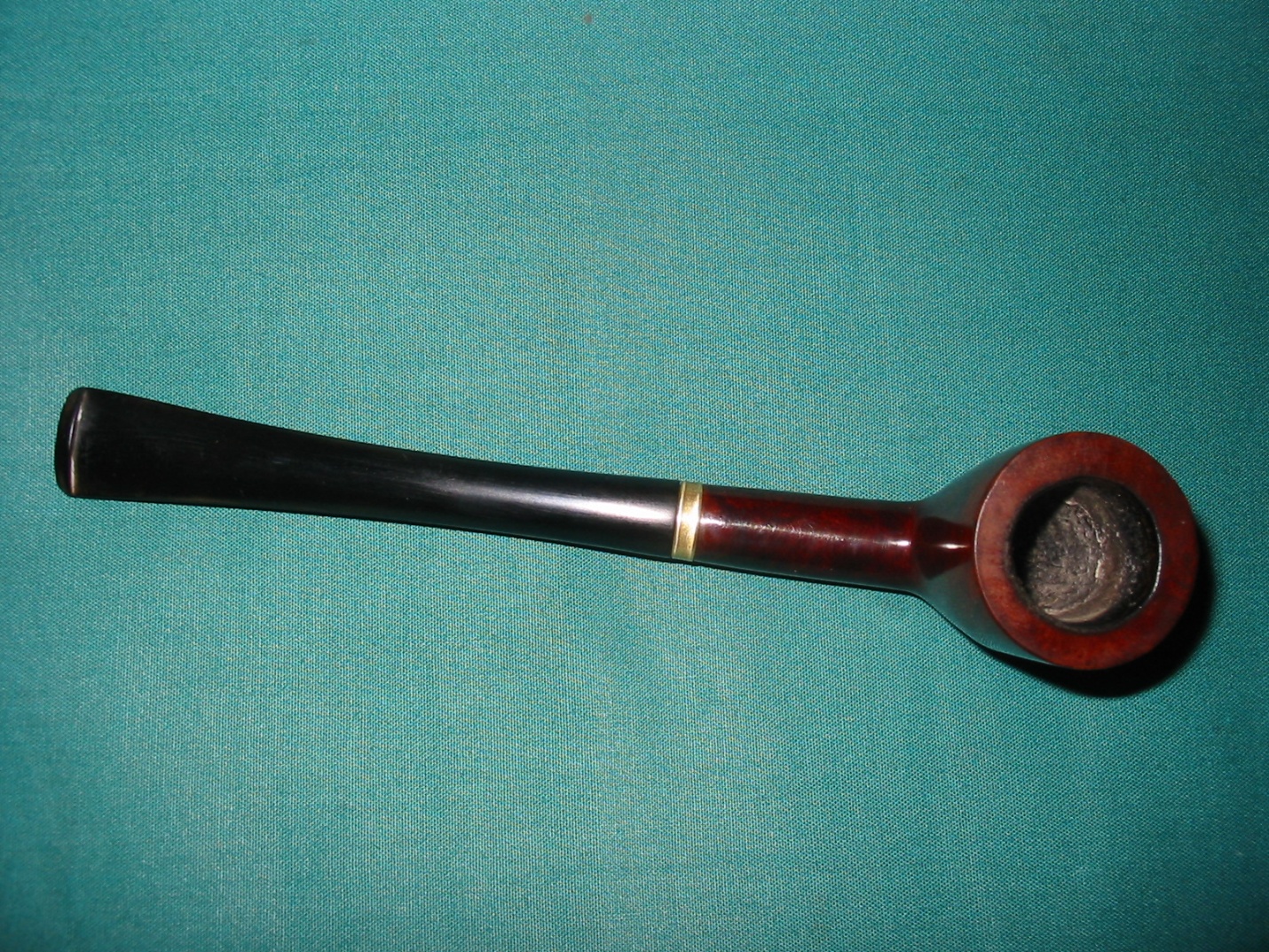
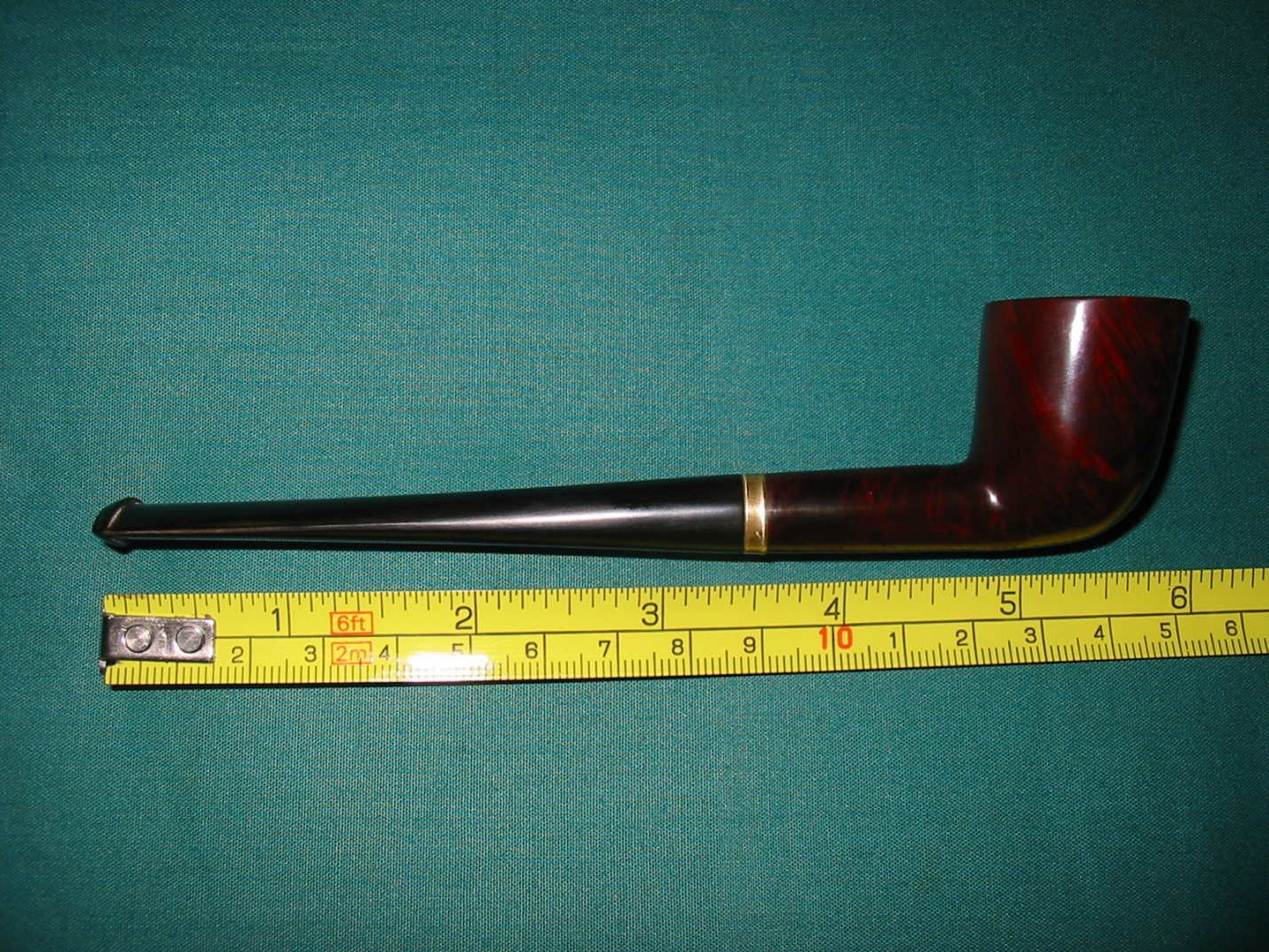
Refurbished Peterson Sherlock Holmes 1994


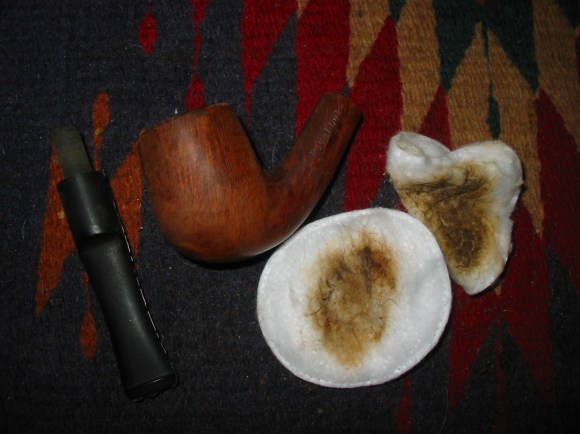
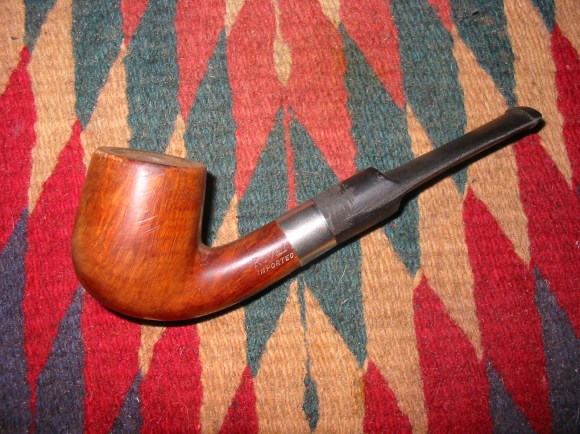
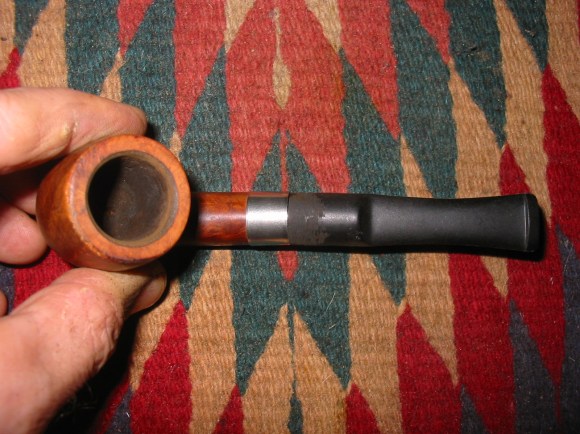
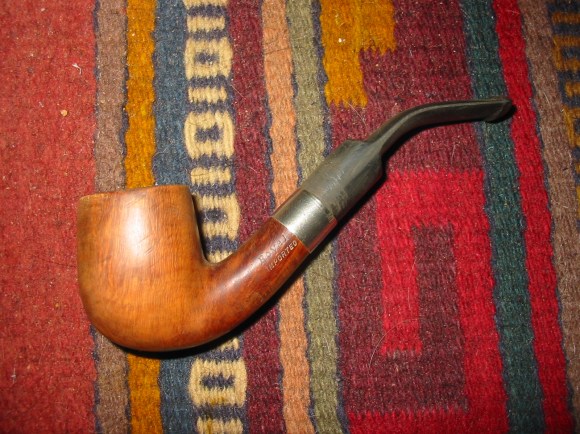
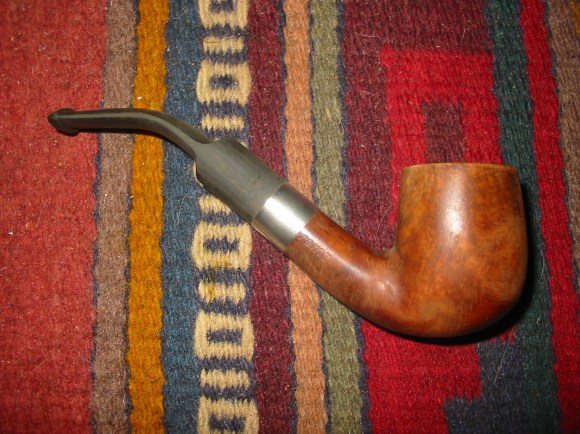
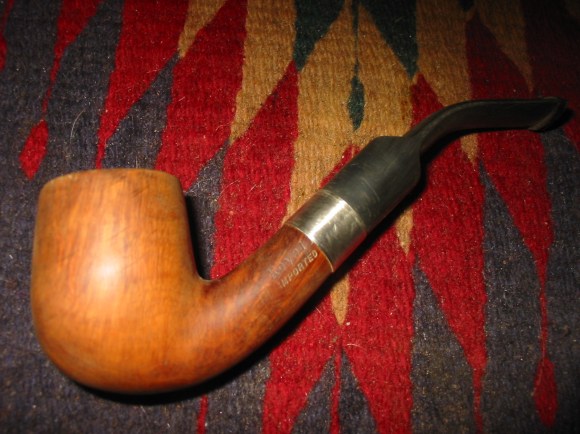
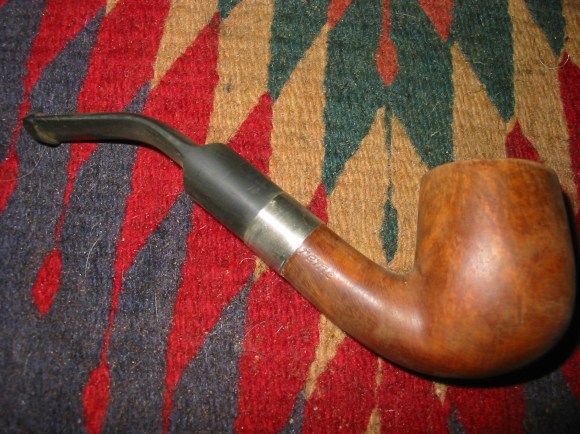
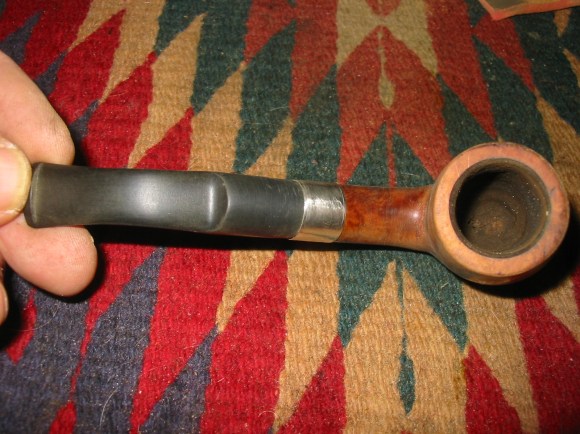
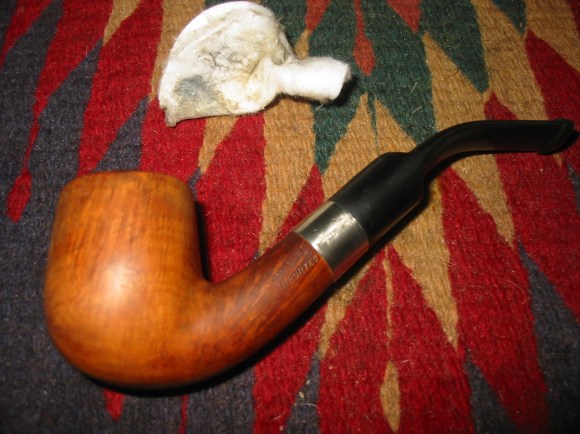
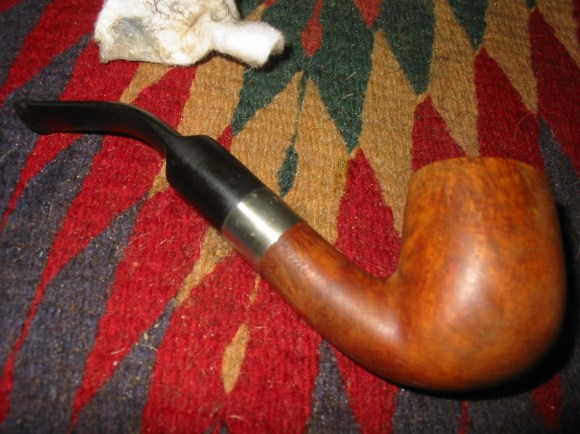
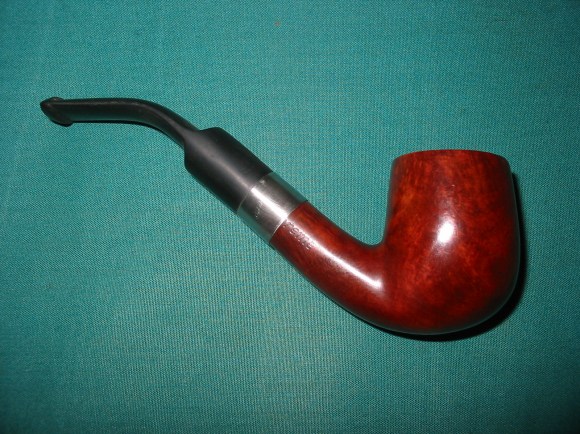
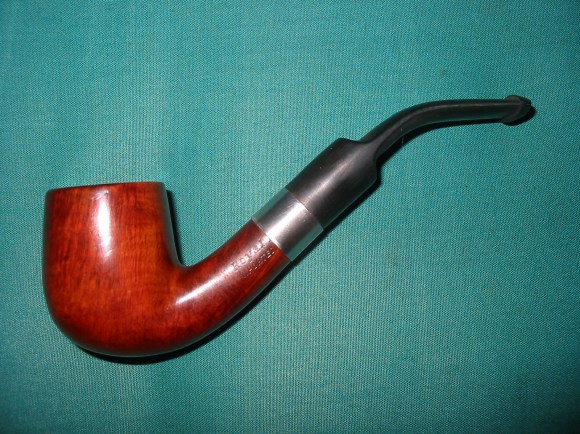
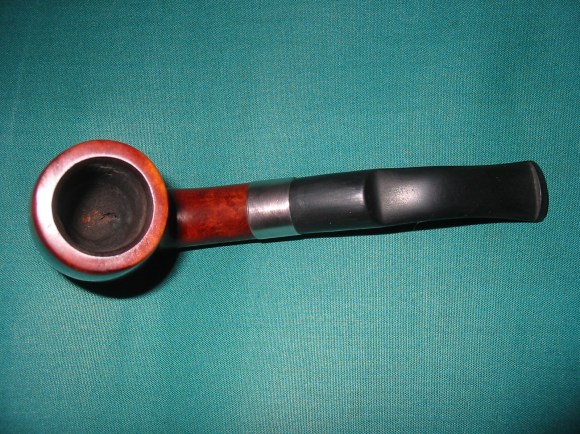
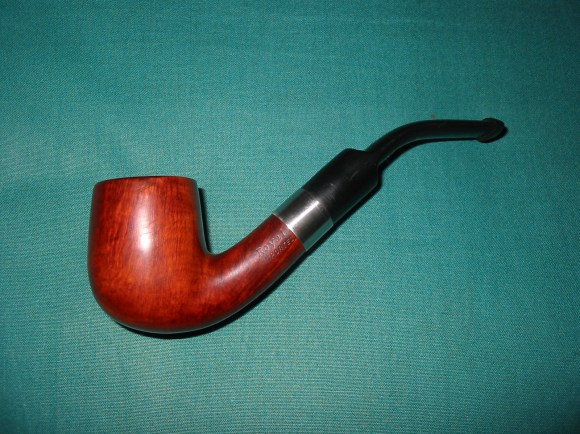
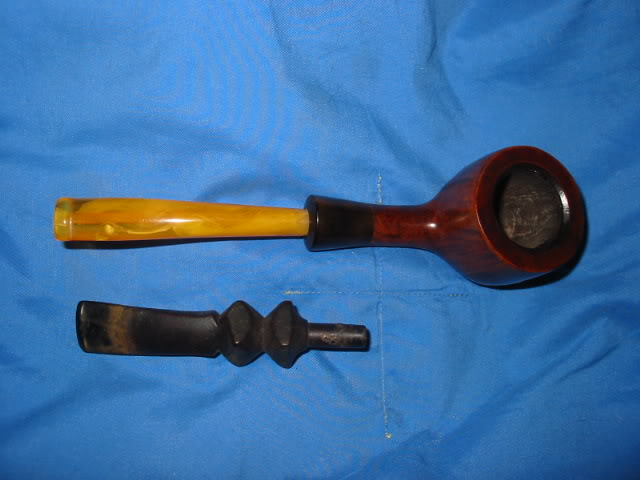
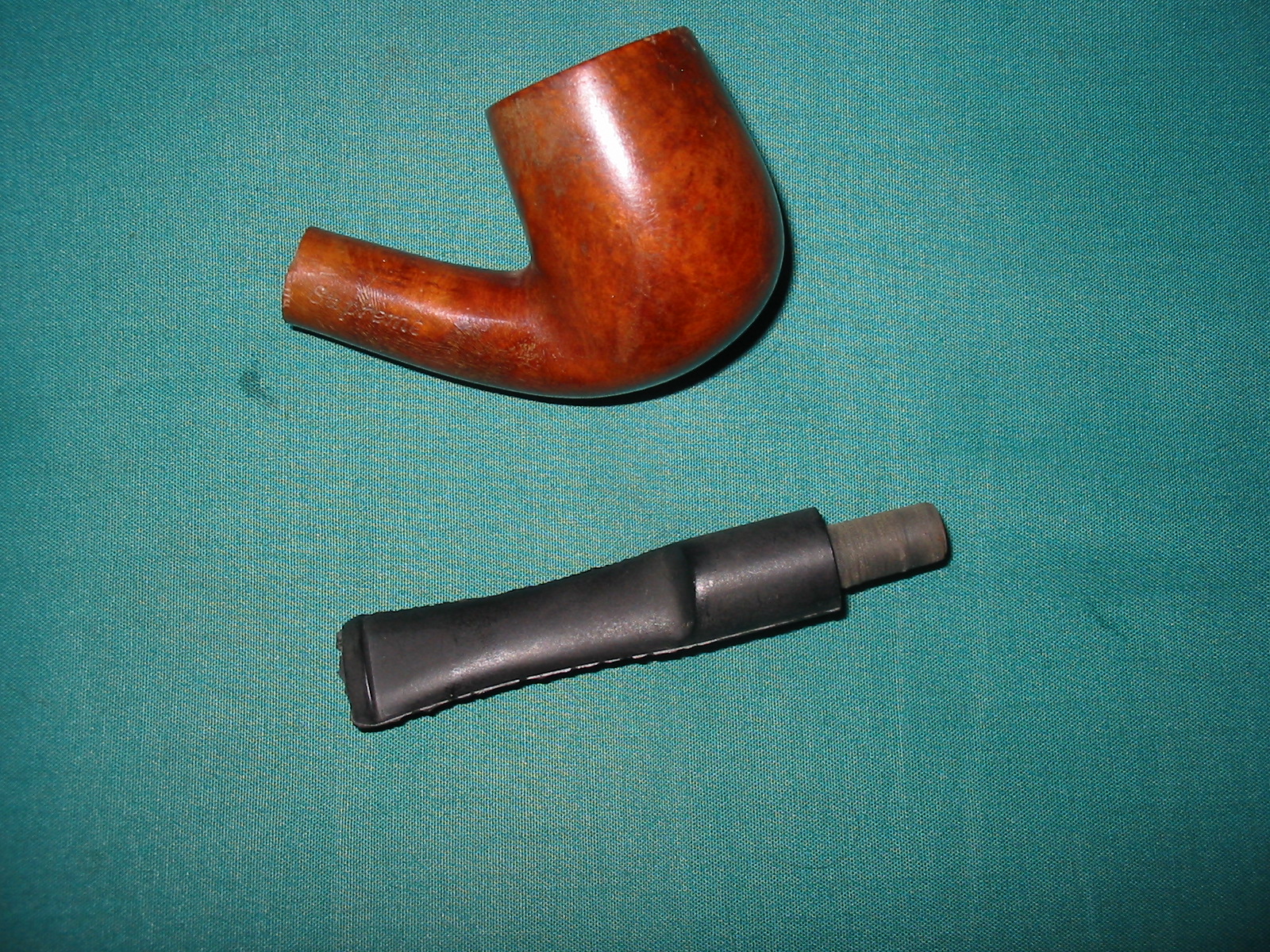
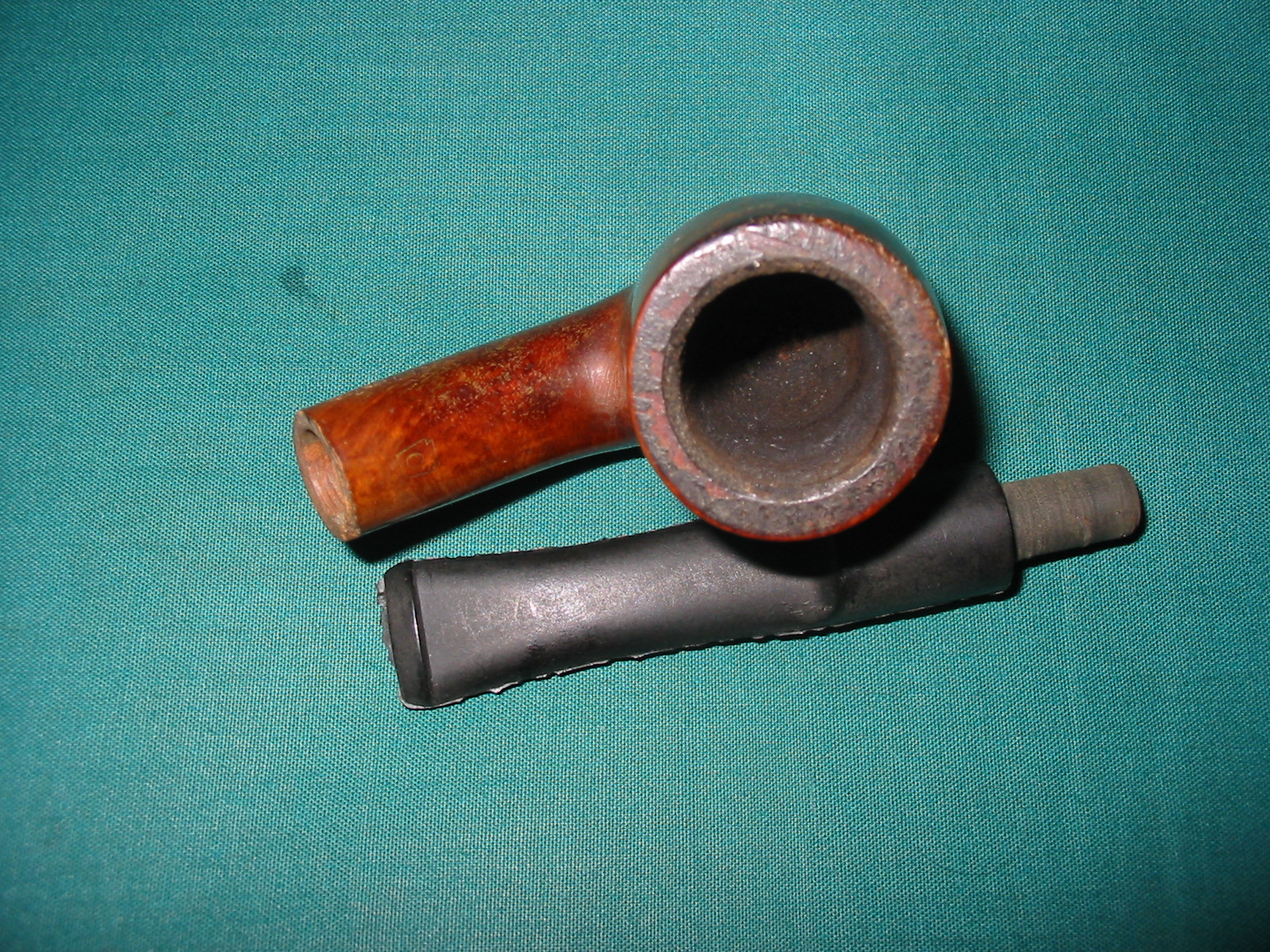
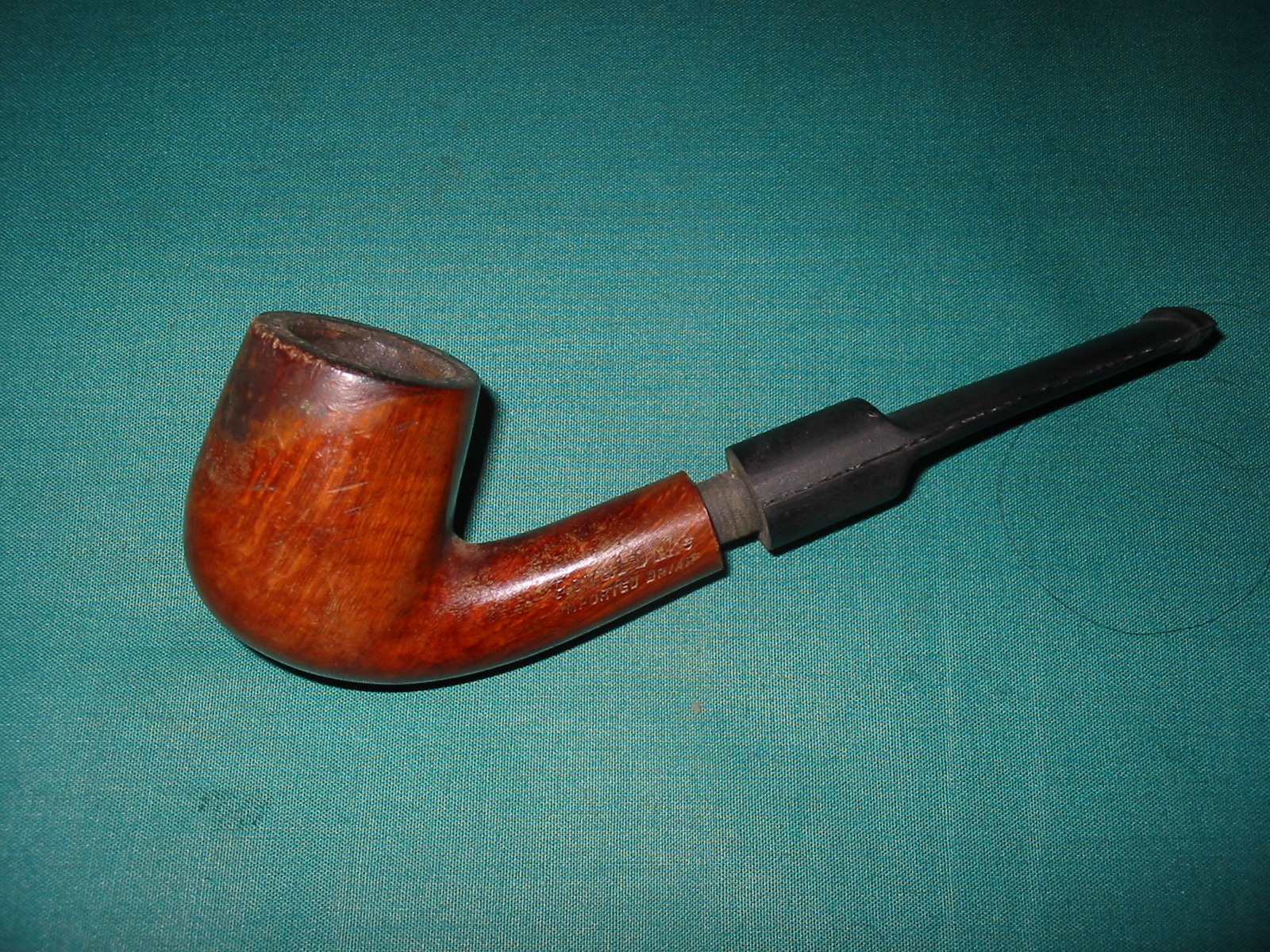
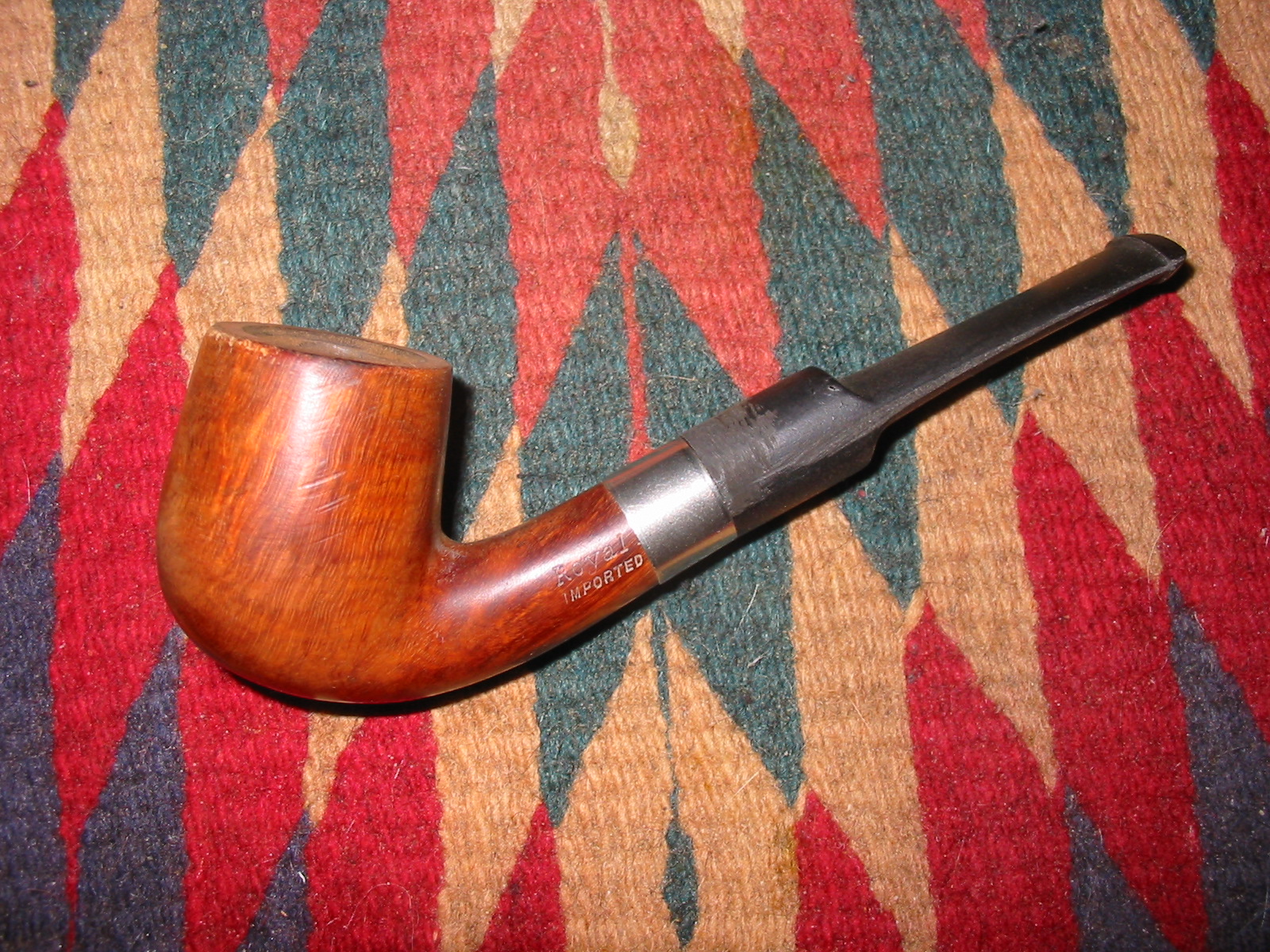
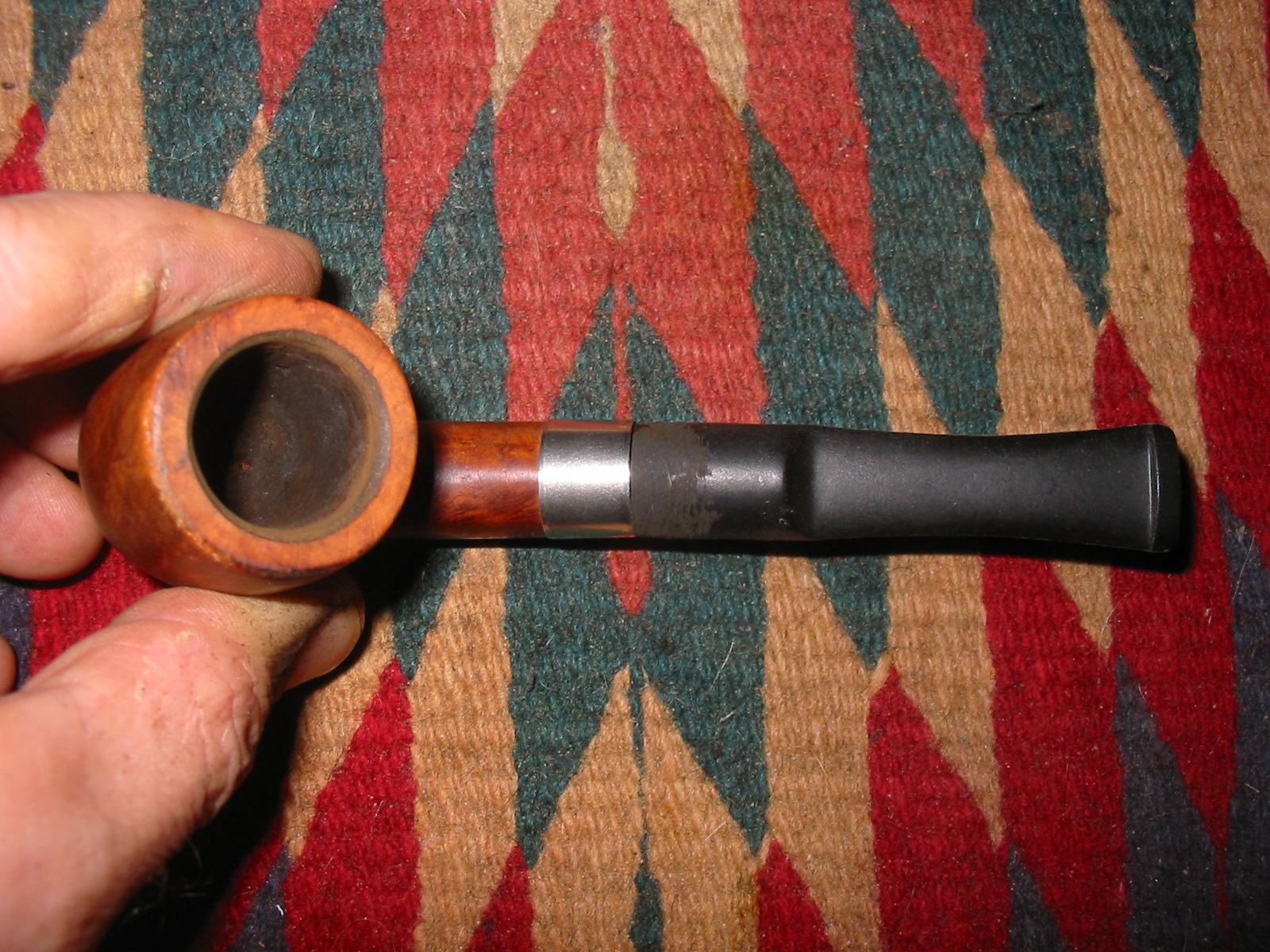
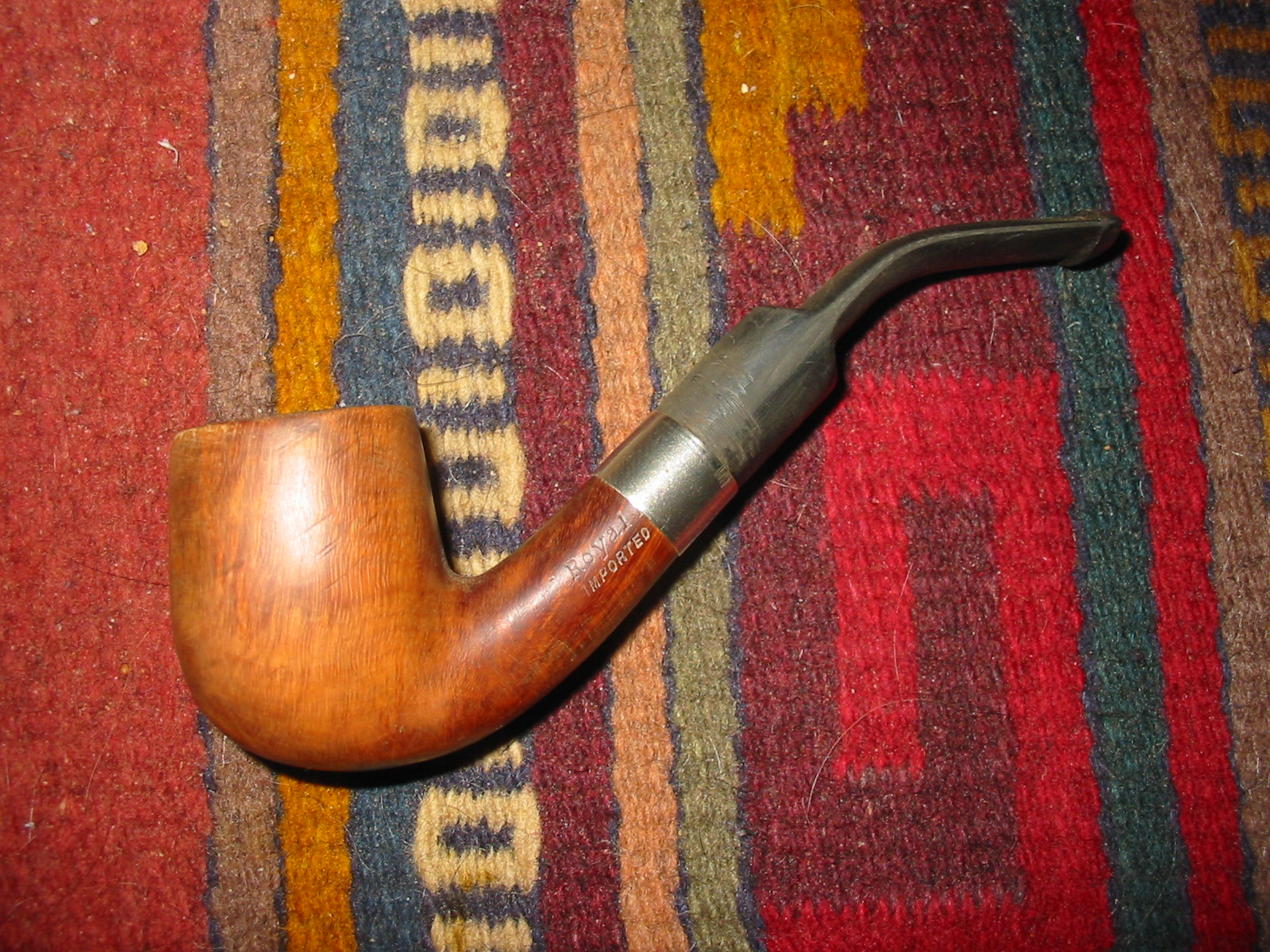
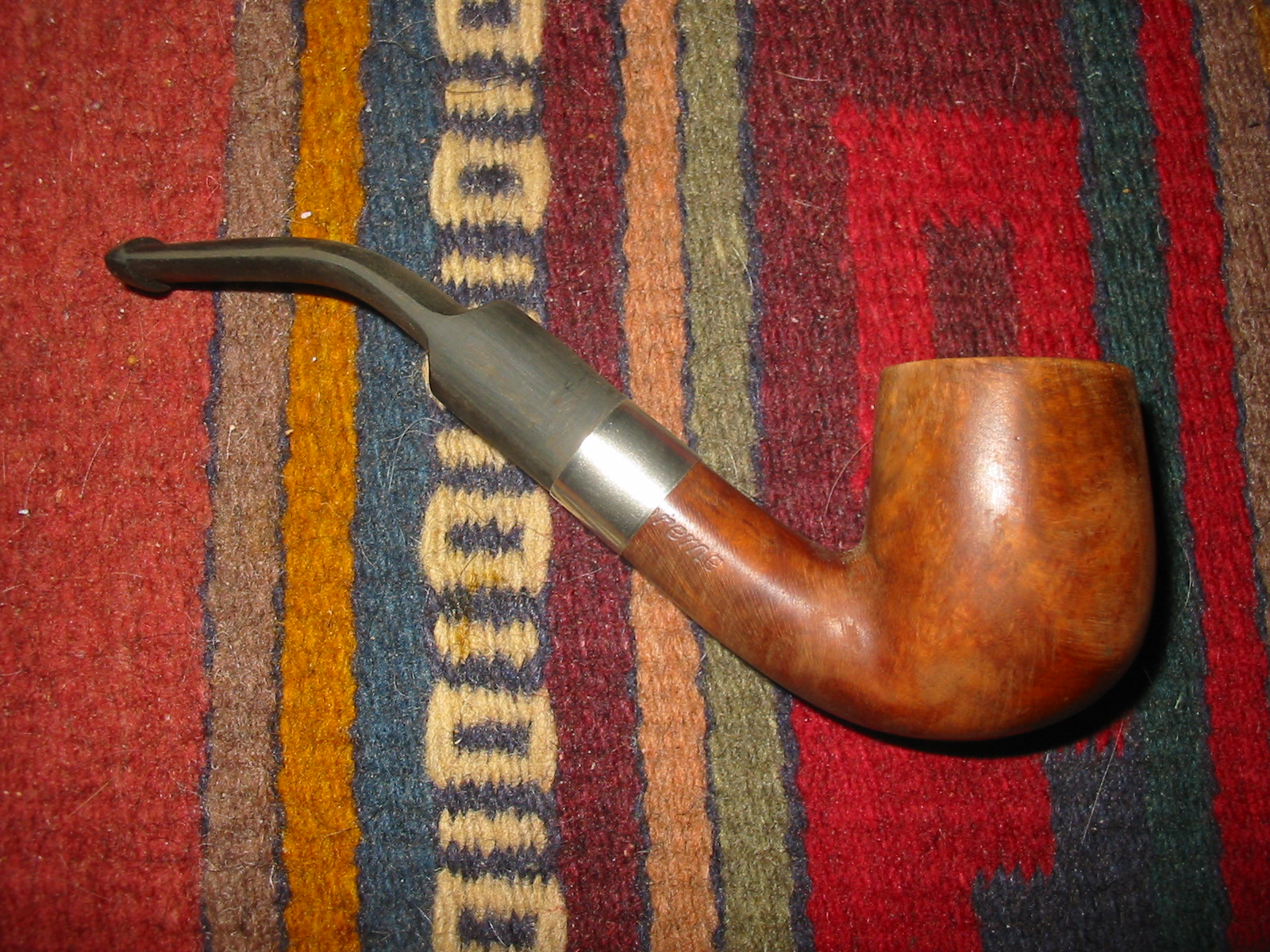
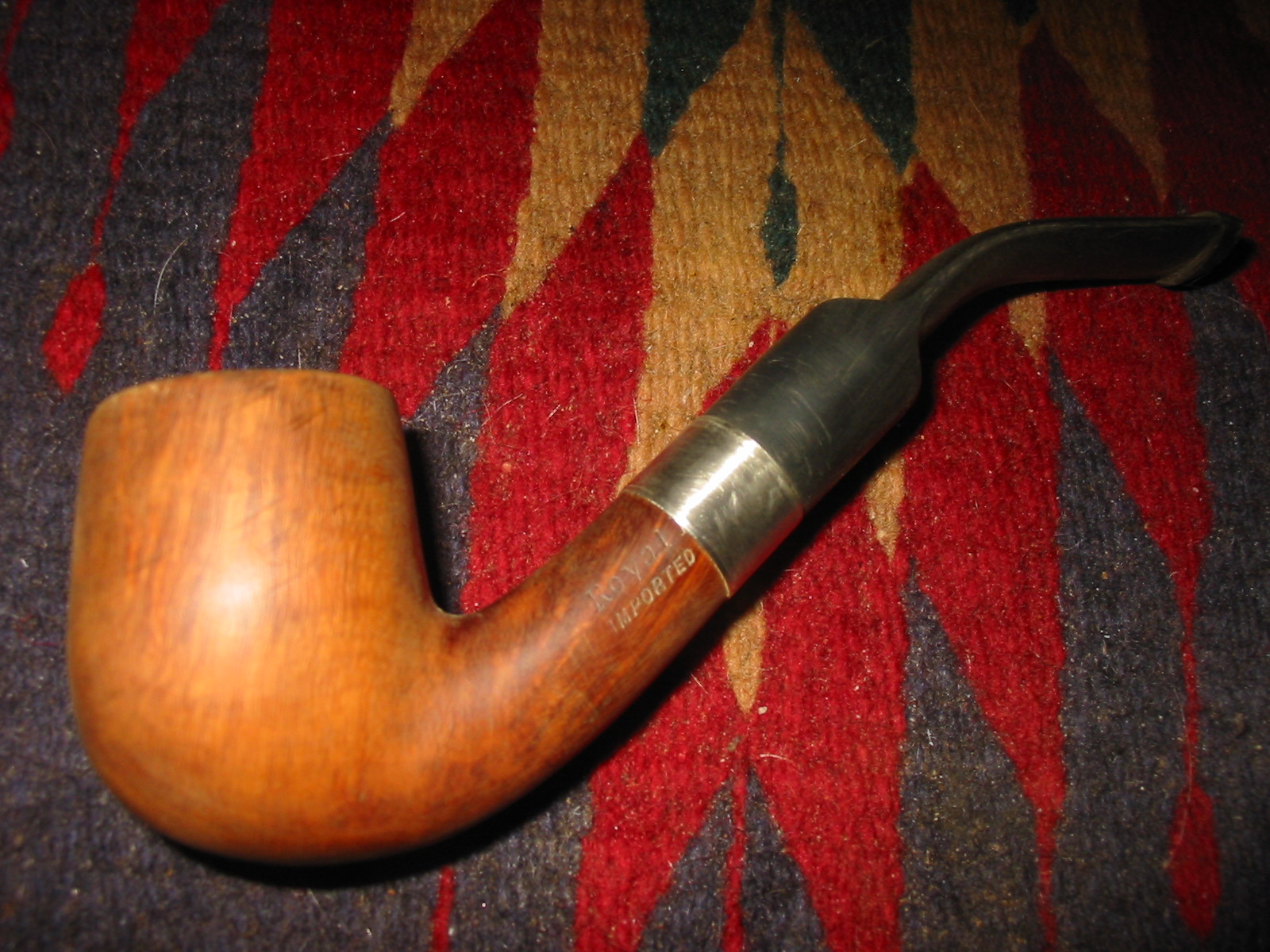
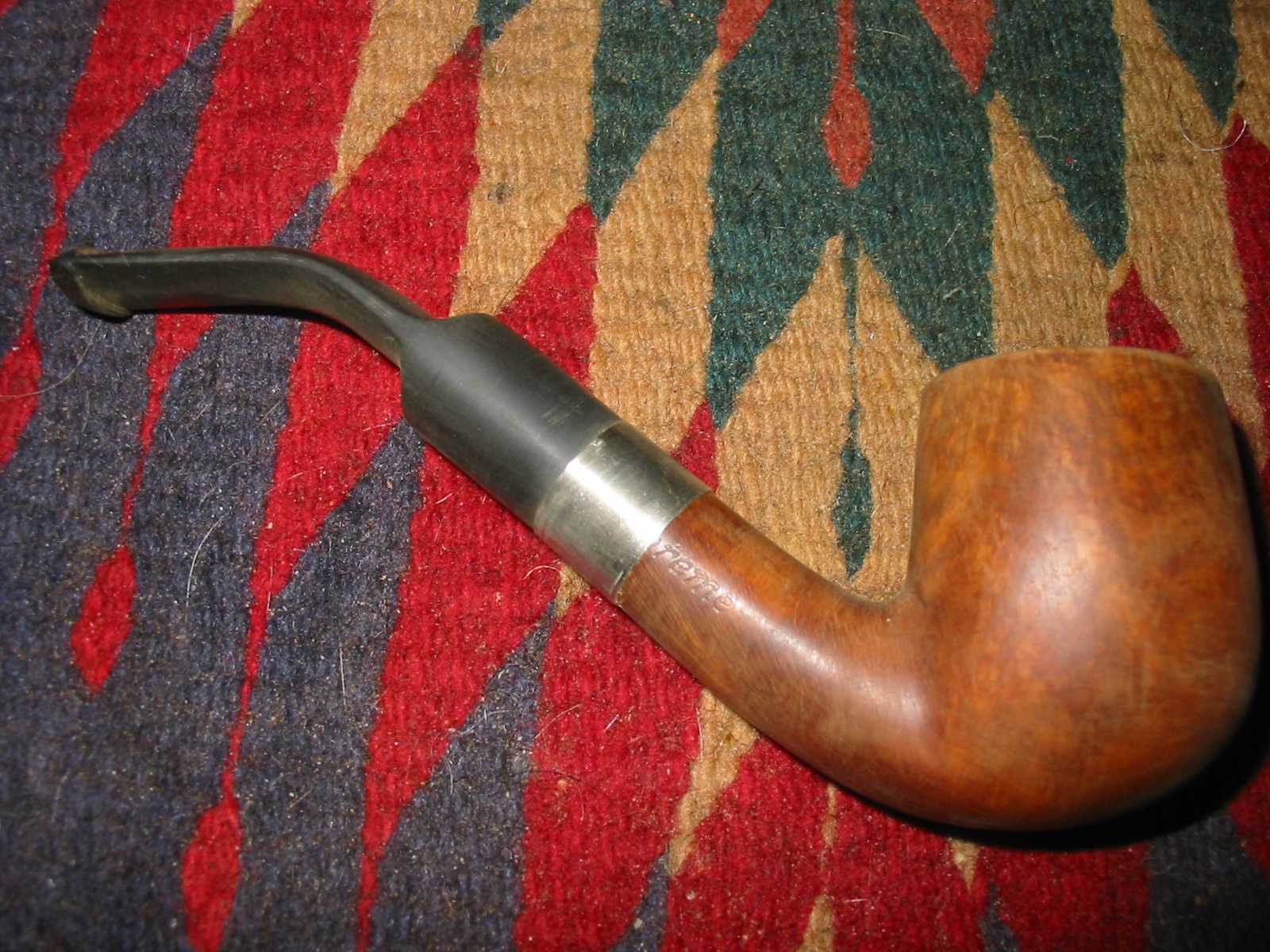
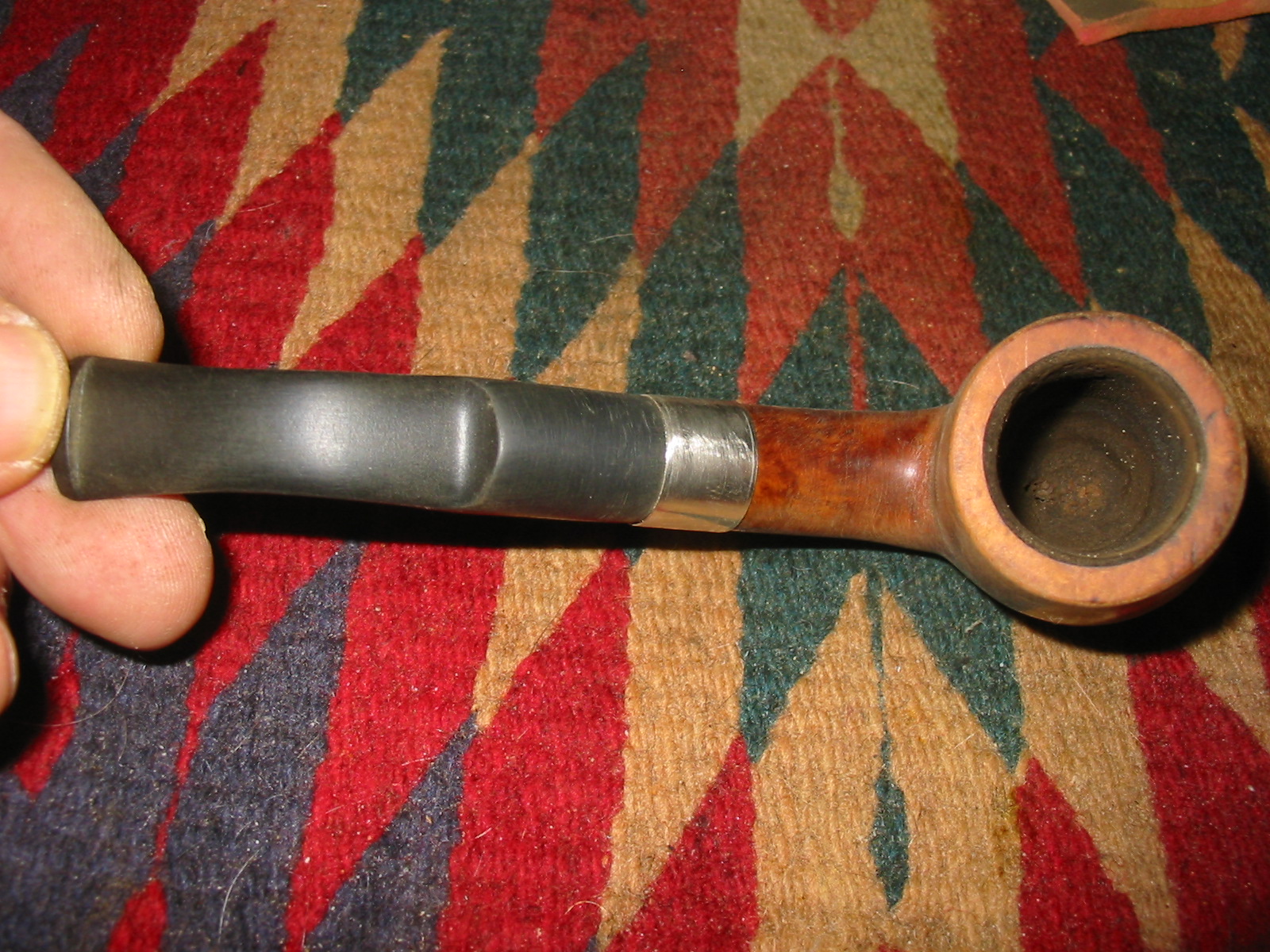
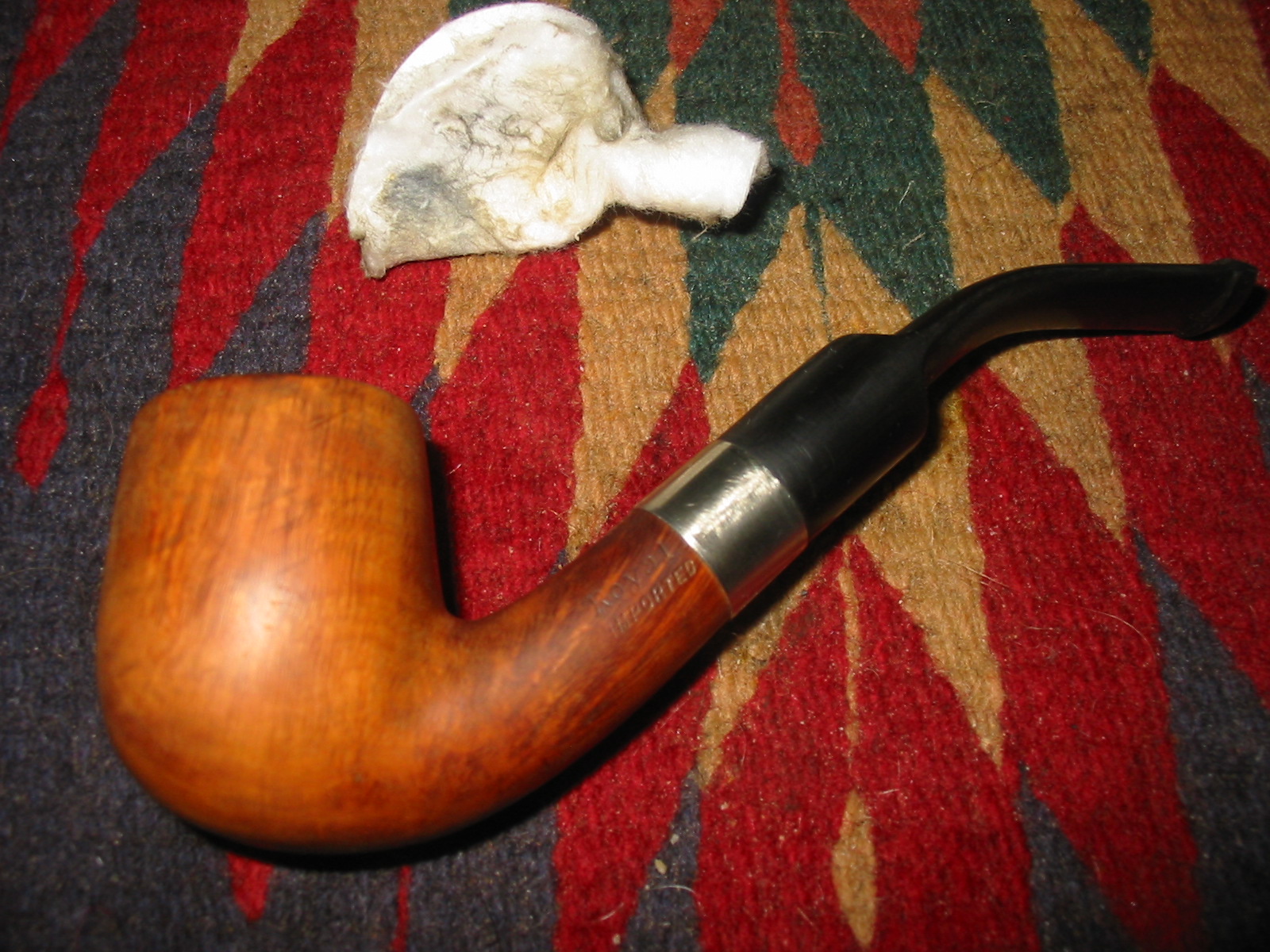
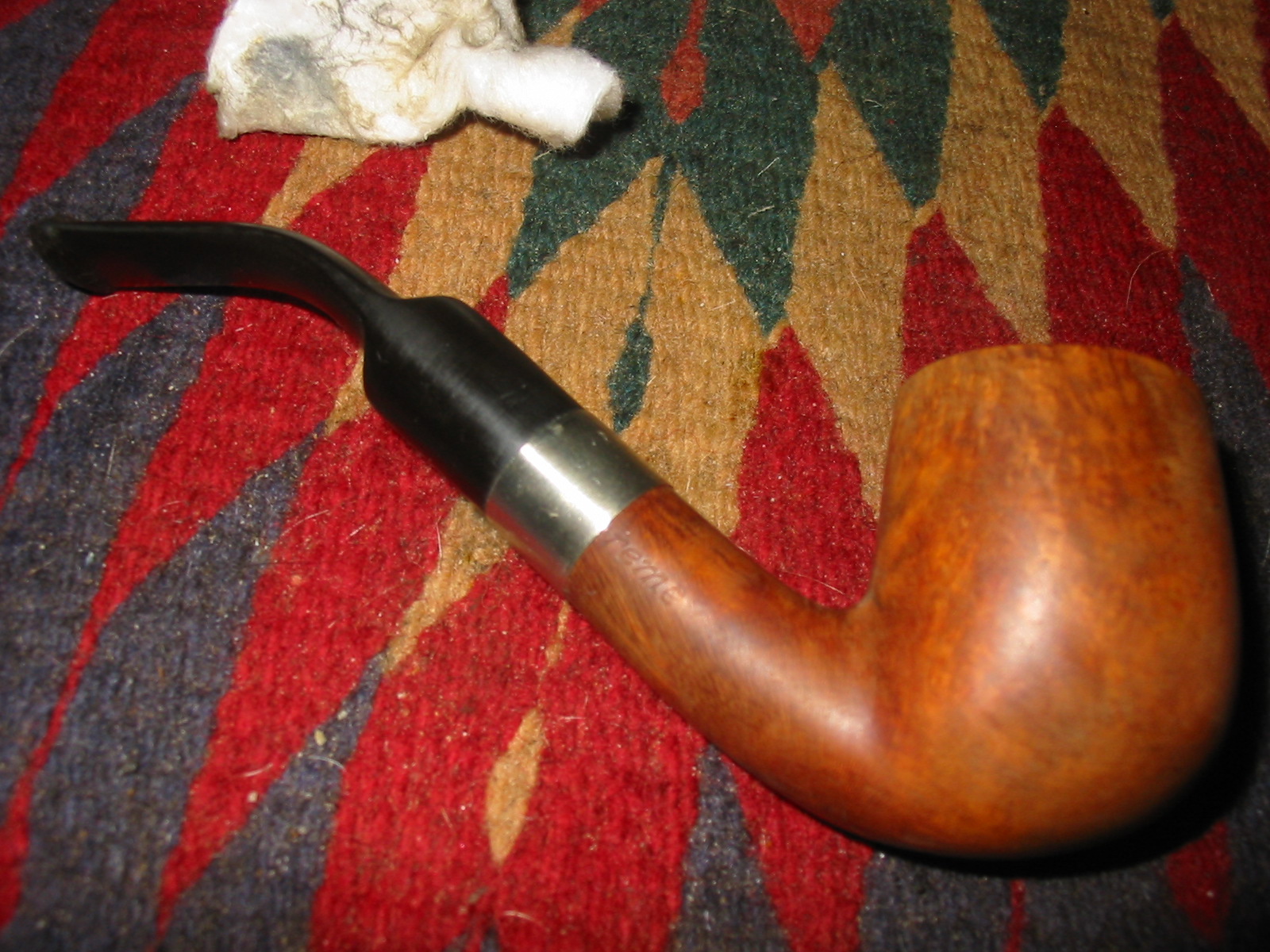
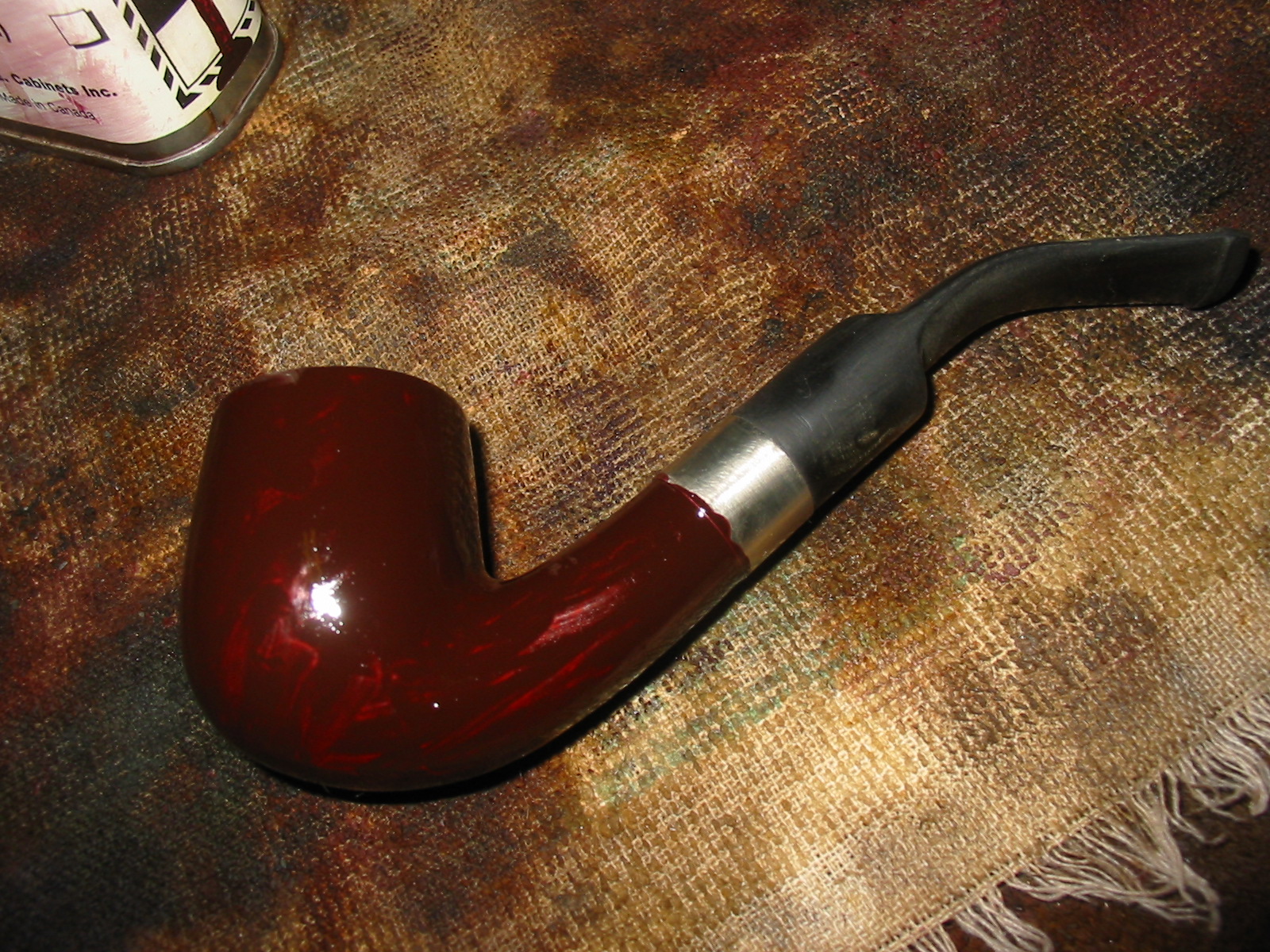
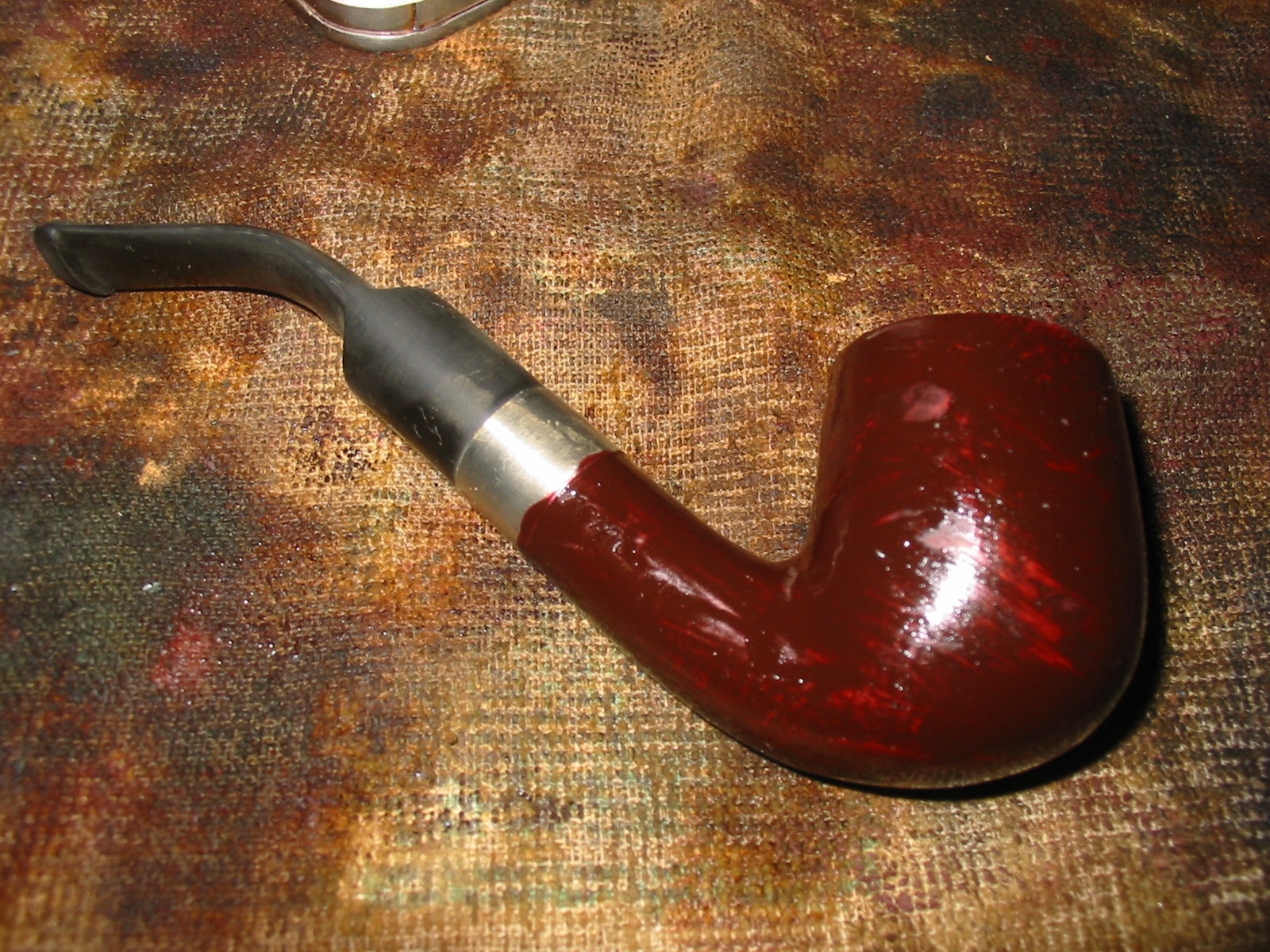
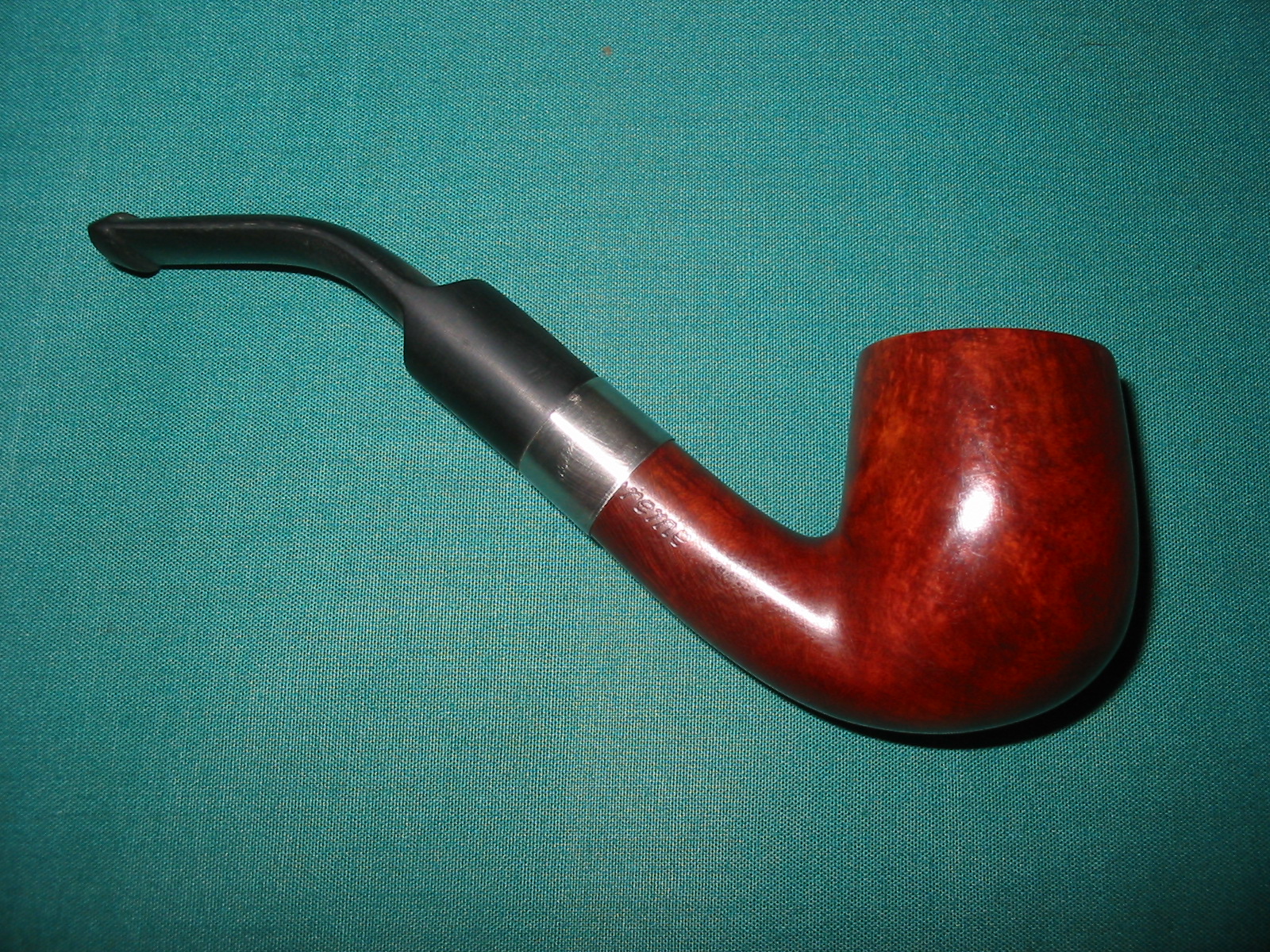
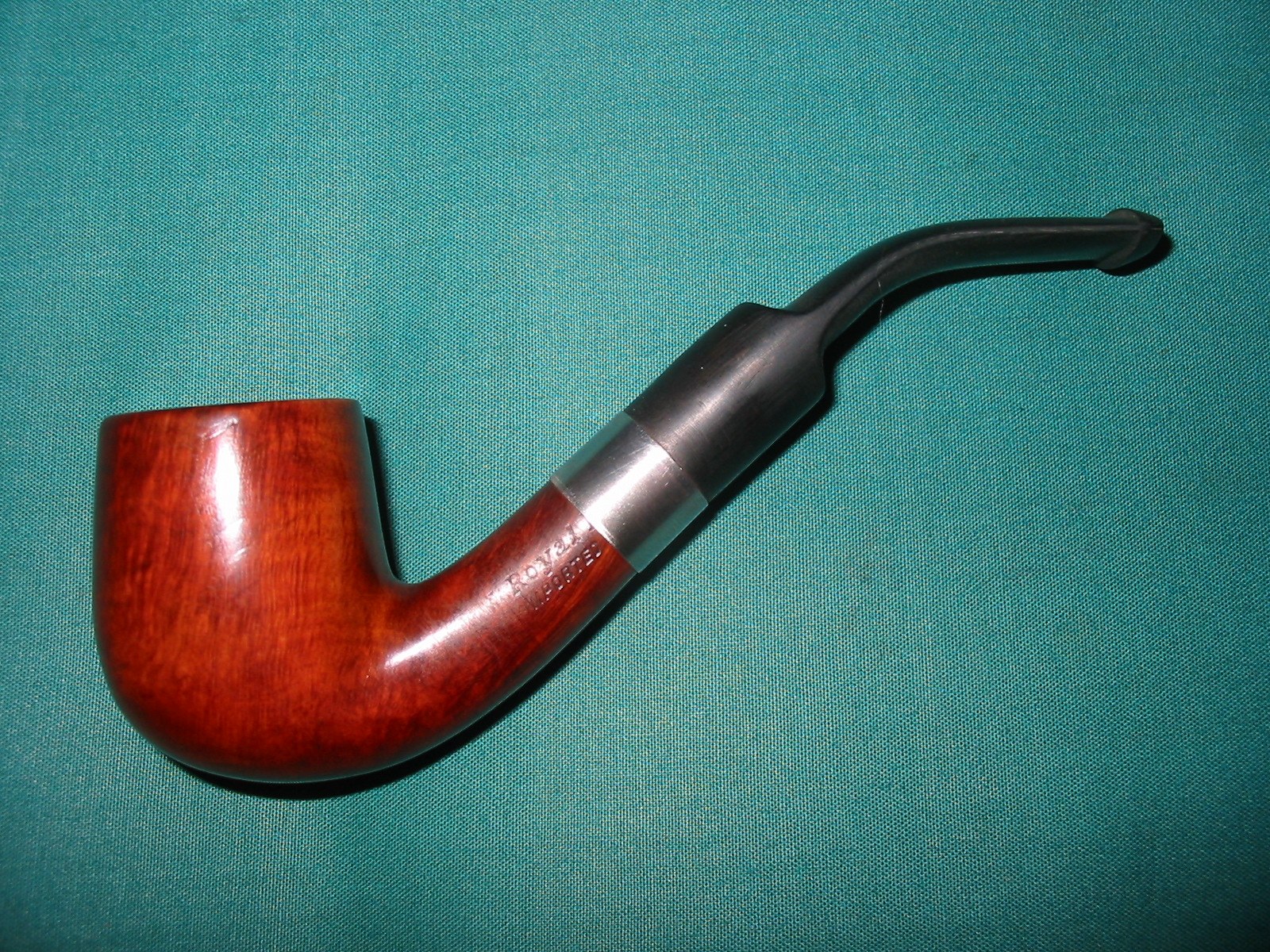
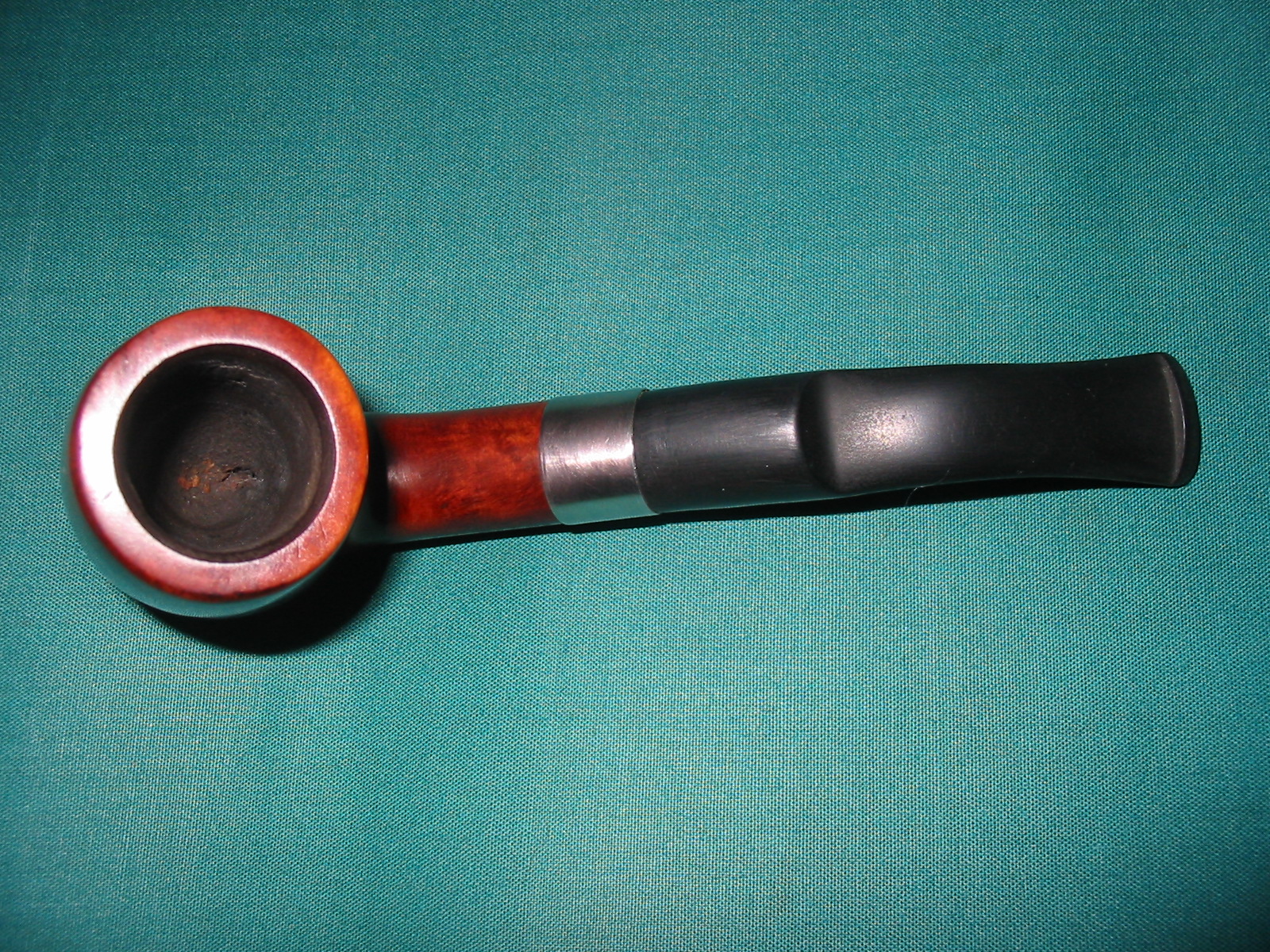
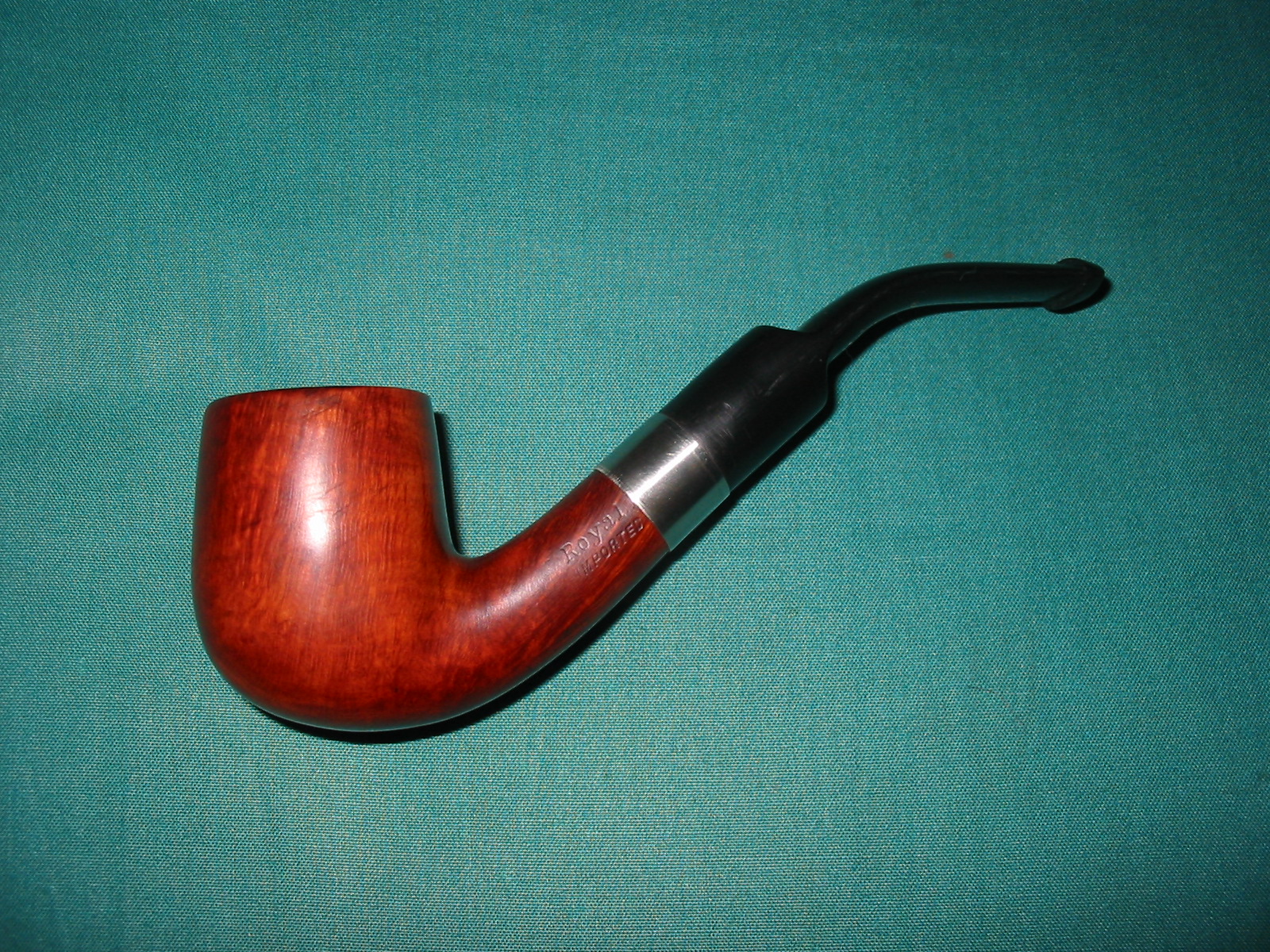
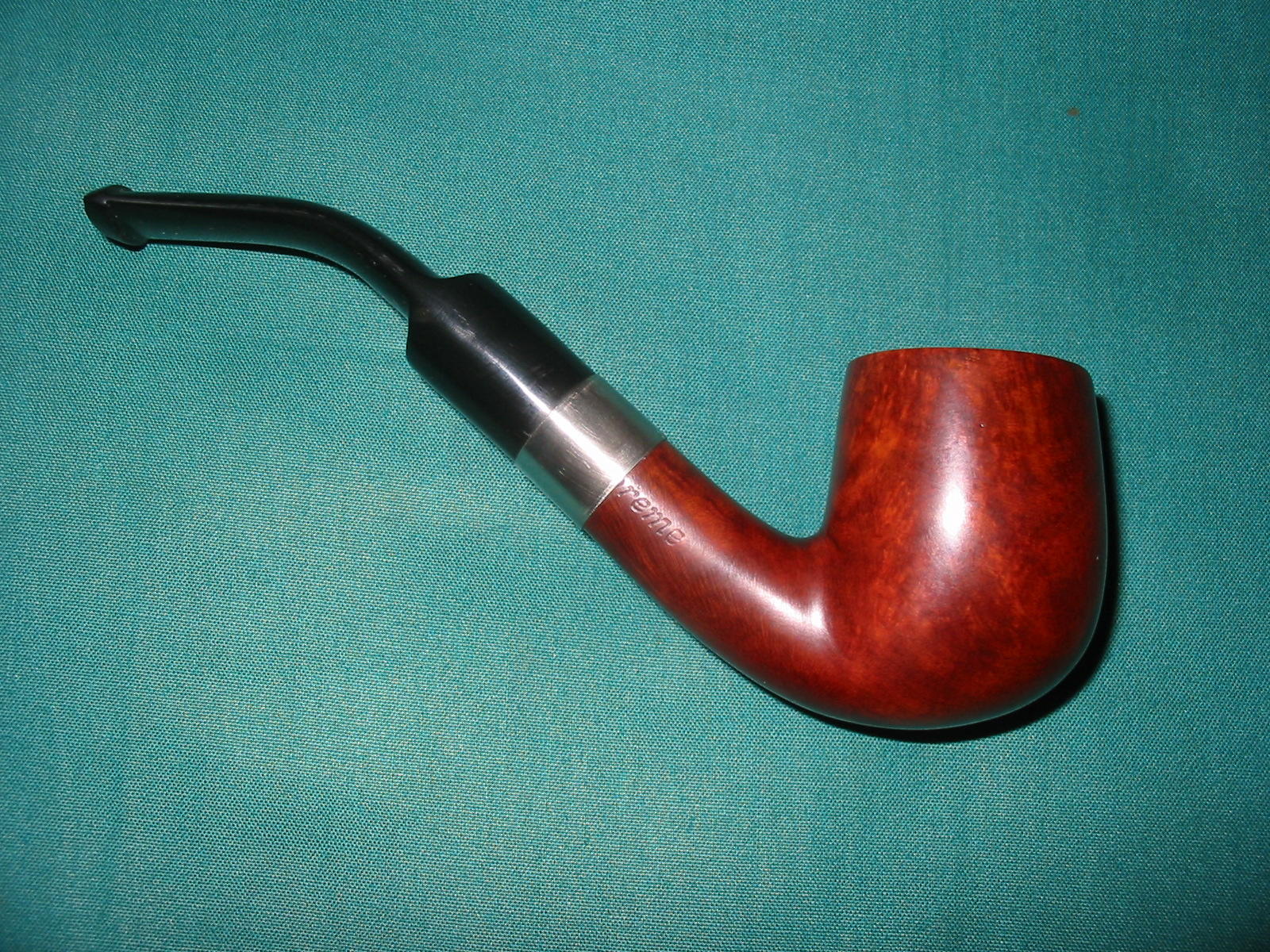
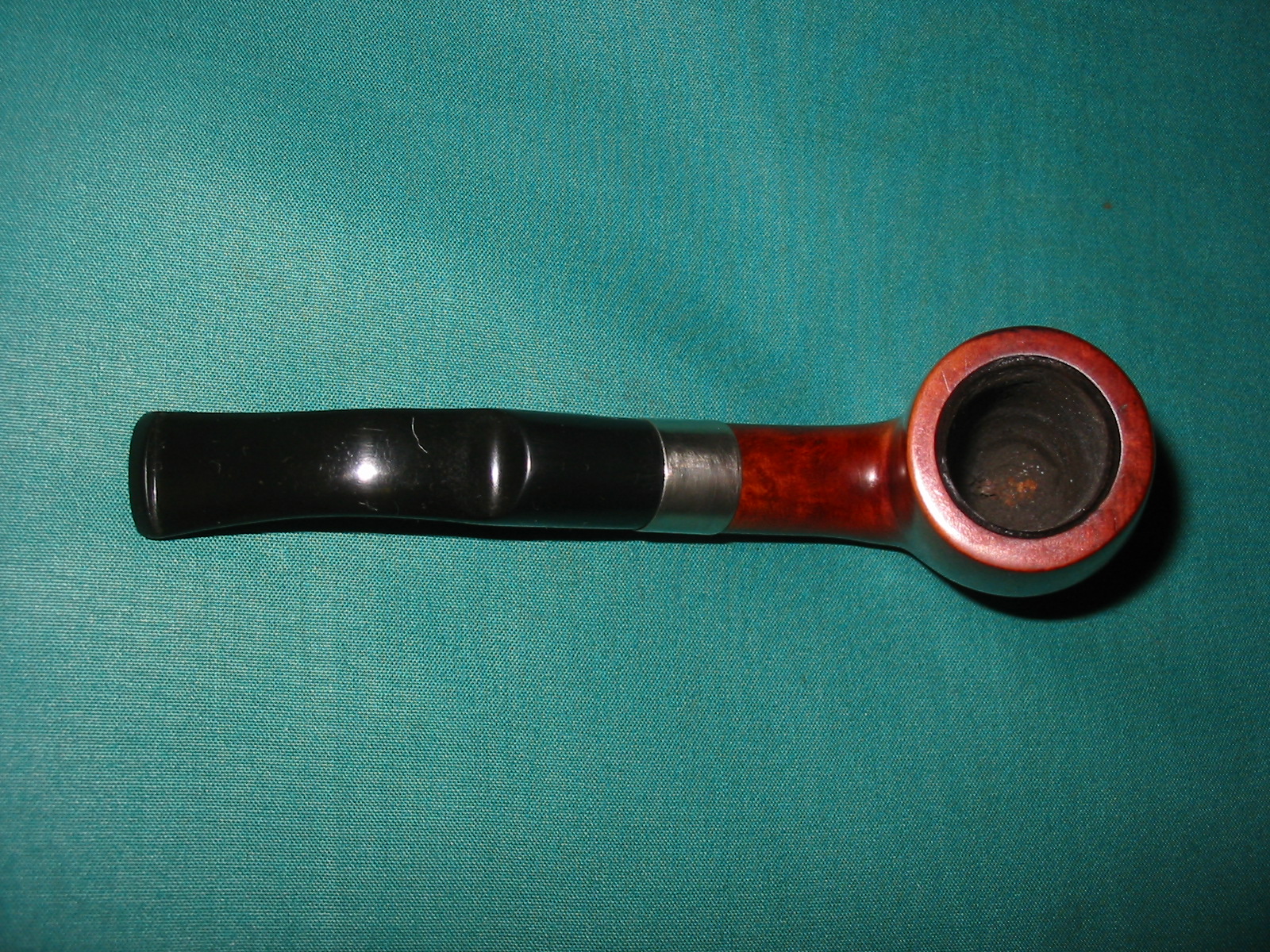
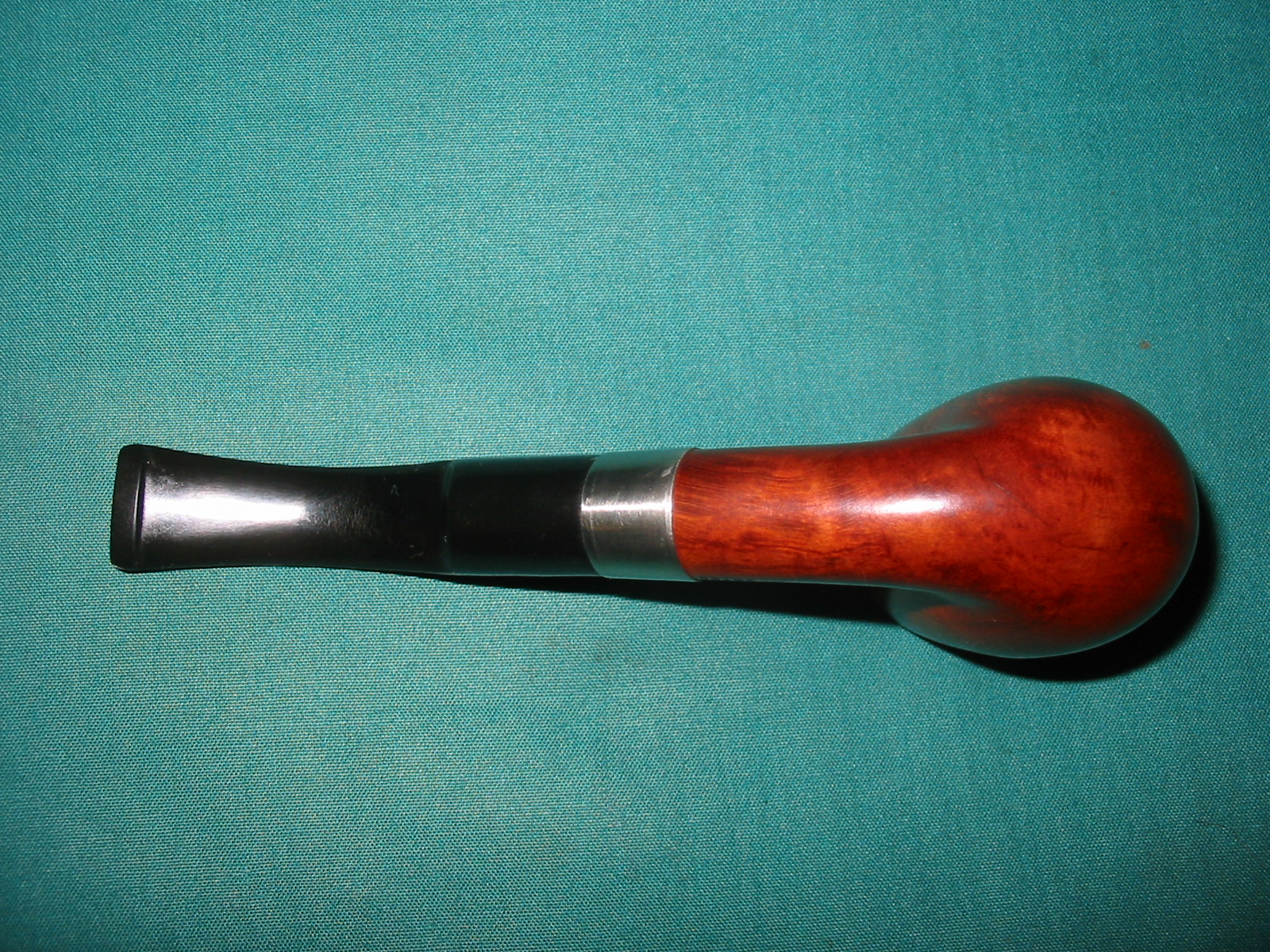
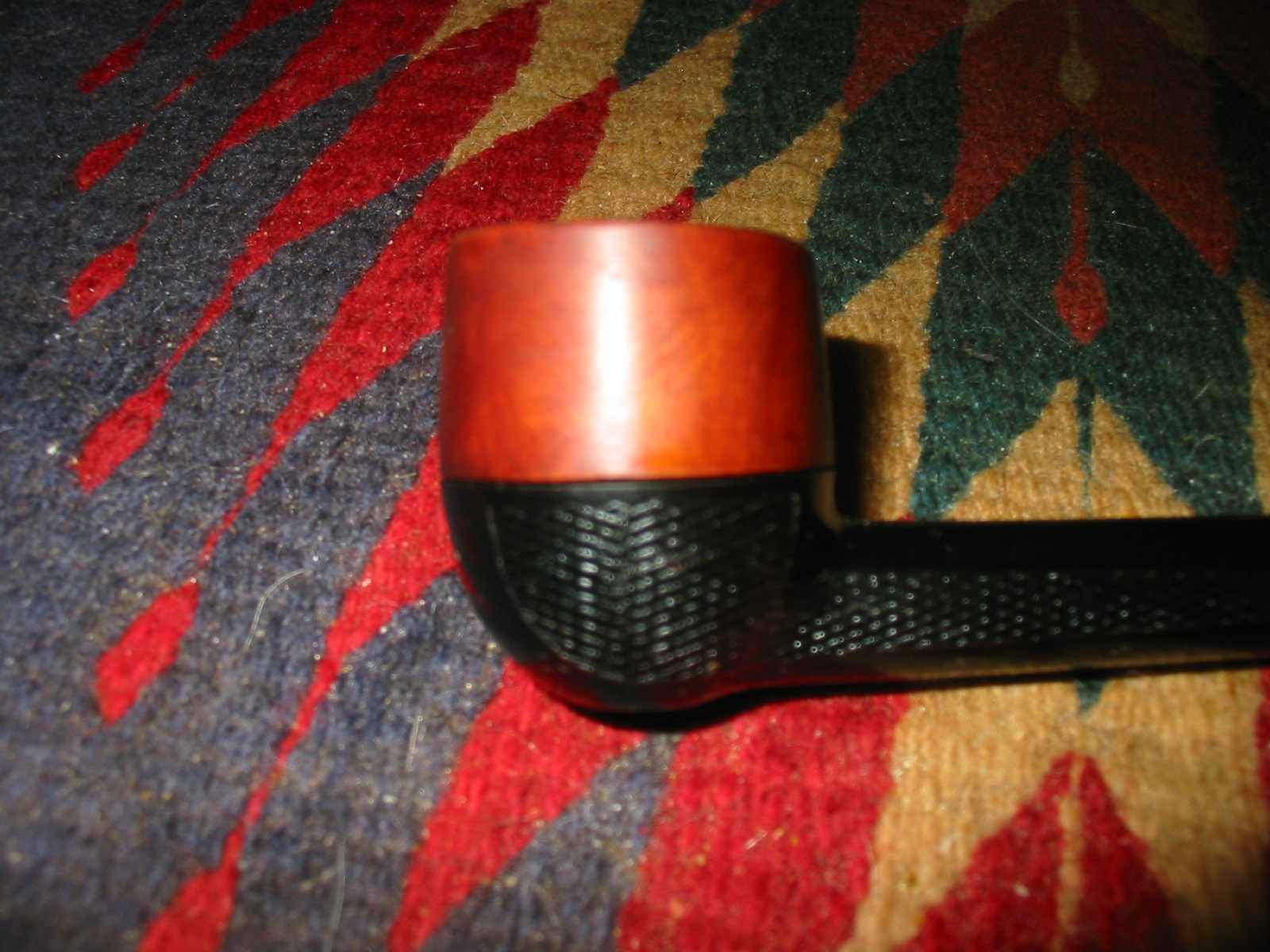
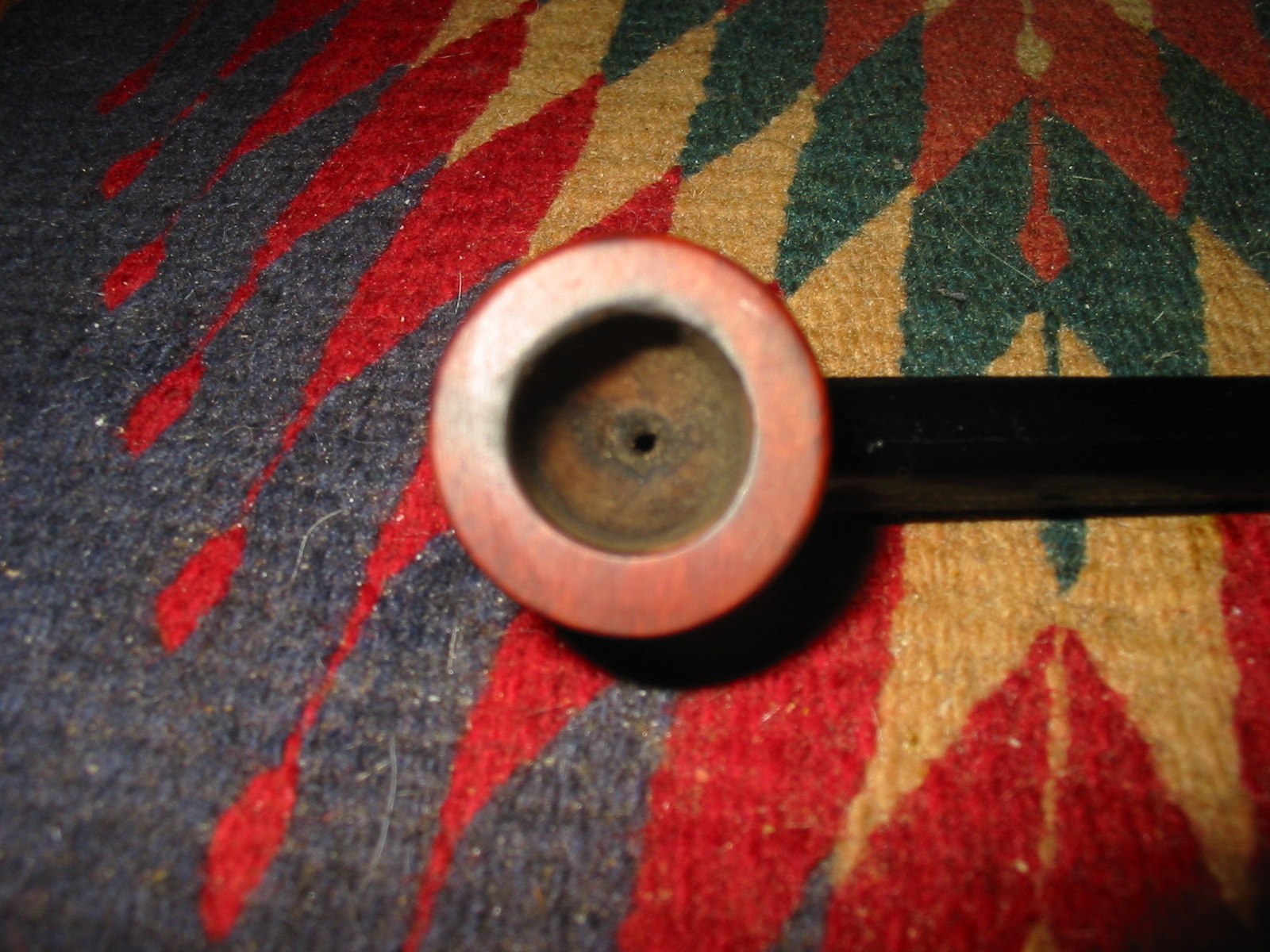
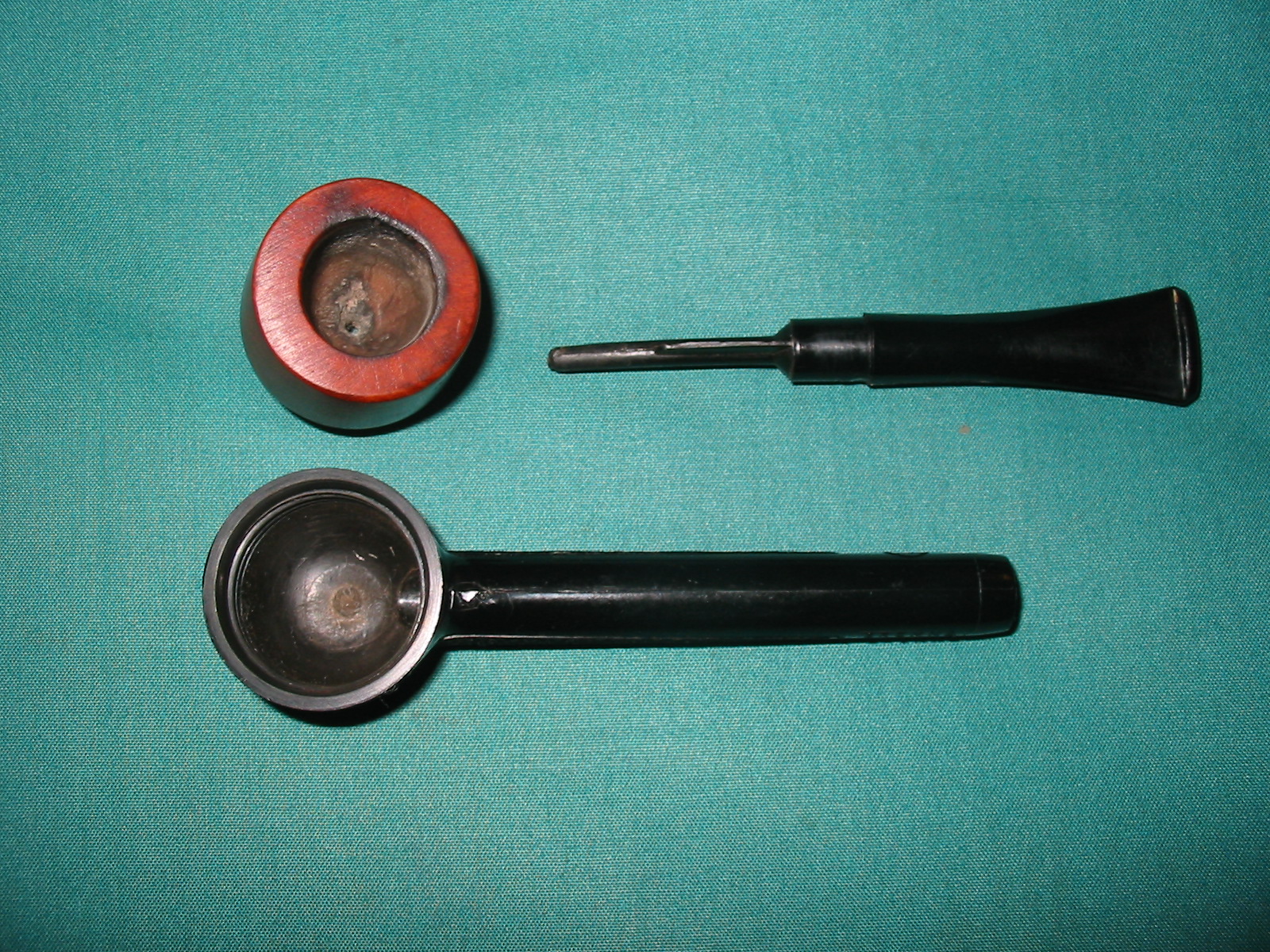
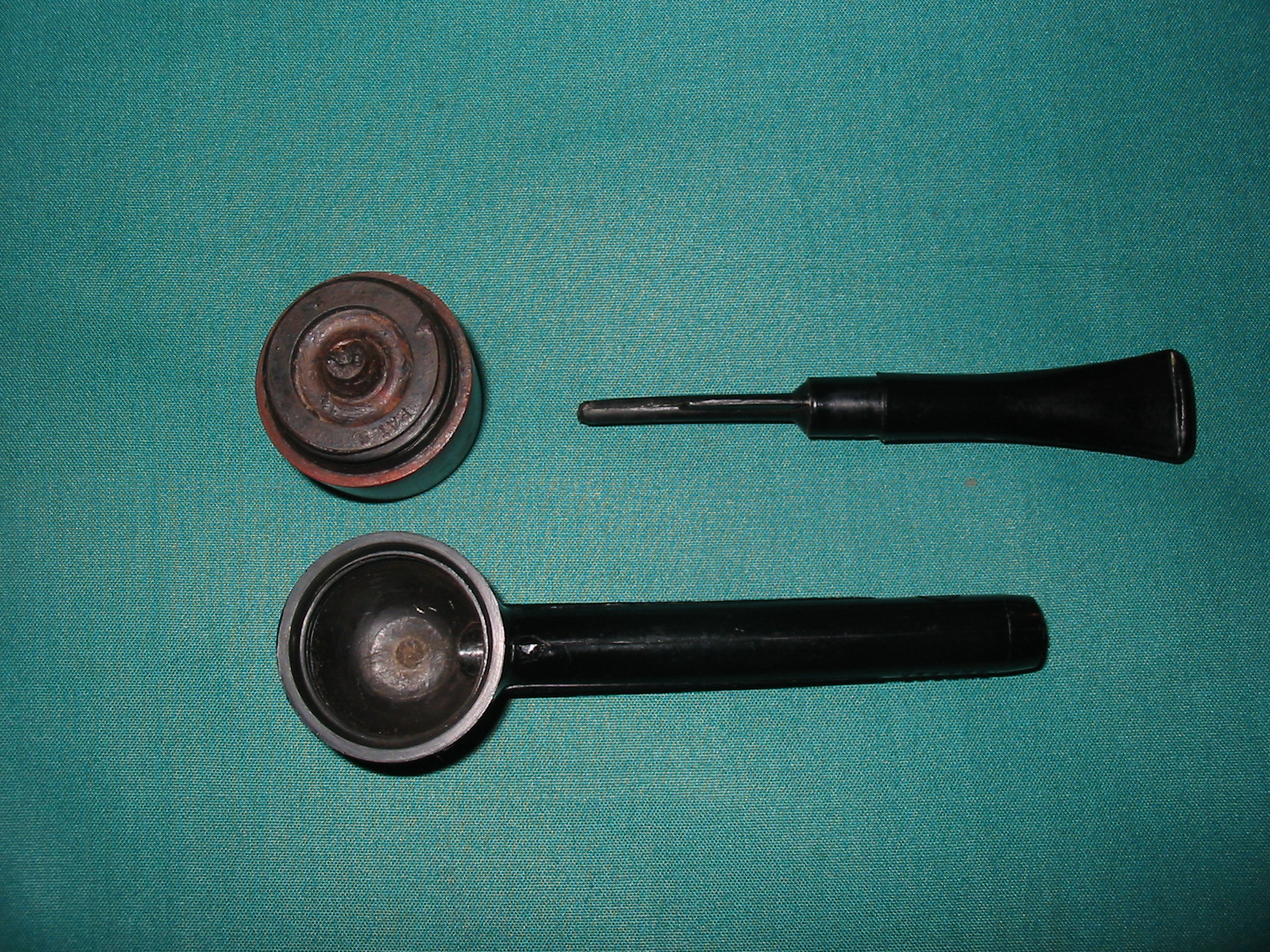
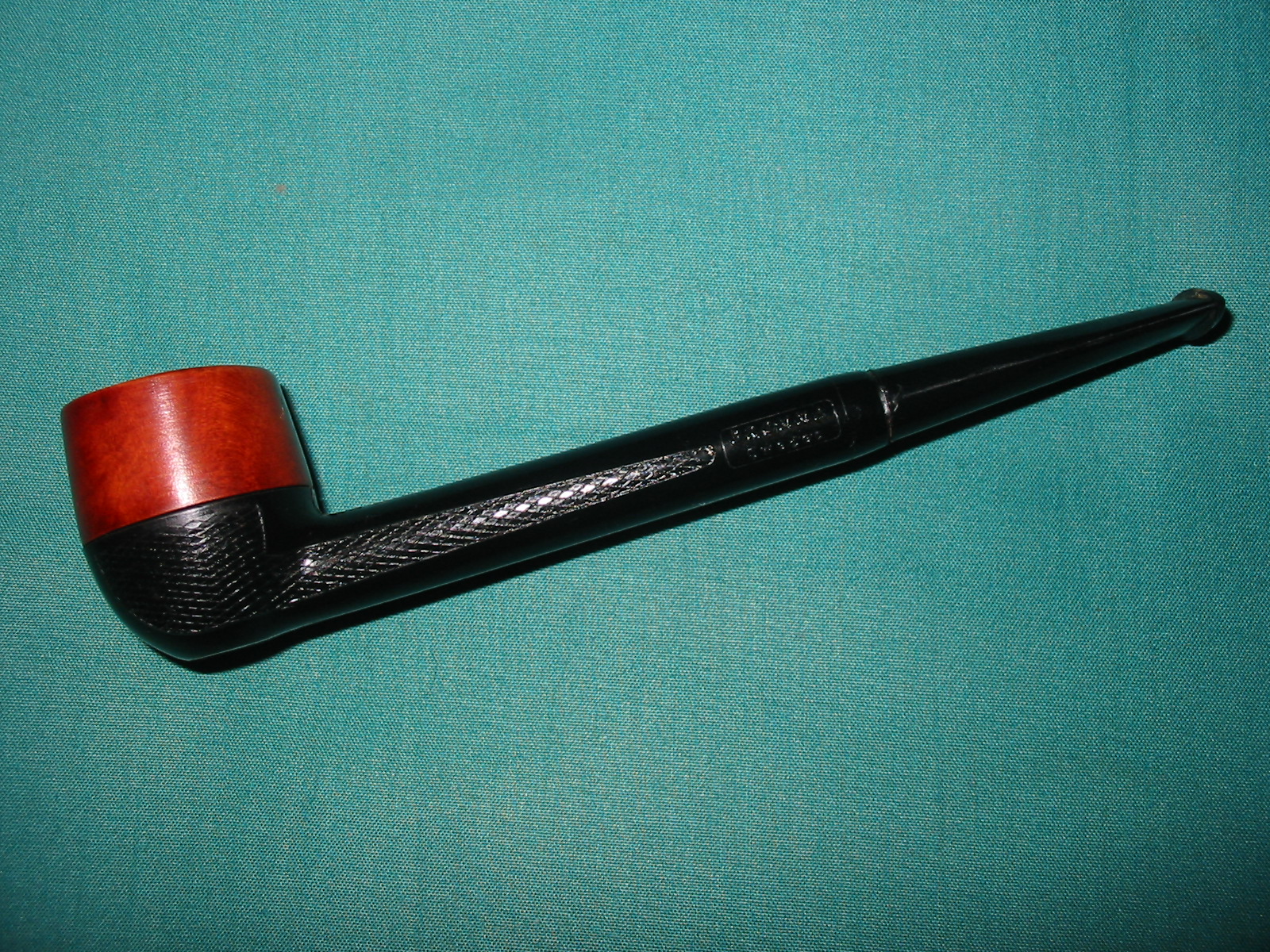
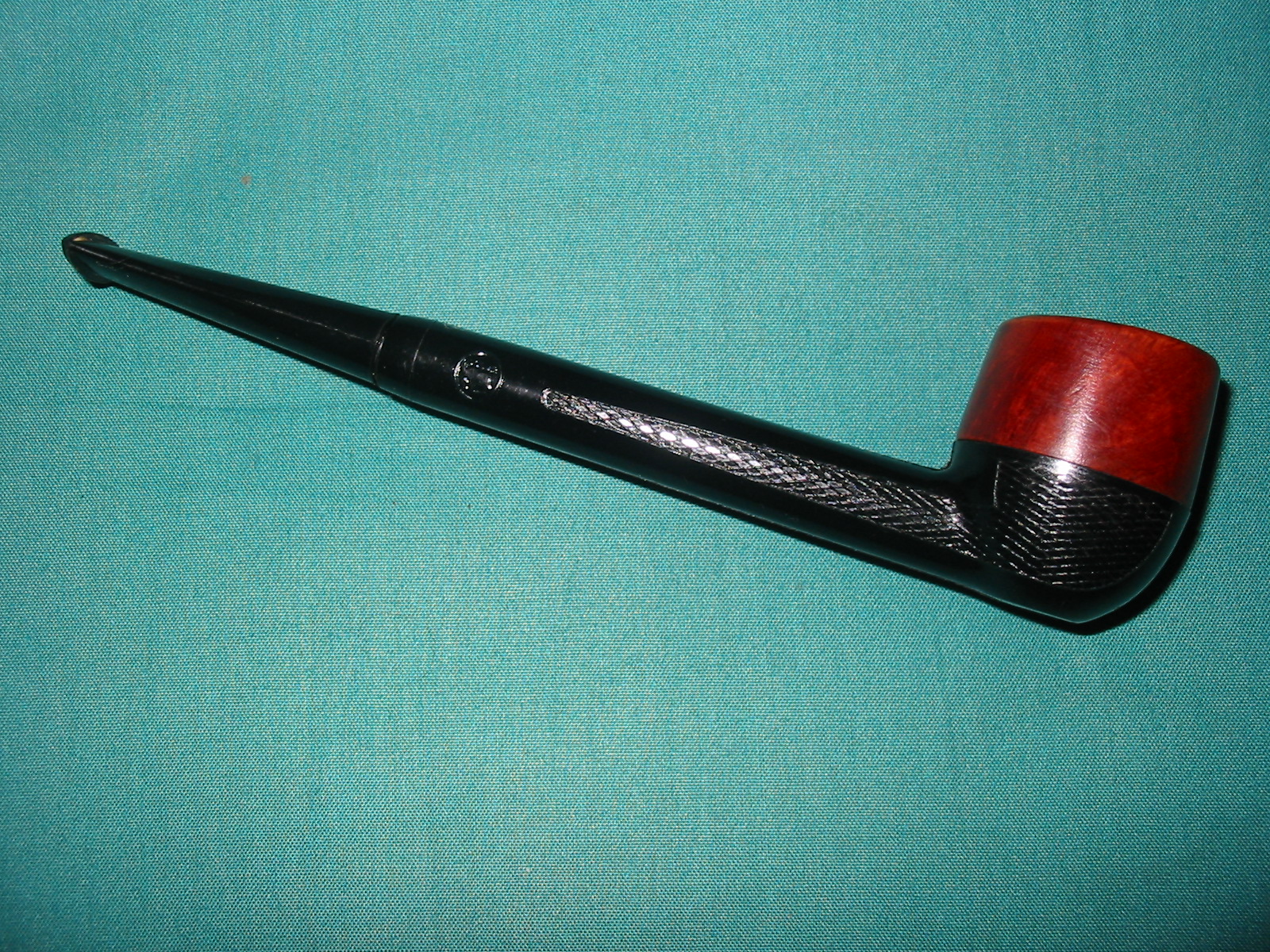
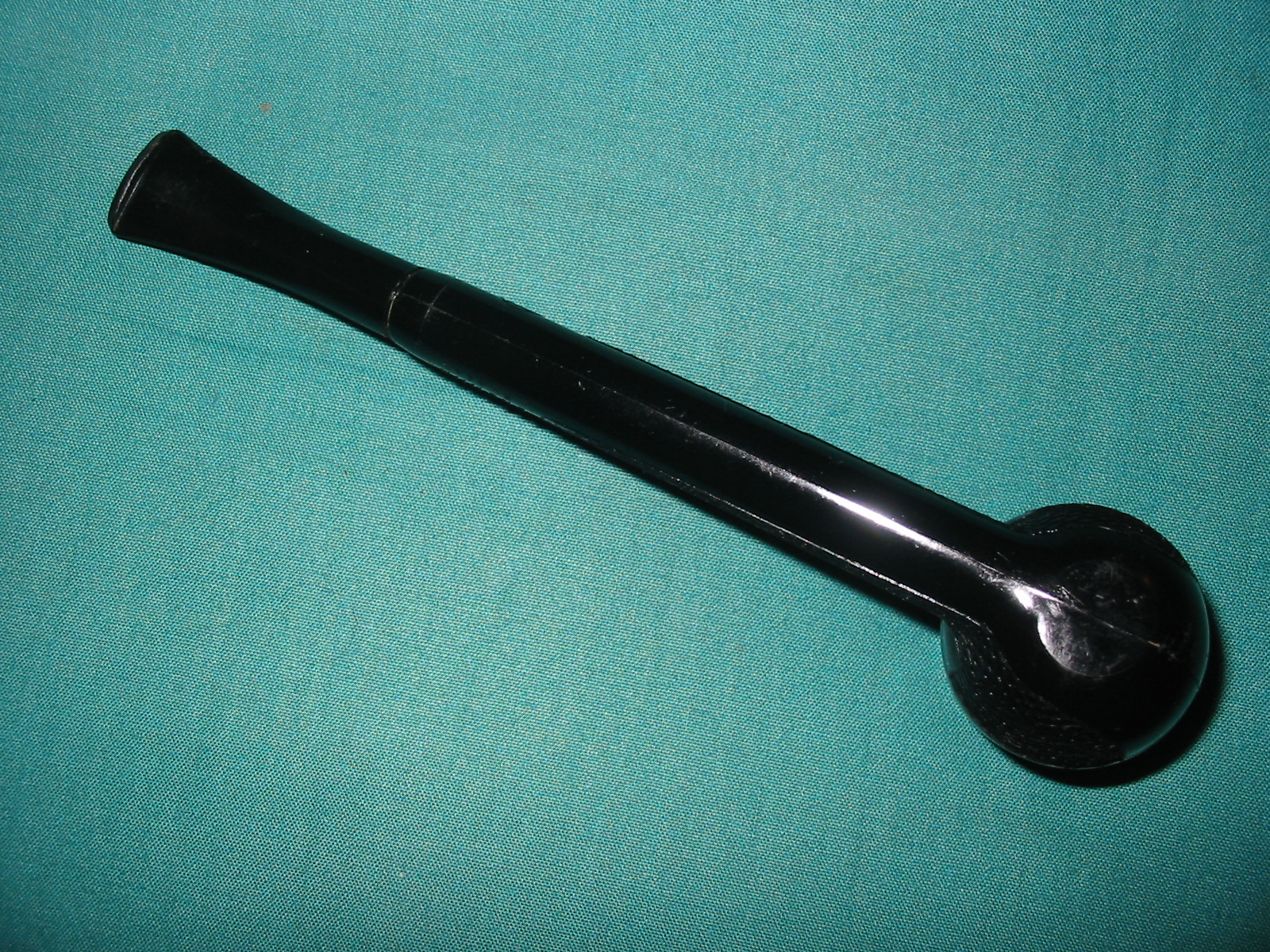
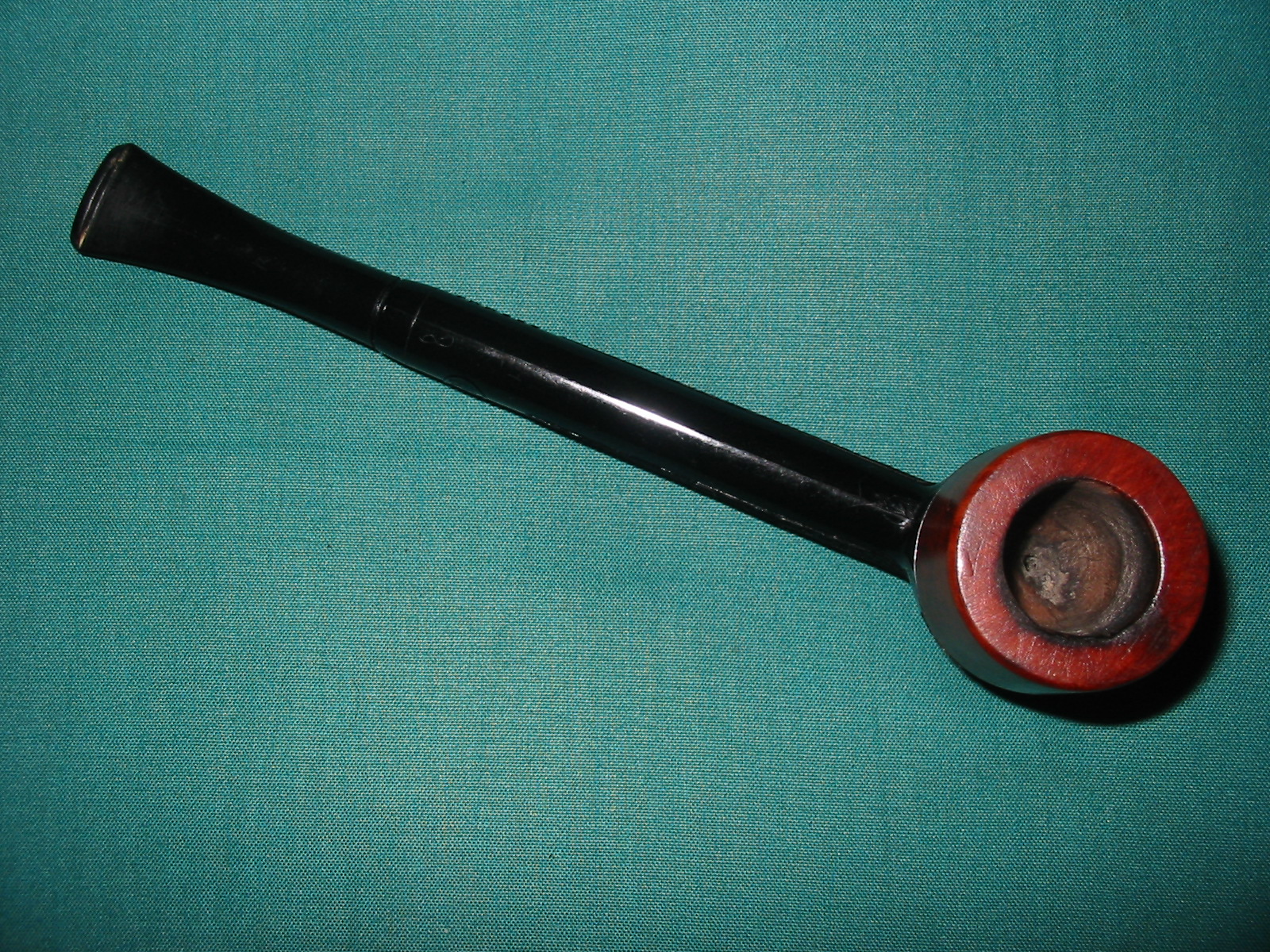
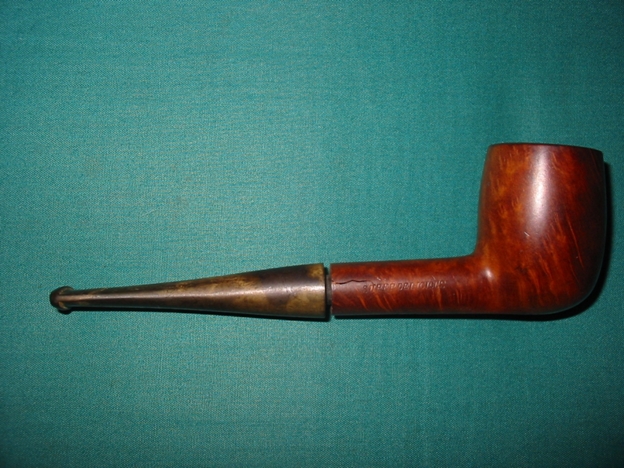
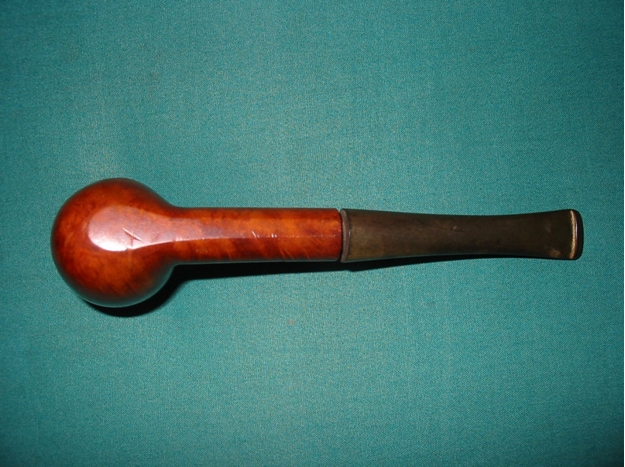
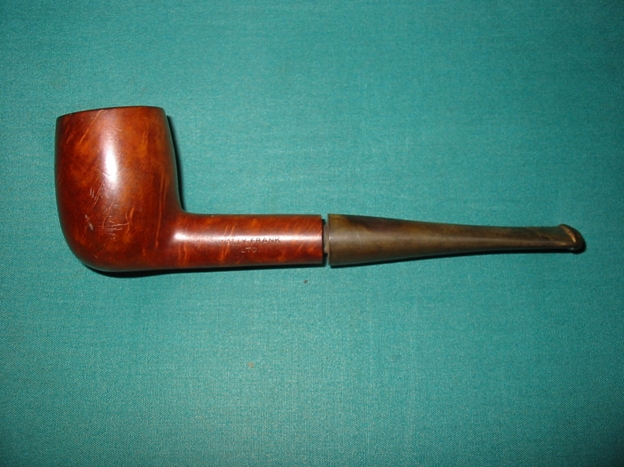
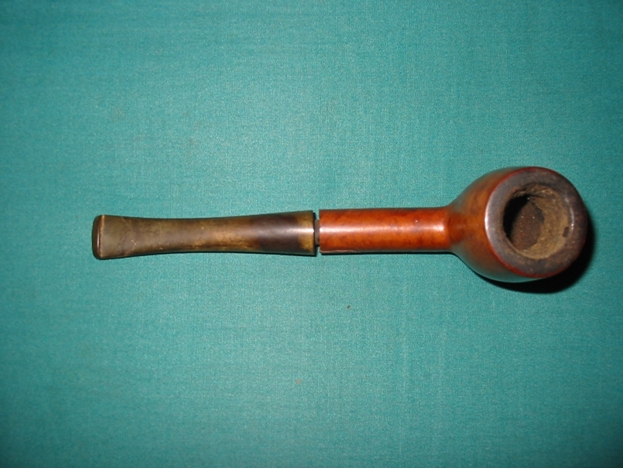
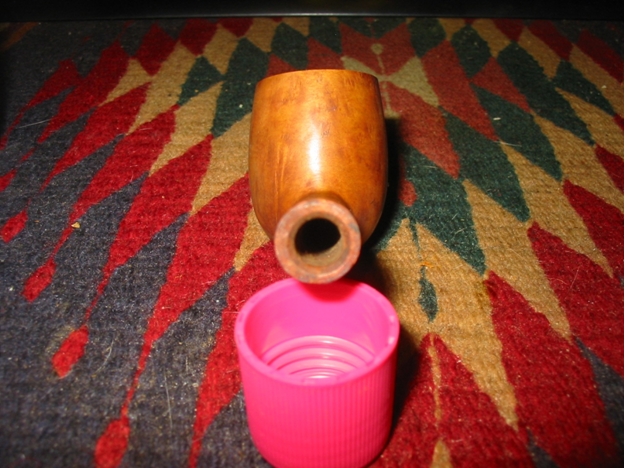
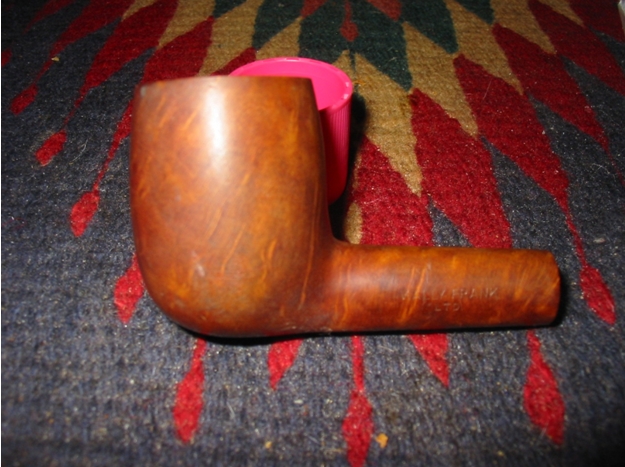
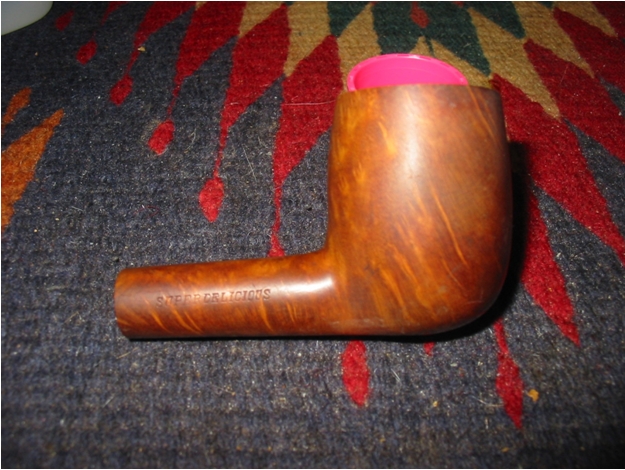
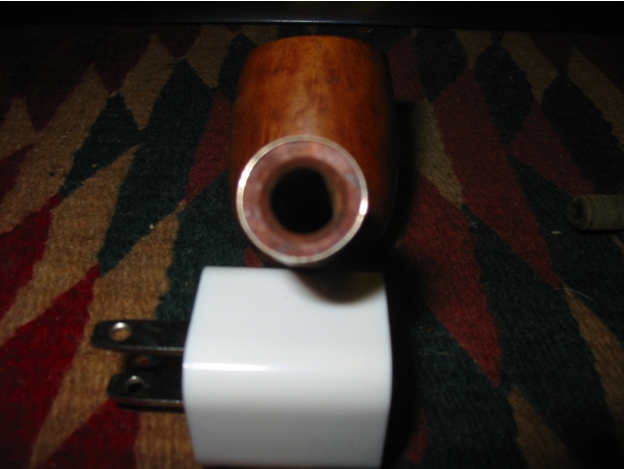
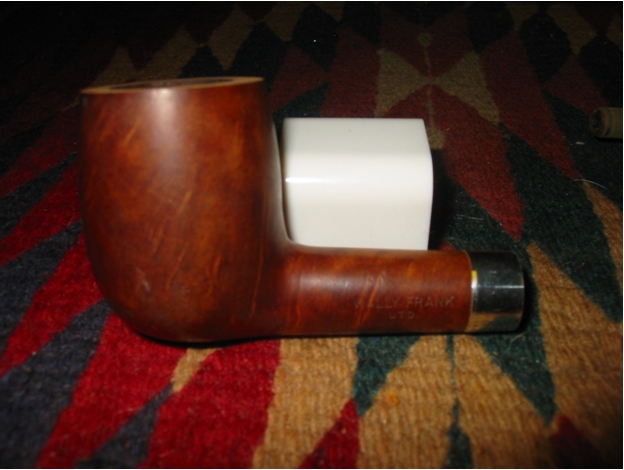
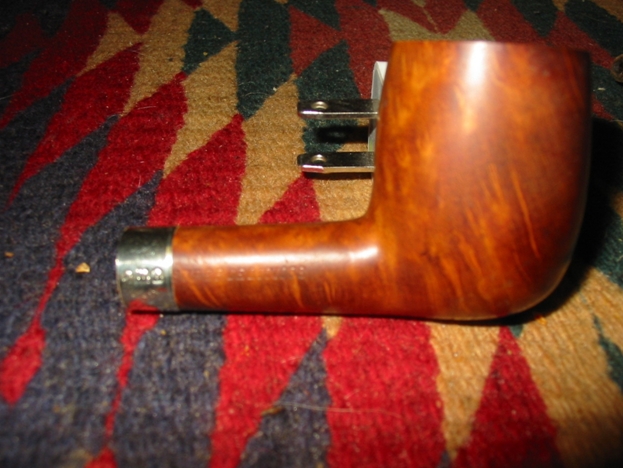
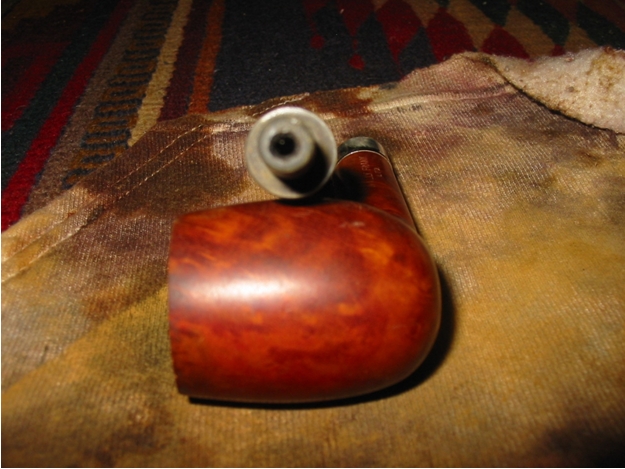
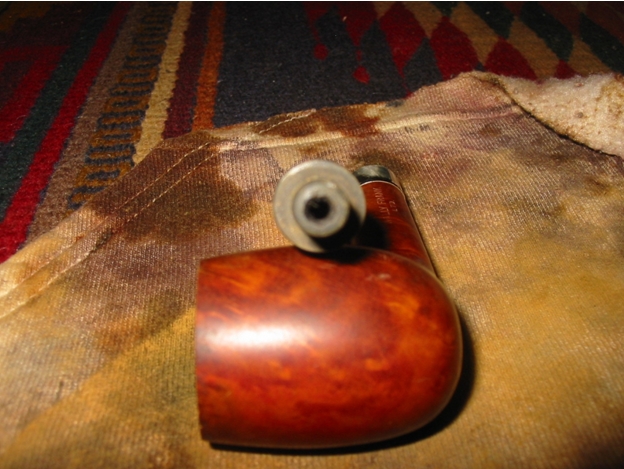
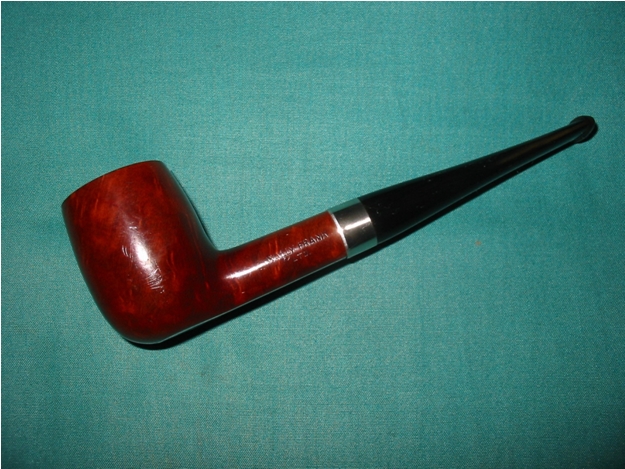
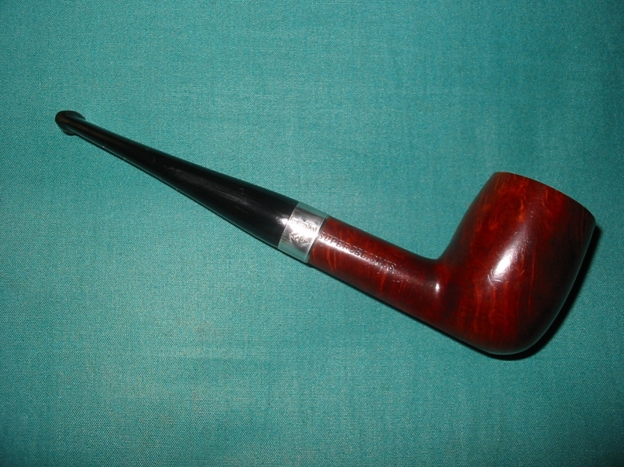
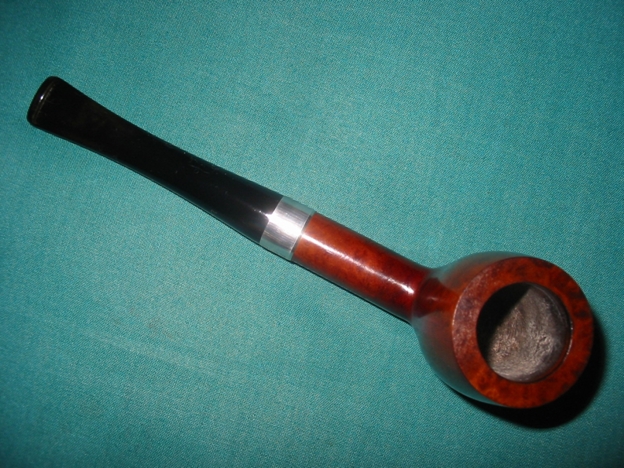
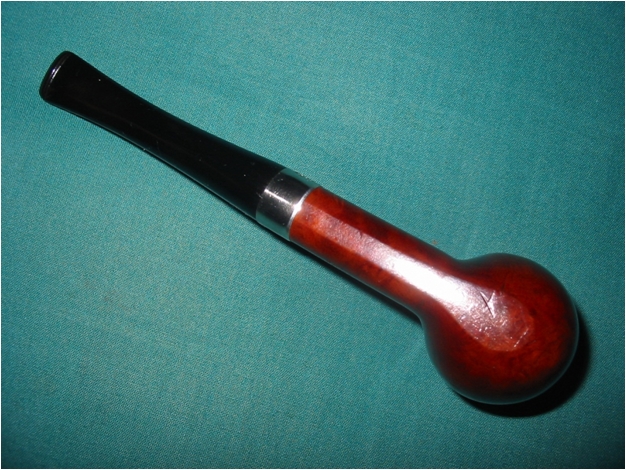
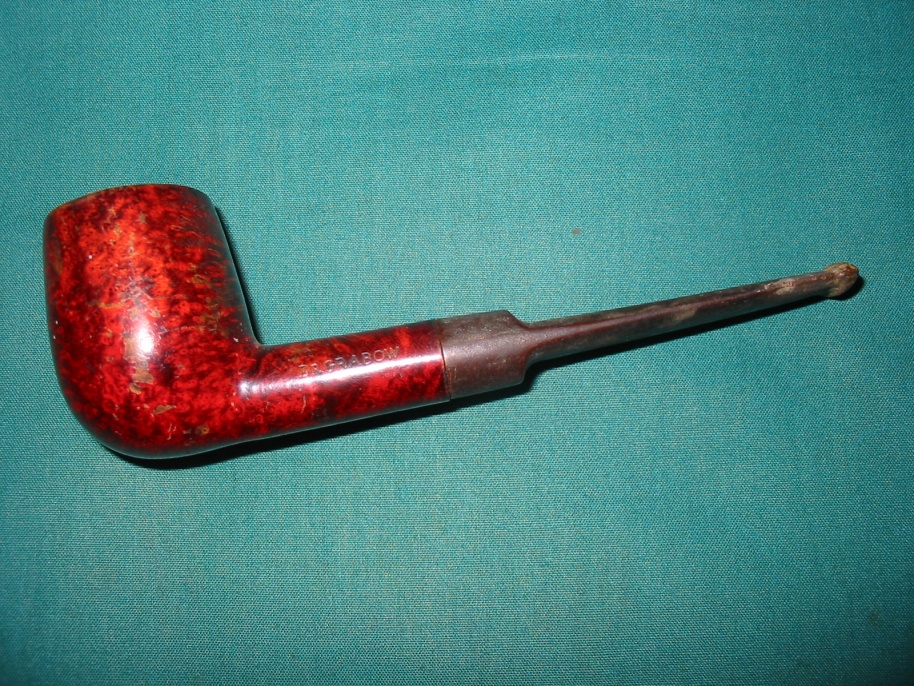
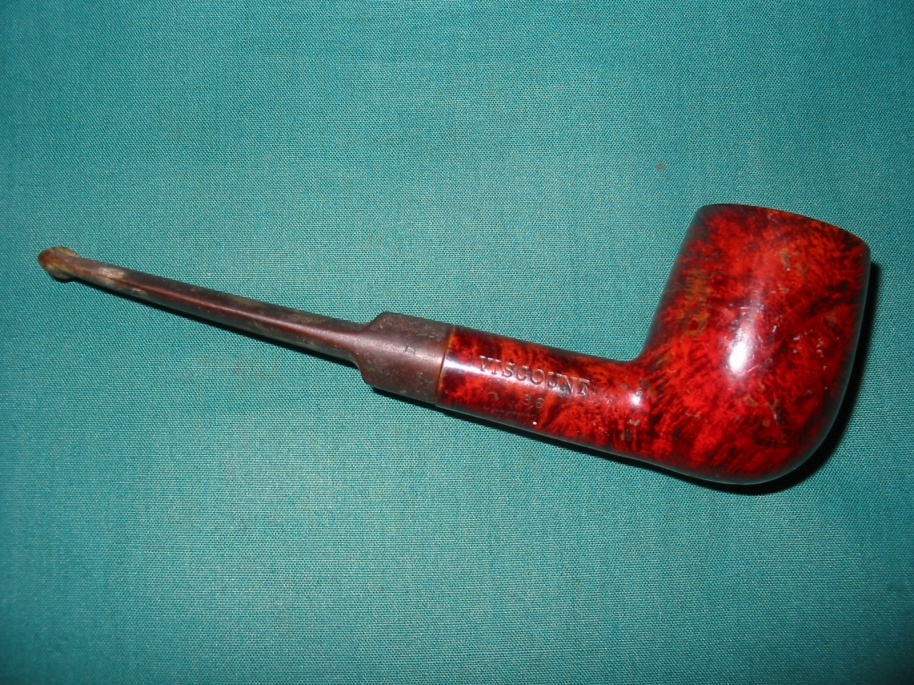
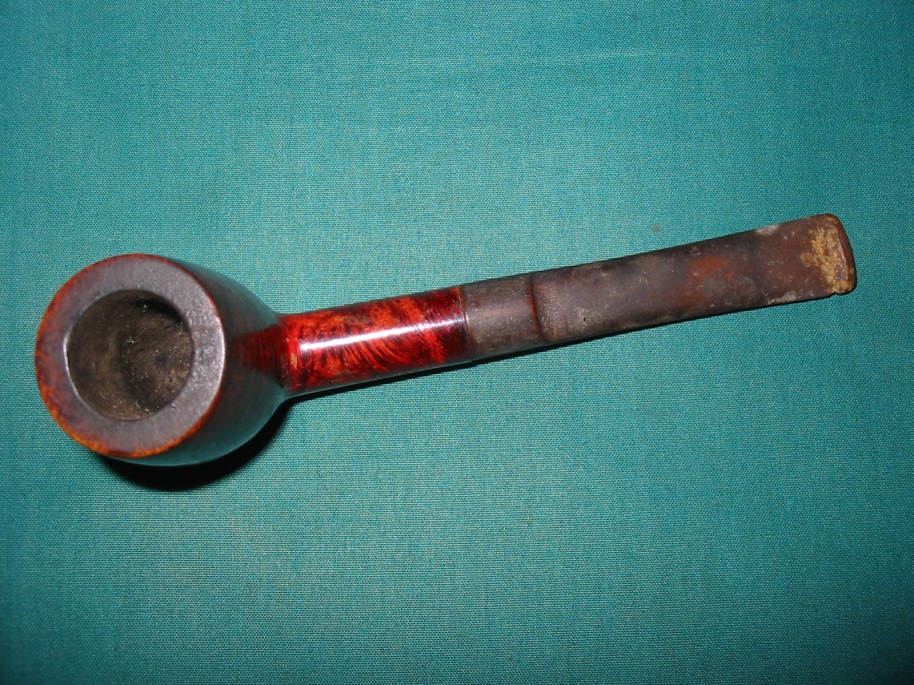
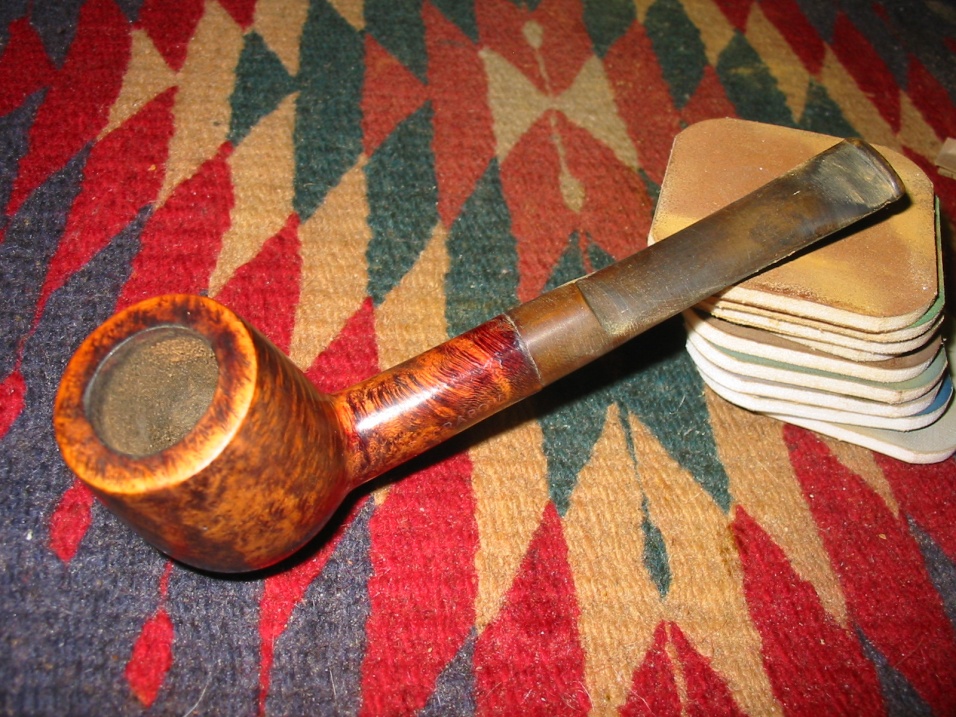
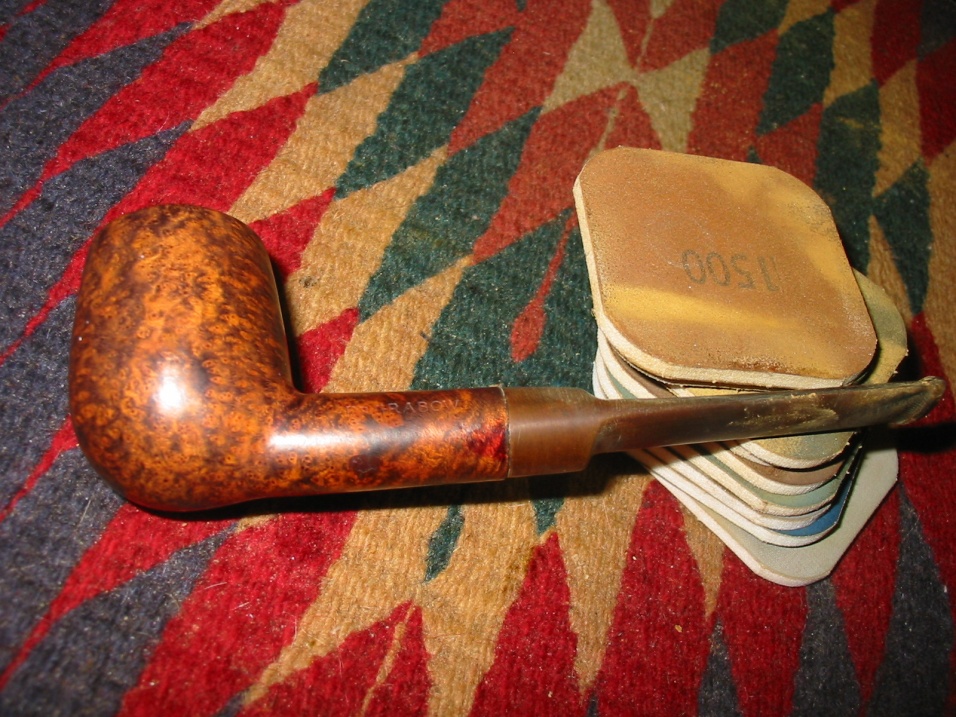
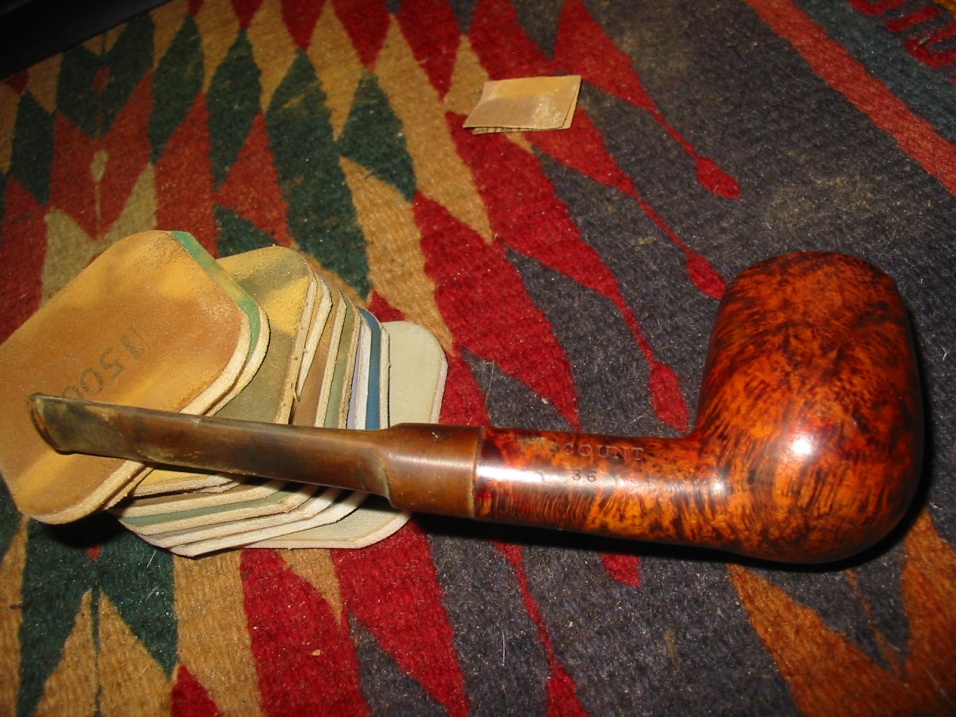
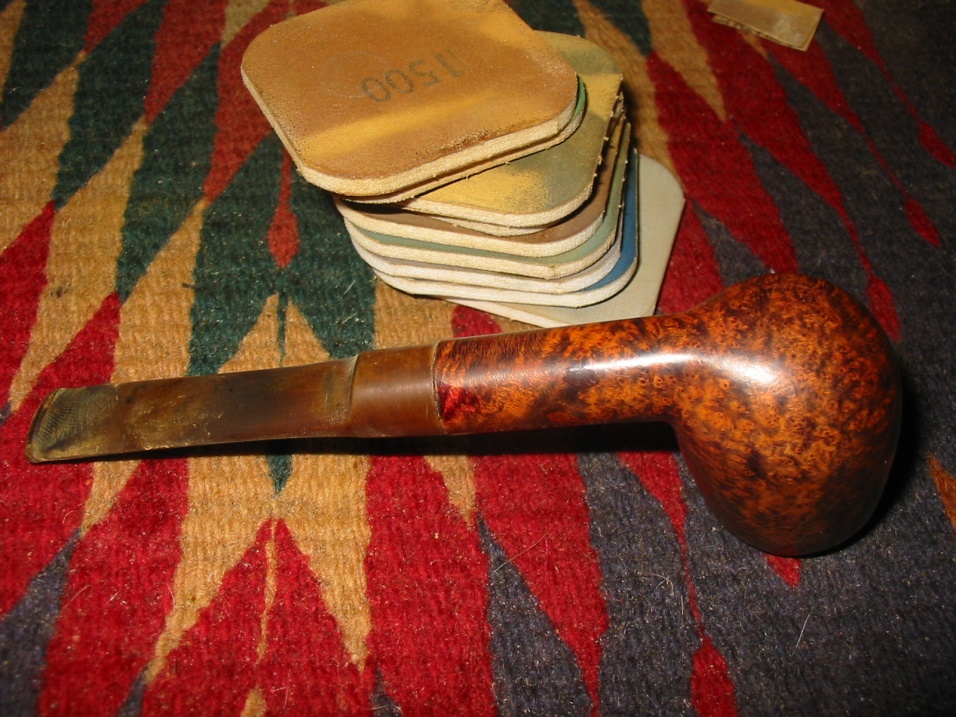
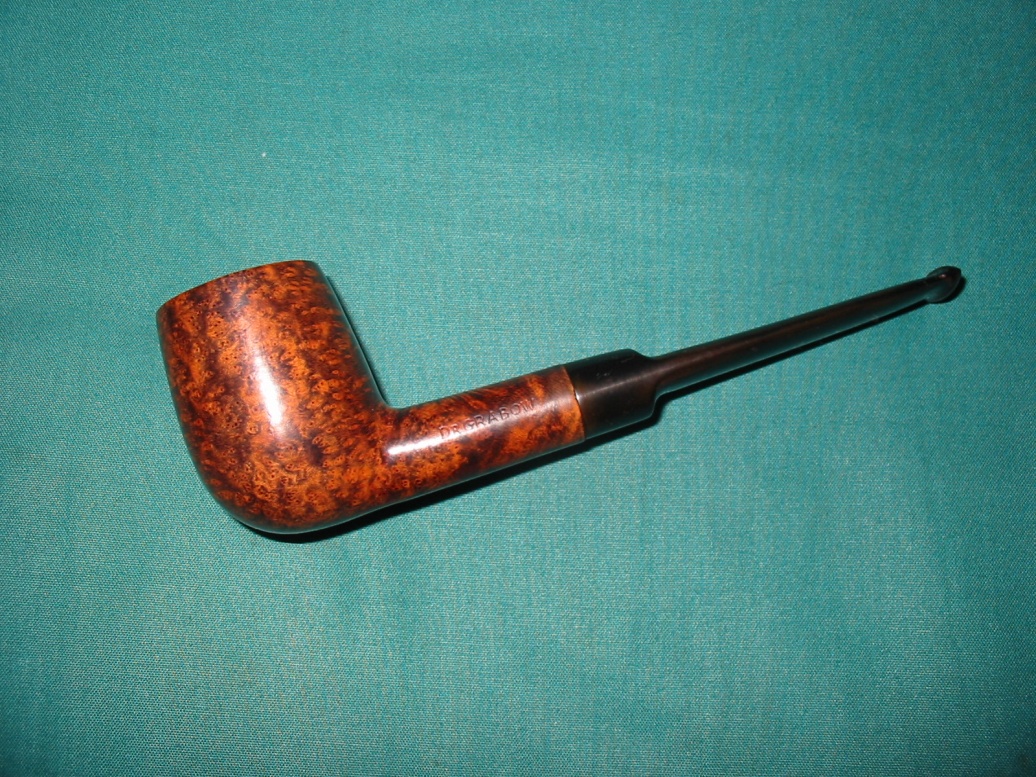
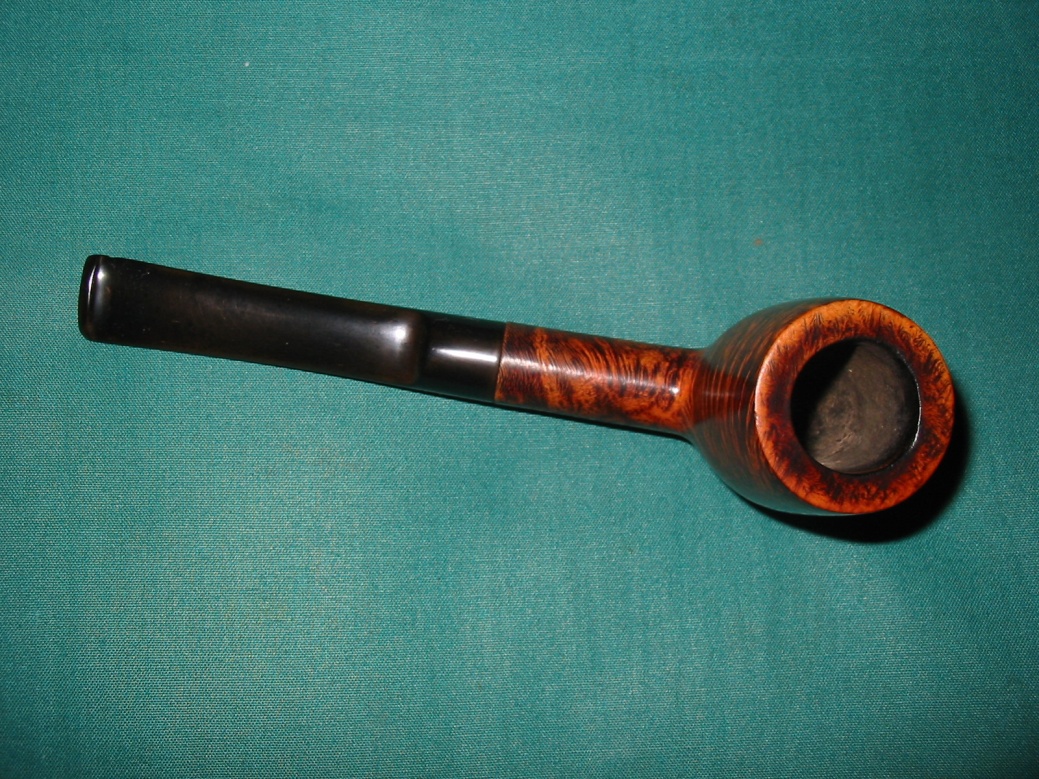
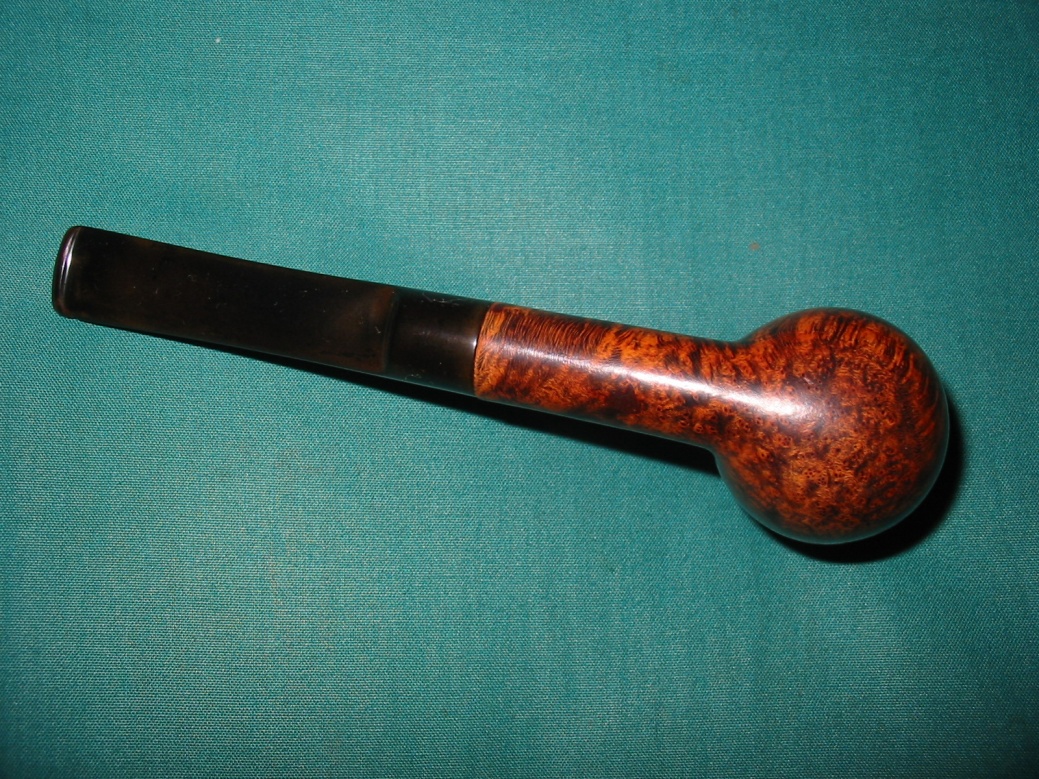
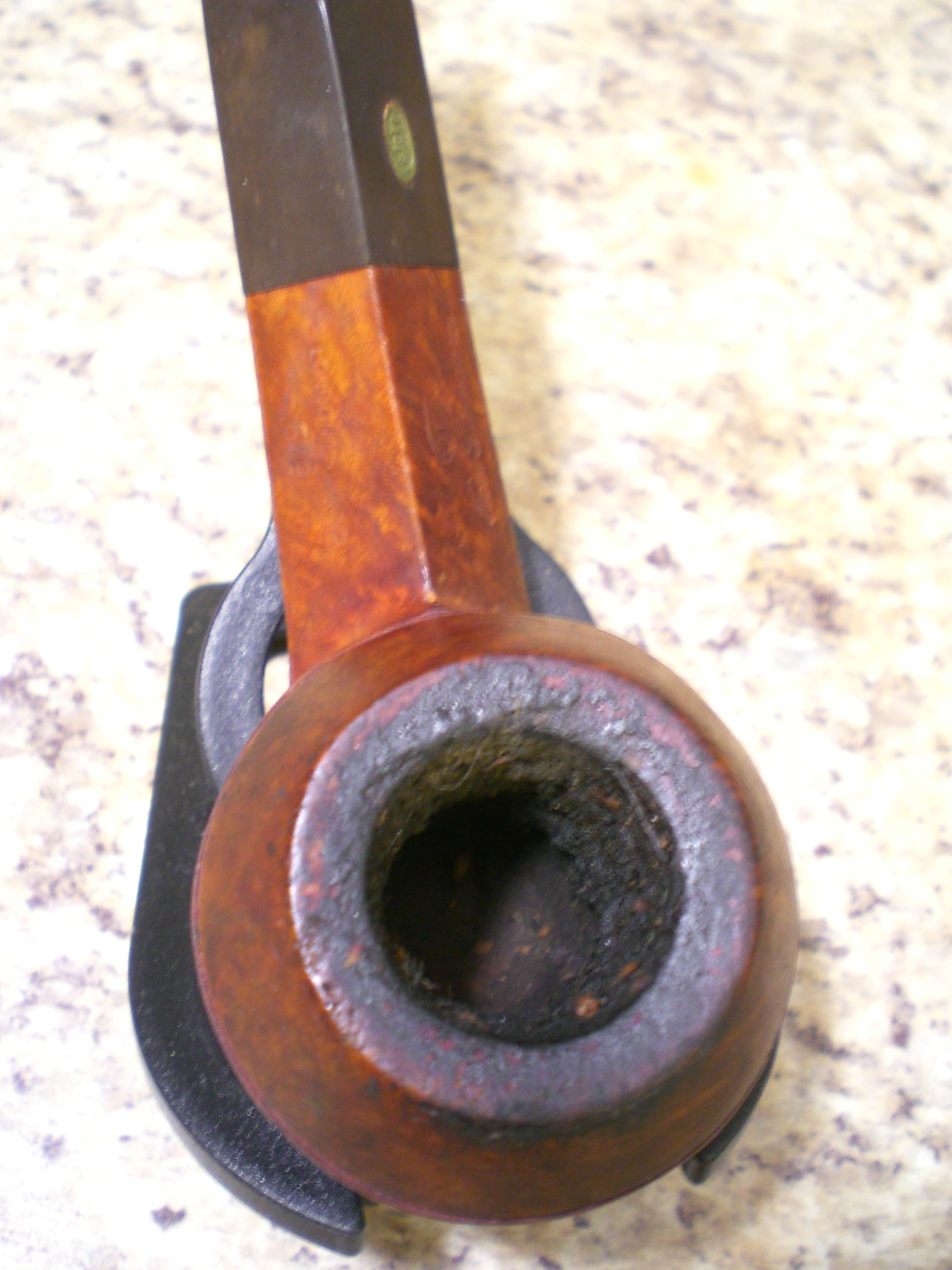
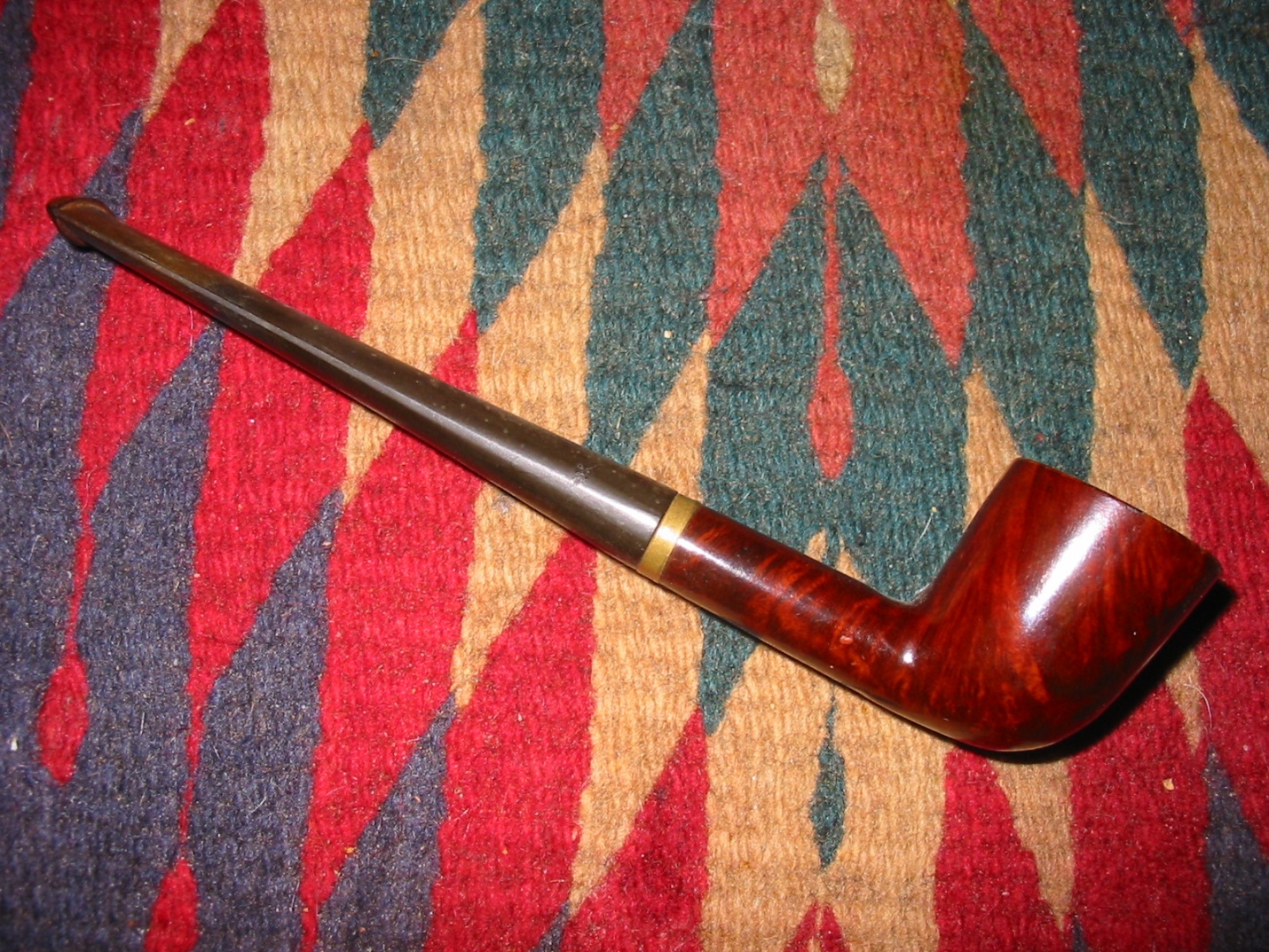
I worked on this Peterson Sherlock Holmes pipe with hallmarks on the silver band that date it to 1994. It has since found a new home and is being smoked and enjoyed by the new owner. The stamping on it was very light but still visible. The finish is in decent shape but very dirty. All of the crevices on the pipe were filled with grime and grit. The stem had oxidation and a light brown undercoating of brown throughout. The band was in great shape and just needed polishing. The bowl was a real question mark for me. It appears to have been drilled significantly larger. The bowl sides are smooth and they are still straight and clean. There was some blackening at the bottom of the bowl. I am thinking that the previous owner decided to open the bowl up and make it larger in order to hold more tobacco. The new owner says that it still smokes well so the drilling did not ruin the pipe.
Pete1

I scrubbed the bowl surface with some undiluted Murphy’s Oil Soap and a soft bristle tooth brush to get the grime out of the crevices. I repeated it until it was clean the grime was gone. I know many people do not like oil soap as it removes some of the stain on a pipe. But in this case it worked wonders. Once I had finished scrubbing it I washed it off with warm water and dried it with a soft cotton cloth. When it was dry I polished it with Halcyon wax and buffed it on my buffer with a soft clean flannel buffing pad. The oxidation on the stem came off easily with my buffer and Tripoli and White Diamond. I finished the stem by buffing it with carnauba wax.
Pete2

Pete3

Restemmed Petersons 69 – Second Try was a Charm


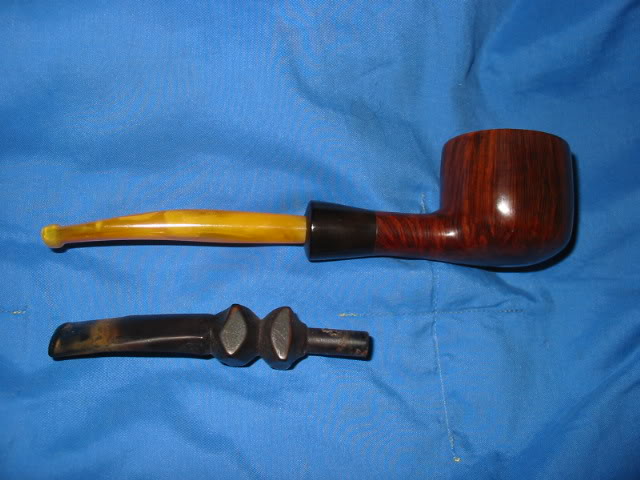
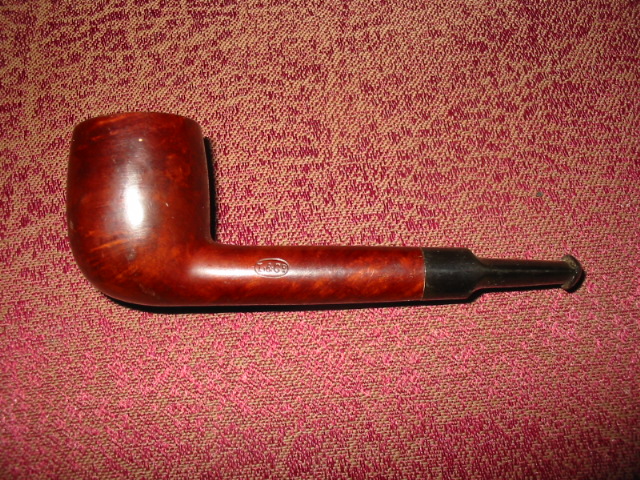
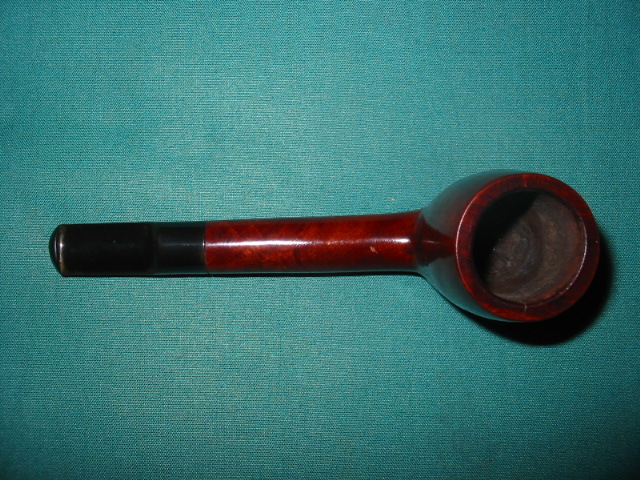
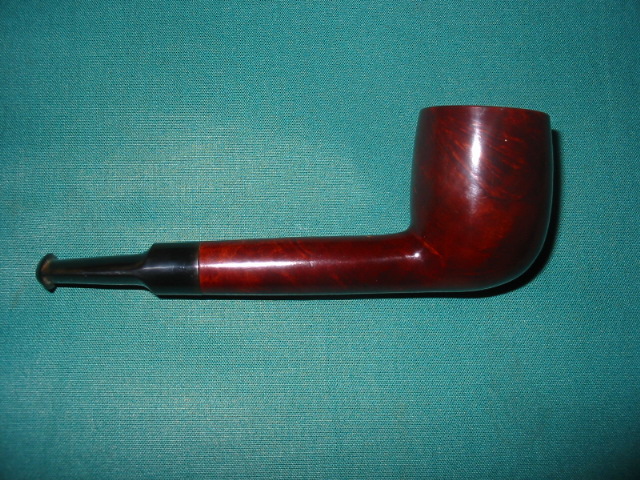
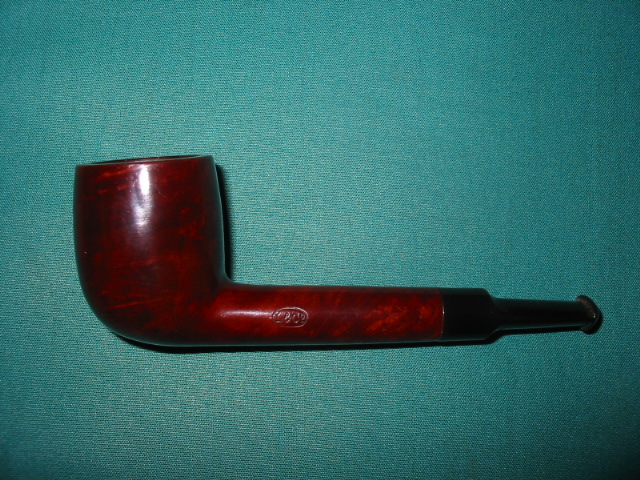
I had this old Peterson 69 bowl in my refurb bin for quite awhile. It is stamped also on the other side K&P Dublin, Made in the Republic of Ireland. I cleaned and reamed the bowl and cleaned out the mortise area with cotton swabs. I wiped the bowl down with acetone to remove the surface grime. I topped the bowl as it had major dents and roughening on the top from abuse. It needed a stem so I researched the kind of stem it needed and called a Peterson repair person in the states to have one sent to me.

Here is where the story gets a bit dicey. All I really wanted was to have the stem sent and I would fit it to the pipe but I let myself be talked into sending it south. It came back with the wrong stem on it and also had some serious cut marks on the tenon end. It also was a stem for a p-lip system pipe and the 69 is not a system pipe as far as I can tell. I was a bit frustrated to say the least so I set it aside for a week or two before calling the repairman and letting him know what I was feeling. I have to say that it is frustrating to expect one thing and get another. It is also frustrating to know that I could have done the work myself in less time if only I had a stem blank that I could have used.

I sent it back to him for a redo and included this internet photo of the pipe with the stem.
peter1

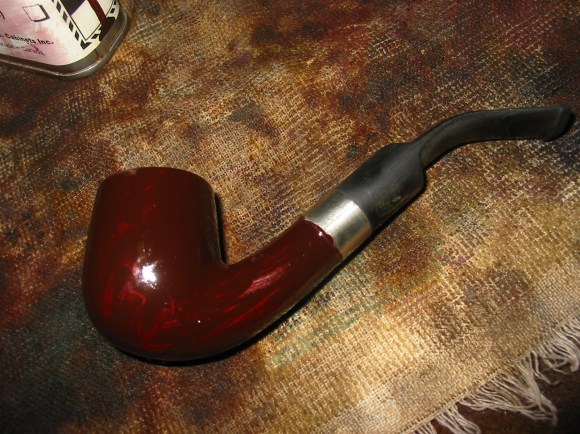
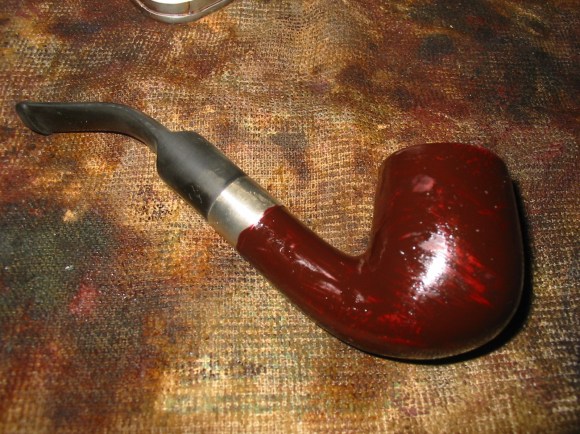
When it finally came back it was better – see the photos below. It was much better so I decided I was done with sending it back. Two times is enough. Once it was back I finished working on the rim and the rest of the bowl. I stained it with a medium brown aniline stain. It took the stain well and came out a reddish brown colour. I buffed it with Tripoli and White Diamond to polish the stem so the grain would show through. I finished it with several coats of carnauba wax and buffed with a soft flannel buff. The silver ferrule was polished with silver polish. It is a good smoker and is comfortable in the mouth.
Peter2

peter3

peter4

peter5

My Favourite Pipe Spot – A Small Piece of Solitude


When I think of my favourite spot to smoke a pipe I cannot think of a better place than on my front porch. I live in an old Victorian cottage on a side street in East Vancouver. The house is about 112 + years old and has had many face lifts in its long life. Since the photos were taken I have replaced the stairway with more solid new one. Other than that it looks much the same throughout the warm parts of the year. The porch sits about five feet above the street and the rhododendrons along the front of the porch give some privacy while you are sitting and enjoying the spot.

It is a comfortable place in terms of situation but I always like to make it a bit homier by adding to the natural setting. I put a reed mat rug (made of recycled plastic) on the floor of the porch. It is more decorative than necessary, but it adds some ambience to the space. I set up my two wicker chairs and love seat with a wicker and glass table for the accessories and tobacco. The table also serves as a resting place for a cold drink and also the laptop should I want to scroll through a forum while sitting there. There are hanging baskets along the front and side beams of the porch and fichus trees and other trees and plants on the railings and the floor. These also add to the setting. My cocker spaniel Bailey generally joins me on the porch as he enjoys the setting and the scenery. He commandeers one of the chairs as is his spot. And together we sit and observe life on the street out front and walking down the sidewalk outside the fence. Many a time it also serves as a spot to do a bit of quiet reading and writing when the muse moves.
house1

house2

From the porch my small yard is a garden that I enjoy filling with perennials and some annuals to give colour and depth to the foreground. The light green picket fence and gate surround the yard and give a bit of privacy setting it back from the sidewalk.
house3

house4

house5

house6

This spot has become a favourite and comfortable place for me. I find it a spot to relax and unwind throughout the late spring days and on into the late fall. For us here in Vancouver it means that I can set things out about the end of April and use the porch until mid to late October. I can also use it a bit later but it gets cold with the damp winds and rain so it is relegated to the months I have mentioned above. I thought I would share the favourite spot with all of you. Won’t you join me on the porch for a bowl and a visit?

Cheers!

ImageImageImageImage

Setting up a Pipe and Tobacco Box Pass


Over the years I have set up several box passes of tobacco to facilitate sampling of different blends and a way of trading pipes. The concept is quite simple and generally works best when kept within a geographic area. For instance – Canadians start a Canadian pass, Americans and American pass, etc. I have found over the years that fighting the Customs people at the borders is not worth the lot of problems that cross border or ocean shipping can cause. The one who starts the pass packs a box with tins or samples of tobacco and a few pipes that are available to each person on the list of those participating. The basic idea can be adapted to fit a particular region or even type of blend. I have also seen it used with cigars and it also works very well.

I am including two documents in this post that I include with each box pass. The first is a document called How It Works. The second is called Contents of the Box – Puts and Takes. The idea of the box pass is explained and a few simple “rules” are included in the How It Works document. I have found it important to include these in the box pass as they give a framework for recruiting of participants in the box pass as well as guidelines for the recipients of the box when they look at the contents and swap tobaccos or pipes.

I have participated in box passes where there were no rules and generally there have been problems with things being lost or kept too long or with items being swapped that had lesser value than the ones that were taken. The Contents document works to keep people honest. It lists what was sent when the box went out and what was taken and added. The Puts and Takes list is updated by each participant. In my passes I have asked that other participants put their name or initials by what they added and/or took.

Box passes are great fun and are a way to connect people who otherwise may not ever connect. I would invite and encourage you to give a box pass a try in your location. Gather about 6 to 12 individuals and collect names and addresses. Make a sheet with these names and addresses in the order of the pass. Send it out to the first name on the list, they will send it to the second and so forth. The last person on the list returns it to the original sender and they can either take and put and start it over or lay it aside until a later date.

HOW IT WORKS: (This is the sheet that I send out with my box pass)

— This pass is open to Canadian Residents ONLY! We have many friends across the borders that we’d love to have participate with us in this pass, but issues with Canada Customs makes this impractical, at best. Our apologies are extended to those Brethren of the Briar outside Canada.

— Each participant can keep the Box till the following Monday before shipping it out to the next person on the list. This means if you get the Box on a Wednesday you can keep the Box till the next Monday (yep, that is 4 days), if you want to ship it sooner you can.
Hopefully this will give you longer to sample the goodies. Feel free to sample from the open tins and from the bulk tobaccos (but, please be sure to reseal the baggies that contain them once you are done thanks!). All that is asked in exchange for this is that you leave something in the box for others to sample. While this is fun, please remember that those further down the list from you are anxiously awaiting the box’s arrival. Uncalled for delays spoil the fun!

— When shipping the box to the next participant the use of Priority Mail service with Delivery Confirmation is required. Shipping via UPS is also acceptable.

— If the box is beginning to show some wear and tear, or needs a bigger box (last time we changed the box several times), please replace it with a new box. “It can make it one more time” thinking in the past has resulted in items being lost due to the box failing while in the shipping company’s hands.

— Puts and Takes should be of like kind of items in the box. If you take a sealed tin, replace it with a sealed tin. If you take a partial tin, replace it with a partial tin. The only caveat is that sealed tins can be used to replace any tobacco in the box. Partial tins in this box will be individually placed in Ziploc bags, so please be courteous and place your partial tins going into the box in Ziplocs as well (this is to insure that they do not dry out).

— Tobacco used for Puts into the box should be of good quality and should be blends that you would like others to try. This is not a disposal service; it is an opportunity to sample and trade for some tobaccos you may not have had the chance to smoke and to give your
fellow Brethren of the Briar a chance to try some tobaccos they may not have tried before.

–Please, no glass containers. One word breakage! `Nuff said!

–Puts and Takes should be notated on the list enclosed in the box. Additionally, all puts and takes should be posted to this thread of the Web forum (if you are a web forum member. Web forums are great places to recruit a list). Remember: That part of the fun of participating in a box pass is watching the thing play out on the board!

CONTENTS OF THE BOX – PUTS AND TAKES (this is a copy of the initial list I sent out in the last box pass I sent out. I include it to give you an idea of how it works for the one starting the pass.)

(Note: Alongside the item you take from the list of contents add your name. Add your puts at the end of the list and also add your name. It is always interesting to follow the box and see what others have taken and put in. Thanks!)

Tobacco

1          unopened tin of GLP Haddo’s Delight

1          unopened tin of Bjarne’s Flake DeLuxe

1          unopened pouch of Three Star China Black Whiskey

1          unopened pouch of Three Star China Black Fire Cured

1          unopened pouch of Three Star China Black Vanilla Burley

1          opened tin of F&T Blackjack (VA Flake)

1          opened tin of Dunhill Royal Yacht (older and a bit dry but smokes well)

1          50 gram +/- of GLP Tribute (this is the first edition of this tobacco. It came out after 9/11.)

Accessories

2          Drift wood tampers from the Pacific Ocean

3          briar tampers

Pipes

1          Edwards Algerian Briar Canadian (refurbished, new stem and ready to smoke – older probably 50’s)

1          Edwards Algerian Briar Canadian 721 (refurbished, original stem, ready to smoke –older probably 50’s)

1          Weber Blackthorn 245 (shank was repaired by Mel Cates, YPSC, barely smoked, very good condition, ready to smoke)

1          Milano (a Savinelli second, there is a new stem with it and the original as well. Ready to smoke.)

1          Middleton Silvay, a saddle stemmed lumberman. (refinished, stained and waxed, ready to smoke)

Refurbishing a GBD Penthouse with a Chairleg Stem


While scanning EBay for interesting old pipes to work on I came across a pipe for sale with the stamping Penthouse. There was little other information on the advert regarding the pipe but it looked interesting to me. The chairleg type stem made me think of the series of pipes that Al (upshalfan) has restored so I put a bid in for the pipe. I contacted Al and he sent me the following picture from a Tinderbox catalogue showing that indeed the pipe was a GBD line. (NOTE: The GBD catalog page came courtesy of Jerry Hannah. Jerry created the GBD Shapes/Model page that I frequently use for reference. I’m not sure if he reads this blog, but if so, thanks!) The headline on the page says that GBD breaks with tradition and forges bold new designs. Pipes marked J, K, and L in the picture below are all Penthouse pipes. I have no idea where they took the name but let imaginations rest, the pipes are stunning and the stems are uniquely beautiful.
Pent1

The Penthouse pipe that I bid on and subsequently won is an apple shape. The first six photos below are the seller’s pictures. It was these pictures that tempted me to place my initial bid on this pipe. As it turned out I was the sole bidder. The stem was badly oxidized and had some tooth chatter at the button. The stamping showed up but was not as deep as it appears in the photos. The rim appears to be darkened but not charred in the photos and the finish appeared to be dirty but not dented or scratched deeply. It was stamped on the left side- Penthouse in script over Made in England in block letters. On the right side it was stamped London England over 347. Now the wait began.
pent2

pent3

pent4

pent5

pent6

Pent7

When the pipe arrived it was much as the pictures had shown. I am never sure what to expect when I bid on these old pipes as I have been utterly surprised both ways – they have shown up in much worse shape than the photos showed or in much better shape. The next four photos show it as it appeared when I removed it from the box.
pent8

Pent9

Pent10

Pent11

The finish was actually quite dirty. Many of the dark areas of the finish were actually grime and grit and not the understain on the pipe. I wiped the pipe down with acetone to remove the grime. I also used a battery terminal brush to clean out the remaining cake remnants in the bowl. Then I dropped the bowl in the alcohol bath and the stem in a bath of Oxyclean. The bowl sat for about an hour in the alcohol bath and the stem sat in the bath overnight. When I removed them I cleaned out the shank and the inside of the stem until the pipe cleaners and cotton swabs came out clean. I wiped the entirety with a soft cotton pad and acetone to remove any remaining grime and the next series of four photos show the state of the pipe at this point in the process. The alcohol bath and acetone had successfully removed the remaining finish and the grime on the surface of the pipe. The Oxyclean had done a great job on the oxidation. You will notice the shiny areas on the top of the stem – I had run my fingernail across the surface to show how the oxidation had softened. It was ready for the next step in the process of cleaning the stem.
Pent12

Pent13

Pent14

Pent15

The next two photos show the stem after I had scrubbed it with a Magic Eraser. The stem was wet and shiny and you can see the oxidation on the Magic Eraser under the stem. I continued to scrub the stem with the Magic Eraser until it came out clean.
Pent16

Pent17

The oxidation was greatly decreased at this point but there was more work to be done on the stem. The hard points on the stem were obviously around the chairleg section. The grooves were difficult to get to with the Magic Eraser. I decided to use some Meguiar’s Scractch X 2.0 which is a scratch and blemish remover for auto paint finishes. I used soft cotton pads (makeup removal pads) with a spot of the Scratch X 2.0 on them to scrub the grooves and the area around the button as well. The next series of three photos show the stem after the scrubbing with X 2.0. The oxidation is further removed but still evident.
Pent18

Pent19

Pent20

At this point I continued to scrub with the X 2.0 until the stem was once again black. I buffed the stems with White Diamond on my buffer once that was finished. The next two photos (please forgive the blurry focus) show the stem after the application of Obsidian Oil to the clean stem. I left the Obsidian Oil on the stem until it was absorbed and then coated the stem with an initial coating of carnauba wax to protect it while I went to work on the bowl.
Pent21

Pent22

I coated the bowl with an oxblood aniline stain. The next two photos show the coated bowl before I flamed the stain to set it in the grain. The stem appears to be brown again but I had coated it with wax and left it to dry while I worked on the bowl.
Pent23

Pent24

I buffed off the stain with a soft flannel cloth that is pictured below. I wanted to highlight the variety of grain in the pipe so that is why I chose the stain I did. It also shows that the black understain that appeared in the original photos still remained and makes the grain very visible in the pictures below.
Pent25

Pent26

Pent27

Once the stain was dry I put the pipe back together and took it to my buffer. I buffed the stem and bowl with White Diamond until is shone. Then I moved on to a soft flannel buff with carnauba wax and a final polishing buff with a clean soft flannel buff. The finished pipe is pictured below. All that remains is to fire it up and enjoy a bowl in the “new” Penthouse pipe. The stamping on the stem is still present and not harmed by the work but it is light and will not hold any whitening product.
Pent28

Pent29

Pent30

Pent31

Arghh, I Drilled to Far – A Lesson Learned Only Once


I had this interesting old timer in my box of pipes to repair. It is stamped Marxman Jumbo on the underside of the shank. The tenon was broken and stuck in the shank. I pulled the broken tenon with a screw and used it for sizing the new tenon for the pipe. The bowl finish was mottled and dirty so I dropped it in the alcohol bath while I worked on the new tenon.

I decide to use a Delrin tenon that I had here so it meant that I needed to drill out the stem in order to fit the new tenon. This was the first tenon I ever replaced so I proceeded slowly and with caution. I used a drill bit slightly larger than the airway in the stem. I wanted to move up slowly to the size of the tenon without chipping the vulcanite. So far so good. The hole began to open in diameter. In the photo above you can see the diameter of the airway in the stem after the first three drill bits. I had one more to go and the stem would be ready for the new tenon.

I decide to use a Delrin tenon that I had here so it meant that I needed to drill out the stem in order to fit the new tenon. This was the first tenon I ever replaced so I proceeded slowly and with caution. I used a drill bit slightly larger than the airway in the stem. I wanted to move up slowly to the size of the tenon without chipping the vulcanite. So far so good. The hole began to open in diameter. In the photo above you can see the diameter of the airway in the stem after the first three drill bits. I had one more to go and the stem would be ready for the new tenon.

No one had told me about a trick I have since learned to ensure that I do not drill too deeply. The idea is to measure the depth you want the bit to go and to mark the bit with tape so that you do not go beyond that. I had not learned that so I proceeded to drill with the last bit. I was feeling pretty good about the work at this point. It was going well and was centred. I was pleased and thinking this would be a breeze. But I was soon to be disappointed as I felt the drill break through at the place where saddle tapers off into the flat of the stem. I was sick when I felt this happen. I had drilled too deeply and the result was a hole on the top of the stem that all but ruined the repair. So much for my easy fix. In the photo below you can see the white spot on the stem at the spot where the saddle tapers. It was a large hole and I was frustrated. I put the pipe away for awhile and figured I had ruined a perfectly good stem.

Finally one day I decided to see if I could repair the hole. I set the new tenon with epoxy and once it was dry I went to work on the new “air hole” I had drilled in the stem! I filled it with epoxy and vulcanite dust to work a patch. The white spot in the photo above is the resultant patch. It is actually a grey spot. The vulcanite dust and epoxy dried to a mottled grey finish. The hole was repaired but whenever I smoke the pipe I am reminded that in the future I will measure twice and drill once! That grey spot speaks loudly to me. The good news is that the pipe smokes very well.

The finish was shot and the colour of the stain was mottled and uneven. So I when I removed it from the alcohol bath I restained it with a medium brown aniline stain and buffed it gently with White Diamond and then a flannel buff and a light coat of carnauba wax.

Since that day I have replaced many more tenons. I have not repeated the same mistake twice. The point is to learn from the errors not to keep repeating them.  I wanted to pass on what I learned and show the mistake I made to hopefully keep you from repeating my errors. Thanks for looking.

GBD 9438 New Standard Restoration


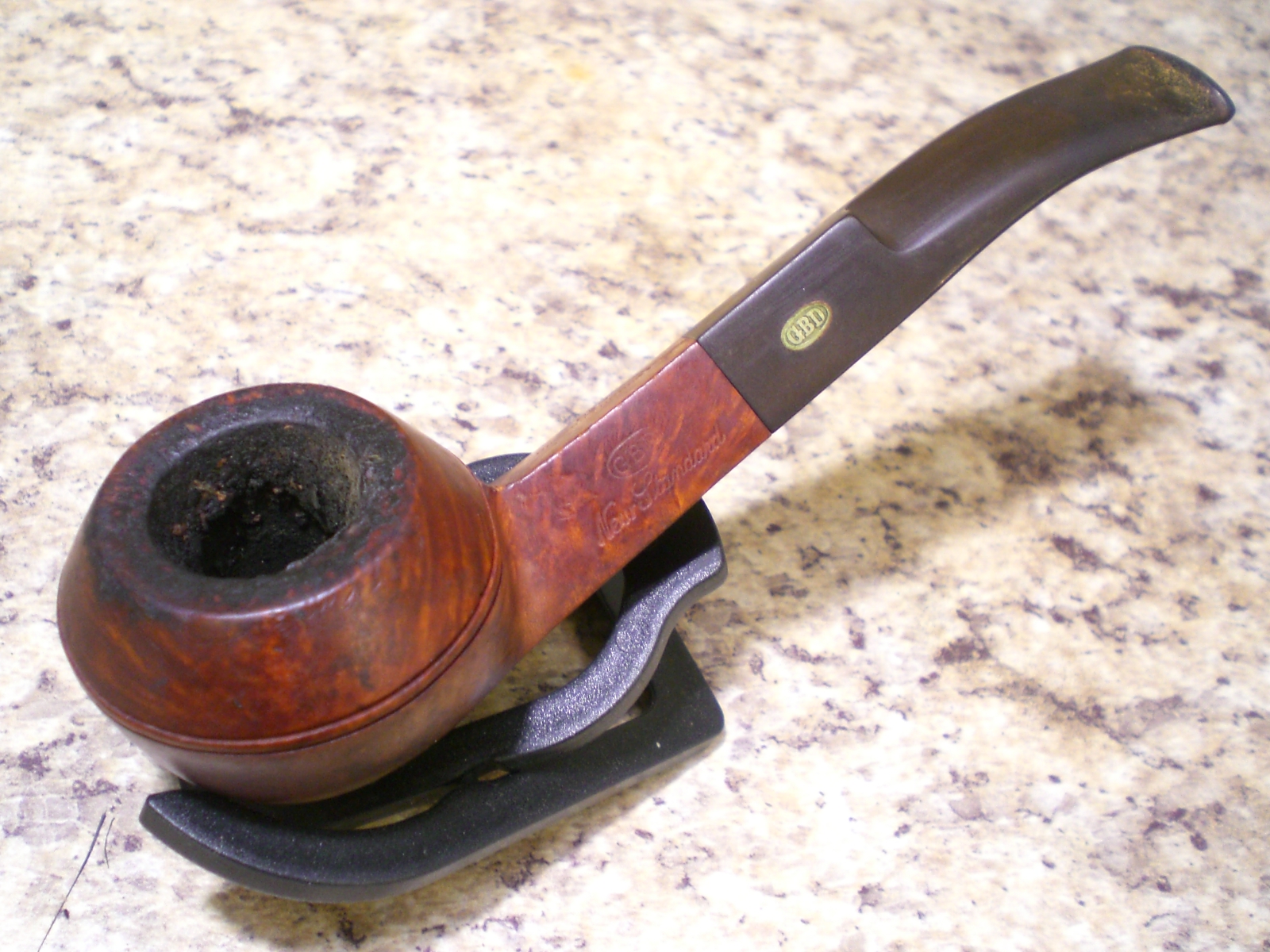
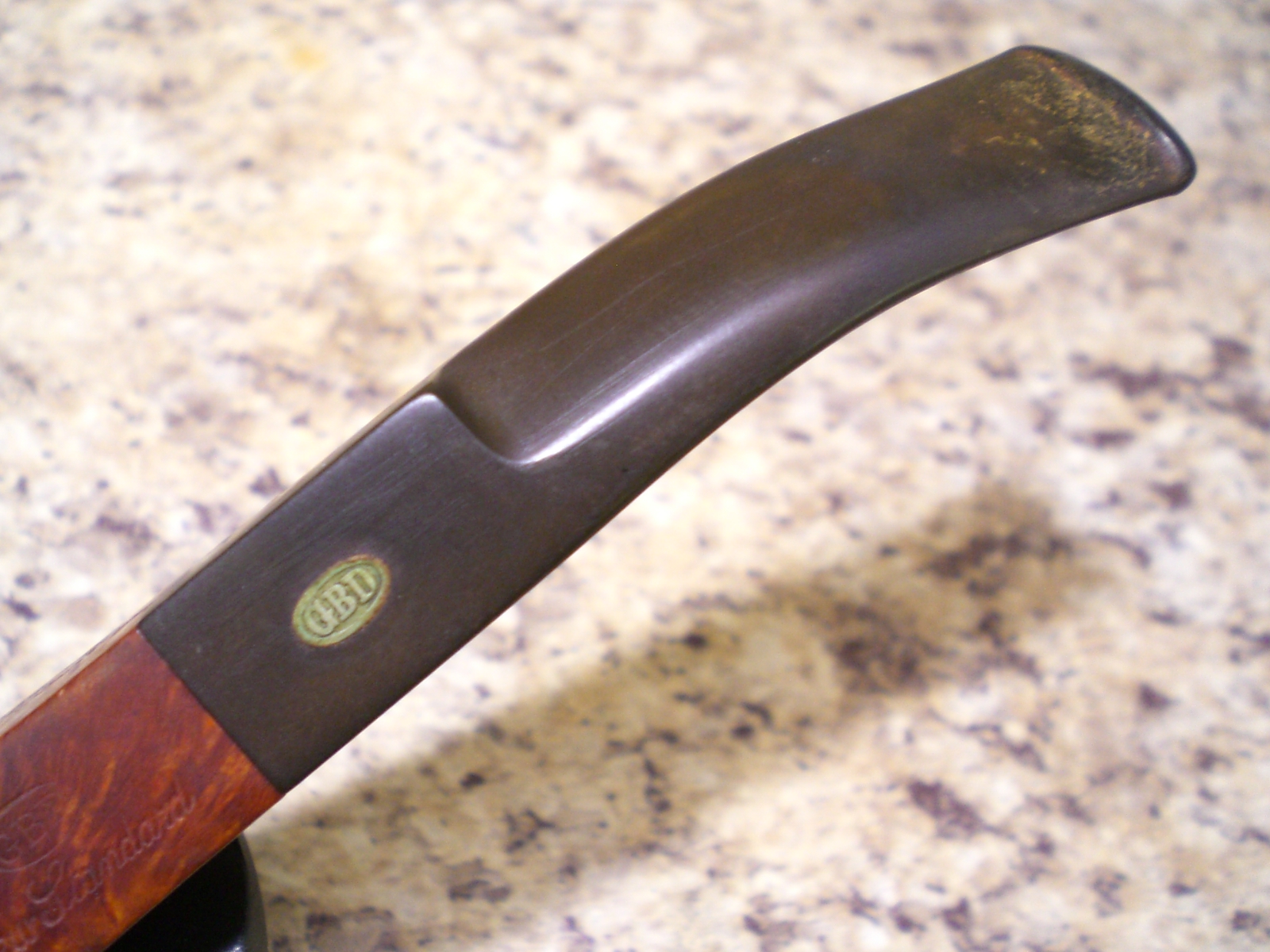
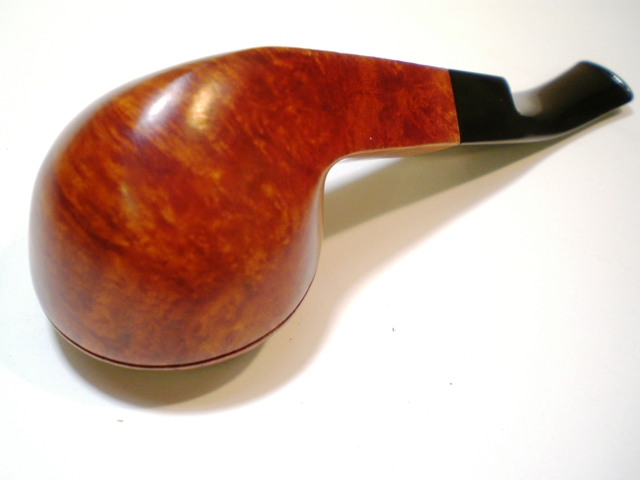
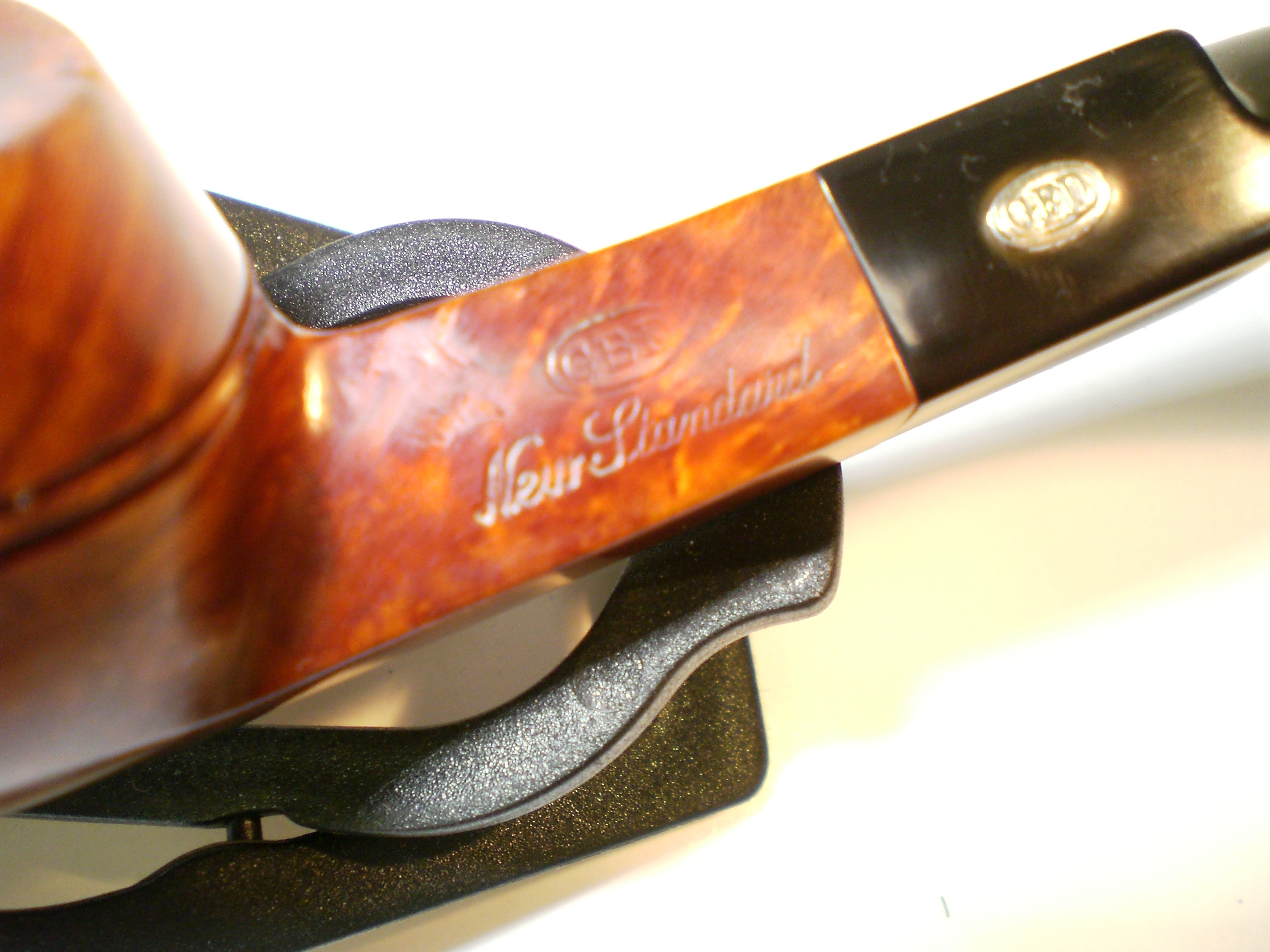
As you no doubt have learned, the pre-Cadogan era GBD 9438 is one of my favorite shapes. I have this model in several finishes (Tapestry, Fantasy, Seventy-Six Collossus) but was lacking a smooth finish. This one, found on Ebay, went unnoticed until the last few minutes of the auction. It is only a New Standard grade, but looked in good shape with no bite marks, etc. on the stem. I thought from the pictures that it would only require a simple clean up.

Here is the pipe as it was delivered.

The bowl had a very thin cake, which I reamed slightly revealing a very nicely maintained bowl and bowl top. There was a little stain lightening on one side, but I think with use, it should blend in. The stain is an interesting reddish-brown color, GBD called a “tobacco brown” finish in their 1976 catalog. The bowl was polished with tripoli, white diamond and finally several coats of carnuba wax.

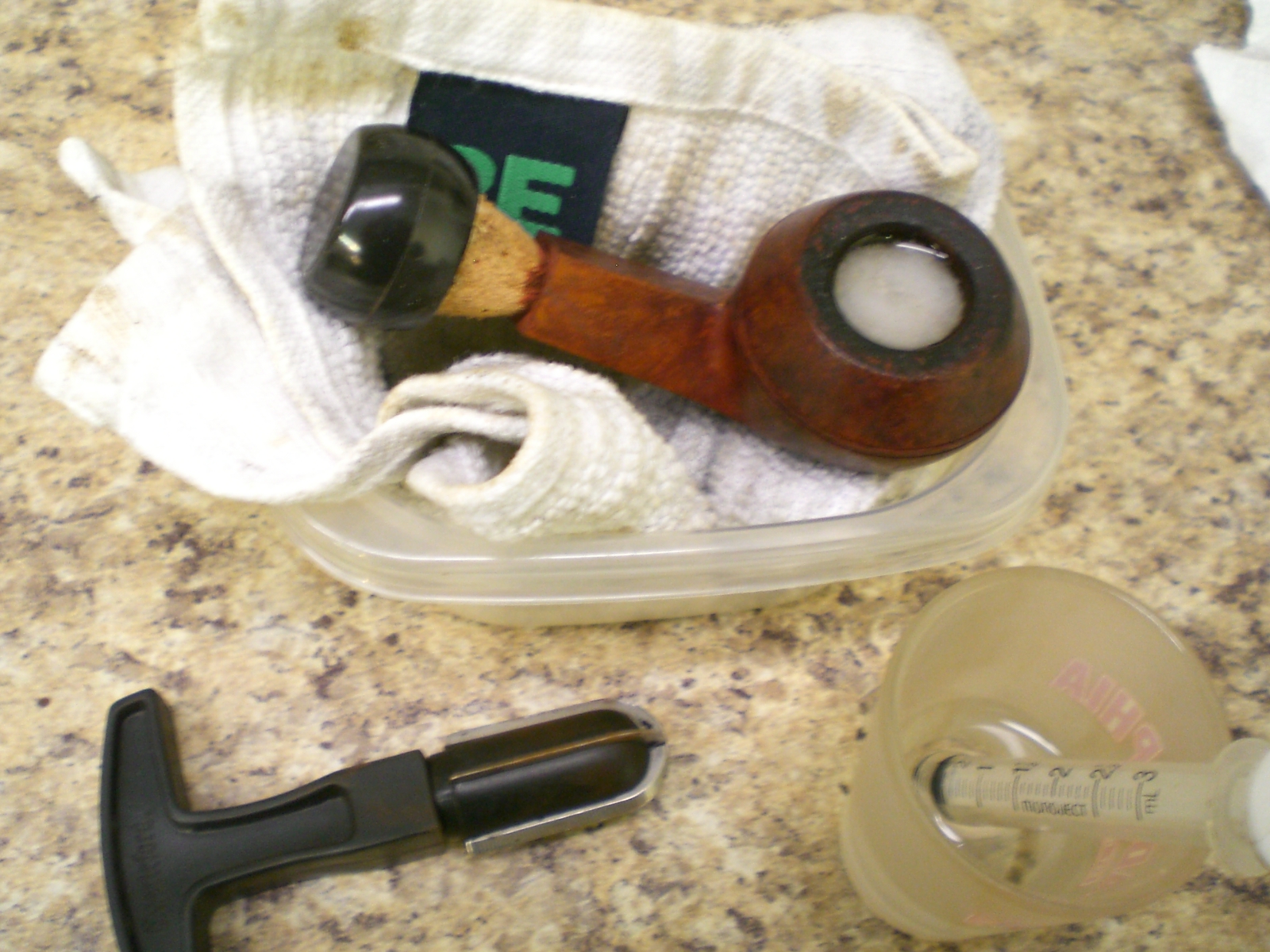
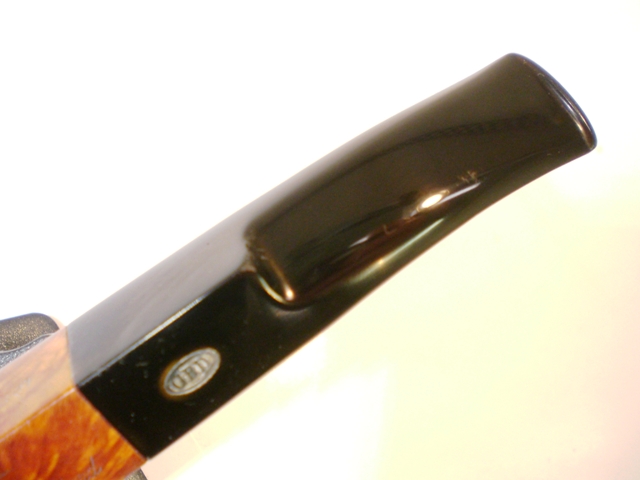
The stem was soaked in oxyclean, with a dab of grease on the brass rondell. I sanded it with 1000, 1500 and then 2000 grades wet sandpaper. Then, the last two grades of micromesh were used (8000, 12000). The stem was then polished on the buffer with tripoli, white diamond and final top coat of plastic polish. There were no bite marks to lift or sand out, so it was a relatively simple clean-up.

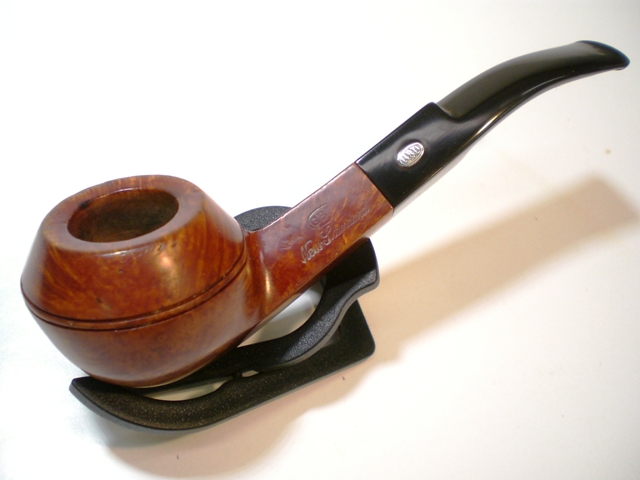
Here is the finished pipe.

Al Jones

IMHO (in my humble opinion): The purpose of the online forum community


I have been thinking quite a bit about the purpose of online communities and forums. I have been on the road for three weeks with no internet access and decided when I got home I would finish writing this piece. Part of this comes from being involved in two of them with regard to pipe smoking and another part comes from what I do for work in training leaders on a global basis and utilizing an online forum for that process as well. So I have been involved in online forums for the better part of 12 years. I have had experience as a participant, moderator and a forum operator/administrator. On the positive side, I’ve learned and shared many great ideas, made valuable new contacts and friends and was able to communicate quickly and efficiently with a wide scope of people in all different parts of the world. On the negative side, I found that it was easy to fall into excess participation and a huge time drain and if not disciplined in my usage – very addicting as well.

As I reflected on the concept of forums I came to the conclusion that it would be helpful for me to put pen to paper with regard to what I am expecting from these forums and what they can provide for me. This kind of writing exercise helps me keep perspective on the waxing and waning life of the online community.

What an online community/forum is

  1. Pipe Forums are a place of intellectual exchange. They are a safe environment for sharpening ideas and skills and reflecting on common and new experiences with other individuals who share the same hobby and passion.
  2. They are a place where one can learn new ideas and refine old ones. Through the sharing of ideas and experiences new ideas, skills and aspects of the hobby can be learned and explored and earlier ideas and thinking refined.
  3. A place to enjoy community – though this is at some levels artificial, it does open the door to ongoing enjoyment and sharing with some of the individuals I seek to know more fully through phone, emails, private messages and often through personal visits and the exchange of gifts.
  4. Influencing the forum’s evolution by becoming an involved member. The beauty of being positive contributor to the shape and form of the community.
  5. Contributing to the learning and experience of others and reciprocally receiving from them in like measure.
  6. Making new friends and contacts – this often comes as follow up work is done and relationships are worked on through the various channels mentioned in number 3.
  7. A way of keeping up with current events that relate to the field of interest. A broad spectrum of forum readers makes for a broad reporting on events of interest.
  8. A place that always has new opportunities to learn and develop a broader and deeper understanding of the hobby.

What an online community/forum is not:

  1. The Forums are not my real life. I do have a significant social life apart from the forums and usually use the forums as a bit of escape from the normal stresses and strains of my life. Because they are not my life I do not expect them to do for me what the folks around me real time provide in terms of support and care. I expect them to provide a haven, a respite from the nonsense of people issues that I deal with every single day.
  2. The Forums are a place for sharing opinions and ideas and as such they can be a bit volatile. People cherish their opinions and have a hard time dealing with disagreement. But it must be remembered the point is not to create a monochrome community where we all say nice things and always agree. Rather they are a place to sharpen one another and learn new skills.
  3. The Forums are not a face to face community. They do not provide a real life context and people join by and large because of common interest or shared hobby. They cannot provide the information needed to make a full orbed assessment of and connection with another person without each individual taking time to deepen that outside the online community. In many ways they provide an artificial sense of community based on perceived shared interests. Outside of that limited setting those on the forums may have little else in common.
  4. The Forums do not provide a vehicle to facilitate understanding the tone and emotions of those who post. Because they are limited to written communication (Though some have chat rooms that seem to have some users) there is no real way to know the feeling behind words that another is writing to you. It is easy to misread emotion and feeling into what is written that was never intended. Thus we can easily be sucked into drama that is unnecessary because it is not based on any reality.

Many of the ideas and thoughts were found as I researched this topic online. The next part of this article has been adapted from an article by Steve Pavlina on Effective Online Forums Usage http://www.stevepavlina.com/articles/effective-online-forum-usage.htm

He lists some of the potential negative side effects of excessive forum usage that I found helpful reminders for me in learning and maintaining moderation in my participation in the online community.

  1. Reduced concentration and focus
  2. Reduced productivity
  3. Chronic procrastination
  4. Increased pessimism and/or apathy
  5. Being distracted by endless debates and idle gossip
  6. Gradually substituting tribal group think for your own intelligence
  7. Impaired social skills, neglected relationships, and a weakened social circle (a consequence of substituting online socialization for face-to-face conversations)
  8. Reduced energy (forum participation is sedentary compared to more active social outlets)
  9. Reduced self-esteem
  10. Career and income may suffer (including loss of employment)
  11. Forum addiction

From that point the article gives some suggestions that I thought were helpful in using forums effectively and avoiding the negative side effects. I am not sure I agree with all of his suggestions but I found them thought provoking and worth passing on to those of you who are reading this piece.

1. Take a Forum Fast  – First, if you’re currently active on any forums, go on a forum fast. Stop visiting all forums for a while; don’t even lurk. I recommend a fasting period of 30 days, with a bare minimum of 14 days. This will help you break any unconscious habits and regain your perspective, so you can intelligently evaluate the role forums should play in your life. Otherwise, you may be coming from a place of unconscious habit and will likely overestimate the value of continued participation. If you’re currently a forum moderator, take a forum vacation, and enlist someone to temporarily assume your moderation duties. Redirect the time you would have spent in online forums to something positive like exercising or reading books. If you don’t think you have the discipline to do this, simply make a post in each forum explaining that you’ll be taking the next 30 days off, and if any forum member catches you online, you’ll pay the first person that emails you about it $100. This should give you enough leverage to stick with your fast.

2. Reassess Your Forum Usage HabitsOnce you’ve completed the initial fasting period (and not before), take a fresh look at your forum participation habits. Imagine that you just discovered each forum today for the first time. What are the pros and cons of participation? Is this the best use of your time, or can you imagine something better? If you’re using forums to get specific information, would it be better to simply read books, articles, or blogs? If you’re using them as a social outlet, would it be better to join a local club and meet people face-to-face? Looking back on your previous pattern of behavior, would you say you were addicted? Did your usage pattern become unconscious? If so, how do you intend to prevent that from happening again?

3. Clarify Your ExpectationsIf you decide to participate in online forums, clarify your expectations. Whether you intend to use forums for market research, to make new contacts, or as an outlet for your humorous wit, get clear on why you’re there.

4. Establish Reasonable BoundariesTo limit the risk of forum addiction, set clear boundaries for yourself and write them down. You can limit the number of times per week you check each forum, the total amount of time you spend participating, or the number of posts you’ll allow yourself to make each week. Track your weekly usage on a scrap of paper to keep yourself consciously aware of your participation habits. Don’t go dark and succumb to unconscious habituation. Establish clear boundaries such that if you cross them, you know you’re at risk of falling into a pattern of addiction. And if that ever happens, it’s time to immediately begin a new fasting period.

5. Let It GoIf you find yourself repeatedly succumbing to forum addiction or other negative usage patterns, you may decide it’s best to simply do without. At the time of this writing, I no longer regularly participate in any online forums or message boards. When I clarified my intentions, I realized my #1 reason for participation was to contribute and to help people. But using forums as a contribution outlet was inefficient, since it would too often lead to lengthy (and mostly unproductive) debates. I found that sticking with one-to-many outlets like writing articles and maintaining a blog were a much better use of my time. Blog comments still allow some interactivity, but the time required to manage them is reasonable and the personal relevance of most blog comments is extremely high.

6. Replace Online Socialization with Face-to-Face ContactRegarding the social aspect, online forums are a poor substitute for meeting people in person. While there’s certainly some social benefit to forums – many people have met their spouses in online forums, including me – it’s important to physically spend time with human beings instead of via a computer screen. If you need a new social outlet, join a local club or association, especially one that meets weekly. I found that when I joined Toastmasters International and began attending meetings and competing in speech contests, my interest in socializing via online forums fell dramatically. Even the best online communication pales in comparison to face-to-face, belly-to-belly contact.

7. Be a Dabbler, Not a FixtureAnother tip is to treat forum participation as temporary. If your goal is to make new business contacts, then dive in and participate actively for a while, maybe 30-90 days. Make new friends and contacts, collect private contact info, and then abandon the forums. Continue to develop your new relationships via one-to-one communication like email, phone calls, and if possible, face-to-face meetings (such as at industry conferences). Temporarily dabbling in many different forums is a more effective way to build contacts than pushing a single forum far beyond its usefulness.

You can also use the dabbling method to gather general information on a subject. Seek out a number of relevant forums and bookmark them. Then spend a few hours scanning each forum once every six months to soak up the current wisdom. Whenever you have a specific question, pop in and search the forum archives. If searching turns up a blank, feel free to post a new message, harvest the answers, and disappear.

8. Avoid AddictionOnline forums are tricky beasts. At the time of this writing, my feeling is that ongoing daily participation in any single forum for more than a few months is almost invariably unproductive. Eventually the initial benefits like gaining knowledge and making new contacts produce diminishing returns. And then the negative effects like forum addiction set in. Regular participation (even from unconscious habituation) will still provide some benefits, but the longer you participate, the less efficiently those benefits are realized.

Close cousins of forum addiction include online gaming addiction, web surfing addiction, blog addiction, email addiction, and news addiction. The common pattern is that unconscious habituation overrides conscious, clear-headed decision-making. If you ever find yourself with such an unproductive habit, take steps to reassert conscious control. Use a period of fasting to regain your perspective, reexamine your motives, set clear boundaries, and find alternative outlets. Manage your forum usage consciously to serve your goals, and avoid the trap of addiction.

Online forums can be a powerful productivity tool, but self-awareness and discipline are required to prevent them from becoming a pitfall of procrastination.

I look forward to hearing your thoughts on the use and abuse of Forums. They are a great tool for making our world much smaller and a way for us to reach out to others who share a common interest in the pipes and tobaccos we love. Let’s have your responses.

What About Needle Files


A needle file is a tool that I have referred to often in this blog and one that I use almost every time I work on a stem or shank in the refurbishing process. I have three sets of files that each has 12 files in various shapes. The reason for the three sets is the size of the files in each set. The picture below shows one of the sets that I have.

Image

Needle files are commonly used in crafts or design work to finish small pieces of material. My daughter uses them in her jewelry design work to open the tiny holes in beads to make them easier to thread. They are also used in model building, guitar making, fine instrument repairs and a world of other work. They are an indispensable tool to do the fine and detailed work needed in tight spaces. Most common files are made from a hard steel bar with a series of narrow or pointed ridges or teeth that face upward. The needle file is no different and is made up of a series of teeth laid out on a piece of metal, usually with a handle on the end. It is a very small tool that is usually sold in sets of five or more files. Two of my sets have handles – one with a hard plastic handle and one with the end dipped in rubberized material. The third and smallest set is exactly like the one pictured above.

You will find if you do a Google search for needle files that there are many different types and descriptions and it can be a bit daunting to figure out the difference. The easiest explanation on the difference in the files that are available on the market is based on the cut of the teeth and the size and shape of the file, as each file is designed to be used for a different purpose. The teeth in the file are specifically designed to create different finishes on an object. Diamond needle files, hand files, checkering files, crossing files and half round ring files are a few of the common types of needle files that exist today. The chart below shows some of the shapes that are commonly found in a set of files.

Image

I have found that a needle file is excellent for shaping, designing and smoothing the button area on a stem, opening the airway in the slot and also opening the airway in the tenon. The different shapes of the files allow me to cut the vulcanite or Lucite in the shapes that I am aiming for. I personally like an oval slot so I use three different shapes – a round, an oval and a wedge to shape the slot. The round file and the oval file also work well on the tenon. I use a rectangular flat one to cut the edge of the button and to shape and reshape that area of the stem. The file is pushed it back and forth over the piece to create friction between the teeth of the file and the object. The teeth of the needle file pushing against the object will work to shave off pieces of the material until the desired effect is produced. A needle file is typically used to carve out the intricate details, smooth out a surface or provide a specific finish on a piece.

Image

When you look at the file sets you will see that needle files each have a slightly different shape to allow for different uses and handling. In the sets I have there are certainly some shapes that I have never used extensively. At one time or another I have tried them all to see what they can do but have settled into the common 5 or 6 that are close at hand. Each of these files is specifically used for detailing work on the surface of a project. Some of the needle files have a sharp pointed tip, which can be used for opening airways or even puncturing blocked stems or airways. I clean the files with isopropyl alcohol and a soft tooth brush to remove the vulcanite dust from the teeth and to keep the files sharp and useable. Remember, a needle file is not a tool that I would use to file large amount of vulcanite on the stem or to remove excess material, but rather to fine tune shapes and airways on the stem.

Image

Pick up a set and give them a try. You can read various articles on the blog on opening a stem or and airway, shaping a button or opening a slot on the stem. Each gives detailed pictures and comments on the use of the files.

What is a Pipe Retort and How it is used


Blog by Steve Laug

I have had a retort kit for many years now. I picked it up on eBay from a fellow who makes them and all profits from his sales go to the Sanctuary for Unwanted and Neglected Animal rescue S.U.N.A. All proceeds help pay veterinarian bills. The retort is owned and manufactured by them for a fund raising tool. I have used it in spurts over the years. When I first got it I used it all the time. I like the way it worked and cleaned up the dirtiest pipe and boiled out the tars and oils in the bottom of the bowl. In recent years I have just forgotten to take it out in the process of cleaning and refurbishing. It is nothing about the kit that makes me forget it is simply that I have used a variety of other methods to clean out the oils and tars. These include an alcohol bath and the bowl stuffed with either rock salt or cotton bolls and filled with alcohol. Both methods have worked well for me so I just seem to move on without doing the retort.
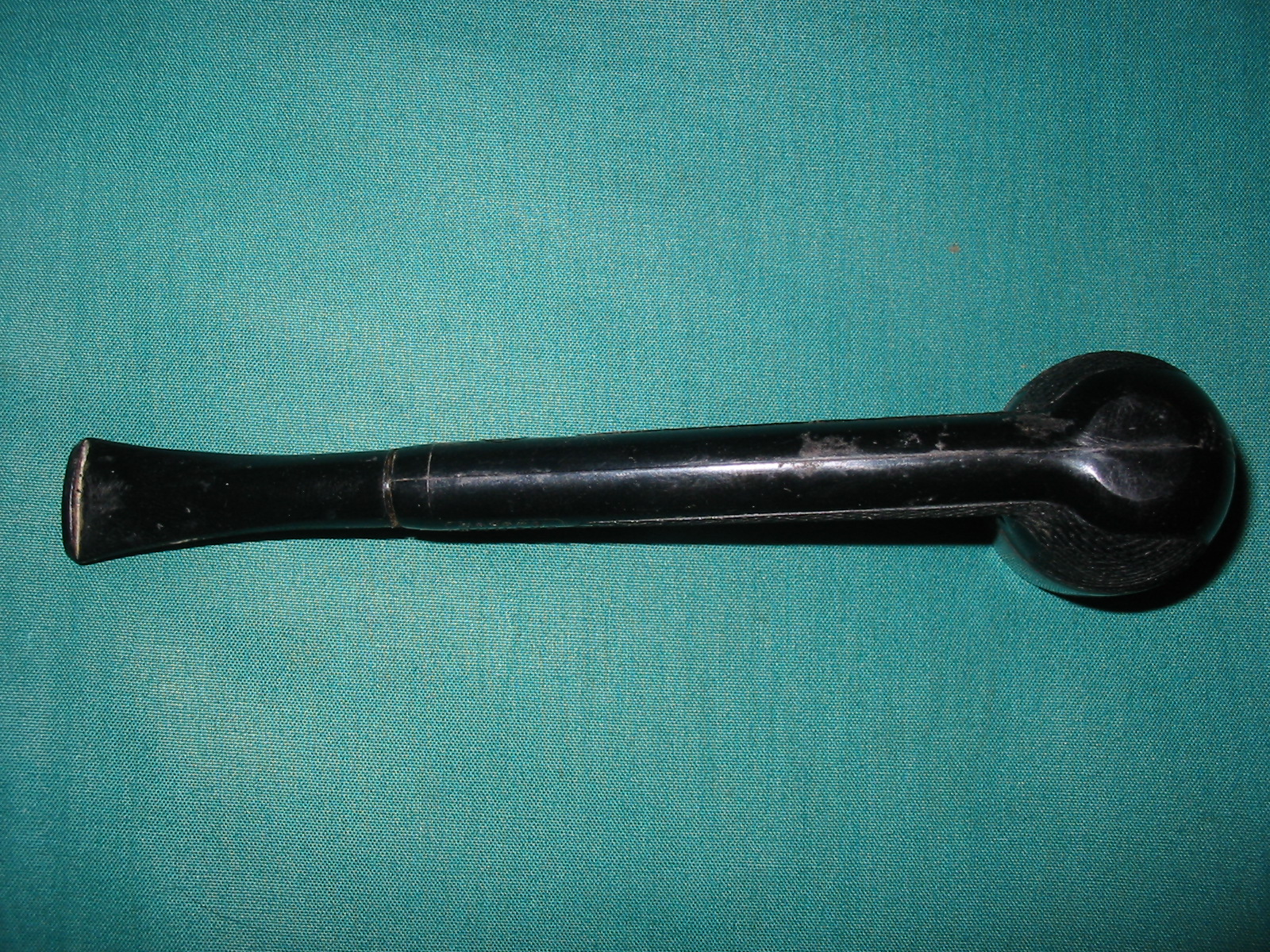
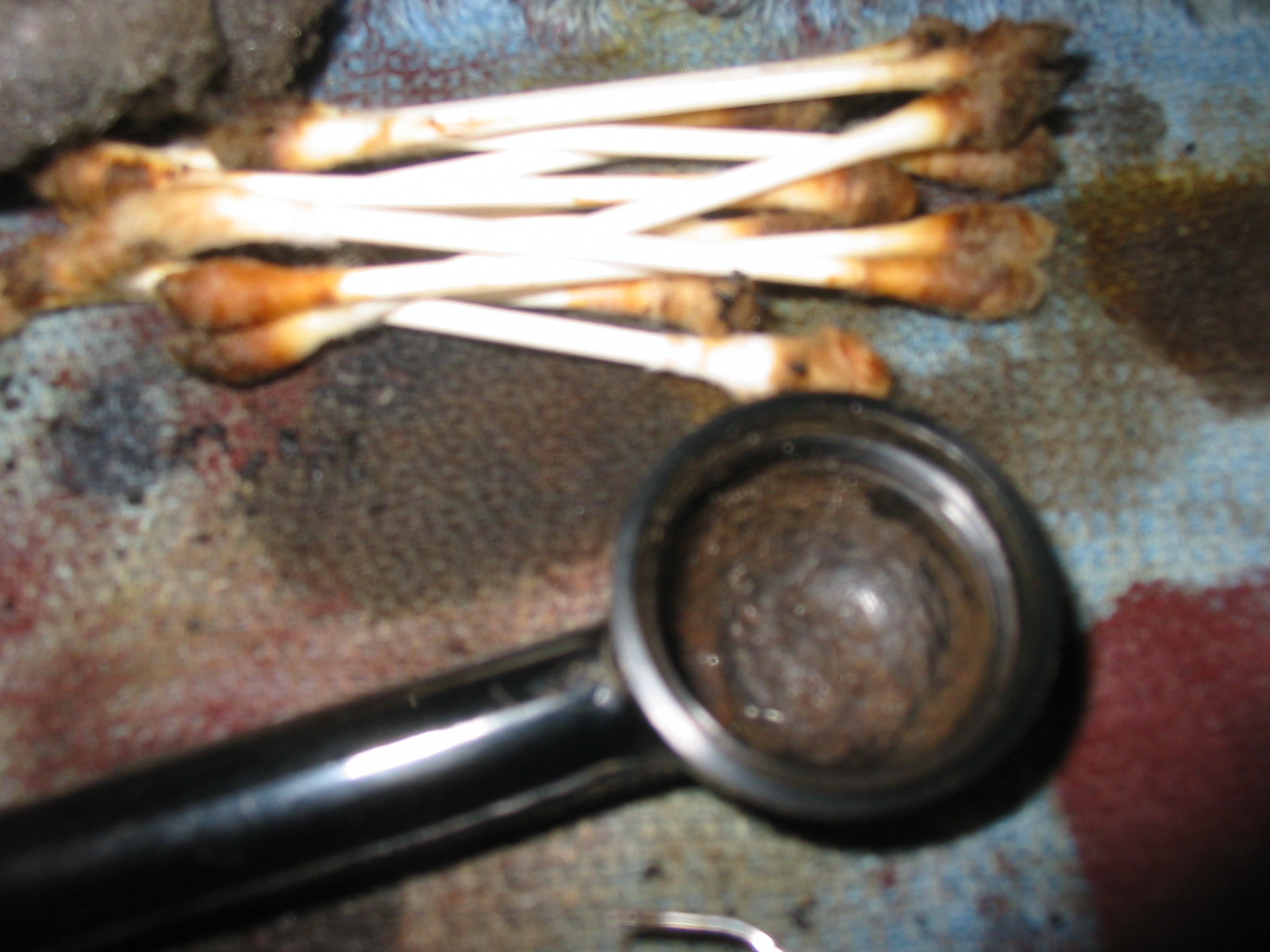
Retort kits are readily available on eBay and include all the things needed for a working retort. The picture below, taken from an eBay sale shows a version of the retort. The one from S.U.N.A. that I have is much more refined and elegant. But the constituent parts of the retort are virtually the same nonetheless. The retort includes a Pyrex test tube to hold the alcohol that is heated with either a candle or an alcohol lamp until it boils up through the surgical tubing through the stem and into the bowl of the pipe. Cotton bolls are used to plug the opening in the bowl and keep the hot alcohol in the pipe bowl.

Image

I found this drawing of a retort on the Seattle Pipe Club website and include it here to show the constituent parts of the retort. Where it uses an eye dropper, the S.U.N.A. version uses a nicely formed piece of brass tubing inserted into the stopper on the test tube.

Image

The designer of the S.U.N.A. retort says that the Pipe Cleaning Retort is the result of many years of experimentation by a 40 yr. pipe smoker and collector. He describes the purpose of the system as “the removal of gunk from the pores of the briar, specifically the heel, to sweeten and sterilize. Swabbing with pipe cleaners will not do the job, especially the musty estate pipe and also is great for changing blends without crossover taste. There is also the danger of harmful molds present in old pipes that will be removed by the hot alcohol method.”

How to use the retort

I begin the process by filling the retort test tube with isopropyl alcohol about ½ to 2/3 full. Others have used ever-clear but I have found that the 99% isopropyl alcohol works well for me. It is not only reasonably priced but less volatile than other products. It is also readily available at drug stores. The less water in the alcohol results in a lower boiling point. Put the stopper with the tube (whether copper tubing or eye dropper) into the mouth of the test tube. Attach the surgical tubing over the pipe’s stem. I usually stretch it up to about ½ inch on the stem. The connection of the tubing on the stem should be tight as you do not want the alcohol to seep around the joint when it is hot. (A 1/4″ slit or a v cut in the surgical tubing will make it easier to fit onto pipe bits.) Use cotton bolls to stuff in the opening of the bowl to prevent the hot alcohol from damaging the bowl’s finish.

Hold the retort over the heat source, candle or alcohol lamp and slowly move it back and forth over the flame. Hold the pipe by the bowl so that it is level and be careful of the tube as it gets hot. I generally hold onto the stem and the rubber stopper as I move the pipe back and forth. As the alcohol boils up into the pipe, periodically remove the retort from the flame. The instructions require that the unit be supported to allow back and forth flow for best cleaning, not just dangling over high heat source that causes over boil and uncontrolled gushing. As the retort cools, the alcohol will be sucked out of the pipe and into the retort. By repeated heating and cooling the retort, you can flush the pipe with boiling alcohol several times. Once the alcohol turns black with tar, replace it with some fresh alcohol. After about a dozen flushes, remove the retort and clean the pipe with bristle cleaners or a nylon brush. Let the pipe dry out at least six hours before smoking.

NOTE: Some may have a concern about fire or even explosion from heating the alcohol over an open flame. The maker of the retort system says that “our testing to deliberately cause separation due to restricted airway resulted in the connector pulling out of the glass tube due to the increased pressure, a press fit instead of fixed will prevent any explosion. Any remote possibility of a resultant fire using isopropyl alcohol in the amount required to operate the retort can easily be snuffed out by a small towel. The volatility of the alcohol is very low and it requires a low amount of heat to reach the point needed to make the retort function properly”. It is recommended that you use eye protection while working with the retort.

Image

The retort kit that I purchased included a generous supply of name brand tapered fluffy pipe cleaners, a natural rubber surgical tubing or connector bulb to attach various size stems, a thick walled Pyrex test tube (high speed centrifuge quality) and cotton balls for putting into the bowl. It also came with complete instructions. My kit did not come with a heat source though it appears that they now include a small votive candle.