Author Archives: upshallfan

Unknown's avatar

About upshallfan

Moderator on the PipesMagazine forum since 2011. Guest contributor on the Reborn Pipes Blog by Steve Laug.

City deLuxe 9240 Restoration


Blog entry by Al Jones

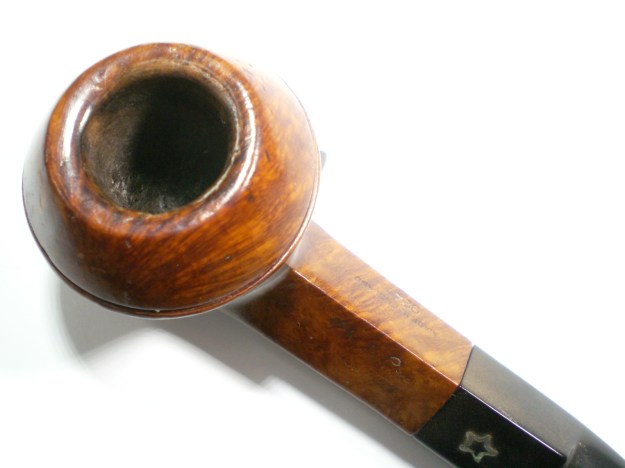
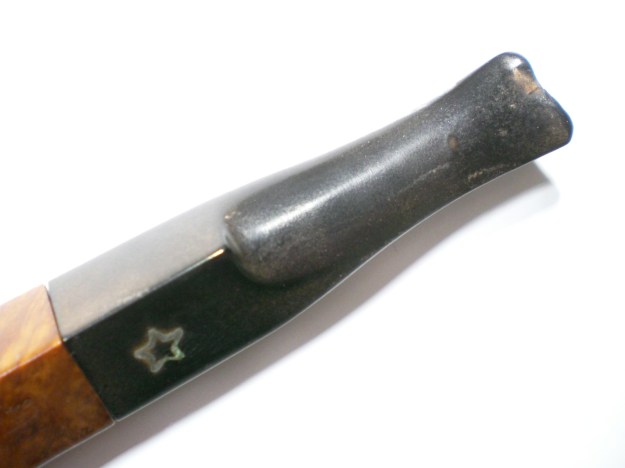
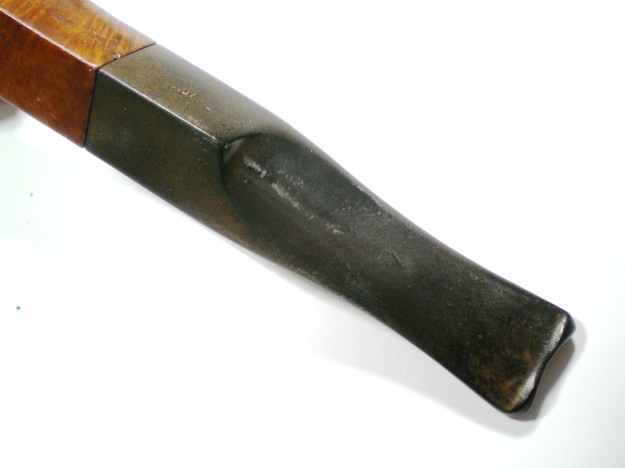
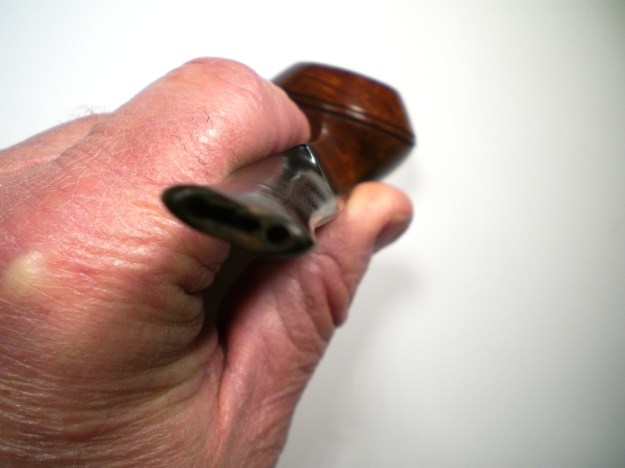
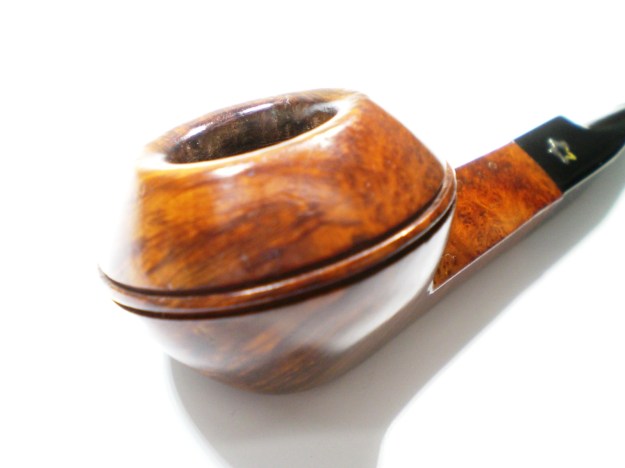
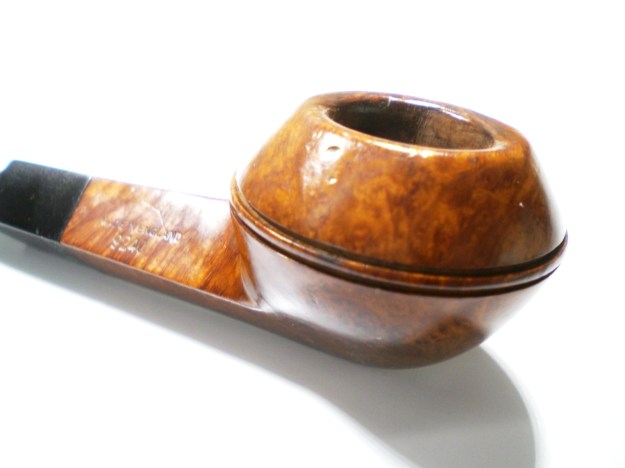
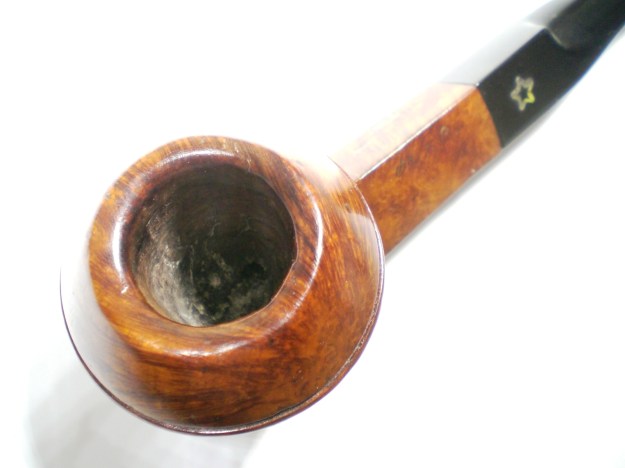
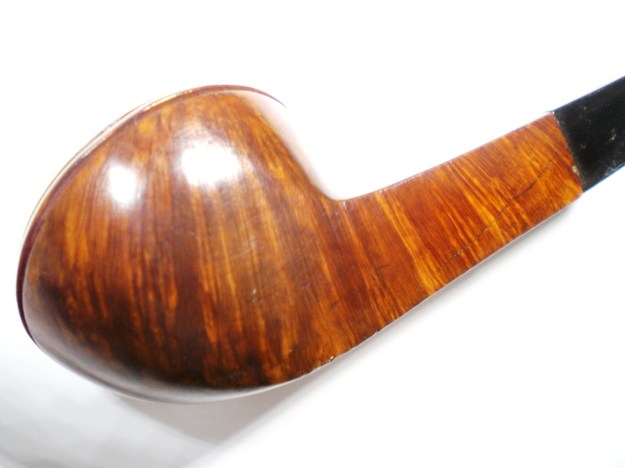
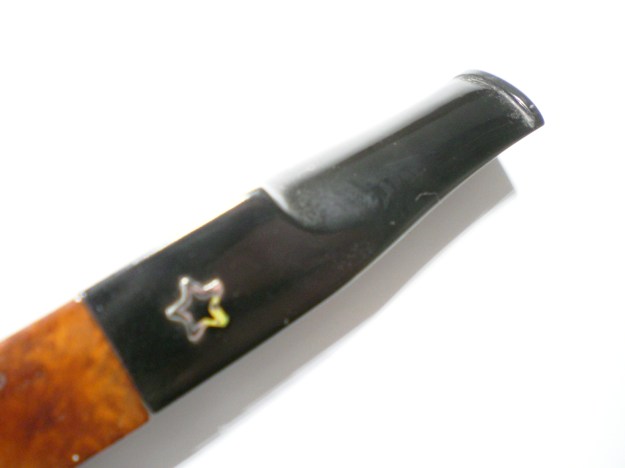
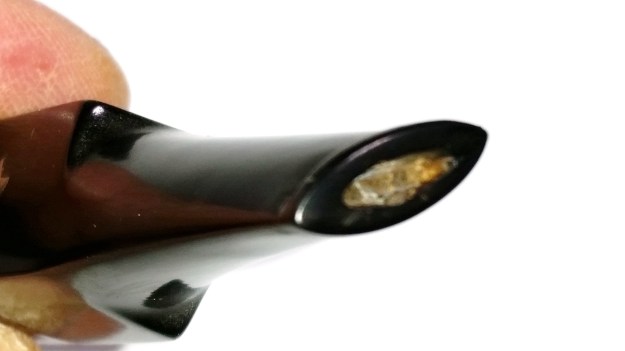
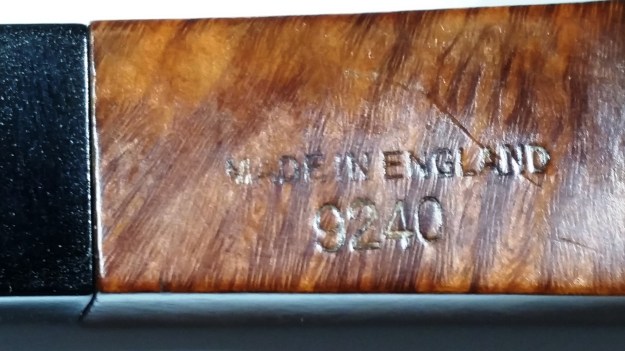
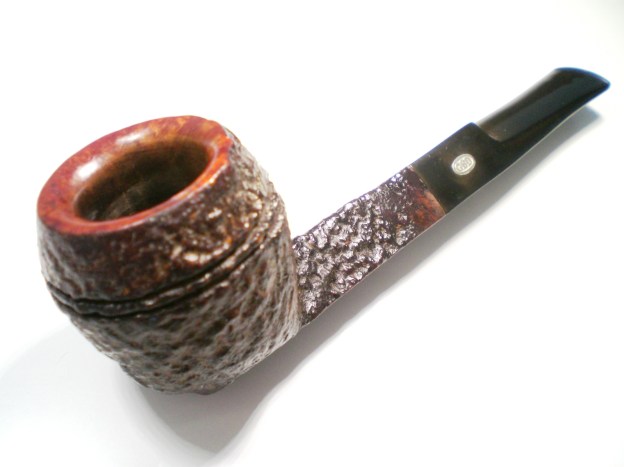
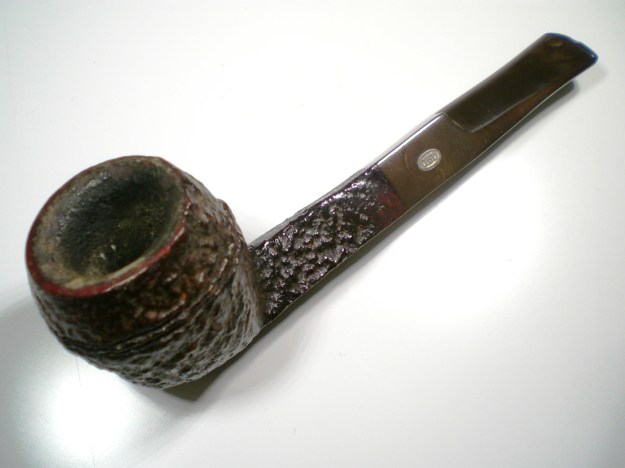
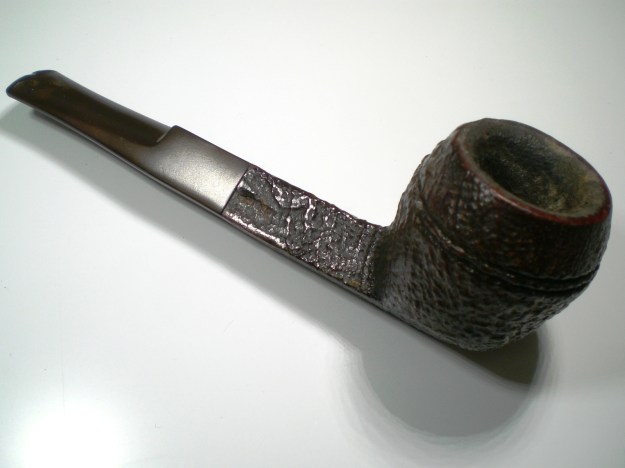
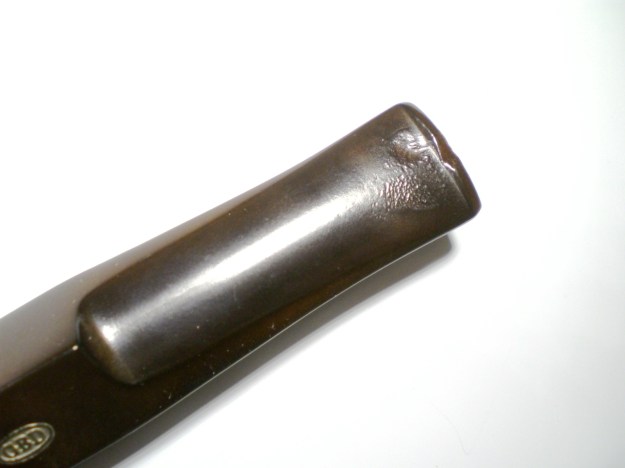
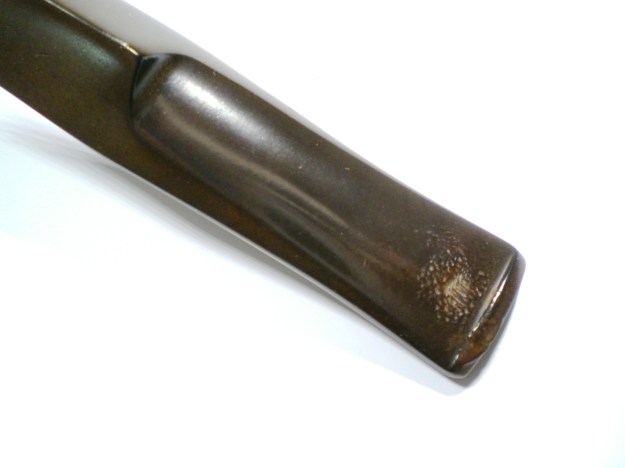
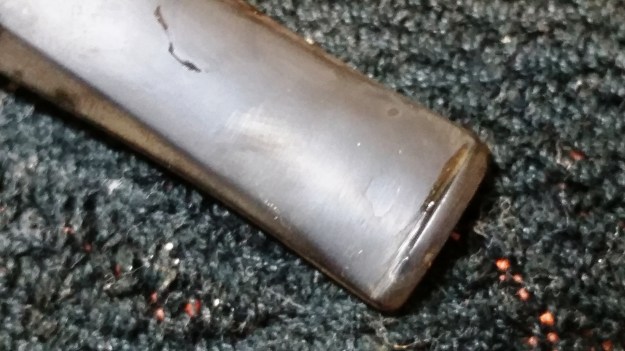
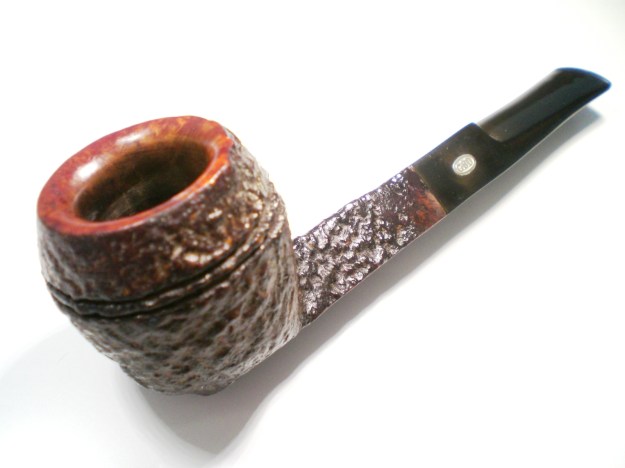
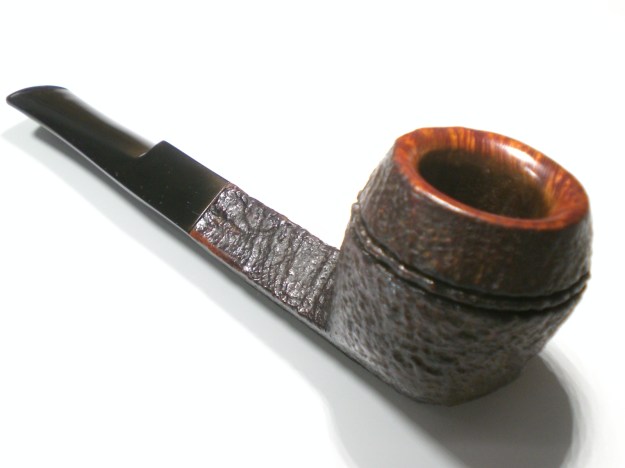
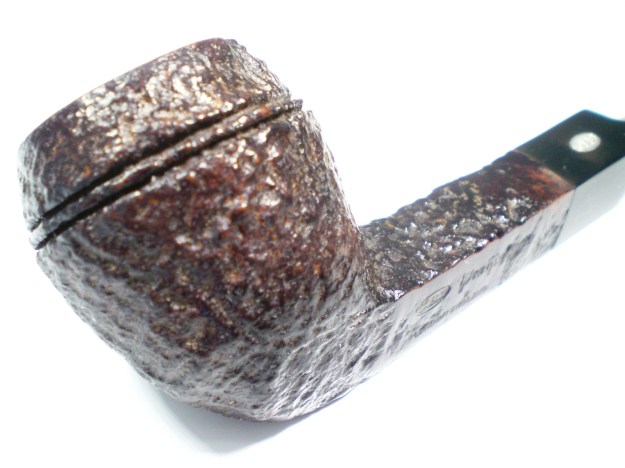
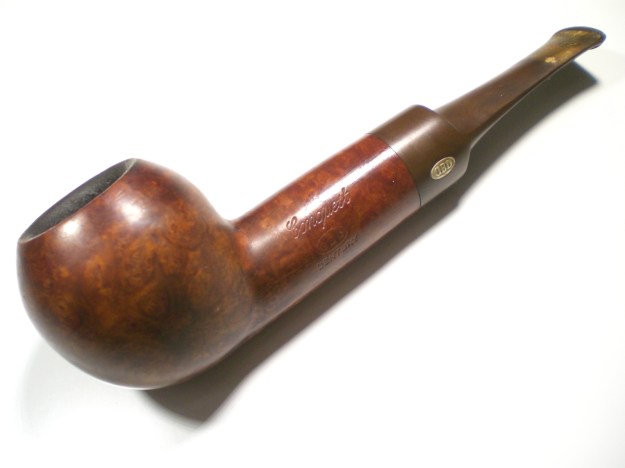
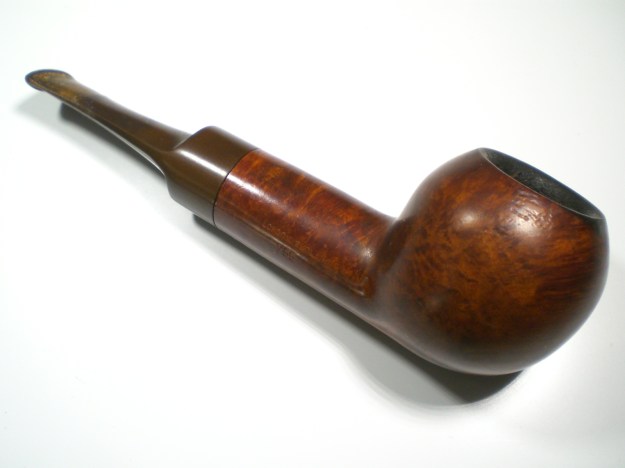
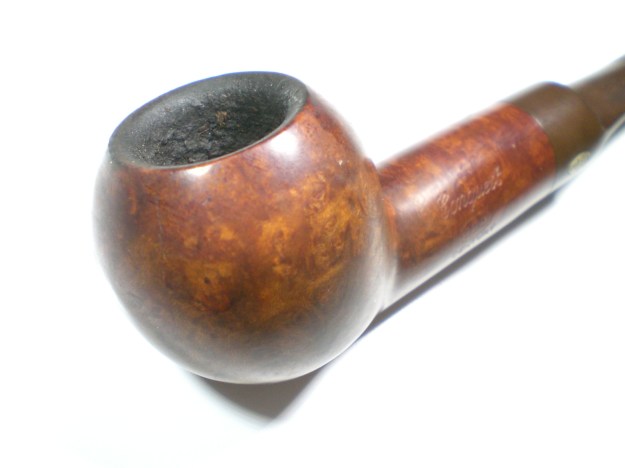
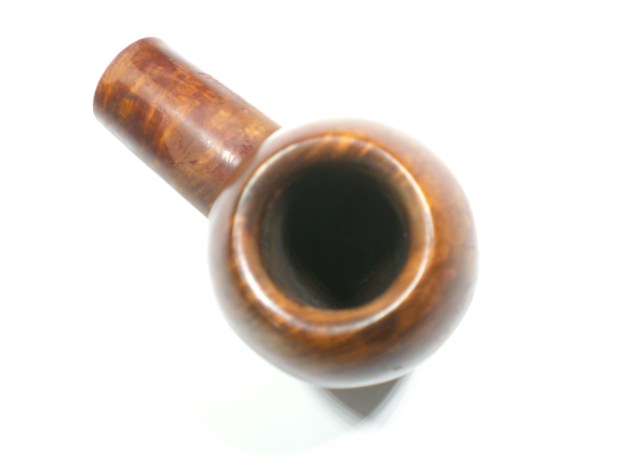
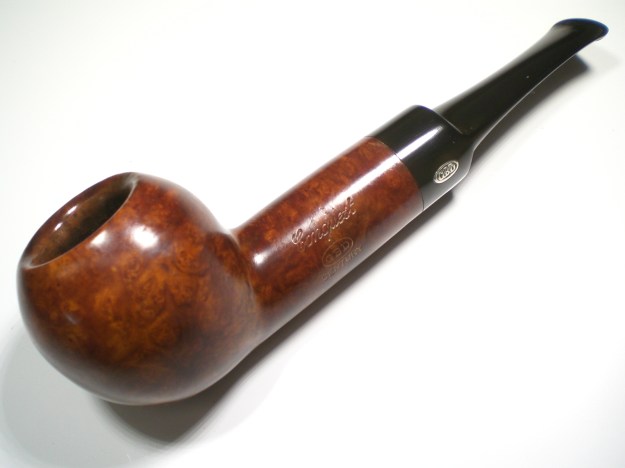
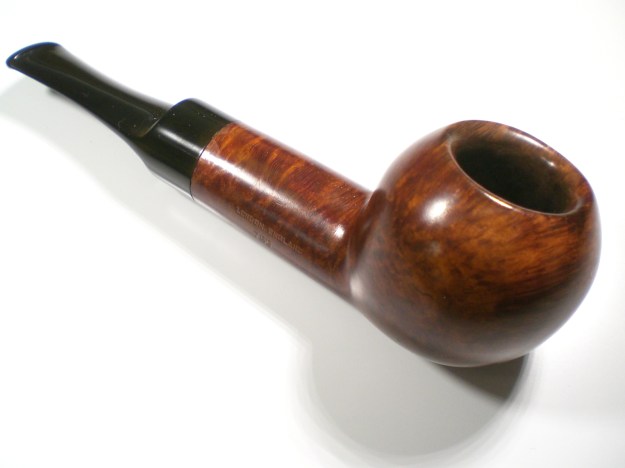
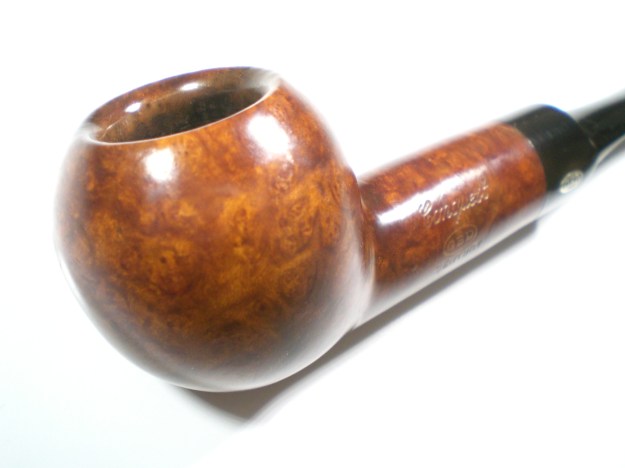
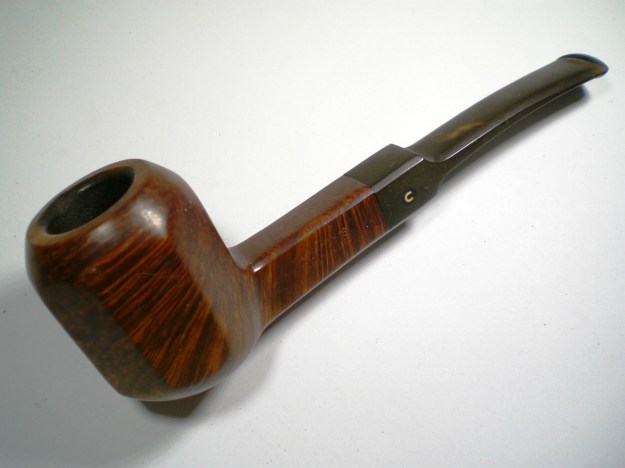
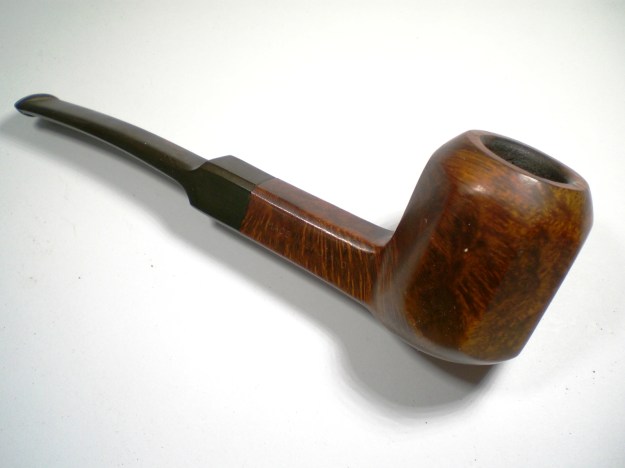
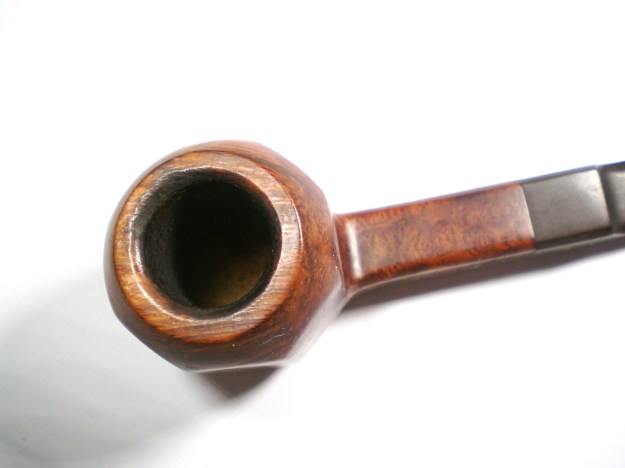
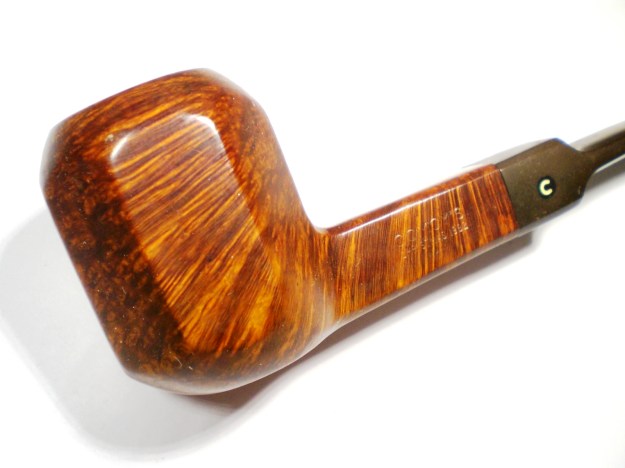
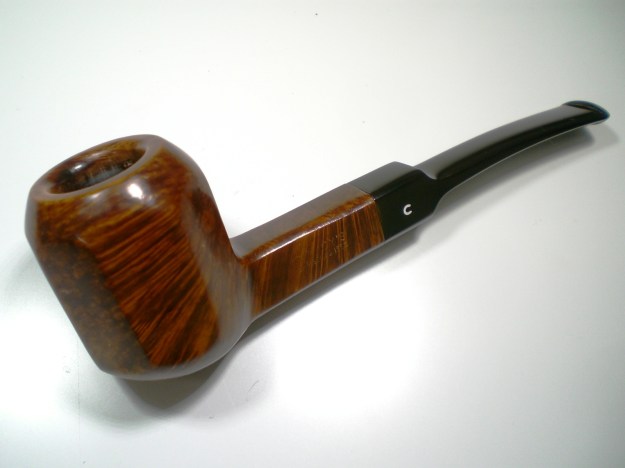
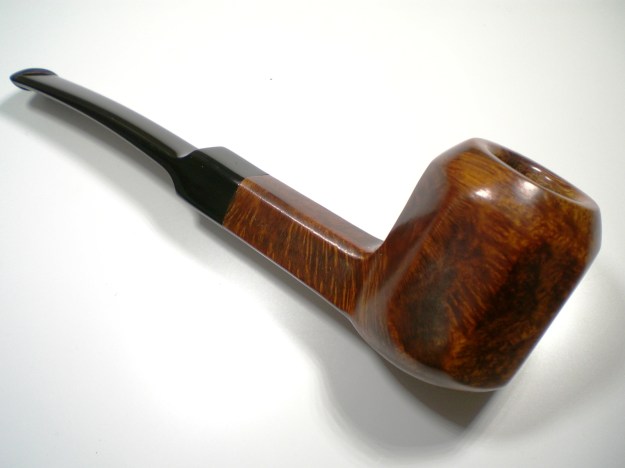
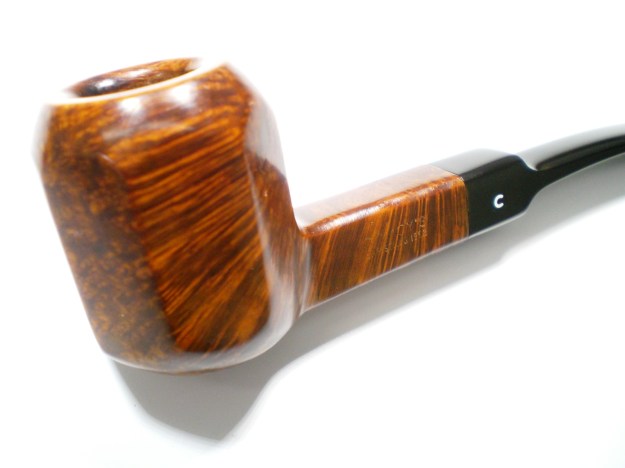
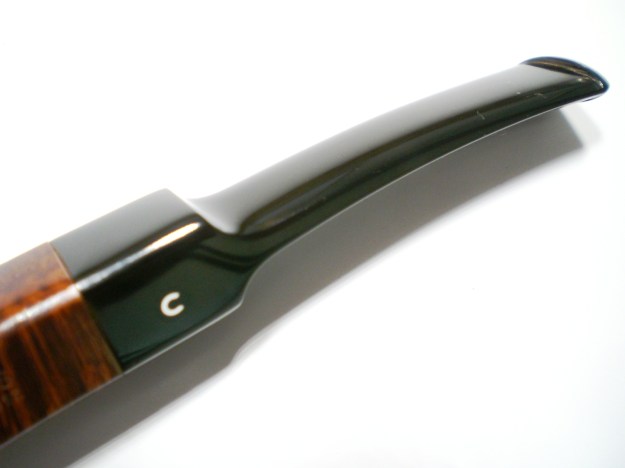
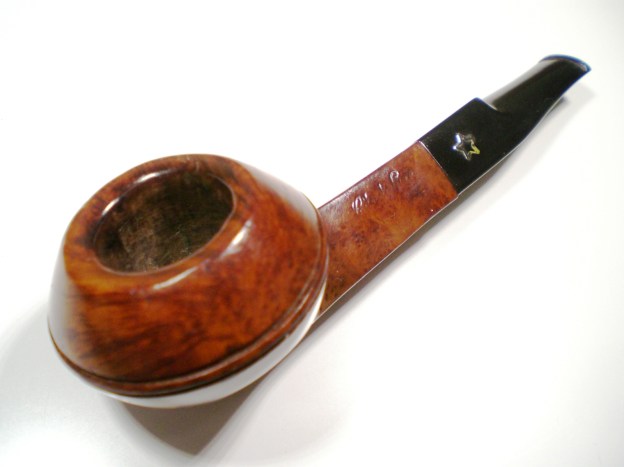
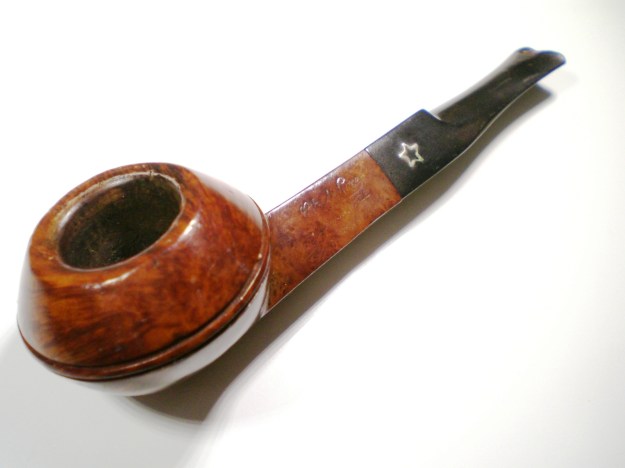
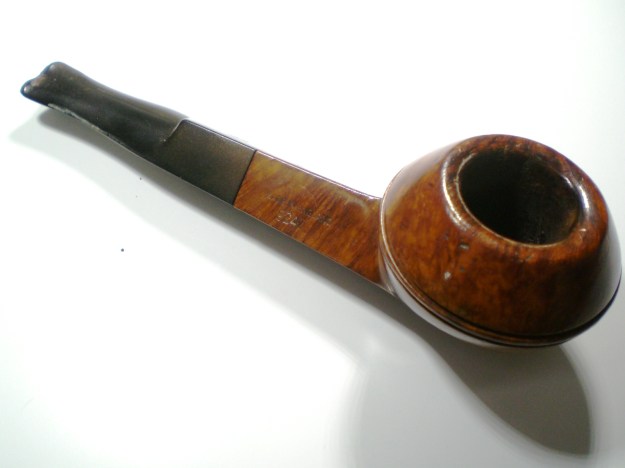
This City deLuxe short, shape 9240, squat bulldog came in a group of pipes I found on Ebay. I thought it had the most promise of the trio. As with most City deLuxe pipes, this one came with a twin-bore stem, they called the “Tuscan Lip”. Unfortunately the pictures didn’t disclose the damage to the button end. The white plastic fill bit was missing and one of the bore holes was cracked thru to the fill inset.
City_deLuxe_9240_Before (1)

City_deLuxe_9240_Before (4)

City_deLuxe_9240_Before (2)

City_deLuxe_9240_Before (3)

City_deLuxe_9240_Before (5)

City_deLuxe_9240_Before (6)

My first attempt to the repair the button was to completely fill in the button holes. My plan was to re-drill the draft hole. After numerous attempts with the black superglue, I was unsuccessful. When I attempted to re-drill the draft hole, using a 1/16″ drill but, the repair portions kept flaking off.

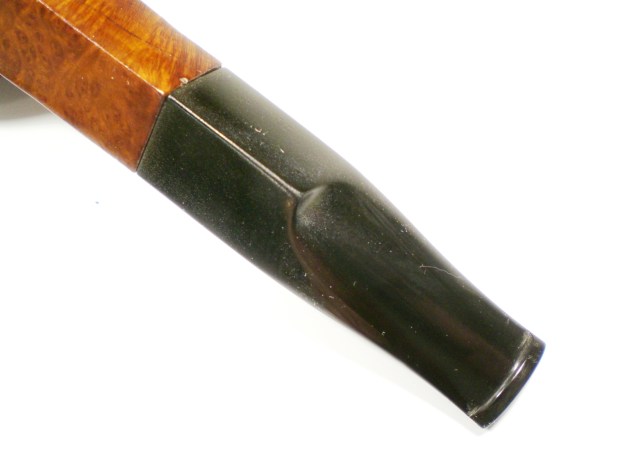
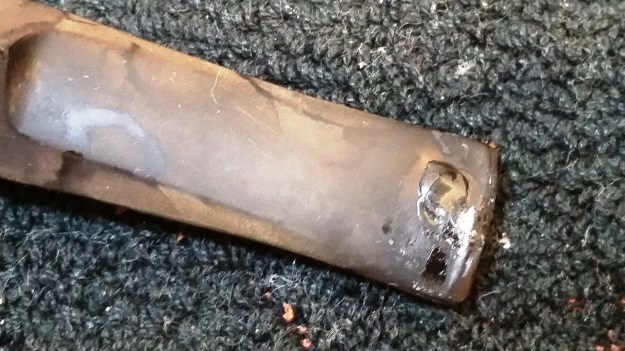
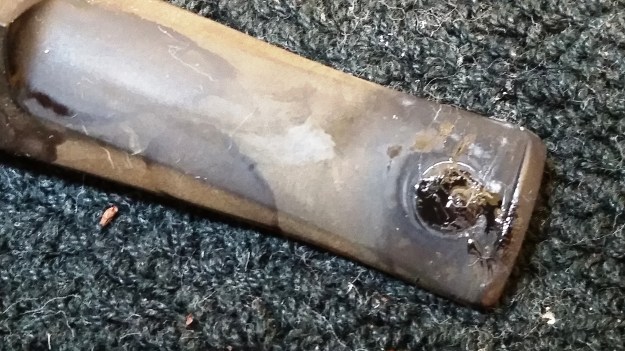
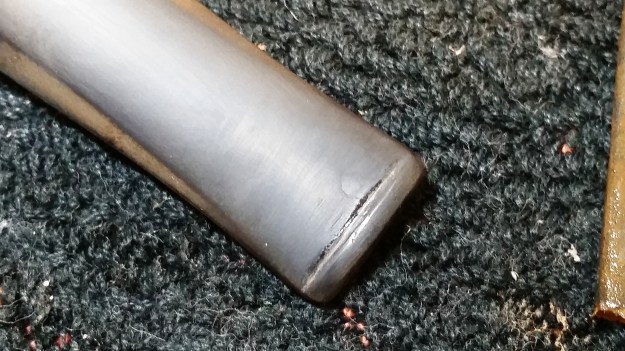
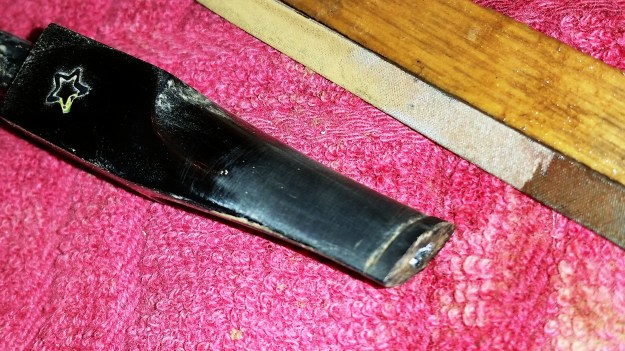
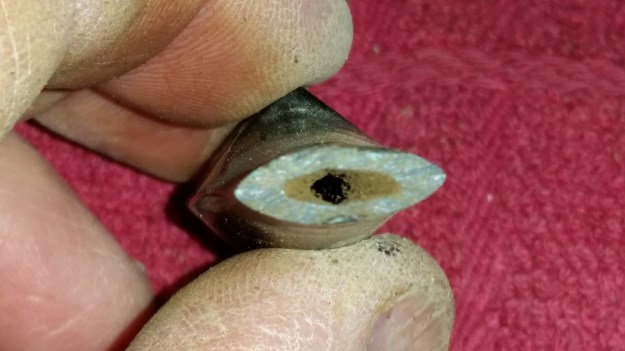
I finally gave up and decided to cut off the broken button and shape a new button. I used a fine-tooth hobby saw to make a clean cut. I cut in a new button using a flat needle file. With 400 grit paper wrapped around the needle file, I tapered the stem up to the new button. That was finished with 800, 1500 and 2000 grit paper. At this time, I removed the oxidation from the rest of the stem. The brass star logo was in great shape. I used another needle file to funnel the draft hole. The stem was mounted and buffed with White diamond rouge and Meguiars Plastic Polish. Below are two shot taken as the new button was shaped.
?
?

City_deLuxe_9240_Before (8)

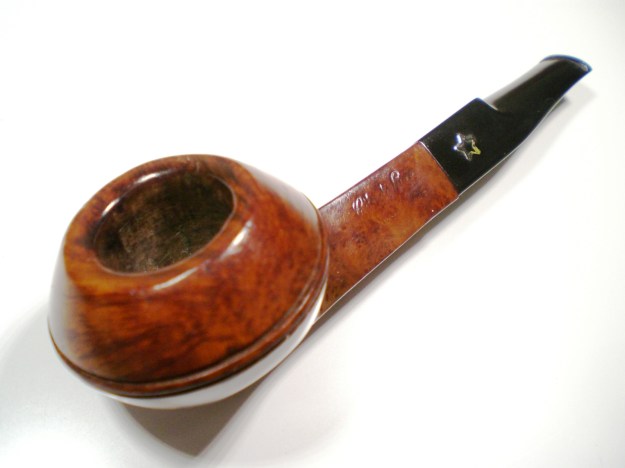
The bowl was reamed and then soaked with alcohol and sea salt. I scrubbed the shank with a bristle brush dipped in alcohol. There were some dents on the briar. I used an electric iron set on high and a wet cloth to stem them out. Not all of them were removed, but I don’t mind a little patina on my pipes, those marks were all earned. The bowl was then buffed with White Diamond and several coats of Carnuba wax.

Below is the finished pipe.
City_deLuxe_9240_Finish (1)

City_deLuxe_9240_Finish (4)

City_deLuxe_9240_Finish (6)

City_deLuxe_9240_Finish (5)

City_deLuxe_9240_Finish (2)

City_deLuxe_9240_Finish (7)

City_deLuxe_9240_Finish (3)

City_deLuxe_9240_Finish (8)

?

?

?

?

?

?

City_deLuxe_9240_Finish (1)

GBD Shape 269 Prehistoric Bulldog Restoration


By Al Jones

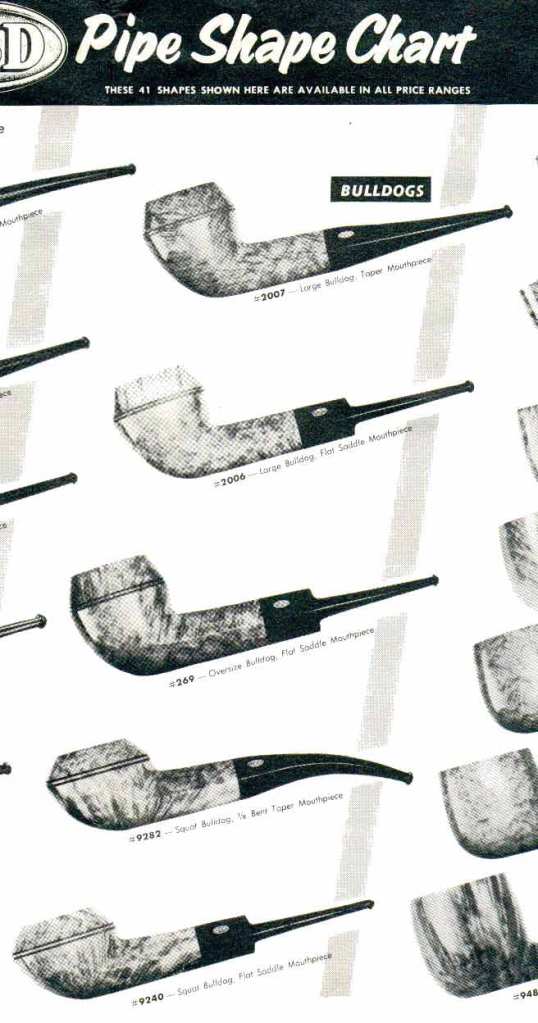
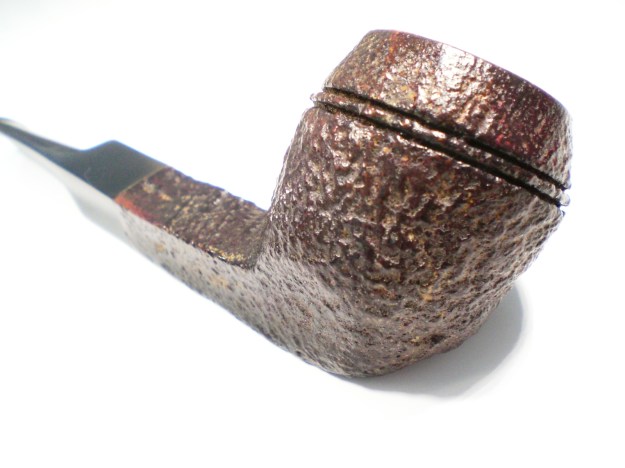
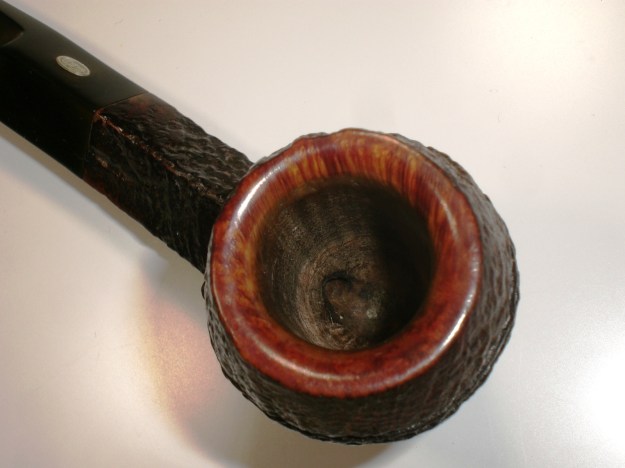
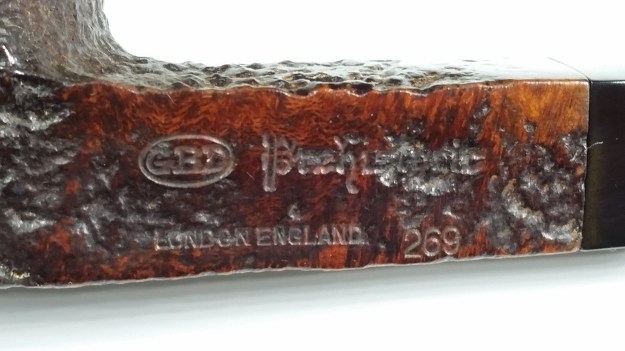
GBD had a number of straight bulldog shapes in their catalog. Typically, the 2007 or 2006 shapes are seen more often. Shape 269 is listed in their catalogs an “Oversize Bulldog with saddle stem” and is seen less frequently. This is a larger pipe, easily a Group 5, but it only weighs 43 ounces. I love the “Prehistoric” deep sandblast finish for it’s craggy look. Another feature of that finish is the polished bowl top that is frequently hidden underneath a layer of cake. Sporting the brass rondell and “London, England” COM mark, this pipes dates 1981 or earlier. Below is the GBD shape chart showing the straight bulldog shapes

gbd4_zpsd43c681b(1)

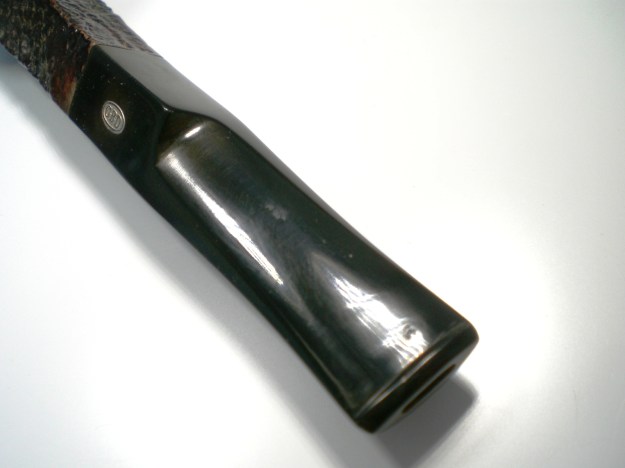
The briar was in excellent shape, including the nomenclature and bead lines on the bowl. The stem fitment was excellent. The stem had a deep tooth mark on each side of the stem and an abrasion on the button.

GBD_269_Prehistoric_Before (1)

GBD_269_Prehistoric_Before (4)

GBD_269_Prehistoric_Before (2)

GBD_269_Prehistoric_Before (3)

GBD_269_Prehistoric_Before (5)

On this pipe, the cake was quite thick and bubbling over the rim. I reamed the cake with my new Pipenet reamer set but unfortunately, one of my bits shattered. My garage was in the 40’s overnight, but was warm enough on the evening I worked on this pipe to only require a sweatshirt. I like the sharp, carbon blades on the Pipenet set but I hadn’t considered the clear plastic might be brittle in my cold workshop. Fortunately, I still have my Castelford set, which is made of black, rubber like material. I’ll keep the Pipenet set inside the house in the future. For the bowl top, I used some 600 grit paper to remove the heavy deposit on the bowl top.Then 8000 micromesh, followed by a buff with White Diamond and several coats of carnuba wax . A beautiful polished, beveled rim was revealed.

?

?

GBD_269_Prehistoric_Work (1)

With this work completed, I soaked the briar with sea salt and isopropyl alcohol overnight.

I soaked the stem in a mild Oxy-Clean solution for several hours. Using a lighter, I was able to raise the tooth dents only slightly. I decided to fill the indentions with the black Stew-Mac superglue product, also using the accelerator. Here is the stem with superglue patches.

?

?

?

?

I smoothed the repairs and button first with a flat needle file, then with 600 and 800 grit paper. Next up is to mount the stem on the briar and finish removing the oxidation. For shaping the button, I wrap the paper around a small, flat needle file which allows me to recut the button.

?

?

?

?

The stem was finished with 1500 and 2000 grade wet papers, followed by 8,000 and 12,000 grade micromesh sheets. It was then buffed (mounted to the briar) with White Diamond and Meguiars Plastic Polish. The teeth repairs blended in nicely, particularly on the more visible top of the stem.

After the salt and alcohol soak, the shank was cleaned with a bristle brush dipped in alcohol. The briar was in great shape, with some faded stain areas. I gave it a “stain wash” using a diluted mixture of Feiblings Medium Brown stain, whipped on with a cloth, then buffed by hand. I then used a toothbrush to brush in some Halycon wax.

Below is the finished pipe, a very handsome piece.

GBD_269_Prehistoric_Finish (1)

GBD_269_Prehistoric_Finish (4)

GBD_269_Prehistoric_Finish (6)

GBD_269_Prehistoric_Finish (5)

GBD_269_Prehistoric_Finish (3)

GBD_269_Prehistoric_Finish (2)

GBD_269_Prehistoric_Finish (7)

GBD_269_Prehistoric_Finish (8)

GBD_269_Prehistoric_Finish (1)

Peterson System 314 Challenge


By Al Jones

I was overdue for a challenge pipe as lately, most of my personal estate purchases have been in pretty decent shape. I was also looking for the right pipe to attempt Dave G’s stain stripping process (documented earlier on this blog). This one came from a forum buddy in India, who had it sent directly to me.

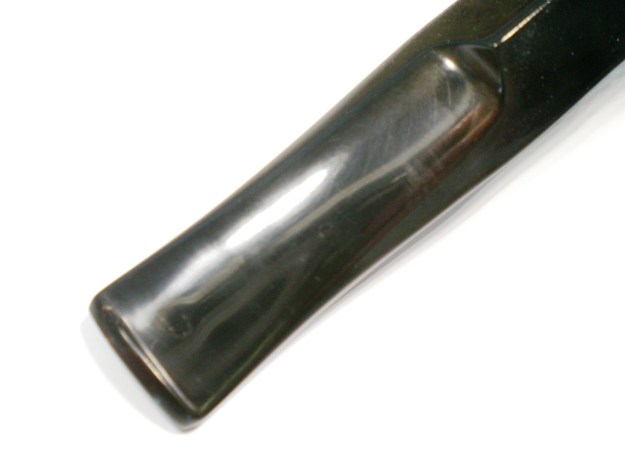
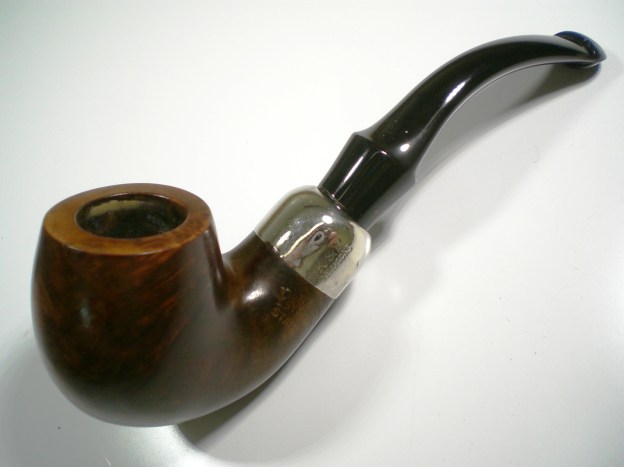
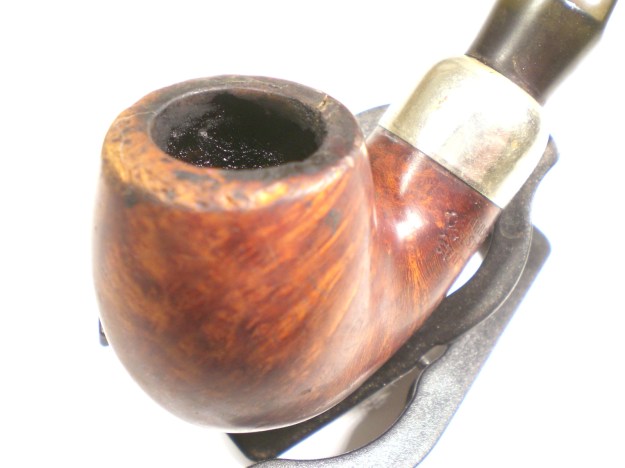
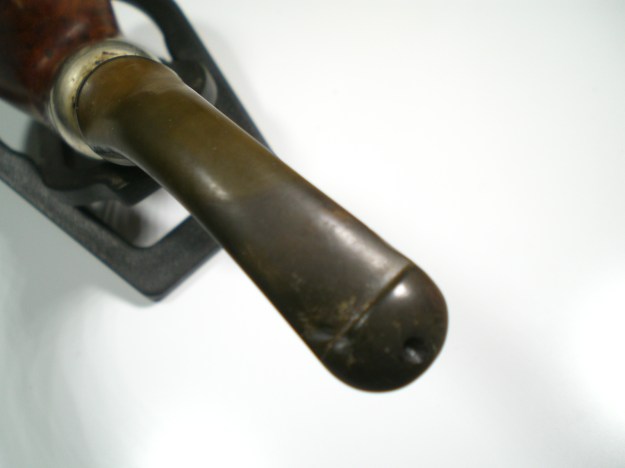
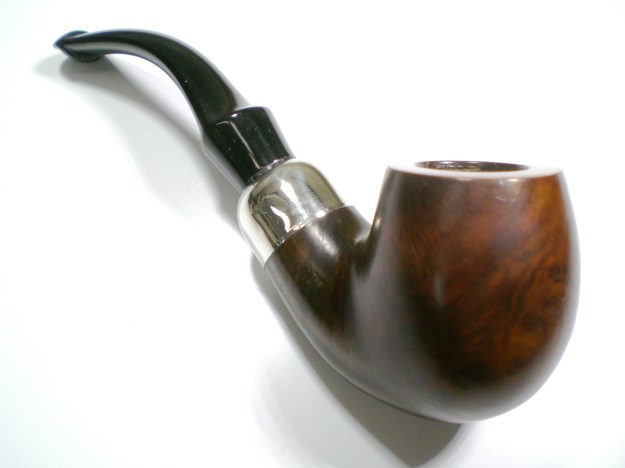
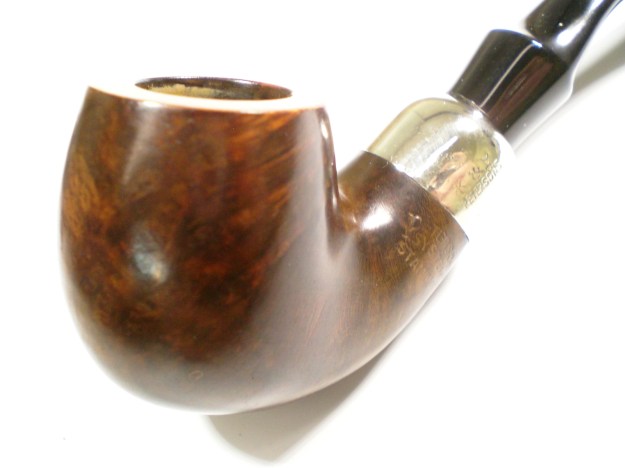
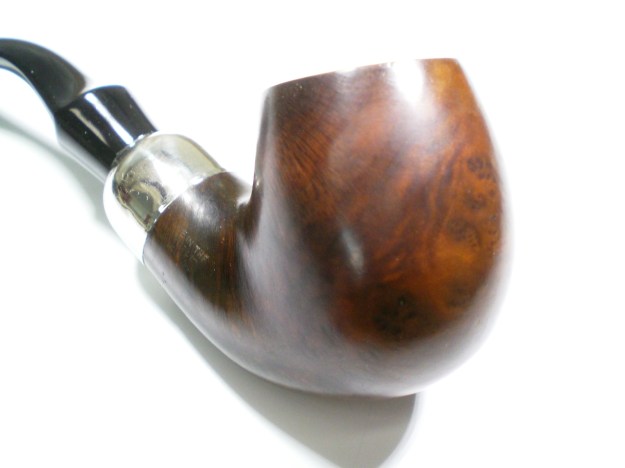
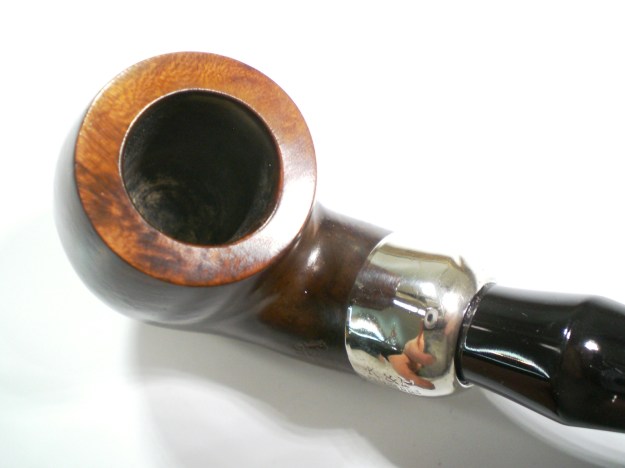
Taking the pipe out of the box, it looked pretty beat. The bowl top was damaged and it would surely need topped. The P-lip button had some teeth marks and the nickel band was corroded and dinged. It did appear to be a good candidate to test the new stripping process.

Peterson_314_Before (1)

Peterson_314_Before (2)

Peterson_314_Before (3)

Peterson_314_Before (4)

Peterson_314_Before (5)

My smile turned to a frown as I attempted to remove the stem. It was impossibly stuck. To further complicate the stem removal, the stem was plugged shut as well, which didn’t allow me to get any alcohol into the bowl from that vantage point. I tried dribbling in some alcohol, but it didn’t appear much was going into the bowl (or any!). I put the pipe in the freezer for a few hours, but no dice on stem movement (recommendation: always tell your wife when you put a pipe in the freezer). Next, I tried soaking the entire pipe in alcohol, which also failed. Last last night, I sprayed in some PB Blaster, automotive penetrating fluid. This morning, it was still stuck fast. I used a piece of thin wire to work it into the stem, which was filled with some nasty looking crud. This did eventually allow me to get a bristle cleaner soaked in alcohol into the stem. I then inserted another alcohol soaked cleaner and dropped it onto the bowl of alcohol again. After an hour, I could detect some slight movement and a few moments later, I had success.

The system sump was filled with tobacco build-up, which took an hour to clean out with towels, bristle brushes and cleaners all dipped in alcohol. This pipe is a poster child for advocating the frequent cleaning of Peterson System pipes. The stem went into an Oxy-clean soak.

I topped the bowl using 150 grade paper on a flat work surface. Next it was sanded to a smoother finish using 320 grade paper and then wet sanded with 800 grade. The bowl was reamed and incredibly, in fantastic condition with no issues inside. I then soaked the bowl with sea salt and alcohol (might have been redundant by that point). Here is the bowl after topping.

Peterson_314_Before (7)

Next up was to strip the factory finish. I used a heat gun to pull off the nickel cap. While it was hot and malleable, I used a dowel to push out a few of the dings. Using Dave G’s stripping method, I wiped the bowl down with Murphy’s Oil Soap (being sure to not get any into the bowl interior). I then wiped it down with alcohol. A solution was prepared using warm water and a generous helping of Oxy-Clean powder. I heated the bowl with a heat gun as Dave thinks that helps open the pores of the wood. Using some 0000 steel wool, I scrubbed the pipe down. I used a cloth around the nomenclature. Not surprisingly, the stripping process revealed some fills and actually pulled the putty. I applied a few drops of super glue to each spot and pressed in some briar dust. The spots were then sanded smooth with 800 grit wet paper. The nickel band was glued back in place. Below we see the bowl stripped and fills ready to sand smooth.

Peterson_314_Before (9)

Now the pipe was ready to restain. I used some diluted Fieblings Medium Brown stain and set the stain with flame. The bowl was then buffed with White Diamond and waxed with Carnuba Wax.

I removed the stem from the Oxy-clean solution and filled the two tooth marks on top with black Superglue and accelerator. I used a file to reshape the button end then with 800 grit paper wrapped around the needle file. The oxidation on the stem was removed using 800 grit paper, than 1500 and 2000 grades. I followed that with 8,000 and 12,000 grade micromesh sheets. It was then buffed with White Diamond and Meguiars Plastic polish.

This one required most of the pipe restoration techniques and was a fun challenge. Here is the completed pipe.

Peterson_314_Finished (1)

Peterson_314_Finished (4)

Peterson_314_Finished (2)

Peterson_314_Finished (5)

Peterson_314_Finished (6)

Peterson_314_Finished (3)

Peterson_314_Finished (7)

?

?

?

?

Peterson_314_Finished (1)

GBD 755 Century “Conquest” Restoration


By Al Jones

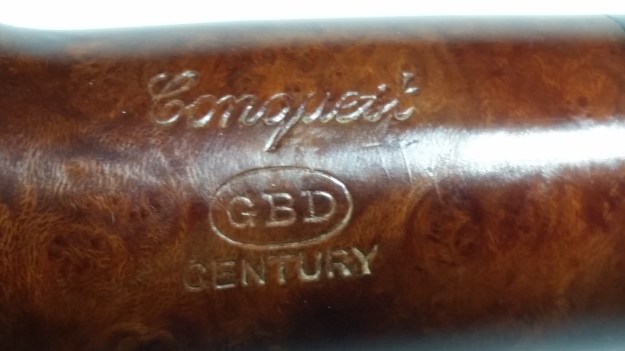
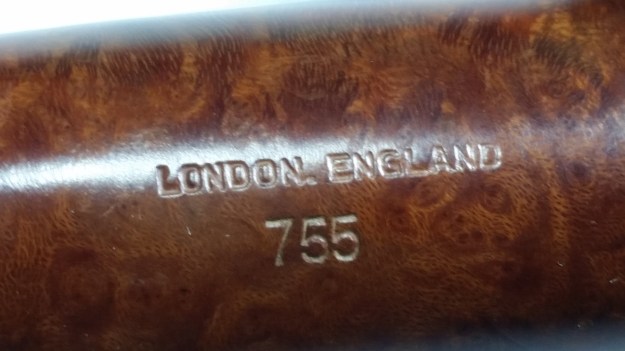
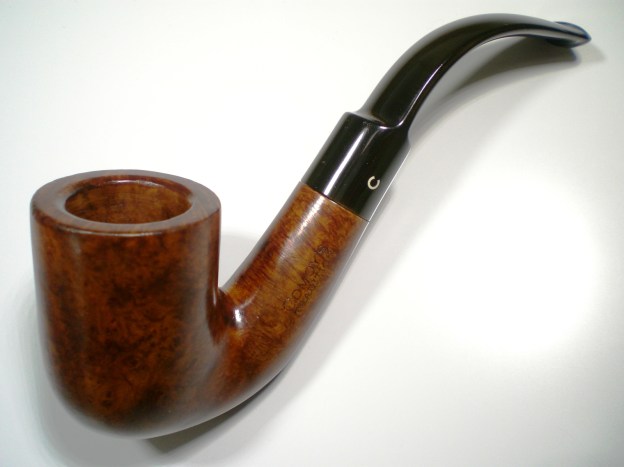
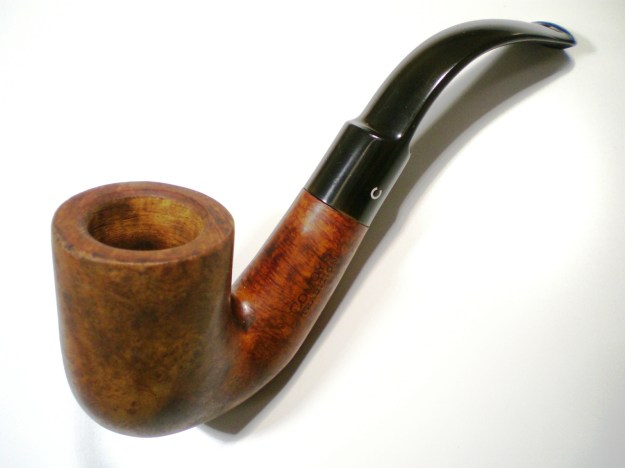
A member of the PipesMagazine.com forums brought my attention to this pipe, which was being sold on Etsy. While this shape is not in my typical wheelhouse, it was one that I had not seen previously. The 755 shape is not listed on the old shape chart but I found another one sold by SmokingPipes. To this point, I’ve not seen this GBD Shape. The “Century” finish was seen in GBD catalogs starting in 1950, which was also the year they celebrated 100 years of pipe making. The catalog describes the finish as “”A golden finish created to celebrate over a century of manufacturing the finest briar pipes.” I would call this shape a Lovat.

The “Conquest” script stamp denoted a plus-sized GBD pipe. Conquest is the smallest of the three plus sizes, followed by Collector and Colossus sizes.

The pipe had some issues with the bowl, including what looked like scorch mark on one part of the rim. There were a few dents on another part of the bowl. The stem, while oxidized was in very good overall condition. The nomenclature was in excellent shape.

GBD_755_Century_Conquest_Before (1)

GBD_755_Century_Conquest_Before (5)

GBD_755_Century_Conquest_Before (2)

GBD_755_Century_Conquest_Before (6)

GBD_755_Century_Conquest_Before (3)

GBD_755_Century_Conquest_Before (4)

GBD_755_Century_Conquest_Before (7)

The build-up on the rim came off nicley using a piece of 6000 grit micromesh and then a light buff with Tripoli on the wheel. The scorch mark was also greatly minimized. Not completely, but not enough remained to cause the bowl to need stripped and restained. The dents on the bowl were removed using steam on a wet cloth using an iron set on “High”.

GBD_755_Century_Work-Bowl (1)

GBD_755_Century_Work-Bowl (2)

The bowl was then reamed and soak with alcohol and sea salt. Following the soak, the bowl was buffed with White Diamond and several coats of carnuba wax. The interior of the bowl was in excellent shape and it is drilled perfectly.

While doing work to the bowl, the stem was soaked in a mild Oxy-Clean solution. I put a dab of grease on the GBD stem logo. Mounting the stem back to the bowl, I removed the oxidation with some 800 grit wet paper. This was followed by 1500 and 2000 grade paper, then 8,000 and 12,000 grade micromesh sheets. The stem was then buffed with White Diamond and Meguiars Plastic Polish.

Here is the finished pipe. I initially bought this one to clean and resell, but there’s something about the shape that now, I’m not sure that it will be sold.

GBD_755_Century_Conquest_Finish (1)

GBD_755_Century_Conquest_Finish (5)

GBD_755_Century_Conquest_Finish (2)

GBD_755_Century_Conquest_Finish (6)

GBD_755_Century_Conquest_Finish (4)

GBD_755_Century_Conquest_Finish (7)

GBD_755_Century_Conquest_Finish (3)

GBD_755_Century_Conquest_Finish (8)

GBD_755_Century_Conquest_Finish (11)

GBD_755_Century_Conquest_Finish (12)
GBD_755_Century_Conquest_Finish (1)

Comoy’s Tradition Shape 17 (Kruger S) Clean-Up


By Al Jones

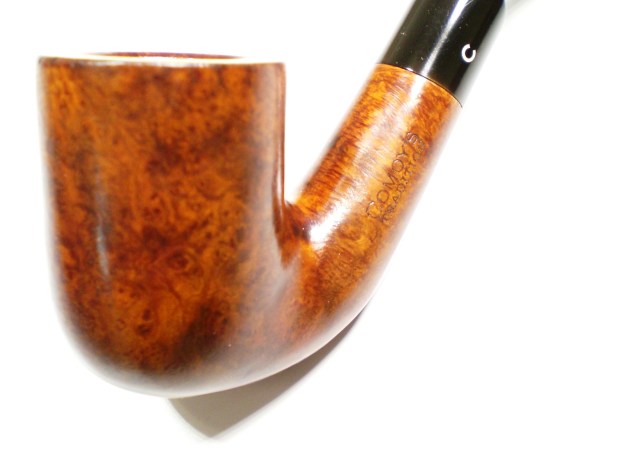
I picked up this Tradition Shape 17 over the holiday weekend and finished the restoration this evening. I’m not an Oom-Paul fan but this one looked in too good shape to pass up.

I found very little references to this shape,save on the Comoys Shape chart. I did find that Steve had restored a Shape 17 second line detailed on this blog.

Royal Falcon Shape 17

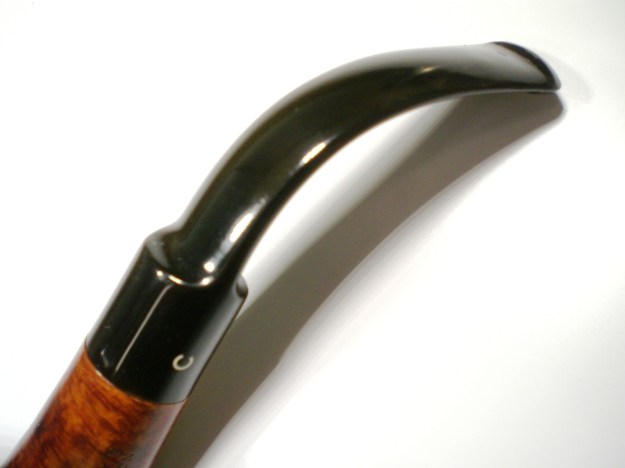
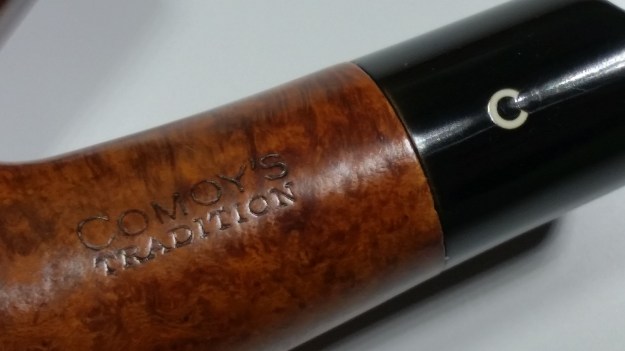
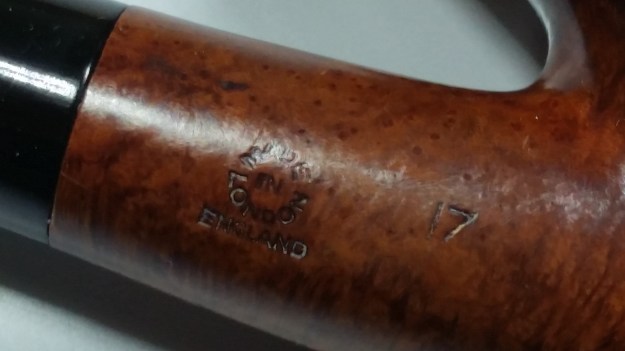
The three piece, drilled “C” logo looked to be in terrific condition and the round Made in London/England stamping showed it was made between the early 1950’s to the merger year of 1981. Despite the bowl size, the pipe only weighs a svelte 34 grams.

Comoys_Tradition_17_Before (1)

Comoys_Tradition_17_Before (4)

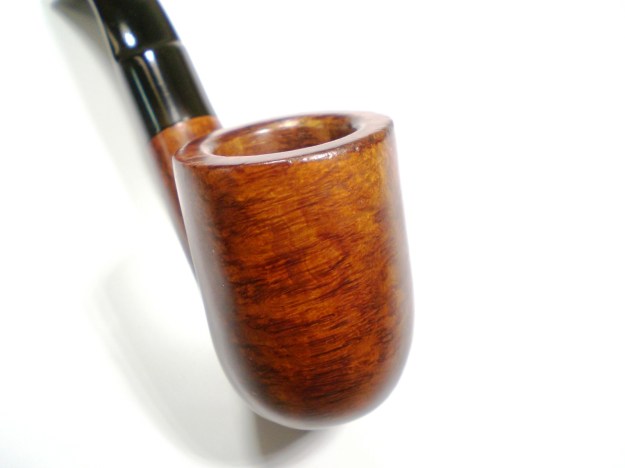
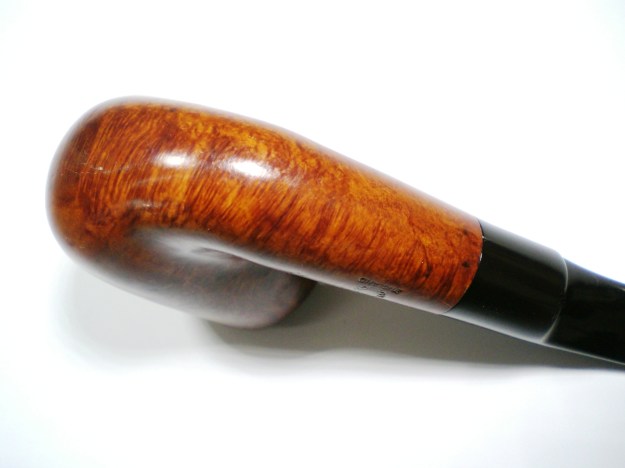
The pipe had some tooth indentions and a few dents that I hoped would stem out. The button is really nice and fitment was very good. The bowl interior was also in great shape.

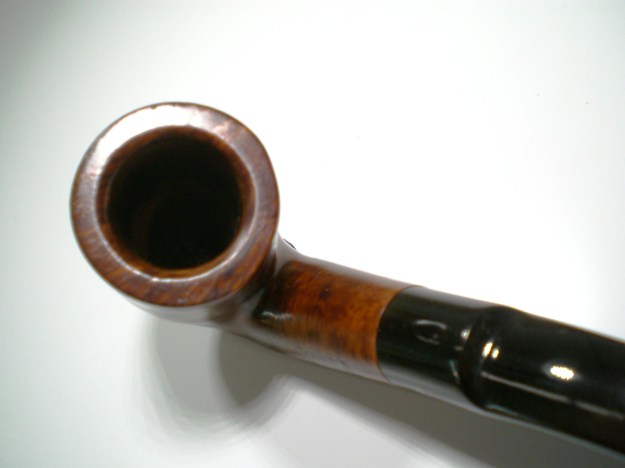
The bowl had a slight cake, which was reamed. My wife recently gave me a new Pipenet reamer set for Christmas, to replace my aging Castleford set. The bits on this shape are definitely of a better quality, something that I had been skeptical about in the past, having never held a Pipenet set.

20151228_173010

The small dents on the bowl top did steam out nicely. The faded finish rejuvenated nicely with some White Diamond rouge on the buffing wheel. The nomenclature is in excellent condition, so I was sure to stay away from that area. “Tradition” grade pipes always have a nice gleam to the briar. I polished the inner section of the bowl with some White Diamond on a small felt wheel mounted to my Dremel tool on the low speed setting. The bowl was then soaked with sea salt and alcohol. The Comoys beveled edge feature was in very good shape.

The teeth indentions near the button popped out nicely with heat from a lighter flame, leaving only the slightest ripple. As mentioned,the button is slim and finished very nicely. There was a little oxidation around the stem at the shank end that was removed with 1500 and 2000 grade wet paper, then micromesh (8000 and 12000) on the entire stem. The stem was then buffed with White Diamond and Meguiars Plastic Polish. The stem was completely clogged with residue, which took several bristle cleaners dipped in alcohol to remove.

As I was finishing the pipe, a pipe friend in India messaged me thru Facebook. I attached a picture of the pipe to our conversation and he ended up buying it, from across the world! The pipe community is a tight knit group!

Here’s the finished pipe, which will eventually be sent to my friend in India to enjoy.

Comoys_Tradition_17_Finish (1)

Comoys_Tradition_17_Finish (5)

Comoys_Tradition_17_Finish (2)

Comoys_Tradition_17_Finish (6)

Comoys_Tradition_17_Finish (7)

Comoys_Tradition_17_Finish (4)

Comoys_Tradition_17_Finish (3)

Comoys_Tradition_17_Finish (8)

Comoys_Tradition_17_Finish (9)

Comoys_Tradition_17_Finish (10)

Comoys_Tradition_17_Finish (11)

Comoys_Tradition_17_Finish (1)

Peterson Supreme XL90 (1998) Review


By Al Jones

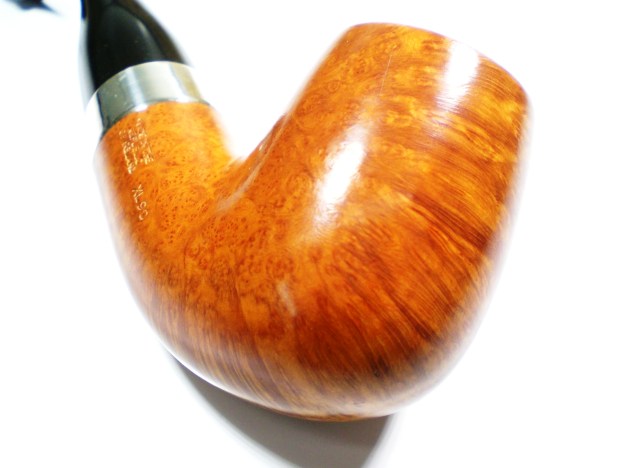
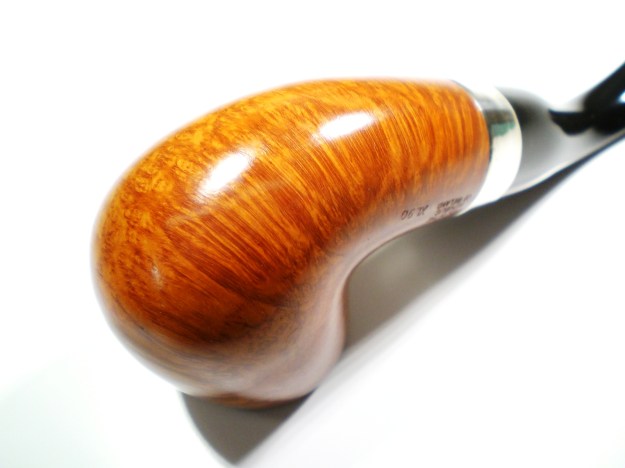
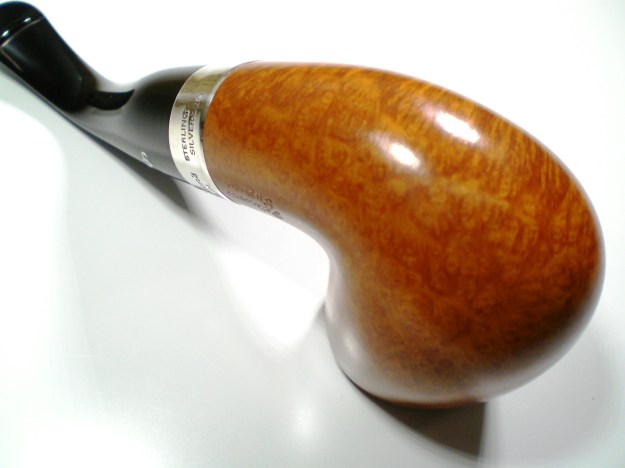
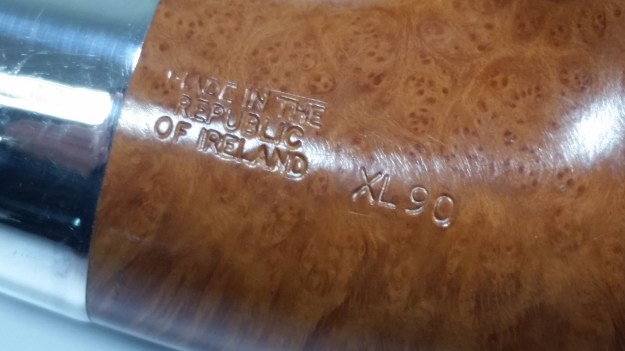
Last year, thru his “Peterson Pipe Notes” blog, Author Mark Irwin introduced me to the Peterson 9BC shape, which has become one of my favorite brand shapes. Since then, I have acquired two pre-Republic 9BC’s for my collection (a Kapruff & Premiere Selection). I’ve always appreciated the XL90 shape, but I didn’t realize the connection to the 9BC. Mark listed this one on eBay and described the shape as a predecessor to the 9BC. This unsmoked, Supreme grade pipe will be featured in his upcoming Peterson book as an example of that shape. I typically see the XL90S, with a saddle stem. My preference is a tapered stem and being as this one was a Supreme grade, made it even more desirable.

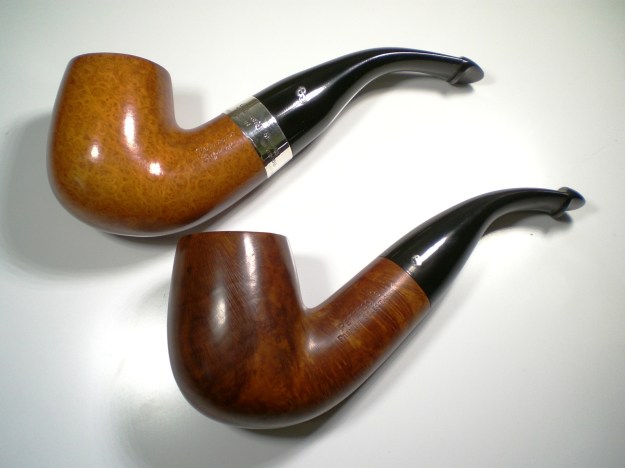
Here is the pipe pictured above my 9BC Premiere Selection. The shape is nearly identical with the modern Supreme having a slightly “wasp-waisted” stem at the bend. At 70 grams, it weighs 4 grams more than the Premiere Selection.

Peterson_XL90_Supreme_1998 (8)

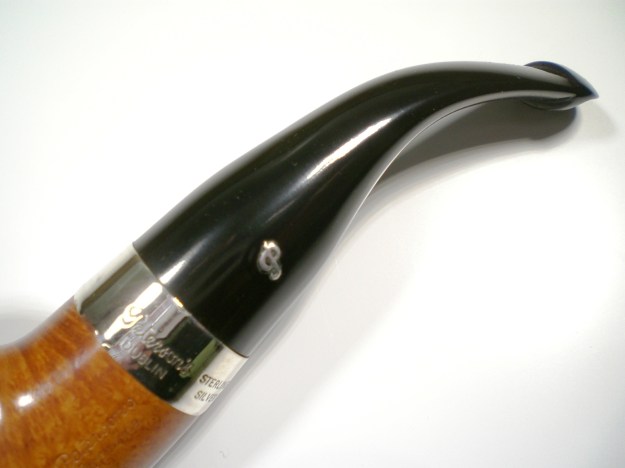
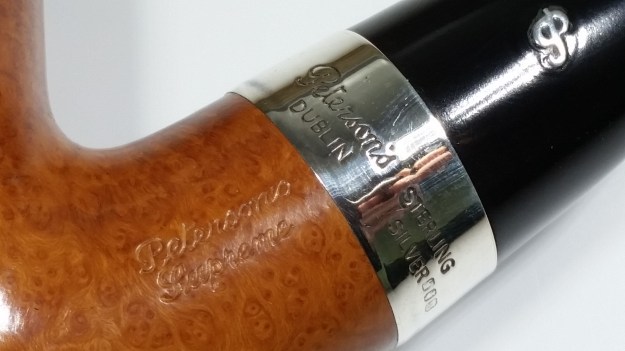
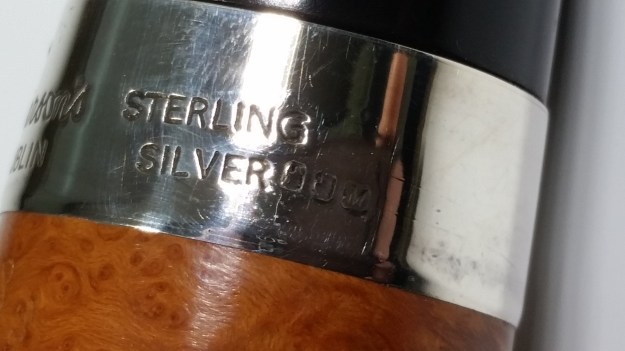
I didn’t find much information on the Supreme grade and I was only aware that it was a high grade Peterson. Many also come with gold bands, but I find those pipes a trifle too much. This pipe has a hallmarked silver band and a silver P stem emblem. The pipe has some very nice grain and of course is without fills or flaws. Mark has told that more information about the history of the Supreme line will be in his upcoming Peterson book. He did share with me that the grade was introduced in the early 1950’s then disappears from catalogs until the 1970’s. Only a small percentage of Peterson pipes are good enough to be graded “Supreme”. You’ll have to read the book to find out more. I’m thrilled to have my first Supreme pass thru Marks hands. The pipe was in the condition shown below and all that I did was buff the stem with some automotive plastic polish (Meguiars) which I feel adds a deeper shine and helps ward off oxidation

Upon delivery, my wife wrapped the pipe which was destined to be my Christmas gift. I was able to take a little time from our busy Christmas day to enjoy a bowl of My Mixture 965 in the pipe. Thanks Mark for such a wonderful addition to my collection!

Peterson_XL90_Supreme_1998_Gallery

Peterson_XL90_Supreme_1998 (4)

Peterson_XL90_Supreme_1998 (3)

Peterson_XL90_Supreme_1998 (5)

Peterson_XL90_Supreme_1998 (6)

Peterson_XL90_Supreme_1998 (2)

Peterson_XL90_Supreme_1998 (7)

Peterson_XL90_Supreme_1998 (9)

Peterson_XL90_Supreme_1998 (10)

Peterson_XL90_Supreme_1998 (11)

Peterson_XL90_Supreme_1998_Gallery

Comoy’s 1992 Christmas Pipe Restore & Gift


By Al Jones

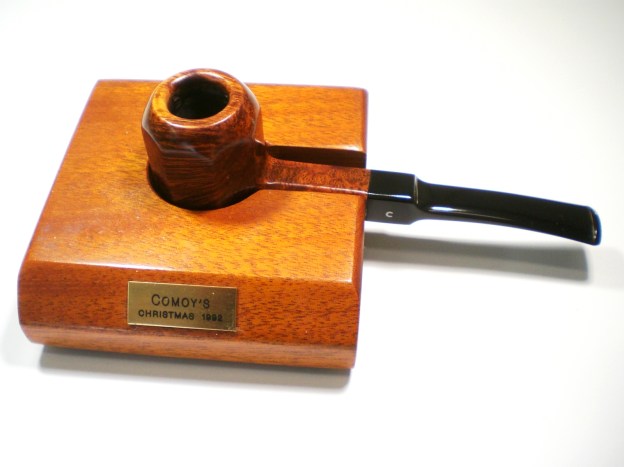
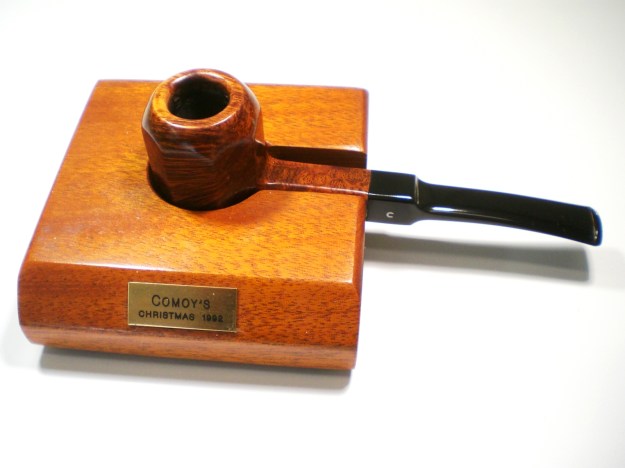
When my son-in-law was visiting during the 2014 holidays, we made a trip to my favorite East Coast pipe shop, JB Hayes, located in Winchester, Virginia. Matt Hayes, the proprietor, always has some interesting estate pipes, both finished and those in need of restoration. The unfinished pipes are kept in large wooden drawers that encircle the shop and it is easy to lose an hour searching thru the drawers for a hidden treasure. My son-in-law found this pipe and asked about it. I told him about the Comoy’s Christmas pipe line. He remarked that 1992 was also his birth year. Later, he also uncovered the wooden base with matching brass plaque. Matt wasn’t working on that day, so I stashed the pipe and base in a bottom drawer, returning later that week to make the purchase (without telling my son-in-law).

Below is an excerpt from an article by Richard Carleton Hacker on Christmas pipes. You can find the full article in the link below.

Christmas Pipes – Richard Carleton Hacker

Comoy’s has the distinction of being the first major brand to create a Christmas pipe expressly for the American market, with its initial issue in 1970. Like all Subsequent pipes in this longest-running series, it was stamped CHRISTMAS on the near side of the shank, along with the year of issue. None of the pipes have been serial numbered. Only 1,200 of the 1976 Comoy’s Christmas pipes were made, and subsequent years’ models were turned out in quantities of 1,800. Although a number of collectors own the complete 21-pipe set, most of the earliest models, especially the 1976 briar, are very difficult to locate, despite their comparafive1v large numbers. Rarest of all Comoy’s Christmas offerings is a factory-cased set, created in 1981, which contained one each of the six Christmas pipes in existence at that time, ranging from 1976 through 1981. Comoy’s produced only 150 of these sets, and with all six pipes in unsmoked condition, commands a much higher price than if the pipes were purchased individually. In recent years, Comoy’s has included a routed-out wooden stand with their Christmas pipes, which enables them to be displayed when they are, not being smoked.

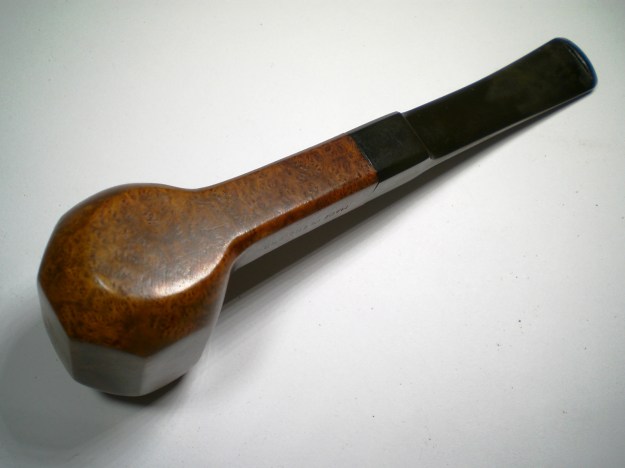
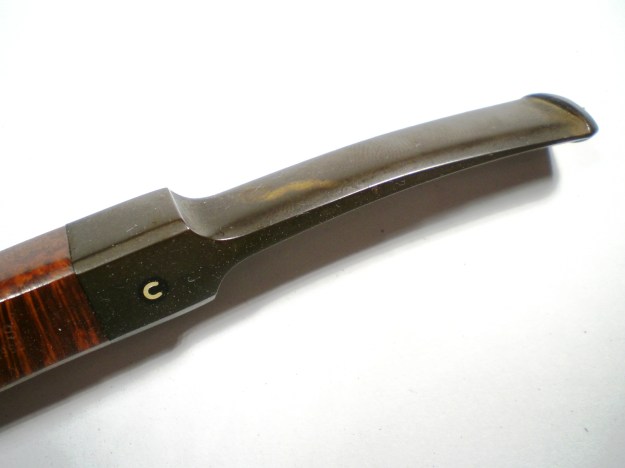
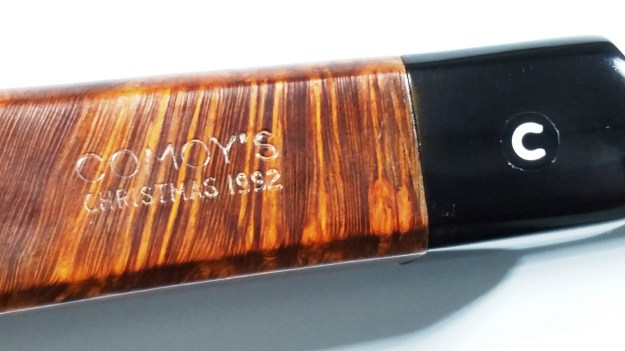
Something that I’ve observed in watching Comoy’s Christmas pipes on eBay or elsewhere is that no matter their year, none have the 3-piece “C” stem logo prized by collectors of Comoys pipes. Early pipes have a stamped, white “C” while later pipes have a one-piece drilled “C” that inserted into the stem. This 1992 pipe has the one-piece logo, which I find more appealing. This one has some nice grain as well.

Here is the pipe as found.

Comoy's_1992_Christmas_Beore

Comoy's_1992_Christmas_Beore (4)

Comoy's_1992_Christmas_Beore (3)

Comoy's_1992_Christmas_Beore (6)

Comoy's_1992_Christmas_Beore (5)

Comoy's_1992_Christmas_Beore (1)

Comoy's_1992_Christmas_Beore (2)

The bowl only had a slight cake, which was reamed and then cleaned with a soak using alcohol and sea salt. I used some 8000 and 12000 grit micromesh on the scorch mark on the bowl top, which came out nicely. The briar was then buffed with White Diamond and several coats of Carnuba wax.

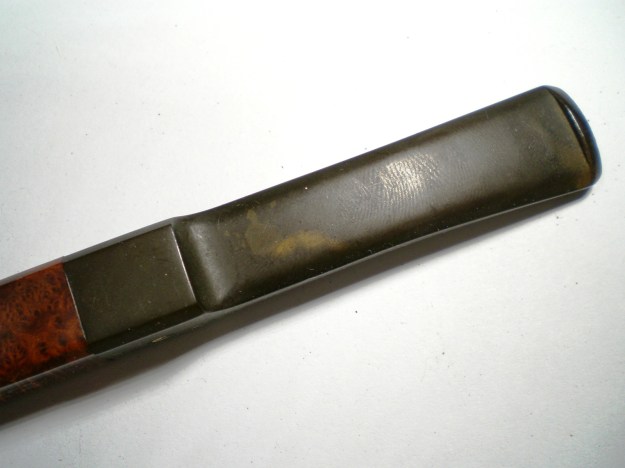
The oxidation on the stem was removed with 800, 1500 and 2000 grade wet sandpaper, followed by 8000 and 12000 grade micromesh sheets. The stem was then buffed with White Diamond and Meguiars Plastic Polish.

The base was shined with furniture polish. Unfortunately, I won’t see my son-in-law at Christmas this year, he will be missed. But the pipe has been packed and sent down to New Orleans for him to open on Christmas Day. Hopefully, soon, we’ll enjoy a pipe together.

Comoys_Christmas_92_Finish (1)

Comoys_Christmas_92_Finish (2)

Comoys_Christmas_92_Finish (5)

Comoys_Christmas_92_Finish (3)

Comoys_Christmas_92_Finish (6)

Comoys_Christmas_92_Finish (4)

Comoys_Christmas_92_Finish (7)

?

?

?

?

Comoys_Christmas_92_Finish (1)

Sasieni Ashford Natural Find (Unsmoked)


By Al Jones

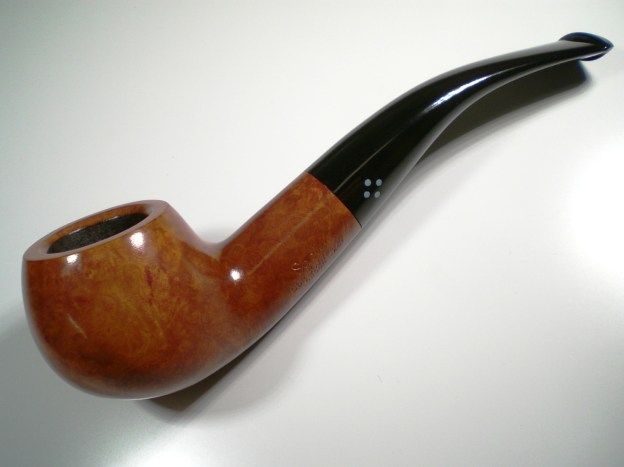
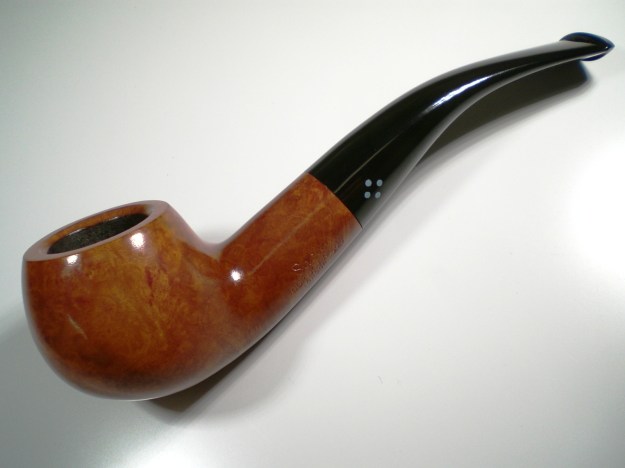
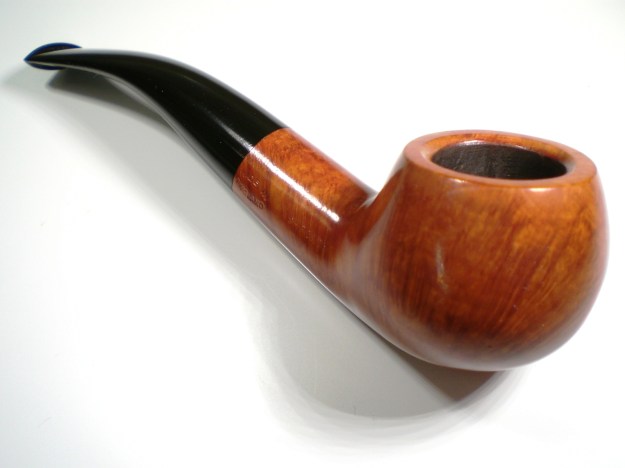
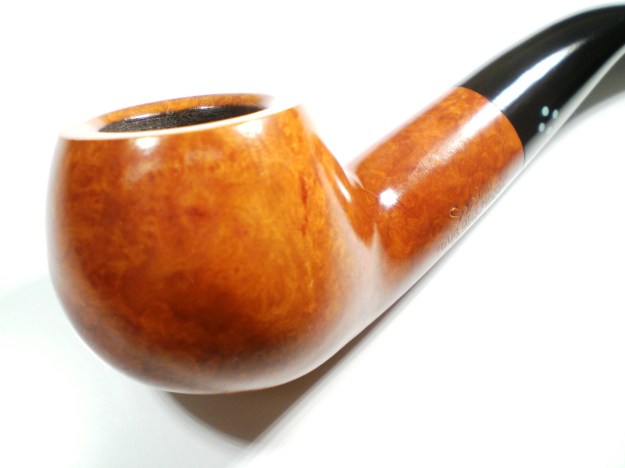
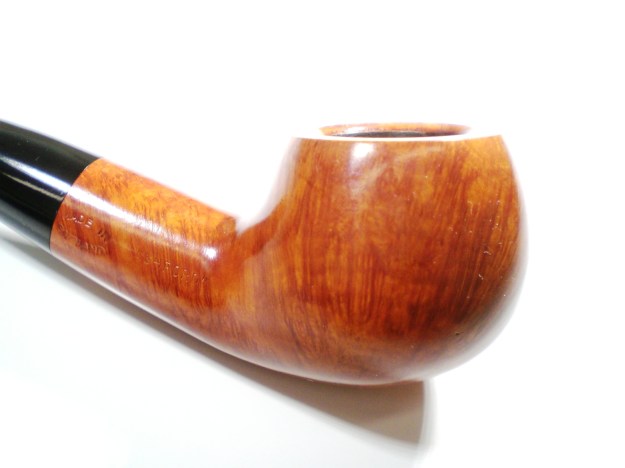
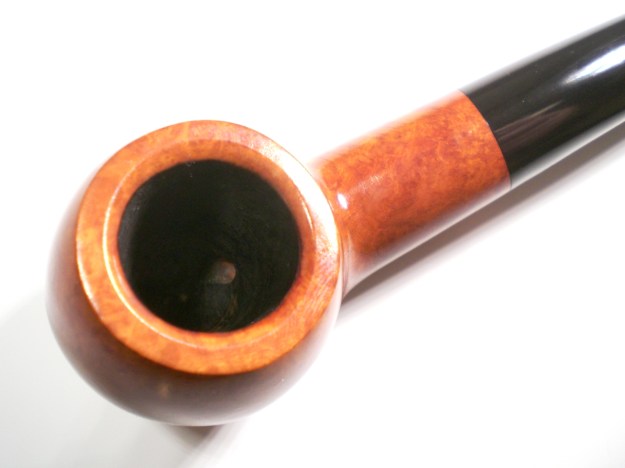
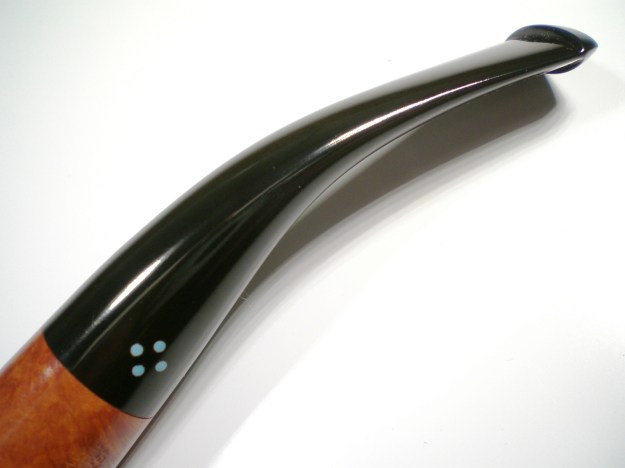
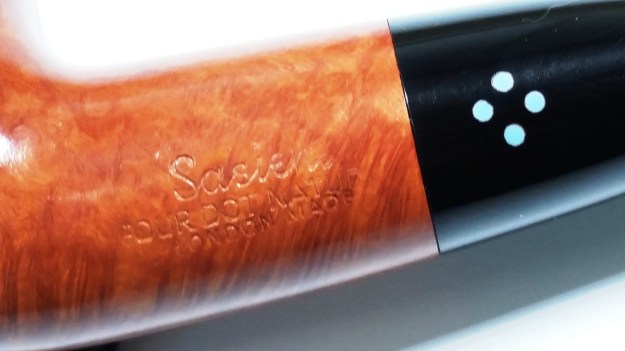
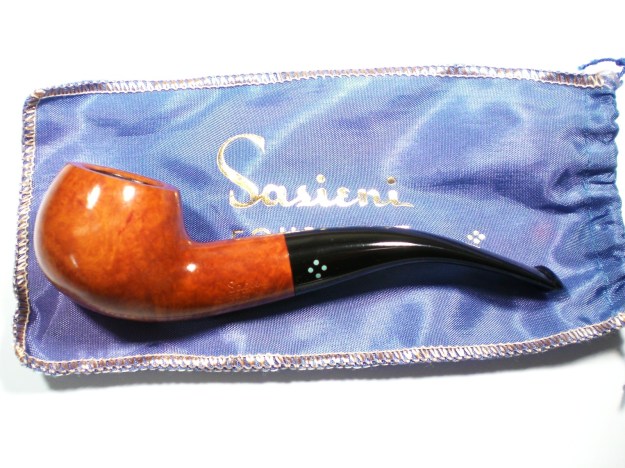
As a fan of the classic British Author shape, the Sasieni Ashford is one of my favorite pipe shapes. The Ashford is also known as Shape 88 on the Sasieni shape chart. Sasieni made pipes in several finishes, most notably the Ruff Root (sandblast), Walnut (dark smooth) and the Natural (clear stain). The Natural finish was the top of the Sasieni grading system, second to the “Straight Grain” pipes. The “Four Dot” stamping also denoted a top of the line Sasieni pipe.

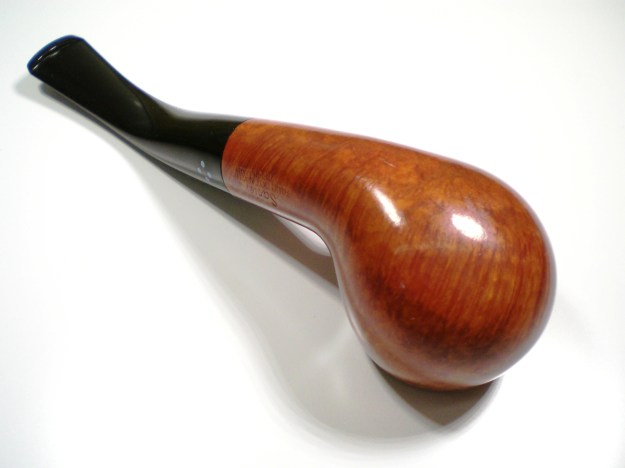
I recently acquired this Ashford Natural, in an unsmoked condition. Unsmoked doesn’t always mean pristine, and many times an older pipe picks up handling marks, dings, dents, etc. Fortunately this piece was in mint condition on all accounts.

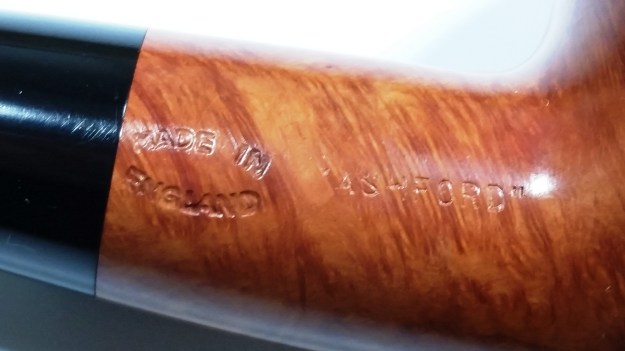
The nomenclature combination of “Four Dot”, the “Sasieni” script, use of the Ashford town shape were all used between 1946 and 1979. The Ashford was also available with a saddle stem and an added “S” by the town name. My preference is a tapered stem.

I have two other Ashford shapes, the Ruff Root and Rustic. My Walnut Ashford was sold to fund this purchase. You can read that blog entry in the link below. Curiously, this Natural pipe is slightly longer, and less chubby than the other two. It also weighs a few more grams (43 grams). To my eye, the shape is similar to the Comoys 256 Author, a shape that still eludes me.

Sasieni Ashford Shapes

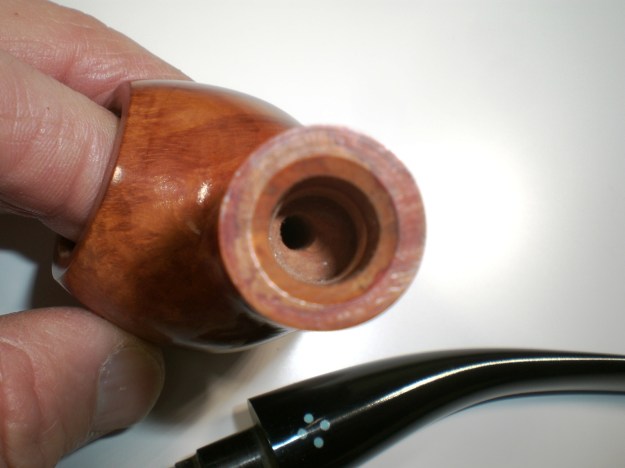
As you can see from photograph of the bowl, Sasieni did “carbonize” their bowls. I was unaware of this Sasieni practice and a thread on the PipesMagazine.com forums brought some interesting information to light. One forum member found this description in a 1960’s Sasieni catalog, from the Chris Keene Pipe Pages, as below.

Sasieni Bowl Coating Thread – PipesMagazine.com

“One of the processes to which all of our bowls are subjected is the special Sasieni carbonising process. During this treatment the bowls are subjected to high temperatures under scientifically controlled conditions. As a result the interior of the bowl is carbonised to the exact degree necessary to ensure a sweet mellow smoke from the start. This treatment also serves to remove the last vestiges of bitter oils or sap and also uncovers any hidden flaws which might otherwise pass unnoticed.”

I enjoy my other two Ashford shapes, so for now, this one will remain unsmoked. I’ll wait for a significant life event to enjoy this one.

Sasieni_Ashford (1)

Sasieni_Ashford (5)

Sasieni_Ashford (7)

Sasieni_Ashford (6)

Sasieni_Ashford (4)

Sasieni_Ashford (8)

Sasieni_Ashford (2)

Sasieni_Ashford (3)

?

?

?

?

Sasieni_Ashford (9)

GBD Meerschaum Pipe


By Al Jones

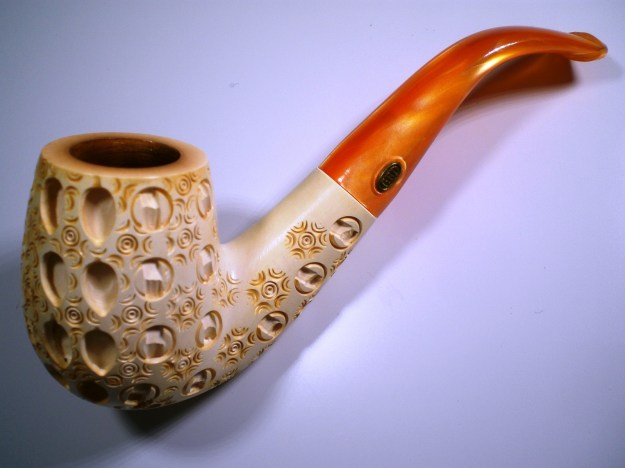
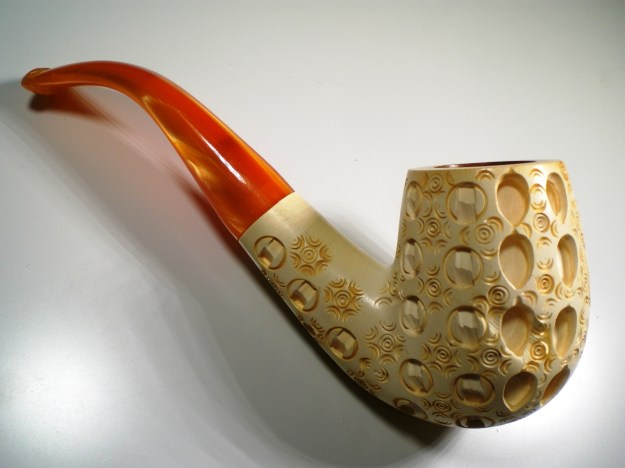
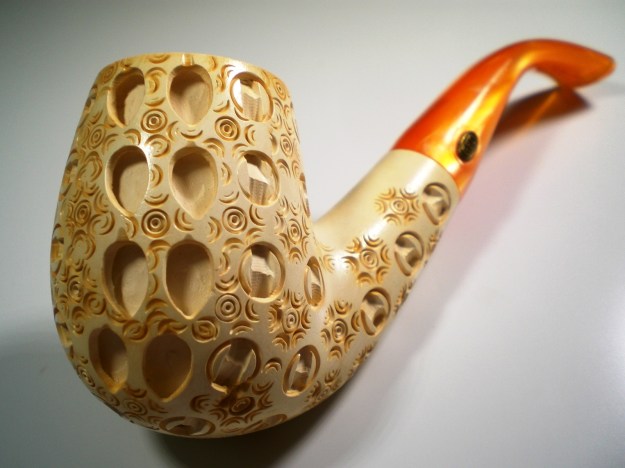
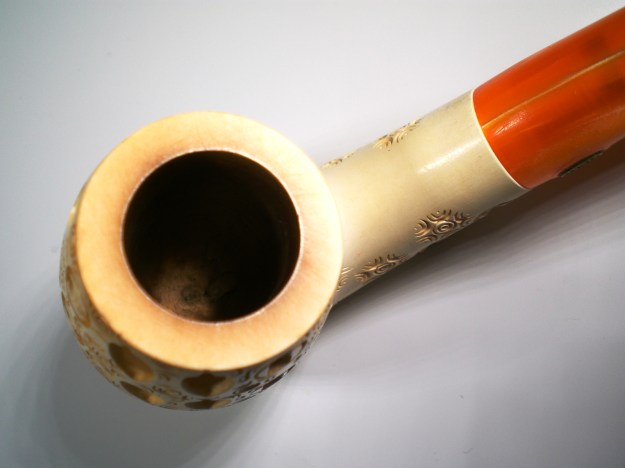
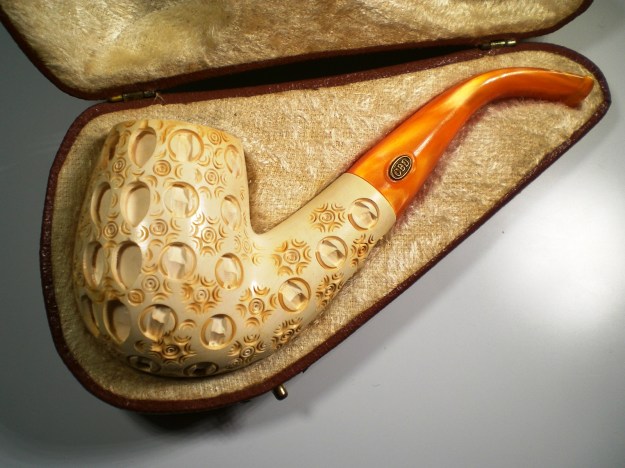
I am not a collector of meerschaums and indeed this is only the second meerschaum that I’ve owned. However I couldn’t resist when a pipe forum friend notified me about this carved bent Billiard shape, complete with a brass rondell on eBay. While not a restoration, I thought readers of the blog might find this GBD interesting.

According to Pipepedia, the three principals of GBD: Ganneval, Bondier and Donninger established the firm to the making of meerschaum pipes. Most fans of the brand know GBD for their briar pipes or perhaps meerschaum lined pipes. This is the first carved GBD meerschaum pipe that I have encountered. Typically, the GBD meerschaum pipes I have seen on Ebay or elsewhere are colored and don’t have the brass rondell. Those pipes, which are not usually carved, are thought to be made from African or Tanganyika meerschaum. This type of meerschaum is considered to be inferior to Turkish meer.

A Google search yielded only one similar, carved GBD meerschaum which was sold by SmokingPipes. They advertised the pipe as a “Turkish” estate. The carving, color and stem are very close in appearance to the pipe that I purchased.

GBD_Carved_Meerschaum_Brass_Rondell

The pipe arrived in excellent condition and very clean inside. I had read several of Steve Laugs articles on cleaning meerschaum pipes but nothing was required to this one.

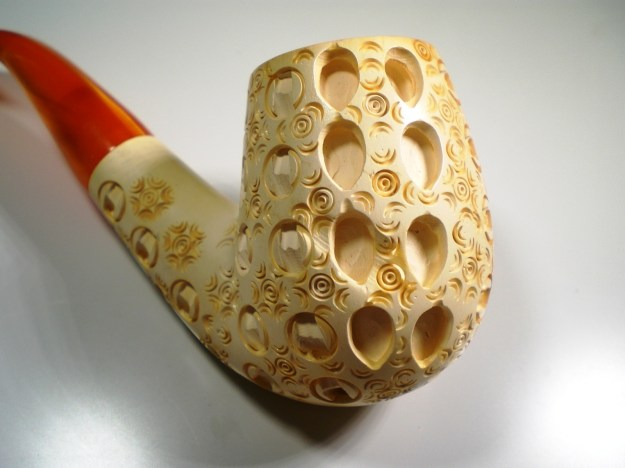
The carvings are very similar to those found on SMS meerschaum pipes but I’m not sure if that is a SMS trademark or just a typical meerschaum carving technique.

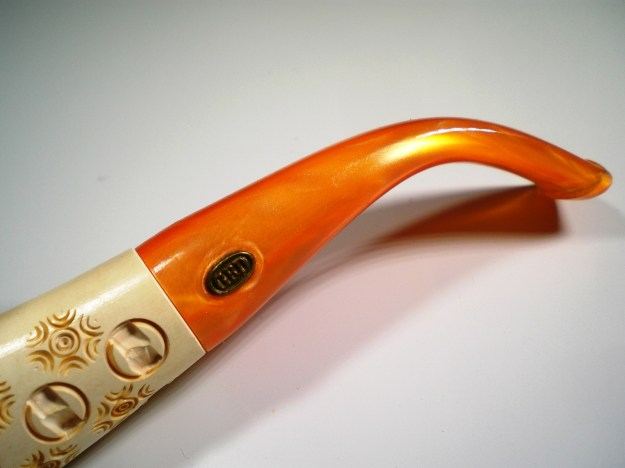
The pipe as delivered, which included a nice, fitted, leather case. I’ve smoked it once and found the draw, stem and button to quite comfortable. I have wondered if the pipe would be improved with the addition of a proper vulcanite stem, like a George Dibos could create (and move the GBD brass rondell).

GBD_Meerschaum_Bent_Billiard_Gallery

GBD_Meerschaum_Bent_Billiard (4)

GBD_Meerschaum_Bent_Billiard (3)

GBD_Meerschaum_Bent_Billiard (5)

GBD_Meerschaum_Bent_Billiard (2)

GBD_Meerschaum_Bent_Billiard (6)

GBD_Meerschaum_Bent_Billiard (7)

Peterson 999 Deluxe Restoration


By Al Jones

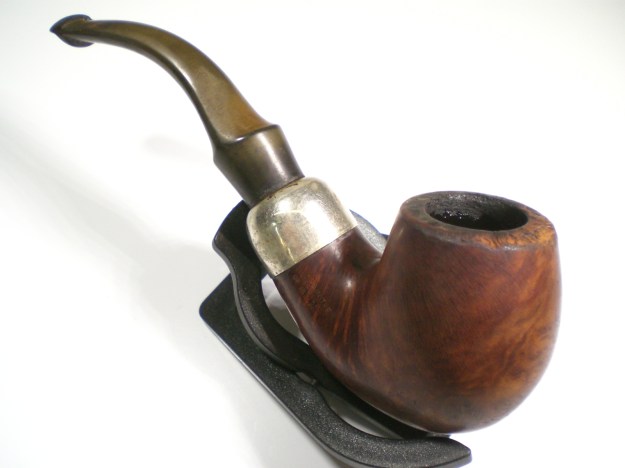
The Peterson 999 is an iconic Rhodesian shape and one of my favorites. I prefer the chubbier, pre-Republic versions of that shape and have a pre-Republic “Sterling” 999 in my collection. This pipe was found on eBay and appeared to in great condition.

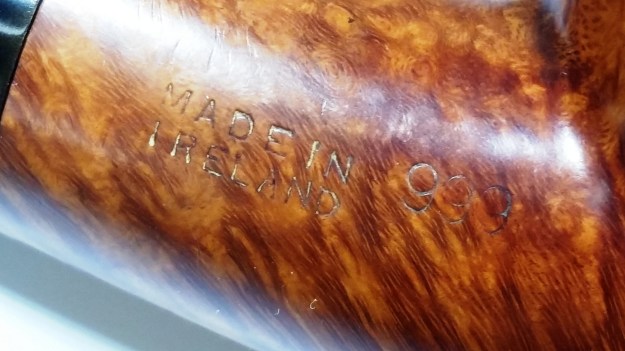
I enjoy reading Mark Irwins “The Peterson Pipe Connoisseur & Collector” blog. The entry linked below, reviews nomenclature on pre-Republic pipes makes it easy to get a date range on a particular piece. Because Peterson used older stamps throughout various eras, only silver hallmarked pipes can be dated to a specific year. This pipe has the stacked “Made In Ireland” which was used between 1922 and 1938.

Mark Irwins Pre-Republic Blog Entry

Prior to 1920 it was rare for a country of origin to be stamped on the pipe, just Peterson’s Dublin on the band. After 1921/22,If it is stamped “MADE IN IRELAND” and the “Made in” is stacked over “Ireland” or “MADE IN EIRE” or several other forms, it was made between 1922 and 1938.

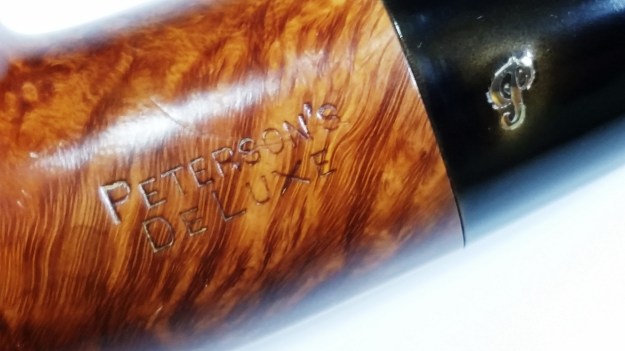
The Deluxe grade was the highest grade Peterson for that era and this one has some nice grain.

The photos from the seller were very good and I didn’t bother to take any “before” pictures of my own. The stem had some oxidation, but appeared to be free of any teeth marks. The gold “P stem logo looked perfect. The bowl had a few nicks and some circular marks on the bowl top that I hoped could be removed. The nomenclature was in great condition. Below is the pipe as advertised.

Peterson_999_Deluxe_eBay

Peterson_999_Deluxe_3eBay

Peterson_999_Deluxe_4eBay

Peterson_999_Deluxe_6eBay

There was a small amount of cake, which was reamed and then the bowl was soaked with alcohol and sea salt. I used some 2000 grit paper to remove the marks on the bowl top, which lightened the stain. I applied some diluted Fieblings Medium Brown to the bowl top, just above the top ring. The stain blended in nicely with the factory finish.

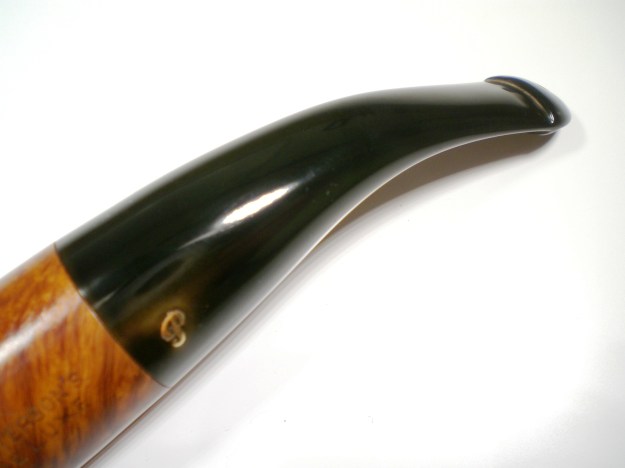
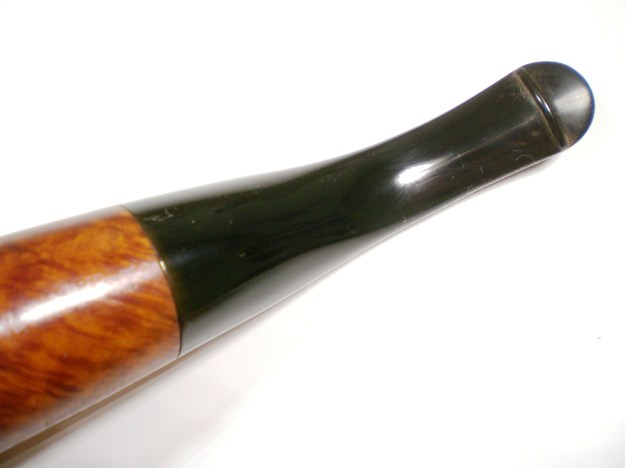
The oxidation on the stem was heavier than it appeared. I started with 800 grit wet paper and then moved down thru 1500 and 2000 grades. 8000 and 12000 grade micromesh was used next. The stem was buffed lightly with White Diamond and then Meguiars Plastic polish. I was careful around the gold “P” logo and didn’t want to damage it. That made it tricky to remove the oxidation in that area and I wasn’t able to get all of it. I may go back later and revisit that section of the stem. The stem is threaded for the “chimney” but it is missing.

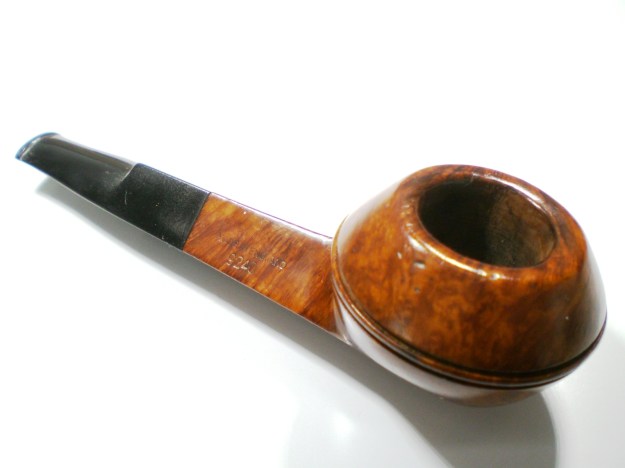
The bowl was buffed with White Diamond (staying away from the nomenclature areas) and then several coats of Carnuba wax.

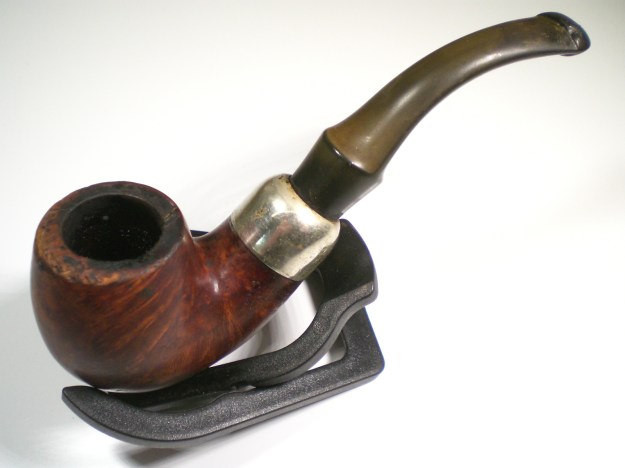
Below is the finished pipe.
Peterson_999_Deluxe_Gallery

Peterson_999_Deluxe_Final (4)

Peterson_999_Deluxe_Final (6)

Peterson_999_Deluxe_Final (5)

Peterson_999_Deluxe_Final (3)

Peterson_999_Deluxe_Final (8)

Peterson_999_Deluxe_Final (9)

Peterson_999_Deluxe_Final (7)

?

?

?
?
Peterson_999_Deluxe_Gallery