
By Al Jones

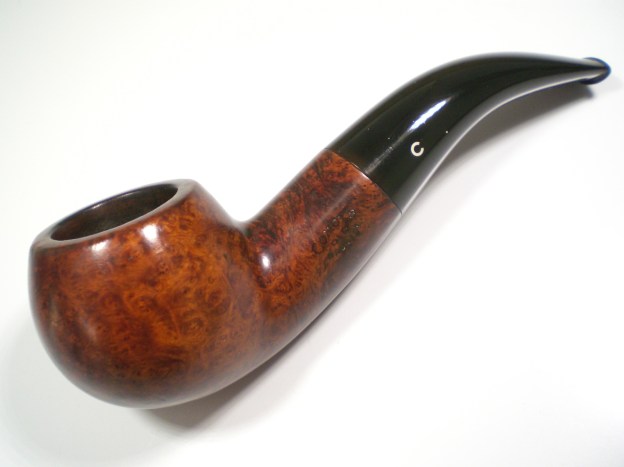
If you follow my contributions to this blog, you’ve heard me mention my “Holy Grail” list. I started this list six years ago and it was made up of specific brand shapes. Most were Rhodesians, Authors or Bulldogs. The list grew to fifteen pipes, with all British marquees, save for two Castellos. I’ves slowly but surely been able to find all but one piece. A few years ago, it appeared that securing a Comoy’s shape 256, the Author; was going to be challenging. Several shape 256 Comoy’s seconds were sold last year, but I was holding out for a Comoy’s with the beautiful 3-piece drilled “C” stem logo. The last Comoys 256 I can find on Ebay appears to have been sold in 2013.
The Comoy’s logo and the country of manufacture mark indicate that the pipe was made between the early 1920’s and the 1930’s. Pipepedia describes the football (rugby) shaped COM as:
Made in England
This is stamped in a circle with “MADE” at the top, “IN” in the middle, and “ENGLAND” forming the bottom of the circle. This can be seen on a Cecil as early as 1910 and on an Old Bruyere of 1921 and more frequent from the 1930s. It can also appear as “MADE” arched, “IN” below, and “ENGLAND” arched the other way. These stamps are in an oval rugby-ball shape rather than a circle round shape.
In the Pipedia article on Comoy’s, the Old Bruyere finish is described as:
Old Bruyere. I have two Old Bruyeres dated 1921 and a 1931 sales leaflet that states, “Out of every gross of Bruyere pipe bowls made, only 4 are good enough to be called Comoy’s Old Bruyere.” At this time, therefore, it was definitely a high grade.
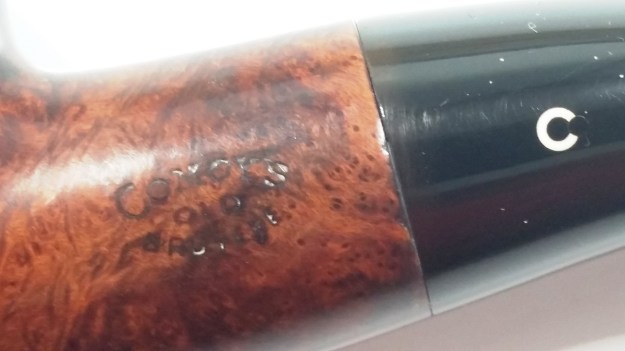
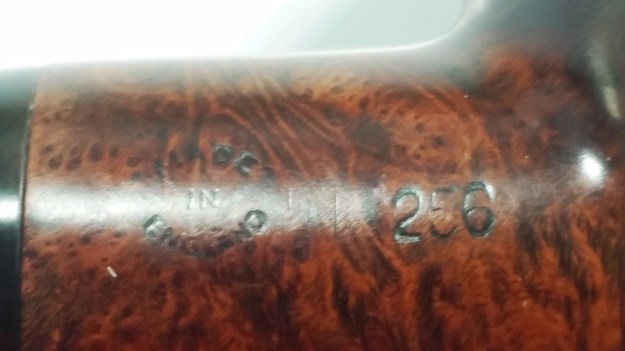
The pipe was heavy oxidized, but the stem looked to be in pretty decent shape. There was some build-up on the rim and a mild cake build-up. The briar was covered in grime but the nomenclature was legible. The pipe appeared to have been left in direct sunlight, as portions of the stain were faded.
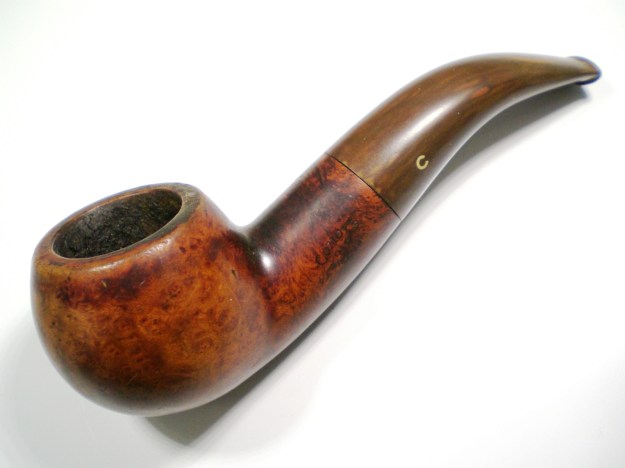
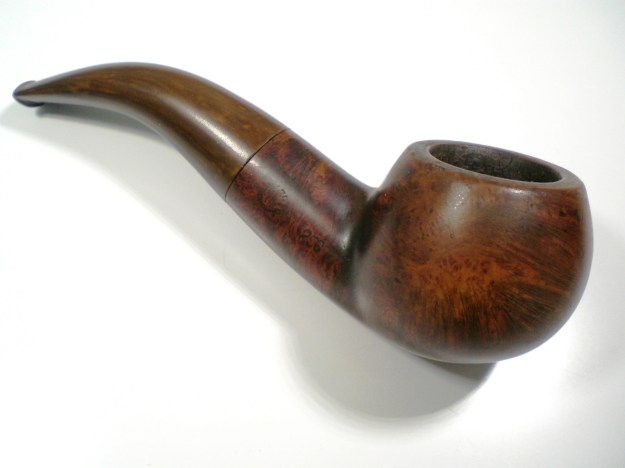
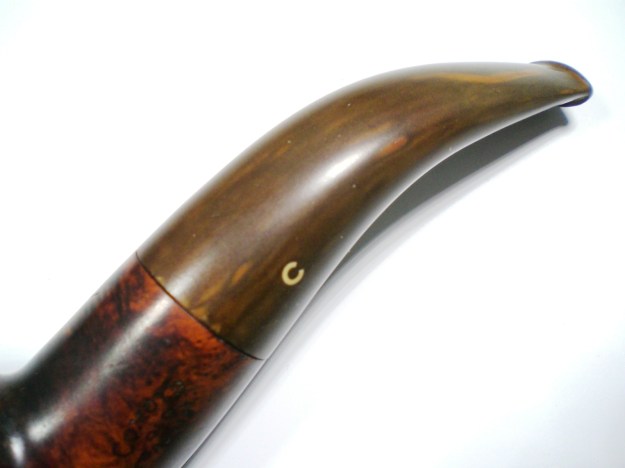
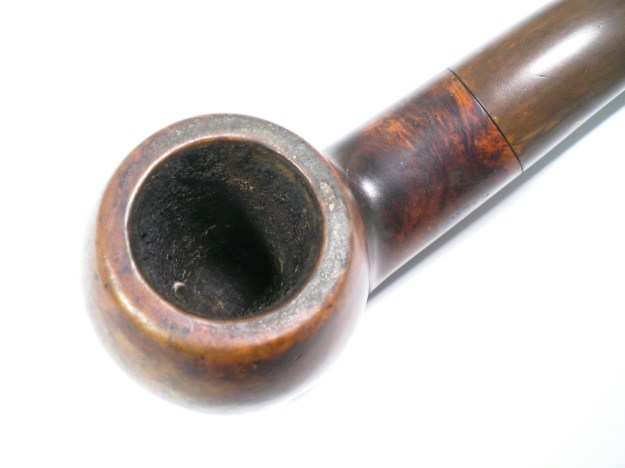
Using my Pipenet reamer, I carefully removed the cake. To finish, I wrapped a piece of 320 grit paper around a suitable bit, which is my preferred method of finishing a bowl. The bowl was in excellent shape, with no damage. I used a cloth with warm, mildy soapy water to remove the grime from the exterior of the briar. 6000 grade micromesh was used to remove the build-up on the bowl top. The bowl was filled with sea salt and alcohol, and left to soak for several hours.
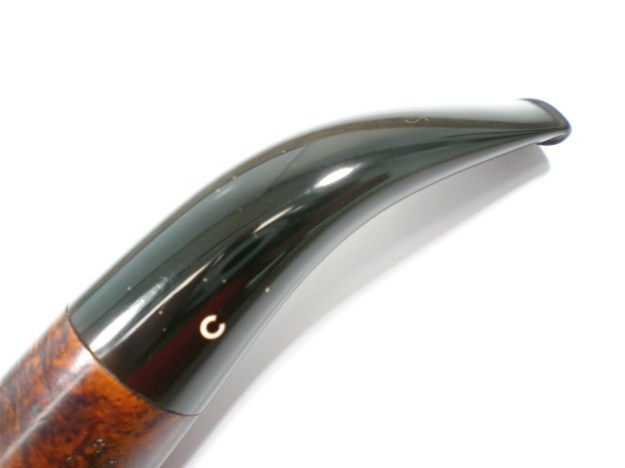
While the bowl was soaking, I put a dab of grease on the “C” stem logo and soaked it in a mild Oxy-Clean solution.
Following the soaks, I used a bristle brush to clean the shank and then mounted the stem to begin to use oxidation. I used a plastic colllar to get close to the stem edge and also to keep too much water from leaking over to the briar, which could further lighten the stain. There were a few teeth indentions and nearly all responded to heat from a lighter to raise them. I then used 400 grade wet paper to remove the heavy oxidation, then 800 grade, followed by 1500 and 2000 grade paper. 8,000 and 12,000 micromesh was then used as a final prep. The stem was then buffed with White Diamond and Meguiars Plastic polish. The briar was buffed with White Diamond, being careful to stay away from the nomenclature. This was followed by several coats of Carnuba wax.
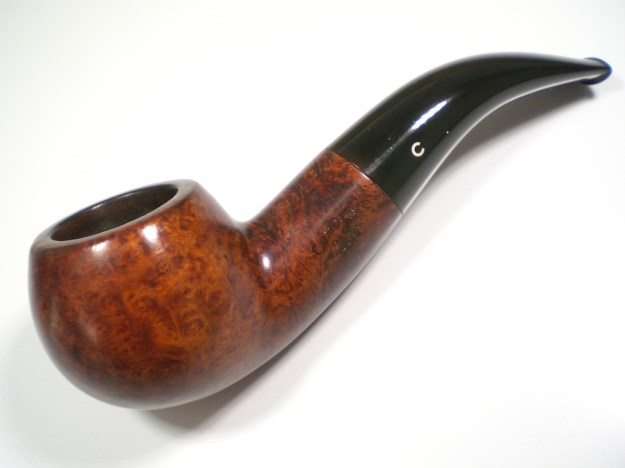
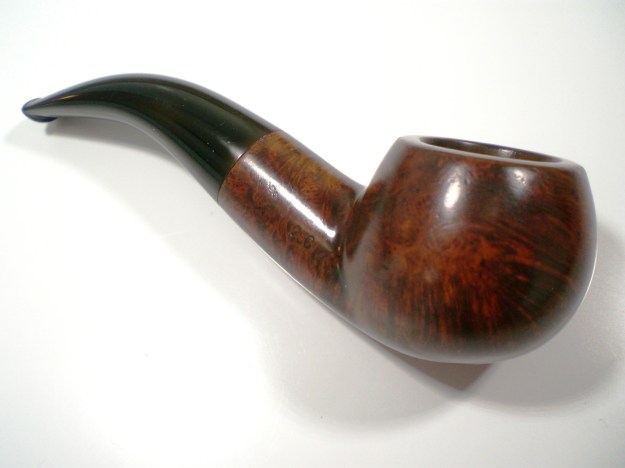
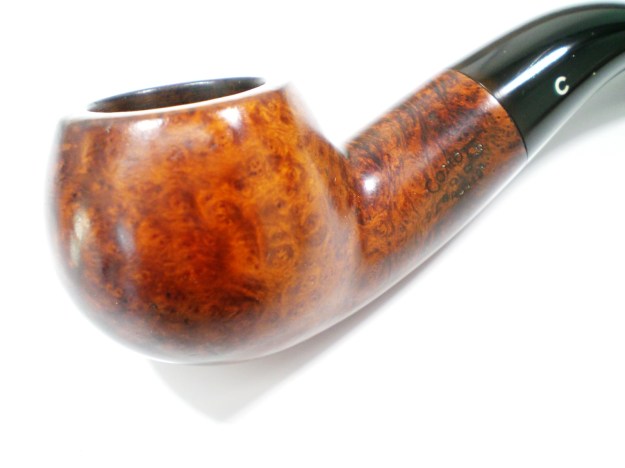
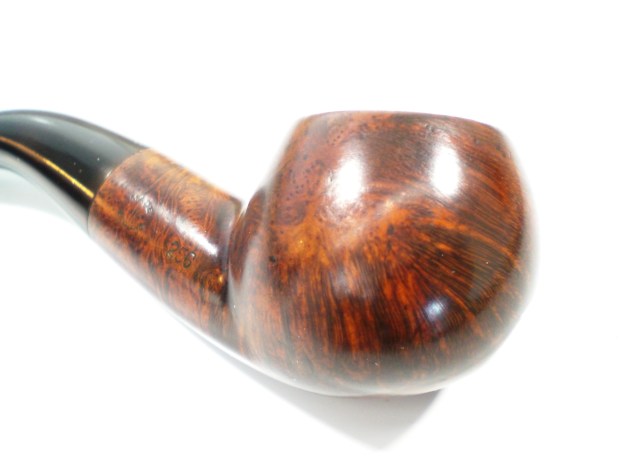
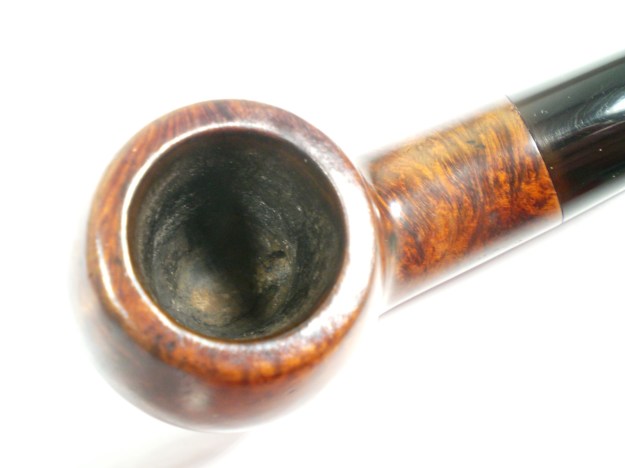
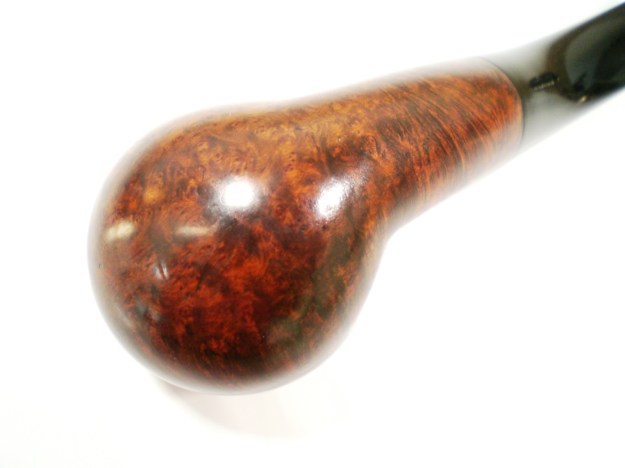
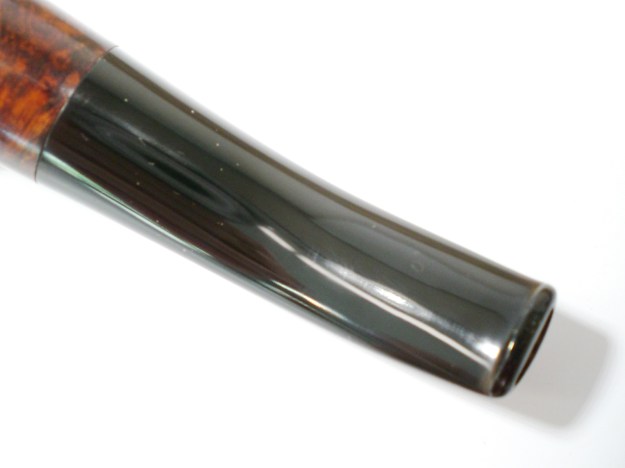
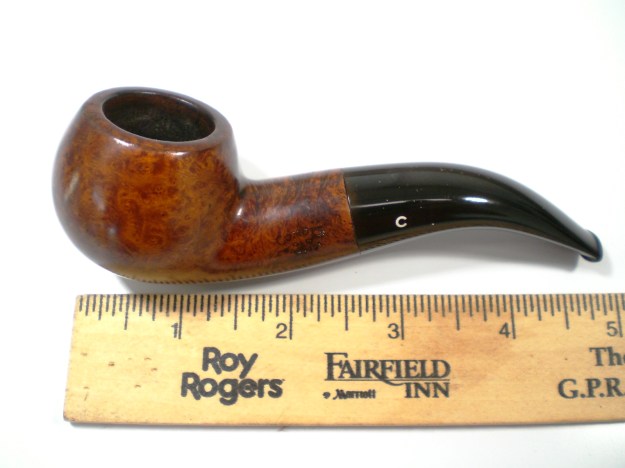
Below is the finished pipe, which will see regular use on my watch.
 rebornpipes
Since you put a dab of grease on the “C” stem logo, how is that little round part (part of the 3 pieces logo,right next to the letter “C”) got restored from brown to black again? Just wondering.
LikeLike
Lee, the grease is just to protect the white rod while it is soaking in Oxy-Clean. I’ve since stopped doing that soak, it just didn’t seem necessary or effective. Following the soak, the oxidation was removed using wet sandpaper regimen I described. That includes the intricate C stem logo. I assume Comoys used vulcanite rod stock,so it responds just like the stem to polishing and buffing. I don’t baby the logo at all. I doubt the grease really did much, but no harm done applying it. The C stem logos to me, have proven very durable and easily holdup to buffing/sanding. IF you find one with raised edges,I’d proceed a little more carefully. I’ve seen these stems missing some of the rod pieces, so somehow,folks have found a way to damage them.
LikeLike
Very handsome. What blends will you smoke in it?
LikeLike
I’m pretty much a My Mixture 965 blend smoker.
LikeLike
Al, nice work. Very nice.
LikeLike
Al, I love that one. Really good work in bringing out the beauty! Well done
LikeLike