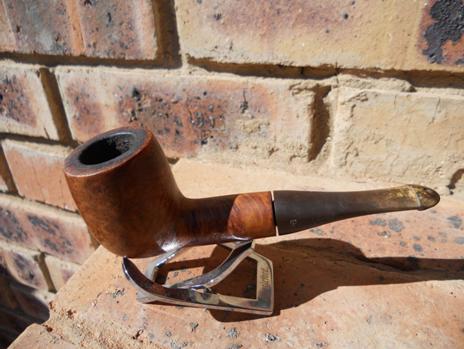
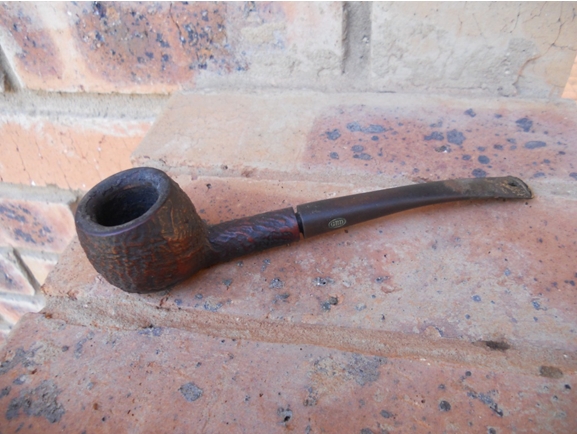
Tag Archives: Piet Binsbergen

Polishing Stems (PART 1) Piet Binsbergen


I have had some questions about polishing stems.

I must warn that I will not be held responsible for any damage you may cause to pipes following this method. The process is relatively fail safe but certain circumstances that may be beyond my control, I simply cannot be held accountable for. I do suggest that you do a couple of trial runs using old or broken stems before you attempt this process with your beloved birth year Dunhill.

I will share with you my process. Please bear in mind that there are many ways to skin this cat, this is my way of doing things but this does not mean that I reject any other processes that other pipe repairman use.

I use two approaches. Firstly it is important when doing up a pipe to try and save the stems at all costs. So process 1 involves cleaning and polishing stems that have tarnished.

Secondly, especially when it comes to hotrods, I use pre-moulded stems. I am able to hand cut stems from rod stock but I find the process way to involved and time consuming for what I am doing. Call me a cheat but I find this works really well for me. My preferred medium is vulcanite and ebonite but I do not turn down Lucite stems if they come my way. Lucite is problematic in the sense that it has little give and little room for error. On the up side of it Lucite does not tarnish.

Part 1

Saving Original stems

As most of you know vulcanite is compressed rubber, the same stuff your car tyres are made of to a point. This rubber is just compressed way more. I have found different qualities of the stuff over the years and have notice some being more superior to others.

I do not have much to add here due to the fact that Steve Laug is doing some ground breaking work with regards to original stem repair. He manages to remove teeth marks and patch holes in bits. I have studied his technique but will need to pick his brain a little more before I perfect this process. For me, as soon as a stem has a hole in the bit, I replace it with a pre-moulded stem. (This process of his is archived on this blog.) I love tapered stems. There seems to be more ‘meat’ to work with and more ‘meat’ means there is room to open up the draft holes, file out teeth marks and restore the stem as good as new. Saddle stems prove to be a bit of a challenge due to the fact that there is not much room to move.

Most stems look like this, and believe me these are good ones!
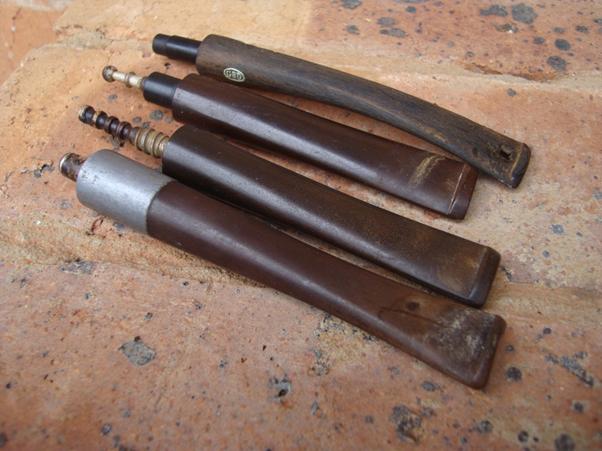
Stems1

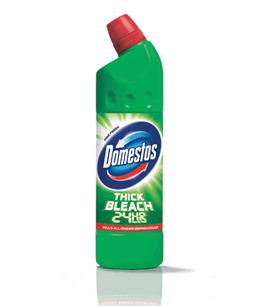
What I usually do is drop them into a bleach bath. Household bleach does the trick for me. Here in RSA I use a product called ‘Domestos ‘.
Stems2

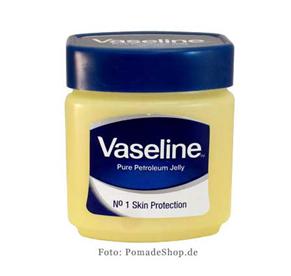
WARNING: Be sure to coat the tenon and nomenclature (If any, like say the GBD rondelle) with Vaseline (Petroleum Jelly).
Stems3

This protects the stem material from coming into contact with the bleach. If you do not do this you will end up needing to resize the tenon as the bleach may eat away at it. As soon as the needed parts are coated, I drop the stem into the bleach. It will bubble a little and you will immediately notice the liquid turning brown. Depending on the extent of tarnish and the quality of the vulcanite will depend how long I leave the stem in the bleach.  A good average for me is 20 min.

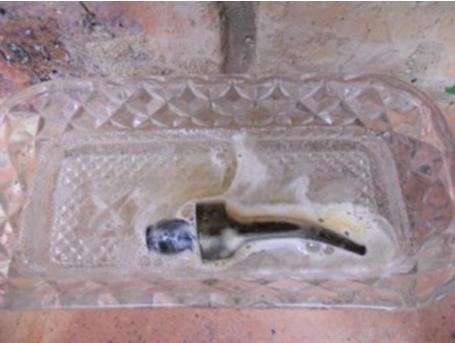
Below is a picture of the stem in the bleach for a minute or so. It looks scary I know, but it works.
Stems4

Remove the stem from the bleach and rinse in warm water. Wipe off the Vaseline from the tenon. This process has an added bonus as it tends to eat the muck out of the draft hole in the process.

PROBLEM: But fear not. If you draw on the stem you will taste 2 things. Firstly, you are going to get a strong taste of bleach, secondly, you may taste the left overs from the ghosting of the previous owners blend. If it were aro’s you will really taste it. This is easy to get rid of.

The next step involves scrubbing out the daft hole. I use bristle brushes and bristle pipe cleaners. If I choose to open the stem to my preferred 4mm, I do it at this stage.

Interesting Observation: I have had clients complain that a pipe ghosts flavours of tobacco even when the bowl has been well refinished. Did you know that vulcanite is porous and will hold the ghost in the same way the bowl does. If you do not believe me remove a stem from an old pipe and draw on it, you will taste the ghost! The bleach bath cures this problem to a point. Further manual scrubbing aids the removal of the ghost.

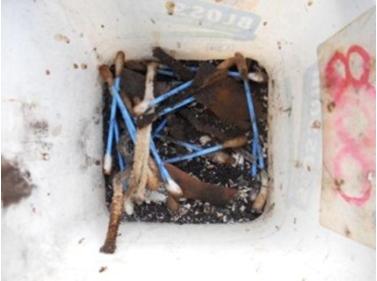
The picture below shows how much dirt and grime is loosened and scrubbed out of the draft hole during this process.
Stems5

In order to remove all ghosting of tobacco, bleach and in order to sanitize the stem, I soak the stem in alcohol for an hour. I use Isopropyl alcohol (96%). Now this stuff is poisonous in a big way if ingested but research has proven that as soon as it has evaporated it is harmless. This is the same stuff used by hospitals to clean and sanitize operating theatres and equipment so go figure. After an hour remove the stem from the alcohol bath and rinse with clean water.

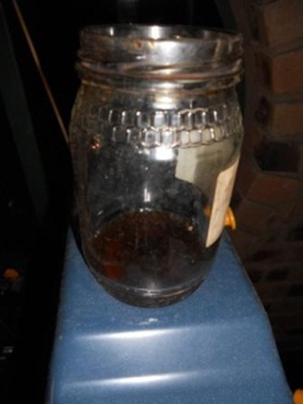
Here is a picture of the colour of the alcohol once the stem has come out a soaking for an hour.
Stems6

Notice the stem may turn white, light green or matte black depending on the type of vulcanite used by the manufacturer. I have noticed that most Peterson stems for example turn white. If you draw on the stem at this stage will taste nothing. I will be as good as new.

Sanding and polishing: You may notice the following, the stem may be smooth with colouration or it may look matt black and be rough textured. Start sanding. I use 400 and work my way up to 800 grit sand paper. This is a time consuming process, do not take any short cuts here. The last thing you want is a stem with a high polish that is full of surface scratches.

By the time I reach 800 grit I move to the buffer. I use Tripoli (Brown wax) which is equivalent to 800 grit sand paper and move onto White Diamond which is the same as 1200 grit. If you do not own a buffer, you can still get the same finish but the process will just take longer as you will hand sand up to 1200 grit and beyond.

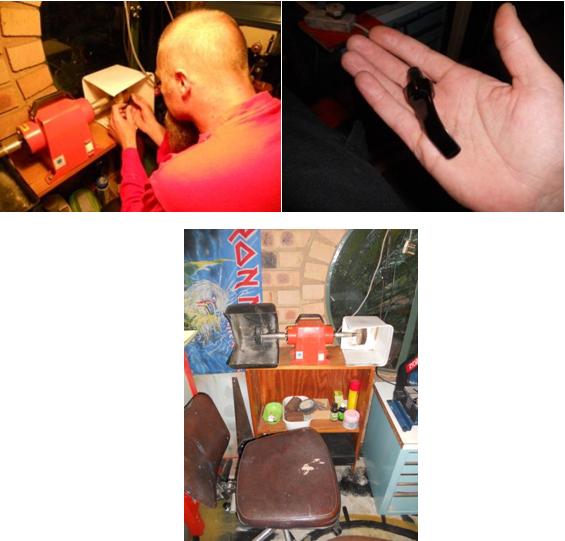
The pictures below show the buffing process. Note that the picture of the stem on the right is not the finished product but shows what the stem looks like after buffing.
Stems7

By this stage the stem should shine and you should be able to see your reflection in the material. If not revert back to sanding, you have taken short cuts!

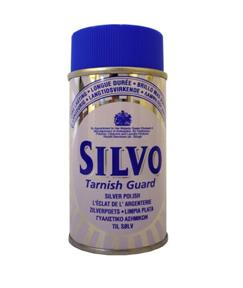
Depending on the type of material, as vulcanite differs in hardness, I continue hand sanding with 1500, 1800, and finally 2000 grit. Here you may notice the stem may start to dull a bit. The final polishing stages involves Brillo, or what we call Silvo here in RSA.  Silvo is a jewellery polish. Polishing is now done by hand using a soft duster cloth.
Stems8

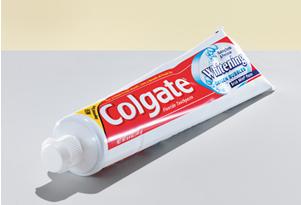
Finally, and you may laugh, but, I use tooth paste as the final step. This is a trick I learnt from a flute maker who high polish silver. Think about it, it really is quite logical. Toothpaste is a fine, very fine, rubbing compound. This process is also done by hand using a soft duster cloth.
Stems9

A final word of advice: Vulcanite is light and air sensitive. The more light the faster the tarnishing process will start. To avoid further tarnishing I run the stem including the bowl over a slow spinning buffer using carnauba wax. This forms a protective layer on the vulcanite keeping the oxidation process at bay. When done smoking your pipe, wipe the bit clean with a soft cloth. Saliva (Ph levels) mixed with the smoke is what makes pipes so yukky around the bit area. My stems are always clean and oxidation free. Besides standard cleaning after smoking I run the stem over the buffer to seal them up again from time to time.

Here are a couple of pictures to wet your stem polishing appetite. These are a herd of refurbished GBD that belong to “Muddler”. Stems can look better than new if you take the time and put in the effort.
Stems10

A Peterson Kildare.

Before and after
Stems11

Stems12

Good Luck and enjoy!

Piet Binsbergen “Hot Rods” – Piet Binsbergen


Well I am known as the visual artist, the mad man, the cowboy with a drill bit! This story is about my custom pipes offering you some history and the reasons why I do what I do.

I enjoy pushing boundaries at times and do so due to my training in the arts up to masters’ level. I do pipe repair and still hold firm that pipes need to brought back to life as close to their original state as possible. I would never dream of doing a custom job on a Dunnie shell for instance, or a pipe that remains in a repairable state.

My “Hot Rods” are custom renditions which I keep in my own collection. These are pipes lying in ICU close to flat line. They are in a poor state, often with busted shanks or missing or broken stems. You name it, these pipes have a terminal diagnosis.  From here on I have fun. I tend to push myself a little further each time with the challenge being to save the pipe at all costs. Some I have won and others lost but no matter how bad they are, I give them my best shot.

Now a bit of Pipe lore history from the dark continent, South Africa. Smokers here are few and far between. As RSA is no bigger than the state of Texas our smokers per capita will never service the demand for good pipes and tobacco. We have but a few collectors. The majority are smokers who pride themselves in workhorses such as the famous Keyser pipe smoking OTC heavily doused aro’s in them. Now, we were a British colony until the mid-1960’s so it is not uncommon to find older GBD’s, Pete’s and even antique Dunnies floating around here. As a matter of fact most British pipe makes are here in their dozens with the American and European pipe manufacturers taking a back seat.

During the apartheid years most countries in the world imposed sanction on South Africa reducing the inflow of pipes to a trickle. Being a commonwealth country we were still able to obtain Brit pipes. America and the most of Europe would have nothing to do with us. Most imported tobacco ground to a halt with South African tobacco farmers inventing the most hideous blends the world has ever seen. During the late 80’s and 90’s the South African rand lost plenty of value and after the new ANC Government took charge in 1994 we have been experiencing a slippery slope with the current exchange rate. An example of this is the pound stirling sitting at 12 to 1  and the US dollar close to 9 to 1.

The abolishment of Apartheid and the emergence of the New Democratic South Africa meant that the world re opened trade relations with South Africa. This meant that the tobacco shops locally were now again stocking Italians, Danish and American pipes. Great you may say. Think again! With the current exchange rate, expect to pay an average of $250-00 for a mid-range Savinelli which has established itself well here during the post-apartheid years. So what do we do? The solution is simple. Hunt ebay, import good tobacco and say your prayers that your orders and purchases arrive in one piece and that Mr Import Duty Officer does not sniff you out.

My journey into pipe restoration was born from a need to survive. I needed to learn the trade with speed if I was going to dabble in this pass time. It took years of experimentation and thank the Pope for the internet indeed. I found pipes in barns, begged friends and ex pipe smokers and family members for their boxed pipes to experiment on. I made headway and met some great people along the way. Mike Mitchely “Muddler”, David Peterson from the Virtual Smoking Lounge, Steve Laug, Jan Pietenpauw, Alan Philips from Sturks tobacconist in Cape town, Charl Goussard, Dean Swanepoel and the list goes on. I made friends not only locally but worldwide. We traded, gifted and swopped pipes and tobacco. My friends sent me pipes as gifts with the result being that I have to date Lee von Erck, Rad Davis, Mark Tinsky, Chris Askwith pipes in my collection to name just a few. For this I am eternally grateful.

As soon as my skills were honed I put up a website (www.binsbergenpipes.co.za) in the hope that I may meet fellow smokers and collectors around the world. I was surprised! I met people who wanted pipes cleaned, repaired, restored etc. My client base now reaches the far corner of the globe. What seems to be happening is that most of my friends locally and abroad, shop on ebay and send the pips to me for restoration.  The result is that I am paid for my services with pipes, tobacco, etc. as I simply cannot accept money from friends.  The regular Jo Soap down the road however, is billed for my services which to date keeps this pass time self-sufficient. I am not making any profit and I am happy with this arrangement as this life style now pays for itself.

A big pipe enthusiasm injection for South Africa came with the inception of the Brotherhood of International Pipe Smokers forum in December 2010. In conversation with a fellow pipe smoker from Cape Town, Dean  Swanepoel who is a web designer, we bounced around the idea of the first South African based Pipe Forum. The first question was who would join this forum? After all we are up against the big guns, Pipe Chat, Tamp and Puff, Brothers of Briar, Smokers Forum and many more. We took the leap of faith and soon friends made on other forums came to the BIPS campfire. It was decided to keep BIPS a closed forum holding membership low in order to keep a sound brotherhood medium. Members are recruited on an “invite in” basis only, not that we are snobs but in order to keep a tight nit community of brothers who care for one another. It has become a cyber-home for all the members, a place to kick up feet and enjoy the pleasures of wood and leaf.

In returning to my “hot Rod” pipes, it was important to offer the background history in order for the reader to understand the viewpoint of a South African repairman. Now, where do I find the pipes? Well, I scout antique markets over weekends and public holidays. South African’s seem to be patriotic buggers at heart and such markets are well attended with buyers seeking out Afrikana memorabilia of years past. This is where I find the gems at give-away prices. Make no mistake, they are near dead and price says it all. I pay on average for the pipes you will see here a mere average of R 30-00 ($ 5.00 to $8.00). It was here I noticed the inflow of many Brit pipes, especially GBD’s. These are entry level pipes from the 50’s and 60’s, nothing special at all.  GBD Populars and New Standards seem to be in overflow. Also Sasieni seconds destined for international markets stick their heads out once in a while. I have found some big scores too, a 1959 Dunnie Shell in mint condition in its box with booklet and sock, some Peterson’s,  BBB’s and Comoy’s either carrying the original names or their second lines. Either way, this makes little difference as we are after old wood which become reborn.

What you are about to see are the finished pipes. Some have made their way into my smoking rotation; others are yet to get there. Either way, welcome a part of my crazy world. In conclusion, most of the pipes were found at markets, others come from friends as far north as Michigan and down south in Mexico City. Unfortunately I do not have before pictures but you may get the idea.

Most of the pipes come to me looking like this, and trust me, this is a good one with a solid heart beat!Image

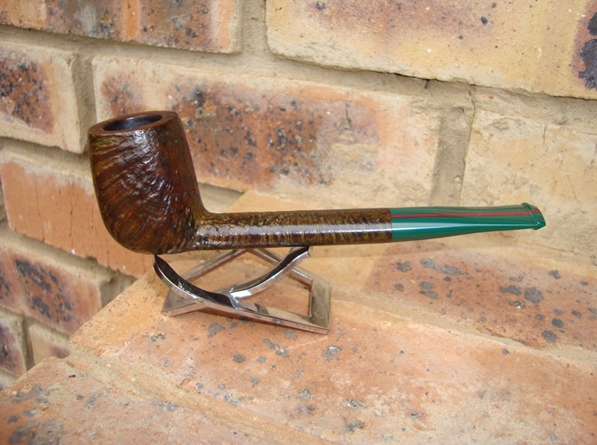
The Green Mamba

Pipe: GBD Canadian (Cadogan era, 1980’s) Shape 262

Location: Mexico City

Price: Gift from Eric Hyland (Mr. E)

Diagnosis: Broken Clear Lucite Stem

Sandblasted the stummel. Stained the pipe green. Fabricated a green Lucite stem. Image

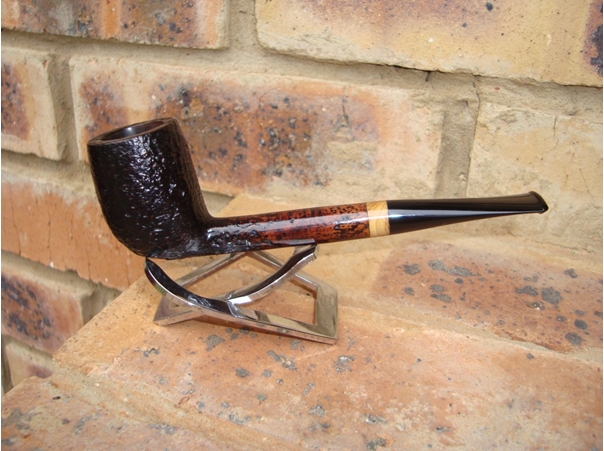
The Fire Starter (Blitzkrieg)

Pipe: GBD Popular, Shape 3781

Location: Cape Town, South Africa

Price: Gift from Alan Philips (Sturks Tobacconist)

Dignosis: Ugly chubby Lovat, a perfect candidate

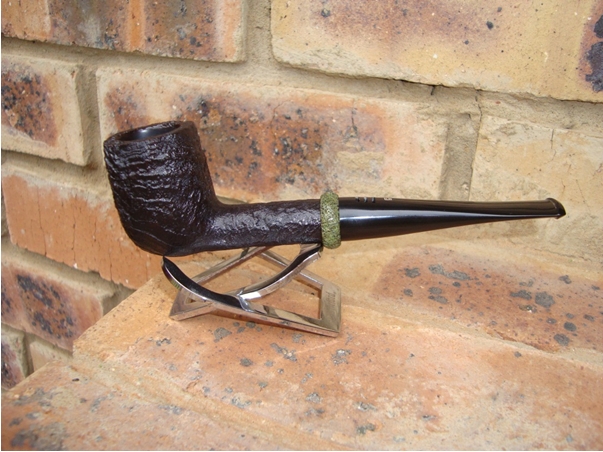
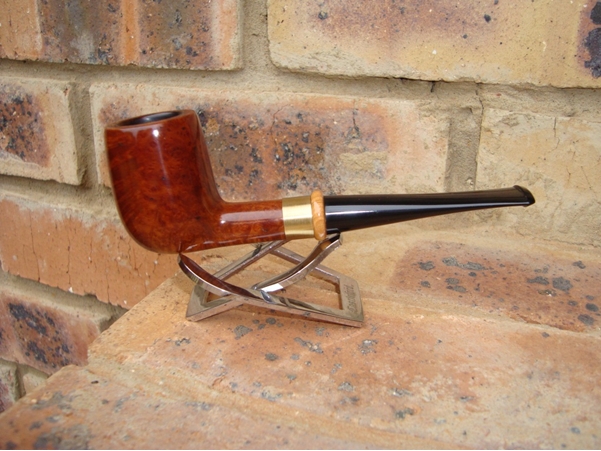
Sandblasted the stummel as it was full of putty fills. Replaced the stem adding an olive wood shank ring. Sanded the shank and shaded the stem to go from yellow through red to black using leather dye hence the name fire starter. The process is time consuming as the stains go on and sanded with 1200 grit paper, restained and so on in order to obtain the shading in colour. Image

The Hippo

Pipe: Carey Magic inch Pipe

Location: Michigan, USA

Price: Gift from Chuck Rewalt (Velveteagle)

Diagnosis: Smooth bowl full of fills and dents. Chewed mouth piece. Heavily smoked and caked.

Sandblasted the stummel. Stained it black. As this is a “magic inch” pipe the stem needed to be salvaged. I sanded the teeth marks out and reshaped the bit. This was difficult as the stems are plastic castings. I added a hippo bone shank ring stained green that I got from the pipe maker Jan Pietenpauw. Image

The Black Beauty

Pipe: GBD Popular, shape unknown

Location: Johannesburg, South Africa (antique market)

Price: R 20-00 (ZAR)

Diagnosis: Snapped stem, heavily smoked, Burn mark on bowl from leaving the pipe in an ashtray next to a burning ember or cigarette. This was a major eyesore.

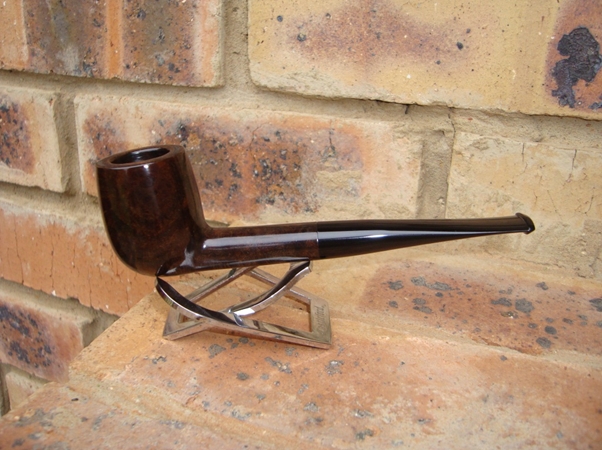
Replaced the stem. Did not opt for any shank adornments here. Sanded the bowl and stained it black to hide the burn mark in the wood. Image

The Red Head

Pipe: GBD Popular, shape 3781

Location: Pretoria, South Africa (antique market)

Price: R20-00 (ZAR)

Diagnosis: Broken stem. Heavily smoked, dings on rim from knocking pipe on hard surface.

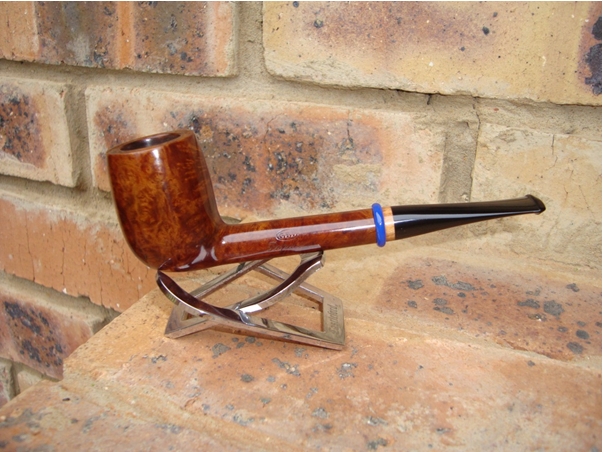
Under all the dirt, grime and dents the wood on this one was good. I lost 0.5 mm on the rim to remove dents. Sanded the bowl and restained it. Replaced the stem adding an olive wood flush shank ring and contrasting it with a blue raised Lucite ring. Image

The Reject

Pipe: GBD, Cadogen era Billiard, shape unknown, stamped RJ (I take it that GBD stamped the pipe reject as it carries no marking on the stummel but has GBD printed on the stem)

Location: Pretoria, South Africa (antique market)

Price: R 50.00 (ZAR)

Diagnosis: Cracked shank. Stem was intact but it was a yellow Lucite saddle with restricted draw.

Heavily smoked. Dings on bowl.

A tough call. Repaired cracked shank by spinning brass sleeve to fit flush on the shank. Added olive raised shank ring. Sanded and restained the bowl. Image

The Half & Half Virgin

Pipe: GBD Virgin, Shape Unknown

Location: Ghana, Africa.

Price: Gift, Duncan Nebbe (Rhodesian). Scored in a lot of GBD pipes on Ebay. Most were cleaned, this one flat lined.

Diagnosis: The lot of pipes were in a barn or some place exposed to the elements for many years (we suspect). Fine cracks appeared on the outside of the bowl. Stem broken. In a shocking state. It lay around the in the trash box for some weeks before it called to me.

We all know GBD Virgin are not blasted pipes due to the quality of the wood. This one needed to be blasted to remove the surface cracks in the wood. I masked the shank in order to retain some faint nomenclature and the word ‘Virgin’.  Bowl restained and a new stem fitted. Tambotie shank ring added. Image

The MOERSE Billiard

Pipe: Byford/Orlik, shape unknown

Location: Pretoria, South Africa (Hospice charity shop)

Price: R15.00 (ZAR)

Diagnosis: Heavily smoked. Dings on rim from knocking pipe on hard surface. Dings and fills on the bowl. Stem clogged and chewed.

The Byford was a system pipe in its heyday.  The stem consisted of 3 tubes running back and forth in the stem in order to cool and purify the smoke. If it is not cleaned regularly the system gets clogged and there is nothing one can do to save it. I replaced the stem. The alu butt on the shank comes standard with the pipe. It was cleaned and polished. Buckeye Burl shank ring added. Bowl sanded and stained. Image

LOJ se Vlieg Masjien (Lord Oom Jan’s Flying Machine)

Pipe: Keyser Hygienic patent, shape Unknown.

Location: Pretoria, South Africa (Antique market)

Price: R10-00 (ZAR)

Diagnosis: Cracked shank. Broken Stem. Heavily smoked.

For those of you who are familiar with the Keyser pipe, this looks nothing like it. I may get shot for tampering with tradition South African pipe lore but this is how it came out. Named after the South African carver Jan Pietenpauw (LOJ) as parts for the pipe were salvaged from his reject box in order to fix the pipe. Brass shank ring added to repair the crack in the shank. Buckeye burl extension added to seat the shank extension. Stem was replaced by spinning down a pre mould to create a military mount fit. Image