
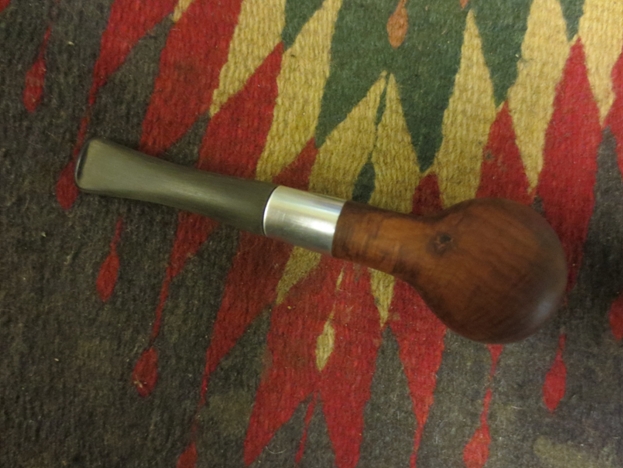
The next pipe I decided to work on from the gift box was a no name pot shaped bowl without a stem. There was a stem in the box that fit well in the threaded metal shank. The problem with the stem was that it was worn out. There was a large dent on the top of the stem and a large hole in the underside of the stem that also had much damage around the hole. The stem was also over turned. The shape was unique in that the bowl had a slight cant to it. The finish was ruined and the grit and grime on the bowl was heavy. There were four fills using pink putty that stood out on the bowl left side, front and bottom. The rim was thickly tarred and oiled. The outer edge was damaged all the way around the bowl. The cake was quite thick and was crumbling at the bottom of the bowl. The shank was thick with tars as well. The aluminum was oxidized. 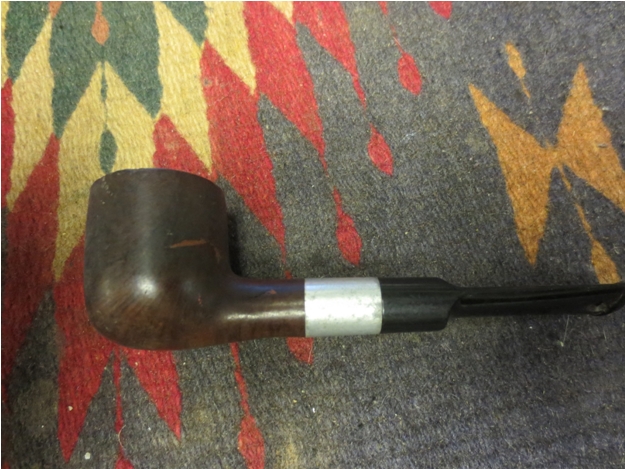
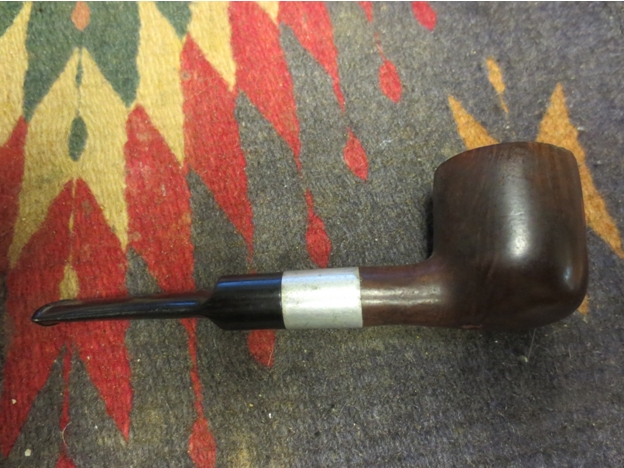
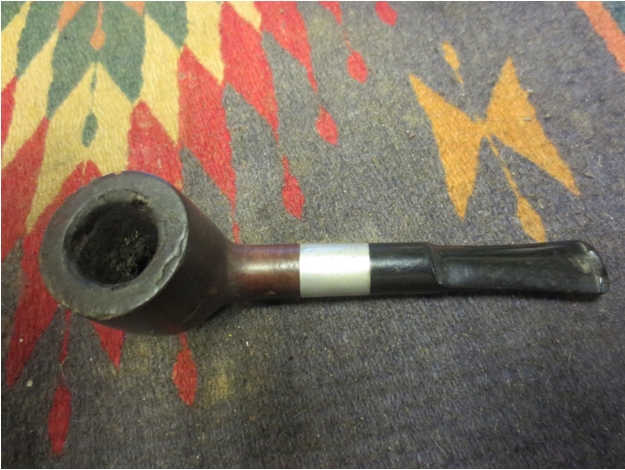
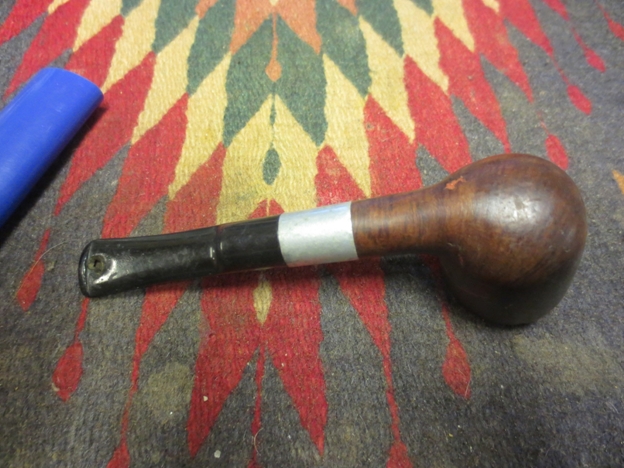 I used a lighter and a heat gun to heat the metal tenon and was able to adjust the stem to a proper fit on the shank. It softened the glue and lined up nicely but when I heated the top side of the stem to try to raise the dent it bubbled even at a distance of three inches plus above the heat source. Yet another reason I don’t like nylon stems.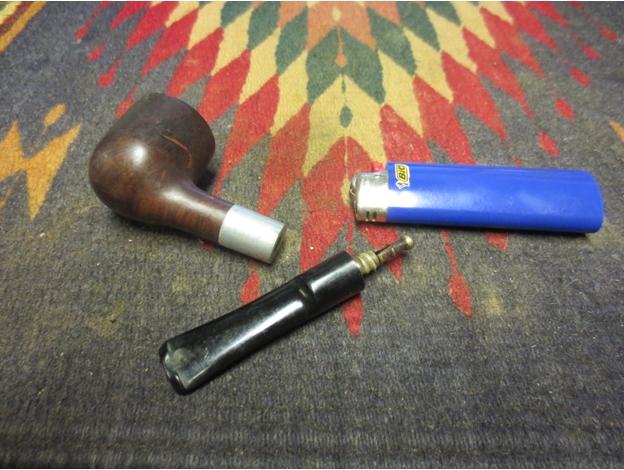
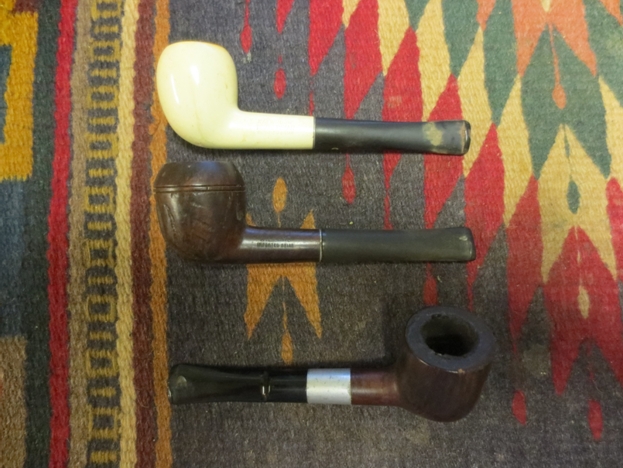
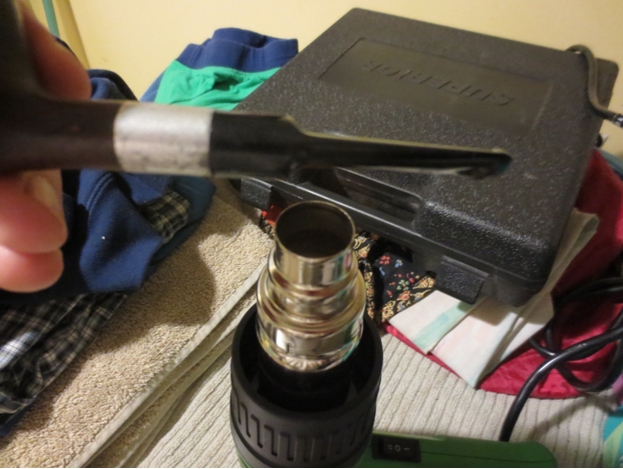
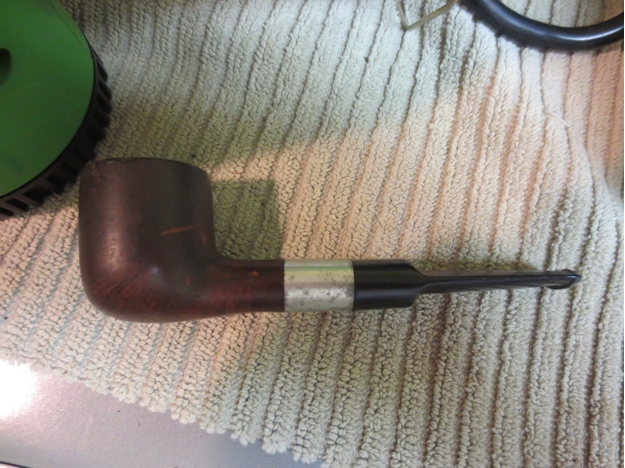 Looking at it carefully after I had straightened it out I could see that the stem was really worn out and would be better used on a different pipe after it had been cut down. I heated the tenon once again and was able to remove the stem from the tenon. The tenon itself was threaded and screwed into the stem. I had a taper stem in my can of stems that had a broken tenon. I sanded the remainder of the broken tenon until it was smooth.
 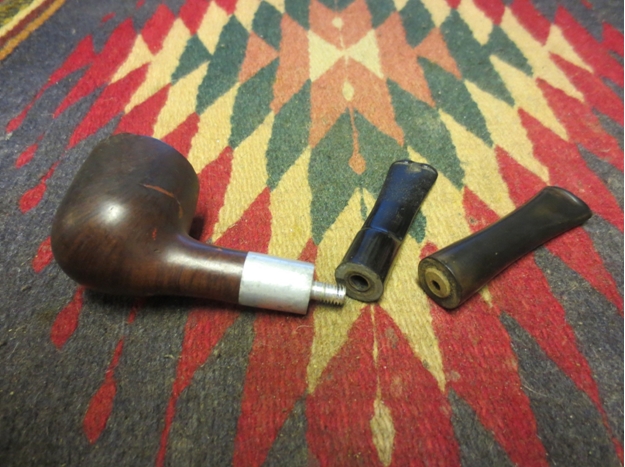 The new stem was the slightly longer than the original stem and it was vulcanite. I drilled out the airway until the metal tenon end fit the in the stem. I held the drill firmly and turned the stem onto the drill bit by hand. I used a tap to cut threads in the freshly drilled hole.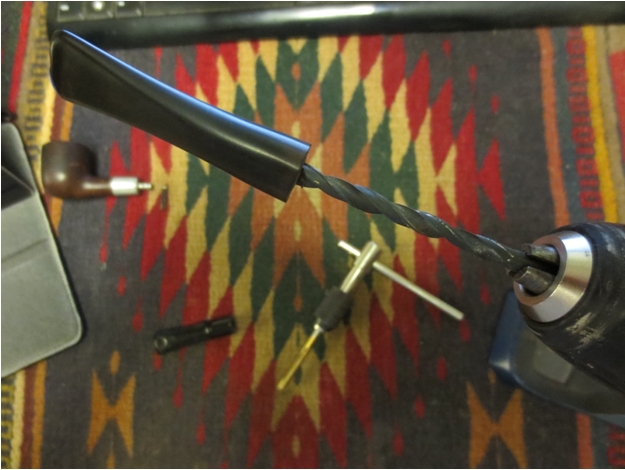
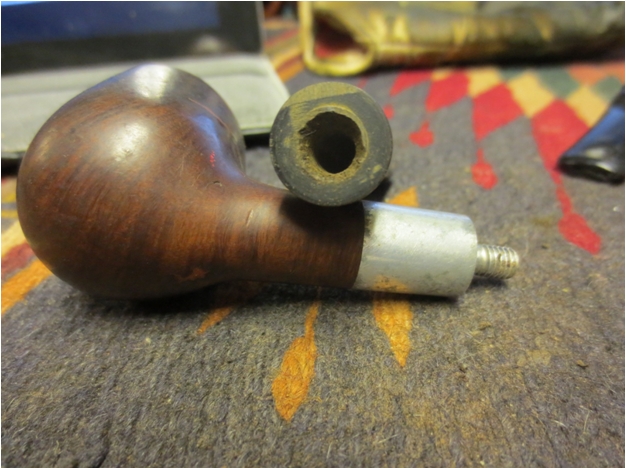 I beveled the drilled hole to accommodate the lip on the threaded tenon so that it would sit flush with the face of the stem. I mixed a batch of two part quick dry epoxy and coated the threaded end of the tenon before threading it into the hole in the stem.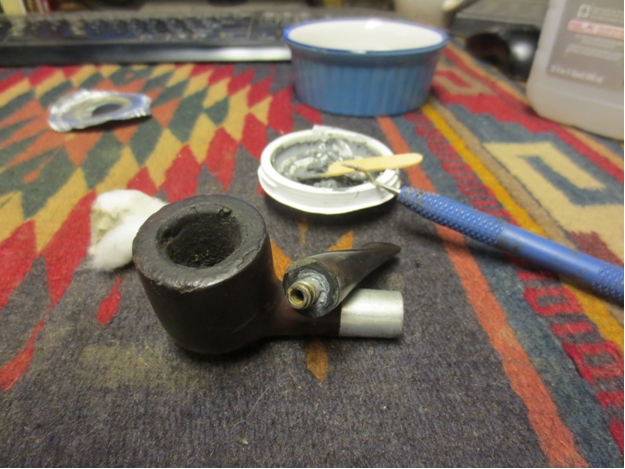
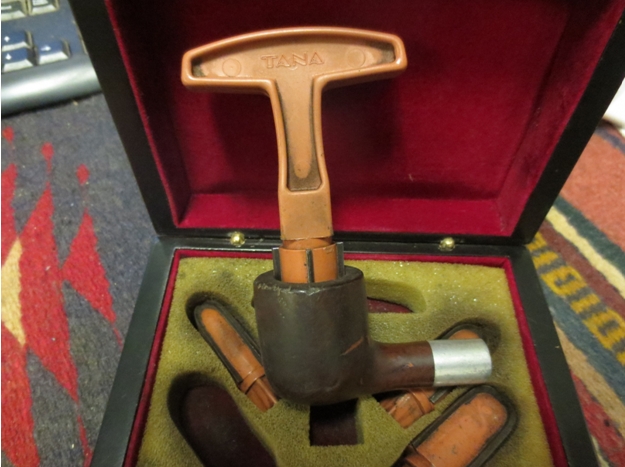
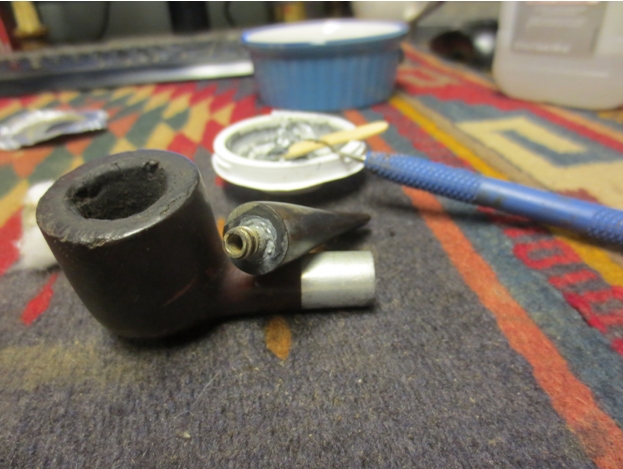 I set the stem aside to let the epoxy cure and turned to work on the bowl. The bowl needed to be reamed so I used a PipNet reamer to do the work. I started with the smallest cutting head and continued until I used one the same size as the bowl of the pipe. I scrubbed out the shank and bowl with alcohol and pipe cleaners and cotton swabs until the shank and bowl were clean.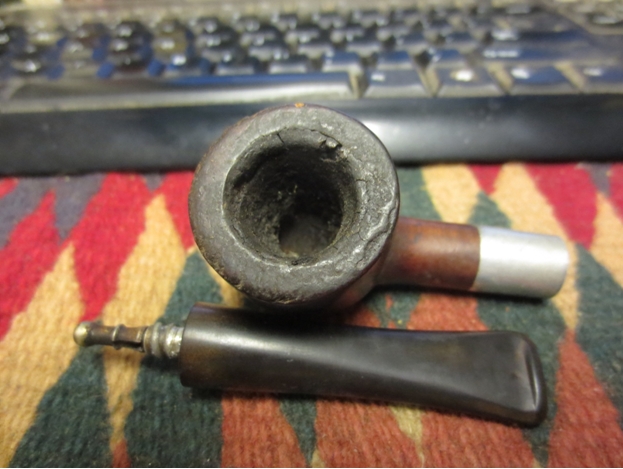
 I set up my topping board and a piece of 220 grit sandpaper and topped the bowl to remove the out rim damage and sharpen the edges of the bowl. I folded a piece of sandpaper and sanded the outer edge once it had been topped. I smoothed out the rough edges until the damage was minimized.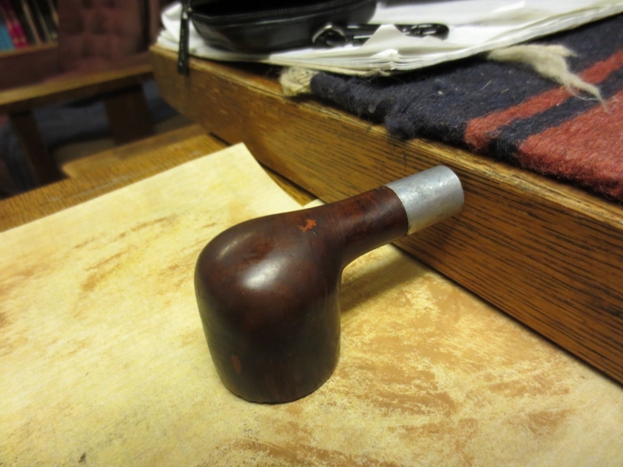
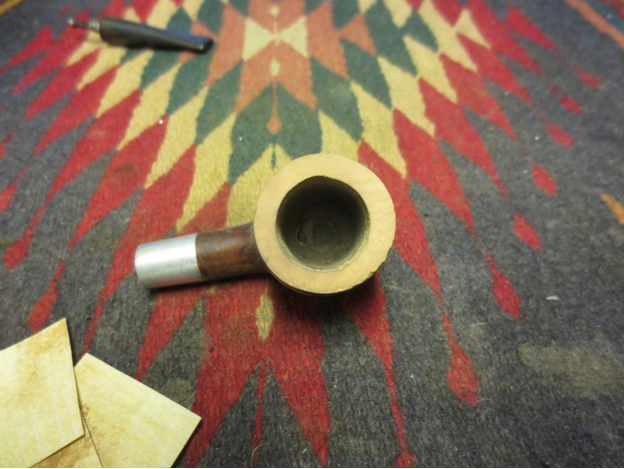 I used a dental pick to remove the pink putty fills. I cleaned the surface with acetone to remove the dust and the remaining putty in the holes after I had picked them out.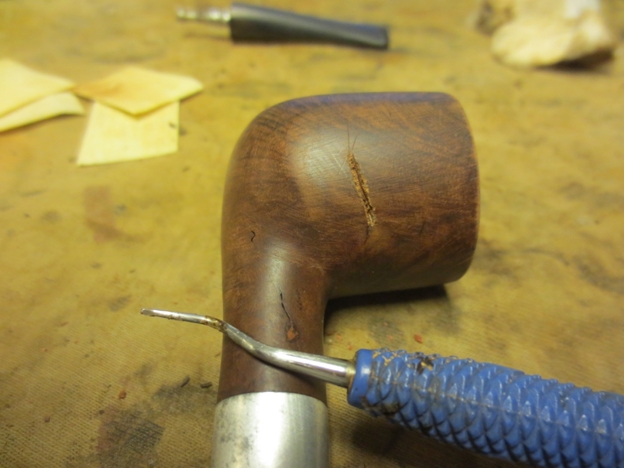

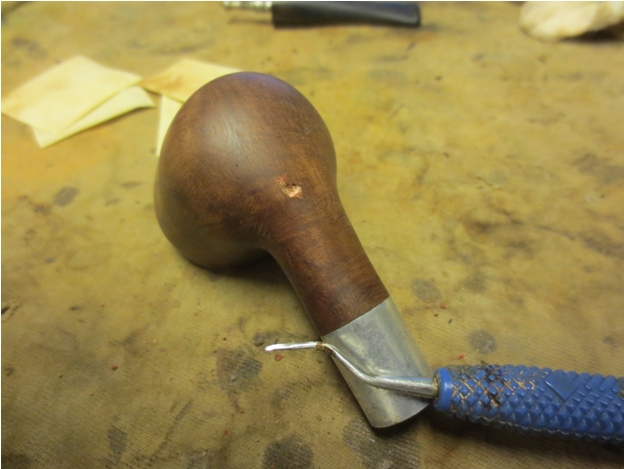
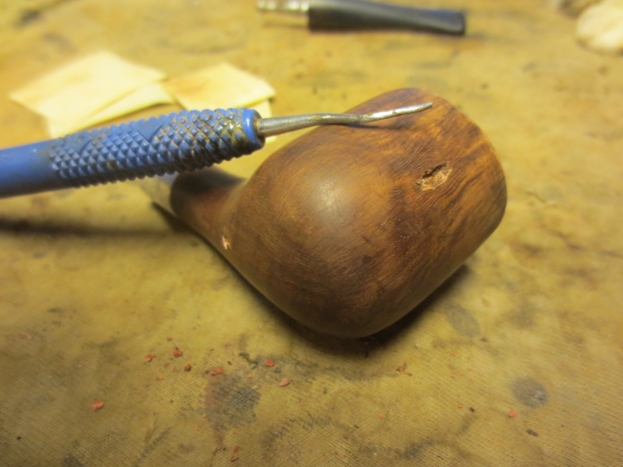 I packed briar dust into the holes in the briar and then dripped super glue into the briar dust to mix with the dust and make a hard fill. I over filled the holes in the briar with the dust and glue so that when it shrunk as it dried it would not leave dips in the surface of the briar.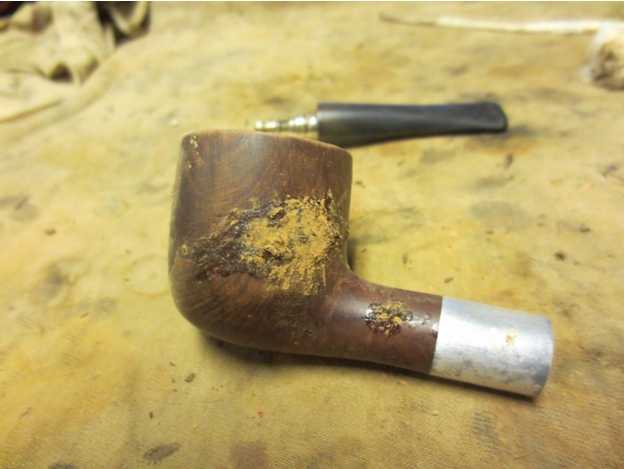
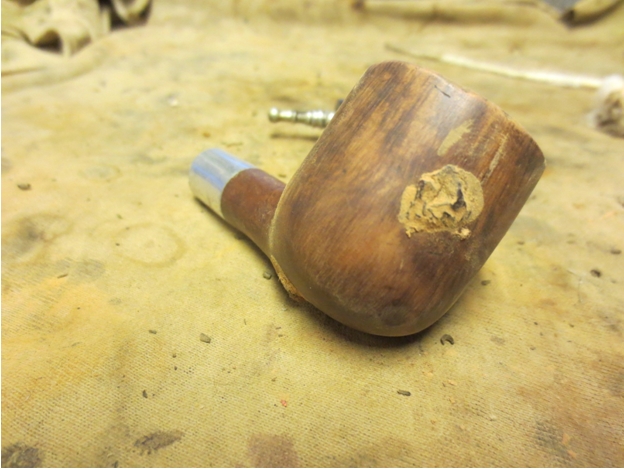
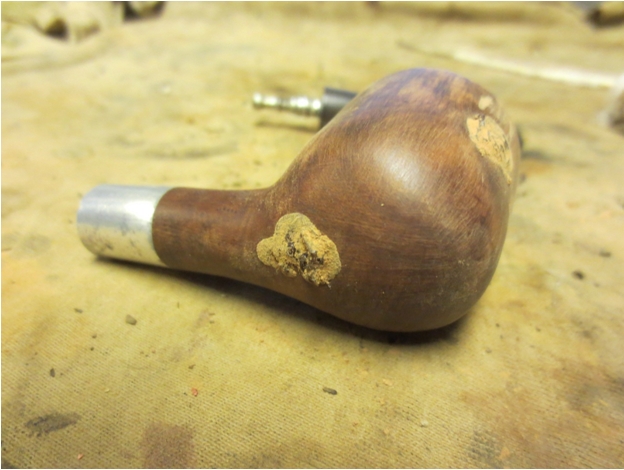 I sanded the filled areas with 220 grit sandpaper to remove the excess and smooth out the fill until it was even with the surface of the briar. I sanded it with a medium and a fine grit sanding sponge and a fine grit sanding block. The new fills were black instead of the bright pink that was previously used in the repairs. Once stained they would be less obvious in the surface of the bowl than the previous ones.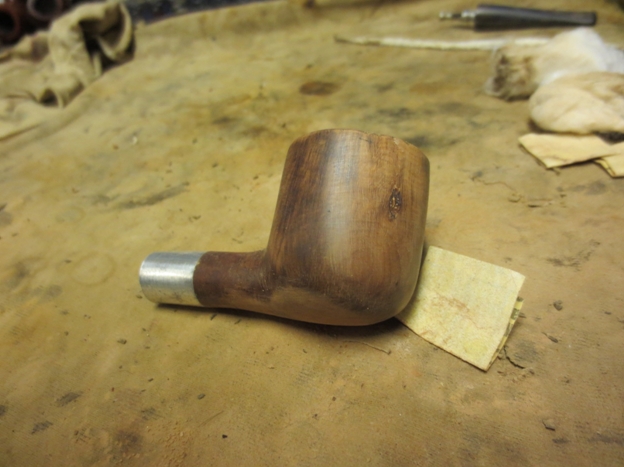
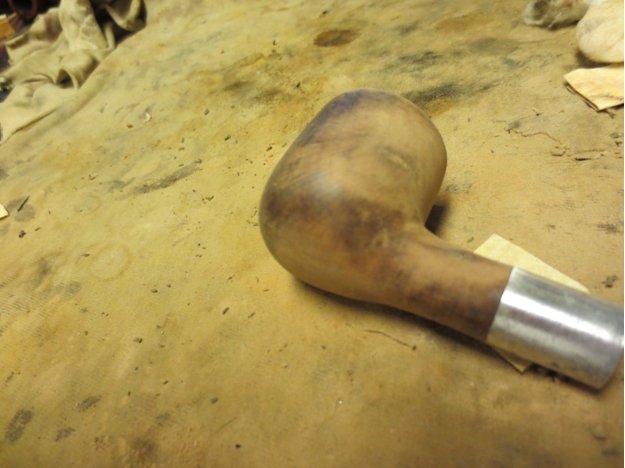
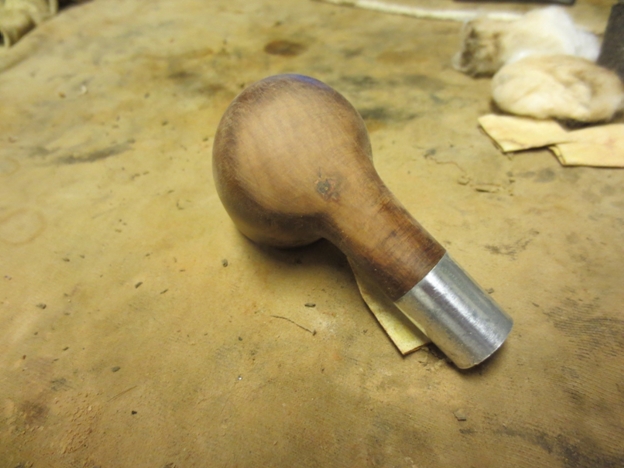 I stained the bowl with Danish Oil and walnut stain and set the bowl aside to dry.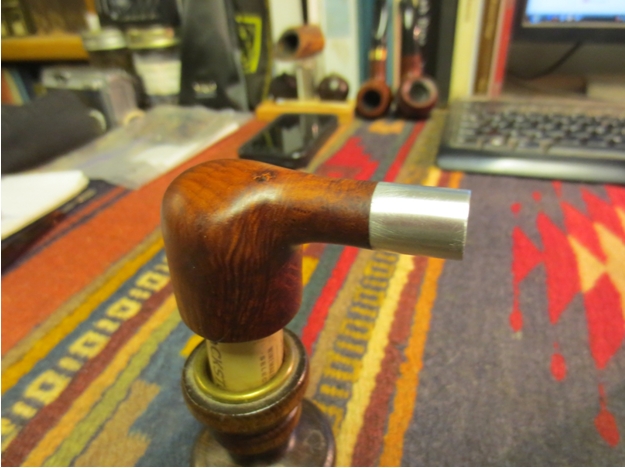
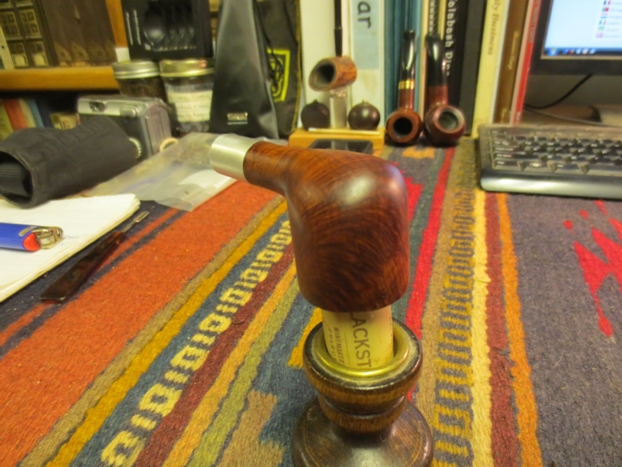
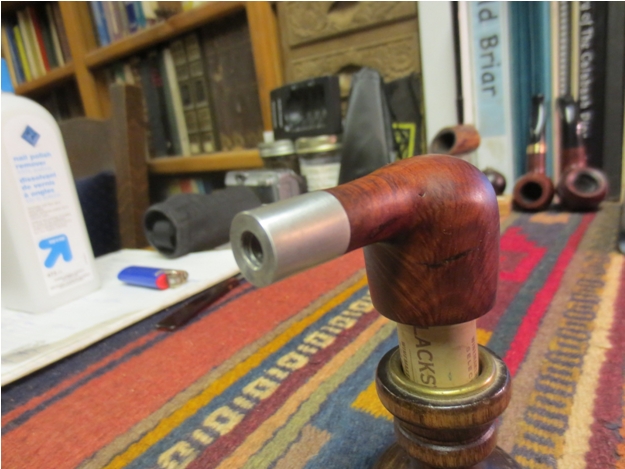
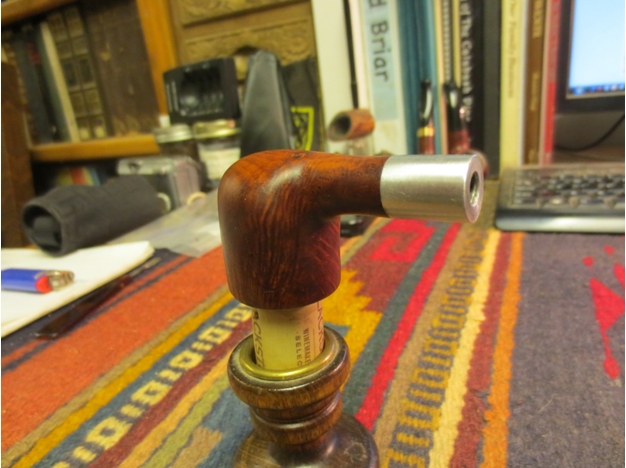 The next morning I checked the fit of the stem as the epoxy had plenty of time to set and cure. I sanded the stem to reduce the diameter at the shank. I used 150 grit sandpaper to remove the excess while repeatedly screwing it into the shank to check that I had removed enough but not too much.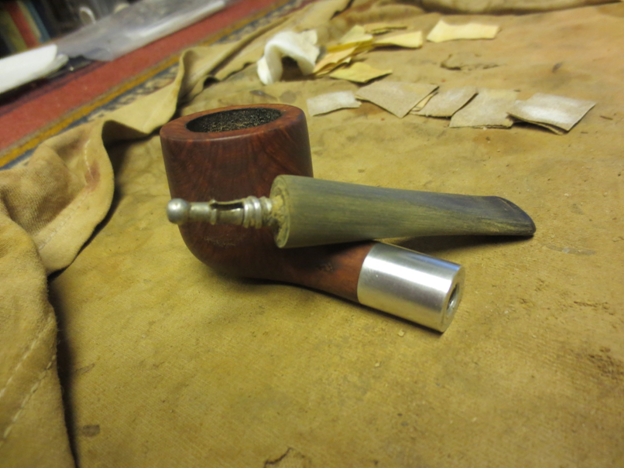
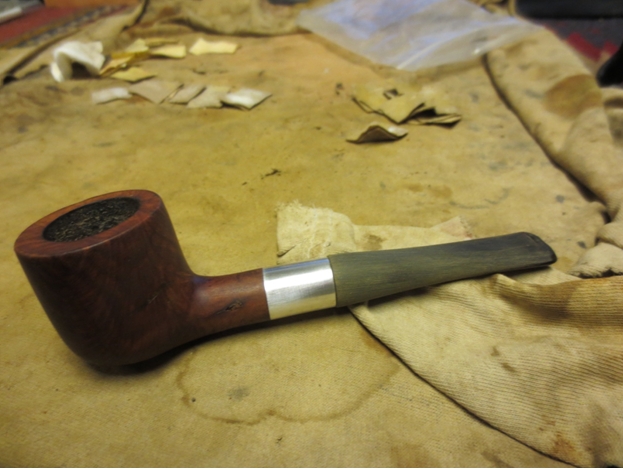
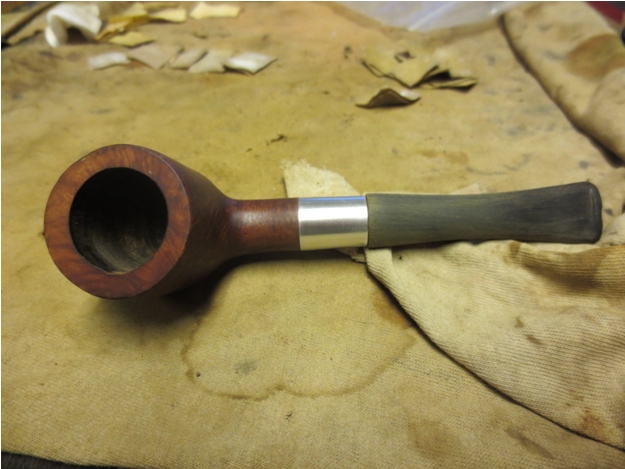
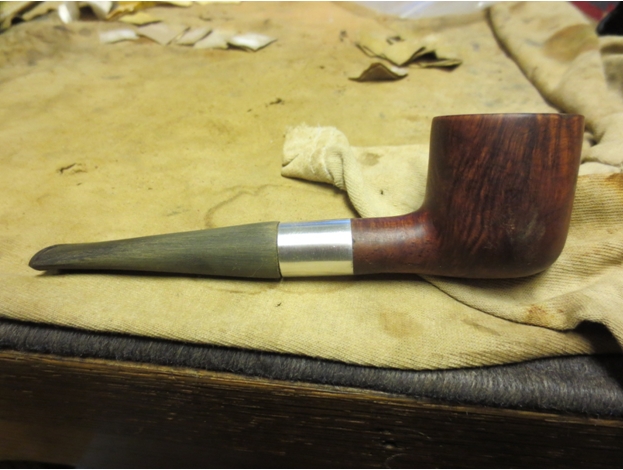 I sanded the stem further with 220 grit sandpaper to remove more of the excess and to also reduce the scratches left behind by the 150 grit paper. I polished the aluminum with a fine grit sanding sponge and removed the oxidation and the scratches. When I had finished sanding the fit of the stem was exactly what I wanted and it only needed to be polished with micromesh sanding pads.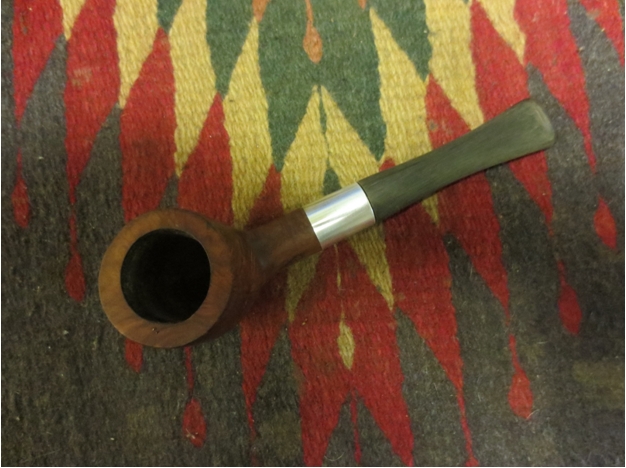
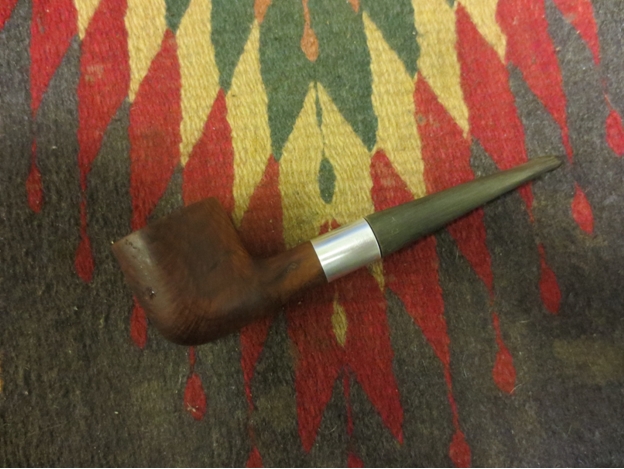

 I wet sanded with 1500-2400 grit micromesh sanding pads and dry sanded with 3200-12,000 grit sanding pads. I rubbed the stem down with Obsidian Oil between each set of three grits. I buffed the stem with White Diamond to give it a final polish and then rubbed it down a final time with the Obsidian Oil. Once it was dry I hand buffed it and fit it on the pipe.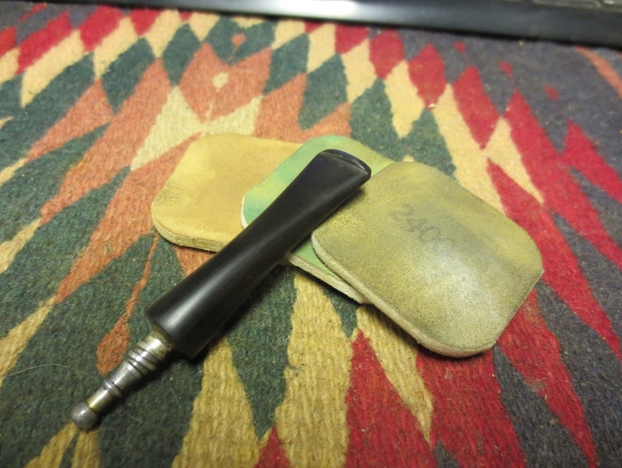
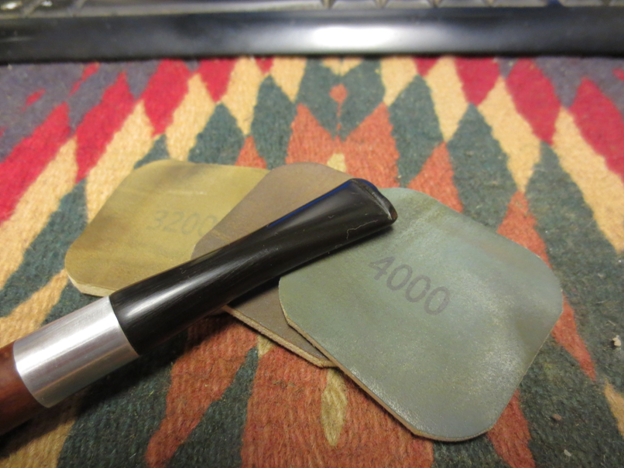
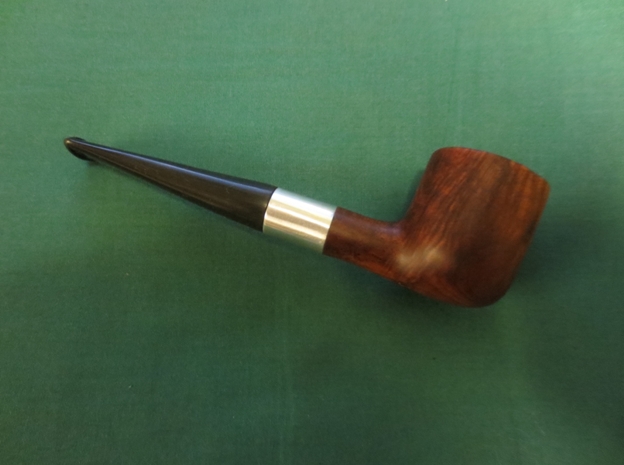
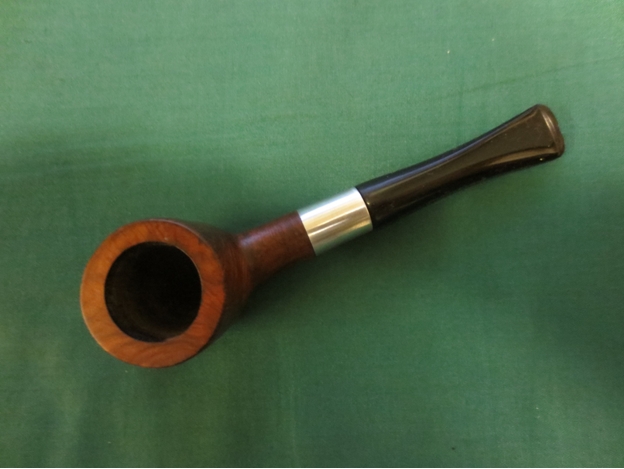
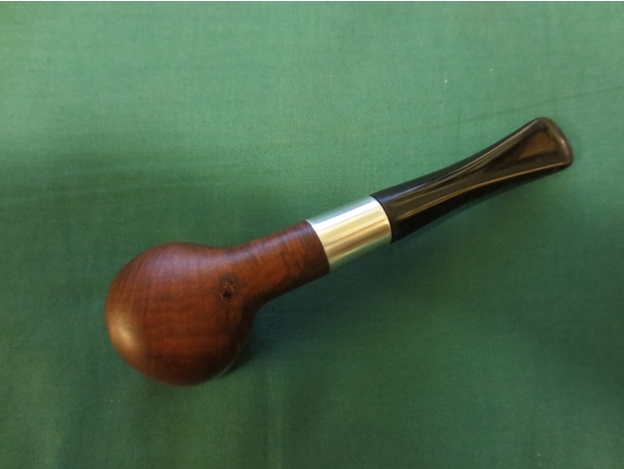
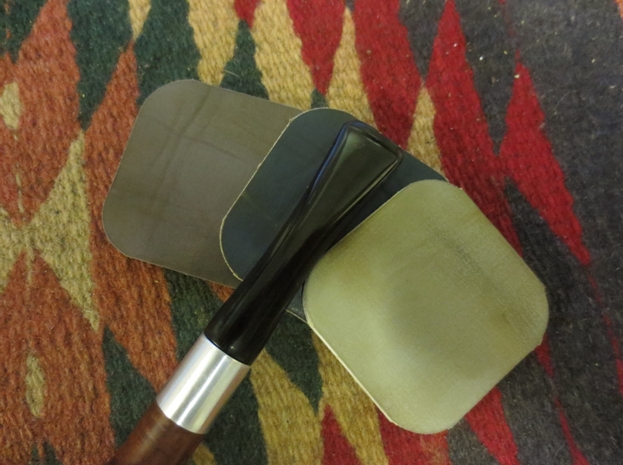 I buffed whole pipe with White Diamond and gave it several coats of carnauba wax to raise a shine. I wanted to protect and shine the bowl and stem. The finished pipe is shown in the photos below. The new stem with the retrofitted metal tenon fit extremely well. I like the overall look of the pipe far better than the original look with the saddle stem. The pipe is ready to give many more years of service to the next pipeman whose rack it graces. The end of the stinger is removable so that the pipe can be smoked with or without the stinger.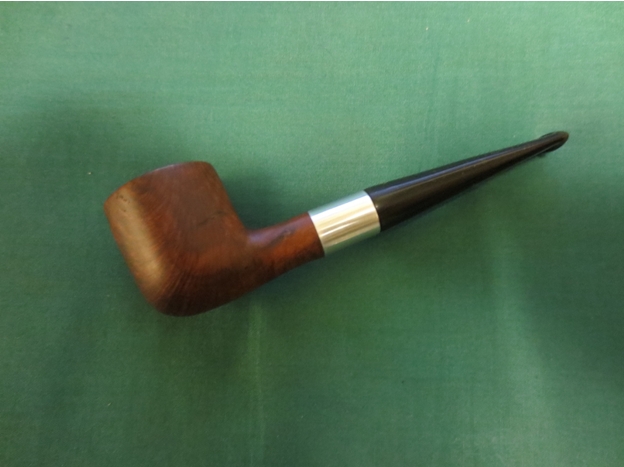
Worn and Tired No Name Pot Given a New Look
1 Reply
 rebornpipes