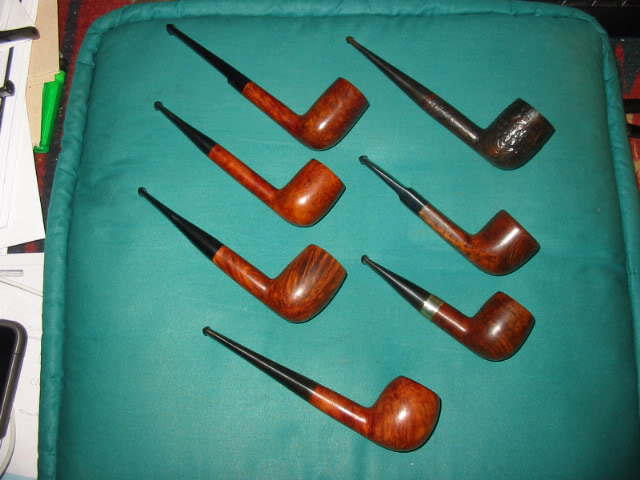
Category Archives: Pipe and Tobacco Historical Documents

Dunhill Pipe Shapes – collated by Eric W. Boehm


Blog by Eric Boehm

This collated information was collected by Eric Boehm and Permission was granted to include it here on the blog. Many thanks to Eric for the information he has collected for us.

Briar & Leaf Followers,

For years, I have been interested in collecting and smoking Dunhill pipes. During this time, I have been an avid follower of the late John C. Loring, his collections, and his writings on the subject of Dunhill pipes. I have also tried to collect all of the published Dunhill catalogs. Despite the occasional listings of Dunhill pipe shapes in various catalogs, books and on the web, I had yet to come across a single complete list of published Dunhill pipe shapes. Thus, the impetus for the current listings.

The tables below follow a set pattern for each shape entry. First, the shape category is listed in bold, then, for each entry, I have provided the shape number, a short descriptor, group number estimate, size (inches), catalog presence, and the modern shape number equivalent.

Image

Shape Descriptor Group Size Catalog(s) Modern #

Billiards

31 Billiard, tapered bit 1 4¾” 1928, 1950 3
32 Billiard, tapered bit 1 5″ 1928, 50, 60, 69 3
34 Billiard, tapered bit (Dental) 2 5½” 1928, 50, 60, 69 3
35 Billiard, tapered bit (Dental) 3 5½” 1928, 50, 60, 69 3
35 Airstream billiard, tapered 3 5″ 1950, 1969 3
39 Billiard, saddle bit 3 5½” 1950, 1969 3
41 Billiard, tapered bit 1928 3
44 Billiard, oval shank, tapered 3 5¾ 1928, 50, 60, 69 3
57 Army mount billiard 3 6½” 1928, 50, 69 3
59 Billiard, tapered bit 4 5¾” 1928, 50, 69 3
60 Billiard, tapered bit 4 5½” 1928, 50, 60, 69 3
59 Bamboo billiard 4 5¾” 1950, 1969 3
60 Bamboo billiard 4 5½” 1950, 1969 3
59 Airstream billiard, tapered bit 4 5¾” 1950, 1969 3
60 Airstream billiard (Dental) 4 5½” 1950 3
64 Billiard, tapered bit 1 5½” 1950, 1969 3
66 Billiard, tapered, stand-up 1928
70 Army mount billiard 2 1928, 50, 69 3
72 Billiard, canted, oval, tapered 1928
92 Army mount billiard 4 1950, 1969 3
94 Army mount billiard (Dublin?) 1928
104 Billiard, canted, oval, tapered 4 5½” 1928,1950, 1969 3
105 Billiard, tapered bit 1 5¼” 1950, 1969 3
111 Billiard, tapered bit 3 5¼” 1950, 1960, 1969 3
113 Billiard, long tapered bit 2 5½” 1928, 50, 60, 69 3
114 Billiard, extended tapered bit 1 5¼” 1928, 50, 69 3
116 Billiard, extended tapered bit 1928
126 Billiard, tapered bit 1928
131 Billiard, diamond shank, tapered 1928
164 Billiard, tapered, stand-up 1928
171 Billiard, tapered, stand-up 1928
196 Billiard, tapered bit 4 5½” 1928, 1950, 1969 3
197 Billiard, extended tapered bit 4 6½” 1950, 1969 3
248 Billiard, tapered bit 1 5¼” 1950, 1960, 1969 3
249 Billiard, tapered bit 1 5¾” 1950, 1969 3
250 Billiard, long tapered bit 2 5¾” 1960, 1969 3
250 The Windscreen Pipe 2 5¾” 1960 3
251 Billiard, tapered bit (Relief bit) 3 5¾” 1950 3
251 Airstream billiard, tapered bit 4 5¾” 1950 3
251 The Windscreen Pipe 5 5¾” 1950, 1969
252 Billiard, tapered bit 4 5¾” 1950, 1969 3
253 Billiard, tapered bit 4 57/8″ 1950, 1969 3
260 Billiard, tapered bit 2 5½” 1950, 1969 3
305 Riding or Sport 2 3¼ 1928, 1950, 1969 3
332 Billiard, canted, oval 1928
335 Billiard, canted, oval 1928
576 Billiard, saddle bit 1 5″ 1950, 1960, 1969 3
577 Billiard, saddle bit 2 4¾” 1950, 60 (5″), 69 3
632 Billiard, saddle bit 1 5¼” 1950, 1969 3
634 Billiard, saddle bit 2 5¼” 1950, 1969 3
635 Billiard, saddle bit 3 5¾” 1950, 1969 3
635 The Windscreen Pipe 3 1969 3
659 Billiard, saddle bit 4 5½” 1950, 1969 3
660 Billiard, saddle bit 4 5½” 1950, 1969 3
710 Billiard, tapered bit 4 5½” 1950, 1969 3
715 Scandinavian billiard 2 5″ 1950, 1969 3
LB Billiard, large, tapered bit 4 5¾” 1928, 1950, 1969 3
LBS Billiard, large, tapered bit 4 6½” 1950, 1969 3

Bent Billiards

50 Bent billiard army shank 1928 2
51 Bent billiard army shank 1928 2
52 Bent billiard, short cut bowl 1928 2
53 Bent billiard 3 5¼” 1928, 50, 60, 69 2
53 Bent Windscreen Pipe 3 1969
54 Bent billiard 2 4¾” 1928, 1950, 1969 2
56 Bent billiard 4 5½” 1928, 50, 60, 69 2
120 Bent billiard, large 4 6″ 1950, 1969 2
121 Bent billiard, oval shank 2
132 Bent billiard, straight sided bowl, 1928 2
306 Bent billiard, large round brandy 1928 2
321 Bent billiard, large flat bowl, 2
329 Bent billiard, large round apple bowl 1928 2
LC Bent billiard, very large, quaint shape 1928 2

Apples

67 Apple triangular shank stand-up, angled tapered bit 1928 1
85 Apple, round shank, reg. tapered bit 1928 1
97 Army mounts (silver) straight apple 1928 1
98 Army mounts (silver) straight apple 1928 1
107 Apple, tapered bit 3 5¼ 1928, 1950, 1969 1
110 Apple, long tapered bit 1 5½” 1928, 1950, 1960 1
112 Apple, tapered bit 2 5¾” 1928, 1950, 1960 1
115 Apple, canted, extended tapered 1928 1
191 Apple, beveled, short shank, extended tapered bit 1928 1
256 Apple, long saddle bit 2 5¼” 1950, 1960 1
308 Apple Army Mount (Silver) push bit 1928 1
309 Apple Army Mount (Silver) push bit 1928 1
310 Apple Army Mount (Silver) push bit 1928 1
311 Apple Army Mount (Silver) push bit 1928 1
376 Apple, bowl canted forward, extended tapered bit 1928 1
K Apple, tapered bit 4 5¼” 1950, 1960 1

Pots

463 Pot, long tapered bit 2 5¾” 1950, 1960, 1969 6
501 Pot, tapered bit 3 5¾” 1950, 1969 6
R Pot, tapered bit, “Quaint” 4 5¼” 1928, 50, 60, 69 6

Princes

258 Prince, apple-like, long straight
tapered bit 1 5¾” 1950, 1960, 1969 7
314 Prince, slightly bent tapered 2 6¼” 1950, 1969 7
315 Prince, straight tapered bit 2 6¼” 1950, 1969 7
FE Prince, large, squat apple-like bowl (Quaint in 1928) 4 6½” 1928, 1950, 1969 7
FET Prince (upright) large squat applelike bowl (Quaint in 1928) 4 6¼” 1928, 50, 60, 69 7

Canadians

335 Canadian, oval shank, short tapered bit 3 5¾” 1928, 1950, 1969 9
EC Canadian, oval shank, short tapered bit (Quaint in 1928) 4 5½” 1928, 1950, 1969 9
850 Canadian, over-sized OD850, Giant, short tapered bit 8¾ 1950, 1969 9

Liverpools

33 Liverpool, tapered 2 5¼” 1928, 50, 60, 69 10
36 Liverpool, large, tapered 4 5½” 1928, 50, 60, 69 10
331 Liverpool, long shank, tapered 3 6″ 1950, 1969 10

Lovats

37 Lovat, short, thick, saddle 1928 11
38 Lovat, long shank, saddle bit 3 4¾” 1928, 50, 60, 69 11
40 Lovat, long shank, saddle bit 4 5″ 1928, 1950, 1969 11
481 Lovat, long shank, saddle bit 1 5″ 1950, 1969 11

Dublins

42 Dublin, tapered bit 3 5½” 1928, 50, 60, 69 5
43 Dublin, tapered bit 2 4¾” 1928, 50, 69 5
65 Dublin, tapered bit 1928
73 Dublin, tapered bit 1928
77 Dublin, tapered bit 1928
130 Dublin, long tapered bit 1 6¼” 1928, 1950, 1969 5
137 Dublin, long tapered bit 4 6¼” 1950, 1969 5
140 Dublin, peg, round shank 1928
142 Dublin, tapered bit 4 5¾ 1928, 1950, 1969 5
143 Dublin, long tapered bit 1928
178 Dublin full bent 1928

Bulldogs & Rhodesians

45 Bulldog, ringed, diamond shank, straight saddle 1928 4
46 Bulldog, +/- ringed, diamond shank, straight tapered 2 5″ 1950, 1960, 1969 4
47 Bulldog, +/- ringed, diamond shank, straight tapered 3 5″ 1928, 1950, 1969 4
48 Bulldog, +/- ringed, diamond shank, straight saddle 4 5¼” 1928, 50, 60, 69 4
OX Bulldog, ringed, diamond shank, straight saddle 4 5¼” 1928, 50, 69 4
69 Bulldog, ringed, diamond shank, short saddle bit 1928 4
88 Bulldog, non-ringed, diamond shank, tapered bit 1928 4
146 Bulldog, ringed, diamond shank, slight bent tapered bit 1928 4
148 Bulldog, ringed, diamond shank, straight saddle 3 5¼” 1950, 1969 4
156 Bulldog, ringed, diamond shank, tapered bit 1928 4
189 Bulldog, non-ringed, large, tall bowl, diamond shank, tapered bit 1928 4
190 Bulldog, non-ringed, large, short bevelled bowl, diamond shank, tapered 1928 4
721 Scandinavian Bulldog, elevated bowl, 3-ringed, extended bent, saddle bit 5¼” 1950, 1969

?O Straight Rhodesian, ringed, diamond shank, tapered bit 4 5″ 1928, 50, 60, 69 17
P Bent Rhodesian, ringed, diamond shank, tapered bent bit 4 5¾” 1928, 50, 69 8
PO Rhodesian, slightly bent, tapered, non-ringed 3 51/2 ? ?
6P Bent Rhodesian, ringed, diamond shank, bent saddle bit 5½” 1960 8
145 Straight Rhodesian, ringed, short diamond shank, tapered bit 1928 17
334 Bent Rhodesian, ringed, diamond shank, bent saddle bit 1928 8
344 Rhodesian, ringed, squat bowl, diamond shank, extended bent tapered bit (Prince) 1928 7?
580 Straight Rhodesian, non-ringed, squat bowl, saddle bit 4 1969 17

Pokers

90 Poker “Stand-up” 2 4¾” 1928, 1950, 1969 22
95 Poker “Stand-up” Army bit 1928
475 Friendly 4 5½” 1960
6475 Friendly (=475?) 4 5½” 1950, 1969
483 Poker with cane stem 6½ 1960

Zulus

49 Zulu, straight round stem, tapered bit 1928 21
83 Zulu, oval shank, slightly bent tapered bit 3 5½” 1928, 1950, 1969 21

Miscellaneous

320 Evening Dress (Pot) 4 4½” 1950, 1960, 1969
misc. Dri-way billiard (screw bowl) 4 5¼” 1950, 1960
misc. Cavalier shape 4 6¼” 1950, 1960
misc. Calabash 7″ 1950
misc. Churchwarden 4 10¼” 1950, 1960
misc. “The Bamboo Bent”, bent saddle bit 7½” 1960
misc. “The Bijou”, small bowl, long tapered bit 5″ 1960
misc. Leather covered 4 1950, 1969

Letter Shapes

SS “Quaint Shape” Billiard hexagonal shank & tapered bit 1928
EC “Quaint Shape” Canadian, oval shank, short tapered bit 1928
FR “Quaint Shape” Octagonal panel billiard, round shank, extended tapered bit 1928
OE “Quaint Shape” Octagonal panel billiard, square shank, angled tapered bit 1928
EK “Quaint Shape” Hexagonal panel billiard, square shank, angled tapered bit “Stand-up” 1928
VT “Quaint Shape” tirangular panel billiard, tirangular shank and bit “Stand-up” 1928
SA “Quaint Shape” octogonal tall panel billiard, hexagonal shank, angled bit “Stand-up” 1928
GD “Quaint Shape” Circular tall billiard, ringed low at bowl base, round shank and bit 1928
PK “Quaint Shape” Four sided panel billiard, diamond shank and bit 1928
PL “Quaint Shape” Four sided panel billiard,triangular shank and bit 1928
EL “Quaint Shape” Four sided panel billiard, triangular shank and bit 1928
FJ “Quaint Shape” Cutty, canted round bowl, extended tapered bit 1928
KS “Quaint Shape” Apple, flattened bowl support peg “Stand-up” 1928
K “Quaint Shape” Round Apple, converging rim, round shank, tapered bit 1928
FE “Quaint Shape” Apple, large squat bowl, round shank, extended tapered bit 1928
FET “Quaint Shape” Apple, large squat bowl, round shank, extended tapered bit 1928
E “Quaint Shape” Army mount (silver) large squat bowl, round shank, extended tapered bit 1928
ET “Quaint Shape” Army mount (silver) large squat bowl, round shank, extended tapered bit 1928
EK Paneled billiard 1950, 1969

343 Inverted low-slung bowl, narrow rim, round shank and tapered bit 1928

ODA Shapes (From: John C. Loring, http://loringpage.com/pipearticles/ODchart.htm)

801 Belge, Cocked bowl (5) large for shape – early dating, rare
802 Bent Antique, spur (4) ‘70s/’80s with non ODA #s – early dating, rare
803 Odd Bent (4) – early dating, rare
804 Odd Bent (4) – early dating, rare
805 Skater (4) CH shape – early dating, rare
806 Apple, Tapered Bit
818 Oom Paul (5) – early dating, rare
821 Danish Bent (4) ‘70s/’80s with non ODA #s – early dating, rare
824 Brandy Glass – early dating, rare
827 Rhodesian, Small – early dating, rare
830 Liverpool – early dating extremely rare
831 Bent, Cocked bowl (4) ‘70s/’80s with non ODA #s – early dating, rare
832 Lovat – early dating quite rare
833 Danish Style Bent – early dating, rare
834 Prince – early dating quite rare
835 Billiard, Tapered Bit
836 Square Panel
837 Bulldog
838 Straight Rhodesian – early dating, rare
839 Qtr Bent Rhodesian – early dating, rare
840 Bent Billiard – (= 846?) early dating, rare
841 Lovat – early dating, rare
842 Apple, Saddle Bit –early dating, rare- (later stamped 6806)
843 Billiard, Saddle Bit -early dating, rare – (later stamped 6835)
844 Poker – early dating , rare
845 Canadian, Large Bowl
846 Bent Apple, Saddle – (= 840?) early dating rare
847 Rhodesian, Quarter Bent, Round Shank – early dating, rare
848 Dublin
849 Stacked Billiard – less thin & shorter than 856 – early dating, rare
850 Canadian, Small Bowl
851 Canadian, Small Bowl, Extra Long – early dating, rare
853 Pot – early dating rare
854 Rhodesian, Full Bent – early dating, rare
855 Canadian, Large Bowl, Extra Long – early dating, rare
856 Stack Billiard – is thinner & taller then the 856 – early dating, rare
857 Bent Brandy – early dating quite rare
861 Angled Squat Panel Bowl, Tapered Square Shank – early dating, rare
862 Dublin Panel – early dating, rare
863 Squat Panel, Front Bottom Curve (4) – early dating extremely rare
865 Angled Convex Rectangular Panel (5) – ‘70s/’80s in Shell finish, rare
866 Square Bowl (4) – early dating, rare

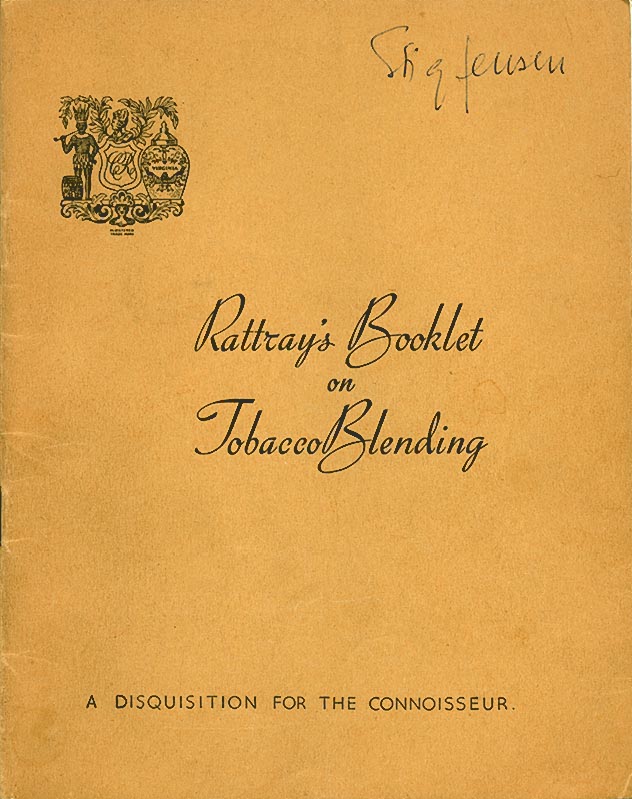
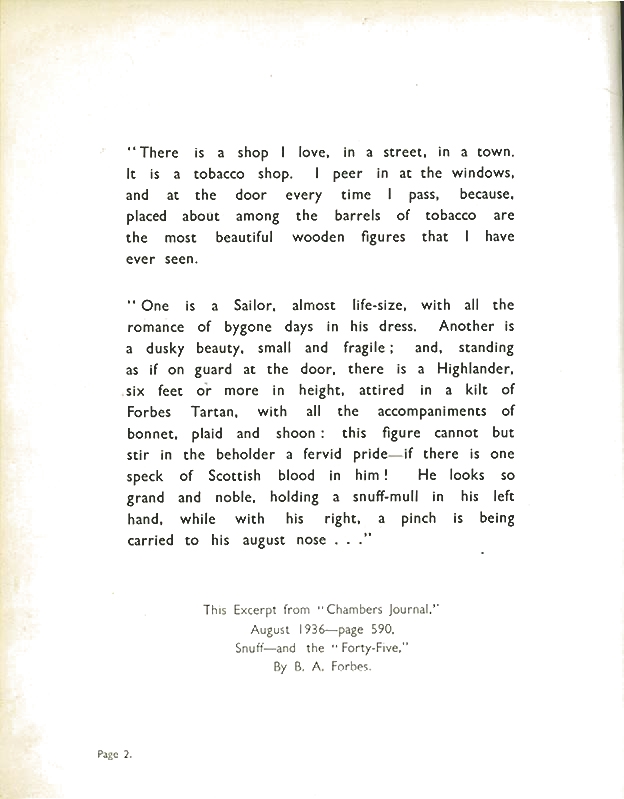
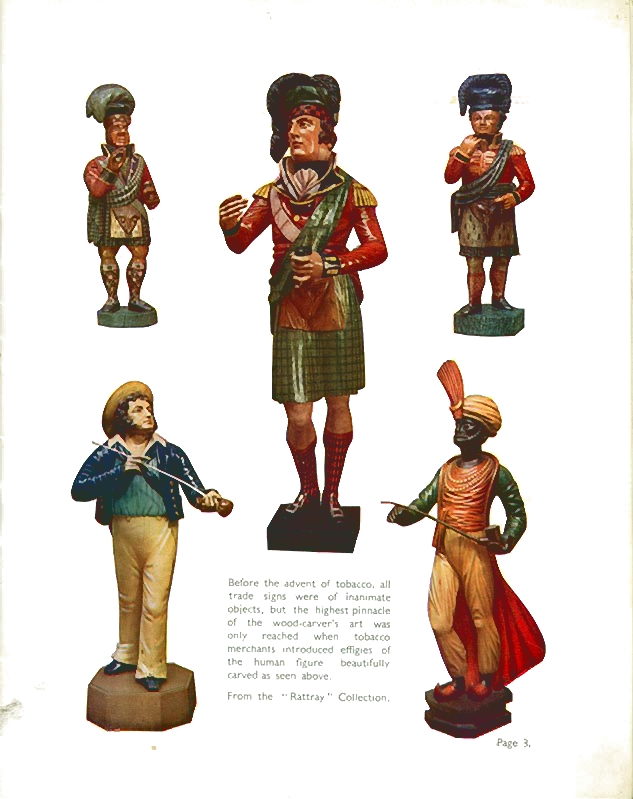
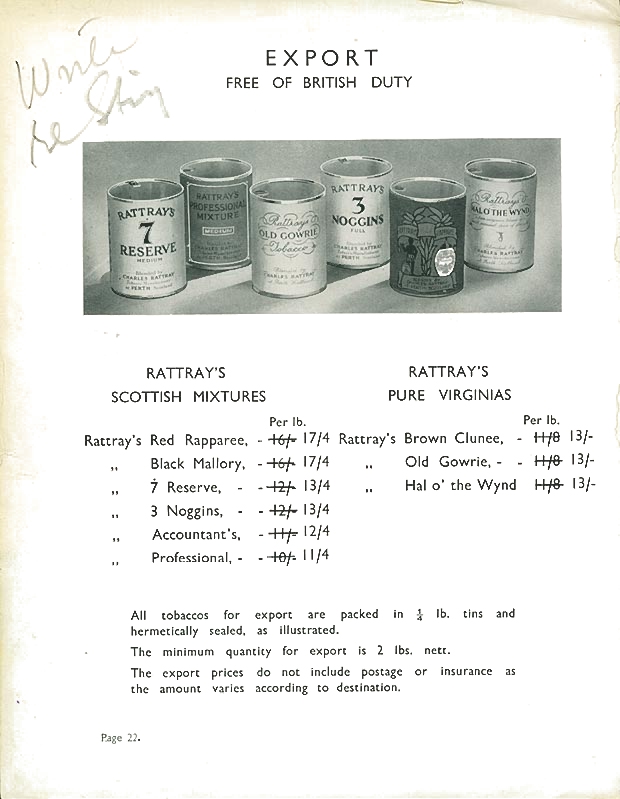
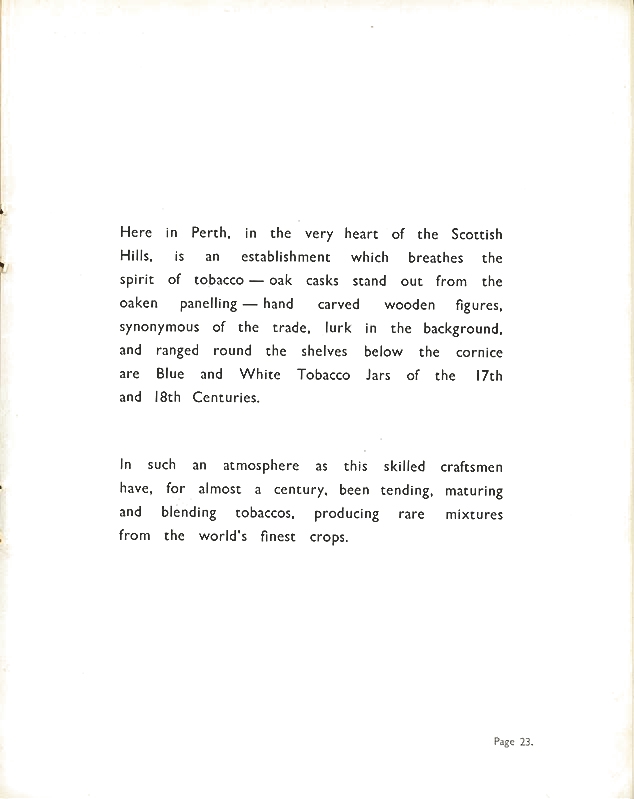
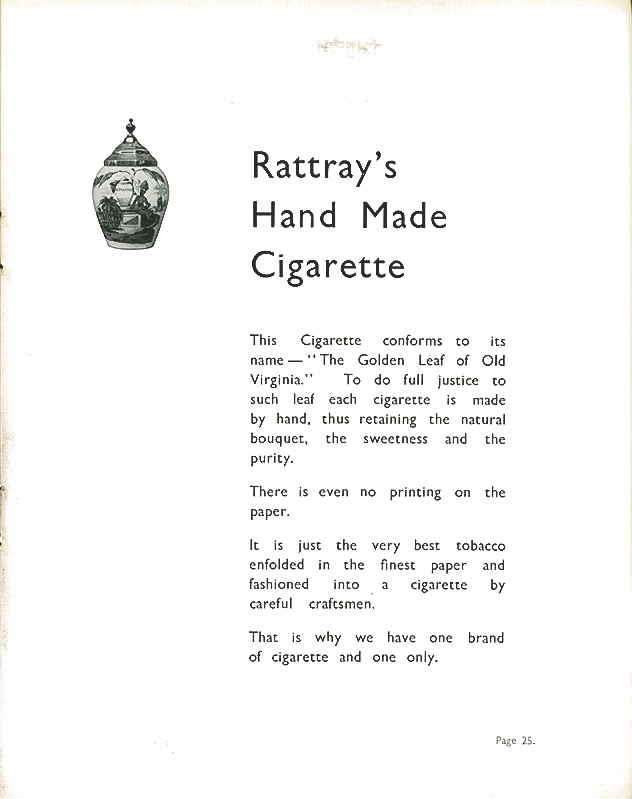
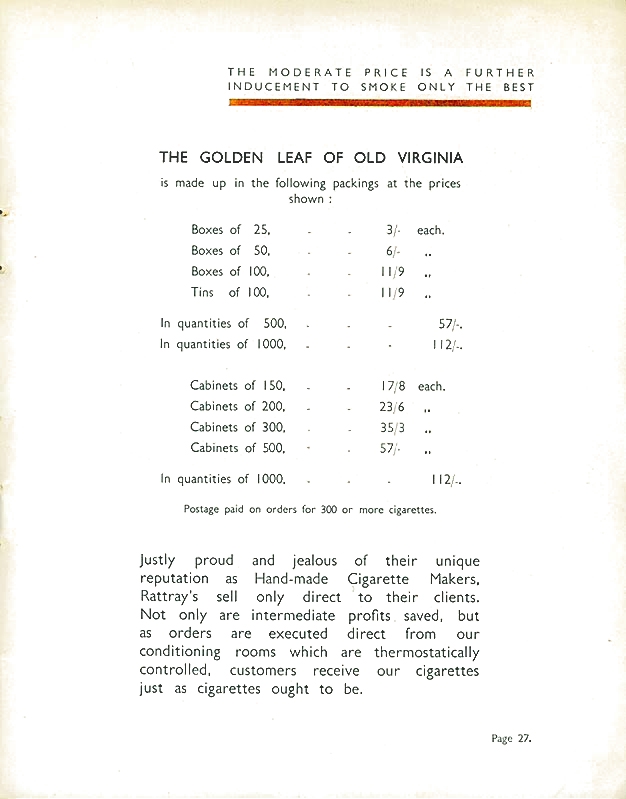
Charles Rattrays of Perth Catalogue


Blog by Steve Laug

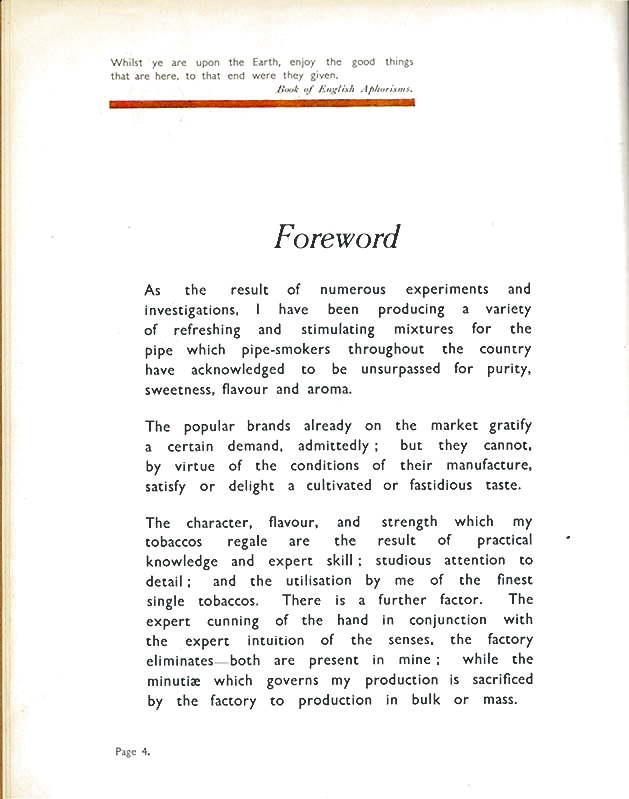
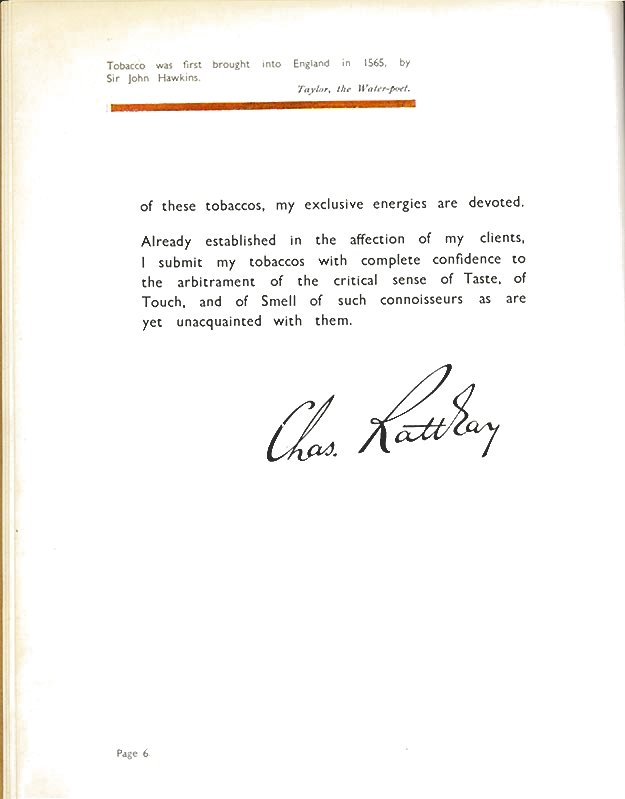
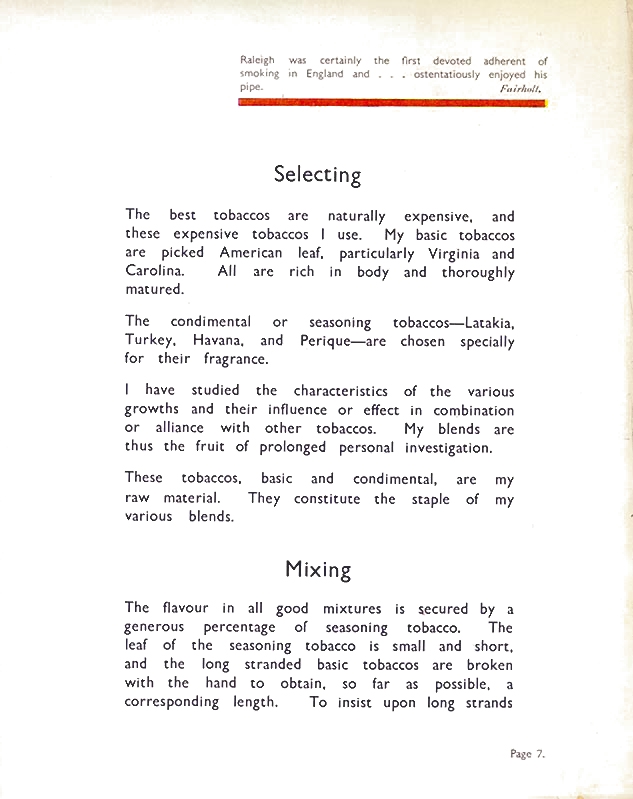
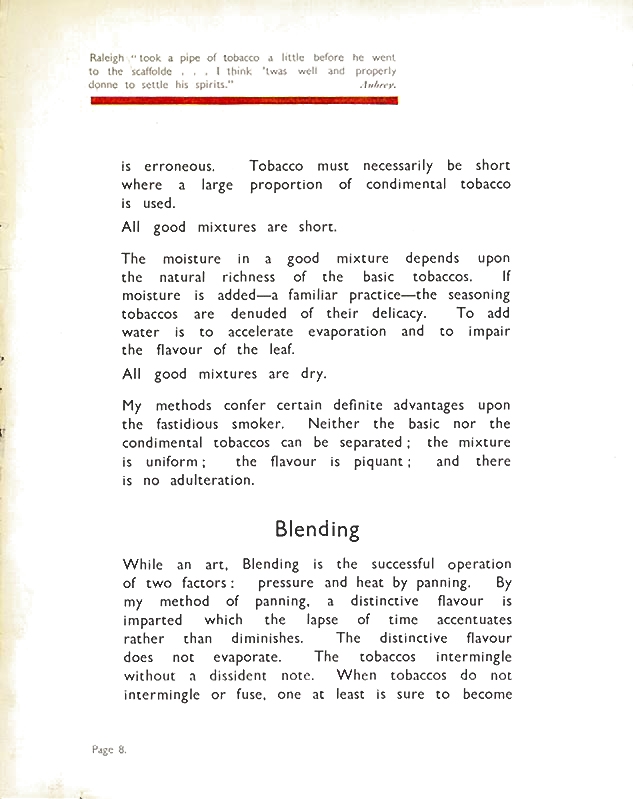
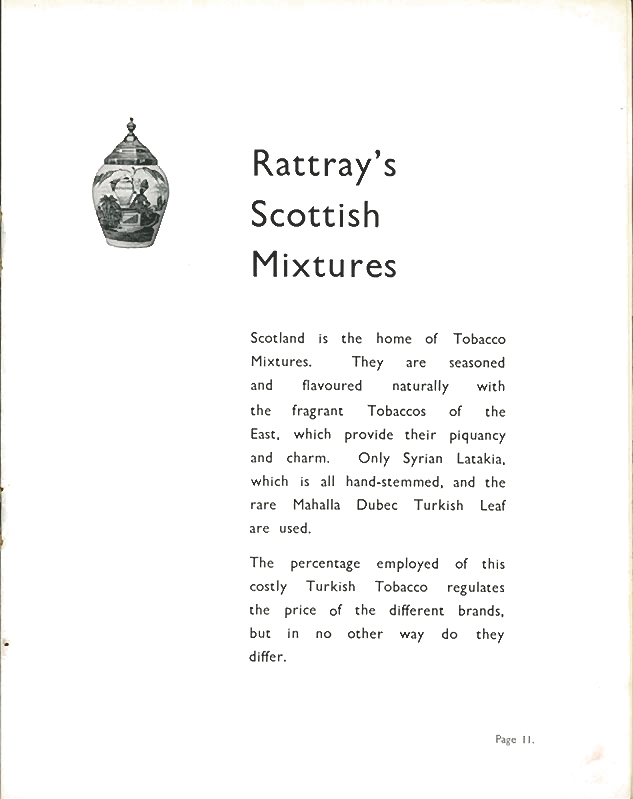
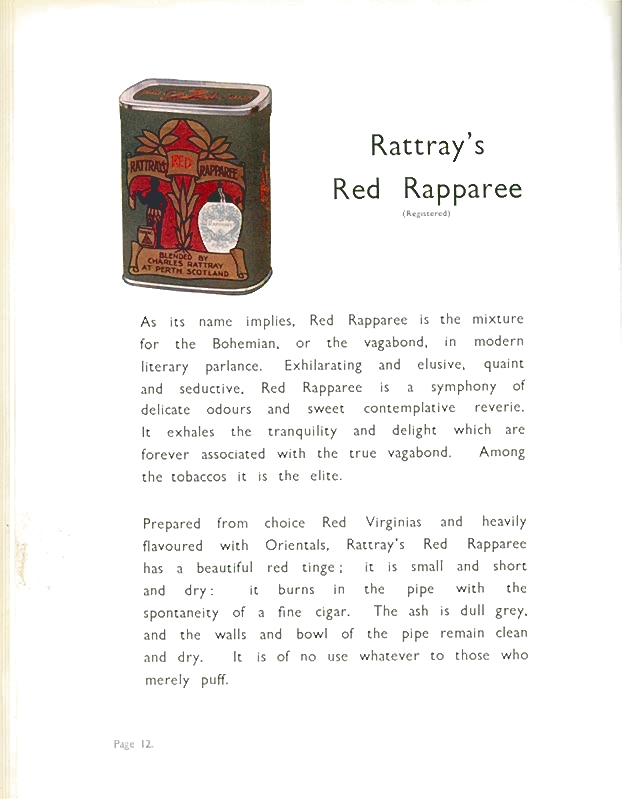
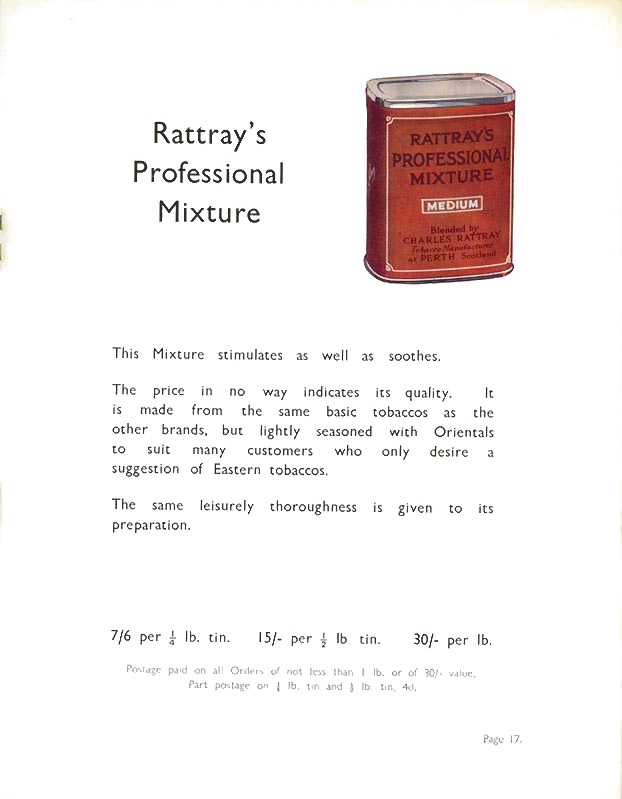
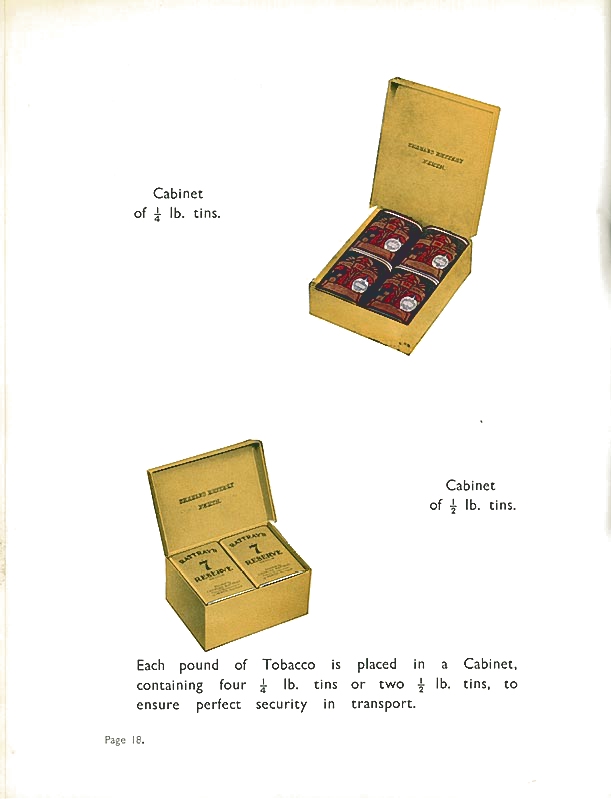
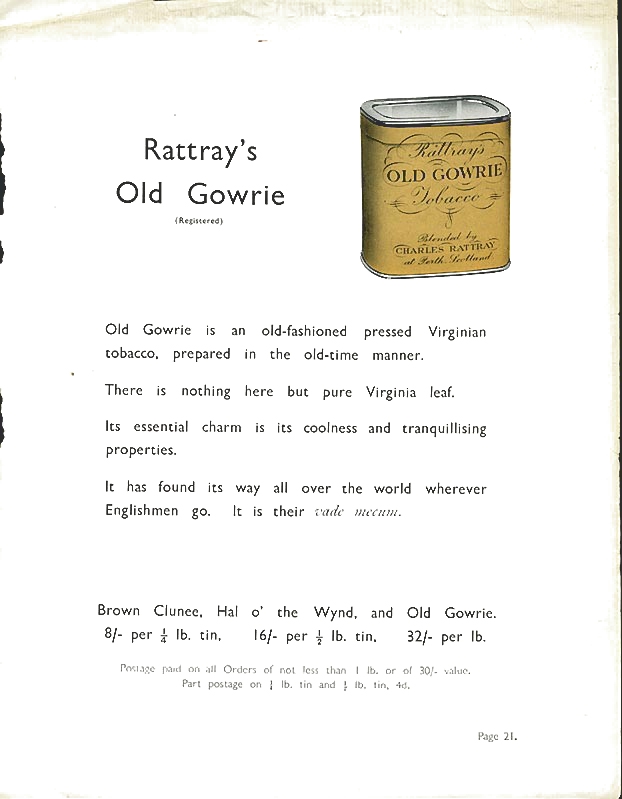
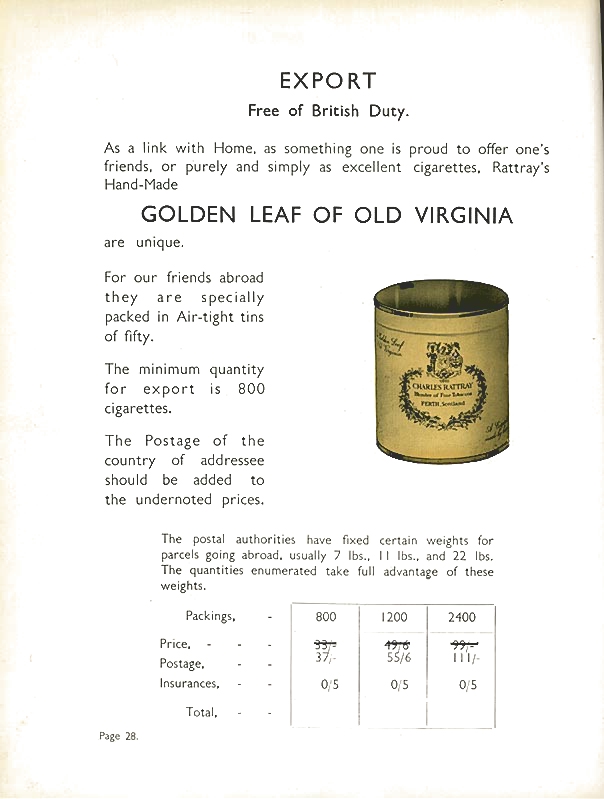
I came across this catalogue from Rattrays of Scotland some time ago. I thought I would post it here so that you can share in the history of the great tobacco blends that came out of Scotland.

ImageImageImageImageImageImageImageImageImageImageImageImageImageImageImageImageImageImageImageImageImageImageImageImageImageImageImageImageImageImage

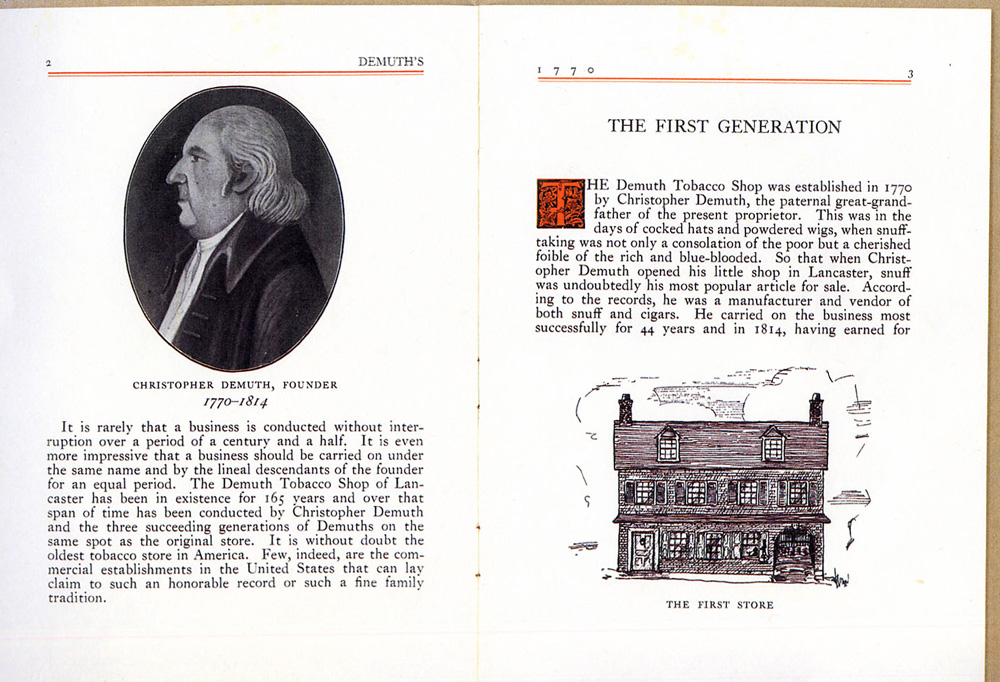
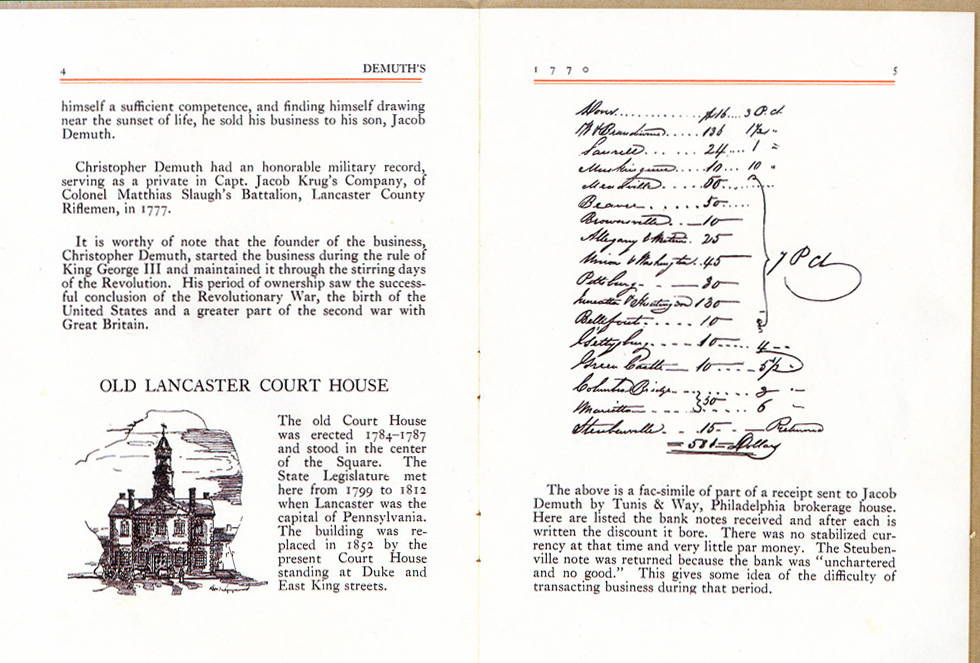
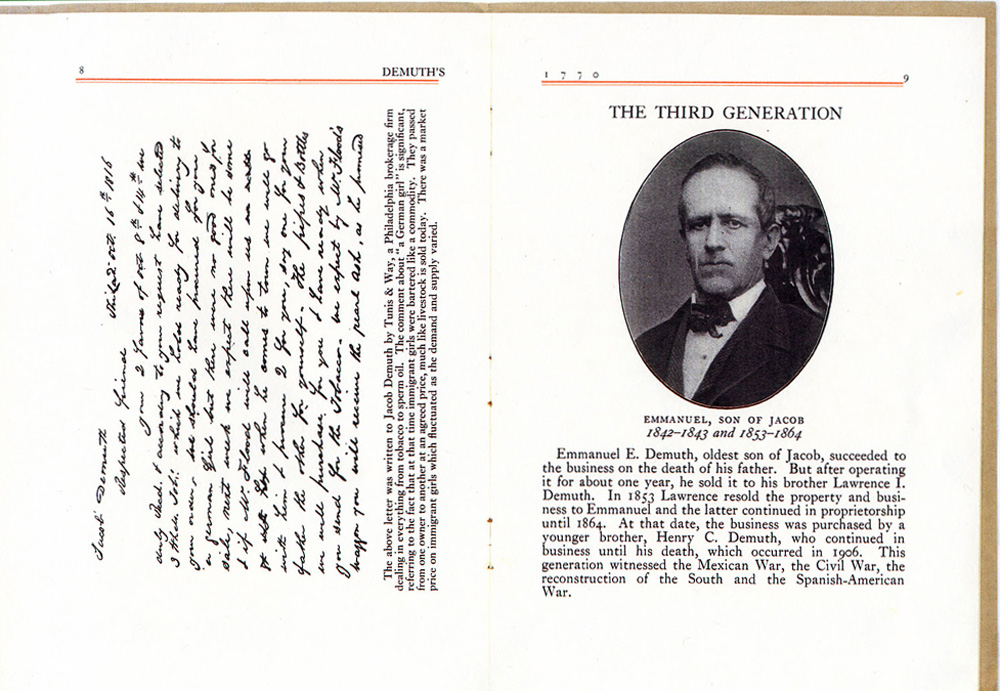
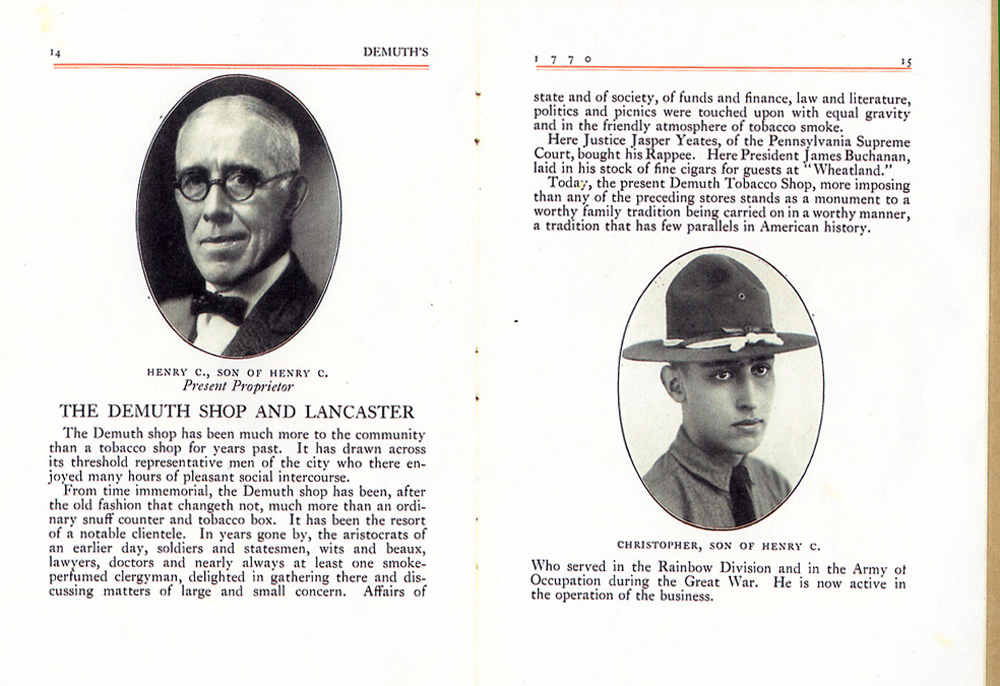
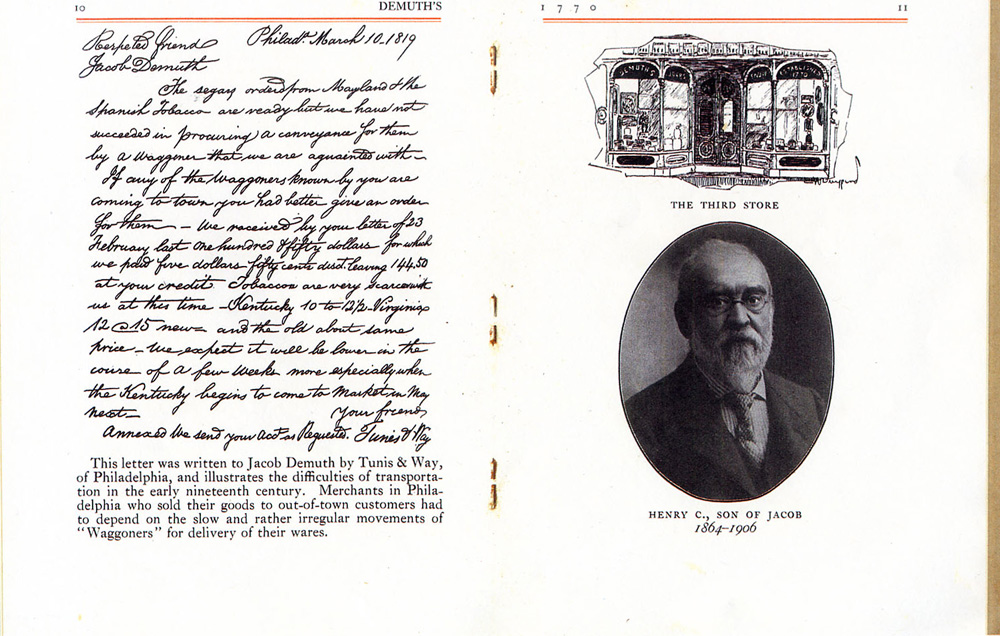
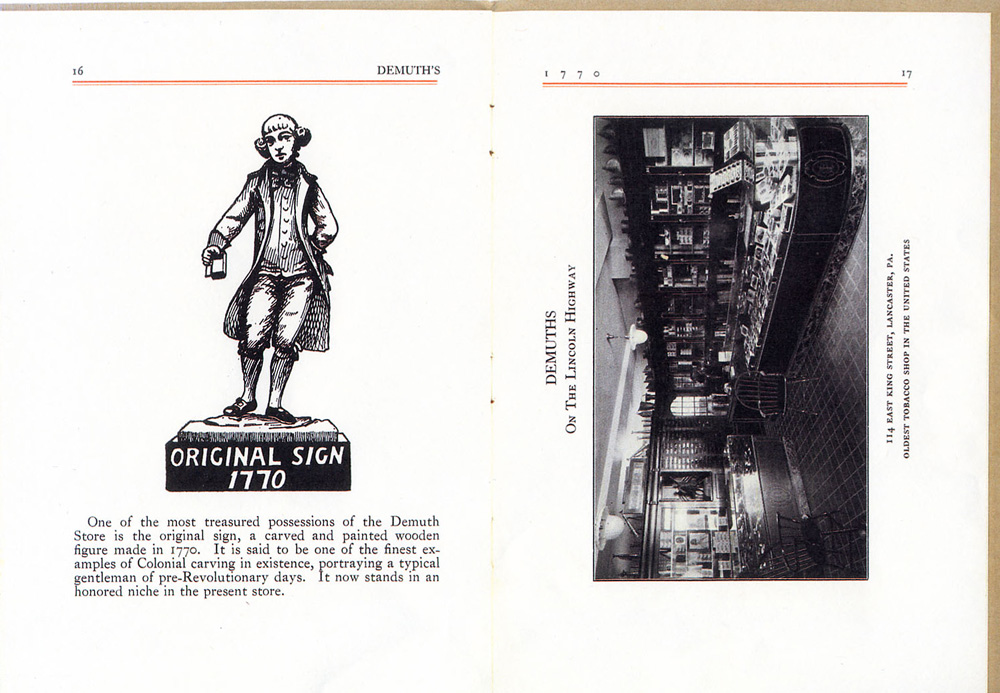
Demuth’s of Lancaster, PA History


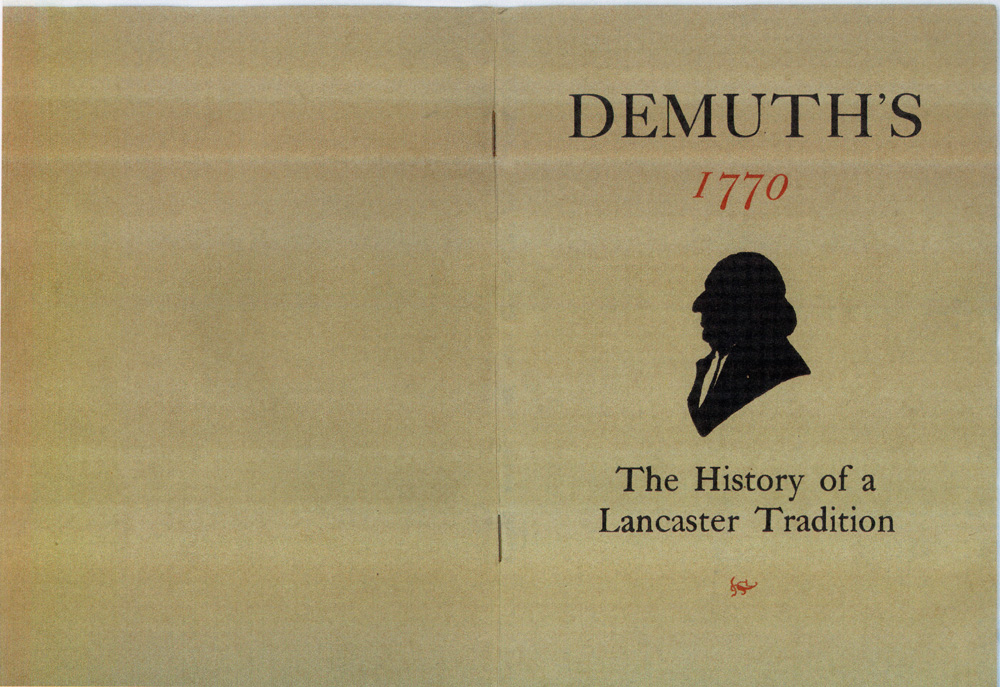
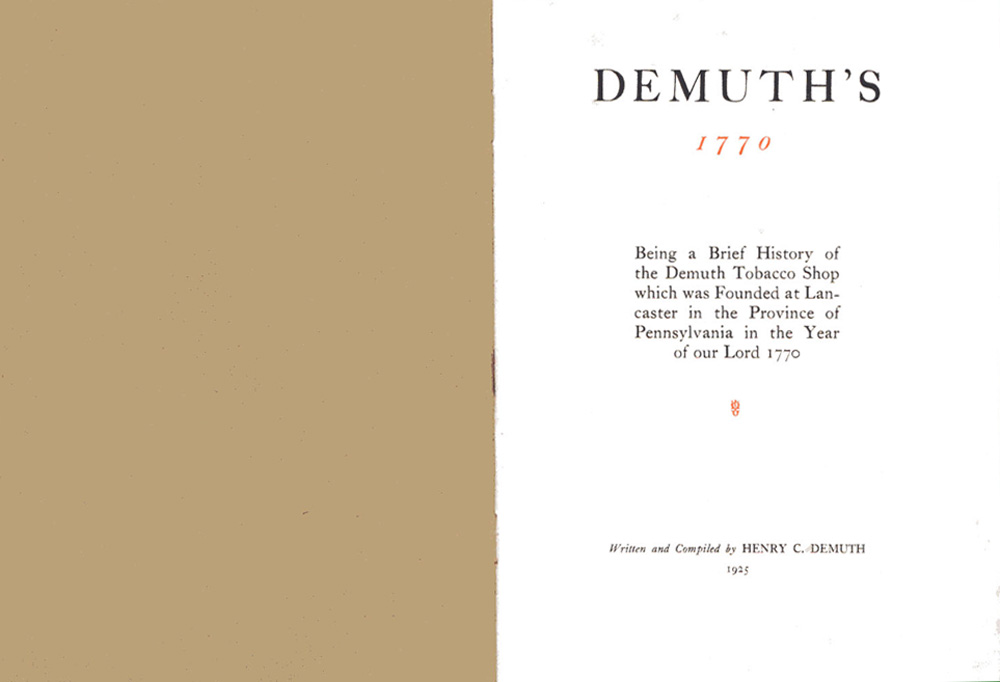
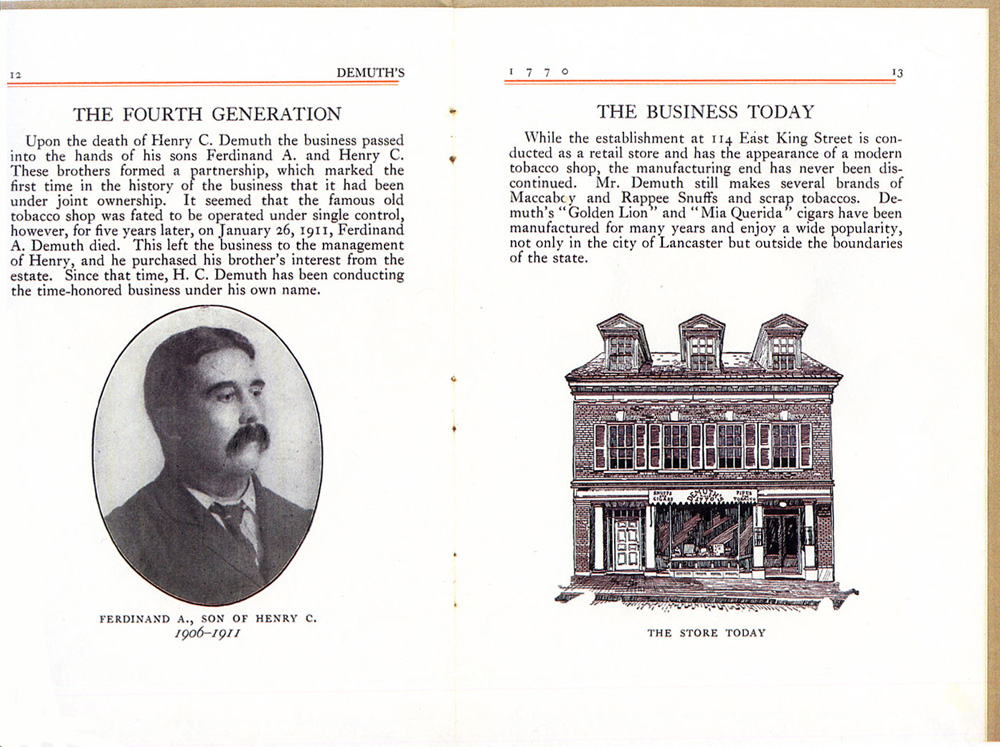
This is another older pipe booklet that I have a copy of here. I wanted to post it as well to give more data and pipe history to those of us who enjoy reading that kind of thing. Demuth’s must have been an amazing store in its day! Anybody know if it is still with us?

ImageImageImageImageImageImageImageImageImageImage

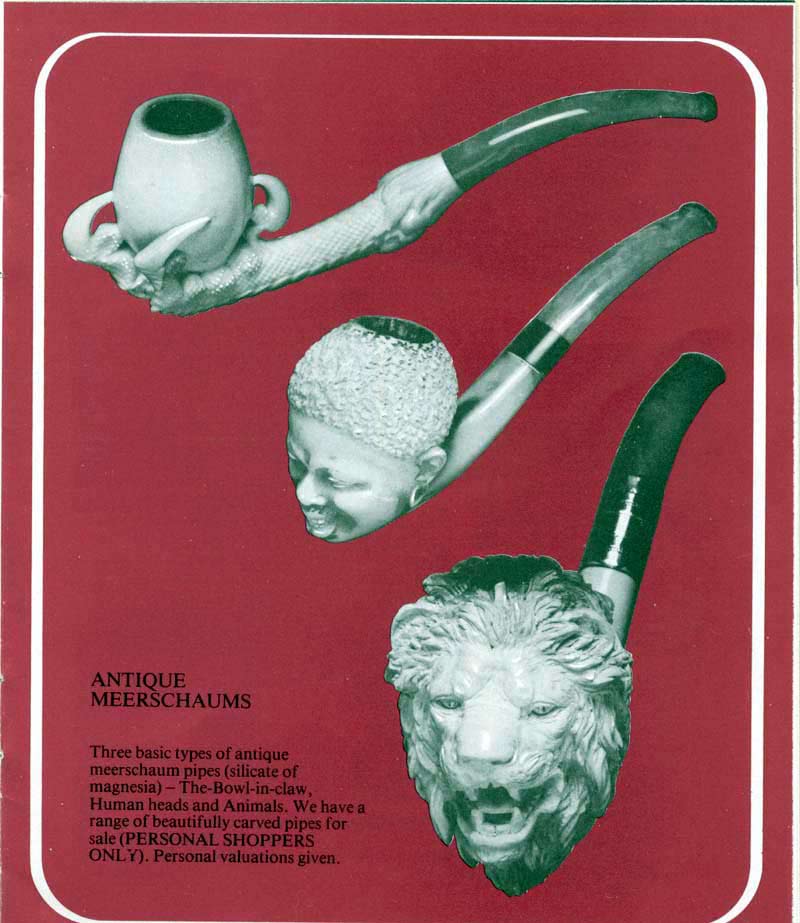
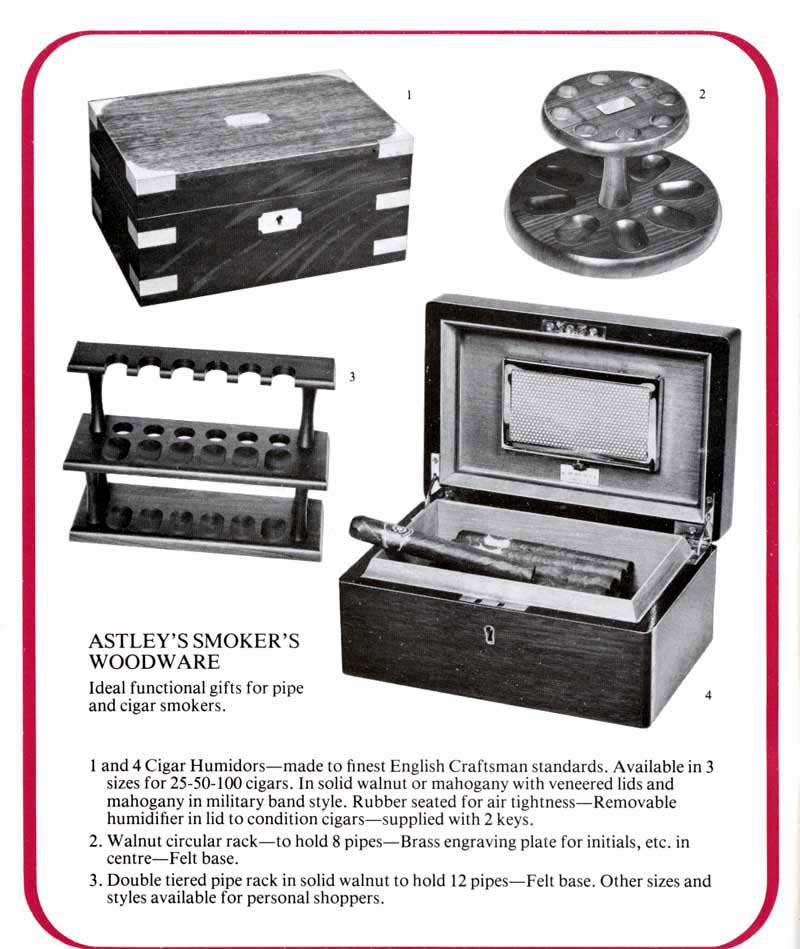
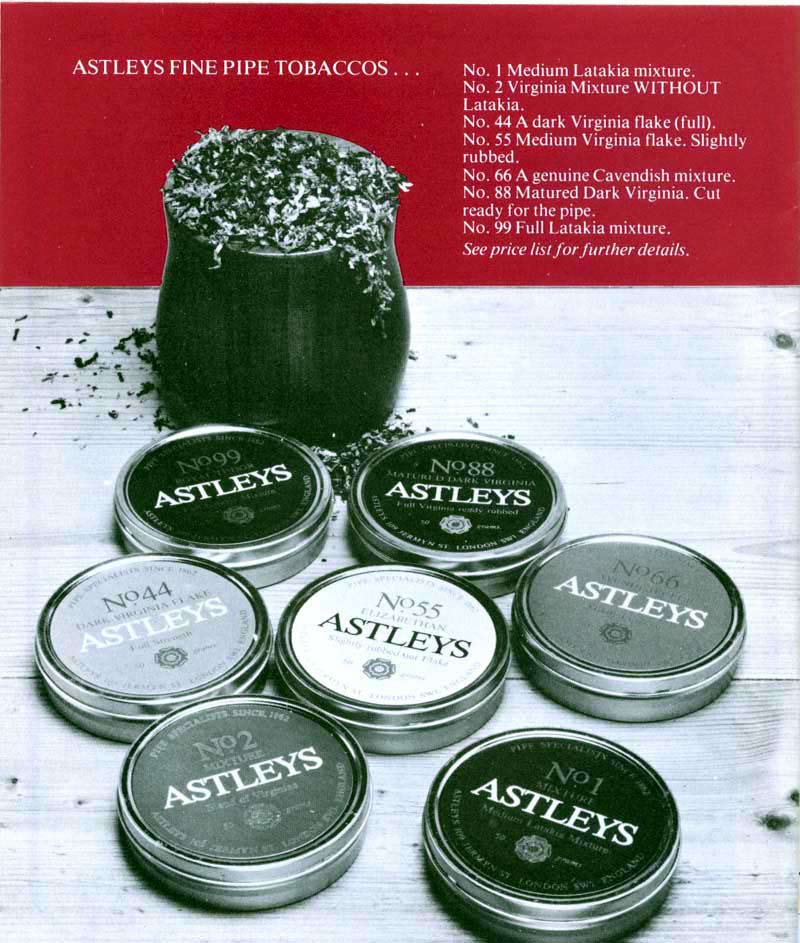
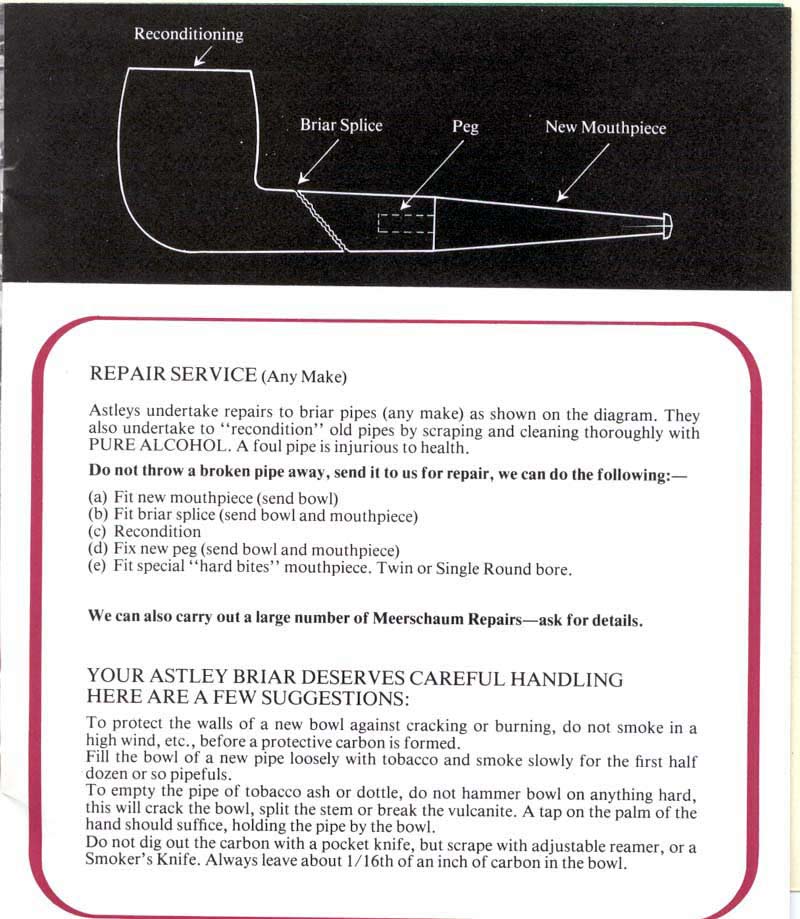
Astley’s Pipe Catalogue


Blog by Steve Laug

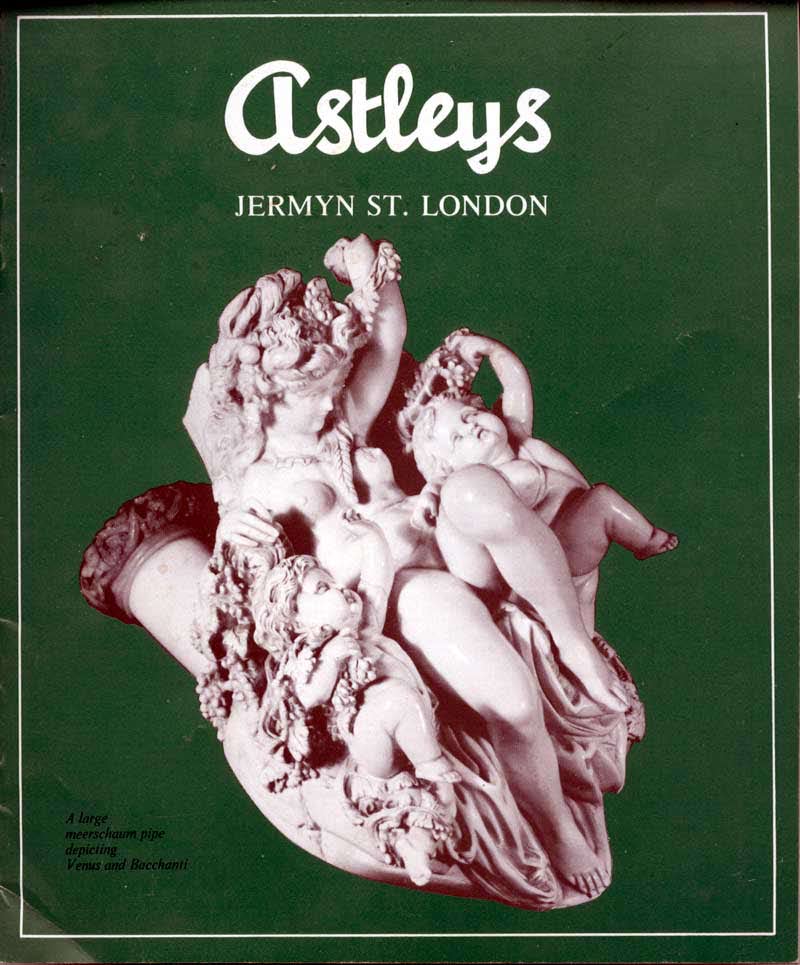
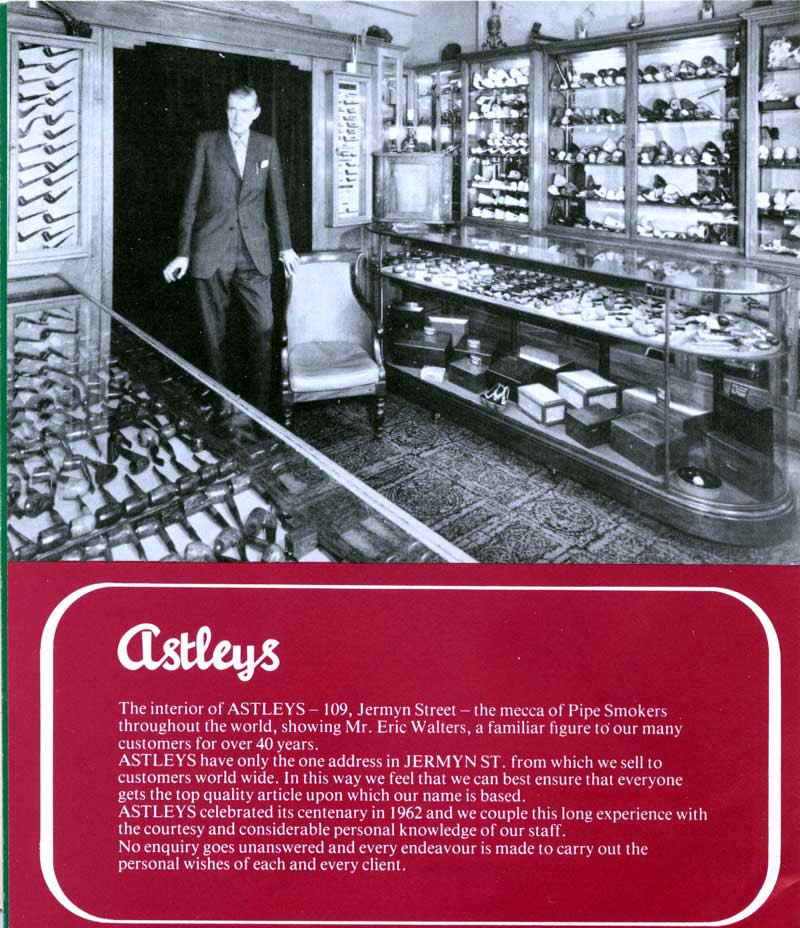
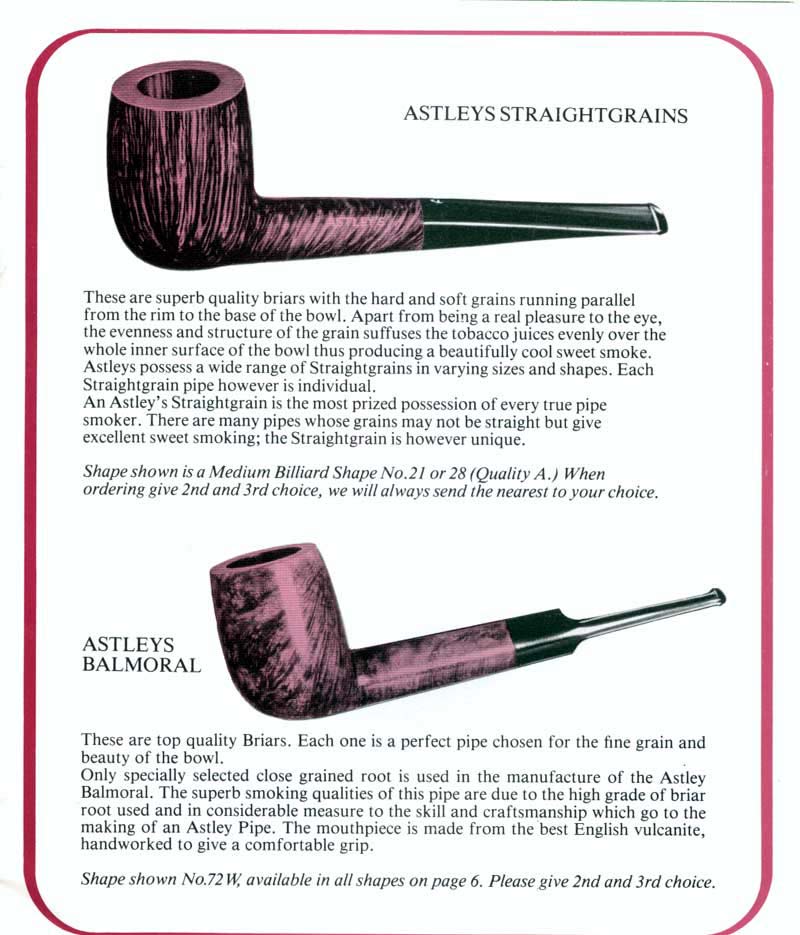
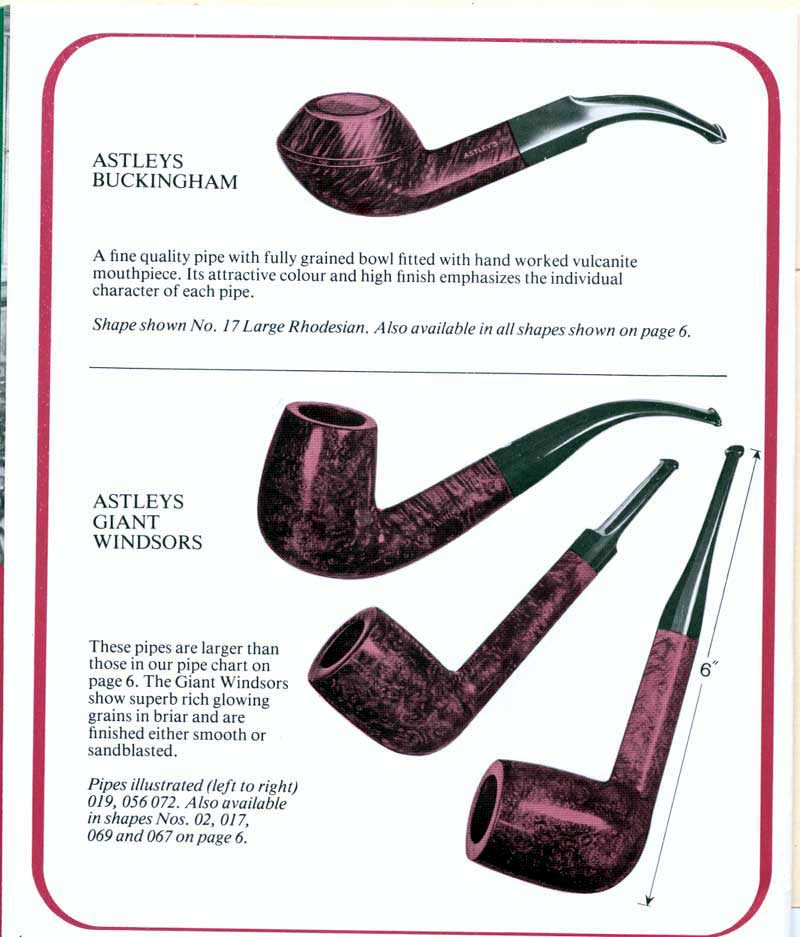
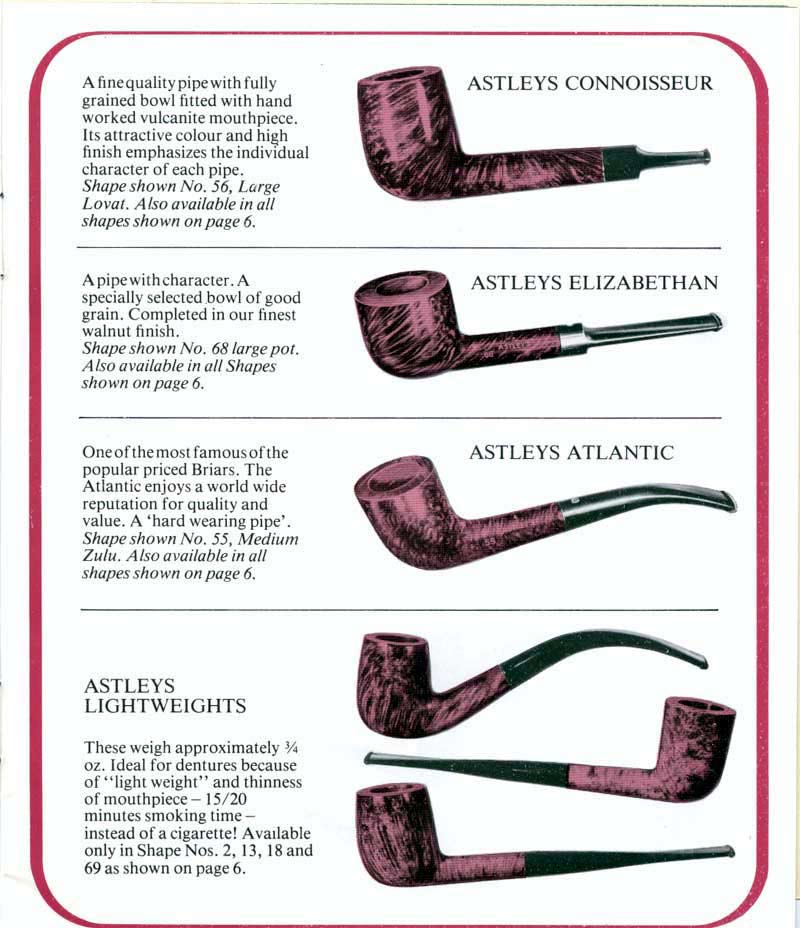
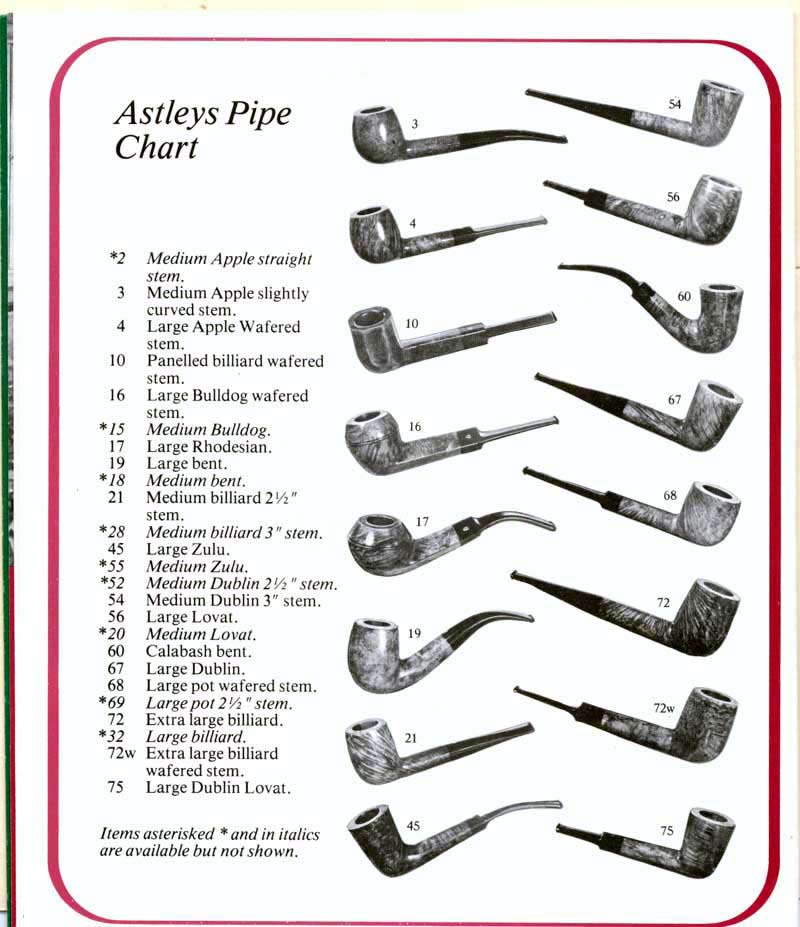
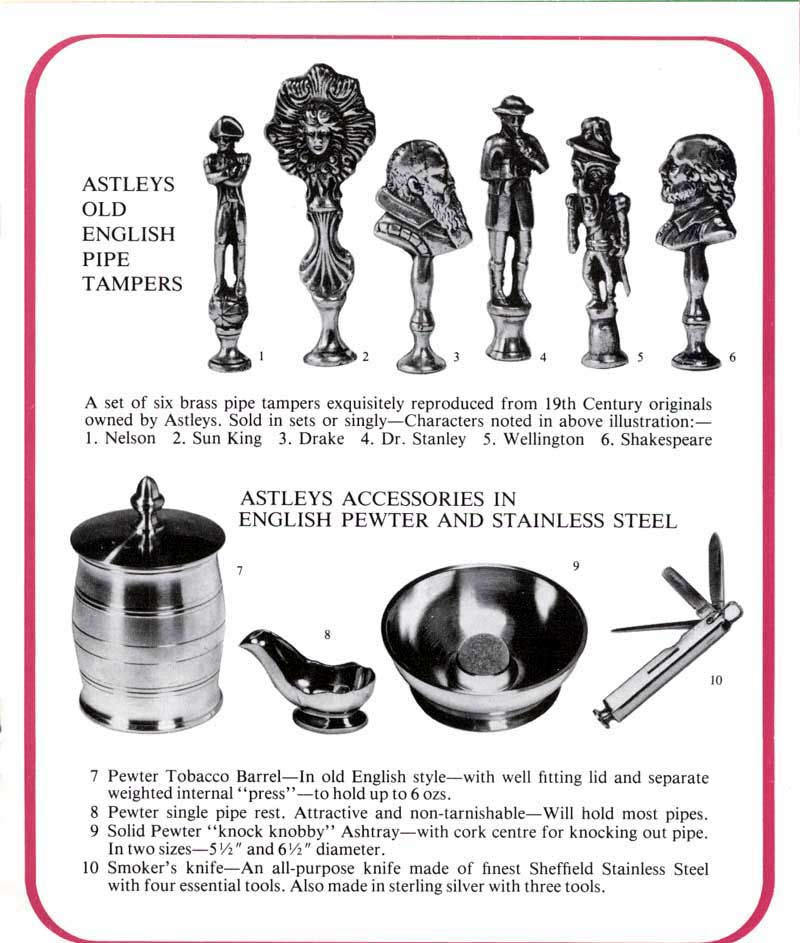
This is an older Astleys of Jermyn St. London pipe catalogue that I had around. I thought I would post it here so you all could enjoy a bit of the history of our hobby. Note the many shapes and shape names that are in the catalogue.

ImageImageImageImageImageImageImageImageImageImageImageImageImageImageImage

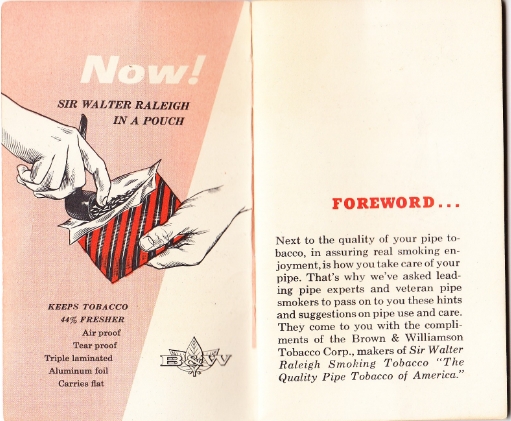
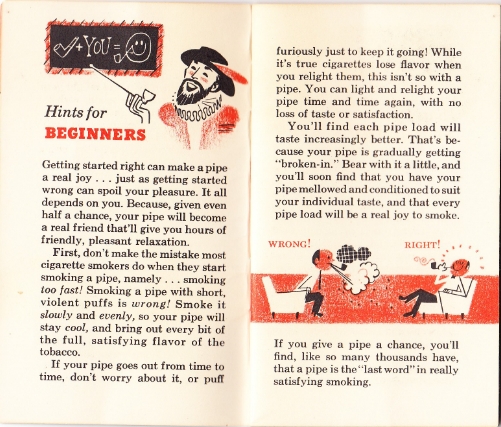
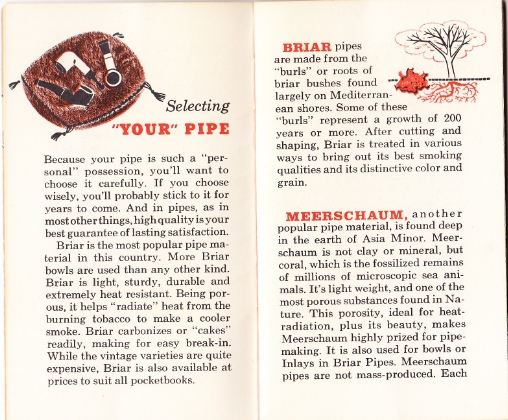
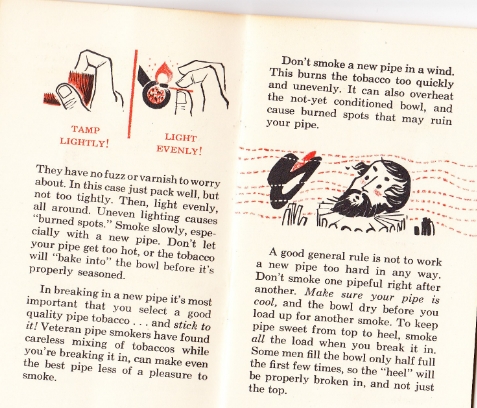
Sir Walter Raleigh Pipe Care Booklet 1959


Blog by Steve Laug

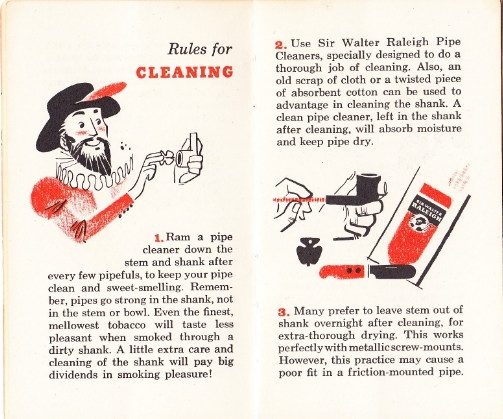
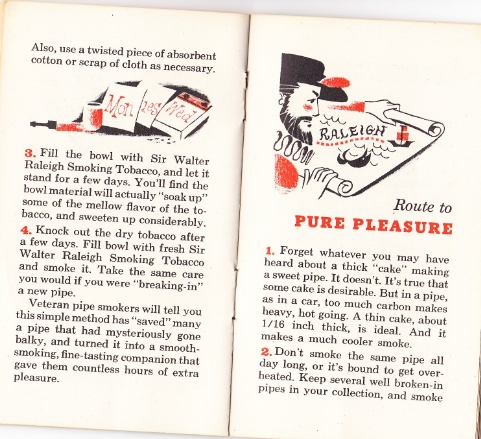
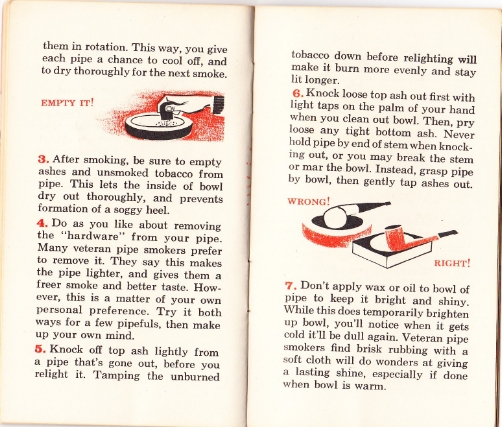
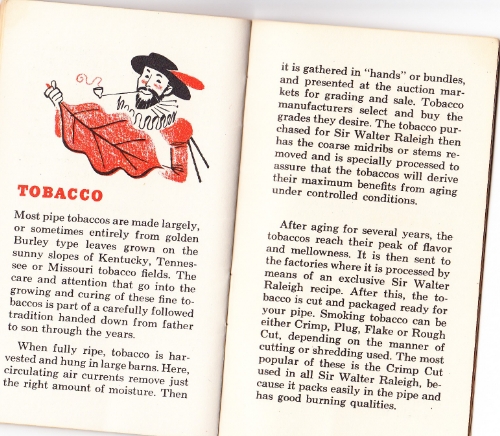
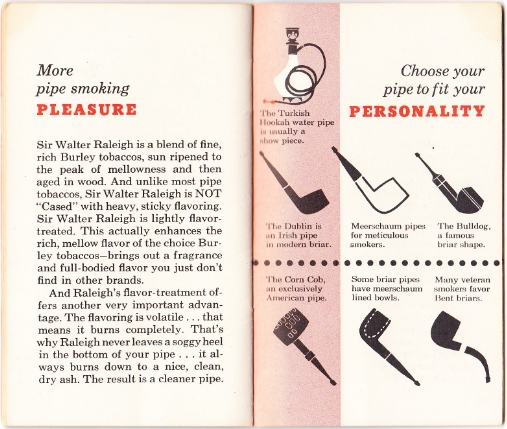
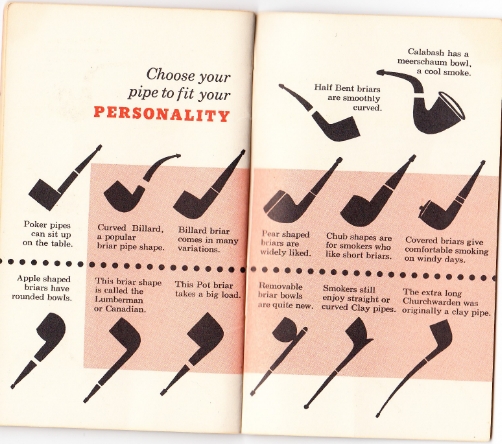
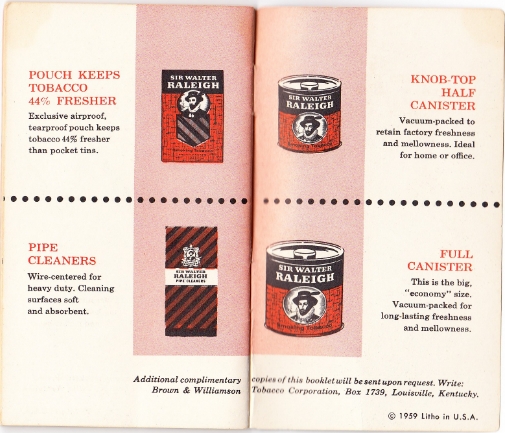
I was given a copy of this little booklet that used to be given out by Sir Walter Raleigh with their tobacco or with coupon pipes I believe. It is a great little piece of history so I scanned it and have posted it here for you to read and enjoy. All the pages are scanned so they are pictures instead of text.
ImageImageImageImageImageImageImageImageImageImageImageImageImageImage

History of BBB Pipes

Blog post by Fiona Adler, translation Steve Laug

I have been doing some research into BBB pipes for sometime now because of my own interest in the brand and I found an online article in French. (The original article was produced with the assistance of Fiona Adler. I want to thank Guillaume Laffly for giving me this new information on the origin of the material in French.) I have adapted the article below from a google translation that I did of the article on http://www.fumeursdepipe.net/artbbb.htm (I alone am responsible for the English translation and any errors probably are the result of my poor translation!)

Origin and history of Adolph Frankau and Co. Ltd.

Adolph Frankau arrived in London in 1847 and quickly grasped the opportunities which the enlarging tobacco market introduced. He started “Adolph Frankau and Co.” and began importing meerschaum pipes and tobacco supplies. The Company took a young 14 year-old boy, Louis Blumfeld under its wing. The Company quickly thrived and did so until the untimely death of Adolph Frankau in 1856. His widow decided to sell the company.

Thomas Carlyle (1795-1881), author of “Hero and worship of the heroes” came on the scene at this point. He recommended that the widow Frankau not sell, but rather that she should entrust the future of the company into the hands of young Louis Blumfeld, then 18 years old. Carlyle had to have had a very high opinion of the young Louis to make this recommendation, and his trust proved to be justified as Blumfield took care of the company with enthusiasm and bottomless energy. Louis quickly realized, as others had before him, the potential of the newly acknowledged pipes made of briar.

Louis Blumfeld developed important international trade relations from the beginning, and had particular success in Canada, Australia, New Zealand, India, Europe, as well as Switzerland and Denmark. The USA had never been an extraordinary market for the company, but nonetheless a subsidiary was opened in New York. His commercial strategy focused on the countries of British Empire. Just prior to 1914, Frankau & Co. was the sole agent for Ropp Cherry Wood pipes in the United Kingdom and its colonies.

While BBB is the most widely known of Frankau & Co. pipes the company also produced several other brands of pipes: Capt. Kidd, Fairway (” F ” in white; FAIRWAY / LONDON MADE / ENGLAND), Frankau’ s (London Made in England), Glokar, Major Daff, and Snap-Fit. It also seems that Ultonia and Nec Plus Ultra must be considered to be brands in full measure, in spite of the fact that they were introduced as being product lines under the label BBB. It would explain their absence in many of the BBB catalogues.

The necessity of making briar pipes in London became more urgent, that’s why, at the turn of the century, Frankau & Co. opened a warehouse and offices at 121 Queen Victoria Street, an export service at Upper Thames Street and a plant in 1898 at Homerton, High Street 112 (then 154). The Homerton plant lasted into nineteen-eighties when Cadogan regrouped its manufacturing activities to Southend-on Sea.

In those days, Frankau & Co. also produced calabash pipes. They used calabashes that came originally from Southern Africa. Supply of the calabashes became more difficult to maintain due to the growing demand for them. BBB set up a special department to make calabash pipes. They used meerschaum to make the bowl while some of their rivals used asbestos or plaster of Paris. The manufacture of calabash pipes survived until the war in1914/1918. The war destroyed the supply of calabashes from South Africa.

The 1920s were not an easy decade for pipe producers. Frankau & Co was purchased by “Oppenheimer and Co. Ltd1”. Also during this decade Comoy’ s of London, Dr. Plumb and Loewe & Co. came under the control of Oppenheimer. The purchase of all of these various brands pushed the company to create “Cadogan Investments Ltd.2” at Cadogan Square, London, in the 1930s, to manufacture and sell its pipes. The plant at Homerton passed under the control of “Marechal Ruchon & Co.” (In 1970s, the plant took the name of “Fairfax Traders”), and continued producing BBB pipes in a traditional way. They finished pipes with a silver ring and stampings. However, BBB continued, as an independent company within the Cadogan Group. BBB concentrated on making a certain number of system pipes and on new finishing processes.

Richard Esserman thinks that Dunhill subcontracted the manufacture of stummels to BBB for the Bent Magnums until 1923. In fact, when the companies within the Cadogan group argued with one another, a new plant was established in Stratford, Carpenters Road. They also bought machines from Zuckerman as they were more efficient. The finishing workshops were closed, and pipes were finished in Aldershot and sometimes also in Shoeburyness.

In this era, it was a current practice in trade to give surplus stummels to other companies at agreed upon prices. Cadogan sold Rank I stummels to Dunhill, and bought Rank II, III and IV stummels from Dunhill. But they did not finish pipes for other companies: to sell Rank I stummels to Dunhill was more beneficial than making them into pipes!

Image

The BBB Logo

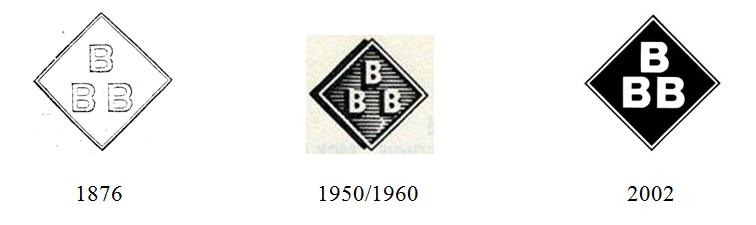
The initials BBB in a rhombus were quickly used as a symbol for the company, and that trademark was the first to be recorded when “Trade and Marks Act” took effect in 1876. Rather strangely, BBB registered under two numbers, numbers 39 and 40. In number 39, the acronym BBB in the rhombus (dates from deposit: January 1st, 1876; published on May 3rd, 1876 in page 21 of the Trade Mark Journal) for the class 341 (Tobacco, raw or fabricated and cigarettes), in number 40, a simple B for which no picture is available (the same references of store and publication) for the class 50 (fabricated Property from ivory, in bone, wooden, substantially plant or animal, pipes with tobacco, cigars and cigarettes (cigar and cigarette tubes). Note that Oppenheimer registered BBB again (number 39) for a new logo under the number 2288663 (December 20th, 2001; published on February 13th, 2002 in page 2634 of the Trade Mark Journal) for classes 14 (cases with cigar and cigarettes, soft packages of cigars and cigarettes, doors-cigars and cigarettes, all in precious metals) and 34 (Tobacco and products of tobacco, articles for smokers, pipes, tobacco pouches, door – pipes, lighters, equipment of cleaning for pipes, doors-cigars and cigarettes, cases with cigars and cigarettes, humidors). At the European level, Oppenheimer registered BBB under the number 002100907 (February 22nd, 2001, date of recording: October 7th, 2002), for classes 14 and 34 and under the number 0863111 for the class 34 (October 20th, 2005).

BBB Production

Some think that the first BBB pipes were imported, and that initials were intended to stand for Blumfeld’s Best Briars. Later these initials came to be understood as standing for Britain’s Best Briars.

At first, BBB produced two qualities of pipes. The one, BBB Own Make, became BBB Best Make, other pipes simply being stamped BBB. There are reasons to think that the Own Make was produced in fact in London (Reject pipes were stamped R). While simple BBBs were imported until the beginning of the 20th century. It is probable that the regular line of BBB pipes were imported from Saint-Claude, France.

The BBB collection followed along similar lines as other pipe producing companies during the second half of the 19th century. Shapes were similar to the popular models in vogue during that time with a predominance of bent pipes. Some of them had a silver ring. At the same time, BBB continued to deliver meerschaum pipes.

BBB was probably the first to offer pipes made to accommodate a paper filter. The Mackenzie, which was available in two qualities (Mackenzie, second brand of BBB, could have been produced in Republic of Ireland. Pipe stems were made of vulcanite). This technique dates from around 1900 as is stated in a letter dated from August 27th, 1891 from Mr. Morrel Mackenzie (1837-1892) in which he suggest that they make models with a longer stem. The Mackenzie brand survived into the 1960s.

It is thought that BBB was one of the first to call the pipes they had conceived with a long shank for a cooler smoke a “Lovat”. However, “Friedlands” could have adopted this name at the same time. Lovats appeared long before 1914 and were offered for sale by BBB in four different sizes, of which a series were stamped Highland. Colonel Henry Francis Fraser (1872-1949), Lord of Lovat, must have enjoyed the advertising of this shape made in his honour. It is still a popular shape at present. While BBB briar pipe shapes were similar to those of other brands, their models developed a very sought-after distinct character by the collectors. BBB earned the gold medal at the French-British Exposition in London in 1908 (Frank Bowcher, on 1864-1938) and at the World Fair and International in Brussels in 1910, the Medal of Godefroid Devreese (1861-1941). You can find pictures of these medals, notably on the advertising brochures of the 1950s and 1960s.

In this era the common practice was to set a pipe’s value by the material the stem was made of: ebonite, horn, amber, ambrolith etc. Also, price varied according to the size of the pipe. For instance, in 1914, the wholesale price of a simple billiard varied between 15 shillings and 22 shillings and 6 pence because of the size of the pipe and flock (no screw or tenon). Though this generally was true it seems that there were exceptions; for instance a Liverpool of five inches long with a stem in genuine amber had a wholesale cost of 12 shillings in larger quantities; the same pipe with a stem of ambrolith cost 19 shillings. BBB made different special series of pipes such as Chubby, Golfer, Dreadnought (probably named after different warships), Bellerophon (sic) and Cutty (small models). BBB offered some 20 lines of pipes that had different clever combinations of stems, finishing and decoration. Some of them had a silver ring. Around 1910, BBB Own Make pipes sold for 2£ 10 shillings while pipes only stamped BBB were sold for 5-6 shillings.

In the 1930s, the top pipe of the line was “BBB Best Make” with variants such as “Great Dam” and “Ultonia Thule”. The BBB Carlton, sold retail in 1938, was endowed with a complicated stinger system; the same system was also used on the BBB London Dry. The Blue Peter was not stamped BBB but BBB Ultonia, and BBB Two Star (**) was the stamping on lesser quality pipes. The calabash pipe was removed from the catalogues at this time, but some pipes with cases and some meerschaum pipes were still produced. Shapes of BBB pipe were typical of other companies pipes made in this era: half were billiards, some princes and bullcaps, bulldogs and some bents. It is also in this period that the inlaid metal BBB was put on more upscale pipes, while series of lesser quality had only the stamped BBB on the stem.

During the middle of 1950s and 1960s, BBB lines were comparatively stable. The top pipes of the line were stamped Own Make “Rare Grain”, followed by Own Make “Virgin”, Own Make “Walnut” and finally Own Make “Thorneycroft”.

Today, Cadogan uses Spanish briar for most of its pipes, and reserves the Moroccan briar for the production of high quality pipes. Before being sent to them for manufacture into pipes, the briar has been dried and cured for a time period of between 6 and 12 months.

To avoid any confusion about the ranking systems of their pipes in the Cadogan Group brands the company adopted a system of eight common ranks for all of its brands. Rank A is briar with nice grain, without any visible imperfections. Rank B has nice grain, but with some small black points and maximum of three sand pits which will be filled. Rank “Best Make” also has nice grain, with maximum of five small sand pits. The stummels with grain of variable quality and maximum six sand pits are ranked MB. The second rank pipes are of briar of mediocre grain but without defects or of nice grain but with up to eight fills or two big sand pits. The third, fourth and fifth ranks are given to pipes whose quality decreases proportionately.

1Adolph Oppenheimer started an import/export company in 1860, and his brother, Charles, joined the company later that year. Adolph retired in 1870 and moved to Germany, where he became British Consul then Consul general, letting Charles take the control of business. Louis Adler, who was the brother-in-law of Oppenheimer, became a colleague when Adolph left the company. Both brothers did not have heirs, so the ownership of the company passed to the family Adler. By 1870, the company imported GBD pipes into Great Britain from Paris. The association of Oppenheimer with GBD was such a success that in 1897, Oppenheimer became the sole agent of the French company. Five years later, the French owners of GBD, Marechal Ruchon and Co., merged with A. Oppenheimer.

2Cadogan’s slogan, “Pipemakers Since 1825” refers back to the first clay pipe which Francois Comoy fabricated in 1825. Cadogan’s pipes were fabricated in numerous places disseminated around London and to Saint-Claude, but with the purchase of Orlik Pipe Co. In 1980, Cadogan regrouped the entirety of its manufacture in the new plant of Southend-on-Sea, plant especially constructed for pipe making industry. Cadogan continues to fabricate GBD, Comoy’s of London, BBB, Dr. Plumb, Loewe and Orlik pipes (since 1980). They also make Kaywoodie pipes for the British market and have recently agreed to make Sasieni pipes for James B. Russell.
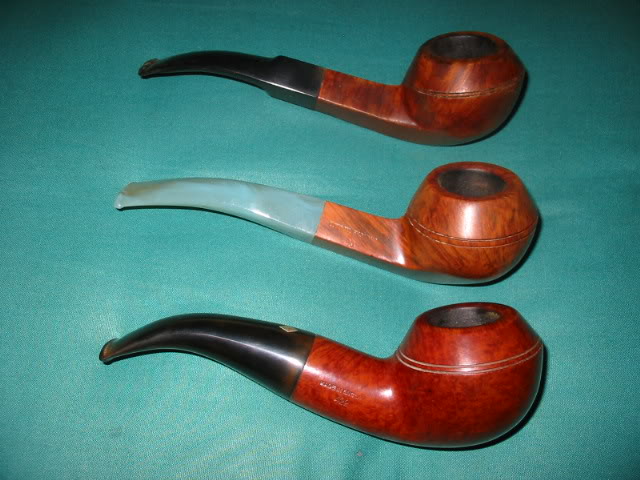
I have attached a few pictures of some of my BBB’s. I love these old pipes and have quite a few.