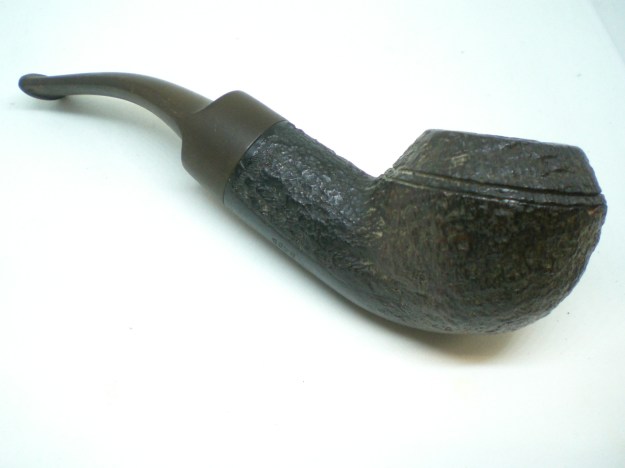
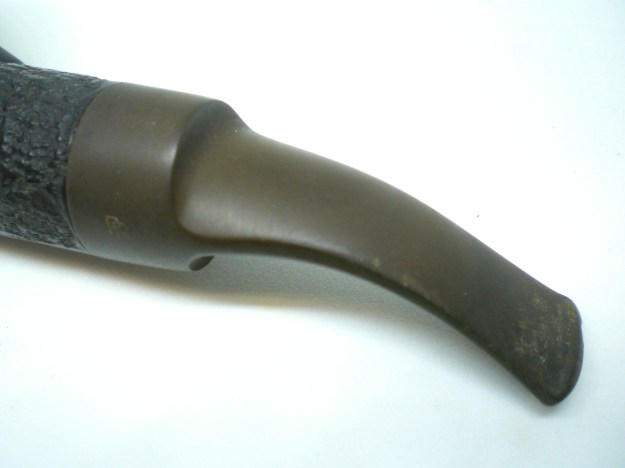
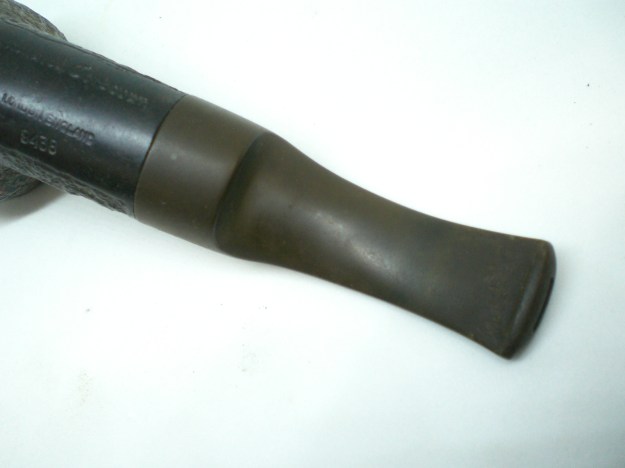
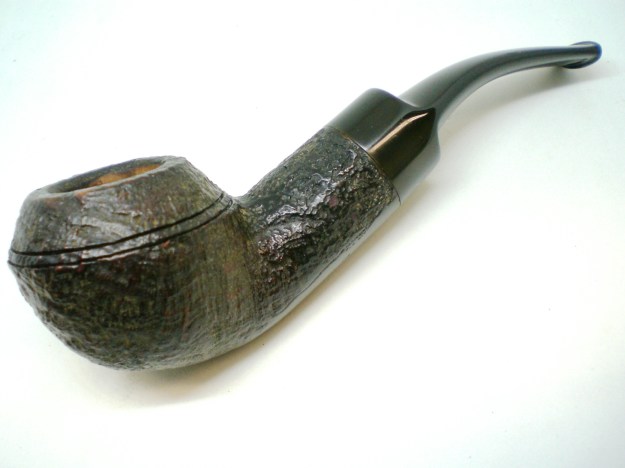
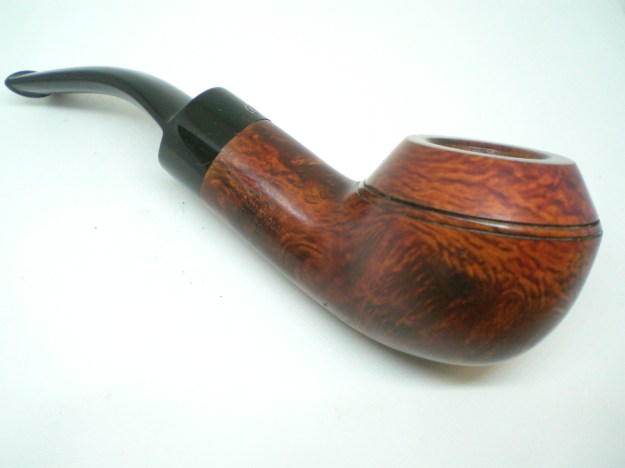
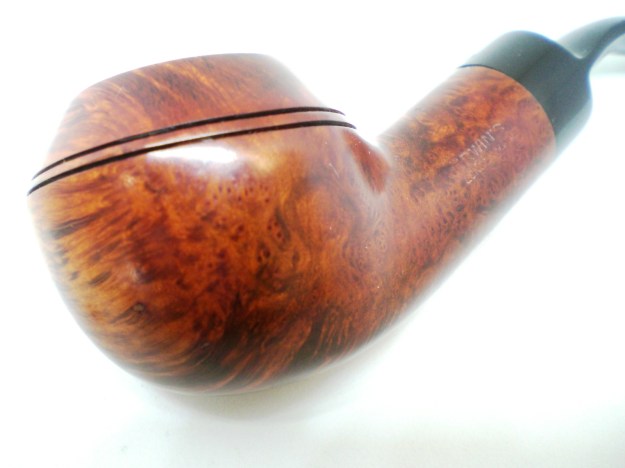
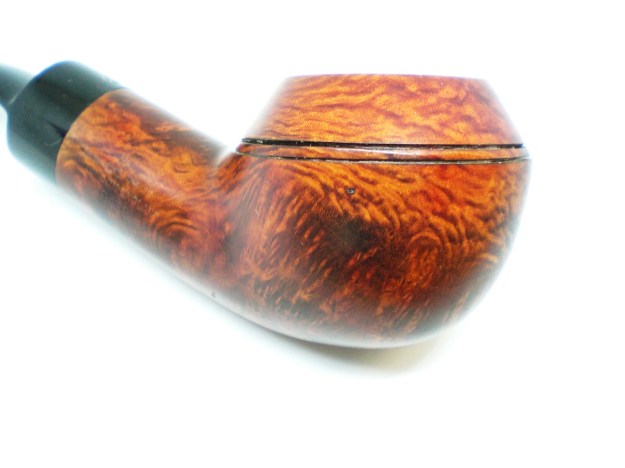
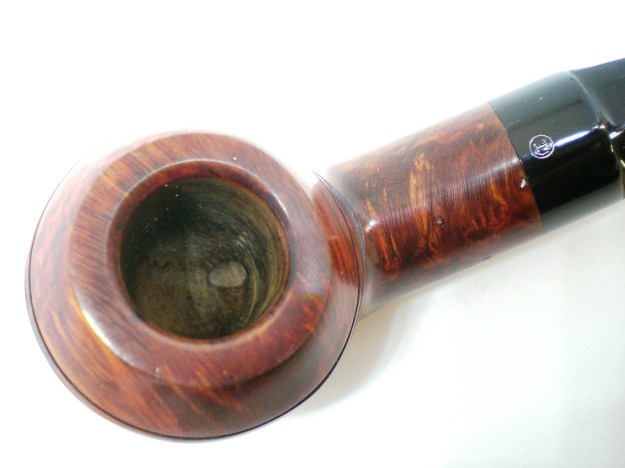
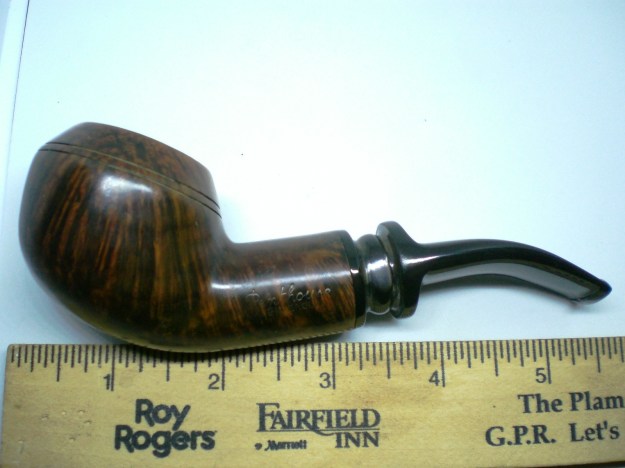
Author Archives: upshallfan

Unknown's avatar

About upshallfan

Moderator on the PipesMagazine forum since 2011. Guest contributor on the Reborn Pipes Blog by Steve Laug.

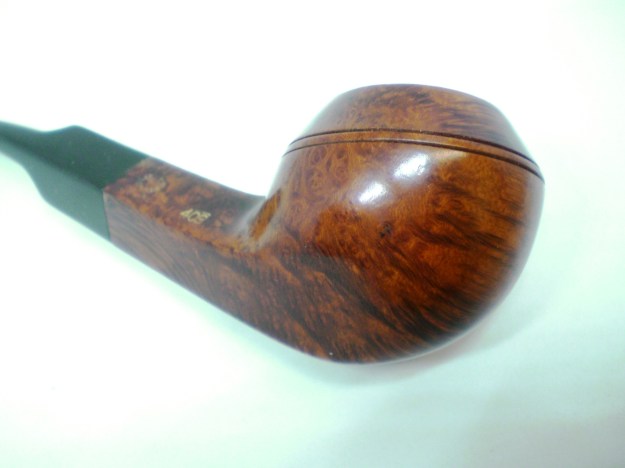
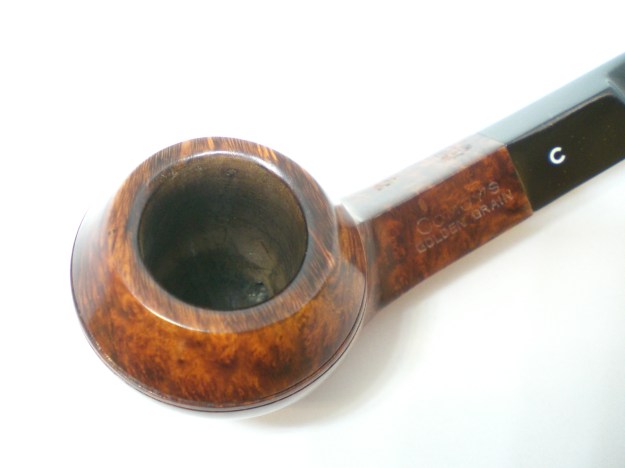
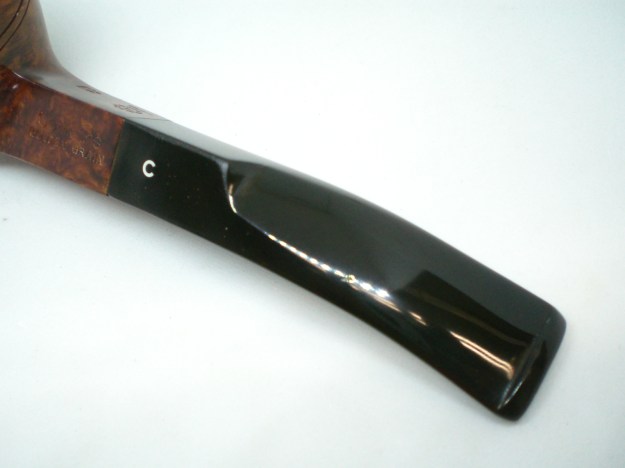
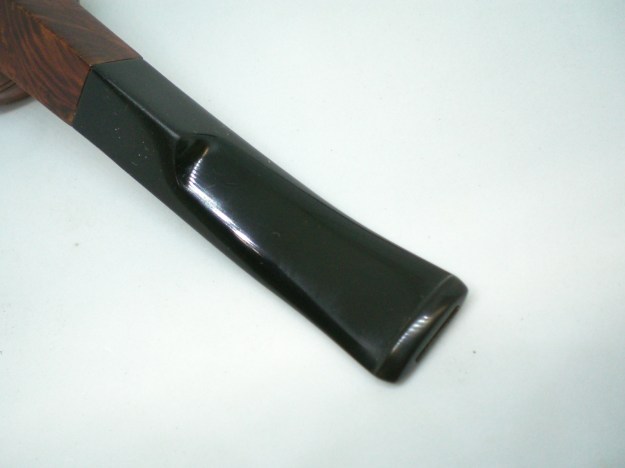
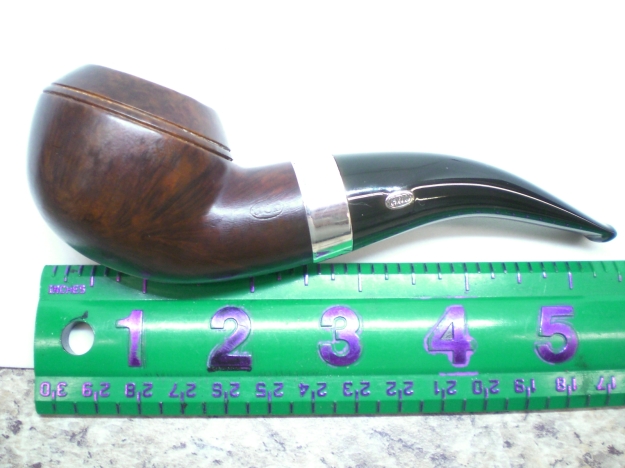
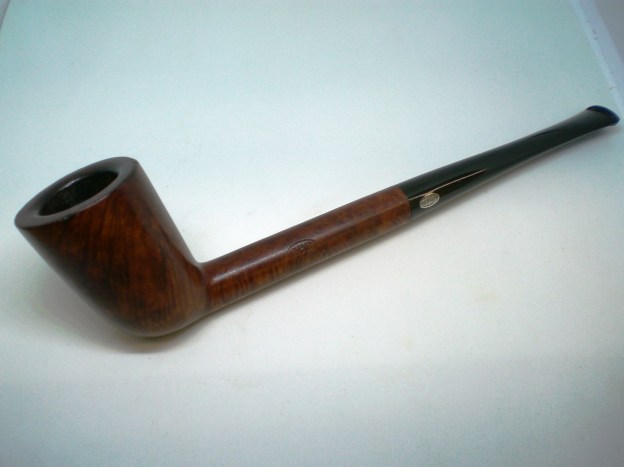
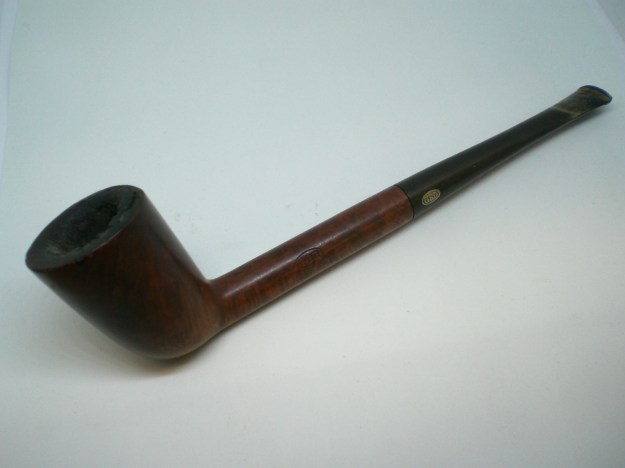
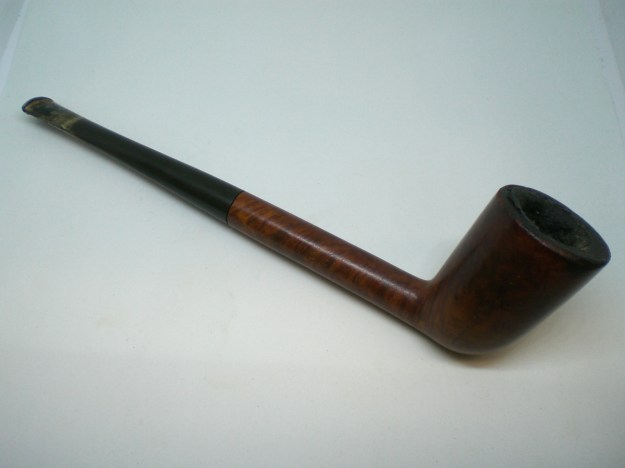
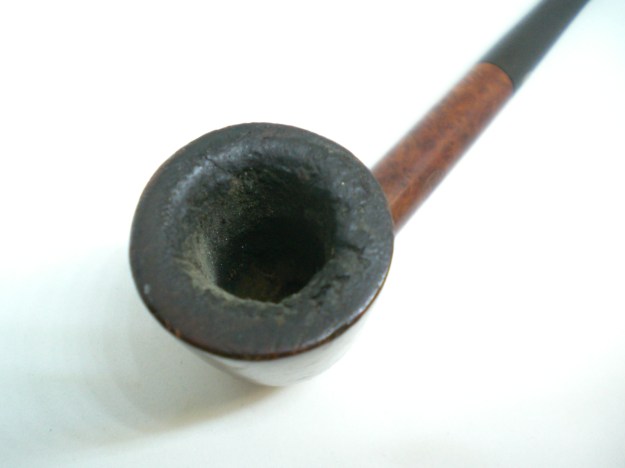
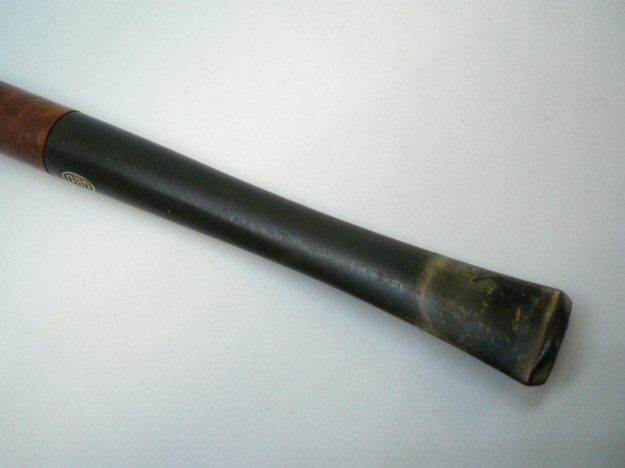
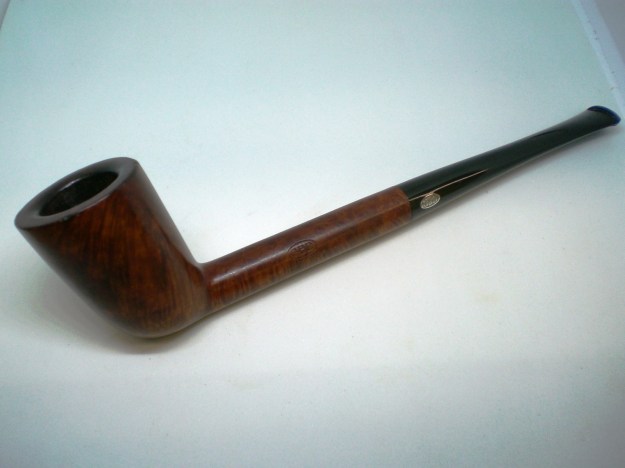
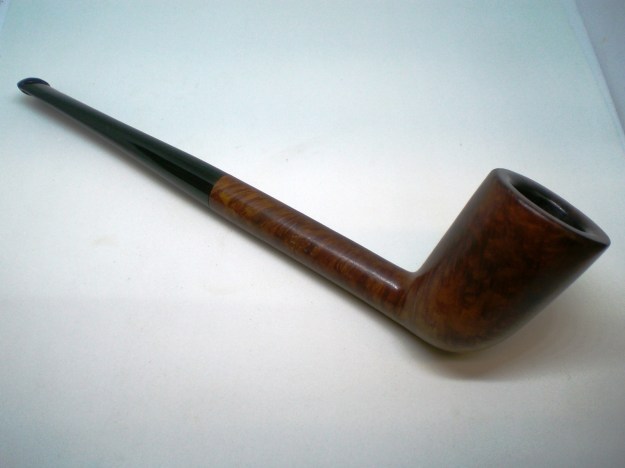
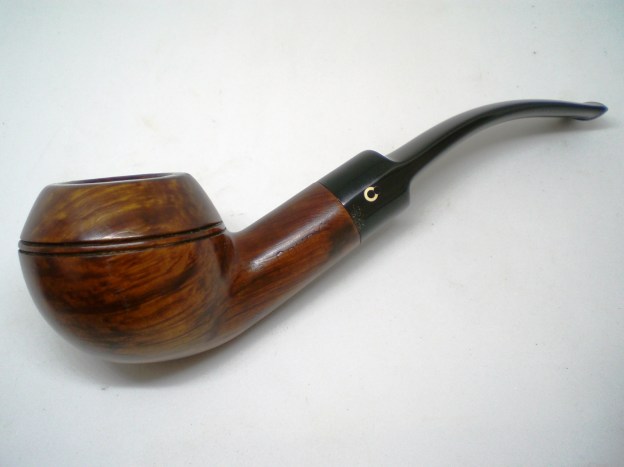
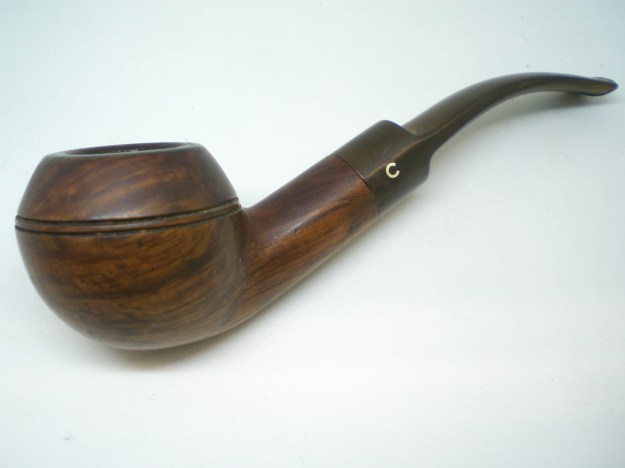
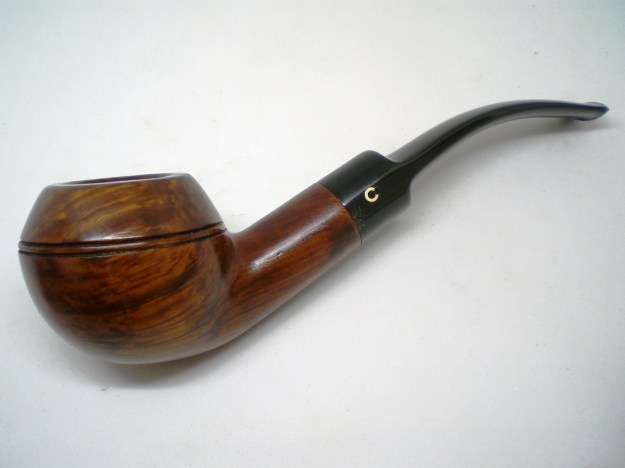
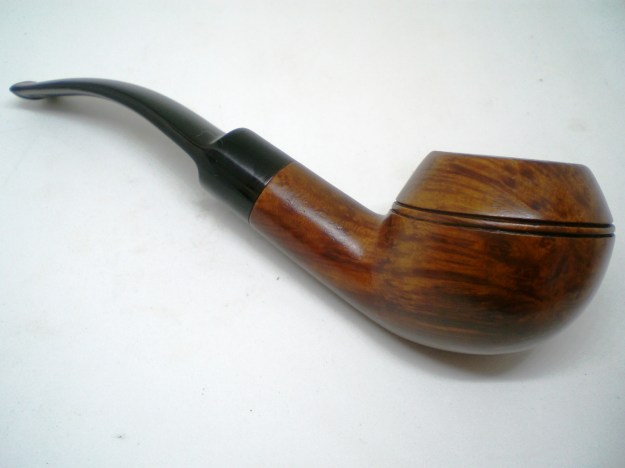
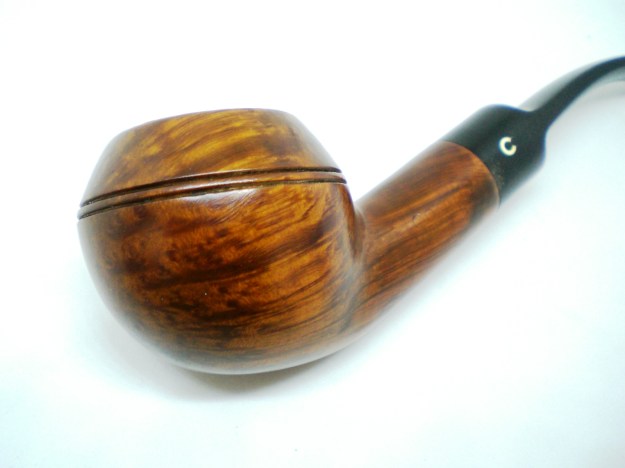
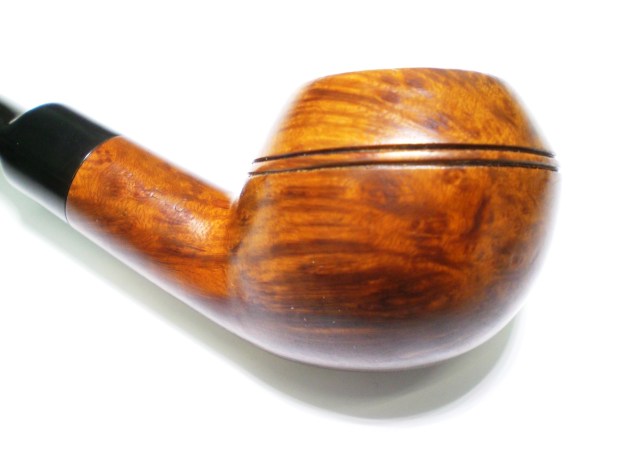
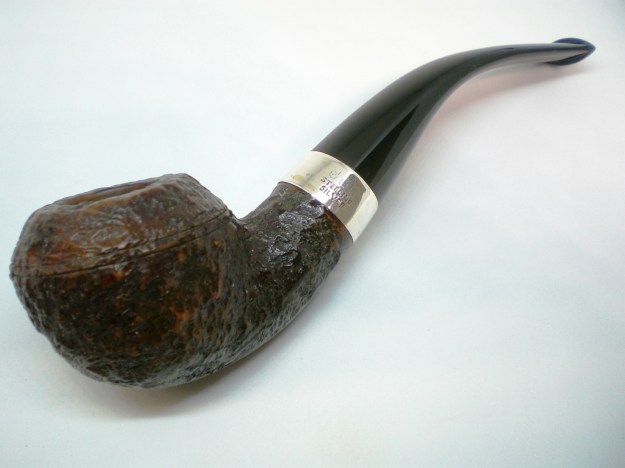
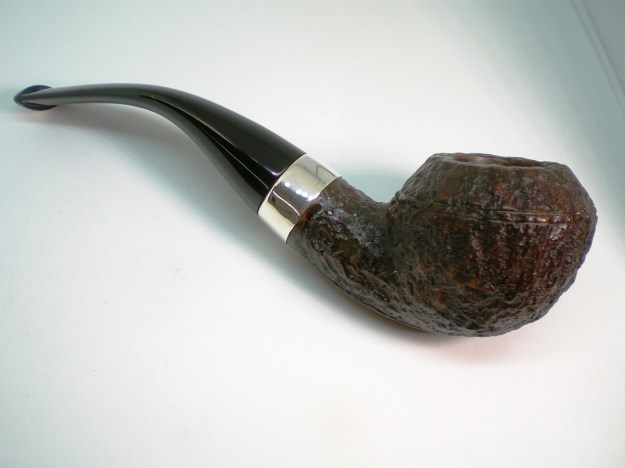
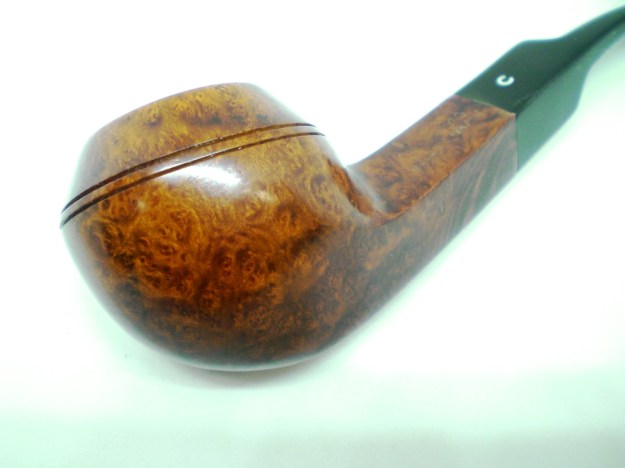
Comoy’s Golden Grain Bulldog Restoration


By Al Jones

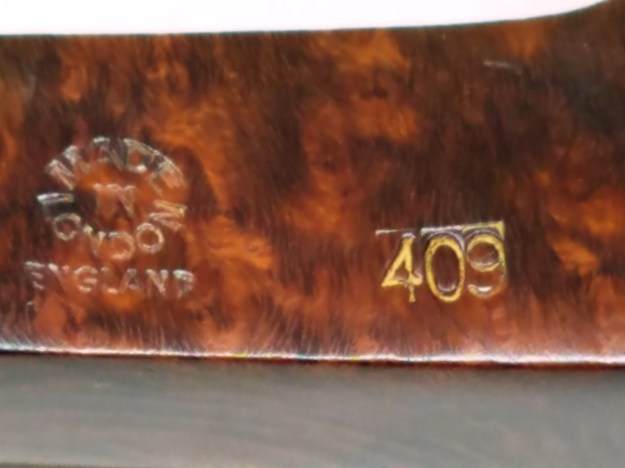
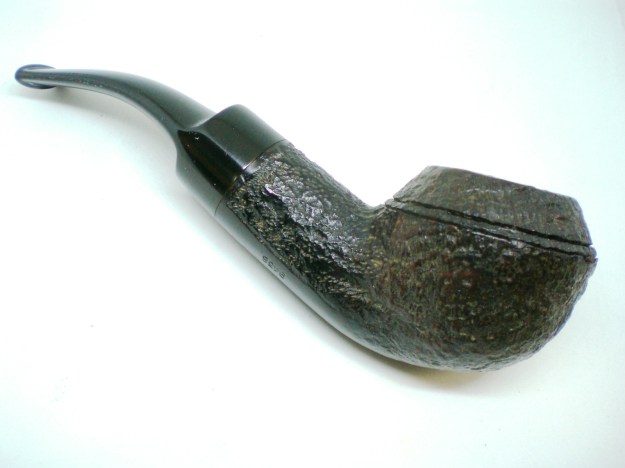
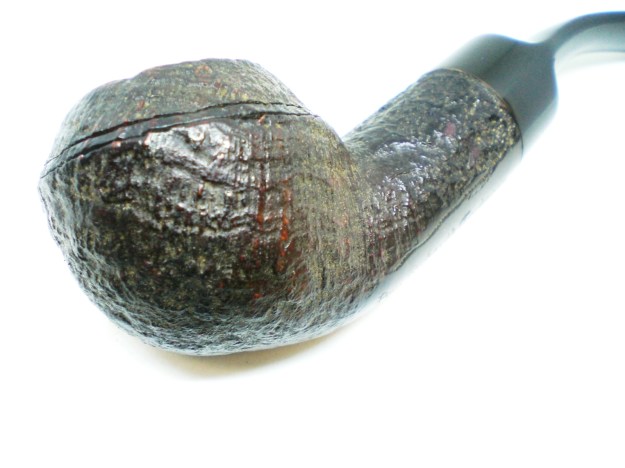
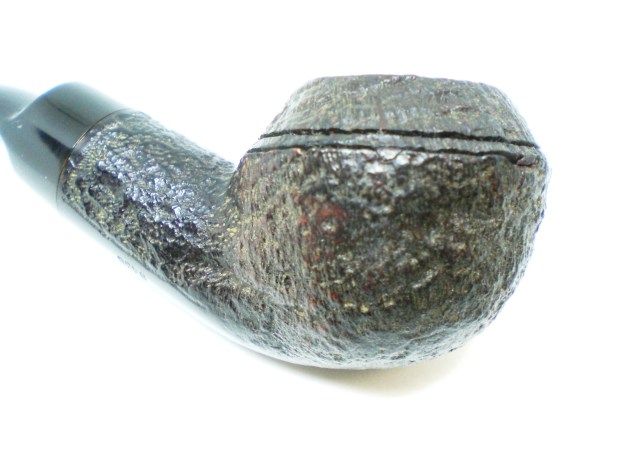
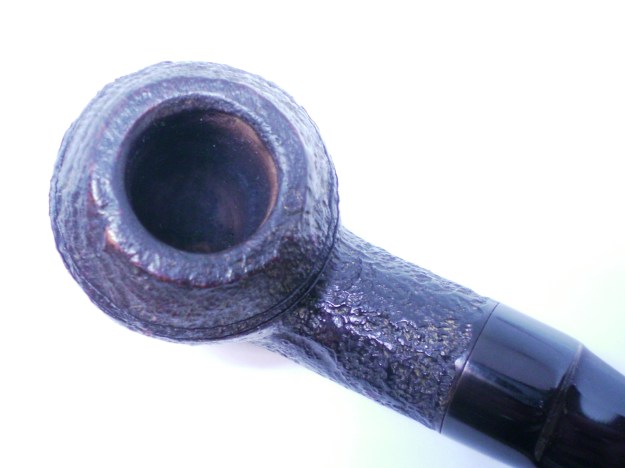
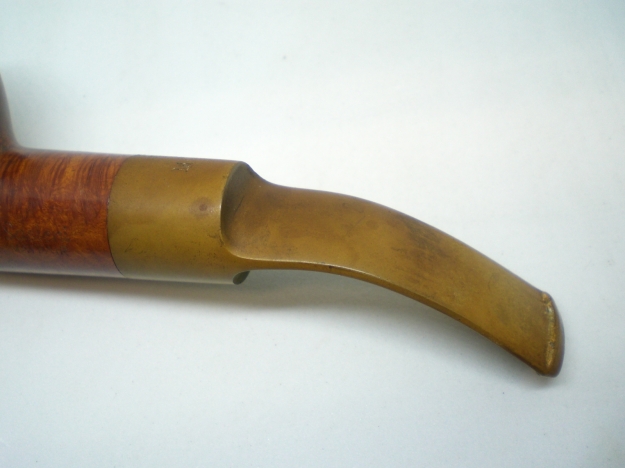
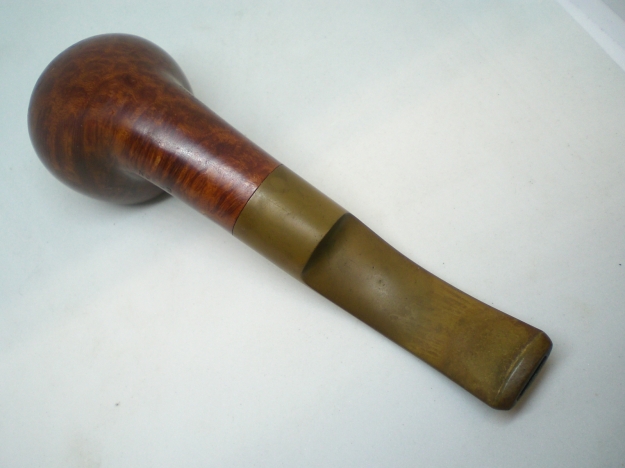
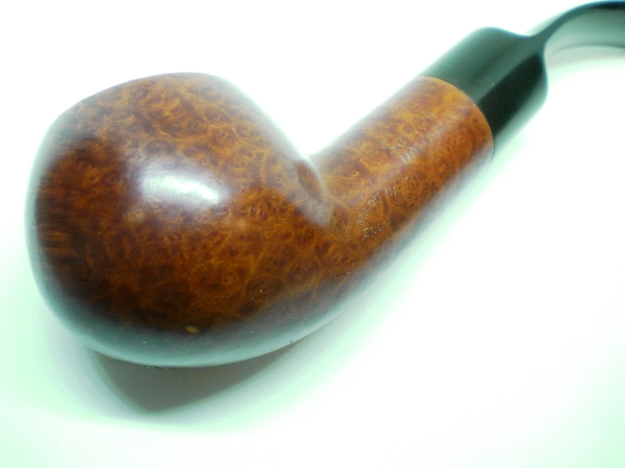
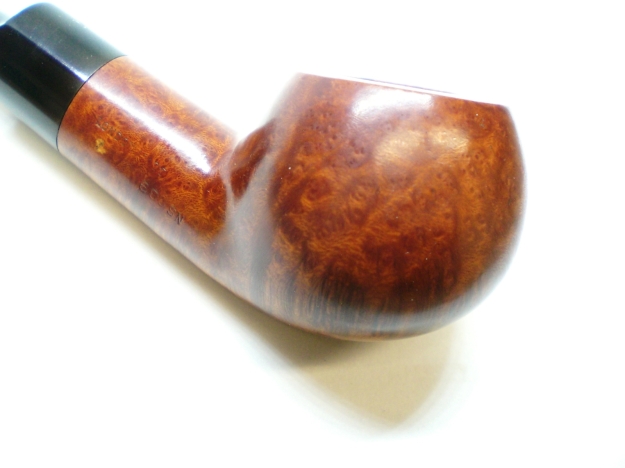
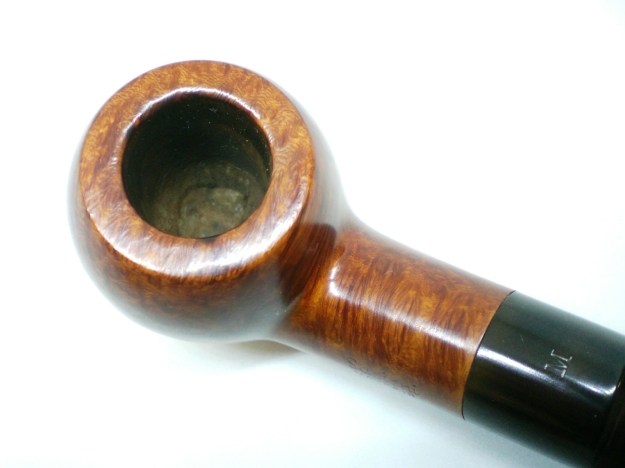
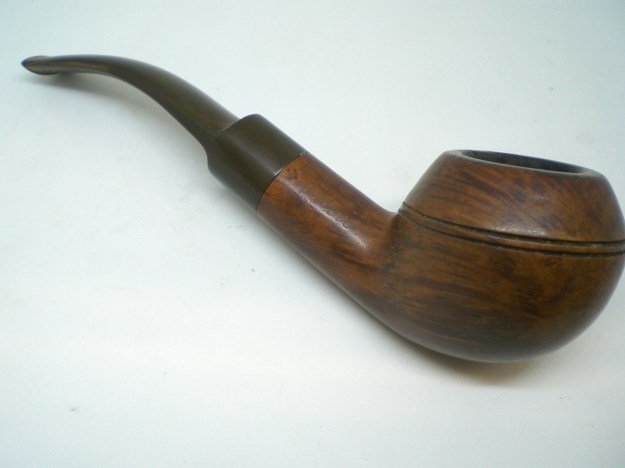
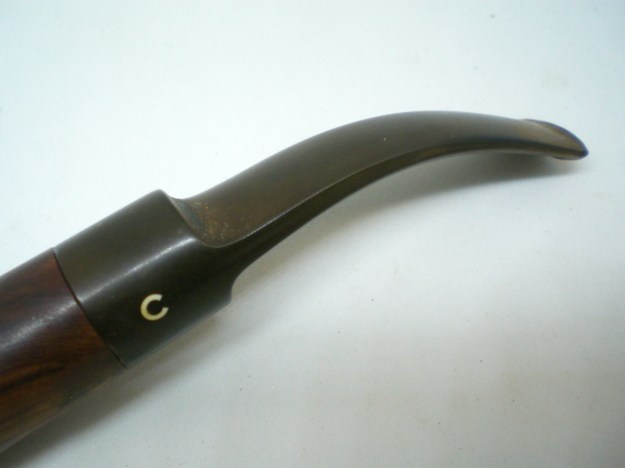
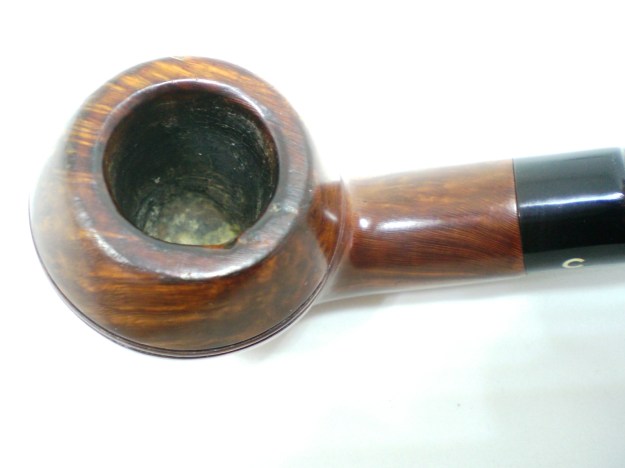
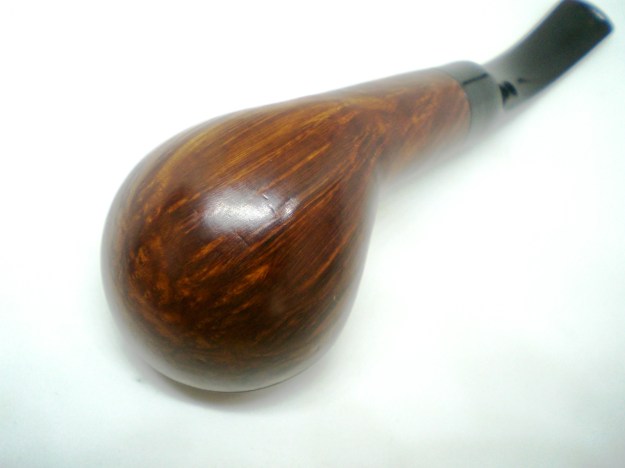
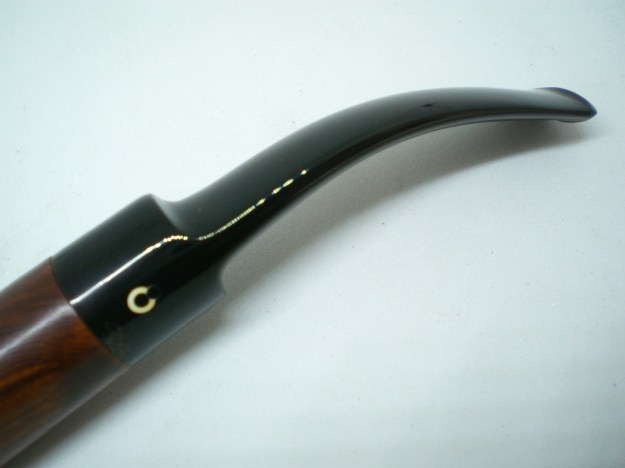
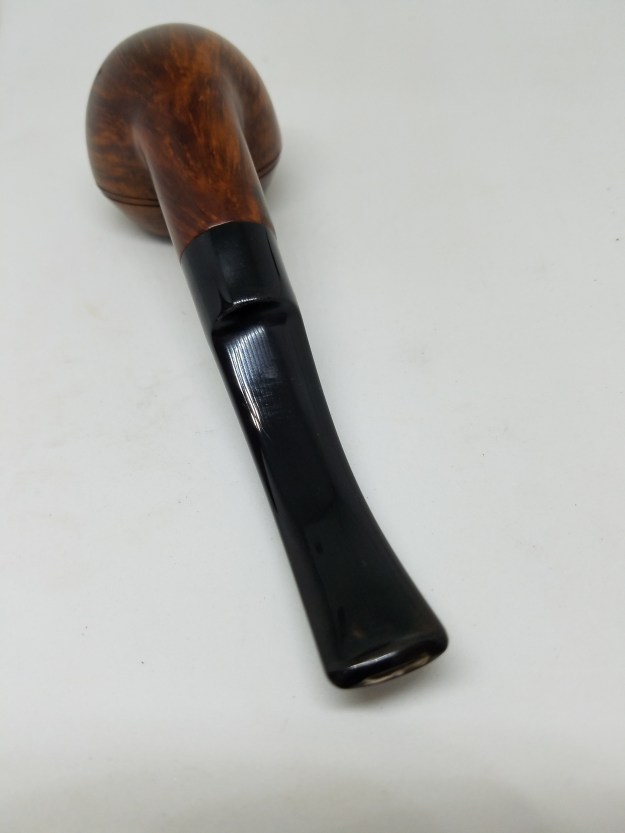
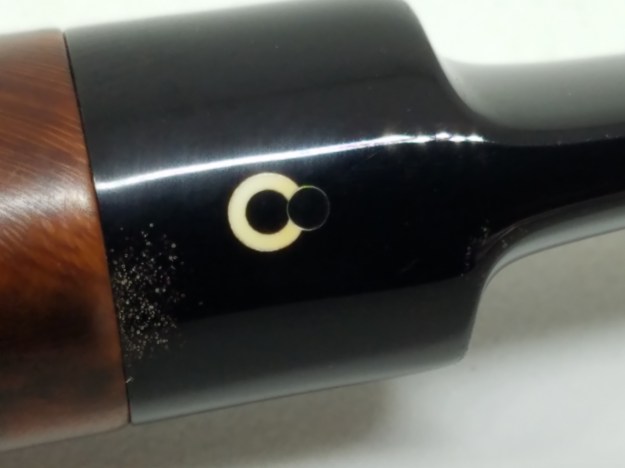
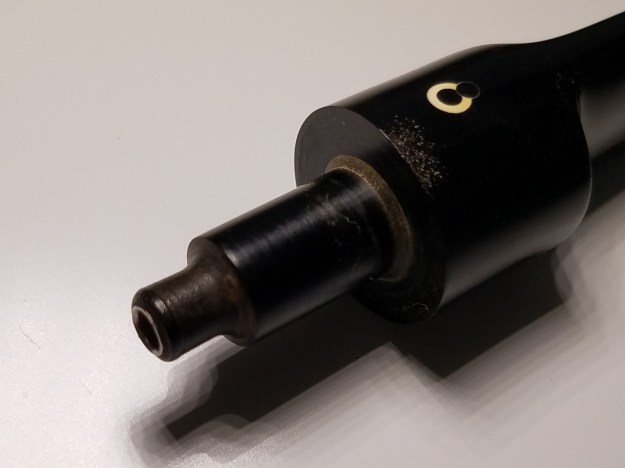
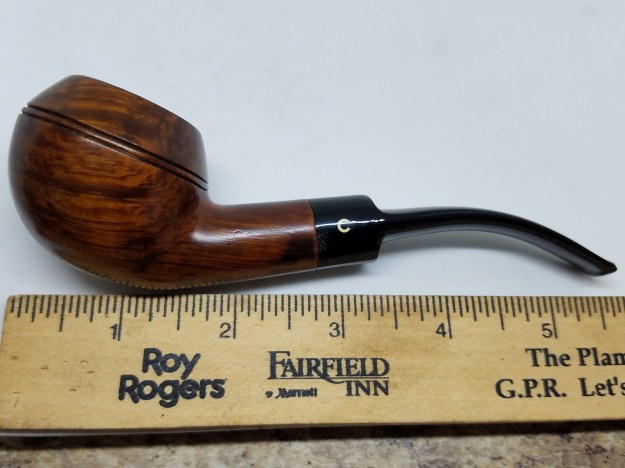
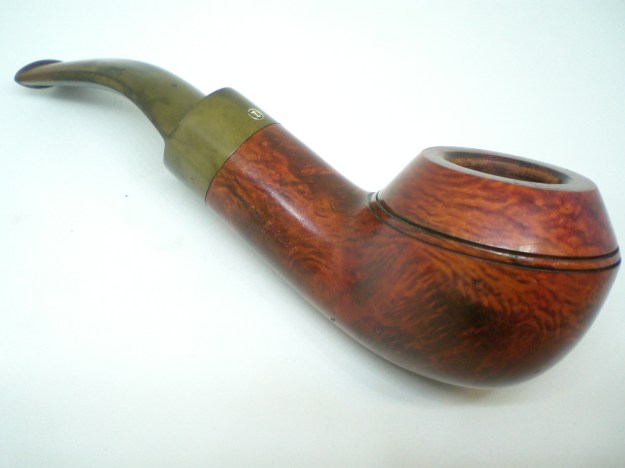
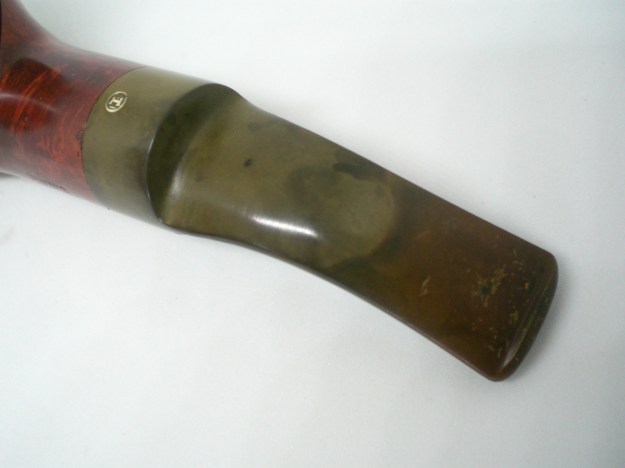
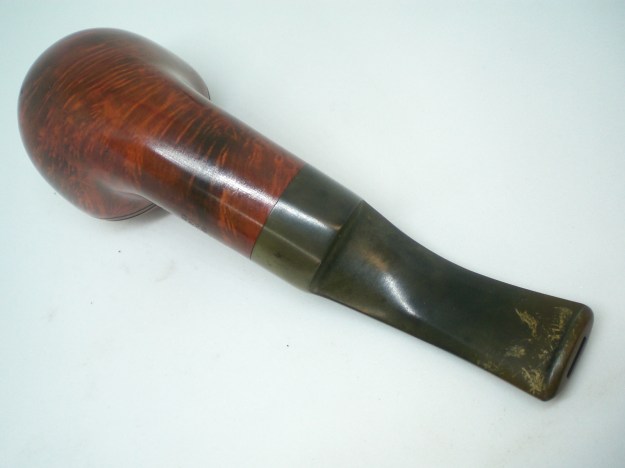
This 409 Bulldog Golden Grain found its way to my work bench this weekend. The 409 is the most popular Comoy’s bulldog, but I’ve only worked in three versions of this shape in the past seven years. It’s not certain when the Golden Grain entered the Comoy’s line up. The COM and three-piece C stem logo were used from 1946 to the merger in 1981.

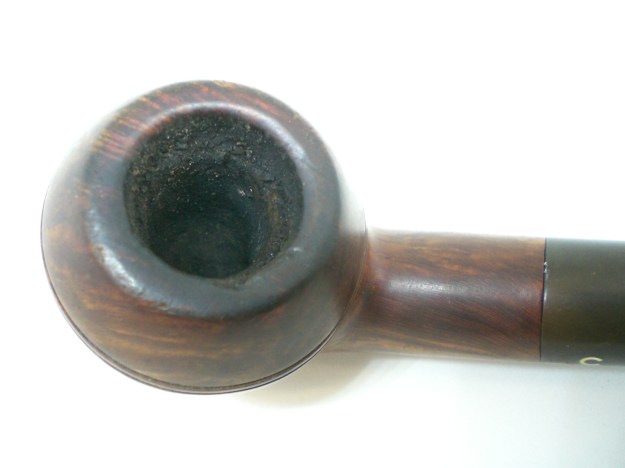
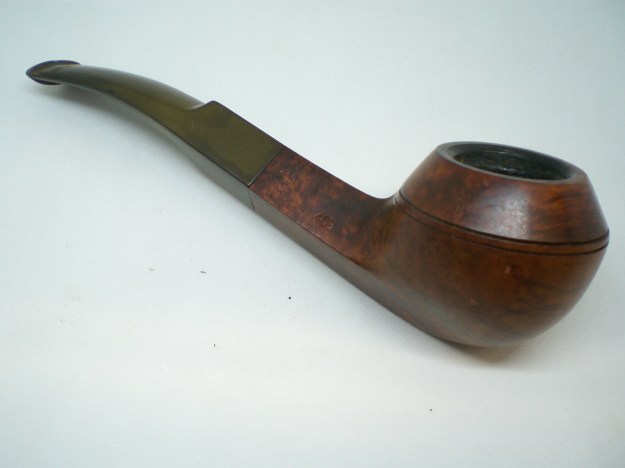
The pipe had some build-up on the bowl and the stem was heavily oxidized, but overall, it held a lot of promise for a restoration. Below is the pipe as received.

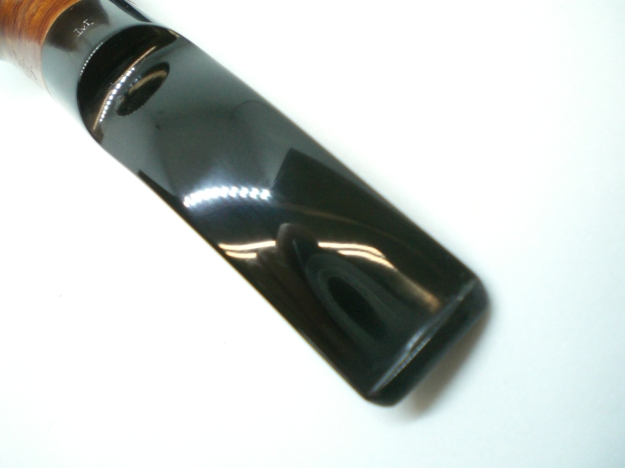
I used a piece of worn scotchbrite to remove the build-up on the bowl top. The bowl was reamed which revealed that the bowl interior was in very good condition. The bowl was soaked in alcohol and sea salt. I picked up an old Sugar dispenser for filling the bowl with salt, which worked very well (sealed with a piece of tape to keep the salt dry). While the bowl was soaking, the stem was soaked in some mild oxy-clean solution. I put a dab of grease on the C stem logo.

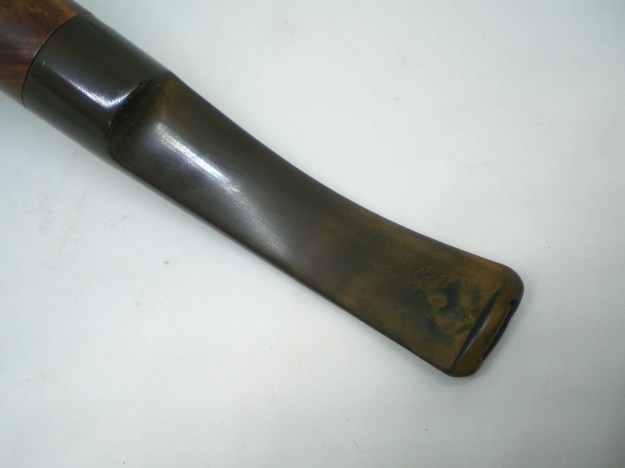
Following the soak, the shank was cleaned and stem inserted. I removed the oxidation with 400, 800, 1,000, 1,500 and 2,000 grade wet paper, followed by 8,000 micromesh. The stem was then polished with White Diamond and Meguiars plastic polish.

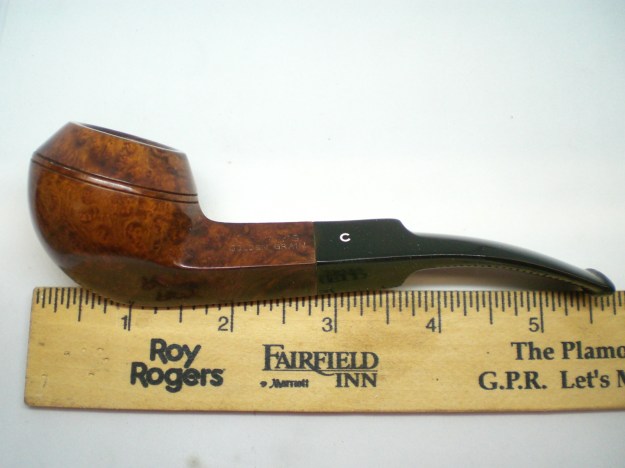
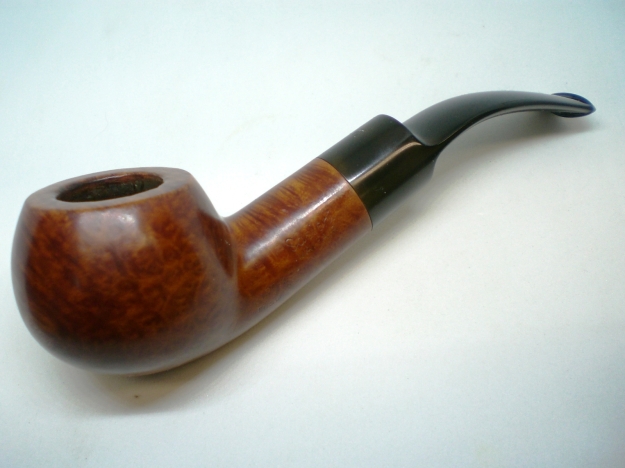
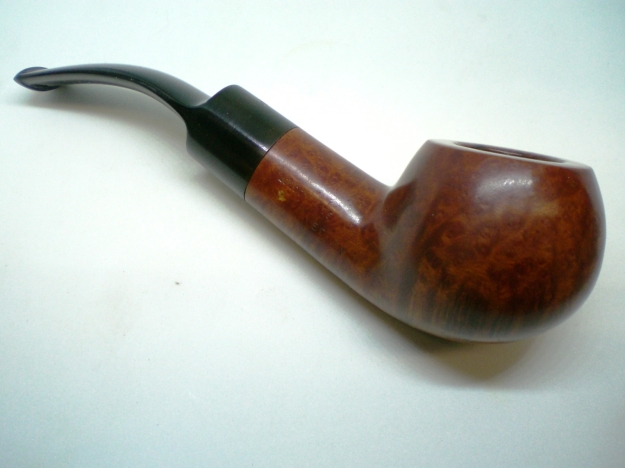
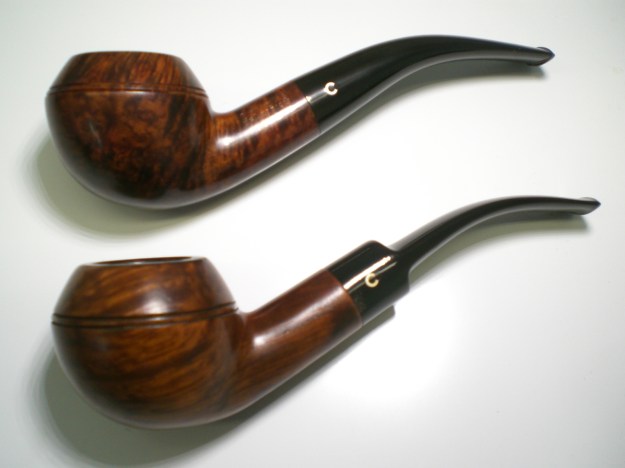
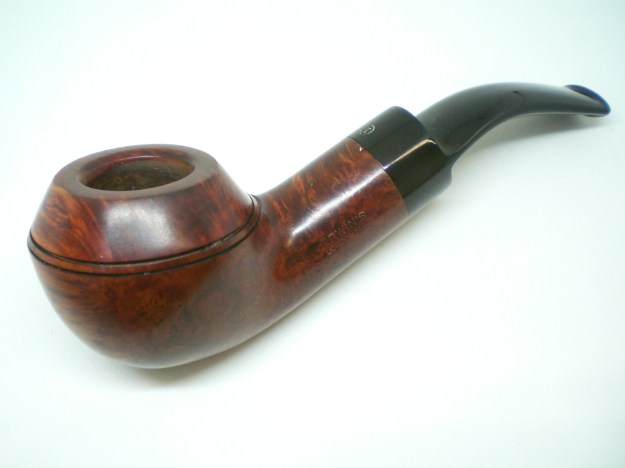
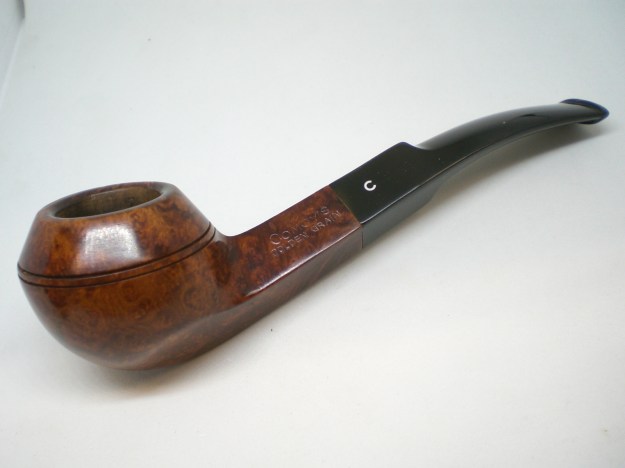
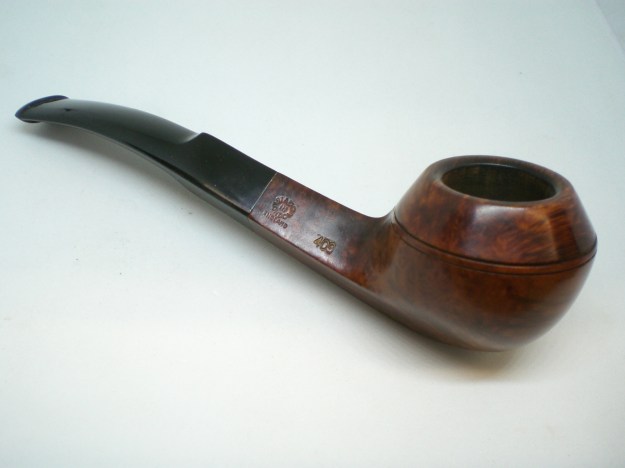
The bowl was buffed with White Diamond and several coats of Carnuba wax. Below is the finished pipe.
?

?

Poor Richards 9438 Cordovan Restoration


By Al Jones

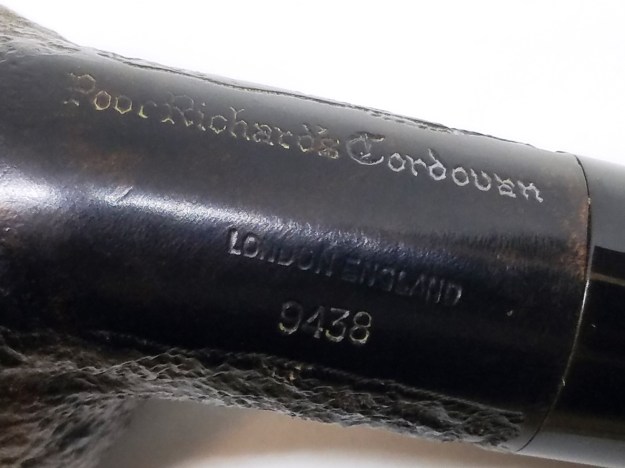
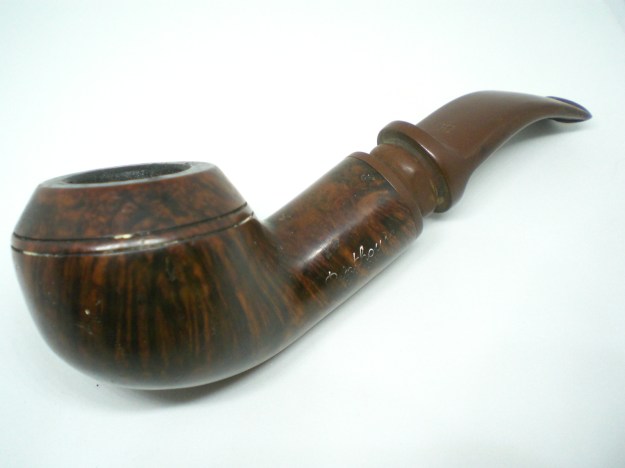
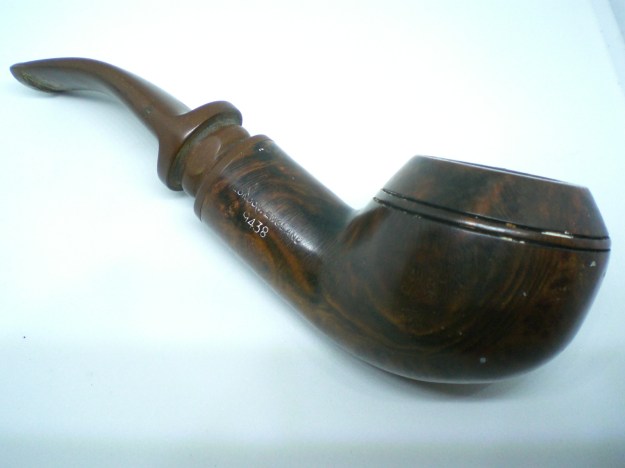
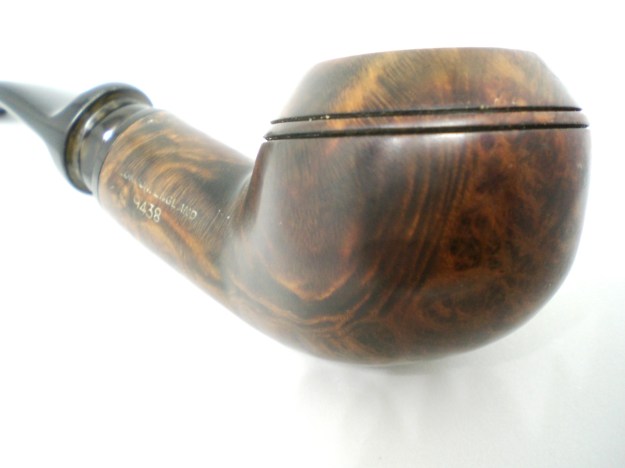
Here’s yet another variation on the GBD 9438 shape. This example is stamped “Poor Richards Cordovan”. We’ve seen another Poor Richards pipe here in the past, but that one was stamped in a different font and added Bozeman, Montana in the nomenclature. Poor Richards is indeed a shop in Montana, that while having changed hands over the years, is still in operation today. Was this a “shop pipe” made for that location? Possibly, but now lost to time and the new owners had no information or insights to offer.

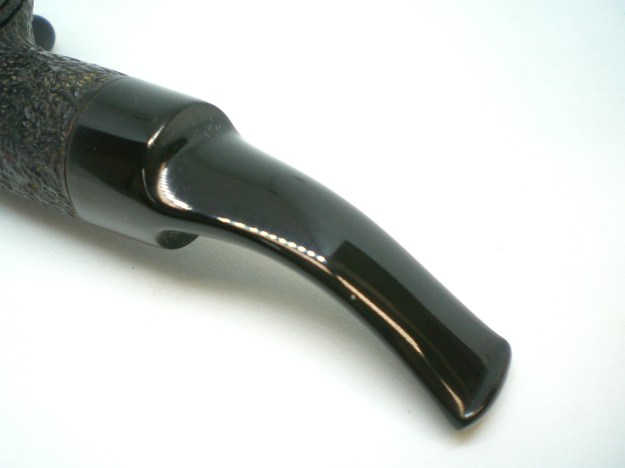
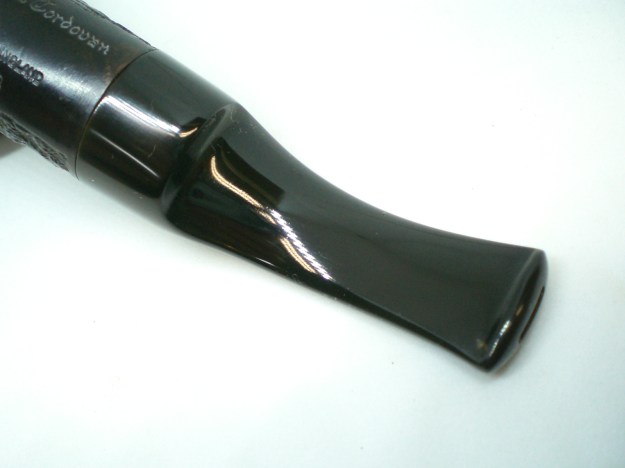
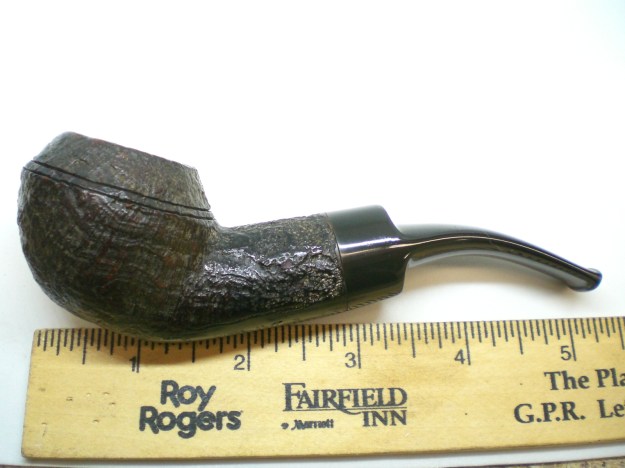
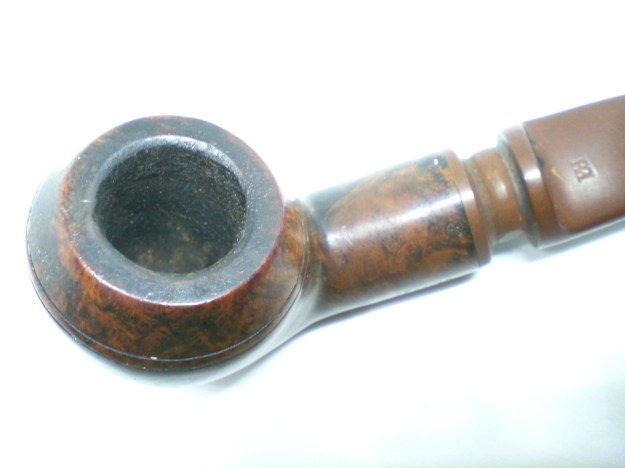
This was a very good example of the 9438 shape. The stem has the “wasp waist” style and the COM is the “London, England” used by GBD prior to 1981. The finish appears to be a combination of sandblast and rusticated. This was a fairly simple restoration in that the only real work was in the oxidized stem and some mild teeth indentions. Below is the pipe as it was received.

I used a piece of worn scotchbrite on the top of the bowl, than it was reamed and soaked with sea salt and alcohol. The stem was soaked in a mild Oxy-Clean solution. The bowl interior was in excellent shape.

Following the soak the stem was mounted to remove the oxidation. The stem fitment was perfect, and I had a feeling it may have never been removed. The stem was stamped “PR”, but I didn’t try to save that stamp.  I used a lighter to lift some of the teeth indention’s. Sandpaper starting at 400 grit was used to removed oxidation, working thru 800, 1,500, 2,000 grades. This was followed by micromesh sheets in 8,000 and 12,000 grades. The stem was then buffed with White Diamond and Megiuars Plastic Polish.

I used some warm soapy water to clean the briar, then buffed it by hand with Halycon wax.

Below is the finished pipe.

?

Sasieni Mayfair 688 (Ashford) Restoration


By Al Jones

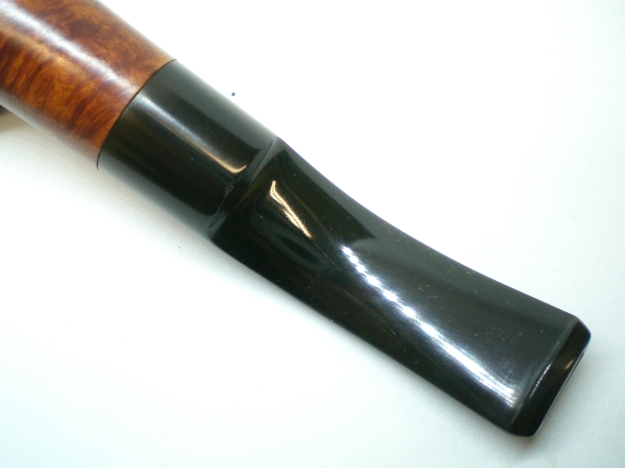
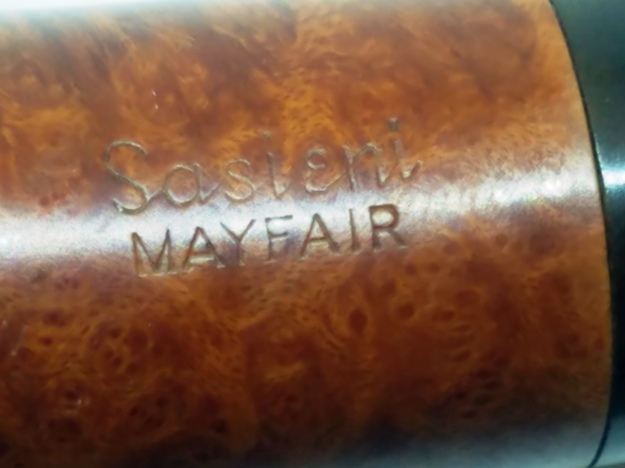
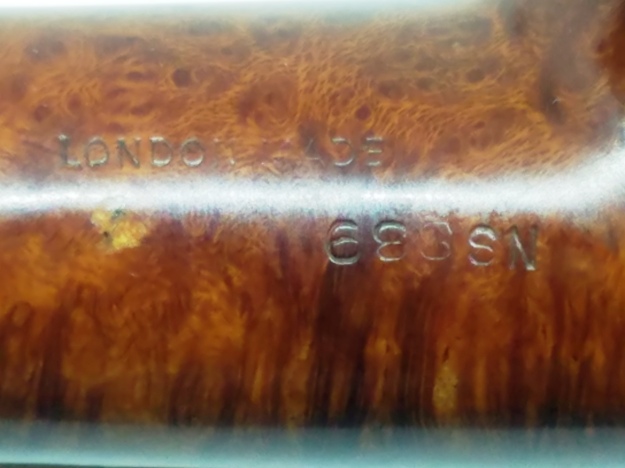
The Sasieni Ashford, aka Shape 88 is one of my favorite shapes, and I can’t resist the 2nd line offerings when they pop up on Ebay. The wide variations of the thru their first and 2nd line offerings is pretty amazing. Four Dot pipes were either stamped with the shape number 88 or Ashford during the town name era. This Mayfair grade is stamped 688SN. I assume the SN is to denote the saddle stem.

Update:  My PipesMagazine buddy Dave, aka Hallmark expert tells me,SN denotes:

S (Saddle) N (Natural Finish)

Sasieni second line pipes typically have very good stem work and are a step ahead of many of the other British second lines for Comoy’s, GBD, etc.

During the restoration process, I discovered that the tenon has threads inside, so when new, it had a screwed in stinger, similar to the Patent era pipes. So, I suspect this pipe is from early in the Family era.

The pipe was delivered in an envelope with a thin piece of bubble wrap, stem mounted. I’m always amazed at how this type of packaging survives the USPS handling. The pipe had a heavily oxidized stem and some bowl top build-up. There was mild cake in the bowl. Below is the pipe as delivered.

I removed the build-up on the bowl top with a worn piece of scotchbrite, followed by some micromesh (8000). The top was in very good shape under that buildup. The bowl was reamed and the interior of the bowl was also in fantastic shape. The bowl was then soaked in sea salt and alcohol. While that was soaking, the stem was soaked in a mild Oxy-Clean solution.

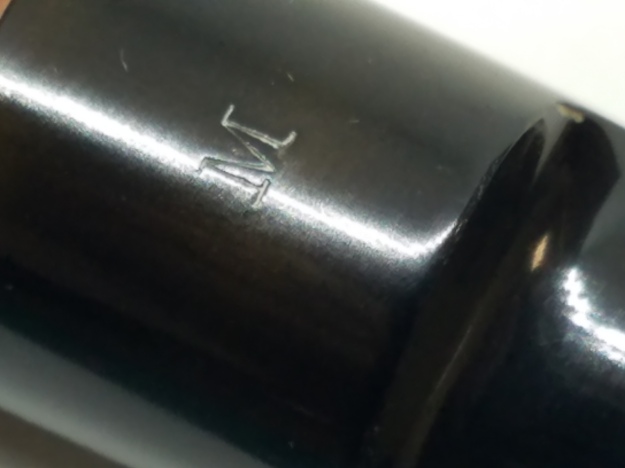
Following the soak the shank was cleaned with some bristle brushes and scrunched up paper towels. The stem was mounted and oxidation removed first with 400 and then 800 grit wet paper. I used a Magic Eraser pad around the lightly stamped “M” stem logo. Next up was 800, 1000, 1500 and 2000 grade wet papers, followed by 8,000 and 12,000 grade micromesh sheets. During the final steps, I discovered an issue with the otherwise mint stem – there was a small hairline crack on top of the button. Using a needle file, I was able to get some black superglue into the crack, and then sprayed on the accelerator speed the process. I sanded that smooth with 800 again, and then up thru the progression of paper grades. The stem was then buffed with White Diamond and Meguiars Plastic polish. I was very pleased with the stem repair, which should be as sturdy as new and is nearly invisible.

The briar was buffed with White Diamond and several coats of carnuba wax.

Below is the finished pipe, which will be sold shortly via the PipesMagazine.com forum.

?

?

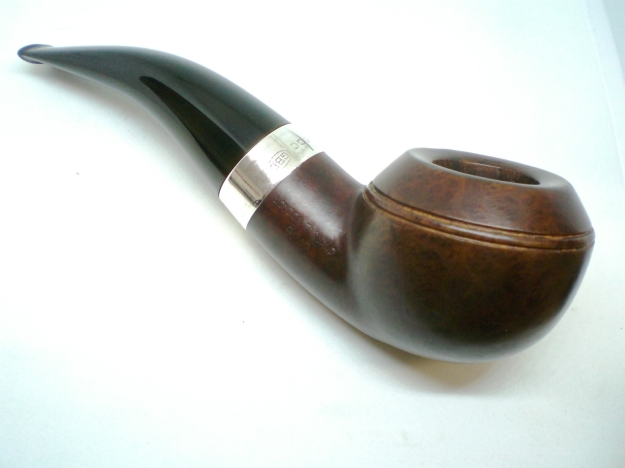
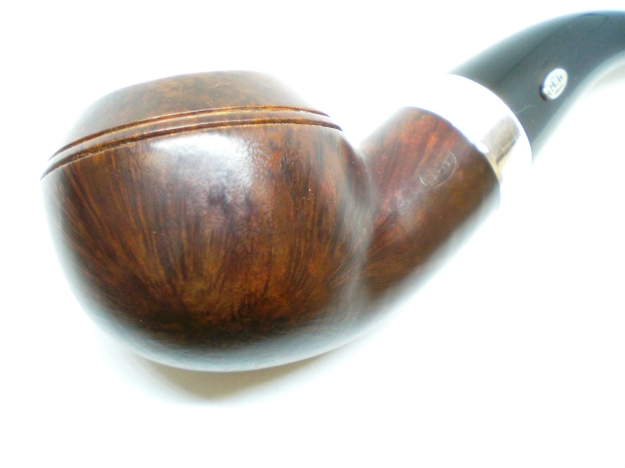
“Vintage Smoking Pipe” (1950 GBD 9242)


By Al Jones

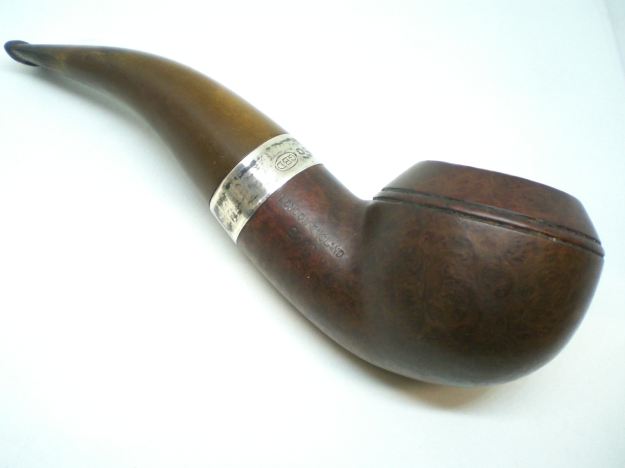
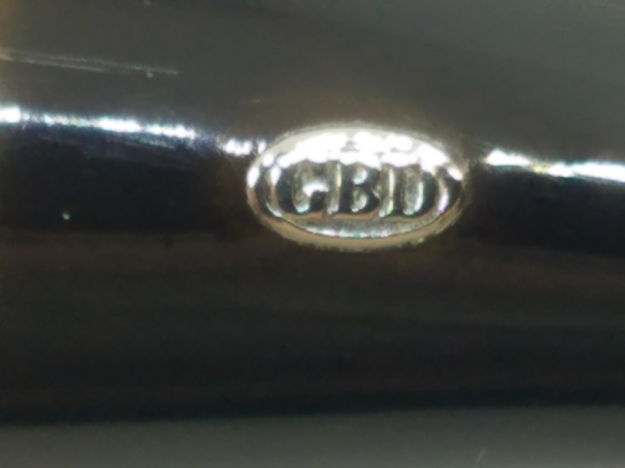
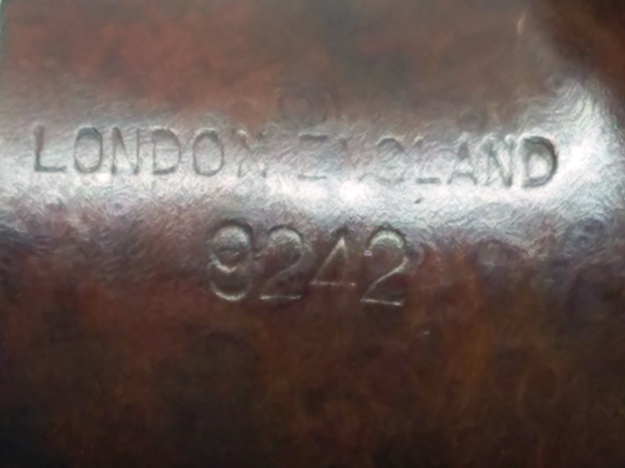
This 1959, silver hallmarked GBD 9242 was advertised on Ebay, with the title “Vintage Smoking Pipe” and the ad included on picture as below.

Because of the listing, it didn’t pop up on any of my Ebay brand searches. It looked like a GBD 9242, so a day before the auction ended, I contacted the seller and asked for additional information and pictures. Sure enough, it was a GBD 9242 with a hallmarked silver band. While heavily worn, it looked solid and the seller said he would take a return, should there be issues. I made an offer to buy the pipe, which the seller accepted and a few days later it was delivered.

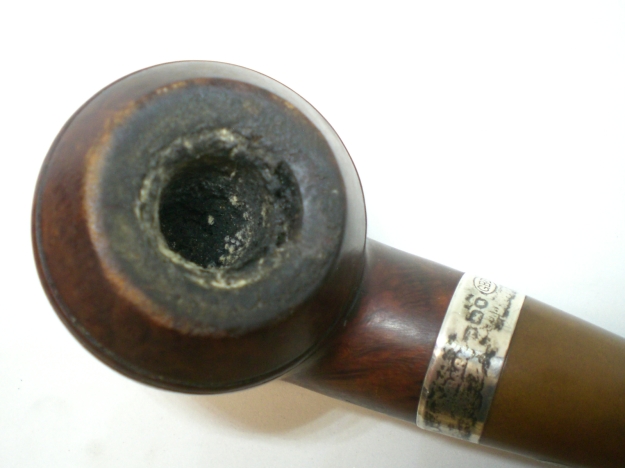
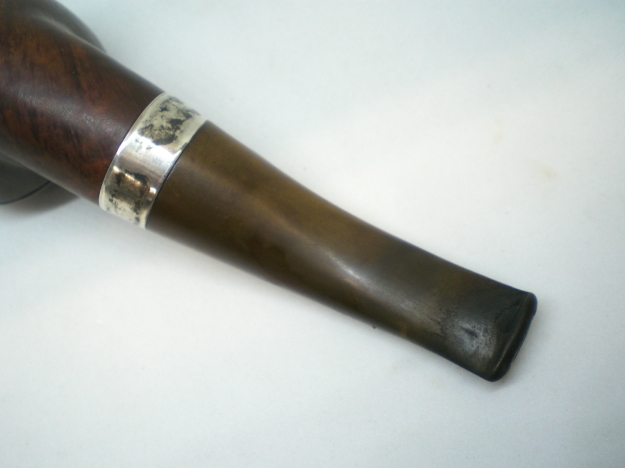
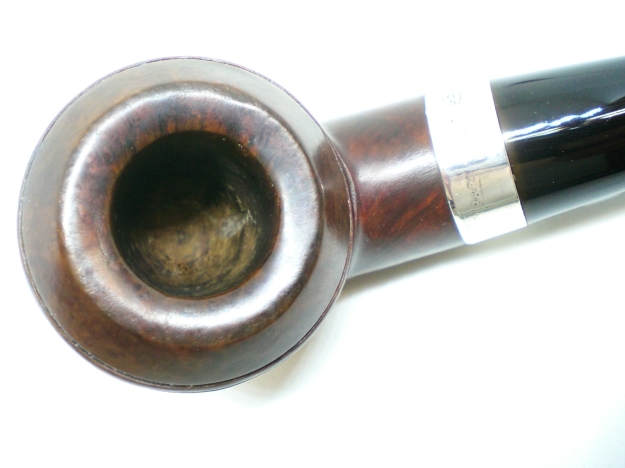
The pipe had an incredibly thick cake, which spilled over the bowl top. The stem was heavily oxidized, but in decent shape, with only a few minor teeth indentions. The stem fitment was snug. Below is the pipe as it was received.

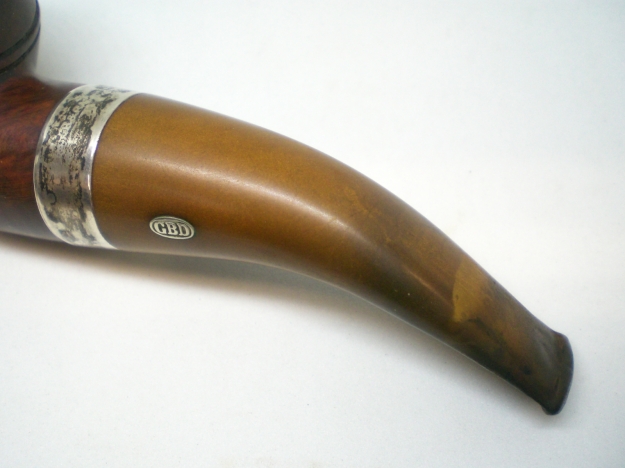
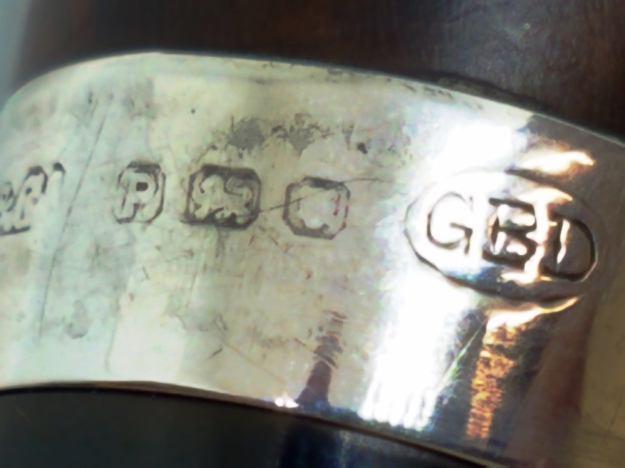
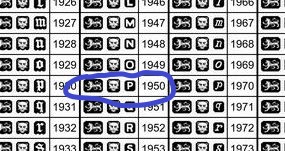
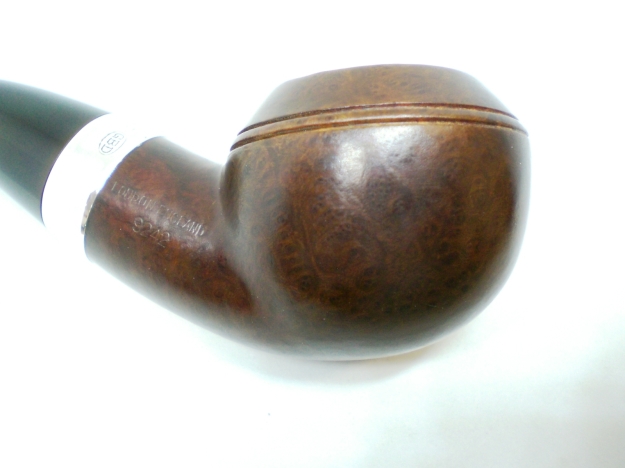
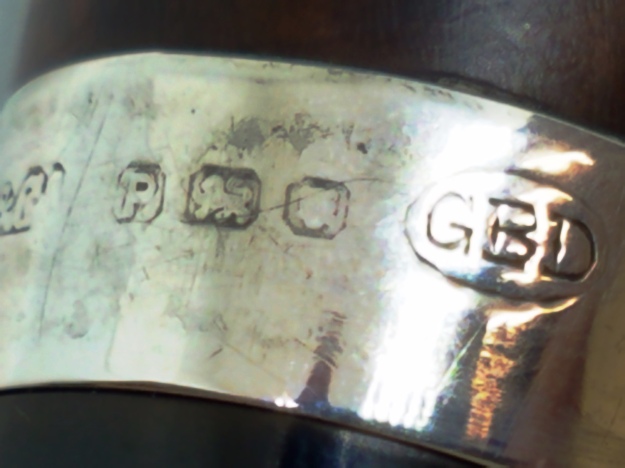
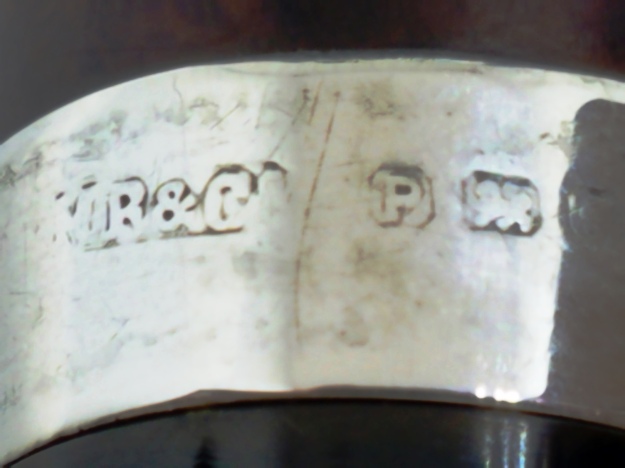
The nomenclature was all weak, but legible. I used a jewelers cloth to remove the tarnish on the silver and was delighted to find a P that corresponds with the date code for 1950, so the pipe is 68 years old!

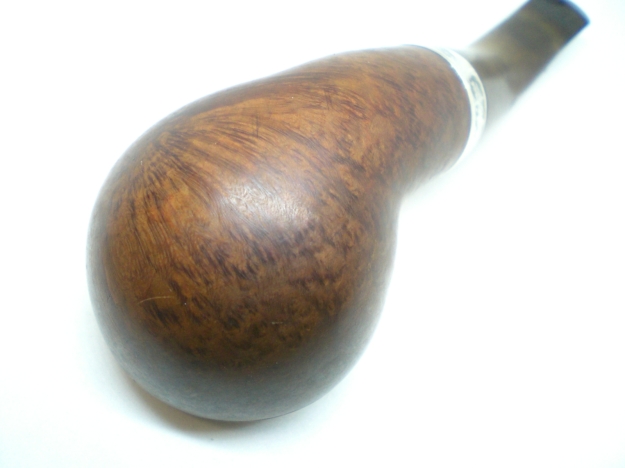
I used a piece of Scotch bright to remove the build-up on the bowl top, followed by 8000 grade micromesh. The stain on the bowl was sun-damaged, so I wiped on a very mild solution of Medium Brown stain. The bowl was then buffed with White Diamond and several coats of Carnuba wax. There was heavy build-up in the bowl rings, I used a small pick to clear the rings, which were in perfect condition.

To ream the cake, it took several bits from my Pipenet set. The great news was, as in many cases, the thick cake seemed to protect the bowl and the interior was in excellent condition. The bowl was then soaked in alcohol and sea salt. While it was soaking, I put a dab of grease on the brass rondell and soaked the stem in a mild Oxy-clean solution. Following the bowl soak, the shank was cleaned and stem inserted.

The oxidation was removed with 400, 800, 1000, 1500 and 2000 grades wet paper. I used a lighter to raise several dents near the button. The stem was then finished with 8,000 and 12,000 grades micromesh, followed by a machine buff with White Diamond and Meguiars Plastic polish.

There were some dings on the bowl top, I raised some of those with an iron and a wet cloth. There was still some damage around the rim, I used a piece of 2000 grit paper to smooth that out.

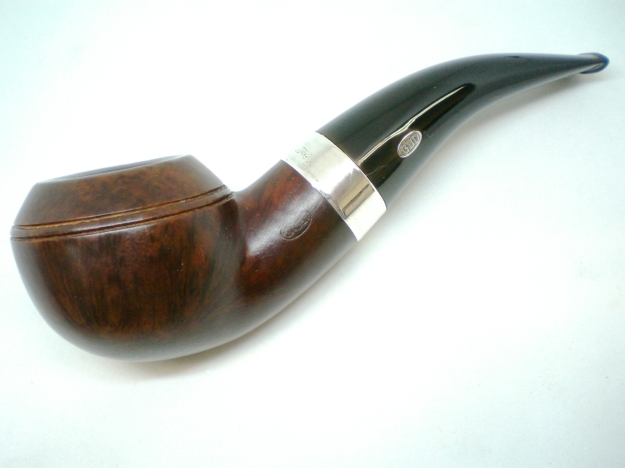
The finished pipe is below.

?

?

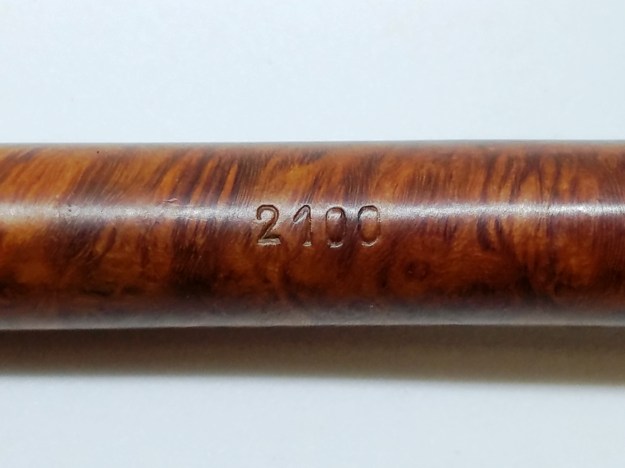
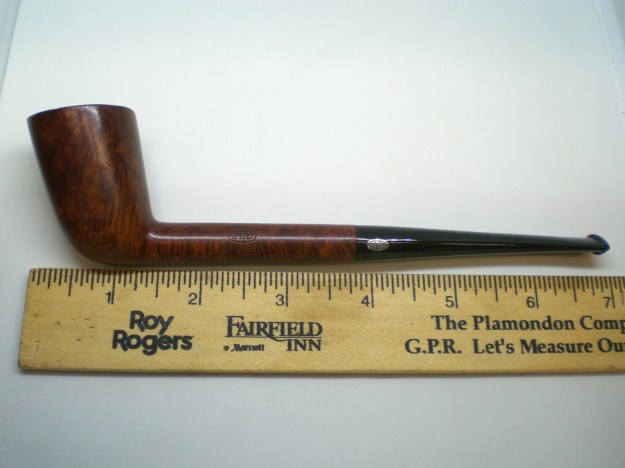
GBD 2100 New Era Restoration


By Al Jones

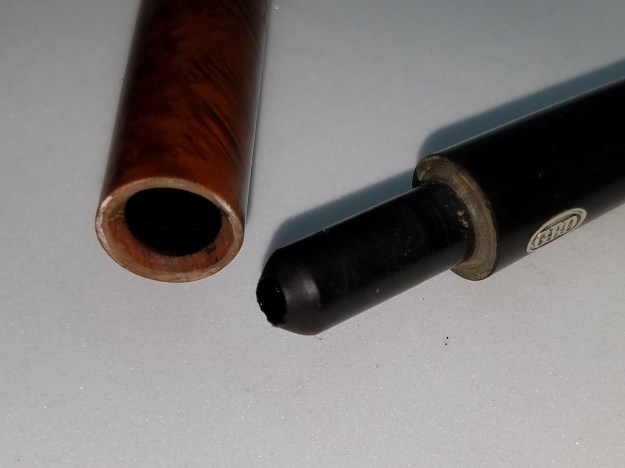
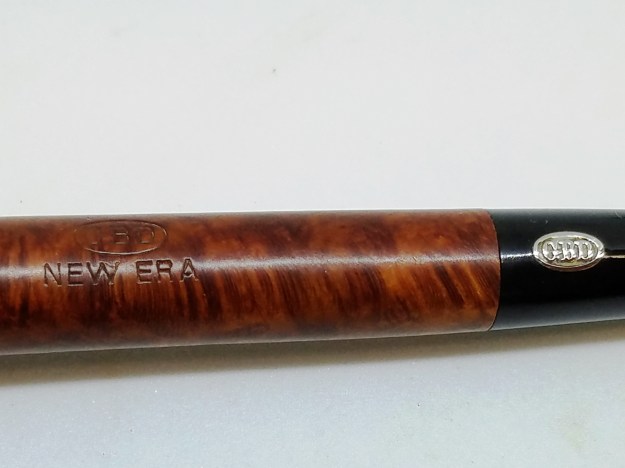
This GBD was a bit of an odd-ball. First of all, it is a shape number that I’ve never encountered. Second it had no COM (country of manufacture stamp). A GBD knowledgeable friend believes it was made in the 40’s to 50’s era. The tenon is the bullet style, which is seen in older GBD’s and typically New Era grade or higher.

The pipe was in fairly good condition, with a small sharp tooth indention underneath the stem and a degraded button. It had the typical bowl top build-up. The stem did not fit snugly against the shank, but I knew when the shank was cleaned, that issue would be resolved

I reamed the cake and cleaned the bowl top with a piece of worn scotchbrite. The bowl was soaked with sea-salt and alcohol. I used some black superglue and accelerator on the tooth crease and built up the bottom section of the button underneath. There was some mild oxidation on the stem, which was removed with 800, 1500 and 2000 grade wet paper, followed by 8000 and 12000 micromesh sheets.

After the bowl soak, the shank was cleaned, which allowed the stem to bit snugly. The bowl was buffed with White Briar and several coats of Carnuba Wax.

The pipe is just over seven inches long, yet only weighs 25 grams.

Below is the finished pipe.

?

?

Comoy’s 286 London Made – Discovered!


By Al Jones

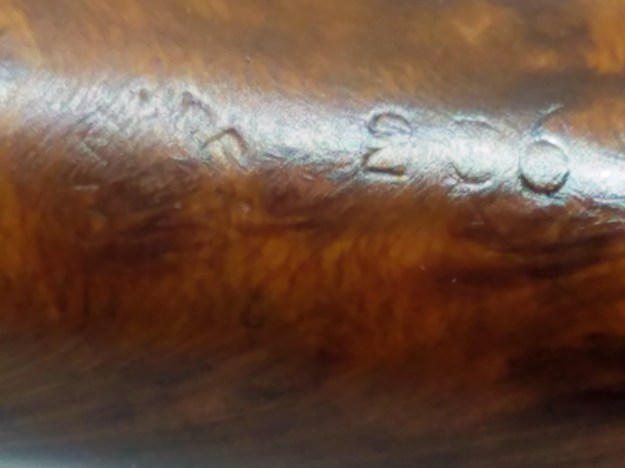
As a Comoy’s fan and someone who loves the Rhodesian pipe shape, this one came out of left field. It was advertised as having nomenclature too faded to read, but from the sellers pictures, I could see that it had a three digit shape number. This was a Comoy’s shape that I had never seen before. I was pretty anxious until it was delivered, and with my naked eye, I could see the shape number was 286. This puzzled me, as this shape number was not listed on any Comoy’s chart that I could find, nor was it in any of my scanned catalog library. A Google search yielded two results, one a Blue Riband sold on Ebay and the other on an Asian collectors side. This one must be a the saddle stem version of the coveted shape 284.

Update: a member of the PipesMagazine.com forum, found this catalog page, showing the 286 shape.

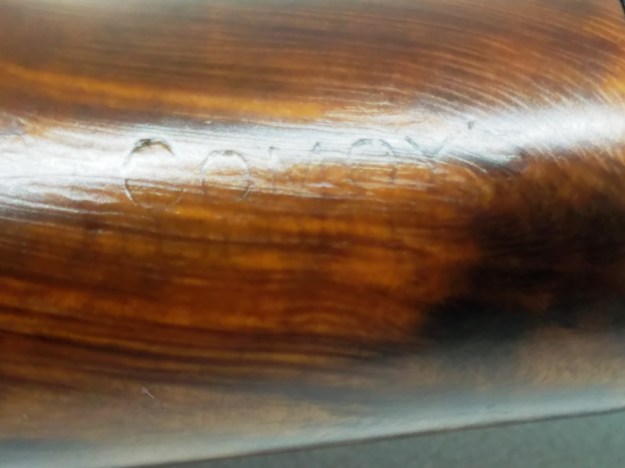
With magnification, I can see a partial name under the straight-line “Comoy’s” logo. It appears to be a London Pride grade. The 3 piece logo denotes a pipe made before the merger in 1981, along with the round Country-of-Manufacture mark, I know it was made between 1946 and the merger point. The tenon on the pipe has the reinforced steel ring. I could no determine an era where that ring was discontinued.

The pipe as delivered presented some challenges. There was a scorch mark on the shank that extended to the vulcanite stem. Luckily, it was underneath the C stem logo. There were a few dents in the stem, and the button had wear, and of course it was heavily oxidized. The stem fitment was quite snug. The bowl had a heavy cake build-up, that extended over the bowl top and there were some dings on the top and sides of the briar.

The stem was removed and soak in an mild Oxy-clean solution. I used a worn piece of Scotch-brite to remove the build-up on the bowl top, followed with an 8,000 micromesh sheet. I was able to raise a few of the bowl dents and dings with a damp cloth, and heat from an electric iron. The bowl was then soaked with sea salt and alcohol.

After the soaks, the stem was mounted. I used the flame from a lighter to raise several, but not all of the dents on the stem. The oxidation was removed with 800, 1500 and 2000 grade sandpaper, followed by 8,000 and 12,000 grade micromesh sheets. The scorched section of the stem took some more work 800 grit paper. These kind of marks are impossible to remove completely, as they go deep into the material At some point, you have to stop trying, before creating a flat or uneven spot on the stem. The stem was then buffed with White Diamond rouge and Meguiars Plastic Polish

Below is the finished pipe, which includes a pictures along side it’s tapered stem brother, a 284 Tradition. Curiously, the 284 does not have the metal reinforcement ring on the tenon.

?[/caption]

?[/caption]

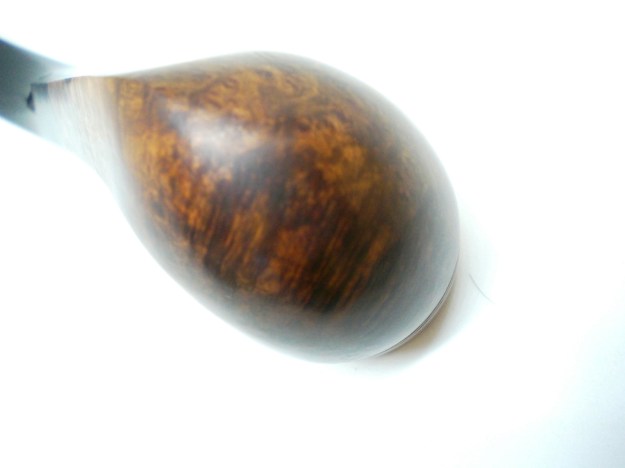
GBD 548 Virgin Restoration


By Al Jones

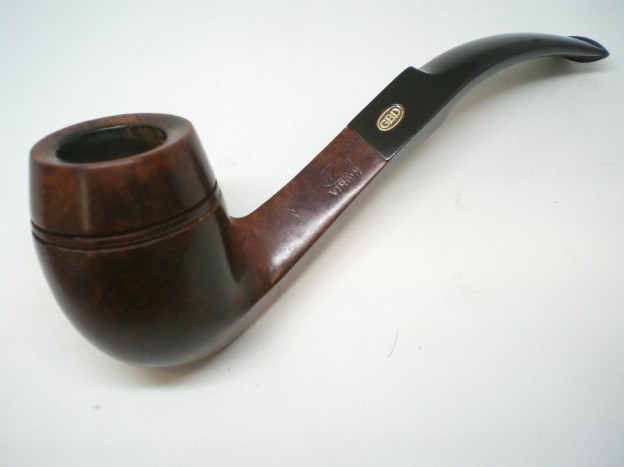
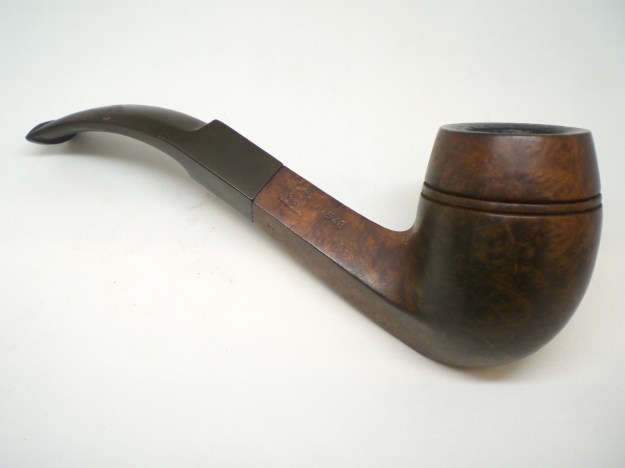
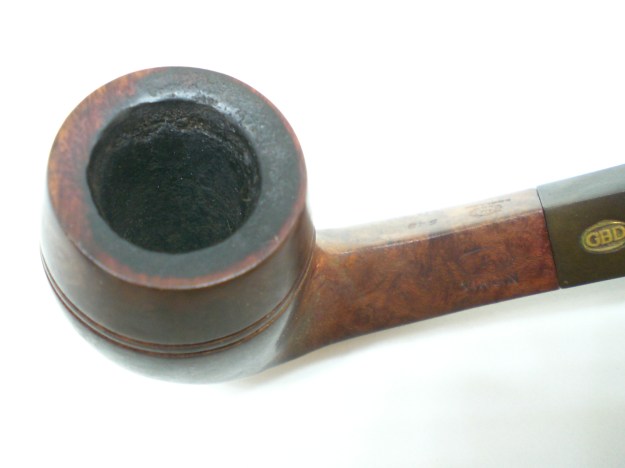
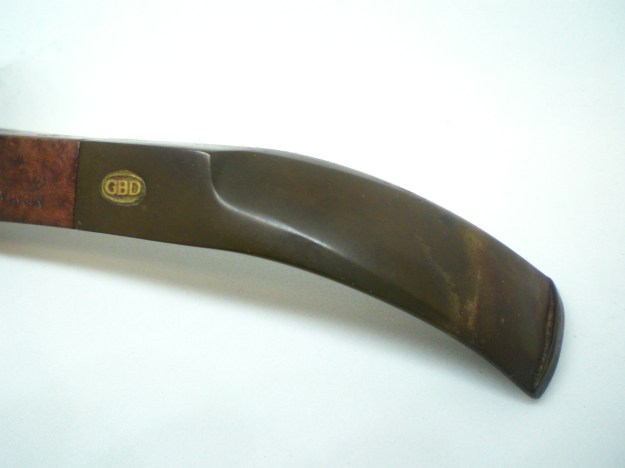
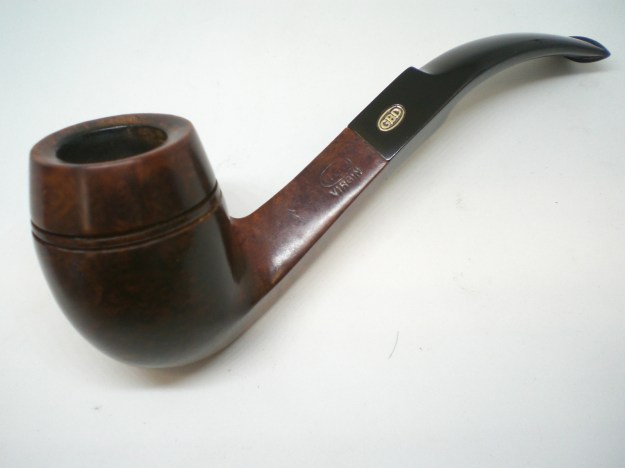
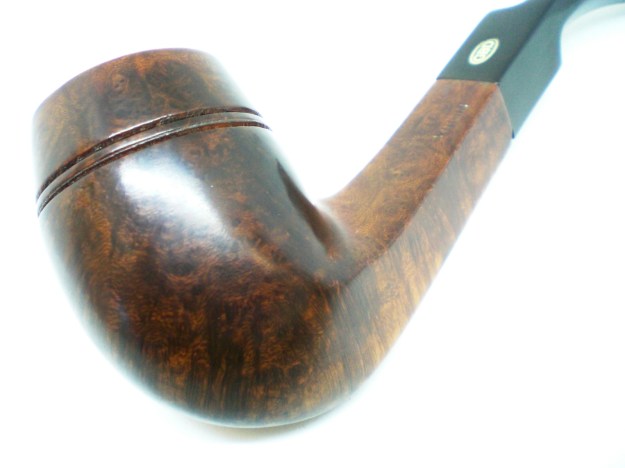
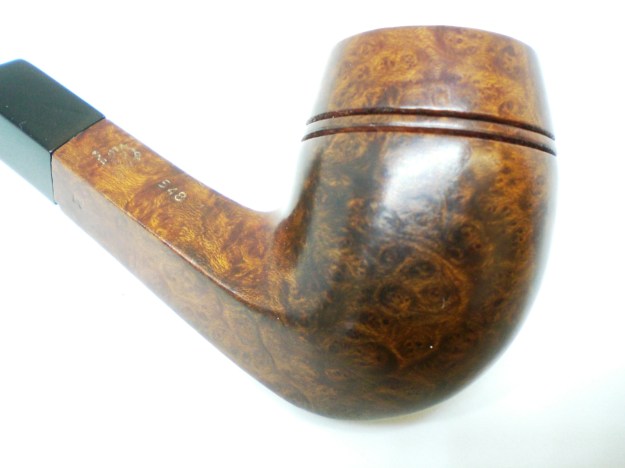
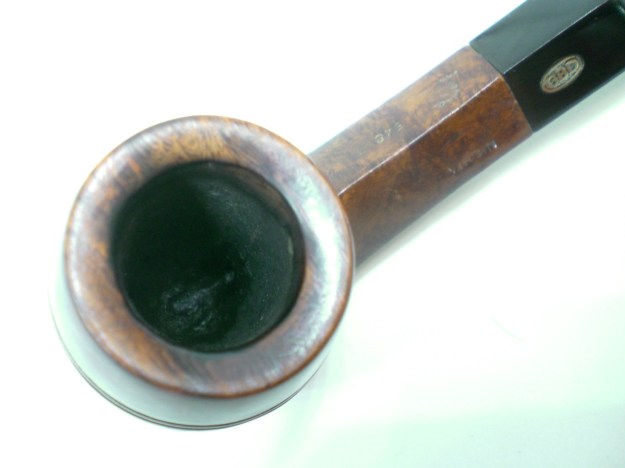
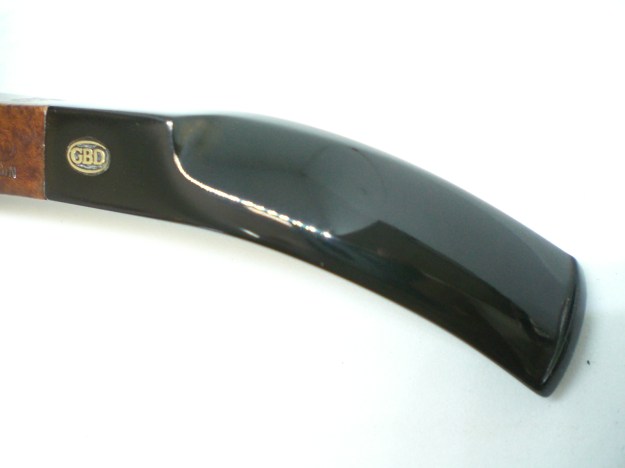
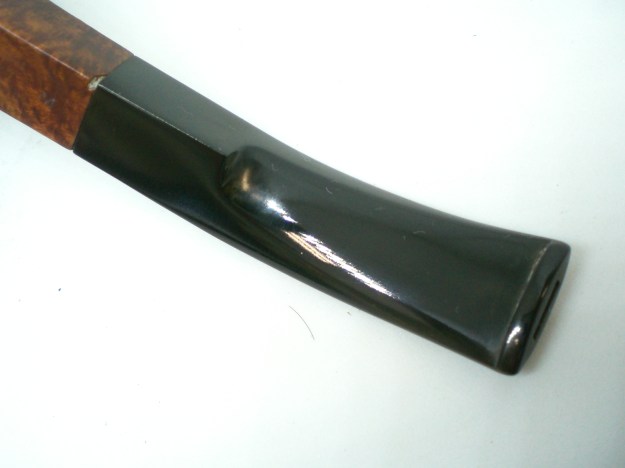
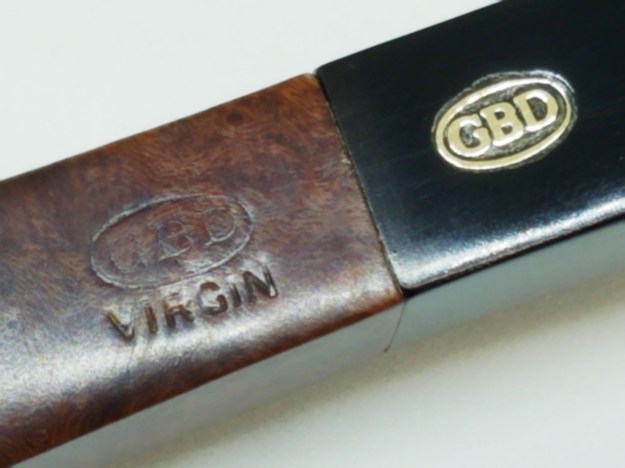
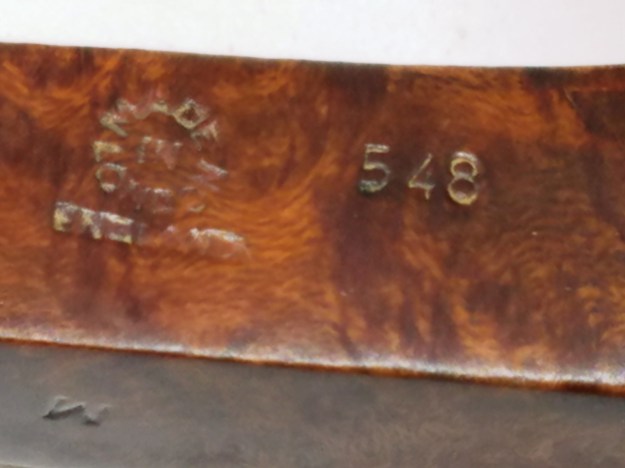
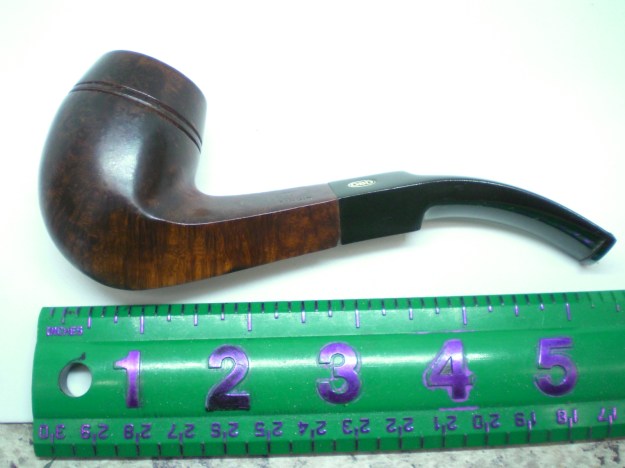
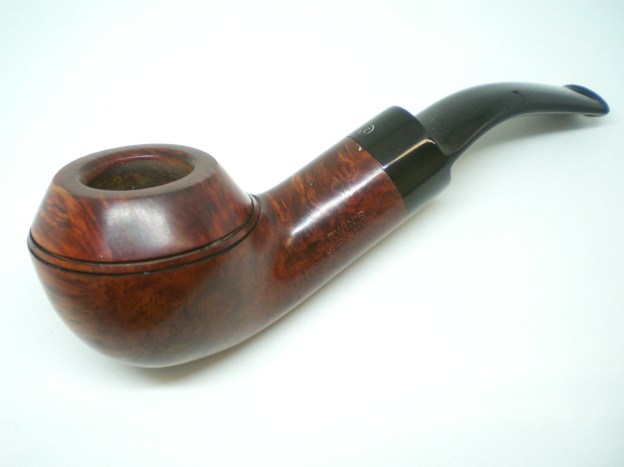
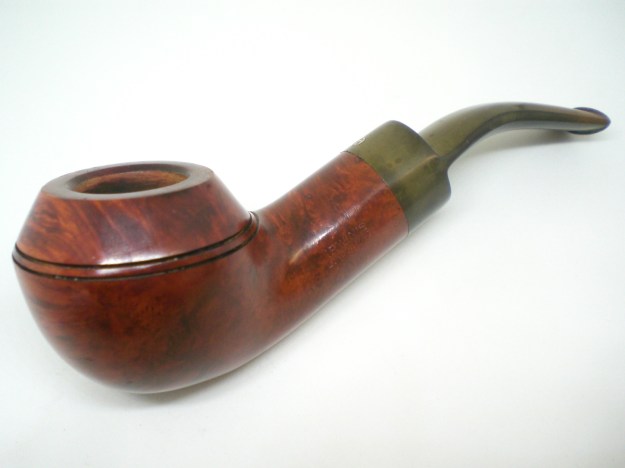
The 548 is a tall bulldog shape in the GBD catalog. This one is odd in that it has the brass rondell used prior to 1981 (pre-Cadogan merger) and the round “Made in London, England” COM used in the Cadogan era. I’ve occasionally come across this combination, but never with a “Virgin” grade pipe. I suspect it was made early in the merger era, where they were still using up the inventory of brass rondells.

The pipe had some build-up on the bowl top, an oxidized stem and various dints and dings.

The pipe was reamed and soaked with sea salt and alcohol. The build-up on the bowl top was removed with a worn piece of scotch-brite, followed by polishing with an 8000 grade micromesh sheet. I steamed out a few dings around the bowl and top with an electric iron and a wet cloth. There is a nick on the bottom of the stem, but the steam didn’t bring that back. The bowl was buffed with white diamond rouge, followed by several coats of carnuba wax.

The stem was mounted and oxidation removed using 800,1500 and 2000 grade wet paper. Next up was 8000 and 12000 grade micromesh sheets. The stem was then buffed with white diamond rouge and Meguiars Plastic polish. The bowl was finished by buffing with White Diamond and several coats of carnuba wax.

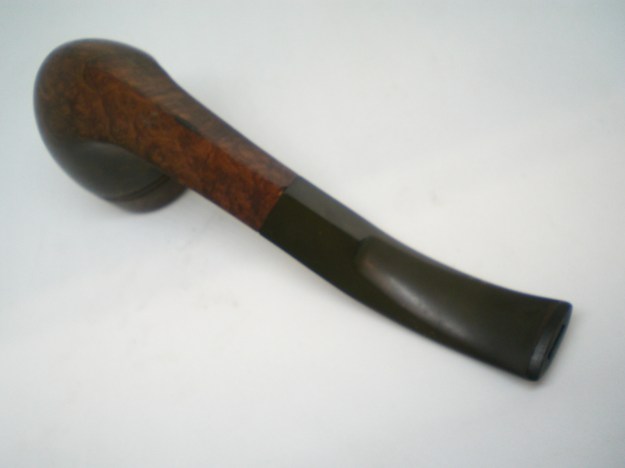
Below is the finished pipe. Despite the deep bend, the pipe passes a cleaner. Suprisingly, even with the tall bowl, the pipe only weighs 38 grams.
?

Irwin’s (GBD) 9438 Restoration


By Al Jones

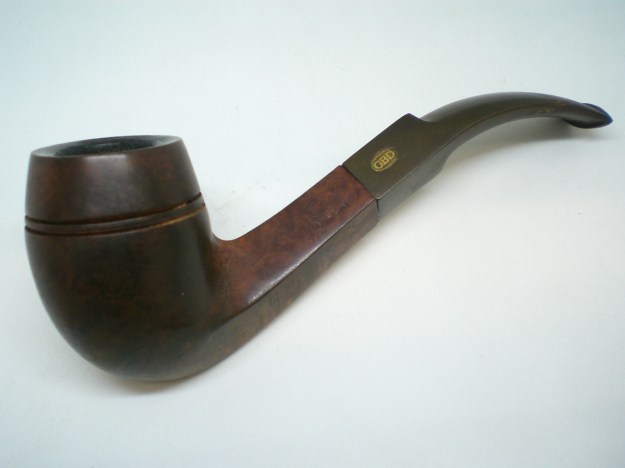
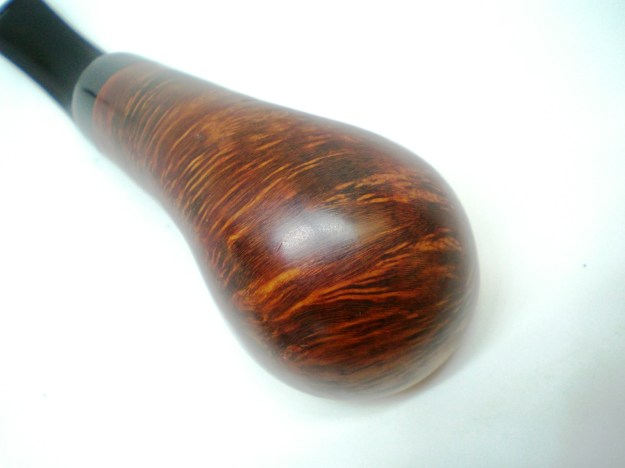
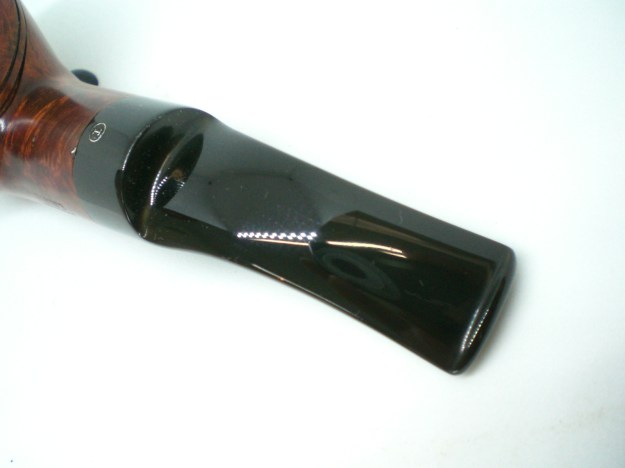
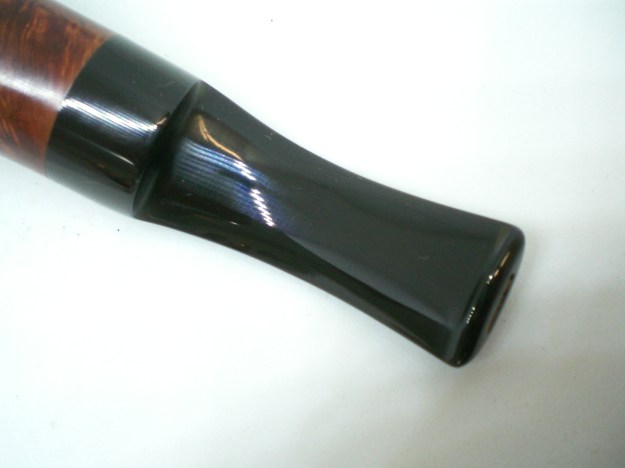
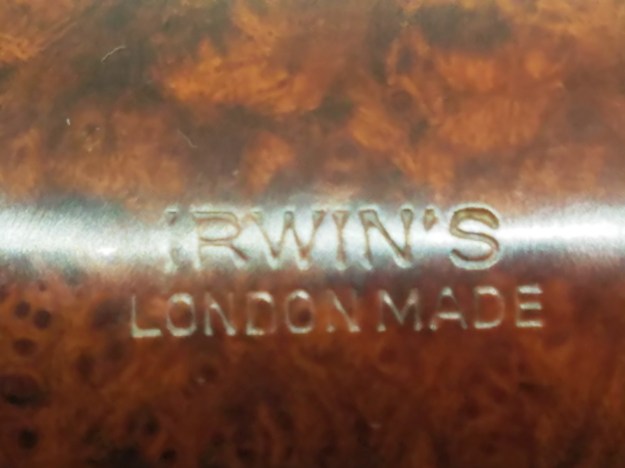
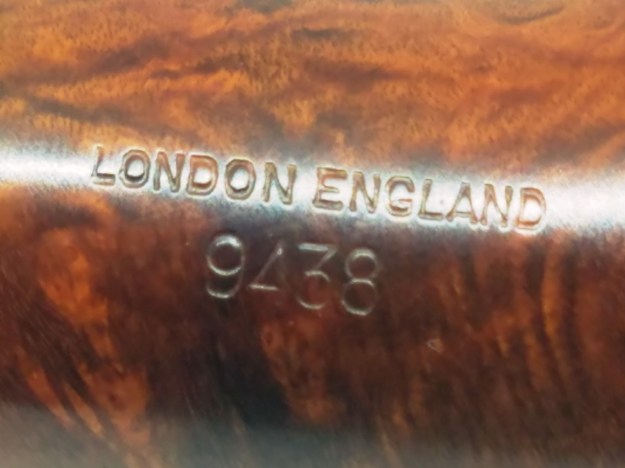
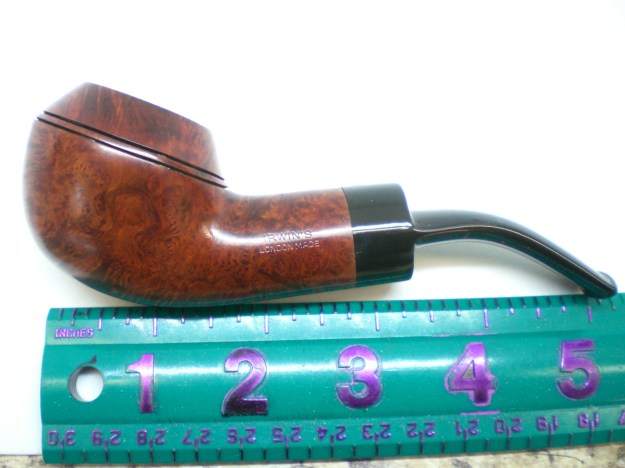
Here’s yet another 9438 model, this one is stamped “Irwin’s” and adds London Made. Not much is written about Irwin’s stamped pipes but they were assumed to be a GBD 2nd’s line, like Dr. Plumb, etc. This pipe also has the pre-Cadogan, straight line “London, England” COM and 9438 shape number stamped on the other side.

Below is the pipe as it was received.

The pipe arrived in very good condition, requiring only a mild restoration effort. The stem was lightly oxidized, but the bowl was very clean. I soaked the stem in a mild Oxy-Clean solution. I worked a few dents out of the briar with an electric iron and a wet cloth. I reamed the bowl only with 320 sandpaper wrapped around a reamer bit.

The stem was mounted and oxidation removed using 800,1500 and 2000 grade wet paper. Next up was 8000 and 12000 grade micromesh sheets. The stem was then buffed with white diamond rouge and Meguiars Plastic polish. The bowl was finished by buffing with White Diamond and several coats of carnuba wax.

I used a “Magic Eraser” around the stamped “I” stem logo, which worked very well in removing the oxidation, without damaging the stamp.

Below is the finished pipe.

?

Peterson Rocky Donegal 999 Restoration


By Al Jones

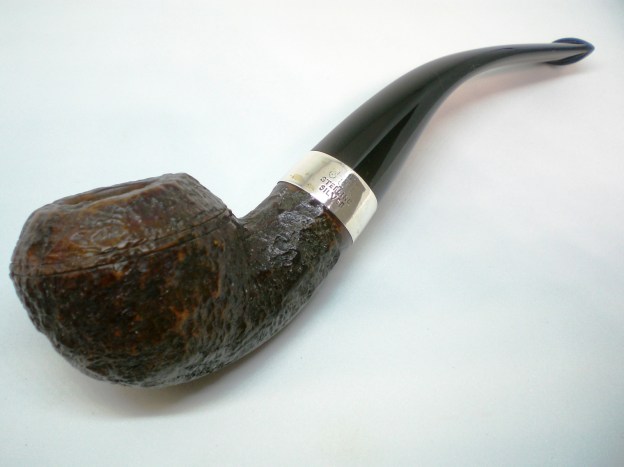
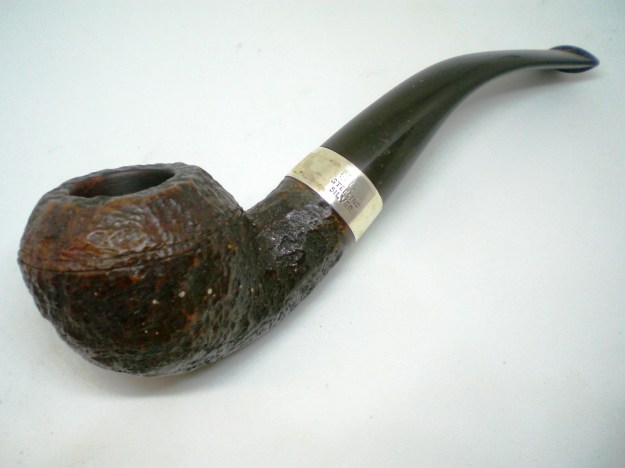
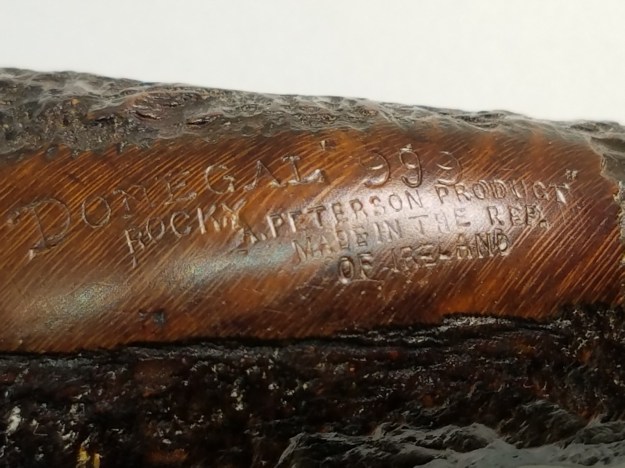
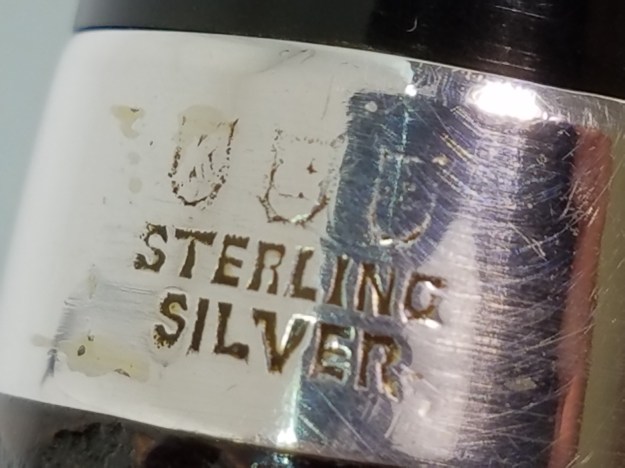
This Peterson 999 was the 2nd Rocky Donegal that I’ve encountered. Several years, ago, a buddy traded me for an identical pipe. That pipe came with the box and paperwork, which Mark Irwin used to date the pipe to the early 1960’s. I assume this pipe would be of the same era. The silver band is stamped K&P and Sterling Silver. The rusticated finish is very rugged and much more handsome than the modern version of that finish. This one also came with the straight aluminum stinger that was on the earlier pipe. Mark has this to say about the the first pipe:

Mark said the pipe is a Rogers import pipe which were distributed only in the US. The date hallmark, required in Ireland, wasn’t required here. According to Mark, the pamphlet was introduced in 1955 and the box design was used until 1961, when it was changed. So, Mark says the pipe is definitely from the ’55 – ’61 era. He suspects due to the stinger design in the late 50’s, but he has nothing concrete to back up that hunch. ’55 to ’61 is close enough for me. I shared this with Chuck W and he agrees with Mark. Mark added this was a “Sterling” line of US Petersons, and he doesn’t encounter many, certainly not in that nearly unsmoked condition. Having the box and Peterson pamphlet to help date the pipe were certainly rare and important factors.

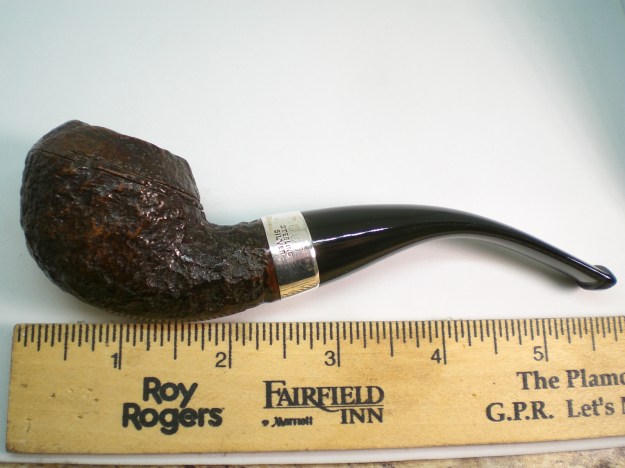
The stem had some very mild teeth marks and fit perfectly. The briar was unmarked and the bowl interior was also in great shape. The silver band was mildy tarnished. Below is the pipe as it was received.

I used some silver polish to remove the tarnish on the band. The bowl was soaked with sea salt and alcohol. After the soak, the stem was mounted and teeth marks removed with 800, 1000, 1500 and 2000 grade wet paper, followed by 8000 and 12000 micromesh sheets. The stem was then polished with White Diamond and Meguiars Plastic Polish.

The briar was hand waxed with Halycon wax.

Below is the finished pipe, which is enroute to a new owner on the island of Cyprus.

Penthouse (GBD) 9438 Restoration


By Al Jones

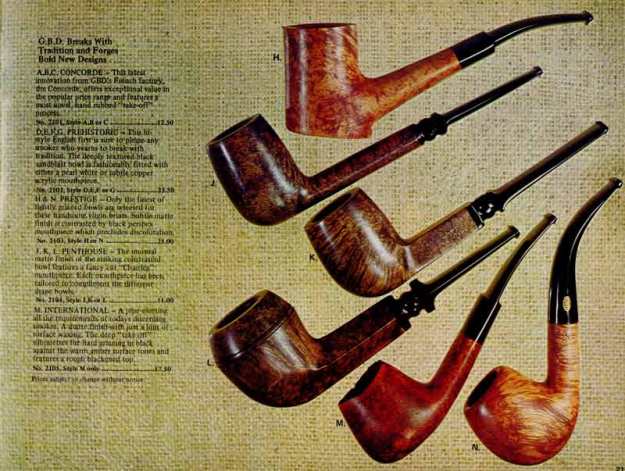
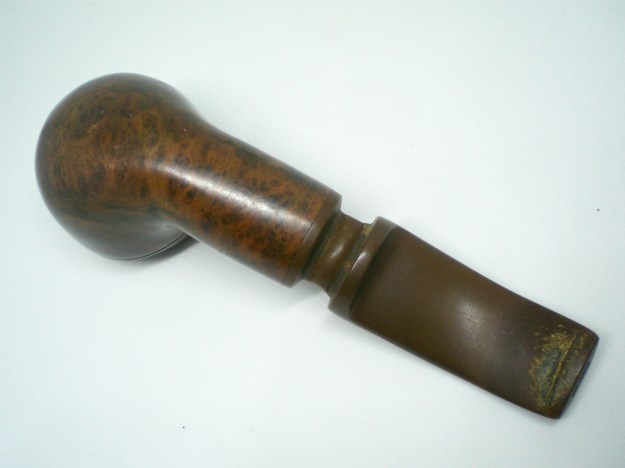
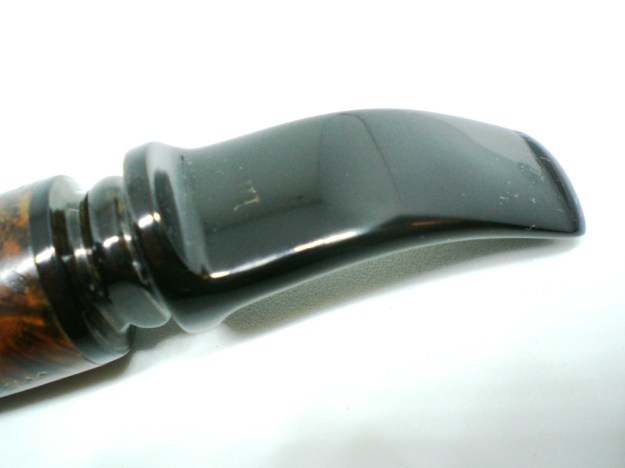
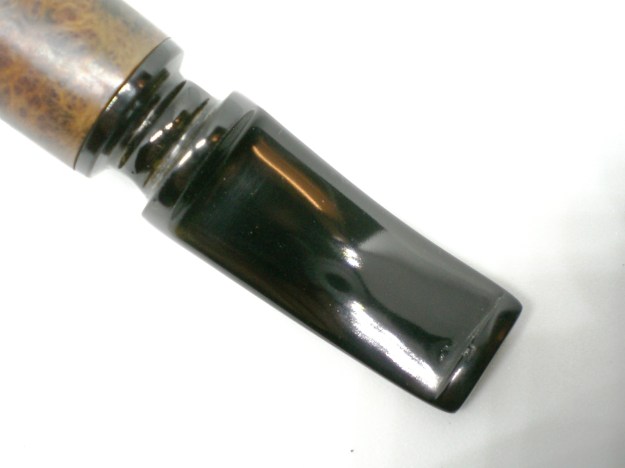
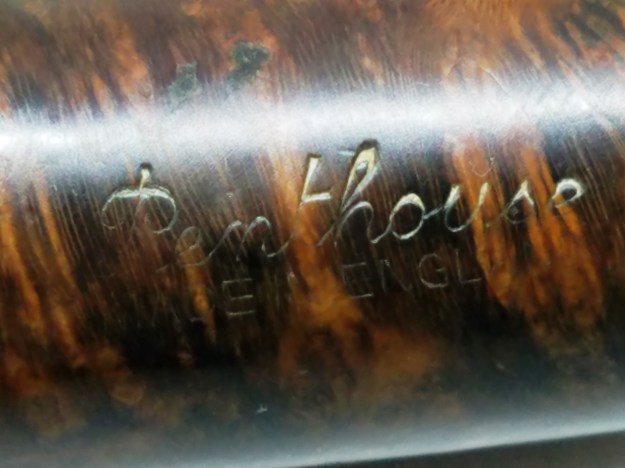
We’ve seen a few “Penthouse” brand pipes in this blog over the years, but this is the first one that has been on my workbench. “Penthouse” was a GBD 2nd line pipe. In a 1977 Tinderbox catalog, they were priced at $11, while a Prehistoric was $23. This line came with the “Chair-Leg” stem that was also seen on the Tapestry and Fantasty GBD lines. These are a challenge to restore and every time I work on one, I say it will be my last.

Below is a Tinderbox catalog page.

The 9438 is GBD’s iconic Rhodesian shape, of which I am a fan. So, when this one popped up on Ebay, I grabbed it. The stem was heavily oxidized, but overall it looked to be in decent shape. This was the first time I’ve seen the 9438 shape on a Penthouse pipe.

After opening the package, I could see that the stem had several teeth marks, but there were no other surprises. There were a few dings around the bowl that would have to be addressed. Below is the pipe as it was received.

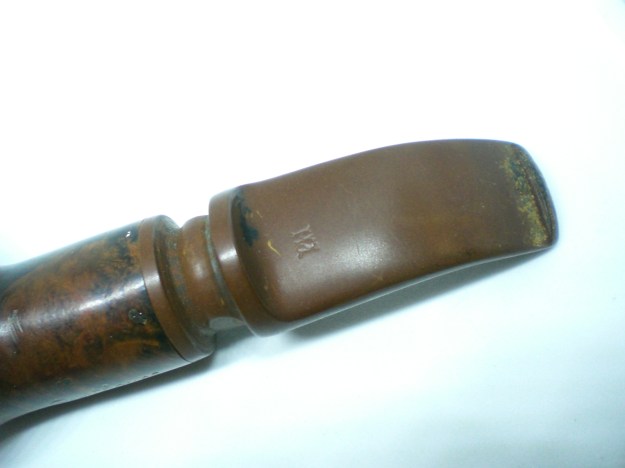
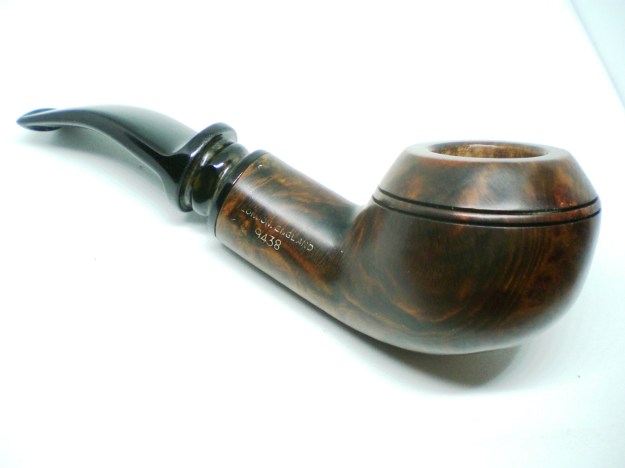
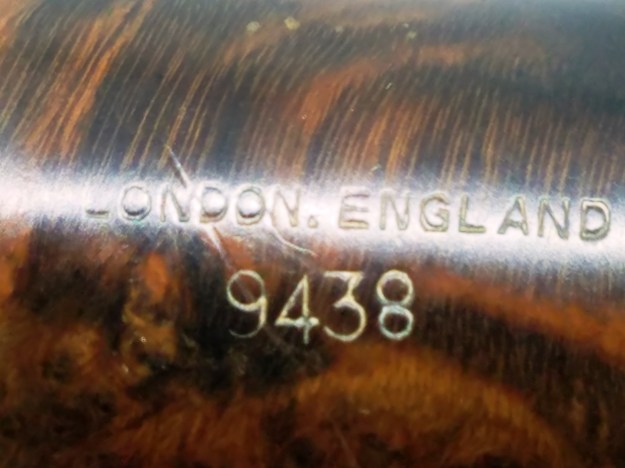
The country of manufacture mark (COM) shows the “London,England” stamp that was used prior to the 1981 merger. There was a faint “PH” stamp on the top of the stem, where the GBD brass rondell would reside.

The bowl had a very slight cake built-up, which was removed with various reamer inserts. I finish the bowl interior with a piece of 320 grit paper, wrapped around a reamer insert. The bowl was then soaked with sea salt and alcohol. While working on the bowl, the stem was soaked in a mild Oxy-Clean solution.

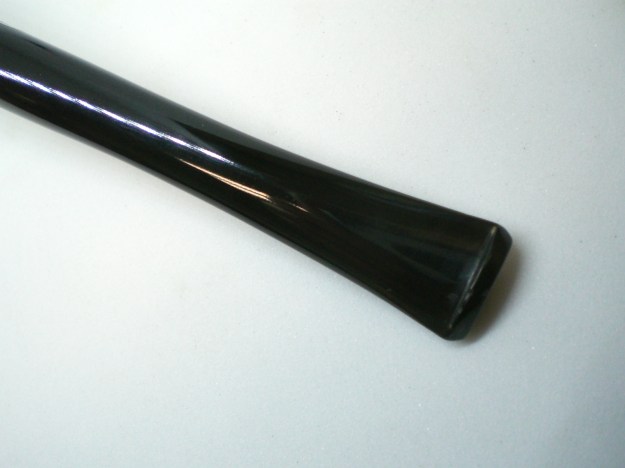
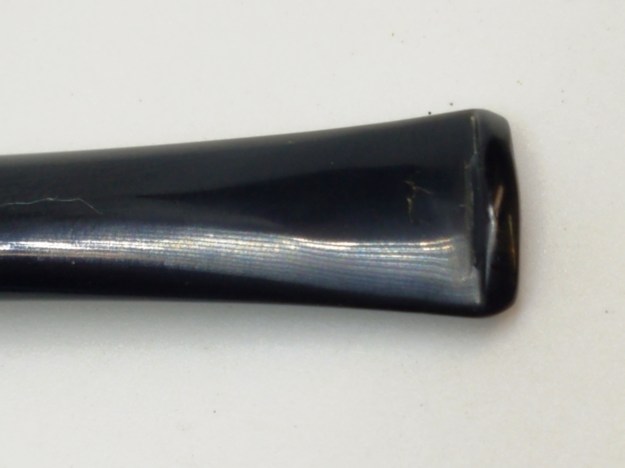
Following the two soaks, the stem was mounted. The were one deeper tooth mark on the top of the stem. Heat from a lighter lifted it slightly, but I decided to fill it with black superglue and accelerator was used to speed the process. The glue fill was smoothed with 400 grit wet paper, then finished when the oxidation was removed. To remove the oxidation, I used 400, 800, 1000, 1500 and 2000 grade wet papers. To clean out the creases in the turned stem, I wrapped each paper around a thin needle file. The stem was then buffed with White Diamond and Meguiars Plastic Polish.

I used an electric iron set on high with a wet cloth to steam out many of the dings around the bowl. A piece of worn scotchbrite was used to remove the bowl-top build up. The bowl was then buffed with White Diamond and several coats of carnuba wax.

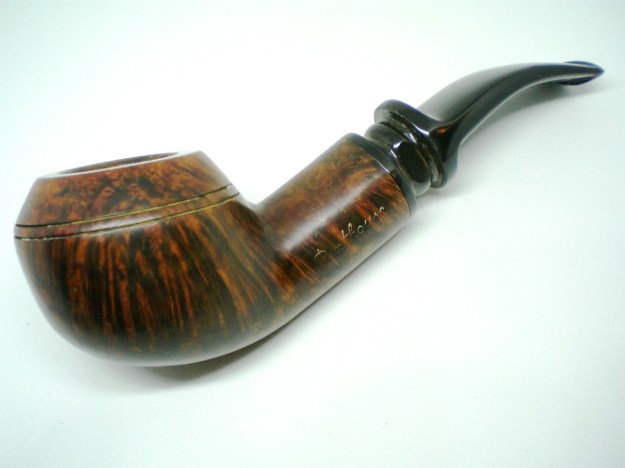
Below is the finished pipe. There were some minor teeth marks on the bottom of the stem, near the button, so left those alone.