
Blog by Kenneth Lieblich
Here is another installment of my Pipe Incident Report. The idea, in general, is to provide a brief write-up – focusing on a particular pipe-related problem and/or solution, rather than an entire restoration story. Last time was all about plaster of Paris. Today’s report is about lemon-infused isopropyl alcohol. I have had questions, from time to time, asking me why I frequently use this lemon alcohol, rather than the usual, plain alcohol. In fact, I use both. If you do not know what this lemon alcohol is – no problem! That is what this report is intended to elucidate.
I learned about this lemon alcohol thanks to my wife. She stumbled upon a “mom” blog, written by Alexis Rochester, a mother who is also a professional chemist. One particular blog post extolled the virtues of lemon-infused alcohol as a household cleaner. My wife sent it to me, and I was intrigued at the possibility of this cleaner being used to attack the oils, tars, etc. on the inside of pipes. Obviously, the article was not considering the possibility of this being used on pipes, but I certainly was! If you are curious to read the original article, here is the link: https://chemistrycachet.com/lemon-infused-rubbing-alcohol/.
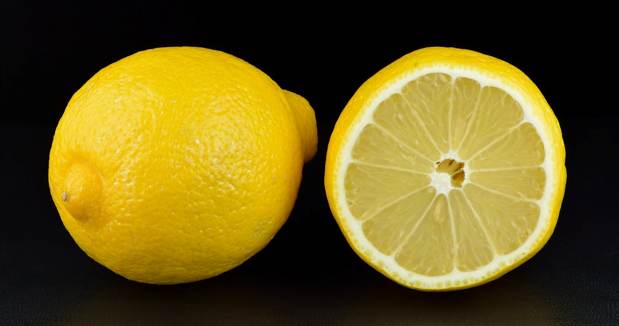
So, what is lemon-infused 99% isopropyl alcohol? In brief, it is the extracted chemicals from the zest of the lemon (Citrus limon), absorbed into 99% isopropyl alcohol. The addition of the lemon makes a more effective cleaner than alcohol alone.
I learned from the blog that isopropyl alcohol, on its own, is slightly acidic. This is important because some acidity is very effective for cleaning. Lemon zest is also slightly acidic. These low levels of acidity are NOT harmful to wood. It is also important to note that this lemon-alcohol extraction does NOT contain any lemon juice – that would be too acidic for our purposes. Essentially, we have a cleaner that is very mildly acidic and combines the best cleaning properties of isopropyl alcohol and lemon. Among other things, Alexis says the following in her post:
Rubbing alcohol is a great disinfectant on its own, but adding in lemon peels increases the disinfectant quality. Lemon peels contain ascorbic acid (vitamin C), malic acid, and citric acid all which make great cleaning options. But again, you are just getting the benefits of the peel without the acid of the lemon juice.
I went ahead and bought a bag of lemons and thought I would give it a try. Lemons are inexpensive and the method of manufacture couldn’t be easier. You simply peel a bunch of lemons, stick the zest in a container with isopropyl alcohol, seal the container, and let it sit for two or three weeks. You can read more details on how to make it from the link above.
Now that I have made this product and used it frequently, some important questions need to be answered: (1) is the lemon-infused isopropyl alcohol a better cleaner of pipes than alcohol alone; (2) does this product leave a lemon “ghost” in the pipe; and (3) is it ultimately worthwhile making this stuff? I will address the questions in turn.
I am not a chemist and I have not personally executed the full, scientific method in answering the question of which is a better cleaner. However, anecdotally, I think that lemon-infused alcohol is a better cleaner of pipes than alcohol alone. I don’t really have the inclination to use full scientific rigour on this, but I have tried both and I think the lemon one is superior – perhaps not dramatically so, but superior nonetheless. Having said that, perhaps the most important statement in this report is this: I use both “plain” 99% isopropyl alcohol and the lemon-infused 99% isopropyl alcohol. It is not one or the other, but both.
In answer to the second question, there is no lemon ghost in the pipe after cleaning. Certainly, during the cleaning process (and for a few moments afterwards), there is a detectable scent of lemon in the pipe, but it dissipates very quickly. I have tested this several times. First, I have smoked pipes cleaned in this way and there was no hint of lemon at all. More emphatically, however, I had my son test this out – he was born blind. Naturally, he relies more heavily on his other senses in navigating the world. I told him to stick his nose inside pipes that I have cleaned with lemon alcohol and then asked him what he could discern. He was never able to smell any hint of lemon – even within a few minutes of the pipe being cleaned.
Third question: is it worthwhile for you to make this stuff? Yes it is, but I don’t think it is world-changing. As I’ve said, it is a superior cleaner (in my non-professional opinion) and I will continue to make and use it. However, it would be disingenuous for me to say that you MUST make this for yourself. For goodness’s sake, Steve and Jeff use plain alcohol and they are the gold standard of pipe cleaning and restoration!
If you do try this lemon alcohol, please let me know how it goes. I would be interested to know what your results are. I hope you enjoyed reading this installment of the Pipe Incident Report – I look forward to writing more. If you are interested in my work, please follow me here on Steve’s website or email me directly at kenneth@knightsofthepipe.com. Thank you very much for reading and, as always, I welcome and encourage your comments.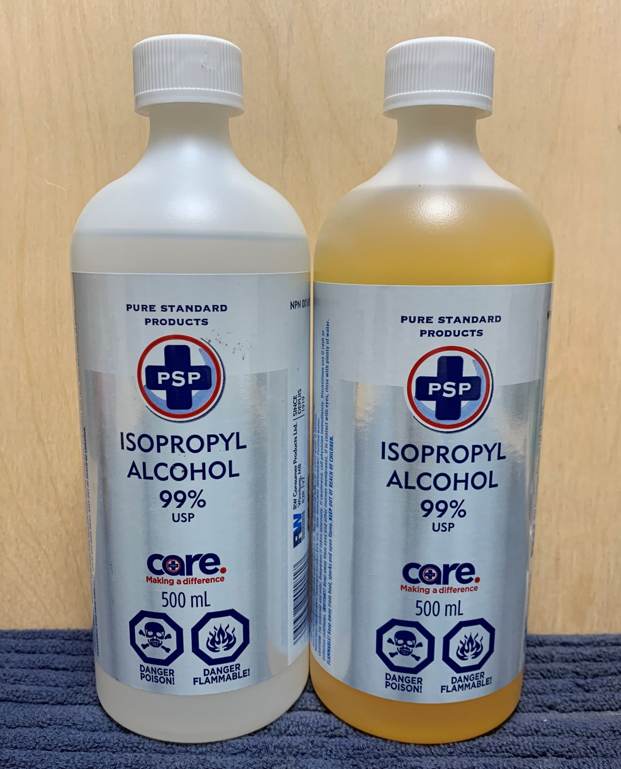
 rebornpipes
Pingback: Rescuing an Old, Enigmatic Bamboo Meerschaum Sitter | rebornpipes
Pingback: A Sound Repair for a Suave Nørding Meerschaum Pot | rebornpipes
Pingback: Cleaning Up a Beautiful Refbjerg Hand-Carved Bent Egg | rebornpipes
Pingback: The Loewe & Co. Derby Billiard: an Archangel a Little Damaged | rebornpipes
Pingback: Restoring a Beautiful Bentley Sandblast Prince by Hans Jonny Nielsen (aka Former) | rebornpipes
Pingback: Restoring a Handsome Peterson System Standard 1309 | rebornpipes
Pingback: Restoring an Elegant Savinelli Punto Oro 104 | rebornpipes
Pingback: Restoring a Quirky Kaywoodie 179R Bent Billiard | rebornpipes
Pingback: Cracking the Mystery of an Alluring Gourd Calabash | rebornpipes
Pingback: Restoring a Terrific GBD-made Dr Plumb 753 Author | rebornpipes
Pingback: The Interesting History of a Borkum Riff Bent Billiard | rebornpipes
Pingback: Restoring a Handsome Patent-Era Brigham 226 Bent Squatty | rebornpipes
Pingback: Rescuing a Remarkable Old Torpedo of Grenoble | rebornpipes
Pingback: Bringing Some Honour Back to a Dunhill 59 Billiard | rebornpipes
Pingback: This Suave Jandrew Calabash Grew on Me | rebornpipes
Pingback: Restoring a Comoy’s Tradition 203 Cutty | rebornpipes
Pingback: There’s a Beautiful Peterson 307 Under There! | rebornpipes
Pingback: Way Off the Beaten Track… | rebornpipes
Pingback: Restoring an Impressive Grecian Plateau Lovat by Mark Tinsky | rebornpipes
Pingback: A Wonderfully Long, Long, Long Pipe by Mark Tinsky | rebornpipes
Pingback: A Long and Smooth Canadian by Mark Tinsky | rebornpipes
Pingback: A Terrific American-Canadian Pipe from Mark Tinsky | rebornpipes
Pingback: You’ve Come a Long Way, Baby! | rebornpipes
Pingback: Restoring a Handsome Peterson System 1312 Sandblast | rebornpipes
Pingback: Restoring and Restemming a Jobey Dansk #1 Freehand | rebornpipes
Pingback: A New Lease on Life for an Old S.M. Frank Bakelite | rebornpipes
Pingback: Restoring a Beautiful Redmanol Old Timer | rebornpipes
Pingback: Cleaning Up a Terrific Jobey Stromboli 200 Bulldog | rebornpipes
Pingback: Spiffing Up a Handsome Brigham 2044 XL Billiard | rebornpipes
Pingback: Restoring a Beautiful and Bountiful Ropp Altesse 284 Billiard | rebornpipes
Pingback: Restoring a Handsome Peterson Dunmore 73 | rebornpipes
Pingback: Restoring a Beautiful Handmade Pipe by Pierre Morel | rebornpipes
Pingback: Amazing Grain on a Charatan Perfection 2122DC | rebornpipes
Pingback: Recovery and Discovery with a Brigham-made Old Port Bulldog | rebornpipes
Pingback: Restoring a Handsome Portland Pipe Co. “Falcon Briar” | rebornpipes
Pingback: The Nameless Pipe has a Name | rebornpipes
Pingback: An Unusual and Beautiful Peterson 221 Sterling Silver Prince | rebornpipes
Okay, now I have to pick up lemons next trip to the grocery. If nothing else the lemon juice will be used with salmon for dinner and make my taste buds and doctor happy. Stupid high cholesterol… Thanks, Kenneth.
LikeLike
Thanks, John. As I say, it’s not a necessity at all — but if you try it, let me know what you think.
LikeLike
Will do. Nothing worse than a pipe with scurvy.
LikeLike
Pingback: Adventures in Cordovan | rebornpipes