Daily Archives: March 12, 2013

GBD New Standard Reborn


Blog by Greg Wolford

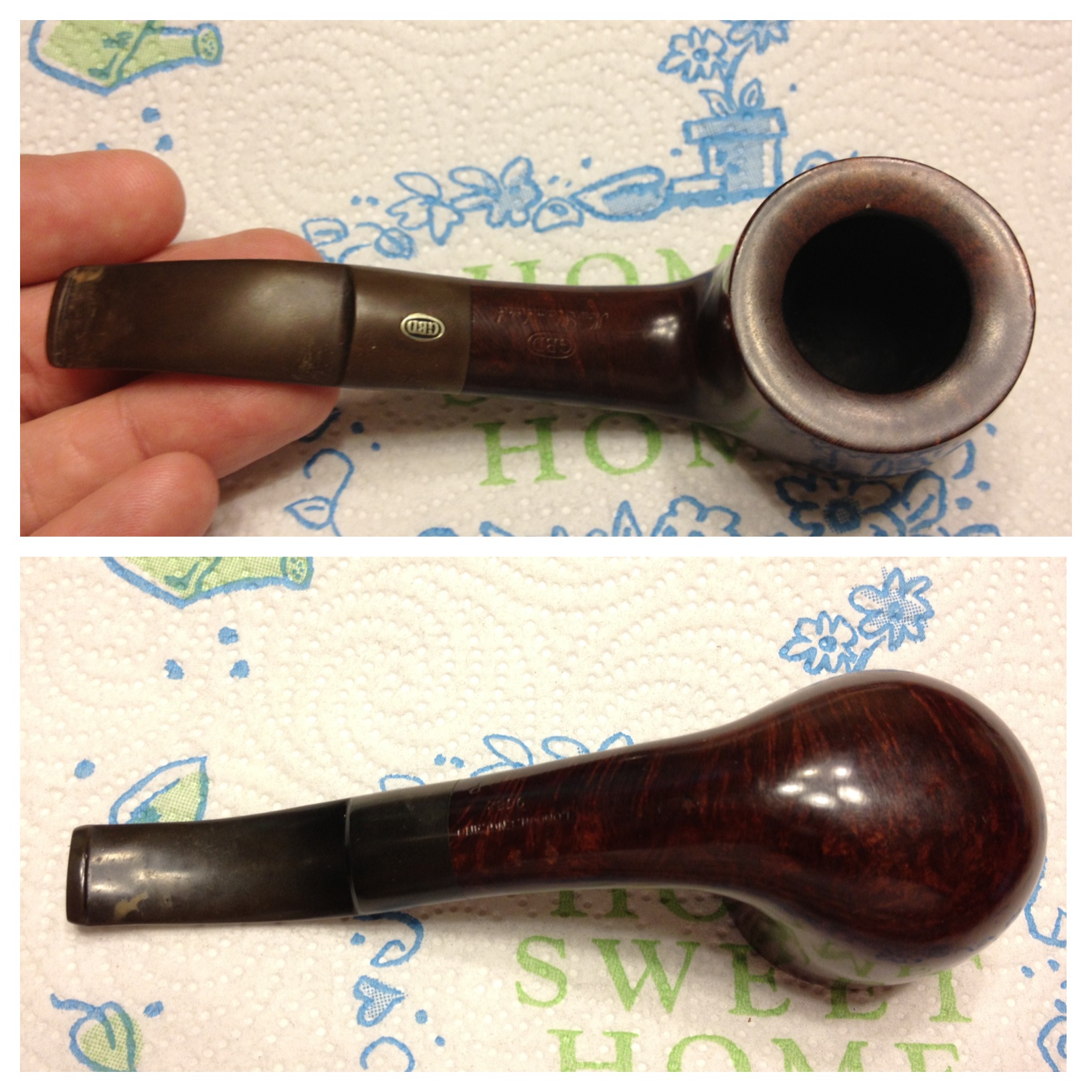
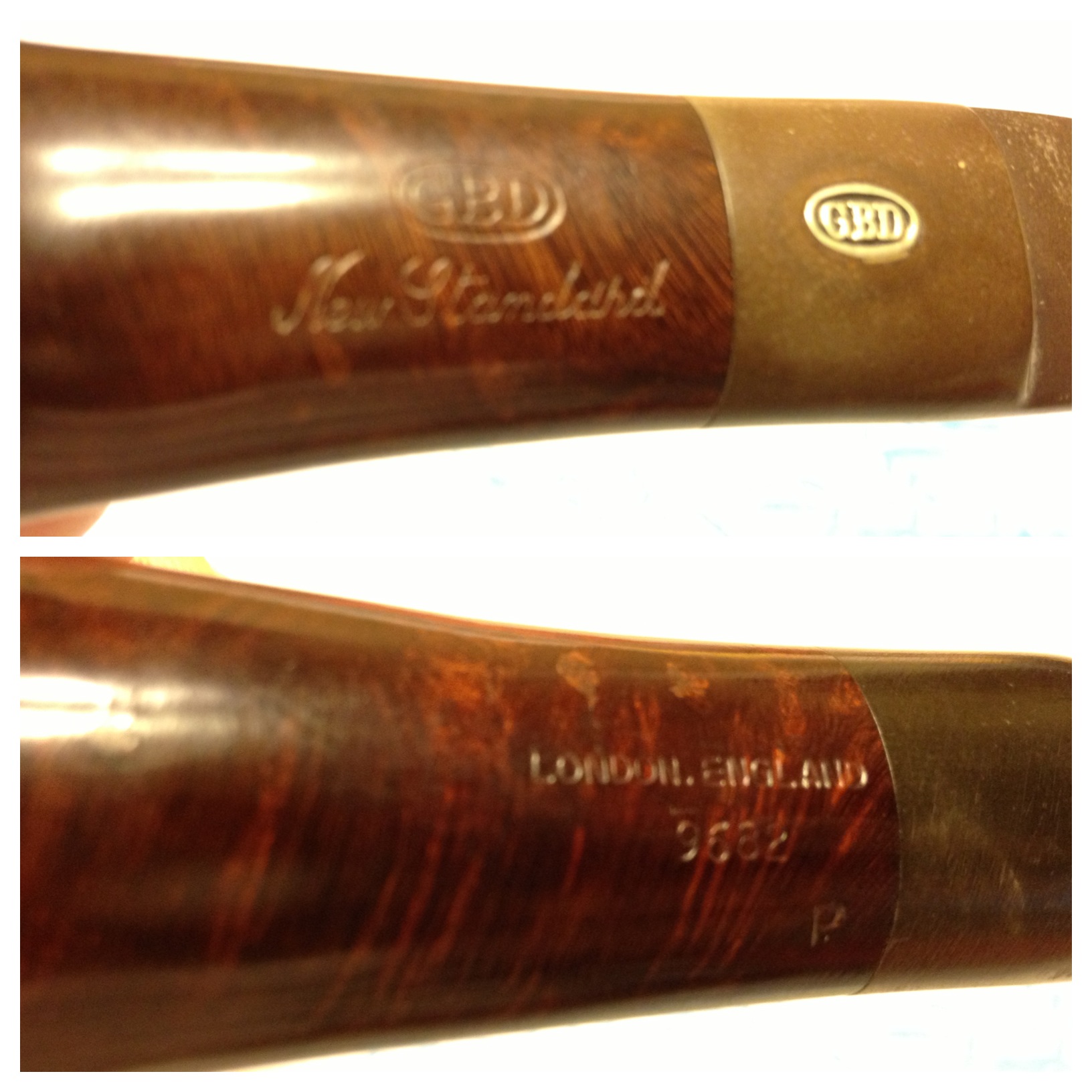
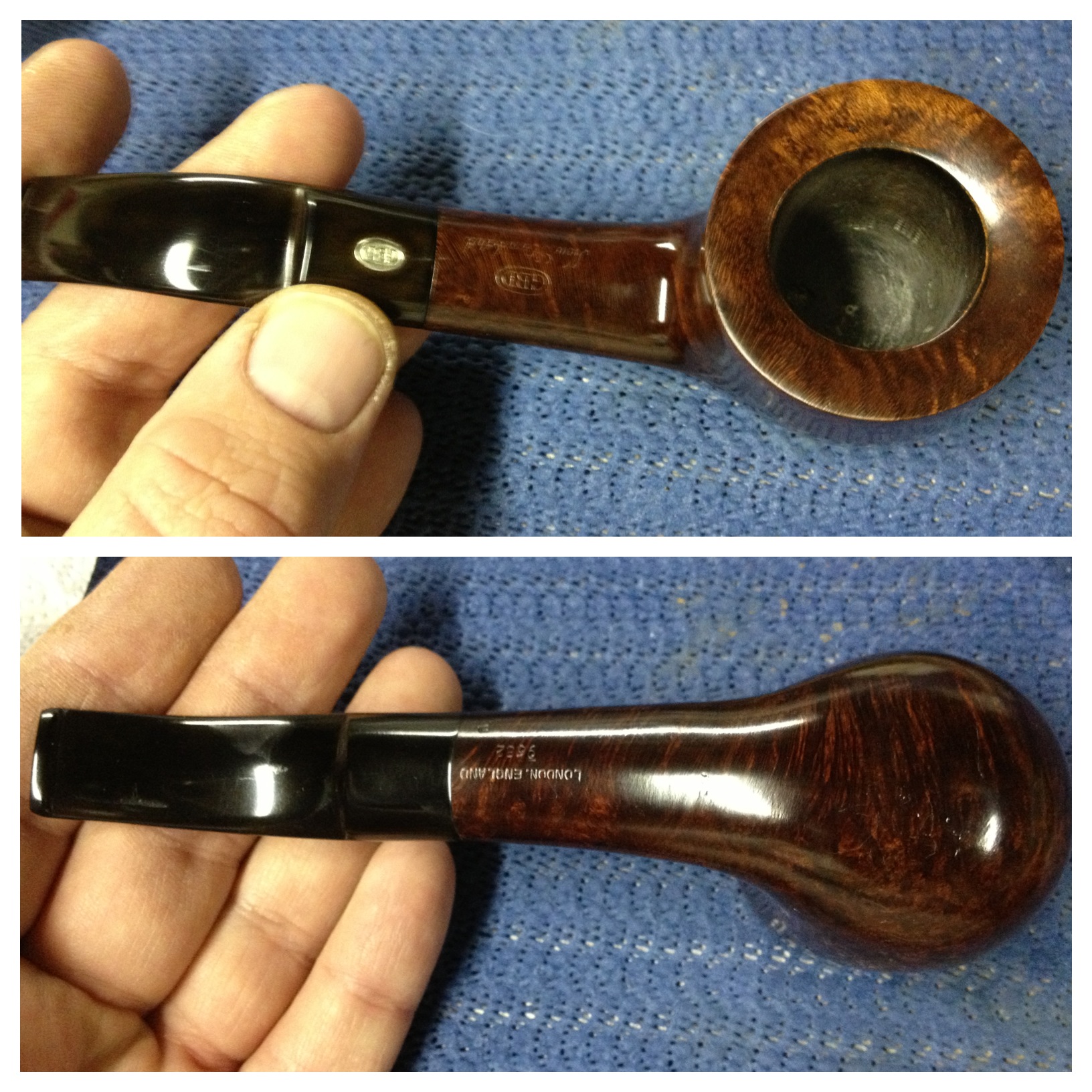
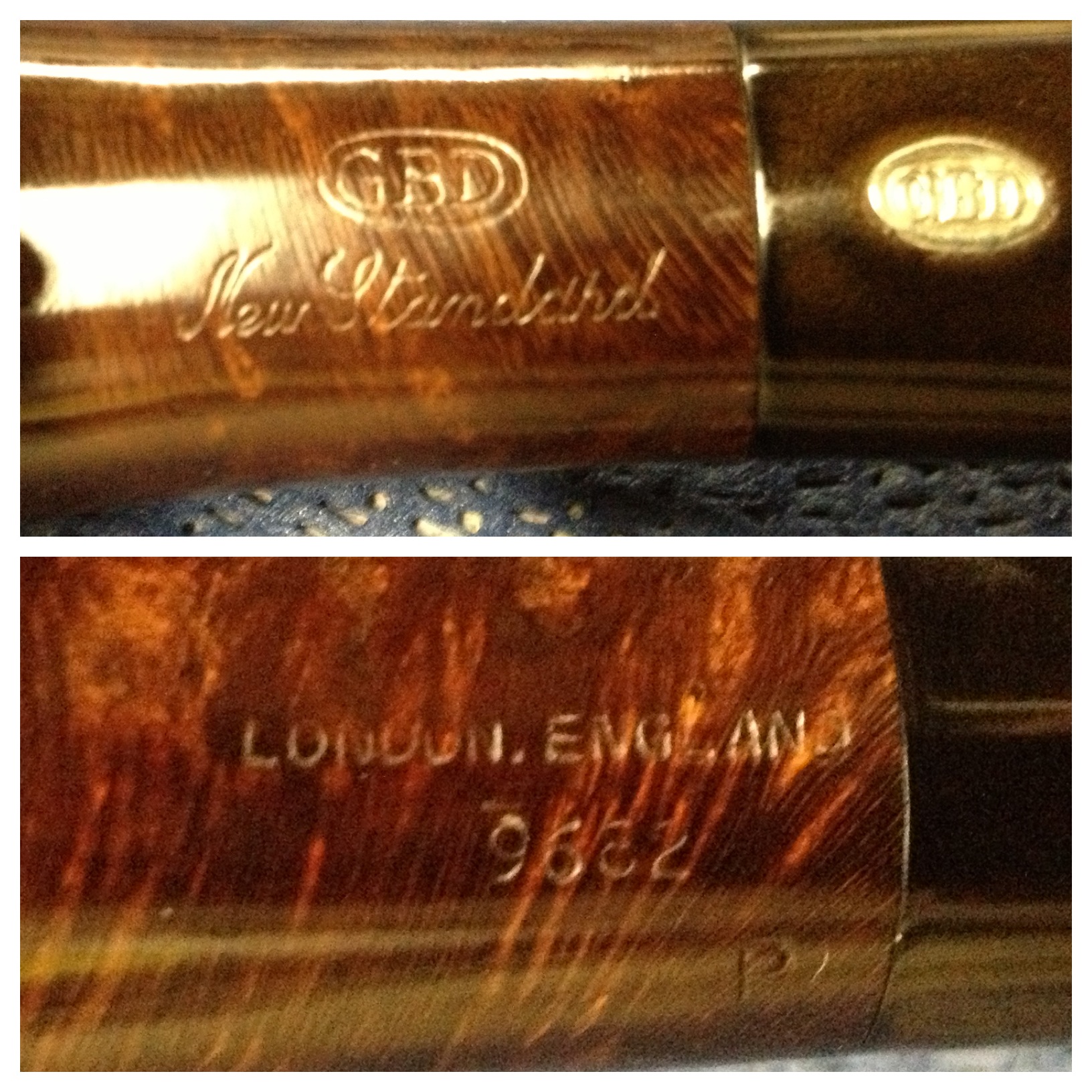
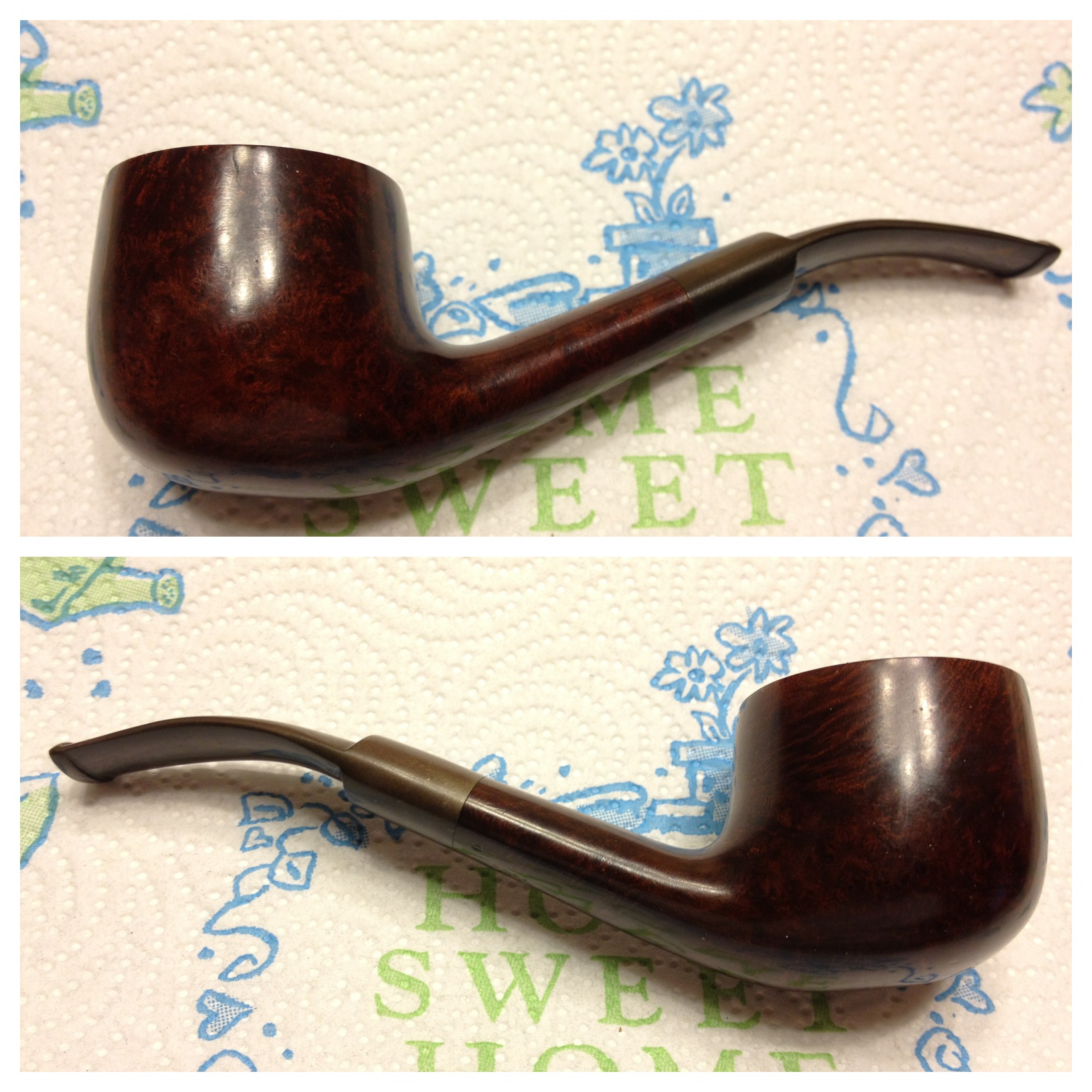
I picked up the GBD New Standard recently because of its shape mostly: a thick-walled pot. It is stamped GBD in the oval over New Standard on the top of the shank. The bottom of the shank is stamped London England over 9682 with a “P” below and to the right of that.

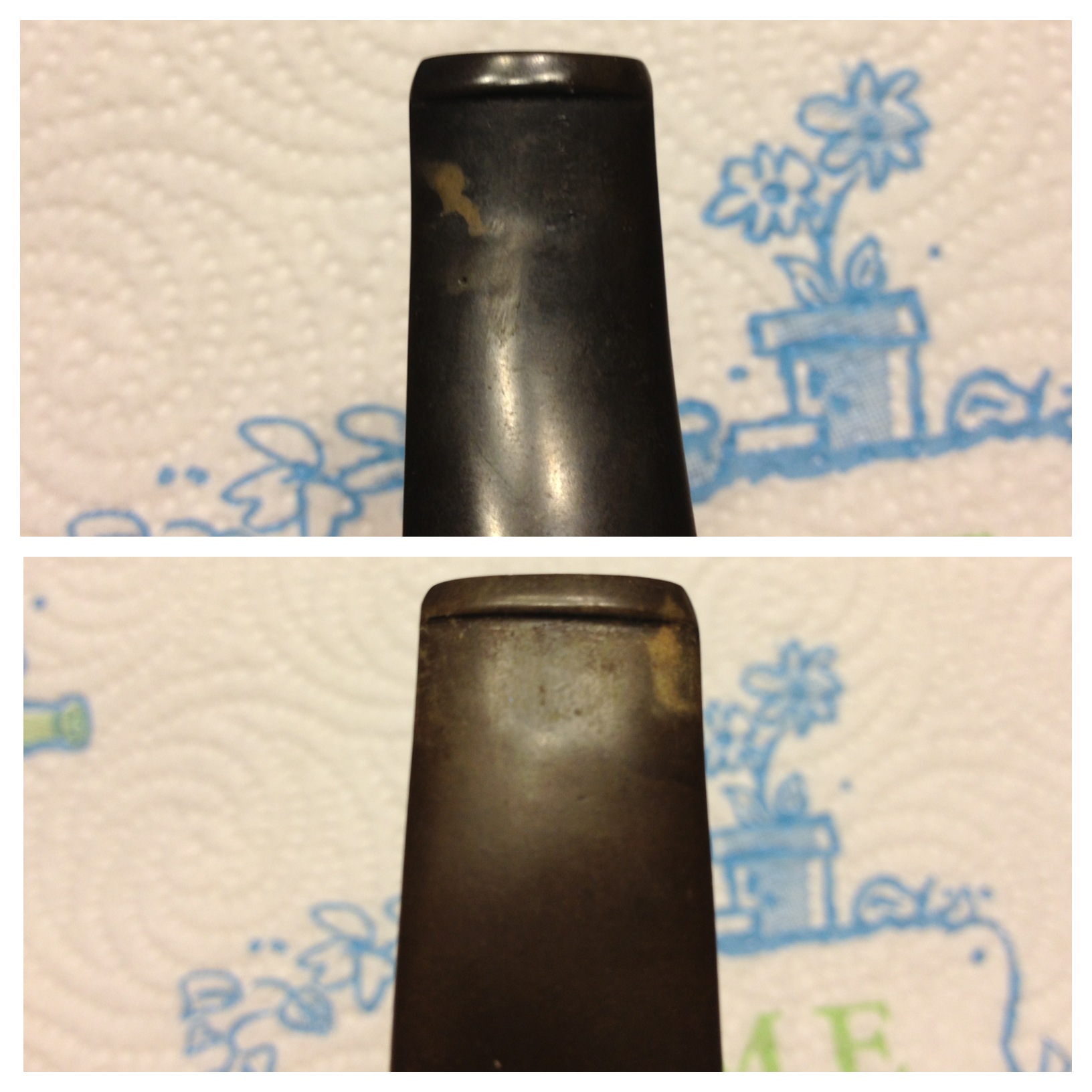
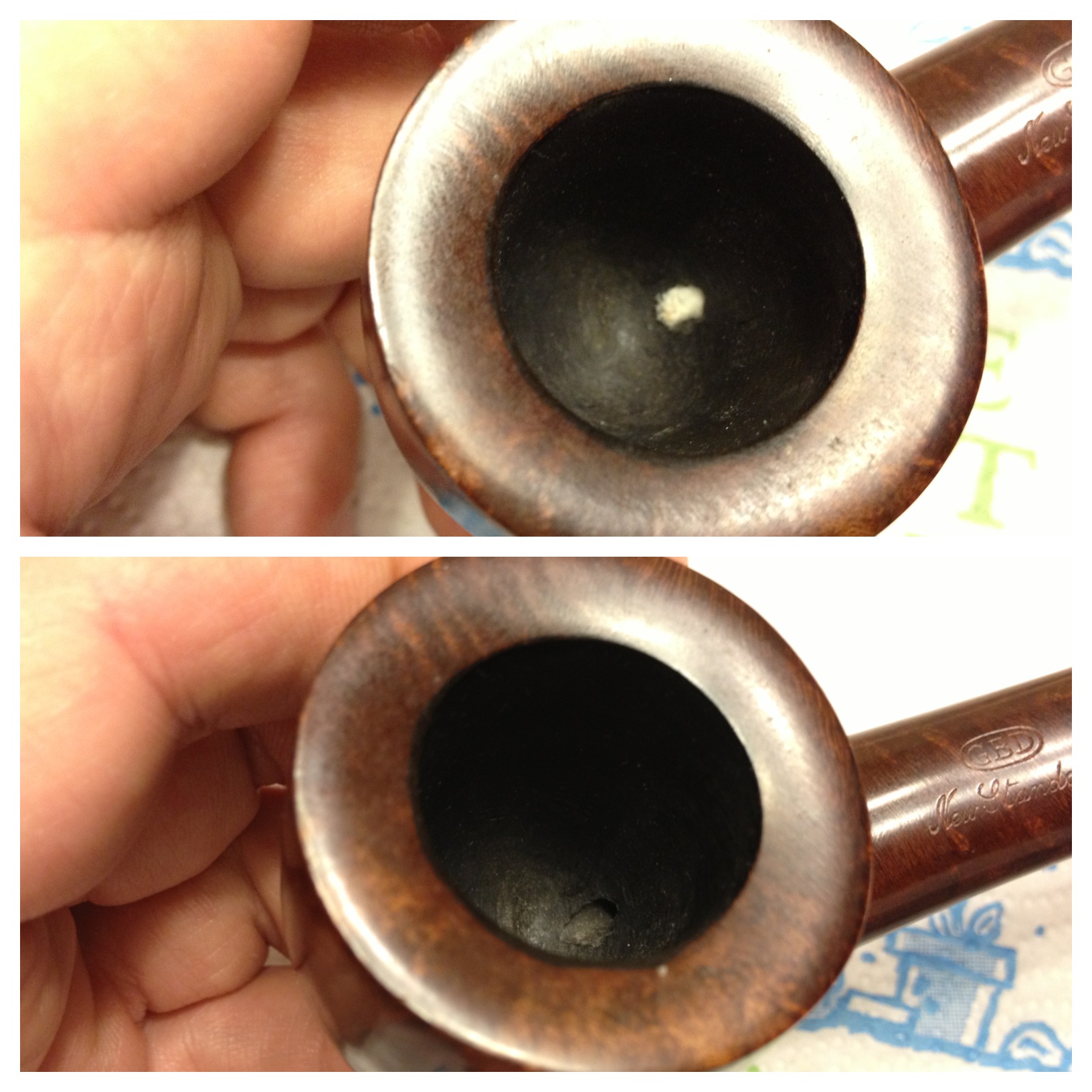
When I got the pipe it was in pretty good shape: dirty, oxidized, the normal stuff. But it seemed lightly smoked with no cake and no real issues and only light chatter. IMG_5241IMG_5242IMG_5243Nomenclature
You can see in the top a pipe cleaner sticking through the drought hole, showing a well drilled pipe.

You can see in the top a pipe cleaner sticking through the drought hole, showing a well-drilled pipe.

The pipe has a few fills but the are mainly on the bottom – out of sight, out of mind – and I wanted to keep this pipe as original as I could so I didn’t bother with them.

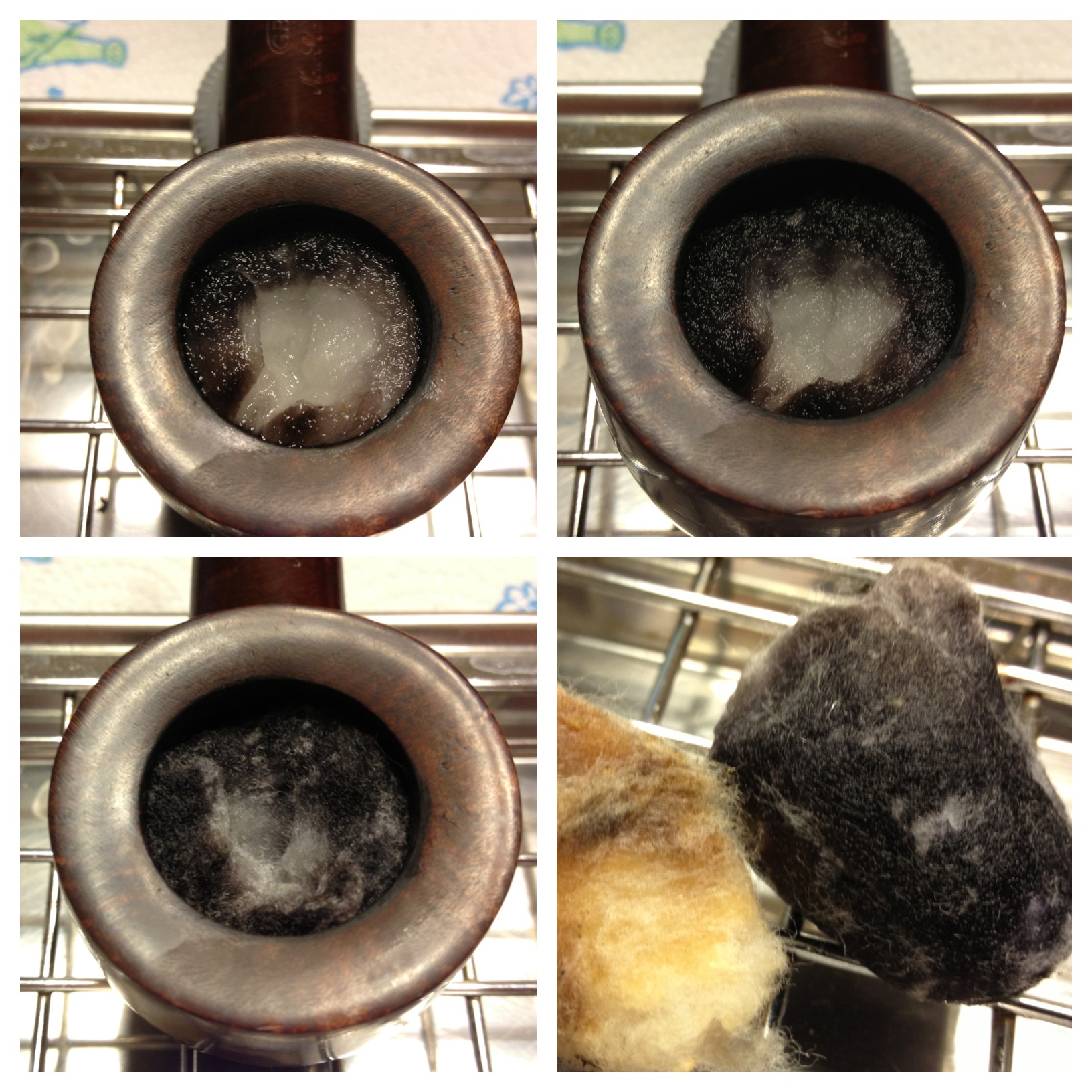
I started with putting the stem into a OxiClean bath; I let it soak for about 45 minutes I believe. While the stems (I actually was doing two pipes at a time, as I often do) soak I did a cotton ball and alcohol treatment on the two bowls. Usually I use coarse salt, not cotton balls, for this but since this bowl appeared to be so lightly used and the second bowl was fairly gunky I thought this would be a good time to experiment with the new-to-me cotton ball treatment. I put one large cotton ball into each bowl, plugged the shanks with cotton swabs and set them up on a steel drainer I have in my kitchen. I then filled the bowls with 91% isopropyl alcohol, slowly, with an eye dropper.

The photos below show the progression of black “stuff” drawn out of the GBD bowl; you may also see some of the tars (brownish-yellow stuff) in the cotton ball from the other pipe. This process started within a minute, the first photo, and then each picture after is after about 15 minutes, with the final result at about one hour.
IMG_5246

I don’t know what the black “stuff” was but it sure removed a lot of it in the treatment! As a side note, I found the cotton balls easier to deal with than the salt and it seems to have done as good a job, too. I will probably continue to us this method in the future.

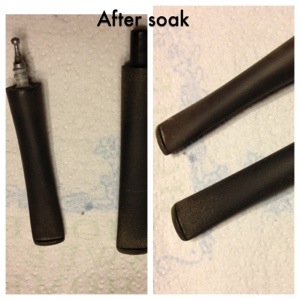
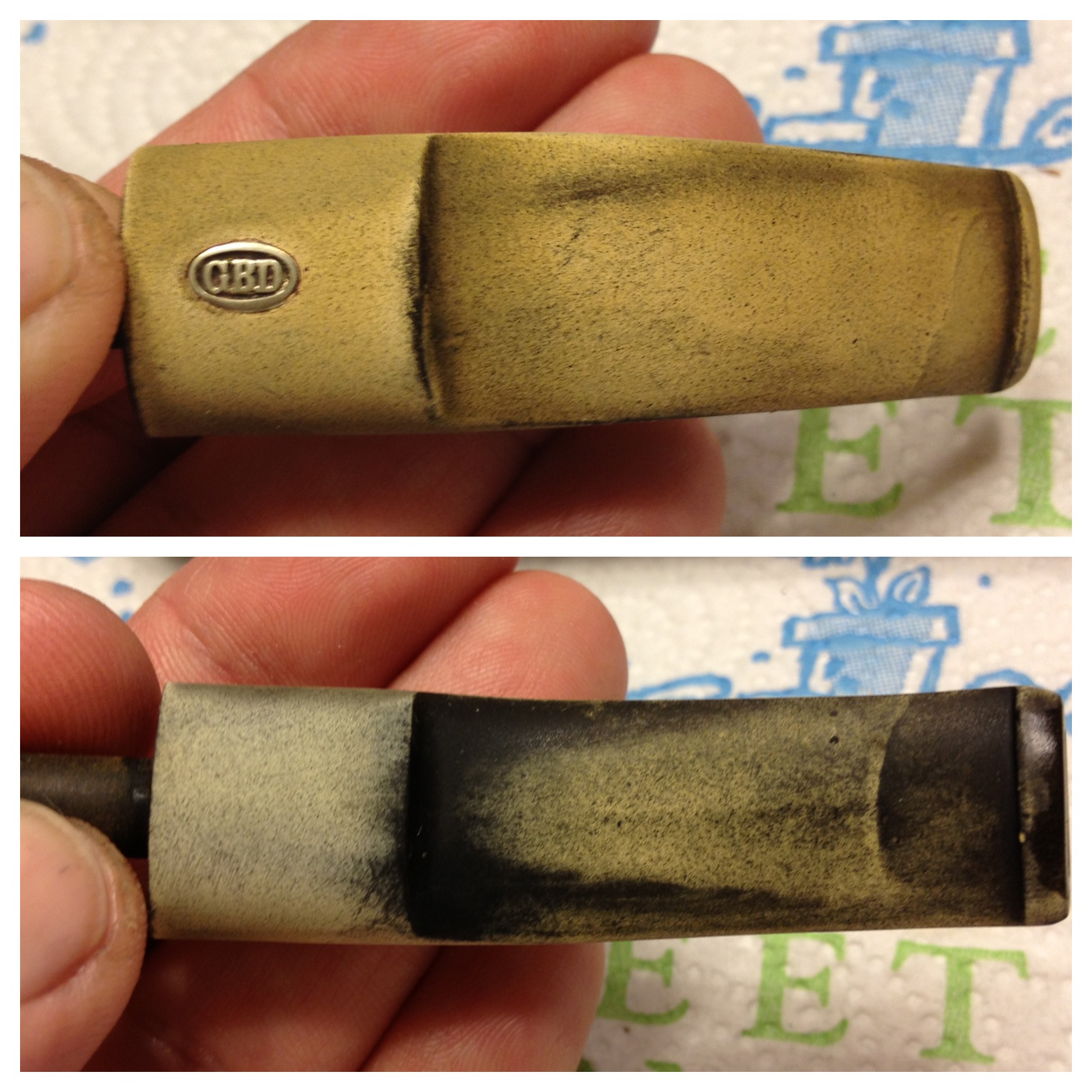
The stems had been soaking for about an hour, maybe 45 minutes, at this time and were ready to come out of their bath. As you can see, quite a lot of oxidation was raised and loosened by this soak.
IMG_5247

I then washed the stems in dish liquid and scrubbed them with Bar Keepers Friend and an old toothbrush; this took about an hour, making a paste of the powder and scrubbing, rinsing and wiping, then repeating. The results from that looked like this:
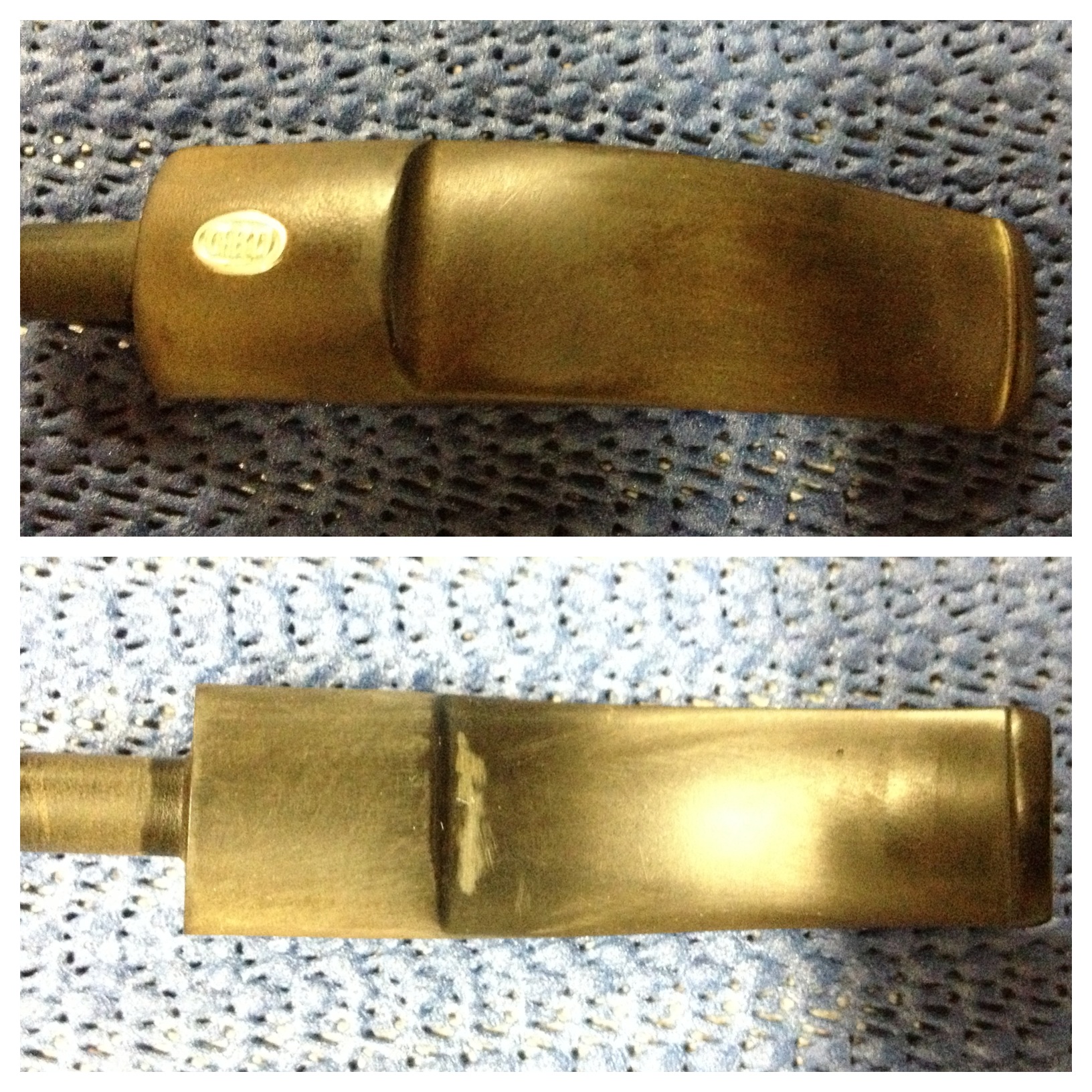
IMG_5248

Still a lot of oxidation and work left to go. Next came sanding and polishing with wet/dry paper and micro mesh. I used 320 & 400 wet/dry paper before moving on to the micro mesh. Before the mesh, though, I used the Novus 2 plastic polish on the stem to take off some of the scratches and a little more left over oxidation. I wet sanded with micro mesh 1500-4000 and then polished with the Novus 2 again. I now dry sanded/polished with the remaining grits of 6000-12000, then polished with Novus 1 plastic polish to get to this look
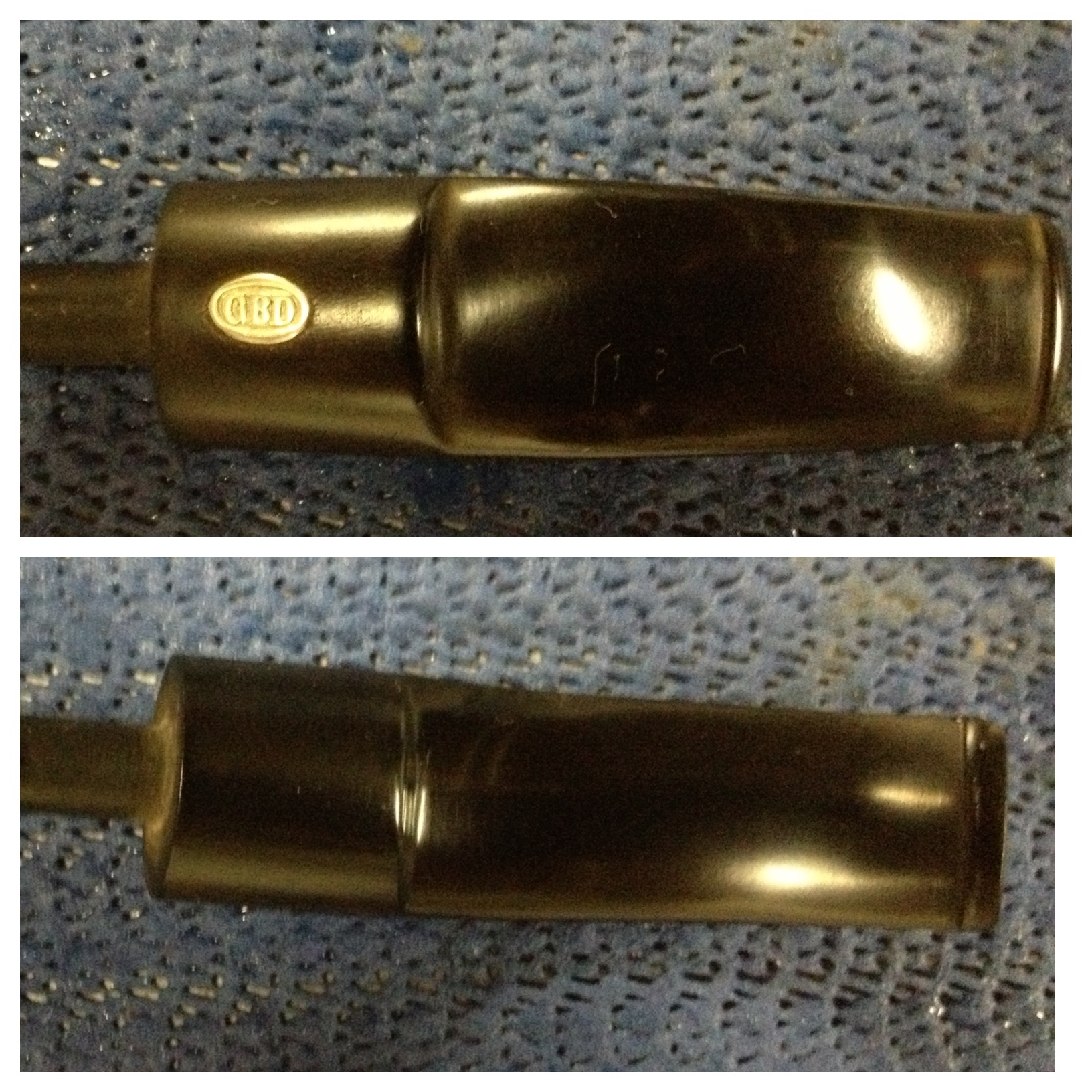
IMG_5249

Now I applied my “secret substance” before setting the stem aside to work on the bowl. This is how the stem looks at this point:
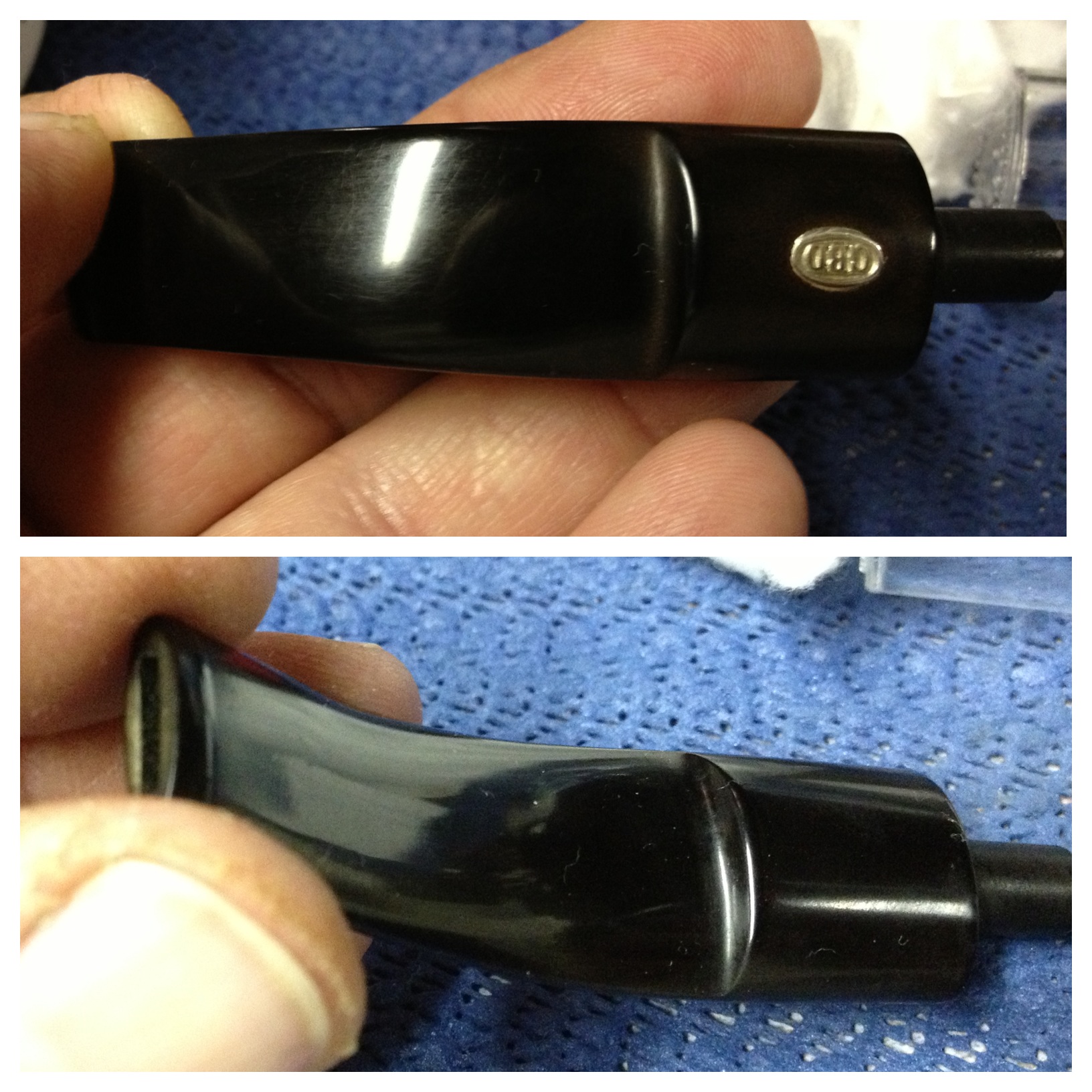
IMG_5250

What, you may ask, is my “secret substance”? Obsidian oil maybe? No. It is Mothers Back-to-Black automotive polish.

The bowl was really very easy since I didn’t plan on totally refinishing it. I wiped it down several times with acetone to take off the old finish and get the grime off of it. I then wiped it down a few times with cotton pads dampened with alcohol. I lifted a small amount of stain in the process but not enough to really change the color of the pipe, only enough to let the grain pop a bit more. The most time-consuming part here was rubbing, with alcohol then saliva on cotton swabs, to clean the rim. There were a couple of small dents I lifted with steam ( I heat an old “butter” knife with a heat gun and apply it to a dampened cotton towel that is laying over the dent) but can’t actually recall how many or where they were they were so incidental. The next photos show the stummel before taking it to the buffer:
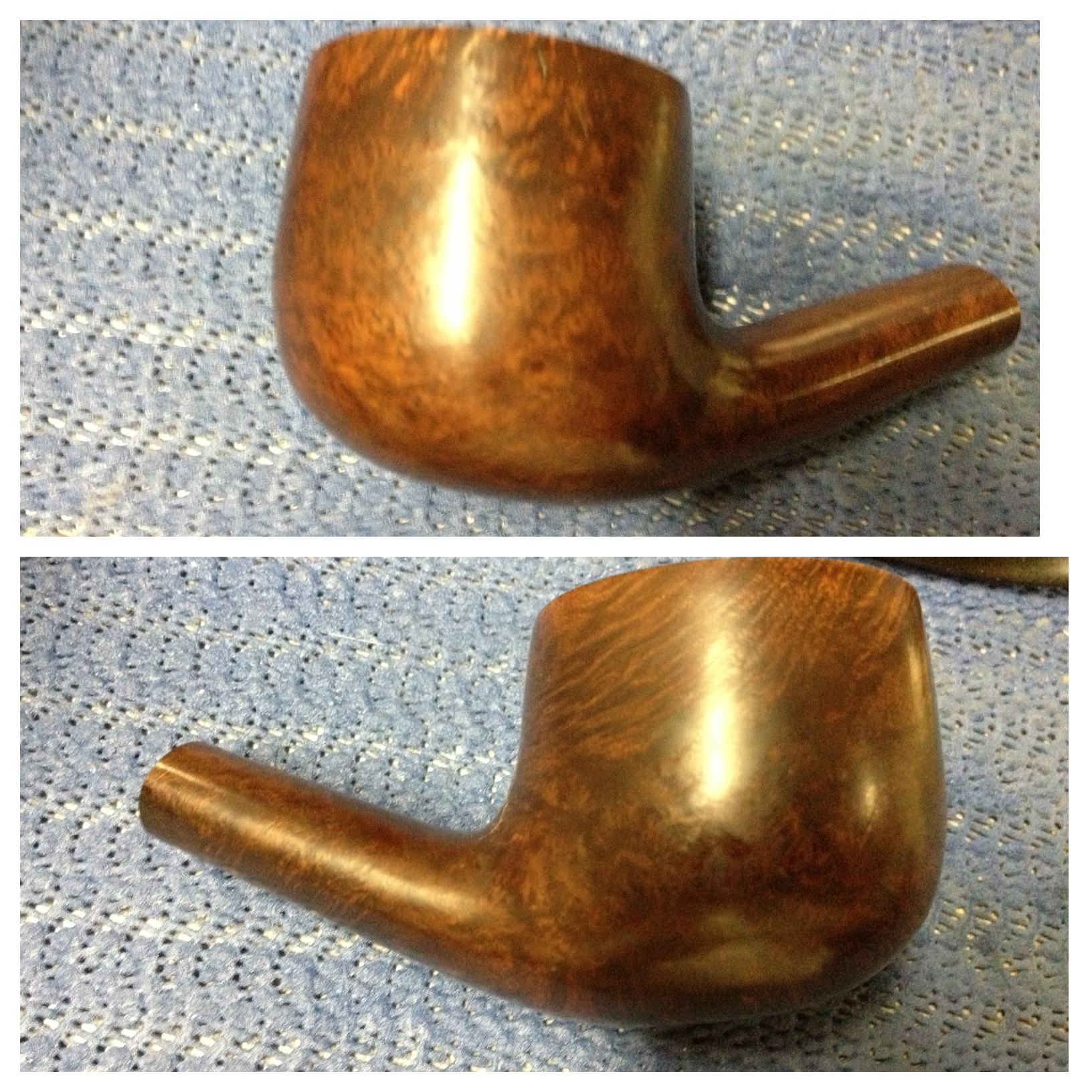
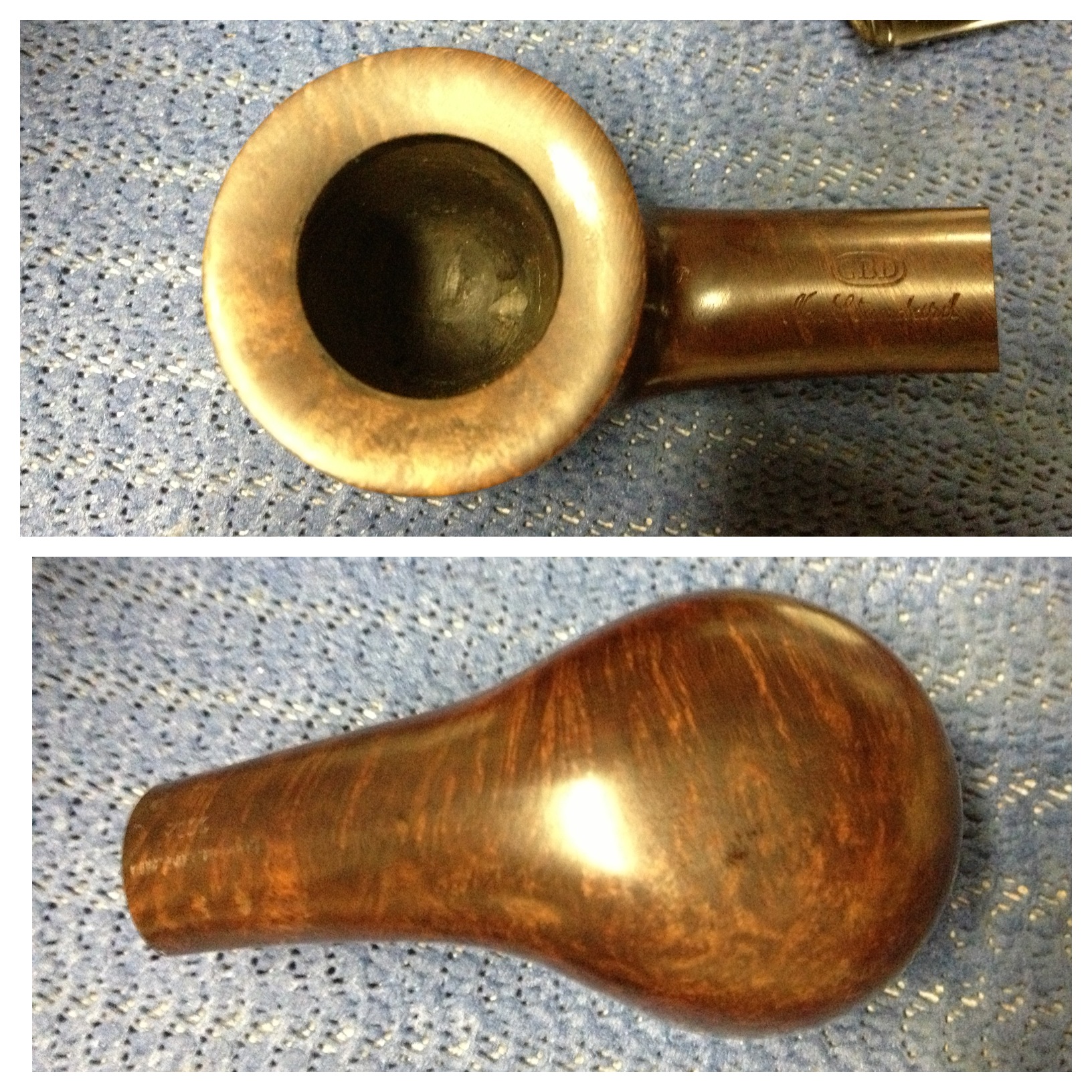
IMG_5252IMG_5251

I then buffed the stummel with Tripoli before reassembling the pipe and buffing the whole thing with white diamond and then carnauba wax. Here is the finished pipe:
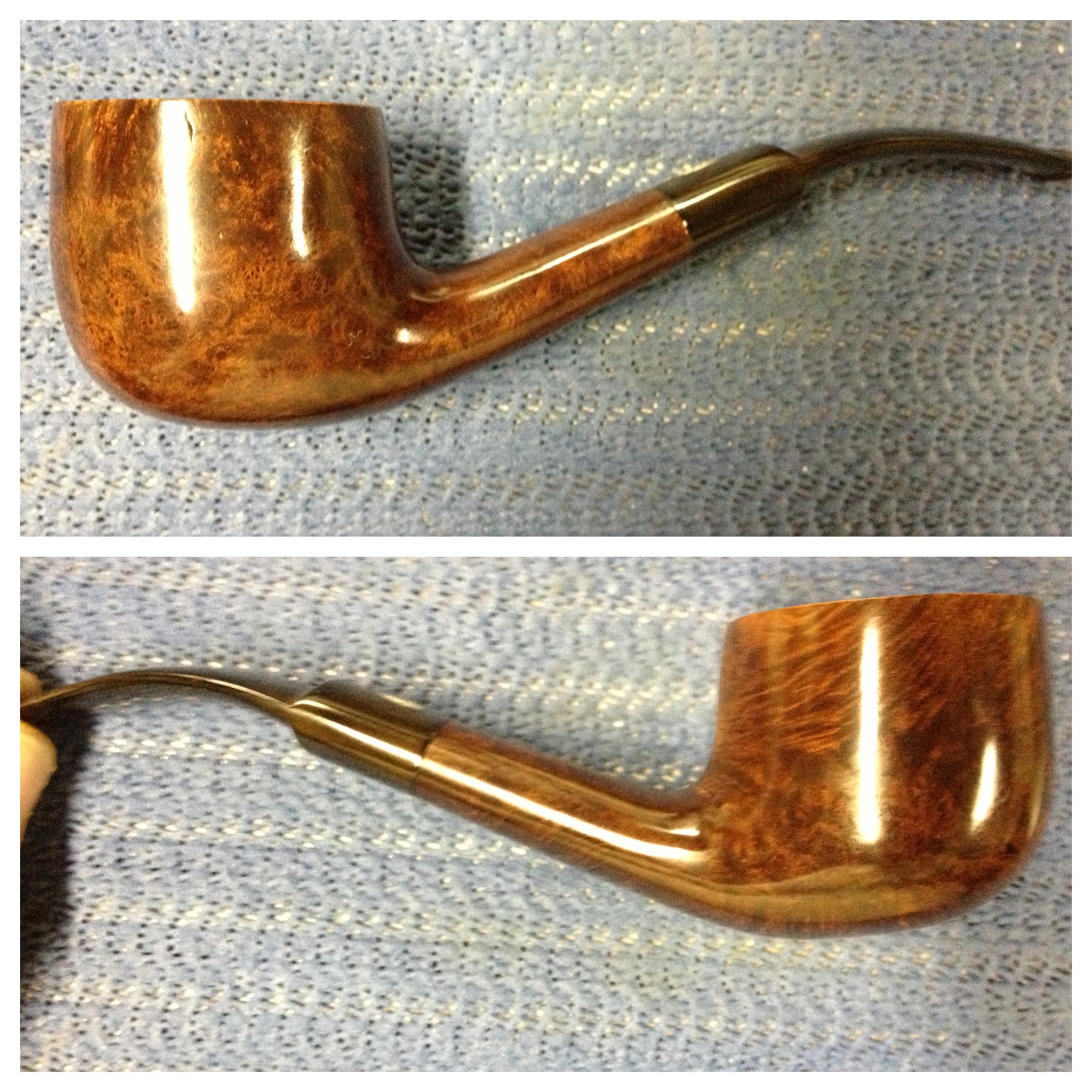
IMG_5253

This photo is slightly over exposed
IMG_5254IMG_5255

Experimenting with Alternative Oxidation Removal Techniques


Blog by Greg Wolford

I’ve recently been involved in a conversation about removing oxidation on stems with steel wool. I have to be honest, at the first mention of steel wool being used on a stem made my jaw drop (literally, almost dropped my pipe). But these guys are long time pipe smokers and restorers so I didn’t just brush off the information.

They said that using 0000 steel wool, dampened with water, removes oxidation much more efficiently than miracle erasers, Bar Keepers Friend or any micro mesh/sandpaper treatments. The increased efficiency also reduces the time invested I am told, which makes sense and is appealing.

So I decided to try an experiment on two old stems. These stems weren’t in terrible condition but had some oxidation to them and they were nothing too valuable if I made a real mess of them: they are expendable so they became my test subjects.

20130312-095418.jpg

I soaked them in a room temperature OxiClean bath for about four hours or so; I had to leave the house for a while so I made sure the water wasn’t too warm and left them to soak while I was gone. When I got home I washed them with dish detergent and a scrubby sponge until they no longer felt slick: about 2-3 minutes. They were the. Left to air dry on a drain board overnight.

20130312-095310.jpg

Yesterday morning I went out and bought some supplies: a package of 0000 steel wool and some 400 grit wet/dry sanding sticks; the sticks, or pads, remind me of short wide emery boards.

I took a piece of the steel wool and dampened it and began to rub the stems. Every few minutes I would wipe off the stem on an old towel, rinse out the wool, and go back to rubbing. It took very little time to remove the signs of oxidation and the stems were much less matte finished than they usually are after initial sanding. So I turned my attention to the stem with the stinger to work on the chatter.

I used the new 400 grit pads to wet sand on the chatter, going back and forth, wiping and rinsing as I had with the wool. These pads seem like they will be very useful in getting into that hard (for me at least) to get bit area and is why I bought them to begin with. They did, indeed, reach into that area much more easily and they took out the chatter fairly fast. That area was now more matte than the rest of them stem so I went back to the damp steel wool. In a few minutes the shine came back up even across the stem, which actually surprised me.

The whole process, not including the soak and dry time, took less than 15 minutes; I was again impressed.

20130312-095310.jpg

Will steel wool scrubs replace all the sanding and micro mesh polishing? I don’t think so. Will it reduce the amount of time and effort spend making an old stem look new again? I believe it can. I expect to explore with more stems just how effective this process can be and how much sanding and polishing can be avoided using the steel wool. One fellow said he can go straight to the buffer after the wool scrub. On some stems that may be a possibility but I think on most it won’t. Any chatter or deep marks I think are still going to require sanding. And if you have a rough stem after the oxidation is gone I think it’s still going to need sanding, too. But this is a (new to me) technique that I think needs more investigation and experimentation, one that potentially reduce the amount of time and labor spent on many stems, letting is be more productive overall.

20130312-095226.jpg

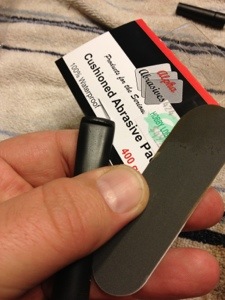
Stem after using 400 grit pad and 0000 steel wool to remove chatter and bring back up some shine.

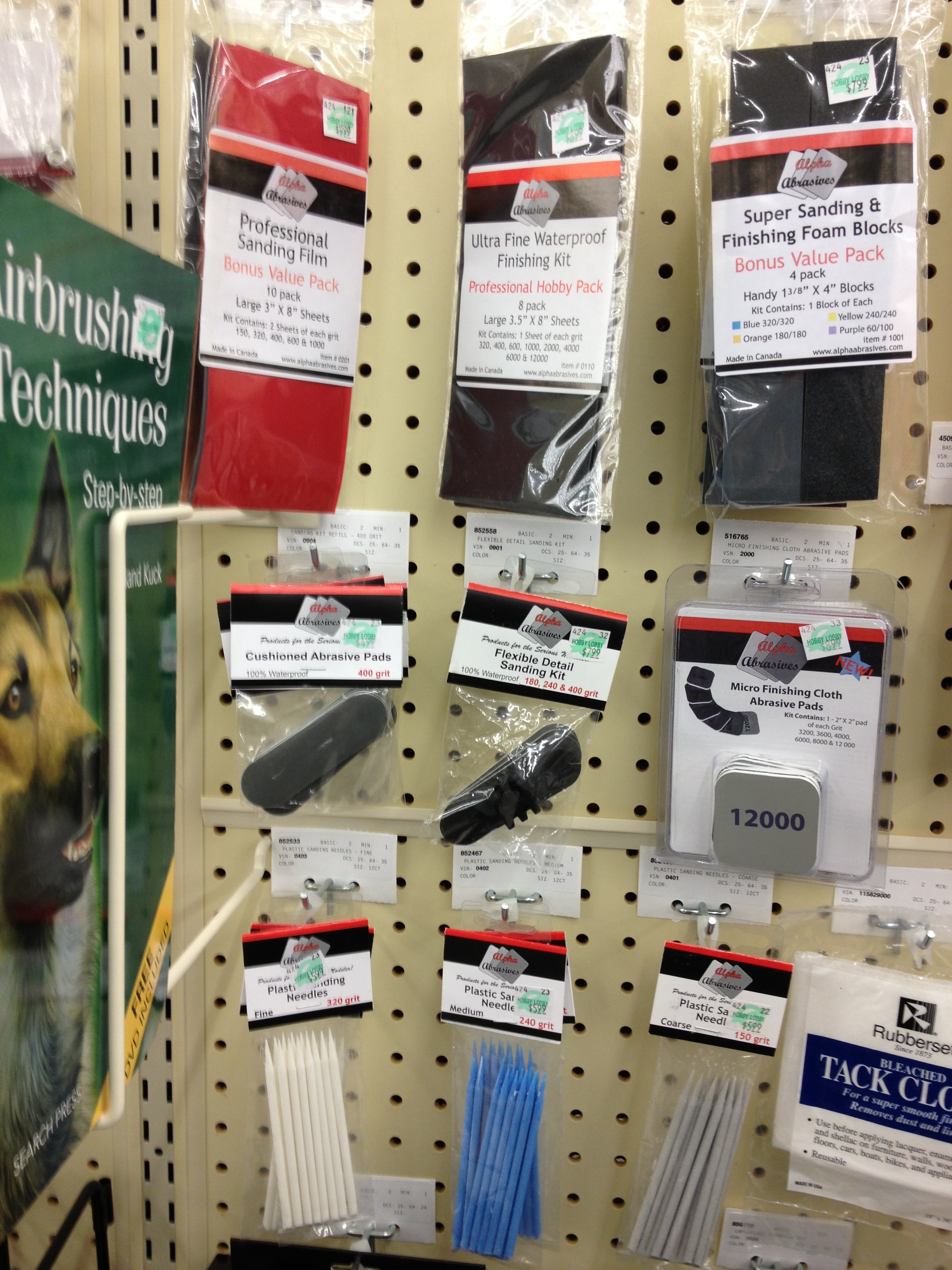
(Photo of the stem at the point I stopped along with the 400 grit pad I used and the packaging it cam in. By the way,  my local Hobby Lobby has begun to carry a rather large line of Micro Mesh and Alpha Abrasives products. The prices are competitive and the selection good so if you have a local Hobby Lobby it would be worth your while to see if they are carrying these items in your area, too.)

New Selection of Micro Abrasives at Hobby Lobby