
Blog by Steve Laug
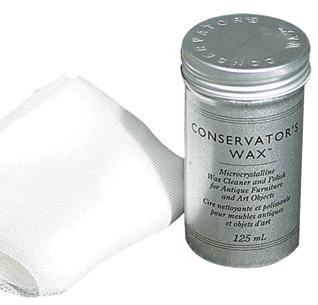 For the past few years I have been using a Canadian made product called Conservator’s Wax on pipes with either rusticated or sandblast finishes. I have mentioned often in my blogs on those pipes and I am surprised that more of you have not asked me about the product and what it is.
For years I had read about Renaissance Wax on different forums and how well it worked on briar pipes but I could not find it here in Canada (though I am told that it is now available). I always planned on getting a can from Amazon to try out but somehow never got around to ordering it. I wondered if there was not something like that here in Canada that I could purchase and experiment with.
One day I was visiting one of my favourite tool shops – Lee Valley Tools. To me it is the kind of place I can spend an afternoon or more wandering and looking at the assorted tools and supplies that carry. I was in the wood polishing area looking at sandpapers, micromesh and other wise and came across this little silver can that said it was for polishing woods and other things. I asked about it and one of the gents there said that he had used it for years on wooden bowls and other pieces that he had turned on his lathe. I said it was a very light weight wax that really polished well and lasted to protect the pieces he had made.
After reading the details of the product while I was in the shop I thought that it might be something like Renaissance Wax. It seemed like it would be worth a try to see what it worked like on pipes. Here is a summary of what I read:
CONSERVATOR’S WAX is a blend of highly refined microcrystalline waxes of fossil origin (petrochemical based) based on a formula which has become the standard material used in museums and art galleries and by professional conservators and restorers the world over. This high performance, crystal clear wax may be used on wood, metal, ceramics, ivory, marble, polished stones, leather, plastics, gilding, cast resins, photographs, and like materials offering excellent moisture resistance and protection against heat and finger marks. Its application on exterior surfaces enhances weather resistance. Apply it with a soft cloth to gently remove built-up dirt and grime and old wax, then buff when dry to polish to a soft sheen.
I brought it home and have been using the same can for 4 or 5 years now. It does not take much of the wax to do the job. I apply it by hand to the surface of rusticated and sandblast pipes as well as plateau on the rim of some freehands and let it dry. I buff it with a shoe brush and I have been very pleased with the results. It does not clog up the crevices, valleys or depths of these finishes and provides a lasting shine. I find that it is equal to Halcyon II wax in terms of its polish and workability on rough finishes. I have also used it on smooth finishes as part of the experiment and found that it works well. For me it does not replace carnauba for smooth surfaces but it is certainly workable.
In terms of its polishing and cleaning capabilities I have used it on briar that I have restained and it seems to buff out the tiny scratches that have been left behind from all of my polishing and buffing. I have used it on stubborn oxidation on vulcanite stem and found that it did not have the polishing ability to remove that from the hard rubber. It did however; work very well in hand cleaning the oxidation around stem logos and stamping without damaging those areas. On large oxidized areas there are other products that do a better job. I have also used it to polish and clean metal bands and ferrules and it cleans off oxidation and tarnish in the stamping and hallmarks quite well. It not only cleans but leaves behind a nice shine on nickel, silver and brass.
I can recommend it to those of you who cannot find Renaissance Wax or do not want to order the small jars of Halcyon II wax. It is a suitable replacement and one that I use regularly. As I mentioned, the small 125ml container that I have has lasted for 4-5 years and I work on a lot of pipes. I will definitely pick up another can when I visit Lee Valley Tools in the near future. It is a product that I keep on hand. Give it a try and see what you think.
 rebornpipes