Tag Archives: Pipe Hunting

Join us on a Quick Pipe Hunting Adventure


Blog by Steve Laug

Sometimes the best adventures happen with minimal drama and planning. On Thursday Jeff and I chatted on Facetime. He said that he and Sherry were heading up to Seattle to meet a fellow about some stamps and asked if Irene and I would like to meet up in Bellingham, Washington on Saturday and take our aunt for breakfast. After breakfast we talked about doing a bit of a pipe hunt in Bellingham antique stores and malls. The decision was made and yesterday morning Irene and I and two of our daughters got up early and headed across the Pacific Truck Crossing border between the Canada and the US for the adventure.

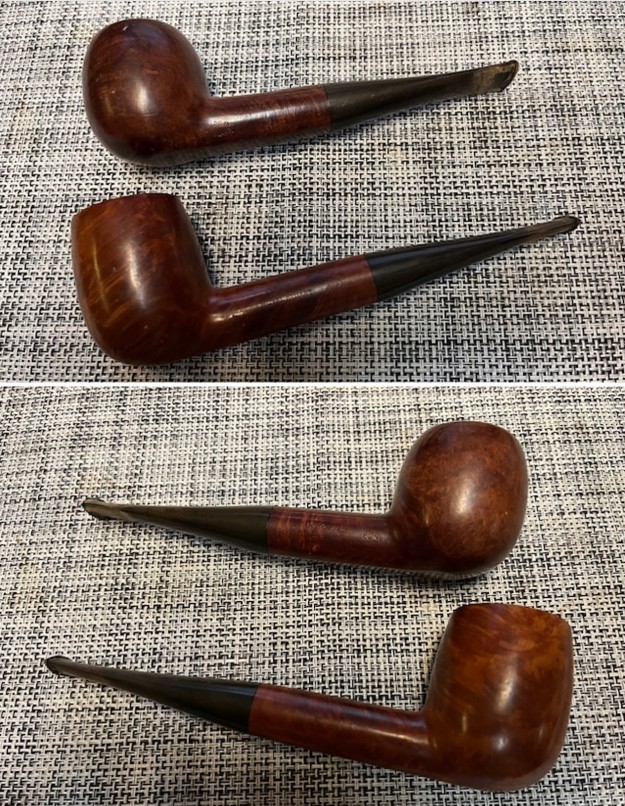
We met up at a local eatery and had a great breakfast together with our aunt. We took her to her residence afterwards and visited with her for most of the morning. Together we headed to Old Town Bellingham to begin our pipe hunt. We visited three of my favourite antique malls and worked out way through the aisles of wares for sale. Jeff and I tend to divide and conquer, each walking through the aisles of the shop looking for pipes. The rest of the family moves through looking for their own treasures. In the first shop Jeff and I picked up two pipes – a Sasieni Mayfair Apple and a Sasieni Royal Stuart Billiard. Both were dirty but both contained the Sasieni Magic – classic shapes and nice briar.The second shop is a treasure trove of items from the past and one that I could spend a lot of time working through. As we went through the aisles of treasures I found a case with carved animal pipes and a Ropp Cherrywood, really none of them captured my interest this time around. I looked them over and set them aside. Then I saw an interesting pipe standing in the back of the case. It was called The Pedestal Pipe and was made in Israel – presumably by the Shalom Pipe Manufacturing company. We left the shop with this addition to the hunting bag. We walked down the street to the next shop. It is one that I have visited for over 20 years and come to know the owner. We generally have a great chat on our visits and spent some time chatting and catching up on life. By the time we finsihed chatting we came away with five additional pipes to the hunt bag. These included a Savinelli Sherwood Rock Briar 316KS, a Sir Winston Bellingham WA, a Kensington Made in London England Pot, Genuine Block Meerschaum Opera pipe, and last of all an Oval shank 1/4 Bent pot no name but great grain.We left the shop worked our way to a new shop that I had not visited before. We walked into a nicely laid out shop and I asked the clerk if there were any pipes available. He walked us back to a display case and took out a circular pipe rack. There in the rack were two pipes remaining in it. The first was a square shank Irwin’s (GBD made) London Made London England 9487 shape and the second was an older WDC Royal Demuth Imported Briar Root 25. Both were great and were added to the hunt bag. We called it a day and headed to our favourite Mexican Restaurant for dinner before heading home. It was a great hunt and a great visit with the family. When I got home I went through all the pipes we had found and took photos of the group. There were some great pieces there and some great pieces of pipe history. I made a list of the pipes according to the order in the photos below.

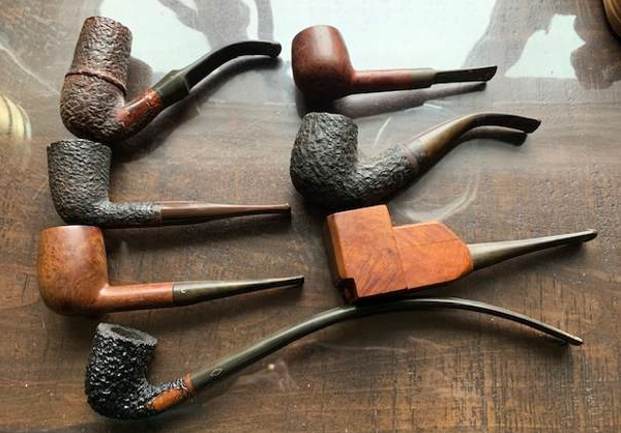
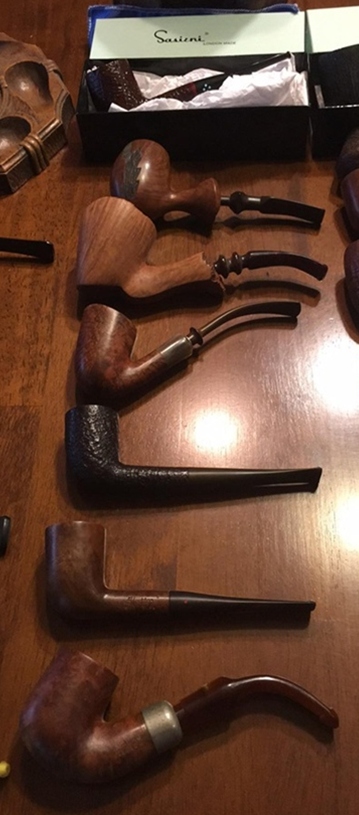
The left column in the photo below:  

1. The Pedestal Pipe Mediterranean Briar Israel
2. The Kensington Made in London Englamd
3. Sasieni Mayfair London Made
4. Irwin’s (GBD) London Made London England 9487
5. Sasieni Royal Stuart Made in England London Made 55

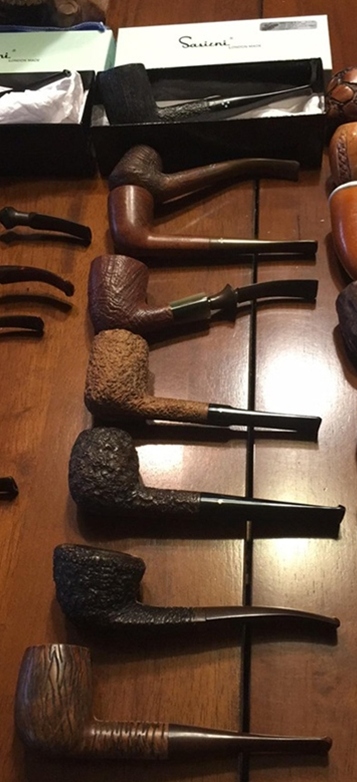
The right column in the photo below:

6. Savinelli Sherwood Rock Briar 316KS
7. Sir Winston Bellingham WA
8. Genuine Block Meerschaum Opera
9. WDC Royal Demuth Imported Briar Root 25
10. Oval shank 1/4 Bent pot no name but great grain

These were going to be a great batch of pipes to work on. Certainly, they would need to be deep cleaned, stems reworked and some replaced and some refinished. It was really going to be a great time gradually chipping a way at the lot. Thanks for coming with us on this pipe hunt. It was a great time to have you with us and the only thing that would have made it better would have been to walk through the hunt together. Enjoy your pipes!

More from the Great Morning Pipe Hunt


Blog by Kenneth Lieblich

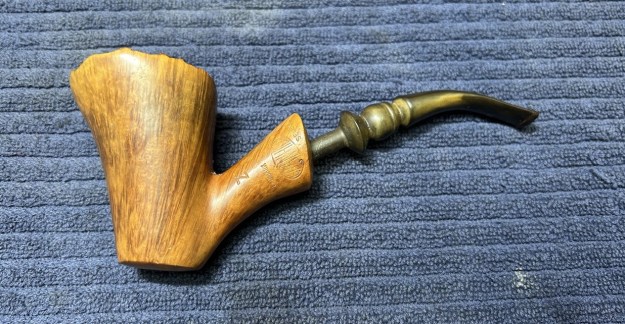
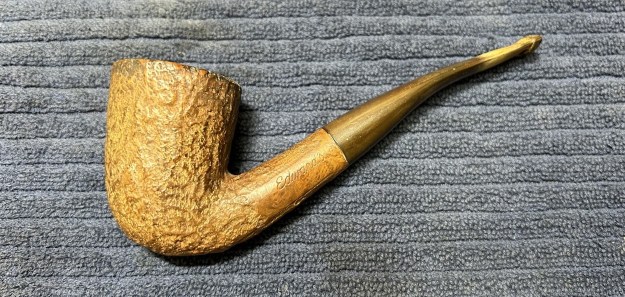
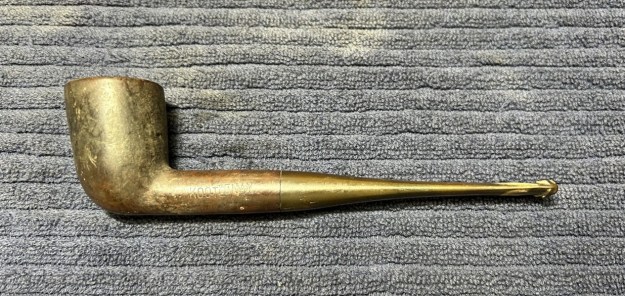
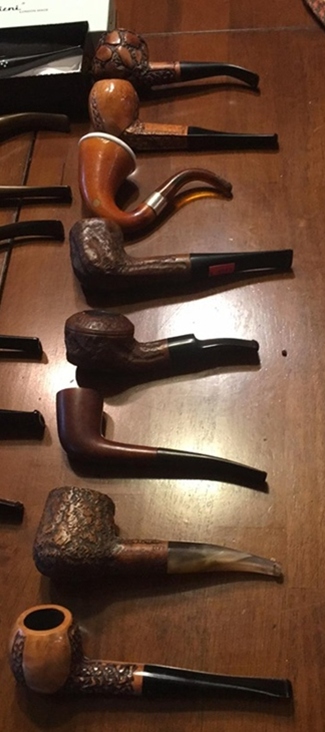
Having read Steve’s run-through of our treasure hunt, I figured I may as well add my finds, for the record. Steve has obviously infected me with the ‘bug’ of hunting down pipes. As he related, we had a great time and here are the six pipes I grabbed:First is a gorgeous black meerschaum billiard with an amber stem (not snapped – Deo gratias) and sterling silver bands around the shank and bowl. And it came with its proper case! I checked the hallmarks and they date this pipe to 1919 – a real old timer. Markings indicate that this is an Adolph Frankau. More on this pipe will come when I do some research.Second is a pipe that we thought was from Preben Holm – but isn’t. Doesn’t matter, it’s still a beauty. It’s made in Denmark by Granhill, which was a brand used by an American, Michael Kabik. This is a really well-made freehand pipe with a fine stem and stunning grain all over the bowl.Third is a really handsome rusticated pipe from Edward’s – a storied company from Florida that secretly stashed a bunch of Algerian briar during a time when it was hard to come by. I really like this shape and looking forward to cleaning it up.Fourth is a fascinating Peterson meerschaum Rhodesian. It has really neat colouring on the bowl and looks like it was greatly enjoyed by its previous owner. I assume that this pipe was made in the Isle of Man, as I believe all (or most) of Peterson’s meers were made there.Fifth is a cutty that’s a bit of a gamble. It isn’t fancy in any way, but it is well-drilled and well-fitted. It says KOOTENAY on the shank, which is a word I know from geography, but not from the world of pipes. Why did I buy it? Because the other side of the shank reads “Made in Canada” in a style that strongly resembles the pipes of the great Canadian artisan, Leonard Payne. More research will definitely be needed here.Sixth and last is a handsome French Lovat with no name of note, but a lot of character. It’s a real looker and I think it’s going to clean up really well.

Steve gave you a good overview of the antique fair, so I won’t reinvent the wheel. I had a great time with Steve and I am always indebted to his knowledge and insight. Hopefully, as time passes, some of that will leech its way into me!

Please follow me here on Steve’s website or email me directly at kenneth@knightsofthepipe.com. Thank you very much for reading and, as always, I welcome and encourage your comments.

You Have to Join Kenneth and Me on a Great Morning Pipe Hunt


Blog by Steve Laug

I can’t speak for you, I know that but for me there is nothing more exciting and enjoyable than wandering through an antique mall, shop, thrift shop or show with singular purpose and laser focus on finding whatever pipes lurk in the nooks and crannies of the shelves, displays and tables. Everywhere I travel I make time to do this. I have hunted pipes in London, Paris, Budapest, Sofia and Athens. In each of those cities and a plethora of North American cities I have found some incredibly interesting pipes. Because of that the rush of a pipe hunt, the expected finds and joys always are just below the surface when I get ready to hunt. Do you have the same experience in your pipe hunting?  Do you have the same adrenaline rush as you prowl through a site like a carnivore hunting his prey? Does even the glint of a pipe give you a rush of excitement as you make your way to it? Does a great find make your heart beat faster? If you don’t, then what is wrong with you?

Once I see a pipe hidden in the detritus on a seller’s table every sense comes alive. There is a buzz that goes on in my head as I pick up a potential piece and examine it. I do all of this without expression or any external signals to the seller. I turn it over in my hands with bated breath hoping that it is a keeper. I check the stamping, the condition of the bowl, the stem condition, note issues that will need to be addressed. There are many other items that I go over as I turn it in my hands that are more a habit or feeling that I have more than a tangible thing I can define. After that I have to decide if I want to work on it. Notice I say want not if I can. I have learned that with a little ingenuity most things are fixable if I want to. But if I don’t want to it will sit here unfinished for a long time. If the pipe passes my assessment I remain quiet as I don’t want to give the seller any sense that the pipe is special and worth more than he is thinking. It really is a game for a good poker face. Then I ask the price and make my offer, always willing to walk away. If you experience this you will know that the brand is irrelevant in many ways as each of us has our own “holy grail” pipe that we dream of.

Some background for you on yesterday’s pipe hunt. Last year Kenneth Lieblich and I visited the Fraser Valley Antique and Collectible Club show in New Westminster. I brought along two of my daughters and we had a great time walking through all of the items that sellers had displayed. They found some things that interested them and we found a few pipes. We had a good laugh at the huge variation of prices that sellers were charging. They ranged from $8 to over $195 with no obvious rationale for the difference. It truly seemed to be a shot in the dark for them to arrive at a price. Some sellers were flexible and some were adamant that their old Dr. Grabow was worth hundreds. There were always those who loved to haggle and that for me was actually a part of the joy of the hunt. There will always be dreamers who think they hold a “special” pipe that everyone should be fighting over to own. More power to them. We would thank them, shake our heads and move on to another table. We had a great time together looking and then afterwards having coffee and visiting.

So, when Kenneth wrote about a month ago and sent me a link to the sale I did not need a lot of convincing. I wrote back that I was excited to go and if all humanly possible I would come. The organizers describe the event as a two day show of over 200+ tables, tons of various endless vintage antiques & collectibles: vintage advertising tins and signs, oil & gas, toys, radios, fishing tackle, hunting & sports memorabilia, post cards, old photos, LP records, medalta, orange crush, Coca-Cola, Pepsi, moorcroft, movie posters, brewerania, fruit jars, soda pop / ginger beer bottles, drug stores, ephemera, old tools, books, Fire King Jadeite, Chinese Asian artifacts, tobacco, dolls, jewelry, stoneware pottery, comics, coins, stamps, Hudson Bay, Chinaware – hotel ware & restaurant ware, steamship, general store items, small vintage furniture – home decor, etc. – you name it; it’s here & you do not want to miss out! I did not want to miss out so it went on the calendar.
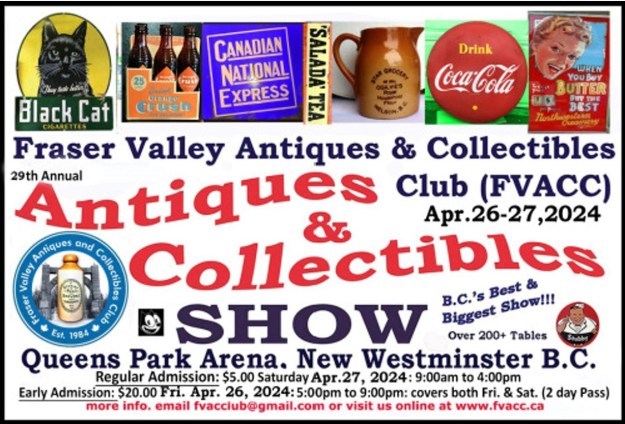
So yesterday, April 27, 2024 we met at the arena at 8:45am and joined the queue of folks who were waiting to get inside. Kenneth brought his eldest daughter and I brought the same two with me as last year. There is always a lot of energy in the queue as folks discuss their hopes and expectations and catch up with each other. It is really a grand time. We chatted and introductions were made between the daughters. Kenneth and I enjoy these kinds of hunts. We wander down each aisle and carefully examine each sellers table for a potential pipe treasure that fits our demands! I say demands because over the years I have become ever more selective and sadly I seem to have passed that on to Kenneth.

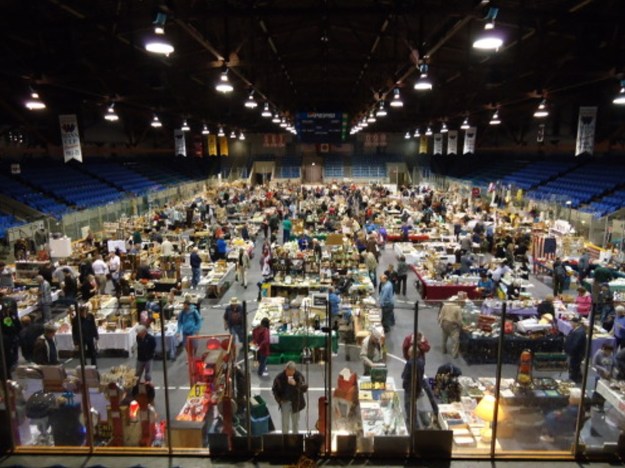
Just before 9:00 am the doors opened and along with the waiting crowd we made our way into the arena. Like last year you paid at the door and immediately were in the midst of tables and sellers in the lobby area. We made our way through the tables and in the first few minutes came upon a seller with the typical overprice carved meerschaum figural and some Grabows and other drugstore pipes. However, in the midst of the pipe pile there was a Peterson’s System Standard Bowl sans stem. It was a 307 shape but was stamped 1307 which is something I will tell you about when I restem and restore it. We dickered and bartered and I added the first pipe to my pocket. We made our way to the arena and though it looks small it was crowded. I have included some photos from the advertising down by the Club for the event to give a sense of what we saw. It took us over an hour and a half to work our way through the tables two times to make sure we did not miss anything. We went down each row examining the offerings on the tables. We each found several pipes as we walked our way through. Kenneth and I would spot a few pipes and come together to go through them. It was great fun to discover a rack or a pile of old pipes to work through. The majority of the pipes were not for us. There were many Grabows, Medicos, other drug store pipes and even a few Figural Meerschaums. We would love them over and walk away. I must remember to bring a pocket lens with me next time. My eyesight combined with the lighting in the arena made it hard to clearly see the stamping on some of them. Each table provided the chance to look at things that the seller described as antiques or collectibles and to me some were neither. I felt my age as looked at toys I had played with, games I had enjoyed and household items that mom used to prepare and serve our meals. It was really a walk through my past.
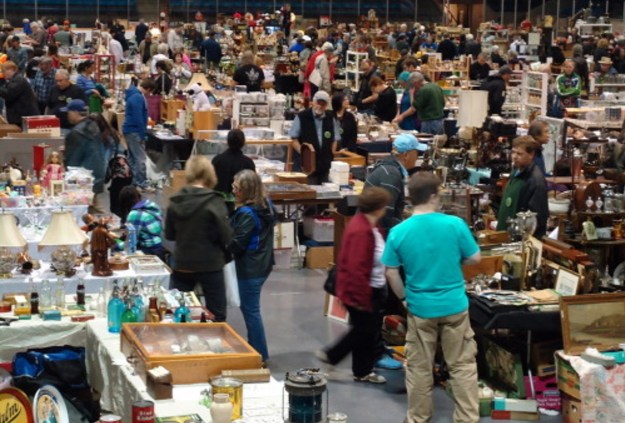
Once we had finished going through the tables twice we went to the lobby and enjoyed a coffee and some hot chocolate. Kenneth and I went through our purchases. We both had some nice additions to our collections to work on. When I got home I took some photos of the finds of the hunt. As a group they look quite nice. I am sure Kenneth can add his finds if he chooses to do so. I took photos of each of pipes and have included how each one was stamped on the shank sides. I have also given a brief overview of the condition of the pipe.

1. The first pipe shown below is stamped Jeantet [over] Fait Main on the left underside of the shank. On the right underside of the shank it is stamped with the number 4 (shape number?) and with Made in France along the shank/stem junction. There is a Jeantet logo J in a silver oval on the left topside of the diamond stem. It is kind of a Freehand Bent Dublin with a Diamond shank.

The pipe has some great grain around the bowl sides and shank. The rimtop is flat and slightly oval. The bowl had a moderate cake on the walls and thankfully no lava on the rim top or edges of the bowl. The stem was oxidized and had light toothmarks on the top and underside ahead of the button.2. The second pipe shown below is stamped Jeantet [over] Fait Main on the top of left side of the shank. On the right side it is stamped with the shape number 9 [over] Made in France. There is a Jeantet logo J in a silver oval on the left topside of the stem. It is a bit of a Freehand Bent Apple with a unique stem shape.

The pipe has some great grain around the bowl sides and shank. The rim top is slightly oval and bevelled inward toward the bowl. The bowl had a moderate cake on the walls and some lava on the rim top rear inner edge of the bowl. The stem was oxidized and had light toothmarks on the top and underside ahead of the button.3. The third pipe shown below is stamped Peterson’s [over] System [over] Standard on the left side of the shank just below the nickel ferrule. On the right side it is stamped Made in the Republic of Ireland (in three lines) with the shape number 1307 below that. The nickel ferrule was stamped on the left side and read K&P Peterson’s [over] three classic Makers marks. These included a Shamrock, a Wolfhound and a Tower without a door. There was no stem with the pipe.

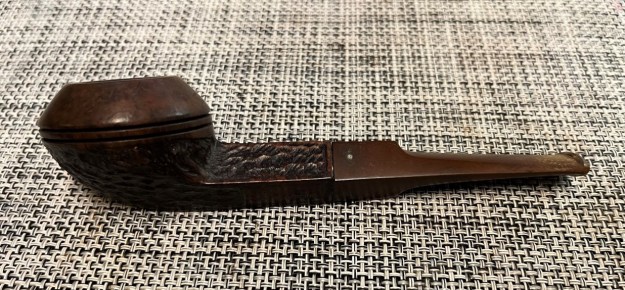
The pipe has some great grain around the bowl sides and shank. It is a large System Standard 307 shape with an extra number “1” included ahead of the 307. The bowl had a moderate cake on the walls and a thick lava coat on the rim top and inner edge of the bowl. 4. The fourth pipe shown below was stamped on a smooth panel on the underside of the shank with a shape number 625 followed by Brigham [over] Made in Canada Squat Straight Bulldog. The pipe has a typical rusticated finish on the bowl and a smooth rim cap.

The pipe has some great grain around the bowl cap with an interesting rustication on the sides and shank. The bowl had a moderate cake on the walls and a thick lava coat on the rim top and the inner edge of the bowl. The stem was oxidized and slightly dirty with a single brass dot on the top of the saddle stem. There were light tooth marks on the top and underside ahead of the button. The metal tenon tube was seized in the shank making the stem unremovable.Looking at the pipes I brought home I was happy with what I had found. A usual I thoroughly enjoyed the hunt. It was truly a pleasure and the thrill of searching and finding can’t be matched. I only wish that I could do more of the hunting and finding. As I think about the trip I realize that one thing that would have added to the pleasure is if you could have been with us. If you have not gone on a pipe hunt you really should go. But until the at least we can tell you thanks for going with us on paper. Hope you had a good time.
Changes in the choice of pipes we pick up on our hunts…


Blog by Steve Laug

When I first started working on pipes I literally picked up every pipe that I found whether I picked them up in flea markets, antique shops or thrift shops. I was incredibly indiscriminate and picked them all up. I bought Dr. Grabows, Yello Boles, any and every American or Canadian Made pipe, Danish, English, French, German or any other country where a pipe was made that caught my attention. I was always on the lookout for that illusive Dunhill or Preben Holm made pipe. I found a few of both over the years. In those early days, almost 20 years ago, I paid very little for the pipes I found. Most cost me between $10 and $12. I also bought a few on EBay as well in the same price range. These early days were filled with excitement regardless of the pipes that I had found.

One day, almost drowning in pipe that I had restored and did not want and could not even seem to give away any more I made a significant change to my purchasing and hunting habits. I decided to “go to school on pipe repairs”. I purchased pipe that needed very specific repairs. For example,. I would buy pipes that needed to be refinished and work on them until I was comfortable with the process from beginning to end. I would buy bowls for restemming and work on the process of fitting and shaping new stems until I had worked out my own system. Each purchase represented something that I wanted to learn and continued to work on until I became better at the process. This went on for several years until I was comfortable with most restoration projects or needs. Notice, I never used the terms perfected or became proficient because I am always in the process of learning and refining the work.

From there I went on to purchase pipes by country of origin. I focused primarily on English and Danish pipe with a few specialty or unique American pipes. These American pipes were ones that I called oddities or perhaps a better term would be unique or specialty pipes. I broadly focused on country rather than specific brands. I worked on virtually anything British or Danish. In terms of British pipes I purchased Barlings, Comoys, GBDs and all the various seconds or sub lines that each produced. These included Portland, Dr. Plumb, Irwins, the Everyman, the Guildhall to name a few. I also picked up Orliks, Millvilles, Upshalls, Ashtons, Charatans, Dunhill, Loewe and Co., Astleys, BBBs, Charles Fairmorn, Parker, Redman, Sasieni, Tilsheads and others.

In terms of Danish pipes I purchased all the various pipes carved by Preben Holdm- Danish Pride, Preben Holm, Golden Danish, Walnut Monte Verdi to name a few. I also bought Georg Jensen, Stanwell, Royal Danish, Stokkebye, Winslow, Johs, Nording, Bari and Bentleys. There were others that I picked up as well whose names escape me. There were many other brands that caught my eye and joined the collection that needed to be worked on.

The third change of focus is more recent, perhaps the past 4 years or so. That involved buying estates as well as buying specific brands noted above. This has been a very enjoyable aspect of the hobby for us. We buy estates from family members and executors and get to enjoy the story of their friend, husband, father, uncle or brother. We learn to understand and know them in their pipe smoking habits. That is a huge bonus that allows us to carry on the story of a specific pipe or group of pipes. These estates have been purchased from family members, executors and sellers moving pipes for the families. These estates have come from Europe, Australia, Asia, the US and Canada. It is a pleasant twist on the hobby for both Jeff and me.

It seems that we rarely buy pipes from EBay any longer as we no longer need to. We still enjoy the pipe hunt and still enjoying buying from individuals who contact us about pipes they would like to sell. We enjoy the thrill of the pipe hunt and the mystery of uncovering beautiful briar in the pipes that we restore. We love the restoration journey. Continue to follow us in our restoration journey as demonstrated in the blog. We are sure you will enjoy the musings and development as we work on these pipe finds. Thanks for your faithful support.

Some great finds while visiting my brother and doing a few pipe hunts!

Blog by Steve Laug

Irene and I just returned from a long needed holiday visiting my brother Jeff and his wife in Oregon. Of course when we are together we have to do a bit of pipe hunting. We visited shops up and down the Oregon Coast and along the Washington side of the Columbia River. We found a few notable pipes that intrigued us. I also was able to pick up quite few items that he had stored for me to take home. In the first photo below is the first finds of the trip. From the top of the left column down these are the pipe we found.

    1. Italian Made Calabash with a removable bowl and a rusticated finish. The stamping is not clear on it so I am not sure of the maker but it reminds me of a Ser Jacopo
    2. A rusticated Dublin with a Cumberland stem that the seller identified as an Ardor but all I can see is Italy. Turns out it has a cracked shank once I removed the sales sticker.
    3. Comoy’s Grand Slam 186 Billiard with COM circle and the Grand Slam plumbing in the tenon.
    4. Brebbia Lectura Church Warden that is bent with a rugged rustication. It is great condition.
    5. Weber Old Standard Pot with great grain and an almost full bowl of unsmoked tobacco.
    6. Peterson’s Made Irish Second Rusticated Bent Billiard in excellent shape though the stem is probably a replacement.
    7. Needham Imported Briar Pat’d System pipe – square and blocky looking but unique.

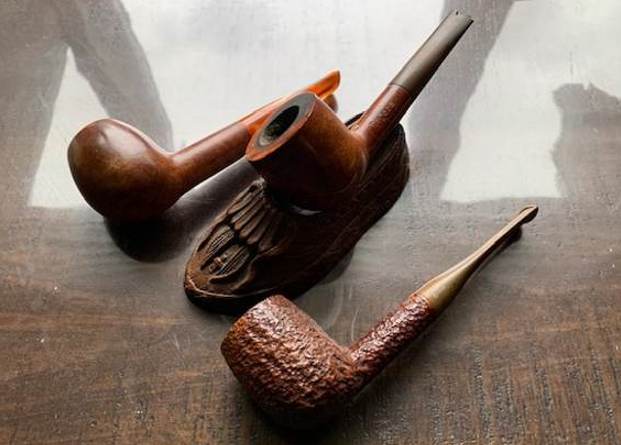
The second photo shows the next finds on the hunting trips. I have listed them below from top to bottom of the photo. I also found the moccasin pipe rest that holds one of the pipes at a local shop.

  1. Made in London England Apple with an orange acrylic stem that is in great condition.
  2. Roger’s Standard with a broken stem that is also stamped France. It was a free find that was given to us because the stem was broken. It is sitting in a moccasin pipe rest from the same shop.
  3. Savinelli Oscar 428 Rusticated Billiard

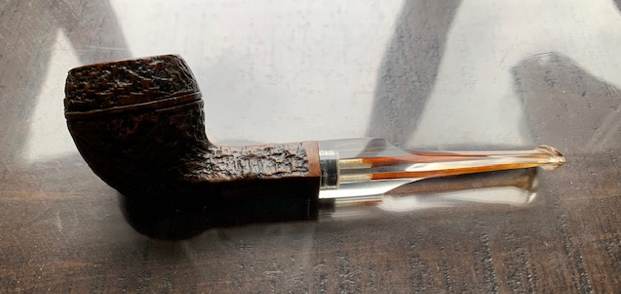
We also visited a friend in Vancouver, Washington to pick up some pipe parts – stems, tenons, bands etc. He gifted me with a House of Robertson Straight Rusticated Bulldog with a Perspex stem. We had a great visit and enjoyed swapping stories and tobaccos. The last two pipes we added are pictured below.

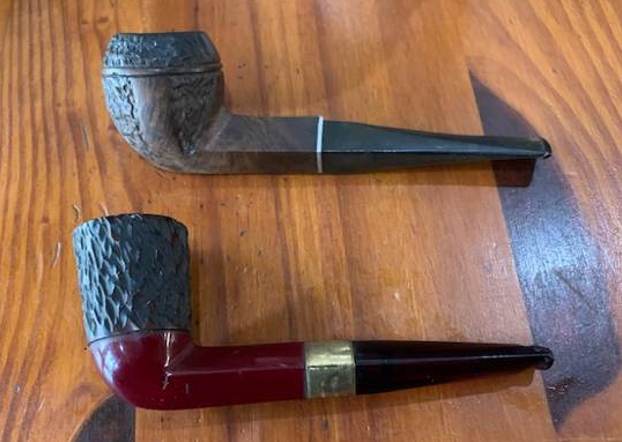
  1. Royalton Tru-Line Bulldog with rusticated panels and smooth panels on the bowl. It has a rusticated bowl cap and smooth shank.
  2. A Bakelite Diamond Shank pipe with a rusticated briar bowl.

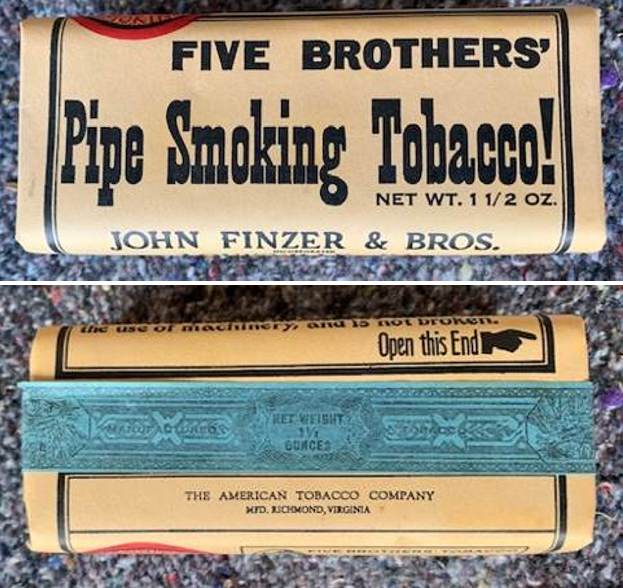
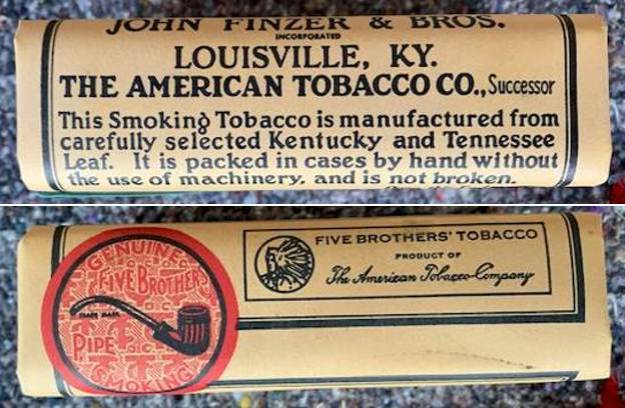
Here are some of the other things we picked up or were given.

  1. The first was a pouch of Five Brother’s Pipe Tobacco from the fellow in Vancouver, Washington. It had belonged to an older family member – perhaps his father or uncle. He is in his 80s so it an old timer. He had a partial case of it that he took this from to give me. It is a beauty and dry as dust.
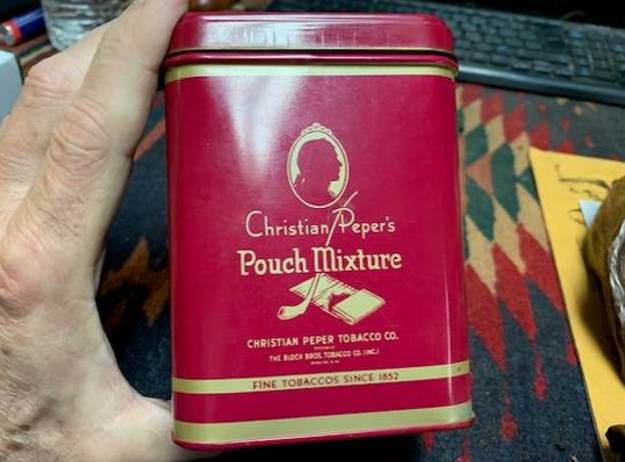
  2.  The second was a tin of Christian Peper’s Pouch Mixture that was sealed in a plastic bag in the tin. It was made by the Bloch Brother’s Tobacco Company in the 1950s. It was dry but still smelled good and would be an interesting smoke.

Jeff also passed on some finds that he had made with me in mind over the past few years. This was my first visit to the states since Covid 19 so some of this had been with him quite a while.

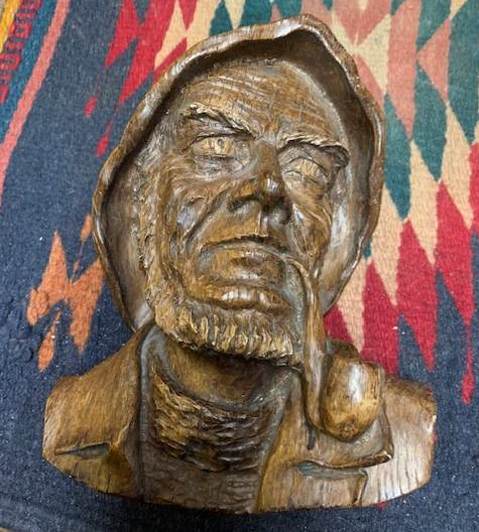
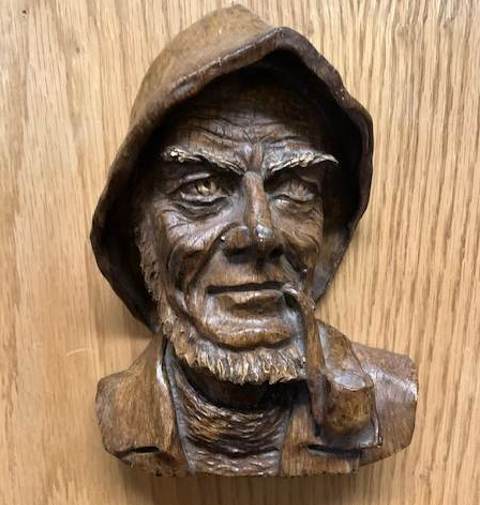
  1. A carved wooden head of a fisherman smoking a pipe. It was quite nice and was made to hang on the wall. Which it is now doing next to my desk here in Vancouver.
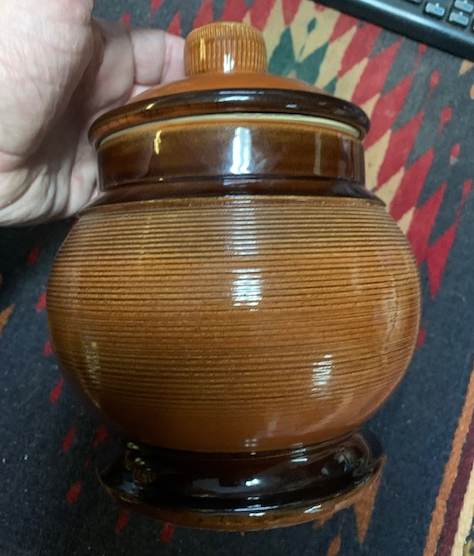
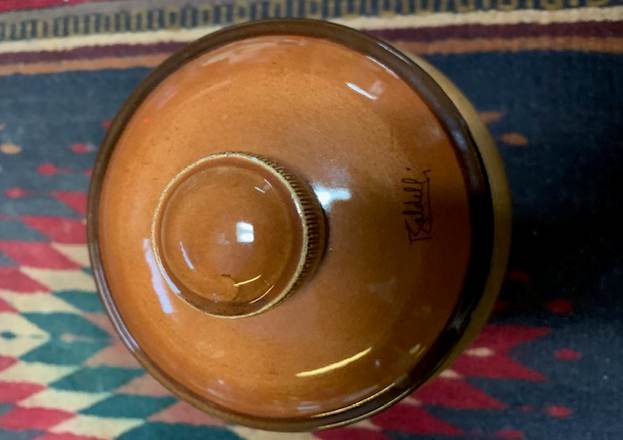
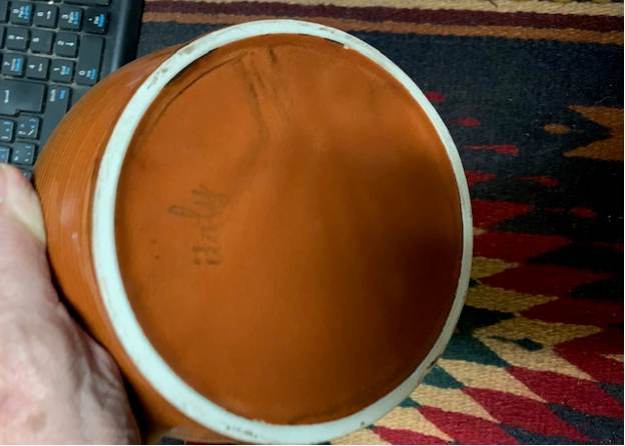
  2. We also had picked a nice sealed pottery humidor from a seller on Facebook that I had shipped to him. It is stamped with a script signature Baldelli on the lid and Italy on the base.

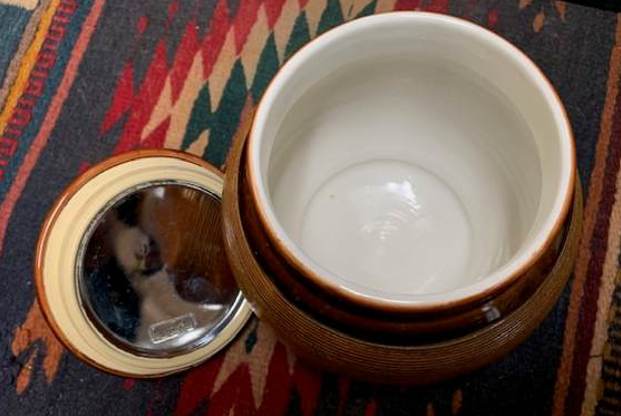
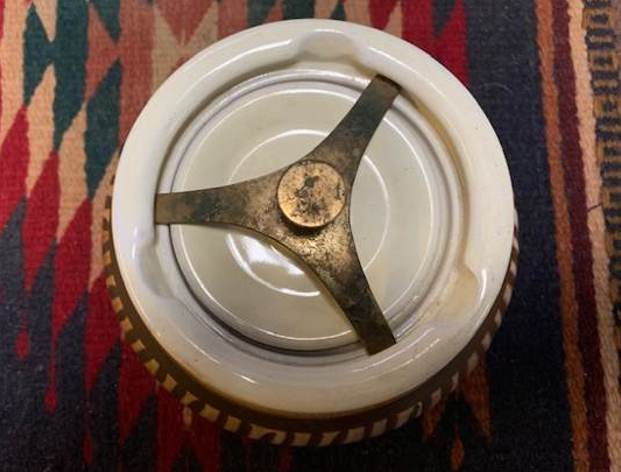
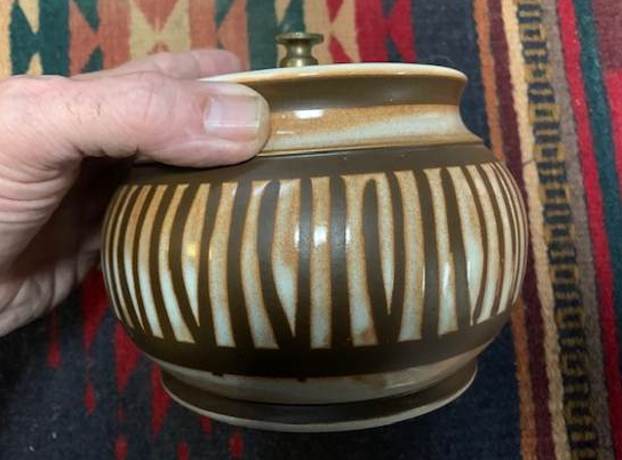
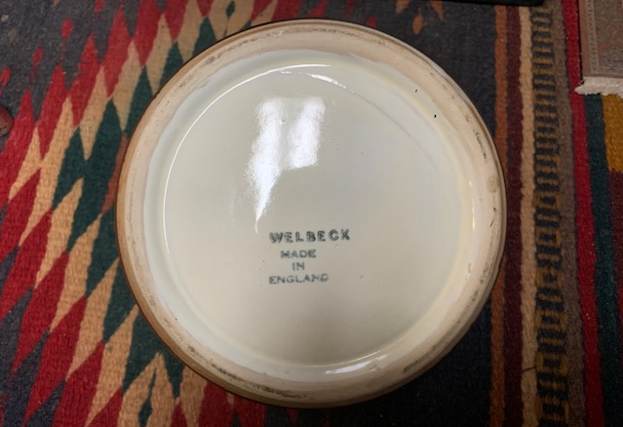
I found another humidor for tobacco with a brass handle that turned in the rim edge and kept the tobacco fresh. It is stamped Welbeck [over] Made in England. The humidor is white w/ brown vertical lines design, top lip has a brown stripe, lid has a 3 arm screw closure to seal the jar, 6 1/2″ dia. x 5″ tall, hard rubber seal and is in good condition. Finally a couple of other items I brought home with me from Jeff.

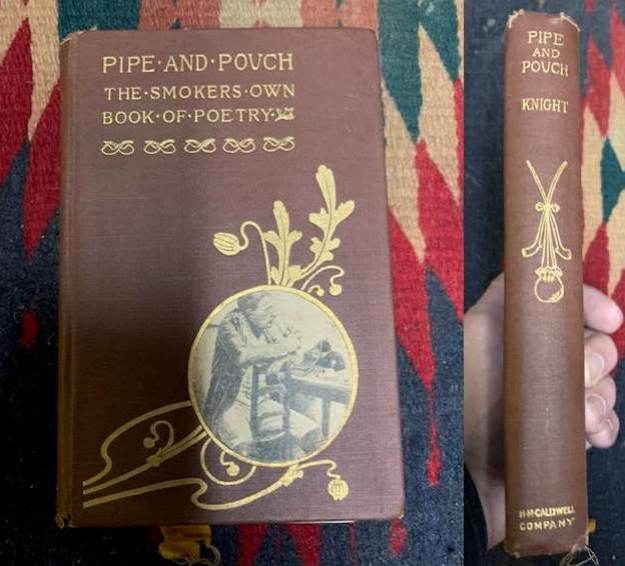
  1. An older book called Pipe and Pouch – The Smokers Own Book of Poetry. It was compiled by Joseph Knight and printed by HM Caldwell Co. Publishers in Boston. It has the printed copyright 1894. It is a neat old book with a built in book ribbon to keep my place and gilded page edges.
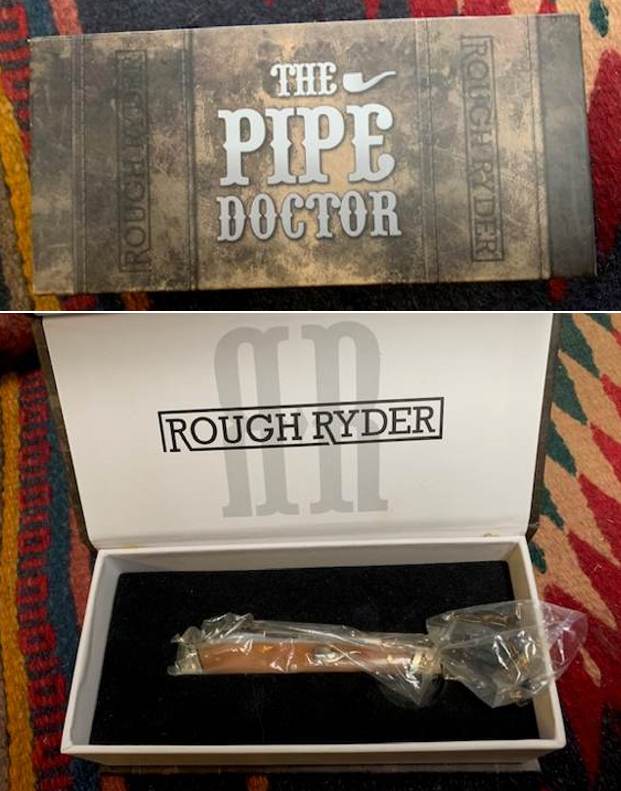
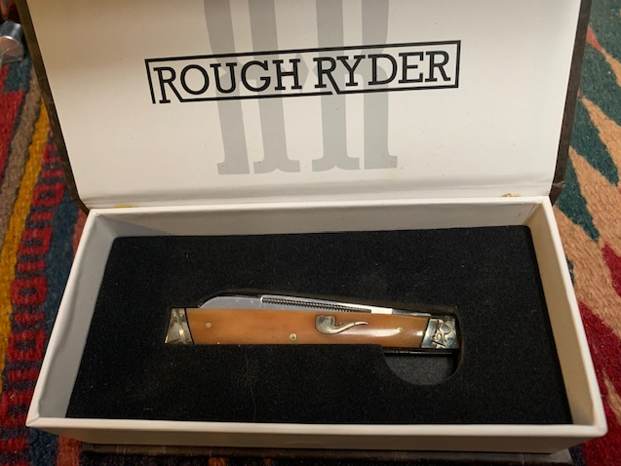
  2. A pipe knife boxed in a case that is printed Rough Ryder Pipe Doctor and when opened reads rough rider. It is unused and has an end that can be used for a tamper and a blade for scraping the bowl. It is a beauty.

It turned out to be an Epic Pipe Hunt


Blog by Steve Laug

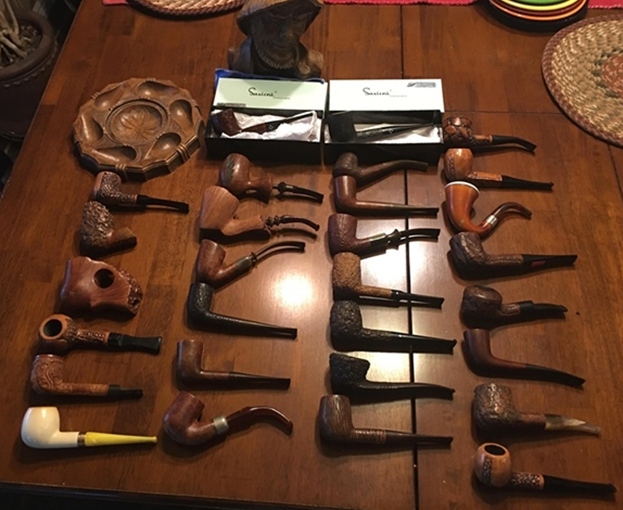
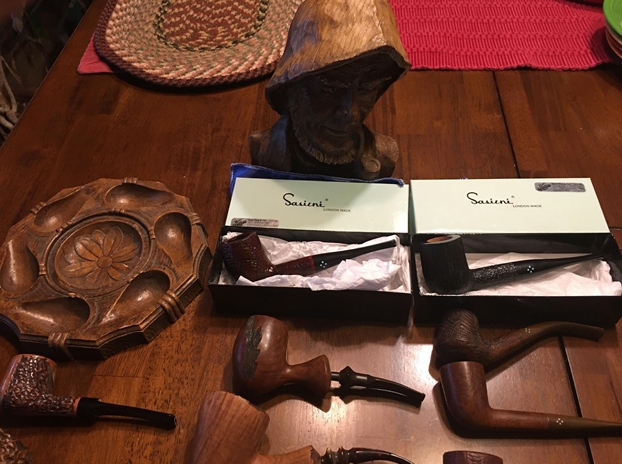
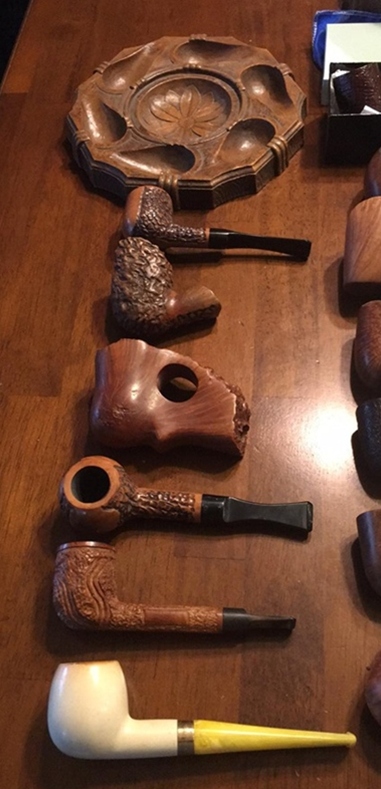
Jeff and his wife Sherry went on an overnight trip to Utah and did a bit of pipe hunting along with other things on their agenda. Throughout the day Jeff would either Facetime or send me a message with photos of what he was running into.  As I watched from a distance it seemed to me that he was having an epic pipe hunting trip. Each place he went whether new places that we have not been to before or places that the two of have hunted in the past yielded some great finds. I progressively wished that the border between Canada and the US was open so that Irene and I could take a trip down and join them on their journey. The first picture below is the one that he sent me when he got home – he gathered everything together and took the photo. He found the six pipe rest to the top left of the photo and the carved fisherman at the top center. Both were very interesting pieces to me. The find included a lot of different brand pipes and two of them freehand bowls without stems. There were quite a number of unsmoked pipes in the lot as well. A list of the pipes he found will be shown below with a closer look at that portion of the main picture. The first picture gives you a good feel for what he found this hunt. The second picture gives a closer look at the carved fisherman and the pipe rest. Pipe hunting over Facetime is not as good as being there but it allows me to experience some of the joys of the hunt. Thanks Jeff.

Jeff made a list of the pipes by column so that I could have a good feel for his finds.

The first column on the left has the following pipes from top to bottom:

  1. The 6 pipe rest
  2. Cowan’s Handmade Custom Unsmoked Pot
  3. Cartigiano Italy – freehand bowl sans stem
  4. Israeli Made Bridge Freehand – bowls sans stem
  5. Cowan’s Handmade Custom Unsmoked Squat Apple
  6. Genuine Meerschaum Imported Lovat (meerschaum lined??)
  7. Meerschaum Apple with acrylic stem and gold plated band


The second column from the left top to bottom has these pipes.

  1. Sasieni Four Dot Ruff Root Bark Billiard – Unsmoked with box and sock
  2. Scandanavian Freehand with plateau and rustication
  3. Preben Holm Regal Freehand
  4. W.O. Larsen Copenhagen Freehand with horn shank extension
  5. Dunhill Shell Briar Billiard 1969
  6. Blatter Montreal Billiard – red dot
  7. Mauro Series 2 Italy – Bent Billiard


The third column from the left top to bottom has these pipes.

  1. Sasieni Four Dot Rustic Billiard – Unsmoked with box and sock
  2. Sasieni Four Dot Ruff Root Bent Volcano
  3. Sasieni Four Dot Walnut Billiard
  4. Savinelli Non Pariel 9412 Bent Dublin
  5. Castello Natural Virgin Saddle Stem Billiard
  6. Castello Sea Rock Briar Apple
  7. Savinelli Capri Root Briar Dublin
  8. Comoy’s Blazon Rusticated Billiard


The fourth column from the left  top to bottom has these pipes

  1. Cowan Handmade Custom Bent Bullmoose
  2. Cowan Handmade Custom Bulldog – unsmoked
  3. Gourd Calabash (small) with an amber stem
  4. Custom Bilt Taper Billiard
  5. Custom Bilt Scoop
  6. BBB Natural Grain Zulu
  7. Caminetto Business Pot
  8. Cowan Handmade Custom Apple – unsmoked


This truly was an epic pipe hunt when you look at the brands of pipes he found and how many of them were unsmoked. The Dunhill, Sasieni, Preben Holm, Castello, Caminetto, Custom Bilt and BBB are well known brands and those alone were great finds. Added to that some of the others such as the odd Comoy’s Blazon, the older Gourd Calabash and the Savinelli Non Pariel give depth to the find. The unsmoked Cowan Handmade Custom pipes are a new brand to me and one that should be fun to search out. I would say that Jeff had a great pipe hunt and from the list of pipes I would say and epic one.  I only wish I could have been present as there is nothing quite like walking into an antique shop and finding a bonanza of pipes that have not been picked through. Thanks Jeff for sharing the trip.

A long awaited pipe hunt in Salt Lake City & Surrounding Communities


Blog by Steve Laug

In May, in talking with my wife, Irene it was decided that I would travel to Idaho Falls from Vancouver Canada for my Father’s 91st Birthday at the end of June. I began to search for flights that were both affordable and would not require a lot of transfers to other airports and planes to get to Idaho. The prices were crazy and all included significant layovers on the way there and back. I talked with Irene and pretty much decided this trip was not going to happen this year. I was a bit sad as every visit could well be the last one with age and distance. I went to bed and woke up with a plan. I decided to check on the cost of a flight to Salt Lake City, Utah (about a 3 hour drive from Idaho Falls). The price was literally a third of the cost of everything else I had checked. I called my brother Jeff to see if he would be willing to drive there and pick me up. As we talked we decided to take some time include a pipe hunt! I booked the earliest flight I could which gave me a whole day in Salt Lake and another day to drive through the neighbouring communities back to Idaho Falls – all the while stopping by antique shops and malls scavenging for pipes. We hung up and I booked the ticket. It was set for June 28th which was perfect all the way around. The wait for the date to arrive seemed to take forever.
The morning of the flight arrived and I was on the way! The flight was a short 1 hour and 40 minutes and I was on the ground. Jeff picked me up and he had a plan of attack for the pipe hunt. We decided to visit Jeanie’s Smoke Shop first as it was close to the airport. From there were would visit the antique shops in Salt Lake City and Ogden that day. The following day we would visit Brigham City and Logan. We also would visit small communities between the major stops noted above. We were off on the hunt. I have written about Jeanie’s in a previous blog (include the link here). So I will focus only on the antique shops. We found the Salt Lake shops empty of any pipes that caught our interest and manned by sales staff that had no desire to help us out in our hunt. In fact they were almost offended that we would expect them to have such “filthy” items as estate tobacco pipes. It was like they were saying, “You are in Utah after all and we don’t do such things.” What is funny is that in all the shops we visited we came away from SLC with just one pipe – little Dublin with a red, white and blue band and stamped St Claude, France. We laughed and continued our hunt.

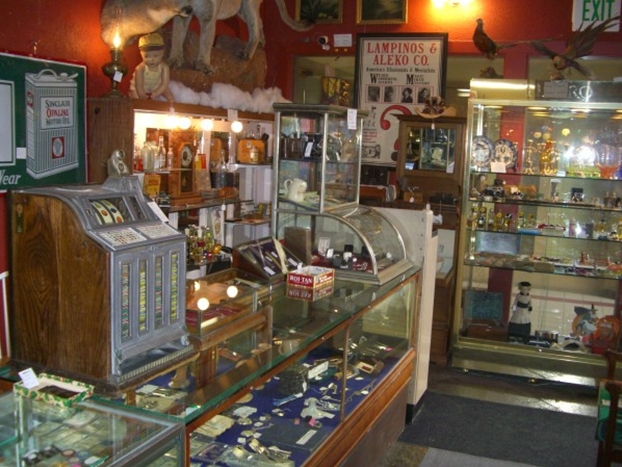
We finished the last of the shops and malls in Salt Lake and headed to Ogden. There was a great shop there that Jeff had previously found some great pipes at. So we set off to see if there were more. The shop was called “The Estate Sale Antiques” and it advertises itself as Ogden’s best antique mall. The Estate Sale Antique Mall was nearly 6,000 square feet in size filled with some of the finest and most unusual antique and collectible items anywhere. The owners Lance and Becky are both life long collectors with a wide variety of knowledge including advertising items, coins, bottles, country store antiques, toys, western memorabilia and jewelry.Lance greeted Jeff like a long lost friend and we were made to feel very welcome in the store. In Googling the shop here is what I found and I have to concur with the description: “Estate Sale Antiques brings together a fantastic group of antique vendors under one roof in the heart of Ogden. With convenient accessibility and plenty of parking, The Estate Sale is a must-see stop on any antique shopping quest in Ogden or even from Salt Lake City!”  The next photos are from theire website and give a pretty good idea of the size and diverse contents of the shop. It was a great place to visit and contained two floors of treasures. Jeff lead me to a corner near the cash register and not far from the front door where he knew there were pipes (It is shown in the second photo above). In fact not only were there ones that he had looked over previously but there were also new pipes as well. We found 8 pipes that we wanted including some real beauties and some old timers. We also found a walnut pipe rest made specifically for holding a gourd calabash pipe and a PipNet pipe reaming set.

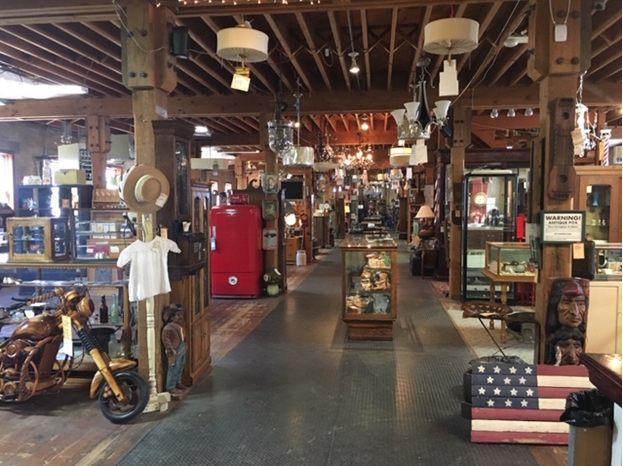
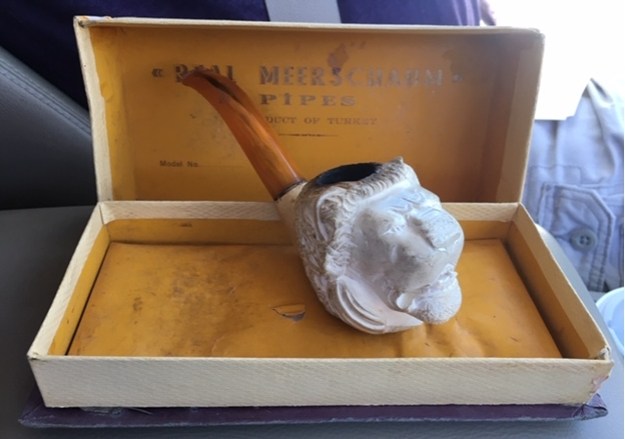
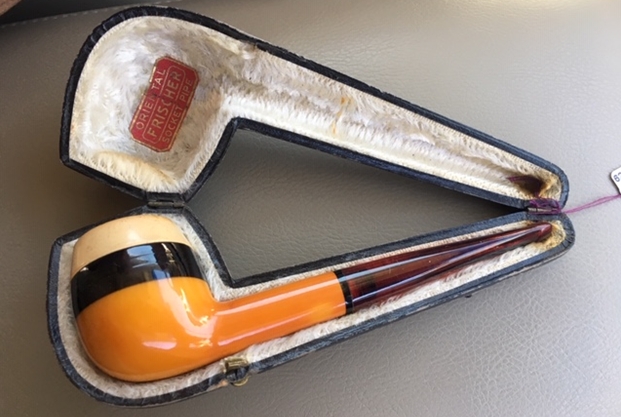
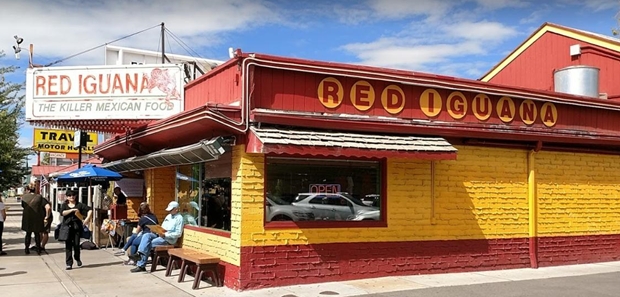
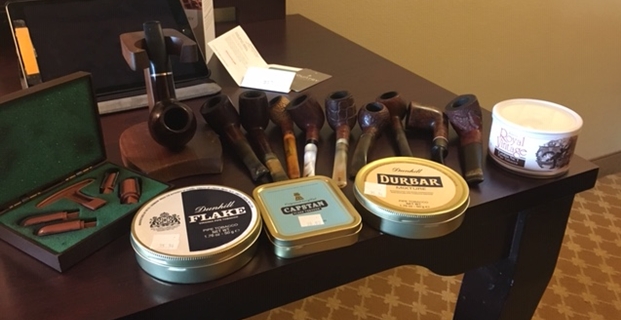
We settled out bill and went for a visit to the town of Layton where we found one more pipe. It was an interesting Italian made pipe with a rusticated finish that had been sandblasted over the rustication. It had an oval shank and an unusual shape. The shop was managed by a group of very friendly seniors (meaning a bit older than my 65 years). We enjoyed the stop even if all we took away was one pipe. There were lots of others there but nothing that caught our collective eyes and called out for restoration. We called it a day and headed back to Salt Lake City for dinner at the Red Iguana – a restaurant that is famous for its Mole dishes.We had a great meal and waddled to our hotel. I spread out the haul on the desk top and took some photos. It was a good day pipe hunting. I included the day’s haul along with the tins of tobacco I had picked up at Jeanie’s Smoke Shop for the photo. These included a tin of Dunhill Flake, Capstan Blue, Dunhill Durbar and a tin of Royal Vintage Latakia No. 1 made by Mclellands. The pipes included from left to right – a Rossi Rubino, Schoenleber billiard, Irwin by GBD Canadian, a no name Meerschaum Apple, 2 Duncan Aerosphere Billiards with pearlized stems, a Kaywoodie Relief Grain 18S, an Ansells of Washington DC Prince, a St Claude Americana Dublin, and an Italian Made unique.Not a bad haul for the day.The next morning we got up early and after a good breakfast at the hotel continued the pipe hunt. We drove to Brigham City and went to several shops. There was an interesting mall in an old Residential School that was well laid out. Despite the horrendous history of the treatment of aboriginal peoples the place had been cleaned up and redeemed. There were aboriginals working in the shop and it seemed to be a great place to work. We found one pipe in the cabinet toward the front of the shop. The first photo shows the layout of the shop. Jeff found the meerschaum in the display case in the centre of the photo. The second photo shows the pipe that Jeff picked up – a nicely carved lion’s head meerschaum that was in the original box and in pretty decent condition. We left the shop with pipe, put it in our bag of finds and headed to our next stop in Logan, Utah. Logan is a nice looking town with wide boulevards and several antique shops. Other than finding an old Medico Brylon pipe we almost came away empty handed. However we went into a large Antique Mall on the main street and talked with the seated clerk. He did not seem interested in helping much until we got talking about pipes and I gave him a source for tobacco. He said they did no have any pipes in the shop and then I happened to see a pipe case over his shoulder. I asked about it and he said he thought it was empty. I reached for it and low and behold it was not empty after all. Inside was strange looking pipe like nothing I had ever seen before. The inside of the cover had a sticker that read Oriental Frischen Socket Pipe. I turned it over in my hands and found that the pipe had a screw in meerschaum bowl that was threaded into the base. The base appeared to be made of Bakelite and the stem seemed to be cast into the shank of the pipe. We made and offer and added one last pipe to our collection.We went back to the car and headed to a final shop that had no pipes. We were a bit hungry so we decided to visit a cheese factory nearby. We bought some cheese curds to snack on and something to drink. The pipe hunt came to an end and we headed for Idaho Falls. It was a great time pipe hunting with my brother. It has been a long time since I took a trip for the sole purpose of stopping at every antique shop on the journey and sleuthing through their stock for the hidden or not so hidden pipe treasure. I thank my brother for taking time out of his “busy” retirement to come and pick me up and take me to some of his favourite hunting spots. We had a ball. Thanks for giving this a read.


Determining the Cost of Rescue Pipes


Blog by Joe Gibson (PappyJoe)

I have followed PappyJoe on Twitter ever since our paths crossed on the Country Squire Radio show. We have fired tweets back and forth and not long ago he sent an invite to his blog PappyJoe’s World – Pipe Smoking and other thoughts. Since then I have frequented the blog and read quite a number of his posts. During my lunch hour at work today I decided to visit again. I read three really interesting posts that I thought would be great to share on rebornpipes. I wrote PappyJoe and asked permission to post these blogs here. This is the first of them. Well worth the time to read. Thanks PappyJoe and welcome to rebornpipes. Without further words from me here is the second of his blogs (https://pappyjoesblog.com/determining-the-cost-of-rescue-pipes/).

Two pipes I rescued from an antique/collectible shop. The Kaywoodie Stembiter was first on the market in the 1950s.

Here’s the question. When shopping at antique/collectible/flea market/junk shops, how much is too much to pay for a pipe?  Of course, the final answer is, “It depends on how much the buyer is willing to spend.”  But other than that, how do you determine if the pipe you’re looking at is a good value?

I look at different factors when I find a pipe in one of these shops. First, if it says “Made in China” I don’t buy it. Period. Second is the brand name because there are some pipes I don’t personally collect – Dr. Grabow, Medico, Yello Bole and most Kaywoodie. (In an effort to be honest, I do have four Kaywoodies, 1 Yello Bole Spartan (It was my grandfathers.) and a Linkman Hollycourt Special made before the name changed to Dr. Grabow.) Let me be clear, there is nothing wrong with these pipes and many pipe smokers collect them. With some exceptions, I don’t.

I also don’t normally collect pipes to sit on display. I own five pipe designated as display pipes. Two are Meerschaums which displayed cracks after the bowl got hot. One is a gourd Calabash with a cracked Meerschaum bowl. The last display Meerschaum I bought specifically because of the intricate carving and the size. Two Bavarian Hunter style briar pipes round out my “display only” pipes. Eventually I may clean and smoke them as well.

A Bavarian style pipe

For the most part, I look for pipes European made pipes like Savinelli, Jobey, Chacom, Peterson, etc. My personal holy grail would be to find a Dunhill that I could afford to buy and restore. While I have had luck finding a few Savinelli’s and other Italian made pipes, the rest have eluded my efforts. So far.

The next thing I look for is the condition of the pipe bowl and stem. I only buy pipes that are in such a condition that I can either clean and restore it myself or it would be worth the cost to send it to a professional. Having the work done by professional pipe restorers can range from very reasonable to the cost of a new pipe. Whether it’s worth it or not, is again, a personal choice.

Here are some things I consider when hunting for a rescue pipe as I call them.

Who Made It.

Lighthouse Pipe by Akdolu. The top of the lighthouse comes off.                                                  Total weight: 5.92 ounces (168 grams)

As I mentioned above, I don’t necessarily collect every pipe I see. I like looking for higher quality names. One exception is Kaywoodies. I learned the difference between 2, 3 and 4-digit Kaywoodies. If I find one with 2 or 4 digits, I generally will look at it more closely. If it’s a 3-digit pipe, it was made after 1972 or so and I am less interested. This generally doesn’t apply to Meerschaum because most I find are not signed.

What Condition Is It In?

Obviously, I check for cracks and burnouts. After that I look at whether the smoker took care of the pipe or abused it. The amount of cake in the bowl is one indicator I look at. For example, I passed on several pipes recently because I couldn’t fit my little finger into the bowl. The cake in each of them was thick and old. In two pipes, the cake was separating from the wall in spots. These pipes included a Dunhill, a Savinelli, a Jobey, a Butz-Choquin and a Wally Frank. They also had other condition problems.

I also look at the stem condition. If I can’t remove the stem of the pipe from the stummel I will usually pass on the pipe. The stems on three of pipes I mentioned above were stuck so bad I couldn’t remove them. I did remove the stem from the Savinelli but there was about a 1/4-inch gap between the stem and the ferrule. It just wouldn’t go in all the way.

The stems on these pipes were all heavily oxidized and severally chewed on, also. The Dunhill, for example, looked like a weathered orange ball used as a chew toy for a large dog. The deep tooth marks extended for almost an inch down the stem. Again, it was a matter of my personal choice, to not buy any of these pipes because I felt the stems were not repairable.

Does it Smell Bad?

In addition to the amount of cake in the bowl, I smell the pipe. If it smells like tobacco, I consider buying it. If it smells like mothballs, mold, ammonia or anything else, I pass. This is especially important when it comes to Meerschaum pipes. I have come to learn that if an unsmoked Meerschaum in one of these shops smells like acetone or chemicals, then it’s been broken and glued back together.

How Much Is The Cost?

Savinelli Giubileo d’Oro. I paid $3 for at an Antique Street Fair

A lot of shops I visit are not one-owner businesses but consist of numerous vendors. That makes haggling over the price of an item difficult because the person at the register must track down the vendor and discuss offers over the phone. Sometimes it’s worthwhile, other times it’s not worth the effort. Here’s where personal choice comes into play, again. I look at a pipe, estimate what it would cost to restore (time, effort & money) and add that to the asking price. Then I consider the cost of a similar pipe either new or from a reputable estate pipe vendor.

(© J. Gibson Creative, April 2018)


Antique? Vintage? Estate? Or, Just Junk No One Wanted?


Blog by Joe Gibson (PappyJoe)

I have followed PappyJoe on Twitter ever since our paths crossed on the Country Squire Radio show. We have fired tweets back and forth and not long ago he sent an invite to his blog PappyJoe’s World – Pipe Smoking and other thoughts  Since then I have frequented the blog and read quite a number of his posts. During my lunch hour at work today I decided to visit again. I read three really interesting posts that I thought would be great to share on rebornpipes. I wrote PappyJoe and asked permission to post these blogs here. This is the first of them. Well worth the time to read. Thanks PappyJoe and welcome to rebornpipes. Without further words from me here is his blog (https://pappyjoesblog.com/antique-vintage-estate-just-junk-no-one-wanted/).

I’m one of those pipe smokers who loves shopping for “estate” pipes. The wife and I enjoy walking around so called antique/collectible shops, malls, flea markets and street fairs. I like being able to pick up the various pipes I find and try to identify the maker and age. I have probably 25 rescued pipes I’ve bought from these shops. (I call them my rescued pipes because while they are definitely not antique, I have cleaned, sanitized and polished them into smoking condition.) But to be clear, none of these are “antiques.”

If it’s not 100 years old, it’s not an antique. And, not all of these shops are really antique shops.

Savinelli Giubileo de Oro

To be clear, I looked up the definition of antique. To be considered a true antique, the accepted rule is the item has to be at least 100 years old. Anything between 40 and 99 years old is vintage. Old items actually bought at an estate sale, are estate. Anything you find in a shop that is less than 20 years old is probably just a piece of junk someone threw out. In other words, it takes more than being old to be an antique.

Mostly these are shops which throw the name “Antique” around like a used hamburger wrapper. Some are collectible shops. Others are vintage shops. Some may even contain a few items that are bordering on being real antiques. In my opinion, real antique shops are as clean and organized as a good jewelry or furniture store. The individuals working in it are neatly and professionally dressed. And, it is one store. That is an antique store on the upper end of the scale.

You will know you are not in good antique stores when you walk in the door. If you see a sign that says, “Over 100 different vendors,” it’s not an antique store. When you walk in and smell the dust and mildew, and vendors look like they’ve been cleaning out their attic, chances are it’s a flea market.  If you walk down the aisle and each booth looks like someone just dumped out a bunch of garbage bags, it’s not an antique store.

My opinion is that these places are flea markets and the vendors spend way too much time watching American Pickers to get their prices. They all operate under the premise that if it’s old and the price it about 10 times what its worth, someone will call it an antique and buy it.

I’m not saying these places should be avoided. I’m just saying don’t go into them with the expectation that you are going to find something along the lines of a Dunhill for $20.

Finding good pipe deals…

Sure, you may find some real antiques like broken clay pipes from the civil war era, but for the most part everything found in these shops are more likely from the 1930s to 1990s.  Mostly I have found were Dr. Grabow, Medicos, Kaywoodie, Yellow Boles and unnamed briar basket pipes. But, I have also found Savinelli, WDC’s, and a variety of Italian maker pipes like Mauro Armellini. I have seen a number of “Made in London” or “Made in England” basket pipes. I even have found Edward’s Algerian Briar pipes.

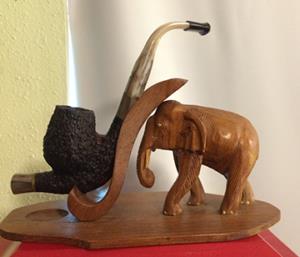
Mauro Armellini Cavalier in an Elephant Pipe Holder

Some of my finds have been at really good price points. Who wouldn’t want to buy a Savinelli Guibileo de Oro for $3.00 or a Savinelli Nonpareil 9604 for $10? I also have a Mauro Armellini Cavalier I found for $25. If you do your research and learn how to identify them, you may even find more desirable Kaywoodie or Dr. Grabow.

Educating yourself is key. I have missed out on a couple of briars that I didn’t recognize the markings on. Mainly those “Made in London” or, “Made in England” pipes I mentioned earlier. They definitely weren’t Dunhill’s, but I later learned they were good, collectible pipes. They are out there; you just have to learn to recognize what you are looking at.

Let me say something about estate pipes. In my opinion, an estate pipe is one found in the collection of a pipe smoker whose last bowl has been extinguished. The family will pick over the collection and maybe choose a few as keepsakes. The majority of the remaining pipes will be sold to antique shops specializing in estate sales or to reputable pipe shops or pipe dealers. Many of these pipes will be cleaned and sanitized before they are sold.

(© J. Gibson Creative Services 2017)


One of those Antique Mall finds that makes you catch your breath


Blog by Steve Laug

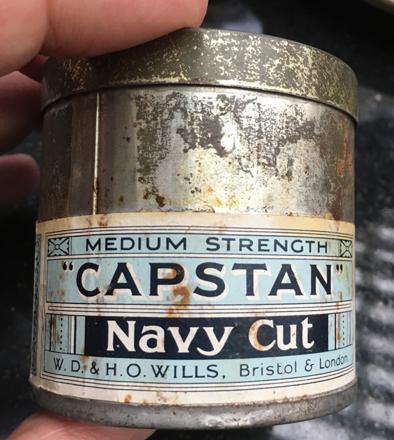
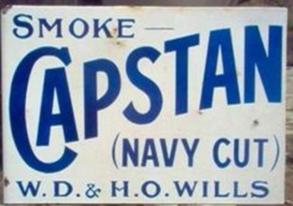
This past weekend my wife and I took some much needed R&R and checked into a nice hotel about an hour and a half from home. We needed a break, as both of our work schedules have been heavy and my travel schedule has been quite demanding. It was great to be together and spend the weekend without a ringing phone and the ever-present work demands. We had plans for Saturday morning until about noon. However, we were absolutely free on Saturday afternoon and Sunday. We used the afternoon to visit one of our favourite spots. It has great restaurants, brewpubs and many different kinds of shops. One shop that we always check out is an antique mall. Irene always seems to find something there and so do I. She was happy to have found an older hard cover cookbook to replace one she had given away. I could not believe what I found. It was in the last row of the stalls in the mall, in almost the last booth. I looked in a cupboard thinking I might find something. There in the middle of the cupboard there was an old style tin of Capstan Medium Strength Navy Cut tobacco.

The label covered the lower part of the tin and goes about half way up the tin. The tin itself was oxidized and discoloured but did not appear to be punctured or compromised. The label on the front side of the tin reads; Medium Strength “Capstan” Navy Cut over W.D. & H.O. Wills, Bristol & London. You can see the layout of the label in the photo to the left. I could not believe what I was seeing. This looked like an old timer. I have handle a lot of old empty tobacco tins in my hunt for that full tin hidden among the tobacciana memorabilia. Many have looked like they had something in them. Some were empty or at best half full of old dried and rattling tobacco that was beyond its life. The difference was that this tin had a hand written tag from the seller that said that it was unopened. It was hard to tell through the glass of the cupboard what the seller meant by unopened. I purchased a “sealed” tin of older Balkan Sobranie that was open under the metal top cap once I opened it at home. The tobacco had dried out. Even rehydrating it did not bring the true depth of flavour of the tobaccos. So I was dubious about this “unopened tin”. I was hopeful that it was; and if so then the price of $25 was not a lot to pay for aged Virginia tobacco.

With a bit of “optimistic pessimism” I went to find the clerk to open the cupboard for me so I could check out the tin. I am one of those “got to have it in hand and check it out” kind of guys. I wanted to give it a light shake to see if it rattles. When the clerk opened the cupboard and handed me the tin I lightly shook it. Instead of a rattle, there was a thud as the contents moved from top to bottom. I looked at the sides and bottom of the tin and it appeared undamaged. I pried of the top and underneath the top of the tin was intact! I did not let the clerk see my enthusiasm at this point I just wanted to pay for the tin and take it to the car to check it out more thoroughly. I paid the $25 plus the extraneous taxes here in British Columbia and she wrapped the tin in newspaper and handed me the bag.

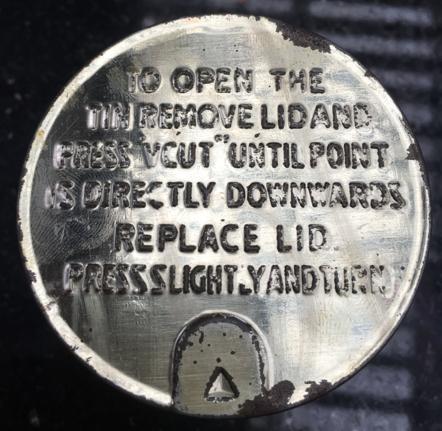
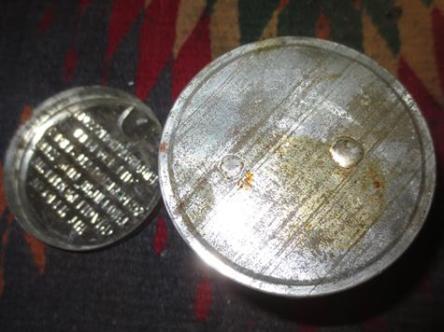
When I got to the car, I took it out of the wrapping and checked it out more carefully. The tin had a slight bulge on both the top and the bottom. It was sealed tight and there appeared to be no rusted areas or punctures in the tin surface. I was excited. I took photos of the top and the bottom of the tin. The photo to the left shows the top of the cap. The second photo shows the cap removed and the sealed tin. The third photo shows the bottom of the tin.

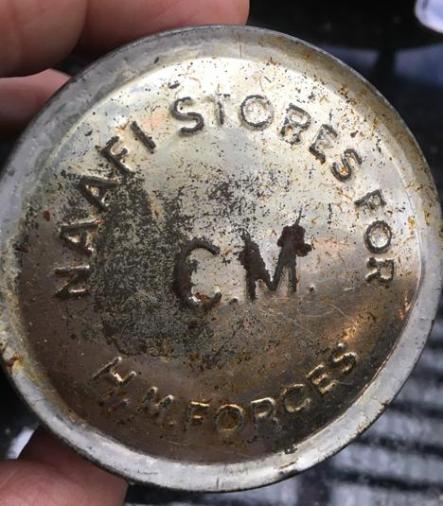
The embossed lettering on the top of the can reads, “To open the tin remove lid and press “V-Cut” until the point is directly downwards. Replace lid, press slightly and turn.” This gives simple and clear instructions on how to open the can. In essence the can has its own built-in can opener on the cap. The lettering on the underside of the can reads, “NAAFI Stores for HM Forces” in a circle around the outside with a CM in the centre.

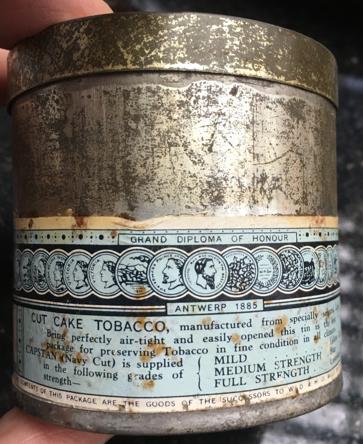
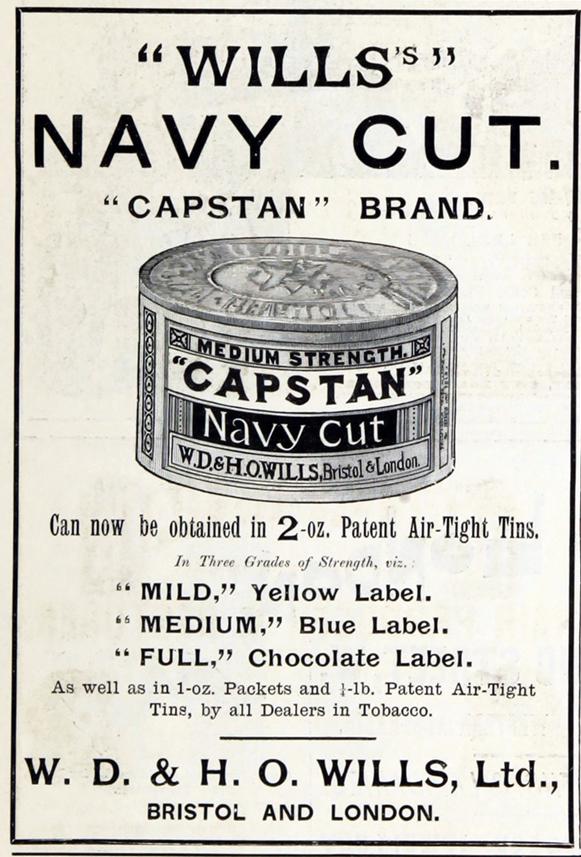
The last tin photo below shows the back of the tin and label. The label on the back of the tin had same light and dark blue colour scheme as on the front of the tin. It reads Grand Diploma of Honour over a series of coins/medallions that span the top of the label. In a small banner centered under the medallions, it read Antwerp 1885. Under the top banner, there was a rectangular box with a star and the word Trade Mark in a square on either side of the rest of the label. In the remainder of the rectangle, it read Cut Cake Tobacco manufactured from specially selected Leaf. Being perfectly air tight and easily opened, this tin is the best package for preserving Tobacco in fine condition in all climates. At the bottom of the label it read, Capstan (Navy Cut) is supplied in the following grades and strengths: Mild – Yellow Label, Medium Strength – Blue Label, Full Strength – Chocolate Label.

I had no idea what NAAFI Stores was when I read the bottom of the tin. I understood the CM probably stood for Capstan Medium.

I also understood the HM Forces to mean Her Majesty’s Forces. This gave me a starting point to try to date the tin. I looked first on Wikipedia to learn about the NAAFI stamp. Here it the link: https://en.wikipedia.org/wiki/Navy,_Army_and_Air_Force_Institutes#NAAFI_is_Born  In reading that I learned quite a bit. I quote that in part below.

After the First World War the Expeditionary Force Canteens (EFC) and the Navy and Army Canteen Board (NACB) did not return to the gratitude of the Nation. This was because EFC had made a large amount of profit from the sales of goods to the troops and opinion was divided as to what should be done with the money.

In March 1920 Winston Churchill, then Secretary of State for War, set up a committee to advise on the kind of organisation which would be needed for the Armed Forces in the future. The findings were unanimous; there should be one organisation to serve all three Services, it should be permanent and it should be able to rapidly expand or contract at times of war or peace. The Navy, Army, Air Force Institutes was therefore established on 6 December 1920 and started trading as NAAFI in 1921

As a not for profit organisation, with no shareholders to reward, NAAFI was asked to run the catering and recreational establishments needed by the armed forces. It had to make a profit for the good of the NAAFI customers – the men and women of the British Armed Forces- and so in addition it undertook to sell goods to servicemen and their families over and above those that were initially provided by the Royal Army Service Corps (RASC). The servicemen would benefit directly by getting cash rebates and discounts on purchases and indirectly through surpluses given back as a whole from each year’s trading.

For the first time the troops overseas were able to buy the same things in the canteen abroad as they could at home. NAAFI first saw overseas service in Ireland in 1922. Six years later NAAFI would have a presence in Bermuda, Ceylon, Germany, Gibraltar, Iraq, China, Jamaica, Malta, and the Middle East.

The NAAFI’s greatest contribution was during the Second World War. The Chairman & CEO during the war years was Sir Lancelot Royle and by April 1944 the NAAFI ran 7,000 canteens and had 96,000 personnel (expanded from fewer than 600 canteens and 4,000 personnel in 1939). It also controlled ENSA, the forces entertainment organisation. In the 1940 Battle of France alone, the EFI had nearly 3,000 personnel and 230 canteens.

From this I learned that NAAFI was formed by a committee set up by Churchill post WWI. The acronym NAAFI meant Navy, Army, Air Force Institutes and was formed in December of 1920 and began trading in 1921. It operated as a catering and recreation non-profit to sell goods to servicemen and their families. It was a discount store for servicemen. Its greatest contribution was during WWII growing from a small organization to a large one by 1944. This gave me a bit of a clue regarding the age of this can. Is it possible that this tin of tobacco remained unopened that long? Could it truly be from the time period of 1921-1945 with the close of WWII? I am not sure but that would date tin to the 1940’s. Is that true? Is that the correct period for this type of tin? I don’t really know. Perhaps some of you may be able to pin down the dates on this tin.

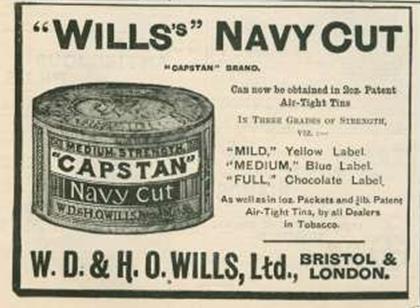
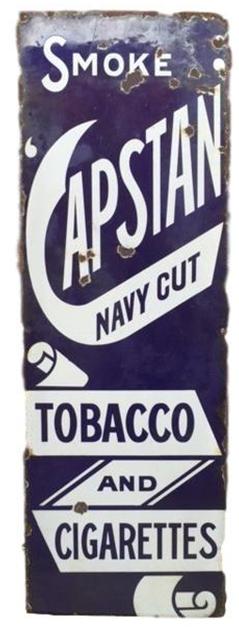
I close with an advertisement from the time period that I found while researching dates for this tin of tobacco. I love the language and the promises that are given in advertising from this time period. Things just seemed so much simpler in many ways – notice I said simpler, not better. Thanks for reading this blog.