
Blog by Steve Laug
The latest pipe I worked on came with a stubborn ghost so I was forced to use almost all the tools in my arsenal for removing the ghost. As I worked through the various procedures that I use I thought it would be helpful to spell out each method individually for ease of reference. Some of the pipes I work on are quite easy to clean and merely take pipe cleaners, cotton swabs and alcohol. Most though need a thorough reaming and cleaning. Other like the one in the photos below take a lot of elbow grease and a lot of different methods to remove the ghosts and deliver a clean smelling pipe.
1. Thorough cleaning and reaming – the first method is by far the one I use the most. I have found that 9 times out of 10 I ream the pipe with a PipNet reamer with four different sized cutting heads. I generally start with the smallest head and work my way up to a cutting head that is close to the size of the bowl. I will finish any portion left behind with a sharp pen knife. I use cotton swabs, pipe cleaners and isopropyl alcohol to scrub out the shank and bowl as well as the stem. This method works well on many of the lightly smoked pipes that I clean out. I also find that those pipes used to smoke straight Virginia tobaccos or Virginia Perique tobaccos are the cleanest and generally do not have a ghost. The worst for tars and buildup are the pipes used for aromatics. Those smoked with English/Balkan blends are somewhere in between.
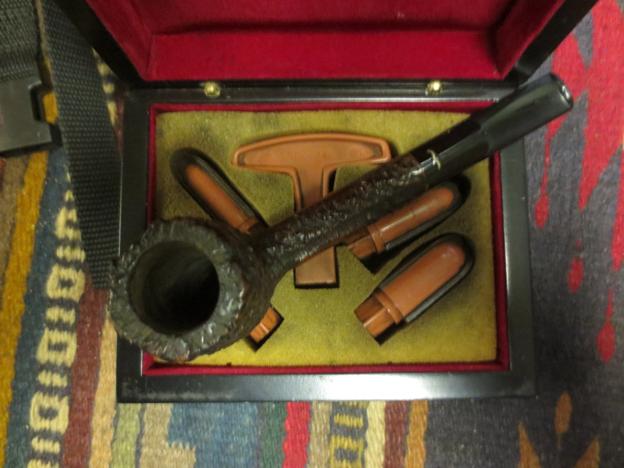
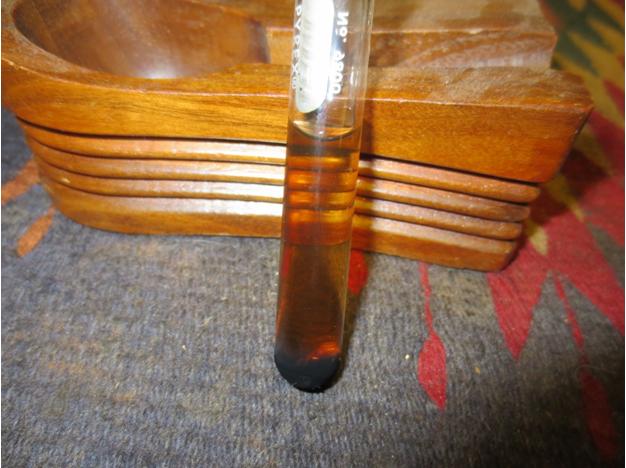
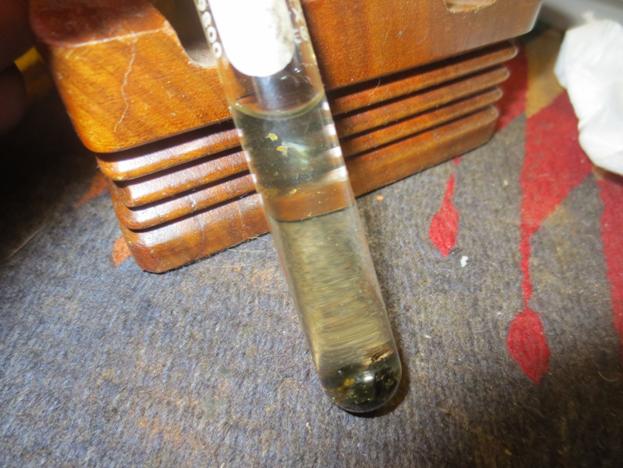
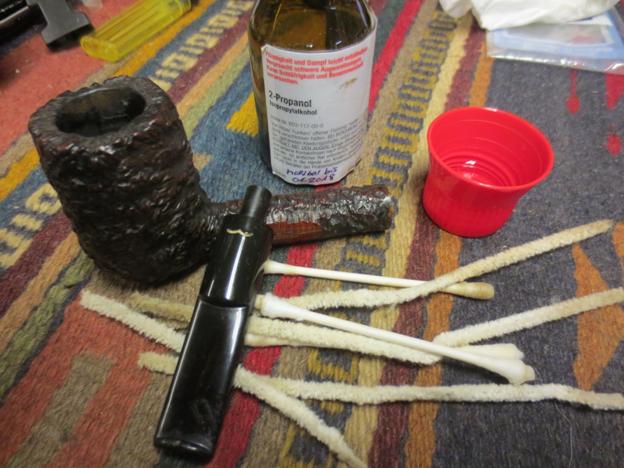 2. Retort – The second tool in the kit is a retort. A retort is a simply made tool that includes a test tube, cork, a connector and surgical tubing. The surgical tubing is stretched over the stem or inserted in the shank (see Andrew Selking’s posts). A cotton ball is stuffed into the bowl and alcohol put in the test tube. Canned heat, an alcohol lamp or a candle is used to heat the alcohol to boiling and it is pushed through the stem, shank and bowl. When the test tube is removed from the heat source the cooled alcohol returns to the test tube. It carries with it tars and oils that have been boiled out of the pipe. I have found that I have to often repeat this process several times before I get a clear alcohol back in the cooled tube. I am currently working on a pipe that I have used the retort on four times and just now am getting a clear alcohol return in the test tube. Once I remove the cotton ball and the tubing I use pipe cleaners, cotton swabs and alcohol to remove any remnants of tars and oils. Once the pipe dries out the retort has generally removed all but the most stubborn ghosts and leaves the pipe smelling clean.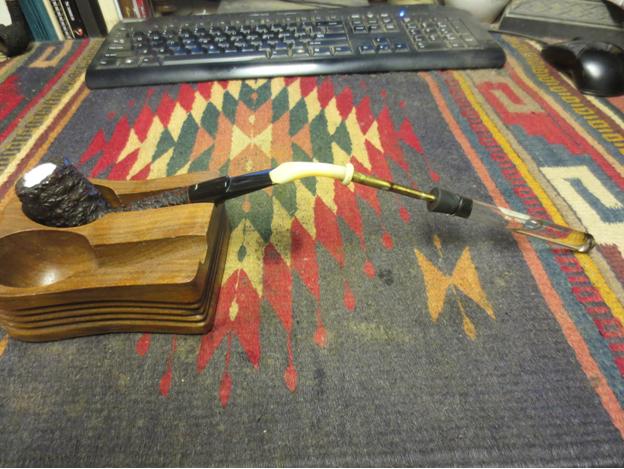


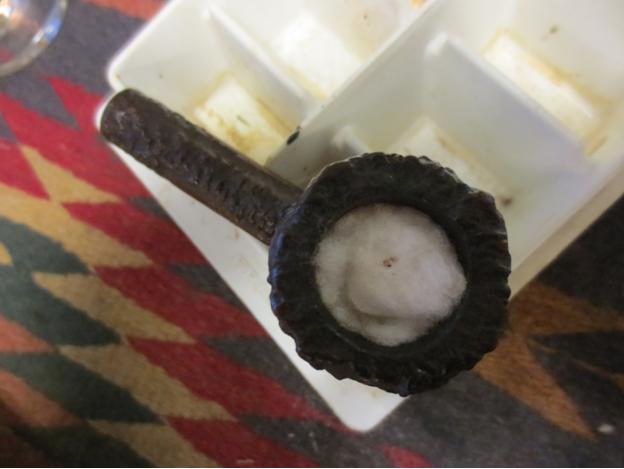
 3. Cotton ball and alcohol treatment – This treatment is one that I use instead of the salt and alcohol treatment that many have written about. Sometimes I use this method instead of a retort – if the pipe has a ghost but is not terribly dirty. Other times I use it along with a retort. I stuff the bowl full of cotton balls all the way to the bottom. I stick a cotton swab in the shank to plug the airway or in some cases put a rubber stopper or cork in the end of the shank. I use a rubber ear syringe to fill the bowl with alcohol. I used 99% isopropyl alcohol and fill it until the cotton is covered. As it evaporates I add more alcohol to the bowl. The alcohol generally goes into the shank as well and draws the oils and tars into the cotton balls in the bowl. I leave the pipe sitting in an old ice cube tray over night or until the cotton is darkened. Then I remove the cotton balls and repeat the process until the cotton remains white. Once the bowl is empty I use pipe cleaners, cotton swabs and alcohol to clean out any remaining oil and tars in the bowl and shank.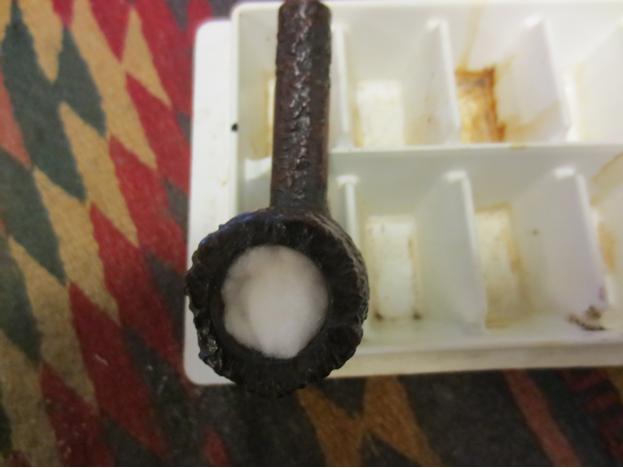
 4. Kosher salt and alcohol treatment – The salt and alcohol treatment is a variation on the above method. I used it for years and had no issues with pipes that I did the treatment on. Many have spoken of split shanks and bowls cracking after this treatment and will not use it. I have never had a problem so I continue to use it on stubborn bowls and ghosts. I use a Kosher sea salt that is in rock salt form and fill the bowl with it. I then use the rubber ear syringe to fill the bowl with alcohol. I prepare the shank in the same way either plugging it with a cork or stopper or even a cotton swab. I let the alcohol run into the shank and then set the pipe in the ice cube tray overnight. The alcohol wicks out the oils and tars from the briar and turns the salt dark. In the bowl in the pictures I had already used a retort and the cotton ball and alcohol treatment. The salt and alcohol treatment drew out more oils that were left. I empty the darkened salt from the bowl and then clean out the bowl and shank with alcohol, cotton swabs and pipe cleaners. The key is thoroughly flush out the salt with the alcohol and pipe cleaners/cotton swabs. I let the pipe dry for three or more days before I smoke a bowl in it.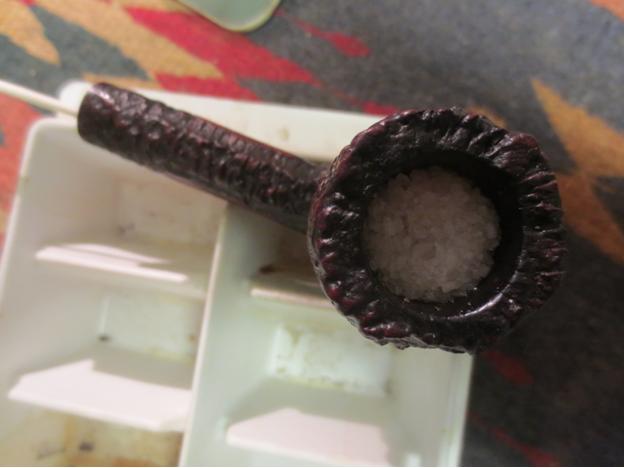
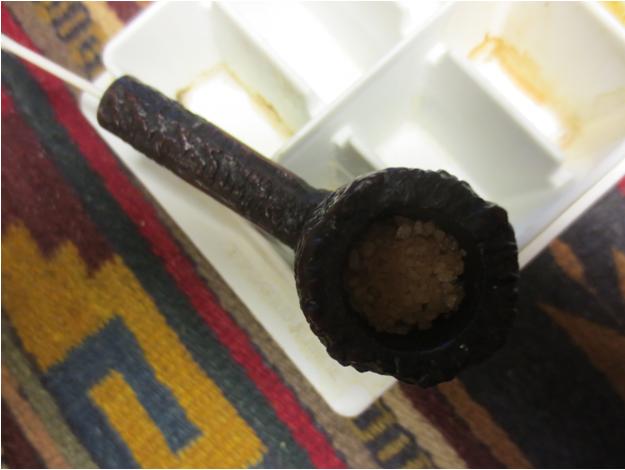
 5. Cotton ball and white vinegar treatment – This treatment is also a variation on the alcohol/salt and alcohol/cotton ball treatment. Instead of using alcohol as the liquid in the bowl I use white vinegar. I have found that it works wonders to draw out the tars and oils that are left behind by the alcohol. I also use it to freshen the foulest bowl. No need to rinse the bowl afterwards as the vinegar evaporates leaving behind a faint smell. I stuff the bowl with cotton balls and then fill it using an ear syringe. Like the previous methods I leave the pipe sitting overnight. I remove the cotton balls and clean out the bowl and shank with alcohol, pipe cleaners and cotton swabs to remove any remaining oils.
 6. Activated Charcoal and heat treatment – The final option is to fill the bowl with activated charcoal pieces (I pick them up from aquarium shops or from the pet area at Walmart) and set it in a metal pan in the oven on the lowest heat setting that is available. The heat softens the oils and they are drawn out into the charcoal. I usually leave it in the oven for 15-30 minutes though could probably leave it in longer. I then dump out the charcoal and clean the bowl and shank with alcohol, pipe cleaners and cotton swabs.
The last pipe I worked on I used all of the methods other than the charcoal one. I may still have to use that as there is a faint ghost remaining in the pipe. For most of the pipes I work on a combination of one or two of the above methods accomplish the task. Only the most stubborn need to use all of them. Experiment with the methods and let us know what works for you and also any variations you might have adapted to improve the methods. Pass on what you have learned as for me that is the best part of the hobby – learning from another refurbisher what works for them.
 rebornpipes