
Blog by Greg Wolford
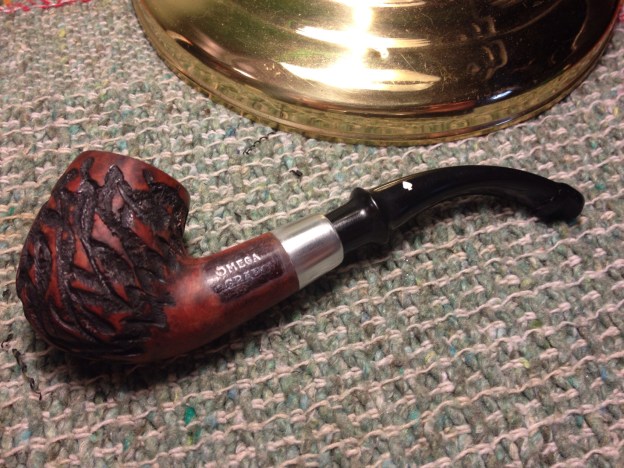
Of late I’ve been admiring system-type pipes. Having never had one I placed a bid on a lot of four old pipes – two I had little interest in – two of which were Dr Grabow Omegas, a smooth and a rusticated. Here are a few photos from the seller; I forgot (again) to take before and even some along-the-way shots.

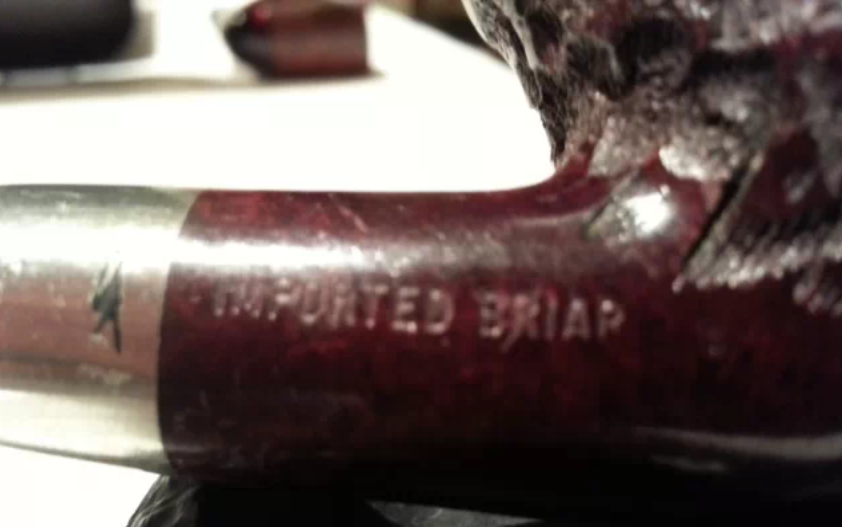
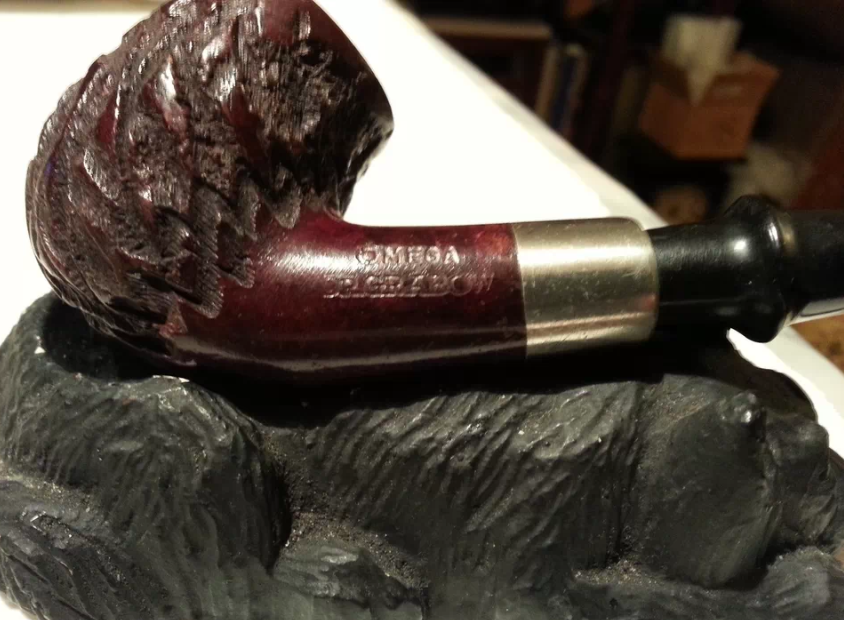
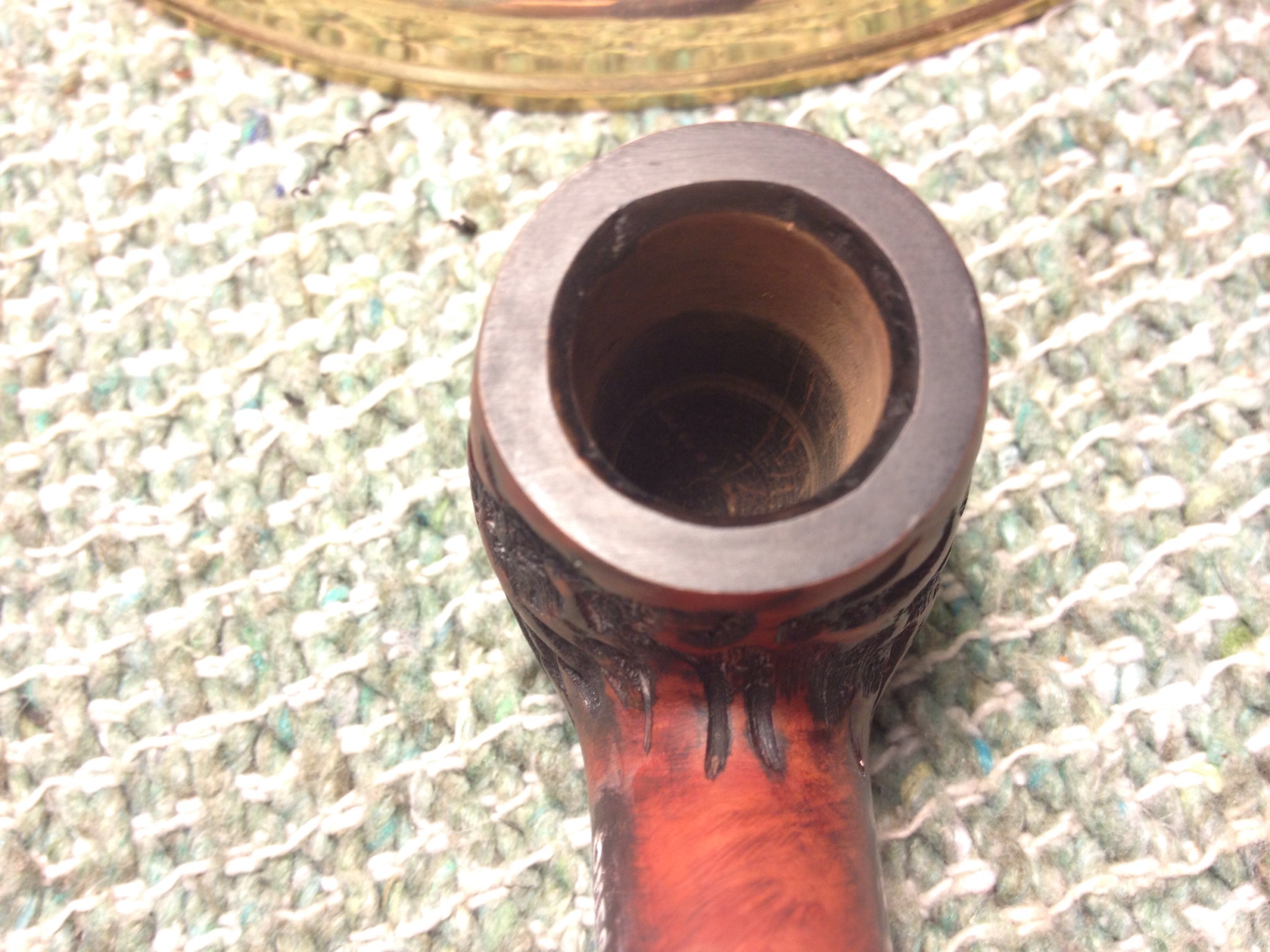
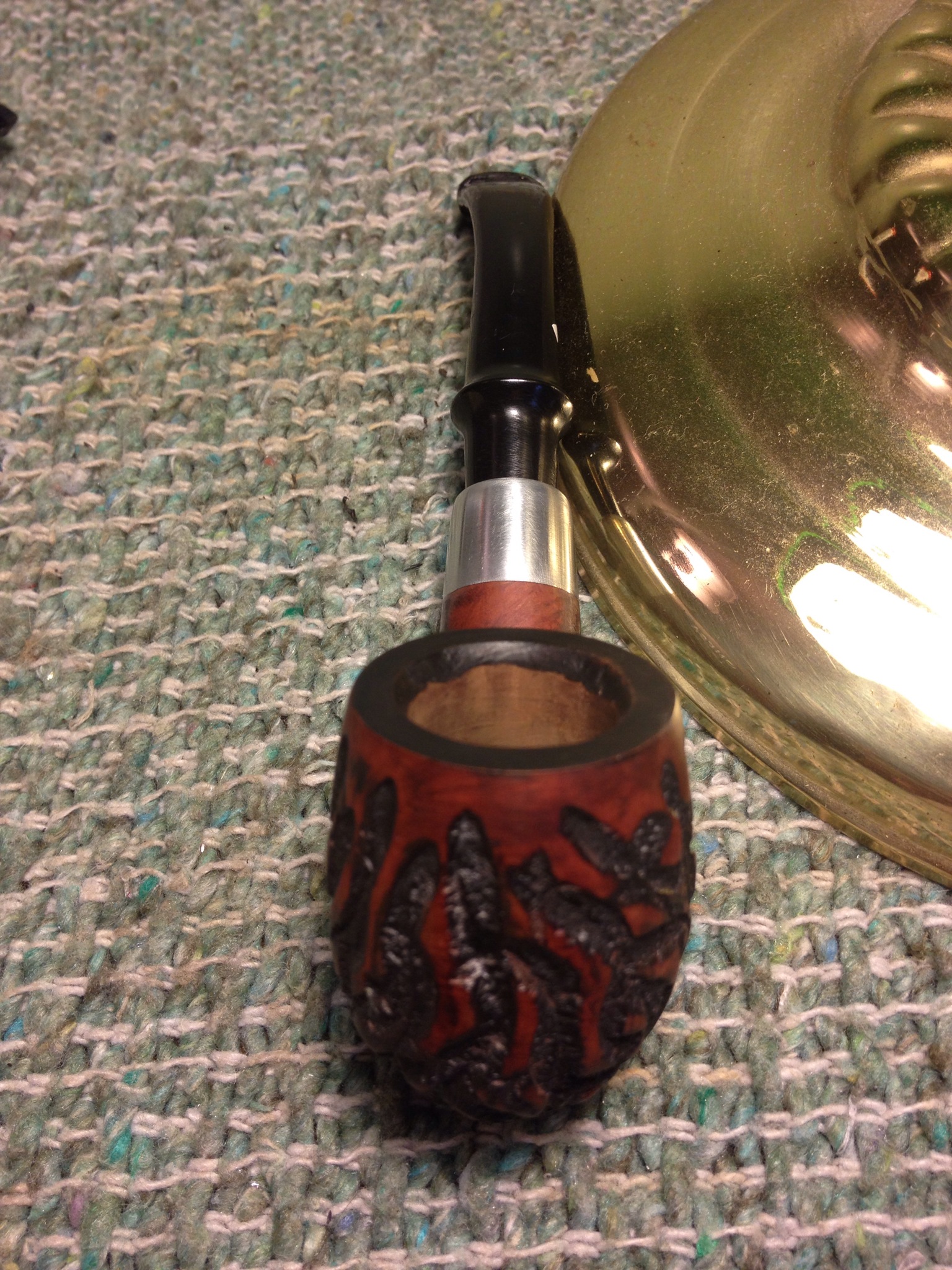
I stared on them both with the normal scrubbing the outside with acetone on cotton balls to remove their finishes. Then I reamed them back to bare wood. The smooth pipe was heavily caked but the rusticated one wasn’t at all, barely smoked really. However, you can’t tell in the above picture, the rusticated one had some heavy damage to the inner rim. I began by topping the bowl to even it it some but it would take a lot of briar removal to attempt to get out the chunks missing from the inner rim. So I took the second largest head on my Castleford reamer, too big for the bowl, and started a “bevel” on the inner rim, which I then worked with needle files and sandpaper to smooth out. I couldn’t take out all the damage but made it much less noticeable and would be even better after I stained it and it was later smoked. Next I got out my hand drill and re-drilled both bowls with a 5/32″ bit to improve the draw. I did the same thing with the tenon ends of the stems and then funneled them out. At this point I dropped both bowls in an alcohol bath overnight.
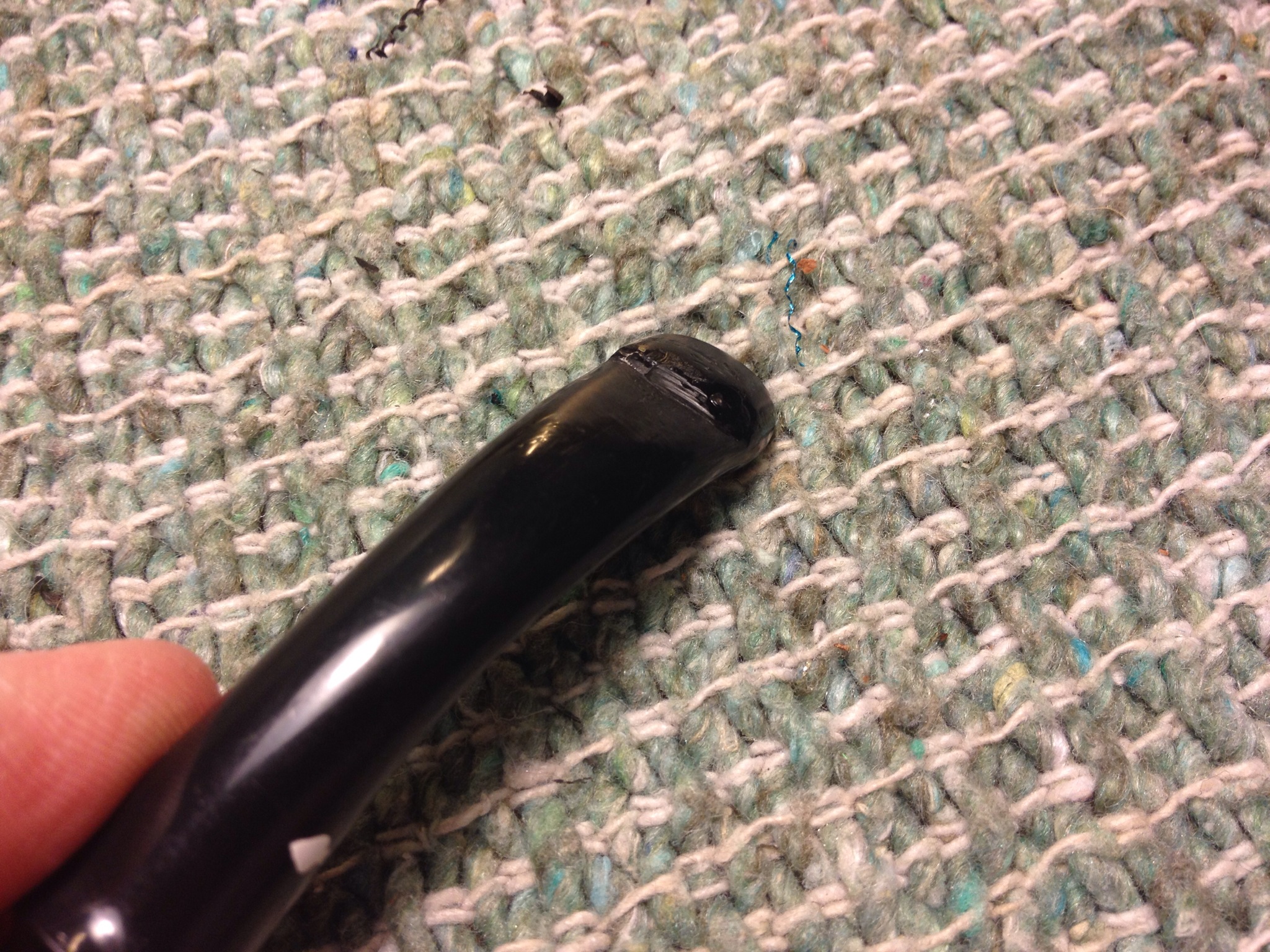
I cleaned out the stems with alcohol and pipe cleaners until they came out white. These stems are not vulcanite but a nylon-type material, ABS plastic I believe, and are not my favorite to work on. The smooth bowled pipe had a good stem the rusticated one’s stem was chewed pretty badly. I decided to use some of the adhesive accelerator and black super glue to raise up some the bites marks; I left the “roughness” of the chew marks on, thinking the glue would adhere better. I alternated polishing the “good” stem and building up the patch on the chewed up P-lip style one. Once the “rough” stem was built up to my satisfaction I used a needle file and some 320 wet/dry paper to smooth off the roughness from the chewing the previous pipeman had done. Then I polished the stem with plastic polish and was happy with the “decent” look I ended up with; I felt it just wasn’t worth the time and effort to try to get this plastic stem any closer to “new” than it was now.
The next morning I took the bowls out of their soak and let them dry an hour or so. I wanted to make this “typical” rusticated Omega look less typical so I started sanding in it; the rustication was plenty deep enough to remove some briar on the smooth part without worry of loosing the rustication’s definition. I did tape off the stamping to retain that as much as possible before starting.
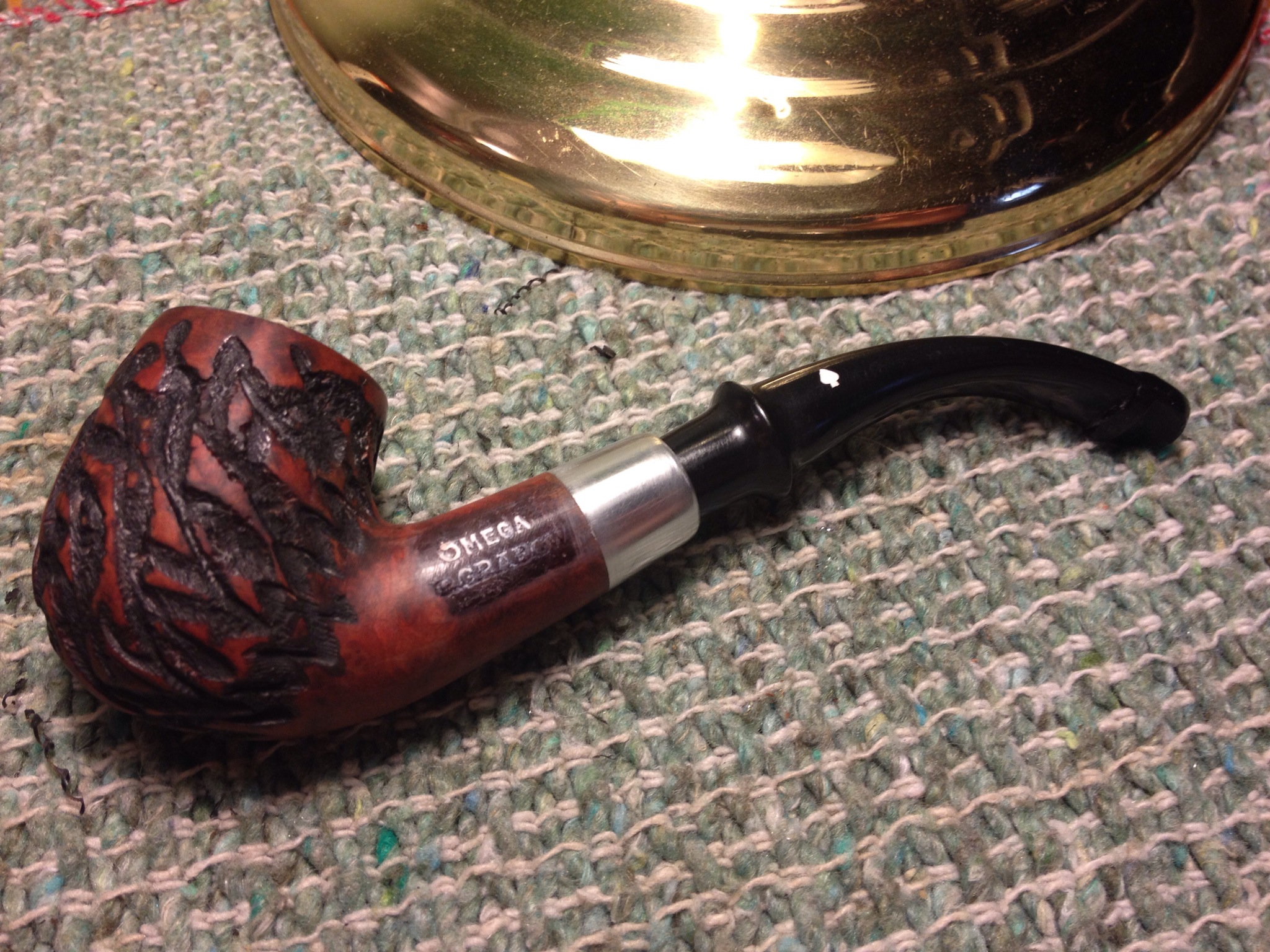
Taking off the old deep red top coat would give me a great opportunity to create a kind of unique contrast on this pipe I thought so after sanding the bowl and band with 220 and 320 grits I used a black sharpie to color in all the rustication and also the rim and new inner bevel. Then I used 400 grit to sand off the bowl again, to remove the over-marks of black, and the band. Then I applied a coat of a lighter red, which is actually a stain marker I got in a set at The Dollar Tree and is marked “medium brown”. I let the stain cure for a bit and then highlighted the nomenclature with white acrylic paint, for an extra “pop”.
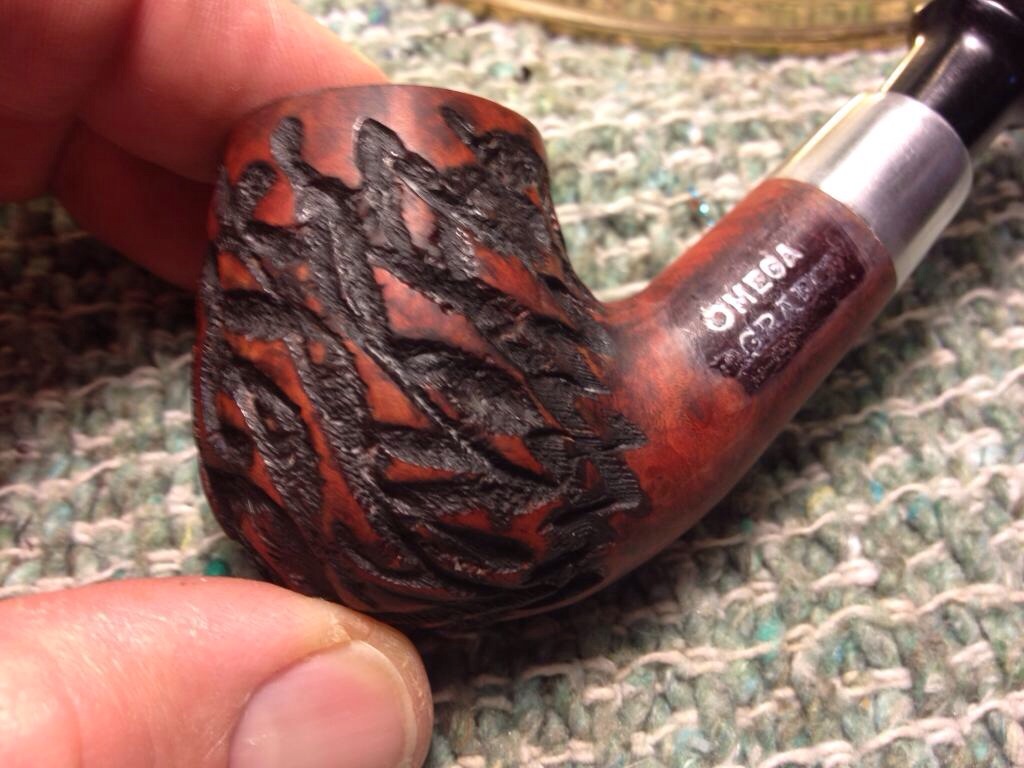
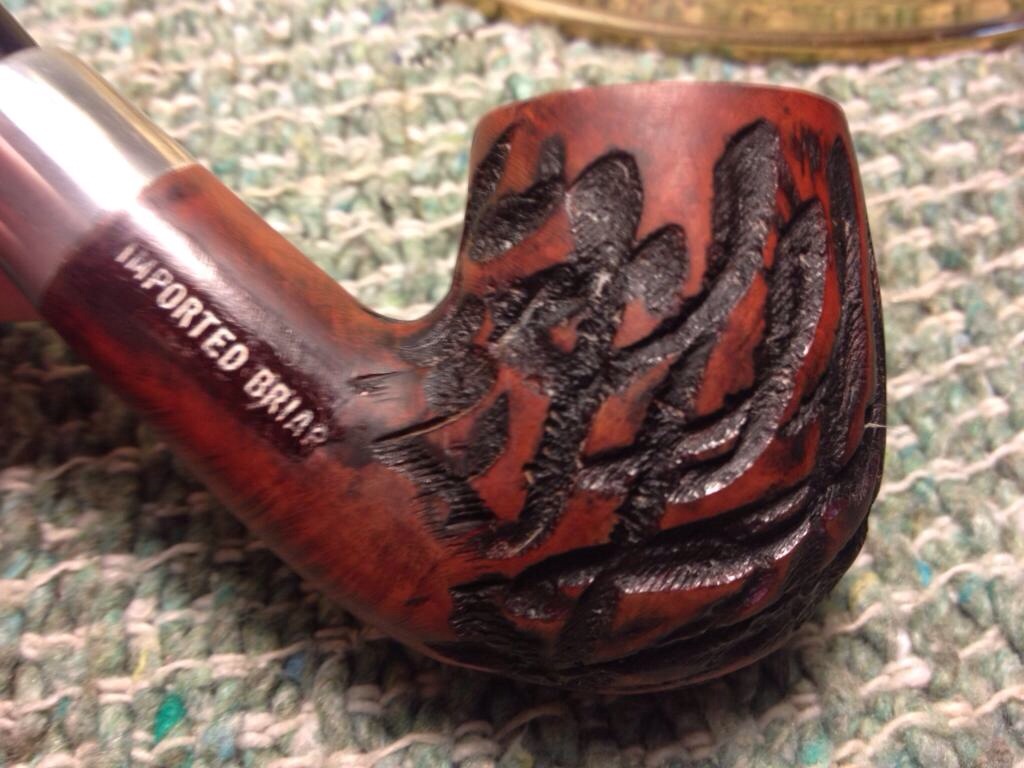
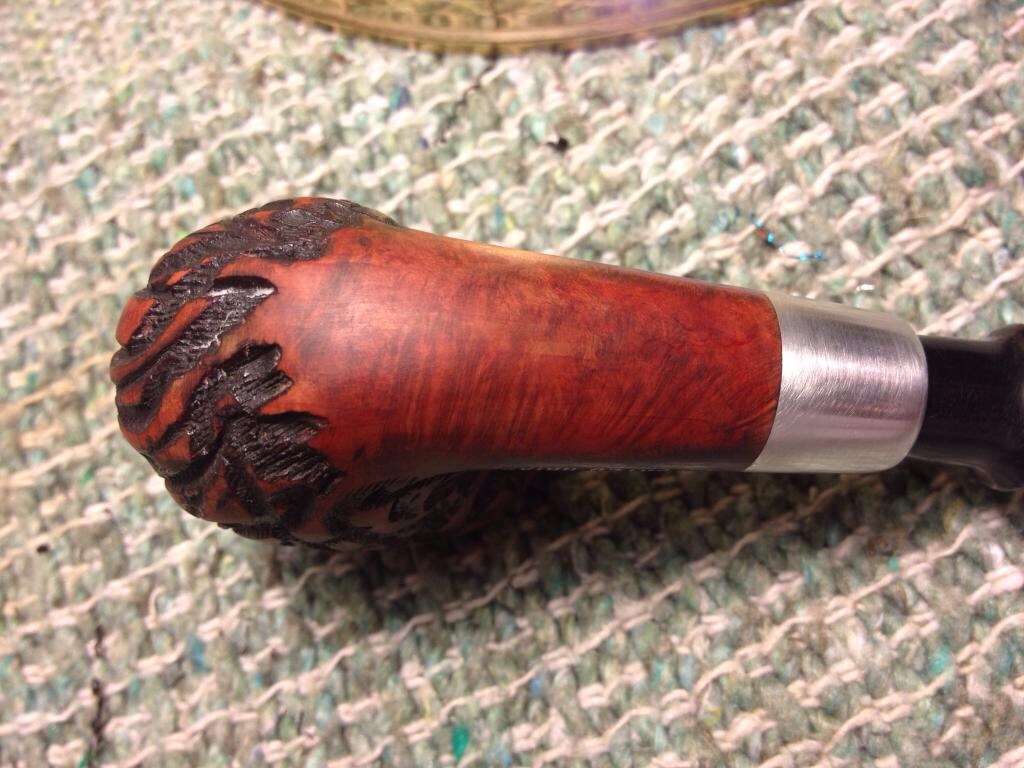
While the paint cured I have the stem a final polish with plastic polish just to brighten and shine it a little more. I was tempted to try to make the bit nicer but the back of my mind kept telling me it wasn’t worth the headache so I finally decided to leave it.
I have the bowl one last coat of stain and let it dry for about 15 minutes; these bargain-markers dry real fast, even if the colors aren’t what I thought they’d be. Then I applied a good coat of Halcyon II wax to the pipe and stem and buffed it by hand.
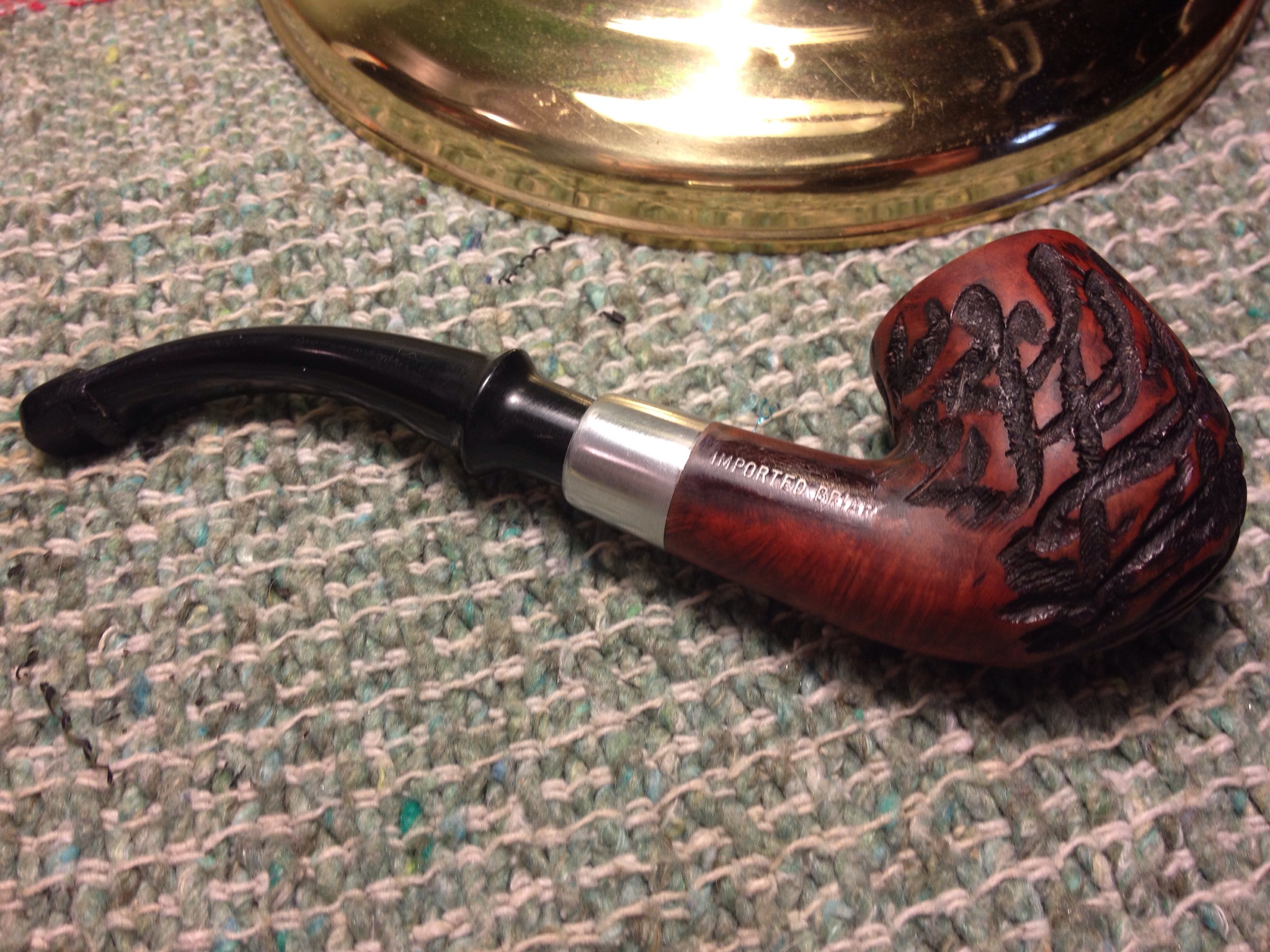
The end product is, in my eye, a pretty neat and definitely different from most other Omega product, even with the “boogered” stem.

 rebornpipes