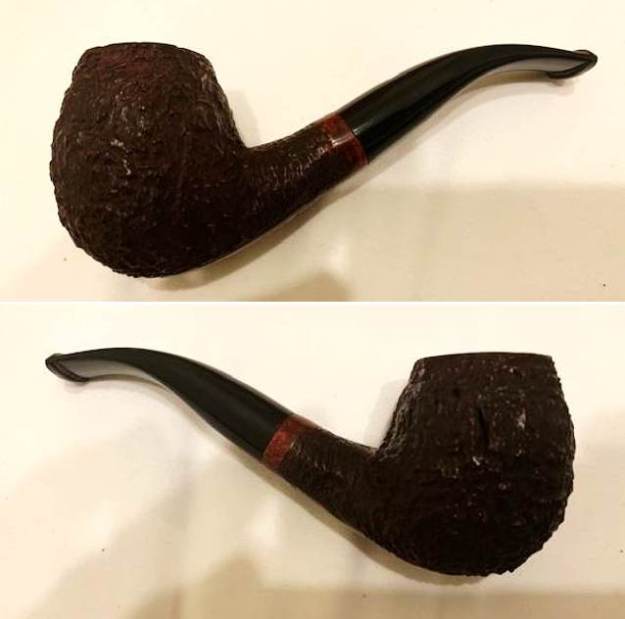
Category Archives: Pipe Shop Visits

Spending time with Giovanni Castellana in his Florence, Italy Tabacchi Shop


Blog by Steve Laug

When I am travelling for work in Europe I am always on the look out for a pipe shop that piques my interest. Before I left for Florence, Italy I did a quick search of pipe shops there and asked on Facebook Pipe groups which shops might warrant my attention. Both Google and Facebook contacts pointed to one shop that I had to take time to visit – Castellana’s Pipe and Tobacco Shop in the shadow of the Florence Cathedral or Domo. Formally called the Cathedral of Saint Mary of the Flower of Florence Italy. It was begun in 1296 in the Gothic style to a design of Arnolfo di Cambio and was structurally completed by 1436, with the dome engineered by Filippo Brunelleschi. It is a phenomenal structure and a building of great beauty.

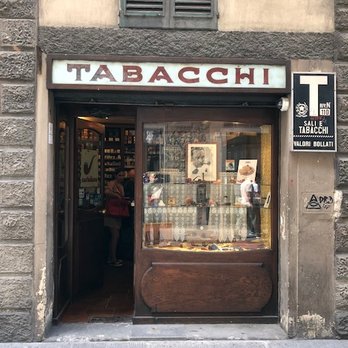
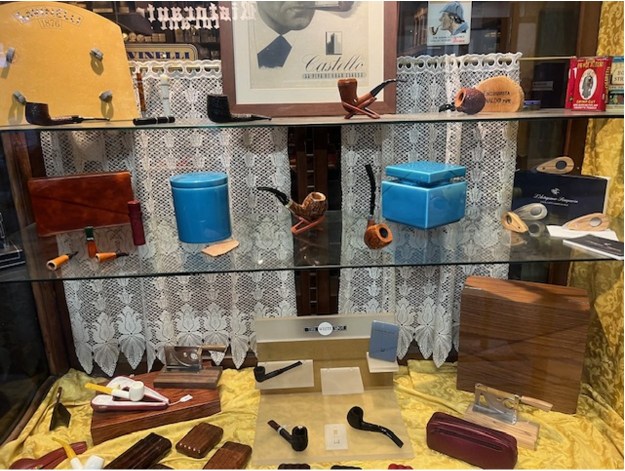
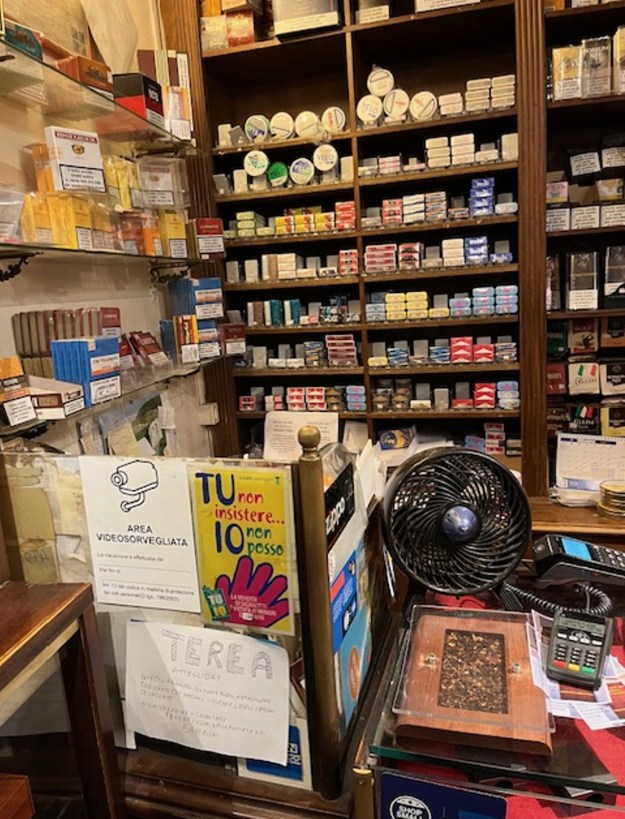
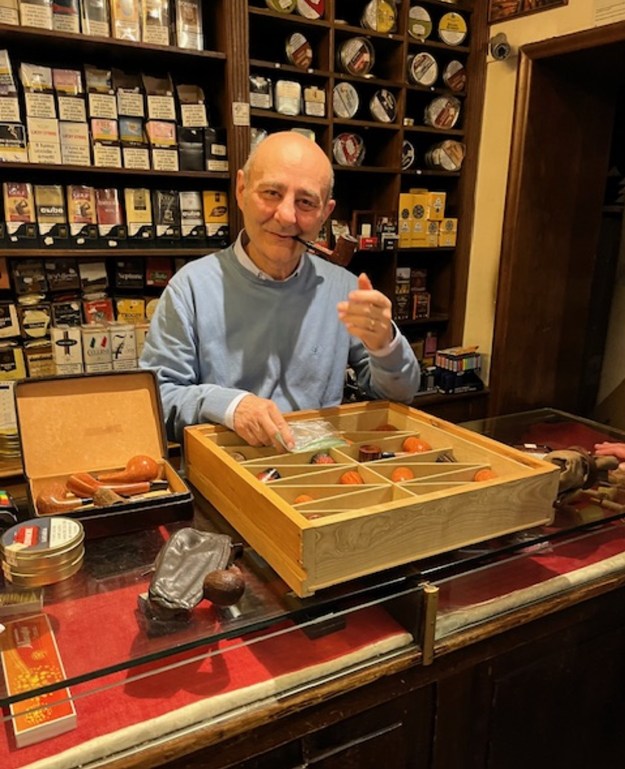
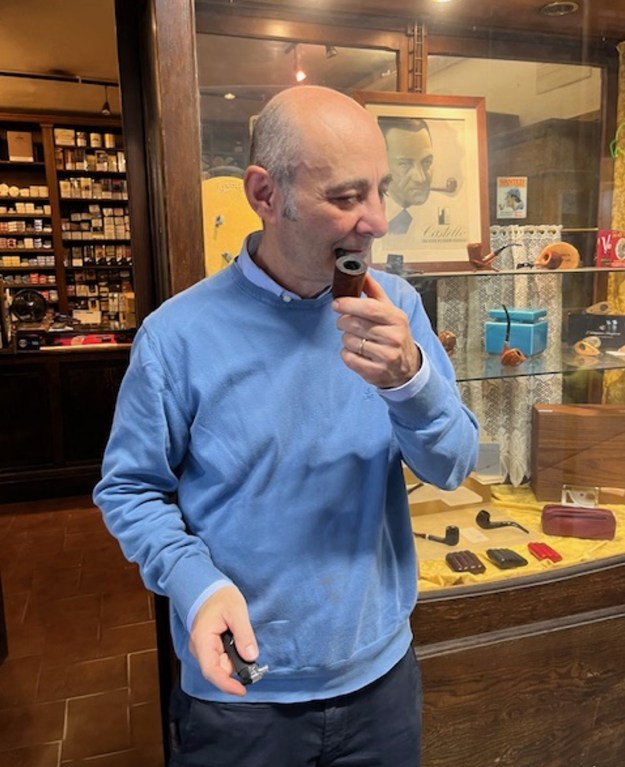
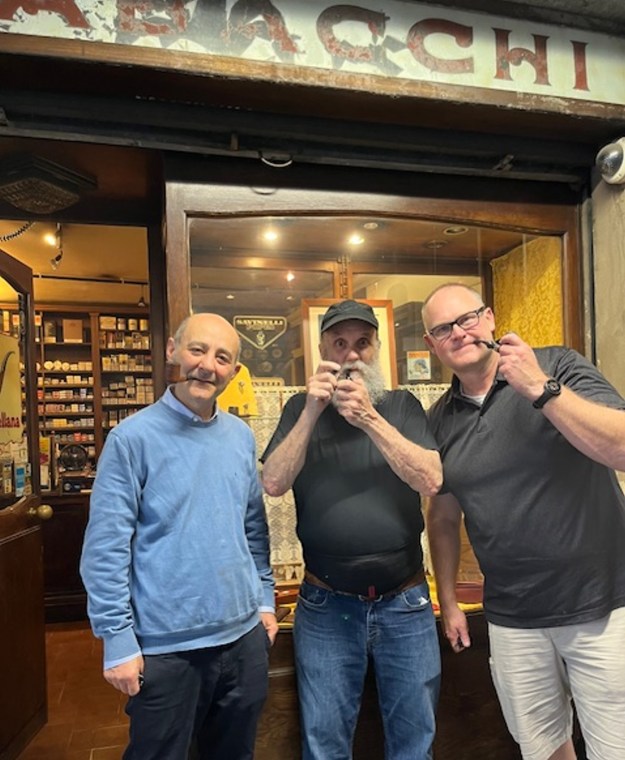
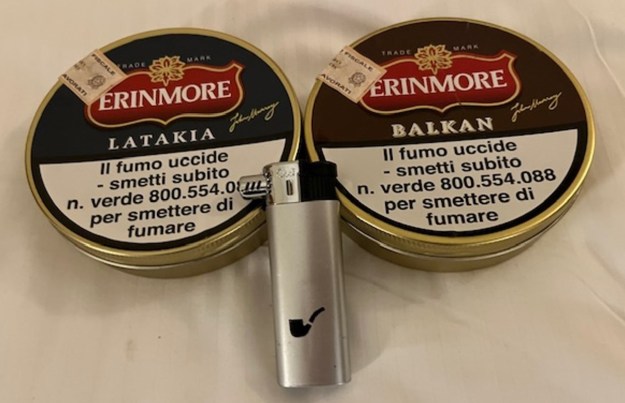
I had some time in the city before my meetings so a couple of friends Rohan, Kelly and I walked around the Cathedral Square and were struck with awe at the design and style of the building. It is an imposing structure that really stilled some of noise of the plaza – though honestly it may just have eclipsed all that in my senses as I walked around it. It was a beauty as I mentioned but I have to be honest and confess to you readers that really, I was so focused at this point on finding Castellanas that all else was at some level very peripheral to my main mission. Sad but true isn’t it? But nonetheless true of Pipemen on a search for a pipe and tobacco shop. My Google maps informed me that the shop was on the left side of the Cathedral and just about two doors off the square. We turned the corner and if we weren’t paying attention would have walked right past the shop. This is what we saw on the door.Before we opened the door to enter the shop I stopped and looked in the bowed front window under the Tabacchi sign. There was a great display of Castello pipe, Dunhill pipes and some CAO meerschaum pipes. Along with them were some porcelain humidors, leather pipe bags and wooden cigar humidors. It was a tasteful window display that caught our attention. We opened the door and were met with this amazing display of tobacco products – cigars (Cuban and Italian), cigarrettes, snuffs and in the middle pouches and on the right tins of tobacco. Many varieties of tobacco only available in Europe. The aroma of a tobacco shop also flooded our nostrils with their rich and tantalizing flavours. It was amazing.We introduced ourselves to Giovanni and gave him a business card. He said that several of his customers followed rebornpipes and had mentioned us to him. We enjoyed a great visit and went through the tobacco offerings that Giovani had available and I picked out a tin of Erinmore Balkan and another of Erinmore Latakia. Rohan picked up two other tins as well. You can see Govanni enjoying a Castello in the photo below while my Tinsky travel pipe and pouch along with Rohan’s Italian pipe and pouch are shown on the sides of the box of Castello pipes that Giovanni was showing us. On top of the display of the Castellos was a bag of Friedman & Pease Fool’s Cap that I brought along to share with Giovanni. We each loaded a bowl of the tobacco in our pipes and went outside to the store front to enjoy the tobacco. Giovanni gave each of us a nice lighter to have as a memory of the visit and used them to fire up our pipes and enjoy them together. I left this first visit with two tins of tobacco and a nice pipe lighter from Giovanni to enjoy. I have included a photo below. I told Giovanni that I hoped to return later the next week with my daughter to have a closer look at the Castello pipes he had and a bit of a visit before I headed back to Canada. We would have to see how it worked out.Our meetings for work went very well and we finished them on Monday morning. We travelled back to Florence and bade farewell to each other. My daughter and I headed to our Air BNB in Florence for four more days of R&R before heading back to Canada. On Thursday morning my daughter and I took a bus back to Domo Plaza to revisit the Castellana shop. Giovanni was glad to see us and welcomed us with open arms. He said that he had enjoyed the tobacco I had left with him and had gone online to rebornpipes to have a look. He was glad to see us and I introduced my daughter to him. I asked him to bring out the Castello pipes he had once again so I could go through them and choose one. He brought out two different cases of Castellos and I chose a nice looking sandblast bent apple.

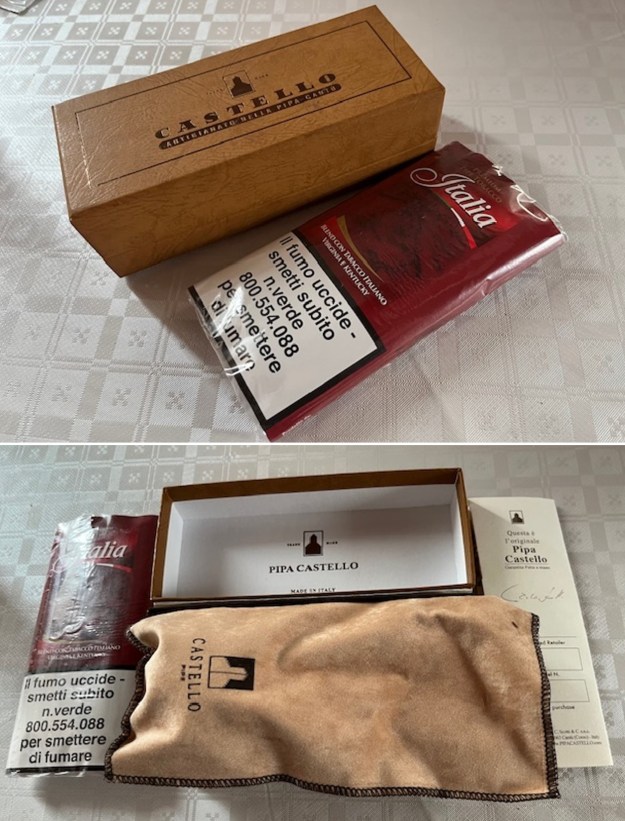
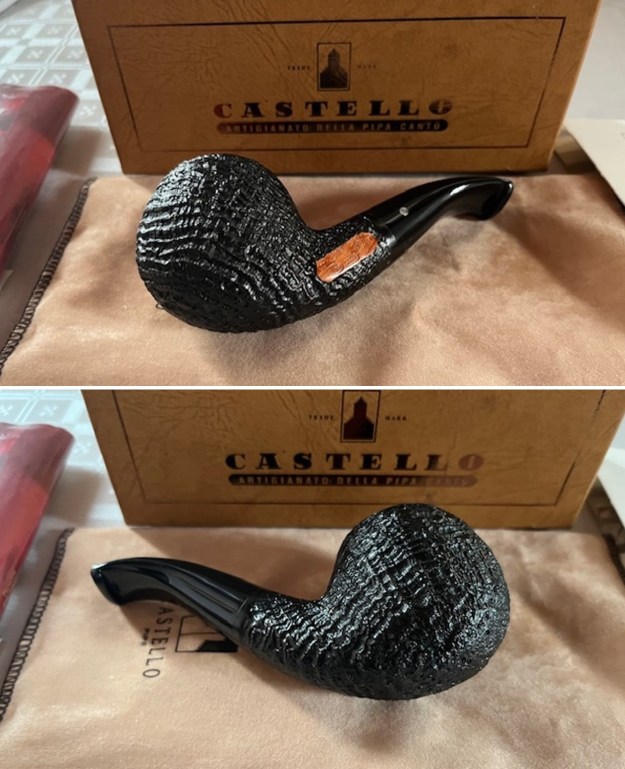
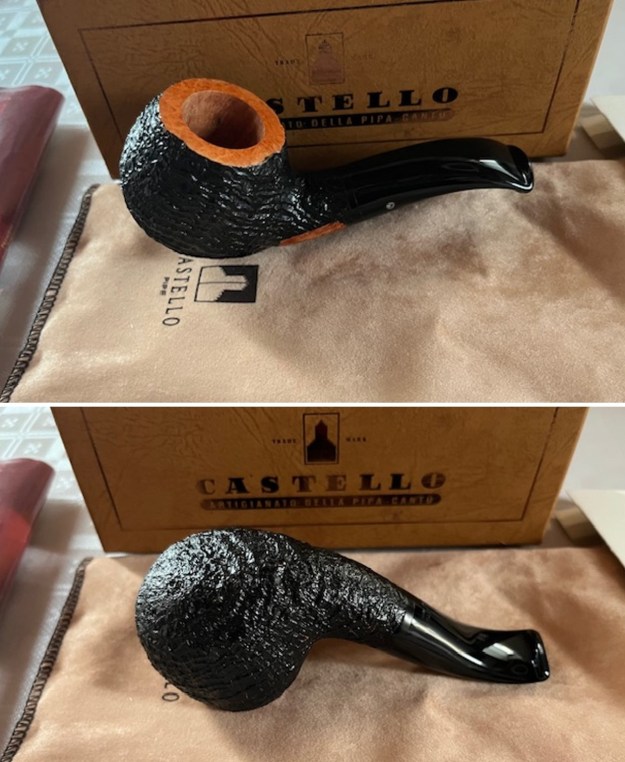
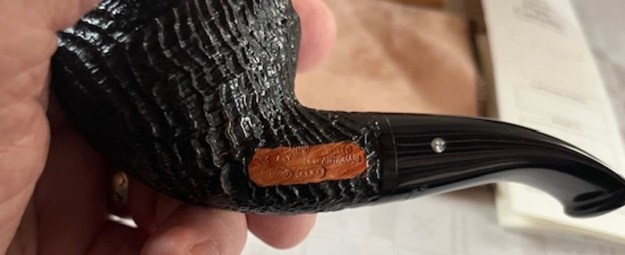
The pipe has a rich and deep sandblast finish that is stained with a dark stain around the bowl and a smooth rim top. It is stamped on a smooth panel on the left side of the shank and read Made in Cantu [over] on the far left with the shape number 33 followed by Italy. Underneath it was stamped Kino in an oval. That is followed by Castello [over] Old Antiquari [over] KKKK. The pipe came with a Castello box, sock and paperwork. I also picked up a pouch of Italia which is an Italian blend of Virginia and Dark Kentucky.I took the pipe out of the box and sock and took photos of the pipe. It has a deep and rugged sandblast around the bowl and shank. The flow of the bowl and the short taper acrylic stem is quite stunning. It has the foil diamond on the left side of the stem which Giovanni said originally was used on pipes made for sale to the US. However, he said that they are also used on pipes sold on the Italian Market. I took a photo of the stamping on the left side of the shank and the foil/diamond logo on the left side of the taper stem. It is a beauty.When I return to Florence again in the future it is definitely a shop I will revisit. Once again, I will enjoy a bowl of tobacco in this pipe, or perhaps another outside the front door. If you are in Florence this shop is not one you will want to miss. Check it out and have a visit with the owner, Giovanni Castellana. He is a great man who is full of pipe history and knowledge that is broad and also a lot of focused knowledge on all things Castello. His shop is certainly a unique and very much like the older style pipe shops that I have visited at home and abroad. Check it out online – http://www.pipeandcigar-castellana.it/ . Ciao Giovanni. I will remember our visits each time I smoke this beautiful pipe. Thank you for your help in picking out this pipe.

Great Pipe and Tobacco Buys on my recent Europe work trip


Blog by Steve Laug

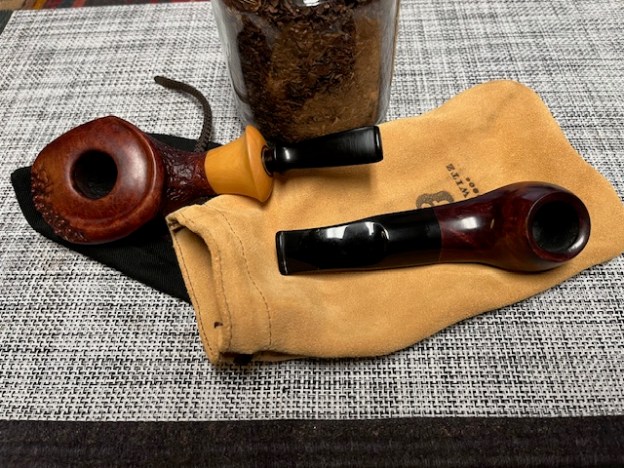
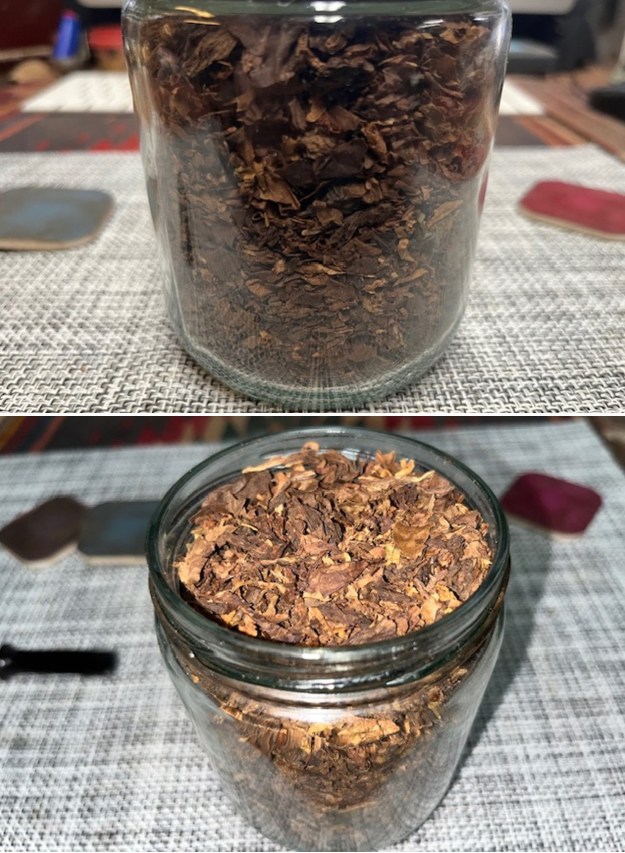
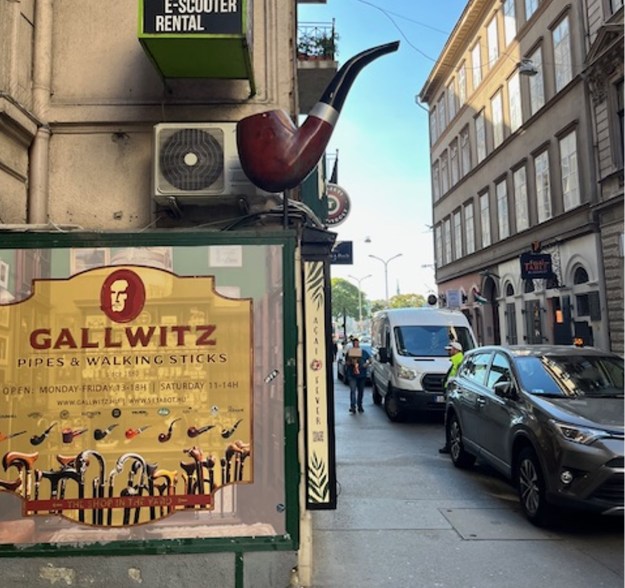
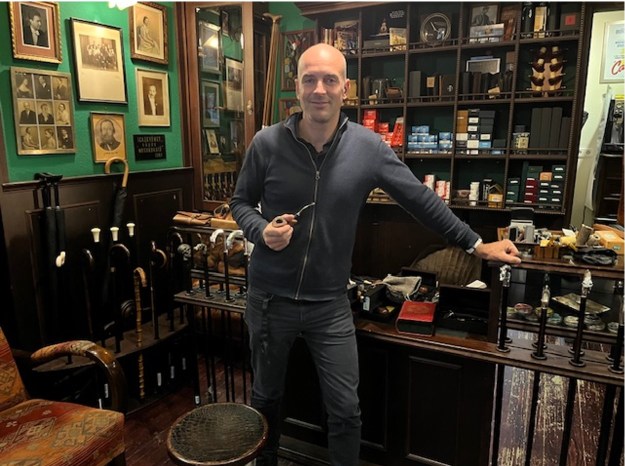
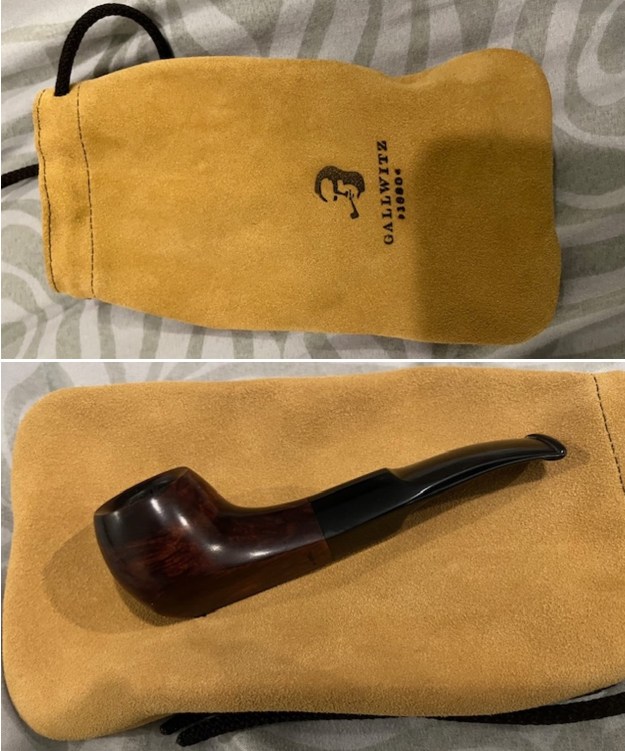
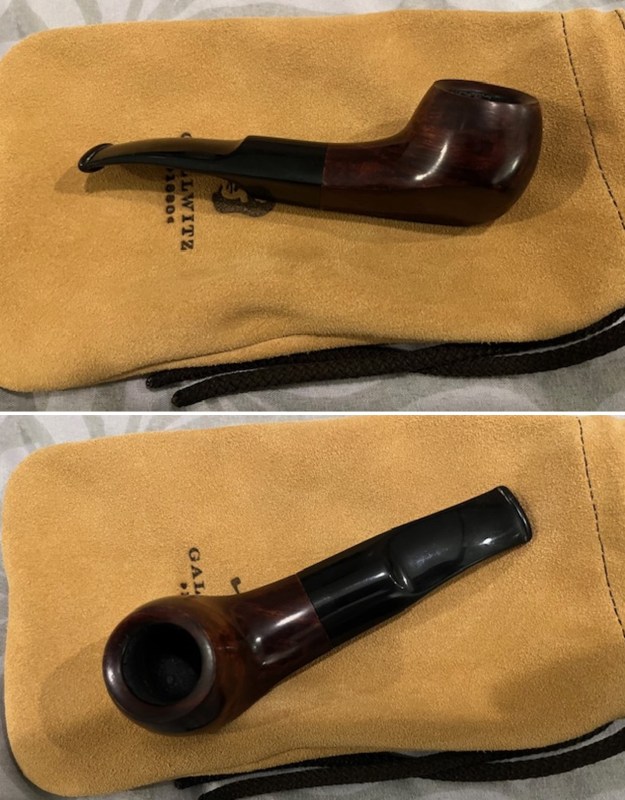
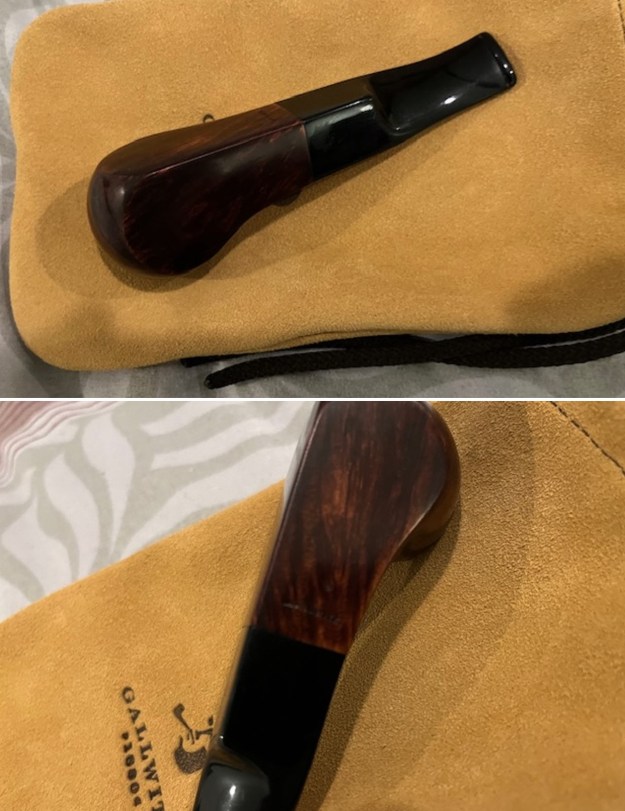
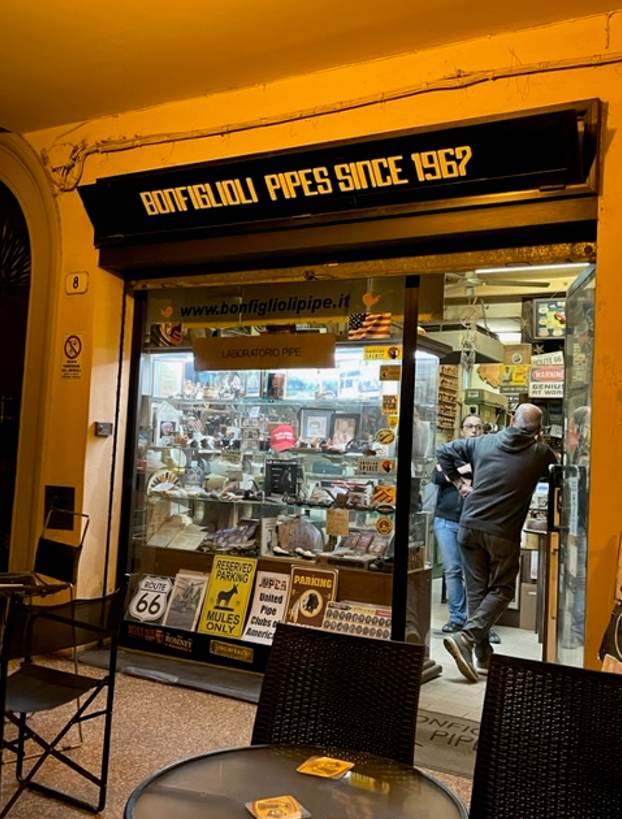
I have the pleasure of travelling to Europe at least once a year for work. It is a great time to connect with colleagues and enjoy the food and fellowship of the visits to each city on the circuit. But honestly it is always an opportunity to visit some local pipe shops – many of which I have been to in the past and reconnect with the owners and pipemen there. This year my first stop out of Vancouver, Canada was Bologna, Italy. I love the architecture and feel of the city as it it is a beautiful feast for the eyes. Last year when I visited there I went to Bonfiglioli’s pipe shop and picked up a pipe and 8 grams of Alberto’s special blend of tobacco. This year I visited again and bought 90+ grams of the tobacco to bring home. I jarred it when I got back home. It is a great blend. The next pipe shop I visited was in Budapest, Hungary. It was a shop that I had visited last in 2015. It was an old shop call Gallwitz Pipes & Walking Sticks. My Hungarian friend took me there on this trip as well. When I visited it this time I spent time with the current owner and proprietor of the shop, Viktor Zollner (the grandson of the last Gallwitz owner). We had a great visit talking about the current state of pipes and pipe repair in Hungary since the previous time that I had visited. Viktor had carved many pipes but was currently focusing his attention on pipe repair and estate pipes. He said that he loves the challenge of pipe and stem repair more than pipe carving – just as I do. He showed me a lot of estate pipes and we had a great visit.He showed me many different pipes, brands I had heard off but not seen in person before. There were some stunning examples of unrestored estates and finished ones. There was a fascinating freehand pipe that had a definite Danish flair to it that caught my eye. There was also something different about the design as well that I could not put my finger on. We talked about it and I could not quite catch the name of the pipe. When I worked on it I was able to decipher that it was a Tatu Pipe 1126 Freehand. I have done the restoration on it since I have been home and it is a beauty. Here is the blog link to the pipe that shows my restoration. (https://rebornpipes.com/2023/11/06/restoring-a-budapest-purchase-a-tatu-pipe-1126-freehand/). I am really pleased with how it turned out. At that point in the process my Hungarian friend told me to choose a pipe that would be a gift from our group in Budapest. I decided it might be a nice touch to make it a Gallwitz hand carved pipe done by the owner and proprietor, Viktor Zollner. I asked him to show me one of his pipes so he took one out and showed me it. The choice was made for a stylized straight Bulldog. It came in a nice suede leather bag bearing the Gallwitz logo. The two pipes and the tobacco I came home with are some nice ones and also hold some great memories. The Hungarian Hand Made Gallwitz is one that will always bring back memories of my friends in Budapest who gifted it to me. The Hand Made Tatu is a unique one that provided a fun challenge for me. The tobacco is a blend I have tried before and enjoyed – combining some red Virginias and Kentucky that is flavorful. The pipe portion of the trip was as successful as the rest of the trip. It definitely contributed some great pipes and tobacco to enjoy! Thanks for reading the blog.

Stepping into a Mysterious Small Pipe Shop in Bologna Italy – Bonfiglioli Pipes


Blog by Steve Laug

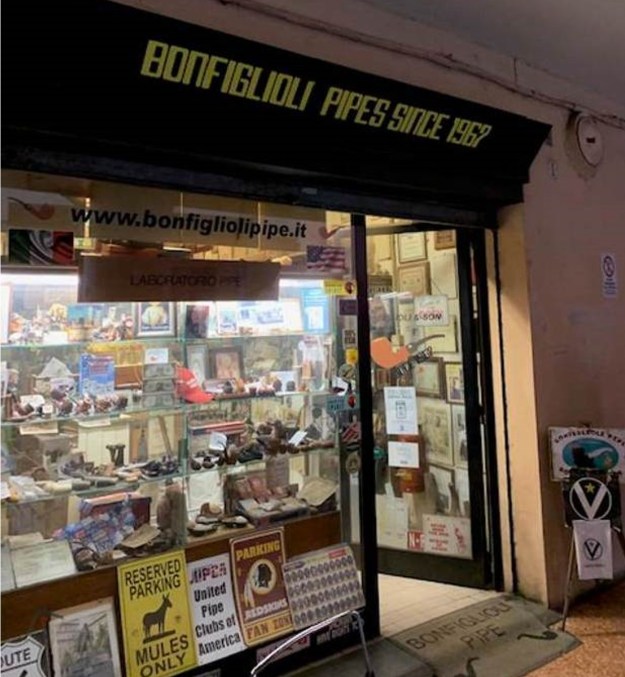
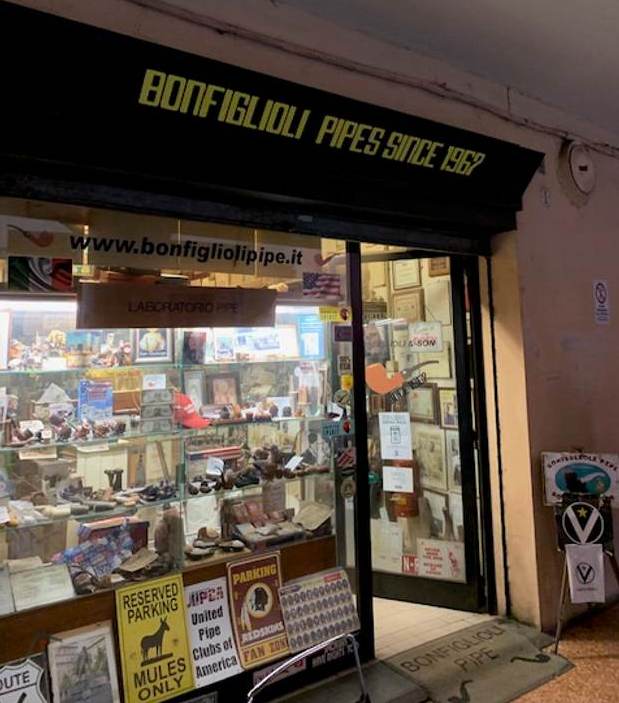
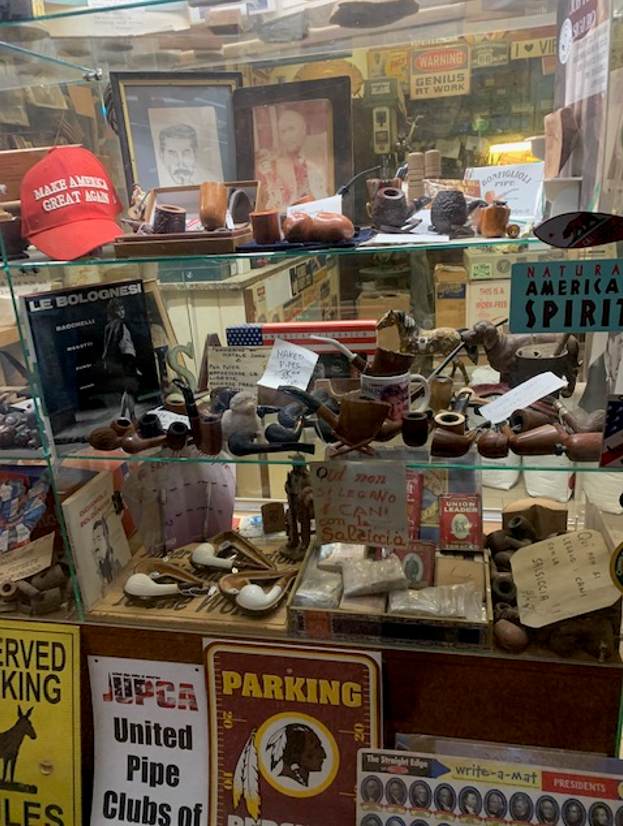
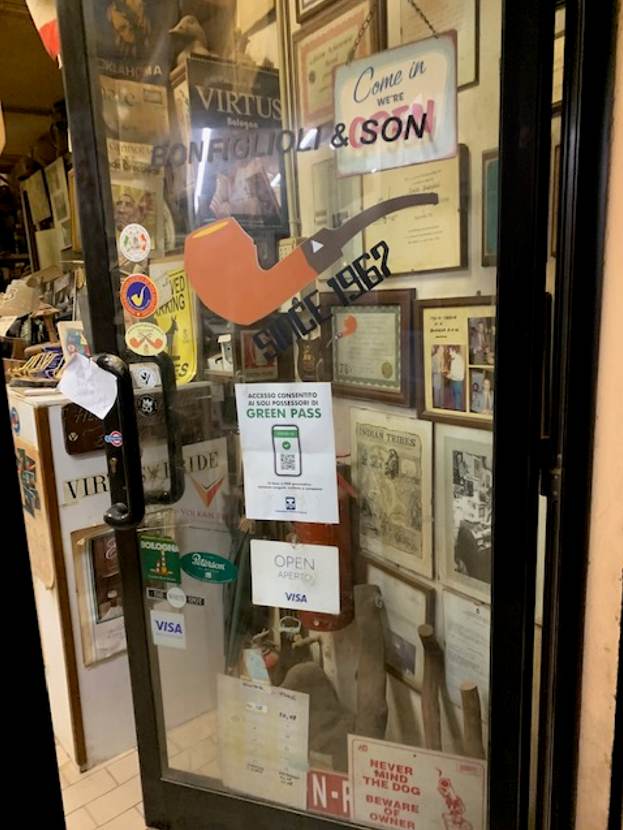
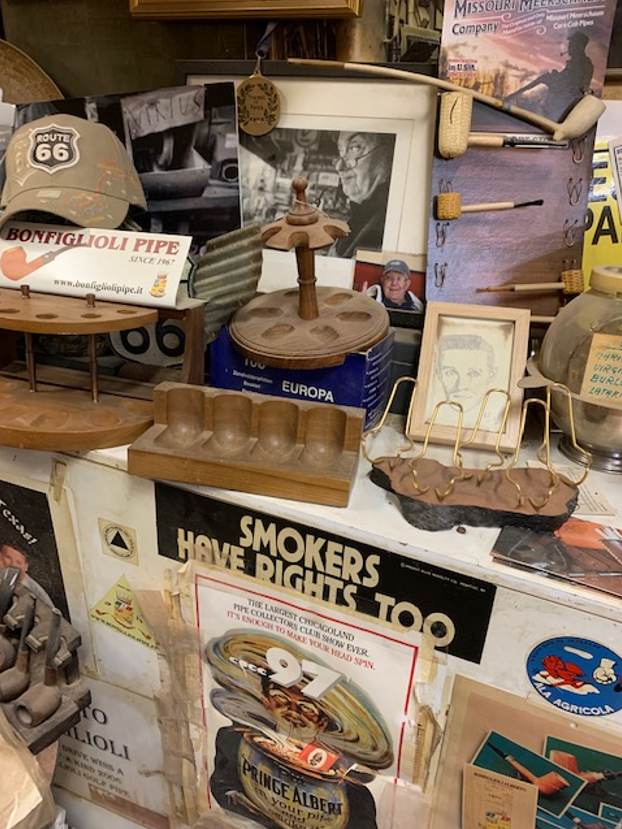
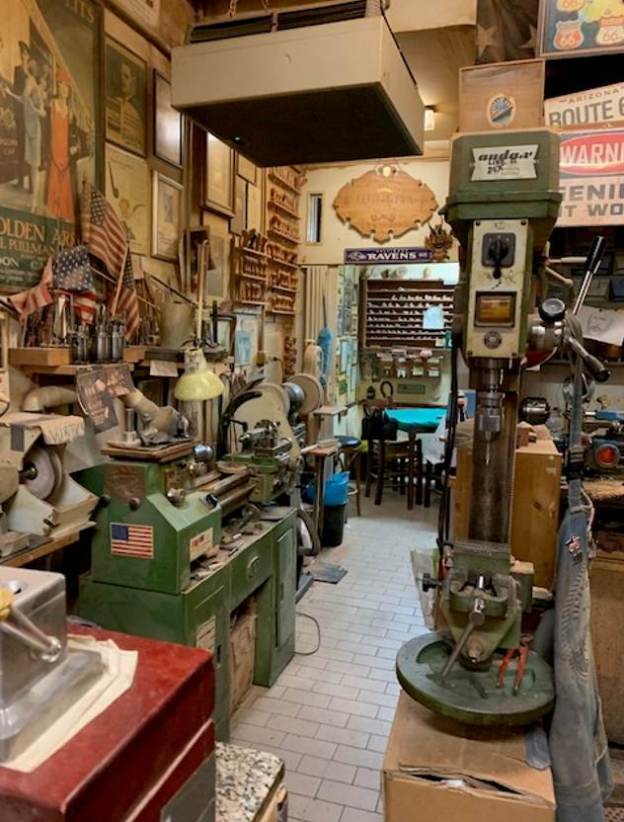
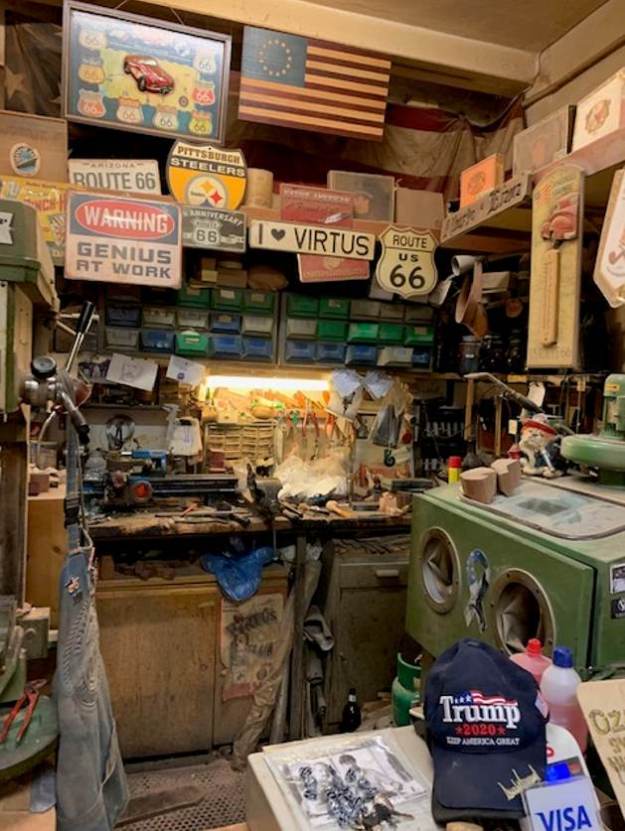
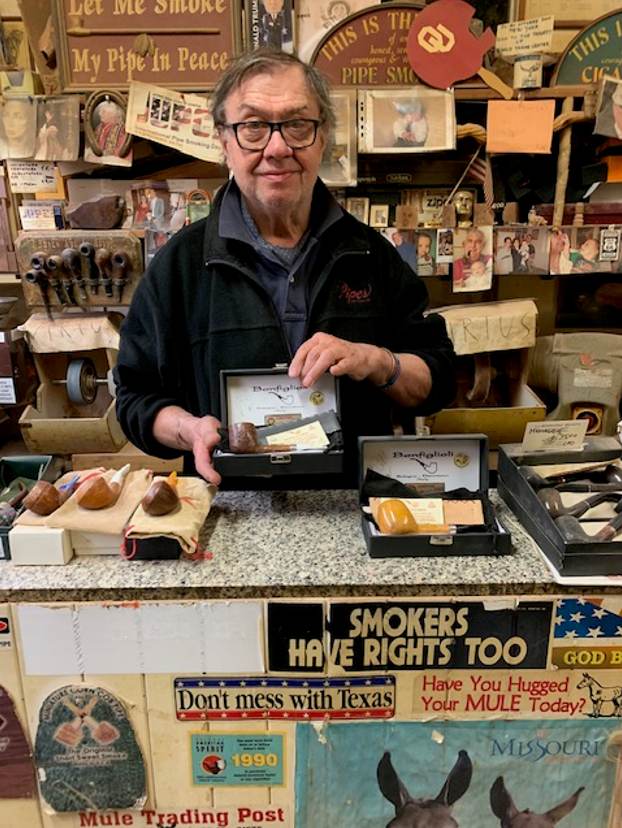
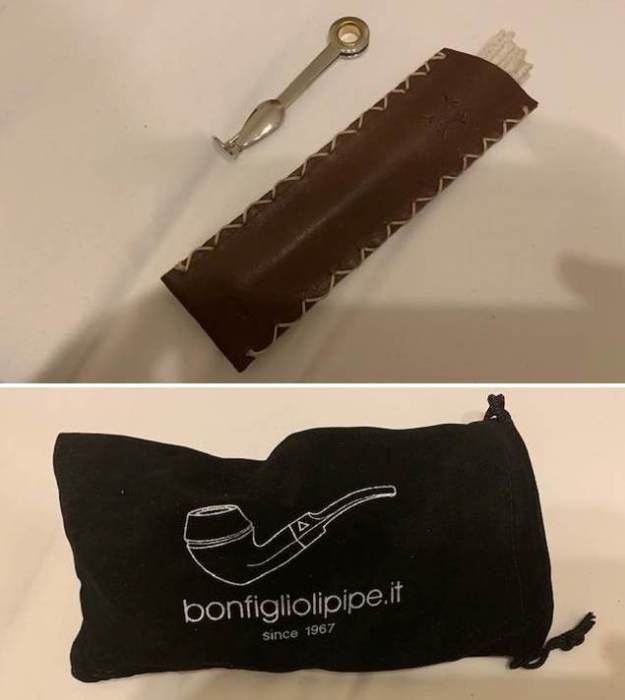
When I am traveling to visit sites in Europe I am always on the look out for a pipe shop that piques my interest. Before I left for Bologna, Italy I did a quick search of pipe shops there that might warrant my attention and found the Bonfiglioli Pipes Since 1967 Shop. I made a plan to visit it one evening once I finished the work I was doing there. I went on the evening of Oct. 6, 2022 with one of my friends from work. Here is what we saw when we got to the shop that evening. It is in one of the many portico’s of Bologna and is a bright yellow from the lights on the outside. It is a small shop with tables and chairs outside and inside where the Bonfiglioli Pipe Club of Bologna can enjoy a bowl of their favourite tobacco or a good cigar. Next door there is a small café with wine, beer and snacks that can also be enjoyed. The front window of the shop to the left of the font door was packed with a lot of signs and paraphernalia of Bonfiglioli’s travels. There are books, antique tobacco tins and even a few Trump memorabilia that I was not expecting to see in Europe. There were hand made pipes by Alberto himself as well as pipe from other Italian Pipe makers and some nice meerschaum pipes. It is a motley assortment of old things and new pipes that take a lot of time to process as you peer through the window in to the shop. It also gives a hint of the crazy disarray of the shop itself once you enter the front door. The front door is shown in the second photo below. The door says Bonfiglioli and Sons and sports a pipe with the shop logo on it over the date the shop opened 1965. There were also some funny signs about Beware the Owner. Take your time to read through the signs and look at the photos as they truly and odd and mysterious assortment of historical pieces. If I thought that the window display was eclectic and random the interior was even more so. It was a motley assortment of pipes, posters, Route 66 US highway signs, political posters and wares as well as photographs and news clippings from around the world. There were also bumper stickers stuck on the walls and counters. The most surprising thing to me was the thick coat of dust on everything. On the display counters were old pipe racks with absolutely destroyed pipes that were set up as a deterrent to shoplifting. There were also boxes of Bonfiglioli pipes scattered on the front and back counters. The buffing wheels, lathe, band saw, sandblasting machine and other tools of the trade were scattered in the midst of the collection of paraphernalia. You can see the buffing wheels in the first photo below with a box to collect the threads as pipes are buffed each marked VIRTUS. Looking toward the back of the shop was more of a visual cacophony of conflicting scenes and displays (I know the word is often used of sounds but to me the sights in this place were loud!). You can see the lathe on the left side inserted under photos, hats and American flags. You can also see more buffing wheels next to it. Further back are more buffing wheels and pipe racks on the wall above. There is a dining room table and chairs under a piece of briar and a collection of    briar pipes in process. Over all the back wall is a RAVENS banner. It really is a scene that takes a lot of time to study and take in. On the right side, which is mid shop there is a drill press with cardboard boxes stacked underneath. The shop apron is hanging on the wheel of the press.To the right of the drill press is the work bench against the wall. There it is inserted underneath the the US Flag and a lot of American memorabilia from US Route 66. There is also a Pittsburgh Steelers sign in the middle and an I heart VIRTUS sign. On the left was a sign that read WARNING GENIUS AT WORK. The wall above the desk is covered with drawers that held tools and papers for sanding and stem work as well as a mess of files and partially finished pipes. On the right wall of the picture is also the sandblast cabinet and even more memorabilia and a very prominent Trump hat among the bottles of oils and drawings for pipes. Once again the full array needs to be studied to see all that is present in the photo. It is quite mind boggling to take in.At this point I paused and asked Alberto if he would be willing to pose for a photo holding one of his pipes. He was happy to do so and struck a pose behind the sales counter. I love the signs on the wall that read Let me Smoke my Pipe In Peace and This is the Pipe Smoke (could not read it all). The range of stickers on the counter below that are broad in terms of their coverage from Smokers have rights too to God Bless America. Even this picture is full of objects to study and take in. We had a great visit over the counter as we spoke about different pipes and tobaccos. We compared our ages – he was 73 and I am almost 69 so he called me young man! I think I like him!He spoke of pipes he had made for prizes for the Seattle Pipe Club as well as other clubs. He showed me one that was the Seattle Pipe. It is a great looking pipe.From there we went on to talk about tobacco and he told me about a blend that he does that is Dark Fired Kentucky and Virginia. He had a bowl of it behind the counter that was weighed out so I smelled it and he packed it in a pouch and bag that he had there from other tobacco. I am looking forward to trying it out. I looked through some pipes he had in the window that caught my eye. They were part of a line of pipes he called Cheap Bastards. They tended to have flaws in the briar that he proudly said he did not fill. I chose a rusticated bent apple that caught my eye. He packed the pipe in a Bonfiglioli box and autographed the lid with a date for me. He put a Czech pipe tool in and a leather pouch he had made filled with pipe cleaners to go with the new pipe. The pipe was put in a heavy felt (?) bag with draw strings that was stamped with a pipe and bonfigliolipipe.it over since 1967. The pipe itself is quite a beauty. It is a bent apple shape with a taper acrylic stem bearing the Bonfiglioli logo on the top side. The finish is heavily rusticated and hides the flaw that is on the mid right side of the bowl. There is a smooth band at the shank end and the rim top is also smooth. The colour of the pipe is hard to see in the photos below but it is a mix of medium and dark brown. It is stamped on a smooth panel on the underside of the bowl and shank and has a tower on the bowl bottom stamped with the year 2022 when the pipe was made. That is followed by Made in the City [over] of Bologna [over] Italy. To the left of that it is stamped U.S. Patent [over]73/802348 and to the right with a triangle with an AI inside. Following those stampings it read at the shank end Bonfiglioli [over] Cheap [over] Bastard [over] an oval with ADAL. That is followed by a stamped IX [over] an upside down R in a circle. Like the interior of the shop the stamping is a plethora of different parts that are all interesting and must be individually studied to understand them all.   When I return to Bologna next year it is definitely a shop I will revisit. At that time I will enjoy a bowl of shop tobacco in this pipe, or perhaps another, at the tables outside the front door. If you are in Bologna this shop is not one you will want to miss. Check it out and have a visit with the pipe maker and owner Alberto Bonfiglioli. It is certainly a unique shop and not like any others I have visited at home or abroad.

Revisiting a Favourite Pipe Shop in Budapest – The Pipatorium (Would it still be there?)


Blog by Steve Laug

When I knew I was heading to Budapest again in September 2022 I was certain that I wanted to visit a shop that had first gone to in October 2010 (twelve years ago now). I have visited and revisited this particular pipe shop in Budapest several times over the years. I have gone there and each time I visited it had been reduced more and more by the restrictive laws and interventions of the Hungarian government. I was not sure the shop would still be there this time as it had been seven years since the last time I had been there. I am including the link to the blog I wrote on the last visit below (https://rebornpipes.com/2015/10/10/will-it-still-be-there-next-time-memories-of-the-pipetorium-in-budapest-hungary/).

It was quite a shop back in 2010 when I made my first visit. To me it was the epitome of the old European Tobacco Shop. It was small and packed with all kinds of pipes and pipe accessories. The back walls behind the counter were packed with tins and pouches of tobaccos and pipe cleaners and tampers and… the list could go on. Everything one needed for smoking – pipes, tobacco, cigars, cigarettes, even books for teaching how to use your pipe lined the shelves. The owner was a hobbitlike fellow that obviously enjoyed his shop and had a keen eye for all things pipe. If you could not figure out what you needed he was a master at it. Along the walls and in the display window were pieces of pipe history from a far removed time period that gave you a glimpse of the way things once were. It was the oldest independent pipe shop in Hungary founded in 1933 and still in operation when I was there in 2010. When I went back in 2015 and it had become significantly less even though the old fellow who ran the shop was still there at that time. It was located at József krt. 38, Budapest, Hungary 1085 and was open from 10am to 6pm during the week. My hope was that the shop would still be there on this visit.

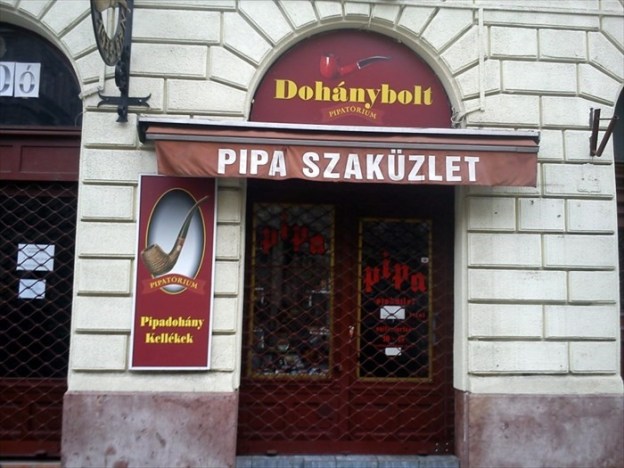
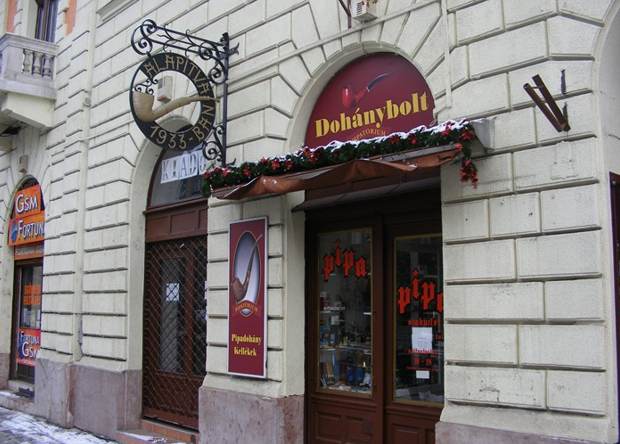
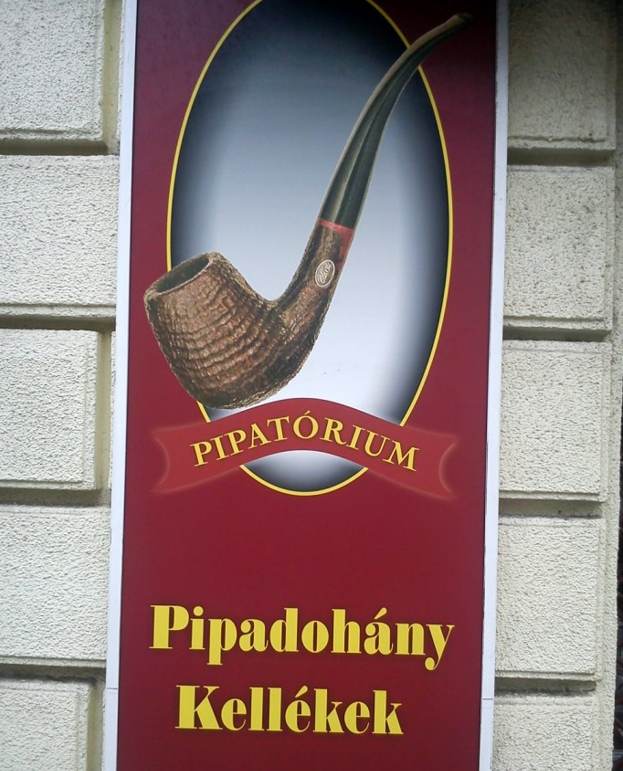
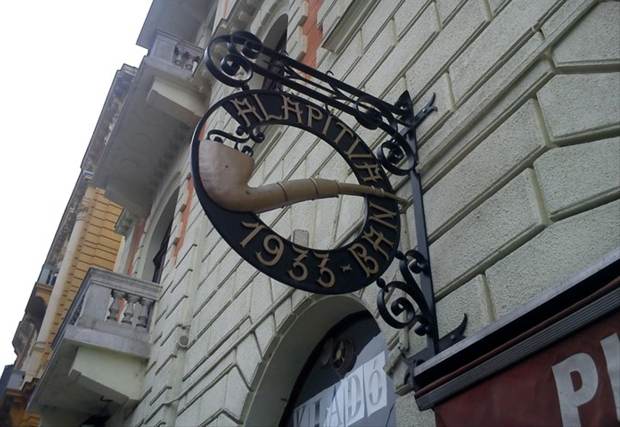
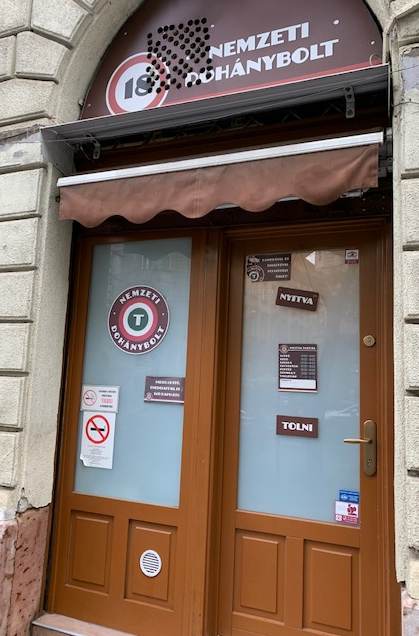
I was hoping that the unique little shop with its hobbit like shop keeper had not changed. The following three photos are pictures of what the shop looked like the first time I visited it in 2010. I have included them to show the stark contrast to what I met on this trip. The building was cut stone and the arched doorway had the words Dohanybolt over the door. There was an awning that had flowers and copper tiles. When I had been there the first time in October 2010 the awning looked as it is in the first photo below. The door itself occupied the right side of the archway and had the words PIPA painted on the glass. The left side of the archway was a display window that I spoke of above. There were pipes and racks, old tins and pouches and pipes from days gone by that I had never seen the likes of. There were old meerschaum and briars and decorative tins and jars of tobacco that no longer was sold. To the left side of the door on there was a rich red sign with a pipe in an oval that had the words Pipatorium across the bottom. Above the Pipatorium sign on the wall there had been an elaborate sign that stood out from the wall on wrought iron braces. It was in Hungarian but left little doubt as to its meaning. The pipe in the middle made it clear that it was a pipe shop and the date at the bottom made clear the date it had been established. To me that sign became the singular memory that stuck in my mind of the outside of the shop. The last time I visited in 2015 all the identifying signs were removed and a sanitized storefront remained. Last time I remember that my friend said that the shop owner was struggling with the oppressive laws regarding tobacco and the signage and frontage of tobacco shops. I included these photos of the amazing sign that I remembered so well even though I knew that it was gone. We turned the corner on József Krt came to the location of the shop. I was surprised. Even though I had been here since it had been sanitized I would easily have walked right by without knowing that I had missed it. All of the unique, classic pipe signage was gone and in their place was the circular government tobacco shop sign. The display window to the left of the door and the window on the door itself had been painted over. The front of the shop looked like the photo below. I don’t know about you but the sanitized look was lacking all of the previous charm of the original shop. From the outside there was no reason to believe that the shop of my memories was still there. Everything I loved about the curb appeal of the place was still gone and as in 2015 the place had a cold sanitized looking frontage. The fancy awning had been removed and in its place above the door a motorized metal shutter had been installed so that when the shop was closed even the door disappeared and in its place was a steel door that made the place not only “safe” in the eyes of the government but also made it disappear. I just paused and shook my head trying to fathom the loss of another of my memories. I wondered what was behind the door. I really wondered if anything would be left.

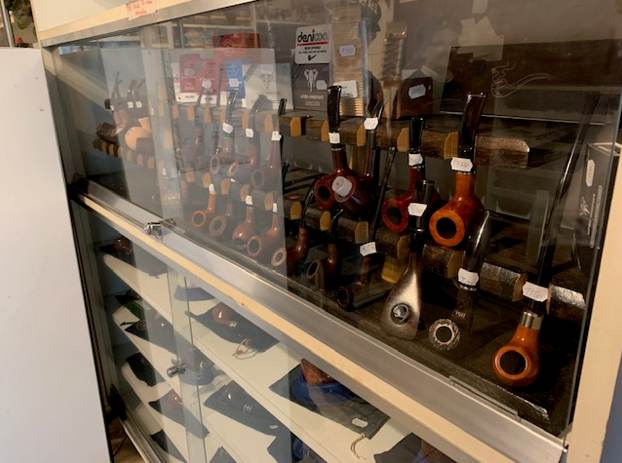
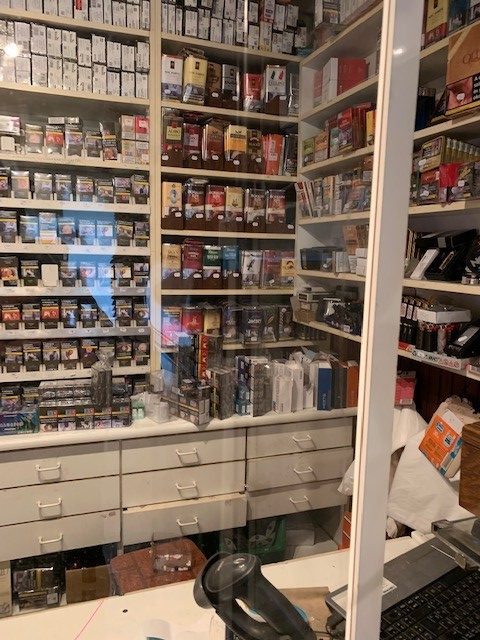
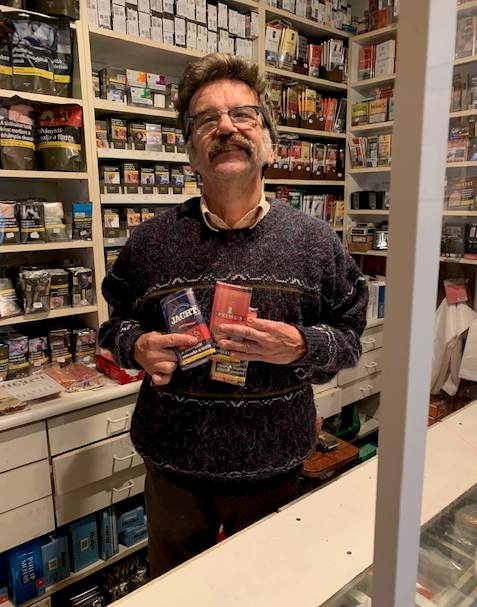
Honestly, I was expecting the worst. Would the inside of the shop be worse than even the memory of my last visit? Would the sanitizing hand of governmental bureaucracy have even stripped away even more of the inside of the shop? I was not sure. The painted windows and door had darkened what had once been a bright hobbit hole of a shop. I looked at the wall to the right of the counter – yes, it still had the display cases but they were much more empty. I looked at the one to the right and saw that the shelves of older pipes and museum like pieces was gone and not even a remnant of them was present. There were screws in the wall where displays had been. The back wall still held the counter but in this post-COVID world even that had changed and been locked behind a glass wall that not only protected the owner from me but left little sense of the original humanity of the shop. The shelves were lined with tobacco and it seemed to be a large selection but on closer examination  proved to mostly filled with cigarettes and the makings and rolling papers of the same. The right corner of the photo below shows what remained of pipe tobaccos – a mere remnant of what had been there before. In the place of Hungarian and Czech tobaccos were now primarily MacBaren pouches and tins that are now available throughout the EU. Tucked at the bottom of the shelf in the corner were several small pouches of Hungarian tobaccos.        The hobbitlike owner who I had met previously still sat behind his counter. We visited and talked about the state of his shop. He told me that he was saddened by the changes that had been forced upon him by the government regulations. He said that he was still surviving. I shared with him my memories of the way the shop had looked when I had been there previously and the special place it occupied in my mind from that first visit. I could tell that he too missed those days. Sitting in the darkened shop with none of the charm that drew people like me into it interior must have been very difficult for him. I picked up some of the only Hungarian Tobaccos that remained in the shop – one labeled Jacht and the other Primus 1 and both were Virginias. There was nothing left of the Balkan Tobaccos that had special display on the wall. The right wall had a smattering of cigars and a selection of throw away lighters. The shop was a skeleton of what it had once been. I took a photo of him holding my purchases so I would have a clear memory of the visit.I bade him farewell for perhaps the last time and made my way back to the door and out to city beyond. Before leaving the shop I took another look around at the interior of the shop. I took in the now meager displays of pipes and tobaccos and wondered if this would be the last time I came to this shop. If things continued as they had in past seven years then who could truly say if the marvelous Pipatorium would be here on my next visit to Budapest. Time would tell.


Stepping into the past in Milan Italy.


Blog by Steve Laug

This week I am in the region of Milan, Italy for my work with the SA Foundation. I arrived in Milan and stayed at a quaint hotel in the heart of the old city overnight before heading North. In the morning I went for a walk to see if I could find the Savinelli pipe shop. About two blocks from the hotel I stumbled on a shop that filled my time. To my surprise we as standing in front of a shop I have always wanted to visit.

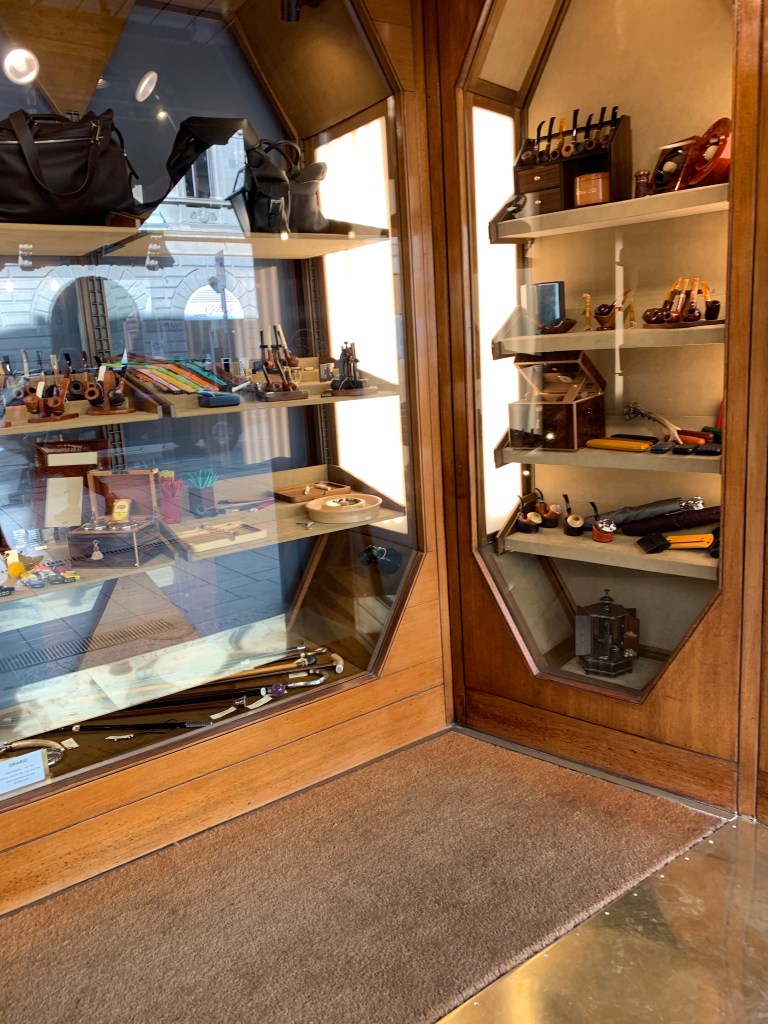
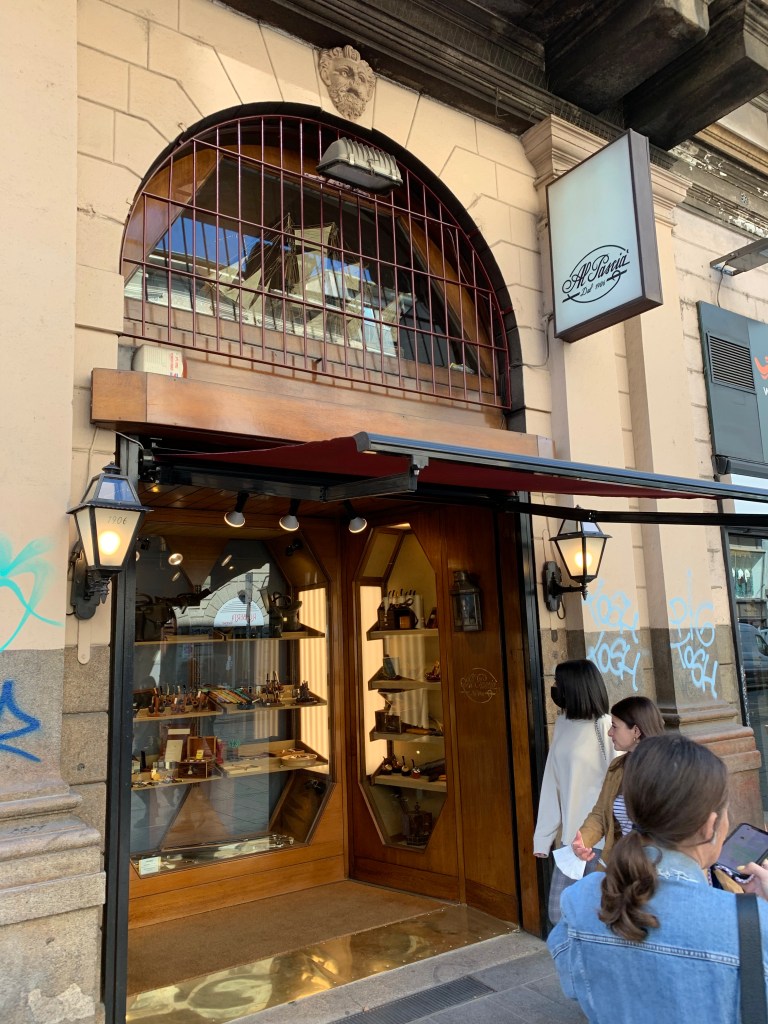
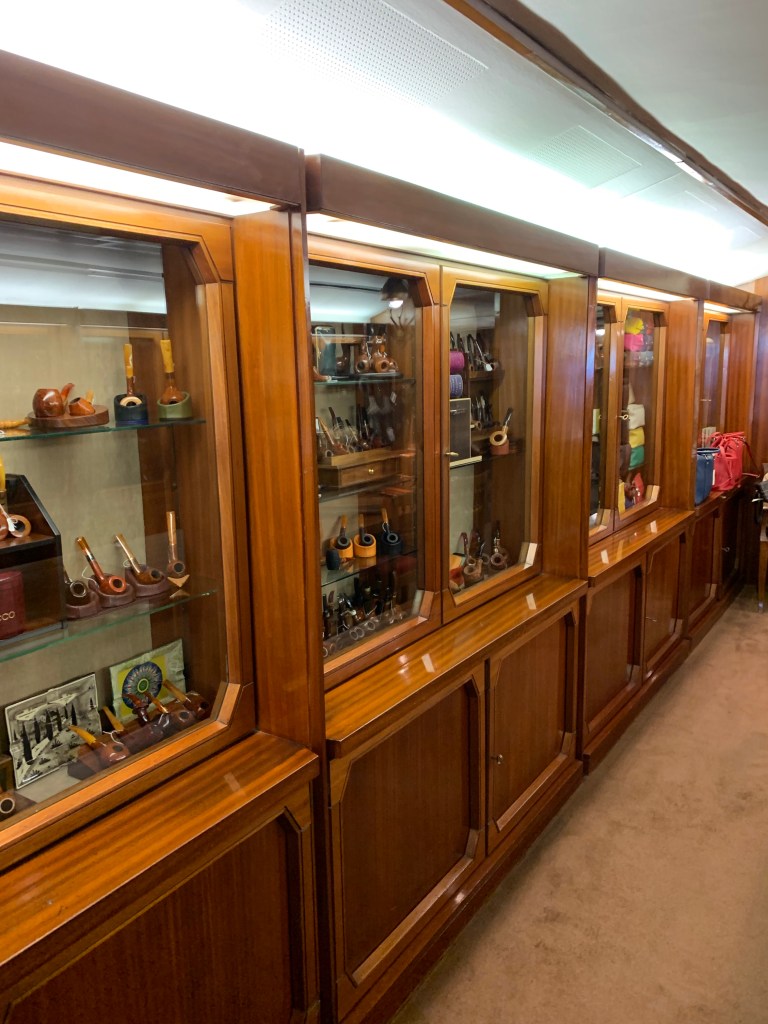
The sign above door of the shop read Al Pascia Dal 1906. The shop had been open since 1906 so it was an old timer. I paused outside and took photo above. As I walked through the door these display cases were ahead of me. I stopped and looked through the pipes, racks, rests and humidors in the cases in the entry of the shop. They were beautifully laid out and all of them called my name.

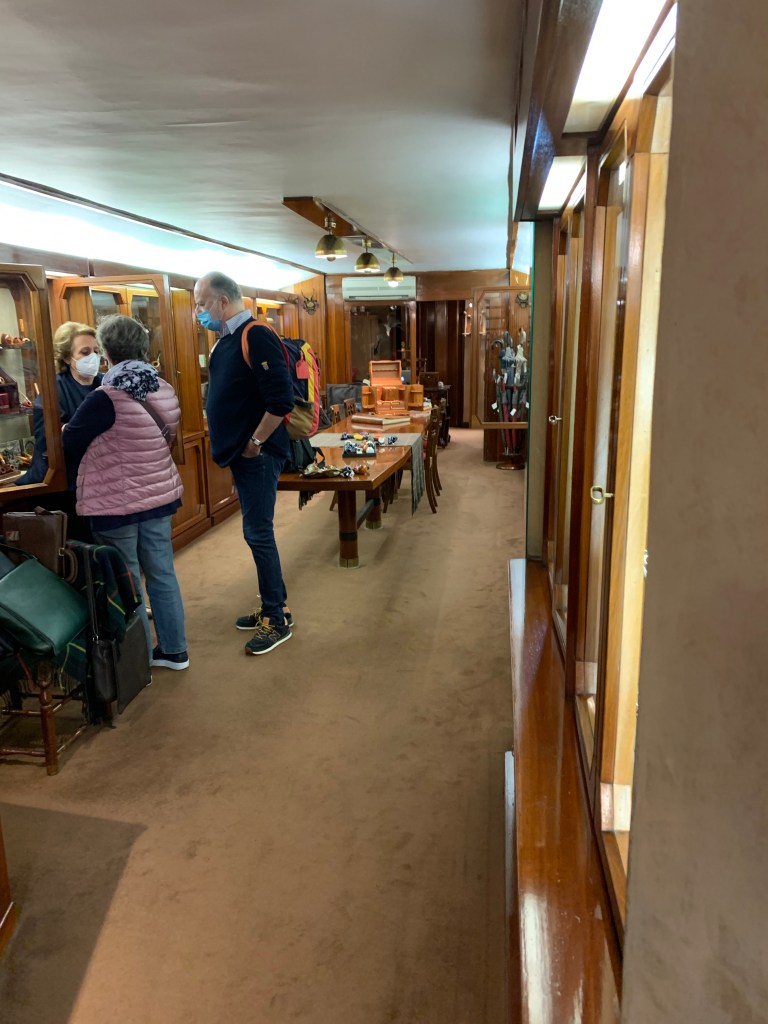
I turned to my left and entered the shop proper. It was a narrow shop with built in, well lit display cases and cupboards down each side. In the centre of the room was a large table where the two ladies who ran the shop would lay out pipes for a customer to examine. At the back of the room there was an office where the principal conducted business. His desk had many pipes and other items on the top that he was currently examining. I assume it either new stock or returns.

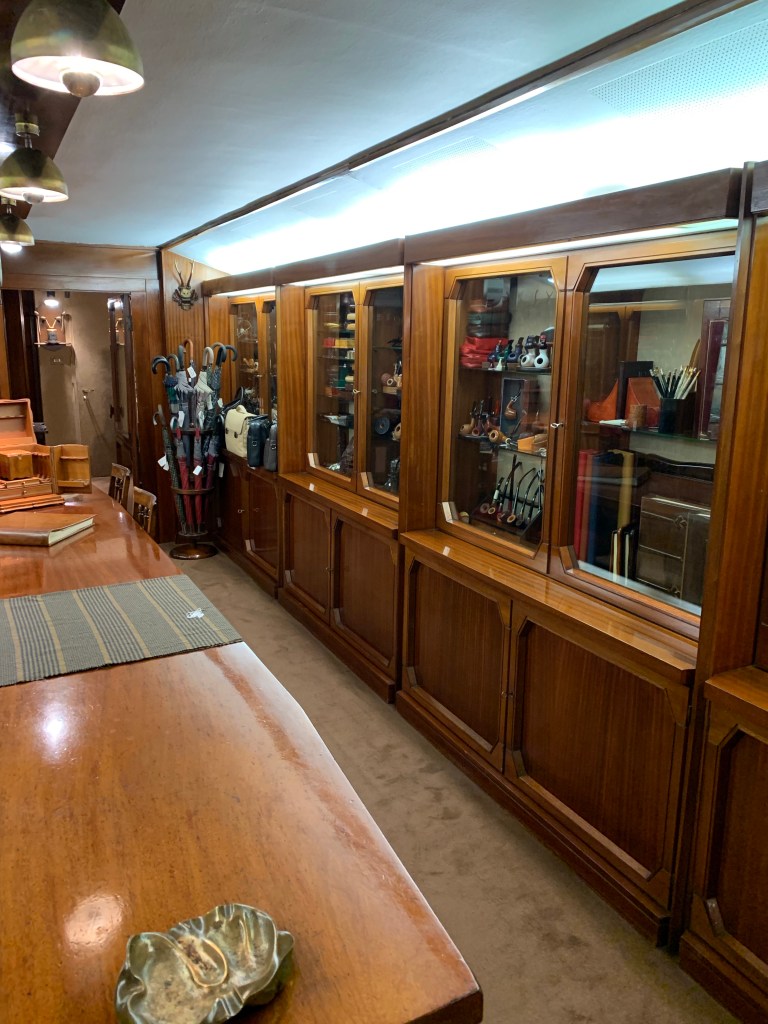
UI worked my way down the right side of the room looking at the pipes on display. The well lit shelves held many different Italian brands such as Moretti, Castello, Ardor, Ascorti, Cavicchi and others. Each were displayed beautifully. On the walls on either side of these cases were some older sandblast Pascia pipes. On the table in the middle was a selection of Pascia’s Curvy reverse calabash pipes that a previous customer was looking at when I arrived.

On the left side were other pipes made by a wide variety of European and even Japanese pipe makers. Some of theses included Dunhill, Tsuge, Kurt Balleby, Charatan, Kovalev, Former and more. There were also some American pipes – Briarworks, Todd Johnson, Pete Prevost to name a few. Really there were so many beautiful pieces of the pipe makers art available that it was overwhelming.

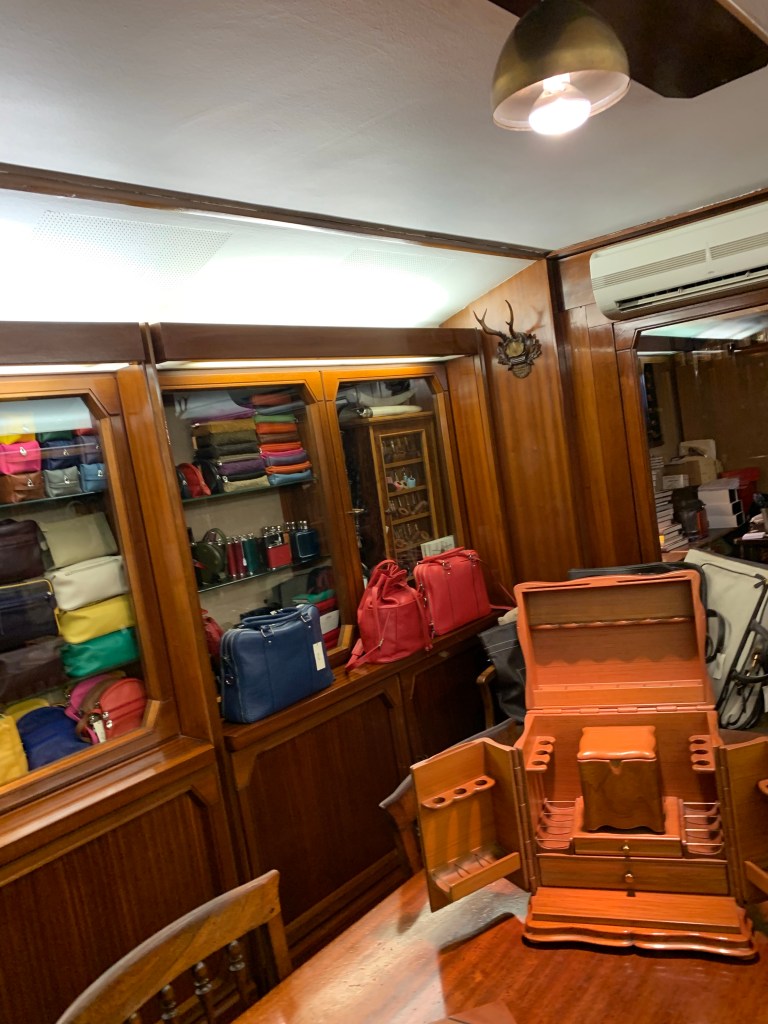
There were also many pipe racks, pipe bags, pipe rests and tools available. Along with them was a selection of leather goods and fine pipe cabinets like the one below.

When I first walked into the shop I had given a rebornpipes business card to the young lady who greeted me. She gave it to one of the principals of the shop Cosimo Sportelli. She said he would want to meet me.

I went to the table in the centre of the room and examined the Al Pascia shop made Curvy pipes on there. I have wanted to see them close up and examine them so this was the perfect time. There was a variety of both coloured and natural finished pipes to look through. I am not a big fan of coloured pipes, though these were nicely done. I set them aside and focused on the naturally finished ones. Most of what I looked at were Rhodesians with and without rings at the base of the cap. I settled on one and the saleswoman took it to the front of the store to prepare it for me.

I continued to look around the shop. I enjoyed looking at a display of cigar and cigarillo holders with amber stems and meerschaum or ivory bodies. They were quite stunning. There were also some large briar pipes on the walls for sale and display that were lovely. They even had a stand nice umbrellas. I could have spent much more time there but alas, time was running short.

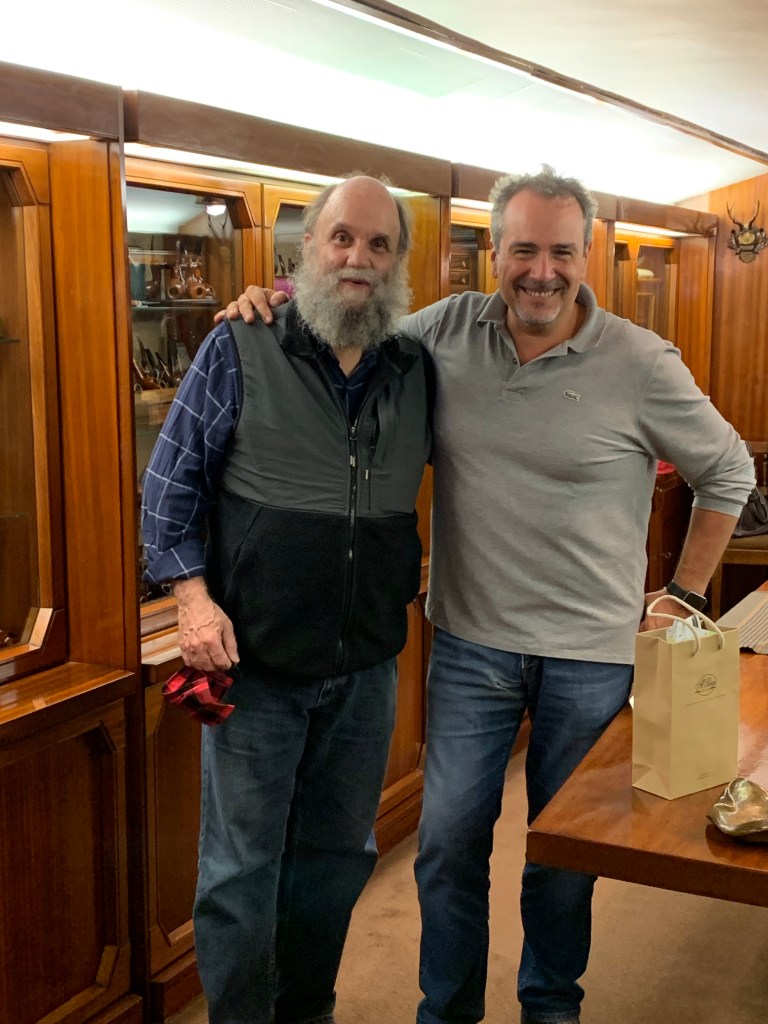
Cosimo had come out and introductions were made. I was surprised when he said he knew me. It turned out that he was a reader of rebornpipes and said that he enjoyed blog and the craftsmanship of those who contribute. I was thoroughly surprised and thanked him. It was a pleasure to meet and visit with him. I asked if he would mind if we took a photo for the blog as I planned on writing about the visit. He concurred and we both removed our masks and struck a pose. I have included the photo below.

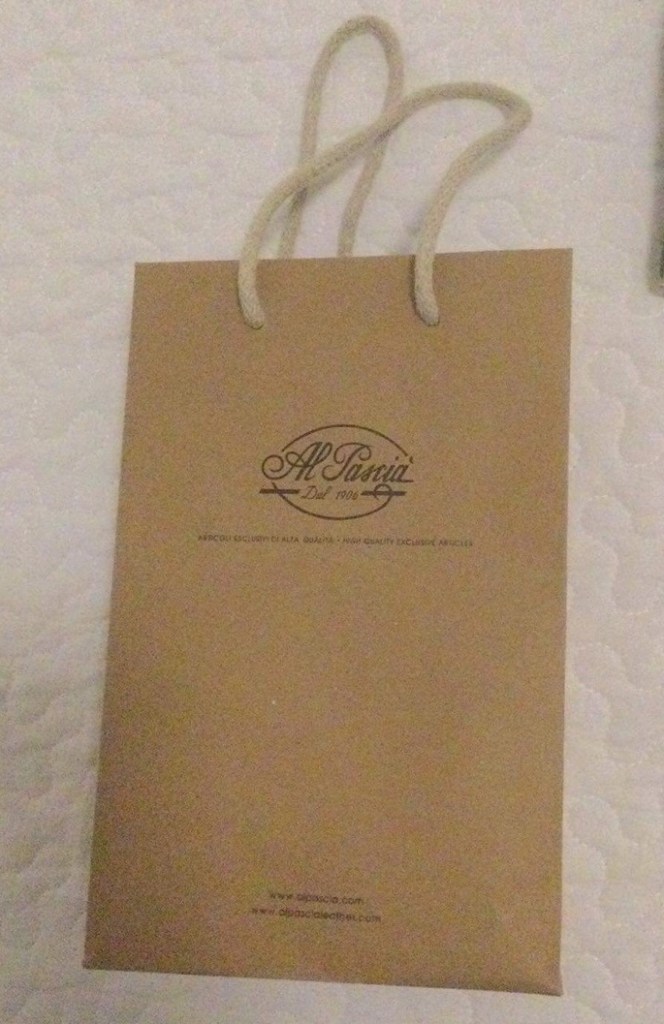
We parted company with warm regards and I made my way to the front of the shop. I paid my bill and was surprised with the beautiful packaging and bag that was handed to me.

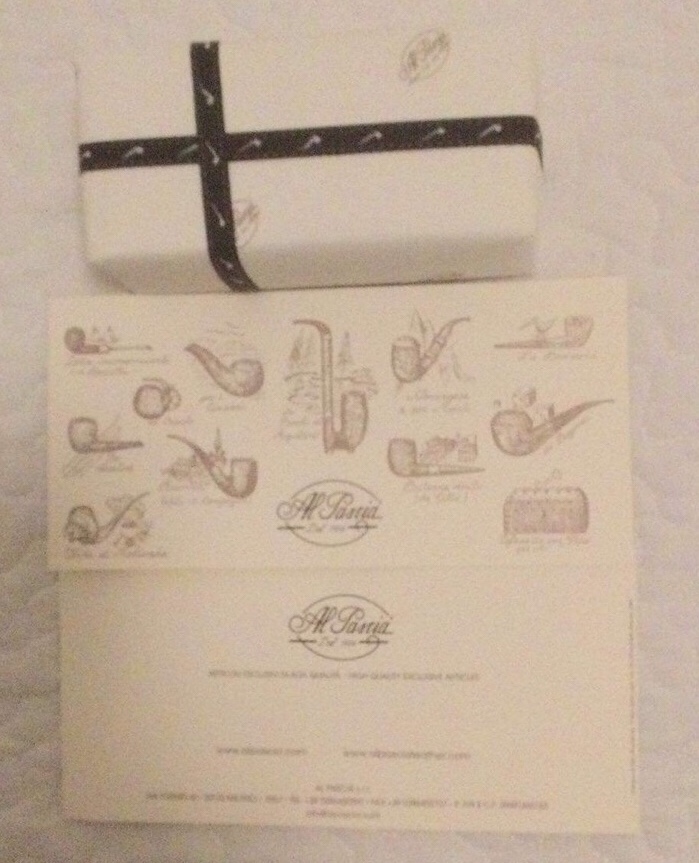
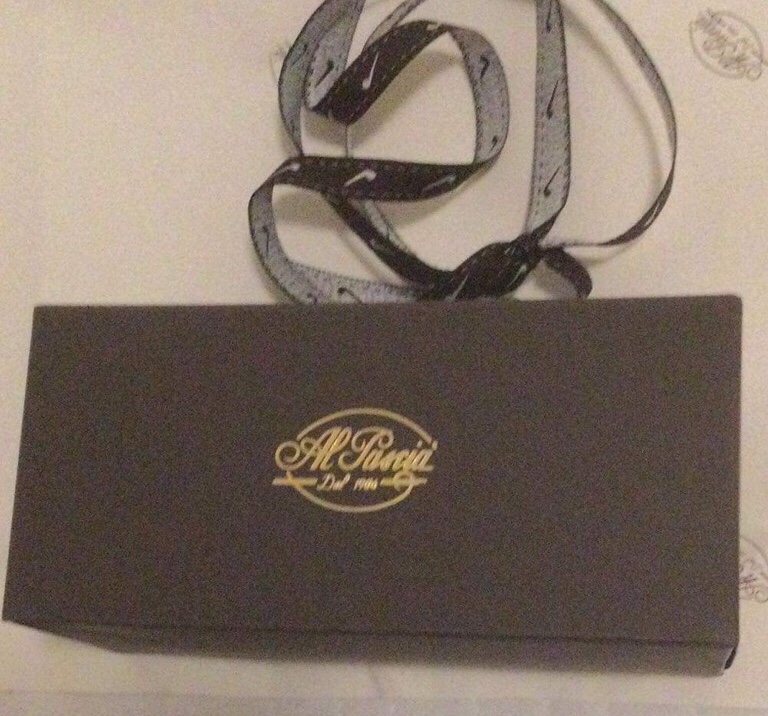
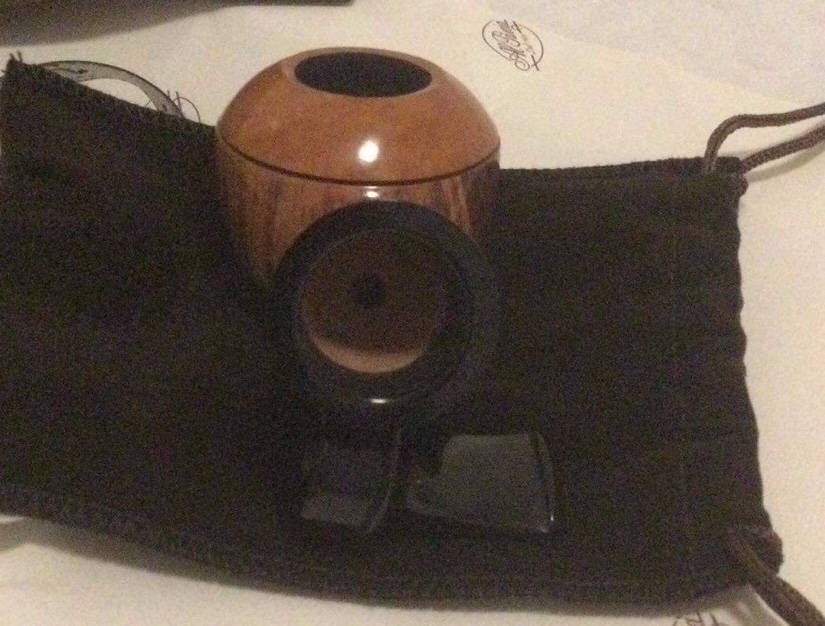
I took the bag with me and boarded a train for an hour and one half ride north. Later that evening when I had settled in, I opened the bag to have a look at the pipe. I took it out of the bag and this what I found. there was a well wrapped box with a brochure of the brand inside.

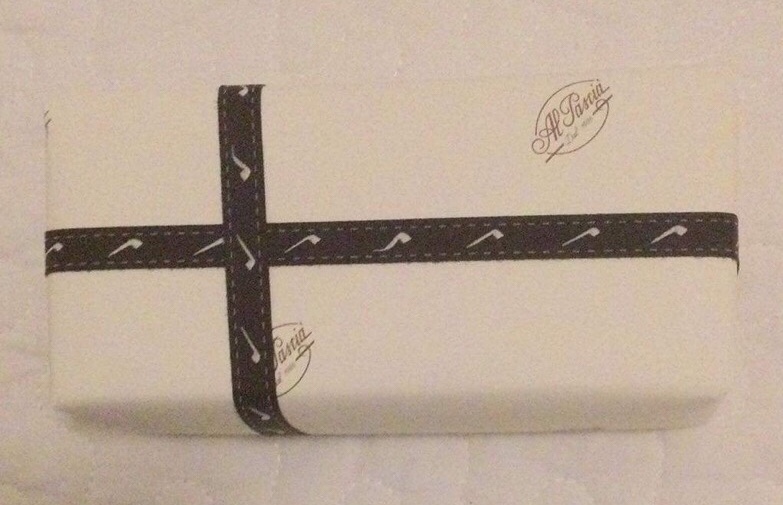
I removed the ribbon and the wrapping paper and found a well made box. Still one more layer before I would see my new pipe.

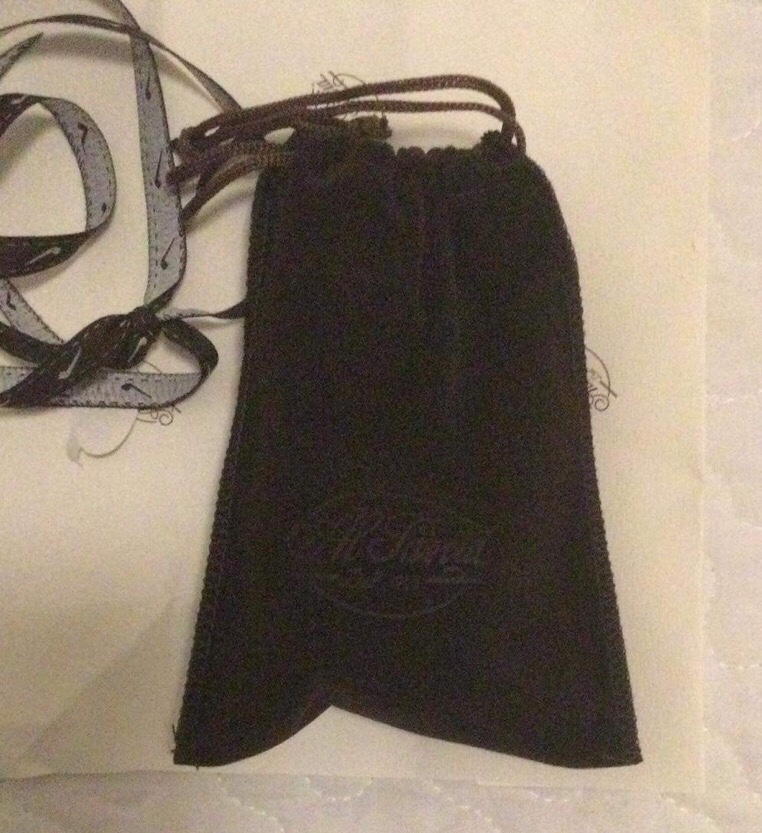
I opened the box to find yet another layer. Inside was a very nice pipe sock stamped with the store logo.

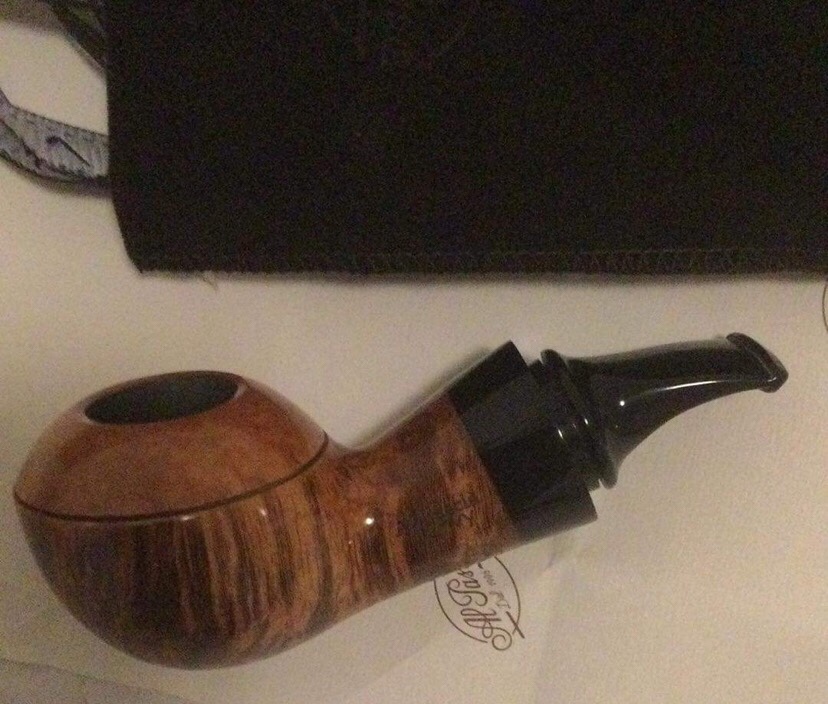
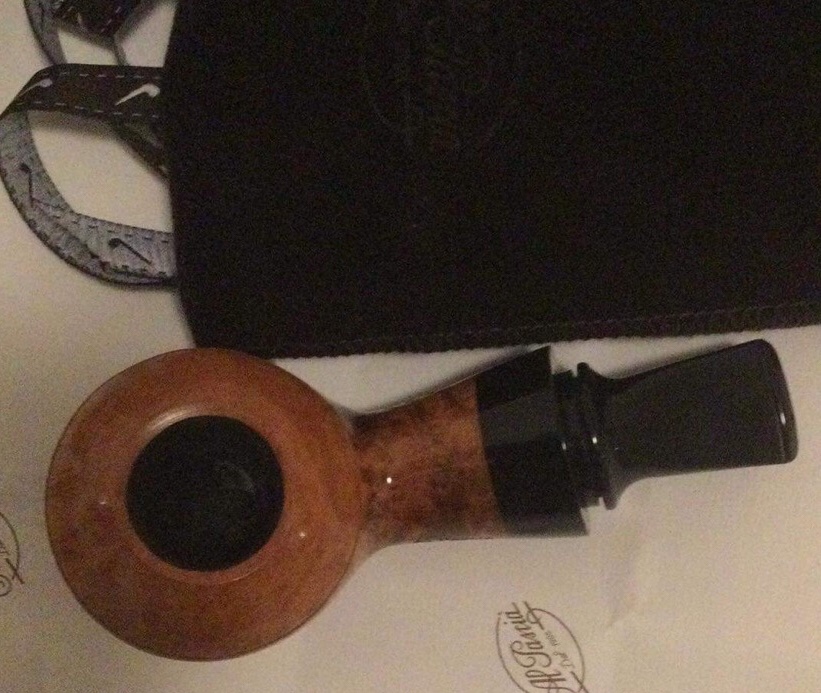
I opened the drawstrings and removed the pipe. Wow what a gorgeous pipe. It fits well in my hand and is very light weight.

I look forward to smoking it when I return to Vancouver. I even have a tobacco in mind for the first smoke. In the meantime I am enjoying just looking at it and examining the craftsmanship as I turn it over in my hands.

If you are in Milan make sure stop by the shop as I am certain you will not disappointed. Say hello to Cosimo for me when your there and be sure to buy a pipe.

A Road Trip and a Visit to The Country Squire Tobacconist in Jackson, Mississippi


Blog by Dal Stanton

This story started with a snow blizzard in Golden, Colorado, which made me long for the sunny, balmy weather of South Florida and with a serendipitous question to my wife: ‘Do you want to go to Florida?’  Her positive response set in motion a road trip which embarked barely 48 hours later heading to visit family in Port St. Lucy, on Florida’s east coast.  The 48-hour countdown included packing my ‘Pipe Restoration Mobile Unit’ and contacting friends and family along the 2K+ mile trek who would ‘offer a room at the inn’ so we would not have to stay in COVID prone motels and hotels.  So, joyfully I hung my snow shovel and my wife topped off the myriad of bird feeders under her care with oil rich sesame seed, and we headed to Florida on a road trip yearning for warmer weather!During our couple of weeks in Port St. Lucie, I was able to restore a few pipes shortening the queue a bit.  My wife and I also made several trips to Jensen Beach to enjoy the sun and waves.  Of course, I also enjoyed several bowls while continuing to perfect my pipe lighting prowess using matches in the balmy beach wind 😊.  This time, my Savinelli Goliath is packed with Hearth & Home’s ‘Black House’, a very nice mixture that is described in Pipes & Cigars as “…a good amount of Latakia, bright, fragrant, Orientals, sweet Virginias and a touch of dark-fired Kentucky.”  And to simulate the effects of long-term aging, the description concludes, a bit of Perique and unflavored black Cavendish is added.  I was thankful for the time!
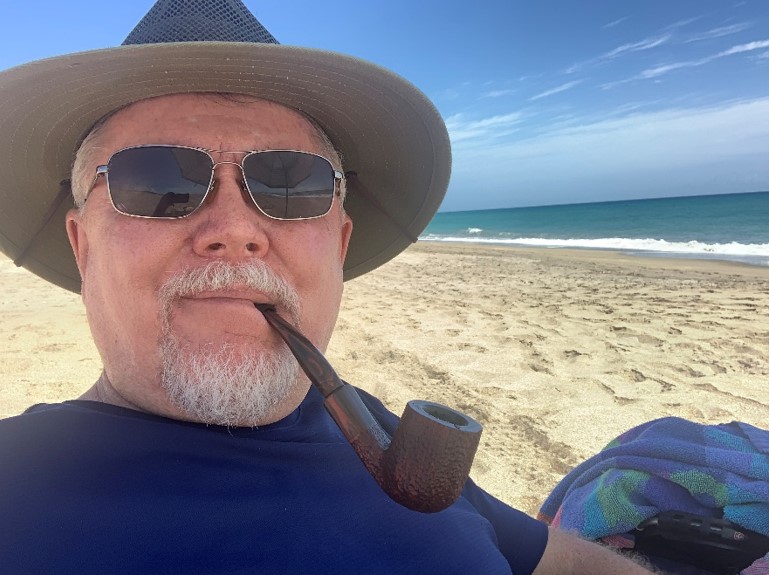
However, the time went all too fast and before we knew it, we were planning the return trip to Golden – calling friends and family making hopeful ‘reservations’ to drop by for a warm bed and breakfast.

During our road trips, whenever possible, we enjoy going ‘off road’ which means for us leaving the interstates and driving on the ‘old roads’ which are marked predominantly as US Highways which used to be the main roads back in the day.  Of course, one must have the time to go off road and not worry about the periodic slowdowns behind tractors and lower speed limits going through the little towns and hamlets which often seem frozen in a past times.  Besides taking in the changing scenery and quaint villages, one of our favorite past times is stopping at the plethora of antique stores, second-hand shops and weekend flea markets which occupy the ‘old roads’ with staunch opposition to change.  The draw is to the shelves and cases showcasing once new things which have become more valuable with time.

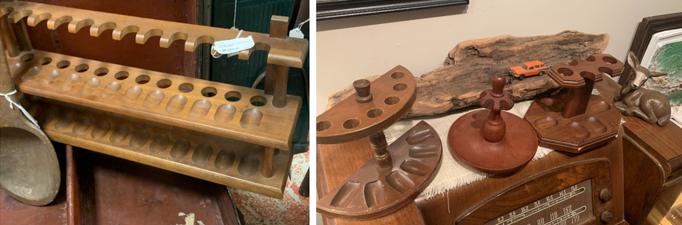
We were able to explore several shops during our road trip and of course, my radar is always wired to discovering pipe treasures.  I did see several pipes here and there, but they were priced a bit too much and left no ‘meat on the bone’ for me to restore and sell to benefit the Daughters of Bulgaria – helping women and girls who have been trafficked and sexually exploited.  Even though I did not find any pipes to bring home to add to the ‘For “Pipe Dreamers” Only!’ collection, I did hit pay dirt finding some pipe racks to help display my growing personal collection.  I landed 3 nice smaller racks and a double deck 24 pipe rack, which will work very nicely.  A few pictures show my picking spoils!One of the highlights of our road trip for me was visiting an honest to goodness tobacconist.  As our return trip to Golden came together, we were glad to find ‘room at the inn’ with longtime, dear friends and colleagues from our years working in Ukraine.  Clay and Darlene arrived in Odessa, Ukraine, on the Black Sea coast, in 1993 after serving several years in Portugal.  They arrived with their 4 boys and our family, with 2 girls and 3 boys, arrived in 1995.  Those historic years were both challenging but extremely rewarding as we lived and worked together during the difficult times after the collapse of the former Soviet Union.
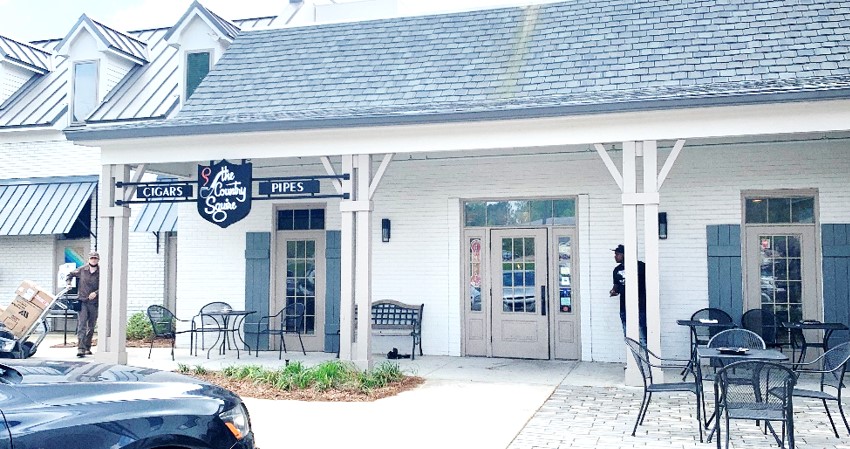
After working and living in Ukraine all these years, Clay and Darlene retired this year to Clay’s hometown of Jackson, Mississippi, where he continues to use his doctoral degree teaching locally at Belhaven College and at our alma mater, Reformed Theological Seminary.  We stayed two nights with Clay and Darlene which gave us time to eat a lot, go picking at the local Flowood Flea Market, buy books at the Book Rack and my favorite, a visit to The Country Squire – which included only Clay and me (the ladies passed 😊).

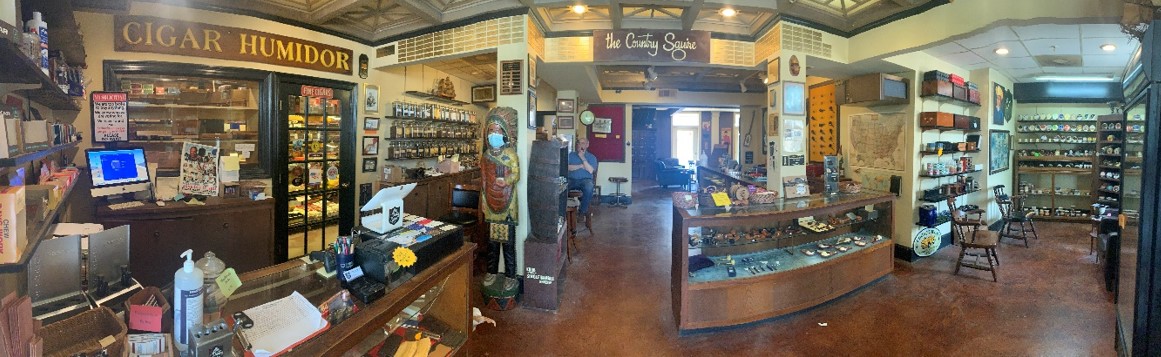
I was envious that Clay’s tobacconist was barely a 10-minute drive from his home.  When we opened the door to The Country Squire, we were greeted with the warm, welcoming aroma of rich fresh tobacco scents.  As one expects (or hopes) a tobacconist to be, joining the olfactory experience was the immediate sense of visual overload as the eye takes in more than the brain can process.  The first one to greet us as we walked through the door was a ‘traditional’ pandemic masked carved wooden Indian.  A quick initial scan picked up the cigar humidor to the left and to the wall on the right, an ample collection of tobacco tins.  Straight ahead, underneath the ‘The Country Squire’ sign hanging from the cross truss were cases and wall displays revealing new pipes of varying pedigrees.  My initial response was to exhale slowly with a rising sense that the visit to The Country Squire would be a good one, indeed.I found a brief history of The Country Squire on their website helpful in explaining a sense of the ‘community feel’ this tobacconist shop had become in the Jackson area (See: History LINK):
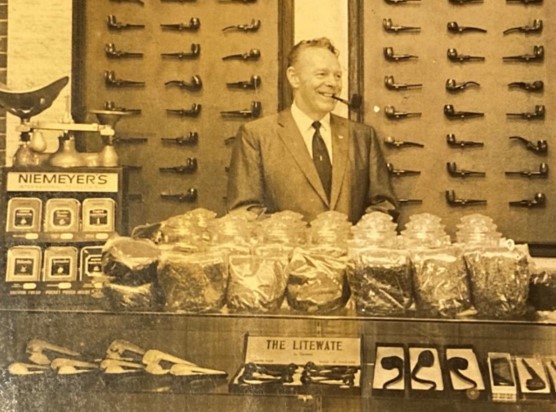
Mr. and Mrs. Reeves, along with their daughters Kit and Kim, worked to bring the Deep South a pipe and cigar experience like no other.  In the 1980s The Country Squire had four locations in and around Jackson, all specializing in premium tobacco products.  In 1981 after the death of Jim, Mrs. Reeves faithfully ran the business for another 31 years, eventually consolidating the brand to the original location on Lakeland Drive.

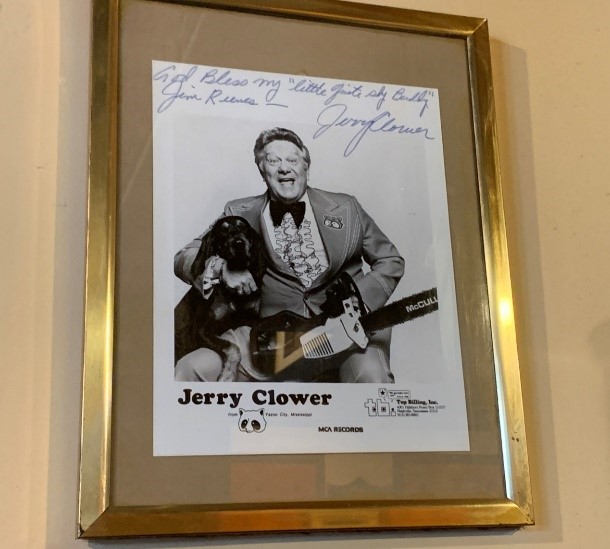
The Squire developed into quite a community over the years.  It was common for a customer’s tobacco order to be weighed up by a Reeves grandchild.  Regulars in the shop included Mississippi personalities Jerry Clower and Willie Morris, and countless state politicians, professional athletes, authors, and the occasional actor.  Legendary black Labrador, Piper, kept watch over the shop while the likes of pastors, mill workers, physicians, teachers, attorneys, and professors swapped stories over their favorite pipe or cigar.

I discovered more of the history of the beginnings of The Country Squire from a 50th year anniversary newsletter that Clay later sent that described the initial personal adversity experienced by Jim and Gwen Reaves and the risk he faced in starting a ‘sophisticated’ tobacconist in the South:
After losing his job as an appliance salesman in 1970, Jim Reeves, along with his wife Gwen, decided to open a premium tobacco shop – the first of its kind in Mississippi.  The Deep South, lacking the wealth and industry of other parts of the country, had yet to develop the sophisticated pipe and cigar purveyors that dotted the Mid-West and New England. Unsure if a tobacconist of this type would be successful in Jackson, the Reeves selected “The Country Squire” for the shop’s name so it could transition to other products if business went south.  Fortunately, hand-blended pipe tobaccos and premium cigars were a hit, and The Squire was a huge success.  Over five decades, the shop has become a Mississippi and Southern institution, drawing regular customers from the ranks of politicians, writers and poets, professional athletes, local media celebrities, and the occasional scoundrel and ne’er-do-well.
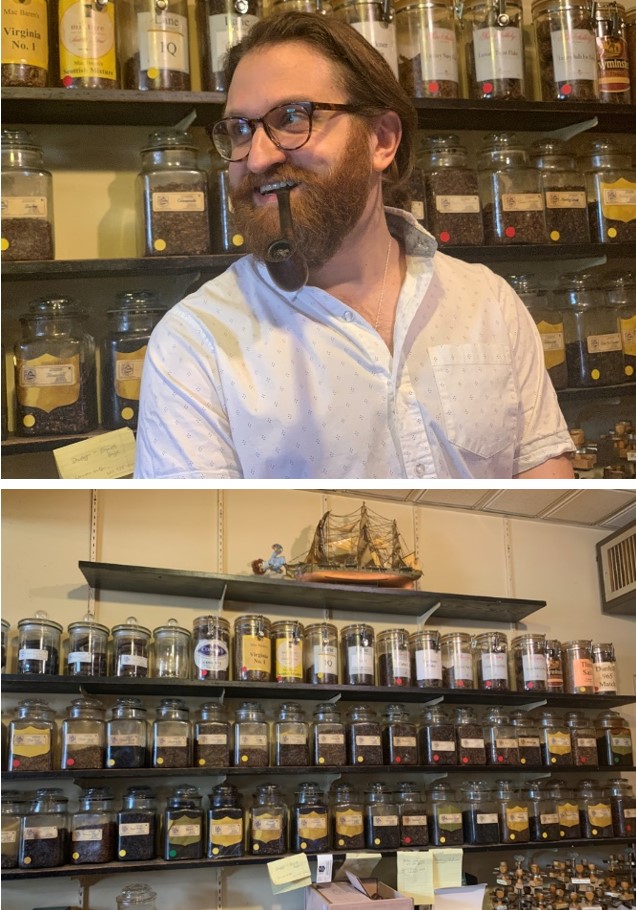
After taking in the initial impressions of the shop’s landscape, Clay led me to stools in front of another display counter that appeared to be a workplace with a manual slide scale used in weighing the tobaccos and by it, a metal mixing bowl.  We sat down in full view of the abundant selection of jars of tobacco blends, seemingly standing at attention, lined along the single depth shelves facing us.  I saw one other person sitting off to the back of the shop in an alcove with ample leather chairs.  He was nursing a cigar and focused on a laptop on the coffee table in front of him and papers to the side.  I discovered later that this was merely a lull in the steady buzz of folks coming and going on that Saturday morning picking up cigars from the walk-in humidor, tobaccos, tins, and other accessories.

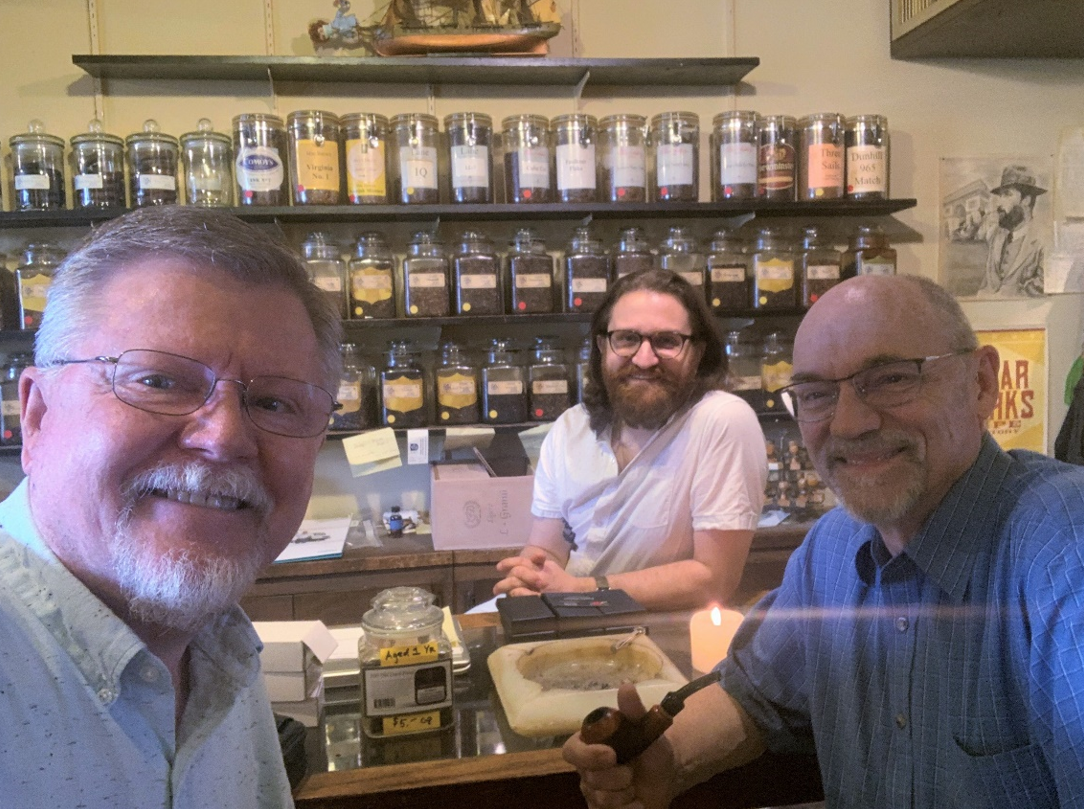
After mounting the stool and beginning to decipher the names of the tobacco jars arranged on the shelves, the present owner and purveyor of The Country Squire appeared from a back room with some papers in hand and his ‘Bing pipe’ in service.  Clay introduced me to Jon David Cole who immediately sat down behind the work counter and engaged us in conversation.

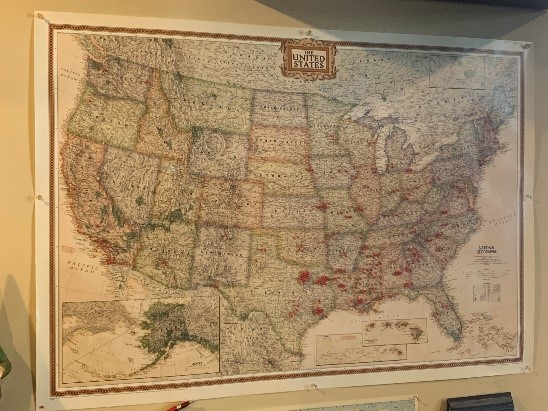
I am not sure when Jon David acquired The Country Squire, but Clay told me that he had worked in the shop for Mrs. Reaves after Jim’s passing.   My first question to ‘Jon David’ was if he went by ‘Jon David’ or simply ‘Jon’.  In solid Southern tradition, he expounded that his parents dubbed him with the double name.  As the introductions developed, Clay described my exploits as The Pipe Steward, having lived for many years in Ukraine with him and in Bulgaria and restoring pipes benefiting the Daughters of Bulgaria with their adoptions by new stewards.  After explaining that I was on a road trip returning to Colorado, Jon David told me to be sure to put a pin on the US map on the wall behind us and to sign the guest book.
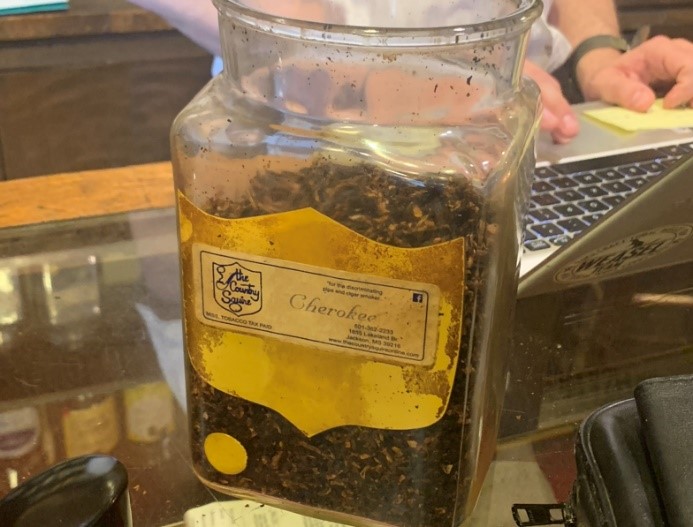
After introductions were completed, we got down to business.  Clay and I both brought out the pipes we chose to join us for this, my maiden run to The Country Squire.  Clay was first to request a sampling from the waiting jars.  Jon David brought down the ‘Peach Melba’ and gave both of us a sampling of the bouquet.  While Clay packed his bowl with the Peach Melba, my stock question to Jon David was which of his house blends was the most popular?  Without pause, ‘Cherokee’ was his response as he pulled the jar from the shelf and popped off the airtight glass lid and offered me a whiff of the subtle blend of Virginias and Cavendish.  In a few minutes, the anchor of my rotation, which was my first restoration, a 3/4 bent blasted London Made Dr. Plum named, ‘Chicho Pavel’ (Uncle Paul in Bulgarian from my mistaken notion then that he was an Oom Paul 😊), was packed with Cherokee and the aroma matched the taste.  The reflection and conversation that followed was sweet as Clay and I enjoyed Jon David’s hospitality and tobacco.

As the conversation turned to how I got involved in restoring pipes, the obvious reference to rebornpipes and to my good friend and mentor, Steve Laug’s predominant influence on my introduction to pipe restoration, Jon David’s eyes lit up. He described Steve’s helpful involvement and interactions in the context of a regular podcast produced by Jon David.  Another bit of information that expanded my understanding of The Country Squire’s contribution to the pipe world. Jon David described the ‘Country Squire Radio’ programing being a lot like the ‘PipesMagazine Radio Show’ hosted by Brian Levine – a program on which I’ve had the honor of being interviewed (See: LINK to PipesMagazine interview).  Later, I subscribed to the Country Squire Radio channel through the Podcasts app on my iPhone.  The Country Squire Radio has website (LINK) where other ways to subscribe are listed.

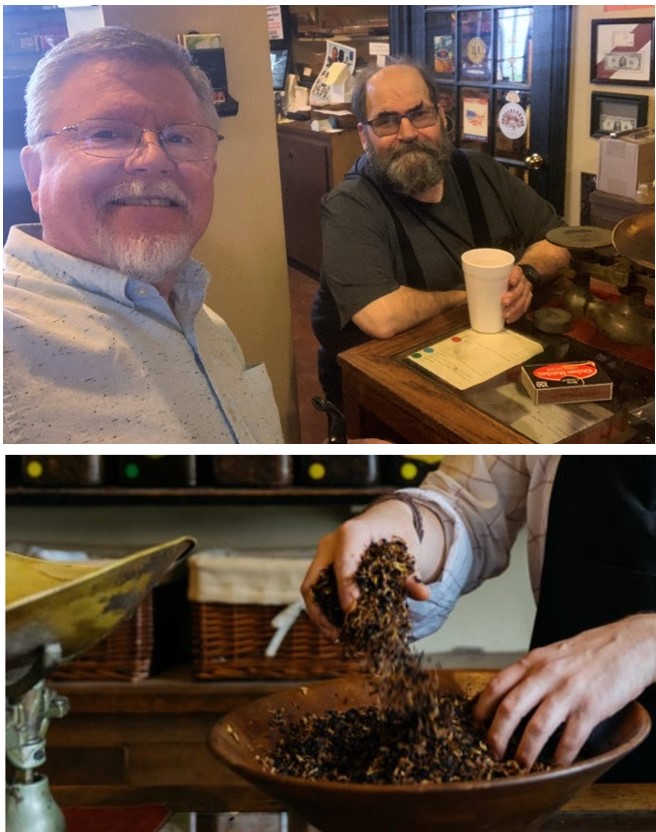
Jon David was interrupted from our conversation several times as he responded to the needs of other patrons which became a steady stream through the front door.  One such patron found an unoccupied stool at the ‘work display counter’ and joined our conversation.  His name was Andrew with a huge Greek family name that was definitely Greek!  Clay had seen Andrew in the Country Squire on earlier visits, and we discovered that he was a Greek Orthodox priest in a nearby church in Jackson.  We all laughed when he discovered that Clay and I were both Presbyterian ‘priests’ with some far-flung stories of Ukraine and Bulgaria which included travels down to Bulgaria’s southern neighbor, Greece.  He told stories of neighborhood robberies and one intriguing break-in in his parish church.  It was great talking with Andrew and getting to know him.  It was the simplest and most enjoyable ‘jawing’ while we puffed on our pipes and offered up our aromatic slice of The Country Squire ambiance.

After Clay ordered up 2 ounces of the Peach Melba blend, I matched his with my own order of 2 ounces of Cherokee to join me on the road trip back to Golden.  Jon David mixed and weighed the 2-ounce orders on the work counter in front of us.  I was so mesmerized by the process that the opportunity of taking a picture was missed but I found a picture on the website showing Jon David at work.

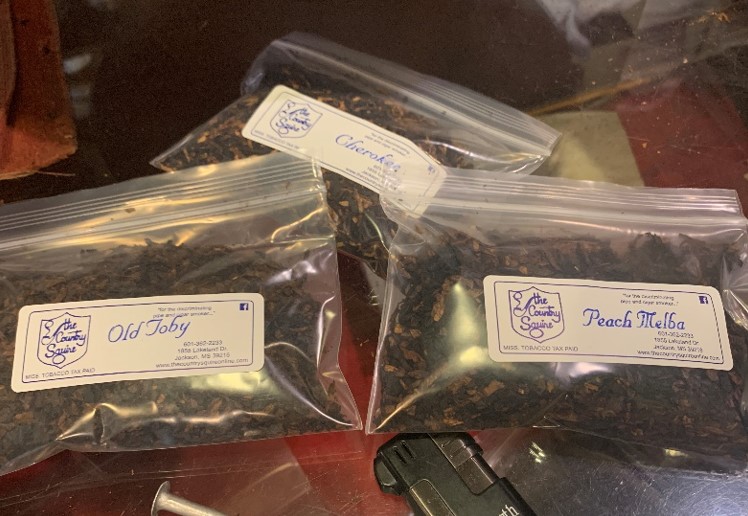
The conversation turned to other tobaccos and Country Squire’s notoriety in providing interesting ‘Lord of the Rings’ blends, ‘Old Toby’ being among the most popular – the blend favored by hobbits of the Shire.  The jar holding ‘Old Toby’ almost magically appeared before me and Jon David popped off the glass lid and tipped it offering me the ‘siren-ness’ scent of another blend tugging me in!  Ah, the business sense of offering free sampling and Jon David’s knowing smile!  A few minutes later I joined the hobbits of Middle Earth with a bowl of ‘Old Toby’ adding its ‘sweet kitchen spice’ seasoning to the already ripe atmosphere.  The other Lord of the Rings tobacco that caught my attention was called ‘Rivendell’ and is described on the printed Country Squire menu Jon David gave me as, ‘Nuts and Cocoa. Woodsy and rich with an excellent room note.’  I was not able to test the Rivendell blend, or another called, ‘Bag End’, but I might just have to mail order some down the road.  In the end, I ordered up 2 ounces of ‘Old Toby’ and decided to try Clay’s choice, ‘Peach Melba’.  All in all, a great haul!
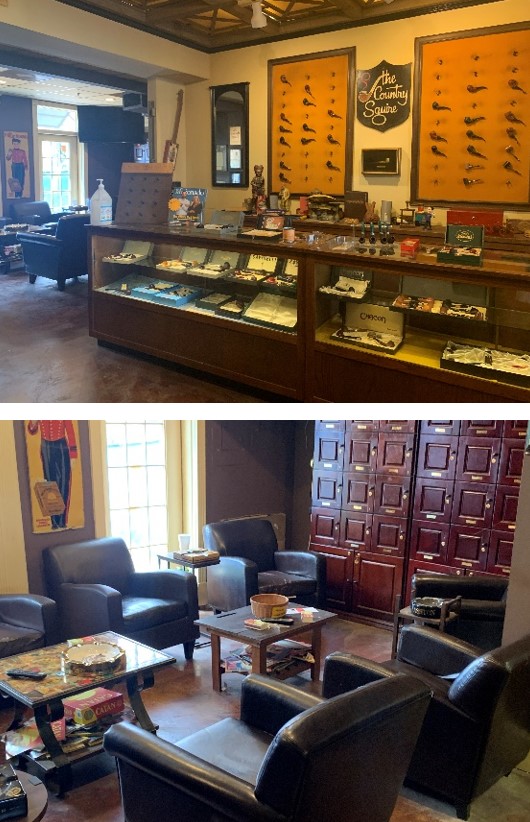
As Clay and I were packing up and settling accounts, Jon David reminded me to put a pin on Golden, Colorado, on his guest wall map and to sign the guest book.  I gladly did this and took the opportunity to look around the shop and take a few pictures.  The ‘Pipe Wall’ display appeared to be the same that Jim Reaves stood before over half a century earlier. 
Jon David apologized for the depleted selection of new pipes in the displays and hanging on the wall mounts.   The effects of ‘life in the pandemic’ and more recent changes with him being out of the shop for a time helping his wife with a new born – reasons that more than excuse the fewer pipes than usual.

I leaned in to look at the ‘smoking lounge’ replete with leather chairs and personal lockers to store one’s cache of cigars and pipe tobacco to enjoy when visiting The Country Squire.

I shared with Jon David my desire to do a write up of my visit to The Country Squire.  He was appreciative of this.  My visit made me a bit envious of Clay with such a class-act tobacconist only a few minutes from his home!  My search for the same in the Denver area has not yet rendered a place offering the convenience and ambiance one hopes for in a tobacconist shop.  We said our goodbyes to Jon David, thanking him for the opportunity to enjoy The Country Squire, a place I’m sure to visit again when I pass through Jackson, Mississippi.  Thanks for joining me!
 

An Imagined Visit to an Old Tobacco shop


Blog by Steve Laug

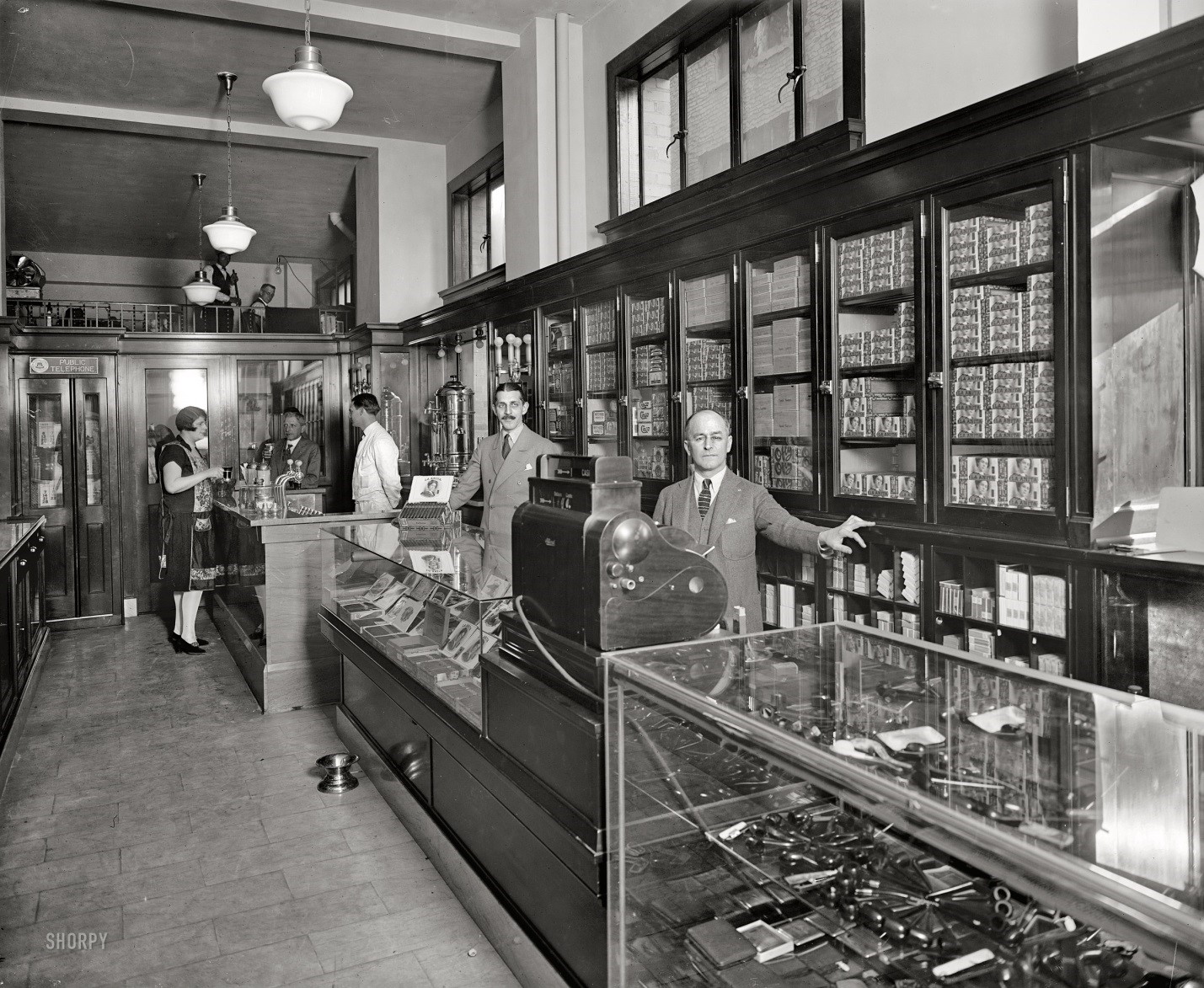
I would have loved to visit Offterdinger Cigar Store in Washington, D.C. pictured in the photo below from 1926. It is the kind of shop that I can only imagine and also one that reminds me of the way the Old Morris Tobacconist Shop looked like when I first visited it in my teen years. Sadly this kind of shop is long gone and is a memory for only those of us who have had the pleasure of visiting them. The difference between the two shops during that era really is the addition of the soda fountain in the D.C. shop. It is almost like the fountain was added to keep the family busy while dad was picking up his cigars and pipe tobacco for the week. It must have been a hopping shop on the weekends with many families wandering through picking up their parcels. The days of this kind of tobacco shop are sadly a thing of the past in most places. Places that are dedicated to pipes, tobacco and cigars have all but disappeared to be replaced by head shops and glass pipe shops. I thought it might be interesting to let my imagination wander through this shop for a bit and try to capture some of the feel of this kind of shop. So it is with that intent that I write this blog. Let the story begin.

The bell over the door rang to announce my entrance to the shop. I walked into the store and took in the sights of the room. (I do this in real life as well!) The loft at back overlooking the shop seemed to be the business center of the shop. It had the accountant and manager/owner at work balancing accounts, dealing with payroll and placing orders with distributors. I would love to have been able to listen in on their conversation as I watched them from below.

To my right the wall of the shop was lined with glass doored cupboards filled with an amazing assortment of cigars, all boxed, sealed and ready to be purchased. From the empty spots that can be seen through the glass doors it was obvious that the shop did a brisk business. To the left of the cash register the glass counter top and display units in front of the cupboards had more cigars that appeared to be sold as singles. There is a brass spittoon on the floor in front of the display case which leads me to believe that they also carried chewing tobacco. There was also a display of pipes, pipe and cigar cases and other assorted accessories on the right side of the register. There were no ashtrays visible on the counter tops which made me wonder.

Further down the right side toward the back of the shop is a counter where drinks could be ordered. It appears to be a traditional soda fountain with dispensers on the counter top. The women standing at the counter has a drink (coffee/tea/soda) in her right hand. There are coffee and tea urns on the wall behind the fountain. There is the traditionally clothed “soda jerk” standing behind the counter to serve customers who seek some refreshment. At the moment the photo was taken he appears to be engaged in a conversation with the fellow at the end of the counter and the woman in front of the counter. I can’t help but wonder what they are talking about.

At the back of the shop there closed room with glass doors under the balcony. The shelving on the right wall could be where single cigars were kept and customers could enter and pick a cigar of their preference. Or perhaps it is a small smoking room with chairs and the illusive ashtrays where a pipe or cigar man could relax with a drink and enjoy his purchase. Personally I lean toward it being a smoking room as the right wall cupboards and the display cases to the left of the cash register are filled with cigars.

I turn to my left and take in the cupboards on the wall. Though the left side is not totally visible in the above photo it looks like there are cupboards and display units on that wall at the far end of the room. These cupboards displayed and housed the shops pipe tobacco – both tins and bulk jars. There was a narrow shelf at waist level across the unit that held the jars of bulk tobacco. I The wall units also housed individual pipes on display so that they could be viewed and then taken out by shop salesmen for the potential buyer to study and choose.

All of this was taken in as I stood in the doorway of the shop letting my eyes travel the breadth and depth of the store. It was a compact little shop that seemed to do a brisk business and catered to the needs of the smoker. I was brought out of my reflections by a warm greeting called out to me by the gent behind the cash register. He welcomed me to Offterdingers and asked if he could help me with anything. He commented that since I was a newcomer to the shop he was at my service to make the experience a good one.

He saw the pipe in my mouth and surmised from the smells of the smoke billowing from the bowl that I was smoking an English blend. He knew his stuff because he could immediately tell me the constituent tobaccos in the blend. He asked if would like to try one of the shop’s English blends and when I said yes, he reached under the counter and placed and ashtray on the top for the dottle from my pipe. When that was finished the ashtray went back into hiding and he walked with me over to the left side of the store where the bulk blends were kept. He took down a jar of the house English blend an opened the lid so I could smell it. He gave me enough to fill a bowl and directed me to the smoking room to try it out.
I tamped the bowl and lit it with a match provided on the table in the room. I sat back and let myself by carried away be the multidimensional blend that had been provided. I sipped it slowly and thoroughly enjoyed the smoke. After about 30 minutes or so I headed back to the counter and talked with the clerk. I decided to purchase 100 grams of the blend. I bought a roll up pouch at the same  so I had him fill the pouch with the blend for me. He weighed it out on the scale and with a pinch extra he tipped the tray on the scale into the pouch. We walked to the register and I paid the bill. Before I left he offered to refill the bowl so I could enjoy a pipe while I walked. I refilled my pipe, lit it with a match and headed out the door. I would indeed come back again.
Oh how I wish these old style shops still existed where the pipe and cigar smoker were a mere fringe element of society but where their enjoyment of the leaf was celebrated. I can still visit these shops in my mind because over the years I have actually visited them. Hopefully some of you also have fond and vivid memories of such shops…

Visiting an Historic Utah Pipe Shop in Salt Lake City – Jeanie’s Smokeshop


Blog by Steve Laug

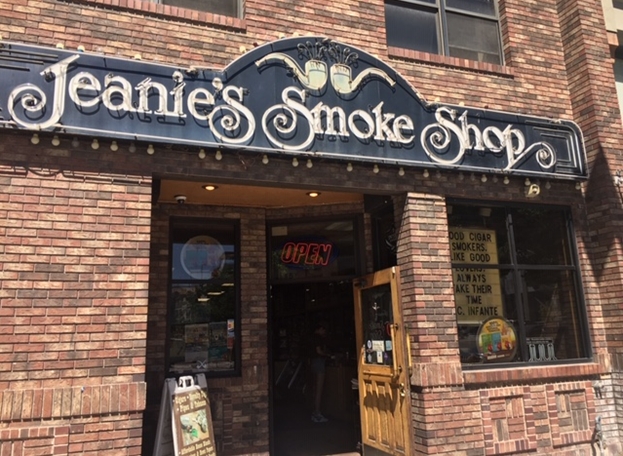
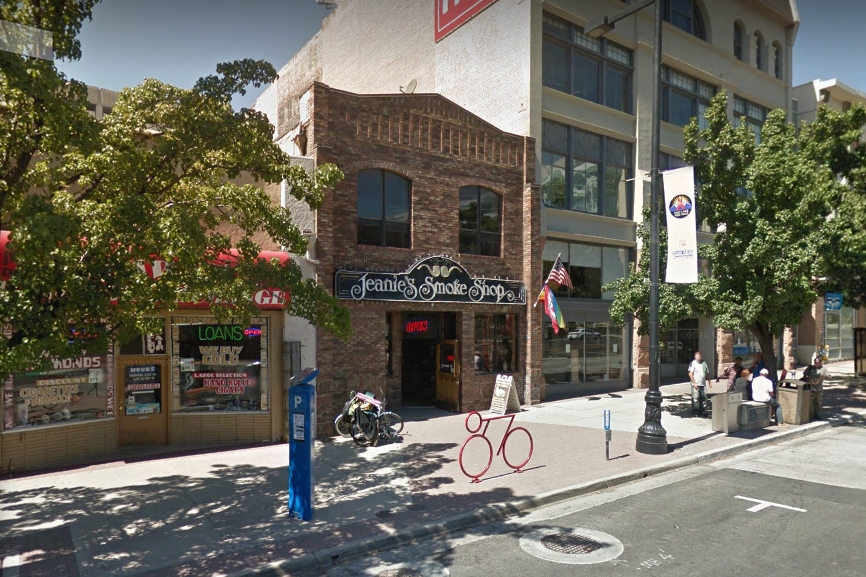
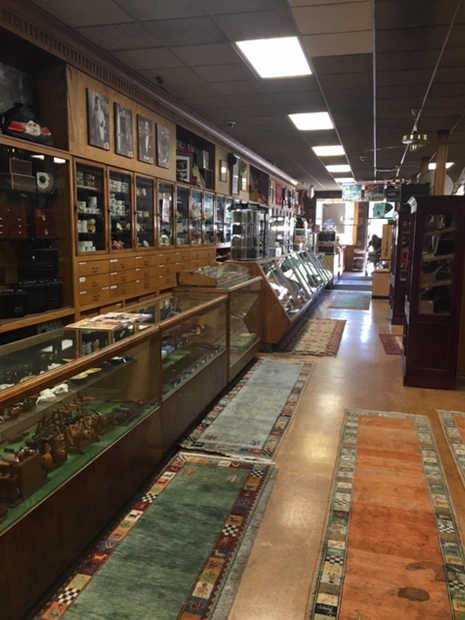
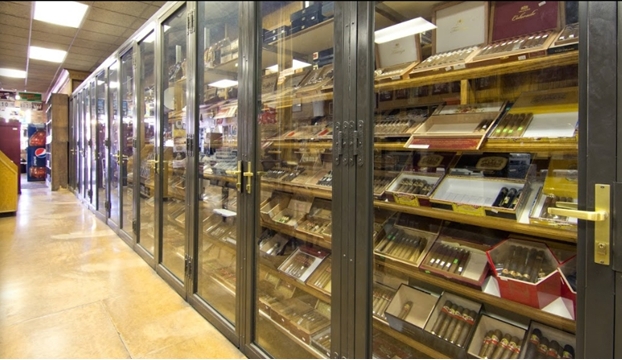
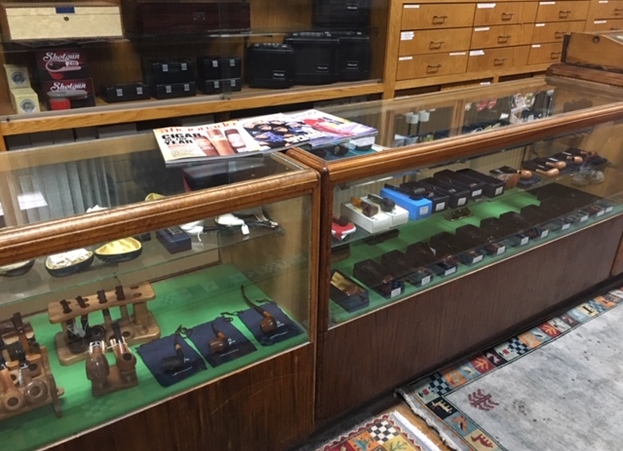
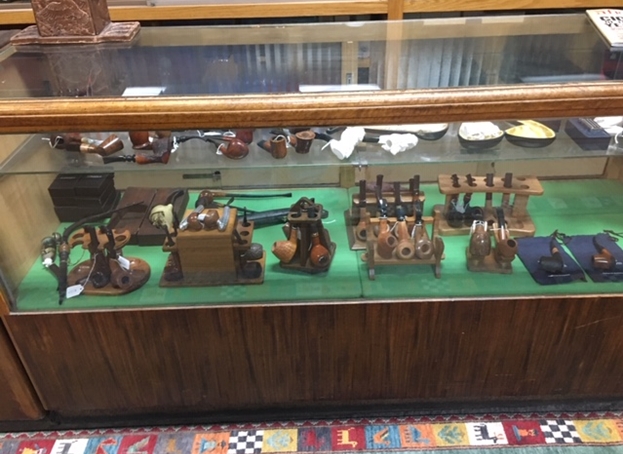
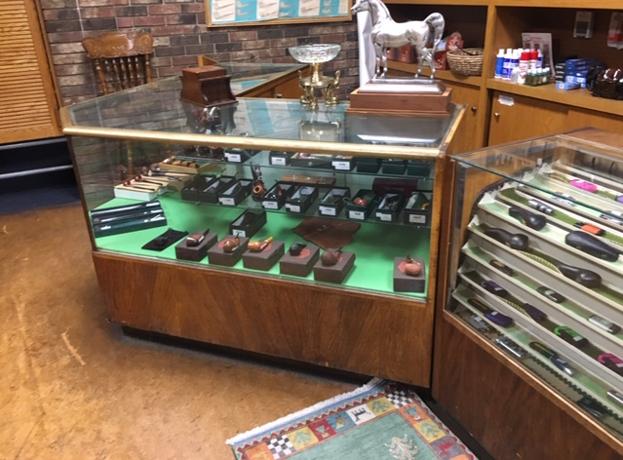
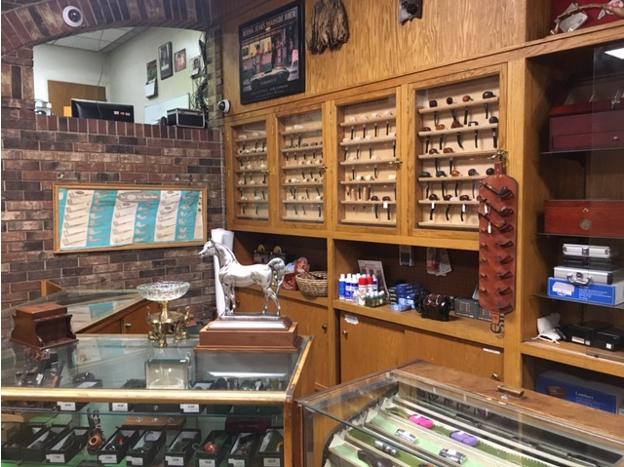
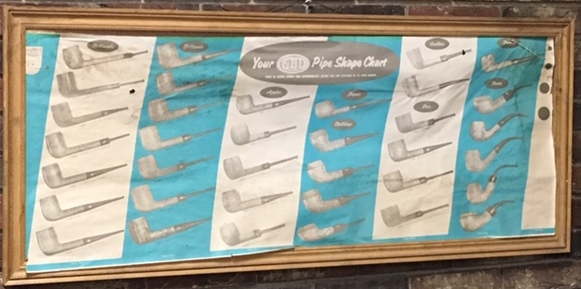
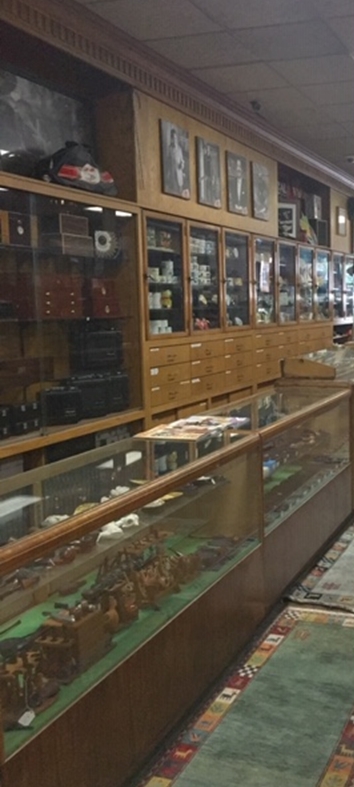
Two weeks ago Friday I flew in to Salt Lake City, Utah and met my brother Jeff to do a bit of pipe hunting and visiting a tobacco shop. We were on our way to my Dad’s 91st Birthday the next day, June 29 in Idaho Falls, Idaho. Jeff picked me up at the airport and the first stop we made was to Jeanie’s Smoke Shop. I had heard about the shop on various online forums but had never had the opportunity to visit. So I googled the location and found that it was not too far away from the airport. It was located at 156 State St, in downtown Salt Lake City. It said the shop was open from 7am until 10pm that night. We put the address into Google maps and let the voice direct us to the shop. When we had parked in a next door lot and walked to the front door this is what we saw.The shop itself was an older two story brick building with a false front on a busy Salt Lake street. It was a hot day and the shop door was open inviting folks to enter. It was a long shop with the walls lined on both sides and what looked like a smoking lounge in the back of the shop. Come on into the shop with me.When we walked in the shop I started taking photos to give an idea of the layout of the shop and the sheer volume of tobacco products they carried. The first photo shows the general look of the shop. On the right by the door was the cash register and flowing down the wall were display cases of packaged cigars and a various pipe and cigar accessories. On the wall behind them were cabinets with cigarettes, cigars and eventually about mid store tinned tobacco. On the end of the right side were the pipes that were for sale from a variety of sellers. On the opposite was a cooler with pop and water and assorted soft drinks for sale as well as a coffee pot. Next to that was a built in wall of bulk pipe tobaccos (their own blends and standard bulk blends from Stokkebye and Lane). Next to that was a case with RYO cigarette shag tobaccos. The rest of the left side wall was line with humidor cabinets with a wide variety of cigars sold either individually or by the box.I took some photos of the right side of the shop as I made way down the center aisle. The freist of these looks toward the back of the shop and the second looks back toward the front of the shop. Have a look at the case of tinned tobaccos, the wall of photos above the case and the on counter displays of pipe accessories such as Colibri Lighters. Just past the lighters there were display cases of pipes – Petersons, Chacom, Meerschaum, Dunhill as well as Stanwell and other brands too numerous to not. Looking up the left side of the shop the wall is lined with cigar humidors. The first photo shows the wall looking toward the back of the shop. The second one shows the wall looking back toward to front. I took some close up photos of the pipe area. The display cases housed both pipes and racks. The first photo shows a variety of boxed pipes of various brands. On the wall behind are humidors and hygrometers and chargers for the humidors. The second photo shows the pipes in a collection of older style pipe racks. All pipes were marked for sale. The third and fourth photo shows the final display at the back corner as well as the pipes on the wall behind the display. I took a photo of the GBD shape chart that was framed on the back wall. It was a unique piece that I had not seen before.From the corner I looked back up the pipe cases past the humidor on shelves on the wall to the cabinet on the wall where the tobacco tins were displayed. I walked up the aisle to that place in the store – really mid-way between the front and rear of the shop. It took a while to get the disinterested shopkeep to come over and open the cupboard so I could have a look and he more or less put the tins I was interested in on the counter and walked away. The selection was quite large for a shop this size. There were a lot of Cornell & Diehl blends, a few Royal Vintage and Nording Hunter Blends both made by Mclellands, some Hearth and Home blends, some Davidoff blends and few Dunhill tins. All were priced pretty high but for the ones that were no longer in production the price was still lower than can be found online. I picked up four tins of tobacco from the shop before leaving. I walked back to the front of the store with my choices of tobacco and set them on the counter by the cash register – once again no comment from the shopkeep – an older man who seemed thoroughly disinterested in engaging us as customers. I turned to the left side of the store where the bulk tobaccos and cigarette shag tobaccos were displayed. There was nothing special there – just the usual bulk blends with shop names. Most of them came from Peter Stokkebye. There were some Dunhill knock offs but nothing that called my name so I took the photos and walked away. After my ramble through the shop I took time to try and talk with the shop keeper. He was pretty disinterested in conversation. He did a bit of whining about taxes and the idiocy of the government trying to protect us but really had no interest in much. I told him about the blog and what I do here but even that he did not seem too keen about. I paid him for my tobacco purchases and headed out the door to begin the day’s pipe hunt.

I have to say to you that if you find yourself in Salt Lake City, Utah I would recommend that you stop by the shop and have a visit. It is one of the few remaining old time tobacco shops. Don’t expect a lot of enthusiasm from the gents that work there if they are the old timers because you will not get it. However if a young guy is managing the shop when you stop he is a great guy to talk with and I only wish that he had not had the day off when I stopped by. They have a good selection of new pipes but no really good deals, a few estate pipes that are overpriced in my opinion and some good tinned tobaccos that have some age on them but also have a high price. The bulk selection is pretty decent but also pretty common place. Their cigar stock is very good and seems to come from well managed stock. If nothing else give the shop a visit to see what probably an amazing old pipe shop in it’s heyday before all of the government regulations and taxes made it a bit of a museum instead of a shop. Thanks for giving the blog a read!

A Sad Day and a Good Day Wrapped as one – Visiting Sir Winston’s in Bellingham


Blog by Steve Laug

Today I found myself in Bellingham, Washington once again for a lunch meeting for work. Whenever I have to go to Bellingham I try to head down a bit early to stop by and visit my favourite pipe shop in town. The owner had become a friend. His name was Mike and he was the owner and operator of both the Senate Tobacconist and Smoke Shop on Holly Street and the Fairhaven Smoke Shop in old Fairhaven. My friend and I parked up the street from where the Senate shop was and walked down the street to the shop.  I was utterly dumbfounded that the building was empty and the Mike and Senate Smoke Shop were gone. The last time I visited he had spoken of how hard it was in the anti-smoking environment of Washington to keep his business going and that he was going to close up shop. He spoke of closing down within a year as he was tired of the hassle. But with my traveling I had not been back for a visit for about 7-8 months. I missed the closing. Today was a sad day – generally I make it a habit every time I head south from Vancouver to pay Mike a visit. I stood there wondering what had happened to Mike and his stock of pipes and tobacco he had. I wonder how he is doing. I am going to have to see what I can find out.

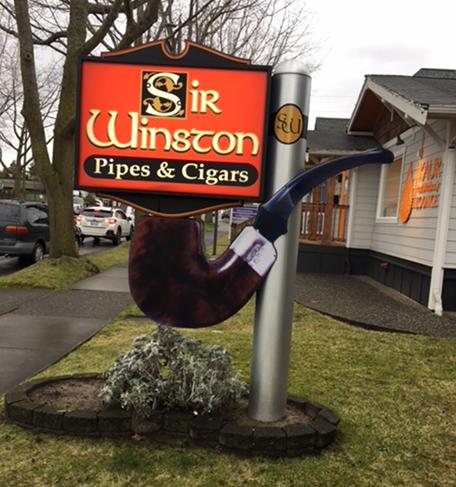
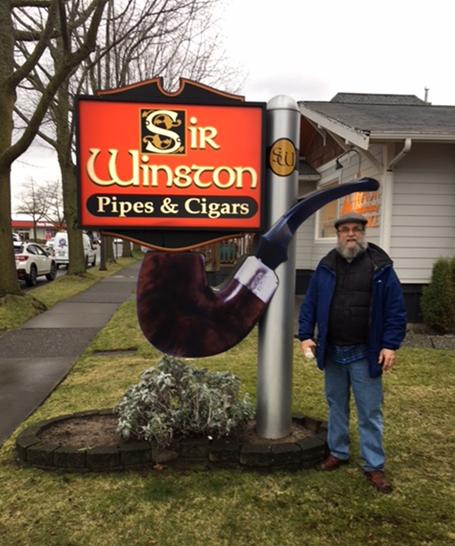
I googled pipe shops in Bellingham and there was one that came up that was not too far away from the old Senate location. In fact the app said it was a 7 minute drive. It said the shop did not open until 11am so we stopped by a coffee shop and relaxed while we waited for the shop to open. While we sat there I read some of the online reviews of the shop and looked through the photos. The shop was called Sir Winston Pipes & Cigars. The photos showed some bulk tobacco. As we got closer to 11 o’clock we headed over to the shop. It was located at 2122 James St. in Bellingham, WA. It was an interesting neighbourhood – residential dwellings surrounded by light industrial buildings. It was on a busy four lane street. We found the address and a parking place in front of the house. The sign in the front yard caught my attention. It was bright red sign that read Sir Winston Pipes & Cigars. It hung by its right side from what looked like a silver cigar tube with the SW (Sir Winston) label on the tube. There was a large Peterson’s style system pipe hanging below the sign – dark brown bowl, silver ferrule and a black stem.

The shop itself was a small house with a large front porch. It was nicely laid out and had a well laid out yard with sidewalk leading to the front door. There was a parking lot behind the shop and a rear entrance that also lead into the shop. We arrived a little before 11 and the shop keeper was opening the front door and turning on the “Open” sign in the front window on the right as you came up the sidewalk. I turned the handle on the door and open it inward. The sales counter was to my left as I came in the door. I asked the shop keep if the shop was open and she said, “Just about… but come on in”. My friend and I came in the shop and had a look around.

What had started as a very sad day – with finding out that the Senate Shop had closed – had just changed a bit. I was surprised at what I saw. The inside of this shop was a real old fashioned tobacco shop. There were no glass pipes, bongs and the like on the counters or walls. There were no fruit flavoured cigars on the counter and not a lot of drug store tobaccos. Those were my first impressions as I opened the door to the shop. It looked and smelled like a tobacco shop. I could almost imagine the days, not that long ago when you could walk into a shop like this and see old timers sitting in the back of the shop around the fireplace, under the television set enjoying a pipe or cigar. Sitting and chatting with each other wreathed in tobacco smoke and chatting and laughing. There would have been a coffee pot going and maybe a refrigerator with some drinks. None of those were there now but the space was there and the memory was still present in my mind as I looked things over. I think I had found my replacement for the Senate Shop and walking into this place reminded me of a small shop where I used to shop in Vista, California when I lived there.

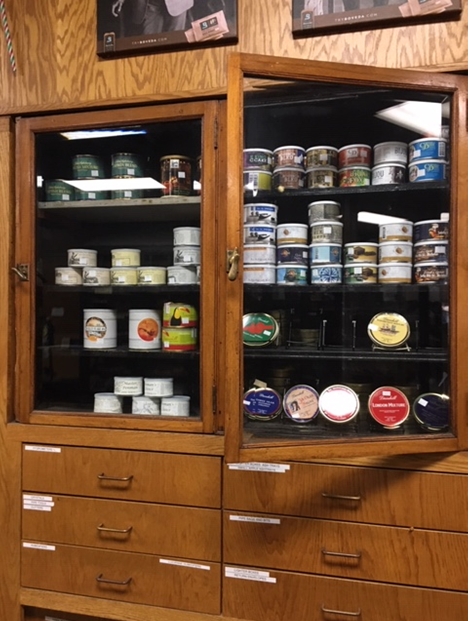
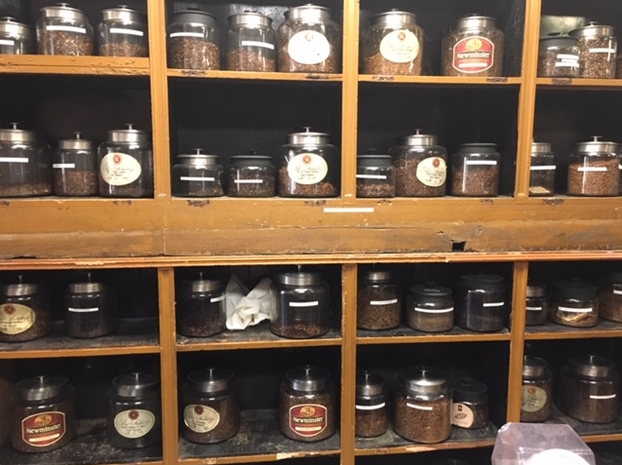
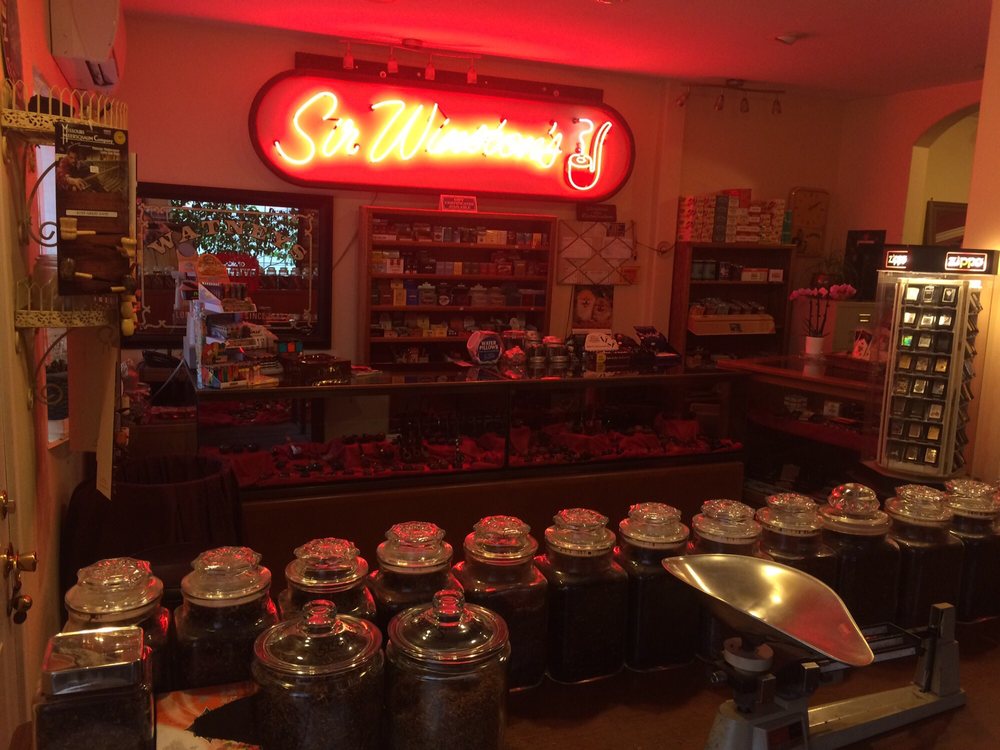
On my right as I entered the shop there was a half wall lined with jars of bulk tobacco. They bore names like Scottish Blend, The Queen’s Choice, Peach, Pearl, Canterbury, Tradewinds, Shippers blend and others. There was a scale on the counter behind the jars. On the walls behind the jars were several humidors. One had a few tins of tobacco – Dunhill, Petersons, Escudo, Ashtons and some others. The shop keeper said she had ordered more as she had sold many over the Christmas season. On the shelves above the tins were some pouches and bags of tobacco along with some large cans of Sail, Mixture 79 and Captain Black. The humidor next to the pipe tobaccos held some packaged cigars and cigarillos. There were cigar cutters, cigar lighters and punches. Next to the second humidor was a window and on the other side were display shelves that had pipe pouches, tobacco pouches, polishes for stems and briar. There were also lighters, polishing cloths, Medico paper filters, Savinelli Balsa filters and other pipe accessories.

Continuing down the hallway was a nice cedar lined walk in humidor, softly lit with sliding glass doors on my right. On the three walls around the inside of the humidor there were shelves lined with cedar boxes of cigars – there was a large variety of brands that I recognized. I think that there was something for everyone there if you are a cigar smoker. Personally I am more interested in pipes and pipe tobaccos than cigars so I did not open the humidor and walk in. I just stood at the door looking through and seeing the variety. The floor of the humidor was lined with red clay bricks. I think that I must have looked like that proverbial kid in a candy shop that always comes with me when I visit pipe and tobacco shops.

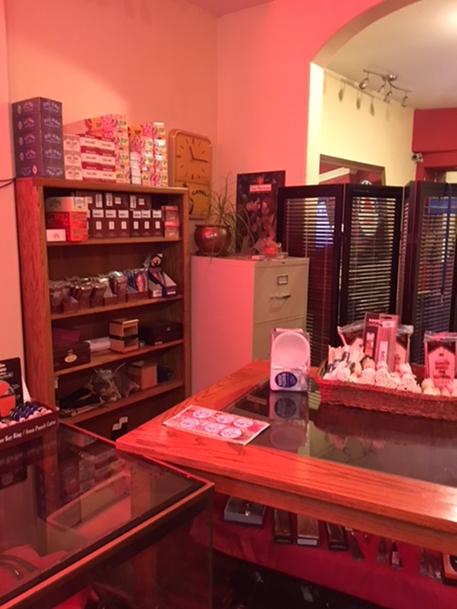
I continued down the hallway from the walk in humidor and came to the end of the road. Through the arch at the end of the hallway there was a door that went out to the back parking lot. There were washrooms (or what they call a rest rooms in the US) on either side of the doorway. On the walls were framed and unframed cigar and pipe smoking advertisements. I turned around and made my way back toward the front of the shop. There was a waist high shelving unit on the left. On top of the unit there were a variety of well finished Cherry, Walnut and Oak wood desktop humidors. These were in different sizes and shapes and were designed to hold different quantities of cigars. Each humidor had the humidity meters and humidifying pouches inside. They were some beautiful pieces. There were also smaller, decorative humidors that were made to hold a smaller quantities of cigars. Behind the shelving unit were some folding panels that screened off another room behind them. In that area there was a fireplace, television and a few chairs that I think must have originally been the smoking area of the shop when the state laws allowed that privilege. I stood there for a few minutes thinking about what that must have been like when the room was filled with pipe and cigar men enjoying their favourite smokes with a television in the background while the chatted and talked tobacco, politics, children and all the things regarding families, wives and children. Those gatherings were living communities where young men were introduced to art of pipe and cigar smoking and learned lessons that are no longer taught in the halls of these old shops that are becoming fewer and fewer as the years go by and the laws become more anti-tobacco and smoking.

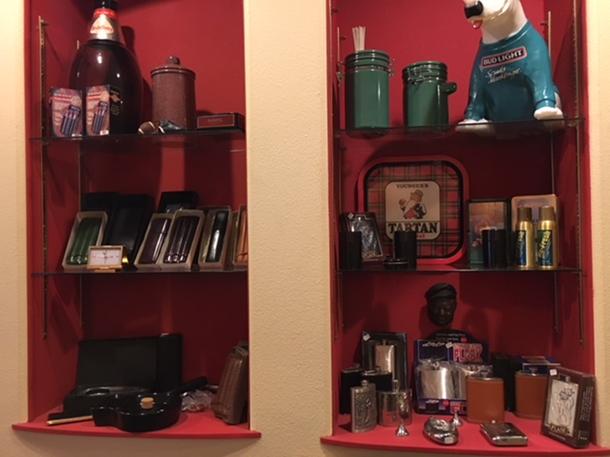
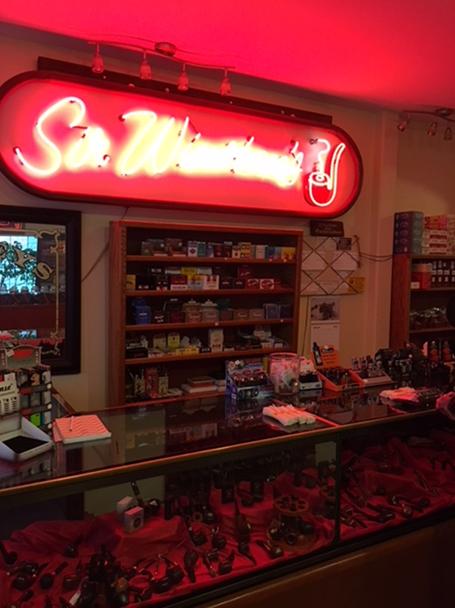
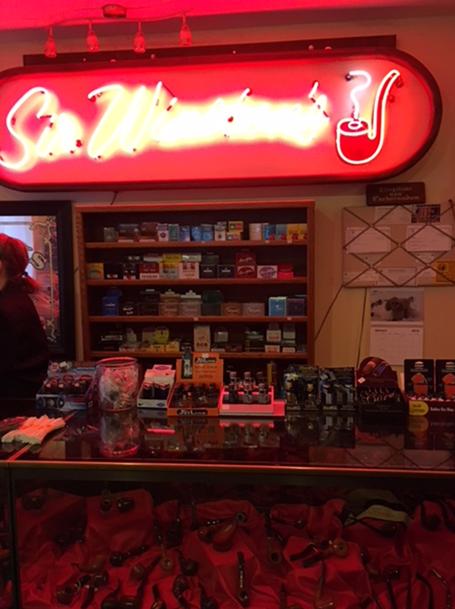
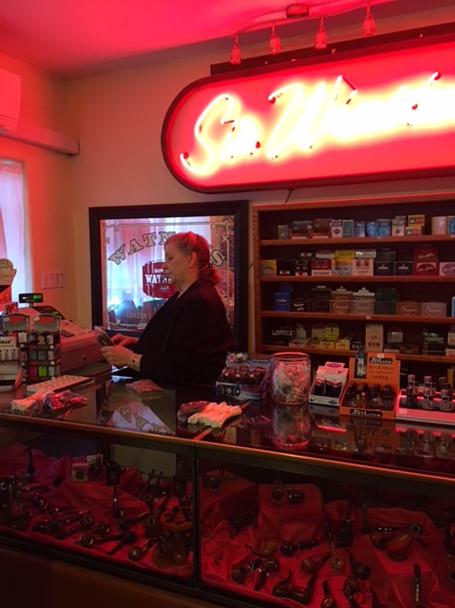
Walking further up the hallway toward the front of the shop, across from the walk in humidor was a series of shelves set in the wall. The walls inside the shelves matched the red colour of the rest of the walls in the shop. The shelves displayed pocket cigar holders, ash trays with and without cork pipe knockers, lighter, pipe rests, pocket flasks, tobacco trays and ceramic pipe tobacco humidors in a variety of shapes and sizes. The display was nicely laid out and looked good together.I proceeded down the hallway and turned toward my right. There was a small display case there that held a large selection of zippo lighters with and without pipe inserts. To the left of that was a display counter that had bulk pipe cleaners in fluffy, regular and bristle formats. Inside the case were various pipe tampers, reamers and tools that gave a wide range of options for the pipe smoker. Behind the counter was another folding screen blocking off what used to be the smoking lounge. The shop keeper’s dog was lying down behind the screen and barked her greetings. To the left behind the counter on the wall was a shelf with a large selection of packaged cigarette tobaccos and rolling papers. The rosy hue to the pictures of the counter area was caused by a red, neon Sir Winston sign hanging on the wall behind the counter. The walls in the rear of the shop were a bright red and as you came into the front they were more of a cream colour. It is a cozy shop that makes you feel comfortable.

In the counter on that side of the room is where there was a large display of pipes for sale. The pipes can be seen in the next series of photos of the counter area next to the door. There were many different Italian made mid ranged priced pipes. There were what looked like Savinellis and possibly Mario Grande pipes. There was also some Italian made Stanwell pipes. I did not see any Peterson pipes or even higher end English pipes such as Dunhill or even lower end Cadogan made pipes that are often in the shops. The pipes were beautifully laid out for the buyer to see.

Next to the door and over the door were some more pipes. The ones over the door were a large variety of corn cob pipes in different shapes and sizes. It was a great display of Missouri Meerschaum pipes. The prices for the cobs was what I have come to expect. Below that and to the right of the door was a large basket of “basket” pipes. There were all shapes and sizes in the basket and also various finishes. There were some nicer pipes and some that were obviously cheaper and not as nice. There were rusticated and smooth pipes all having a shiny coat of varnish on the bowl. The stems were all rubber and there were both filter and non-filter pipes.

On the wall behind the counter and under the neon Sir Winston sign was the select of tailor made cigarettes from around the world. There was also a large Watney’s  Ale mirror on the wall that added a nice touch and gave the proprietress a good view of the shop when she was at here counter.

After my ramble through the shop I took time to talk with the shop keeper. She turned out to be the owner. She had run this shop for 30 years and knew her stuff. Turned out she was a pipe smoker so we talked about the various blends that she had and the ones that were on order and had not come in to fill in her inventory after the Christmas season. Her name was Robbie and she really knew her stuff. We talked about the changes in the laws and the impact that had on her shop. She talked about the changes in the tobacco that was available for her to order. She remembered the days when her walls were lined with English and European tobaccos as well as a wide range of American ones. Those days she said had passed and it was hard to get any variety.

I decided to pick up some pipe cleaners so I put them on the front counter. My friend and I wanted to purchase some of her bulk tobaccos so she went over to the shelf and had Robbie weigh out some for us. I picked a couple of ounces of her Scottish Blend and my friend got some of that and some of the Queen’s Blend. She bagged our tobaccos and carried them over to the counter. My friend picked up a pipe pouch made by Comoy’s that would hold his pipe, tobacco, tampers and lighter. While we were looking several other customers who were obviously old friends came into the shop and purchased tobacco and other items from her. It was good to see that the place was still a living and working shop with a following that was known and made to feel at home.

My friend and I had a great visit and I asked Robbie about various tobaccos that she did not have. She felt that the next shipment would arrive soon and there would be a lot of options on her shelf. I knew then that another trip would happen sooner rather than later. I paid for my tobacco and bundles of pipe cleaners and my friend paid for his new pouch, two tobaccos and pipe cleaners.

I have to say to you that if you find yourself in the Bellingham area, I would heartily recommend that you stop by the shop and have a visit. The shop is called Sir Winston Pipes & Cigars and is located at 2122 James St. in Bellingham, WA. The phone number is 360-734-1433. The shop has a great selection of pipes and cigars as well as house blends and tinned tobacco to purchase. The proprietor Robbie is a great lady – personable, knowledgeable and genuinely interested in serving the pipe and cigar smoking public. Stop by and say hi. In this anti-smoking state of Washington in the anti-smoking climate of our world it was great to see a tobacco shop that has kept its doors open to serve the smoking clientele. Tell her you read about her on rebornpipes. Who knows we may run into each other at the shop. Until then enjoy your pipe!


A Surprise awaited when I visited Smitty’s Cigar & Tobacco in Gainesville, Georgia


Blog by Steve Laug

This past weekend I was in Gainesville, Georgia, near Atlanta for work. It was a long weekend and we put in a lot of hours doing an assessment for a new project. We arrived on Friday, worked all day Saturday, Sunday and Monday. Then on Tuesday we took the day off to kind of catch up on rest and also check out some of the places in the area on my list. We went to a couple of antique malls looking for pipes – I found a few. But I also had it on my list visit a local pipe shop. On a previous trip my friend had taken me to visit Smitty’s Cigar and Tobacco, located at 975 Dawsonville Hwy. I really wanted to go back and pick up some tobacco for a friend and add a few tins to my own cellar. Since they are open from 10am-8pm Monday through Saturday I was hoping to find some additions.

I was a bit worried about the shop still being there. The last time I was in town I visited the shop and met with Smitty. He had been proudly open for more than 20 years – serving the local people of Gainesville, Georgia, and those passing through. We had a great visit and chatted for over an hour as the shop was empty. We enjoyed a great visit and talked about the past age of pipe glory, the great time we had at pipe shows and all of the common friends we have had and still have in the hobby, both dead and living. He showed me photos with quite a few of the noteworthy pipe makers – Eric Nording, Jess Chonowitsch and others who he had hosted in his shop over the years. He showed me some of his Chonowitch pipes and a few of his others from his collection that he was selling. Looking around that day I honestly thought that the shop would be closed the next time I visited. The shop was worn and tired looking, the stock was dwindling, the tobacco options were low and the cigar market was no longer sustaining the shop. It had the look of a place heading toward closure in the very near future. I purchased several pouches of Smitty’s own blends – a Virginia/Cavendish and his own English tobacco. I enjoyed them throughout the past year and was hoping to replace them on this visit – if the shop still was open.

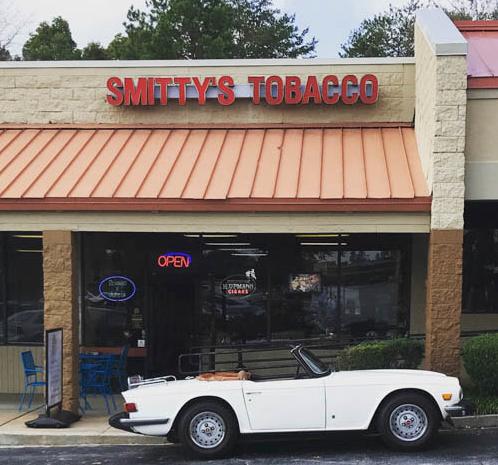
Can you imagine my surprise when we pulled into the parking lot on Tuesday afternoon? I sure did not know what to expect when we drove up. I am a bit of a pessimist so I was prepared to find the place either empty, a new business in the building or a For Lease sign in the window. What I was not prepared for was what sat in the strip mall parking lot. We drove into the McEver Shopping Plaza past Kohl’s and Bed Bath & Beyond and were greeted with the sight shown in the photo to the left. There were some blue tables and chairs on the patio outside the shop providing a spot for smokers to relax and enjoy a bowl or cigar. There were lights on in the shop, an open door and lots of folks visiting and staff serving them. The place was a living and thriving entity.

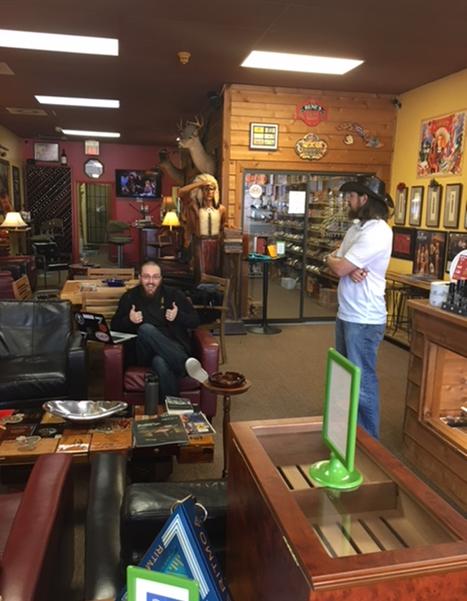
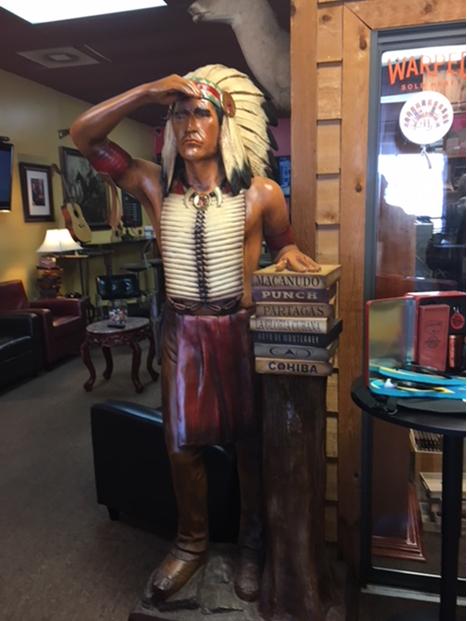
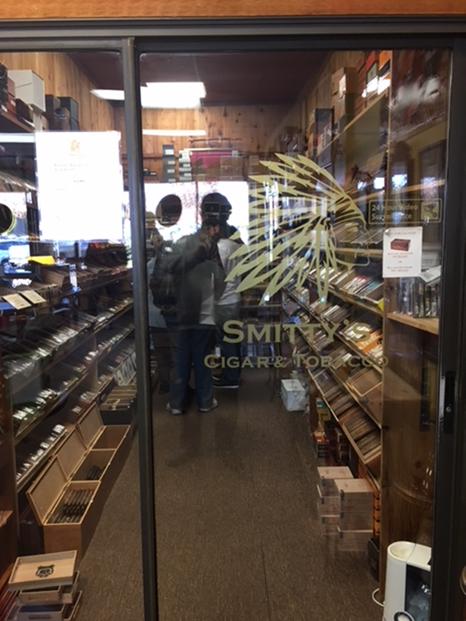
We went through the open door into the shop and were immediately greeted by the staff and the customers. The interior had been redecorated and it had a warm inviting look. My friend commented that he loved the smell of the shop. The folks smoking cigars laughed and blew some smoke towards him. They were standing, or sitting in the comfortable chairs along the window. We walked in on some story telling of some sort that always fills the air of pipe shops no matter where they are. The staff and guests welcomed us and continued to smoke their cigars and visiting.In the centre of the shop they had some soft leather chairs and tables for smokers to sit comfortably and enjoy a pipe or cigar. There was an old cigar store Indian standing next to the humidor on the right side of the shop. He had his hand on various boxes of cigars and was a great reminder of days long gone when these figures stood outside the shops welcoming guests into the respite of the tobacco shop. In today’s anti-tobacco/anti-smoking climate walking into the shop was like stepping back into time. Folks were sitting comfortably in chairs smoking cigars and the aromas of the smoke filled the place. My friend commented that the shop smelled good.  To me the smells and the sight of the place reminded me of how much we have lost in our anti culture. These old time tobacco shops are becoming things of history. On the right as you walked past some of the chairs there was a counter with a variety of cigar cutters, pipe racks and humidors. There were magazines and of course the cash register. Just past that was the humidor – it was a large room lined with a wide range of cigars. I am not much of a cigar guy but from what I could see there was a large variety of top cigar brands that included Davidoff, Arturo Fuente, Opus X, Tatuaje, Illusione, La Flor Dominicana, Aging Room, Casa Magna Domus Magnus Montecristo, Royal Butera Vintage, Padron, Griffin, Ashton, and Diamond Crown. Across from the humidor, on the left wall were the display cases of pipes and tobaccos. In terms of pipes they carried both lower end shop pipes and a full range of Peterson pipes. They no longer had the estate pipes that were present the last time I visited the shop. There were some other brands but I did not pay a lot of attention to them as I was looking for tobacco this time around.I looked through the bulk tobaccos on the sideboard to the left of the door and made my way to the jars and tins. They had a full range of Briarworks tobaccos in the small 2 ounce canning jars. They had an assortment of McClelland Virginias – numbers 22-27 and Frog Morton blends. They had a lot of Gregory Pease’ tobaccos and some Dunhill and C&D blends. The prices on the tins averaged around $15-17 dollars which is still cheaper than what I pay in Canada. The clerk and I laughed over the taxes in Georgia on tobacco as compared with those in Vancouver.In the back of the shop along the right wall they had added a bar with wine and craft beers as well as soft drinks to accompany the smoke and add to the experience. I made my way to the back of the shop to have a look at it. They had done a great job on it. The top of the bar was made of a slab of polished and sealed wood. The wall behind was lined with the options that were available for libations and there was a stock cooler filled with craft beers.

I went to use the washroom in the back and on the way saw a rack of the clerk’s pipes, some of the tobaccos that he was smoking and a full buffing kit with buffers, polishes and wax. It seemed that they did some pipe polishing. I did not see any restoration tools so I am guessing they send that out. I went back to the front part of the shop and visited with two of the younger staff that day and we talked a lot about the various tobaccos they carried. One of the guys smoked a pipe and had some recommendations on the tobaccos they carried. I revisited the jarred and tinned tobacco and went through the various shop blends they had available to see what I would take home. The limitations on my purchase were two fold – dollars and the amount of tobacco I was allowed to carry back to Canada with me. I sorted through some of the tins and asked questions of the young pipeman who was sitting in the chair next to the tobacco. I picked the tobaccos I wanted to purchase as well as pipe cleaners took them to the counter on the front right side of the shop.I stood and talked a bit with one of the customers who was enjoying a nice Cuban Cohiba cigar. He was a friendly guy who helped give the shop a welcoming air.I took a photo of my purchases – they were put in a nice cord handled shopping bag and the clerk threw in a few pens, a sticker and a business card. I bought two bags of pipe cleaners, a tin of Pease Stonehenge Flake and a tin of McClellands Virginia No. 22. The photo also shows the pipes I picked up earlier that day at the antique malls. It was a great day of pipe hunting and the shop visit was a bonus. We ended our day with a great meal at Ted’s for Bison burgers, meatloaf and drinks. All in all it was a great end to our trip to Gainesville.When I got home I read through their website (http://www.smittyscigars.com/) and enjoyed the way it was set up and the photos. The site gives a great view of the shop and I can only say that it truly represents what is there. I also found this short video and have included it here as it introduces the new owner and gives a good idea of what the shop looked like the day I visited. Have a look.

As I close this shop visit blog I want to encourage you to visit this great tobacco shop that will bring back memories of an old time tobacconist you won’t want to miss this place. If you are too young to remember the old time tobacco shops then a visit here is even more important. Shops like this are becoming a thing of the past as time goes on. If you are in the Gainesville area for a visit or live nearby be sure to check them out. Plan on sitting and enjoying a cigar or a pipe, sip your favourite libation and jaw a while with the guests and staff. It is a great place.