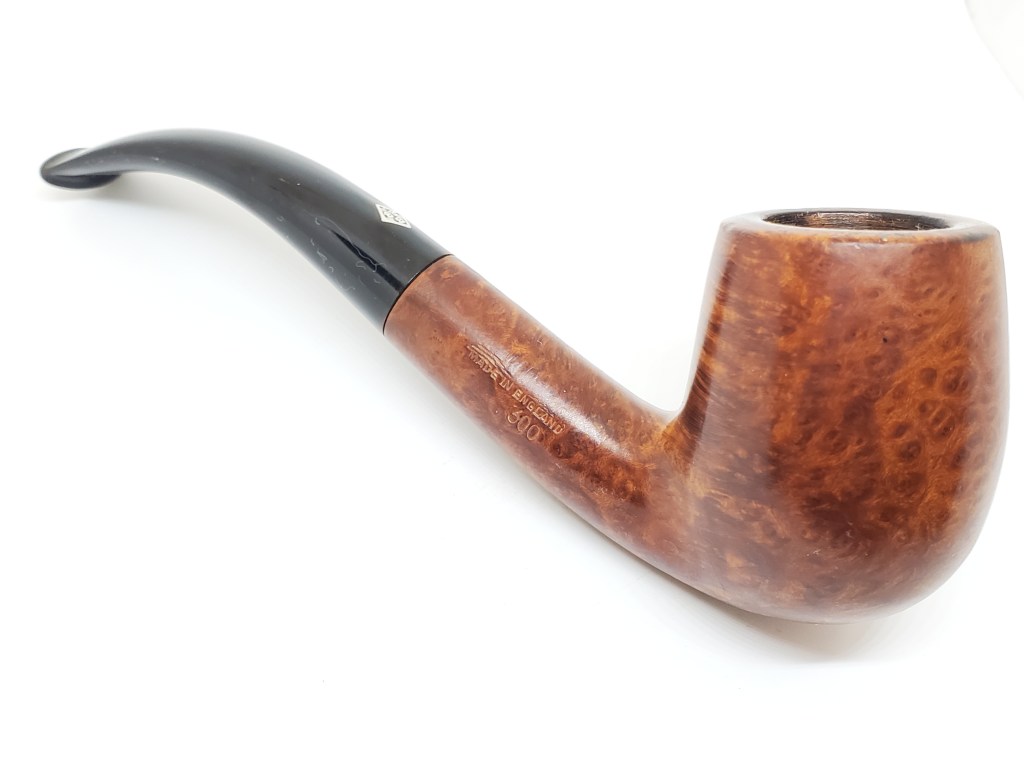
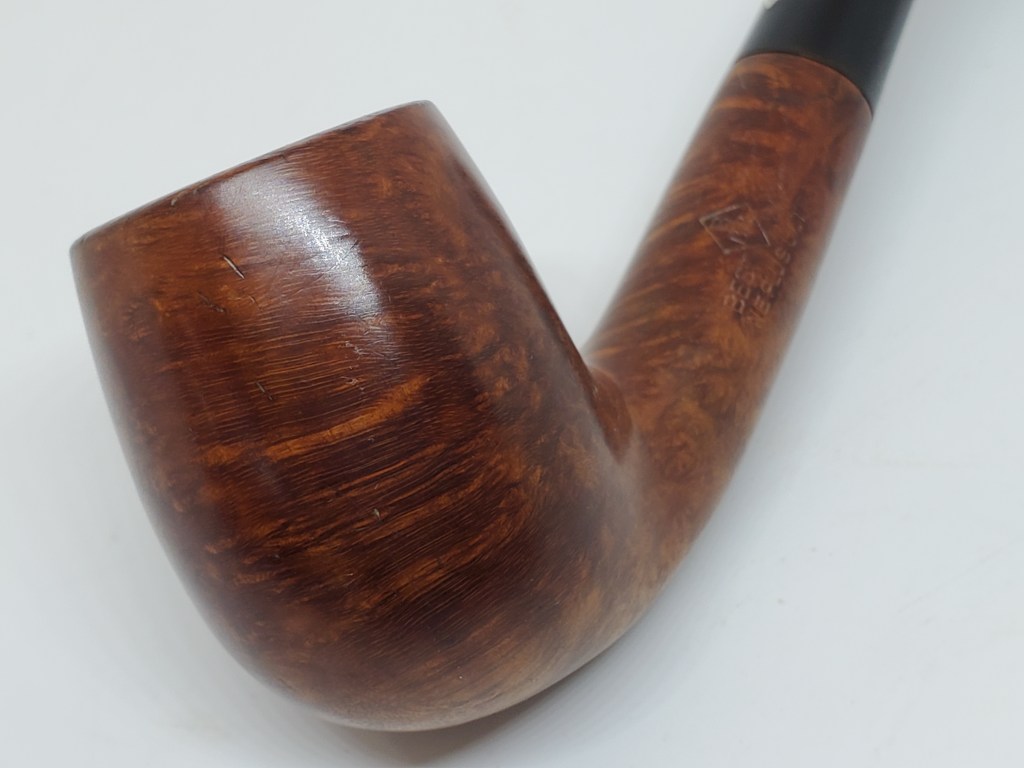
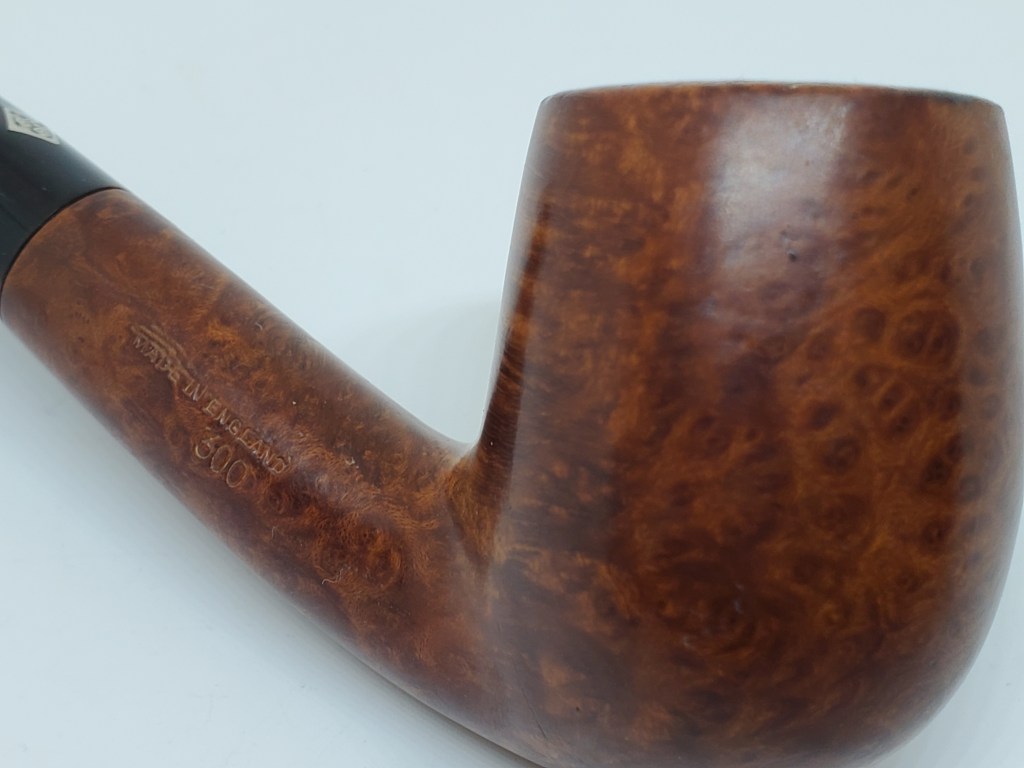
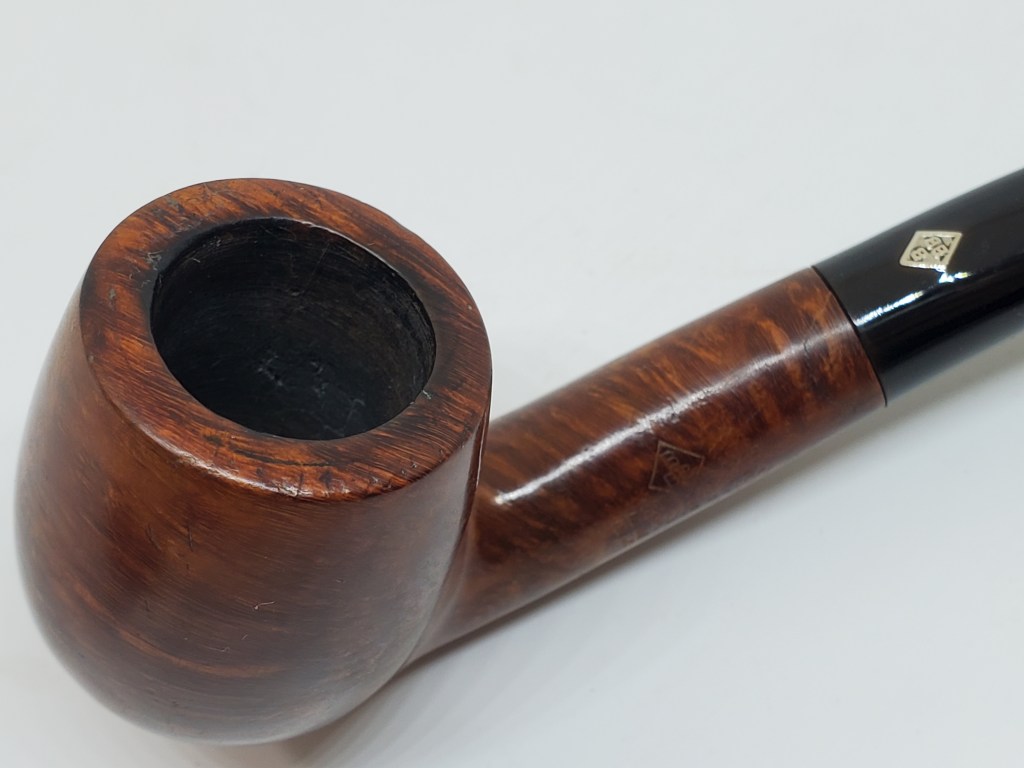
Author Archives: upshallfan

Unknown's avatar

About upshallfan

Moderator on the PipesMagazine forum since 2011. Guest contributor on the Reborn Pipes Blog by Steve Laug.

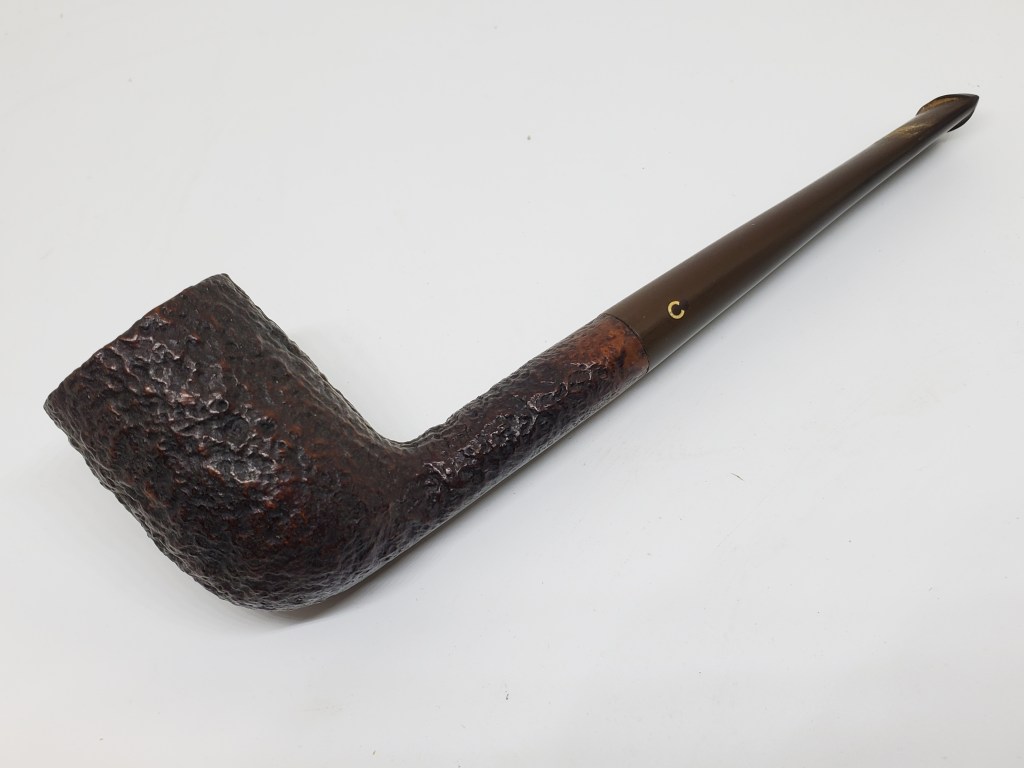
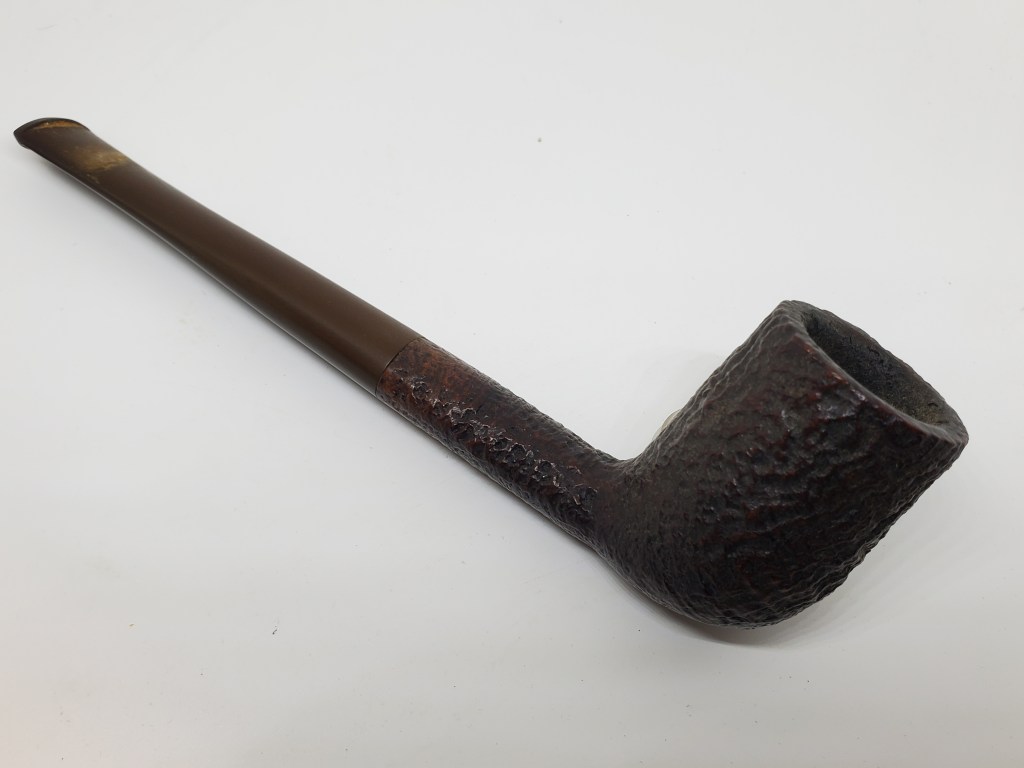
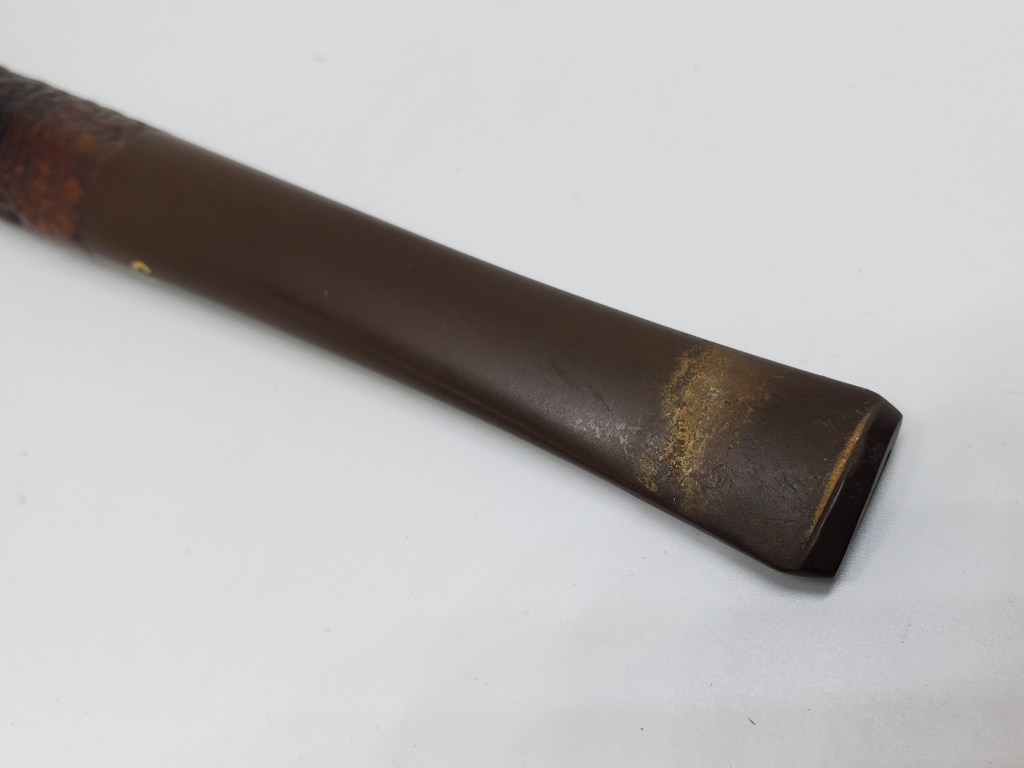
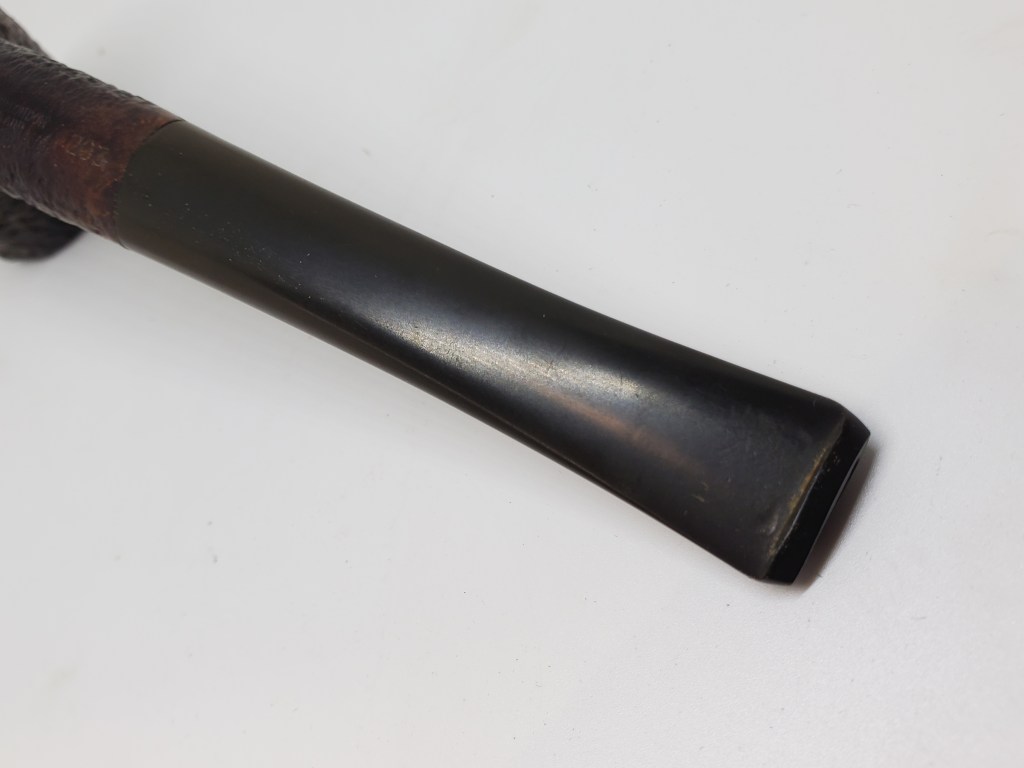
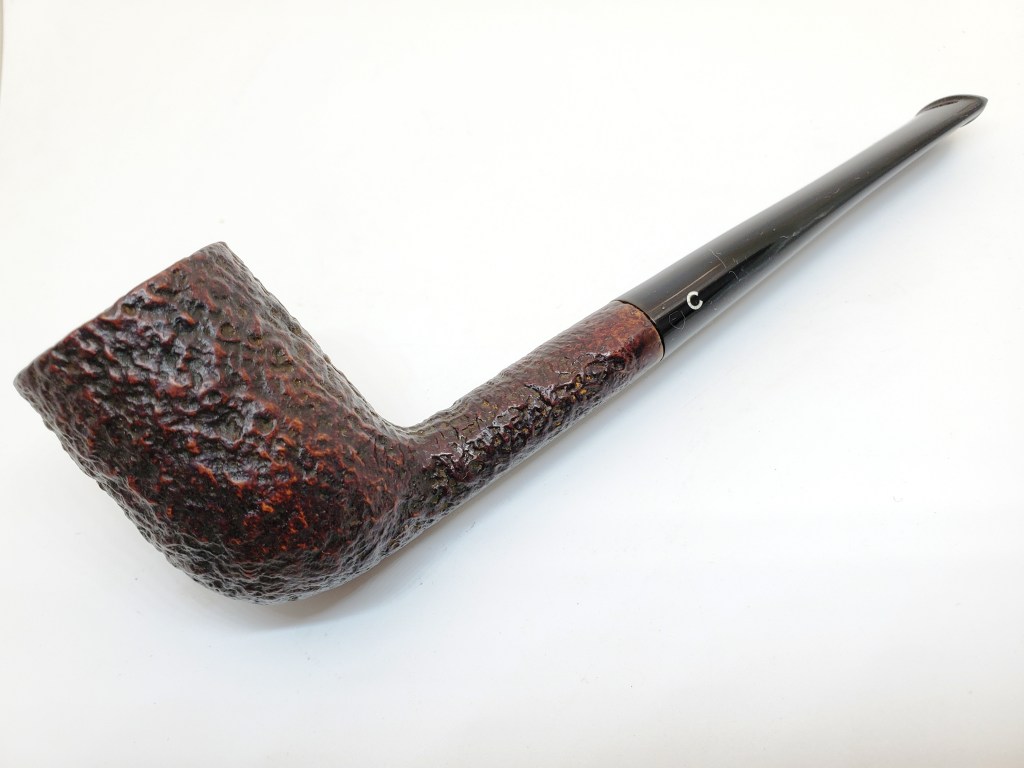
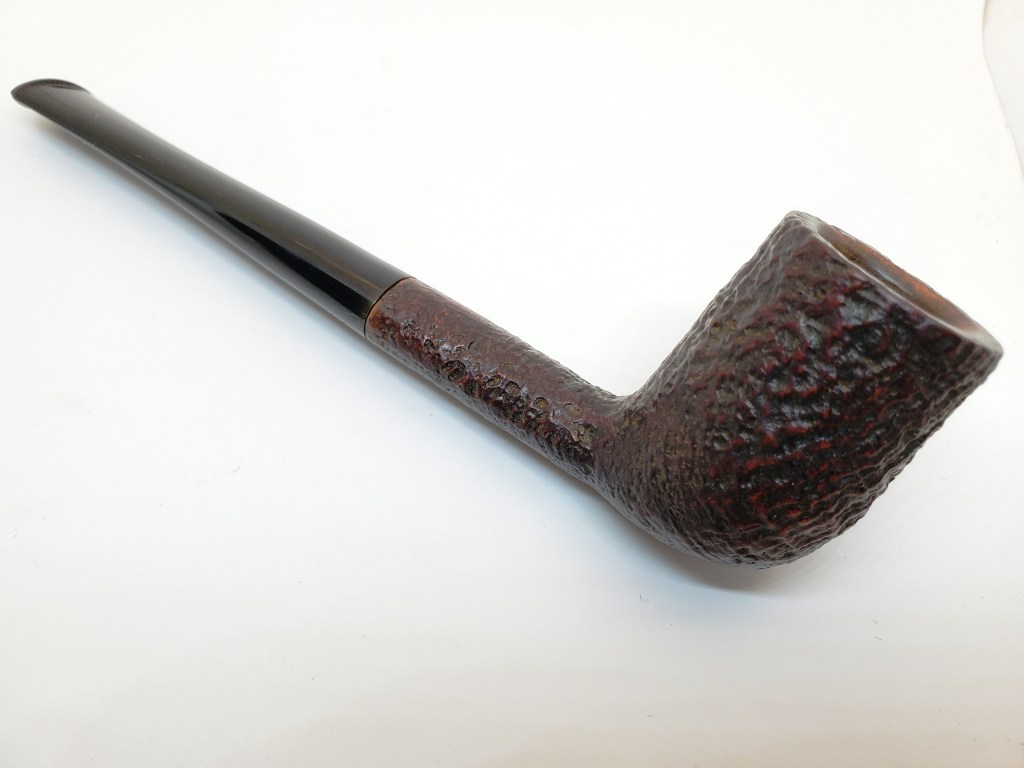
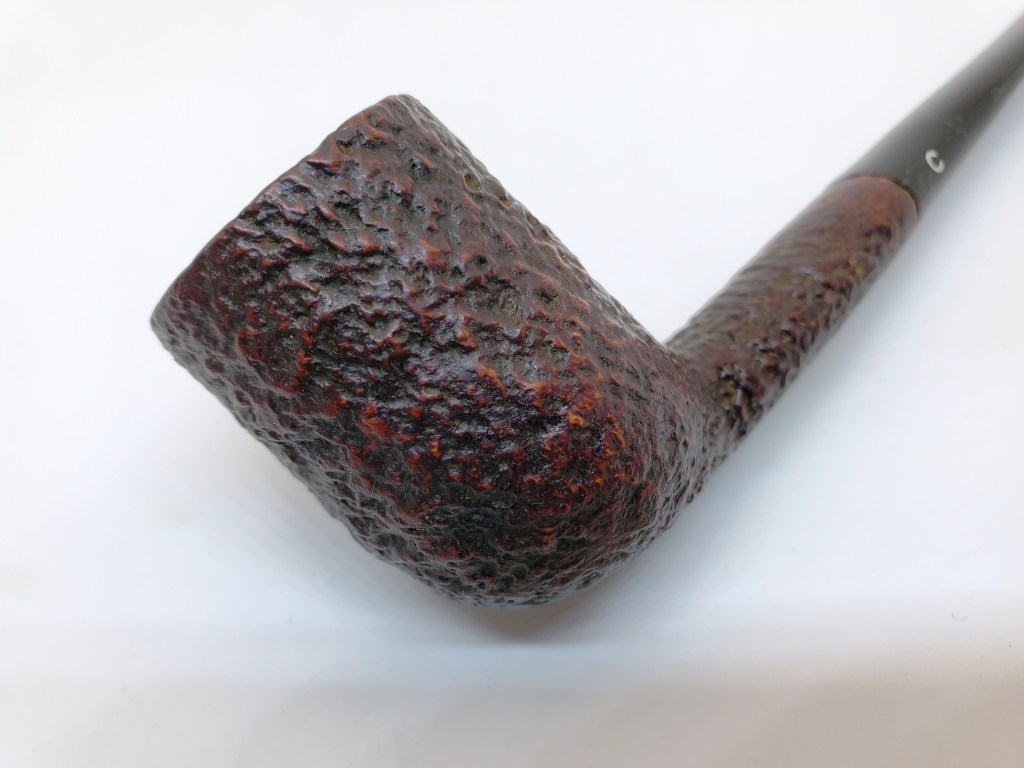
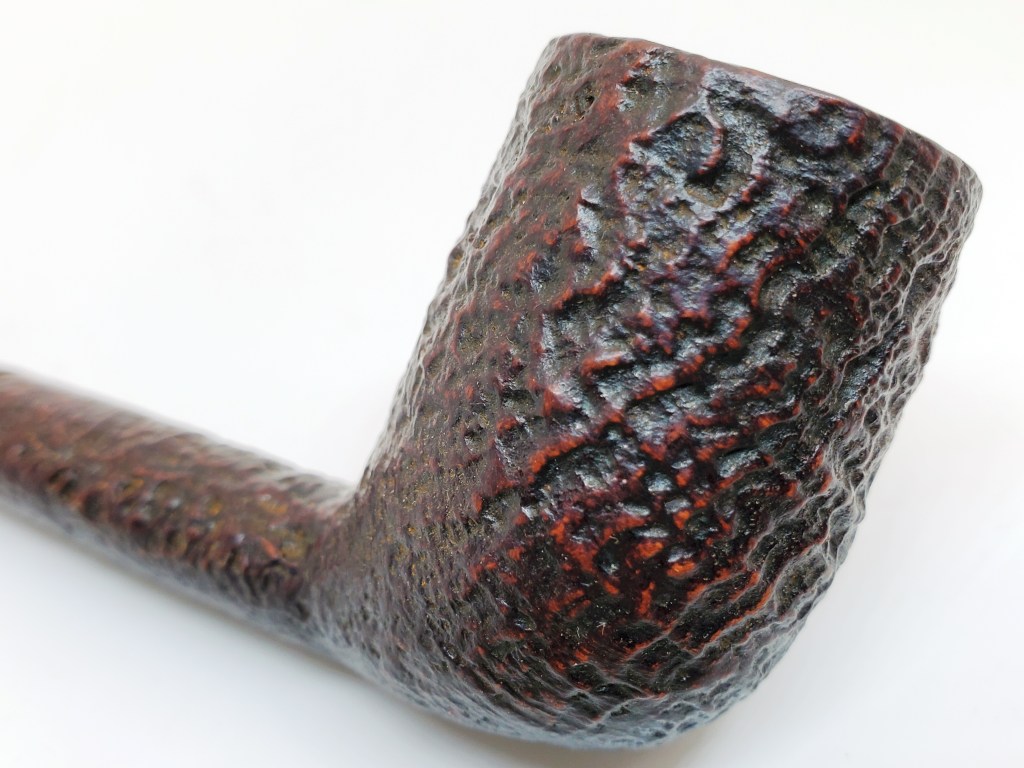
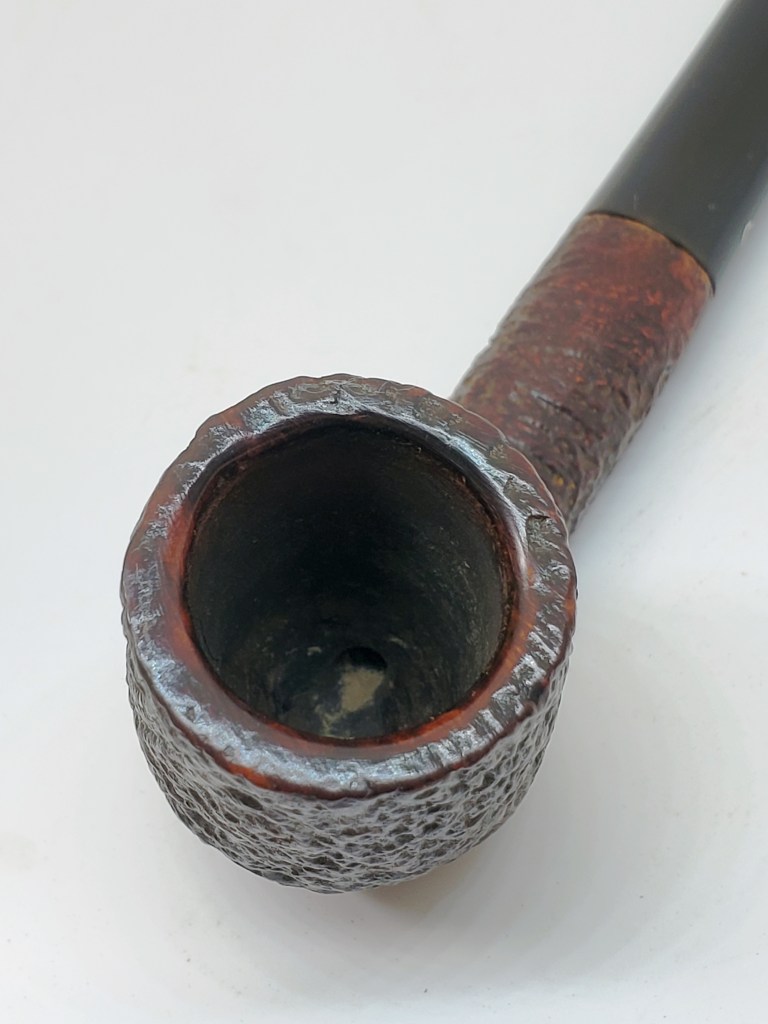
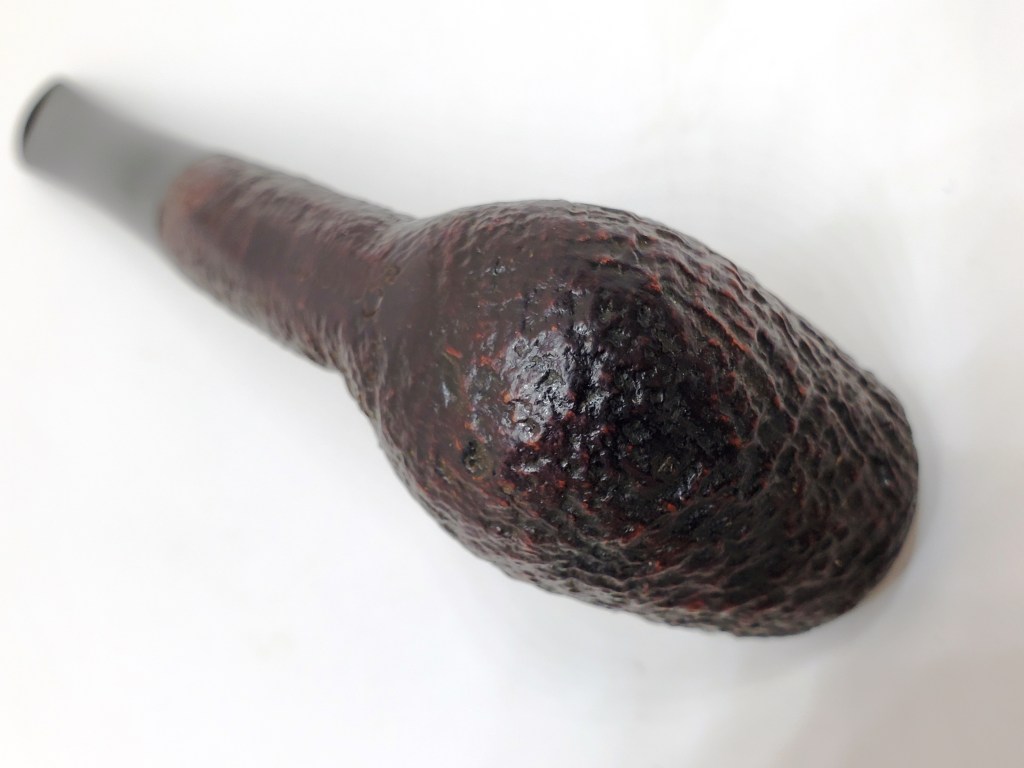
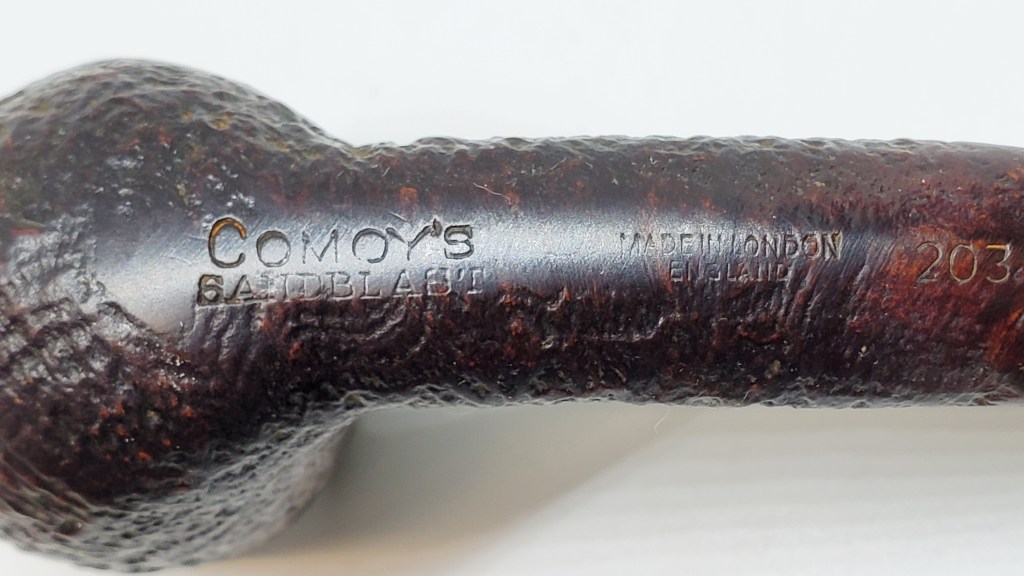
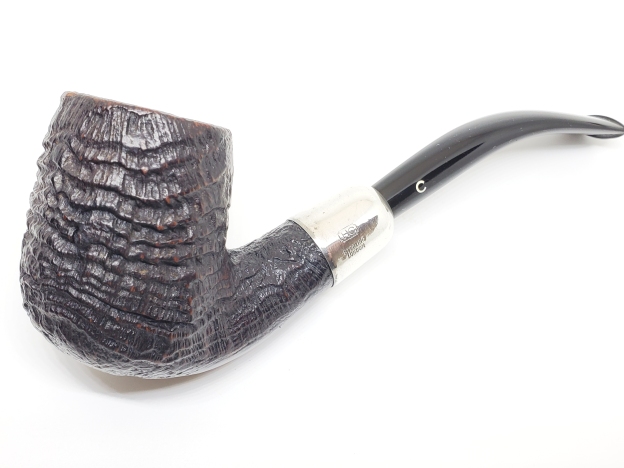
Comoys Sandblast 203 Cutty Restoration


By Al Jones

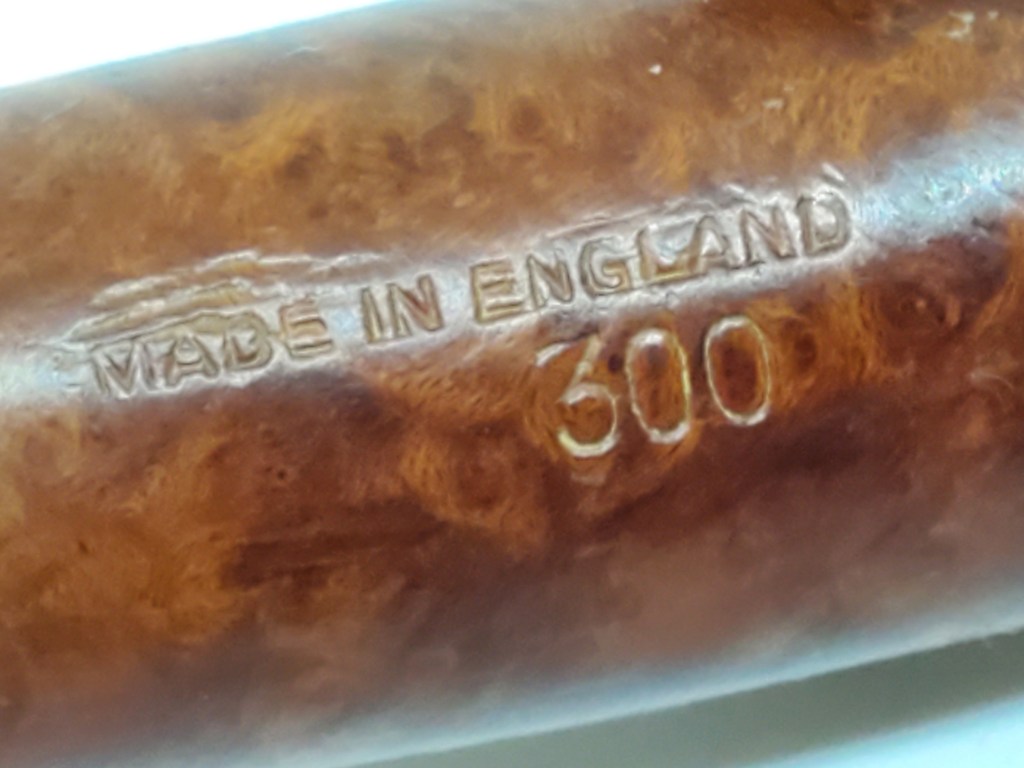
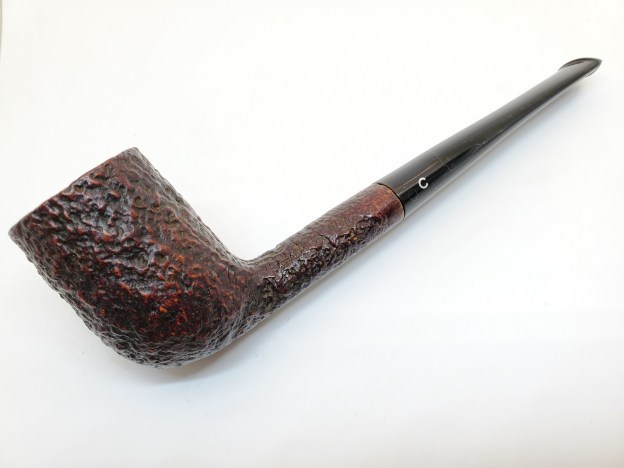
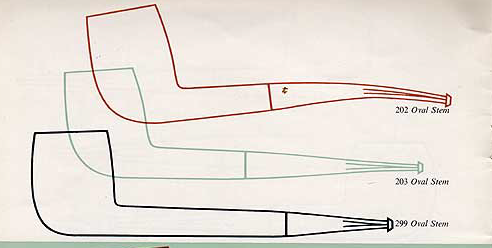
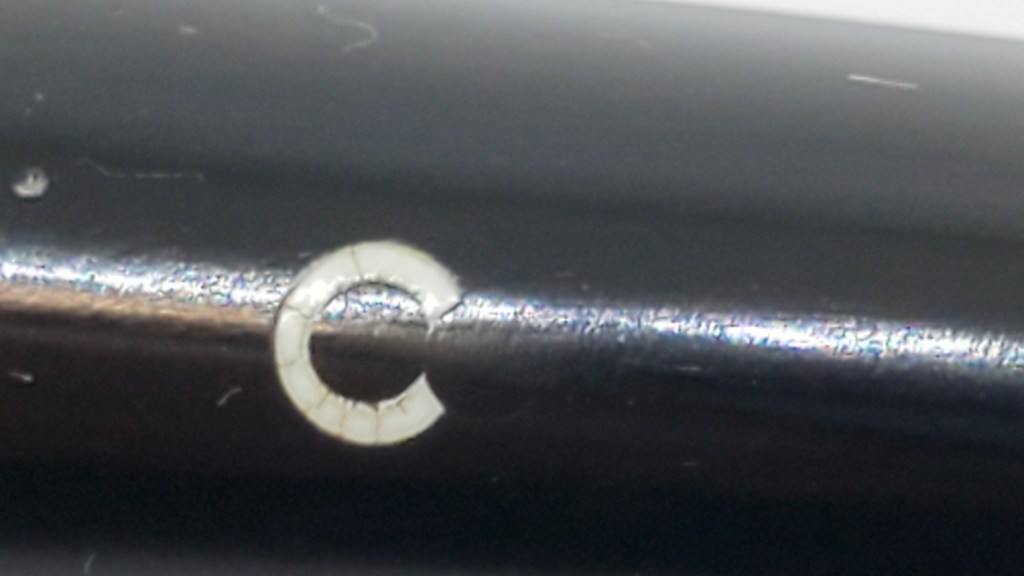
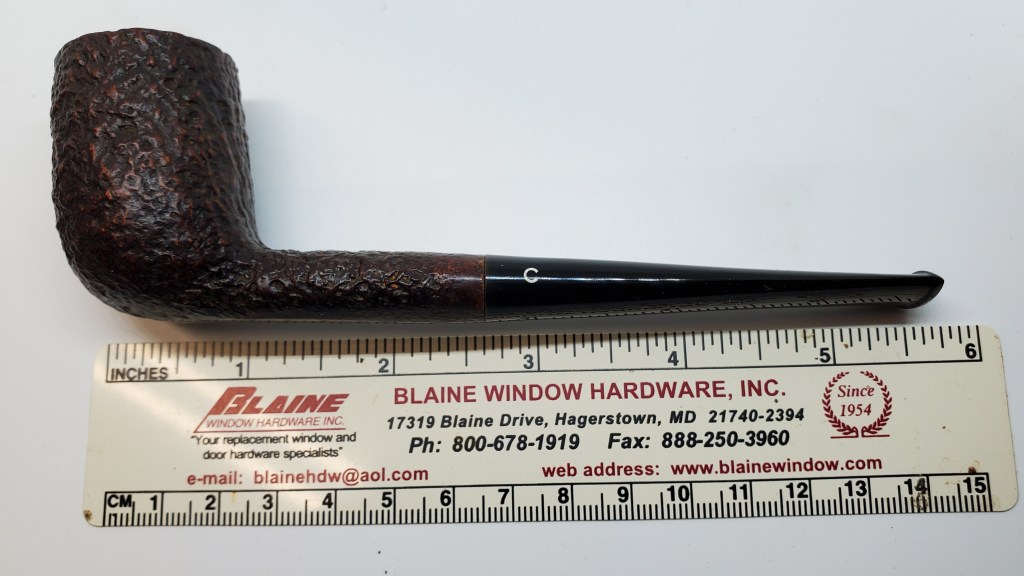
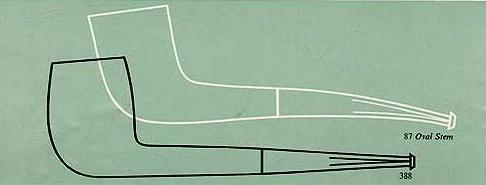
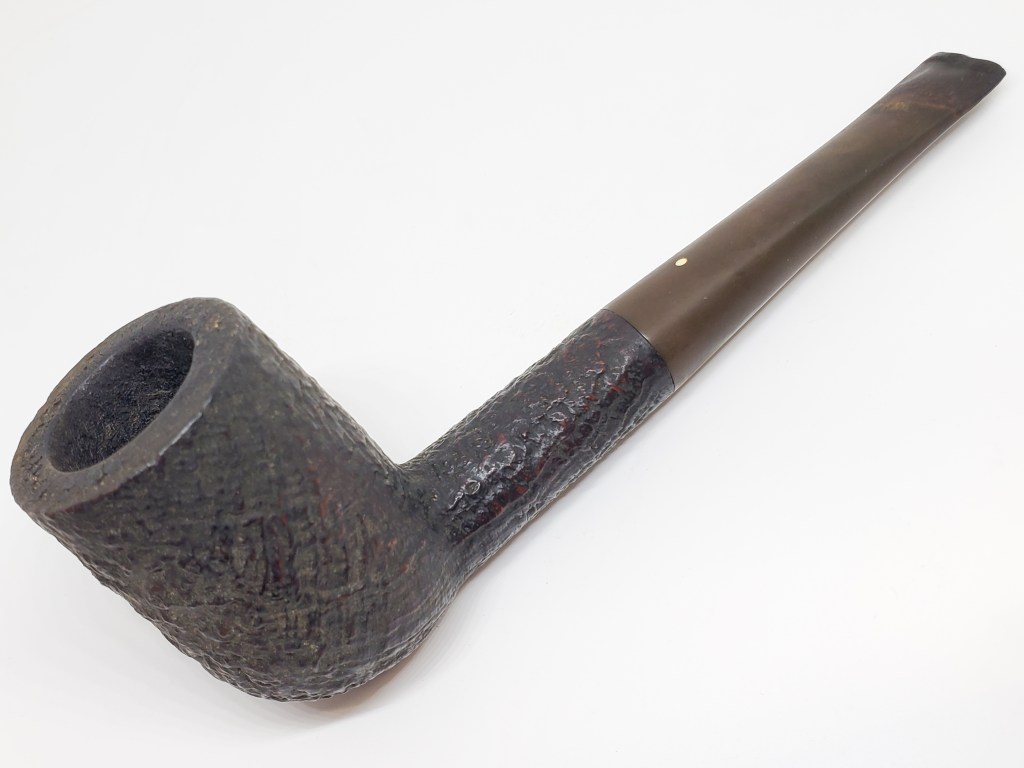
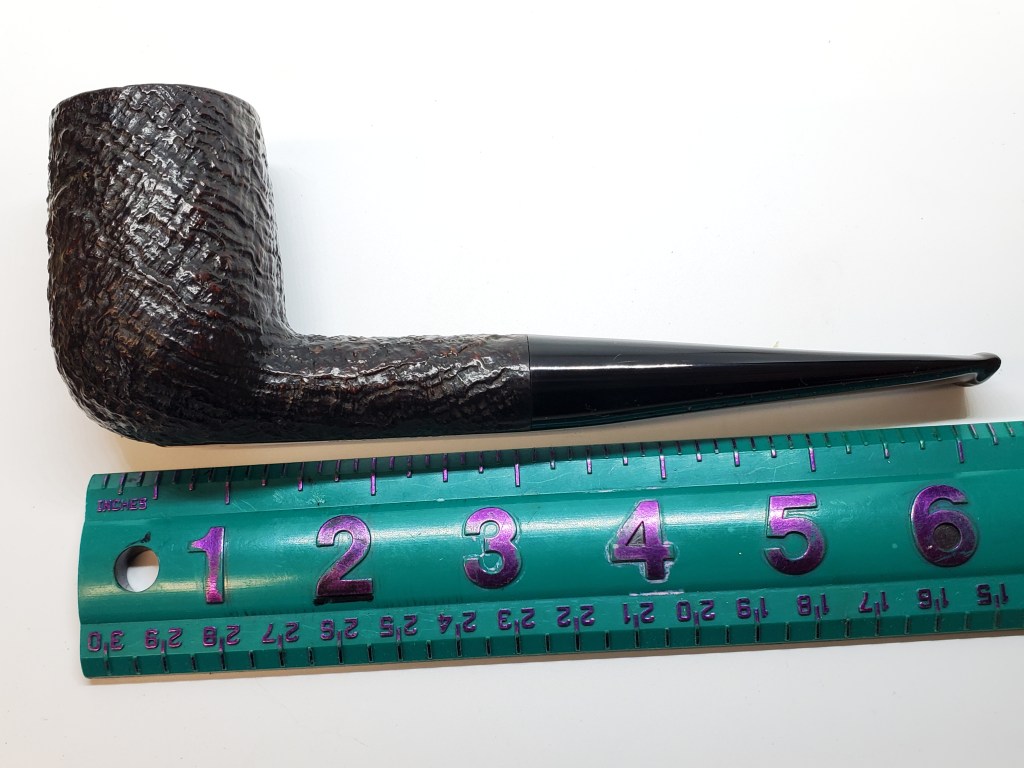
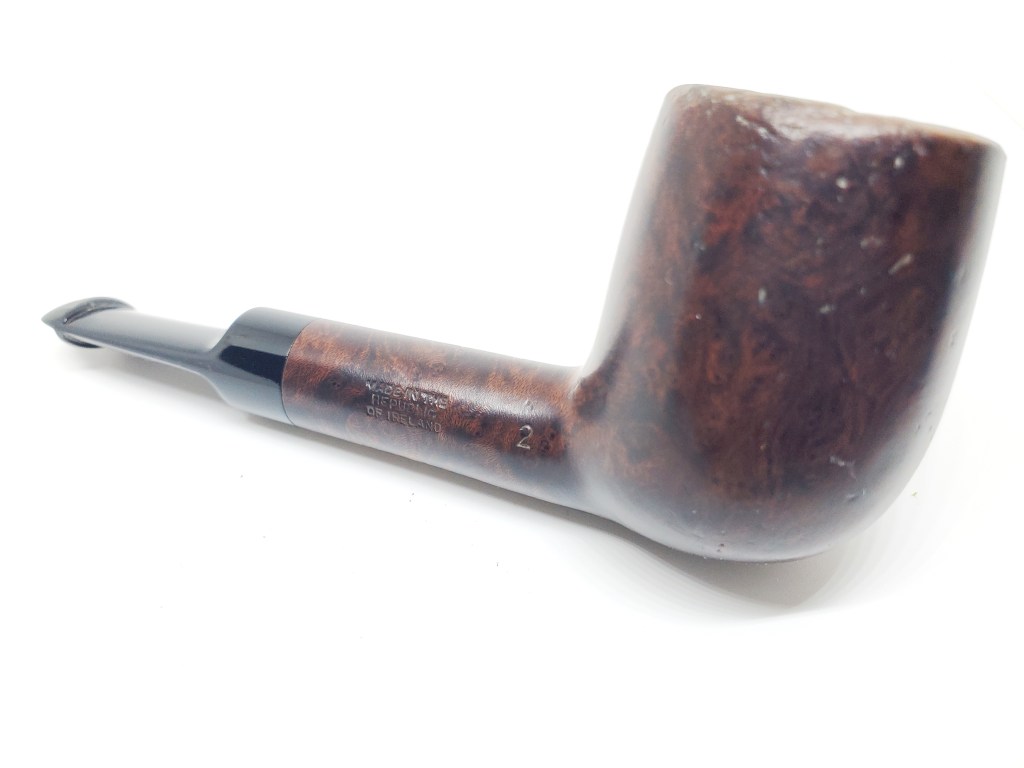
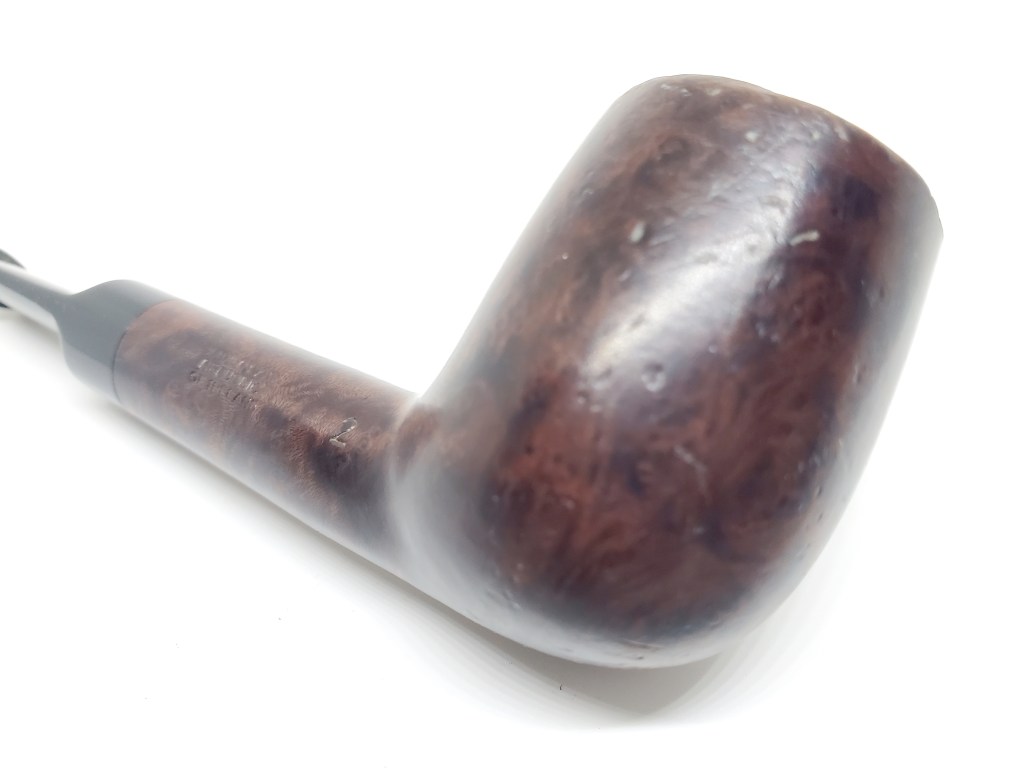
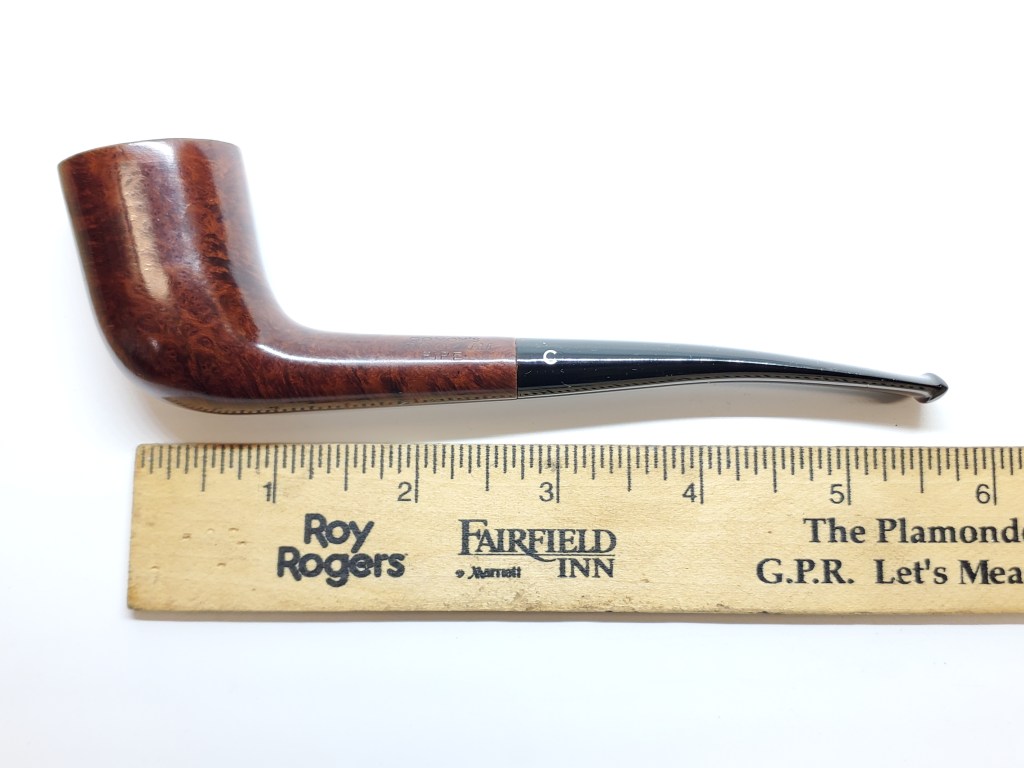
This is 2nd Comoy’s on my workbench this week and the first 202 shape I’ve encountered. I would have called this one a Billiard shape, but the Comoy’s shape chart identifies it as a “Cutty”. There is a very slight cant to the bowl. Below is a photo from a 1975 catalog showing the shape. This one weights only 26 grams!

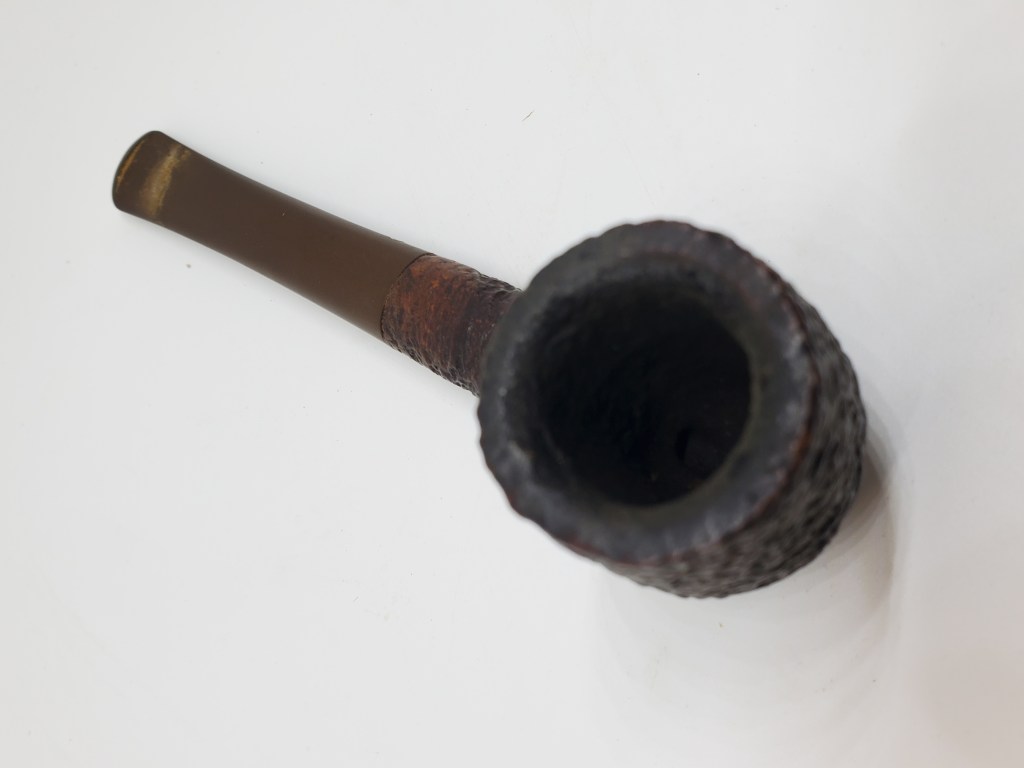
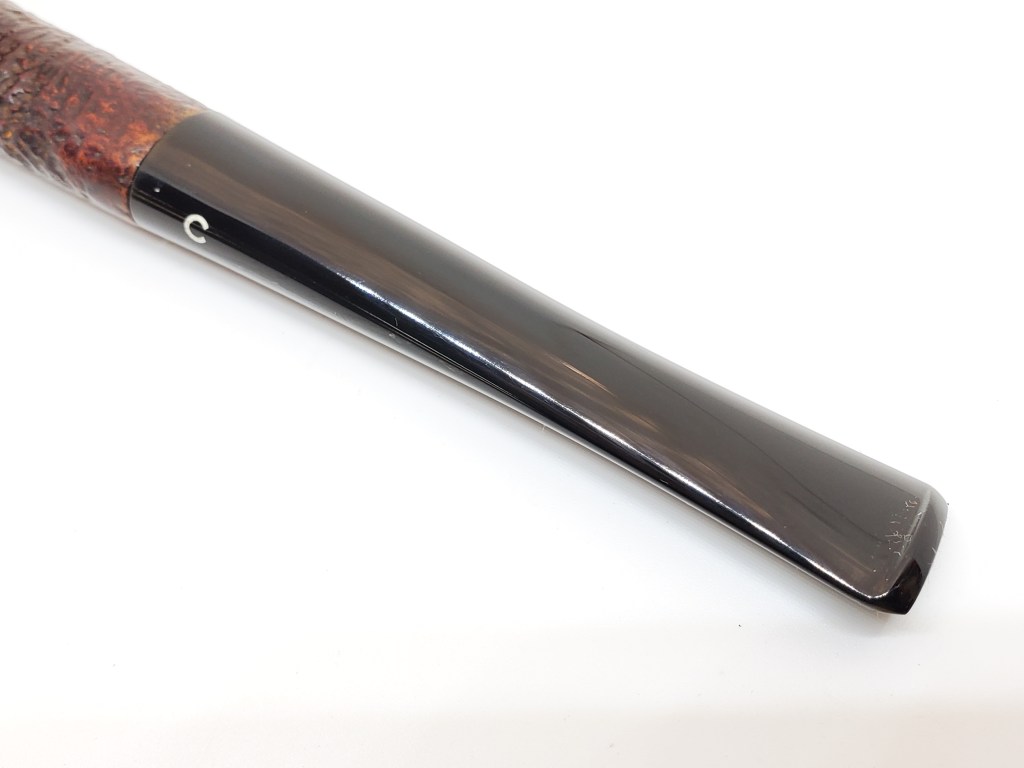
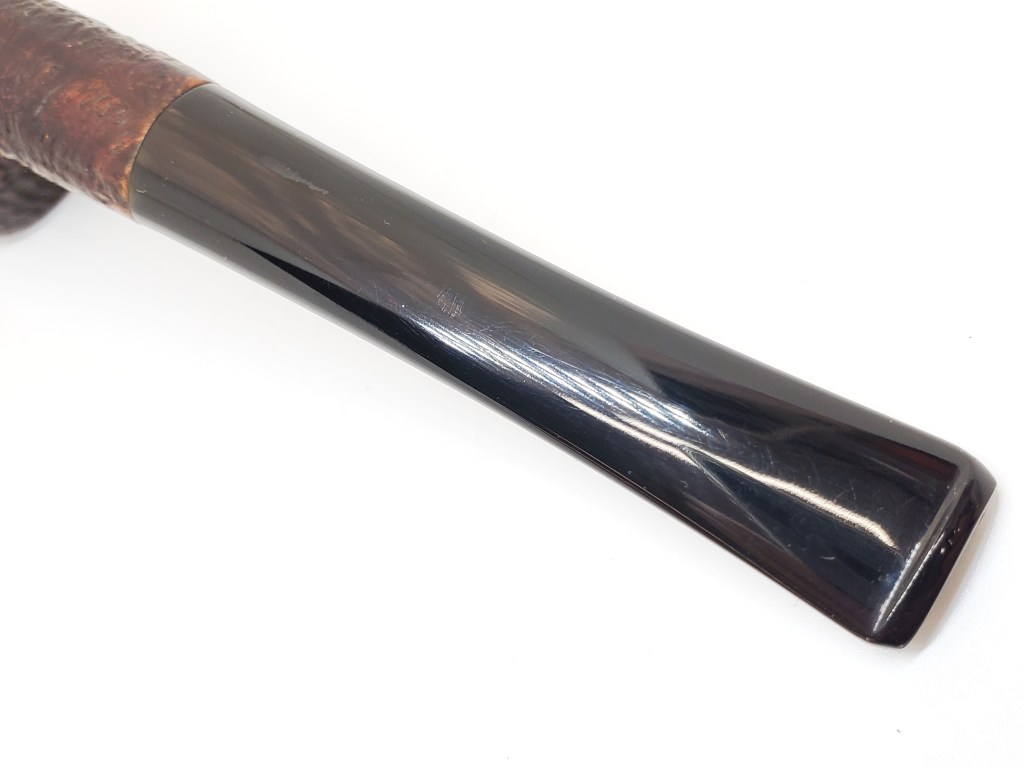
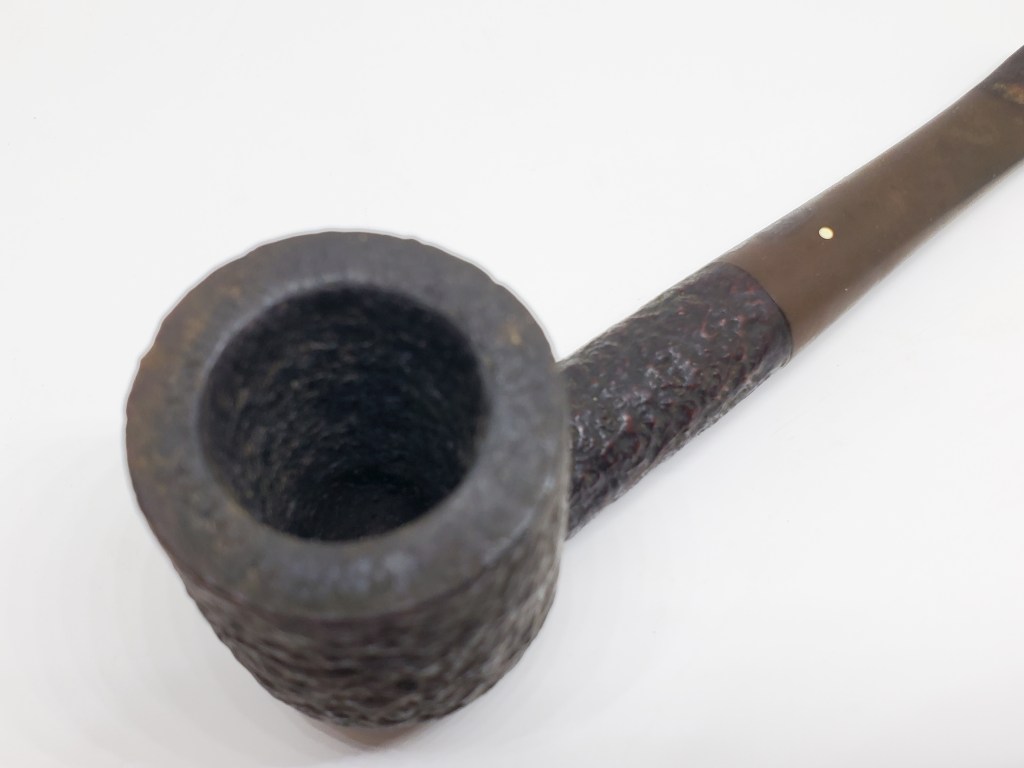
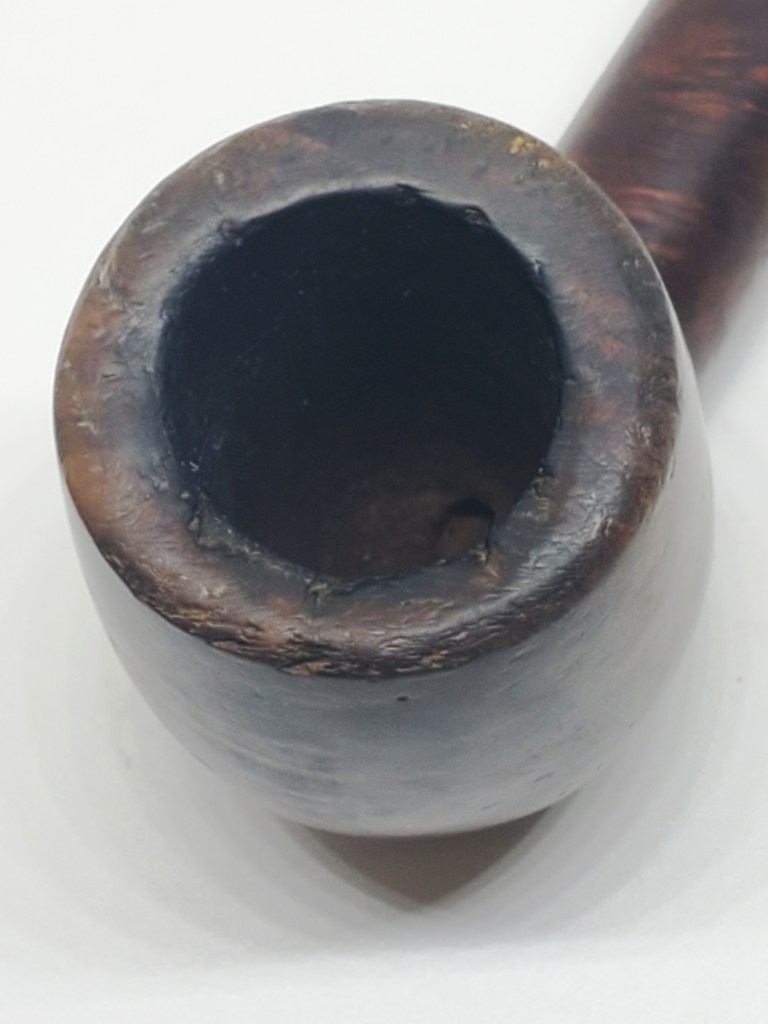
The pipe has some build-up on the bowl top, the sandblast was very dirty and the stem heavily oxidized. There was a very thin cake, as if it had been maintained at that level.

Below is the pipe as it was received.

I used a piece of scotch brite to remove the build-up on the bowl top. The stain was lightened some, so I used Fieblings Medium Brown dye to match the rest of the bowl.

I reamed the cake and soaked the bowl with sea salt and alcohol. The shank was thoroughly scrubbed with a brush dipped in alcohol, until the brush came clean on a paper towel.

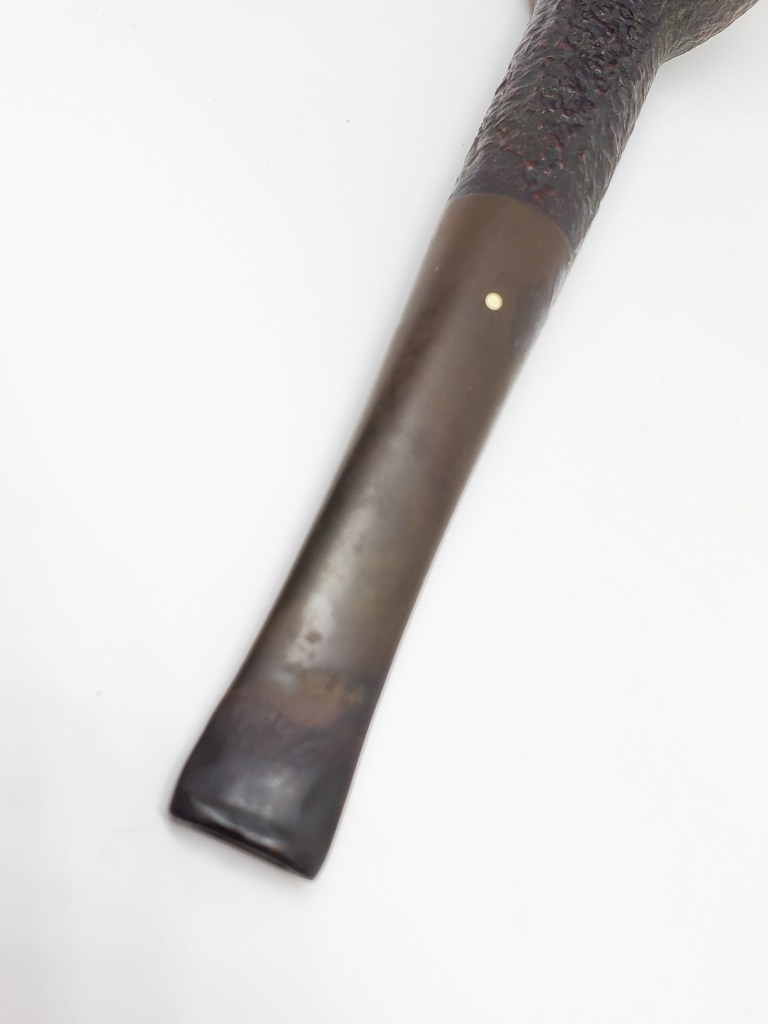
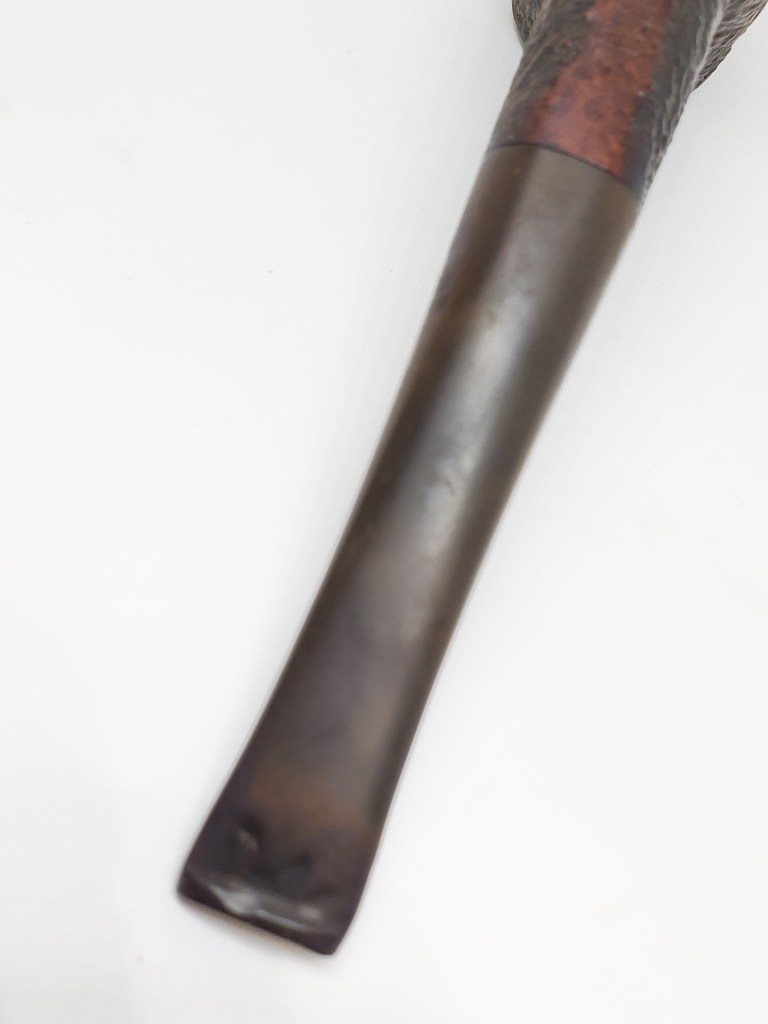
There was a slight tooth indention on the bottom of the stem at the button. I used my heat gun to lift the indention,and set it with cold water. The stem was mounted and I removed the oxidation with 600,800, 1500 and 2000 grade wet sandpaper. The stem was then buffed with White Diamond and Meguiars Plastic polish. The bowl was hand buffed with Halycon wax.

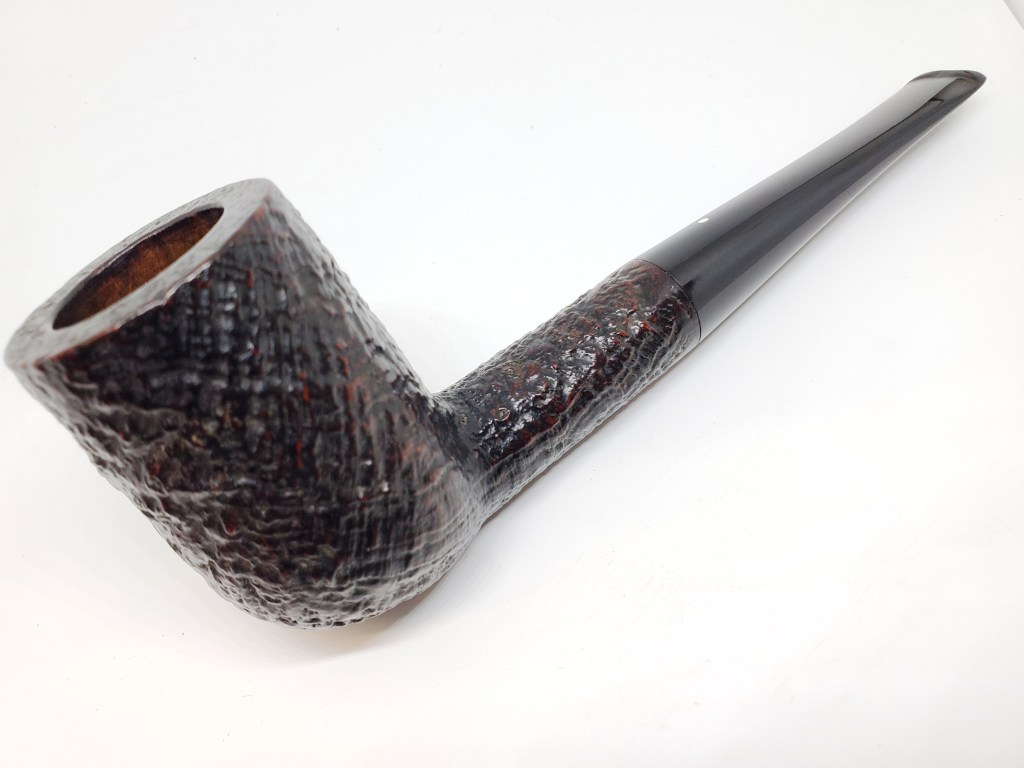
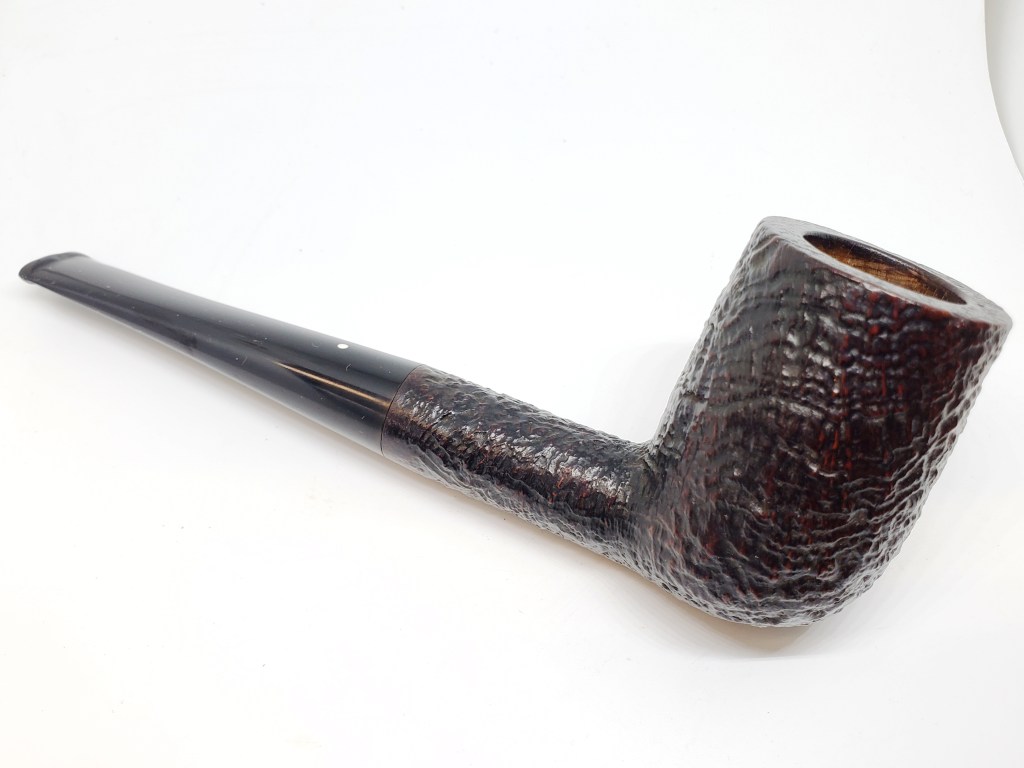
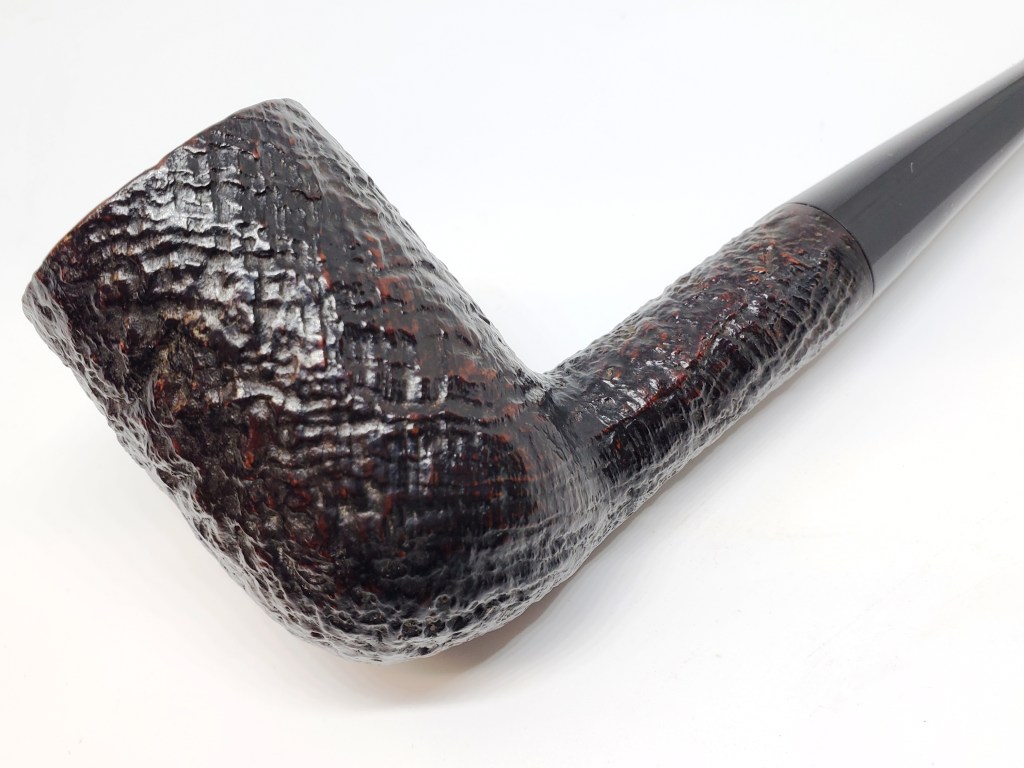
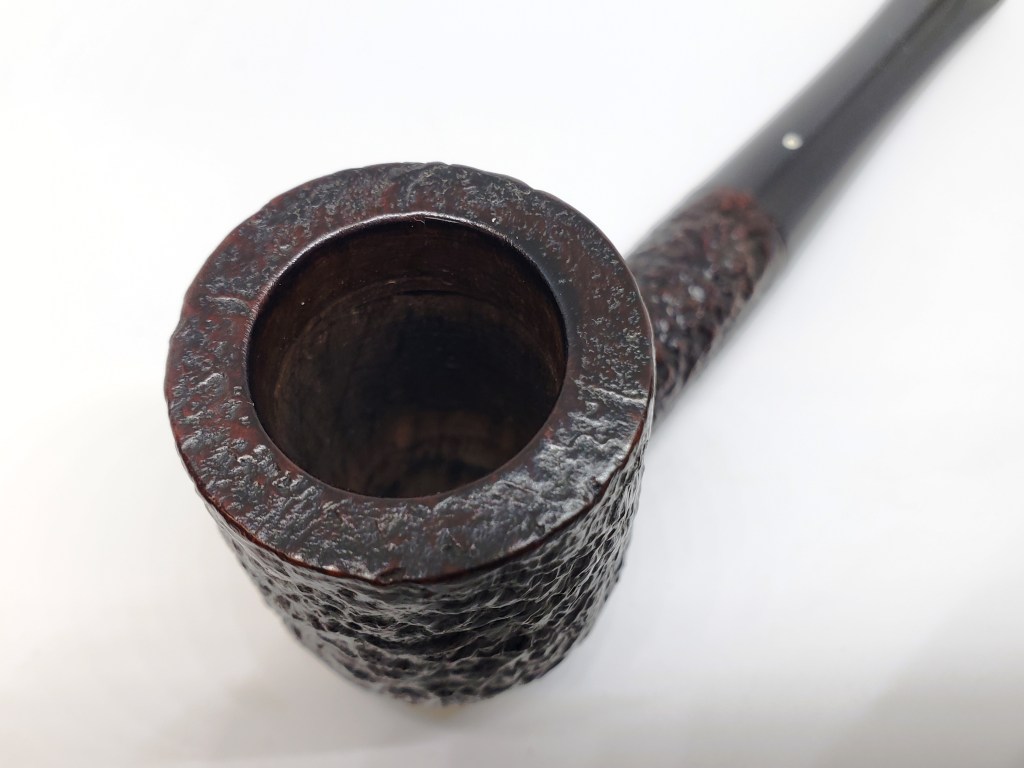
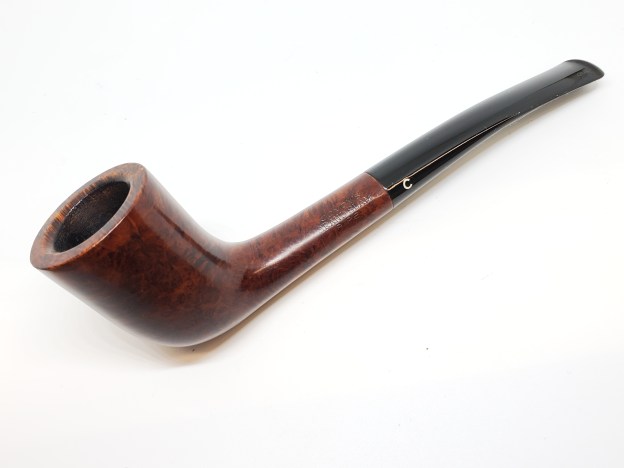
Below is the finished pipe.

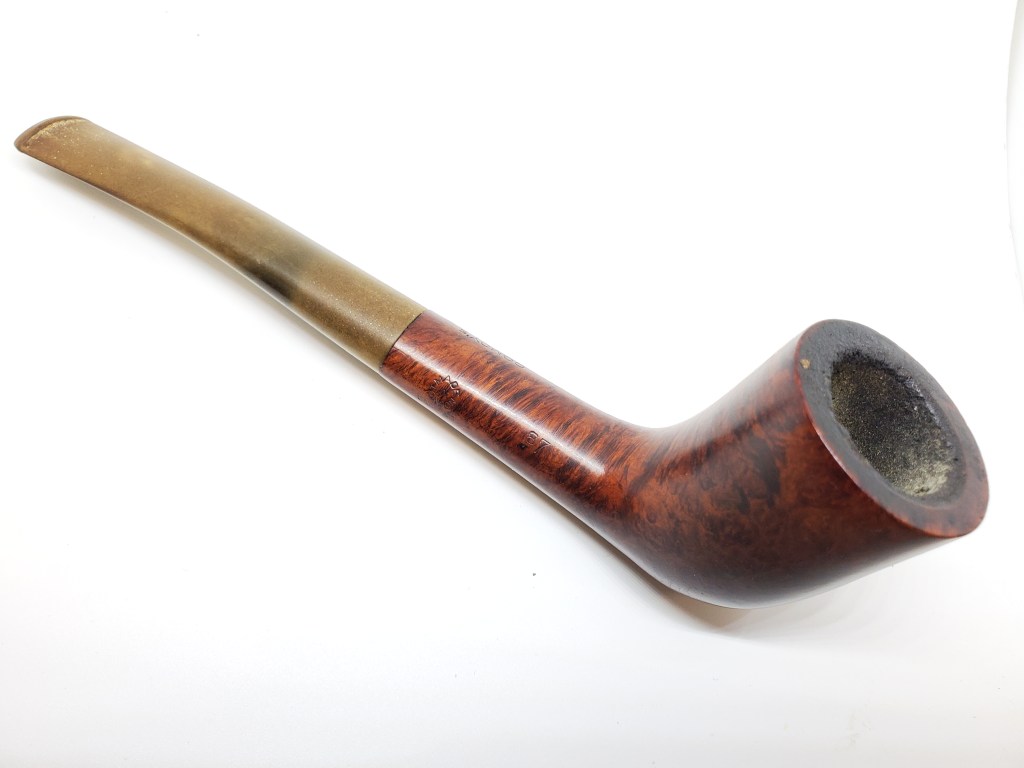
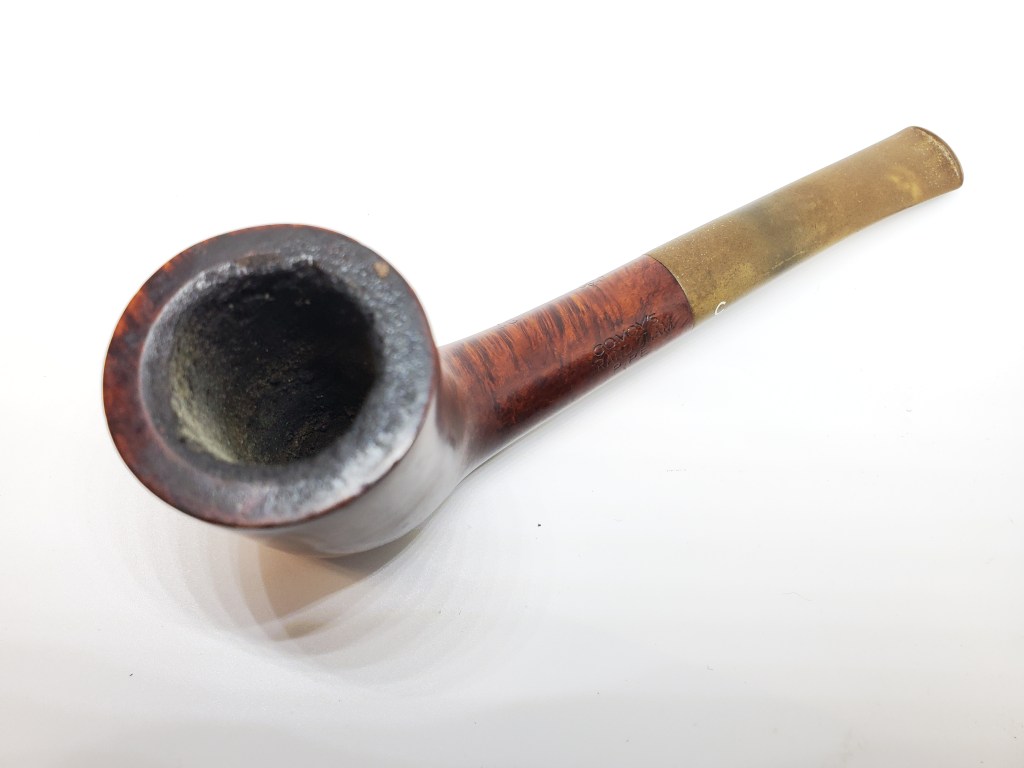
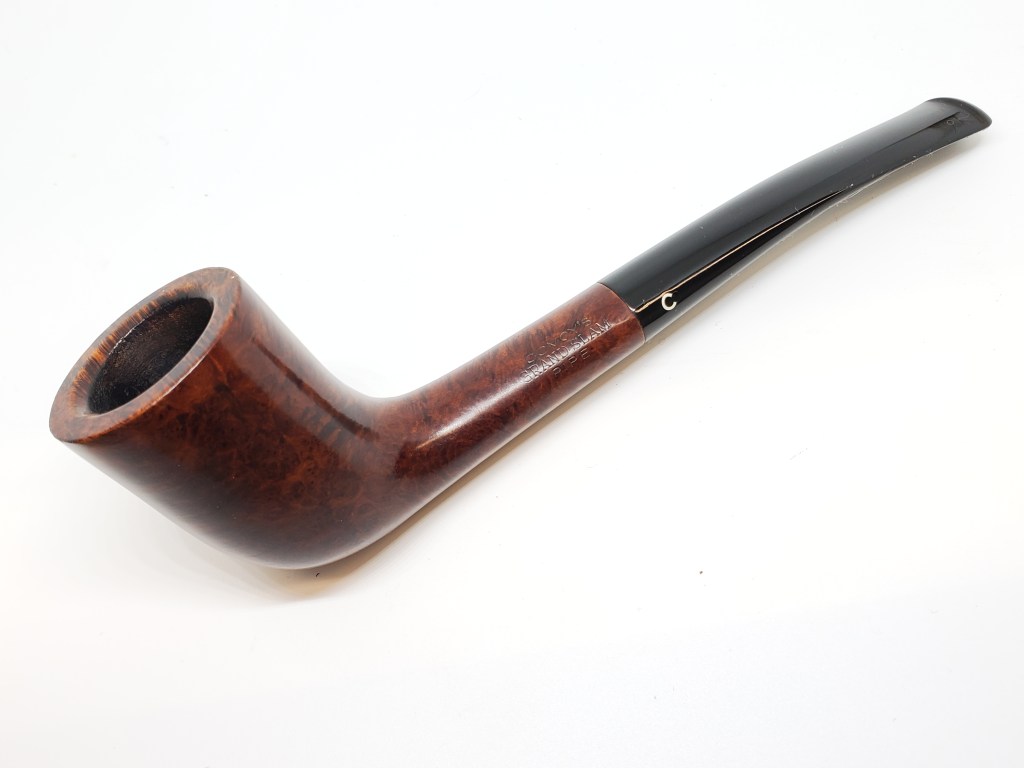
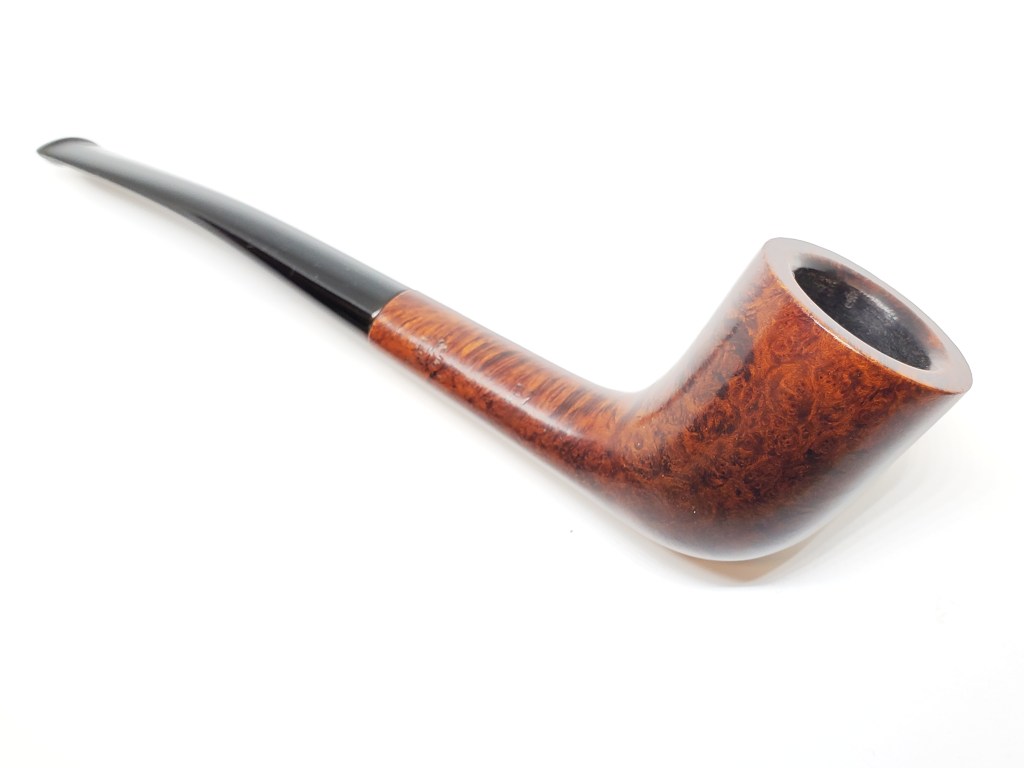
Comoy’s Shape 87 “Woodstock” Restoration


By Al Jones

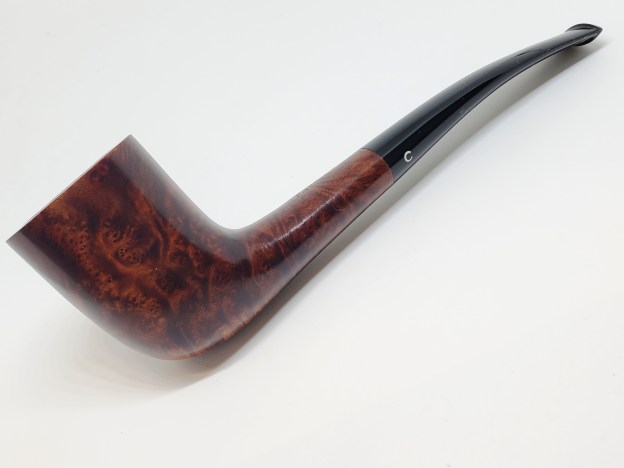
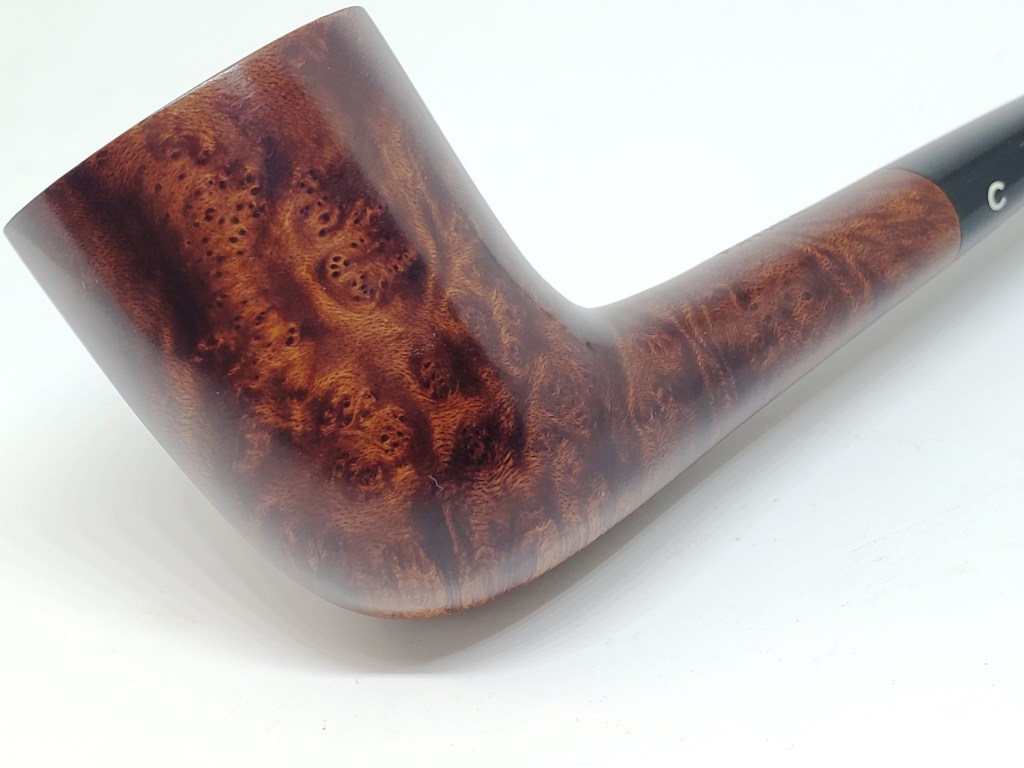
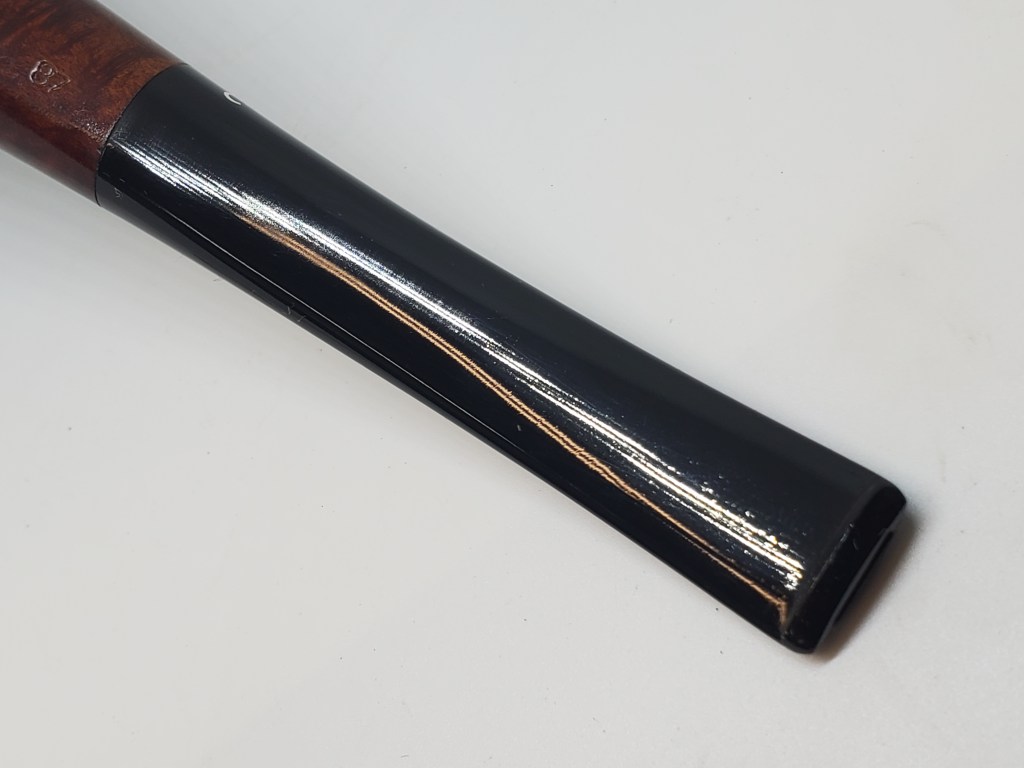
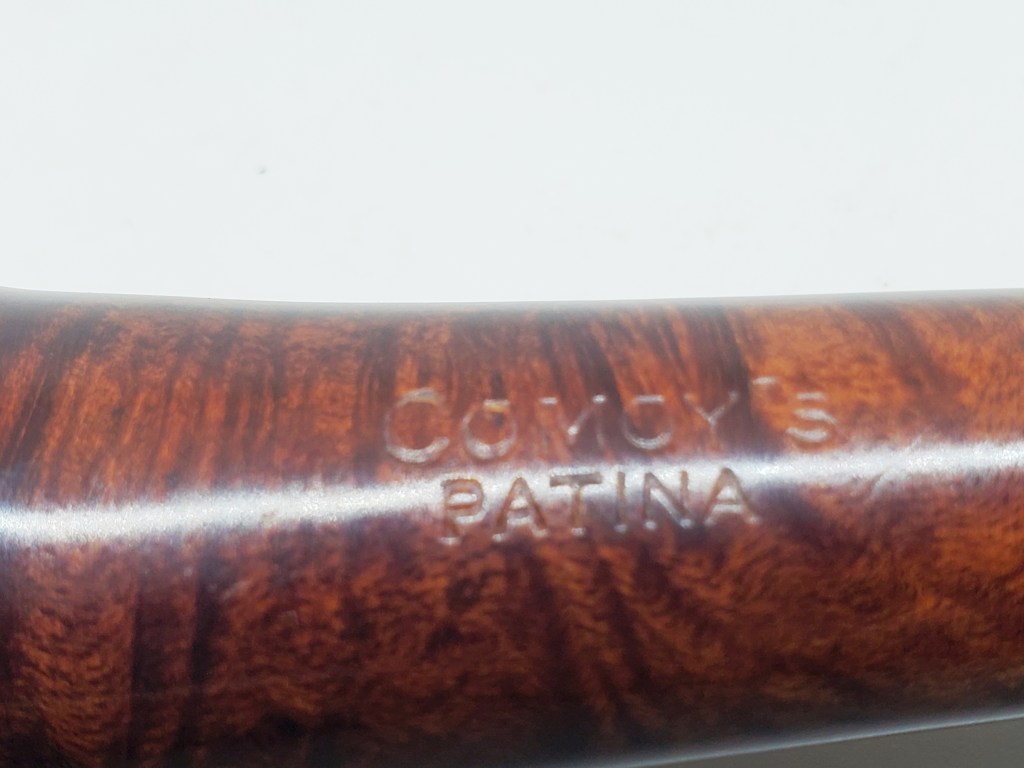
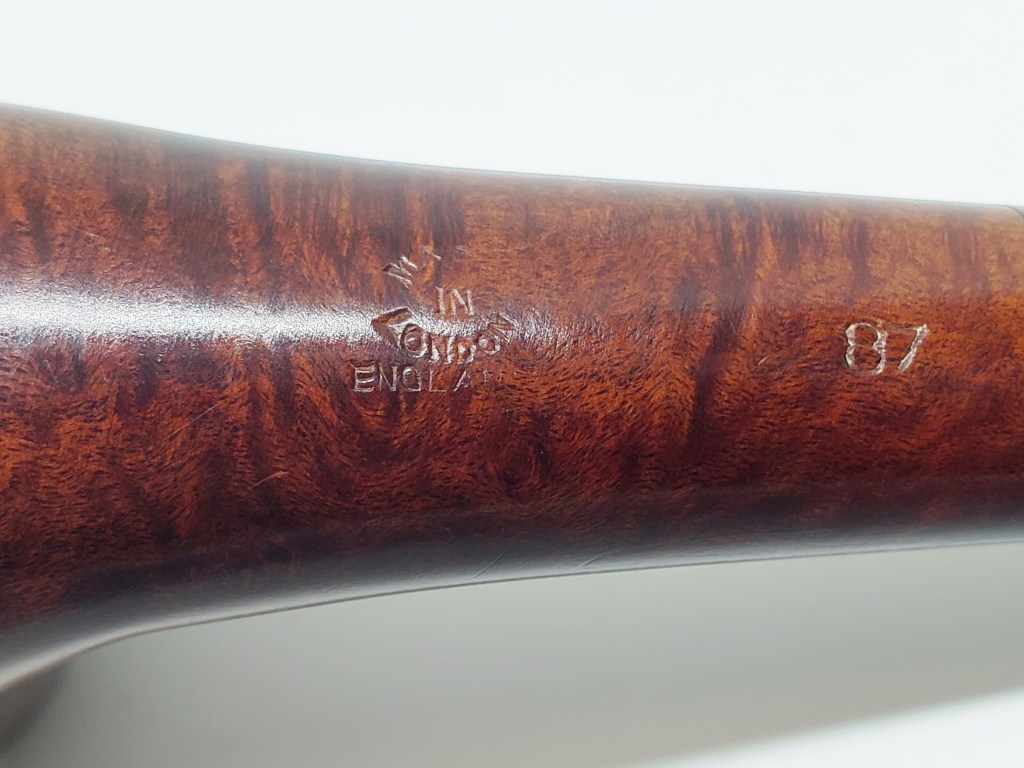
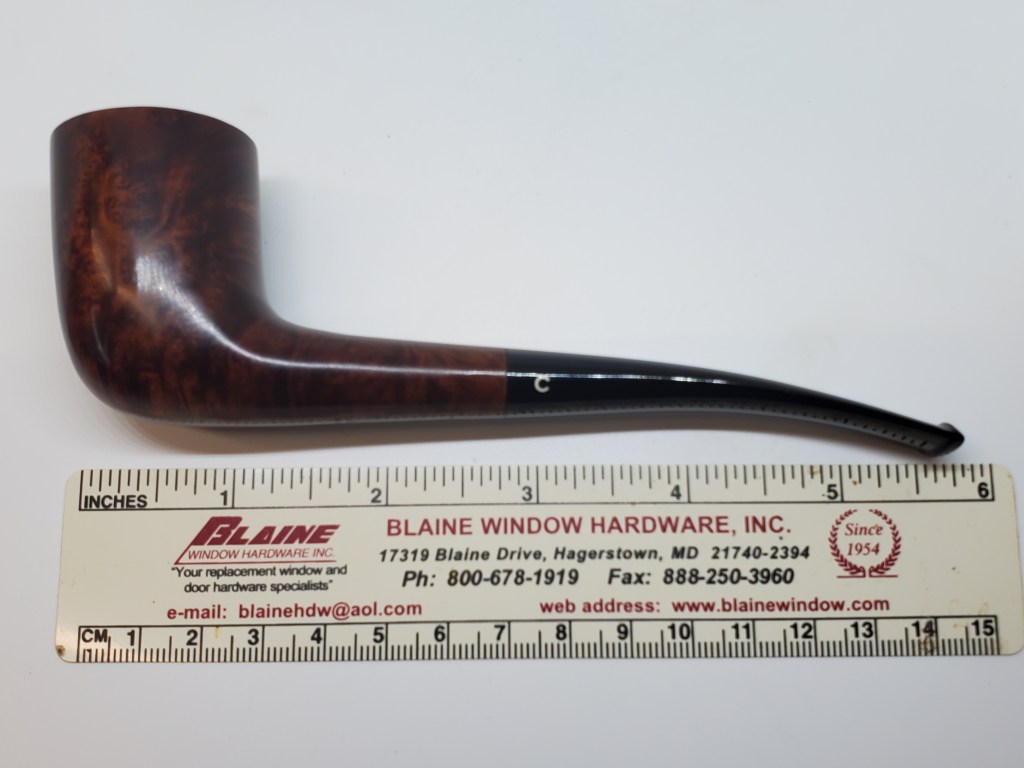
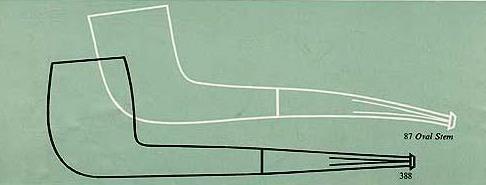
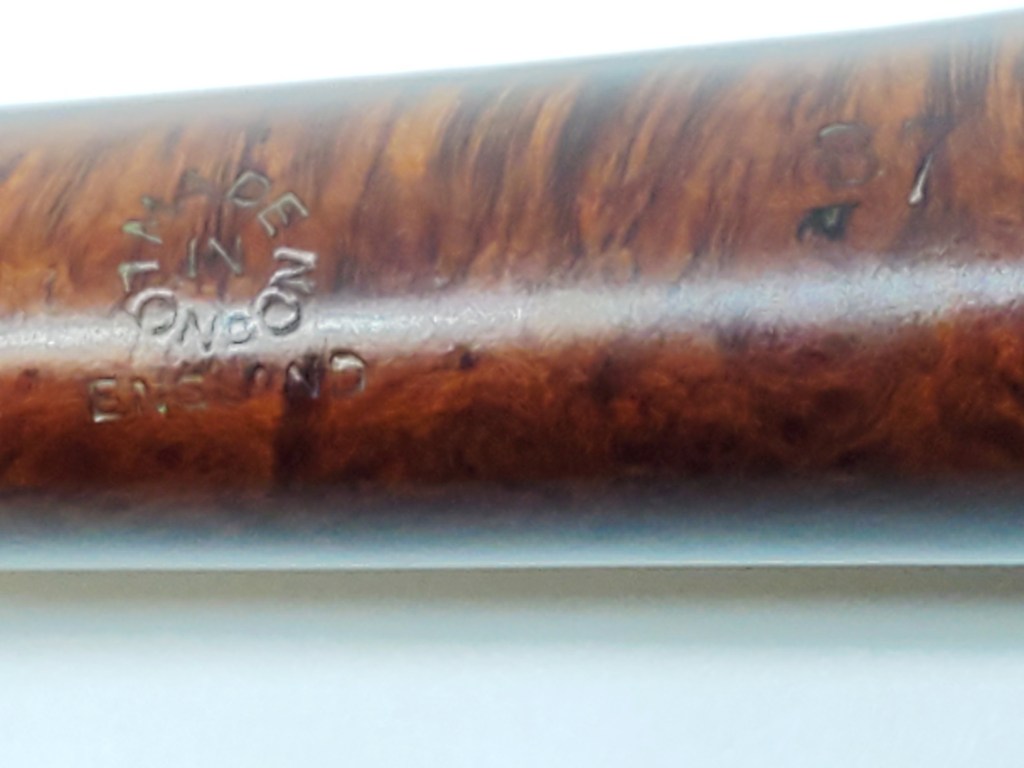
This pre-Cadogan (made prior to the 1981 merger) came to me via eBay. It is only the third “Patina” finish Comoys that I’ve had on my workbench. The Comoy’s shape chart calls the shape 87 the “Woodstock” It is shown on the shape chart, but I’ve never seen it in a catalog. From the index in Neil Archer Roan’s magnificent “Comoy’s Blue Riband” book, the shape was originally called the “Boston” and originated in the early 1900’s.

From a blog entry of a previous Patina pipe, historian Jon Guss shared some information about the Patina grade,and a catalog price list.

Hi Al, I can tell you a little about the Patina but only a very little. It was in the middle to lower tier of Comoy’s branded models, introduced in 1973 and withdrawn in the early Eighties. There are a number of 1970s Comoy catalogs floating around and anyone who has one (I don’t) can transcribe the entire copy for you. I’m pretty sure advertisements and/or catalogs referred to the briar as “specially selected” and “aged”, and to the “reddish walnut color” stain as a special selling feature (hence Patina). At least one ad labeled the pipe as “moderate in price, exceptional in looks”. In 1975 the Patina was retailing at $12.50. Cheers, Jon

The pipe was in very good condition, and was an easy restoration. The finish was faded, with some very slight build up on the bowl top and a slightly oxidized stem. Below, is the pipe as it was received.

I used a worn piece of scotch-brite to remove the build-up on the bowl top. The bowl itself held nearly no cake, so I used a piece of sandpaper to remove what was there. The bowl was in excellent shape. The bowl was then soaked with alcohol and sea salt.

Following the bowl soak, the stem was mounted and oxidation removed with 800, 1,500 and 2,000 grade wet sandpaper. The stem was then buffed with White Diamond rouge and Meguairs Plastic polish. The bowl was buffed lightly with White Diamond and then several coats of carnuba wax.

Below is the finished pipe.

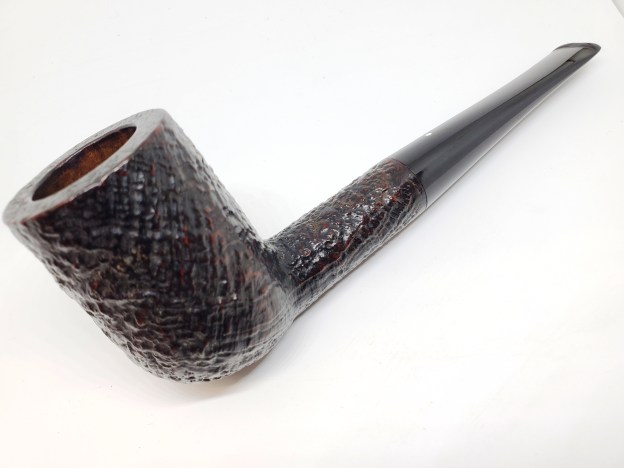
Dunhill Shell Big Billiard Restored


By Al Jones

This Dunhill Shell billiard belongs to a member of the PipesMagazine.com forum, and was found at small antique store in Tennessee. He collects antique tools and pipes and spied this sitting on a shelf while searching for tools.

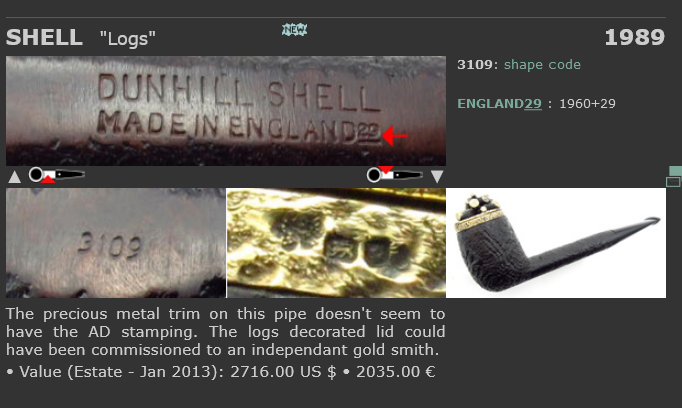
The small, two digit date stamp is a bit worn, but I identified it as a 25. The pipe is a Shape 6103 Shell, and that two digit stamp tells me it was made in 1985. The handy Pipepedia Dunhill dating guide confirmed the date. The nomeclature told me to add 25 to the 1960 start date.

The four digit 6103 shape number breaks down to:

Group 6 size

Tapered stem

03 Billiard shape

The pipe had some heavy build-up on the bowl top and a very heavy cake. The stem was oxidized and it had some teeth indentions on both sides of the button. The pipe is just under two ounces, and clenched, teeth indentions would have been inevitable. Below is the pipe as it was received.

I used a piece of Scotch-Brite with water to remove the build-up on the bowl top. That lightened the stain, so I used some Fieblings Medium brown to match the rest of the bowl. The cake was removed with the largest bit in my Pipenet reamer set, and the bowl was in excellent condition. I soaked the bowl with alcohol and sea salt. Following the soak, the shank was scrubbed with a bristle brush dipped in alcohol.

I used a heat gun to lift some of the teeth indentions. The remaining indentions, on the bottom, were shallow enough to let well enough alone. The stem was mounted and the oxidation was removed with 600, 800, 1500 and 2000 grade wet paper. The stem was then buffed with White Diamond and Meguiars Plastic Polish. I used Halcon wax on the sandblast finish for the final buff.

Below is the finished pipe.

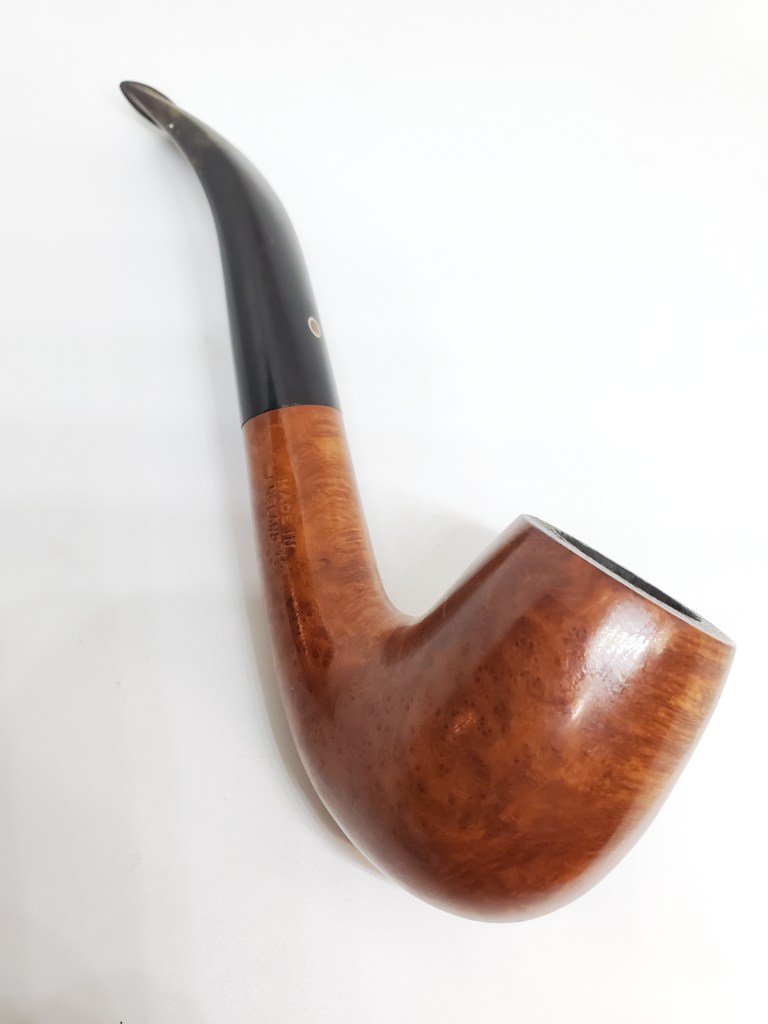
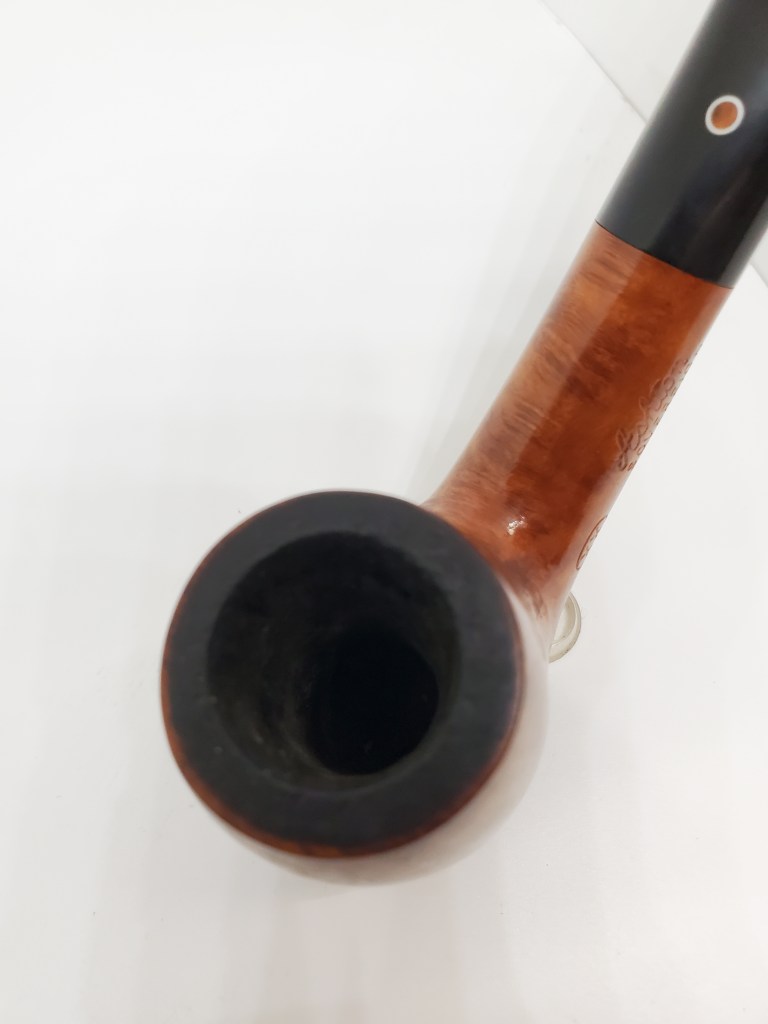
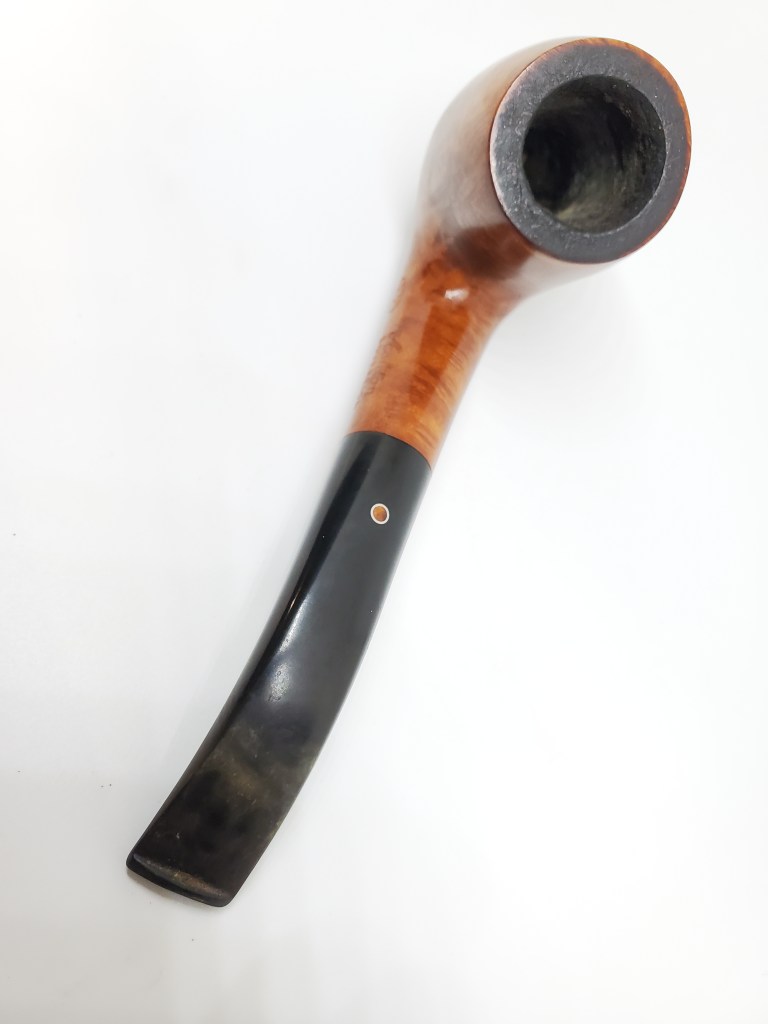
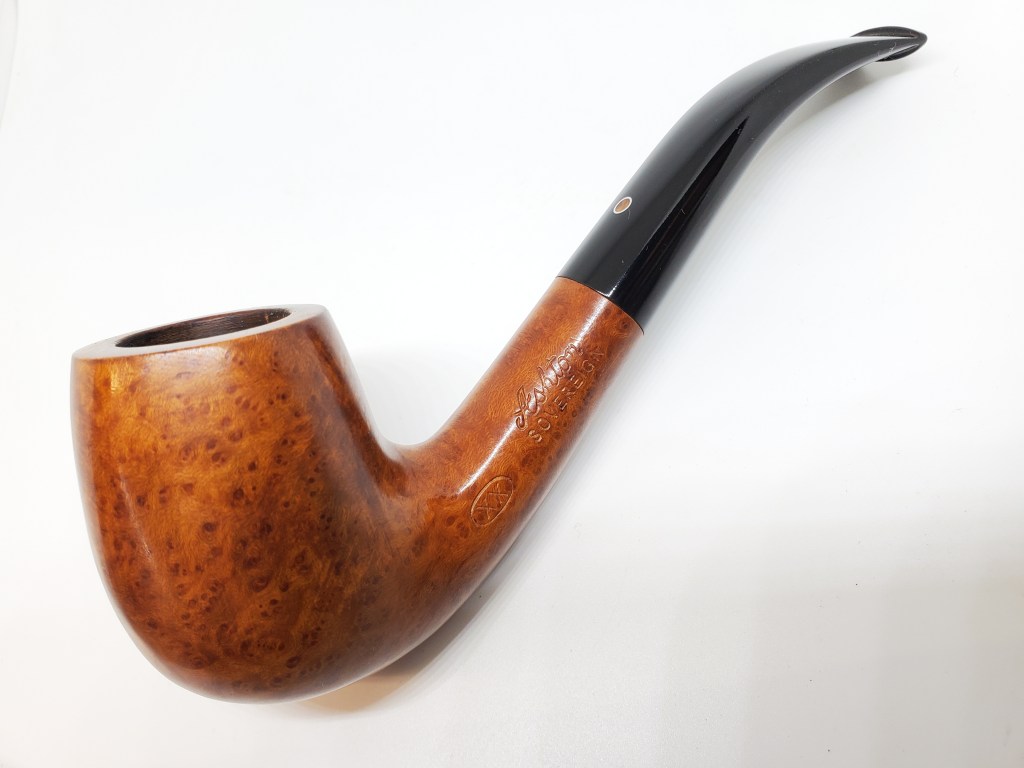
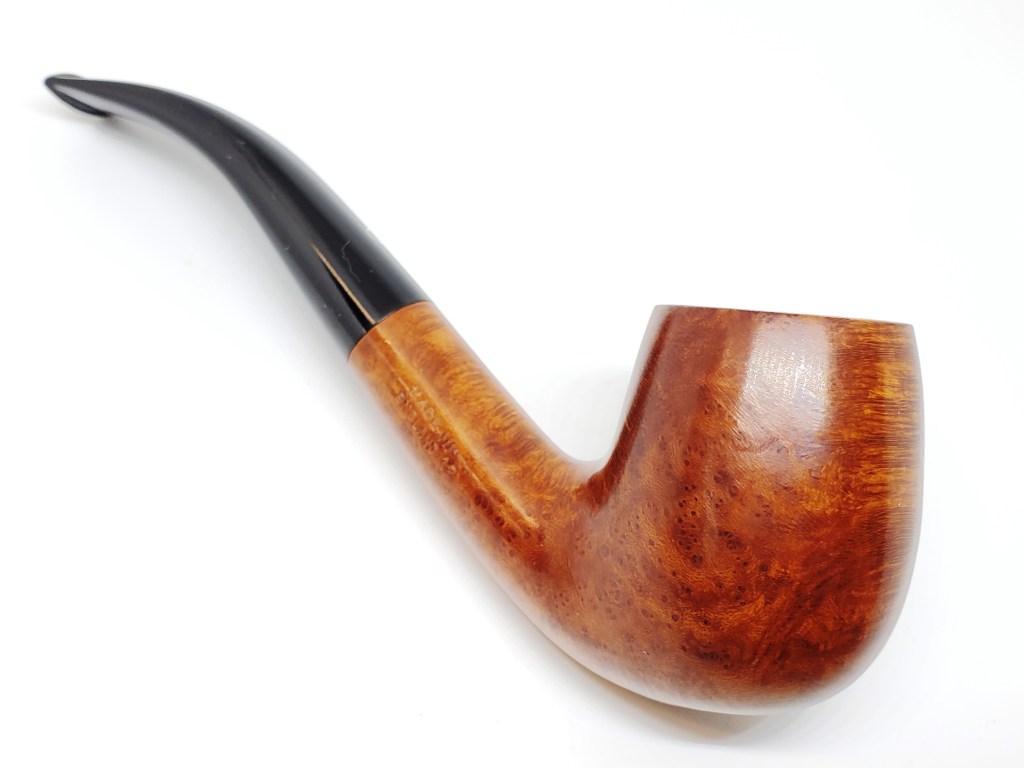
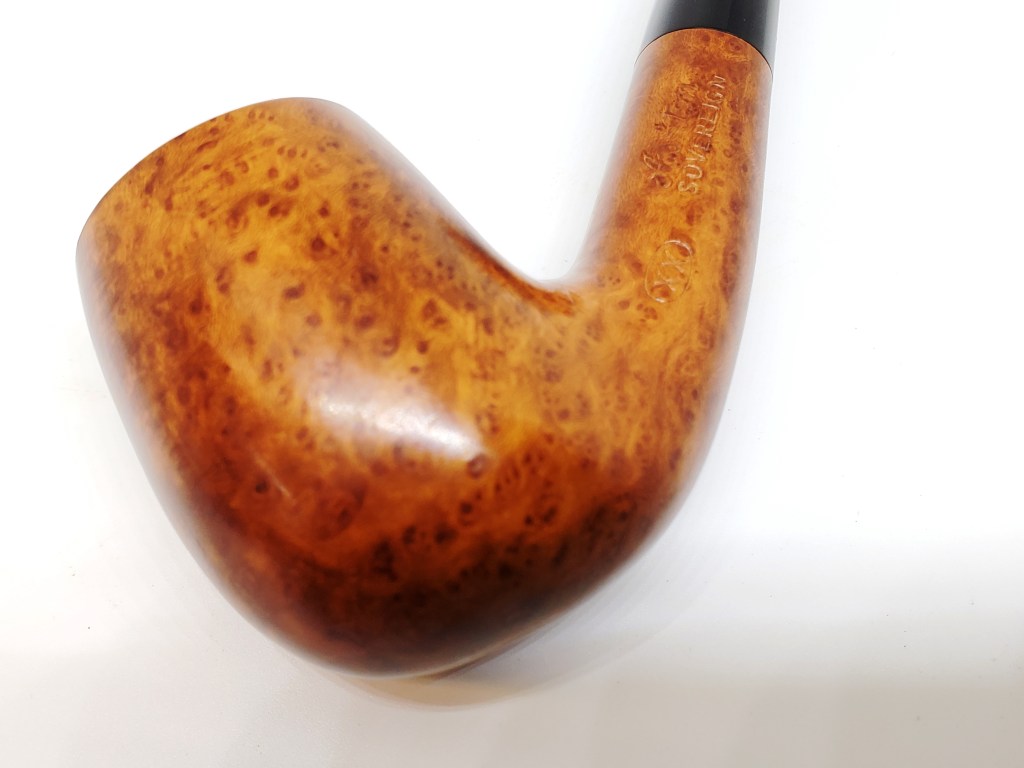
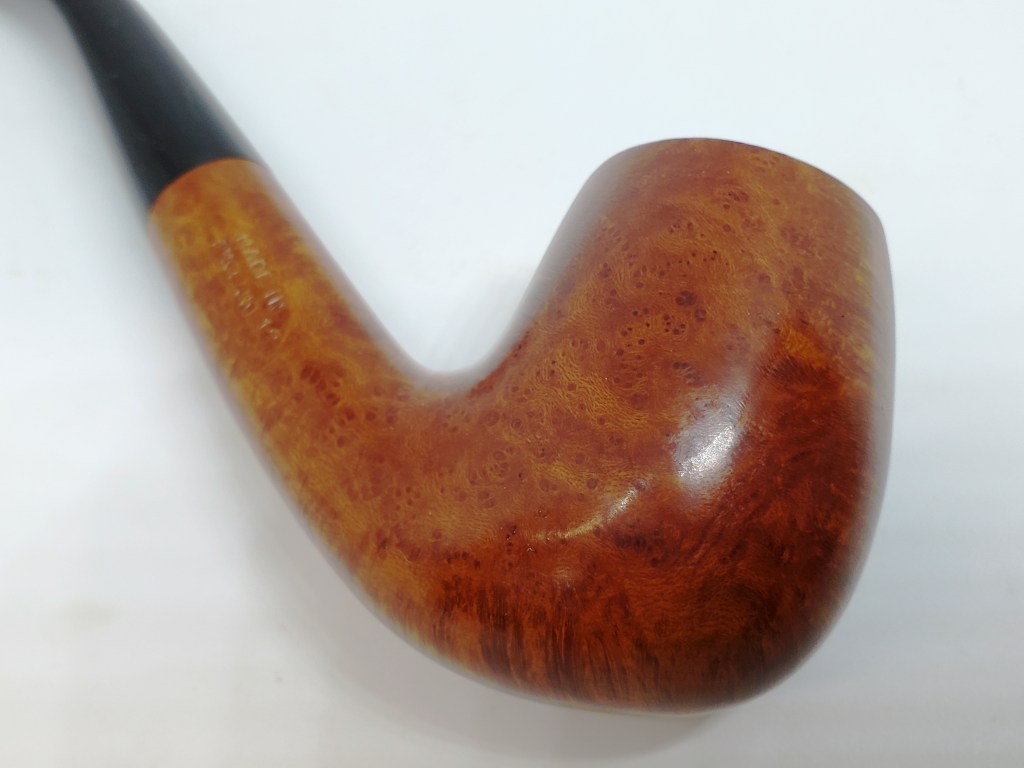
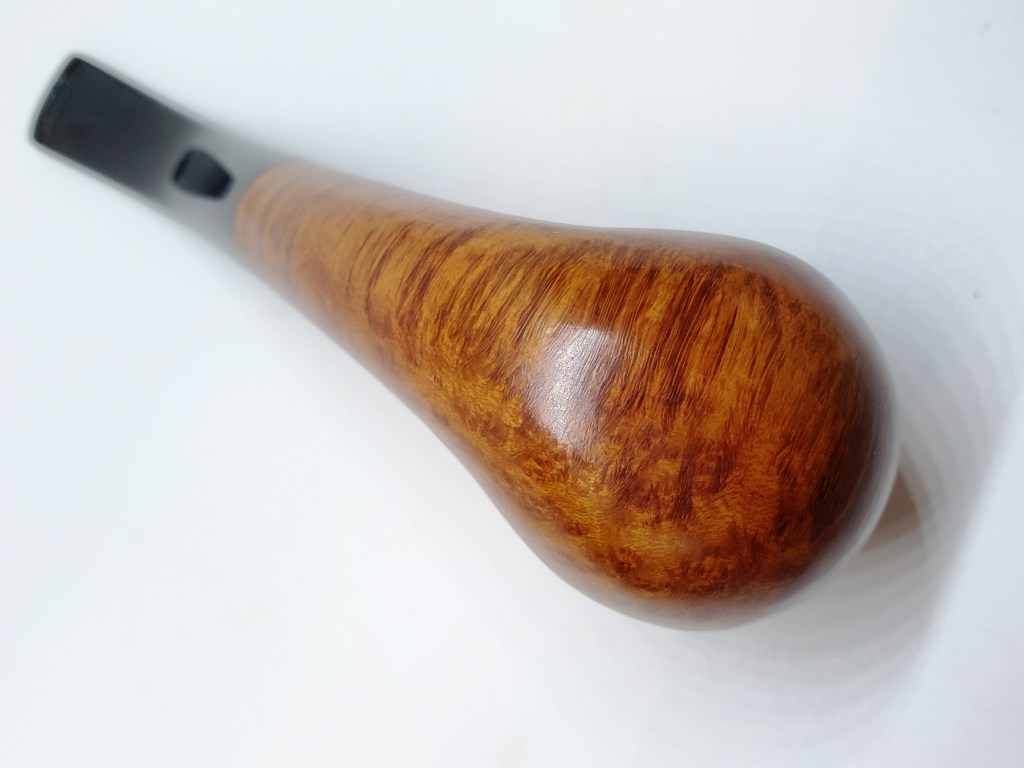
Ashton Sovereign Bent Billiard Addition/Restoration


By Al Jones

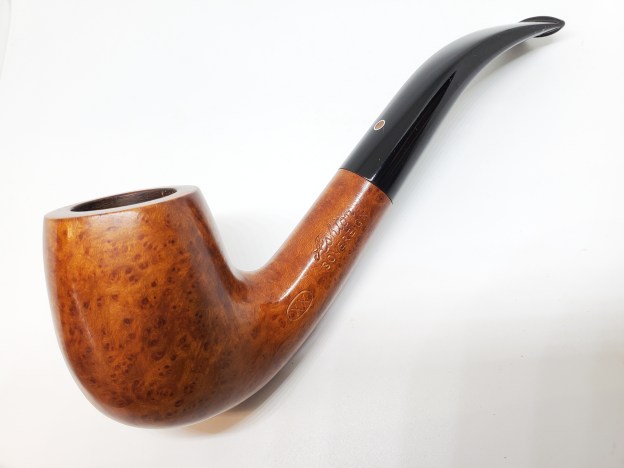
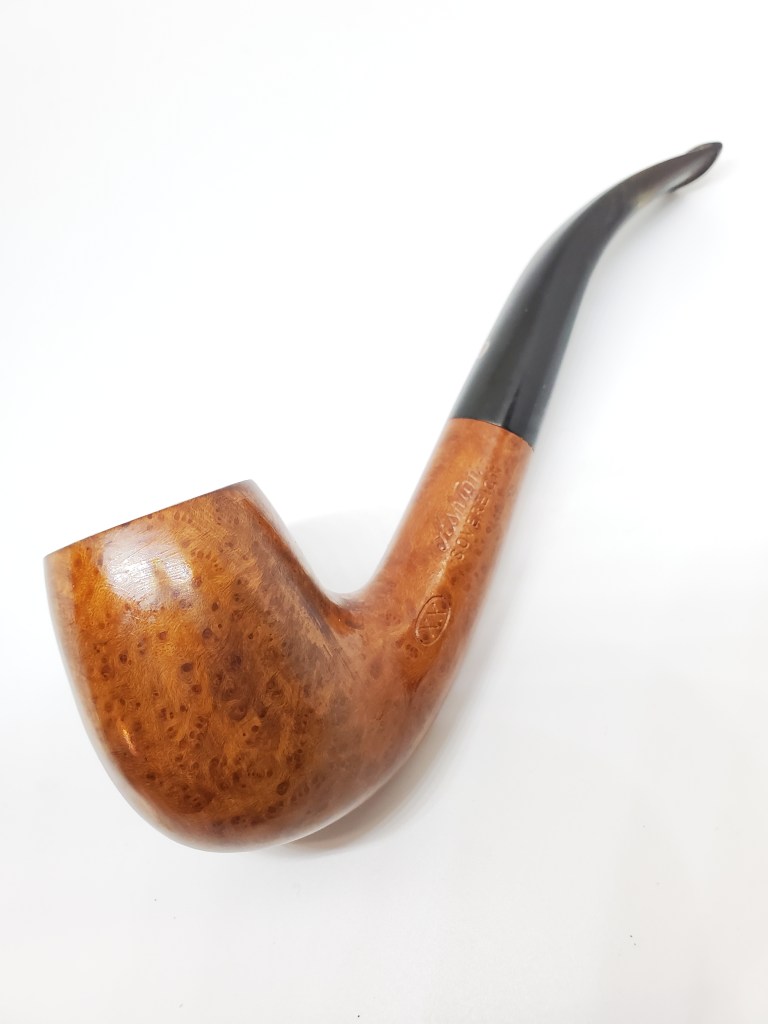
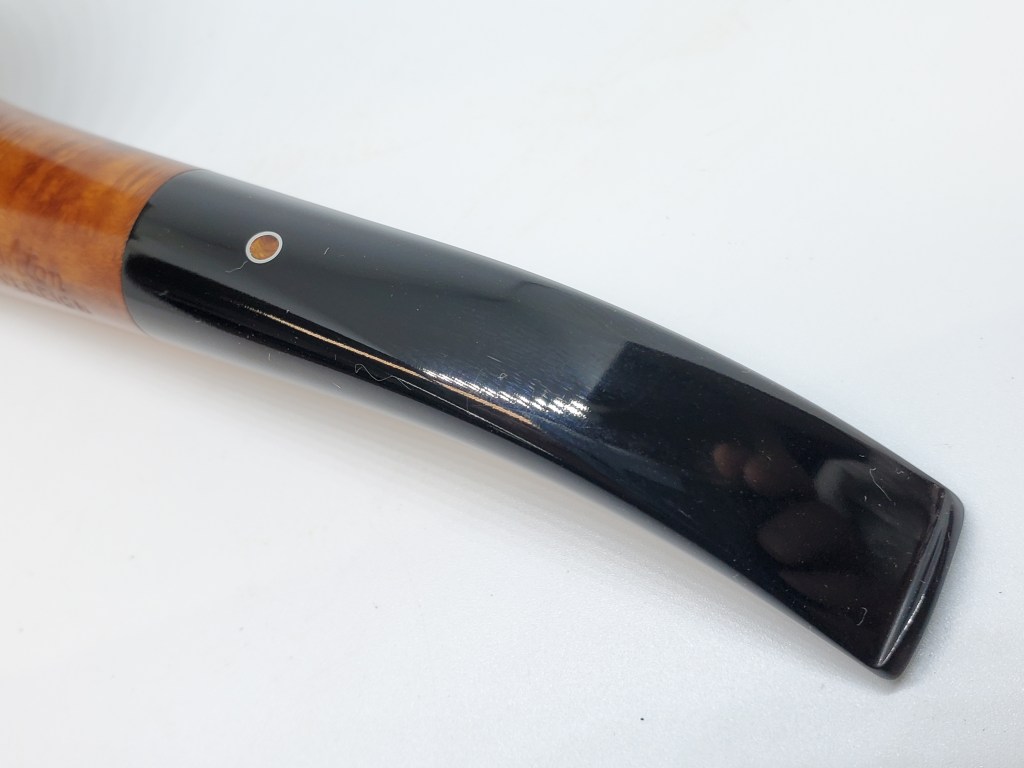
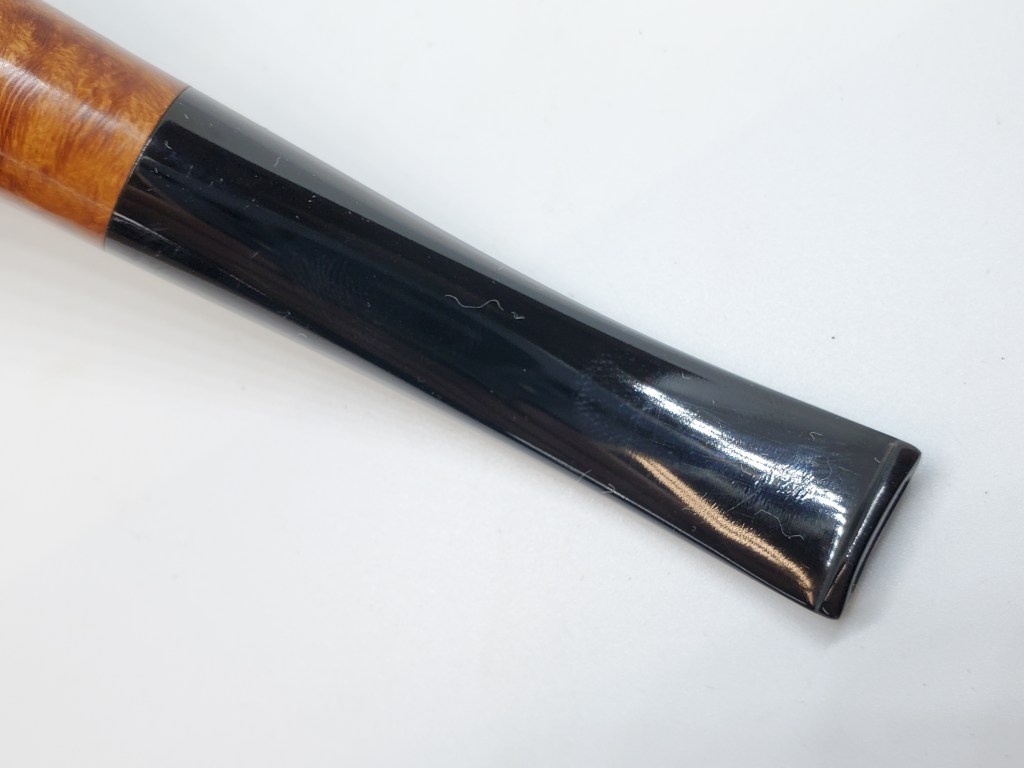
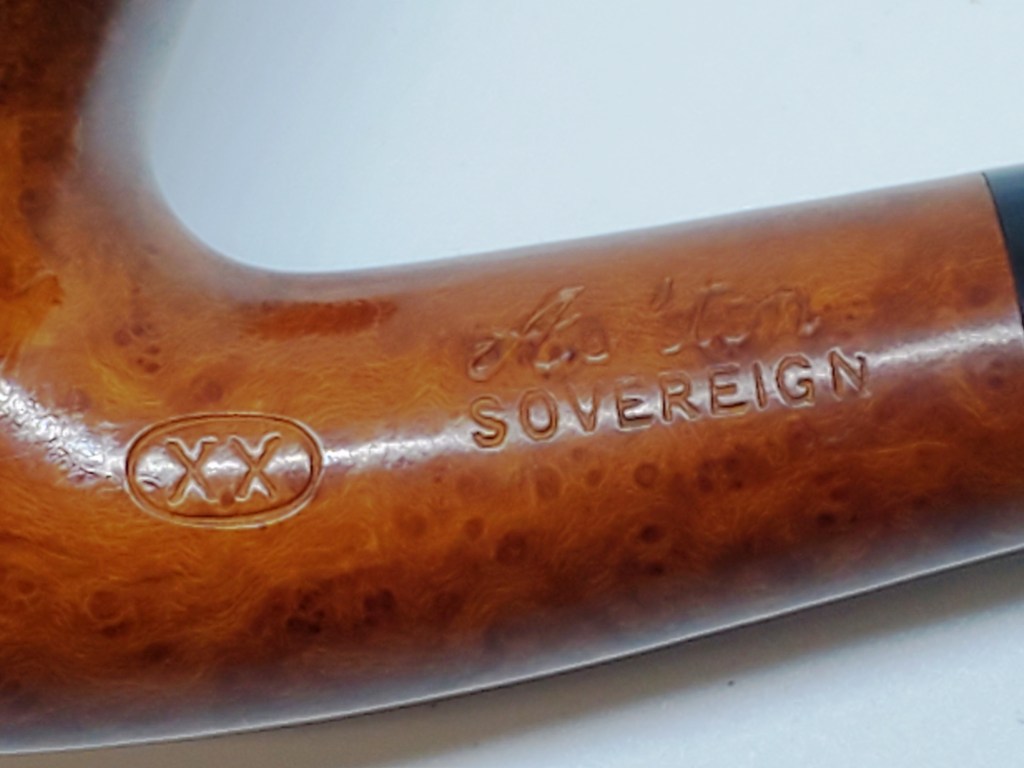
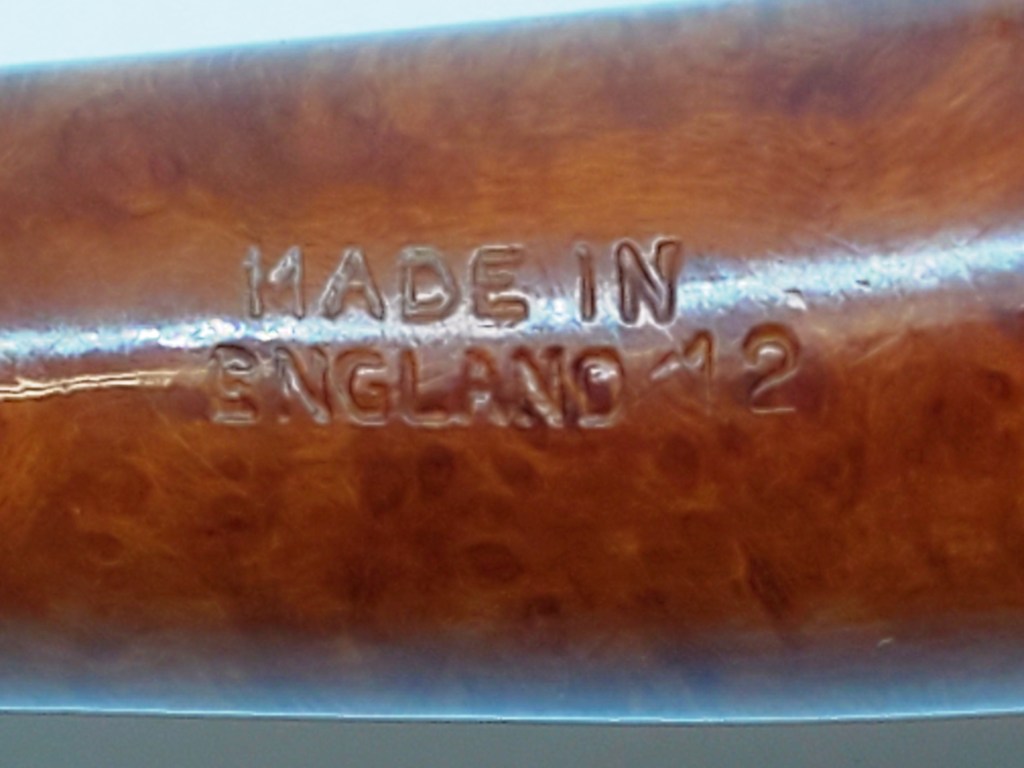
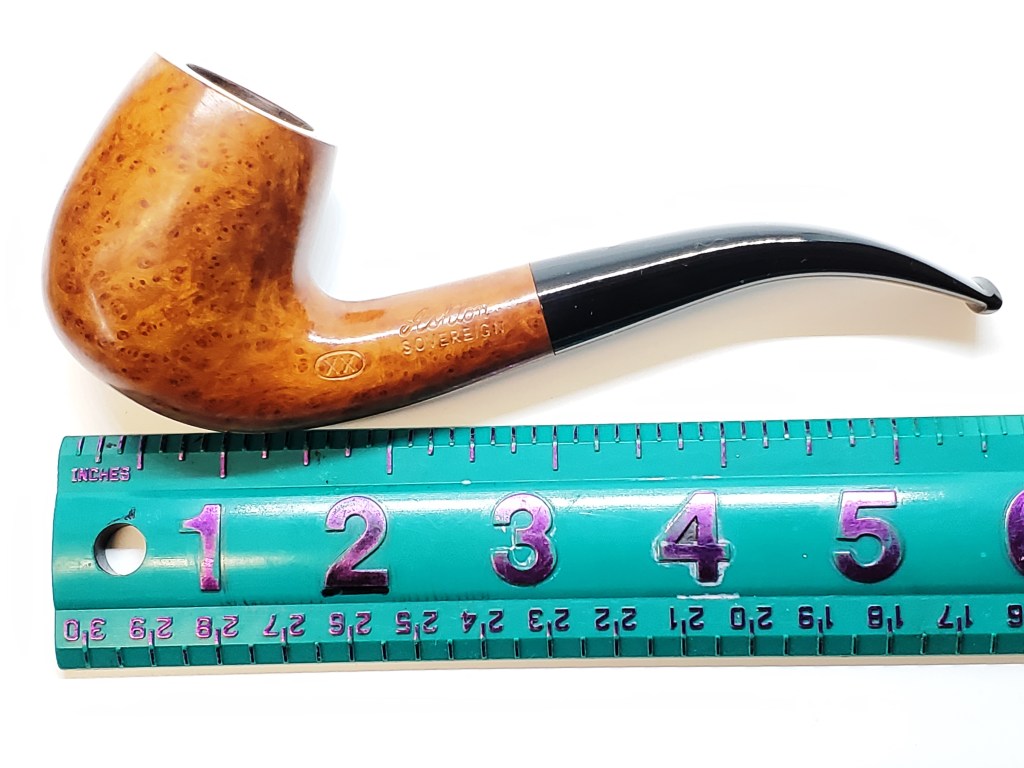
I’m not adding many pipes to my personal collection these days, but British made, small bent billiards always catch my attention. I love Taylor era Ashtons, particularly in the XX size (43 grams!) The Sovereign grade/finish is also a favorite. This one also had a somewhat rare tapered stem that I prefer. The has the date code stamp of 12 shows the pipe was made in 1992 (1980 + 12). Also as a bonus, the pipe is drilled perfectly and easily passes a cleaner (not always a given for Taylor era Ashtons).

The finish was faded, but nomenclature sharp. The top had some very heavy build-up, that I hoped was not scorching. The stem was lightly oxidized, with no teeth indentions. Unpacking the pipe, the restoration appeared promising. Below is the pipe as it was received.

I removed the build-up on the bowl top with a piece of Scotch-Brite and water. Gratefully, once removed,there was no damage other than a faded stain. I used White Diamond to freshen the finish followed by several coats of Carnuba wax.

I removed the very slight cake with my PIpenet reamer set,and soaked the bowl with sea salt and alcohol. Following the soak, the stem was mounted and oxidation removed with White Diamond and Meguiars Plastic Polish.

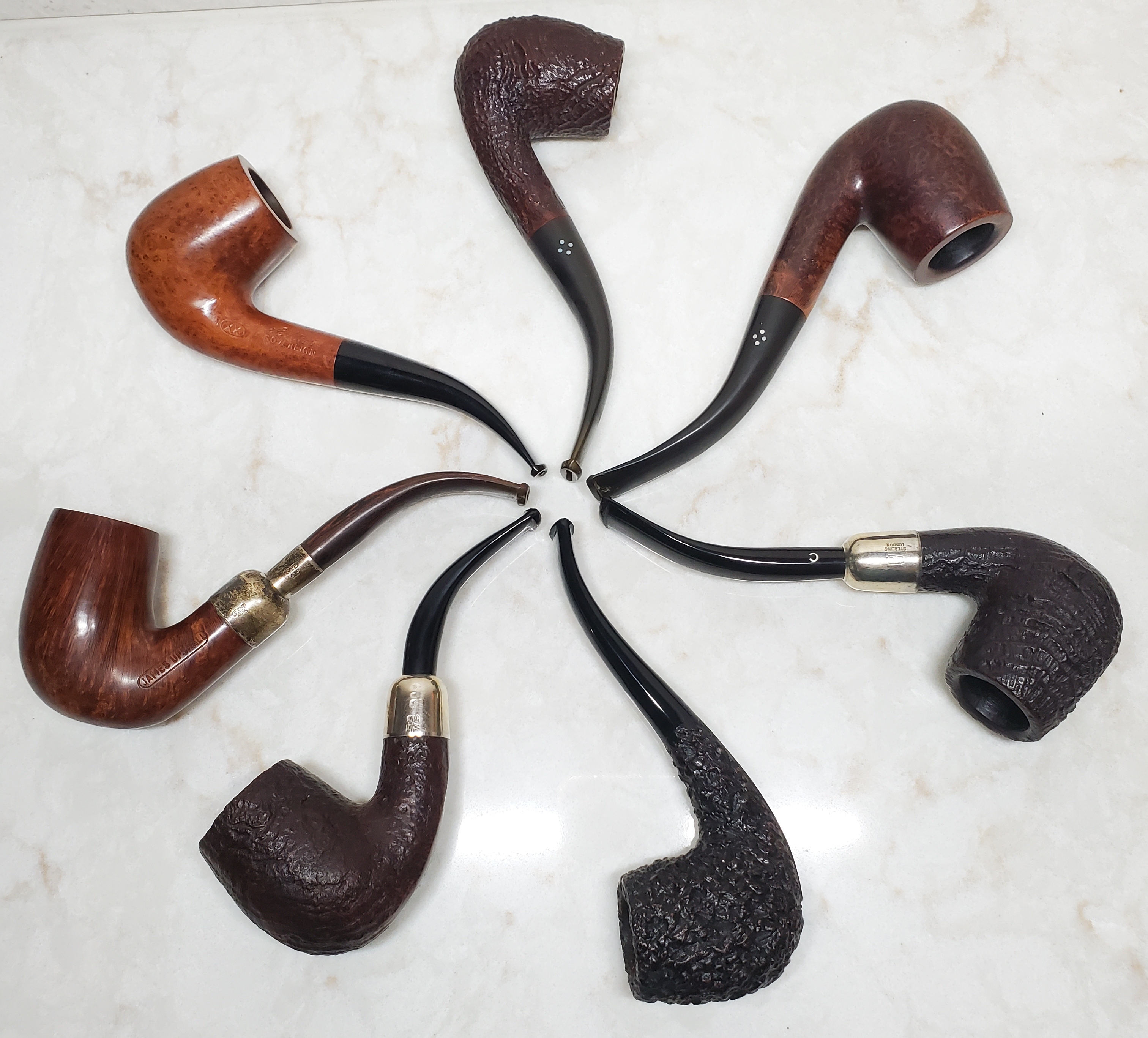
Below is the finished pipe that I am very pleased to add to my collection. I also include a picture of my small Bent Billiards that are in my collection.
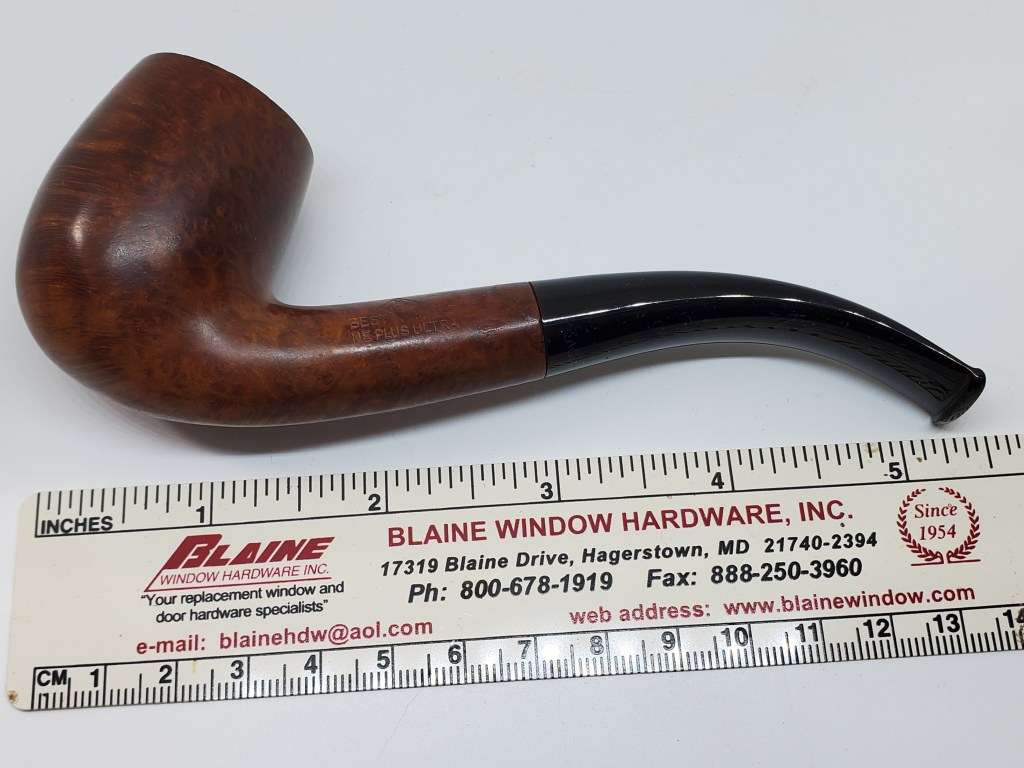
My small Bent Billiard collection, clockwise from 12 o’clock:

Sasieni Regent Ruff Root

Sasieni Regent Walnut

Comoy’s Deluxe Shape 70

Castello Sea Rock KK

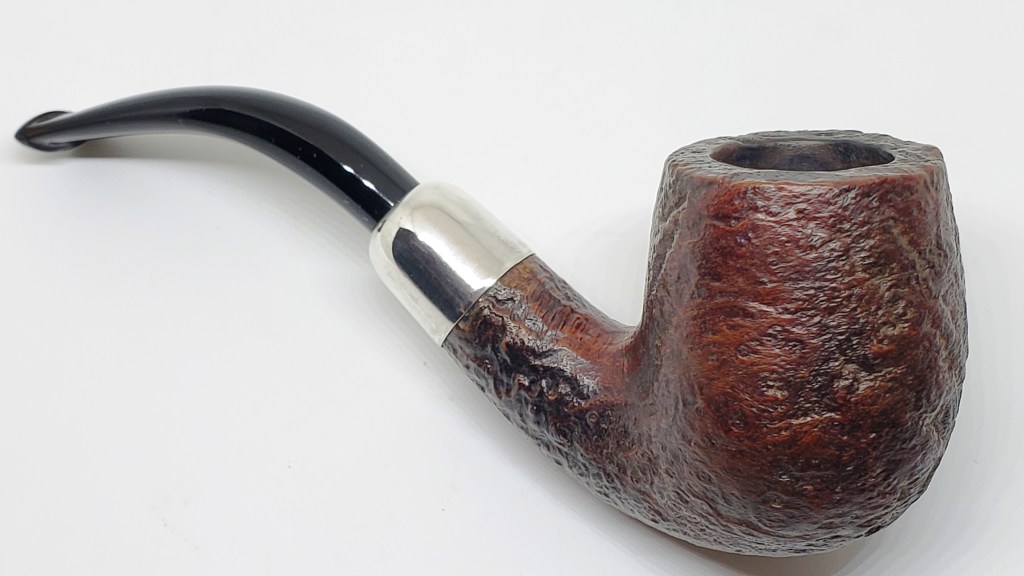
Barlings Sandblast (1965)

James Upshall B Grade Silver Spigot

Ashton Sovereign XX

New Pipe Storage Solution


By Al Jones

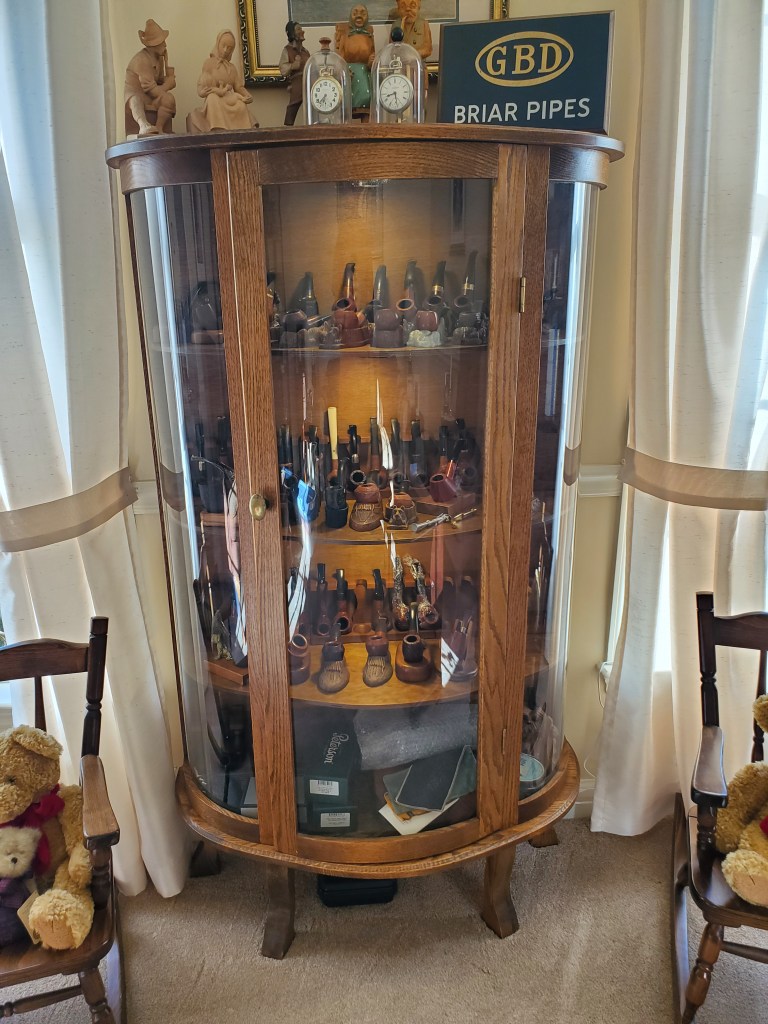
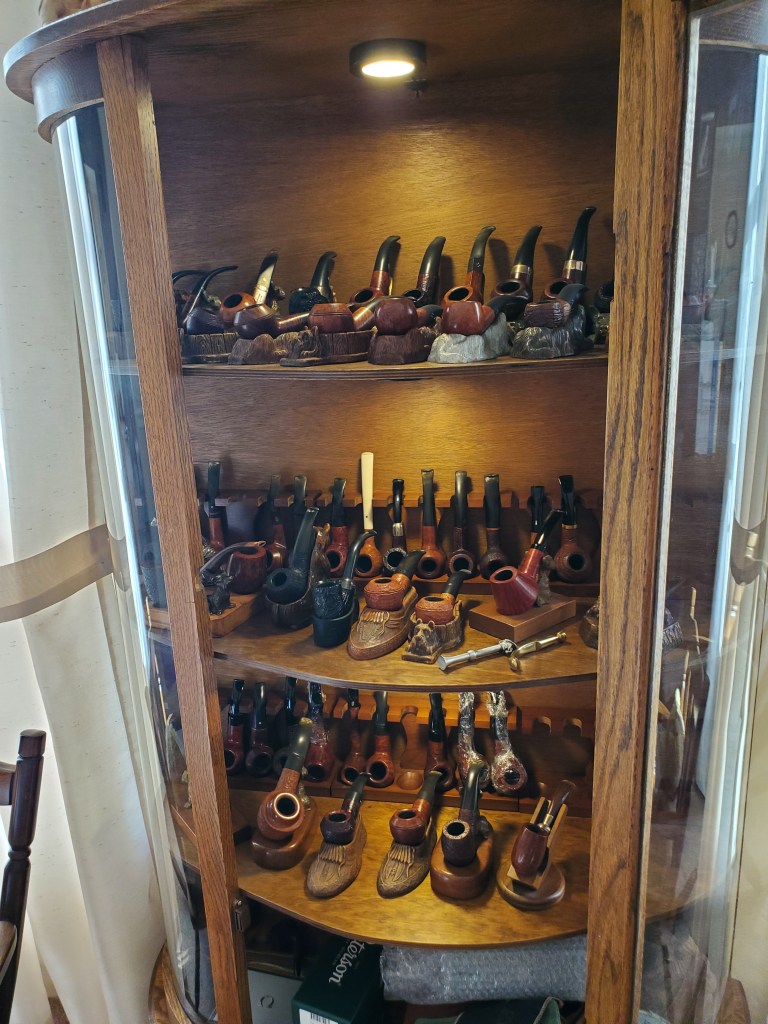
For the past 10 years, my ever-expanding pipe collection has been stored and displayed in a old, oak bow-front cabinet. My wife indulges mea and this sits in our formal living room. The oak cabinet has been a wonderful solution. Guest to our home are always drawn to it and it allows me to talk about my collection and hobby. Neighbors and relatives usually stop by to see what is new in my collection. I added several puck style LED lights and I’ll often turn on the light and admire the collection, before going upstairs to bed at night.

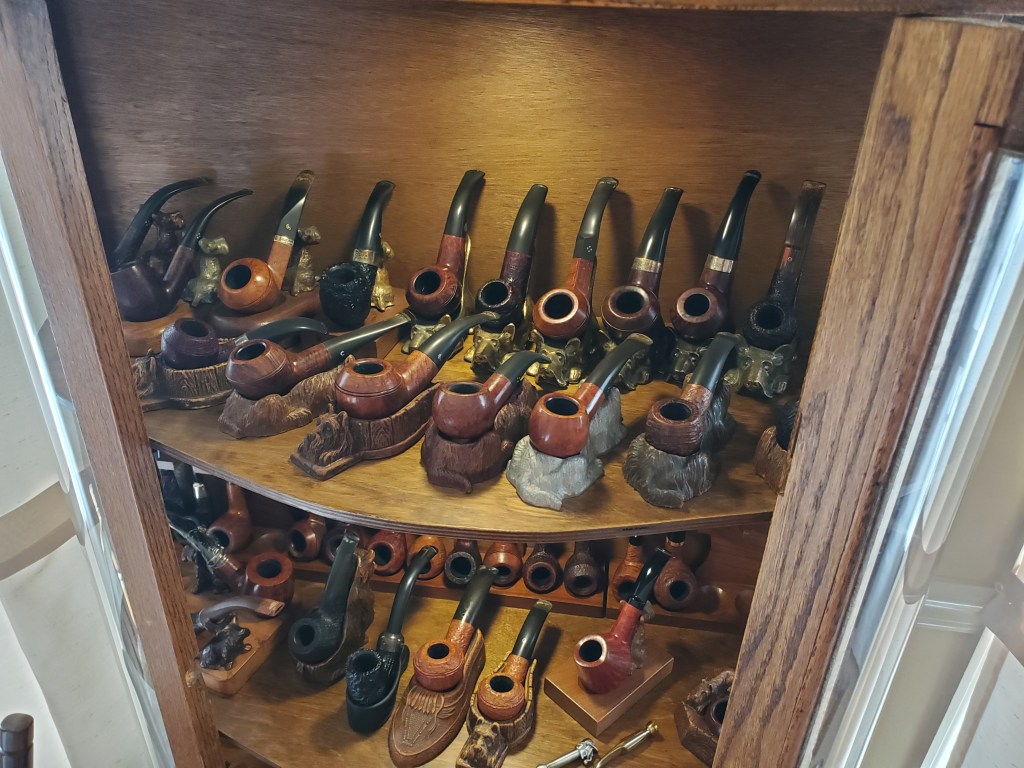
Over a period of several years, I found a number of “Fairfax” six-pipes stands and one 12-pipe stand that fit perfectly on the back of each shelf. Those were modified from top “O” holes to u-shape stem holders, to better suit my mostly bent, larger pipes. We had two beloved Westie’s in our family, and I slowly acquired a large group of “Scottie” style pipe stands for my most cherished pipes (on the top two shelves). At point, this cabinet held close to 100 pipes. As we get ready to transition to a smaller retirement home, I’ve slowly been selling some pipes and I’m now down to around 60, which is still a bit too many. I knew moving the oak bow front cabinet was not going to be wise.
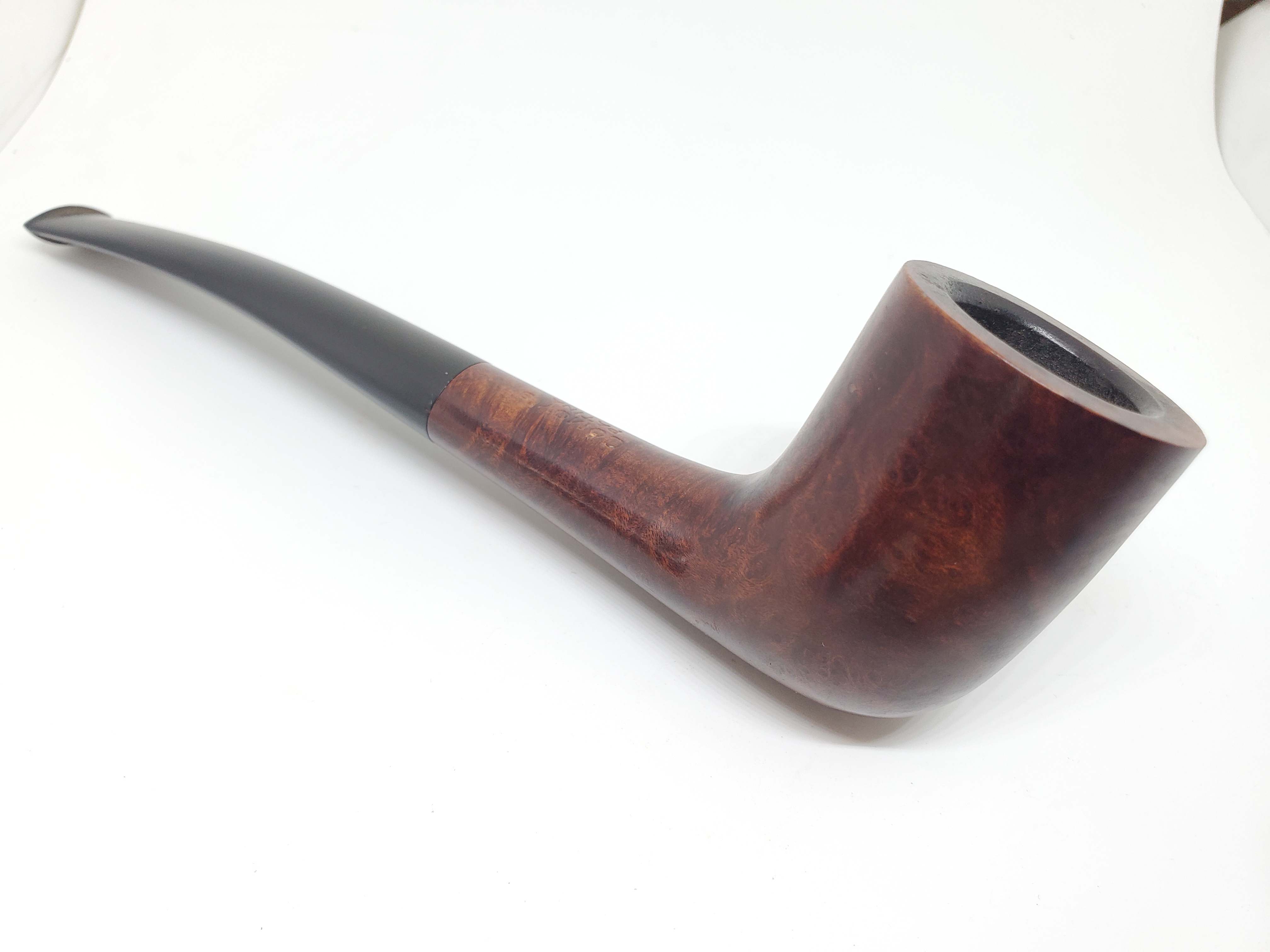
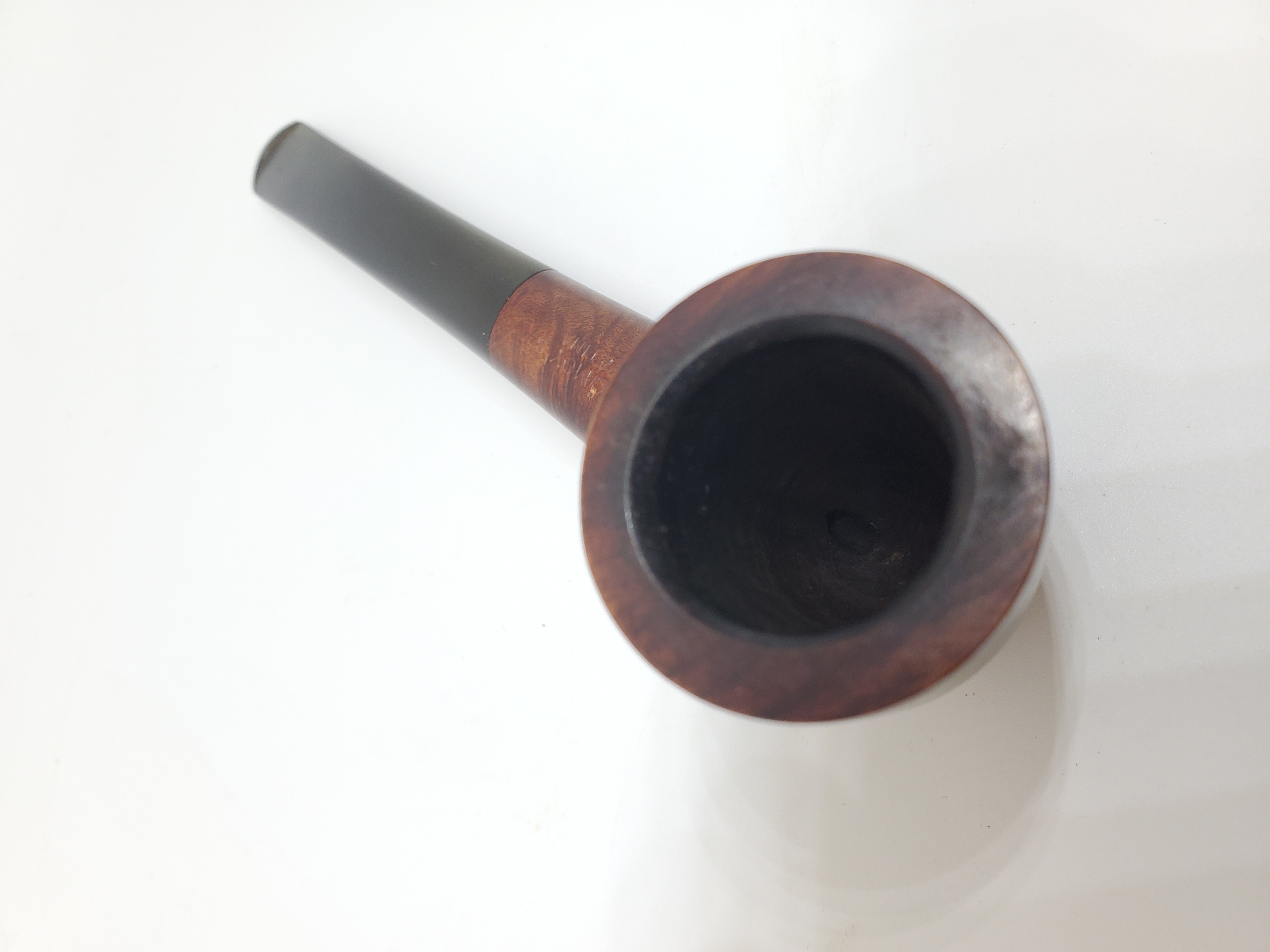
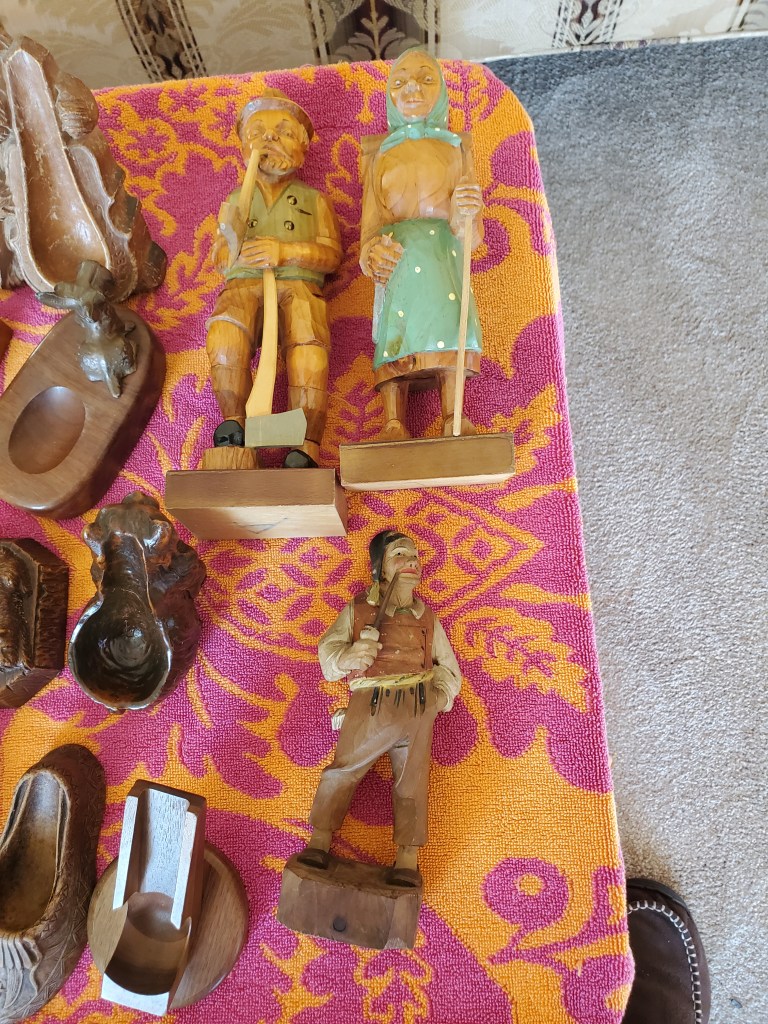
Below is the oak cabinet. The wood carvings on the top were purchased by my father, from Oberammergau, Germany, which is home to many wood carvers.

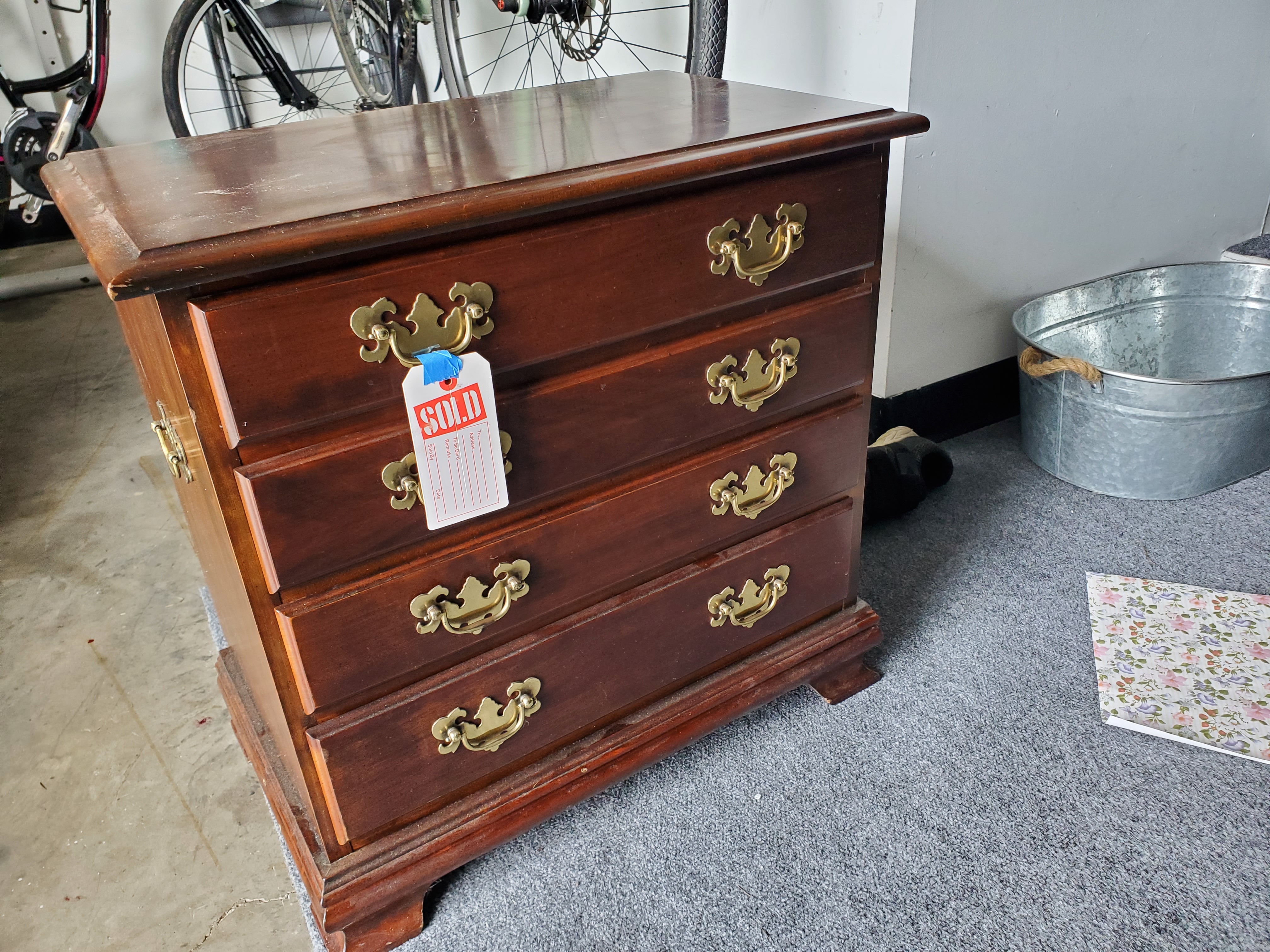
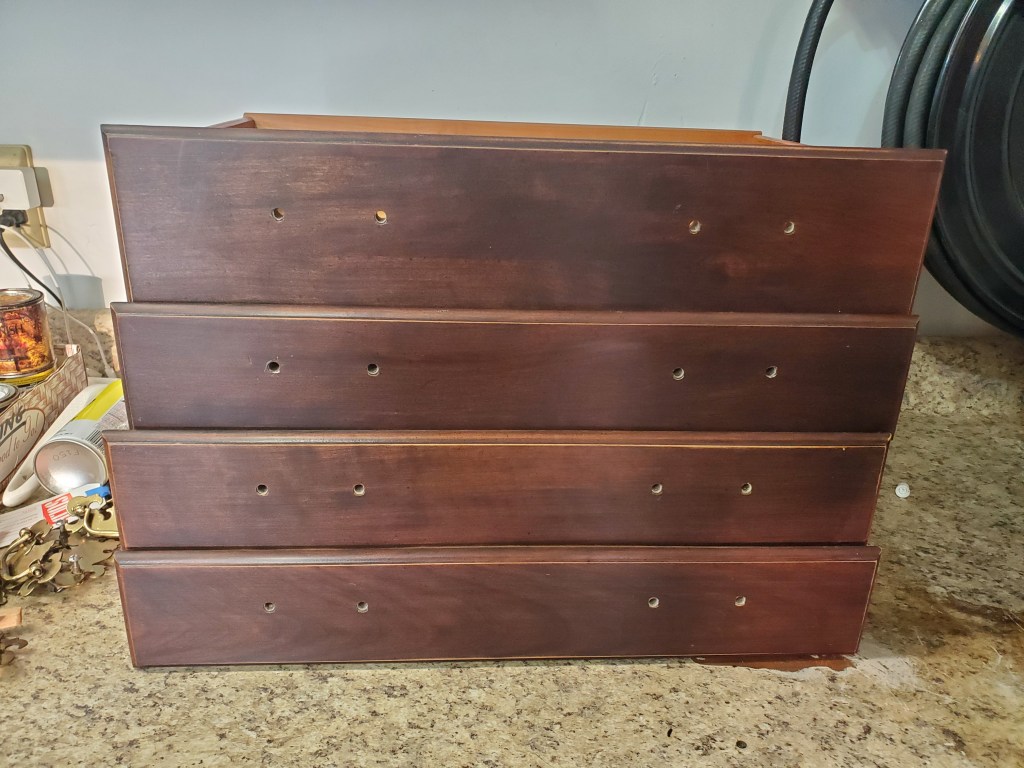
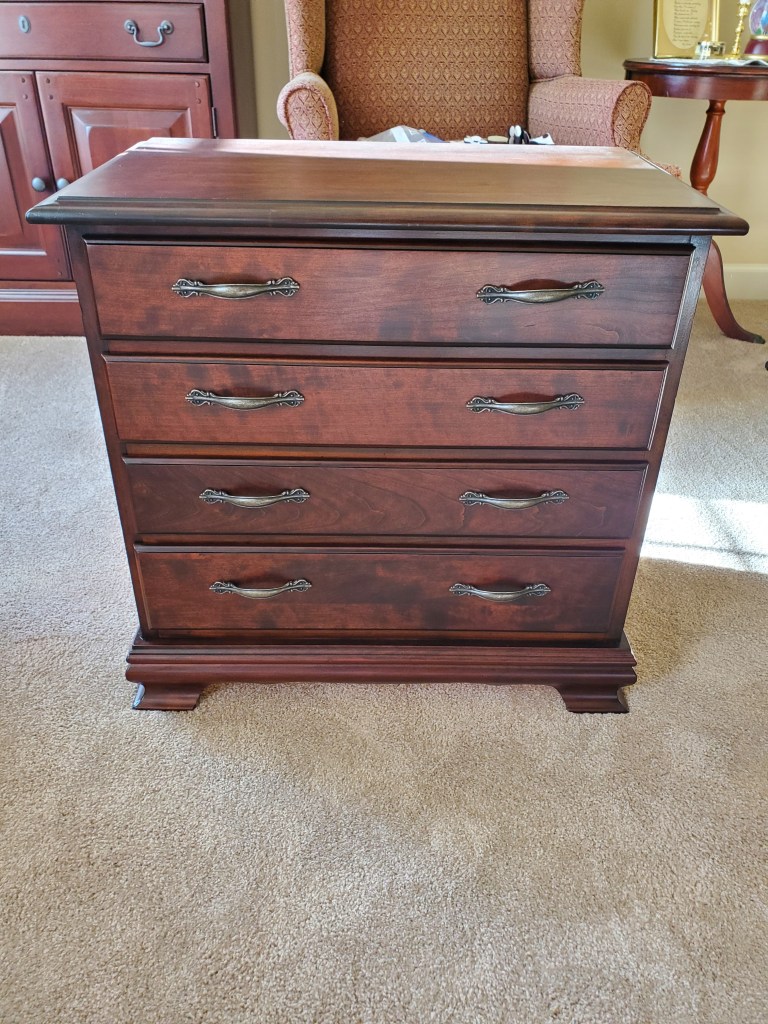
Scanning thru classified listings on Facebook Marketplace, I determined that a “Bachelors Chest” would best suit my needs. I found this one at a local antique store. It has four drawers of the right height and the footprint was idea. It had some scratches on top, but I knew it would refinish nicely. Below is the cabinet as found.

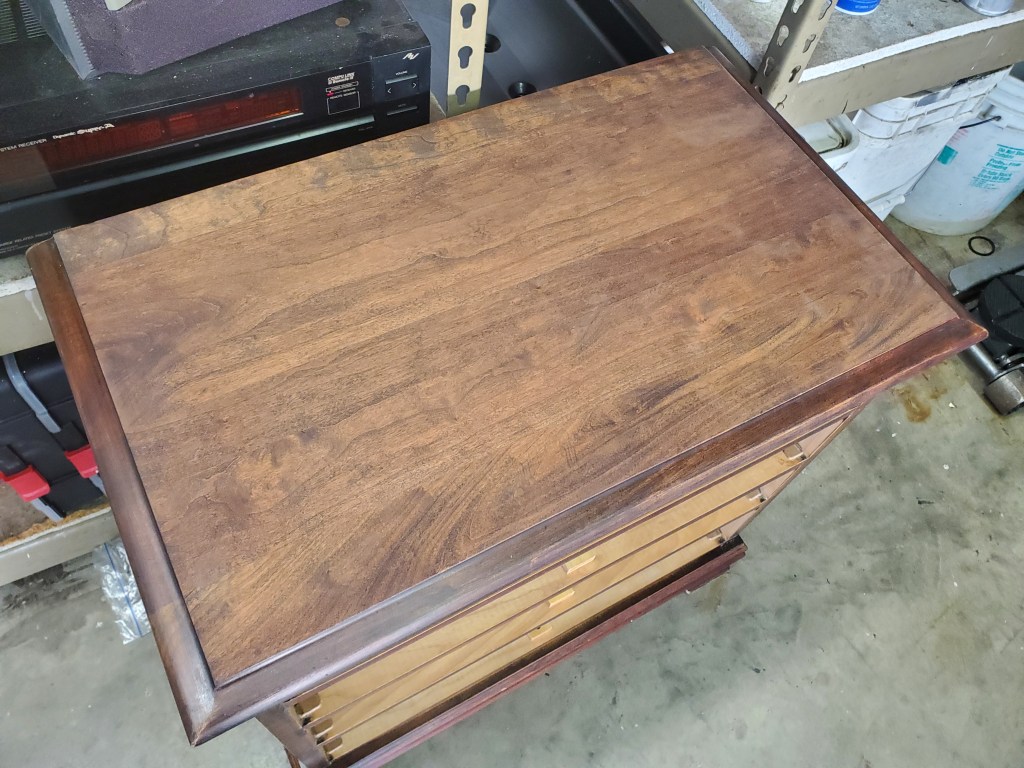
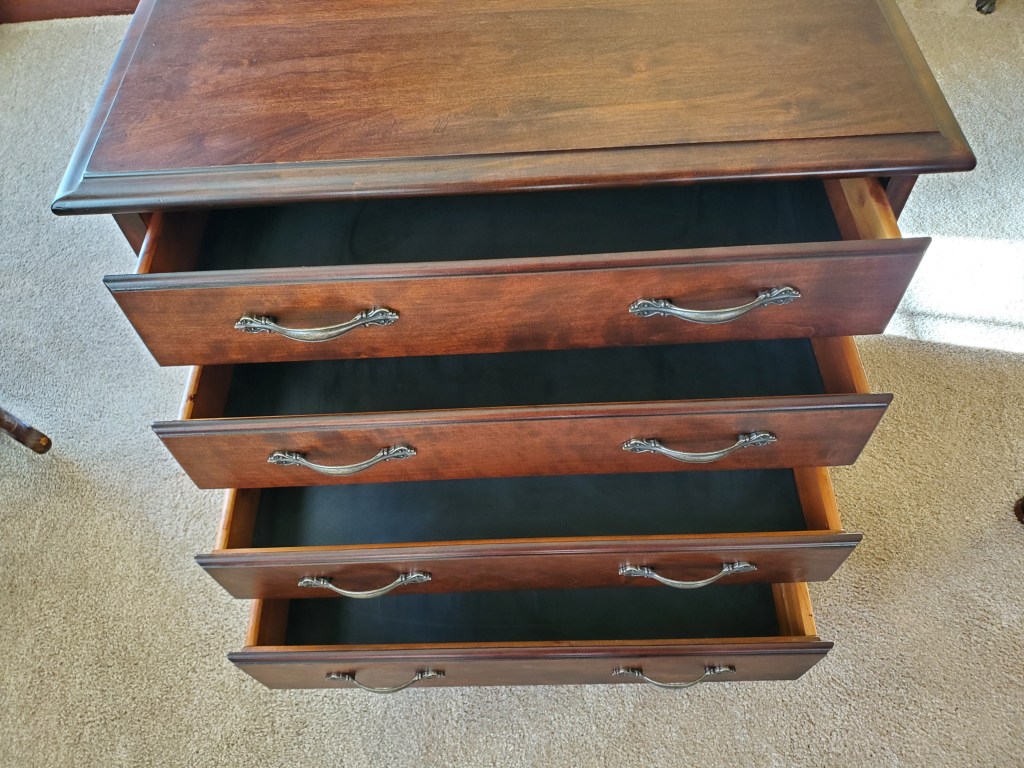
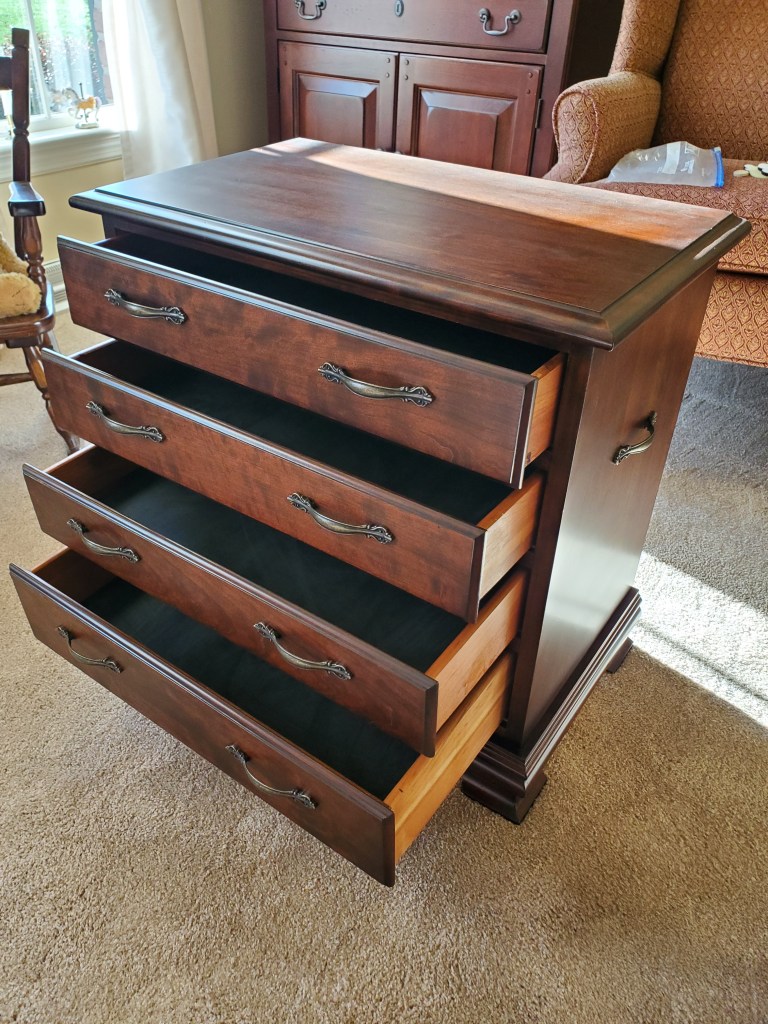
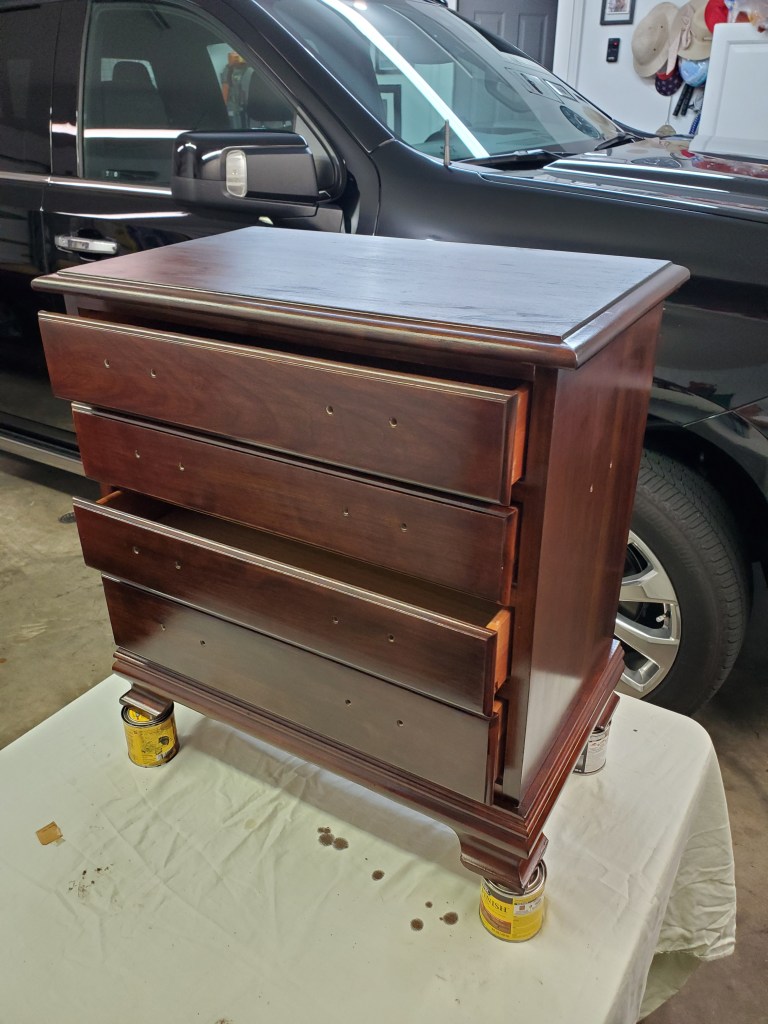
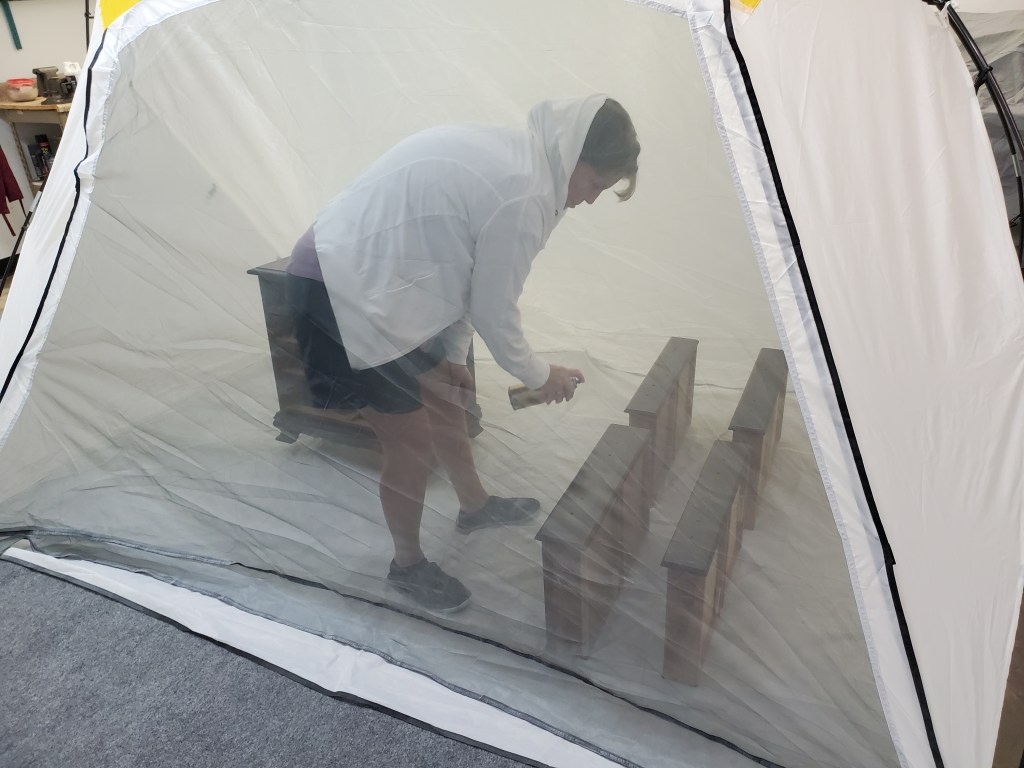
I stripped the top, sides and drawer fronts. A red mahogany stain was chosen that matched up well with the factory finish. I did want it to have a darker stain color. After several applications of stain, a satin finish polyurethane finish was sprayed on. Below are pictures of the stripped pieces and then re-stained. We have a tent to spray on the finish. My wife has the right touch for the spray on poly, so she had that task.

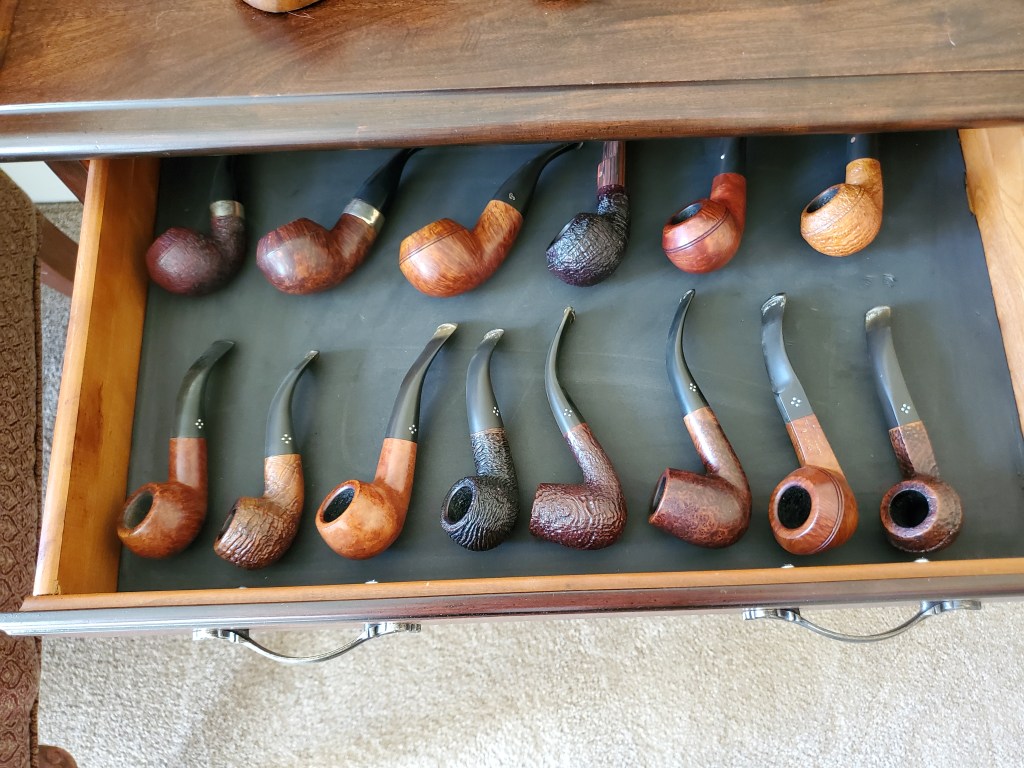
I didn’t want to reuse the old fashioned looking hardware, and I found a set of less busy, antique bronze replacements on eBay. On Amazon, I found a roll of 1/8″ thick foam padding with a sticky back that was used in each drawer, to keep the pipes in place and provide a cushion surface for the them.

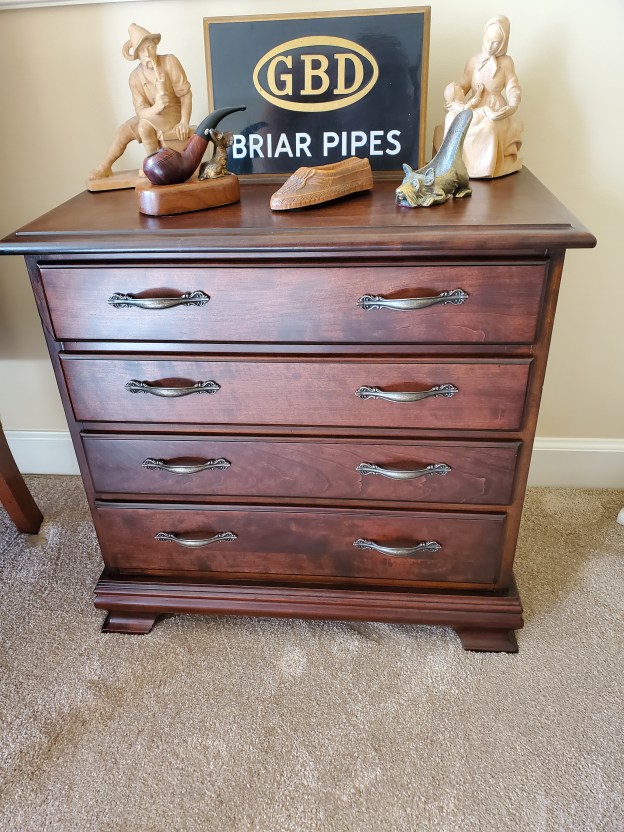
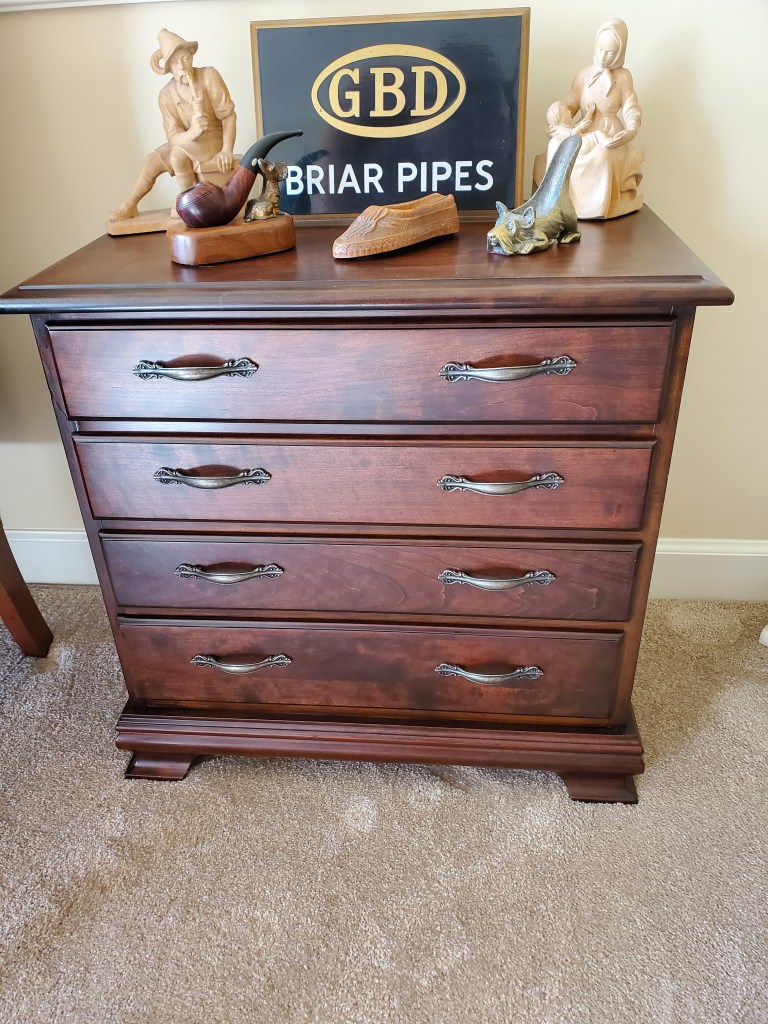
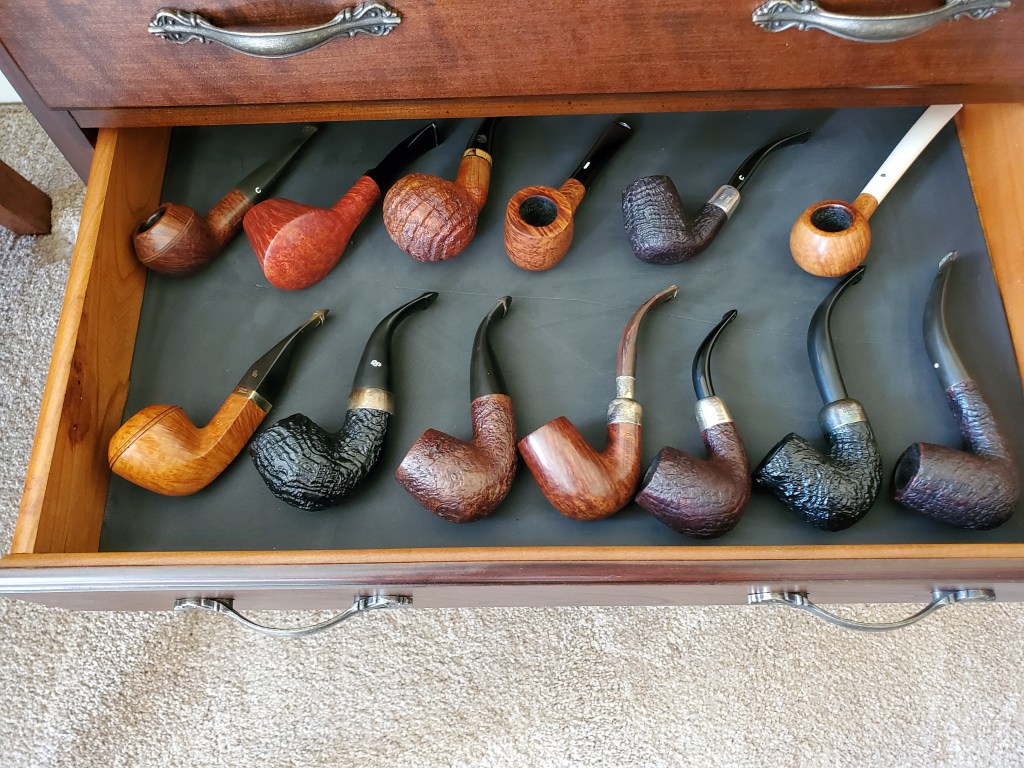
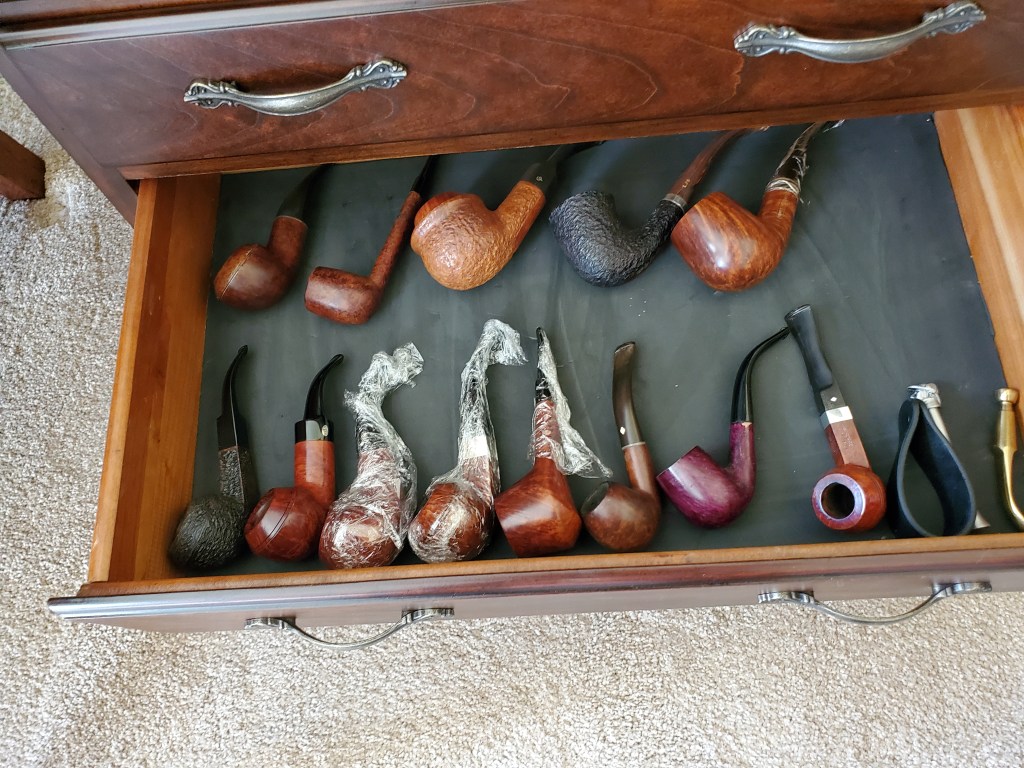
Here is the finished cabinet, with my pipes and decorative items moved over. It easily holds my collection, with a little room to grow for the inevitable “must have”. I’m that moving forward, this cabinet will serve me well.

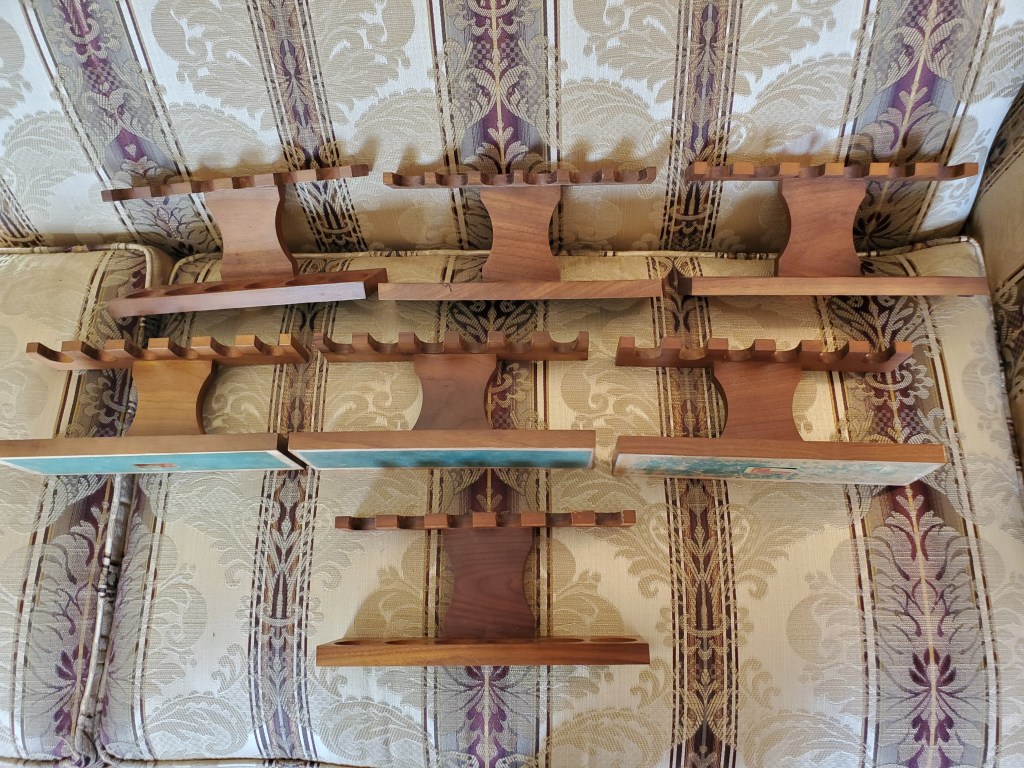
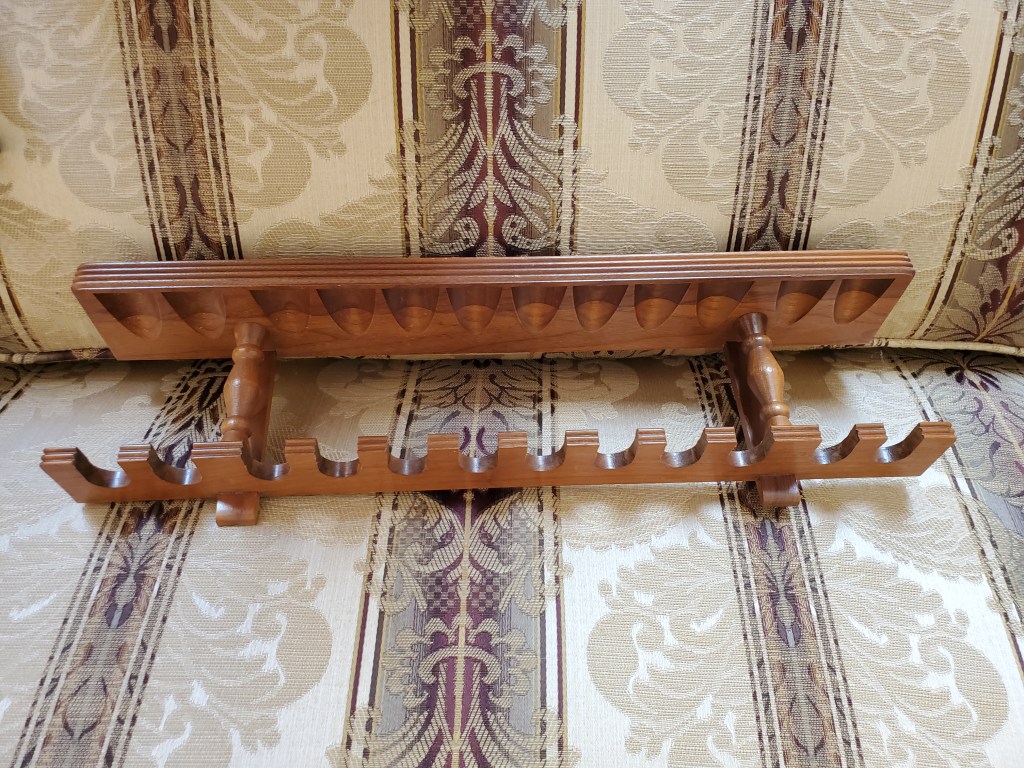
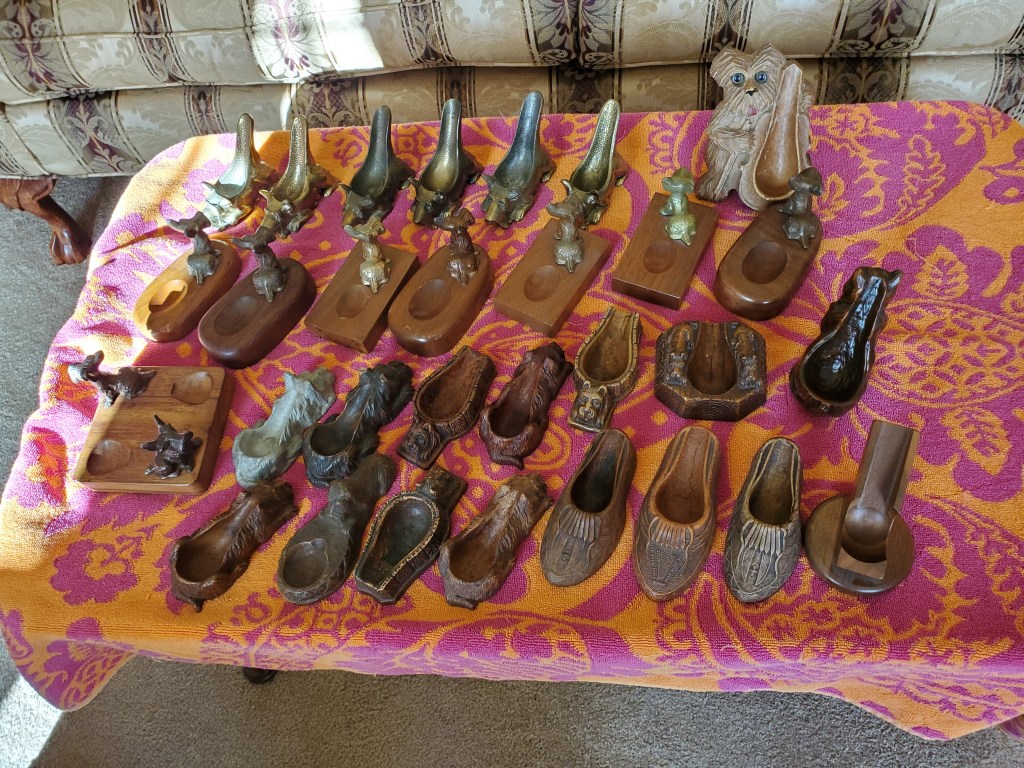
Below are the racks and stands that I have collected. I’ll eventually sell them on the PipesMagazine classifieds forum. I have the oak-bow front cabinet for sale locally, thru Facebook Marketplace. The wood stands are mostly Duck-it and I also have brass and Syroco stands.

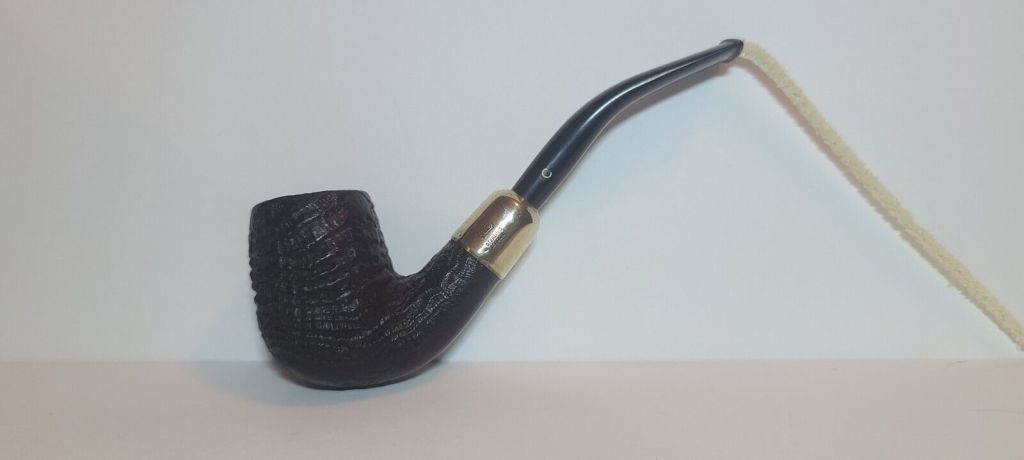
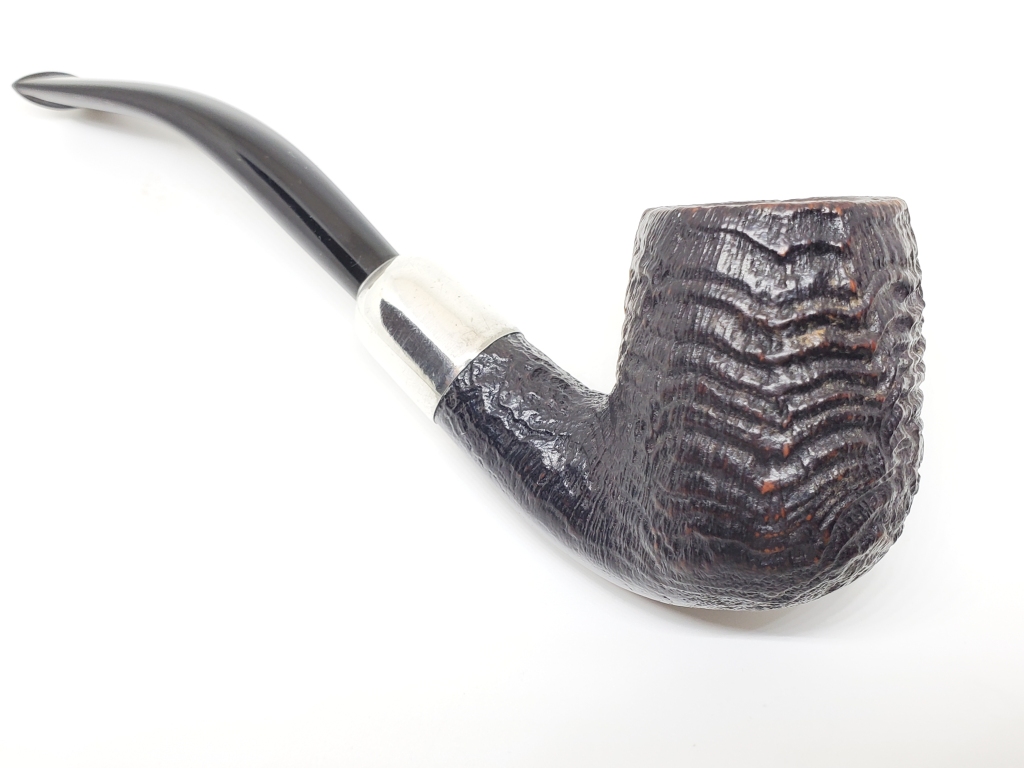
Comoy’s Shape 70 Deluxe Tune-Up

By Al Jones

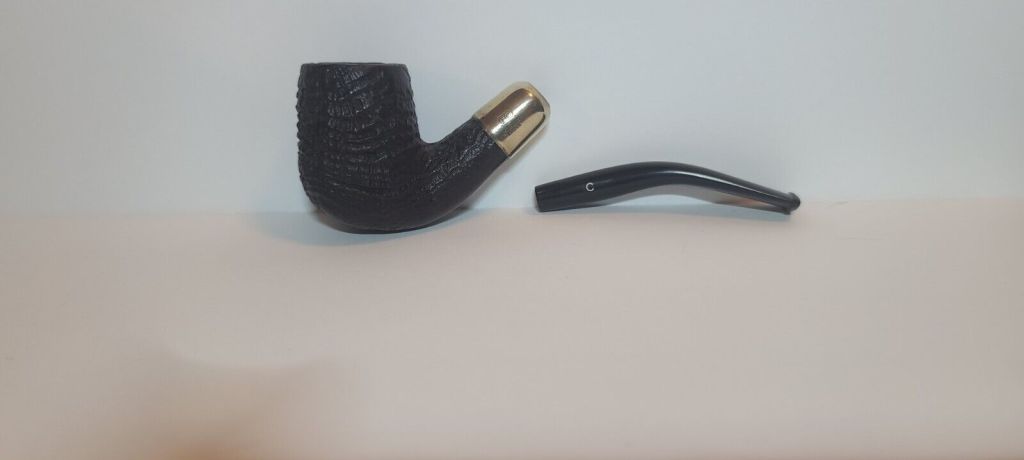
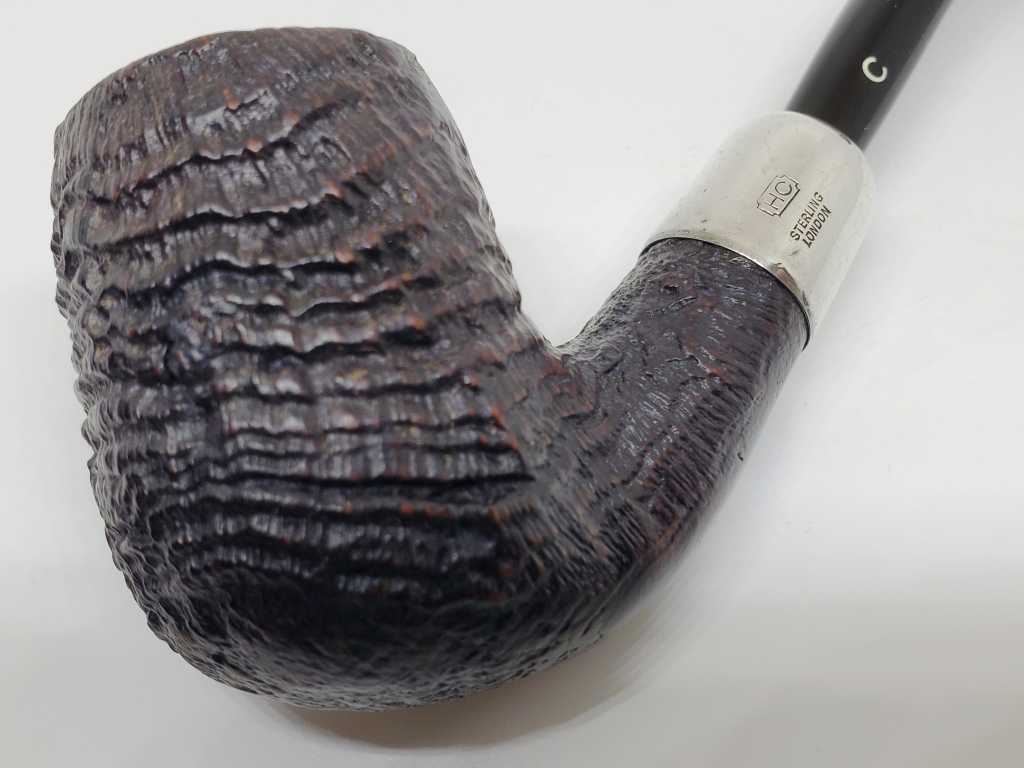
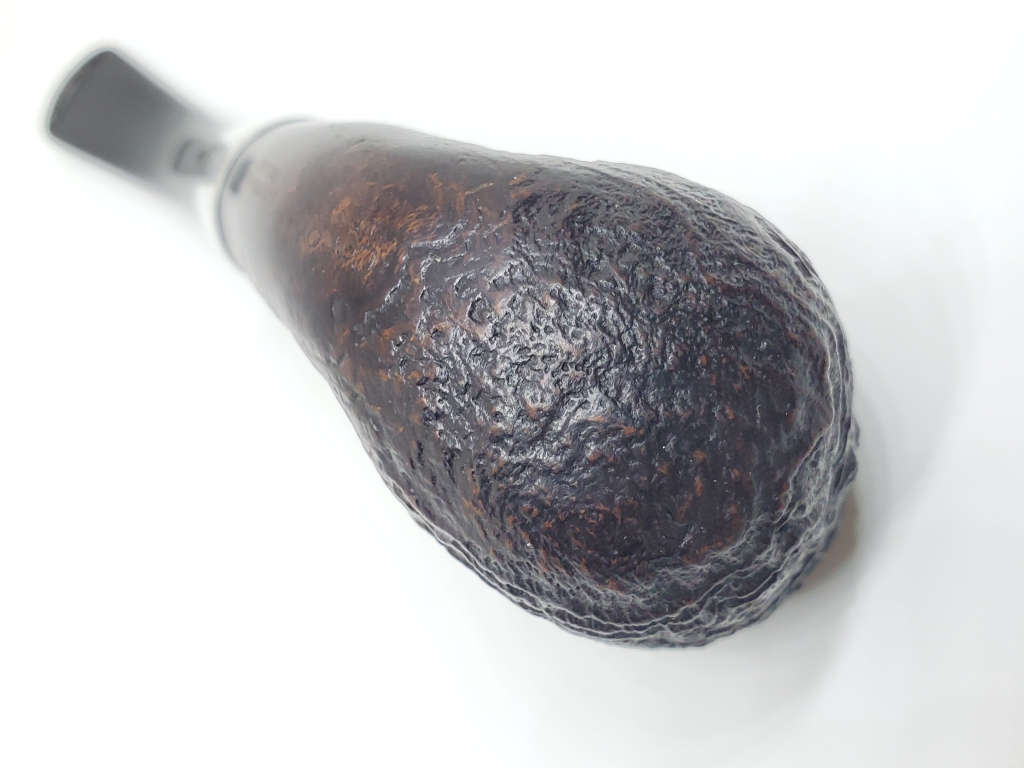
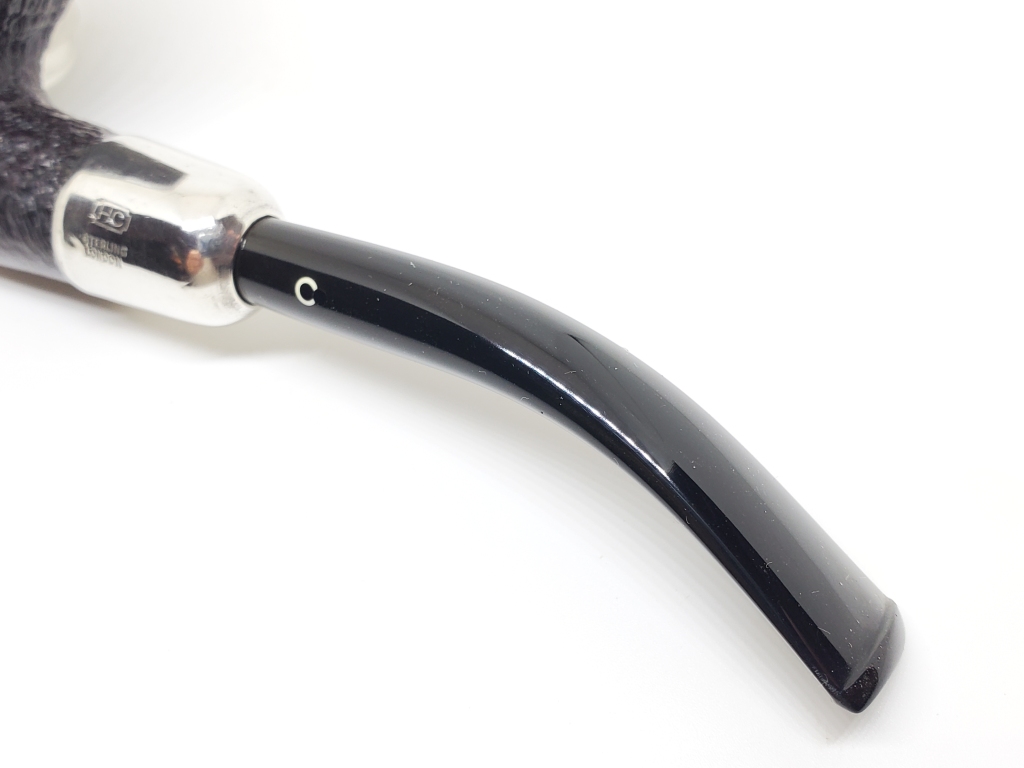
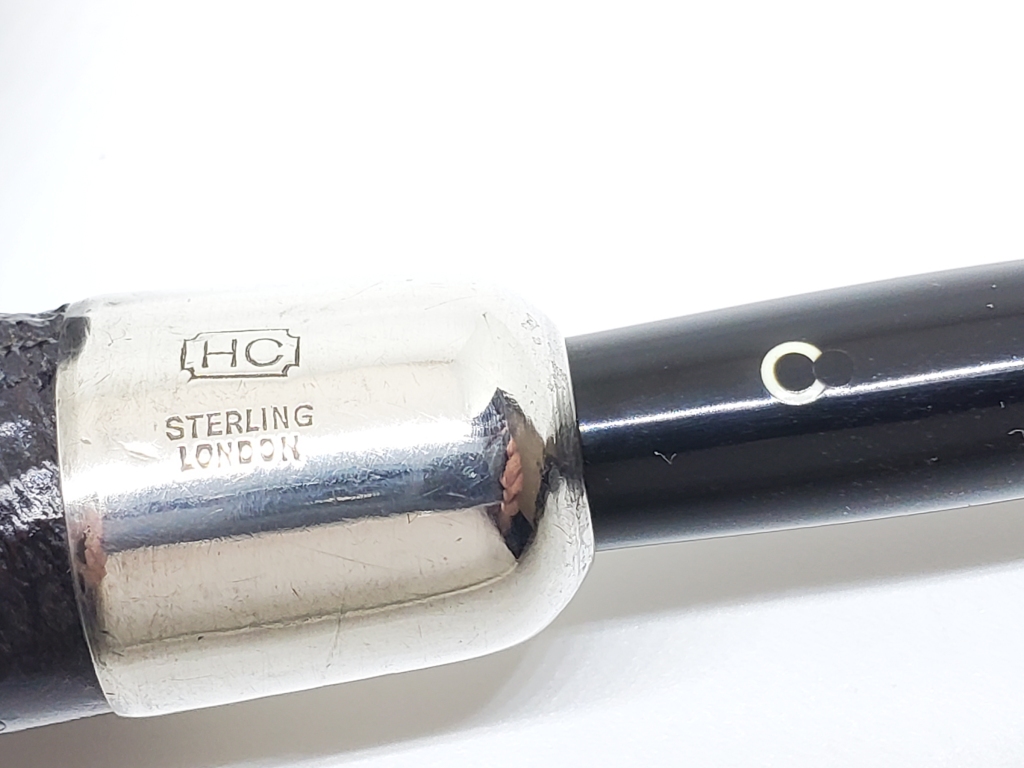
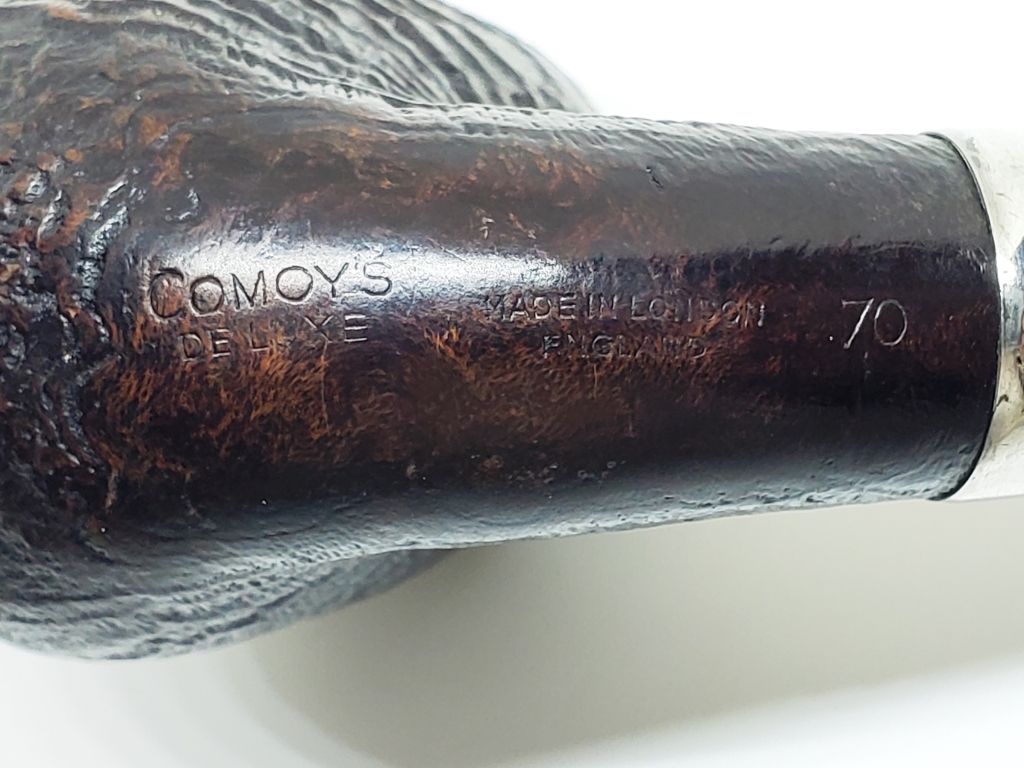
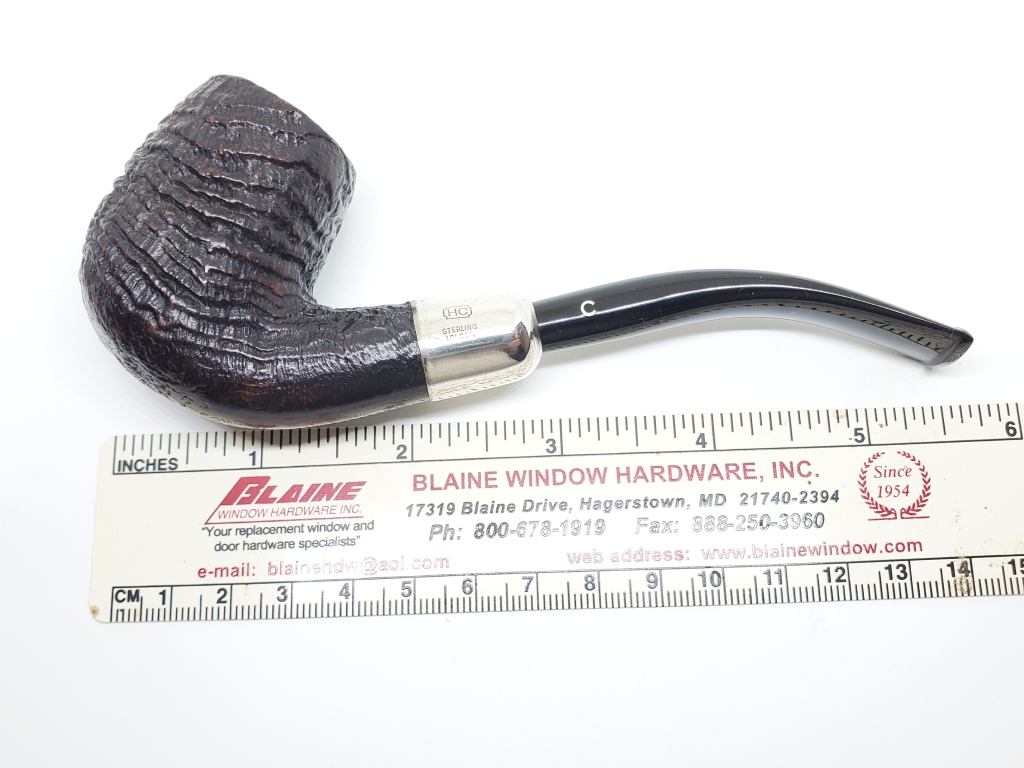
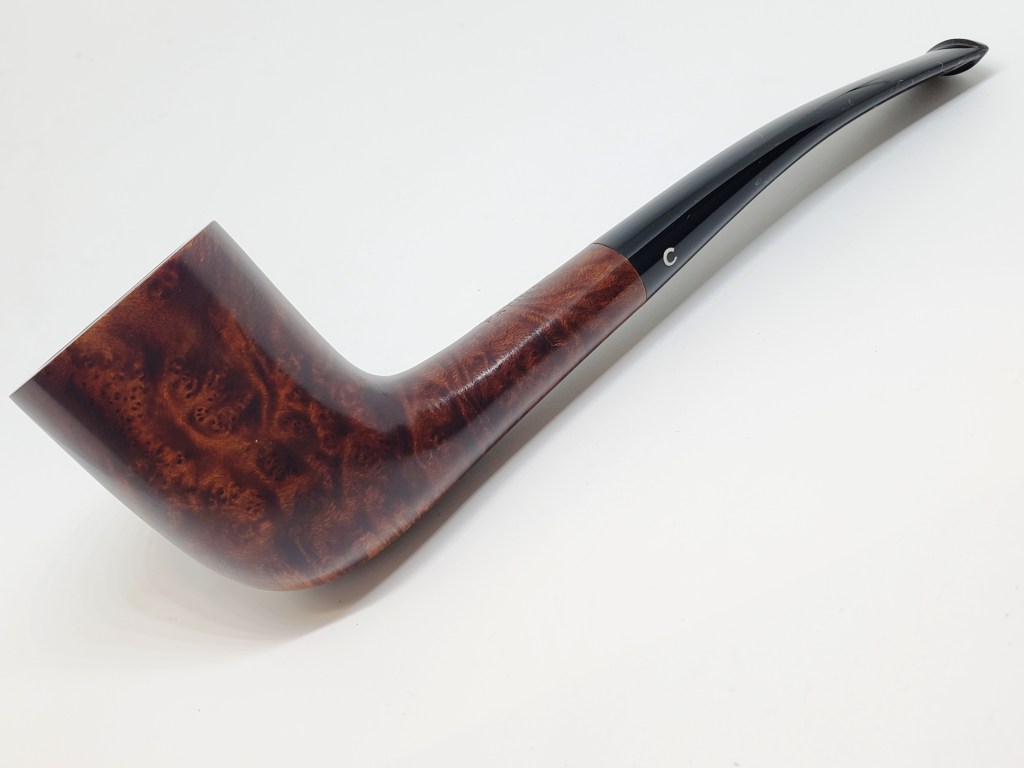
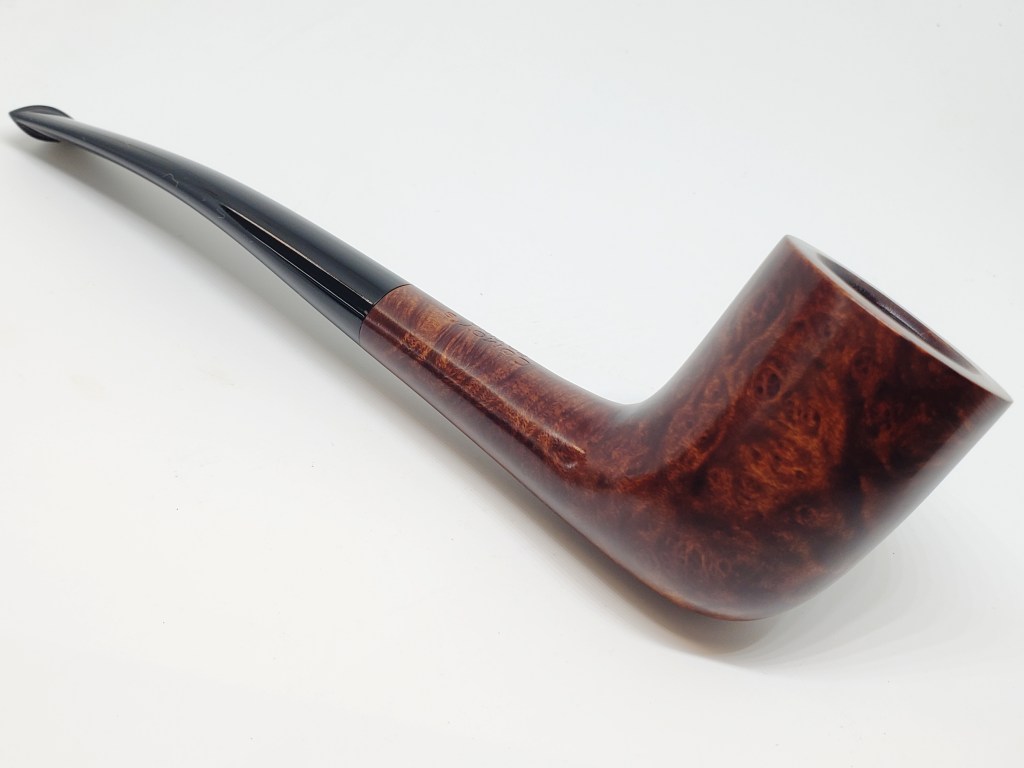
This Comoy’s Deluxe bent billiard showed on up on Ebay and caught my eye. I really enjoy small, bent billiards and this one seemed to fit the bill, although I had never seen a Shape 70 Before. The Deluxe line is particularly appealing, featuring a Sterling silver cap and military stem. The caps are never hallmarked, so I assume destined only for US sales. Unbeknownst to me, this seller was part of the GBD Collectors Facebook page, and only after he accepted my offer, did we make the connection. He had already restored the pipe, which is why I titled this entry a “tune-up”.

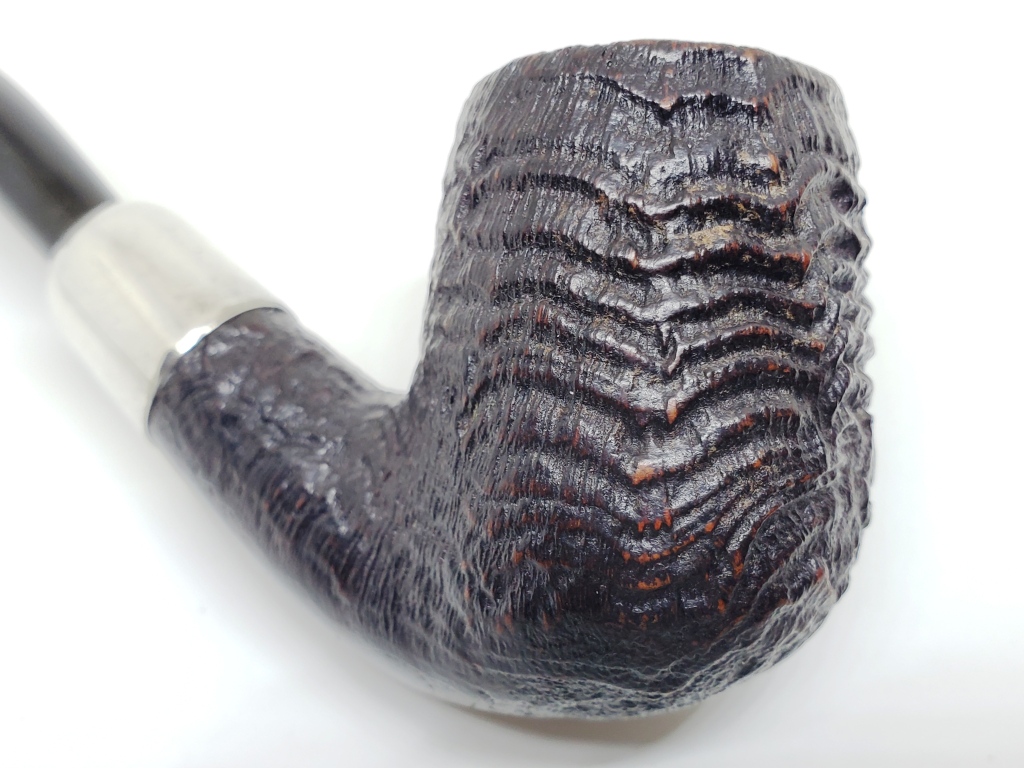
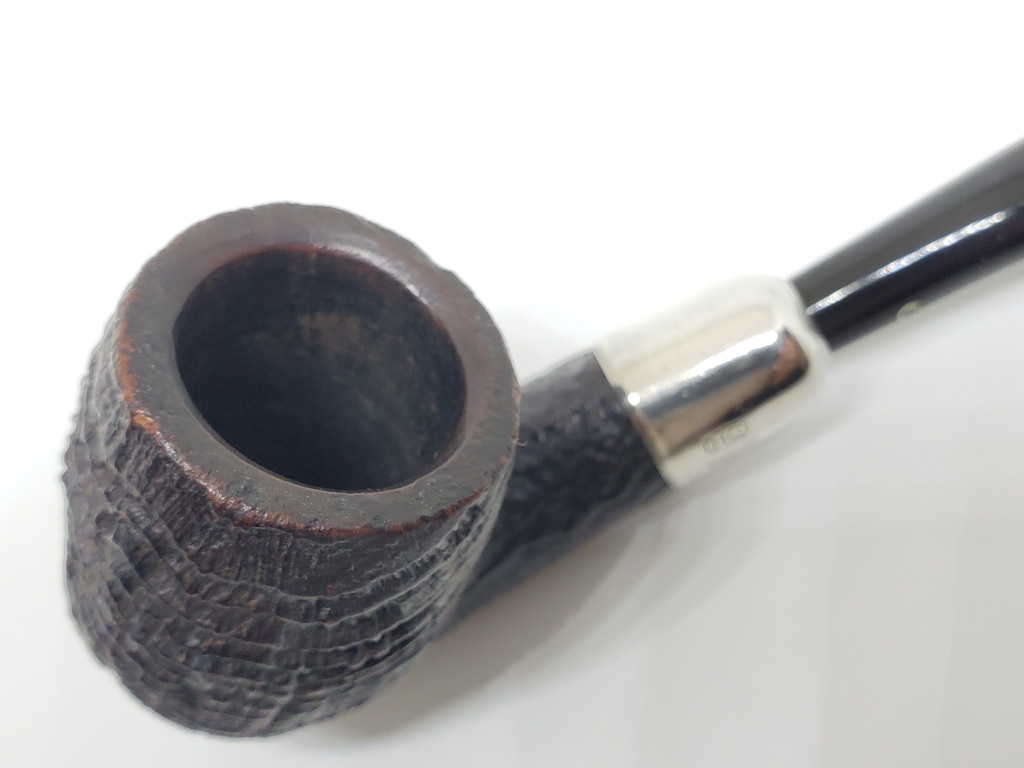
Below is the pipe as shown on Ebay. The stem looked like it had an odd kink that I knew was an easy fix. The pipe was in ready to smoke condition. I always like to put my own final prep to stems. My GBD friend had really done a nice job with this pipe, including packing it (Ebay seller Donal-Col) and I had a big smile on my face unpacking it. The sandblast shows some very nice grain, a bit unusual for a Comoy’s Sandblast of that era, which are typically not noteworthy.
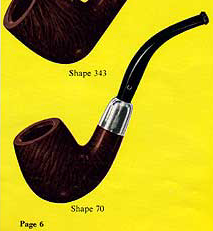
I’ve restored over one hundred Comoy’s pipes in the past decade, but never encountered this Shape 70. Indeed, I found almost no examples via Google, save a 2nd line example sold by Smoking Pipes. From that photo and a 1964 catalog page, I saw the stem needed a more graceful half-bend. The pipe was quite small, at 35 grams (much like the Sasieni Regent shape). Below is the catalog page from 1964 that shows a nice example of the bend in the stem.
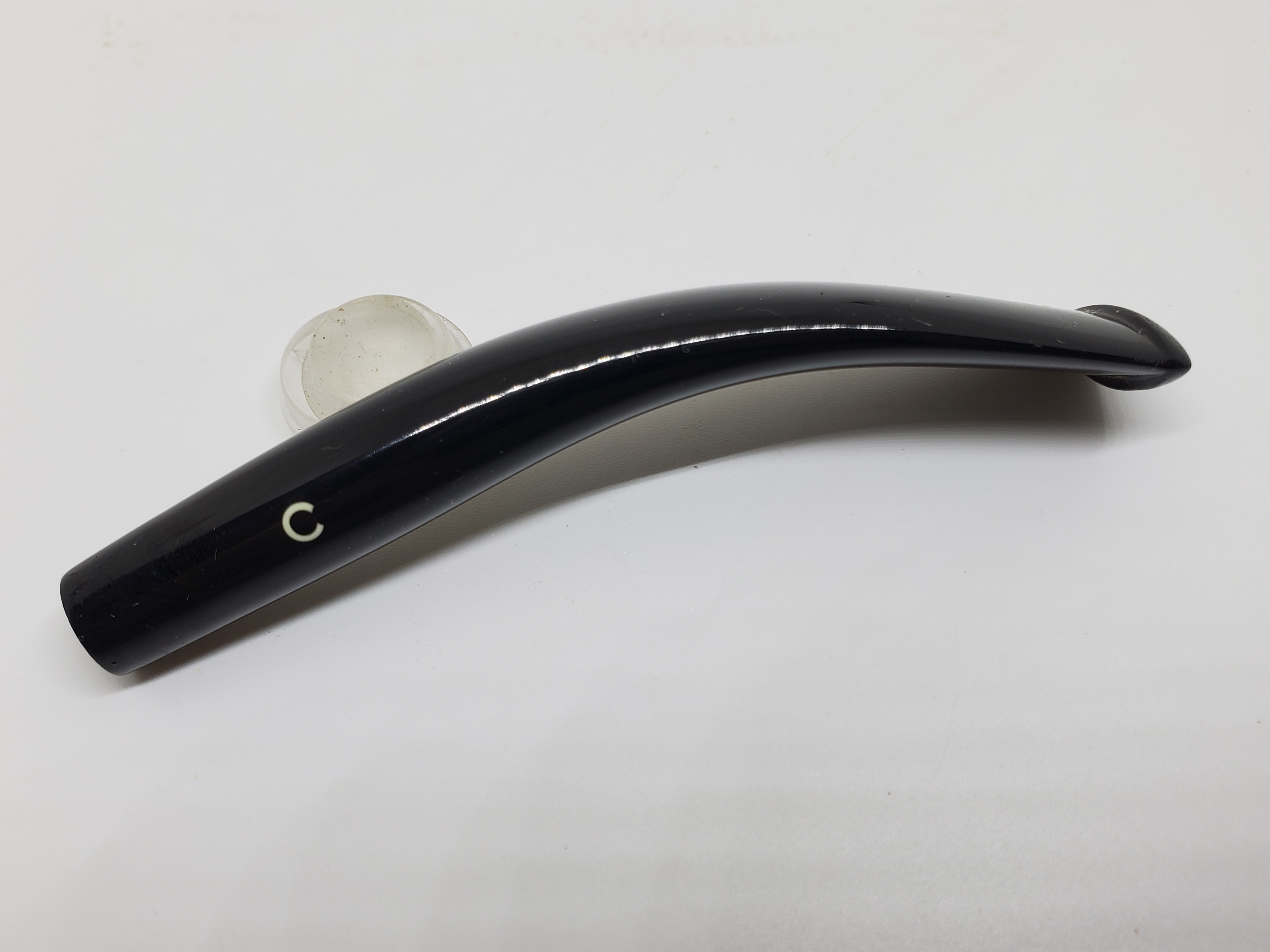
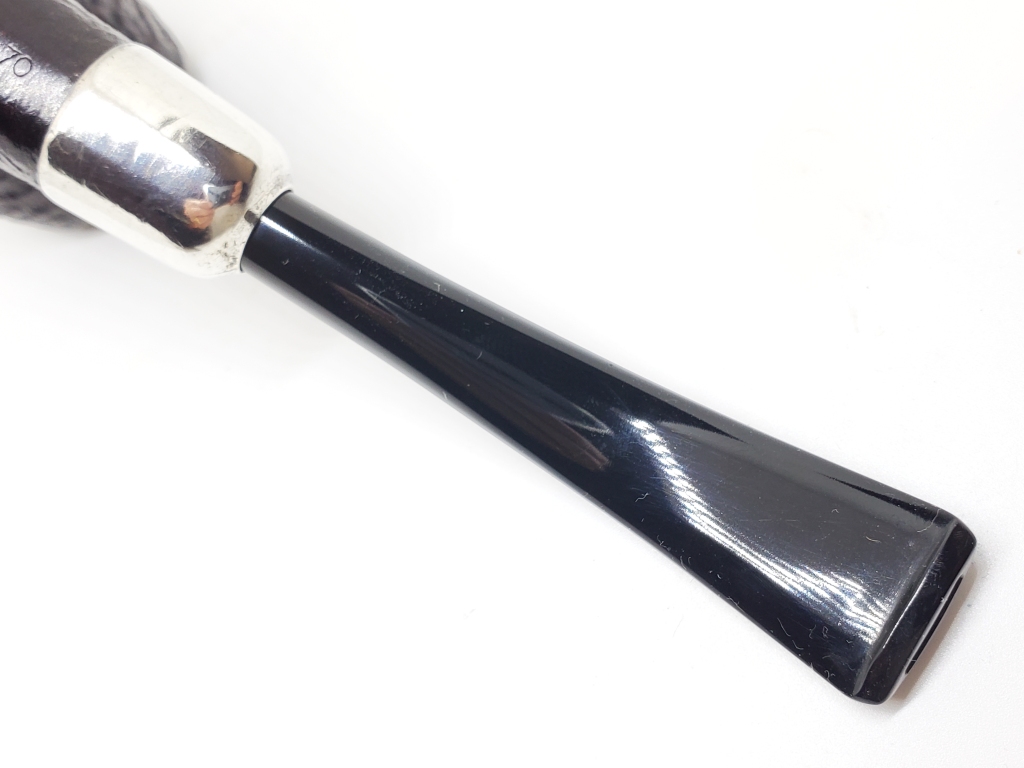
I removed the stem, inserted a greased cleaner (the pipe easily passes a cleaner!). I heated the stem on both sides with my Hobby-Lobby heat gun. I had a tub of cold water ready, to set the bend. I use a large restaurant weight to get the correct bend. I also used the heat gun to lift some of the small dents. I polished it to a higher sheen with 800, 1500, 2000 grit paper, then buffed it with White Diamond and Meguiars Plastic Polish. Below is the finished stem.
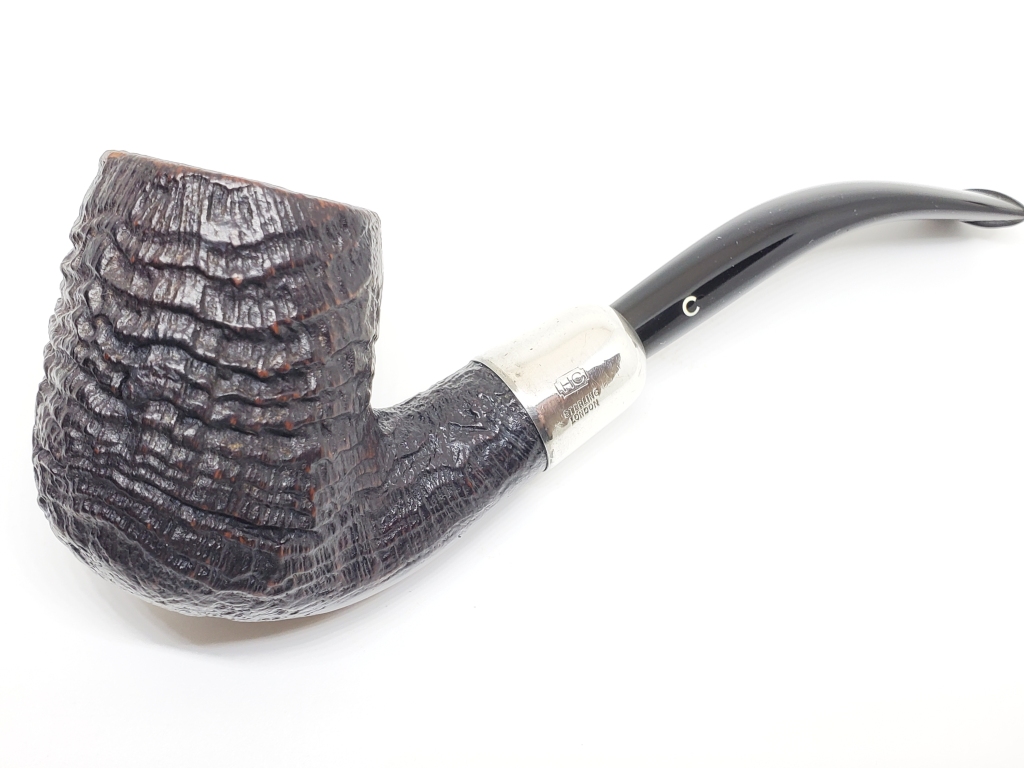
That was it, the pipe was ready to enjoy! Below is the finished pipe. I am enjoying it as I write this article. No ghosting, so again, the seller did a great job. The shape and size are perfect!

A Special Peterson “Sports” Restoration


By Al Jones

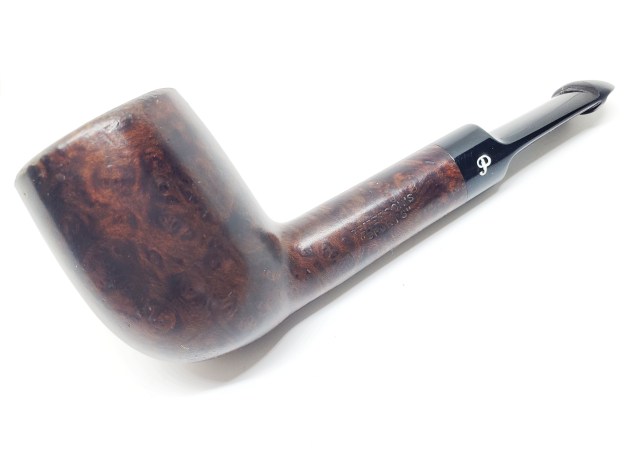
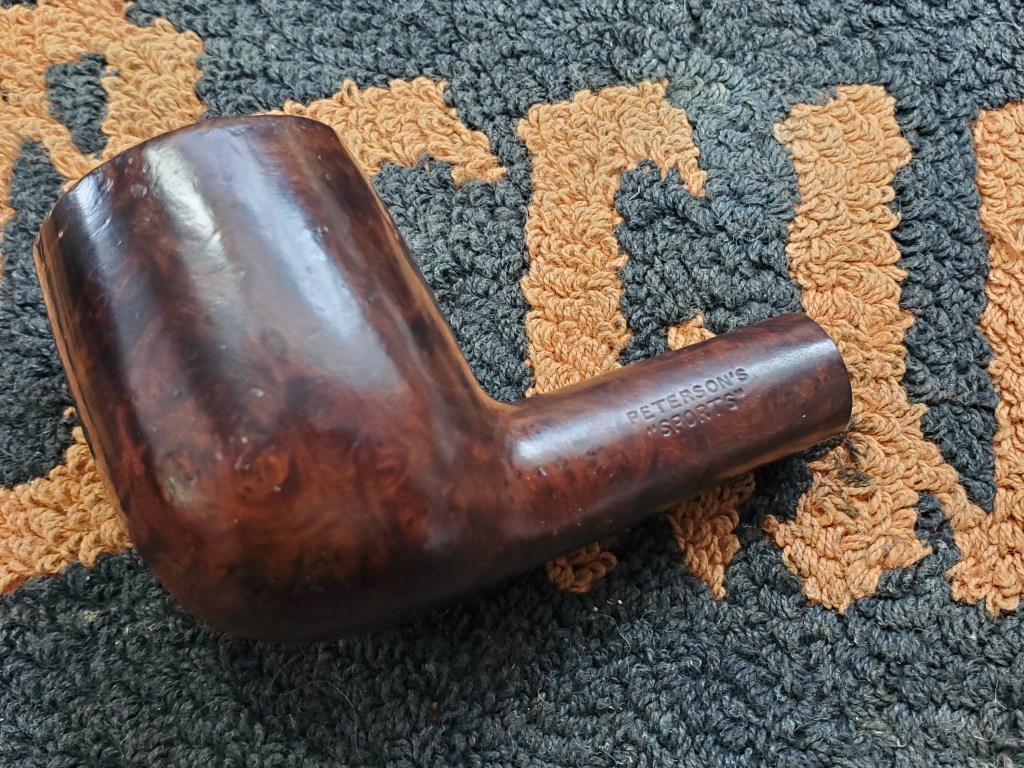
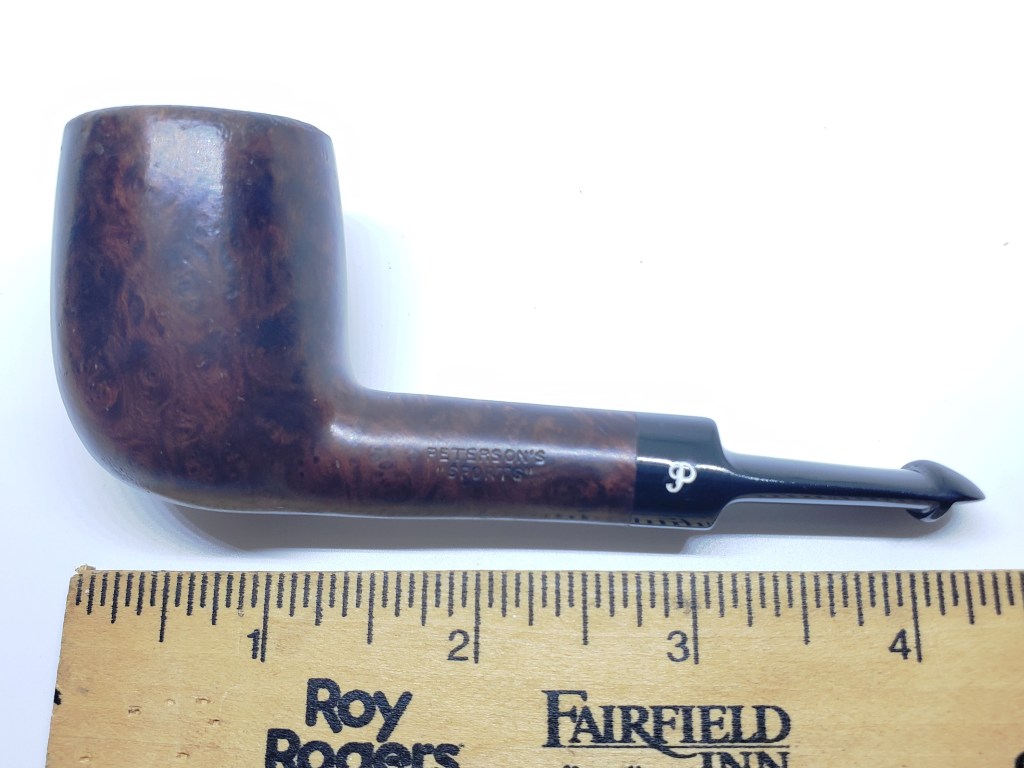
Recently, a member of the PipesMagazine.com forum created a post about acquiring his Great-Grandfathers’s Peterson Sports pipe, from his Grandmother.   His Great Grandfather passed away in the mid-1980’s and some of his pipes were passed to his Grandfather (who was also a pipe smoker).  I volunteered to restore the pipe and just finished it. 

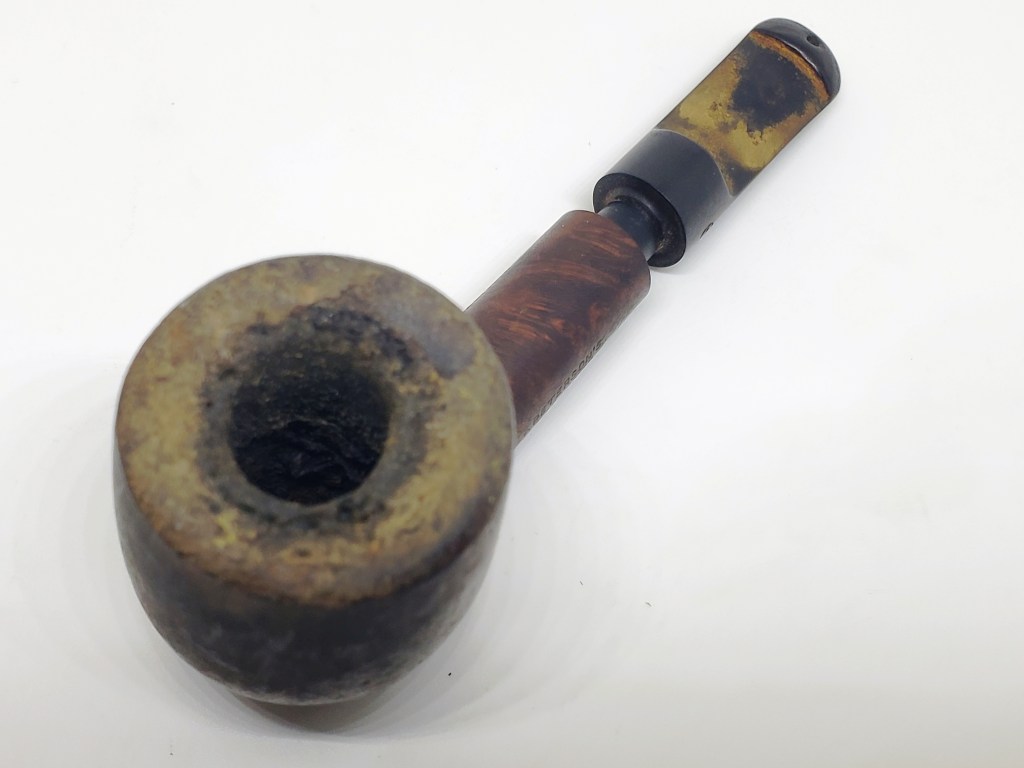
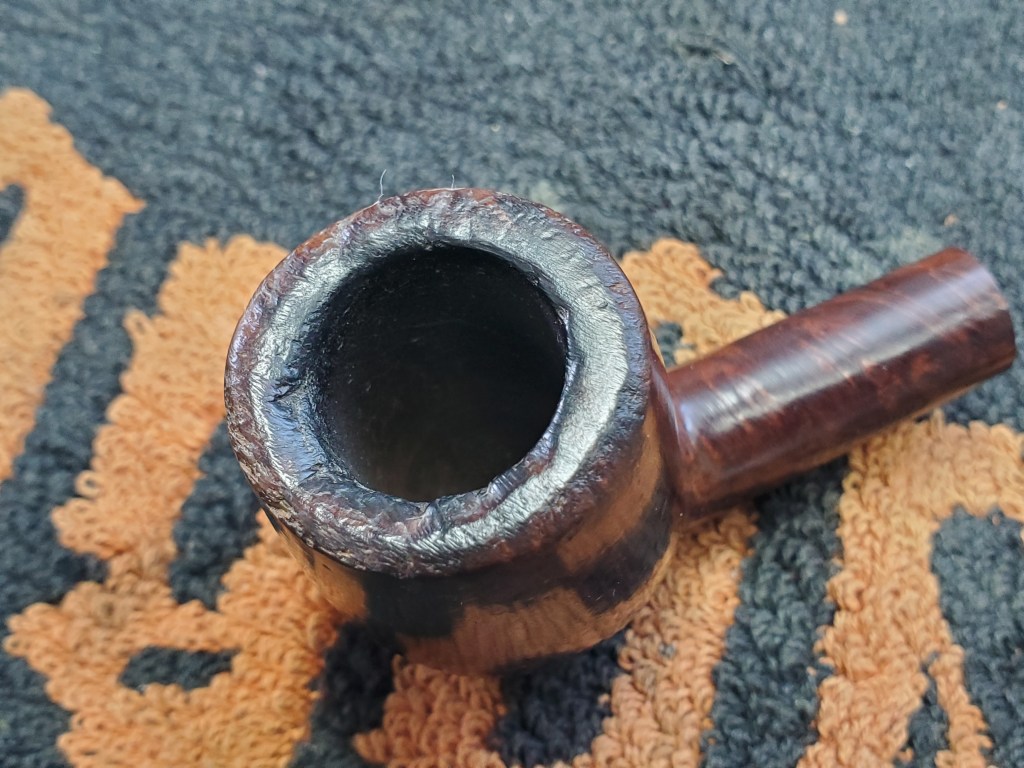
This gentleman, from rural Alabama, smoked primarily drug store pipes, like Whitehall, Yellow Bole and Dr. Grabow.  But, he must have had access to a decent shop, or a drug store that carried a little more expensive lines as this Peterson was no doubt a larger investment.   The forum member didn’t know what type of tobacco he smoked, but we assumed over-the-counter blends, like most rural pipe smokers.  He worked this pipe very hard, the cake consumed nearly all of the bowl, and he apparently knocked the ashes out on any convenient wall.  Amazingly, the stem was in very good condition.  His other pipes had stems that had teeth damage, which to me, is another indication that this pipe was something special. 

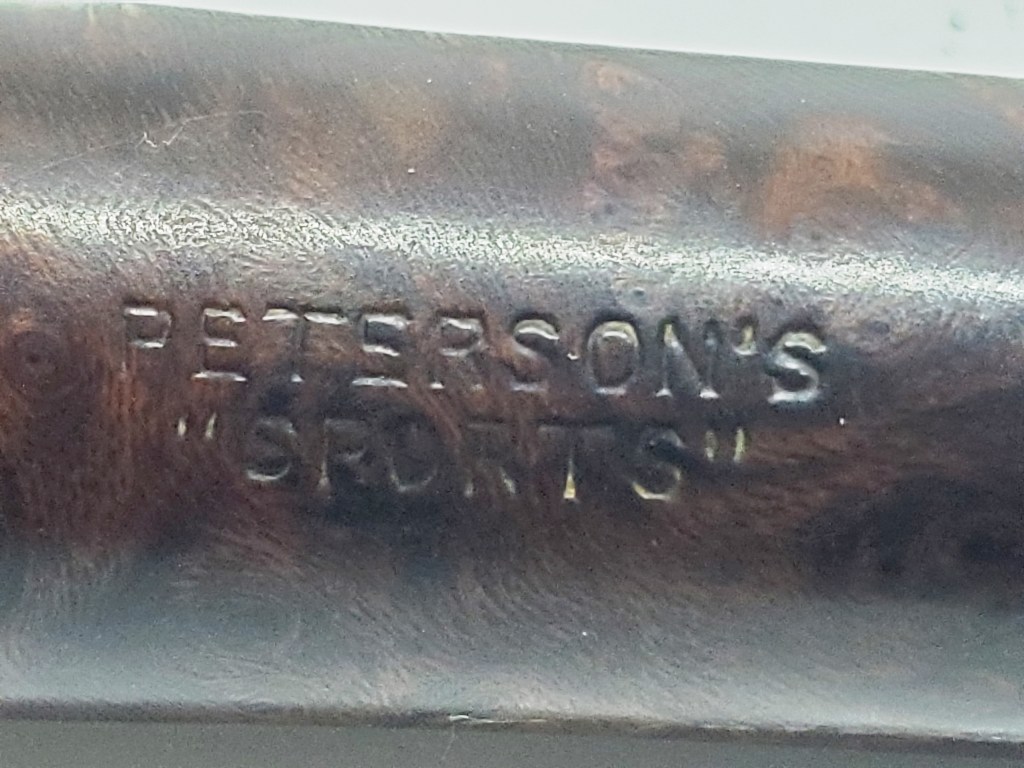
The Sports line isn’t mentioned in Mark Irwin’s book, but I was aware that Peterson reissued the line in 2014.  Mark had a blog entry on his excellent Peterson Pipe Notes blog, shown here:

https://petersonpipenotes.org/tag/peterson-sports-pipe/ 

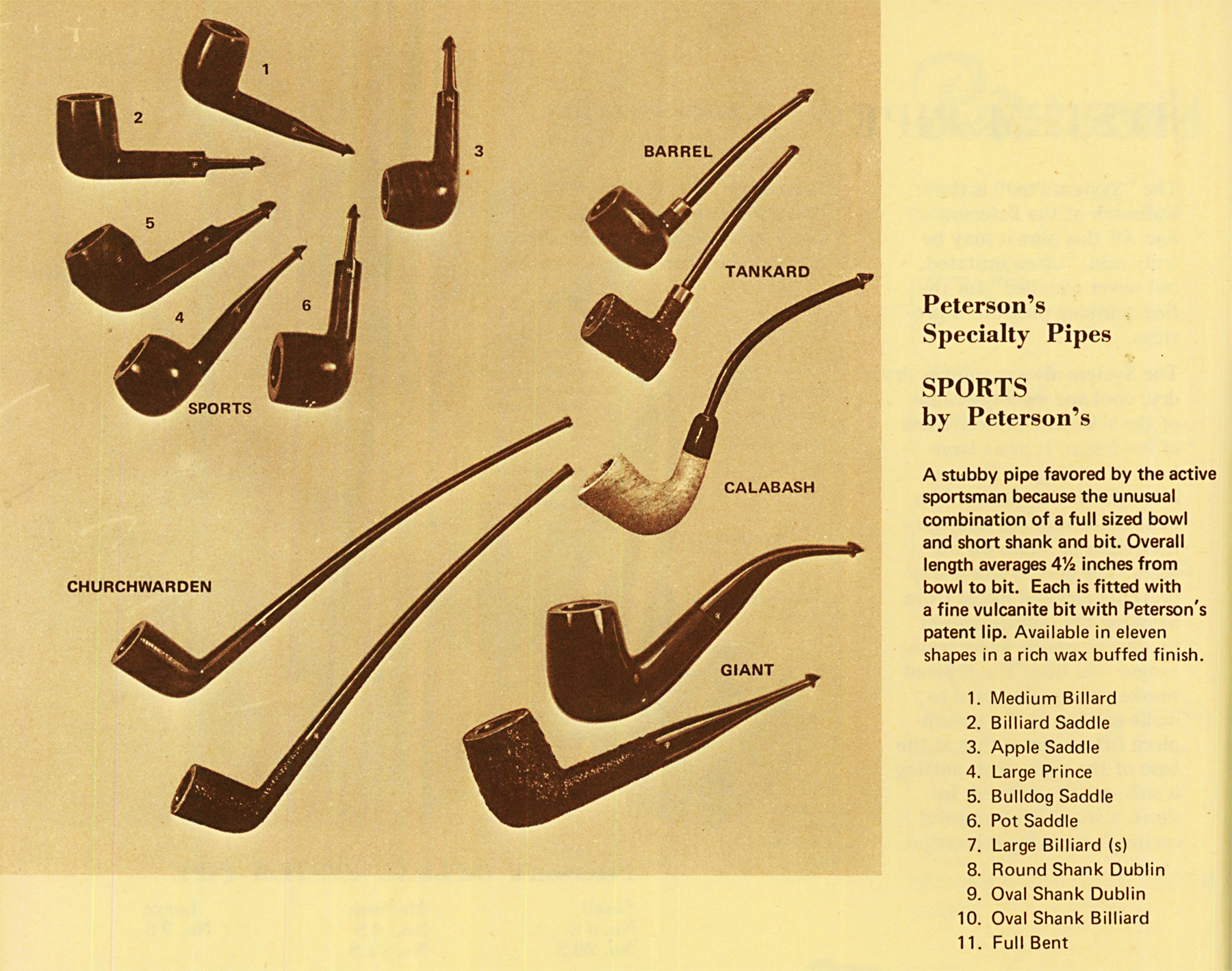
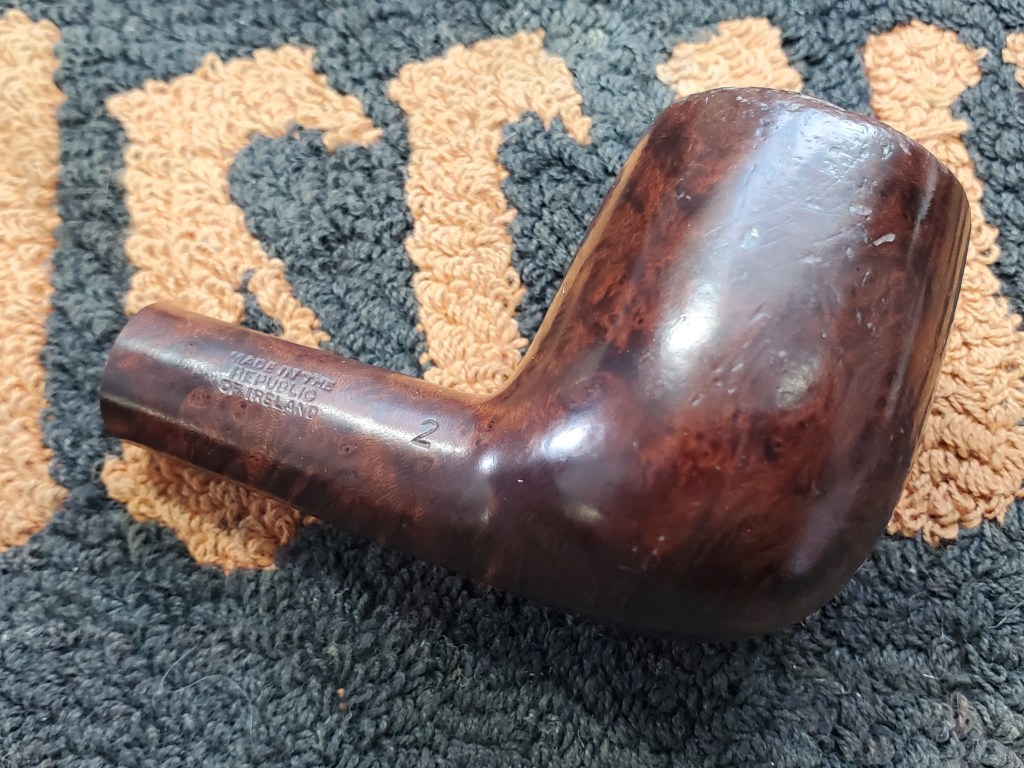
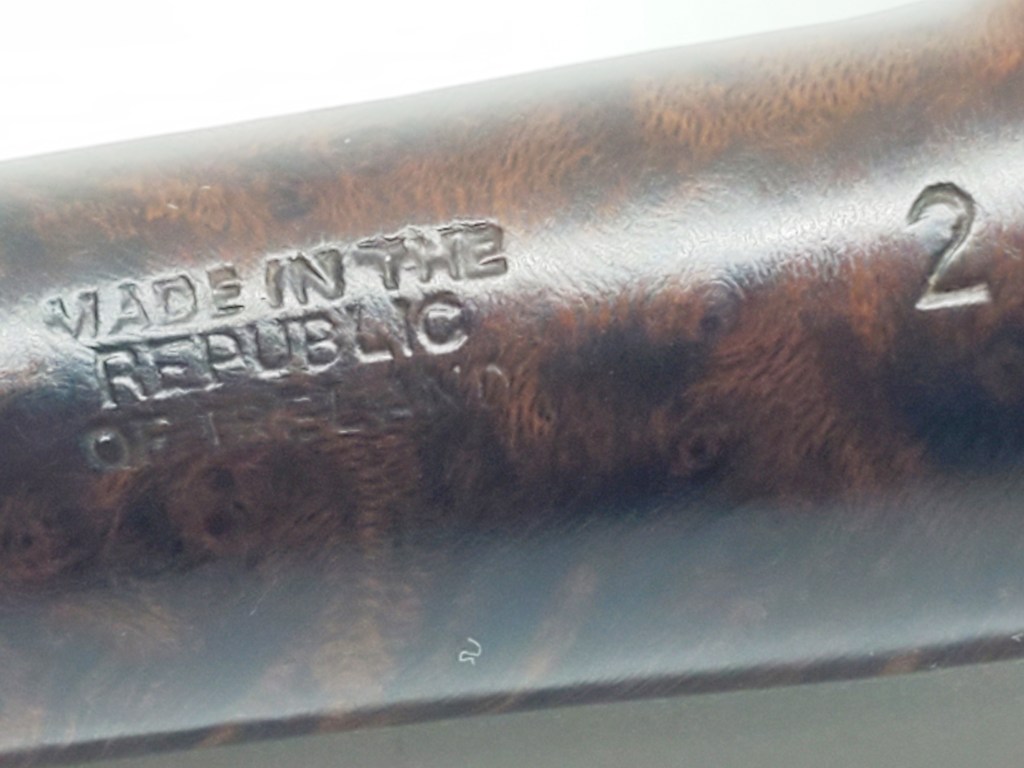
I learned from Mark’s blog entry, and communication with him, that the Sports line was introduced in 1946, but not well known in the states until the 1970’s.  It’s difficult to pin down when this pipe might have been purchased.  Mark suggested the 1950’s or it could be even as late as the 1970’s.  Mark shared that the “SPORTS” pipes are listed at $11 in the 1973 Associated Imports Price list.  I’m guessing that a Dr. Grabow or similar might have been around $2-$3 in that era?  Mark also sent me a 1973 catalog page from Associated Imports, that shows the complete line of shapes and a description.  You can see the #2 Billiard Saddle. 

This gentleman was so hard on his pipes, that I speculate this one had to be from later in his life, or it wouldn’t have survived.  I wish these pipes could talk and we could get the whole story.   

In conversation with the owner, I suggested the bowl only be cleaned.  I do not like topping, or otherwise trying to remove the dents and dings of these kinds of pipes, that have sentimental meaning. All those scars were well earned and I think important to retain on a family heirloom.  The owner agreed and I proceeded

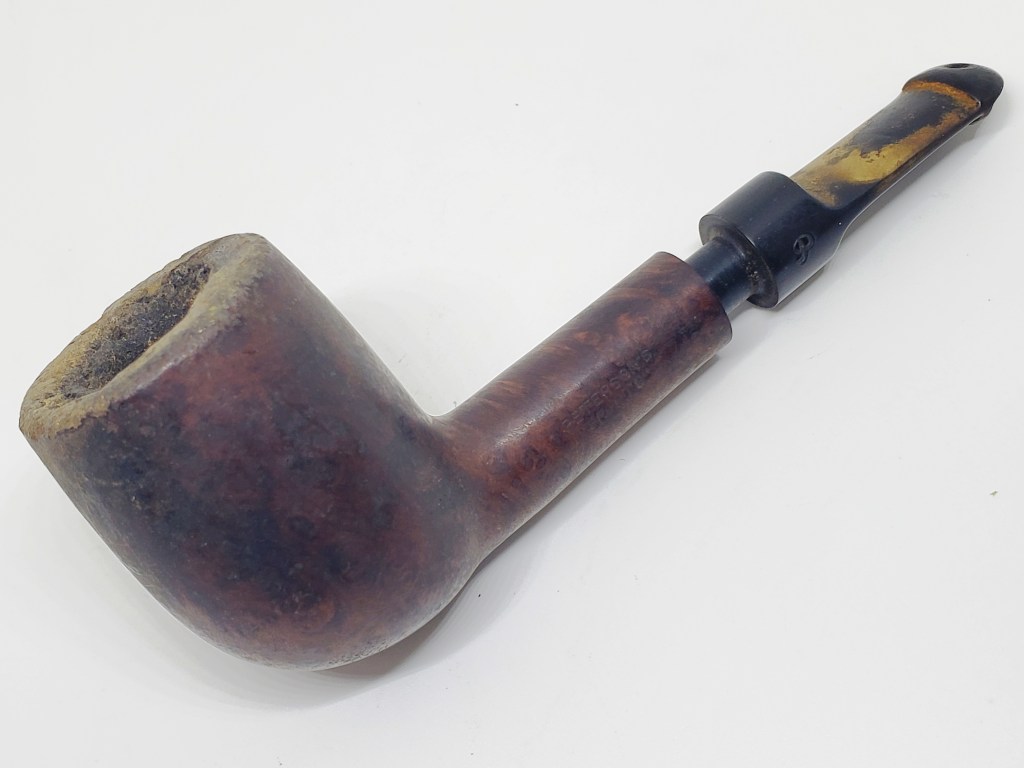
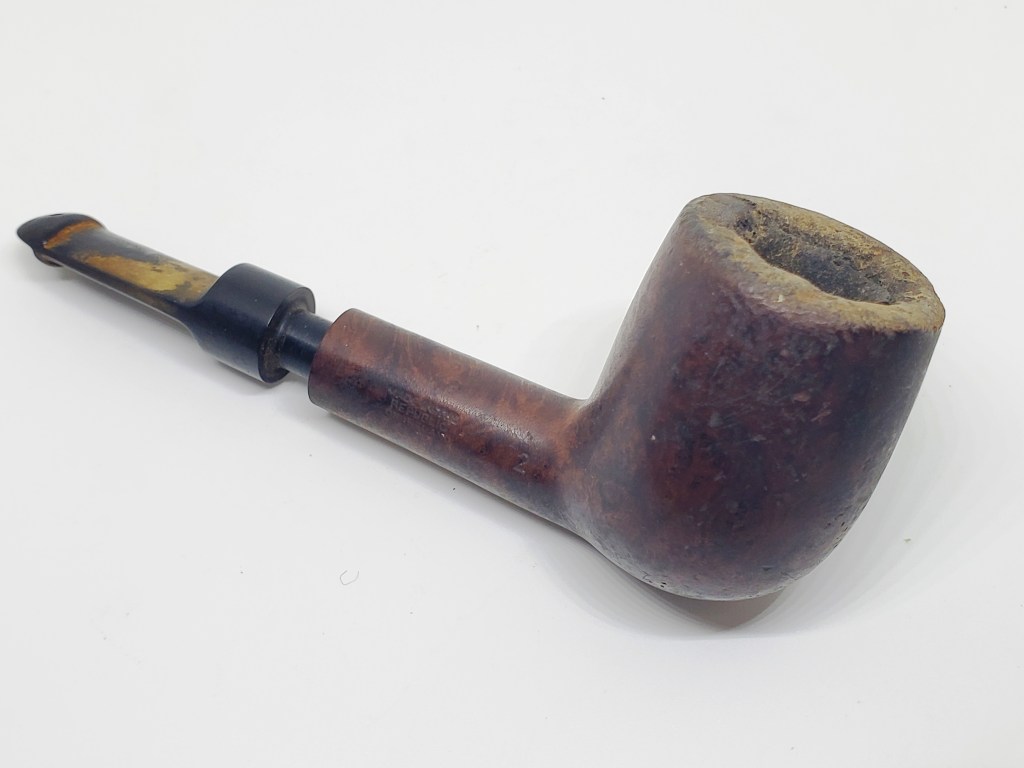
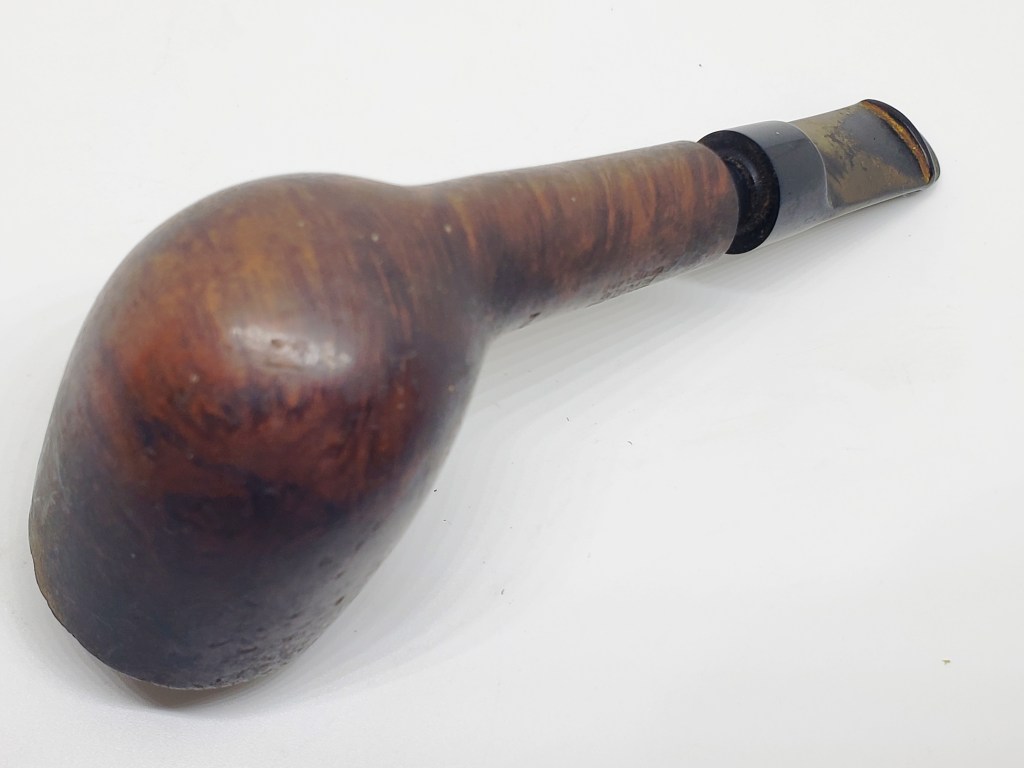
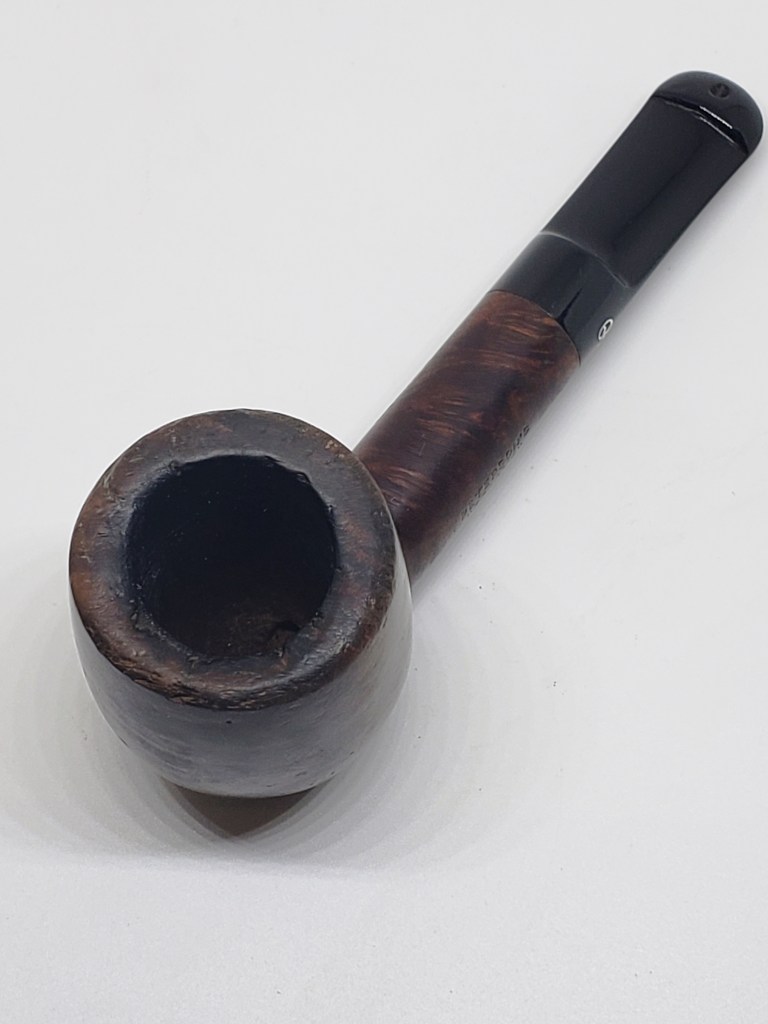
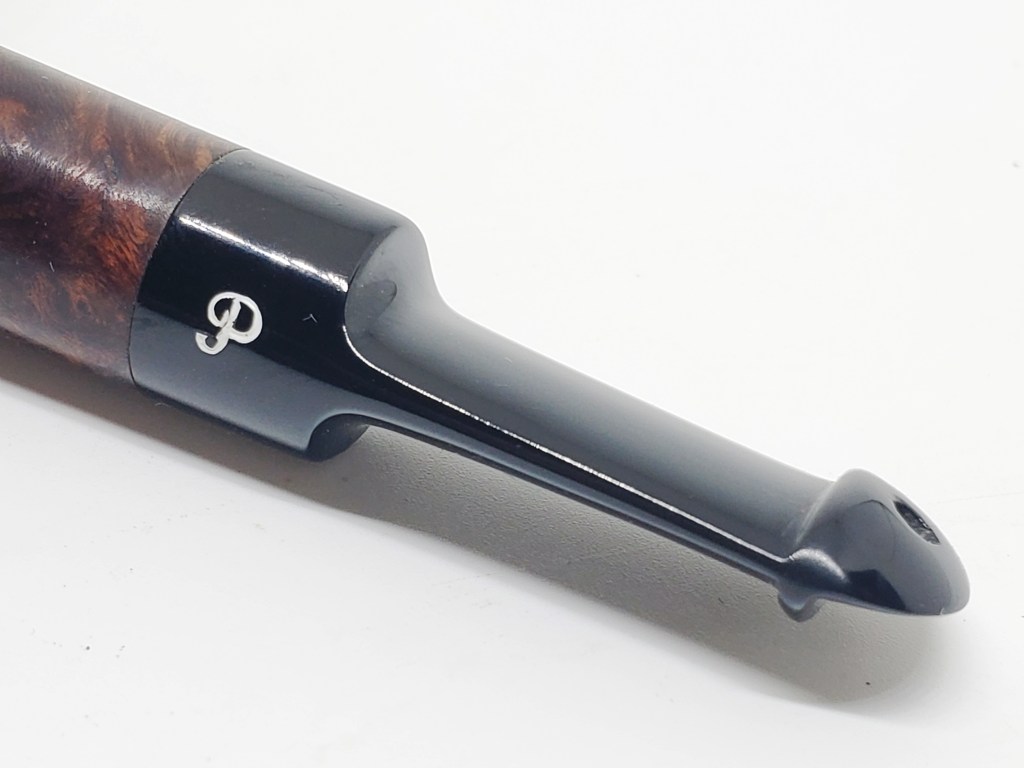
The pipe had the aforementioned cake. The nomenclature was nice and crisp. The stem was very tight, but I suspected the shank just needed to be cleaned of residue. The P stem stamp was nice and deep, I knew it would restore nicely.

Below is the pipe as it was received:

I used a piece of worn scotchbrite to remove the overflow on the bowl top. I stopped here, and communicated with the owner if he wanted to me to go further (top it, etc.) I was glad he wanted to retain the scars. I sent him the bowl photos below. I reamed the cake with my Castleford set and found the bowl to be in great shape. I told the owner he would have no issues smoking it.

I soaked the bowl with alcohol and sea salt. Following the soak, the shank was scrubbed with a bristle cleaner dipped in alcohol, until it came out clean.

I mounted the stem and removed the light oxidation with 600, 800, 1500 and 2000 grit wet paper. I used some white acrylic nail polish on the P-stem logo. The key is to let it dry and harden overnight. The excess was buffed off with micomesh. I then lightly buffed the stem with White Diamond and Meguiars Plastic polish. The bowl was given a few more coats of Carnuba Wax.

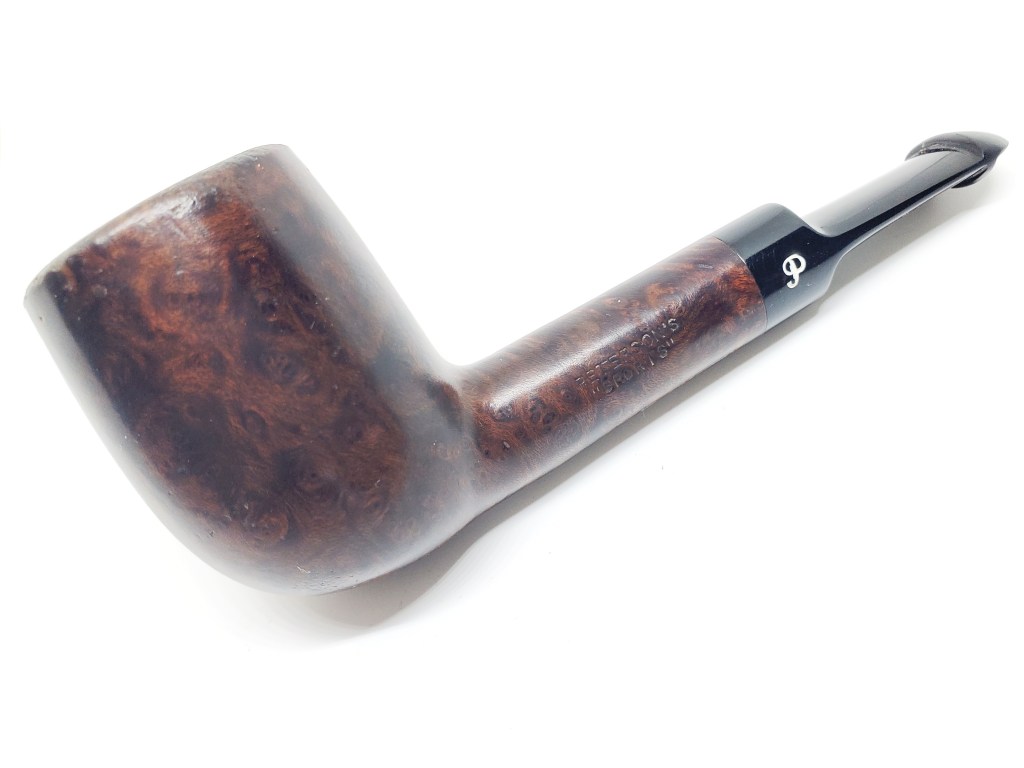
Below is the finished pipe, ready for the great grandson to enjoy and perhaps pass onto his son.

I really enjoy working on pipes like this, that have a family history.

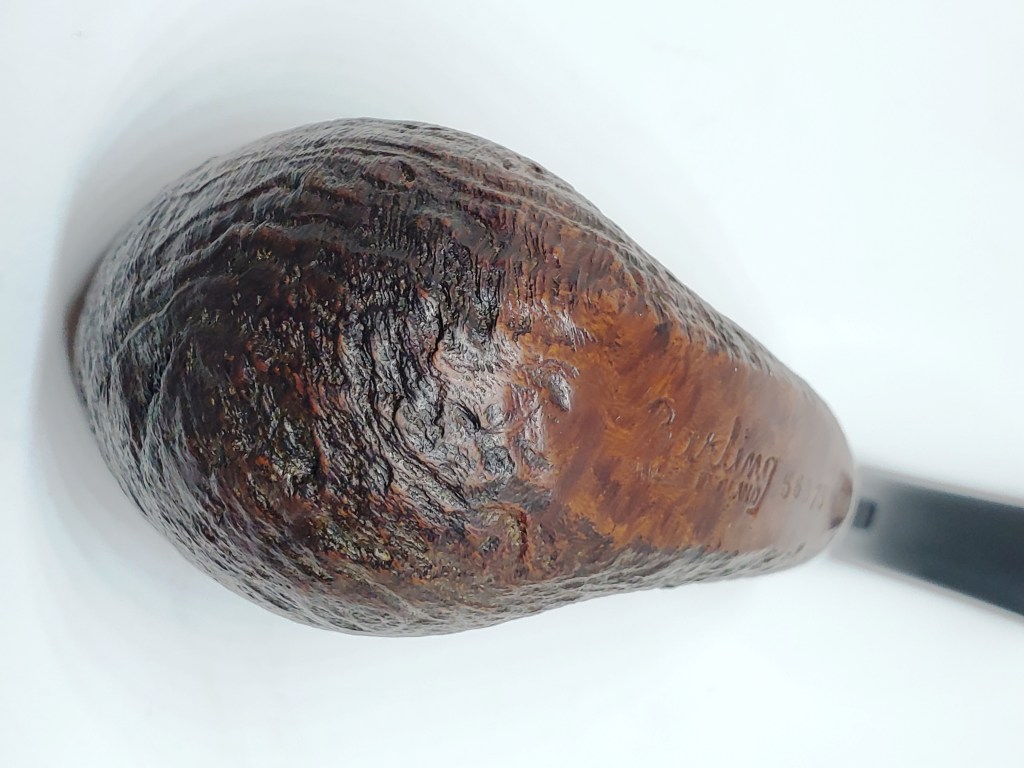
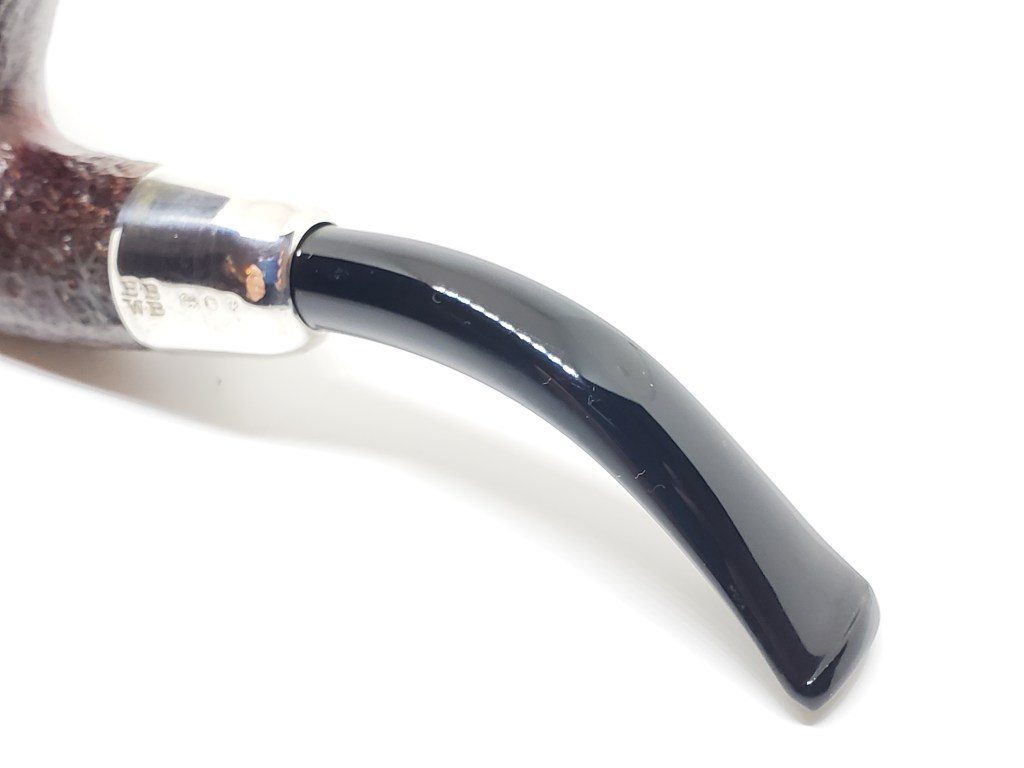
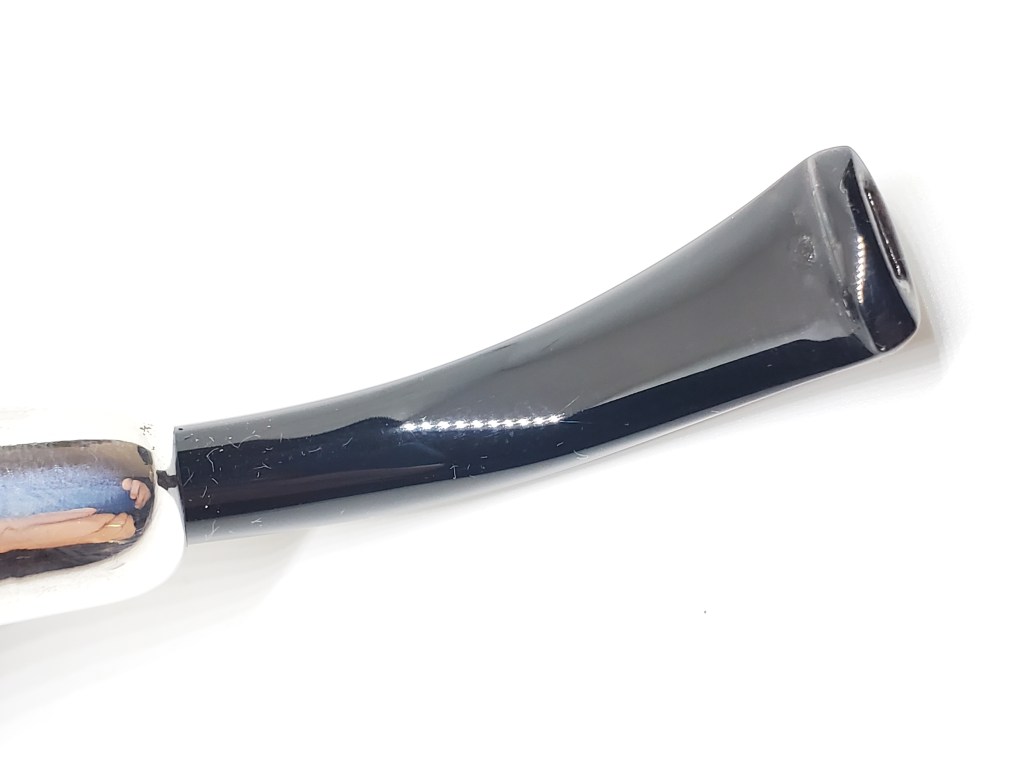
1965 Barling Sandblast Bent Billiard Restoration


By Al Jones

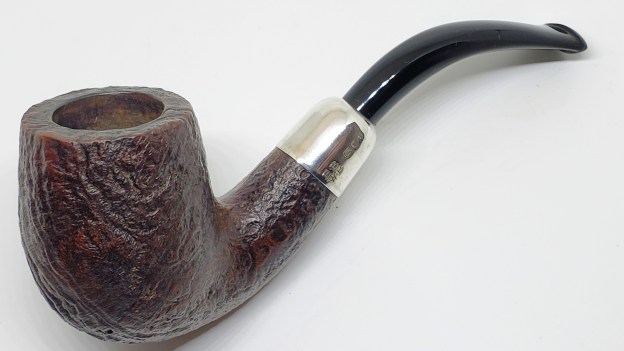
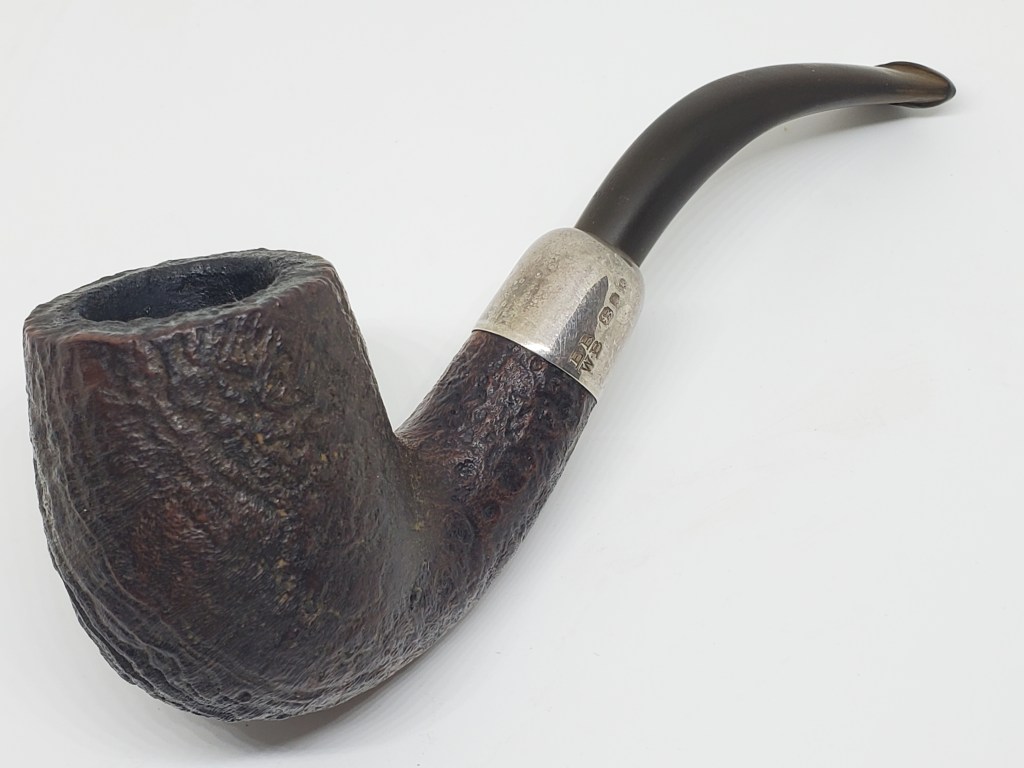
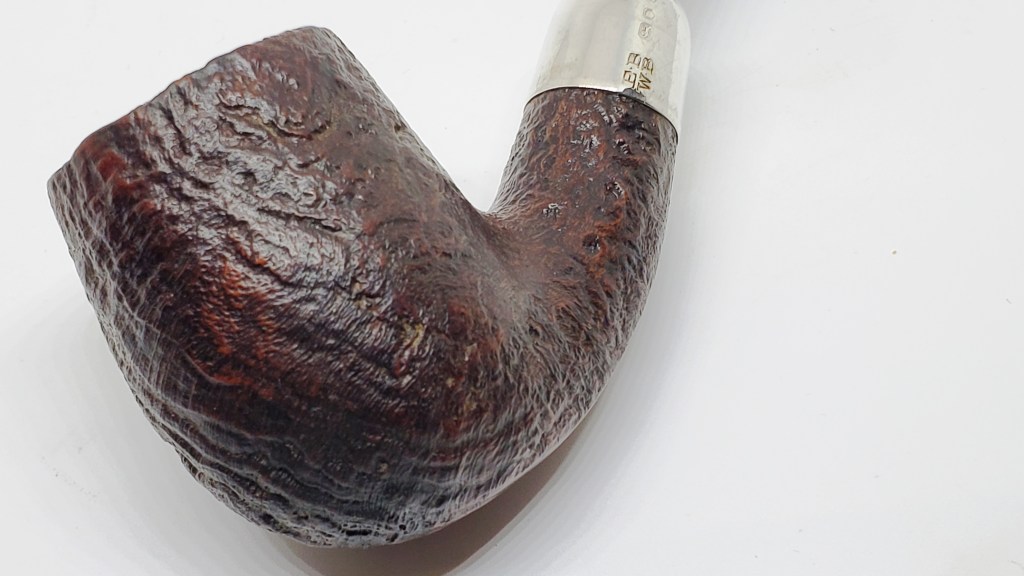
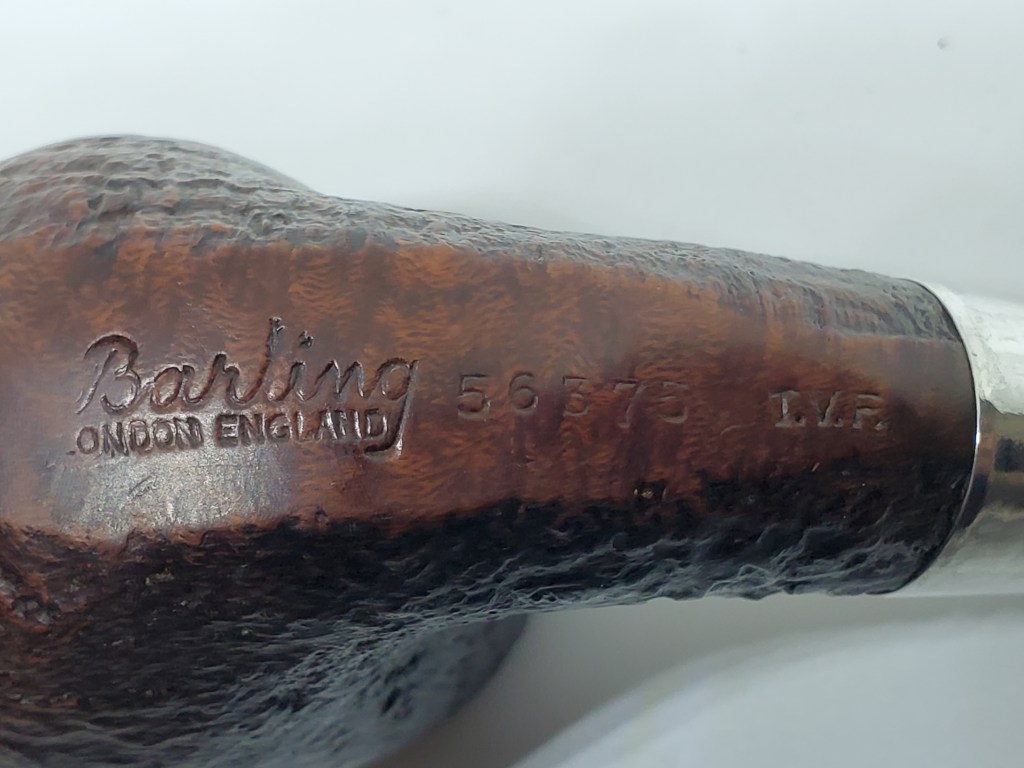
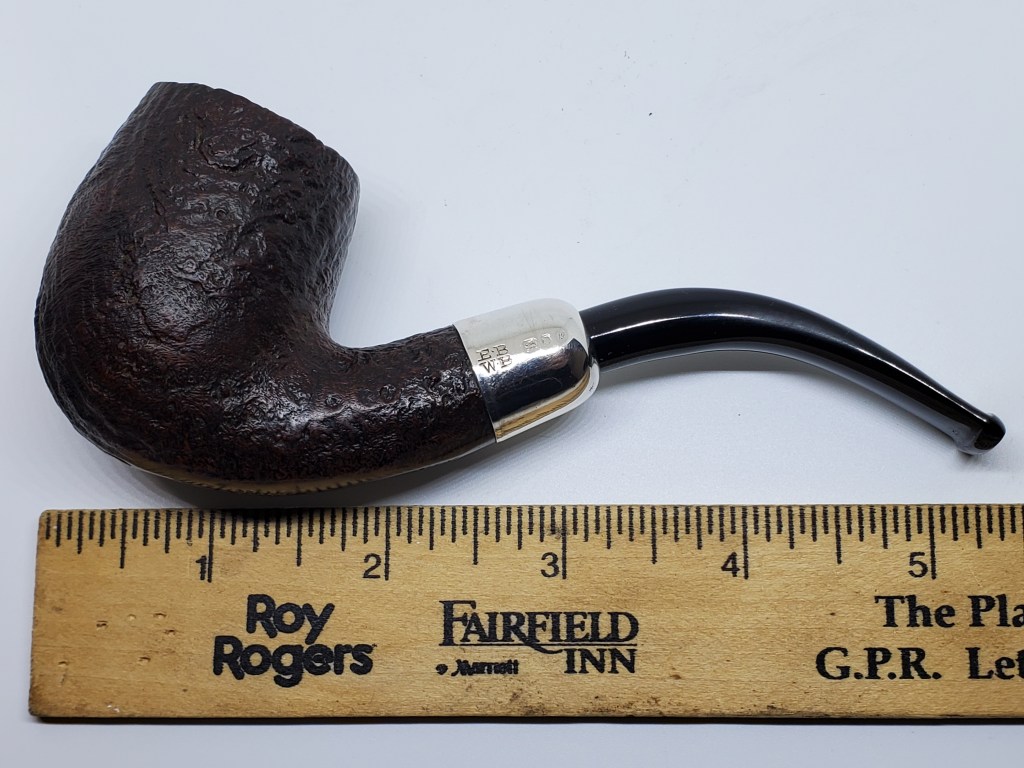
Barlings pipes are not a brand I typically collect, but this bent billiard caught my attention on eBay. It didn’t garner much interest, despite having a hallmarked silver shank cap. I won the auction with a somewhat modest bid. I enjoy small bent billiards and this one is remniscent of the Comoy’s 215 or GBD 9456 shapes.

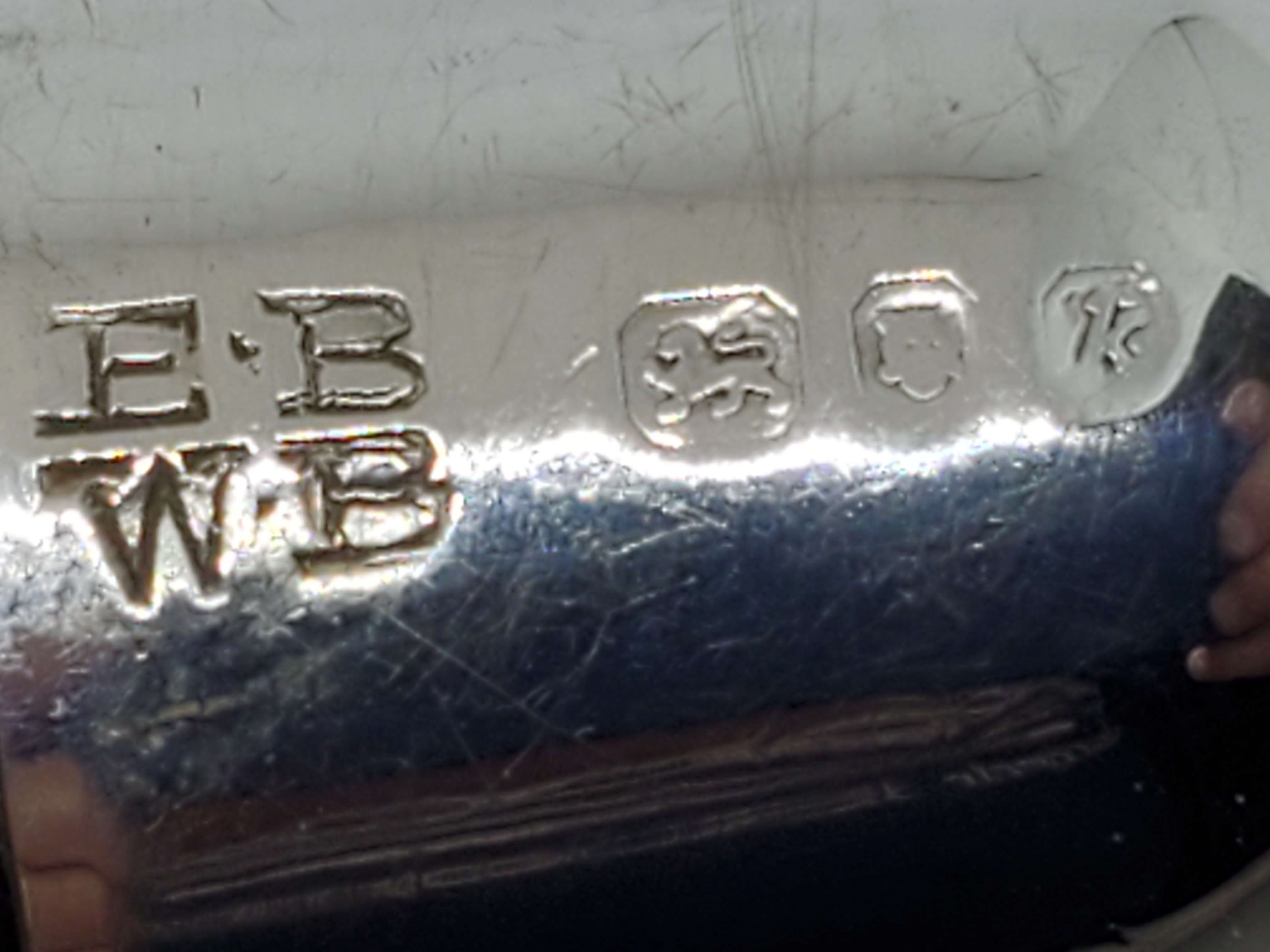
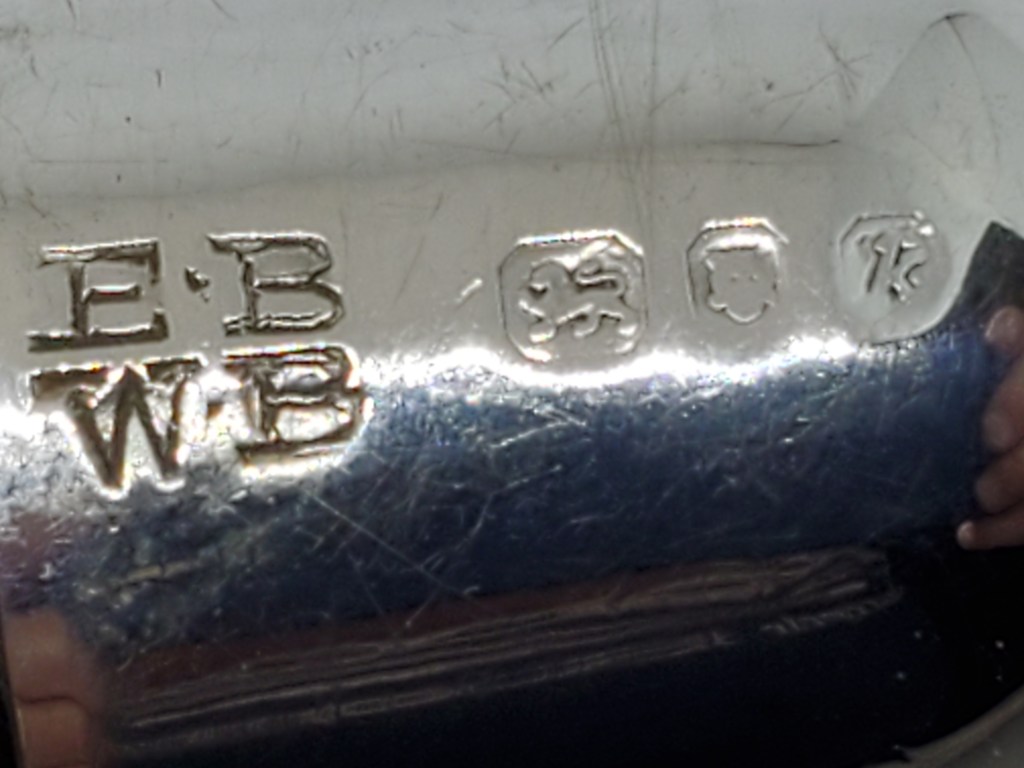
The sellers pictures weren’t very clear, but I could see that the pipe had a five-digit shape number and appeared to just be stamped “Barling”. I thought it was most likely from a latter era of the brand. On delivery, the hallmark was a lower case “k” and my British hallmark charted identified that as from the year 1965. Checking the Pipepdia section for Barlings, I couldn’t find any reference to pipes with a five digit shape code. I posted some pictures of the pipe on the PipesMagazine, and several members commented. One mentioned that Army-mount hallmarked pipes seem to use five digit shape codes. I used some silver cream on the silver cap.

Jesse Silver, one of the co-authors of the updated Pipedia article on Barlings also commented. He tells me that my 1965 pipe would be from the Corporate era (or post Transition).

The pipe had a sizeable cake and heavily oxidized stem. There was one small tooth indention on the bottom of the stem.

Below is the pipe as it was received.

The stem still showed the Barling cross stem logo

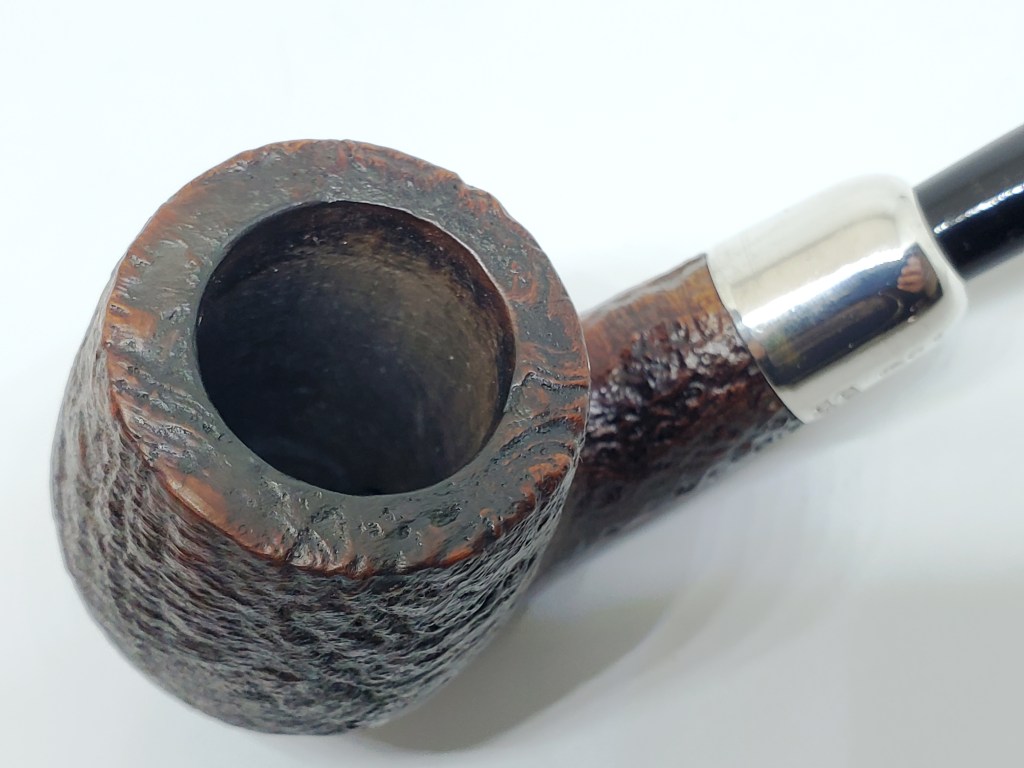
I reamed the cake and found the bowl interior to be in excellent condition. The pipe was soaked with sea salt and alcohol The shank, typically an area that needs a good scrubbing with a bristle brush was very clean. I used a small drop of black superglue on the tooth indention.

The oxidation was removed with 600,800,1500 and 2000 grit wet paper. I decided not to attempt to save the stem logo. I didn’t feel that I could get all of the oxidation off. The stem was then buffed with White Diamond and Meguiars Plastic Polish.

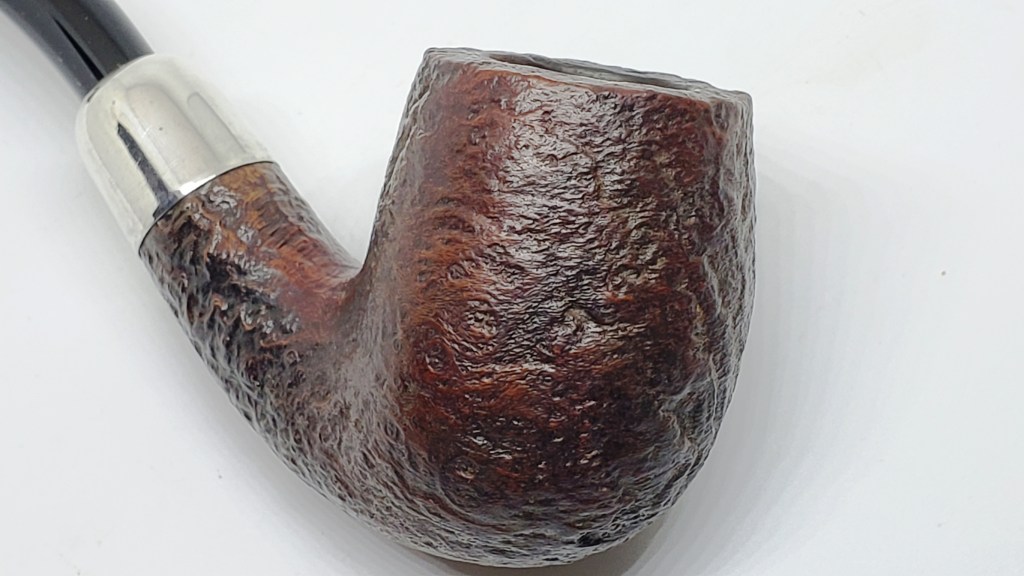
I used a worn piece of Scotch-Brite to remove of of the build-up and darkening on the rim. The briar was then polished with Halycon pipe wax.

Below is the finished pipe.

Comoy’s Zulu Grand Slam Restoration


By Al Jones

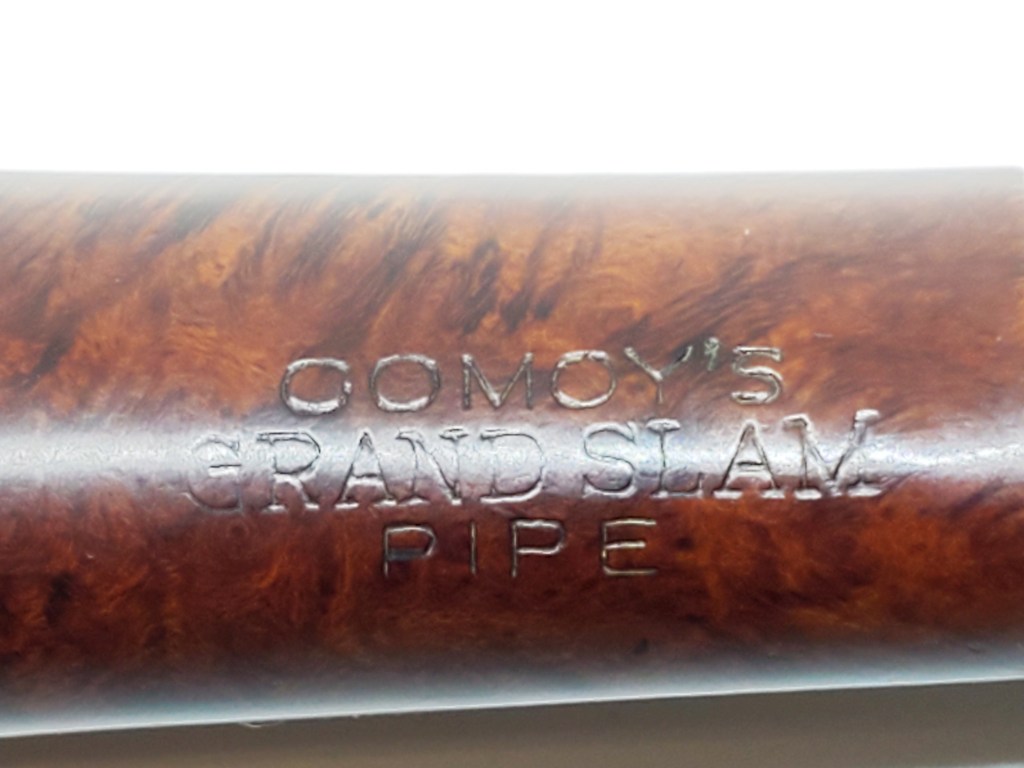
This Shape 87 is shown as a “Woodstock” on the Comoy’s shape listing on the Pipedia webpage. I would call it a Zulu and the shape is also referred to as a Yacht shape at times. Below is a picture of the shape from the 1964 Comoy’s catalog. I would date this pipe to somewhere from the early 1950’s. The nomenclature was in excellent shape, including the *5 stamp for the Grand Slam replaceable leather washer.

An old Smokers Haven pipe sales ad for the shape described the shape. This example weighed in at an amazing 29 grams. The screw in Grand Slam filter was missing (most were seemingly discarded) but the threads remain in the tenon.

Comoys always had the best proportions for their Zulu shape, and this remains one of the sexiest pipes ever crafted. So sleek, so athletic, so elegant!

Smokers Haven pipe listing

The pipe had an oxidized stem but no teeth marks. The bowl top had the typical build-up. Below is the pipe as it was received.

The conical bowl was tricky to ream, so care was needed. I primarily used a piece of 320 sandpaper wrapped around a slightly smaller Pipenet reamer head. I used a worn piece of scotchbrite on the bowl top. The bowl was then filled with alcohol and sea salt to soak. Following the soak, the shank was thoroughly cleaned with a bristle brush dipped in alcohol, until the brush came out clean across a paper towel.

The stem was mounted and stepped grades of sandpaper used to remove the oxidation. I used 600>800>1500>2000 grades followed by 8,000 and 12,000 grade micromesh. The stem was then buffed with White Diamond and Meguiars Plastic Polish. The bowl was lightly buffed with White Diamond and Carnuba wax.

Below is the finished pipe. This one was sold to a piper who lives on the lovely island of Corfu in sunny Greece.

Faders “English Rough” (9438 GBD) Restoration


By Al Jones

“Faders” was a storied Baltimore, Maryland area tobacconist. They opened in 1891 and closed in 2018, another classic shop felled by the Maryland tobacco tax increase. They had three locations, one of which was the meeting space for the Chesapeake PIpe Club. I was a fan of their “Maharaja” English blend and was sorry to see them close their doors. Like many larger metropolitan shops, they had some of the classic British makes, create their stamped shop pipes. This one was made by GBD and is their unmistakable 9438 Rhodesian shape. If you read this blog, you know I’m a big fan of GBD’s and in particular the 9438. So, I was thrilled to see this “English Rough” pipe show up on eBay. Below is a collage of Faders photos (copied from Pipedia) and pictures of the pipe as it was delivered.

The pipe had some old cake and a heavily oxidized stem. The stem also had several deep teeth indentions on both sides. There was a remnant of an “F” stem stamp. There is no 9438 stamp, but the COM is definitely GBD.

I believe that the slight damage to the bowl rings were made during manufacture and I suspect that is what kept the pipe from being stamped a first line GBD Prehistoric.

I used my reamer set to remove the cake, and found the bowl to be in very good condition. A lighter and heat gun was used to lift some of the teeth indention’s. I couldn’t remove them all.

The bowl was soaked with sea salt and alcohol. After the soak, I used a bristle brush to thoroughly clean the shank and draft hole. I mounted the stem and used 600, 800, 1,500 and 2,000 grade wet paper to remove the oxidation. I didn’t try to save the faded and shallow “F” stamp. I then used 8,000 and 12,000 grade micromesh on the stem. The stem was buffed with White Diamond and Meguiars Plastic polish. The bowl was hand polished with Halycon wax.

Below is the finished pipe. I’ll keep this one down in Louisiana at my daughters home, where we frequently travel.