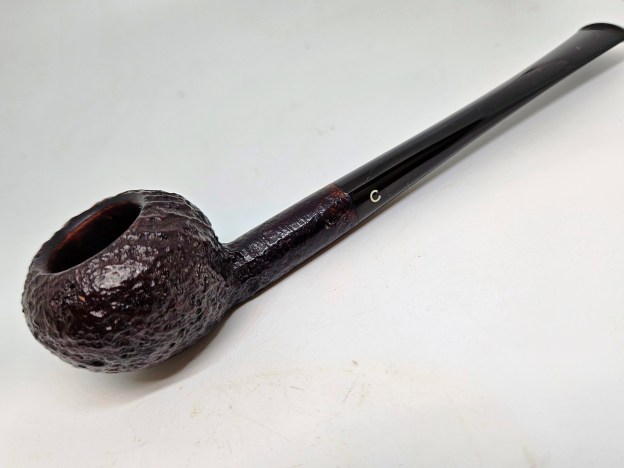
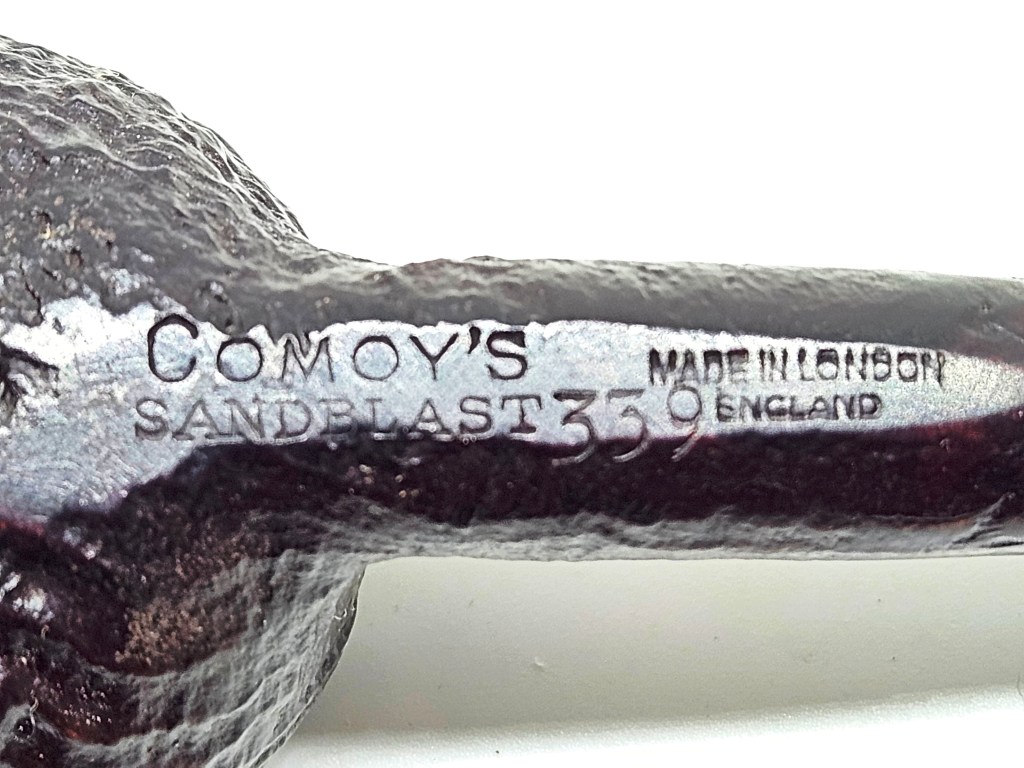
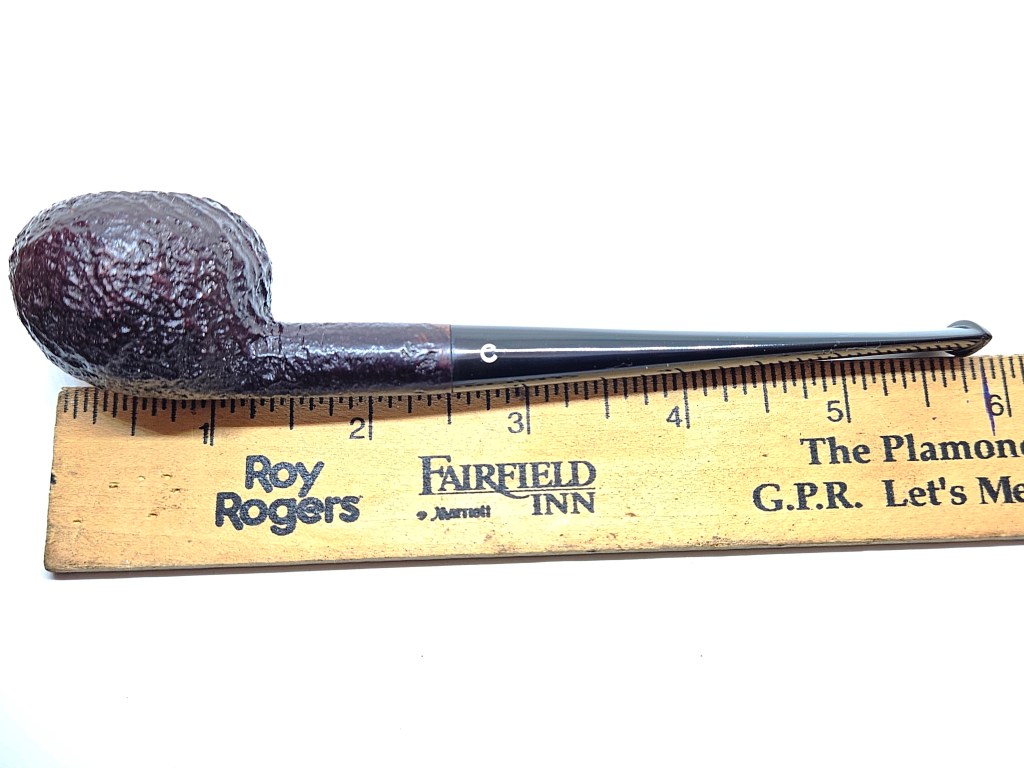
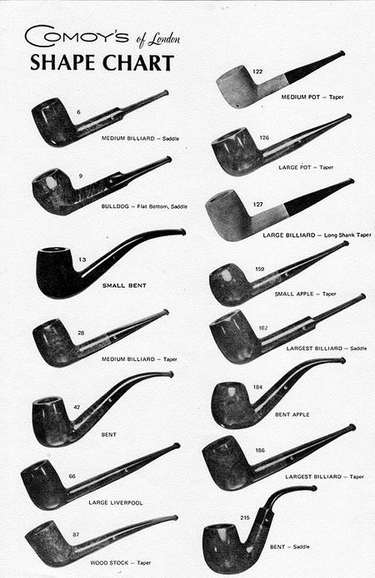
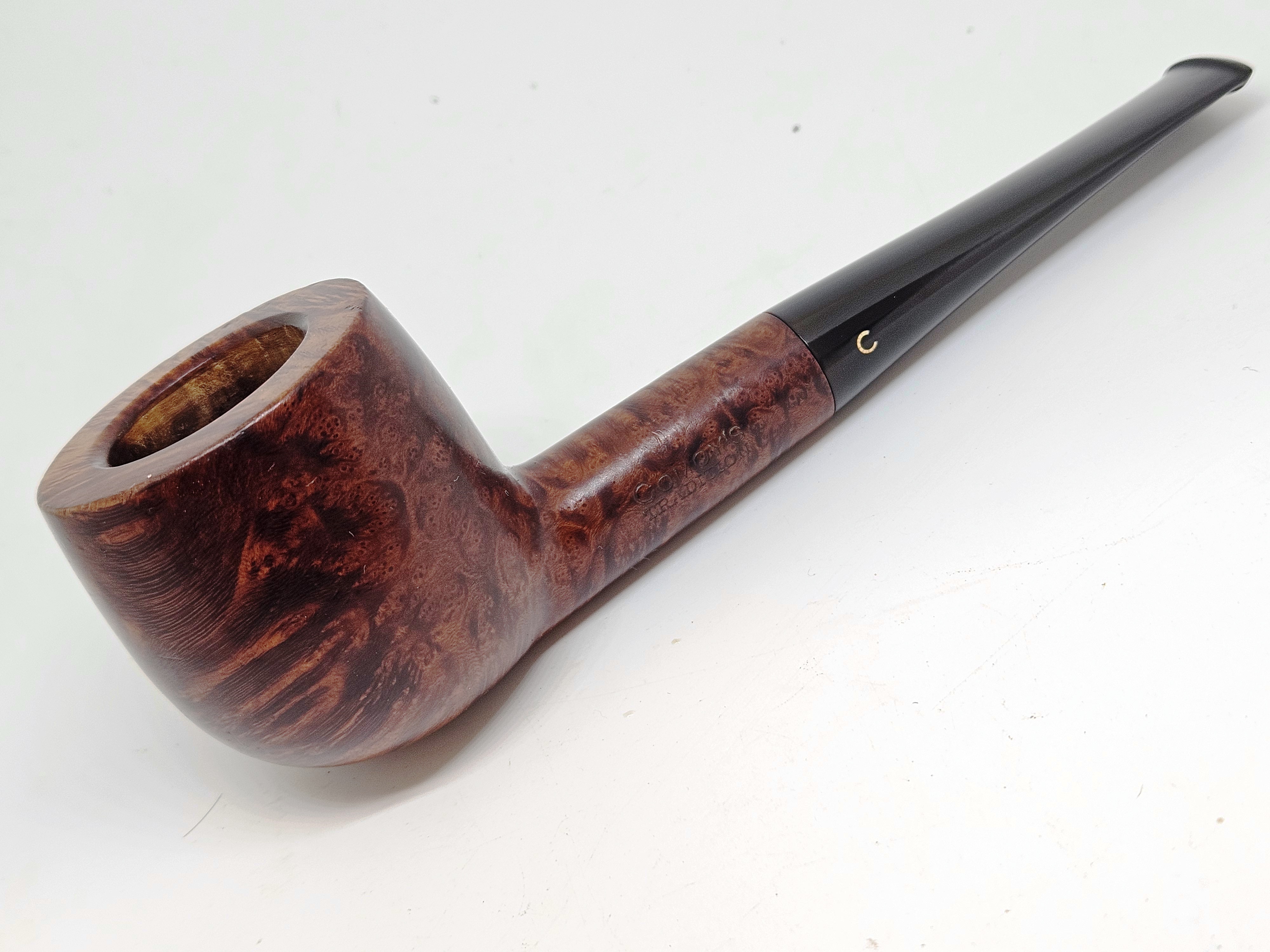
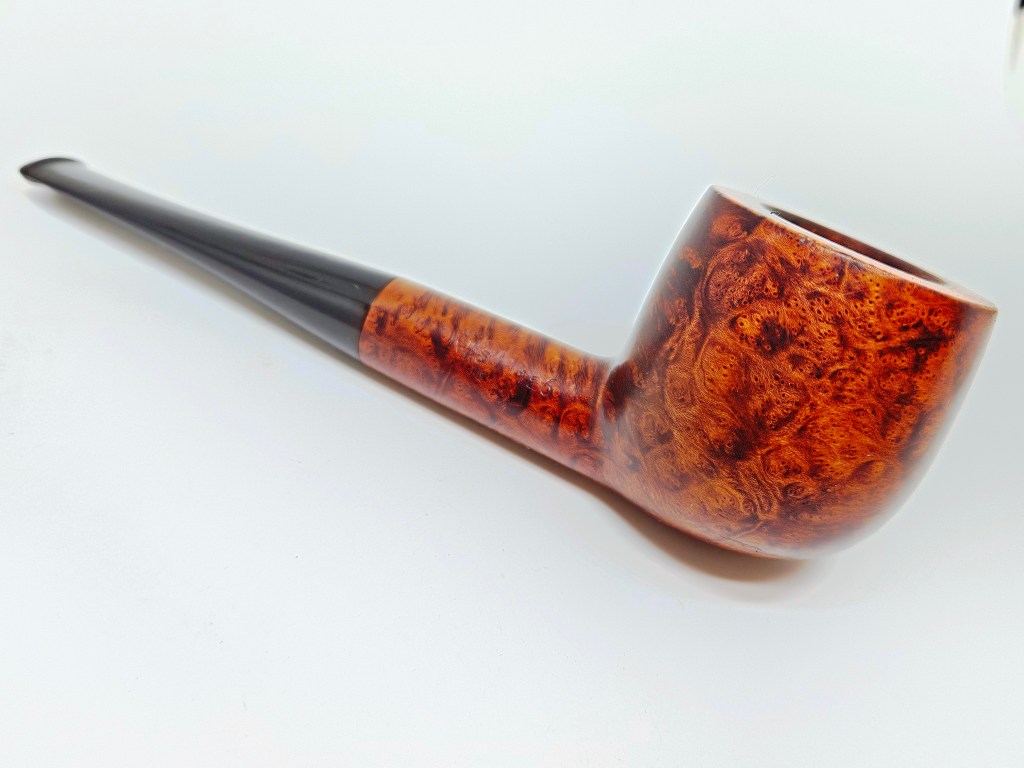
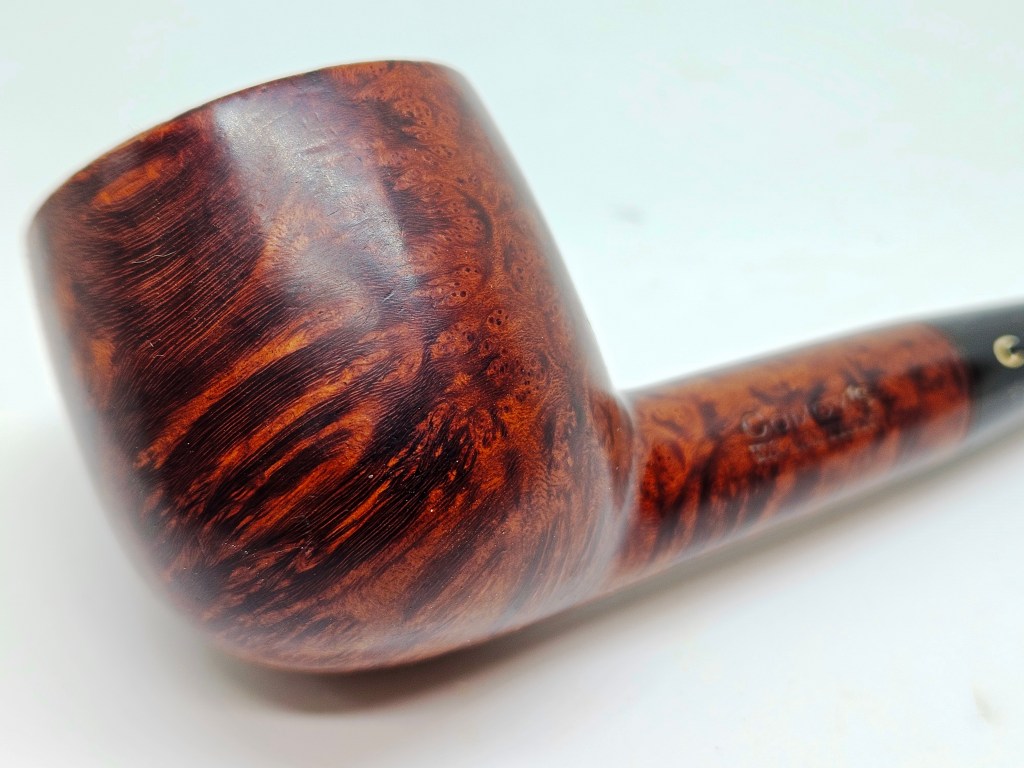
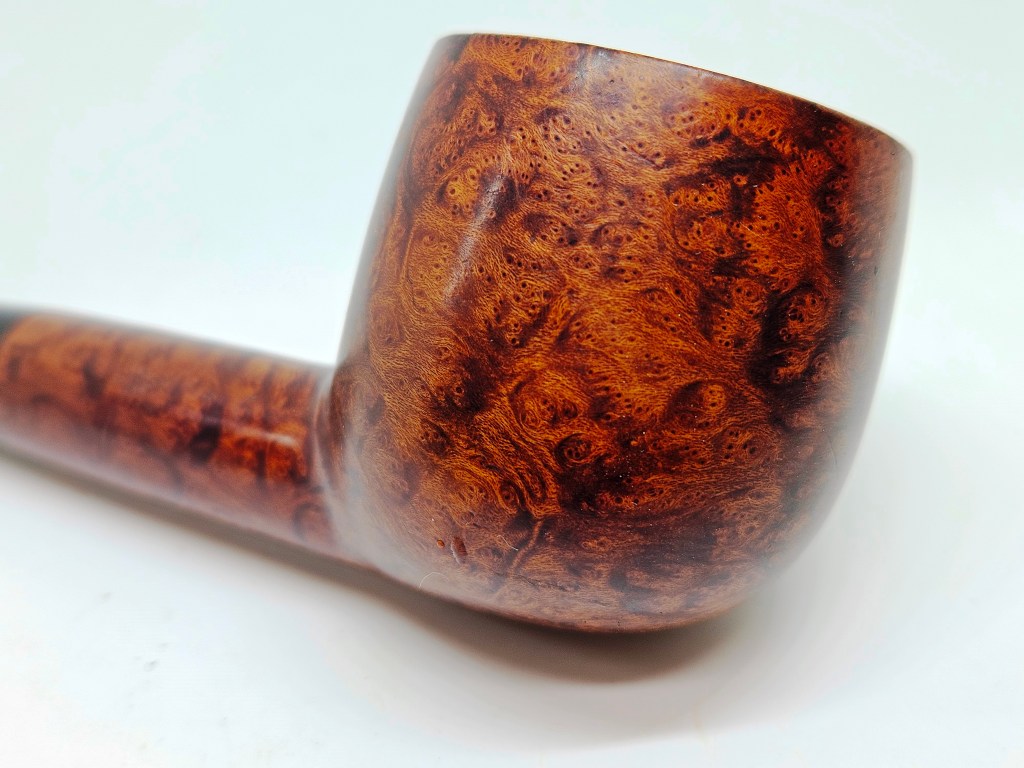
This blog entry is not so much of a restoration but rather a focus on a unusual Comoy’s shape. I restored several Comoy’s Prince shapes, but this is the first shape 339 that I’ve encountered. We typically see the 337C Comoy’s Prince. A web search turned up a past sale of the shape on the Smoking Pipes shape and a very rare Specimen Straight Grain. This one is in the Sandblast finish and from the shape is shown as a Pear bowl on the Comoy’s shape chart.
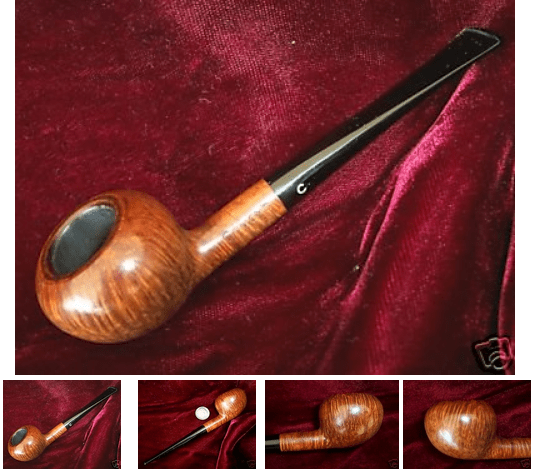
The pipe was in such excellent condition, that I didn’t take my own typical “before” pictures. These below are from the eBay ad. Also included is the Specimen Straight Grain. The drilled C stem logo was perfect. A unique aspect of this pipe is the weight – a scant 21 grams and it is easily the lightest Comoy’s that I’ve owned.
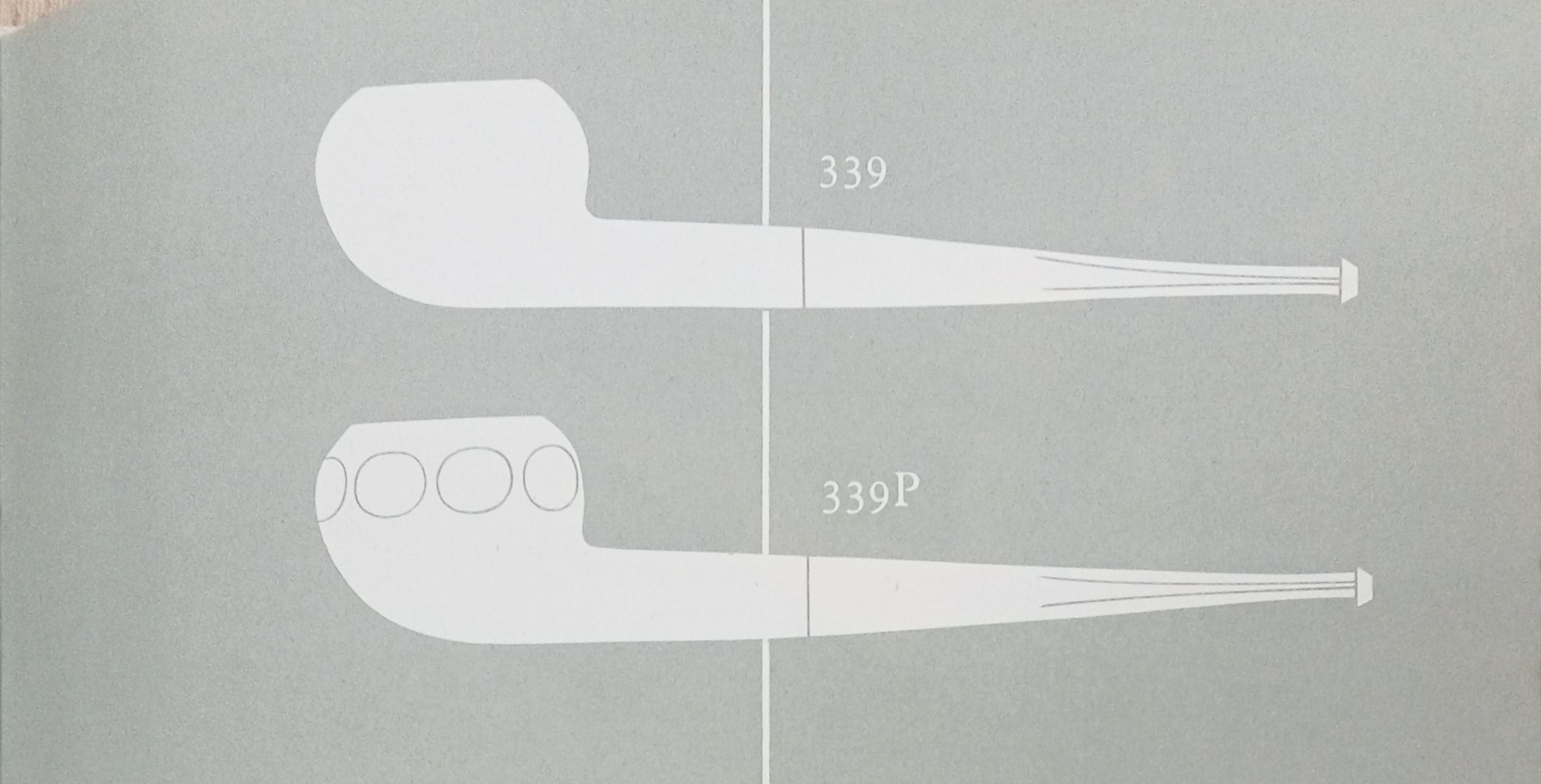
I found the shape in a 1956 catalog, as well as a 339P which seems to have a faceted bowl.
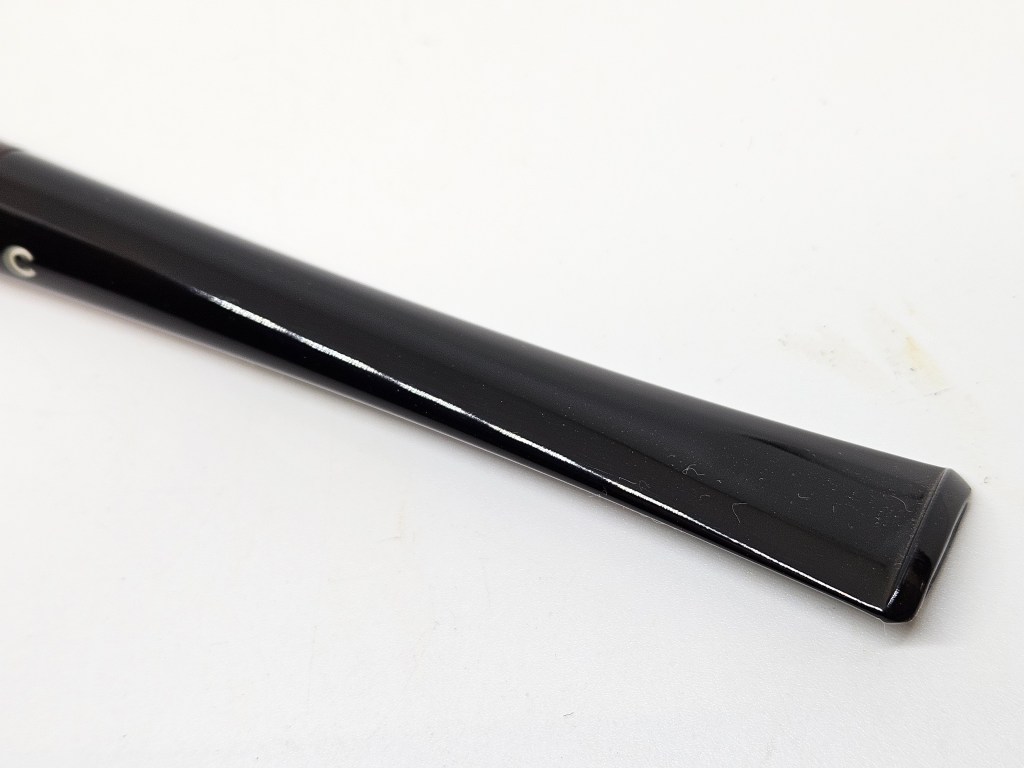
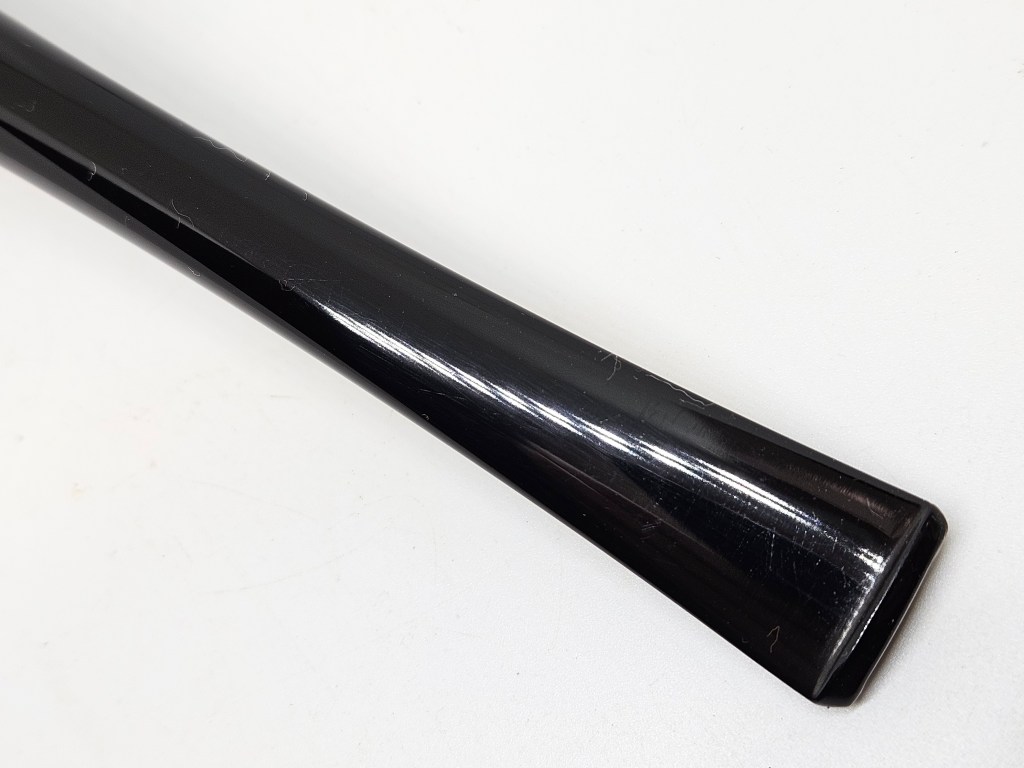
The bowl had the cake removed and it was very clean. There was some build-up on the bowl top. The stem was excellent as well, with only some mild oxidation. The country of manufacture stamping indicates that the pipe was made between 1948 and the 1981 merger.
I soaked the bowl with alcohol and sea salt, followed by a shank scrub with a bristle brush dipped in alcohol. The stem was mounted and oxidation removed with 600, 800, 1,500 and 2,000 grade sandpaper. The stem was then buffed with White Diamond and Meguiars Plastic polish. I used some worn Scotch-Brite to remove the bowl top build-up. The bowl was hand polished with Halycon wax.
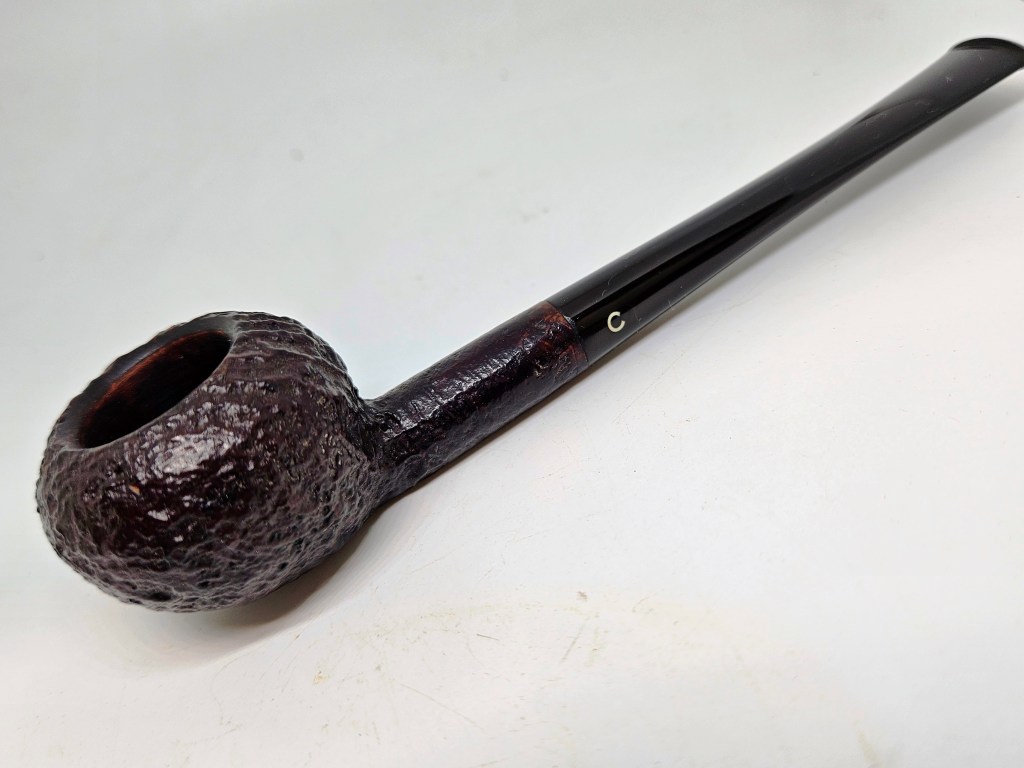
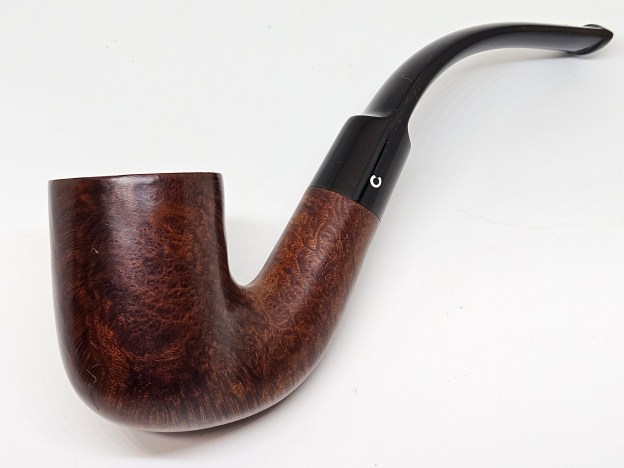
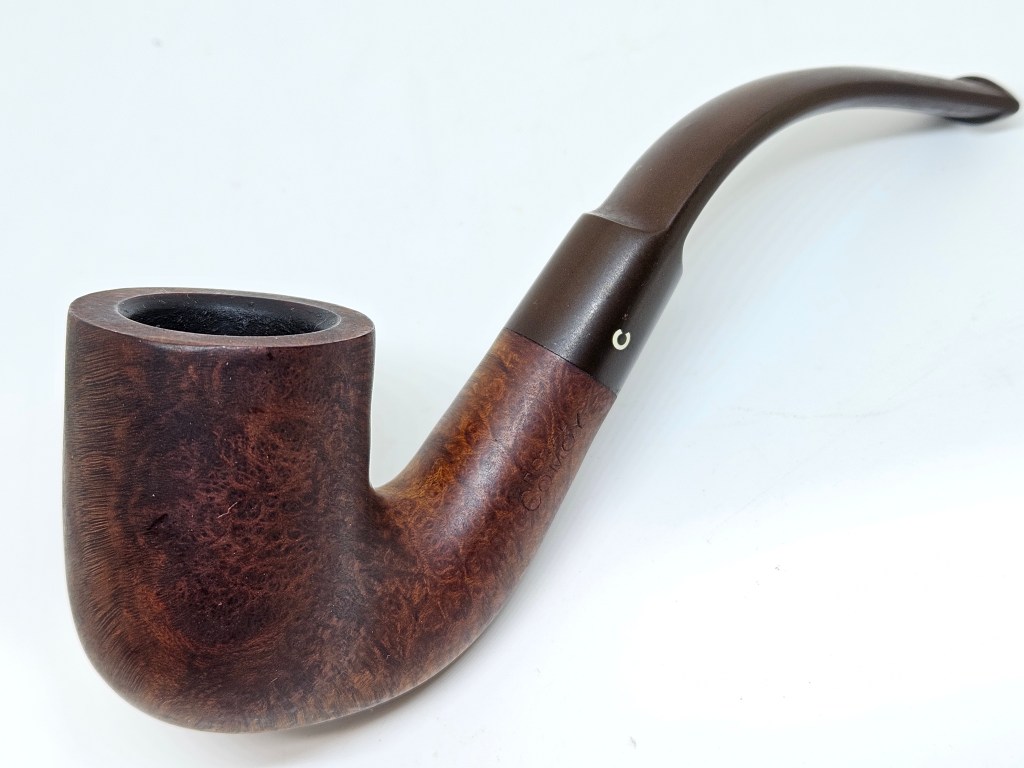
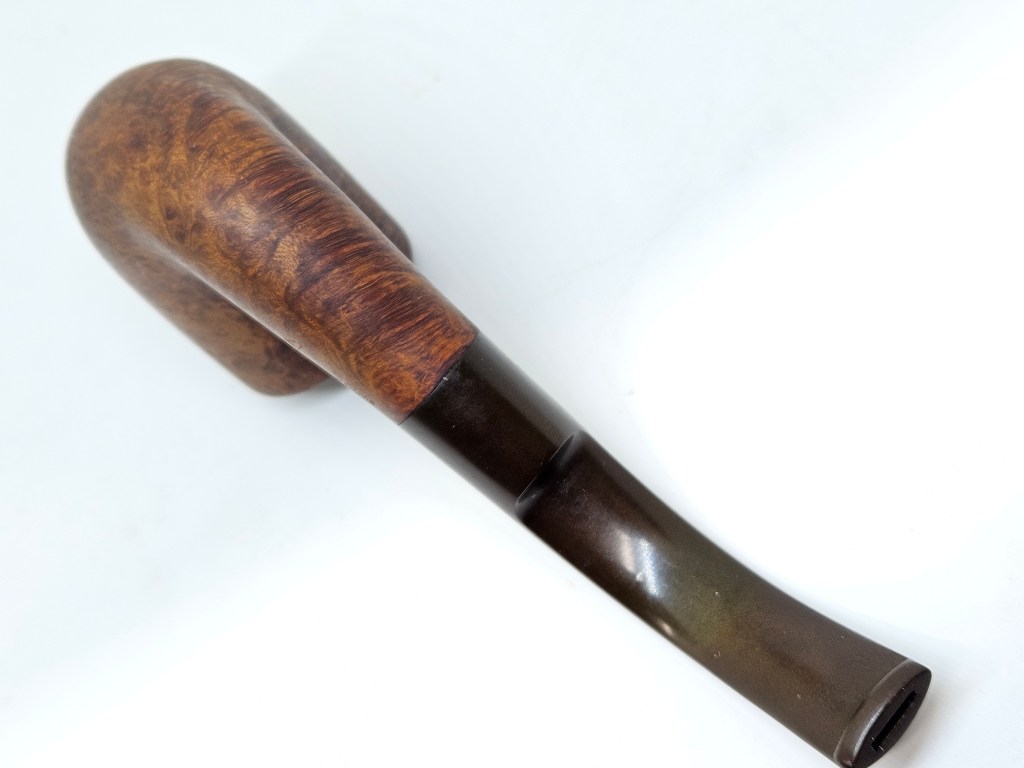
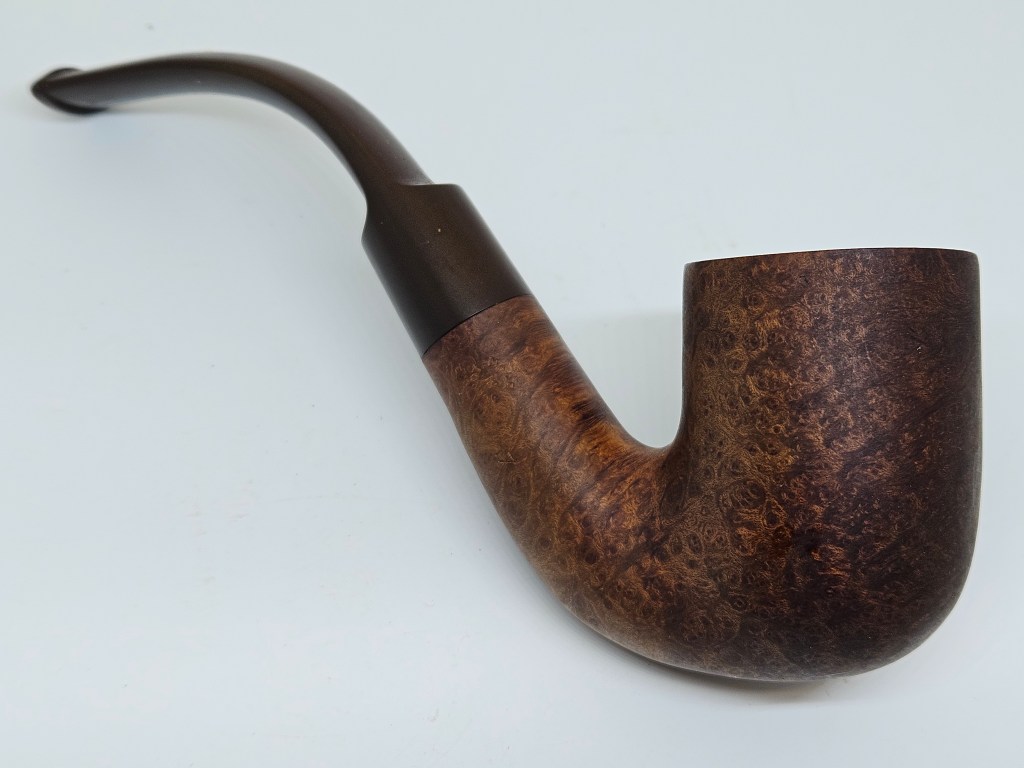
Below is the finished pipe, now en-route to a PipesMagazine forum member.
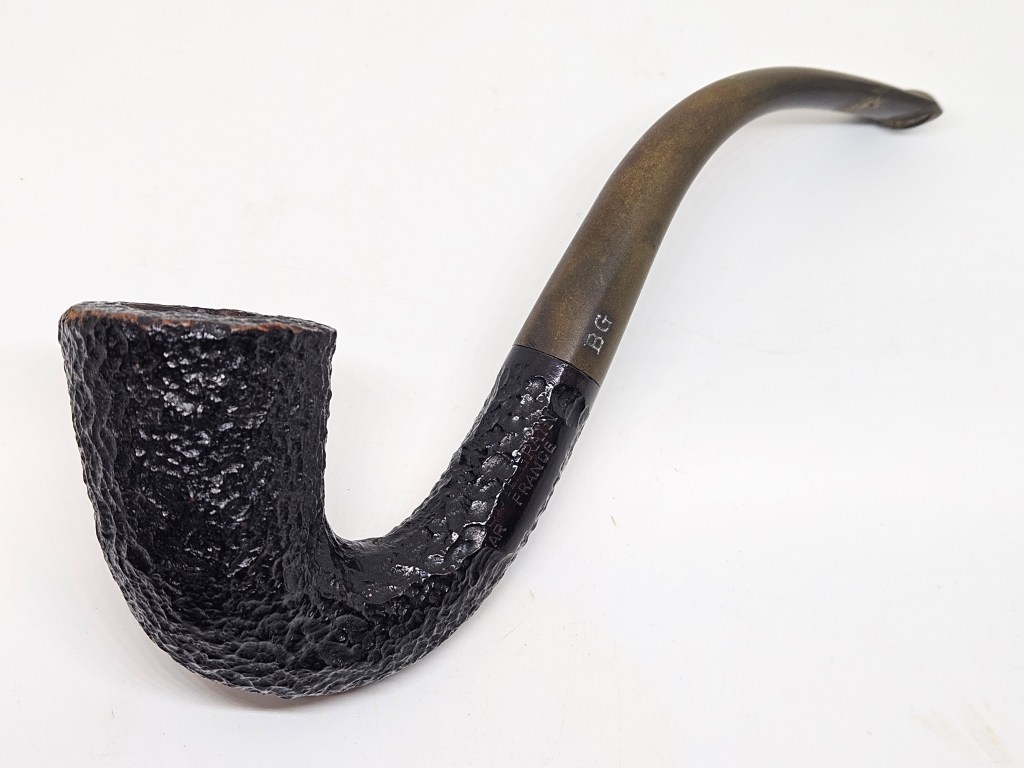
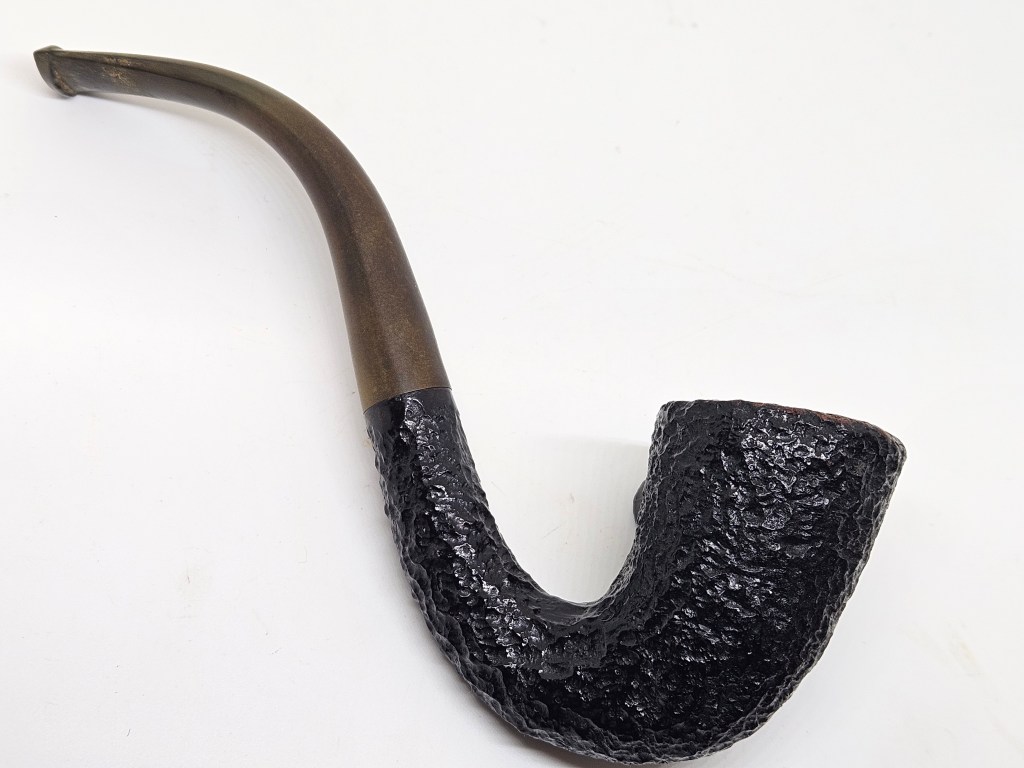
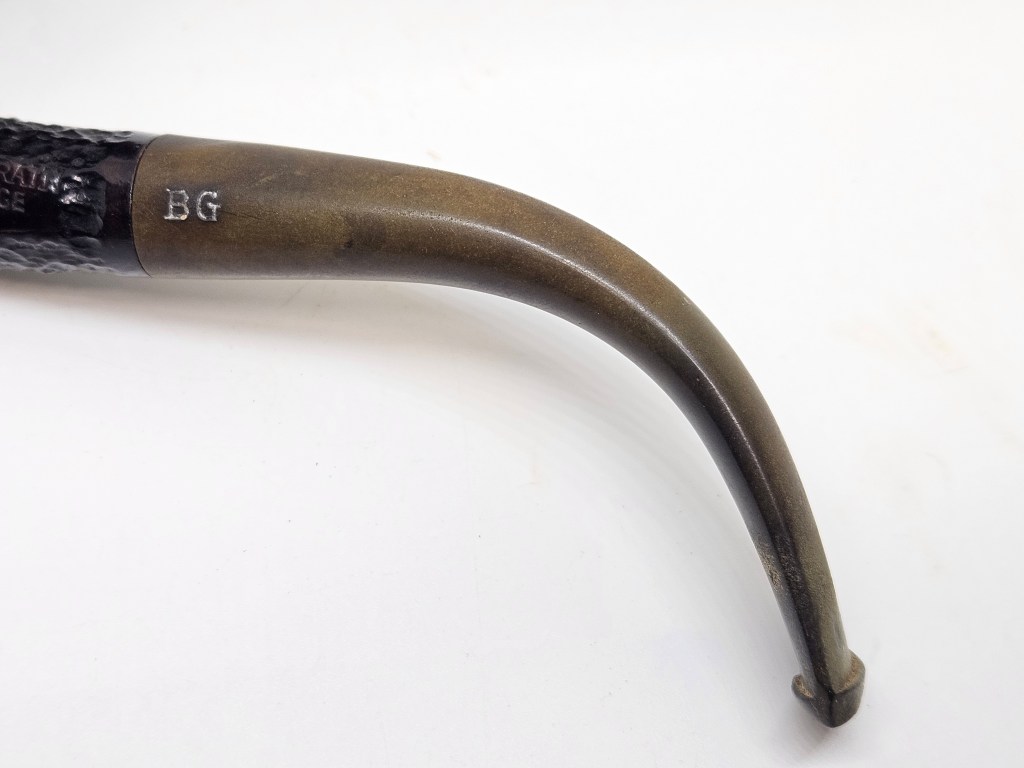
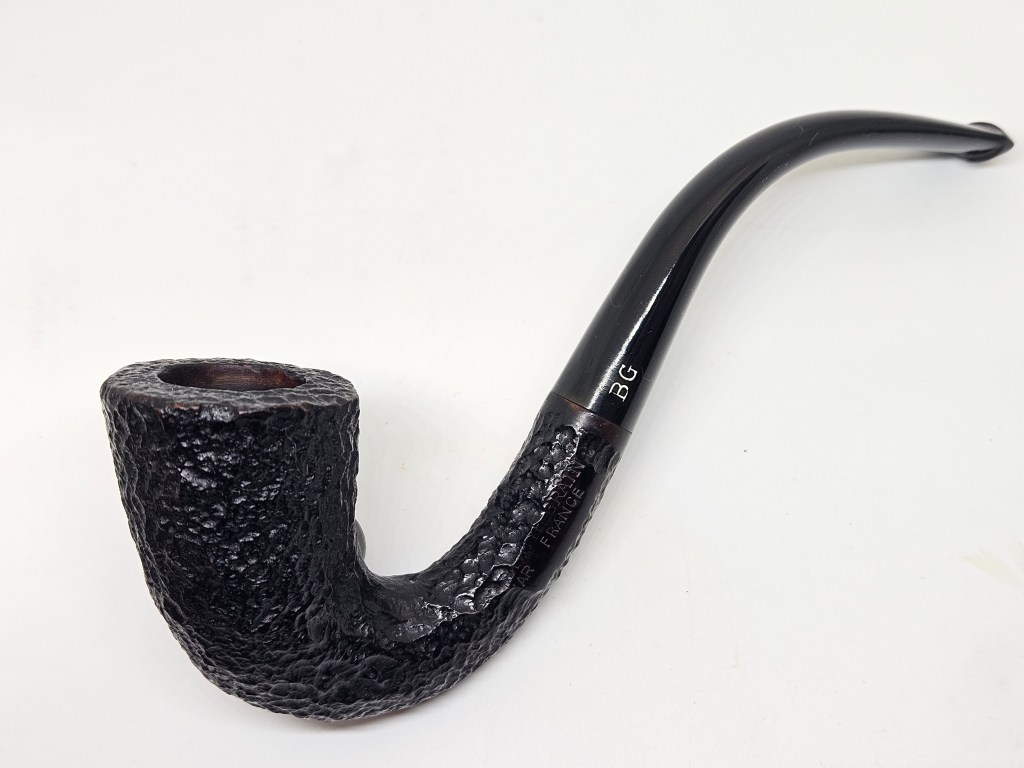
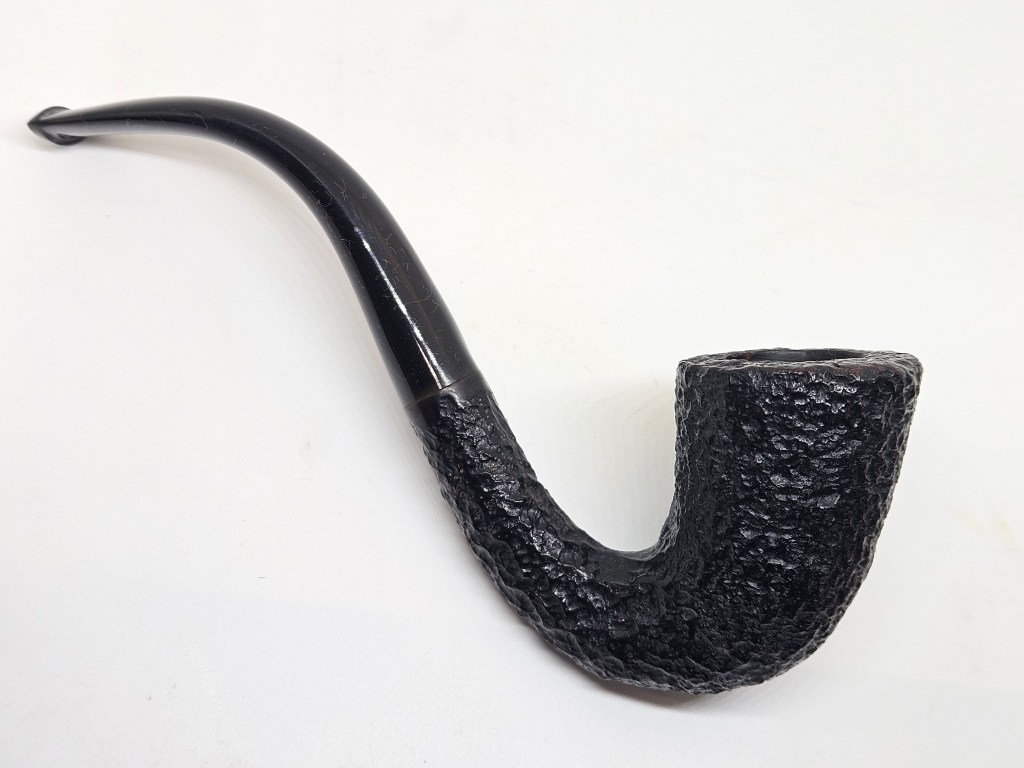
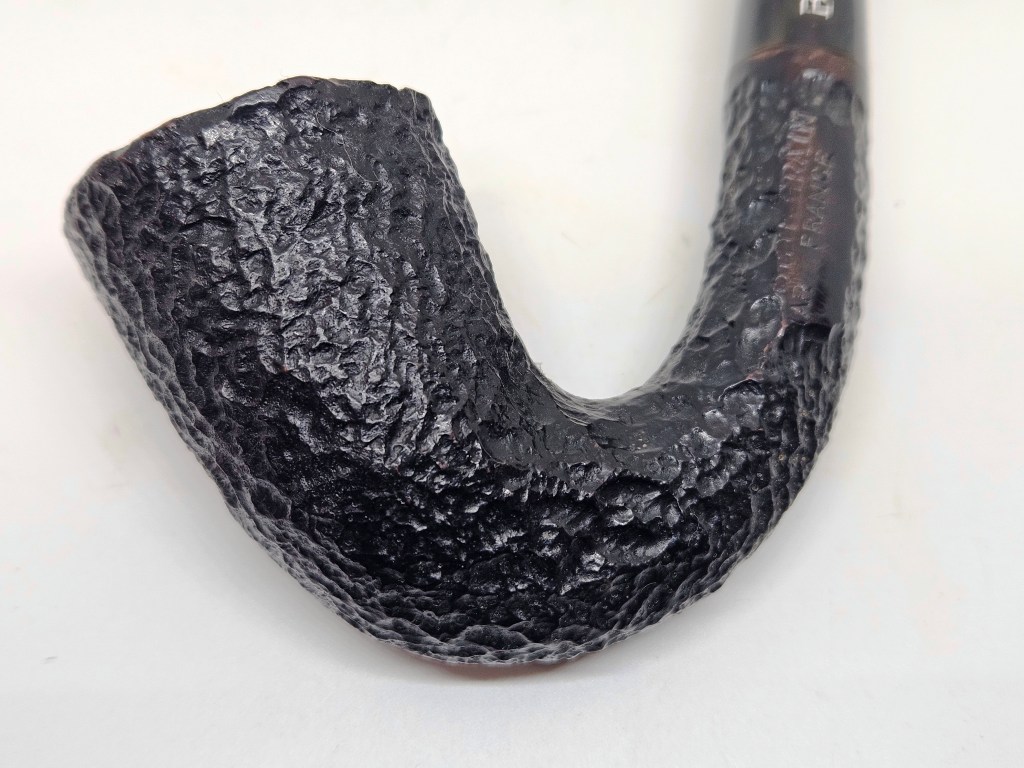
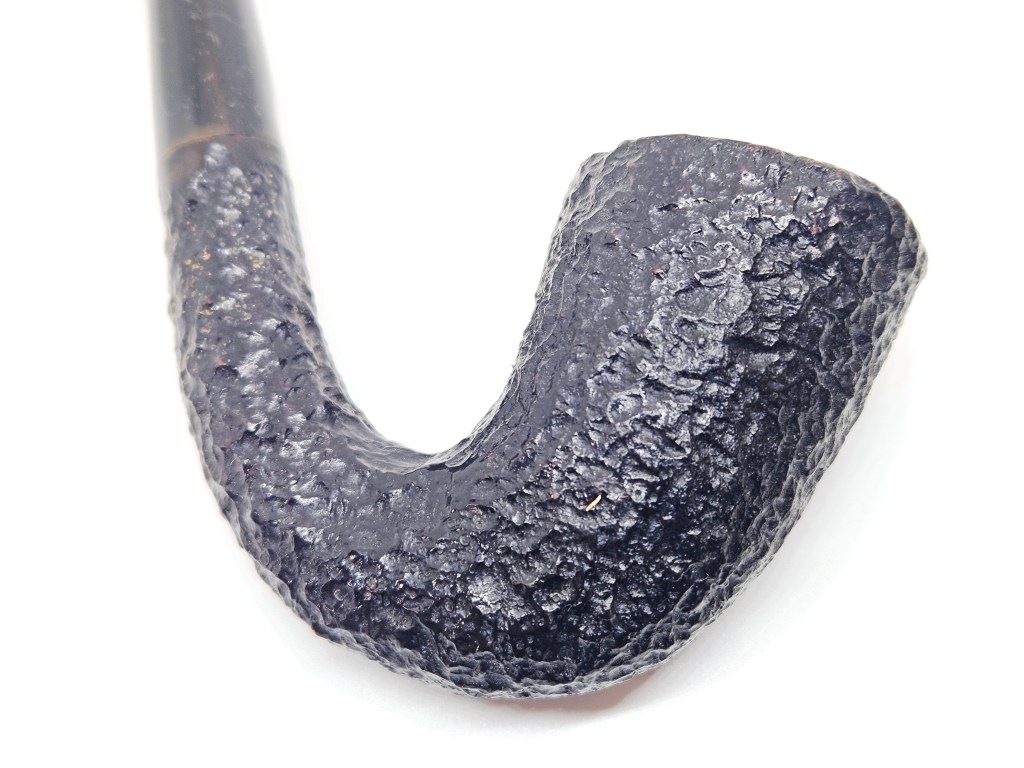
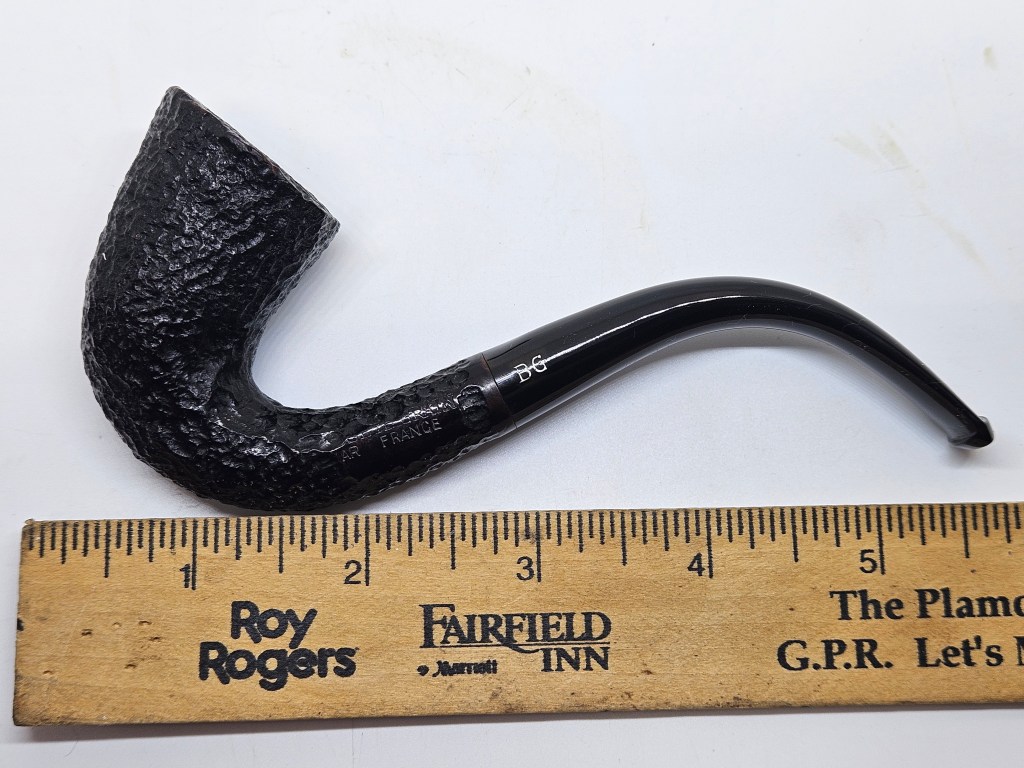
This rusticated billiard caught my eye on eBay recently, as I do no see many (any) swan neck pipes, save the very rare Dunhill LC. This one was stamped BG and made in France. I didn’t find any information about the BG brand, but “Who Made That Pipe” says it was made by the Delacour Compay.
Update 12/13/2025:
From a comment below by Kenneth Leiblich he shared the correct manufacturer:
Hey Al, you may be interested to know that this pipe is, in fact, made by Berrod-Regad of France. The original company dates back to 1875, but the current company is more of conglomerate (they own Butz-Choquin, Chap, Claude Romain, Bontemps, Dr. Boston, and Jima). Here is a link to Pipephil which shows the same logo as yours.
I knew from previous Delcour pipes that Steve and I had restored, that the Delcour factory was located in St. Claude France (not surprisingly!) The factory was dissolved by 1955, so I assume this pipe was made before that year.
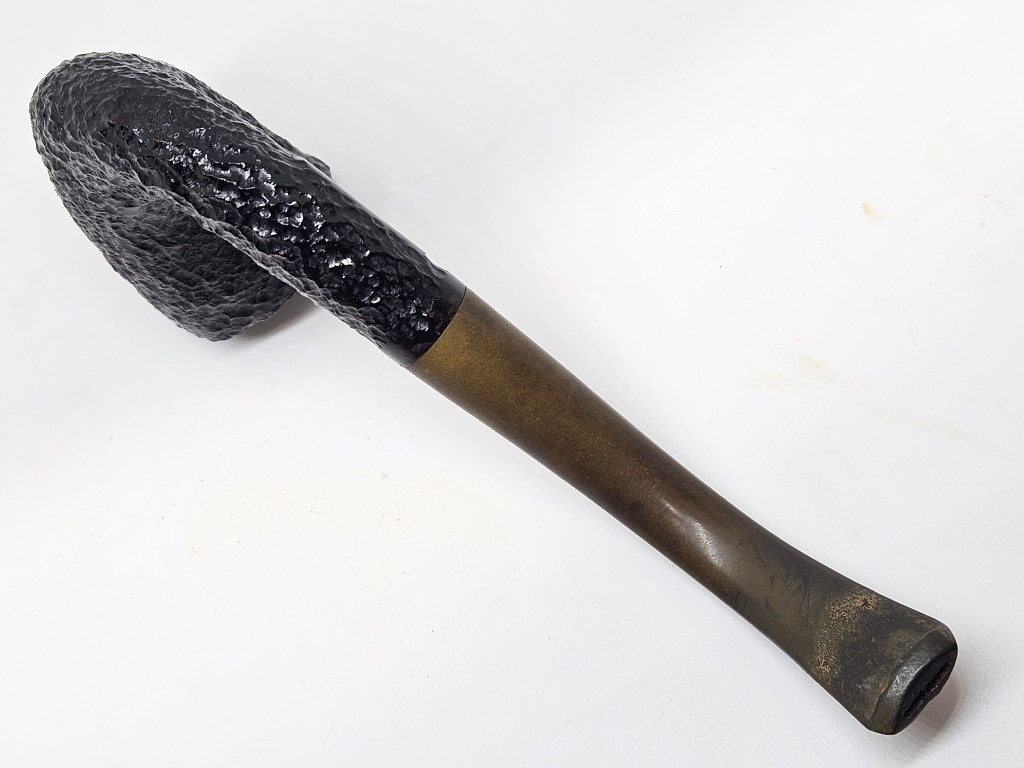
The pipe looked to be in excellent condition, save for a heavily oxidized stem. It looked large in the eBay ad photos, but I was surprised to find it to be relatively diminutive at 28 grams. Below is the pipe as it was received.
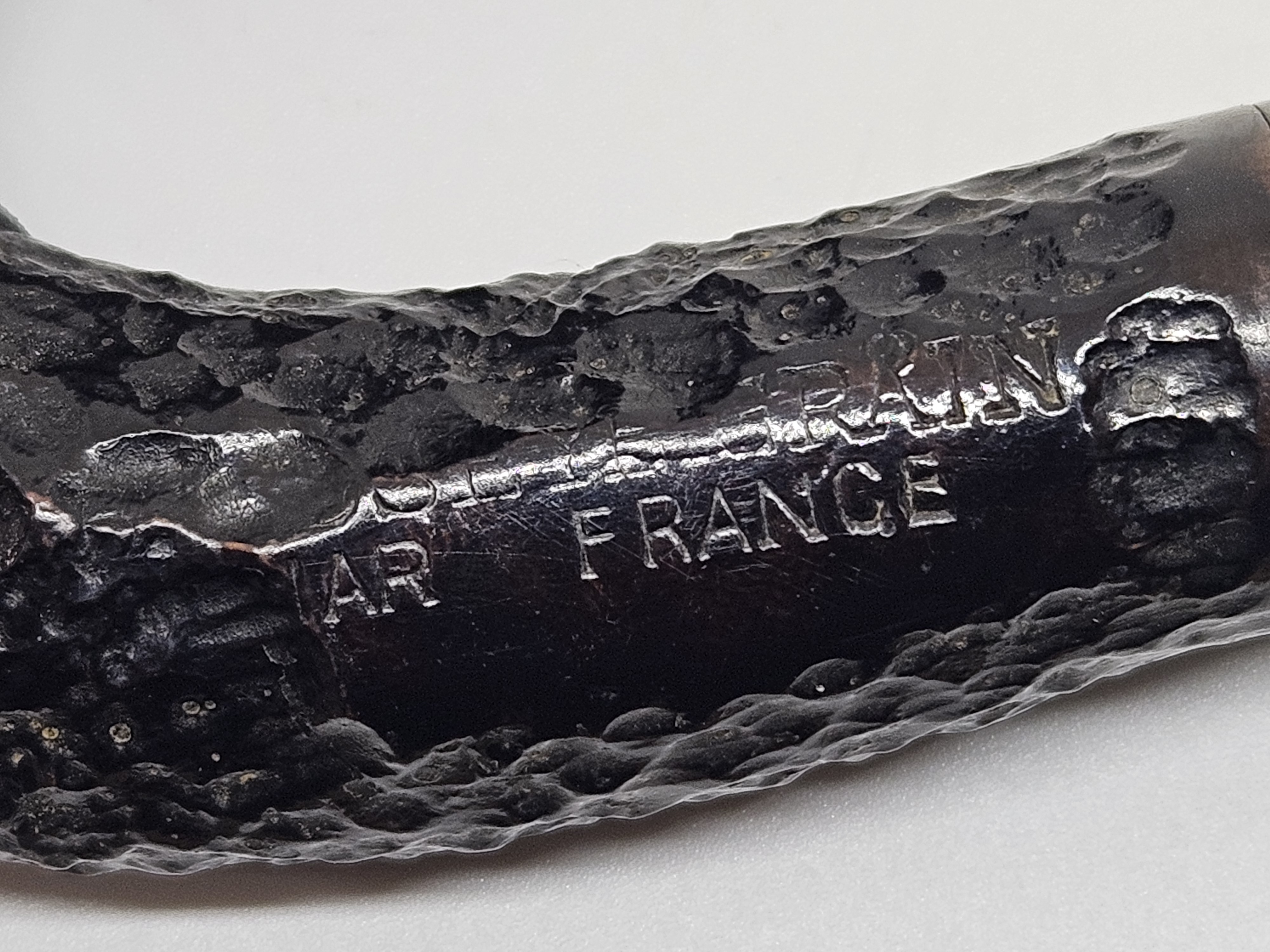
I can’t quite make out the stamping on the nomenclature, something GRAIN? And what looks to be the IAR from BRIAR.
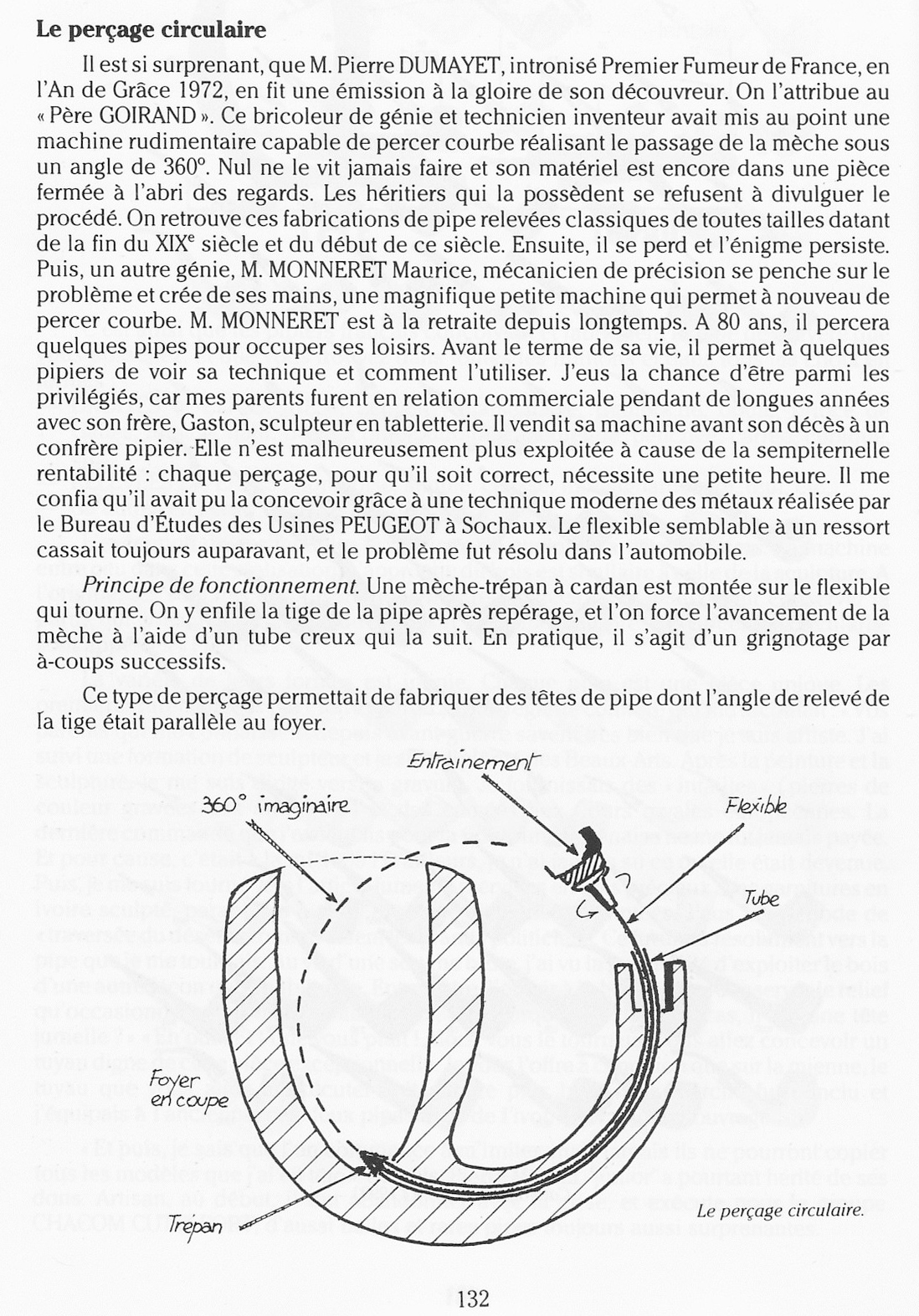
I was curious as to how a pipe with such a slender, curved shank could be drilled. I found a thread on the PipesMagazine forum with comments from Jesse Silver (Barlings & other expert) and former pipe maker Zack Hamric.
From Jesse Silver:
Nothing new about curved drilling. French carvers were using it early in the last century, Genod being one of them, which allowed them to create bents with delicate shank profiles. The famous Dunhill 120 swan’s neck is based off of the Genod design, but Dunhill didn’t have the knowledge to drill curved airways as the French weren’t sharing. So, some of these Dunhills have shanks that were spliced to the bowl to allow for straight drilling in sections.
From Zack Hamrick:
Guys, here’s a link to the method- Curved pipe drilling It involves a flexible shaft with a burr soldered to the end.That fits inside a curved tube You hold the stummel in a vise, drill a starter hole and start feeding the tube and spinning cutter into the block. There’s no chip clearance, so you have to back it out every .25″ or so…and it takes a long time… The worse part about this is that you can’t get a reamer through the curved channel, the draft hole has to be oversize to begin with to accommodate the tube and cutter, and the inner surface would be much rougher than a conventional draft hole… Other than that, it’s a fine idea- there’s a reason almost nobody uses this technique….
Zacks link went to this photo showing the drilling process, with an explanation in French.
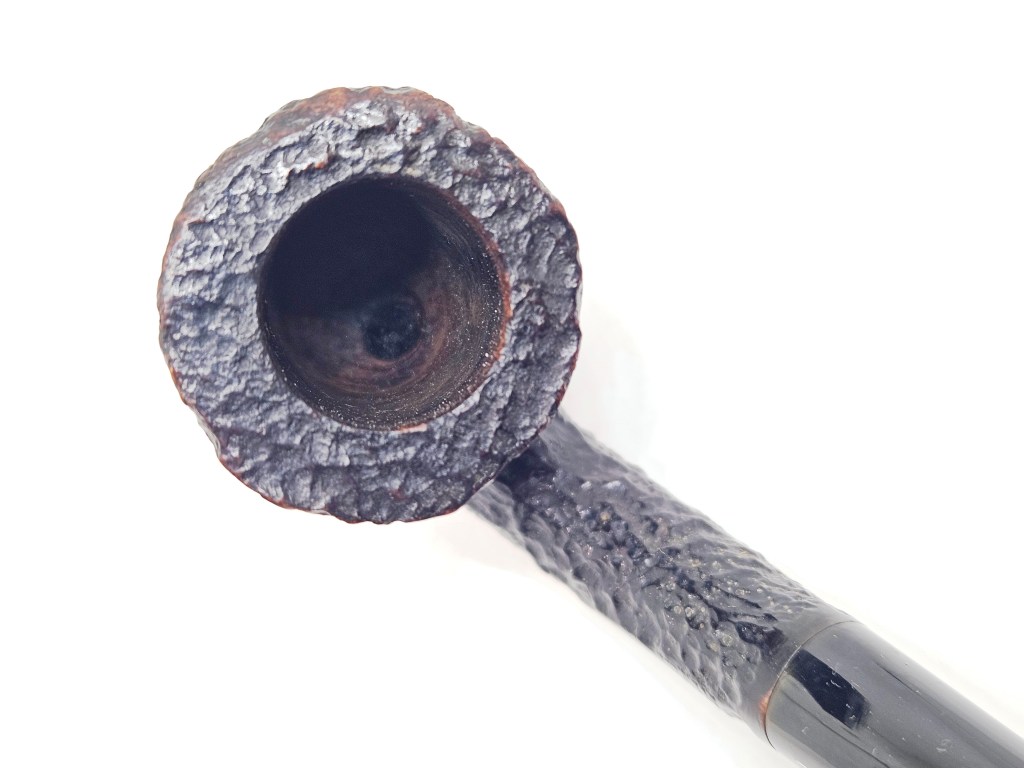
There was almost no cake in the bowl, which is conical shaped. I used a piece of 320 sandpaper wrapped around my smallest reamer bit to get the bowl perfectly clean. Cleaning the draft hole was challenging. My straight bit would not go thru. I used a very small diameter bristle brush, bent slightly and dipped in alcohol and slowly got thru the shank and into the bowl. I soaked the bowl with isopropyl alcohol and sea salt, then carefully scrubbed the shank with a brush dipped in alcohol. The shank is quite thin and delicate, so care was needed.
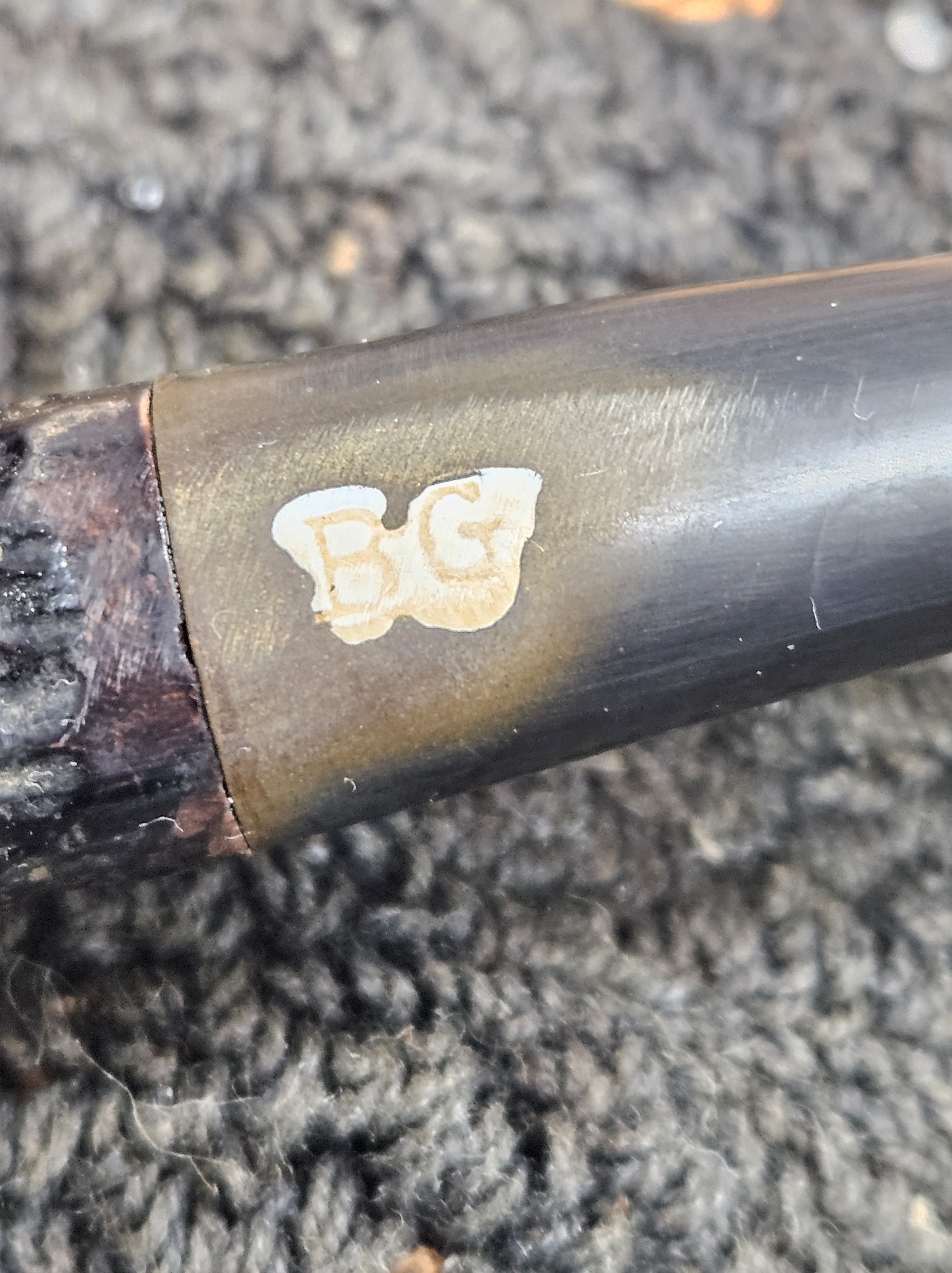
During the soak, I put a dab of white acrylic nail polish on the stamped BG stem logo.
I used a Scotch-Brite pad to remove the layer of nail polish, down to the stamped initials. I used 600, 800, 1,500 and 2,000 grit sandpaper to remove the oxidation. A magic eraser was used around the stamp. The pipe was then buffed with White Diamond and Meguiars Plastic polish. The briar was buffed by hand with Halycon wax.
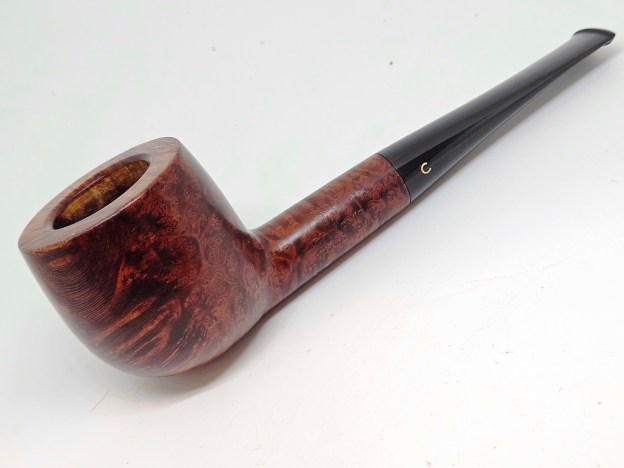
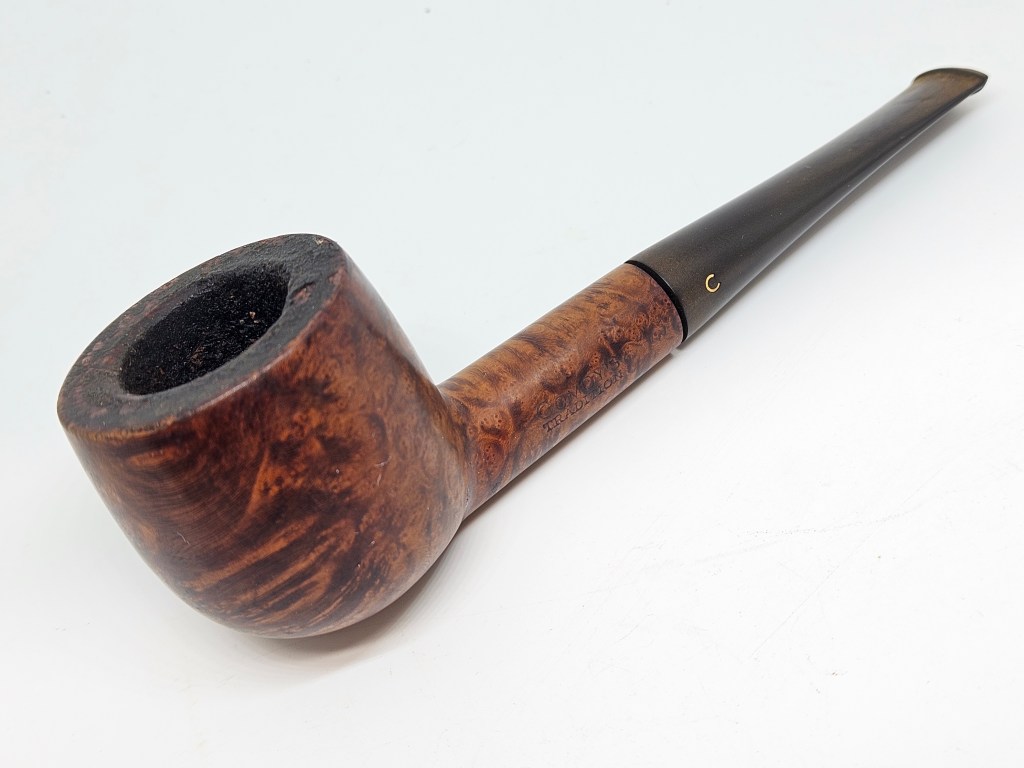
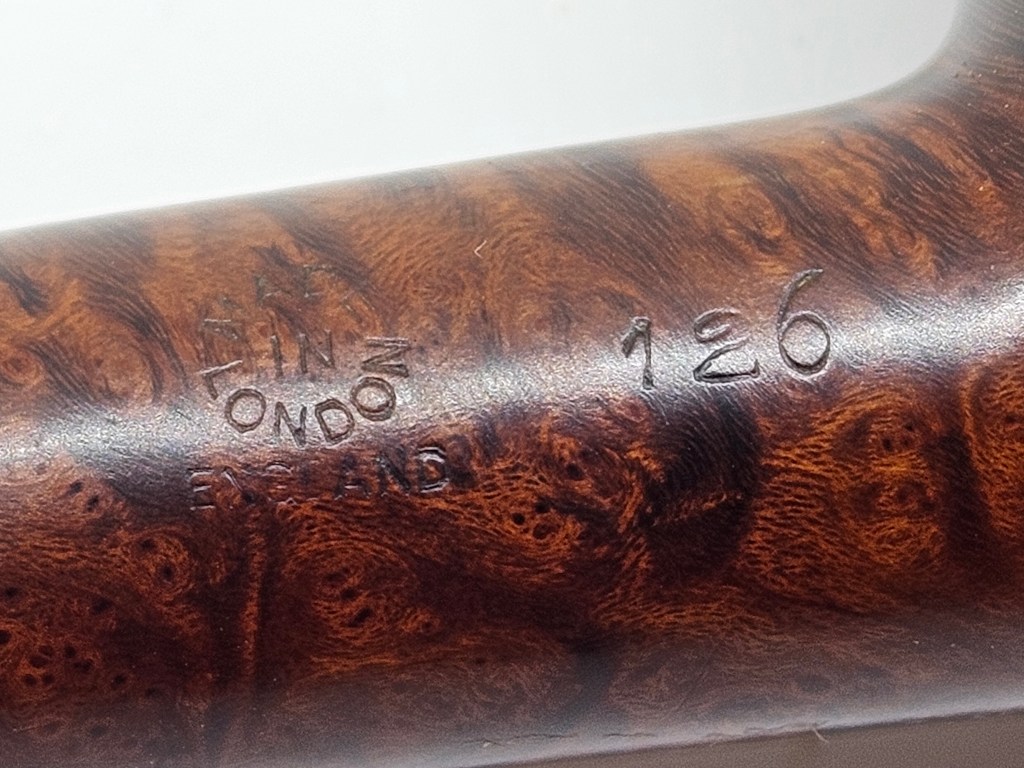
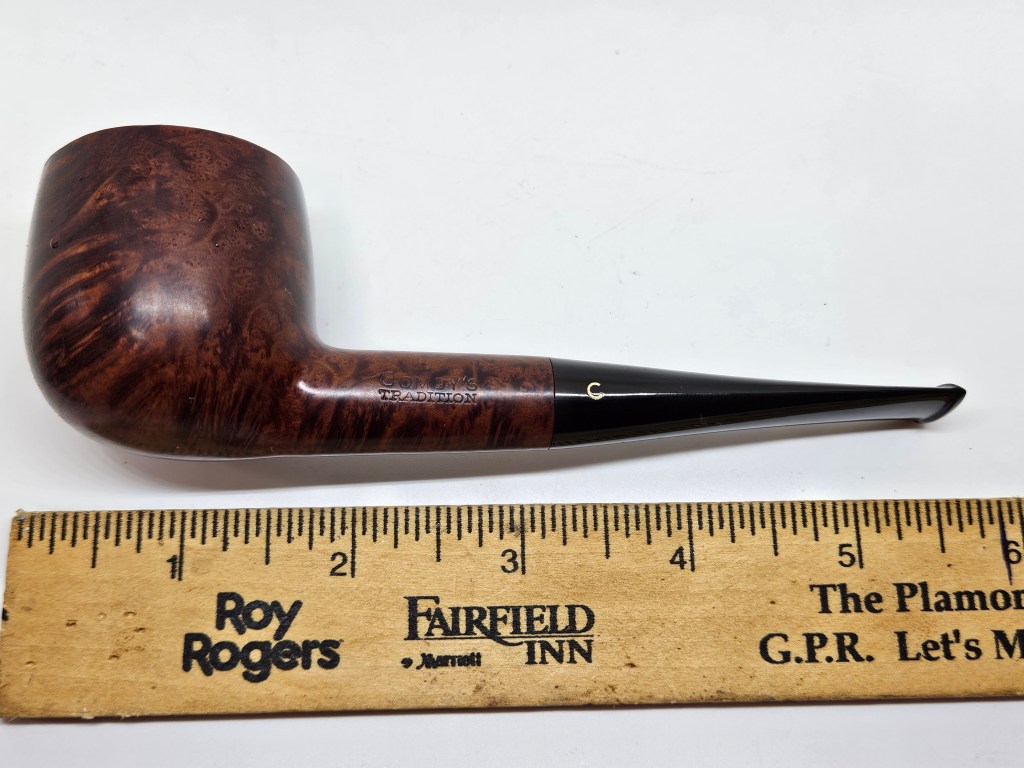
This is the third Comoy’s shape 126 that I’ve stored, but the first in Tradition finish.
The shape 126 is called a Large Pot in the Comoy’s catalog. This one has the drilled C stem logo and round Made in London COM. I would date the pipe from the 1950’s to the merger in 1981.
The pipe had some heavy tar build-up on the rim, but the beveled edge looked unharmed. The stem was oxidized with a few light teeth marks. Below is the pipe as it was received. The stem was very tight and not fully seated. After cleaning, that allowed the stem to fit flush.
I used a piece worn Scotch-Brite to remove the tars on the bowl top. The pipe was reamed of the very light cake and I found the bowl to be in excellent condition. The bowl was soaked with sea salt and alcohol.
Following the soak, I scrubbed the shank with a bristle brush dipped in alcohol, until it came out clean on a paper towel. The stem was mounted to remove the oxidation. I used 600, 800, 1,500 and 2,000 grade wet sandpaper. The stem was then buffed with White Diamond and Meguiars Plastic Polish. The bowl was buffed lightly with White Diamond rouge and several coats of Carnuba wax.
Below is the finished pipe. I’ve never been a Pot shape piper before, but this one I think will stay in my collection for the near future.
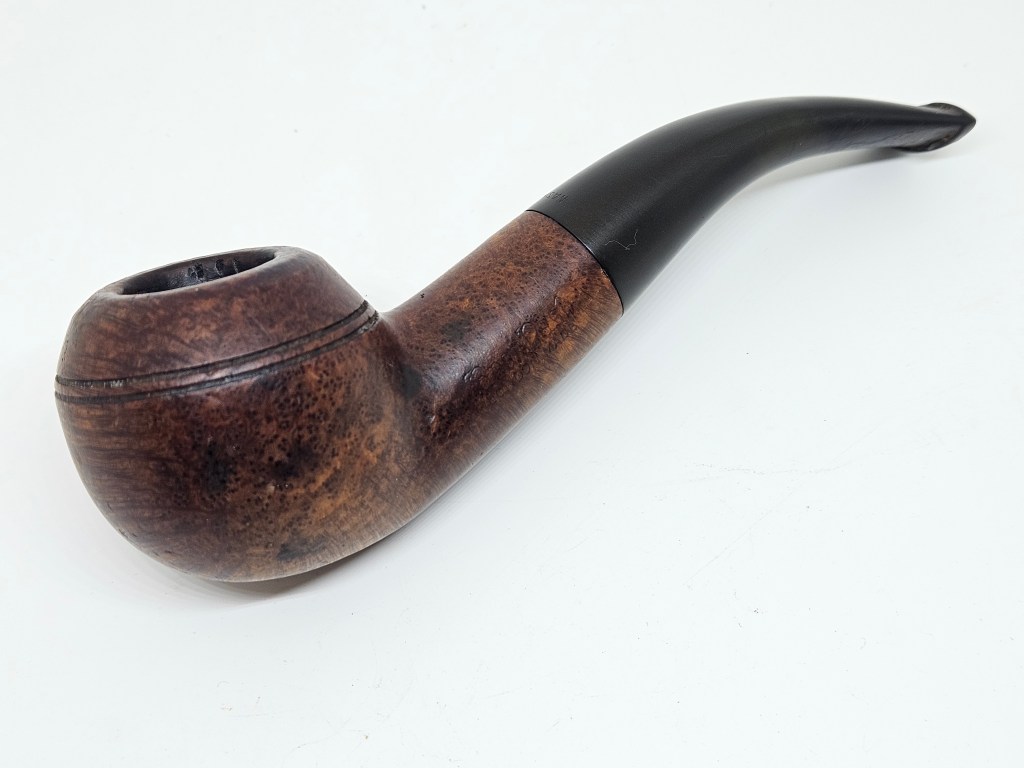
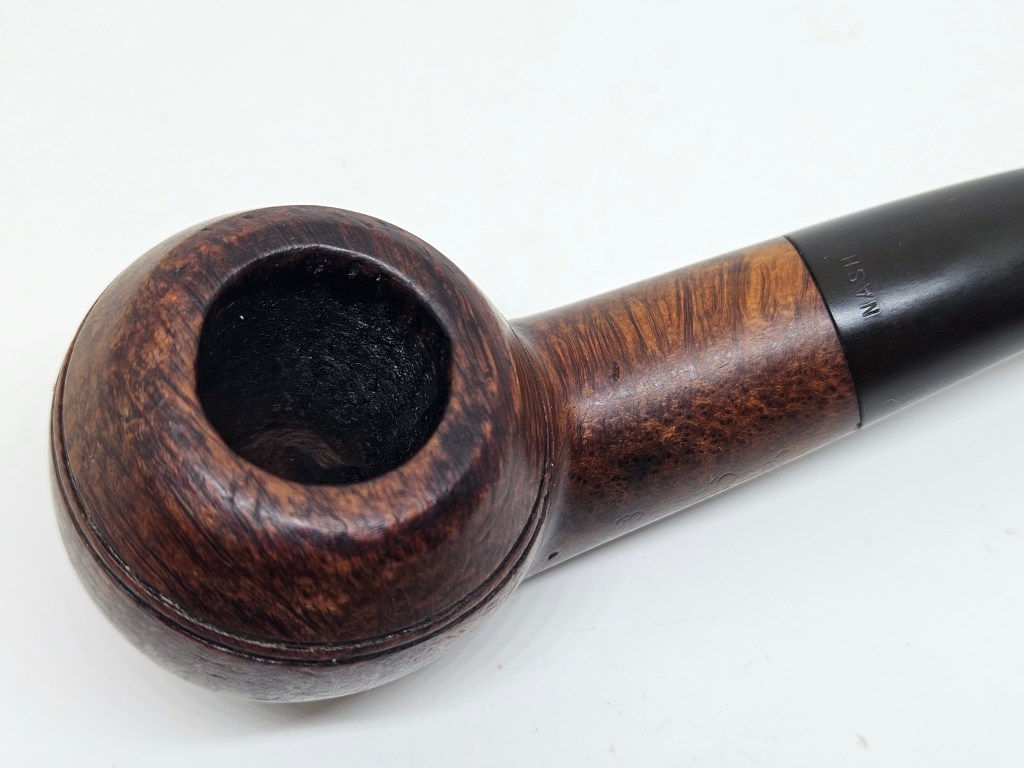
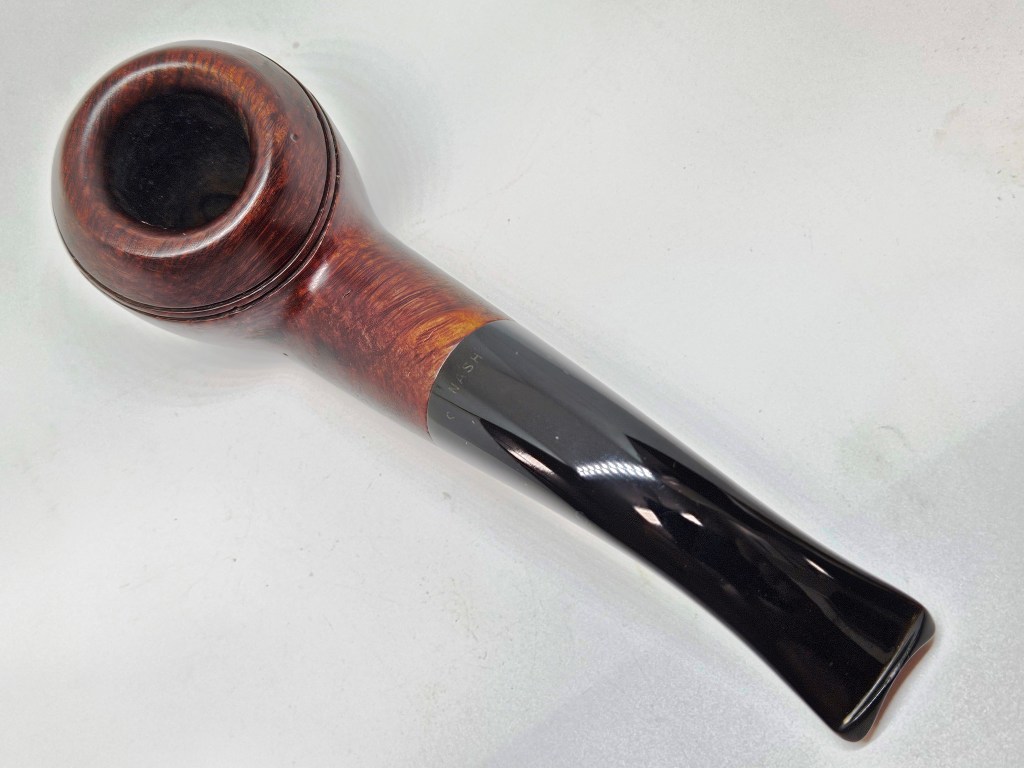
This unusual GBD second line caught my attention on Ebay for several reasons. The tapered stem Rhodesian shape is one of my favorites and the shape number, 9241, is one digit off from the famous GBD 9242 shape. The pipe was stamped Beau Nash and it also has a NASH stamp on the stem. I’ve restored a lot of GBD’s but never encountered this second line or the 9241 shape number.
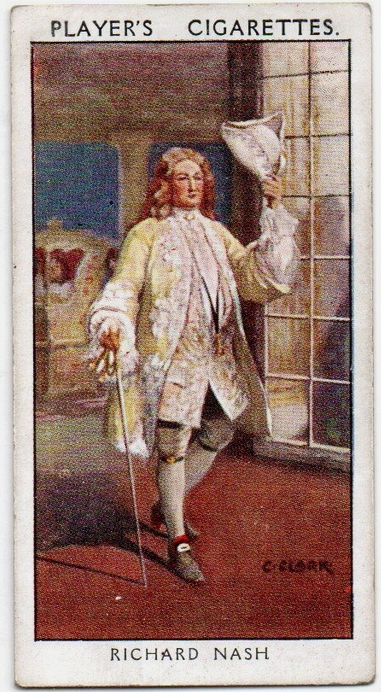
I assumed this was a pipe GBD made for a tobacco shop pipe. While there are numerous “Beau Nash” retail shops in the UK, I found no record of a Beau Nash or a Nash tobacco shop. Beau Nash was born Richard Nash, a 17th century bon-vivant and general scoundrel of sorts. I found this Johnny Player “Dandies” collectible card on Ebay that neatly summarizes his history. He sound like a fun guy to hang around but died broke due to gambling debts and lived with a prostitute of sorts.
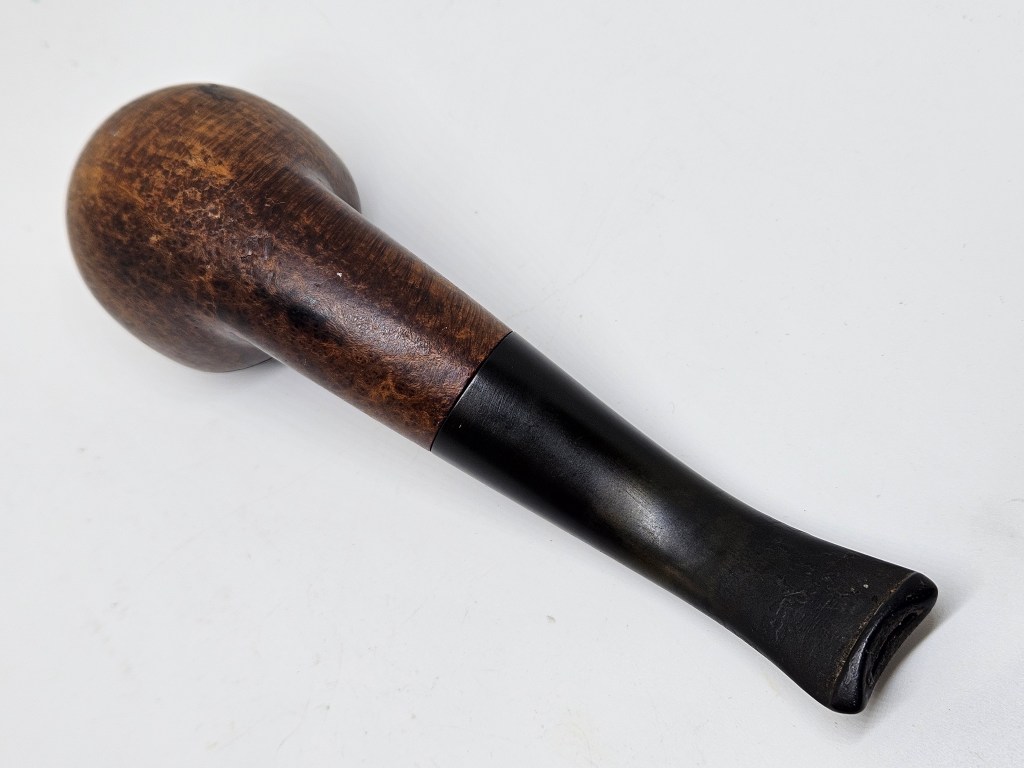
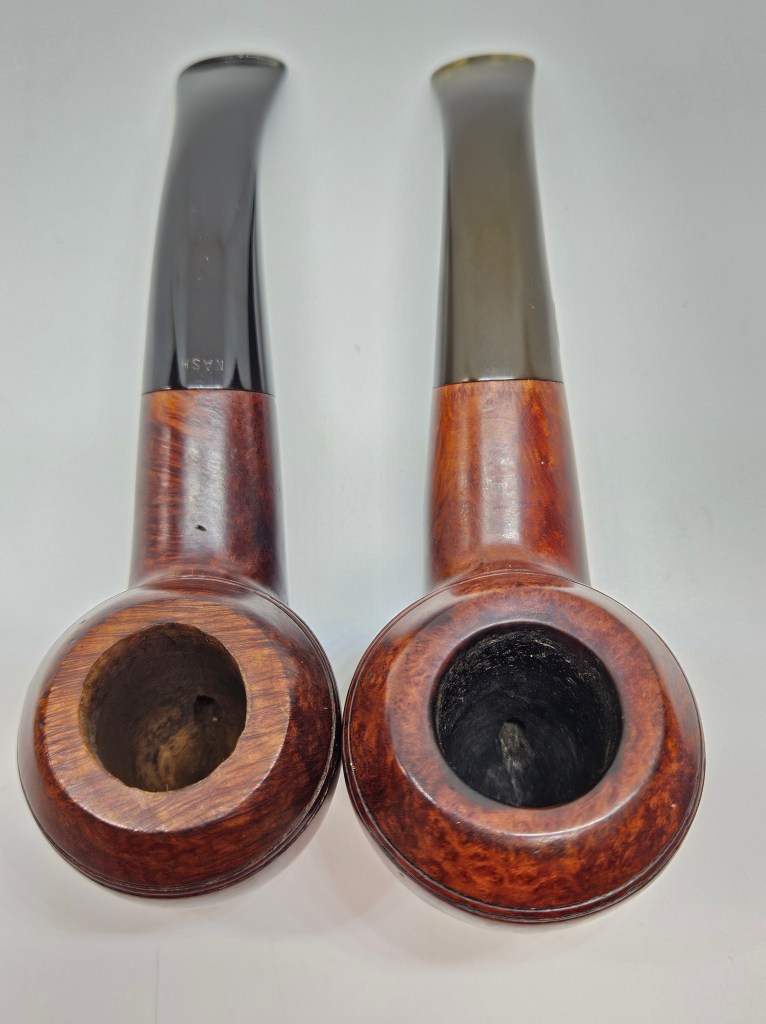
The pipe looked to be in decent shape from the Ebay ad, but on arrival, showed it would need a considerable amount of work. The stem was only slightly oxidized with no significant teeth marks. The button however, was so closed with debris/build-up that at first thought it appeared to be a twin-bore stem (and I’m not a fan). The briar had plenty of dings, a slightly out of round bowl and worst of all, a lot of road rash on the heel. I had not encountered a stem with some many bruises!
The bowl had very little cake, so it was reamed slightly and I used some 320 paper to smooth out the bottom of the bowl. The road rash was challenging. I tried steaming the dents and even used some Tripoli (I rarely use this rouge). I decided to lightly sand the exterior with 600 and 800 grade wet paper. That removed most of the offending rash. The existing stain was blotchy, so I restained it with a heavily diluted solution of Fieblings Medium Brown stain. The briar was soaked with sea salt and alcohol and the shank was thoroughly scrubbed with a bristle brush dipped in alcohol. The bowl was then buffed with White Diamond and several coats of Carnuba wax.
For the stem, I used a slot funneling tool to work out the gunk in the button. The stem was plugged with build-up. I used a bristle cleaner dipped in alcohol and then toothpaste to clean the draft hole. Mounted, the stem was polished with 600, 800, 1,500 and 2,000 grades of wet sandpaper. It was then buffed with White Diamond and Meguiars Plastic polish.
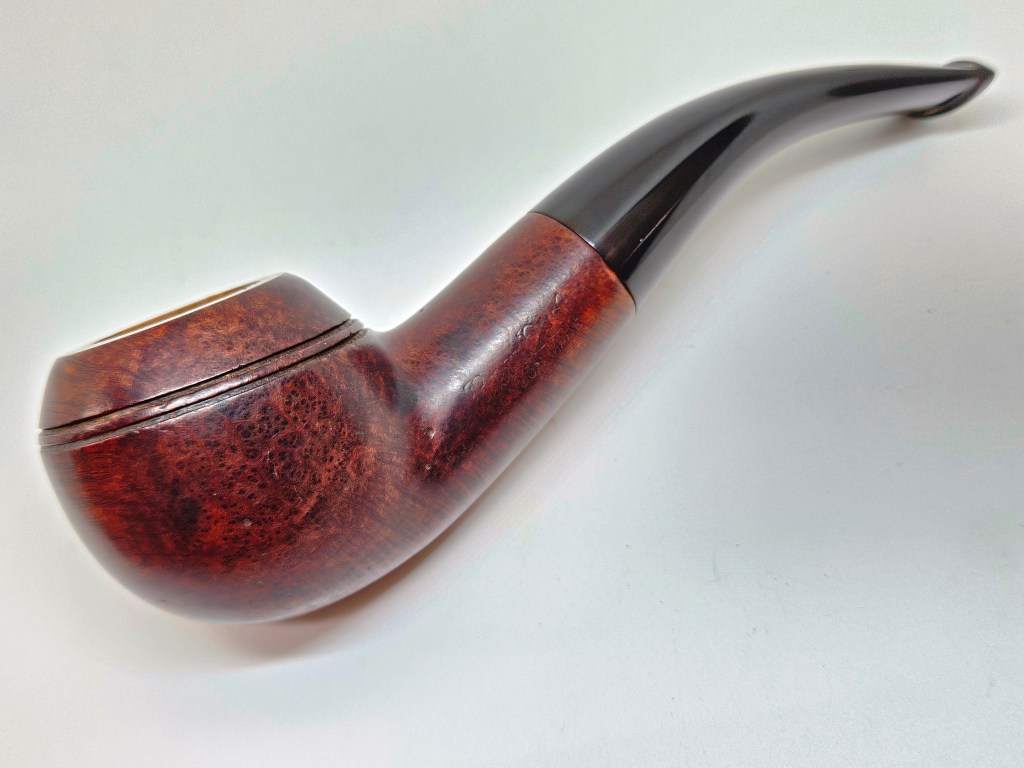
Below is the finished pipe and a comparison to it’s cousin, the 9242 shape. The 9242 is slightly larger in all dimensions, weighing 53 grams versus 44 for the 9241. This will make an interesting addition to my GBD Rhodesian collection.
Update – Sept 2023
After smoking the pipe for a few weeks, I was not pleased about how the bowl top looked. Putting it back in my cabinet with other GBD Rhodesians, I realized it was missing the beveled bowl top like my 9438’s and 9242’s featured. The bowl top was in such bad shape as received, I’m not certain if it had a beveled top or rounded. I used a piece of 220 paper over a round ball end screwdriver to bevel the top. It looked better already. I used again, the Fieblings Medium Brown stain, heavily diluted to match the bowl. I did heat the bowl with a heat gun prior to the stain. I think it looks much better with the beveled top and it was worth the extra effort.
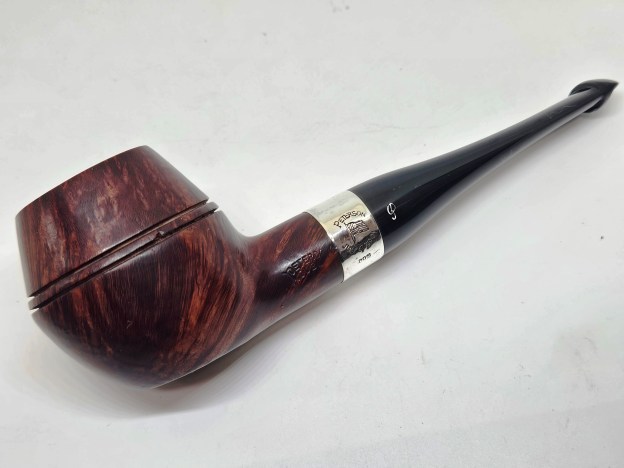
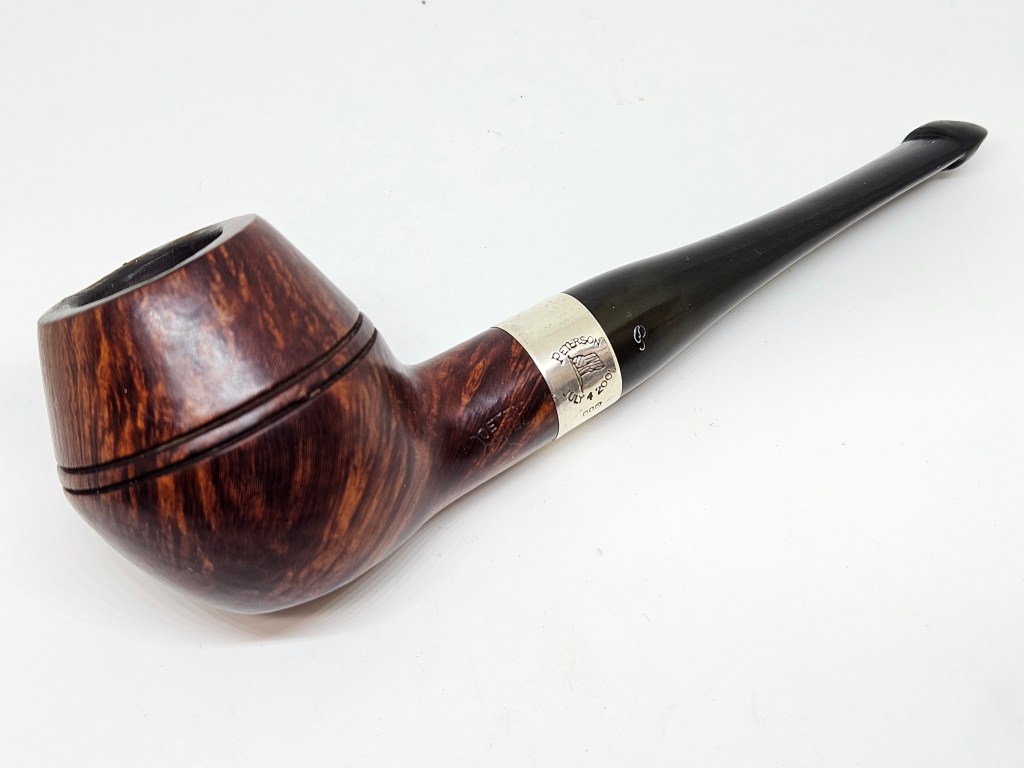
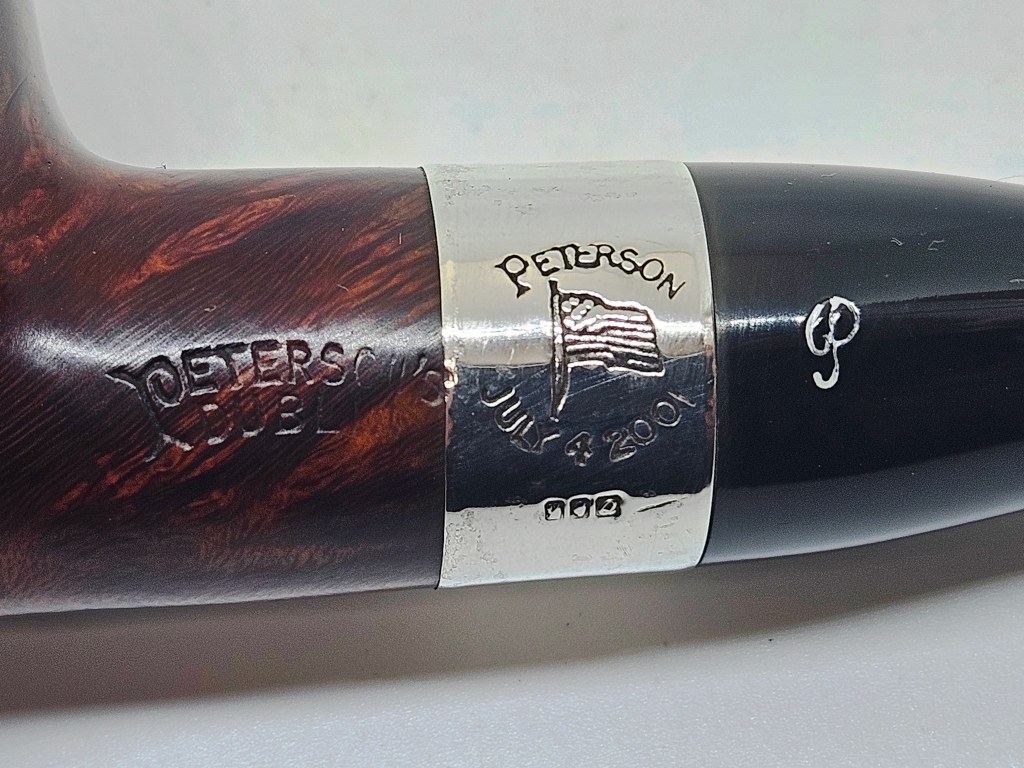
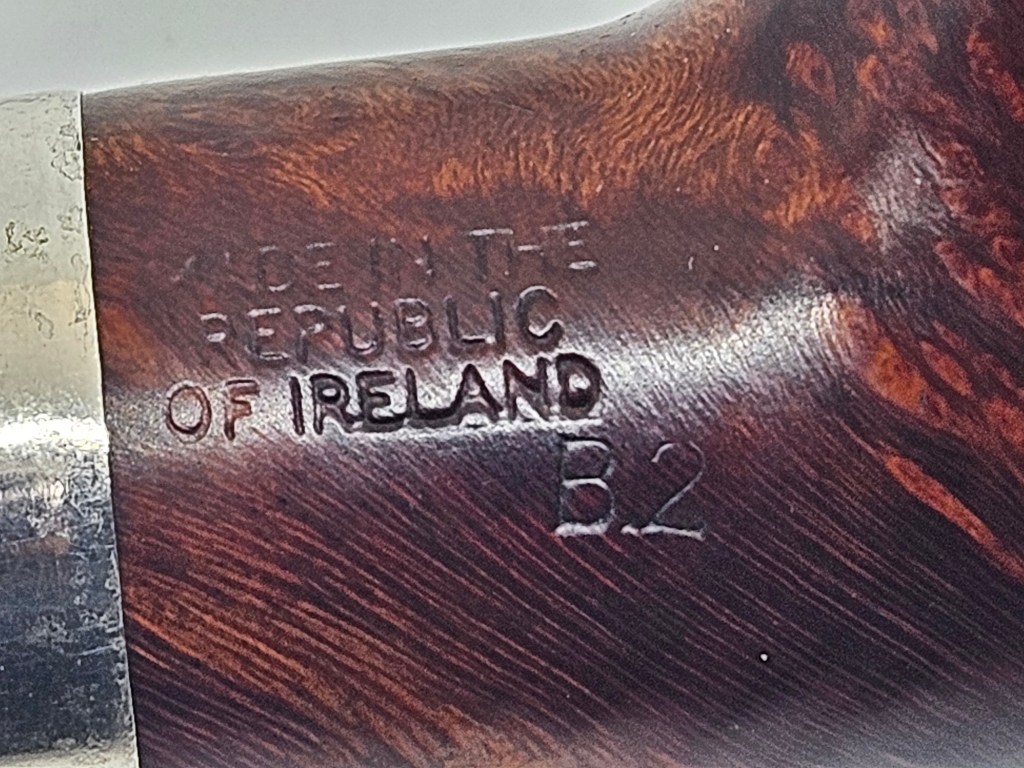
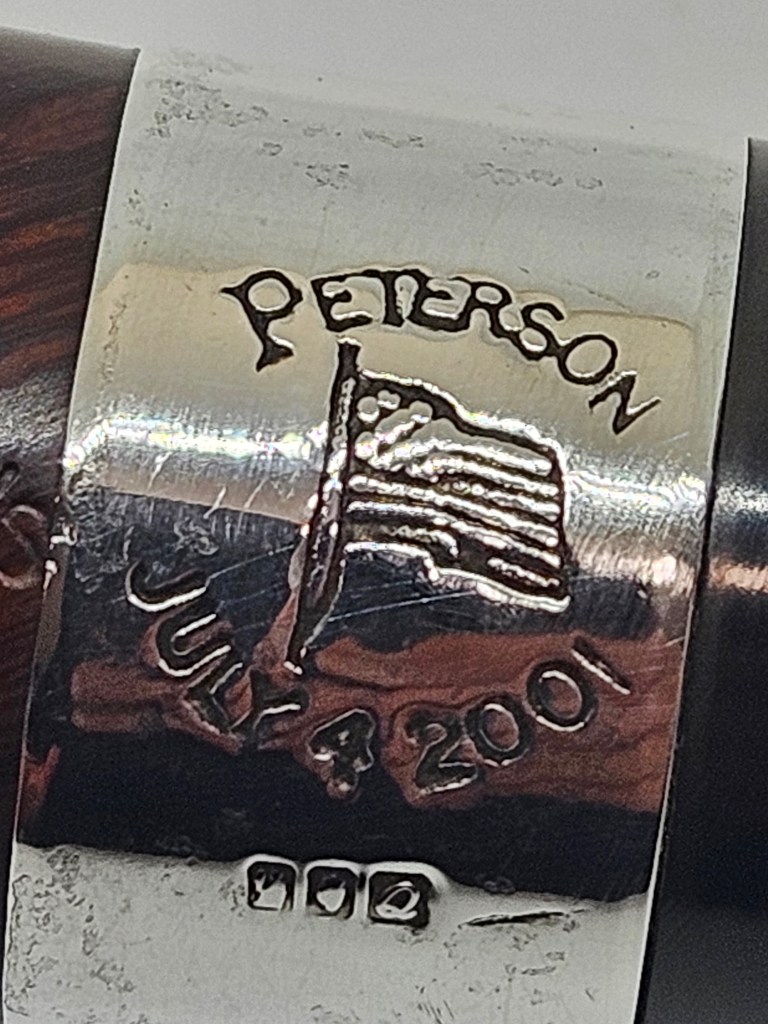
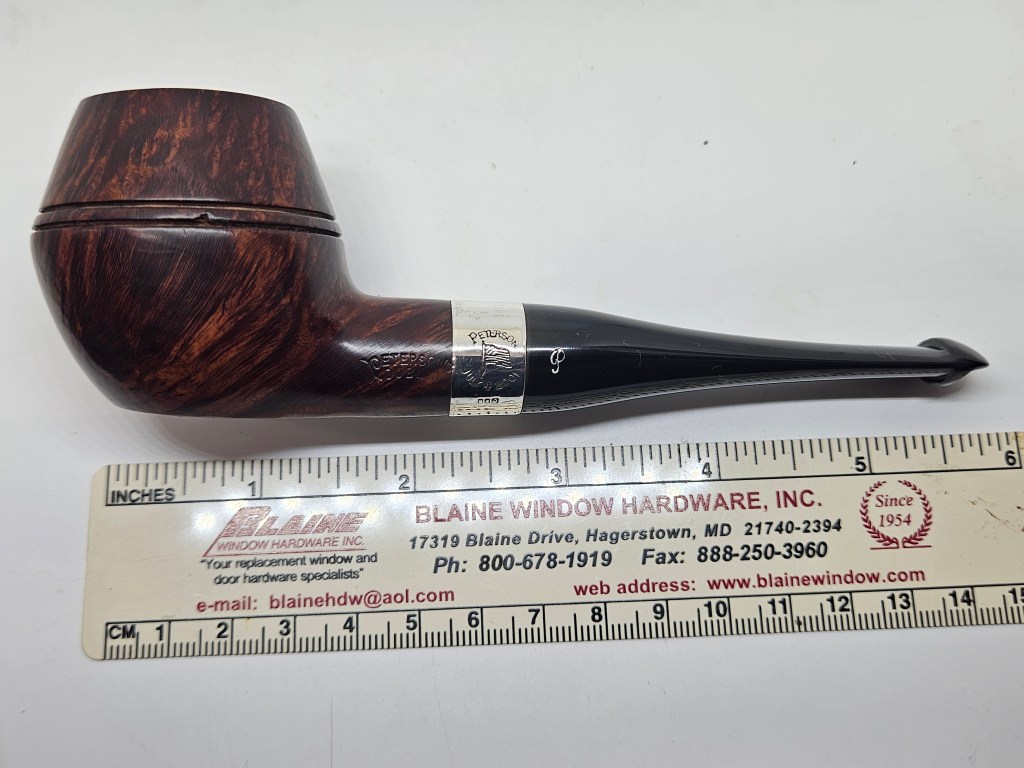
I enjoy finding unusual Peterson shapes. This B2, a stylized straight Rhodesian shape, was a 2001 “4th of July” commemorative that was recently listed on Ebay. It didn’t gather much attention and I won the auction. It joins a B5 Supreme in my pipe cabinet.
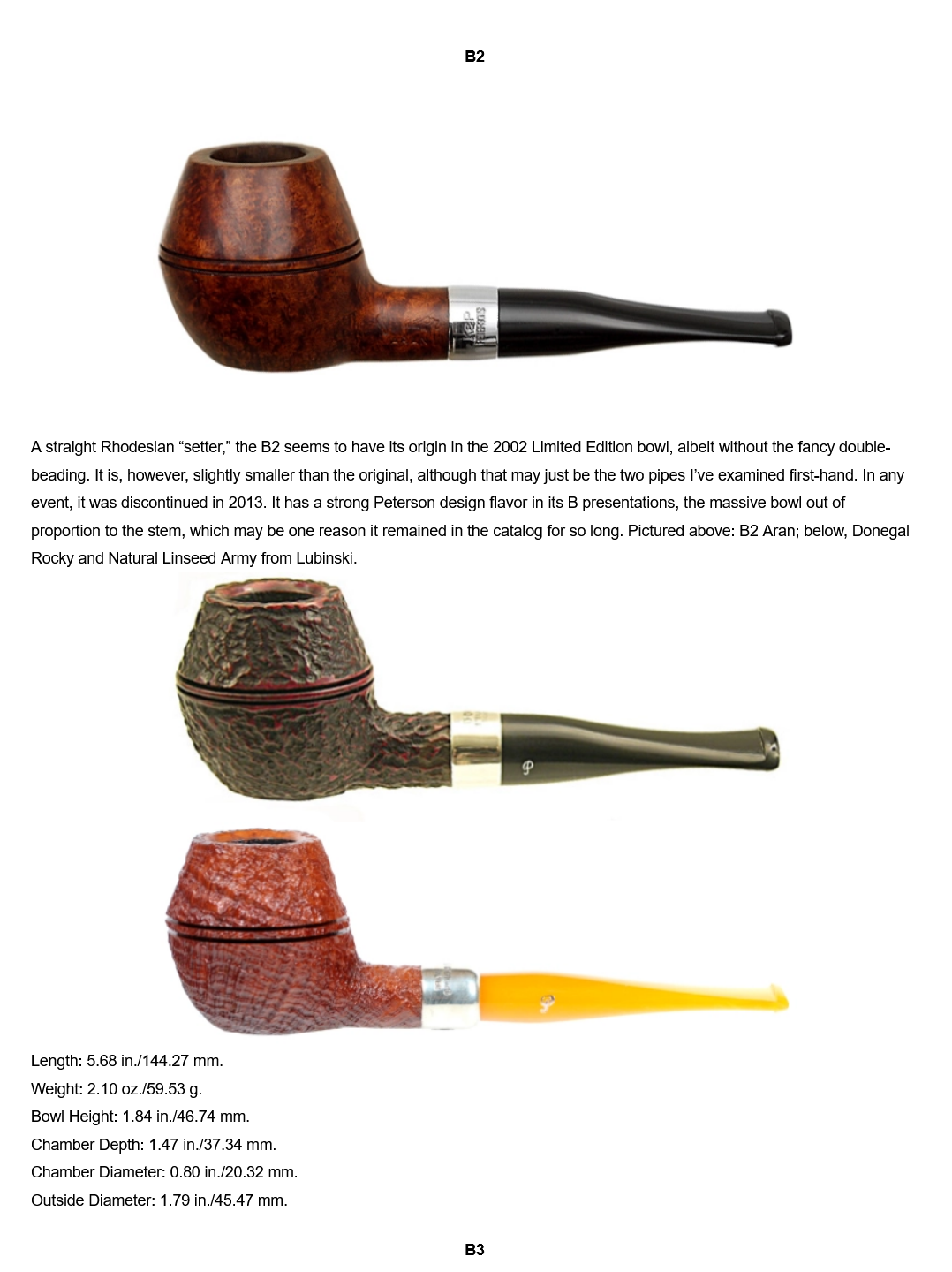
I wasn’t aware that Peterson made a short run of “4th of July” commemorative pipes. Whenever I have a Peterson question, I turn to Mark Irwins blog, Peterson Pipe Notes. From the blog, I learned that this line ran from 1998 to 2004. Mark had a blog entry dedicated to the B shape line:
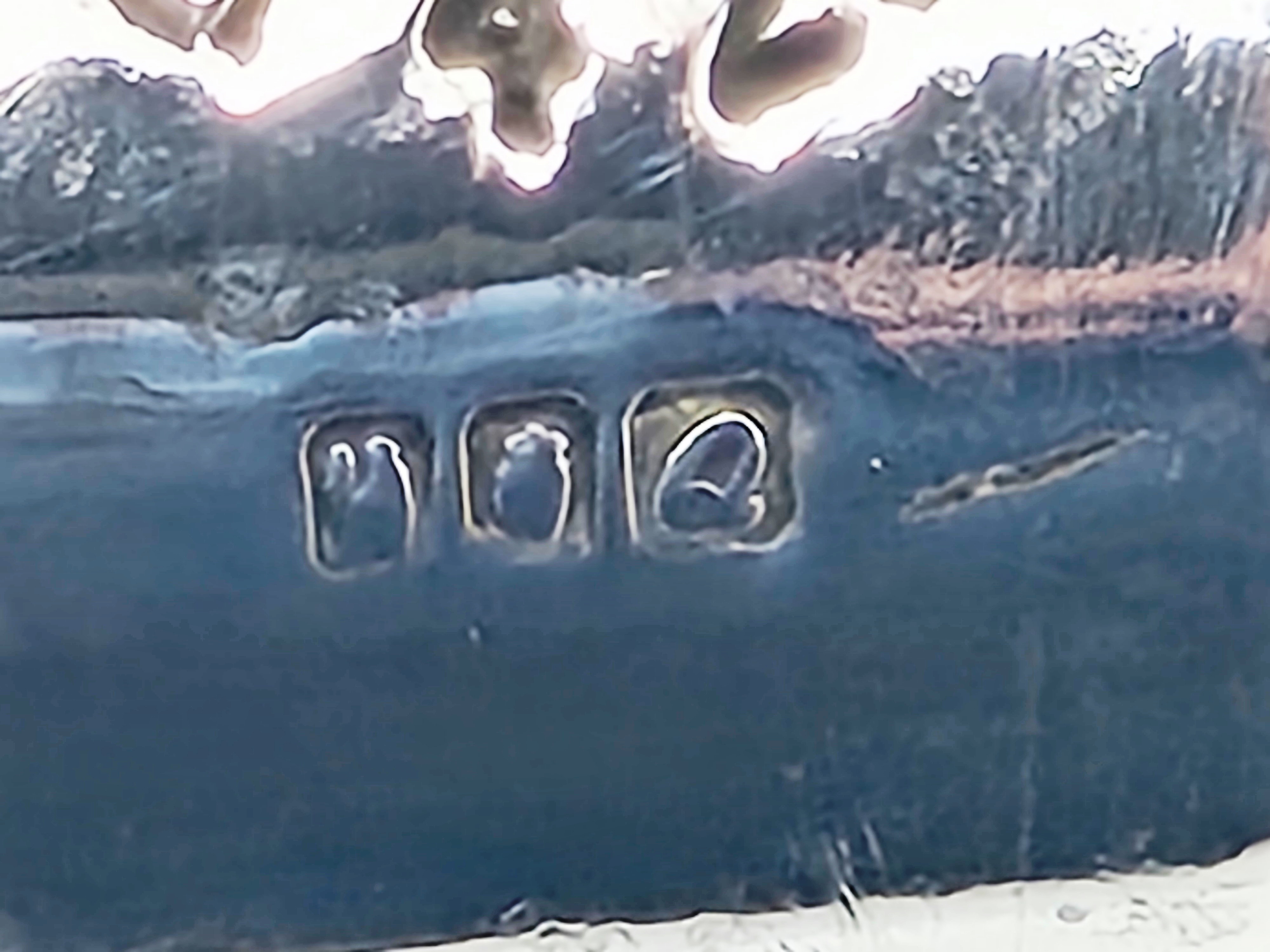
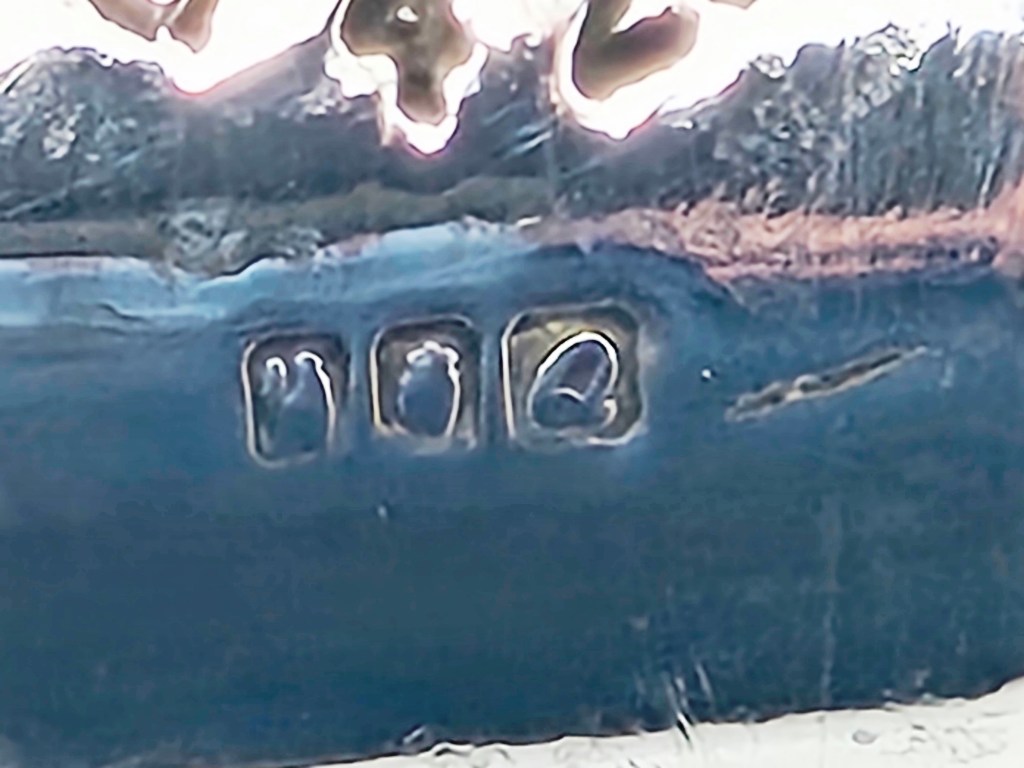
The hallmarks are a bit worn, but the distinctive Q for the year 2001 is easily recognized.
The pipe was in good condition, but the uneven and scorched bowl top was doing to need some work. The stem had a tiny pin prick below the button and in very good condition. Below is the pipe as received.
I reamed the mild cake and soaked the briar with sea salt and alcohol. I decided that the scorched bowl top would need to be removed. I only had to remove a small amount of material to reach un-scorched briar. I used a Medium brown stain to finish the bowl top and match the pipe.
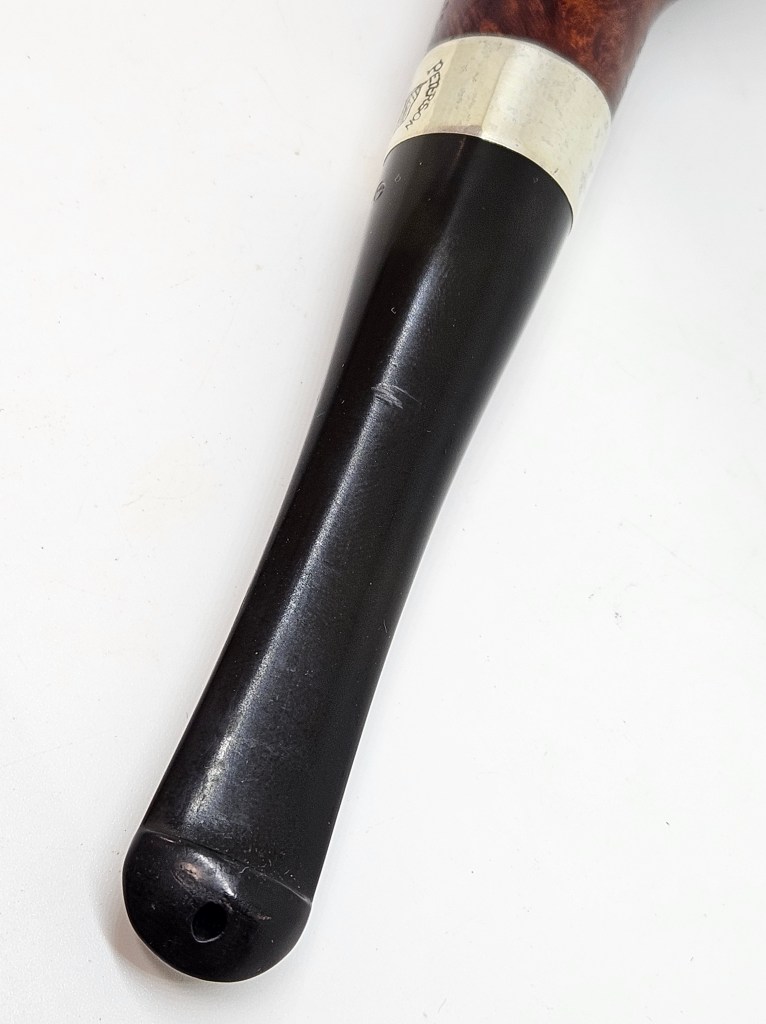
The P stem logo was in good condition but missing the while paint. I filled it with white acrylic nail polish and let it dry overnight. I buffed off the excess with a Micro-Mesh pad. The lightly oxidized stem was restored using 800, 1,500 and 2,000 grade wet sandpaper. The stem was then buffed with White Diamond and Meguiars Plastic polish.
The bowl was buffed lightly with White Diamond and then several coats of carnuba wax. I used some cream silver polish applied by hand on the silver band.
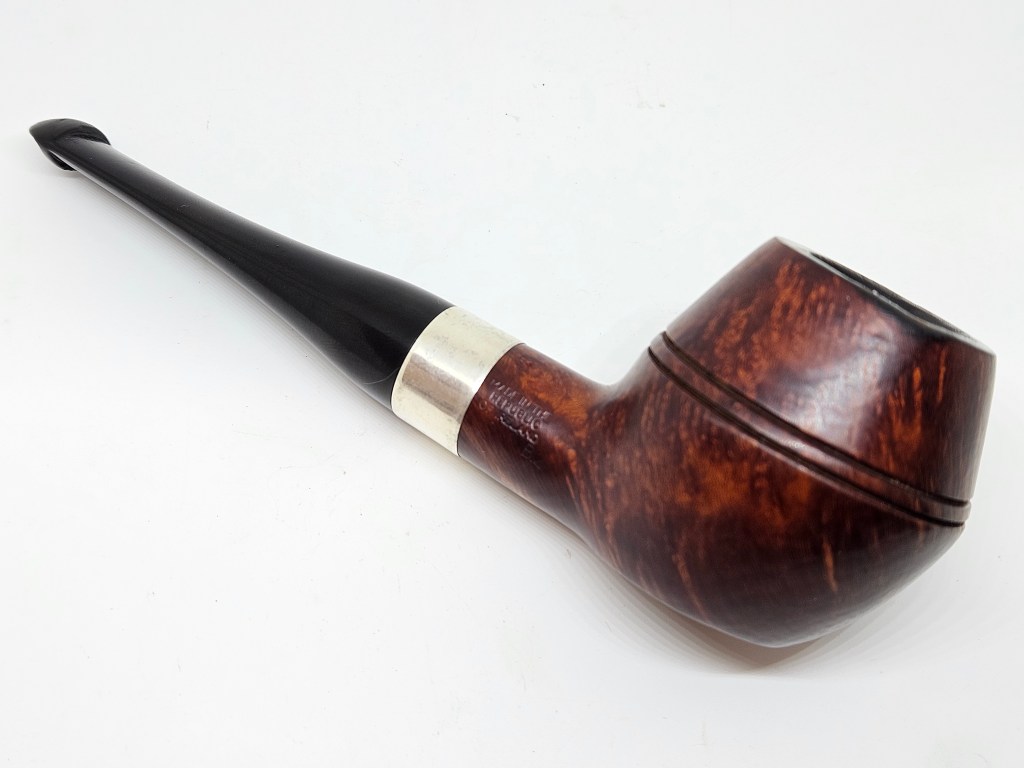
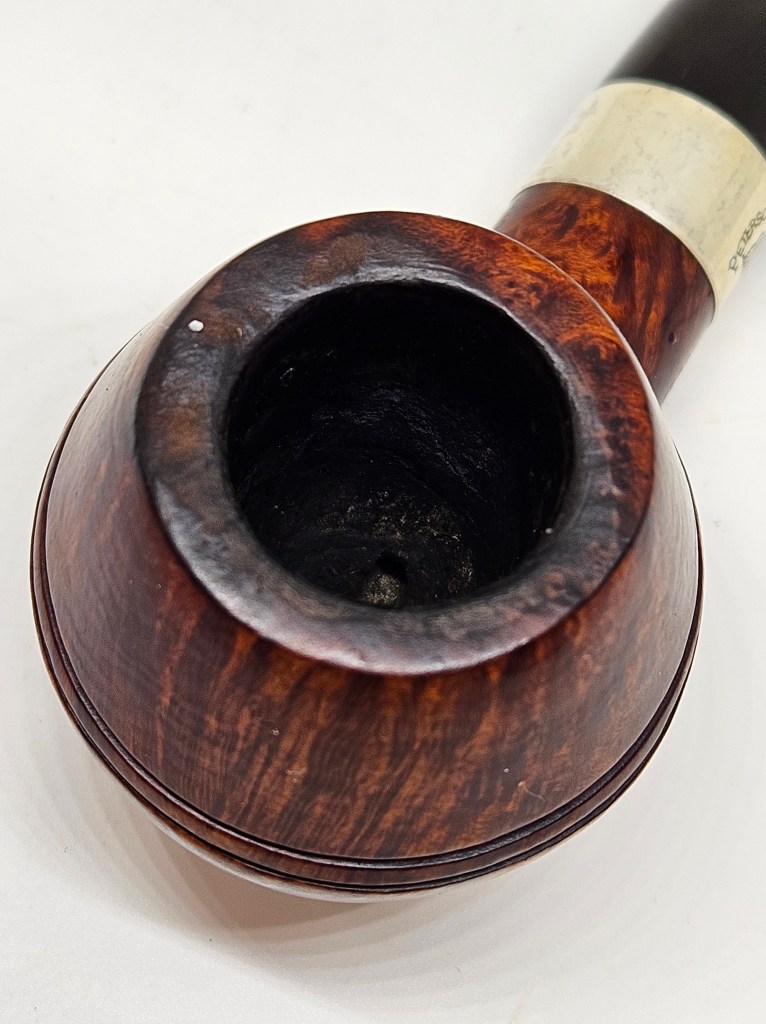
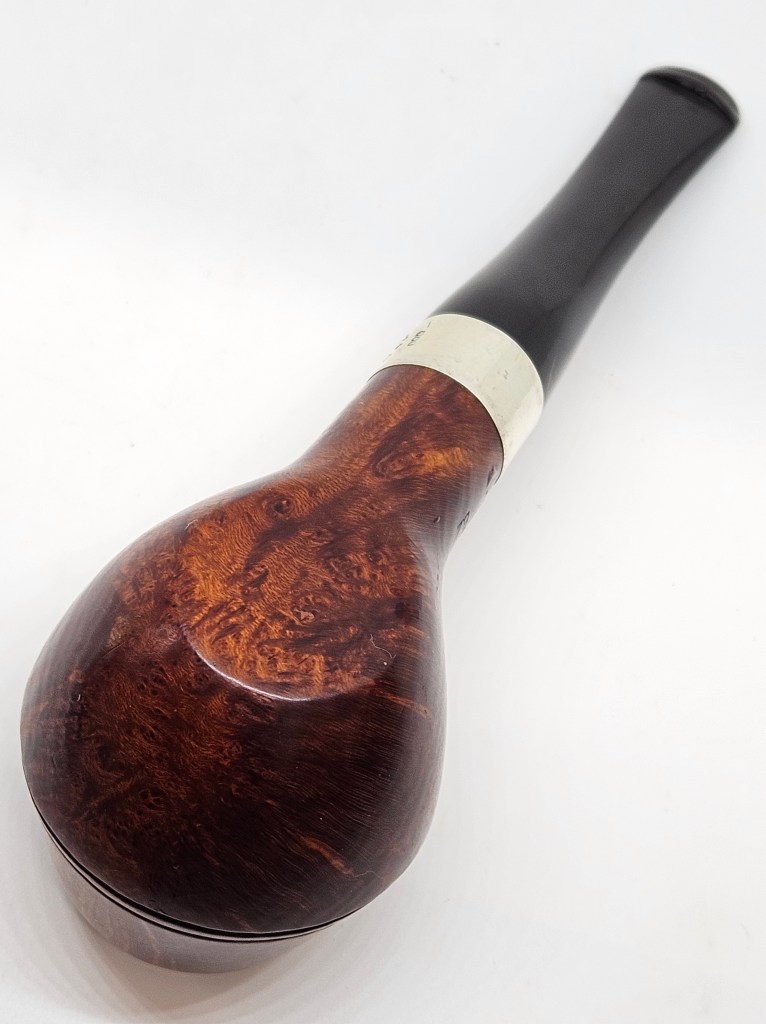
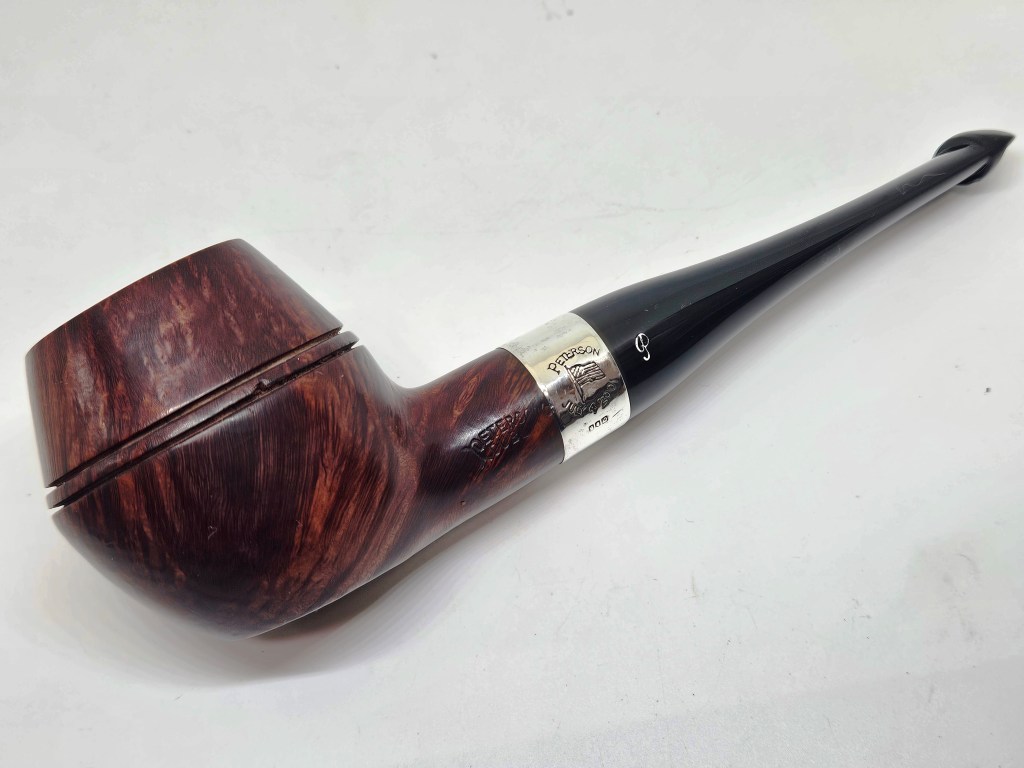
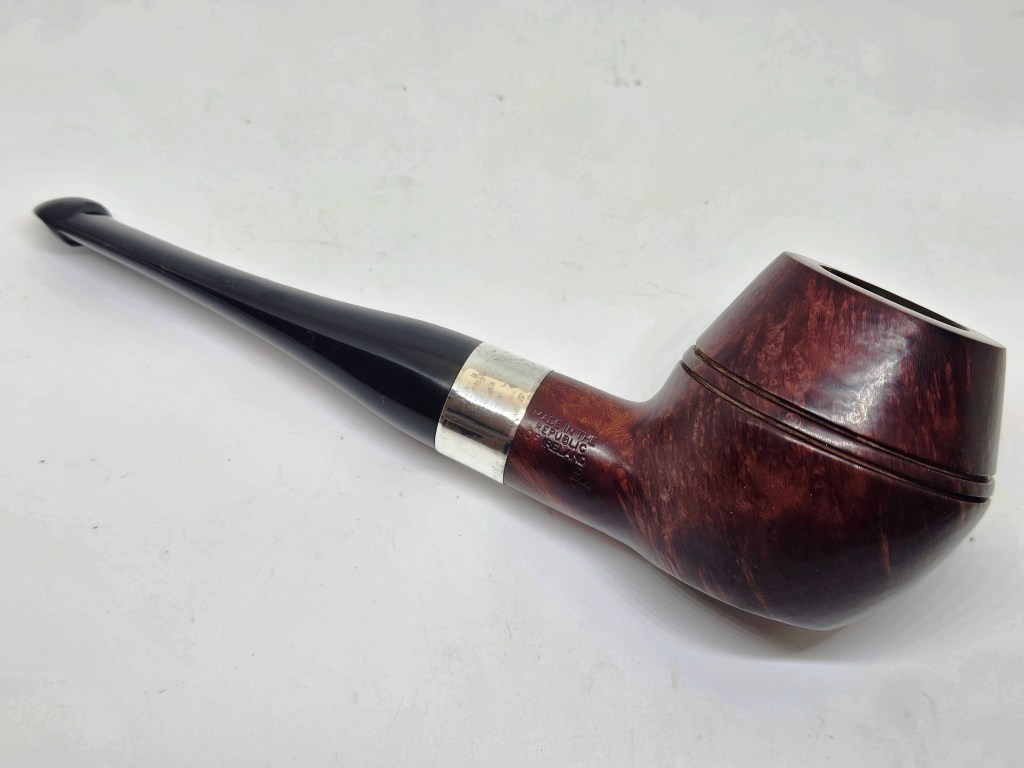
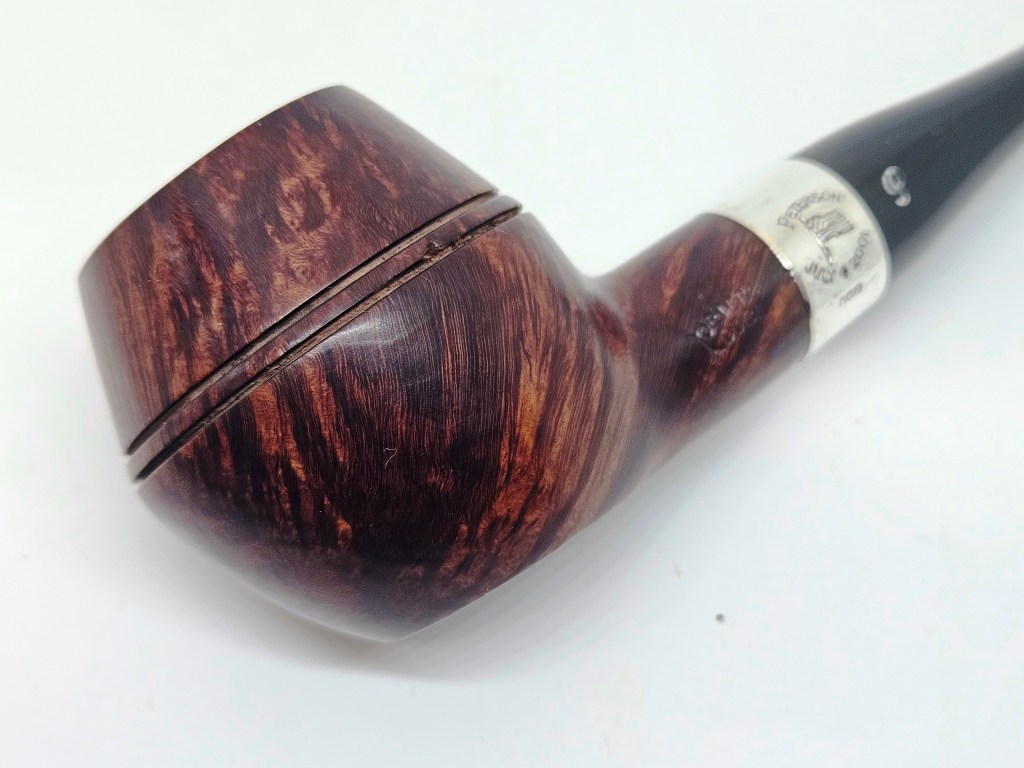
Below is the finished pipe and it has joined my B5 Supreme in my collection.
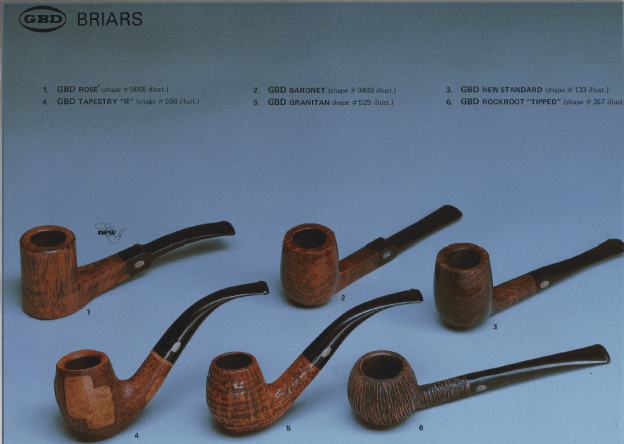
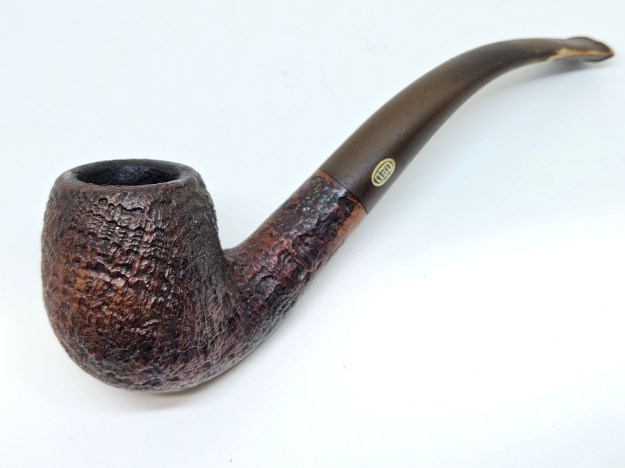
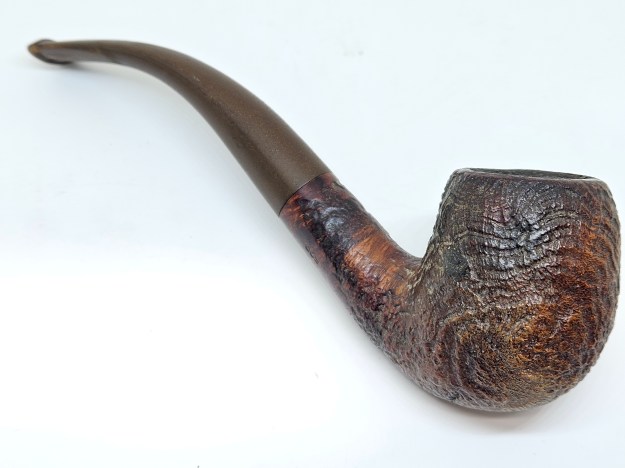
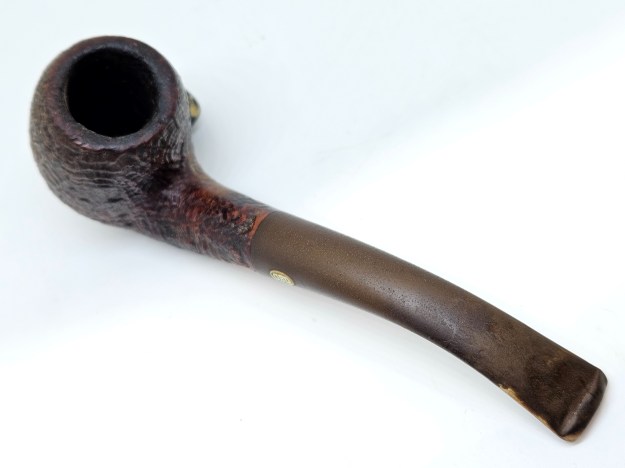
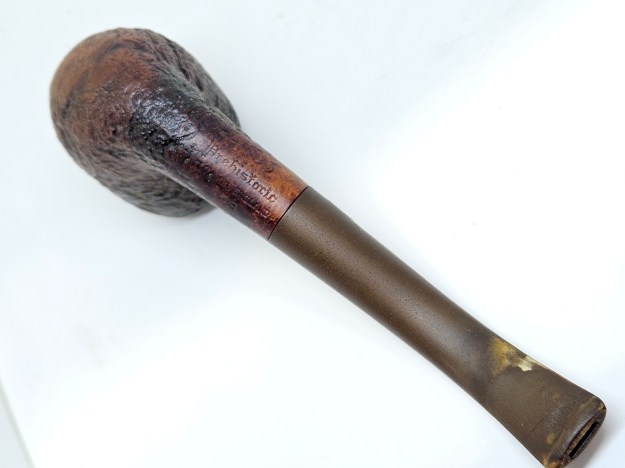
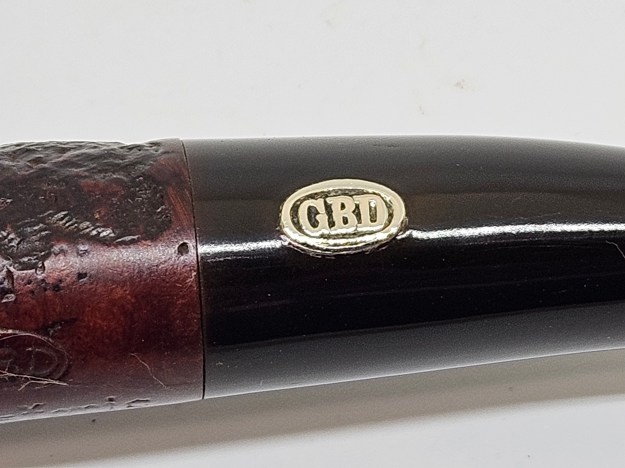
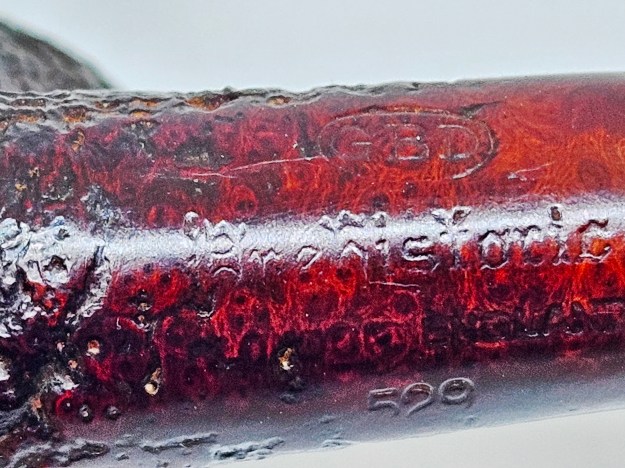
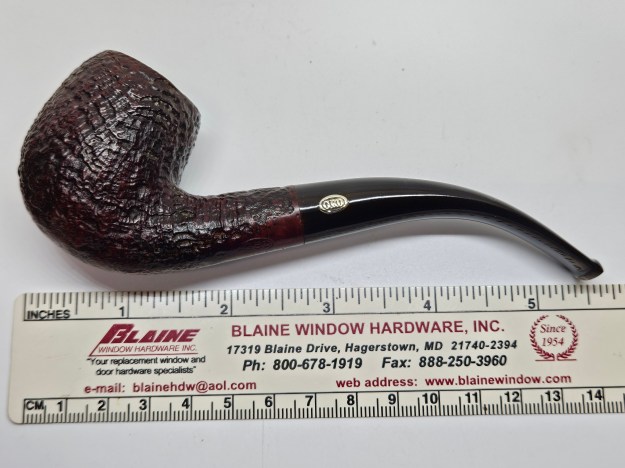
This is the second British made bent billiard that I’ve restored this month. This pipe, a GBD 539 Prehistoric. This is only the second shape 529 that I have owned. Looking thru my catalogs, I found several examples of the shape. The example shown below, in Granitan finish is from the 1981 catalog.
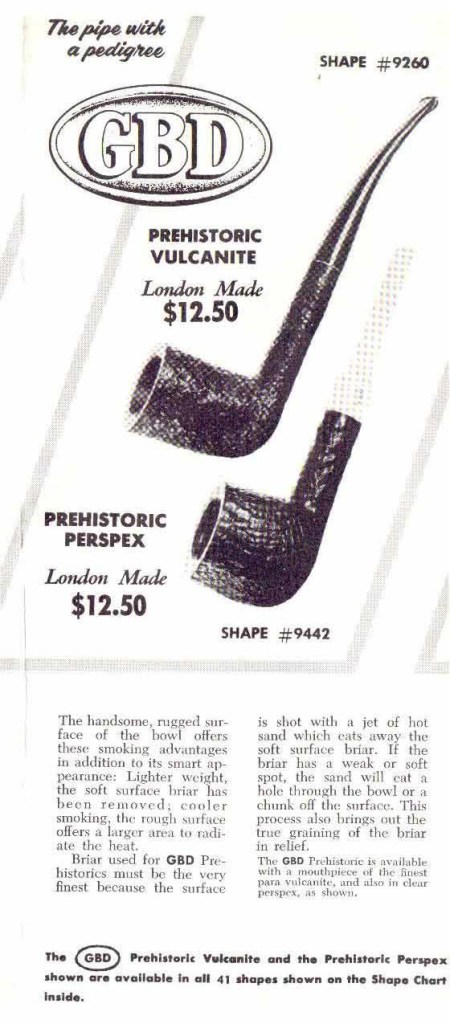
Sandblasted Prehistoric pipes came with a Perspex or Vulcanite stem. I prefer the vulcanite.
The pipe as delivered was in pretty good condition. It had a slightly faded finish and a mildly oxidized stem, as shown below.
I used a worn piece of scotchbrite to remove the oxidation on the polish bowl rim. The pipe was the soaked with alcohol and sea salt. The sank was thoroughly cleaned with a bristle brush dipped in alcohol, until it came out clean.
I mounted the stem and removed the oxidation with 600, 800, 1,500 and 2,000 grade wet paper. It was then buffed with White Diamond and Meguiars Plastic Polish.
I used a paper towel dipped in a diluted solution of Fieblings Medium Brown stain to refresh the briar. It was lightly buffed with carnuba wax to revive the shine.
Below is the finished pipe. I was pleased to discover that it passes a thin cleaner.
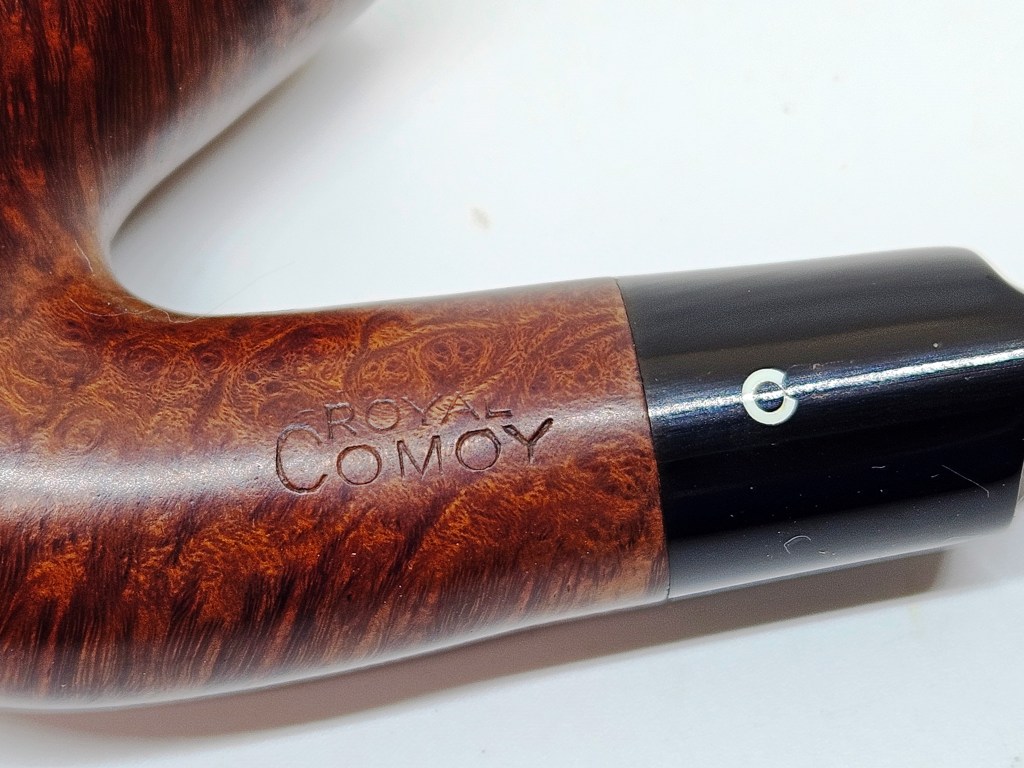
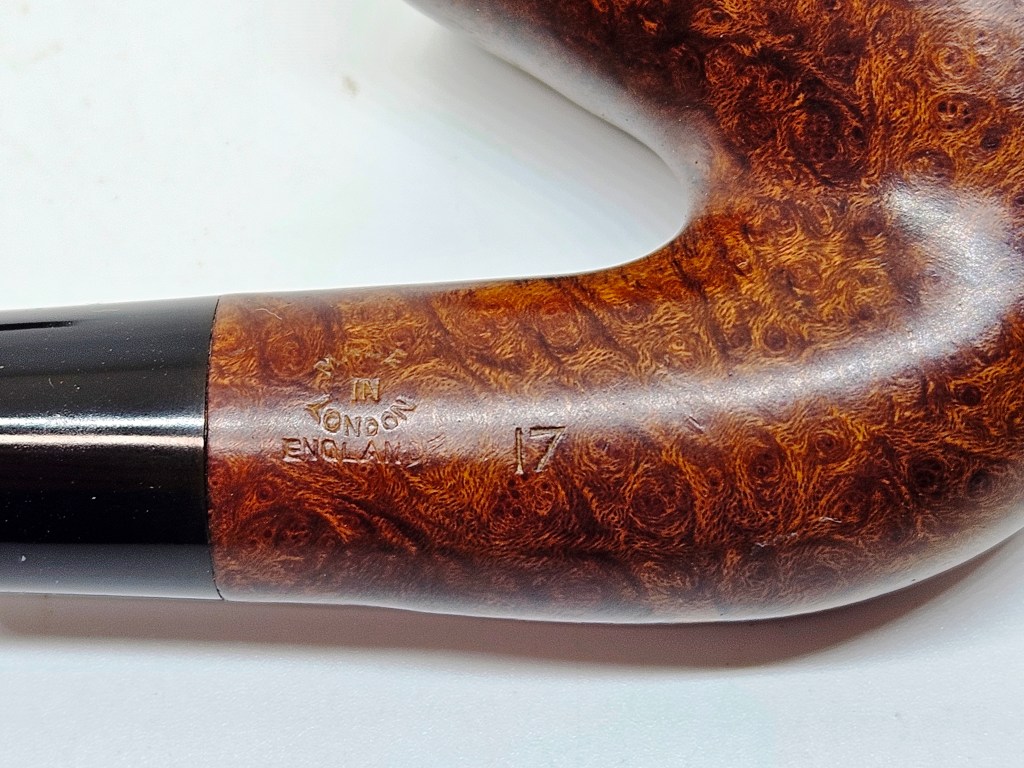
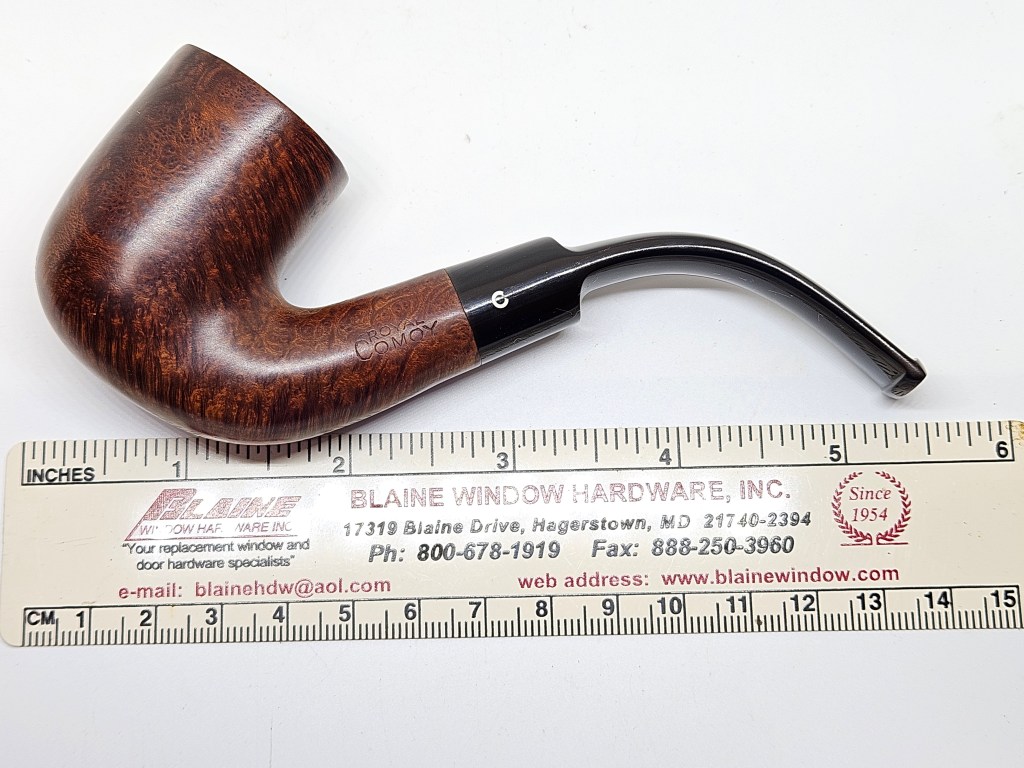
This ebay purchase is only the second “Royal Comoy” to land on my workbench. This one is the shape 17, called the Kruger in the Comoy’s catalog. I don’t find much on the Royal Comoy line and I can’t find any examples in catalogs of that shape. Before WWII, the Royal Comoys was a high grade, later replaced by the Blue Riband. After the war, it seems from price lists, they dropped to a mid-grade line. The Country of Manufacture stamp on this one indicates it was made in the 1950’s to the merger in 1981.
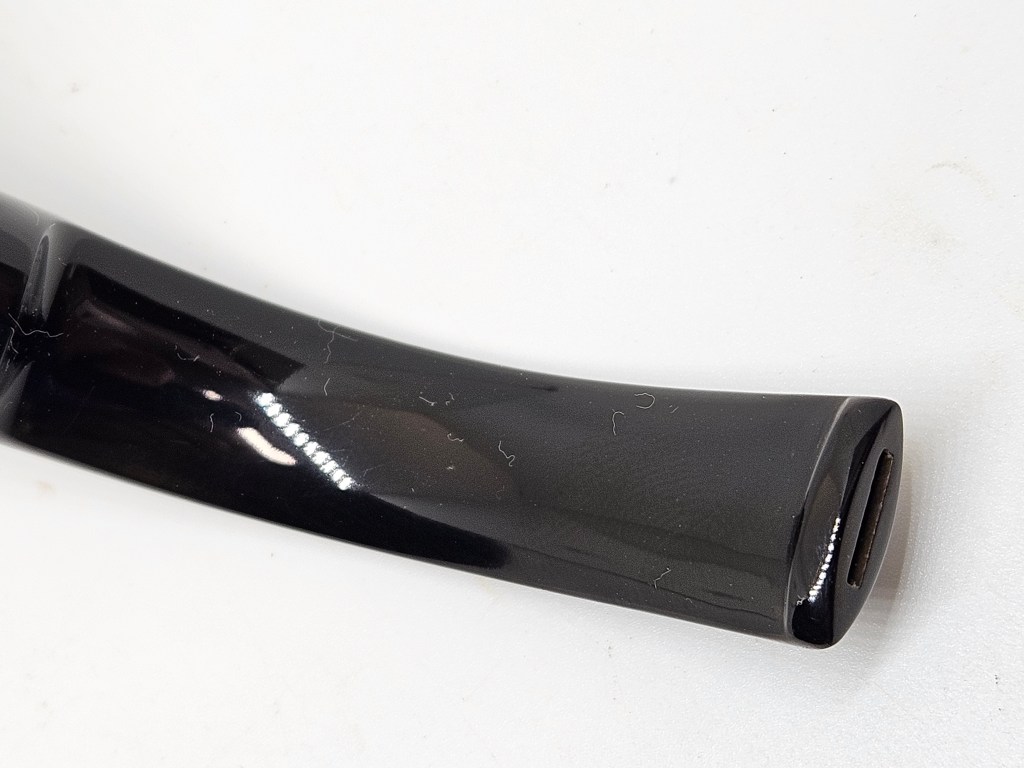
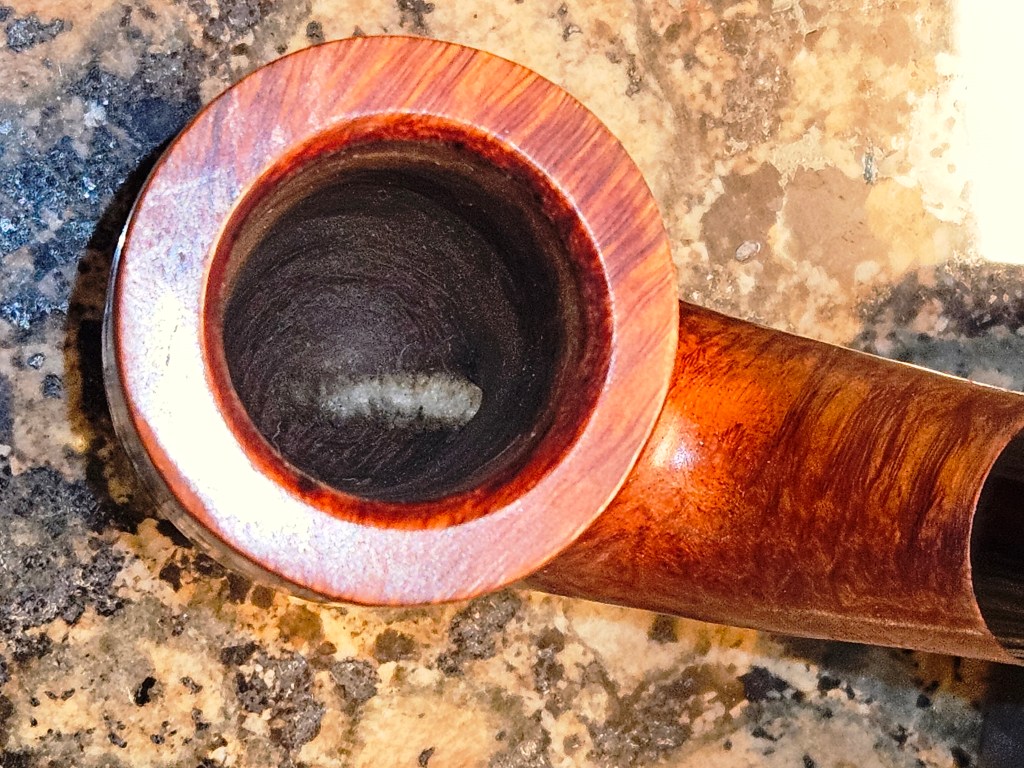
The stem was oxidized, but otherwise in excellent condition with a perfect drilled C stem logo. The bowl was equally in good shape, and the beveled bowl edge was intact. Below is the pipe as it was received.
I used a piece of worn scotch brite to remove the mild build-up on the bowl top. I removed the oxidation on the stem with wet sandpaper, 600, 800, 1,500 and 2,000 grades. The stem was then buffed with White Diamond and Meguiars plastic polish. The bowl was buffed with White Diamond and several coats of carnuba wax. I soaked the bowl with sea salt and alcohol.
Below is the finished pipe. I was surprised to discover that it passes a thin pipe cleaner, unusual for a pipe with such a deep bend.
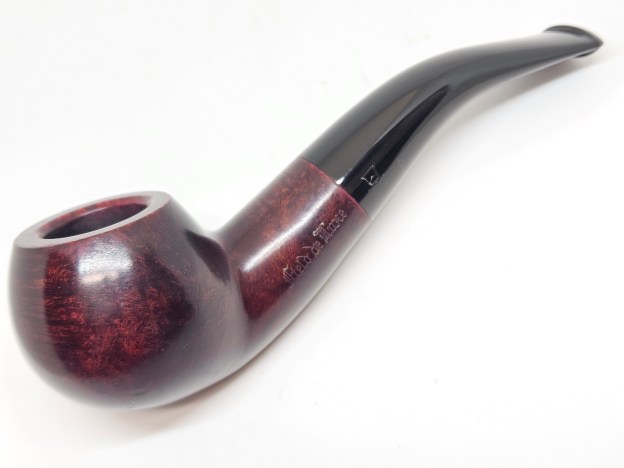
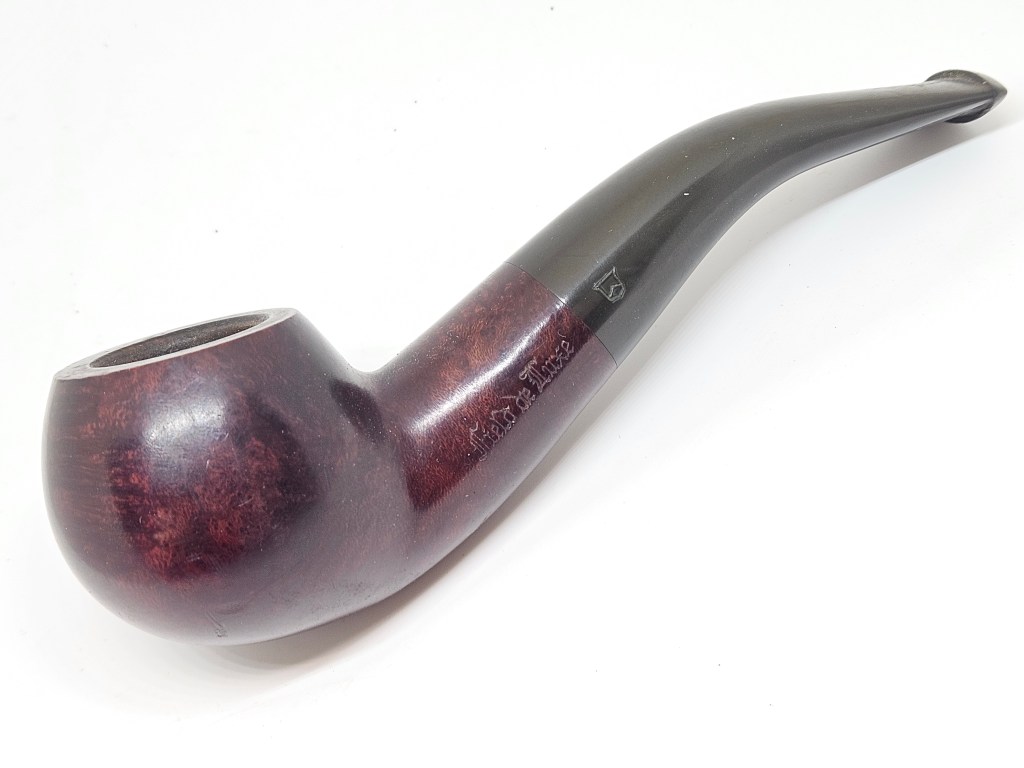
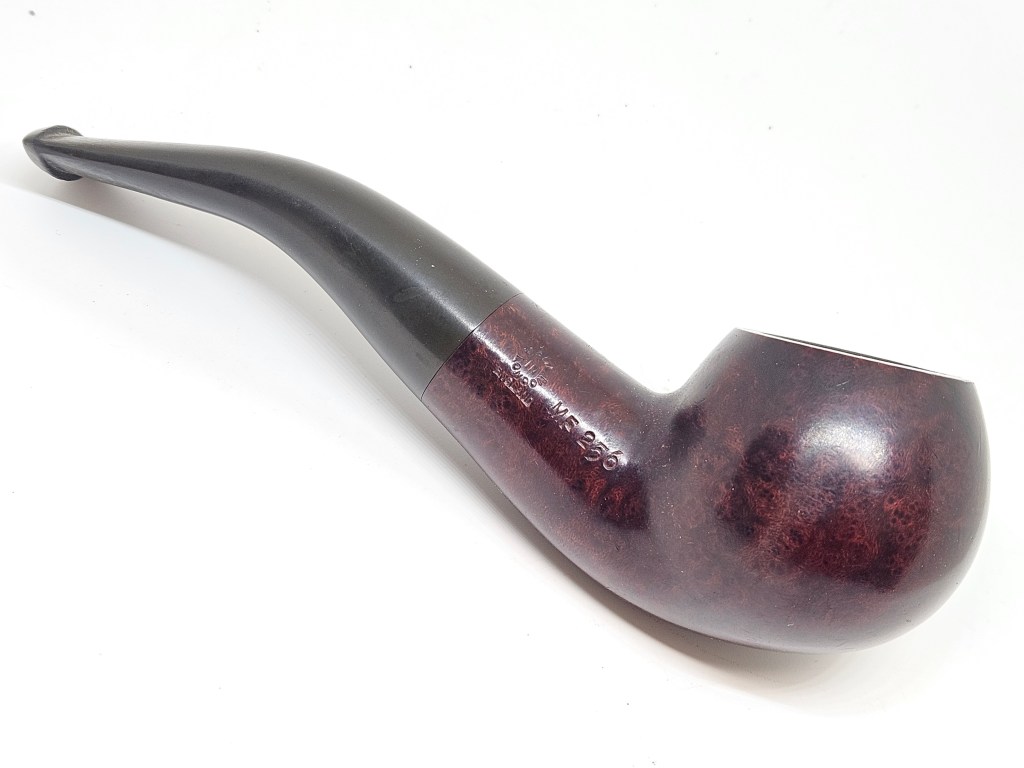
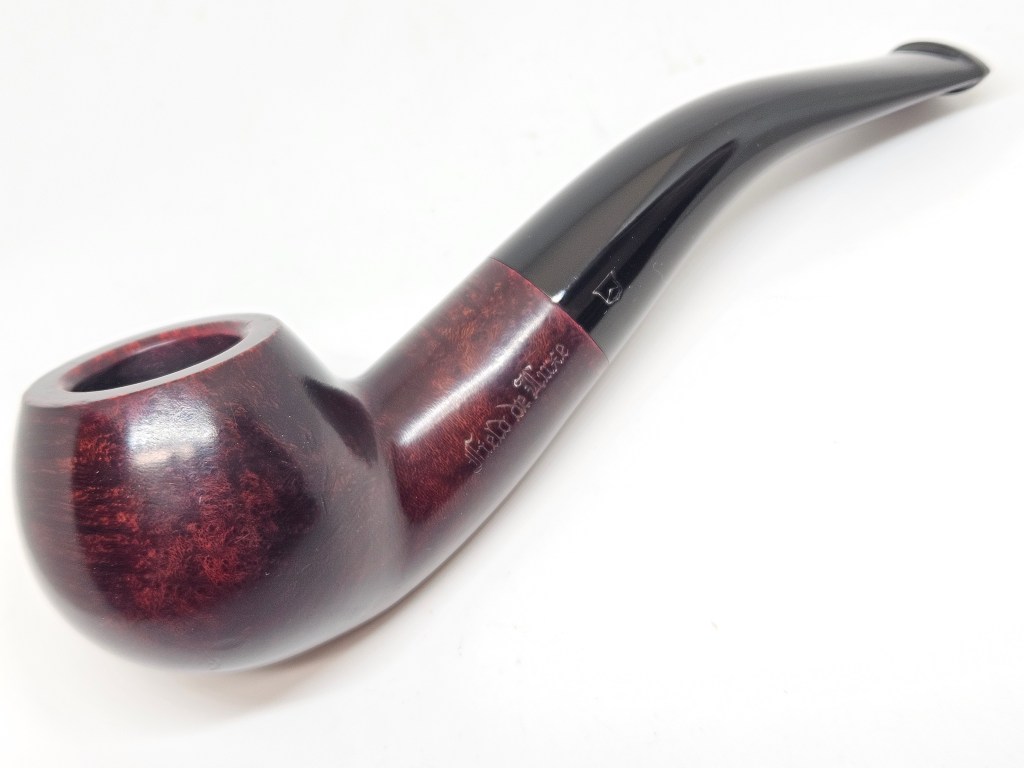
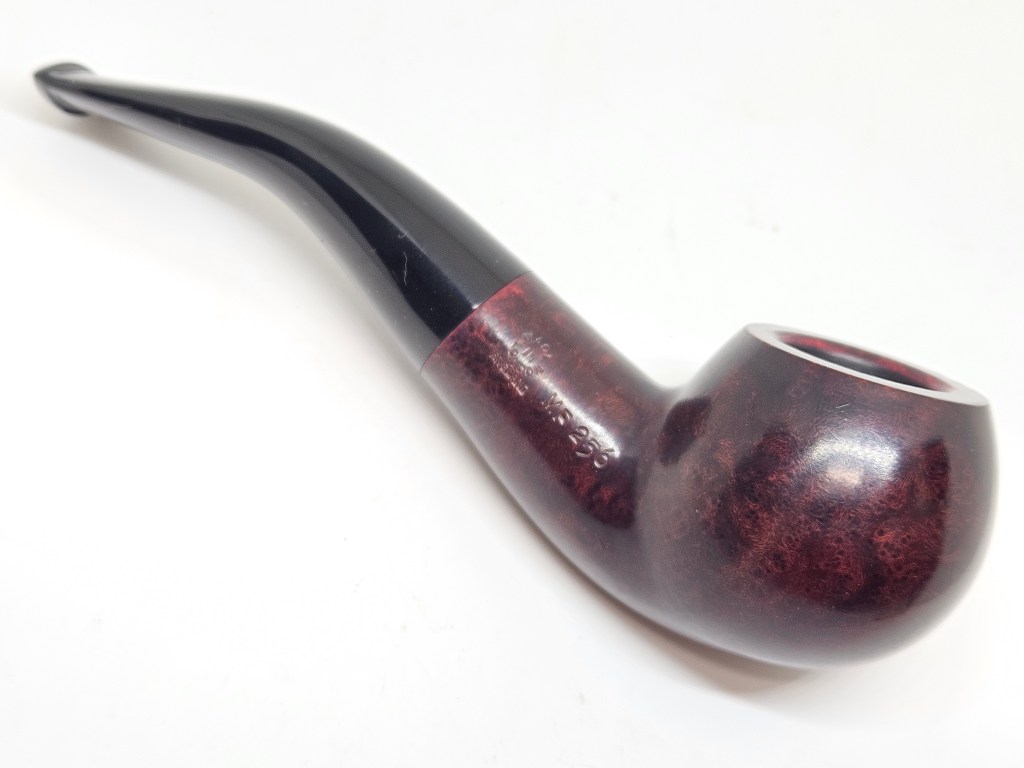
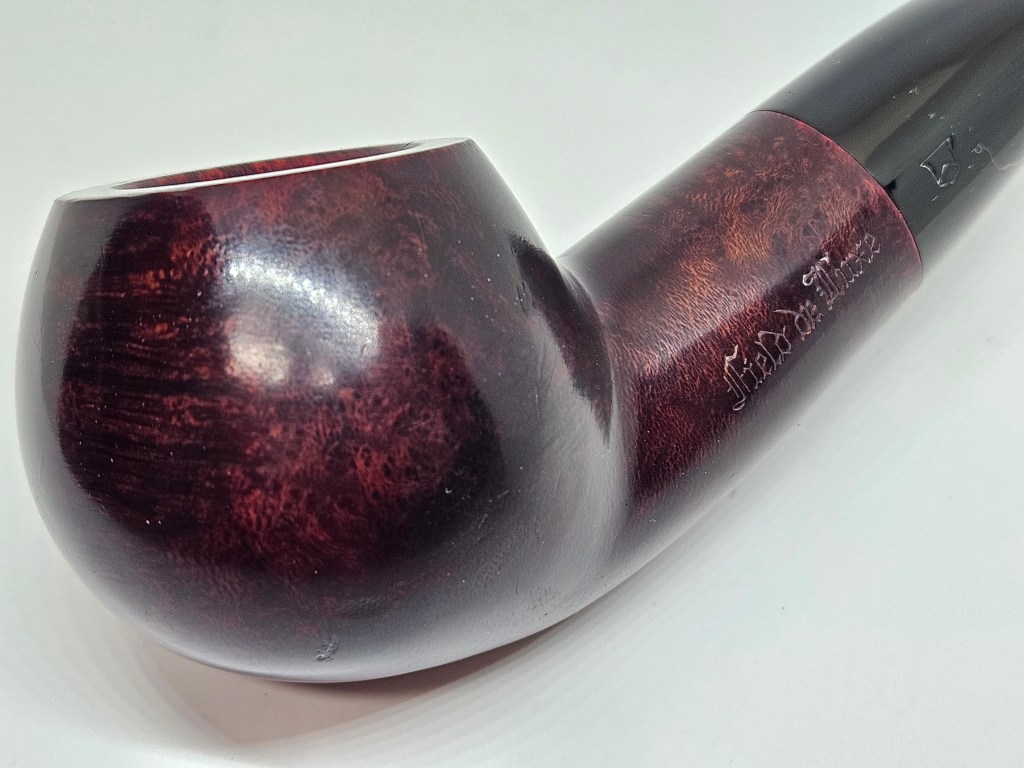
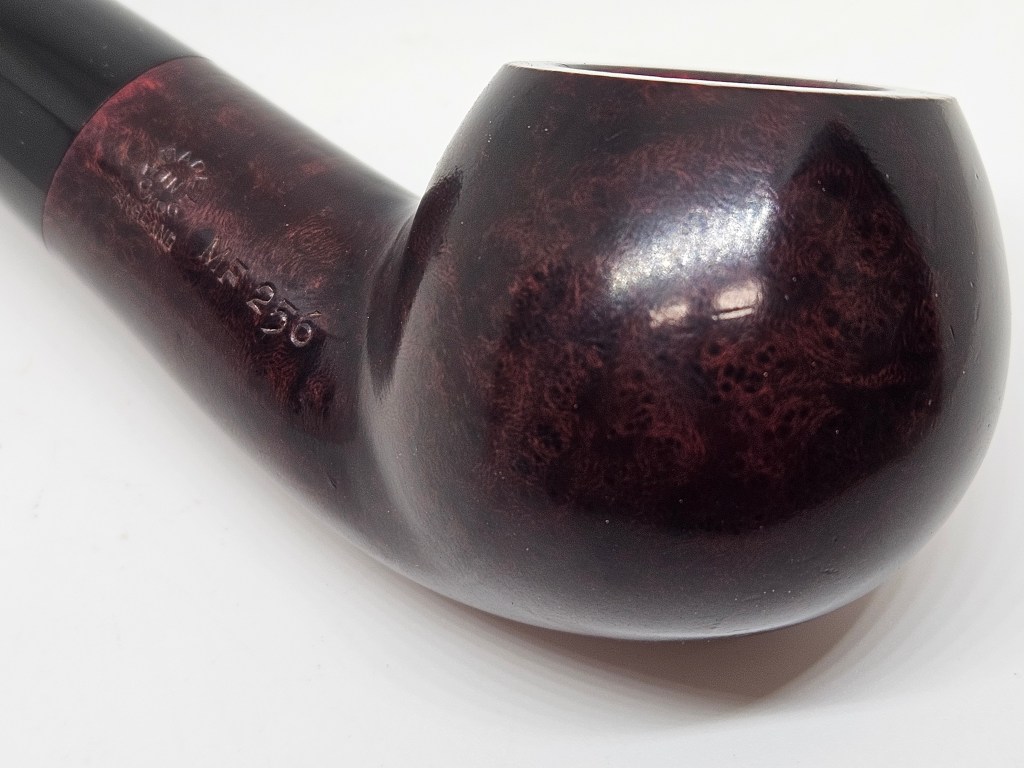
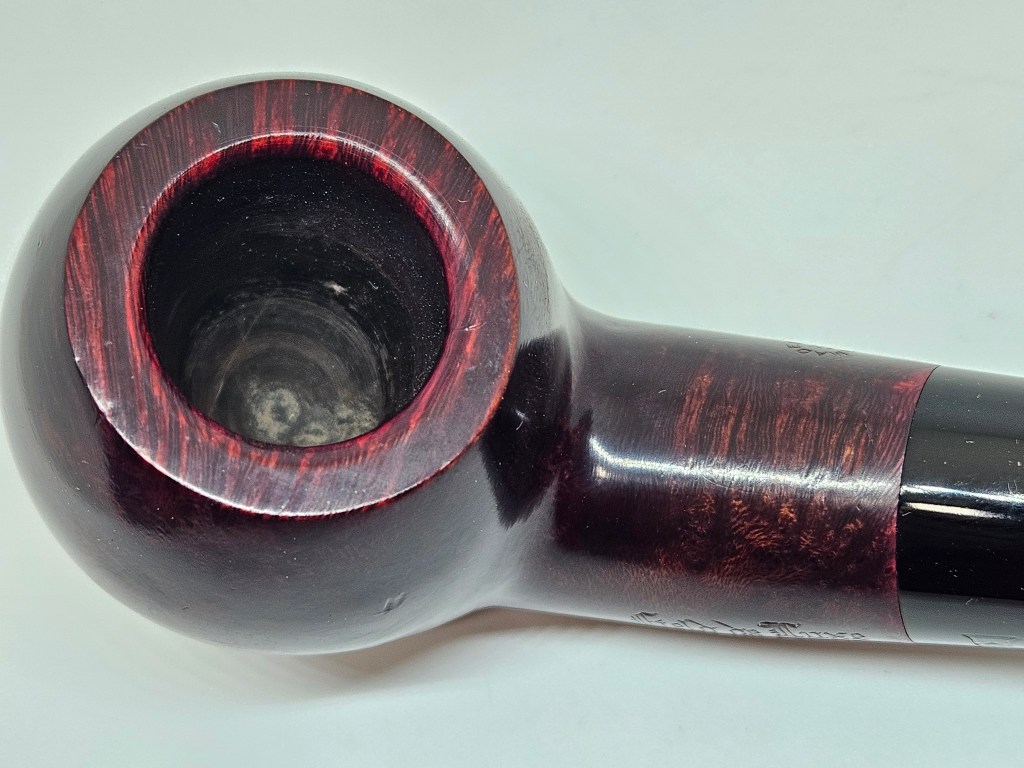
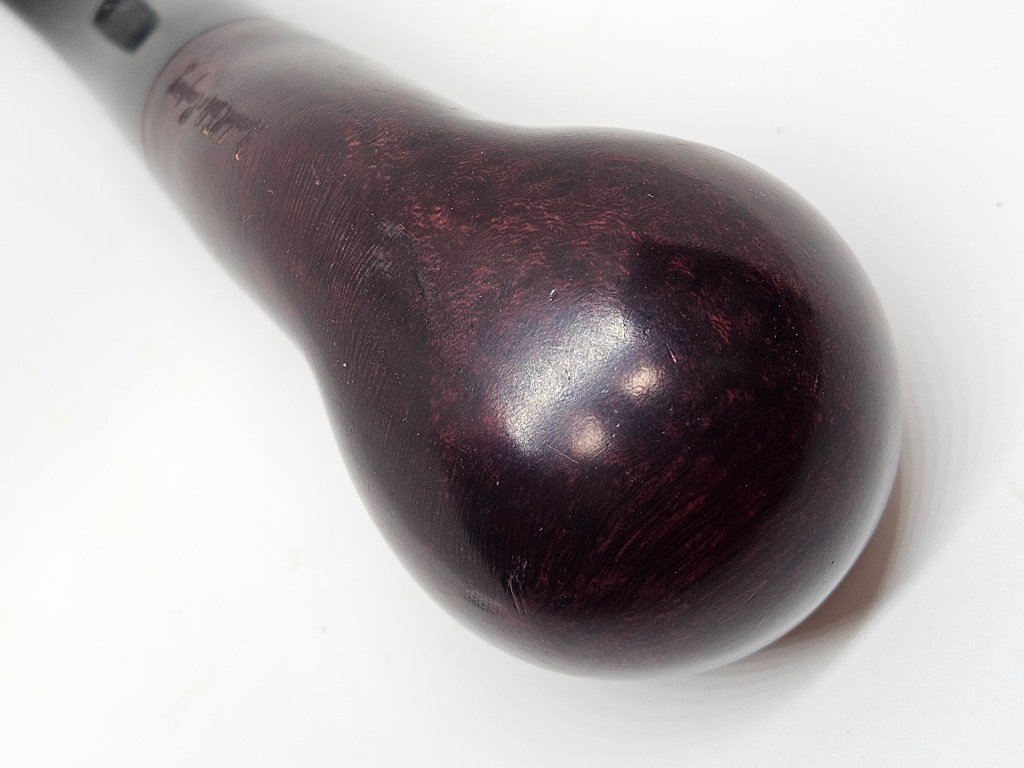
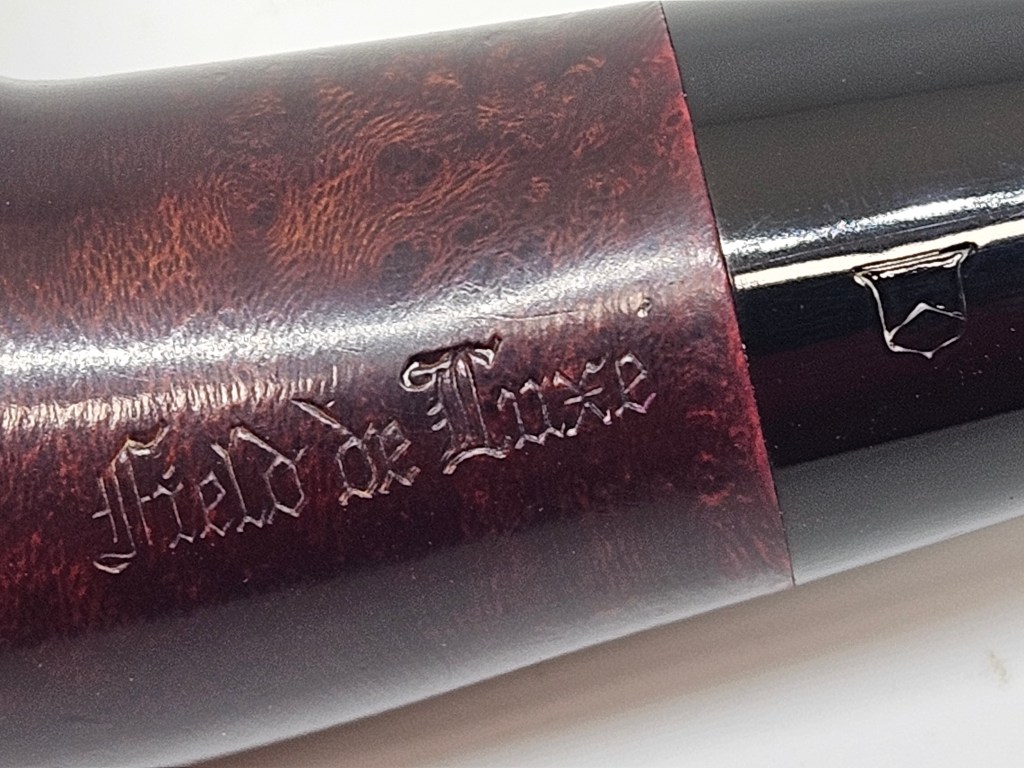
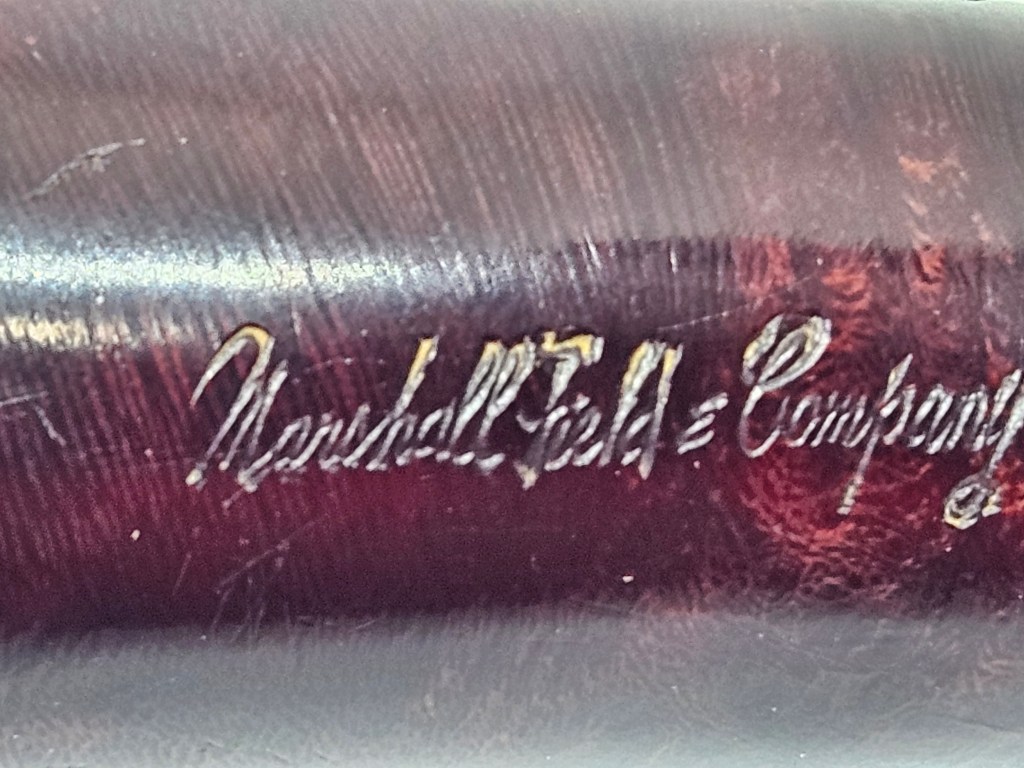
One of my favorite British shapes is the 256 Author made by Comoy’s. I’ve owned several of this shape, including some seconds lines. This Marshall Field & Co made pipe caught my eye on eBay. We have seen another Marshall Field & Co. pipe on these pages in the past. This one is the Field DeLuxe grade. It has a Marshall Field logo on the stem and a signature on the shank.
Marshall Field & Company was a large retail department store that originated in Chicago. They were owned by for a short time in the 1980’s by British-American Tobacco group but later sold to Target and eventually Macy’s in 2005. They had catalogs like Sears, but I was unable to find one showing their pipes.
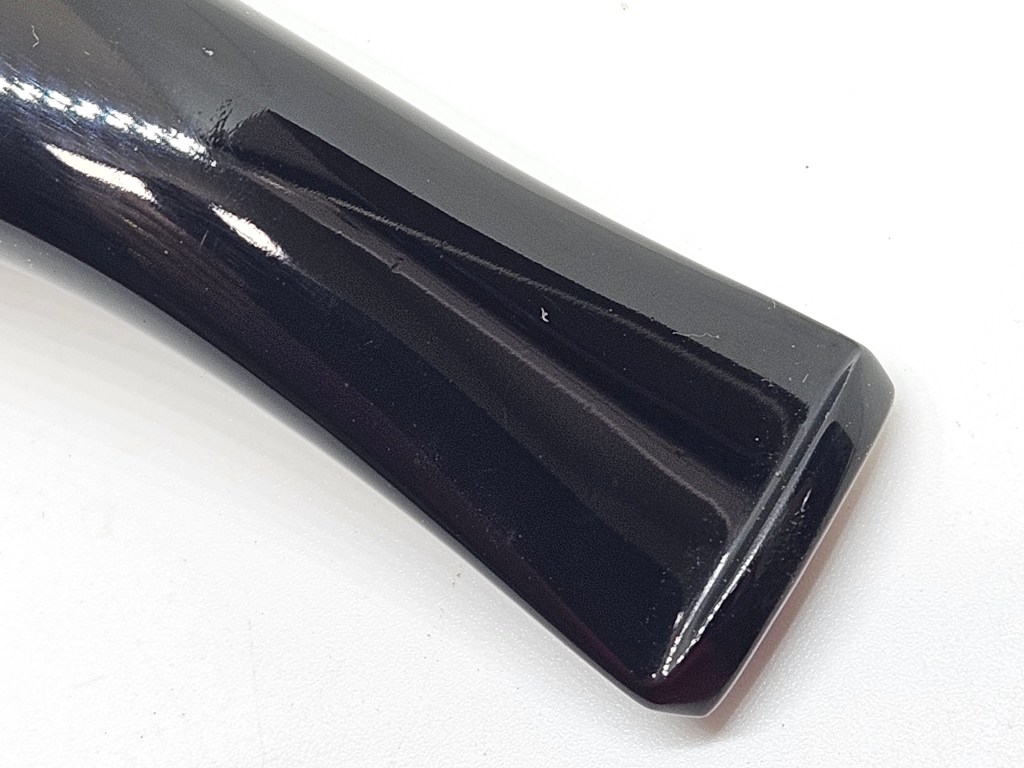
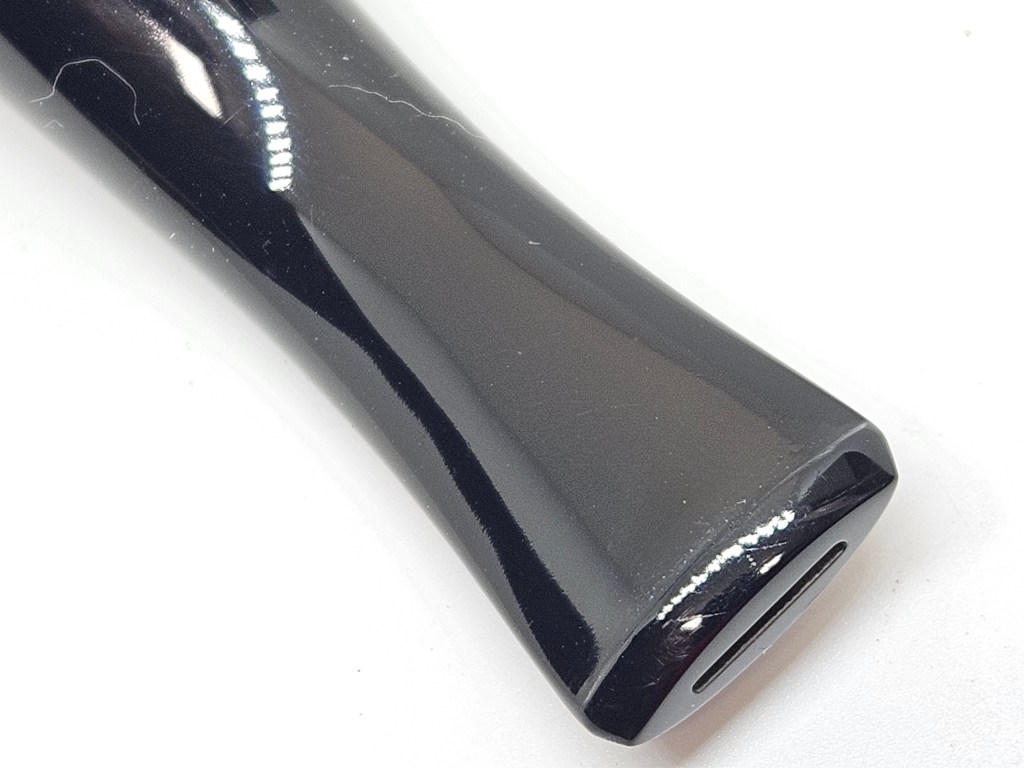
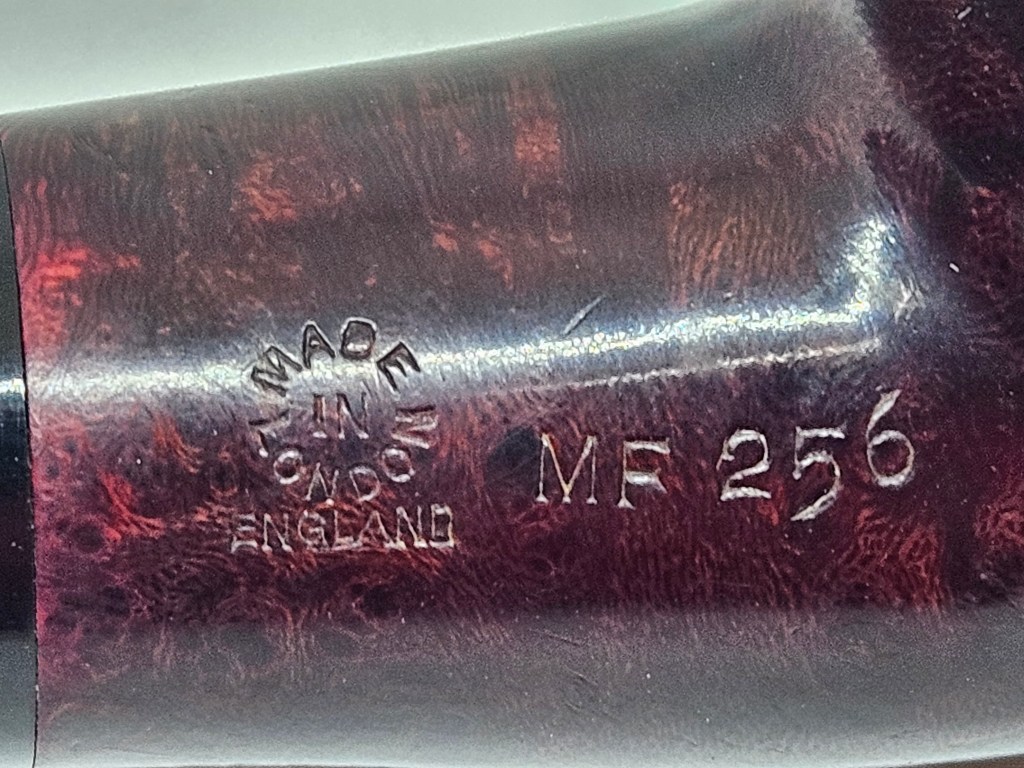
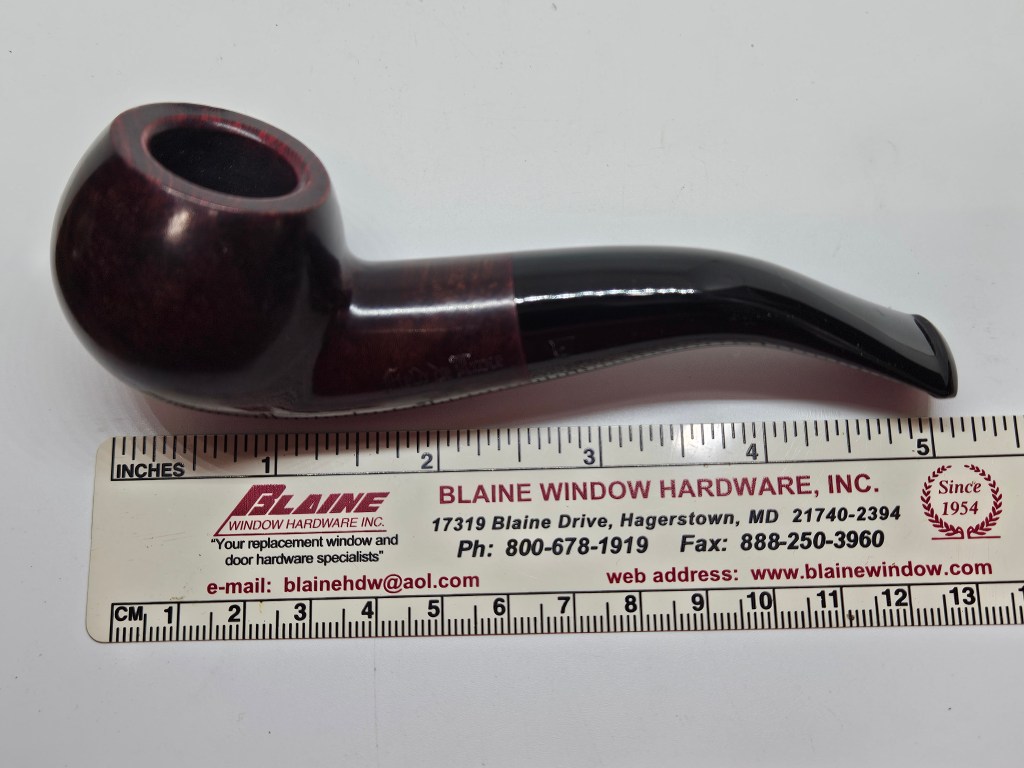
This example is definitely made by Comoy’s, from the distinctive 256 shape and stamp and the Comoy’s country-of-manufacture stamp (COM) . The pipe as delivered was in very good condition and appeared to have been lightly smoked. There were some teeth pricks on the stem, a very light cake in the bowl and a heavily oxidized stem. The Made In London, England COM was used from the 1950’s to the merger point in 1981.
I removed the oxidation from the stem with 600, 800, 1,500 and 2,000 grade wet sandpaper. I used a Magic Eraser pad around the shield stem logo. The stem was then buffed with White Diamond rouge and Meguiars Plastic Polish.
I buffed the briar lightly with White Diamond, then several coats of Carnuba wax. The bowl was soaked with alcohol and sea salt.
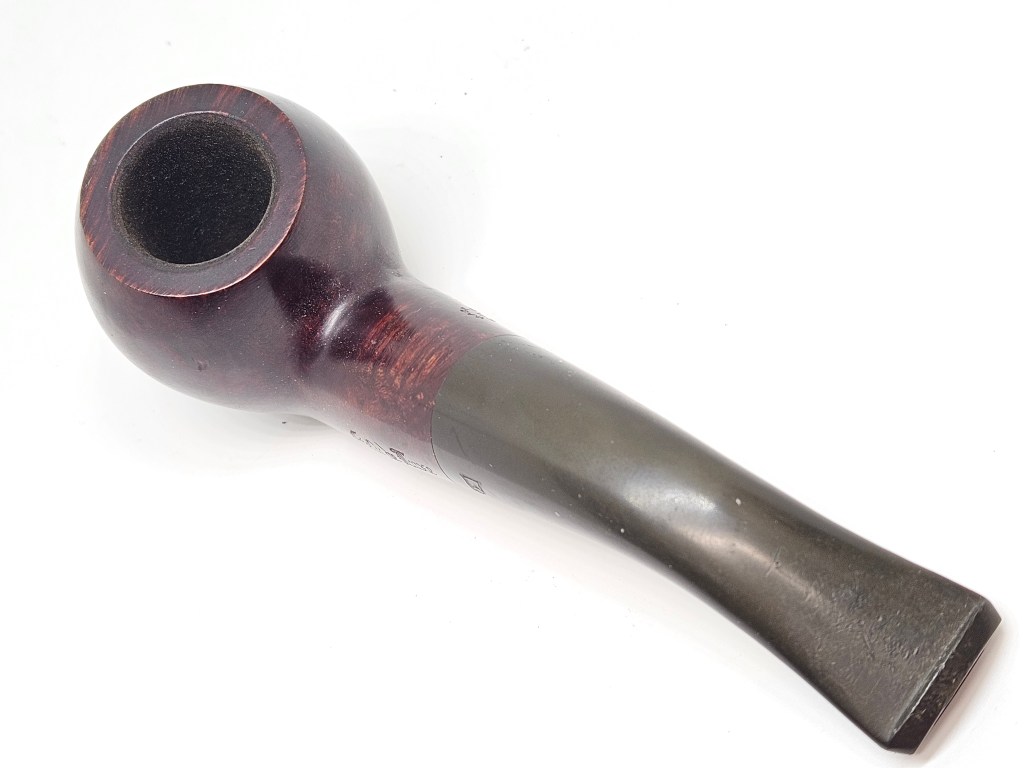
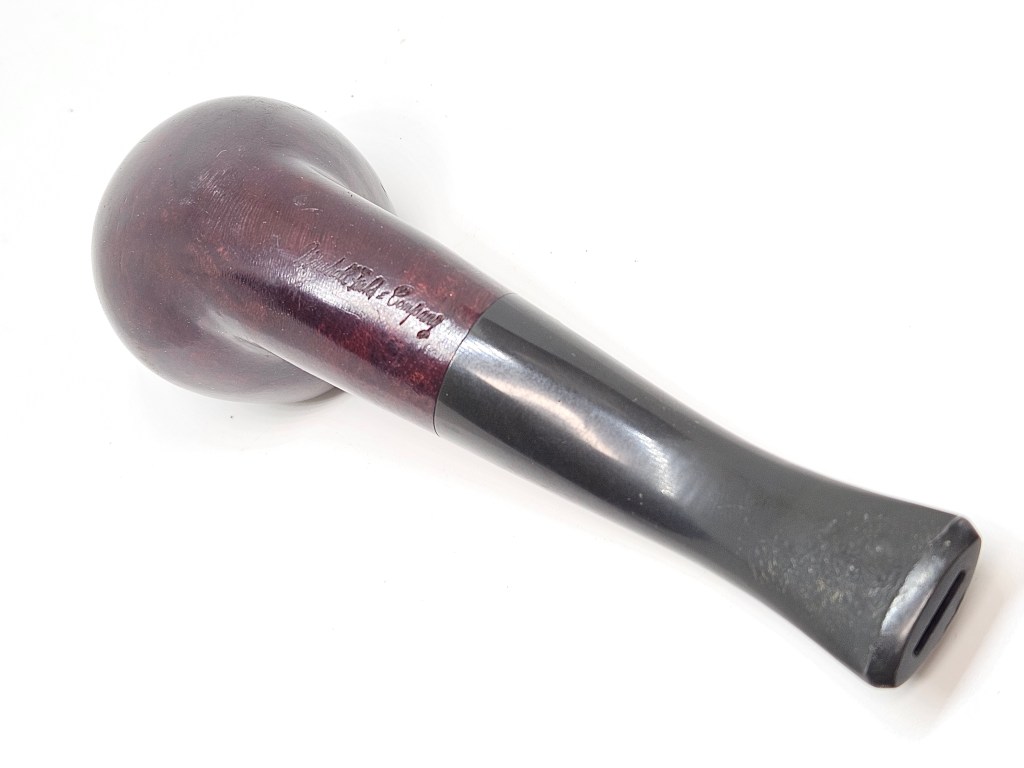
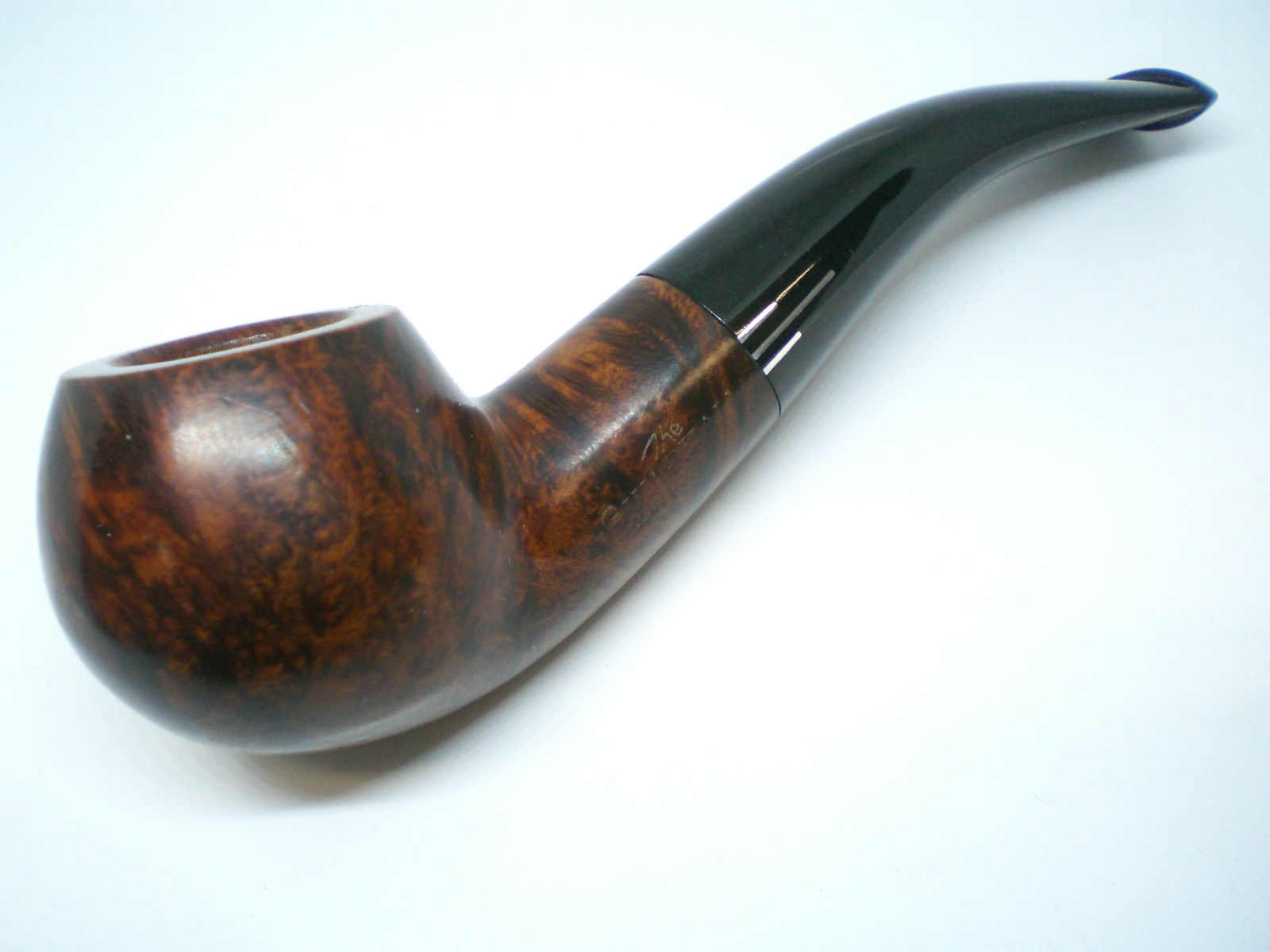
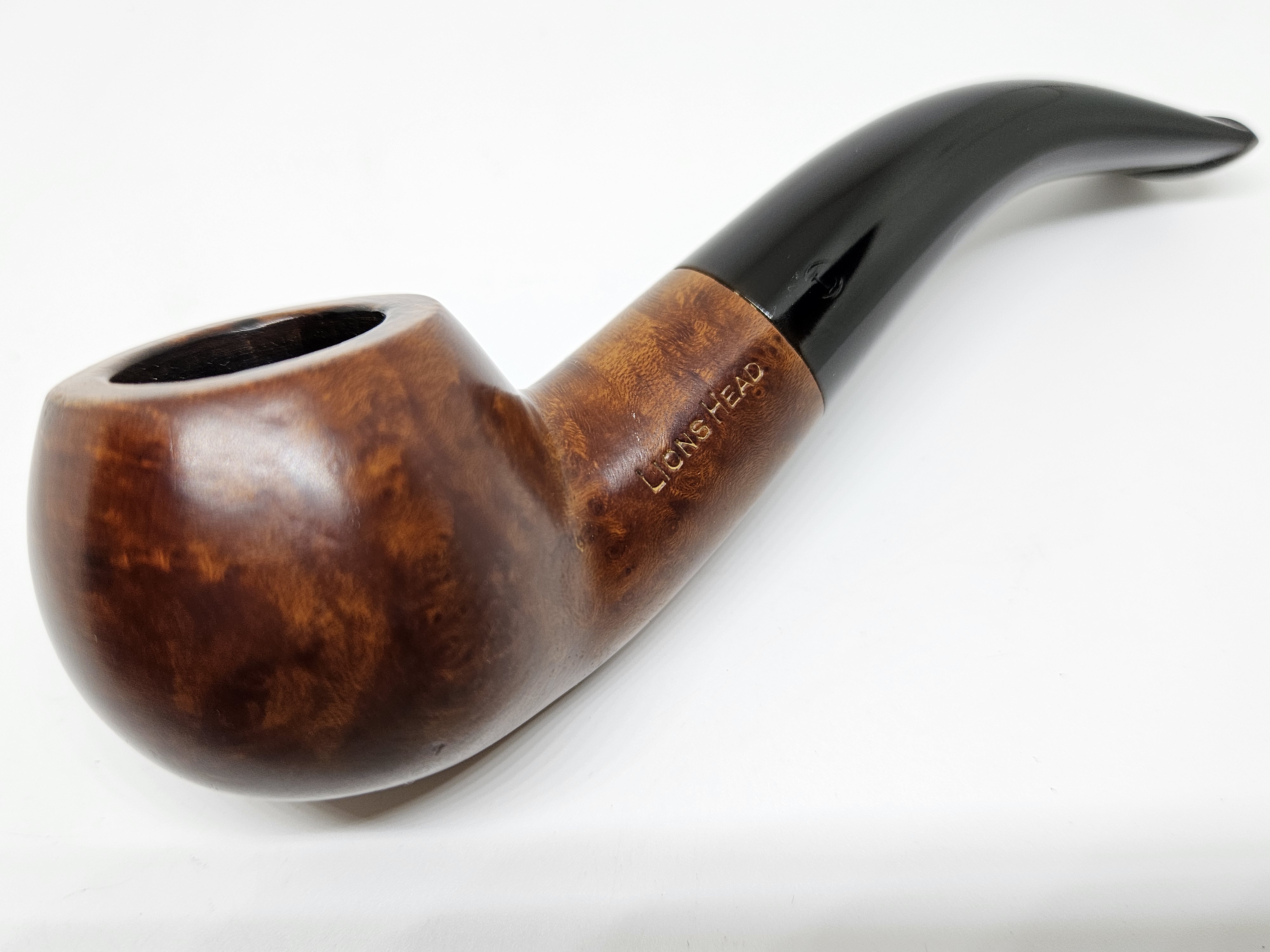
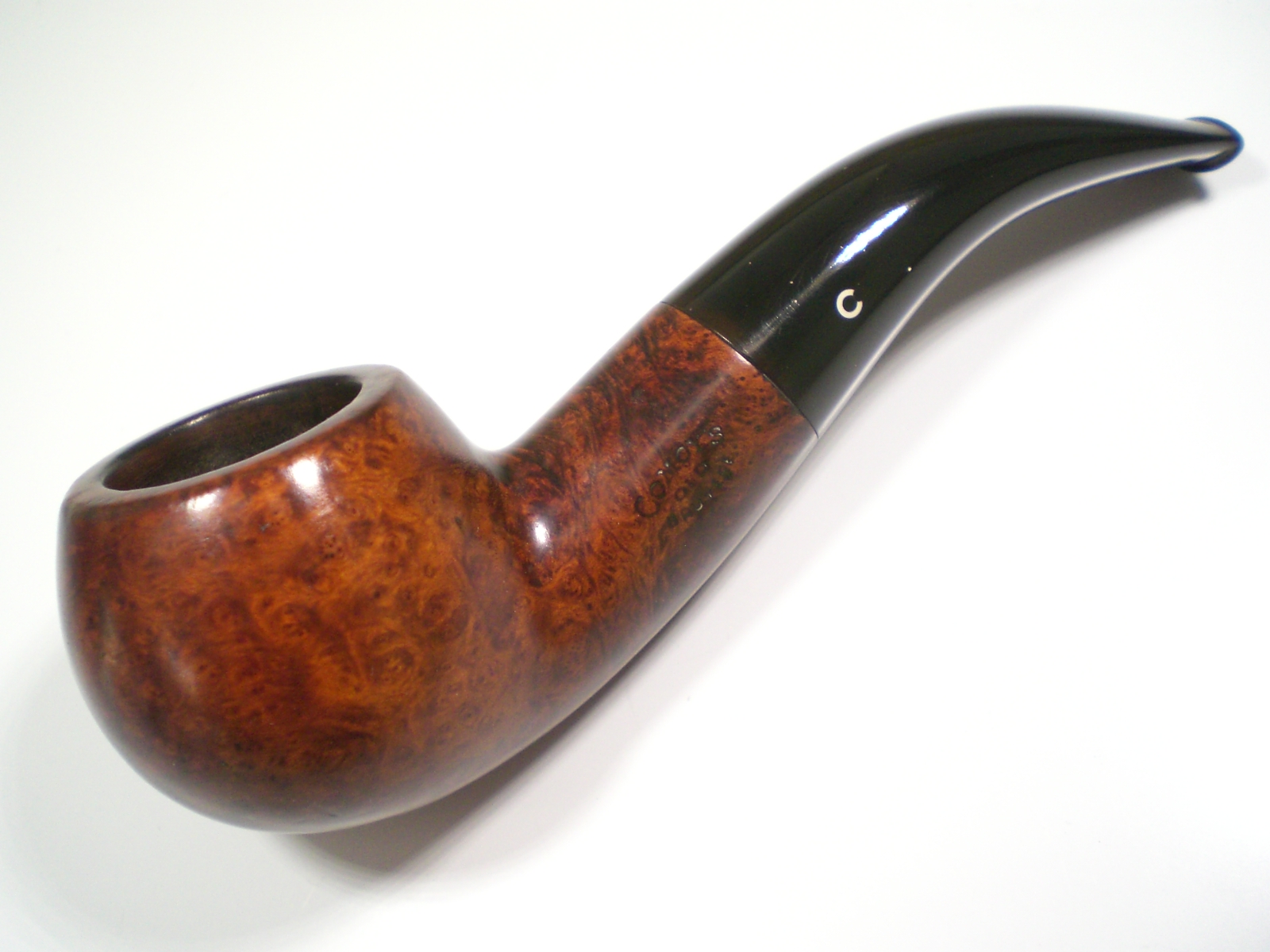
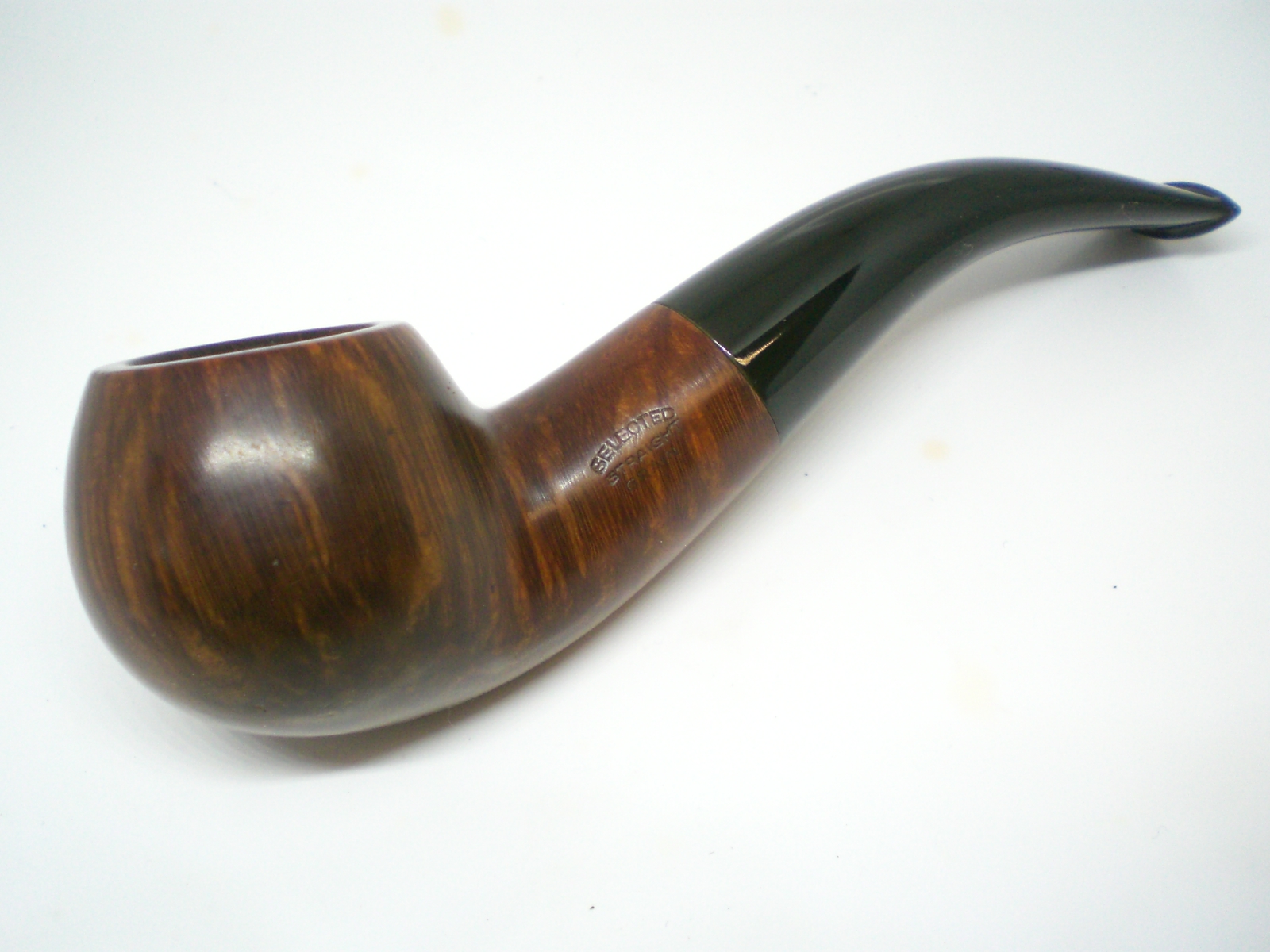
Here are the other Comoys 256 shapes that I have owned.
The Guildhall
Lions Head
Comoys Old Bruyere
Selected Straight Grain
And finally pictures of the finished Marshall Field pipe
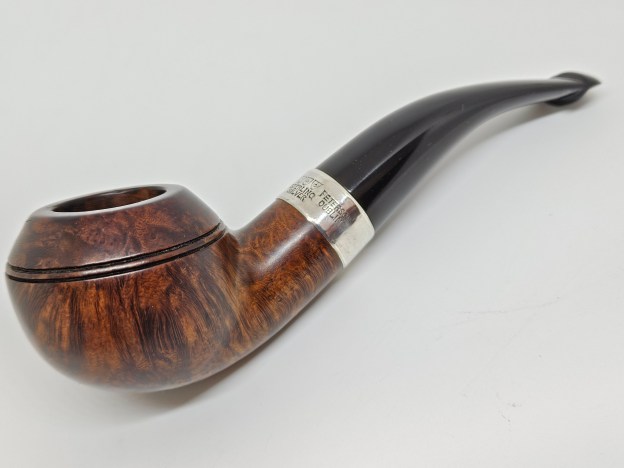
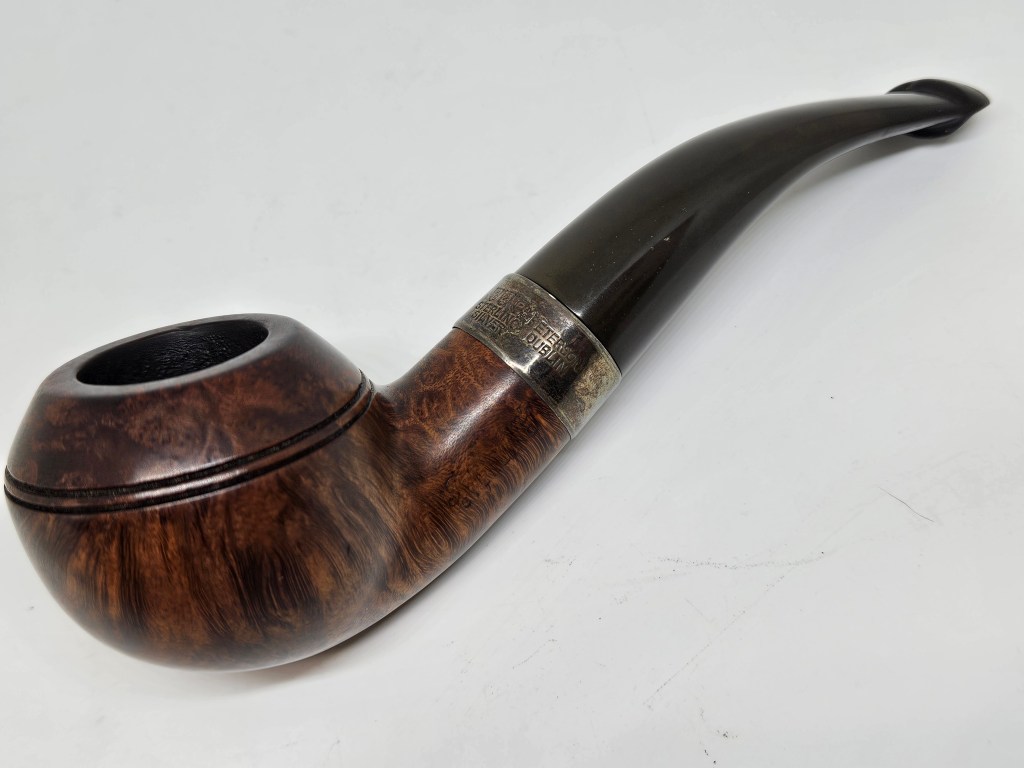
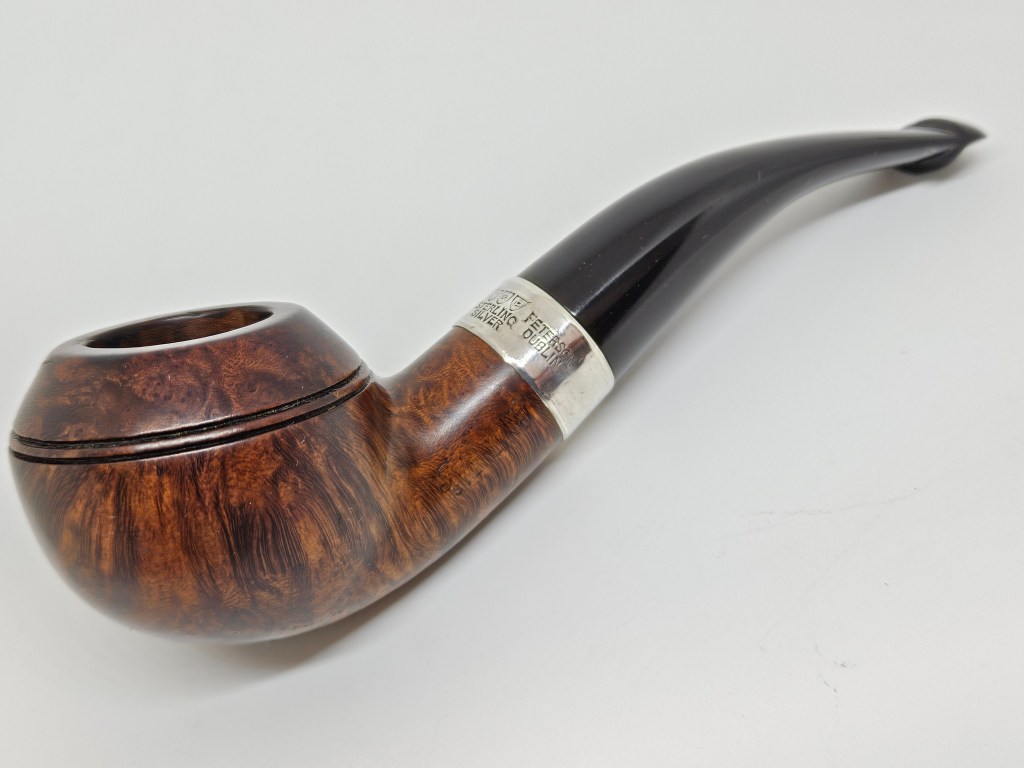
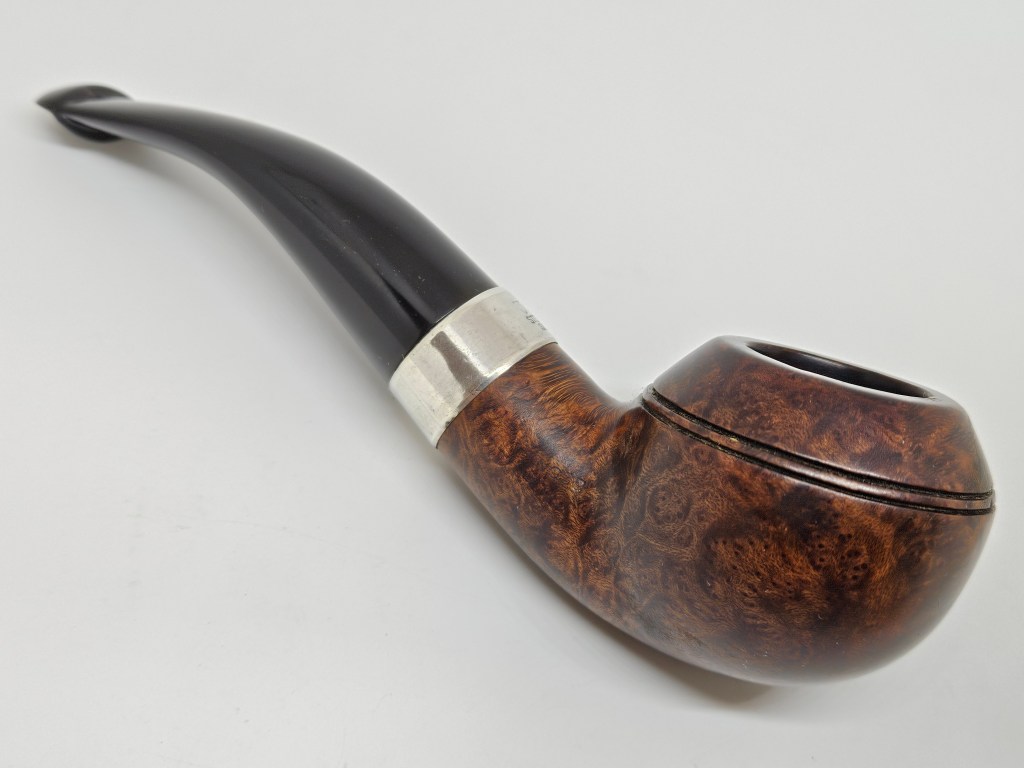
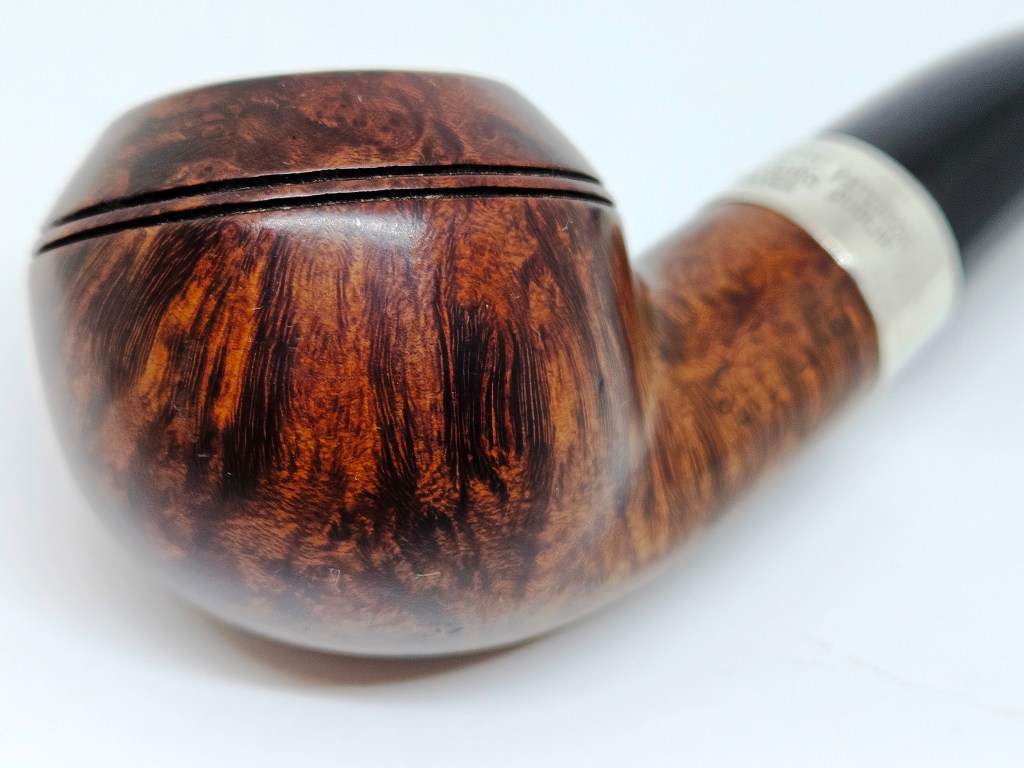
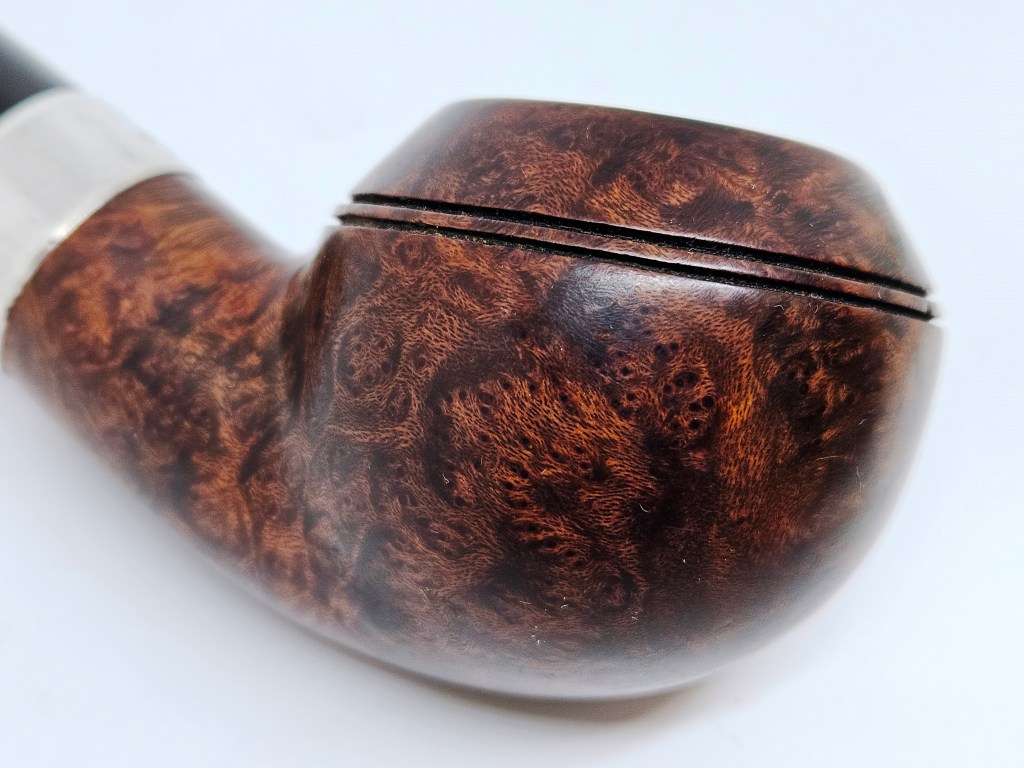
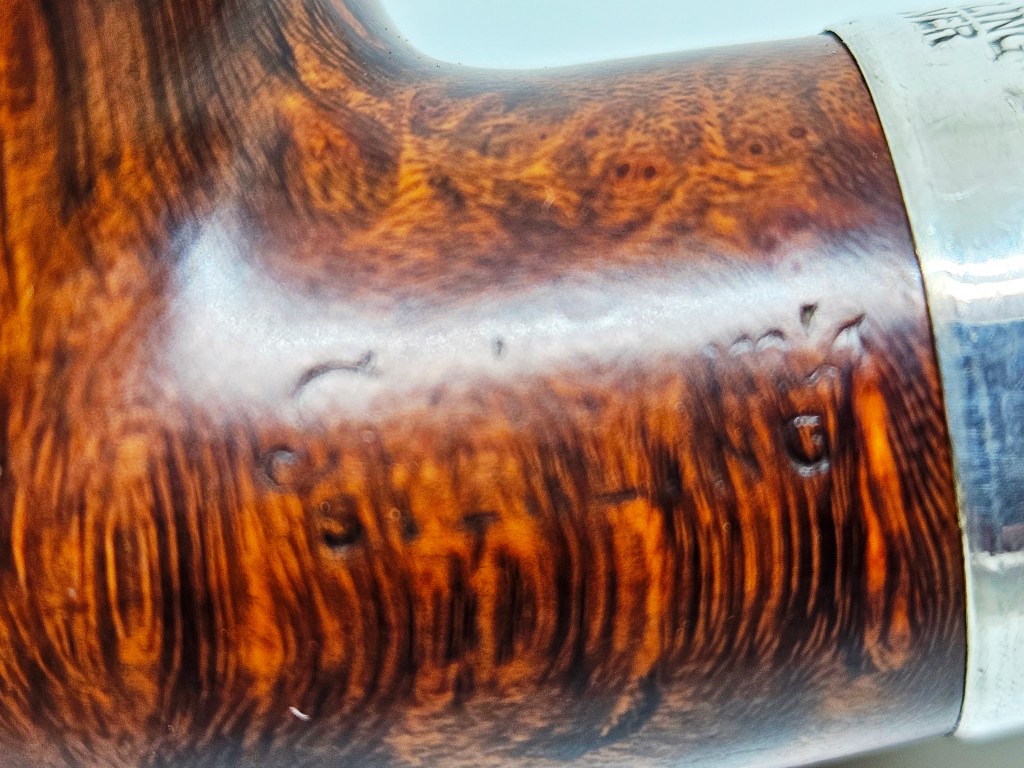
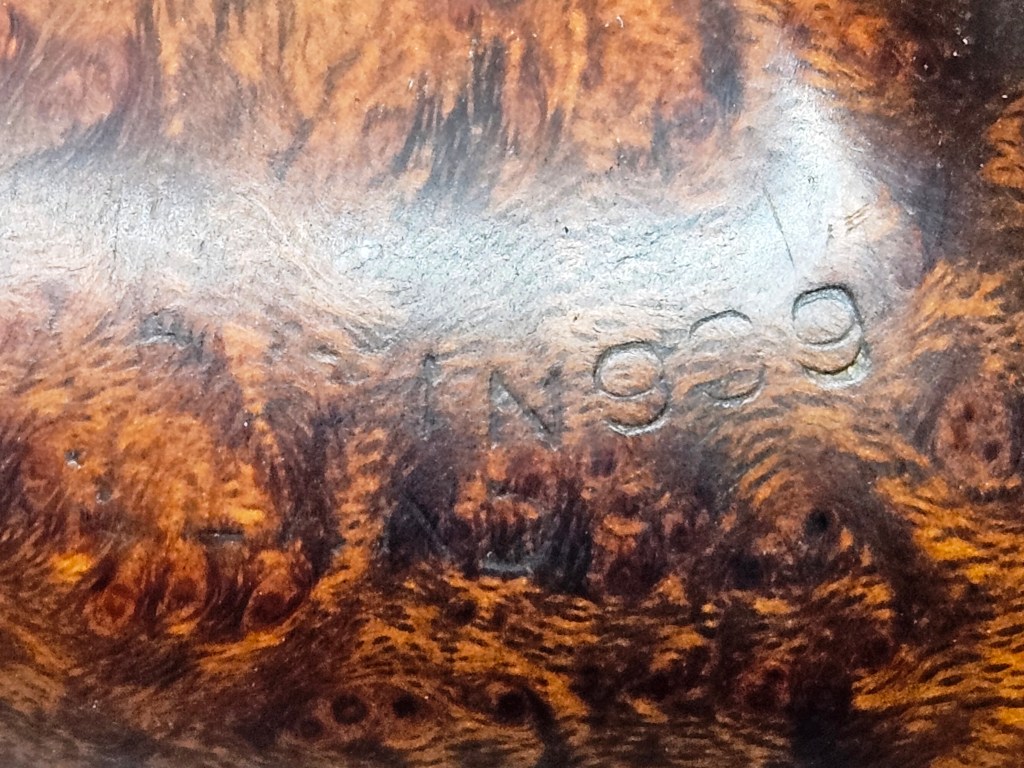
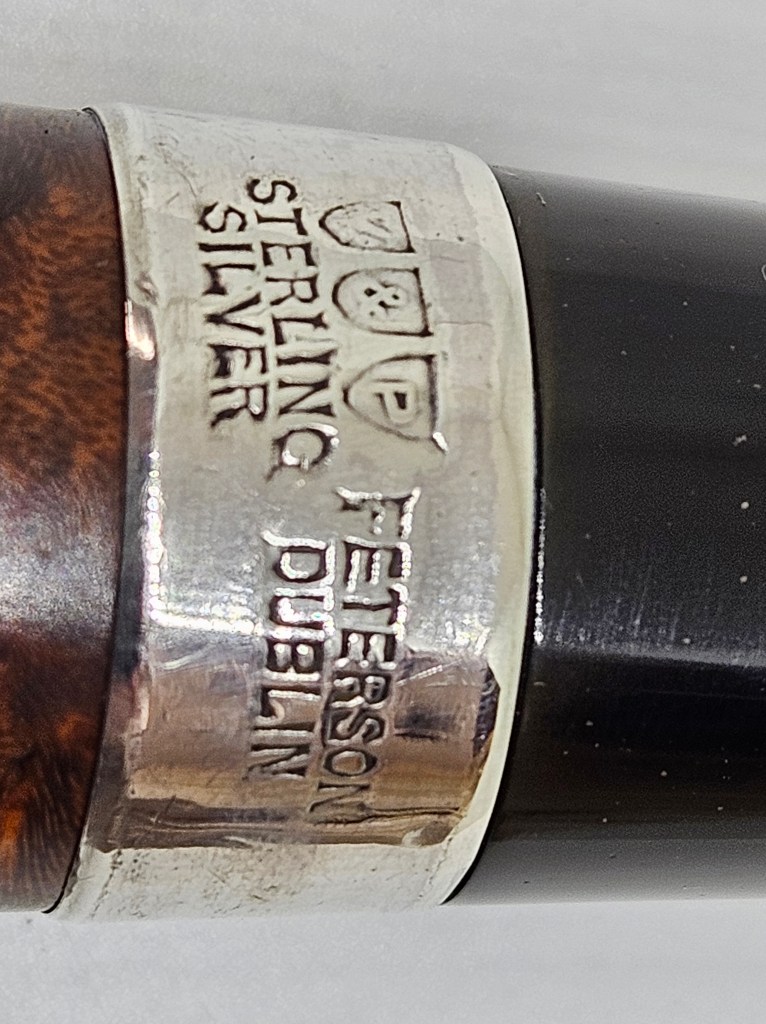
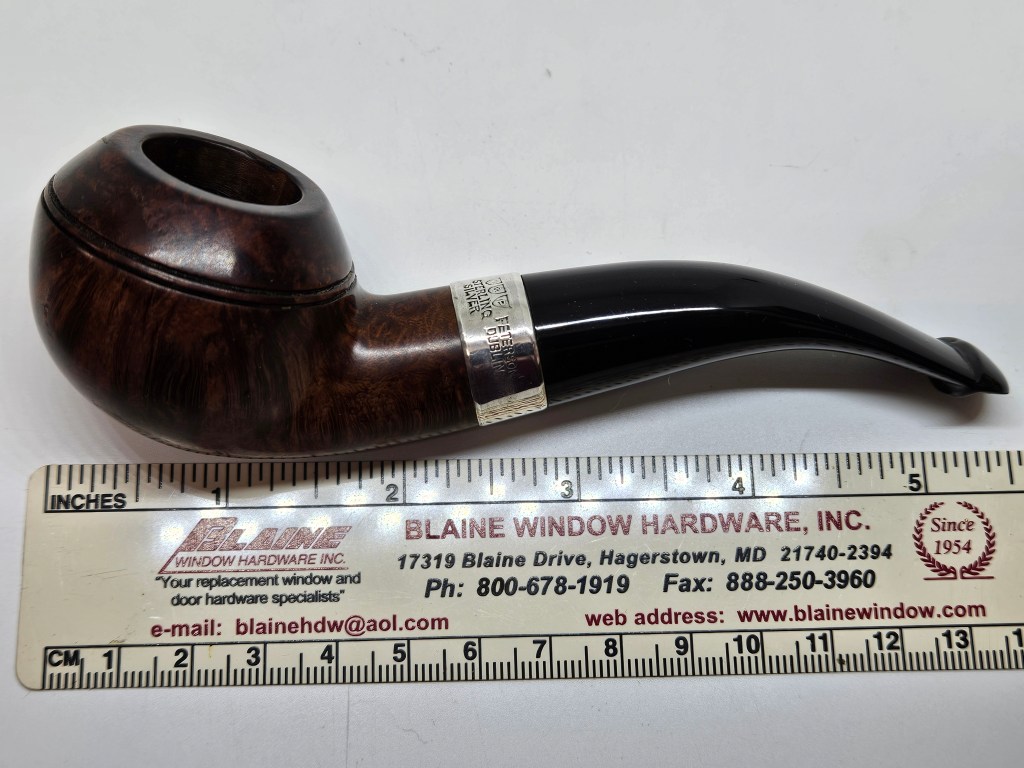
This Peterson belongs to a member of the PipesMagazine.com forum who asked me if I could undertake the restoration. He said that the nomenclature was worn and wanted someone to restore to use, but not further damage the nomenclature. I don’t take on my pipes beside my own, but I love working on special pipes like this one, so I said yes.
If you are a fan of the Peterson 999, check out Mark Irwins Peterson Pipe Notes blog entry on the history of the shape (two pipes from my collection are featured, thanks for the nod Mark!)
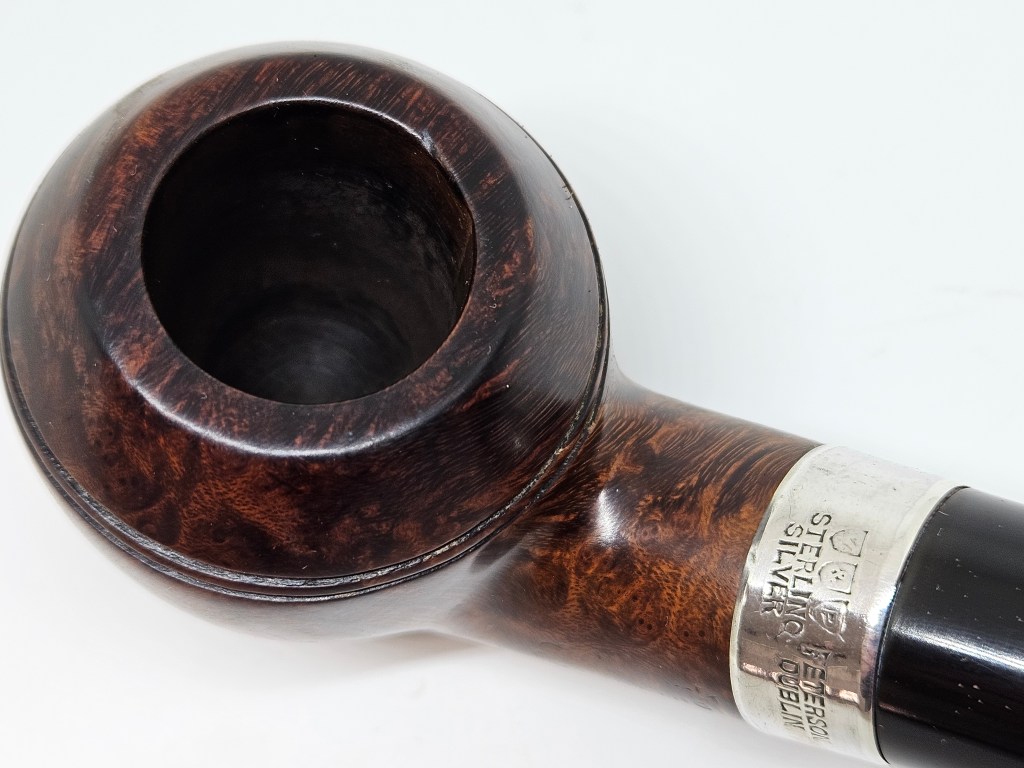
The pipe was in very good condition with really the only issue the worn nomenclature. The pipe has the block style “Made In Ireland” COM and an Sterling band with no hallmark. According to Mike Leverette, in his “A Peterson Dating Guide” entry on Pipepedia, that block style COM was used between 1947 and 1949. Below is the pipe as it was received. Curiously, it has what appears to be a filter tenon. There was very little cake and only a mildly oxidized stem. There are no signs of internal threads. This would be the first filter Peterson I’ve held, so any input is appreciated. Shamrock 999’s often have stingers, but they fit a standard tenon.
I reamed the pipe lightly and soaked it with sea salt and alcohol. Following the soak, the stem was mounted and oxidation removed with 600, 800, 1,500 and 2,000 grade wet sandpaper. I used a cream silver cleaner on the band. The stem was then buffed with White Diamond and Meguiars plastic polish.
The bowl was lightly buffed with White Diamond and several coats of Carnuba wax, staying away from the nomenclature.
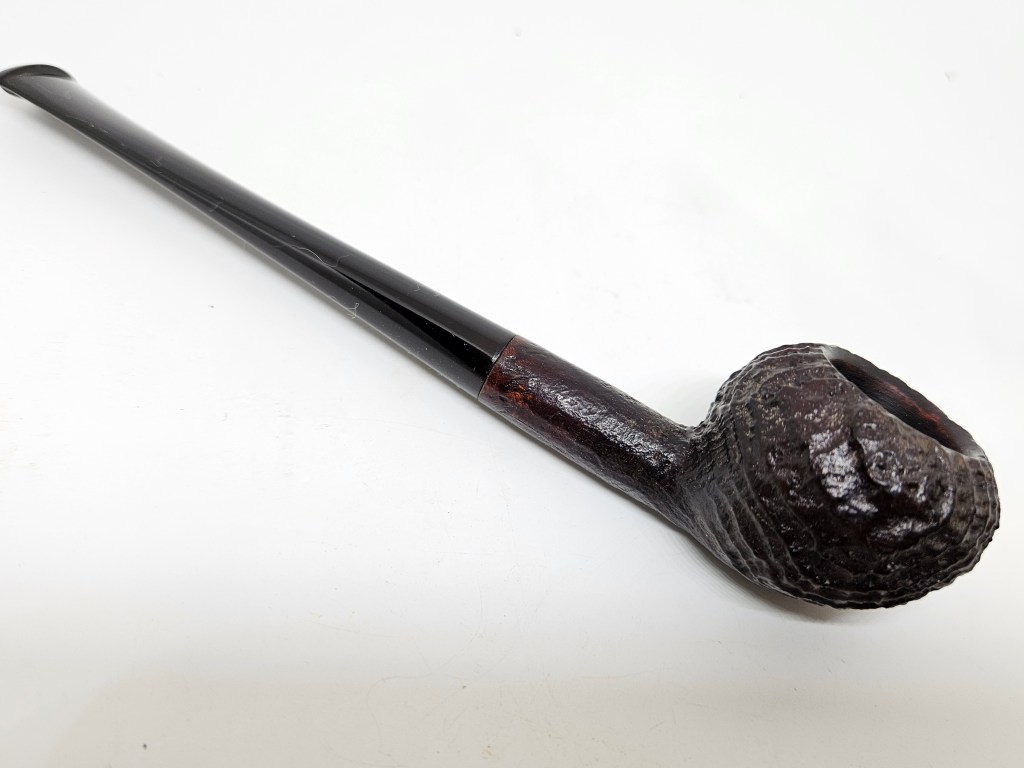
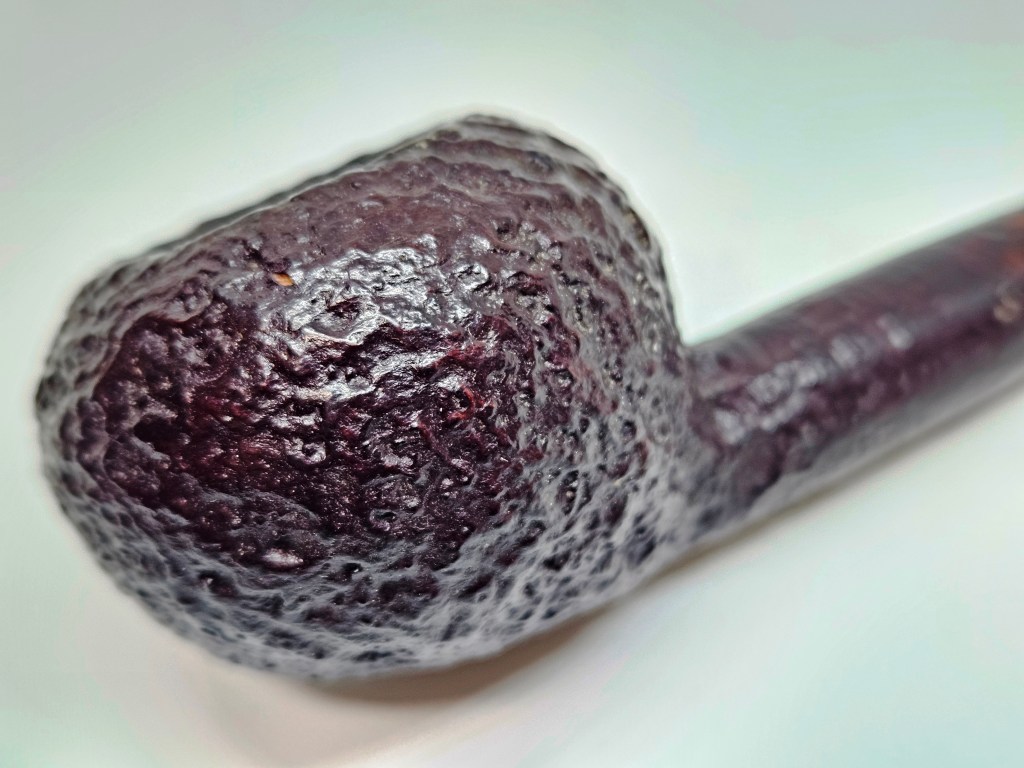
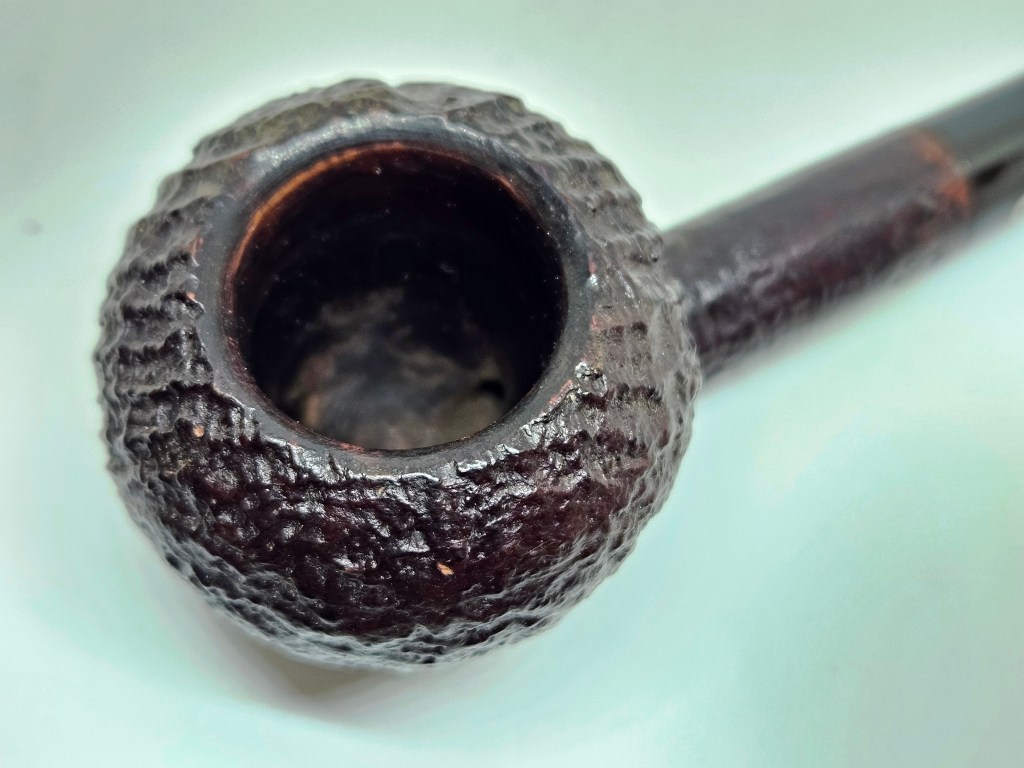
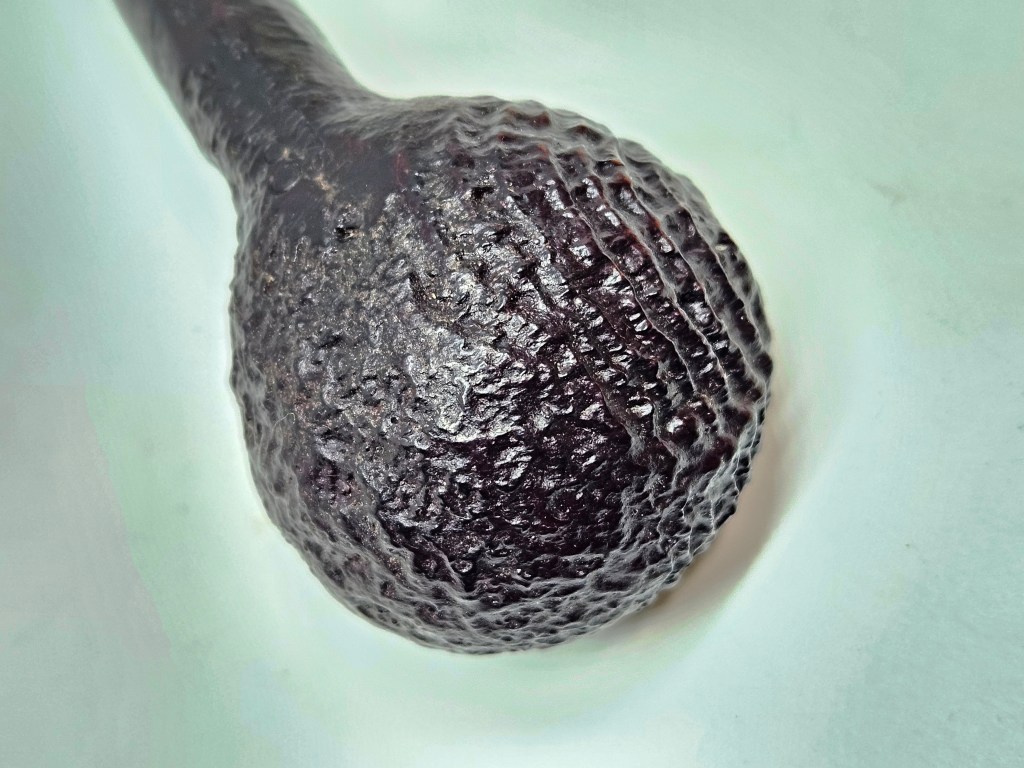
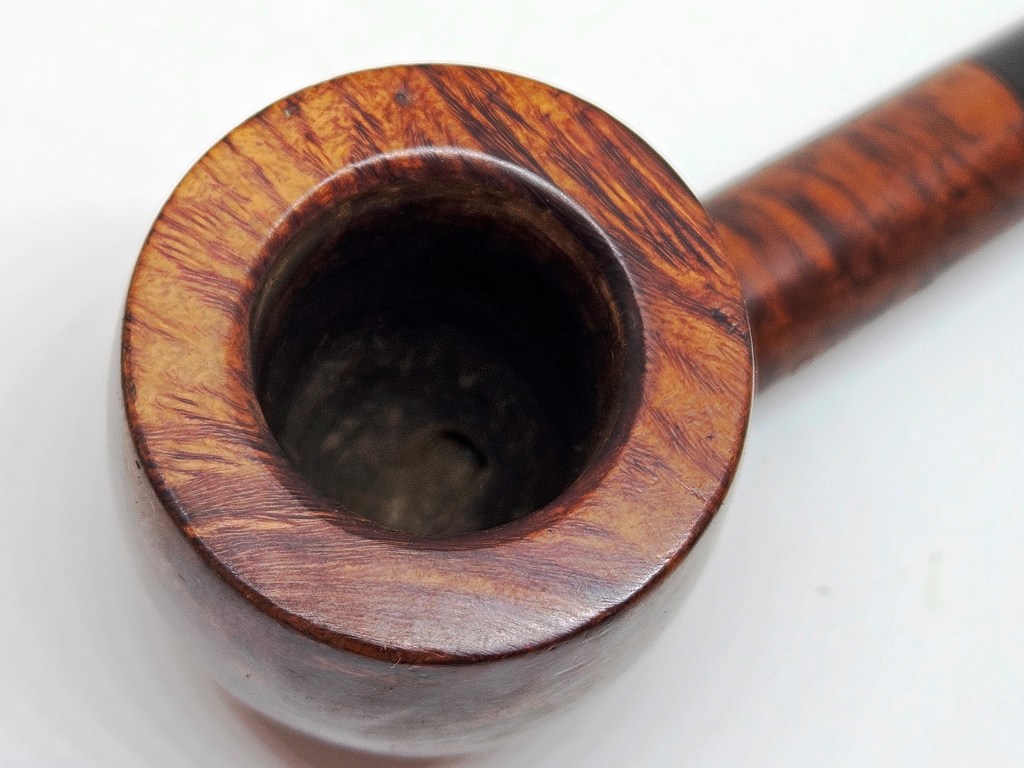
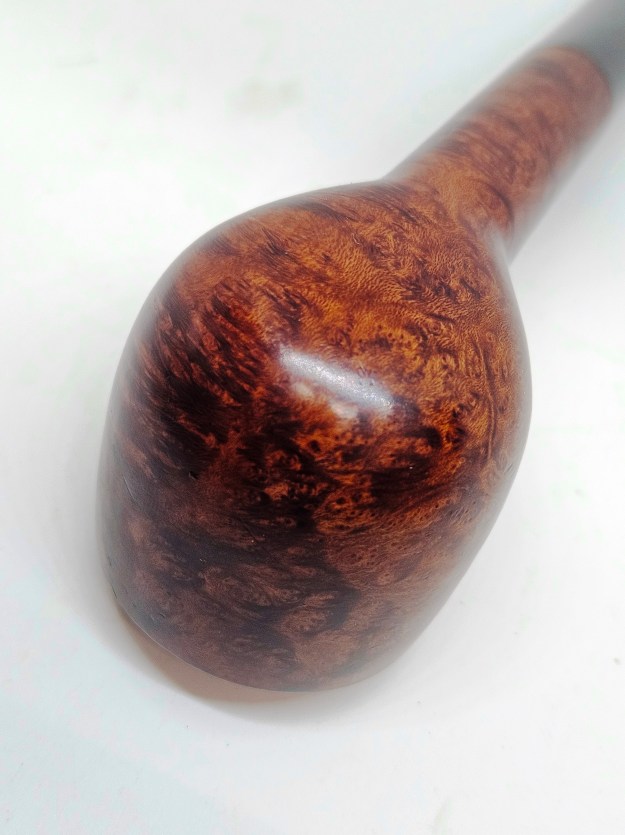
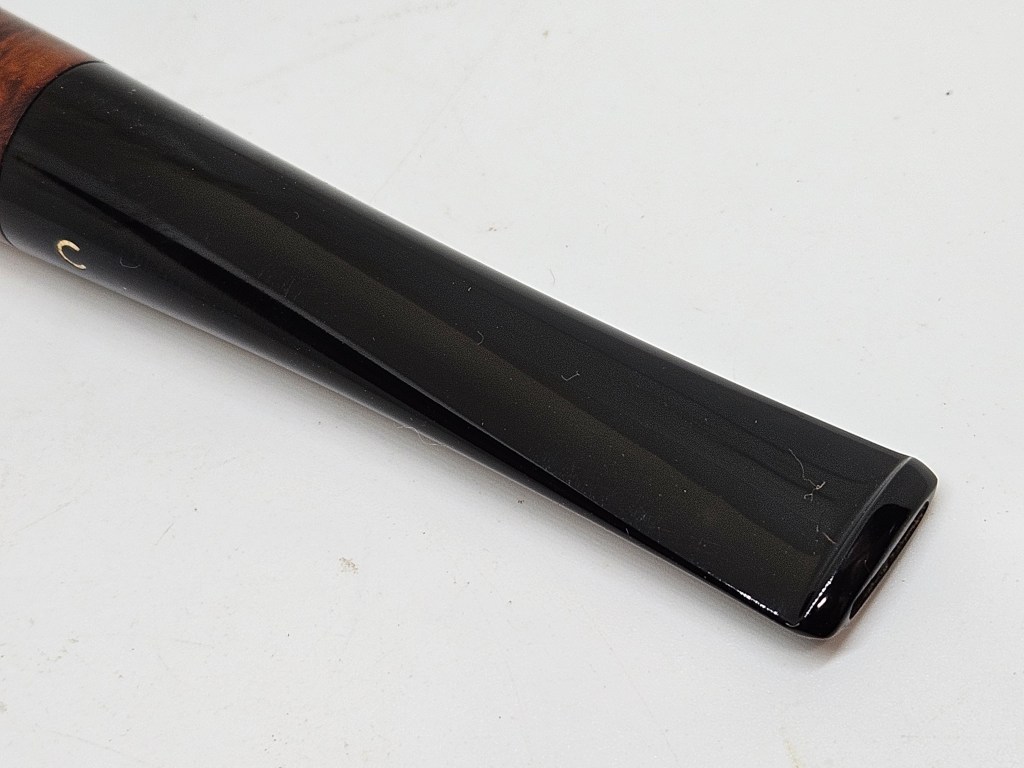
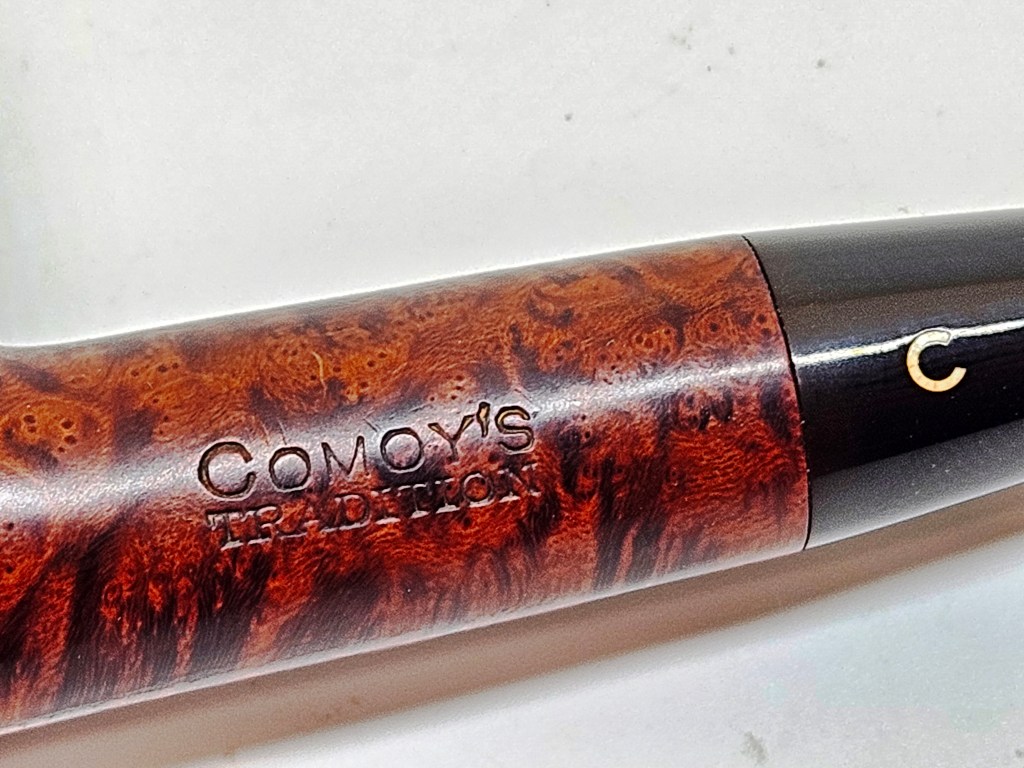
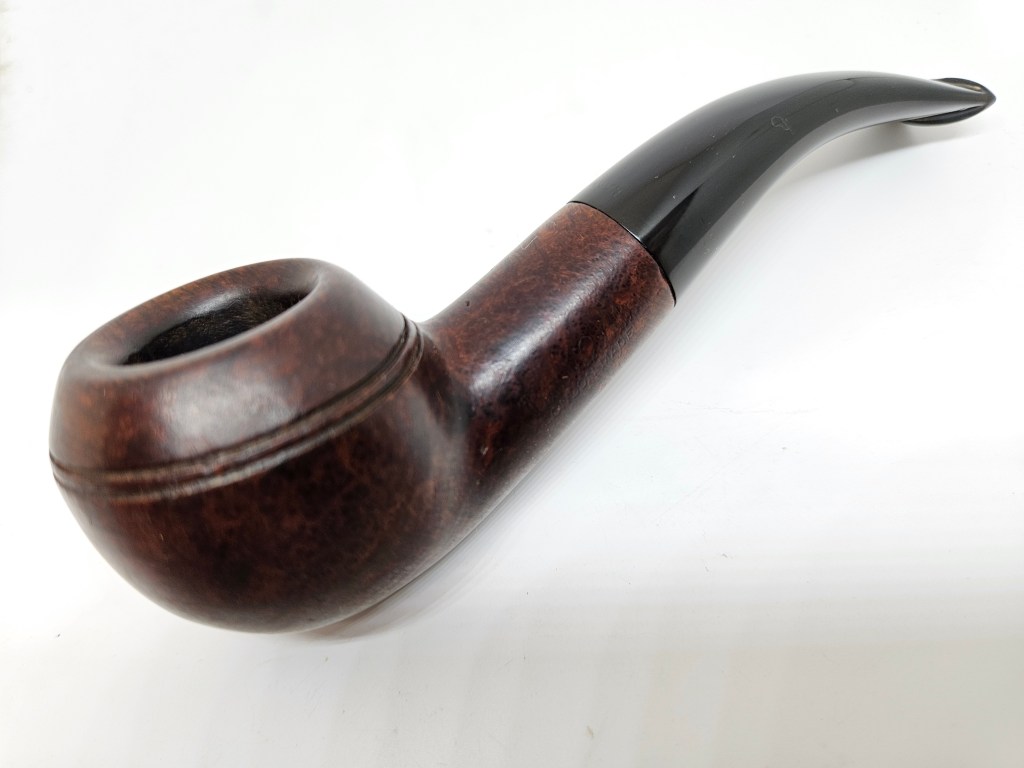
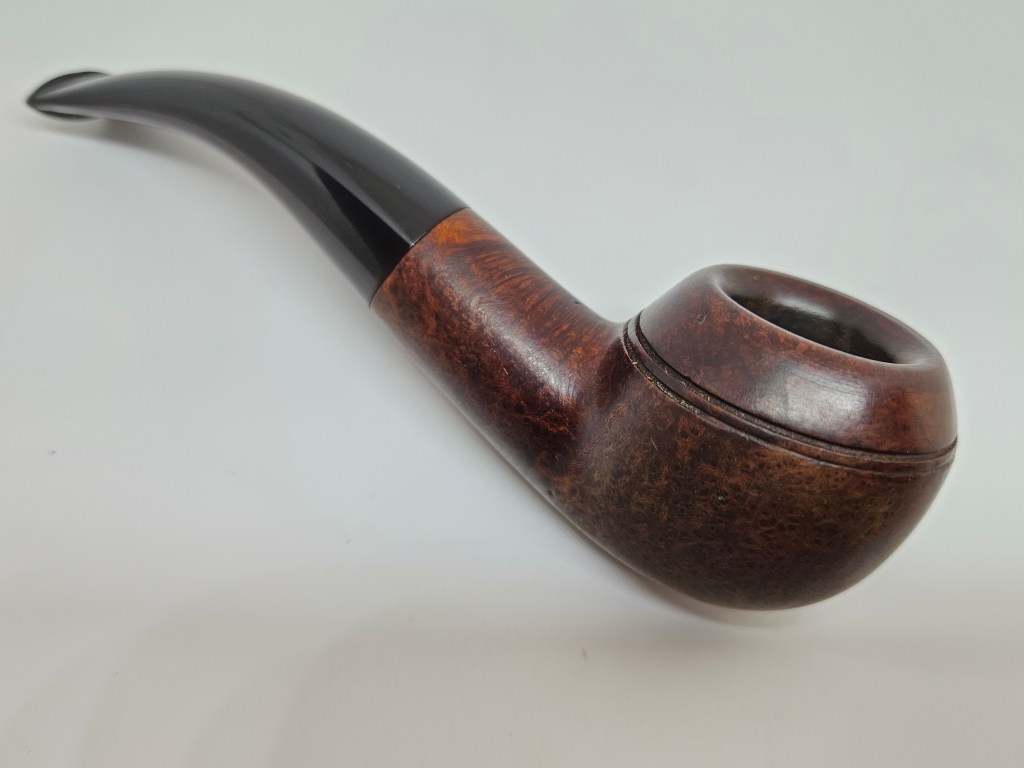
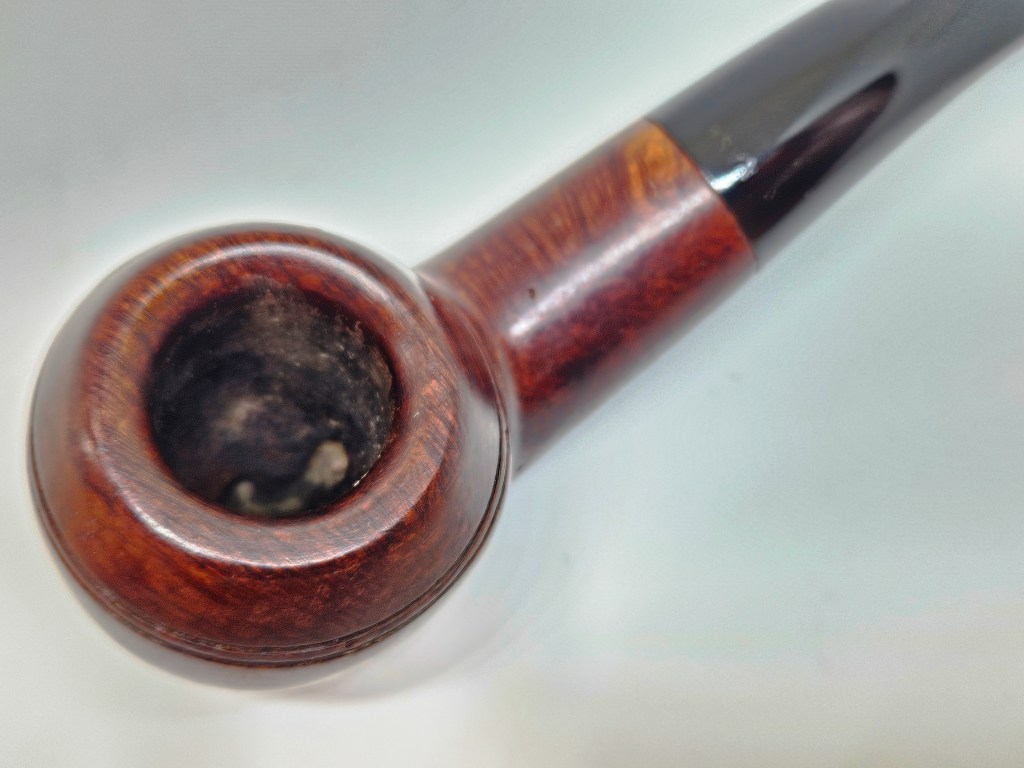
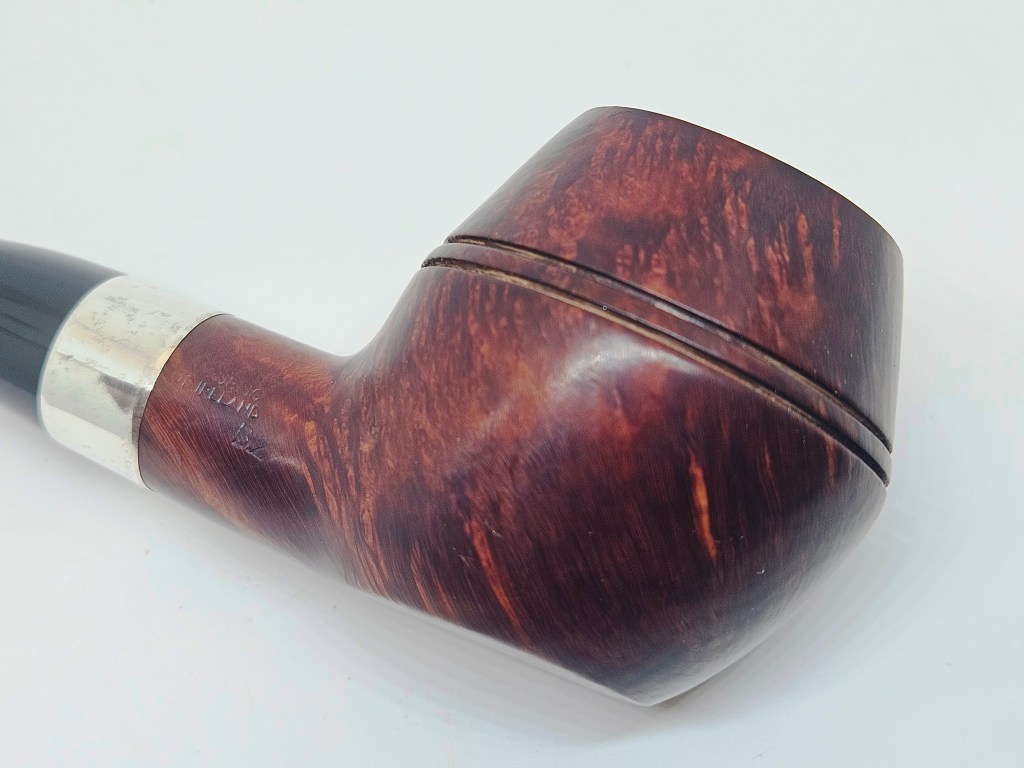
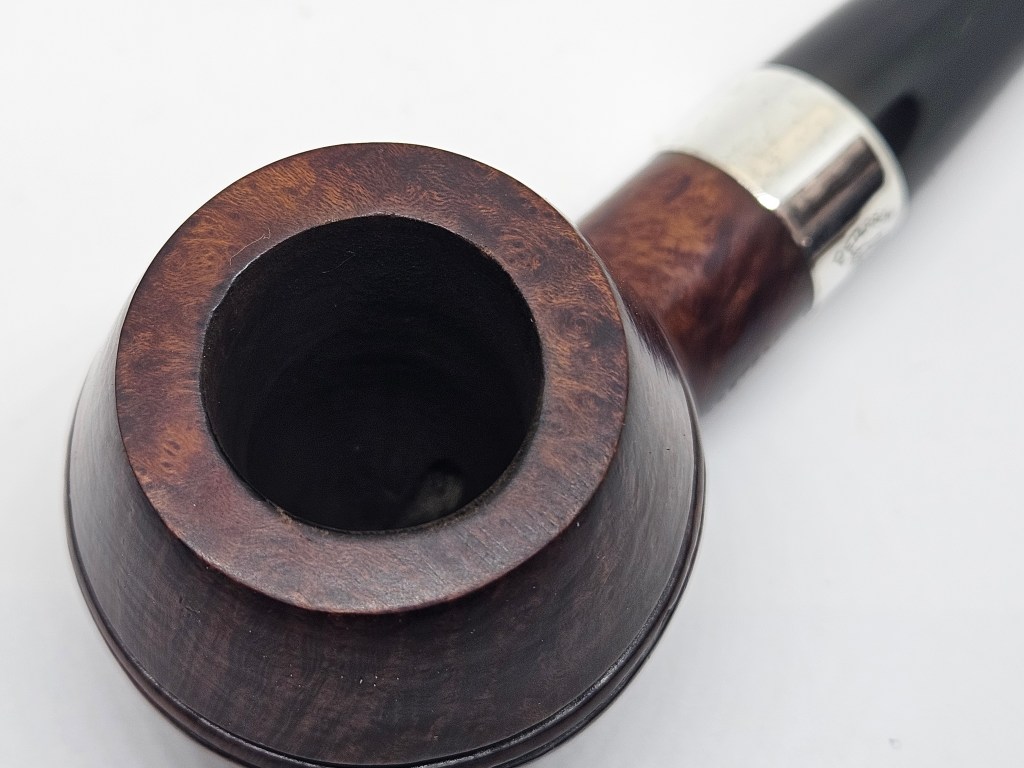
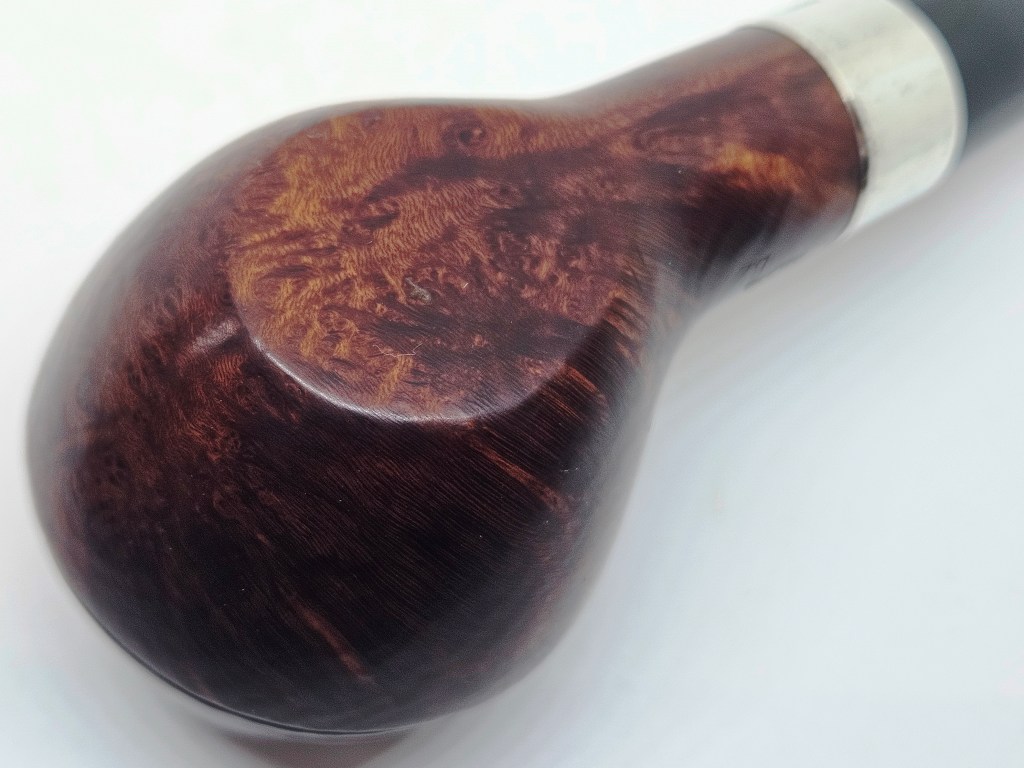
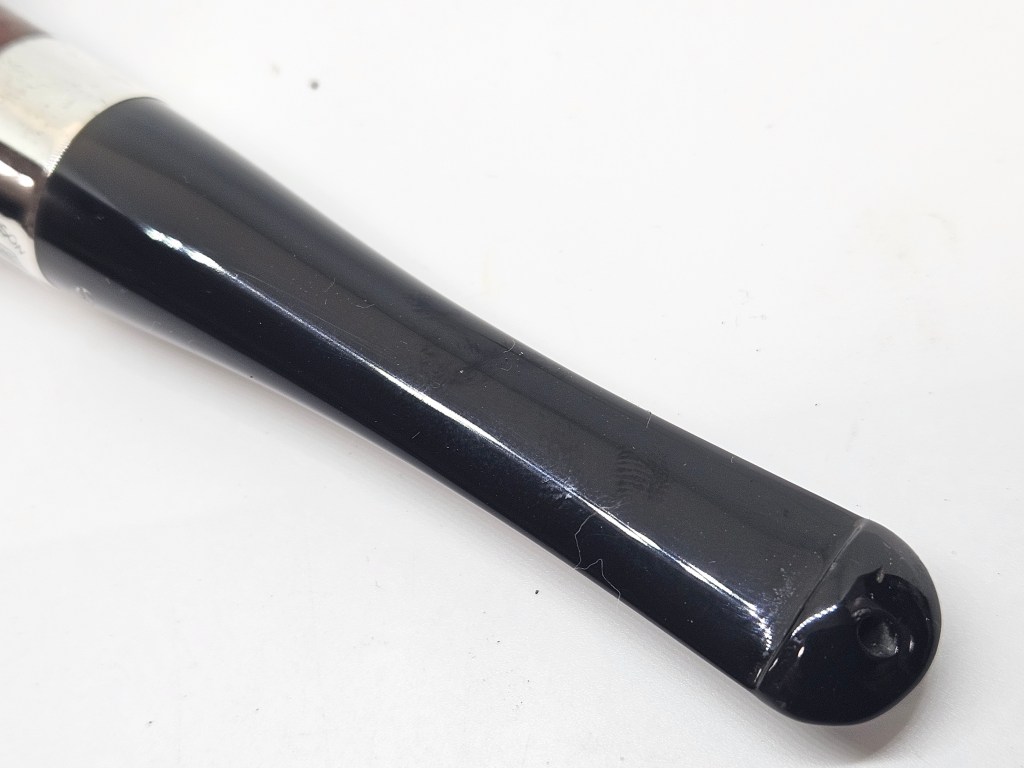
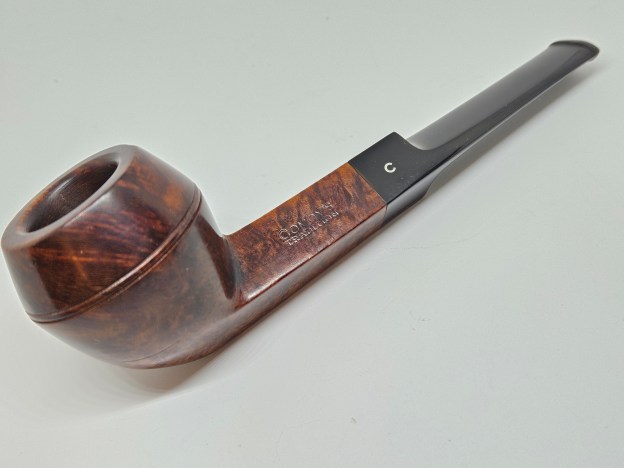
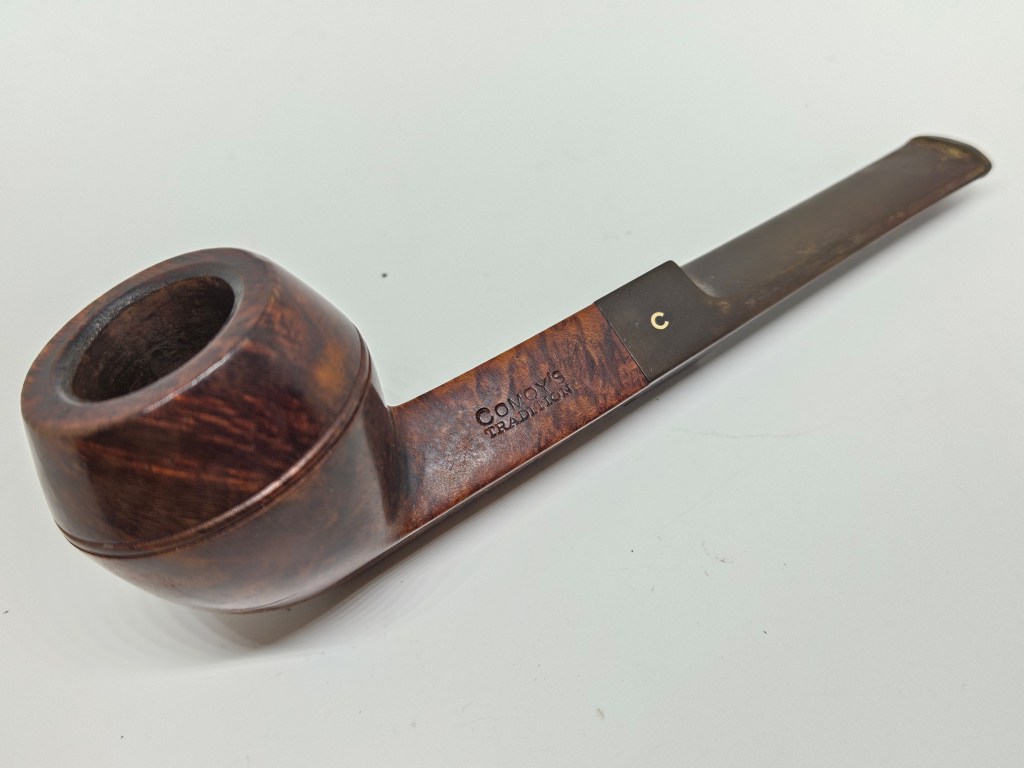
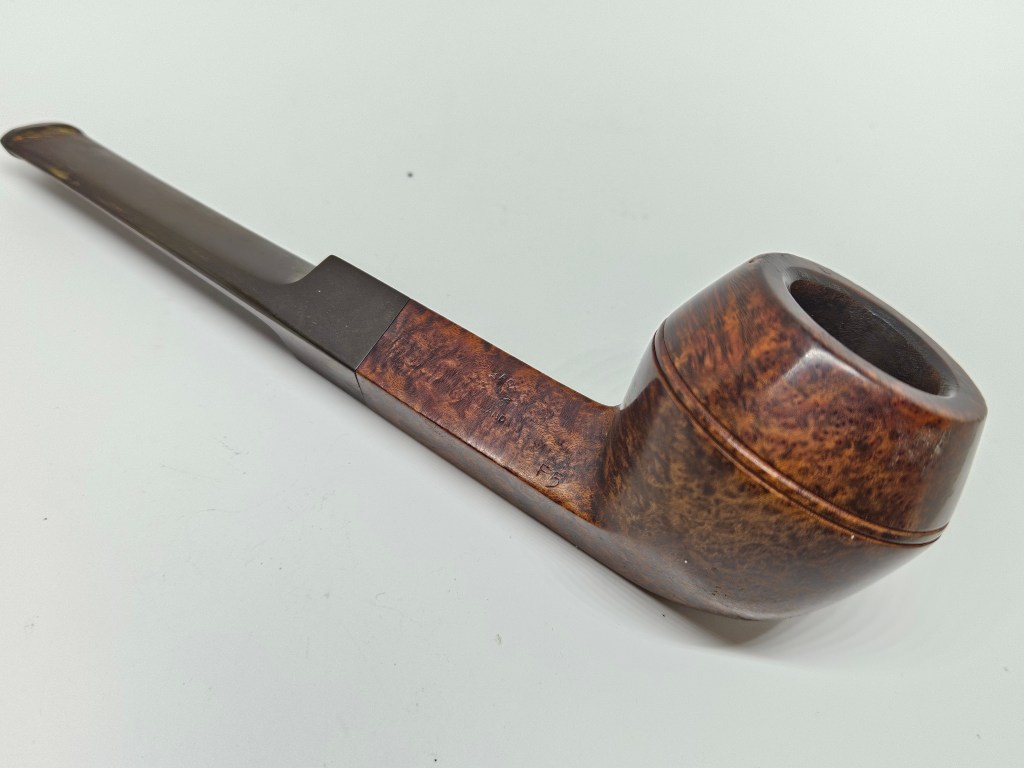
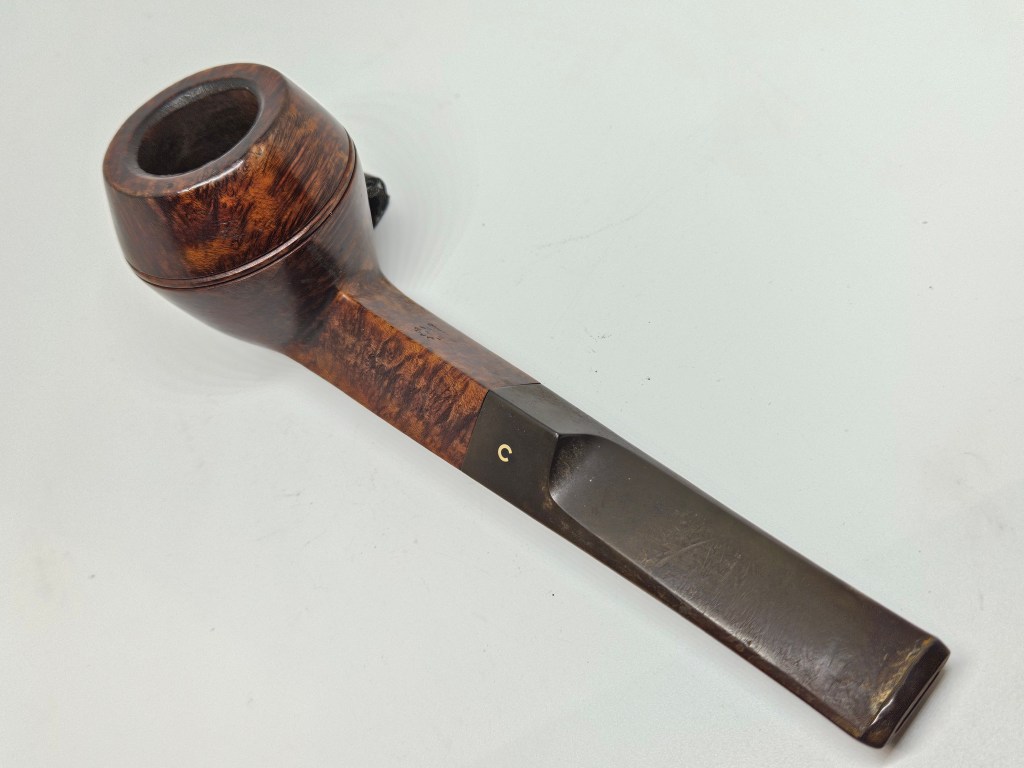
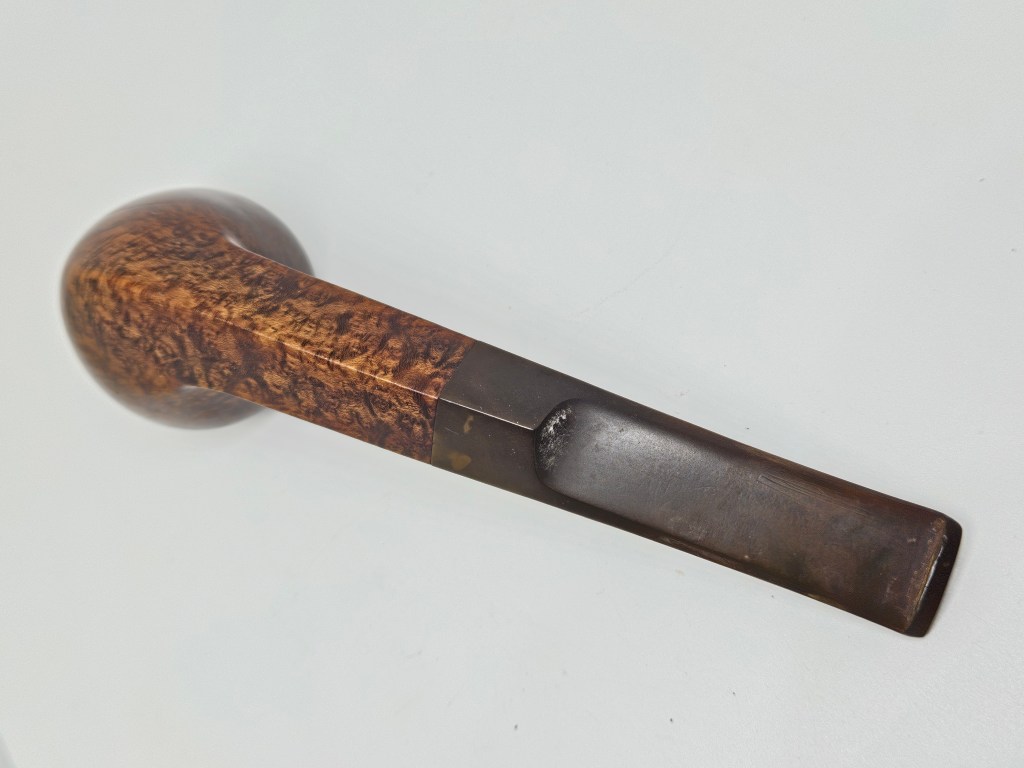
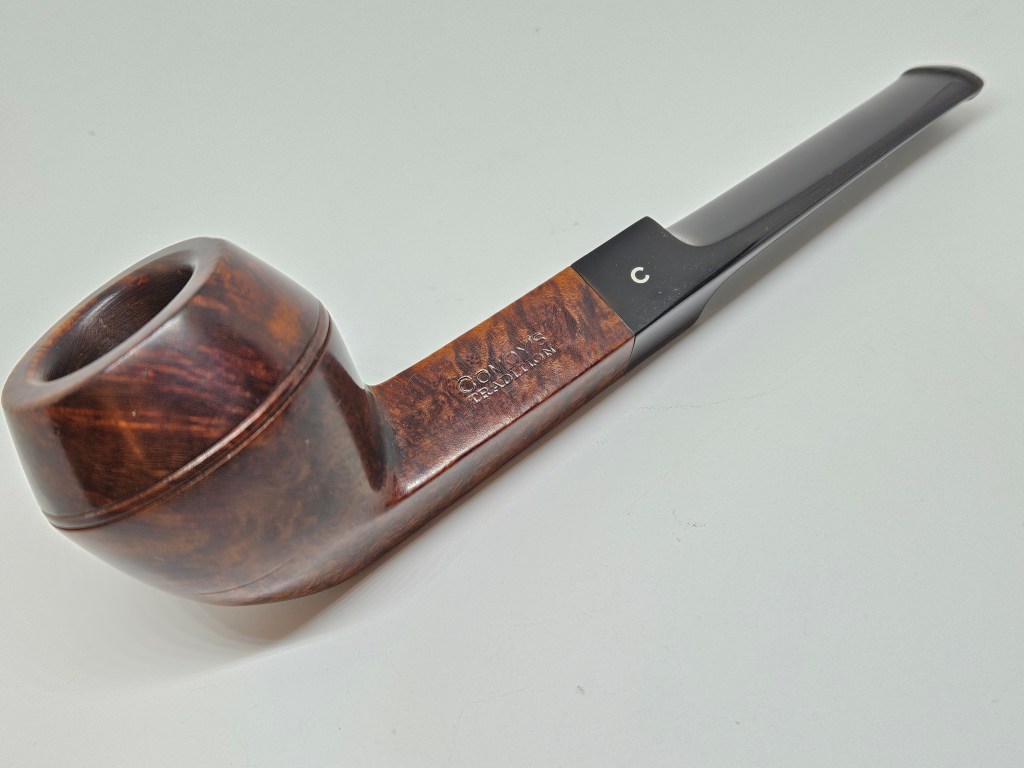
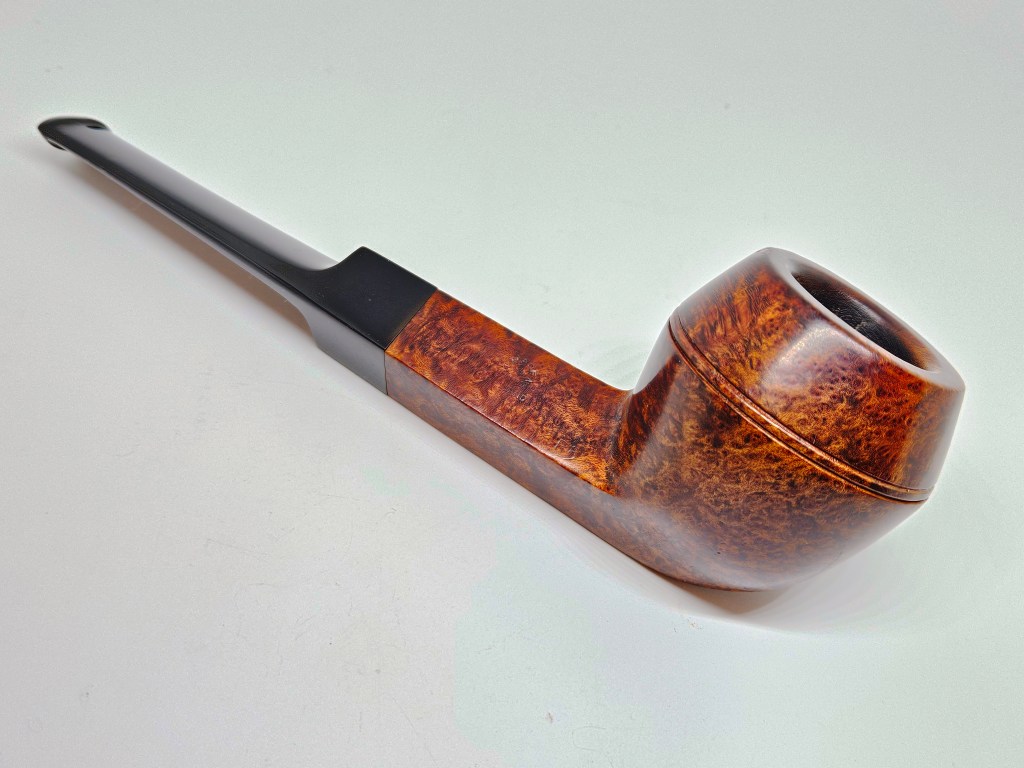
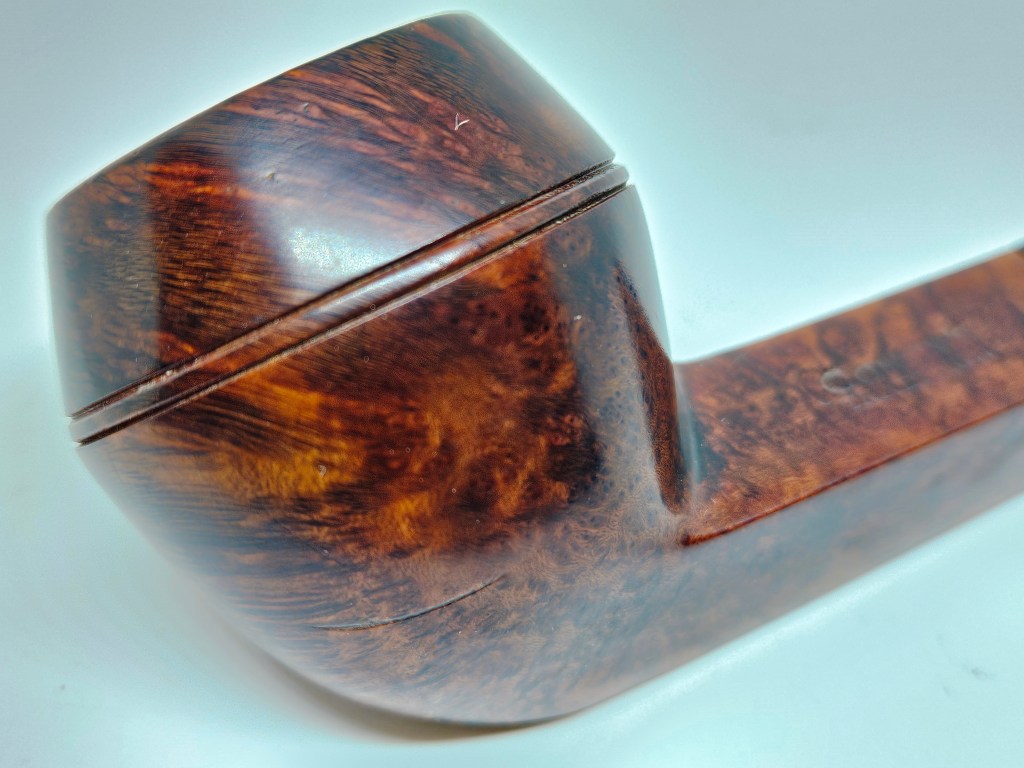
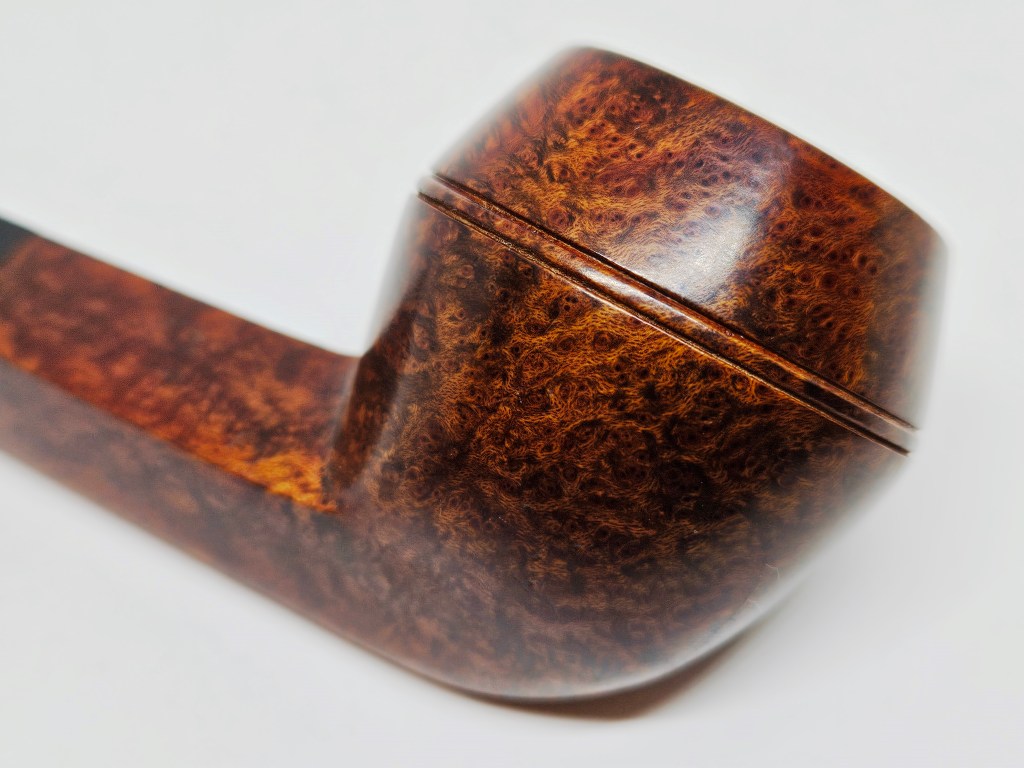
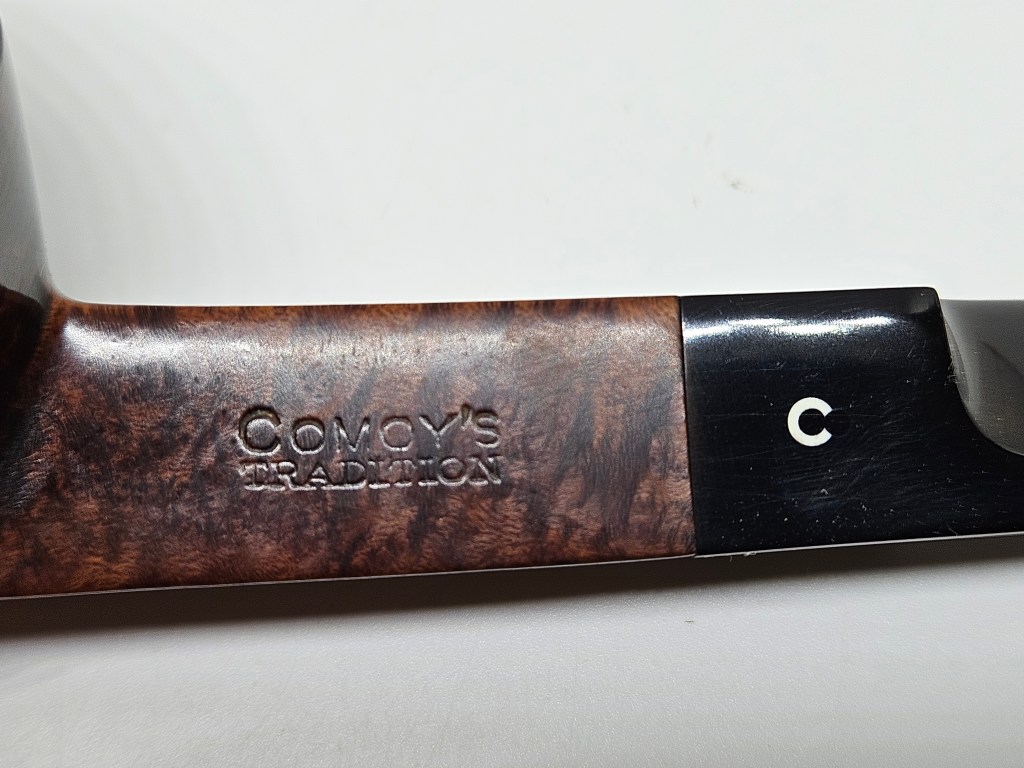
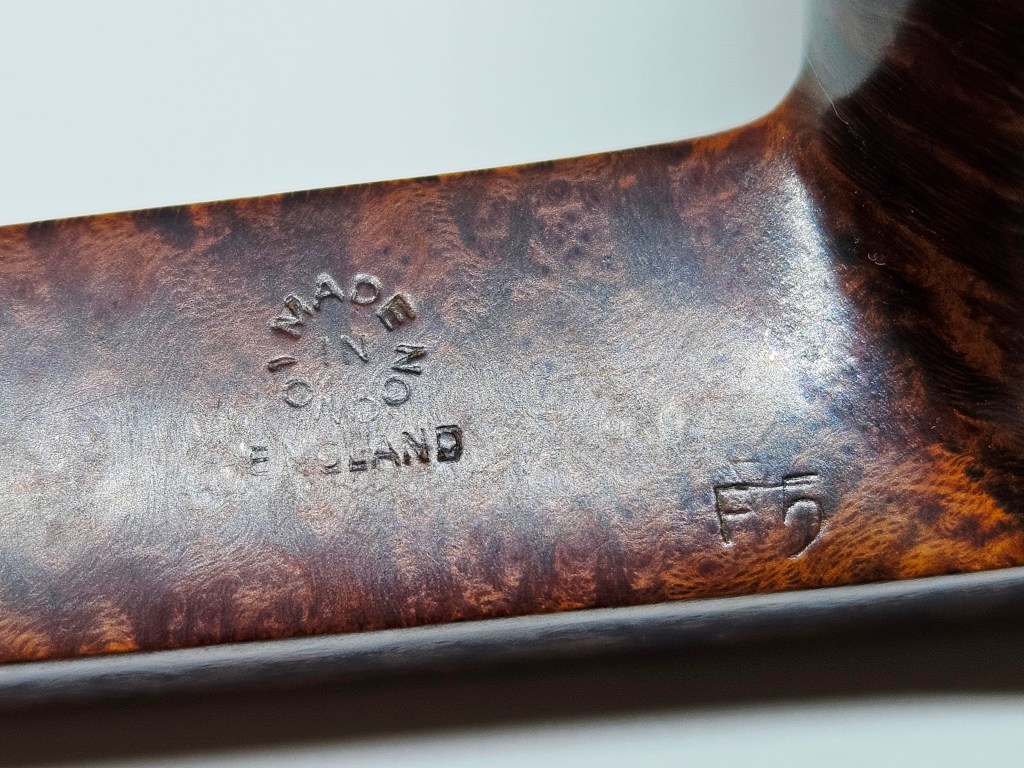
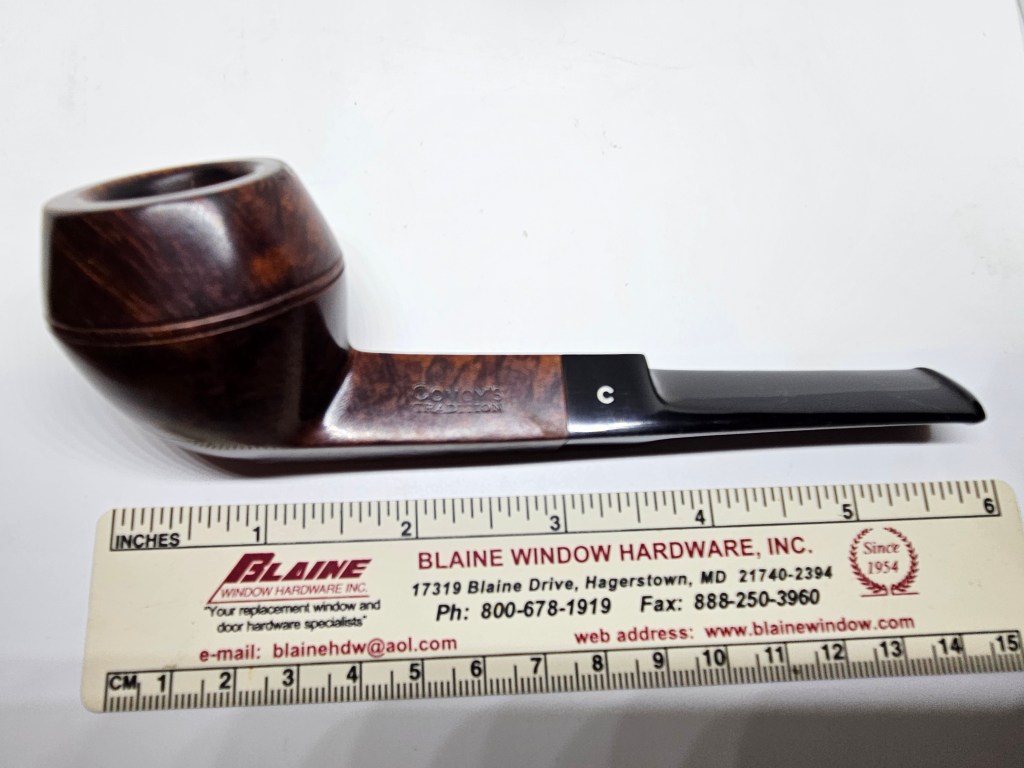
This Comoy’s Tradition is the 2nd pipe I worked on from the group that came to me for some restoration work. This is the Shape 5, Large Straight Bulldog. Curiously, this one has the letter “F” with the 5. I’ve worked on several shape 5’s, but never saw this letter. The COM and drilled C stem logo date the pipe to being made prior to the merger in 1981.
The pipe had an oxidized stem, a heavy cake and some lava on top. There was also a small chip on the edge of the bowl. The stem had no bite marks and the bowl bead rings were perfect. Below is the pipe as it was received (photos taken after the bowl top build up was removed).
I used some Tripoli with the buffing wheel to smooth out the chip on the bowl top, it’s much less noticeable now. The bowl was reamed, and soaked with alcohol and sea salt.
Following the soak, the stem was mounted and I removed the oxidation with wet sandpaper – 800, 1,500 and 2,000 grades, followed by machine buff with White Diamond rouge then Meguiars Plastic polish. The bowl was buffed lightly with White Diamond rouge and several coats of carnuba wax.











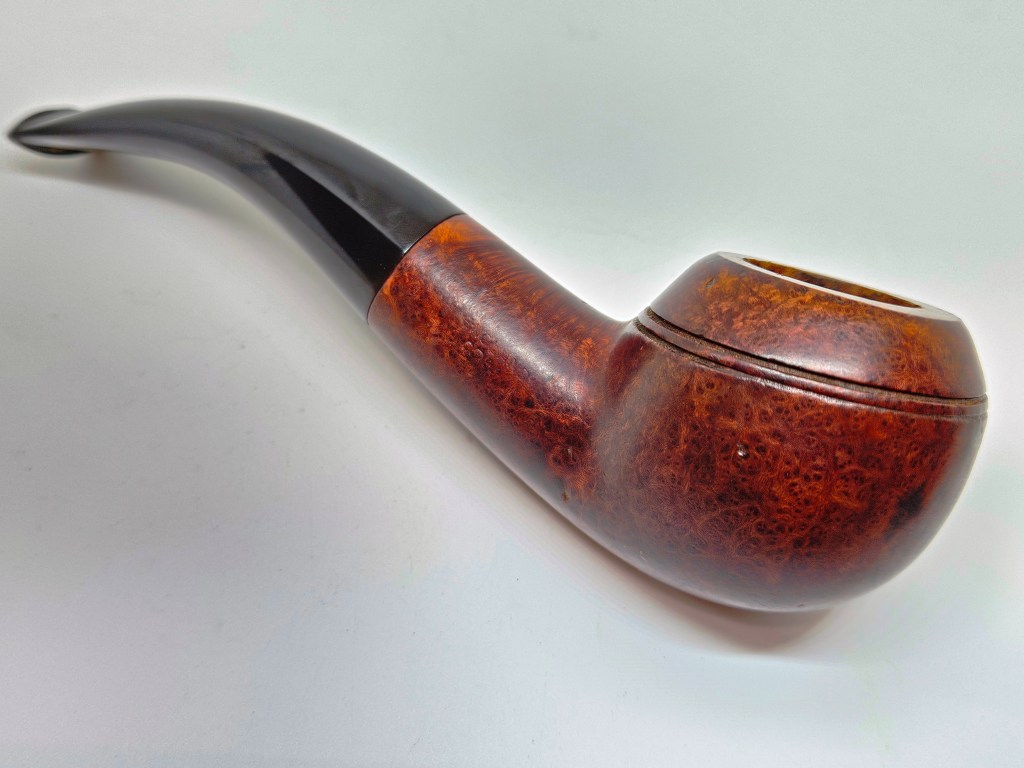
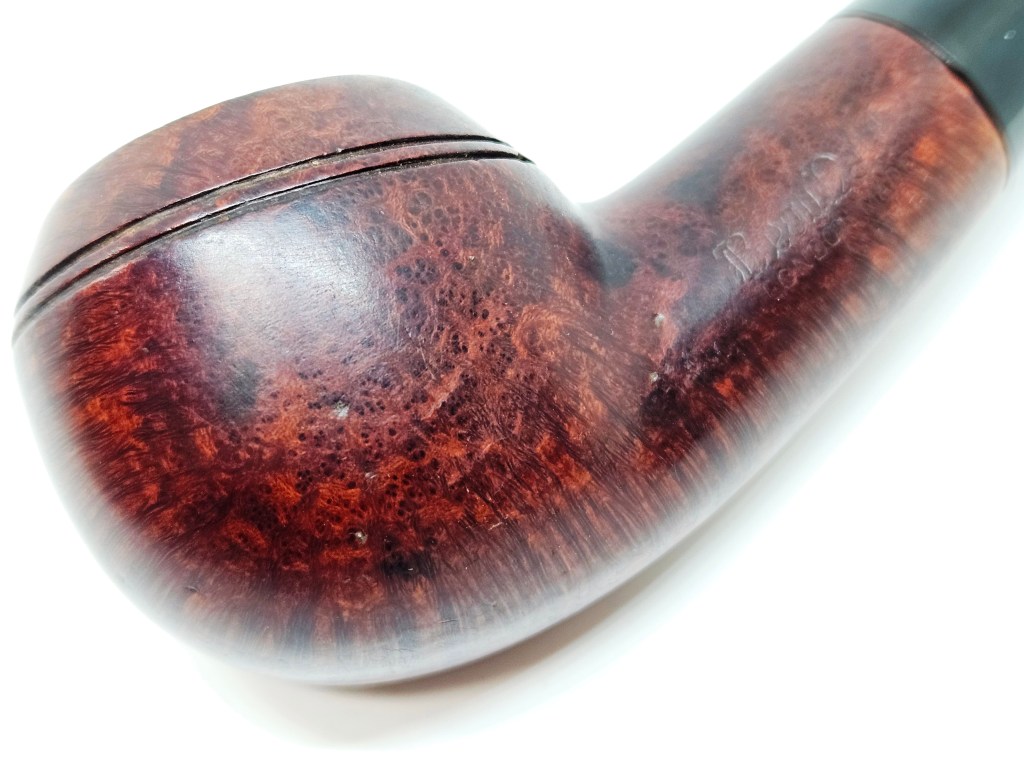
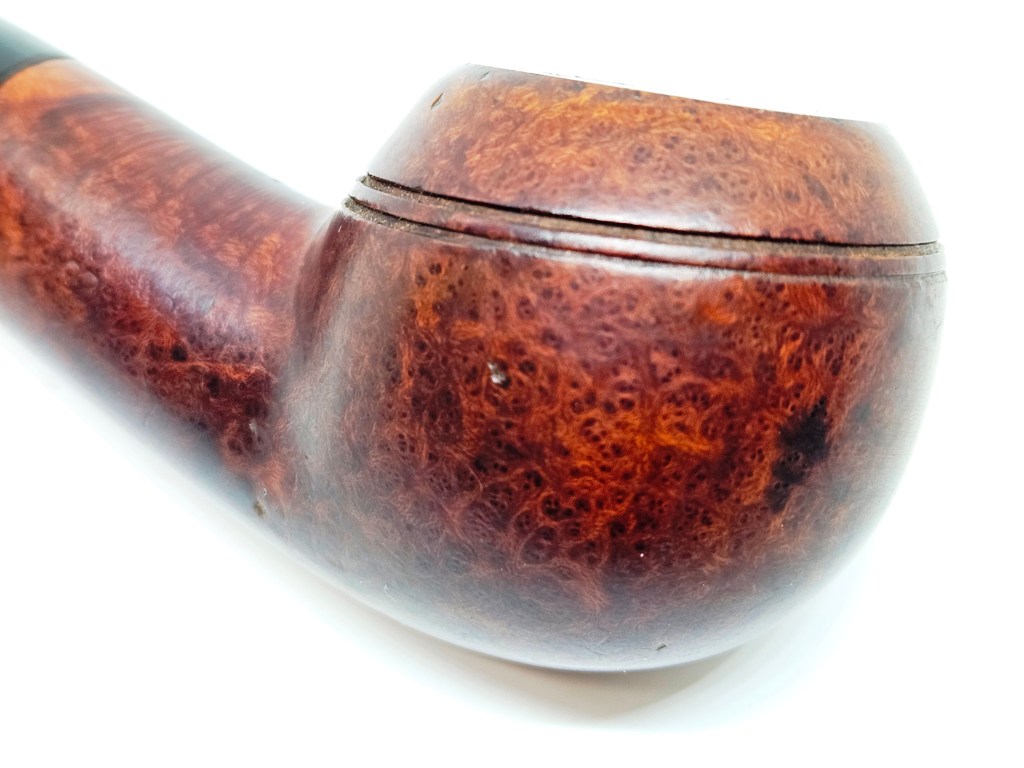
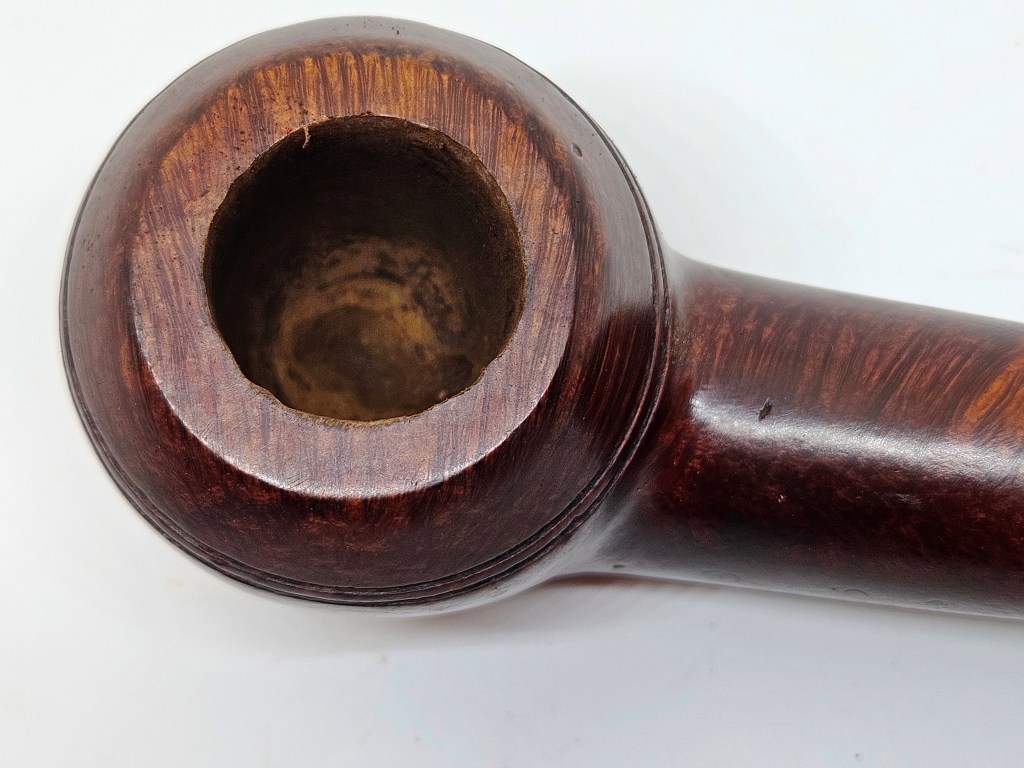

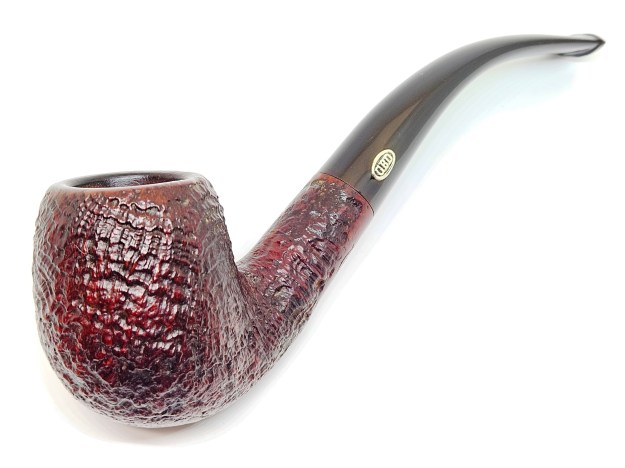
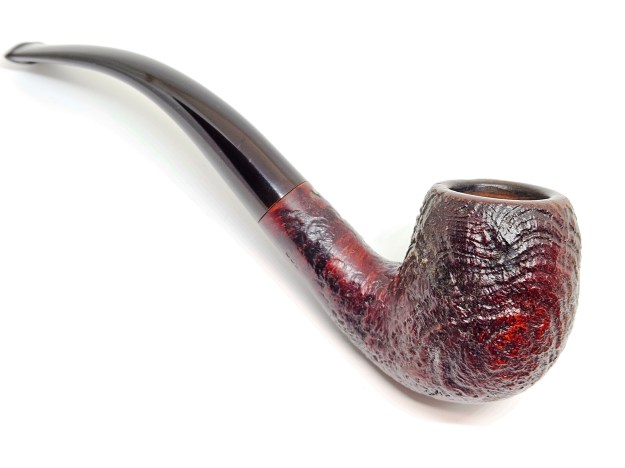
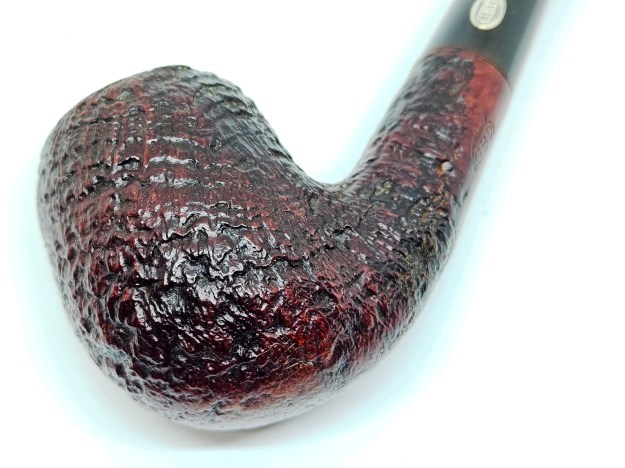
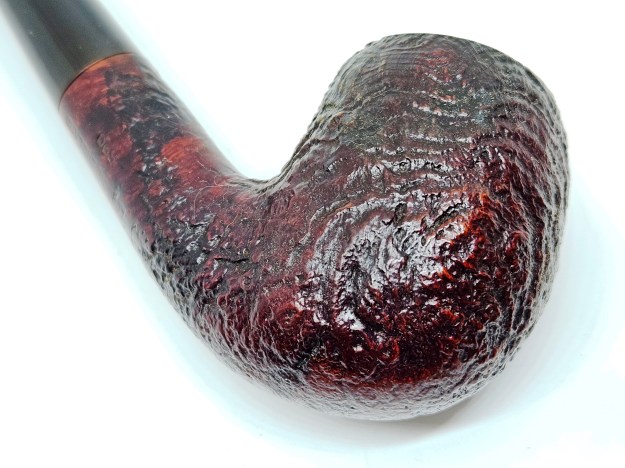
 rebornpipes