
Blog by Greg Wolford
A couple of weeks back I saw two old pipes on eBay that were being sold as a lot that caught my attention: an Edwards Algerian Briar in a Dublin shape and a GBD pot with, what I was pretty sure was, a replacement stem. The combined opening bid and shipping cost was below $20 and it was late in the auction with no bidders yet. The seller had provided a poor description and only two poor photos, which must be the reason for no bids yet I thought. Since I am a fan of GBD pipes and have been wanting an Edwards (since hearing Brian Levine talk about them on the Pipes Magazine Radio Show a few moths ago and it being in a shape I really like I tossed in the opening bid. To my surprise, I won the auction for the under $20 total opening bid with shipping included. Here are the photos from the seller:
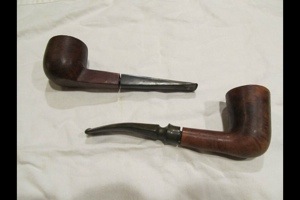
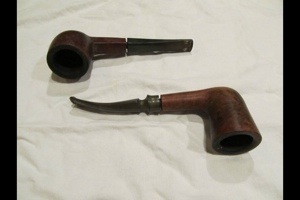
When they arrived they were in a bit worse condition than the pictures showed: very dirty, heavily caked, some very large fills, and lots of oxidation. But the stems (the GBD is a replacement) were free of holes and deep teeth marks, something I was glad to see. (This post will mainly be on the Edwards, though some of the GBD will be included. Eventually I’ll post that job, too, when I finish it.) Here are some photos of what they actually looked like when I got them:
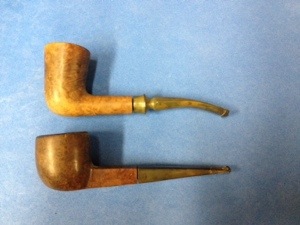
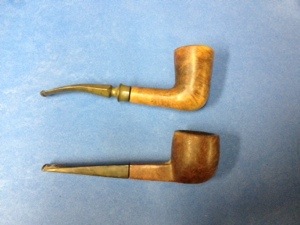
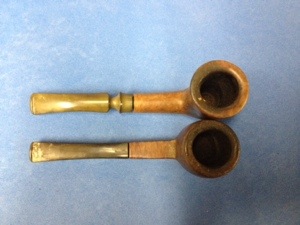
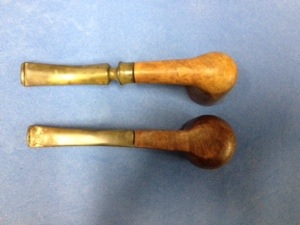
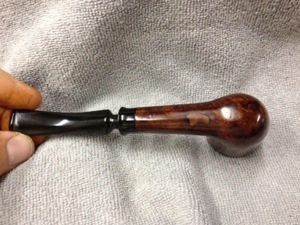
The Edwards had a lot of build up on the rim. As I cleaned it I realized that all of it wasn’t build up but a fair amount of charring and a larger fill on the back of the rim of the bowl. There was also the largest full I’ve ever seen on the bottom of the shank. I decided that I wouldn’t try to remove and refill these areas but just refinish the pipe with them as they were. Although very large, they wouldn’t effect my personal enjoyment of this pipe so I didn’t feel there was any good reason to cool with them, and I had some concern that fills that large, disturbed, might present problems down the road.

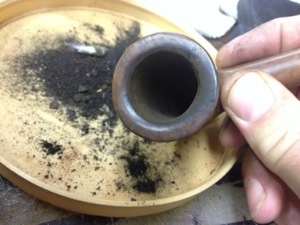
I reamed back the thick cake to a nicer, even level, using all four bits on my Castleford reamer.
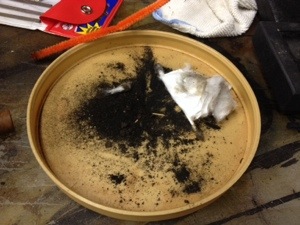
I then put the bowls into an alcohol bath and the stems into an OxyClean bath and left them overnight to soak.
The next day I starts with the stems, taking them out of the bath and washing them under warm water with dish soap. I was surprised at how easily the oxidation came off after this with a miracle eraser scrub; I’ve used miracle erasers many times, but not on all stems, and have never had such good results. I wish I knew what the variable was to give me this result this time but I don’t. Next I scrubbed the stems out with alcohol and pipe cleaners until they came out white.
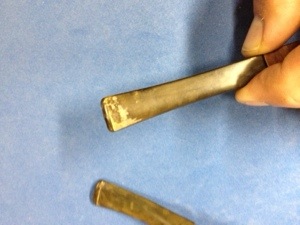
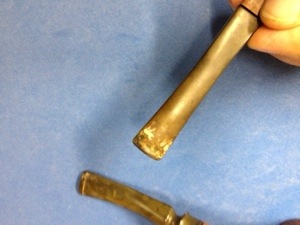
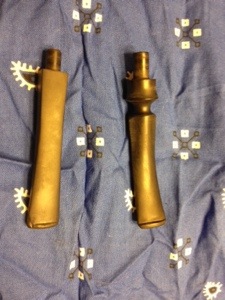
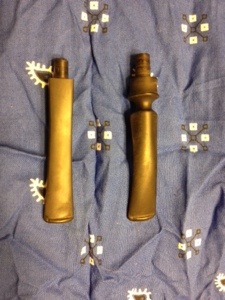
At this point took the bowls out of there bath and wiped them down. In the photos you can probably see (above) that the stem/shank union was not flush at all. I figured the problem was a buildup of tar and gunk in the shank so I set the bowls at an angle, shank tilted up, and placed cotton balls in the bowls. I filled them with alcohol with a syringe and then also filled the shanks the same way, plugging them with cotton swabs. I let them soak while I worked on the stems, changing the cotton swabs out as they drew out tars; I changed them three times I think, going to doubled over pipe cleaners the final time.
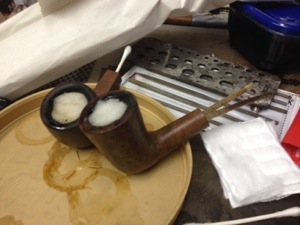
I polished the stems with plastic polish, making sure they were literally squeaky-clean before using micro mesh pads 1500-4000 grits, wet, to bring up a shine. The condition was very nice, to my eye, at this point, and the bowl needed a lot more attention so I set the stems aside to get to the bowl.
The shanks were very thick with build up even after the soaking. I used the Senior Reamer drill bit on the GBD but it was too large for the Edwards; I chose I smaller bit for it, the size of which escapes me. After many bristled and smooth pipe cleaners the shanks were finally gunk free and the stems seated well once again.
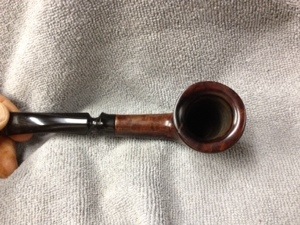
I sanded the bowl rim to reduce the damage of the charring as much as I could while trying to not alter the shape. This was a challenge and I left a little more char, which I tried to blend later with dye, than I’d normally like but I really wanted to keep as much briar as I could for the shape and for insulation since the walls aren’t very thick to start with. I also lightly sanded the rest of the stummel, while avoiding the already faint nomenclature, to remove the last of the finish and some scratches with 320/400 grit wet/dry paper.

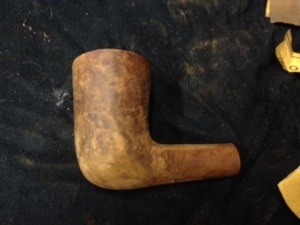
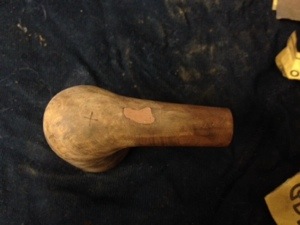

To start, I put a little stain on the rim of the bowl using some furniture touch up markers I found at our local Walmart: three markers for $4 I think. I wanted to get a base coat started before I went forward. Next I applied a coat of mahogany leather dye to the entire pipe; it is dark but not as red as some of the other color choices Fiebings makes and I thought it might help hide some of the defects and being up the contrast at the same time. I didn’t flame this in, by the way, since I didn’t want to change the entire color of the pipe. After it had set for about 10 minutes I sanded it back off with 400 grit paper to where I liked it.
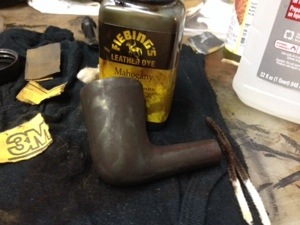
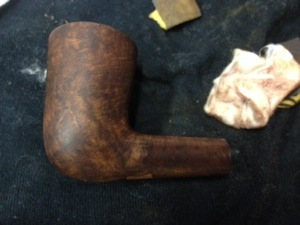
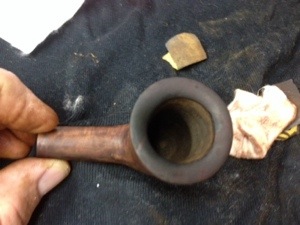
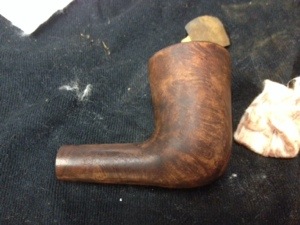
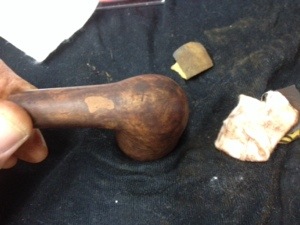
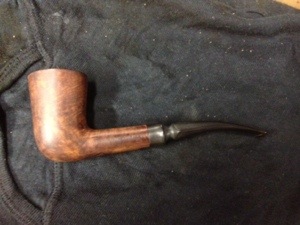
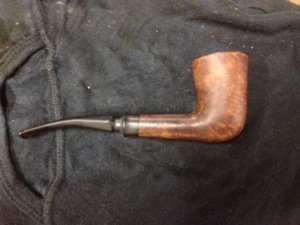
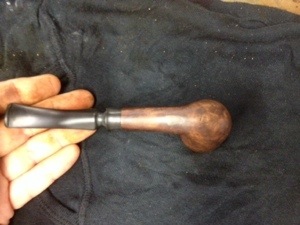
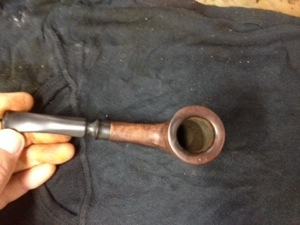
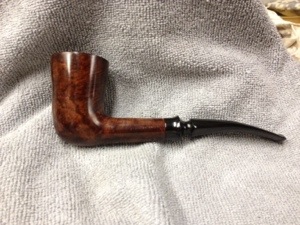
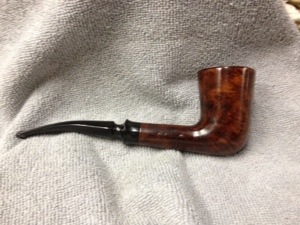
At this point I was pretty happy with the overall results: most of the defects were fixed or hidden, except for the two biggest fills, which didn’t hide as well as I’d liked but about as I expected. Off to the buffer the pipe went now: the entire pipe, stem and all, got a buffing with tripoli, white diamond, and carnauba wax, flowed with the clean, soft buff and a hand final buff. The final result is one I’m pleased with: a nice looking and good smoking old pipe.
 rebornpipes
Pingback: GBD Century Pot Reclaimed | reborn pipes
Nice job, Greg. The color came out looking great and the rim, too!! Keep up the good work 🙂
LikeLike
Thanks, Larry. I am very pleased with it all but especially the rim.
LikeLike
Well done Greg. This pipe cleaned up very nicely. I have several Edwards, all of which are good smokers. Thanks for sharing the text and pictures of this project.
LikeLike
Thank you, Dave, for taking the time to read and comment on the article. I’m certainly enjoying this old Edwards and wouldn’t mind to ass a few more in due time.
LikeLike
Great job, love the color! In the alcohol bath soaking overnight, is the entire stummel submerged? I did that once with an oxyclean soak and it took off all tars, finish but the nomenclature swelled and disappeared. Won’t try that again!
Haven’t you guys heard of a shank brush, lol? I’m too cheap to waste pipe cleaners!
LikeLike
Yes, it’s entirely submerged. I’ve not had issues with the nomenclature using the alcohol but did (as you did) with the OxyClean soak; I haven’t tried the OxyClean again. LOL
I just bought a couple of shank brushes before I got these pipes … but I forgot where I “put them up” at …
LikeLike
That’s a really fine job, Greg, especially that rim.
LikeLike
Thank you.
LikeLike
Looks really good Greg. Nice work on that old time. Edwards has a knack for funky shaped stems and that one is no exception. I like the shape – almost bell like. Well done.
LikeLike
Thank you, Steve. I just love the shape; it’s perfect for flakes. And you’re right: it is more of a bell.
LikeLike