
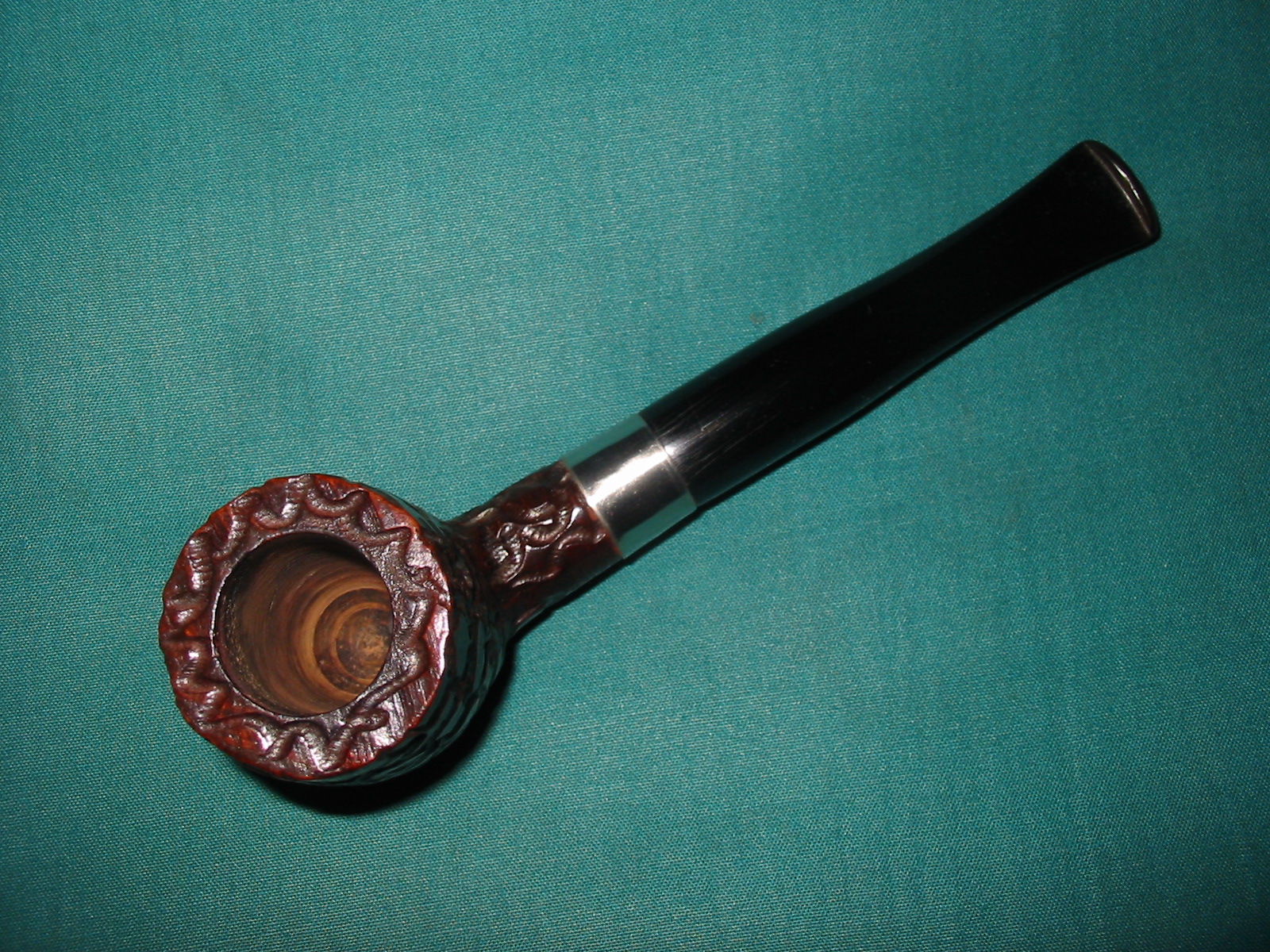
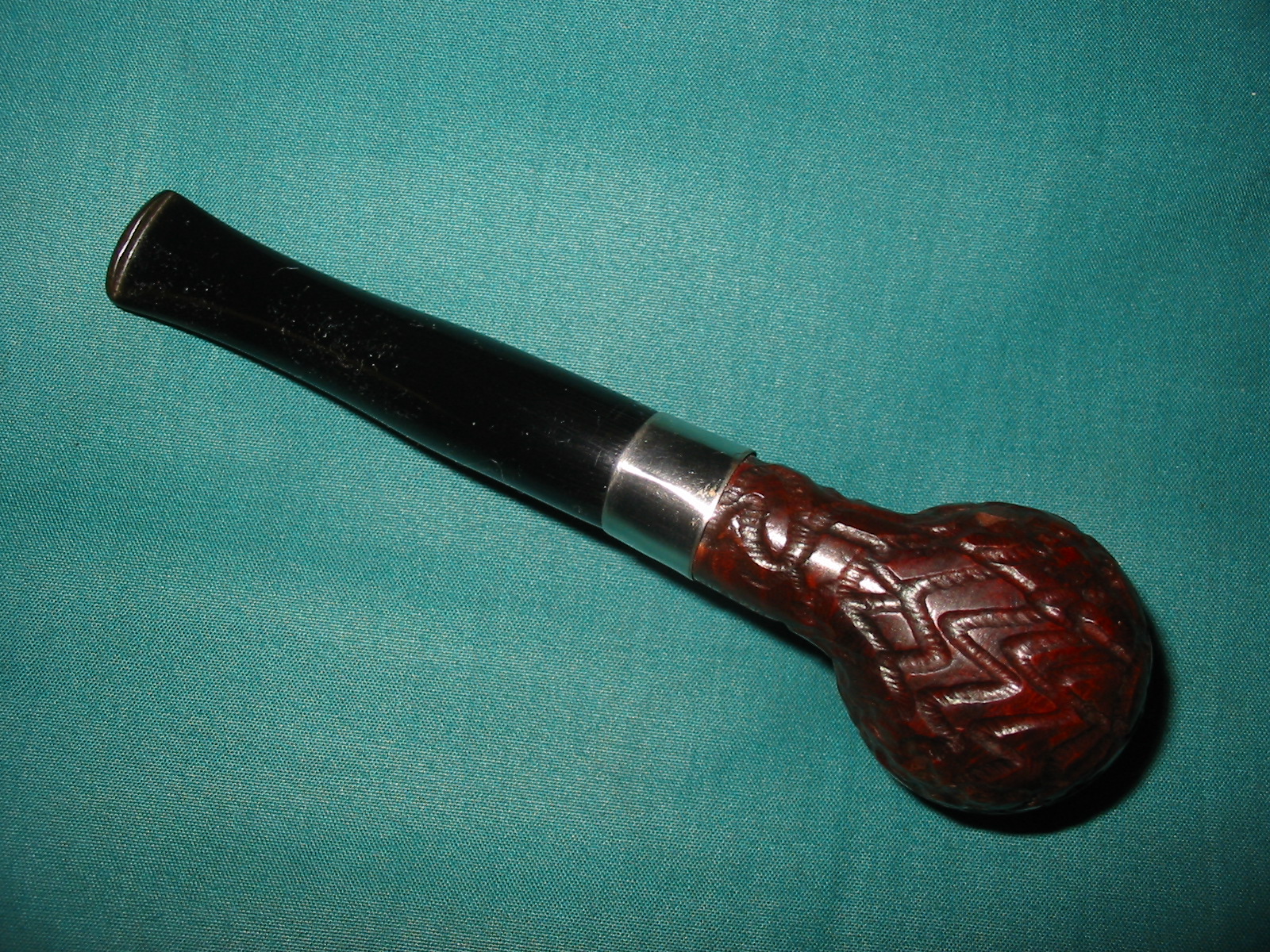
This was one of the stummels from a box of pipes without stems that are all that are left of a big lot of pipes I was gifted by a friend. There are about 30 left, I have restemmed many of them over the past year and given away many more. This one is a no name Italian Made that is stamped Real Briar in italics and stamped on the left side of the shank. It is a rusticated bowl and as can be seen in the picture below had a cracked shank. The stem that is in the pipe is one that I recycled from my can of stems. It needed to be cut down to make the diameter of the shank match the diameter of the stem. I also needed to band the shank to do a repair to the crack.
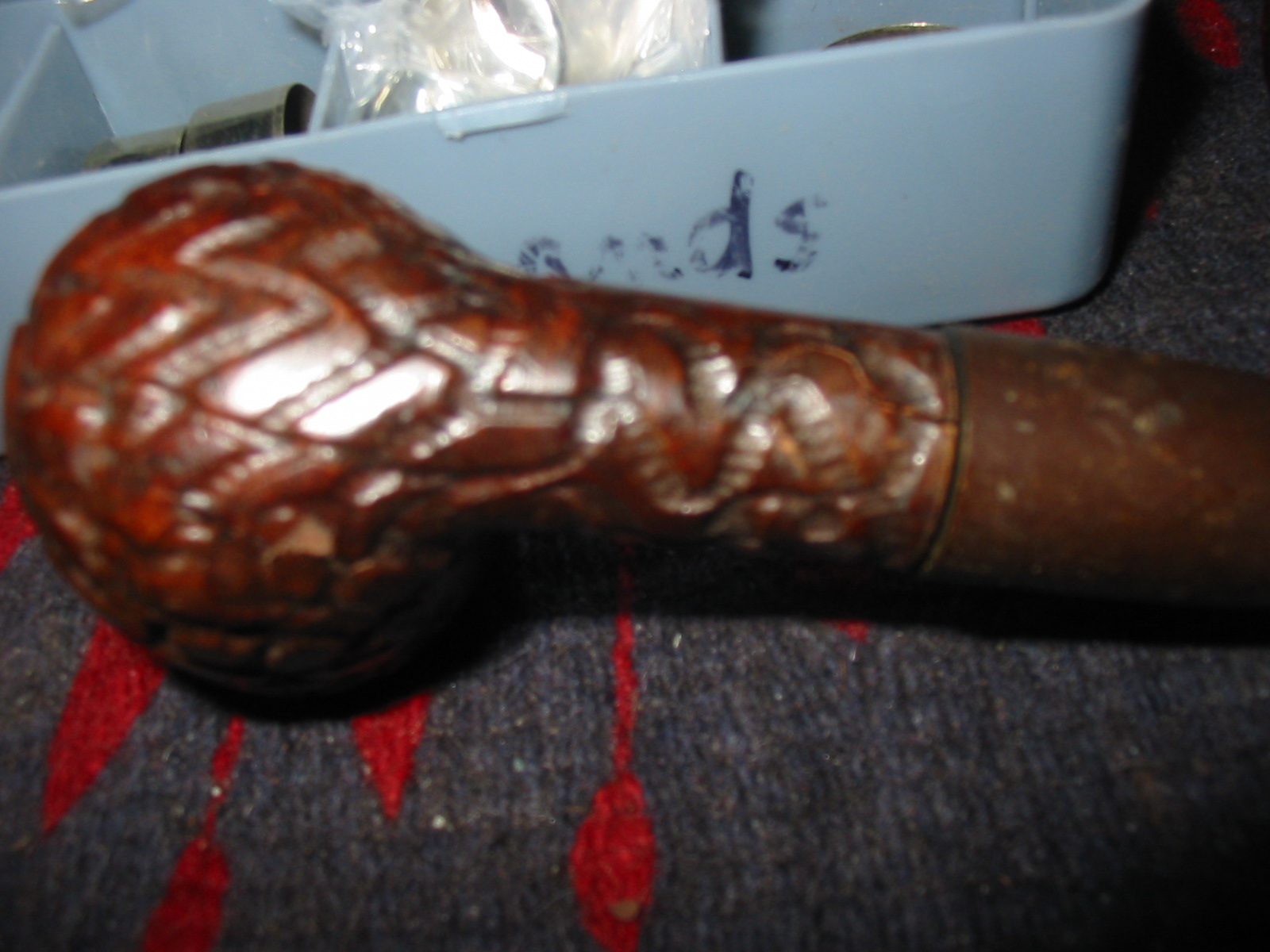
The picture below show the bowl as it came to me. It had been reamed with something that scored the bottom of the bowl and left marks. It was however very clean. The rim had slight darkening but was otherwise clean as well. The inside of the shank was clean and fresh. The pipe took very little prep other than repairing the cracked shank to ready it for the new stem.
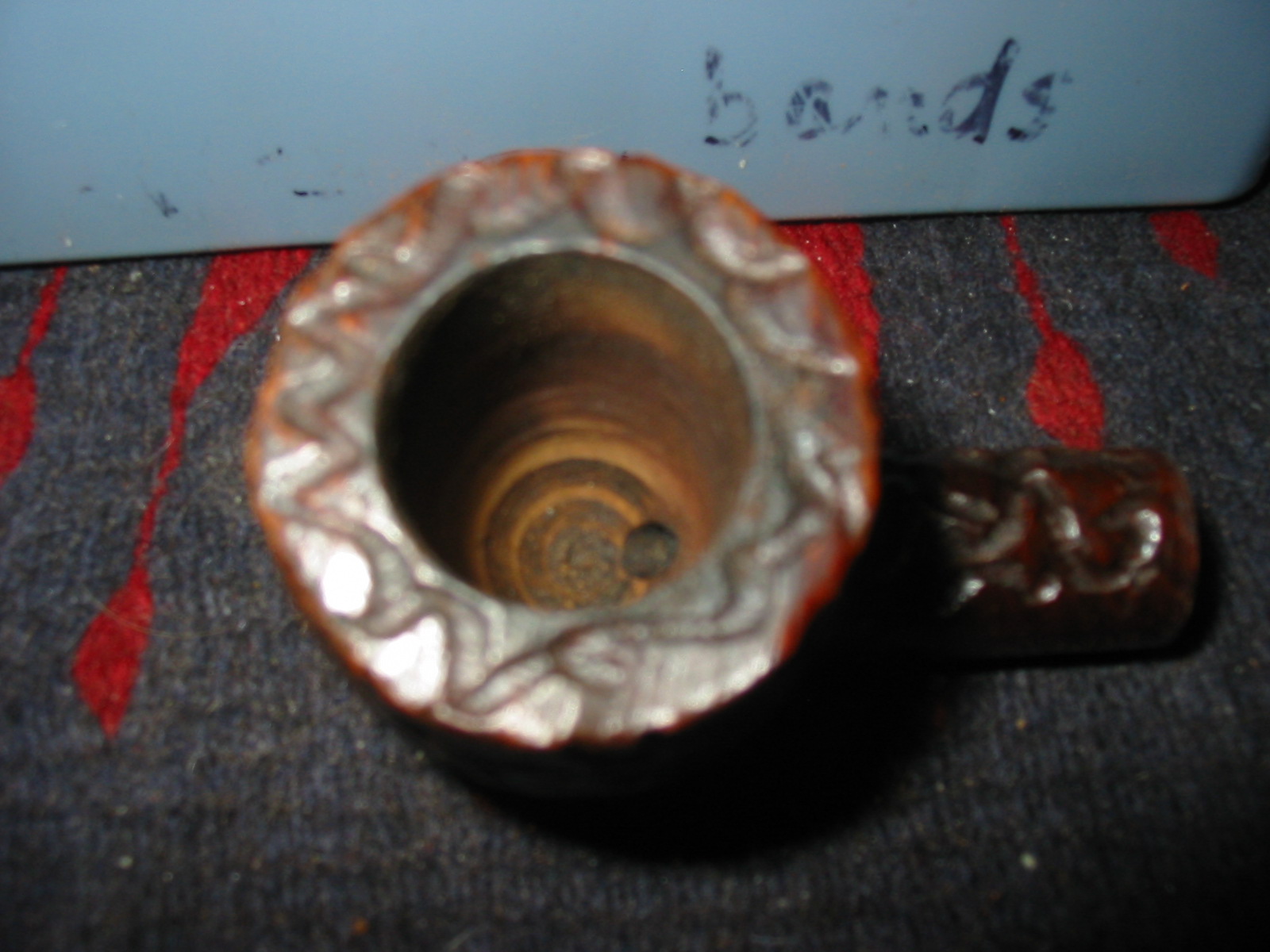
To prepare it for banding I checked through my box of bands to find one that would give a good tight fit when pressure fit to the shank. I found one that would work but also found that the carved grooves in the finish of the pipe made a tight fit to the shank virtually impossible to obtain. I used my dremel to remove some of the grooves to the depth of the band width. I checked the band fit several times and took off enough of the briar to obtain a tight fit. I was able to step down one size in bands and got a perfect fit. The next two photos show the shank prepared for the fitting of the band. I also used some superglue to repair the crack in the shank. I pried it open with a dental pick inserted in the shank and applied pressure to open the crack enough for the superglue. I dripped the glue into the crack and squeezed it shut until it dried. 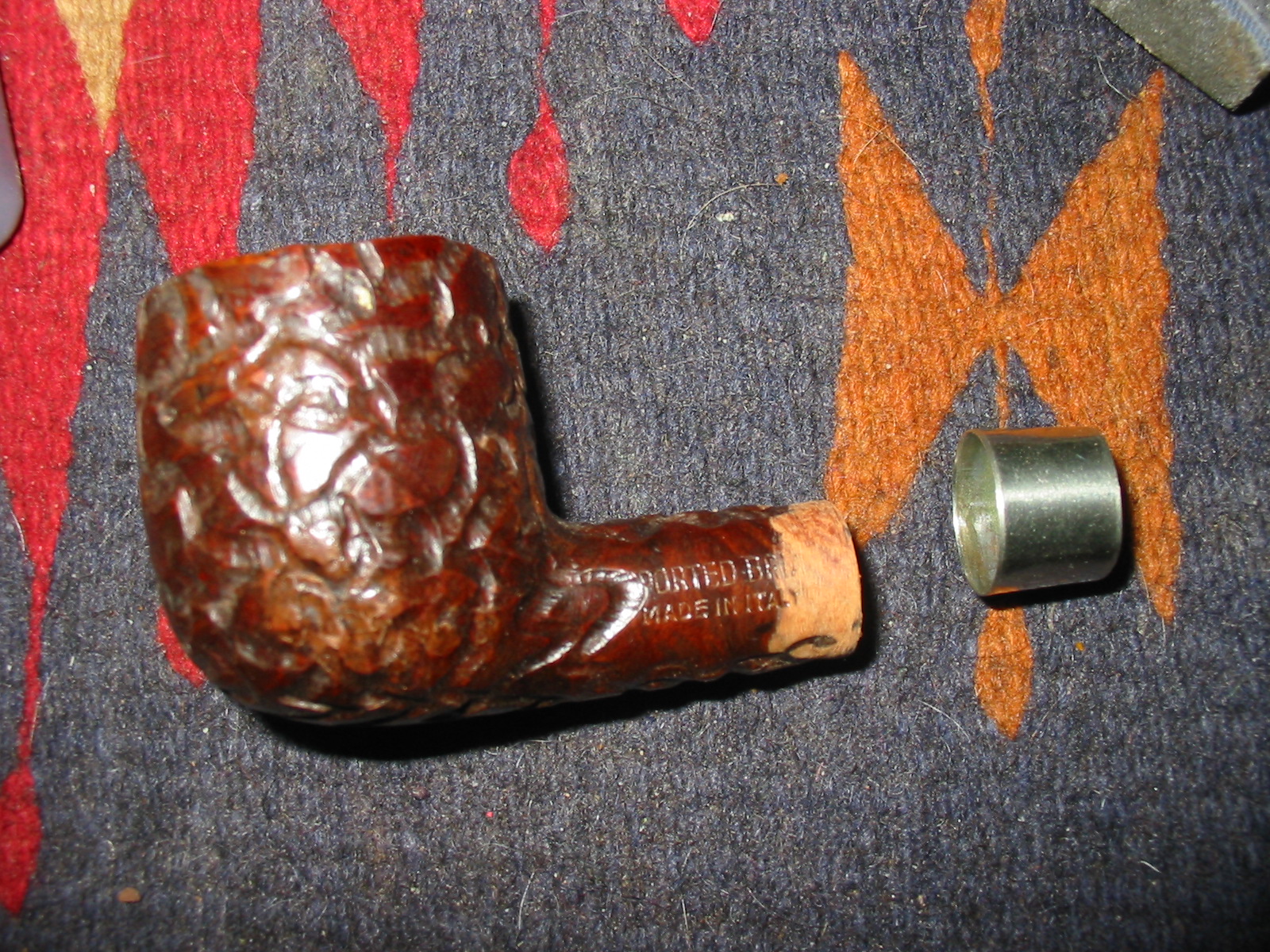
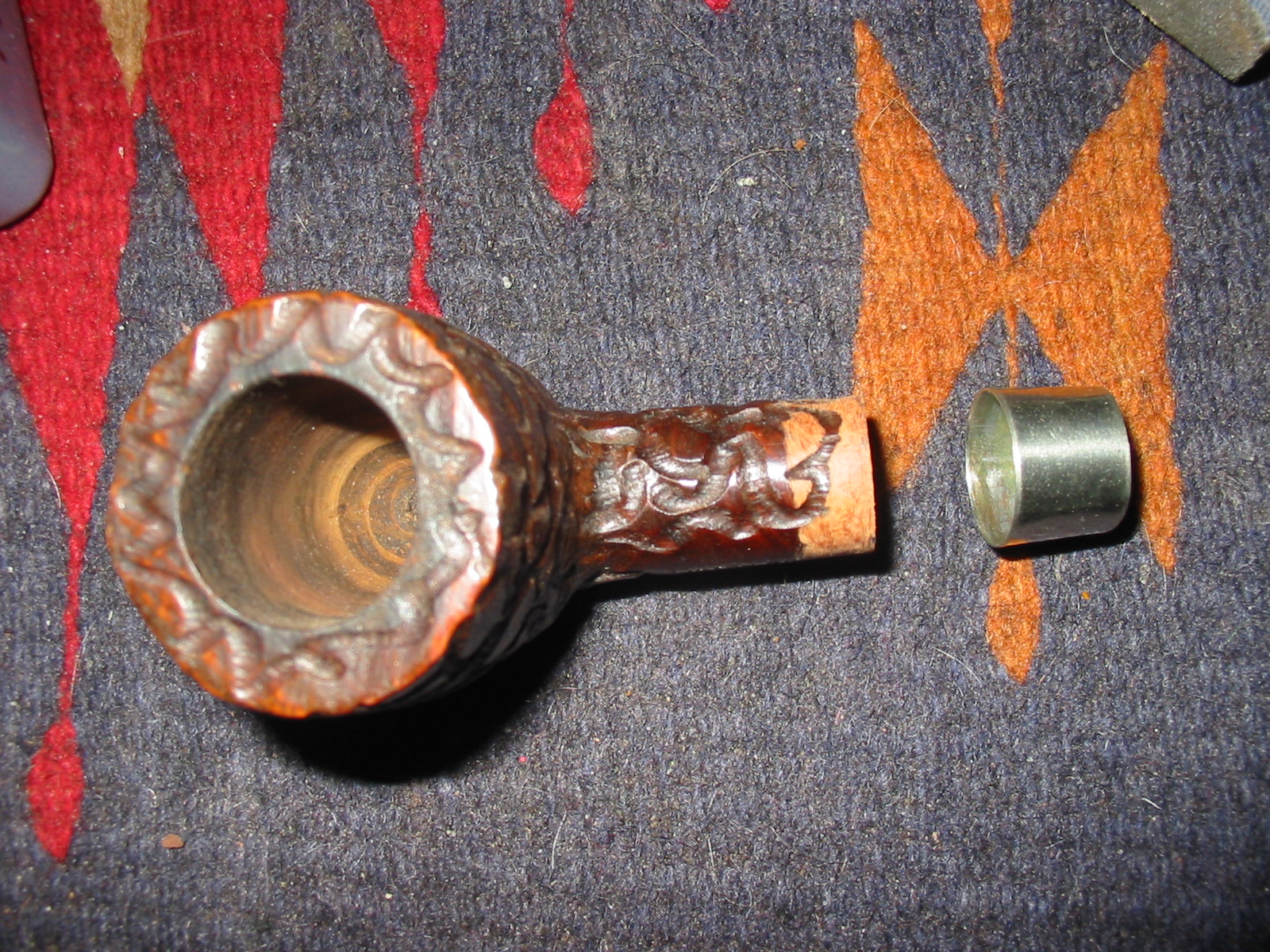
I slid the band on to start the fitting and then took it to my heat gun. I heated the band on the shank and then pressed it into place. I repeated the process until the band was properly placed on the shank. The next two photos show that process – I heat the band and then press it on using the piece of carpet on my work table.
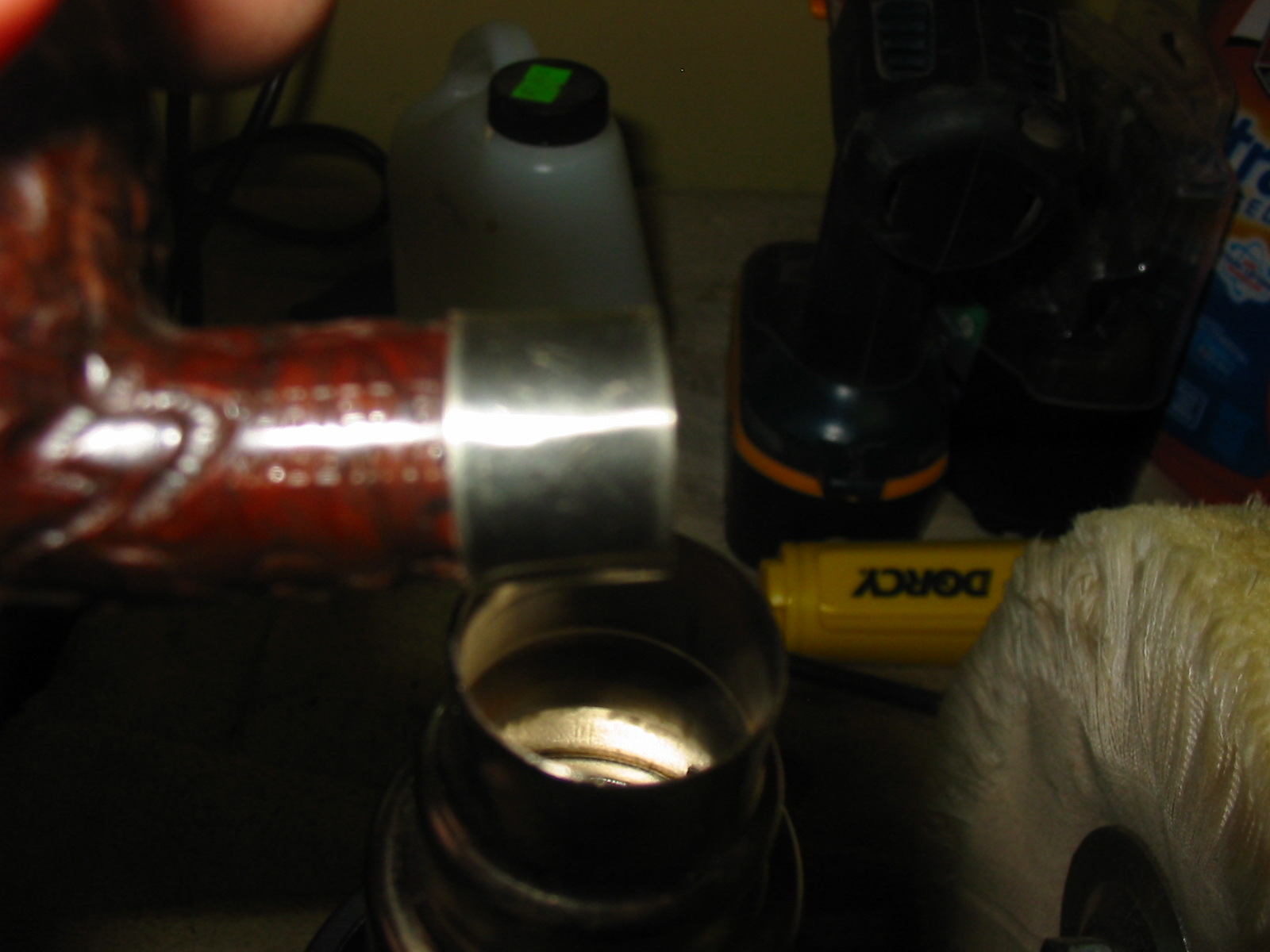
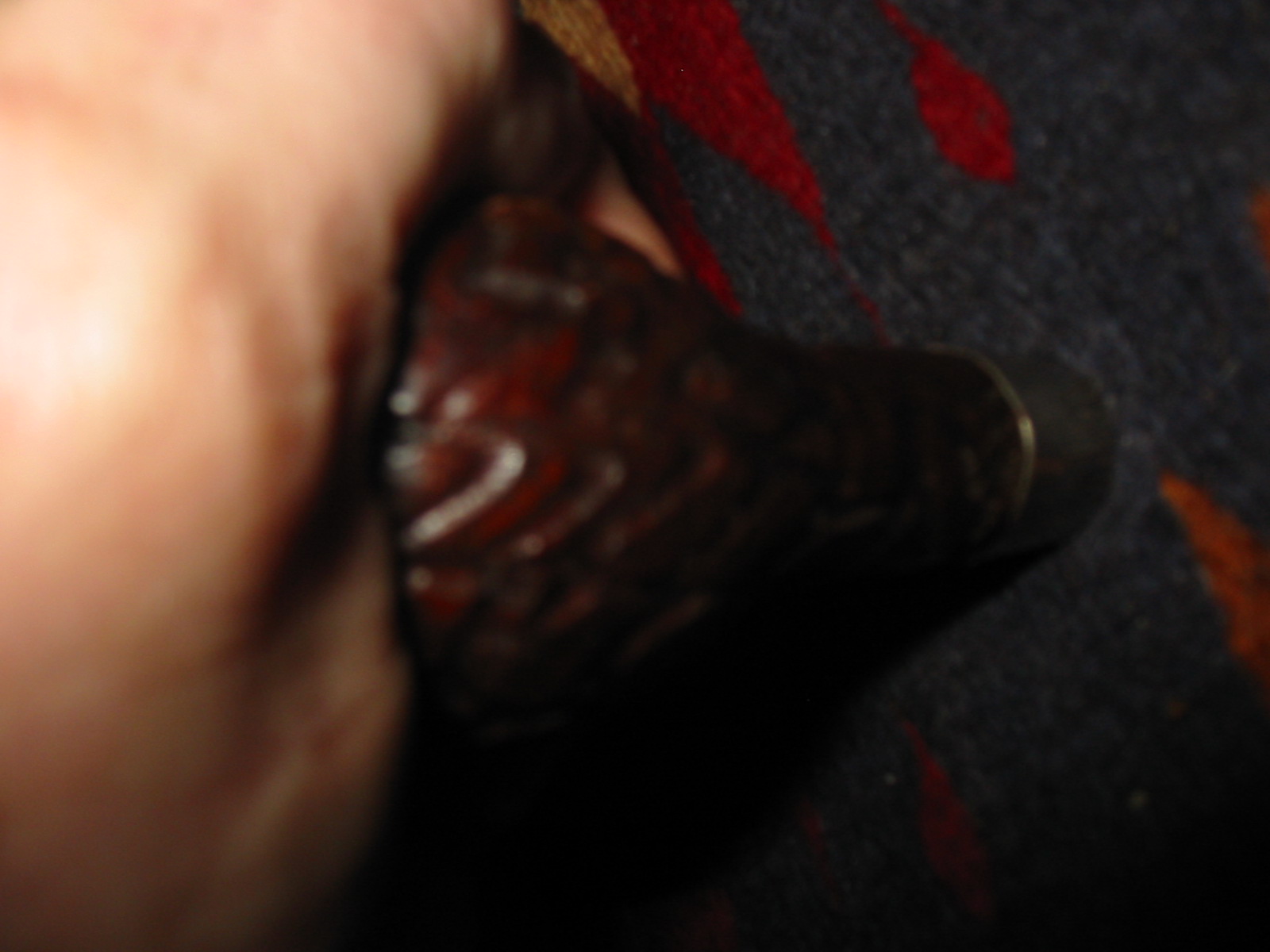
Once the band was in place I used my Dremel on the stem to remove the excess material on the diameter of the stem. I have found that if I run it at a medium speed I can control the sanding drum and not cut gouges in the vulcanite. It requires a steady hand and patience to get the work done without cutting too deeply into the stem and causing gouging that takes a lot of sanding to remove. After I cut away the necessary excess I also sanded the tenon for a proper fit in the shank. Once I had banded the pipe it no longer fit as easily. I wanted a smooth and snug fit but not one that would damage the shank. The picture below shows the stem after I have started sanding the stem with medium grit emery cloth to sand out the scratches and fine tune the fit against the band.
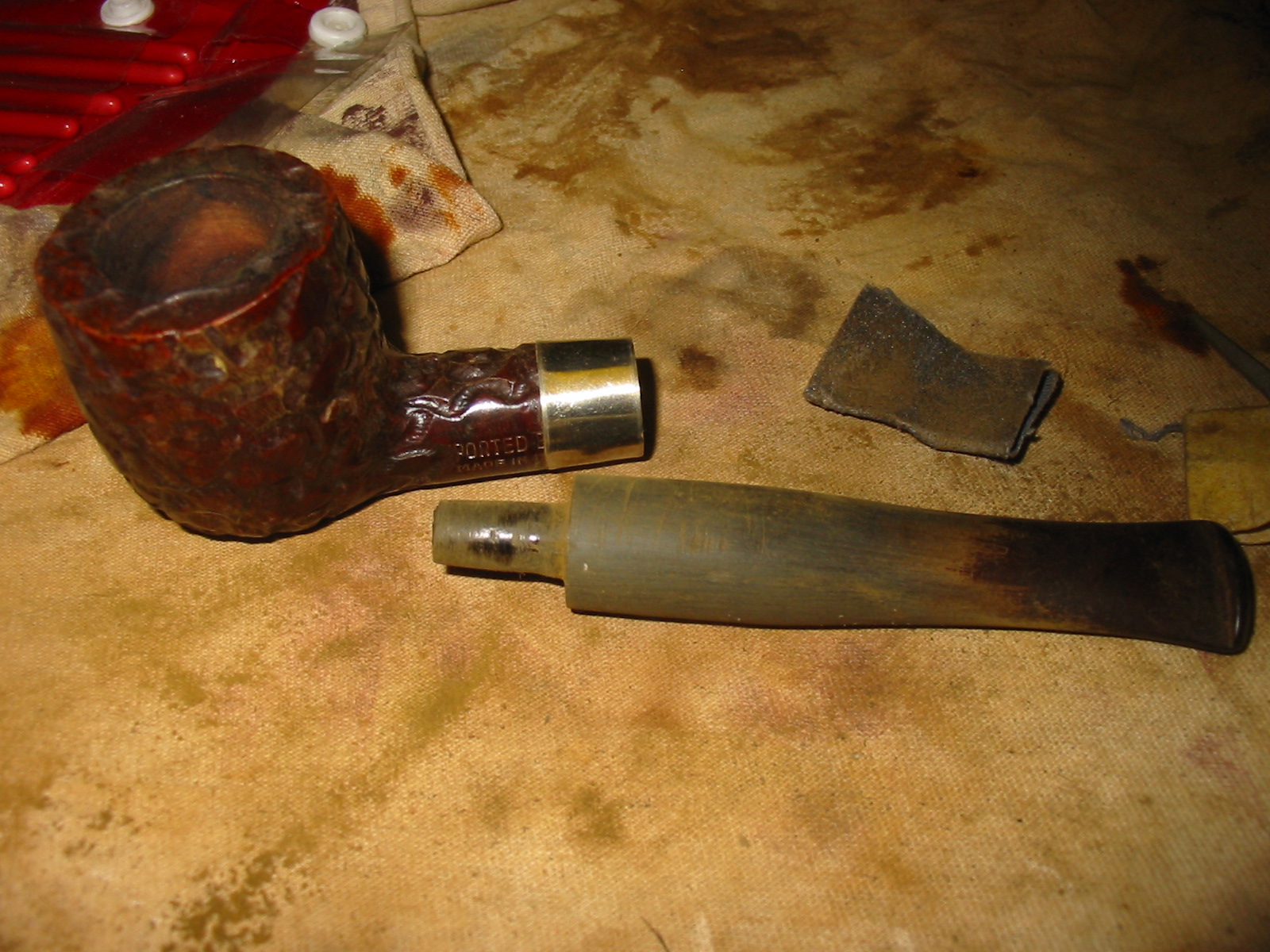
I continued sanding with the emery cloth until the fit was what I wanted. The next two photos show the pipe with its new look. The band is in place and the stem fits. It is a nice chunky stem that I think matches the shape and flow of the bowl and shank nicely. I still had a lot of sanding to go. I continued with the emery cloth to remove the build up and oxidation around the button area. I decided to rework the entire stem and then polish it to a shine.
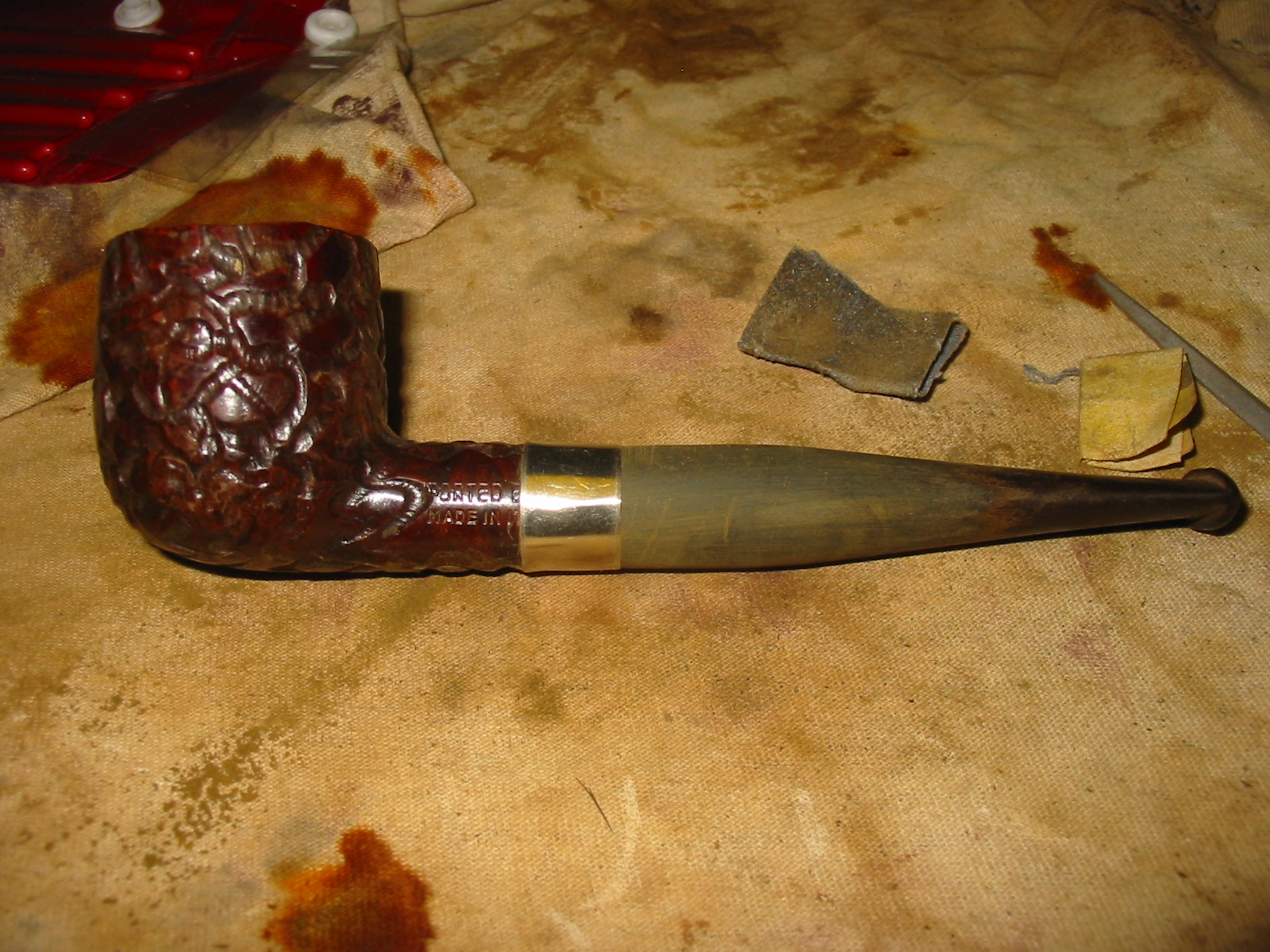
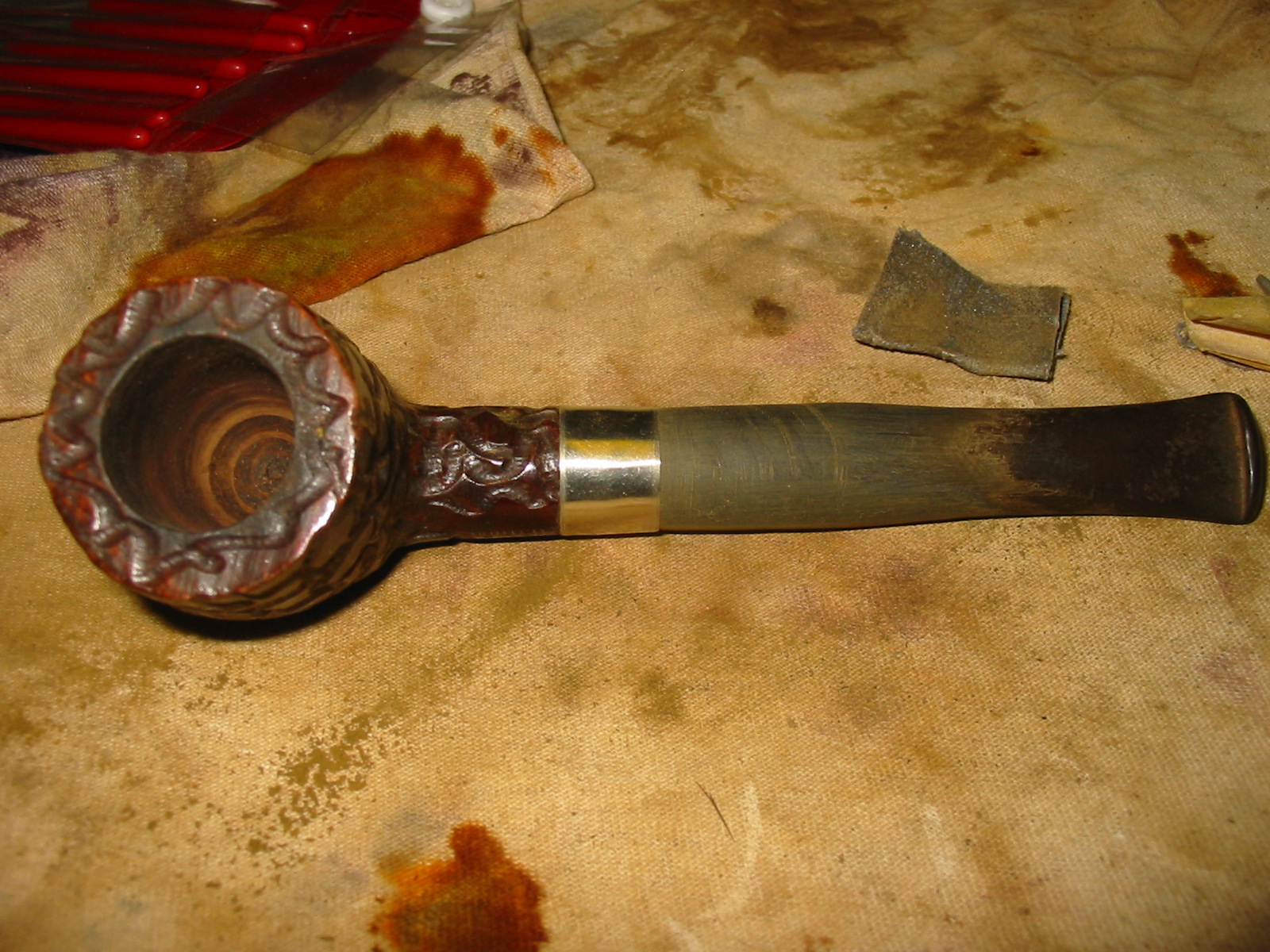
The next series of two photos show the progressive work on the stem. In the background of the pictures are some of the tools that I used in the work – a flat file, emery cloth and some 280 grit sandpaper. When I had finished the stem to this point all that remained was to work on it with some 320 grit and some 400 and 600 grit wet dry sandpaper before moving on to sanding it with the micromesh sanding pads.

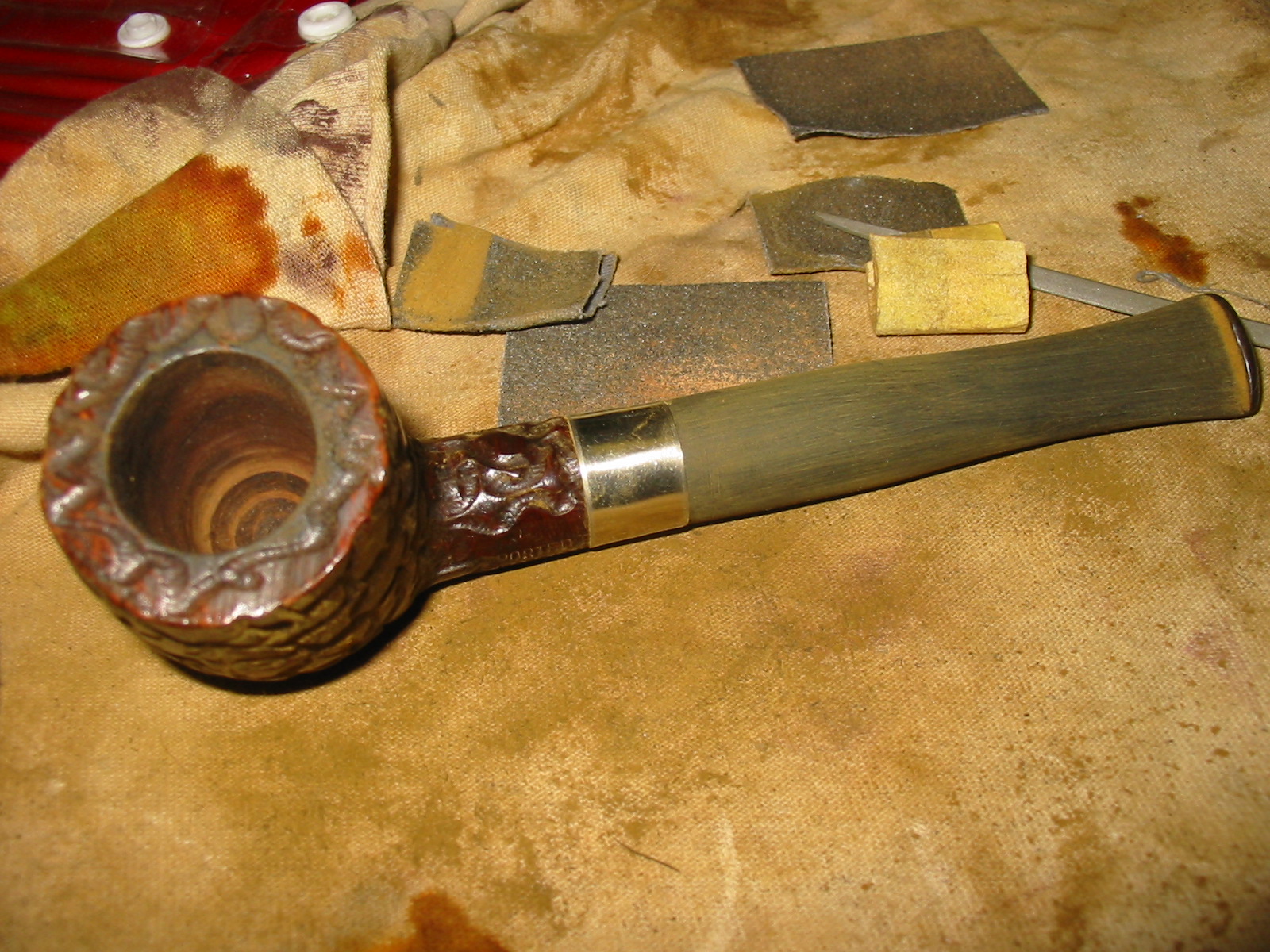
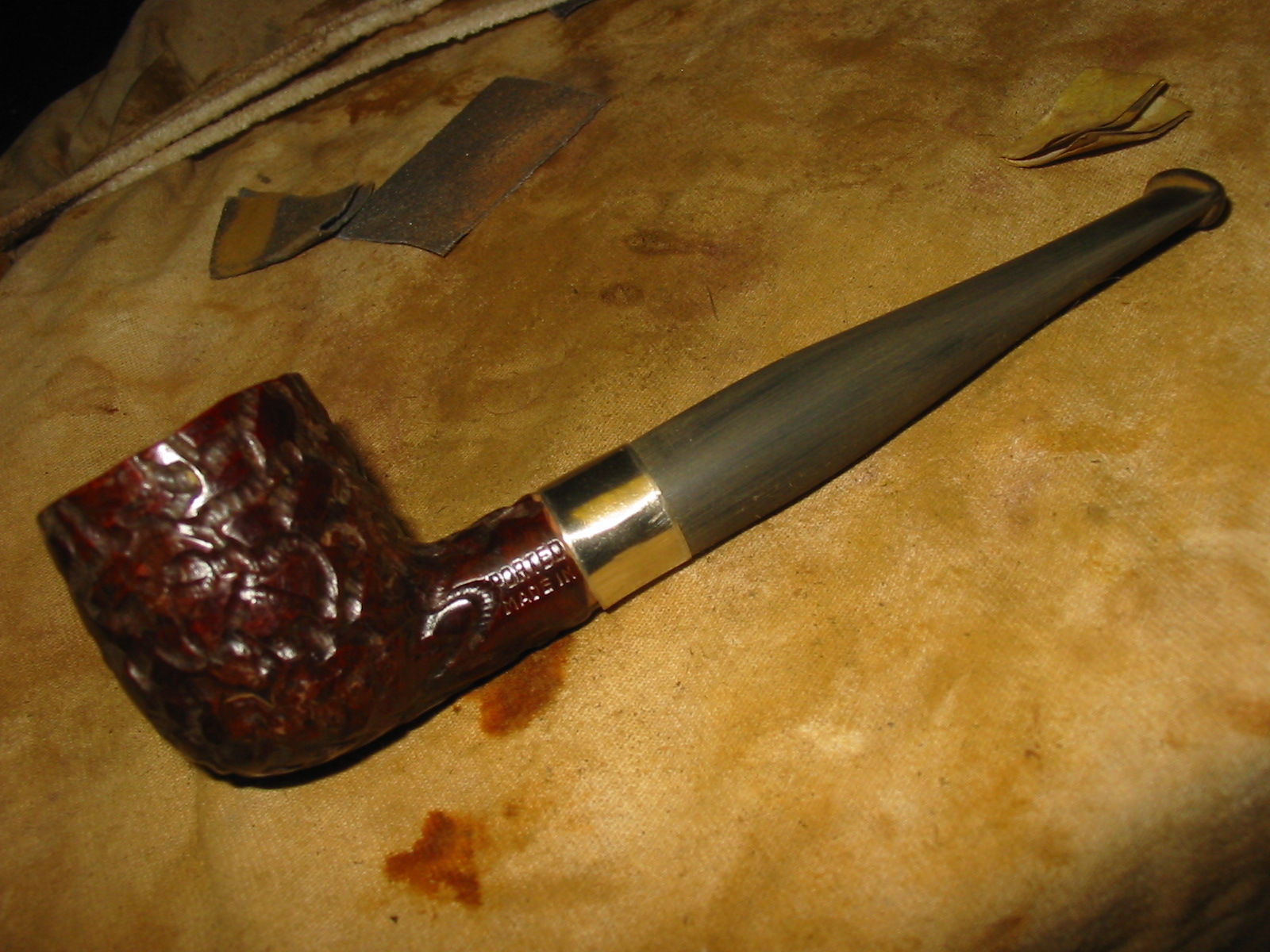
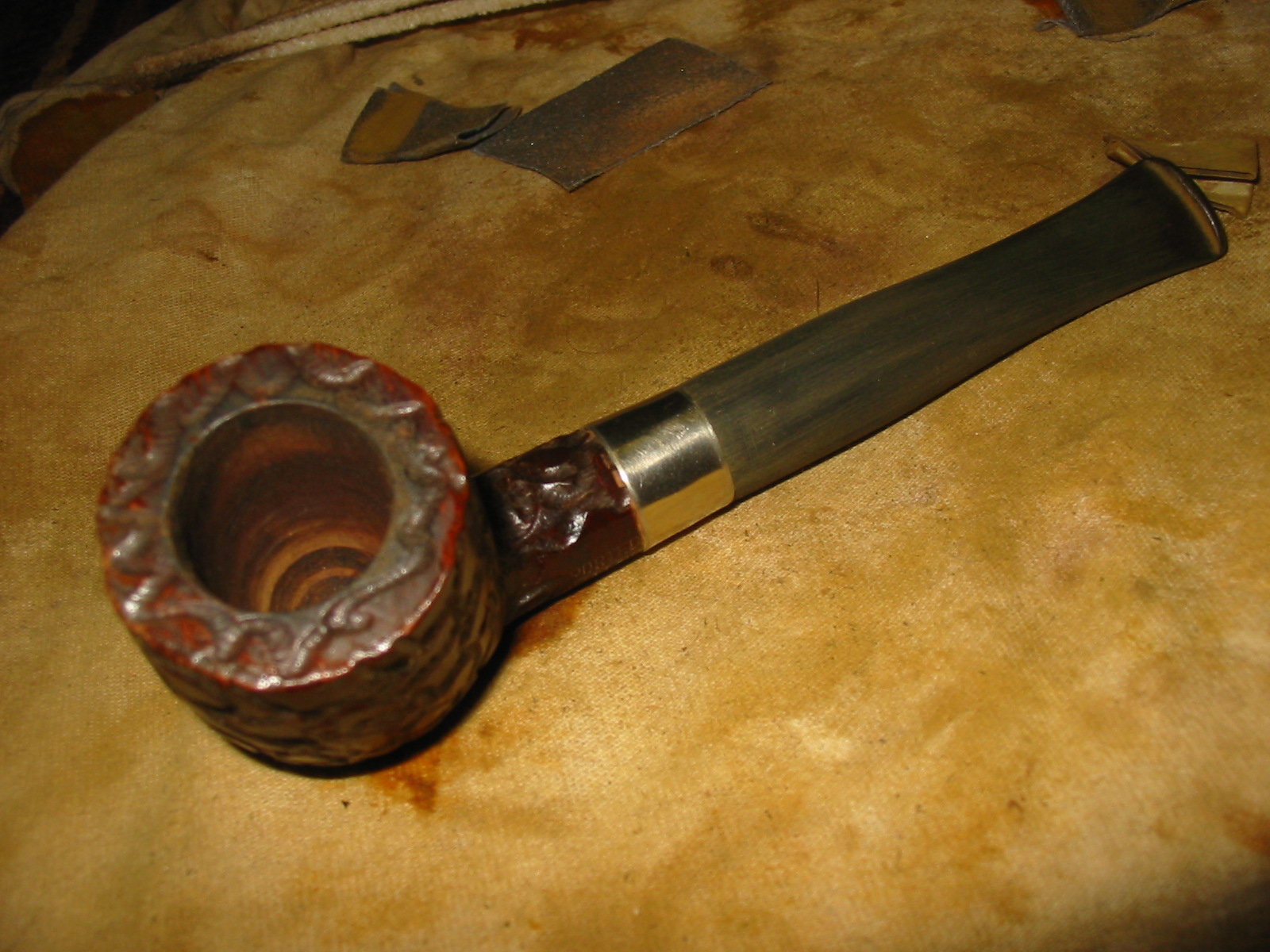
At this point I decided to take a break from sanding – the old fingers were getting a bit sore. I used a brass tire brush to clean off the remnant of tars on the rim and then restained the pipe with a dark brown aniline stain thinned 2:1 with isopropyl alcohol. I applied it with a dauber and then flamed it and restained a second time and flamed it again. I then took it to the buffer and buffed it with Tripoli and White Diamond to give it a shine and remove the excess stain from the high spots on the briar and lend a little contrast to the darkened grooves. The next two photos show the restained bowl.
I filled my water bowl with warm water and took out the micromesh pads and began to sand the stem. I began by wet sanding with 1500, 1800 and 2400 grit micromesh pads that I wet with water and then sanded the stem. Between each pass on the stem I would wipe it dry to see how the scratch removal was progressing. The next three photos show the stem after sanding with the 1500 grit micromesh. The scratches are beginning to disappear. Before moving on to sanding with the 1800 grit I decided to polish the stem with Maguiars Scratch X2.0 I applied it by hand and the scrubbed it off with a cotton pad. The next four photos show that process with the applied polish and then the stem after wiping it off.
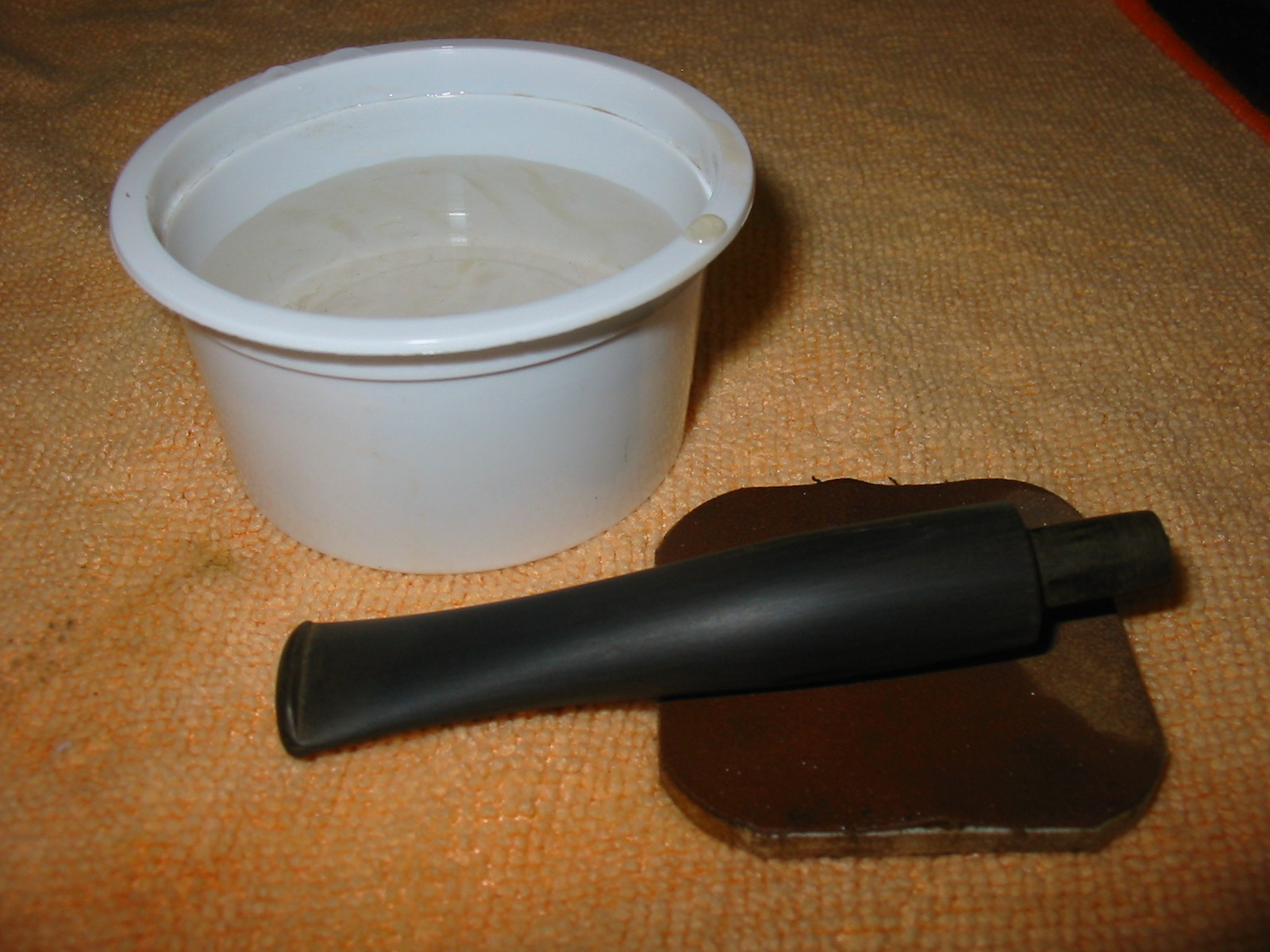
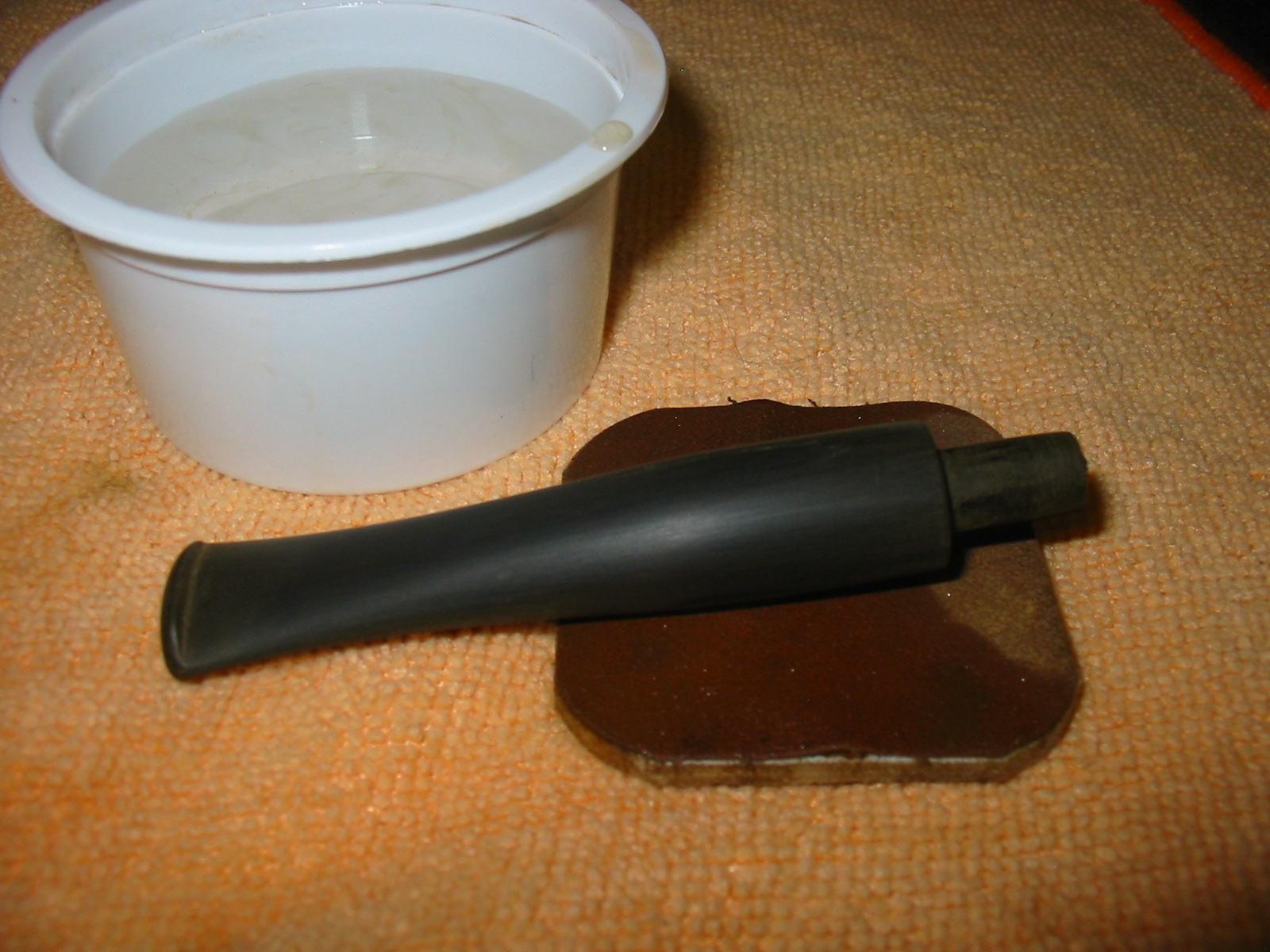

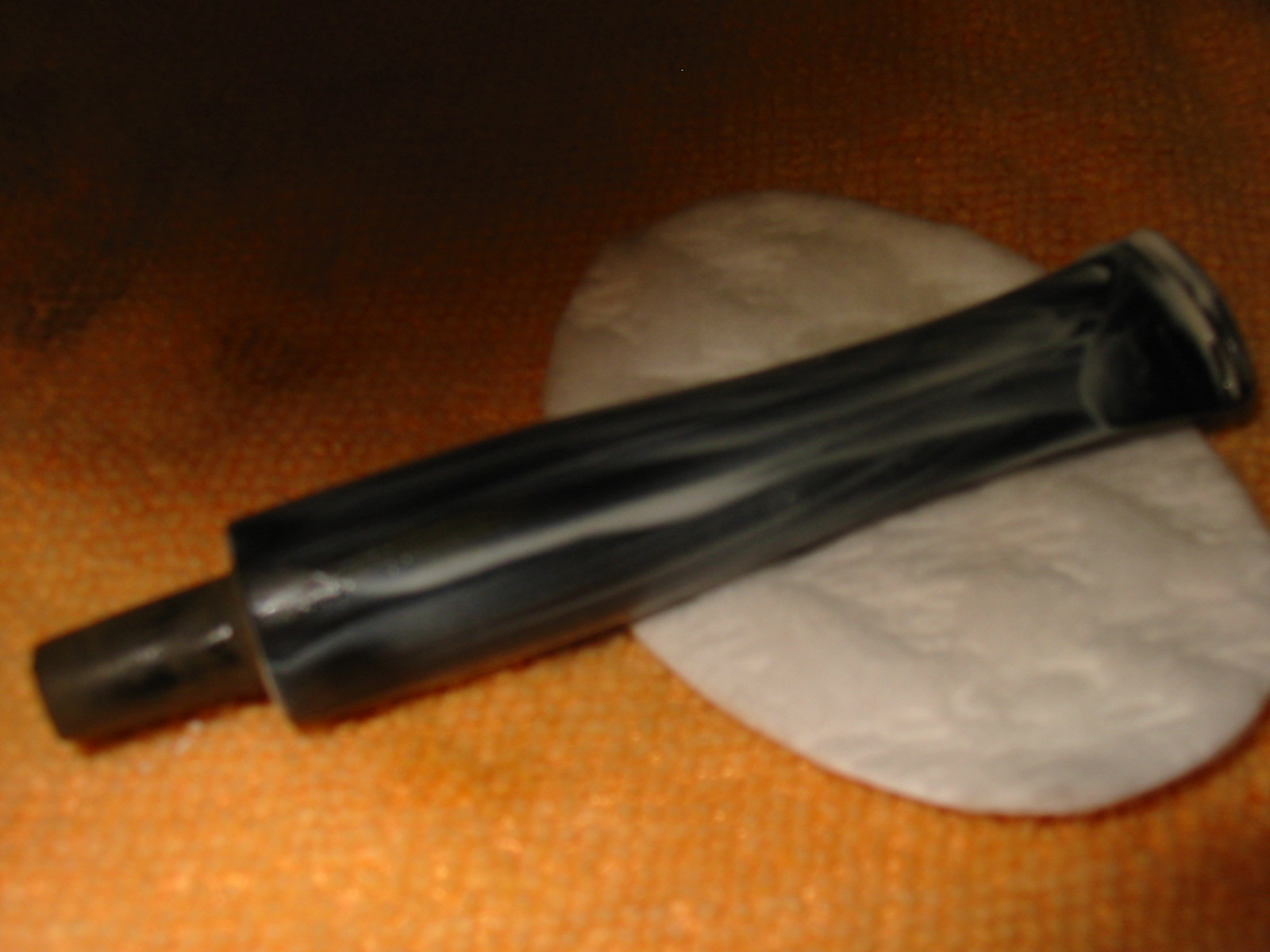
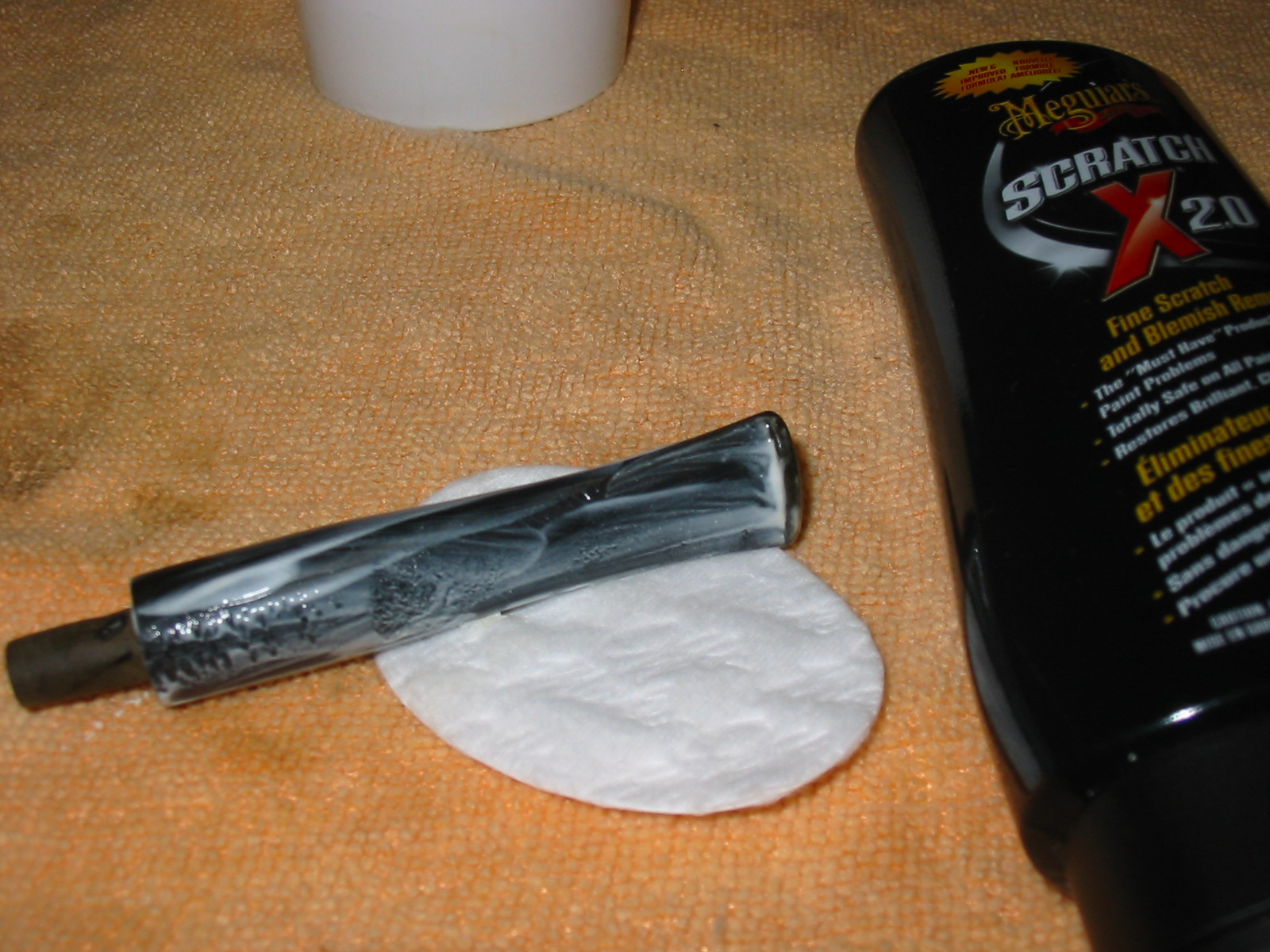
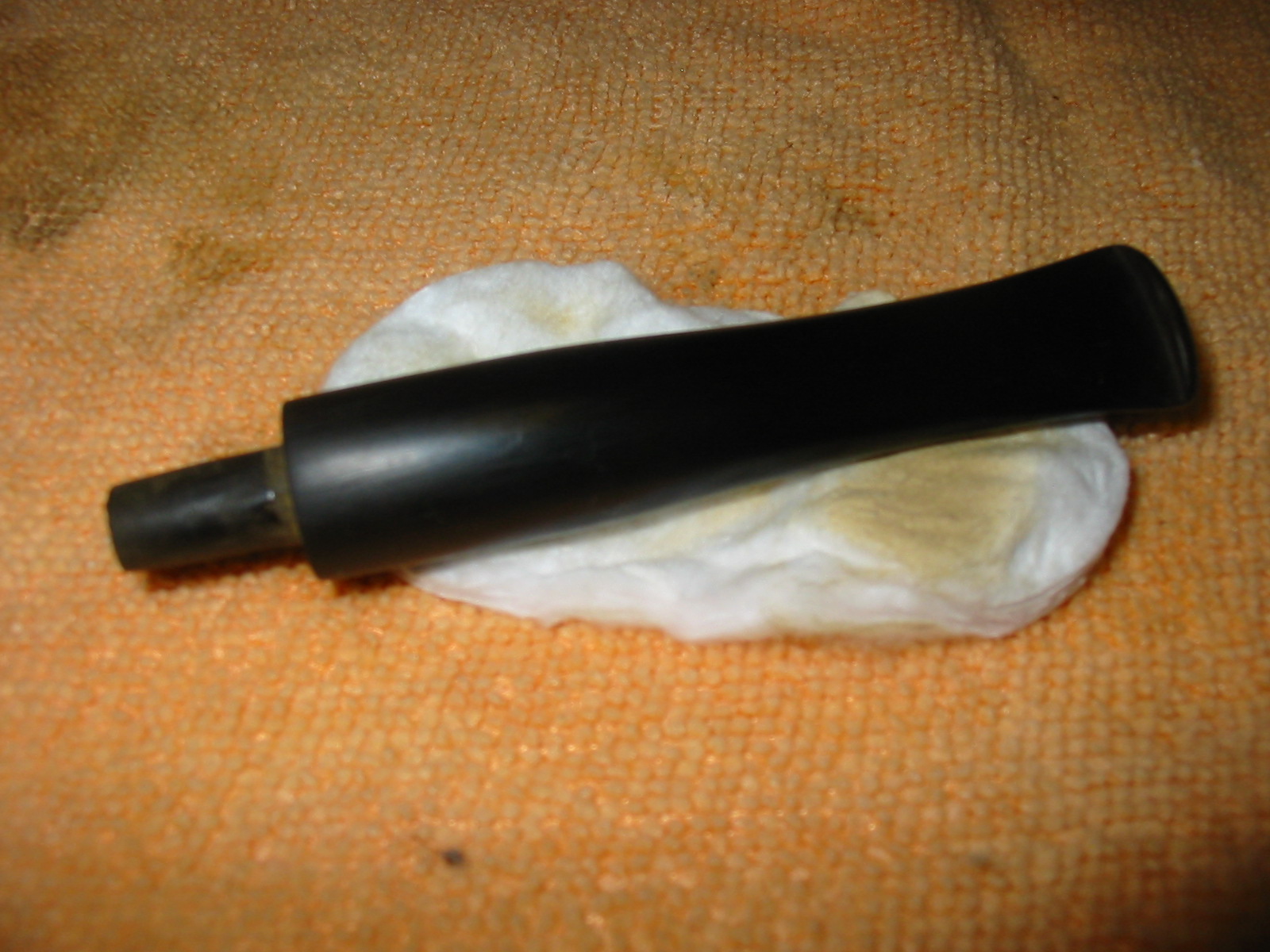

After wiping the stem down a final time I wet sanded it with 2400 grit micromesh sanding pads. I wanted to continue to remove the surface scratches from the vulcanite and begin to move toward a polish.
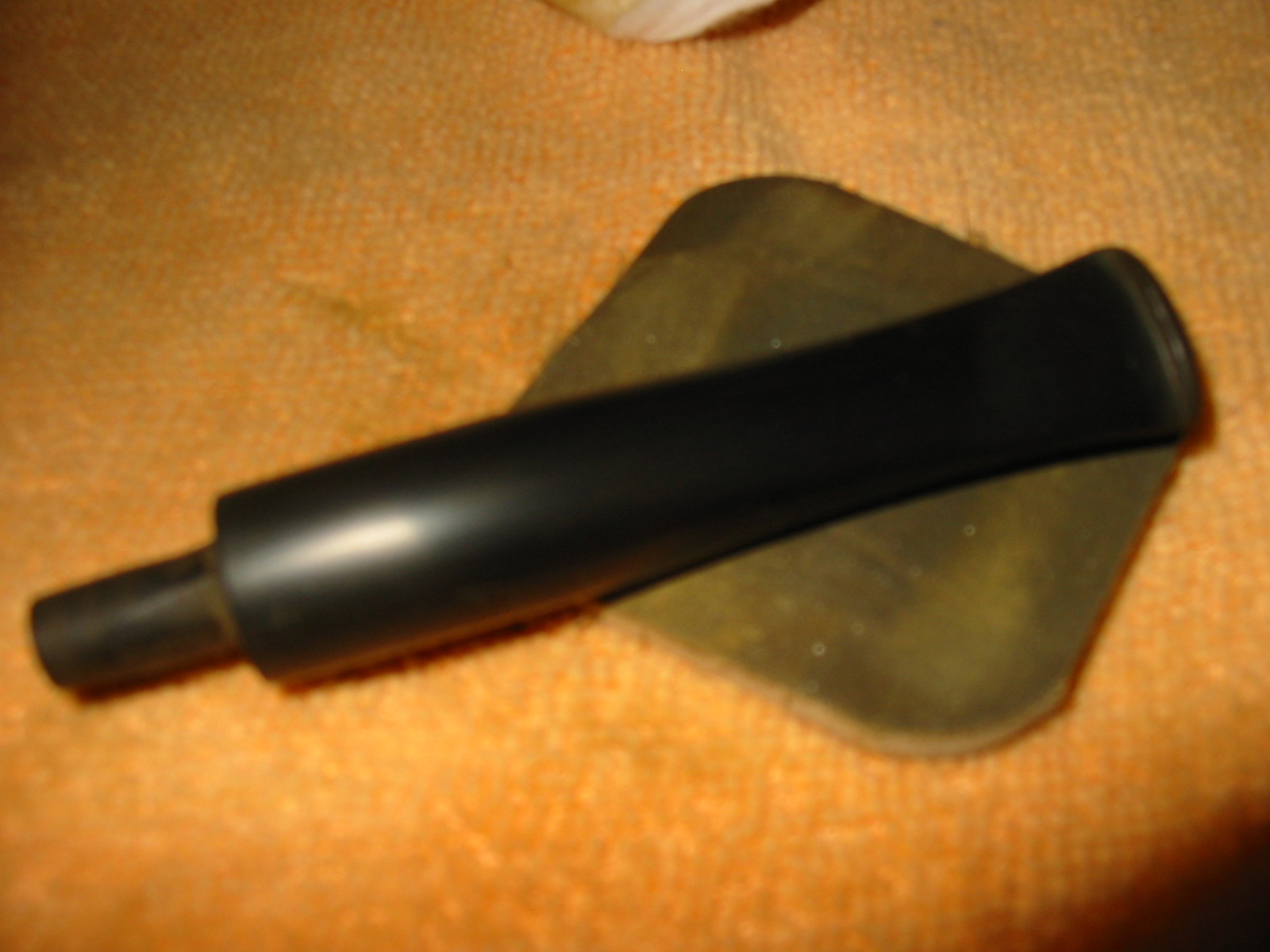
The next photo shows the stem after dry sanding with 3200 grit micromesh. The shine is deepening in the finish of the stem.
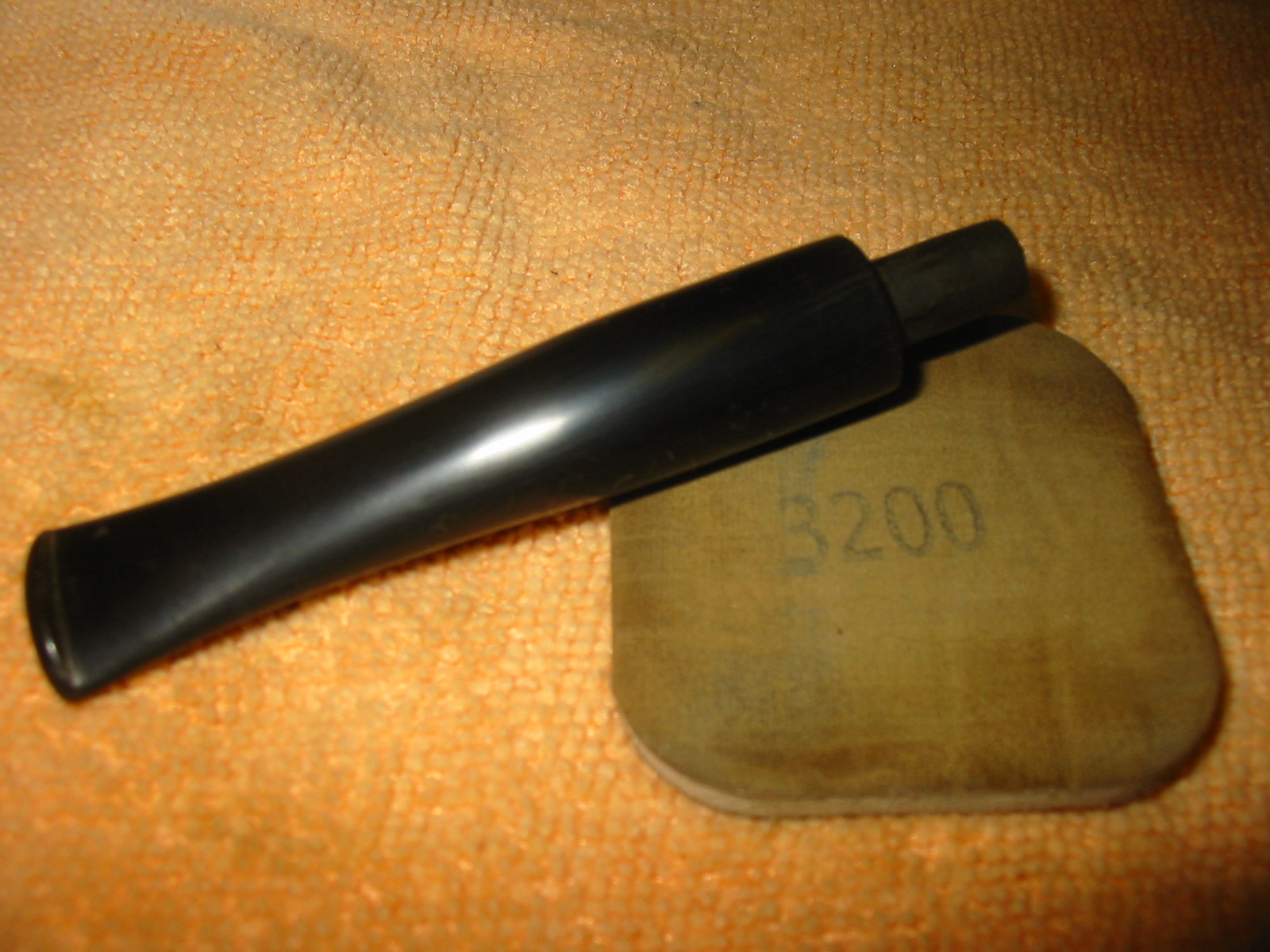
I then shifted to dry sanding with 3600, 4000 and 6000, 8000 and 12,000 grit micromesh sanding pads. I sanded and wiped them down between each grit change. By the time I got to the 6000 the shine was visible and the finish was very smooth. The difference after sanding with the 8000 and 12,000 is remarkable.

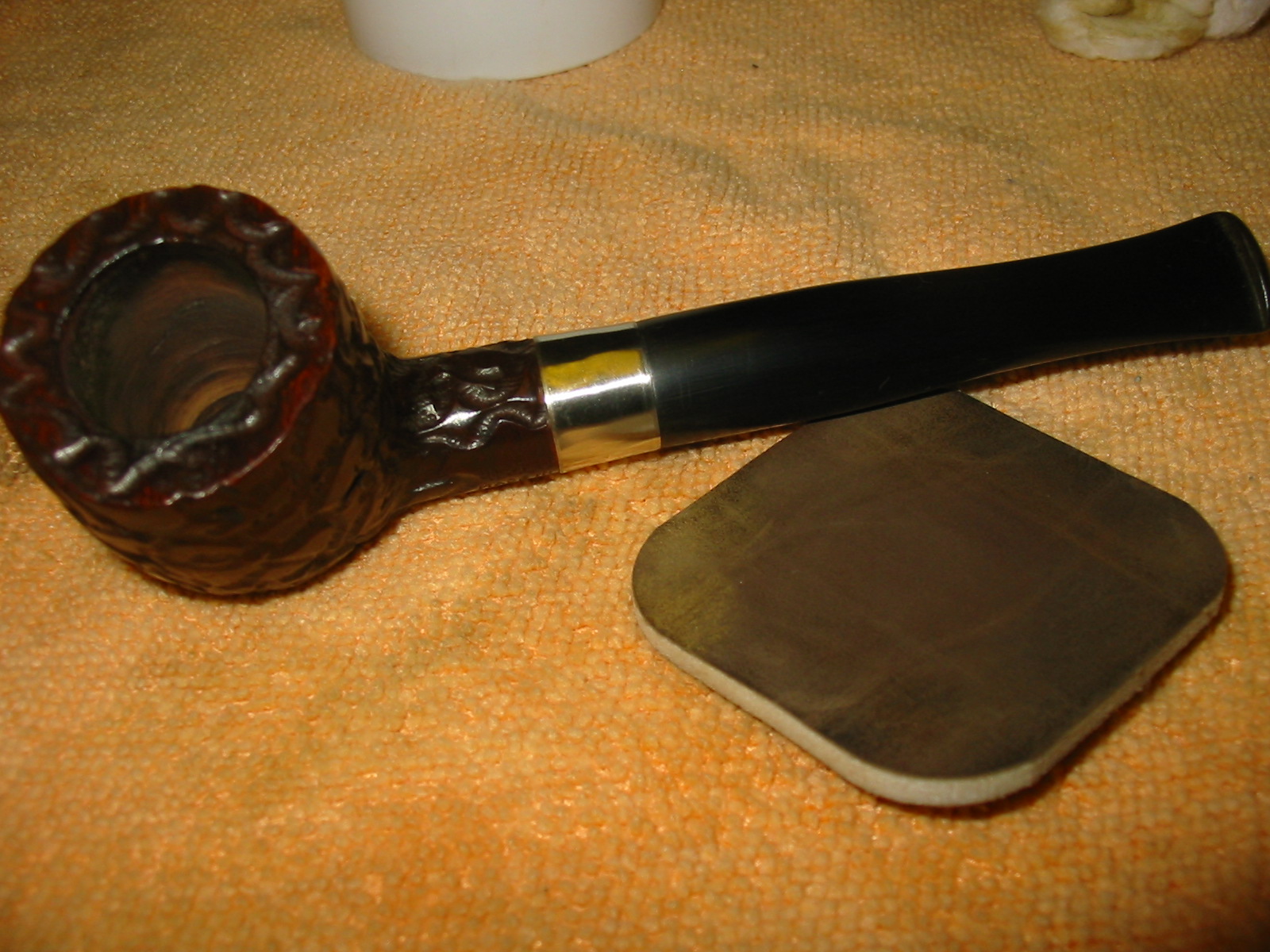
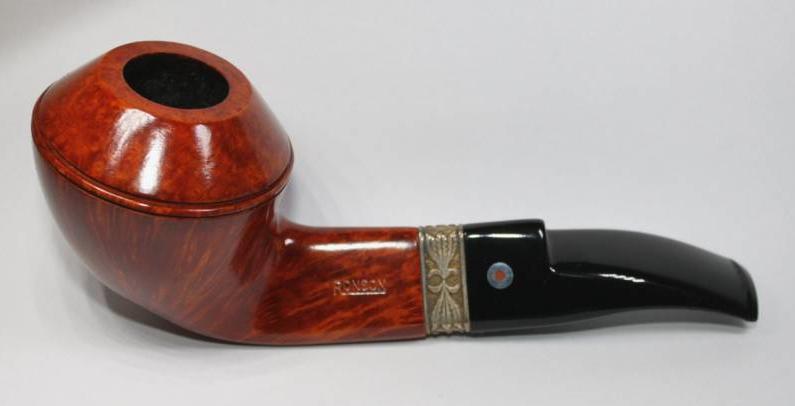
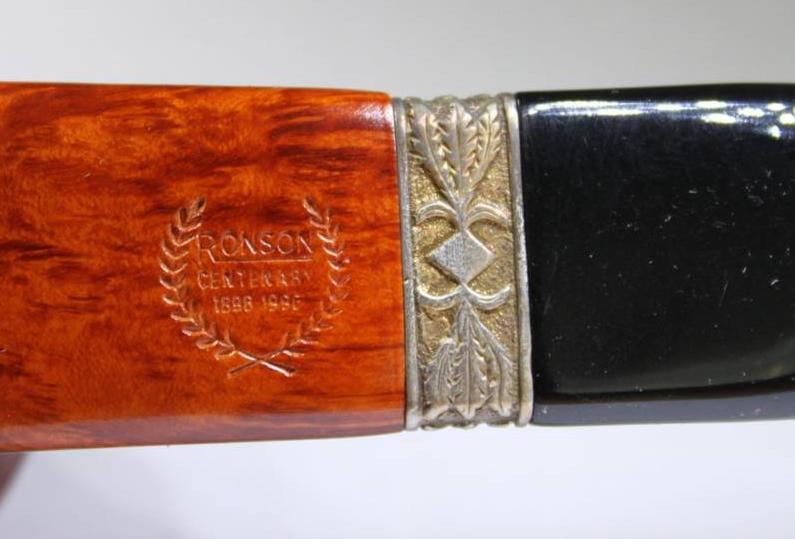
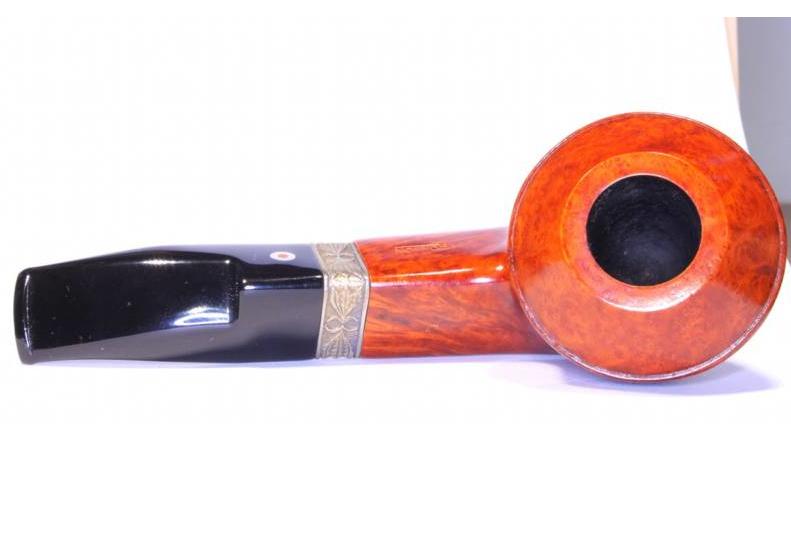
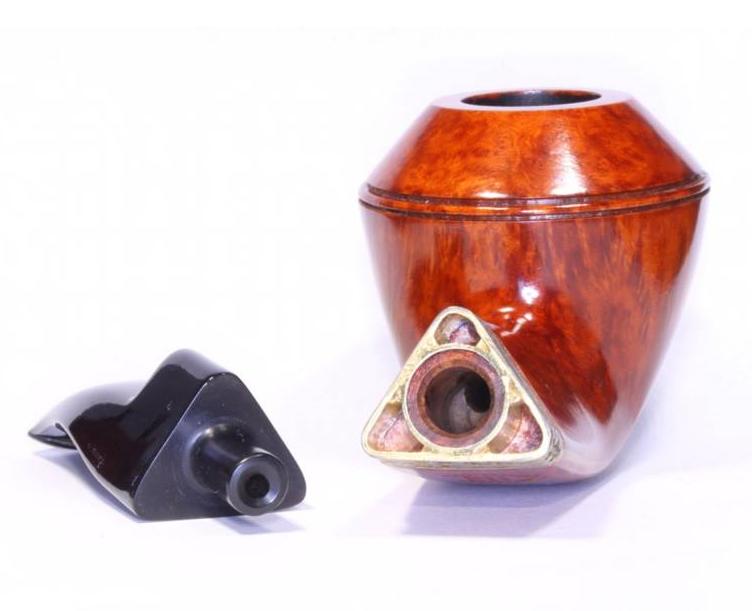
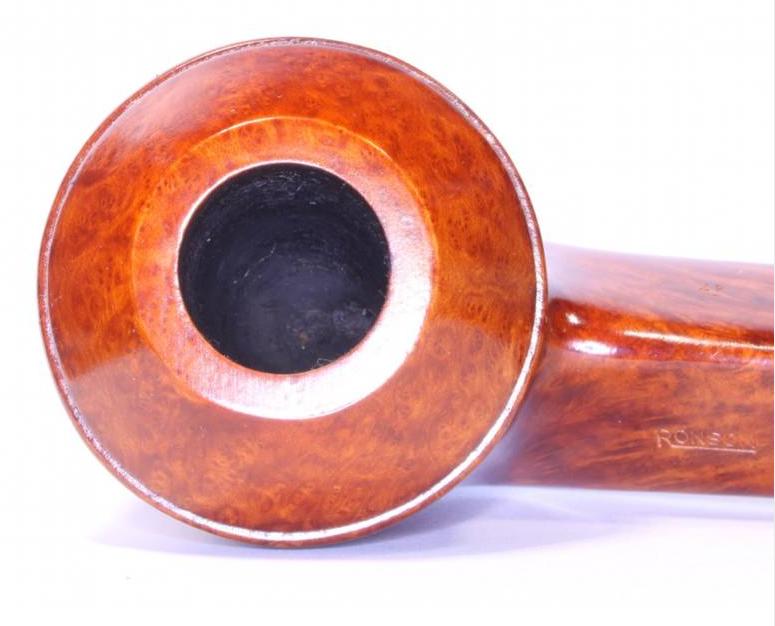
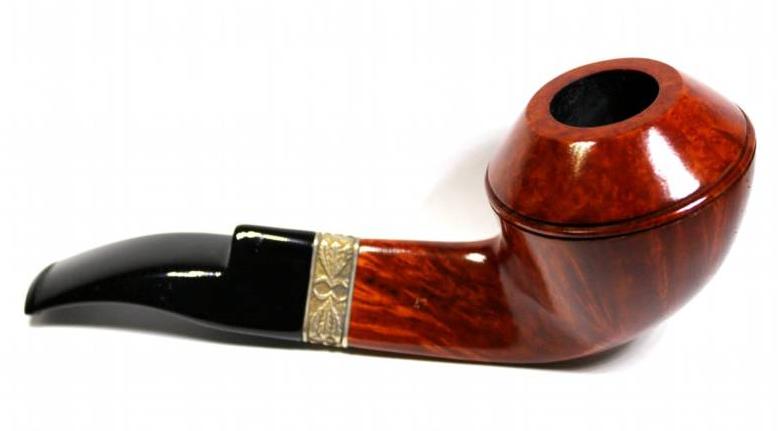
The final four photos below show the finished pipe. Once I had finished sanding it I gave it a final polish with the Maguiars and then took it to the buffer for a buff with White Diamond. I then rubbed it down with Obsidian Oil and finally gave it several coats of carnauba wax and a buff with a soft flannel buffing pad. The newly born Italian pot is ready to smoke and has a new streamlined look that I really like.




 rebornpipes