
This old Brigham came to me in a box pass here in Canada. Brigham pipes were made in Canada in the old days and had an aluminum tenon/filter holder. When I took it out of the pass I thought it would be an easy clean up and I could put it back in the box on the next pass through. The other day I took it out to clean it up and this is what I found when I took the stem out. The aluminum tenon/filter holder had literally been eaten away. The hard rock maple filter must have been the original and it too had been eaten away. It was stuck in the corroded and rough tenon and I could not get it off. I used a light to shine down the mortise and the aluminum end of the filter was stuck in the airway. It was perfectly situated to not block the airway at all but it was there. The stem also had some thick white build up all around the button end. The only good part of the mess was that there were just a few small tooth dents on the stem. The bowl exterior was in good shape. The inside of the bowl was caked with a very tarry and oily aromatic smelling stuff. The rim was thick with the same tars as the bowl. 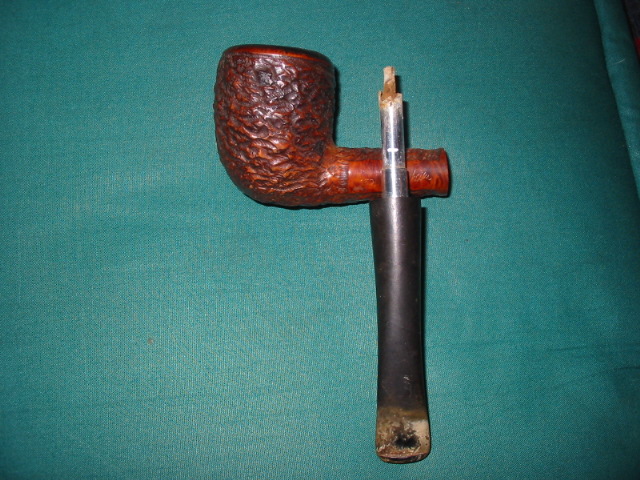
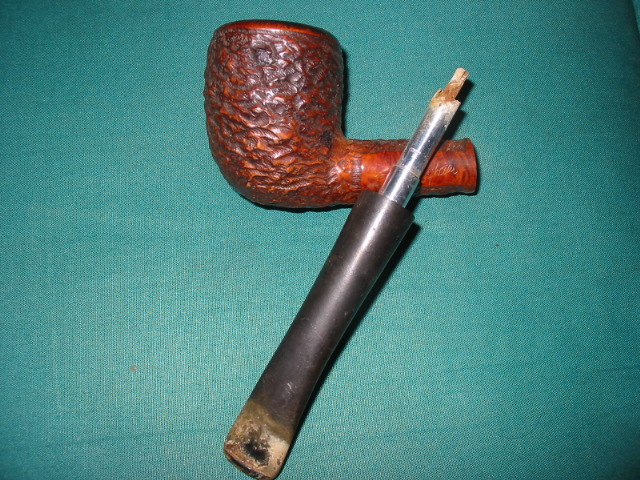
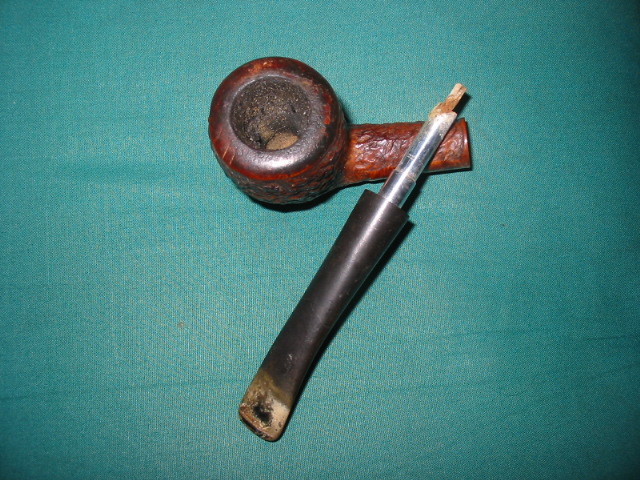
I used a hack saw to cut off the aluminum filter holder/tenon. I cut it off the same length as a regular tenon and used a file sandpaper to clean up the rough edges after the cut. Once that was done the maple filter had to be coaxed out with a dental pick until it broke free and came out. I do not believe it was ever removed since the day it was purchased from Brigham. It was unbelievably tarred and oily. 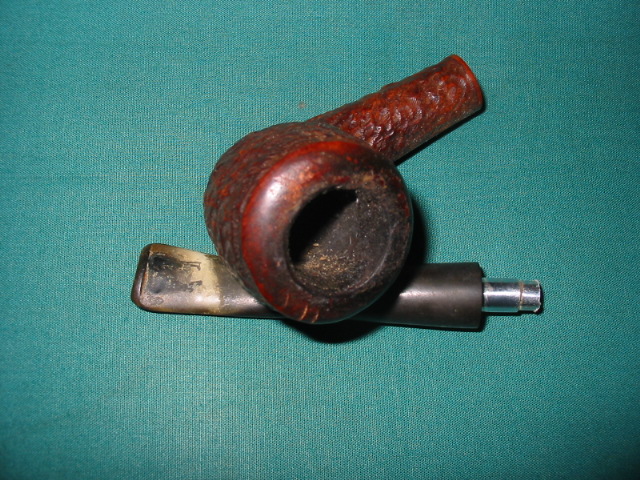 The end of the filter that was stuck in the airway was more of a problem. The aluminum seems to have bonded to the walls of the mortise. I tried the freezer method to see if it would break free – no luck. I went on to clean and restain the bowl as described below before filling the bowl with cotton bolls and alcohol to see if the tars will break free from around the aluminum. I am going to let it sit over night with the soak and see what happens. The soaking did not work. So I tried to drill it out I started with a bit the same size as the metal end of the filter. I worked my way up to larger bit to open it and see if I could back it out. The trouble is the situation of the insert is right against the opening into the bowl so I opened it as wide as I could without damaging the airway. So now there is a small metal tube in the end of the airway that is open to the bowl. It is probably ¼ inch deep so it will act like a sleeve in the airway. It looks to me that it will stay there!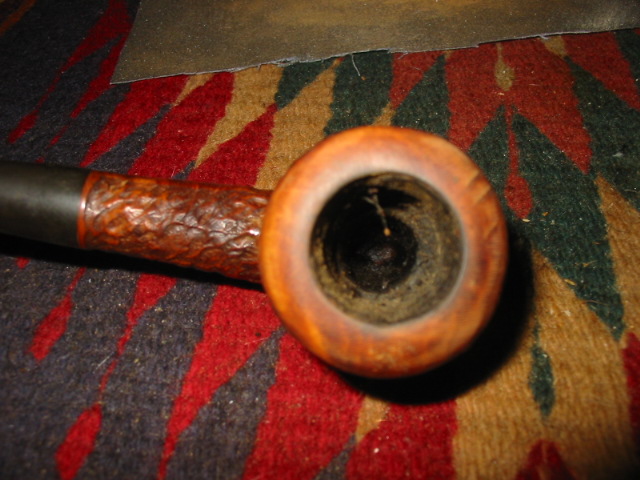
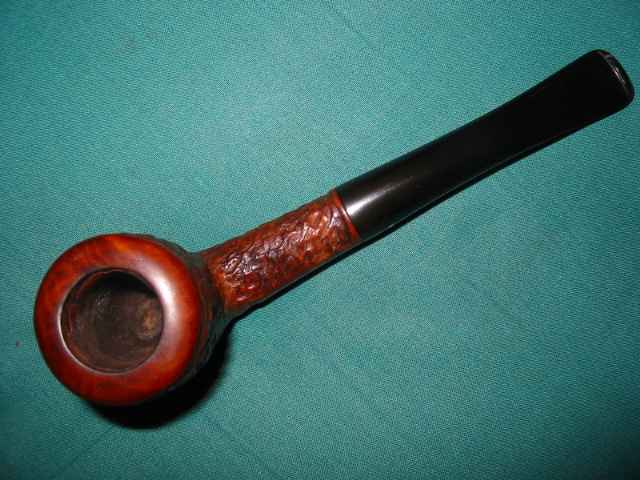
I cleaned off the rim with acetone on a cotton pad while carefully keeping the acetone off the sides of the bowl. I also followed that with micromesh pads – sanding it with 1500-6000 grit pads. There were three dent marks at between one and two o’clock on the photo above. I steamed them out with a hot knife and wet cloth. These dents easily came out of the rim and the surface was smooth and after sanding they virtually disappeared. I reamed the bowl back to bare wood and sanded the remaining surface of the bowl.
I worked on the stem quite awhile. I used emery cloth, medium grit to remove the white build up and the tooth marks on the stem. They were not too deep but would not lift with heat. Once I had them removed I worked on the stem with 240 grit sandpaper and 400 and 600 grit wet dry sandpaper to remove the scratches. Then I worked over the stem with 1500-12,000 grit micromesh pads. When the stem was shiny I took it to the buffer and buffed it with White Diamond. I gave it several coats of Obsidian Oil to bring the vulcanite some life. Then I gave the stem multiple coats of carnauba wax to protect it. The first picture below is of the underside of the stem and the second one is the topside of the stem. The tooth marks and scratches are gone. 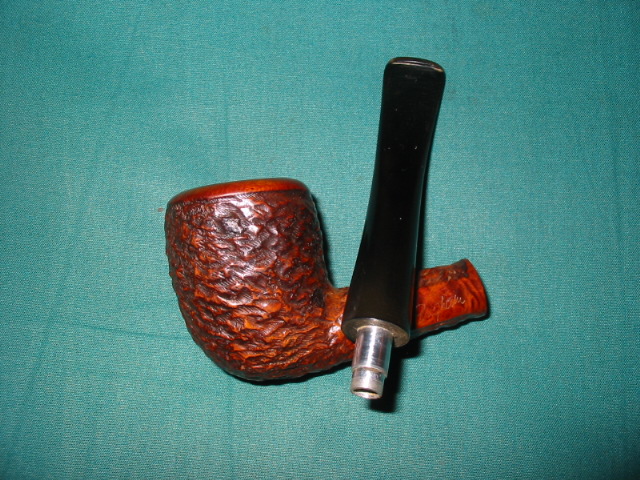
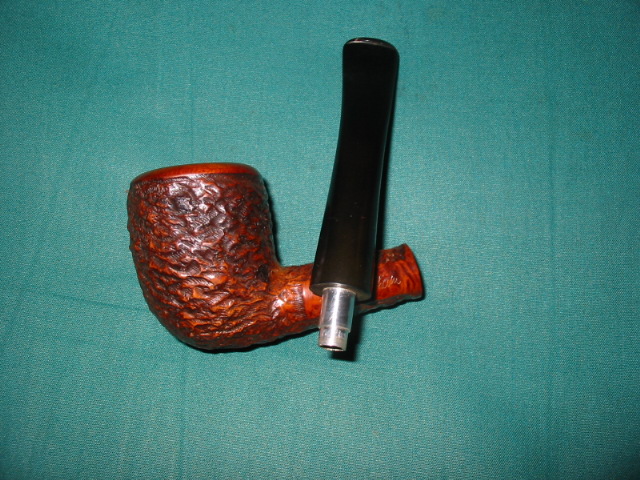
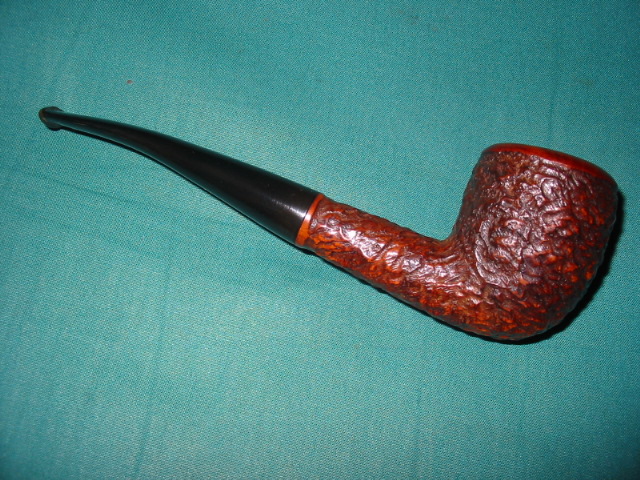
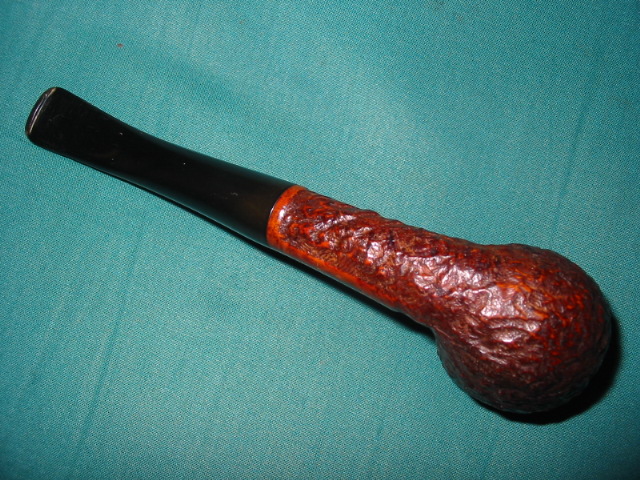
I restained the rim of the bowl with medium brown aniline stain and wipe it on and off with a cotton pad. I was trying to match the smooth portions on the side of the shank. The finished stain was a perfect match to the rest of the bowl. I buffed the rim with White Diamond as well and waxed it with Halcyon II wax to give the bowl a shine. I buffed it with a clean flannel buff. The finished pipe is pictured in the last series of photos. 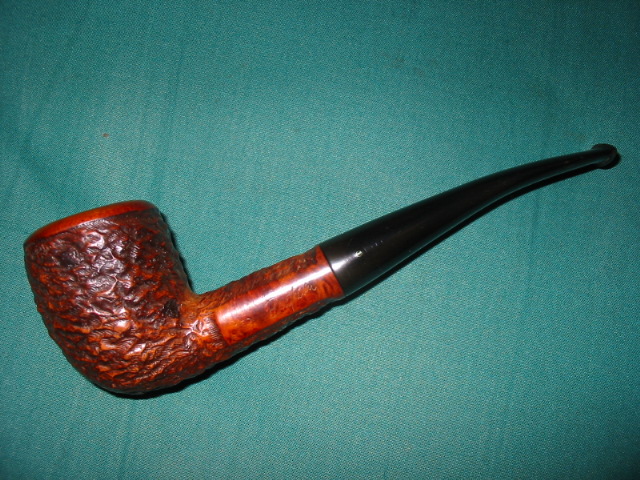
 rebornpipes
Hmm… made a post, then it vanished, so, excuse me if it appears twice.
Any ideas on removing the tenon? My stem is proving hard to repair (button/mouth piece all broken) so wanted to use a new stem and put the metal tenon into it. Not sure how it’s held in place though, wondering if maybe boiling the old stem would work and allow my to slide the tenon out?
LikeLike
Any advice on removing the tenon from the stem? I have a Birgham 2-Dot, and the button is proving impossible to repair. I bought a new stem almost the same, thought drill out the tenon on the new stem, and maybe boil the old stem and slide the metal tenon out? Not sure how they’re put in. If possible I’d like to slide the tenon out and the 2 brass dots if long enough.
LikeLike
I wrote up a repair on it on the blog. The link is https://rebornpipes.com/2013/02/14/replacing-a-tenon-on-a-brigham-system-pipe/ I detail how I removed the previous tenon there.
LikeLike
Nice… reading it now. Hopefully works out well. My aluminum tenon is in good shape, just the stem is a mess. Found a close match to the stem, but just about 1/8″ shorter. Hoping to fit it onto the Brigham and get the brass dots transferred as well.
LikeLike
For the brass dots – you can use brass rod, drill two holes in the same spot on the new stem using a small drill bit. Glue in the bits of rod you will use and then file them off or use a dremel with a sanding drum to take them down smooth. I would personally try that before trying to remove the old ones.
LikeLike
Great work! It is nice to see someone put in the extra effort. If you would like a free nylon tenon to replace the aluminum just send us an email at sales@brigham1906.com
I would like to address Desertpipe’s comment about lower quality aluminum. We used aircraft tubing which is the same as that used everytime you take a flight. There were no compromises, the aluminum grade was top notch. Then again, maybe that’s why you can’t smoke on an airplane.
LikeLike
Thanks for your comments. I will definitely email you about the nylon tenon. It is also good to know what you all used to use when the aluminum tenons were made. It is pretty remarkable what the years of abuse did to that aluminum no matter what grade on this old pipe. Much appreciated.
LikeLike
I would agree with your recommendation Chuck. The pipe looks great and can be smoked but the presence of the aluminum tube bugs me.
LikeLike
That rustification is really nice, good work on reviving it.
LikeLike
I recommend using the heal of this pipe to thump the middle of the forehead of the piper who put something in this condition in a box pass.
It is interesting to see the interaction of some tobaccos with the lower quality aluminum used in some of these older pipes, and it is never an easy fix.
LikeLike