Daily Archives: September 3, 2012

GoedeWaagen Ceramic Double-walled Pipe Restemmed


Blog by Steve Laug

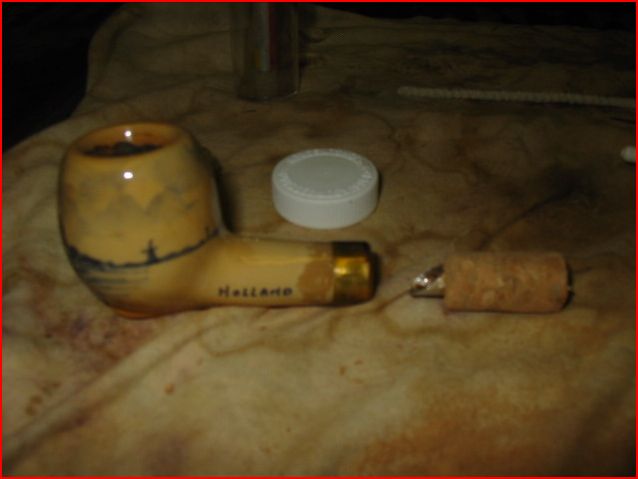
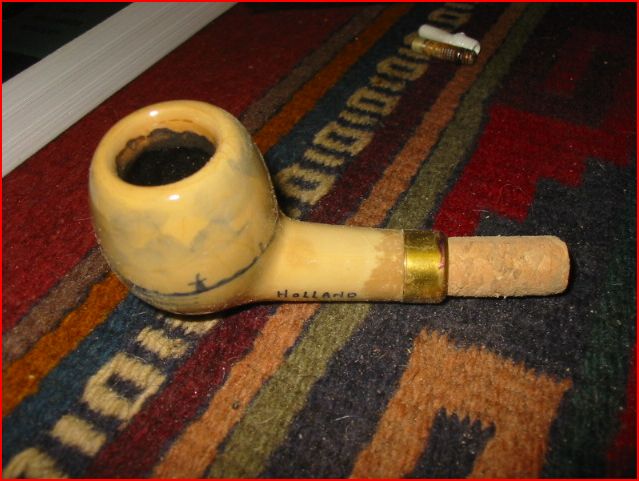
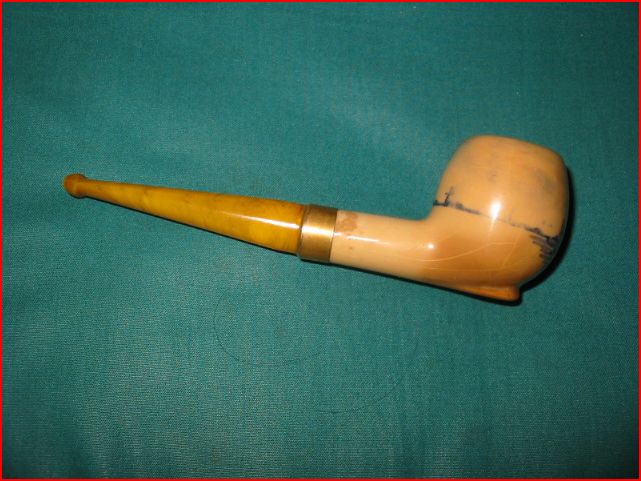
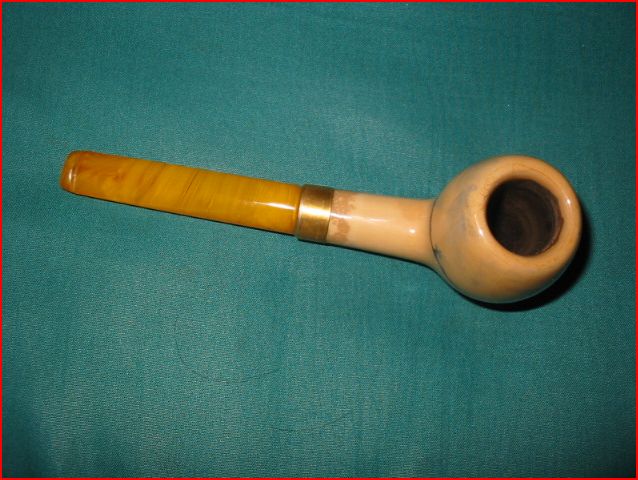
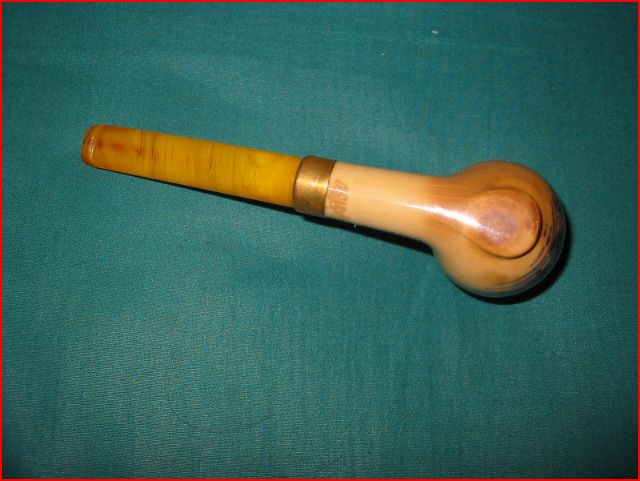
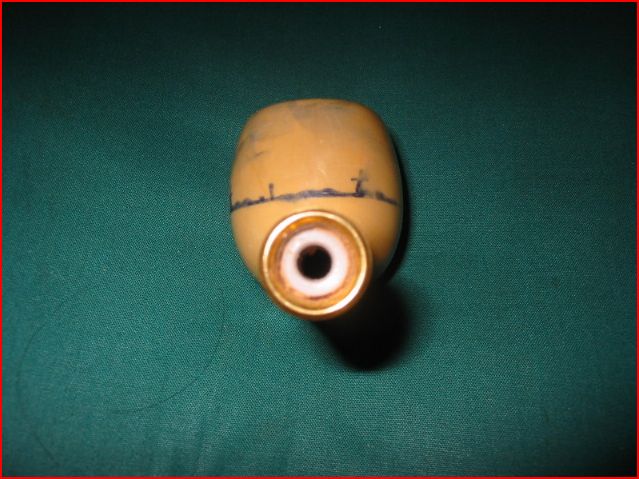
I picked this old ceramic double-walled pipe up at an antique shop. The thing that attracted me to it was the amber stem. Or at least it appeared to be amber. The stem was taped to the shank with scotch tape and the bowl was badly caked with thick tars and carbon. The outside of the bowl was spotty with grime and grease. There were fingerprints all over the grime. The stem was blackened on the inside and showed stain through the airway and button. The bowl was cream coloured porcelain under the grime and had a Delft blue Dutch windmill on the front and smaller ones on the horizon around the bowl. The bottom edge of the bowl and part way up the sides was had blue lines and shadows drawn in to look like a canal with the windmills on the other side of the water. Behind and above the windmills clouds and sky had been stylized into the scene. The entirety had been glazed with a clear glaze over the pipe. With a little work this might very well turn out to be a beautiful pipe.
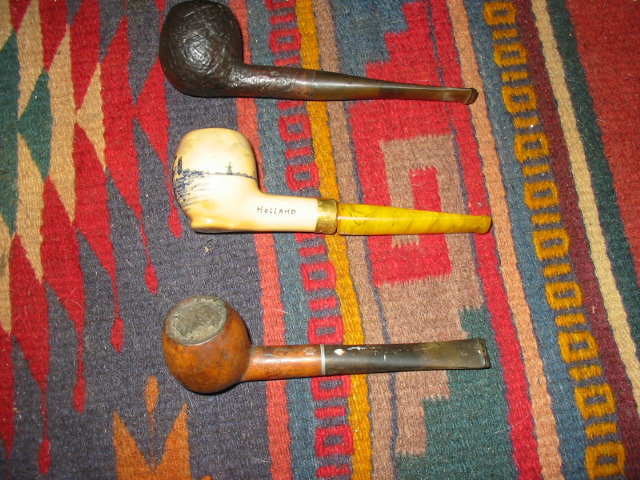
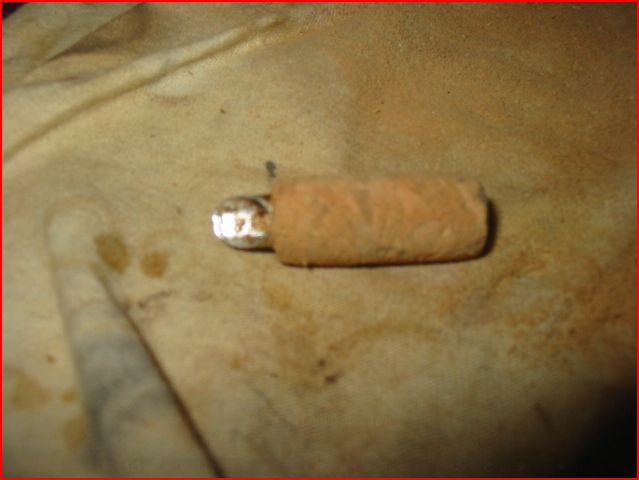
When I brought it home to work on it there was quite a bit to do to clean it up. I removed the scotch tape from the stem and shank and the stem dropped out of the shank on the work table. It had a metal screw tenon that was clogged and badly bent. I was able to remove the screw tenon from the stem with a pair of needle nose pliers. It was threaded into the stem so with a little effort I was able to unscrew it. The stem was indeed amber and as the screw tenon came out a small flake of amber came with it. I cleaned the airway on the stem with isopropyl alcohol, pipe cleaners and a shank brush. I scrubbed the button and slot to remove the blackening that was built up on it. I then removed the scotch tape from the shank using some acetone to soften the glue. It came off easily. The gold coloured band is stamped GoedeWaagen Made in Holland. I cleaned the band and polished it. I used a dental pick to remove the broken cork that was inside the shank. It was glued it and it was brittle. It came away with a bit of work. I used cotton swabs to clean out the shank. In the bottom of the shank was a metal piece that originally had been on the end of the cork insert and slid below the inner bowl of the double-walled pipe. I scrubbed the bowl with hot water and repeatedly ran water through it to loosen the buildup of tars inside between the walls. I scrubbed the outside of the bowl while I was washing it and was able to remove all of the grim. The remaining patina and coloration of the bowl is similar to a meer.
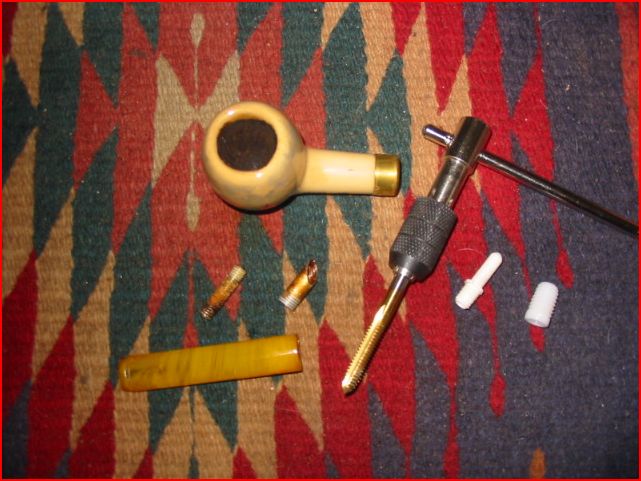
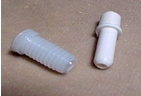
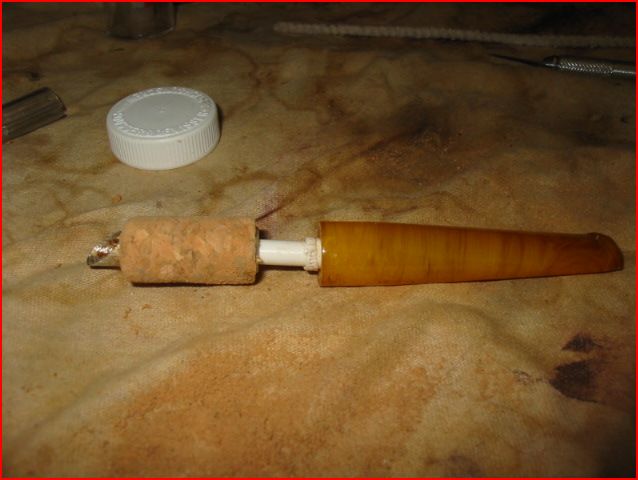
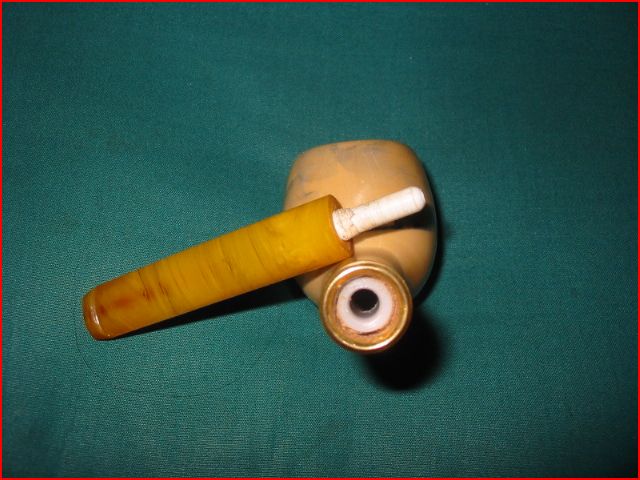
I decided to replace the original tenon with a Delrin pushpull tenon. That sound like an easy swap but it was not that simple. The tenon that was in the pipe was very small and the threads were fine. The new Delrin tenon was ¼ inch in diameter and was a good open draw. I drilled the amber very carefully with 3/16 inch drill bit to remove the threads and then a ¼ inch drill bit to open it up. I used a cordless drill that I adjusted to a slow speed and gently opened up the amber to ¼ inch. I took it back to the work table and used a tap to thread the newly drilled opening. Once that was clean and open I screwed in the new tenon and the stem was good to go. I cleaned up the tenon and stem junction and sanded it smooth so that the fit was smooth and transitionless.

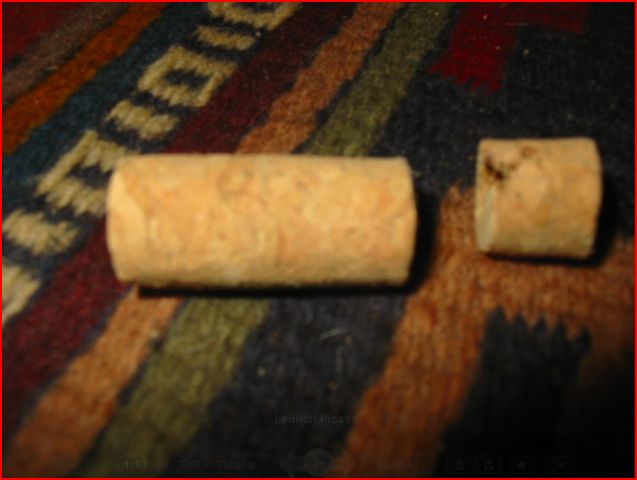
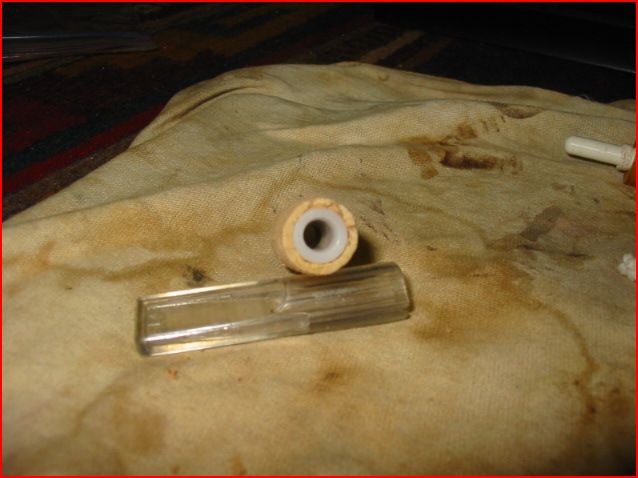
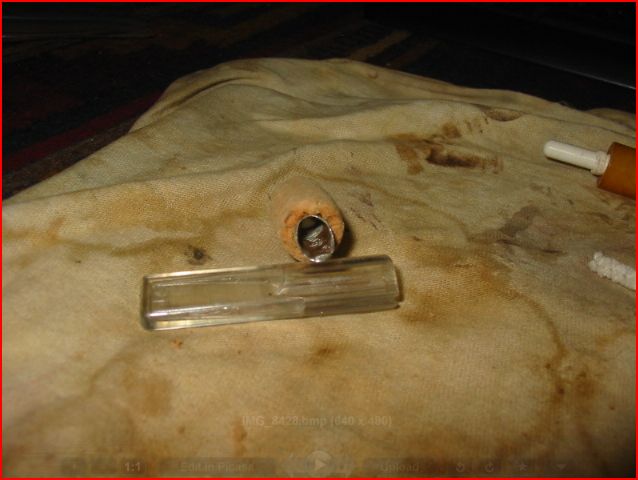
Then it was time to figure out how to work on the mortise. I did a bit of searching to see if I could find what the original mortise looked like when it was new. There was nothing that I could find to make the job a bit easier. So I began to work through some options. I had a wine cork that I kept here so I thought that might be a good base to begin with. I drilled the cork with a ¼ inch drill bit so that the airway through it would be open and easy to work with.

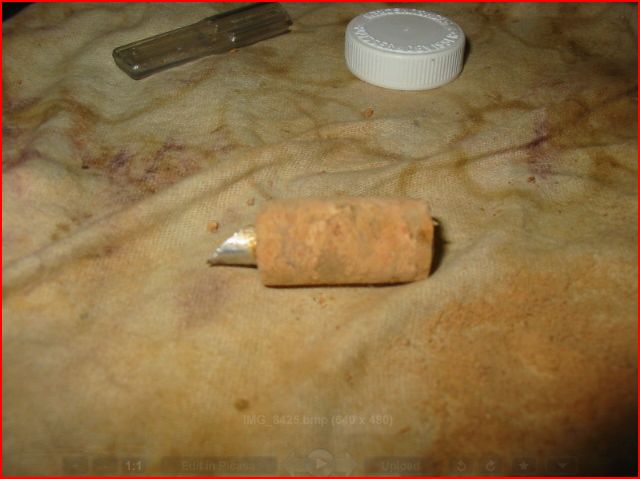
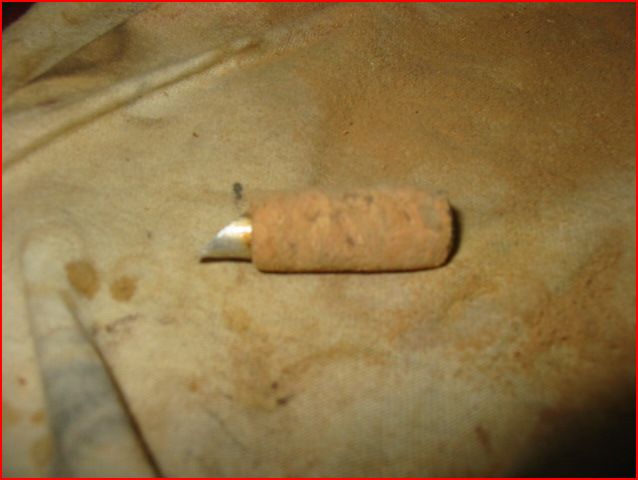
I screwed in the Delrin mortis portion of the push pull tenon on one end of the cork and threaded in the metal tip in the other end. I then took my Dremel to the cork to reduce the size of the cork. I removed the outside of the cork with the sanding drum until it was as close as I could get with the Dremel. I then sanded the cork with a folded piece of emery cloth until it was almost perfect. I unscrewed the metal tip and measured the depth of the shank so that the cork plus the tip would end up with the tip just below the air hole in the bottom of the bowl. I cut the cork with an art knife that was sharp until it was the correct length. Then I used my sanding board to level the cork so that when the metal tip was in it would sit smoothly. It took a bit of sanding but once it was done I reinserted the metal tip.
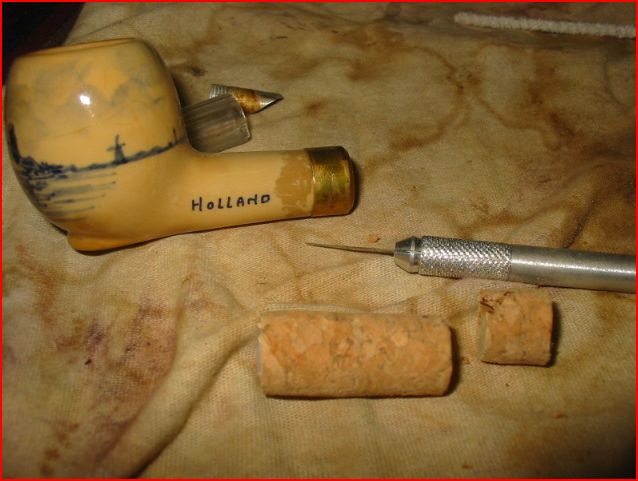
With the cork the right length and ready to insert I needed to fine tune the fit. I decided to stabilize the cork around the metal tip and the Delrin insert as I did not want it to break when I inserted in the shank. I used super glue to stabilize the cork. I then sanded the cork by hand with the folded emery paper until it was round and smooth. I wanted it to be a tight pressure fit in the shank. From what I could read the cork insert was put in and left until the pipe smoker decided to remove it to clean it. Then a new cork would be used to replace it. I decided to keep that tradition. 
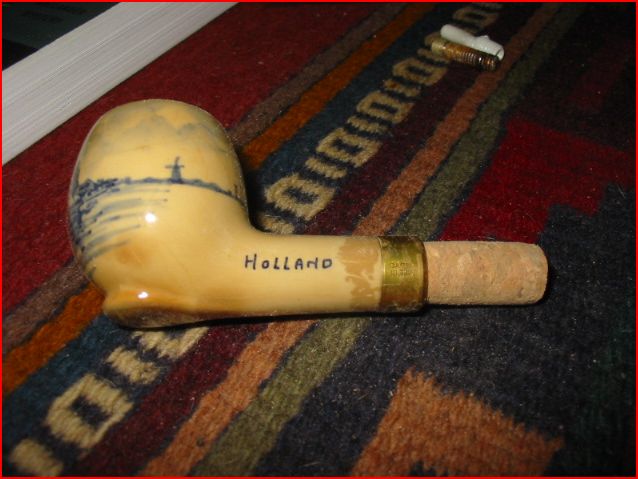
Once the cork fit correctly, I greased it with some Vaseline jelly and fit it in the shank. I was able to easily press it in place. When I was level with the end of the shank I use a ball point pen to set it a bit deeper to receive the tenon with a slight bevel.
I pushed in the stem and aligned it and the fit was absolutely perfect! I polished the bowl and the stem with a quick buff of White Diamond and then gave the entirety several coats of carnauba wax to protect it.

A Pair of Doodlers Restemmed


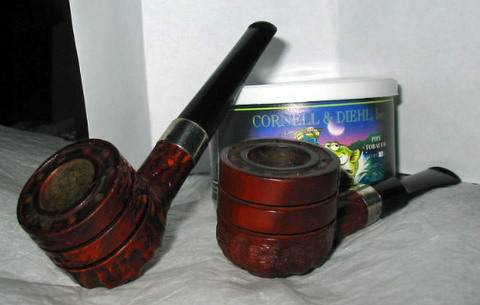
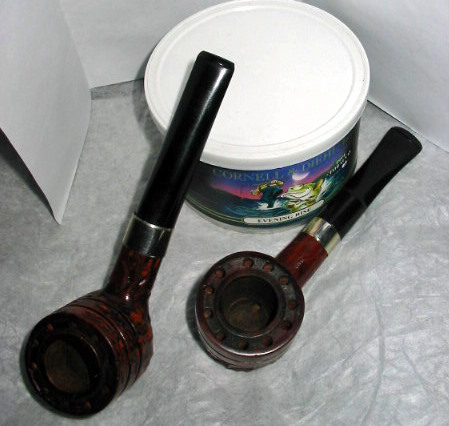
I picked up these two Doodler bowls that needed stemming. They were made by Tracy Mincer of Custom Bilt fame. They are unique in the pipe world, and often have been copied by others. The basic design involves deep grooves cut into the bowl and then holes drill from the rim to the bottom of the pipe. These tubes around the bowl and the open grooves are designed to cool the bowl as the pipe is smoked and deliver a cool dry smoke. These two were a mess when they arrived and need quite a bit of work. The shanks on both bowls were crack with hairlines crack in several places. They required gluing with super glue and then a pressure fit nickel band on each one. The bowls were reamed and cleaned and then restained with a medium brown aniline stain. I buffed them both with Tripoli and White Diamond to polish them.

I took two stems out of my can of stems – one a saddle and one a taper stem. I used the PIMO tool to turn the tenons to fit the shank. Then I used my Dremel to fit the stem to the shank. I took off the extra material until it was the same diameter as the shank. I used a variety of sandpapers to bring the stem down to the perfect fit. I used 400 and 600 grit wet dry sandpaper and water to remove all of the scratches. I used Micromesh from 1500-6000 grit to polish and smooth the stem. Both pipes and stems were polished with carnauba wax and a soft flannel buff. ImageImage

Explanation of Various Sandpapers I use for Stem Work


Blog by Steve Laug

ImageI thought it might be helpful to take some time to address the issue of sandpapers and sanding with regard to the work I do on stems both in removing oxidation and the removal of tooth chatter. I found a great chart on the grits of sandpapers that will help explain the designation system I refer to when I speak of various grits of sandpaper.

When I start on stem that are highly oxidized I use the CAMI (or US Standard system) 240 grit sandpaper. This is the crossover grit between the medium grit sandpapers and the fine grit sandpapers. 280 grit is the first fine grit sandpaper and 220 grit is the last medium grit sandpaper. The 240 grit works very well in removing the surface oxidation and also tooth chatter and tooth dents that have been raised to the surface. I always sand with this paper in vertical direction from the tenon to the button. I have learned that to sand the horizontal direction leaves scratches that are deeper and much harder to remove with the finer grits of sandpaper.

From that point on I have used 320 and 340 fine grit sandpaper but will often skip ahead to 400 grit wet dry sandpaper that works well with or without water. I personally use it with water – wetting the stem and then sanding the scratches left by the 240 grit sandpaper. I begin sanding in a vertical direction up and down the stem and finish sanding the stem in the horizontal direction around the stem from tenon to button. This sanding removes much of the scratching and prepares the stem for further sanding with finer grit papers.

I skip to the 600 grit wet dry sandpaper next to keep refining the sanding of the scratches. By this point the stem is a matte black and clean of most of oxidation. Again I use the paper wet. I wet the stem and sand both vertically and horizontally. I finish the sanding horizontally before moving on to the next grit. If it is available to me I use 1200 grit wet dry paper next to finish off the sandpapers. This grade of paper gives a nice smooth finish.

From this point on in the sanding process I use micromesh sanding pads or micromesh sand paper in the fine grits. I begin with the 1500 grit sanding pad pictured in the photo to the left. The makers of the micromesh pads use a colour system to identify the grit of the pad. The 1500 is the copper/reddish brown coloured pad at the top left of the photo. I use all of the pads with water. I wet the stem and then sand it with the pad. The 1500 grit pad works well to remove any remaining scratImageches and begins to polish the stem. The wet stem will need to be wiped off regularly of the slurry that is left from the wet sanding dust.

The 1800 grit pad brings the smoothness of the stem one step closer to finished. I always use it wet as well. Once I have sanded the stem to this point I wipe it down and wet it with clean water to see if any scratches remain. If there are some I work on them with the 1800 grit or go back to the 1500 grit until I have removed them. These pads work exceptionally well around stem logos. The 2400 grit takes the shine deeper into the vulcanite or Lucite. I use this to polish the entire stem from tenon to the button. Again I use all pads with water – wetting the stem and sanding them horizontally at this point. The 3200 through the 4000 grit polishes the stem more deeply with each higher grit pad. Used wet and wiped off after sanding the finish of the stem should begin to take on more of a shine and the matte finish should begin to disappear.

The last three grits of micromesh – 6000 to 12000 at first seemed to be over kill to me. But each time I use them I find that the difference between each one is significant. The difference between the 8000 and the 12000 grit is the most dramatic. The 12000 grit used wet leaves the stem with a glassy finish that is ready to have a final buff with carnauba wax.

Four Pipes Restored – #1 Charatan Special Shape 44


Blog by Al Jones

Recently a friend asked me to restore four pipes that came from the estate of a family friend . This gentleman, from Ohio, had previously gifted me two wonderful GBD’s from this same estate. So, I was more than pleased to restore this quartet for him to enjoy.  From research into this group of pipes and my two, I belive they were purchased from the old Smokers Haven in Ohio.

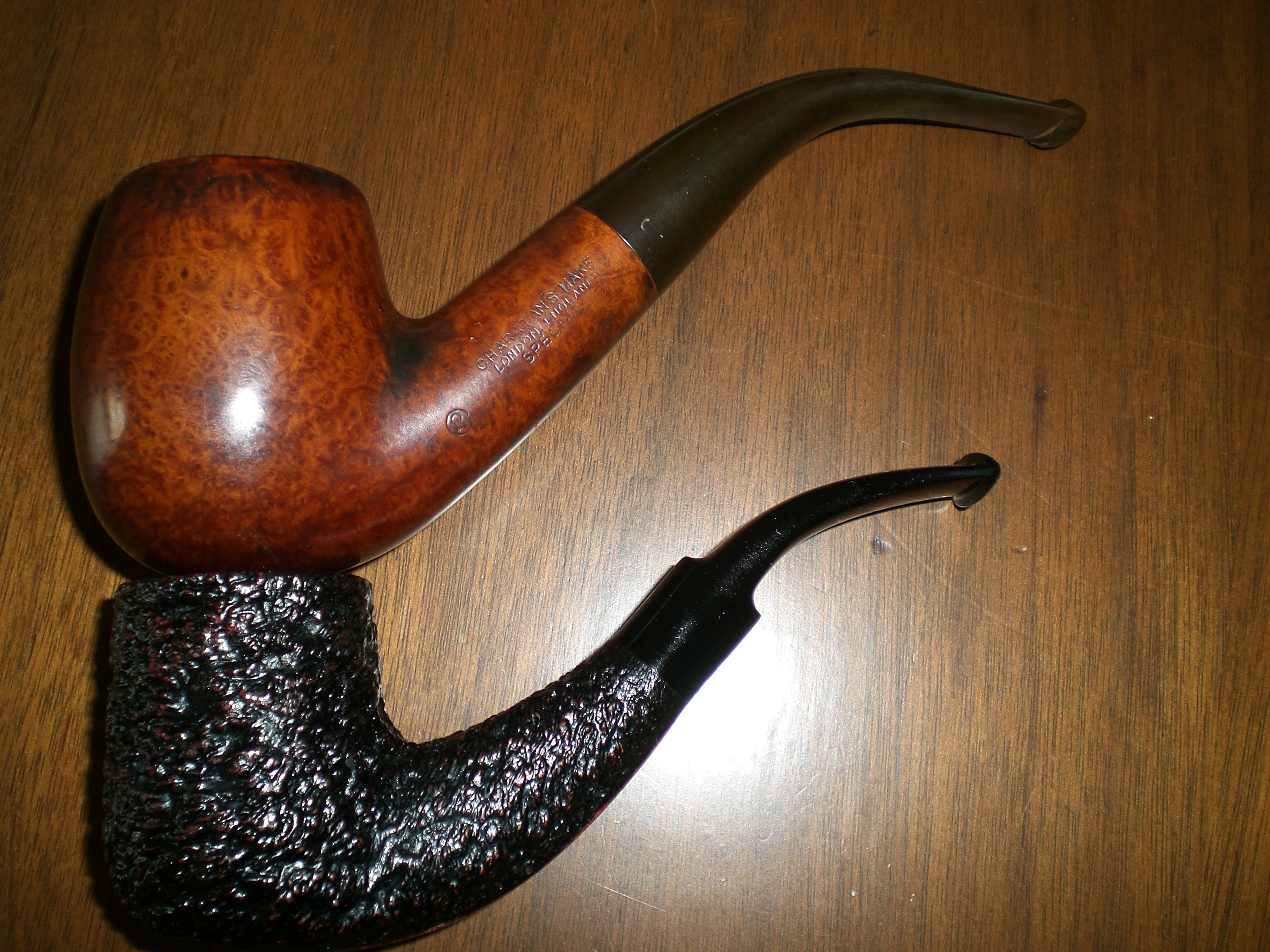
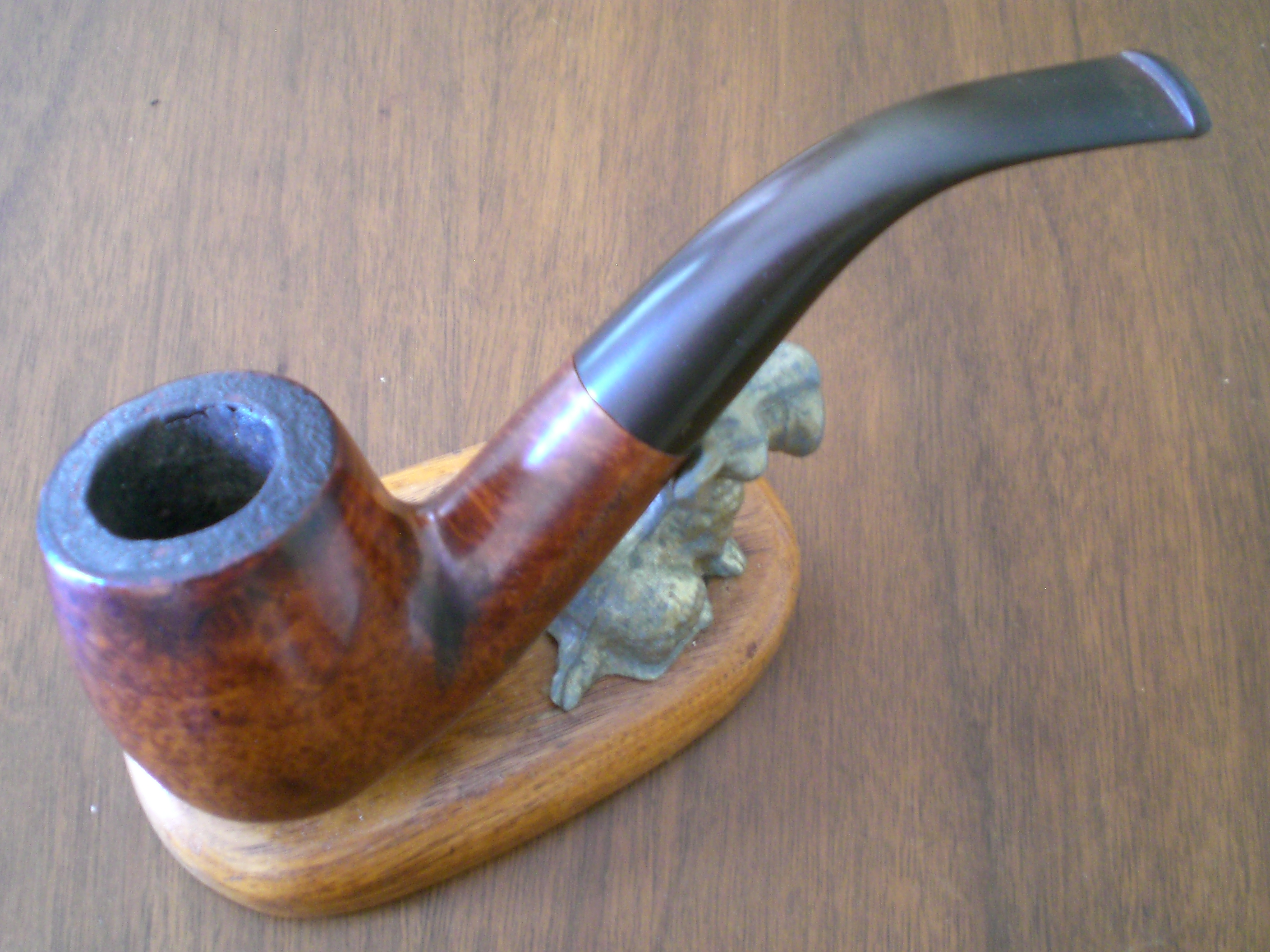
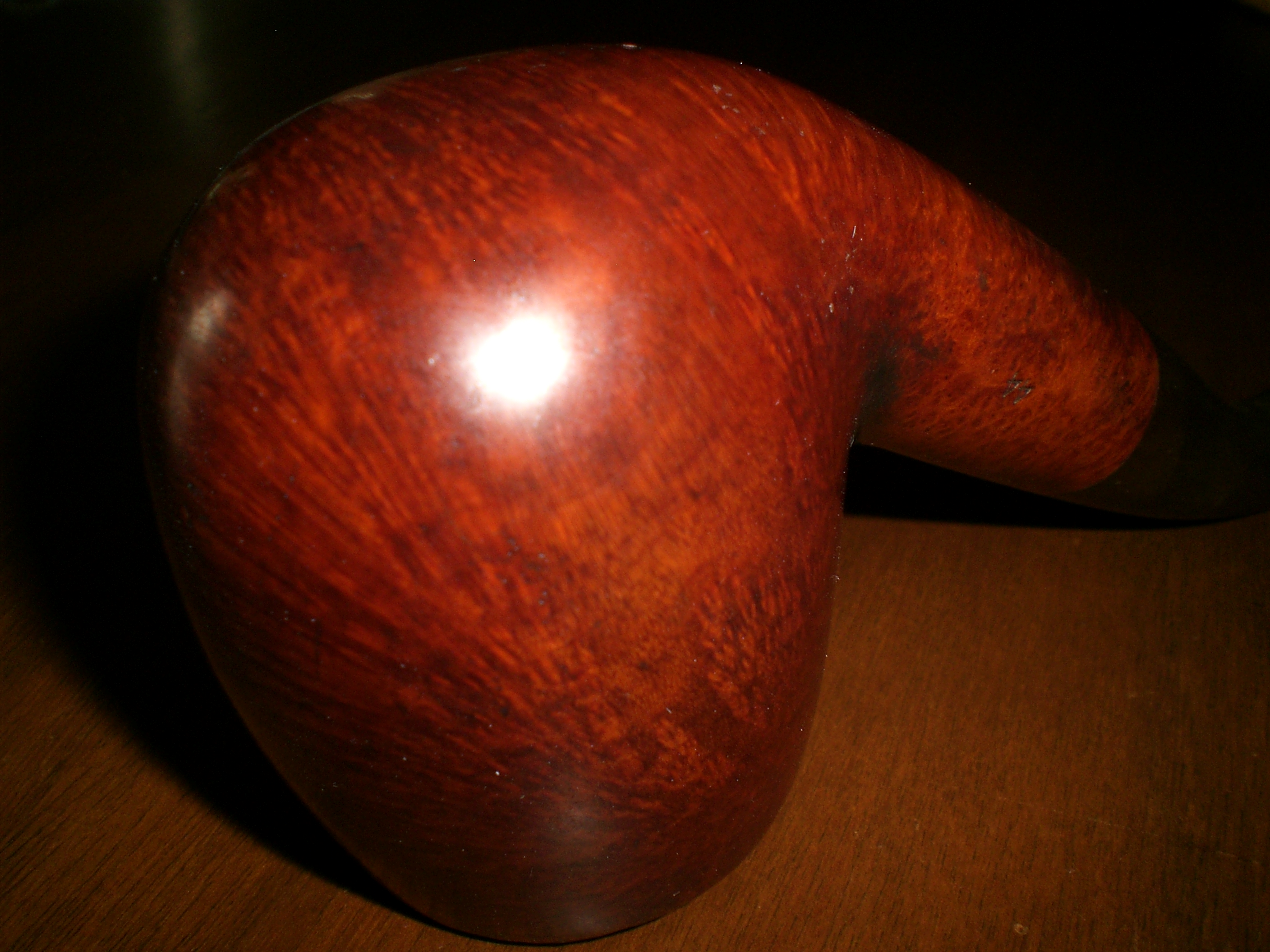
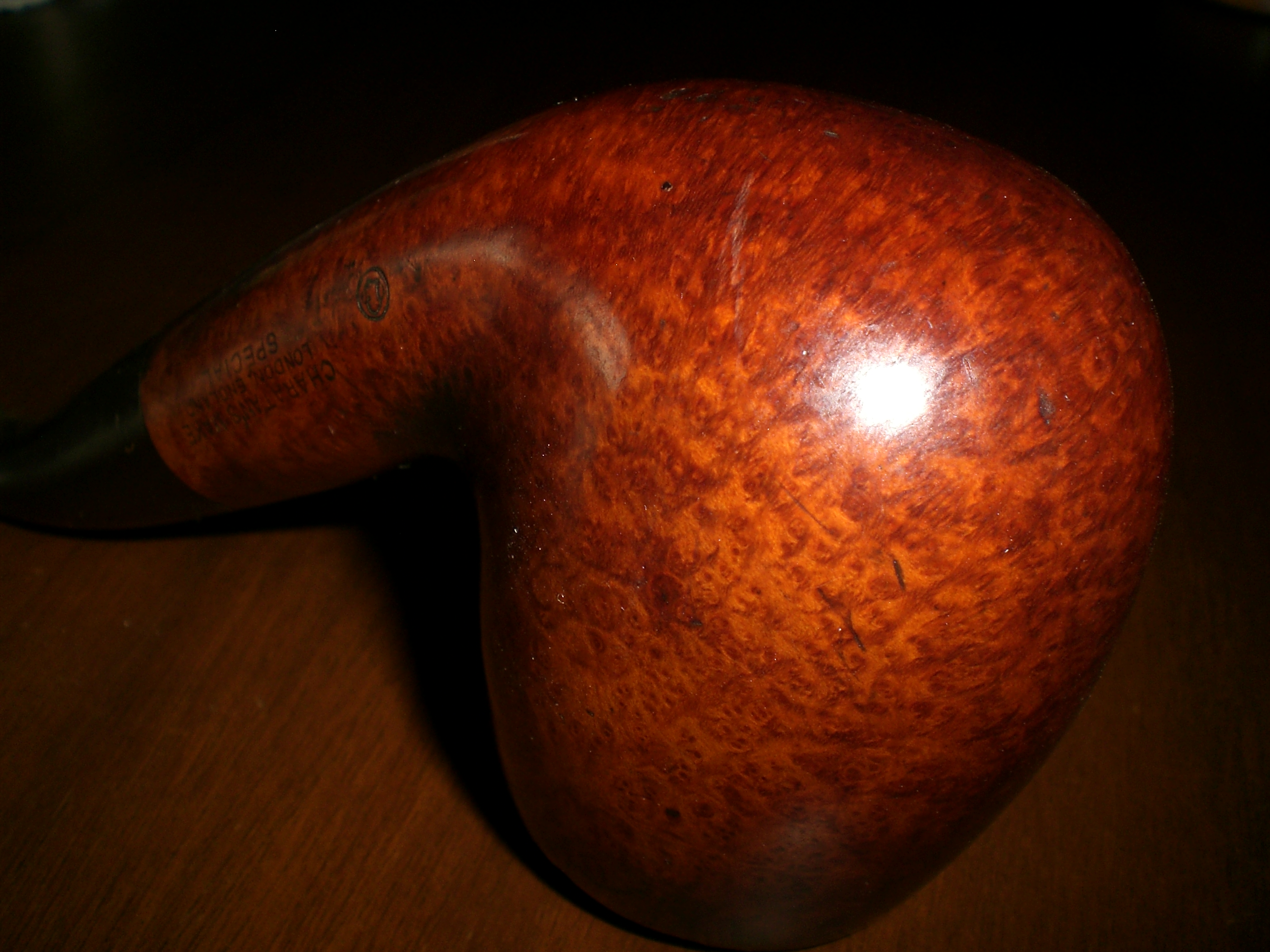
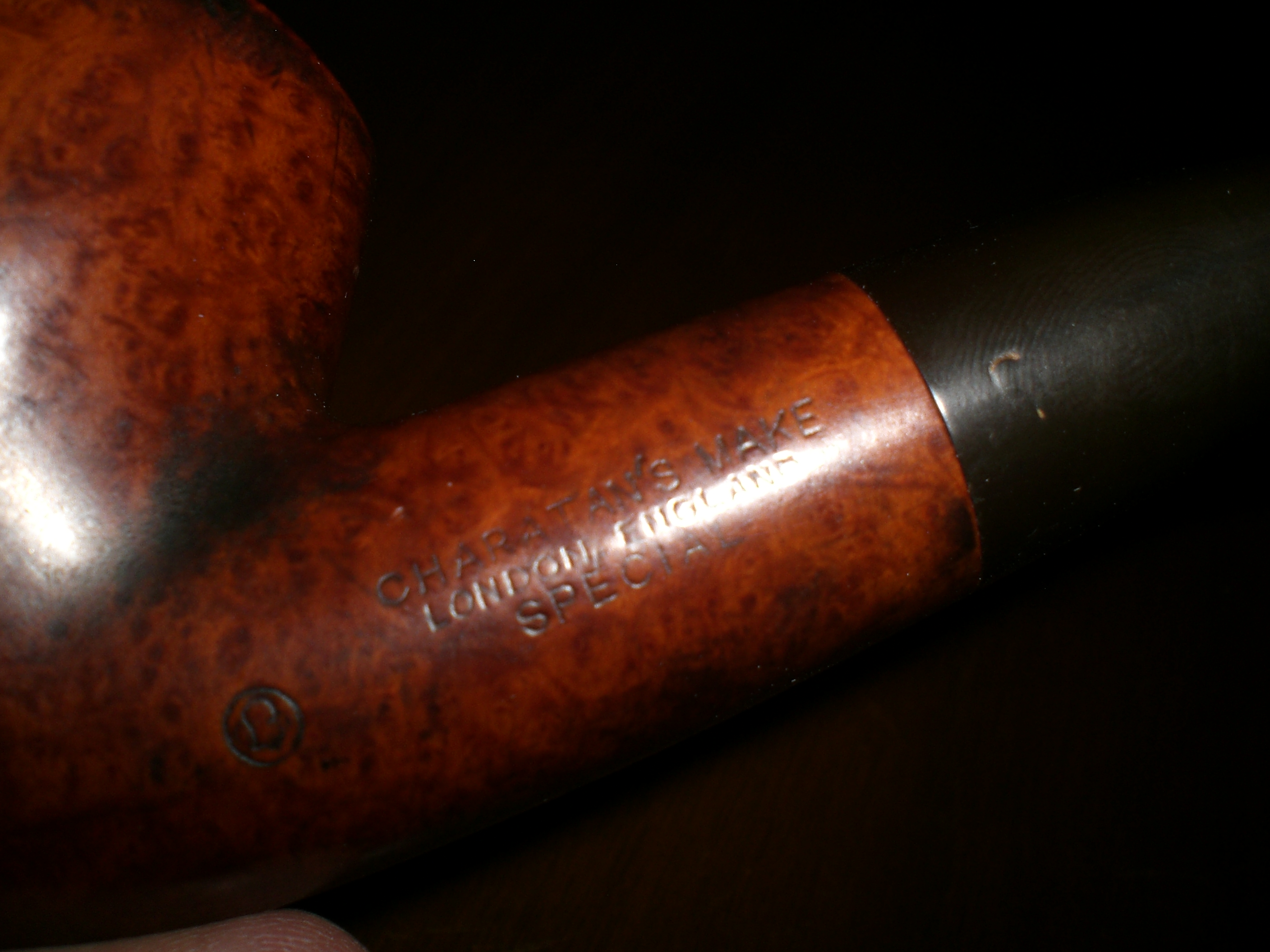
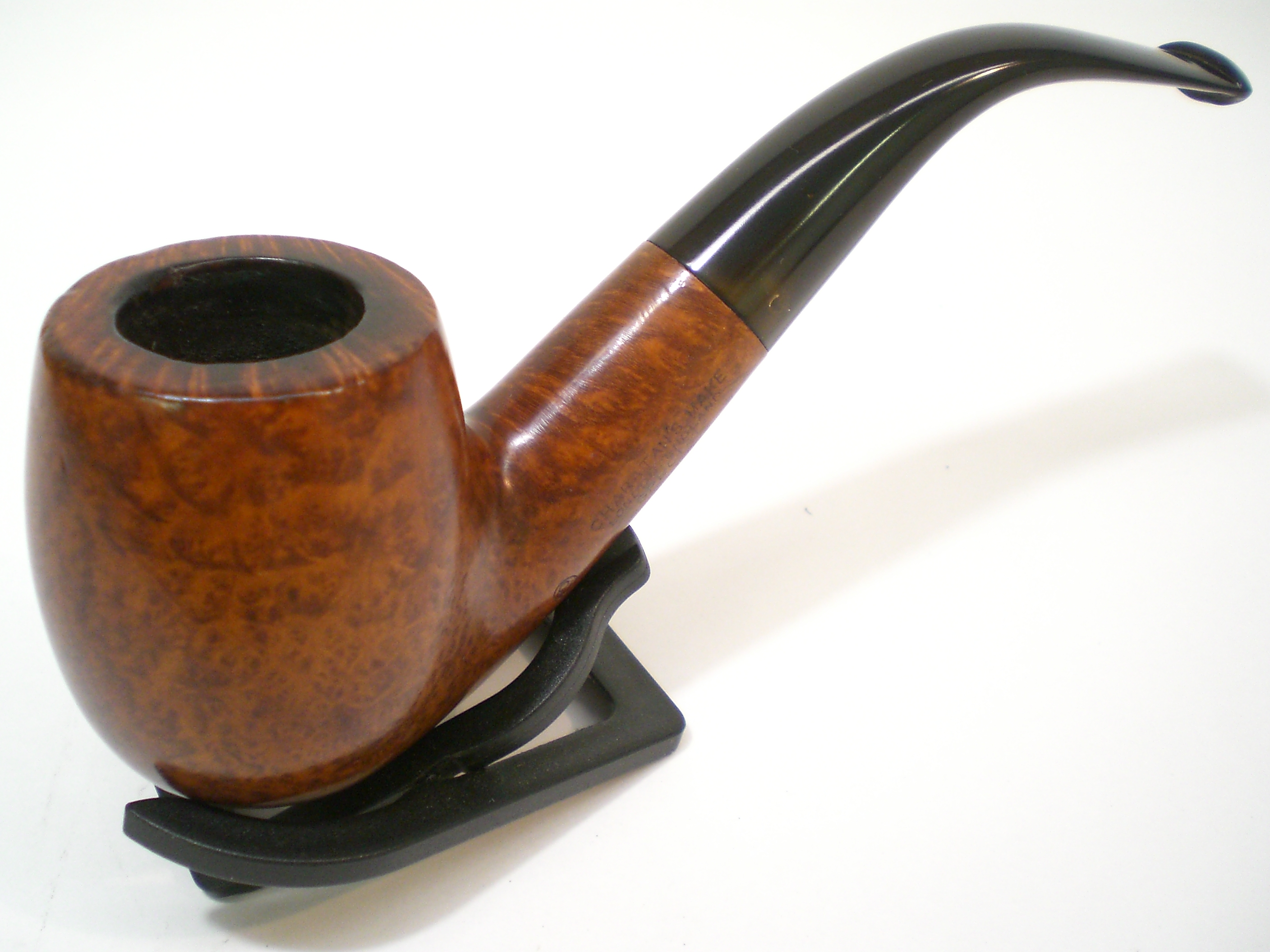
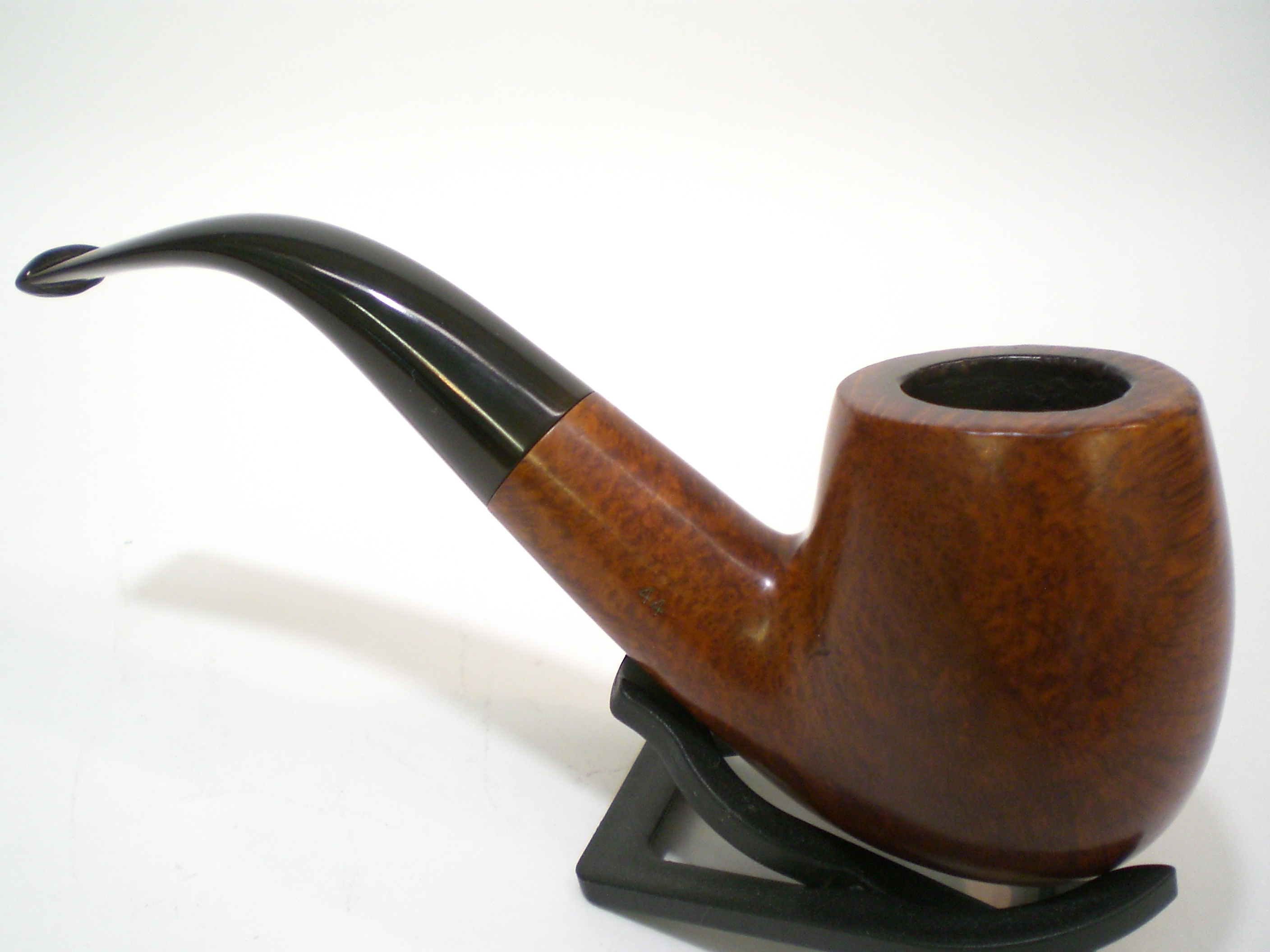
First up on the bench was this massive Charatan Special billiard. I’ve seen these Specials before, but they almost always have a saddle stem. This one has a lovely tapered stem. The pipe is 7″ long and at exactly 100 grams, a hefty hunk of briar. This one is a shape 44 and has the Lane stamp.

Paired with a 4K Castello to give you a perspective on the size of the pipe:


Each of these four pieces had a heavy layer of grime on them (as did the two GBD’s in my collection) and a very thick layer of tar on the bowl top.  The had some small tooth impressions that lifted out with some heat.

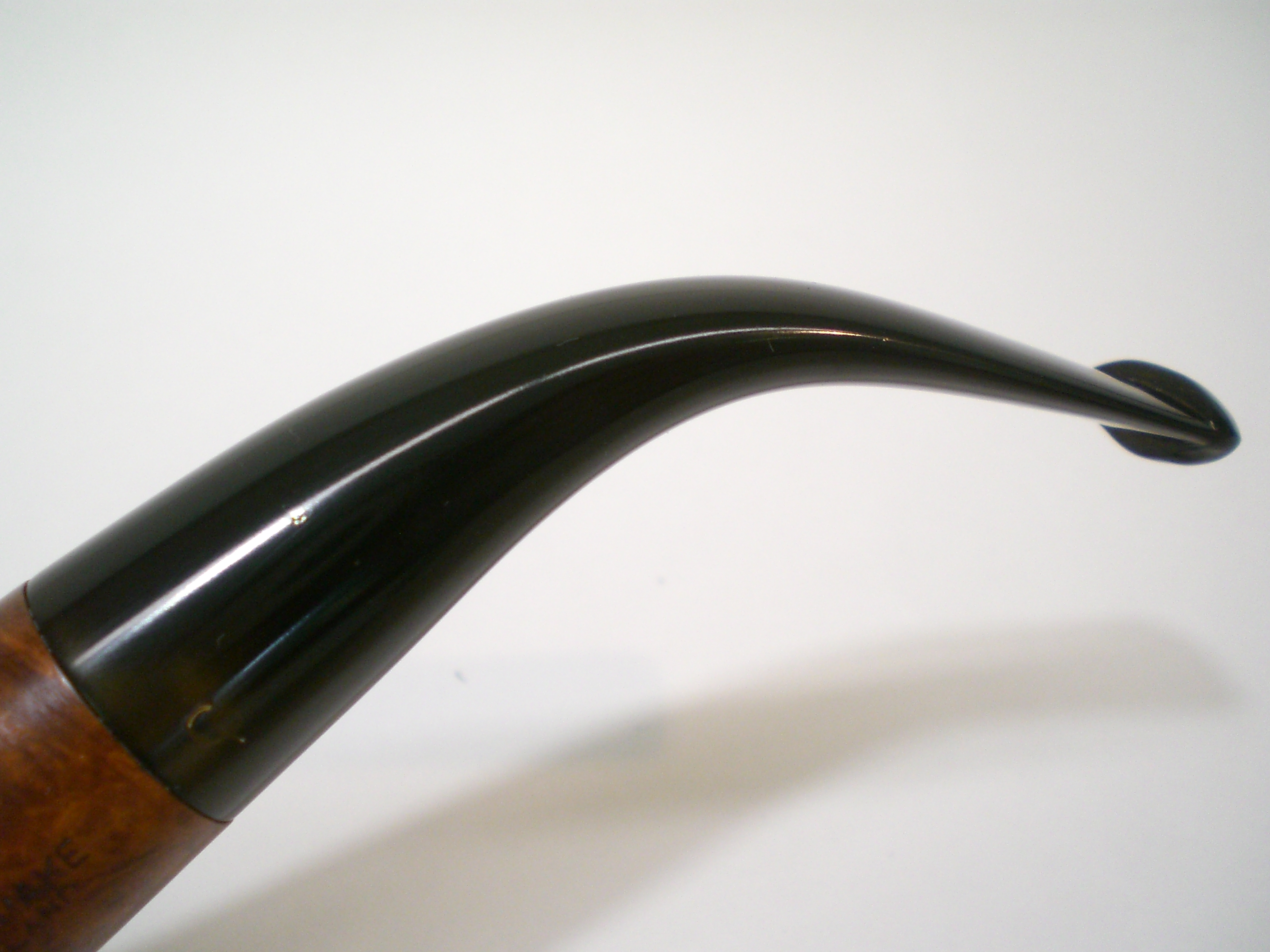
The tars on top came off with some light scrubbing. I soaked the stem in a mild Oxyclean solution to remove some stubborn oxidation. I stayed away from the “CP” stamp. It is light, but visible. I did not soak the bowl on this one, just gave it a light reaming. The owner smoked all of these pipes very hot and did a fair bit of damage to the inside of the bowl.  I was afraid to remove the cake filling that was filling in the crevasses. With a little use, the cake should build over these spots and the pipe should still have a long life, the briar is still very thick all over. There were a few dents on the bottom of the bowl. They lifted out nicely with an old kitchen knife held over a propane torch and a wet cloth.

After soaking the stem, the oxidation was removed with 1500 and then 2000 grit wet paper.  I then moved to using the last three grades of Micromesh sheets (6000>8000>12000).  The stem was then buffed first with Tripoli and then White diamond rouges.  A final buff with Blue Magic Plastic polish was the final step.

The tars on the bowl top were removed with a very mild solution of water and alcohol as I didn’t want to lighten the stain.  As the heavy layer was removed, I switched to plain water on a cloth.  The bowl was buffed with Tripoli, White Diamond and then Carnuba wax.  The briar really cleaned up nicely.

The finished pipe is a very regal looking piece.


I’ll detail the other three pipes from this estate in future essays.

Al Jones, aka Upshallfan