
Blog by Steve Laug
Earlier in June I received an email regarding restoring some pipes for her husband. Here is here email.
I have one Calich and one Dunhill pipe which my husband destroyed using a torch lighter on. I am wondering if it is possible to get them restored somehow. If you want to have a look I can send pics.
I wrote and asked for photos of the pipes. She wrote that there were actually 5 pipes not two and included photos of all five. I asked her if she was wanting to sell them or just repair them. Here is her response.
No… I don’t want to sell (yet) he’s 86 and has taken up smoking his pipes again. He was using a torch lighter until I discovered and replaced with proper pipe lighters. For now I’m wondering if it’s possible or even wise to restore them. – Kathleen.
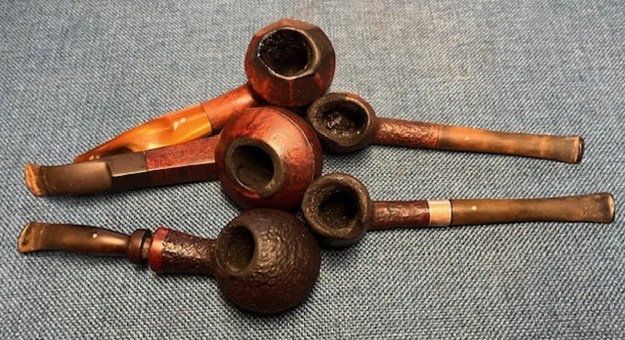
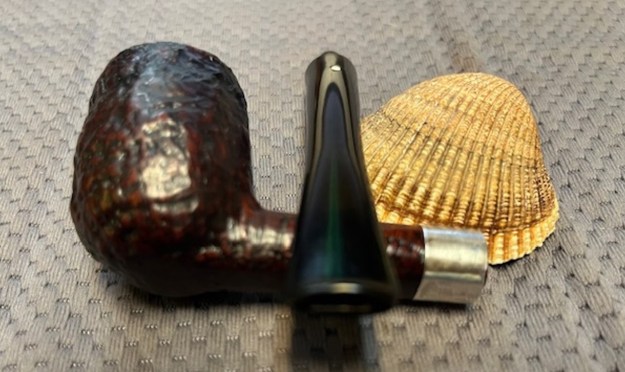
I replied to Kathleen and invited her to send the pipes to me in Vancouver. They arrived just before I left for my visit with my Dad in Idaho. Here is what I found when they arrived. There were three Caliches, a Dunhill, and an Ed Burak Connoisseur. The Calich Pipes included a rusticated straight Opera, a bent Rhodesian with an octagonal rim cap and an acrylic stem. The Dunhill was a sandblast Billiard with a repair band on the shank. The Ed Burak Connoisseur was a bent Bulldog. All had rim top damage from being lit with a torch lighter. Some were in worse condition than others. The worst were the Calich Opera and the Dunhill Billiard which had torch damage on the left side of the rim and down the bowl side. The others had varying degrees of burn damage. I set them aside until I returned home from my visit. She sent me photos of the next pipe, a Dunhill Shell Briar Patent 111F/T Billiard that had a worn Patent No. stamp and a repair band on the shank. I took the pipes out of the box and laid the group out on my worktable. I took some photos of the group to show their condition. The photo of the left side of the shank shows the damage I mentioned in the earlier paragraphs. The right-side photo looks very good. The photos from the rim top show a lot of damage and the overall condition of the pipes very clear.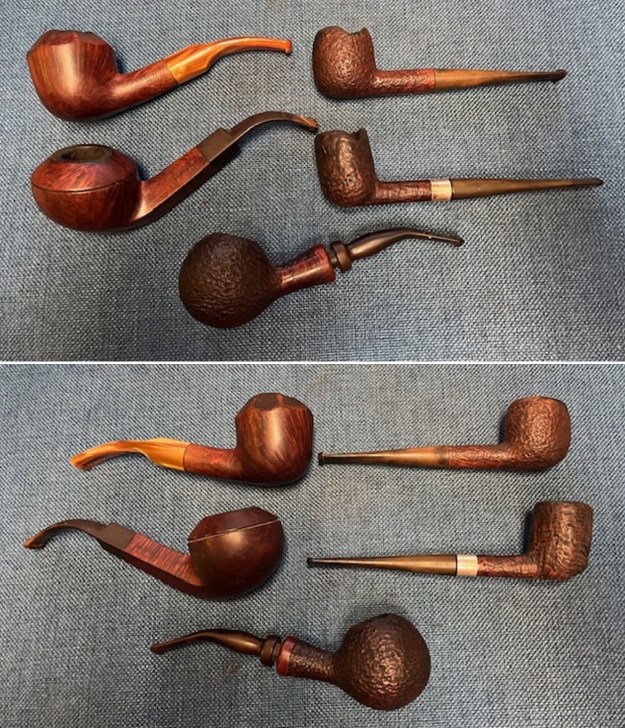
 All I had left of the five pipes was the last – a Dunhill Shell Briar Billiard that is by far the one with the worst damage of the lot. It was hard to know whether the previous Calich Opera or this Dunhill was worse but both were a mess and had suffered much from the torch lighter. This one is classic Dunhill Billiard that is stamped 111 F/T on the heel of the bowl [followed by] Dunhill [over] Shell Briar. That is followed by Made in England [over] Pat. No. The patent number itself was partially covered by the Sterling Silver repair band. The band was stamped on the top and read Sterling Silver arched on the topside. The pipe had a very thick cake in the bowl and there was a lava overflow on the top. There was some major burn damage under the lava the front right as well as a deep burned area on the left back side and edge. The burn was like a large bite out of the top and left side of the bowl as can be seen in the photos. The shank had a thick coat of tars and oils and the stem had a thick tar build up as well so its fit in the shank was very sticky and dirty. The stem itself is vulcanite with a single white spot on the topside. It was oxidized and had light tooth marks and chatter on both sides of the stem just ahead of the button. There were overflowing tars on the smooth shank end around the fit of the tenon in the mortise. The Sterling Silver band was heavily oxidized. The finish was dusty and tired but had a nice sandblast under the grime and appeared to be in good condition. A lot would be revealed once I had cleaned it. I took photos of the pipe before I started my cleanup work.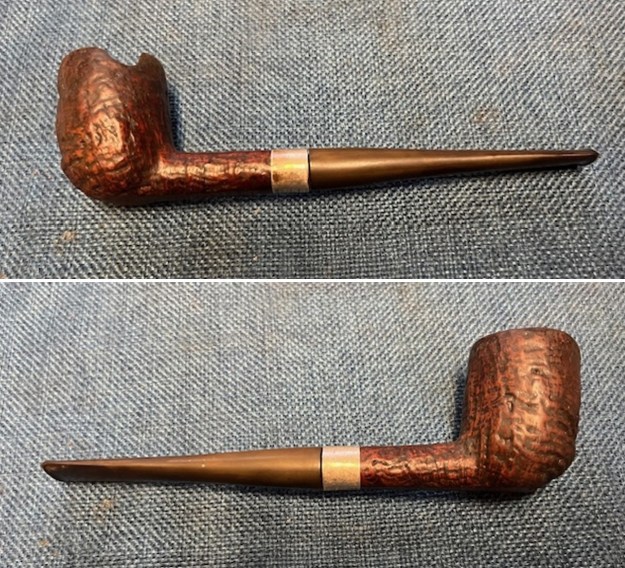
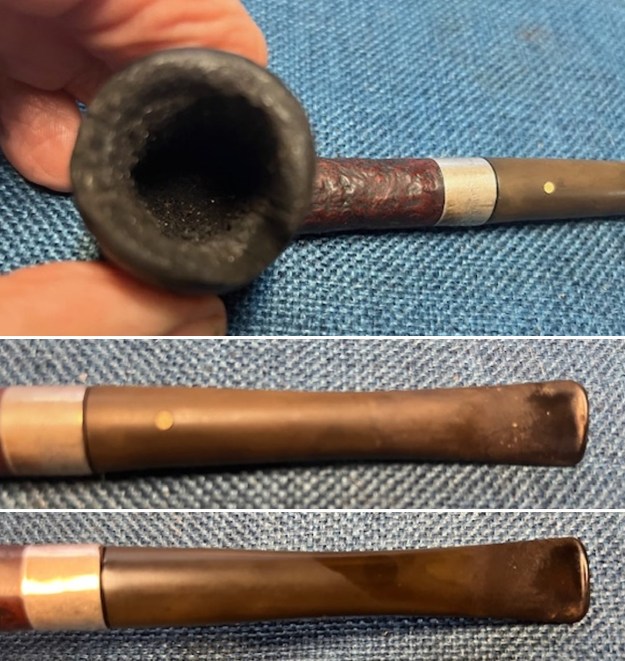
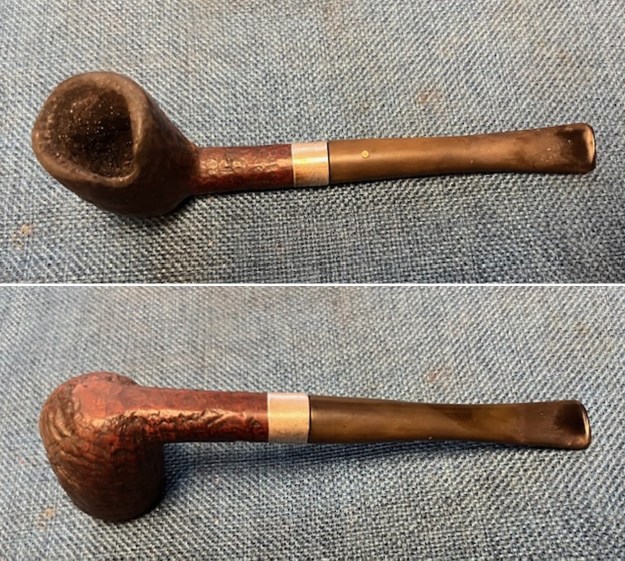 I took a close-up photo of the bowl and rim top to show its condition. The inside of the bowl was heavily caked with a wet oily tobacco and debris in the bottom of the bowl. The rim top had damage on the front right in the photo below as well as on the back left. The back left side is the worst as it is quite thin and is like a deep bite mark down the side of the bowl. It left a mess for me to clean up. The shank bore a silver repair band that is stamped Sterling Silver. The stem was dirty and had some light tooth marks and chatter on the top and underside ahead of the button. There was a thick coat of calcification and oxidation on the stem. The white spot on the stem top was in good condition.
 I took a photo of the stamping on the underside of the shank. It was faint but still readable as noted above. The Patent Number is partially covered by the silver band. I also took the stem off and took a photo of the parts of the pipe. Even with the major damage it was still quite a nice looking pipe.
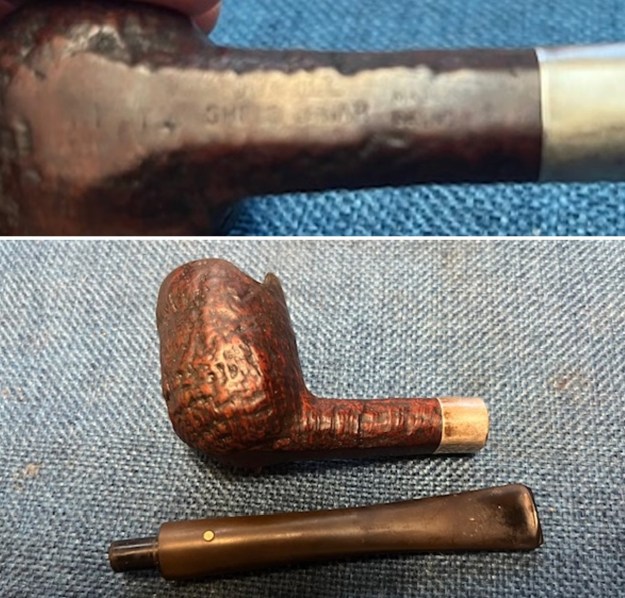 Without the patent number or the date stamp it was hard to identify the age of the pipe. I know that the patent number ceased to be stamped after 1954. The issue was at this point with the illegibility of the stamping I could not even tell what the patent referred to. It could be the Shell Briar Finish or an inner tube. I was not even sure what the country of Patent was – England? Canada? or the US? What I knew was that the pipe in hand was a Shell Briar Billiard that was made before the Patent Stamp ceased to be used after 1954. Now it was time to work on the pipe. I reamed the bowl with a PipNet reamer to remove the majority of the cake. I cleaned up what remained with a Savinelli Fitsall Pipe Knife. I sanded the walls of the bowl to remove any remnants of cake with 220 grit sandpaper wrapped around a piece of dowel. Once finished the inside of the bowl was smooth.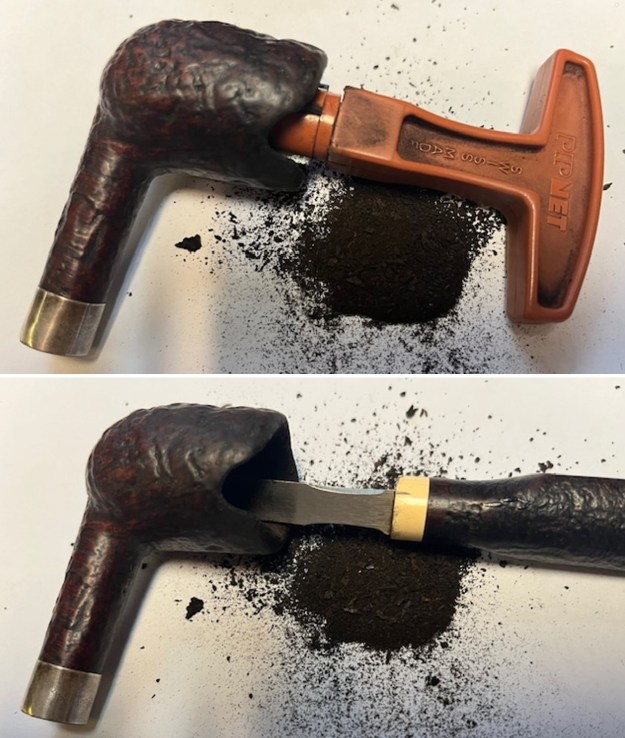
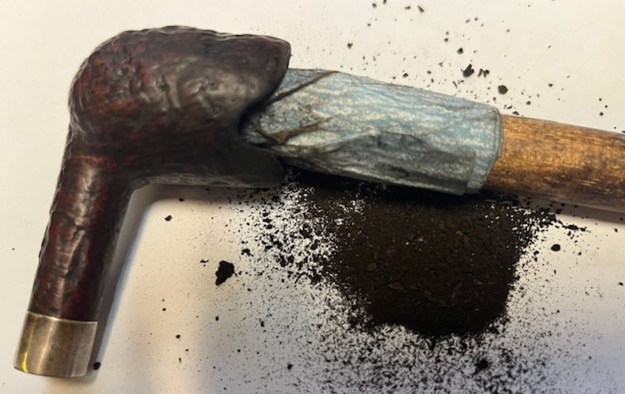 Once it was clean I turned my attention to the rim top. I cleaned up the inner edge of the bowl with a folded piece of 220 grit sandpaper. I flattened out the rough edge on the damaged area with the sandpaper to give a flat surface for my repair. I topped the bowl with 220 grit sandpaper on a topping board to give the rim top a smooth surface. This preparation provided a clean and smooth surface to attach a new piece of briar in the burned area. There was a small crack in the surface of the rim in the burned area on the right front edge. Once topped I filled it in with some briar dust and CA glue and topped it again.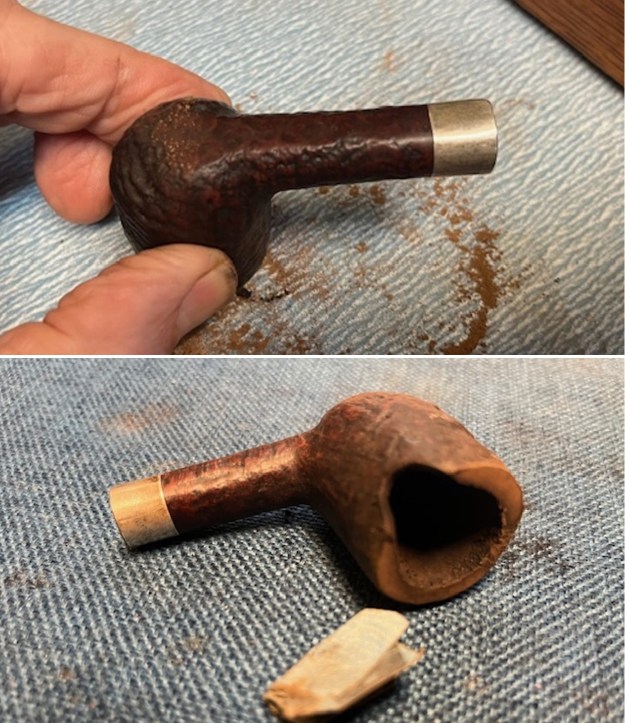
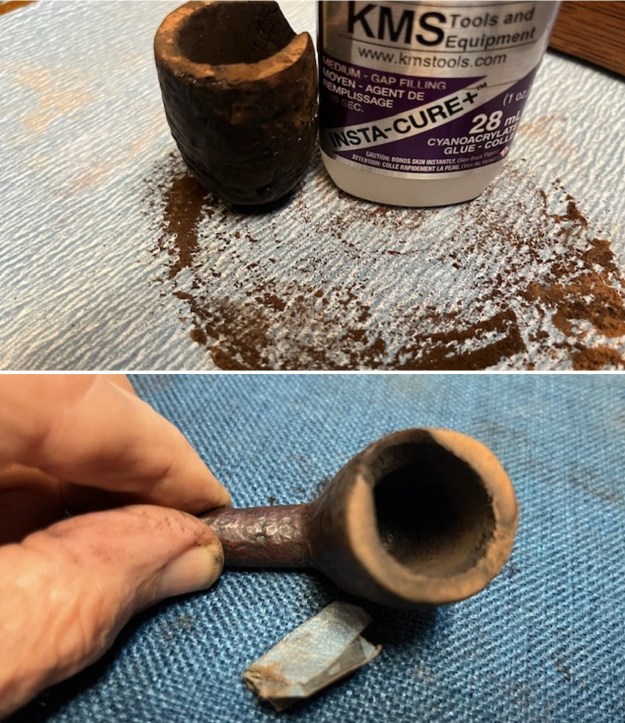 I decided to work on the repair to the deep burned area on the left side of the bowl. I cut a piece of briar out of a cracked bowl I keep around for just this purpose. I eyeballed the shape of the divot and used a hacksaw blade and a carving knife to remove the chunk that I would use. I shaped the piece of briar more closely to the shape with a Dremel and a sanding drum.
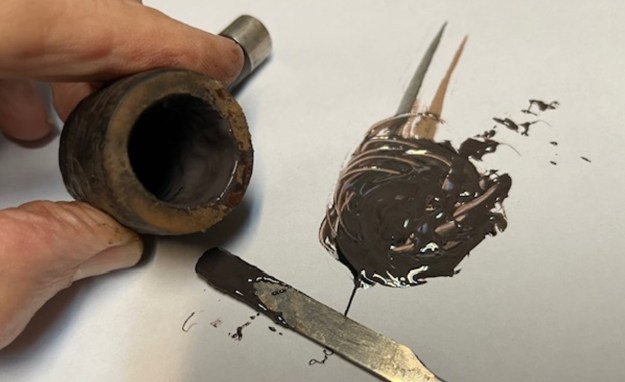
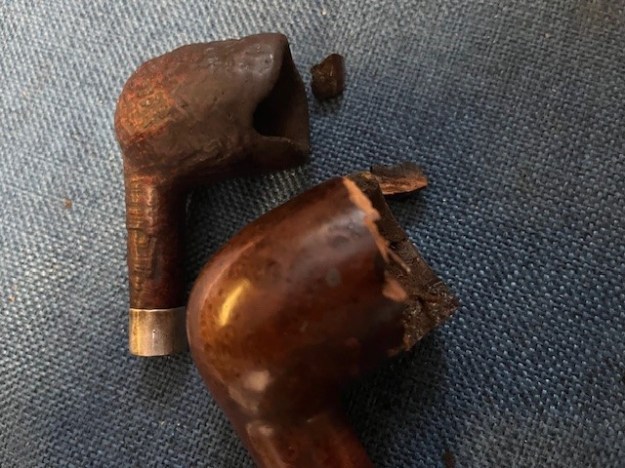 I mixed up a batch of JB Weld and applied the mixture with a dental spatula to the divot on the bowl side and on the underside of the cut piece of briar. I pressed the piece of briar into divot on the bowl side. I held it until it started to set and then set it aside to cure. I purposely used a little taller piece of briar than necessary as it gave me material to work with. I have found it simpler to work with the larger piece and then remove the excess. Once the JB Weld set enough for the repair not to move I set it aside to cure.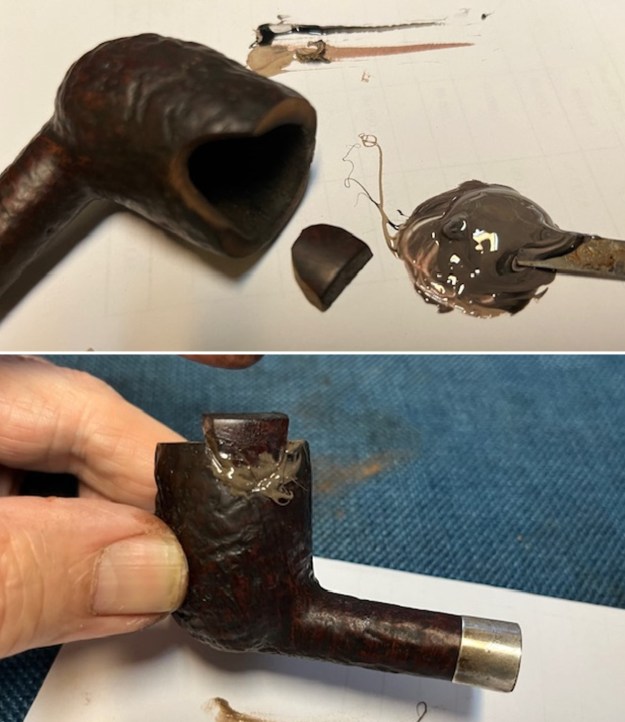
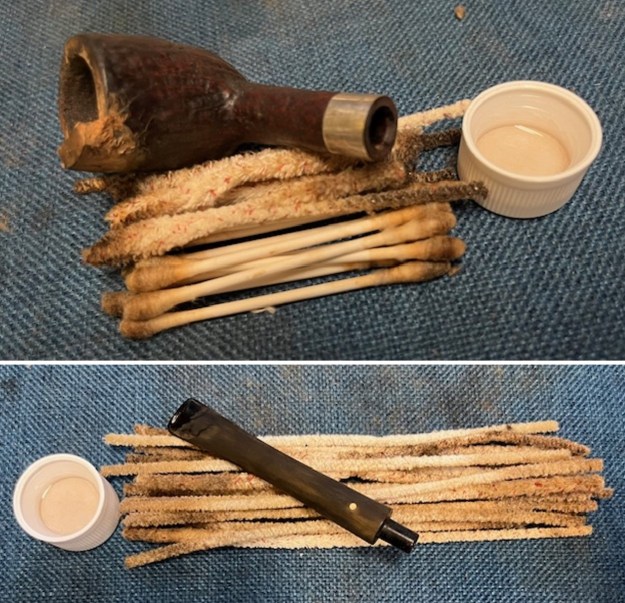
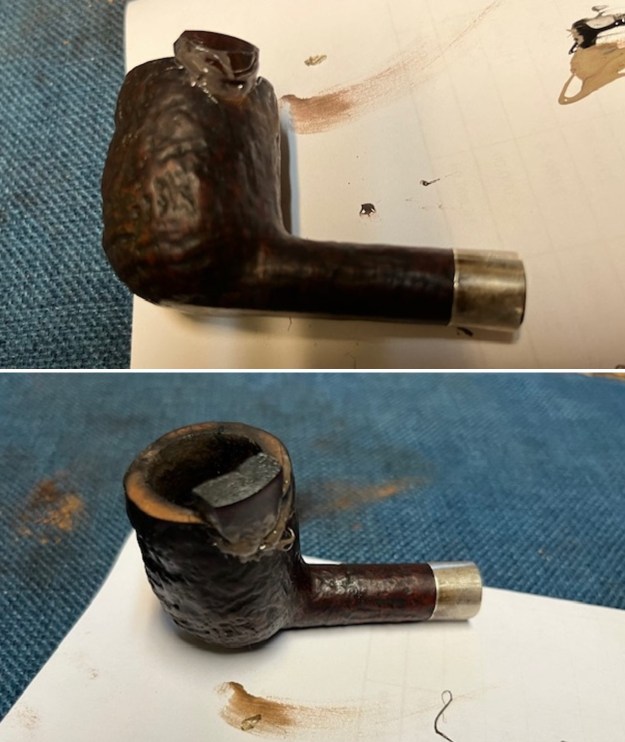 Once the piece was solid in the repair to be stable I took the opportunity to work on the internals. I scraped the inside of the mortise with a dental spatula to remove the hardened tars and oils that lined the walls of the shank. Once I had that done I cleaned out the airway to the bowl, the mortise and the airway in the stem with pipe cleaners, cotton swabs and alcohol. When I finished the pipe smelled very clean.
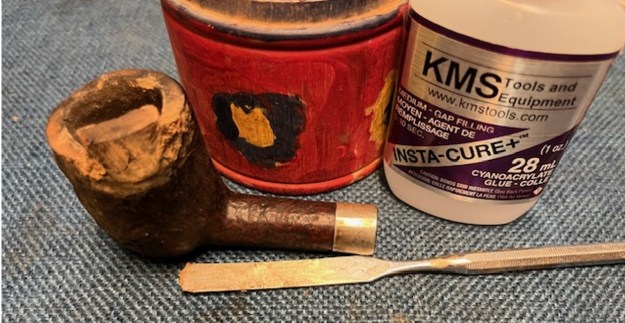
  With repair solid in place I took the opportunity to fill in the crevices at each end of the repair and around the joint of the two piece of briar. I also filled in a bit of the burned area on the right front of the bowl. I used clear CA glue and briar dust to build up those areas.
 Once the repair had cured for several hours and the briar dust repairs had hardened I used a Dremel and sanding drum to remove the excess briar and flatten out the rim top as much as possible with the tool. I then topped the bowl again on a topping board with 220 grit sandpaper to get a smooth rim top.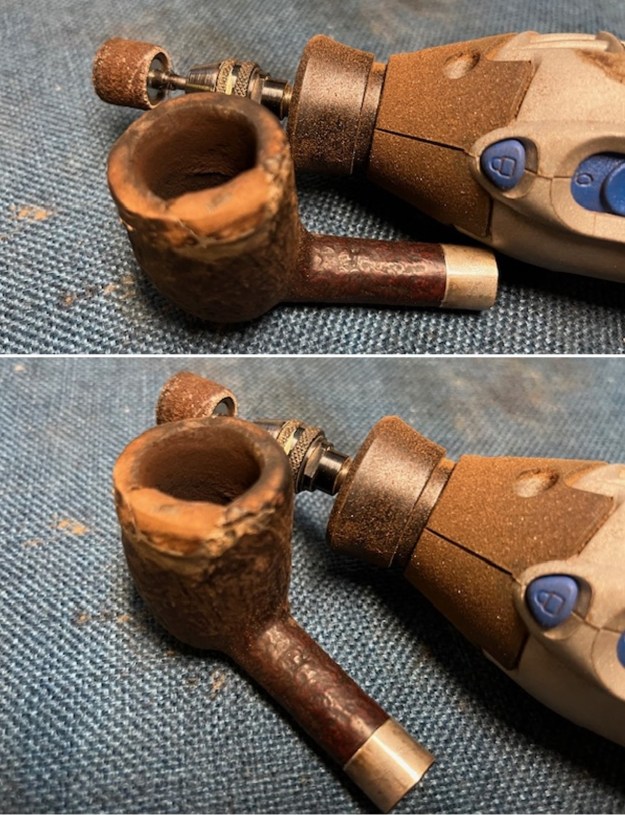
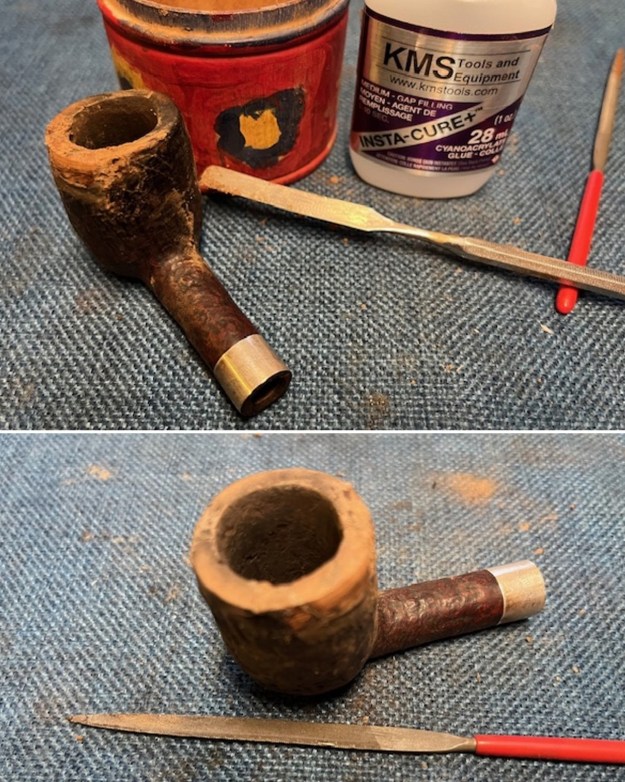
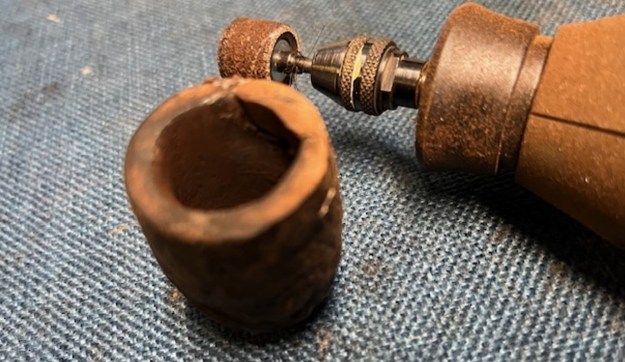 With the top flattened, I used some more briar dust and CA glue to fill in some of the spots on the topsides of the repair. I used needle files to reduce the inner edge and reshape it to match the inner edge on the right side of the bowl. It took a bit of time and working through several needle files but it looked much better when I finished. I still had some work to do on the rim top and the inner edge but it was very close.
 I mixed up another batch of the JB Weld and spread it on to the inside wall of the bowl to protect the area where the bowl and inserted piece joined. I also applied it to the front right side where the flame had also left its mark. This would keep the heat from following the repair joint out to the exterior and create potential burnout in the bowl. I set it aside to allow the JB Weld time to cure and harden before I sanded it smooth.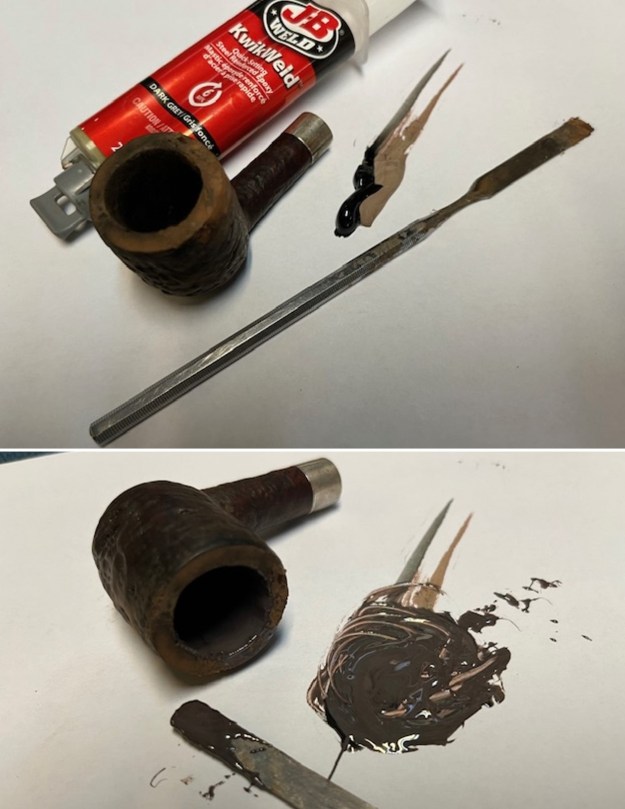
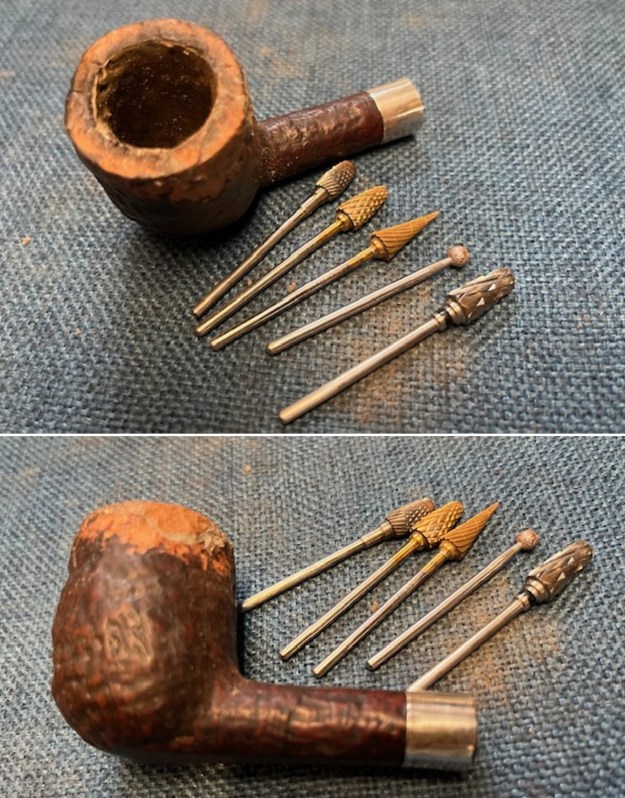
 The next step in the process was to try and replicate the sandblast finish on the rim top and the inserted piece of briar. The first photos show what the rim and side looked like before I started my rustication. I used my Dremel and a series of burrs to do the work. I wanted it to look like the deep sandblast on the bowl already. It was both rugged and worn smooth in spots.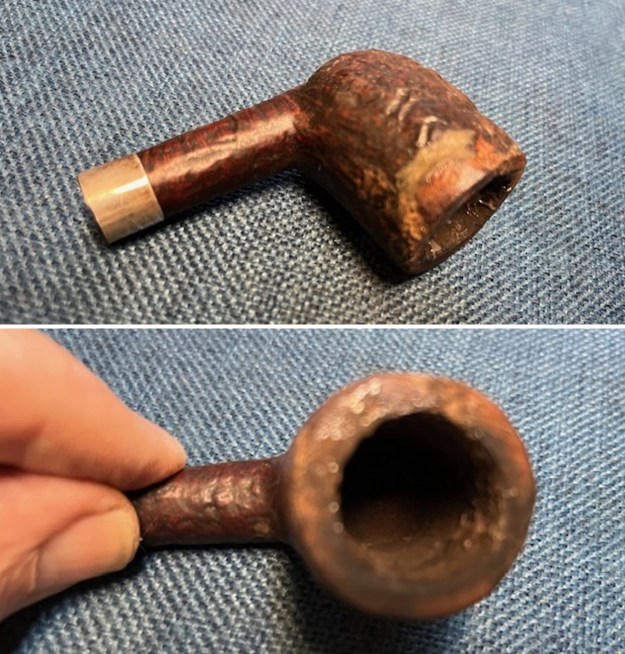
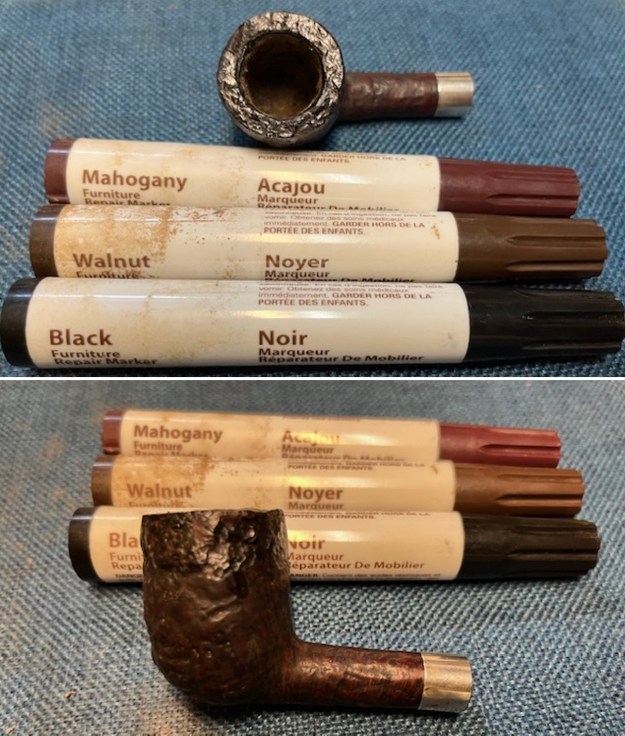
 Once I finished rusticating the new finish I stained it with a combination or Walnut, Black and Mahogany stain pens. I am pretty happy with the look! The stain would blend in very well once I buffed and waxed it.
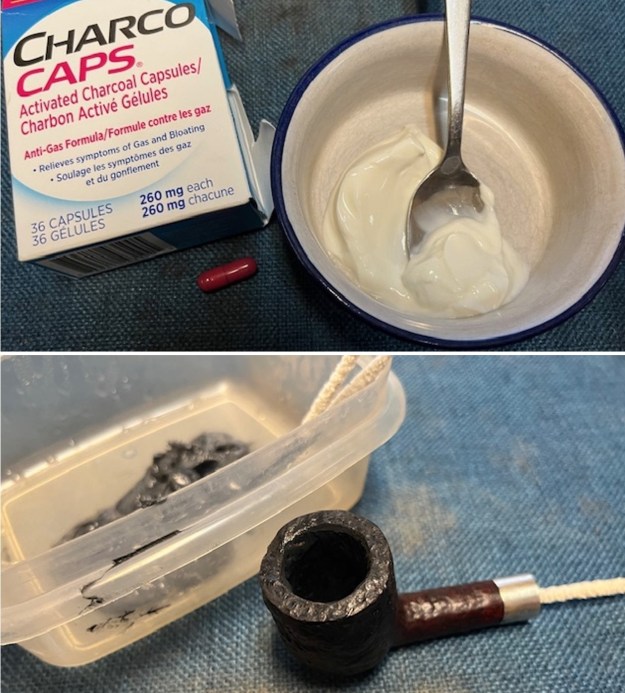
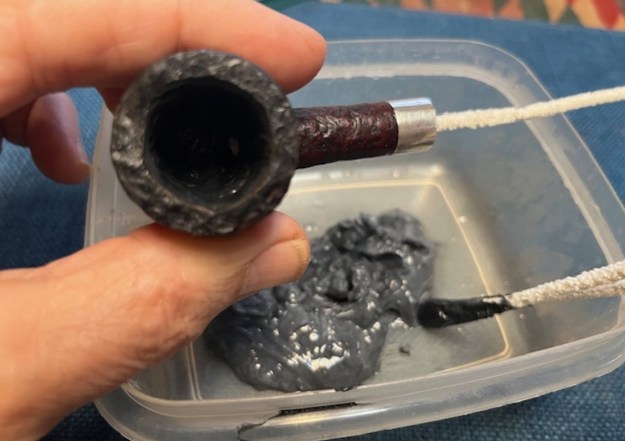
 Once the internal coating of JB Weld cured overnight I sanded it with 220 grit sandpaper to smooth it out. I then mixed a batch of bowl coating with some sour cream and charcoal powder and coated the walls of the entire bowl. I used two teaspoons of sour cream and four of the Charco caps to mix a black/grey mixture that I use for the bowl coating. I applied it to the walls of the bowl with a folded pipe cleaner and covered the interior of the bowl with it so that it was smooth. I set it aside to cure. Once it hardens and dries it is odorless and leaves behind no lingering taste.
 I rubbed the bowl down with Before & After Restoration Balm. I worked it into the surface of the briar with my fingertips to clean, enliven and protect it. I let the balm sit for ten minutes then buffed with a cotton cloth to raise the shine. Mark Hoover’s Balm is a product that I have come to appreciate and one I use on every pipe I have been working on.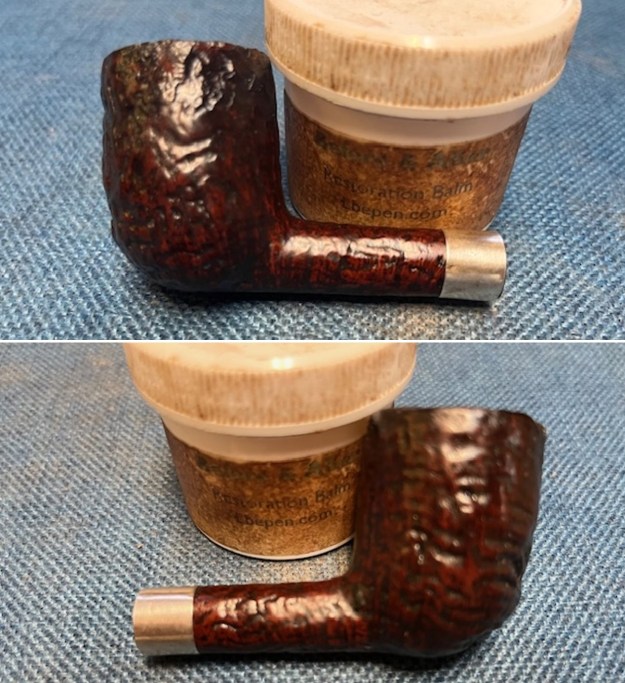
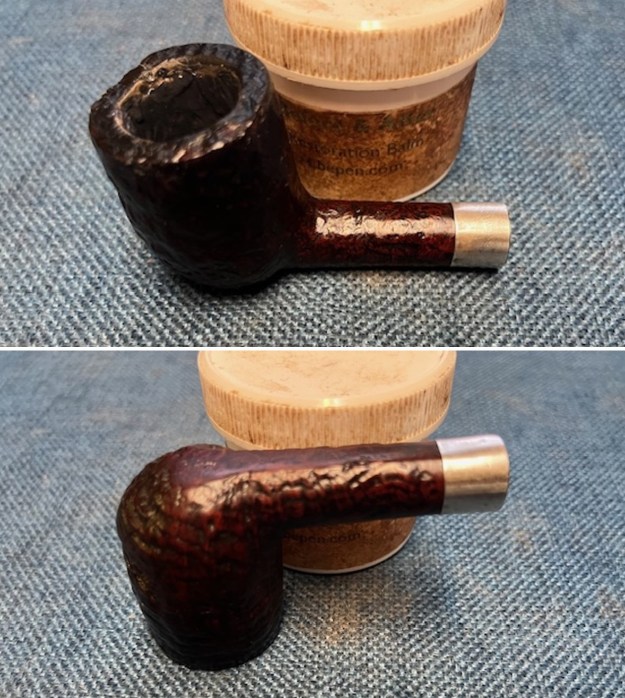
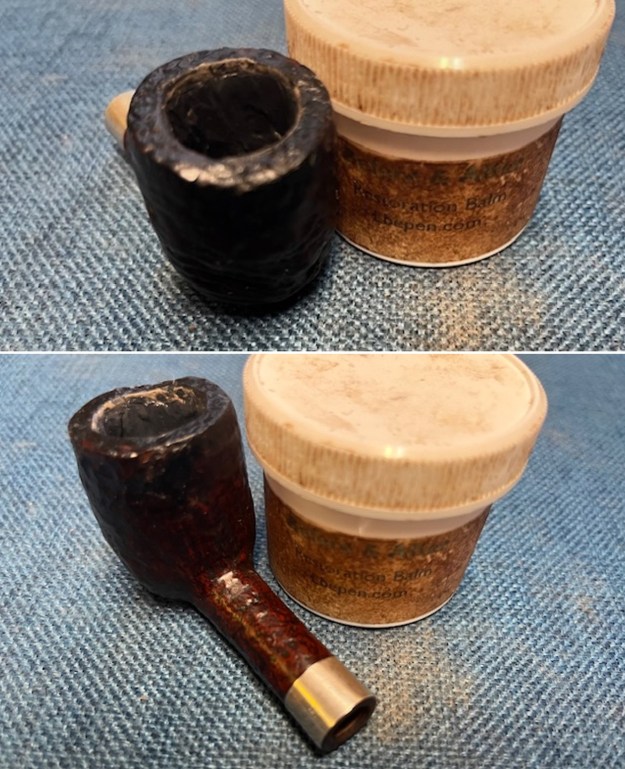 I set the bowl aside and turned my attention to the stem. I “painted” the stem surface of the stem with the flame of a Bic lighter to lift the tooth marks and chatter on the surface. I was able to remove it all. I sanded the stem surface with 220 grit sandpaper to remove the remaining chatter marks. I wiped the stem down with an Obsidian Oil cloth and it looked much better at this point.
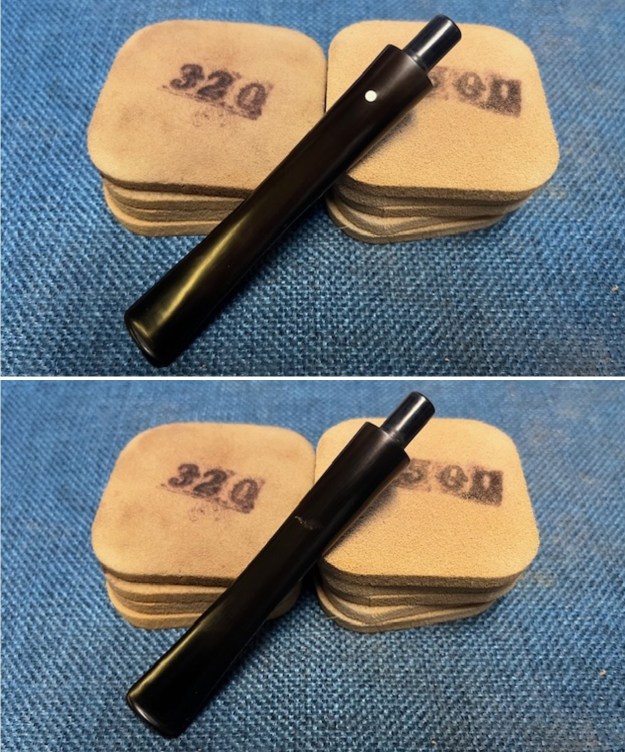
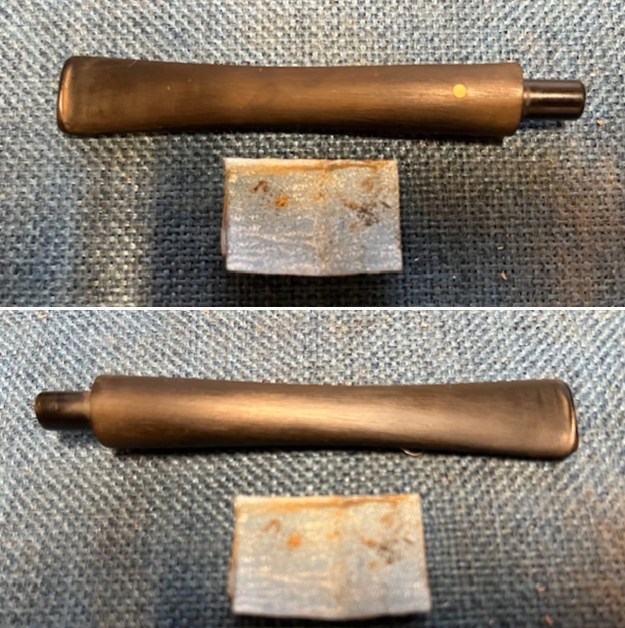 I sanded the stem with 320-3500 grit sanding pads to break up the remaining oxidation. I wiped it down after each sanding pad with a soft cloth. It began to look good.
  I polished the stem with micromesh sanding pads – dry sanding with 1500-12000 grit pads. I wiped the stem down after each sanding pad with Obsidian Oil. I polished it with Before & After Pipe Stem Polish – both Fine and Extra Fine. Once I had finished the polishing I gave it final coat of Obsidian Oil and set it aside to dry.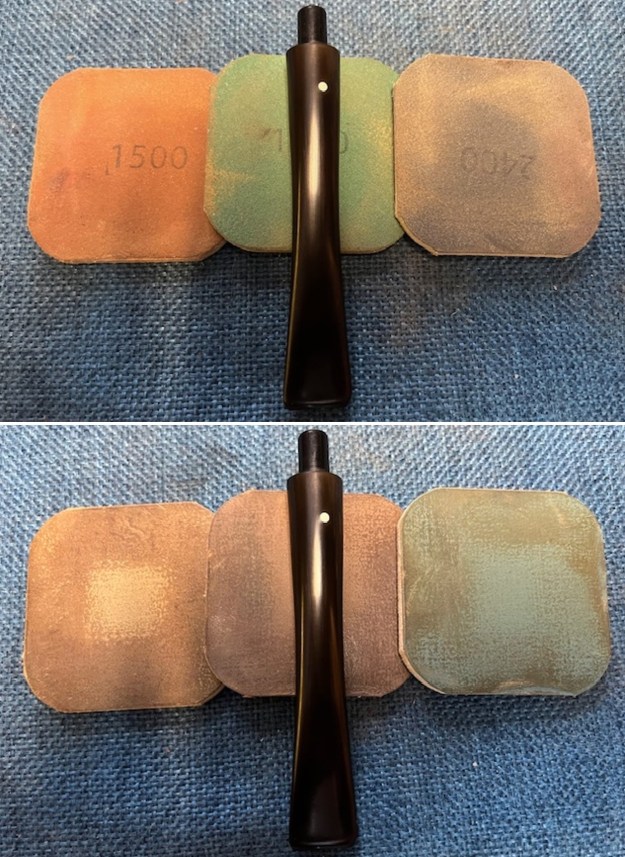
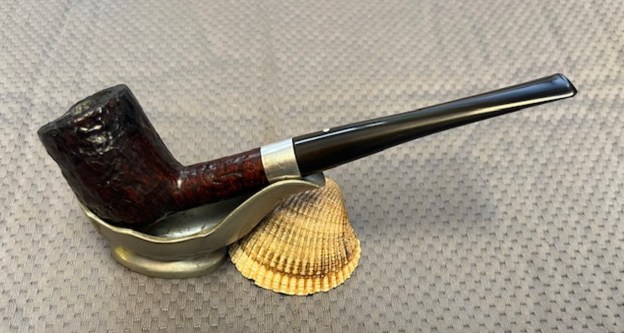
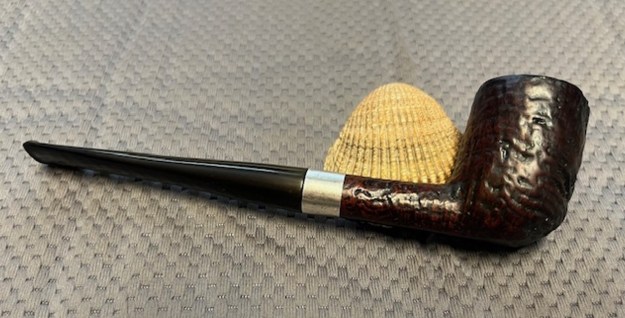
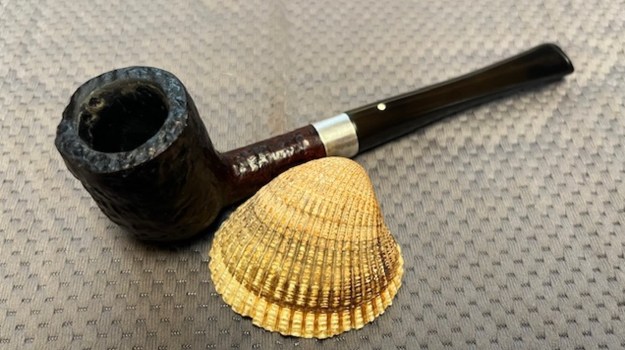
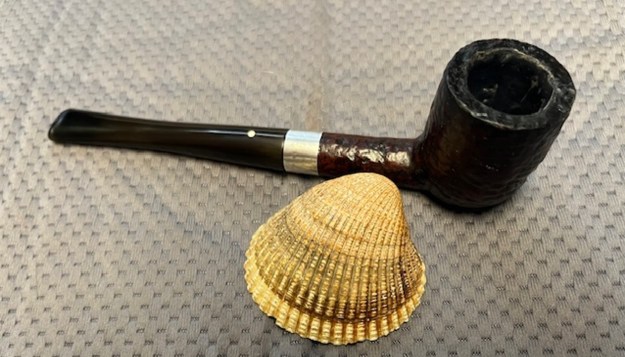
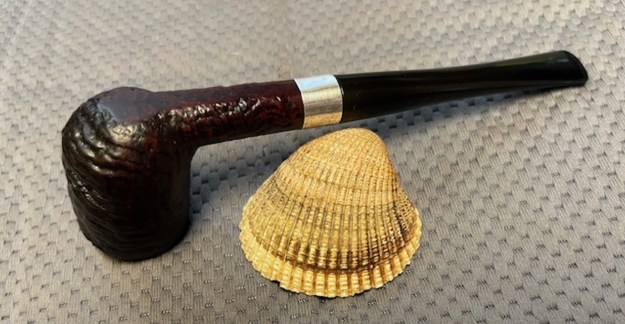
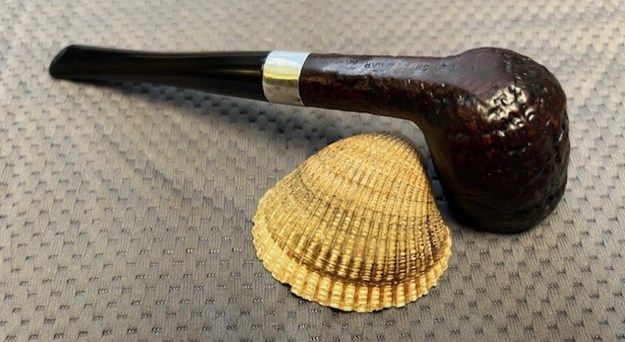
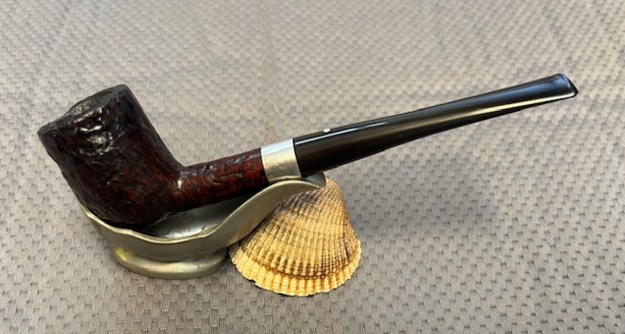
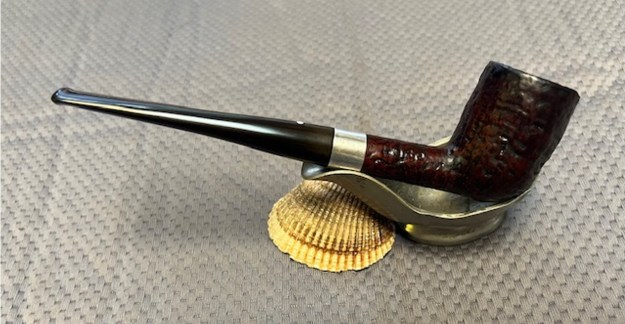
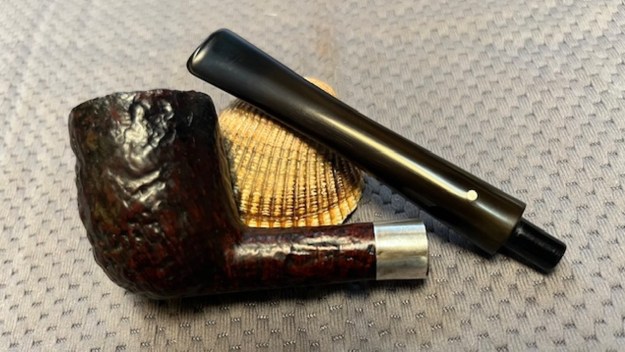
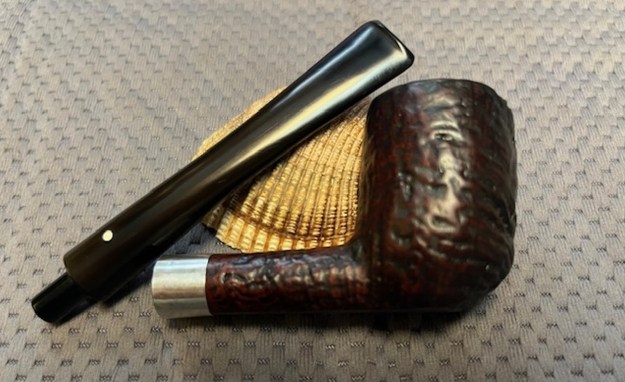
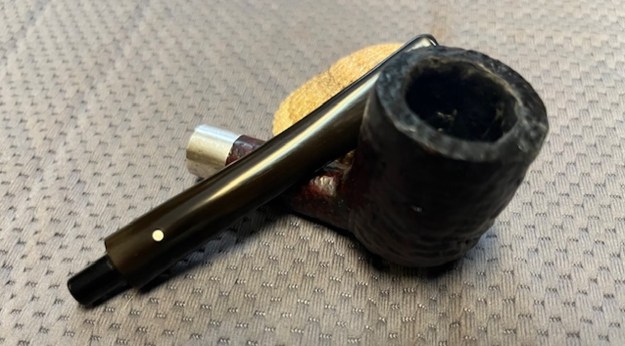
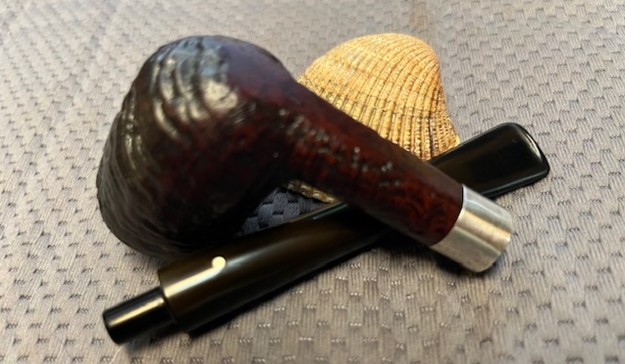
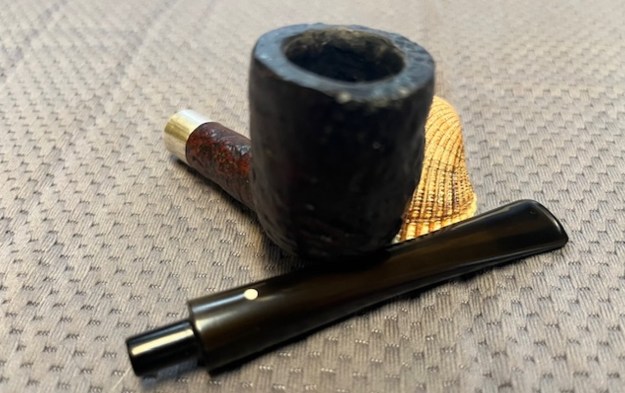
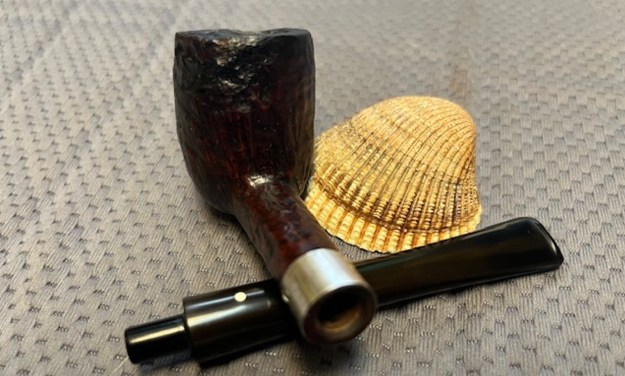
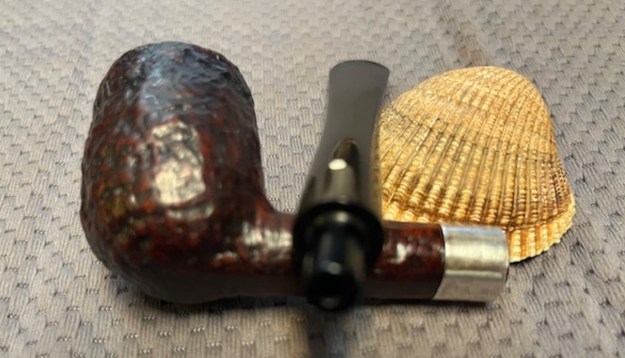
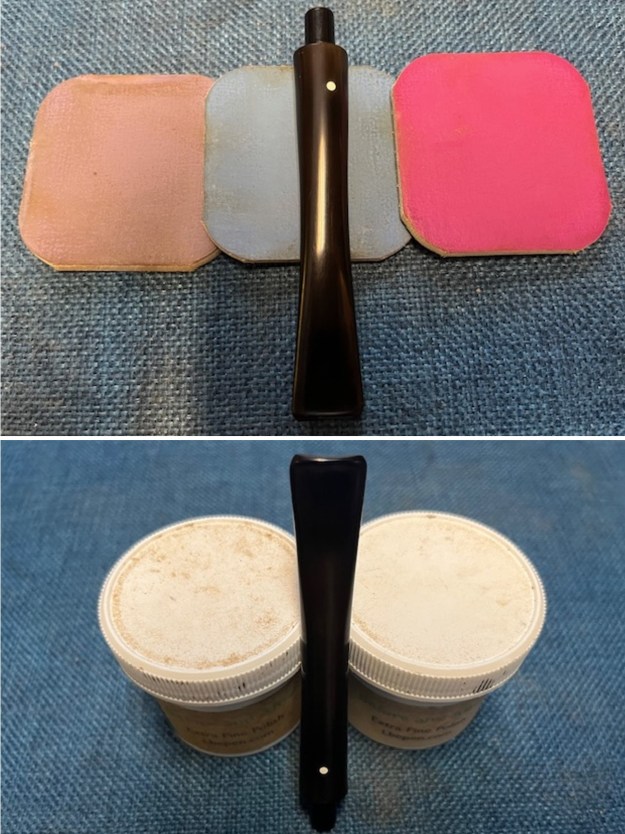 This is the last of five pipes from Kathleen that I am working on. It is a beautifully shaped Patent Era Shell Briar 111F/T Billiard. It has the kind of beauty I have come to expect from older Dunhill Shell Briar pipes. I put the bowl and stem back together. I polished the bowl and stem with Blue Diamond to blend in the stain and to polish out the scratches in the briar and the vulcanite. I gave the bowl multiple coats of Conservator’s Wax and the stem multiple coats of carnauba wax. I buffed the pipe with a clean buffing pad to raise the shine. I hand buffed it with a microfiber cloth to deepen the shine. The pipe polished up pretty nicely. The rusticated finish is well done and the polished smooth finish on the shank end and rim top look really good with the black vulcanite stem. This Dunhill Shell Briar Billiard was another challenging pipe to bring back to life. It is a comfortable pipe to hold in the hand. The finished pipe is shown in the photos below. The dimensions of the pipe are Length: 6 inches, Height: 1 ½ inches, Outside diameter of the bowl: 1 ¼ inches, Chamber diameter: ¾ of an inch. The weight of the pipe is 31 grams/1.09 ounces. Thanks for reading this blog and my reflections on the pipe while I worked on it. This interesting lot of pipe will be going back to Kathleen for her husband to enjoy once again – but with a proper lighter.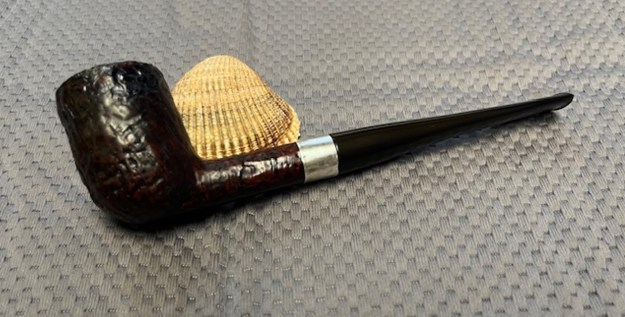
 rebornpipes
Steve, some amazing repair work on these pipes! When I saw the photos on the initial post, I figured there was no way to get the Dunhill billiard and Calich opera repaired to a condition where they could be smoked.
True professional repairs by an outstanding craftsman!
LikeLike
Thanks Matthew. Now I am ready for a break and will work on your project
LikeLike
The Pete should be an easier project Steve!
LikeLike